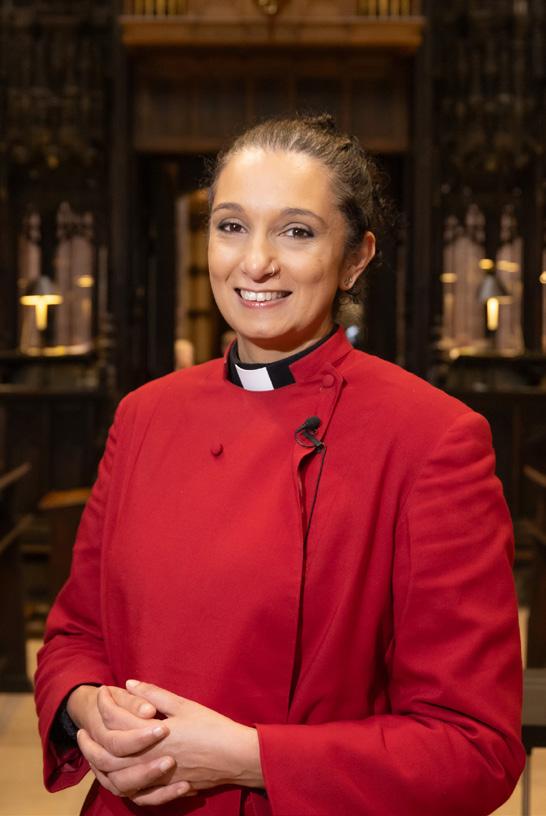
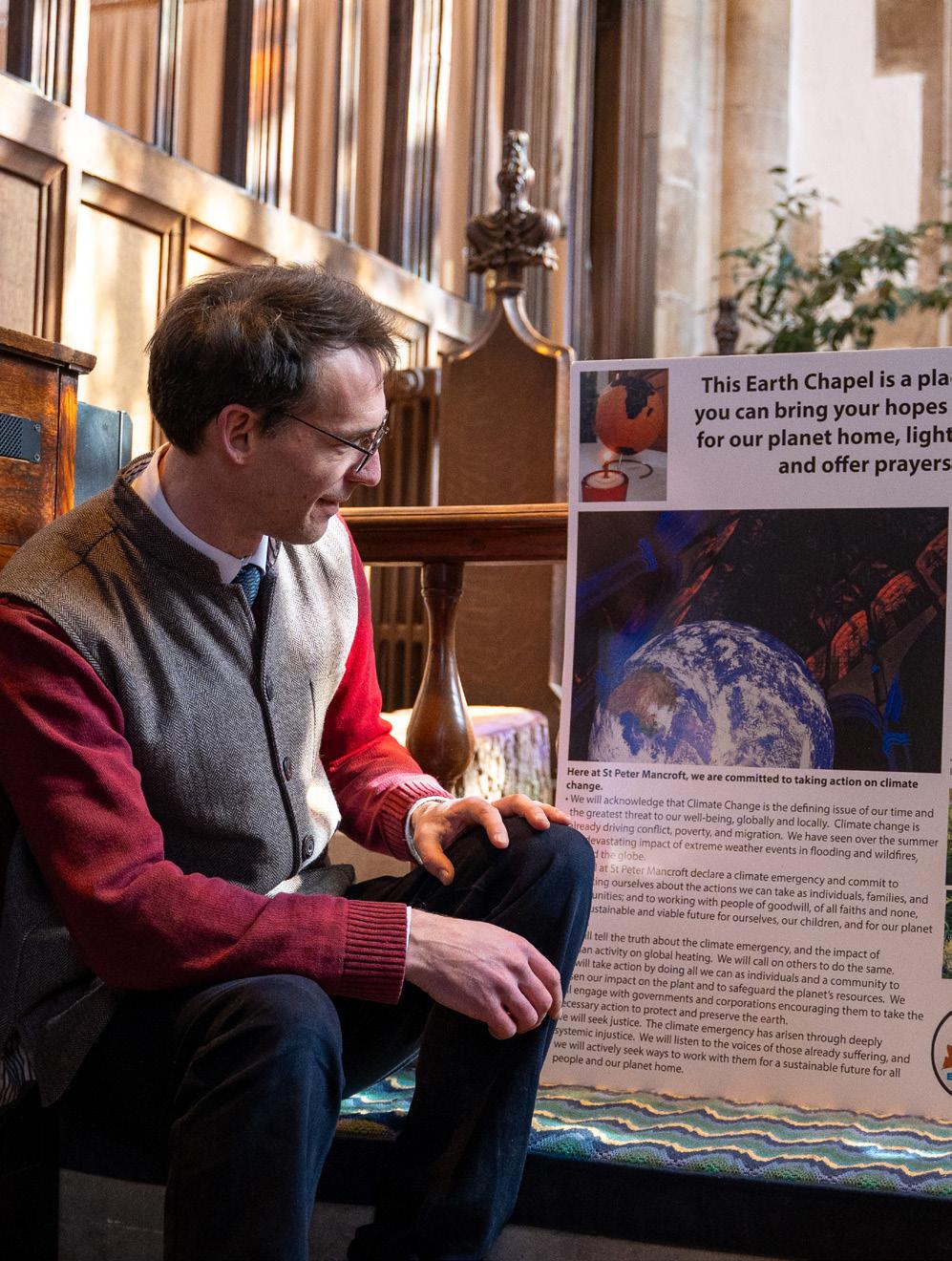
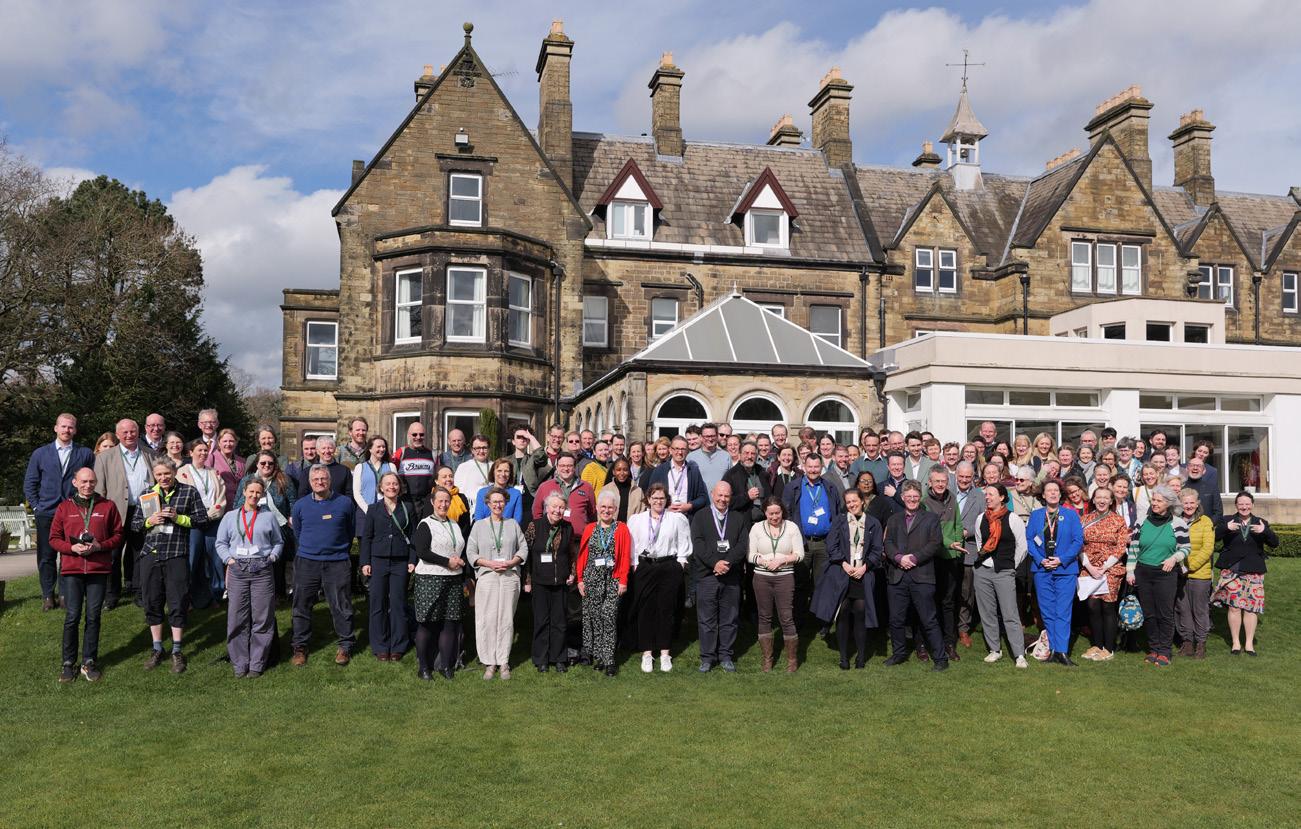
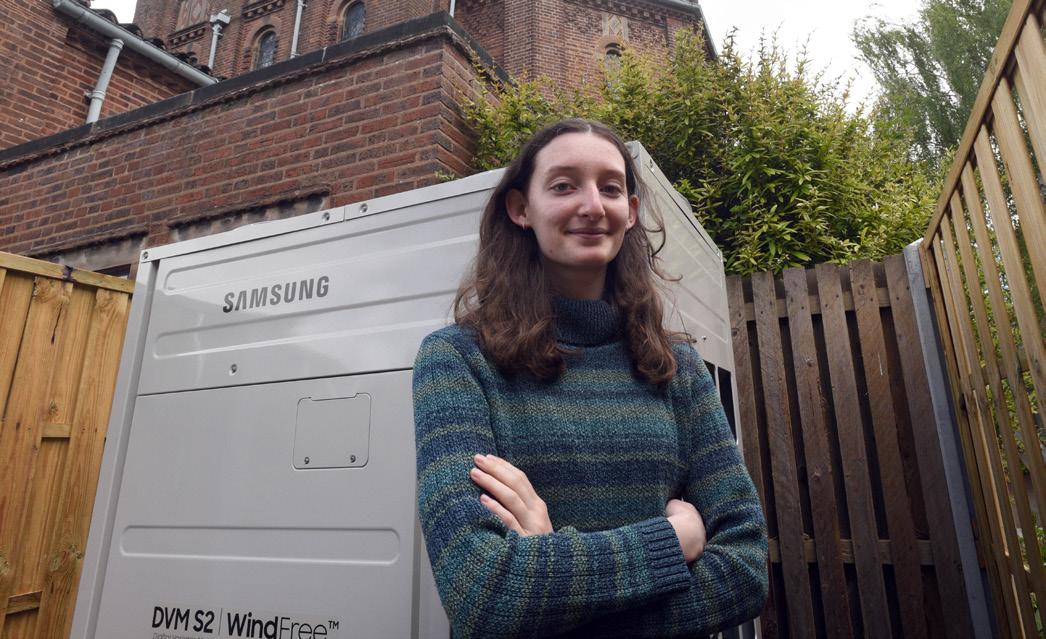
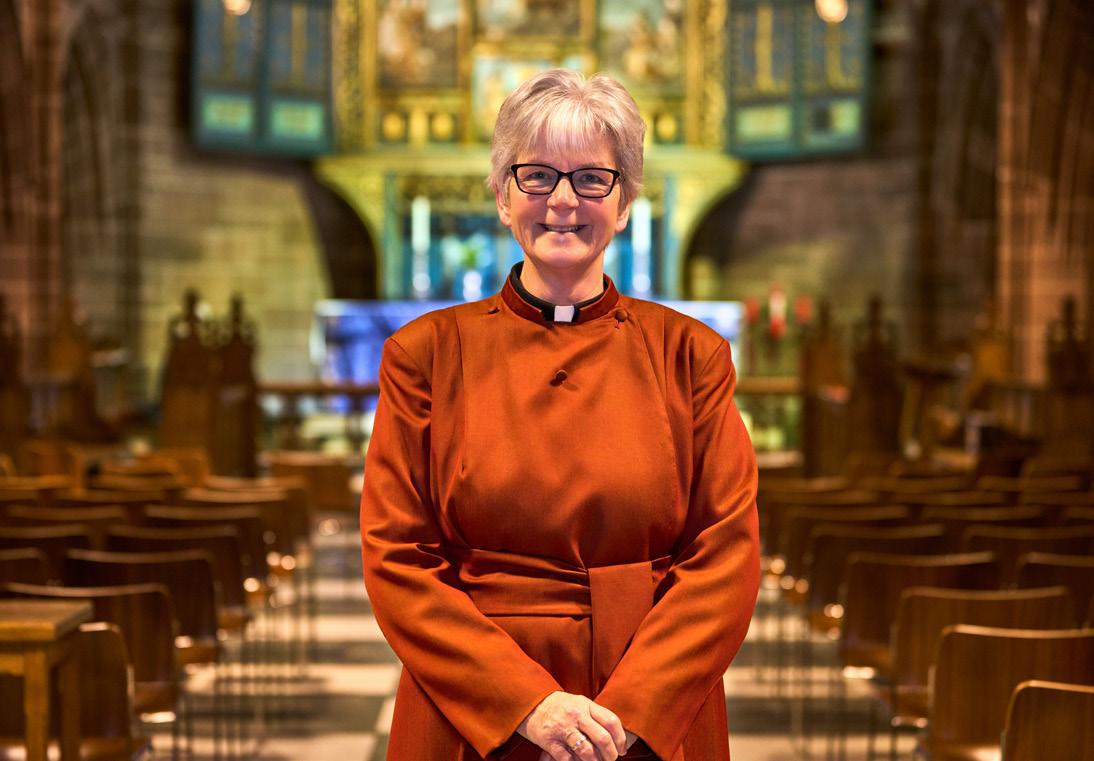
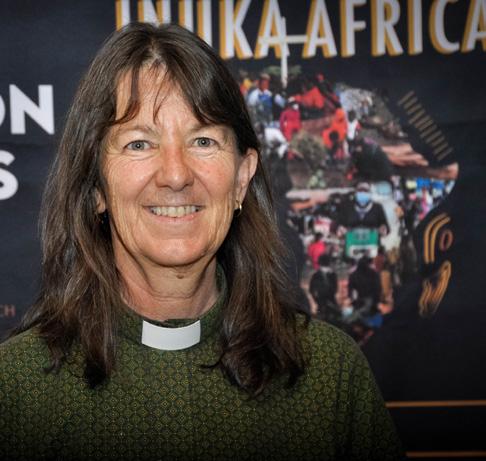
“The Net Zero Carbon Programme’s leadership on environment and net zero carbon is a vital part of the Church’s witness today. In caring for God’s creation, you are helping the church live out its faith in practical, hopeful, and often challenging ways, offering a vision of responsibility and hope for the future.” Archbishop Sarah Mullaly
Welcome
It is a real pleasure to introduce this Annual Report and to reflect on a year marked by growing hope, confidence and collective action across the Church of England, as we continue our shared journey towards net zero carbon.
When the General Synod committed the Church to reach net zero carbon by 2030, it was a bold decision. It recognised climate change not only as a threat to God’s creation, but also as a clarion call to action. I am deeply encouraged by the way this commitment is being embraced and lived out in practical, creative and inspiring ways across dioceses, parishes, schools, housing and cathedrals.
As Christians, caring for creation is a tangible expression of our faith, and this year we have seen that conviction translated into action.
The past year has been one of real momentum. More churches are taking their first steps, others are moving confidently into delivery, and many are sharing learning
generously with one another. From simple, low cost improvements to ambitious whole building projects, the Net Zero Carbon Programme is now touching every part of the Church’s life. Hundreds of churches have benefited from grants, audits and advice, reducing emissions while also lowering costs, improving comfort, and creating more welcoming, sustainable spaces at the heart of their communities.
What has struck me most is the spirit behind this work. Time and again, churches tell us that caring for creation has brought people together, sparked new conversations and renewed a shared sense of purpose. For many; particularly younger generations, this work speaks powerfully of a Church that is serious about hope, responsibility and action. It has become a visible and authentic expression of our faith, rooted in love of neighbour and care for the world we share.
We are very aware that the road ahead remains challenging. Our buildings are complex, resources are finite, and progress will be experienced differently across our diverse estate. Yet I am confident that we are moving in the right direction. The foundations now in place; clearer evidence,
strong partnerships, shared learning and growing capability, provide a firm platform for the years ahead.
I want to thank everyone who has contributed to this work; clergy and lay volunteers, diocesan teams, schools, cathedral staff, partners and colleagues. Your energy, ingenuity and commitment are shaping this vision into a living witness of faith, responsibility, and hope for the future. Net zero carbon is not something being done to the Church; it is something being built by the Church, together.
As we look ahead to 2030, the milestones before us are demanding but clear. The coming years will require sustained effort, collaboration and continued investment as we move from early pilots and demonstrations to delivery at greater scale. What encourages me most is that we are no longer starting from scratch. We are building on lived experience, shared learning and a growing confidence that change is possible; step by step, year by year.
Above all, this work calls us back to the heart of our faith. Care for creation is not an optional extra, but part of our calling as
stewards of God’s world. In tending to our buildings, our energy use and our shared resources, we bear witness to a hope that looks beyond ourselves; to future generations, to vulnerable communities, and to the flourishing of all creation.
This report tells a story of progress, but also of possibility. I commend it to you with gratitude, and with confidence in what lies ahead.
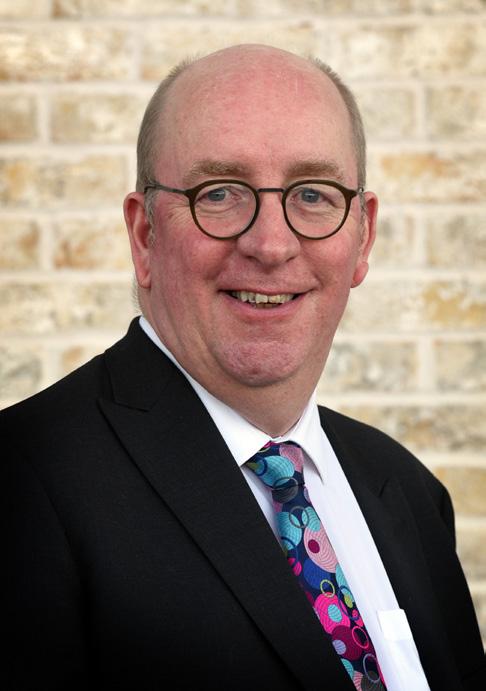
Sir Robert Buckland KBE KC
Third Church Estates Commissioner and Chair of the Net Zero Carbon Programme Board
Caring for creation is missional
The Net Zero Carbon Programme is a practical expression of our Christian faith. It reflects our calling to care for God’s creation, act justly, and steward our buildings for future generations.
“Our work to reduce carbon emissions invites the wider community - including local councils, schools, businesses, and families - into a shared project of renewal. This is evangelism in its broadest and richest sense: the church living in such a way that the kingdom of God becomes visible on ordinary streets and village greens.”
Revd Canon Dana Delap Team Vicar in the Vale and Cotswold Edge
“Net zero can sound really quite technical, but actually it’s central to a lot of what we do in our Christian mission. The two greatest commandments that Jesus taught us were to love God and love our neighbour. Loving God means loving the gift that God has given us in this planet in the beautiful creation within which we live. Loving our neighbour means taking action to do things that reduce our harm on the planet that have an impact on our neighbours both locally and across the world.”
Revd Grace Thomas, Canon at Manchester Cathedral
“I care about our creation...my faith has an influence on this, as in such a dark time I can use my faith as a beacon of hope and light. It’s a reminder that it’s God’s beautiful creation I’m caring for providing me with motivation to keep going.”
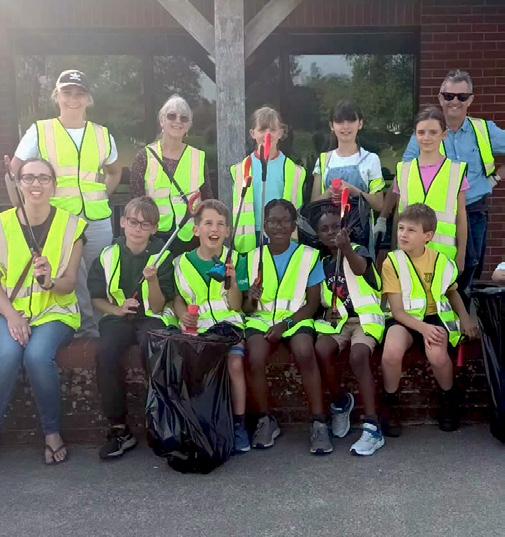
Yasmin Haslemere Parish youth group “Caring for creation is a form of preaching the gospel,” he says. “If we believe the world is a gift from God, then mistreating it is contradictory to the Christian message of hope and salvation.”
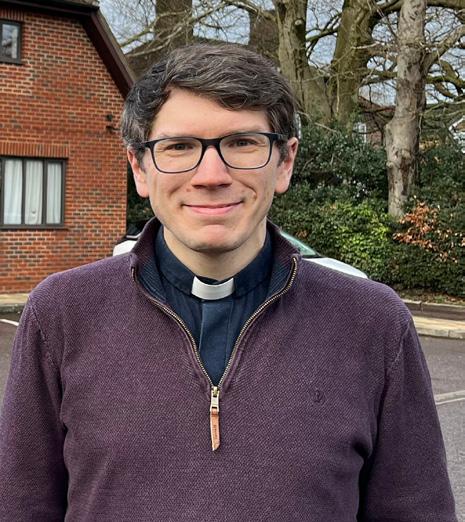
Revd James Dwyer
Christ Church Oxford
Will you pray with us?
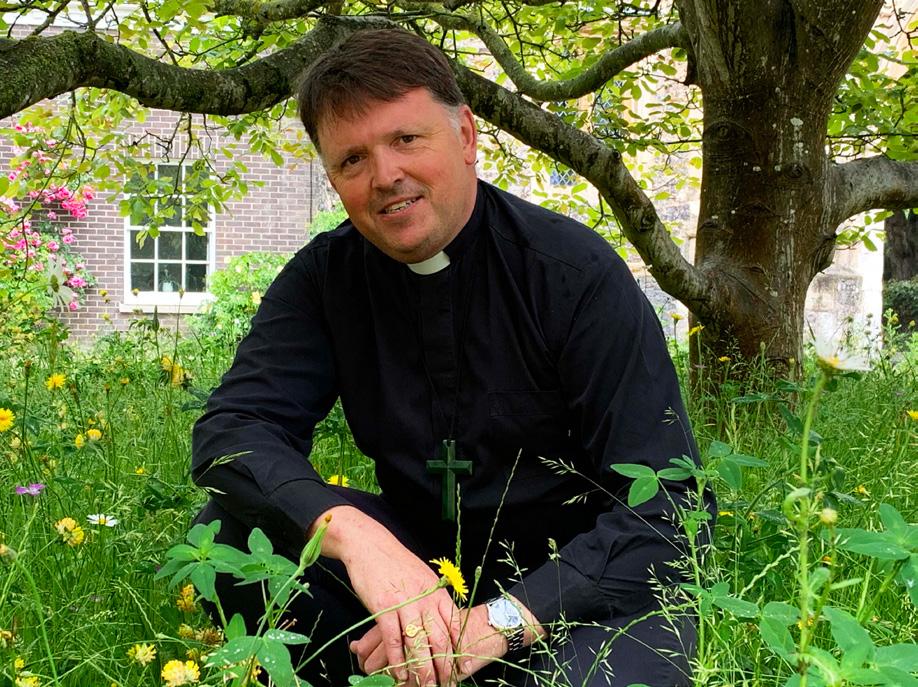
Prayer from Bishop Graham Usher:
Gracious God, Creator of heaven and earth, you formed this world in beauty, balance, and abundance, and entrusted it to our care.
We give thanks for the vision of our Church seeking to walk more gently upon the earth, to cherish your creation, and to act with justice for all who suffer. Teach us to live simply, to use wisely what you have been given, and to act not out of fear, but out of love - for you, for one another, and for generations yet to come. Where change feels difficult, bring patience. Where resources seem scarce, bring creativity. Where there is uncertainty, bring hope. May our seeking after climate justice be a sign of your kingdom: a foretaste of renewal, and a promise of the restoration for all creation, through Jesus Christ our Lord, Amen.
In making changes to lower our carbon emissions the Net Zero Carbon Programme is bearing witness to all of the Anglican Communion’s Five Marks of Mission.
1. Tell
To proclaim the Good News of the Kingdom
We recognise that all we do comes back to telling the Good News of Jesus Christ, which is good news for the poor, good news for those who are affected by climate change, and good news for the whole of creation.
2. Teach
To teach, baptise and nurture new believers
When we act to care for God’s creation, we demonstrate a Christian response to the threats facing creation. This says something about who we are as Christian people and the Gospel we teach and nurture new believers into.
4. Transform
3. Tend
To respond to human need by loving service
By reducing our carbon footprint, we are seeking to tread more lightly on this Earth and upon the lives of others. In addressing climate change and its devastating consequences we are seeking to love our neighbour and respond to human need.
To seek to transform unjust structures of society, to challenge violence of every kind and to pursue peace and reconciliation
The imbalances and unfairness in our world mean that impacts of climate change are felt most by the poorest and those least responsible for the causes of climate change. We can transform society by reducing our own emissions and shedding light on this climate injustice.
5. Treasure
To strive to safeguard the integrity of creation and sustain and renew the life of the earth
By working together to lower our carbon emissions we can look after and care for our world and all God’s creatures.
End of the first triennium
2025 marks the completion of the programme’s first three-year phase. The Programme is moving from its first steps into a more confident rhythm and delivering change at scale. Key achievements across the 2023–25 period include:
2023 2024 2025
In the first 3-year phase the Programme deployed £28.4m towards demonstrator projects, capacity building and essential interventions, with the £1.6m underspend carried forward to supporting work in the 26-28 phase.
The Programme has successfully leveraged approximately £18.5m in external funding from government grants, trusts and local fundraising, alongside a further £12.5m from dioceses. Dioceses and Parishes played a significant role in applying for and securing external funding1.
Every diocese has received funding to establish capacity, creating a network of 58 diocesan net zero roles.
Participation in the Energy Footprint Tool has increased to 68% of churches, improving the Church’s understanding of its baseline carbon footprint.
Completed 726 energy audits for the highest-emitting churches. The remaining 300 remaining audits were being delivered in early 2026.
72 Demonstrator grants were made to 62 churches, for major capital works and project development 2 .
A further 839 grants were made to churches for smaller interventions via £3k grants and devolved Quick Win grants from dioceses. Churches
Cathedrals
Funding emissions reduction projects at 15 cathedrals.
Comprising seven major demonstrator projects and eight smaller interventions.
Parish match funding
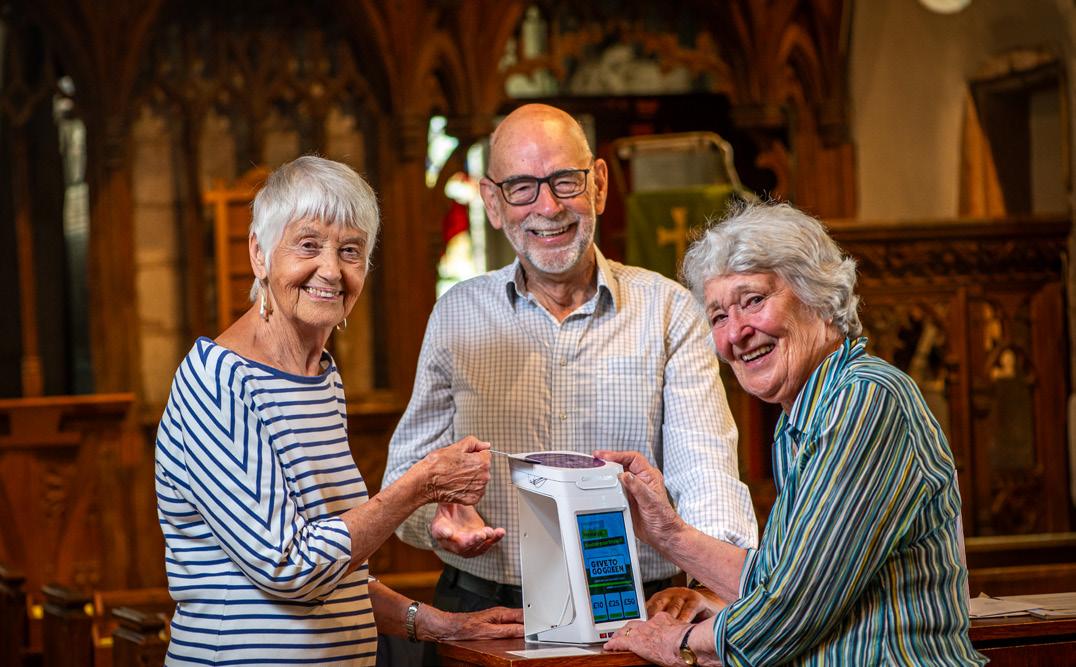
The ‘Give to Go Green’ pilot supported 127 churches across eight dioceses.
Raising £0.9m locally for net zero carbon projects, totalling £2.5m.
Housing
Retrofitting four see houses to improve energy efficiency.
Grants were awarded to all 42 dioceses to progress fabric-first retrofits.
Schools Supported the completion of 145 Heat Decarbonisation Plans.
33 PSDS-funded decarbonisation projects.
Our partnership with A Rocha remains valued and we continue to fund the work of Eco Church. Engagement is growing steadily; over a third of churches (6,114) are now engaged with the Eco Church initiative. The framework to support churches and leadership to take practical action to care for God’s earth remains a meaningful way for churches to engage on their journey to net zero carbon.
Going for Gold
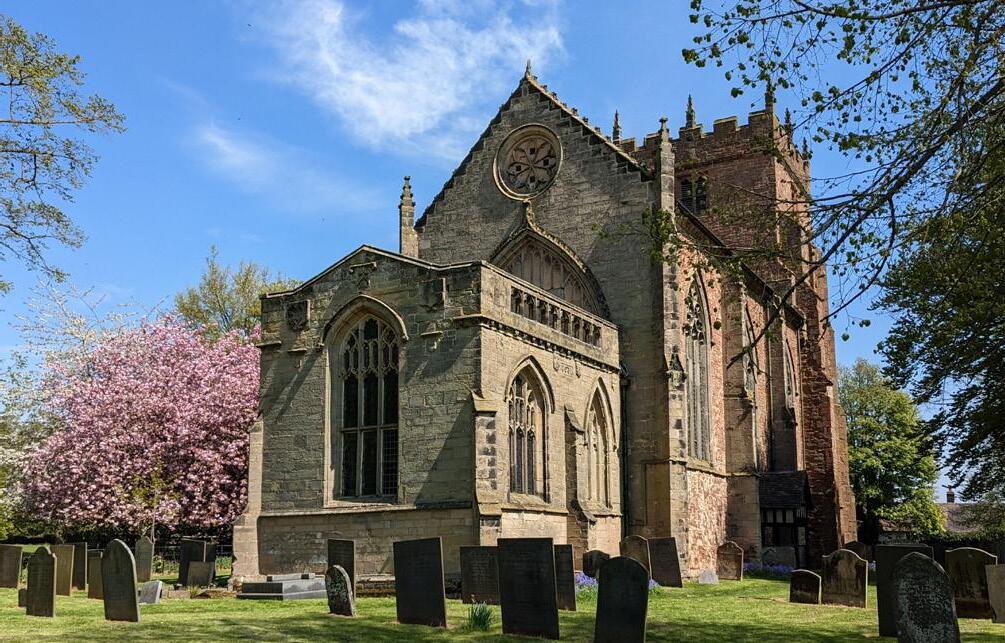
St Mary’s in the village of Hanley Castle received the first Gold Eco Church Award in the Diocese of Worcester.
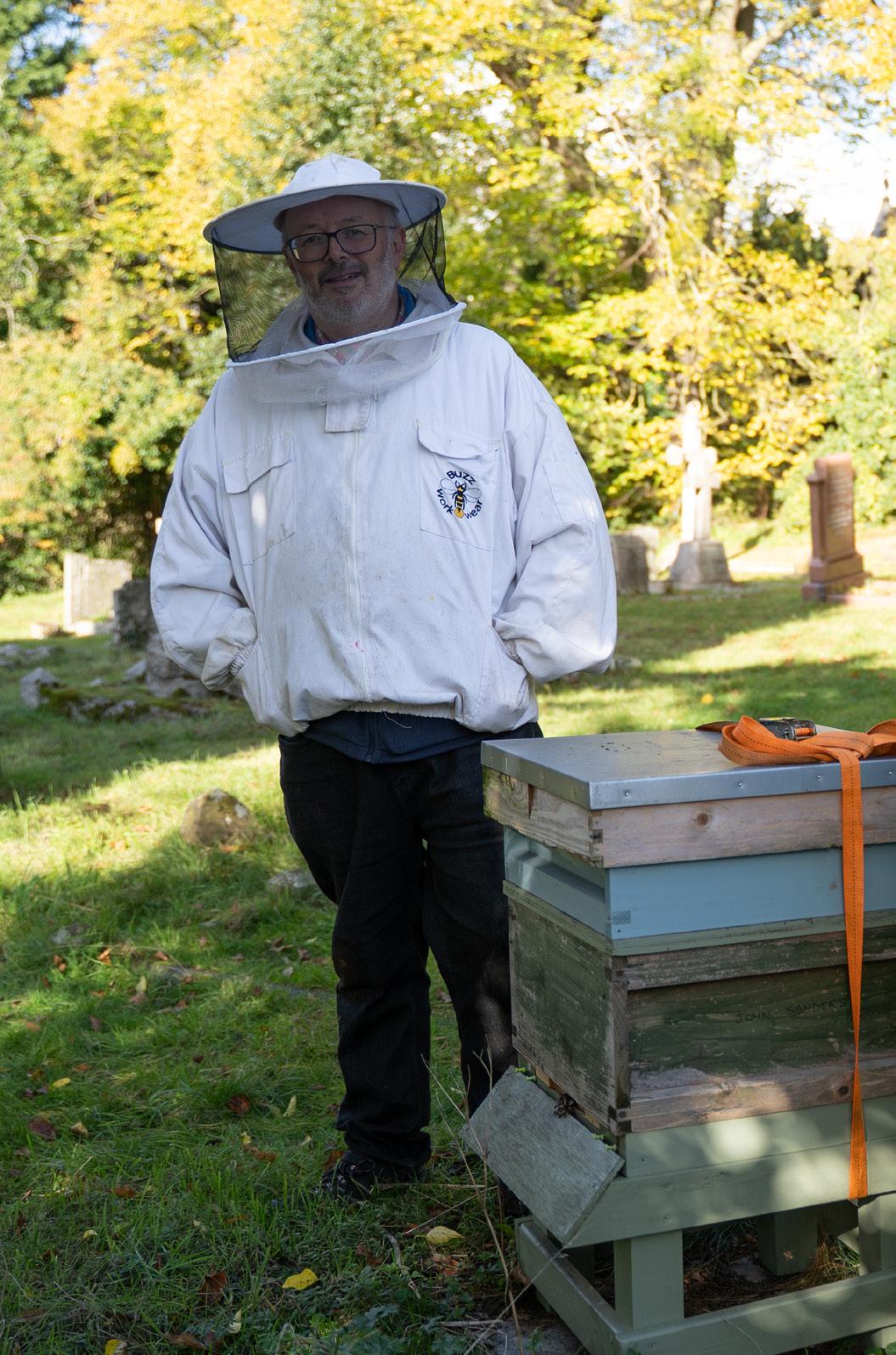
The church won the award for its comprehensive approach to carbon reduction and environmental care, including leaving part of the churchyard to grow wild, installing two bee hives and selling the honey for church upkeep, and even twinning its tap (as it doesn’t have a toilet). Within the Grade II* Listed church itself, incremental steps have been taken towards net zero carbon.
The church moved to a 100% renewable tariff roughly a decade ago and has also gradually been changing all its lights to LED, as well as moving to infra-red heating.
‘We
are part of God’s creation, we are stewards and partners in care for the world. We’ve really enjoyed doing this, and it is very missional. It brings those on the margins of the church and in the community together.’
Revd Sue Adeney Associate Priest
The first three years of the Programme (2023–2025) represented an important development phase, laying the groundwork for wider delivery and long-term change.
During this period, the Programme deployed £6.5m in funding to help dioceses build the capacity needed to support parish-level action, and a further £1.2m to develop regional fundraising capacity. This was alongside providing grants to help churches deliver emissions reduction projects and test a range of approaches to decarbonisation.
The majority of funding from the Net Zero Carbon Programme was directed towards supporting parishes on their church decarbonisation journeys. Support included direct grants for project development and capital costs, alongside in-kind support through centrally funded energy audits, diocesan capacity building, case studies, guidance, and training.
We estimate that approximately 10% of churches have benefited in some way from the work of the Programme.
Analysis of Total 23-25 Net Zero Carbon Programme Spend by Building and Support Type:
2025 in review
There are clear signs of hope. Across the Church, we are seeing a groundswell of action - often quiet, often unseen, but deeply committed. Momentum is building as we learn together and move forward with confidence.
Dioceses have leveraged £2.9m from grants and invested £6.7m of their own funding for Net Zero Carbon projects. This reflects growing local confidence and capability.
Parishes
In 2025, 40 Demonstrator
Churches around the country were awarded £1,171,935 in grant funding to implement exemplar net zero carbon projects.
In 2025, our Give to Go Green Parish match funding campaign supported 56 churches to raise £439,724.43 locally and received £362,612.90 in match funding.
In 2025, we commissioned a further 510 Energy Action Plans for some of our highest emitting churches or halls in addition to 569 Action Plans commissioned in 2023 and 2024.
21 parishes were awarded £624,322.18 in grant funding through the NZC Boiler Replacement Hardship Grant to support the additional costs in replacing a failed or failing oil or gas heating system with a low-carbon electrified heating system.
In 2025, we approved £270,887 in £3k grants, to 92 churches or halls. Two thirds of the projects included or were entirely LED lighting projects.
Schools
Housing
Cathedrals
In 2025, 8 Diocesan Boards of Education were awarded £264,000 in grant funding to support the 10% Governor Liability for VA Schools enabling decarbonisation projects.
34 clergy housing retrofit projects were completed in 2025, with a further 16 set to be completed in early 2026.
In 2025, 15 Cathedrals were awarded nearly £1.3M in grant funding towards quick win and demonstrator decarbonisation projects.
All dioceses have benefited from funding to help increase their capacity and capability to support their parishes in pursuing decarbonisation projects.
Dioceses
In 2025, four See House demonstrator retrofit projects were completed (Durham, Derby, Truro and Coventry).
By the end of 2025, 44 out of 45 diocesan offices held at least a Bronze Eco Diocese award with Birmingham Diocese becoming the first Diocese to achieve a Silver Eco Diocese Award.
Funding awarded for 9 Regional Fundraising Officer roles working across clusters of Dioceses from 2026-28.
The Church of England’s carbon footprint (from 2024)
Achieving net zero carbon is a complex challenge. The 2024 carbon footprint report builds on the rigorous methodology developed in previous years and has been delivered in-house, reflecting the growing capability and expertise within the Net Zero Carbon Programme.
Alongside this, the quality and coverage of our data continues to improve, as more churches and building managers submit energy information each year - this is our most complete and robust carbon footprint to date.
The Routemap to Net Zero sets out the challenge that being net zero carbon means carbon emissions of our buildings and work travel will be reduced by at least 90 per
cent compared to our baseline levels. Any remaining hard to tackle emissions (no more than 10 per cent) will be offset in verified schemes that remove carbon dioxide from the atmosphere. That means overall, our buildings and travel will not contribute to rising carbon emissions: their contribution will be ‘net zero.’ There is a time lag in seeing the full impact of projects due to the length of time it takes to deliver projects and then report on energy data and savings.
Figure 1. The percentage contribution of different footprint areas to the Church of England’s total estimated footprint (location-based emissions, 2024)
Creating warmer, more welcoming, buildings
We want warmer, more welcoming buildings that are fit for the future. We want to create spaces that support worship and community life.
Investment in energy efficient technology is about stewarding resources well. It can reduce energy bills and address fuel poverty. Every pound saved on fossil fuels can be released back into mission and ministry.
St John’s Church, Surrey
The congregation at St John’s Church in Egham, Surrey, navigated a complex installation of three air source heat pumps to their Grade-II Listed church and their project shows that even protected historic churches can embrace modern low-carbon technology. In the late autumn of 2024, the church’s gas boiler broke down. The cost of replacing it with a low-carbon system was beyond reach.
St John’s applied for a Boiler Replacement Hardship Grant from the Church of England’s Net Zero Carbon Programme, and received
£45,000 towards the overall cost of the new decarbonised heating system. This enabled the church to replace its heating with a lowcarbon alternative.
“A warm church takes away a barrier to attendance and allows people to enjoy being there. And it shows that we care for the planet.”
Chris Gray Church’s eco champion.
Clergy home in Harrogate, Leeds
On a quiet street in Harrogate, a 1930s vicarage had long struggled to retain heat, relying heavily on gas.
As part of a demonstrator project, the home was retrofitted with insulation, upgraded windows, solar panels and an air source heat pump.
“ The difference was immediate,” says Helen. “Even in very cold weather, the house stayed warm.”
The retrofit has improved comfort, reduced emissions, and lowered running costs. For the Revd Ben Askew, it also connects faith with action:
“ Caring for the environment is a natural part of following Jesus. It’s about living in a way that reflects love for God’s creation.”
All Saints’ Church, Coventry
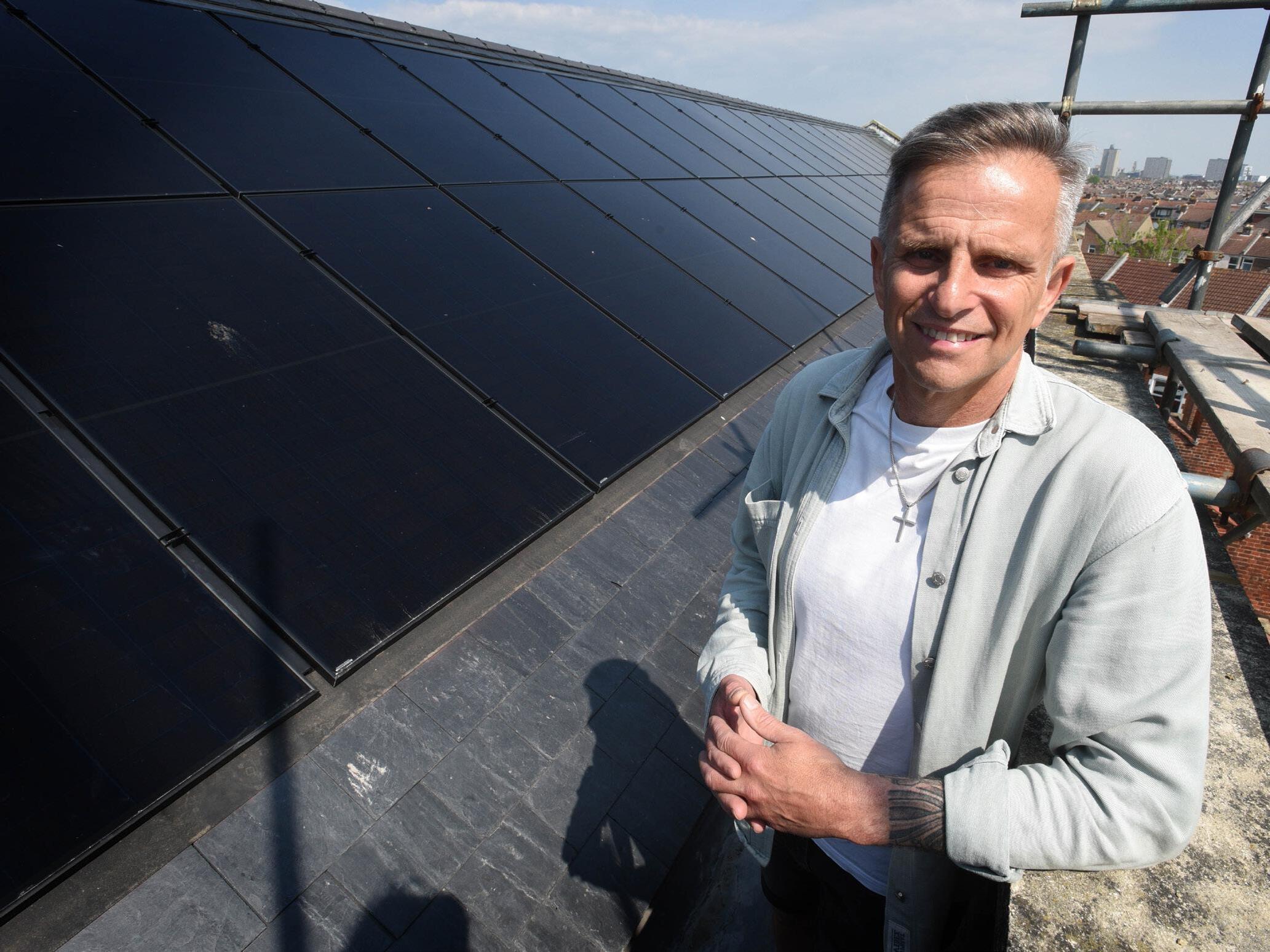
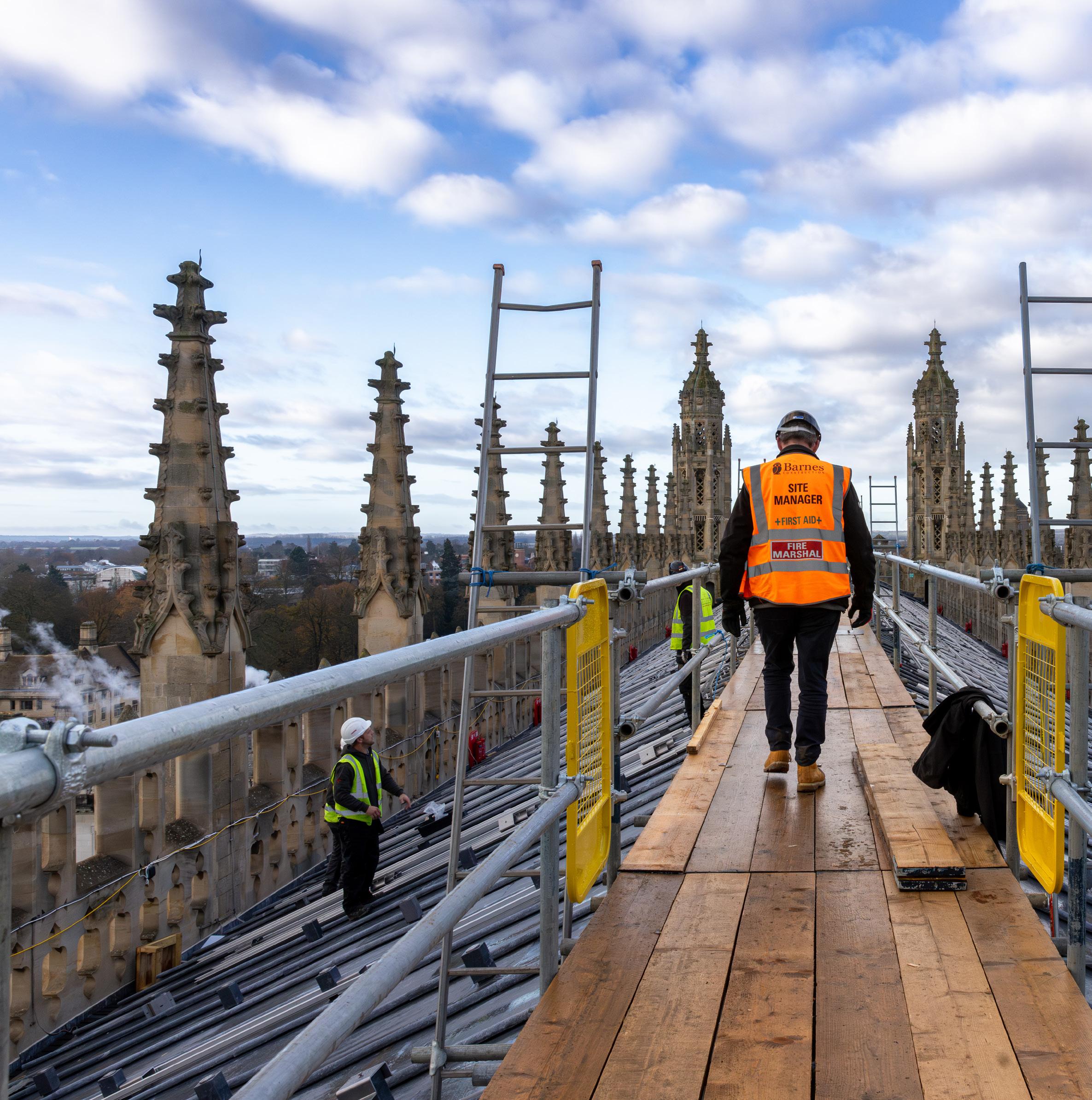
All Saints’ Bedworth in Coventry, a Grade II* listed church, installed a 50-panel solar array in 2024 to reduce reliance on fossil fuels.
The project was supported by diocesan funding, the Church of England’s national Net Zero Demonstrator Church scheme, cofunding from Benefact Trust and local giving.
Now a Demonstrator Church, All Saints is helping others learn how to reduce emissions in historic buildings.
“ This shows we mean business, it’s important for the environment and for our future.”
Christine Sustainability Lead
It’s also an important thing for the community. The money saved on electricity bills “could now fund youth work.” Plus, the church no longer has the stress of paying high electricity bills, which have gone from on average £500 monthly, to £88 in April 2024.
As part of its journey to net zero, it has installed an air source heat pump to heat
The Well at the west end of the nave, projected to reduce emissions by 7.84 tonnes annually.
Since 2019, the cathedral has already reduced its carbon footprint by 43% through efficiency measures and changes in energy use.
“ This is an expression of our faith, we are stewards of God’s creation and want to care for it well. If we can show what is possible, hopefully it will encourage others who think this is too overwhelming. We can all do some things that will move us all forward.”
Liverpool cathedral
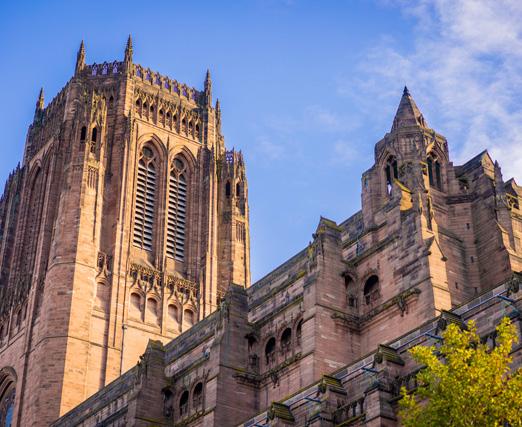
Liverpool Cathedral is a Grade I listed building and the largest cathedral in Britain; a major centre of worship and community life.
The Very Reverend Dr Sue Jones Dean of Liverpool
Every step forward matters
A good project enables ministry to flourish. It honours heritage, fits the local context as well as reduces emissions.
For most churches, this does not begin with large-scale technology, but with practical steps like reducing heat loss and using energy wisely.
These may seem small, but they reflect a theology of stewardship in which nothing is wasted and every step forward matters.
St James’ Church, Wetherby
Rather than rushing into one huge project, St James chose to start with ‘easy wins’, like improving insulation, installing LED lighting, adding motion sensors to hand driers and reducing waste. These small but visible steps helped build confidence and show the wider community that the environment was something the church genuinely cared about.
A major milestone came with the installation of solar panels and battery storage, made possible through the Church of England’s match-funding Give to Go Green scheme, and the generosity of the community. The project was also shaped by memory and love, becoming the David York Memorial Fund, honouring a much-loved member of the parish whose passion for creation care continues to inspire others.
“Identify the easy wins. God has left us creation - it’s ours to nurture and not to destroy.”
Hugh Turner Eco champion
Hexham Abbey, Northumberland
For Hexham Abbey, a busy and vibrant church in Northumberland, filling in the Energy Footprint Tool (EFT) last year was transformative.
The EFT helped to identify where they could make changes to improve their energy efficiency, such as implementing a building energy management system to utilise the heating better in the Abbey. They applied for
a Quick Wins grant and are now in the process of becoming a Demonstrator Church, joining other churches who are pioneering the possibilities for reducing a church’s carbon emissions.
“A grant from the Church of England’s Net Zero programme helped us start small with a feasibility study into LED lighting. It’s an important part of our commitment to the planet.”
Rev David Glover
Standing with our global sisters and brothers
The Church of England is called to speak and act with confidence and compassion in the face of the climate crisis, which is a fundamental injustice. Those least responsible are suffering the greatest impacts – particularly communities in the Global South. We see homes being destroyed, families being displaced and lives and livelihoods lost at home and abroad. As part of a worldwide Christian family, we respond with solidarity and action.
For the Church of England and the wider Anglican Communion, the call to reduce carbon emissions is not only an environmental commitment, it is an expression of Christian fellowship and justice. Across the Communion, our sister and brother Anglicans are already living with the daily consequences of climate
change: rising sea levels threatening island nations, prolonged droughts affecting food security, and extreme weather is displacing vulnerable communities. Climate change is increasing migration and fuelling conflicts. These realities remind us that climate change is not a distant or abstract concern, but today’s shared human and spiritual challenge.
To act on carbon reduction is to stand in solidarity with those most affected, many of whom have contributed least to this crisis. It is a way of honouring the deep interconnectedness that defines the Anglican Communion. Though separated by geography and culture, we are bound together in Christ, called to bear one another’s burdens and to seek the common good.
The Church of England, with its resources and influence, networks and partnerships, has a particular responsibility to lead with integrity
and urgency. Its commitment to net zero carbon becomes a witness to the Gospeldemonstrating that care for creation and care for neighbour are inseparable. This work also strengthens relationships across the Anglican Communion, as churches learn from one another, share wisdom, and encourage collective action.
In reducing emissions, the Church participates in God’s work of restoration, offering hope not only for the future of the planet, but for the flourishing of all
God’s people. In caring for creation, we long to continue to hear the beautiful song of nature, not its desperate last cries or the silence of extinction. It is a faithful response to a global calling - one that echoes through every province, uniting us in prayer, purpose, and hope.
Bishop Graham Usher Lead Bishop for the Environment
Standing with our global sisters and brothers
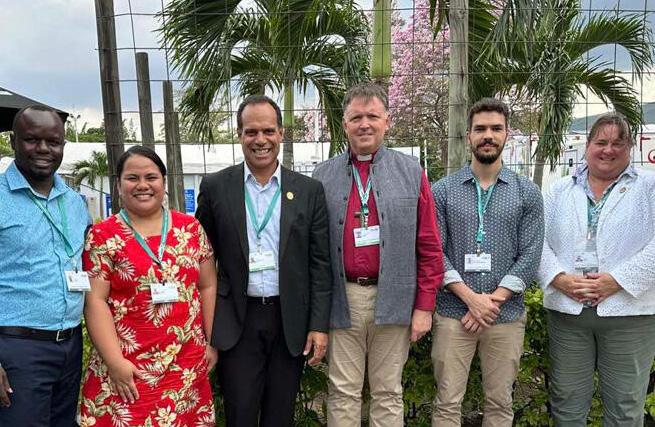
Dr Rachel Mash, Environmental Coordinator for the Anglican Church of Southern Africa, describes the growing impact of climate change:
“We are seeing more extreme weatherflooding, drought and heatwaves. The poorest communities are most affected.
The future is beginning to look very, very scary. But it is exciting to see how people are getting involved [to tackle the situation]. The top thing that people are doing here is planting trees. This happens at almost every event and is integrated into our life.
It’s also exciting to see the target that the Church of England has set itself in the UK. I have really loved seeing the stories of people putting in heat pumps and raising money for things that they are doing. I would like to say thank you for giving us hope that our brothers and sisters on the opposite side of the world really care and are making a difference.”
Elisiva ‘Siva’ Sunia works for the Tonga Episcopal Unit under the Diocese of Polynesia in the Anglican Church of Aotearoa, New Zealand and Polynesia. She describes how climate change is already affecting daily life:
“I am based in Tonga, mostly working in and around Nuku’alofa, the capital. The biggest concerns people face today are rising sea levels, the cost of living, and increasingly severe cyclones. People worry about their homes, their water, and whether they’ll be able to pass on the land and ocean they inherited to the next generation.
For us in the Pacific, climate change isn’t something we read about in the future –it’s something we see in the tides, taste in the water, and feel in our bodies. The mental and spiritual toll is real too – people feel overwhelmed and unheard.
One of the projects I’m deeply involved in is the Safe and Resilient Church Campaign, which uses the Community Integrated Vulnerability Assessment Framework (CIVA Framework) to help our parishes identify risks and strengthen local response. Through this, I’ve witnessed how faith, local knowledge, and practical tools can come together to care for our people and for creation.
Your leadership matters. Please know that your decisions reach beyond England – they ripple across the Anglican Communion. By committing to net zero, you are standing with frontline communities like ours.”
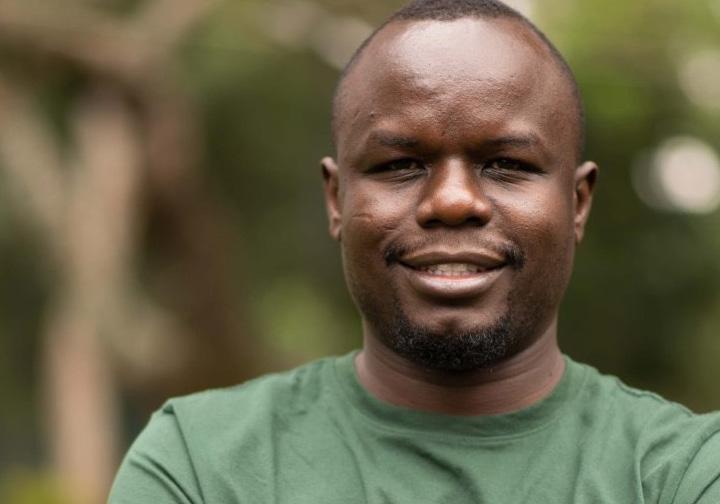
Nicholas Pande, working on climate resilience in Kenya, highlights the impact of drought on farming communities: “In Kenya, the first experience of climate change is through drought. Seventy per cent of people are involved in agriculture and drought really affects them significantly. It’s common to hear people say that they haven’t harvested for three or four seasons and so are in cyclical food insecurity.
Young people have felt that the current leadership is not thinking so much about the future. They are frustrated with the short-term view of things. They know that, if action is not taken, they will not enjoy their years. So, they are trying to play their part in mitigation.
To me, what churches are doing in the UK is very commendable. You are demonstrating what to do and inviting people to take part. I hope that many churches will take this pathway.”
Youth voice
Young people consistently identify climate change as one of their most urgent concerns.
Nine out of ten Christian teenagers express concern about climate change, yet only one in ten believe their church is doing enough.1 The Church’s action demonstrates that we are listening and acting.
St Nicolas’ Junior School, Oxford
Three air source heat pumps were installed in schools across the Oxford Diocese in 2025 and St Nicolas was one of them.
The £300,000 scheme was funded through government support, diocesan investment and the Church of England’s Net Zero Carbon Schools Workstream. In the case of St Nicolas, grant funding the 10% Governor Liability due on capital projects in VA schools.
“Our vision is ‘For the good of all’,” says headteacher Keith, “which comes from 1 Corinthians 12. It’s about us improving what we had as a school and becoming more sustainable. This generation of children, and their children are going to be really badly affected by this, so we have to think about what we do, and take steps like this.”
“Last winter it felt a lot colder,” says nine-and-a-half year-old Hector.
“It’s got warmer.”
Eleven-year-old Josh says, “I am concerned about the future of the planet. If we keep using fossil fuels the world will explode.”
“100 % it clearly demonstrates that the Church of England has a clear and defined goal and plan for addressing climate change. Setting this goal shows members of the public that the church has a clear direction of what they would like to do, emphasising that it’s intentional rather than symbolic. As well as this, a net zero target helps everybody part of the Church to feel a sense of shared responsibility not just those in leadership positions.”
Phoebe
Haslemere
Parish youth group
Under the scheme, half of the school and church’s electricity bill will be covered.
St Luke’s Church and Primary School, London
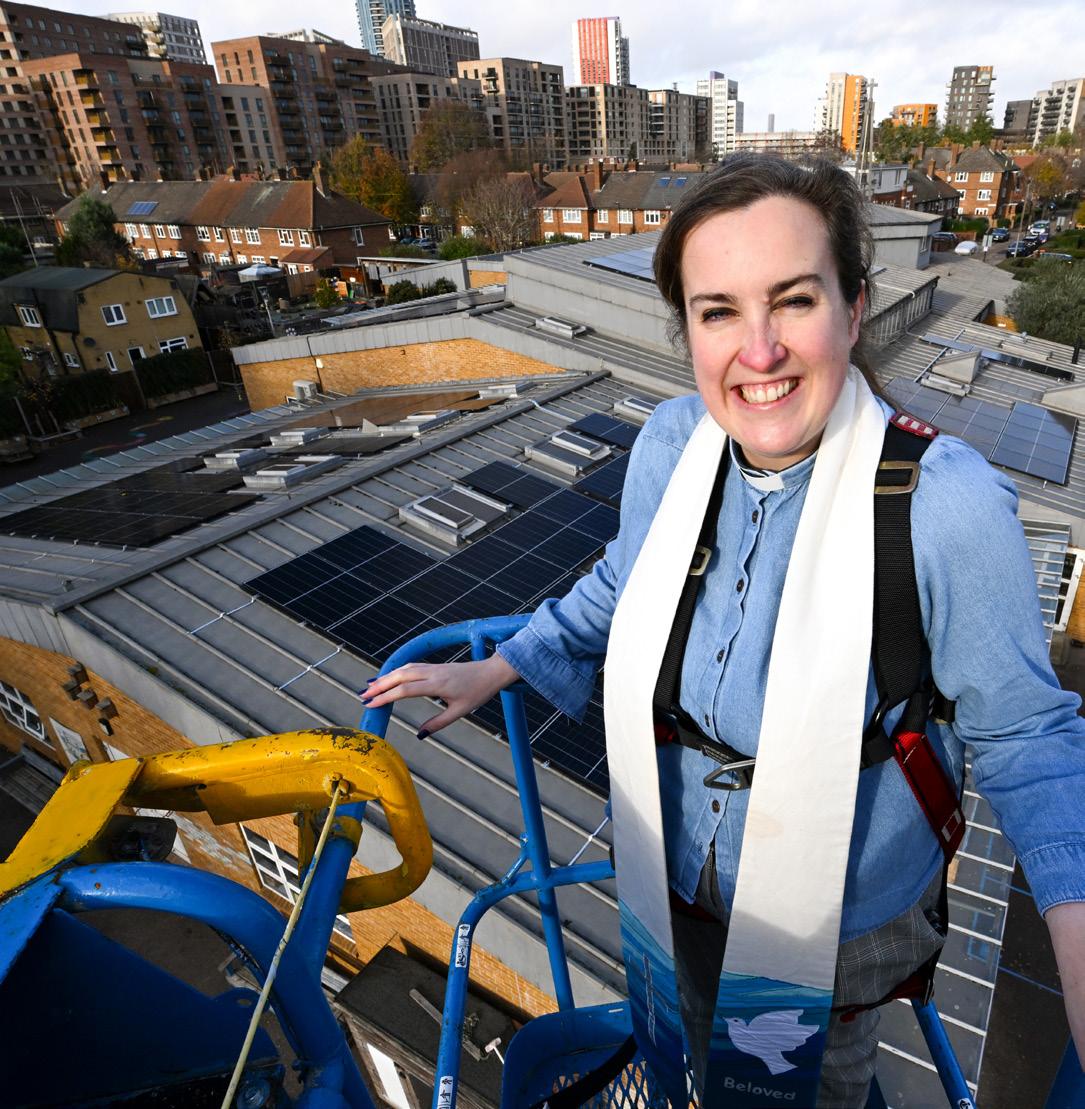
St Luke’s in Canning Town is piloting a solar sharing scheme with E.ON. St Luke’s is a church and a school combined - the only one in the country where the church and the school share the building.
221 solar panels installed on the churchschool building now provide cheaper electricity to both the site and 70 local homes.
Revd Amy Stott said: “As a church we want to be a blessing in the local community. We run a social action project and a food bank, and now we can provide people with cheaper electricity. I hope it will help people to see the church differently,” she adds.
While the project is a blueprint for more sustainable and efficient energy, it is a pilot and is not directly replicable by others yet.
Looking ahead
Julian Atkins is the Church of England’s Net Zero Carbon Programme Director and writes here about the ambitious target and his vision for the Programme over the next few years.
December 2025 marks the end of the development phase of the Net Zero Carbon Programme and the beginning of our transition into delivery. We have achieved significant progress in our first three years as this Impact Report shows, with more congregations now engaging and taking their own steps towards our shared ambition. This growing momentum gives real confidence for the work ahead.
We have learnt an awful lot about how to make our varied and precious buildings more sustainable. Moving away from fossil fuels will take time and ingenuity. For many buildings, progress will happen in stages. In response, we will offer more flexible packages of practical and financial support over the next three years, while continuing to focus on our highest-emitting churches.
Work will also continue on decarbonising our cathedrals, clergy houses, church schools and
other properties and as the early projects reach operational maturity we will begin work to monitor and evaluate their performance and value.
While many projects have helped churches become more sustainable and have helped bolster wider missional activity, not every project has been a resounding success. These experiences are an important part of our learning. They are helping us refine our approach, and we will continue to support projects where further work is needed.
However, we now find ourselves operating in a very different political and economic landscape than when the Programme started. The cost-of-living crisis and financial challenges have focussed minds on more immediate concerns and weakened the political consensus on strong climate action.
And the impacts of conflicts and wars, most notably in the Middle East, on the global economy and energy prices has re-ignited the debate on how best to ensure our energy security.
Throughout all of this turmoil though, we have heard the call from our brothers and sisters across the wider Anglican Communion to remain steadfast in our commitment to
reducing our carbon footprint. In doing so, we bear witness to loving our global neighbours as ourselves and demonstrate our deep care for God’s creation.
The 2030 ambition set by General Synod was an act of faith and a call to action. The devastating impacts of climate change, through extreme storm events, heatwaves, and extended periods of drought or rainfall reinforce the need for action.
As Christians, caring for the earth and everything it sustains is part of who we are as followers of Jesus Christ. Our work is a marathon not a sprint and requires patience and persistence.
We know that every kilogram or emissions we reduce now has greater value than the same kilogram reduced later, which is why we will continue to make as much progress as humanly possible.
Julian Atkins Church of England’s Net Zero Carbon Programme Director
Plans for the next year and beyond
Change is happening at every level and it’s worth acknowledging how far we’ve come in just three years. Now, we want to build on that momentum.
Over the next triennium, we’ll continue the same strategic approach: strengthening what works, embedding good practice, and supporting buildings and communities at different stages of the journey.
The work of the Net Zero Carbon Programme over the period 2026-28 is structured by 11 workstream strategies. These explain how the programme will support the Church to meet the Routemap milestones and deliver the changes needed along the way.
We’ve built greater flexibility into our workstreams, so we can meet people and buildings where they are.
There are six workstreams based around different types of buildings, plus five enabling categories that are foundational and support delivery of the programme as a whole:
As we move forward as a Programme, each workstream will focus on the following as priorities.
Decarbonising Churches
Ensure parish incumbents, staff, PCC members and volunteers have access, at the right time, to high quality guidance and advice in delivering net zero projects.
Data, Evaluation and Learning
Track and report carbon emissions accurately, and use energy and emission data as a basis for evidence-led decision making.
Ensure knowledge gained from project implementation is captured and leveraged to inform guidance and future approach.
Be curious and flexibly explore new approaches and information as opportunity arises. Leverage this to share back out to the community.
Support top 20% of churches/church halls to a) understand their decarbonisation journey and embed into existing plans; b) develop and deliver decarbonisation projects.
Support remaining 80% lower carbon emitting churches/church halls to understand their decarbonisation journey, embed into existing plans and partial support to develop/deliver decarbonisation projects.
Avoid like for like oil/gas boiler replacements
Decarbonising Cathedrals
Support Cathedral Chapters to develop their decarbonisation strategies, undertake energy saving interventions and provide exemplar projects for their dioceses and the heritage sector as a whole.
Decarbonising Housing
Embed home decarbonisation as part of business as usual (BAU) portfolio management, as is affordable to run.
Support dioceses to develop and deliver energy efficiency / decarbonisation works in housing.
Decarbonising See Housing
Implement appropriate decarbonisation work for See Houses during refurbishment in vacancyin-see, focusing on fabric first measures and upgrade of mechanical and electrical controls/ plant. Implement move to non-fossil fuel heating only at end of heating system life.
Decarbonising Schools
Enable good strategic planning through access to high quality and consistent data.
Work with DBEs to support in-scope schools to plan and deliver their decarbonisation journeys, including grant funding to support VA schools with the 10% Governor Liability for capital decarbonisation projects.
Develop and implement a strategic approach (Toolkit) for schools to fund holistic decarbonisation measures outside of public sector decarbonisation grants.
Decarbonising Other Buildings
Understand the portfolio of Other Buildings (which is currently not well understood) and confirm which of these are in scope.
Collect accurate energy data for in scope Other Buildings to support accurate carbon footprint calculation and enable assessment of future programme support.
3 Fundraising to support Net Zero Carbon
Raise funds and securing strategic partnerships at a national church level.
Support dioceses and parishes to fundraise for net zero carbon.
4
Procurement to support Net Zero Carbon
Support all churches to procure the products and services needed to decarbonise their buildings in a way which offers the financial benefits of collective procurement and addresses the need to offer products or suppliers which are appropriate for a conservation setting.
2
1 Being Christians for Creation
Engaging on and Embedding Net Zero Carbon
The whole of the Church of England understands the work of the NZC Programme and how to access it.
All churches are inspired and encouraged to engage on the environment and net zero carbon as mission.
Dioceses are able to support parishes to deliver net zero projects which hit the sweet spot of conservation, low carbon, occupant comfort, fit for mission and affordability – making our buildings more welcoming and affordable to run.
The whole of the Church of England recognises that action on climate change is part of our commitment to the worldwide Anglican communion, and all our global neighbours, and hears their lament.
Build strong relationships and partnerships with ecumenical partners, and kindred organisations across the Heritage and decarbonisation sectors to share knowledge and learning.
Participate in sectoral projects and partnerships which advance collective action on net zero implementation.
This document has been prepared by the Church of England Net Zero Programme team. If you have any questions, please email nzcprogramme@churchofengland.org