FOUNDATIONS

SUPPORTING KINGDOM BUILDING

SUPPORTING KINGDOM BUILDING
Linking places, people and purpose to share the Good News
Also in this issue:
Flames of hope and lights in the valley
Creating vibrant spaces where faith and community meet
Preparing for the Quiet Revival

In 2025 we have marked 15 years of the Lord’s faithfulness to Church Growth Trust (CGT). It has been a moment to pause and give thanks, not only for what has been achieved since 2010, but for a much longer story.
This year also represents 120 years since the East of England Evangelization Trust (now known as Stewardship) was established to undertake the work that CGT now carries forward. That Trust was one of several formed in the early twentieth century to hold properties for the Open Brethren movement. Their trustees were driven by a clear and compelling vision; that gospel halls and places of worship should remain open for assemblies sound in doctrine, committed to gospel proclamation and faithful in teaching the truths of Scripture.
At Church Growth Trust, we share that same conviction. We believe these buildings matter — not simply as bricks and mortar, but as places set apart for worship, witness and discipleship. That is why we invest significant time and resource in supporting occupying churches and assemblies, helping to maintain buildings well, navigate legislation, undertake improvements and think strategically about how their buildings can best serve the work of the Gospel. This year alone, around 30 building projects are underway, with many more in development, and we continue to help churches access funding to make these plans a reality.
In this edition of Foundations, we build on that theme. You will find practical guidance and examples to help you use your building wisely; not simply as a place to meet, but as a God-given resource for mission. Our prayer is that this issue will encourage you to look afresh at what the Lord has entrusted to you and consider how it might serve both your fellowship and the wider community for Christ.
If there is any way we can support you in keeping your building in Gospel use — or if you know others who may benefit from our help — please do not hesitate to get in touch.
In His service
Giles Arnold Chief Executive of Church Growth Trust
giles.arnold@churchgrowth.org.uk
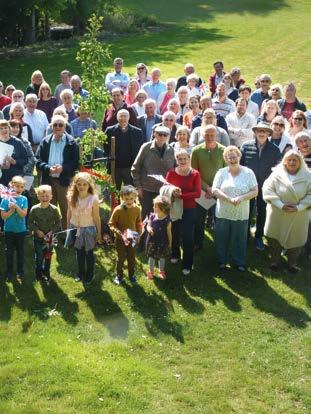
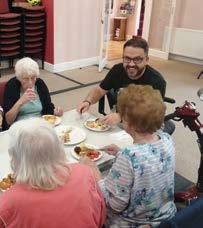


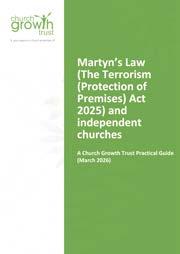
Our bank of useful resources has been added to with a new Practical Guide on Martyn’s Law (The Terrorism (Protection of Premises) Act 2025), now available on our website. While full government guidance is still awaited, the guide helps churches understand whether the Act is likely to apply to them. In general, churches with fewer than 200 people attending are not covered, though the advice remains good practice. Where 200 or more attend, procedures will be needed, with additional measures for larger events.
The guide offers clear, practical steps to help churches assess risks, plan ahead and keep people safe.
Scan the QR code to download the guide and share it with your team.
Church Growth Trust is always looking for good news to share. If you have an encouraging story about the ministry in your area or a building project you are working on, please contact our Communications Manager.

Is the title to your church property registered with the Land Registry?
Many churches have never registered the legal title to their property. Often this is because trustees have remained unchanged for many years. In other cases, trustees may simply be unaware that registration is now required in certain circumstances.
Since 2009, when a new trustee is appointed to an unincorporated charity that owns land or buildings, the title to that property must be registered with the Land Registry. This requirement does not apply in the same way to charitable companies or CIOs, but it is particularly relevant for churches operating as trusts.
Registering your church property title is not just about meeting legal requirements. It also provides important protection and practical benefits.
Registration helps to:
• Protect your property from someone attempting to register ownership of part or all of it without your knowledge
• Reduce the risk of boundary disputes or neighbouring land encroaching onto church property
• Remove reliance on paper deeds, which could be lost, damaged or destroyed.
Registration brings clarity, security and peace of mind for the future.
How custodian trusteeship can help
Once a title is registered, it normally needs updating whenever trustees change. For churches where trustees change regularly, this
can become time-consuming and costly. Church Growth Trust’s custodian trusteeship service offers a simple alternative. Church Growth Trust holds the legal title to the property, while decision-making responsibility remains with the local church trustees. No changes to governance or church control are required.
This avoids repeated title transfers, legal work and Land Registry fees, and prevents titles remaining in the names of former trustees.

Custodian trusteeship is particularly relevant for unincorporated charities and churches that own land or buildings. The service applies only to property ownership.
To learn more, read the guide Church properties – do we need to register the title?
or contact Giles Arnold
T: 01536 647164
E: giles.arnold@churchgrowth.org.uk.
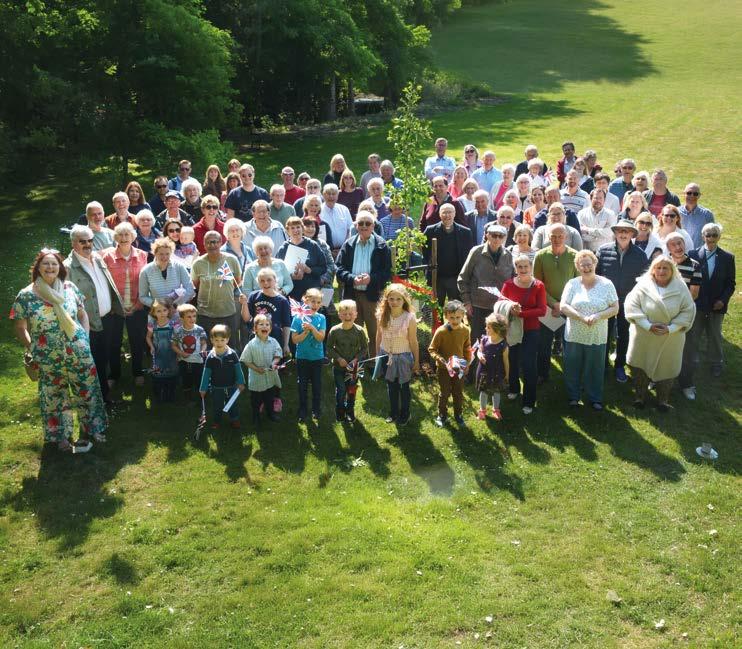
Henri Nouwen said, “Christian
community is the place where we keep the flame of hope alive among us and take it seriously so that it can grow and become stronger in us.”
Alternative expressions of church which engage with local communities are a vital way to share the Good News, and to ensure that twenty-first century church is just as relatable and vibrant as it was designed to be.
In the Suffolk village of Brockley, Simon Ladd,
Counties Regional Connector and Senior Leader at Brockley Baptist Church, is seeing regular growth in church attendance and local relationships. His ethos is to go out into the community and join in with what is already going on, rather than to start up new initiatives.
“When I first arrived, the chapel had virtually no connection with the village. I encouraged the congregation (around ten people) to look in the village magazine, find an activity that they were interested in and join in. Options included, book club, craft club, indoor bowls, table tennis, coffee morning, monthly breakfast.”
“We didn’t have the person power to start new initiatives – but since we were trying to build relationships, joining in with what was already there was the best way forward.”
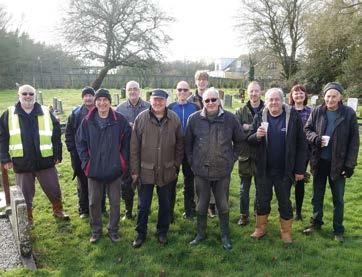
A working party cleaned out the pond and cut back the brambles and we were part of that. A few weeks later, we were doing a cleanup of the chapel yard and all the people we had helped came to offer assistance. Some months later, the village community council folded so we were asked to run the Harvest Supper, which we happily did. Next, we were invited to host the Carols Around the Christmas Tree event. These two are significant markers in the annual life of Brockley and we were honoured to be invited to be part of them.”
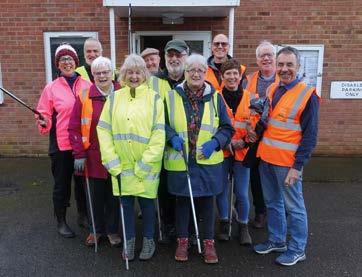
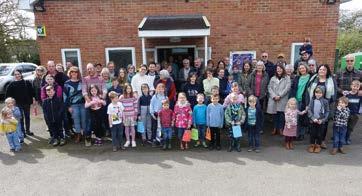
Over the past year, the chapel has built an extension with an accessible WC and a large kitchen, making their premises multi-purpose. Community events such as soup lunches are proving popular. A local man came to the one just after Christmas. When Simon first met him, he said,
“I’ve lived in the village for twentyeight years and you’ll never get me into the chapel.” He, and many other locals, are now coming regularly to events and building relationships with church.”
The chapel is firmly on the map and attendance is growing steadily. Over the past five years, there have been around ten new people joining every year and in 2025, there was a congregation of around fifty-three, all through personal invitation and getting involved in the community. “We have begun to run homegroups,” explains Simon. “We want to equip our church members to share the Gospel and make good relationships with our neighbours.”
Simon has a question for readers.
“Here is a challenge. If you asked the people in your community, ‘Of what value is this church to you and this area?’ what would they say? Think of ways you could make their responses more positive.”
Most people will happily give feedback to such a question and this is a technique which can build engagement with your community.
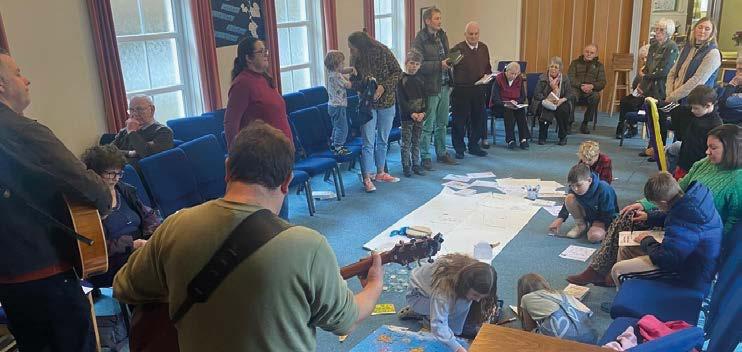
On the other side of the country, in the Taw Valley in North Devon, relational bridges are being built. Chris Eales stepped into the role of pastor of the Taw Valley Community Church (TVCC) in June 2025.
“The church (formerly Umberleigh Christian Fellowship) had 18 members in their seventies and eighties when I arrived. As a result of a recent church revitalisation project, we were looking to gather more people to do church alongside the congregation, form a missional community and reach out to the scattered hamlets and villages in the Taw Valley. Places to gather are in short supply, with hidden pockets of poverty and challenges around isolation and loneliness. We felt that it was the right thing to graft something on to what was already there, rather than starting up something completely new.”
The original congregation meet at 11 am on a Sunday for a traditional service and hold a Bible study on Tuesday morning. Four or five families, including Chris’s, meet at 4 pm that day for a more informal time of worship and discussion, then have a discipleship meeting mid-week. On every fourth Sunday, both
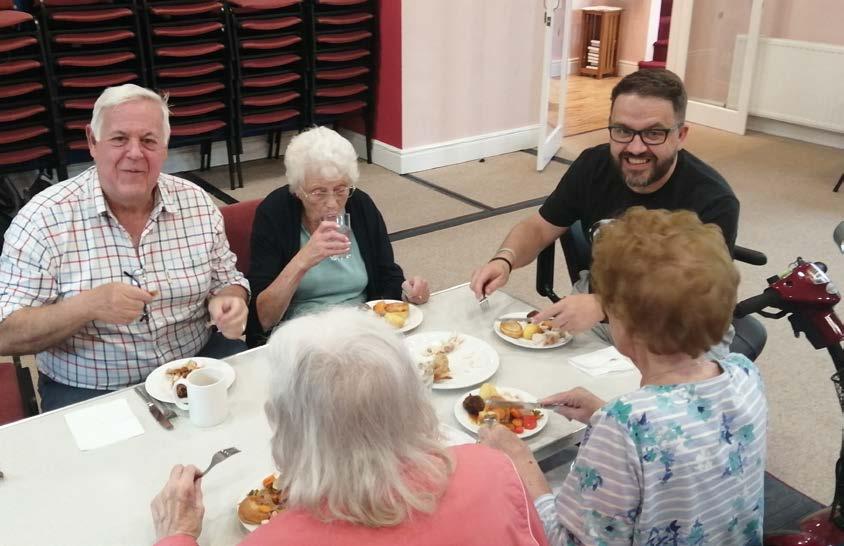
congregations have lunch together, then gather to pray and open the Bible together.
“I was a bit nervous when we suggested it, but there was a real sense of unity, a positive response and we are finding that people are really engaging with each other.”
“Eating together gives us common ground and a chance to get to know each other. We are one church with different expressions.
“In September, we had a vision lunch to discuss the way forward, our Christmas service was
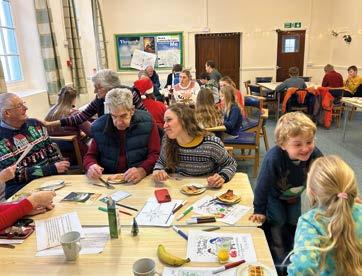
brilliant, and we enjoy church meals together to build on our sense of being one church with two congregations.”
TVCC is a tiny church with two very small congregations of under 20 people each. They do not have the resources for children’s and youth work or worship leading, but they are being creative with what they do have and finding alternative expressions of church.
“We have established a pattern of men and women meeting together in the local community, whether that is in the pub, at a local café or at someone’s house. Last year, we got together for church on the train. A few of us got on at Barnstaple, others at Umberleigh, and we prayed together for our community in the valley while we travelled through it, then got off at Eggesford and had hot chocolate in the café. We prayed and chatted, then got back on the train. Even with a handful of us, it was a public affirmation of our faith and gave us a chance to get together and reach out to God. We meet monthly with the church at High Bickington as we do church outdoors in the woods. God is stirring us up and we are finding new ways to share the Good News where we are.”
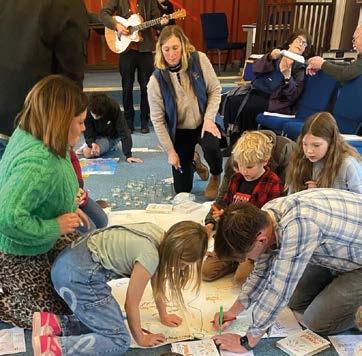
TVCC ran a well-attended Light Party in October and put on a wreath making afternoon at the beginning of December. To their amazement, 20 people came along, 15 of who had never set foot in the church building. All were invited to the Christingle brunch and the Christmas carol service. New relationships are blossoming and people from a scattered and rural community have a new place to gather.
Chris is clear about the pioneering nature of working with a tiny congregation in an isolated place.
“We are not building a megachurch. I see it as lights coming on in the valley, and those lights can be gatherings in homes, a couple of guys sharing their faith over a pint in the pub or a handful of believers getting on the train to pray for their community. We want to have a conversation and engage with people who don’t do church.”
He has sound advice for those in the same position.
“Never go it alone. You will burn out. Be open-minded and focus on being primarily a worshipping community centred on Jesus. Look for people who can come alongside you. It is challenging doing this work, but it is so fulfilling with God’s help.”

By Ruth Leigh
Ruth is a freelance writer who works with a number of Christian charities.
Church buildings can be powerful centres for mission and community life. Jonny Heaney, CGT’s architect, shares practical insights from projects in Essex and Brighton to inspire churches to make better use of their spaces.
’Bring the whole tithe into the storehouse, that there may be food in my house. Test me in this, says the LORD Almighty, and see if I will not throw open the floodgates of heaven and pour out so much blessing that there will not be room enough to store it”.
Malachi 3:10
Buildings are an essential and highly valuable missional resource for churches. In this light, this passage from Malachi can be seen as offering a practical model for how a local church building can serve as a central hub, supporting ministry and providing practical outreach to the wider community, including those in need.
Opening the door to community
A welcoming building frontage is one of
the simplest ways to make a church feel approachable. Many older churche buildings were designed with simple minimal frontages, using practical construction methods that reflected a prudent approach to resources. These designs were sensible and cost effective, though for those unfamiliar with the building they can sometimes feel unintentionally austere or oppressive.
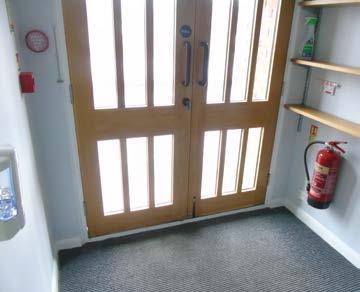
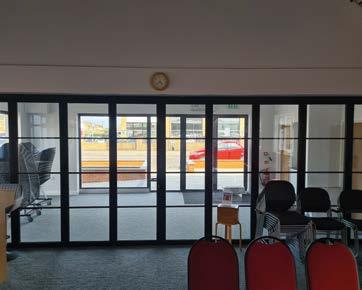
At Church Growth Trust we have supported churches in creating more open and inviting entrances. Fullbridge Church in Maldon reconfigured its interior to provide a spacious welcome area at the front, while glazing was added to the street facing frontage. The result is a bright vibrant and welcoming space that encourages visitors to step inside.
• Consider using glazing or light coloured materials to create a welcoming frontage
• Reconfigure entrances to create a spacious welcome area
• Keep layouts simple but functional to maximise openness
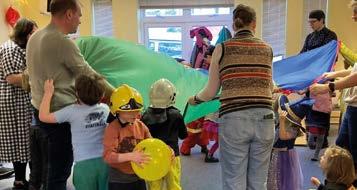
Flexibility does not have to mean having a large space. With a little creativity and adaptable layouts even small halls can become vibrant welcoming places for ministry and community activities. ‘The Dip’ in Hollingdean Brighton run by City Gate Church is a great example. The hall accommodates around 30 people but hosts children’s parties, exercise classes, workshops and local support groups.
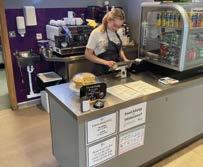
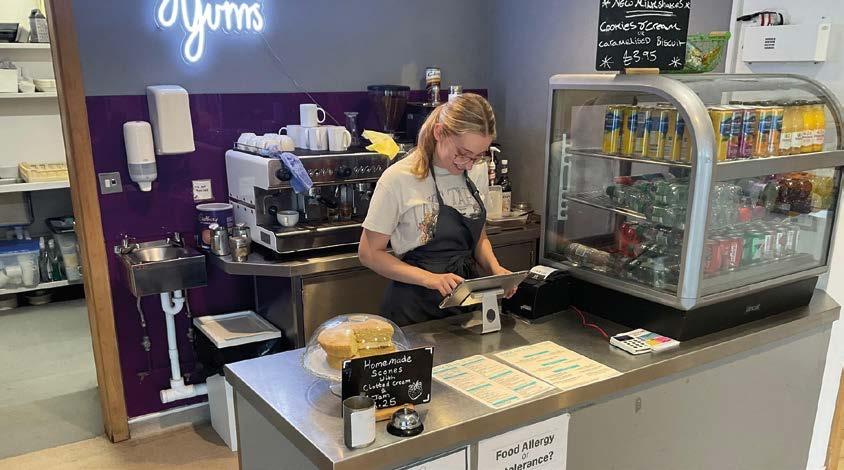
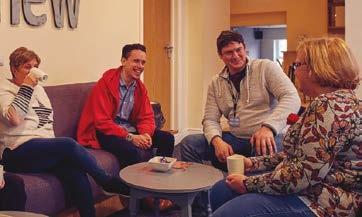
Many churches now feature a welcome area for greeting visitors and informal gatherings before and after services, when refreshments are served. Some have gone further by establishing cafés within their buildings. Miracle House in Wickford is home to Yum Yums, a nonprofit coffee shop run by New Life Church Crouch Valley. The café supports church activities while drawing in people from the wider community who might not otherwise enter the building.
These examples show how relatively simple adaptations can transform church buildings into flexible welcoming spaces. Benefits include:
• Improved spatial flow that supports ministry and everyday use
• More inviting frontage and social spaces that encourage community connection
• Greater sustainability through adaptable, multi-use rooms.
Accessibility should underpin every design decision, ensuring the building can be used by everyone without barriers.
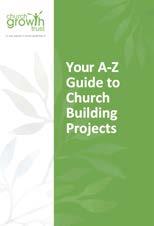
Download Your A–Z Guide to Church Building Projects for practical, step-by-step support - simply scan the QR code.

By Jonny Heaney RIBA CGT Architect
01536 647162
jonny.heaney@churchgrowth.org.uk

Evangelicals generally like to think that there is a definite moment for each person when they became a Christian.
This is the moment when they are born again, made new creations, adopted by the Father and sealed by the Holy Spirit. Perhaps it is not always quite as simple as that. For some, it may be a series of decisions. For others, it may be a gradual realisation that they have acknowledged who Jesus is, what He has done for them on the cross, and have accepted it personally.
When did the first disciples “become Christians”? Was it when they first decided to follow Jesus when he called them on the shores of Lake Galilee? Was it when He breathed on them and spoke of them being His witnesses? Or was it when the Holy Spirit came upon them at Pentecost? Only God truly knows those who are His and when a heart is fully given to Him. What we do know is that for each person it is a journey of faith and discipleship.
That is why the Church is called to make disciples rather than simply converts. Discipleship before and after conversion
Discipleship begins before conversion and continues for the rest of our lives. Tools that help bring people to faith are part of that wider journey. We must never forget that it is the work of the Holy Spirit to open minds and hearts and to draw people to Christ.
At the same time, resources such as the Alpha Course and Christianity Explored have proved very helpful. They provide a non-threatening environment in which people can explore what they believe and consider the basic truths of the Christian faith. They also create a sense of belonging and community, as people eat together and get to know one another. All of this helps people not only to feel welcome, but to begin to belong within a church community.
Helping new believers grow
There are also excellent resources to help
people take their first steps of faith as they make the decision to follow Jesus. A church may decide to write its own material to help new believers understand more clearly who God is, who they are in Christ, and how the Holy Spirit lives and works in their lives. Such material can also help them understand what it means to be part of the body of Christ — discovering and using their gifts — and how to apply Scripture to everyday matters such as repentance, forgiveness, holiness and discipline. Alongside this is the practical call to love those both inside and outside the Church, and to be witnesses for Christ in the world around them.
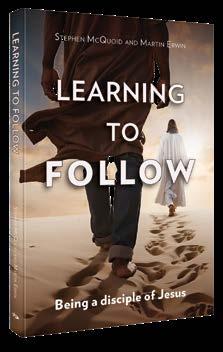
A useful resource recently produced by Counties and GLO Europe is Learning to Follow. It sets out a clear biblical basis for living as a follower of Jesus and has already been used by a number of churches.
The importance of intentional relationships
Resources are helpful, but they are no substitute for real discipleship, which requires time and commitment. We are called to be brothers and sisters in Christ — friends and spiritual parents. We are called to be disciple-makers.
The best way to do this is to be intentional about spending time with those who are being discipled. That includes honestly answering their questions about faith and theology, encouraging them to develop their own relationship with the Lord through prayer and regular Bible study, praying with them and equipping them to witness to friends, neighbours and family.
A close relationship with one or two mature believers can encourage new Christians to remain in fellowship within a local church. It can also help them continue on their faith journey when difficulties arise. Discipling others can be demanding, but it is deeply rewarding. When done well, it enables those who have been discipled to disciple others in turn.
Use the resources available. Rely on the Holy Spirit. And be prepared to work patiently and faithfully at discipling others.

By Giles Arnold CGT’s Chief Executive
Giles has headed Church Growth Trust since 2010, fhaving previously worked fo Stewardship.
Church Growth Trust has 100 copies of Learning to Follow and would be delighted to send one copy free of charge to any church considering using this resource. To claim your free copy, please email enquiries@churchgrowth.org.uk.
Further copies of Learning to Follow can be obtained from the GLO bookshop: www.globookshop.com
Single copy: £5
Pack of 5: £20 (£4 each) • Pack of 10: £35 (£3.50 each)
2010
Founded with Stewardship heritage
Began as a small, faithfilled step from a front room, building on over 100 years of trusted Christian service.
From a front room to 150 church buildings
2012 Merger with Midland Evangelization Trust
Merged with MET, giving more churches secure homes for mission.
2014 First new build church
Miracle House, Wickford creating spaces for growing ministries.
What we do
Helping churches use their buildings for mission
• Stewarding buildings used by 150 congregations
• Holding properties in trust for long-term Gospel use
• Supporting building projects of all sizes
church properties trusted into our care
building projects in the coming year
We work with churches to ensure their buildings are well cared for and continue to serve Christian ministry, through trusteeship, guidance and practical support.
arrow-trend-up
2019 100 properties stewarded
Secure, affordable bases for mission and outreach.
2020
Supporting churches through Covid
Supporting churches with safety and compliance during the pandemic.
2025
150 properties stewarded
Churches across England and Wales meeting and serving in buildings secured for Gospel use.
Behind every number is a local church making Christ known in its community.
We are committed to seeing:
• More buildings secured for flourishing congregations
• More churches strengthened through their buildings
• More building projects enabling outreach and growth
• More churches equipped through training and support
We also pray for God’s continued provision in this work.
“Two are better than one, because they have a good return for their labour: If either of them falls down, one can help the other up.”
Ecclesiastes 4: 9-10
Churches across the UK are discovering the strength of partnership in sharing the Good News with their neighbours. Working together not only strengthens congregations but also opens doors to unexpected opportunities in the community.
Steve Prince is an Elder at the Bishops Stortford Christian Assembly, a longestablished and fairly traditional Brethren
gospel hall. The congregation always had a desire to get out into the town and reach people but struggled to find a way to do it.
Steve takes up the story.
“We heard about a Counties initiative, Neighbourhood Chaplains. We looked into it, twelve of us received the training and I can honestly say it is the best thing we have ever done with regards to evangelism. We identified five hundred homes around our building and divided them into six patches, with teams of two going out to each. We knocked on the door and had a chat, asking after health and wellbeing, offering help with minor jobs and passing over a card with our contact details. Our involvement with Neighbourhood Chaplains began just after lockdown and people were delighted that someone cared about them.”
The Neighbourhood Chaplains team goes out three or four times a year and has established warm relationships with many of the residents on their patch. However, a chance meeting at a Covid vaccination centre opened even more doors and has increased the assembly’s connection with their community a hundredfold.
“One of the team met a Social Prescriber (SP) while having their Covid jab. They were amazed to learn from her that 60% of the people who go to their GP have nothing medically wrong with them. They may be lonely or need help to fill in a form. All the primary healthcare trusts in the UK employ a team of social prescribers and GP surgeries refer people who need non-clinical support to them. Following that conversation, two social prescribers came to our weekly café and said,
“This is just what we should be referring people to. Since then, we’ve developed a fantastic relationship with them and through them, with all the other local care professionals. We are on a WhatsApp group with the Alzheimer’s Society, the police, Age Concern, the fire service and the SPs. We all help each other and it is the most wonderful partnership.”
Since becoming Neighbourhood Chaplains, Steve and his team, and by association, the assembly, are now extremely well-known and respected in Bishops Stortford. The Mayor comes to the café nearly every week, as do local councillors. There is talk of the initiative being platformed at a national SP conference, encouraging them to link up with local churches. The most unlikely relationships have formed, as Steve explains.
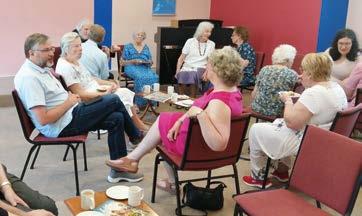
“Our local funeral director is run by two ladies. They heard about Neighbourhood Chaplains and have put us in touch with people in desperate need of a listening ear and some comfort. The hospital also contacts us if someone needs support. You do get opportunities to share your faith, but really, what we are doing is warming people’s hearts. The Lord does the rest. When people are in trouble, they don’t go looking for an atheist.”
Steve has clear advice for churches thinking about this kind of partnership.
“Get in touch with Counties and start a Neighbourhood Chaplains scheme. Ring your local surgery and ask for their SP’s contact details. They will be only too pleased to get to know you, and who knows where a collaboration will lead?”
Sue Ashmole has been the Neighbourhood Chaplains Co-ordinator for over three years. Since she joined Counties in this role, she has seen the initiative’s reach widen out into communities and is enthusiastic about the tailored training programme for new teams.
“We train people how to speak about their faith and how to get Jesus into the conversation.
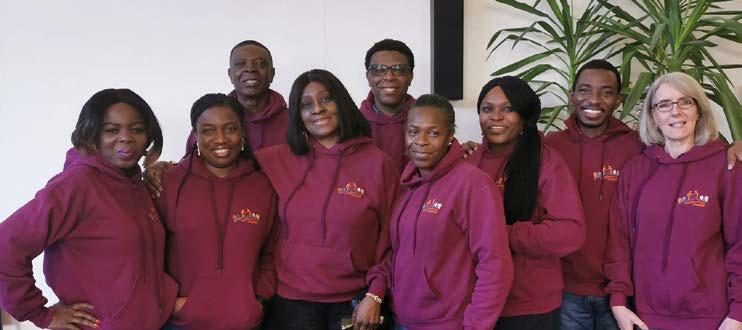
Listening to learn and understand, not to answer, is a key skill. Our advice is always to go out in twos at first while you get yourselves familiarised with the ground you’re covering.”
When starting to build up a Neighbourhood Chaplains team, Sue has some practical advice.
“Befriending, helping hands, prayer support and a team leader are the key elements. One of the new teams I am currently supporting was approached by several retired tradespeople. As a result, their team is very strong on the helping hands element, as they have a number of people who want to keep their professional skills going and who are offering those skills for free.
Don’t try to reinvent the wheel. Go and speak to your local council to find out where the gaps in provision are. Use the skills you have in your team and play to your strengths.”
Rachel Jordan-Wolf is the Executive Director of Hope Together, which partners with local churches to inspire, equip and resource them in evangelism. Their vision is to make Jesus known by enabling His followers to share their
faith in a variety of ways. For a church of any size and in any situation, Hope Together has a huge range of ideas which are completely achievable, tried and tested in the community and support people as they share their faith wherever they are.
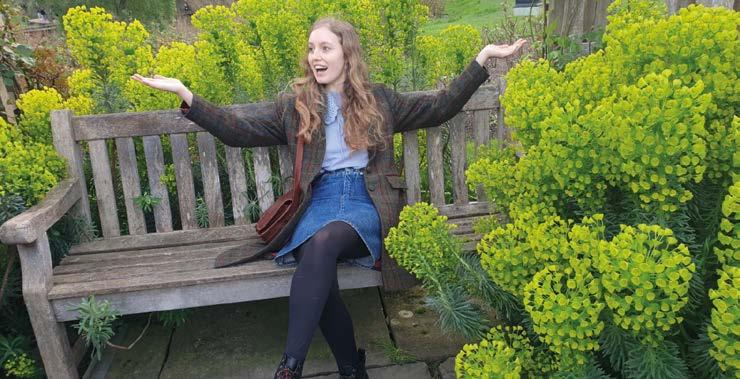
“To small churches with limited resources, I would suggest that they adopt a bench,” says Rachel. “Find one near you and choose a couple of times a week to sit on it for an hour and once you’re there, pray for a divine encounter.
Rachel Jordon-Wolf
This is perfect for people who like sitting down and who have got some spare time. Anyone can do it. When someone comes and sits down next to you, chat to them. Listen and pray. Carry a gospel with you. After a while, people will start to come and see you regularly. This is missional evangelism and anyone can do it. One elderly lady first talked to a young man at a bus stop and then on the bus. He now cycles to her church every Sunday to find out more.”
Recently, Rachel spent time with a former Brethren congregation to help them think about growth and mission. Their pastor decided to do a practical exercise and knock on all the doors in the community. He put up a sheet in the church porch with slots and asked people to sign up. Now they have grown out of their original building and increased their congregation exponentially.
Hope Together host a Talking Toddler network in partnership with the Evangelical Alliance to
Counties Neighbourhood Chaplains
www.countiesuk.org/neighbourhoodchaplains
Sue Ashmole: T: 01782 330 7506 Counties office: T: 01373 823 013
help toddler group leaders be missional. “80% of all parents with a child aged from 0-4 are in touch with a church through various activities for young families. We suggest that you get a few people together to set up a weekly toddler group, advertising Christian stories and activities, helping to equip the under-fives with appropriate spirituality. It’s important to be distinctively Christian, to sing Christian songs, retell Bible stories and offer prayer. It will have an amazing effect on them.”
There is no need to be alone.
Hope Together
Hope Together love partnering with churches. You can find out more about them here: www.hopetogether.org.uk
Talking Toddlers
www.hopetogether.org.uk/ Groups/369055/Talking_Toddlers. aspx
Steve Prince E: stevepprince1954@gmail.com

In this article, John McGinley explores the “Quiet Revival,” highlighting rising faith among young adults in the UK and sharing practical ways churches can welcome and disciple this new generation.
Across the United Kingdom, a surprising story is emerging amid narratives of secular decline and political tension. While church
attendance has fallen for decades, recent data suggests a subtle but significant shift: younger generations are opening up to faith. Sometimes described as a “Quiet Revival,” lived experience and ministry stories point to growing spiritual curiosity and church engagement among Gen Z and young Millennials. For church leaders, the question is how to prepare and respond to this growing openness.
There is a growing spiritual curiosity and church engagement among Gen Z and Millennials. Across the UK, church leaders and mission practitioners are noticing a shift. Rich Wilson, who works as part of the Fusion student movement, reports a significant change in attitudes to faith among students on university campuses. Reflecting on this, he suggests that “we are in the grip of a slow awakening”—a phrase that avoids overstating what is happening while recognising the signs that God is at work.
In my work with Myriad—encouraging new Christian communities to reach new people—I repeatedly hear stories of young adults coming to faith. Recently I attended the baptism of three young men: one found faith researching Jesus online, another encountered God while repairing a church roof and another was invited by a football teammate. Many describe Jesus revealing himself in dreams, prayer or moments of spiritual searching. Many have engaged with Christian content on social media and YouTube. There are also signs of renewed interest in the Bible, particularly among younger readers. The shift is not toward apathy, but hunger.
For pastors and leaders, this presents both opportunity and responsibility. If a young adult arrives next Sunday—prompted by a TikTok clip, a dream, or a late-night Google search—will they find a church ready to receive them?
Lower the threshold, raise the welcome Spiritual openness is rising, but walking into church remains intimidating. Audit your building and website. Is signage clear? Do your welcome teams and online images feel approachable? Churches need not be slick— just authentic and loving. Train congregations not merely in apologetics, but in presence, listening and simple invitations. Commission them as everyday chaplains.
Young adults are hungry for Scripture but often lack confidence in understanding it. Don’t dilute the message. Preach assuming seekers are present yet offer “full-fat” Christianity—prayer, worship, repentance, rich teaching. Depth, not trendiness, sustains faith.
Tend the embers through intergenerational discipleship
The young men baptised had joined a Bible study with retired men and loved it—they were seeking spiritual mothers and fathers. They attended services and prayer meetings, but also started their own peer group, eager to share faith. A spark may draw someone in; only discipleship keeps them walking with Jesus. Small groups, mentoring relationships and shared meals around Scripture are greenhouses where growth flourishes. This season calls for a shift from programmes to relationships—authentic communities marked by vulnerability and prayer.
Reimagine evangelism as hospitality Evangelism is less persuasion and more inclusion—inviting others into family. The early church grew through communities of love and welcome. In such spaces, people encounter Jesus and learn to interpret their spiritual experiences. The world does not need better branding; it needs spiritual families where the lonely and broken find belonging and healing, and all find purpose in Christ.

By John McGinley
John McGinley is an experienced Christian leader, church planter and author. He currently leads Myriad which equips people to make disciples and start new grassroot church communities.

For churches seeking to open their doors wider to the community, hosting outreach events, coffee mornings or community classes brings opportunities and responsibilities. At Church Growth Trust we encourage churches to see compliance not as a barrier to mission but as the framework that makes confident outreach possible.
A church that takes safety seriously demonstrates care for people and mission. Clear policies, up to date training and a safe environment show the community that your church is trustworthy. Trust is central to the Gospel, and compliance strengthens your witness while supporting sustainable growth.
“Good governance does not restrict mission. It gives it firm foundations.”
Common gaps
• Policies written but not reviewed regularly
• Fire exits partially blocked by stored furniture
• No written agreement for external hirers
• Insurance not updated to reflect new activities These are rarely the result of neglect. More often they happen because churches are busy serving. Yet small oversights can create significant risk. A simple structured review each year prevents most problems.
simple four step compliance reset
1. Nominate a compliance lead
Appoint a trustee or senior leader to coordinate safeguarding, health and safety and insurance oversight.
2. Hold a focused review meeting
Bring together your safeguarding officer, treasurer and building lead for a one hour session. Identify what is current, what needs renewing and what may be missing.
3. Check your key documents
Confirm review dates on your safeguarding policy, fire risk assessment, insurance certificate and risk assessments for regular activities. If any are over twelve months old schedule an update.
4. Set review dates
Prevention is easier than crisis management; diarise reviews and update trustees.
Before your next community event ask
• Are all leaders appropriately trained?
• Has the activity been risk assessed?
• Are first aid supplies accessible?
• Are emergency exits clearly marked?
• Is your insurance valid for this activity?
CGT’s downloadable Compliance Checklist walks through these areas step by step and helps allocate responsibility clearly.
A welcoming church is an accessible church. Level entrances, step free access, accessible WCs and thoughtful layout choices make your building usable for everyone. These adjustments may seem small, yet they communicate that all are valued and included. When a church is visibly safe, well organised and prepared it communicates something important about the God it serves. Order, care and responsibility reflect His character. Compliance is not merely paperwork. It is the assurance that everyone who walks through your doors is safe, respected and able to encounter Christ without unnecessary barriers.
Take time this spring to review your current practices, involve your leadership team and make use of the resources available from Church Growth Trust. Alongside the Compliance Checklist you can access practical governance guidance and download Your A-Z Guide to Church Building Projects - scan the QR code opposite.
By being safe and ready to serve your church can open its doors with confidence and provide a secure and welcoming environment where lives can be transformed.
If you are in a CGT building and wish to discuss any issue relating to these topics, please contact CGT’s Property Manager, Jonathan Bennett.
For general enquiries about compliance, or if you are not in a CGT building, please email enquiries@churchgrowth.org.uk where our enquiries team will be happy to help.

By Jonathan Bennett CGT Property Manager
jonathan.bennett@churchgrowth.org.uk
T: 01536 647075
M: 07729 082502
Compliance Checklist
For step-by-step compliance support
Your A-Z Guide to Church Building Projects
Practical guidance on planning and managing building projects to maintain a welcoming, safe and usable space
Making Buildings Fully Accessible
Practical guidance on accessibility improvements to ensure everyone feels included.
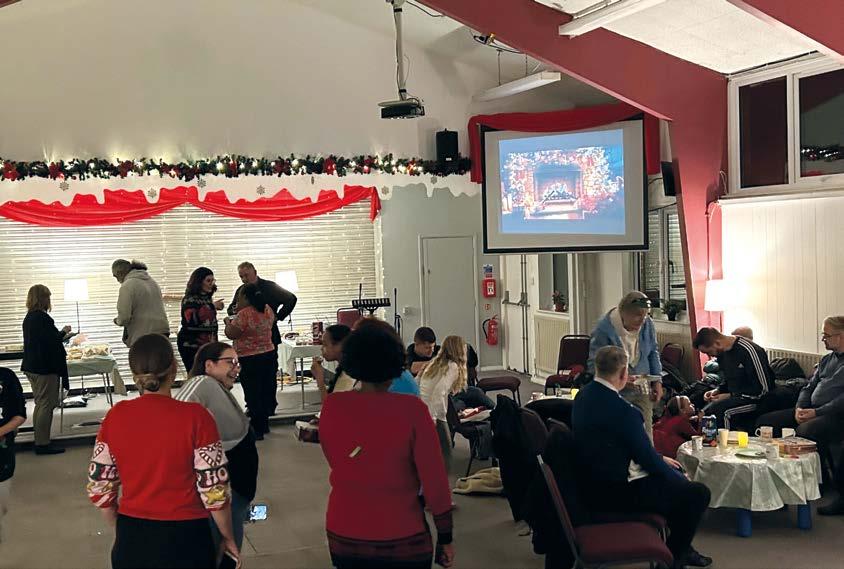
In communities often defined by statistics and headlines, God is quietly at work through faithful, relational presence. In New Addington, one small church is discovering that transformation begins not with programmes, but with prayer, partnership and becoming part of the story God is already writing.
“Be devoted to one another in love. Honour one another above yourselves. Never be lacking in zeal, but keep your spiritual fervour, serving the Lord. Be joyful in hope, patient in affliction,
faithful in prayer. Share with the Lord’s people who are in need. Practice hospitality.”
Romans 12: 10-13
Five miles southeast of Croydon is New Addington, an estate built 90 years ago on a vast expanse of farmland. The First National Housing Trust bought nearly 600 acres of the countryside in 1935 to build what they called a garden village, complete with two church buildings, village green, shops, cinema and houses. Four years later, partly built, the onset of World War Two stopped construction and when peace came, more land was purchased for extensive development. Those who had
been bombed out of their houses in the East End took up residence, but the relative isolation of New Addington and the lack of facilities led to its nickname of Little Siberia.
A survey in 2013 claimed that it was the worst part of Croydon in which to live, based on unemployment, crime, public transport accessibility, life expectancy, school exam passes and access to open space.
Today, New Addington has around 23,000 residents packed into two square miles. It is a massively deprived area, one of the 250 communities in the UK chosen by the government to benefit from their Pride In Place programme. However, God is at work on the estate and He is doing great things.
Dave Bryars, the pastor at Castle Hill Church, takes up the story.
“My wife and I moved to the estate about 13 years ago. A little gospel hall on our road, Worsley Chapel, was starting to come to the end of its life. We stood outside and prayed, telling the Lord we wanted the building. It was a radical prayer, because we were worshipping somewhere else and there was no prospect of the resources needed to plant a church. During lockdown, I was working alongside an elder at my church, Richard Howes, to find a safe place for people to gather outside. We had fellowship every week at a local park. One Sunday it began to rain, so we asked the elders if we could look for a building to meet in. Croydon Jubilee Church handed us the keys to the building my wife and I had prayed for. The building was made available through Church Growth Trust (CGT), enabling the church to be rooted in the heart of the community. Four years ago, we planted Castle Hill Church there.
As always when God has a plan, He placed
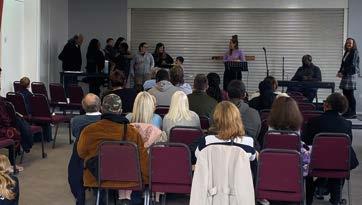
people with a heart for the estate together. With the help of Richard, they put together a proposal and three churches joined together to financially support the plant. At the same time, a couple who used to go to the chapel started prayer walking around the estate six months before Dave got the keys, as they felt the Lord telling them He was going to do something.
“It was a joint vision,” explains Dave.
“Everything was knitted together wonderfully with God’s grace.”
Dave and his wife were already known on the estate, having lived there for eight years before the plant. Being neighbours first and members of a church second has served them well.
“From the start, we didn’t want to move in and start setting new initiatives up. There was already plenty going on and we simply got involved with that. For us, it’s all about partnership with our community. From the beginning, Richard believed that Jeremiah 29:7 was important for us.
‘Also, seek the peace and prosperity of the city to which I have carried you into exile. Pray to the Lord for it, because if it prospers, you too will prosper.’
“So we didn’t start a foodbank, but offered to help out with an existing one. We made the decision to support social action already going on. About a week after we opened the church, I was invited to join a community group, Renew New Addington (RENA). It is the
beating heart of the neighbourhood, with police officers, the leaders of charitable organisations and councillors making up the membership. It is probably one of the most wonderful expressions of community I’ve ever come across.”
RENA is attended by all the leaders on the estate. Pathfinders is a local community group which runs the carnival, the New Addington Facebook group and a variety of drop-ins, and acts as the central hub of information for the estate. It too is part of RENA.
“Last year, Pathfinders decided it was Castle Hill’s turn to be blessed and organised someone to replace all the windows at the chapel for free. They had recognised our desire to support the community and decided it was time to support us. Our relationship with the estate is just wonderful.”
Castle Hill began with around 25 members and now it has grown to around 60. However, all the growth has come from people talking to each other, from relationships built up naturally. Because Dave is involved with all the key community groups, he and the church are respected. Although most of them aren’t Christians, the people in the organisations are happy to advertise Alpha courses and anything else the church is doing. Over the past four years, all of the intentional relationships and community engagement has led to transformation on the estate, as the church works in partnership with other organisations.
“A local guy walking his dog started chatting to a church member who was also a dog walker. She gave him a Christmas card and now he comes along on a Sunday. He seems compelled to join us – he can feel the love that is in the room and wants to find out more. God has showered His
grace upon us. Half of the congregation are part of the initial plant, the other half from the estate. There is such unity amongst them all and I think part of that is because we’ve taken the time to build trust with our neighbours.”
Castle Hill does not have a large congregation or resources. They are not trying to reinvent the wheel.
“I would say to any other church which is on an estate or in a big community, get involved with your local groups. They will know everything that’s going on and will have existing relationships with people. Attending RENA meetings and chatting over a cup of tea afterwards has benefited our church so much. We are only a small handful of people, but we are part of the community and well thought of by our neighbours.
We prayed, listened, got to know people and prayer walked and the result has been that we are now at the heart of our community, making missional relationships and experiencing the joy of seeing new people coming to join us.”
Show up before you speak up: Attend existing groups and listen first.
Build on what’s already working: Support local initiatives rather than starting your own.
Be genuinely helpful: Offer practical help, not just church invitations.
Follow the relational threads: Small conversations often lead to big partnerships.
Stay consistent: Trust is built through long-term presence, not projects.
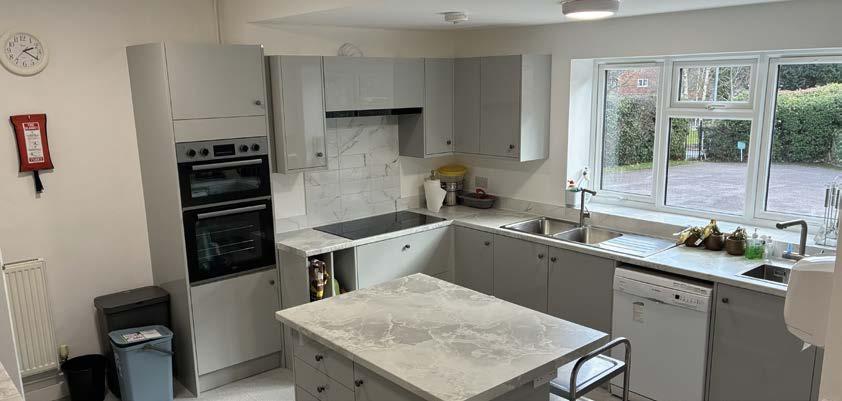
Marley Chapel — formerly Marley Hall — has entered an exciting new chapter. Home to New Zion Christian Fellowship since 1998 and owned by Church Growth Trust (CGT), the chapel on Cole Green Lane has recently completed a practical and transformative extension to expand its ministry impact.
The project addressed long standing space limitations that restricted key areas of church life. Before the work, the congregation was operating with a small kitchen and oversubscribed storage — challenges that particularly affected hospitality and the growing Foodbank outreach in the local community. The simple but purposeful response was a single storey extension at the rear of the building.
The result is a much larger, more functional kitchen that better supports weekly church activities, community gatherings and fellowship. In addition, a bigger storeroom now enables more efficient organisation and increased capacity for foodbank supplies — a practical boost for a ministry serving vulnerable households in Welwyn Garden City.
CGT worked closely with the church throughout the journey offering support in design, planning and statutory consents, including
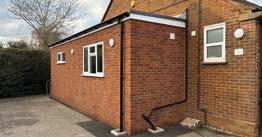
guidance through the additional Estates Management approval required in Welwyn Garden City. With permissions secured, the congregation managed the build themselves, with CGT’s architectural team on hand to advise each step of the way.
The enhanced facilities are already making a difference: strengthening hospitality, empowering outreach and enabling the congregation to serve their community more effectively. Marley Chapel’s new chapter is a reminder of how thoughtful stewardship of buildings can amplify Gospel work and deepen local impact.
If you are in a CGT building, please contact CGT’s Property Manager, Jonathan Bennett.
jonathan.bennett@churchgrowth.org.uk T: 01536 647075 M: 07729 082502

For general enquiries, email enquiries@ churchgrowth.org.uk where our team will be happy to assist.
Chief Executive: Giles Arnold
Operations Director: Garryl Willis
Property Manager: Jonathan Bennett
Trustees:
Neil Walker (Chair), Richard Canham, Simon David, Richard Jones, Dan Leafe, Kevin Russell, Susanna Sanlon, Mark Wallace, Paul Withams.
...your experts in church properties. We aim to help independent churches grow by providing a professional and complete church property management service - from trusteeship to architectural support and everything in between. We also directly support church planting and revitalisation through our links with Counties and GLO Europe.
We do this because we want to help independent churches thrive in their mission within the heart of their community by helping to keep church buildings for their original use and fit for purpose. We are passionate about offering our skills, experience and practical support in a way that serves the Church and sees God’s Kingdom grow.
Church Growth Trust
The Barn, 1 Manor Farm Barns, Baines Lane, Seaton, Oakham, LE15 9HP
01536 201339 enquiries@churchgrowth.org.uk www.churchgrowth.org.uk
Charity number: 1138119