Review griffin
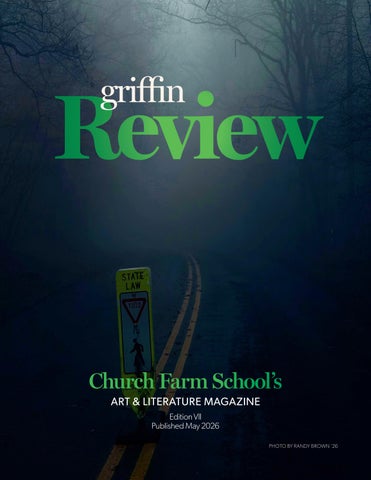
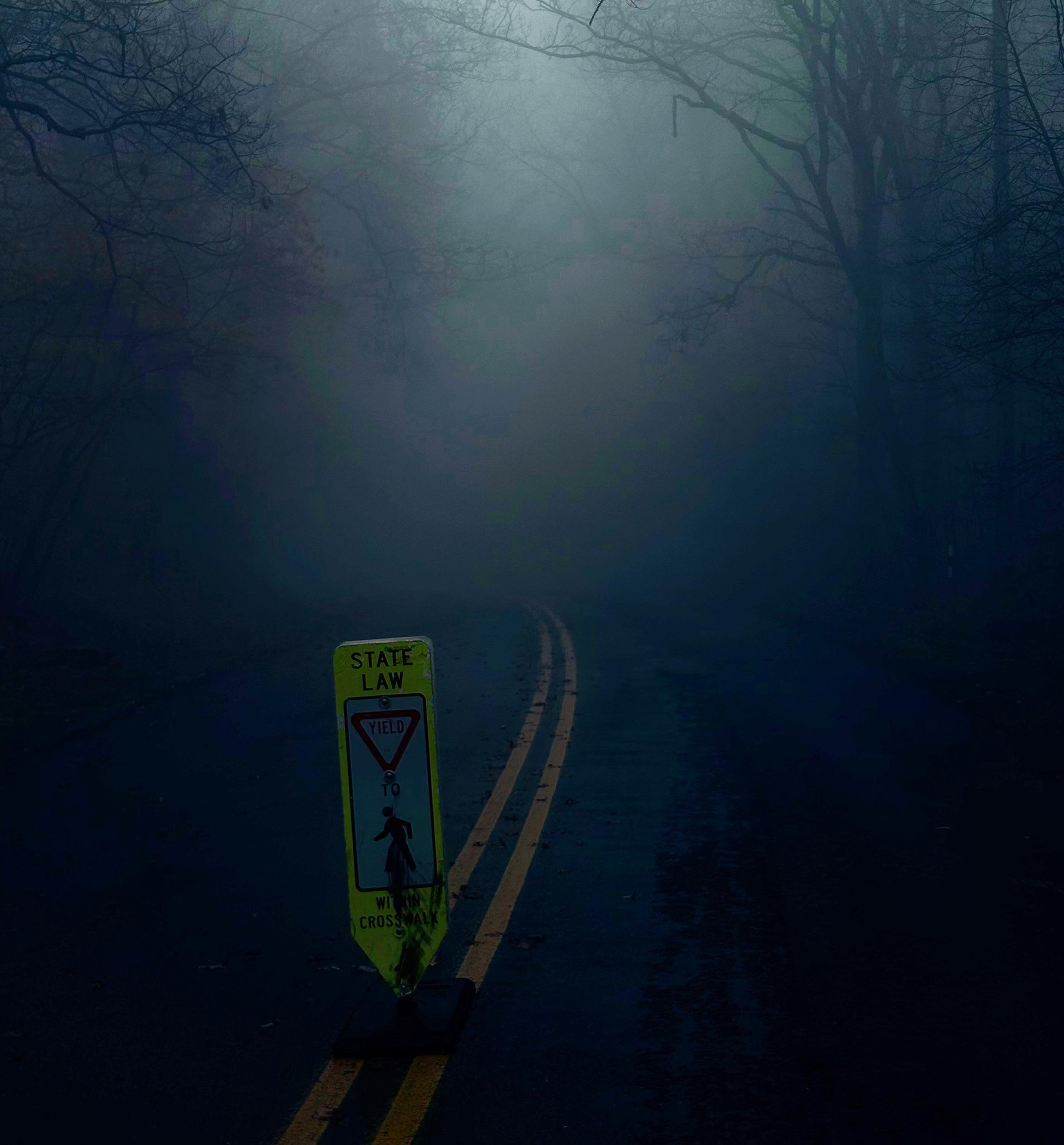
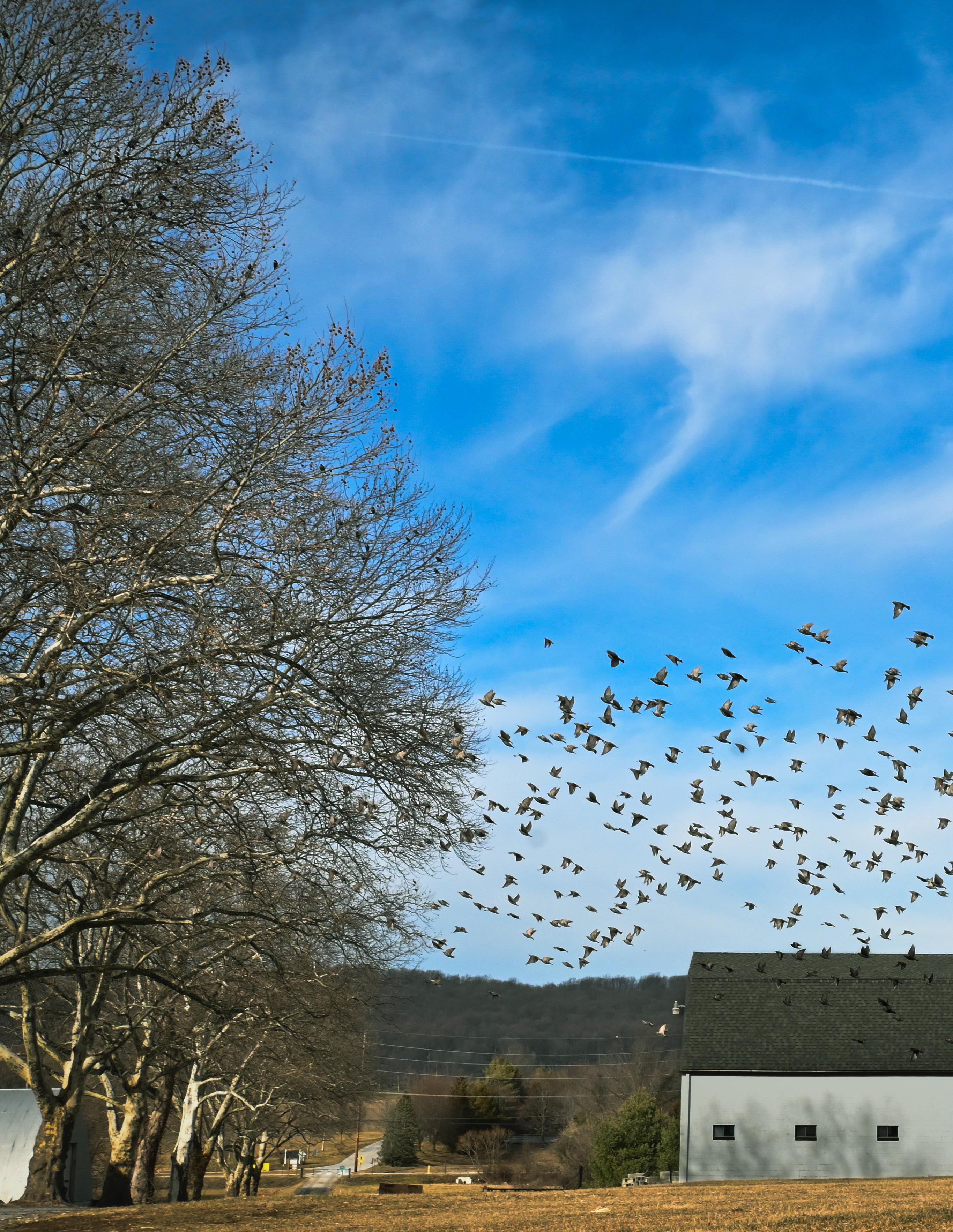
PHOTO BY RANDY BROWN ‘26
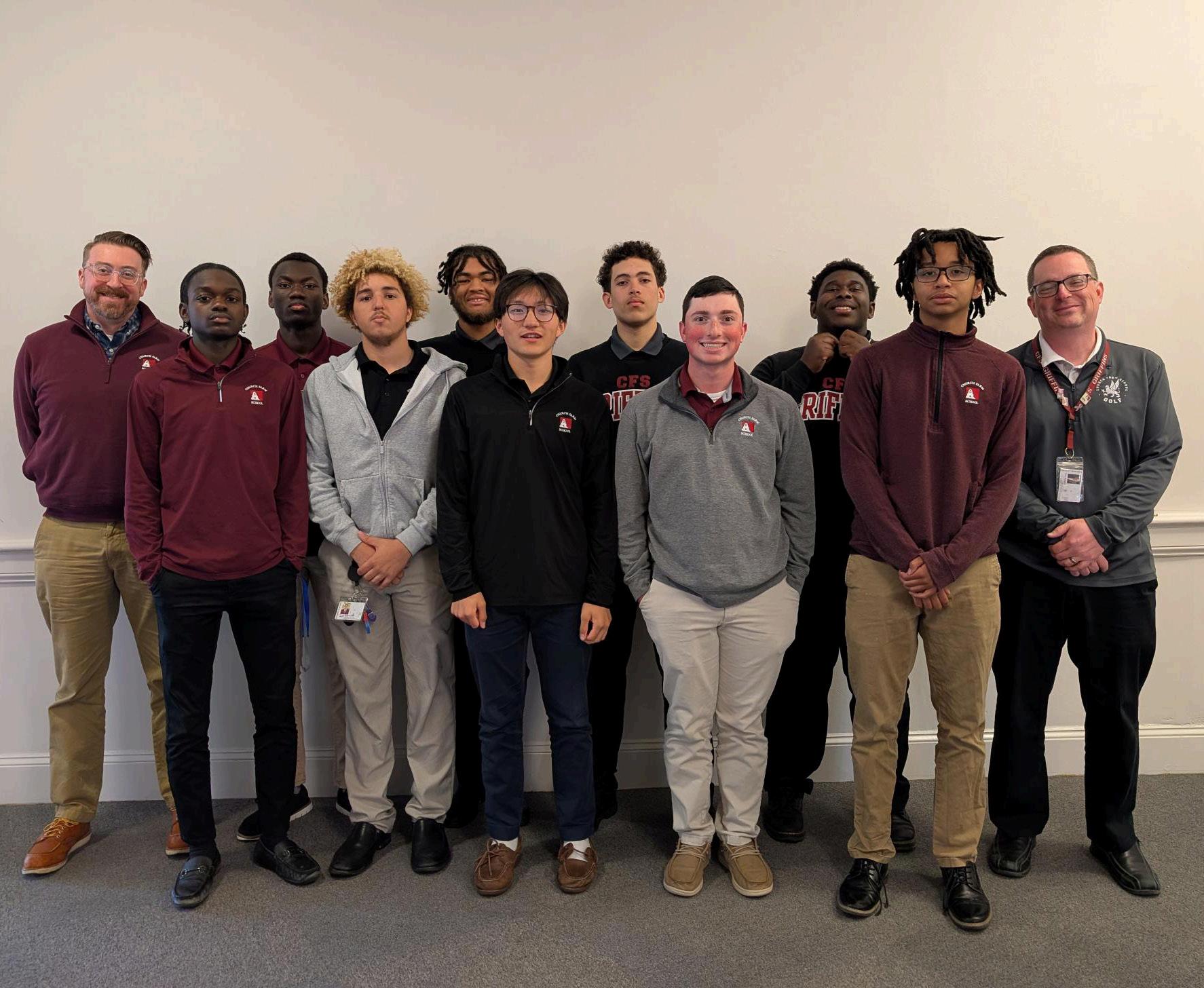
THE TEAM
Oscar Lu — Editor-In-Chief & Design
Savion Weaver-Diaz — Assistant Editor-In-Chief
Kordell Tate-Roberts — Interviews
Aidan Brown — Layout & Editorial Assistant
Kibel Gomez — Photography & Arts Editor
Eddie Echevarria — Literature Editor & Interviews
Prince Adamah — Interviews
Caleb Fulmer — Literature Editor & Interviews
Manny Parsons — Poetry Editor
Randolph Donkor — Editorial Assistant
Moshe Whitley — Editorial Assistant
Mr. Love — Editor & Faculty Advisor
Mr. Fulmer — Faculty Advisor
DEDICATED TO
Ms. Saunders
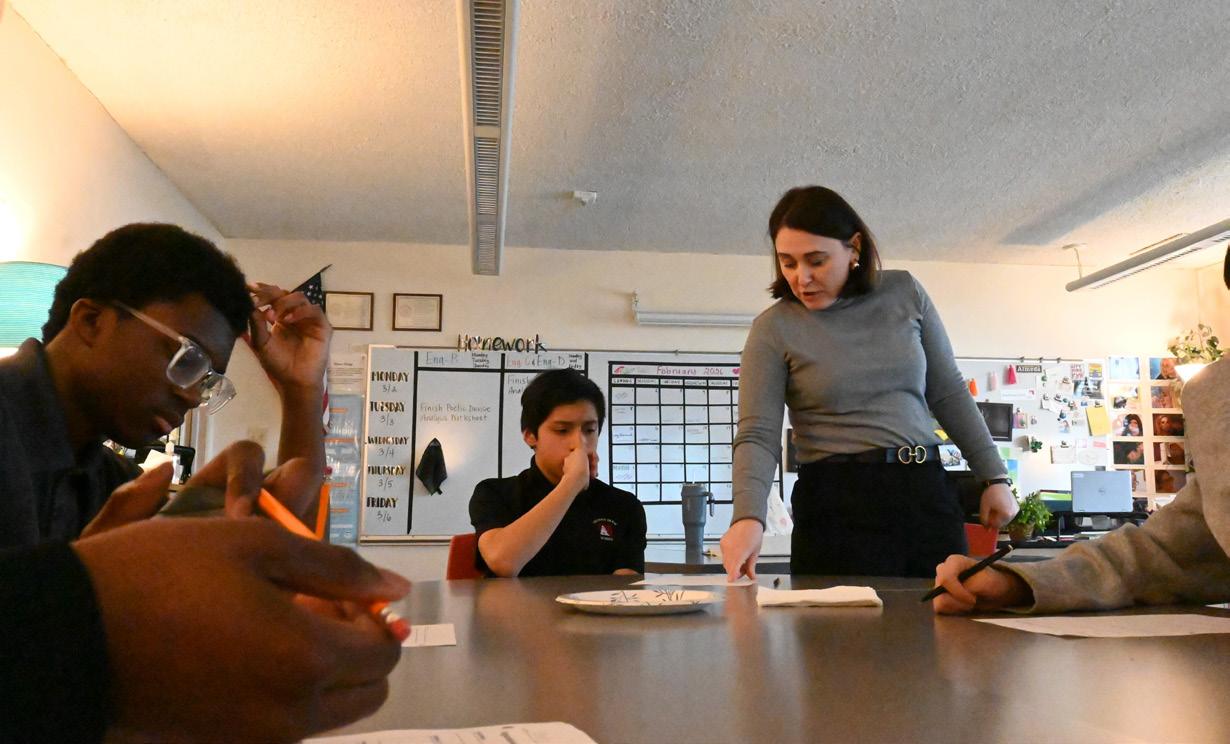
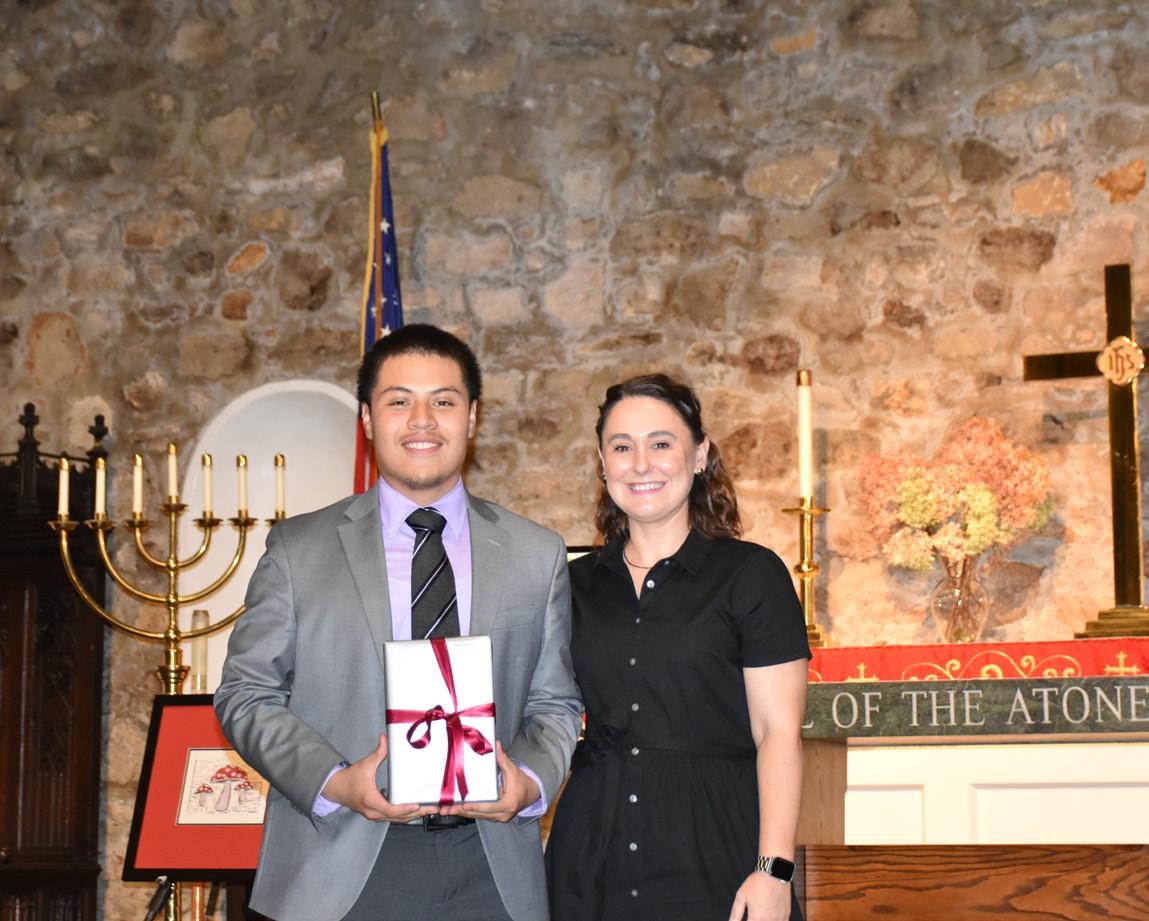
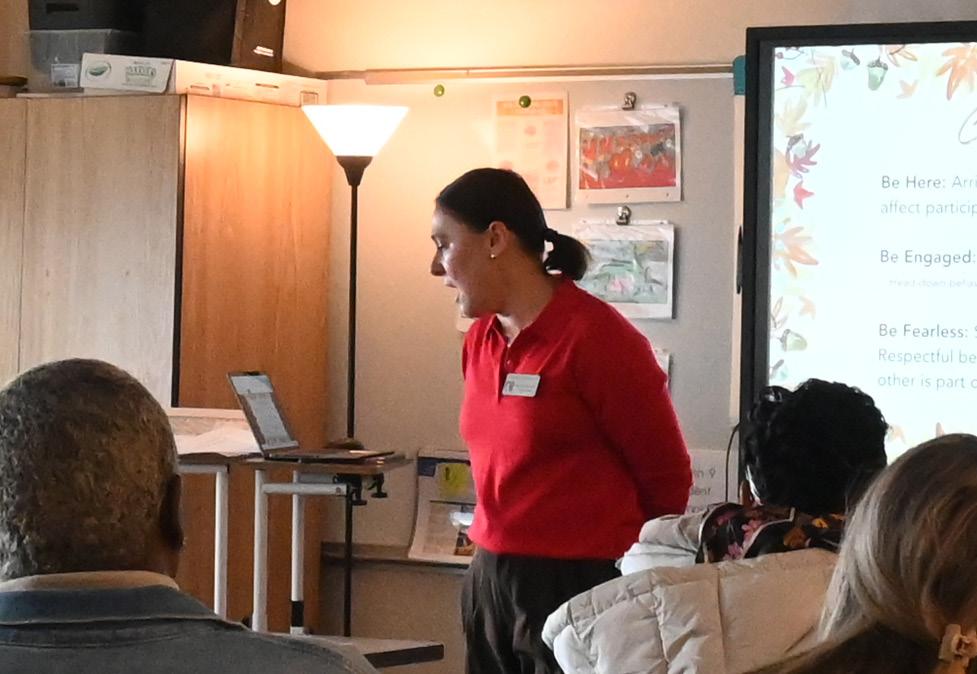
This year’s Griffin Review team is pleased to dedicate the magazine to Ms. Saunders, in honor of her dedication to the humanities department and the foundation of 9th-grade students.
Ms. Saunders serves as the Chair of the Humanities Department, teaches 9th-grade English, heads the bible club, and, most importantly, she is the best advisor on campus. Her dedication is felt in and out of the classroom and is seen in the success of all writers at CFS.
Her most notable contribution is building the foundational skills of our freshmen, from planning SOAR to teaching students how to write an email. Ms. Saunders has had a significant impact on all students at CFS, and it is easy to see her love for building the students of the future.
Whether she is leading a classroom discussion, mentoring a struggling writer, or simply showing up to support at games, Ms. Saunders shows up fully for every student she teaches. We are proud to honor Ms. Saunders, not just as an educator, but as a cornerstone of the CFS community. Thank you, Ms. Saunders, for everything you do and for reminding us that great writing begins with great people.
Review griffin
The Griffin Review is Church Farm School’s art and literature magazine. The magazine provides a space for every writer, artist, and photographer in our school community to publish their work. Through each edition, we celebrate individual voices and our collective culture, and strive to bring the CFS experience into the wider world.
FROM THE EDITOR
Four years ago, I joined the Griffin Review as a freshman who wanted to learn how to design a magazine. Four years later, I am writing this after four editions, preparing to pass what I have learned to the people who will carry it forward.
That handoff is a special tradition of this magazine. Every year, the upperclassmen pass their knowledge down, and when they graduate, the next group picks it up and carries it further. That is how we got here, and how the magazine keeps improving year over year.
What draws all of us to this work is the same thing: the freedom to be a voice for this community and to put something out that lasts. The Griffin Review is a place where students get to be honest in a way most academic settings do not allow. The goal is that years from now, a student will open this magazine and know exactly what it felt like to be a Church Farm School student, to feel what we felt and picture what we saw.
Making that happen is its own kind of maze. Every year we work through compromises and revisions and make countless small choices that no one will notice but were deliberate. The seniors will tell you that four years at CFS works the same way. We have made decisions we regretted and learned lessons we did not ask for. Both the magazine and the years it captures are built from a thousand small choices.
That is what this year’s theme, Maps and Mazes, is about. Every decision you make becomes a direction. Every direction, over time, becomes a map. On that map are teachers who shaped you, alumni who said something memorable, and moments you did recognize as turning points until much later.
So as you read through, we ask you: What were your catalysts? Where has your maze taken you, and what does your map look like now?
Oscar Lu and The Griffin Review Team
The Map of this issue
TABLE OF CONTENTS
06
Percival Everett
Pulitzer Prize–winning author Percival Everett visits campus.
08
Interviews
Teachers and students reflect on finding their way at CFS.
14
Featured Photography
Student photographers turn their lenses on the world around them.
18
Ray Greenblatt
An interview of former Humanities faculty, Ray Greenblatt.
20 Poetry
Prize-winning poems by our students, hand-picked by Ray Greenblatt.
24
Reflection Pieces
Seniors look back on the people, places, and moments that shaped them.
32 Quote
A passage from James Baldwin on what it means to find home.
34 Words of Wisdom
Words of wisdom from the Class of 2026 — letters to the underclassmen who follow.
AN EVENING WITH
PERCIVAL EVERETT
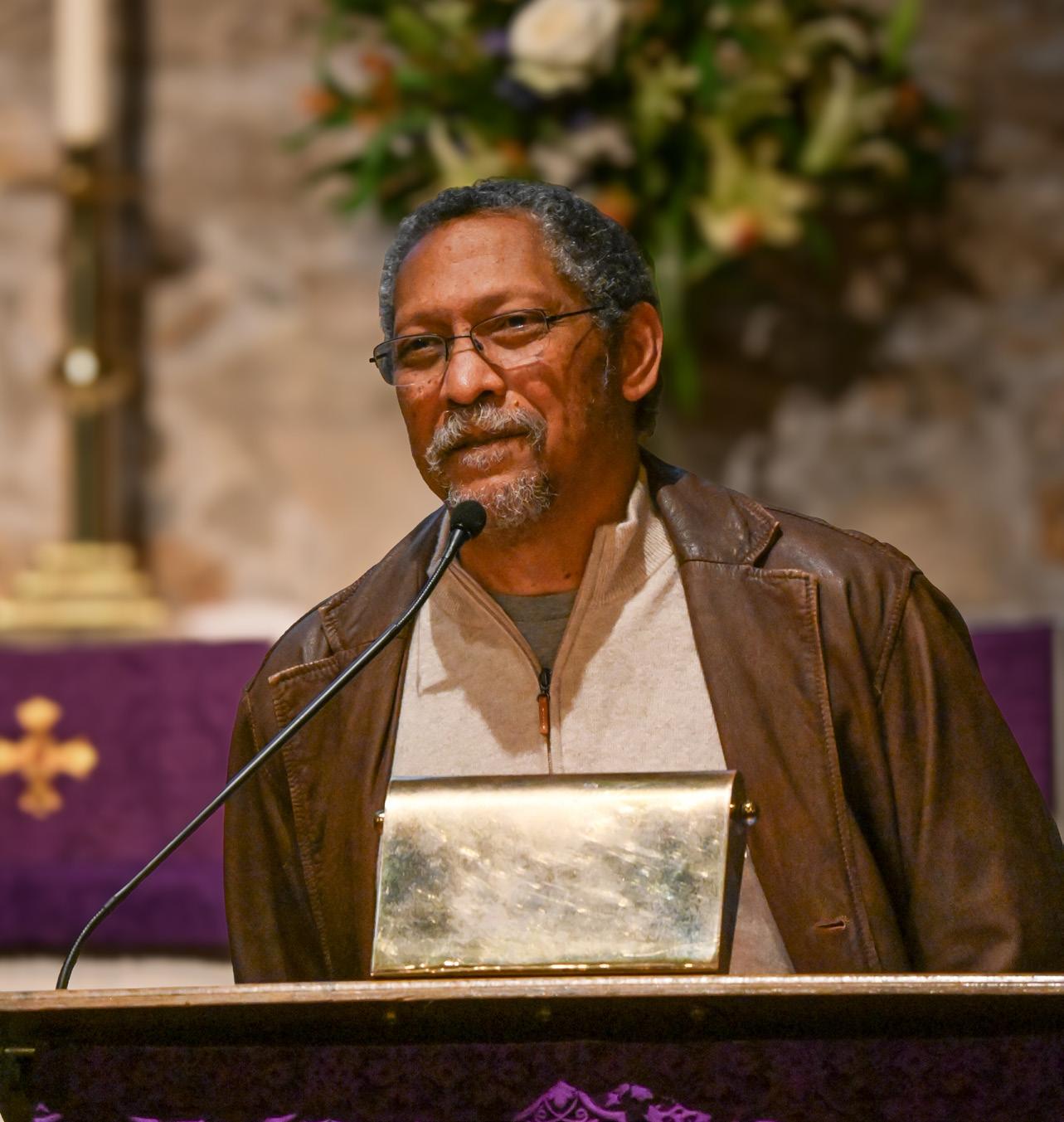
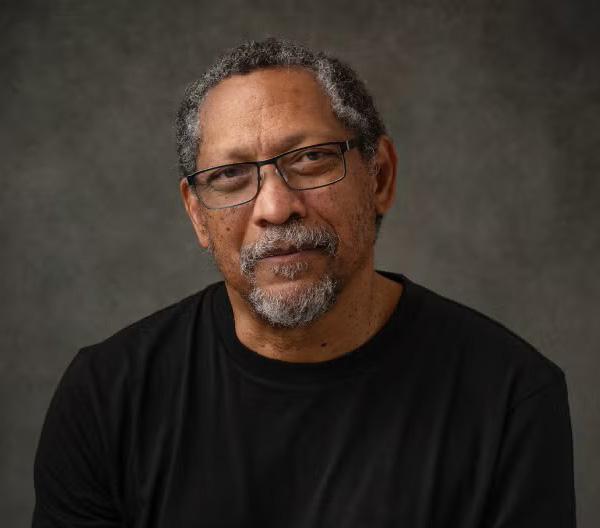
Earlier this year, Church Farm School welcomed acclaimed author Percival Everett to campus for a series of conversations and events centered around his 2024 novel James. Throughout his visit, Everett engaged with students, faculty, alumni, and guests in discussions that highlighted the power of literature to spark reflection, conversation, and deeper understanding. His time on campus offered students a rare opportunity to interact directly with an influential contemporary writer and to hear firsthand about the creative process behind one of the year’s most celebrated novels.
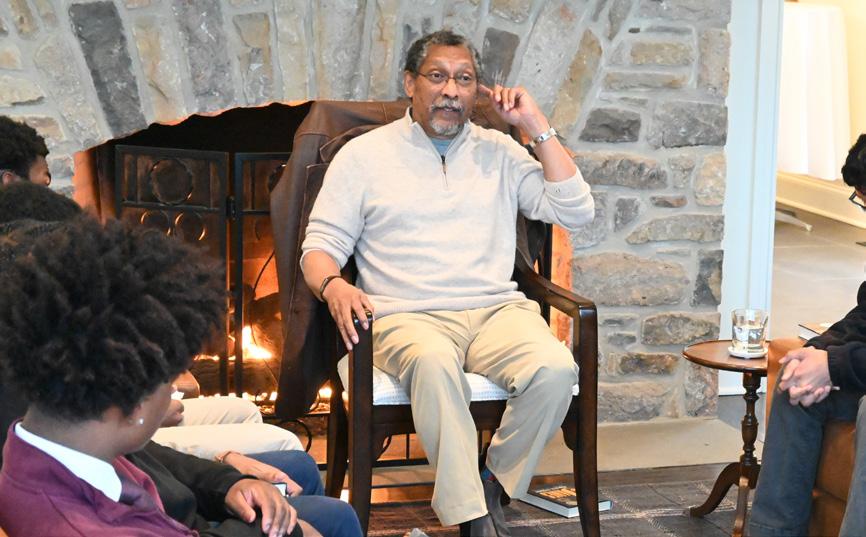
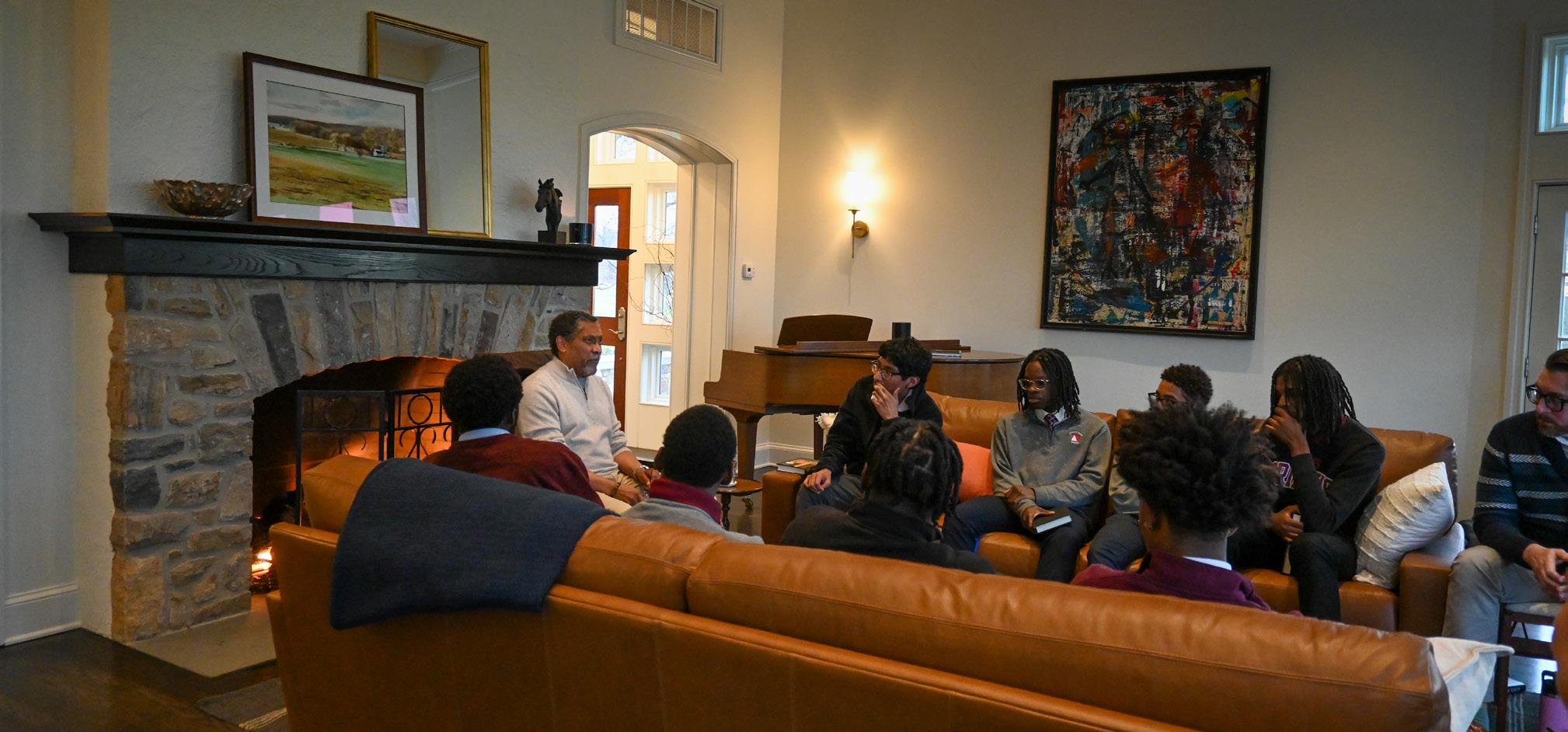
One of the most meaningful parts of the visit was an intimate discussion held at Dr. Baker’s home, where Everett sat down with approximately 20 students to talk about James, storytelling, identity, and the role literature plays in shaping perspective. Students were able to ask thoughtful questions, share their own interpretations of the novel, and engage in honest conversation with an author whose work challenges readers to think critically about history, society, and human experience. The setting created a personal and welcoming atmosphere that encouraged curiosity, dialogue, and connection.
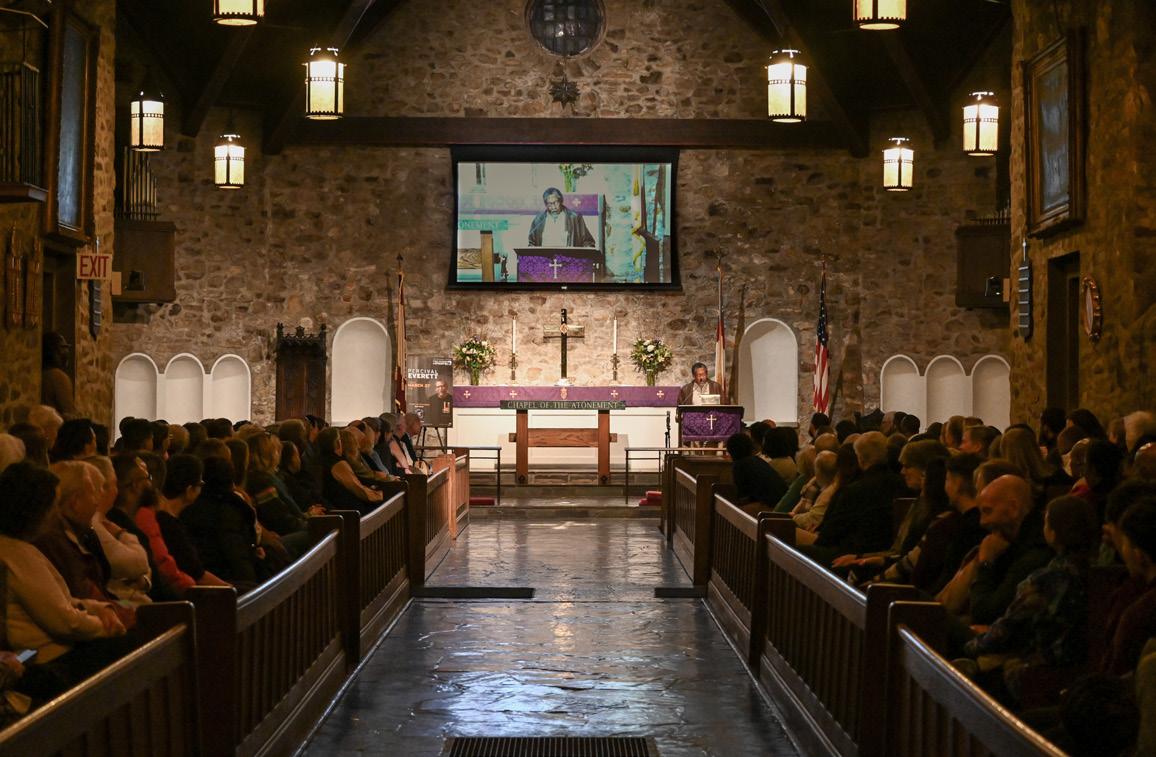
Everett also delivered a public address in the Chapel of the Atonement, drawing an audience of more than 300 guests from both the Church Farm community and beyond. His talk explored themes from his writing career and invited attendees to consider the importance of empathy, critical thinking, and intellectual exploration. Following the event, the Advancement team hosted a reception and book
signing at Dr. Baker’s home, allowing guests to continue conversations and further strengthen connections within the broader school community.
The visit reflected many of the values that define Church Farm School. It demonstrated the school’s commitment to academic engagement, meaningful dialogue, and exposing students to voices and ideas that extend beyond the classroom. Events like these show how Church Farm seeks to create not only strong students, but thoughtful and engaged individuals who are prepared to participate in larger cultural and intellectual conversations. Everett’s visit also showcased the welcoming nature of the school community and its ability to bring together students, families, alumni, and outside guests around shared experiences centered on learning and connection.
Interviews Conducted by Prince
Adamah ‘28
THE GUIDES
INTERVIEWING
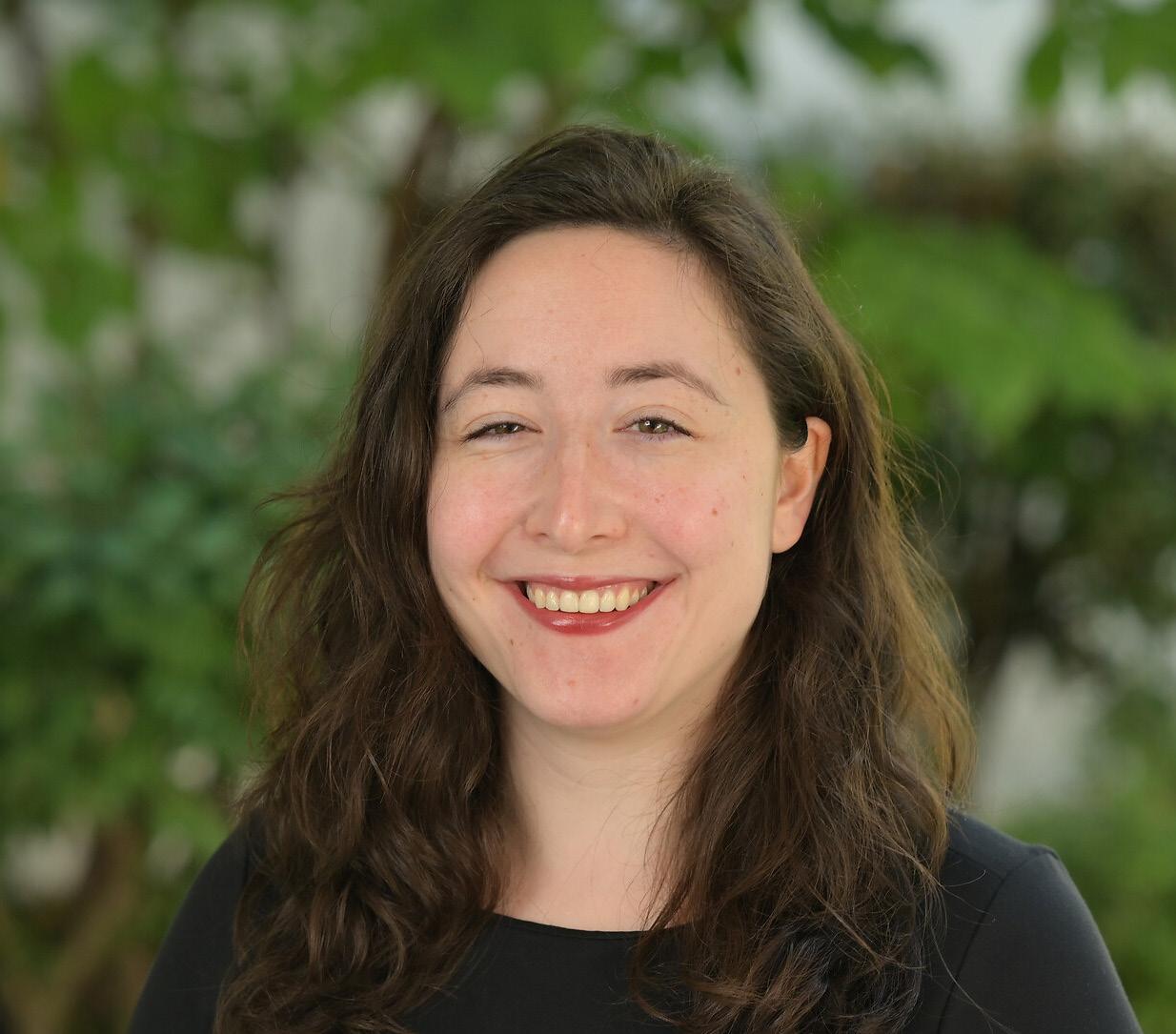
MR. KENT
Mr. Kent has worn many hats over the years — but every role has been rooted in community.
What’s your story?
My path was never straightforward. Envisionment is different from reality. I started out lost, learned something from every experience, and gradually found my footing — always drawn most to work that put me close to students and community.
Why Church Farm School?
I came specifically because I wanted to be both a cottage parent and a teacher at the same time. I wanted to see what it was like on a secondary level. I have no regrets — I love being here and I love what I do.
How did you adapt?
I came in expecting it to be demanding, which helped. The real challenge was finding time for myself. There’s no such thing as “off time” here — in order to be off, you have to actually be away.
What moment defined you?
My college experience shaped a lot of how I approach CFS. It gave me a stereotype about boarding schools I had to unlearn, but also a vision of what I
wanted my career to be. A Freshman Seminar program I was part of was especially formative — it gave me the freedom to define myself.
What advice would you give someone trying to find their way?
Don’t make up your mind too early. Listen to yourself more than you listen to others. Follow your bliss — ask yourself what actually makes you happy. And put one foot in front of the other. Don’t quit.
Did anything surprise you?
I’d done my research before arriving, so there weren’t many shocks. What caught me off guard most was the inconsistency of collaboration. Sometimes it’s natural and amazing. Other times it just doesn’t work.
accept that every student is their own person. Finding my way around school was genuinely hard at first.
What would you tell your younger self?
Trust your gut. Go to the sports games even if you aren’t invited. Keep your head up and push through. Stop procrastinating.
What advice do you have for students struggling to find their place?
If you don’t think you’re brave enough to talk to someone, find someone who is. Go to a club meeting. Go on SWAT. Focus on building one relationship first, and you’ll feel better about your time here. And remember — no one realizes how lonely everyone else is besides themselves. Everyone is just as lonely as you are.
INTERVIEWING
MS. BELKA
Ms. Belka came to Church Farm School straight from college, and will be heading to grad school in Spain next year.
What brought you to Church Farm School?
After returning from Europe in late July, I sent out a wave of applications near my parents’ house. I asked the universe to make my choice clear — and CFS called the next day with an interview. I got the job.
How did you make this place home?
I transformed my classroom into a space that felt like my own, and the community made the rest easy. Mr. Frazao and Mr. Peake were especially helpful — Mr. Peake served as my mentor during a difficult first year and always made time to listen.
Did anything surprise you?
I had been nervous about an all-boys school, having gone to an all-girls college myself. I honestly thought everyone was going to be mean. Instead, I found nothing but warmth.
How did you adapt?
Quickly — and necessarily. I had to adjust my teaching standards, learn the block schedule, and
Interviews
Conducted by Kordell Tate-Roberts ‘26
LONG WAY HOME
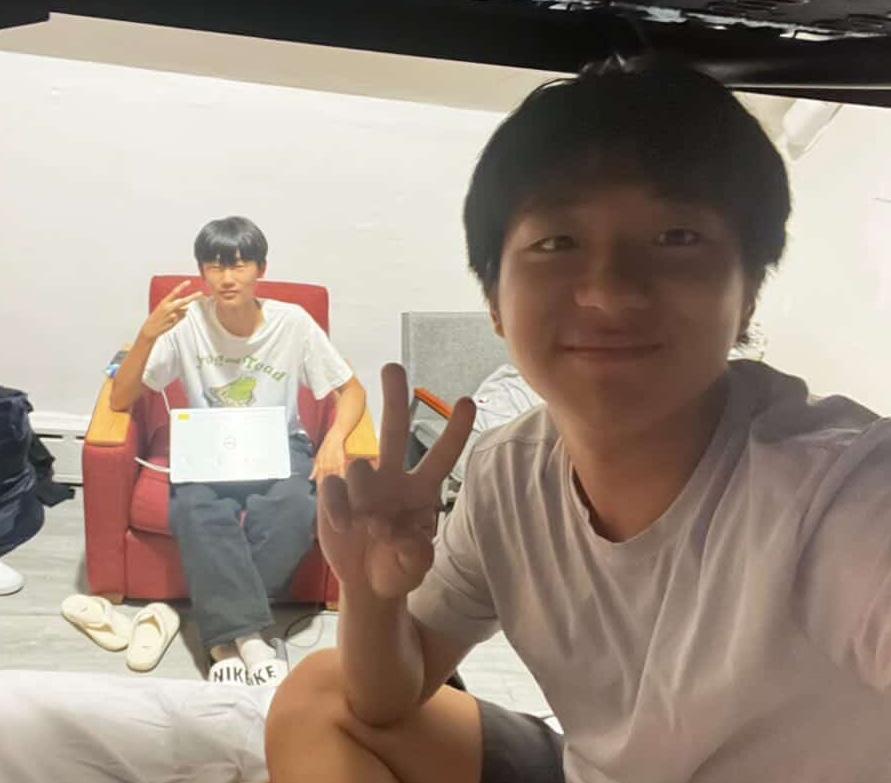
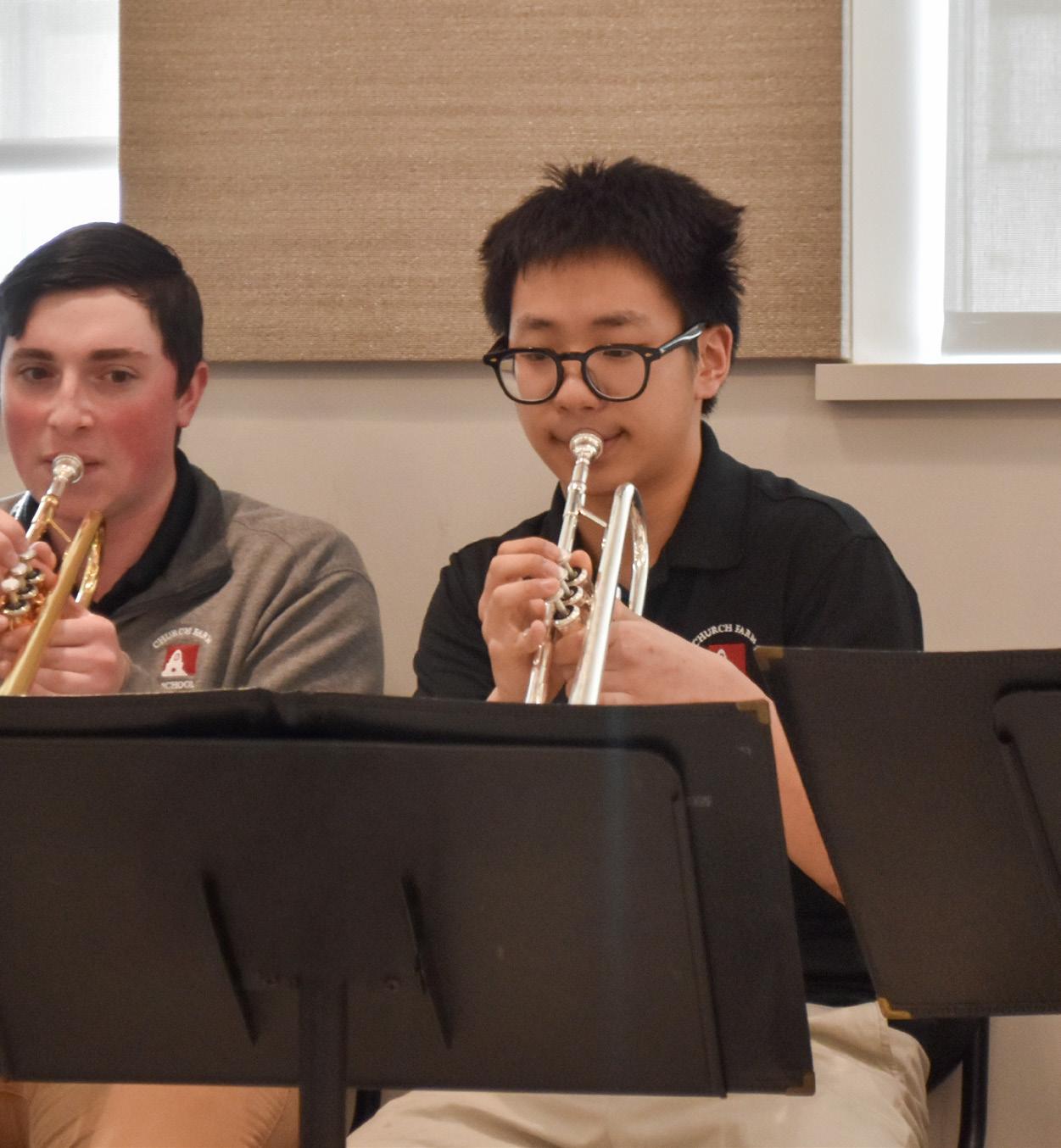
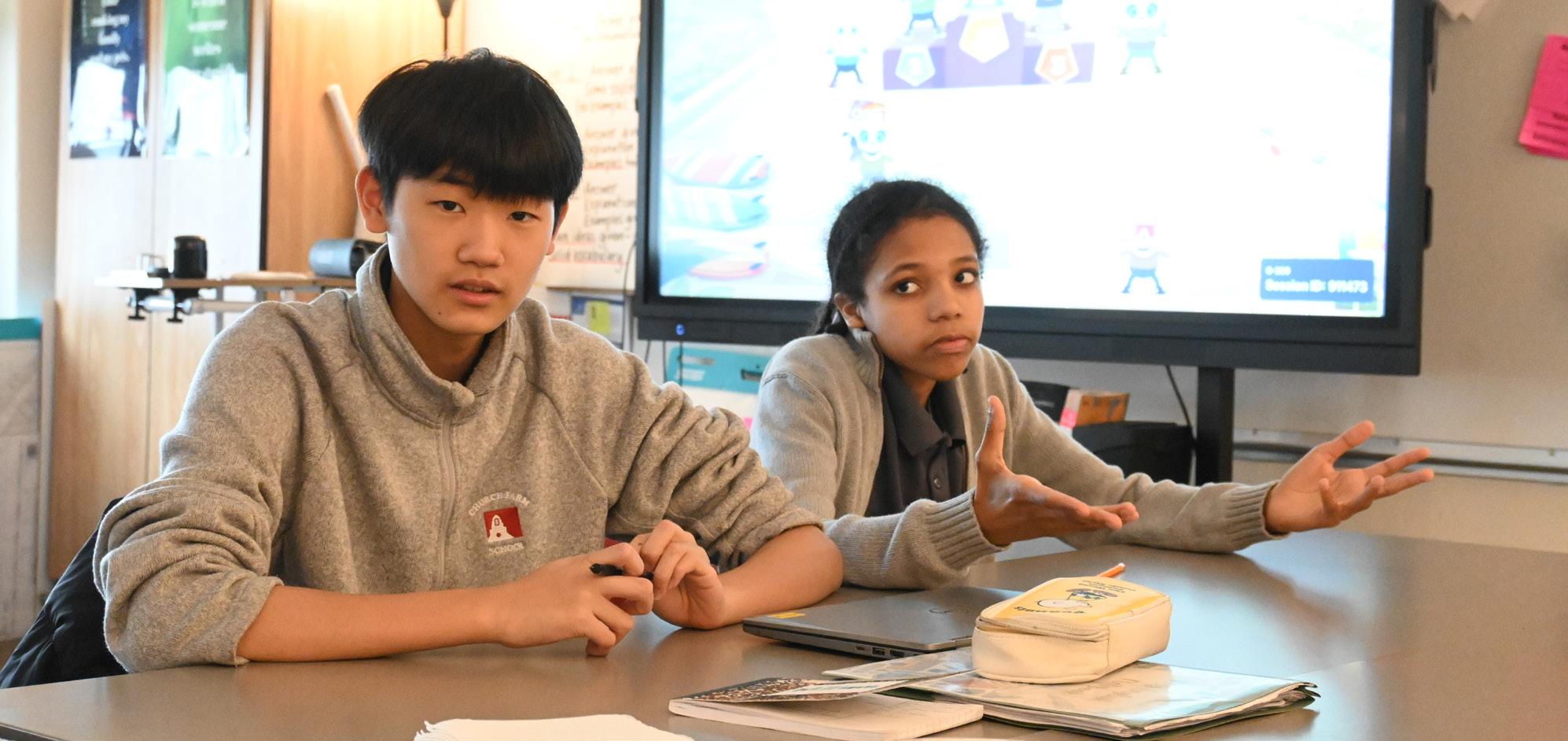
INTERVIEWING DK & WILLIAM
DK ‘28 and William ‘29 are both international students who came from South Korea. We wanted to get a better look at their journey to and at CFS.
How did you hear about CFS?
William: I heard about CFS from my mom. I was at an international school in South Korea and my mom asked me if I wanted to change schools and try a boarding school. I said yes. I thought it was a really good opportunity to study.
DK: My mom wanted to send me to the US because she thought that it would be a good opportunity and that’s pretty much it.
Why did you choose CFS?
William: I chose CFS to try a new culture, learn some English and sports.
DK: The reason why I chose CFS is because I really want to get more opportunities. Living as an international student in America during the first three weeks of my first year was rough. I missed my family, my food, my culture, my friends, and my language. I wasn’t comfortable speaking English at the time. I was nervous about everything. I have too many friends at CFS now. If I were to list them right now, it would take some time. I enjoy life at CFS as an international student. It will be a weird and unique experience in my life that I’m being exposed to a whole new culture and now I’m leaning onto it. At CFS, I like the keyword of brotherhood. Because I was afraid of not being able to make friends in America and I really thought
that brotherhood would help me build myself and build good friendships. I like the farm and nature itself here. There’s a bunch of fields and open skies. I get to see deers and squirrels.
What was a culture shock of being at CFS and the U.S.?
William: For the culture, the first time it was hard to get used to it. Because I’m not American, it was hard for me to understand hard English, but I got used to it. Other than that, the food. I wasn’t used to mac and cheese and chicken. The second was the boarding. It’s my first time trying out boarding. Everyone is kind. My roommate is nice.
DK: Socks and sandals. In Korea we don’t really care if you wear socks or not with sandals, but here in the US, I have to wear socks while wearing slides outside. It was just a new thing for me and pretty interesting.
What has been your favorite moment at CFS?
William: I really like the Intro to STEM as a class. In South Korea, I had zero chances to take other classes related to science. So I like experiments in STEM. I also like music, too. At my school, we had a band but you had to buy your own instruments. CFS can provide us with the instruments here. The students and teachers are nice. I also like the food and the sports.
DK: I can say several ones like my roommate Tristan winning his first match. That was very great. That time I had gotten injured and had to record videos but I think I supported him very well. After he had won the match everyone was going crazy, I was going crazy, and supporting him. Other ones like the Talent Show. Last year I was in the Talent Show and got third place. Pretty good. I performed well, everyone liked it. I liked it too. I liked the vibe itself.
THE SONG OF LUST
By Manny Parsons ‘26

There’s a song… a specific song… and it sounds… sufferingly sweet
It sneaks up on me and sings a certain succulent symphony that strokes my desire, And soothes my stress
It Suffocates my worries and seeps into my brain… seeking my secret
fantasies
That I’ve planned to see and planned to be in, so it plants a seed in
My mind and they grow like weeds and proceed to succeed in the battle
Between strangling vines and Good Trees
And I seem to be serene but on the big screen, in my mind, are explicit
scenes
That only I’ve seen
“I missed you, did you miss me?”
“Kiss me, Kiss me”
Blissfully- Blissfully I envision these triflin’ things
Enjoying, yet regretting the frightening sting
Of the cymbals (symbols) of sex, beats of breast, and drums of the undressed
The synths synchronized to the strokes of those oppressed, This song is the song of the vexed
Composed merely as hexSang by the sirens who lay with open legs
Hum the harmonies of heavy breaths
And croon the chorus of the cries of satisfaction
It’s sad to be trapped in The Vinyl of Vulgar Actions…
In the dead dumb darkness of night It creeps up on me
As I dream of the things I desire to gain everyday
In the day
It dusts off my old thoughts…
And when the dust has settled
It brings them back down to my daze
So I’m left unable to do anything…
Suffering my inevitable doom-
Doom of doing dangerous deeds out of desperation
But in the deeds that were done are done deeds of devilish derivatives, Depictions of death are drawn in my head in dark hues
Yes, it gets this deep, I drown in despair
Because I despise the discrete demon of destruction
During the dusk of the day, before the night,
The knight lays down and the dark druid drops in
And disrupts his dreams, drags his goals out his head
And detains his nobility, thus leaving
Mental, motivational, vocational immobility…
I drink to the death of the empire…
For when it’s defeated I am finally set free,
And I dream in peace
And as I drink during the day painted with pretty hues,
And Dream of days full of prosperity, peace, and purpose
In victory…
I daydream of the green and it manifests itself in the eyes of the girls’ gaze
in which I gander, then gamble my grace… I hear a familiar gamut…
Only to be appalled at the gall of it all…
And the guile of the ladies I see down the aisle-
Be damned if I was caught again
The win was a facade, it was all a sham
I go down a great spiral of the same repeating of cycling cycles
I stand in front of a gown
With a fine tuned sound
So her psych’ll bleed all over my brain
Leaving a bloody stained rear-ended refrain
To my disdain she leaves me in pain
She plans to come back and sing the same song,
Keep the same key,
Replay the same thing
Mimic the same melody of moans
So my only memories are my mistakes
It’ll never taste defeat
As long as I keep my pace on the “feat.”
And stay cuz the beat
I’ll never win
With my every attempt
She catches second wind
And with my every loss she
Waits till I feel I can defend
Just to come sing that sweet savory song of spicy stances… and naughty dances
The Song of Lust.
interviewing student
Interview
01 MANNY PARSONS
STUDENT VOICE
What has been your favorite moment at CFS?
“I have plenty honestly. I have a lot. I want to say my whole sophomore year. I loved my cottage and everyone I met. My sophomore year has a very, very special place in my heart. Junior year was kind of a blur to me but being in the cottage again, being a good big brother, and prefect to the people in my cottage. Experiencing the senior class a bit more. Getting close with a lot of people that I don’t normally talk to. Both in my grade and younger than me. Just being able to branch out socially even though I’ve always been a sociable person. My favorite moment at CFS is being at CFS. I think it’s not a favorite moment but a favorite feeling.”
MANNY PARSONS
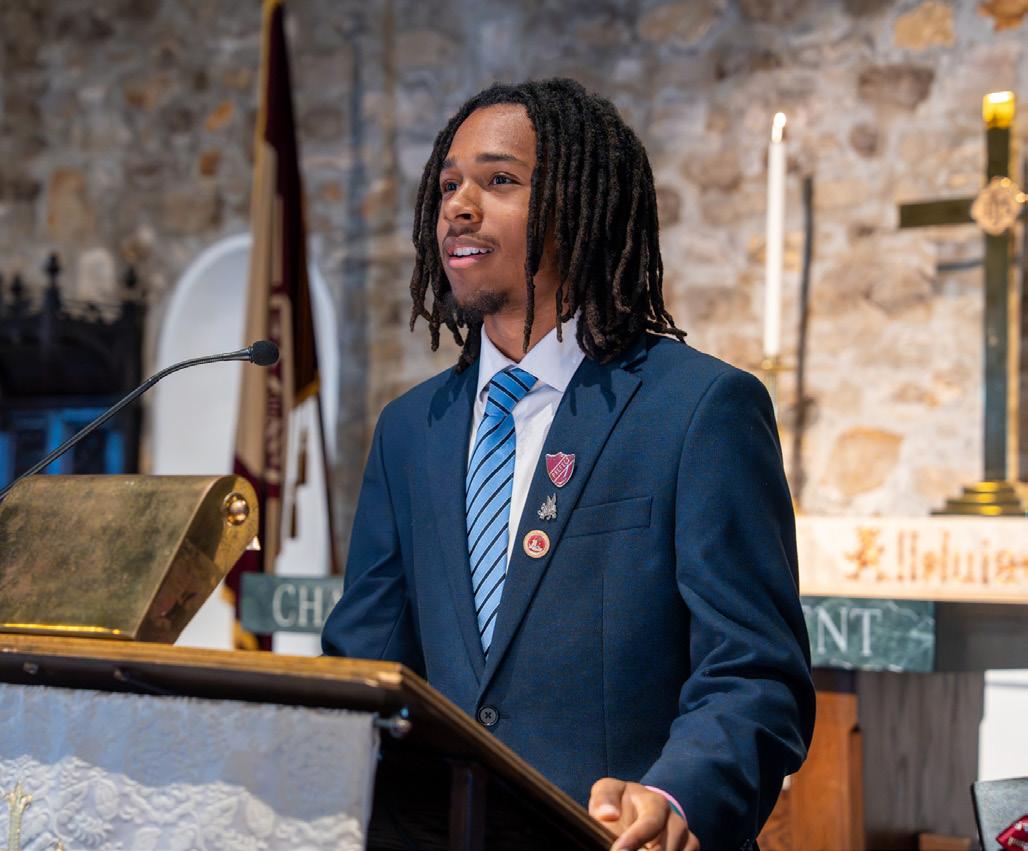
Manny, Class of 2026, transferred in as a sophomore. Serving as all-school co-president, his voice has been consistent in all-school meetings. Also, his voice shines through poetry, having been featured for the past three years.
How did you hear about CFS?
“I was thinking about transferring schools from my other school. I was talking to my athletic director, Mr. Rush. Mr. Blackwell, our athletic director, knows him pretty well. He told me about CFS because he knew someone who came here. I had wanted to go to a boarding school to better improve my independence and responsibility.”
Why did you choose CFS?
“My mom really wanted me to go here. She felt like this school was more suited for me and that the school would build me in a way that I needed to be built. We talked about options and we felt that Church Farm was the best option overall. I chose to go here after my shadow day. I shadowed Neiman, (graduated in the Class of 2025), during the annual Statistics Olympics which back then, was the first one. And It was an amazing day, I really enjoyed it and it really opened my eyes about this school. I could see myself being here.”
What was a culture shock of being at CFS?
“Probably my shadow day. I felt pretty comfortable here. I even get shocked when I think of the brotherhood here overall and how I’m able to live with my friends and my brothers, even the ones I don’t talk to all the time.”
By Matthew Davies
CITY THROUGH GLASSES


FIXED POINT
By Ben Ibe’ 26
LITERATURE
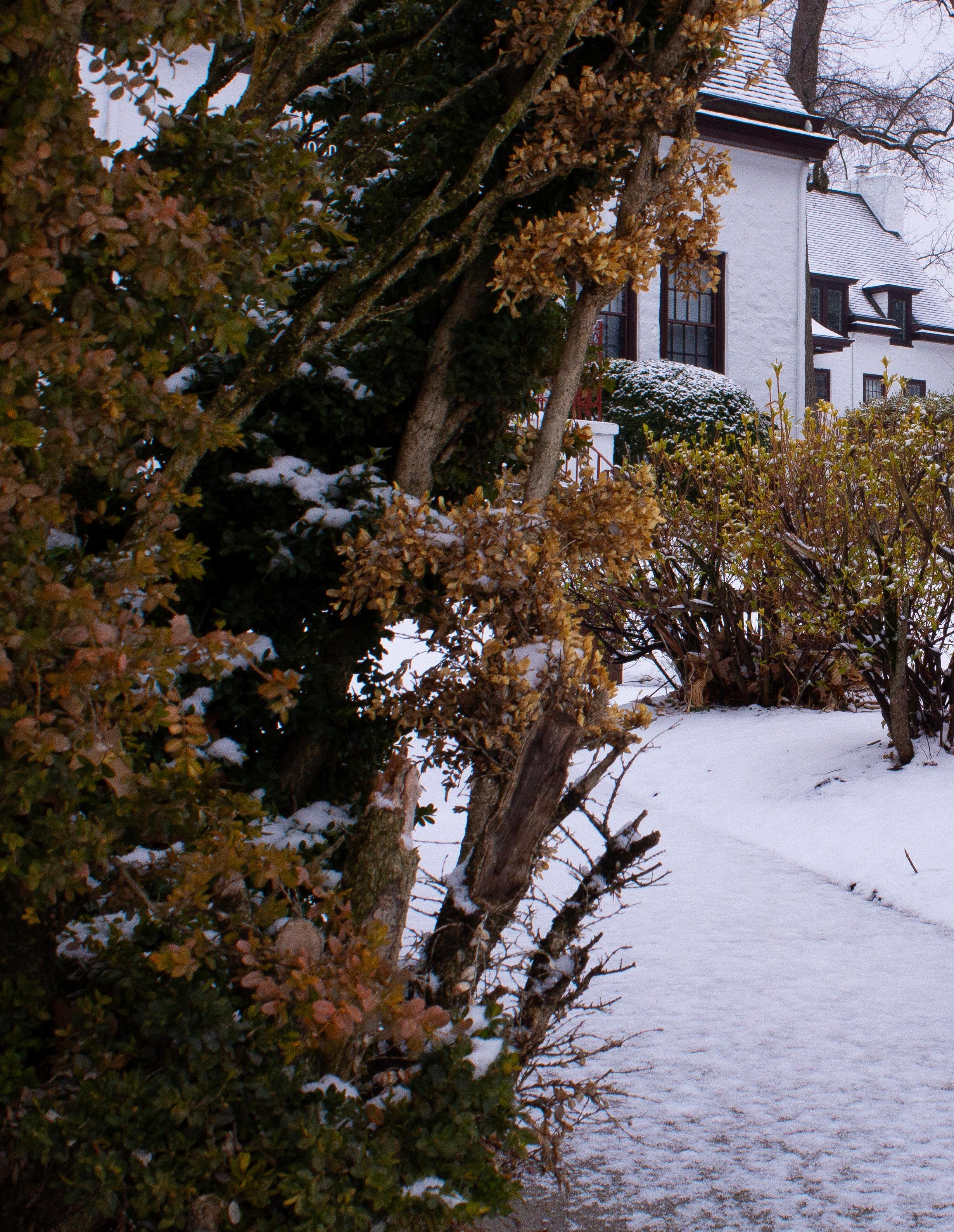
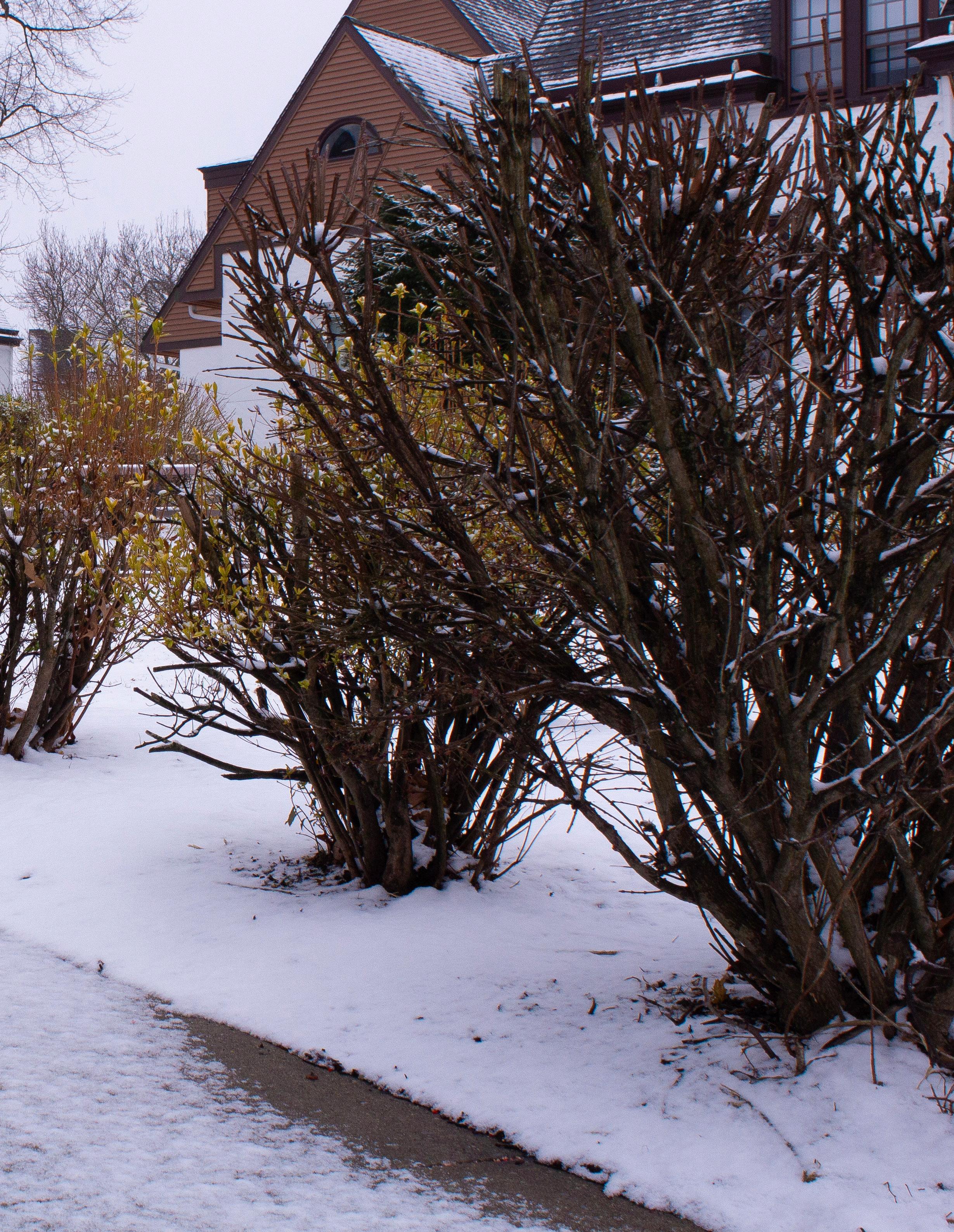
PHOTO BY MR. GR
LITERATURE
Interviewing RAY GREENBLATT
Interview by Eddie Echevarria
‘26
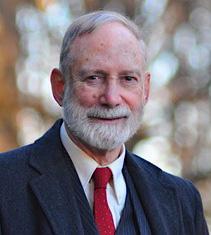
About Ray Greenblatt:
Ray Greenblatt has spent more than four decades doing what he loves: writing poetry, teaching it, and sharing it with anyone who will listen. A Philadelphia native, his work has appeared in journals from coast to coast, been translated into four languages, and earned him a Pushcart Prize nomination and the Anthony Byrne Prize. He has served as an editor of General Eclectic and currently contributes to the Schuylkill Valley Journal, while leading a beloved “Joy of Poetry” course at Temple University’s OLLI program.
His latest book, From an Old Hotel on the Irish Coast (Parnilis Media, 2023), weaves together poetry and fiction with illustrations by Philadelphia artist Michael Guinn. He has spoken at the John Steinbeck Festival in Salinas, California, and has been a long-time presence at the Philadelphia Writers Conference.
A longtime faculty member of Church Farm School, Greenblatt sat down with the Griffin Review to talk craft, teaching, and what it means to make a poem feel alive.
Q: How did teaching poetry shape the way you think about the craft?
I was frankly surprised talking with other English teachers over the years to hear some say they don’t like teaching poetry. They feel no matter the poem that they are missing something perhaps hidden. Yes, poetry is an elusive genre, but we don’t know everything. My advice to begin teaching poetry is to teach a poem that you like and go on from there — no matter how piecemeal.
Q: What makes a poem stand out to you –whether from a professional or a student writer?
What I am looking for in a poem — any poem by professional or amateur — is a sense of rhythm to the lines. Saying a poem out loud can reveal that beat. But more important is use of imagery we have never encountered before. Even a cliché employed in a new way can be effective.
Q: Do you write with a reader in mind, or purely for yourself?
I write for myself. I often don’t know where I am going with only a few leads and end up at a point I would never have thought of. That’s part of the fun! When I consider the reader is when I think he might not understand a certain phrase or concept. I don’t believe in footnotes to a poem. So I have to decide what to do: use another word? Rewrite a certain passage of the poem?
Q: Is there a poem, yours or someone else’s, that you keep coming back to?
It might seem simplistic these days but I go back to Robert Frost’s blank verse poems. His rhythms are unmistakable. Not being burdened by rhyme, he develops real life people and real life situations. He knows how to write a clean poetic line unencumbered by filler words.
Q: What does poetry give you that nothing else can?
When I began to write as a student, I wrote stories. As time passed, I realized that so much can be felt and said in a poem. I want to write a lyric that sings, not a treatise!
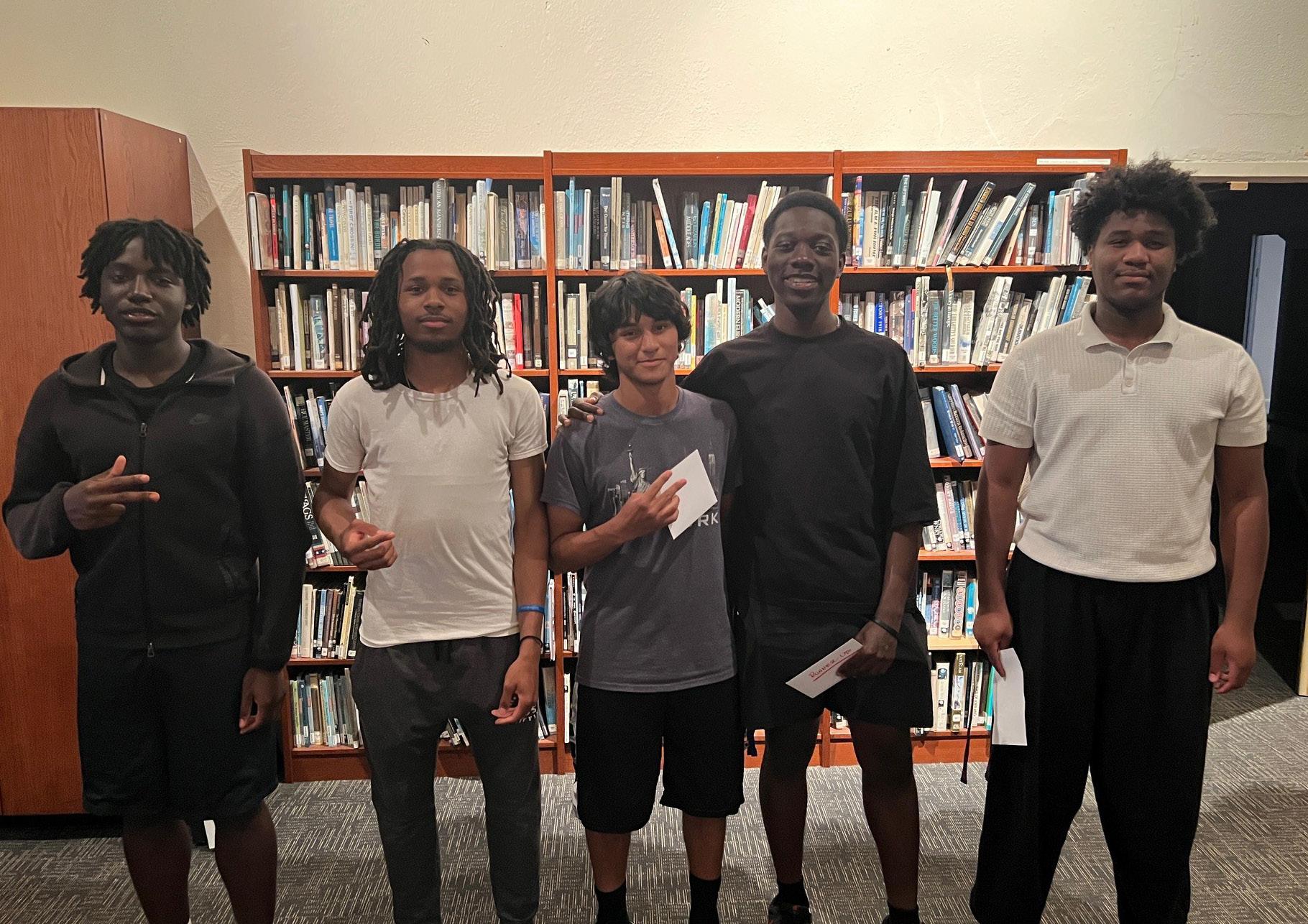
RAY GREENBLATT POETRY PRIZE
The Ray Greenblatt Poetry Prize honors excellence in student verse across all grades at Church Farm School. 2026 marks the first inaugural iteration of the prize and is named after Ray Greenblatt, celebrated poet and dedicated teacher, who shared his love of writing and poetry with CFS Griffins for over 40 years. He has inspired generations of young men to pursue their own creative passions, and The Griffin Review is proud to honor his continued commitment to our scholars and community.
See winning poems on the following pages.
First-Place Winner
“What the Door Holds” by Eddie Echevarria ‘26
Second-Place Winner
“Masquerade” by Matthew Davies ‘27
WHAT THE DOOR HOLDS
By Eddie Echevarria ‘26
The kanji for ma – 間 –Is a door
With moonlight coming through it.
Not the door.
Not the moon.
The light in the crack.
The space between.
That’s the whole concept. That’s it.
In noh theater there’s a word, ma-nuke. It means food.
Literally: missing the ma. Someone who doesn’t know when to shut Who fills every second. Who can’t let silence stand.
In japanese, the pause before you answer Is not supposed to be awkward. It’s proof you’re thinking. It’s walking out of the room of what someone Before you walk back in.
In English we trip ourselves to fill it.
The most important note in a song is the one that isn’t played. [is skipped/looked
John Cage wrote a piece called 4’33” where for four minutes and Thirty-three seconds
And didn’t play.
Not silence. What the room held. The shuffle. Someone’s watch. A cough near the back.
The sound of people slowly realizing They’d been listening wrong the whole
That’s ma.
Not nothing.
The opposite of nothing.
The thing that gives the rest of it
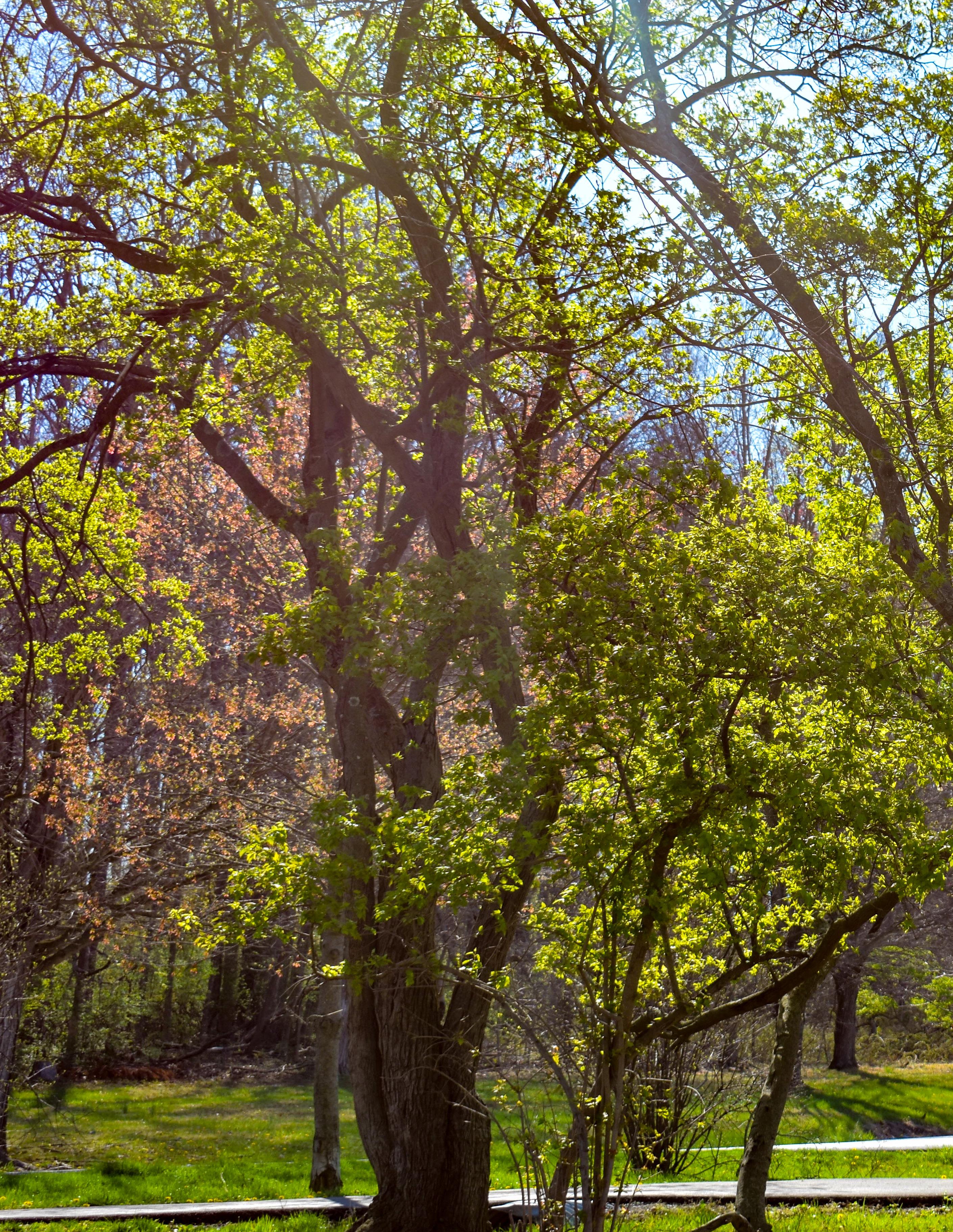
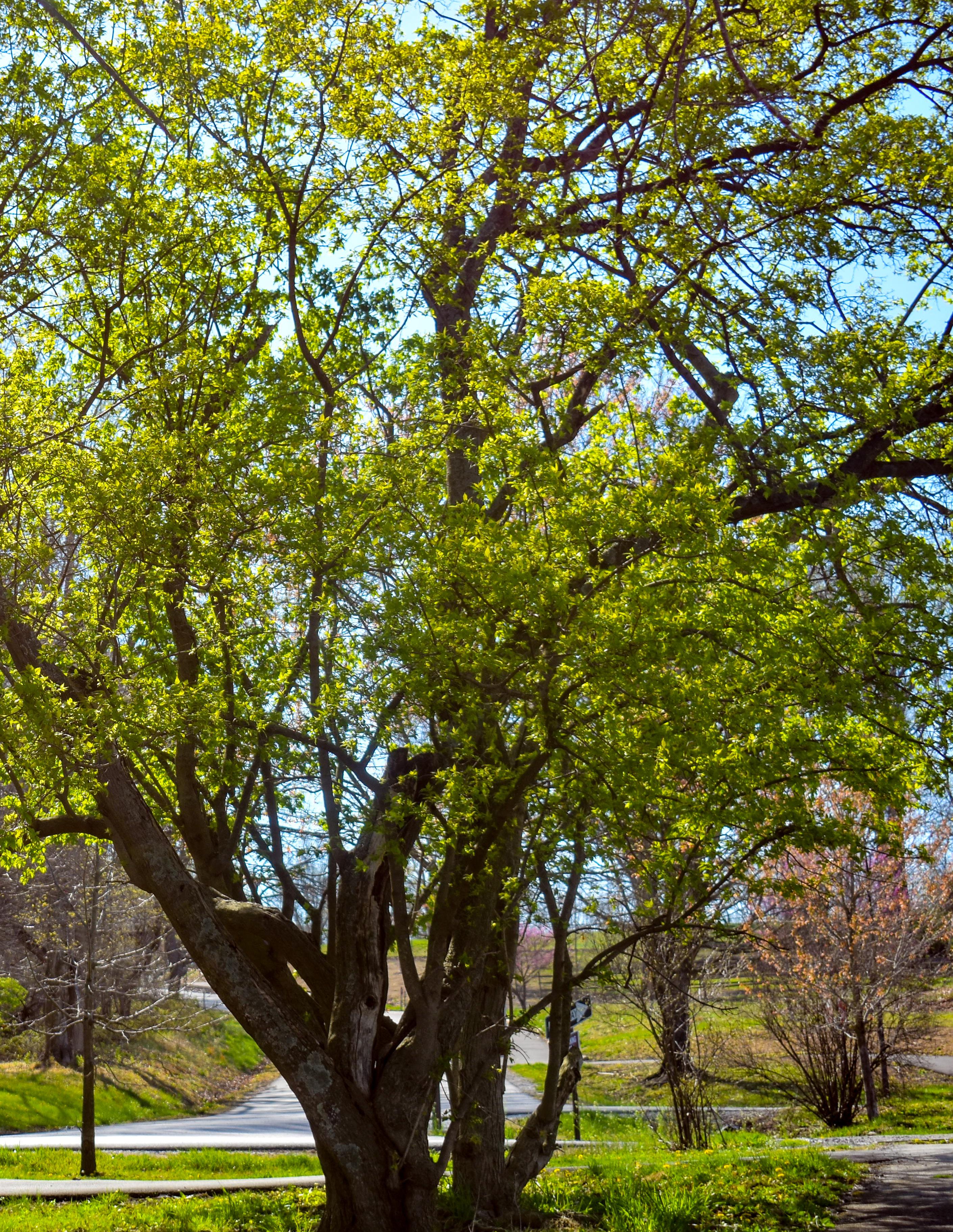
Photo By Osasere Alapa ‘28
shut up.
answer someone just said skipped/looked over] where the orchestra sat on stage time.
Somewhere to land. And stay.
Think about the pause before someone texts back
The three dots appear and then disappear.
And in the gap you’ve already
Written twelve versions about what they’re about to say
A whole ending
Of punctuation that never came
Or the two seconds of room hiss
At the end of a track
Before the next song starts
Some producers left that there on purpose
And you felt something
And kept scrolling
In karate, ma is the distance between two fighters
The gap.
Knowing it means understanding
Exactly where the danger stops.
Living just past the edge of it
On purpose.
You’ve been in this already.
The night you stood in the kitchen at 2am And didn’t turn the light on
Stood there eating something cold straight from the fridge
Thinking about nothing in particular And somehow that was just fine
That’s architecture holding its breath. Thats ma
People who’ve never heard the word Are still living in it.
You probably were last week [or Tuesday] Didn’t notice.
That’s fine too.
A door. You know which part.
MASQUERADE
By Matthew Davies ‘27
I wear multiple masks. I wore them my whole life. I gave them the power to dictate who I am.
I do not do it for validation, fun, sports, but for my own survival. Wherever I go, I am not the same person. I do not let anyone know who I really am.
I withhold love towards others because of the betrayals and heartbreak I felt. I try to put on a smile to mask my anger and sadness, like stained glass. I denied happiness in the moment, because a voice inside my head told me It was weak.
Everyday, I put on a mask to hide my emotions, Leave pieces of myself in my room.
I push away people, friends, and family who get too close. The soft, uncertain version, The one I learned to hide, even from myself. I tell them what they want to hear to not look weak. Pretend to be someone I’m not.
Sometimes, I think of the people I lost, Friends, girlfriends, the ones I looked up to. The ones I manipulated, ghosted, disappointed. Not because I did not care, but because I didn’t believe the real me could be loved.
That is the worst kind of betrayal. Choosing to abandon my morals to fit in. Like Judas in the Bible, but not for silver. But for approval.
I mask that shame just because, I want to survive.
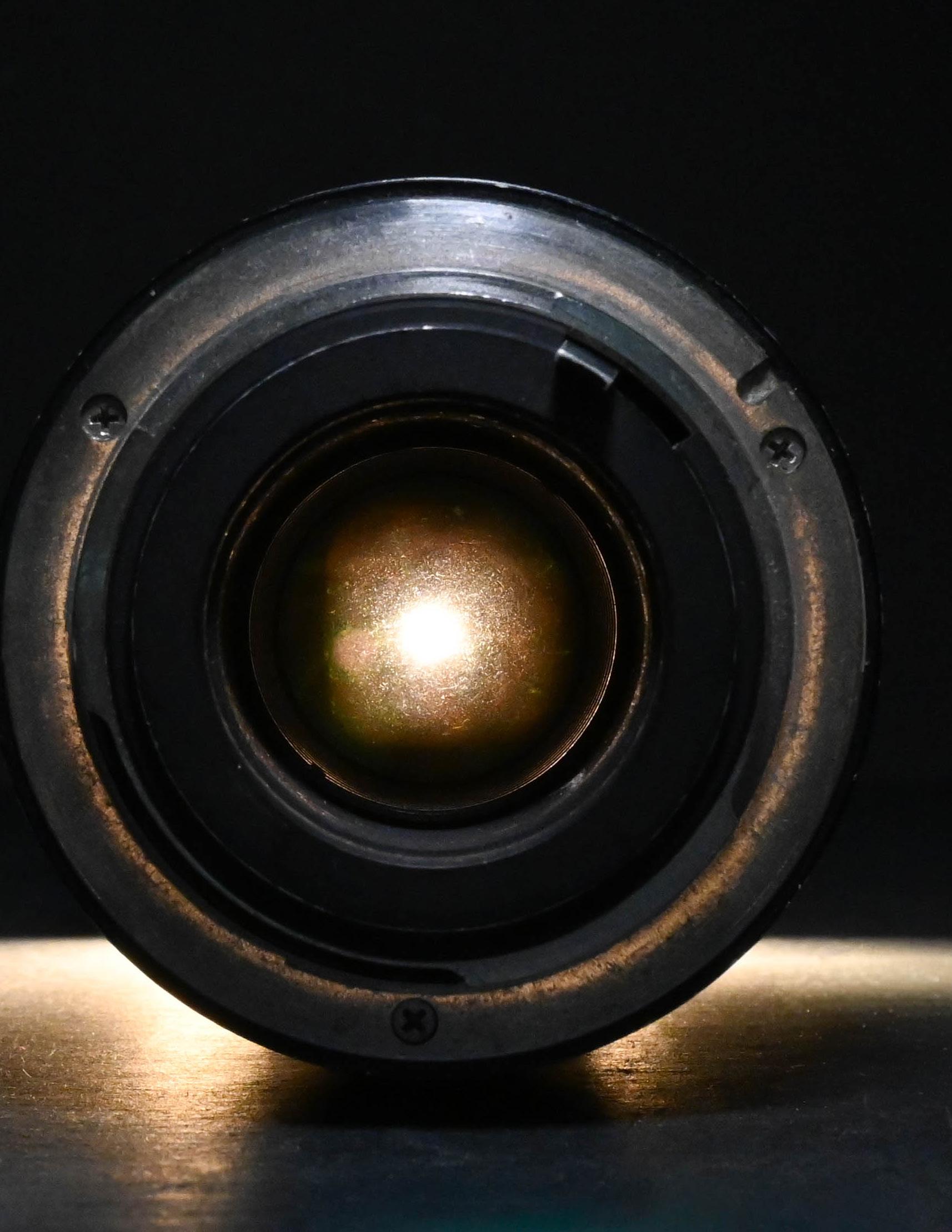
Photo by Savion Weaver-Diaz ‘26
I LOVE OSCAR
By Alfred Nicolas ‘26
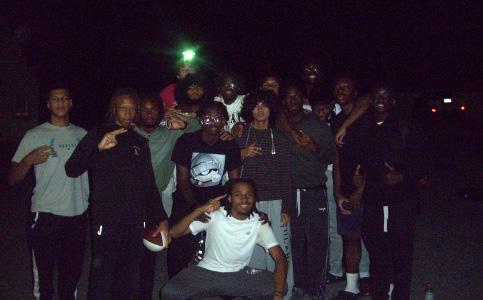
I find myself looking at this picture a lot. Sometimes I stare blankly at my phone screen for minutes at a time. For the life of me, I can’t seem to remember what happened before and after this picture was taken. I can’t seem to remember why a bunch of the seniors were outside the health center. Maybe we had one of those beginning of the year meetings– who knows what we were talking about. I can’t remember how I felt during the photo either. The feeling of a bunch of my friends surrounding me on one of the first nights we gathered as a senior class should’ve elicited such a remarkable emotional response, but it didn’t. At least I don’t remember it as such.
I don’t know why I find myself looking at this photo time and time again. What are photos good for if you can’t put yourself in that moment again? If you can’t remember anything from that captured moment, if it elicits nothing inside of you. If you can’t place yourself in the shoes of your past self, that photo might as well be a collection of pixels. I struggle with this aspect of pictures, the aspect of reminiscing, the aspect of thinking back.
Even in the face of these struggles, photos are everywhere in my room. If you’ve ever been, there’s printed out photos on my walls, closet, and door. These beautiful moments with beautiful people surround me; pictures of family, friends I consider family, beautiful places, places I shouldn’t have been, activities with friends, and activities that I regret. I have hundreds of other printed photos, waiting to be displayed somewhere, waiting for me to flip through them if I ever wanna ignore whatever work I have.
I’m missing such a profound part of photos, of this method of keeping memories; why? I told this exact thing to a psychiatrist, and she told me I had depression. Before I get into that though, I wanna make this clear: Many people at Church Farm saved my life without knowing it. There is hope, and I wanna make it clear with this story.
Depression looks different for everyone. For some, it might feel like an intense sadness. An overbearing cloud of horrible mood swings, casting upon you a nihilistic and fatalist outlook on life. The type of mindset that compels you to seriously say, “it’s over,” after anything. You can feel sad, irritable, anxious, hopeless, lose enjoyment in something that brought you peace once before. You can feel tired all the time, you can lose your appetite. Depression isn’t a ‘one size fits all’ thing. For me, I felt all of these things, but perhaps the most worrying symptom for me was what I talked about before– my inability to place myself in the shoes of my past self.
I got formally diagnosed with major depressive disorder on October 1st, 2025. Before then, people have told me
that I don’t seem like my normal self. Talking to people less, eating less, going out less, smiling less, putting less effort into everything, all these symptoms paled in comparison to ‘not feeling like myself.’ I felt like I was piloting another person’s body day by day. I would pick up my phone and scroll, I would eat entire meals, have interactions with people, go to classes, go outside – all while not feeling like I wasn’t controlling my body. This dissociation, this disconnect that I felt with myself, showed up in everything I was doing.
Depression has no single origin point. It is a deeply social, psychological, and biological disorder. I can’t place a finger on what made me this way, what gave me major depressive disorder, but I can place a finger on what makes me feel better. I can place a finger on what makes me feel more connected, more human.
I once thought that, by being mentally ill, I was taking away from other people, taking more than I give. This mindset attributes a transactional quality to relationships. The truth is, that friendships and this community that we have here is anything but that. In telling my friends what I’m going through and with other people catching on, I find that people often don’t care about ‘what I offer,’ or ‘what they stand to gain from me.’ My friends care about me, that’s it.
Oftentimes when adults address our community, it feels very punitive, and they point out things that we are doing wrong. I’m here to make it known that we are doing something extraordinarily right. I feel like we have cultivated such a familial community among ourselves, something antithetical to that ‘give-and-take relationship’ I touched upon.
Photos like this one, photos where we all crowd around and wait for my old digital camera to turn on and do its thing, photos with missing context, whatever – it all reminds me that I have friends and people that care about me. While I might not feel like myself, like I don’t pilot my own body at times, I have people to help me work through it. Photos with a bunch of students bunched together like family is physical proof of this profound connection
I still don’t know why I find myself staring at this specific photo from time to time. Part of me wants to be transported back to this simpler time; to the time before I got formally diagnosed with depression, to the time before having to say goodbye to the people who helped me fight through said depression was out of the realm of consideration. To me, this photo represents the possibility that I can feel better— that I can feel whole again. This picture, the context of which I have no idea, represents that I can lean on my friends for anything, even if it deals with something as personal as major depressive disorder.
Take care of your brothers, tell your friend that you love them.

Photo by Ben Ibe ‘26
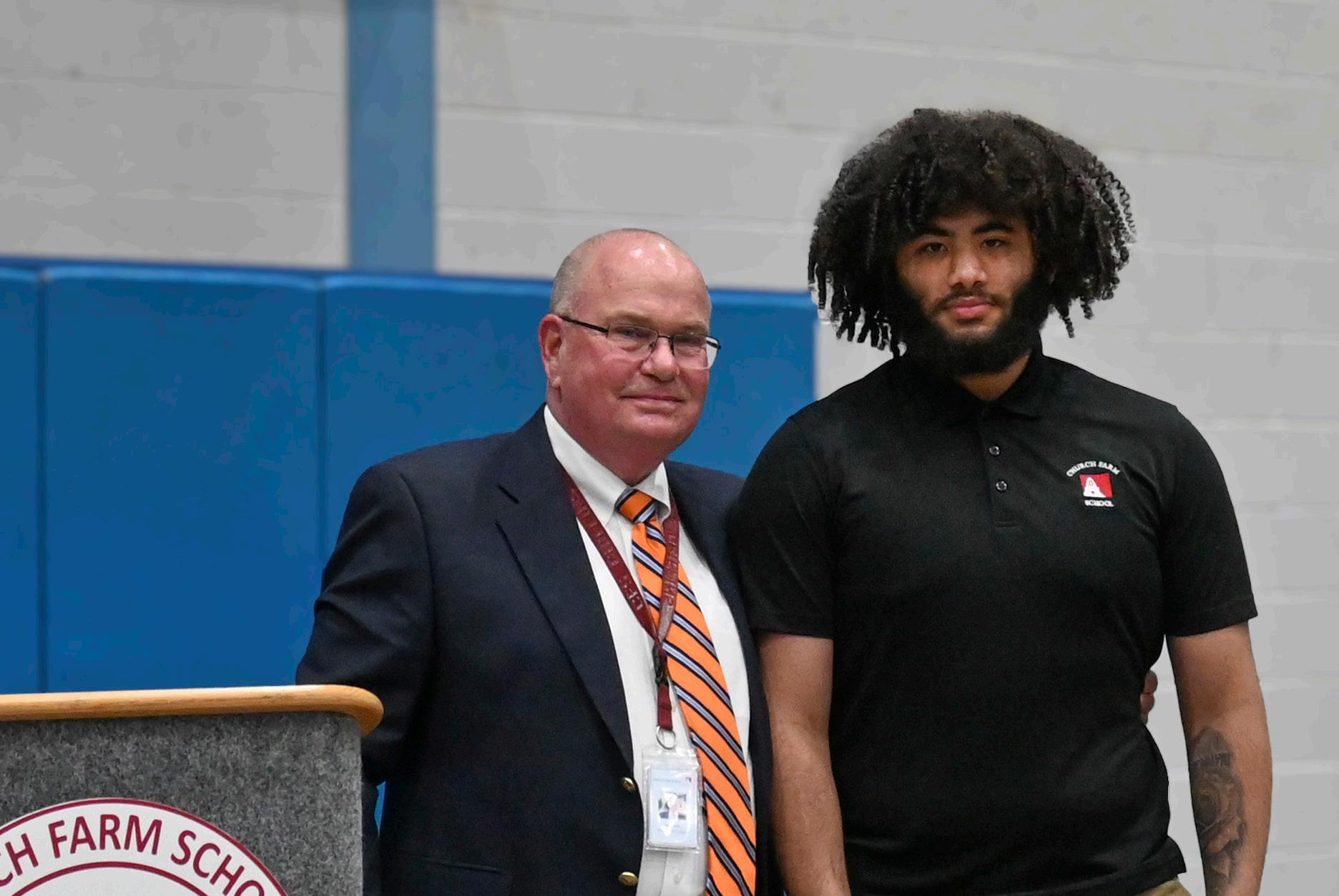
BECOMING WHO I NEEDED
WRITTEN BY DEVON BOWER-PROPHET ‘26
Growing up in Philadelphia, I didn’t have access to the kind of enrichment my mind craved. The Philadelphia public school system, while filled with hardworking teachers, simply couldn’t provide the resources I needed. At home, my single mother worked part time while raising three kids on a modest income. I still remember those early mornings when she would usher my sisters and me out the door, English muffins in hand, trying to make sure we got to school by 7:30 before
she raced to her own job by 8. We’d pile into our beat-up 2004 Chrysler Pacifica, the one with the taped seats, crummy floor mats, and an engine that screamed and coughed every time she turned the key. The car rattled like it was begging for retirement, but it beat catching the bus. I can still see her in the driver’s seat, eyes rimmed from another late night, humming softly to the radio like music was her armor. Watching my mom juggle everything with quiet strength showed me what
real determination looked like. She never complained, even when exhaustion weighed on her face. She was the kind of woman who refused to let her circumstances define her. By middle school, I was heading down the wrong path. I was fighting, hanging out with the wrong crowd, and experimenting with drugs and alcohol. Looking back, those memories feel both distant and painfully close, like smoke that still lingers after the fires have been put out. I can still smell the mix of cheap
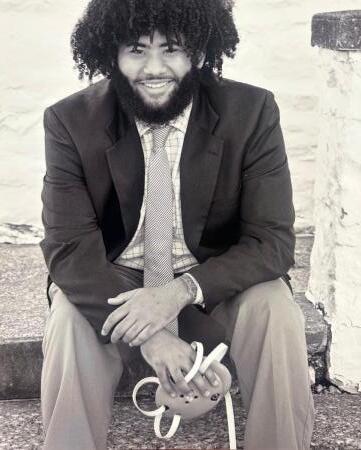
weed and sweat in those dim basements, the air thick with rebellion we didn’t understand. I can still hear the voices from those nights: “hit this,” “just do it.” Then came the familiar ritual of “puff, puff, pass.” It wasn’t about the high; it was about belonging. I was young, too young, too lost, thinking rebellion made me powerful. In reality, I was just one of many lambs being led blindly to the slaughterhouse, unaware of that impending axe. It wasn’t that I was necessarily a bad kid; I was respectful. “Yes ma’am, yes sir,” that was how my mother raised me. But respect doesn’t shield you from your surroundings. Where I grew up, standing out could make you a target, so I did what everyone else did. I laughed when they laughed, followed when they said “come on,” and went wherever the noise was loudest. We were just born into a place where survival meant blending in, even if it meant following the wrong shepherd. The streets were getting a hold of me before school did, shaping me into reflections of everything I saw but didn’t understand. My mom could see it happening, and for her, that was the breaking point. She couldn’t stand by and watch her youngest and only son throw away his future before it had even begun. That was when she discovered Church Farm School, an all-boys Episcopal boarding school in Exton, Pennsylvania. Although we had little money and my grades weren’t impressive, Church Farm’s mission was to help kids like me. They worked with my mom and reduced the $55,000 tuition to just $1,200 through financial aid. More importantly, they didn’t care where I came from. They took a chance on me. When I first arrived at Church Farm in ninth grade, I was completely unprepared for the rigorous courses and structured environment. I didn’t know how to study, how to write a scholarly essay, or how to present in front of a class. My grades reflected that. The hallways smelled faintly of disinfectant and pencil shavings, and I remember sitting in class pretending to take notes while trying to decode what everyone else seemed to understand so easily. But the unique thing about Church Farm is that it brings together students from all walks of life. Some were like me, but many were highly driven and confident. At first, I felt out of place, almost like I was pretending to belong. Then I realized I could learn from the people around me. I started paying attention to how my peers took notes, organized their time, and spoke up in class with confidence. Those study nights became my turning point. I remember being in the common long after most people had gone to bed, Red Bulls and empty fruit snack packets scattered across the table, my laptop glowing under tired eyes. My friend Dennis would quiz me, his voice half laughing, half drifting into sleep. We would write equations and test vocabulary until our words slurred from exhaustion.
Sometimes, I would look up from my screen to see the first light of dawn sneaking through the blinds, I’d hear the birds waking up from their good night’s rest. Hard work, I learned, wasn’t glamorous. It was messy, uncomfortable, and fueled by the belief that I could be better than I was yesterday. By sophomore year, I was thriving. My grades rose from C’s and D’s to A’s and B+’s, and my mindset shifted. Learning no longer felt like a chore; it became something I wanted to master. By junior year, I had advanced into several higher-level classes and taken on leadership roles I never imagined for myself. I became vice president of the weightlifting club, captain of the wrestling team, and earned a scholarship for my senior year. The most surprising moment came when I was offered a fully funded opportunity to study abroad in Ecuador. Living and learning in a completely different country gave me a new kind of confidence. It taught me that the world was much larger than the one I had grown up in and that I could find my place in it. Looking back, the gratitude I feel toward Church Farm School is overwhelming. The institution didn’t just give me an education; it gave me a brotherhood, a work ethic, and a belief in myself that I carry everywhere I go. Wrestling, for example, became one of my deepest passions. It is more than a sport to me. It is a discipline that has taught me resilience, patience, and the value of persistence. Every practice, every match, and every loss reminded me that progress comes from consistency and courage. I never would have discovered that part of myself if Church Farm hadn’t invested in me. That gratitude has changed how I see success. I no longer measure it by personal achievements but by how much I can give back. I know there are kids like me, bright, curious, and full of potential, who are being pulled down by circumstances beyond their control. I want to create opportunities for them, just as Church Farm created one for me. Whether through mentorship, community work, or creating pathways to education, I want my story to be a model that can be repeated, not an exception. Church Farm School took a chance on me when few others would have. Because of that, I have transformed from someone at risk of losing his way into someone confident, disciplined, and driven to succeed. Most importantly, I have learned that true success means reaching back to lift others up. And for that, I will always be thankful.
CIRCLE OF LOVE
My family’s first dining table was a salvaged piece of circular wood found on the streets of Los Angeles. Through struggles, arguments, and laughter, this table witnessed the effort that marked my family’s new beginnings. As the days and years went by, this basic shape, a circle, became a symbol of unwavering commitment to the reciprocity of love, and as I grew, a model for my leadership.
My parents’ decision to leave their lives in China behind, fueled by the prospect of opportunity and education in America for their future kids, is a sacrifice I will never forget. Their fear that their children might relive the hardships of their bleak childhoods shaped the way they parented: success was met with pride, and mistakes with discipline. Though this parenting taught me the importance of resilience and structure, the lack of outward expression in the way my parents love left me to find out for myself what it meant.
The decision to leave my friends behind and attend a boarding high school across the country was one that was emotionally difficult; for the first half of my high school years, I felt lost, regretful, and stagnant. My parents were always there, but I was still yearning for a love that felt limitless.
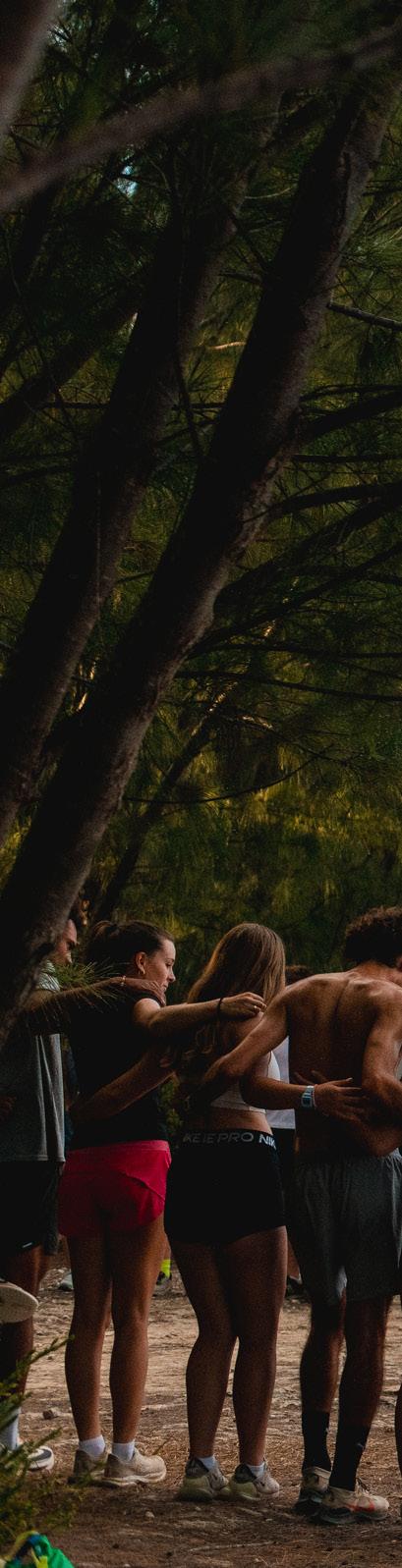
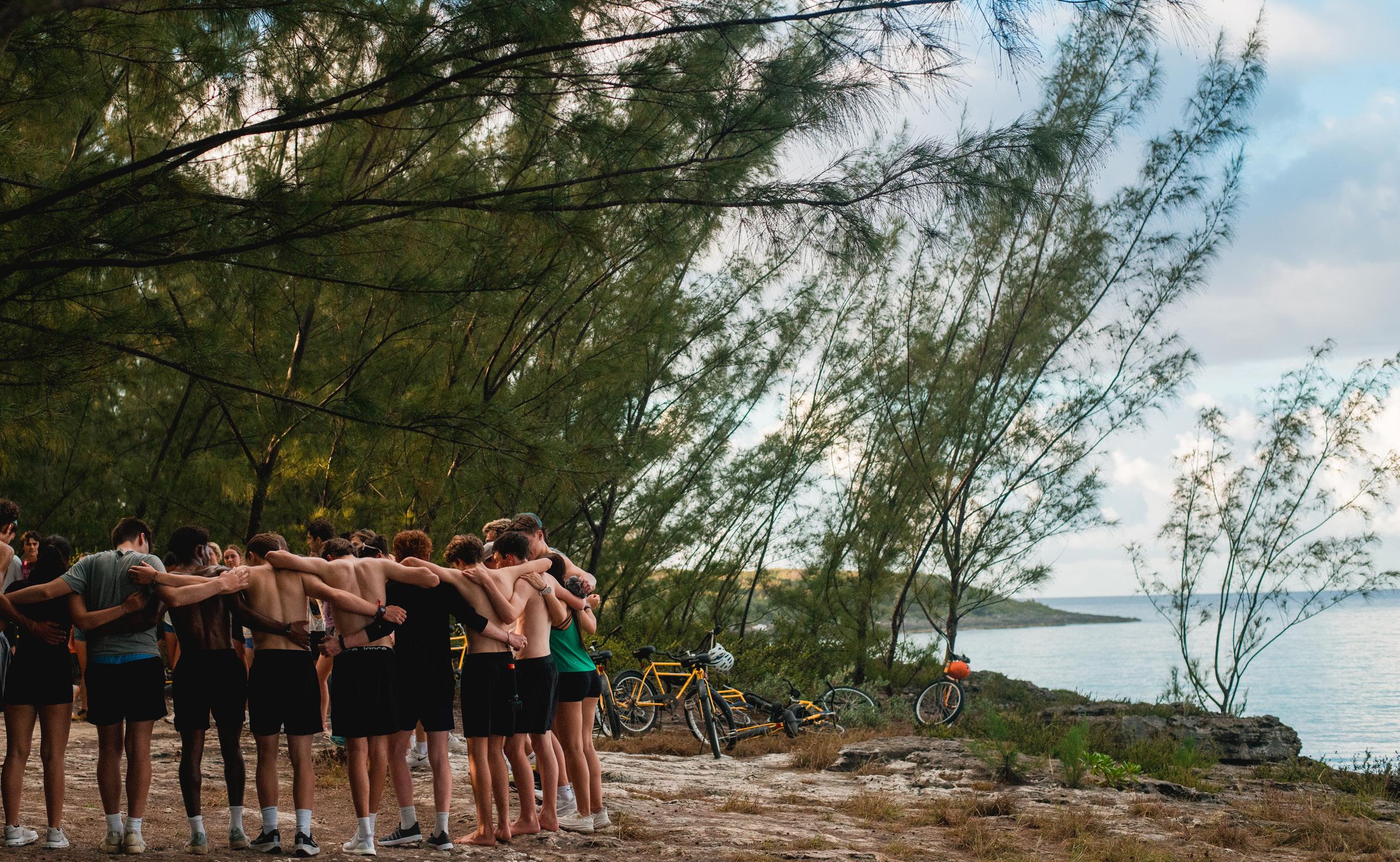
In the spring of my junior year, I spent a semester abroad at The Island School with 52 other high schoolers: 100 days on the Bahamian island of Eleuthera, completely disconnected from life beyond the island, including the internet, except for 20 minutes on a landline each week. I cried when my mom picked up the phone for the first time. I felt the pain of conflict in my heart, knowing I missed her and not knowing how to tell her. At home, we never expressed our love verbally, and I felt its absence that day.
At The Island School, circles were intentional. Every morning, the community gathered around the flagpole at the center of campus, faced the rising sun, and sang the Bahamian national anthem. Every night, we gathered again to share Kudos, a shoutout for someone, and Nammys, a nature appreciation moment. Then there were smaller circles: kayak expeditions, class discussions, and dorm meetings. For each one, I would do what I came to expect in my circles: offer up my full attention, effort, and heart.
WRITTEN BY VICTOR LU ‘26
The definition of love my parents taught me was not lost, but silent acts of service started to balance with louder expressions. When someone fell behind on my kayak expeditions, I slowed down, kept them company, and celebrated their small victories of even the slowest paddle strokes, loudly. I’ve always known this type of love was in me; I just never learned how to express it, and here I was finally starting to feel like I was living this love in real time, turning my love from an abstract feeling into concrete contributions to the world. As my resilience channeled towards intentional connection and mutual appreciation, I built real and deep relationships that I’ve never had before.
I still vividly remember the graduation ceremony on the final night of our semester when I was pinned as the Cacique, the highest honor of leadership named after the chief of Eleuthera’s native Lucayan tribes. I didn’t know this award existed until a week before, when the whole student body was asked to vote on one person who exemplified leadership the most during our semester. As I stood before the peers, adults, and younger children I called home for the past 100 days, I felt the wooden floors of the boathouse beneath my feet, and the love in front of me. As my advisor gave her speech, happiness, pride, and gratitude rolled down my face in the form of tears. I felt seen and understood, in a way I have never felt before.
When I reflect on my purpose in life now, love is always what I come back to. Love is committing to everyone in a circle that I will express my love, no matter how hard it once was or still is. Leadership is inspiring others in my community to do the same, and instilling the confidence in them that they can be changemakers. I value fostering connection and communication on a personal level to create individual circles where people feel both held and heard.
My first circle was a table found on the street. Love was quiet but present, lodged in the cracks of the splintered wood. Since then, I’ve stood in circles on islands and in classrooms, learning how to dig deeper even if it hurts, to lead with my heart and inspire others to do the same. The circle of love has become more than what I once understood; it has formed a compass for how I lead and live.
THE SQUARE
WRITTEN BY VICTOR LU ‘26
I remember the red Marlboro box decals on the glass doors of my dad’s convenience store. You couldn’t miss them walking into The Square shopping center on the corner of Garvey and San Gabriel.
I remember my favorite wooden stool always waiting for me, taller than six-year-old me. I dragged it around the scratcher-shaving-covered floor with a bedsheet, pretending I was an engine train.
I remember how broomsticks became swords for me to fight my twin brother over small frustrations we had too much time to care about.
I remember the other stores, each run by families that became my family. Tiffany, the daughter of the auntie who ran the clothing store adjacent to my dad’s, accompanied me on my first trip to Legoland, the Aquarium of the Pacific, and Disneyland.
I remember how every restaurant across from my dad had known me since I was in my mom’s womb, how I practically grew up on the food that they offered me as I ran around the food court: Che Tai, Shoyu Tamago, pan-fried egg noodles, and lots of Sunny-D.
I remember how this close-knit community made me feel: safe, comfortable, and at home.
I remember my friends going out to trick-or-treat for Halloween, while I stayed late with my dad at his store, counting the cash drawer. I would grab a black bag from under the counter and walk around the shopping center to do my own rounds. None of these stores bought candy expecting trick-or-treaters, but they offered whatever they had to avoid disappointing a little kid.
I remember that I would always beg my mom to stop at Tanbii bakery before we left so I could get a pork sung bun and mouse-shaped mango pudding.
I remember my first dentist appointment at the shopping center, when I was told I had to eat less candy to prevent cavities.
I remember my first optometrist appointment, also at that shopping center. I read the words on the door, “Kingdom Super Vision,” as I waited for the lady to let us in.
I remember shopping with my mom in the supermarket as my dad opened up the store. I ran to the snack section as my mom picked up bean sprouts, cabbage, and tangerines.
I remember years later, shopping with my mom at the Trader Joe’s across from my elementary school I transferred to in third grade. We always got the
peach and mango yogurts.
I remember how, even after my dad opened his first school, we would always pass by his convenience store, a footprint of our family’s first steps in America.
I remember the song that got me into music in sixth grade: When I Was Your Man by Bruno Mars. A friend had shown it to me.
I remember quarantine, when I was stuck at home, how music became a source of comfort, wonder, and therapy.
I remember when I met Aayushi at a Trader Joe’s in Boston the summer after. I didn’t pick up any peach and mango yogurt. I forgot what I bought, only that she brought it back for me because I wanted to go on a run.
I remember how, in a world that felt so serious, that summer I felt like a little kid running around the food court again. I found peace in the Charles River’s breeze and how the sun lit the sky purple as it rose. It made me remember how there is always joy to be found in the world.
Now, I remember The Square as what I once thought was the world, and I am trying to find pieces of it everywhere I go.
WHAT I
CARRY
WRITTEN BY CESAR RAMIREZ ‘26
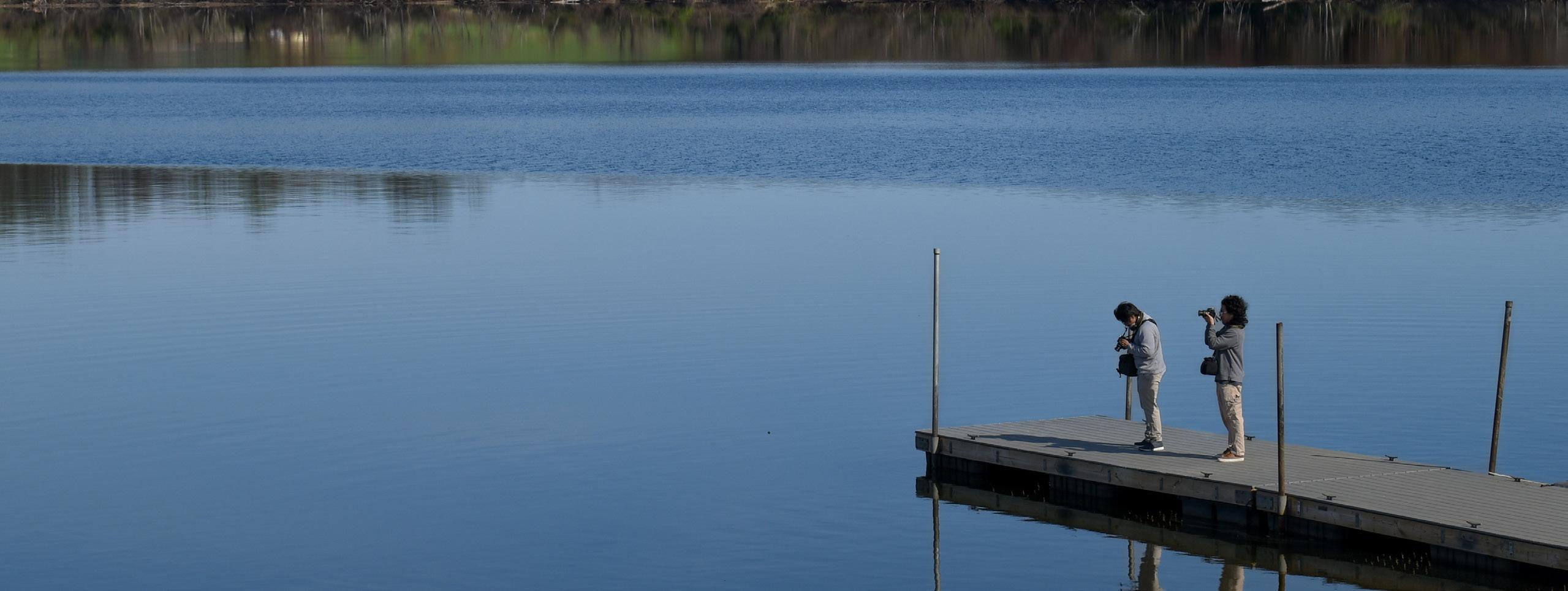
PHOTO BY LEW SCOTT
Sunlight poured through the truck window and made everything outside look bright and normal, which is exactly why my dad’s face looked so wrong in it. His eyes were bloodshot and empty, and that picture stayed ingrained in my head. My older brothers had just lifted him into his blue pickup truck. My mom, who didn’t know how to drive a truck, took the wheel because she had to be at work. I sat in the backseat alongside my dad, watching his face tilt against the window while the world outside kept moving like nothing had happened. We were coming from my cousin’s house after an uncle’s party the night before. I had woken up and walked into the living room to find him asleep on the couch. He didn’t look tired. He looked gone, in those eyes of his. That image became the line that divided everything. Before it, the parties felt like a pattern I memorized, safe and endless. After it, I couldn’t stop seeing the weight underneath. I remember the first time I went to one of those parties. I thought the building was just another brick box in the dark. That was until my parents opened the door, and the room hit me. Music pounded from the floor up through my shoes and into my skull. Fog from a cheap machine swallowed the air and violated my lungs. Strobing disco lights cut through the haze and flashed quick pieces of the crowd. I caught a glimpse of a sweating forehead, a phone camera, a kid running past, a hand grabbing a plate. When the song stopped and the house lights came on I could finally see the whole place. A wide empty space waited in the middle like a stage. Round tables circled it.
Long folding tables held aluminum trays and tin chafing pans. Rice, beans, chicken, pasta. I always went for chicken fingers and fries. For years this routine of parties felt safe. Open the door. Walk in. My parents would shake hands with a bunch of strangers, and I’d do the same, saying “Buenas noches” until my mouth got dry. Then, I disappeared into the crowd with cousins and other kids. Tables became 3 forts and corners turned into hiding spots. We ran until our legs burned. When everybody left by then, I was sleepy and tired, so I pushed two plastic chairs together to make myself a queensize bed and slept for the night without a care in the world. Small things started to slip under that safety without me noticing. Alcohol sat heavy under the lights and mixed with every smell until it seemed ordinary. My dad laughed at the table but his words came slower. By the time I woke up in the backseat of the car heading back home, I’d hear him mumble sometimes and sleep alongside me instead of driving. And it was always dark so I could never make anything out. That was, until the day after my uncle’s party, where we left in broad daylight. The observations before stacked like bricks the more I ignored them. And that morning in the truck, that one change in perspective, was when all those bricks collapsed into something I couldn’t ignore anymore. After that, I began noticing my mom’s warning before every party changed. She would say, “Don’t drink more than two,” and her voice would tilt toward hope. My dad didn’t answer a simple yes or no though. He answered with a long tangent that left us with uncertainty. At the party someone always handed him a beer and then another. He didn’t stand
‘28
out because everyone drank. Still, when he drank his moods grew sharper. As a result, happiness turned loud. Then at home, anger turned into shouting as my mom would scold him. I started watching him differently at parties. I would track him across the room the way you track a young kid near a pool. When he laughed too loud or his gestures grew too wide, something in my chest tightened. I began counting. One beer. Two. Three… The number climbed and his face changed with it. The sharpness in his eyes would soften and then blur completely. By the fifth drink he was someone else. My role shifted without anyone announcing it. I stopped hiding under tables. I hovered near him instead, close enough to hear if his words began to slur, far enough that he wouldn’t notice I was watching. My cousins still ran and played but I stayed at the edges of the party, half in the music and half in a vigilance I didn’t have words for yet. I learned to read the signs. The way he leaned too far back in his chair. The way his speech began to slur. The way he would stand and sway slightly before walking to the bathroom. My mom tried. She would catch his eye across the room and shake her head gently. Sometimes he would nod and set the beer down. Other times he would wave her off with a smile. I wanted to believe the nods meant something, that the nights he stopped at two were proof he could control it. But those nights were rare, and the other nights stacked higher. The parties became a countdown. I knew how each one would end before it started. We would stay until midnight or one or two in the morning. My dad would drink past the point of slurred words and into the territory of eyes that didn’t focus. On the drive home he would sit in the passenger seat with his head against the window while my mom gripped the wheel and I sat in the back pretending to sleep. At home he would stumble to bed or sometimes to the couch, and the next morning he’d be hungover. I became fluent in damage control. I learned to check his pockets for the car keys before he could think to drive. I learned to position myself between him and anyone who might hand him another drink. I learned to say, “He’s done, we should get going,” to his drunk buddies in a voice that sounded casual even when I was angry. I learned to guide him toward the door with a hand on his elbow, gentle but firm, the way you might steer someone away from the edge of something dangerous. But I also learned that none of it was enough. The pattern kept repeating. The parties kept happening. The drinking kept escalating. And I kept trying to hold back something that was bigger than my hands could
manage. Then one night, when I was fourteen, everything I had been quietly managing in the background exploded into something I couldn’t control. One night my mom answered my dad’s phone and a young slurred voice spoke. She burst into my room and said, “Ayúdame a sacar tu papá.” Outside a car had its back door open. My dad sat slumped in the seat like he was melting into it. His nose had a dark bruise and a scab of blood. Dirt all over his work uniform. He mumbled nonsense, mentioning things like his favorite soccer team Club América. I checked his pockets. No keys, no wallet. A man who had ridden with him stood nearby and said things I couldn’t catch. Then out of nowhere, two officers showed up as if summoned by chaos. My stomach dropped all the way to my knees. One officer asked if everything was okay and the other asked if they should take him to the hospital. My mom and I both shook our heads. When one cop switched to Spanish I reached for his eyes and said, “Please, we will take care of him.” I wanted them to leave, and they did. I dragged him up the stairs into our apartment. Each step felt heavier than the last. In the kitchen I shoved chairs aside and cleared a space of cold tile. I laid him down and folded blankets around his shoulders. I tucked a pillow under his head and rolled him onto his side so he wouldn’t choke. He kept muttering about soccer and groaning. I called my brothers. I opened my phone and read a list of first aid steps for someone who is extremely drunk. The instructions made me feel both useless and necessary. That night everything became a press of small sounds and sharp feelings. Anger arrived hot and immediate, Sadness followed, then a heavy tiredness. My mom sat on a chair and watched the doorway while I lay in bed and stared at the ceiling. The smell of alcohol faded from the kitchen by morning but something else stayed. I had learned how to carry my father, literally, but also in every way that came after. I carry him in how I watch at parties, in the pocket checks, in the counting. He is my world, and I know now that loving someone doesn’t mean fixing them. It means learning to hold them when they can’t hold themselves. That night made me someone who knows the exact angle to turn a body so it won’t choke. Someone who can speak calmly to police officers while my nervousness spikes. Someone who carries the weight of watching the person I love most become someone I have to protect. I didn’t choose to learn these things. But I learned them anyway, because he is my father, and that means something even when everything else is complicated.
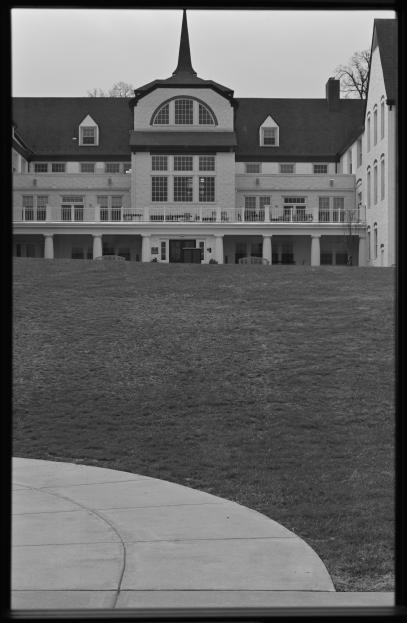
PHOTO BY JAYDEN OCHOA ‘28
PHOTO
Perhaps home is not a place, but simply irrevocablean condition.
James Baldwin
WORDS OF WISDOM
To: Underclassmen & Future CFS Students
From:
The Class of 2026
Solomon Beavers
Take your work seriously and don’t procrastinate, you’ll have hella fun later.
Eddie Echevarria
Don’t strive to perform. Strive to be your best and authentic self. Keep yourself accountable for the long term, not the short term.
Honestly, I wish someone had told me to do what I loved. Many times throughout my CFS career, I chose what other people told me to do over what I wanted to do. I took computer science over art class, and did wrestling instead of basketball. I learned that genuine happiness comes from doing what you want. If you want to play basketball, play basketball. If you want to take an art class, take an art class; you’ll be a lot happier than always wondering “what if.”
Dennis Smith
Kai Davis
I wish someone had told me to put myself out there more, take more photos, don’t take time for granted. The past four years have gone by so fast and despite all the jokes we made about this place being hell, I’m going to be very upset when I leave. So enjoy it. Live in the moments, have movie nights with your friends, just have fun.
Carl Raymond
Remember how far you’ve come, and understand that everything happens for a reason.
Cesar Ramirez
Don’t hyperfixate on your grades to the point you neglect your social self and life, cherish the people around you and talk a lot with them.
Jameer Jackson
No one is in control of your future but yourself. If there’s something you want to do, put yourself in the best position possible to make it happen.
This publication generously sponsored by Market Street Print & Copy.
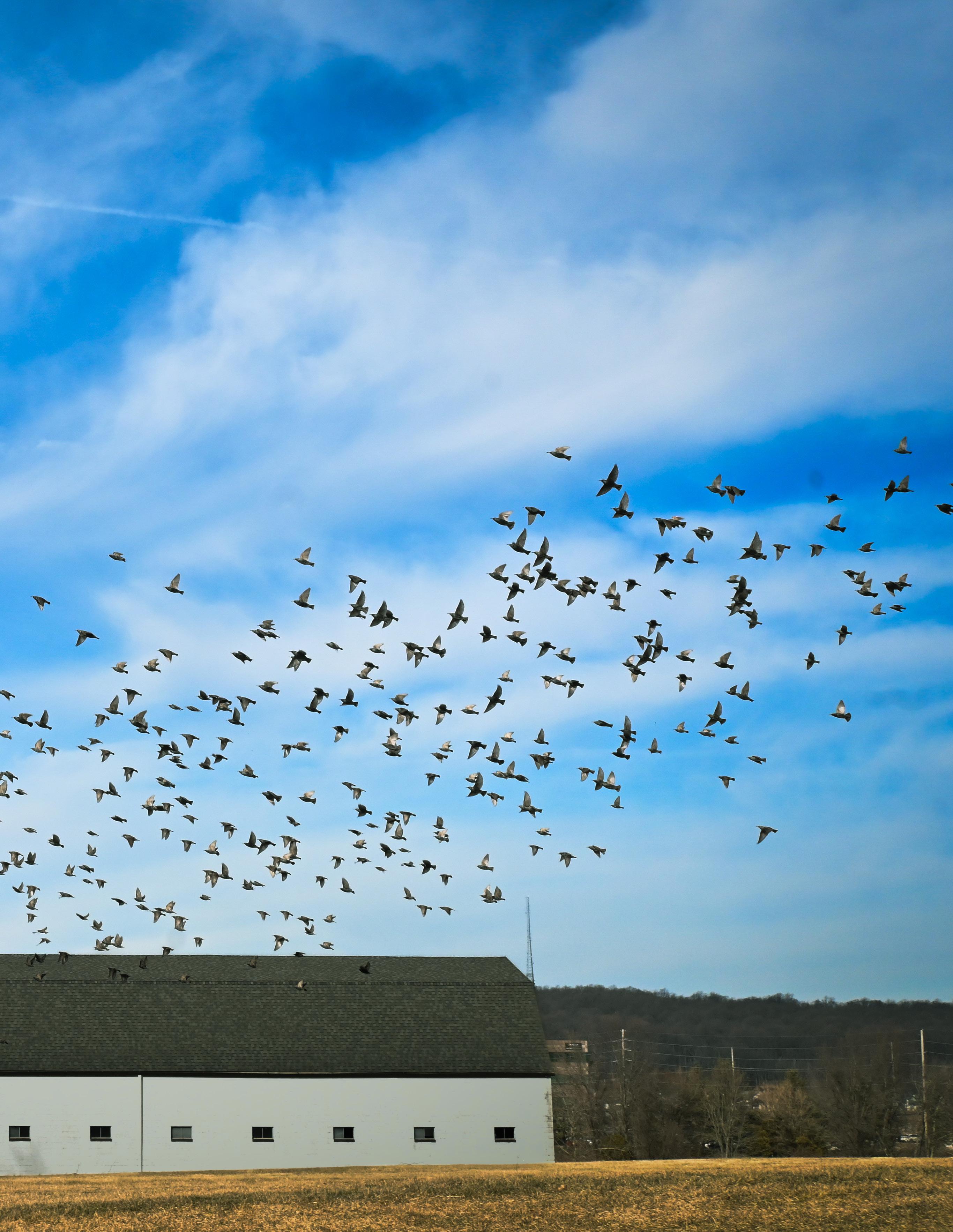
PHOTO BY RASHAD ERVIN ‘28