
Having a faith conversation with old and new friends is as easy as setting the table.

Having a faith conversation with old and new friends is as easy as setting the table.
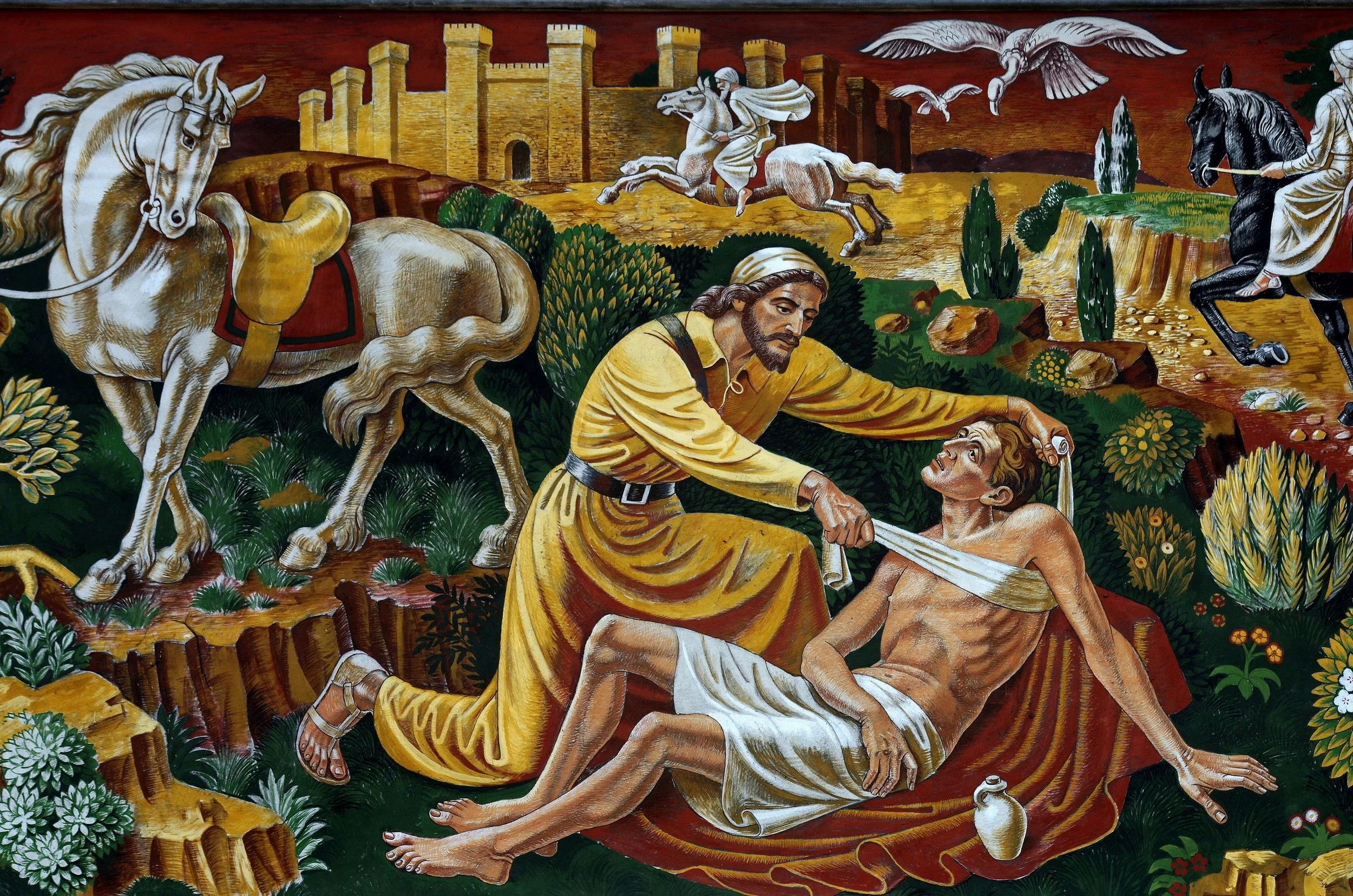



gram is designed for individuals ortunities to talk about their faith . Participants gather online or in potluck lunch or dinner and share he C21 Center’s downloadable eds 2 tial Words 4 s the Poor 6 the Poor ctices/Sacramental Expression 8 Prayer 10 Structural Poverty 12 at Continues 14 Challenge 16
Prayers 18
me of rapid technological change, d widening inequality a time hetic voice on behalf of the poor is
n, released on October 9, 2025 by hat in the poor and suffering, the ace of her crucified Lord, Jesus on for the poor” a fundamental eeply from Scripture, the Church of the saints, Dilexi Te shows that s marked by a special concern for lized, and the oppressed. This odied in the “poor Messiah,” of God’s compassion for all
mercy, the exhortation calls for a ntality to confront the “structures d perpetuate global poverty. It ideologies that idolize market e of human dignity; a “throwaway orship of an economy that kills.”
readers that the poor are not aid but active agents of wal, possessing a wisdom capable and society. Dilexi Te particularly n to and collaborate with popular or themselves in the struggle for
an urgent call to conversion and istians to overcome indifference e “suffering flesh” of the poor. of both personal encounter and erts that a Church faithful to the or Church for the poor” whose by concrete love, justice, and
S Affiliate of the Vatican-based organization II to promote the knowledge and practice of
“A concrete commitment to the poor must also be accompanied by a change in mentality that can have an impact at the cultural level. In fact, the illusion of happiness derived from a comfortable life pushes many people towardsavisionoflifecenteredontheaccumulationofwealthandsocialsuccessatallcosts,evenattheexpense of others and by taking advantage of unjust social ideals and political-economic systems that favor the strongest. Thus, in a world where the poor are increasingly numerous, we paradoxically see the growth of a wealthy elite, living in a bubble of comfort and luxury, almost in another world compared to ordinary people. This means that a culture still persists sometimes well disguised that discards others without even realizing it and tolerates withindifferencethatmillionsofpeopledieofhungerorsurviveinconditionsunfitforhumanbeings.Afewyears ago, the photo of a lifeless child lying on a Mediterranean beach caused an uproar; unfortunately, apart from some momentary outcry, similar events are becoming increasingly irrelevant and seen as marginal news items” (DT11).


st’s love, ‘ we too are inspired to be ufferings and needs of others, and to share in his work of liberation as d of his love’” (DT 2).
n culture, “sometimes well disguised,” ithout even realizing it. What attitudes s culture to be disguised? which prioritizes “the accumulation of ccess at all costs,” Pope Leo raises social ideals that favor the strongest. nk he is referring to? How might you be these ideals?
d 24-hour news cycles enable rampant What can you do, individually and with indifference?
“The Gospel shows us that poverty marked every aspect of Jesus’ life. From the moment he entered the world, Jesus knew the bitter experience of rejection. The Evangelist Luke tells how Joseph and Mary, who was about to give birth, arrived in Bethlehem, and then adds, poignantly, that “there was no place for them in the inn” (Lk 2:7). Jesus was born in humble surroundings and laid in a manger; then, to save him from being killed, they fled to Egypt (cf Mt 2:13-15) At the dawn of his public ministry, after announcing in the synagogue of Nazareth that the year of grace which would bring joy to the poor was fulfilled in him, he was driven out of town (cf. Lk 4:14-30). He died as an outcast, led out of Jerusalem to be crucified (cf. Mk 15:22). Indeed, that is how Jesus’ poverty is best described: he experienced the same exclusion that is the lot of the poor, the outcast of society. Jesus is a manifestation of this privilegium pauperum. He presented himself to the world not only as a poor Messiah, but alsoastheMessiahofandforthepoor”(DT19).

naked and lacks daily food, and one of eace; keep warm and eat your fill,’ and eir bodily needs, what is the good of
e paradox of Jesus as the poor Messiah ommunity? How might you live out this fe?
ontact with the poor? How does your attitude toward the poor? If not, what ncounter the poor more regularly?
marginalized in U S society or in your w might you minister to them, just as
“Among the Eastern Fathers, perhaps the most ardent preacher on social justice was Saint John Chrysostom, Archbishop of Constantinople from the late 300s to the early 400s. In his homilies, he exhorted the faithful to recognize Christ in the needy: “Do you wish to honor the body of Christ? Do not allow it to be despised in its members,thatis,inthepoor,whohavenoclothestocoverthemselves.DonothonorChrist’sbodyhereinchurch with silk fabrics, while outside you neglect it when it suffers from cold and nakedness… [The body of Christ on the altar] does not need cloaks, but pure souls; while the one outside needs much care. Let us therefore learn to think of and honor Christ as he wishes For the most pleasing honor we can give to the one we want to venerate is that of doing what he himself desires, not what we devise… so you too, give him the honor he has commanded, and let the poor benefit from your riches. God does not need golden vessels, but golden souls.” [30] Affirming with crystal claritythat,ifthefaithfuldonotencounterChristinthepoorwhostandatthedoor,theywillnotbeabletoworship him even at the altar, he continues: “What advantage does Christ gain if the sacrificial table is laden with golden vessels, while he himself dies of hunger in the person of the poor? Feed the hungry first, and only afterward adorn thealtarwithwhatremains”[31]HeunderstoodtheEucharist,therefore,asasacramentalexpressionofthecharity and justice that both preceded and accompanied it. That same charity and justice should perpetuate the Eucharist throughloveandattentiontothepoor”(DT41).
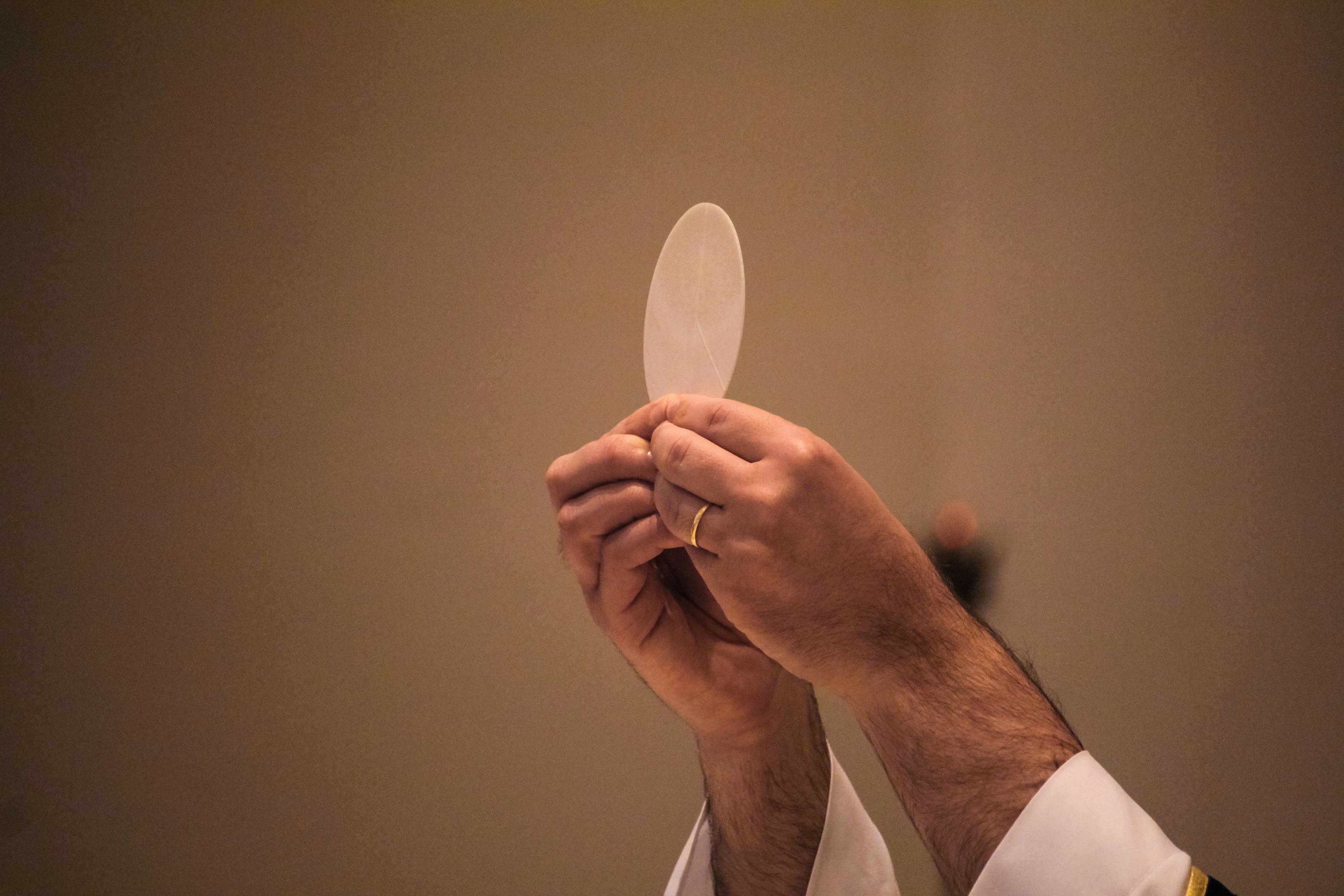
re not just people to be helped, but the he Lord” (DT 44).
n
d does not need golden vessels, but oes this sentence mean to you? munity exhibit integrity between what it ractices in regard to honoring the poor? of the “Eucharist as a sacramental and justice” impact your own worship
“Saint Teresa of Calcutta, canonized in 2016, has become a universal icon of charity lived to the fullest extent in favor of the most destitute, those discarded by society. Foundress of the Missionaries of Charity, she dedicated her life to the dying abandoned on the streets of India. She gathered the rejected, washed their wounds and accompanied them to the moment of death with the tenderness of prayer. Her love for the poorest of the poor meant that she did not only take care of their material needs, but also proclaimed the good news of the Gospel to them: “We are wanting to proclaim the good news to the poor that God loves them, that we love them, that they aresomebodytous,thattheytoohavebeencreatedbythesamelovinghandofGod,toloveandtobeloved.Our poor people are great people, are very lovable people, they do not need our pity and sympathy, they need our understanding love. They need our respect; they need that we treat them with dignity.” [67] All this came from a deep spirituality that saw service to the poorest as the fruit of prayer and love, the source of true peace, as Pope John Paul II reminded the pilgrims who came to Rome for her beatification: “Where did Mother Teresa find the strengthtoplaceherselfcompletelyattheserviceofothers?Shefounditinprayerandinthesilentcontemplation ofJesusChrist,hisHolyFace,hisSacredHeart.Sheherselfsaidasmuch:‘Thefruitofsilenceisprayer;thefruitof prayer is faith; the fruit of faith is love; the fruit of love is service.’ It was prayer that filled her heart with Christ’s own peace and enabled her to radiate that peace to others.” [68] Teresa did not consider herself a philanthropist oranactivist,butabrideofChristcrucified,servingwithtotallovehersufferingbrothersandsisters”(DT77).

scovered that the poorest are not only but teachers of the Gospel. It is not a d to them, but of encountering him
n fruit of silence is prayer; the fruit of it of faith is love; the fruit of love is ou cultivate the silence necessary for orld?
truly treat everyone with dignity? How What can it teach you? How can prayer yone with dignity?
gift or service? How do you discern the you are able to take at any given time?
“These popular leaders know that solidarity “also means fighting against the structural causes of poverty and inequality; of the lack of work, land and housing; and of the denial of social and labor rights. It means confronting the destructive effects of the empire of money Solidarity, understood in its deepest sense, is a way of making history, and this is what the popular movements are doing.” [72] For this reason, when different institutions think about the needs of the poor, it is necessary to “include popular movements and invigorate local, national and international governing structures with that torrent of moral energy that springs from including the excluded in the building of a common destiny.” [73] Popular movements, in fact, invite us to overcome “the idea of social policies being a policy for the poor, but never with the poor and never of the poor, much less part of a project which can bring people back together” [74] If politicians and professionals do not listen to them, “democracy atrophies, turns into a slogan, a formality; it loses its representative character and becomes disembodied, since it leaves out the people in their daily struggle for dignity, in the building of their future.” [75] The same must be said oftheinstitutionsoftheChurch”(DT81).

er words, is a network of economic aranteeing regular access to sufficient ritional needs, and also capable of needs and necessities ensuing from her due to natural causes or political and internationally” (DT 88).
n
t poverty is connected to the lack of ing, in addition to the denial of social other social determinants contribute to
ow might the work of justice—the work tural systems and policies be itable work?
ompel you to make your voice heard on tions even small ones can you take
“We must continue, then, to denounce the “dictatorship of an economy that kills,” and to recognize that “while the earnings of a minority are growing exponentially, so too is the gap separating the majority from the prosperity enjoyed by those happy few. This imbalance is the result of ideologies that defend the absolute autonomy of the marketplace and financial speculation. Consequently, they reject the right of states, charged with vigilance for the common good, to exercise any form of control. A new tyranny is being born, invisible and often virtual, which unilaterally and relentlessly imposes its own laws and rules.” [94] There is no shortage of theories attempting to justify the present state of affairs or to explain that economic thinking requires us to wait for invisible market forces to resolve everything Nevertheless, the dignity of every human person must be respected today, not tomorrow, and the extreme poverty of all those to whom this dignity is denied should constantly weigh upon our consciences”(DT92).

ake this matter seriously, we will eptitiously, ‘to legitimize the present re a minority believes that it has the ay which can never be universalized, t even contain the waste products of DT 95].
n of universal human dignity important mon good?
ake to make sure the dignity of every cted “today, not tomorrow?”
complicit in the “dictatorship of an
“The dominant culture at the beginning of this millennium would have us abandon the poor to their fate and consider them unworthy of attention, much less our respect Pope Francis, in his Encyclical Fratelli Tutti, challenged us to reflect on the parable of the Good Samaritan (cf. Lk 10:25-37), which presents the different reactions of those confronted by the sight of a wounded man lying on the road. Only the Good Samaritan stops and cares for him. Pope Francis went on to ask each of us: “Which of these persons do you identify with? This question, blunt as it is, is direct and incisive. Which of these characters do you resemble? We need to acknowledge that we are constantly tempted to ignore others, especially the weak. Let us admit that, for all the progress we have made, we are still ‘illiterate’ when it comes to accompanying, caring for and supporting the most frail and vulnerable members of our developed societies. We have become accustomed to looking the other way,passingby,andignoringsituationsuntiltheyaffectusdirectly”[115](DT105).
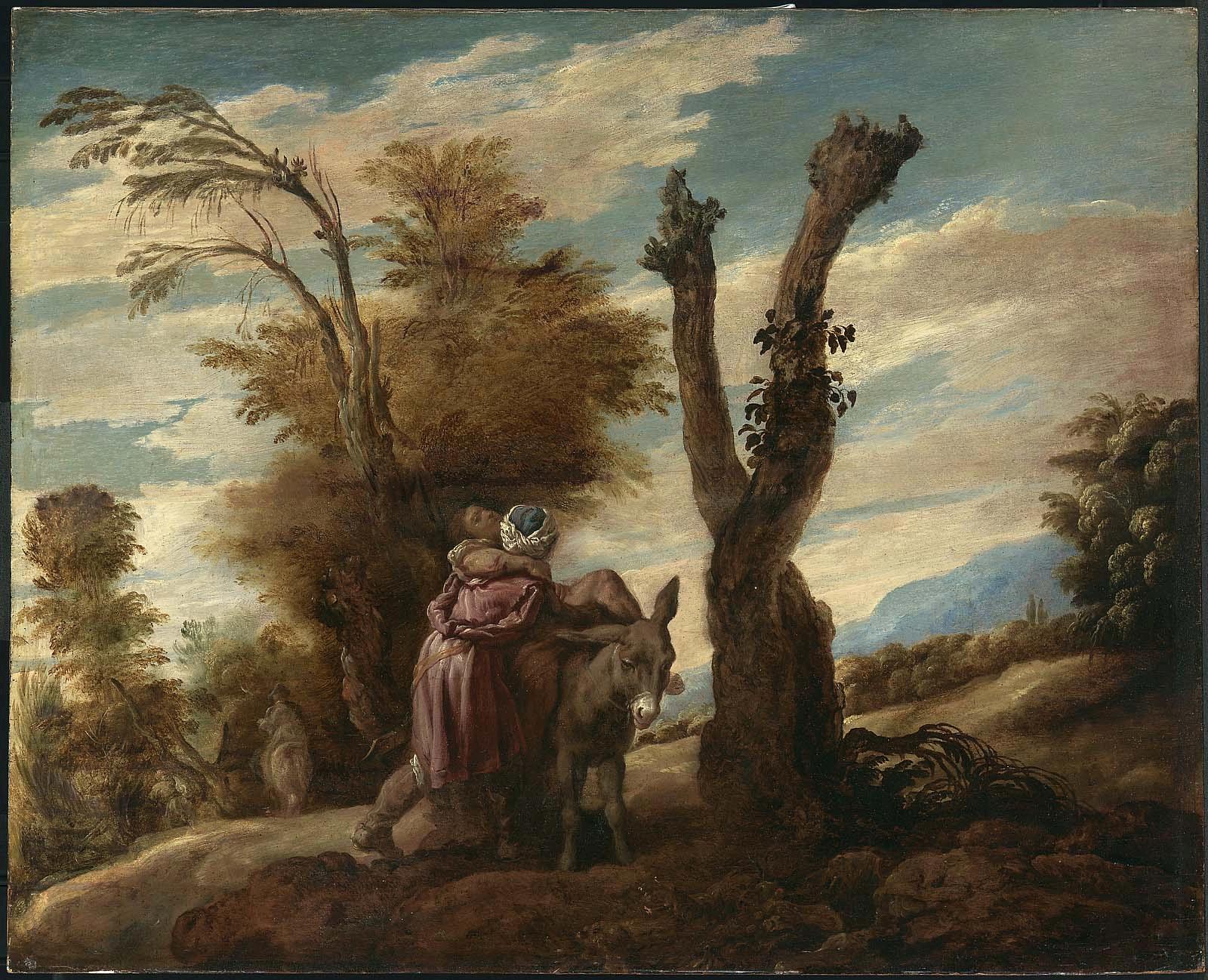
enation is present when we limit xcuses instead of seeking to resolve hose who suffer” [DT 95].
s in the Parable of the Good Samaritan hy might Pope Francis’ direct tone be nattention and inhospitality toward the
more attentive to the poor? What can y life to practice being attentive?

Be With Us Today
St.ThomasMore(1478–1535)
Fatherinheaven, youhavegivenusamindtoknowyou, andahearttoloveyou. Bewithustodayinallthatwedo, sothatyourlightmayshineoutinourlives. ThroughChristourLord.Amen.
PedroArrupe,SJ (1907-1991)
JosephP.Whelan,S.J.
NothingismorepracticalthanfindingGod, thanfallinginLoveinaquiteabsolute,finalway Whatyouareinlovewith,whatseizesyourimagination, willaffecteverything. Itwilldecidewhatwillgetyououtofbedinthemorning, whatyoudowithyourevenings,howyouspendyourweekends, whatyouread,whomyouknow,whatbreaksyourheart, andwhatamazesyouwithjoyandgratitude. FallinLove,stayinlove,anditwilldecideeverything.Amen.