SAM FRANCIS: 1950-1960
© 2024
For the exhibition Sam Francis 1950-60
TEFAF Maastricht Booth 616
March 7-14, 2024
Christopher Bishop Fine Art
 Essay by Richard Speer
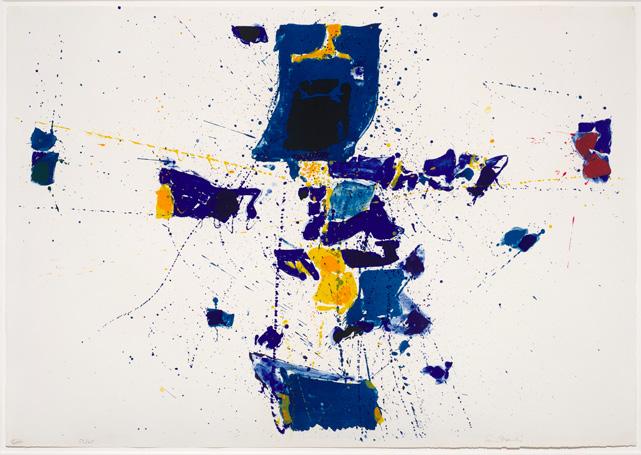
Plate 1
Sam Francis (1923 -1994)
First Stone, 1960
Lithograph in colors on wove by BFK Rives
24 102/127 0h x 35 80/127 w in
 Sam Francis (1923 -1994)
Untitled, 1958-1959
Watercolor on paper
25 16/127 h x 18 191/254 w in
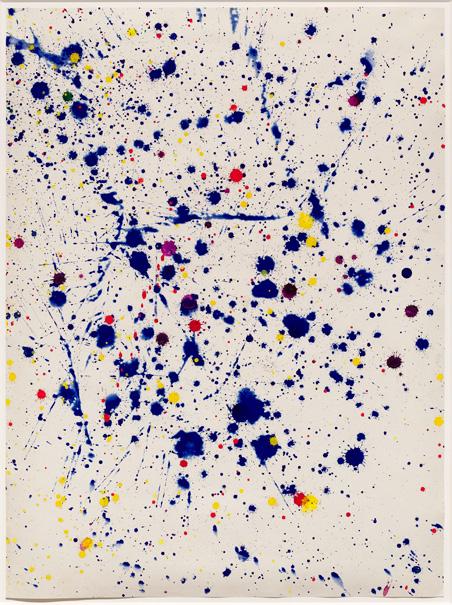 Sam Francis (1923 -1994)
Untitled, 1958, 1958
Gouache on paper
Plate 3
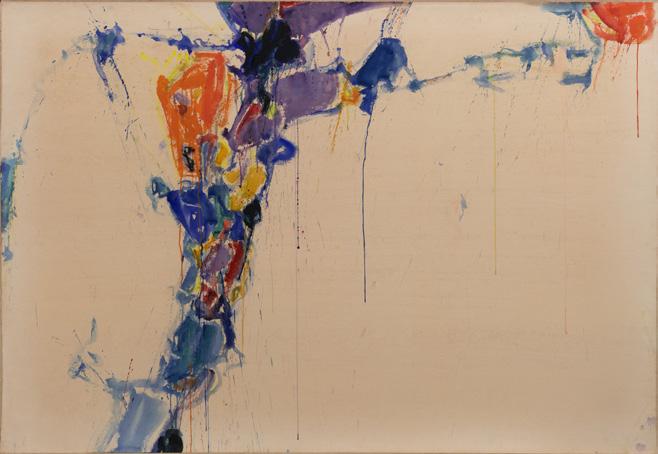 Sam Francis (1923 -1994)
Untitled, 1956-57 gouache and watercolor on paper mounted on canvas 42 191/254 h x 62 w in
Plate 4
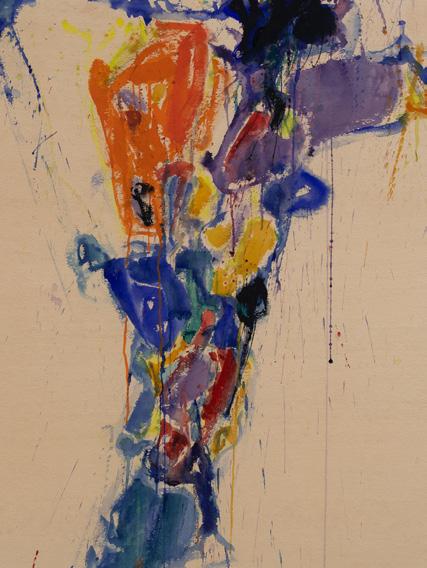
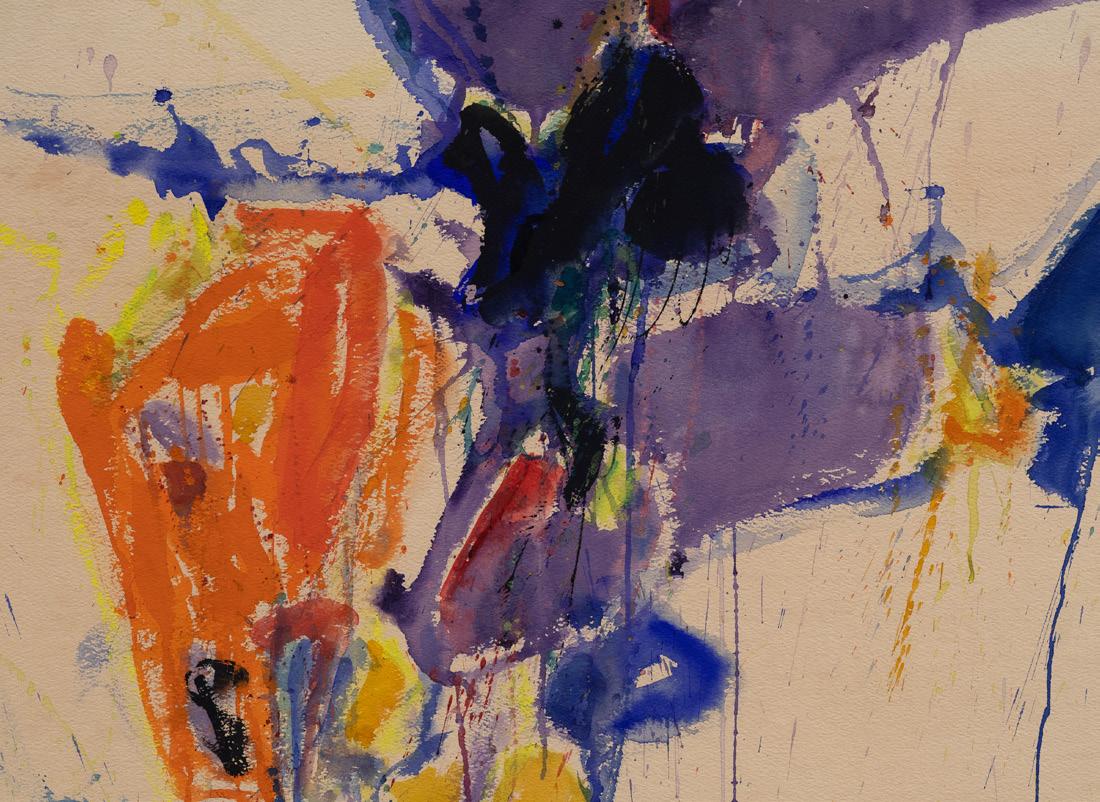
12 h x 15 191/254 w in
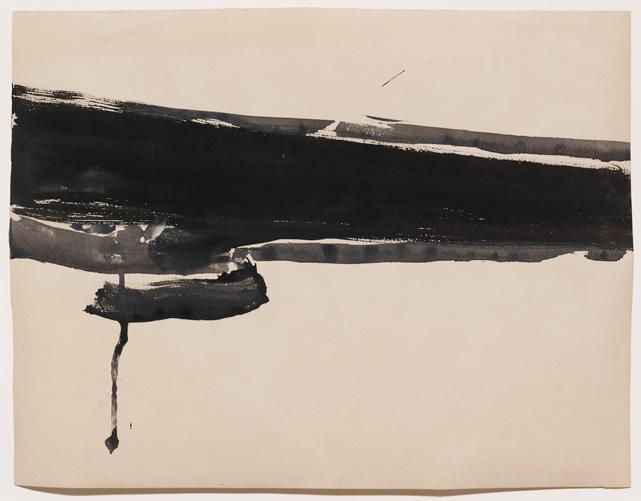 Sam Francis (1923 -1994)
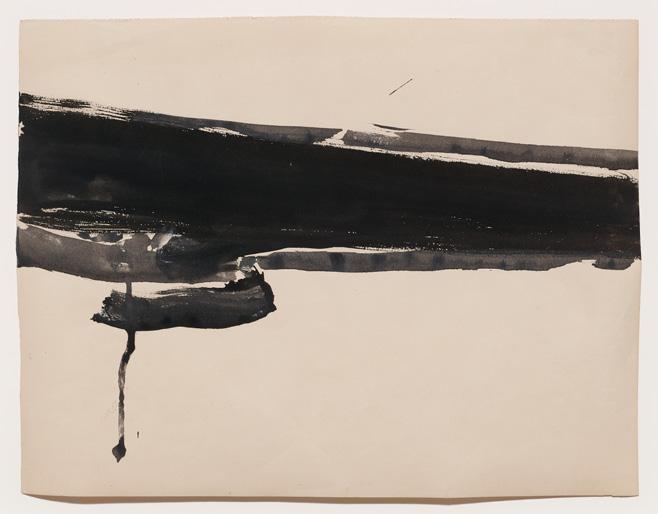
Untitled, 1950
Ink and ink wash on sketchbook sheet
Plate 5
Sam Francis (1923 -1994)
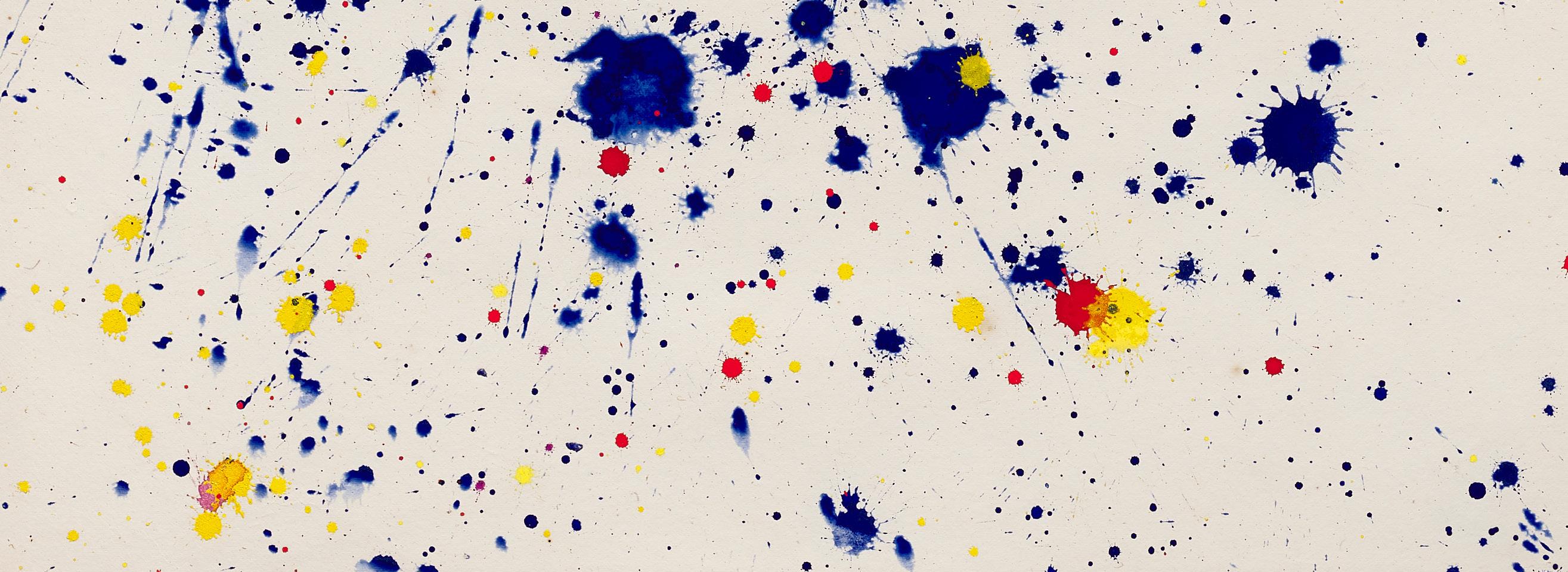
Untitled (Yellow Splashes), 1956
Watercolor on paper
22 191/254 h x 30 191/254 w in
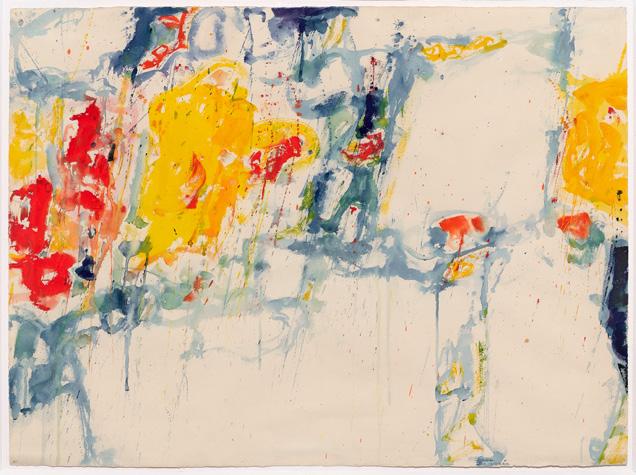 Plate 6
Sam Francis (1923 -1994)
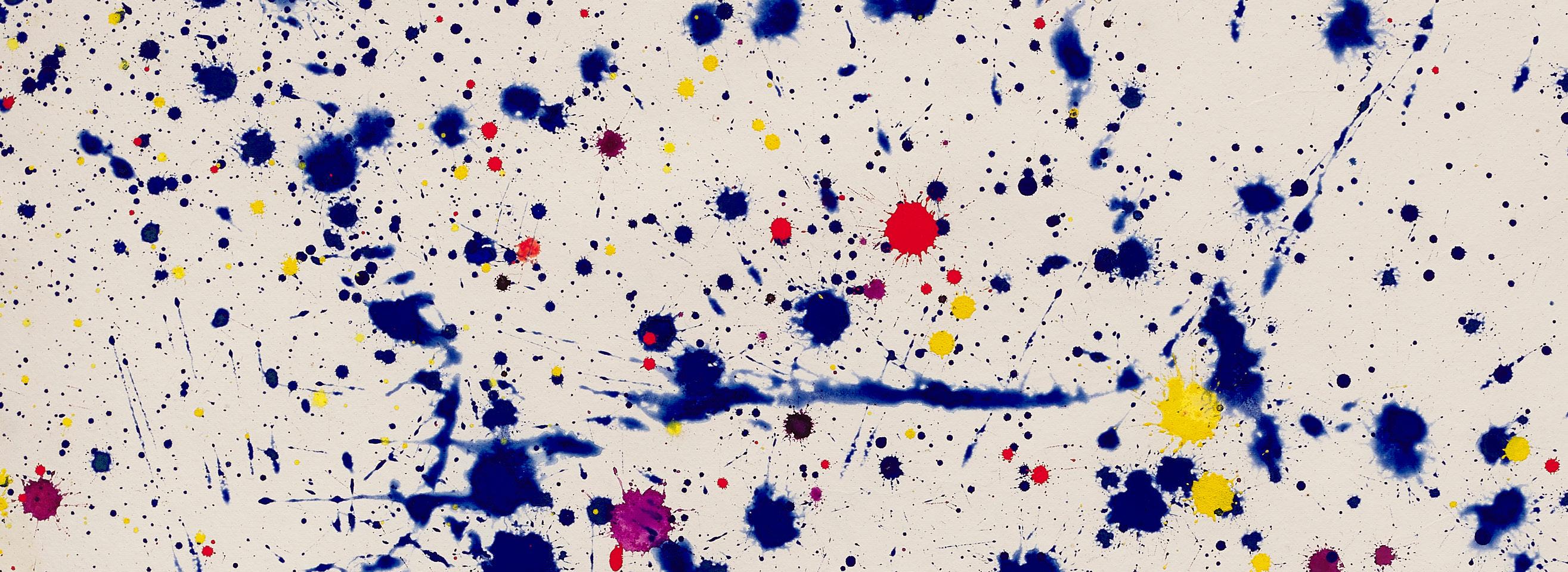
Black, Blue and Yellow (Blue Gouache), 1956-1958
Watercolor, gouache, and tempera on paper
14 h x 18 191/254 w in
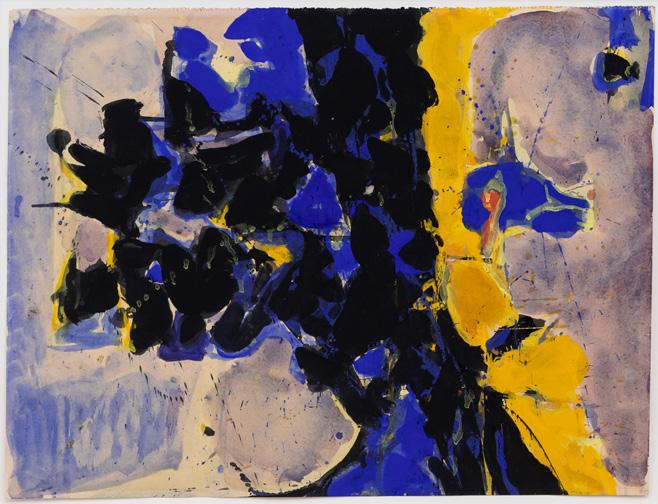 Plate 7
Sam FranciS 1950-60: FloatinG WorldS ESSAY
In the popular imagination an artist’s stylistic evolution is distilled into apex moments frozen in time, visual thumbnails that become Platonic ideals: Mondrian’s neoplastic grids, O’Keeffe’s flowers, Gottlieb’s Burst Warhol’s soup cans... When we think of celebrated Abstract Expressionist Sam Francis (1923-1994), the image that inevitably springs to mind is a composite of paintings he created from the late 1950s to the early 1960s, a transitional period bookending his momentous first trip to Japan in 1957. In these works, colorful biomorphic gestures cluster in a floating world of dynamic asymmetry, cocooned in expanses of pillowy white and inflected with a pitter-pat of flecks and spatters. In his poem “Dreaming Sam Francis,” Japanese writer Makoto Ōoka likened this delicate constellation of flung paint to “waterdrops... undulating invisible spray/the shape of foam... trembling in ecstasy.” Within Francis’s oeuvre these are the paintings most
sought-after by museums, auction houses, commercial galleries, and private collectors. From this period, christopher Bishop Fine art has curated seven works on paper for the exhibition Sam Francis: 1950-60. For Francis, paper was a medium of infinite possibilities, on equal footing with canvas and panel. The textures and absorbency of fine archival papers were uniquely suited to his technique of deploying acrylics and gouache essentially as watercolors—wetting the surface with water-dipped brushes or rollers, then daubing and flicking paint, which seeped and spread in watercolorlike tendrils.
The pairing of Francis with Matisse on view here is particularly auspicious, for Matisse stood alongside Bonnard and Monet in the trinity of artists Francis revered above all others, and who influenced him the most. The French master’s la musique (1910) was his all-time favorite painting. In its sensuality of approach, dramatic figure/ground
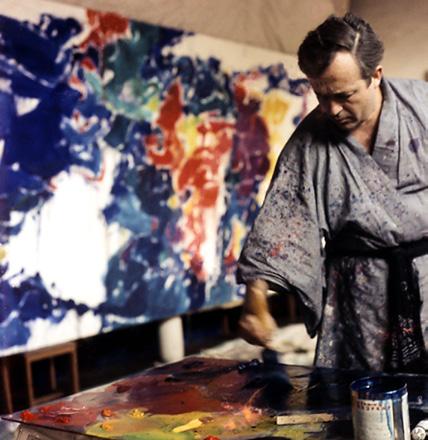
Sam Francis 1950-60: Floating Worlds by Richard Speer Sam Francis working on the Tokyo Mural, in temporary studio, Mita district, Tokyo, 1957. Photo by François René-Roland, Paris.relationship, and luscious chroma, especially its deep blues, one finds direct precursors to Francis’s sensibility. Although he never met Matisse, he befriended the Matisse family in Paris, including ex-wife, Amélie, who collected his work, daughter Marguerite, and son-in-law Georges Duthuit, an art critic and early Francis champion.
From 1956 to 1960, the period from which six of the seven works on paper on display are drawn, Francis migrated from the “crepuscular” paintings of his Paris years— so named because they evoke the liminal atmospherics of twilight—to the airier, looser Japan line compositions he created post-1957. This is a trajectory from density to porousness, from the heavy, overcast skies of autumn and wintertime Paris to the spartan beauty of Japanese gardens and architecture, hanging scrolls and folding screens. The painter had been invited to Tokyo by sculptor and ikebana (flower-arranging) master Sōfū Teshigahara, who commis-
sioned him to create a 26-foot-long mural for the lecture hall of his ikebana school. tokyo mural was rapturously received, largely because its poetical treatment of negative space reminded Japanese viewers of their own centuries-old conception of ma (間), the energetically charged interval between two objects.
Upon completing the mural, Francis established studios in Tokyo, began exhibiting at Minami Gallery, and formed a close friendship with oil magnate Sazō Idemitsu, who became his leading collector. When Idemitsu first beheld his 1959 painting, White line, with its broad avenue of empty space bisecting the picture plane, he exclaimed: “The white space in the middle is where humanity can come in!” This quality has fascinated collectors for nearly seventy years: the invitation the paintings extend us to project our thoughts, hopes, and dreams into their limpid pools of calming, welcoming white. Those white spaces, the artist
later wrote, “are reserved for you.”
Paintings of this period break radically from the artists of the New York School, who had transliterated the angst of the Second World War and the nascent atomic age into dense abstract tableaux that seemed to have emerged from the gritty alleyways of New York City itself. Roughly a generation older than Francis, they defined the mythos of the Cedar Tavern brawler who disappeared on week-long benders (de Kooning), died young in a fiery car crashes (Pollock), were driven to suicide (Rothko), and drank and smoked themselves to death (DeFeo, Mitchell). Their personal demons and the anxieties of their era had manifested in their works’ predominantly somber colors, violent gestural slashes, and all-over compositions that could be airless and claustrophobic. Sam Francis could not have been more different. A California boy from San Mateo with little taste for AbEx existentialism, he hopscotched over the smoky,
cliquish Cedar Tavern, moving from California to Paris in 1950, the year he painted the elegantly minimalist Untitled (Plate 5). With his magnetic, gregarious personality and the defiant openness and optimism of his paintings, he directly rebutted the first-generation Abstract Expressionists’ Sturm und Drang. His orientation toward open space, saturated color, and ebullient gesture is brilliantly embodied by four works on paper on view here (Plates 2, 4, 6, and 7) created shortly before and after his seminal foray to Japan. These qualities are also endemic to his printmaking practice, which began in 1960 with the lithograph First Stone (Plate 1), the first of 558 known editions he created during his lifetime. Its cruciform composition, swathed in white, recalls Paul Landowski’s landmark statue in Rio de Janeiro, christ the redeemer, its arms outstretched against a bank of clouds. It is an exultant image, at once reductivist and opulent.
With this integration of minimalism and splendor as a leitmotif, Francis’s syntax of floating forms channels the aristocratic insouciance of “Floating World” paintings and woodblock prints (ukiyo-e), which he studied and collected in Japan. “The idea of a floating world,” critic John Seed has written, “gave Francis a threshold to cross.” “Artist of the Floating World,” he was dubbed by The Irish Times. While Edo-era depictions of courtly life in the era of the shōgun might seem far removed from 20th Century lyrical abstraction, these vastly divergent idioms share a sense of cosmopolitanism and effervescence, liberation and levitation halfway between earthly pleasures and spiritual contemplation. The drip-drops of blue, red, and yellow in Untitled (Plate 3) float as if unbeholden to gravity, like cherry-blossom petals suspended midair. “I simply live afloat,” Francis wrote in a 1974 letter to art critic Yoshiaki Tōno “Everything is afloat.”
It is not entirely surprising that buoyantly exuberant paint-
ings from a transitional period, as the artist journeyed from France to Japan, would strike a chord of such uncommon resonance, for what is transition if not a zone suspended between two states? Across this body of work, we witness two worldviews reaching toward one another in search of commonality: the West and East, Paris, New York and Japan, modernism and ancient traditions, luxuriance and austerity in dialectical equipoise. Between the poles of thesis and antithesis, Francis found a golden synthesis at the crossroads of these cultures.
richard Speer is the author of “The Space of Effusion: Sam Francis in Japan” and co-curator of the exhibition “Sam Francis and Japan: Emptiness overflowing” (lacma, 2023). His essays and reviews have appeared in artnews, art Papers, arts of asia, Salon, newsweek, The los angeles times, and The chicago tribune. For more information, visit richardspeer.com
SAM FRANCIS
DESCRIPTIONS
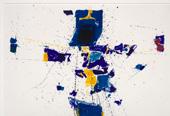
Plate 1:
Sam Francis First Stone, 1960
Lithograph in colors on wove by BFK Rives
24.8 x 35.63 in (63 x 90.5 cm)
Signed lower right and numbered 53/65 in pencil on the lower left corner, from the edition of 65
Description
This work is recognized by the Sam Francis Foundation and published in the Sam Francis Online Catalogue Raisonné Project: Francis Archive SF-1
Published by Kornfeld and Klipstein, Bern and printed by Emil Matthieu at Emil Matthieu Atelier, Zurich, 1960
Provenance
Galleria Il Segno, 1961
Private Collection, Germany
Ketterer Kunst, June 8, 1970
Private Collection, Germany
Karl & Faber, July 14, 2021
Private Collection, United States
Exhibitions
Galleria Il Segno, Rome, Sam Francis May 13–June 14, 1961 (Exhibition brochure: Schneider 1961), no. 1, checklist, no ill.
Literature
Gasser, Manuel. "Sam Francis/Lithographs by an Action Painter." Graphis 18, no. 104 (November–December 1962), fig. 7, p. 574, ill. in b/w.
Zurich: Rudolf Mangisch Auction, December 8, 1990. Auction catalogue, lot no. 176, ill. in color.
Lembark, Connie W. The Prints of Sam Francis: A Catalogue Raisonné, 1960–1990. New York: Hudson Hills Press, 1992, no. L-1; SF-1, pp. 44–45, ill. in color.
Lynch, Kevin. "Works in MAM's Francis show carry printmaking to deep and beautiful realms." On Milwaukee (December 28, 2015), ill. in color.
Minerath, Kat. "Sam Francis at Milwaukee Art Museum: Printmaker exhibit opens the new Bradley Family Gallery." Shepard Express (December 31, 2015), p. 20, ill. in color.
Christopher Bishop Fine Art, New York, Sam Francis 1950 – 1960 March 7–14, May 1–June 29, 2024.
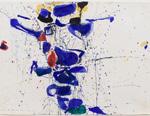
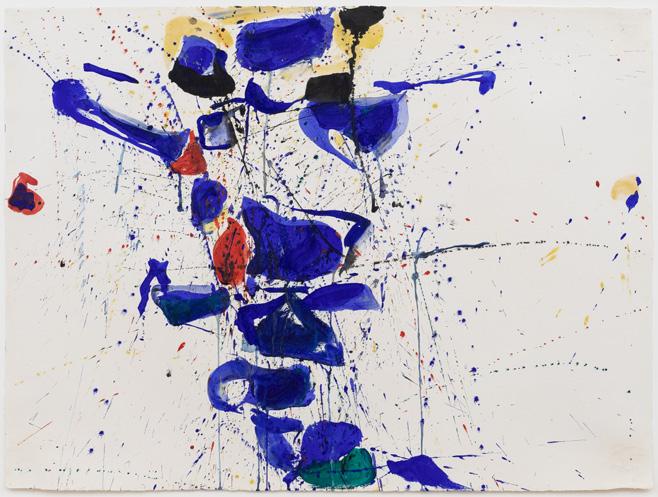
Plate 2:
Sam Francis
Untitled 1960
Watercolor on paper
58.42 x 78.74 in (58.42 x 78.74 cm)
Signed, dated, and inscribed in black pen on paper verso: “Sam Francis 1960 for Vyvyn Paris Oct. 24 1960.”
Description
This work is recognized by the Sam Francis Foundation and published in the Sam Francis Online
Catalogue Raisonné Project: Francis Archive SF59-531
Van de Weghe Fine Art, New York, Works on Paper from the 50s March 19–May 15, 2015.
Provenance
Private Collection, Paris
Private Collection, Massachusetts
André Emmerich Gallery, Inc., New York
Ernestine and Bradley Wayne, Dallas (acquired from the above in October 1985)
Greenberg Van Doren Gallery, New York
Private Collection, USA
Van Doren Waxter, New York
Sotheby's New York, Nov. 12, 2014, lot 163
Private Collection, New York
Exhibitions
Greenberg Van Doren Gallery, New York, Highlights from the Ernestine and Bradley Wayne Collection November 3–December 23, 2011 (Exhibition catalogue: Greenberg Van Doren Gallery 2011), ill. in color.
Mark Borghi Fine Art, Palm Beach, Florida, Abstract Expressionism and its Aftermath: Works on Paper 1948 to 1960 From Kline to Francis January 15–March 1, 2017.
Christopher Bishop Fine Art, New York, Sam Francis 1950 – 1960 March 7–14, May 1–June 29, 2024.
Literature
Contemporary Art. London: Christie's, December 7, 1977. Auction catalogue, lot no. 201, ill. in b/w.
Contemporary Art. New York: Christie's, November 3, 1978. Auction catalogue, lot no. 22, ill. in color.
Contemporary Art: Day Auction. New York: Sotheby's New York, November 12, 2014. Auction catalogue, lot no. 163, ill. in color.
Post-War and Contemporary Art Morning Session. New York: Christie's, May 18, 2017. Auction catalogue, lot no. 554.
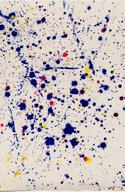
Plate 3: Untitled, 1958
Gouache on paper
25.13 x in x 18.63 (63.82 x 47.31 cm)
Signed, dated, and inscribed in pencil on paper
verso: “Sam Francis Paris 1958”
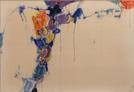
Sam Francis
Untitled 1956-57
Gouache and watercolor on paper mounted on canvas
42 3/4 x 62 in (108.59 x 157.48 cm)
Description
This work is recognized by the Sam Francis Foundation and published in the Sam Francis Online
Catalogue Raisonné Project: Francis Archive SF58-013
Provenance
Idemitsu Collection, Tokyo (acquired from the artist)
Christie’s New York, 17 May 2007, lot 233
Galleria d’Arte Orler, Favaro Veneto (label on the reverse)
European Private Collection
Exhibitions
Christopher Bishop Fine Art, New York, Sam Francis 1950 – 1960 March 7–14, May 1–June 29, 2024.
Literature
Post-War and Contemporary Art Morning Session. New York: Christie's, 2007. Auction catalogue, lot no. 233, ill. in color.
Contemporary Art Auction Milan: Dorotheum, June 23–24, 2021. Auction catalogue, lot no. 214, ill. in color.
Description
This work is recognized by the Sam Francis Foundation and published in the Sam Francis Online
Catalogue Raisonné Project: SFF5.576 / Francis Archive
SF57-043
Provenance
The artist
Galerie Charles Lienhard, Zurich Bechtler Collection, Switzerland (acquired from the above in 1963)
Christie's, London, 12 February 2016, lot 142
Private collection, United States
Exhibitions
Galerie D. Benador, Geneva, Sam Francis: Oeuvres de 1951 à 1960, February 23–March 17, 1962. (Exhibition catalogue: Galerie D. Benador 1962), no. 9, ill. in b/w.
Galerie Charles Lienhard, Zurich, Exposition de peintres contemporains (Appel á Villon), December 1962–January 1963. (Exhibition catalogue: Galerie Charles Lienhard 1962), no. 1258, ill. in b/w.
Kunsthaus Zürich, Zürich, Sammlungen Hans und Walter Bechtler, August 20–October 3, 1982. (Exhibition catalogue: Baviera 1982), ill. in b/w, p. 174.
Christie's, New York, Expanding Horizons, June 21–August 10, 2021.
Christopher Bishop Fine Art, New York, Sam Francis 1950 – 1960 March 7–14, May 1–June 29, 2024.
Literature
Post-War and Contemporary Morning Session New York: Christie's, 2013. Auction catalogue, lot no. 141, ill. in color.
Post-War and Contemporary Art, Day Sale London: Christie's, February 12, 2016. Auction catalogue, lot no. 142, ill. in color.
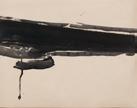
Plate 5:
Sam Francis
Untitled 1950
This artwork is signed and dated on paper
verso in ballpoint pen: “Sam Francis 1950” Ink on paper
12 x 15.75 in (30.48 x 40.01 cm)
(SFF5.10/ Francis Archive SF50-80)
Description
Inscribed on verso (by studio assistant) with dimensions, directional arrow and the Litho Shop
Identification Number: SF50-80, bears The Sam Francis Estate stamp on the reverse
This work is recognized by the Sam Francis Foundation and published in the Sam Francis Online Catalogue Raisonné Project: SFF5.10/ Francis Archive SF50-80
Provenance
Constant Anton Nieuwenhuys Collection, Utrecht Gallery Delaive, Amsterdam
Private collection, Amsterdam
Exhibitions
Gallery Delaive, Amsterdam, Sam Francis: Works from 1948–1994, October 23–November 19, 1999
(Exhibition catalogue: Delaive 1999), ill. in color, p. 6.
Christopher Bishop Fine Art, New York, Sam Francis 1950 – 1960 March 7–14, May 1–June 29, 2024.
Literature
Gallery Delaive, Amsterdam, Sam Francis: Works from 1948–1994, October 23–November 19, 1999 (Exhibition catalogue: Delaive 1999), ill. in color, p. 6.
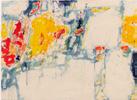
Plate 6:
Sam Francis
Untitled (Yellow Splashes) 1956
Watercolor on paper
22.75 x 30.75 in (57.79 x 78.11 cm)
Signed in blue paint on paper recto, lower right: “Sam Francis”
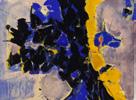
Plate 7:
Sam Francis
Black, Blue and Yellow (Blue Gouache) 1956-58 Watercolor, gouache, and egg tempera on paper
14 x 18.75 in (35.56 x 47.63 cm)
Signed and dated in red paint on upper-right-center verso: “Sam Francis 56–58”
Description
This work is recognized by the Sam Francis Foundation and published in the Sam Francis Online
Catalogue Raisonné Project: SFF5.361/ Francis
Archive SF56-147
Provenance
Galerie Heseler, Munich
Private collection, Genoa
Exhibitions
Museo Archeologico Regionale, Aosta, Italy, Una
Stagione Informale: Capolavori della Collezione
Reverberi Chefs-d'oeuvre de la Collection Reverberi, June 21–October 26, 2014. (Exhibition catalogue: Museo Archeologico Regionale 2014), ill. in color, p. 42.
Christopher Bishop Fine Art, New York, Sam Francis 1950 – 1960 March 7–14, May 1–June 29, 2024.
Description
This work is recognized by the Sam Francis Foundation and published in the Sam Francis Online
Catalogue Raisonné Project SFF5.416 / Francis Archive SF56-094
Provenance
Arthur Tooth and Sons, London
Galleria Blu, Milan
Private collection, Paris
Private collection, Milan
Exhibitions
Galleria Blu, Milan, Apollo e Dioniso: Una riconciliazione possibile February 6–April 29, 2006.
Galleria Blu, Milan, Morphologie autre Un omaggio a Michel Tapié (1909 - 1987) February 10–April 3, 2009.
Christopher Bishop Fine Art, New York, Sam Francis 1950 – 1960, March 7–14, May 1–June 29, 2024.
Sam FranciS: 1950-1960
CHRISTOPHER BISHOP FINE ART
1046 Madison Avenue, New York
We would like to thank the Sam Francis Foundation for their help in the preparation of this exhibition.
Artwork © 2024 Sam Francis Foundation, California/ Artists Rights Society (ARS), New York
Photography by Arturo Sanchez and Charles Rousseau
Graphic Design by Sean Micka