
Sunday, May 10, 2026 at 3 pm

Sunday, May 10, 2026 at 3 pm
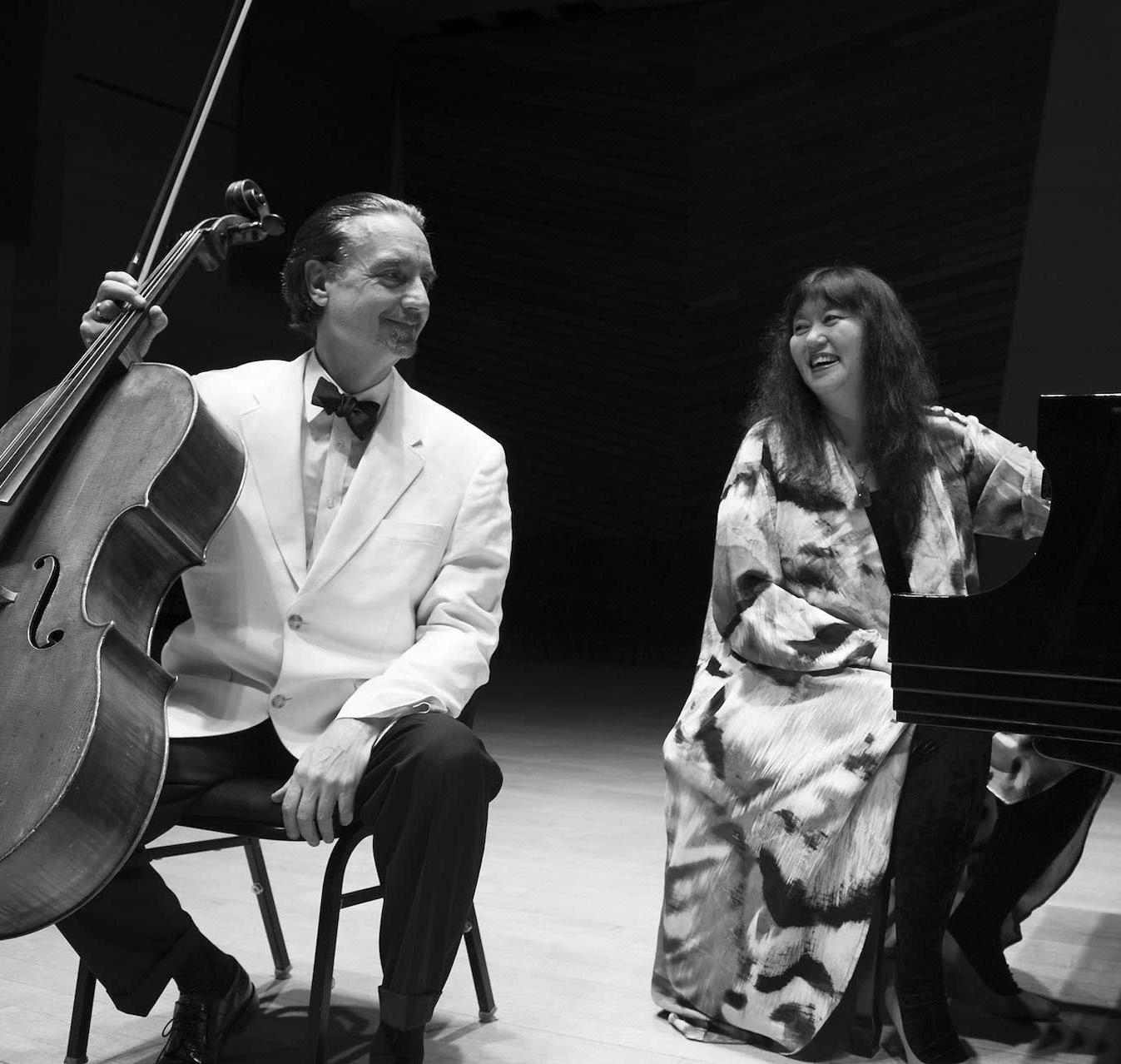
Presented in collaboration with

WOLFGANG AMADEUS MOZART (1756–1791)
DMITRI SHOSTAKOVICH (1906–1975)
Sonata in E minor for Violin and Piano, K. 304 (1778)
Allegro
Tempo di menuetto
BEILMAN, WU HAN
Trio No. 2 in E minor for Piano, Violin, and Cello, Op. 67 (1944)
Andante—Moderato
Allegro con brio
Largo
Allegretto
WU HAN, BEILMAN, FINCKEL
FRANZ SCHUBERT (1797–1828)
Trio No. 2 in E-flat major for Piano, Violin, and Cello, D. 929, Op. 100 (1827)
Allegro
Andante con moto
Scherzo: Allegro moderato
Allegro moderato
WU HAN, BEILMAN, FINCKEL
WOLFGANG AMADEUS MOZART
Born January 27, 1756, in Salzburg
Died December 5, 1791, in Vienna
Composed in 1778
Duration: 12 minutes
Minor tonalities are seldom found in Mozart’s instrumental works. Of all his symphonies and piano sonatas, just two of each form are in minor keys, and the Sonata for Violin and Piano, K. 304, is the only minor-key violin sonata of the nearly three dozen that he wrote. The somber tonality, eerie opening motif, and melancholy minuet are so uncharacteristic of Mozart that they lead many to draw hasty conclusions about the influence of certain life events on this composition. After being unceremoniously dismissed from his employment at the Salzburg court in the summer of 1777, Mozart set out to find a job elsewhere, accompanied by his mother. He was unsuccessful in securing a post in Munich and Mannheim, and at his father’s insistence, he and his mother continued on to Paris in the early spring of 1778. In June of that year, Mozart’s mother fell ill and passed away shortly thereafter, on July 3. From the available evidence, scholars cannot date the K. 304 sonata any more precisely than the early summer of 1778. While it provides a convenient explanation for the uncharacteristically bleak character of the piece, his mother’s death could very well have come after its composition. Interpretations of this work that are unequivocally centered around grief ought to be approached with a degree of skepticism as they prevent the listener from appreciating the full spectrum of emotions explored and evoked.
Like several other sonatas published in the same set, K. 304 is in two movements. The Allegro’s primary theme is played first in hollow octaves, giving the already gloomy E-minor melody an unsettlingly bare quality. The bouncy second theme dispels the darkness of the opening with jaunty dotted rhythms and a shift to the major mode. The quintessentially Mozartean playfulness here is hard to reconcile with the traditional “grieving son” interpretation of the sonata. The stormy energy of the development that follows bleeds into the recapitulation, which trades the sparse texture of the opening for a bold conclusion.
A similar arc is heard in the Tempo di menuetto, which begins with a piano solo marked sotto voce. Literally translating to “under the breath,” this instruction refers not only to a reduction in volume but also to the hushed tone quality that is desired, akin to a string player using a mute. The violin quickly restates the piano’s introspective melody at a forte (loud) dynamic level, brightening the wistful introduction. The E-major middle section is marked dolce—another term that means more than just “quietly” and encompasses qualities like sweet (its literal meaning), soft, and warm. The piano’s chorale-like passage is a textural novelty, with a layered and rich— albeit quiet—sound. The first theme returns to close out the piece, this time agitated by triplet arpeggios in a driving, forte finish.
Program note © Jack Slavin
Born September 25 (O.S. September 12), 1906, in Saint Petersburg
Died August 9, 1975, in Moscow
Composed in 1944
Duration: 27 minutes
At the start of Dmitri Shostakovich’s E-minor Piano Trio, he gives a pained, soulful tune to the cello, but he writes it in artificial harmonics. This is a challenging instrumental technique in which the player must press down one finger quite hard to stop the string, while touching another finger lightly but precisely above the blocked note. The combination produces a piercing and yet fragile pitch. Shostakovich also asks for the instrument to be muted, which dampens some of the natural ringing of the instrument, lending the harmonics an additional degree of purity and making the solo all the more difficult to execute for the performer. The cello’s melody is answered by low violin and piano lines that add supportive depth and grit to the stratospheric singing of an instrument that normally provides a solid foundation. The musical ideas introduced in this opening develop into a marching Moderato and a range of angular themes that turn from cheer to urgent, fearful anger at the drop of a hat. The precipitous, rabid Allegro con brio is similarly capricious. Shostakovich presents exuberant, trumpeting themes that often veer into disruptive, drunken belligerence. The brief, skipping middle section is full of delicious, gratuitously aggressive gestures played by the strings on all down-bows, projecting a sarcastic tone.
The Largo is a somber passacaglia—continuous variations on a slow, repeated harmonic pattern—based on the eight chords the piano plays at the start of the movement. The cello and violin patiently develop a duet of extraordinary pathos while the piano simply repeats the dark refrain at the menacingly steady pace of one chord per measure. The Allegretto finale follows without a pause, with an understated, chromatic melody plucked in the violin that is delightful but also a little bit creepy. Then, the mood changes and the piano belts out a crying tune that gets stuck on obsessive, looping figures. The rest of the piece is a raucous, macabre dance, in which the tragic themes of the opening movement and of the Largo are brought back to great effect.
The composer finished the first movement of the trio in February of 1944, a few days after his dear friend, the pianist Ivan Sollertinsky, died of heart failure. Shostakovich had been working on the piece since the end of 1943, and the elegiac nature of the music he had written thus far made it most appropriate for him to dedicate the work to Sollertinsky, whose loss was unexpected and quite devastating. The work fits into the long, Slavic tradition of memorial piano trios, which goes back to Bedřich Smetana’s G-minor Trio (1854–55), Pyotr Ilyich Tchaikovsky’s Trio “In Memory of a Great Artist” (1881–82), the two trios of Sergei Rachmainoff (1892, 1894), and many works for these instruments by later composers.
Shostakovich completed the remaining movements of his trio in August of 1944, at the Soviet composers’ retreat at Ivanovo, outside Moscow, and he played piano in its premiere the following November. After hearing the piece, Sollertinsky’s sister expressed how the madcap second movement seemed to her to represent a portrait of her late brother: “his temper, his polemics, his manner of speech, his habit of returning to one and the same thought, developing it.” In the finale, Shostakovich’s insistent, obsessive theme is written in a style that intentionally
imitates Jewish folk music. Many scholars and musicians have interpreted this magnificent, cumulative, joyous, yet devasting movement as expressing grief not only for Sollertinsky, but also for those murdered by the Nazis in concentration camps, whose horrific deaths Shostakovich was gradually learning of while he was working on this trio.
Program note © Nicky Swett
Born January 31, 1797, in Vienna
Died November 19, 1828, in Vienna
Composed in 1827
Duration: 43 minutes
On March 26, 1828—one year to the day of Ludwig van Beethoven’s death—audiences gathered to hear the only public concert consisting entirely of the works of Franz Schubert presented during the composer’s lifetime. On the program were a variety of recent works in genres ranging from chamber music to solo songs and choral works. One of the newest pieces on the program was the Trio No. 2 in E-flat major, written the year before. As the only multi-movement work performed in its entirety, it functioned as the focal point of the concert. It was first heard on January 28, 1828, at the engagement party of Schubert’s lifelong friend, Josef von Spaun. There, the performers were the pianist Carl Maria von Bocklet, violinist Ignaz Schuppanzigh, and cellist Joseph Linke. For the public concert, Schuppanzigh was replaced by Joseph Böhm due to illness.
The audience reception was enthusiastic, largely due to Schubert’s friends who supported through attendance and worked to make the event happen. Joseph Sonnleithner, uncle of Franz Grillparzer, Schubert’s friend and artistic collaborator, observed, “Since he was not at all the man to initiate anything of this kind himself, it was once more his friends who gladly and with affection arranged and managed the concert.” Spaun, noting that Schubert needed the money, added his recollection of the mood, “The exceptional responsiveness of the packed audience matched the rare enjoyment of his evening, which will certainly remain unforgettable.”
Regarding the financial gains, Schubert took a portion of his earnings to buy tickets to see Niccolò Paganini, the violin virtuoso who was launching his first-ever European tour from Vienna. Schubert was so enraptured that he urged a friend to go with him a second time, exclaiming, “I tell you, we shall never see the fellow’s like again! And I have stacks of money now—so come on!”
Expansive to the point of symphonic, wide-ranging emotionally, and intensely technically demanding, Schubert’s Trio No. 2 is an impressive work challenging the bounds of chamber music (much like Beethoven’s late works). Opening in a unison declaration, the broad Allegro movement feeds off the swirling energetic contrast between raw urgency and disarming charm contained within the dancelike 3/4 meter. In the second movement, Schubert—the great writer of vocal works—weaves together an instrumental interpretation of a song. In this instance it is Se solen sjunker (See, the Sun Is Setting) by the Swedish composer Isak
Albert Berg, expanded, yet true to its original. A Scherzo third movement follows, its characteristic playfulness expressed through points of imitation where we hear a melody echoed in response, while its Trio section freely scatters forceful accents. Though lengthy (and originally significantly longer before Schubert was asked to make cuts), the finale captivates through its remarkable early use of cyclical structure, a technique that would be favored by the next generation of composers, such as Franz Liszt. As it progresses, we suddenly hear the second-movement theme again, as if the piece is remembering its own past. This occurs multiple times, each recollection its own variation, generating an excitement of discovery as the piece gathers intensity to end with a definitive flourish.
Program note © Kathryn Bacasmot
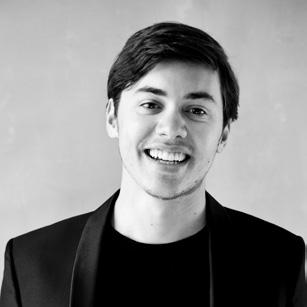
Benjamin Beilman’s 2025–26 season highlights include appearances with the Minnesota Orchestra, Dresden Philharmonic, Antwerp Symphony, Solistes Européens Luxembourg, Nouvel Ensemble Moderne, and Nashville Symphony. He will also curate, stage, and lead two chamber music programs at Sun Valley Music Festival, and continue his ongoing recital partnership with pianist Steven Osborne. In the summer, he embarks on a month-long tour of Australasia, including appearances with the Sydney Symphony, Tasmanian Symphony, West Australian Symphony, and Auckland Philharmonia. He studied at the Curtis Institute of Music with Ida Kavafian and Pamela Frank, and with Christian Tetzlaff at the Kronberg Academy. He has received many prestigious accolades including a Borletti-Buitoni Trust Fellowship, an Avery Fisher Career Grant, and a London Music Masters Award. He has also recorded works by Stravinsky, Janácek, and Schubert for Warner Classics, and is an alum of CMS’s Bowers Program. Beilman performs with the ex-Balakovic F. X. Tourte bow (c. 1820), and plays the “Ysaÿe” Guarneri del Gesù from 1740, generously on loan from the Nippon Music Foundation.
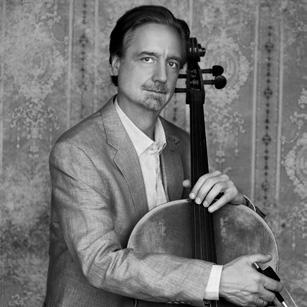
Co-Artistic Director of CMS since 2004, cellist David Finckel has performed on the world’s stages in the roles of recitalist, chamber artist, and orchestral soloist. The first American student of Mstislav Rostropovich, he joined the Emerson String Quartet in 1979, and during 34 seasons garnered nine Grammy Awards and the Avery Fisher Prize. In 1997, he and pianist Wu Han founded ArtistLed, the first internet-based, artist-controlled classical recording label. In 2022, Music@Menlo, a summer chamber music festival in Silicon Valley founded and directed by David and Wu Han, celebrated its 20th season. He is a professor at both the Juilliard School and Stony Brook University, and oversees both CMS’s Bowers Program and Music@Menlo’s Chamber Music Institute. Along with Wu Han, he received Musical America’s 2012 Musicians of the Year Award.
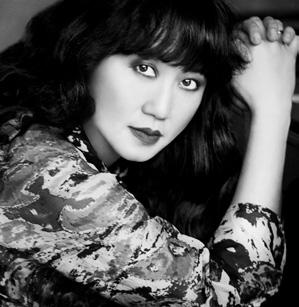
WU HAN
Pianist Wu Han, recipient of Musical America’s Musician of the Year Award, enjoys a multi-faceted musical life that encompasses artistic direction, performing, and recording. Co-Artistic Director of the Chamber Music Society of Lincoln Center since 2004 as well as Founder and Co-Artistic Director of Silicon Valley’s Music@ Menlo since 2002, she also serves as Artistic Advisor for Wolf Trap’s Chamber Music at the Barns series and Palm Beach’s Society of the Four Arts, and as Artistic Director for La Musica in Sarasota, Florida. She is the Founder and Artistic Director of ArtistLed, classical music’s first artist-directed, internet-based recording label. A recipient of the Andrew Wolf Award, she was mentored by some of the greatest pianists of our time, including Lilian Kallir, Rudolf Serkin, and Menahem Pressler. Married to cellist David Finckel since 1985, Wu Han divides her time between concert touring and residences in New York City and Westchester County.
THANK YOU TO OUR SPONSORS (continued from page 13)
Anonymous
George Baroudi
Nili and Richard Biondi
Jennie Fortunoff and Andrew Chonofsky
Steve Geismar
John Iavarone
Pat and Phyllis Iavarone
Steven Newman
Mukund Padmanabhan
Joseph and Roberta Rotberg
Varda Solomon
The Sterling Foundation
JOIN US FOR OUR 2025/26 SEASON - TICKETS ON SALE NOW!

Follow us on Facebook and Instagram, and sign up for our email list at TillesCenter.org