LEVERAGE
A framework for harnessing the power of your Pure Religion Sunday Event

A framework for harnessing the power of your Pure Religion Sunday Event
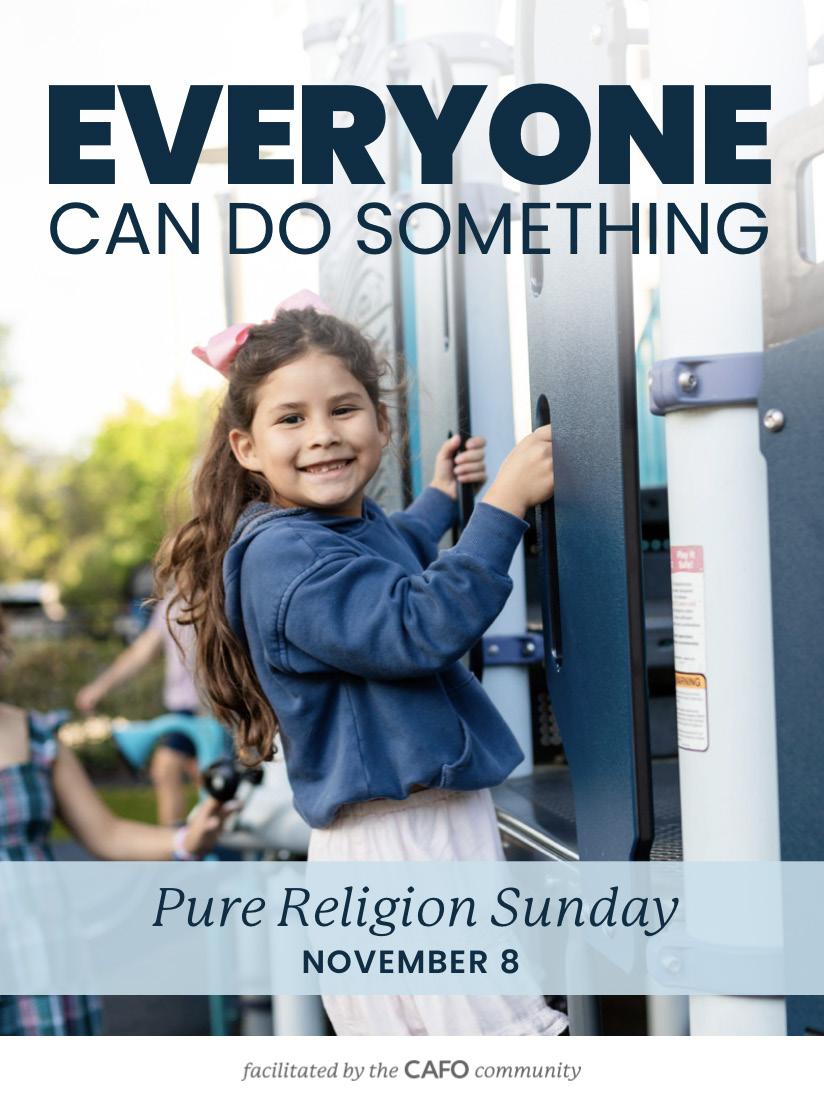
Rooted in the pure religion described in the book of James and invited throughout all of Scripture, Pure Religion Sunday is a day to recognize and respond to God’s heart for vulnerable children and families. Observed on the second Sunday in November or throughout the year, it encourages churches to engage deeply in adoption, foster care, global orphan care and wrap-around family support — as a foundational piece of living as disciples of Jesus.
Whether you are launching new ministries inside your church, leveraging existing ministries or engaging with partners in your community, Pure Religion Sunday can mobilize your people to care for vulnerable children and families.
While your church may choose to recognize this special Sunday (or weekend, or midweek service, etc.) on a different date or name it something else, the heart of the day remains the same. God has uniquely called and equipped the Church to care for vulnerable children and families, and this day is an opportunity to declare and demonstrate that in your church!
But it doesn’t end there...
However you choose to recognize or participate in Pure Religion Sunday, it is ultimately an opportunity to...
a new focus and/or energy on building a ministry committed to caring for vulnerable and orphaned children...
all that God has done in your existing ministry and provide clear on-ramps for others to get involved.
Either way, it’s more than just a day. It’s a “hinge” that connects two critical components of a much fuller strategy.
Front-end planning, team building and coordination
Back-end follow-up, connection and strategic next steps.
FRONT-END Planning Team-building Coordination
SUNDAY, WEEKEND, EVENT, SERVICE, ACTIVITY, ETC.
BACK-END Follow-up Connection Next steps
The remainder of this guide will be structured around three primary areas of focus for effectively leveraging the power of your Pure Religion Sunday:
Front-End Planning
Event Execution
Back-End Follow Up
In many ways, this front-end planning phase is the most crucial part of effectively leveraging the power of your Pure Religion Sunday event. As in most areas of life, the results we experience are a reflection of the systems we’ve put in place. When those systems are intentional, thoughtful and aligned, they naturally produce stronger, more meaningful outcomes. And the reverse is also true — when our systems are unclear or underdeveloped, the outcomes will reflect that as well.
That’s why this stage matters so much. By focusing on strengthening our inputs — clarifying our goals, refining our approach and building a solid foundation — we position ourselves to see the kind of impact we’re hoping for. This front-end planning phase is where that momentum begins.
Whether you already have a ministry team in place or will be building a new one for this event, it’s important that this initiative is team driven with a diversity of tasks assigned to various people. It might be that one person is going to oversee all the social media communications, another is going to gather all the follow-up response information, another is going to act as the liaison between the team and the pastor or a church staff member, while another team member is going to be working with outside organizations and agencies that need to be involved. This is a great opportunity to utilize the power of a team to optimize your efforts and maximize your impact.
Among your team, create a vision for what you want to see happen — not just at your Pure Religion Sunday events, but in the days, weeks and months that follow. Clearly identify what those outcomes look like, and work backwards from there. What systems do you need to put in place on the front end to help produce those back-end outcomes? Who needs to be a part of this? What strategic partners outside of your church do you need to be working with? What “next steps” need to be offered to people in your church and what resources, connections or plans need to be made now in order for them to have access to those calls to action?
The goal is not to create an isolated ministry that few are a part of, but rather to establish a foundational culture in which everyone has an opportunity to participate. We’re not all called to do the same things, but we are all capable of doing something. This is the message we want our churches to hear: Everyone Can Do Something! It’s important that anyone and everyone that will be casting vision — not just on Pure Religion Sunday, but for the overall ministry at any time — are all speaking the same language in the same ways. Spend time writing the “script” of your ministry so that whether it’s an announcement on stage, a social media post or a conversation with someone in the lobby after service, they are all saying the same things!
What is your church uniquely good at doing? What demographics, resources, current ministry programs or opportunities already exist in your church that could be incorporated into your Sunday event AND into the growth and development of your ministry moving forward? Find out what activities, resources or ministries already exist outside your church in your community and learn how you can utilize your event to bolster that work. Don’t feel the pressure to create a lot of “new,” but rather utilize much of what’s already in place that fits the culture, rhythms and DNA of your church and your people. Big Idea: Don’t reinvent the wheel! Find what’s already rolling, and invite your people to jump on!
The final thing to do in this phase is to actually decide what you are going to do for your Pure Religion Sunday event. From full-length sermons and prayer to story sharing, celebrations and fundraisers, the following list has MANY ideas you can draw from as you finalize your plans for that day. But it doesn’t have EVERY idea. Don’t be confined by the list. Perhaps you’ll find something “fits,” or perhaps it will help inspire new and creative ideas. The point is to find what will work best for your church and begin making plans for how to most effectively implement it.
Collect items needed for foster or kinship families, local agencies/organizations or child welfare workers.
Create and/or distribute prayer cards for children awaiting families.
Set aside a time of prayer for foster youth, vulnerable children and their families.
Invite people to attend a small group or class focused on God’s heart for the vulnerable and our response through foster care, kinship care, adoption and family support.
Plan a sermon about God’s heart for the vulnerable and our response through foster/ kinship care, adoption and family support.
Plan a set of worship songs that reflect God’s heart for vulnerable children.
Commission families in your church who are pursuing fostering/adopting in the next year.
Pray over all current foster/kinship and adoptive families in your church.
Plan a parent/child dedication for the adoptive, foster and kinship families in your congregation.
Invite a former foster or orphaned youth to share their story. (live or via video)
Invite an adoptive or foster/kinship family to share their story. (live or via video)
Invite an organization working with vulnerable children to share ways to get involved.
Take an offering to support families who are fostering/adopting.
Plan a service project to benefit a foster or adoptive family, kinship family, local agency, children’s home or crisis pregnancy center.
Promote an existing ministry, initiative or partnership and leverage this day as an opportunity to invite more people to engage. This could be a local partnership caring for vulnerable children and families or a global initiative your church is involved with. Provide clear and actionable next steps people can take to get involved.
What else can you think of?
Think of a Pure Religion Sunday as a wide net — a very, very wide net — that you toss over your entire church. The message is clear: “We’re not all called to do the same thing, but we are all capable of doing something.” That’s a net that covers EVERYONE — from students to senior citizens, singles to marrieds, empty nesters to young families, those who can bring children into their homes and those who can’t. Everybody! However you decide to recognize that day, ensure that it has the capacity to reach out as far and wide over your congregation as possible.
Once you’ve done that at your church, what are the next steps? How can you begin to draw that very wide net in to see who God catches up in it?
Consider creating a smaller circle…
Think of your whole church as a large circle. Your action item is simple and clear: to toss the large net out and begin to draw it in, moving people from the larger circle into a smaller one. You won’t catch everyone, but you will catch some — many of whom may have never taken that step had you not tossed out the net. Your Sunday event might involve activities that don’t necessarily invite people into smaller relational circles (fundraisers, prayer for families during church, service projects, etc.). And that’s completely great! You might then consider creating a smaller “circle” opportunity for people interested in diving deeper to connect and engage afterwards.
Whatever form it takes, the important thing is that there is an opportunity for people to take their next steps! Remember, a Pure Religion Sunday is a “hinge” to help move people from one place to another.
We want to be inspiring and challenging, but we also want to be strategic. Creating smaller relational circles helps us capture people in the wake of your event momentum and steward them most effectively into their best next steps. That’s the focus of our final section…
Bridges cover gaps–from where we are to where we need to be. That’s what bridge events do. They are mid-size gatherings that provide a pathway for people to move from potentially isolated and anonymous in a crowd at your Pure Religion Sunday event to being connected, resourced and involved. That’s a pretty big leap and the reason why bridge events are important.
PURE RELIGION SUNDAY
Whether your Pure Religion Sunday event is a full sermon, a prayer, a time of sharing stories of families and children, a service project — or all of the above — you can leave people with a clear and actionable “next step”: to sign up for the bridge event. As you cast that net wide and slowly start to draw it in, you will catch not only those who are already involved but those who are interested in becoming involved. And some of those interested have been privately and personally considering getting involved for perhaps months, if not years. This bridge event is a BIG deal for them as they take their next simple step into something they’ve been processing for a long time. This gathering becomes a safe place for them to publicly process what may have been largely private and personal and to be encouraged, connected and challenged with others along the way.
Getting people who share a similar passion in the same room together is powerful. It takes individuals and turns them into a community — a place where they can find support, encouragement and clarity along their journey. It also helps create critical mass for ministry growth. If you can get 10, 20, 50, 100 people in a room around a common cause, it speaks volumes to those attending — “We’re not in this alone!” — and to the leadership overseeing — “People are getting involved!” Whatever passion was once isolated within each of them individually is now given the opportunity to collectively burn together — better, bigger and brighter.
BRIDGE EVENTS PROVIDE A SAFE PLACE FOR PEOPLE TO PUBLICLY PROCESS WHAT MIGHT HAVE BEEN LARGELY PRIVATE AND PERSONAL.
The goal of your bridge event is simple: to move people into smaller circles with one another so they can get the connection, resources and support they need to take their next best steps forward. This could take on a variety of forms, so the challenge for you is to identify what type of event fits the culture of your church and whether or not you have the resources necessary to pull it off. A few simple suggestions could include:
• Invite people to a social event like a BBQ, family day at the park, etc.
• Host an informational luncheon after church
• Form a small group where you’ll read a book or walk through a study together
• Research local and national conferences, workshops or forums and take a group from the church with you. We’d love for you to consider attending our annual CAFO Summit!
• Meet over coffee with people who share a similar heart as you. Learn from those who have gone before you.
There are endless amounts of opportunities you have to begin connecting people to community. Be creative! However, while anything you do to connect people with each other will be beneficial, there’s one that many churches and organizations utilize that seems to be the most impactful: a lunch after your worship service on Pure Religion Sunday or several weeks later.
Why is a luncheon so impactful? Here are a few reasons:
Free food. No explanation needed!
People are already at church. It’s hard to get them back once they leave.
Child care can be offered.
People can sit in circles together at tables to eat and connect.
A luncheon (or some variation) helps to remove barriers to attendance (food provided for free, childcare provided for free, immediately following church) and creates a relaxed, welcoming environment for people to connect and be encouraged to take the next steps.
The goal of your bridge event is to help people feel connected, inspired and informed. Here are four strategic and essential things you MUST do:
Set aside as much time as necessary to allow people to introduce themselves. They can answer a few simple questions for the rest of the room or in small groups at their tables: Who are you? Married? How long? Kids? How many? Why are you at this luncheon today? What has your involvement in care for vulnerable children looked like?
When people don’t know where to go or whom to talk to about something, they won’t go anywhere or talk to anyone about it. It is important that you use the bridge event as an opportunity to introduce your ministry leadership, whether one point person or a full-blown ministry team. In introducing the leadership, you answer those two very questions: Where do I go and who do I talk to? Now they know.
Vision is painting a picture for others of what the future looks like in a tangible and concrete way. It is important you answer three fundamental questions when sharing the vision of your ministry: 1) Why are we doing it? 2) How are we going to do it? 3) What are we going to do next?
It’s imperative to spend time during a bridge event letting people know what they can expect to happen after the bridge event is over. They should leave the room with a very clear understanding of what is coming next, when it’s coming, where it’s coming and why it’s coming. When you increase clarity you reduce anxiety. The goal is for people to leave with a clear, actionable plan to pursue whatever their next best steps are.
The bridge event is the clear follow-up action item to your Pure Religion Sunday event:
“In response to today, we want to connect with you.” If possible, allow some time, or as much time as you can, to promote your bridge event. A couple weeks? Great! It is important that you not just announce the bridge event once, but that you continue to announce it every week leading up to the event in a variety of ways (i.e. stage announcement, postcards/flyer/bulletin, website announcement, emails, personal invites, social media posts, etc.). Every church promotes events in different ways. Find out how your church does it, and take advantage of as many of them as you can every week leading up to the actual event.
PURE RELIGION SUNDAY
Sermon Application, Prayers, Stories, Etc.
WEEK 2 Second Announcement
WEEK 3 Third Announcement
WEEK 4 Fourth Announcement
BRIDGE EVENT
The Big Day!
Church-wide Newsletter
Emails
Social Media
Website
Stage, Bulletin, Etc.
Perhaps your bridge event will take place immediately following your Pure Religion Sunday service. That’s great too! You’re going to capture them while they’re there. Just be sure you’ve done the necessary work to get the word out about it ahead of time. So if, for example, you want people to stay for a lunch, they’ve already planned to be at the service and have planned on staying after a bit.
The timeline is also not prescriptive. You may choose to do your Bridge Event on Week 2 or 3 or 4. That’s great! The point here is this: Do a Bridge Event! And make sure you’ve done what you can to get the word out about it.
Even if you don’t have the stage/pulpit, it is still imperative to have a promotional plan in place and to work the plan as diligently as you can. It will likely be more “grass roots,” dependent upon personal invites, emails, social media posts, passing out postcards or other more unconventional methods of promotion. Are there other places in the church you might gain access to in order to help get the word out? What about a note home with each child in the children’s ministry? A small blurb in the weekly bulletin or church newsletter? A few posts on the church’s main Facebook page? A social media blitz on friends’ pages? Get creative!
Access graphics, tools and resources to promote your events and inspire others.

A field guide for strategically rallying your church around orphaned
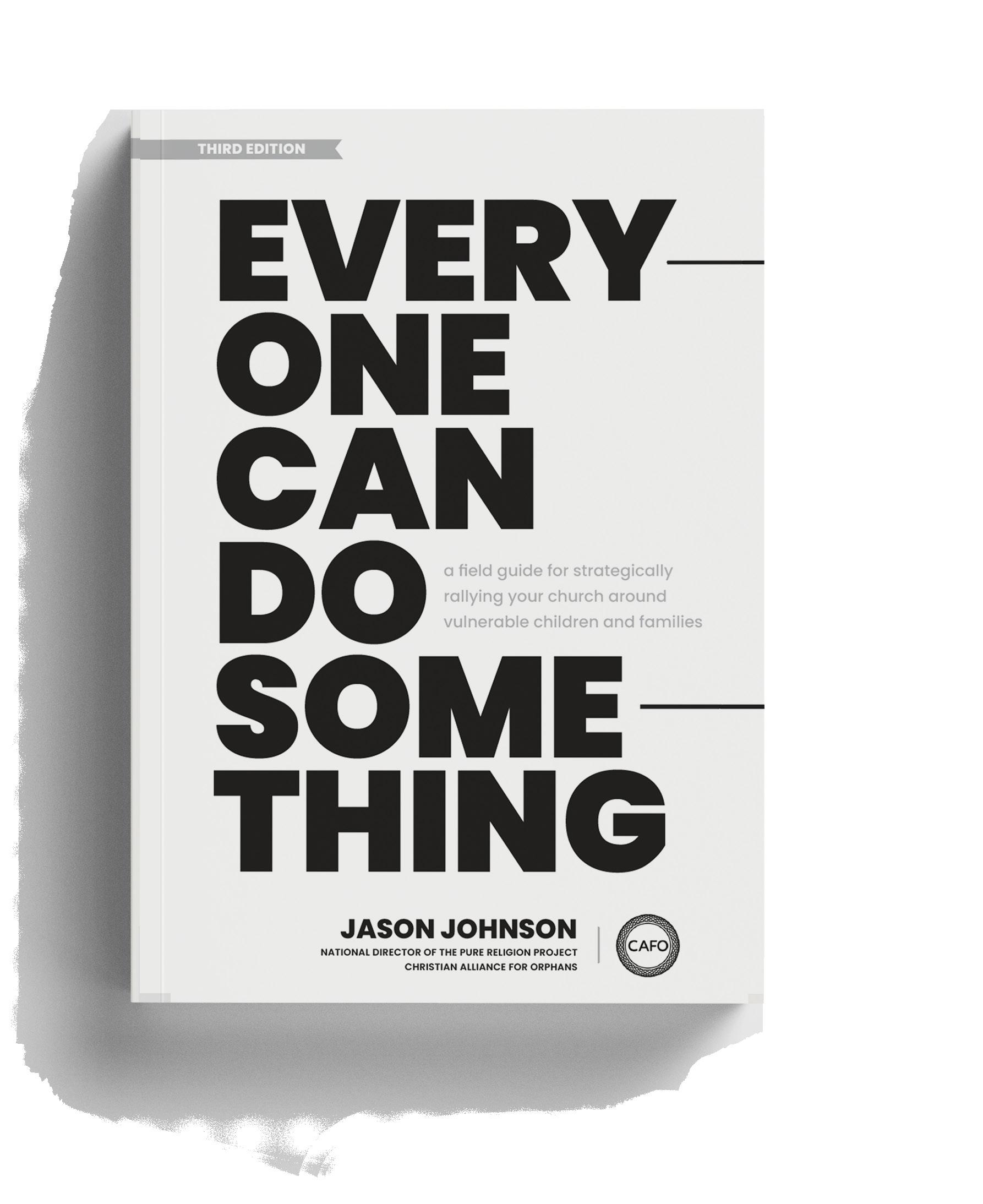

The Pure Religion Project aims to inspire and equip God’s people to live out the “pure religion” described in the book of James and invited throughout Scripture by caring for vulnerable children and families while growing as disciples of Jesus. The Pure Religion Project at CAFO provides resources, supportive community and ongoing connection and coaching to help churches engage in effective adoption, foster care, global orphan care and wrap-around family support ministry.
For more information, visit: