Separate is Never Equal: SEN Units in Mainstream Schools
Ruth Walton p 10
is Enough – Segregation is Wrong
Linda Jordan p 15
Mental Health and Segregation
Maresa MacKeith, Derek Wilson and Colin Newton p 28
Welcome to Inclusion Now 74.
On 23 February, the Department for Education published a white paper outlining the UK government’s longterm vision for reforming the education and Special Educational Needs and Disabilities (SEND) systems in England, Every Child Achieving and Thriving. It also published a policy consultation, SEND Reform: Putting Children and Young People First. Although the articles in this issue were written before publication, this foreword reflects on them in light of the proposed SEND reforms.
Richard Rieser, on page 3, highlights how independent special schools financially exploit Disabled children, contributing to local authority deficits. The government, reaching a similar conclusion, plans price bands and fee controls, but resistance could push more Disabled children and young people out of education.
On page 10, Ruth Walton lays bare the challenges students and their parents face during the primary-tosecondary transition, including moves to segregated settings. Alarmingly, the government plans to introduce mandatory needs assessments for Disabled students at this stage, a clear contradiction to their stated mission of improving inclusion in mainstream schools.
Inclusion Now occasionally includes adverts for products, services or events offered by other organisations. This doesn't imply we endorse the products or services. Readers are advised to check details and make their own judgements. Inclusion Now provides an opportunity for information exchange. All views expressed are not necessarily the views of ALLFIE, Inclusive Solutions or World of Inclusion. We reserve the right to edit articles. Inclusion Now is also available in audio or text Search past issues online
This trend towards deeper segregation lies at the heart of Linda Jordan’s article (page 15), which links these developments to historical debates around inclusion. It reflects on progress between 1986 and 2005 and provides recommendations on how to return to that path. Unfortunately, the proposed SEND reforms risk taking us in the opposite direction.
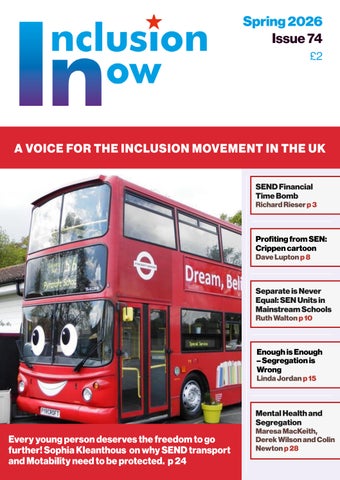
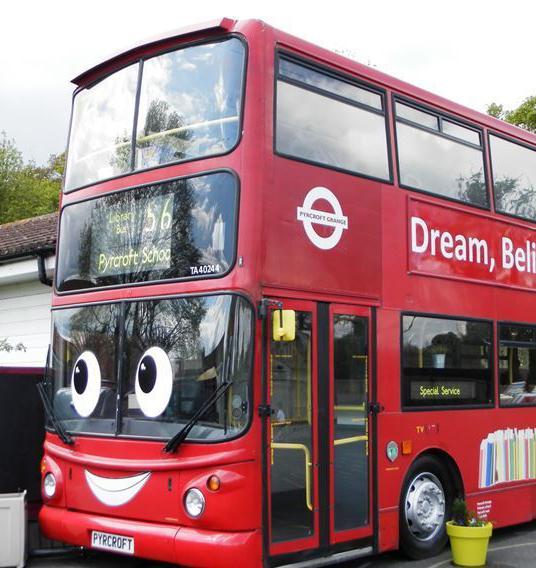
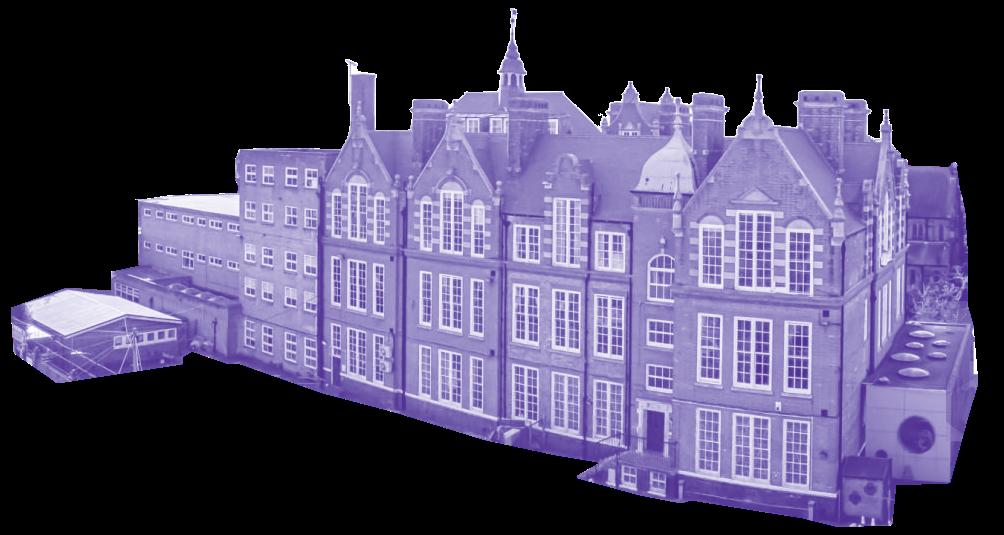
The article on page 20 builds on discussions from ALLFIE’s 2025 Annual Conference about whether SEN Units and Resource Provisions comply with UK and international law. [ continued on page 7 ] Cover image: copyright Pyrcroft Grange Primary School
Editor: Catherine Bebbington
SEND Financial Time Bomb taken on Board by Government
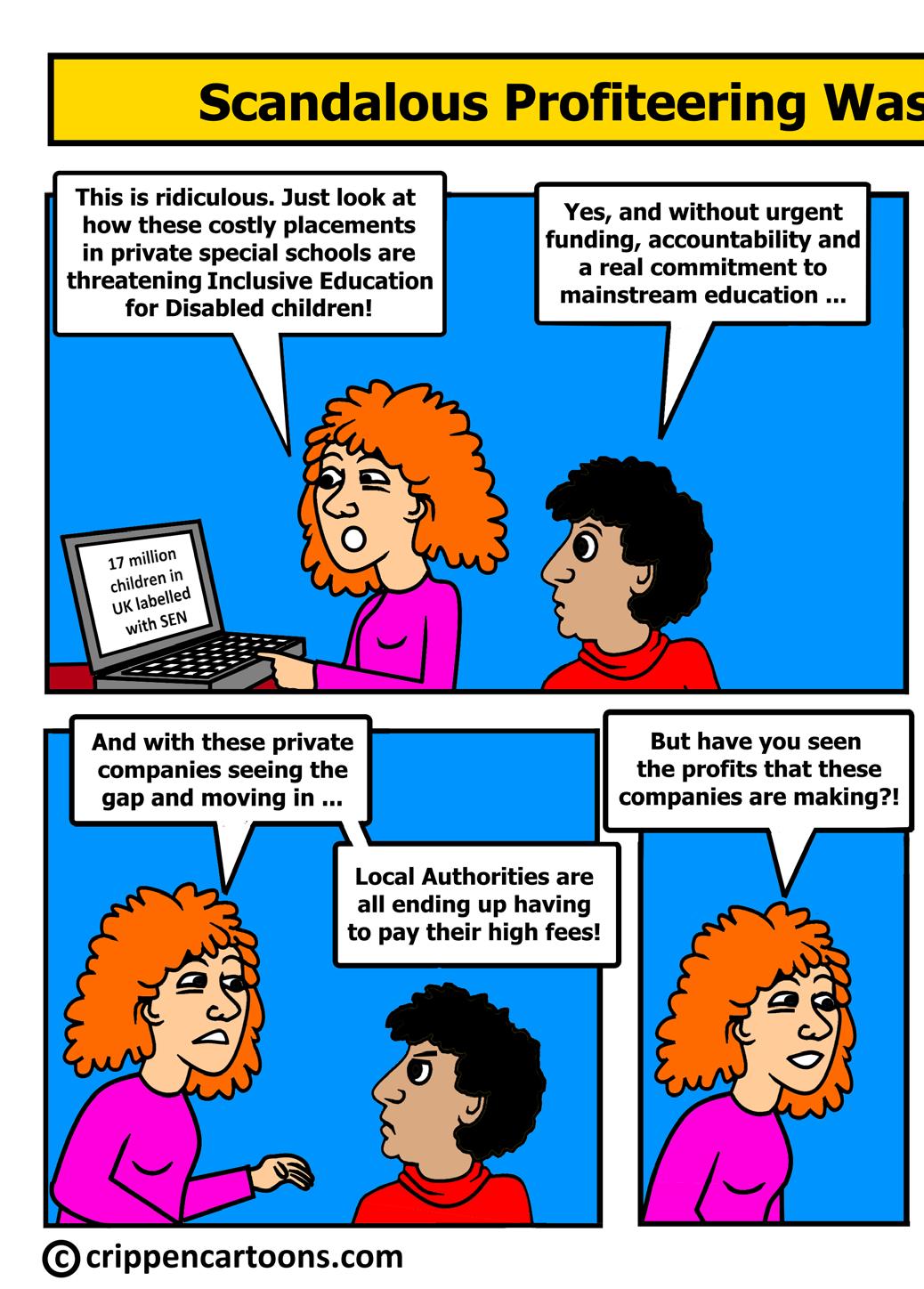
Soaring SEND deficits and costly placements in private special schools are threatening Inclusive Education for Disabled children. Richard Rieser, World of Inclusion, warns that without urgent funding, accountability, and real commitment to mainstream inclusion, the system risks widening inequality and excluding the very students it should support.
While we waited for the long-delayed Schools White Paper on Special Education Needs and Disabilities (SEND), published on the 23rd February 2026, another decision was taken in the Budget on 27th November 2025. This decision may turn out to have more impact on how Inclusive Education provision is for Disabled children and students and those with special educational needs provision.
Increasing numbers of Local Authorities (LAs) in England are overspending their higher needs budget to meet statutory obligations required for provision for SEND Education Health and Care Plans (EHCP). The deficit will be up to £14 billion by 2028, currently deferred to stop councils going bankrupt with a financial trick called a financial override. From 2028/2029, responsibility for all future deficits will pass from councils to central government. It is estimated that the shortfall in funding for English Councils will be £6.3 billion, leading to an overall deficit of £20 billion. Additionally, there will be further financial costs to cover staff salaries and to implement any reforms in the White Paper. Progress towards more inclusive mainstream provision will require double the amount of funding currently allocated. Instead, the government seems more motivated by budget control.
It was revealed at the Budget that the government will take over full responsibility for special educational needs spending from local councils. This has prompted warnings that the Department for Education could be facing a £20 billion time bomb in two years.
What is going on here?
In January 2025, there were 1.7 million children labelled with SEN. 483,000 had an EHCP. The rest were on SEN support funded by a notional £6,000 per pupil out of school funding that is not ring fenced. The proportion of those with SEN that have an EHCP is 27%, which has gone up from 15% in 2007. 97,700 EHCPs were issued in 2024, which has increased by 16% from the previous year. The most common primary need of school pupils was autism with 149,200 pupils requiring support. Following this, 92,000 pupils require support with speech language and communication. Since 2014 Reforms, those aged between 16 and 25 with an EHCP has grown to 155,700 which is a largely new demand on LA funds. 44% of those with EHCP attend mainstream schools and 30% attend special schools.
Currently, there are nearly eight times the number of parents of children with SEND seeking to get an EHCP than when the system was introduced in the academic year 2014-15. Increasingly, parents feel mainstream schools failing their Disabled children. In 2024-2025, 25,000 appeals were registered and 14,009 went all the way to a full hearing of which Local Authorities won 1.1% at a cost of £200m
An increasing number of decisions in an EHCP are around placement. The Tribunal mainly only looks at EHCP sections B (needs), F (provision) and I (placement). The child’s needs and provisions are presented in such a way that only one type of placement is available to meet their needs, and this is increasingly independent special schools. There are specialist lawyers and expert witnesses that appear to be engaged to ensure certain outcomes.
Increasingly,
parents feel mainstream schools failing their Disabled children.
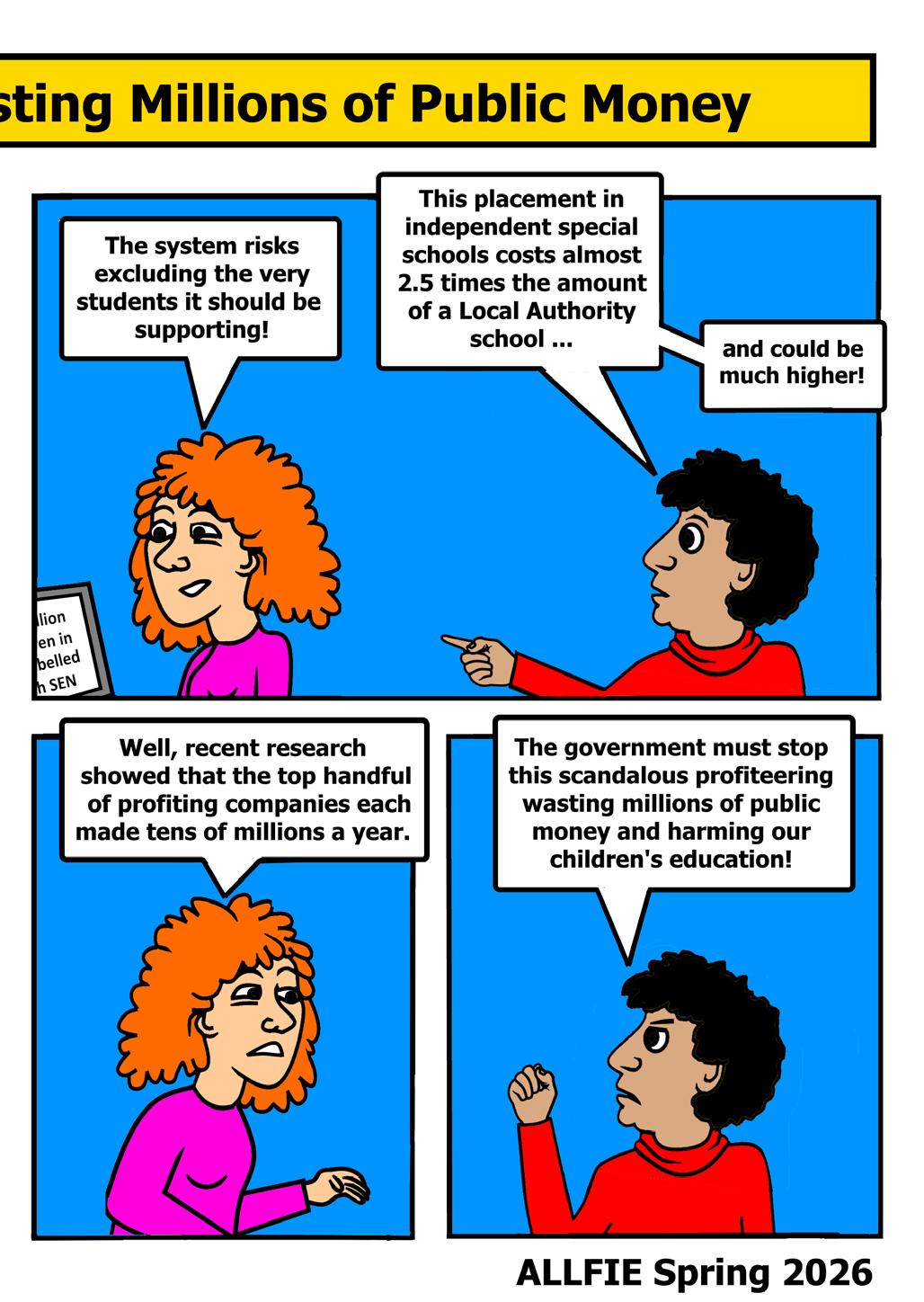
In general, the Local Authority does not produce the alternative evidence or have the placement to meet the need as established. This placement in independent special schools cost approximately 2.5 times the amount of a Local Authority special school, and can be much higher. Once the First-tier Special Education Needs and Disability Tribunal has ruled, the Local Authority must place the child there and pay for it unless they can appeal on a matter of law (which is very rare). The largest growth in need is Autism. Private companies have seen the gap and moved in with the Local Authority paying.
The Liberal Democrats said one solution could be a profit cap on private providers and redirecting
“millions of public money out of the pockets of private equity and back into frontline support.”
The government must stop the scandalous profiteering in this sector that is costing the taxpayer millions and harming children’s education. We know by the government’s own admission that placing a child in a private special school is nearly two-and-a-half times more expensive than doing so in the public sector. This is simply indefensible.”
Munira Wilson, MP and the Liberal Democrat education spokesperson
Research commissioned by the party and carried out by the House of Commons Library showed that the top handful of profiting companies each took home tens of millions a year.
The Witherslack Group Limited, which operates 38 special schools, turned over just over £200 million a year, making £44 million in profit – a margin of over 20%. That profit is 150% what the company made in 2022 – skyrocketing up from an already eyewatering £27 million – while Directors at that company, reports show, made six figure salaries.
CareTech Holdings Limited, another private equity company that provides private SEND schooling, raked in over £53.4 million in annual profit in 2024, with a revenue of £630.4 million. As
Placement
in independent special schools cost approximately 2.5 times the amount of a Local Authority special school, and can be much higher.
uncovered by the Times in 2022, that company sent more than £2 million to its founders’ offshore company in the Caribbean, while accepting Government Covid support.
The Outcome First Group operate 47 ASC/SEN schools, with a turnover of £264.3 million and an operating profit of £7.1 million.
Aspris Holdoco Limited operate 28 schools, 62 Children’s Homes and 4 Colleges had a turnover of £194.2 million and an operating profit of £20.9 million in the year up to August 2024.
Cavendish Education run 47 SEN schools and 4 colleges and has a range of interlocking companies that make tracking profits harder.
The average operating profit margin across all for-profit entities, calculated by the Office for National Statistics (ONS), is 8.8 per cent.
The placing of more children in schools such as those above has also led to the SEN Transport
Bill rising sharply, to nearly 2 billion in 2025/2026.
The issues that the White Paper aims to address were neatly laid out and answered in the UK Parliamentary Education Select Committee Report last September.
The report emphasised inclusivity in education, and the announcement said that SEND “must become an intrinsic part of the mainstream education system, rather than an addition to it.” and that supporting needs early would ease the pressures on the system. Embedding inclusivity in all education settings, from early years through to post-16, and identifying needs early in a child’s education, will enable support to be provided in the mainstream.
The Department for Education’s SEND reforms must not be based on any withdrawal of statutory entitlements for children and young people with SEND. The department must instead set out plans for reform which increase accountability across
the whole of the SEND system, so that many more parents and carers can be confident that their children’s needs will be met, regardless of whether they have a diagnosis or EHCP.
Other main recommendations of the Education Select Committee were:
The publication of a definition of ‘Inclusive Education’, with good practice examples for schools.
A unified national framework for ordinarily available provision and SEN support.
A comprehensive review of the National Funding Formula, with the £6,000 funding allocated to pupils in mainstream schools to be ringfenced and uprated each year in line with inflation.
The SEND Tribunal should be retained and further empowered to issue legally binding recommendations to health services.
To continuously update cycles of Initial Teacher Training and the Early Career Framework relating to SEND, and for continuing professional development on SEND to be mandatory for all teachers in mainstream education.
The Department for Education’s SEND reforms must not be based on any withdrawal of statutory entitlements for children and young people with SEND.
Worryingly, the Government has not answered the Committee in detail, preferring to wait for the White Paper. The accumulated SEND deficits are much more likely to influence the outcome than many of the progressive suggestions from the Education Select Committee.
Top Profiting companies
operating SEND schools
Editorial continued
Written by Matthew Wyard, Michelle Daley and myself, it raises concerns that segregating Disabled students may breach equality law. While proposed SEND reforms introduce “inclusion bases” to improve integration, they risk entrenching segregation within mainstream schools.
On page 24, Sophia Kleanthous’s article shows how inaccessible transport, SEND transport cuts, and Motability changes restrict Disabled people’s daily journeys and opportunities. Accessible transport is vital for students’ participation, yet it is overlooked in both the Schools White Paper and the SEND reform consultation.
My article, page 28, discusses young Disabled people being forced out of education, employment and training by systemic barriers at every transition stage. Unfortunately, while the Schools
White Paper and SEND reform consultation both emphasise smoother transitions, they lack detail on post-16 pathways.
Maresa MacKeith, and Derek Wilson and Colin Newton, page 28, explore how segregation signals to some young people that they do not belong, and why genuine inclusion helps all children flourish. I end this editorial reflecting on this, which underscores why the government and stakeholders must advance Inclusive Education and address the issues highlighted throughout this issue. Yet despite inclusive rhetoric, the proposals underpinning both the Schools White Paper and the SEND reform consultation risk deepening rather than dismantling segregation.
By Edmore Masendeke, ALLFIE’s Policy and Research Lead
Separate is Never Equal
Ruth Walton explores whether we are creating silos for Disabled students with ‘SEN’ Units within mainstream schools. Her recent research of secondary schools reveals alarming levels of segregation, which leave many children isolated and excluded.
For Disabled students, mainstream secondary school is often far from as inclusive as you might imagine. In pursuit of a secondary school that would meet my son’s needs, I accidentally did some research.
My son is a fun, friendly, easily distracted 12-yearold with Down syndrome. He loves writing stories, playing football, fish and chips, dancing, and girls. He has just finished his first term in a mainstream secondary school in Sheffield. He does get some individual support for maths and PSHE (personal, social and health education) in a small group, but otherwise is in mainstream classes. He is very happy and it’s going better than we had even dared to hope.
But finding a mainstream school where this is possible was very challenging. We visited or contacted twelve mainstream secondary schools, starting to despair before visiting school number eleven, the only one that seemed to understand inclusion.
Many mainstream schools segregate Disabled pupils, particularly those who learn differently, develop at a different pace, or challenge inflexible systems. We were shocked to find that, in half
We were shocked to find that, in half of the schools we visited, Disabled pupils were segregated into SEN (Special Educational Needs) classes for much or all of the school day.
of the schools we visited, Disabled pupils were segregated into SEN (Special Educational Needs) classes for much or all of the school day. I get the impression that Disabled pupils are often viewed as an inconvenience to school life, best kept out of the way.
Only one of these was an official “SEN Unit for learning difficulties” on the local authority list, called an Integrated Resource or IR in Sheffield.
The rest existed in a less official capacity and often the segregated arrangements weren’t described on school websites, which leads to a lack of transparency about what is going on.
In one school, the four pupils identified as lowest attaining in all year groups were removed from their year groups and placed together in a single classroom, taught by the same teacher every day, potentially for their entire time in the school. This arrangement would result in extreme social isolation with few options for friends, who might be of very different ages. This class wasn’t being taught the full range of subjects.
In two schools what would be offered was very unclear, with no clarity on how much time our son might spend in mainstream classes or even which subjects he would be taught. In one school, whether the “resource room class was taught Spanish depended on the preferences of that year’s pupils.
Three schools had a clearer timetable for Disabled pupils, with children moving around the school and being taught by subject specialists. But the amount of classroom time spent with mainstream peers was as low as 6%. In one school the “SEN group” didn’t get any subject choices at age 13/14.
In theory, Disabled pupils might be allowed to mix with their non-disabled peers during breaktimes, but often they remain within a segregated area. As they rarely meet the “mainstream” pupils in lessons, striking up friendships during breaks will be very challenging.
There is evidence showing better educational and communication outcomes for children with Down syndrome who are included within mainstream settings. Researchers believe that this is due to being around children with good command of spoken language, fewer behaviour difficulties, and higher expectations from staff. In Devon in 2009, half of the children with Down syndrome
were included at mainstream secondary schools, so it is possible.
Our son had been included in a mainstream primary school and made good progress, so mainstream secondary seemed like the obvious choice for him. Also, I think Disabled children need to be included in mainstream schools, so their peers have experience of the vastly diverse range of people in our society. Perhaps if that happens, when these children become adults, Disabled people will have a better chance of working, being treated well in healthcare systems and included in wider society.
My son isn’t generally overwhelmed by a busy classroom, but he is easily distracted and curious about everything. When he doesn’t have the right support, his behaviour might seem disruptive. So, he might be perceived as overwhelming by the teacher. Excluding him from the mainstream classroom might be an easy, quick fix if that option was available and, if there had been a SEN Unit at my son’s primary school, I believe they would have wanted him to spend time there. But without a SEN Unit, they had to be more creative and learn about how you can make inclusion work.
Segregation doesn’t sit well with me, it mirrors total segregation in an asylum, which less than a hundred years ago was the standard path for a child with Down syndrome. I fear that segregating Disabled children most or all of the day within a mainstream setting is becoming increasingly common, reducing the options for full inclusion. And while it is clear legally that in
Segregation doesn’t sit well with me, it mirrors total segregation in an asylum, which less than a hundred years ago was the standard path for a child with Down syndrome.
most circumstances you have the right to opt for a mainstream setting for your Disabled child, I am not sure whether it is possible for parents of Disabled children to veto segregation within a mainstream school.
To complete our story, what about the other five schools without a SEN Unit or class? When I emailed one school to request a visit, they replied saying our son would struggle there, based on his diagnosis and EHCP. They suggested an IR (Integrated Resource) would be better and offer life skills, neither of which were suggested by or recommended in the EHCP. One school, which seemed focused on attracting high achievers, had a SENCO (special educational needs co-ordinator) who was unwelcoming and told me I was asking too many questions. Another SENCO made quite prejudiced comments such as “We don’t have runners in this school” when our son tried to go in
a different direction from her. One school had an exceedingly strict and inflexible behavioural policy, which would probably alienate many children. The final school described having a system where one teaching assistant would support about five children. We asked what would happen if it turned out a child needed more support than this and the answer was an annual review with a view to moving to a special school. It seems unlikely that attending any of these secondary schools would have had a positive outcome for our son. And we visited one special school too, because others thought this was a good idea. The school wasn’t a good match for our son, as our instincts had told us initially.
The UK government is carrying out a review and reform of the SEND system and seems to see SEN Units within mainstream schools as a positive solution. From my perspective these Units segregate Disabled pupils in mainstream schools, so offer little if any advantage over going to a completely segregated school, and if we want an Inclusive Education system the government needs to think again.
I wonder why as a society we seem to gravitate back to segregation. Less than a hundred years ago, the standard option for a child with Down syndrome would have been total segregation in an asylum. And we have segregated children based on race, religion and academic achievement too. The USA civil rights movement used the phrase “separate is never equal”, and I wonder if this applies to Disabled children’s education too.
There is evidence showing better educational and communication outcomes for children with Down syndrome who are included within mainstream settings.
Enough is Enough! The time has come to recognise that segregation is wrong
By Linda Jordan, Senior Development Adviser at National Development Team for Inclusion (NDTi)
As those of us involved in the world of Special Educational Needs and Disabilities (SEND) wait for the publication of the Schools White Paper, I wonder how many reviews of the SEND system there will need to be before it is finally accepted that proper Inclusive Education is the only rational system. Such a system would ensure that all our children are nurtured, supported and challenged so that they find their passions, enjoy life and feel that they belong in the world.
Surely those involved in the creation of yet more “reforms” to the SEND system are embarrassed to be having the same conversations that have been going on for over 100 years. The Mental Deficiency Committee was asked by the Government in 1924 to:
Consider the problems presented by the mentally defective child
Find out how many there were
Recommend what to do with them
I would recommend anyone interested in this area of public policy to read the 1929 Wood Committee report, as stomach churning as it is, because it
gives a clear historic explanation of why we are where we are. The committee included Ellen Pinsent, a Eugenicist and Cyril Burt, a psychologist whose fabricated research about intelligence was discredited. The outcomes meant that more and more children, classified as “idiots”, were placed in institutions and, “imbeciles” and the “feebleminded”, in special schools. Local authorities and health boards were given responsibility for developing these. There were some more enlightened conversations during the life of the committee, which included being sceptical about intelligence testing and some acknowledgement of the benefits of mentally defective children being educated alongside their “normal” peers. There was also the view that education outcomes should not only focus on reading, writing and arithmetic.
It seems incomprehensible that in 2026, the debate about inclusion continues.
Since 1929, there have been endless reviews, reports, codes of practice and legislation all addressing the problems of educating children with ever-changing labels and promising the
same. The difference now is that the crisis in the system is more serious than ever before. But there was a period of optimism and hope that has clearly been lost.
The Warnock report (1978) created the special needs system and advocated for “integration”. The report led to the Education Act (1981) and a national conversation about ending segregation. It had been recognised by 1978 that segregating people led to poor life outcomes and that:
Even for children with profound learning difficulties, the friendship and society of other children can effectively stimulate personal development.”
The Warnock Report Chapter 7.8
From 1981 until the early 2000s, there was a national move towards Inclusive Education. My daughter, Ellen, was born in 1982. We lived in the London Borough of Newham, which at that time had eight special schools. In the first weeks of my daughter’s life a paediatrician made it clear that she would go to a special school when she was two and these new ideas about integration were dangerous. She said that children with Down syndrome are cute when they are young but stop learning when they are seven. At this time, it was doctors who had the power to make these decisions. Ellen was a child who the Wood Committee would have labelled as an “idiot”, and it would have been expected for her to be locked
It was clearly the national mood that Disabled children belonged in the same schools as their neighbours.
up in an institution. By the 1980s, both Disabled adults and parents of Disabled children were challenging these ideas. We had already made the decision that Ellen would go to the nursery school and the primary school on our street. There were many parents locally who had the same vision, and we worked with the Council to bring the necessary changes about. Eventually, in 1986, I was elected to Newham Council and became Chair of the Education committee.
As a parent of a four-year-old daughter with Down syndrome, I was delighted that parents were asking for their children to attend their local schools and be part of the community. Ellen was already attending her local nursery school and it was clearly the national mood that Disabled children belonged in the same schools as their neighbours, brothers and sisters. The local organisation of Disabled people in Newham, taught us the history of the segregation of Disabled people and how closely it was linked to the Eugenics movement, which had given rise to scientific ableism, racism and white supremacy. In Newham, the movement
Parent Voice
to end segregation in education was entirely based on Disabled people’s human rights and how it made absolute sense for all children to go to the same schools.
My daughter went from nursery to primary school to secondary school to college and had an amazing education, which has led to her having a gloriously ordinary adult life. She works, has her own flat, is married, has a large circle of friends and a great social life. Her nursery, schools and college were all high performing, judged outstanding by Ofsted and were in the top five percentile nationally in terms of academic attainment. My daughter’s peers across Newham had similar experiences and demonstrate the impact that Inclusive Education has on the rest of life. In Newham, Inclusive Education was developed strategically, putting in place the structures to support mainstream schools to include all children. Resourced schools were developed for Deaf children and for children
with severe and profound learning difficulties, including autism. These schools gave parents their legal right to express a preference for a mainstream school and the overwhelming majority chose mainstream schools. Six special schools were closed through coproduction with parents and young people expressing the view that, in an ideal world, it was better to learn and live in an inclusive community. Most of the staff who had worked in the special schools chose to transfer to mainstream schools.
During this period (1986-2000) local authorities across the country were pursuing Inclusive Education and I remember being asked by local authorities to speak at conferences, to other elected members, parents, young people, schools and strategic teams about what we achieved in Newham and how it had been achieved. I explained that the strategy was to:
Focus the debate on the context of human rights and set a vision for the future.
Coproduce the policy and strategy with families, young people, teachers and other professionals.
My daughter went from nursery to primary school to secondary school to college and had an amazing education, which has led to her having a gloriously ordinary adult life.
Prioritise inclusive pedagogy and specialist support.
Tackle issues, as they emerge, and plan next steps rather than a ten-year strategy.
During the period 1986 to 2005, the number of children attending special schools fell from 135,000 to 90,000. By 2025, it had risen to 193,000. This, during a period when national policy, expressed in the Children and Families Act (2014) says:
A focus on inclusive practice and removing barriers to learning
As part of its commitments under articles 7 and 24 of the United Nations Convention of the Rights of Persons with Disabilities, the UK Government is committed to inclusive education of disabled children and young people and the progressive removal of barriers to learning and participation in mainstream education. The Children and Families Act 2014 secures the general presumption in law of mainstream education in relation to decisions about where children and young people with SEN should be educated and the Equality Act 2010 provides protection from discrimination for disabled people.”
SEND Code of Practice, Chapter 1.26
The Children and Families Act (2014) came in with the promise of:
A focus on outcomes
Moving from the medical model to the social model of disability
Person-centred planning
Inclusive Education
Coproduction
Ten years’ later, this has not worked.
During the period 1986 to 2005, the number of children attending special schools fell from 135,000 to 90,000. By 2025, it had risen to 193,000.
There are more children attending special schools than has ever been recorded and the number of Disabled children suspended and permanently excluded, without a school place, on part-time timetables and informally excluded has risen dramatically, although much of this is not formally reported on. Since 2019, there have been numerous reports from the Education Select Committee, the Ombudsman, academic institutions, advisory consultancies, the National Audit Office and parent groups. There is a consensus across all these reports; that the Children and Families Act (2014) has not been implemented.
Why has the law not been implemented?
The Children and Families Act (2014) was written when inclusion had become the national vision, and it was received with enthusiasm and as an update of the Education Act (1981).
Parent Voice
The new focus on children and young people’s voice, coproduction with families and personcentred practice was received well and had been promoted by the Ofsted (2010) report “A statement is not enough”.
The Children and Families Act (2014) coincided with the introduction of a revised national curriculum and approach to assessment. It has been widely reported that the narrowing of the curriculum, the concept of “expected levels of attainment”, more prescribed teaching approaches and strict discipline policies have been major factors increasing the unwillingness of schools to admit or keep children with SEND. It
is surely interesting that the curriculum changes introduced in 2014 have not led to significant improvements to reported academic attainment by age 16 but have led to thousands of children labelled with special needs and disabilities not being welcome in their local schools, many remaining out of education. Many schools that had been inclusive have now created “rooms” for all the children in the school with high needs, often “looked after” by teaching assistants. The reason given is that “they are not able to do the same as the other children.”
My experience of being a teacher in the 1980s and 1990s is that inclusive pedagogy is good for all learners and this explains why academic attainment rose fastest during the years of maximum inclusion.
It is surely interesting that the curriculum changes introduced in 2014 have not led to significant improvements to reported academic attainment by age 16 but have led to thousands of children labelled with special needs and disabilities not being welcome in their local schools, many remaining out of education.
Within the special needs system, it is said that children are presenting with “more complex needs” and this is why it is difficult for them to be in mainstream schools.
When Ellen started nursery, it had become normal for children with Down syndrome to attend a local mainstream school and to be fully included in their mainstream class. This is no longer the norm, and I have supported many parents who want their children with Down syndrome to be included but are told they “can’t meet need” as they are too complex. Even when children attend mainstream schools now, they are more likely to be in separate rooms. This is heartbreaking. Has Down syndrome become more complex or has the culture and environment of schools changed?
My opinion, we need to start from scratch and work to enable all schools to be inclusive:
To want to welcome all children and young people living in their neighbourhood.
To be confident in supporting all children and young people.
To understand inclusive pedagogy and where to go to find out more and to get support.
To be part of local partnerships of services and agencies that can enhance practice and support children and young people holistically.
To enable all adults and children to understand disability equality and equity and how people are different but have the same rights and needs.
To be supported by social care, health, employment and housing agencies to support young people to prepare for life after education.
Although these aspirations are far from where the system is now, they could be realised within the current legislative framework.
What needs to happen?
1. There needs to be an analysis of why the Children and Families Act 2014 has not been implemented and why there is not an accountability framework that could have dealt with this.
2. The purpose of special schools needs to be clarified. It is not good enough to say that they are for children with “the most complex needs”. There is no such legal category and it is a subjective concept. In law, all parents (and children from the age of 16) have a right to express a preference for a mainstream school regardless of their impairment or other differences. The Equality Act requires schools to anticipate being able to include Disabled pupils they have not supported before.
3. Inclusive pedagogy should be a priority. There is plenty of evidence from the 1980s and beyond of the benefits of teaching children with differences together and how this improves outcomes for all.
4. The development of a national structure of support for schools focused on inclusive ethos and pedagogy.
5. Specialist teachers, teaching assistants, psychologists, social work specialists, therapists and other health professionals to provide support to schools to develop confidence and effective practice.
6. A coherent approach to initial teacher and other training that assumes Inclusive Education.
SEN Units, Resource Provisions and Inclusion Bases
Matthew Wyard , Barrister, 39 Essex Chambers, and ALLFIE’s Michelle Daley and Edmore Masendeke , Alliance for Inclusive Education ask: Is there a difference between SEN Units and Specialist Resource Provision? Are they compatible with the principle of Inclusive Education or the Equality Act 2010? What about inclusion bases?
The parents of Disabled children will be familiar with Special Educational Needs Units (“SEN Units”) and Specialist Resource Provision (“SRP”) – at the very least they will have heard of them. This article will explore what they are, whether they are compatible with the principle of Inclusive Education and the Equality Act 2010, before briefly considering inclusion bases.
What are SEN Units and SRPs?
There is, as far as we can tell, no statutory definition of either the term ‘SEN Unit’ or ‘SRP’. Searches of the key Acts of Parliament that govern the regulation of education for those with special educational needs draws a blank. Neither the Children and Families Act 2014, the
Education Act 1996, nor the School Standards and Framework Act 1998 provide a definition, despite those statutory schemes defining: ‘Academy’, ‘mainstream school’, ‘maintained school’, ‘middle school’, ‘nursery school’, ‘primary education’, ‘primary school’, ‘secondary education’, ‘special school’, ‘special educational needs’ and, even, simply – ‘school’.
Neither is any clear definition found in case law emanating from the Upper Tribunal, which has spent many hours considering whether particular institutions could meet the definition of a ‘school’.
That there is no statutory definition is important. On one view, had Parliament intended SEN Units and SRPs to be widely used to educate Disabled children, it would have given them a clear legal basis for existence, and sought to regulate their use in law.
The most comprehensive definition that we could find was in an old Department for Education
guidance document on the completion of the school census from May 2018 which provided the following definitions:
SEN Units are special provisions within a mainstream school where the children with SEN are taught mainly within separate classes. Units are designated by the local authority specifically or making SEN provision…cater for a specific type or types of SEN, are usually for pupils with…an education, health and care plan…
Resources provisions are where places are reserved at a mainstream school for pupils with a specific type of SEN, taught mainly within mainstream classes, but requiring a base and some specialist facilities around the school”
Those definitions do appear to correlate to what happens in practise with SRPs being used to enhance the provision in mainstream school, catering for the needs of Disabled children who are perceived as academically able, with teaching happening in mainstream classes with support provided by the SRP (often in the form of additional staffing.) SEN Units then, are supporting students whose impairment considered as difficult for them to access a mainstream curriculum, with the majority of teaching taking place in the unit.
Is this practice compatible with the principle of Inclusive Education?
The practical answer to this question is no, but the question of compatibility with United Nations Convention on the Rights of Persons with Disabilities (“UNCRPD”) is slightly more nuanced.
The clear similarity between both SEN Units and SRPs is segregation. Segregation is actively promoted in the case of SEN Units which, by their very nature, require Disabled children to be educated outside of the mainstream setting for periods of time. SRPs on the other hand, whilst not necessarily segregating from the mainstream classroom, give rise to the risk that Disabled children become segregated in practice, with time being spent engaging with the SRP staff, rather than the mainstream class around them. In either case, the practical impact of the operation of SEN Units and SRPs is segregation which is not compatible with Inclusive Education, or the spirit of inclusivity.
In so far as the specifics of the UNCRPD is concerned, Article 24(2) requires state parties to:
“ensure that persons with disabilities are not excluded from the general education system on the basis of disability” and that “persons with disabilities can access an inclusive…education on an equal basis with others in the communities in which they live”.
Removing Disabled children from classes with their mainstream peers or, as is the case for children perceived as having particularly challenging needs, requiring them to be educated away from home due to limitations in local schools being able to meet need is, in our view, antithetical to those requirements.
From a legal perspective the question is whether that means that the UK Government is, in maintaining the current education system, in breach of international law? The strict answer is no. This is not because the Government is a bastion of inclusive practice and has established a system in which inclusion is at its heart but, rather, because of a legal technicality in how it chose to implement the UNCRPD. The Government could have ratified the UNCRPD without restrictions. Had it done so it may1 have required the Government to adopt a fundamentally different model of education. Instead, the Government actively chose to apply two restrictions on the implementation of the UNCRPD. One of those restrictions allows the Government to operate a split education system incorporating education in mainstream and special schools2. In ALLFIE’s view, choosing to adopt the UNCRPD with restrictions has allowed the Government to operate an education system that is anything but inclusive, with the protection of its own restrictions ensuring that its practices cannot be legally challenged, at least at an international level.
Choosing to adopt the UNCRPD with restrictions has allowed the Government to operate an education system that is anything but inclusive
Equality
The UNCRPD is an international legal framework. It was implemented, in part, through the Equality Act 2010 (“the EA 2010”).
Section 149 of the EA 2010 contains the public sector equality duty (“PSED”) In broad summary and with specific reference to the protected characteristic of disability, the PSED requires public authorities, when exercising their functions, to have due regard to eliminating conduct prohibited under the EA 2010, advance equality of opportunity and foster good relations between Disabled and non- Disabled individuals.
ALLFIE does not consider that the current model of education is compatible with the Government’s obligations under the PSED. The current system does not advance equality of opportunity for
1. We say “may” because one can never quite be sure how the Government would have interpreted the terms of the UNCRPD if ratified without restriction. It may still have chosen to interpret it in such a way as to allow for segregation of Disabled children.
2. The second restriction is what is relied upon by the Government to operate an education system that can lead to Disabled children being educates beyond their local area, also leading to segregation.
Disabled pupils. We regularly hear stories of Disabled pupils being taught by staff in SEN Units or SRP staff who are not qualified teachers (unlike mainstream peers who are taught by qualified teaching staff) and who do not have the same access to resources as non-Disabled peers when removed from the mainstream classroom. We question how that advances equality of opportunity. Equally, it appears to be accepted that those Disabled children who are perceived as less academically able should not be required to sit the same level of public examination as their non-Disabled peers, thereby limiting their opportunities as they advance into adulthood.
Equally, section 149 of the EA 2010 specifies that fostering good relations includes tackling prejudice and promoting understanding. One cannot understand what one does not know. Segregating Disabled children removes them from the sight of their non-Disabled peers and in so doing removes them from their minds, restricting their ability to get to understand them and allowing prejudice to grow.
Placing Disabled children in a mainstream school but hidden away in an “inclusion base” is not inclusion.
The current education system therefore, even if on a technicality is lawful under international law, could be considered to be operating counter to the terms (or at the very least the spirit) of the principles of the EA 2010.
“Inclusion bases”
Above we have addressed the education system as it currently stands. We fear that the future is equally as bleak. At the time of writing the Department for Education has just announced its 10-year estate strategy which will place an expectation on secondary schools to have “inclusion bases” which will be “dedicated spaces” where “ pupils can access targeted support that bridges the gap between mainstream and specialist provision”. It is part of the Government’s push for inclusion. Whilst it is not yet clear how this aim will be realised (the funding model has not yet been published) further guidance is expected in the Spring. The question remains: will inclusion bases actually foster inclusion, or will they simply give the appearance of inclusion?
Placing Disabled children in a mainstream school but hidden away in an “inclusion base” is not inclusion. It continues the segregation practices that currently occur through the use of SEN Units. Perhaps, although we are sceptical,
Transport across a lifetime: SEND transport and Motability need to be protected
Every young person deserves the freedom to go further! Sophia Kleanthous from Transport for All highlights inaccessible public transport, cuts to SEND transport, and how Motability changes make everyday journeys harder and limit opportunities for Disabled people.
We should all have the freedom to travel with confidence at every stage of life. Getting to school, college, work, healthcare, and social activities is fundamental to societal participation, independence, and belonging.
What happens at one stage of life shapes what is possible at the next. A young person who can travel reliably to school builds skills and confidence. A young adult who can get to college or work can pursue their aspirations. An adult who can reach their community, their job, their family, can live a full life.
For Disabled people, those freedoms aren’t guaranteed. Public transport options that should work for us fail to meet our needs, making our everyday journeys more difficult and our worlds smaller than they should be.
Now, two essential transport systems that fill the gap are under pressure: transport for Disabled children and young people with Special Educational Needs and Disabilities (SEND) led by
Reliable transport is essential for getting an education, developing their independence, and building social connections.
Alliance of Inclusive Education (ALLFIE), and the Motability scheme cuts led by Transport for All.
These are not separate issues. What we need is transport that works for Disabled people throughout our lives, giving us the freedom to go further at every stage of life.
The Early Foundations
For Disabled children and young people, reliable transport is essential for getting an education, developing their independence, and building social connections.
According to ALLFIE, SEND transport provision has become increasingly inconsistent and is under intense political pressures. Support depends on location, with wide variation between local authorities, rather than need. Families are left navigating complex, discretionary systems with limited information and fewer guarantees.
Post-16 provision is a particular pressure point. Young people’s education options are too often shaped by what is physically reachable, rather than by their interests, strengths, or aspirations. A transport system that should help young Disabled people and their families build confidence and belonging instead leaves many with narrowing choices. For instance:
Only 1 in 4 train stations in England have step free access.
49% of Disabled people who responded to Transport for All’s 2023 ‘Are we there yet’ Accessible Transport report said that overcrowding prevented them from using the bus.
36% of respondents said it was difficult to find information that was clear and accurate on trains.
37% of respondents said they felt well informed during a train journey.
When public transport is inaccessible, Disabled people are forced to find alternative methods of travel. Many families rely on the Motability scheme, for example, to support their child, when SEND transport is either inaccessible or cut from their local area.
From Childhood to Adulthood
As young people are preparing to move into further education, training, or employment, they face a new set of questions. How will I get there? Can I travel independently? Is there support available?
Many will find that public transport does not meet their access needs, and that support is discretionary and a postcode lottery.
For example, for many Disabled people the bus is a preferred option. However, the Disabled person’s bus passes often come with time restrictions that prevent travel before 9:30am, ruling out early starts for college, work, or appointments.
Companion travel is also often excluded, so Disabled people who need support to travel have to pay extra. For some, the Motability scheme may offer a route to continued independence. But eligibility depends on accessing Personal Independence Payments (PIP) at the enhanced mobility rate. This is a process that is difficult to navigate and far from guaranteed. For young Disabled people trying to build independence, these barriers can shut down options before they even begin.
Why Motability Matters
The Motability scheme plays a vital role for many Disabled households when public transport does not meet our needs. However, recent decisions are making our independence harder to sustain.
The Chancellor announced changes to the scheme in the November 2025 Budget, alongside reductions in vehicle choice announced by Motability itself. This means fewer vehicles available that meet Disabled people's access needs, higher upfront and ongoing costs, and growing uncertainty about whether the scheme will remain affordable.
When schemes designed to fill the gaps in public transport and level the playing field don’t work or are weakened over time, Disabled people face fewer options at every stage of life.
Many people using Motability already contribute significant advance payments alongside the additional costs of disability that many Disabled households face every month. These average over £1,000. When costs rise and suitable vehicles disappear, people are forced to reconsider whether they can remain on the scheme at all. This can make it harder to sustain employment, education, caring responsibilities, and community connections – the very things the scheme exists to support.
A Transport System for the Whole of Life
Accessible public transport, Motability and SEND transport are often treated as separate policy areas. But they are experienced as one system, or one set of barriers, by Disabled people as we move through our lives. When public transport is
inaccessible, schemes like Motability and SEND transport become essential lifelines. When SEND transport is restricted, families absorb the cost and young people’s horizons narrow. When Motability becomes harder to access, families lose the independence they have built.
In other words, when schemes designed to fill the gaps in public transport and level the playing field don’t work or are weakened over time, Disabled people face fewer options at every stage of life.
What We Want to see Instead
We all benefit from a transport system that enables people to move through the world with confidence. For Disabled people, that means:
Public transport that is accessible by default, not by exception.
Consistent, reliable SEND transport that enables young people to learn and thrive.
A supported transition to adulthood, with clear pathways to continued mobility.
A Motability scheme that genuinely supports independence and choice.
Campaigning against cuts to the Motability and SEND transport systems.
Transport policy grounded in rights, dignity, and lived experience.
Public discourse that includes Disabled people’s voices and respects our right to live without fear of hatred and harassment.
Disabled people know what works, because we live with the consequences of systems
that do not. Everyone should be able to travel, participate, and belong at every stage of life. Transport policy must reflect that shared ambition.
Disabled people and our organisations will continue to work collaboratively in campaigning against cuts to accessible transport. ALLFIE is working to bring Disabled communities together on SEND transport and SEND provision and the impact on Disabled children and their families on the looming cuts.
Transport for All will continue to help lead the sector on the threat to Motability through our coalition group and will work more broadly to ensure we all have the freedom to make the journeys we want and need to.
How to get involved:
If you have experience of the cuts to Motability, you can find out more about how to get involved or, if you would like, to share your story on Transport for All’s website. If you have experience or are concerned about the SEND Transport cuts, please email ALLFIE to share your story. To stay up to date on both organisations› campaign work you can sign up to be a member of Transport for All, or ALLFIE
With thanks to Sharon Smith for her valuable contribution to this article.
The Emotional and Mental Health Impact of Segregated Education
Maresa MacKeith , and Derek Wilson and Colin Newton from Inclusive Solutions explore how segregation signals to some young people they don’t belong, and why true inclusion helps all children flourish, connect, and participate.
Hard to define, but you know when you don’t have it – the feeling of belonging is essential to our emotional wellbeing. All young people do, or should, belong in our world and to each other.
Segregation and being moved to a separate education setting, makes the statement that some of us do not belong, makes us feel we are lesser humans and undermines our human need for connection.
Our educational needs mask our fundamental human need to belong and connect with other humans. Connection to others is a fundamental human need, connection gives us a feeling of
belonging, of who we are as whole people not deficient in any way.
Fulfilment comes with being able to connect and contribute in the ways we can as who we are.
We all can contribute to the well-being of the whole, a family, classroom or anywhere else, but inclusion inevitably means wider range of student needs will be encountered.
Separation, through segregation, tells us we have nothing to give, leading to feelings of worthlessness and being a burden on society. Segregation is not just about physical separation. When we don’t get the support, or help, we need, even in the mainstream of life, we can feel the same disconnection, alienation and fear.
Fulfilment comes with being able to connect and contribute in the ways we can as who we are.
We can soon slip into not wanting to go out, to not wanting to make the effort to meet people, of feeling depressed or angry leading to more isolation.
Segregation creates a fearful society, and we Disabled people meet fear all the time.
This is another way of saying we are vulnerable to feeling unsafe. Part of the definition of feeling ‘safe’ in this context has to do with having someone make good choices for us when we can’t make them for ourselves. If this sounds vague, then that’s because it is vague. Much of the time you are making your best guess about what’s happening and you may need to make changes on the run whilst keeping the child’s trust – inevitably you’ll get it wrong.
When young people are separated from learning about and getting to know each other, Disabled people remain an alien mystery, a curiosity, people to study rather than be friends with. Mitigating the discomfort of those who we meet in the world, when they feel awkward around us, takes effort and skill both from ourselves and from those who assist us.
The constant work of allaying people’s fear can make us feel weird, whatever we believe about equality. Some children do act ‘weird’ – they baffle other children, and adults, not because others are uncaring or stupid but because they are just baffled.
Whilst seeming an attractive option to governments, schools and local authorities (LAs), there is no history or evidence to support units or special schools’ efficacy with regards to behaviour change, reintegration or inclusion within a mainstream school and community. The risks are of greater alienation, racism and lowered self-esteem. The learning of new, negative anti-social behaviour is very likely to lead to mental health, relationship and criminal behaviour problems, and that should
Mental Health
Connection to others is a fundamental human need, connection gives us a feeling of belonging, of who we are as whole people not deficient in any way.
be enough to deter the further development of this model of working.
However, the medical impulse is to call these baffling behaviours ‘inappropriate’ and thereby label children as ‘seriously emotionally disturbed’. The problem with this label is that it has pretensions to being a diagnostic category rather than the context dependent, socially constructed expedient it really is. No disability definition is, or ever could be, about a child alone. To say a child has a body weight of 25 kilograms says nothing about the scale used or the person who weighed the child. Describing a child as having an ‘inability to build or maintain satisfactory interpersonal relationships with peers and teachers’, necessarily says something about those peers and teachers. This is why some settings are more successful at inclusion than others.
Precisely because there is no one answer, the challenge of engaging with difficult behaviour never ends. This work can never become stale or
Mental Health
Our self-esteem can be fragile and when we can’t always get the help we need, we can feel not worthy of help.
dull. Listening to students with difficult behaviour requires an attitude of openness, of looking from as many angles as it takes to develop a way forward. Inclusion is more of an attitude than a programme or a technology. For this reason, behaviourally based schemes almost always escalate punishments rather than rewards.
Our self-esteem can be fragile and when we can’t always get the help we need, we can feel not worthy of help.
The full inclusion of children with trauma, challenging behaviour and emotional needs is a significant challenge for many schools.
Yet all schools would see it as fundamental to their vision to enhance the social and emotional development as well as the academic achievement of all students. There’s no one easy answer as to what works in deepening the meaning of inclusion for individuals with behavioural difficulties.
But we do know that nurturing and rational approaches work well.
Friendship, acceptance and belonging are fundamental to how we exist in the world, and to have love and friends, we have to connect with other people. We all need a wide range of experience of relating to others, including those whose behaviour is challenging.
To do this we have to share the same space to learn about each other and share who we are. This is another way of saying that this is what it takes to enable us to ‘flourish’.
To be at ease with ourselves, connection to others is surely the way out of anxiety and hurt self-esteem.
Systematic barriers force young Disabled people out of education, employment and training
Edmore Masendeke , ALLFIE’s Policy and Research Lead, warns that systemic barriers in education, training, and employment push many Disabled young people out of opportunity, reinforcing inequality. Urgent action is needed to ensure Inclusive Education, meaningful work, and full participation for all!
On the 30th of January 2026, ALLFIE submitted its written evidence for the Department for Work and Pensions’ Young People and Work report. This evidence was based on ALLFIE’s many years of advocacy and campaigning work with young Disabled people, parents and education professionals. It demonstrated that systematic barriers force many young Disabled out of education, employment and training, reinforcing their economic, social, cultural, civil and political exclusion.
In particular, the evidence ALLFIE submitted highlighted that this exclusion is a direct result of systemic barriers that consistently disadvantage young Disabled people at every transition point.
This includes:
A mainstream education system that was designed without Disabled children and young people in mind and thus denies them equitable access to the curriculum and extracurricular activities.
Segregated education provisions which remove Disabled children and young people from their communities, denying them an opportunity to grow, learn and play alongside their non-disabled peers.
Segregated post-16 provisions, such as residential colleges or life-skills courses, which do not engage young Disabled people in meaningful work or work-related skills training, thereby reinforcing stereotypical views of Disabled people and their exclusion from society.
Apprenticeship programmes that exclude young Disabled people through disablist and ableist entrance criteria and a failure to provide reasonable adjustments.
The non-transferability of EHC plans, compounded by systemic delays in securing reasonable adjustments and accessing support, which disadvantages Disabled students entering university, with some forced to drop out.
These systemic barriers, rooted in disablism, ableism and a failure to recognise intersectional experiences, disproportionately impact young Disabled people, more so Disabled individuals from the traveller community, Black/Global Majority backgrounds, and socially and economically under-resourced backgrounds.
Given the urgent need for alignment to international and domestic equality laws, ALLFIE recommends the following policy actions to address the systemic barriers outlined above:
The government should formally commit to equity, equality, and the right to inclusive education for all Disabled people through the adoption and implementation of the principles set out in ALLFIE’s manifesto.
The government should phase out all forms of segregated post-16 provision and secure equal access to mainstream post16 education, employment, and training by guaranteeing reasonable adjustments for Disabled people.
The government should invest in the longterm sustainability and capacity of Disabled People’s Organisations (DPOs), recognising their essential role in employment, policy development, advocacy, and the provision of lived-experience expertise.
The above policy actions realise the UK’s obligations under the UN Convention on the Rights of Persons with Disabilities (UNCRPD),
particularly Disabled people’s right to equality and non-discrimination (Article 5), education (Article 24), employment (Article 27), and to participate in political and public life (Articles 4 and 29). This in turn ensures that Disabled people realise their right to an adequate standard of living (Article 28) and to live independently and be included in the community (Article 19).
Under domestic law, these obligations are underpinned by the Equality Act 2010, including the duty to make reasonable adjustments and the Public Sector Equality Duty to advance equality of opportunity. They are reinforced by the Education Act 1996 and the Children and Families Act 2014, which place duties on public bodies to support Disabled students and promote inclusion, alongside the Human Rights Act 1998’s protections against discrimination.
Since 2009, ALLFIE has campaigned against barriers faced by young Disabled people transitioning from school to employment. Despite this, young Disabled people continue to face structural and systemic barriers embedded across education, employment and training pathways. There is an urgent need to address these barriers to ensure that young Disabled people can access Inclusive Education, meaningful employment, and training opportunities on an equal basis with others, and to prevent their continued economic, social, and political exclusion. Without decisive action, existing inequalities will persist, undermining Disabled people’s rights, life chances, and full participation in society.
Legal Question
The legal question was posed by David Buxton , Chief Executive of Disability Rights UK, and answered by Polly Kerr from Simpson Millar Solicitors.
Jade and Rohan are parents of Deaf twins, a girl and a boy, who attend their local mainstream school.
As parents, we have always respected the school attendance policy and taken it seriously. Every year we receive reminders that taking our children out of school during term time whether for medical appointments, family commitments, or a short break could result in a fine. The rules are strict, the consequences are clear, and the responsibility sits firmly on our shoulders.
What we do not understand is why this same level of accountability disappears when the responsibility shifts to the local authority.
Both our twins have EHCPs which sets out the support they must receive. In practice, it often feels optional, at least for the local authority. After months of delays, missed deadlines, and unfulfilled provision, our twins fell further behind academically, socially and emotionally.
Knowing that schools can fine parents for taking children out of school during term time, why is there no comparable accountability or financial redress when local authorities fail to meet their legal duties for SEN provision?
In other words, if parents can like us be fined for breaching attendance rules, why can’t we be compensated when statutory failings in the SEN system cause real financial loss, emotional distress, and disruption to their children’s education?”
Legal Question
When the system fails: accountability for local authorities in SEN provision
For many families, the law can feel unbalanced. Parents such as Jade and Rohan, whose Deaf twins have Education, Health and Care Plans and attend a mainstream school, are aware, and reminded, that school attendance is a legal requirement. Taking a child out of school during term time without authorisation can result in a fine. The expectations are clear and the consequences are immediate.
Yet when a local authority fails to deliver the support set out in an Education, Health and Care Plan, the response can appear far less direct.
Under section 42 of the Children and Families Act 2014, a local authority has an absolute legal
duty to secure the special educational provision specified in a child’s EHCP. This duty is not optional, and it cannot be delegated to a school. If therapies, specialist teaching, communication support, or other provision are written into the plan, the authority must ensure they are delivered.
When that does not happen, the impact on a child can be significant. Missed provision can lead to academic delay, social isolation, emotional distress, and in some cases regression in skills. Families may feel compelled to fund private tuition or therapy to prevent their child from falling further behind.
So
why is there no equivalent “fine” when a local authority fails to meet its duties?
The answer lies in the way public law operates. There is no automatic financial penalty imposed on local authorities for breaches of EHCP duties. Instead, parents must take active steps to challenge the failure.
The first step is usually the local authority’s complaints process. If the issue is not resolved, parents can complain to the Local Government and Social Care Ombudsman. The Ombudsman can investigate where a council has delayed,
acted unfairly, or failed to follow the law. If fault is found, they can recommend a financial payment. This is not a fine to punish the council, but a way of recognising the distress caused and the loss of educational provision.
In urgent or serious cases, parents may consider judicial review. This is a legal process in the High Court which can compel a local authority to comply with its statutory duties. Judicial review focuses on ensuring that the authority acts lawfully and
Legal Question
fulfils its obligations. It is not primarily a route to compensation, but it can be effective in forcing action where provision has stalled.
Civil claims for damages are possible in limited circumstances, particularly where a clear duty of care can be established and demonstrable harm has resulted. These cases are complex and fact specific, and they are not the most common route to redress in SEND disputes.
The contrast with school attendance enforcement is clear. Parents face a fixed penalty system with defined and immediate consequences. By comparison, when a local authority fails to meet its legal duties, families must identify the breach, gather evidence, and pursue formal challenge themselves. It is this imbalance that understandably fuels frustration.
Despite pressures on local authority budgets, the legal duty to secure EHCP provision remains binding. Financial constraints do not remove statutory responsibility.
For parents in this position, detailed record keeping is vital. Keep copies of the EHCP, correspondence, reports, and evidence of missed provision. Document the impact on your child. Early legal advice or independent advocacy can also make a significant difference.
There may not be an automatic fine system for local authorities, but there are mechanisms to hold them to account. Understanding those routes is often the first step in ensuring that children receive the support to which they are legally entitled.
The Alliance for Inclusive Education (ALLFIE)
A national campaigning organisation led by disabled people. ALLFIE works to change laws, practices and procedures which discriminate against Disabled Young people and prevent inclusion. ALLFIE works together with allies to build a social climate in which everyone has a valued place.
336 Brixton Road, London SW9 7AA
Tel: 020 7737 6030
Email: info@allfie.org.uk
Website: www.allfie.org.uk
In collaboration with:
Inclusive Solutions
A team of psychologists and associates who specialise in cutting edge practical strategies and ideas for developing effective inclusion in local mainstream schools and communities. We work with anyone who wants to bring about the real systems changes that are necessary to move towards a truly inclusive society.
World of Inclusion
Tel: 0115 9556045 or 01473 437590
Email: inclusive.solutions@me.com
Website: inclusive-solutions.com
A consultancy that provides advice, resources and training in the UK and around the world to develop equality for disabled people especially in education. Richard Rieser is an expert disabled international equality trainer, consultant, film maker and writer and teacher.
Basement, 78 Mildmay Grove South, London N1 4PJ
Tel: 020 7359 2855 or 07715 420727
Email: rlrieser@gmail.com
Website: worldofinclusion.com
DISABLED PEOPLE, PARENTS AND ALLIES, WORKING TOGETHER to educate, facilitate and empower everyone who wants to be part of the growing inclusion movement. Together we want to bring down the barriers so all young people can learn, make friends and have a voice in ordinary school and throughout life. For each and every young person, this is an essential human right.