Chinati Foundation newsletter vo l 3
CONTENTS CONTENIDO
CAITLIN MURRAY 2 Message from the Director Mensaje de la Directora
JANA LA BRASCA 6 The Lovely Heart: Fred Sandback’s Generosity El corazón encantador: La generosidad de Fred Sandback
FRED SANDBACK 24 1975 Notes and 1975 Statement Notas de 1975 y Declaración de 1975
JUAN MANUEL CASILLAS PINTOR 30 “Architecture Is a Place”: Educating and Building Through Love and Care “La arquitectura es un lugar”: educar y construir desde el amor y el cuidado
STEPHEN MARTIN 40 Art in Context: Restoration of the Artillery Sheds Arte en contexto: restauración de los cobertizos de artillería
EEVA-LIISA PELKONEN 58 Meetings of Minds: Alvar Aalto and Donald Judd Afinidades de pensamiento: Alvar Aalto y Donald Judd
JOSÉ ESPARZA CHONG CUY 68 Zoe Leonard’s Al río / To the River at the Chinati Foundation Al río / To the River de Zoe Leonard en la Fundación Chinati
MARITZA BAUTISTA 72 Education Report Informe sobre la educación
RHONDA MANLEY 76 Artists in Residence 2025–2026
Artistas en Residencia 2025–2026
Guadalupe Rosales
Klara Lidén
Deondre Davis
Gillian Walsh
88 Membership Edition: Roni Horn Edición para los afiliados: Roni Horn
90 The Year in Public Programs El año en programas públicos
97 Staff News Noticias sobre nuestro personal
99 Thomas Kellein Remembrance Homenaje a Thomas Kellein
99 Internship Program Programa de prácticas
100 Funding and Membership Financiación y Afiliación
103 Board of Trustees and Staff Junta directiva y Personal
104 Colophon and Image Credits Colofón y Atribuciones de imagen
MESSAGE FROM THE DIRECTOR MENSAJE DE LA DIRECTORA
This year marks the fortieth anniversary of the Chinati Foundation. To celebrate Chinati at forty is to celebrate Donald Judd’s vision of artistic excellence, generosity, and persistence. As a young artist, Judd was dissatisfied with the culture of exhibitions: Art lingered too long in storage, was exhibited briefly, often uncarefully, and rarely with the involvement of artists. For Judd, Chinati presented an alternative, a place for artists to realize their own ideas for the presentation of their work in permanent and long-term installations. While these remain Chinati’s central concerns, the fullness of Judd’s achievement is something more. As the art historian, curator, and early Chinati trustee Rudi Fuchs noted in his 1987 essay The Ideal Museum , “Chinati Foundation is not simply a reaction to a situation but, above all, an act of autonomous will and conviction.”
As we reflect on the past, Chinati also looks forward as we undertake our most ambitious preservation project to date, restoring the Artillery Sheds that house Donald Judd’s 100 untitled works in mill aluminum. Many
Este año marca el cuadragésimo aniversario de la Fundación Chinati. Celebrar Chinati en su cuarenta aniversario es celebrar la visión de Donald Judd sobre la excelencia artística, la generosidad y la perseverancia. Como artista joven, Judd estaba insatisfecho con la cultura expositiva: el arte permanecía demasiado tiempo en almacenamiento, se exhibía brevemente, a menudo sin el cuidado necesario y rara vez con la implicación de los artistas. Para Judd, Chinati representó una alternativa: un lugar donde los artistas pudieran materializar sus propias ideas para la presentación de sus obras en instalaciones permanentes y de larga duración. Aunque estas siguen siendo las preocupaciones centrales de Chinati, la magnitud del logro de Judd es algo más amplio. Como señaló Rudi Fuchs —historiador del arte, comisario de arte y primer patrono de Chinati— en su ensayo de 1987, The Ideal Museum [El museo ideal], “la Fundación Chinati no es simplemente una reacción a una situación, sino, sobre todo, un acto de voluntad y convicción autónomas”.
Al reflexionar sobre el pasado, Chinati también mira hacia el futuro mientras acomete su proyecto de conservación más ambicioso hasta la fecha: la restauración de los Cobertizos de Artillería que albergan las 100 obras sin título de Donald Judd en aluminio
years in the making—and the result of deep investigation and steadfast support from Chinati’s community—the restoration will preserve the experience of the art, as Judd intended it, for decades to come.
In collaboration with an expert team of architecture and engineering partners led by Schaum Architects, who beautifully restored the John Chamberlain Building in 2022, this essential project will restore the roofs and implement a redesigned gutter system to seal the buildings; replace more than ten thousand square feet of glass with high-performing, energyefficient glazing; improve drainage to promote landscape regeneration; and increase access with pathways that allow for a more inclusive visitor experience. Crucially, during the project period, the 100 works will undergo essential conservation analysis through a new partnership with the Getty Conservation Institute alongside Alfred and Don Lippincott, the original fabricators of the pieces.
The experience of Donald Judd’s 100 untitled works in mill aluminum remains one of the clearest realizations of his thinking about space, proportion, light, and permanence. Installed across the former Artillery Sheds between 1982 and 1986, the works exist in continuous dialogue
en bruto. Este proyecto, fruto de muchos años de trabajo y de una profunda investigación, así como del firme apoyo de la comunidad de Chinati, permitirá preservar durante las próximas décadas la experiencia de la obra tal y como Judd la concibió.
En colaboración con un equipo experto de arquitectura e ingeniería liderado por Schaum Architects —que restauró de manera sobresaliente el Edificio de John Chamberlain en 2022—, este proyecto esencial permitirá restaurar las cubiertas e implementar un sistema de canalización rediseñado para sellar los edificios; sustituir más de novecientos treinta metros cuadrados de vidrio por acristalamientos de alto rendimiento y eficiencia energética; mejorar el drenaje para favorecer la regeneración del paisaje; e incrementar el acceso mediante recorridos accesibles que permitan una experiencia más inclusiva para el visitante. De manera crucial, durante el periodo del proyecto, las 100 obras se someterán a un análisis de conservación esencial a través de una nueva colaboración con el Getty Conservation Institute, junto con Alfred y Don Lippincott, los fabricantes originales de las piezas.
La experiencia de las 100 obras sin título de Donald Judd en aluminio en bruto sigue siendo una de las realizaciones más claras de su pensamiento
with the architecture and landscape—the changing desert light across the aluminum surfaces, the proportions and rhythms of the buildings, the openness of the surrounding land. Their preservation cannot be separated from the preservation of the structures themselves, which were carefully transformed by Judd from utilitarian military buildings into spaces for sustained direct encounters with art.
The restoration of the Artillery Sheds is not simply a construction project but an act of stewardship for a complete artistic vision. Every aspect of the project, from the glazing systems and drainage infrastructure to the conservation analysis of the aluminum works and regeneration of
sobre el espacio, la proporción, la luz y la permanencia. Instaladas en los antiguos Cobertizos de Artillería entre 1982 y 1986, las obras mantienen un diálogo continuo con la arquitectura y el paisaje: la luz cambiante del desierto sobre las superficies de aluminio, la escala y el ritmo de los edificios, y la apertura del terreno circundante. Su conservación no puede separarse de la conservación de las propias estructuras, que Judd transformó cuidadosamente de edificios militares utilitarios en espacios para encuentros directos y sostenidos con el arte.
La restauración de los Cobertizos de Artillería no es simplemente un proyecto de construcción, sino un acto de custodia de una visión artística completa. Cada aspecto del proyecto, desde los sistemas de acristalamiento y la infraestructura
the Chinati Foundation: the complete ensemble of works that comprise Fred Sandback: Sculpture . This exhibition, presented at Chinati in 2001 and remounted in 2025, remains one of only two exhibitions that can be reinstalled in the space for which Sandback conceived and executed the work. We are grateful to Amy for this generous gift, which will allow future generations to encounter the actuality of Sandback’s use of line, color, shape, and material in what he once described as his preferred conditions for exhibition: “a strong, immediate, and beautiful situation.”
Also presented this year, Oscar Hagerman: Sillas de M é xico encouraged us to consider the possibilities
Me complace anunciar también una donación de Amy Baker Sandback a la Fundación Chinati: el conjunto completo de obras que conforman Fred Sandback: Sculpture [Fred Sandback: escultura]. Esta exposición, presentada en Chinati en 2001 y reactivada en 2025, sigue siendo una de las dos únicas exposiciones que pueden instalarse en el espacio para el cual Sandback concibió y ejecutó la obra. Agradecemos a Amy esta generosa donación, que permitirá a futuras generaciones experimentar la inmediatez de línea, color, forma y material en lo que él describió como sus condiciones preferidas de exhibición: “una situación fuerte, inmediata y hermosa”.
También presentada este año, Oscar Hagerman: Sillas de México nos invitó a considerar las posibilidades de las
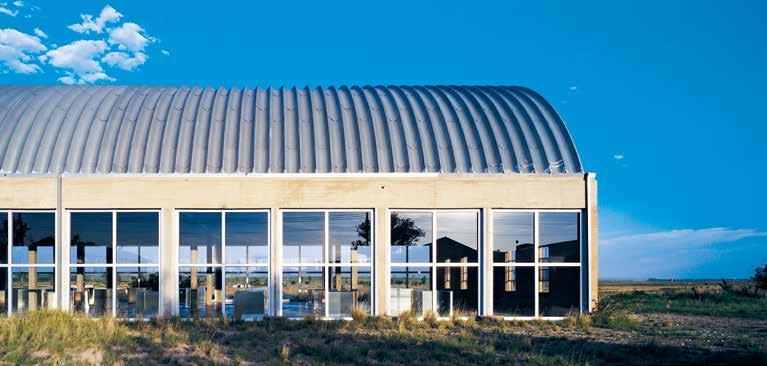
the surrounding landscape, has been approached with careful attention to Judd’s original vision for the relationship between art, architecture, and place.
This undertaking reminds us that preservation is not static but ongoing, an active commitment to artists’ intentions, to the experience of art in relationship to place, and to the communities who encounter it here. We are deeply grateful to the many artists, staff, trustees, supporters, and collaborators whose care and dedication continue to sustain Chinati’s mission and look forward to welcoming you back to the Artillery Sheds when the restoration is completed.
I’m also excited to announce a gift by Amy Baker Sandback to
de drenaje hasta el análisis de conservación de las obras de aluminio y la regeneración del paisaje circundante, se ha abordado con una atención cuidadosa a la visión original de Judd sobre la relación entre arte, arquitectura y lugar.
Este proceso nos recuerda que la conservación no es estática, sino continua: un compromiso activo con las intenciones de los artistas, con la experiencia del arte en relación con el lugar y con las comunidades que lo encuentran aquí. Expresamos nuestro profundo agradecimiento a los numerosos artistas, miembros del equipo, patronos, colaboradores y aliados cuya dedicación y cuidado siguen sosteniendo la misión de Chinati, y esperamos darles la bienvenida de nuevo a los Cobertizos de Artillería una vez finalizada la restauración.
of creative practices grounded in collaboration. Through Hagerman’s decades of work with rural and Indigenous communities across Mexico, his architecture and design emerge from careful attention, close listening, generosity, and shared knowledge. His practice offers an important reflection on the relationship between design, architecture, and everyday life.
As we enter our fifth decade, we look forward to welcoming all of you to Chinati. We are deeply grateful to those who continue to sustain this place, which remains an extraordinary act of “will and conviction.”
Caitlin Murray
prácticas creativas basadas en la colaboración. A través de décadas de trabajo de Hagerman con comunidades rurales e indígenas de México, su arquitectura y diseño emergen de una atención cuidadosa, una escucha profunda, la generosidad y el conocimiento compartido. Su práctica ofrece una reflexión importante sobre la relación entre diseño, arquitectura y vida cotidiana.
Al entrar en nuestra quinta década, esperamos darles la bienvenida a todos a Chinati. Expresamos nuestra profunda gratitud a quienes continúan sosteniendo este lugar, que sigue siendo un extraordinario acto de “voluntad y convicción”.
Caitlin Murray
DONALD JUDD, ARTILLERY SHED WITH 100 UNTITLED WORKS IN MILL ALUMINUM, 1982–86 / DONALD JUDD, COBERTIZO DE ARTILLERÍA CON 100 OBRAS SIN TÍTULO EN ALUMINIO EN BRUTO, 1982–86
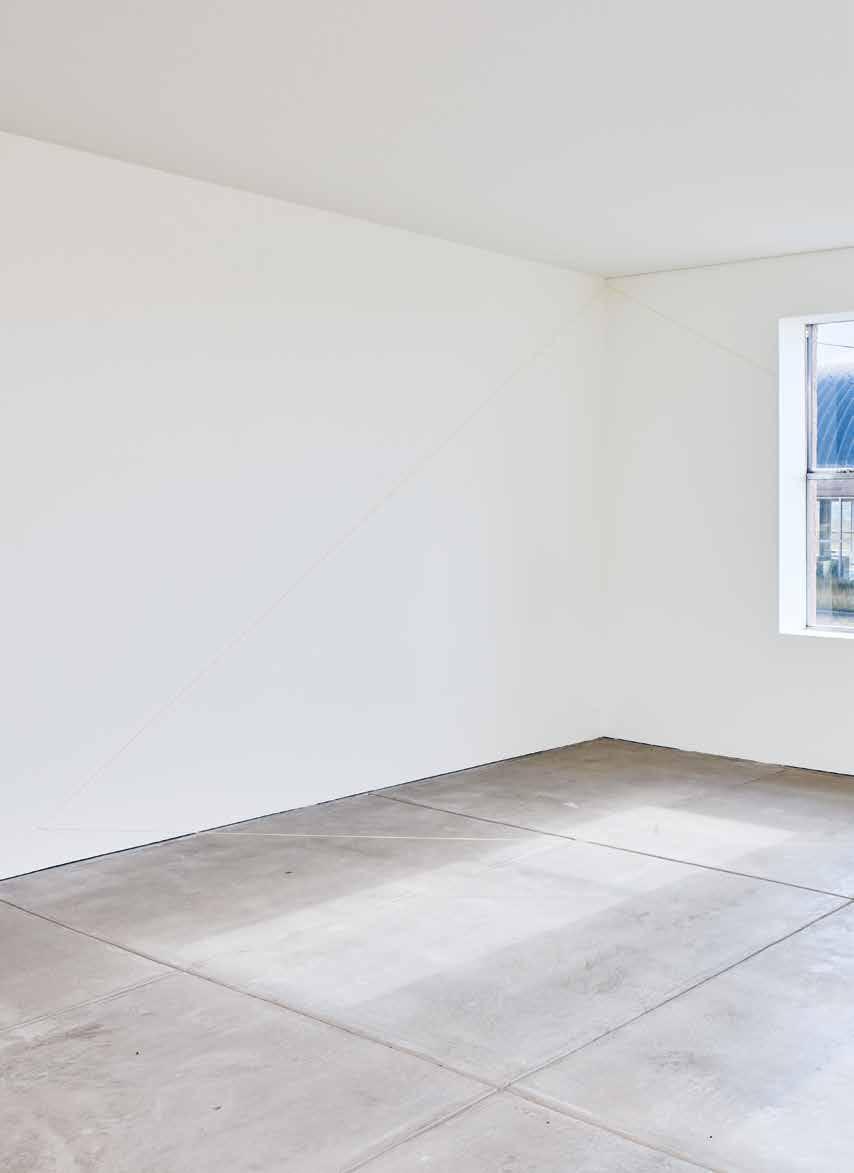
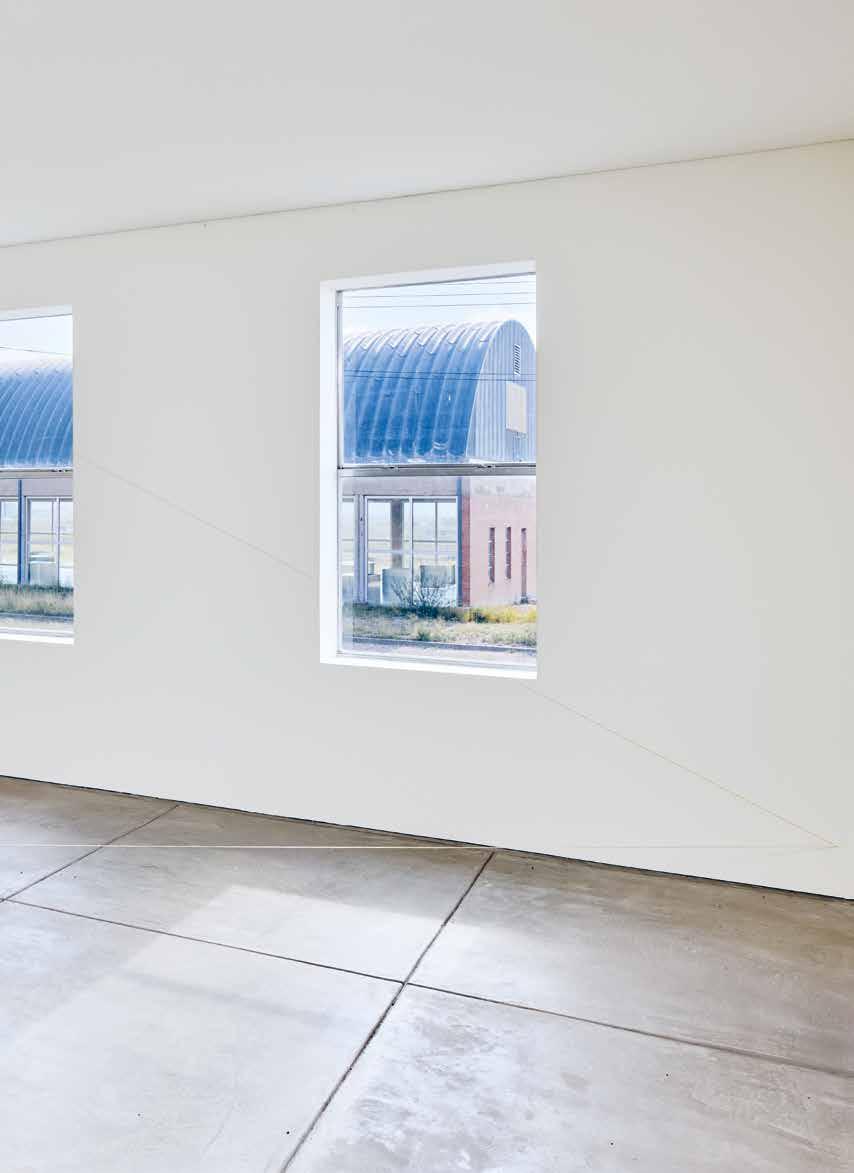
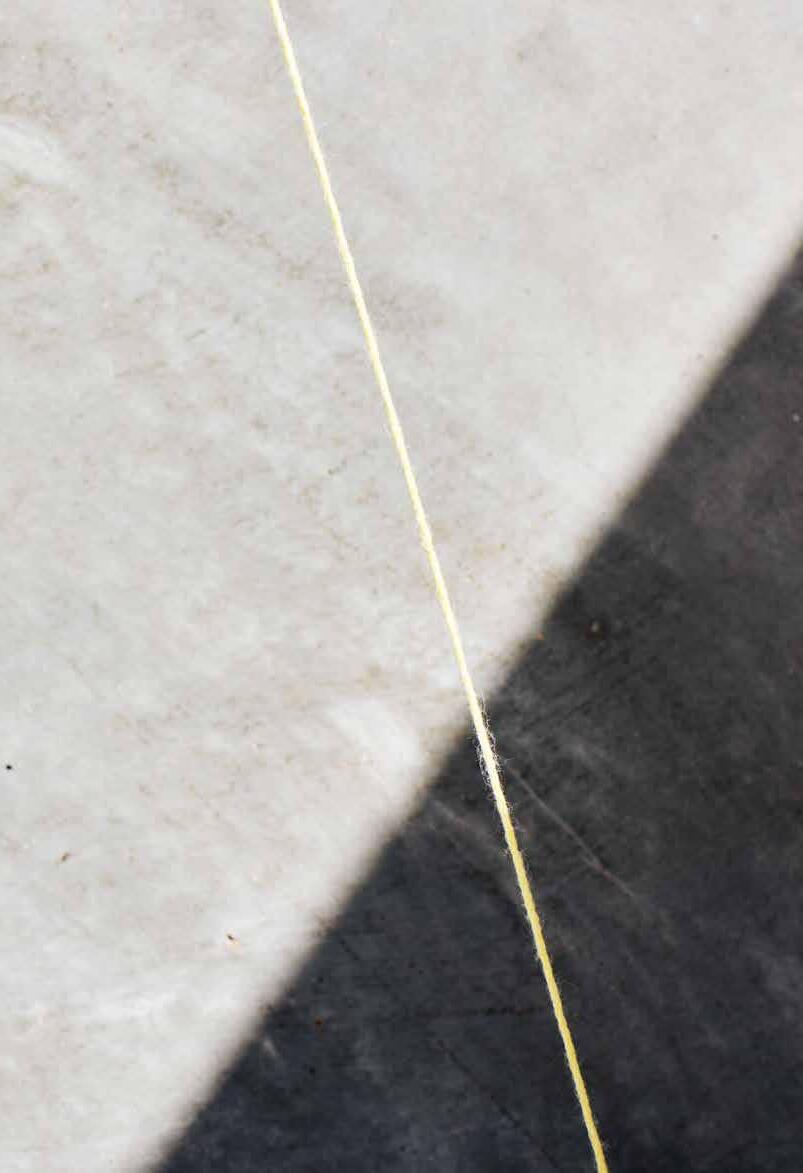
1 UNTITLED (BROKEN TRIANGLE) , 2001.
LIGHT YELLOW ACRYLIC YARN
2 UNTITLED , 1999.
GRAY HOUSE PAINT ON WOOD PANEL
3 UNTITLED (VERTICAL/HORIZONTAL CONSTRUCTION IN ONE PLANE) , 2001.
BLACK ACRYLIC YARN
4 UNTITLED , 2001.
BLACK HOUSEPAINT ON MEDIUM-DENSITY
FIBERBOARD WITH WOOD MOUNT
5 UNTITLED (FOUR-PART HORIZONTAL CONSTRUCTION) , 2001.
LIGHT BLUE ACRYLIC YARN
6 UNTITLED , 1977/2001.
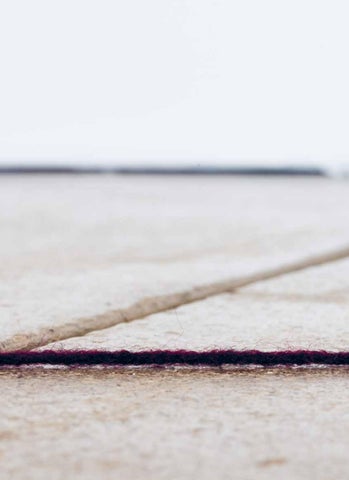
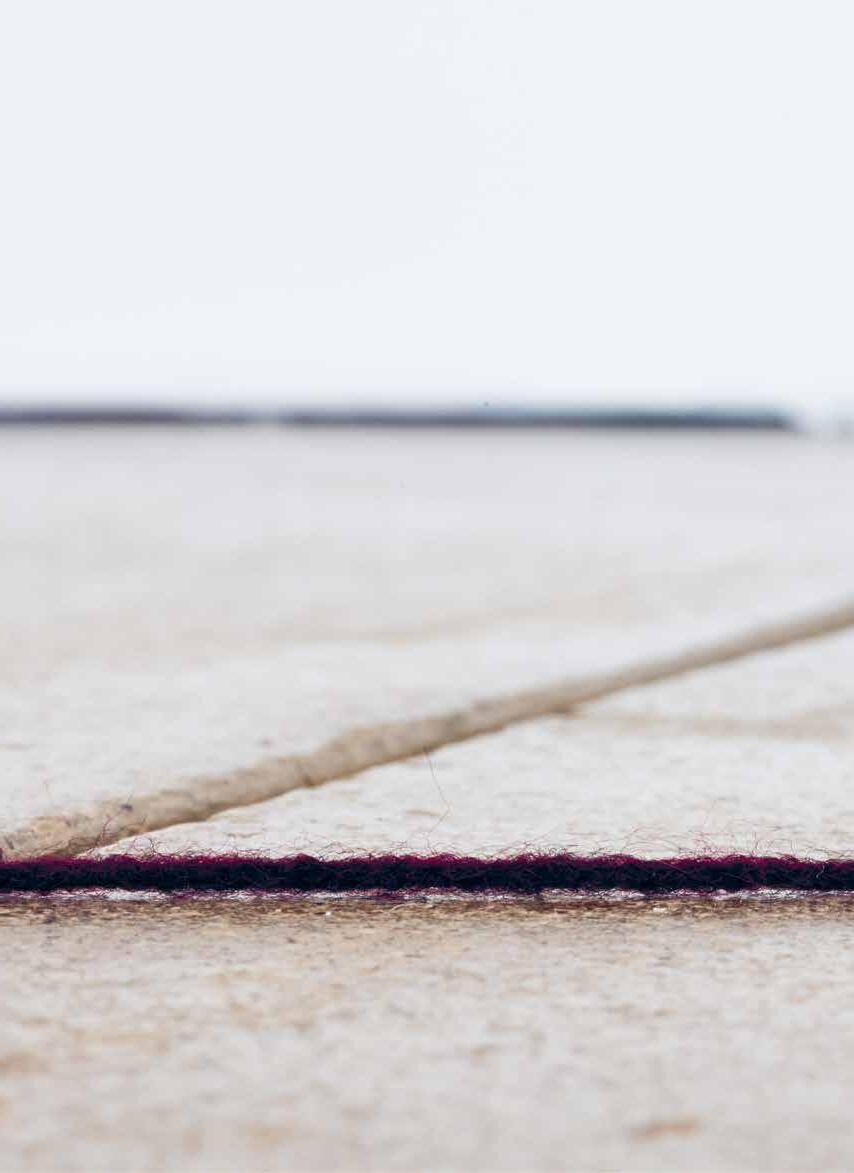
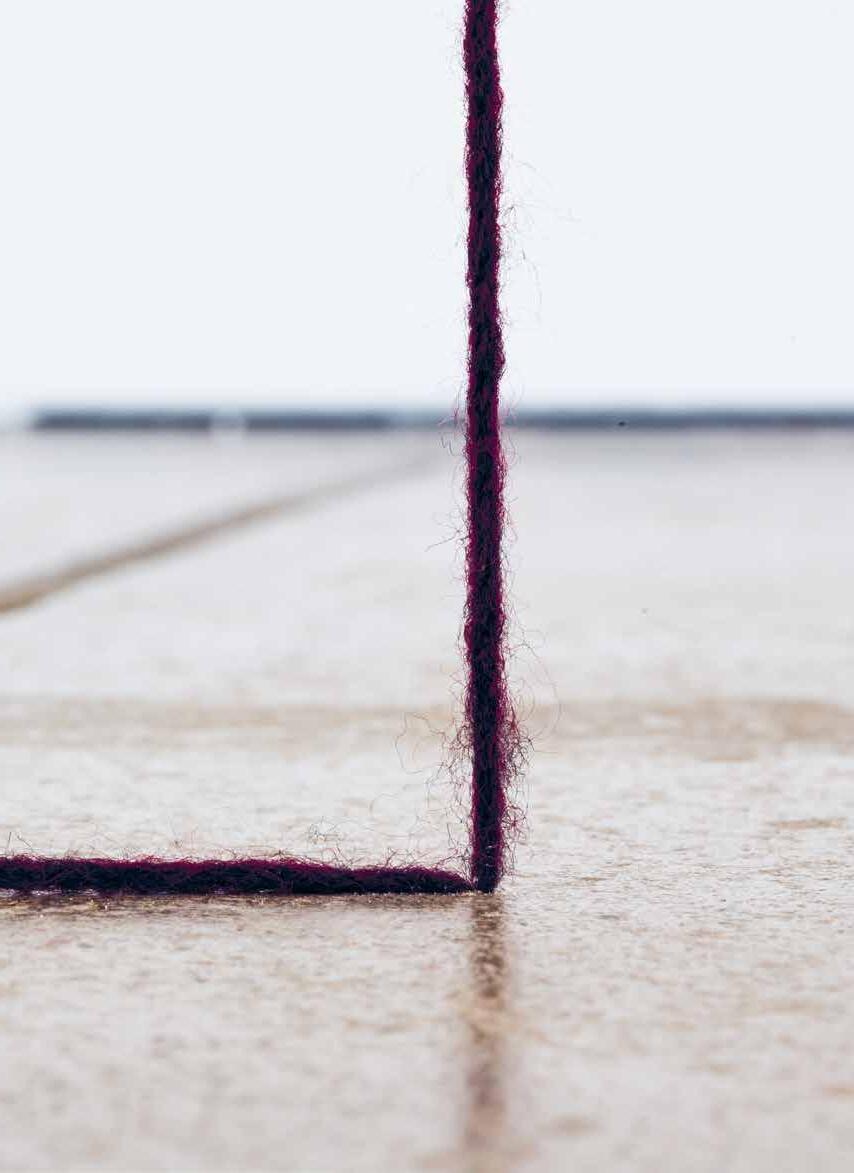
BURGUNDY ACRYLIC YARN
7 UNTITLED (TWO-PART VERTICAL CONSTRUCTION) , 2001.
LIGHT TAN ACRYLIC YARN
8 UNTITLED , 2001.
ENAMEL ON WOOD PANEL
9 UNTITLED (EIGHT-PART HORIZONTAL CONSTRUCTION) , 2001.
GRAY ACRYLIC YARN
PAGES 4–5, 8–14, 16–29 / PÁGINAS 4–5, 8–14, 16–29: FRED SANDBACK: SCULPTURE , 2025.
INSTALLATION VIEW, THE CHINATI FOUNDATION / FRED SANDBACK: ESCULTURA , 2025.
VISTA DE LA INSTALACIÓN, LA FUNDACIÓN CHINATI
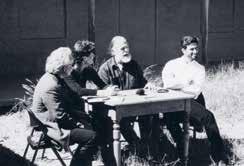
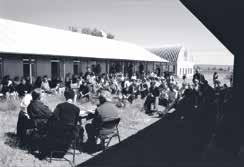
Say the name Fred Sandback to an artist, and they are likely to respond with affection, whether or not their work bears any superficial resemblance to his. One such admirer suggested that, for all its intellectual and formal rigor, Sandback’s work is “easy to love”; it introduces and subverts illusion at once, unreservedly granting the viewer all the perceptual tools they need to understand its resolute—if sometimes barely perceptible—presence.1 “Delight” is another word that comes up in the presence of Sandback’s work, more specifically in reference to the joy one feels when passing through a transparent plane they realize isn’t really there. See, for example, this exchange from the audience comment portion of a public conversation among Sandback, Marianne Stockebrand, Michael Govan, and Gianfranco Verna during the
Menciona el nombre de Fred Sandback a cualquier artista y es probable que responda con afecto, independientemente de que su obra guarde o no alguna semejanza superficial con la de él. Uno de esos admiradores sugirió que, pese a todo su rigor intelectual y formal, la obra de Sandback es “fácil de amar”; introduce y subvierte la ilusión al mismo tiempo, otorgando generosamente al espectador todas las herramientas perceptivas necesarias para comprender su presencia decidida —aunque a veces apenas perceptible—.1 “Deleite” es otra palabra que suele surgir en presencia de la obra de Sandback, más específicamente en referencia a la alegría que se siente al atravesar un plano transparente y darse cuenta de que, en realidad, no está allí. Véase, por ejemplo, este intercambio durante la sección de comentarios del público en una conversación abierta entre Sandback, Marianne Stockebrand, Michael Govan y Gianfranco Verna, celebrada con motivo de la inauguración de la primera edición de Fred Sandback: Sculpture [Fred Sandback: escultura] en la Fundación Chinati en 2001:
Público : Bueno, cuando vi por primera vez una fotografía de la obra, no conocía su trabajo y pensé que era una lámina de vidrio… Sandback : Sí.
Público : Así que imagínese mi deleite cuando vine aquí y simplemente la atravesé caminando.
Sandback : Exacto. 2
Aquí, Sandback confirma algo que probablemente había escuchado innumerables veces antes, manteniendo una actitud de dulzura, buen humor y elegancia que se percibe claramente en sus escritos y entrevistas. 3 Fred Sandback: Sculpture de 2001 fue la exposición temporal inaugural en el entonces recientemente terminado edificio en forma de U, situado entre School No. 6 [Escuela núm. 6] (1993), de Ilya Kabakov, y untitled (Marfa project) [sin título proyecto Marfa)] (1996), de Dan Flavin. Al clausurarse menos de un año antes de la muerte de Sandback en 2003, la exposición fue también una de las últimas instalaciones realizadas por el artista en vida. 4
Inicialmente situadas en extremos opuestos de las trayectorias programáticas y biográficas, las versiones de Fred Sandback: Sculpture ocupan un lugar singular tanto en la historia del artista como en la de la institución. La recreación de Fred Sandback: Sculpture por parte de Chinati en 2025–2026 constituye un gesto de comisariado que, al mismo tiempo, reconoce y rechaza las nociones de “comienzo” y “final”, de manera muy similar a como las esculturas de
opening festivities for the first iteration of Fred Sandback: Sculpture at the Chinati Foundation in 2001:
Audience: Well, when I first saw the photograph of it, I didn’t know your work and I thought it was a piece of plate glass …
Sandback : Yeah.
Audience : So imagine my delight when I came here and I just walked through it.
Sandback : Right.2
Here, Sandback affirms something he’d likely heard countless times before, maintaining a sense of
Sandback articulan campos que, al igual que un zip de Barnett Newman, sugieren una prolongación más allá de los límites físicos de sus soportes. 5 De hecho, la posibilidad misma de recrear la exposición existe gracias a una generosidad de renovación inscrita en la propia fibra de la obra de Sandback. 6 La instalación, para evocar la reflexión de Roland Barthes sobre la nave llamada Argo , se asemeja a la enunciación amorosa: las partes son reemplazadas, pero la embarcación sigue siendo la misma. “La verdadera tarea del amor y del lenguaje”, escribe Barthes, “consiste en conferir a una misma frase inflexiones que sean siempre nuevas”. 7
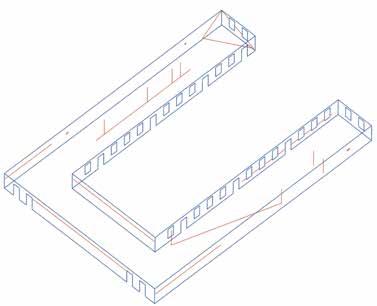
gentleness, good humor, and grace that is palpable across his writings and interviews. 3 Fred Sandback: Sculpture from 2001 was the inaugural temporary exhibition in the then-recently completed U-shaped building between Ilya Kabakov’s School No. 6 (1993) and Dan Flavin’s untitled (Marfa project) (1996) With a closing date less than a year before Sandback’s death in 2003, the exhibition was also one of the artist’s last installations in his lifetime.4
Initially positioned at opposite ends of programmatic and biographical lives, Fred Sandback: Sculpture once occupied a singular place in both the artist’s and the institution’s
La exposición consta de seis esculturas y tres relieves murales de madera pintada, que establecen una variedad de puntos de contacto con el edificio: esquinas, bordes, techo, suelo y ventanas. Aunque las construcciones de hilo suelen articular toda la altura o anchura de la superficie que atraviesan o a la que se adhieren, tienden a detenerse a apenas unos centímetros del límite más cercano, manteniendo lo que solo puedo describir como una distancia respetuosa. Sandback refleja esta ética espacial no dominante en los términos que eligió para describir la interpenetración armoniosa y mutua que buscaba entre el contenedor de su obra y sus espectadores: “coexistir”, “cohabitar”, “cooperar” y “coproducir”.8
BARNETT
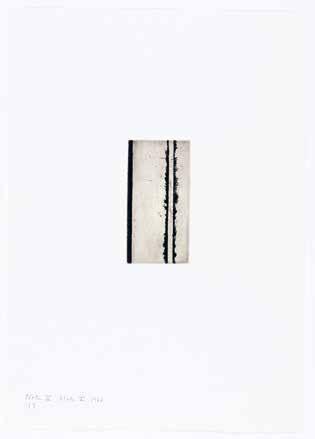
history. Chinati’s remaking of Fred Sandback: Sculpture in 2025–26 is a curatorial gesture that both acknowledges and refuses “beginning” and “end,” much in the way that Sandback’s sculptures articulate fields that, like a Barnett Newman “zip,” imply extension beyond the physical edges of their supports.5 Indeed, remaking the exhibition is only possible because of a generosity in renewal embedded in the very fiber of Sandback’s work.6 The installation, to invoke Roland Barthes on the ship called Argo, is like the lover’s utterance: the parts are replaced but the vessel remains the same. “The very task of love and of language,” he writes, “is to give to one and the same phrase inflections which will be forever new.”7
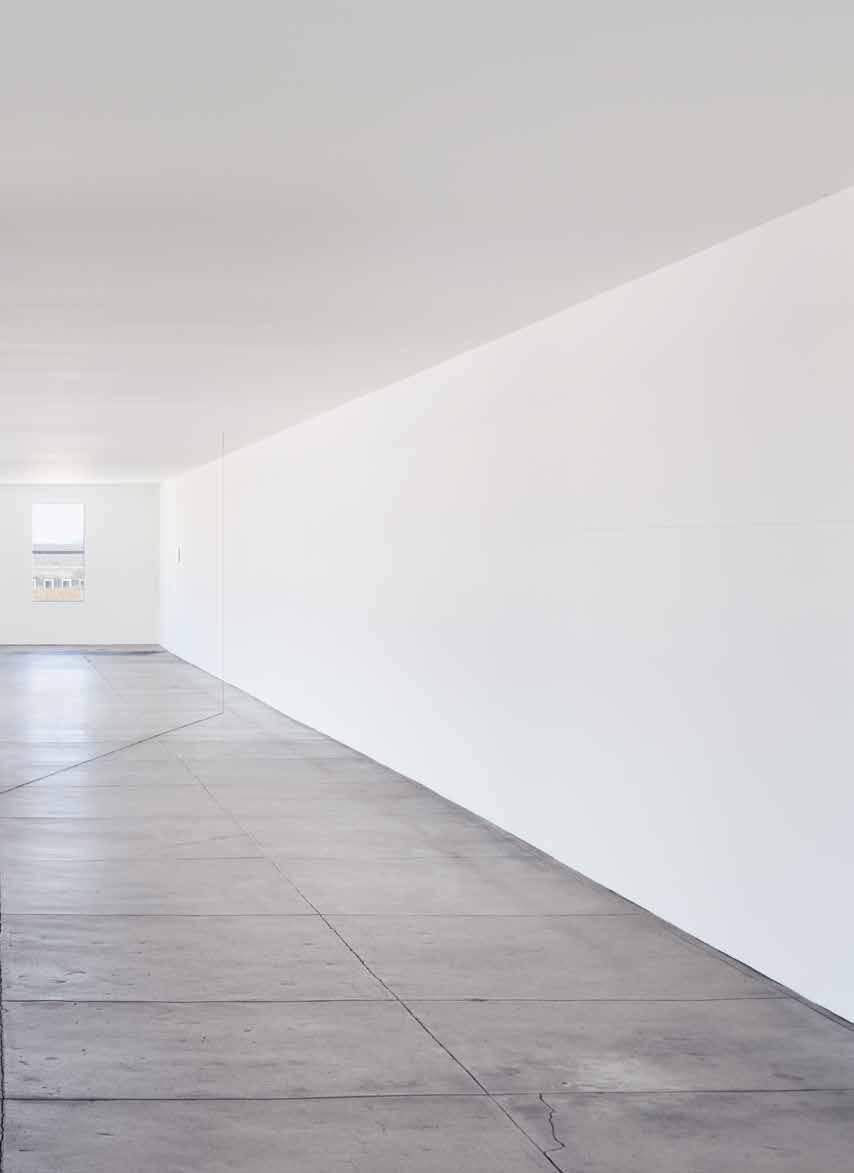
The exhibition consists of six sculptures and three wall reliefs in painted wood, which create a variety of contact points with the building—corners, edges, ceiling, floor, windows. While the yarn constructions usually articulate the full height or width of whatever surface they span or cling to, they tend to terminate within an inch or so of the nearest boundary, maintaining what I can only describe as a respectful distance. Sandback
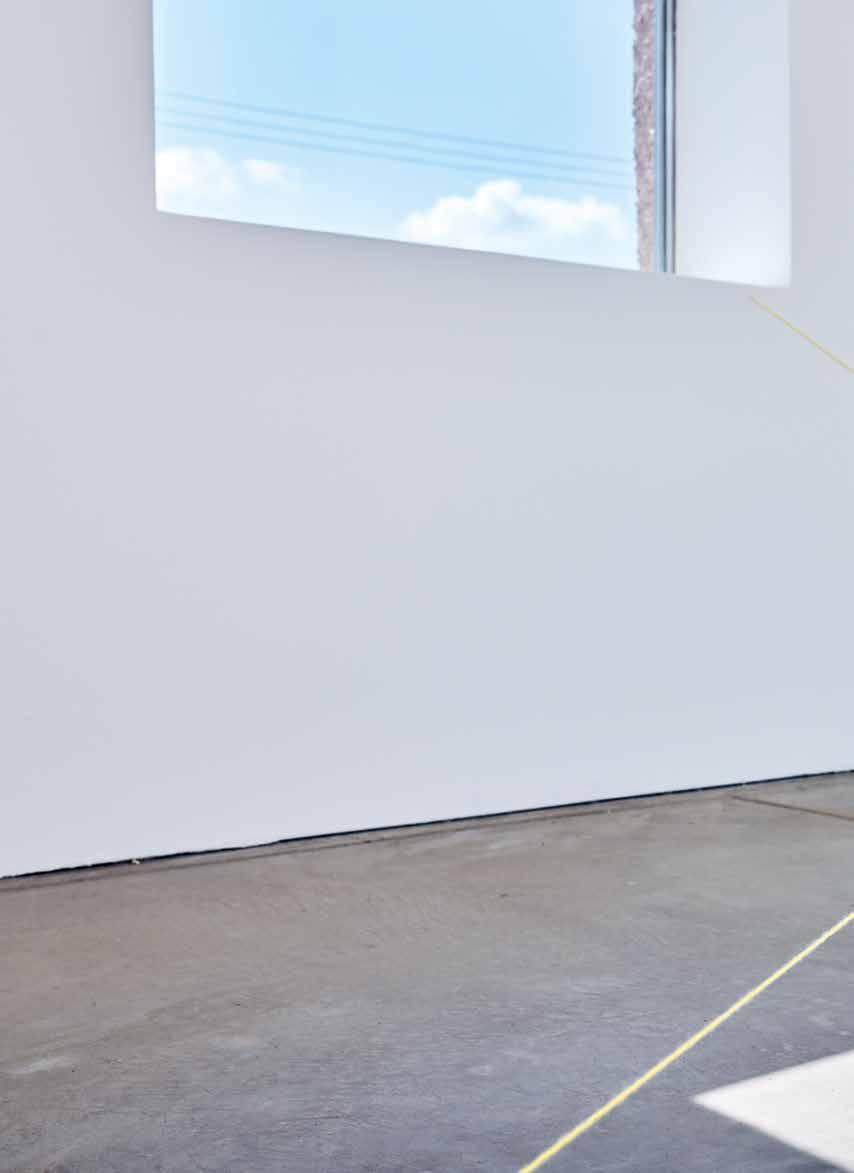
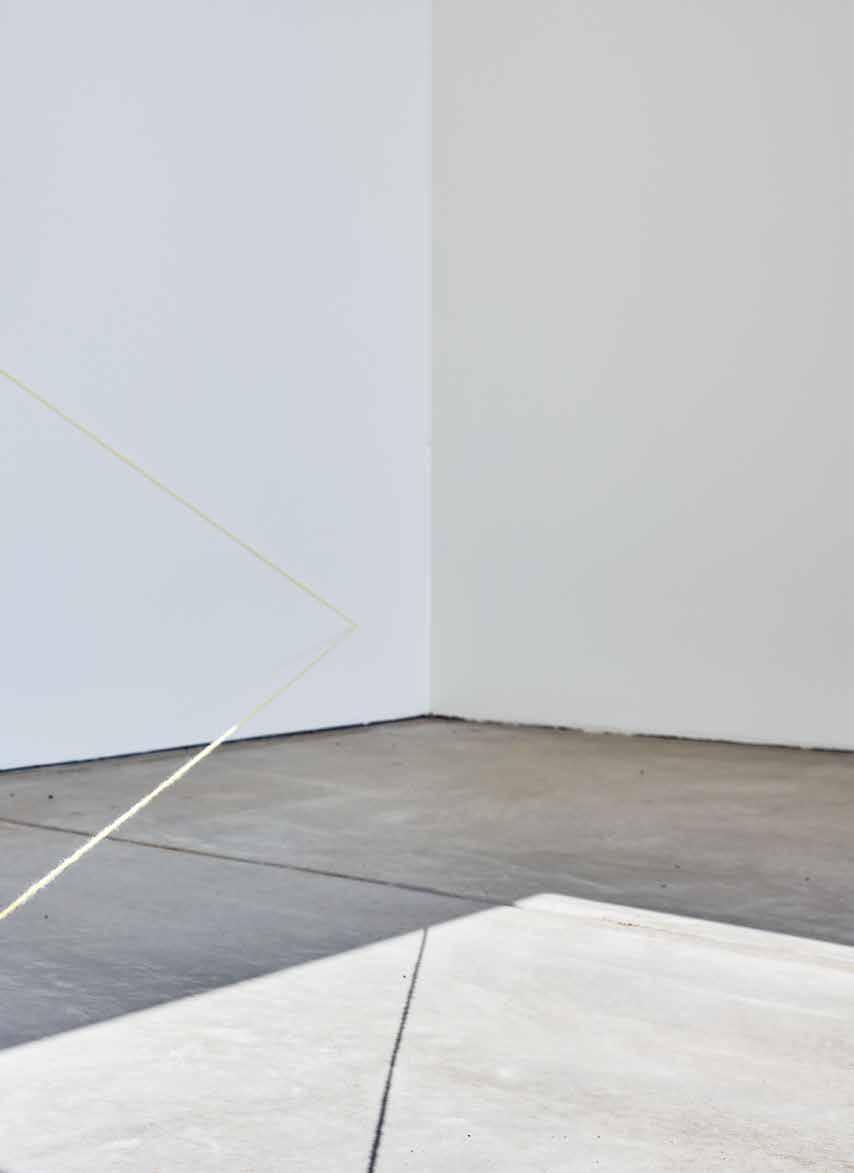
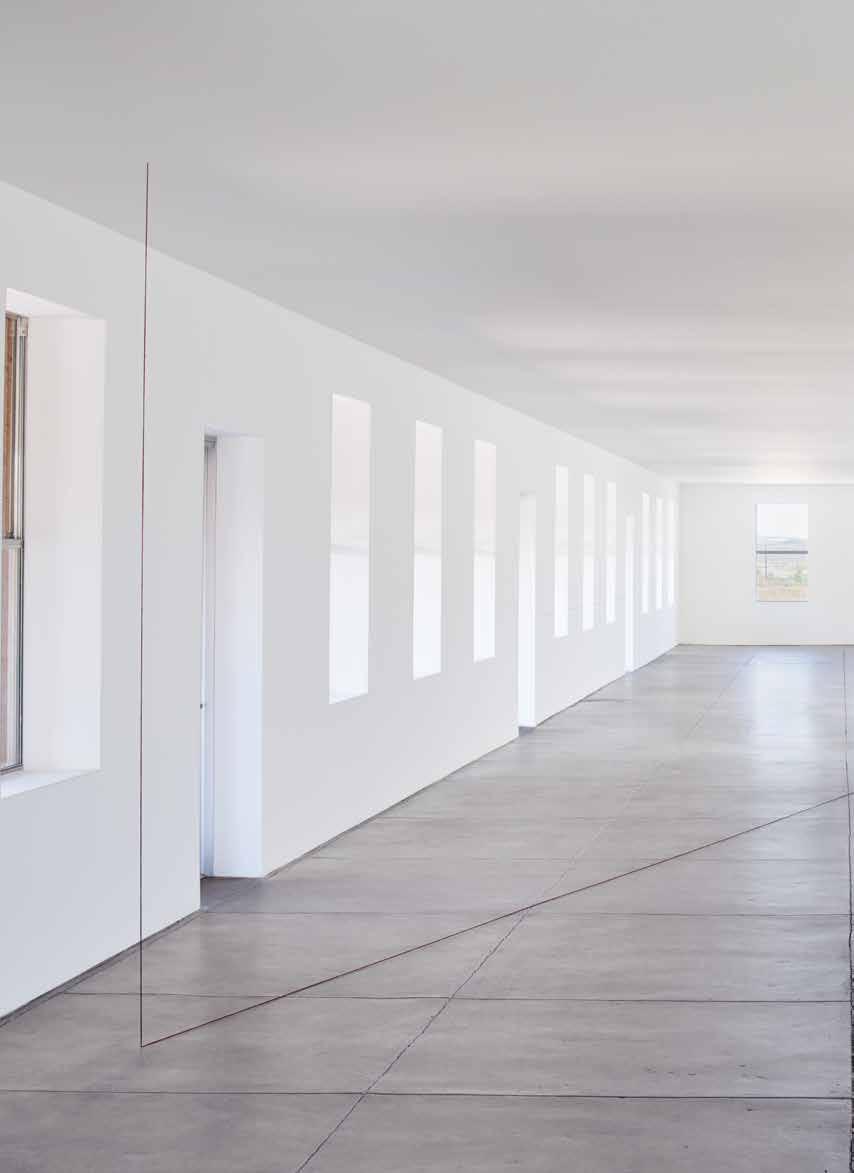
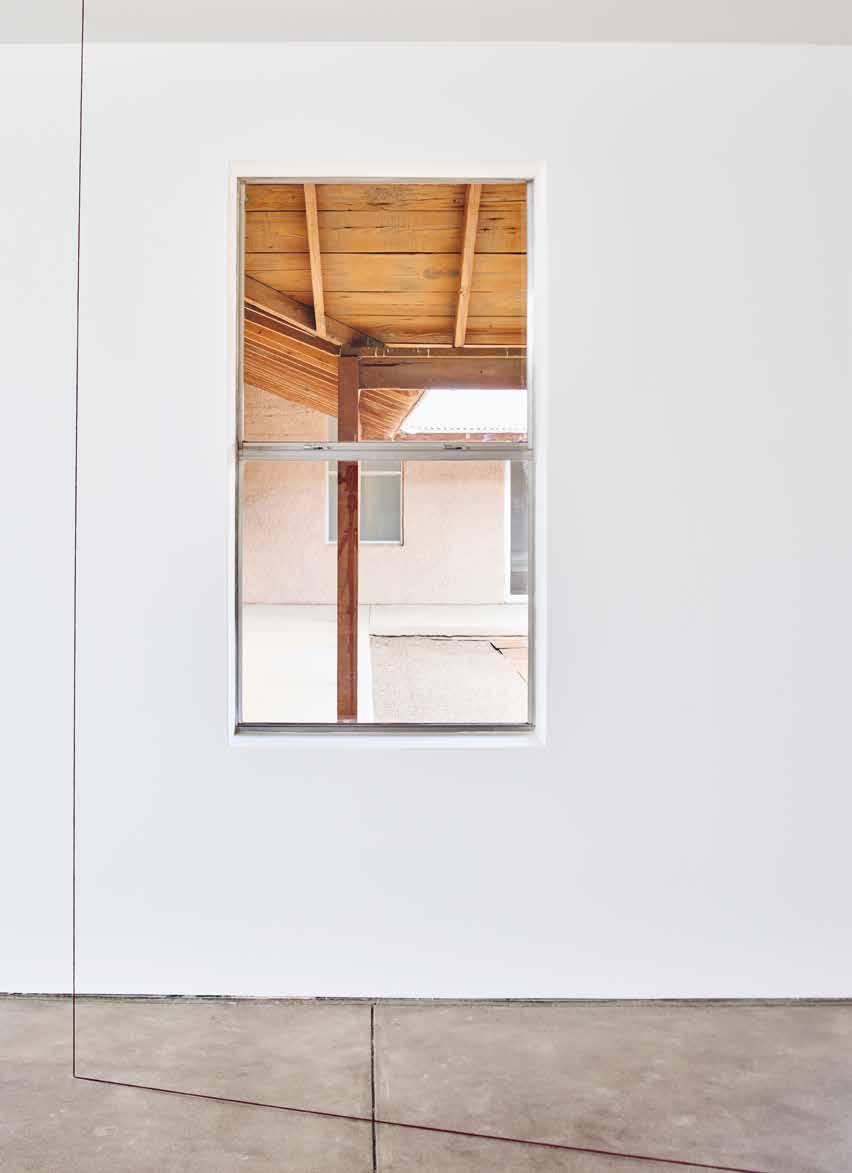
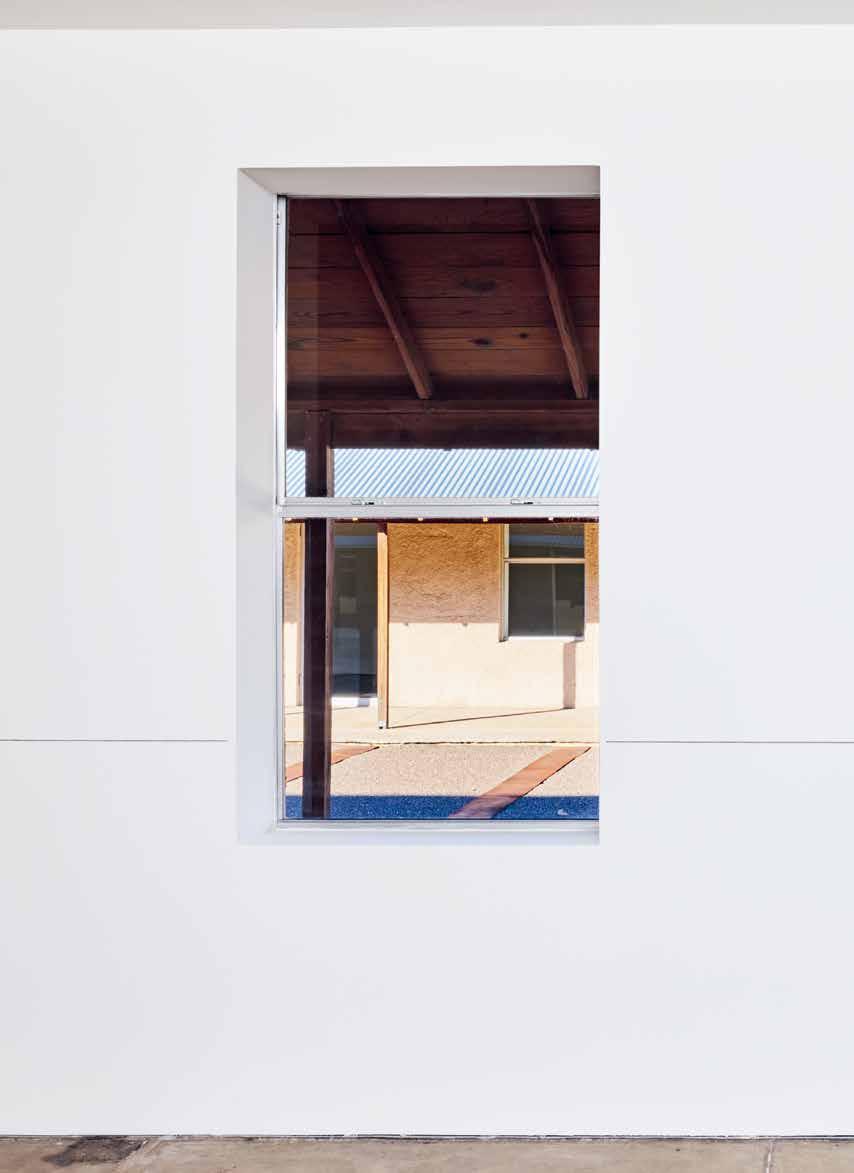
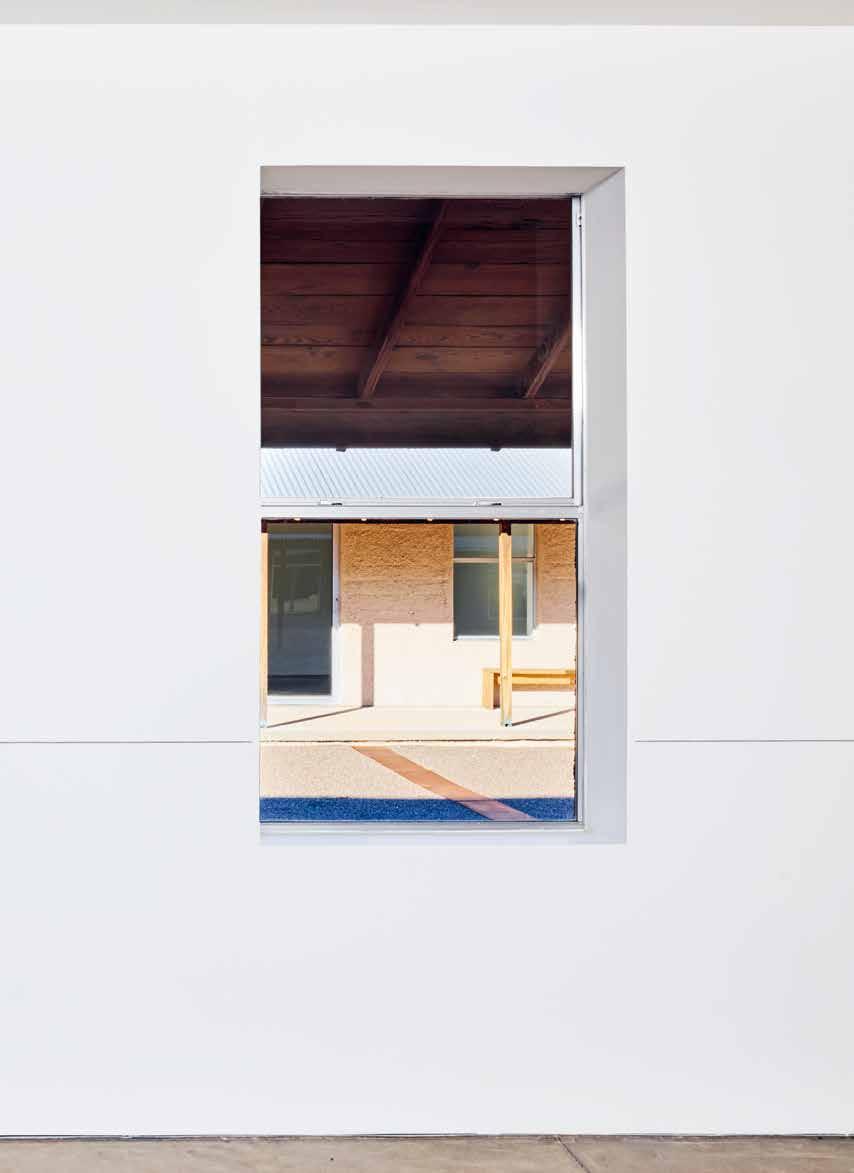
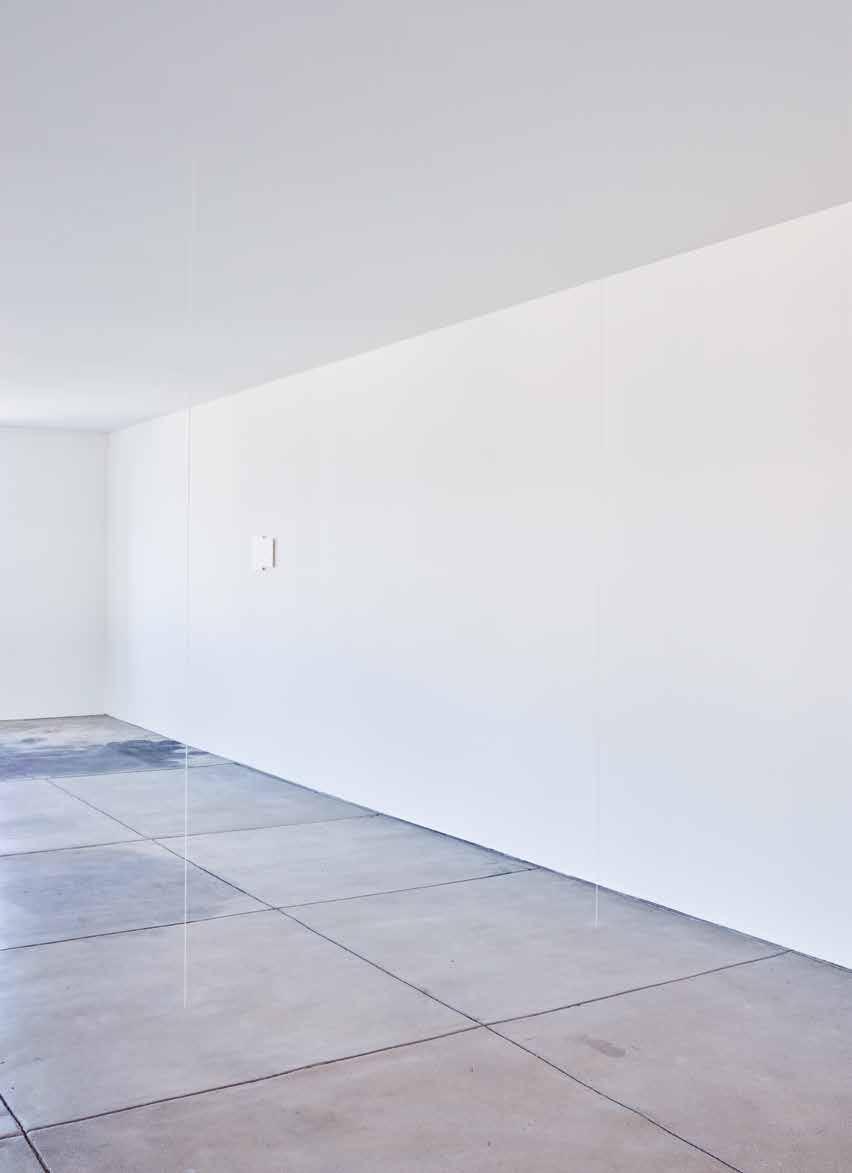
Suspendida en el ala norte de la barraca, una construcción triangular de color amarillo pálido reposa en una esquina. Una diagonal quebrada, parte de Untitled (Broken Triangle) [Sin título (Triángulo quebrado)] (2001), salta de una ventana a otra, enmarcando una vista del extremo sur del cobertizo de artillería norte. La interacción visual entre esta forma inclinada, ligera como el plumón de un polluelo, y las 100 obras sin título en aluminio en bruto (1982–1986) de Judd, tan distintas materialmente entre sí, evoca sin embargo ciertas afinidades entre la obra de ambos artistas. 9 Judd y Sandback comprendían el poder de situar una diagonal dentro de un volumen rectilíneo para sugerir, subvertir o complicar la impresión de profundidad espacial. Sin embargo, mientras Judd utilizaba con frecuencia las diagonales para mostrar posibilidades repetitivas dentro de una forma exterior, rechazando al mismo tiempo el término “escultura”, Sandback abrazó esa palabra pero rechazó el concepto de un interior, afirmando que quería hacer una escultura “sin un interior”.10
Por supuesto, hacer algo sin interior significa también que carece de exterior, algo que Untitled (Vertical/Horizontal Construction in One Plane) [Sin título [Construcción vertical/horizontal en un solo plano)] (2001) demuestra
echoes this non-dominating spatial ethic in terms he chose to describe the harmoniously mutual interpenetration he sought between his work’s container(s) and viewer(s): “coexist,” “cohabit,” “cooperate,” and “coproduce.”8
Hovering in the northern arm of the barrack, a triangular construction in pale yellow reclines in a corner. A broken diagonal, part of Untitled (Broken Triangle) (2001), leapfrogs two windows framing a view of the north Artillery Shed’s south end. The visual interaction between the chick-down tilted form and Judd’s 100 untitled works in mill aluminum (1982–86), so materially distinct from one another, nevertheless recalls certain affinities between the two artists’ work.9 Judd and Sandback both understood the power of placing a diagonal within a rectilinear volume to suggest, subvert, or complicate the impression of spatial recession. However, where Judd often used diagonals to show iterative possibilities within an exterior shape but refused the term “sculpture,” Sandback embraced that word but rejected the concept of an interior, claiming that he wanted to make sculpture “without an inside.”10
Of course, making something without an inside means it has no outside
ampliamente. Dividiendo el espacio sin desplazarlo, la base horizontal de la obra roza el suelo de hormigón, interrumpida por cuatro verticales desigualmente espaciadas y ancladas al techo. Aquí, el “deleite” de atravesar un límite aparentemente presente pero en realidad inexistente se ofrece en abundancia y adquiere una renovada urgencia en un momento en que nuestro gobierno amenaza la región de Big Bend con la construcción de un muro fronterizo e impone una rígida dicotomía de género como ley del territorio. En esta obra, así como en la diagonal burdeos fechada dos veces, Untitled [Sin título] (1977/2001), y en la construcción vertical de dos partes en tono beige claro, Untitled (Two Part Vertical Construction) [Sin título (Construcción vertical de dos partes)] (2001), la reinstalación fue posible, en parte, gracias a la propia memoria del edificio respecto a la exposición de 2001. Pequeños agujeros permanecen en los suelos de hormigón allí donde Sandback los dejó, lo bastante discretos como para no haber requerido reparación.
Las alas central y sur de la barraca albergan dos piezas murales: Untitled (Four-part Horizontal Construction) [Sin titulo (Construcción horizontal de cuatro partes)] (2001) y Untitled (Eightpart Horizontal Construction) [Sin título (Construcción horizontal de ocho
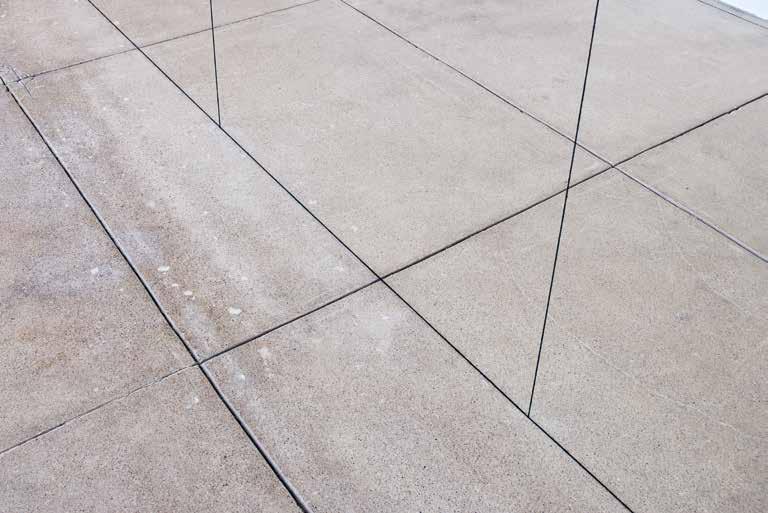
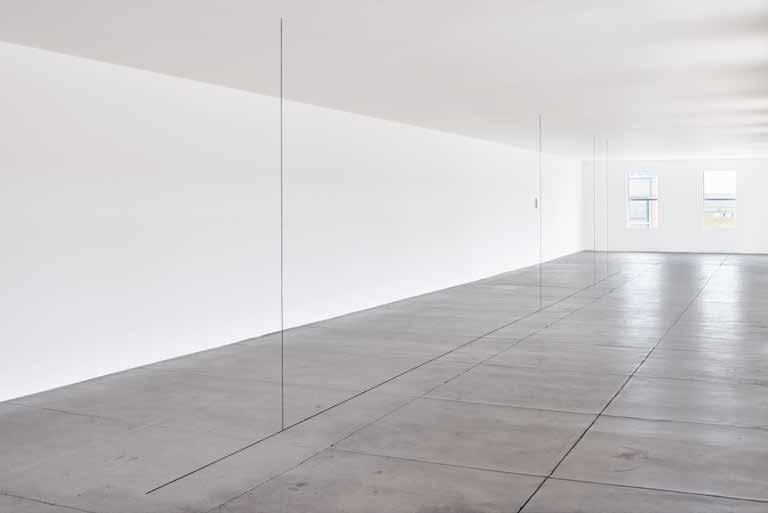
either, which Untitled (Vertical/ Horizontal Construction in One Plane) (2001) demonstrates amply. Bisecting the space without displacing any of it, the work’s horizontal base skims the concrete floor, punctuated by four unevenly spaced verticals anchored in the ceiling. Here, the “delight” of crossing an apparent but absent boundary is available in abundance and renewed urgency as our government threatens the Big Bend region with a border wall and enforces a hard gender binary as the law of the land. In this work, as well as the double-dated diagonal in burgundy, ( Untitled, 1977/2001) and the twopart vertical construction in light tan, ( Untitled [Two Part Vertical Construction], 2001), reinstallation was aided, in part, by the building’s own memory of the 2001 exhibition. Tiny holes remain in the concrete floors where Sandback left them, unobtrusive enough not to require patching.
The middle and south arms of the barrack hold two wall pieces, Untitled (Four-part Horizontal Construction) (2001) and Untitled (Eight-part Horizontal Construction) (2001). In the former, four horizontals in a silvery light blue placed at different heights approach but never merge with either the horizon outside or the
partes)] (2001). En la primera, cuatro horizontales de un azul plateado claro, colocadas a distintas alturas, se aproximan sin llegar nunca a fundirse ni con el horizonte exterior ni con la pared, activando toda la energía latente entre dos cosas que están muy cerca pero no llegan a tocarse. Al final de la tarde, las puertas acristaladas de la larga pared posterior proyectan columnas de luz sobre una de las líneas horizontales, poniendo de relieve las diferencias entre las diversas formas de existencia de una línea: el borde de una sombra, la indómita pelusa del hilo y el marco de aluminio de una puerta. La construcción horizontal gris de ocho partes produce un efecto similar con las ventanas orientadas hacia el patio en el lado sur del edificio. En la instalación de 2025–2026, la obra establece un encuentro visual con Chinati Thirteener [La treceava de Chinati] (2010) de Carl Andre, que no estaba presente en la exposición original. La línea de Sandback, siempre atenta a la disposición de las ventanas, retoma su antiguo diálogo con el borde del porche interior del edificio e inicia uno nuevo con los planos seriados de acero corten de Andre.
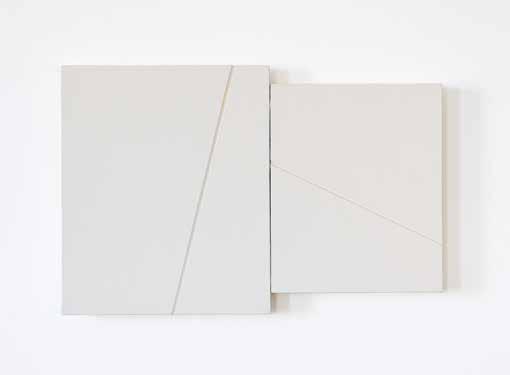
En comparación con estas obras de escala arquitectónica, los relieves son diminutos: no miden más de treinta centímetros por lado (salvo el díptico blanco
wall, activating all the potent energy between two things that are very close but not touching. Late in the day, the glass doors on the long back wall throw columns of light onto one of the horizontals, highlighting the differences in a line’s thingness among the edge of a shadow, yarn’s ungovernable fuzz, and a door’s aluminum frame. The eight-part gray horizontal construction does something similar with the courtyard-facing windows on the building’s south side. In the 2025–26 installation, the work visually meets Carl Andre’s Chinati Thirteener (2010) , which wasn’t here last time. Sandback’s line, ever considerate of the fenestration, resumes its old dialogue with the edge of the building’s interior porch and begins a new one with Andre’s serial planes of corten steel.
Compared to these room-sized works, the reliefs are tiny, measuring no more than a foot on any side (except the white two-panel diptych, which edges to just over fourteen inches in width). But, also like Newman’s Notes etchings, their scale exceeds their size, honing a viewer’s attention on the space between things as much as the things themselves. Various authors have commented on how Sandback’s work plays between “vacancy and volume,” but I disagree
de dos paneles, que supera ligeramente los treinta y cinco centímetros y medio de ancho). Sin embargo, al igual que los grabados Notes [Notas] de Newman, su escala trasciende sus dimensiones físicas, afinando la atención del espectador tanto hacia el espacio entre las cosas como hacia las cosas mismas. Varios autores han señalado cómo la obra de Sandback oscila entre el “vacío y volumen”, pero discrepo con el primer término, ya que mi experiencia de la exposición fue la de plenitud.11 La disposición y el espaciamiento que el artista establece entre las obras individuales, así como entre estas y el edificio, suspenden al espectador en una red laxa pero acogedora.
Cuando Sandback y un amigo acuñaron en 1968 el término “espacio peatonal” —“literal, a ras de suelo y cotidiano”— para describir el trabajo que estaban realizando, no podían saber cuán apropiado resultaría para Chinati, un lugar que exige caminar.12 Mucho se ha escrito sobre el concepto de espacio peatonal de Sandback en relación con su escultura, pero se ha prestado menos atención al lenguaje igualmente cotidiano con el que describió su obra a lo largo de los años: las sombras son como una “salsa de carne”, una determinada situación arquitectónica es como una “pista de
with the former term, having experienced the exhibition as full 11 The artist’s spacing and placement of the individual works in relation to one another and the building suspends the viewer in a loose but cozy web.
When Sandback and a friend coined the term “pedestrian space”––“literal, flat-footed, and everyday”––to describe the work they were doing in 1968, they could not have known how apposite it would be for Chinati, a place that requires you to walk.12
Much has been said about Sandback’s concept of pedestrian space in relation to his sculpture but less has been made of his use of pedestrian language to describe his work over the years: shadows are like “gravy,” a given architectural situation is like a “dance floor,” string is like a “number two pencil.”13 In his public conversation at Chinati, Sandback admitted to reusing a configuration that he had recently installed at Dia—the burgundy diagonal was indeed the Dia piece, but “blushing.” He went on, “It’s not major; it’s not the kind of editing that is so significant that you would say it’s no longer an orange, it’s an apple.”14
One of Sandback’s most enduring pedestrian analogies, however, is also his most enigmatic: the mysterious case of the artichoke. In a 1975 statement, Sandback writes, “Interiors are elusive. You can’t ever see an interior. Like eating an artichoke, you keep peeling away exteriors until there’s nothing left, looking for the essence of something. The interior is something you can only believe in, which holds all the parts together as a whole, you hope.”15
Twenty-six years later, he invoked the artichoke again, here at Chinati, suggesting a fuller picture of what he had in mind when he had written of the artichoke decades prior. In response to a question from Govan about Judd’s influence, which he affirms, he also mentions the name of Alberto Giacometti before pivoting quickly to an anecdote:
My mom told me about … a clip of Chaplin eating an artichoke. Finding himself befuddled at a fancy dinner, he took one leaf off, looked at it, threw it over his shoulder. And so on through the meal until he got to the lovely heart, he looked at it, and regarded it a little longer and threw it over his shoulder.16
Govan, satisfied with the comment, moves on, but Sandback remains
baile”, una cuerda es como un “lápiz del número dos”.13 En una conversación pública en Chinati, Sandback admitió haber reutilizado una configuración que había instalado recientemente en Dia: la diagonal burdeos era, efectivamente, la misma pieza presentada en Dia, aunque “sonrojada”. Y añadió: “No es algo importante; no es el tipo de revisión tan significativa que te haría decir que ya no es una naranja, sino una manzana”. 14
Sin embargo, una de las analogías cotidianas más perdurables de Sandback es también la más enigmática: el misterioso caso de la alcachofa. En una declaración de 1975, Sandback escribió: “Los interiores son escurridizos. Nunca se puede ver realmente un interior. Es como comer una alcachofa: sigues quitando capas exteriores hasta que no queda nada, buscando la esencia de algo. El interior es algo en lo que solo puedes creer; aquello que mantiene unidas todas las partes como un todo, o eso esperas”.15 Veintiséis años después volvió a invocar la alcachofa, esta vez en Chinati, ofreciendo una imagen más completa de lo que tenía en mente cuando escribió sobre ella décadas antes. En respuesta a una pregunta de Govan acerca de la influencia de Judd —influencia que reconoce—, también menciona el nombre de Alberto Giacometti antes de desviarse rápidamente hacia una anécdota:
Mi madre me habló de… una escena de Chaplin comiendo una alcachofa. Al encontrarse desconcertado en una cena elegante, arrancó una hoja, la observó y la lanzó por encima del hombro. Y así siguió durante toda la comida hasta llegar al delicioso corazón de la alcachofa; lo miró, lo contempló un poco más y también lo lanzó por encima del hombro.16
Govan, satisfecho con el comentario, pasa a otro tema, pero Sandback sigue intrigado y dirige la cuestión al público: “¿Alguien conoce esa escena de la película?… Habrá que investigarlo”. Y, efectivamente, se ha investigado, aunque los resultados siguen siendo inconcluyentes.17 Más adelante en la conversación, un miembro del público le pide que hable más sobre Giacometti, a lo que Sandback responde:
Mencioné su nombre como el de alguien que me resultó muy estimulante en cierto momento, antes de pensar seriamente en dedicarme al arte. Sin duda tenía que ver con la manera en que, anecdóticamente, se describe su obra como un espacio erosionado o despojado hasta llegar a lo esencial, si es que
curious and turns it to the audience: “Does anybody know that film clip? … gotta research that.”
And researched it we have, although the results remain inconclusive.17 Later on in the conversation, an audience member asks to hear more about Giacometti, to which Sandback replies:
I mentioned his name as someone who was very stimulating to me at a certain point, before I thought about really engaging myself with art. It certainly had to do with the way it anecdotally is described as a space eroded away or stripped
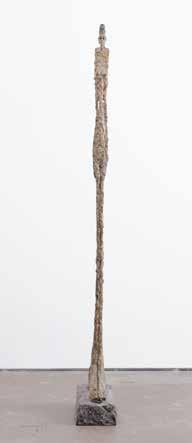
down to its essential, if there is an essential core to it. You can also look at the story of Charlie Chaplin and the artichoke and ask at that point, “Am I like Charlie who was confounded by the heart of an artichoke?”18
What is unresolved about Sandback and the artichoke, apart from whether it was, in fact, a scene from Chaplin at all, is what he really means about the artichoke and its “lovely heart.”
Some have described Sandback’s comments about the artichoke as evidence of his skepticism about unknowable interiors.19 Others have read it as evidence of his materialism––the
existe un núcleo esencial. También se puede pensar en la historia de Charlie Chaplin y la alcachofa y preguntarse entonces: “¿Soy como Charlie, desconcertado ante el corazón de una alcachofa?”.18
Lo que sigue sin resolverse en la historia de Sandback y la alcachofa, aparte de si realmente se trataba o no de una escena de Chaplin, es qué quería decir exactamente Sandback con la alcachofa y su “hermoso corazón”.
Algunos han interpretado sus comentarios sobre la alcachofa como una muestra de su escepticismo respecto de los interiores incognoscibles.19 Otros los han interpretado como prueba de su materialismo: la idea de que “no existe ningún núcleo esencial de una cosa más allá de su actualización concreta en el tiempo y el espacio”, lo que constituiría “el secreto paradójico de su práctica artística”. 20 Otros, por su parte, han preferido lo que dijo a continuación en la conversación de 2001, tras su referencia inicial a Chaplin: que se trataba de “una imagen poderosa que avanzaba más allá de Immanuel Kant y de la cosa en sí, dejando atrás, entre el polvo, esa frontera con el platonismo”, apartando así por completo la alcachofa. 21 Pero yo veo algo distinto.
Me pregunto si, en el corazón de la alcachofa de Sandback, no se encuentra también una teoría del apego. En 1975, el interior de la alcachofa era misterioso, pero también era aquello que mantenía unido el conjunto: una cuestión tanto de creencia como de esperanza. En 2001, la escena de la alcachofa se revela como una escena cómica, en la que el personaje desecha despreocupadamente un exquisito manjar. Como Charlot, uno podría retirar capa tras capa de algo hasta alcanzar su núcleo y ni siquiera reconocerlo, arrojándolo a un lado antes de seguir avanzando con paso despreocupado hacia el siguiente enredo absurdo, sin haber aprendido nada. Pero la pregunta posterior de Sandback, abierta e inconclusa —“¿Soy como Charlie?” —, es también una forma de preguntar: cuando llegue al corazón, si es que llego, ¿cómo sabré que lo he encontrado? ¿Lo saborearé o lo desecharé? Y, si lo desecho, ¿lo echaré de menos? La esperanza y la fe de Sandback en ese “hermoso corazón” que mantiene unido el conjunto, unidas a su capacidad de no aferrarse a él, constituyen la fuerza perdurable de su obra: la disposición a “arriesgarse a que sus esculturas no sean absolutamente nada”. 22
Cuando vi Fred Sandback: Sculpture [Fred Sandback: escultura] por primera vez, a comienzos de 2026, me pregunté si, tras varios meses instaladas y
ALBERTO GIACOMETTI, STANDING WOMAN , 1948 (CAST 1949). MUSEUM OF MODERN ART / ALBERTO GIACOMETTI, MUJER DE PIE , 1948 (FUNDICIÓN DE 1949). MUSEO DE ARTE MODERNO
idea that “no essential kernel of a thing exists beyond its concrete actualization in time and space”—as “the paradoxical secret of his practice.”20 Still others have favored what he said next in the 2001 conversation, after his initial Chaplin reference: that it was “a potent image of moving on beyond Immanuel Kant and the thing itself and leaving that borderline with Platonism behind in the dust somehow,” setting the artichoke aside completely.21 But I see something else.
I wonder if, at the heart of Sandback’s artichoke, there also lies a theory of attachment. In 1975, the artichoke’s interior was mysterious, but it was also holding everything together, a matter of belief as well as hope. In 2001, the artichoke scene is revealed as a funny one, in which the character glibly discards a delicious delicacy. Like the Tramp, one might peel back every layer of something to find its core and not even recognize it, tossing it away before strutting along into the next hilarious boondoggle, never the wiser. But Sandback’s later, open-ended question—“Am I like Charlie?”—is also a way of asking: If and when I reach the heart, how will I know? Will I savor or toss it aside, and if I do, will I miss it? Sandback’s hope and belief in, but also non-attatchment to, the “lovely heart” that holds everything together is his work’s enduring power—the willingness “to risk his sculptures being nothing at all.”22
When I saw Fred Sandback: Sculpture for the first time early in 2026, I wondered if, in the several months since the work had been installed, under the varied climactic conditions of West Texas, the works had gone at all slack and whether, like a guitar or a fiddle, they required tuning.23 Surprisingly, no, said Caitlin Murray, director of Chinati. (When, in 2001, Sandback said, “The acrylic yarn just goes ping and stays there, more or less,” he knew what he was talking about.)24 Taut as the works remained, my gaze lingered on the corner-spanning base of Untitled (Broken Triangle) . I could have sworn I saw a hint, ever so slight, of a curve, gravity’s gentle tug. Flickering impressions like these reinforce a truth about all art: There is simply no substitute for embodied encounter with it.
In her talk, “Why Does Fred Sandback’s Work Make Me Cry?” at the Dia Foundation in 2004, the artist Andrea Fraser explained,
For me, what makes Sandback’s work so moving is not that he
sometidas a las cambiantes condiciones climáticas del oeste de Texas, las obras habrían perdido algo de tensión y si, como una guitarra o un violín, requerirían afinación. 23 Sorprendentemente, no, según me explicó Caitlin Murray, directora de Chinati. (Cuando Sandback afirmó en 2001 que “el hilo acrílico simplemente hace ping y permanece ahí, más o menos”, sabía perfectamente de qué hablaba). 24 Aunque las obras seguían tensas, mi mirada se demoró en la base que atraviesa la esquina de Untitled (Broken Triangle) [Sin título (Triángulo quebrado)]. Habría jurado percibir un indicio, apenas perceptible, de curvatura: la suave atracción de la gravedad. Impresiones fugaces como esta refuerzan una verdad sobre toda obra de arte: no existe sustituto posible para el encuentro corporal y directo con ella.
En su conferencia “Why Does Fred Sandback’s Work Make Me Cry?” [¿Por qué la obra de Fred Sandback me hace llorar?], pronunciada en la Fundación Dia en 2004, la artista Andrea Fraser explicó:
Para mí, lo que hace tan conmovedora la obra de Sandback no es que lograra tanto con tan poco, sino que hiciera tan poco. La extrema reserva de su trabajo no la experimento como un acto de reticencia o de privación, sino como un acto de extraordinaria generosidad. Al retirarse él mismo hasta el punto en que lo hace, crea un lugar para mí… Es un espacio de posibilidad afectiva generado por una obra que no me exige sentir nada y que, precisamente por eso, creo que me permite sentir y estar sola en presencia de un arte tan silencioso y tan quieto, que formula tan pocas exigencias. 25
La obra de Sandback hizo llorar a Fraser, pero yo sugeriría que Untitled (Broken Triangle) [Sin título (Triángulo quebrado)] provoca, tanto entonces como ahora, una respuesta emotiva distinta, aunque igualmente primaria. Incluso en un momento histórico marcado por la crueldad, la violencia y los profundos abusos de poder, las esquinas apenas elevadas de la base amarillo pálido de ese triángulo pueden suscitar lágrimas, quizá, pero también una sonrisa.
Jana La Brasca es historiadora de arte, comisaria de arte y crítica en residencia 2025–2027 del Core Residency Program del Museum of Fine Arts de Houston. Ha sido beneficiaria de becas de investigación y de comisariado de arte en el Menil Drawing Institute, el Smithsonian American Art Museum, el Nasher Sculpture Center, el Blanton Museum of Art y la Judd
did so much with so little, but that he did so little. The extreme reticence of Sandback’s work is not something I experience as an act of withholding but rather an act of extraordinary generosity. By removing himself to the extent that he does, he makes a place for me … It is a place of affective possibility created by work that doesn’t ask me to feel, and so, I think, allows me to feel, and to be alone, in the presence of this art that’s so quiet and still, and makes too little in the way of demands.25
Sandback’s work made Fraser cry, but I would suggest that then and now Untitled (Broken Triangle) provokes a different but still primal emotive response. Even within a broader historical moment of cruelty, violence, and profound abuses of power, the ever-so-slightly upturned corners of that triangle’s pale-yellow base can summon tears, perhaps, but also a smile.
Jana La Brasca is an art historian, curator, and the 2025–27 Critic-in-Residence at the Core Residency Program, Museum of Fine Arts, Houston. She has held research and curatorial fellowships at the Menil Drawing Institute, the Smithsonian American Art Museum, the Nasher Sculpture Center, the Blanton Museum of Art, and Judd Foundation. She was an education intern at the Chinati Foundation in 2012.
NOTES
1 Mostly written in mid-February 2026, I wrote this essay as a valentine to Marfa, Chinati, and to Sandback’s work. I thank the following individuals for looking, thinking, and speaking with me as I made it: Cody Barber, David Gray, Tim Johnson, Rainer Judd, Caitlin Murray, Ann Marie Nafziger, Amy Baker Sandback, Peter Stanley (who used the phrase “easy to love”), Kate Sterchi, and Rob Weiner; I also thank Erin Schneider and Susanne Maurer for furnishing me with relevant materials from the Judd Foundation Archives; Jason Dibley, the Hirsch Library, and the Core Residency Program at the Museum of Fine Arts, Houston; and my writing group: Francesca Balboni, Maggie Mitts, and Grace Sparapani.
2 Michael Govan, Marianne Stockebrand, and Gianfranco Verna, “Conversation with Fred Sandback,” Chinati Foundation Newsletter 7 (2002): 31. Note that Fred Sandback: Sculpture was the title of several exhibitions throughout the artist’s career, an indication of the artist’s attachment to the term and the continuity he cultivated across his sculptural oeuvre.
3 The Fred Sandback Archive offers a significant number of these sources, free and searchable, at fredsandbackarchive.org.
4 “Fred Sandback himself determined the duration of his life,” wrote Sandback’s friend and longtime dealer Gianfranco Verna in a pamphlet for a 2004 memorial exhibition at Annemarie Verna Galerie. Pamphlet in Donald Judd Papers, Judd Foundation Archives, Marfa, Texas. See also, Ken Johnson, “Fred Sandback, 59, Sculptor of Minimalist Installations,” The New York Times, June 26, 2003, sec. B, 11.
Foundation. En 2012 realizó unas prácticas en el departamento de educación de la Fundación Chinati.
NOTAS
1 Escrito en su mayor parte a mediados de febrero de 2026, redacté este ensayo como una carta de amor a Marfa, a Chinati y a la obra de Sandback. Agradezco a las siguientes personas por observar, reflexionar y conversar conmigo mientras lo escribía: Cody Barber, David Gray, Tim Johnson, Rainer Judd, Caitlin Murray, Ann Marie Nafziger, Amy Baker Sandback, Peter Stanley (quien utilizó la expresión “fácil de amar”), Kate Sterchi y Rob Weiner. También agradezco a Erin Schneider y Susanne Maurer por facilitarme materiales relevantes de los Archivos de la Fundación Judd; a Jason Dibley, la Biblioteca Hirsch y el Programa de Residencias Core del Museo de Bellas Artes de Houston; y a mi grupo de escritura: Francesca Balboni, Maggie Mitts y Grace Sparapani.
2 Michael Govan, Marianne Stockebrand y Gianfranco Verna, “Conversación con Fred Sandback”, volumen 7 de la Publicación informativa de la Fundación Chinati (2002): p. 31. Cabe señalar que Fred Sandback: Sculpture fue el título de varias exposiciones a lo largo de la carrera del artista, lo que indica su apego a este término y la continuidad que cultivó en el conjunto de su obra escultórica.
3 El Archivo Fred Sandback ofrece una cantidad significativa de estas fuentes, de acceso gratuito y con función de búsqueda, en fredsandbackarchive.org.
4 “El propio Fred Sandback determinó la duración de su vida”, escribió el amigo y galerista de larga trayectoria de Sandback, Gianfranco Verna, en un folleto para una exposición conmemorativa celebrada en 2004 en la Annemarie Verna Galerie. Folleto conservado en los Donald Judd Papers [Los papeles de Donald Judd], Archivos de la Fundación Judd, Marfa, Texas. Véase también Ken Johnson, “Fred Sandback, 59, Sculptor of Minimalist Installations” [Fred Sandback, de 59 años de edad, escultor de instalaciones minimalistas], The New York Times , el 26 de junio de 2003, sección B, p. 11.
5 Notes [Notas], una serie de grabados al aguafuerte realizada por Barnett Newman en 1968, fue una de las primeras obras de la colección de Chinati que vi en este espacio de exposiciones temporales cuando llegué como becaria en 2012.
6 Sobre la sustitución de los materiales en sus obras, el artista afirmó: “No hay nada especialmente sagrado en un ovillo de hilo. Tíralo. Consigue uno nuevo”. Kimberly Davenport, “Impossible Liberties: Contemporary Artists on the Life of Their Work Over Time” [Libertades imposibles: artistas contemporáneos y la evolución de sus obras a través del tiempo], Art Journal 54, núm. 2 (verano de 1995), p. 52.
7 La cita procede de Roland Barthes (University of California Press), p. 114, y Maggie Nelson la retoma en The Argonauts [Los argonautas] ( The Argonauts , Graywolf Press, 2015), p. 5.
8 Los términos proceden de los siguientes pasajes de los escritos y entrevistas de Sandback: “Mi obra no es ambiental. Está presente en el espacio peatonal, pero no es tan fuerte ni tan elaborada como para oscurecer su contexto. No se apodera de un espacio; más bien, coexiste con él”. Fred Sandback, “Notes” [Notas], en Fred Sandback (Kunstraum, 1975), p. 11; “ Propokoff : Entonces, el ideal consiste realmente en controlar el espacio mediante su gesto. Sandback : Bueno, no controlarlo —esa es la palabra equivocada—, sino cooperar con él, coproducir con él.” “Stephen Propokoff and Fred Sandback: An Interview” [Stephen Propokoff y Fred Sandback: una entrevista], en The Art of Fred Sandback: A Survey [El arte de Fred Sandback: una vision general] (Krannert Art Museum, University of Illinois, 1985), s. p.; “Hacia 1968, un amigo y yo
5 Barnett Newman’s Notes, a 1968 series of etchings, was among the first works in Chinati’s collection that I saw in this temporary exhibition space when I arrived as an intern in 2012.
6 On replacing the materials in his works, the artist said: “There is not much holy about a ball of yarn. Throw it out. Get a new one.” Kimberly Davenport, “Impossible Liberties: Contemporary Artists on the Life of Their Work Over Time,” Art Journal 54, no. 2 (Summer 1995): 52.
7 The quotation comes from Roland Barthes, Roland Barthes (University of California Press), 114, and Maggie Nelson uses it in The Argonauts (Graywolf Press, 2015), 5.
8 The terms come from the following passages in Sandback’s writings and interviews: “My work isn’t environmental. It’s present in pedestrian space, but is not so strong or elaborate that it obscures its context. It doesn’t take over a space, but rather coexists with it.” Fred Sandback, “Notes,” in Fred Sandback (Kunstraum, 1975), 11; “Propokoff: So the ideal is to really control the space through your gesture. Sandback: Well, not to control it—that is the wrong word—but to cooperate with it, to coproduce with it.” “Stephen Propokoff and Fred Sandback: An Interview,” in The Art of Fred Sandback: A Survey (Krannert Art Museum, University of Illinois, 1985), n.p.; “Around 1968, a friend and I coined the term ‘pedestrian space,’ which seemed to fit the work we were doing at the time. It certainly wasn’t painting’s space that we were after, nor that of sculpture, for the most part. Pedestrian space was literal, flat-footed, and everyday. The idea was to have the work right there along with everything else in the world, not up on a spatial pedestal. The term also involved the idea of utility—that a sculpture was there to be engaged actively, and it had utopian glimmerings of art and life happily cohabiting.” Fred Sandback, “Remarks on My Sculpture, 1966–1986,” in Fred Sandback: Sculpture, 1966–1986 (Fred Jahn, 1986), 12–19.
9 Donald Judd was among Sandback’s early, consequential champions. After seeing the younger artist’s work while a visiting professor at Yale in fall 1967, Judd invited Sandback to create installations in his 19th Street studio for three days in January 1968. During that time, Judd invited local and visiting art dealers to come by and see what Sandback had done. Before the year was through, Sandback had two solo shows in Germany, and one each in New York and Los Angeles by the end of 1969. For more on this, see Edward A. Vazquez, Aspects: Fred Sandback’s Sculpture (University of Chicago Press, 2017), 9–10.
10 “I did have a strong gut feeling from the beginning though, and that was wanting to be able to make sculpture that didn’t have an inside.” Sandback, “Remarks on My Sculpture,” 23.
11 I encountered this phrase in at least four sources: Marianne Stockebrand’s text in Fred Sandback: Vertical Constructions (Westfälischer Kunstverein, 1987), 10; Lynne Cooke, “The More Complete Situation,” in Fred Sandback (Kettle’s Yard, 2005), 10; Lynne Cooke, “Fred Sandback at Dia Beacon,” in Interaction: Fifty Years of Fred Sandback and Dia Art Foundation (Fred Sandback Archive and Dancing Foxes Press, 2024), 116; and David Adjaye’s foreword to Fred Sandback (Museum of Contemporary Art, 2011), 6.
12 See note 8.
13 These references come from the following sources: “Simon: You once said that the relationship of a room to your work was that of a dance floor to a dancer. Sandback: It’s like canvas to the painter or stage to the dancer; it’s what I have to build off
acuñamos el término ‘espacio peatonal’, que parecía ajustarse al trabajo que hacíamos entonces. Desde luego, no era el espacio de la pintura lo que perseguíamos, ni tampoco, en gran medida, el de la escultura. El espacio peatonal era literal, terrenal y cotidiano. La idea consistía en que la obra estuviera allí mismo, junto a todo lo demás que hay en el mundo, y no elevada sobre un pedestal espacial. El término también implicaba la idea de utilidad: que una escultura estuviera ahí para ser experimentada de manera activa, y contenía un destello utópico de arte y vida cohabitando felizmente”. Fred Sandback, “Remarks on My Sculpture, 1966–1986” [Comentarios sobre mi escultura, 1966–1986], en Fred Sandback: Sculpture, 1966–1986 (Fred Jahn, 1986), pp. 12–19.
9 Donald Judd fue uno de los primeros y más influyentes defensores de Sandback. Tras ver la obra del artista más joven mientras ejercía como profesor visitante en Yale durante el otoño de 1967, Judd invitó a Sandback a realizar instalaciones en su estudio de la calle 19 durante tres días, en enero de 1968. Durante ese período, Judd invitó a galeristas de arte locales y visitantes a pasar por el estudio para ver lo que Sandback había creado. Antes de que terminara ese año, Sandback ya había realizado dos exposiciones individuales en Alemania y, a finales de 1969, una en Nueva York y otra en Los Ángeles. Para más información sobre este tema, véase Edward A. Vazquez, Aspects: Fred Sandback’s Sculpture [Aspectos: la escultura de Fred Sandback] (University of Chicago Press, 2017), pp. 9–10.
10 “Sin embargo, desde el principio sí tuve una fuerte intuición, y consistía en querer ser capaz de hacer una escultura que no tuviera un interior”. Sandback, “Remarks on My Sculpture” [Comentarios sobre mis esculturas], p. 23.
11 Encontré esta expresión en al menos cuatro fuentes: el texto de Marianne Stockebrand en Fred Sandback: Vertical Constructions [Fred Sandback: construcciones verticals] (Westfälischer Kunstverein, 1987), p. 10; Lynne Cooke, “The More Complete Situation” [La situación más completa], en Fred Sandback (Kettle’s Yard, 2005), p. 10; Lynne Cooke, “Fred Sandback at Dia Beacon” [Fred Sandback en Dia Beacon], en Interaction: Fifty Years of Fred Sandback and Dia Art Foundation [Interacción: cincuenta años de Fred Sandback en la Dia Art Foundation] (Fred Sandback Archive y Dancing Foxes Press, 2024), p. 116; y el prólogo de David Adjaye a Fred Sandback (Museum of Contemporary Art, 2011), p. 6.
12 Véase la nota 8.
13 Estas referencias proceden de las siguientes fuentes: “ Simon : En una ocasión dijo que la relación de una sala con su obra era la misma que la de una pista de baile con un bailarín. Sandback : Es como el lienzo para el pintor o el escenario para el bailarín; es aquello a partir de lo cual tengo que construir”. Joan Simon, “Lines of Inquiry” [Líneas de indagación], Art in America 85, núm. 5 (mayo de 1997): p. 89. “ Stockebrand : Fred, utiliza un material muy específico para su trabajo escultórico: hilo acrílico… Sandback : Bueno, en cierto momento lo comparé con la línea trazada por un lápiz del número dos. Como material es bastante corriente, pero parecía cumplir su función”. “Conversation with Fred Sandback” [Conversación con Fred Sandback], p. 26. “A veces las sombras son accidentales y simplemente están ahí”, dijo Sandback, “pero las permito. Son como una salsa de carne”. Patricia C. Johnson, “Strings Attached” [Hilos conectados], Houston Chronicle , 21 de mayo de 1989, p. 16.
14 “Conversation with Fred Sandback” [Conversación con Fred Sandback], p. 32.
15 Fred Sandback, “Notes” [Notas], en Fred Sandback , 1975. Véase pp. 24–25 en este volumen para el texto completo.
of.” Joan Simon, “Lines of Inquiry,” Art in America 85, no. 5 (May 1997): 89; “Stockebrand: Fred, you use a very specific material for your sculptural work, acrylic thread… Sandback: Well, I compared it at one point to a number two pencil line. As a material it’s pretty mundane, but it seemed to do the job.” “Conversation with Fred Sandback,” 26. “‘Sometimes the shadows are accidental and just there,’ Sandback said, ‘but I permit them. They are like gravy.’” Patricia C. Johnson, “Strings Attached,” Houston Chronicle, May 21, 1989, 16.
14 “Conversation with Fred Sandback,” 32.
15 Fred Sandback, “Notes,” in Fred Sandback, 1975. See pp. 24–25 in this volume for the full text.
16 “Conversation with Fred Sandback,” 27.
17 In 2007, Pamela Lee, apparently having spoken with various scholars of silent film, could not identify the source of Sandback’s reference (see note 20). In “Disillusion and Dissolution,” in Fred Sandback: Light, Space, Facts (Glenstone Foundation, 2016), 81, Harry Cooper claims that the scene wasn’t Chaplin at all but a 1932 Little Rascals episode. However, in the clip Cooper is referring to, the character Stymie spreads out all the leaves of the artichoke, examines the heart, and announces, “It might choke Artie but it ain’t gonna choke Stymie!” and throws it away. But the way Stymie peels the artichoke is different from Sandback’s description, and there is no mistaking Stymie, a Black child, for the adult, white Chaplin as the Little Tramp, or the “talkie” Little Rascals from Chaplin’s mostly silent oeuvre. Could The Little Rascals have been citing an earlier Chaplin gag for a knowing audience? It could also be that the scene came from a short rather than a feature. Ultimately, it may be that the questionable provenance of the artichoke clip reinforces its overall message: There might be nothing holding it all together, but it holds together nonetheless.
18 “Conversation with Fred Sandback,” 31. Incidentally, in his essay “21 February 1993,” Judd also used a food metaphor writing of Giacometti: “Giacometti’s standing figures … are the apple core of their spatial apple … [but] Giacometti’s apple core is not the center of an expanded space but is the residue of a solid,” Donald Judd Writings, eds. Flavin Judd and Caitlin Murray (Judd Foundation and David Zwirner Books, 2016), 811.
19 Cooper, “Disillusion and Dissolution.”
20 Pamela Lee, “The Materialist,” in Fred Sandback (Zwirner and Wirth, 2007), n.p.
21 “Conversation with Fred Sandback,” 27. For a discussion of Sandback’s philosophical references, see Juliette Kennedy, “Kant, Co-production, Actuality and Pedestrian Space: Remarks on the Philosophical Writings of Fred Sandback,” in Simplicity: Ideals of Practice in Mathematics and the Arts, eds. Roman Kossak and Philip Ording (Springer, 2017).
22 Adam Lerner, “The Art of Making Something Special,” in Fred Sandback (Museum of Contemporary Art Denver, 2011), 19.
23 Sandback knew how to make dulcimers and from childhood was fascinated with stringed things: chair caning and archery bows. Lerner, “The Art of Making Something Special,” 11.
24 “Conversation with Fred Sandback,” 32.
25 Andrea Fraser, “Why Does Fred Sandback’s Work Make Me Cry?” Grey Room, no. 22 (winter 2006): 45. Originally given as a lecture in the Dia Foundation’s Artists on Artists series at Dia: Chelsea on October 25, 2004.
16 “Conversation with Fred Sandback” [Conversación con Fred Sandback], p. 27. 17 En 2007, Pamela Lee, al parecer tras haber consultado a diversos especialistas en cine mudo, no logró identificar la fuente de la referencia de Sandback (véase la nota 20). En “Disillusion and Dissolution” [Desilusión y disolución], incluido en Fred Sandback: Light, Space, Facts [Fred Sandback: luz, espacio, hechos] (Glenstone Foundation, 2016), p. 81, Harry Cooper sostiene que la escena no pertenecía en absoluto a Chaplin, sino a un episodio de The Little Rascals de 1932. Sin embargo, en la secuencia a la que se refiere Cooper, el personaje Stymie despliega todas las hojas de la alcachofa, examina el corazón y anuncia: “Puede que ahogue a Artie, ¡pero no va a ahogar a Stymie!”, antes de arrojarlo. Pero la forma en que Stymie deshoja la alcachofa difiere de la descripción de Sandback, y resulta imposible confundir a Stymie —un niño negro— con el Chaplin adulto y blanco caracterizado como Charlot, o a las películas sonoras de The Little Rascals con la obra mayoritariamente muda de Chaplin. ¿Podría ser que The Little Rascals estuviera citando una broma anterior de Chaplin para un público conocedor? También es posible que la escena procediera de un cortometraje y no de un largometraje. En última instancia, quizá el origen incierto de la secuencia de la alcachofa refuerce precisamente su mensaje fundamental: puede que no haya nada que mantenga unido el conjunto, pero, aun así, el conjunto se mantiene unido.
18 “Conversation with Fred Sandback” [Conversación con Fred Sandback], p. 31. Cabe señalar, además, que en su ensayo “ 21 February 1993” [El 21 de febrero de 1993], Judd también recurrió a una metáfora alimentaria al escribir sobre Giacometti: “Las figuras de pie de Giacometti … son el corazón de manzana de su manzana espacial … [pero] el corazón de manzana de Giacometti no es el centro de un espacio expandido, sino el residuo de uno sólido”. Donald Judd, Donald Judd Writings [Los escritos de Donald Judd], eds. Flavin Judd y Caitlin Murray (Judd Foundation y David Zwirner Books, 2016), p. 811.
19 Cooper, “Disillusion and Dissolution” [Desilusión y disolución].
20 Pamela Lee, “The Materialist” [El materialista], en Fred Sandback (Zwirner and Wirth, 2007), s.p.
21 “Conversation with Fred Sandback” [Conversación con Fred Sandback], p. 27. Para un análisis de las referencias filosóficas de Sandback, véase Juliette Kennedy, “Kant, Co-production, Actuality and Pedestrian Space: Remarks on the Philosophical Writings of Fred Sandback [Kant, coproducción, actualidad y espacio peatonal: observaciones sobre los escritos filosóficos de Fred Sandback], en Simplicity: Ideals of Practice in Mathematics and the Arts , [Simplicidad: ideales de práctica en las matemáticas y las artes], eds. Roman Kossak y Philip Ording (Springer, 2017).
22 Adam Lerner, “The Art of Making Something Special” [El arte de crear algo especial], en Fred Sandback (Museum of Contemporary Art Denver, 2011), p. 19.
23 Sandback sabía fabricar dulcémeles y desde la infancia estaba fascinado por las cosas de cuerda: el trenzado de las sillas y los arcos de tiro con arco. Lerner, “The Art of Making Something Special” [El arte de crear algo especial], p. 11.
24 “Conversation with Fred Sandback” [Conversación con Fred Sandback], p. 32.
25 Andrea Fraser, “Why Does Fred Sandback’s Work Make Me Cry?” [¿Por qué la obra de Fred Sandback me hace llorar?], Grey Room , núm. 22 (invierno de 2006), p. 45. Presentado originalmente como conferencia en la serie Artists on Artists [Artistas sobre artistas], de la Dia Art Foundation en Dia: Chelsea, el 25 de octubre de 2004.
WRITINGS FRED SANDBACK
ESCRITOS
1975 NOTES
My work isn’t environmental. It’s present in pedestrian space, but is not so strong or elaborate that it obscures its context. It doesn’t take over a space, but rather coexists with it. Environmental art makes a new environment and obscures the old one, and that’s as far from what I want as realistic painting is. Most paintings and environmental art are aesthetically discontinuous with ordinary space, which is a quality I don’t want in my work.
My work is not illusionistic in the normal sense of the word. It doesn’t refer away from itself to something that isn’t present. Its illusions are simply present aspects of it. Illusions are just as real as facts, and facts just as ephemeral as illusions. Illusionism is making a picture of something. Possibly the trapezoids and rectangles I made were pictures of something, but the open pieces aren’t.
I’d rather be in the middle of a situation than over on one side either looking in or looking out. Surfaces seem to imply that what’s interesting is either in front of them or behind them.
Interiors are elusive. You can’t ever see an interior. Like eating an artichoke, you keep peeling away exteriors until there’s nothing left, looking for the essence of something. The interior is something you can only believe in, which holds all the parts together as a whole, you hope.
NOTAS DE 1975
Mi obra no es de arte ambiental. Está presente en el espacio público, pero no es tan dominante ni elaborada como para ocultar su contexto. No se adueña del espacio, sino que coexiste con él. El arte ambiental crea un nuevo entorno y oculta el antiguo, y eso está tan lejos de lo que yo busco como lo está la pintura realista. La mayoría de las pinturas y el arte ambiental son estéticamente discontinuos con el espacio cotidiano, una cualidad que no deseo en mi obra.
Mi obra no es ilusionista en el sentido habitual de la palabra. No remite fuera de sí misma a algo que no está presente. Sus ilusiones son simplemente aspectos presentes de ella misma. Las ilusiones son tan reales como los hechos, y los hechos tan efímeros como las ilusiones. El ilusionismo consiste en hacer una imagen de algo. Es posible que los trapecios y rectángulos que hice fueran imágenes de algo, pero las piezas abiertas no lo son.
Preferiría estar en medio de una situación que en un lado, ya sea mirando hacia dentro o hacia fuera. Las superficies parecen dar a entender que lo interesante está o bien delante de ellas o bien detrás.
Los interiores son esquivos. Nunca se puede ver un interior. Como cuando comes una alcachofa, vas quitando capa tras capa de exteriores hasta que no queda nada, buscando la esencia de algo. El interior es algo en lo que solo puedes creer, aquello que mantiene unidas todas las partes como un todo, o al menos eso esperas.
Hay una transitoriedad inherente en mi obra.
There’s an inherent transience to my work. Many larger pieces may only exist for a few days in a particular place, before being put away indefinitely. They are in principle always able to come into existence again at a future time, but will then be part of a new situation. If I remake a piece in a new place, it’s a different piece. If I remake a piece in the same place, it’s still bound to be a different piece than before.
The line is a whole, an identity, for a particular place and time. I assume that this identity can be sensed by others.
What I object to in a lot of art is its illustrative quality, the quality of being an execution of an idea. I don’t have an idea first and then find a way to express it. That happens all at once. That notion of executing an idea is the same as giving form to material, and it’s a confusion of terms. Ideas are executions. I don’t make “dematerialized art.” I complicate actual situations, and this is as material as anything else. It’s the same false distinction of paring away the matter to get at the idea which allows people to talk of something getting “dematerialized.”
The use of numbers or systems in what I do is very casual and incidental. Sometimes pieces have even-numbered sets of measurements if size isn’t critical within general limits. More often, though, pieces are only measured after they’re completed. What I’m doing really doesn’t have anything to do with geometry, and it doesn’t have anything to do with deductive reasoning. The series of pieces for the Kunstraum is a series only because, after the important three-dimensional decisions had been made about the piece, it had a natural ambiguity about it—the parts could equally well be in any one of several positions. So the series is a consequence of those options; it comes after the fact.
My work always exists in an interior space. This two-part being in a place is a given condition of all my work. Pieces are conditioned by and bound to a particular place. Still, they are not commentary—they don’t tell a story about a place—they are just there. There’s finally no reason for a piece being here or there. They are limited by the structure of a place, but not deduced from it.
The scale I work on is large enough, but it’s particular, too. Large pieces can’t be transferred from place to place without being re-done. That’s a reduction in scale from a lot of sculpture in that it precludes, to an extent, a piece being uprooted from its point of origin without my being involved in it.
More and more, working seems to be like performance; not in the sense of presenting a process, but in the conditions required to complete a piece. Some things are done and complete in my studio, but others are ambiguous until done in a particular place. A studio is necessarily vague and hypothetical for pieces like that. I like the connectedness of that kind of piece—you can’t stick it under your arm and carry it home. It has its own place and lifespan.
This text was first published in Fred Sandback (Kunstraum, 1975), 11–12.
Muchas piezas de gran formato pueden existir solo durante unos pocos días en un lugar determinado antes de ser retiradas y almacenadas por tiempo indefinido. En principio, siempre pueden volver a existir en algún momento futuro, pero entonces formarán parte de una nueva situación. Si rehago una pieza en un lugar distinto, es una pieza diferente. Si rehago una pieza en el mismo lugar, seguirá siendo una pieza distinta de la anterior.
La línea es un todo, una identidad, para un lugar y un momento determinados. Supongo que esa identidad puede ser percibida por otras personas.
A lo que me opongo en gran parte del arte es a su cualidad ilustrativa, esa condición de ser la ejecución de una idea. Yo no tengo primero una idea y luego encuentro una manera de expresarla. Ambas cosas ocurren simultáneamente. Esa noción de ejecutar una idea es la misma que la de dar forma a un material, y ahí hay una confusión de términos. Las ideas son ejecuciones. No hago “arte desmaterializado”. Complico situaciones reales, y eso es tan material como cualquier otra cosa. Es la misma falsa distinción —la de eliminar la materia para llegar a la idea— la que permite hablar de algo como si se hubiera “desmaterializado”.
El uso de números o sistemas en lo que hago es muy casual y fortuito. A veces las piezas tienen conjuntos de medidas pares cuando el tamaño no es crítico dentro de ciertos límites generales. Sin embargo, con más frecuencia las piezas solo se miden una vez terminadas. Lo que hago no tiene realmente nada que ver con la geometría, ni con el razonamiento deductivo. La serie de piezas para el Kunstraum es una serie únicamente porque, una vez tomadas las decisiones tridimensionales fundamentales sobre la pieza, esta presentaba una ambigüedad natural: sus partes podían ocupar indistintamente cualquiera de las varias posiciones posibles. Por tanto, la serie es una consecuencia de esas opciones; surge después de los hechos.
Mi obra existe siempre en un espacio interior. Esta condición dual de estar en un lugar es un dato fundamental de toda mi obra. Las piezas están condicionadas por y vinculadas a un lugar específico. Aun así, no son un comentario: no cuentan una historia sobre un lugar; simplemente están allí. En última instancia, no hay una razón para que una pieza esté aquí o allí. Están limitadas por la estructura de un lugar, pero no se deducen de ella.
La escala en la que trabajo es suficientemente grande, aunque también es específica. Las piezas de gran tamaño no pueden trasladarse de un lugar a otro sin ser rehechas. Esto supone una reducción de escala respecto a gran parte de la escultura, ya que impide, hasta cierto punto, que una obra sea arrancada de su punto de origen sin que yo participe en el proceso.
Cada vez más, trabajar parece asemejarse a una performance ; no en el sentido de presentar un proceso, sino en las condiciones necesarias para completar una pieza. Algunas cosas se realizan y terminan en mi estudio, pero otras permanecen ambiguas hasta que se llevan a cabo en un lugar concreto. Un estudio es necesariamente un espacio vago e hipotético para piezas de ese tipo. Me gusta la conexión inherente a esa clase de obra: no puedes simplemente ponértela bajo el brazo y llevártela a casa. Tiene su propio lugar y su propia duración.
Este texto fue publicado por primera vez en Fred Sandback (Kunstraum, 1975), pp. 11–12.
STATEMENT
There’s only a certain amount of control that you can have over a situation. I’m interested in working in that area in which the mind can no longer hold on to things. The point at which all ideas fall apart.
The inherent mysticism resides in persisting in wanting to make something as factual as possible and having it turn out just the other way—the immediate positive engagement with the way situations always transcend our perceptions of them—the realization that the simplest and most comfortable of perceptions are shadows.
I can’t isolate the pieces by letting them have any sort of modulation of time. Space can be modulated extensively in a way that does not imply temporal modulations. The way you arrive at a notion of the way anything is, as opposed to how it appears, is by constructing that notion in time—putting some things together at the expense of not seeing some other things.
My three-dimensional pieces are physically unstable—some exist for a day or so and then are finished. That’s the right scale for me. A piece can always be remade.
The problem is to express the impossibility, the futility, of getting a hold of things in the everyday way. The most careful and precise descriptions are in the end absurd and at best poetry. A line of string isn’t a line, it’s a thing, and as a thing it doesn’t define a plane but everything else outside its own boundaries. It’s an “aggregate of experiences” equally … a conceptualization to make something which can be perceived in enough different ways that its identity becomes apparent as something independent of the mode of perception employed.
Materials just aren’t very interesting as ends in themselves.
My work has always been dependent on a general sort of rectilinear interior architecture. I have worked away from this dependence to a certain extent.
Recent pieces have less of a significant structural relationship to their surroundings—earlier pieces seemed to always be in two parts, and I wanted the string to have more of an identity of its own without compromising its being in the room. Opening it up and letting go of the allusion to two-dimensional surfaces was one route, and allowing colors to be more specific seemed another.
One way to act is to define a boundary and to move toward the center implied by it. I’m doing the opposite, defining a center and moving outward toward the boundaries.
They’re not deduced from the structure of a place. Their presence anywhere is, finally, absurd and incomprehensible, because as much as possible they’re single whole entities. Their two-part existence with given interiors is casual— they are certainly not there to teach something about a space.
DECLARACIÓN DE 1975
Solo hay un cierto grado de control que se puede ejercer sobre una situación. Me interesa trabajar en esa zona en la que la mente ya no puede aferrarse a las cosas. El punto en el que todas las ideas se desmoronan.
El misticismo inherente reside en persistir en el deseo de hacer algo lo más fáctico posible y que termine resultando justamente lo contrario: una implicación positiva e inmediata con la manera en que las situaciones siempre trascienden nuestra percepción de ellas; la comprensión de que las percepciones más simples y confortables no son más que sombras.
No puedo aislar las piezas permitiéndoles ningún tipo de modulación temporal. El espacio puede modularse extensamente de una manera que no implique modulaciones del tiempo. La forma en que llegamos a una noción de cómo es algo, en oposición a cómo aparece, consiste en construir esa noción a lo largo del tiempo: uniendo ciertas cosas a costa de dejar de ver otras.
Mis piezas tridimensionales son físicamente inestables: algunas existen durante un día aproximadamente y luego dejan de existir. Esa es la escala adecuada para mí. Una pieza siempre puede rehacerse.
El problema consiste en expresar la imposibilidad, la futilidad, de comprender las cosas tal y como las vemos en la vida cotidiana. Las descripciones más cuidadosas y precisas resultan, al fin y al cabo, absurdas y, en el mejor de los casos, poesía. Un hilo no es una línea, es una cosa, y como cosa no define un plano, sino todo lo demás fuera de sus propios límites. Es un “agregado de experiencias” y, al mismo tiempo, una conceptualización destinada a producir algo que pueda percibirse de suficientes maneras distintas como para que su identidad se revele como algo independiente del modo de percepción utilizado.
Los materiales, en sí mismos, simplemente no son muy interesantes como fines.
Mi obra siempre ha dependido de una arquitectura interior rectilínea bastante general. Hasta cierto punto, he intentado alejarme de esa dependencia.
Las piezas recientes mantienen una relación estructural menos significativa con su entorno. Las primeras parecían estar siempre divididas en dos partes, y yo quería que el hilo tuviera una identidad más propia sin comprometer su presencia en la sala. Abrir la estructura y abandonar la alusión a superficies bidimensionales fue una vía; permitir que los colores fueran más específicos pareció ser otra.
Una manera de actuar consiste en definir un límite y desplazarse hacia el centro que este implica. Yo hago lo contrario: defino un centro y me desplazo hacia afuera, hacia los límites.
Las obras no se deducen de la estructura de un lugar. Su presencia en cualquier sitio es, en última instancia, absurda e incomprensible, porque, en la medida de lo posible, son entidades únicas e indivisibles. Su existencia dual dentro de unos interiores dados es
I am interested in a strong, immediate, and beautiful situation. Also in one that is quite inclusive. So, though some of my pieces lie flat on the wall, they are no less three-dimensional for that fact.
A piece made with just a few lines at first seems very purist and geometrical. My work isn’t either of these things. In some ways, the drawings make that clearer than the three-dimensional pieces. My three-dimensional pieces never make precise connections with the geometry of a space—the connection is always rather loose, but in the drawings it’s clear that the edges of the paper don’t matter at all as long as they’re far enough away from the drawing itself. In both cases, the lines aren’t distillations of anything, but simple facts, products of my activity which don’t represent anything beyond themselves. They are not instances of a system or order larger than themselves, in contrast to constructivist line, which takes natural science as its model. Awareness of existing local order is my interest, as opposed to the creation of a different order. Understanding something often means dissecting it into its component parts. My work resists that kind of understanding, as it’s all one thing to start with. I don’t proceed according to rules.
Art is for me a comprehensive activity. I’m not working on “a problem.” I am occupied by a great variety of “problems.” So it’s true enough to say that I am very interested in the shape and scale of particular places, and how they are reciprocal with my personal scale and form. But this is only one aspect of my subjective mood.
What I am doing is influenced by history, but it is not concerned with history. It’s not concerned with developing but rather with a lateral sort of expansion. I don’t want to develop an idea in my work. I’m interested in the specific qualities of a thing, not in its cultural context.
I intend what I do to be concrete and particular. It’s just the opposite of abstract art, which is derived, deduced, or refined from something else. It’s a point of origin rather than a conclusion.
Keeping the art from being decorative is a hard thing—using only a line, it easily becomes pretty or zappy—the phenomenon isolates itself too easily—becomes just something to look at.
I’m full of thoughts (more or less). My work isn’t. It’s not a demonstration of an idea either. It’s an actuality. Ideas are also actualities. The notion that there are ideas that then take form, or ideas that can be extracted from the material substratum, doesn’t make any sense.
I’ve always balked at writing anything because there’s this need that everyone seems to have for the conceptual or verbal validation of art which doesn’t interest me at all. Maybe I’m trying to get too specific about it. Specifically, my work just is what it is. To the extent that it’s successful, you can’t take it apart.
This draft statement was written by the artist for inclusion in an exhibition catalogue for the Kunstraum, Munich, in 1975, but was not published at that time. It was later included in Fred Sandback (Zwirner & Wirth; Lawrence Markey, 2004).
circunstancial; ciertamente no están allí para enseñar algo acerca de un espacio.
Me interesa una situación fuerte, inmediata y hermosa. También una que sea bastante inclusiva. Por eso, aunque algunas de mis piezas se apoyen planas sobre la pared, no son menos tridimensionales por ello.
Una pieza realizada con apenas unas pocas líneas puede parecer, en un primer momento, muy purista y geométrica. Mi obra no es ninguna de esas dos cosas. En ciertos aspectos, los dibujos lo dejan más claro que las piezas tridimensionales. Mis piezas tridimensionales nunca establecen conexiones precisas con la geometría del espacio; la relación es siempre bastante laxa. En los dibujos, en cambio, resulta evidente que los bordes del papel no importan en absoluto, siempre que estén lo suficientemente alejados del dibujo mismo. En ambos casos, las líneas no son destilaciones de nada, sino hechos simples, productos de mi actividad que no representan nada más allá de sí mismos. No son instancias de un sistema u orden más amplio que ellas mismas, a diferencia de la línea constructivista, que toma las ciencias naturales como modelo. Mi interés se dirige a la conciencia del orden local existente, y no a la creación de un orden diferente.
Comprender algo suele significar diseccionarlo en sus partes constituyentes. Mi obra se resiste a ese tipo de comprensión, porque desde el principio es una sola cosa. No procedo según reglas.
Para mí, el arte es una actividad integral. No estoy trabajando sobre “un problema”. Estoy ocupado con una gran variedad de “problemas”. Por eso es cierto que me interesan mucho la forma y la escala de lugares concretos, y cómo estas se relacionan recíprocamente con mi propia escala y forma personal. Pero ese es solo un aspecto de mi estado subjetivo.
Lo que hago está influenciado por la historia, pero no se centra en la historia. No se interesa por el desarrollo, sino por una especie de expansión lateral. No quiero desarrollar una idea en mi obra. Me interesan las cualidades específicas de una cosa, no su contexto cultural.
Pretendo que lo que hago sea concreto y particular. Es justamente lo contrario del arte abstracto, que se deriva, se deduce o se refina a partir de otra cosa. Es un punto de partida más que una conclusión.
Evitar que el arte sea decorativo es algo difícil —si se utiliza solo una línea, se vuelve fácilmente bonito o llamativo—; el fenómeno se aísla con demasiada facilidad y se convierte simplemente en algo para mirar.
Estoy lleno de pensamientos (más o menos). Mi obra no lo está. Tampoco es una demostración de una idea. Es una realidad. Las ideas también son realidades. La noción de que existen ideas que luego toman forma, o ideas que pueden extraerse de un sustrato material, carece de sentido para mí.
Siempre me ha incomodado escribir cualquier cosa porque existe esa necesidad, aparentemente generalizada, de una validación conceptual o verbal del arte que no me interesa en absoluto. Quizá estoy intentando ser demasiado específico al respecto. Específicamente, mi obra es simplemente lo que es. En la medida en que tiene éxito, no se puede desmontar.
Este borrador de declaración fue escrito por el artista para su inclusión en un catálogo de exposición del Kunstraum de Múnich en 1975, pero no se publicó en aquel momento. Posteriormente fue incluido en Fred Sandback (Zwirner & Wirth; Lawrence Markey, 2004).
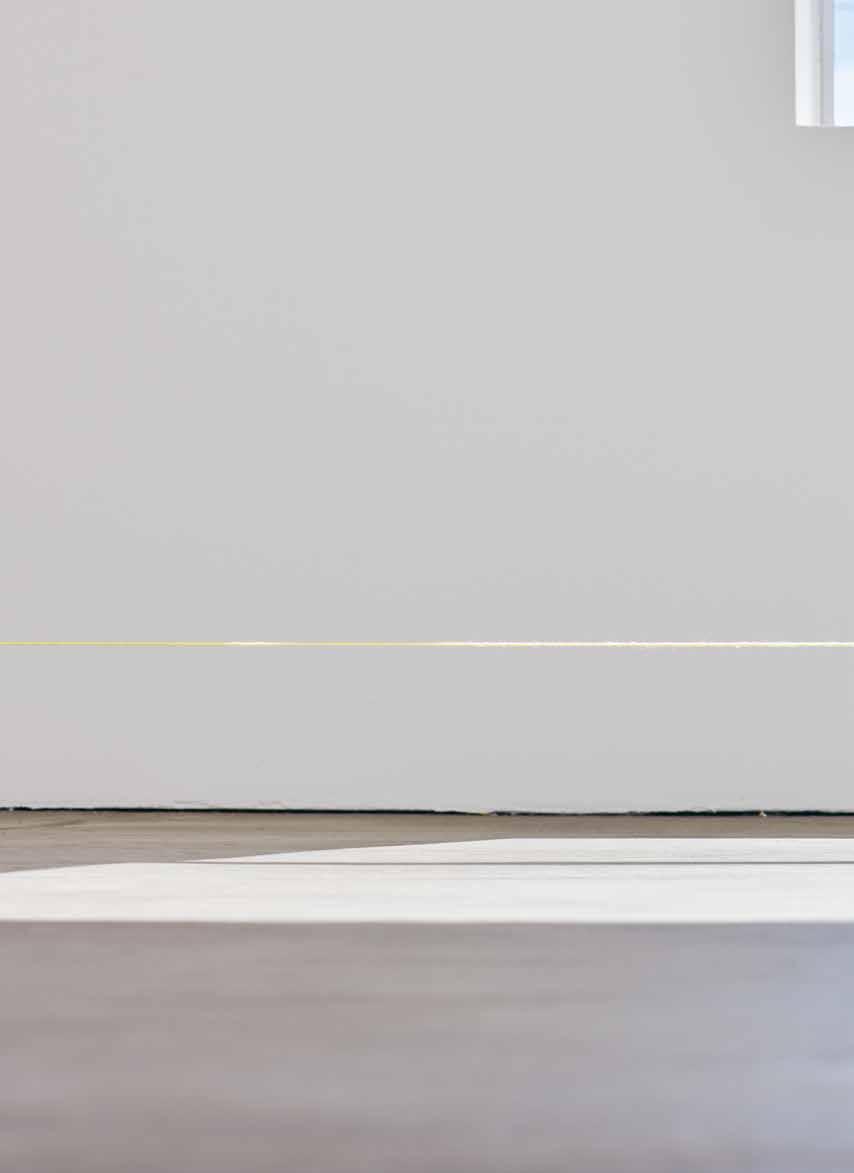
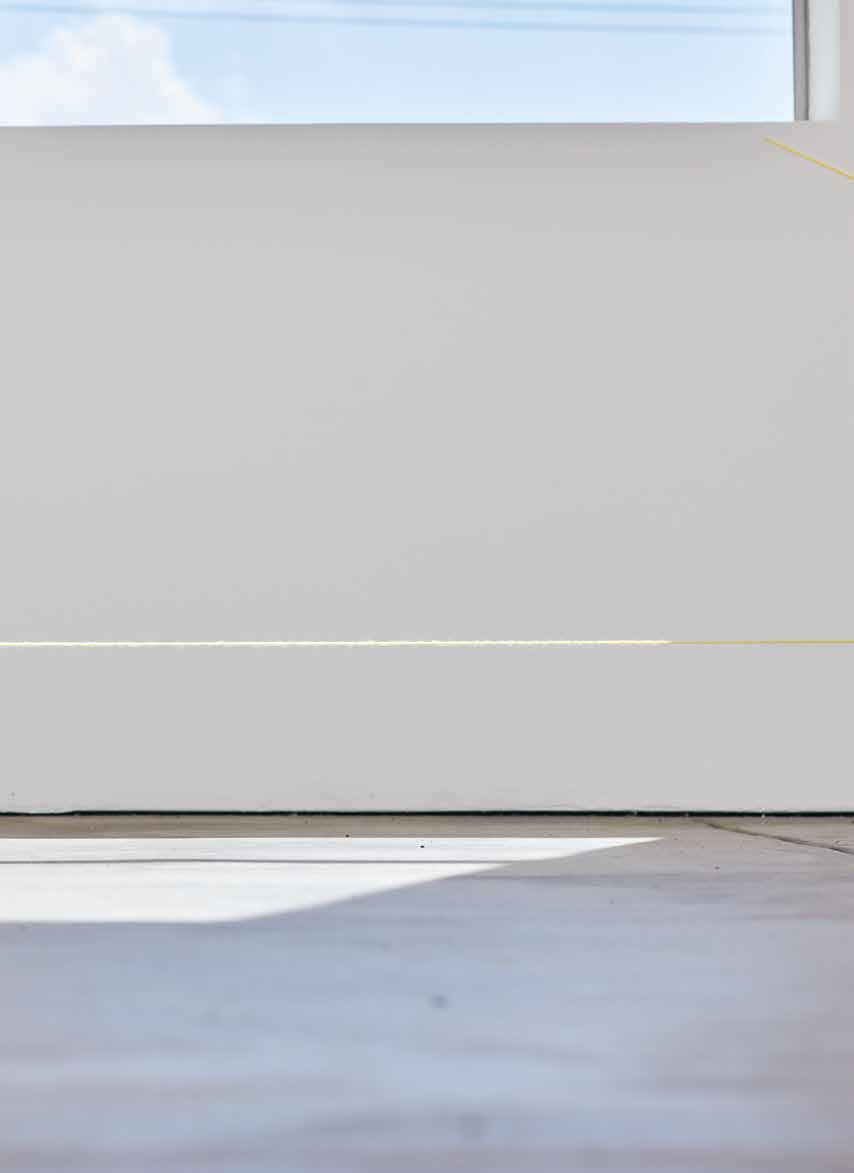
“ARCHITECTURE IS A PLACE”: EDUCATING AND BUILDING THROUGH LOVE AND CARE
“LA
ARQUITECTURA ES UN LUGAR”: EDUCAR Y CONSTRUIR DESDE EL
AMOR Y EL CUIDADO
Every human being has an interior world like the trunk of a tree. Each ring of the tree is like a part of our life; at the core is our parents’ smiles, then comes our childhood, adolescence, maturity, and finally, our dreams and hopes.
—Oscar Hagerman
Cada ser humano tiene un mundo interior como el tronco de un árbol.
Cada anillo del árbol es como una parte de nuestra vida, en el núcleo está la sonrisa de nuestros padres, luego viene nuestra infancia, adolescencia, madurez y al último nuestros sueños y esperanzas.
—Óscar Hagerman—
I learned that there were many things beyond architecture when Oscar Hagerman was my university professor; above all, I learned a way of being in the world. I learned a way of looking, listening, and connecting with people and places from the center of the heart—from a place of love and care.
With Oscar, I understood that architecture does not begin with an idea, but with a relationship; that it is not about imposing a form or a concept, but about accompanying a process; that building can be, first and foremost, an act of presence and care.
His work, ranging from the simplest, most appropriate furniture to housing projects created alongside rural and Indigenous communities in Mexico, reveals a deeply ethical stance: architecture not as individual authorship, but as a collective practice; as the art of creating places where architecture “sings.” In his projects, knowledge is not centralized, it is shared; it is not imposed, it is built through dialogue.
Over time, this way of understanding architecture stopped being an external reference and became an internal guide—a way of practicing, teaching, and learning architecture through closeness to people, territories, and their wisdom.
With Oscar, I understood that architecture is not an object. It is a
Aprendí que había muchas cosas mas allá de la arquitectura cuando Óscar Hagerman fue mi maestro en la universidad, sobre todo aprendí una forma de ser frente al mundo. Aprendi sobre una manera de mirar, de escuchar y de conectar con las personas y el lugar desde el centro del corazón, desde el amor y el cuidado.
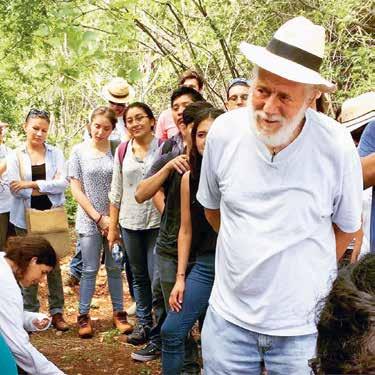
place. A “place” not as something given, but as something discovered through the relationship between people, materials, territory, and memory; a place that is not designed from the outside, but emerges from within, in dialogue with those who inhabit it. This understanding radically transforms the meaning of architecture. It stops being a practice focused on form and becomes a process of accompaniment; it stops seeking authorship to make room for the collective. Building, then, ceases to be a technical act and becomes, above all, an act of love and care.
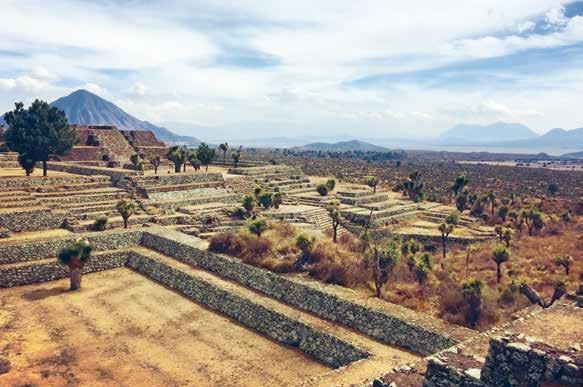
Con Óscar entendí que la arquitectura no comienza con una idea, sino con una relación, que no se trata de imponer una forma o una idea, sino de acompañar un proceso, que construir puede ser, antes que nada, un acto de presencia y cuidado.
Su trabajo —desde los muebles más sencillos y apropiados, hasta las viviendas realizadas junto a comunidades rurales e indígenas en México— revela una postura profundamente ética: la arquitectura no como autoría individual, sino como práctica colectiva, como el arte de crear lugares donde cante la arquitectura. En sus proyectos, el conocimiento no se centraliza, se comparte; no se impone, se construye en diálogo.
Con el tiempo, esa forma de entender la arquitectura dejó de ser una referencia externa y se volvió una guía interna. Una manera de ejercer, enseñar y aprender la arquitectura desde la cercanía con las personas, los territorios y sus saberes.
Con Óscar entendí que la arquitectura no es un objeto. Es un lugar. Un lugar no como algo dado, sino como algo que se descubre a partir de la relación entre las personas, los materiales, el territorio y la memoria, un lugar que no se diseña desde fuera, sino que emerge desde dentro, en diálogo con quienes lo habitan.
Esa comprensión transforma radicalmente el sentido de la arquitectura. Deja de ser una práctica centrada en la forma para convertirse en un proceso de acompañamiento, deja de buscar autoría para abrir espacio a lo colectivo. Construir, entonces, deja de ser un
PART OF THE ARCHAEOLOGICAL ZONE OF CANTONA, TEPEYAHUALCO / PARTE DE LA ZONA ARQUEOLÓGICA DE CANTONA, TEPEYAHUALCO
OSCAR HAGERMAN
In the work of Oscar Hagerman, this notion becomes evident. His furniture, seemingly simple, is not isolated objects; they are places to sit, places to eat, to make love ... extensions of the body and of dwelling. His architecture does not seek to impose itself on the territory, but to integrate into it, recognizing the material, climatic, and cultural conditions that define it.
But it is in his relationship with communities where this idea gains its greatest strength. For Oscar, architecture does not consist of bringing solutions, but of participating in the construction of places where potentials are already ready to germinate—places sustained by memory, local wisdom, and forms of collective organization.
In this way, architecture ceases to be a finished product and is understood as an open process, where what matters is not just what is built, but how and with whom it is built. What matters is the architecture.
Over time, this way of understanding architecture stopped being an external reference and became a daily practice. In the work we develop within the socio-environmental impact project workshop, the question is not what we are going to design, but what value we are adding to this place and the community that inhabits it—what the potentials and seeds are that can be transformed into forests.
This implies displacing ourselves from the center as architects; learning to listen before proposing, and recognizing that knowledge does not reside
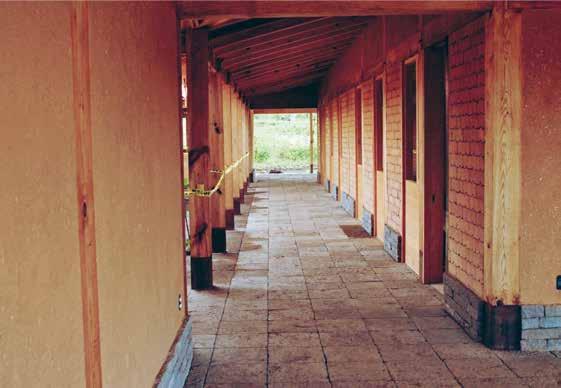
acto técnico para convertirse, antes que nada, en un acto de amor y cuidado.
En el trabajo de Óscar Hagerman, esta noción se hace evidente. Sus muebles, aparentemente sencillos, no son objetos aislados, son lugares para sentarse, lugares para comer, para hacer el amor… extensiones del cuerpo y del habitar. Sus arquitecturas no buscan imponerse sobre el territorio, sino integrarse a él, reconociendo las condiciones materiales, climáticas y culturales que lo definen.
Pero es en su relación con las comunidades donde esta idea cobra mayor
solely in academia, but also—and in a profound way—within the territories and those who inhabit them.
When I was a student, I was deeply confused about which path to take in architecture. I didn’t quite know what it meant to be an architect, nor from what standpoint I wanted to practice this profession.
In those years, I frequently saw a professor walking quietly through the hallways, always accompanied by other architects and some students walking with him. There was something different about that scene; it
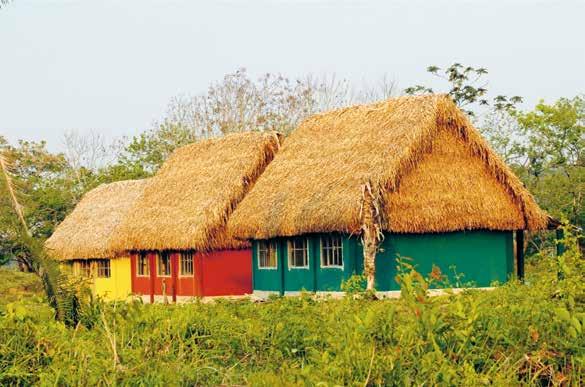
fuerza. Para Óscar, la arquitectura no consiste en llevar soluciones, sino en participar en la construcción de lugares en los que ya existen potenciales listos para germinar, lugares sostenidos por la memoria, los saberes locales y las formas de organización colectiva.
Así, la arquitectura deja de ser un producto terminado y se entiende como un proceso abierto, donde lo importante no es solo lo que se construye, sino cómo y con quién se construye. Lo que importa es la arquitectura.
Con el tiempo, esta forma de entender la arquitectura dejó de ser una referencia externa y se convirtió en una práctica cotidiana. En el trabajo que desarrollamos desde el taller de proyectos de incidencia socioambiental, la pregunta no es qué vamos a diseñar, sino qué valor estamos sumando a este lugar y la comunidad que lo habita, cuales son los potenciales y las semillas que se pueden transformar en bosques…
Esto implica desplazarse del centro como arquitectos, aprender a escuchar antes de proponer, y reconocer que el conocimiento no reside únicamente en la academia, sino también —y de manera profunda— en los territorios y en quienes los habitan.
Cuando era estudiante, estaba profundamente confundido sobre qué camino tomar en la arquitectura. No sabía bien qué significaba ser arquitecto, ni desde dónde quería ejercer esta profesión.
En esos años, veía con frecuencia caminar tranquilamente por los pasillos a un maestro siempre acompañado por
RAMMED-EARTH HOUSE IN ZAUTLA, MEXICO, DEMONSTRATING AN INHERITED BUILDING TECHNIQUE / VIVIENDA DE TIERRA APISONADA EN ZAUTLA, MÉXICO, QUE MUESTRA UNA TÉCNICA CONSTRUCTIVA HEREDADA
HOUSES UTILIZING STRAW-BALE CONSTRUCTION TECHNIQUES, OAXACA, MEXICO / VIVIENDAS CONSTRUIDA CON LA TÉCNICA DE BALAS
OAXACA, MÉXICO
wasn’t just a group, it was an atmosphere distinct from the other workshops. One could perceive a way of being together with a cause.
One day, someone told me, “That’s Oscar Hagerman. He has a rural projects workshop.”
What first caught my attention was not his work, but his presence: his energy, his peace while walking, his open smile toward anyone, his warmth. There was a way of relating to others in him that was not common in architectural training at that time.
And it was that, more than any speech, which led me to approach him and enroll in his workshop.
With time, I understood that what was at stake was not just a different way of doing architecture, but a different way of understanding it. With Oscar, I learned that architecture is not an object, it is a place. A place that is not imposed from the outside, but is built through the relationship between people, territory, materials, and memory. A place that emerges from the encounter.
When I finally managed to enroll in his workshop—which always seemed impossible to get into due to the long waiting list—a process of deep discovery began for me. One of our first trips was to the state of Puebla. Our first stop was the archaeological site of Cantona; it was the first time I had visited, and the tour was a revelation. More than a visit, it was a transformative experience; it surprised me, it unsettled me, it moved me … but, above all, it led me to understand the “place” through experience. Without the need for explanations, the space itself became a lesson in architecture.
Oscar walked with us, almost in silence; he didn’t impose an interpretation. He accompanied us as we walked without haste and looked without judgment, with joy and calm. It was there that I began to understand that architecture is not reduced to built objects but rather unfolds in the relationship between the body, the space, and the territory.
After Cantona, we arrived in Zautla. There, Oscar had built the village school and kept a small house where he stayed with his wife, Doris, when they were there; Doris taught classes at the little school. We were welcomed by one of his comadres with an embrace full of affection. 1 Oscar hugged all of his compadres and comadres with great warmth, and they all hugged him back as part of their family. There, I understood that architecture is also built from bonds. One of Oscarito’s comadres came
otros arquitectos y algunos estudiantes que caminaban con él. Había algo distinto en esa escena, no era solo un grupo, era una atmósfera distinta a los otros talleres, se percibía una forma de estar juntos con una causa.
Un día, alguien me dijo: “Es Óscar Hagerman. Tiene un taller de proyectos rurales”.
Lo que primero me llamó la atención no fue su obra, sino su presencia, su energía, su paz al caminar, su sonrisa abierta hacia cualquier persona, su calidez. Había en él una manera de
out with a pot of beans and a tower of tortillas; it was the first time I ate without a spoon. I learned that in the countryside, one eats with tortillas— it was a simple gesture, but deeply meaningful. Later, he showed us a rammed-earth house where another of his compadres lived and spoke to us of rammed earth as a technique inherited from grandfathers. The “vernacular” stopped being a distant idea and became a living reality.
We toured the community, not to solve problems, but to understand,
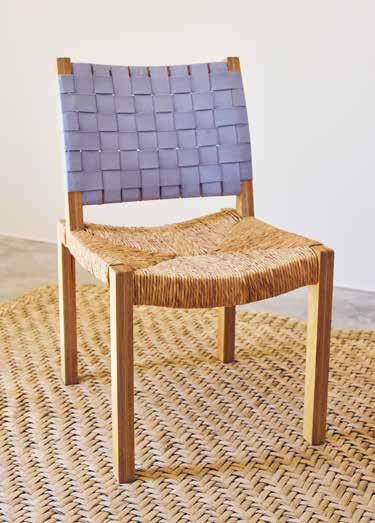
relacionarse con los otros que no era común en la formación arquitectónica de ese momento.
Y fue eso, más que cualquier discurso, lo que me llevó a acercarme e inscribirme en su taller.
Con el tiempo, entendí que lo que ahí estaba en juego no era solo una forma distinta de hacer arquitectura, sino una forma distinta de entenderla. Con Óscar aprendí que la arquitectura no es un objeto, es un lugar… Un lugar que no se impone desde afuera, sino que se construye en la relación entre las personas, el territorio, los materiales y la memoria, un lugar que emerge del encuentro.
Cuando por fin logré inscribirme en su taller —al que siempre parecía imposible entrar por la larga lista de espera—, comenzó para mí un proceso de descubrimiento profundo. Uno de los primeros viajes fue al estado de Puebla. Nuestra primera parada fue la zona arqueológica de Cantona, era la primera vez que la visitaba, el recorrido fue revelador. Más que una visita, fue una experiencia transformadora, me sorprendió, me inquietó, me conmovió… Pero, sobre todo, me llevó a entender el lugar desde la experiencia, sin necesidad de explicaciones, el propio espacio se convirtió en una lección de arquitectura.
Óscar caminaba con nosotros, casi en silencio, no imponía una interpretación; nos acompañaba a caminar sin prisa y a mirar sin juicios, con gozo y calma. Ahí comencé a entender que la arquitectura no se reduce a los objetos construidos, sino que se despliega en la relación entre el cuerpo, el espacio y el territorio.
to listen, to feel the place, to breathe its air, and to listen to its birds and insects. That was one of Oscar’s most profound lessons: before designing, one must learn to look and to listen. At the end of the day, we arrived in Cuetzalan under rain and mist. Some of us were in the back of his truck; getting wet, being cold, and not knowing where we were arriving was part of an adventure—something larger than a class. That night, we stopped being just students; we became a community.
The trip did not just define the course exercises; it defined a way of understanding architecture. The
Después de Cantona, llegamos a Zautla. Ahí, Óscar había construido la escuela del pueblo y tenía una pequeña casita donde se quedaba con Doris su esposa cuando estaban ahi, Doris daba clases en la escuelita. Fuimos recibidos por una comadre suya con un abrazo lleno de afecto. Óscar abrazaba a todos sus compadres y comadres con mucho cariño y todos lo abrazaban a él como parte de su familia. Ahí entendí que la arquitectura también se construye desde los vínculos, una comadre de Oscarito salió con una olla de frijoles y una torre de tortillas, fue la primera vez que comí sin cuchara, aprendí que en el campo se come con tortillas y fue un gesto sencillo, pero profundamente significativo. Después, nos mostró una casa de tapial donde vivía otro de sus compadres y nos habló del tapial como una técnica heredada desde los abuelos, lo vernáculo dejó de ser una idea lejana y se volvió una realidad viva. Recorrimos la comunidad, no para resolver, sino para entender, para escuchar, para sentir el lugar, respirar su aire y escuchar sus pájaros e insectos… Esa fue una de las enseñanzas más profundas de Óscar, antes de diseñar, hay que aprender a mirar y a escuchar. Al final del día, llegamos a Cuetzalán, bajo la lluvia y la neblina. Algunos íbamos en la parte trasera de su camioneta, mojarse, tener frío, no saber a dónde llegar, formaba parte de una aventura y algo más grande que una clase. Esa noche, dejamos de ser solo estudiantes, nos convertimos en una comunidad. El viaje no solo definió los ejercicios del curso, definió una manera de entender la arquitectura.
OSCAR HAGERMAN, ARRULLO CHAIR / ÓSCAR HAGERMAN, SILLA ARRULLO
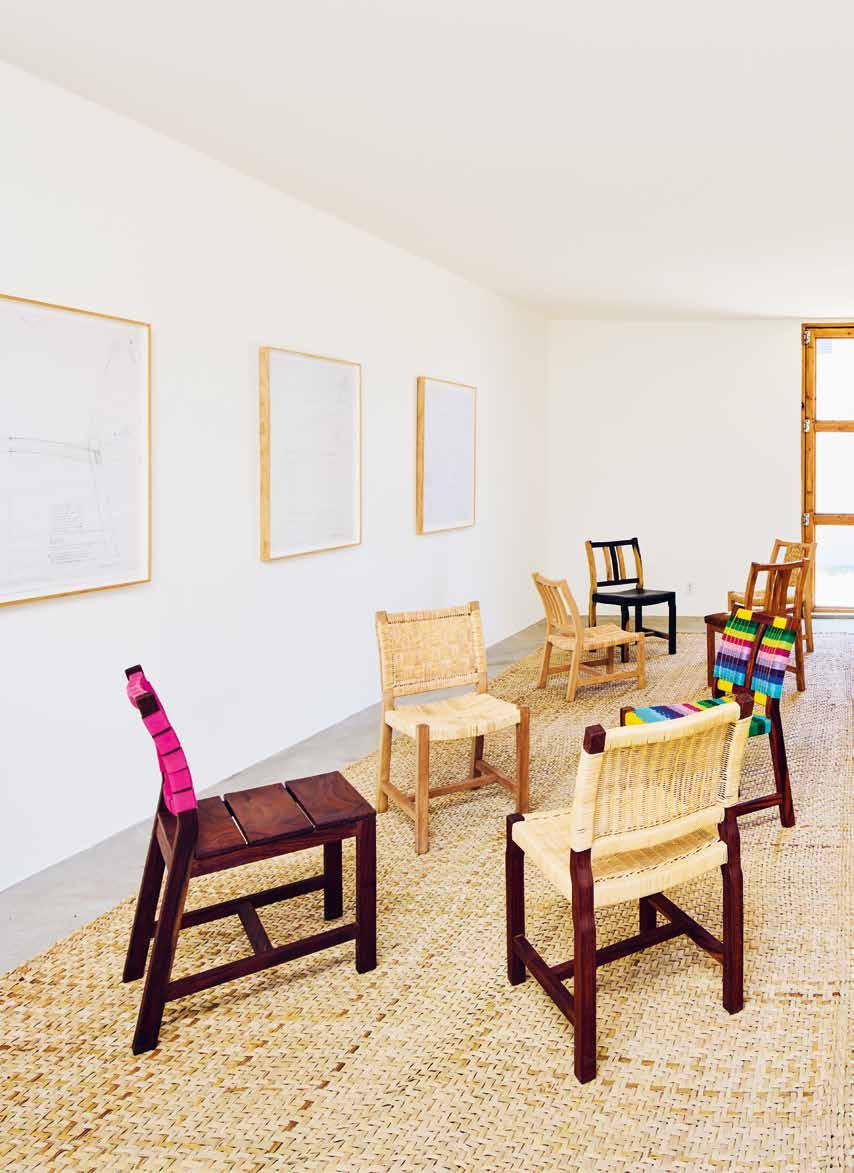
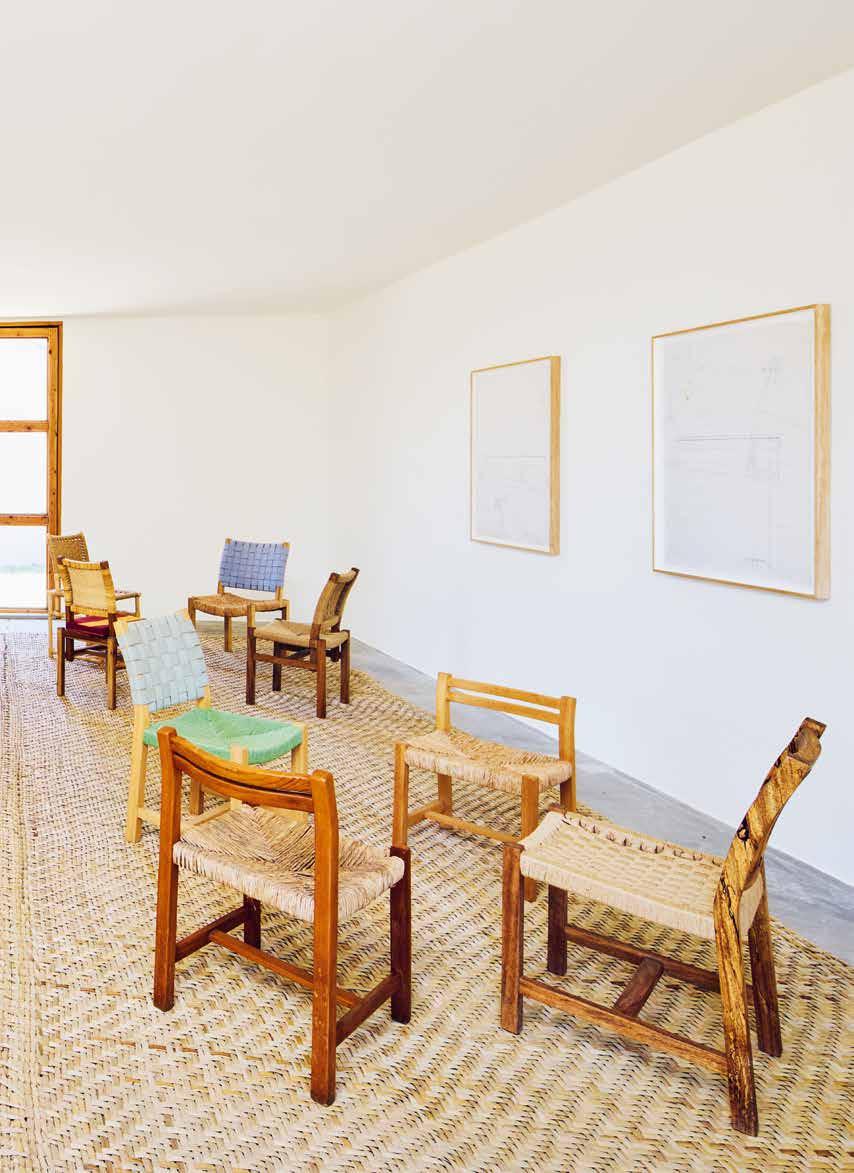
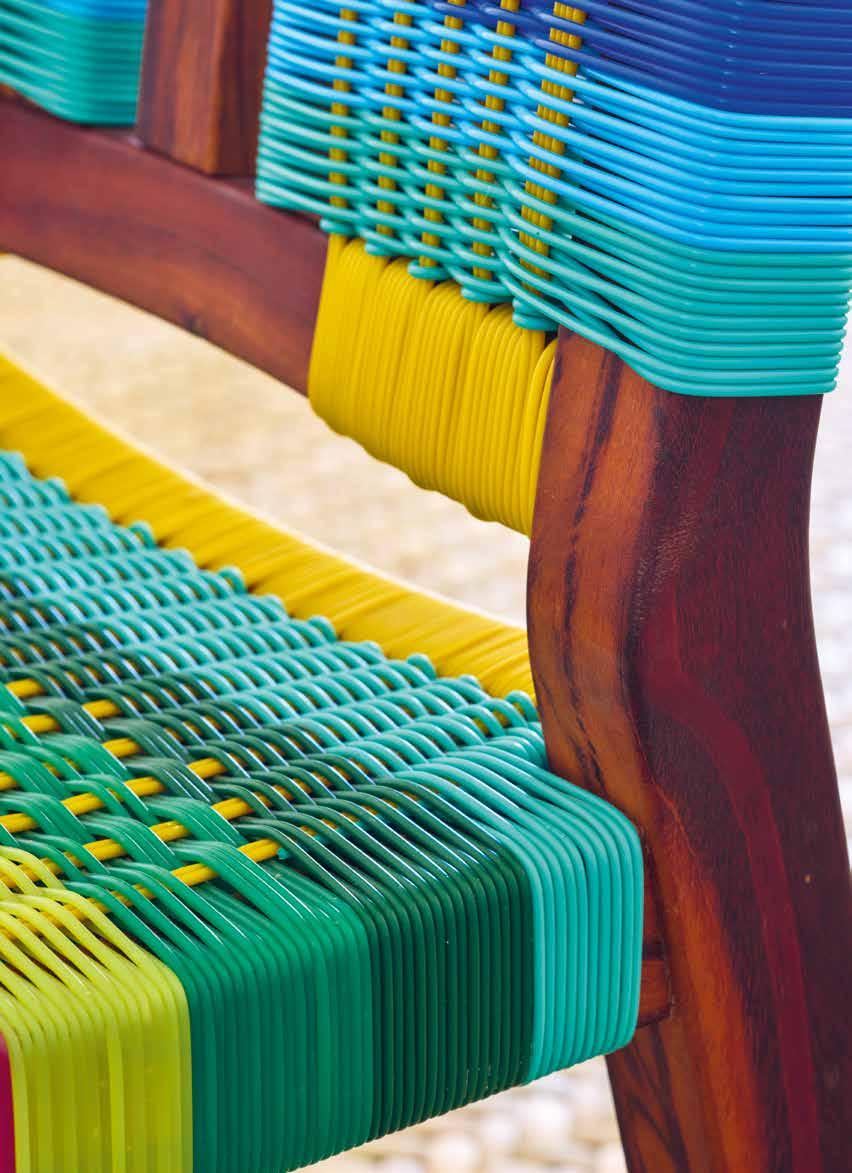
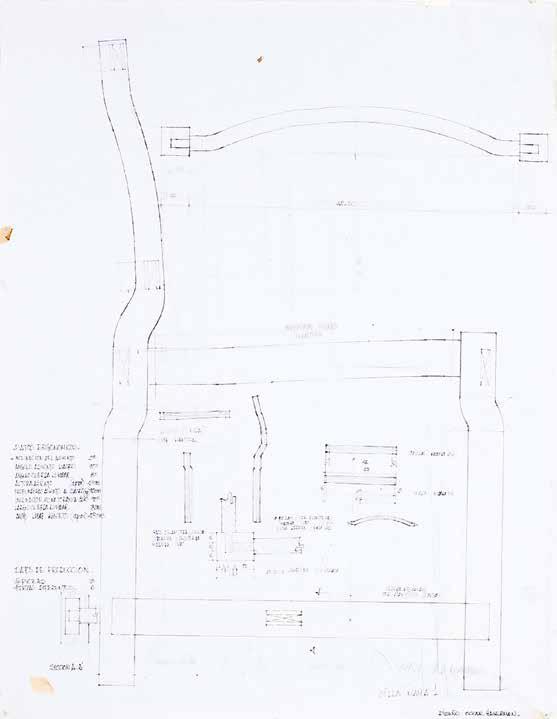
PREVIOUS SPREAD / DOBLE PÁGINA ANTERIOR
OSCAR HAGERMAN: SILLAS DE MÉXICO , 2025. INSTALLATION VIEW, THE CHINATI FOUNDATION / ÓSCAR HAGERMAN: SILLAS DE MÉXICO , 2025. VISTA DE LA INSTALACIÓN, LA FUNDACIÓN CHINATI
OPPOSITE: ARRULLO CHAIR DETAIL.
ABOVE: OSCAR HAGERMAN, ARRULLO CHAIR SKETCH / PÁGINA OPUESTA: DETALLE DE LA SILLA ARRULLO.
ARRIBA: ÓSCAR HAGERMAN, BOCETO DE LA SILLA ARRULLO
design challenges that emerged from that journey led us to explore construction with straw bales—an alternative technique, little documented at the time, which Oscar invited us to discover alongside him. We designed small dwellings with a kitchen, dry toilet, cistern, and stove; rather than objects, we were thinking about ways of inhabiting. There, I understood that other architectures are possible: that a simple life is not poverty, and that the vernacular is not folklore, but living knowledge. Because if architecture is a place, then designing implies creating the conditions so that place can exist.
Once the workshop ended, I continued my studies. I didn’t see Oscar again for a while, but his influence remained. Over the years, I understood that the experience had planted something deep. In that process, I shared the path with classmates who are now colleagues and who, in different ways, have also been influenced by Oscar’s journey: Juan Carlos Cano, Paloma Vera, Fermin Andrade, Emiliano Godoy, Eric Mass, Alessandro Arienzo, among others.
More than providing answers, the process opened up questions: how to look, how to listen, how to understand. In that transition, the vernacular revealed itself as knowledge, the
Los retos de diseño que surgieron de ese viaje nos llevaron a explorar la construcción con pacas de paja, la cual era una técnica alternativa, poco documentada, que Óscar nos invitaba a descubrir con él. Diseñamos pequeñas viviendas con cocina, sanitario seco, cisterna y fogón, más que objetos, pensábamos en modos de habitar. Ahí entendí que existen otras arquitecturas posibles, que la vida sencilla no es pobreza, que lo vernáculo no es folclore, sino conocimiento vivo. Porque si la arquitectura es un lugar, entonces diseñar implica crear las condiciones para que ese lugar pueda existir.
Una vez que terminó el taller, continué con mis estudios, no volví a ver a Óscar durante un tiempo pero su influencia permaneció. Con los años entendí que aquella experiencia había sembrado algo profundo. En ese proceso compartí con compañeras y compañeros que hoy son colegas y que, de distintas maneras, han sido también influenciados por el camino de Óscar: Juan Carlos Cano, Paloma Vera, Fermín Andrade, Emiliano Godoy, Eric Mass, Alessandro Arienzo, entre otros.
Más que respuestas, el proceso abrió preguntas: cómo mirar, cómo escuchar, cómo comprender. En ese tránsito, lo vernáculo se reveló como conocimiento, la vida sencilla como posibilidad, y el diseño como una construcción colectiva.
simple life as a possibility, and the design as a collective construction.
Years later, something unexpected happened. My second encounter with Oscar Hagerman occurred in the opposite direction: This time, he sought me out. Oscar contacted me to consult on a construction detail regarding the thermal insulation of a roof and asked me for images of my work to share in a conference. It was a gift and a true honor that Oscar would look for me to consult on something related to an appropriate solution.
Later, we met again at the University of the Environment, where he gave a class he called “Arquiternura” (Archi-tenderness). He took us to the patio of his house in Valle de Bravo and described the space with a sensitivity that moved me deeply: “Architecture is a place, not an object. … Patios are domesticated places for living in the open air; they are places with a stretch of sky and treetops, places where hummingbirds and butterflies live, and where seeds arrive with the wind.”
Over the years, our paths crossed on multiple occasions. The presence of Doris, his life partner, was also fundamental to that bond. And recently, his grandson Cristobal arrived as a student in one of my classes. Life has
Años después, ocurrió algo que no esperaba. Mi segundo encuentro con Óscar Hagerman sucedió en sentido inverso: esta vez, él me buscó a mí. Óscar me contactó para consultarme sobre un detalle constructivo relacionado con el aislamiento térmico de una cubierta y me pidió imágenes de mi trabajo para compartirlas en una conferencia. Fue un regalo y un verdadero honor que Óscar me buscara para consultarme algo relacionado a una solución apropiada.
Después, volvimos a encontrarnos en la Universidad del Medio Ambiente, donde impartió una clase que llamó “Arquiternura”. Nos llevó al patio de su casa en Valle de Bravo y describió el espacio con una sensibilidad que me conmovió profundamente.”
“La arquitectura es un lugar, no un objeto...
Los patios son lugares domesticados para vivir al aire libre, son lugares con un tramo de cielo y copas de árboles, lugares donde viven los colibríes, las mariposas y las semillas vienen con el viento”.
Con los años, nuestros caminos volvieron a cruzarse en múltiples ocasiones. La presencia de Doris, su compañera de vida, fue también fundamental en ese vínculo. Y recientemente, su nieto Cristóbal llegó como alumno a una de mis clases.
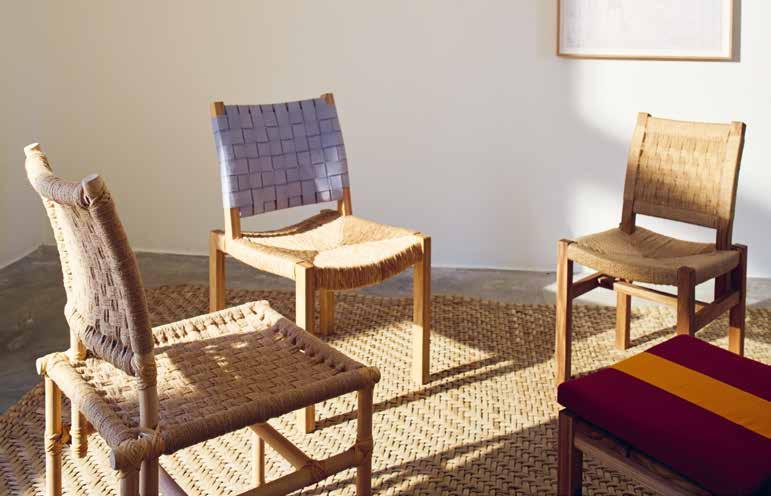
OSCAR HAGERMAN: SILLAS DE MÉXICO , 2025. INSTALLATION VIEW, THE CHINATI FOUNDATION / ÓSCAR
HAGERMAN: SILLAS DE MÉXICO , 2025. VISTA DE LA INSTALACIÓN, LA FUNDACIÓN CHINATI
continued to connect us through invisible threads.
Throughout this time, Oscar has shared reflections that have accompanied my journey: “The greatest wealth is making a world that belongs to the people, where they feel it is theirs, because that is what brings happiness. If your house has nothing to do with you, it is nothing. In school, there should be a subject that teaches us how to relate to one another, how to understand what people need—and for that, one must learn to listen.”
Today, I understand that his legacy is not found only in his works. It is in his way of being in the world. Because building is not just about raising walls; it is about caring, accompanying, sharing, and loving unconditionally.
The influence and inspiration of Oscar Hagerman’s work and heart have deeply guided my professional path and my growth as a person. From my own corner of the world, I now lead a project workshop that seeks to honor that same space he taught when I was a student.
Oscarito has been an inspiration and a companion to many who, like him, have sought to place themselves at the service of life through design and architecture. Enedino Diaz is an important reference: He studied architecture in Puebla thanks to Oscar’s mentorship and today continues that path as an architect and professor at the Universidad Iberoamericana Puebla. Claudia Barriga, through Canto Artesanos, gives continuity to the legacy by producing the chairs Oscar designed, while Daniel Romero currently teaches the chair design class they shared for many years at UNAM. They are joined by Alejandra Caballero, Juan Carlos Cano, and Paloma Vera, with whom Oscar continues to develop architectural collaborations.
And if architecture is a place, then our responsibility is to make it possible for those places to exist— to ensure they belong to those who inhabit them and that, within them, life can truly happen.
Here and now, I feel deeply honored to be able to express my gratitude and admiration for the journey, the way of being in the world, and the work of Oscar and Doris, whose example spans multiple dimensions of life.
Thank you for being a light on the path for those of us seeking to make architecture and design an accessible, shared act at the service of everyone.
La vida nos ha seguido conectando a través de hilos invisibles.
A lo largo del tiempo, Óscar ha compartido reflexiones que han acompañado mi camino:
“La riqueza más grande es hacer un mundo que le pertenezca a la gente y lo sientan suyo, porque eso es lo que da felicidad.
Si tu casa no tiene que ver contigo, no es nada.
En la escuela debería de haber una materia que nos enseñara cómo relacionarnos, cómo comprender lo que la gente necesita, y para eso hay que aprender a escuchar”.
—Óscar Hagerman—
Hoy entiendo que su legado no está solo en sus obras. Está en su manera de estar en el mundo.
Porque construir no es solo levantar muros, es cuidar, es acompañar, es compartir, es amar incondicionalmente…
La influencia y la inspiración del trabajo y del corazón de Óscar Hagerman han orientado profundamente mi camino profesional y mi crecimiento como persona. Desde mi propia trinchera, sostengo hoy un taller de proyectos que busca honrar aquel espacio que él impartía cuando yo era estudiante.
Oscarito ha sido inspiración y acompañante de muchos que, como él, han buscado ponerse al servicio de la vida desde el diseño y la arquitectura. Enedino Díaz es una referencia importante: estudió arquitectura en Puebla gracias a la mentoría de Óscar y hoy continúa ese camino como
arquitecto y profesor en la Universidad Iberoamericana Puebla. Claudia Barriga que desde Canto Artesanos da continuidad al legado en la producción de las sillas que Óscar ha diseñado, mientras que Daniel Romero imparte actualmente la clase de diseño de sillas que durante muchos años compartió con él en la UNAM. A ellos se suman Alejandra Caballero, Juan Carlos Cano y Paloma Vera, con quienes sigue desarrollando colaboraciones de arquitectura.
Y si la arquitectura es un lugar, entonces nuestra responsabilidad es hacer posible que esos lugares existan, que le pertenezcan a quienes los habitan y que en ellos, la vida pueda suceder.
Aquí y ahora me siento profundamente honrado de poder expresar mi agradecimiento y admiración por el camino, por la forma de estar en el mundo y por la labor de Óscar y Doris, cuyo ejemplo atraviesa múltiples dimensiones de la vida.
Thank you for traveling difficult roads and for continuing to walk—for always rising!
Thank you for making education an open, generous, and profoundly human place, and above all, thank you for making architecture “sing” and for showing us that it is possible to educate and build through love and care.
As Oscar said, “Every generation has the right and the power to create its own world. … We must fight to create a world where we can help each other and live together while improving our situation. Young people must fight to achieve that world for themselves, and I am sure they will succeed. May Mexico be a free country with the hope of living life. We must fight so that no one kills our hope.”
Juan Manuel Casillas Pintor is an architect and professor based in Mexico City. He holds a degree in architecture from Universidad Iberoamericana and an MA in sustainable architecture, design, and construction from Universidad del Medio Ambiente. He is a full-time faculty member at Universidad Iberoamericana, where he leads socially engaged design-build studios focused on participatory processes, vernacular knowledge, and earthen construction. In 2016 and 2020, Casillas Pintor represented Mexico at the Venice Architecture Biennale.
NOTE
1 The terms comadre and compadre, in the feminine and masculine forms, imply a level of loyalty that goes beyond a standard friendship.
Gracias por ser una luz en el camino para quienes buscamos hacer de la arquitectura y el diseño un acto accesible, compartido y al servicio de todas y todos.
Gracias por recorrer caminos difíciles y seguir andando, ¡por levantarse siempre!
Gracias por hacer de la educación un lugar abierto, generoso y profundamente humano y sobre todo, gracias por hacer cantar a la arquitectura y demostrarnos que se puede educar y construir desde el amor y el cuidado.
“Cada generación tiene el derecho y el poder de crear su propio mundo... Hay que luchar por crear un mundo donde nos podamos ayudar y podamos convivir mejorando nuestra situación. Los jóvenes tienen que luchar por conseguir ese mundo para ellos y estoy seguro que lo podrán conseguir. Que México sea un país libre y con esperanza de vivir la vida
Hay que luchar para que nadie mate nuestra esperanza”.
Óscar Hagerman
Juan Manuel Casillas Pintor es arquitecto y profesor con sede en Ciudad de México. Es licenciado en Arquitectura de la Universidad Iberoamericana y cuenta con una maestría en Arquitectura, Diseño y Construcción Sostenibles de la Universidad del Medio Ambiente. Es profesor de tiempo completo en la Universidad Iberoamericana, donde dirige talleres de diseño y construcción con enfoque social centrados en procesos participativos, saberes vernáculos y construcción con tierra. En 2016 y 2020, Casillas Pintor representó a México en la Bienal de Arquitectura de Venecia.
OSCAR HAGERMAN AND THE AUTHOR / ÓSCAR HAGERMAN Y EL AUTOR
ART IN CONTEXT: RESTORATION

ARTE EN CONTEXTO: RESTAURACIÓN DE LOS COBERTIZOS DE ARTILLERÍA
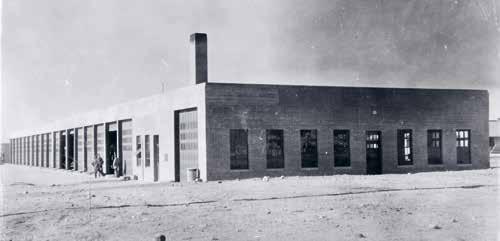
PHOTOGRAPH BY THE OFFICE OF THE QUARTERMASTER GENERAL OF THE MOTOR REPAIR SHOP, TRUCK & GUN SHED (NOW KNOWN AS THE NORTH ARTILLERY SHED), 1940 / FOTOGRAFÍA DE LA OFICINA DEL INTENDENTE GENERAL DEL TALLER DE REPARACIÓN DE VEHÍCULOS, COBERTIZO DE CAMIONES Y ARTILLERÍA (ACTUALMENTE CONOCIDO COMO EL COBERTIZO NORTE DE ARTILLERÍA), 1940
In 2025, in collaboration with the Rice School of Architecture, the Chinati Foundation hosted the twopart symposium Art in Context: Art, Architecture, and the Middle Landscape . Through lectures and discussions, participants examined the relationship between art, architecture, and land as experienced at the Chinati Foundation—considering Donald Judd’s influence on museum architecture today, and the varied contexts of art and architecture as shaped by place, culture, and history.
The symposium emerged from nearly three years of ongoing work at Chinati, where a multidisciplinary team of engineers, facade and climate consultants, and landscape architects, led by Schaum Architects, created a comprehensive restoration plan for the two Artillery Sheds that house Judd’s 100 untitled works in mill aluminum (1982–86). This project moves between archive and intervention: reading the buildings as they were constructed, altered, and inhabited over time, and responding to the conditions that have since developed.
These conditions are both architectural and environmental. Persistent water infiltration has compromised the buildings’ envelopes, leaving visible traces on the interior architectural concrete. Air within the sheds often remains stagnant, while extreme seasonal temperatures challenge both the conservation of the artworks and the comfort of visitors. The windows, which are central to Judd’s spatial and experiential conception, have become etched by decades of winddriven rain and dust. Beyond the buildings themselves, erosion, soil loss, and shifting drainage patterns have reshaped the surrounding land, while rocky, uneven pathways constrain how visitors move across the site.
En 2025, en colaboración con la Escuela de Arquitectura de Rice, la Fundación Chinati organizó el simposio en dos partes Arte en contexto: arte, arquitectura y el paisaje intermedio . A través de conferencias y debates, los participantes examinaron la relación entre el arte, la arquitectura y el territorio tal y como se experimenta en la Fundación Chinati, teniendo en cuenta la influencia de Donald Judd en la arquitectura museística actual y los diversos contextos del arte y la arquitectura moldeados por el lugar, la cultura y la historia.
El simposio surgió de casi tres años de trabajo continuo en Chinati, donde un equipo multidisciplinar de ingenieros, consultores de fachadas y clima, y arquitectos paisajistas, liderado por Schaum Architects, creó un plan de restauración integral para los dos cobertizos de artillería que albergan las 100 obras sin título en aluminio en bruto (1982–1986), de Judd. Este proyecto se mueve entre el archivo y la intervención: interpreta los edificios tal y como fueron construidos, modificados y habitados a lo largo del tiempo, y responde a las condiciones que se han desarrollado desde entonces. Estas condiciones son tanto arquitectónicas como ambientales. La infiltración persistente de agua ha deteriorado la envolvente de los edificios, dejando huellas visibles en el hormigón arquitectónico del interior. El aire dentro de los cobertizos suele permanecer estancado, mientras que las temperaturas estacionales extremas suponen un reto tanto para la conservación de las obras de arte como para el confort de los visitantes. Las ventanas, que son fundamentales para la concepción espacial y experiencial de Judd, han quedado marcadas por décadas de lluvia y polvo impulsados por el viento. Más allá de los propios edificios, la erosión, la pérdida de suelo y los cambios en los patrones de drenaje han remodelado el terreno circundante, mientras que los caminos rocosos y desiguales limitan el desplazamiento de los visitantes por el recinto.
La restauración actual aborda estas cuestiones interrelacionadas como un único sistema. Se repararán y sellarán las envolventes de los edificios; un nuevo acristalamiento de alto rendimiento
The current restoration addresses these interrelated issues as a single system. The buildings’ envelopes will be repaired and sealed; new high-performance glazing will stabilize interior conditions while preserving visual continuity; and passive strategies will improve air flow within the buildings. A redesigned drainage system will manage increasingly intense rain events, while landscape interventions, including regrading, native planting, and water capture, will work to restore ecological stability. New accessible paths will reconnect the buildings to one another and to the Visitor Center.
At the same time, the project confronts a central logistical challenge: how to preserve and protect the artworks during construction. Developed in collaboration with the Getty Conservation Institute and the original fabricator of the 100 untitled works in mill aluminum, Alfred Lippincott, the strategy involves the careful, temporary relocation of the works into one building then the other, allowing each structure to be restored while maintaining the integrity of Judd’s installation.
Presented alongside the symposium, the 2025 exhibition Art in Context brought together archival materials and contemporary models and drawings to situate these interventions within a longer history. This visual essay follows those traces, placing archival evidence in dialogue with the evolving work of the restoration team.

estabilizará las condiciones interiores al tiempo que preservará la continuidad visual; y se aplicarán estrategias pasivas para mejorar la circulación del aire en el interior de los edificios. Un sistema de drenaje rediseñado gestionará los episodios de lluvia cada vez más intensos, mientras que las intervenciones paisajísticas —que incluyen la nivelación del terreno, la plantación de especies autóctonas y la captación de agua— contribuirán a restaurar la estabilidad ecológica. Nuevos caminos accesibles volverán a conectar los edificios entre sí y con el Centro de Visitantes.
Al mismo tiempo, el proyecto se enfrenta a un reto logístico fundamental: cómo conservar y proteger las obras de arte durante las obras. Desarrollada en colaboración con el Getty Conservation Institute y el fabricante original de las 100 obras sin título en aluminio en bruto, Alfred Lippincott, la estrategia consiste en el traslado temporal y cuidadoso de las obras de un edificio a otro, lo que permite restaurar cada estructura sin alterar la integridad de la instalación de Judd.
Presentada junto con el simposio, la exposición de 2025 Arte en contexto reunió materiales de archivo y maquetas y dibujos contemporáneos para situar estas intervenciones en una historia más amplia. Este ensayo visual sigue esas huellas, poniendo en diálogo las pruebas de archivo con el trabajo en evolución del equipo de restauración.
DESIGN, LANDSCAPE, AND CONSERVATION TEAM / EQUIPO DE DISEÑO, PAISAJISMO Y CONSERVACIÓN
Schaum Architects: architectural design / diseño arquitectónico
TYLin: structural engineering / ingeniería estructural
Simpson Gumpertz & Heger (SGH): envelope consulting and fire protection / asesoramiento sobre la envolvente y protección contra incendios
Collaborative Engineering Group: mechanical, electrical, plumbing / mecánica, electricidad y fontanería
Transsolar KlimaEngineering: sustainability consulting / consultoría de sostenibilidad
Sam + Belle: civil engineering / ingeniería civil
Dept. LLC: landscape architecture / arquitectura paisajística
Jim Martinez: landscape consulting / consultoría paisajística
Getty Conservation Institute: conservation consulting / consultoría de conservación
Alfred Lippincott: conservation consulting / consultoría de conservación
Higgins Quasebarth & Partners: historic preservation consulting / consultoría de preservación histórica
The U.S. Army Corps of Engineers constructed the north and south Artillery Sheds in 1939 at Fort D. A. Russell, an active military installation until 1946. Measuring approximately 18,000 and 17,000 square feet, the buildings were designed for large-scale mechanical work.
Garage doors lined both the east and west elevations, allowing more than thirty trucks to pass through each structure at a time. Their open plan, durable materials, and direct access established patterns of movement and exposure that continue to define the buildings today.
These records from the National Archives document the sheds prior to their transformation by Judd and provide a baseline for understanding how the buildings have performed over time.
El Cuerpo de Ingenieros del Ejército de los Estados Unidos construyó los cobertizos de artillería norte y sur en 1939 en el Fuerte D. A. Russell, una instalación militar en activo hasta 1946. Con una superficie aproximada de 1.672 y 1.580 metros cuadrados, los edificios se diseñaron para trabajos mecánicos a gran escala.
Las puertas de garaje se alineaban a lo largo de las fachadas este y oeste, lo que permitía el paso de más de treinta camiones a la vez por cada estructura. Su planta diáfana, los materiales duraderos y el acceso directo establecieron patrones de movimiento y exposición que siguen definiendo los edificios en la actualidad.
Estos registros de los Archivos Nacionales documentan los cobertizos antes de su transformación por parte de Judd y proporcionan una referencia para comprender cómo han evolucionado los edificios a lo largo del tiempo.
BUILDING RECORD FROM THE OFFICE OF THE QUARTERMASTER GENERAL FOR THE MOTOR REPAIR SHOP, TRUCK & GUN SHED (NOW KNOWN AS THE NORTH ARTILLERY SHED), 1940 / REGISTRO DEL EDIFICIO DE LA OFICINA DEL INTENDENTE GENERAL CORRESPONDIENTE AL TALLER DE REPARACIÓN DE VEHÍCULOS, COBERTIZO DE CAMIONES Y ARTILLERÍA (ACTUALMENTE CONOCIDO COMO EL COBERTIZO NORTE DE ARTILLERÍA), 1940
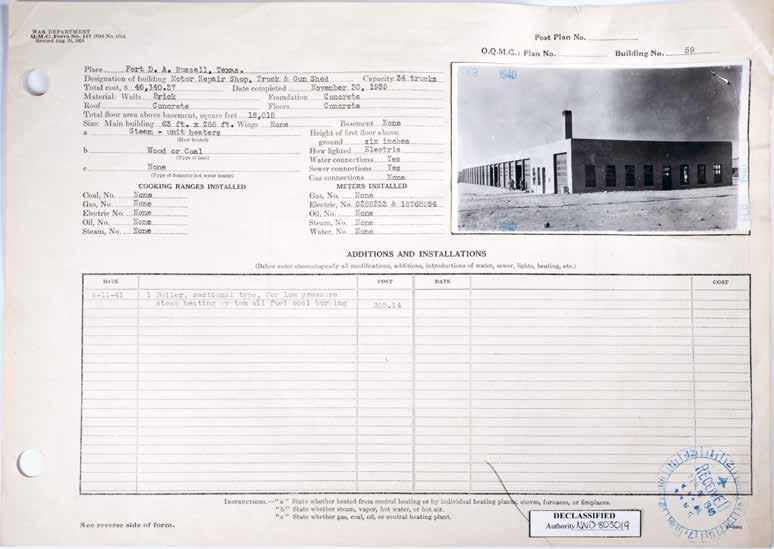
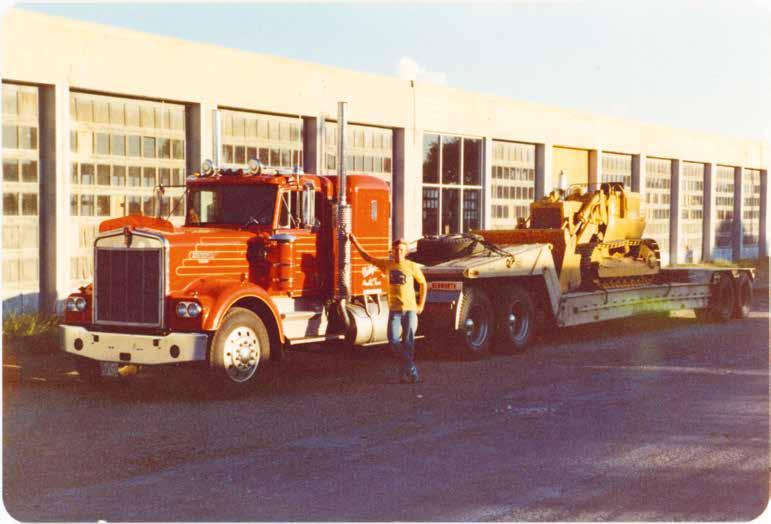
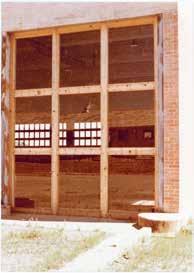
The garages had large, multipane overhead doors installed at every bay. These wood-framed doors brought minimal natural light into the interiors. Judd later replaced them with full-height glass windows, allowing natural light to flood the buildings.
Judd tested several mullion patterns before settling on the quarter-window (two over two) design. Visible here, behind the tractor and in the detail image, is an early iteration of a three-overthree configuration.
The building facade remains otherwise unaltered. There are no downspouts and the Quonset structure has not yet been installed.
The current restoration will replace more than 10,000 square feet of glass with energy-efficient glazing to help stabilize and reduce interior temperatures. The original Judd-designed aluminum mullions, fabricated by Glass House in El Paso, Texas, remain in good condition and will be retained, cleaned, and fitted with new gasketing.
In the foreground, a lowboy trailer carries a bulldozer, likely used for grading land and clearing areas across the Chinati property.
Los garajes tenían grandes puertas basculantes de múltiples paneles instaladas en cada ventanal. Estas puertas con marcos de madera dejaban pasar muy poca luz natural al interior. Más tarde, Judd las sustituyó por ventanas de cristal de altura completa, lo que permitió que la luz natural inundara los edificios.
Judd probó varios diseños de montantes antes de decidirse por el diseño de ventanas en cuartos (dos sobre dos). Aquí se puede ver, detrás del tractor y en la imagen detallada, una de las primeras versiones de una configuración de tres sobre tres. Por lo demás, la fachada del edificio permanece inalterada. No hay bajantes y la estructura Quonset aún no se ha instalado.
La restauración actual sustituirá más de 930 metros cuadrados de cristales por acristalamientos de bajo consumo energético para ayudar a estabilizar y reducir las temperaturas interiores. Los montantes de aluminio originales diseñados por Judd, fabricados por Glass House en El Paso, Texas, se conservan en buen estado y se mantendrán, se limpiarán y se les colocarán nuevas juntas.
En primer plano, un remolque de plataforma baja transporta una excavadora, probablemente utilizada para nivelar el terreno y despejar zonas de la propiedad de Chinati.
SHED WITH GARAGE DOORS, C. 1980 / COBERTIZO CON PUERTAS DE GARAJE, HACIA 1980
SHED WITH WOODEN WINDOW MOCK-UP, C. 1981 / COBERTIZO CON MAQUETA DE VENTANA DE MADERA, HACIA 1981
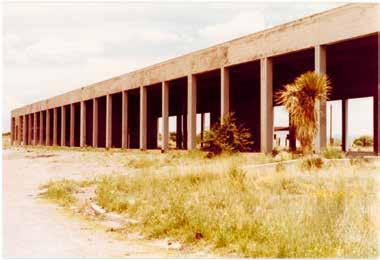
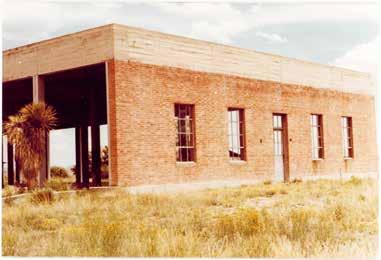
With the garage doors removed, the sheds reveal their underlying structure: steel-reinforced, cast-inplace concrete with areas of masonry infill. The thin roof slab is supported by a relatively light column grid, reflecting the buildings’ original function as utilitarian garages. The structures lacked insulation and secondary interior finishes and are free of overwrought structural elements. This economy of means later allowed Judd’s interventions, particularly the introduction of large glass panes, to register with clarity, reinforcing both the visual thinness of the envelope and the openness of the plan.
As part of the current restoration, facade consultants SGH and structural engineers TYLin conducted structural studies and core sampling to confirm that the existing roof slab can support the additional load of a new gutter system. This work also accounts for increasingly intense but short-duration rain events, which can overwhelm conventional drainage systems.
The design team further undertook a comprehensive conditions assessment, including identifying masonry joints requiring repointing, areas of exposed architectural concrete in need of cleaning due to prolonged water staining, and locations where the steel mullion windows on the north and south facades require localized repair.
Una vez retiradas las puertas del garaje, los cobertizos revelan su estructura subyacente: hormigón armado in situ con zonas de relleno de mampostería. La delgada losa del techo se apoya en una rejilla de columnas relativamente ligera, lo que refleja la función original de los edificios como garajes utilitarios. Las estructuras carecían de aislamiento y de acabados interiores secundarios, y están libres de elementos estructurales recargados. Esta economía de medios permitió posteriormente que las intervenciones de Judd —en particular la introducción de grandes paneles de vidrio— se percibieran con claridad, reforzando tanto la delgadez visual de la envolvente como la apertura de la planta. Como parte de la restauración actual, los consultores de fachadas SGH y los ingenieros estructurales TYLin llevaron a cabo estudios estructurales y muestreos de núcleo para confirmar que la losa de techo existente puede soportar la carga adicional de un nuevo sistema de canalones. Este trabajo también tiene en cuenta los episodios de lluvia cada vez más intensos, pero de corta duración, que pueden desbordar los sistemas de drenaje convencionales. El equipo de diseño llevó a cabo además una evaluación exhaustiva del estado del edificio, que incluyó la identificación de las juntas de mampostería que requerían rejuntado, las zonas de hormigón arquitectónico expuestas que necesitaban limpieza debido a manchas de humedad prolongadas y los puntos en los que las ventanas con montantes de acero de las fachadas norte y sur requerían reparaciones puntuales.
SHED WITHOUT DOORS, C. MAY 1981 / COBERTIZO SIN PUERTA, HACIA MAYO DE 1981
Judd’s 100 untitled works in mill aluminum were fabricated by Lippincott, Inc. in Connecticut over a four-year period from 1982 to 1986. Each work arrived in a simple plywood crate, and in this semitruck, they are stacked two high and were off-loaded by forklift.
By the time of their installation, the quarterwindow system had been installed across both buildings. To account for their movement into place, Judd designed two bays of windows along the west elevation of each shed to operate on a horizontal track, allowing the large works to be brought directly into the building. These sliding openings will be restored to full operability to facilitate the temporary removal of the works during construction.
Judd removed nearly all nonstructural partitions from the garages, leaving only minimal masonry divisions. In one image, a newly uncrated work prepares to rest on a reflective Mylar sheet, used to separate the aluminum from the concrete floor and reduce the risk of corrosion.
In collaboration with the Getty Conservation Institute and Alfred Lippincott, Chinati is currently evaluating replacement materials for this interstitial layer to ensure both stability and long-term conservation of the artworks.
INSTALLATION OF 100 UNTITLED WORKS IN MILL ALUMINUM (1982–86), 1983 / INSTALACIÓN DE 100 OBRAS SIN TÍTULO EN ALUMINIO EN BRUTO (1982–86), 1983
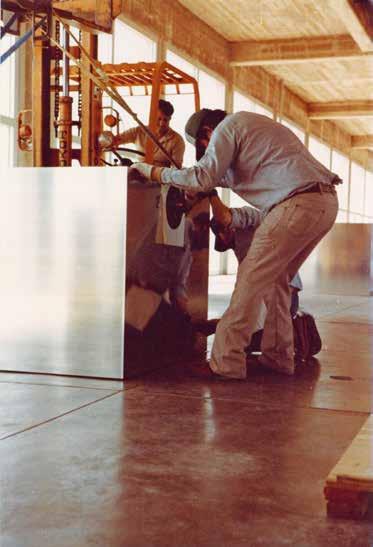
Las 100 obras sin título en aluminio en bruto, de Judd, fueron fabricadas por Lippincott, Inc. en Connecticut durante un periodo de cuatro años, entre 1982 y 1986. Cada obra llegó en una sencilla caja de madera contrachapada y, en este camión articulado, se apilaron en dos alturas y se descargaron con una carretilla elevadora.
En el momento de su instalación, el sistema de ventanas de cuarto ya se había instalado en ambos edificios. Para facilitar su traslado hasta su ubicación, Judd diseñó dos tramos de ventanas a lo largo de la fachada oeste de cada cobertizo que se accionaban mediante un carril horizontal, lo que permitía introducir las grandes obras directamente en el edificio. Estas aberturas correderas se restaurarán para que vuelvan a ser plenamente operativas y facilitar así la retirada temporal de las obras durante la construcción.
Judd eliminó casi todas las particiones no estructurales de los garajes, dejando solo unas mínimas divisiones de mampostería. En una imagen, una obra recién desembalada se prepara para descansar sobre una lámina reflectante de Mylar, utilizada para separar el aluminio del suelo de hormigón y reducir el riesgo de corrosión.
En colaboración con el Getty Conservation Institute y Alfred Lippincott, Chinati está evaluando actualmente materiales de sustitución para esta capa intersticial con el fin de garantizar tanto la estabilidad como la conservación a largo plazo de las obras de arte.
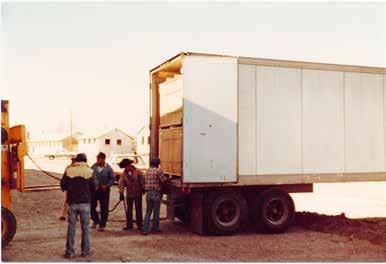
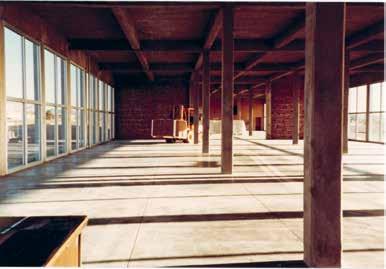
The original garage structures stood at approximately fifteen feet in height before Judd introduced the curved Quonset roof, doubling the overall height. Quonset huts were originally developed before World War II for their portability and ease of assembly but, by this period, were also commonly used in West Texas for agricultural storage.
In a 1989 piece titled “Artillery Sheds,” Judd described a Quonset he saw in the nearby town of Valentine: “a large metal storage building, one curve from the ground to the ground, with very deep and broad corrugations, obviously structure itself.”
Adapting this form not from ground to ground but from roofline to roofline, extending the full length of each building, posed its own engineering and installation challenges. Judd’s sketch, seen here, shows the Quonset addition and the historic garage structure as distinct elements that together create a unified formal presence.
As part of the current restoration, the Quonset structures have been found to be in remarkably good condition. Only minor repairs to the corrugated metal are required.
Las estructuras originales de los garajes tenían aproximadamente cuatro metros y medio de altura antes de que Judd introdujera el techo curvo tipo Quonset, lo que duplicó la altura total. Las cabañas Quonset se desarrollaron originalmente antes de la Segunda Guerra Mundial por su portabilidad y facilidad de montaje pero, en esa época, también se utilizaban comúnmente en el oeste de Texas para el almacenamiento agrícola.
En un artículo de 1989 titulado “Cobertizos de artillería”, Judd describió una Quonset que vio en la cercana localidad de Valentine: “un gran edificio metálico de almacenamiento, con una sola curva de suelo a suelo, con ondulaciones muy profundas y anchas que, a todas luces, constituyen la estructura misma”.
Adaptar esta forma no de suelo a suelo, sino de línea de tejado a línea de tejado, extendiéndola a lo largo de todo el edificio, planteó sus propios retos de ingeniería e instalación. El boceto de Judd, que se ve aquí, muestra la ampliación del Quonset y la estructura histórica del garaje como elementos distintos que, juntos, crean una presencia formal unificada. Como parte de la restauración actual, se ha comprobado que las estructuras Quonset se encuentran en un estado de conservación notablemente bueno. Solo se requieren reparaciones menores en el metal corrugado.
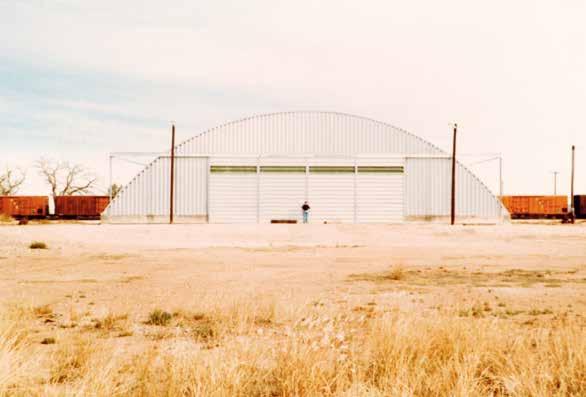
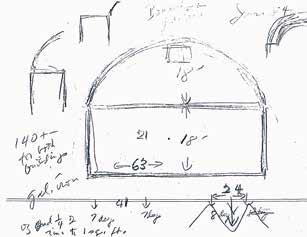
STUDY OF QUONSET HUT ROOF FOR DONALD JUDD, DECEMBER 1983, VALENTINE, TEXAS / ESTUDIO DE LA CUBIERTA DE UNA CABAÑA QUONSET PARA DONALD JUDD, DICIEMBRE DE 1983, VALENTINE, TEXAS
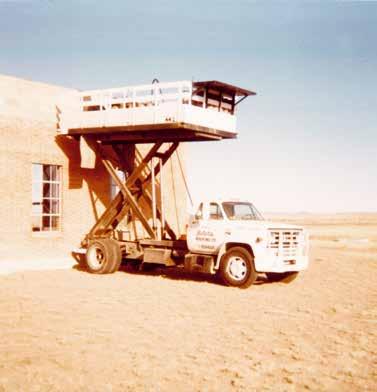
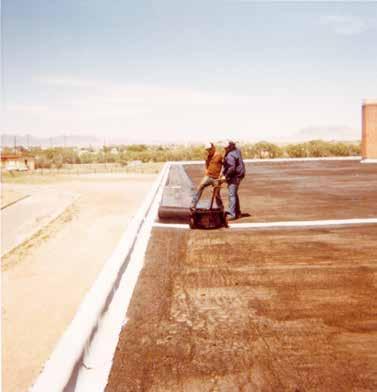
Judd and his contractors attempted to address persistent leaks in the original flat roof. An elastomeric membrane was applied across both structures, a system that remains in place today. Despite these efforts, the buildings continued to leak, as thermal movement in the Texas climate caused cracking and water infiltration.
The restoration will introduce a subtle pitch to the historic roof, directing water from the center toward the edges, where it will be collected by a new gutter system. Rather than relying on the Quonset as a primary waterproofing element, the revised approach allows any water entering through the corrugated shell to shed onto the protected roof surface below and be directed away from the building.
Judd y sus contratistas intentaron solucionar las persistentes goteras del tejado plano original. Se aplicó una membrana elastomérica en ambas estructuras, un sistema que sigue en pie hoy en día. A pesar de estos esfuerzos, los edificios siguieron teniendo goteras, ya que los movimientos térmicos propios del clima de Texas provocaron grietas e infiltraciones de agua.
La restauración introducirá una ligera inclinación en el tejado histórico, dirigiendo el agua desde el centro hacia los bordes, donde será recogida por un nuevo sistema de canalones. En lugar de depender del Quonset como elemento principal de impermeabilización, el enfoque revisado permite que el agua que entre a través de la cubierta corrugada se deslice sobre la superficie protegida del tejado que hay debajo y sea desviada lejos del edificio.
FLAT ROOF REPAIRS, FEBRUARY 1983 / REPARACIÓN DE CUBIERTAS PLANAS, FEBRERO DE 1983
In 1984, Judd introduced the corrugated steel Quonset roof. Fabricated by American Shelter Technologies in Elgin, Illinois, the structure was installed over approximately two years. The riveted connections of the ribs remain visible on close inspection, and the scalloped edge is set within the perimeter of the original structure, maintaining a clear distinction between the two forms.
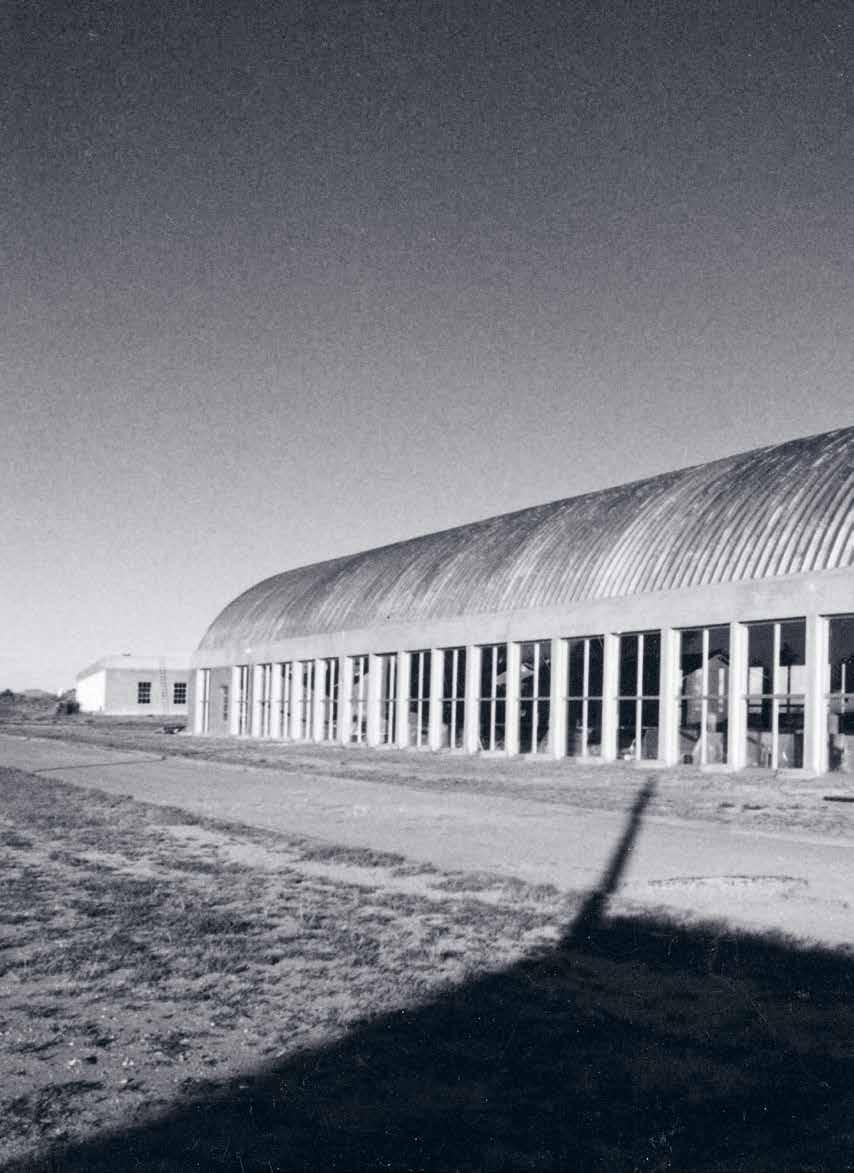
En 1984, Judd introdujo el techo Quonset de acero corrugado. Fabricada por American Shelter Technologies en Elgin, Illinois, la estructura se instaló a lo largo de aproximadamente dos años. Las uniones remachadas de las nervaduras siguen siendo visibles al observarlas de cerca, y el borde festoneado se sitúa dentro del perímetro de la estructura original, manteniendo una clara distinción entre las dos formas.
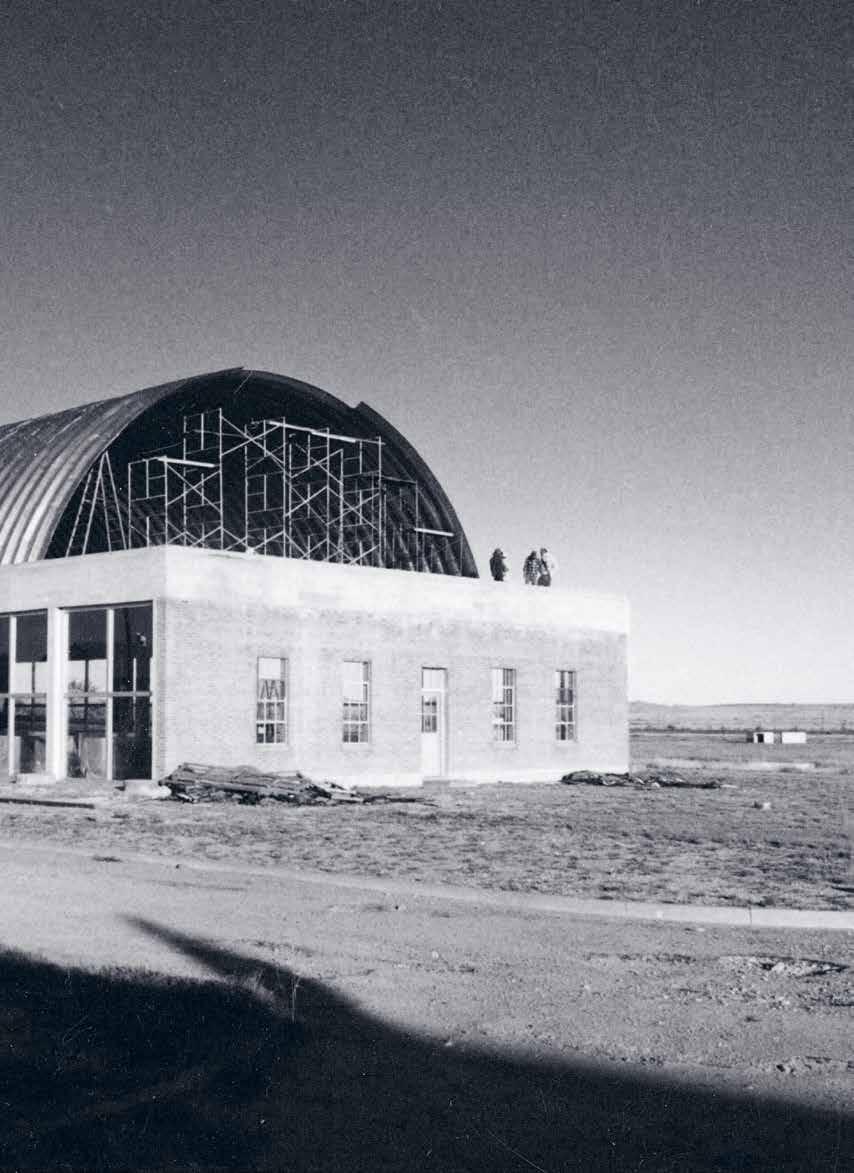
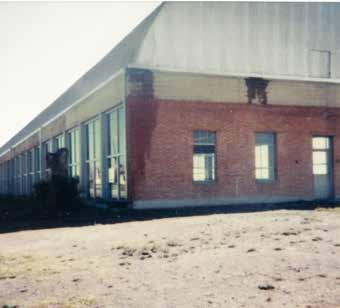
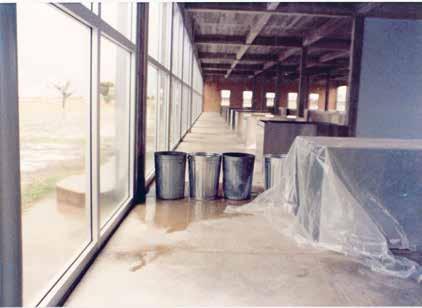
As installed, the Quonset roof bears directly on the existing gutters at the roof edge. During heavy storms, this condition restricts water flow, causing the gutters to overflow. Water then runs down the facades and enters the buildings through masonry joints, window gaskets, and roof-wall intersections.
The restoration will introduce an interior steel support system, relieving the gutters of the Quonset’s weight. By slightly trimming the lower edge of the corrugated shell (an intervention not visible from ground level), the gutters can be expanded and allowed to function properly. A new drainage system, including use of the existing internal cast-iron leaders, will direct excess water safely away from the buildings.
These Polaroids, taken in 1985, document the effects of prolonged water infiltration at the point where the shell meets the gutter. Even within a few years, standing moisture led to deterioration of the roof structure and corrosion of the galvanized shell.
The restoration strategy will allow the Quonsets to effectively “float” above the historic roof, supported by structural steel rather than its own weight. This approach will improve drainage, reduce long-term material stress, and mitigate the conditions that led to earlier damage.
Tal y como se instaló, el techo Quonset descansa directamente sobre los canalones existentes en el borde del techo. Durante las tormentas fuertes, esta situación restringe el flujo de agua, provocando que los canalones se desborden. El agua corre entonces por las fachadas y entra en los edificios a través de las juntas de mampostería, las juntas de las ventanas y las intersecciones entre el techo y las paredes. La restauración consistirá en la instalación de un sistema de soporte interior de acero, lo que aliviará el peso que soportan los canalones del Quonset. Al recortar ligeramente el borde inferior de la cubierta corrugada (una intervención que no se aprecia desde el nivel del suelo), se podrán ampliar los canalones y permitir que funcionen correctamente. Un nuevo sistema de drenaje, que incluirá el uso de los bajantes internos de hierro fundido existentes, desviará el exceso de agua de forma segura lejos de los edificios.
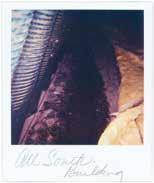
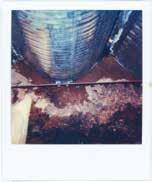
Estas Polaroids, tomadas en 1985, documentan los efectos de la infiltración prolongada de agua en el punto donde la cubierta se une con el canalón. En tan solo unos años, la humedad estancada provocó el deterioro de la estructura del tejado y la corrosión de la cubierta galvanizada.
La estrategia de restauración permitirá que los Quonsets “floten” efectivamente sobre el tejado histórico, sostenidos por acero estructural en lugar de por su propio peso. Este enfoque mejorará el drenaje, reducirá la tensión a largo plazo sobre los materiales y mitigará las condiciones que provocaron los daños anteriores.
LEAKS IN SHEDS, 1984 / FILTRACIONES EN LOS COBERTIZOS, 1984 DAMAGE
In recent years, land and water stewardship have become increasingly central to the mission of Chinati, particularly in response to climate change and its effects on the surrounding desert environment.
Since these photographs were taken, the site has experienced significant soil loss, in some areas exceeding twelve inches. The restoration project addresses both the buildings and the land: stabilizing soils, removing invasive species, reestablishing native grasses, and restoring ecological function.
Water management is a central component of this work. New systems will capture and direct rainwater into bioswales and cisterns, reducing erosion while supporting long-term site sustainability. The land management component of this project is being developed by the Houston-based landscape architecture firm Dept. LLC and Marfa’s native plant expert Jim Martinez. It will also introduce accessible paths connecting the buildings to the Visitor Center.
En los últimos años, la gestión de la tierra y el agua ha cobrado cada vez más importancia en la misión de Chinati, especialmente en respuesta al cambio climático y sus efectos sobre el entorno desértico circundante.
Desde que se tomaron estas fotografías, el emplazamiento ha sufrido una pérdida significativa de suelo, que en algunas zonas supera los treinta centímetros. El proyecto de restauración aborda tanto los edificios como el terreno: estabilización de suelos, eliminación de especies invasoras, restablecimiento de pastos autóctonos y restauración de la función ecológica.
La gestión del agua es un componente fundamental de este proyecto. Los nuevos sistemas captarán y canalizarán el agua de lluvia hacia zanjas de infiltración y cisternas, lo que reducirá la erosión y contribuirá a la sostenibilidad a largo plazo del emplazamiento. El componente de gestión del terreno de este proyecto está siendo desarrollado por el estudio de arquitectura paisajística Dept. LLC, con sede en Houston, y por Jim Martínez, experto en flora autóctona de Marfa. También se crearán senderos accesibles que conectarán los edificios con el Centro de Visitantes.
WITH FLAT ROOF AND ALUMINUM FRAME WINDOWS, 1984 / COBERTIZO CON CUBIERTA PLANA Y VENTANAS CON MARCOS DE ALUMINIO, 1984
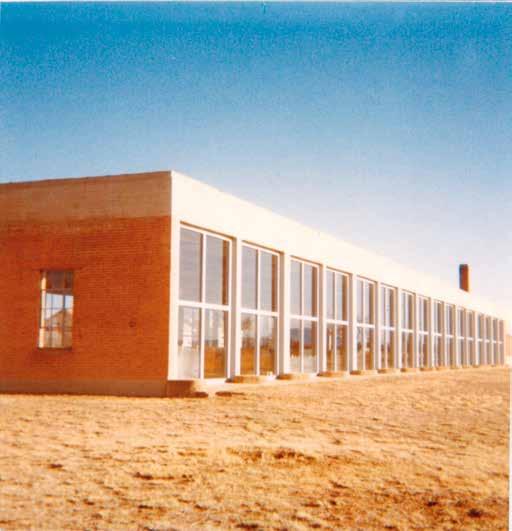
SHED

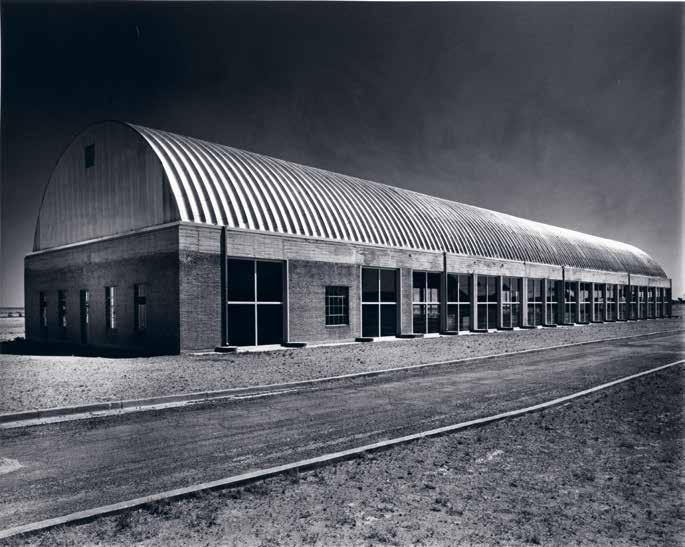
COMPLETED ROOF INSTALLATION OF SHED, 1980S / INSTALACIÓN DE LA CUBIERTA DEL COBERTIZO FINALIZADA, EN LA DÉCADA DE 1980
DONALD JUDD, 100 UNTITLED WORKS IN MILL ALUMINUM, 1982–86 / DONALD JUDD, 100 OBRAS SIN TÍTULO EN ALUMINIO EN BRUTO, 1982–86
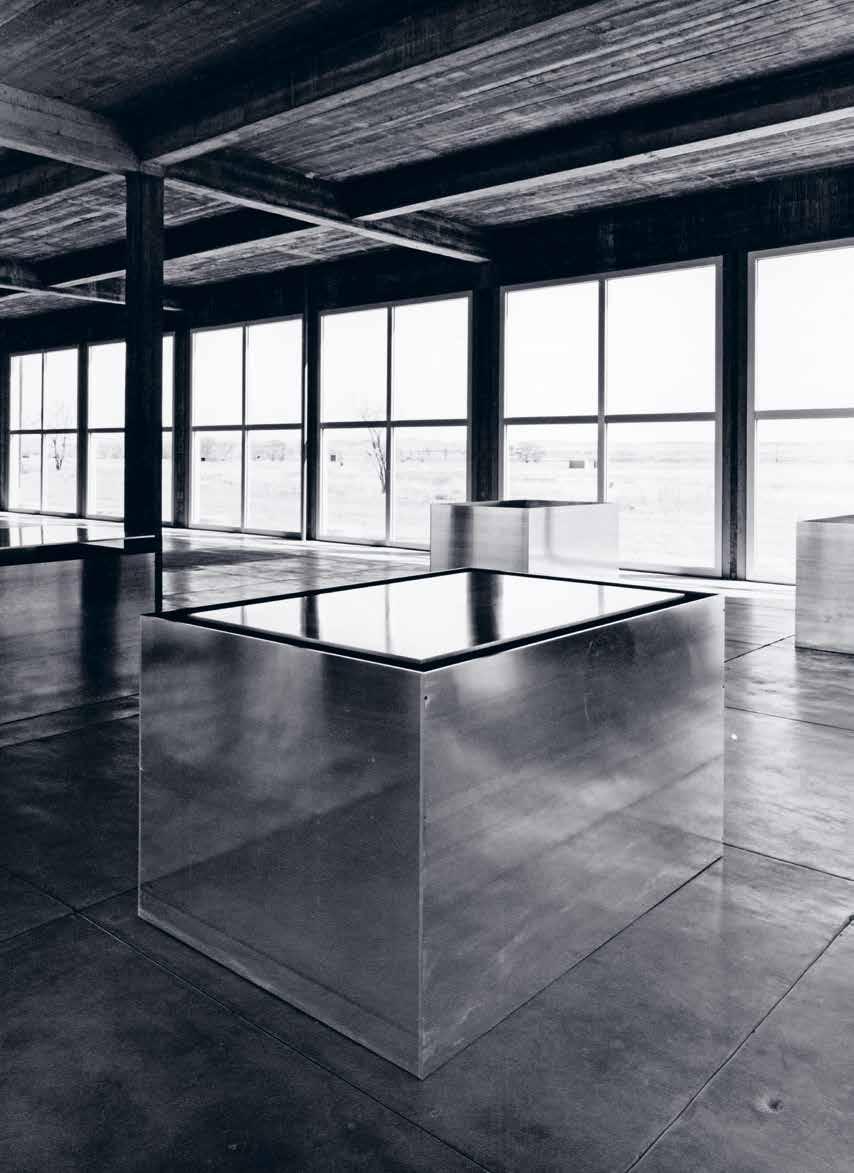

Also included in the exhibition were design and construction materials for four of the 100 untitled works in mill aluminum: works 1, 26, 42, and 43. For each, three documents were presented: Judd’s drawing for the piece, a fabrication drawing produced by Lippincott, Inc., and a purchase order for the individual work.
Work 1 is the simplest of the four in terms of construction. Five plates in total: four vertical panels and a base plate. Judd’s sketch, dated April 1980, renders the artwork in three dimensions. Here he also includes longitudinal and latitudinal sections.
Works 26, 42, and 43 introduce increasing structural complexity. Work 43, for example, incorporates two parallel angled internal elements (identified in the fabrication drawings as “internal diagonals”) and relies on stainless steel blind pins to secure the plates. Work 26 includes a floating compound-angle plate and omits a base plate, which would not be visible in the final configuration; its internal diagonal plate is secured from below using concealed brackets, as noted in Lippincott’s drawings.
La exposición también incluía los bocetos de Judd para tres de las 100 obras sin título en aluminio en bruto: las obras 1, 26, 42 y 43.
La obra 1 es la más sencilla de las cuatro en cuanto a construcción. Cinco placas en total: cuatro paneles verticales y una placa base. El boceto de Judd, fechado en abril de 1980, representa la obra en tres dimensiones. Aquí también incluye secciones longitudinales y transversales.
Las obras 26, 42 y 43 presentan una complejidad estructural creciente. La obra 43, por ejemplo, incorpora dos elementos internos paralelos en ángulo (identificados en los planos de fabricación como “diagonales internas”) y utiliza pasadores ciegos de acero inoxidable para fijar las placas. La obra 26 incluye una placa flotante de ángulo compuesto y omite una placa base, que no sería visible en la configuración final; su placa diagonal interna se fija desde abajo mediante soportes ocultos.
DONALD JUDD, DRAWING FOR MILL ALUMINUM WORK, APRIL 1980. PENCIL ON PAPER. 8 ½ X 11 IN. / DONALD JUDD, DIBUJO PARA UNA OBRA EN ALUMINIO EN BRUTO, ABRIL DE 1980. LÁPIZ SOBRE PAPEL. 21,6 × 27,9 CM

DONALD JUDD, DRAWING FOR MILL ALUMINUM WORK, MAY 1980. PENCIL ON PAPER.
8 ½ X 11 IN. / DONALD JUDD, DIBUJO PARA UNA
OBRA EN ALUMINIO EN BRUTO, MAYO DE 1980. LÁPIZ SOBRE PAPEL. 21,6 × 27,9 CM
DONALD JUDD, DRAWING FOR MILL
ALUMINUM WORK, MAY 1980. PENCIL ON PAPER.
8 ½ X 11 IN. / DONALD JUDD, DIBUJO PARA UNA OBRA EN ALUMINIO EN BRUTO, MAYO DE 1980.
LÁPIZ SOBRE PAPEL. 21,6 × 27,9 CM
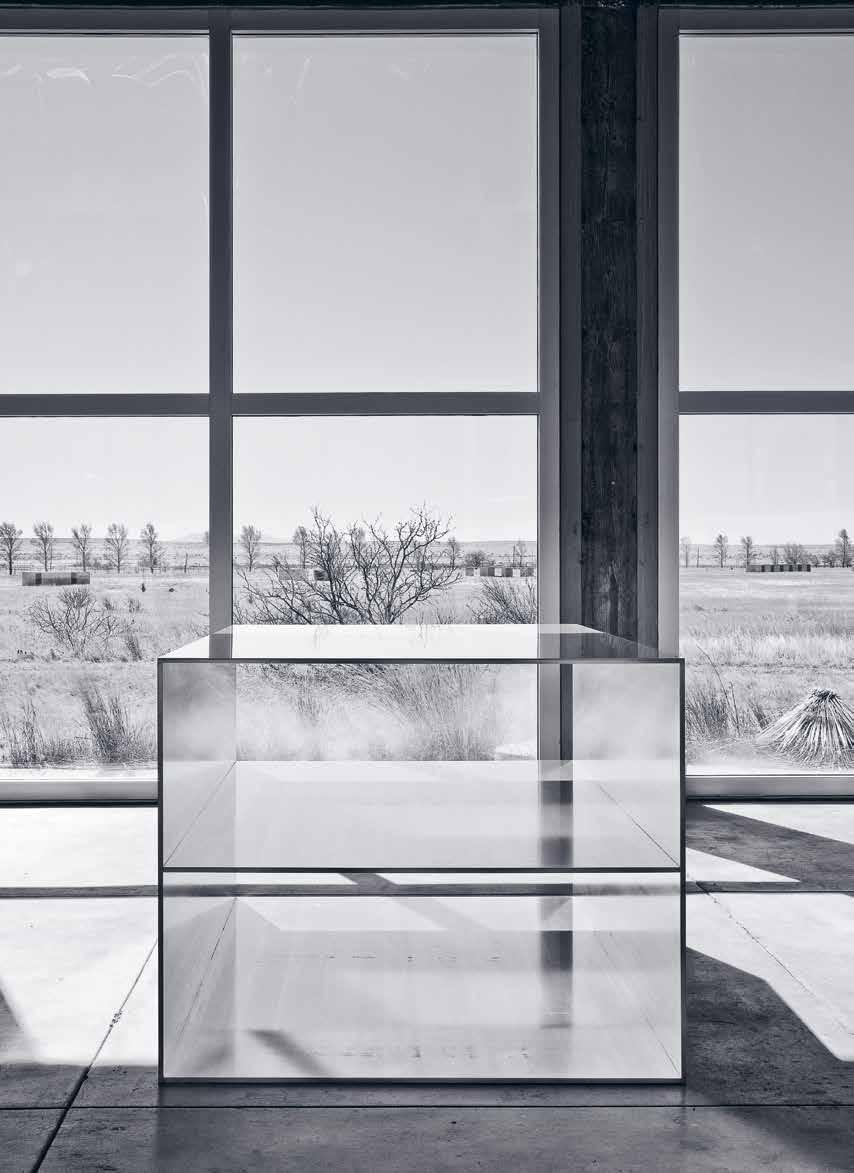
Archival research, alongside close inspection of the Artillery Sheds and site, has helped clarify decision-making during the development of the design documents. Judd’s vision for the sheds has informed a restrained approach, developed in response to urgent environmental and structural conditions and the need to protect the artworks. This cross-disciplinary team of architects, structural engineers, conservators, and art fabricators has carefully considered every surface, joint, and pane. Ultimately, these preservation measures address urgent structural needs while ensuring that the profound experience of Judd’s 100 untitled works in mill aluminum, and their integration with the architecture and land, remains as he intended.
Stephen Martin is the director of preservation and planning at the Chinati Foundation.
La investigación de archivos, junto con un minucioso estudio de los cobertizos de artillería y del emplazamiento, ha contribuido a aclarar el proceso de toma de decisiones durante la elaboración de los documentos de diseño. La visión de Judd para los cobertizos ha inspirado un enfoque sobrio, desarrollado en respuesta a las urgentes condiciones ambientales y estructurales, así como a la necesidad de proteger las obras de arte. Este equipo interdisciplinar de arquitectos, ingenieros estructurales, conservadores y fabricantes de obras de arte ha estudiado minuciosamente cada superficie, junta y hoja de vidrio. En última instancia, estas medidas de conservación abordan las necesidades estructurales urgentes al tiempo que garantizan que la profunda experiencia que transmiten las 100 obras sin título en aluminio en bruto, de Judd, y su integración con la arquitectura y el terreno, se mantengan tal y como él pretendía.
Stephen Martin es director de preservación y planificación de la Fundación Chinati.
MEETINGS OF MINDS: ALVAR AALTO AND DONALD JUDD
AFINIDADES DE PENSAMIENTO: ALVAR AALTO Y DONALD JUDD
Donald Judd loved Alvar Aalto’s bentwood furniture. He owned dozens of vintage pieces by the Finnish architect and designer, among them Artek 41 (aka Paimio) and Artek 42 (aka Small Paimio) chairs. Aalto’s furniture could be found in Judd’s residences in New York, Marfa, and Eichholteren, a restored inn in Switzerland (fig. 1). Still, what drew Judd to Aalto’s furniture remains a mystery; Judd mentioned Aalto’s name only once, when discussing the decor of his Swiss residence. Even when asked to name architects he admired, Aalto remains curiously absent from the list: “When it comes to past architecture, I confess a fondness for Frank Lloyd Wright and Mies van der Rohe,” Judd answered without any ambiguity.1 That the question was posed during a visit to Reykjavik makes Aalto’s absence even more curious since he must have seen Aalto’s Nordic House—one of the city’s prominent landmarks. Then there was Judd’s edgy 1966 quip, “I hate humanism,”
A Donald Judd le encantaban los muebles de madera curvada de Alvar Aalto. Poseía docenas de piezas vintage del arquitecto y diseñador finlandés, entre ellas las sillas Artek 41 (también conocida como Paimio) y Artek 42 (también conocida como Small Paimio). Los muebles de Aalto podían encontrarse en las residencias de Judd en Nueva York, Marfa y Eichholteren, una posada restaurada en Suiza (fig. 1). Sin embargo, lo que atrajo a Judd hacia los muebles de Aalto sigue siendo un misterio; Judd mencionó el nombre de Aalto solo una vez, al hablar de la decoración de su residencia suiza. Incluso cuando se le pidió que nombrara a los arquitectos que admiraba, Aalto brilla curiosamente por su ausencia en la lista: “En lo que respecta a la arquitectura del pasado, confieso mi predilección por Frank Lloyd Wright y Mies van der Rohe”, respondió Judd sin ambigüedades. 1 El hecho de que la pregunta se le planteara durante una visita a Reikiavik hace que la ausencia de Aalto resulte aún más curiosa, ya que seguramente habría visto la Casa Nórdica de Aalto, uno de los monumentos más destacados de la ciudad. Luego estaba la provocadora ocurrencia de Judd de 1966: “Odio el humanismo”, que se opone directamente al humanismo por el que Aalto es conocido. 2 Tanto el silencio como la ocurrencia hacen que uno se pregunte:
which directly counters the humanism for which Aalto is known.2 Both the silence and the quip make one wonder: What drew this self-proclaimed anti-humanist artist known for sleek industrially fabricated geometric metal objects to the sensuous curvilinear wooden furniture designed by the world’s foremost proponent of humanist architecture?
Yet, one does not need to dig deep to find similarities. In the post-World War II period, the two men even used many of the same key words, such as “form,” “space,” and “feeling” in their writings, which reveals that they belonged to the same intellectual milieu, or what could be called the same Denkkollektiv , or “thought collective.”3 Had the two men ever met, they would have discovered that they liked some of the same artists and authors. What follows is an attempt to imagine what the two might have discussed had they ever met, and in so doing, to construct a portrait of the era when topics like form and space were debated with utmost passion among a cohort of artists, architects, art historians, and philosophers.
So let us imagine that the two men spent a day together discussing their work and shared interests. The
¿qué atrajo a este artista autoproclamado antihumanista, conocido por sus elegantes objetos metálicos geométricos fabricados industrialmente, hacia los sensuales muebles curvilíneos de madera diseñados por el principal defensor mundial de la arquitectura humanista?
Sin embargo, no hace falta indagar mucho para encontrar similitudes. En el periodo posterior a la Segunda Guerra Mundial, ambos hombres utilizaron incluso muchas de las mismas palabras clave, como “forma”, “espacio” y “sentimiento” en sus escritos, lo que revela que pertenecían al mismo entorno intelectual, o lo que podría denominarse el mismo Denkkollektiv , o “colectivo de pensamiento”. 3 Si ambos se hubieran conocido, habrían descubierto que les gustaban algunos de los mismos artistas y autores. Lo que sigue es un intento de imaginar de qué podrían haber hablado si se hubieran conocido y, al hacerlo, construir un retrato de la época en la que temas como la forma y el espacio se debatían con la mayor pasión entre una cohorte de artistas, arquitectos, historiadores del arte y filósofos.
Imaginemos, pues, que ambos pasaron un día juntos hablando de su obra y de sus intereses comunes. El siguiente encuentro imaginario tuvo lugar el domingo 29 de noviembre de
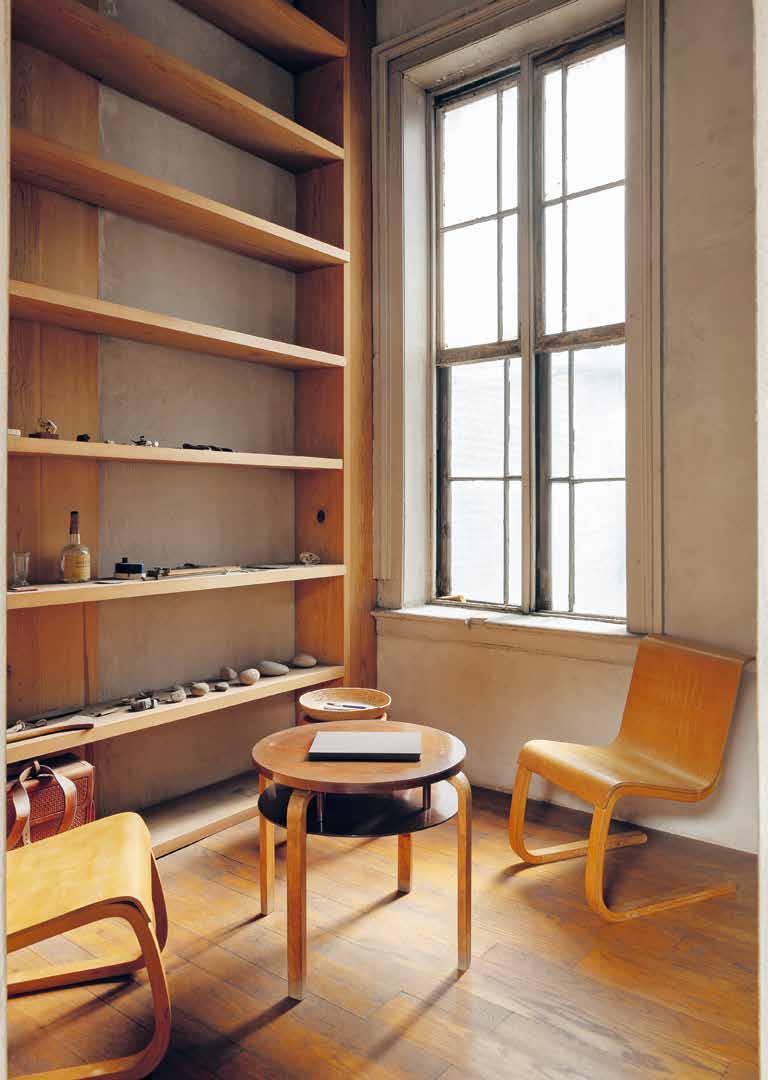
1. THIRD FLOOR, 101 SPRING STREET, NEW YORK. PHOTO BY MAURICIO ALEJO / TERCERA PLANTA, EL NÚMERO 101 DE LA CALLE SPRING, EN NUEVA YORK. FOTO DE MAURICIO ALEJO
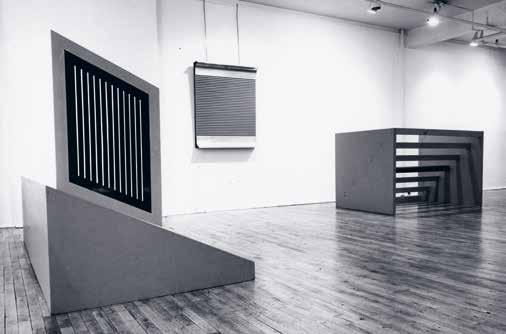
following imagined meeting took place on Sunday, November 29, 1964, when Aalto was in New York to attend the opening of the Edgar J. Kaufmann Conference Center he designed at the International Institute of Education that took place the next day.4 Kaufmann, responding to Aalto’s request to meet a member of New York’s youthful art scene, contacted the thirty-six-year-old Judd, who volunteered to host the worldfamous sixty-six-year-old architect for a Swedish breakfast, which consisted of ham, cheese, flatbread, and salmon.5 Aalto arrived at Judd’s loft on East 19th Street at 10 a.m. and a bottle of single-malt scotch was opened to lubricate the start of the conversation.
1964, cuando Aalto se encontraba en Nueva York para asistir a la inauguración del Centro de Conferencias Edgar J. Kaufmann que había diseñado en el Instituto Internacional de Educación, y que tuvo lugar al día siguiente. 4 Kaufmann, en respuesta a la petición de Aalto de conocer a un miembro de la joven escena artística neoyorquina, se puso en contacto con Judd, de treinta y seis años, quien se ofreció a recibir al mundialmente famoso arquitecto de sesenta y seis años para un desayuno sueco, que consistía en jamón, queso, pan sin levadura y salmón. 5 Aalto llegó al loft de Judd en la calle 19 Este a las 10 de la mañana y se abrió una botella de whisky de malta para ayudar a que la conversación comenzara a fluir.
De carácter sociable y curioso, Aalto comenzó preguntando al prometedor
Social and curious by nature, Aalto began by asking the up-and-coming artist-critic about his life and work.
Judd shared that 1964 had marked a turning point in his career: His first solo exhibition consisting of wooden reliefs and objects placed directly on the floor had closed at the Green Gallery earlier that year, and he had recently begun to work in metal in collaboration with the chief fabricator at the nearby custom sheet-metal shop, Bernstein Brothers, Inc. (fig. 2).
Some of this new work was being shown at a group exhibition at the Green Gallery as they spoke. The two agreed to visit the gallery after their breakfast. That year he also wrote an essay, “Specific Objects,” in which he defined a whole category of art that
artista y crítico por su vida y su obra. Judd comentó que 1964 había marcado un punto de inflexión en su carrera: su primera exposición individual, compuesta por relieves de madera y objetos colocados directamente sobre el suelo, había concluido en la Green Gallery a principios de ese año, y recientemente había comenzado a trabajar con metal en colaboración con el jefe de fabricación del cercano taller de chapistería a medida, Bernstein Brothers, Inc. (fig. 2). Algunas de estas nuevas obras se estaban exhibiendo en una exposición colectiva en la Green Gallery mientras hablaban. Los dos acordaron visitar la galería después del desayuno. Ese año también escribió un ensayo, “Specific Objects” [Objetos específicos], en el que definió toda una categoría de arte que no era
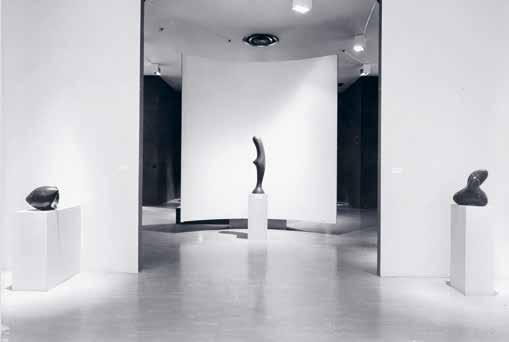
3. JEAN
2. DON JUDD , GREEN GALLERY, NEW YORK, DECEMBER 17, 1963–JANUARY 11, 1964. INSTALLATION VIEW / DON JUDD , GREEN GALLERY, NUEVA YORK, DEL 17 DE DICIEMBRE DE 1963 AL 11 DE ENERO DE 1964. VISTA DE LA INSTALACIÓN
was neither painting nor sculpture. Deep inside, Judd knew that he was turning a page not only in his career but in the history of modern art.
When Aalto asked Judd to explain this new category of art, Judd told him that seeing Jean Arp’s 1958 retrospective at the Museum of Modern Art had had a major impact on his own artistic and intellectual development (fig. 3). Arp’s subsequent 1963 exhibition in New York at the Sidney Janis Gallery had led him to write a glowing review on the artist’s work and to shift from easel painting to making three-dimensional objects soon afterward.6
Judd was fascinated to learn that Aalto knew Arp personally and that encountering the artist’s work
ni pintura ni escultura. En el fondo, Judd sabía que estaba pasando página no solo en su carrera, sino en la historia del arte moderno.
Cuando Aalto le pidió a Judd que le explicara esta nueva categoría de arte, Judd le contó que ver la retrospectiva de Jean Arp de 1958 en el Museo de Arte Moderno había tenido un gran impacto en su propio desarrollo artístico e intelectual (fig. 3). La posterior exposición de Arp en 1963 en Nueva York, en la Galería Sidney Janis, le había llevado a escribir una crítica elogiosa sobre la obra del artista y a pasar de la pintura de caballete a la creación de objetos tridimensionales poco después. 6
A Judd le fascinó saber que Aalto conocía personalmente a Arp y que el encuentro con la obra del artista, unos
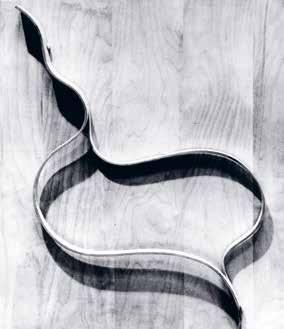
some thirty years earlier had been equally transformative. That memorable encounter had occurred in the apartment of Sigfried Giedion and Carola Giedion-Welcker, the famed husband-and-wife art historian power couple, during Aalto’s first visit to Zurich in October 1931. The two marveled about the parallels: After seeing Arp’s work, Aalto, too, had begun to work with a new material, wood, and to collaborate with a fabricator, the furniture maker Otto Korhonen. One of these early pieces featured two strips of wood crossing a wooden background diagonally while swelling outward in the middle in a manner that bears a strong resemblance to Arp’s Infinite Amphora (1929), which the couple had acquired from the artist after it had been displayed at the exhibition
treinta años antes, había sido igualmente transformador. Ese memorable encuentro tuvo lugar en el apartamento de Sigfried Giedion y Carola Giedion-Welcker —la célebre pareja de historiadores del arte, un matrimonio de referencia— durante la primera visita de Aalto a Zúrich en octubre de 1931. Ambos se maravillaron ante los paralelismos: tras ver la obra de Arp, Aalto también había comenzado a trabajar con un nuevo material, la madera, y a colaborar con un fabricante, el ebanista Otto Korhonen. Una de estas primeras piezas presentaba dos tiras de madera que cruzaban un fondo de madera en diagonal mientras se hinchaban hacia afuera en el centro, de una manera que guarda un fuerte parecido con la obra de Arp Infinite Amphora [Ánfora infinita] (1929), que la pareja había adquirido al artista después de que se hubiera expuesto en la muestra Abstrakte und
Abstrakte und Surrealistische Malerei und Plastik ( Abstract and Surrealist Painting and Sculpture ) at Kunsthaus Zürich in 1929, which Giedon had curated with László Moholy-Nagy, another one of Aalto’s fast artist friends (figs. 4, 5). The iconic Paimio chair consisting of a scrolled plywood seat suspended within a birchwood frame with laminated rounded corners entered production only a year later, in 1932. After seeing the response to Aalto’s work at the 1933 Milan Triennale, Giedion dubbed him the “Magus of the North.” The rest is history: Arp had unknowingly turned two relative unknowns into trailblazers within twentieth-century architecture and art. Aalto mentioned that the gallery adjacent to his furni-
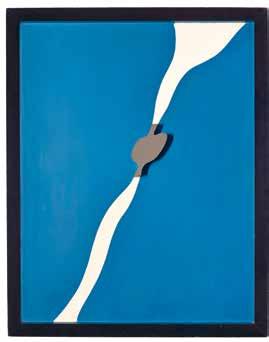
ture studio, Artek, had hosted an Arp exhibition in 1959.
Their discussion turned soon to Carola, or CW as she was known to her friends. By the 1930s, CW had established herself as an expert about modern sculpture in general and Arp’s work in particular. Aalto must have admitted that conversations with her during his 1931 and 1933 visits to Zurich had a profound influence on him, comparable to seeing the work itself. Importantly, CW had made it known that Arp was one of the leading figures in twentieth-century art. Her 1937 book Moderne Plastik: Elemente der Wirklichkeit, Masse und Auflockerung ( Modern Plastic Art: Elements of Reality, Volume and Disintegration ) framed Arp’s historical significance as follows: “The originality of his work lies in its
Surrealistische Malerei und Plastik [Pintura y escultura abstracta y surrealista] en la Kunsthaus Zürich en 1929, que Giedon había comisariado junto con László Moholy-Nagy, otro íntimo amigo artista de Aalto (figs. 4, 5). La icónica silla Paimio, compuesta por un asiento de madera contrachapada curvada suspendido en un armazón de madera de abedul con esquinas redondeadas laminadas, entró en producción solo un año después, en 1932. Tras ver la acogida que tuvo la obra de Aalto en la Trienal de Milán de 1933, Giedion lo bautizó como el “Mago del Norte”. El resto es historia: sin saberlo, Arp había convertido a dos figuras relativamente desconocidas en pioneros de la arquitectura y el arte del siglo XX. Aalto mencionó que la galería situada junto a su estudio de mobiliario, Artek, había acogido una exposición de Arp en 1959.
La conversación derivó pronto hacia Carola, o CW, como la conocían sus amigos. En la década de 1930, CW se había consolidado como una experta en escultura moderna en general y en la obra de Arp en particular. Aalto debió de admitir que las conversaciones que mantuvo con ella durante sus visitas a Zúrich en 1931 y 1933 tuvieron una profunda influencia en él, comparable a la de ver la obra en sí. Es importante destacar que CW había dado a conocer que Arp era una de las figuras más destacadas del arte del siglo XX. Su libro de 1937, Moderne Plastik: Elemente der Wirklichkeit, Masse und Auflockerung [Arte plástico moderno: elementos de la realidad, volumen y desintegración], definía la importancia histórica de Arp de la siguiente manera: “La originalidad de su obra reside en su
5. JEAN ARP, INFINITE AMPHORA , 1929 / JEAN ARP, ÁNFORA INFINITA , 1929
4. ALVAR AALTO, WOOD BENDING EXPERIMENT, C. 1932 / ALVAR AALTO, EXPERIMENTO DE CURVADO DE MADERA, HACIA 1932
uncompromising elementalism. This leads him to prefer repetitive organic forms, identical beneath their mutations, which he uses as symbols of single pre-existing master-form.”7 By the time the book came out, Aalto, being a quick study, had produced a whole line of bentwood furniture and let the curvilinear “master-form” migrate into different materials, scales, and uses from glass vases to the famed undulating acoustic ceiling at the Viipuri Library in 1935 (fig. 6).
Judd admitted that he had studied her essay “Arp: An Appreciation” in a 1958 Museum of Modern Art catalogue, in which she writes: “All the types of form created by Arp are
elementalismo intransigente. Esto le lleva a preferir formas orgánicas repetitivas, idénticas bajo sus mutaciones, que utiliza como símbolos de una única forma maestra preexistente”. 7 Para cuando se publicó el libro, Aalto, que aprendía rápido, había producido toda una línea de muebles de madera curvada y había dejado que la “forma maestra” curvilínea migrara a diferentes materiales, escalas y usos, desde jarrones de cristal hasta el famoso techo acústico ondulado de la Biblioteca de Viipuri en 1935 (fig. 6).
Judd admitió que había estudiado su ensayo “Arp: An Appreciation” [Arp: una valoración], publicado en un catálogo del Museo de Arte Moderno de 1958, en el que ella escribe: “Todos los tipos de
no parts. … This lack of distinct parts forces you to see the piece as a whole. … Because of the sensation of sensuous wholeness, Arp’s work is never unspecific, although it is unusually general, even empty in a way. The emptiness suggests that if you are interested in a thing it is interesting, and if you are not it is not. That isn’t as obvious as it sounds.9
While avoiding her allusion to mysterious “cosmic” forces, Judd embraced her core idea that perceiving Arp’s sculpture involved immediate phenomenal experience in the whole body. It helped that he was studying
actualidad, es que una buena obra es un todo que no tiene partes. … Esta ausencia de partes diferenciadas te obliga a ver la obra como un todo. … Debido a la sensación de totalidad sensual, la obra de Arp nunca es imprecisa, aunque es inusualmente general, incluso vacía en cierto modo. El vacío sugiere que, si te interesa algo, es interesante, y si no te interesa, no lo es. Eso no es tan obvio como parece. 9
Aunque evitó su alusión a misteriosas fuerzas “cósmicas”, Judd hizo suya la idea fundamental de que la percepción de la escultura de Arp implicaba una experiencia fenomenológica inmediata en
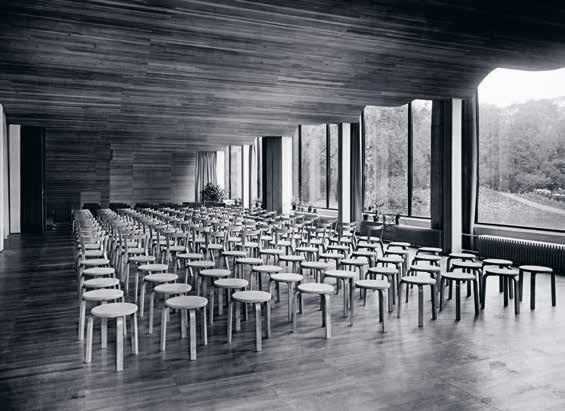
entirely independent of forms literally existing in nature; and they have been freed from limiting, specific detail. Particular form has become universal form, moving according to invisible forces within the cosmic scheme.”8 Her iconic pairing of Arp’s 1933 white biomorphic sculpture Concretion Humaine with a photograph featuring snow formations created by flowing water in the 1937 book served as a reference (fig. 7). Judd, too, was a quick study and addressed Arp’s historical significance in a similar vein in his 1963 review:
One of the interesting things about Arp’s sculpture, and a relevant one currently, is that a good piece is a whole which has
formas creadas por Arp son totalmente independientes de las formas que existen literalmente en la naturaleza; y se han liberado de los detalles específicos y limitantes. La forma particular se ha convertido en forma universal, moviéndose según fuerzas invisibles dentro del esquema cósmico”. 8 Sirvió de referencia su icónico emparejamiento —en el libro de 1937— de la escultura biomórfica blanca de Arp de 1933, Concretion Humaine , [Concreción humana] con una fotografía que mostraba formaciones de nieve creadas por el agua que fluía (fig. 7). Judd también aprendió rápido y abordó la importancia histórica de Arp en una línea similar en su reseña de 1963:
Una de las cosas interesantes de la escultura de Arp, y relevante en la
with the art historian Meyer Schapiro at the time, which made him receptive to the idea that while abstract art was devoid of figurative meaning, it could communicate values and worldviews of the artists in nondiscursive ways. In CW’s telling, Arp’s art was centered on the holistic idea that everything in the world is interconnected and that sculpture makes that interconnection palpable. This entailed a new space-conception that allowed humans to draw energy from other physical bodies. As CW puts it: “What is physical in us inevitably lives in a world of physical forms.”10
Aalto informed Judd that CW had traced this desire to integrate the human being into the world to “baroque sources” in her 1937 book
todo el cuerpo. Le ayudó el hecho de que por aquel entonces estudiaba con el historiador de arte Meyer Schapiro, lo que le hizo receptivo a la idea de que, si bien el arte abstracto carecía de significado figurativo, podía comunicar los valores y la visión del mundo de los artistas de formas no discursivas. Según CW, el arte de Arp se centraba en la idea holística de que todo en el mundo está interconectado y que la escultura hace palpable esa interconexión. Esto implicaba una nueva concepción del espacio que permitía a los seres humanos extraer energía de otros cuerpos físicos. Como dice CW: “Lo que hay de físico en nosotros vive inevitablemente en un mundo de formas físicas”.10
Aalto informó a Judd de que CW había atribuido este deseo de integrar al ser humano en el mundo a “fuentes
6. ALVAR AALTO, VIIPURI LIBRARY (1935) FEATURING THE CEILING OF THE LECTURE HALL, 1935 / ALVAR AALTO, BIBLIOTECA VIIPURI (1935) EN LA QUE APARECE EL TECHO DE LA SALA DE CONFERENCIAS, 1935
Modern Plastic Art 11 The allusion to baroque philosophy landed on a familiar ground for Judd, who majored in philosophy and art history as an undergraduate. His growing library included Stuart Hampshire’s 1951 book Spinoza , one of his first book acquisitions, which defines the philosopher as one who “trie[d] to achieve a complete view of the universe as a whole, and of man’s place in the universe.”12
Discussion of the baroque legacy regarding space-time soon veered to Giedion’s magnus opus Space, Time, and Architecture: The Growth of a New Tradition (1941), which credits Gottfried Wilhelm Leibniz in a similar
barrocas” en su libro de 1937 Modern Plastic Art 11 La alusión a la filosofía barroca cayó en terreno familiar para Judd, que se había licenciado en filosofía e historia del arte. Su creciente biblioteca incluía el libro de Stuart Hampshire de 1951, Spinoza , una de sus primeras adquisiciones, que define al filósofo como alguien que “intentó alcanzar una visión completa del universo en su conjunto y del lugar del hombre en el universo”.12 La discusión sobre el legado barroco en relación con el espacio-tiempo pronto derivó hacia la obra magna de Giedion, Space, Time, and Architecture: The Growth of a New Tradition [Espacio, tiempo y arquitectura: el crecimiento de una tradición nueva] (1941), que atribuye
a Finnish lake with the curvilinear forms of Aalto’s glass vases (1936) and the Finland Pavilion at the New York World’s Fair (figs. 8, 9).
Giedion’s statement that Aalto “recognizes modern art as a great reservoir which … provides the decisive power for his own creativeness” led Judd to ask about his creative process.15 The architect had addressed the topic in “Architettura e arte concreta,” an interview published in 1947 by the influential Italian magazine Domus and repeated to Judd what he had told the magazine’s editor Ernesto Rogers seventeen years earlier, “I simply draw by instinct, not architectural syntheses, but what are
emparejamiento al yuxtaponer una vista aérea de la sinuosa línea costera de un lago finlandés con las formas curvilíneas de los jarrones de vidrio de Aalto (1936) y la Pabellón de Finlandia en la Feria Mundial de Nueva York (figs. 8, 9). La afirmación de Giedion de que Aalto “reconoce el arte moderno como una gran reserva que … proporciona la fuerza decisiva para su propia creatividad” llevó a Judd a preguntarle acerca de su proceso creativo. 15 El arquitecto había abordado este tema en “ Architettura e arte concreta ” [Arquitectura y arte concreto] una entrevista publicada en 1947 por la influyente revista italiana Domus , y repitió a Judd lo mismo que había dicho diecisiete años antes al editor de
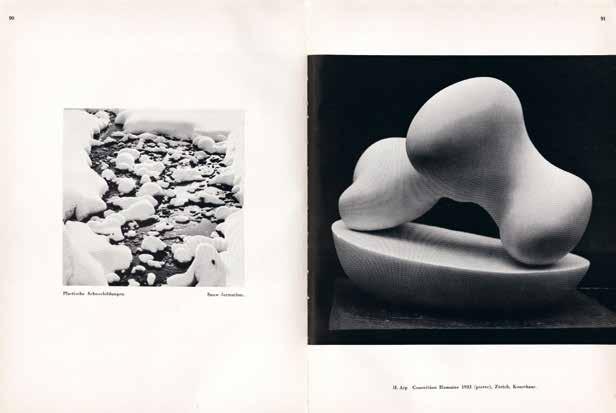
vein for his discovery of “monad’s internal relationships to the entire universe.”13 Judd owned a copy of the book’s fourth edition, where the chapter “Alvar Aalto: Irrationality and Standardization” dwarfed those devoted to Walter Gropius, Le Corbusier, Ludwig Mies van der Rohe, and Frank Lloyd Wright.14 It was thus natural for him to ask what Aalto thought of the chapter that framed Aalto’s historical significance for architecture in a manner very similar to the way Giedion’s wife framed Arp’s significance for sculpture: Aalto’s architecture is experienced phenomenally as part of organic life. Giedion even echoed her iconic pairing by juxtaposing an aerial view of the meandering shoreline of
a Gottfried Wilhelm Leibniz, en una línea similar, el mérito de haber descubierto las “relaciones internas de la mónada con el universo entero”.13 Judd poseía un ejemplar de la cuarta edición del libro, en la que el capítulo “Alvar Aalto: irracionalidad y estandarización” eclipsaba en extensión a los dedicados a Walter Gropius, Le Corbusier, Ludwig Mies van der Rohe y Frank Lloyd Wright.14 Por ello, era natural que quisiera saber qué opinaba Aalto de un capítulo que situaba la importancia histórica del arquitecto para la arquitectura de una manera muy semejante a como la esposa de Giedion había definido la importancia de Arp para la escultura: la arquitectura de Aalto se experimenta fenomenológicamente como parte de la vida orgánica. Giedion incluso retomó ese icónico
sometimes quite childlike compositions, and in this way, on an abstract basis, the main idea gradually takes shape, a kind of universal substance that helps me to bring the numerous contradictory components into harmony.”16 Judd nodded his head in agreement at Aalto’s embrace of chance as part of the creative process. Furthermore, he agreed with the architect’s assessment that the creative process involves a completely new modality of thought-feeling and communicates nondiscursively accordingly after Aalto paraphrased the key point from his interview with Rogers to frame his stance:
Abstract art at its best is the result of a process of crystallization.
la revista, Ernesto Rogers: “Simplemente dibujo por instinto, no síntesis arquitectónicas, sino composiciones que a veces son casi infantiles; y de este modo, sobre una base abstracta, la idea principal va tomando forma gradualmente, una especie de sustancia universal que me ayuda a armonizar los numerosos componentes contradictorios”.16 Judd asintió con la cabeza, mostrando su acuerdo con la aceptación del azar por parte de Aalto como parte del proceso creativo. Además, coincidía con la valoración del arquitecto de que el proceso creativo implica una nueva modalidad de pensamiento-sentimiento y que, en consecuencia, se comunica de manera no discursiva, después de que Aalto parafraseara el punto central de su entrevista con Rogers para exponer su postura:
7. SPREAD FROM CAROLA
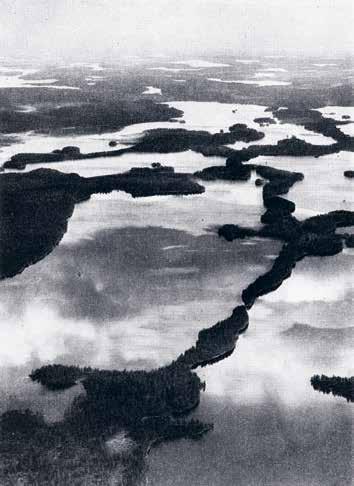
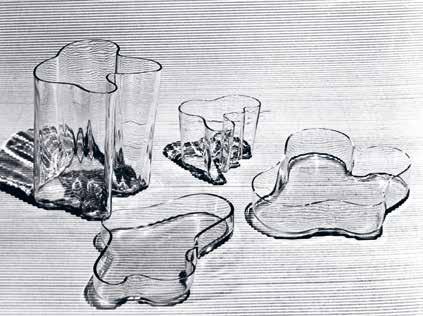
Perhaps this is why it can be understood purely and solely through feeling, even though constructive ideas and the web of human tragedy often come into it and loom behind it. In a way it is a weapon that can create in us a flow of the purely human feeling that the written word has somehow lost.17
Judd was aware that discussions of “feeling” bear high stakes in Western philosophical tradition, and can be traced to the Enlightenment dispute between rational and romantic schools of thought. Aalto, an avid reader of Goethe, had always firmly put himself in the latter camp. Those that identified as rationalist emphasized formal
El arte abstracto, en su máxima expresión, es el resultado de un proceso de cristalización. Quizás por ello solo pueda comprenderse pura y exclusivamente a través del sentimiento, aun cuando las ideas constructivas y las tramas de la tragedia humana a menudo intervengan en él y se vislumbren en su trasfondo. En cierto modo, es un arma capaz de generar en nosotros un flujo de ese sentimiento puramente humano que la palabra escrita, de alguna manera, ha perdido.17
Judd era consciente de que las discusiones sobre el “sentimiento” tienen profundas implicaciones dentro de la tradición filosófica occidental y pueden remontarse a la disputa ilustrada entre las corrientes
sentient being.”19 Judd had been exposed to her thought as an undergraduate at Columbia and his growing library would eventually include five of her books, among them Feeling and Form of 1953, which was widely read among artists and architects at the time.20 He took the book out of the shelf and read a paragraph:
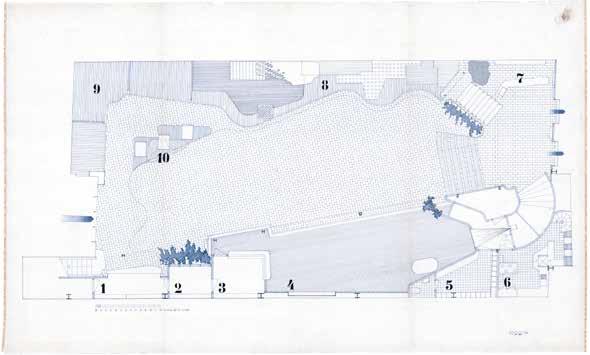
9. IMAGE FROM SIGFRIED GIEDION, SPACE, TIME, AND ARCHITECTURE: THE GROWTH OF A NEW TRADITION (2ND EDITION), 1949, FEATURING AALTO’S ARCHITECTURAL DRAWING FOR THE FINLAND PAVILION AT THE NEW YORK WORLD’S FAIR, EMPHASIZING THAT AALTO’S ARCHITECTURE IS EXPERIENCED AS PART OF ORGANIC LIFE / IMAGEN DE ESPACIO, TIEMPO Y ARQUITECTURA: EL CRECIMIENTO DE UNA TRADICIÓN NUEVA (SEGUNDA EDICIÓN), DE SIGFRIED GIEDION, 1949, QUE PRESENTA LOS DIBUJO ARQUITECTÓNICOS DE AALTO PARA EL PABELLÓN DE FINLANDIA EN LA FERIA MUNDIAL DE NUEVA YORK, ENFATIZANDO QUE LA ARQUITECTURA DE AALTO SE EXPERIMENTA COMO PARTE DE LA VIDA ORGÁNICA
rules and reasoning, while romantics insisted on the value of experiential knowing. Goethe famously urged his French rationalist contemporaries in 1772 to “measure less and feel more.”18 The two agreed: Art needed to be experienced phenomenally.
Aalto’s emphasis on feeling reminded Judd of the famed philosopher Susanne Langer, whose era-defining 1942 book Philosophy in a New Key had turned “feeling” into a new focal point of mid-century philosophical thought. Though Aalto had not read the book, Judd noted that he seems to have absorbed her core ideas in the 1947 interview— Langer wrote that art allows humans to express “the verbally ineffable, yet not inexpressible law of vital experience, the pattern of affective and
racionalista y romántica. Aalto, lector apasionado de Goethe, siempre se había situado firmemente en este último campo. Quienes se identificaban con el racionalismo enfatizaban las reglas formales y el razonamiento, mientras que los románticos insistían en el valor del conocimiento adquirido a través de la experiencia. Goethe exhortó célebremente a sus contemporáneos racionalistas franceses, en 1772, a “medir menos y sentir más”.18 En esto ambos coincidían: el arte debía experimentarse fenomenológicamente. El énfasis de Aalto en el sentimiento recordó a Judd a la célebre filósofa Susanne Langer, cuyo influyente libro de 1942, Philosophy in a New Key [Nueva clave de la filosofía], convirtió el “sentimiento” en uno de los nuevos focos del pensamiento filosófico de mediados del siglo XX. Aunque Aalto no había leído
“Living form” is the most indubitable product of all good art, be it painting, architecture, or pottery. This expression, moreover, is not symbolization in the usual sense of conventional or assigned meaning, but a presentation of a highly articulated form wherein the beholder recognizes, without conspicuous comparison and judgment but rather by direct recognition, the forms of human feeling: emotions, moods, even sensations in their characteristic passage.21
Judd noted that for him the paragraph captured the book’s key insight: that people recognized their core humanity through art. He echoed Langer’s distinction between traditional symbolic and “living” form a few years later when defining “true anthropomorphic” work as one that “had their emotion read into the objects.”22 He then explained that he aimed at something similar with his own art, which required overcoming the division between form and content. Before it was time to leave, Aalto and Judd toasted Langer’s proposal to seek “unity of thought and feeling.”23
la obra, Judd observó que parecía haber asimilado sus ideas fundamentales en la entrevista de 1947. Langer escribió que el arte permite a los seres humanos expresar “la ley verbalmente inefable, aunque no inexpresable, de la experiencia vital: el patrón del ser afectivo y sensible”.19 Judd había entrado en contacto con su pensamiento durante sus estudios en Columbia, y su creciente biblioteca acabaría incluyendo cinco de sus libros, entre ellos Feeling and Form [Sentimiento y forma] (1953), una obra ampliamente leída por artistas y arquitectos de la época. 20 Sacó el libro de la estantería y leyó un párrafo:
“La forma viva” es el producto más indudable de todo gran arte, ya sea pintura, arquitectura o cerámica. … Esta expresión, además, no es simbolización en el sentido habitual de un significado convencional o asignado, sino la presentación de una forma altamente articulada en la que el espectador reconoce, no mediante una comparación o un juicio explícitos, sino a través de un reconocimiento directo, las formas del sentimiento humano: emociones, estados de ánimo e incluso sensaciones en su devenir característico. 21
Judd observó que, para él, este pasaje condensaba la idea central del libro: que las personas reconocen su humanidad esencial a través del arte. Retomó la distinción de Langer entre la forma simbólica tradicional y la “forma viva” unos años más tarde, cuando definió una obra “verdaderamente antropomórfica” como aquella en la que “sus emociones habían sido proyectadas sobre los objetos”. 22 Después explicó que aspiraba a algo semejante en su propio arte, lo que exigía superar la división entre forma y contenido. Antes de que llegara el momento de despedirse, Aalto y Judd brindaron por la propuesta de Langer de alcanzar una “unidad de pensamiento y sentimiento”. 23
El clima era suave para esa época del año, y ambos hombres decidieron caminar hasta la Galería Green, situada en el número 15 de la calle 57 Oeste. Aalto observó los objetos de hierro galvanizado de Judd desde distintos ángulos, maravillándose de cómo las formas geométricas elementales y la materialidad desnuda de las piezas dominaban el espacio que las rodeaba (fig. 10). Estas observaciones llevaron a Judd a leer el siguiente pasaje de su ensayo aún inédito, Specific Objects [Objetos específicos]:
Las tres dimensiones constituyen el espacio real. … El espacio real es
The weather was mild for that time of the year and the two men decided to walk to the Green Gallery on 15 West 57th Street. Aalto observed Judd’s galvanized iron objects from various angles, marveling at how the elemental geometric forms and raw materiality commanded the space around them (fig. 10). These observations prompted Judd to read the following paragraph from his yet to be published essay “Specific Objects”:
Three dimensions are real space. … Actual space is intrinsically more powerful and specific than paint on a flat surface. Obviously, anything in three dimensions can be any shape, regular or irregular, and can have any relation to the wall, floor, ceiling, room, rooms, or exterior or none at all. Any material can be used, as is or painted.24
Time was running out, and it was time to head uptown to visit the Edgar J. Kaufmann Conference Center, located near the United Nations Headquarters, where it was Judd’s turn to marvel at Aalto’s ability to transform almost an entire floor in a nondescript mid-century high-rise seemingly into a sculpted multisensory environment (fig. 11). The two would have paused in front of each material, observing the way Aalto used them
intrínsecamente más poderoso y específico que la pintura sobre una superficie plana. Evidentemente, cualquier cosa en tres dimensiones puede adoptar cualquier forma —regular o irregular— y puede mantener cualquier relación con la pared, el suelo, el techo, una sala, varias salas o el exterior, o ninguna en absoluto. Puede utilizarse cualquier material, tal como es o pintado. 24
El tiempo se agotaba y era hora de dirigirse al norte de la ciudad para visitar el Centro de Conferencias Edgar J. Kaufmann, situado cerca de la sede de las Naciones Unidas, donde ahora era el turno de Judd de maravillarse ante la capacidad de Aalto para transformar casi una planta entera de un anodino edificio de oficinas de mediados del siglo XX en un entorno multisensorial aparentemente esculpido (fig. 11). Ambos se habrían detenido ante cada material, observando la manera en que Aalto los utilizaba para hacer tangible el espacio: una pared recubierta de brillantes azulejos convexos azules que formaban una superficie rítmica junto a la entrada; varillas de madera de abedul con extremos curvados que se elevaban en agrupaciones rítmicas detrás del escenario; y la pantalla solar de madera compuesta por paneles cuadrados que filtraban la luz procedente del gran ventanal orientado hacia el Río Este e inundaban la sala de conferencias
to make space palpable: a wall covered with shiny blue convex tiles that formed a rhythmic surface near the entrance area; birchwood rods with bent tips that rose in rhythmic clusters behind the stage; and the wooden sun screen consisting of square panels that filtered light coming from the large window facing the East River into the conference room. Aalto used the Latin term “materia” to emphasize that more than “purely material activity” was at stake; working with materials involved always a “mental process.”25 Had Judd ever reviewed Aalto’s project, he could have written something similar to his description of John Chamberlain’s work in 1963:
The structures and the shapes are those of the movement of things. The surfaces depict this movement. The imagery is either this alone or is organic as well. The resemblance to everything, because of the close means and the objective aspects, is remarkably remote. This allows the turbulence of the material an independent power.26
When it was time to depart, Judd decided that as soon as he had some extra money, he would acquire a piece of Aalto furniture, thinking that it would make a perfect pairing with Chamberlain’s work.
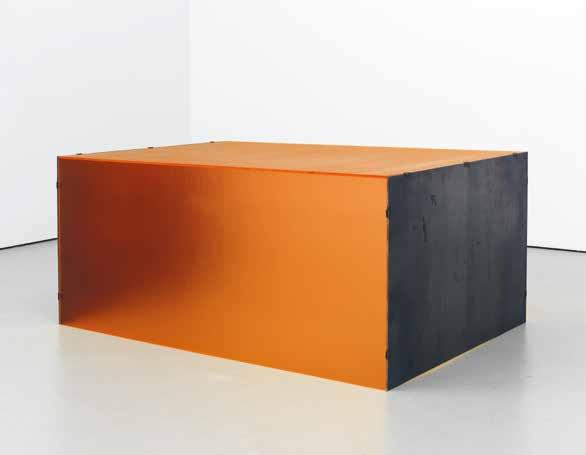
con una luminosidad matizada. Aalto utilizaba el término latino materia para subrayar que estaba en juego algo más que una actividad “puramente material”; trabajar con materiales implicaba siempre un “proceso mental”. 25 Si Judd hubiera llegado a reseñar este proyecto de Aalto, podría haber escrito algo semejante a lo que dijo sobre la obra de John Chamberlain en 1963:
Las estructuras y las formas son las del movimiento de las cosas. Las superficies representan ese movimiento. La imaginería es únicamente eso, o bien eso junto con elementos orgánicos. La semejanza con todo lo demás, debido a la cercanía de los medios empleados y a sus aspectos objetivos, resulta extraordinariamente remota. Esto permite que la turbulencia del material posea una fuerza independiente. 26
Cuando llegó el momento de despedirse, Judd decidió que, en cuanto dispusiera de algo de dinero extra, adquiriría una pieza de mobiliario de Aalto, pensando que constituiría una combinación perfecta con la obra de Chamberlain que poseía.
Eeva-Liisa Pelkonen es profesora en la Escuela de Arquitectura de Yale, donde imparte docencia tanto en diseño arquitectónico como en historia y teoría de la arquitectura. Sus intereses de investigación abarcan el arte y la arquitectura europeos y estadounidenses del siglo XX, la teoría del arte y la estética, así como la historia de las ideas. Es autora y editora de varios libros galardonados, entre ellos Alvar Aalto: Architecture, Modernity, and Geopolitics [Alvar Aalto: arquitectura, modernidad y geopolítica] (2009) y Eero Saarinen: Shaping the Future [Eero Saarinen: dando forma al futuro] (2006). Su libro más reciente, Untimely Moderns: How 20th-Century Architecture Reimagined the Past [Modernos intempestivos: cómo la arquitectura del siglo XX reimaginó el pasado] fue publicado en 2023.
NOTAS
1 Donald Judd, “Entrevista con Gunnar Jóhannes Arnason, Ingólfur Arnarsson y Pétur Arason, julio de 1992”, en Donald Judd Interviews [Las entrevistas de Donald Judd] eds. Flavin Judd y Caitlin Murray (Judd Foundation and David Zwirner Books, 2019), p. 814.
2 Aalto aborda el concepto del “humanismo” en “The Humanizing of Architecture” [La humanización de la arquitectura] (1940) y “Between Humanism and Materialism” [Entre el humanismo y el materialismo](1955).
3 Ludwik Fleck acuñó el término en su libro de 1935 Entstehung und Entwicklung einer wissenschaftlichen Tatsache: Einführung in die Lehre vom Denkstil und Denkkollektiv [Génesis y desarrollo de un hecho científico: introducción al estudio del estilo de pensamiento y del colectivo de pensamiento] (University of Chicago Press, 1979).
Eeva-Liisa Pelkonen is a professor at Yale School of Architecture, where she teaches both architectural design and history-theory subjects. Her scholarly interests cover twentieth-century European and American art and architecture, art and aesthetic theory, and history of ideas. She has authored and edited several prize-winning books, among them Alvar Aalto: Architecture, Modernity, and Geopolitics (2009) and Eero Saarinen: Shaping the Future (2006). Her latest book, Untimely Moderns: How 20thCentury Architecture Reimagined the Past was published in 2023.
NOTES
1 Donald Judd, “Interview with Gunnar Jóhannes Arnason, Ingólfur Arnarsson, and Pétur Arason, July 1992,” in Donald Judd Interviews, eds. Flavin Judd and Caitlin Murray (Judd Foundation and David Zwirner Books, 2019), 814.
2 Aalto discusses “humanism” in “The Humanizing of Architecture” (1940) and “Between Humanism and Materialism” (1955).
3 Ludwik Fleck coined the term in his 1935 book Entstehung und Entwicklung einer wissenschaftlichen Tatsache: Einführung in die Lehre vom Denkstil und Denkkollektiv (Genesis and Development of a Scientific Fact: Introduction to the Study of Thought Style and Thought Collective) (University of Chicago Press, 1979).
4 Ada Louise Huxtable, “Architecture: Alvar Aalto, Finnish Master Represented Here. Rooms He Designed to Be Unveiled Today,” The New York Times, November 30, 1964, 38. For the list of Aalto’s trips to the United States, fourteen in all, see Stanford Anderson, Gail Fenske, and David Fixler, eds., Aalto and America (Yale University Press, 2012).
5 William L. Hamilton, “The Proto-Loft, Reborn,” The New York Times, March 23, 2006, sec. 6, 1. For more about Judd’s culinary preferences see Julia Keller, “From Studio to Dining Table: Donald Judd,” SchirnMag, November 26, 2020, https://www.schirn.de/en/schirnmag/ from-studio-to-dining-table-donald-judd/.
6 For more on Arp’s impact on Judd, see Arie Hartog, “Looking at Arp (reading Judd),” Chinati Foundation Newsletter 17 (2012): 54–6.
7 Carola Giedion-Welcker, Modern Plastic Art: Elements of Reality, Volume and Disintegration, trans. P. Morton Shand (Dr. H. Girsberger, 1937), 11.
8 Carola Giedion-Welcker, “Arp: An Appreciation,” in Arp, ed. James Thrall Soby (Museum of Modern Art, 1958), 21.
9 Donald Judd, “In the Galleries: Jean Arp,” Arts Magazine (September 1963), 54. Reprinted in Chinati Foundation Newsletter 17 (2012): 58, 59.
10 Giedion-Welcker, Modern Plastic Art: Elements of Reality, Volume and Disintegration (Dr. H. Girsberger, 1937), 9.
11 Giedion-Welcker, Modern Plastic Art, xxiv-xxv.
12 Stuart Hampshire, Spinoza (Faber and Faber, 1951), 12.
13 Sigfried Giedion, Space, Time, and Architecture: The Growth of a New Tradition, 2nd edition (Harvard University Press, 1949), 22.
14 The chapter on Aalto was added to the second edition in 1949.
15 Giedion, Space, Time, and Architecture, 567.
16 Alvar Aalto, “Architettura e arte concreta,” Domus (June 1947), 103–15. English translation “The Trout and the Stream” from Göran Schildt, Alvar Aalto in His Own Words (Rizzoli, 1997), 108.
17 Aalto, “The Trout and the Stream,” 109.
4 Ada Louise Huxtable, “Architecture: Alvar Aalto, Finnish Master Represented Here. Rooms He Designed to Be Unveiled Today” [Arquitectura: Alvar Aalto, el maestro finlandés está representado aquí. Las salas que diseñó serán inauguradas hoy], The New York Times , 30 de noviembre de 1964, p. 38. Para la lista de los viajes que hizo Aalto a los Estados Unidos —catorce en total—, véase Stanford Anderson, Gail Fenske, y David Fixler, eds., Aalto and America [Aalto y los Estados Unidos] (Yale University Press, 2012).
5 William L. Hamilton, “The Proto-Loft, Reborn” [El proto-loft, renacido], The New York Times , 23 de marzo de 2006, sec. 6, 1. Para conocer más sobre las preferencias culinarias de Judd, véase Julia Keller, “From Studio to Dining Table: Donald Judd” [Del estudio a la mesa: Donald Judd], SchirnMag , 26 de noviembre de 2020, https://www.schirn. de/en/schirnmag/from-studio-to-diningtable-donald-judd/.
6 Para saber más sobre el impacto que tuvo Arp en Judd, véase Arie Hartog, “Looking at Arp (reading Judd)” [Mirando a Arp (leyendo a Judd)], volumen 17 de la Publicación informativa de Chinati (2012): pp. 54–56.
7 Carola Giedion-Welcker, Modern Plastic Art: Elements of Reality, Volume and Disintegration [Arte plástico moderno: elementos de la realidad, volumen y desintegración], trans. P. Morton Shand (Dr. H. Girsberger, 1937), p. 11.
8 Carola Giedion-Welcker, “Arp: An Appreciation” [Arp: una valoración], en Arp , ed. James Thrall Soby (Museum of Modern Art, 1958), p. 21.
9 Donald Judd, “In the Galleries: Jean Arp” [En las galerías: Jean Arp], Arts Magazine (septiembre de 1963), p. 54. Reimpresa en el volumen 17 de la Publicación informativa de Chinati (2012): p. 58, p. 59.
10 Giedion-Welcker, Modern Plastic Art: Elements of Reality, Volume and Disintegration [Arte plástico moderno: elementos de la realidad, volumen y desintegración] (Dr. H. Girsberger, 1937), p. 9.
11 Giedion-Welcker, Modern Plastic Art [Arte plástico moderno], xxiv-xxv.
12 Stuart Hampshire, Spinoza (Faber and Faber, 1951), p. 12.
13 Sigfried Giedion, Space, Time, and Architecture: The Growth of a New Tradition , [Espacio, tiempo y arquitectura: el nacimiento de una tradición], segunda edición (Harvard University Press, 1949), p. 22.
14 El capítulo sobre Aalto fue añadido a la segunda edición en 1949.
15 Giedion, Space, Time, and Architecture [Espacio, tiempo y arquitectura], p. 567.
16 Alvar Aalto, “Architettura e arte concreta” [Arquitectura y arte concreto], Domus (junio de 1947), pp. 103–115. La traducción al inglés, “The Trout and the Stream” [La trucha y el torrente], de Göran Schildt, Alvar Aalto in His Own Words [Alvar Aalto en sus propias palabras] (Rizzoli, 1997), p. 108.
17 Aalto, “The Trout and the Stream” [La trucha y el torrente], p. 109.
18 Johann Wolfgang von Goethe, “On German Architecture” [Sobre la arquitectura alemana] (1772) en Goethe: Essays on Art and Literature [Goethe: ensayos sobre el arte y la literatura], ed. John Gearey (Suhrkamp Verlag, 1989), p. 7.
19 Susanne K. Langer, Philosophy in a New Key: A Study in the Symbolism of Reason, Rite, and Art [Nueva clave de la filosofía: un estudio sobre el simbolismo de la razón, del rito y del arte] (Harvard University Press, 1960), p. 257.
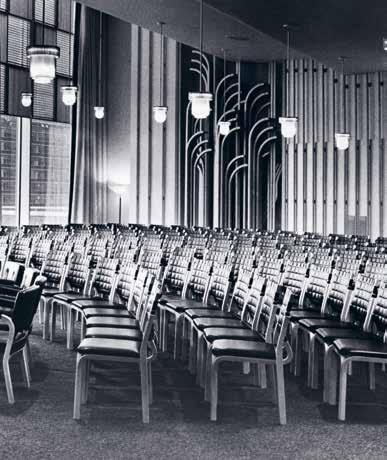
18 Johann Wolfgang von Goethe, “On German Architecture” (1772) from Goethe: Essays on Art and Literature, ed. John Gearey (Suhrkamp Verlag, 1989), 7.
19 Susanne K. Langer, Philosophy in a New Key: A Study in the Symbolism of Reason, Rite, and Art (Harvard University Press, 1960), 257.
20 Susanne Langer taught philosophy at Columbia University between 1945 and 1950; Judd completed his BA from the School of General Studies in 1953, majoring in philosophy. I have not been able to verify that he ever took a class with her.
21 Susanne K. Langer, Feeling and Form: A Theory of Art (Charles Scribner’s Sons, 1953), 82.
22 Donald Judd, “Claes Oldenburg” (1966) from Donald Judd Writings, eds. Flavin Judd and Caitlin Murray (Judd Foundation, 2025), 181.
23 Langer refers to the “biological unities of thought and feeling” on page 258 of Feeling and Form. Judd subsequently paraphrases her on several occasions in his 1984 lecture at Yale School of Art and Architecture in which he referred to the “fallacy of the division between thought and feeling.” See “Art and Architecture” (1984) in Donald Judd Writings, 411–22.
24 Donald Judd, “Specific Objects” (1964), in Donald Judd Writings, 141–42. The essay was written in 1964 but published in 1965.
25 Here I paraphrase Aalto’s 1953 interview with the Swiss architect Karl Fleig published as “The Relationship Between Architecture, Painting, and Sculpture” in Schildt, Alvar Aalto in His Own Words, 267.
26 Donald Judd, “Chamberlain: Another View” (1963), in Donald Judd Writings, 118.
20 Susanne Langer enseñó filosofía en la Universidad de Columbia entre 1945 y 1950; Judd obtuvo su licenciatura en la School of General Studies [Escuela de estudios generales] en 1953, con una especialización en filosofía. No he podido verificar que alguna vez cursara una asignatura con ella.
21 Susanne K. Langer, Feeling and Form: A Theory of Art [Sentimiento y forma: una teoría del arte] (Charles Scribner’s Sons, 1953), p. 82.
22 Donald Judd, “Claes Oldenburg” (1966) en Donald Judd Writings [Los escritos de Donald Judd], eds. Flavin Judd y Caitlin Murray (Judd Foundation, 2025), p. 181.
23 Langer se refiere a las “unidades biológicas de pensamiento y sentimiento” en la página 258 de Feeling and Form [Sentimiento y forma]. Posteriormente, Judd parafraseó esta idea en varias ocasiones durante su conferencia de 1984 en la Yale School of Art and Architecture, en la que se refirió a la “falacia de la división entre pensamiento y sentimiento.” Véase “ Art and Architecture ” [Arte y arquitectura] (1984), en Donald Judd Writings [Los escritos de Donald Judd], pp. 411–422.
24 Donald Judd, “Specific Objects” [Objetos específicos] (1964), en Donald Judd Writings [Los escritos de Donald Judd], pp. 141–142. El ensayo fue escrito en 1964 pero fue publicado en 1965.
25 Aquí parafraseo la entrevista que Alvar Aalto concedió en 1953 al arquitecto suizo Karl Fleig, publicada con el título “The Relationship Between Architecture, Painting, and Sculpture” [La relación entre la arquitectura, la pintura y la escultura] en Schildt, Alvar Aalto in His Own Words [Alvar Aalto en sus propias palabras], p. 267.
26 Donald Judd, “Chamberlain: Another View” [Chamberlain: otra vision] (1963), en Donald Judd Writings [Los escritos de Donald Judd], p. 118.
11. EDGAR J. KAUFMANN CONFERENCE CENTER AT INTERNATIONAL INSTITUTE OF EDUCATION, NEW YORK, 1964 / CENTRO DE CONFERENCIAS EDGAR J. KAUFMANN EN EL INSTITUTO DE EDUCACIÓN INTERNACIONAL, NUEVA YORK, 1964
ZOE LEONARD’S AL RÍO / TO THE RIVER AT THE CHINATI FOUNDATION
AL RÍO / TO
THE RIVER
DE ZOE LEONARD EN
LA
FUNDACIÓN CHINATI
This talk by José Esparza Chong Cuy was originally presented by the Chinati Foundation and the Americas Society at the 2025 Agave Festival in Marfa, alongside conversations with Katherine Hubbard, Zoe Leonard, Aimé Iglesias Lukin, and Roberto Tejada, in conjunction with Leonard’s exhibition Al río / To the River, on view at Chinati from October 2024 to July 2025.
By characterizing the river as a “historical, political, geographic wound,” Esparza Chong Cuy insists that the ecological degradation of the borderlands is inextricably linked to the systemic injustices of the immigration apparatus, framing the wall as an “infrastructure of ideology” and “policy in physical form.”
At a time of intensified border militarization and continued expansion of the border wall, separating communities in the United States from Mexico, including proposed expansions of the wall in areas less than sixty miles from Chinati, Esparza Chong Cuy’s observations provide an important reflection on the human and environmental violence inflicted by unjust immigration policies.
—Caitlin Murray
Esta charla de José Esparza Chong Cuy fue presentada originalmente por la Fundación Chinati y la Americas Society en el Festival Agave 2025 de Marfa, junto con conversaciones con Katherine Hubbard, Zoe Leonard, Aimé Iglesias Lukin y Roberto Tejada, en el marco de la exposición de Leonard Al río / To the River, que se pudo visitar en Chinati desde octubre de 2024 hasta julio de 2025.
Al caracterizar el río como una “herida histórica, política y geográfica”, Esparza Chong Cuy insiste en que la degradación ecológica de las zonas fronterizas está indisolublemente ligada a las injusticias sistémicas del aparato migratorio, enmarcando el muro como una “infraestructura de ideología” y una “política en forma física”.
En un momento de militarización fronteriza intensificada y continua expansión del muro fronterizo, que separa las comunidades de Estados Unidos de México —incluidas las ampliaciones propuestas del muro en zonas situadas a menos de noventa y seis kilómetros y medio de Chinati—, las observaciones de Esparza Chong Cuy ofrecen una importante reflexión sobre la violencia humana y medioambiental infligida por las injustas políticas de inmigración.
— Caitlin Murray
Thank you all for being here and for welcoming me to this special place. I’m José Esparza Chong Cuy, and it is a true privilege to speak today in Marfa, a town in the Chihuahuan Desert that holds so many layered meanings, not just for art but for questions of land, belonging, and identity.
Zoe Leonard and I first met because of her Al río / To the River back in 2021, where we held a conversation about it hosted by Harvard University’s Graduate School of Design (fig.1).
A year later, I was lucky enough to experience a vast presentation of the project at the Musée d’Art Moderne in Paris. And now, I’m grateful to see it here, in a context so geographically close to where the idea of the series first began. Thank you, Zoe, for allowing me to think through this expansive body of work again.
As I continue to reflect on it, Zoe’s Al río / To the River doesn’t just trace a river—it traces a wound. A historical wound, a political wound, a geographic wound. One that, like many here, I’ve experienced most of my life (fig. 2). I grew up in Mexicali,
Gracias a todos por estar aquí y por darme la bienvenida a este lugar tan especial. Soy José Esparza Chong Cuy, y es un verdadero privilegio poder hablar hoy en Marfa, una localidad del desierto de Chihuahua que encierra tantos significados superpuestos, no solo en lo que respecta al arte, sino también a cuestiones relacionadas con la tierra, la pertenencia y la identidad.
Zoe Leonard y yo nos conocimos gracias Al río / To the River allá por 2021, cuando mantuvimos una conversación al respecto organizada por la Escuela de Posgrado de Diseño de la Universidad de Harvard (fig. 1). Un año después, tuve la suerte de asistir a una amplia presentación del proyecto en el Musée d’Art Moderne de París. Y ahora, me siento agradecido de verlo aquí, en un contexto tan cercano geográficamente al lugar donde surgió la idea de la serie. Gracias, Zoe, por permitirme reflexionar de nuevo sobre este extenso conjunto de obras.
A medida que sigo reflexionando sobre ello, la obra de Zoe, Al río / To the River , no solo traza el curso de un río, sino que traza una herida: una herida histórica, una herida política, una herida geográfica. Una herida que, como muchos aquí, he vivido durante la mayor parte de mi vida (fig. 2). Crecí en Mexicali, una ciudad fronteriza en el extremo noroeste de México, donde el desierto de Sonora se extiende a lo largo del muro fronterizo de Estados Unidos con California. El desierto de Sonora es uno de los desiertos con mayor diversidad biológica del mundo, hogar de más de dos mil especies de plantas y de una impresionante variedad de fauna silvestre. Y al igual que este tramo del desierto de Chihuahua en el que nos
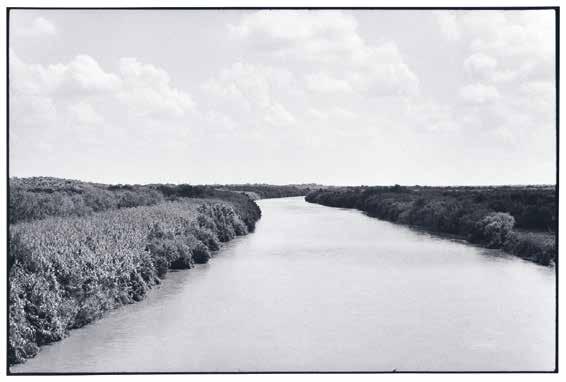
a border city on the northwest edge of Mexico, where the Sonoran Desert extends across the US border wall with California. The Sonoran Desert is one of the most biologically diverse deserts in the world, home to more than two thousand species of plants and a stunning range of wildlife. And much like this stretch of the Chihuahuan Desert we stand in now, that landscape—hostile as it is—is also my family’s home, and the place that defined my sense of self. The desert, unlike many imagine, is full of life and memory.
The river in Zoe’s project—the Rio Grande, or the Río Bravo, as we call it in Mexico—is often mistaken as a natural boundary. But anyone who’s spent time near it knows it doesn’t divide so much as it moves. It meanders. It dries up. It disappears. It reappears. It defies the stability that nation-states have tried to impose upon it. In our previous conversation in 2021, Zoe asked, “What does it mean when we ask a natural body of water to perform a political job or role?” As she said at the time, she was interested in “exploring those tensions, and contradictions, and different ways that the river had been represented or mythologized in American culture.”
In Al río / To the River , Zoe’s photographs move with the river over 1,200 miles, from the Colorado Rockies to the Gulf of Mexico, and follow it along its long stretch as a political boundary—between Texas and the Mexican states of Chihuahua, Coahuila, Nuevo León, and Tamaulipas.
encontramos ahora, ese paisaje —por hostil que sea— es también el hogar de mi familia y el lugar que definió mi sentido de identidad. El desierto, a diferencia de lo que muchos imaginan, está lleno de vida y de memoria.
El río del proyecto de Zoe —el Río Grande, o el Río Bravo, como lo llamamos en México— se confunde a menudo con una frontera natural. Pero cualquiera que haya pasado tiempo cerca de él sabe que no divide tanto como se mueve. Serpentea. Se seca. Desaparece. Vuelve a aparecer. Desafía la estabilidad que los Estadosnación han intentado imponerle. En nuestra conversación anterior, en 2021, Zoe preguntó: “¿Qué significa pedirle a una masa de agua natural que desempeñe una función o un papel político?”. Como dijo entonces, le interesaba “explorar esas tensiones, y contradicciones, y las diferentes formas en que el río ha sido representado o mitificado en la cultura estadounidense”.
En Al río / To the River , las fotografías de Zoe recorren más de 1.900 kilómetros
But what’s extraordinary to me is that Zoe doesn’t illustrate the border. She quietly inhabits it. She listens to it. And in doing so, with her strategy of repetition of various scenes and takes, she shows us how to see it—not as a curving line, but as a place.
That resonates deeply with me. Growing up in Mexicali, I lived in a city where the presence of the United States was constant and visible. It shaped our economy, our movements, our aspirations, and our architecture. You could say I was born with one foot in one country and another in the idea—or distortion—of another (fig. 3). The border wall in Mexicali isn’t just a wall. It’s a superstructure, an infrastructure of ideology, and a symbol of division that we all know doesn’t work, but somehow still holds so much weight.
Many of you have likely seen the metal plaques that mark the “limits” of national territory—cast iron signs
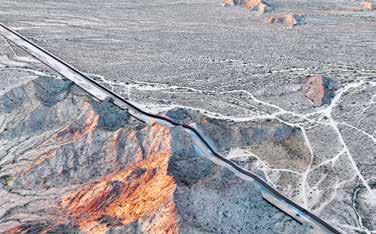
junto al río, desde las Montañas Rocosas de Colorado hasta el Golfo de México, y lo siguen a lo largo de su extenso tramo como frontera política —entre Texas y los estados mexicanos de Chihuahua, Coahuila, Nuevo León y Tamaulipas—. Pero lo que me parece extraordinario es que Zoe no se limita a ilustrar la frontera. Ella la habita en silencio. La escucha. Y al hacerlo, con su estrategia de repetición de diversas escenas y tomas, nos muestra cómo verla: no como una línea curva, sino como un lugar.
Eso me llega profundamente. Al crecer en Mexicali, viví en una ciudad donde la presencia de Estados Unidos era constante y visible. Moldeó nuestra economía, nuestros movimientos, nuestras aspiraciones y nuestra arquitectura. Se podría decir que nací con un pie en un país y otro en la idea —o distorsión— de otro (fig. 3). El muro fronterizo en Mexicali no es solo un muro. Es una superestructura, una infraestructura de ideología y un símbolo de división que todos sabemos que no funciona, pero que de alguna manera sigue teniendo mucho peso.
Probablemente muchos de ustedes hayan visto las placas metálicas que marcan los “límites” del territorio nacional: letreros de hierro fundido que proclaman “Límite de la República Mexicana” (fig. 4). Este gesto político performativo intenta imponer claridad y control sobre algo tan inherentemente fluido como la tierra. Es una afirmación de poder disfrazada de marcador de lugar. Una reivindicación de soberanía sobre un paisaje cambiante. Un recordatorio de que la frontera no es meramente una demarcación, sino una construcción, tanto física como conceptual.
1. ZOE LEONARD, AL RÍO / TO THE RIVER (DETAIL), 2016–22. GELATIN-SILVER PRINTS, C-PRINTS, AND INKJET PRINTS / ZOE LEONARD, AL RÍO / TO THE RIVER (DETAIL), 2016–22. COPIAS DE GELATINA DE PLATA, COPIAS CROMOGÉNICAS E IMPRESIONES DE INYECCIÓN DE TINTA
2. PABLO LÓPEZ LUZ, CALEXICO–MEXICALI VII, FRONTERA USA–MEXIC O, 2015, FROM THE SERIES FRONTERA / PABLO LÓPEZ LUZ, CALEXICO–MEXICALI VII, FRONTERA USA–MEXICO , 2015, DE LA SERIE FRONTERA
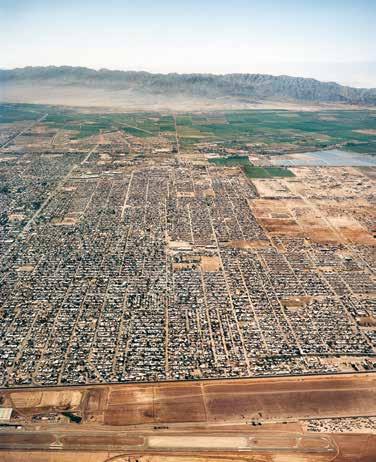
declaring “Límite de la República Mexicana” (fig. 4). This performative political gesture attempts to impose clarity and control on something as inherently fluid as land. It is an assertion of power dressed as a marker of place. A claim of sovereignty on a shifting landscape. A reminder that the border is not merely a demarcation, but a construction—both physical and conceptual.
The desert doesn’t respect those limits. Nor does the wind or the animals. Even the river resists them. And yet, these plaques try to claim something final. Something absolute. As if identity could be cemented in the ground. Those plaques remind me how arbitrary—and how violent—the making of nations can be.
El desierto no respeta esos límites. Tampoco lo hacen el viento ni los animales. Incluso el río se resiste a ellos. Y, sin embargo, estas placas intentan reivindicar algo definitivo. Algo absoluto. Como si la identidad pudiera cimentarse en el suelo. Esas placas me recuerdan lo arbitraria —y lo violenta— que puede ser la creación de las naciones.
¿Cómo se crea un sentido de pertenencia en un territorio herido o fracturado (fig. 5)? En un lugar donde el muro actúa como una herida constante que nunca cicatriza, haciendo visible a diario no solo la tensa historia política de un territorio, sino también el privilegio de quienes están a un lado. La pertenencia, para muchos de nosotros, nunca está del todo aquí ni del todo allá: está en parte aquí y en parte del otro lado. Es un sentimiento que existe en
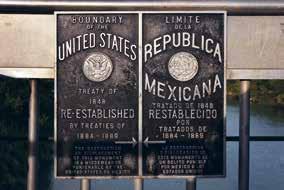
How does one create a sense of belonging in a wounded or fractured territory (fig. 5)? In a place where the wall acts as a constant wound that never heals, making visible on a daily basis not only the fraught political history of a territory, but also the privilege of those on one side. Belonging, for many of us, is never fully here or fully there—it’s part here, and part del otro lado . It’s a feeling that exists in relation to crossings, and to what remains uncrossable.
Of course, this is a land with a deep and complicated history, and I know many in this audience are more familiar with it than I am. But let’s name some of that history anyway, because it shapes the experience of the border in Zoe’s work, and in our lives.
Long before the border was drawn, before the United States and Mexico existed as nation-states, this land was inhabited by Indigenous peoples with their own systems of knowledge, movement, and belonging. Peoples such as the Jumano, Apache, and Comanche moved through these territories long before they were split by a geopolitical boundary. Their presence still reverberates in this land’s stories, languages, and place names. It’s important to acknowledge this deep continuity as we think about the ruptures that came later. The Treaty of Guadalupe Hidalgo, signed in 1848, marked the end of the Mexican-American War. With that treaty, Mexico ceded almost half of its territory to the United States— including California, Arizona, New Mexico, Nevada, Utah, and parts of Colorado and Wyoming. Texas had already been lost earlier, through war and annexation. What was once a contiguous landscape, rich with overlapping cultures, languages, and histories, was suddenly split in two. Not by nature, but by decree.
What followed was not just a redrawing of maps but a fracturing of worlds. Families divided. Territories
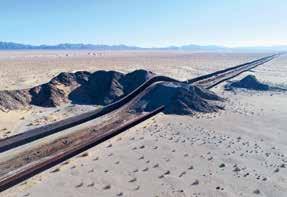
relación con los cruces y con lo que sigue siendo infranqueable.
Por supuesto, esta es una tierra con una historia profunda y compleja, y sé que muchos de los aquí presentes la conocen mejor que yo. Pero, de todos modos, repasemos algunos de esos hechos históricos, porque dan forma a la experiencia de la frontera en la obra de Zoe y en nuestras vidas.
Mucho antes de que se trazara la frontera, antes de que Estados Unidos y México existieran como Estados-nación, esta tierra estaba habitada por pueblos indígenas con sus propios sistemas de conocimiento, desplazamiento y pertenencia. Pueblos como los jumanos, los apaches y los comanches se desplazaban por estos territorios mucho antes de que fueran divididos por una frontera geopolítica. Su presencia aún resuena en las historias, las lenguas y los topónimos de esta tierra. Es importante reconocer esta profunda continuidad al reflexionar sobre las rupturas que se produjeron posteriormente. El Tratado de Guadalupe Hidalgo, firmado en 1848, marcó el fin de la guerra entre México y Estados Unidos. Con ese tratado, México cedió casi la mitad de su territorio a los Estados Unidos, incluyendo California, Arizona, Nuevo México, Nevada, Utah y partes de Colorado y Wyoming. Texas ya se había perdido antes, a través de la guerra y la anexión. Lo que una vez fue un paisaje contiguo, rico en culturas, lenguas e historias entrelazadas, se dividió de repente en dos. No por la naturaleza, sino por decreto.
Lo que siguió no fue solo un redibujado de los mapas, sino una fractura de mundos. Familias divididas. Territorios renombrados. Culturas desarraigadas. Sin embargo, de alguna manera, las comunidades a lo largo de la frontera han persistido y se han adaptado. Han construido nuevas formas de vida en estos espacios intermedios. En los márgenes del poder y la visibilidad. Y para mí, ahí es donde la obra de Zoe encuentra su fuerza: no en monumentalizar la frontera, sino en observar cómo se vive.
Esto es también algo que he aprendido con el tiempo como comisario de arte, especialmente de artistas como Miguel Fernández de Castro y de estudiosas como Natalia Mendoza, ambos afincados en Sonora, quienes hablan del desierto no como un vacío, sino como un mundo en sí mismo. Un lugar con ritmos, texturas, negociaciones. Miguel, por ejemplo, habla del desierto de Sonora como un archivo —que contiene rastros de violencia, sí, pero también de resiliencia y creatividad (fig. 6)—. Y Natalia, en su trabajo antropológico, nos recuerda que la frontera no es una línea, sino un espacio. Una zona de tensión, de fricción, de improvisación.
3. MIGUEL FERNÁNDEZ DE CASTRO, MIENTRAS MÁS LEJOS EL SOBERANO, MÁS RECTA LA LÍNEA (THE FURTHER AWAY THE SOVEREIGN, THE STRAIGHTER THE LINE), 2021
4.
5. MIGUEL FERNÁNDEZ DE CASTRO, DOUBLE WALL, GEOLOGY WALL , 2020 / MIGUEL FERNÁNDEZ DE CASTRO, MURO DOBLE, MURO GEOLÓGICO , 2020
renamed. Cultures dislocated. Yet somehow, communities along the border have persisted and adapted. They’ve built new forms of life in these in-between spaces. In the margins of power and visibility. And for me, that’s where Zoe’s work finds its power—not in monumentalizing the border, but in observing how it’s lived.
This is also something I’ve learned over time as a curator—especially from artists like Miguel Fernández de Castro and scholars like Natalia Mendoza, both based in Sonora, who both speak about the desert not as a void, but as a world in itself. A place with rhythms, textures, negotiations. Miguel, for instance, speaks of the Sonoran Desert as an archive—holding traces of violence, yes, but also of resilience and creativity (fig. 6). And Natalia, in her anthropological work, reminds us how the border isn’t a line—it’s a space. A zone of tension, of friction, of improvisation.
In that sense, one could say that Zoe’s project is not about documentation but about duration. She commits to the river across years, seasons, and geographies. There’s something radical in that slow attention, in the quiet repetition of images, in the refusal to simplify or to aestheticize the trauma. She neither dramatizes nor flattens. Instead, she invites us to look—really look—at how the built environment interacts with the natural one, how fences slice through brush, how concrete embankments redirect flow, how surveillance towers punctuate open land.
It’s in these moments that Al río / To the River becomes more than a photographic essay. It becomes a way of thinking about architecture and territory—how power takes shape in space. How ideology gets built. Because the border wall is not just architecture. It’s policy in physical form. It’s fear turned into steel and concrete. It’s a monument to division. And yet, it exists within a desert that is never still. A desert that erodes and reclaims. A desert that lives.
So how do we live with that contradiction? How do we hold space for the complexity of this region, without reducing it to crisis or cliché?
Maybe that’s what I respond to most in Zoe’s work: her ability to hold contradiction without trying to resolve it. She doesn’t offer a singular story. Instead, she gives us fragments. Edges. Crossings. Sometimes a fence. Sometimes a flower. Sometimes a shadow on the water.
And in that, there’s a kind of care. A belief that seeing—really
En ese sentido, se podría decir que el proyecto de Zoe no trata de la documentación, sino de la duración. Ella se compromete con el río a lo largo de los años, las estaciones y las geografías. Hay algo radical en esa atención pausada, en la tranquila repetición de imágenes, en la negativa a simplificar o estetizar el trauma. No dramatiza ni simplifica. En cambio, nos invita a mirar —a mirar de verdad— cómo el entorno construido interactúa con el natural, cómo las vallas atraviesan la maleza, cómo los terraplenes de hormigón redirigen el caudal, cómo las torres de vigilancia salpican el terreno abierto.
Es en estos momentos cuando Al río / To the River se convierte en algo más que un ensayo fotográfico. Se convierte en una forma de pensar sobre la arquitectura y el territorio: cómo el poder toma
seeing—can be an act of resistance. That noticing the overlooked can open new ways of understanding the land and each other.
As someone who’s spent the last seven years working at Storefront for Art and Architecture in New York, I’ve come to believe that architecture is not just about buildings. It’s about how space is organized, who gets to occupy it, and under what conditions. And in borderlands like this one—whether in Texas or Baja California—those questions aren’t abstract. They’re personal. They’re embodied.
So, I want to end by thanking Zoe for following the river, for showing us another way to see it and think about it. I want to thank this land, and the people who have lived with
verdad— puede ser un acto de resistencia. Que fijarse en lo que se pasa por alto puede abrir nuevas formas de entender el territorio y a los demás.
Como alguien que ha pasado los últimos siete años trabajando en Storefront for Art and Architecture en Nueva York, he llegado a creer que la arquitectura no se limita a los edificios. Se trata de cómo se organiza el espacio, quién puede ocuparlo y en qué condiciones. Y en zonas fronterizas como esta —ya sea en Texas o en Baja California— esas preguntas no son abstractas. Son personales. Se hacen realidad.
Así que, quiero terminar dando las gracias a Zoe por seguir el río, por mostrarnos otra forma de verlo y de pensar en él. Quiero dar las gracias a esta tierra y a las personas que han vivido con ella y a través de ella. Y gracias a todos ustedes
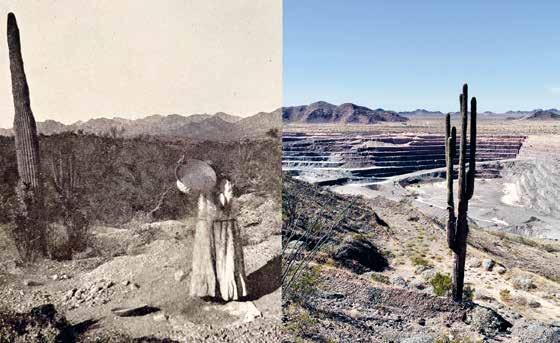
forma en el espacio. Cómo se construye la ideología. Porque el muro fronterizo no es solo arquitectura. Es política en forma física. Es el miedo convertido en acero y hormigón. Es un monumento a la división. Y, sin embargo, existe en un desierto que nunca está quieto. Un desierto que erosiona y recupera lo que le pertenece. Un desierto que vive.
Entonces, ¿cómo convivimos con esa contradicción? ¿Cómo damos cabida a la complejidad de esta región sin reducirla a una crisis o a un cliché?
Quizá eso es lo que más me atrae de la obra de Zoe: su capacidad para acoger la contradicción sin intentar resolverla. No ofrece una historia única. En su lugar, nos da fragmentos. Bordes. Cruces. A veces una valla. A veces una flor. A veces una sombra sobre el agua.
Y en eso hay una forma de atención. La convicción de que ver —ver de
and through it. And thank all of you for listening—and for continuing the work of holding liminal and layered space alive.
José Esparza Chong Cuy is a curator, writer, and architect from Mexico. His work explores the nuances of public life and the built environment. Since 2018, he has worked as executive director and chief curator at Storefront for Art and Architecture in New York City. Between 2019 and 2025, he was part of the curatorial council of the Museo Tamayo in Mexico City. Prior to his current role, he was associate curator at the Museum of Contemporary Art Chicago and the Museo Jumex in Mexico City. In 2013, he was co-curator of the Lisbon Architecture Triennale. He holds an MS in critical, curatorial, and conceptual practices in architecture from Columbia University. In 2026, he was the curator of the Kosovo Pavilion at the 61st Venice Biennale.
por escuchar, y por continuar con la labor de mantener vivo este espacio liminal y lleno de matices.
José Esparza Chong Cuy es comisario de arte, escritor y arquitecto mexicano. Su trabajo explora los matices de la vida pública y el entorno construido. Desde 2018 se desempeña como director ejecutivo y comisario de arte en jefe de Storefront for Art and Architecture, en la ciudad de Nueva York. Entre 2019 y 2025 formó parte del consejo de comisariado del Museo Tamayo en Ciudad de México. Antes de asumir su cargo actual, fue comisario asociado en el Museum of Contemporary Art Chicago y en el Museo Jumex de Ciudad de México. En 2013 fue cocomisario de la Trienal de Arquitectura de Lisboa. Obtuvo una maestría en prácticas críticas, de comisariado y conceptuales en arquitectura por la Universidad de Columbia. En 2026 fue comisario del Pabellón de Kosovo en la 61ª Bienal de Venecia.
6. MIGUEL FERNÁNDEZ DE CASTRO, ALTAR OMEN (ORO) (ALTAR OMEN (GOLD)), 2023
EDUCATION REPORT INFORME SOBRE LA EDUCACIÓN
The Chinati Foundation presented its first Community Day in 2004. The event follows in Donald Judd’s tradition of the Open House, with a particular emphasis on bridging Chinati’s collection with the Marfa and tri-county community. At Community Day, residents and visitors gather, learn about shared histories, and foster a sense of belonging and pride across the region.
This year, weeks of planning culminated in a community celebration organized around an exhibition of artwork and live performances by Marfa ISD students and their fellow students from Presidio, a border town located sixty miles south of Marfa.
In February, the education team welcomed teachers and students from Presidio High School to Chinati. After guided tours of Robert Irwin’s untitled (dawn to dusk ) (2016) and Dan Flavin’s untitled (Marfa project ) (1996), along with a discussion about light and perception, the group gathered at Chinati’s Art Lab to learn about cyanotypes—a type of camera-less contact printing. The students created a light-sensitive emulsion, coated their paper, and hung them to dry in the darkroom before processing their unique prints outside under UV light.
They were impatient waiting for their cyanotypes to develop—processing under the sun takes about
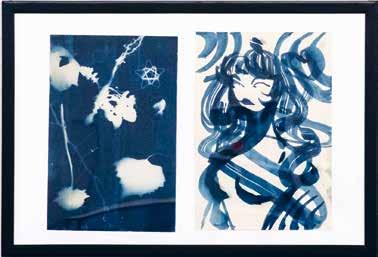
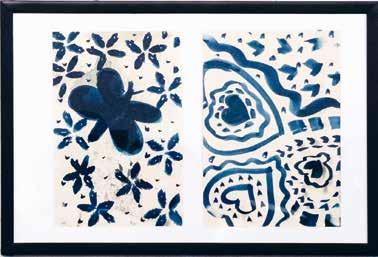
La Fundación Chinati celebró su primer Día de la Comunidad en 2004. El evento sigue la tradición de las jornadas de puertas abiertas impulsadas por Donald Judd, con un especial énfasis en crear vínculos entre la colección de Chinati, la comunidad de Marfa y los tres condados de la región. Durante el Día de la Comunidad, residentes y visitantes se reúnen para conocer historias compartidas y fomentar un sentimiento de pertenencia y orgullo en toda la región. Este año, varias semanas de preparación culminaron en una celebración comunitaria organizada en torno a una exposición de obras de arte y actuaciones en vivo realizadas por los estudiantes del distrito escolar independiente de Marfa (Marfa ISD) y sus compañeros de Presidio, una localidad fronteriza situada a unos cien kilómetros al sur de Marfa. En febrero, el equipo educativo recibió en Chinati a profesorado y alumnado del instituto de Presidio. Tras realizar visitas guiadas a untitled (dawn to dusk) [sin título (el amanecer al atardecer)] (2016), de Robert Irwin, y untitled (Marfa project) [sin título (proyecto Marfa)] (1996), de Dan Flavin —acompañadas de una conversación sobre la luz y la percepción—, el grupo se reunió en el Laboratorio de Arte de Chinati para aprender sobre la cianotipia, una técnica de impresión por contacto sin cámara. Los estudiantes prepararon una emulsión fotosensible, recubrieron con ella el papel y lo dejaron secar en el cuarto oscuro antes de revelar sus impresiones únicas en el exterior mediante luz ultravioleta.
Esperaban con impaciencia que aparecieran sus cianotipias —el revelado al sol tarda unos diez minutos—, pero, cuando regresaron al interior y las sumergieron en agua, sus expresiones pasaron de la impaciencia al asombro. Los estudiantes se felicitaban unos a otros y esperaban con entusiasmo el momento en que se revelara la siguiente imagen. El orgullo que sentían
ten minutes—but as they moved back inside and immersed them in water, their expressions shifted from impatience to awe. The students complimented each other and anxiously awaited the next print to be revealed. Their pride was so infectious that an invitation to exhibit their artwork during Community Day only made sense.
For the past several years, Chinati has partnered with Marfa ISD art teacher Adele Powers to offer a month-long workshop for middle and high school students. This year, our education team worked with local artist and woodworker Pat Keesey to facilitate a furniture-making unit. The high school students were introduced to simple furniture design and materials, discussed scale, and learned about safety while working with tools in the makeshift “shop” that the education team built at the high school. The introductory week also included a field trip to Judd Foundation’s Architecture Office and Architecture Studio, as well as guest visits from SILLA Marfa designer Amalia Attias and founder Joey Benton.
The goal of the unit was for students to build confidence through designing and constructing their own furniture pieces. Each student had nine hours to produce their designs—some focused on working from the miniature models
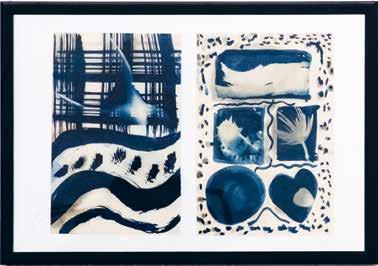
por su trabajo era tan contagioso que invitarles a exponer sus obras durante el Día de la Comunidad resultó ser la decisión más natural.
Desde hace varios años, Chinati colabora con Adele Powers, profesora de arte del Marfa ISD, para ofrecer un taller de un mes de duración dirigido a estudiantes de secundaria y bachillerato. Este año, nuestro equipo educativo trabajó junto al artista y ebanista local Pat Keesey para desarrollar una unidad dedicada al diseño y la construcción de mobiliario. Los estudiantes de bachillerato se iniciaron en el diseño básico de muebles y en el conocimiento de los materiales, reflexionaron
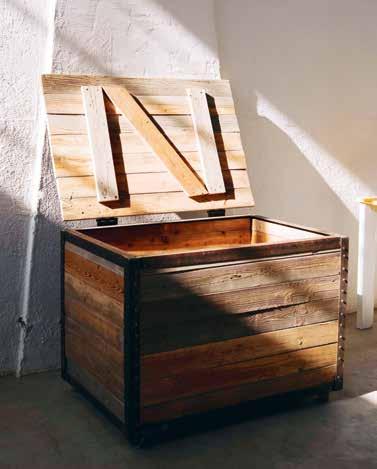
they created with Amalia, while others constructed utilitarian pieces with support from Pat. The results were impressive. Completed pieces included a chest, a shoe rack, a bookshelf, contemporary and traditional tables, and unique side tables.
Meanwhile, sixth-grade art students constructed clocks. They sketched out ideas, created paper models of their designs, and then transferred them to 12-by-12-inch plywood panels. With Pat’s mentorship, they cut, sanded, painted, added additional design elements—wire to the cactus, pepperoni and banana
sobre la escala y aprendieron normas de seguridad para el uso de herramientas en el taller provisional que el equipo educativo acondicionó en el instituto. La primera semana incluyó también una visita a la Oficina de Arquitectura y al Estudio de Arquitectura de la Judd Foundation, así como la participación de la diseñadora de SILLA Marfa, Amalia Attias, y de su fundador, Joey Benton, como invitados. El objetivo de esta unidad era que el alumnado ganara confianza mediante el diseño y la construcción de sus propias piezas de mobiliario. Cada estudiante dispuso de nueve horas para desarrollar su proyecto: algunos trabajaron a partir de las maquetas a escala que habían realizado con Amalia, mientras que otros construyeron muebles de carácter utilitario con el apoyo de Pat. Los resultados fueron extraordinarios. Entre las piezas terminadas había un arcón, un zapatero, una estantería, mesas de estilo contemporáneo y tradicional, así como originales mesas auxiliares.
Mientras tanto, el alumnado de sexto curso de arte construyó relojes. Primero esbozaron sus ideas, realizaron modelos en papel y después los trasladaron a paneles de madera contrachapada de 30,48 × 30,48 centímetros. Con la orientación de Pat, cortaron, lijaron y pintaron las piezas; añadieron elementos decorativos —alambre para el cactus, rodajas de pepperoni y guindillas de plátano para la pizza, arroz para el rollo de sushi— y colocaron los
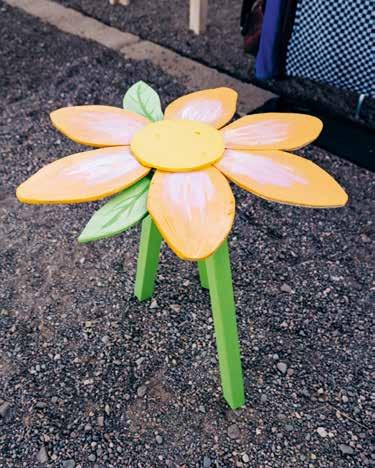
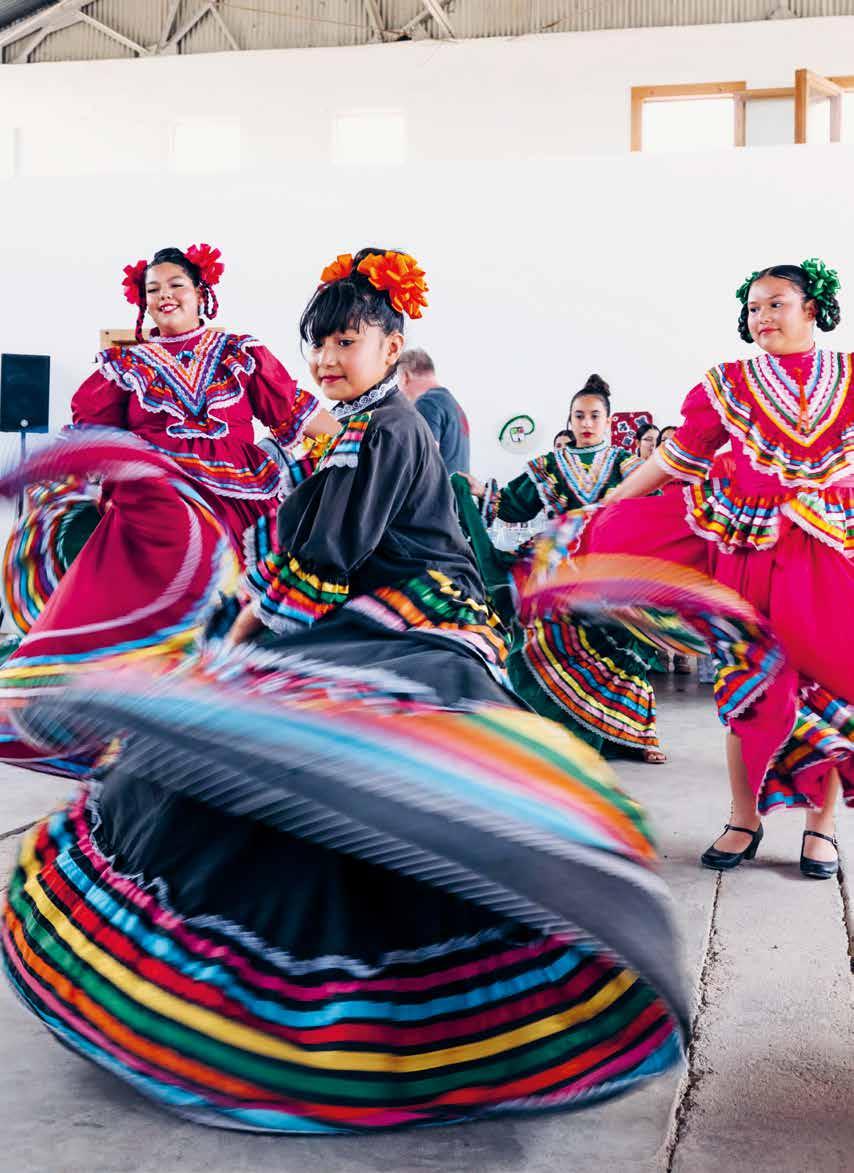
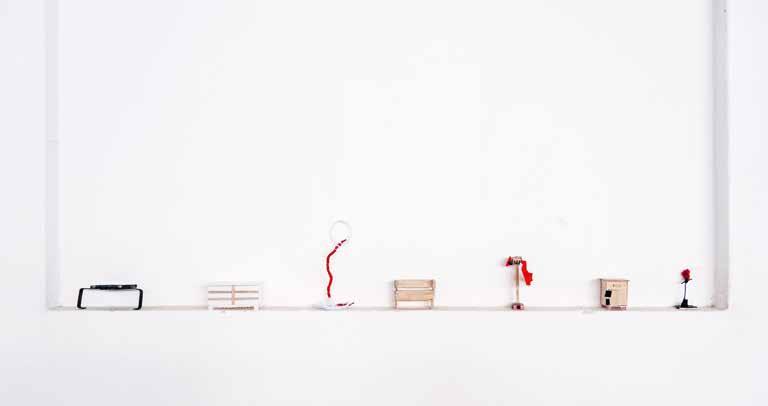
peppers to the pizza, rice to the sushi roll—and attached the clock mechanisms to the back. The students stared at the clocks in amazement. Did they really work? Yes, they did!
All of the furniture, clocks, and cyanotypes were on view during Community Day. The artwork framed and animated the live performances.
Los Diablitos Azules, a band composed of high school students from Presidio, offered a variety of cumbia and contemporary Mexican music.
The Marfa ISD Ballet Folklorico, a group of elementary and high school students, offered three traditional Mexican dances: Las Alazanas , El Tilingo Lingo , and Jarabe Tapatío Baile folklórico is a collective term for traditional dances that blend choreographed movements of regional and ballet characteristics, including Indigenous rituals, Spanish colonial
mecanismos de los relojes en la parte posterior. Los estudiantes contemplaban los relojes con asombro. ¿De verdad funcionaban? ¡Sí, funcionaban!
Todos los muebles, relojes y cianotipias se exhibieron durante el Día de la Comunidad. Las obras enmarcaban y daban vida a las actuaciones en directo. Los Diablitos Azules, un grupo formado por estudiantes de secundaria de Presidio, interpretó un variado repertorio de cumbia y música mexicana contemporánea.
El Ballet Folklórico del Marfa ISD, integrado por alumnos de educación primaria y secundaria, presentó tres danzas tradicionales mexicanas: Las Alazanas , El Tilingo Lingo y Jarabe Tapatío . El baile folklórico es un término que engloba las danzas tradicionales que combinan movimientos coreografiados de carácter regional y elementos propios del ballet, integrando rituales indígenas, influencias de la época colonial española y herencias
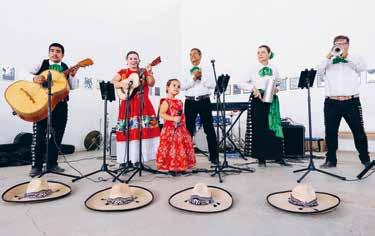
influences, and African heritage, to tell stories. During their performance, the girls demonstrated faldeo , intricate skirt work that appeared to mimic moving waves. In a tender moment at the end, family and audience members joined the performers on the “stage” in Chinati’s Arena. Communities foster a spirit of collaborative engagement when members show up for one another. That’s what the Presidio students did when they celebrated each other’s cyanotypes, and what MISD high schoolers did in the wood shop, especially during the last few days as they worked to finish their furniture pieces.
Families showed up to support their children. Friends and neighbors showed up to experience the talents of young people who are preserving the cultural heritage, oral traditions, and personal stories that will be passed down, strengthening our collective continuity.
Toward the end of Community Day, as Mariachi Santa Cruz played a cover of the song “Nunca es Suficiente” (It Is Never Enough) by Los Ángeles Azules, a sweet, soft voice began singing. It was front woman Molly Ferguson’s daughter, who sang the entire song—the next generation of their mariachi keeping the tradition alive.
africanas para contar historias. Durante las actuaciones, las bailarinas demostraron el faldeo, un elaborado trabajo con las faldas cuyos movimientos evocaban el vaivén de las olas. En un emotivo momento al final de la representación, familiares y miembros del público se unieron a los intérpretes sobre el “escenario” del edificio Arena de Chinati.
Las comunidades fomentan un espíritu de colaboración cuando sus miembros se apoyan mutuamente. Eso fue lo que hicieron los estudiantes de Presidio al celebrar las cianotipias de sus compañeros, y también los alumnos de secundaria del Marfa ISD en el taller de carpintería, especialmente durante los últimos días, cuando trabajaban para terminar sus muebles. Las familias acudieron para apoyar a sus hijos e hijas. Amigos y vecinos acudieron para descubrir el talento de unos jóvenes que preservan el patrimonio cultural, las tradiciones orales y las historias personales que se transmitirán de generación en generación, fortaleciendo así nuestra continuidad colectiva.
Hacia el final del Día de la Comunidad, mientras Mariachi Santa Cruz interpretaba una versión de la canción Nunca es Suficiente , de Los Ángeles Azules, comenzó a escucharse una voz dulce y suave. Era la hija de Molly Ferguson, cantante principal del grupo, que interpretó la canción de principio a fin: la nueva generación de su grupo de mariachi manteniendo viva la tradición.
Maritza Bautista es responsable de educación de la Fundación Chinati.
Maritza Bautista is the education manager at the Chinati Foundation.
MARIACHI SANTA CRUZ PERFORMS, JOINED BY FRONT WOMAN MOLLY FERGUSON’S DAUGHTER. / MARIACHI SA NTA CRUZ ACTÚA JUNTO
STUDENT MODELS OF FURNITURE PROJECTS / MAQUETAS DE PROYECTOS DE MOBILIARIO REALIZADAS POR ESTUDIANTES
CHINATI FOUNDATION
RESIDENCE
FUNDACIÓN CHINATI ARTISTAS EN RESIDENCIA
2025–2026
GUADALUPE ROSALES KLARA LIDÉN DEONDRE DAVIS
GILLIAN WALSH
RHONDA MANLEY
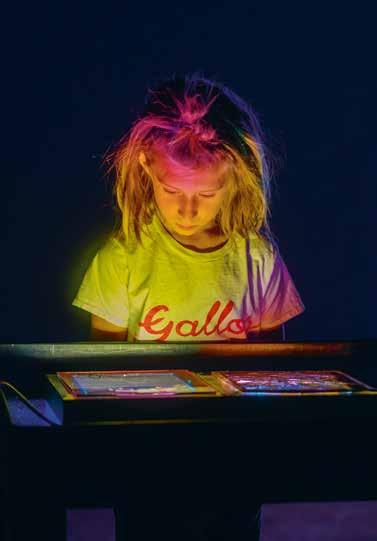
JUNE–JULY, 2025
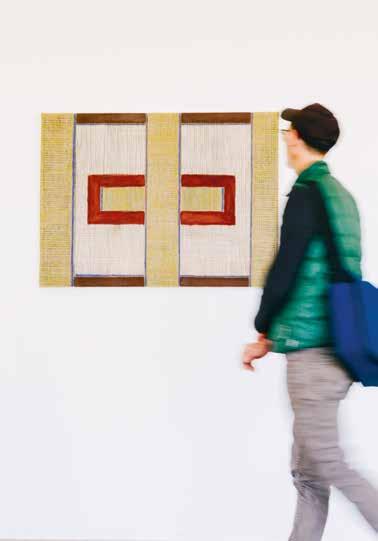
JANUARY–FEBRUARY, 2026
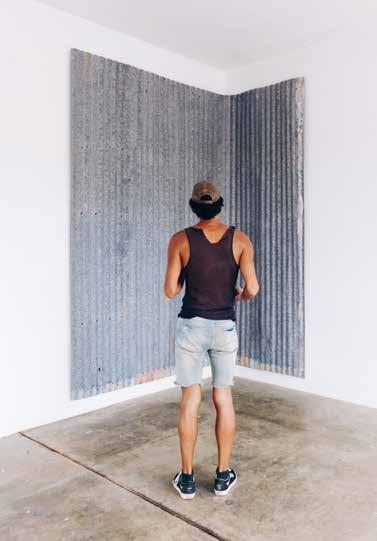
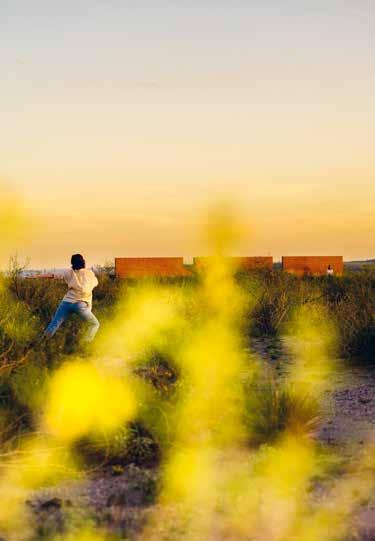
MAY–JUNE, 2026
GUADALUPE ROSALES
DEONDRE DAVIS
KLARA LIDÉN AUGUST–SEPTEMBER, 2025
GILLIAN WALSH
GUADALUPE ROSALES
JUNE–JULY 2025
JUNIO-JULIO DE 2025
For her August 1, 2025, open studio at the Locker Plant, the interdisciplinary artist and educator Guadalupe Rosales read from her book East of the River: A Memoir of Los Angeles Girlhood, exhibited a photographic lightbox assemblage, and presented a generous selection of materials from her Instagram-based and community-contributed archives @veteranas_and_rucas and @map_pointz. Featuring photographs, printed ephemera, and objects submitted by followers documenting Latinx youth culture in Southern California, including backyard party scenes and underground raves of the 1990s and early 2000s, @veteranas_and_rucas and @map_pointz have become significant archives documenting culture and community.
During her residency, Rosales worked on East of the River (2026). The book presents images the artist selected from her archive, reflections on her childhood and teenage years in Los Angeles, and how these contributed to the development of her personal and collective artistic practice.
Guadalupe Rosales (born 1980; lives and works in Los Angeles) received her MFA from the School of the Art Institute of Chicago in 2016. Recent solo exhibitions include Tzahualli Mi memoria en tu reflejo , Palm Springs Art Museum (2025); Drifting on a Memory , Dallas Museum of Art (2021); El rocío sobre las madrugadas sin fin , Museo Universitario del Chopo, Mexico City (2020); Guadalupe Rosales , Gordon Parks Foundation, Pleasantville, New York (2019); East of the River , Commonwealth and Council, Los Angeles (2022); and Legends Never Die: A Collective Memory, Aperture Foundation, New York (2018). Recent public projects include Tumbados , Storefront for Art and Architecture, New York (2024–2025). Additionally, Rosales participated in the 61st Venice Biennale, In Minor Keys (2026), as part of the main exhibition.
Con motivo de su estudio abierto al público celebrado el 1 de agosto de 2025 en el Locker Plant, la artista interdisciplinar y educadora Guadalupe Rosales leyó un fragmento de su libro, East of the River: A Memoir of Los Angeles Girlhood [Al este del río: memorias de la infancia de una chica de Los Ángeles], presentó un ensamblaje fotográfico en caja de luz y mostró una amplia selección de materiales procedentes de sus archivos comunitarios y desarrollados a través de Instagram, @veteranas_and_rucas y @map_pointz. Integrados por fotografías, material efímero impreso y objetos enviados por sus seguidores que documentan la cultura juvenil latinx del sur de California —incluidas escenas de fiestas en patios traseros y raves clandestinas de las décadas de 1990 y 2000—, @veteranas_and_rucas y @map_pointz se han consolidado como importantes archivos dedicados a preservar la memoria de estas comunidades y sus expresiones culturales.
Durante su residencia, Rosales trabajó en East of the River (2026). El libro reúne una selección de imágenes de su archivo personal junto con reflexiones sobre su infancia y adolescencia en Los Ángeles, y explora cómo estas experiencias contribuyeron al desarrollo de su práctica artística, tanto personal como colectiva.
Guadalupe Rosales (nacida en 1980; vive y trabaja en Los Ángeles) obtuvo un máster en bellas artes de la School of the Art Institute of Chicago en 2016. Entre sus exposiciones individuales más recientes se encuentran Tzahualli: Mi memoria en tu reflejo , Palm Springs Art Museum (2025); Drifting on a Memory [A la deriva de un recuerdo], Dallas Museum of Art (2021); El rocío sobre las madrugadas sin fin , Museo Universitario del Chopo, Ciudad de México (2020); Guadalupe Rosales , Gordon Parks Foundation, Pleasantville, Nueva York (2019); East of the River [Al este del río], Commonwealth and Council, Los Ángeles (2022); y Legends Never Die: A Collective Memory [Las leyendas nunca mueren: una memoria colectiva], Aperture Foundation, Nueva York (2018). Entre sus proyectos públicos más recientes figura Tumbados , presentado en Storefront for Art and Archi tecture, Nueva York (2024–2025). Además, Rosales participó en la 61ª Bienal de Venecia, In Minor Keys [En claves menores] (2026), como parte de la exposición principal.
KLARA LIDÉN
AUGUST–SEPTEMBER 2025
AGOSTO-SEPTIEMBRE DE 2025
In conjunction with Chinati Weekend 2025, Klara Lidén presented Metal Postcard , a two-part exhibition. In the Locker Plant’s airy front room, Lidén installed sheets of corrugated metal, sourced and shipped from distant collaborators to her temporary studio in Marfa. Despite their uniformity of material, each unique piece reflects a nuanced, specific history, ultimately inferred through the surface qualities along with the intentionally spare details provided by Lidén. In the darkened middle gallery, two slide shows were projected on adjacent walls. In the first, Lidén walks through a courtyard and disappears down a manhole. In the second, she somersaults in the desert, a tumbleweed raking across the landscape.
Lidén’s preferred media is often refuse: cultural ephemera, like hundreds of Christmas trees discarded to the curb come January, or stacks of posters stapled on top of one another, each their own signifier of a time and place, obscured by the immediacy of the next. Her performances are typically staged in urban environments, where she oscillates between making a spectacle of herself and attempting to disappear. We see her climbing, fighting, dancing, descending, or tumbling; as viewers, we witness a person miraculously behaving in a way that feels decidedly punk
Klara Lidén (born 1979, Stockholm; lives and works in Berlin) attended the School of Architecture, Royal School of Technology from 2000 to 2004, before studying at University College of Arts Crafts and Design, Konstfack, from 2004 to 2007, both in Stockholm. Her recent solo exhibitions include Square Moon , Sadie Coles HQ, London (2024); VERDEBELVEDERE , Reena Spaulings Fine Art, New York (2024); (0, 0, 0) , Galerie Neu, Berlin (2023); and BABARUE , 0CTO, Marseille, France (2022). Additionally, Lidén participated in the 61st Venice Biennale, In Minor Keys (2026), as part of the main exhibition.
Con motivo del Fin de Semana de Chinati de 2025, Klara Lidén presentó Metal Postcard [Postal de metal], una exposición dividida en dos partes. En la luminosa sala de entrada del Locker Plant instaló planchas de chapa metálica ondulada, obtenidas por colaboradores situados en distintos lugares y enviados a su estudio temporal en Marfa. Aunque todas están realizadas con el mismo material, cada pieza posee una historia particular que puede intuirse a través de las huellas de su superficie y de la escueta información proporcionada deliberadamente por la artista. En la galería central, sumida en la oscuridad, se proyectaban dos pases de diapositivas sobre paredes contiguas. En el primero, Lidén atraviesa un patio y desaparece por una alcantarilla; en el otro, da volteretas en el desierto mientras una planta rodadora cruza el paisaje.
Los materiales de desecho constituyen con frecuencia el medio de expresión predilecto de Lidén: restos de la cultura material, como cientos de árboles de Navidad abandonados en la acera al terminar las fiestas o capas de carteles superpuestos, cada uno testimonio de un momento y un lugar concretos, ocultos por la inmediatez del siguiente. Sus performances suelen desarrollarse en entornos urbanos, donde oscila entre convertirse deliberadamente en el centro de atención y tratar de desaparecer. La vemos trepar, luchar, bailar, descender o rodar por el suelo; como espectadores, asistimos a acciones que desafían lo cotidiano y transmiten una actitud inconfundiblemente punk
Klara Lidén (nacida en 1979 en Estocolmo; vive y trabaja en Berlín) estudió en la School of Architecture de la Royal School of Technology entre 2000 y 2004 y, posteriormente, en la University College of Arts, Crafts and Design (Konstfack), ambos de Estocolmo, entre 2004 y 2007. Entre sus exposiciones individuales más recientes se encuentran Square Moon [Luna cuadrada] en Sadie Coles HQ, Londres (2024); VERDEBELVEDERE , en Reena Spaulings Fine Art, Nueva York (2024); (0, 0, 0) , en la Galerie Neu, Berlín (2023); y BABARUE , 0CTO, en Marsella, Francia (2022). Además, Lidén participó en la 61ª Bienal de Venecia, In Minor Keys [En claves menores] (2026), como parte de la exposición principal.
DEONDRE DAVIS
JANUARY–FEBRUARY 2026
ENERO-FEBRERO DE 2026
Deondre Davis is a self-taught painter and interdisciplinary artist working primarily in oil painting and sculpture. His practice considers the intersections of architecture, space, and identity.
For his open studio at the Locker Plant, Davis presented six stretched paintings and six drawings, alongside several found objects altered by the artist. These works, of seventeen pieces in total and developed, in part, by the artist’s time at the Chinati Foundation, were included in his solo show at Gordon Robichaux, New York, this year.
Davis’s objects, which can be read individually or as a totality according to their installation, reference past and present architectures, layering meaning through material references such as copper pipe, discarded household fixtures, and false eyelashes. Several pieces evoke legendary queer nightlife spaces with little historical record, drafting and presenting imagined floor plans derived from the spaces referenced in each title.
Deondre Davis (born 1991; lives and works in Los Angeles) has had recent solo exhibitions at Gordon Robichaux, New York (2026 and 2024) and Castle, Los Angeles (2025). Recent group exhibitions include Glastonbury , Sidecar, Los Angeles (2025); Finding Aid , Goldsmiths Centre for Contemporary Art, London (2024); Jamb , Et al., San Francisco (2024); LOVESCENE , Black Brick Project, Brooklyn, NY (2024); and 2 of Amerikas Most Wanted , a two-artist show with Acacia Marable, Attom, Los Angeles (2024).
Deondre Davis es pintor autodidacta y artista interdisciplinar que trabaja principalmente con la pintura al óleo y la escultura. Su práctica artística explora las intersecciones entre la arquitectura, el espacio y la identidad.
Con motivo de su estudio abierto al público en el Locker Plant, Davis presentó seis pinturas sobre lienzo y seis dibujos, junto con varios objetos encontrados y alterados por el propio artista. Este conjunto de diecisiete obras, desarrollado en parte durante su estancia en la Fundación Chinati, formó parte este año de su exposición individual en Gordon Robichaux, Nueva York.
Los objetos de Davis, que pueden entenderse tanto de manera individual como en conjunto según su disposición en el espacio expositivo, hacen referencia a arquitecturas del pasado y del presente, superponiendo significados mediante materiales como tuberías de cobre, elementos domésticos desechados y pestañas postizas. Varias de las piezas evocan legendarios espacios de la vida nocturna queer de los que apenas existen registros históricos, elaborando y presentando planos imaginarios inspirados en los espacios mencionados en cada título.
Deondre Davis (nacido en 1991; vive y trabaja en Los Ángeles) ha presentado recientemente exposiciones individuales en Gordon Robichaux, Nueva York (2026 y 2024), y Castle, Los Ángeles (2025). Entre sus exposiciones colectivas más recientes figuran Glastonbury , Sidecar, Los Ángeles (2025); Finding Aid [Buscando ayuda] Goldsmiths Centre for Contemporary Art, Londres (2024); Jamb [Jamba] Et al., San Francisco (2024); LOVESCENE [ESCENADEAMOR] Black Brick Project, Brooklyn, Nueva York (2024); y 2 of Amerikas Most Wanted [2 de los más buscados de Amérika] una exposición de dos artistas junto a Acacia Marable en Attom, Los Ángeles (2024).
GILLIAN WALSH
MAY–JUNE 2026
MAYO–JUNIO DE 2026
Gillian Walsh is an artist, choreographer, and performer working at the intersections of movement and meditation. Her recent projects explore religious temporal aesthetics, material conditions of performance, and the dancer.
During her residency, Walsh studied Donald Judd’s collaborations with the Trisha Brown Dance Company. She also spent time with Judd’s 15 untitled works in concrete (1980–84) and former artist in residence Anders Krüger’s Casa de los Valientes (1994), located on the southern edge of Chinati’s property.
Walsh was joined by frequent collaborators Maggie Cloud and Emma Cohen for several weeks near the culmination of her time at Chinati. Together, they performed EXCUSE ME , I’M LOST , a series of dances over three days taking place at Casa de los Valientes . The iterative work expanded on themes from Walsh’s divinity school experience, studying acknowledged spiritualities and religious aesthetics in secular art.
Gillian Walsh (b. 1988, New York; lives and works in Brooklyn, NY) has had recent presentations of I need to bear it with grace , Yale Divinity School (2026); Lonely Lamb/Uan Uigneach , Clogher Strand, Dingle, Ireland (2024); Friday Night Lights , Dia Chelsea, New York (2024); Wilderness , Danspace Project/New York City Players, New York (2023); May , Gropius Bau, Berlin (2022); and Fame Notions , Performance Space New York (2019). Walsh is a recent graduate of Yale Divinity School.
Gillian Walsh es artista, coreógrafa e intérprete, y su trabajo se sitúa en la intersección entre el movimiento y la meditación. Sus proyectos más recientes exploran las estéticas temporales de lo religioso, las condiciones materiales de la performance y la figura de la bailarina. Durante su residencia, Walsh estudió las colaboraciones de Donald Judd con la Trisha Brown Dance Company. También dedicó tiempo a las 15 obras sin título en hormigón (1980–1984) de Judd y a Casa de los Valientes (1994), del antiguo artista residente Anders Krüger, situada en el extremo sur del recinto de Chinati. En las últimas semanas de su residencia en Chinati, Walsh estuvo acompañada por sus colaboradoras habituales Maggie Cloud y Emma Cohen. Juntas presentaron EXCUSE ME, I’M LOST [PERDONE, ESTOY PERDIDA] una serie de actuaciones de danza que tuvo lugar durante tres días en Casa de los Valientes . Esta obra de carácter reiterativo amplía temas surgidos de la experiencia de Walsh en la Yale Divinity School, donde estudió las espiritualidades reconocidas y las estéticas religiosas en el arte secular.
Gillian Walsh (n. 1988, Nueva York; vive y trabaja en Brooklyn, Nueva York) ha presentado recientemente I need to bear it with grace [Necesito sobrellevarlo con entereza], Yale Divinity School (2026); Lonely Lamb/Uan Uigneach [Cordero solitario/Uan Uigneach], Clogher Strand, Dingle, Irlanda (2024); Friday Night Lights [Las luces del viernes por la noche], Dia Chelsea, Nueva York (2024); Wilderness [Naturaleza salvaje], Danspace Project/New York City Players, Nueva York (2023); May [Mayo], Gropius Bau, Berlín (2022); y Fame Notions [Nociones de fama], Performance Space New York (2019). Walsh se graduó recientemente de la Yale Divinity School.
GUADALUPE ROSALES
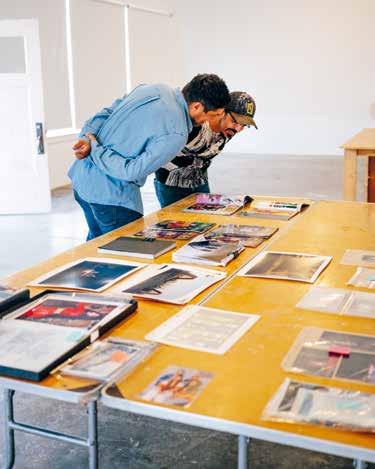
GUADALUPE ROSALES, OPEN STUDIO, AUGUST 2025 / GUADALUPE ROSALES, ESTUDIO ABIERTO AL PÚBLIC O, AGOSTO DE 2025
KLARA LIDÉN
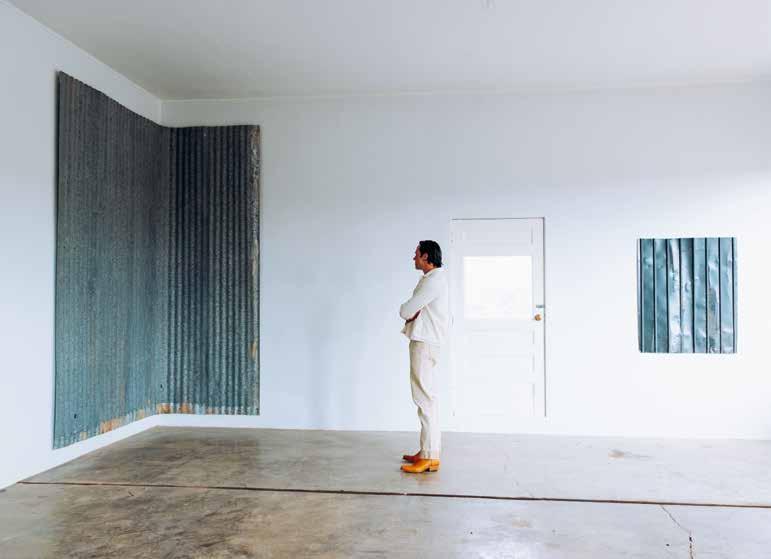
KLARA LIDÉN, OPEN STUDIO, OCTOBER 2025 / KLARA LIDÉN, ESTUDIO ABIERTO AL PÚBLICO, OCTUBRE DE 2025
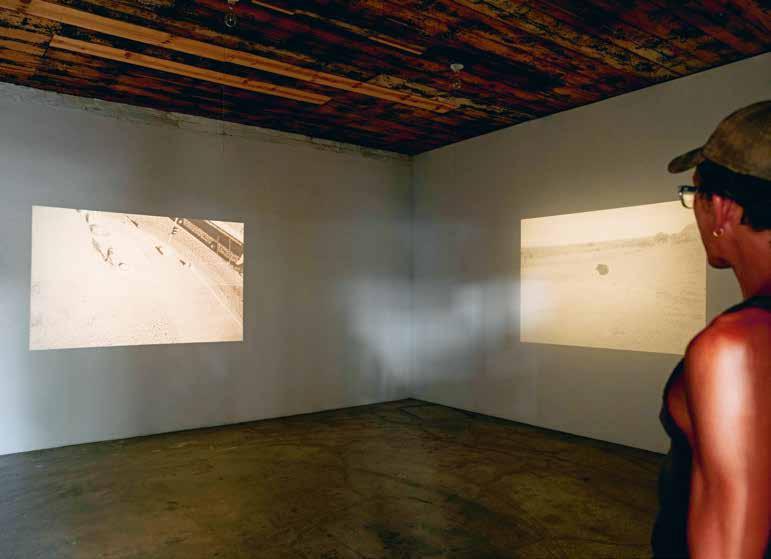
DEONDRE DAVIS
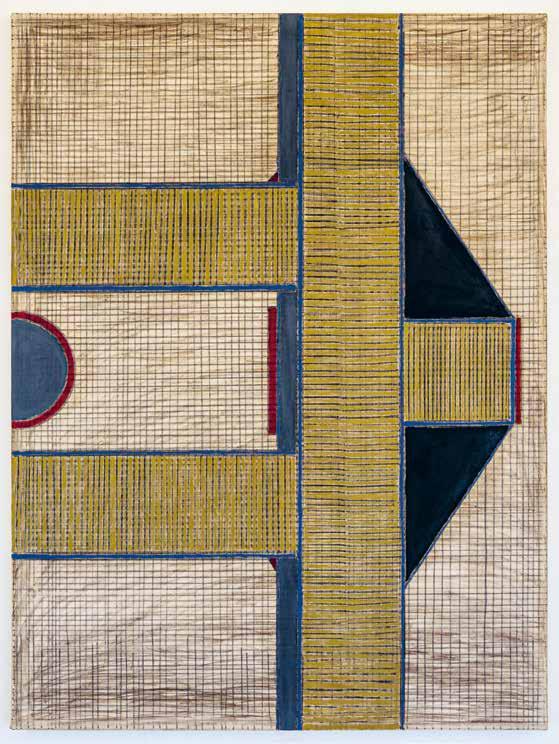
JOE’S DELUXE (JOE’S DELUXE CLUB, CHICAGO) , 2026. PENCIL, GOUACHE, AND OIL ON CANVAS. 40 X 30 IN. / JOE’S DELUXE (JOE’S DELUXE CLUB, CHICAGO) , 2026. LÁPIZ, GOUACHE Y ÓLEO SOBRE LIENZO. 101,6 × 76,2 CM
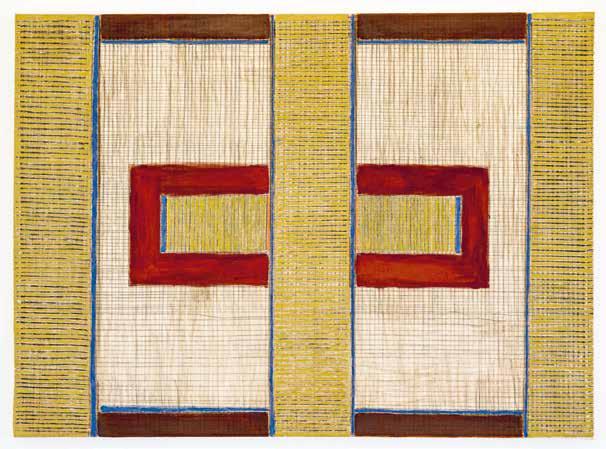
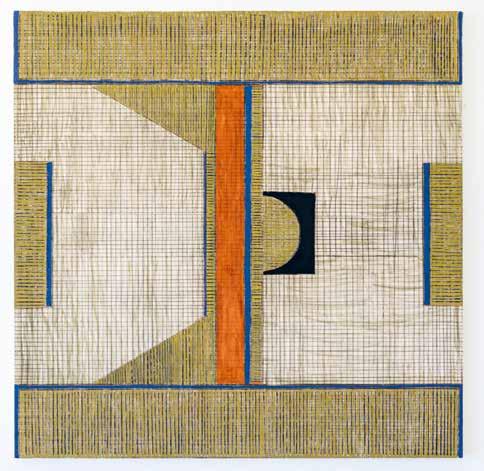
ACME (THE ACME BAR, SAN ANTONIO, TEXAS) , 2026. PENCIL, GOUACHE, AND OIL ON CANVAS. 30 X 40 IN. /
ACME (THE ACME BAR, SAN ANTONIO, TEXAS ), 2026. LÁPIZ, GOUACHE, Y ÓLEO SOBRE LIENZO. 76,2 × 101,6 CM
KKC (KITTY KAT CLUB, CHICAGO) , 2026. PENCIL, GOUACHE, AND OIL ON CANVAS. 36 X 36 IN. / KKC (KITTY KAT CLUB, CHICAGO) , 2026. LÁPIZ, GOUACHE Y ÓLEO SOBRE LIENZO. 91,4 × 91,4 CM
GILLIAN WALSH
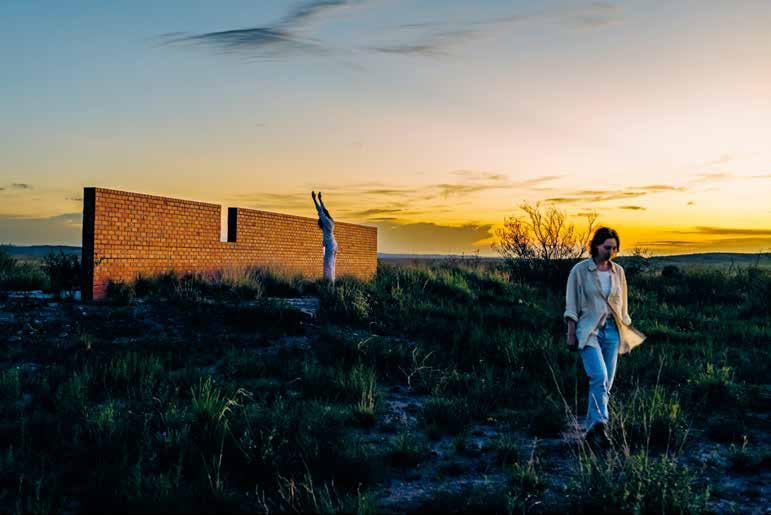
GILLIAN WALSH, EXCUSE ME , I’M LOST , PERFORMED BY MAGGIE CLOUD AND EMMA COHEN, THE CHINATI FOUNDATION, JUNE 12–14, 2026 / GILLIAN WALSH, EXCUSE ME , I’M LOST [PERDONE , ESTOY PERDIDA], INTERPRETADA POR MAGGIE CLOUD Y EMMA COHEN, LA FUNDACIÓN CHINATI, 12–14 DE JUNIO DE 2026
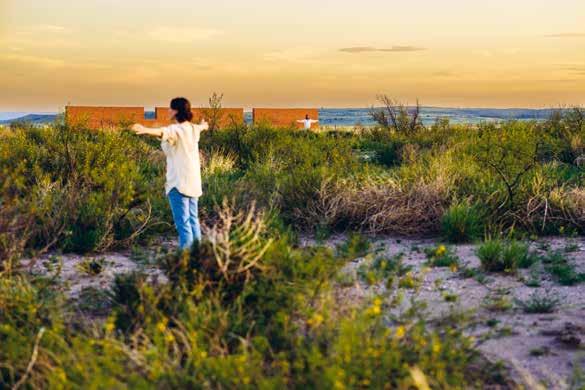
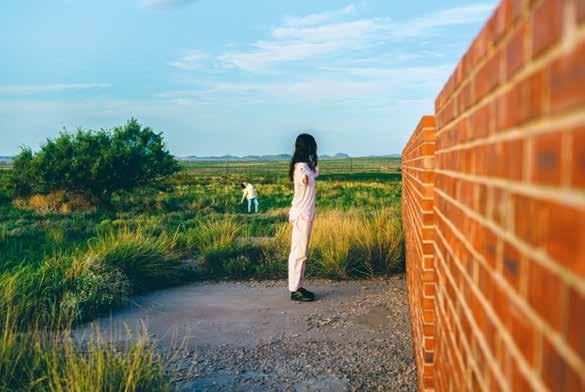
MEMBERSHIP EDITION EDICIÓN PARA LOS AFILIADOS
Roni Horn
Constellation , 2016/2026
Pigment print on paper
Impresión pigmentada sobre papel
Edition of 30 + 5 APs
Edición de 30 + 5 APs
12 ¼ × 16 ½ in.
31,1 × 41,9 cm
Each year, the Chinati Foundation presents a limited-edition artwork to members who join at the Partner level or above. The 2026 Membership Edition is by Roni Horn, whose work Things That Happen Again (1986–88) was installed at the Chinati Foundation by Donald Judd and Horn in 1988.
Over the years, Horn has developed a multidisciplinary practice that includes photo installation, sculpture, drawing, artist’s books, and writing. The conceptually driven approach engages, among other things, the fluid essence of identity, the pervasive and fundamental reality of paradox, and the importance of the experiential
Cada año, la Fundación Chinati presenta una obra de arte de edición limitada para los afiliados que se incorporan al nivel de Socio o superior. La edición para los afiliados de 2026 es de Roni Horn, cuya obra Things That Happen Again [Cosas que vuelven a suceder] (1986–1988) fue instalada en la Fundación Chinati por Donald Judd y la propia Horn en 1988.
A lo largo de los años, Horn ha desarrollado una práctica artística multidisciplinar que incluye instalaciones fotográficas, escultura, dibujo, libros de artista y escritura. Su enfoque, impulsado por una sólida base conceptual, aborda, entre otros temas, la naturaleza fluida de la identidad, la realidad omnipresente y fundamental de la paradoja, y la importancia de la experiencia en relación con el lugar y el arte. La repetición, el emparejamiento, la dualidad y el matiz aparecen con frecuencia en su obra. Desde 1975, sus frecuentes viajes en solitario a Islandia han constituido una influencia fundamental en su
in place and art. Repetition, pairing, doubling, and nuance come up frequently in her art. Since 1975, Horn’s frequent solitary travels in Iceland have been a central influence. Similarly, literature, journalism, and writing, in general, play their role as well, with Horn sometimes employing the written word as her medium. Horn lives and works in New York and Maine. She holds a BFA from the Rhode Island School of Design and an MFA from Yale University. Solitary travels in Iceland include periods in 1975 and during 1979 to 2015.
Recent solo museum exhibitions include Louisiana Museum of Art, Humblebæk, Denmark; Museum Ludwig, Cologne; Centro Botín, Santander, Spain; He Art Museum, Shunde, Foshan, Guangdong, China; Bourse de Commerce, Paris; Pola Museum of Art, Hakone, Japan; Fondation Beyeler, Basel; and the Menil Drawing Institute, Houston.
trabajo. Del mismo modo, la literatura, el periodismo y la escritura en general desempeñan un papel importante en su práctica artística, llegando en ocasiones a utilizar la palabra escrita como medio de expresión. Horn vive y trabaja entre Nueva York y Maine. Obtuvo una licenciatura en Bellas Artes de la Rhode Island School of Design y un máster en Bellas Artes de la Universidad de Yale. Sus estancias en solitario en Islandia incluyen periodos en 1975 y de forma continuada entre 1979 y 2015. Entre sus exposiciones individuales recientes en museos destacan las celebradas en el Louisiana Museum of Modern Art, en Humlebæk, Dinamarca; el Museum Ludwig, en Colonia; el Centro Botín, en Santander, España; el He Art Museum, en Shunde, Foshan, Guangdong, China; la Bourse de Commerce, en París; el Pola Museum of Art, en Hakone, Japón; la Fondation Beyeler, en Basilea; y el Menil Drawing Institute, en Houston.
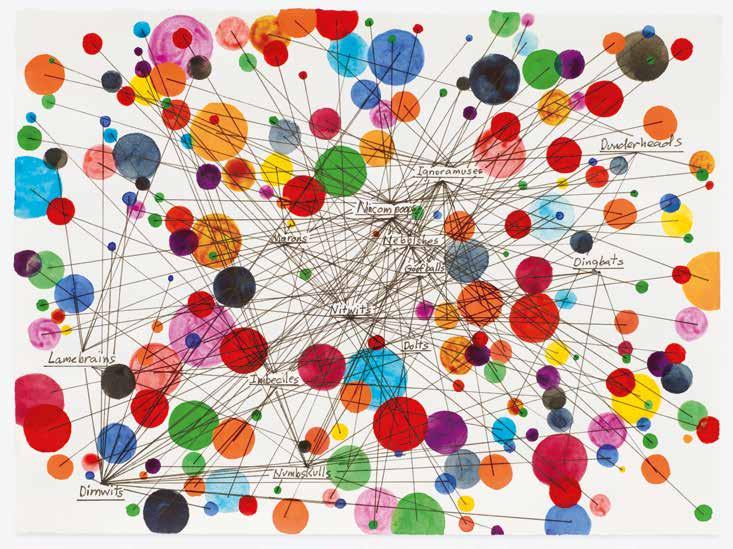
THE YEAR IN PUBLIC PROGRAMS EL AÑO EN PROGRAMAS PÚBLICOS
Each year, the Chinati Foundation presents programs and workshops that establish links between Marfa, its surrounding communities, and a broad range of people and organizations—artists, writers, musicians, architects, cultural institutions, and universities in the United States and abroad.
PRIDE ZINE-MAKING WORKSHOP
June 13, 2025
Cada año, la Fundación Chinati organiza programas y talleres que fortalecen los vínculos entre Marfa, las comunidades de su entorno y una amplia red de personas e instituciones, entre ellas artistas, escritores, músicos, arquitectos, organizaciones culturales y universidades de Estados Unidos y de otros países.
TALLER DE CREACIÓN DE ZINES CON MOTIVO DEL ORGULLO 13 de junio de 2025
During Pride Marfa, an intersectional, community-organized weekend, the Education Department led a free, drop-in zine-making workshop. Zines, short for magazines, are small publications with historical ties to DIY and subculture communities due to ease of production and distribution.
Con motivo del Orgullo Marfa, un fin de semana organizado por la comunidad con un enfoque interseccional, el Departamento de Educación ofreció un taller gratuito y de acceso libre para la creación de zines . Los zines , —abreviatura de magazines [revistas]— son pequeñas publicaciones autoeditadas, estrechamente vinculadas históricamente a la cultura DIY [hazlo tú mismo] y a las subculturas, gracias a la facilidad con la que pueden producirse y distribuirse.
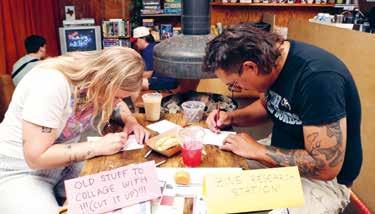
STUDENT SUMMER WORKSHOPS
July 25–August 8, 2025
TALLERES DE VERANO PARA ESTUDIANTES 25 de julio–8 de agosto de 2025
In addition to the annual Summer Shake-Up program, the Education Department hosted student programming throughout the summer months. Students of all ages were invited to a series of art-making workshops. Activities included making sketchbooks, garden decorations, and spray-foam abstract sculptures.
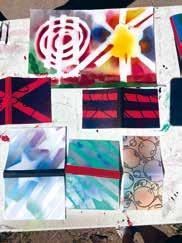
Además del programa anual Summer Shake-Up, el Departamento de Educación organizó diversas actividades dirigidas a estudiantes durante los meses de verano. Estudiantes de todas las edades fueron invitados a una serie de talleres de creación artística en los que elaboraron cuadernos de dibujo, adornos para jardines y esculturas abstractas realizadas con espuma expansiva en aerosol.
CHINATI WEEKEND 2025
October 10–12, 2025
FIN DE SEMANA DE CHINATI 2025
10–12 de octubre de 2025
TALK AND WALK WITH BIRDER TIFFANY KERSTEN
August 15–16, 2025
CHARLA Y PASEO CON LA ORNITÓLOGA TIFFANY KERSTEN 15–16 de agosto de 2025
Chinati partnered with the Chihuahuan Desert Research Institute (CDRI) to host renowned birder Tiffany Kersten for a talk and a birding walk. Kersten presented on her year traveling across the country identifying over seven hundred species of birds—a national birding record. The following day, Kersten led a birding excursion through the CDRI’s nature center and botanical gardens, where participants saw a variety of species, including regional summer residents and birds beginning their flocking and migration further south.
La Fundación Chinati colaboró con el Chihuahuan Desert Research Institute (CDRI) [Instituto de Investigación del Desierto Chihuahuense] para organizar una conferencia y una salida de observación de aves con la reconocida ornitóloga Tiffany Kersten. Kersten compartió su experiencia tras recorrer Estados Unidos durante un año identificando más de setecientas especies de aves, un logro que constituyó un récord nacional de observación de aves. Al día siguiente, dirigió una excursión por el centro de naturaleza y los jardines botánicos del CDRI, donde los participantes pudieron observar numerosas especies, entre ellas aves residentes durante el verano y otras que comenzaban a reunirse en bandadas antes de emprender su migración hacia el sur.
In October 1987, Donald Judd began the tradition of inviting friends and collaborators to Marfa for an “Open House,” consisting of special exhibitions, talks, music, and meals. Now called Chinati Weekend, this year featured the opening of two exhibitions, Oscar Hagerman: Sillas de México and Fred Sandback: Sculpture ; an open studio with Chinati Artist in Residence Klara Lidén; a benefit dinner; and the following programs, all of which were free to the public.
Performance by Roscoe Mitchell Trio October 10, 2025
Legendary jazz musician Roscoe Mitchell and collaborators Vincent Davis and Junius Paul delivered an extraordinary performance at the Capri. For over forty years, master saxophonist Mitchell has been a
En octubre de 1987, Donald Judd inició la tradición de invitar a amigos y colaboradores a Marfa para celebrar unas jornadas de puertas abiertas, con exposiciones especiales, conferencias, conciertos y comidas compartidas. Hoy conocido como Fin de Semana en Chinati, el programa de este año incluyó la inauguración de dos exposiciones — Oscar Hagerman: Sillas de México y Fred Sandback: Sculpture [Fred Sandback: escultura]—; un estudio abierto al público de la artista residente de Chinati Klara Lidén; una cena benéfica; y los siguientes programas, todos ellos gratuitos y abiertos al público.
Actuación del Trio Roscoe Mitchell Trio 10 de octubre de 2025
El legendario músico de jazz Roscoe Mitchell, junto con sus colaboradores Vincent Davis y Junius Paul, ofreció una extraordinaria actuación en el Capri. Durante más de cuarenta años, el maestro saxofonista Mitchell ha sido un incansable explorador de nuevas formas e ideas. En el marco del Fin de Semana en Chinati,
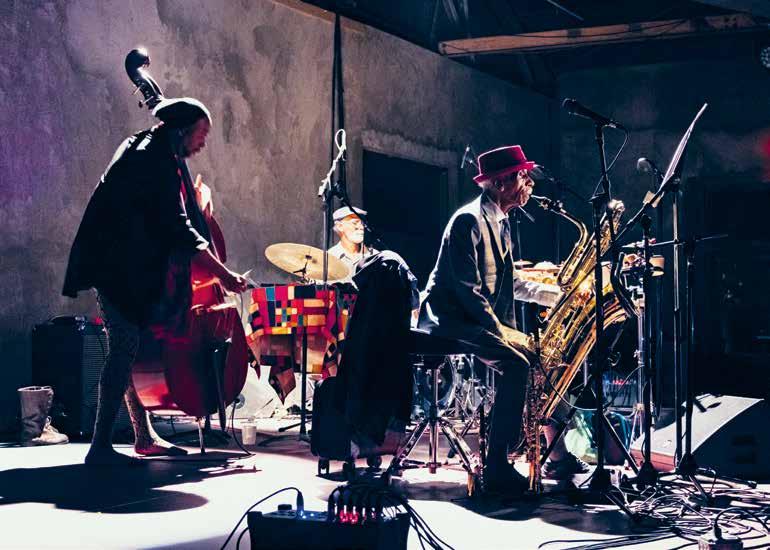
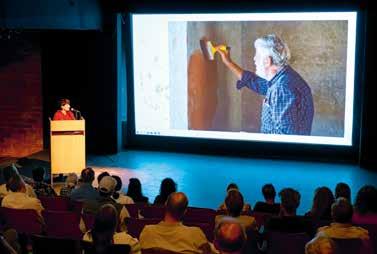
restless explorer of new forms and ideas. At Chinati Weekend, Mitchell, who continues to perform with various collaborators and configurations, was joined by Davis on drums and Paul on bass.
Alejandra de la Mora on Oscar Hagerman
October 11, 2025
Alejandra de la Mora is an architect who spent more than a decade working at the Institute of the National Housing Fund for Workers in Mexico. At the Crowley Theater, de la Mora gave a talk on the vernacular architecture of Oscar Hagerman, exploring his many projects. The presentation was interspersed with clips of her conversations with Hagerman. This intimate interview guided de la Mora’s talk.
Joshua Decter on Fred Sandback
October 11, 2025
Joshua Decter, a writer and curator working closely with the Sandback Foundation, provided insight into the history of Fred Sandback’s practice, drawing on the idea of “spatial acupuncture.”
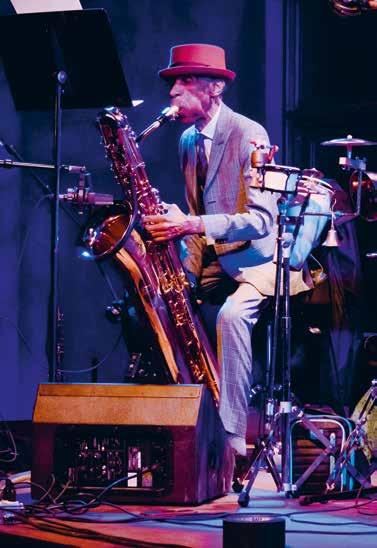
Mitchell, que continúa actuando con distintas formaciones y colaboradores, estuvo acompañado por Davis a la batería y Paul al contrabajo.
Alejandra de la Mora sobre
Óscar Hagerman 11 de octubre de 2025
Alejandra de la Mora es arquitecta y trabajó durante más de una década en el Instituto del Fondo Nacional de la Vivienda para los Trabajadores de México. En el Crowley Theater, de la Mora ofreció una conferencia sobre la arquitectura vernácula de Óscar Hagerman, en la que exploró numerosos proyectos del arquitecto. La presentación estuvo intercalada con fragmentos de sus conversaciones con Hagerman. Esta entrevista de carácter íntimo sirvió como hilo conductor de la conferencia.
Joshua Decter sobre
Fred Sandback 11 de octubre de 2025
Joshua Decter, escritor y comisario de arte que trabaja en estrecha colaboración con la Sandback Foundation, ofreció una aproximación a la trayectoria artística de Fred Sandback a partir del concepto de la “acupuntura espacial”.
Film Screening of El Patio de mi Casa and Q&A with director Carlos Hagerman October 12, 2025
The documentary film El Patio de mi Casa (2015), by filmmaker Carlos Hagerman, serves as a beautiful portrait of Doris and Oscar Hagerman, Carlos’s parents, who have been living and working together for over forty years.
Proyección de película El Patio de mi Casa y coloquio con el director Carlos Hagerman 12 de octubre de 2025
El documental El Patio de mi Casa (2015), del cineasta Carlos Hagerman, constituye un hermoso retrato de Doris y Óscar Hagerman, padres del director, quienes han vivido y trabajado juntos durante más de cuarenta años.
ROSCOE MITCHELL TRIO PERFORMS AT THE CAPRI DURING CHINATI WEEKEND 2026. /
EL TRÍO ROSCOE MITCHELL ACTÚA EN EL CAPRI DURANTE EL FIN DE SEMANA EN CHINATI 2026.
ALEJANDRA DE LA MORA GIVES A TALK ON THE WORK OF OSCAR HAGERMAN AT THE CROWLEY THEATER. / ALEJANDRA DE LA MORA OFRECE UNA CHARLA SOBRE LA OBRA DE ÓSCAR HAGERMAN EN EL CROWLEY THEATER.
CARLOS HAGERMAN, IRINA CALDERÓN, ALEJANDRA DE LA MORA, AND CLAUDIA BARRIGA CELEBRATING THE OPENING OF OSCAR HAGERMAN: SILLAS DE MÉXICO / CARLOS HAGERMAN, IRINA CALDERÓN, ALEJANDRA DE LA MORA, Y CLAUDIA BARRIGA CELEBRAN LA INAUGURACIÓN DE ÓSCAR HAGERMAN: SILLAS DE MÉXICO
KATHARINA GROSSE: THE PROCESS
November 8, 2025
KATHARINA GROSSE: EL PROCESO
8 de noviembre de 2025
In collaboration with Galerie Max Hetzler, Chinati presented a screening of Katharina Grosse: The Process , a film by Claudia Müller. The experimental documentary captures Grosse’s creative process and studio practice.
En colaboración con la Galerie Max Hetzler, Chinati presentó la proyección de Katharina Grosse: The Process [Katharina Grosse: el proceso], una película de Claudia Müller. Este documental experimental muestra el proceso creativo y la práctica de estudio de Katharina Grosse.
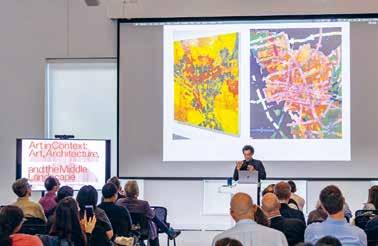
ART IN CONTEXT: PART II
November 14–15, 2025
EL ARTE EN CONTEXTO: PARTE II 14–15 de noviembre de 2025
In November, Chinati and Rice University School of Architecture hosted Part II of Art in Context: Art, Architecture, and the Middle Landscape symposium in Houston, expanding on the conversations that began in Marfa last April.
Part II gathered artists, architects, and landscape designers to examine the relationship between the three closely interrelated disciplines. Together, the group considered Donald Judd’s influence on museum architecture and the varied contexts of art and architecture as shaped by place, culture, and
En noviembre, Chinati y la Escuela de Arquitectura de la Universidad Rice organizaron en Houston la segunda parte del simposio Art in Context: Art, Architecture, and the Middle Landscape [El arte en contexto: arte, arquitectura y el paisaje intermedio], ampliando las conversaciones iniciadas en Marfa el pasado mes de abril.
La segunda parte reunió a artistas, arquitectos y paisajistas para examinar la relación entre estas tres disciplinas estrechamente interrelacionadas. Juntos, el grupo reflexionó sobre la influencia de Donald Judd en la arquitectura museística y sobre los diversos contextos del arte y la arquitectura, configurados por el lugar, la cultura y la historia. La segunda parte coincidió asimismo con la exposición
history. Part II also coincided with a related exhibition, Art in Context, presented as part of Exhibitions at Rice.
Friday
Welcome by Igor Marjanoviˇc Opening Remarks by Troy Schaum Sofia von Ellrichshausen talk
Saturday
Piet Oudolf with Caitlin Murray and Stephen Martin Rick Lowe talk
Tei Carpenter, Ludovico Centis, and Kate Newby, moderated by Jesús Vassallo Katharina Grosse talk
Sunday
Annabelle Selldorf in conversation with Julian Rose
relacionada Art in Context [El arte en contexto], presentada dentro del programa Exposiciones en Rice.
Viernes
Bienvenida a cargo de Igor Marjanovicˇ Discurso de apertura a cargo de Troy Schaum
Conferencia de Sofia von Ellrichshausen
Sábado
Piet Oudolf, con Caitlin Murray y Stephen Martin
Conferencia de Rick Lowe
Tei Carpenter, Ludovico Centis y Kate Newby, moderados por Jesús Vassallo Conferencia de Katharina Grosse
Domingo
Annabelle Selldorf en conversación con Julian Ros
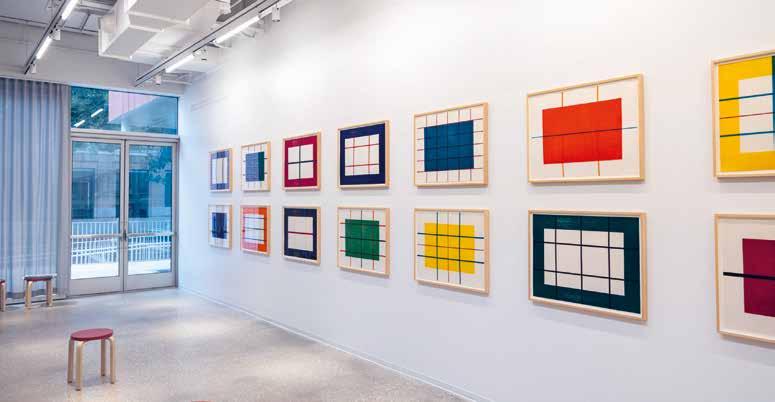
SEEING LIGHT: LIVE READING OF STUDENT CREATIVE WRITING
December 7, 2025
VER LA LUZ: LECTURA PÚBLICA DE TEXTOS DE ESCRITURA CREATIVA DEL ALUMNADO
7 de diciembre de 2025
Sul Ross State University’s Languages & Literature Department presented Seeing Light , a live reading of student creative writing. Following a September visit to Chinati, students from the Composition & Rhetoric I class were asked to reflect on their experiences with light and space. At this event, the students read from creative writing pieces that emerged from their visit.
El Departamento de Lenguas y Literatura de la Sul Ross State University presentó Seeing Light [Ver la luz], una lectura pública de textos de escritura creativa realizados por el alumnado. Tras una visita a Chinati en septiembre, se pidió al alumnado de la asignatura Composición y Retórica I que reflexionara sobre sus experiencias en torno a la luz y el espacio. En este acto, los estudiantes leyeron los textos que surgieron de aquella visita.
UN TITLED: CHINATI STAFF ART SHOW
December 12–28, 2025
SIN TÍTULO: EXPOSICIÓN DE ARTE DEL PERSONAL DE CHIN ATI 12 al 28 de diciembre de 2025.
Chinati staff organized UN TITLED: Chinati Staff Art Show , an exhibition of work by nineteen artists on staff working in a variety of mediums, from metalwork to paintings, drawings to AV installations.
El personal de Chinati organizó UN TITLED: Chinati Staff Art Show [Sin título: exposición de arte del personal de Chinati], una exposición que reunió obras de diecinueve artistas pertenecientes al equipo de la institución y realizadas en una amplia variedad de medios, desde trabajos en metal hasta pinturas, dibujos e instalaciones audiovisuales.
ERIC N. MACK IN CONVERSATION WITH CAITLIN MURRAY
February 21, 2026
ERIC N. MACK EN CONVERSACIÓN CON CAITLIN MURRAY
21 de febrero de 2026.
Former Artist in Residence Eric N. Mack returned to Chinati for a conversation with director Caitlin Murray organized in conjunction with the exhibition Fred Sandback: Sculpture . They discussed Sandback’s relationship to space and materials and Mack’s exhibition Fishers of Men (2025) at the American Academy of Arts and Letters.
El antiguo artista residente Eric N. Mack regresó a Chinati para mantener una conversación con la directora Caitlin Murray, organizada con motivo de la exposición Fred Sandback: Sculpture [Fred Sandback: escultura]. Durante el encuentro hablaron sobre la relación de Sandback con el espacio y los materiales, así como sobre la exposición de Mack Fishers of Men [Pescadores de hombres] (2025), presentada en la American Academy of Arts and Letters.
“IT WAS SIMPLE FURNITURE, YOU SEE, AND WE WERE MAKERS OF IT:” A BOOK TALK WITH MARTHA DEESE March 28, 2026
“ERAN MUEBLES SENCILLOS, ¿SABE?, Y NOSOTROS LOS HACÍAMOS”: PRESENTACIÓN DEL LIBRO CON MARTHA DEESE
28 de marzo de 2026.
In conjunction with Oscar Hagerman: Sillas de México, scholar Martha Deese presented a talk on the English furniture designer Gerald Summers, his partner Marjorie Butcher, and their London firm, Makers of Simple Furniture, in business from 1931 to 1940, whose impressive range of works in plywood helped define the modern interior in Britain.
Con motivo de la exposición Óscar Hagerman: Sillas de México , la académica Martha Deese ofreció una conferencia sobre el diseñador inglés de mobiliario Gerald Summers, su pareja y socia Marjorie Butcher y su empresa londinense Makers of Simple Furniture, activa entre 1931 y 1940, cuya extraordinaria producción de muebles de madera contrachapada contribuyó a definir el interior moderno en Gran Bretaña.
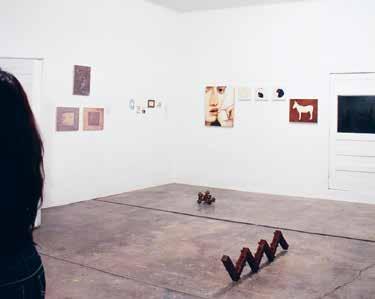
INSTALLATION VIEW OF THE STAFF ART SHOW, FEATURING WORK FROM ALEX KAMELHAIR, ZADE WILLIAMSON, BOGNA SKWARA, AND SHEA CARLEY / VISTA DE LA INSTALACIÓN DE LA EXPOSICIÓN DE ARTE DEL PERSONAL, CON OBRAS DE ALEX KAMELHAIR, ZADE WILLIAMSON, BOGNA SKWARA Y SHEA CARLEY
COMMUNITY DAY
April 26, 2026
DÍA DE LA COMUNIDAD 26 de abril de 2026,
Community Day returned to Chinati this year with activities including open viewing of works by Donald Judd, Oscar Hagerman, and Fred Sandback; an exhibition of artwork by Marfa and Presidio ISD students; and free dinner and refreshments. The day’s events also included a weaving workshop with Jenelle Esparza, along with performances by Marfa ISD Ballet Folklorico, Los Diablitos Azules, and Mariachi Santa Cruz.
El Día de la Comunidad regresó este año a Chinati con un programa de actividades que incluyó visitas libres a obras de Donald Judd, Óscar Hagerman y Fred Sandback; una exposición de obras artísticas realizadas por estudiantes de los distritos escolares independientes (ISD) de Marfa y Presidio; y una cena y refrigerios gratuitos.
La jornada contó además con un taller de tejido impartido por Jenelle Esparza, así como actuaciones del Ballet Folklórico del Marfa ISD, Los Diablitos Azules y Mariachi Santa Cruz.
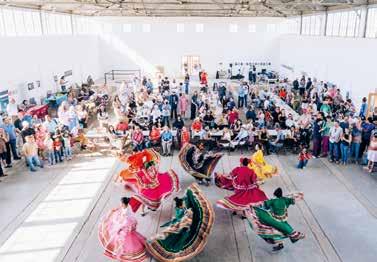
GRASSLAND RESTORATION PRACTICUM
April 27–May 1, 2026
PRÁCTICAS DE RESTAURACIÓN DE PRADERAS 27 de abril–1 de mayo de 2026
Started in 2023, the Grassland Restoration Practicum is an intensive, fiveday paid program that introduces participants to the field of land conservation. This year, six participants from throughout Texas and Mexico convened at Chinati for hands-on
learning. Activities included site visits to the Chihuahuan Desert Research Institute, Fort Davis National Historic Site, Mimm’s Ranch, and Alamito Creek Preserve. On campus, participants worked in the courtyards of Dan Flavin’s untitled (Marfa project) (1996) and around Donald Judd’s planting of cottonwoods and pinyon pines, evaluating soil health and plant growth.
en el entorno de la plantación de álamos y pinos piñoneros realizada por Donald Judd, donde evaluaron la salud del suelo y el crecimiento de la vegetación.El pintor Nick Terry, residente de Marfa, impartió un taller de elaboración de pinturas. Este taller gratuito e introductorio proporcionó a los participantes las habilidades, los materiales y los conocimientos necesarios para elaborar pinturas a base de agua.
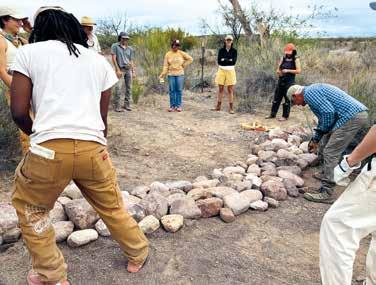
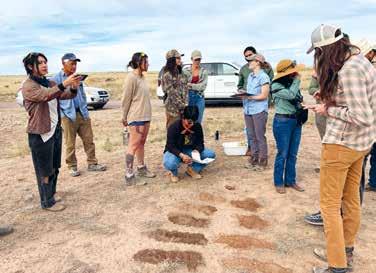
Iniciado en 2023, las Prácticas de Restauración de Praderas es un programa intensivo remunerado de cinco días que introduce a sus participantes en el ámbito de la conservación del territorio. Este año, seis participantes procedentes de distintos lugares de Texas y México se reunieron en Chinati para participar en un programa de aprendizaje práctico. Entre las actividades se incluyeron visitas al Chihuahuan Desert Research Institute [Instituto de Investigación del Desierto Chihuahuense], al Fort Davis National Historic Site [Emplazamiento histórico nacional de Fort Davis], al Rancho Mimm’s y al Alamito Creek Preserve [Reserva del arroyo Alamito]. En Chinati, los participantes trabajaron en los patios de untitled (Marfa project) [sin título (proyecto Marfa)] (1996), de Dan Flavin, y
NICK TERRY: PAINTING AND PAINT MAKING
May 23, 2026
NICK TERRY: PINTURA Y ELABORACIÓN DE PINTURAS
23 de mayo de 2026
Marfa-based painter Nick Terry led a paint-making workshop. The free, introductory workshop provided participants with the skills, materials, and knowledge to make water-based paints.
El pintor afincado en Marfa Nick Terry impartió un taller de elaboración de pinturas. Este taller introductorio, de carácter gratuito, proporcionó a los participantes los conocimientos, materiales y técnicas necesarios para fabricar pinturas al agua.
PARTICIPANTS BUILD A
WEIR AT ALAMITO CREEK PRESERVE. / LOS PARTICIPANTES CONSTRUYEN UN DIQUE DE PIEDRA
MARFA ISD BALLET FOLKLORICO PERFORMS DURING COMMUNITY DAY 2026. / EL BALLET FOLKLÓRICO DEL DISTRITO ESCOLAR INDEPENDIENTE DE MARFA ACTÚA DURANTE EL DÍA DE LA COMUNIDAD 2026.
AGAVE FESTIVAL
June 4–6, 2026
FESTIVAL DEL AGAVE date date
Talk by Yuri de la Rosa
June 4, 2026
The Chinati Foundation and Agave Festival Marfa presented a talk on archaeoastronomy in the Chihuahuan Desert by Yuri de la Rosa of the National Institute of Anthropology and History (INAH-Coahuila). De la Rosa is known for his extensive and illuminating research in remote regions of Coahuila. He is the author of Los Astros en las Rocas de Coahuila: Arqueología de los Antiguos Habitantes del Desierto (Stars in the Stones of Coahuila: Archaeology of Early Desert Inhabitants).
Talk by Juan Manuel Casillas Pintor
June 6, 2026
Chinati and ISAD’s School of Architecture and Design presented a talk by Juan Manuel Casillas Pintor. Casillas Pintor, an architect, is a professor at Universidad Iberoamericana, Mexico City, and community member of the Universidad del Medio Ambiente, Valle de Bravo, designed by Oscar Hagerman. See his essay on Oscar Hagerman’s architectural and design practice on page 30 of this newsletter.
Conferencia de Yuri de la Rosa 4 de junio de 2026
La Fundación Chinati y Agave Festival Marfa organizaron una conferencia sobre arqueoastronomía en el Desierto Chihuahuense impartida por Yuri de la Rosa, del Instituto Nacional de Antropología e Historia (INAH-Coahuila). De la Rosa es conocido por sus amplias e innovadoras investigaciones en regiones remotas de Coahuila. Es autor de Los Astros en las Rocas de Coahuila: Arqueología de los Antiguos Habitantes del Desierto
Conferencia de Juan Manuel Casillas Pintor
6 de junio de 2026
Chinati y la Escuela de Arquitectura y Diseño del ISAD presentaron una conferencia de Juan Manuel Casillas Pintor. Arquitecto y profesor de la Universidad Iberoamericana de Ciudad de México, Casillas Pintor forma parte asimismo de la comunidad de la Universidad del Medio Ambiente, en Valle de Bravo, diseñada por Óscar Hagerman. Véase su ensayo sobre la práctica arquitectónica y de diseño de Óscar Hagerman en la página 30 de esta publicación informativa.
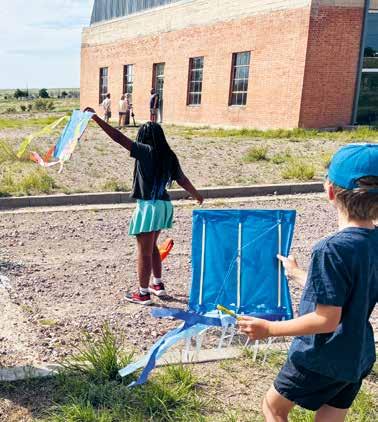
SUMMER SHAKE-UP
June 2026
SUMMER SHAKE-UP
Junio de 2026
Chinati provided four weeks of free art classes as part of Marfa ISD’s Summer Shake-Up. The annual program provides instruction, stability, and mentorship to over seventy students during the first month of summer break. The Chinati Education Department helped to plan and organize the program on behalf of the school, coordinating with numerous local nonprofits and partner organizations. At Chinati, staff worked with children ages four to thirteen, offering programming exploring fiber arts and movement. Each week culminated in students making kites, which were presented at a community kite festival celebrating the end of Summer ShakeUp. Daniela Fernandez returned as this year’s high school intern for the program as part of Los Bújos, a viable employment and professional skill-building opportunity for local teens.
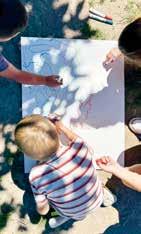
Como parte del programa Summer Shake-Up del Marfa ISD, Chinati ofreció cuatro semanas de clases de arte gratuitas. Este programa anual proporciona formación, estabilidad y tutoría a más de setenta estudiantes durante el primer mes de las vacaciones de verano. El Departamento de Educación de Chinati colaboró en la planificación y organización del programa en nombre de la escuela, coordinándose con numerosas organizaciones sin ánimo de lucro y entidades colaboradoras de la comunidad. En Chinati, el personal trabajó con niños y niñas de entre cuatro y trece años, ofreciendo actividades centradas en las artes textiles y el movimiento. Cada semana culminó con la elaboración de cometas por parte del alumnado, que posteriormente se presentaron en un festival comunitario de cometas organizado para celebrar el final de Summer Shake-Up. Daniela Fernández regresó este año como estudiante en prácticas de secundaria dentro del programa, en el marco de Los Bújos, una iniciativa que ofrece oportunidades reales de empleo y de desarrollo de competencias profesionales para jóvenes de la comunidad.
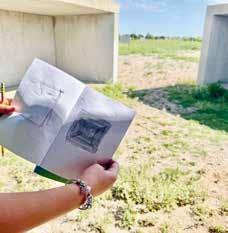
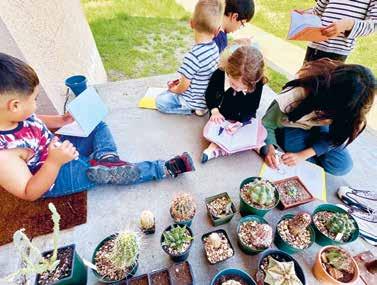
STAFF NEWS
NOTICIAS SOBRE NUESTRO PERSONAL
Maritza Bautista joined the Chinati Foundation as the education manager in October 2025. She is a Tex-Mex/ pocha, multidisciplinary new media artist, educator, independent curator, and cultural worker. Bautista was previously the founding director of Daphne Art Foundation in Laredo, Texas, where she worked for five years. She earned her MA in art education from the School of the Art Institute of Chicago.
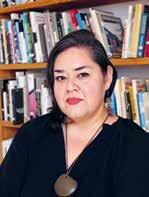
Michael Carnes joined the Chinati Foundation in fall 2025 as a conservation technician, bringing specialized expertise in collection care and exhibition management. He previously served as assistant registrar for collections and exhibitions at the Blanton Museum of Art at the University of Texas at Austin, and as collections assistant at Ruby City in San Antonio. His dedication to preserving cultural heritage is further informed by his background as a painter holding a BFA from the University of the Incarnate Word.

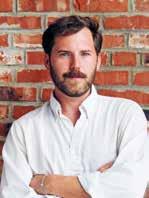
Maritza Bautista se incorporó a la Fundación Chinati como responsable de educación en octubre de 2025. Es artista multidisciplinar de nuevos medios, educadora, comisaria de arte independiente y gestora cultural tex-mex/pocha, Texas. Anteriormente fue directora fundadora de la Daphne Art Foundation de Laredo, donde trabajó durante cinco años. Obtuvo un máster en Educación Artística de la School of the Art Institute of Chicago.
Michael Carnes se incorporó a la Fundación Chinati en otoño de 2025 como técnico de conservación, aportando una amplia experiencia especializada en el cuidado de colecciones y la gestión de exposiciones. Anteriormente fue registrador adjunto de colecciones y exposiciones en el Blanton Museum of Art de la Universidad de Texas en Austin, así como asistente de colecciones en Ruby City, en San Antonio. Su compromiso con la conservación del patrimonio cultural se ve enriquecido por su trayectoria como pintor y por su licenciatura en Bellas Artes de la University of the Incarnate Word.
Micah Francis joined the Chinati Foundation as a facilities associate in August 2025. Francis has lived in the West Texas region for more than five years and has held positions at Marfa institutions like Margaret’s and Cactus Liquors. He enjoys hiking, working in his garden, and occasionally DJing. He received his associate degree in film and radio.
J. D. Garcia joined the visitor services team in May 2023. Garcia is a Marfa native and earned his BA in English, with a minor in studio arts, from Sul Ross State University. He is a photographer, musician, sculptor, writer, former journalist, and loves his dog Pazuzu.

Micah Francis se incorporó a la Fundación Chinati como auxiliar de mantenimiento en agosto de 2025. Lleva más de cinco años viviendo en la región del oeste de Texas y ha trabajado en instituciones de Marfa como Margaret’s y Cactus Liquors. Entre sus aficiones se encuentran el senderismo, la jardinería y, ocasionalmente, ejercer como DJ. Obtuvo un título de grado asociado en cine y radio.
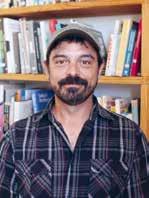
J. D. García se unió al equipo de servicios al visitante en mayo de 2023. Originario de Marfa, obtuvo una licenciatura en inglés con una especialización secundaria en Artes Plásticas de la Sul Ross State University. Es fotógrafo, músico, escultor, escritor, experiodista y disfruta pasando tiempo con su perro, Pazuzu.
Christine Jackson se incorporó a la Fundación Chinati en 2024. Comenzó trabajando en el departamento de Atención al Visitante, donde desempeñó diversos cargos, entre ellos el de guía, y en 2025 pasó a ocupar el puesto de técnica de conservación.
CHRISTINE JACKSON
MARITZA BAUTISTA
MICHAEL CARNES
MICAH FRANCIS
J. D. GARCIA
Christine Jackson joined the Chinati Foundation in 2024. Initially working in the Visitor Services department under multiple roles including as docent, she transitioned into the role of conservation technician in 2025.
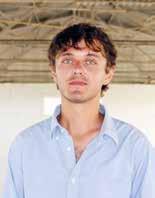
Ethyn Maki arrived at Chinati in spring 2026 as the Land Management Fellow, relocating to Marfa from Whitstable, UK. He is an ethnobotanist and author, writing about language and the history of the environment. He studied botany and trained in cultural anthropology at the University of Kent.
Rhonda Manley joined the Chinati Foundation as the private tours and events coordinator in September 2025. Originally from the Pacific Northwest, Manley has lived in the Big Bend region since 2019. Manley is a practicing artist, working primarily in painting. She holds an MFA in visual studies from Pacific Northwest College of Art and studio art and philosophy degrees from Northwest Nazarene University. Before joining the Chinati team, she worked as a development coordinator for Ballroom Marfa.
Ben Shurley was promoted to visitor services manager in August 2025. Shurley has worked in the department for six years, and first joined Chinati as an exhibition assistant in 2017. In his free time, he enjoys baking, gardening, and spending time with his dogs, Steve and Rick.
Ethyn Maki llegó a Chinati en la primavera de 2026 para incorporarse como becario de gestión del territorio, trasladándose a Marfa desde Whitstable, Reino Unido. Es etnobotánico y escritor, y su trabajo aborda la relación entre el lenguaje y la historia del medio ambiente. Estudió botánica y se formó en antropología cultural en la Universidad de Kent.

Rhonda Manley se incorporó a la Fundación Chinati como coordinadora de visitas privadas y eventos en septiembre de 2025. Originaria del noroeste del Pacífico, reside en la región de Big Bend desde 2019. Es artista en activo y trabaja principalmente en el ámbito de la pintura. Obtuvo un máster en Estudios Visuales del Pacific Northwest College of Art y licenciaturas en producción artística y filosofía de la Northwest Nazarene University. Antes de incorporarse al equipo de Chinati, trabajó como coordinadora de desarrollo en Ballroom Marfa.
Ben Shurley fue ascendido a responsable de atención al visitante en agosto de 2025. Ha trabajado en este departamento durante seis años y se incorporó por primera vez a Chinati como asistente de exposiciones en 2017. En su tiempo libre disfruta de la repostería, la jardinería y pasando tiempo con sus perros, Steve y Rick.

Bogna Skwara se incorporó a Chinati en noviembre de 2025 como jefa de conservación, aportando una amplia experiencia en conservación de obras de arte, gestión de colecciones e investigación del patrimonio
Bogna Skwara joined Chinati in November 2025 as head of conservation, bringing extensive expertise in art conservation, collection management, and heritage research. She most recently served as a fellow at the Getty Conservation Institute’s Modern and Contemporary Art Research Initiative and as conservator for the ING Polish Art Foundation. Skwara holds an MA from the Academy of Fine Arts in Warsaw and a PgDip from Jagiellonian University in Kraków, alongside advanced training at numerous institutions and private practices in Europe.

Katherine Vaughn joined the Chinati Foundation in March 2026 as an education coordinator. They bring many years of experience in nonprofit arts education and administration from their time at the Contemporary Austin as a docent, visitor services representative, and administrative manager. After completing an MFA in studio art from University of Texas at Austin, Vaughn moved to neighboring Valentine, Texas, with their partner, dog, and two cats, where they have been earth building their home and continuing a movement practice that includes monthly community dance classes and occasional performances.
Kirstyn Young joined Chinati in May 2026 as an education coordinator. Young moved to Marfa from Lubbock, Texas, where she recently graduated with an MFA in painting from Texas Tech University. She previously received a BFA in sculpture from Abilene Christian University. Young has worked as a public school art teacher for ten years in rural Texas, teaching K–12, but primarily high school learners. Young is a working artist utilizing oil paint, and tinkering with 2D media and found object assemblage.
cultural. Recientemente fue investigadora becada en la Modern and Contemporary Art Research Initiative [Iniciativa de investigación sobre arte moderno y contemporáneo] del Getty Conservation Institute y conservadora de la ING Polish Art Foundation. Skwara posee un máster de la Academia de Bellas Artes de Varsovia y un diploma de posgrado de la Universidad Jaguelónica de Cracovia, además de haber completado formación especializada en numerosas instituciones y centros privados de conservación en Europa.
Katherine Vaughn se incorporó a la Fundación Chinati en marzo de 2026 como coordinadore de educación. Aporta una amplia experiencia en educación artística y gestión administrativa en organizaciones sin ánimo de lucro, adquirida durante su trayectoria en The Contemporary Austin, donde desempeñó funciones como guía, representante de atención al visitante y responsable de administración. Tras obtener un máster en Bellas Artes de la Universidad de Texas en Austin, Vaughn se trasladó con su pareja, su perro y sus dos gatos a la cercana localidad de Valentine, Texas, donde construyen su vivienda con técnicas de arquitectura en tierra y continúan desarrollando una práctica del movimiento que incluye clases comunitarias de danza cada mes y actuaciones ocasionales.

Kirstyn Young se incorporó a Chinati en mayo de 2026 como coordinadora de educación. Se mudó a Marfa desde Lubbock, Texas, donde recientemente obtuvo una maestría en Bellas Artes con especialidad en pintura de la Texas Tech University. Anteriormente, recibió una licenciatura en Bellas Artes con especialidad en escultura de la Abilene Christian University. Durante diez años trabajó como profesora de arte en escuelas públicas del Texas rural, impartiendo clases desde jardín de infancia hasta el último año de preparatoria, aunque principalmente a estudiantes de secundaria. Es una artista en activo que trabaja con pintura al óleo y experimenta con medios bidimensionales y ensamblajes de objetos encontrados
BOGNA SKWARA
BEN SHURLEY
RHONDA MANLEY
ETHYN MAKI
KATHERINE VAUGHN
KIRSTYN YOUNG
THOMAS KELLEIN (1955–2025)
Thomas Kellein, who served as the Chinati Foundation’s director from 2010 to 2012, was a scholar whose commitment to the intellectual life of the museum was rooted in a historical understanding of Judd’s work. He died in Berlin, on September 22, 2025, at the age of seventy.
Thomas Kellein, director de la Fundación Chinati entre 2010 y 2012, fue un destacado académico cuya dedicación a la dimensión intelectual del museo se fundamentaba en un profundo conocimiento histórico de la obra de Donald Judd. Falleció en Berlín el 22 de septiembre de 2025, a los setenta años.
Thomas llegó a Marfa tras una brillante trayectoria al frente de importantes instituciones europeas, entre ellas la Kunsthalle Basel y la Kunsthalle Bielefeld.
Thomas arrived in Marfa after a distinguished career leading major European institutions, including the Kunsthalle Basel and the Kunsthalle Bielefeld. It was during his time in Bielefeld that he organized the landmark exhibition Donald Judd: Early Work 1955–1968 . For many of us, and certainly for myself as a young scholar of Judd’s work, the accompanying catalogue remains an essential text. By carefully documenting Judd’s transition from the flat plane of his early paintings to the “actual space” of his three-dimensional objects, Thomas’s research into Judd’s lesserknown paintings and sketches from the 1950s illuminated a period of the artist’s life that had long been understudied.
We are grateful for Thomas’s stewardship of Judd’s legacy through his scholarship and work to preserve Judd’s vision for Chinati. —Caitlin Murray
INTERNSHIP PROGRAM PROGRAMA DE PRÁCTICAS
Since 1990, the Chinati Foundation’s Internship Program has provided hands-on museum experience to more than 300 students, recent graduates, and young professionals from a variety of backgrounds and disciplines. Many have gone on to pursue fasci-
Fue durante su etapa en Bielefeld cuando organizó la histórica exposición Donald Judd: Early Work 1955–1968 [Donald Judd: primeras obras 1955–1968]. Para muchos de nosotros, y desde luego para mí como joven investigadora de la obra de Judd, el catálogo que acompañó aquella muestra sigue siendo una obra de referencia imprescindible.
Al documentar con rigor la transición de Judd desde la superficie plana de sus primeras pinturas hasta el “espacio real” de sus objetos tridimensionales, la investigación de Thomas sobre las pinturas y bocetos menos conocidos del artista realizados en la década de 1950 arrojó nueva luz sobre un periodo de su trayectoria que durante mucho tiempo había recibido escasa atención.
Agradecemos profundamente la labor de Thomas en la preservación del legado de Donald Judd, tanto a través de su erudición como de su compromiso con la conservación de la visión de Judd para Chinati. — Caitlin Murray
nating and diverse careers. During paid internships, interns gain exposure to various aspects of the museum’s daily operations, working with staff, resident artists, visiting scholars, donors, students, and museum professionals. Internships are offered in education, conservation, development, and administration; each aims to assign interns with meaningful projects that create a substantive, educational, and professional experience during their time at Chinati.
Desde 1990, el programa de prácticas de la Fundación Chinati ha proporcionado una experiencia práctica en el museo a más de 300 estudiantes, recién licenciados y jóvenes profesionales de diversas procedencias y disciplinas. Muchos de ellos han seguido carreras fascinantes y variadas. Durante las prácticas remuneradas, los becarios se familiarizan con

diversos aspectos del funcionamiento diario del museo, trabajando con el personal, los artistas residentes, los académicos visitantes, los donantes, los estudiantes y los profesionales museísticos. Se ofrecen prácticas en los ámbitos de la educación, la conservación y el desarrollo y la administración; cada una de ellas tiene como objetivo asignar a los becarios proyectos significativos que creen una experiencia sustantiva, educativa y profesional durante su estancia en Chinati.
Ingrid Ansel-Mullen Education / Educación
Vanessa Aricco Administration / Administración
Siriya Kulphanurattana Administration / Administración
Sophie West Conservation / Conservación
THOMAS KELLEIN, 2011
INGRID ANSEL-MULLEN
VANESSA ARICCO
FUNDING AND MEMBERSHIP FINANCIACIÓN Y AFILIACIÓN
The Chinati Foundation is grateful to those who have supported us with donations, large and small, over the past year. Our donors and members provide crucial funding that sustains our mission: to care for the collection and present it to a broad public; to build community and support artists through public programs, artist residencies, educational activities, and exhibitions; and to steward the architecture and the land that Donald Judd conceived as integral to Chinati.
An asterisk (*) indicates that a donor is also a Chinati member.
Membership benefits include free admission throughout the year, a 10% discount on items purchased at the Chinati bookstore, a complimentary copy of the annual newsletter, recognition in the annual newsletter, and a special member gift.
Each year an internationally recognized artist creates a limited-edition artwork for members who contribute $1,200 or more (see p. 88).
The following contributions to our general operating fund were given from June 15, 2025, to June 15, 2026.
La Fundación Chinati agradece a quienes nos han apoyado con donaciones, grandes y pequeñas, durante el pasado año. Nuestros donantes y afiliados aportan una financiación crucial que sustenta nuestra misión: cuidar la colección y presentarla a un público amplio; crear comunidad y apoyar a los artistas a través de programas públicos, residencias artísticas, actividades educativas y exposiciones; y administrar la arquitectura y el terreno que Donald Judd concibió como parte integral de Chinati.
El asterisco ( * ) indica que el donante es también afiliado de Chinati.
Entre las ventajas para los afiliados se incluyen la entrada gratuita durante todo el año, un descuento diez por ciento en la compra de artículos en la librería de Chinati, un ejemplar gratuito de la publicación informativa anual, el reconocimiento en la publicación informativa anual e un regalo especial para miembros.
Cada año, un artista de renombre internacional crea una obra de arte de edición limitada para los afiliados que contribuyan con 1.200 dólares o más (véase p. 88).
Entre el 15 de junio de 2025 y el 15 de julio de 2026 se realizaron las siguientes contribuciones a nuestro fondo general de operaciones
LIFETIME GIVING OF $1,000,000+
DONACIÓN VITALICIA DE +1,000,000$
Anonymous
Shari and John Behnke
The Brown Foundation, Inc. Chadwick Loher Foundation
Lee and Mike Cohn
Arlene J. and John W. Dayton
Vernon and Amy Faulconer
Mack and Cece Fowler
Franck Giraud and Gonzague De Luze
The Estate of James B. Gregory
Patrick Lannan and The Lannan Foundation
Anthony and Celeste Meier
Leonard and Louise Riggio, The Riggio Foundation
Sarofim Foundation
The Ruth Stanton Foundation
#startsmall
Still Water Foundation
DIRECTOR’S CIRCLE
CÍRCULO DE LA DIRECTORA
Chuck and Kate Brizius
Brian Espinoza and Ivan Serdar
Melinda and Kevin P. B. Johnson
Kathleen Irvin Loughlin and Christopher Loughlin
Annabel Thompson and Jed Walentas
Charlotte Vignon and Nicolas Cattelain
$100,000–$499,999
Bob and Nora Ackerley
The Brown Foundation, Inc.
The Ruth Stanton Foundation
$50,000–$99,999
Anonymous
Lee and Mike Cohn*
Prentice Farrar and Alline Ford
Brown Foundation
Miguel and Marcela Fernandez*
Mack and Cece Fowler*
The Horace W. Goldsmith Foundation
Sam Hamilton and Jennifer Chaiken*
Moody Foundation
$10,000–$49,999
Anonymous
Carl Andre and Melissa Kretschmer
Christopher Bass and Kelley Mandor
Douglas Baxter and Brian Hastings*
Clara Benson and Neil Subin
Chuck and Kate Brizius*
Gabe Catone and Bruce Cohen*
J. Patrick Collins
Chad and Maggie Dayton*
John W. Dayton*
Laura and John Fisher, in Honor of Tony Meier
Franck Giraud and Gonzague De Luze
Jamie and Carla Hine*
Linda A. and George B. Kelly*
King Foundation
Mickey and Jeanne Klein
City of Marfa
Andrew Marrus
Anthony and Celeste Meier*
Our Own Thing
Heather Pesanti and David Booth
Matt Powell*
Emily Rauh Pulitzer
Robert Rauschenberg Foundation
Rea Charitable Trust
Noelle and Eric Reed*
Nancy Sanders
Kate Shepherd and Miles McManus*
Tequila Siete Leguas
Texas Commission on the Arts
Annabel Thompson and Jed Walentas
The Maria Leuff Foundation*
Christy MacLear
Otherside
Michael Reisor
Jody Rhone and Tom Pritchard*
Warren Skaaren Charitable Trust
Pam and Bob Stewart*
Anna and Todd Wulfe
Rosina Lee Yue*
$1,000–$4,999
Valerie and Robert Arber*
Diane Barnes and Jon Otis*
Elizabeth Beal*
Maria Berkman*
Suzanne Deal Booth
Hilary Brown and Charles Read
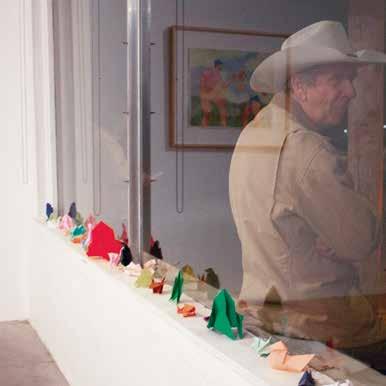
Mr. and Mrs. John L. Townsend
The Susan Vaughan Foundation
Steven Volpe
$5,000–$9,999
Anonymous
The Cowles Charitable Trust
David Egeland and Andrew Friedman*
David Ericsson*
The Chandler B. and Oliver A. Evans Foundation
George and Mary Josephine Hamman Foundation
Okey and Kathy Johnson
Ben E. Keith Foundation
Raoul and Martha Kennedy
Anstiss and Ronald Krueck Foundation
Clare Casademont and Michael Metz*
Nicolas Cattelain and Charlotte Vignon*
Rachel Cobb and Morgan Entrekin
Dan and Suzanne Crowley
Sarah Crowner
Joan Davidow and Stuart Glass
John P. de Neufville
Joseph Dicristina
Laura Doll*
Catherine Dueck
Fred and Char Durham
Paul Echart and Robert Baldwin Family Fund*
Tom Edens*
Garrard Esposito*
Hector Esrawe
The Extra Mile Foundation
Kaywin Feldman
Timothy Fitzpatrick*
Fussinger and Wolff GmbH*
Jamey Garza and Constance Holt Garza
Goldman, Sachs & Co. LLC
Ricardo Gomes and Luise Marter*
Joe and Shanna Gonyea*
Bill Hamilton*
Sarah E. Harte and John S. Gutzler*
Galerie Max Hetzler
Christopher Hill
Robert Holleyman and Bill J. Keller
Porter Leland Huang*
Elizabeth L. Johnson
Patsy Kahn
Sissy and Denny Kempner
Lorri Kershner
Susan Kessler
Krakow Witkin Gallery
Charles Mary Kubricht and Ron Sommers* kurimanzutto
Jenny Laird
John Loizeaux-Witte
Kathleen Irvin Loughlin and Christopher Loughlin
Frances Lummis
Molly Mandell and James Burke
David Mansfield and Gina Ciancone*
Marfa Models LLC
Patricia Marshall
Courtney J. Martin*
MB Art LLC
Kathleen McDaniel and Kevin Flynn*
David Mendoza
Moises Micha
Timothy Mott
Terry Mowers and Lindy Thorsen Nagel
Liz Murray*
Manuel Navarro and Colt Melton*
Diana Nelson and John Atwater
Jacqueline Northcut*
Shane O’Neal
Rebecca and Christian Patry*
Pollock-Molchanov Foundation*
Lance Raney*
Dolores and Richard Ranhofer
Marcus and Amanda Ratliff*
Mary Rosberg*
Danna and Ed Ruscha
Sentinel News Project
Sara Shackleton and Michael McKeogh*
Nicolas Shake*
SITE Santa Fe*
Soumaya Slim Domit
Lindsay and Ford Smith*
Ana Stewart and Lindsey Abel
Marianne Stockebrand
The Robin and Sandy Stuart Fund
Hillary and Robert Summers
Karen Sutton
Symbol Audio
Nick Terry and Maryam Amiryani*
Charlotte Throop and Mark Reynolds*
Suzanne Tick
Annabelle Tiemann
Hester Van Royen*
Justin Waller*
The Leslie B. Warner Charitable Fund
Clint Wells*
JoAnn Williams
$500–$999
Anonymous
Lindsey Barrett
Daphne Beal*
Jeff Beauchamp*
Robert Bellamy
Brenna Brock*
Carole Carden
Brenda and Sox Danilowitz*
Martha and Rupert Deese
Lacey Dorn
Didi Dunphy*
Ross Dwyer*
Mary K. Farley
Nicole Forde*
Paul Graybeal
Steven Hays
Fredericka Hunter and Ian Glennie*
Alberto Islas Torres
Catherine Kelly*
Juliette Kennedy*
Rosy Keyser
Mara Liasson*
Terry R. Lickona*
Juan Mangini*
Fred Martens and Anne Dette*
Jim Martinez*
Robert and Dorothy Mullin
William C. Perry and Paul A. Nelson Charitable Fund
Urs Peter and Carol Flueckiger
James Reese*
Rhotenberry Wellen Architects
James Rizzi
Jim and Sylvia Rothman*
Stephanie Rudd*
Nada Sarraf and Stephen Knowles*
Alex Scull*
Willamain Somma
Julie Speed and Fran Christina
Dedie Taylor
Uncle Larry’s Fund
United World College, in Honor of Martitza Bautista and Haley Levin
Van Dusen-Kelley Family Fund
Erin Waters
The Westwood School, in Honor of Martitza Bautista and Haley Levin
Janet Williams
Sheri and David Wright*
Up to $499
Anonymous
Ronald Ahlers*
Christopher Ahlstrom*
Katherine and Dean Alexander*
Pilli Antoine*
Diane Arnold and Bill Frazier*
Stefanie Ball*
Holly Ballard-Gardner*
Will Balthrope*
Paul and Ilene Barr*
Alisa Barry and Smith Hanes*
David Beebe and Hilary Scruggs Beebe
Bethany Cole Rymes*
Rhonda Coleman*
Chris Cook*
Kelli Cargile Cook and Robert Cook*
Ana Cox*
Sherrie Cox*
Jane and Robert Crockett*
Brett Culbert*
Jay Dandy and Melissa Weber*
Susan Davidoff and Carl Ryan
Joe and Wendy Davis*
Rosemary Davis*
Mike DeCapite
Jan DeLozier
Devin Dominguez*
Herminia Dominguez
Irene Dumas Tyson*
Jeff Dunigan*
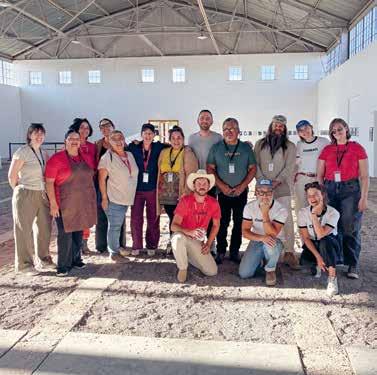
Barry Belkin*
Courtney Biggs*
Susan Billings
Roger Black*
Julie and Mark Boone*
Nick Boris*
Janara Bornstein*
Bruce and Marie Botnick*
Alex Bower-Leet, in Honor of Stephen Leet
Bright Hues Media*
John and Anita Briscoe
David and Linda Buege*
Kathy Carr*
Kathy and Chris Cashiola
Miguel Castro*
Scott Chase*
Lisa Chestnut*
Vicky A. Clark
Kelly Close*
Robin and Glen Eisen*
R. Ken and Marilynn Evert*
Jeanmarie Fenrich*
Richard Frank*
Erik Freer*
Dr. Lawrence A. Friedman
Margaret Friess*
Robin Funk*
Deborah Garza*
Beatriz Gaspar*
David Gibson*
Todd Gilmore*
Jonathan Gold*
Laurel Gonsalves*
Benjamin Graindorge*
Grass Pillow*
Jonathan Greene*
Andrew Grohe*
Corey Guinnee and Sylla McClellan*
W. Mark Gunderson*
Theodore C. Hadley*
Andrea Hagar*
Linda Hains*
Belinda-Leigh Hall*
Troy Hall*
Robert and Rosario Halpern*
Jesse Hamilton*
Mark Hansen and Beth Hansen
Brooke Hodge*
Jay Hodges*
June Hony*
James and Claudia Horn*
James Howell Foundation
Steven and Debra Huff
Fred Johnson, III*
Suzanne and Michael Johnson
Jennifer Kell*
Kathleen Ketterman*
Robert J. Killian*
Larissa Killough*
Joel King*
Michael King*
Susan Kirr and Rusty Martin*
Daniel and Maggie Knott
Aaron Kohn*
Rebecca and Alan Krasne*
Kathrin Krupp*
Marion Lange*
Mary Ellen Latas*
Adam Lewis*
Jane and Rick Lewis*
Light Collective
Stephen Luterman*
Karyn Lyons
Gerda Maise and Daniel Göttin
Mary Margaret*
Jon and Betsy Martens*
Mike Martin*
Nina Martin and Paul Hunt*
Darlene Marwitz*
Rob and Britt Mazurek
Patrice McKinney*
Robert Meckfessel*
Dan and Sandra Miley*
Alicia M. Miller and William A. Miller
Marc Mondfrans*
Jeff Morrison*
George P. Mueller
Donald R. Mullins, Jr.
Eeva Musacchia*
Jan Neis
Kate and Stuart Nielsen
Jason Norwood*
Linda Patrik and David Kaczynski
Martin Penrose
Anne Pepper
Gregory Phillips*
Joni and Tim Powers*
Brendan Pulver*
Peter C. Remes
Jenna Ritter*
James Robbins*
Josh Robinson*
Pamela Robison Mullins*
Seth Rodewald-Bates*
Julie Rogers*
Stephen W. Rose
Kristin Rowley
Mark Ruwedel and Corrine Corry
Brendan Ryan*
Jeffrey Sackenheim*
Berenice Sarafzadeh*
Patrice Scatena*
Robert Schmitt*
Cam Schoepp
Dieter Schwarz*
Mark Shelton*
Travis Shupe
Josh Shuster*
Tessa Simonds*
Tanya Smolinsky and Julie White*
Harlan Stai
Mark Stankard*
Mark Stankevich
Frederick and Ann Page Stecker
Frank L. Stieber*
Chris Taylor and Ingrid Schaffner
Barbara G. Teeter
Ann Temkin and Wayne Hendrickson
Bette P. and Ralph B. Thomas*
Zane Ann Tigett
Douglas Timmermeyer*
Richard Tobias and Susan Shoemaker*
Emily Leland Todd
Bernard Trainor*
Marc Treib*
Joan Trimble
Cynthia Turner*
Larry Turner
Gaily Tyson Lykes*
Max Underwood*
Chester and Aysha Urban*
Dr. Barry Vacker
Tim Vail*
Lisa Van Dusen*
Craig and Caron Van Dyke*
Gretchen Van Dyck
Dianne Perry Vanderlip
Alyson Vivattanapa*
Amanda Powell Walker*
Michael Wallens*
Christopher Walton*
Andrew Warden*
Doug Warren and Pam Berry*
Annemarie Waugh*
Stuart Waugh*
Stephen Webber*
Kristin Welch*
Joanna and Lawrence Weschler
Andrew Whited*
Elizabeth Willson*
Summer Wilson*
Carol Wolkow-Price and Stan Price*
Carson Wos
Konrad Wos and Meggan Walsh
Dr. Rachel Goodman Yates*
Doug Zell*
Luba Zygarewicz*
IN-KIND AND VOLUNTEER
AGRADECIMIENTOS EN ESPECIE Y VOLUNTARIOS
Aesop
Ballroom Marfa
Big Bend Coffee Roasters
Blue Bell Ice Cream
Cactus Liquors
Chauffeur Service Limousines
Cochineal
Rob Crowley
Tim Crowley
Francesca Esmay
Faith Gay
Glazer’s Beer and Beverage
Gruet
Tim Johnson
Judd Foundation
L&F Distributors
Jim Martinez
MISD 2026 Junior Class
RG|NY Wines
BOARD OF TRUSTEES JUNTA DIRECTIVA
Douglas Baxter
New York City
Gabriel Catone
New York City
Lee Baumann Cohn
Co-chair / Copresidente
Phoenix
J. Patrick Collins
Dallas
Chad Dayton
Saint Paul
Miguel Fernandez
El Paso
Mack Fowler
Houston
Franck Giraud
Rome
Sam Hamilton
Co-chair / Copresidente
San Francisco
George Kelly
Treasurer / Tesorero
Houston
Courtney J. Martin
Secretary / Secretaria
New York City
Anthony Meier
San Francisco
Heather Pesanti
Austin
Noelle M. Reed
Houston
Annabelle Selldorf
New York City
Richard Shiff
Austin
José Noé Suro
Guadalajara
Annabel Thompson
New York City
Steven Volpe
San Francisco
HONORARY TRUSTEES CONSEJO DIRECTIVO HONORARIO
Brooke Alexander (1937–2022)
Rudi Fuchs
Amsterdam
Franz Meyer (1919–2007)
Annalee Newman (1909–2000)
Sir Nicholas Serota
London
Brydon Smith (1938–2022)
STAFF PERSONAL
Maritza Bautista
Education Manager / Responsable de educación
Julie Bernal
Bookkeeper / Contable
Michael Carnes
Conservation Technician / Técnico de conservación
Rowdy Dugan
Facilities Manager / Responsable de instalaciones
Micah Francis
Facilities Associate / Auxiliar de instalaciones
Malinda Galindo
Director of Development / Directora de desarrollo
J.D. Garcia
Lead Visitor Services Associate / Coordinador principal de atención al visitante
Hannah Goldfarb
Communications Manager / Responsable de comunicaciones
Regina Gutierrez Housekeeper / Limpieza
Sandra Hinojos
Administration Manager / Responsable de administración
Christine Jackson
Conservation Technician / Técnica de conservación
Haley Levin
Education Coordinator / Coordinadora de educación
Miguel Leyva
Facilities Associate / Auxiliar de instalaciones
Ethyn Maki
Land Management Fellow / Becario de gestión de tierras
Rhonda Manley
Private Tours and Events Coordinator / Coordinadora de visitas privadas y eventos
Stephen Martin
Director of Preservation and Planning / Director de preservación y planificación
Caitlin Murray
Executive Director / Directora ejecutiva
Jen Rowles
Development Manager / Responsable de desarrollo
Veronica Salinas
Land Management Fellow / Becaria de gestión de tierras
Ben Shurley
Visitor Services Manager / Responable de atención al visitante
Bogna Skwara
Head of Conservation / Jefa de conservación
Rachel May Smith
Chief Operations Officer / Directora de operaciones
Katherine Vaughn
Education Coordinator / Coordinadora de educación
Zade Williamson
Conservation Technician / Técnico de conservación
Kirstyn Young
Education Coordinator / Coordinadora de educación
VISITOR SERVICES STAFF
PERSONAL DE ATENCIÓN AL VISITANTE
Shea Carley
Kathie Compton
Al Davis
John Ehrke
Mo Eldridge
Katy Rose Elsasser
Glen Hanson
Kyp Hinojos
Alex Kamelhair
Pat Keesey
Kat McKenna
Suzanne McLeod
Dillon Orr
Janelly Pereira
Chelsea Quinlan
Nick Terry
Prepney Torres
This publication has been generously supported by Emily Rauh Pulitzer.
Esta publicación ha sido generosamente apoyada por Emily Rauh Pulitzer.
COLOPHON COLOFÓN
Hannah Goldfarb
Caitlin Murray
Marfa, Editorial Team / Equipo editorial
Rutger Fuchs
Amsterdam, Graphic Designer / Diseñador gráfico
Miriam Halpern
Barcelona, Spanish Translator / Traductora al español
Donna Ghelerter
New York City, Copy Editor / Revisora de textos
Wilco Art Books
$15.—
Volume 31 / Volumen 31
October 2026 / Octubre de 2026
ISSN 1083-5555
©2026 The Chinati Foundation, the artists, and authors / La Fundación Chinati, los artistas y los autores
Amersfoort, Lithography, Printing, and Binding / Litografía, impresión y encuadernación
IMAGE CREDITS
ATRIBUCIONES DE IMAGEN
Fred Sandback: Sculpture, 2025. Installation view, The Chinati Foundation / Fred Sandback: Escultura , 2025. Vista de la instalación, La Fundación Chinati, 2025
Alvar Aalto Foundation
Fred Sandback Archive
Judd Foundation kurimanzutto
Tim Johnson
Troy Schaum / Schaum Architects
Mai Okimoto / Schaum Architects
Cover, inside front and back covers: Fred Sandback Archive and The Chinati Foundation, photos by Alex Marks; p. 3: Judd Foundation, photo by Florian Holzherr; pp. 4, 5: The Chinati Foundation; p. 6 (left and right): Chinati Archives; p. 7: © 2026 The Barnett Newman Foundation / Artists Rights Society (ARS), New York; pp. 8–14: The Chinati Foundation, photos by Alex Marks; p. 15: Museum of Modern Art, James Thrall Soby Bequest © Succession Alberto Giacometti / Artists Rights Society (ARS), NY; pp. 16–29: Fred Sandback Archive and The Chinati Foundation, photos by Alex Marks; p. 31 (top and bottom): courtesy Juan Manuel Casillas Pintor; p. 32 (top and bottom): courtesy Doris and Oscar Hagerman; pp. 33–38: courtesy kurimanzutto and The Chinati Foundation, photo by Alex Marks; p. 39: courtesy Juan Manuel Casillas Pintor; pp. 40–42: National Archives; pp. 43–53: Chinati Archives; pp. 54, 55: Judd Foundation; p. 56: The Chinati Foundation, photo by Douglas Tuck; p. 59: Judd Foundation; p. 60 (top): Judd Foundation; p. 60 (bottom): © 2026 Artists Rights Society (ARS), New York / VG Bild-Kunst, Bonn; p. 61 (left): courtesy Alvar Aalto Foundation; p. 61 (right): © 2026 Artists Rights Society (ARS), New York / VG Bild-Kunst, Bonn; p. 62: courtesy Alvar Aalto Foundation, photo by Gustaf Welin; p. 63: courtesy Eeva-Liisa Pelkonen; pp. 64, 65: courtesy Alvar Aalto Foundation; p. 66: © David Zwirner, photo by Tim Nighswander; p. 67: courtesy Alvar Aalto Foundation; p. 69 (top): © Zoe Leonard and courtesy the artist, Galerie Gisela Capitain, and Hauser & Wirth; p. 69 (bottom): courtesy the artist; p. 70 (top): courtesy the artist; p. 70 (bottom left): courtesy Getty Images; p. 70 (bottom right): courtesy the artist; p. 71: courtesy the artist; pp. 72–75: The Chinati Foundation, photos by Sarah Vasquez; p. 77: The Chinati Foundation, photos by Rowdy Dugan; pp. 80–83: The Chinati Foundation, photos by Rowdy Dugan; pp. 84, 85: courtesy Deondre Davis and Gordon Robichaux, New York, photos by Rowdy Dugan; pp. 86, 87: The Chinati Foundation, photos by Rowdy Dugan; p. 89: © 2026 Roni Horn, New York; p. 90: The Chinati Foundation, photos by Haley Levin; p. 91: The Chinati Foundation, photo by Sarah Vasquez; p. 92: (top left upper and top right): The Chinati Foundation, photos by Sarah Vasquez; p. 92: (top left lower and bottom): The Chinati Foundation, photos by Alex Marks; p. 93 (top): The Chinati Foundation and Rice University School of Architecture; p. 93 (bottom): The Chinati Foundation and Rice University School of Architecture; pp. 94–99, 101, 102: The Chinati Foundation
/Artists Rights Society (ARS),
/ Obras de Donald
Foundation / Artists Rights Society (ARS), Nueva York Donald Judd text © 2026
Foundation/ Artists Rights Society (ARS), New York / Textos de Donald Judd © 2026
Foundation / Artists Rights Society (ARS), Nueva York
Zoe Leonard art © 2026 Zoe Leonard / Obras de Zoe Leonard © 2026 Zoe Leonard
All other artwork © 2026 the artists / Todas las demás obras de arte © 2026 los artistas
All Chinati Foundation images © 2026 The Chinati Foundation / Todas las imágenes de la Fundación Chinati © 2026 La Fundación Chinati