
The Pilot LENT 2026

Editorial
We hope you enjoy the Lent edition of The Pilot in which we have tried to curate a selection of the best student work from as broad a range of academic disciplines as possible. Topics this edition span uprisings in communist Russia, discussions on social conformity and applied mathematical analysis.
Thanks,
The Pilot Team
CONTENTS
Front Cover: Entry for the Royal Academy Competition
Quantitatively Measuring Wildlife Protection
Rosalie Aitken
Harry, Alek, Dilan, Barbare
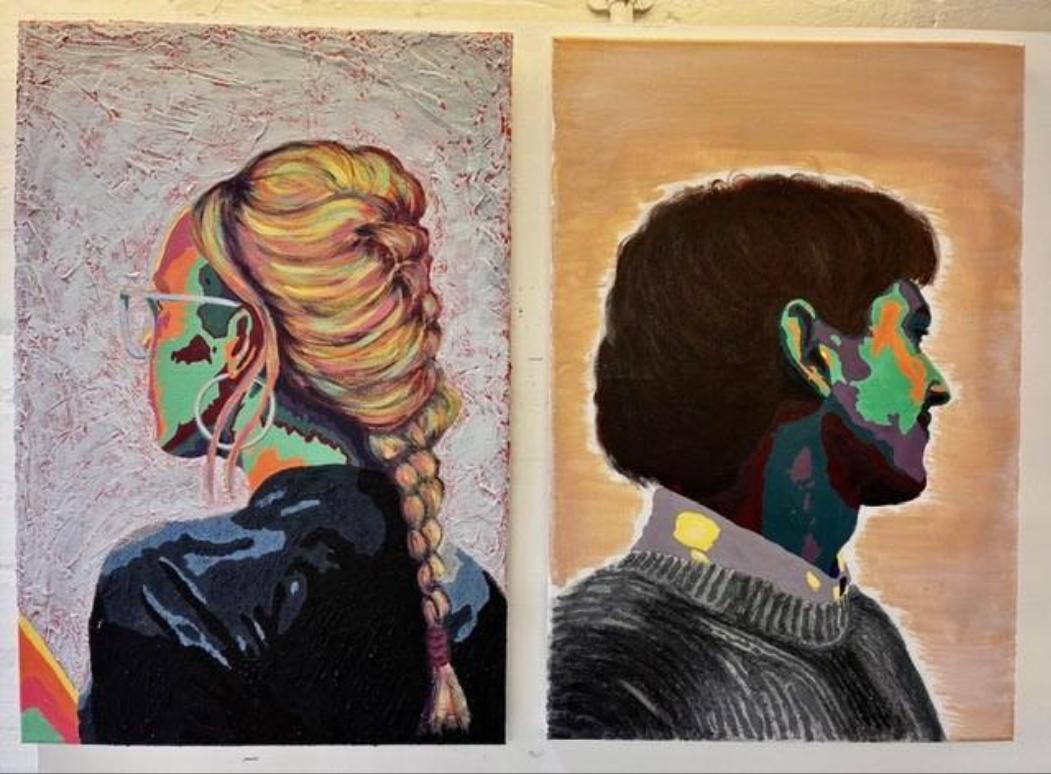
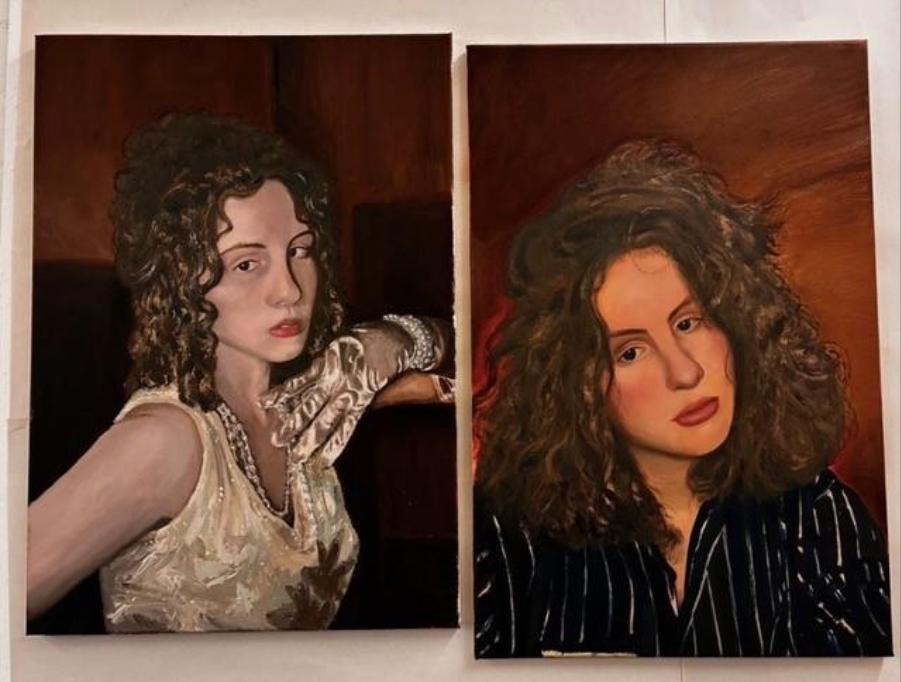
Portraits Emilia Ayrton
Analysing the Kronstadt Rising 1921 Yuvan Kumar
Fraud in the Fountain Sienna Nawani
Portraits
Exploring conservatism
Rosalie Aitken
Barbare Dateshidze
Assessing the German film ‘The lives of others’ Selena Xu
The Science Behing Conformity
Olivia MacNaughton Hunt
The following piece is brief summary of a 47-page report created by LVI mathematicians Harry Parthipan, Alek Zajda, Dilan Patel and Barbare Dateshidze. They produced this for the IMMC maths competition, writing and submitting the project from start to finish all within 5 days. The competition allows the use of AI, with students having to provide a detailed breakdown of their prompts as part of the completed project.
IM2C 2026
Quantitatively Measuring Wildlife Protection in National Parks
Summary
In recent decades, with environmental protection and conservation becoming a more prominent issue, it is becoming increasingly important that wildlife in national parks is protected from both human interaction and natural impacts. This is vital as it not only helps to maintain ecosystems and overall ecological balance, but it also saves the lives of so many innocent animals, while also ensuring that tourism can continue in national parks across the world.
In order to support this issue, our team has used mathematical modelling to identify the key issues and factors that hinder wildlife conservation and evaluate the level of importance they hold, using this to come up with solutions as to how to improve conservation and protection overall. To do this, we used data and applied our model to Namibia’s Etosha National Park. Currently, planning and prevention methods used by the park are ineffective, so we had to ensure our model was fit to combat this issue.
To create our model, we analysed the park’s current state. In particular, we analysed the vegetation, terrain and climactic conditions to create a model for the rate of spread of forest fires in both the dry and wet seasons. Also, we analysed current patrol coverage to create a model for patrol surveillance In the park.
In order to solve the current problems faced by the park, we used an existing model used by police in the US for patrol allocation and adapted it to the park. Through this, we could allocate personnel to different regions of the park and assign to them different purposes in both dry and wet seasons, according to how significant we felt different issues were. In addition, we used the existing PAWS and CAPTURE models to reduce poaching rates in the park. These models use Game Theory, modelling the rangers as defenders and poachers as attackers. The main principle involves one party predicting the other party’s next move, so we used our model to support the rangers in poaching prevention. Overall, we felt that these methods, if applied in the real world, would support the park in making a difference to wildlife protection and conservation as a whole.
Letter to the Decision Makers
Dear Decision Makers of the IMMC,
Our team has finally managed to develop a model to support the conservation and protection of wildlife at Namibia’s Etosha National Park. The team would like to formally present our modelling approach, recommendations and insights to combat the two challenges we have appointed as the most significant, which are poaching and wildfires.
For the first challenge, poaching, we must look at the behaviour of the poachers (modelled as attackers), based off agent-based models like SSGs (Stackelberg Security Games). These use a non-rational attacker who already has knowledge of the defender (ranger) strategy to protect targets against the attacker. SUQR (Security-Utility Quantal Response) is a security game model which uses an attacker and defender when the defender strategizes against the attacker to protect targets the attacker has pinpointed but the attacker also knowns about the defender’s plan. The SUQR model was used to predict the attacker’s behaviour in a nonrational way and used PAWS to counter the method which can show the optimal patrol strategy and provide an algorithm to do so for the patrol. PAWS (Protection Assistance Wildlife Security) The CAPTURE model is a more refined version of the already existing PAW model but does not use SUQR as it has some uncertainty. A street map can also be made by creating a grid scale where each cell depending on size represents either target of poaching or gives topographic information like elevation if it was mountainous. Key Access Points are allocated based on nodes and route segments are created by edges in the optimal position between each KAPS to find the most efficient patrol routes. The PAW algorithm is used in Southeast Asia to combat against poachers from cattle or national parks in the area like in the case of Cambodia but has also been used in the African Continent in Uganda’s Queen Elizabeth National Park.
The second case we use is the FBI model which was evidently based on the FBI’s suggestion on how to deploy armed forces or Police into precincts like Precinct A and use weighting system for each Precinct and each crime committed and therefore the same can be down in the Etosha National Park by dividing the area and taking two to three challenges and weighting these challenges based on hazard/ risk or workload. Thereby efficiently allocating human resources to areas weighted on hazard and workload.
For wildfires, an equation was used based on spreading rate of fire compared to its initial spreading rate of fire in flat and windless conditions. There is also a measure of how closely packed the vegetation is which is known as the correction coefficient of combustible configuration pattern. V is the wind speed which can greatly accelerate fire risk and �� is the slope angle for terrain which can slow or accelerate fire spread. This model is known as the Wang-Mao model and can be used to predict the area the fire spreads to and therefore can help minimise spread rate of fire and impact onto the entire area of Etosha national park.
Financial assumption is out of the question due to Namibia having a low population so a low supply for personnel as well as low Real GDP, so less money allocated to funding compared to western countries or the Global North. Therefore, mathematical modelling is this scenario heavily relies on predicting and strategizing based on these predictions with models that account for rational and non-rational actions and reactions by human and nature. A very large proportion of these ideas have come from already existing ones which we built on top of and become heavy inspirations for our models. For example, the FBI model was used in the circumstances of personnel in patrol of the nature reserve.
The patrolling has also been further developed with the environmental factor in mind and regarding surveillance effectiveness over the park. First to model the activity like PAWS method, was to discretise the map into grid cells or spatial which should be of similar sizes to make modelling fair. A rough calculation provides the total number of cells at 4,530. A patrol indicator is given with 1s for if the cell is covered by human resources and 0 if not done so already. The next stage is the basic patrol coverage with the proportion of cells to receive monitoring actively. It is noteworthy that not all regions of the park face same level of conservation risk so equal monitoring is not practical with financial restraints. Evolving this equation, we can now have a risk weighting depending on three criteria: proximity to waterholes (as it is an animal hotspot), accessibility through the road network, wildlife density and migration patterns in the park). The second step after coverage is a definition for protection. Protection is defined as the probability patrols can detect poaching attempts. The team has modelled this using conditional probability of poacher’s attacking probability and ranger’s detection probability which altogether determine the overall protection level for any given location in the park. The probability of attack depends on previous poaching activity, patrol coverage and environmental factors. Environmental factors are animal density, terrain type and distance from waterholes, roads and park boundary.
As a result, the model adapted to Etosha can give a broad evaluation for how patrol protects different parts of Etosha and so protection can be greater if easy to monitor, patrol coverage is high and modelling poacher’s behaviour to avoid previously patrolled zones.
Therefore, by regarding these mathematical models with the necessary assumptions, the team believes the IMMC will benefit from implementing the models to the national park and improving its strategy with current state of funding, thereby improving efficiency of surveillance, patrol with personnel and monitoring equipment.
Kind Regards,
Our Team
Harry Parthipan, Alek Zajda, Dilan Patel and Barbare Dateshidze LVIth
The following essay, written by Yuvan Kumar, was produced during a common assessment. It analyses the content and provenance of two sources with differing views on the Kronstadt naval uprising of 1921. Having helped the Bolsheviks gain power in 1917, the Kronstadt sailors became increasingly disillusioned with the emerging Communist dictatorship.
With reference to the sources and your understanding of the historical context, assess the value of these two sources to an historian studying the Kronstadt rising of 1921.
Source A is valuable to an historian studying the Kronstadt rising in 1921 due to its context. The source correctly identifies that the Bolsheviks had fostered ‘fear through the Cheka’. This is accurate as during the red terror the Cheka enabled the assassination of the tsar's family, and the execution of over 300,000 dissidents, rebels and so-called ‘counter revolutionaries’. The justice promoted by the Cheka was arbitrary in nature and designed to oppress political opposition during the civil war. This correct identification of the Cheka as a vehicle of terror and fear makes the source valuable to an historian studying the Kronstadt uprising in 1921 as the behaviour of the Cheka alienated many people, including the Kronstadt sailors, who felt that the regime was growing callous and tyrannical. Furthermore, the source includes that the Bolsheviks were ‘drowning all their promises of workers revolution’. This is very accurate as although the Bolsheviks campaigned pre-October 1917 to expand rights for workers and to decentralise power through workers representatives and local Soviets, its actual actions once it had assumed power were far different. During the civil war, Lenin backtracked on the workers decree and re-established line managers and harsh workplace discipline into labour force, which led many to perceive factories as worse than Tsarist prison camps. Additionally, Trotsky pushed forward a highly unpopular agenda of making the trade unions vessels of the state. This highlights how the Bolsheviks angered the urban proletariat by abandoning their 1917 promises and instead pursuing the centralization of power at the expense of crushing workers’ rights. This is valuable to historians studying the Kronstadt uprising as it conveys that these sailors, who were very much in favour of the 1917 Bolshevik programme, felt angered and resentful at the party for pursuing its own ends, not the workers ends while in power. Lastly the source is valuable for correctly identifying the regime of Lenin as a ‘communist dictatorship by 1921’. By this point the regime had already crushed the representation of other parties in regional Soviets and filled the roles with Bolshevik loyalists, while jailing political opposition including Kadets, Socialist Revolutionaries and Mensheviks. This growing lurch into authoritarianism which the document correctly grasps is valuable to understanding the reasons people rebelled during Kronstadt as they were unhappy with a regime that promised Soviets and increased local autonomy but ended up delivering dictatorship.
Source a is also useful to an historian studying the Kronstadt uprising of 1921, in regard to its provenance. The source itself is from the Kronstadt newspaper published at the time of the uprising in March 1921. This makes it valuable as it offers an insight into the true grievances of the Kronstadt men in 1921 which led them to rebel. Additionally, the source is very
valuable to an historian as it was produced by the Kronstadt men themselves who incredibly consequential figures in Russian history. These sailors were huge drivers of the ‘July days’ when the Bolsheviks attempted but ultimately failed to decisively seize power from the provisional government, and then subsequently had an instrumental role in the coup of October 1917 as they helped storm the winter palace. The fact that the source was written by men who once supported the regime so vehemently that they were willing to fight for its accession to power, but now opposed due to its failures to meet these promises, makes it valuable to understanding the uprising as it reveals the raw feelings of betrayal that motivated the rebels. However, the source is limited in its provenance as it is very passionate and is written in the style of a call to action at times. For instance, it included the line ‘to conquer or to die’. This dramatic tone shows the source was designed to spur the rebels on by spreading hyperbolic, forceful messaging.
Overall, the source is very useful in its content and provenance to historian studying the uprisings as it correctly gauges how the sailors who helped the Bolsheviks seize power felt betrayed by the lurch into dictatorship under Lenin spurring them to rebel.
Source C is useful in its content to understanding the Kronstadt uprising in 1921. The source correctly assessed that the regime had become fully obsessed with holding onto power for its own sake and had abandoned principle. This is largely accurate as the Bolsheviks acted opportunistically to grow their own power. For instance, they brutally crushed over 116 rebellions in the countryside in 1920, rather than listen to the demands of rebels. The regime even used poison against the 70,000 rebellious Tambov peasants and destroyed entire villages in acts of brutal retribution and signalling of power to sustain political authority. This makes the source valuable to understanding the Kronstadt uprising as it identifies how the population of Russia grew angry with the regime that was so obsessed with keeping power it was often cruel and excessively harsh. Moreover, the source is valuable as it highlights the importance of the Kronstadt uprising which pushed Lenin to ‘abandon communism’ to placate the populace and retain power. This is indeed accurate as the new economic policy (NEP) brought back private trade, and small businesses, leading inequality to grow as NEPmen (traders in scarce goods) grew extremely rich and led parallel lives to urban workers who experienced reduced wages and greater unemployment due to the reintroduction of the profit motive for firms. This marked a huge move away from the ideology of economic centralization and equality Marxism was meant to create food stop therefore the source is valuable to an historian studying the uprising as it conveys the consequential nature of the uprising which as it directly led to the regime adopting a more liberalised economic approach. Even Lenin himself admitted that the Kronstadt rising was a sort of ‘wakeup call’ leading him to adopt the NEP as state communism was failing to deliver. Therefore, the source is useful in its content historian studying the uprising as it reveals how the uprising was motivated by anger at an unprincipled, cruel regime and had lasting consequences.
The source C is also useful regarding its provenance to historians studying the uprising in Kronstadt 1921. The source was published in 1922 after the uprising had been crushed by general Tukhachevsky, and the rebels had been sent to Solovetsky (the communists’ first concentration camp), The full the author was aware how consequential it’s short-term impacts were in forcing Lenin into adopting economic concessions. As the sources are liberal and its provenance as it allows historians to see both the causes and short-term impacts of the Kronstadt uprising. However, the author himself was an anarchist meaning he obviously favoured a decentralised, localised approach to politics which would evidently leave him ideologically hostile to the Communist Party which wanted to centralise industry and societies governance. This can be seen in his often-angry tone where he lambasts communism as ‘dangerous’ and this state as a ‘dictatorship’. This tone is clearly driven by his desire for greater Soviet power and regional autonomy. This makes the valuableness of the source limited as the author is ideologically hostile to the project of Bolshevism. Lastly, the individual also advocated a peaceful solution to the Kronstadt uprising and thus would have been incredibly agitated by the regime's brutal, swift and decisive response in executing, arresting or sending the rebels to concentration camps. This could make his perspective more emotive and angrier, limiting its valuableness.
Overall source C is very valuable in terms of its content and provenance to an historian studying the Kronstadt uprising of 1921 as it is written by an individual who has seen both the causes and short-term impacts of the rebellion and has correctly identified the regime as acting in a way to always preserve power rather than to advance principle.
YUVAN KUMAR, LVI
In this piece of creative writing, Sienna shows she can manipulate the generic conventions of detective fiction with style.
Fraud in the Fountain
17th March 2025, 3:32am
The wind howled outside the window, making the blinds rattle in pain. Autumn flicked her chestnut-brown hair behind her shoulder. She wiped the sweat trickling from her brows and gingerly opened the smooth, wooden drawer. Carefully, she flicked through the documents until she found a crumpled and torn sheet. Autumn studied it closely before placing it back in the drawer. She drifted her eyes towards the bulletin board hung askew on the white-washed wall. She saw a blueprint of something that looked like a monument and decided to try and reach it to get a closer look. She lifted her pale leg onto the office chair and hauled herself up onto its vast surface. She scanned the board for that same piece of paper... aha! Autumn reached her fragile arm out to grab it but suddenly found herself sprawled across the cold, wooden floor. She regained her composure and stood up, staring out the window towards the blanket of night thrown over her town. She felt a sharp pain in her arm and found herself back on her bed with no memory of how she got there, but there was a lingering throb near her shoulder.
17th March 2025, 2:17pm
Bradley Rockwood
DING DONG!
A cheer erupted from 20 Lyndon House. The sound of small children running towards the door filled my ears. I grabbed my silky, crimson sack and was ushered to the garden, the children clawed at my legs.
Hours passed and the party finally wrapped up. I was offered some cake, which I refused, and was led to my van where I drove off into the evening sunset. I removed my wig and let the sun softly brush my pale skin and lighten my hazel eyes.
I arrived at the office and greeted my companion with a warm grin.
18th March 2025, 10:39am
Charlie Fawcett
A middle-aged man burst through our old, wooden door. His eyes looked as though they were going to pop out their sockets and his lips quivered, though I wasn’t sure it was because of the cold. The door let out a loud CREEAK, that bounced across the cracked walls, and then the door swung closed but left itself slightly ajar, as if warning me of something. The office did
need a good refurbishment, though, if we had the money. The man, who told us his name was James Brown, abruptly sat on the sad, leather sofa, caught his breath and stifled his tears.
“My daughter, my Autumn, my baby girl!” he cried. “Oh, please help her, please!”
“What seems to be the issue with your daughter?” I replied, staying calm.
“Yesterday”
“Yesterday? Why didn’t you come to me yesterday then?” I inquired.
“Well, if you let me explain then I’ll tell you!” he snarled, like a psychopath.
“My apologies, do continue,” I retaliated. I could tell his sadness was turning to frustration.
“Thank you. Anyway, it was my daughter’s birthday party yesterday and everything was fine. There was a clown and what not. Before I knew it, all the kids had left. When I say all, I mean all because my poor Autumn was gone as well! We checked the whole house, top to bottomnothing.” He sobbed.
I knew that his story didn’t answer my question, but I decided against asking him anymore on the subject. Instead, I simply asked him if any other parents had contacted him reporting their child missing as well. He quickly disregarded that thought, but with two sharp twitches in his left eye.
Reluctantly, I explained that a missing child was actually a job for the police as I brushed my scruffy, golden hair from my face and pushed my worn-out glasses up my nose, magnifying my lost, grey eyes. His face washed over with melancholy. Suddenly, my partner-in-solvingcrime appeared from around the corner, half dressed in his clown costume. Bradley worked a second job as business in the office had been a little slow. All the crime went straight to the police rather than a private detective office these days. Bradley, my assistant, had round, enchanting eyes which widened, and the corners of his mouth stretched into a smile.
He told me that James was the father of the girl whose party he had entertained at the previous afternoon. His expression flipped, like a switch, to one of sadness as he realised his friend was distraught, in our detective office. Bradley had always been a sympathetic man. That’s how we ended up partners! I was 17 and a Secondary School dropout when I saw a kind-looking man on the street, dressed as a clown. I had always loved clowns but everyone else said they were scary and demonic. I approached him in hopes to cheer myself up and suddenly we were walking together in a deep conversation about my depressing childhood and how I dropped out of school to prove to my parents that I could be a detective. The next thing I knew, I was at his house, and we were planning how we could turn the downstairs into our private office. A couple months later, and we were two detectives with our own office, we thought we had everything! Except, we didn’t have any clients. It has been like that for the past two years, although the odd person gives us some money to help find their dog or something.
Bradley bounded towards James and held him in a warm embrace, his wig contradicting the grey aura around James. Then, James explained his story to him.
James stood in front of me, his hands trembling as though barely holding himself together. Yet something about him didn’t sit right. His distress felt… selective, controlled. Like he was choosing when to let it show.
“I understand,” he said quickly, almost too quickly. “But surely you could at least look? Just come by my house this afternoon. Please?”
I hesitated, studying him. People in genuine panic tend to ramble, to contradict themselves without realising. James, however, seemed to be holding his story together with careful precision.
Still, a missing child was not something to dismiss.
At last, I told him that we would stop by at around one o’clock.
Relief flickered across his face, gone as quickly as it came. He thanked us repeatedly before leaving, the door closing behind him with a hollow click that lingered longer than it should have.
For a full seven minutes, the office was silent.
Then came a knock. We had never had two cases so close together.
The woman who entered looked nothing like James. Where he had been controlled, she was unravelled. Her hair was dishevelled, her voice unsteady, her fear unfiltered.
“My daughter,” she exclaimed, gripping the doorframe as if it were the only thing holding her upright. “She hasn’t come home. Now, I know the father told me not to reach out to the police, but I couldn’t bare another minute without trying to find her! Technically, you guys aren’t the police, right?”
The Déjà vu hit me like a bullet. Bradley leaned forward slightly and reassured her that we weren’t the police, and she had done the right thing. We were both confused as to why whoever ‘the father’ was told her not to tell the police, but we left it aside. Bradley asked her when she last saw her daughter.
She took a deep breath and told us it was at a birthday party yesterday.
A faint unease bubbled in my chest.
“Whose party?” I asked.
“Autumn Brown’s.”
The name landed heavily. The bubble in my chest silently burst.
“I spoke to Mr Brown moments ago,” I said slowly. “He told me no other children were missing.”
The woman’s expression contorted from fear to confusion.
“That’s not true,” she insisted. “He told me this morning he thought it was just my daughter at first… but now ”
She stopped, as if realising something didn’t add up, because it didn’t.
After she left, the silence that followed felt heavier than before. Bradley let out a quiet breath.
“So, either she’s lying… or he is.”
I shook my head slightly. “No. She’s not lying.”
“How can you be so sure?”
“Because she doesn’t know enough to lie.”
18th March 2025, 1:03pm
Charlie Fawcett
By the time we arrived at the Brown’s house that afternoon, the unease had settled firmly into something sharper.
The house itself was immaculate unnaturally so. Every surface clean, every object in place. It didn’t look like the home of a man whose daughter had vanished less than twenty-four hours ago. It looked staged.
James greeted us at the door, surprise flashing across his face before it was quickly masked.
“You came!”
“We said we would.”
As we stepped inside, I let my eyes wander, taking in details without appearing to. No signs of a frantic search. No disruption. No urgency left behind in physical form.
I told him about the woman who came by earlier who claimed her daughter never came home from his daughter’s party.
There it was again those two brief twitches in his eye. Then, a shrug.
“People panic. Children wander off. It doesn’t mean anything.”
It meant everything.
We spoke to his wife next. She was composed in a way that felt unnatural, her answers too neat, too immediate, as though she had already rehearsed them.
“No, I don’t know anything about another missing child.”
“No, James didn’t mention anything.”
“No, everything was normal.”
The repetition was unsettling and didn’t provide comfort.
Then came the eldest daughter.
I saw her lingering in the doorway, half-hidden, watching us with wide, uncertain eyes. I asked her if she wouldn’t mind answering some questions. When Bradley shifted slightly beside me, her gaze snapped toward him—and more specifically, toward the crimson sack resting by his side.
Fear crossed her face. Real fear. Not confusion, not grief. Recognition. She politely refused the questioning.
I briefly checked upstairs and saw nothing unusual besides a blueprint of some sort of statue in James’ office. That meant nothing to me though.
Outside, once we had left, Bradley removed his wig with slightly unsteady hands. He had never looked so traumatised.
“You saw that, didn’t you?” he asked.
“Yes.”
“She thinks it was me.”
I didn’t respond immediately. Because the truth was I had thought the same thing. Surely, a clown at a children’s party is so obvious that it couldn’t possibly be the answer. But that made it even more convincing.
That night, I turned the idea repeatedly in my mind. The image of the eldest daughter’s expression refused to leave me. Her horrified yet provoked expression haunted me. So, I decided to confront Bradley directly tomorrow.
19th March 2025, 9:19am
Charlie Fawcett
Bradley opened his sack without protest. Balloons spilled out, bright and harmless, followed by costume pieces and nothing more. I checked it thoroughly every fold, every seam. But I found nothing. Yet, the doubt lingered. I decided to try something else.
I told him I had found evidence. That I was going to the police. I watched him carefully, waiting for the smallest crack panic, fear, anything. But it never came. Only confusion, genuine confusion. That was when I knew I had been looking in the wrong place
The answer came not from what I had seen but from what I had overlooked. James’ lie about the second missing child wasn’t panic. It wasn’t denial, it was deliberate. He needed there to be only one victim at least publicly. Because one missing child is tragic. Two missing children becomes something else entirely. It becomes urgent, impossible to ignore.
Then I remembered the blueprint. The structure, the shape. Not a statue, a fountain! Just like the one I saw the other day in the forest! I thought it looked new.
When we returned to the house the following morning, everything felt clearer. I threw James a cold, hard stare and told him to follow me. One short walk later, we were standing in front of a beautiful fountain. Just the opposite of whatever horrors lied within.
James tried to stop us, but it was too late.
The trees were still, sprinkled around an intricately decorated stone fountain. It looked ordinary at first glance but up close, the proportions were wrong. The base was too large and solid for something purely ornamental.
“Help me move this,” I ordered to Bradley. He threw me a puzzled look that melted into realisation. It took effort, but eventually the stone shifted just enough to reveal what lay beneath.
A hollow space.
19th March 2025, 2:07pm
Bradley Rockwood
After opening the fountain, the smell reached us first damp, stale air trapped too long. I couldn’t belive how smart my partner was; I wouldn’t have ever thought of this!
We climbed down a ladder into the dark, absolutely terrified. Everything was still but a faint cry could be heard in the distance. We advanced. Out of the corner of my eye, I saw two little girls huddled together and my jaw dropped in utter shock. My eyes welled with tears and I turned away, secretly dialling 911. James ran towards us, his face red with rage. He was shouting something about how we had ruined his life. Not our problem anymore!
19th March 2025, 2:46pm
Charlie Fawcett
As the police took James away, the truth unravelled fully. He wasn’t just a grieving father; he was a man under investigation. For months, he had been involved in financial fraud moving money through false accounts, covering losses with fabricated figures. Recently, suspicion had begun to close in and questions were being asked. He needed a distraction. But not just any distraction, a perfect one.
A missing child case would draw attention but not for long enough. But multiple missing children from the same event? That would redirect police focus and delay any investigations.
But ultimately, buy him time- time to move money. Time to erase evidence. Time to disappear. And Bradley? He had simply been the easiest explanation. A visible and convenient suspect.
As we stood there, watching the scene unfold, I glanced toward the house.
The eldest daughter stood in the doorway; her gaze fixed on Bradley. The fear hadn’t fully left her eyes.
And I realised something then, she hadn’t been entirely wrong. She had seen something move in that sack- hope. Hope of finding her sister and ending this nightmare. In a child’s mind, that was enough to become something else entirely. Something far worse.
“I really thought it was you,” I admitted quietly.
Bradley let out a slow breath. “Yeah… I know.”
Sometimes, the truth is not hidden in the shadows. Sometimes, it’s buried beneath something that looks completely ordinary; waiting for someone to realise it was never meant to be seen at all.
17th March 2026, 12:13pm
James Brown
I admit my actions were wrong. I admit I made mistakes. But don’t we all? It is not my fault my youngest daughter was too clever and saw past my lies. It wasn’t any of her business to begin with. I had to do something to cover this mess up- I was desperate. Then, seeing Autumn snooping in my files months ago gave me the motive I needed. When that detective said only one woman came reporting her child was missing, I breathed a sigh of relief. I got lucky they only found two.
SIENNA NAWANI IV
The following A-Level politics essay, written by Barbare Dateshidze, explores the variety of views present in the conservative movement.
To what extent are conservatives united in their attitude towards society?
Conservatism is partly a belief in pragmatism, and its fundamental principle is “change to conserve,” which indicates a belief that, for something valuable to be preserved, it has to be continuously updated and maintained. Conservatism prefers the status quo as long as there are no compelling reasons for radical change. When change is needed, conservatives prefer reform to radical transformation or revolution, basing future action on experience of the past rather than on fixed principles as a guide to action. Conservatives generally view society as naturally formed, organic and complex. It cannot be designed or reshaped by human reason. Society needs cautious, respectful maintenance rather than wholescale reorganisation. However, there is a tension within conservatism in their attitude towards society, which lies between traditional conservatism, committed to hierarchical and paternalistic values; onenation conservatism, which supports social cohesion and limited reform; and New Right conservatism, which blends free-market economics with traditional social values, emphasizing limited government, and individual responsibility.
The most fundamental value of conservatism is its belief about basic human nature, which is pessimistic, as we are not innately capable of cooperation or acting rationally. Conservatives deny any possibility of a perfect utopian society comprising flawless and rational individuals. They view humankind as born with original sin and, therefore, as remaining severely flawed in character. However much individuals try, they will be unable to achieve perfection. Thomas Hobbes took a profoundly sceptical view of human nature, arguing that it was needy and vulnerable and likely to commit destructive acts. He suggested that ‘state of nature’ was a place of scarce resources where individuals would be governed by ruthless self-interest. Therefore, human nature was characterised by an ongoing desire to acquire goods, a deep distrust of others, and an ongoing fear of violent death. One nation conservative thinkers, such as Burke and Oakeshott also take a pessimistic view of human nature. They emphasise the gap between what people aspire to achieve and what they are actually capable of. Burke did not share Hobbes’s view that human nature was ruthlessly individualistic; instead, Burke argued that human nature was naturally communal. However, he was also sceptical about ‘the nation’ as a concept, seeing it as a dangerous abstraction which threatened the myriad of organic mini-communities or ‘little platoons’, which he saw as the basis of society. His emphasis on intellectual fallibility has also informed a general conservative preference for empiricism and pragmatism over abstract theorising. Later conservative thinkers, like Michael Oakeshott, also used the concept of one nation to strengthen older conservative arguments. Echoing Burke’s belief that human nature is imperfect and insecure, Oakeshott argued that people generally have a ‘yearning to belong’ and a ‘love of the familiar’. Oakeshott also insisted that one nation was a vital accessory to Burke’s society of ‘little platoons’. But to
avoid a fractured and ‘Balkanised’ society, they need uniting, common identity. This identity, Oakeshott argued, was provided by the vision of one nation. The position regarding human nature within conservatism was, until recently, always pessimistic. Thomas Hobbes, Edmund Burke and Michael Oakeshott all took a negative view of humans’ moral, rational and psychological state of being. Only with the emergence of the New Right, influenced by Ayn Rand and Robert Nozick, was contradicted with more positive view of human nature. Ayn Rand argued for a ‘virtue of selfishness’ and praised egoism. For her, it is morally right for individuals to pursue their own dreams and objectives, rather than those determined by state and society. Rand argued that societies demand individuals to sacrifice their own personal values for some collective greater good. It is wrong for any society to demand that individuals compromise their core values for a so-called collective truth. Unlike Ayn Rand, Nozick did not necessarily see individuals as atomistic and aloof from society, but he did regard them as rational, capable of making good decisions without needing to consider consequences with others. Overall, conservatives are profoundly divided in their attitude towards society because of the fundamental difference in their opinion on human nature. Hobbes thought our species morally reprehensible, while Burke and Oakeshott thought humans intellectually flawed and psychologically dependent on the communal aspects of the organic society. Traditional conservativism informs one-nation conservatism, which views society as hierarchical and assumes a noblesse oblige from the elite to paternally look after the vulnerable in society. New right has much more optimistic view of human nature. Nozick and Rand both favour rationalism, whereby individuals embrace reason and scientific fact to inform their decisions. Rand called this objectivism, arguing that the truth is found not in the collective beliefs of society or the unproven myth of religion, but in scientific fact.
All conservatives agree on the need for the state, but they differ significantly over how it should operate in the economy and how far it should uphold tradition. For all conservatives, the state is the primary vehicle for maintaining order and discipline in society. Traditional conservatives argue that individuals are driven by basic appetites, the desire for prosperity, property, and power. As people tend to pursue their own interests rather than the common good, they cannot generally be trusted with government. This leads to the conclusion that humankind requires firm, authoritative rule. Thomas Hobbes argued that without the restraints of formal authority, relations between individuals would be marked by envy, conflict, and violence. In the absence of government, humans would exist in a brutal state of nature. To avoid this, people enter a social contract establishing a sovereign with absolute power, the Leviathan, to impose order and guarantee security. Traditional conservatives favour minimal state involvement in both society and the economy, yet they argue that society still requires protection from internal and external threats. One-nation conservatives share the belief that the state’s primary purpose is to maintain social order, but they also emphasise noblesse oblige and support limited state intervention to preserve social cohesion. Burke influenced traditional conservatives to accept that society is not static and that, to preserve it, the ruling class must be willing to enact change when necessary. He defended a
system in which political power is exercised by those who are ‘born to rule’. They argue that the most effective states possess a natural ruling class, raised with a sense of duty, sacrifice, and responsibility toward the governed. Traditional conservatives are pragmatic about the size and role of the state and are prepared to expand it when necessary to uphold social stability and the principles of ‘one nation’. In contrast, as New-right conservatives have much more optimistic view of human nature, they argue that rational self-realised individuals do not need the state’s moralising, rules or interventions. Rational individuals can use abstract ideas and plans to change society and need not be bound by traditions and customs. Nozick agreed with Hobbes that life without a state would be anarchic and dangerous, but he rejected the idea of a voluntary social contract. There was no grand bargain in which individuals willingly surrendered liberty for security. Instead, Nozick argued that the state’s protective role evolved organically. For this reason, he believed the state should be as small as possible. If one cannot avoid being a ‘slave’ to the state, the best outcome is to minimise the number of rules it can impose. Nozick argued that we are never fully free, even in democracies, individuals are subject to the preferences of electoral majorities that may not reflect their real needs. Overall, all branches of conservatism support state authority to maintain order, but they differ in how they think society should function. Traditional conservatives view society as an organic hierarchy led by a natural aristocracy that governs in a paternalistic way. One-nation conservatives broadly accept this but believe the state may need to expand to preserve social stability and prevent social division. The main disagreement comes from New Right conservatives, who reject this paternalistic and interventionist approach. They argue for ‘rolling back’ the state, claiming that state power grows out of bureaucratic self-interest and ultimately threatens individual liberty. For instance, Nozick promoted individual freedom without the restraint of regulation, so society found its own way, unrestricted by government. The state itself was considered the principal threat to liberty.
While all conservative traditions support private ownership and value economic stability, they differ sharply over the extent of state involvement, the purpose of economic policy, and the very nature of society itself. Traditional conservatives support an economy based on private ownership but are wary of free-market capitalism, fearing it may deepen inequality, threaten national unity, and fuel support for socialism. With the rise of globalised capitalism, they also worry that market forces encourage a more cosmopolitan culture that weakens national identity. As a result, traditional conservatives are open to state intervention through Keynesian economics, higher taxation, and increased public spending on welfare. Edmund Burke supported the free market and Adam Smith’s ideas, yet he also recognised the dangers of unregulated capitalism generating social tensions and therefore advocated moderate state involvement. One-nation conservatism is not merely rhetorical; it has practical implications for the state’s relationship with the economy. One-nation conservatives argue that the small-state, laissez-faire ideal of classical liberalism can lead to selfish individualism and the atomisation of society. One-nation conservatism is not merely rhetorical; it has practical
implications for the state’s relationship with the economy. Their belief in noblesse oblige, the duty of the privileged to support the less fortunate, helped justify the Keynesian welfarism embraced by Conservative governments after 1945. This was reflected in the post-war Butskellite consensus, during which the party accepted nationalised industries, large-scale state house-building, and an active economic role for the government long before the Thatcherite shift toward free-market principles. In contrast, New Right conservatives, such as Nozick, strongly support free-market economics, privatisation, deregulation, lower taxation, and reduced state spending. They defend the free market as the most effective mechanism for wealth creation, employment, and efficiency. They blend traditional conservative values with economic pragmatism, viewing the state as a referee that ensures rules are followed rather than an active manager of the economy. They oppose interventionist approaches such as Keynesianism. Although the New Right believes the welfare state should be far less generous than the versions supported by one-nation conservatives, they still accept that some form of welfare provision is necessary, and therefore support taxation to fund it. Philosophically, however, New Right thinkers disagree with the principle of a state-funded welfare system. They argue that compulsory taxation for redistributive purposes undermines individual freedom. Rand claimed that individuals should be free to donate to charity if they wish but should never be compelled to fund welfare through taxation. Nozick accepted that redistribution to the poorest was possible in theory but argued that in practice it was impossible to determine who was genuinely in need. He maintained that even the poorest have choices to make, and that the state has no role in intervening. Welfare provision, he argued, violates the rights of others by forcing them to work for the benefit of the state. Property rights should therefore be strictly upheld, provided property has been fairly acquired. For Nozick, the state itself becomes the main threat to liberty, and he ultimately aligned with those who oppose state expansion. In short, conservatives share a broad belief in private ownership and the importance of economic order, but they are not united on how the economy should shape society. Traditional and one-nation conservatives fear that an unrestrained free market can damage social cohesion, deepen inequality, and weaken national identity. Because of this, they accept a degree of state intervention to preserve stability and prevent social fragmentation. In contrast, New Right conservatives argue that society functions best when individuals are left free from state interference. They support deregulation, low taxation, and minimal welfare provision, believing that state intervention threatens liberty and undermines personal responsibility.
In conclusion, all conservatives value order, but they are deeply divided over what society is and how it should function. New Right conservatives reject the idea of society as a collective entity. They oppose paternalism and inherited authority, favouring a meritocratic order based on individual achievement. Traditional conservatives, by contrast, believe society is an organic hierarchy held together by a natural ruling class. For Hobbes this meant a strong sovereign, for Burke, an aristocratic elite. They see the state as the guardian of social continuity and
support gradual, pragmatic change to preserve stability. One-nation conservatives share Burke’s belief in hierarchy but argue the state must intervene more actively to preserve social cohesion and be open only to gradual change based on empiricism. The New Right take the most minimal view of society and the state. They reject hierarchy, oppose welfare funded through taxation, and argue that government should interfere as little as possible. Overall, conservatives agree that society needs order, but they are sharply divided over whether society is an organic hierarchy requiring paternalism (traditional and one-nation), or simply a collection of free individuals best left alone (New Right and neo-liberal).
The following A-level German piece, written by Selena Xu, evaluates whether Georg Dreyman is a greater hero than Gerd Wiesler in the award-winning film, ‘The Lives of Others’.
Georg Dreyman ist ein größerer Held als Gerd Wiesler“ Analysieren Sie diese Aussage.
„Der Film Das Leben der Anderen zeigt die ständige Überwachung des Alltags. Wiesler, der StasiHauptmann ist, entscheidet sich, eine Überwachung gegen Dreyman durchzuführen. Di e Verwanzung der Dreymans Wohnung verbindet Dreyman indirekt mit Wiesler. Beide Char aktere durchlaufen eine riesige innere Wandlung im Laufe des Films.
Einen Helden zu definieren bedeutet, moralischen Mut zu zeigen, trotz Gefahren oder persö nliche Kosten. Beide Charaktere erleben eine innere Wandlung, die ihr eigenes Verhalten und auch Handlungen von anderen prägt. Beide ziegen die Merkmale des Helden.
Am Anfang ist Dreyman ein treuer Bürger und erfolgreicher Dramatiker, während Wiesler ein linientreuer StasiHauptmann ist. Dreyman schreibt unproblematisches Theaterstück und hat keine Probleme mitdem Regime. Er erlebt ein gemütliches und komfortables Leben in seiner warmen Wohnung mit seiner Lebensgefährtin, Christa-Maria Sieland und haben bestimmte Privilegien. Im Gegensatz ist Wieslers Leben farblos und grau, weil seine ganzes Leben dem Regime gewidmet ist. Die Tatsache, dass er eine Prostituierte für Sex bezahlt und er bittet sie, länger zu bleiben,zeigt seine Einsamkeit und Entfremdung von anderen Menschen in einer repressiven Gesellschaft. Wiesler ist tief betroffen vom Leben des Künstlerpaares, eine Welt, die er nie erlebt hat. Durch seine Kopfhörer entdeckt er eine Welt der Menschlichkeit, Musik und Literatur, die ihn im Verlauf des Films immer mehr berührt. Die Szene, als Wiesler das Musikstück, Sonate vom guten Menschen von Dreyman gehört hat, markiert einen Wendepunkt für ihn, in dem sich seine Treue zum Regime verändert beginnt
Der Regisseur hat die Absicht, dass Wiesler und Dreyman einander im Laufe des Films nicht treffen. Gegen Ende des Films erkennt Dreyman Wiesler auf der anderen Straßenseite in seinem Auto.
Er beobachtet ihn, jedoch entscheidet sich, Distanz zu wahren, obwohl er realisiert, dass Wi esler ihn geschützt hat. Die Tatsache, dass Wiesler und Dreyman sich im Laufe des Films nicht begegnen, spiegeltden Zusammenbruch sozialer Beziehungen und den Vertrauensbruch in einer Gesellschaft wieder, in der die Atmosphäre der Angst und Misstrauen allgegenwärtig ist
Der Selbstmord von Albert Jerska verursacht eine Veränderung in Dreymans Einstellung gegenüber dem System. Am Ende stellt sich Dreyman gegen das System, indem er einen Artikel "Der Spiegel" veröffentlicht. Ohne Wiesler kann Dreyman den Artikel nicht veröffentlichen weil Wiesler seine Bericht verfälscht und die Schreibmaschine versteckt. Das Verhalten Wieslers ist von seinem Gefühl der Gerechtigkeit und Gewissen
geführt, nicht für die Wunsch der Anerkennung ,nachdem er erfährt, dass der OV persönliche und nicht politishce Zwecke dient
Meiner Meinung nach erlebt Wiesler eine größere innere Wandlung als Dreyman. Anfangs ist Wiesler ein Begünstigter des Systems, entscheidet sich noch, gegen das System zu stellen, die am Ende seine Identität, Beruf und Status kostet. Er braucht größere Mut, diese Entscheidung zu machen, da er am Anfang von dem System profitieren können.Er hat eine selbstlose Entscheidung gemacht und hat keine Hilfe von jemanden. Deshalb widmet Dreyman Wiesler die ,Sonate vom guten Menschen, nachdem er seine Stasti-Akten entdeckt und realisiert, dass Wiesler sein Leben gerettet hat.
This A Level psychology essay, written by Olivia Macnaughtan-Hunt, explores conformity.
Discuss what psychological research has told us why people conform?
Individuals usually conform due to the effects of internalisation and compliance. Internalisation is when both your public and private behaviour and beliefs change due to others in a group. This is often a semi-permanent change and is the deepest level of conformity. Another type of conformity is compliance. This is when your public beliefs change, but your private beliefs remain the same. Once the group pressure is removed, you will go back to your original private beliefs. This is the shallowest level of conformity and often happens in situations where everyone else has a different opinion to you. In addition, Informative social influence emphasises that when the correct behaviour is unknown, we look to the majority for guidance on how to behave. This often happens in new situations. For example, you may have started a new job and are unsure how to fit into the work environment, so you look to others to see the accepted behaviour. Informative social influence often leads to internalisation, as private beliefs change when the ‘correct’ behaviour is repeatedly observed. Finally, normative social influence emphasises how we feel the need to be accepted by the group’s majority and not rejected. For example, this could happen within a small group of friends who all share the same opinion, so you may change yours to feel accepted and reassured. Normative social influence often leads to compliance, as there is a change in public behaviour but not in private belief.
There is research support for informative social influence conducted by Lucas et al. (2006). Participants were given both difficult and easy maths questions. They found that conformity rates were higher when dealing with harder questions. This is due to a more ambiguous question, hence the majority will just assume that whatever the majority says is correct, leading to internalisation. This matters as it shows us an exact replica of what we expect informative social influence to look like.
There is also prior research support regarding informative social influence due to Jenness (1932). He asked participants to guess individually how many jellybeans were in a jar. Once they had all said their answers, they were then askes to estimate how many here were again. Jenness found that the majority all chose numbers closer together the second time around. This is a strength as it tells us that when a problem becomes ambiguous or challenging, we look to the majority for guidance and change own beliefs in faith that the majority are correct and that we will be accepted, which supports Informative social influence.
However, a weakness of normative social influence is shown in research conducted by McGhee et al. He discovered that ‘nAffiliators’ conformed more than the average person. To test this, he compared affiliators and ‘nAffiliators’ and found that ‘nAffiliators’ conformed more. This is important as it shows that normative social influence cannot only be explained by wanting to feel ‘accepted’ but rather individual differences in people and personality also
play a role. Hence, we cannot say that normative social influence is strictly due to a desire to avoid rejection.
Finally, research support for both normative and informative social influence comes from Asch’s baseline study (1955), in which 12 out of 17 confederates conformed at least once. He found that the average conformity rate was 36.8%. In addition, 75% conformed at least once, 5% conformed every time, and 25% resisted conformity. He also found that as ambiguity increased, so did levels of conformity, supporting informative social influence, as when the correct answer is unknown, we assume the majority is correct. Furthermore, Bond and Smith conducted this research across different cultures and found that collectivist countries, such as Fiji, showed higher levels of conformity than individualist countries, such as France and the USA. This hence tells us that there are different rates of conformity in different countries because their cultures are so different.
OLIVIA MACNAUGHTAN-HUNT, LVI