This concert is part of the CSO at the Movies series, which is generously sponsored by Megan and Steve Shebik.
The Chicago Symphony Orchestra Association acknowledges support from the Illinois Arts Council.
Star
STAR WARS: A NEW HOPE
Twentieth Century Fox Presents A Lucasfilm Ltd. production
Starring
Mark Hamill
Harrison Ford
Carrie Fisher
Peter Cushing and Alec Guinness
Written and Directed by George Lucas
Produced by Gary Kurtz
Music by John Williams
MPAA PG Rating
Original Motion Picture Soundtrack available at Disneymusicemporium.com
SVP/GM, Disney Concerts
Chip McLean
Supervising
Technical Director
Alex Levy–Epilogue Media
Film Preparation
Ramiro Belgardt
Business Affairs, Lucasfilm
Rhonda Hjort
Chris Holm
For Booking Inquires:
Emily.Yoon@TeamWass.com
President, Disney Music Group
Ken Bunt
Music Preparation
Mark Graham
Matthew Voogt
JoAnn Kane Music Service
Disney Music Library
Operations, Disney Concerts
Brannon Fells
Royd Haston
Marketing & Publicity
Lisa Linares
Lillian Matulic
VP, Disney Concerts
Gina Lorscheider
Business Affairs, Disney Concerts
Darryl Franklin
Leigh Zeichick
Neiloofar Sajedi
Elena Contreras
Addison Granillo
Narine Minasian
Christy Swintek
Svetlana Tzaneva
Business Affairs, Warner-Chappell
Scott McDowell
The Chicago Symphony Orchestra Association is grateful to Megan and Steve Shebik for their support of the CSO at the Movies series.
PROFILES
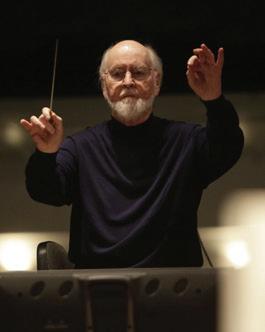
John Williams Composer
In a career spanning more than six decades, John Williams has become one of America’s most accomplished and successful composers for film and for the concert stage, and he remains one of our nation’s most distinguished and contributive musical voices. He has composed the music and served as music director for more than one hundred films, including all nine Star Wars films, the first three Harry Potter films, Superman, JFK, Born on the Fourth of July, Memoirs of a Geisha, Far and Away, The Accidental Tourist, Home Alone, and The Book Thief. His fifty-year artistic partnership with director Steven Spielberg has resulted in many of Hollywood’s most acclaimed and successful films, including Schindler’s List, E.T. The Extra-Terrestrial, Jaws, Jurassic Park, Close Encounters of the Third Kind, the Indiana Jones films, Munich, Saving Private Ryan, The Adventures of Tintin, War Horse, Lincoln, The BFG, The Post, and The Fabelmans. His contributions to television music include scores for more than 200 television films for the groundbreaking, early anthology series Alcoa Theatre, Kraft Television Theatre, Chrysler Theatre, and Playhouse 90, as well as themes for NBC Nightly News (“The Mission”), NBC’s Meet the Press, and the PBS arts showcase Great Performances. He also composed
themes for the 1984, 1988, and 1996 Summer Olympic Games and the 2002 Winter Olympic Games. He has received five Academy Awards and fifty-four Oscar nominations, making him the Academy’s most nominated living person and the second most nominated person in the history of the Oscars. He has received seven British Academy Awards (BAFTA), twenty-six Grammys, four Golden Globes, five Emmys, and numerous gold and platinum records. In 2003 he received the Olympic Order (the IOC’s highest honor) for his contributions to the Olympic movement and the prestigious Kennedy Center Honors in 2004. In 2009 Mr. Williams was inducted into the American Academy of Arts and Sciences, and he received the National Medal of Arts, the highest award given to artists by the U.S. government. In 2016 he received the 44th Life Achievement Award from the American Film Institute—the first time in its history that this honor was bestowed upon a composer. In 2020 he was awarded Spain’s Princess of Asturias Award for the Arts as well as the gold medal from the prestigious Royal Philharmonic Society in the UK, and in 2022 he was bestowed an honorary knighthood of the British Empire as one of the final awards approved by Her Majesty Queen Elizabeth II.
In January 1980 Mr. Williams was named nineteenth music director of the Boston Pops Orchestra, succeeding the legendary Arthur Fiedler. He currently holds the title of Boston Pops Laureate Conductor, which he assumed following
his retirement in December 1993 after fourteen highly successful seasons. He also holds the title of artist-in-residence at Tanglewood. Mr. Williams has composed numerous works for the concert stage, including two symphonies and concertos commissioned by several of the world’s leading orchestras, among them a cello concerto for the Boston Symphony Orchestra, a bassoon concerto for the New York Philharmonic, a trumpet concerto for the Cleveland Orchestra, and a horn concerto for the Chicago Symphony Orchestra. In 2009 the Boston Symphony premiered his concerto for harp and orchestra, On Willows and Birches, and in the same year, Mr. Williams composed and arranged “Air and Simple Gifts” especially for the first inaugural ceremony of President Barack Obama.
In 2021 John Williams premiered his second violin concerto with the Boston Symphony at Tanglewood with soloist Anne-Sophie Mutter, for whom it was composed. Most recently, he wrote a new concerto for pianist Emanuel Ax, who premiered the work with the Boston Symphony at Tanglewood in July 2025.
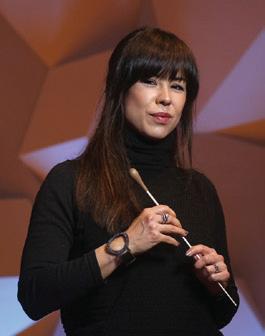
Sarah Hicks Conductor
Sarah Hicks’s versatile and vibrant musicianship has secured her place as an in-demand conductor across an array of genres. She also is an educator, Emmy Award–winning producer, writer, and speaker. Her career has seen collaborations with diverse artists, from Olga Kern and Dmitri Hvorostovsky to Jennifer Hudson and the Dirty Projectors. In 2011 she toured with Sting as conductor of his Symphonicities Tour. Her crossgenre partnerships include a 2019 album with rap artist Dessa and the Minnesota Orchestra, with which she holds a titled position; the 2023 premiere of Rufus Wainwright’s Want Symphonic at the BBC Proms; and her 2024 performance with Laufey as the first conductor ever at Lollapalooza.
A sought-after guest conductor, Hicks has worked extensively both in the United States and abroad. Notable ensembles include the Philadelphia Orchestra, Chicago Symphony Orchestra, Cleveland Orchestra, San Francisco Symphony, New York and Los Angeles philharmonics, Boston Pops, Toronto Symphony Orchestra, Czech National Symphony Orchestra, Royal Liverpool Philharmonic, WDR Symphony Orchestra Cologne, St. Petersburg Philharmonic Orchestra, and the Tokyo Philharmonic Orchestra, among many others. Her appearances in opera include the East Slovak State
Opera Theater and the Curtis Opera Theatre at the Curtis Institute of Music in Philadelphia, as well as operas in concert with the Minnesota Orchestra and the RTÉ Concert Orchestra in Dublin.
Hicks is a specialist in film music and the film-in-concert genre, and her live concert recordings can be seen on Disney+ and ABC. She acts as advisor for Disney Music Group and is a frequent collaborator at Disney Concerts. Her first major feature-film credit, Renfield, was released in 2023, and her live album with the Danish National Symphony, The Morricone Duel, has garnered over 200 million views on YouTube.
A frequent lecturer and panelist, Hicks was on faculty at the Curtis Institute of Music from 2000 to 2005
and staff conductor until 2012. Her interest in mental wellness has led to numerous projects, including Music and Healing with the Minnesota Orchestra, available digitally. She is developing new concert experiences that combine music and mindfulness and pursuing teacher training in Vipassana meditation. Her keynote presentation on collaborative leadership, Orchestrating Excellence, continues to inspire audiences throughout North America.
Sarah Hicks was born in Tokyo, Japan, and raised in Honolulu, Hawaii. Trained on both piano and viola, she received degrees from Harvard University and the Curtis Institute of Music. Beyond music, she enjoys running, hiking, her Papillon, and cooking (and eating) with her husband; she is currently writing her first book, a collection of essays.
REFRESHMENTS AT SYMPHONY CENTER
You can order drinks and snacks before the performance or during intermission at various bars located throughout Symphony Center, including the Bass Bar in the Rotunda and most of the lobby spaces in Orchestra Hall.
CHICAGO SYMPHONY ORCHESTRA
The Chicago Symphony Orchestra— consistently hailed as one of the world’s best—marks its 135th season in 2025–26. The ensemble’s history began in 1889, when Theodore Thomas, the leading conductor in America and a recognized music pioneer, was invited by Chicago businessman Charles Norman Fay to establish a symphony orchestra. Thomas’s aim to build a permanent orchestra of the highest quality was realized at the first concerts in October 1891 in the Auditorium Theatre. Thomas served as music director until his death in January 1905, just three weeks after the dedication of Orchestra Hall, the Orchestra’s permanent home designed by Daniel Burnham.
Frederick Stock, recruited by Thomas to the viola section in 1895, became assistant conductor in 1899 and succeeded the Orchestra’s founder. His tenure lasted thirty-seven years, from 1905 to 1942—the longest of the Orchestra’s music directors. Stock founded the Civic Orchestra of Chicago— the first training orchestra in the U.S. affiliated with a major orchestra—in 1919, established youth auditions, organized the first subscription concerts especially for children, and began a series of popular concerts.
Three conductors headed the Orchestra during the following decade: Désiré Defauw was music director from 1943 to 1947, Artur Rodzinski in 1947–48, and Rafael Kubelík from 1950 to 1953. The next ten years belonged to Fritz Reiner, whose recordings with the CSO are still considered hallmarks. Reiner invited Margaret Hillis to form the Chicago Symphony Chorus in 1957. For five seasons from 1963 to 1968, Jean Martinon held the position of music director.
Sir Georg Solti, the Orchestra’s eighth music director, served from 1969 until 1991. His arrival launched one of the most successful musical partnerships of our time. The CSO made its first overseas tour to Europe in 1971 under his direction and released numerous award-winning recordings. Beginning in 1991, Solti held the title of music director laureate and returned to conduct the Orchestra each season until his death in September 1997.
Daniel Barenboim became ninth music director in 1991, a position he held until 2006. His tenure was distinguished by the opening of Symphony Center in 1997, appearances with the Orchestra in the dual role of pianist and conductor, and twenty-one international tours. Appointed by Barenboim in 1994 as the Chorus’s second director, Duain Wolfe served until his retirement in 2022.
In 2010, Riccardo Muti became the Orchestra’s tenth music director. During his tenure, the Orchestra deepened its engagement with the Chicago community, nurtured its legacy while supporting a new generation of musicians and composers, and collaborated with visionary artists. In September 2023, Muti became music director emeritus for life.
In April 2024, Finnish conductor Klaus Mäkelä was announced as the Orchestra’s eleventh music director and will begin an initial five-year tenure as Zell Music Director in September 2027. In July 2025, Donald Palumbo became the third director of the Chicago Symphony Chorus.
Carlo Maria Giulini was named the Orchestra’s first principal guest conductor in 1969, serving until 1972; Claudio Abbado held the position from 1982 to 1985. Pierre Boulez was appointed as principal guest conductor in 1995 and was named Helen Regenstein Conductor Emeritus in 2006, a position he held until his death in January 2016. From 2006 to 2010, Bernard Haitink was the Orchestra’s first principal conductor.
Mezzo-soprano Joyce DiDonato is the CSO’s Artist-in-Residence for the 2025–26 season.
The Orchestra first performed at Ravinia Park in 1905 and appeared frequently through August 1931, after which the park was closed for most of the Great Depression. In August 1936, the Orchestra helped to inaugurate the first season of the Ravinia Festival, and it has been in residence nearly every summer since.
Since 1916, recording has been a significant part of the Orchestra’s activities. Recordings by the Chicago Symphony Orchestra and Chorus— including recent releases on CSO Resound, the Orchestra’s recording label launched in 2007—have earned sixty-five Grammy awards from the Recording Academy.
Chicago Symphony Orchestra
Klaus Mäkelä Zell Music Director Designate
Joyce DiDonato Artist-in-Residence
VIOLINS
Robert Chen Concertmaster
The Louis C. Sudler Chair, endowed by an
anonymous benefactor
Stephanie Jeong §
Associate Concertmaster
The Cathy and Bill Osborn Chair
David Taylor* Assistant Concertmaster
The Ling Z. and Michael C. Markovitz Chair
Yuan-Qing Yu*
Assistant Concertmaster
So Young Bae
Cornelius Chiu
Gina DiBello
Kozue Funakoshi
Russell Hershow
Qing Hou
Youngji Kim
Gabriela Lara
Matous Michal
Simon Michal
Sando Shia
Susan Synnestvedt
Rong-Yan Tang
Baird Dodge Principal
Danny Yehun Jin Assistant Principal
Lei Hou
Ni Mei
Hermine Gagné
Rachel Goldstein
Mihaela Ionescu
Wendy Koons Meir
Ronald Satkiewicz ‡
Florence Schwartz
VIOLAS
Teng Li Principal
The Paul Hindemith Principal Viola Chair
Catherine Brubaker
Youming Chen
Sunghee Choi
Paolo Dara
Wei-Ting Kuo
Danny Lai
Weijing Michal
Diane Mues
Lawrence Neuman
Jikun Qin
Max Raimi
CELLOS
John Sharp Principal
The Eloise W. Martin Chair
Kenneth Olsen Assistant Principal
The Adele Gidwitz Chair
Karen Basrak
The Joseph A. and Cecile Renaud Gorno Chair
Richard Hirschl
Olivia Jakyoung Huh
Daniel Katz
Katinka Kleijn
Brant Taylor
The Ann Blickensderfer and Roger Blickensderfer Chair
Riccardo
Muti Music Director Emeritus for Life
BASSES
Alexander Hanna Principal
The David and Mary Winton Green Principal Bass Chair
Alexander Horton Assistant Principal
Dan Carson
Ian Hallas
Robert Kassinger
Mark Kraemer
Stephen Lester
Bradley Opland
Andrew Sommer
FLUTES
Emma Gerstein
Jennifer Gunn
PICCOLO
Jennifer Gunn
The Dora and John Aalbregtse Piccolo Chair
OBOES
William Welter Principal
Lora Schaefer Assistant Principal
The Gilchrist Foundation, Jocelyn Gilchrist Chair
Scott Hostetler
ENGLISH HORN
Scott Hostetler
CLARINETS
Stephen Williamson Principal
John Bruce Yeh Assistant Principal
The Governing Members Chair
Gregory Smith
E-FLAT CLARINET
John Bruce Yeh
BASSOONS
Keith Buncke Principal
William Buchman Assistant Principal Miles Maner
HORNS
Mark Almond Principal
James Smelser
David Griffin
Oto Carrillo
Susanna Gaunt
Daniel Gingrich ‡
TRUMPETS
Esteban Batallán Principal
The Adolph Herseth Principal Trumpet Chair, endowed by an anonymous benefactor
John Hagstrom
The Bleck Family Chair
Tage Larsen
TROMBONES
Timothy Higgins Principal
The Lisa and Paul Wiggin Principal Trombone Chair
Michael Mulcahy
Charles Vernon
BASS TROMBONE
Charles Vernon
TUBA
Gene Pokorny Principal
The Arnold Jacobs Principal Tuba Chair, endowed by Christine Querfeld
TIMPANI
David Herbert Principal
The Clinton Family Fund Chair
Vadim Karpinos Assistant Principal
PERCUSSION
Cynthia Yeh Principal Chair sponsored by an anonymous benefactor
Patricia Dash §
Vadim Karpinos
LIBRARIANS
Justin Vibbard Principal
Carole Keller
Mark Swanson
CSO FELLOWS
Ariel Seunghyun Lee Violin
Jesús Linárez Violin
The Michael and Kathleen Elliott Fellow
ORCHESTRA PERSONNEL
John Deverman Director
Anne MacQuarrie Manager, CSO
Auditions and Orchestra Personnel
STAGE TECHNICIANS
Christopher Lewis Stage Manager
Blair Carlson
Paul Christopher
Chris Grannen
Ryan Hartge
Peter Landry
Joshua Mondie
* Assistant concertmasters are listed by seniority.
‡ On sabbatical
§ On leave
The CSO’s music director position is endowed in perpetuity by a generous gift from Zell Family Foundation.
The Louise H. Benton Wagner and Erika and Dietrich M. Gross Principal Flute chairs are currently unoccupied.
The Chicago Symphony Orchestra string sections utilize revolving seating. Players behind the first desk (first two desks in the violins) change seats systematically every two weeks and are listed alphabetically. Section percussionists also are listed alphabetically.