A Musical Journey
ONE HUNDRED THIRTY-FIFTH SEASON
CHICAGO SYMPHONY ORCHESTRA
KLAUS MÄKELÄ Zell Music Director Designate | RICCARDO MUTI Music Director Emeritus for Life
Thursday, June 18, 2026, at 7:30 Saturday, June 20, 2026, at 7:30 Sunday, June 21, 2026, at 3:00
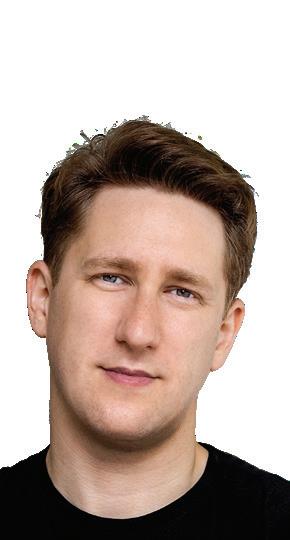
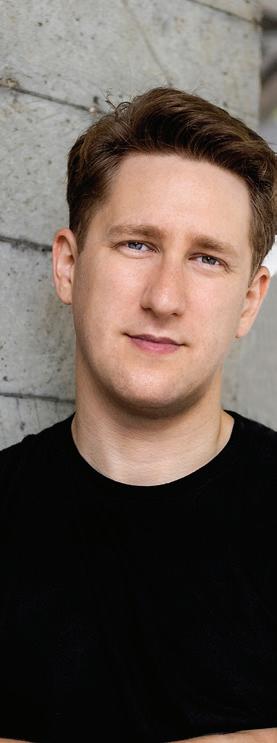
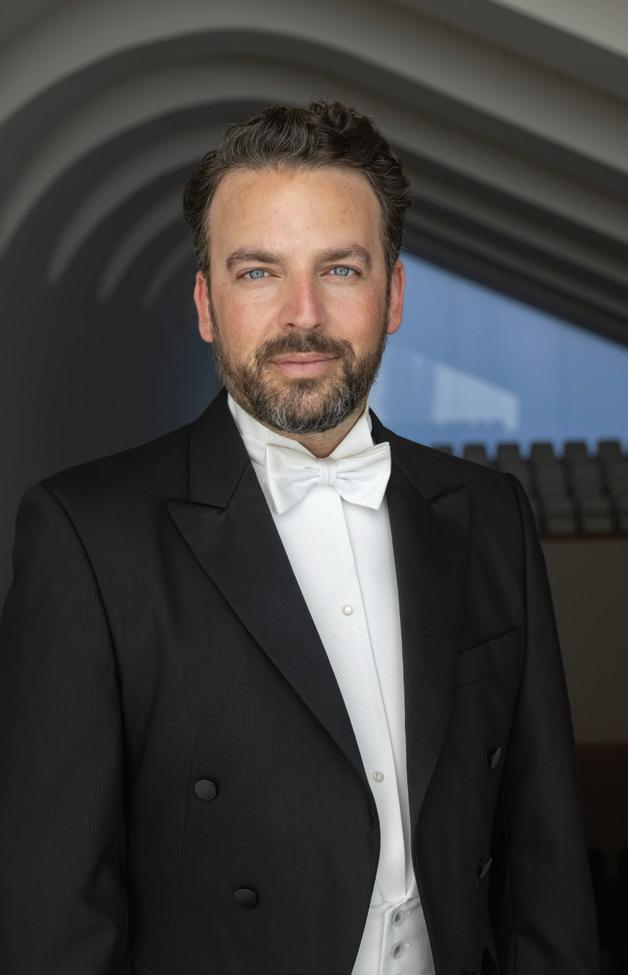
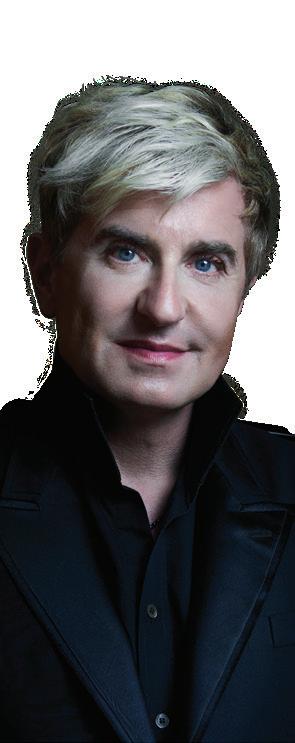
Joshua Weilerstein Conductor
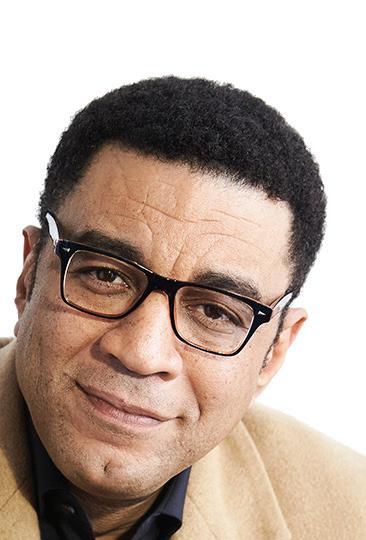
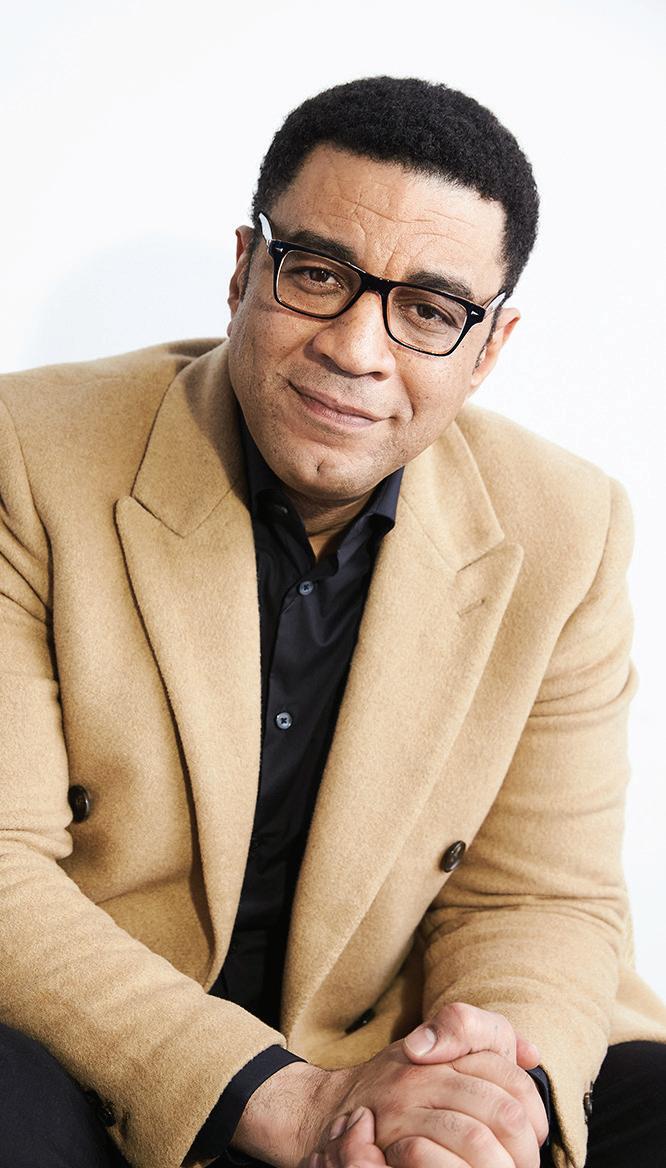
Harry Lennix Narrator
MONTGOMERY Banner
MARTINŮ The Rock
First Chicago Symphony Orchestra performances
COPLAND Lincoln Portrait
HARRY LENNIX
INTERMISSION
IVES
Three Places in New England
The “St. Gaudens” in Boston Common Putnam’s Camp, Redding, Connecticut
The Housatonic at Stockbridge
ELLINGTON Harlem (orch. Henderson)
These concerts are generously sponsored by an anonymous donor. This project is supported in part by the National Endowment for the Arts.
The Chicago Symphony Orchestra Association acknowledges support from the Illinois Arts Council.
These concerts are generously sponsored by an anonymous donor.
This month, as we present a series of concerts honoring our country’s 250th anniversary, it is clear that the music of our land has come of age. In 1892, near the end of the Chicago Orchestra’s opening season, the ensemble played its first all-American program: works by four male composers born within 250 miles of each other along a narrow slice of New England. Their music was “made according to German models,” a local critic pointed out. “Any idea or orchestral effect that can be considered as distinctively and peculiarly American is not found in them.”
What you will hear this month is distinctively American, not because it has a singular instantly identifiable accent or style, but because it reflects the breadth and variety of the landscapes, traditions, and peoples of America. There is music from Charles Ives, often called the father of American music, to John Adams, who, as his presidential name suggests, is a founding father of a new world of contemporary music that has swept the land: from Jessie Montgomery, born, raised, and trained in New York City, to Kurt Weill, who fled the Nazi takeover of his native Germany to settle in that same city, where the luxury of freedom inspired some of his most successful scores; from Duke Ellington, who wove jazz and symphony together in unexpected harmony, to Wynton Marsalis, who imbues that tradition with unforeseen power and provocation today; from Leonard Bernstein to Aaron Copland, whose very names bring to mind the music of the urban jungle and our open prairies. There are pieces inspired by “The Star-Spangled Banner” and by Plymouth Rock. There is music as timeless as the singing of Black spirituals and as genre-defying as Chris Thile’s mandolin playing, and there are the indelible words of Abraham Lincoln, still potent after all these years.
The music of America has broadened to encompass the full richness— and the complexity—of our land and our citizenship. The European models are still with us, but there is now a wealth of new music unlike anything being written on the other side of the ocean. Some of the pieces we perform this month have roots as old as our country; some are brand new. That is what these concerts celebrate: an American music that is too diverse to be pigeonholed because it mirrors the dizzying wealth of styles and backstories and ambitions of the composers working here. These programs reflect how far we have come as a land of music and musicians. And in the end, they speak to us about who we are now.
JESSIE MONTGOMERY
Born December 8, 1981, New York City
Banner
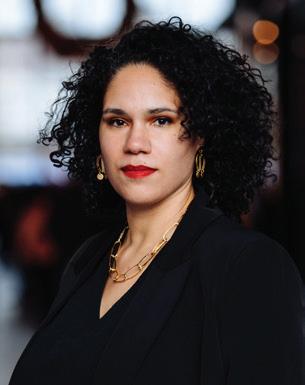
Jessie Montgomery is a native of the Lower East Side of New York City, where the arts were part of her daily family life. She remembers practicing violin in one room while her father, Edward Montgomery, was busy composing in another, and her mother, Robbie McCauley, a performance artist, director, and writer, was rehearsing in yet another space. Growing up as an artist in that world, Montgomery says she was always in a “state of wonder.” Montgomery has devoted her career to working with young artists and musicians with diverse backgrounds and ideas, and she is known for immersing herself in the activities of the new-music community, all of which she continued in Chicago, where she was our Mead Composer-in-Residence from 2021 to 2024. At the time of her announcement, Montgomery said she was thrilled to be working in the hometown of Florence Price, whom she calls “the godmother of Black music.”
Montgomery’s catalog of compositions is animated by a keen attention to the world around her. In a sense, it echoes what her mother, a pioneering artist whose work often dealt with issues of race, once said: “Find a way to house the contradictions rather than resolve them.” Montgomery’s music suggests that she not only possesses the rare gift of writing music that reflects the complexity of our world, but one that will lead us forward. By already forging her own distinct voice in a crowded musical scene—a voice that melds and marries many different influences—she is well positioned to help guide the music of our multifaceted future. “I’ve always been interested in trying to find the intersection between different types of music,” she has said. “I imagine that music is a meeting place at which
COMPOSED
2014, for string quartet and string orchestra
2017, for string quartet and chamber orchestra
FIRST PERFORMANCE
November 9, 2014; Kansas City, Missouri
INSTRUMENTATION
2 flutes (2nd doubling piccolo), oboe, clarinet, bassoon, horn, trumpet, timpani, percussion, strings
APPROXIMATE
PERFORMANCE TIME
8 minutes
FIRST CSO PERFORMANCES
July 16, 2021, Ravinia Festival. Marin Alsop conducting March 16, 17, and 18, 2023, Orchestra Hall. Osmo Vänskä conducting
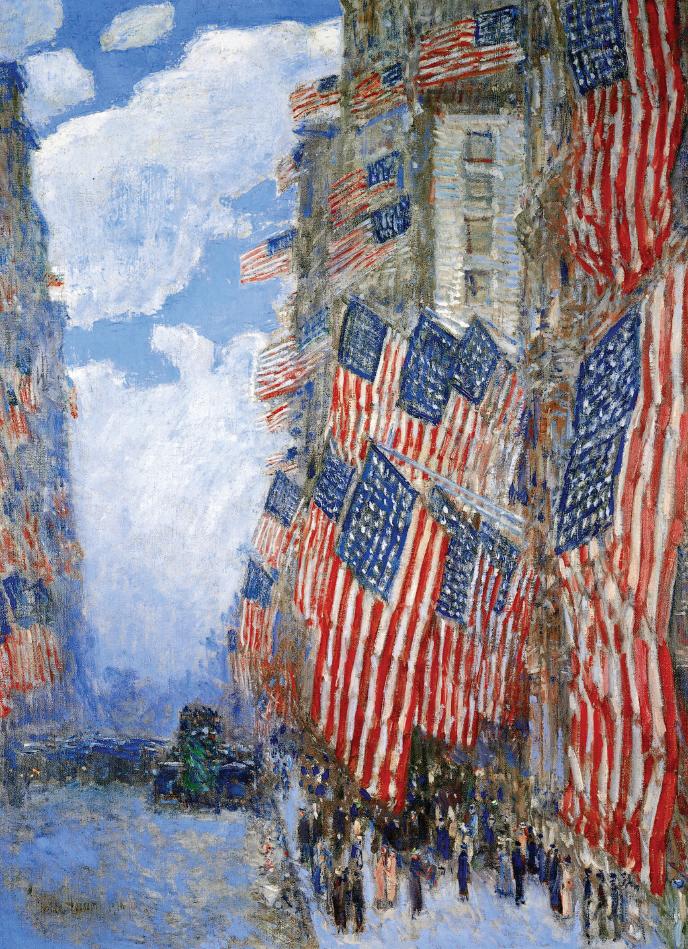
from top: Jessie Montgomery, photo by Jiyang Chen | The Fourth of July, 1916: The Greatest Display of the American Flag Ever Seen in New York, Climax of the Preparedness Parade in May 1916. Oil on canvas by Childe Hassam (1859–1935). New York Historical Society
all people can converse about their unique differences and common stories.” Montgomery’s frequently performed Banner, which began life as a tribute to Barack Obama, is being heard here the same week the Obama Presidential Center opens on the South Side of Chicago.
Jessie Montgomery on Banner
Banner is a tribute to the 200th anniversary of “The Star-Spangled Banner,” which was officially declared the American National Anthem in 1814 under the penmanship of Francis Scott Key. Scored for solo string quartet and string orchestra [and later arranged for chamber orchestra], Banner is a rhapsody on the theme of “The Star-Spangled Banner.” Drawing on musical and historical sources from various world anthems and patriotic songs, I’ve made an attempt to answer the question: “What does an anthem for the 21st century sound like in today’s multicultural environment?”
In 2009 I was commissioned by the Providence String Quartet and Community MusicWorks to write Anthem: A tribute to the historical election of Barack Obama. In that piece, I wove together the theme from “The Star-Spangled Banner” with the commonly named Black National Anthem, “Lift Every Voice and Sing” by James Weldon Johnson (which coincidentally share the exact same phrase structure). Banner picks up where Anthem left off by using a similar backbone source in its middle section but expands further both in the number of references and also in the role play of the string quartet as the individual voice working both with and against the larger community of the orchestra behind it. The structure is loosely
based on traditional marching-band form, where there are several strains, or contrasting sections, preceded by an introduction, and I have drawn on the drum-line chorus as a source for the rhythmic underpinning in the finale. With the same tradition, I have attempted to evoke the breathing of a large brass choir as it approaches the climax of the “trio” section. A variety of other cultural anthems and American folk songs and popular idioms interact to form various textures in the finale section, contributing to a multilayered fanfare.
“The Star-Spangled Banner” is an ideal subject for exploration in contradictions. For most Americans, the song represents a paradigm of liberty and solidarity against fierce odds, and for others it implies a contradiction between the ideals of freedom and the realities of injustice and oppression. In my opinion, as a culture, we Americans are perpetually in search of ways to express and celebrate our ideals of freedom—a way to proclaim “we’ve made it!” as if the very action of saying it aloud makes it so. And for many of our nation’s people, that was the case: through work songs and spirituals, enslaved Africans promised themselves a way out and built the nerve to endure the most abominable treatment for the promise of a free life. Immigrants from Europe, Central America, and the Pacific have sought out a safe haven here, and though met with the trials of building a multi-cultured democracy, they continue to find rooting in our nation and make significant contributions to our cultural landscape. Today, a tribute to the U.S. National Anthem means acknowledging the contradictions, leaps and bounds, and milestones that allow us to celebrate and maintain the traditions of our ideals.
BOHUSLAV MARTINŮ
Born December 8, 1890; Polička, eastern Bohemia Died August 28, 1959; Liestal, Switzerland
The Rock, Symphonic Prelude for Orchestra
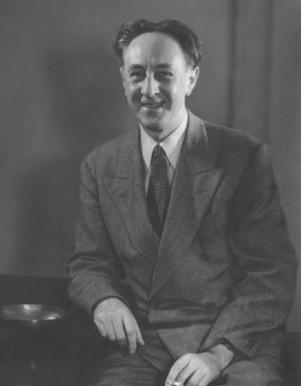
Bohuslav Martinů was born 193 steps above the ground in a bell tower in the tiny Bohemian town of Polička, and he grew up with little curiosity about the world beyond. All that changed when he heard the new French music by Debussy and Ravel and decided to go to Paris in 1923, where he thrived in what was then the artistic capital of Europe. He studied with Albert Roussel; made the acquaintance of Serge Koussevitzky, who would later introduce his music to the United States; and began to mingle with members of a wide variety of artistic circles. Then, in 1940, Martinů was blacklisted by the Nazis. On June 10, four days before the Germans entered Paris, he and his wife fled the city, leaving all their possessions behind. For the next several months, they were homeless and often slept on railway platforms. (Despite the hardships, he continued to compose.) They finally gained passage on the Exeter, which left Lisbon for Hoboken, New Jersey, on March 21, 1941. (His American visa described him as a “blacklisted intellectual.”)
Martinů found it difficult to think of New York City as his new home; he was overwhelmed by the pace of the city and suffered frequent spells of depression. As a kind of welcome gesture, Koussevitzky commissioned Martinů to compose his first symphony, which was premiered in Boston in 1942—the first of six he would write during the sixteen years he lived in this country—and invited him to teach at Tanglewood.
In 1957, two years after Martinů took U.S. citizenship, he composed The Rock, a “symphonic prelude” on a commission from the Cleveland Orchestra, honoring its fortieth anniversary. Martinů named his new score after Plymouth Rock, as a way of acknowledging the liberty and opportunity that America had given him. He also said that his title was a play on other “rocks” of American culture from rock ’n’ roll to Little Rock, Arkansas, which was making headlines as he was completing the score because of the forced integration of Little Rock Central High School that took place in the fall of 1957. In evoking the place where the Pilgrim Fathers landed on America’s East coast, Martinů may well have been recapturing the excitement and promise that he felt when he first arrived
COMPOSED 1957
FIRST PERFORMANCE
April 17, 1958; Cleveland, Ohio
INSTRUMENTATION
3 flutes (3rd doubling piccolo), 3 oboes, 3 clarinets, 3 bassoons, 4 horns, 3 trumpets, 3 trombones, tuba, timpani, percussion
APPROXIMATE PERFORMANCE TIME 11 minutes
These are the first Chicago Symphony Orchestra performances.
this page: Bohuslav Martinů, portrait, 1945, New York City
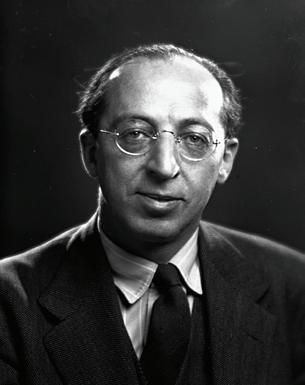
opposite page: Aaron Copland, 1940. Photo by Oscar White (1921–2020)/ Corbis/VCG via Getty Images
in our country, a broken though not exhausted creative force. That sense of hope for recovery and creative triumph is particularly apparent in the grand unfolding of The Rock’s final pages. But by the time he had finished the score,
AARON COPLAND
Born November 14, 1900; Brooklyn, New York
Martinů had decided to leave the United States to settle in Switzerland, where he died in 1959. Twenty years later, his body was moved to the family plot in Polička, bringing his life’s journey full circle.
Died December 2, 1990; North Tarrytown (now Sleepy Hollow), New York
Lincoln Portrait
Aaron Copland, the “president of American music” (Virgil Thomson’s phrase), grew up in Brooklyn, lived most of his life in New York, and knew the rest of this country largely by hearsay. His music for Agnes de Mille’s Wild West ballet, Rodeo, his first great success, was composed on the rue de Rennes in Paris (he had packed a book of cowboy songs), and the only real-live cow he ever encountered was the one that hit his car one summer night on a country road near Tanglewood. But Copland was the first composer to find a musical style that perfectly captured the vast open spaces, the homespun plainness, and the bracing pioneer spirit of this great country. In work after work, especially those written in the 1930s and ’40s, Copland defined forever a distinctly “open” American sound: the music of our own Arcadia, with its silos and patchwork plains, its covered bridges and furrowed hills.
Lincoln Portrait is Copland’s great American patriotic statement. Like Grant Wood’s American Gothic, which hangs across the street in the Art Institute, Copland’s score has often been copied and caricatured. But it remains a classic of popular American art, and as such it is no doubt the envy of most composers who have ever belittled its simple charms. We owe Lincoln Portrait to the conductor André Kostelanetz, who set out to commission, from leading composers, a “musical portrait gallery of great Americans.” He overruled Copland’s first choice, the poet Walt Whitman, because Jerome Kern had already started work on Mark Twain, and Kostelanetz wanted to avoid too many literary figures. Copland next considered Jefferson, and finally settled on Lincoln, even though Virgil Thomson tried to talk him out of so exalted a subject (he picked
COMPOSED 1942
FIRST PERFORMANCE
May 14, 1942; Cincinnati, Ohio
INSTRUMENTATION
narrator, 2 flutes (doubling piccolos), 2 oboes and english horn, 2 clarinets and bass clarinet, 2 bassoons and contrabassoon, 4 horns, 3 trumpets, 3 trombones, tuba, timpani, percussion, harp, celesta, strings
APPROXIMATE PERFORMANCE TIME 14 minutes
FIRST CSO PERFORMANCES
March 15 and 16, 1945, Orchestra Hall. Carl Sandburg as soloist, Désiré Defauw conducting
July 21, 1956, Ravinia Festival. Claude Rains as soloist, the composer conducting
CSO PERFORMANCES, THE COMPOSER AS SOLOIST AND CONDUCTOR
July 6, 1963, Ravinia Festival. Governor Otto Kerner, Jr., as soloist, the composer conducting
July 4, 1982, Ravinia Festival. The composer as soloist, Erich Kunzel conducting
MOST RECENT
CSO PERFORMANCES
July 18, 2009, Ravinia Festival. Jessye Norman as soloist, James Conlon conducting
April 12, 13, 14, and 17, 2018, Orchestra Hall. John Malkovich as soloist, Riccardo Muti conducting
COPLAND’S LINCOLN PORTRAIT IN CHICAGO
The Chicago Symphony Orchestra has performed Aaron Copland’s Lincoln Portrait on several occasions and with a number of notable narrators.
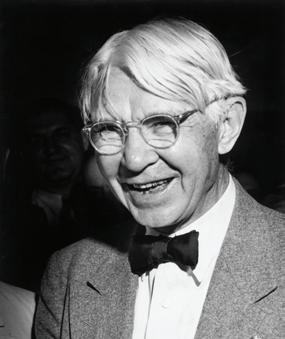
Poet, writer, and editor Carl Sandburg was narrator for the Orchestra’s first performances on March 15 and 16, 1945, in Orchestra Hall conducted by Désiré Defauw. The country’s leading authority on the sixteenth U.S. president, Sandburg had written the two-volume Abraham Lincoln: The Prairie Years in 1926, and in 1940 he completed the four-volume Abraham Lincoln: The War Years, for which he won his second Pulitzer Prize.
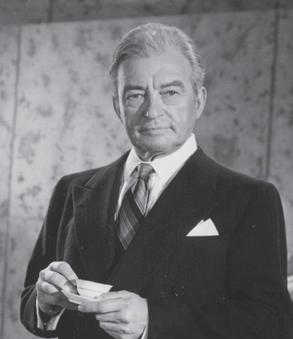
The composer conducted the first performance at the Ravinia Festival on July 21, 1956. Popular stage and screen actor Claude Rains who had appeared in The Adventures of Robin Hood, Mr. Smith Goes to Washington, Casablanca, Notorious, and Lawrence of Arabia—was narrator.
Copland was again on the podium at the Ravinia Festival on July 6, 1963, when Illinois Governor Otto Kerner, Jr., was narrator. The next three performances, all in Orchestra Hall, were narrated by voices quite familiar to Chicagoans. On March 28, 1970, WFMT announcer Mel Zellman shared the stage with conductor Irwin Hoffman. Jim Tilmon, a longtime television reporter for WTTW and NBC, narrated the work on February 25, 1976, with associate conductor Henry Mazer on the podium. On January 29, 1979, Bill Kurtis, then a news anchor with WBBM-TV, was narrator, again under Mazer’s direction. For a special July 4 celebration in 1982 at the Ravinia Festival, Aaron Copland himself was narrator. Erich Kunzel conducted.
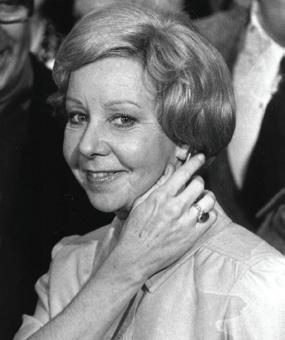
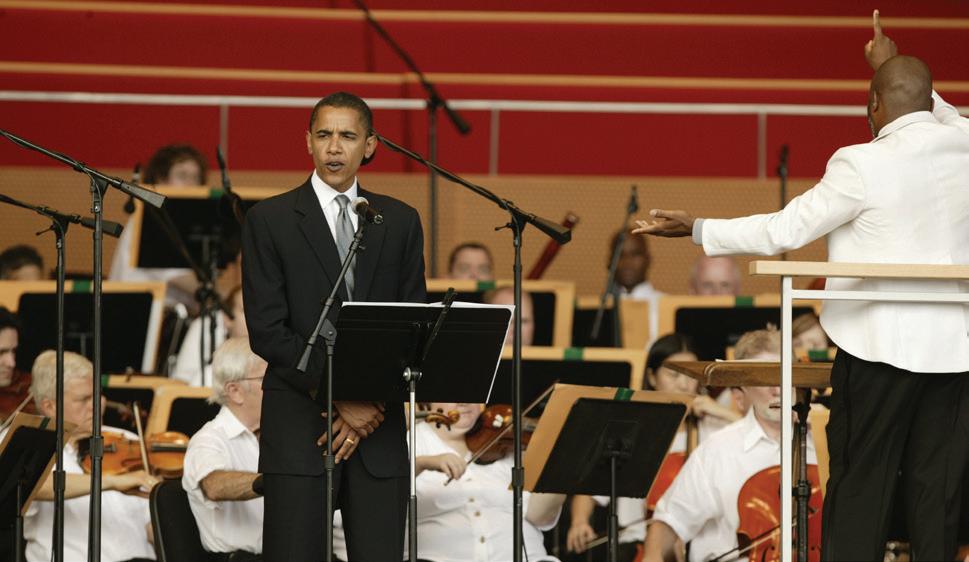
clockwise from top left: Carl Sandburg in 1947 (Bettmann Archive via Getty Images) | Claude Rains in 1955 (Leo Fuchs via Getty Images) | Mayor Jane Byrne in 1979 (Fred Jewell, Associated Press) | Senator Barack Obama onstage with William Eddins and the Orchestra at Pritzker Pavilion in Millennium Park on September 11, 2005 (Todd Rosenberg Photography)
Jane Byrne was the first woman to serve as Chicago’s mayor from 1979 until 1983. On October 1, 1982, in Orchestra Hall, she was narrator with Reynald Giovaninetti on the podium.
On October 4, 1997, Symphony Center officially opened its doors with a gala concert. The program included a performance of Lincoln Portrait with bass-baritone William Warfield and Daniel Barenboim conducting. Long associated with Copland, Warfield had sung the premieres of the first set of Old American Songs (for soloist and orchestra) as well as the second set (for soloist and piano).
Steppenwolf Theatre Company actors Martha Lavey, Amy Morton, K. Todd Freeman, and Tracy Letts shared narrating duties at the Ravinia Festival on July 4, 2004. David Alan Miller conducted.
On September 11, 2005, the Chicago Symphony Orchestra gave a free concert in Millennium Park’s Pritzker Pavilion with guest conductor William Eddins and freshman U.S. Senator Barack Obama. In the Chicago Sun-Times, Wynne Delacoma wrote: “Obama brought an orator’s skill without an actor’s slick veneer to Copland’s Lincoln Portrait. The comforting quality of his voice gave added emotional resonance to Lincoln’s words. The CSO was a powerful surging force behind him, alternately sinking into meditation and swelling to majestic heights.”
In 2009 American actor James Earl Jones was narrator at Orchestra Hall on February 21 and 24 under the baton of James Gaffigan, and on July 18 soprano Jessye Norman shared the stage with James Conlon conducting at the Ravinia Festival. Most recently, actor—and charter member of Chicago’s Steppenwolf— John Malkovich was onstage with Riccardo Muti for Lincoln Portrait for four performances in April 2018 in Orchestra Hall.
Frank Villella is the director of the Rosenthal Archives. For more information, please visit cso.org/archives.
Fiorello La Guardia). Oddly, the Jewish boy from Brooklyn and the log-splitter from Illinois made a perfect match. The candor, simplicity, and grandeur of Lincoln’s political statements mirrored the very ideals Copland sought to express in his music.
At the beginning of 1942, when Copland began to compose the music, the country was still stunned by the shock of Pearl Harbor, and morale was at a new low. “That spring seemed a good time for the Lincoln Portrait,” Kostelanetz recalled, and, indeed, it was ideal for remembering the eloquence and profundity of Lincoln’s patriotism.
Lincoln Portrait, scored for narrator and orchestra, is roughly divided into three sections. In the opening, Copland suggests
CHARLES IVES
Born October 20, 1874; Danbury, Connecticut Died May 19, 1954, New York City
Three Places in New England
Charles Ives and Harmony
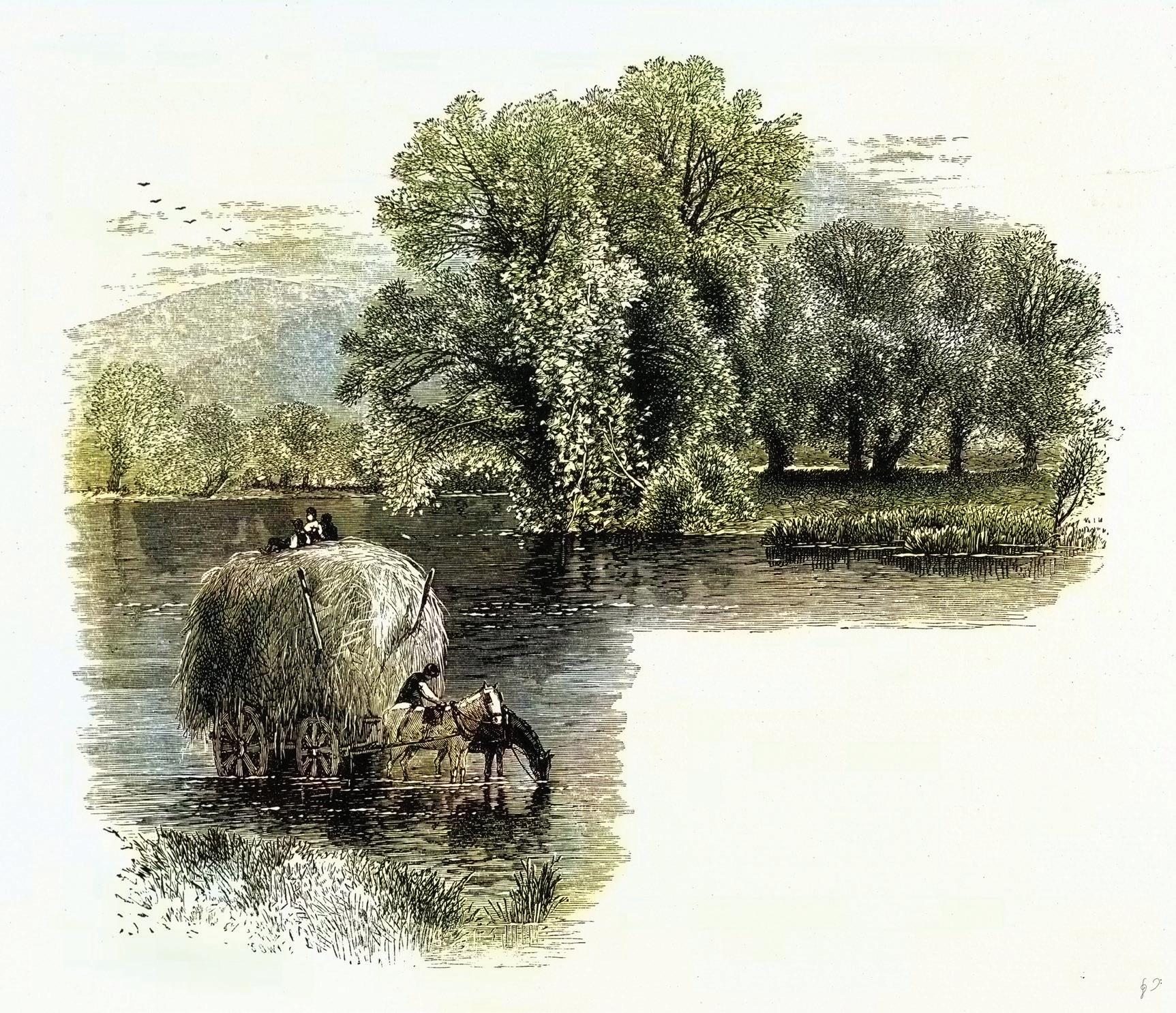
Twitchell married on June 9, 1908. One Sunday morning in July, they set out for a walk by the Housatonic River near Stockbridge. “We walked in the meadows along the river,” Ives later recalled,
. . . and heard the distant singing from the church across the river. The mist had not entirely left the river bed, and the colors, the running water, the banks and elm trees were something that one would always remember.
Two days later—the impression of the landscape and the distant hymn tune still fresh in his mind—Ives sat down at the desk in his new home, on West 11th Street in New York City, and
“something of the mysterious sense of fatality that surrounds Lincoln’s personality, and near the end of the first section, something of his gentleness and simplicity of spirit.” The second part paints the colorful background of Lincoln’s time (with a hint of Stephen Foster’s “Camptown Races.”) The concluding section draws a “simple but impressive frame around the words of Lincoln himself”—quotations from the statesman’s writing and speeches, bound together by narration. The Chicago Symphony Orchestra has boasted an impressive array of speakers for its performances, from Carl Sandburg to Barack Obama (see sidebar, page 8). For all its purebred Americana, Lincoln Portrait is universal in its message. It has been translated into more than a dozen languages, including Chinese, Turkish, Arabic, Vietnamese, and Urdu.
made a few notes—just one measure of music— to fix the moment on paper, like a notation in a diary. That was the first piece in one of Ives’s greatest jigsaw puzzles of a composition—a work not so much composed as assembled over many years, with bits and pieces lifted from Ives’s life jostling with hymns and marching tunes and sudden flashes of great personal revelation. It would be another six years before Three Places in New England came together in a meaningful way—as a rich, Proustian memory book of the indelible sights and sounds of early twentieth-century American life.
The story of Ives as a moonlighting composer is well known and has become part of the lore of American music. Although he studied composition at Yale, Ives went on to a highly successful career as an insurance executive, composing only at night and on weekends. His clandestine profession produced some two hundred songs,
four symphonies, two piano sonatas, and a number of other works of a uniquely American sensibility and pioneering spirit.
It was only after he stopped composing sometime around 1920 that word of his vision and crusty individuality began to spread, and Ives eventually became a legendary figure in American music—the great innovator, father of the avantgarde, New England eccentric. Today he is still esteemed for his experiments (with twelve-note systems, quarter tones, and polyrhythms long before they were commonplace) and his avowed disdain for traditional music (the three Bs had “too much of the sugarplum”) and popular performers (“Rachnotmanenough”). But he also is recognized for the seriousness and importance of his output. A century after he began composing, Ives remains an original—a man of exciting, dazzling, sometimes puzzling, highly compelling musical ideas and a composer who continues to claim our attention.
The evolution of Three Places is characteristic of Ives’s individual way of working, particularly in composing one of his loose assemblages—sets, as he called them—of disparate, yet oddly related pieces. By 1911 the diary entry of the afternoon by the Housatonic had been developed into an ink sketch of an entire movement. That summer, in a rented cottage in rural Hartsdale, New York, he composed a “black march,” a musical reflection on the racial dilemma during the Civil War. Sitting at
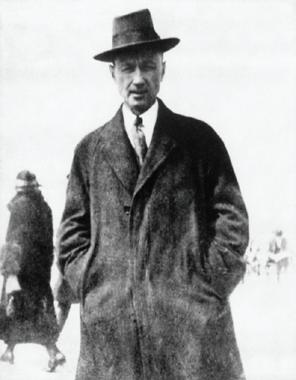
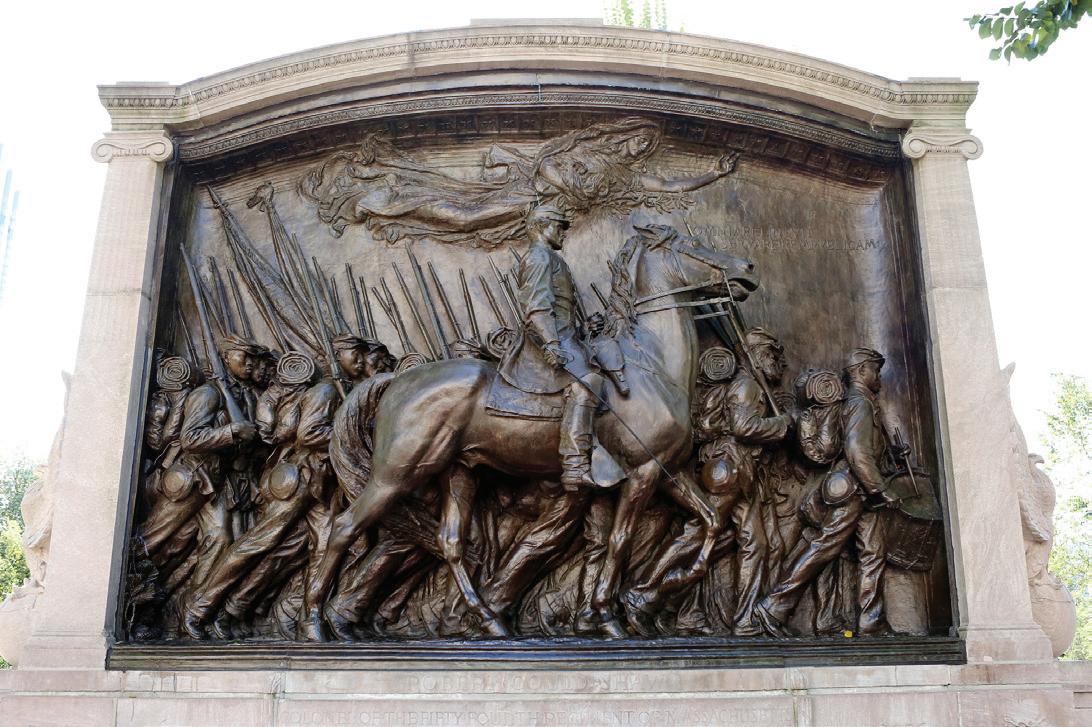
previous page: Charles Ives, ca. 1917, Battery Park, New York City | this page: Robert Gould Shaw and the 54th Regiment of the Massachusetts Volunteer Infantry Memorial on Boston Common (begun 1883, completed 1897), bronze relief sculpture by Augustus Saint-Gaudens (1848–1907). Photo by Angela Rowlings/ MediaNews Group/Boston Herald via Getty Images, 2019 | opposite page: The Housatonic River at Stockbridge, United States of America, ca. 1880. Photo by Sepia Times/Universal Images Group via Getty Images
COMPOSED
1911–14, revised for smaller ensemble in 1929, rescored for midsize orchestra in 1935
FIRST PERFORMANCE
January 10, 1931, New York City. Nicolas Slonimsky conducting
INSTRUMENTATION
3 flutes (3rd doubling piccolo), 2 oboes (2nd doubling english horn), 2 clarinets, 2 bassoons and contrabassoon, 4 horns, 2 trumpets, 3 trombones, tuba, timpani, percussion, piano, celesta, 2 harps, strings
APPROXIMATE PERFORMANCE TIME 18 minutes
FIRST CSO PERFORMANCES
November 27, 28, and 29, 1969, Orchestra Hall. Georg Solti conducting
July 3, 1971, Ravinia Festival. Lawrence Foster conducting
MOST RECENT
CSO PERFORMANCES
July 2, 2004, Ravinia Festival. Christoph von Dohnányi conducting October 13, 14, 15, and 18, 2011, Orchestra Hall. Susanna Mälkki conducting
CSO RECORDINGS
1967. Morton Gould conducting. RCA
1985. James Levine conducting. CSO (From the Archives, vol. 18: A Tribute to James Levine)
the piano that August, he remembered Augustus Saint-Gaudens’s bas-relief on Boston Common, which portrays the soldiers of the famous Black 54th Regiment of the Massachusetts Volunteer Infantry and their white colonel, Robert Gould Shaw. By the end of the month, he had finished sketching The “St. Gaudens” in Boston Common.
During the fall of 1911, Ives pulled out two old marches he had composed in 1903 and pieced them together into a single work. Part Country Band March and part Overture and March 1776, the new score is quintessential Ives—at once outrageous and subtle, cheeky yet moving, nostalgic but irreverent, rainwater-fresh one moment and maddeningly chaotic the next. After Ives finished Putnam’s Camp, as he called it, he
began to turn the Housatonic experience into a song, but shelved the idea, no doubt deciding that a memory of such rich texture and nuance, of such subtle colors and elusive moods, would need the full resources of the orchestra. By 1913 all the pieces of the puzzle were ready. We don’t know when Ives first realized that the three landscape portraits belonged together in a set, but by 1914, according to his own statement, these Three Places in New England were “completely scored for large orchestra.”
After that, the history of this work, like that of virtually all of Ives’s major compositions, is a story of neglect, ridiculously late discovery, misunderstanding, and failure. As Aaron Copland once said, Ives “lacked neither the talent nor the
ability, nor the métier, nor the integrity of the true artist, but what he shamefully and tragically lacked was an audience.” For fourteen years after it was completed, Three Places in New England went unnoticed. Then, in 1928, the conductor Nicolas Slonimsky offered to program something by Ives with his Chamber Orchestra of Boston, and Ives quickly set about reworking Three Places for a smaller ensemble. Slonimsky glanced at the score and “experienced a strange, but unmistakable feeling that I was looking at a work of genius.” Slonimsky remembers the premiere, in New York City in 1931, as “somewhat scrambling.” Ives said simply, “This was just like a town
DUKE ELLINGTON
Born April 29, 1899; Washington, D.C.
Died May 24, 1974, New York City
meeting, everyone for himself. Wonderful how it came out!” But although the Three Places won Ives a few friends among the forward-thinkers in the music world, he still lacked an audience. Unfortunately, that would hardly change during his lifetime.
A Pulitzer Prize for his Third Symphony in 1948, more than forty years after its composition, spread word of Ives’s achievement. But the dignitaries and power brokers of the music business still showed no interest, and the general public heard very little of his music. At the time of his death in 1954, Ives remained America’s great musical secret.
Harlem (Orchestrated by Luther Henderson)
Of all the jazz greats known, curiously, by European titles of nobility—kings, counts, ladies—none wore his crown with greater assurance than Edward Kennedy Ellington, the Duke. His upbringing was modest and middle class—his father James was a butler, and his mother Daisy was the daughter of a policeman—but he was raised in a house of high ideals and grand aspirations. As a boy, Edward would exclaim, “I am the grand, noble Duke.”
Ellington’s father wanted him to become a painter, but music was Edward’s true love. He was trained not so much by textbooks and theory classes as by records and piano rolls—he would slow down the roll of James P. Johnson’s “Carolina Shout” and put his fingers on the piano’s depressed keys again and again until he could play it by himself—and ultimately by making music night and day.
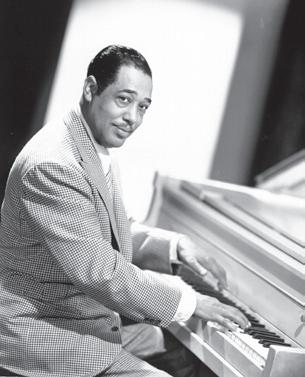
this page: Duke Ellington, as photographed by James Kriegsmann (1909–1994), ca. 1950, New York City. James Kriegsmann/Michael Ochs (1943–2025) Archives/ Getty Images | opposite page: A Night-Club Map of Harlem by Elmer Simms Campbell (1906–1971), nationally syndicated commercial artist and cartoonist. Published 1933, Dell Publishing Company, Inc., New York City. Library of Congress, Geography and Map Division, Washington, D.C.
COMPOSED 1950
FIRST PERFORMANCE
January 21, 1951, New York City
INSTRUMENTATION
3 flutes (3rd doubling piccolo), 2 oboes and english horns, 2 clarinets and bass clarinet, 2 bassoons, 2 alto saxophones, 2 tenor saxophones, bass saxophone, 4 horns, 4 trumpets, 3 trombones, tuba, timpani, percussion, harp
APPROXIMATE PERFORMANCE TIME 18 minutes
FIRST CSO PERFORMANCES
October 14, 15, 16, and 19, 1999, Orchestra Hall. Jazz at Lincoln Center and Wynton Marsalis as soloists, Daniel Barenboim conducting (A Tone Parallel to Harlem, arranged by Marsalis)
Ellington began playing piano in his hometown of Washington, D.C., and then moved to New York, where he organized a ten-piece band that, despite gradual personnel changes, remained his “voice”—his true “instrument”—for the next fifty years. Ellington’s aspirations as a serious composer received a crucial jumpstart when, in 1934, he met Billy Strayhorn, a young composer with artistic inclinations and a background in the European classics. Strayhorn didn’t become just another member of the band; he was Ellington’s soul mate and his true musical partner, ultimately composing and collaborating on more than two hundred works.
By the late 1920s, Ellington had started freely using dissonance and polytonality, suggesting that he eventually would, in the words of jazz critic Ted Gioia, make “progressive composition and popular music share the same stage.” Musicians noticed unusual parallels between Ellington’s works and the classical tradition. In 1932 the conservatory-trained critic R.D. Darrell
wrote a study of Ellington’s music that singled out his “noble, spontaneous, unforced melodies . . . which spring into being as simply, as naturally as those of Mozart or Schubert.” That November, when the composer Percy Grainger invited Ellington and the band to play for his music class at New York University, he compared Ellington’s work to that of Bach and Delius.
Early in his career, Ellington dreamed of writing large jazz compositions—works too big to fit on a 78 RPM disc—and in 1931 he composed a Creole Rhapsody that took up both sides of an LP. The Symphony in Black of 1934, a nine-minute suite, and the thirteen-minute Reminiscing in Tempo from the following year are turning points in his attempts at extended composition and in his thinking of jazz as a serious art form—ironically at the very time jazz was becoming America’s popular music.
Ellington and his band were playing the Regal Theater in Chicago (“Chi-kor-ga,” as Ellington remembered the Pullman porters and dining-car
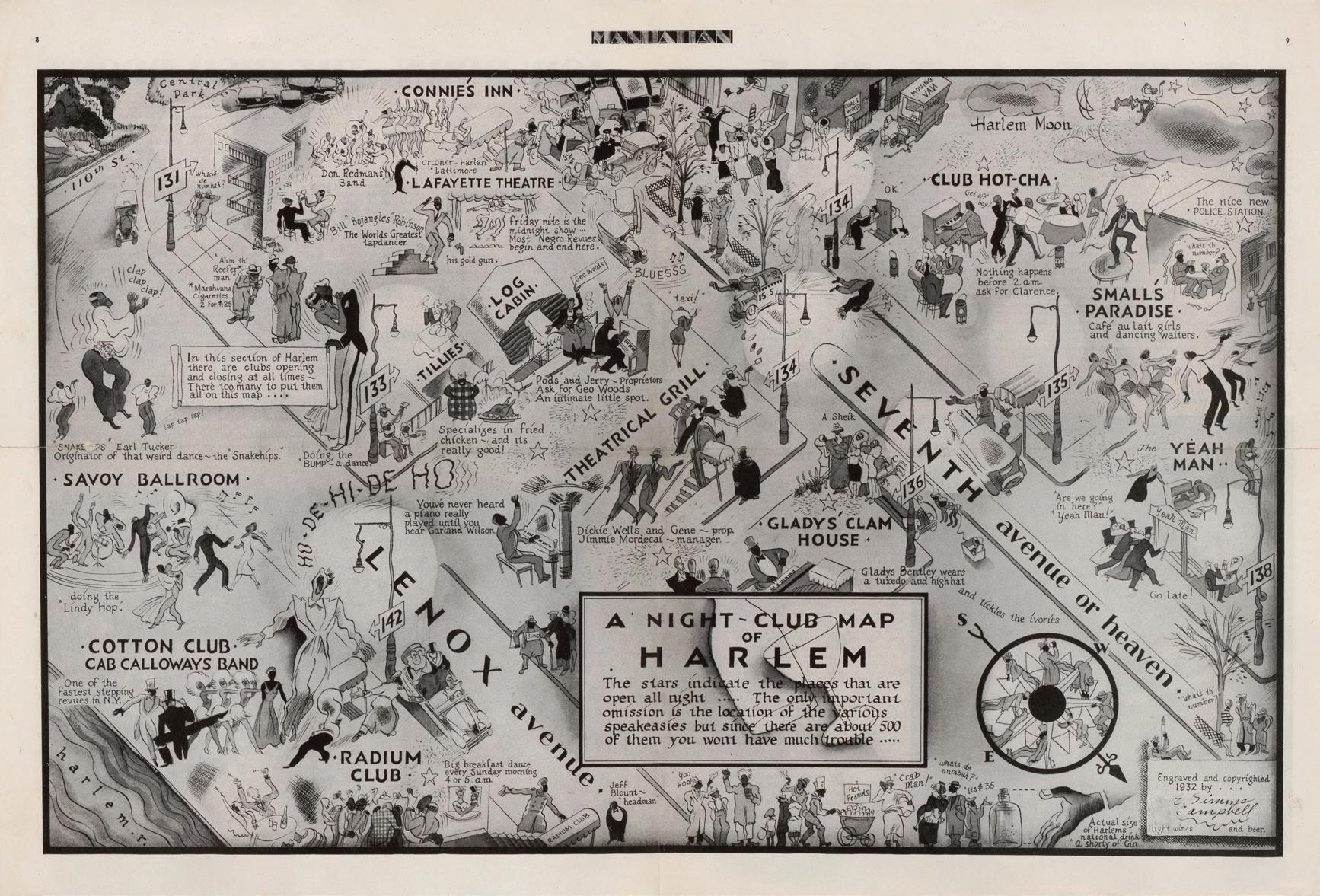
waiters called it) when he met Cress Courtney, who suggested Ellington write a big, serious work for Carnegie Hall. That’s how Ellington’s Black, Brown, and Beige came about, and when it was premiered on Carnegie’s venerated stage in January 1943, American music turned a corner. Jazz had never before aspired to the stature of large symphonic form (its three movements ran forty-five minutes) or addressed a subject as vast as the history of Black Americans from deep in the past to the present time, when “just as we were beginning to get our teeth into the tissue, we discovered that our country was in deep trouble again.” It was Black, Brown, and Beige that carried jazz into a new realm, anticipating all the big, difficult-to-categorize works still to come. Ellington’s last extended composition is Harlem, a complex and richly textured portrait of the community where he, like so many African Americans, came of age. (Ellington was one of Harlem’s biggest names in the 1920s once he took the Cotton Club by storm.) Commissioned by the NBC Orchestra under Toscanini in 1950, Harlem is sui generis—a kind of concerto for orchestra in the spirit of the nineteenth-century tone poem. Ellington understood his relationship to the classical tradition perfectly, which perhaps explains why he coined his own term “tone parallel” for these unclassifiable pieces. Later Ellington called Harlem a “concerto grosso for our band and the symphony.” Toscanini never performed the work, but Ellington recorded it with his ensemble and released it on his album Ellington Uptown in 1953. Like all jazz music, Harlem, which is sometimes called A Tone Parallel to Harlem, has led a number of different lives over the years; the orchestration used at these performances is by Luther Henderson, a long-time friend of the composer. From its opening notes, as a trumpet “speaks” the word “Harlem,” it is an indelible portrait of a specific place and time. In his memoir, Music is my Mistress, Ellington writes of the piece:
We would like now to take you on a tour of this place called Harlem. It has always had more churches than cabarets. It is Sunday
morning. We are strolling from 110th Street up Seventh Avenue, heading north through the Spanish and West Indian neighborhood toward the 125th Street business area. Everybody is nicely dressed, and on their way to or from church. Everybody is in a friendly mood. Greetings are polite and pleasant, and on the opposite side of the street, standing under a streetlamp, is a real hip chick. She, too, is in a friendly mood. You may hear a parade go by, or a funeral, or you may recognize the passage of those who are making Civil Rights demands.
What ultimately distinguishes Ellington’s own large-scale efforts is that, unlike the Europeans from Stravinsky to Milhaud, or even Gershwin, Ellington was not a composer who flirted with jazz, but a true jazz composer.
Although Ellington was famous and beloved in his last years, the scope of his achievement was not fully appreciated during his lifetime. Ellington’s vision had often been misunderstood—he had been accused of betraying or abandoning jazz since the early 1930s, and the classical establishment never embraced him as one of its own. In 1965 a Pulitzer Prize for music was withdrawn at the last minute—the Pulitzer board overruled the unanimous recommendation of its jury. Ellington, who was on the road with his orchestra when he heard the news, said “Fate is being kind to me. Fate doesn’t want me to be famous too young.” Later he told a friend, “My reward is hearing what I’ve done, and, unlike most composers, I can hear it immediately.” On Ellington’s seventieth birthday, in 1969, Richard Nixon held a state dinner in his honor at the White House, where Ellington’s father once worked as a butler. The nation’s First Family and its greatest house, too, were now part of Duke’s kingdom.
Phillip Huscher has been the program annotator for the Chicago Symphony Orchestra since 1987.
This project is supported in part by the National Endowment for the Arts.
Joshua Weilerstein Conductor
FIRST CSO PERFORMANCE
August 17, 2023, Ravinia Festival. Still’s Poem for Orchestra, Elgar’s Cello Concerto with Alisa Weilerstein, and Shostakovich’s Symphony no. 5
These concerts mark Joshua Weilerstein’s subscription concert debut with the Chicago Symphony Orchestra.
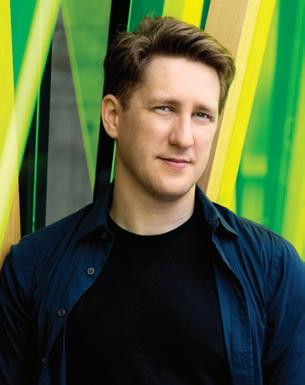
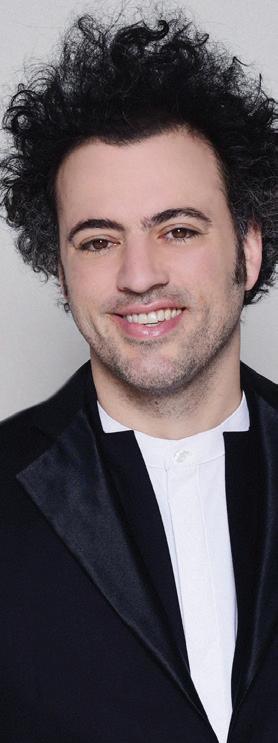
Music director of the Orchestre National de Lille and chief conductor of the Aalborg Symphony Orchestra, Joshua Weilerstein also maintains a busy guest conducting career with major orchestras across the globe. Acclaimed for performances that balance clarity, energy, and emotional depth, he is a compelling advocate for both the classical canon, the music of today, and forgotten composers of the past. In his second season in Lille, Weilerstein has led a wide-ranging series of concerts with a particular focus on French music, performing works of Ravel, Franck, Lili Boulanger, Barraine, Dutilleux, Saint-Saëns, Tailleferre, and Offenbach. He also welcomed Noah Bendix-Balgley, first concertmaster of the Berlin Philharmonic, in a program that paired Bendix-Balgley’s klezmer-inspired concerto Fidl Fantazy with Shostakovich’s Tenth Symphony. In Aalborg, he completed his two-year-long exploration of Brahms’s symphonies and focused on such other late romantic giants as Mahler and Zemlinsky. Elsewhere in 2025–26, he returned to the BBC Proms and to Bridgewater Hall with the BBC Philharmonic and to the Vancouver,
Gothenburg, and City of Birmingham symphony orchestras. He makes his debut with the Israel Philharmonic Orchestra in July 2026.
Weilerstein has conducted many of the world’s top orchestras, including the Staatskapelle Dresden, Bavarian Radio Symphony, London Philharmonic, Royal Stockholm Philharmonic, San Francisco Symphony, National Symphony in Washington (D.C.), and the New York Philharmonic. He regularly collaborates with such leading soloists as Emanuel Ax, Yo-Yo Ma, Vilde Frang, and Matthias Goerne. From 2015 to 2021, he was artistic director of the Orchestre de Chambre de Lausanne, with which he recorded all of Beethoven’s symphonies and a disc of works by Ives, Ethel Smyth, William Grant Still, and Caroline Shaw.
Joshua Weilerstein was born into a musical family, and his commitment to classical music was inspired by his experience on a youth-orchestra tour to Central America, during which he performed for audiences that had never heard a live orchestra. He studied violin and conducting at the New England Conservatory in Boston and won both first and audience prizes at the Malko Competition in Copenhagen in 2009. He later served as assistant conductor of the New York Philharmonic from 2012 to 2015.
In 2017, inspired by Leonard Bernstein’s passion for making classical music accessible, Weilerstein launched the podcast Sticky Notes, which now reaches listeners in 190 countries and has garnered over seven million downloads.
Intermusica represents Joshua Weilerstein worldwide.
intermusica.co.uk/artist/Joshua-Weilerstein
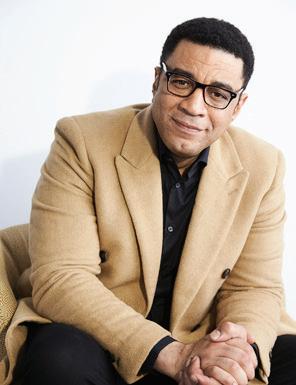
Harry Lennix Narrator
These concerts mark Harry Lennix’s debut with the Chicago Symphony Orchestra.
Harry Lennix is a Tony Award–nominated actor known for his commanding stage and screen presence. Most recently, he starred in his nominated role as Solomon “Sonny” Jasper in Branden Jacobs-Jenkins’s Purpose, which won both the Pulitzer Prize and the Tony Award for Best Play. His Broadway debut was as Harmond Wilks in August Wilson’s Radio Golf (Tony Award–nominated), and his notable Off-Broadway credits include Shakespeare’s Titus Andronicus. Regionally, he has performed in Lorraine Hansberry’s A Raisin in the Sun, Wilson’s Ma Rainey’s Black Bottom, Shakespeare’s Othello, and F. Scott Fitzgerald’s The Great Gatsby.
As a director, Lennix has led Tennessee Williams’s The Glass Menagerie at Steppenwolf Theatre Company in Chicago, Robert Townsend’s stage adaptation of The Five
Heartbeats (earning three NAACP Theatre Award nominations), and Lekethia Dalcoe’s A Small Oak Tree Runs Red at both Congo Square Theatre in Chicago and the Billie Holiday Theatre in Brooklyn. His stage career has been widely acclaimed, earning him the first Ollie Award for his portrayal of Malcolm X in Jeff Stetson’s The Meeting at Chicago’s Goodman Theatre and two Joseph Jefferson citations for Ma Rainey’s Black Bottom and Caught in the Act.
Lennix’s film credits span blockbuster franchises and critically praised dramas. He appeared in Zack Snyder’s Justice League, Batman v. Superman: Dawn of Justice, Man of Steel, The Matrix franchise, and the beloved Love & Basketball. His work also includes The Five Heartbeats, and he appeared as Joe Adams in the Academy Award–winning film Ray.
On television, Harry Lennix is perhaps best known for his decade-long role as Harold Cooper in NBC’s hit series The Blacklist. He also starred as Chief of Staff Jim Gardner in the Golden Globe–nominated series Commander in Chief; portrayed activist Adam Clayton Powell, Jr., in Showtime’s Keep the Faith, Baby; and appeared in Showtime’s Billions and Fox’s Dollhouse.
Tax-deductible donations do more than support the concerts you love — they impact more than 200,000 people through education and community engagement programs each year. Thanks to a generous matching grant, all gifts to the CSOA will be doubled. Make a difference with your gift today.
The Chicago Symphony Orchestra—consistently hailed as one of the world’s best—marks its 135th season in 2025–26. The ensemble’s history began in 1889, when Theodore Thomas, the leading conductor in America and a recognized music pioneer, was invited by Chicago businessman Charles Norman Fay to establish a symphony orchestra. Thomas’s aim to build a permanent orchestra of the highest quality was realized at the first concerts in October 1891 in the Auditorium Theatre. Thomas served as music director until his death in January 1905, just three weeks after the dedication of Orchestra Hall, the Orchestra’s permanent home designed by Daniel Burnham.
Frederick Stock, recruited by Thomas to the viola section in 1895, became assistant conductor in 1899 and succeeded the Orchestra’s founder. His tenure lasted thirty-seven years, from 1905 to 1942—the longest of the Orchestra’s music directors. Stock founded the Civic Orchestra of Chicago— the first training orchestra in the U.S. affiliated with a major orchestra—in 1919, established youth auditions, organized the first subscription concerts especially for children, and began a series of popular concerts.
Three conductors headed the Orchestra during the following decade: Désiré Defauw was music director from 1943 to 1947, Artur Rodziński in 1947–48, and Rafael Kubelík from 1950 to 1953. The next ten years belonged to Fritz Reiner, whose recordings with the CSO are still considered hallmarks. Reiner invited Margaret Hillis to form the Chicago Symphony Chorus in 1957. For five seasons from 1963 to 1968, Jean Martinon held the position of music director.
Sir Georg Solti, the Orchestra’s eighth music director, served from 1969 until 1991. His arrival launched one of the most successful musical partnerships of our time. The CSO made its first overseas tour to Europe in 1971 under his direction and released numerous award-winning recordings. Beginning in 1991, Solti held the title of music director laureate and returned to conduct the Orchestra each season until his death in September 1997.
Daniel Barenboim became ninth music director in 1991, a position he held until 2006. His tenure was distinguished by the opening of Symphony Center in 1997, appearances with the Orchestra in the dual role of pianist and conductor, and twenty-one international tours. Appointed by Barenboim in 1994 as the Chorus’s second director, Duain Wolfe served until his retirement in 2022.
In 2010, Riccardo Muti became the Orchestra’s tenth music director. During his tenure, the Orchestra deepened its engagement with the Chicago community, nurtured its legacy while supporting a new generation of musicians and composers, and collaborated with visionary artists. In September 2023, Muti became music director emeritus for life.
In April 2024, Finnish conductor Klaus Mäkelä was announced as the Orchestra’s eleventh music director and will begin an initial five-year tenure as Zell Music Director in September 2027. In July 2025, Donald Palumbo became the third director of the Chicago Symphony Chorus.
Carlo Maria Giulini was named the Orchestra’s first principal guest conductor in 1969, serving until 1972; Claudio Abbado held the position from 1982 to 1985. Pierre Boulez was appointed as principal guest conductor in 1995 and was named Helen Regenstein Conductor Emeritus in 2006, a position he held until his death in January 2016. From 2006 to 2010, Bernard Haitink was the Orchestra’s first principal conductor.
Mezzo-soprano Joyce DiDonato is the CSO’s Artist-in-Residence for the 2025–26 season.
The Orchestra first performed at Ravinia Park in 1905 and appeared frequently through August 1931, after which the park was closed for most of the Great Depression. In August 1936, the Orchestra helped to inaugurate the first season of the Ravinia Festival, and it has been in residence nearly every summer since.
Since 1916, recording has been a significant part of the Orchestra’s activities. Recordings by the Chicago Symphony Orchestra and Chorus— including recent releases on CSO Resound, the Orchestra’s recording label launched in 2007— have earned sixty-five Grammy awards from the Recording Academy.