Program Book - Jazz at Lincoln Center Orchestra with Wynton Marsalis / Alsop Conducts Adams, Copland
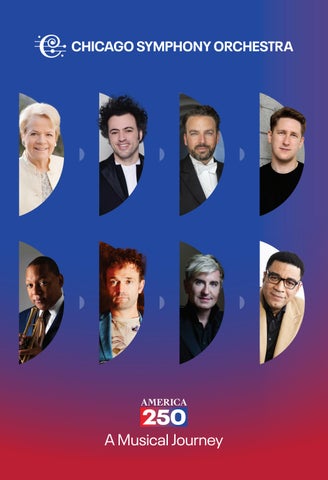
A Musical Journey
Carrying
Freedom Riders with special guests
Kurt Elling & Lizz Wright
OCT 2
Branford Marsalis & Dianne Reeves Celebrate John Coltrane
OCT 16
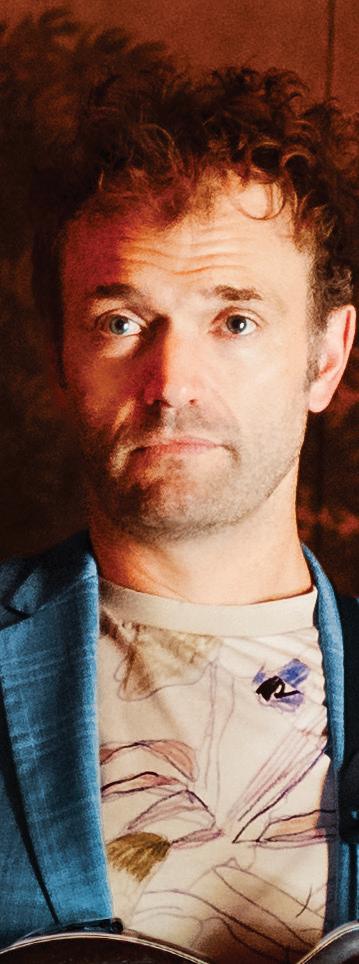
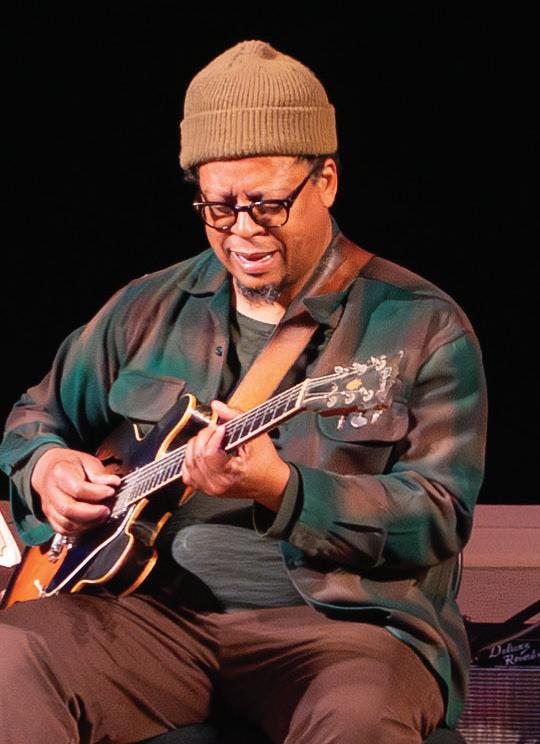
Jeff Parker & The New Breed
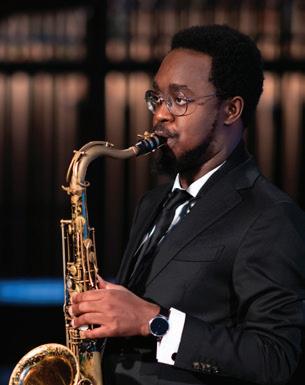
Isaiah Collier & The Defiance
FEB 5
John Scofield & Dave Holland
FEB 19
Stanley Clarke & Hiromi along with PUBLIQuartet Celebrate the Music of Chick Corea & Beyond
MAR 19
Jazz at Lincoln Center Orchestra with Wynton Marsalis
APR 20
Joel Ross: Good Vibes
The Vibraphone Summit with Warren Wolf, Joe Locke, Stefon Harris & Chien Chien Lu
MAY 14
Chucho Valdés 85th Birthday Celebration with special guests Joe Lovano & Etienne Charles
JUNE 4
The Chicago Symphony Orchestra Association thanks an anonymous donor for generously supporting this performance.
NINETY-FIFTH SEASON
SYMPHONY CENTER PRESENTS
Tuesday, June 2, 2026, at 8:00
Jazz Series
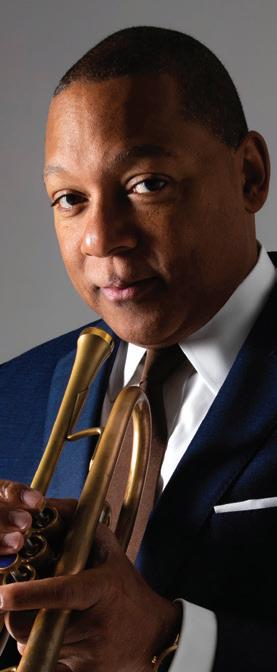
JAZZ AT LINCOLN CENTER ORCHESTRA WITH WYNTON MARSALIS
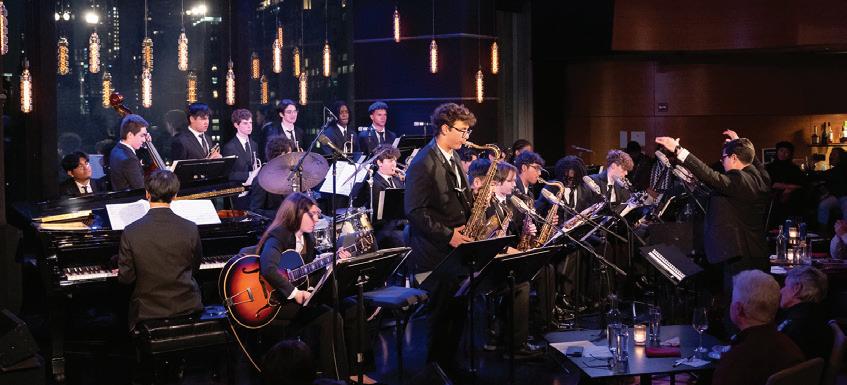
Jazz at Lincoln Center Youth Orchestra
Tatum Greenblatt Director
Jazz at Lincoln Center Orchestra
Wynton Marsalis Music Director, Trumpet
Ryan Kisor Trumpet
Kenny Rampton Trumpet
Marcus Printup Trumpet
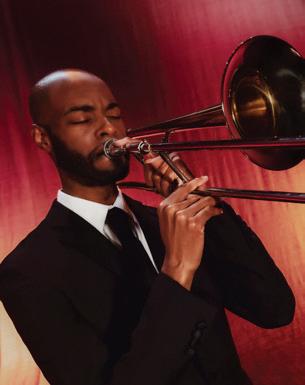
Vincent Gardner Trombone
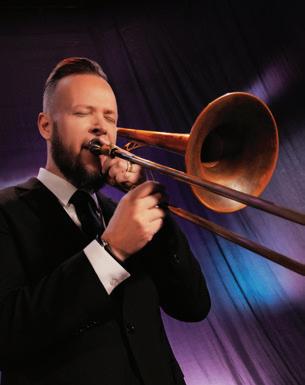
Chris Crenshaw Trombone
Elliot Mason Trombone
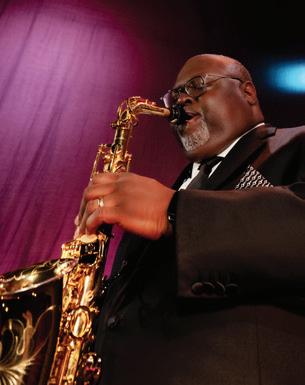
Sherman Irby Alto and Soprano Saxophones, Flute, Clarinet
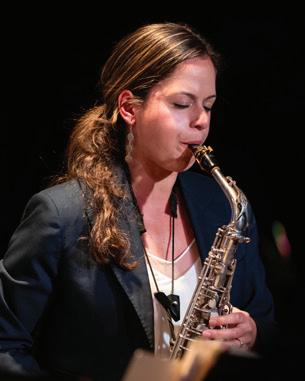
Alexa Tarantino Alto and Soprano Saxophones, Flute, Clarinet
Chris Lewis Tenor and Soprano Saxophones, Clarinet, Bass Clarinet
Abdias Armenteros Tenor and Soprano Saxophones, Clarinet
THE ZOU FAMILY CHAIR IN SAXOPHONE
Paul Nedzela Baritone and Soprano Saxophones, Clarinet, Bass Clarinet
Dan Nimmer Piano THE ZOU FAMILY CHAIR IN PIANO
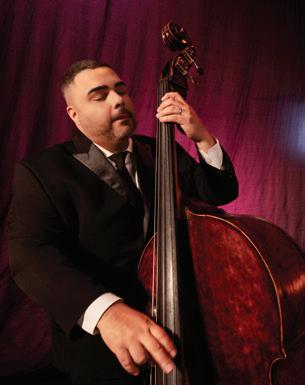
Carlos Henriquez Bass THE MANDEL FAMILY CHAIR IN HONOR OF KATHLEEN B. MANDEL
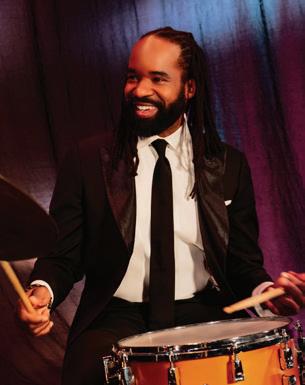
Obed Calvaire Drums
There will be a brief pause between performances by the Jazz at Lincoln Center Youth Orchestra and the Jazz at Lincoln Center Orchestra.
The program will be announced from the stage.
Artists subject to change
Artist profiles begin on page 14.
This performance is generously sponsored by an anonymous donor.
Funding for educational programs during the 2025–26 Season of SCP Jazz has been generously provided by Dan J. Epstein, Judith Guitelman, and the Dan J. Epstein Family Foundation. The Chicago Symphony Orchestra Association acknowledges support from the Illinois Arts Council. Chicago Jazz, DownBeat magazine, and WDCB 90.9FM Jazzare media partners for this event.
ONE HUNDRED THIRTY-FIFTH SEASON
CHICAGO SYMPHONY ORCHESTRA
KLAUS MÄKELÄ Zell Music Director Designate | RICCARDO MUTI Music Director Emeritus for Life
Thursday, June 4, 2026, at 7:30 Friday, June 5, 2026, at 1:30 Saturday, June 6, 2026, at 7:30
Marin Alsop Conductor Jazz at Lincoln Center Orchestra with Wynton Marsalis
J. ADAMS The Rock You Stand On CSO co-commission
First Chicago Symphony Orchestra performances
COPLAND Suite from Appalachian Spring
INTERMISSION
MARSALIS Selections from The Jungle (Symphony No. 4) The Big Scream (Black Elk Speaks) La Esquina Us Struggle in the Digital Market
First Chicago Symphony Orchestra performances JAZZ AT LINCOLN CENTER ORCHESTRA WITH WYNTON MARSALIS
These concerts are funded in part by The Aaron Copland Fund for Music, Inc.
The Chicago Symphony Orchestra Association acknowledges support from the Illinois Arts Council.
This month, as we present a series of concerts honoring our country’s 250th anniversary, it is clear that the music of our land has come of age. In 1892, near the end of the Chicago Orchestra’s opening season, the ensemble played its first all-American program: works by four male composers born within 250 miles of each other along a narrow slice of New England. Their music was “made according to German models,” a local critic pointed out. “Any idea or orchestral effect that can be considered as distinctively and peculiarly American is not found in them.”
What you will hear this month is distinctively American, not because it has a singular instantly identifiable accent or style, but because it reflects the breadth and variety of the landscapes, traditions, and peoples of America. There is music from Charles Ives, often called the father of American music, to John Adams, who, as his presidential name suggests, is a founding father of a new world of contemporary music that has swept the land: from Jessie Montgomery, born, raised, and trained in New York City, to Kurt Weill, who fled the Nazi takeover of his native Germany to settle in that same city, where the luxury of freedom inspired some of his most successful scores; from Duke Ellington, who wove jazz and symphony together in unexpected harmony, to Wynton Marsalis, who imbues that tradition with unforeseen power and provocation today; from Leonard Bernstein to Aaron Copland, whose very names bring to mind the music of the urban jungle and our open prairies. There are pieces inspired by “The Star-Spangled Banner” and by Plymouth Rock. There is music as timeless as the singing of Black spirituals and as genre-defying as Chris Thile’s mandolin playing, and there are the indelible words of Abraham Lincoln, still potent after all these years.
The music of America has broadened to encompass the full richness— and the complexity—of our land and our citizenship. The European models are still with us, but there is now a wealth of new music unlike anything being written on the other side of the ocean. Some of the pieces we perform this month have roots as old as our country; some are brand new. That is what these concerts celebrate: an American music that is too diverse to be pigeonholed because it mirrors the dizzying wealth of styles and backstories and ambitions of the composers working here. These programs reflect how far we have come as a land of music and musicians. And in the end, they speak to us about who we are now.
JOHN ADAMS
Born February 15, 1947; Worcester, Massachusetts
The Rock You Stand On
Today, it doesn’t seem unlikely that a composer with as presidential a name as John Adams would write an opera about Richard Nixon. But in 1987 Nixon in China was a shocker: a boldly colored, minimalist opera about a recent U.S. president and a controversial living figure. It earned Adams a sure place in operatic history and it jump-started his career. And it helped establish him, above all, as an American composer, one who would absorb and reinvent the various strands of our country’s musical life. (Early on, a European orchestra mistakenly illustrated an article on his music with a photo of the second U.S. president.) Even though Adams quickly tired of minimalism, he still said that it was “the only really interesting important stylistic development” of the late twentieth century—“As much as people would like to deny it, it is responsible for a revolution in music.”
Adams is one of the few composers to have made the transition from minimalism to an individual, not-easy-to-categorize style, and in the process he became one of the most popular voices in American music, countering his belief that “of all audiences in the arts, those who follow classical music number among the most timid and least sanguine when encountering something new and unfamiliar.” In work after work, each presenting audiences with “something new and unfamiliar,” Adams’s voice, the minimalist style, and our definition of American music have continued to evolve.
By now the Chicago Symphony Orchestra has been playing Adams’s music for nearly four decades, from the fleeting fireworks of A Short Ride in a Fast Machine to his big, defining masterworks, including Harmonielehre and the more recent Scheherazade.2. In 1999 Adams appeared here to conduct our orchestra in two weeks of programs of American music by Ives and Copland, Philip Glass and Lou Harrison, and his own Naïve and Sentimental Music and Violin Concerto.
The Rock You Stand On, Adams’s most recent composition, is a tribute to that other indispensable ingredient in the success of any composer: the champion performer, the advocate, and the believer.
COMPOSED
2024, co-commission with the Philadelphia Orchestra
FIRST PERFORMANCE
October 3, 2025; Philadelphia, Pennsylvania. Marin Alsop conducting
INSTRUMENTATION
3 flutes (3rd doubling piccolo), 2 oboes and english horn, 2 clarinets, E-flat clarinet and bass clarinet, 2 bassoons and contrabassoon, 4 horns, 3 trumpets, 3 trombones, tuba, timpani, percussion (bass drum, chimes, tam-tam, vibraphone, xylophone), harp, piano, celesta, strings
APPROXIMATE PERFORMANCE TIME 10 minutes
These are the first Chicago Symphony Orchestra performances.
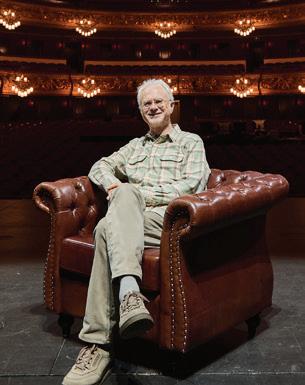
this page: John Adams, Barcelona, Spain, for his opera Antony and Cleopatra, October 2023. Photo by Mario Wurzburger/Getty Images
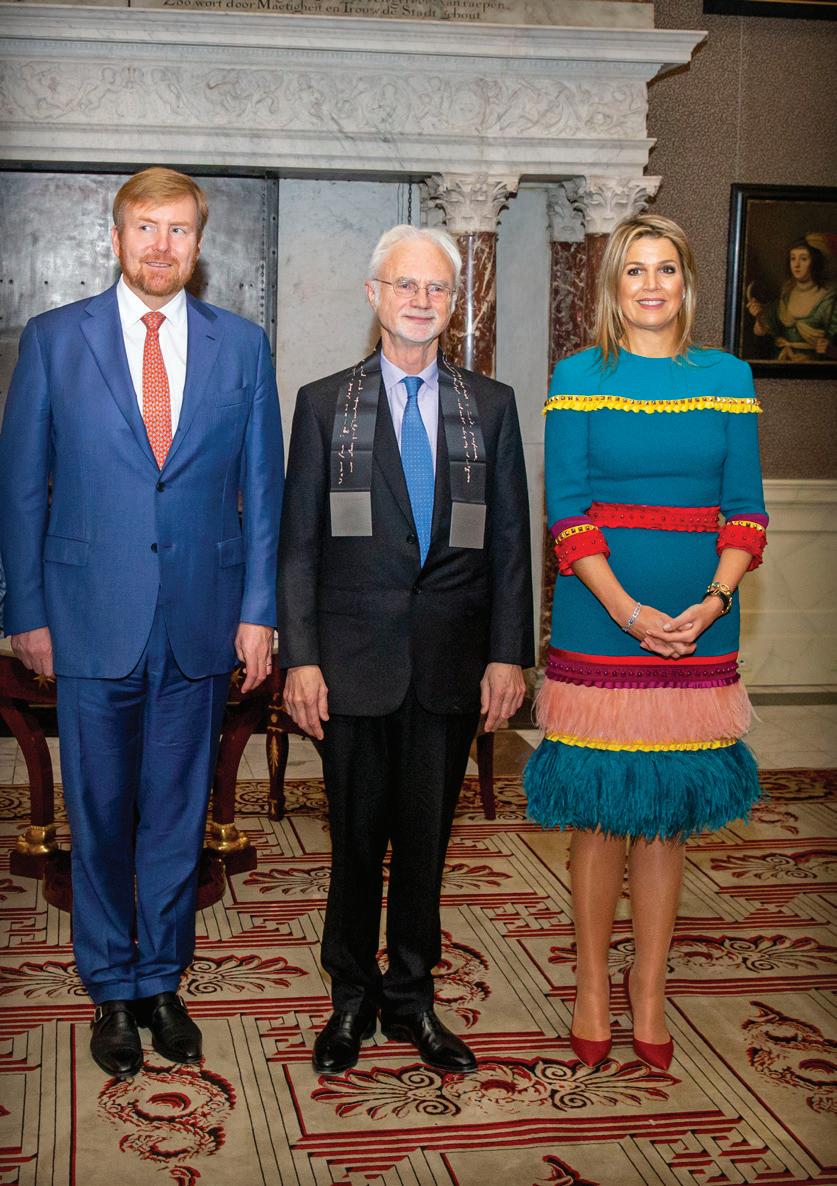
next page: John Adams, at center, with King Willem-Alexander and Queen Máxima of the Netherlands at the Royal Palace in Amsterdam during the Erasmus Prize ceremony on November 28, 2019. Photo by Patrick van Katwijk/Getty Images
John Adams on The Rock You Stand On
The Rock You Stand On was composed as a gift to Marin Alsop, a close friend, a deeply intuitive musician, and a longtime enthusiast for my music. She is one of the very few conductors whom I can trust to do the right thing with what I’ve written. She knows what I want. She “gets it.” As a person, she embodies inner strength and calm and generosity, qualities that have helped her endure the long and sometimes difficult course of her career, an odyssey that has taken her to where she is now, the indisputable model for a new generation of women conductors.
The piece is a ten-minute essay in powerful, pulsating rhythms that begin as individual strokes and morph into rocking syncopations passed from one section of the orchestra to another. There is a certain “big band” quality to the ensemble writing with the full orchestra at times executing irregular, bouncing figurations that are driven by an underlying jazz-inflected pulse.
The title, The Rock You Stand On, is nonspecific and not meant to suggest anything other than perhaps hinting at the qualities—loyalty, determination, devotion—that make Marin Alsop so very special to me.
REFRESHMENTS AT SYMPHONY CENTER
You can order drinks and snacks before the performance or during intermission at various bars located throughout Symphony Center, including the Bass Bar in the Rotunda and most of the lobby spaces in Orchestra Hall.
VIEW THE MENU
AARON COPLAND
Born November 14, 1900; Brooklyn, New York
Died December 2, 1990; Peekskill, New York
Suite from Appalachian Spring
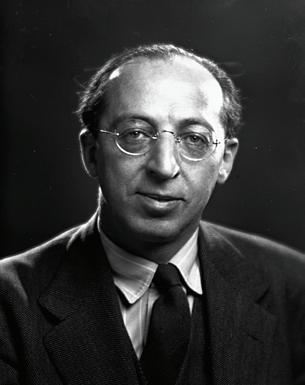
Aaron Copland, the “president of American music” (Virgil Thomson’s phrase) grew up in Brooklyn, lived most of his life in New York, and knew the rest of this country largely by hearsay. His music for Agnes de Mille’s Wild West ballet Rodeo, his first great success, was composed on the rue de Rennes in Paris (he had packed a book of cowboy songs), and the only real live cow he ever encountered was the one that hit his car one summer night on a country road near Tanglewood. Even his “hometown” piano concerto, a jazz-saturated New York cityscape, wasn’t composed at home, but in a villa in the French countryside. But Copland was the first composer to find a musical style that perfectly captured the vast open spaces, the homespun plainness, and the bracing pioneer spirit of this great country. It was fellow composer Thomson, reflecting on his first impression of Copland’s work, who said it best: “I thought that it was the voice of America in our generation. It spoke in the same way that Kerouac did thirty years later.” In work after work, Copland defined forever a distinctly “open” American sound: the music of our own Arcadia, with its silos and patchwork plains, its covered bridges and furrowed hills.
Copland first studied music through a correspondence course and then, like fellow Brooklynite George Gershwin, began formal lessons with Rubin Goldmark (nephew of Viennese composer Karl Goldmark). Copland finally went to Europe, where, in the 1920s, “it was clear that you had to be ‘finished,’ ” as he later recalled, and ended up as one of the first Americans to study with Nadia Boulanger. There, in her Paris salon, she helped him find his own distinctive way of writing— and, ironically, the “voice” of American music.
No Copland score more perfectly captures the essence of the American land and its people than Appalachian Spring. “I felt,” Copland wrote, “that it was worth the
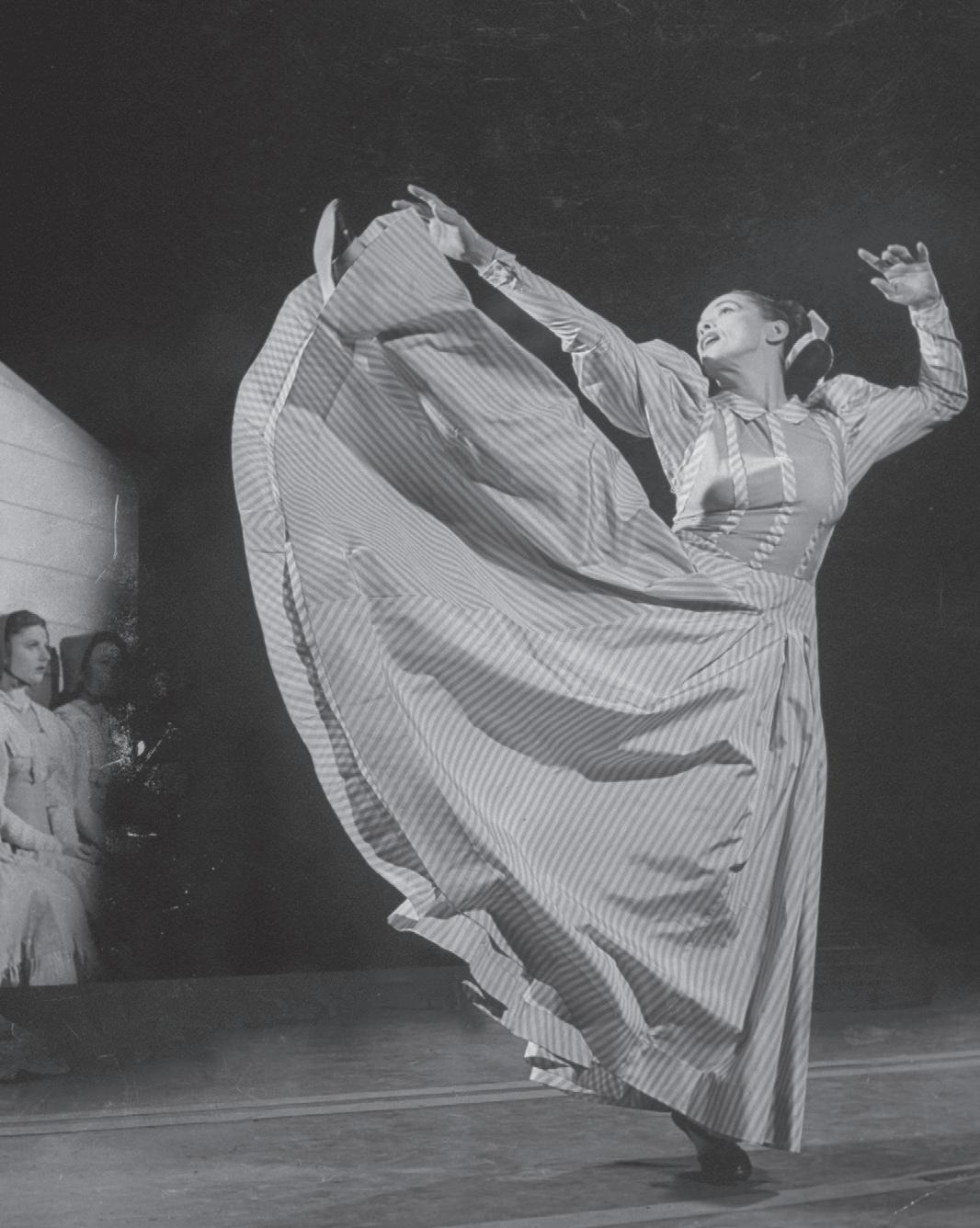
this page: Aaron Copland, 1940. Photo by Oscar White (1921–2020)/Corbis/ VCG via Getty Images | next page: Martha Graham (1894–1991) with her company during the premiere of Appalachian Spring, 1945. Set by Isamu Noguchi (1904–1988). Photo by Jerry Cooke (1921–2005)/Getty Images
August 1, 1946, Ravinia Festival. Pierre Monteux conducting (complete ballet)
October 9, 1947, Orchestra Hall. Artur Rodziński conducting
CSO PERFORMANCES, THE COMPOSER CONDUCTING
July 23, 1964, Ravinia Festival
April 9, 10, and 11, 1970, Orchestra Hall
April 13, 1970; Uihlein Hall, Milwaukee, Wisconsin
MOST RECENT
CSO PERFORMANCES
November 4, 5, and 6, 2010, Orchestra Hall. Michael Tilson Thomas conducting (complete ballet)
July 12, 2024, Ravinia Festival. Marin Alsop conducting
effort to see if I couldn’t say what I had to say in the simplest possible terms.” Appalachian Spring was written for Martha Graham, the doyenne of American dance—the score’s working title was Ballet for Martha, replaced only at the last minute by the now-familiar phrase Graham found in Hart Crane’s poem “The Dance,” from his epic cycle The Bridge. (Crane meant spring as a source of water, not a season.)
Graham had been commissioning scores since the 1930s, and she also had begun working on set design with Alexander Calder and Isamu Noguchi. For years, she had wanted Copland to write a ballet for her company; in 1941, armed with money from Chicago-born Elizabeth Sprague Coolidge, she commissioned both Carlos Chávez and Copland. It took Graham and Copland a while to agree on their subject. Graham finally suggested something that would capture the spirit of Thorton Wilder’s 1938 play Our Town, and that became their touchstone. When Copland received Graham’s first script, he said, “This is a legend of American living. It is like the bone structure, the inner frame that holds together a people.” Eventually Graham settled on a simple tale, defined by the rituals of daily life and set in a small town in rural western Pennsylvania (Graham had spent her childhood in Allegheny County, not far from Pittsburgh). Although Copland originally envisioned a work for double string quartet and piano, he added double bass and woodwinds when he learned that Chávez intended to use them as well. Although Appalachian Spring has taken on iconic status as a portrait of rural Americana, Copland was thinking primarily about Graham “and her unique choreographic style” when he wrote it. “Nobody else seems quite like Martha: she’s so proud, so very much herself.
And she’s unquestionably very American: there’s something prim and restrained, simple yet strong, about her which one tends to think of as American.”
In a score that is suffused with the natural melodic charm of folk music, there’s just one actual folk song—the then-obscure Shaker song “Simple Gifts” that, in a moment of true inspiration, Copland picked out of a book on Shaker music and dance. (Apparently a line in Graham’s initial script, referring to a “Shaker rocking chair,” pointed him in this direction. As Copland later admitted, “My research evidently was not very thorough, since I did not realize that there have never been Shaker settlements in rural Pennsylvania.”) From its first performance, with sets by Noguchi and Graham herself dancing the young bride (and Merce Cunningham as the Preacher), Appalachian Spring took its place in
AARON COPLAND IN CHICAGO
“The world’s gone topsy turvy and let no one tell you otherwise,” began Roger Dettmer in the July 22, 1956, Chicago American. “Hailstorms in the afternoon and 5,000 persons at Ravinia in the evening [for] an entire concert of Aaron Copland’s music conducted by Mr. Copland.” For the composer’s Chicago Symphony Orchestra podium debut, he had programmed his An Outdoor Overture, suites from Our Town and Billy the Kid, the first two movements from the Third Symphony, and Lincoln Portrait with actor Claude Rains as narrator.
During his second residency at the Ravinia Festival, on July 10, 1962, Copland led the Orchestra in a program that began with Haydn’s Symphony no. 95, Stravinsky’s Ode for Orchestra, and Chávez’s Sinfonia india. After intermission, the composer returned to lead his Orchestral Variations and Old American Songs. Copland’s appearance drew “the largest Tuesday crowd in many a Ravinia summer [and] everything added up to the best program given summer audiences here in a decade of concerts,” wrote Dettmer in the American. “The strongest music was Mr. Copland’s Variations, tense and unrelenting, splendorously scored, and in design, memorable.”
For his debut at Orchestra Hall, the composer was soloist in his Piano Concerto on December 5, 1964, led by assistant conductor Irwin Hoffman. In the Chicago Tribune, Thomas Willis observed that Copland “obviously enjoyed himself, pounding out syncopations, nodding to the reeds as they lipped ’blue’ notes, and elbowing assistance to offbeats, false accents, and throwaway endings.”
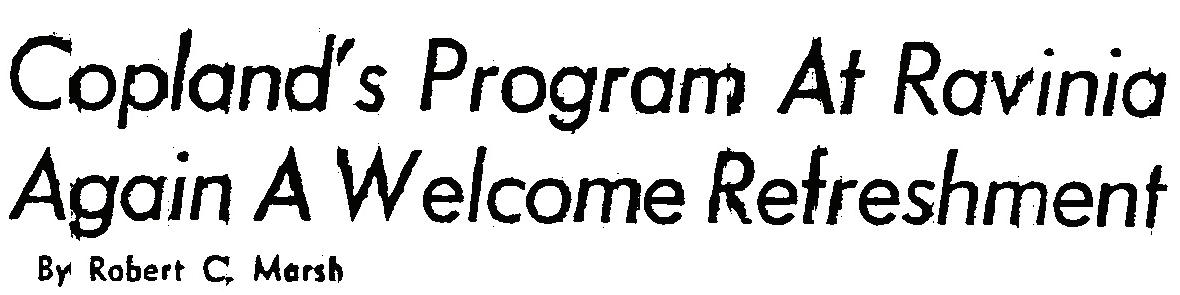
He returned to the podium in early April 1970—both in Orchestra Hall and in Milwaukee’s Uihlein Hall—to lead works by Berlioz, Carter, and Tippett, along with his Symphonic Ode and a suite from Appalachian Spring. In the Sun-Times, Marsh speculated that the Orchestra might have been fatigued “from a heavy recording schedule with Georg Solti early in the week.* The result was a concert both pleasing and instructive [showing that] a good work of music does not need to be dramatized by a conductor and, in a clear and accurate statement, will have no difficulty speaking for itself.”
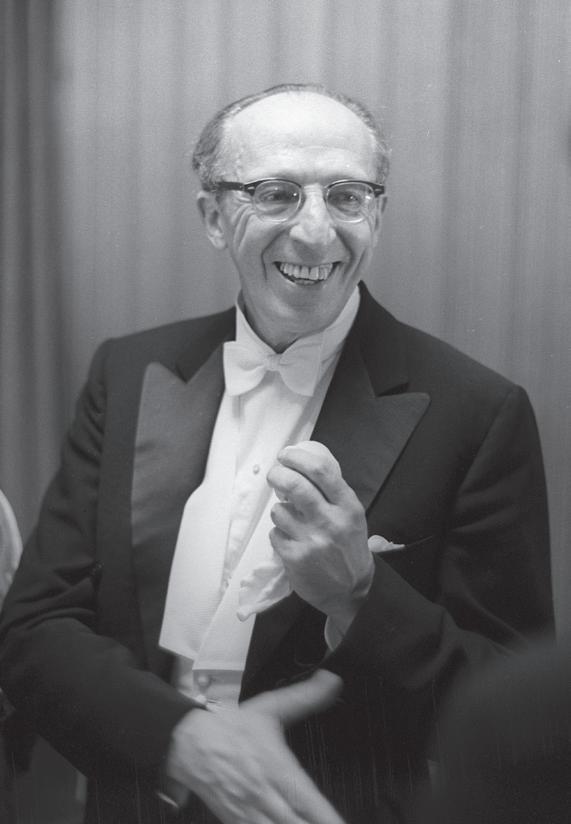
from top: Aaron Copland, November 1960. Ben Martin, Getty Images | Chicago Sun-Times, July 11, 1962
American bass-baritone William Warfield—who had given the premiere of the orchestral arrangement of the first set of songs as well as the first performance of the original version of the second set with the composer at the piano—was soloist for the occasion. Robert C. Marsh in the Chicago Sun-Times commented, “In the two sets of American songs, William Warfield showed us that the acoustically revamped pavilion is now a fit place for a vocal soloist, for his big, warm baritone came to us as no singer had before.”
For Copland’s final appearance with the Chicago Symphony Orchestra, he was again a soloist, this time as narrator in his Lincoln Portrait for a July 4 concert during Ravinia’s 1982 season.
The all-American program included his Fanfare for the Common Man and selections from Rodeo, along with works by Anderson, Cohan, Cowell, Herbert, Ives, and Sousa. Erich Kunzel was on the podium.
Frank Villella is the director of the Rosenthal Archives. For more information, please visit cso.org/archives
* Between March 26 and April 8, 1970, in Medinah Temple, Georg Solti—in his inaugural season as eighth music director—led his first recording sessions with the Chicago Symphony Orchestra: Mahler’s Fifth and Sixth symphonies along with the Songs of a Wayfarer with mezzo-soprano Yvonne Minton.
the history of American culture. Copland’s score won both the New York Music Critics’ Circle Award and a Pulitzer Prize. The ballet became a cornerstone of the Graham Company repertory (Martha continued to dance the bride’s role for many years), earning its status not only as “one of Martha’s signature pieces,” in the words of Agnes de Mille, but as a landmark in American music. When the score was first published, Copland offered this summary of the ballet’s action:
A pioneer celebration in spring around a newly built farmhouse in the Pennsylvania hills in the early part of the last [nineteenth] century. The bride-to-be and the young farmer-husband enact the emotions, joyful and apprehensive, their new domestic partnership invites. An older neighbor
WYNTON MARSALIS
Born October 18, 1961; New Orleans, Louisiana
suggests now and then the rocky confidence of experience. A revivalist and his followers remind the new householders of the strange and terrible aspects of human fate. At the end the couple are left quiet and strong in their new house.
A footnote about the music performed this week. There are four versions of Appalachian Spring: the original complete ballet scored for a chamber ensemble of thirteen instruments, a full orchestral edition of that music, and two versions of the 1945 suite Copland drew from the ballet—one scored for chamber ensemble, and the one for large orchestra that is performed this week, which quickly became the most popular and familiar rendition of this beloved music.
Selections from The Jungle (Symphony No. 4)
Wynton Marsalis knows, perhaps better than anyone, how the worlds of jazz and so-called classical music have lived side-by-side and influenced each other over the years. As signposts, he points to Paul Whiteman’s 1924 Aeolian Hall concert, when Gershwin’s Rhapsody in Blue was given its premiere, and Benny Goodman’s 1938 Carnegie Hall concert. “Both,” Marsalis writes, “include a sequence of pieces representing the bandleaders’ understandings of the history of jazz from its beginnings to that date.” Duke Ellington’s 1943 Carnegie Hall concert, which featured the premiere of his landmark Black, Brown and Beige, marked a turning point. “It told a tonal history of Afro-American music (from work songs to blues to modern swing, including the Afro-Latin tradition) while also presenting Duke’s concept of the social advancement of American Negroes from slavery to the early 1940s.”
above: Wynton Marsalis, photo by Piper Ferguson
COMPOSED 2016
FIRST PERFORMANCE
December 28, 2016, New York City
INSTRUMENTATION
3 flutes (3rd doubling piccolo), 3 oboes (3rd doubling english horn), 3 clarinets, bass clarinet and 2 E-flat clarinets, 3 bassoons (3rd doubling contrabassoon), 4 horns, 3 trumpets, 3 trombones, tuba, timpani, percussion, strings, with jazz band
APPROXIMATE PERFORMANCE TIME 44 minutes
These are the first Chicago Symphony Orchestra performances.
Marsalis’s own output picks up the story from there, with his oratorio Blood on the Fields, which won the 1997 Pulitzer Prize for Music, and a series of symphonies: All Rise (his Symphony no. 1) of 1999, which was followed by Blues Symphony, Swing Symphony, and The Jungle, from which four movements are drawn at this week’s concert. Marsalis and his own pioneering work as a musician are abundantly familiar to Chicago audiences: since he first appeared on the stage of Orchestra Hall forty years ago, he has appeared here in some capacity nearly every season since—as a member of a jazz quartet or quintet or septet bearing his name, or, most frequently, with the Lincoln Center Jazz Orchestra—and on a few rare occasions like this week’s concerts, in collaboration with the Chicago Symphony Orchestra.
In 1999, when Marsalis unveiled All Rise, which combines classical, Latin, and jazz influences to celebrate his vision of the “togetherness and ascendance” of humanity, he wrote prophetically: “The twentieth was the century of communication. The twenty-first will be the century of integration. Our rapidly developing global community is the most exciting modern reality.” In work after work, and particularly in his symphonies, Marsalis has shown a steadfast confidence in the power of our world’s musics coming together, confirming, as he has said, “an unshakeable belief that our humanity will triumph, that joy can be every bit as profoundly meaningful as pain, and that optimism is a more heroic perspective than cynicism or apathy.”
Marsalis wrote The Jungle as a portrait of New York City, which he called “the most fluid, pressure-packed, and cosmopolitan metropolis the modern world has ever seen.” This is, of course, the same city that is the home of much of the music performed in this month’s festival of concerts. “The dense mosaic of all kinds of people everywhere doing all kinds of things encourages you to ‘stay in your lane,’” Marsalis
continues, “but the speed, freedom, and intensity of our relationships to each other—and to the city itself—forces us onto a collective superhighway unlike any other in our country.” In that sense The Jungle stands not only for all American cities and their wealth of artistic ambitions and energies, but for the great communal American experience. And it addresses, with power and imagination, a fundamental question Marsalis has asked before: how will we translate our differences into a collective creativity?
Wynton Marsalis on Selections from The Jungle
The Big Scream (Black Elk Speaks) represents nervous energy, the primal soul of our city as maintained across time. It reflects on our Native American roots and the many forms of strife we have endured in an attempt to negotiate this small space with and without each other.
La Esquina: Hispanic sounds and rhythms have pressed an indelible groove into the character of the city. Afro-Latin culture is a foundation of New York life, and our city has inspired some of its greatest music.
Us: Although we are gritty and brusque by day, we can also be romance, elegance, and sophistication by night. ‘Us’ is what it means to be with, against, and up against another.
Struggle in the Digital Market: The city is driven ever forward by more and more profit and the myth of unlimited growth for the purpose of ownership and seclusion. Some form of advertisement occupies every available space. The struggle asks, “Will we seek and find more equitable long-term solutions . . . or perish?”
Phillip Huscher has been the program annotator for the Chicago Symphony Orchestra since 1987.
PROFILES
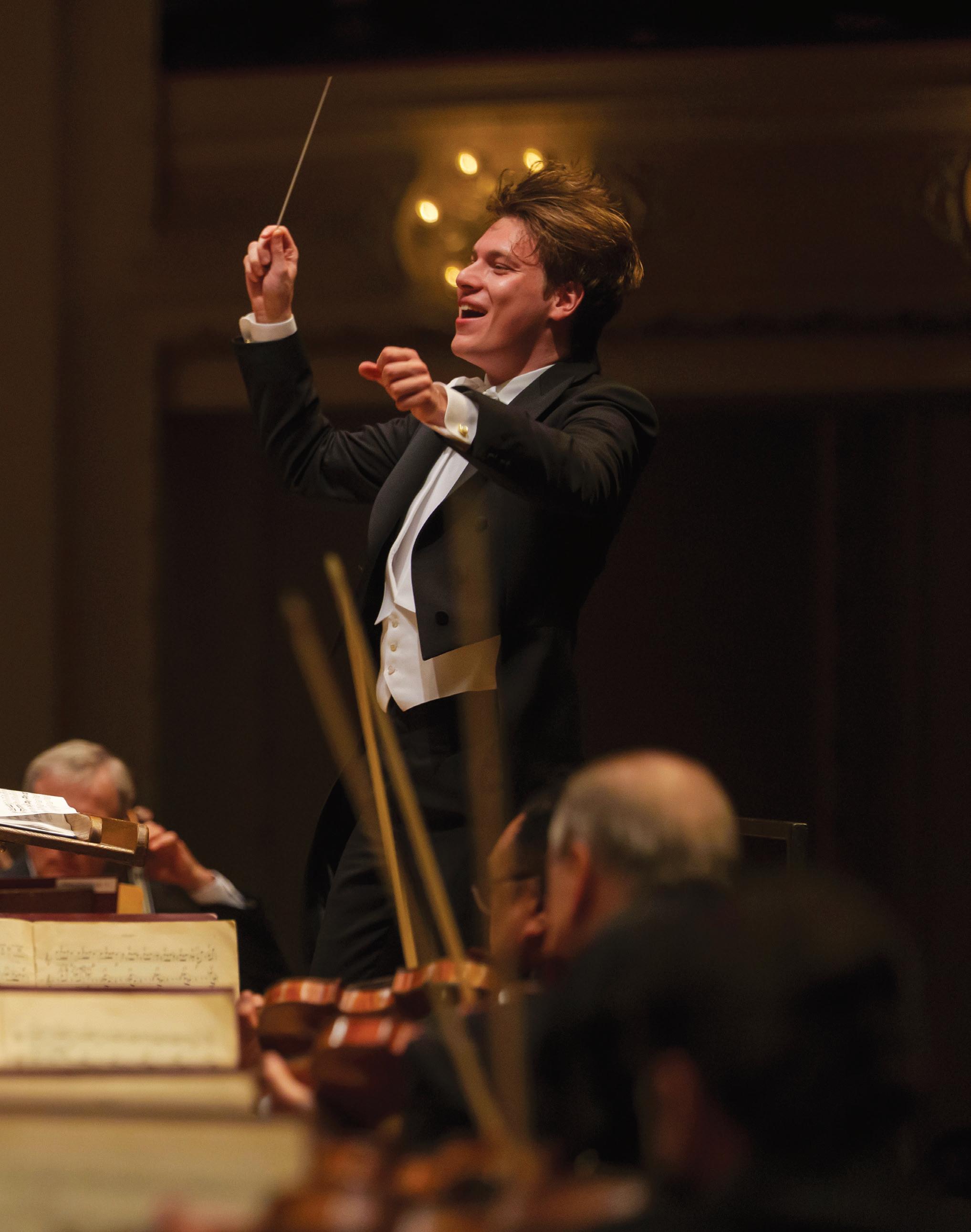
Marin Alsop Conductor
FIRST CSO PERFORMANCES
July 12, 2002, Ravinia Festival. Shostakovich’s Violin Concerto no. 1 with Nadja Salerno-Sonnenberg and Rachmaninov’s Symphonic Dances
November 27, 28, and 29, 2015, Orchestra Hall. Clyne’s Masquerade, Barber’s Essay no. 2, Gershwin’s Rhapsody in Blue with Jon Kimura Parker, and Dvořák’s Symphony no. 7
MOST RECENT CSO PERFORMANCES
October 10 and 11, 2024, Orchestra Hall. Lee’s Chuphshah! Harriet’s Drive to Canaan, Chopin’s Piano Concerto no. 2 with Lukáš Vondráček, and Shostakovich’s Symphony no. 5
July 27, 2025, Ravinia Festival. Mendelssohn’s Symphony no. 4, Copland’s Clarinet Concerto with Stephen Williamson, and Elgar’s Enigma Variations
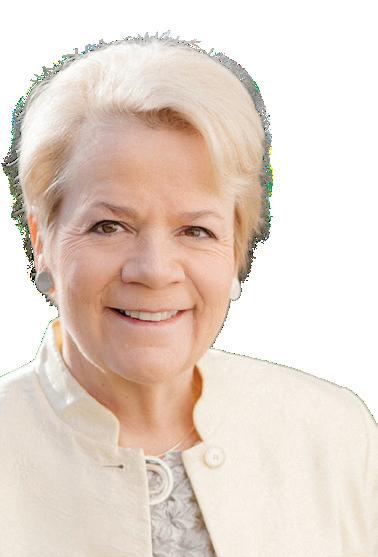
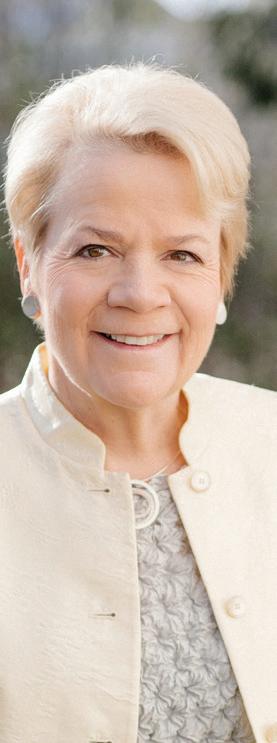
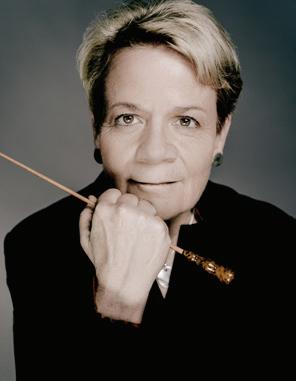
One of the foremost conductors of our time, Marin Alsop is the first woman to serve as the head of major orchestras in the United States, South America, Austria, and Great Britain. Winner of the 2025 Golden Baton Award from the League of American Orchestras, Alsop is also the first and only conductor to receive a MacArthur Fellowship.
Alsop serves as artistic director and chief conductor of the Polish National Radio Symphony Orchestra, principal guest conductor of the Philharmonia Orchestra in London, principal
guest conductor of the Philadelphia Orchestra, and chief conductor of the Ravinia Festival.
Alsop’s summer 2026 highlights include conducting the Philharmonia Orchestra at the inauguration of the Tower of Jesus Christ at Barcelona’s Sagrada Família as well as at the BBC’s Last Night of the Proms. Alsop concludes her Carnegie Hall Perspectives Artist season with the National Orchestral Institute Philharmonic at Carnegie Hall. She also returns to the Hollywood Bowl with the Los Angeles Philharmonic, to Bravo! Vail Music Festival and Saratoga Performing Arts Center with the Philadelphia Orchestra, and to the Ravinia Festival with the Chicago Symphony Orchestra in her role as chief conductor. Alsop also conducts the composition portion of the George Enescu International Competition, marking her first appearance with the Romanian Radio National Orchestra.
To nurture the careers of women conductors, Alsop founded the Taki Alsop Conducting Fellowship to empower extraordinary women conductors through intensive coaching, mentoring, and financial support. Among the forty-two award winners, thirty-two music director/ chief conductor titles are held with orchestras around the world.
In 2021 Marin Alsop assumed the title of music director laureate of the Baltimore Symphony Orchestra. During her fourteen-year tenure, she led the orchestra on its first European tour in thirteen years, conducted more than two dozen world premieres, and founded the music education program OrchKids.
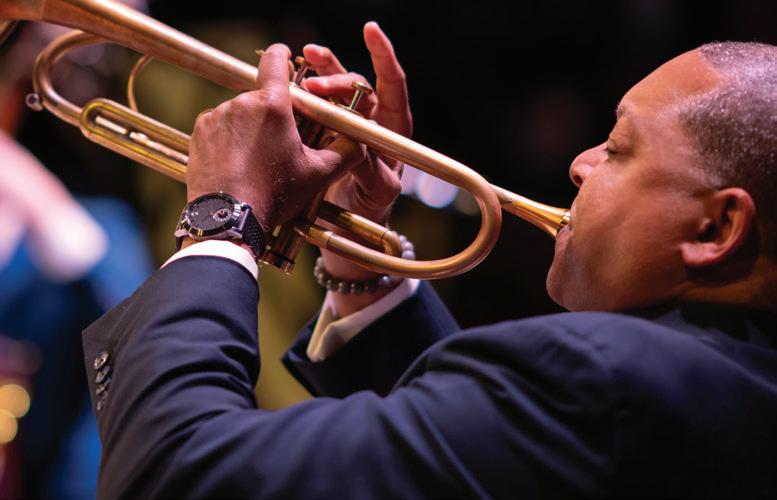
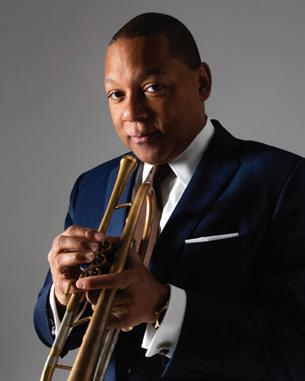
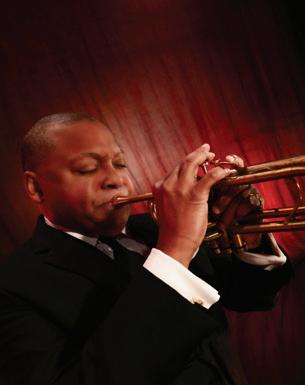
Wynton Marsalis is the managing and artistic director of Jazz at Lincoln Center. Born in New Orleans, Louisiana, to a musical family, Marsalis was gifted his first trumpet at the age of six by Al Hirt. By the age of eight, he was playing in the famed Fairview Baptist Church Band led by Danny Barker. Yet it was not until he turned twelve years old that he began his formal training on trumpet. Subsequently, he began performing in bands all over the city, from the New Orleans Philharmonic and New Orleans Youth Orchestra to a funk band called the Creators. His passion for music rapidly escalated. In 1979, fresh out of high school, he moved to New York City to study classical music at the Juilliard School. Once there, however, he found that jazz was calling him. His career quickly launched when he traded Juilliard for Art Blakey’s band, the Jazz Messengers. By nineteen, he’d hit the road with his own band, and he has been touring the world ever since.
Marsalis made his recording debut as a leader in 1982 and has since recorded 110 jazz and classical albums and four alternative records and released five DVDs. Marsalis is the winner of nine Grammy awards, and his oratorio Blood on the Fields was the first jazz composition to win the Pulitzer Prize for Music. He’s the only musician to win Grammy awards in both jazz and classical categories during the same year (1983 and 1984).
Wynton Marsalis is an internationally acclaimed performer, composer, bandleader, educator, and advocate for American culture. His works include over 600 original songs, eleven dance scores, thirteen suites, four symphonies, two chamber pieces, two string quartets, a jazz oratorio, a fanfare, and concertos for violin, tuba, trumpet, and, most recently, for orchestra. Included in this rich body of compositions is Sweet Release; Jazz: Six Syncopated Movements; Jump Start and Jazz; Citi Movement/Griot New York; At the Octoroon Balls; In This House, On This Morning; and Big Train. As part of his work at Jazz at Lincoln Center, he has produced and performed countless new collaborative compositions, including the ballet Them Twos for New York City Ballet in 1999. That same year, he premiered the monumental All Rise, commissioned and performed by the New York Philharmonic along with the Jazz at Lincoln Center Orchestra and the Morgan State University Choir. All Rise was performed with the Tulsa Symphony Orchestra as part of the centennial anniversary of the Tulsa Race Massacre in June 2021. Since the onset of the COVID-19 pandemic, Marsalis and the Jazz at Lincoln Center Orchestra have released twenty-nine full-length albums and nine singles on Blue Engine Records.
Marsalis is also a globally respected teacher and spokesperson for music education. He led the effort to construct Jazz at Lincoln Center’s new home—Frederick P. Rose Hall—the first education, performance, and broadcast facility devoted to jazz, which opened in 2004. He conducts educational programs for students of all ages and hosts the popular Jazz for Young People concerts produced by Jazz at Lincoln Center. He also is the founding director of jazz studies at the Juilliard School and president of the Louis Armstrong Educational Foundation. PHOTO BY
Jazz at Lincoln Center Orchestra
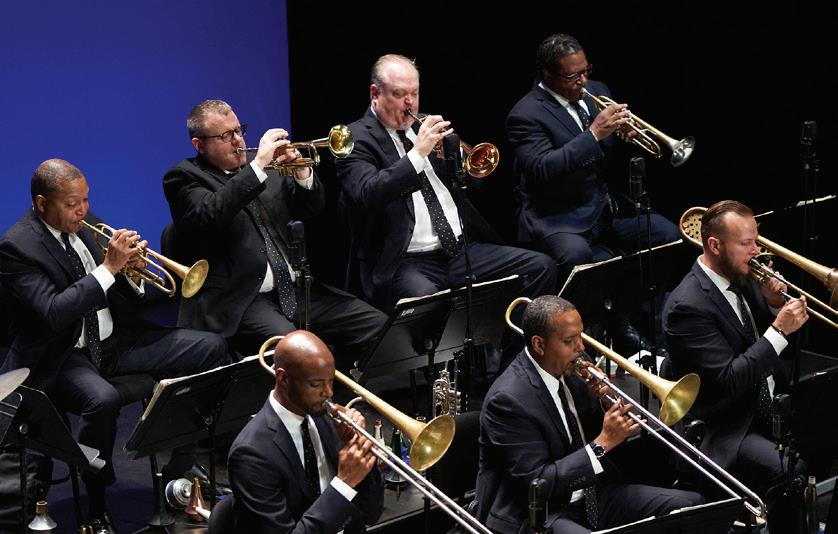
The Jazz at Lincoln Center Orchestra (JLCO) comprises fifteen of the finest jazz soloists and ensemble players today. Led by Music Director Wynton Marsalis, JLCO performs a vast repertoire, from rare historic compositions to Jazz at Lincoln Center–commissioned works, including compositions and arrangements by Duke Ellington, Count Basie, Fletcher Henderson, Thelonious Monk, Mary Lou Williams, Dizzy Gillespie, Benny Goodman, Charles Mingus, and others, including several current and former JLCO members.
Since 1988 the ensemble has been the Jazz at Lincoln Center resident orchestra and spends over a third of the year on tour across the world. Jazz at Lincoln Center produces thousands of performance, education, and broadcast events each season in its home in New York City— Frederick P. Rose Hall, “The House of Swing”— and around the world, for people of all ages. Jazz at Lincoln Center is led by Chairman Clarence Otis, Managing and Artistic Director Wynton Marsalis, and Executive Director Greg Scholl. Throughout the last decade, the Jazz at Lincoln Center Orchestra has performed with many of the world’s leading orchestras, including the New York, Los Angeles, Czech, and Berlin philharmonics; the Cleveland and Philadelphia orchestras; the Chicago, Boston, St. Louis, London, Sydney, and Melbourne symphony orchestras; and many others. Marsalis’s three
major works for symphony orchestra and jazz orchestra, All Rise (1999), Swing Symphony (2010), and The Jungle (2016), continue to be the focal point of JLCO’s symphonic collaborations.
The Jazz at Lincoln Center Orchestra has also been featured in several education and performance residencies, including those in Melbourne and Sydney, Australia; Chautauqua, New York; Prague, Czech Republic; Vienna, Austria; London, England; and São Paulo, Brazil. Education is a major part of Jazz at Lincoln Center’s mission; its educational activities are coordinated with concert and Jazz at Lincoln Center Orchestra tour programming. Jazz at Lincoln Center educational programs reach over 110,000 students, teachers, and general audience members.
Jazz at Lincoln Center, NPR Music, and WBGO have partnered to create the next generation of jazz programming in public radio: Jazz Night in America. The series showcases today’s vital jazz scene while also underscoring the genre’s storied history. Hosted by bassist Christian McBride, the program features handpicked performances from across the country, woven with the colorful stories of the artists behind them. Jazz Night in America and Jazz at Lincoln Center’s radio archive can be found at jazz.org/radio.
In 2015 Jazz at Lincoln Center launched Blue Engine Records, a new platform to make its vast archive of recorded concerts available to jazz audiences everywhere. The label is dedicated to releasing new studio and live recordings as well as archival recordings from past Jazz at Lincoln Center performances, and its first disc—Live in Cuba, recorded on a historic 2010 trip to Havana by the JLCO with Wynton Marsalis—was released in October 2015. Blue Engine’s most recent releases include 2020’s A Swingin’ Sesame Street Celebration and 2021’s The Democracy Suite featuring the JLCO Septet with Wynton Marsalis.
jazz.org
PHOTO BY LUIGI BEVERELLI
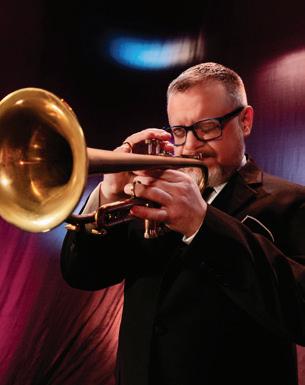
Ryan Kisor Trumpet
Ryan Kisor was born in Sioux City, Iowa, and began playing trumpet at the age of four. In 1990 he won first prize at the Thelonious Monk Institute’s first annual Louis Armstrong Trumpet Competition. In 1991 Kisor enrolled in the Manhattan School of Music, where he studied with trumpeter Lew Soloff. He has performed and/or recorded with the Mingus Big Band, the Gil Evans Orchestra, Horace Silver, Gerry Mulligan and Charlie Haden’s Liberation Music Orchestra, the Carnegie Hall Jazz Band, the Philip Morris Jazz All-Stars, and others. In addition to being an active sideman, Kisor has recorded several albums as a leader, including Battle Cry (1997), The Usual Suspects (1998), and Point of Arrival (2000). He has been a member of the Jazz at Lincoln Center Orchestra since 1994.
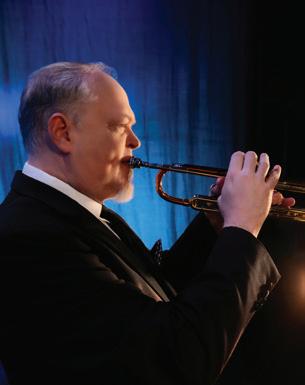
Kenny Rampton Trumpet
Kenny Rampton is a New York City–based trumpeter, arranger, and composer, and a member of the Jazz at Lincoln Center Orchestra with Wynton Marsalis since 2010. He is also the trumpet voice on the television series Sesame Street. Rampton’s many performance credits include the Ray Charles Orchestra, Illinois Jacquet, Lionel Hampton, Gunther Schuller, the Christian McBride Big Band, the Chico O’Farrill AfroCuban Jazz Orchestra, Bebo Valdés’s Afro-Cuban All-Stars, and the Mingus Big Band. He has performed in several Broadway productions, including Anything Goes, Finian’s Rainbow, Gentlemen Prefer Blondes, The Wiz, Young Frankenstein, The Color Purple, Spamalot, The Producers, In the Heights, and Chicago, and he
collaborated with pop artists such as Katy Perry, Matchbox Twenty, and Chaka Khan. His composition “Until Next Time,” from his first solo album, Moon Over Babylon (2013), was featured in the 2017 Broadway revival of Six Degrees of Separation.
In 2015 Rampton collaborated with blues artist Bill Sims, Jr., on the music for the play Paradise Blue. He later expanded his music into The Paradise Blue Suite, which he premiered with the Kenny Rampton Octet at Dizzy’s Club at Jazz at Lincoln Center. Rampton enjoys teaching private students from all over the world and has been an adjunct faculty member at the New School in New York City, in addition to being founder and artistic director of his own nonprofit educational organization, Jazz Outreach Initiative, based in Las Vegas, Nevada, his hometown.
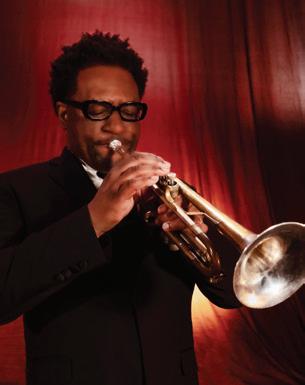
Marcus Printup Trumpet
Marcus Printup was born and reared in Conyers, Georgia. His first musical experiences included hearing the fiery gospel music his parents, grandparents, and older sister sang in church. While attending the University of North Florida on a music scholarship, he won the International Trumpet Guild Jazz Trumpet Competition. In 1991 Printup’s life changed when he met his mentor, the great pianist Marcus Roberts, who introduced him to Wynton Marsalis. That meeting led to Printup joining the Jazz at Lincoln Center Orchestra in 1993, the same year he was invited to join the inaugural iteration of Betty Carter’s prestigious Jazz Ahead program. Printup has recorded with Betty Carter, Dianne Reeves, Guru, Madeleine Peyroux, Ted Nash, Diane Schuur, Cyrus Chestnut, Wycliffe Gordon, and Marcus Roberts, among many others. He has recorded more than fifteen albums as a bandleader, including his most recent, Gentle Rain (2020), featuring his wife Riza on harp. He made
a big-screen appearance in 1999’s Playing by Heart and recorded on the film’s soundtrack. A passionate educator, Printup is a clinician for middle schools, high schools, and colleges across the United States and an adjunct professor of music at Montclair State University. August 22 has been declared “Marcus Printup Day” in his hometown.
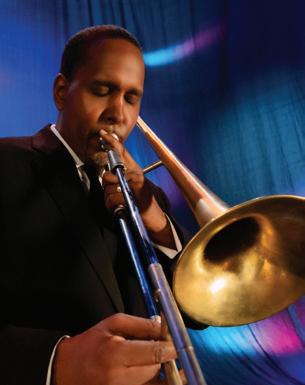
Vincent Gardner Trombone
Vincent Gardner was born in Chicago and raised in Hampton, Virginia. After singing, playing piano, violin, saxophone, and french horn at an early age, he decided to focus on the trombone at the age of twelve. He attended Florida A&M University and the University of North Florida. He soon caught the ear of Mercer Ellington, who hired Gardner for his first professional job. After college, he moved to Brooklyn, New York, completed a world tour with Lauryn Hill in 2000, and then joined JLCO. Gardner has served as an instructor at the Juilliard School, a visiting instructor at Florida State and Michigan State universities, and as an adjunct instructor at the New School. He is currently the director of the jazz at Lincoln Center Youth Orchestra, and he has contributed many arrangements to JLCO and other ensembles. In 2009 he was commissioned by Jazz at Lincoln Center to write The Jesse B. Semple Suite, a sixty-minute work inspired by the short stories of Langston Hughes. In addition, Gardner is a popular instructor at Jazz at Lincoln Center’s ongoing jazz education program, Swing University, teaching courses on bebop and more. Gardner is featured on a number of notable recordings, including five as a leader for Steeplechase Records. He has performed with the Duke Ellington Orchestra, Bobby McFerrin, Harry Connick, Jr., the Saturday Night Live Band, Chaka Khan, A Tribe Called Quest, and many
others. Gardner was chosen as the #1 Rising Star Trombonist in the 2014 DownBeat Critics’ Poll.
Chris Crenshaw Trombone
Born in Thomson, Georgia, Chris Crenshaw has been driven and surrounded by music since childhood. He started playing piano at three years old, which led to his first gig with Echoes of Joy, his father’s gospel quartet group. Crenshaw began playing trombone at the age of eleven and graduated from Thomson High School, receiving numerous honors and awards along the way. He studied jazz performance at Valdosta State University and received a bachelor’s degree with honors in 2005 and went on to study with Douglas Farwell and Wycliffe Gordon at the Juilliard School in New York, where he completed a master’s degree in jazz studies in 2007. He appeared as a sideman on fellow JLCO trumpeter Marcus Printup’s Ballads All Night (2010). He joined the JLCO in 2006. Since then, he has been commissioned to write the spiritually focused work God’s Trombones (2012) and The Fifties: A Prism (2017), both premiered by the JLCO. Crenshaw also released an album with his own group, the Georgia Horns, titled Live at Dizzy’s Club, in 2019.
Elliot Mason Trombone
Elliot Mason was born into a family of jazz musicians in England. He began studying trumpet at the age of four with his father, who was a trumpet and trombone player and educator. At the age of seven, struck with an overwhelming curiosity in his father’s trombone, Mason soon switched his
PHOTOS
focus and received a full-tuition scholarship to attend the Berklee College of Music in Boston at sixteen. After graduating at nineteen, Mason moved to New York City, where he distinguished himself as a respected and in-demand trombonist and bass trumpeter. In 2007 Elliot Mason was invited to become a member of the JLCO directed by Wynton Marsalis. While continuing to perform with the JLCO, Mason coleads the Mason Brothers Quintet with his brother Brad and leads his own band, Cre8tion. Since 2016, Elliot Mason has been a faculty member at the Juilliard School of Music. He also runs his own private music studio in New York City. He is endorsed by BAC Musical Instruments and currently plays on his own signature-series line of custom trombones that he codesigned.
Sherman Irby Alto and Soprano Saxophones, Flute, Clarinet
Born and raised in Tuscaloosa, Alabama, Sherman Irby found his musical calling at the age of twelve. He graduated from Clark Atlanta University with a bachelor of arts degree in music education. After relocating to New York City in 1994, he recorded his first two albums, Full Circle (1996) and Big Mama’s Biscuits (1998) on Blue Note Records. Irby was a member of the JLCO from 1995 to 1997. During that tenure, he also recorded and toured with Marcus Roberts, was part of Betty Carter’s Jazz Ahead program, and played in Roy Hargrove’s ensemble. After that, Irby focused on his own group, along with being a member of Elvin Jones’s ensemble and Papo Vázquez’s Pirates Troubadours. From 2003 to 2011, Irby was the regional director for JazzMasters Workshop, which mentors young children. He has served as artist-in-residence for Jazz Camp West and as an instructor for the Monterey Jazz Festival Band Camp. He formed Black Warrior Records and most recently
released Cerulean Canvas (2017) and Live at the Otto Club (2009) on the label. Since rejoining the JLCO in 2005, Irby has been commissioned to compose many works, including Twilight Sounds (2010), his Dante-inspired ballet Inferno (2012), and Musings of Cosmic Stuff (2020). Apart from the orchestra, Irby performs regularly with his own group, Momentum.
Alexa Tarantino Alto and Soprano Saxophones, Flute, Clarinet
A vibrant and versatile jazz saxophone and woodwind artist, Alexa Tarantino has been nominated as a Rising Star Alto Saxophonist by DownBeat magazine’s Critics Poll from 2020–22, was named one of the Top 5 Alto Saxophonists of 2019 by the JazzTimes Critics Poll, and was one of a hundred alumni to receive the Centennial Award from the Eastman School of Music (2022). She tours worldwide with Cécile McLorin Salvant, Wynton Marsalis and the Jazz at Lincoln Center Orchestra, and the Alexa Tarantino Quartet. Her recordings (Firefly, Clarity, and Winds of Change) and compositions have consistently topped jazz radio charts, and her discography includes more than twenty-five recordings as a leader or sidewoman. Tarantino is in demand internationally as an energetic and impactful clinician, mentor, and coach, and she represents Jazz at Lincoln Center as a visiting educator for various programs with students of all ages and levels. She holds a master’s degree in jazz studies from the Juilliard School and bachelor’s degrees in jazz saxophone performance and music education with a certificate in arts leadership from the Eastman School of Music. Tarantino is founder and artistic director of the Cape Ann Jazz Workshop in Rockport, Massachusetts (established in 2014). Alexa Tarantino is a Vandoren Artist, a Yamaha Performing Artist, and she endorses BAM Instrument Cases.
PHOTOS BY LAWRENCE
Chris Lewis Tenor and Soprano Saxophones, Clarinet, Bass Clarinet
Chris Lewis has been a member of the Jazz at Lincoln Center Orchestra since 2025. Lewis has performed with luminaries including Herbie Hancock, Eric Reed, Terell Stafford, Ben Wolfe, Jeff “Tain” Watts, and Michael Bublé and is regularly called upon by his contemporaries Julius Rodriguez, Aaron Diehl, and Sean Mason. He has appeared with many of today’s premier large ensembles, including the Maria Schneider Orchestra, the Vanguard Jazz Orchestra, the Mingus Big Band, the Count Basie Orchestra, John Beasley’s MONK’estra, and the Gil Evans Project. Additionally, Lewis is often featured in Broadway productions and televised performances, including Just in Time and The Tony Awards.
A dedicated educator, Lewis teaches students of all ages. He is on faculty with Jazz at Lincoln Center’s Summer Jazz Academy and the Litchfield Jazz Camp, offering his expertise in saxophone, improvisation, and ensemble performance. Lewis continues to help shape the next generation of jazz artists as a guest artist, clinician, adjudicator, and private instructor with students worldwide.
Chris Lewis holds a bachelor’s degree in jazz studies from Temple University and a master’s degree in jazz studies from the Herbie Hancock Institute of Jazz. He is proud to be a Vandoren Artist.
Abdias Armenteros Tenor and Soprano Saxophones, Clarinet
THE ZOU FAMILY CHAIR IN SAXOPHONE
Abdias Armenteros is a native of Miami, Florida, where he attended New World School of the Arts High School. He began playing saxophone at the age of eight, and jazz in the ninth grade. After getting into New World, he was able to travel to New York City to compete in events with the jazz band, including Essentially Ellington (2016 winner) and Kagoshima, Japan, representing the city of Miami and the United States in the Kagoshima Asian Arts Youth Festival. He also has participated in various summer programs, including the Brubeck Jazz Summit, Pacific Summer Jazz Colony, and the Summer Jazz Academy with Jazz at Lincoln Center. Armenteros is currently in the first year of his master’s program as a jazz studies major at the Juilliard School, where he completed his bachelor’s degree. Since moving to New York, he has shared the bandstand with world-renowned artists including Wynton Marsalis, Ben Vereen, Aloe Blacc, Victor Lewis, and Arlo Parks, and he regularly performs at a variety of clubs and venues in the city with other well-known musicians.
Paul Nedzela Baritone and Soprano Saxophones, Clarinet, Bass Clarinet
New York City native Paul Nedzela joined the Jazz at Lincoln Center Orchestra in 2014 and has also played with many renowned artists and ensembles, including Ruben Blades, Bill Charlap, Chick Corea, Paquito D’Rivera, Kenny Garrett, Benny Golson, Branford Marsalis, Christian
PHOTOS
McBride, Kurt Rosenwinkel, Wayne Shorter, Frank Sinatra, Jr., and the Vanguard Jazz Orchestra. He has performed in Twyla Tharp’s Broadway show, Come Fly Away, as well as in major festivals around the world, including the Monterey, Newport, and Detroit jazz festivals; Banff Music Festival; the International Montreal Jazz Festival; iLove Jazz Festival in Brazil; the Valencia Jazz Festival in Spain; the Umbria Jazz Festival in Italy; and the American Festival of the Arts in Doha, Qatar. While still pursuing music, Nedzela graduated with honors in 2006 from McGill University in Montreal with a bachelor of arts degree in mathematics. A recipient of the Samuel L. Jackson Scholarship, he continued his musical education at the Juilliard School and graduated with a master of music degree in 2008. He released his debut album, Introducing Paul Nedzela, in 2019.
Dan Nimmer Piano
THE ZOU FAMILY CHAIR IN PIANO
Born in Milwaukee, Wisconsin, Dan Nimmer began his classical piano studies at a young age before becoming interested in jazz. After graduating from high school, he studied music at Northern Illinois University and began performing regularly on the Chicago jazz scene. In 2005, a year after moving to New York City, Nimmer became a member of both the Jazz at Lincoln Center Orchestra and the Wynton Marsalis Quintet. He has performed and recorded with Jimmy Cobb, Norah Jones, Willie Nelson, Renée Fleming, Houston Person, Fareed Haque, George Benson, Lewis Nash, and many others. He has released six of his own albums with his trio on the Japan-based Venus label.
Carlos Henriquez Bass
THE MANDEL FAMILY CHAIR IN HONOR OF KATHLEEN B. MANDEL
Born in the Bronx, New York, Carlos Henriquez began studying music at a young age, played guitar through junior high school, and took up the bass while enrolled in the Juilliard School’s Music Advancement Program. He entered LaGuardia High School of Music and Arts and Performing Arts and was a member of the LaGuardia Concert Jazz Ensemble, which went on to win first place at Lincoln Center’s Essentially Ellington High School Jazz Band Competition and Festival in 1996. Henriquez joined the Wynton Marsalis Septet and the Jazz at Lincoln Center Orchestra in 1998, with which he has toured the world and been featured on more than twenty-five albums. He has performed with artists including Chucho Valdés, Paco de Lucía, Tito Puente, the Marsalis Family, Willie Nelson, Bob Dylan, Stevie Wonder, Lenny Kravitz, Marc Anthony, and many others. He has been a member of the music faculty at Northwestern University’s Bienen School of Music since 2008 and was music director of the Jazz at Lincoln Center Orchestra’s cultural exchange with the Cuban Institute of Music with Chucho Valdés in 2010. His debut album as a bandleader, The Bronx Pyramid, was released in 2015 on Jazz at Lincoln Center’s Blue Engine Records. His most recent album, The South Bronx Story, was nominated for a 2022 Grammy Award in the Best Latin Jazz Album category.
Obed Calvaire Drums
A Miami, Florida, native of Haitian descent, Obed Calvaire first moved to New York City in 2000 to attend the Manhattan School of Music, where he earned bachelor’s and master’s degrees in 2003 and 2005, respectively. Calvaire has performed and recorded with artists such as Wynton Marsalis, Seal, Eddie Palmieri, Vanessa Williams, Richard Bona, SFJAZZ Collective, David Foster, Mary J. Blige, Stefon Harris, the Clayton Brothers Quintet, Mike Stern, Kurt Rosenwinkel, Peter Cincotti, Monty Alexander, Musiq Soulchild, Nellie McKay, Yellow Jackets, Joshua Redman, Steve Turre, and Lizz Wright. He has also performed with large ensembles including the Vanguard Jazz Orchestra, Metropole Orchestra, the Mingus Big Band, Maria Schneider Orchestra, Roy Hargrove Big Band, and the Bob Mintzer Big Band. Obed Calvaire currently performs with Dave Holland, Sean Jones, and Yosvany Terry, among others.
Jazz at Lincoln Center Youth Orchestra
Led by acclaimed trumpeter and Juilliard faculty member Tatum Greenblatt, this ensemble unites the most gifted young musicians from the tri-state area of New York, New Jersey, and Connecticut. These rising stars bring a level of musicianship that rivals seasoned professionals. Under Greenblatt’s expert direction, these young
artists honor jazz’s rich traditions while bringing fresh energy to the stage, shaping the sound of tomorrow.
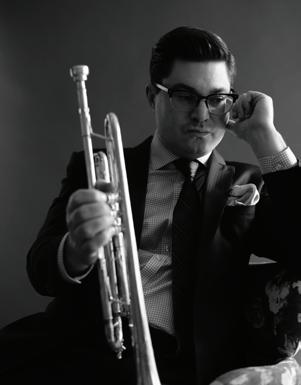
Tatum Greenblatt Director
Tatum Greenblatt is highly regarded as one of New York City’s most in-demand trumpet players across a broad range of styles and genres. He has recorded eight albums with the Verve Jazz Ensemble (JVE) since 2012 and toured with the ensemble nationwide. A Bach Brass Artist, Greenblatt appears frequently with JLCO in performances at Rose Hall, touring domestically, in recordings on The 50’s: a Prism, Big Band Holidays Vol. 2, Ted Nash and Glenn Close’s Transformation, and as a featured guest soloist for Wynton Marsalis’s sixtieth-birthday celebration. He has been a member of the Grammy Award–winning Mingus Big Band for over fifteen years, performing regularly in New York, touring internationally, and recording on the Grammy-nominated album, The Centennial Sessions. From 2010 to 2016, Greenblatt toured extensively with the legendary bassist and singer Richard Bona, traveling to over sixty countries across six continents. He is also active on Broadway, having played in more than twenty productions, including serving as the trumpet chair for three years on Beautiful: The Carole King Musical. As a bandleader, he has released three albums to critical acclaim. His most recent, Imprints, was awarded Critic’s Pick by DownBeat magazine.
Tatum Greenblatt is a dedicated educator. He has served on the faculty in the jazz department at Juilliard since 2017, spent five years on the faculty at Rutgers University, and performs numerous roles within the Education Department at Jazz at Lincoln Center, including serving as director of the award-winning Jazz at Lincoln Center Youth Orchestra.
Jazz at Lincoln Center Youth Orchestra
Quinn Knox Alto Saxophone
Jack Song Alto Saxophone
Krish Pandya Tenor Saxophone
Theodore Kornblum Tenor Saxophone
David Farquhar Tenor Saxophone
Giancarlo Crapanzano Baritone Saxophone
Owen Grace Trumpet
William Farmer Trumpet
Adam Brazzley Trumpet
Harrison McKenna Trumpet
Brangel Neris Trumpet
Basil Moore Trombone
Tatum Greenblatt Director
Abby Bernstein Trombone
Brendan M. Louis-Bishop Trombone
Caden Caruk Trombone
Ben Kornbluh Trombone
Nathan Ben Ari Drums
Tosh Kachad Drums
Jojo Roses Guitar
Linus Tsang Piano
Noah Rosen Piano
Simon Cifuentes Bass
Eduardo Ortega Bass
Funding for educational programs during the 2025–26 Season of SCP Jazz has been generously provided by
A Musical Tribute to
JOHN WILLIAMS & STEVEN SPIELBERG
Tuesday, June 23, 2026
6:00 PM Drinks & Bites
7:30 PM Concert
Celebrate the legendary collaboration between composer John Williams and filmmaker Steven Spielberg as the Chicago Symphony Orchestra brings to life some of cinema’s most iconic music.
Enhance your evening by ordering the event package, which includes preconcert drinks and bites plus prime seating at the concert. Ample food and drink stations will feature heavy hors d’oeuvres and refreshments. Mingle with other guests while enjoying lounge seating in Symphony Center’s Forte event space.
SCAN TO LEARN MORE
The Chicago Symphony Orchestra—consistently hailed as one of the world’s best—marks its 135th season in 2025–26. The ensemble’s history began in 1889, when Theodore Thomas, the leading conductor in America and a recognized music pioneer, was invited by Chicago businessman Charles Norman Fay to establish a symphony orchestra. Thomas’s aim to build a permanent orchestra of the highest quality was realized at the first concerts in October 1891 in the Auditorium Theatre. Thomas served as music director until his death in January 1905, just three weeks after the dedication of Orchestra Hall, the Orchestra’s permanent home designed by Daniel Burnham.
Frederick Stock, recruited by Thomas to the viola section in 1895, became assistant conductor in 1899 and succeeded the Orchestra’s founder. His tenure lasted thirty-seven years, from 1905 to 1942—the longest of the Orchestra’s music directors. Stock founded the Civic Orchestra of Chicago— the first training orchestra in the U.S. affiliated with a major orchestra—in 1919, established youth auditions, organized the first subscription concerts especially for children, and began a series of popular concerts.
Three conductors headed the Orchestra during the following decade: Désiré Defauw was music director from 1943 to 1947, Artur Rodziński in 1947–48, and Rafael Kubelík from 1950 to 1953. The next ten years belonged to Fritz Reiner, whose recordings with the CSO are still considered hallmarks. Reiner invited Margaret Hillis to form the Chicago Symphony Chorus in 1957. For five seasons from 1963 to 1968, Jean Martinon held the position of music director.
Sir Georg Solti, the Orchestra’s eighth music director, served from 1969 until 1991. His arrival launched one of the most successful musical partnerships of our time. The CSO made its first overseas tour to Europe in 1971 under his direction and released numerous award-winning recordings. Beginning in 1991, Solti held the title of music director laureate and returned to conduct the Orchestra each season until his death in September 1997.
Daniel Barenboim became ninth music director in 1991, a position he held until 2006. His tenure was distinguished by the opening of Symphony Center in 1997, appearances with the Orchestra in the dual role of pianist and conductor, and twenty-one international tours. Appointed by Barenboim in 1994 as the Chorus’s second director, Duain Wolfe served until his retirement in 2022.
In 2010, Riccardo Muti became the Orchestra’s tenth music director. During his tenure, the Orchestra deepened its engagement with the Chicago community, nurtured its legacy while supporting a new generation of musicians and composers, and collaborated with visionary artists. In September 2023, Muti became music director emeritus for life.
In April 2024, Finnish conductor Klaus Mäkelä was announced as the Orchestra’s eleventh music director and will begin an initial five-year tenure as Zell Music Director in September 2027. In July 2025, Donald Palumbo became the third director of the Chicago Symphony Chorus.
Carlo Maria Giulini was named the Orchestra’s first principal guest conductor in 1969, serving until 1972; Claudio Abbado held the position from 1982 to 1985. Pierre Boulez was appointed as principal guest conductor in 1995 and was named Helen Regenstein Conductor Emeritus in 2006, a position he held until his death in January 2016. From 2006 to 2010, Bernard Haitink was the Orchestra’s first principal conductor.
Mezzo-soprano Joyce DiDonato is the CSO’s Artist-in-Residence for the 2025–26 season.
The Orchestra first performed at Ravinia Park in 1905 and appeared frequently through August 1931, after which the park was closed for most of the Great Depression. In August 1936, the Orchestra helped to inaugurate the first season of the Ravinia Festival, and it has been in residence nearly every summer since.
Since 1916, recording has been a significant part of the Orchestra’s activities. Recordings by the Chicago Symphony Orchestra and Chorus— including recent releases on CSO Resound, the Orchestra’s recording label launched in 2007— have earned sixty-five Grammy awards from the Recording Academy.
Tax-deductible donations do more than support the concerts you love — they impact more than 200,000 people through education and community engagement programs each year. Thanks to a generous matching grant, all gifts to the CSOA will be doubled. Make a difference with your gift today.
Chicago Symphony Orchestra
Klaus Mäkelä Zell Music Director Designate
Joyce DiDonato Artist-in-Residence
VIOLINS
Robert Chen Concertmaster
The Louis C. Sudler Chair, endowed by an anonymous benefactor
Stephanie Jeong § Associate Concertmaster
The Cathy and Bill Osborn Chair
David Taylor*
Assistant Concertmaster
The Ling Z. and Michael C.
Markovitz Chair
Yuan-Qing Yu* Assistant Concertmaster
So Young Bae
Cornelius Chiu
Gina DiBello
Kozue Funakoshi
Russell Hershow
Qing Hou
Gabriela Lara
Matous Michal
Simon Michal
Sando Shia
Susan Synnestvedt
Rong-Yan Tang
Baird Dodge Principal
Danny Yehun Jin
Assistant Principal
Lei Hou
Ni Mei
Hermine Gagné
Rachel Goldstein
Mihaela Ionescu
Wendy Koons Meir
Ronald Satkiewicz ‡
Florence Schwartz
VIOLAS
Teng Li Principal
The Paul Hindemith Principal Viola Chair
Catherine Brubaker
Youming Chen
Sunghee Choi
Paolo Dara
Wei-Ting Kuo
Danny Lai
Weijing Michal
Diane Mues
Lawrence Neuman
Jikun Qin
Max Raimi
CELLOS
John Sharp Principal
The Eloise W. Martin Chair
Kenneth Olsen
Assistant Principal
The Adele Gidwitz Chair
Karen Basrak
The Joseph A. and Cecile Renaud Gorno Chair
Richard Hirschl
Olivia Jakyoung Huh
Daniel Katz
Katinka Kleijn
Brant Taylor
The Ann Blickensderfer and Roger Blickensderfer Chair
BASSES
Alexander Hanna Principal
The David and Mary Winton
Green Principal Bass Chair
Alexander Horton
Assistant Principal
Dan Carson
Ian Hallas
Robert Kassinger
Mark Kraemer
Stephen Lester
Bradley Opland
Andrew Sommer
FLUTES
Emma Gerstein
Jennifer Gunn
PICCOLO
Jennifer Gunn
The Dora and John Aalbregtse Piccolo Chair
OBOES
William Welter Principal
Lora Schaefer
Assistant Principal
The Gilchrist Foundation, Jocelyn Gilchrist Chair
Scott Hostetler
ENGLISH HORN
Scott Hostetler
Riccardo Muti Music Director Emeritus for Life
CLARINETS
Stephen Williamson Principal
John Bruce Yeh
Assistant Principal
The Governing
Members Chair
Gregory Smith
E-FLAT CLARINET
John Bruce Yeh
BASSOONS
Keith Buncke Principal
William Buchman
Assistant Principal
Miles Maner
HORNS
Mark Almond Principal
James Smelser
David Griffin
Oto Carrillo
Susanna Gaunt
Daniel Gingrich ‡
TRUMPETS
Esteban Batallán Principal
The Adolph Herseth Principal Trumpet Chair, endowed by an anonymous benefactor
John Hagstrom
The Bleck Family Chair
Tage Larsen
TROMBONES
Timothy Higgins Principal
The Lisa and Paul Wiggin
Principal Trombone Chair
Michael Mulcahy
Charles Vernon
BASS TROMBONE
Charles Vernon
TUBA
Gene Pokorny Principal
The Arnold Jacobs Principal Tuba Chair, endowed by Christine Querfeld
* Assistant concertmasters are listed by seniority. ‡ On sabbatical § On leave
The CSO’s music director position is endowed in perpetuity by a generous gift from Zell Family Foundation. The Louise H. Benton Wagner and Erika and Dietrich M. Gross Principal Flute chairs are currently unoccupied.
TIMPANI
David Herbert Principal
The Clinton Family Fund Chair
Vadim Karpinos
Assistant Principal
PERCUSSION
Cynthia Yeh Principal Chair sponsored by an anonymous benefactor
Patricia Dash §
Vadim Karpinos
LIBRARIANS
Justin Vibbard Principal
Carole Keller
Mark Swanson
CSO FELLOWS
Ariel Seunghyun Lee Violin
Jesús Linárez Violin
The Michael and Kathleen Elliott Fellow
ORCHESTRA PERSONNEL
John Deverman Director
Anne MacQuarrie
Manager, CSO Auditions and Orchestra Personnel
STAGE TECHNICIANS
Christopher Lewis
Stage Manager
Blair Carlson
Paul Christopher
Chris Grannen
Ryan Hartge
Peter Landry
Joshua Mondie
The Chicago Symphony Orchestra string sections utilize revolving seating. Players behind the first desk (first two desks in the violins) change seats systematically every two weeks and are listed alphabetically. Section percussionists also are listed alphabetically.
Discover more about the musicians, concerts, and generous supporters of the Chicago Symphony Orchestra Association online, at cso.org.
Find articles and program notes, listen to CSOradio, and watch CSOtv at Experience CSO.
cso.org/experience
Get involved with our many volunteer and affiliate groups.
cso.org/getinvolved
Connect with us on social @chicagosymphony
Enhance Your Concert Experience Program Notes
Access CSO program books and program notes online at cso.org/program. For most performances, notes are offered in written and video formats. Digital CSO program books are made possible with the generous support of The Walter and Karla Goldschmidt Foundation.
The Symphony Store
For complete listings of our generous supporters, please visit the Richard and Helen Thomas Donor Gallery.
cso.org/donorgallery
Commemorate your trip to Orchestra Hall with exclusive CSO souvenirs. The Store is open before all CSO and select Symphony Center Presents concerts. Regular store hours are Tuesday–Saturday, 11:30 a.m. to 5 p.m. Visit symphonystore.com to shop online.
Symphony Center Venue Policies
Children: Children 8 years of age and older are welcome to attend concerts at Symphony Center. CSO for Kids and select holiday and film concerts are open to children 3 years of age and older. All children, regardless of age, must have their own tickets for all performances. CSO Family Matinee concerts are recommended for ages 5 and up; Once Upon a Symphony concerts are recommended for ages 3–5.
Late seating: Late seating is at the discretion of house management and may not be available for certain programs and seating locations. For most concerts, late seating opportunities are between pieces or at intermission.
Box Level seating: Box Level seats are unnumbered, and the tradition is to rotate seating either between works or at intermission.
Electronic devices: Cell phones, pagers and all other mobile devices must be turned off or silenced before entering Orchestra Hall. The use of such devices during the performance is not permitted. Photography and video recording are prohibited during the performance.
An Elegant Prelude to Your Concert
Located on the ninth floor of Symphony Center, The Richard & Helen Thomas Club is open for dinner on select concert dates, providing a convenient and refined dining experience for all concertgoers. With a seasonal prix fixe menu and breathtaking views of Lake Michigan, the Thomas Club is a perfect setting to gather with fellow CSO supporters and guests. Reserve your table today by calling Patron Services at 312-294-3000. Learn more about dining at Symphony Center at cso.org/dining.
CHICAGO SYMPHONY ORCHESTRA ASSOCIATION BOARD OF TRUSTEES
OFFICERS
Mary Louise Gorno Chair
Chester A. Gougis Vice Chair
Steven Shebik Vice Chair
Helen Zell Vice Chair
Renée Metcalf Treasurer
Jeff Alexander President
Kristine Stassen Secretary of the Board
Stacie M. Frank Assistant Treasurer
Dale Hedding Vice President for Development
TRUSTEES
R. John Aalbregtse
Peter J. Barack
H. Rigel Barber
Merrill Blau*
Roderick Branch
Robert J. Buford
Johannes Burlin
Leslie Henner Burns
Marion A. Cameron-Gray
George P. Colis
Keith S. Crow
Stephen V. D’Amore
Timothy A. Duffy
Brian W. Duwe
James B. Fadim
Robert B. Ford
Matthew Fry*
Jennifer Amler Goldstein
Sarah Good*
David A. Gordon
Mary Louise Gorno
Graham C. Grady
John Holmes
Janice L. Honigberg
Lori Julian
Neil T. Kawashima
Geraldine Keefe
Donna L. Kendall
Thomas Kilroy
Dr. Randall S. Kroszner
Patty C. Lane
Jason M. Laurie
Ling Z. Markovitz
Paul H. McDonough
Renée Metcalf
Britt M. Miller
Frank B. Modruson
Toni-Marie Montgomery
Mary Pivirotto Murley
Sylvia Neil
Christopher A. O’Herlihy
Santa J. Ono
Gerald L. Pauling II
Andrew Pritzker
LTC. Jennifer N. Pritzker, USA (Ret.)
Katherine Protextor Drehkoff
Dr. Don M. Randel
Alexander Ripley
Melissa M. Root
Burton X. Rosenberg
E. Scott Santi
Steven Shebik
Marlon R. Smith
Walter S. Snodell
Juan B. Solana*
Tracy A. Stanciel*
Dr. Eugene Stark
Daniel E. Sullivan, Jr.
Scott C. Swanson
Nasrin Thierer
Liisa M. Thomas
Christopher D. Tower
Laura Sumner Truax*
Frederick H. Waddell
Paul S. Watford
Craig R. Williams
Robert Wislow
Helen Zell
Gifford R. Zimmerman
LIFE TRUSTEES
William Adams IV
Mrs. Robert A. Beatty
Arnold M. Berlin
Randy Lamm Berlin
Laurence O. Booth
William G. Brown
Dean L. Buntrock †
Bruce E. Clinton
Richard Colburn
Richard H. Cooper
Anthony T. Dean
John A. Edwardson
* Ex Officio Trustee † Deceased List as of April 2026
Thomas J. Eyerman
David W. Fox, Sr. †
Cyrus F. Freidheim, Jr.
Mrs. Robert W. Galvin
Paul C. Gignilliat †
Joseph B. Glossberg
Richard C. Godfrey
William A. Goldstein
Chester A. Gougis
Mary Winton Green
David P. Hackett
Joan W. Harris
John H. Hart
Thomas C. Heagy
Jay L. Henderson
Debora de Hoyos
William R. Jentes †
Richard B. Kapnick
Donald G. Kempf, Jr.
Mrs. John C. Kern
Robert Kohl
Josef Lakonishok
Charles Ashby Lewis
Eva F. Lichtenberg
John F. Manley
R. Eden Martin
Arthur C. Martinez
Judith W. McCue
Lester H. McKeever Jr.
David E. McNeel
William A. Osborn
Mrs. Albert Pawlick
Jane DiRenzo Pigott
John M. Pratt
Dr. Irwin Press
John W. Rogers, Jr.
Jerry Rose
Frank A. Rossi
John R. Schmidt
Thomas C. Sheffield, Jr.
Robert C. Spoerri
Carl W. Stern
William H. Strong
Louis C. Sudler, Jr. †
Richard L. Thomas
Richard P. Toft
Penny Van Horn
Paul R. Wiggin
ADMINISTRATION
Jeff Alexander President
PRESIDENT’S OFFICE
Kristine Stassen Executive Assistant to the President & Secretary of the Board
Mónica Lugo Executive Assistant to the Music Director Emeritus for Life
Human Resources
Lynne Sorkin Director
Dijana Cirkic Manager
ARTISTIC ADMINISTRATION
Cristina Rocca Vice President
The Richard and Mary L. Gray Chair
James M. Fahey Senior Director, Programming, Symphony Center Presents
Randy Elliot Director, Artistic Administration
Lena Breitkreuz Artist Manager, Symphony Center Presents
Jeremiah Pickett III Manager, Governing Member Gifts
Karli Scott Prospect & Donor Research Specialist
Mykele Callicutt Coordinator, Donor Engagement
Victoria Menendez, Elisabeth Miller
Coordinators, Donor Services
Casey Bowman Coordinator, Development Communications
CHICAGO SYMPHONY ORCHESTRA
90th SUMMER RESIDENCY
JULY 11 - AUGUST 16 •
HIGHLAND PARK
Featuring three weeks with Ravinia Chief Conductor MARIN ALSOP
Six weeks of guests include Yunchan Lim, Lizzo, Emanuel Ax, St. Vincent, Stella Chen, María Dueñas, Daniel Lozakovich, Carlos Simon, Laura Karpman, and many more —plus two concerts with Zell Music Director Designate Klaus Mäkelä— performing in the newly renovated Hunter Pavilion!
LOOKING FOR SOMETHING INDOORS?
James Conlon leads Mozart’s The Abduction from the Seraglio semi-staged in the Martin Theatre