KLAUS MÄKELÄ Zell Music Director Designate | RICCARDO MUTI Music Director Emeritus for Life
Thursday, May 7, 2026, at 7:30 Friday, May 8, 2026, at 7:30 Saturday, May 9, 2026, at 7:30
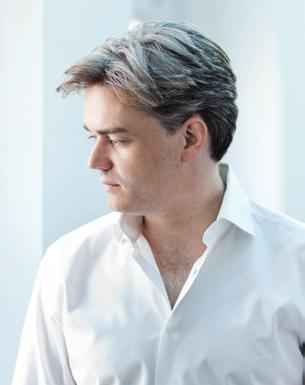
Edward Gardner Conductor
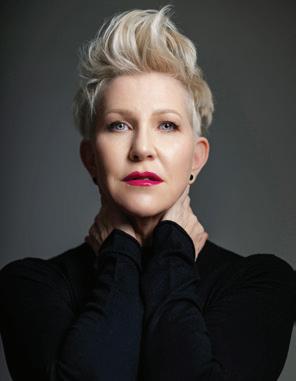
Joyce DiDonato Mezzo-soprano
BARBER
LIEBERSON
First Essay for Orchestra, Op. 12
Neruda Songs
Si no fuera porque tus ojos tienen color de luna
Amor, amor, las nubes a la torre del cielo
No estés lejos de mí un solo día, porque cómo
Ya eres mía. Reposa con tu sueño en mi sueño
Amor mío, si muero y tú no mueres
JOYCE
DIDONATO
INTERMISSION
WALTON
Symphony No. 1 in B-flat Minor
Allegro assai
Presto, con malizia
Andante con malinconia
Maestoso—Briozo ed ardamente—Vivacissimo—Maestoso
These concerts are generously sponsored by United Airlines.
The Chicago Symphony Orchestra Artist-in-Residence position, held by Joyce DiDonato, is made possible through a generous gift from James and Brenda Grusecki.
The Chicago Symphony Orchestra Association acknowledges support from the Illinois Arts Council.
The Chicago Symphony Orchestra thanks United Airlines for sponsoring these performances.
COMMENTS
by
Phillip Huscher, Daniel Jaffé
SAMUEL BARBER
Born March 9, 1910; West Chester, Pennsylvania
Died January 23, 1981, New York City
First Essay for Orchestra, Op. 12
Samuel Barber was one of the lucky ones. His talent was discovered early and nourished by an unusually musical family. (His aunt was the distinguished Metropolitan Opera contralto Louise Homer.) He began playing piano at the age of six and composing at seven. When, at nine, he informed his parents he intended to be a composer—words parents seldom greet with joy or sympathy—he was encouraged. “Dear Mother,” his confession begins,
I have written to tell you my worrying secret. . . . To begin with I was not meant to be an athlet [sic]. I was meant to be a composer and will be I am sure. I’ll ask you one more thing— Don’t ask me to try and forget this unpleasant thing and go and play football.
At the age of fourteen, Samuel became a charter student at the new Curtis Institute of Music. He studied conducting briefly with Fritz Reiner (later music director of the Chicago
COMPOSED 1938
FIRST PERFORMANCE
November 5, 1938, New York City. Arturo Toscanini conducting
March 13, 1945, Orchestra Hall. Désiré Defauw conducting
July 4, 1946, Ravinia Festival. George Szell conducting
MOST RECENT
CSO PERFORMANCES
March 28, 1961, Orchestra Hall. Walter Hendl conducting
August 9, 1966, Ravinia Festival. Kirill Kondrashin conducting
September 15, 1981, Palais des Beaux Arts, Brussels, Belgium. Sir Georg Solti conducting
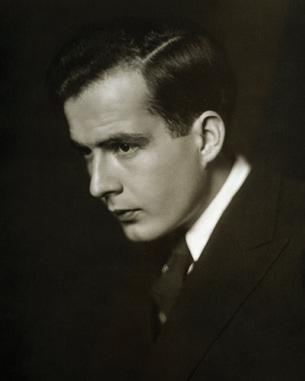
from top: Samuel Barber, portrait, ca. 1934. Bettmann Collection/ Getty Images
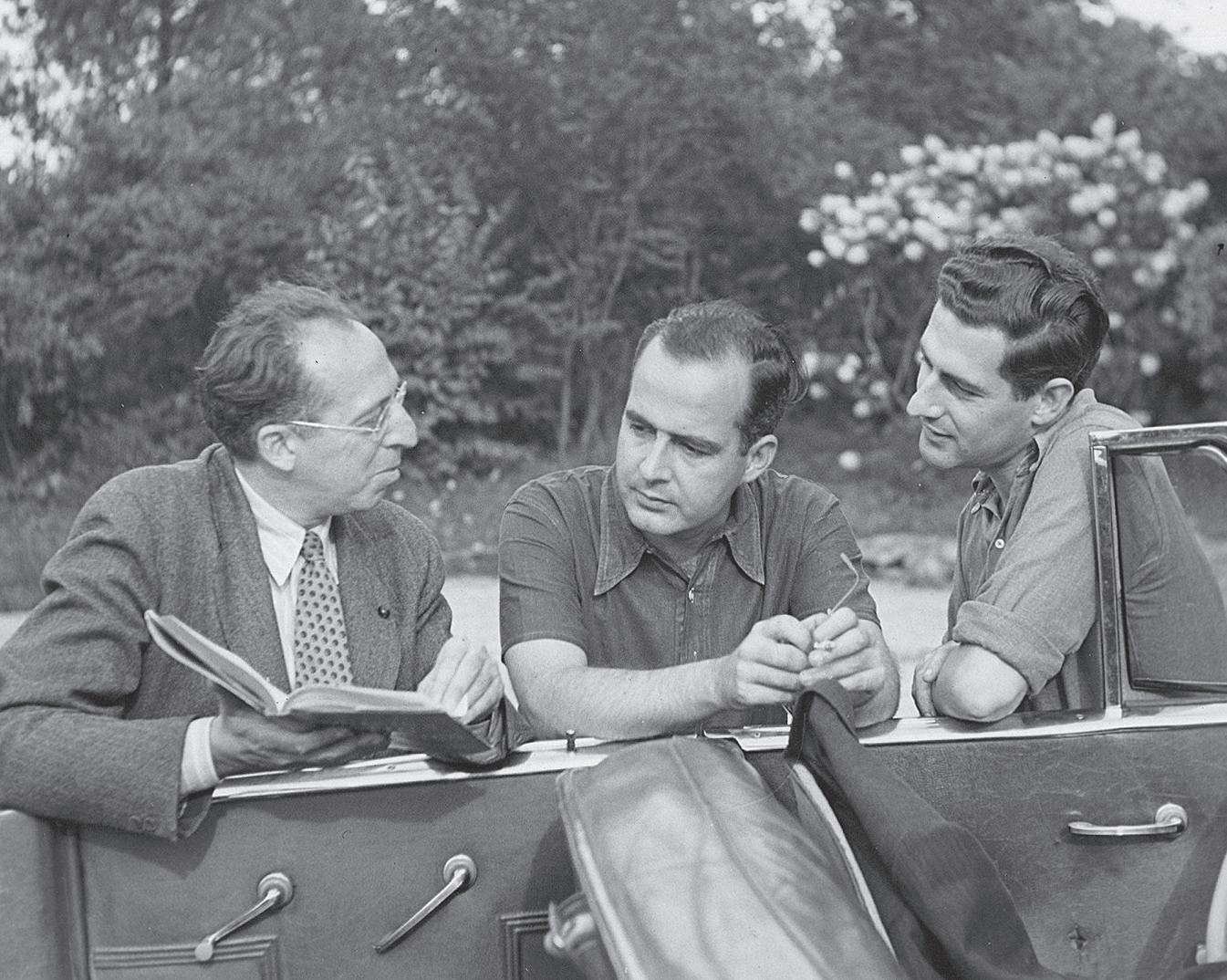
Aaron Copland (1900–1990) with Samuel Barber and Gian Carlo Menotti (1911–2007), Bernardsville, New Jersey, 1945. Photo by Victor Kraft (1915–1976), Library of Congress, Prints and Photographs Division
Symphony Orchestra), who said he had no talent on the podium. Several of his student compositions, however, were the work of an advanced composer, and a few, including Dover Beach and the Cello Sonata, have earned permanent places in the repertory. Success came early to Barber— he was only twenty-three when the Philadelphia Orchestra gave the world premiere of his first orchestral score, the Overture to The School for Scandal; his next, Music for a Scene from Shelley, was introduced by the New York Philharmonic two years later. In 1937 his Symphony no. 1 was the first music by an American to be performed at the Salzburg Festival. (Later, his Vanessa was the first American opera to be staged there.) In time, his music was performed and championed by some of the most celebrated figures of his day—Vladimir Horowitz introduced the Piano Sonata; Leontyne Price regularly sang many of the songs; Barber wrote Knoxville: Summer of 1915 for Eleanor Steber and his ballet Medea for Martha Graham.
But arguably the most unlikely of these relationships was with Arturo Toscanini, the legendary old-world conductor, whose early career included playing second cello under Giuseppe Verdi in the premiere of Otello at La Scala in 1887. When Toscanini heard Barber’s Symphony no. 1, which was performed at the 1937 Salzburg Festival, he asked the young composer for a new work that he could perform with his new orchestra, the NBC Symphony. Barber offered him two choices: his new Essay for Orchestra and an orchestral arrangement of the slow movement from his string quartet, now famous as the Adagio for Strings. Toscanini agreed to premiere both. “Toscanini conducted these scores as if his reputation rested upon the results,” Olin Downes wrote in the New York Times, suggesting that Barber would be forever grateful for a premiere under such august leadership. “The Essay for Orchestra, modestly named, is well integrated,” he continued, “with
clear instrumentation, and with development of the ideas that unifies the music in spite of changes of tempo and marked contrasts of orchestration.”
For this new orchestral score, Barber chose his title carefully. This essay (like the second and third essays written in 1942 and 1978) is a short discourse on a central topic. It doesn’t allow for the symphonic scale or multiple narrative strands of the novel. Like the celebrated essays by E.B. White that appeared in The New Yorker at the time, Barber’s score is personal, impassioned, and to the point. Barber begins with slow and somber music not unlike the Adagio in its dark colors. There is a lively middle section full of intricate and animated writing before the music broadens into a grand climax and then leaves us in a mood of quiet uncertainty.
“The essayist is a self-liberated man,” E.B. White wrote, “sustained by the childish belief that everything he thinks about, everything that happened to him, is of general interest.” It is precisely this single-minded commitment to expressing his own feelings that distinguished Barber’s finest work, even though it made him no friends in the avant-garde music circles that flourished after World War II.
In 1971 Barber summed up the attitude that had always governed his career, both in his heyday and when he was criticized for being hopelessly out of fashion:
When I write an abstract piano sonata or a concerto, I write what I feel. I’m not a self-conscious composer. . . . It is said that I have no style at all but that doesn’t matter.
I just go on doing, as they say, my thing. I believe this takes a certain courage.
Today, it’s clear that Barber, not his critics, has the last word.
—Phillip Huscher
PETER LIEBERSON
Born October 25, 1946, New York City
Died April 23, 2011; Tel Aviv, Israel
Neruda Songs for Mezzo-soprano and Orchestra
Peter Lieberson chanced upon the love sonnets by Pablo Neruda at the Albuquerque airport gift shop. He was struck at first by the paperback’s bright pink cover, peppered with orange dots. Then, as he glanced through the poems, he immediately knew he would set some of them to music for the woman who would soon become his wife, the mezzosoprano Lorraine Hunt.
The Neruda Songs, the five songs Lieberson eventually composed, have led an extraordinary existence. Lorraine Hunt Lieberson sang them first with the Los Angeles Philharmonic in 2005, and then with the Boston Symphony Orchestra in a handful of cities, including Chicago, the following year. (Bernard Haitink, who was in the Chicago audience, quickly made plans to program them with our orchestra.) In a devastating twist of fate, they became her swan song: the beloved American mezzo-soprano died of cancer in July 2006. (Her final appearances as a singer were here with the Chicago Symphony Orchestra and Chorus in March 2006, in Mahler’s Resurrection Symphony, under the late Michael Tilson Thomas.) A CD of the songs, recorded live in Boston and released shortly after her death, topped critics’ year-end lists and won a huge following—and eventually a 2008 Grammy Award. The score was also awarded the 2008 Grawemeyer Award for Music Composition, music’s most prestigious and lucrative award. “The piece has beauty and surface simplicity, but great emotional depth and intellectual rigor as well,” Marc Satterwhite, director of the Grawemeyer program, said.
“I always saw music as a means of expression of some kind, and not purely as an intellectual exercise,” Lieberson said after winning the award. “But at the time in which I grew up as a composer, there was a great deal of emphasis on intellectual comprehension of the structure of music, the possibilities of logic in music.” The Neruda Songs are the most powerful reflection of Lieberson’s belief in music that is guided by intuition, spontaneity, and matters of the heart, rather than academic conceptual ideas.
May 1, 2, and 3, 2008, Orchestra Hall; May 15, 2008, Carnegie Hall. Kelley O’Connor as soloist, Bernard Haitink conducting
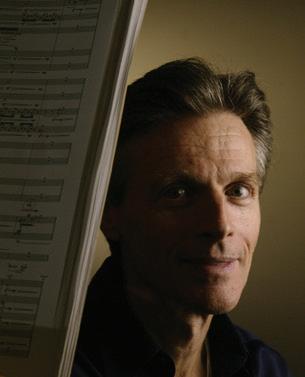
this page: Peter Lieberson, as photographed on May 18, 2005, with his score to the Neruda Songs, premiered with the Los Angeles Philharmonic at Disney Hall on May 20, 2005, with Lorraine Hunt Lieberson (1954–2006) as soloist. Photo by Myung J. Chun/Los Angeles Times via Getty Images
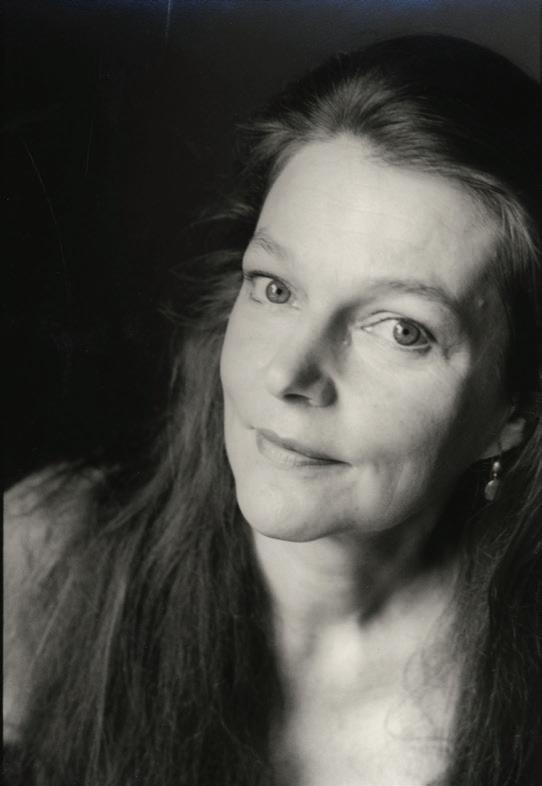
next page, from left: Lorraine Hunt Lieberson, portrait by Michael Wilson, 2003. Courtesy of Nonesuch Records
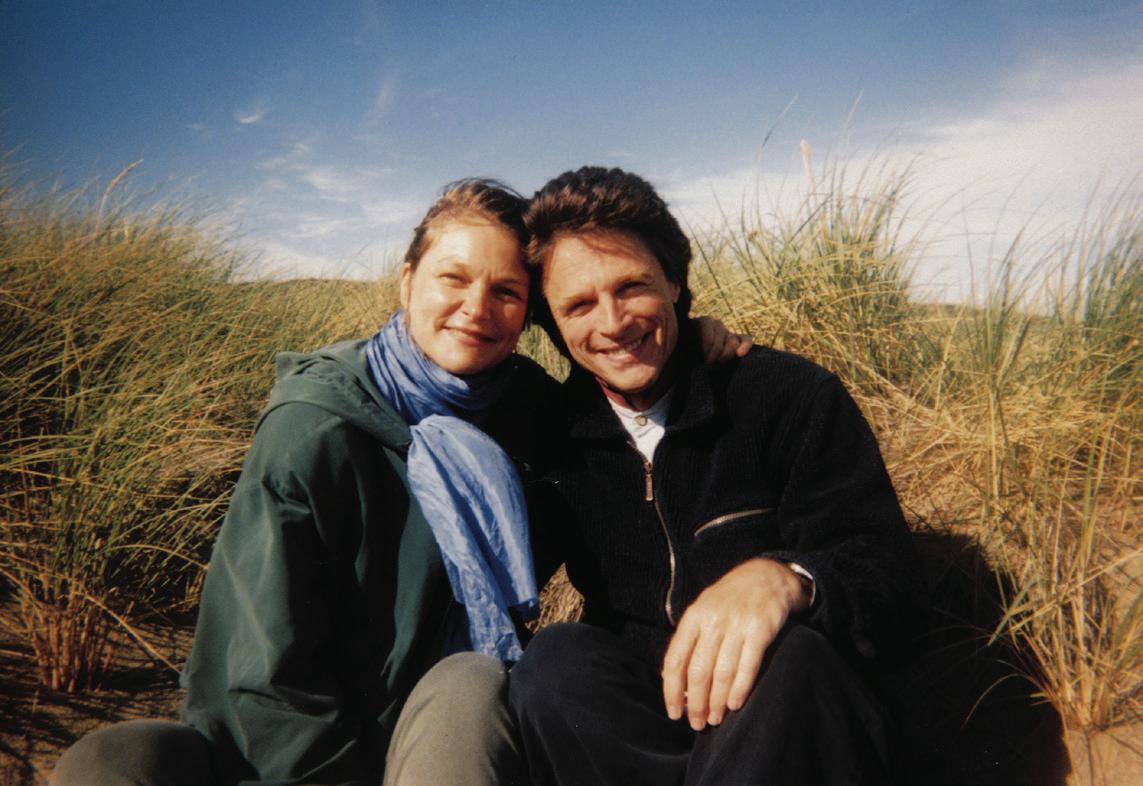
The Liebersons, photo courtesy of Peter Lieberson. Nonesuch Records
Lieberson enjoyed a composer’s dream childhood. His father was Goddard Lieberson, the revered president of Columbia Records, who had persuaded the company to record the complete works of Schoenberg and Webern, as well as Stravinsky’s entire catalog under the composer’s supervision. His mother was ballerina Vera Zorina, once a principal dancer in the Ballets Russes of Monte Carlo, and the former wife of George Balanchine. Stravinsky was a regular Thanksgiving dinner guest; Rudolf Serkin and Leonard Bernstein were family friends. But young Peter had no interest in making music his career.
Lieberson was, however, listening to late Stravinsky and to jazz and Broadway musicals (he went to the premiere of The Sound of Music; he heard snatches of My Fair Lady around the house because his father was the person who convinced CBS to invest in it). Suddenly, and unexpectedly, at the age of twenty-two, he wanted to write music. When his father took him to give Stravinsky the news, the great composer said, “It is not enough to want. You must be.” First Lieberson began to study, casually and informally, with Milton Babbitt. (“We would meet in Chinese restaurants,” Lieberson remembers, “and talk about my pieces.”) Later, he studied, in a more conventional fashion, with Charles Wuorinen at Columbia University.
Then, in 1976, at the age of thirty, Lieberson announced that he was giving up music and moving to the Naropa Institute in Boulder, Colorado, to study with Chögyam Trungpa, a Tibetan Buddhist meditation master. Within a matter of months, Lieberson was composing again, but obviously he had turned an important corner in his life—and in his music. After two years, he moved back to the East Coast to direct a meditation and cultural program in Boston and to begin doctoral studies in composition at Brandeis University. Before he had completed his degree, he received a commission for his first orchestral score from the Boston Symphony Orchestra: Lieberson’s Piano Concerto was premiered in 1983 by his childhood friend, Peter Serkin, to great acclaim. By 1994, he had become a full-time composer.
It was during rehearsals for the world premiere of his opera Ashoka’s Dream at the Santa Fe Opera in 1997 that Lieberson met Lorraine Hunt, who was singing the role of Triraksha. Lieberson found in her not only a soulmate, but also someone whose deeply intuitive musicianship would inspire him to write ever more personal music—he had never before known a singer “so unafraid of her emotions, so able to access those emotions and express them,” as he later recalled. “There was no artifice.” When he heard her as Triraksha, he was struck, as if for the first time,
by “the power of the melodic line”—a jolt to his sensibilities that would find its ultimate release in the sensual lyricism of the Neruda Songs. The two married only days before Lorraine arrived in Chicago to make her debut with the Orchestra in the premiere of John Harbison’s Four Psalms in April 1999; the news arrived here in a last-minute fax asking if it was too late to print her name in the program book as Lorraine Hunt Lieberson. (It was.)
The first music Peter wrote for Lorraine to sing was a setting of five poems by Rainer Maria Rilke for voice and piano, completed in 2001. After Esa-Pekka Salonen asked him to compose a concerto for the Los Angeles Philharmonic, Peter countered with the idea of another song cycle. That was when he returned to the pink paperback. It took him nearly a year to choose from the one hundred sonnets the Chilean poet Neruda had written for Matilde Urrutia, his beloved partner. Lorraine, whose Spanish was fluent, would read them to him, allowing them both the chance to know the sonnets better and to pick more wisely. The first weeding still left him with forty poems; he finally whittled those down to just eight, and then as he began to work, he realized that even that was too many. As with his Rilke cycle, he settled on five. The arc of those five sonnets traces love from sheer infatuation to death and parting—an almost unbearably heartbreaking destination, under the circumstances. At the time of the premiere, the composer commented on his choices:
Each of the five poems that I set to music seemed to me to reflect a different face in love’s mirror. The first poem, “If your eyes
were not the color of the moon,” is pure appreciation of the beloved. The second, “Love, love, the clouds went up the tower of the sky like triumphant washerwomen,” is joyful and also mysterious in its evocation of nature’s elements: fire, water, wind, and luminous space. The third poem, “Don’t go far off, not even for a day,” reflects the anguish of love, the fear and pain of separation. The fourth poem, “And now you’re mine. Rest with your dream in my dream,” is complex in its emotional tone. First there is the exultance of passion. Then, gentle, soothing words lead the beloved into the world of rest, sleep, and dream. Finally, the fifth poem, “My love, if I die and you don’t,” is very sad and peaceful at the same time. There is the recognition that no matter how blessed one is with love, there will be a time when we must part from those whom we cherish so much. Still, Neruda reminds one that love has not ended. In truth there is no real death to love nor even a birth: “It is like a long river, only changing lands, and changing lips.”
Lorraine Hunt Lieberson died little more than a year after she sang the Neruda Songs for the first time This music began as a set of love songs from the composer to his wife, but they have taken on a life of their own. They quickly outgrew their roots as private confessions—so inward and so naked emotionally as to make listening sometimes seem almost an intrusion— to become important public works of art.
—Phillip Huscher
NERUDA SONGS
Sonnet VIII
Si no fuera porque tus ojos tienen color de luna, de día con arcilla, con trabajo, con fuego, y aprisionada tienes la agilidad del aire, si no fuera porque eres una semana de ámbar, si no fuera porque eres el momento amarillo en que el otoño sube por las enredaderas y eres aún el pan que la luna fragante elabora paseando su harina por el cielo,
oh, bienamada, yo no te amaría! En tu abrazo yo abrazo lo que existe, la arena, el tiempo, el árbol de la lluvia, y todo vive para que yo viva: sin ir tan lejos puedo verlo todo: veo en tu vida todo lo viviente.
Amor, amor, las nubes a la torre del cielo subieron como triunfantes lavanderas, y todo ardió en azul, todo fue estrella: el mar, la nave, el día se desterraron juntos.
Ven a ver los cerezos del agua constelada y la clave redonda del rápido universo,
ven a tocar el fuego del azul instantáneo, ven antes de que sus pétalos se consuman.
If your eyes were not the color of the moon, of a day full of clay, and work, and fire, if even held-in you did not move in agile grace like the air, if you were not an amber week,
not the yellow moment when autumn climbs up through the vines; if you were not that bread the fragrant moon kneads, sprinkling its flour across the sky, oh, my dearest, I could not love you so! But when I hold you I hold everything that is— sand, time, the tree of the rain,
everything is alive so that I can be alive: without moving I can see it all: in your life I see everything that lives.
Sonnet XXIV
Love, love, the clouds went up the tower of the sky like triumphant washerwomen, and it all glowed in blue, all like a single star, the sea, the ship, the day were all exiled together.
Come see the cherries of the water in the weather, the round key to the universe, which is so quick: come touch the fire of this momentary blue, before its petals wither.
No hay aquí sino luz, cantidades, racimos, espacio abierto por las virtudes del viento hasta entregar los últimos secretos de la espuma.
Y entre tantos azules celestes, sumergidos, se pierden nuestros ojos adivinando apenas los poderes del aire, las llaves submarinas.
There’s nothing here but light, quantities, clusters, space opened by the graces of the wind till it gives up the final secret of the foam.
Among so many blues—heavenly blues, sunken blues— our eyes are a little confused: they can hardly divine the powers of the air, the keys to the secrets in the sea.
Sonnet XLV
No estés lejos de mí un solo día, porque cómo, porque, no sé decirlo, es largo el día, y te estaré esperando como en las estaciones cuando en alguna parte se durmieron los trenes.
No te vayas por una hora porque entonces en esa hora se juntan las gotas del desvelo y tal vez todo el humo que anda buscando casa venga a matar aún mi corazón perdido.
Ay que no se quebrante tu silueta en la arena, ay que no vuelen tus párpados en la ausencia: no te vayas por un minuto, bienamada, porque en ese minuto te habrás ido tan lejos que yo cruzaré toda la tierra preguntando si volverás o si me dejarás muriendo.
Don’t go far off, not even for a day, because— because—I don’t know how to say it: a day is long and I will be waiting for you, as in an empty station when the trains are parked off somewhere else, asleep.
Don’t leave me, even for an hour, because then the little drops of anguish will all run together, the smoke that roams looking for a home will drift into me, choking my lost heart.
Oh, may your silhouette never dissolve on the beach; may your eyelids never flutter into the empty distance.
Don’t leave me for a second, my dearest, because in that moment you’ll have gone so far
I’ll wander mazily over all the earth, asking, Will you come back? Will you leave me here, dying?
(Please turn the page quietly.)
Ya eres mía. Reposa con tu sueño en mi sueño.
Sonnet LXXXI
Amor, dolor, trabajos, deben dormir ahora. Gira la noche sobre sus invisibles ruedas y junto a mí eres pura como el ámbar dormido.
Ninguna más, amor, dormirá con mis sueños.
Irás, iremos juntos por las aguas del tiempo. Ninguna viajará por la sombra conmigo, sólo tú, siempreviva, siempre sol, siempre luna.
Ya tus manos abrieron los puños delicados y dejaron caer suaves signos sin rumbo, tus ojos se cerraron como dos alas grises,
mientras yo sigo el agua que llevas y me lleva: la noche, el mundo, el viento devanan su destino,
y ya no soy sin ti sino sólo tu sueño.
Amor mío, si muero y tú no mueres, amor mío, si mueres y no muero, no demos al dolor más territorio: no hay extensión como la que vivimos.
Polvo en el trigo, arena en las arenas el tiempo, el agua errante, el viento vago nos llevó como grano navegante. Pudimos no encontrarnos en el tiempo.
And now you’re mine. Rest with your dream in my dream.
Love and pain and work should all sleep, now. The night turns on its invisible wheels, and you are pure beside me as a sleeping amber.
No one else, Love, will sleep in my dreams. You will go, we will go together, over the waters of time. No one else will travel through the shadows with me, only you, evergreen, ever sun, ever moon.
Your hands have already opened their delicate fists and let their soft drifting signs drop away; your eyes closed like two gray wings, and I move
after, following the folding water you carry, that carries me away. The night, the world, the wind spin out their destiny.
Without you, I am your dream, only that, and that is all.
Sonnet XCII
My love, if I die and you don’t—, My love, if you die and I don’t—, let’s not give grief an even greater field. No expanse is greater than where we live.
Dust in the wheat, sand in the deserts, time, wandering water, the vague wind swept us on like sailing seeds. We might not have found one another in time.
Esta pradera en que nos encontramos, oh pequeño infinito! devolvemos. Pero este amor, amor, no ha terminado,
y así como no tuvo nacimiento no tiene muerte, es como un largo río, sólo cambia de tierras y de labios.
Born March 29, 1902; Oldham, Lancashire, England Died March 8, 1983; La Mortella, Ischia, Italy
Symphony No. 1
In 1926 the writer Siegfried Sassoon, one of William Walton’s most steadfast supporters, introduced the twenty-four-year-old composer to Hubert Foss, founder of Oxford University Press’s music department. Eager to publish the composer of the colorful and jazz-inspired Portsmouth Point, Foss gave Walton a five-year contract. So began a fruitful relationship, which resulted in several of Walton’s greatest works.
Walton found Foss “a very intelligent musician and could criticize quite well. [ . . . ] He was very good to talk to about one’s difficulties.” One evening in October 1931, Walton visited Foss and his wife Dora. As Dora recalled, “Willie was
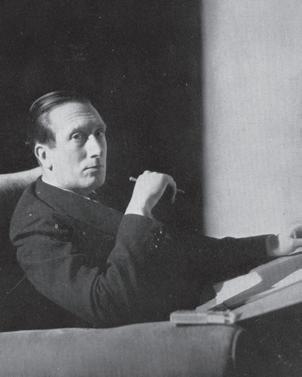
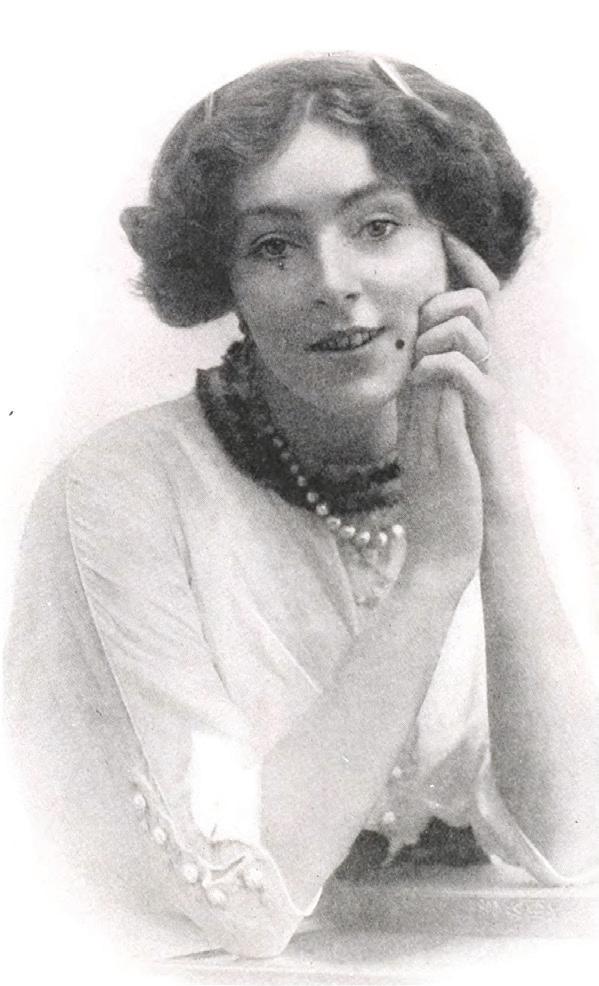
this page: William Walton, portrait, 1949. Photo by Universal History Archive/ Universal Images Group via Getty Images | next page: Lady Alice, Viscountess Wimborne (1880–1948)—Walton’s long-term partner after the end of his affair with Baroness Imma von Doernberg—as featured in Tatler magazine, ca. 1915, following her husband’s appointment as lord lieutenant of Ireland. Photo by Lallie Charles (1869–1919)
COMPOSED
1932–35
FIRST PERFORMANCE
December 3, 1934; London, England (first three movements)
January 23 and 24, 1936, Orchestra Hall. Sir Hamilton Harty conducting (U.S. premiere)
CSO PERFORMANCE, THE COMPOSER CONDUCTING August 1, 1963, Ravinia Festival
MOST RECENT
CSO PERFORMANCES
October 24, 25, and 26, 2013, Orchestra Hall. Semyon Bychkov conducting
(languidly!) extemporizing at the piano with Hubert sitting on the double stool with him, while I stood behind them. We were absolutely enchanted with what he was playing . . . Hubert or both of us said something to the effect that he must use that heavenly tune for something.” This turned out to be the first glimmering of Walton’s Symphony no. 1.
The following January, the conductor Hamilton Harty asked Walton to write a symphony for his Hallé Orchestra. “A rather portentous undertaking,” Walton confessed to Sassoon, “but the Hallé is such a good orchestra and Harty such a magnificent conductor, besides being very encouraging, that I may be able to knock Bax off the map.” Arnold Bax, England’s most prolific symphonist, presented an obvious target for Walton, who thrived on rivalry: Walton’s previous celebrated work, the choral Belshazzar’s Feast, had been composed to trump his friend Constant Lambert’s The Rio Grande.
Yet, for all his apparent brilliance as a composer, Walton suffered severe selfdoubt if inspiration eluded him. While composing Belshazzar’s Feast, he had got stuck for over six months on the chord setting for the word “gold.” Matters were further complicated by his relationship with Baroness Imma von Doernberg. A young widow almost a year older than Walton, she was described by Sassoon as “pretty, sweet, lively, and courageous . . . with a tall, graceful figure.” William and Imma were involved from at least 1929, and by early 1931 were cohabiting at the Casa Angelo in Ascona, Switzerland. It was a far from easy relationship, and Walton found her increasingly demanding (“once a baroness always a baroness!” he observed years later).
All of this, and the high expectations riding on his new symphony, made even getting started a nerve-racking process. Late in 1932, he confessed to Sassoon that he had been “doing a good deal more ruminating than actual work.” In October, he wrote to Foss: “I’ve managed to get down about forty bars, which for me is really something.” By December, he admitted to Foss he was “stuck,” as he had been for Belshazzar. Harty—suspecting a cause for Walton’s delay— wrote to Foss in February saying: “Why don’t you go over to Switzerland and wrest poor W.W.’s baroness away from him so that he can stop making overtures to her and do a symphony for me instead!”
By the summer of 1933, Walton was able to show the first two movements to Foss, who wrote to Dora: “Willie’s symphony is most exciting—really on the big scale and in the purest symphonic manner: just like Beethoven and Sibelius and yet very personal. Rather tragic, and the second movement scherzo is really sinister. I think I have persuaded him to use for the slow movement that ravishing idea he played to us ages ago on October 18, 1931, when he was starting the work . . . .”
Foss’s assessment was shrewd: the symphony’s opening timpani roll, with the glow of sustained horns and a flickering violin motif, derives stylistically from both Beethoven’s Ninth and Sibelius’s Fifth (which also starts with sustained horns and a timpani roll). Yet its orchestration and the way Walton builds harmonic tension ultimately owes most to Sibelius, albeit masterfully handled with the powerful pilings up of dissonance counterbalanced by sudden interludes of fleeting sweetness.
The second movement, Presto, con malizia, reflected, Walton confessed years later, his increasingly acrid relationship with Imma. Friends noticed how pale and thin he had become, and Walton’s correspondence at that time clearly expresses the bitter torment he suffered both from the huge expectation weighing on his symphony and from what he cryptically called “the most idiotic mess I’ve made of my life.”
Walton labeled the slow third movement, in not very correct Italian, Andante con malinconia. Here the “ravishing idea” Foss referred to appears as a flute solo, its melancholic character more evident in the slower tempo than in the allegro guise Walton had originally tried out, then discarded, for the opening movement.
After finishing that lament and composing the finale’s opening and end, Walton put the symphony temporarily aside in the summer of 1934 to work on his first film score, Escape Me Never. Harty, who had by then left the Hallé for the London Symphony Orchestra, finally persuaded Walton to let him conduct the symphony without its finale. That premiere took place on December 3, 1934. Shortly afterward, Imma, to Walton’s relief, broke off their relationship.
Walton soon met “beautiful, intelligent” Alice, Viscountess Wimborne. Calm and more mature (she was twenty-two years his senior), Alice nurtured Walton and his creativity until the end
of her life. But for the fact Walton had already composed the finale’s opening, one might assume it reflected her beneficent influence. In fact, Walton’s main addition to the movement after meeting Alice was a carefree fugue, created at Constant Lambert’s suggestion. Walton’s disingenuous claim that in preparation he studied Vaughan Williams’s article on fugue in Grove’s Dictionary of Music and Musicians (having previously written two in his First String Quartet!) was perhaps a tribute to the older composer’s fugue in the finale of his Fourth Symphony, much admired by Walton; that work was first performed on April 10, 1935. Almost seven months later, on November 6, Harty conducted the premiere of Walton’s completed symphony, performed, as had been Vaughan Williams’s, by the BBC Symphony Orchestra. It is perhaps appropriate that Walton dedicated his ferocious symphony to his muse, Imma.
—Daniel Jaffé
Phillip Huscher has been the program annotator for the Chicago Symphony Orchestra since 1987.
Daniel Jaffé is an independent scholar with an interest in Russian and English music. He is author of the Historical Dictionary of Russian Music (Rowman & Littlefield), has written regularly for BBC Music Magazine, and is currently researching the life and work of Gustav Holst.
REFRESHMENTS AT SYMPHONY CENTER
You can order drinks and snacks before the performance or during intermission at various bars located throughout Symphony Center, including the Bass Bar in the Rotunda and most of the lobby spaces in Orchestra Hall.
Let music resound
The Chicago Symphony Orchestra Association gratefully acknowledges the Helen Zell Contemporary Music Fund for its leadership support of the presentation of contemporary music in the CSO’s 2025–26 season.
Major support is also provided by Sally Mead Hands Foundation, The Irving Harris Foundation, and Lori Julian for the Julian Family Foundation.
Sep 25–28
PÉPIN Les Eaux célestes
Oct 3–4
SIMON Fate Now Conquers MUSGRAVE Piccolo Play
Dec 18–20
WIDMANN Con brio CHIN subito con forza
Feb 5–7
SMITH Lost Coast
Feb 12–15
THOMPSON To See the Sky
Apr 2–4
TÜÜR Prophecy
May 7–9
LIEBERSON Neruda Songs
May 21–23
CLYNE Sound and Fury
FORMER MEAD COMPOSER-IN-RESIDENCE
June 18–21
MONTGOMERY Banner
FORMER MEAD COMPOSER-IN-RESIDENCE
Contemporary music remains a vital thread in the CSO’s artistic legacy, and this generous support ensures that bold, innovative repertoire continues to resonate with audiences today. We are proud to carry forward this tradition by featuring compelling new works throughout the 2025–26 concert season.
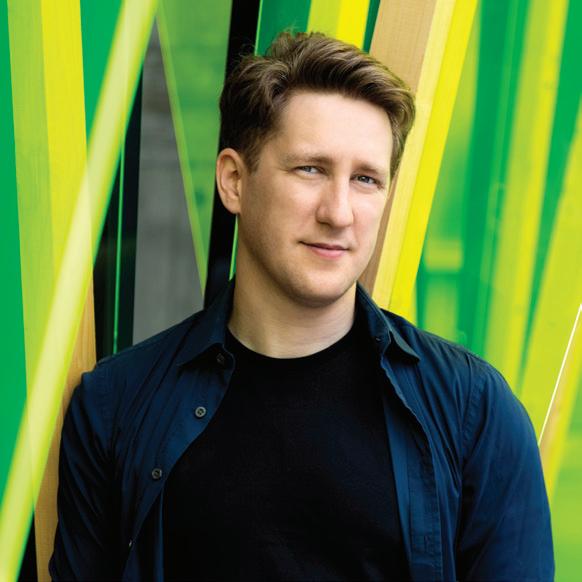
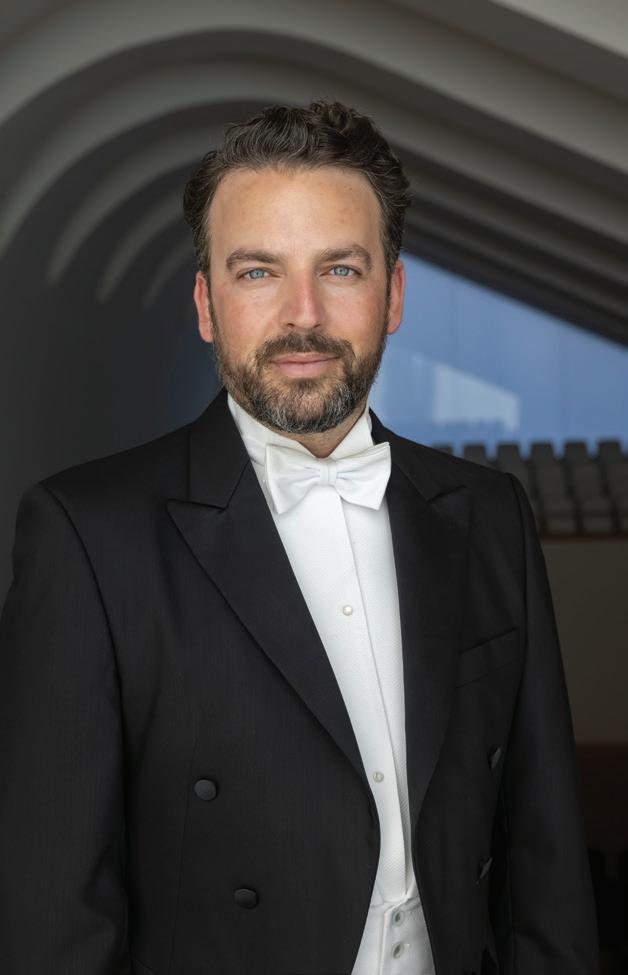
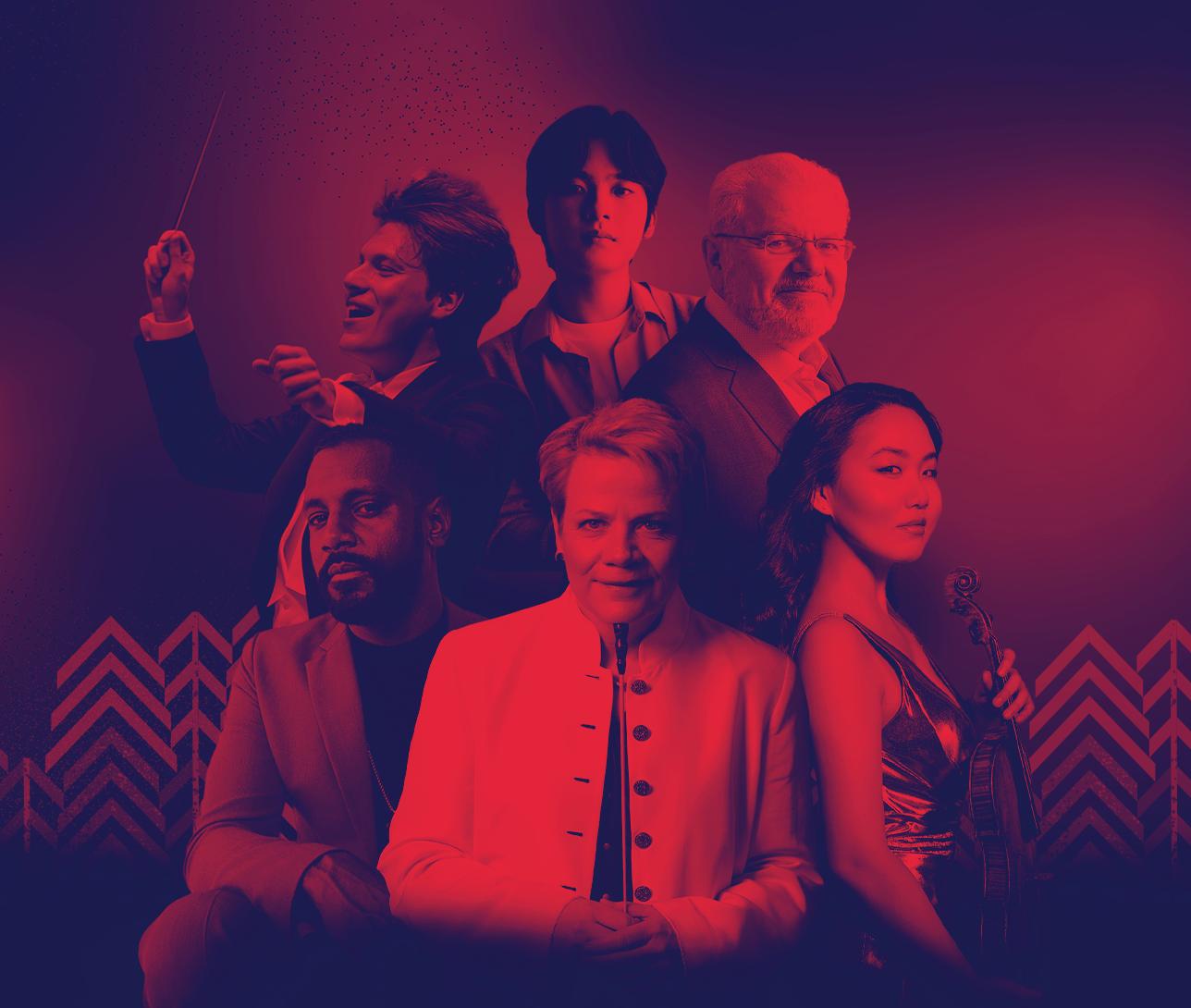
Joshua Weilerstein (June 18–21)
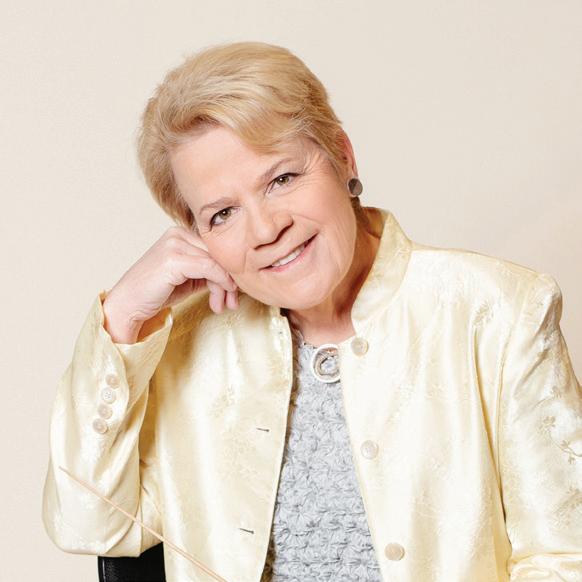
Marin Alsop (June 4–6)
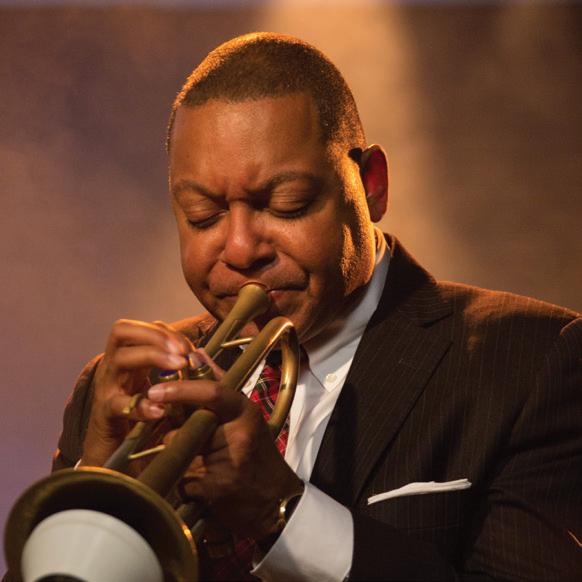
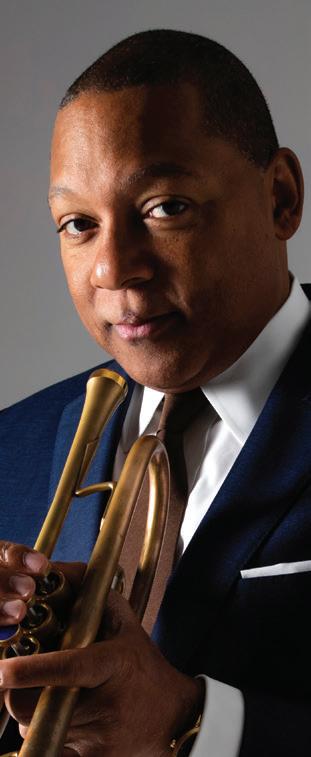
Wynton Marsalis (June 4–6)
PROFILES
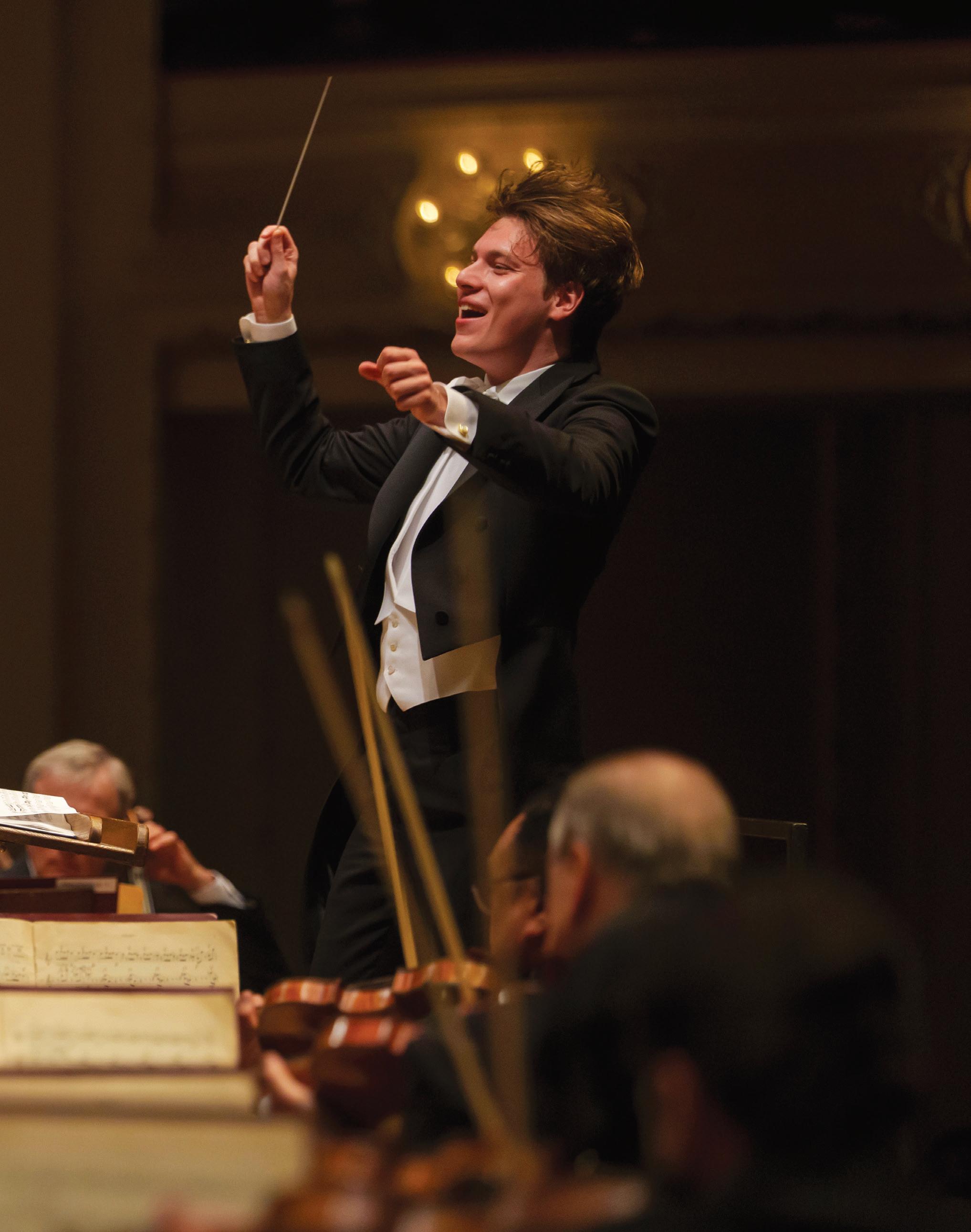
Edward Gardner Conductor
FIRST CSO PERFORMANCES
July 18, 2017, Ravinia Festival. Elgar’s Enigma Variations and Brahms’s Piano Concerto no. 2 with Yefim Bronfman
December 6, 7, 8, and 11, 2018, Orchestra Hall. Wagner’s Overture to Rienzi, Strauss’s Four Last Songs with Erin Wall, and Nielsen’s Symphony no. 4
MOST RECENT CSO PERFORMANCES
November 3, 4, and 5, 2022, Orchestra Hall. Prelude to act 3 of Die Meistersinger von Nürnberg, Bartók’s Violin Concerto no. 2 with Christian Tetzlaff, and Vaughan Williams’s Symphony no. 5
Edward Gardner is principal conductor of the London Philharmonic Orchestra and music director of the Norwegian National Opera and Ballet in Oslo. He additionally serves as honorary conductor of the Bergen Philharmonic Orchestra following his tenure as chief conductor (2015–24). Gardner opened his second season at Norwegian Opera and Ballet with Dvořák’s Rusalka and concert performances of Kurtag’s Fin de partie. This spring, he led Verdi’s Don Carlo and Prokofiev’s ballet Romeo and Juliet. The season also includes concert performances of The Ring Without Words, Lorin Maazel’s arrangement of Wagner’s Ring cycle. Next season begins their journey toward a complete Ring cycle in the 2028–29 season.
During this, his fifth, season with the LPO, he has held ten concerts at the Royal Festival Hall in London as well as five in South Korea and a tour of major cities in Germany. Highlights of their London season include Mahler’s Symphony no. 4; modern classics by George Benjamin and Hans Abrahamson; central European music by Lutosławski, Janáček, Szymanowski, and Bartók; and a concert staging of Berg’s Wozzeck.
As a guest conductor, this season he returns to American orchestras including the San Francisco Symphony, the National Symphony Orchestra in Washington (D.C.), and the Dallas Symphony and makes his debut with the
Pittsburgh Symphony Orchestra. In Europe he conducts the Berlin Radio Symphony Orchestra, WDR Symphony Orchestra Cologne, Deutsche Kammerphilharmonie Bremen, Danish National Symphony Orchestra, and the Netherlands Radio Philharmonic Orchestra. In addition, he makes his Yomiuri Nippon Symphony Orchestra debut in Tokyo.
Gardner, an acclaimed opera conductor, was re-invited to the Royal Opera House (London) in the spring of 2025 for the world premiere of Mark-Anthony Turnage’s Festen, and in June 2025 he returned to the Bavarian State Opera for Rusalka. This summer, he leads a new production of Puccini’s Suor Angelica and Berlioz’s La mort de Cléopâtre at the Tiroler Festspiele Erl.
Edward Gardner has an extensive discography, with critically acclaimed recent live recordings of Wagner’s The Flying Dutchman (Decca) with Norwegian National Opera and Salome (Chandos) with the Bergen Philharmonic at the Edinburgh Festival. His numerous Chandos recordings with the Bergen Philharmonic include a Grammy Award–nominated disc of Janáček’s Glagolitic Mass. The LPO’s record label celebrates its twentieth anniversary with several releases of Gardner’s concert repertoire and the third in his Tippett series following their Gramophone Opera Award–winning recording of The Midsummer Marriage.
A passionate supporter of young talent, he founded the Hallé Youth Orchestra in 2002 and regularly conducts the National Youth Orchestra of Great Britain. He also has a close relationship with the Juilliard School of Music and with the Royal Academy of Music, which appointed him its inaugural Sir Charles Mackerras Conducting Chair in 2014.
Born in Gloucester, England, Edward Gardner was educated at Cambridge and at the Royal Academy of Music in London and gained early recognition as assistant conductor of the Hallé in Manchester and music director of Glyndebourne Touring Opera. His many accolades include an Olivier Award for Outstanding Achievement in Opera (2009) and an OBE for Services to Music in the Queen’s Birthday Honors (2012).
The Chicago Symphony Orchestra Artist-in-Residence position, held by Joyce DiDonato, is made possible through a generous gift from
James and Brenda Grusecki.
Joyce DiDonato Mezzo-soprano
FIRST CSO PERFORMANCES
September 29, 30, and October 1, 2016, Orchestra Hall. Martucci’s Canzone dei ricordi, Riccardo Muti conducting
September 20, 2025, Orchestra Hall. Three songs by Richard Strauss (Wiegenlied, Morgen, and Zueignung) and Bizet’s Habanera from Carmen, Nikolaj SzepsZnaider conducting
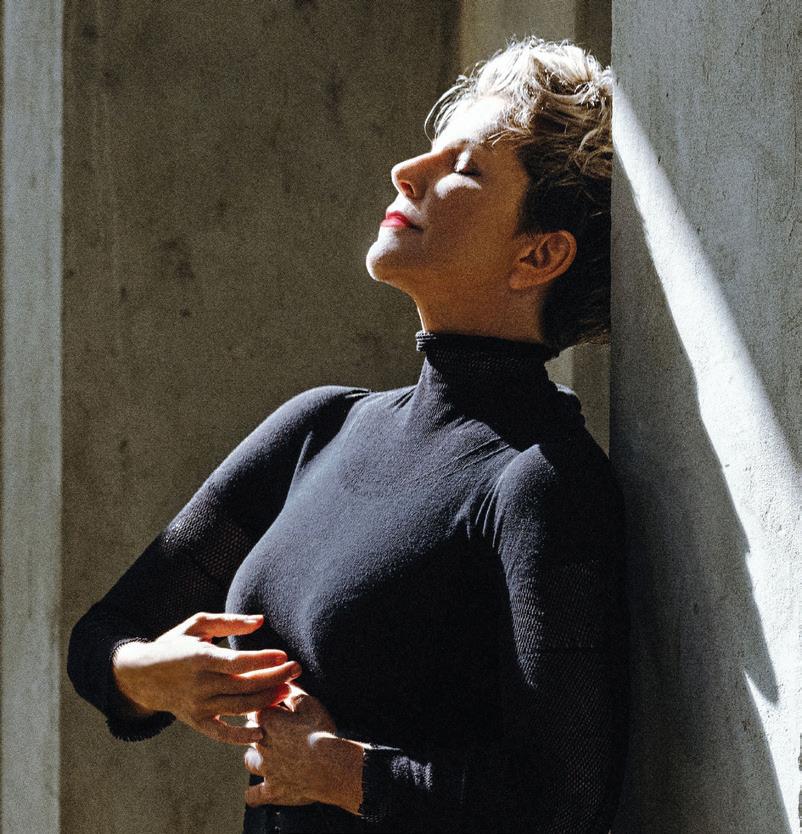
Winner of multiple Grammy awards and a 2018 Olivier Award for Outstanding Achievement in Opera, Kansas-born Joyce DiDonato has soared to the top of the industry as a performer, producer, and fierce advocate for the arts.
Recent highlights include Handel’s Theodora for the Teatro Real in Madrid and an acclaimed European recital tour. She continued her celebrated musical partnership with the Philadelphia Orchestra and Yannick Nézet-Séguin, and a spring residency at the Konzerthaus Dortmund featured the world premiere of Rachel Portman’s song cycle Another Eve.
DiDonato’s varied 2025–26 season commenced with season-opening concerts with both the Minnesota Orchestra and the Orchestre Métropolitain de Montréal, as well as the reopening of Powell Hall with the St. Louis Symphony Orchestra in the world premiere of Kevin Puts’s House of Tomorrow. She returned to Musikkollegium Winterthur for Another Eve and collaborated with Radio France for Mahler’s Rückert-Lieder in Paris and Dijon. She also reunited with pianist Craig Terry for recitals at Théâtre de Genève and Suntory Hall in Tokyo and embarked on her first major tour of Australia with the Melbourne, Tasmanian, and New Zealand symphony orchestras in November 2025. DiDonato made her Lincoln
Center Theater stage debut as the mother in Menotti’s Amahl and the Night Visitors and her much-anticipated role debut at the Metropolitan Opera in Saariaho’s Innocence. Concert appearances included Mahler’s Symphony no. 2 with the Philadelphia Orchestra and Symphony no. 3 with the Berlin Philharmonic under the baton of Nézet-Séguin. The artist maintains her annual master class series at Carnegie Hall in New York and tours her album SongPlay throughout Asia. She also joins the Met Orchestra for her second European tour with Nézet-Séguin following a performance of Mahler’s Symphony no. 4 at Carnegie Hall.
Her latest global touring project, EDEN, completed a groundbreaking three years with tours in Asia, South America, the United States, and Europe. A newly commissioned song cycle by Kevin Puts, Emily—No Prisoner Be, for her and the Grammy Award–winning string trio Time for Three, had its world premiere at the Bregenz Festival in August 2025.
On the operatic stage, DiDonato’s recent roles include Virginia Woolf (The Hours), Sister Helen Prejean (Dead Man Walking), Agrippina, Cendrillon, Sesto (La Clemenza di Tito), and Adalgisa (Norma), all for the Metropolitan Opera. Her expansive discography includes Berlioz’s Les Troyens (Gramophone’s Recording of the Year) and Handel’s Agrippina (Gramophone’s Opera Recording of the Year). Other albums include the singular EDEN, spanning four centuries of music; Schubert’s Winterreise with Nézet-Séguin; and the Grammy-winning SongPlay, Diva Divo, and Drama Queens. Other honors include her inaugural induction into the Gramophone Hall of Fame, receiving the Fourteenth Concertgebouw Prize in September 2024, and being named an Officer of the Order of Arts and Letters by the French Republic.
Joyce DiDonato is the CSO Artist-in-Residence for the 2025–26 season, made possible through a generous gift from James and Brenda Grusecki.
Celebrate the legendary collaboration between composer John Williams and filmmaker Steven Spielberg as the Chicago Symphony Orchestra brings to life some of cinema’s most iconic music.
Enhance your evening by ordering the event package, which includes preconcert drinks and bites plus prime seating at the concert. Ample food and drink stations will feature heavy hors d’oeuvres and refreshments. Mingle with other guests while enjoying lounge seating in Symphony Center’s Forte event space.
SCAN TO LEARN MORE
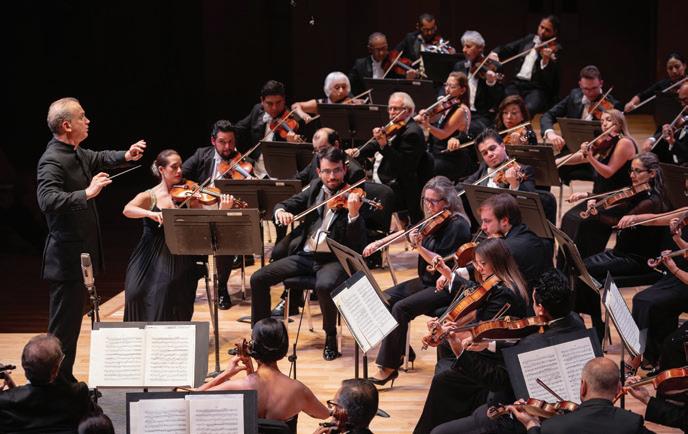
The Chicago Symphony Orchestra—consistently hailed as one of the world’s best—marks its 135th season in 2025–26. The ensemble’s history began in 1889, when Theodore Thomas, the leading conductor in America and a recognized music pioneer, was invited by Chicago businessman Charles Norman Fay to establish a symphony orchestra. Thomas’s aim to build a permanent orchestra of the highest quality was realized at the first concerts in October 1891 in the Auditorium Theatre. Thomas served as music director until his death in January 1905, just three weeks after the dedication of Orchestra Hall, the Orchestra’s permanent home designed by Daniel Burnham.
Frederick Stock, recruited by Thomas to the viola section in 1895, became assistant conductor in 1899 and succeeded the Orchestra’s founder. His tenure lasted thirty-seven years, from 1905 to 1942—the longest of the Orchestra’s music directors. Stock founded the Civic Orchestra of Chicago— the first training orchestra in the U.S. affiliated with a major orchestra—in 1919, established youth auditions, organized the first subscription concerts especially for children, and began a series of popular concerts.
Three conductors headed the Orchestra during the following decade: Désiré Defauw was music director from 1943 to 1947, Artur Rodziński in 1947–48, and Rafael Kubelík from 1950 to 1953. The next ten years belonged to Fritz Reiner, whose recordings with the CSO are still considered hallmarks. Reiner invited Margaret Hillis to form the Chicago Symphony Chorus in 1957. For five seasons from 1963 to 1968, Jean Martinon held the position of music director.
Sir Georg Solti, the Orchestra’s eighth music director, served from 1969 until 1991. His arrival launched one of the most successful musical partnerships of our time. The CSO made its first overseas tour to Europe in 1971 under his direction and released numerous award-winning recordings. Beginning in 1991, Solti held the title of music director laureate and returned to conduct the Orchestra each season until his death in September 1997.
Daniel Barenboim became ninth music director in 1991, a position he held until 2006. His tenure was distinguished by the opening of Symphony Center in 1997, appearances with the Orchestra in the dual role of pianist and conductor, and twenty-one international tours. Appointed by Barenboim in 1994 as the Chorus’s second director, Duain Wolfe served until his retirement in 2022.
In 2010, Riccardo Muti became the Orchestra’s tenth music director. During his tenure, the Orchestra deepened its engagement with the Chicago community, nurtured its legacy while supporting a new generation of musicians and composers, and collaborated with visionary artists. In September 2023, Muti became music director emeritus for life.
In April 2024, Finnish conductor Klaus Mäkelä was announced as the Orchestra’s eleventh music director and will begin an initial five-year tenure as Zell Music Director in September 2027. In July 2025, Donald Palumbo became the third director of the Chicago Symphony Chorus.
Carlo Maria Giulini was named the Orchestra’s first principal guest conductor in 1969, serving until 1972; Claudio Abbado held the position from 1982 to 1985. Pierre Boulez was appointed as principal guest conductor in 1995 and was named Helen Regenstein Conductor Emeritus in 2006, a position he held until his death in January 2016. From 2006 to 2010, Bernard Haitink was the Orchestra’s first principal conductor.
Mezzo-soprano Joyce DiDonato is the CSO’s Artist-in-Residence for the 2025–26 season.
The Orchestra first performed at Ravinia Park in 1905 and appeared frequently through August 1931, after which the park was closed for most of the Great Depression. In August 1936, the Orchestra helped to inaugurate the first season of the Ravinia Festival, and it has been in residence nearly every summer since.
Since 1916, recording has been a significant part of the Orchestra’s activities. Recordings by the Chicago Symphony Orchestra and Chorus— including recent releases on CSO Resound, the Orchestra’s recording label launched in 2007— have earned sixty-five Grammy awards from the Recording Academy.
A Musical Journey
Jazz at Lincoln Center Orchestra with Wynton Marsalis
JUNE 2
Alsop Conducts Adams, Copland & Marsalis
JUNE 4-6
Conrad Tao piano
JUNE 7
Chris Thile & the CSO
JUNE 8
Gaffigan, Thibaudet & Bernstein
JUNE 11 -1 3
CSO Brass Quintet
JUNE 16
Lincoln Portrait & Ellington Harlem
JUNE 1 8-21
A Musical Tribute to John Williams & Steven Spielberg
JUNE 23
Star Wars: A New Hope in Concert
JUNE 25-27
Chicago Symphony Orchestra
Klaus Mäkelä Zell Music Director Designate
Joyce DiDonato Artist-in-Residence
VIOLINS
Robert Chen Concertmaster
The Louis C. Sudler Chair, endowed by an
anonymous benefactor
Stephanie Jeong § Associate Concertmaster
The Cathy and Bill Osborn Chair
David Taylor*
Assistant Concertmaster
The Ling Z. and Michael C.
Markovitz Chair
Yuan-Qing Yu* Assistant Concertmaster
So Young Bae
Cornelius Chiu
Gina DiBello
Kozue Funakoshi
Russell Hershow
Qing Hou
Gabriela Lara
Matous Michal
Simon Michal
Sando Shia
Susan Synnestvedt
Rong-Yan Tang
Baird Dodge Principal
Danny Yehun Jin
Assistant Principal
Lei Hou
Ni Mei
Hermine Gagné
Rachel Goldstein
Mihaela Ionescu
Wendy Koons Meir
Ronald Satkiewicz ‡
Florence Schwartz
VIOLAS
Teng Li Principal
The Paul Hindemith Principal Viola Chair
Catherine Brubaker
Youming Chen
Sunghee Choi
Paolo Dara
Wei-Ting Kuo
Danny Lai
Weijing Michal
Diane Mues
Lawrence Neuman
Jikun Qin
Max Raimi
CELLOS
John Sharp Principal
The Eloise W. Martin Chair
Kenneth Olsen
Assistant Principal
The Adele Gidwitz Chair
Karen Basrak
The Joseph A. and Cecile Renaud Gorno Chair
Richard Hirschl
Olivia Jakyoung Huh
Daniel Katz
Katinka Kleijn
Brant Taylor
The Ann Blickensderfer and Roger Blickensderfer Chair
BASSES
Alexander Hanna Principal
The David and Mary Winton
Green Principal Bass Chair
Alexander Horton
Assistant Principal
Daniel Carson
Ian Hallas
Robert Kassinger
Mark Kraemer
Stephen Lester
Bradley Opland
Andrew Sommer
FLUTES
Emma Gerstein
Jennifer Gunn
PICCOLO
Jennifer Gunn
The Dora and John Aalbregtse Piccolo Chair
OBOES
William Welter Principal
Lora Schaefer
Assistant Principal
The Gilchrist Foundation, Jocelyn Gilchrist Chair
Scott Hostetler
ENGLISH HORN
Scott Hostetler
Riccardo Muti Music Director Emeritus for Life
CLARINETS
Stephen Williamson Principal
John Bruce Yeh
Assistant Principal
The Governing
Members Chair
Gregory Smith
E-FLAT CLARINET
John Bruce Yeh
BASSOONS
Keith Buncke Principal
William Buchman
Assistant Principal
Miles Maner
HORNS
Mark Almond Principal
James Smelser
David Griffin
Oto Carrillo
Susanna Gaunt
Daniel Gingrich ‡
TRUMPETS
Esteban Batallán Principal
The Adolph Herseth Principal Trumpet Chair, endowed by an anonymous benefactor
John Hagstrom
The Bleck Family Chair
Tage Larsen
TROMBONES
Timothy Higgins Principal
The Lisa and Paul Wiggin
Principal Trombone Chair
Michael Mulcahy
Charles Vernon
BASS TROMBONE
Charles Vernon
TUBA
Gene Pokorny Principal
The Arnold Jacobs Principal Tuba Chair, endowed by Christine Querfeld
* Assistant concertmasters are listed by seniority. ‡ On sabbatical § On leave
The CSO’s music director position is endowed in perpetuity by a generous gift from Zell Family Foundation. The Louise H. Benton Wagner and Erika and Dietrich M. Gross Principal Flute chairs are currently unoccupied.
TIMPANI
David Herbert Principal
The Clinton Family Fund Chair
Vadim Karpinos
Assistant Principal
PERCUSSION
Cynthia Yeh Principal Chair sponsored by an anonymous benefactor
Patricia Dash §
Vadim Karpinos
LIBRARIANS
Justin Vibbard Principal
Carole Keller
Mark Swanson
CSO FELLOWS
Ariel Seunghyun Lee Violin
Jesús Linárez Violin
The Michael and Kathleen Elliott Fellow
ORCHESTRA PERSONNEL
John Deverman Director
Anne MacQuarrie
Manager, CSO Auditions and Orchestra Personnel
STAGE TECHNICIANS
Christopher Lewis
Stage Manager
Blair Carlson
Paul Christopher
Chris Grannen
Ryan Hartge
Peter Landry
Joshua Mondie
The Chicago Symphony Orchestra string sections utilize revolving seating. Players behind the first desk (first two desks in the violins) change seats systematically every two weeks and are listed alphabetically. Section percussionists also are listed alphabetically.
Discover more about the musicians, concerts, and generous supporters of the Chicago Symphony Orchestra Association online, at cso.org.
Find articles and program notes, listen to CSOradio, and watch CSOtv at Experience CSO.
cso.org/experience
Get involved with our many volunteer and affiliate groups.
cso.org/getinvolved
Connect with us on social @chicagosymphony
Conductor Joe Hisaishi with the CSO, June 2024; CSO Artist-in-Residence Joyce DiDonato
Chicago Symphony Orchestra Association Board of Trustees
OFFICERS
Mary Louise Gorno Chair
Chester A. Gougis Vice Chair
Steven Shebik Vice Chair
Helen Zell Vice Chair
Renée Metcalf Treasurer
Jeff Alexander President
Kristine Stassen Secretary of the Board
Stacie M. Frank Assistant Treasurer
Dale Hedding Vice President for Development
Chicago Symphony Orchestra Association Administration
SENIOR LEADERSHIP
Jeff Alexander President
Stacie M. Frank Vice President & Chief Financial Officer, Finance and Administration
Dale Hedding Vice President, Development
Ryan Lewis Vice President, Sales and Marketing
Vanessa Moss Vice President, Orchestra and Building Operations
Jonathan McCormick Managing Director, Negaunee Music Institute at the CSO
Visit cso.org/csoa to view a complete listing of the CSOA Board of Trustees and Administration.
For complete listings of our generous supporters, please visit the Richard and Helen Thomas Donor Gallery.
cso.org/donorgallery
Celebrating Latino composers, conductors and artists
The CSO Latino Alliance is a liaison and partner organization that connects the CSO with Chicago’s diverse communities by creating awareness, sharing insights and building relationships for generations to come. The group encourages individuals and their families to discover and experience timeless music with other enthusiasts in concerts, receptions and educational events.
Be a part of the season with concerts across musical genres highlighting world-class performances and compositions from Aida Cuevas, Sinfónica de Minería, Pablo Sáinz-Villegas, Gonzalo Rubalcaba and more!
CHICAGO SYMPHONY ORCHESTRA
90th SUMMER RESIDENCY
JULY 11 - AUGUST 16 •
HIGHLAND PARK
Featuring three weeks with Ravinia Chief Conductor MARIN ALSOP
Six weeks of guests include Yunchan Lim, Lizzo, Emanuel Ax, St. Vincent, Stella Chen, María Dueñas, Daniel Lozakovich, Carlos Simon, Laura Karpman, and many more —plus two concerts with Zell Music Director Designate Klaus Mäkelä— performing in the newly renovated Hunter Pavilion!
LOOKING FOR SOMETHING INDOORS?
James Conlon leads Mozart’s The Abduction from the Seraglio semi-staged in the Martin Theatre