ONE HUNDRED THIRTY-FIFTH SEASON
Tuesday, June 16, 2026, at 6:30
CSO BRASS QUINTET
Esteban Batallán Trumpet
John Hagstrom Trumpet
David Griffin Horn
Michael Mulcahy Trombone
Gene Pokorny Tuba
Patrick Godon Organ
IVES Variations on America (arr. Griffin)
JAN BACH Laudes
Reveille Scherzo
Cantilena Volta
ZIMMER
Suite from Interstellar (arr. Lin and Griffin)
No Time for Caution
Cornfield Chase Stay
INTERMISSION
COPLAND Simple Gifts from Appalachian Spring (arr. Smedvig)
GERSHWIN Suite from Porgy and Bess (arr. Gale)
I got plenty of nuttin’
Summertime
My man’s gone now Bess, you is my woman now It ain’t necessarily so
WARD America the Beautiful (arr. Godon)
The Chicago Symphony Orchestra Association acknowledges support from the Illinois Arts Council.
COMMENTS
by Richard E. Rodda
CHARLES IVES
Born October 20, 1874; Danbury, Connecticut
Died May 19, 1954; New York City
Variations on America (Arranged by David Griffin)
COMPOSED 1891
In 1889 Ives’s beloved hometown of Danbury, Connecticut, was incorporated as a city. Civic celebrations were held in June, with a concert produced by Ives’s father, George, at Taylor’s Opera House as the culmination of the festivities. Ives’s memory of that gala performance, especially of its inspiring closing selection, was stirred two years later, in 1891, when he played the Variations on “God Save the King” (the same tune as America, which had served as the festivity’s grand finale) by the German composer J.C.H. Rinck on the organ of Danbury’s Baptist Church. Soon thereafter, Ives wrote his own set of organ variations on the melody. He was seventeen. Though conventional in structure, Ives’s Variations on “America” are hardly orthodox in content, ranging from hymn to march to polonaise. The most startling part of the score, however, is the short polytonal interlude in which blazing dissonances are created through the simultaneous use of several
keys. Even father George, an avowed experimentalist (he would, for example, accompany his son on the home piano in one key and have the boy sing the melody in another), warned Charlie that he should leave out this section at a performance in Brewster, New York, because the rehearsals in Danbury had shown that it “made the boys laugh out loud and get noisy.” The interlude remained.
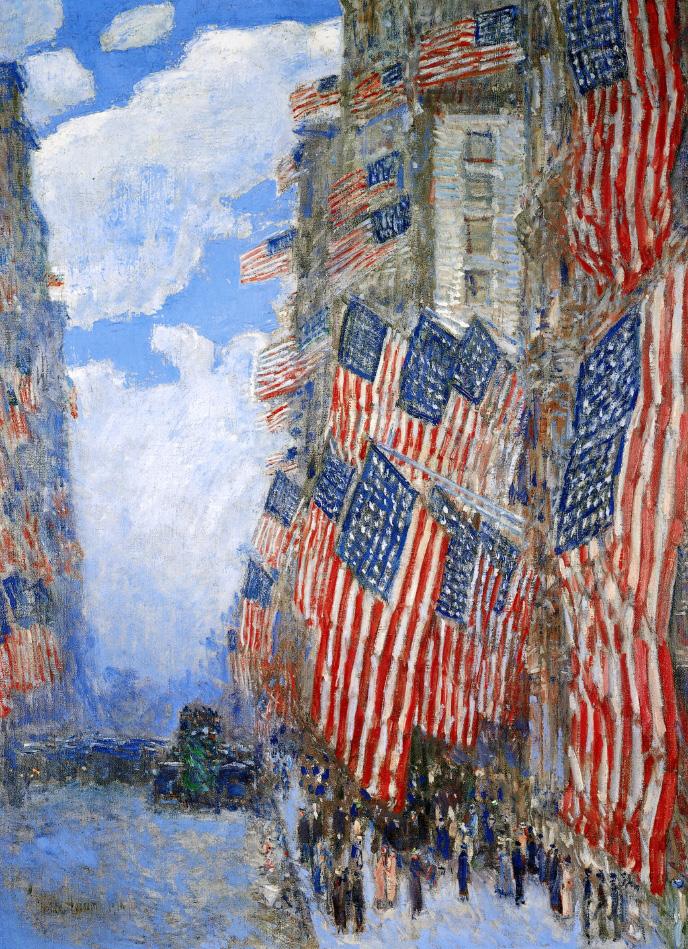
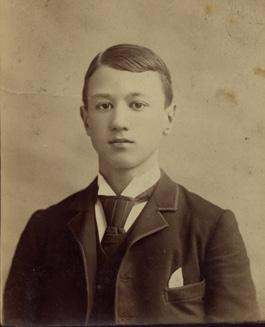
this page, from top: Charles Ives, ca. 1889 | The Fourth of July, 1916, oil painting by Childe Hassam (1859–1935). New York Historical Society | opposite page: Jan Bach, ca. 1980
JAN BACH
Born December 11, 1937; Forrest, Illinois
Died October 20, 2020; Dekalb, Illinois
Laudes COMPOSED
The answer to the inevitable question is no, Jan Bach was not a direct descendant of that immense eponymous clan of musicians who streamed through eighteenth-century Germany and into the music history textbooks, though he was one of this country’s most distinguished and frequently performed composers. Jan Bach was born in Forrest, Illinois, on December 11, 1937, and received his professional training at the University of Illinois in Urbana-Champaign, where he earned his doctor of musical arts degree in 1971. Bach taught at the University of Tampa from 1965 until 1966, and from 1966 until 2002 served on the theory and composition faculty of Northern Illinois University in DeKalb. His creative catalog encompasses a wide range of traditional genres, including orchestral works, opera, piano pieces, concert band scores, songs, choral compositions, and much chamber music. His many honors included the Koussevitzky Award at Tanglewood, first prize at the First International Brass Congress in Montreux, a grant from the National Endowment for the Arts, and six
nominations for the Pulitzer Prize in Music.
Jan Bach on Laudes
Laudes (loud-ays), as its name implies, is a twentieth-century tribute to the great brass tower music of the Italian Renaissance. Its title has different associations. Laudes (lawds) was the sunrise service of the Roman Catholic Church. Laude (loud-eh) were Italian hymns of praise and devotion that flourished from the thirteenth through the nineteenth centuries. And the title is also a musical pun: somewhere in each movement is a loud “concert A”—the orchestra’s traditional pre-performance tuning note. The work was written in late 1971 at the request of the Chicago Brass Quintet, which premiered the piece at Chicago’s Museum of Contemporary Art on January 21, 1972.
Laudes is in four contrasting movements. Reveille moves from dark to bright colors, alternating sections of relative inactivity with sections of extreme brilliance and energy. Its title was chosen, after the fact, because of the music’s suggestion of a sunrise. Scherzo is in three-part form, its quick outer sections consisting principally of a single melodic line produced by
COMMENTS
rapid entrances and exits of the five instruments playing their open tones (without valves) con sordino (i.e., with mutes), the middle section consisting of chromatic scale segments in both principal and supporting material. Cantilena gives each instrument an opportunity to dominate one of solo sections that alternate with weightier passages for the entire ensemble, each section cadencing in the same way.
HANS ZIMMER
Volta, a lewd dance (the couples actually embraced!) of Provençal origin, is a quick movement of violent dynamic and textural contrasts. After an exhausted breakdown of the instrumental forces near the end of the movement, the suite concludes with a coda based on a slow section of the first movement, from which emerges a gradually rising and quickening line that brings the work to a brilliant close.
Born September 12, 1957; Frankfurt, Germany
Suite from Interstellar (Arranged by Wanying Lin and David Griffin)
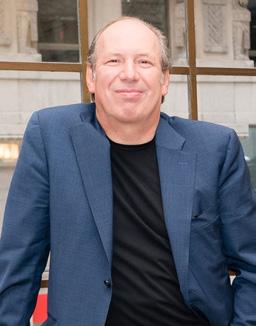
COMPOSED 2014
Hans Zimmer is among cinema’s most highly honored and prolific composers, with credits for some 150 feature films that have earned him twelve Academy Award nominations and two Oscars (The Lion King, Dune), fifteen Golden Globe nominations and three wins (The Lion King, Dune, Gladiator), five Grammy awards, seven Emmy nominations, a Tony nomination (The Lion King), and fifty-eight additional awards from a wide range of critics, media, and film industry associations. Zimmer’s additional screen credits include Thelma and Louise, Backdraft, Toys, A League of Their Own,
The Rock, Broken Arrow, The Preacher’s Wife, Driving Miss Daisy, The Prince of Egypt, The Thin Red Line, Dunkirk, Interstellar, Inception, Rain Man, The Dark Knight, No Time to Die, and F1. He has been honored with stars on both the Hollywood Walk of Fame and the Boulevard der Stars in Berlin, and in 2003 he received the prestigious Henry Mancini Award for Lifetime Achievement from ASCAP (American Society of Composers, Authors, and Publishers).
Interstellar is director Christopher Nolan’s 2014 epic science fiction film set in a dystopian future in which a dust-bowl Earth is suffering from severe blight and famine that threaten humanity’s continued existence. The film was internationally successful, receiving five Oscar nominations, including
Best Score, and winning Best Visual Effects. For all of its visual wizardry and time-warping, folded-space assumptions, Interstellar is a strongly emotional film.
Zimmer extracted three sequences from his score as the Suite from Interstellar for orchestra and organ; Chinese-German organ virtuoso Wanying Lin assisted with the part for organ, and CSO hornist David Griffin arranged the work for brass quintet.
Universal Music Publishing Group, Zimmer’s publisher, provided the following information:
Hans Zimmer’s Interstellar soundtrack is a deeply atmospheric and emotional score that perfectly complements the film’s exploration of time, space, and human connection. Zimmer employs a distinctive combination of traditional orchestration and the unique sound of the organ, creating a soundscape that feels grand and intimate, cosmic and personal.
In the suite’s first movement, No Time for Caution, Zimmer builds immense tension through a repetitive organ motif and pulsating background, with the intensity steadily rising as the music
swells. The piece is characterized by a driving rhythm, complex layering of orchestration, and dramatic crescendos, creating a heart-pounding sense of urgency and stakes as it mirrors the film’s critical docking scene.
Cornfield Chase is lighter and more nostalgic, with a simple yet poignant melody with a delicate accompaniment. This music evokes a sense of longing and innocence, capturing the emotional connection of Cooper to his family and the simpler life he will leave behind. The music gradually builds in scale, suggesting both the beauty and the vastness of the unknown, always rooted in human emotion.
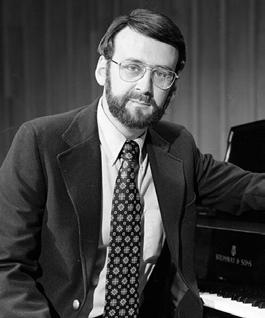
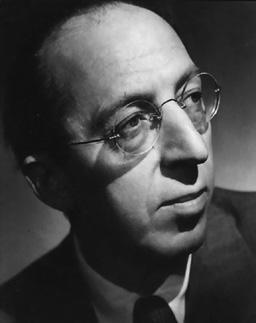
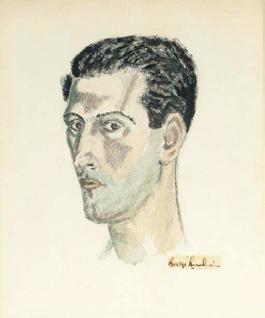
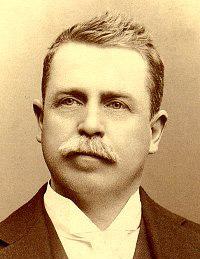
Stay features Zimmer’s signature minimalist approach, where repeating motifs slowly evolve to build emotional depth. The use of the organ, layered with a soft backdrop, creates a haunting, melancholy atmosphere that mirrors the pain of separation and the passage of time. The swelling intensity reflects the heartache of Cooper’s message to his daughter, culminating in a powerful, tear-inducing crescendo that encapsulates the emotional core of the film. opposite page: Hans Zimmer | next spread: Aaron Copland, photo ca. 1940s | George Gershwin, self-portrait, charcoal and watercolor on paper, 1930s | Samuel Augustus Ward
AARON COPLAND
Born November 14, 1900; Brooklyn, New York
Died December 2, 1990; North Tarrytown (now Sleepy Hollow), New York
Simple Gifts from Appalachian Spring (Arranged by Egil Smedvig)
COMPOSED 1943–44
In 1942 dancer and choreographer Martha Graham commissioned a new ballet from Aaron Copland set to a scenario titled Appalachian Spring, based on her memories of her grandmother’s farm in Pennsylvania at the turn of the twentieth century. Edwin Denby’s description of the ballet’s action from his review of the New York premiere in May 1945 was reprinted in the published score: [The ballet concerns] a pioneer celebration in spring around a newly
GEORGE GERSHWIN
built farmhouse in the Pennsylvania hills in the early part of the nineteenth century. The bride-to-be and the young farmer-husband enact the joyful and apprehensive emotions that their new domestic partnership invites. An older neighbor now and then shows the rough, hard-earned confidence that comes from experience. A revivalist and his followers remind the new householders of the strange and terrible aspects of human fate. At the end, the couple is left quiet and strong in their new house.
Copland incorporated into the score the Shaker hymn “Simple Gifts,” written in 1848 by Joseph Brackett, Jr.
Born September 26, 1898; Brooklyn, New York
Died July 11, 1937; Hollywood, California
Suite from Porgy and Bess (Arranged by Jack Gale)
COMPOSED 1935
Gershwin’s music drama about the disabled Porgy and his determined love
for Bess, set in the 1930s in Catfish Row, an African American tenement in Charleston, South Carolina, is among the most popular and widely performed of all American operas. “This, Gershwin’s last serious work,” wrote David Ewen, “possesses that richness,
vitality, and variety of melody, that vigor of rhythm, that spontaneity and freshness we associate with Gershwin’s best music. Of all Gershwin’s serious works, it is the only one to reveal compassion, humanity, and a profound dramatic instinct.” Besides its musical significance, Porgy and Bess also occupies an important place in the social evolution of our land—its premieres in Charleston, where the story is set, and Washington (D.C.) were desegregated on the stage
SAMUEL AUGUSTUS WARD
and in the audience for the first time in the histories of those cities. Gershwin, who spent an entire summer in a Black community near Charleston collecting material and ideas for his work, would have been proud to know that Porgy and Bess was the cause for such a significant step in our national life. This arrangement of selections from Porgy and Bess, by New York trombonist and arranger Jack Gale, includes many of the most beloved numbers from the show.
Born December 28, 1848; Newark, New Jersey
Died September 28, 1903; Newark, New Jersey
America the Beautiful (Arranged by Patrick Godon)
Katharine Lee Bates, a professor of English at Wellesley College and prolific author of poems, books on travel, translations, and literary criticism, was inspired to write the words for “America the Beautiful” by a transcontinental train trip in 1893 from Massachusetts to Colorado.
Inspired by the magnificent vista spread out before her and the 2,000-mile journey across the country’s hills, cities, and plains, she composed a poem originally called “Pike’s Peak,” whose title she changed to “America” for its publication on July 4, 1895, in the Boston magazine The Congregationalist.
Thomas Bailey Aldrich, a leader of Boston’s cultural life as editor of the influential Atlantic Monthly, encouraged her to have music composed for the poem. Silas Gamaliel Pratt, an internationally trained Boston composer with ambitions to write operas and symphonies, but best known for his piano salon pieces, was the first to set it to music, and several dozen other melodies were composed or matched to the verses soon thereafter. Though several of those settings reached publication, including the one by Pratt in 1895, the melody permanently associated with it is from a hymn titled “Materna” (Mother) written by Samuel Augustus Ward, organist and music director at Grace Episcopal Church in Newark, New Jersey.
COMMENTS
It is uncertain how Ward’s “Materna” became associated with Bates’s poem. Ward’s original hymn was published in Boston in 1894 in The Church Hymnal edited by Charles Hutchins, but its use with the poem seems to have begun around 1904, when Silas Pratt’s 1895 publication was reissued with a revision of the poem by Bates that sharpened its imagery and made it more amenable to vocal setting. The Bates–Ward song gained wide usage during the following years and was published in 1910 with the title “America the Beautiful.” The anthem reached its definitive form in 1913, when it was published, with a further-revised text, in the Boston Evening Transcript and then widely
PROFILES
Esteban Batallán Trumpet
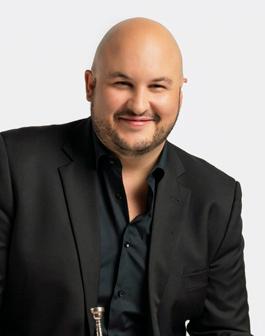
Esteban Batallán was appointed principal trumpet of the Chicago Symphony Orchestra in 2019 by Riccardo Muti. He was previously the principal trumpet of the Hong Kong Philharmonic during the 2018–19 season and the Granada City Orchestra from 2002 to 2018. He also served as guest principal trumpet with the Orchestra del Teatro alla Scala and the Filarmonica della Scala in 2015 and 2018.
disseminated in the anthology Hymns for Schools and Colleges published by Ginn and Co. of Boston.
The musicality, uplifting words, and enduring popularity of “America the Beautiful” made it a leading candidate for the country’s official national anthem, but in 1931 President Herbert Hoover signed the act bestowing that distinction on “The Star-Spangled Banner,” Francis Scott Keyes’s bellicose text set to a difficult-to-sing old English song titled “To Anacreon in Heaven.”
Richard E. Rodda, a former faculty member at Case Western Reserve University and the Cleveland Institute of Music, provides program notes for many American orchestras, concert series, and festivals.
Batallán has played with distinguished orchestras around the world, including the Royal Concertgebouw Orchestra, English Chamber Orchestra, Royal Philharmonic Orchestra, and Symphony Orchestra of India, among others. He has worked under esteemed conductors such as Jaap van Zweden, Zubin Mehta, Bernard Haitink, Herbert Blomstedt, Yannick Nézet-Séguin, Vladimir Ashkenazy, Riccardo Chailly, and Neeme Järvi.
Batallán has appeared as soloist with the CSO, Ensemble Orchestral de Paris, Hong Kong Philharmonic Orchestra, and Granada City Orchestra, among others, performing a large variety of
PHOTO BY TODD ROSENBERG
works, including his own compositions and concertos written for him.
In 2021 he premiered a piece dedicated to him, composed by his dear friend and renowned trumpet player, Arturo Sandoval, titled Mr. Batallán.
Batallán is the winner of several prestigious competitions, including the Jeunesses Musicales of Spain Competition, Yamaha Xeno National Competition, Jeunesses Musicales of Europe Competition, and the Yamaha International Competition. He was a prizewinner at the 2006 Maurice André International Trumpet Competition.
A native of the town of Barro in Galicia, Spain, Esteban Batallán began his musical studies at age seven at the school of music in his hometown. He continued his training at the Pontevedra Music Conservatory and the Vigo Music Conservatory. In 1999 he entered the School of Musical Studies of Galicia, and in 2000, he was selected to be a member of the National Youth Orchestra of Spain.
Batallán served as a coach with the Youth Academy of the Granada City Orchestra for sixteen years. He was a member of the trumpet faculty of the Chicago College of Performing Arts at Roosevelt University from 2020 to 2022. Currently, Batallán is a member of the trumpet faculty at DePaul University, a coach of the Civic Orchestra of Chicago, and a member of the Chicago Symphony Brass Quintet.
John Hagstrom Trumpet
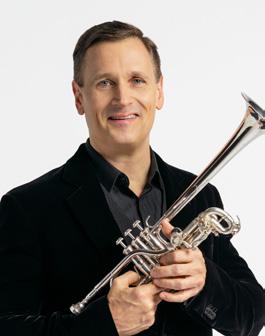
John Hagstrom joined the Chicago Symphony Orchestra’s trumpet section as fourth trumpet in 1996. A year later, he won the Orchestra’s second trumpet position, carrying on the tradition of brass section teamwork for which the CSO is famous. Previously, he was principal trumpet of the Wichita Symphony Orchestra in Kansas and served as assistant professor of trumpet at Wichita State University.
Hagstrom is the host of Intermission at the CSO, a podcast produced by the CSOA showcasing the voices of numerous CSO musicians through individual features or within topical episodes that discuss the dedication of the CSO to its mission and listeners. Originally conceived as a way for CSO supporters and students to stay connected to the Orchestra during the COVID-19 pandemic, the podcast features selected moments of many of the CSO’s recordings.
Hagstrom is passionate in his support of music education, and in 2006, he helped initiate Dream Out Loud, a music-education advocacy partnership between the Chicago Symphony Orchestra Association and the Yamaha Corporation of America. Through that initiative, he developed a variety of resources for elementary through high school students, their teachers, and parents, designed to support students’
PHOTO BY TODD ROSENBERG
music education and provide encouragement through times of challenge.
A native Chicagoan, Hagstrom grew up listening to the CSO. He studied at the Eastman School of Music and, for six years, was a member of “The President’s Own” United States Marine Band in Washington (D.C.), where he spent three of those years as principal trumpet.
David Griffin Horn
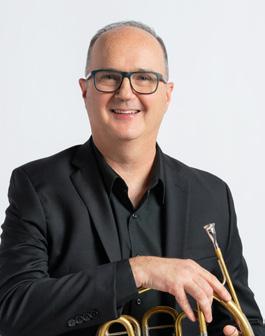
David Griffin is the fourth horn of the Chicago Symphony Orchestra. Upon graduating from Northwestern University in 1987, Griffin began his career with the Rochester Philharmonic and later held positions in the orchestras of Montreal and Houston before joining the Chicago Symphony in 1995. Griffin has served as guest principal horn of the Los Angeles Philharmonic, Saint Louis Symphony, Saint Paul Chamber Orchestra, and Shanghai Radio Orchestra. In September 2017, Griffin traveled to Japan for a solo tour, performing recitals in Tokyo, Nagasaki, and Osaka.
With the wind quintet Prairie Winds, he has performed in more than twenty-five states and has released two CDs. With the CSO Brass Quintet, Griffin has toured Japan, China, Taiwan, and Mexico. In June 2012 Griffin soloed with the National Orchestra of Brazil.
He debuted as a soloist with the CSO in Schumann’s Konzertstück at the Ravinia Festival in 2010. He has released the solo album For You, featuring the world-premiere recording of the Sonata for Horn by Bruce Broughton.
Griffin is a faculty member at Roosevelt University and previously taught at McGill University and Northwestern University. He has given master classes at the Colburn School in Los Angeles and the San Francisco Conservatory. Summer festival engagements have included Sun Valley, Grand Teton, Tanglewood, Manchester (VT), and Madeline Island. Griffin has also been a featured artist and clinician at the annual symposium of the International Horn Society.
Michael Mulcahy Trombone
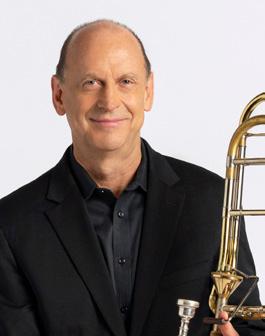
Chicago Symphony Orchestra trombonist Michael Mulcahy appears worldwide as a soloist, conductor, and teacher. He was appointed to the CSO by Sir Georg Solti in 1989 and previously was principal trombonist of the Tasmanian and Melbourne symphony orchestras and solo trombonist of the Cologne Radio Symphony Orchestra.
He made his solo debut with the Orchestra under Daniel Barenboim in 2000 and subsequently performed as soloist under Pierre Boulez in music by Elliott Carter. In October 2016 Mulcahy
gave the world premiere of Carl Vine’s Five Hallucinations for Trombone and Orchestra, a joint commission of the CSO and the Sydney Symphony Orchestra. In February 2018 he gave the world premiere of Jennifer Higdon’s Low Brass Concerto, a CSO commission that the Orchestra subsequently took on its East Coast tour.
Mulcahy is the winner of several international competitions, including the Australian Broadcasting Corporation Instrumental Competition, ARD International Music Competition in Munich, Viotti International Competition in Italy, and the International Instrumental Competition in the former East German city of Markneukirchen.
He has been principal trombonist of Chicago’s Music of the Baroque and of the Grand Teton Music Festival since 1992. Mulcahy was a founding member of the National Brass Ensemble in 2014. He serves as director of the CSO Brass, conducts annually for the Grand Teton Musical Festival, and makes guest appearances with the Sydney Symphony, Tasmanian Symphony, New World Symphony, and the Royal Danish Orchestra. He has also served as music director for the National Music Camp in Australia.
Born in Sydney, Australia, Michael Mulcahy began studying trombone with his father, Jack Mulcahy, and completed his studies with Baden McCarron of the Sydney Symphony and with Geoffrey Bailey at the State Conservatorium of New South Wales. He became a senior lecturer at the Canberra School of Music
at the Australian National University in 1987. Currently, Mulcahy leads the trombone studio at Northwestern University’s Bienen School of Music and is a visiting artist at the Australian National Academy of Music.
Gene Pokorny Tuba
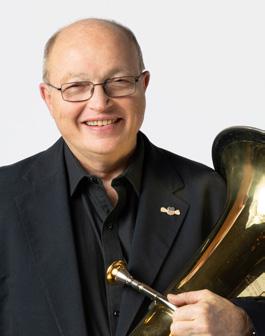
Gene Pokorny has been principal tuba of the Chicago Symphony Orchestra since 1989. He also held principal tuba positions in the Israel Philharmonic Orchestra, Utah Symphony, St. Louis Symphony Orchestra, and Los Angeles Philharmonic. While in Los Angeles, he played on the soundtracks to Jurassic Park, The Fugitive, and other motion pictures.
Pokorny grew up in Downey, California, about a mile from where the Apollo command modules were built that first took humans to the moon. He studied tuba in the Los Angeles area with Jeffrey Reynolds, Larry Johansen, Tommy Johnson, and Roger Bobo.
When Gene Pokorny isn’t counting rests in the back row of Orchestra Hall, he can be found teaching at music festivals and performing solo recitals worldwide. He has recorded several solo and educational discs and assisted Rolling Stones trombonist Michael Davis in recording several educational workbook CDs. He received an Outstanding Alumnus Award from the
PHOTO BY TODD ROSENBERG
University of Southern California and an honorary doctorate from the University of Redlands. He currently lectures and teaches at Roosevelt University, Northwestern University, and the Pokorny Low Brass Seminar.
A member of the Union Pacific (Railroad) Historical Society and the Union Pacific Steam Club, Gene Pokorny spends time as a “foamer,” watching and chasing trains. He is a fan (actually a “victim of circumstances”) of the Three Stooges and was an avid devotee of his good friend David “Red” Lehr, the greatest Dixieland sousaphonist in the known universe. He finds guidance in the overview of life through Stephen Covey’s Seven Habits of Highly Effective People, passion in the music of composers Gerald Finzi and Giacomo Puccini, humility in Carl Sagan’s threeand-a-half-minute video Pale Blue Dot, inspiration in listening to his fabulous colleagues onstage, and perspective in all things through the basset hounds with whom he lives. They are always appreciative of a hug.
Patrick Godon Organ
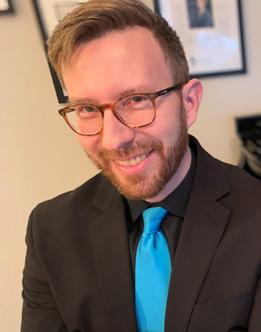
Patrick Godon made his debut as soloist with the Chicago Symphony Orchestra in May 2007. Since 2016 he has performed with the CSO on piano, celesta, organ, and synthesizer.
He made his CSO debut as second keyboardist at the Ravinia Festival in 2003, and in 2015, he began performing regularly as the Orchestra’s organist.
Godon also performs as orchestral keyboardist with the Delaware, Milwaukee, and Peoria symphony orchestras.
In July 2011 Godon became the music director of the Tower Chorale, based in Western Springs. A ninety-voice choir, the Tower Chorale has been in existence since 1986. The ensemble performs three concerts throughout the year: Christmas, masterworks, and pops.
Godon is the artistic director and pianist for the International Chamber Artists (ICA), a chamber music ensemble that he founded in 2006. Showcasing a diverse group of professional musicians, ICA performs a variety of repertoire and seeks to sustain the future of classical-music audiences through educational components during performances. The choir performs a series of five concerts at the Church of the Holy Spirit in Lake Forest.
In August 2018 Godon was named the organist and choirmaster at the Church of the Holy Spirit in Lake Forest. He oversees the music program and leads the St. Gregory’s Youth Choir, Holy Spirit Choir, and Evensong Choir.
A native of Fargo, North Dakota, Godon began his studies with Mary Sauer, then CSO principal piano, in 1997. He holds bachelor of music and master of music degrees in piano performance from DePaul University.