NINETY-FIFTH SEASON
Sunday, June 7, 2026, at 3:00
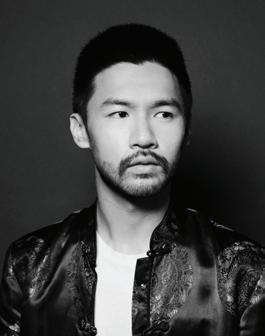
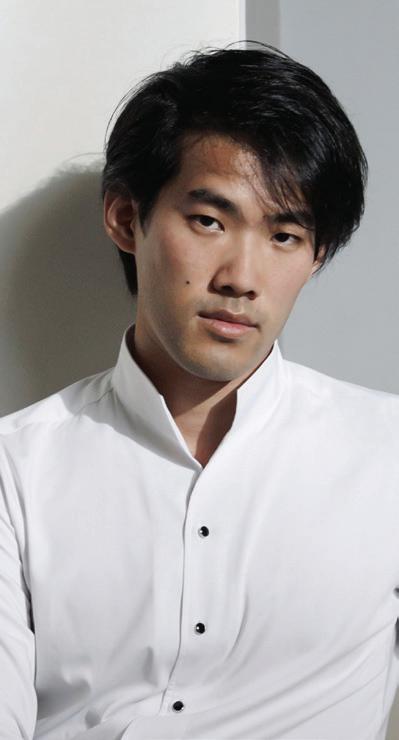
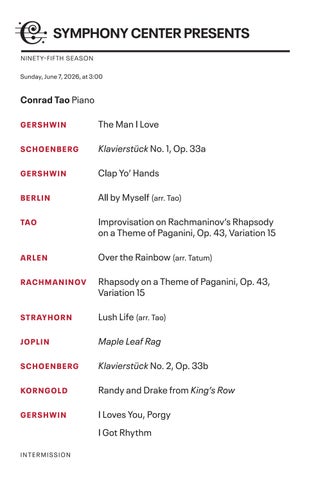
Conrad Tao Piano
GERSHWIN The Man I Love
SCHOENBERG Klavierstück No. 1, Op. 33a
GERSHWIN Clap Yo’ Hands
BERLIN All by Myself (arr. Tao)
TAO
Improvisation on Rachmaninov’s Rhapsody on a Theme of Paganini, Op. 43, Variation 15
ARLEN Over the Rainbow (arr. Tatum)
RACHMANINOV
Rhapsody on a Theme of Paganini, Op. 43, Variation 15
STRAYHORN Lush Life (arr. Tao)
JOPLIN Maple Leaf Rag
SCHOENBERG Klavierstück No. 2, Op. 33b
KORNGOLD Randy and Drake from King’s Row
GERSHWIN I Loves You, Porgy
I Got Rhythm
INTERMISSION
DEBUSSY Pour les arpèges composés from Etudes for Piano, Book 2
RAVEL
Sonatine: Modéré
STRAYHORN Chelsea Bridge (arr. Tao)
RAVEL
RAVEL
GERSHWIN
Sonatine: Mouvement de menuet
Sonatine: Animé
Rhapsody in Blue (arr. Tao)
This performance is generously sponsored by Martha C. Nussbaum and Gerd Wichert. The Chicago Symphony Orchestra Association acknowledges support from the Illinois Arts Council.
The Chicago Symphony Orchestra Association thanks Martha C. Nussbaum and Gerd Wichert for generously sponsoring this performance.
COMMENTS by
Richard E. Rodda
GEORGE GERSHWIN (1898–1937)
once singled out “The Man I Love” as his personal favorite among his songs, but he could never figure out what to do with it. The song was originally written for the 1924 Lady, Be Good! starring Fred and Adele Astaire, the Gershwin brothers’ first Broadway musical, but it was cut during the Philadelphia tryout before the show opened in New York for a run of 330 performances; in 1926 the Astaires took Lady, Be Good! to London, where they rang up the curtain 326 more times. The Gershwins were unable to work “The Man I Love” into either Strike Up the Band in 1927 or Rosalie the following year, and they finally settled for publishing it separately. It was first taken up by jazz orchestras in London and Paris, and only became a hit in America in the mid-1930s, with recordings by the torch singer Helen Morgan (originator of the role of Julie in Kern and Hammerstein’s Showboat of 1927) and the Benny Goodman Quartet.
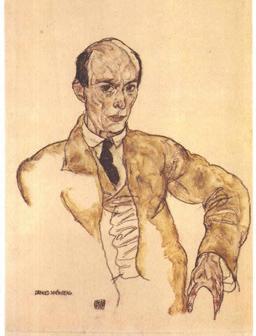
The most tangible recognition of the increasing prominence of ARNOLD SCHOENBERG (1874–1951) in the musical milieu of the 1920s was his appointment to the faculty of the Prussian Academy of Fine Arts in 1925 to take over the composition classes of the respected Ferruccio Busoni, who had died the year before. He remained in his position at the academy until the escalating Nazi menace forced him to resign in March 1933 and flee the country, stopping for a few months in France (where he reembraced his paternal Jewish faith, which he had abandoned for Catholicism in 1898) before settling
permanently in California by the end of the year. During his time in Berlin, Schoenberg developed his theory of “composing with twelve tones,” and demonstrated it in several pieces, including the Two Piano Pieces, op. 33 (December 1928 and October 1931).
The apparent fluency of thought of the op. 33 pieces led Malcolm MacDonald to call them “the subtlest and most relaxed of Schoenberg’s piano pieces.” Opus 33a balances quiet passages of luminous dissonance with agitated, tightly contrapuntal episodes. Opus 33b is nervously rhythmic, sharing some of the jazz inflections that Schoenberg incorporated into Von Heute auf Morgen (From one day to the next), his contemporaneous comic opera about a bickering, modern-day husband and wife.
The first song by GEORGE GERSHWIN heard on Broadway was “The Real American Folk Song Is a Rag,” a number inserted into Nora Bayes’s vaudeville revue Ladies First in 1918. Following the success of Lady, Be Good! in 1924, George’s first complete musical with his brother, lyricist Ira, they produced Tip-Toes the next year and Oh, Kay! in 1926, the story (book by Guy Bolton and P.G. Wodehouse) of an English duke and his sister, Kay (named for composer Kay Swift, Gershwin’s paramour for the last ten years of his life) who were bootleggers in America during Prohibition. Gertrude Lawrence starred as Kay and introduced the show’s hit number, “Someone to Watch Over Me”; she was the first British performer to headline an American musical on Broadway. In addition to that
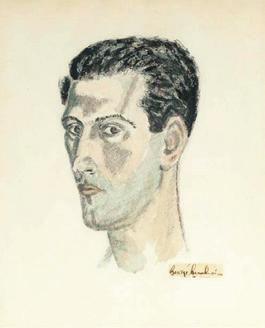
American Songbook standard, the score also featured “Fidgety Feet,” “Maybe,” “Do, Do, Do,” and “Clap Yo’ Hands.”
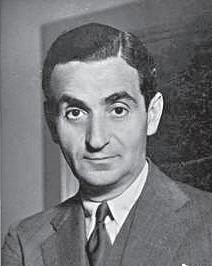
IRVING BERLIN (1888–1989), born in Russia but living in New York City since he was five, was called into military service in 1917 and stationed at Camp Upton, near Yaphank on Long Island. The camp’s commander assigned the new recruit (an already well-known songwriter) to put together a show for an all-soldier cast to raise money for a badly needed service center, and Sergeant Berlin not only wrote the songs, lyrics, and dialogue, but also worked out the dance routines and took a lead part. The revue, Yip, Yip, Yaphank, opened at New York’s Century Theatre on August 19, 1918, earned $83,000 during its four-week run, and made that much again during a tour to Boston, Philadelphia, and Washington (D.C.). Its hit tune, sung by the composer—“Oh, How I Hate to Get Up in the Morning”—sold over a million copies of sheet music. The show’s finale was originally to have been a new number titled “God Bless America,” but Berlin decided to cut it because, he said, “it was like gilding the lily . . . to have soldiers singing ‘God Bless America’ as they marched down the aisle of the theater, off to war.” (Kate Smith, one of America’s most popular entertainers,
introduced “God Bless America” on her weekly CBS radio program for Armistice Day, November 11, 1938, and the song—by a Russian Jewish immigrant without formal education or musical training, unable to speak a word of English when he was brought to this country, and a naturalized citizen for less than a year when he wrote it—became a virtual second national anthem.) Broadway producer Sam Harris saw an opportunity in the commercial success of Yip, Yip, Yaphank and, in 1920, formed a partnership with Berlin to build the Music Box Theatre on W. 45th street that would produce an annual revue, a lavish variety show with acts written around a common theme rather than the unified plot of a “book” musical. Both the new theater and Berlin’s Music Box Revue of 1921 won rave reviews and large audiences, and new editions of the revue were produced at the Music Box for the next three years. Among the hit songs in the 1921 revue was “All by Myself,” which was a bestseller in sheet music and several recordings, and promptly became another standard in the Great American Songbook.
The legend of Nicolò Paganini has haunted musicians for over two centuries. Gaunt, his emaciated figure cloaked in priestly black, Paganini performed feats of wizardry on the violin that were simply unimaginable until he burst upon the European concert scene in 1805. Not only were his virtuoso pyrotechnics unsurpassed, but
COMMENTS
his performance of simple melodies was of such purity and sweetness that it moved his audiences to tears. So far was he beyond the competition that he seemed almost, well, superhuman. Perhaps, the rumor spread, he had special powers, powers not of this earth. Perhaps, Faust-like, he had exchanged his soul for the mastery of his art. Like most virtuoso instrumentalists of the nineteenth century, Paganini composed much of his own music, notably the breathtaking Caprices for Unaccompanied Violin, works so difficult that even today they are accessible only to the most highly accomplished performers. The last of the caprices, no. 24 in A minor, served as the basis for compositions by Schumann, Liszt, and Brahms, and was also the inspiration for the Rhapsody on a Theme of Paganini by SERGEI RACHMANINOV (1873–1943).
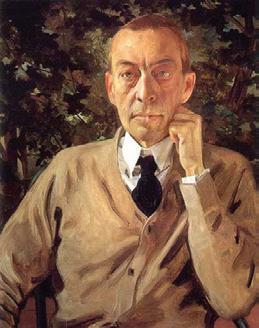
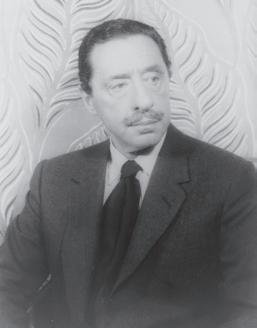
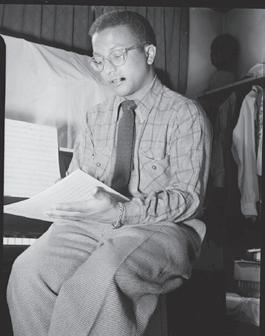
1925. The State Russian Museum | Harold Arlen, portrait by Carl Van Vechten (1880–1964). Library of Congress, Prints and Photographs Division | Billy Strayhorn, photo by William P. Gottlieb (1917–2006), ca. 1947. Library of Congress, Prints and Photographs Division
one of the most beloved of all screen classics, in no small part because of the superb musical score by composer HAROLD ARLEN (1905–1986) and lyricist E.Y. “Yip” Harburg. The movie was nominated for Best Picture, Arlen received an Academy Award for “Over the Rainbow,” and Judy Garland was presented with a special miniature Oscar “for her outstanding performance as a screen juvenile.”
Judy Garland was never supposed to sing “Over the Rainbow.” In 1938 when MGM acquired the rights to Frank L. Baum’s popular fantasy for children, The Wonderful Wizard of Oz (1900)—already treated in a 1903 Broadway musical and a silent movie in 1925—producer Mervyn LeRoy tried to borrow Shirley Temple from Fox for the part of Dorothy, but failed. He settled instead for sixteen-year-old Judy Garland, who had won notice in MGM’s Broadway Melody of 1938 for singing “You Made Me Love You” while writing a fan letter to Clark Gable. The Wizard of Oz, released in 1939, became
Edward Kennedy “Duke” Ellington (1899–1974), composer, bandleader, pianist, goodwill ambassador, and public personality, was one of the giants of American jazz and popular music. Throughout his long career, Ellington attracted some of the country’s finest Black musicians into his organization, none of whom was more talented than the brilliant BILLY STRAYHORN (1915–1967). Strayhorn was born in Dayton, Ohio, in 1915, studied music in Pittsburgh, and joined Ellington’s band in 1939 as composer, arranger, and pianist; he remained with Ellington until his death in New York in 1967. Strayhorn became so attuned to the style and spirit of Ellington’s music that his arrangements, compositions, and sometimes even his piano playing were often mistaken for those of his
boss. They collaborated on many pieces for the band, but among the numbers whose music and lyrics are acknowledged as Strayhorn’s alone is the morning-after-weary “Lush Life,” which he largely composed when he was a precocious eighteen-year-old and revised over the next five years. He performed it only privately for the next decade until vocalist Kay Davis formally premiered the song at Duke Ellington’s Carnegie Hall concert on November 13, 1948.
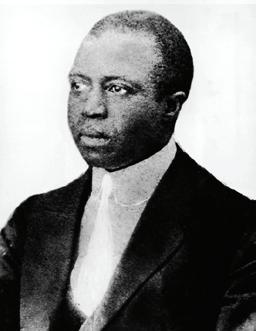
have come to represent an entire era in American musical and social history. Among the first piano rags Joplin issued was one named for the Maple Leaf Club in Sedalia, Missouri, where he was then working in 1899. “The Maple Leaf Rag,” he accurately predicted, “will make me the king of ragtime composers.”
SCOTT JOPLIN (1868–1917) played piano in honky-tonks as a teenager before settling in East St. Louis. He published his first piano rags in 1899, and the Maple Leaf Rag sold half a million copies within a decade. The success of the piece encouraged Joplin to get married, write further rags, and expand his artistic horizons to include ballet and opera. After several years of wandering in the Midwest, he moved to New York in 1907 and spent enormous effort composing and trying (in vain) to find a publisher for his opera, Treemonisha. His self-financed production of the opera in 1915 failed, and Joplin’s spirit was crushed. The following year, he was admitted to a mental institution in New York and died there on April 1, 1917, from the complications of syphilis. Today, so widespread and persistent is the popularity of Scott Joplin’s incomparable rags that they
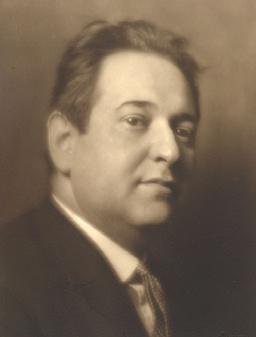
In 1934 Austrian director Max Reinhardt was conscripted by Warner Bros. Studios in Hollywood to film a version of A Midsummer Night’s Dream with Olivia de Havilland, Dick Powell, James Cagney, Joe E. Brown, and Mickey Rooney. He chose to use Mendelssohn’s incidental music as background, and took along ERICH WOLFGANG KORNGOLD (1897–1957), who had established a splendid reputation in Europe with his operas, ballets, and concert works, to arrange the score. Korngold, who, as a Jew, felt increasingly uneasy in Austria, accepted other offers in Hollywood and, when the Nazi Anschluss in 1938 prevented him from returning home, he settled permanently in California. For the next seven years, Korngold devoted his talents to creating a body of film music unsurpassed by that of any other composer in the genre, and he won Academy Awards for Anthony Adverse and The Adventures of Robin Hood. Henry Bellamann’s melodramatic novel King’s Row was a bestseller
COMMENTS
when it was published in 1940, but its web of controversial themes set in a small town at the turn of the twentieth century in America made it unlikely to be adapted into film in those days of the restrictive, meticulously enforced Hays Code. Screenwriter Casey Robinson convinced Warner Bros., however, that he could tame the story’s more troublesome elements and get it past the censors, so Director Sam Wood took on the project in 1941 and enlisted an illustrious cast for the film, including Ronald Reagan (in the role that he said “made me a star”), Robert Cummings, Anne Sheridan, Charles Coburn, and Claude Rains. Randy and Drake is the music associated with the unlikely love affair of a local tomboy (Sheridan) and the son of a rich family (Reagan).
GEORGE GERSHWIN’s music drama about the disabled Porgy and his determined love for Bess, set in the 1930s in Catfish Row, an African American tenement in Charleston, South Carolina, is among the most popular and widely performed of all American operas. Besides its musical significance, Porgy and Bess also occupies an important place in the social evolution of our land—its premieres in Charleston, where the story is set, and Washington (D.C.) were desegregated on the stage and in the audience for the first time in the histories of those cities. In “I Loves You, Porgy,” Bess sings of her temptation by Crown, her former lover and now a murderer on the run, before reassuring Porgy of her love for him.
GERSHWIN’s Girl Crazy is a legend among Broadway shows. It provided the first starring role for Ethel Merman, featured Ginger Rogers as the ingenue, and boasted a pit orchestra that included Red Nichols, Glenn Miller, Gene Krupa, Jack Teagarden, Benny Goodman, and Jimmy Dorsey. Though the plot was nothing more than a silly satire on a city slicker vacationing at a dude ranch in Arizona, the score by George and Ira Gershwin contained a treasury of their finest songs—“I Got Rhythm” (with which Ethel Merman belted her way to overnight stardom), “Embraceable You,” “But Not for Me,” “Bidin’ My Time,” “Sam and Delilah,” and “Treat Me Rough.”
The twelve etudes, the last works for piano by CLAUDE DEBUSSY (1862–1918), are divided into two books of six numbers each: the first set broaches traditional problems of technique; the second, matters of musical figurations. Though grown from the dusty but indispensable realm of piano pedagogy, these movements soar far beyond pieces merely for the practice of keyboard mechanics in their expressive and compositional content. Paul Jacobs, one of the finest exponents of Debussy’s piano music, called them the composer’s “most finished, perfect, and yet adventurous [piano] pieces.” The penultimate movement of the etudes is a sweet essay titled Pour les arpèges composés (For Composite Arpeggios).
The Sonatine (little sonata) of 1903–05 is among the most important evidences of the classicist sympathies of MAURICE RAVEL (1875–1937), a
tendency that led him to employ the traditional formal devices and crisp harmonic and melodic outlines that differentiate much of his music from Debussy’s deliberately misty ambiguity. Ravel played the piece at his United States concert debut, at the Gallo Theater in New York, on January 15, 1928. The opening movement follows the model of a compact sonata form. The first theme, initiated by the interval of a descending fourth, soon yields to a complementary subject of restricted range and smooth contour. The second movement is indebted to the quintessential dance form of late-eighteenth-century European musical fashion: the minuet. The finale is a rondo that alternates two thematic ideas: a bounding, hunting-horn theme and a lyrical phrase in uneven meters, derived from the falling-fourth motif of the first movement.
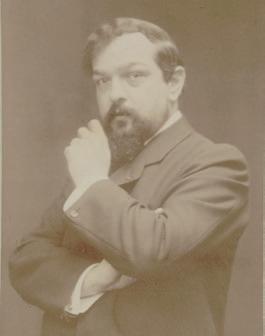
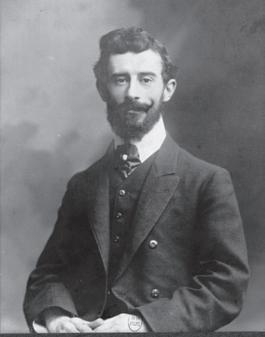
from left: Claude Debussy, ca. 1908, as photographed by Gaspard-Félix “Nadar” Tournachon (1820–1910).
Atelier Nadar, Paris, France. Gallica Digital Library, Bibliothèque nationale de France | Ravel, as photographed by Pierre Petit (1831–1909), 1907
For George White’s Scandals of 1922, the twenty-four-year-old GEORGE GERSHWIN provided something a little bit different—an opera, a brief, somber one-acter called Blue Monday (later retitled 135th Street), incorporating some jazz elements that White cut after only one performance on the grounds that it was too gloomy. Blue Monday, however, impressed the show’s conductor, Paul Whiteman, then gaining
a national reputation as the self-styled “King of Jazz” for his adventurous explorations of the new popular music styles with his Palais Royal Orchestra. A year later, Whiteman told Gershwin about his plans for a special program the following February in which he hoped to show some of the ways traditional concert music could be enriched by jazz. He convinced Gershwin to undertake a work for piano solo (to be played by the composer) and Whiteman’s twenty-two-piece orchestra, and then told him that it had to be finished in less than a month. The premiere of the Rhapsody in Blue—New York, Aeolian Hall, February 12, 1924—was one of the great nights in American music. Many of the era’s most illustrious musicians attended, critics from far and near assembled to pass judgment, and the glitterati of society and culture graced the event. Gershwin fought down his apprehension over his joint debuts as serious composer and concert pianist, and he and his Rhapsody in Blue had a brilliant success.
Richard E. Rodda, a former faculty member at Case Western Reserve University and the Cleveland Institute of Music, provides program notes for many American orchestras, concert series, and festivals.