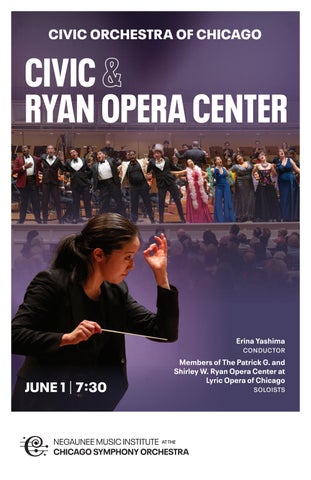
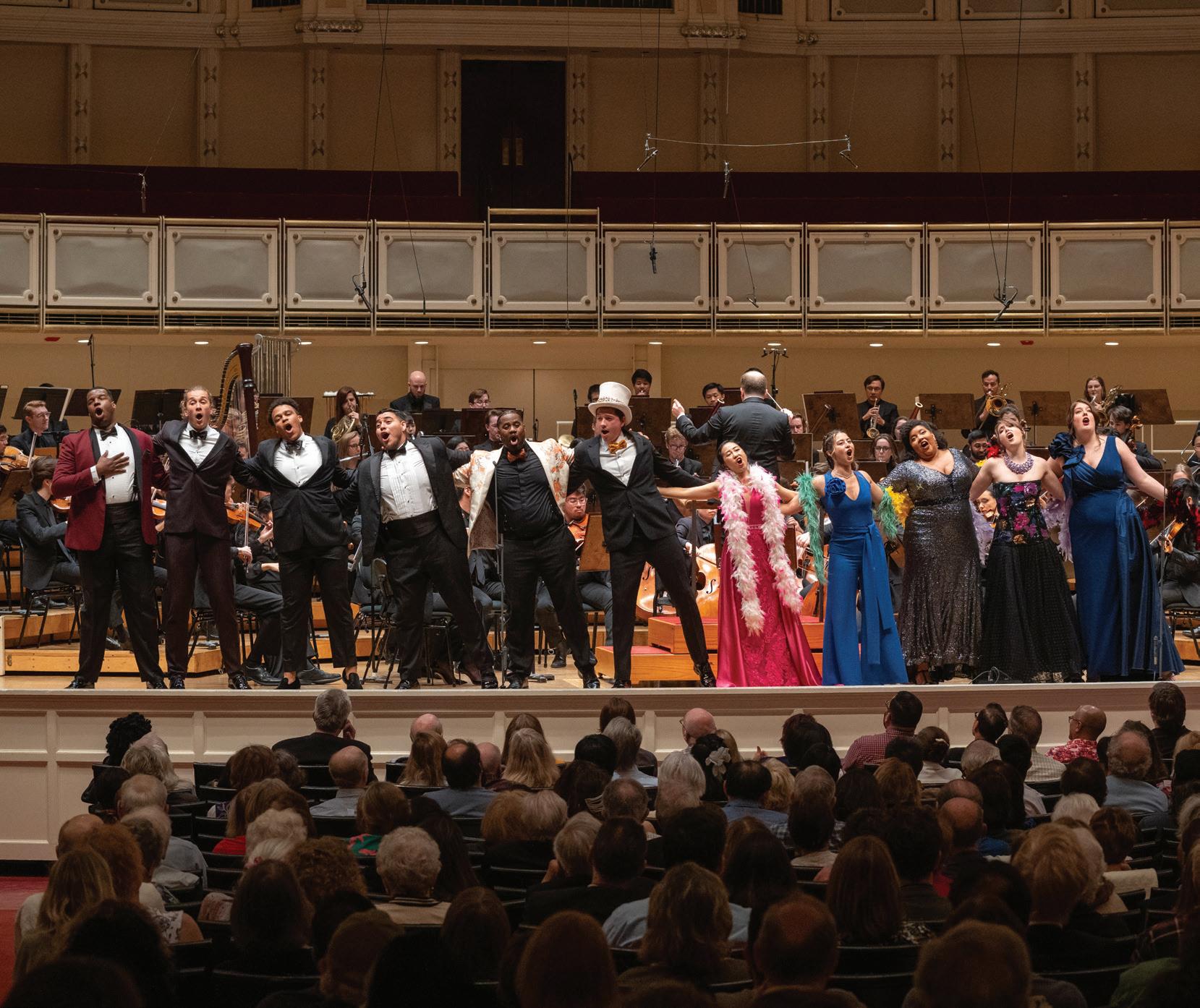
CIVIC & RYAN OPERA CENTER



JUNE 1 | 7:30
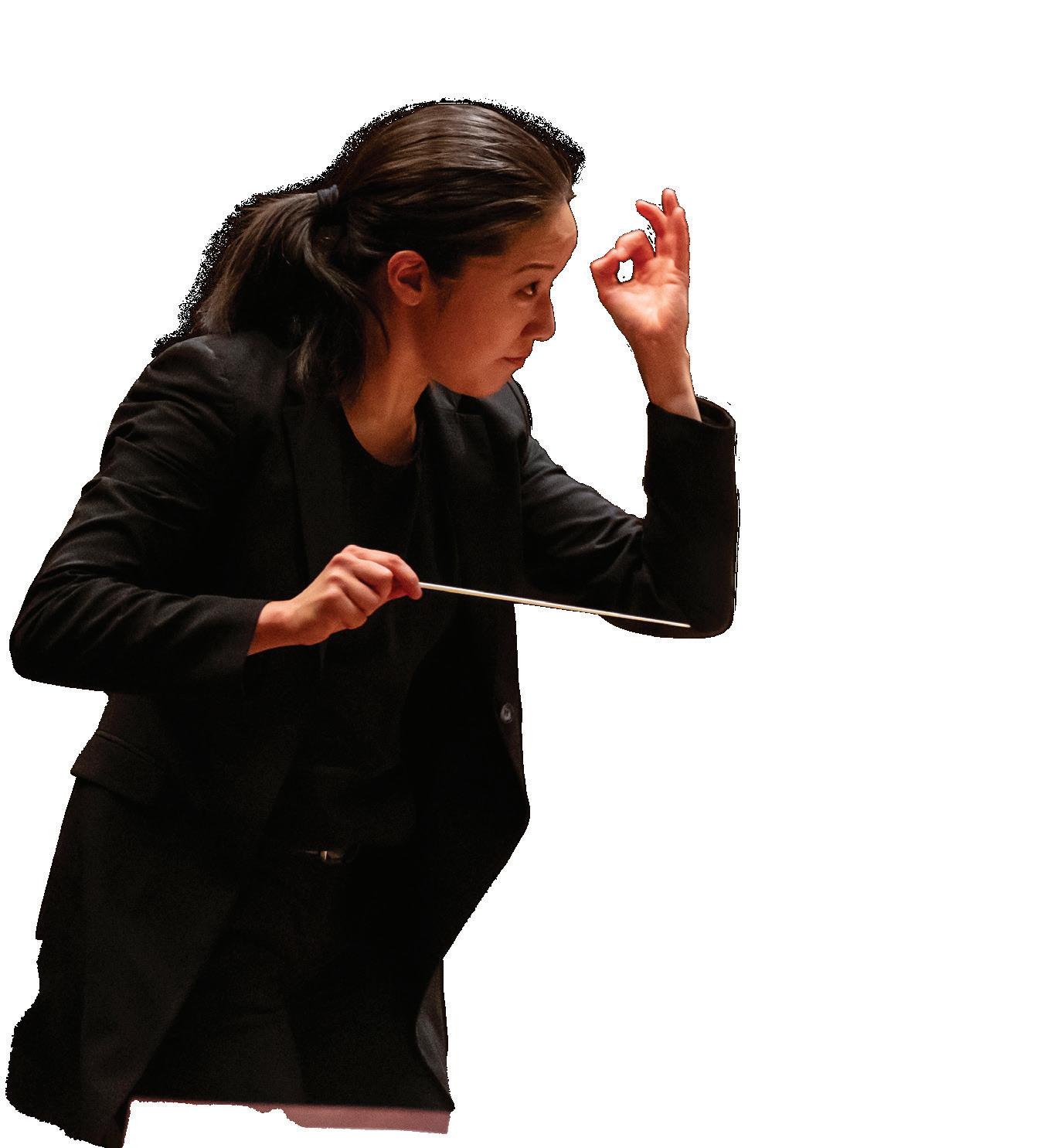
Erina Yashima conductor
Members of The Patrick G. and Shirley W. Ryan Opera Center at Lyric Opera of Chicago soloists
This concert is generously sponsored by Nancy Dehmlow and Lori Julian for the Julian Family Foundation.
The 2025–26 Civic Orchestra season is generously sponsored by Lori Julian for the Julian Family Foundation, which also provides major funding for the Civic Fellowship program.
ONE HUNDRED SEVENTH SEASON
CIVIC ORCHESTRA OF CHICAGO
KEN-DAVID MASUR Principal Conductor
The Robert Kohl and Clark Pellett Principal Conductor Chair
Monday, June 1, 2026, at 7:30
Erina Yashima Conductor
Members of The Patrick G. and Shirley W. Ryan Opera Center at Lyric Opera of Chicago
Kylie Kreucher Soprano
Josie Larsen Soprano
Alexis Peart Mezzo-Soprano
Camille Robles Mezzo-Soprano
Sid Chand Tenor
Daniel Luis Espinal Tenor
Sihao Hu Baritone
Adam Partridge Baritone
Lin Fan Bass-Baritone
Benjamin R. Sokol Bass-Baritone
MOZART Overture to Don Giovanni, K. 527
MOZART Selections from Don Giovanni, K. 527
Madamina, il catalogo è questo
Là ci darem la mano
Batti, batti, O bel Masetto
Ah, taci, ingiusto core Il mio tesoro intanto
In quali eccessi, O numi . . . Mi tradì quell’alma ingrata
Leporello ................................................................................................ Lin Fan
Don Giovanni........................................................................... Adam Partridge
Zerlina ............................................................................................
Josie Larsen
Donna Elvira ................................................................................... Alexis Peart
Don Ottavio .......................................................................................Sid Chand
INTERMISSION
TCHAIKOVSKY Polonaise from Eugene Onegin, Op. 24
TCHAIKOVSKY Onegin! Ya togda molozhe from Eugene Onegin, Op. 24
KYLIE KREUCHER SIHAO HU
TCHAIKOVSKY Waltz from Eugene Onegin, Op. 24
VERDI De’ miei bollenti spiriti . . . O mio rimorso from La traviata
DANIEL LUIS ESPINAL
SAINT-SAËNS J’ai gravi la montagne from Samson and Delilah, Op. 47
CAMILLE ROBLES
BENJAMIN R. SOKOL
SAINT-SAËNS Bacchanale from Samson and Delilah, Op. 47
COPLAND The Promise of Living from The Tender Land
Stage direction by Alexi Ortega Chavez, assisted by AJ Helms
The 2025–26 Civic Orchestra season is generously sponsored by Lori Julian for the Julian Family Foundation, which also provides major funding for the Civic Fellowship program.
This concert is generously sponsored by Nancy Dehmlow and Lori Julian for the Julian Family Foundation.
The Civic Orchestra of Chicago acknowledges support from the Illinois Arts Council.
COMMENTS by Nicky Swett
WOLFGANG MOZART
Born January 27, 1756; Salzburg, Austria
Died December 5, 1791; Vienna, Austria
Selections from Don Giovanni, K. 527
COMPOSED 1787
In early 1787, Mozart was in Prague, where the public was exhibiting extreme enthusiasm for his latest opera, The Marriage of Figaro. He wrote to his friend Gottfried von Jacquin about “all these people leaping about in sheer delight to the music of my Figaro; nothing is discussed but Figaro; nothing is played, blowed, sung, or whistled but Figaro; no opera is succeeding but Figaro.” A commission for a new opera shortly followed from the Prague-based impresario Pasquale Bondini. Mozart and his librettist Lorenzo Da Ponte determined that the new piece should be based on the legend of the lascivious, monstrous Don Juan. Da Ponte completed the libretto quickly, in part by parroting aspects of a recent opera on the same subject by Giovanni Bertati, and Mozart finished composing the music for Don Giovanni within the year, conducting its premiere at the National Theatre in Prague that October.
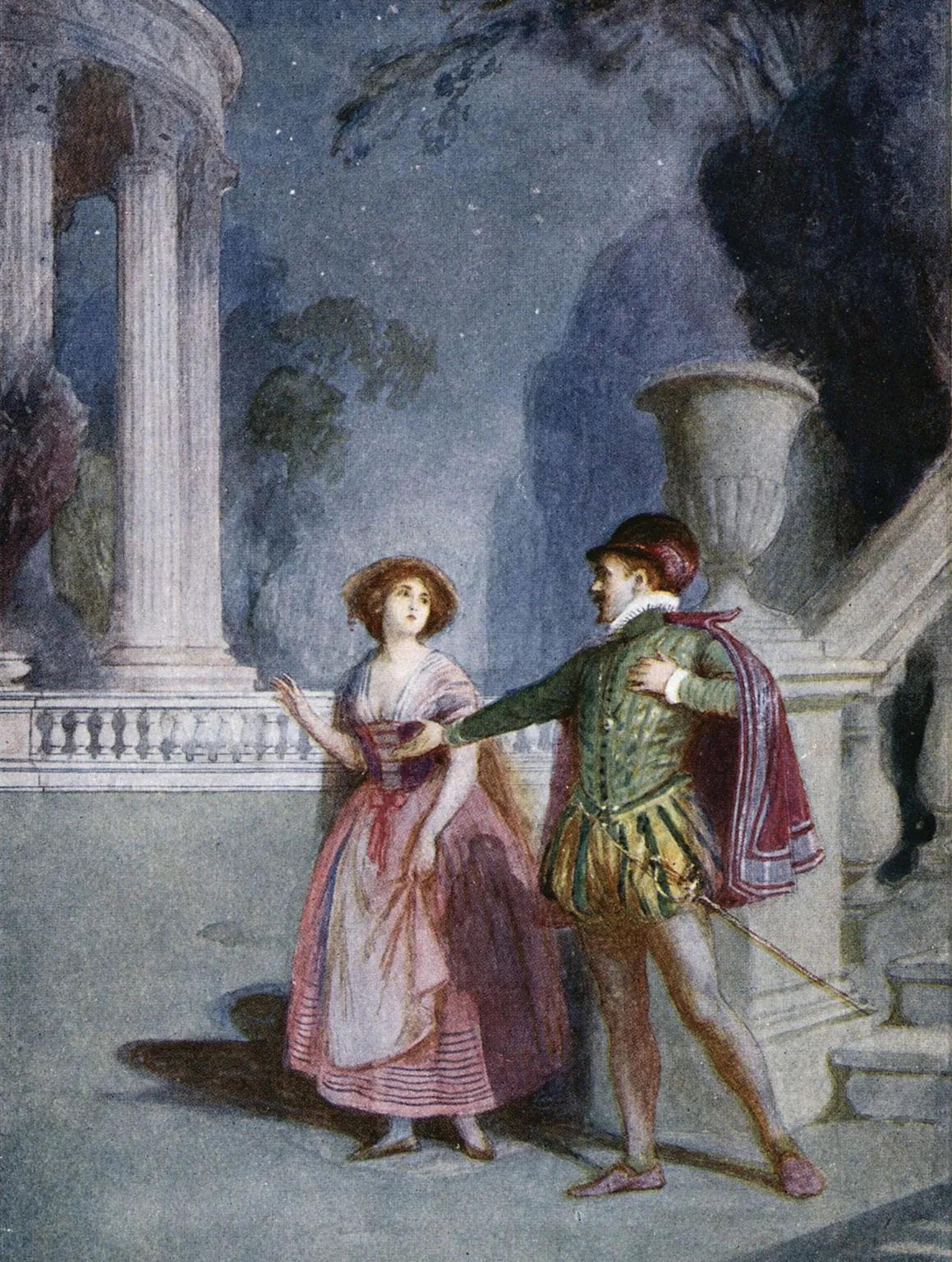
It was an oddly serious choice of topic for an opera that aimed to follow on the success of the frothy, comedic Marriage of Figaro. Indeed, Don Giovanni is one of Mozart’s most tonally bizarre works. It begins with an attempted murder, and close to the end, the villainous don is dragged down to hell to the sound of some of the most dramatic music the composer ever imagined. Much of the opera is devoted to the winking seductions and clownish machinations of Don Giovanni and his manservant Leporello, who, close to the start of the opera, indiscreetly lists out his master’s affairs in “Madamina, il catalogo è questo” (Pretty lady, here’s a list I would show you). Don Giovanni woos Zerlina, a soon-to-be-married young woman who seems at least a little bit flattered by the seduction, in the flirtatious duet “Là ci darem la mano” (There we will give each other our hands). After she is rescued from his advances, she returns to her fiancé Masetto, singing the cringe-inducing lines “Batti, batti, O bel Masetto” (Beat, beat, O handsome Masetto) in a disarmingly sublime aria that features a flexible, wandering solo cello line.
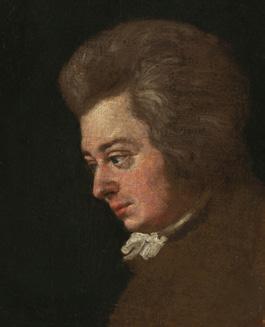
this page: Wolfgang Mozart, portrait by Joseph Lange (1751–1831), 1782, brother-in-law of the composer. Mozart Museum Salzburg | next page: Illustration of a scene from Mozart’s opera Don Giovanni, in which Don Giovanni attempts to seduce Zerlina, ca. 1914. © Photos.com/Jupiterimages
COMMENTS
Mozart had a profound gift for expressing the painful vulnerability of love and longing in his slightly sad major-key melodies. In the act 2 trio shared by the spurned Donna Elvira, Don Giovanni, and Leporello, “Ah, taci, ingiusto core” (Ah, be quiet, unfair heart), the music is tragically, poignantly hopeful, which makes the don’s further deceptions all the more cruel. To provide contrast to these moments of sincere sweetness, Mozart writes several indignant outbursts from the guests in Don Giovanni’s house. The noble Don Ottavio, whose fiancée Donna Anna is attacked by Don Giovanni at the start of act 1, sings “Il mio tesoro intanto” (My darling, in the meantime), carefully oscillating between tenderness and spurts of righteousness, and Donna Elvira violently explodes at her mistreatment in “Mi tradì quell’alma ingrata” (That ungrateful soul has betrayed me).
The whole spectacle begins with a contrast-filled overture that serves as a perfect microcosm for the jarring duality of the music and the narrative. It opens with two chords in D minor, orchestrated in a way that creates extraordinary tension. The violins play notes in syncopations, the timpani
have a violent roll, and the low strings and bassoons hold onto their note longer than the rest of the group, as if the gruff voice of God himself is insisting on being heard through the tumult of hellish activity above. After a series of long, lamenting lines and swirling, tragic scales, this dense prelude gives way to a chipper delight, full of infectious, symphonic bravado. The seesawing continues, with stormy passages of transition and development, reminiscent of the severe character of the introduction regularly, giving way to lighthearted fleets of fancy.
PYOTR TCHAIKOVSKY
Born May 7, 1840; Votkinsk, Russia
Died November 6, 1893; Saint Petersburg, Russia
Selections from Eugene Onegin, Op. 24
Polonaise
Onegin! Ya togda molozhe
Waltz
COMPOSED 1877–78
The eponymous protagonist of Alexander Pushkin’s novel
Eugene Onegin is a lost, arrogant dandy who breaks the heart of a young woman named Tatyana and also winds up killing his best friend in an unnecessary duel. Years later, he encounters Tatyana again and admits his love for her, but she has married and refuses to run off with him.
The story is strikingly unsentimental and devoid of melodrama, largely focused on Onegin’s ennui and on the sensible but emotionally devastating decision Tatyana makes at the end. In 1877 Pyotr Tchaikovsky was approached by the singer Yelizaveta Lavrovskaya about writing an opera based on Pushkin’s novel. He was unsure about it at first; this relatively realist tale lacks the narrative extremes of a typical nineteenth-century opera. But he quickly warmed up to the idea,
writing to his brother in May about his excitement to bypass the exoticism and the extravagant stagings that were all the rage in operas of this time:
How passionately keen I am about this plot. How glad I am to get rid of Ethiopian princesses, Pharaohs, poisonings, and all that sort of pompous convention. . . . I know very well that there will be no scenic effects and little movement in this opera; but the lyrical quality, the humanity, and the simplicity of the story, and a text written by a genius, will compensate more than enough for these failings.
The resulting work is a groundbreakingly humble opera that displays an almost modern focus on the psychology of individual characters and how their actions are shaped by stifling social convention.
Much of the action in Onegin takes place at grand balls, which Tchaikovsky fills out with infectious dance numbers. In the waltz that occurs at the start of the second act, a jolly refrain becomes cover for interludes full of insidious gossip from the elderly onlookers who
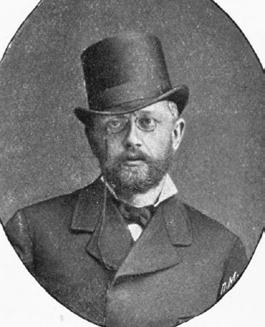
above: Pyotr Tchaikovsky, ca. 1877, from a photograph included in The Life and Letters of Pyotr Il’yich Tchaikovsky, a biography written by his brother Modest (1850–1916)
COMMENTS
watch the young people on the dance floor. He opens the third and final act of his opera with a rambunctious polonaise, orchestrated in a bombastic manner that brings to mind his Symphony no. 4, which he wrote contemporaneously to Onegin. The opera closes with an intimate scene between Onegin and Tatyana, in which she reluctantly turns him down, “Onegin! Ya togda molozhe” (Onegin! I was younger then). Tchaikovsky shows Onegin’s
GIUSEPPE VERDI
flagging attempts to win her over, as his swagger-filled entries gradually change in affect to match the lamenting quality of the lines sung by Tatyana, who immediately recognizes that it is impossible to return to young love. Tchaikovsky doesn’t spare the tragic fireworks at the very end, suggesting that though the scale of this tale is relatively small, the emotional impact of the events can still be extremely powerful.
Born October 10, 1813; Le Roncole, near Busseto, Italy
Died January 27, 1901; Milan, Italy
De’ miei bollenti spiriti . . . O mio rimorso from La traviata
COMPOSED 1852–53
In the eighteenth century, operas were parcelled out into clearly defined numbers that began with a recitative or dialogue to set the action, then proceeded to a more formally organized aria, duet, ensemble, or chorus that reflected on the mood and themes of the scene. The number would end, thunderous applause would ensue, and a new
scene would begin. Early-nineteenthcentury composers of the bel canto (beautiful singing) tradition, such as Gioacchino Rossini, expanded the scope of numbers to include multiple arias arranged in a dynamic sequence that steadily increased tempo, energy, and drama. In the middle of the century, Giuseppe Verdi brought this style of scene construction, known by then as la solita forma (the usual form), to new heights. He infused his multipartite numbers with a degree of unity that makes many of them akin to symphonic movements.
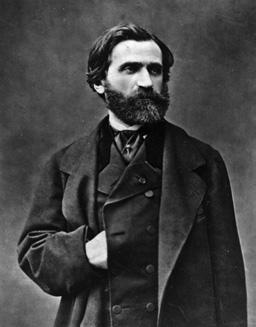
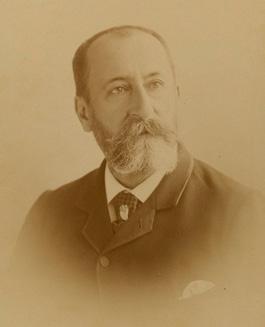
this page: Giuseppe Verdi, portrait by André Adolphe-Eugène Disdéri (1810–1890), 1855. Paris, France | opposite page: Camille Saint-Saëns, portrait, albumen print on paper, studio of J. Lacroix, active ca. 1850–1900. Musée Carnavalet, History of Paris, France
The scene that opens the second act of Verdi’s La traviata contains a perfect example of a two-part number that follows this conventional shape. At this point in the action, things seem to be going well on the surface. Alfredo, the slightly naive, provincial tenor, has succeeded in wooing the courtesan Violetta away from her life in Paris, and they are settling into a blissful life in the countryside. The orchestra plays a slightly anxious and foreboding introduction before Alfredo reassures us of his current contentment by singing a jaunty ditty about how happy he is, “De’ miei bollenti spiriti” (My
CAMILLE SAINT-SAËNS
Born October 9, 1835; Paris, France
Died December 16, 1921; Algiers, Algeria
passionate spirit). The scene intensifies as Alfredo learns that Violetta has sold all her Parisian luxuries to pay for their new life together. He could take this as a token of trust, but he is disarmed by it and quickly moves into a passionate cabaletta, “O mio rimorso” (Oh, my remorse). The pompous, fanfarelike orchestral accompaniment, the spicy harmony changes that come suddenly on the last beat of a bar, the rhetorical flourishes in the vocal line that shimmy from one measure to the next, and the singer’s many emphatic accents all contribute to this cabaletta’s soaring, climactic sweep.
Selections from Samson and Delilah, Op. 47
J’ai gravi la montagne
Bacchanale
COMPOSED 1867–77
Camille Saint-Saëns’s Samson and Delilah spent a long time in development purgatory before he completed it and arranged its first performance. He finished rough drafts of the vocal parts for the first two acts in the late 1860s, but he did not receive an enthusiastic response when he
informally played them through for a group of colleagues. He also faced some pushback about the opera’s scriptural subject matter. As he wrote in an article remembering the work’s genesis, “No sooner did the matter get abroad than there was a general outcry of protest. A Biblical opera!” He dropped the project for a few years, then resuscitated it in the mid-1870s after receiving encouragement from the pianist, composer, and conductor Franz Liszt, who promised to arrange its premiere. The opera itself recounts the grim, Old Testament story of Samson, a judge in the ancient Kingdom of
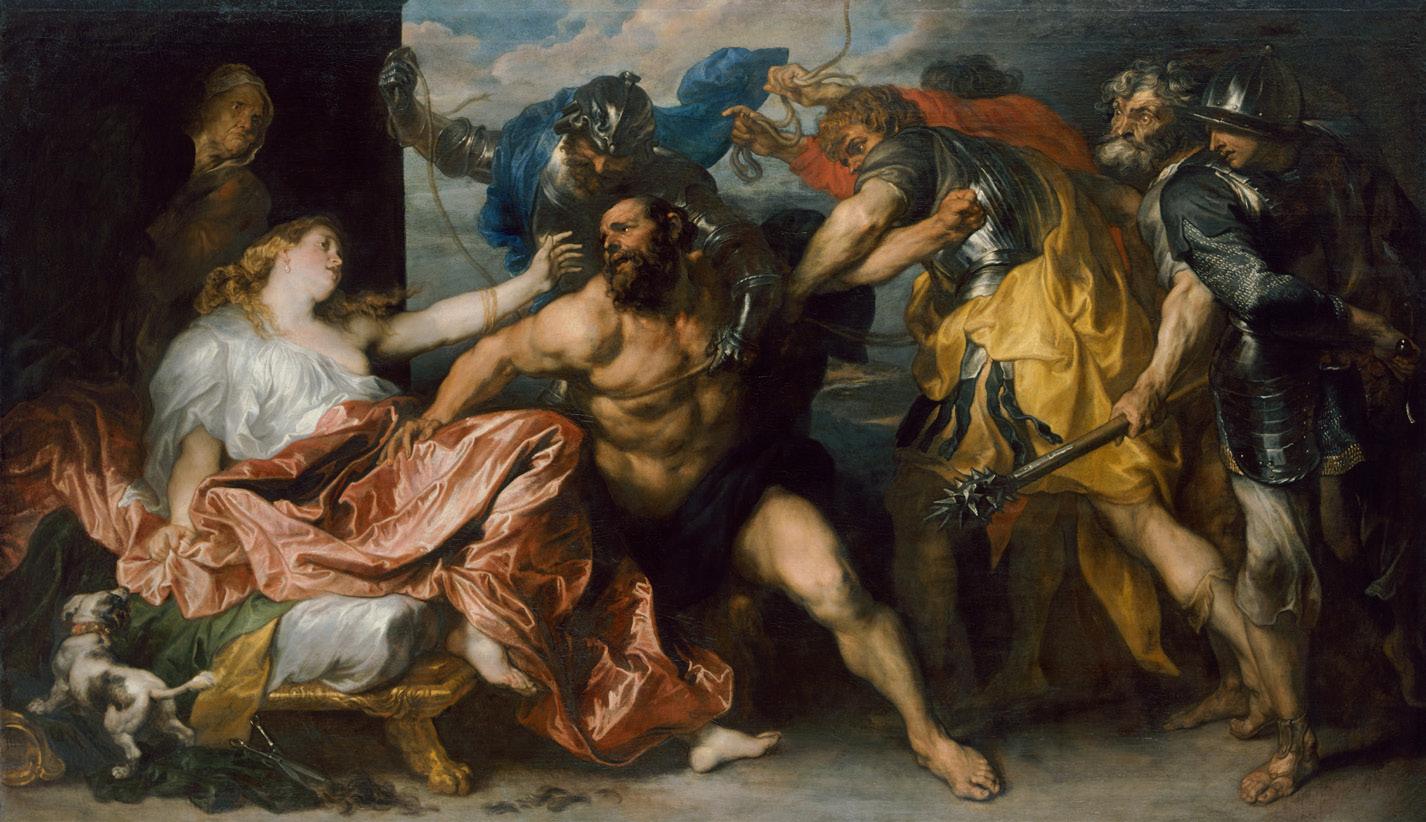
Israel endowed with superhuman strength, who lived during a period of conflict between the Israelites and the Philistines, a civilization that occupied present-day Gaza. Samson is seduced by one of the Philistines, Delilah, and she discovers that his powers are tied to his long locks. She arranges a fatal haircut that also leads to the destruction of the Philistine temple. In the duet “J’ai gravi la montagne” (I have climbed the mountain), Delilah and the Philistine High Priest solidify their plot to betray Samson. Saint-Saëns gives the duet a dangerous, kinetic undercurrent by placing varied, urgent figures on almost every offbeat.
In the second half of the nineteenth century, most opera composers became obsessed with depicting cultures considered exotic. They tended to use common musical elements—namely,
shimmering orchestrations and minorscale variants that feature a few extralarge leaps—to portray them. Everyone from Georges Bizet’s Carmen, a Roma woman in Spain, to an Ethiopian princess in Giuseppe Verdi’s Aida, to the ancient Philistines in Saint-Saëns’s Samson and Delilah, was treated to the same set of vaguely foreign-sounding intervals. In the wild Bacchanale, the frenzied dance of the Philistines, the oboe kicks things off with a winding line that plainly outlines one such exoticizing scale. An elegant, balletic theme kicks in, and then eventually the oboe returns to the foreground with an extremely catchy melodic rendering of the scale from the start of the number. Saint-Saëns carefully combines these ideas, leading the group to an admittedly fabulous, ecstatic climax.
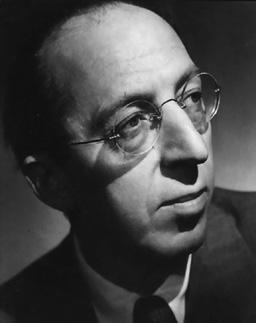
this page: Samson and Delilah, oil on canvas by Anthony van Dyck (1599–1641), ca. 1628–1630. Kunsthistorisches Museum, Vienna | opposite page: Aaron Copland, photo ca. 1940s
AARON COPLAND
Born November 14, 1900; Brooklyn, New York
Died December 2, 1990; Sleepy Hollow, New York
The Promise of Living from The Tender Land
COMPOSED 1952–54
The 1954 premiere of Aaron Copland’s only full-length opera, The Tender Land, was perplexing and disappointing to critics. Olin Downes, writing for the New York Times, was particularly harsh, opining that “there are many lines that are uninspiring for musical setting, as there is also a good deal of music that is, perhaps inevitably, pulseless, dry, and uninspired.” Many were taken aback by the intimate narrative, which seemed better suited to a stage play than a grand opera. Copland, who was quite sensitive to reviews, was ready to write the project off as a flop. Fortunately, the librettist Erik Johns was less despondent, maintaining that they had simply been misunderstood because “this [is] an abstract piece with its own aura.” He motivated Copland to keep the piece alive and to make some revisions in response to the criticisms. The version they completed in 1955 was more positively received, though stagings of the full opera remain a rarity.
The Tender Land is a family drama focused on Laurie, a Depression-era high school senior on a midwestern farm. As she begins to distance herself from her life at home, she must navigate relationships with her regretful mother, her conservative grandfather, and an itinerant worker she falls in love with. The first act ends with an uplifting quintet, “The Promise of Living,” sung by all the main characters as they celebrate the spring harvest and the promising future it represents. The music features appealing, open-hearted tonal harmonies, but like many of Copland’s melodies, the vocal lines are full of large leaps that carry a heavy sense of sadness and longing. In the opera as a whole, Copland and librettist Everett create an overall mood of careful deliberation and meditation—tenderness, but also distance—things Laurie needs to move on to a new life.
Cellist, writer, and music researcher Nicky Swett holds a PhD in music from the University of Cambridge, where he was a Gates Scholar. From 2016 to 2018, he was a section member and community engagement fellow in the Civic Orchestra of Chicago.
Selections from Don Giovanni, K. 527
Music by Wolfgang Mozart
Libretto by Lorenzo Da Ponte
Madamina, il catalogo è questo
LEPORELLO
Madamina, il catalogo è questo
delle belle che amò il padron mio, un catalogo egli è che ho fatt’io, osservate, leggete con me.
In Italia seicento e quaranta, in Lamagna duecento e trent’una,
cento in Francia, in Turchia novant’una,
ma in Ispagna son già mille e tre.
V’han fra queste contadine, cameriere, cittadine, v’han contesse, baronesse, marchesane, principesse, e v’han donne d’ogni grado, d’ogni forma, d’ogni età.
Nella bionda egli ha l’usanza di lodar la gentilezza, nella bruna la costanza, nella bianca la dolcezza.
Vuol d’inverno la grassotta, vuol d’estate la magrotta; è la grande maestosa, la piccina e ognor vezzosa.
Pretty lady, here’s a list I would show you
LEPORELLO
Pretty lady, here’s a list I would show you, of the fair ones my master has courted. Here you’ll find them all duly assorted, in my writing, will’t please you to look.
Here is Italy, six hundred and forty, France is down for five hundred and twenty, only two hundred the Rhineland supplied him, but mark the climax, Spain has already one thousand and three.
Here are countesses in plenty, Waitingmaids, nineteen or twenty. Rustic beauties, marchionesses, Ev’ry grade his pow’r confesses. Here are courtly dames and maidens, young and handsome, old and plain.
His custom is to praise the blonde for her kindness, the brunette for her loyalty, the gray-haired for her sweetness.
When ‘tis cold he likes her portly, in the summer, slim and courtly, tall and haughty, ne’er she alarms him. If she’s tiny, no less she charms him.
Delle vecchie fa conquista, pel piacer di porle in lista, ma passion predominante è la giovin principiante.
Non si pica se sia ricca, se sia brutta, se sia bella: purché porti la gonnella, voi sapete quel che fa.
Ripe duennas he engages, that their names may grace these pages. But what most he’s bent on winning is of youth the sweet beginning.
Poor or wealthy, wan or healthy, stately dame or modest beauty, he to win them makes his duty, and you know it, not in vain.
Là ci darem la mano
DON GIOVANNI
Là ci darem la mano, là mi dirai di sì; vedi, non è lontano, partiam, ben mio, da qui.
ZERLINA
Vorrei e non vorrei, mi trema un poco il cor; felice, è ver, sarei, ma può burlarmi ancor.
DON GIOVANNI
Vieni, mio bel diletto!
ZERLINA
Mi fa pietà Masetto.
DON GIOVANNI
Io cangierò tua sorte.
ZERLINA
Presto . . . non son più forte!
There we will give each other our hands
DON GIOVANNI
There we will give each other our hands, there you will say yes to me; you see, it’s not far, let’s go, my dear, from here.
ZERLINA
I would, and yet I would not, my heart trembles a little. True, I would be happy, but he can still make a fool of me.
DON GIOVANNI
Come, dearest, let me guide thee!
ZERLINA
I feel sorry for Masetto.
DON GIOVANNI
I will change your fate.
ZERLINA
Quickly . . . I can no longer resist!
(Please turn the page quietly.)
DON GIOVANNI
Andiam!
ZERLINA
Andiam!
DON GIOVANNI E ZERLINA
Andiam, andiam, mio bene, a ristorar le pene d’un innocente amor.
DON GIOVANNI
Let’s go!
ZERLINA
Let’s go!
DON GIOVANNI AND ZERLINA
Let’s go, let’s go, my beloved, to relieve the pain of an innocent love.
Batti, batti, O bel Masetto
ZERLINA
Batti, batti, O bel Masetto, la tua povera Zerlina: starò qui come agnellina le tue botte ad aspettar.
Lascerò straziarmi il crine, lascerò cavarmi gli occhi le care tue manine lieta poi saprò baciar.
Ah, lo vedo, non hai core! Pace, pace, O vita mia, in contenti ed allegria notte e dì vogliam passer.
Beat, beat, O handsome Masetto
ZERLINA
Beat, beat, O handsome Masetto, your poor Zerlina: I’ll stay here, as a little sheep to wait for your blows.
Pull out my hair and pluck out my eyes! and your dear little hands I will kiss.
Ah, I see that, you have no heart! Peace, my dearest, let us pass the night and day in happiness.
Ah, taci, ingiusto core
DONNA ELVIRA
Ah, taci, ingiusto core, non palpitarmi in seno! È un empio, e un traditore, è colpa di aver pietà.
LEPORELLO
Zitto! di Donna Elvira, signor, la voce io sento!
DON GIOVANNI
Cogliere io vo’ il momento; tu fermati un po’ là! Elvira, idolo mio!
DONNA ELVIRA
Non è costui l’ingrato?
DON GIOVANNI
Si, vita mia, son io, e chieggo clarità.
DONNA ELVIRA
Numi, che strano affetto mi si risveglia in petto!
LEPORELLO
State a veder la pazza, che ancor gli crederà.
DON GIOVANNI
Discendi, O gioia bella, vedrai che tu sei quella che adora l’alma mia; pentito io sono già.
Ah, be quiet, unfair heart
DONNA ELVIRA
Ah, be quiet, unfair heart, don’t beat so fast in my chest! He’s a wicked man, a traitor; it would be a fault to have mercy.
LEPORELLO
Quiet! Sir, I can hear Donna Elvira’s voice!
DON GIOVANNI
I want to get the chance, stay there a moment! Elvira, my dear!
DONNA ELVIRA
Isn’t that an ungrateful man?
DON GIOVANNI
Yes, my life, it’s me, and I ask for clarity.
DONNA ELVIRA
Heavens, what a strange feeling is awakening inside me!
LEPORELLO
See if that fool isn’t going to believe him once more.
DON GIOVANNI
Come down, you beautiful jewel you’ll see you’re the one that my soul loves. I’m already regretting everything.
(Please turn the page quietly.)
DONNA ELVIRA
No, non ti credo, O barbaro!
DON GIOVANNI
Ah credimi, O m’uccido!
Idolo mio, vien qua.
LEPORELLO
Se seguitate, io rido.
DONNA ELVIRA
Dei, che cimento è questo!
Non so s’io vado O resto! Ah proteggete voi la mia credulità.
DON GIOVANNI
Spero che cada presto!
Che bel colpetto è questo!
Più fertile talento del mio, no, non si dà.
LEPORELLO
Già quel mendace labbro torna a sedur costei!
Deh proteggete, O dei, la sua credulità.
Il mio tesoro intanto
DON OTTAVIO
Il mio tesoro intanto andate a consolar, e del bel ciglio il pianto cercate di asciugar.
Ditele che i suoi torti a vendicar io vado: che sol di stragi e morti nunzio vogl’io tornar.
DONNA ELVIRA
No, I don’t believe you, beast!
DON GIOVANNI
Ah, believe me, or I’ll kill myself! My dear, come here!
LEPORELLO
If you go, I’ll laugh!
DONNA ELVIRA
O gods, what a challenge is this! I don’t know if I should go or not! Ah, please, protect my credulity.
DON GIOVANNI
I hope she’ll soon fall for this! What a lucky punch is this! A more useful talent than mine, no, there is not.
LEPORELLO
Those mendacious lips are already seducing her again. Alas, protect, O gods, her credulity.
My darling, in the meantime
DON OTTAVIO
My darling, in the meantime, please console and try to wipe away the tears from her beautiful eyes. Tell her I’m going to avenge the injustices she suffered. And I want to come back to her only to announce slaughters.
In quali eccessi, O numi . . . Mi tradì quell’alma ingrata
DONNA ELVIRA
In quali eccessi, O numi, in quai misfatti orribili, tremendi è avvolto il sciagurato!
Ah no! Non puote tardar l’ira del cielo, la giustizia tardar!
Sentir già parmi la fatale saetta, che gli piomba sul capo!
Aperto veggio il baratro mortal!
Misera Elvira!
Che contrasto d’affetti, in sen ti nasce!
Perchè questi sospiri, e queste ambascie?
Mi tradì quell’alma ingrata: infelice, O Dio, mi fa.
Ma tradita e abbandonata,
provo ancor per lui pietà.
Quando sento il mio tormento, di vendetta il cor favella. Ma se guardo il suo cimento, palpitando il cor mi va.
In what follies, O gods . . . That ungrateful soul has betrayed me
DONNA ELVIRA
In what follies, O gods, in what misdeeds so horrible and terrible is that disgraced man entrapped! Ah, no! Heaven’s wrath won’t be much late, and justice!
I can almost already hear the lethal bolt falling on his head!
I can see the deadly chasm open! Poor Elvira!
What contrast between your feelings is born inside your chest!
Why do you sigh so much? Why do you sob?
That ungrateful soul has betrayed me: O God, he makes me sad.
But [even if I’m] betrayed and abandoned I still pity him.
When I hear my torments, my heart talks of vengeance. But when I see what happens to him, my heart beats faster.
Onegin! Ya togda molozhe from Eugene Onegin, Op. 24
Music by Pyotr Tchaikovsky
Libretto by Pyotr Tchaikovsky and Konstantin Shilovsky
Onegin! Ya togda molozhe
TATYANA
Oh, kak mnye tyazhelo apyat
Anyegheen stal na puu-tee mayom kak preezrak bezpashchadniy!
On vzoram ognenuim mnye dooshoo vazmooteel.
On strast zaglokhshooyoo tak zhiva vaskryeseel!
Kak boodta snova dyevachkay stala, kak boodta s neem myenya neechto nye razloochala!
Davalna, vstantye, ya dalzhna vam abyasneetsya atkravyenna.
Anyegheen, amneetyel tot chas kagda v sadoo valyeye nas soodba svyela i tak smeeryenna oorok vash vuyslushala ya?
ONEGIN
Oh, zhaltyes nada mnoyou!
Ya tak ashibsya, ya tak nakazan!
TATYANA
Anyegheen! Ya tagda malozhe, ya loochshe kazhetsya, buyla, ee ya lyubila vas, no shto zhe, shto v vashem syetzre ya nashla, kakoye atvyet?
Adnoo surovast! Nye pravdal, vam buyla nye novast smiryennay devachky lyubov?
Onegin! I was younger then
TATYANA
O, how distressed I am! Onegin has crossed my path like a merciless apparition! His burning glance has troubled my heart.
He has reawakened my dormant passion, and I feel like a young girl again, as if nothing had ever parted us!
Enough, get up. I must talk to you frankly. Onegin, do you remember that time when fate brought us together and I listened so meekly to your lecture?
ONEGIN
O spare me, have pity on me! I was so mistaken; I have been cruelly punished!
TATYANA
Onegin, I was younger then, and a better person; and I loved you, but what, then, what response did I find in your heart?
Only severity! Am I not right to think that a simple girl’s love was no novelty to you?
Ee nuynche, Bozhe, stuynet krov, kak tolka vspomnyu vzglyad halodniy ee yetoo eespavyed!
No vas ya nye veenyu! V tot strashniy chas vuy pastoopeelee blagarodna, vuy buylee pravuy pryed mnoy.
Tagda ne pravdalee v poostuynye, vdalee at sooyetnay malvuy ya vam nye nraveelas?
Shtozh nuynye myenya pryesledooyetye vuy?
Zachyem oo vas ya na preemyetye?
Nye patamool, shto vvuysshem svyetye tyepyer yavlyatsa ya dalzhna, shto ya bagata ee znatna shto moozh vsrazhenyah eezoovyechen, shto nas za to laskayet dvor!
Nye patamool, shto moy pazor tyepyer buy vsyemee buyl zamyechen ee mog buy v obshestvye preenyest vam sablazneetyalnooyou chest!
ONEGIN
Akh! O, Bozhe!
Oozhel, oozhel v malbye mayey smeeryennay ooveedeet vash khalodniy vzor za tuy ee kheetrastee pryezrennay?
Myenya tyerzayet vash ookor!
Kagda vuy znalee, kak oozhasna tameetsya zhazhdayou lyubvee, tyerpyet, ee razoomam vsyechasna smeeryat valnyeneeye vkravee, zhelat abnyat oo vas kolna ee zaruydav oo vasheekh nog, eezleet malbuy preeznanya, pyenee, vsyo, vsyo shto vuyrazit buy mog!
Dear God, my blood runs cold whenever I recall that cold look, that sermon!
But I do not blame you! In that dreadful moment you behaved honorably, you acted correctly toward me.
Then, isn’t it true in the desert, far from the frivolity of social gossip, you didn’t find me attractive? Why do you pursue me now? Why am I the object of such attention? Could it be because I now frequent the highest circles, because I am rich and of the nobility, because my husband, wounded in battle, enjoys, on that account, the favor of the court?
Could it not be that my disgrace would now be generally remarked and would confer upon you the reputation of a seducer?
ONEGIN
Ah! My God!
Is it possible that in my humble pleading your cold look sees nothing but the wiles of despicable cunning? Your reproach torments me!
If you only knew how terrible it is to suffer love’s torments, to endure and constantly to check the fever in the blood by reason, to long to clasp your knees and, weeping at your feet, pour out prayers, avowals, reproaches all, all that words can express!
TATYANA
Ya plachoo!
ONEGIN
Plachtye!
Yetee slezuy darozhe sakrovish meera!
TATYANA, ONEGIN
Akh! Shchastye buyla tak vazmozhna, tak bleezka!
TATYANA
No soodba maya oozh ryeshena ee bezvazvratna!
Ya vuyshla za moozh; vuy dalzhnuy, ya vas prashoo, myenya astavit!
ONEGIN
Astavit? Kak astavit? Nyet! Paminootna veediet vas, pavsyudoo slyedavat za vamee,
ooluybkoo oost, dveezhenye vzglyad laveet vlyublyonnuymee glazamee, vneemat vam dolga, paneemat dooshoy vsyo vashe savyershenstva, pryed vamee v strastnikh mookakh zameerat, blyednyet ee gasnoot: vot blazhenstva, vot adna myechta maya, adna blazhenstva!
TATYANA
Anyegheen, v vashem syertse yest ee gordast ee pryamaya chest!
ONEGIN
Ya nye magoo astavit vast!
TATYANA
I am weeping!
ONEGIN
Weep on! Those tears are dearer than all the treasures in the world!
TATYANA, ONEGIN
Ah! Happiness was within our reach, so close!
TATYANA
But my fate has already been decided irrevocably.
I am married; you must, I beg you, leave me!
ONEGIN
Leave you? How? What! No!
To see you hourly, to follow your every smile, movement, and glance with loving eyes, to listen to you, to understand in my soul all your perfection, to swoon before you in passionate torment, turn pale and fade away,
this is bliss, this is my only dream, my only happiness!
TATYANA
Onegin, your heart knows both pride and true honor!
ONEGIN
I cannot leave you!
TATYANA
Yevgeniy, vuy dalzhnuy ya vas prashoo meenya astaveet!
ONEGIN
Oh, zhaltyes!
TATYANA
Zachyem skrivat, zachyem lookaveet! Akh! Ya vas lyublyu!
ONEGIN
Shto sluyshoo ya! Kakoye slova tuy skazala!
O, radast, zhizn maya! Tuy pryezhnyeyou Tatyanay stala!
TATYANA
Nyet, nyet! Prashlava nye varateet! Ya atdana tyeper droogamoo, maya soodba uzh ryeshena, ya boodoo vyek yemoo vyerna.
ONEGIN
Oh, nye ganee! Myenya tuy lyubeesh ee ne astavlyou ya teebya!
Tuy zhizn svayou naprasna sgoobeesh; to volya nyeba: tuy maya!
Vsya zhizn tvaya buyla zalogam sayedeenenya sa mnoy! I znay: tebye ya poslan Bogam, da groba ya khraneetel tvoy!
Nye mozhesh tuy myenya atreenoot, tuy dlya myenya dolzhna pakeenoot, pasteeluy dom ee shoomnuy svyet, tyebye drugoy darogee.
TATYANA
Eugene! You must. I beg you to leave me.
ONEGIN
Oh, have pity!
TATYANA
Why hide it, why pretend? I love you!
ONEGIN
What do I hear? What are you saying?
O joy, my life! You are again the old Tatyana!
TATYANA
No! No! Do not bring back the past! I am another’s now; my fate is already decided. I shall always be true to him.
ONEGIN
Oh, do not drive me away! You love me, and I will not leave you!
You will ruin your life for nothing; this is the will of heaven: you are mine!
All your life has been a pledge of our union! And be assured: I was sent to you by God, I am your protector to the grave!
You cannot refuse me, for me you must forsake, this hateful house, the clamor of society, you have no other path!
(Please turn the page quietly.)
TATYANA
Anyegheen, ya tvyerda astanoos! Soodboy droogomoo ya dana, s neem boodoo zhit I nye rasstanoos, nyet, klyatvuy pamneet ya dol.
ONEGIN
Nyet, nye mozhesh tuy myenya atrinoot! Tuy dlya myenya dolzhna pakeenoot vsyo!
TATYANA
Glooboka v sertze praneekayet yevo atchayaniy preeziv, no puyl prestoopleniy padaveev, dolg chestee sooroviy, svyashteniy, choovstva pabezhdayet.
Ya oodalyayus!
ONEGIN
Nyet!
TATYANA
Davolna!
ONEGIN
Oh, malyou nye ookhadee!
TATYANA
Nyet, ya tvyerda astanoos!
ONEGIN
Lyublyu tyebya!
TATYANA
Astav myenya! Prashchay navyekee!
TATYANA
Onegin, I shall remain firm! Fate gave me to another; with him I will live and never leave him. I must remember my vows.
ONEGIN
No, you can’t push me away! You don’t have another path!
TATYANA
Deep into my heart penetrates his desperate plea, but suppressing the sinful flame, the sacred and severe duty of honor overcomes the passion.
I am leaving!
ONEGIN
No!
TATYANA
Enough!
ONEGIN
I beg you, do not go!
TATYANA
No, I am resolved!
ONEGIN I love you!
TATYANA
Leave me!
Goodbye forever!
ONEGIN
Tuy maya!
Pazor! Taska!
Oh, zhalkiy zhryebiy moy!
ONEGIN
You are mine! Ignominy! Anguish! Oh, my pitiable fate!
De’ miei bollenti spiriti . . . O mio rimorso from La traviata
Music by Giuseppe Verdi Libretto by Francesco Maria Piave
De’ miei bollenti spiriti . . . O mio rimorso
ALFREDO
Lunge da lei per me non v’ha diletto!
Volaron già tre lune dacché la mia Violetta agi per me lasciò, dovizie, amori, e le pompose feste ov’agli omaggi avvezza, vedea schiavo ciascun di sua bellezza. Ed or contenta in questi ameni luoghi tutto scorda per me. Qui presso a lei io rinascer mi sento, e dal soffio d’amor rigenerato scordo ne’gaudi suoi tutto il passato.
De’ miei bollenti spiriti il giovanile ardore ella temprò col placido sorriso dell’amor! Dal dì che disse, “Vivere io voglio a te fedel,” dell’universo immemore io vivo quasi in ciel.
My passionate spirit . . . Oh, my remorse
ALFREDO
There’s no pleasure in life when she’s away!
It’s three months now since Violetta gave up for me her easy, luxurious life of love affairs and expensive parties. There she was used to the homage of all who were enslaved by her beauty, but she seems happy here in this charming place, where she forgets everything for me. With her beside me, I feel myself reborn, revived by the breath of love, forgetting the past in present delights.
My passionate spirit and the fire of youth she tempers with the gentle smile of love. Since the day when she told me, “I want to live, faithful to you alone,” I have forgotten the world and lived like one in heaven.
(Please turn the page quietly.)
O mio rimorso! O infamia!
E vissi in tale errore! Ma il turpe sogno a frangere il ver mi balenò. Per poco in seno acquétati, o grido dell’onore; m’avrai securo vindice; quest’onta laverò!
Oh, my remorse! Oh, disgrace! I lived so mistaken! But the truth flashed before me to shatter that vile dream! For a moment be quiet, oh, cry of honor; In me you shall have a sure avenger; I shall wash away this infamy.
J’ai gravi la montagne from Samson and Delilah, Op. 47
Music by Camille Saint-Saëns
Libretto by Ferdinand Lemaire
J’ai gravi la montagne
LE GRAND-PRÊTRE
J’ai gravi la montagne pour venir jusqu’à toi; Dagon qui m’accompagne m’a guidé vers ton toit.
DALILA
Salut à vous, mon père!
Soyez le bienvenu, vous qu’ici l’on révère!
LE GRAND-PRÊTRE
Notre sort t’est connu! La victoire facile des esclaves Hébreux leur a livré la ville. Nos soldats devant eux ont fui, pleins d’épouvante au seul nom de Samson, dont l’audace effrayante a troublé leur raison.
I have climbed the mountain
THE HIGH PRIEST
I have come here, Delilah, To your lonely retreat; the gods who have sent me have lent wings to my feet.
DELILAH
With love and deep emotion I welcome you, my father, in humble devotion!
THE HIGH PRIEST
You shall know why I came! By surprise the sources of our mutinous slaves have overcome our forces. Our soldiers, like knaves, discarding sword and spear, when they heard Samson’s name, have fled in mortal fear in the face of his fame.
Fatal à notre race, il reçut de son Dieu la force avec l’audace. Enchaîné par un vœu, Samson, dès sa naissance, fut marqué par le ciel pour rendre la puissance au peuple d’Israël.
DALILA
Je sais que son courage brave votre courroux, et qu’il n’est pas d’outrage qu’il ne garde pour vous!
LE GRAND-PRÊTRE
À tes genoux sa force un jour l’abandonna; mais depuis, il s’efforce d’oublier Dalila. On dit que, dans son âme oubliant ton amour, il se rit de la flamme qui ne dura qu’un jour!
DALILA
Je sais que de ses frères écoutant les discours, et les plaintes amères que causent nos amours, Samson, malgré lui-même, combat et lutte en vain; je sais combien il m’aime et mon cœur ne craint rien. C’est en vain qu’il me brave, il est fort aux combats, mais il est mon esclave et tremble dans mes bras.
His strength makes him our master, and a terrible fraud has led to our disaster, brought about by his God. And now they tell the story, how he vowed to use his spell again to bring glory to the people of Israel.
DELILAH
How Samson must despise you, trembling before his brawn, laughing, he now defies you! You yourself are his pawn!
THE HIGH PRIEST
Yet, in your arms, Delilah, Samson once lost his spell. Now he tries to forget you, and that ever he fell. In most derisive fashion I myself heard them say that he laughs at his passion, which only held one day.
DELILAH
I know that those around him often warn him of me, that his brothers confound him in vain and bitter plea. The less he tries to see me, the more his heart will pine; in vain he’ll try to flee me; he will always be mine. Yes, in vain will he fight me. He will soon yield his charms, when in trembling delight he will lie in my arms.
(Please turn the page quietly.)
LE GRAND-PRÊTRE
Sers-nous de ta puissance, prête-nous ton appui!
Que surpris, sans défense, il succombe aujourd’hui!
Vends-moi ton esclave Samson!
Et, pour te payer sa rançon, je ne ferai point de promesses; tu peux choisir dans mes richesses.
DALILA
Qu’importe à Dalila ton or! Et que pourrait tout un trésor, si je ne rêvais la vengeance!
Toi-même, malgré ta science, je t’ai trompé par cet amour.
Samson sut vous dompter un jour; mais il n’a pu me vaincre encore, car, autant que toi, je l’abhorre!
LE GRAND-PRÊTRE
J’aurai dû deviner ta haine et ton dessein!
Mon cœur en t’écoutant tressaille d’allégresse.
Mais sur son cœur déjà n’aurais-tu pas en vain mesuré ta puissance, essayé ton adresse?
DALILA
Oui, déjà, par trois fois, déguisant mon projet, j’ai voulu de sa force éclaircir le secret.
J’allumai cet amour, espérant qu’à sa flamme je lirais l’inconnu dans le fond de son âme.
Mais, par trois fois aussi, déjouant mon espoir,
THE HIGH PRIEST
Deprive him of his senses! Our strength we unite: you will break his defenses, I will snare him tonight! I ask you to hand him to me, whatever the ransom shall be.
You will live in wealth and in splendor; just call the price for his surrender.
DELILAH
Delilah never asks for gold. What you propose will leave her cold. If she were not willing to break him, no riches could make her forsake him. But you yourself believed my play though Samson held my heart in sway; while I pretended to enjoy him, I now have resolved to destroy him!
THE HIGH PRIEST
Ah, how well you’ve disguised your fiercely burning hate! My heart is overjoyed by what your own confesses.
Yet, do you hold him still, or could it be too late?
Has he ever denied you or defied your caresses?
DELILAH
Yes, three times I have tried to discover the spell, the mysterious bode where his power would dwell.
I, pretending to love, have proceeded to charm him, trying vainly to lure and at last to disarm him.
Three times he fled from me, and I still don’t know
il ne s’est point livré, ne m’a rien laissé voir.
En vain d’un fol amour j’imitai les tendresses, espérant amollir son cœur par mes caresses.
J’ai vu ce fier captif, enlacé dans mes bras, s’arracher de ma couche et courir aux combats.
Aujourd’hui cependant il subit ma puissance, car je l’ai vu pâlir, trembler en ma présence, et je sais qu’à cette heure, abandonnant les siens, il revient en ces lieux resserrer nos liens.
Pour ce dernier combat j’ai préparé mes armes:
Samson ne pourra pas résister à mes larmes.
LE GRAND-PRÊTRE
Que Dagon, notre dieu, daigne étendre son bras!
Tu combats pour sa gloire, et par lui tu vaincras!
DALILA
Il faut, pour assouvir ma haine, il faut que mon pouvoir l’enchaine! Je veux que, vaincu par l’amour, il courbe le front à son tour!
whence he would draw his strength, from what source it would flow. In vain I sought to drown him in loving excess, in vain I fought to drown him in unrestrained caresses.
Now sighing in my arms, he seemed certain to yield, when at once he would flee me and turn to the field.
Yet, I know that tonight I shall break his defiance.
Yes, all his righteous spite will melt into compliance. Taking leave of his men, he will return to me, whom he never again will be able to flee.
THE HIGH PRIEST
And our god, mighty Dagon, may he take your part!
You are serving his glory! He will sustain your heart!
DELILAH
And so, the evil seed is planted; my triumph shall at last be granted! At last, my revenge will come true, and Samson will suffer his due!
(Please turn the page quietly.)
LE GRAND-PRÊTRE
Je veux, pour assouvir ma haine, je veux que Dalila l’enchaîne; il faut que, vaincu par l’amour, il courbe le front à son tour!
À toi l’honneur de la vengeance!
DALILA
À moi l’honneur de la vengeance! À moi l’honneur, à moi!
LE GRAND-PRÊTRE ET DALILA
Je veux, pour assouvir ma haine, je veux que Dalila l’enchaîne! il faut que, vaincu par l’amour, il courbe le front à son tour!
Unissons nous tous deux! Mort au chef des Hébreux!
THE HIGH PRIEST
May Dagon bless the seed you’ve planted and triumph to our cause be granted! May Samson now suffer his due, our final revenge now come true!
The glory of vengeance is yours!
DELILAH
The glory of vengeance is mine! It is mine!
THE HIGH PRIEST AND DELILAH
Yes, now the evil seed is planted, and the triumph to my case be granted! At last, my revenge will come true, and Samson will suffer his due! Strong and united we stand! Death to the foe of our land!
The Promise of Living from The Tender Land
Music by Aaron Copland
Libretto by Horace Everett
The promise of living with hope and thanksgiving is born of our loving our friends and our labor.
The promise of growing with faith and with knowing is born of our sharing our love with our neighbor.
The promise of living, the promise of growing is born of our singing in joy and thanksgiving.
For many a year we’ve known these fields and known all the work that makes them yield.
Are you ready to lend a hand?
By working together, we’ll bring in the blessings of the harvest.
We’re ready to work, we’re ready to lend a hand. By working together, we’ll bring in the harvest.
We plant each row with seeds of grain, and Providence sends us the sun and the rain.
We plow and plant each row with seeds of grain, bring in from the land, bring out the blessings of harvest.
By lending an arm, bring out from the farm, bring out the blessings of harvest.
Give thanks there was sunshine, give thanks there was rain, give thanks we have hands to deliver the grain!
O, let us be joyful, O let us be grateful to the Lord for his blessing! O, let us sing our song, and let our song be heard.
The promise of ending in right understanding is peace in our own hearts and peace with our neighbor.
The promise of living, the promise of growing, the promise of ending is labor, and sharing, and loving.
A gift to the Civic Orchestra of Chicago supports the rigorous training that members receive throughout the season, which includes coaching from musicians of the Chicago Symphony Orchestra and world-class conductors. Your gift today ensures that the Chicago Symphony Orchestra Association will continue to enrich, inspire, and transform lives through music.
PROFILES
Erina Yashima Conductor
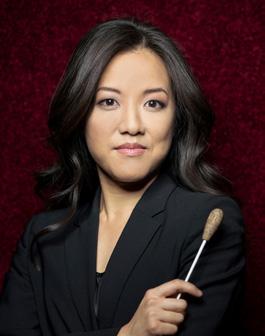
German-born conductor Erina Yashima was Kapellmeister at the Komische Oper Berlin from 2022 to 2024. She has worked with many renowned ensembles, orchestras, and opera companies worldwide.
In the 2025–26 season, she makes her debut with the London Philharmonic Orchestra, Prague Radio Symphony Orchestra, Philharmonisches Staatsorchester Mainz, and Omaha Symphony Orchestra and returns to the Orchestre della Toscana. On the opera stage, Yashima makes her debut at the Metropolitan Opera with The Magic Flute and returns to Opera Australia with Madama Butterfly, following a highly acclaimed debut in August 2025.
Last season saw Yashima make her debut with the Frankfurt Radio Symphony, Royal Liverpool Philharmonic Orchestra, Staatsphilharmonie Nürnberg, Stuttgarter Philharmoniker, Münchner Symphoniker, and Japan’s Nagoya Philharmonic Orchestra and Kobe City Chamber Orchestra. On the opera stage, she made her debut with the Lyric Opera of Chicago with a production of Le nozze di Figaro, Opera Australia with La Bohème, and the Irish National Opera with L’elisir d’amore.
Recent highlights include performances with the Bavarian Radio Symphony Orchestra, Philadelphia Orchestra, San Francisco Symphony, Houston Symphony Orchestra, Orchestre Philharmonique Royal de Liège, Seoul Philharmonic Orchestra, Orchestre Métropolitain de Montréal, Royal Scottish National Orchestra, Arena di Verona, and the TonkünstlerOrchester, among others.
Erina Yashima is equally at home in music theatre and on the concert stage. As Kapellmeister of the Komische Oper Berlin, she conducted Rusalka, Hamlet, Così fan tutte, and The Magic Flute as well as the world premiere of Elena Kats-Chernin’s Nils Holgersson and various concert programs.
From 2019 to 2022, Yashima was assistant conductor of the Philadelphia Orchestra, where she assisted Music Director Yannick Nézet-Séguin and other guest conductors and conducted various concert programs. Riccardo Muti has been an important mentor for Erina Yashima since 2015. As a scholarship holder of the Sir Georg Solti Conducting Apprenticeship of the Chicago Symphony Orchestra, she assisted Riccardo Muti and worked regularly with the Civic Orchestra of Chicago and with many renowned guest soloists and conductors, including Yo-Yo Ma, Esa-Pekka Salonen, Christoph Eschenbach, and Edward Gardner.
About the Ryan Opera Center
The Patrick G. and Shirley W. Ryan Opera Center is Lyric Opera of Chicago’s preeminent artist-development program that nurtures the talents of some of the most promising operatic artists of each generation. The program’s Ensemble members earn their coveted spot by successfully auditioning among more than 600 artists worldwide. Its alumni are among the dominant names in opera today. Donor generosity ensures continued unparalleled training, performance experience, and professional readiness of Ensemble members. This highly competitive program, established in 1974, is led by Director Dan Novak, Music Director Craig Terry, and Director of Vocal Studies Julia Faulkner.
Civic Orchestra of Chicago
The Civic Orchestra of Chicago is a training program of the Chicago Symphony Orchestra’s Negaunee Music Institute that prepares young professionals for careers in orchestral music. It was founded during the 1919–20 season by Frederick Stock, the CSO’s second music director, as the Civic Music Student Orchestra, and for over a century, its members have gone on to secure positions in orchestras across the world, including over 160 Civic players who have joined the CSO. Each season, Civic members are given numerous performance opportunities and participate in rigorous orchestral training with its principal conductor, Ken-David Masur,
distinguished guest conductors, and a faculty of coaches comprised of CSO members. Civic Orchestra musicians develop as exceptional orchestral players and engaged artists, cultivating their ability to succeed in the rapidly evolving music world.
The Civic Orchestra serves the community through its commitment to present free or low-cost concerts of the highest quality at Symphony Center and in venues across Greater Chicago, including annual concerts at the South Shore Cultural Center and Fourth Presbyterian Church. The Civic Orchestra also performs at the annual Crain-Maling Foundation CSO Young Artists Competition and Chicago Youth in Music Festival. Many Civic concerts can be heard locally on WFMT (98.7 FM), in addition to concert clips and smaller ensemble performances available on CSOtv and YouTube. Civic musicians expand their creative, professional, and artistic boundaries and reach diverse audiences through educational performances at Chicago public schools and a series of chamber concerts at various locations throughout the city.
To further expand its musician training, the Civic Orchestra launched the Civic Fellowship program in the 2013–14 season. Each year, up to twelve Civic members are designated as Civic Fellows and participate in intensive leadership training designed to build and diversify their creative and professional skills. The program’s curriculum has four modules: artistic planning, music education, social justice, and project management.
Ryan Opera Center 2026–27 Ensemble
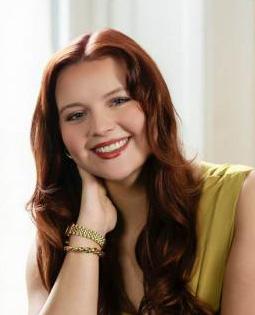
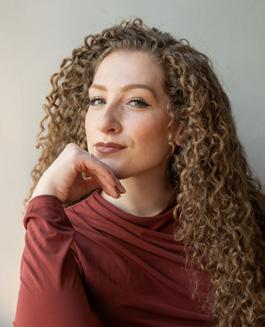
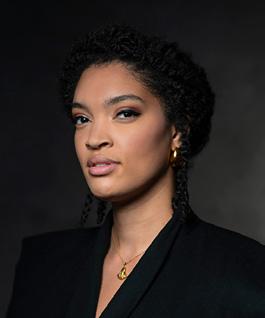
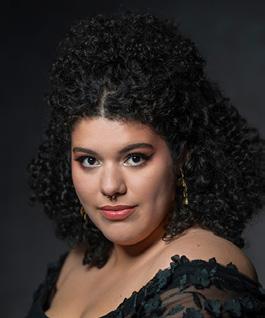
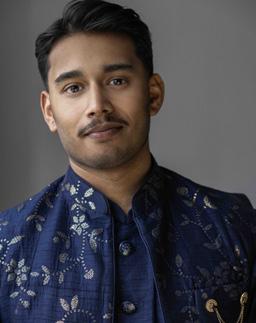
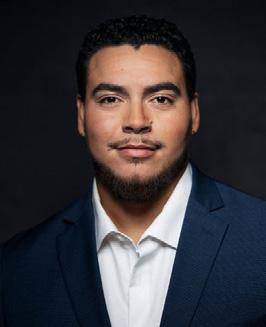
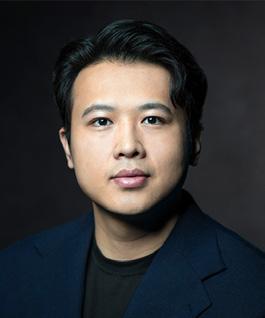
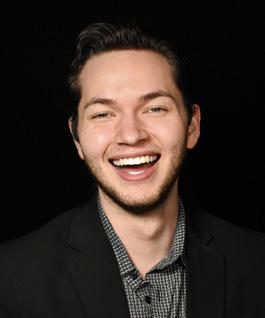
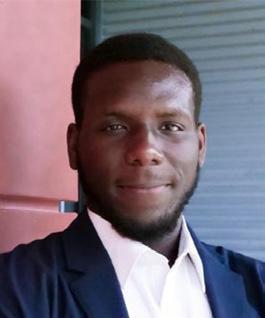
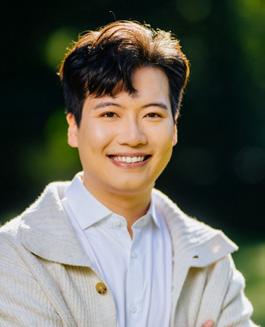
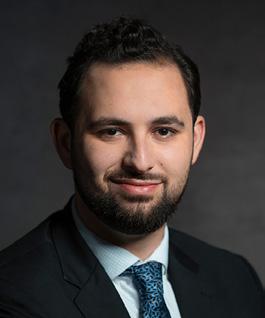
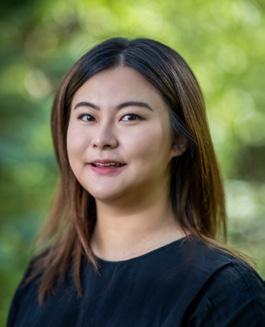
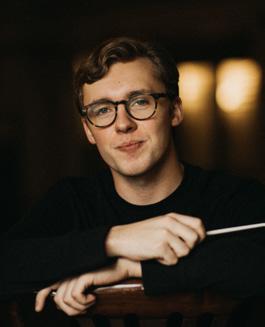
Luke Poeppel Conductor
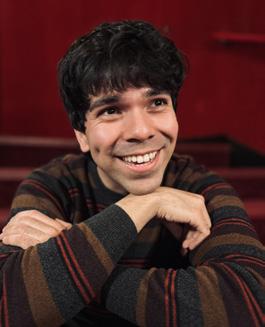
Alexi Ortega Chavez Stage Director
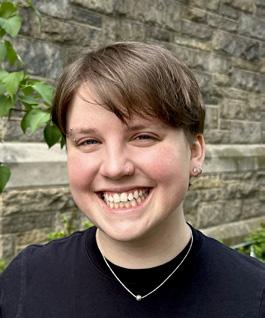
AJ Helms
Kylie Kreucher Soprano
Josie Larsen Soprano
Alexis Peart Mezzo-Soprano
Camille Robles Mezzo-Soprano
Sid Chand Tenor
Daniel Luis Espinal Tenor
Sihao Hu Baritone
Adam Partridge Baritone
Lin Fan Bass-Baritone
Benjamin R. Sokol Bass-Baritone Myungseo Kim Pianist
Stage Manager
Matthew Dexter Bass-Baritone
Civic Orchestra of Chicago
Ken-David Masur Principal Conductor
The Robert Kohl and Clark Pellett Principal Conductor Chair
VIOLINS
Sage Chen
Keshav Srinivasan
Natalie Boberg
Carlos Chacon
Ebedit Fonseca
Alyssa Goh
Rose Haselhorst
John Heo
Hojung Christina Lee
June Lee
Mona Mierxiati
Matthew Musachio
Hobart Shi
Justine Jing Xin Teo*
Alba Layana Izurieta
Naomi Powers
Maria Paula Bernal
Adam Davis
Ben Koenig
Lara Madden Hughes
Tricia Park
Sean Qin
Mia Smith
Jingjia Wang
Yulia Watanabe-Price
Lina Yamin
VIOLAS
Sava Velkoff*
August DuBeau
Lucie Boyd
Eugene Chin
Jacob Davis
Elena Galentas
Judy Huang
Matthew Nowlan**
Benjamin Perez
Mason Spencer*
CELLOS
David Caplan
Buianto Lkhasaranov
Ómkara Gil
Luis Gonzalez
Henry Lin
Nick Reeves
Santiago Uribe-Cardona
Shun-Ming Yang
BASSES
Jared Prokop
Alexander Wallack
Tina Battaglia
Gisel Dominguez
Aidos Khamitov
Jonathon Piccolo
FLUTES
Isabel Evernham
Cierra Hall
Hanna Oyasu
PICCOLOS
Isabel Evernham
Hanna Oyasu
OBOES
Orlando Salazar*
Will Stevens
Guillermo Ulloa
ENGLISH HORN
Guillermo Ulloa
CLARINETS
Max Reese
Elizabeth Kapitaniuk
Henry Lazzaro
BASS CLARINET
Henry Lazzaro
BASSOONS
William George
Jason Huang
CONTRABASSOON
Hannah Dickerson
HORNS
Erin Harrigan
Emmett Conway
Eden Stargardt*
Jordan Petan
TRUMPETS
Hamed Barbarji*
Abner Wong
Kai-Chun Chang
Maria Merlo
TROMBONES
Arlo Hollander
Dustin Nguyen
BASS TROMBONE
Timothy Warner
TUBA
Chrisjovan Masso
TIMPANI
Kyle Scully
PERCUSSION
Tae McLoughlin
Christian Hughes
George Tantchev
Karel Zambrano
HARP
Kari Novilla*
LIBRARIAN
Andrew Wunrow
NEGAUNEE MUSIC INSTITUTE AT THE CSO
The Negaunee Music Institute connects people to the extraordinary musical resources of the Chicago Symphony Orchestra. Institute programs educate audiences, train young musicians, and serve diverse communities across Chicago and around the world.
Current Negaunee Music Institute programs include an extensive series of CSO School and Family Concerts and open rehearsals; more than seventy-five in-depth school partnerships; online learning resources; the Civic Orchestra of Chicago, a prestigious ensemble for earlycareer musicians; intensive training and performance opportunities for youth, including the Percussion Scholarship Program, Chicago Youth in Music Festival, Crain-Maling Foundation CSO Young Artists Competition, and Young Composers Initiative; social impact initiatives, such as collaborations with Chicago Refugee Coalition and Notes for Peace for families who have lost loved ones to gun violence; and music education activities during CSO domestic and international tours.
the board of the negaunee music institute
Leslie Burns Chair
Steve Shebik Vice Chair
John Aalbregtse
David Arch
James Borkman
Jacqui Cheng
Ricardo Cifuentes
Richard Colburn
Charles Emmons
Judith E. Feldman
Toni-Marie Montgomery
Rumi Morales
Mimi Murley
Margo Oberman
Gerald Pauling
Kate Protextor Drehkoff
Harper Reed
Melissa Root
Amanda Sonneborn
Eugene Stark
Dan Sullivan
Paul S. Watford
Ex Officio Members
Jeff Alexander
Jonathan McCormick
Vanessa Moss
NEGAUNEE MUSIC INSTITUTE ADMINISTRATION
Jonathan McCormick Managing Director
Katy Clusen Associate Director, CSO for Kids
Rachael Cohen Program Manager
Katherine Eaton Coordinator, School Partnerships
Charles Jones Program Assistant
Carol Kelleher Assistant, CSO for Kids
Anna Perkins Orchestra Manager, Civic Orchestra of Chicago
Zhiqian Wu Operations Coordinator, Civic Orchestra of Chicago
Kevin Gupana Associate Director, Education & Community Engagement Giving
Frances Atkins Director of Publications & Institutional Content
Kristin Tobin Designer & Print Production Manager
Petya Kaltchev Editor
civic orchestra artistic leadership
Ken-David Masur Principal Conductor
The Robert Kohl and Clark Pellett Principal Conductor Chair
Coaches from the Chicago Symphony Orchestra
Robert Chen Concertmaster
The Louis C. Sudler Chair, endowed by an anonymous benefactor
Baird Dodge Principal Second Violin
Teng Li Principal Viola
The Paul Hindemith Principal Viola Chair
Brant Taylor Cello
The Ann Blickensderfer and Roger Blickensderfer Chair
Alexander Horton Assistant Principal Bass
William Welter Principal Oboe
Stephen Williamson Principal Clarinet
Keith Buncke Principal Bassoon
William Buchman Assistant Principal Bassoon
Mark Almond Principal Horn
Esteban Batallán Principal Trumpet
The Adolph Herseth Principal Trumpet Chair, endowed by an anonymous benefactor
Michael Mulcahy Trombone
Charles Vernon Bass Trombone
Gene Pokorny Principal Tuba
The Arnold Jacobs Principal Tuba Chair, endowed by Christine Querfeld
David Herbert Principal Timpani
The Clinton Family Fund Chair
Cynthia Yeh Principal Percussion
Chair sponsored by an anonymous benefactor
Justin Vibbard Principal Librarian
CIVIC ORCHESTRA OF CHICAGO SCHOLARSHIPS
CIVIC ORCHESTRA OF CHICAGO SCHOLARSHIPS
Members of the Civic Orchestra receive an annual stipend to offset some of their living expenses during their training. The following donors have generously helped to support these stipends for the 2025–26 season.
Ten Civic members participate in the Civic Fellowship program, a rigorous artistic and professional development curriculum that supplements their membership in the full orchestra. Major funding for this program is generously provided by Lori Julian for the Julian Family Foundation
Nancy Abshire
Darren Carter, viola
Dr. & Mrs. Bernard H. Adelson Fund
Elena Galentas, viola
Robert & Isabelle Bass Foundation, Inc.
Timothy Warner, bass trombone
Rosalind Britton^ Ashley Ryoo, cello
Leslie and John Burns**
Matthew Nowlan, viola
Robert and Joanne Crown Fund
Alyssa Goh, violin
John Heo, violin
Pavlo Kyryliuk, violin
Buianto Lkhasaranov, cello
Matthew Musachio, violin
Mr.† & Mrs.† David Donovan
Chrisjovan Masso, tuba
Susan Duda^ Max Reese, clarinet
Charles and Carol Emmons^ Will Stevens, oboe
Mr. & Mrs. David S. Fox^ Daniel Fletcher, flute
Paul † and Ellen Gignilliat
Naomi Powers, violin
Joseph and Madeleine Glossberg
Adam Davis, violin
Richard and Alice Godfrey
Ben Koenig, violin
Jennifer Amler Goldstein Fund, in memory of Thomas M. Goldstein
Alex Chao, percussion
Chester Gougis and Shelley Ochab
Tony Sanfilippo, Jr., bass
Mary Green
Walker Dean, bass
Jane Redmond Haliday Chair
Mona Mierxiati, violin
Merle L. Jacob
Keshav Srinivasan, violin
Lori Julian for the Julian Family Foundation
David Caplan, cello
Orlando Salazar,* oboe
Lester B. Knight Trust
Tricia Park, violin
Jonathon Piccolo, bass
Shun-Ming Yang, cello
The League of the Chicago Symphony Orchestra
Kari Novilla,* harp
Leslie Fund, Inc.
Cameron Marquez,* percussion
Phil Lumpkin and William Tedford
Mason Spencer,* viola
Glenn Madeja and Janet Steidl
Erin Harrigan, horn
Maval Foundation
Arlo Hollander, trombone
Dustin Nguyen, trombone
Sean-David Whitworth, trumpet
Judy and Scott McCue and the Fry Foundation
Cierra Hall, flute
Leo and Catherine † Miserendino
Sava Velkoff,* viola
Ms. Susan Norvich
Yulia Watanabe-Price, violin
Margo and Mike Oberman
Hamed Barbarji,* trumpet
Julian Oettinger and Gail Waits, in memory of R. Lee Waits
Kyle Scully, timpani
Bruce Oltman and Bonnie McGrath†^
Alexander Wallack, bass
Earl† and Sandra Rusnak
Ebedit Fonseca, violin
Barbara and Barre Seid Foundation
Emmett Conway, horn
Micah Northam, horn
The George L. Shields Foundation, Inc.
Yat Chun Justin Pou, viola
Guillermo Ulloa, oboe
Abigail Yoon, violin
Dr. & Mrs. R. J. Solaro
Lara Madden Hughes, violin
David W. and Lucille G. Stotter Chair
Mia Smith, violin
Ruth Miner Swislow Charitable Fund
Rose Haselhorst, violin
Ms. Liisa Thomas and Mr. Stephen Pratt
Nick Reeves, cello
Peter and Ksenia Turula
Abner Wong, trumpet
Lois and James Vrhel
Endowment Fund
Albert Daschle, double bass
Paul and Lisa Wiggin
Layan Atieh, horn
Eden Stargardt,* horn
Marylou Witz
Justine Jing Xin Teo,* violin
Women’s Board of the Chicago Symphony Orchestra Association
Elizabeth Kapitaniuk, clarinet
Anonymous
J Holzen,* cello
Anonymous^
Carlos Chacon, violin
Anonymous
Hojung Christina Lee, violin
Anonymous^
Judy Huang, viola
The Chicago Symphony Orchestra Association is committed to sharing the transformational power of music locally, nationally and internationally.
Tax-deductible donations do more than support the concerts you love — they impact more than 200,000 people through education and community engagement programs each year.
Thanks to a generous matching grant, all gifts to the CSOA will be doubled.
Make a difference with your gift today.