Y O U R S O U R C E F O R C O R O N AV I R U S N E W S
Citizen Week of May 26, 2021
| Vol. 4 | No. 42 | www.citizennewspapergroup.com
SUBURBAN TIMES WEEKLY
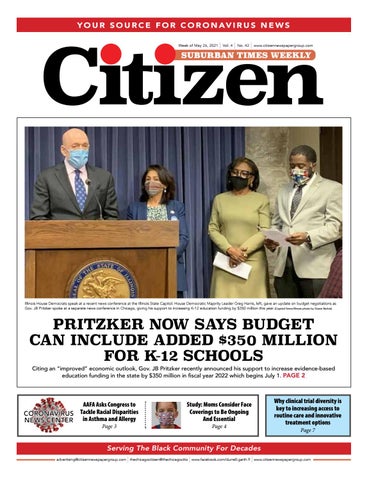
Illinois House Democrats speak at a recent news conference at the Illinois State Capitol. House Democratic Majority Leader Greg Harris, left, gave an update on budget negotiations as Gov. JB Pritzker spoke at a separate news conference in Chicago, giving his support to increasing K-12 education funding by $350 million this year. (Capitol News Illinois photo by Grace Barbic)
PRITZKER NOW SAYS BUDGET CAN INCLUDE ADDED $350 MILLION FOR K-12 SCHOOLS Citing an “improved” economic outlook, Gov. JB Pritzker recently announced his support to increase evidence-based education funding in the state by $350 million in fiscal year 2022 which begins July 1. PAGE 2
AAFA Asks Congress to Tackle Racial Disparities in Asthma and Allergy Page 3
Study: Moms Consider Face Coverings to Be Ongoing And Essential Page 4
Why clinical trial diversity is key to increasing access to routine care and innovative treatment options Page 7
Serving The Black Community For Decades |
|
|
advertising@citizennewspapergroup.com thechicagocitizen@thechicagocitiz www.facebook.com/durrell.garth.9 www.citizennewspapergroup.com
2 | CITIZEN | Suburban Times Weekly | Week of May 26, 2021
NEWS
Pritzker now says budget can include added $350 million for K-12 schools Continued from page 1 BY JERRY NOWICKI AND TIM KIRSININKAS Capitol News Illinois Jnowicki@capitolnewsillinois.com tkirsininkas@capitolnewsillinois.com
Springfield – Citing an “improved” economic outlook, Gov. JB Pritzker recently announced his support to increase evidence-based education funding in the state by $350 million in fiscal year 2022 which begins July 1. In his February budget proposal, Pritzker originally proposed flat spending for education, citing “financial uncertainty” amid the COVID-19 pandemic. It would have been the second consecutive year in which the state failed to add $350 million to the funding formula – a number written into state statute as a goal aimed at driving new money to the districts that are furthest from funding “adequacy.” Adequacy is based on a number of factors, including class size and local capacity to fund a school district. “Parents, students and educators can breathe a sigh of relief,” Pritzker said in a recent unrelated news conference. “As an education advocate myself, I am really all too happy that our improved economic and fiscal condition allows us to increase educational funding.” The announcement comes following
the latest report from the Commission on Government Forecasting and Accountability, which cited improved revenue numbers for the current fiscal year as the state works toward a full economic recovery from the pandemic. Per that report, after revenues fell by $2.74 billion last April, base general fund revenues in April 2021 grew $1.779 billion, in part because April income tax payments were delayed one year ago. “While the full story of FY 2021 revenues has yet to be written, given the onset of the pandemic, receipts clearly have performed much better than any prognosticator could have foretold one year earlier,” the COGFA report stated. “Despite periodic upward revisions in the revenue projections throughout the course of the fiscal year, each time those updated expectations have been met and exceeded,” the report continued. The Illinois State Board of Education, in appropriations hearings in the House and Senate earlier this year, pushed back on the governor’s initial proposal to keep funding flat. Leaders in the General Assembly from both parties have done the same. ISBE requested a 4.6 percent funding increase for FY 2022, including asking for an added $362.1 million to the evidence-based funding formula and $50 million in added
early childhood education grants. Their request would put their state general revenue funding – which is the state’s main discretionary spending account – at about $9.3 billion. Pritzker did not give details on the proposed ISBE budget, aside from giving his support to the $350 million in added funding. Per the budgeting process, both Houses of the General Assembly must approve a spending plan, then Pritzker would have the opportunity to sign or veto it. House Majority Leader Greg Harris, D-Chicago, in a news conference that occurred in Springfield at the same time Pritzker’s was going on in Chicago, said lawmakers are well into the process of planning a budget for the upcoming fiscal year. He said he was optimistic about the latest COGFA report, but the state’s financial picture is still somewhat bleak. “Revenue has continued to perform very, very well,” Harris said. “The economy of the state of Illinois has been performing better than we had expected. And to be honest, we initially planned for this year very conservatively, not knowing what COVID would bring.” Federal stimulus packages, including the recent American Rescue Plan signed by President Joe Biden, have aided the state’s recovery, Harris said. “It’s given families some disposable income,
that has allowed them to go out and spend, you know, to support their families,” he said. “And that has in turn, raised our income taxes and our sales taxes in the state.” Lawmakers will have to project whether the rosy revenue projections for the end of this fiscal year will carry on into the next fiscal year. “We’re seeing some very good numbers in the state,” he said. “That being said, we still are looking at next year, a budget deficit of about $1.4 billion that we’ll have to solve for, and some new revenue could certainly help that. But it’s not going to solve the entire problem.” One key part of the governor’s proposal to balance the budget is to make several changes to the corporate tax structure – changes he calls closing corporate tax “loopholes,” which Republicans call important business “incentives.” While Pritzker signed off on a number of those corporate tax cuts or credits in his first year, Harris said budgets are “dynamic things,” and changing revenue pictures mean cutting expenditures. “But the most important thing is we’ve got to protect the state budget, we’ve got to protect our core functions,” he said. “We’re happy to sit down and negotiate with the Republicans and the Democrats in the Senate, and if it’s a will of folks to keep those in, I think that’s what all of us would be willing to do.”
$1 Billion in Rebuild Illinois Grants Distributed for Local Infrastructure Projects Darrell Garth Darrell Garth President / Publisher President Publisher Janice Garth Janice Garth SalesManager/ Manager/ General Sales General Manager Manager CSTWeekly, Weekly, published published weekly CST weeklyonon Wednesdays and and distributed distributed ininthe Wednesdays the Townshipof of Bloom, Bloom, (publishing Township (publishing5252 issues annually). annually). Written issues Written permission is required permission is required toto reproduce contents contents in reproduce in whole whole oror partfrom from the the General General manager part manageroror thepublisher. publisher. CST CST Weekly the Weeklydoes does notassume assume the the responsibility responsibility for not for nor are are we we able able to nor to return return unsolicitedmarterials. marterials. Deadline unsolicited Deadlinefor for advertising is every Monday at advertising is every Monday at noon. For information on noon. For information on subscriptions or advertising call us subscriptions or advertising call us at (773) 783-1251. Our office is at (773) 783-1251. Our office is located at 8741 S. Greenwood located at 8741 S. Greenwood Ave., Ste# 107, Chicago, Illinois Ave., Ste# 107, Chicago, Illinois 60619. 60619.
Editorial:
Editorial: Send press releases, news tips, Send calendar press releases, news listing etc. to: tips, calendar listing etc. to: editorial@cstweekly.com editorial@cstweekly.com Advertising
Advertising advertising@cstweekly.com advertising@cstweekly.com Classifieds call us at Classifieds call us at (773) 783-1251 (773) 783-1251
As summer construction season ramps up, Gov. JB Pritzker and the Illinois Department of Transportation (IDOT) recently announced the fourth round of $250 million in Rebuild Illinois funded grants is available to advance municipal, township, and county projects across the state. With the latest round of grants, $1 billion in funding has now been distributed to address local transportation needs. The funding ensures that local governments can continue to invest in projects that sustain good-paying jobs and enhance quality of life for Illinois residents. “In a sign that Illinois is overcoming years of dysfunction, we put together a bipartisan-backed Rebuild Illinois plan to build new roads and bridges and ports and airports and to fix existing ones. It’s the largest infrastructure investment in Illinois’ history. While other Midwestern states struggle to modernize, Illinois is passing them by. Already, our Rebuild Illinois
plan has improved over 3,000 miles of highways, completed over 180 bridges, and launched hundreds more projects,” said Governor JB Pritzker. “But Rebuild Illinois isn’t just about building gleaming new state roads and bridges. It’s also about fixing local roads and bridges that make a big difference in people’s daily lives. Government ought to be all about making life better for our families and our communities right where we live. That’s why I’m so excited to be here in Champaign to announce $250 million in new grants for counties, municipalities, and townships – bringing our total funding for these grants through Rebuild Illinois to $1 billion.” A total of $1.5 billion spread out in six installments is being invested over three years to advance municipal, township and county projects across the state. Projects include road and bridge improvements, traffic signal upgrades, new storm sewers and bike paths, sidewalk www.citizennewspapergroup.com
replacements and other long-term maintenance needs, with financial oversight from IDOT. “At IDOT, there is no such thing as a federal road, a state road, a county road or a township road. They are all Illinois roads that the public depends on each day,” said Acting Transportation Secretary Omer Osman. “Because of the vision of Gov. Pritzker, Rebuild Illinois is making historic investments in our local transportation system. Working together with our partners, we are strengthening all modes of transportation across all jurisdictions.” The funding is in addition to the regular contributions through the state’s motor fuel tax formula, which have increased due to Rebuild Illinois and already account for $706.5 million to local governments in this fiscal year alone. Passed in 2019, Rebuild Illinois is investing $33.2 billion into the state’s aging transportation system, creating jobs, and promoting economic
growth. The landmark capital program is not only the largest capital program in state history, but also the first one that touches all modes of transportation: roads and bridges, transit, waterways, freight and passenger rail, aviation, and bicycle and pedestrian accommodations. “This significant investment in new and improved infrastructure will allow our residents to travel safely and draw visitors to our area, helloing our whole community move forward from the pandemic,” said State Senator Scott Bennett (D-Champaign). “Continued commitment to our state’s transportation and infrastructure system is critical to jump-starting the economy and putting us back on track.” As part of its current FY2021-26 Proposed Highway Improvement Program, IDOT is investing a total of $21.3 billion to improve roads and bridges. Of that, $4.7 billion is identified for the local transportation system.
CITIZEN | Suburban Times Weekly | Week of May 26, 2021
|
3
POLITISCOPE
Free speech wasn’t so free 103 years ago, when ‘seditious’ and ‘unpatriotic’ speech was criminalized in the US Supreme Court, generally upheld them as necessary wartime restrictions. “When a nation is at war,” the Supreme Court unanimously ruled in Schenk v. United States (1919), “many things that might be said in time of peace are such a hindrance to its effort that their utterance will not be endured so long as men fight, and that no Court could regard them as protected by any constitutional right.”
BY ERIC P. ROBINSON
Just over a century ago, the United States government – in the midst of World War I – undertook unprecedented efforts to control and restrict what it saw as “unpatriotic” speech through passage of the Sedition Act of 1918, signed by President Woodrow Wilson on May 16 of that year. The restrictions – and the courts’ reactions to them – mark an important landmark in testing the limits of the First Amendment, and the beginnings of the current understanding of free speech in the U.S. As a scholar and lawyer focused on freedom of speech in the U.S., I have studied the federal government’s attempts to restrict speech, including during World War I, and the legal cases that challenged them. These cases helped form the modern idea of the First Amendment right of free speech. But the conflict between patriotism and free expression continues to be an issue a century later. Government’s pursuit of ‘radicals’ The onset of war led to a patriotic fervor, fed by an intense government propaganda campaign. It also led to new challenges to the concept of free speech. Within a few weeks of declaring war in 1917, President Woodrow Wilson signed the Espionage Act. This law, which is still largely in effect, makes it a crime to do three things. First, to convey false infor-
Eric P. Robinson
mation in order to interfere with the American military, or promote the success of America’s enemies. Second, to cause or attempt to cause insubordination within the military. Third, to willfully obstruct military recruitment or enlistment. Both the Obama and Trump administrations used this law to investigate unauthorized leaks of government information, including obtaining reporters’ phone records. The more restrictive Sedition Act of 1918 went further, amending the Espionage Act to criminalize “disloyal, profane, scurrilous or abusive” speech about the United States or its symbols; speech to impede war production; and statements supporting a country with which the U.S. is at war. These laws were unprecedented restrictions on speech, and challenged the First Amendment’s founding concept of tolerating criticism of government. But the courts, including the United States
Many convictions More than 2,000 people were prosecuted under the Espionage and Sedition acts during the war. About half were convicted, many of whom were given jail time. These included several people who distributed leaflets arguing that the draft constituted slavery (as in the Schenk case) and those who urged labor strikes against munitions plants (as in the U.S. Supreme Court case Abrams v. United States (1919). Those convicted included leaders of the Socialist and Communist parties, including anarchist writer Emma Goldman and Socialist presidential candidate Eugene V. Debs, whose 1920 campaign was mounted from prison. A few judges – notably U.S. Supreme Court justices Louis Brandeis and Oliver Wendell Holmes – expressed concerns that the prosecution of war dissenters was contrary to the First Amendment protection of free speech. As Holmes explained in his famous
dissent in the Abrams case, “Congress certainly cannot forbid all effort to change the mind of the country.” The war ended in November 1918, but the Sedition Act continued to be used against so-called “radicals,” including a Justice Department campaign known as the Palmer Raids in response to several terrorist bombings. The effort was named for Wilson’s attorney general, A. Mitchell Palmer, whose home was among the locations bombed. After World War II, a reassessment The Sedition Act was finally repealed on Wilson’s last day in office in 1921, although the Espionage Act remains. All those who were jailed under the laws saw their sentences commuted by 1923. In 1924, Attorney General Harlan Fiske Stone concluded that law enforcement should be concerned with only the conduct of individuals, not their “political or other opinions.” In 1931, President Franklin Roosevelt offered amnesty to all those convicted under the Espionage or Sedition acts during the war. But speech restrictions returned. In the run-up to American entry into World War II, Congress adopted the Smith Act in 1940, which barred speech and organizations intended to overthrow any government in the United States. It was used during the war and the Red Scare of the 1950s to suppress
dissemination of Communist ideas and thought.“ Eventually, however, in 1969 the Supreme Court settled on the current legal standard, under which speech can be restricted only if it presents a threat of “imminent lawless action,” based on the circumstances in which it is made. This standard allows for controversial, even incendiary, speech, unless there is an immediate threat that the speech will foreseeably lead to illegal behavior by the audience. Despite calls for repression of dissent after the Sept. 11 attacks, no direct restrictions on speech were enacted. In 2020 Attorney General William Barr called for prosecutions of violent protesters, but no such charges were filed. There were also calls for President Donald Trump to be prosecuted for the fiery speech that preceded the Capitol insurrection on Jan. 6. But the “imminent lawless action” standard is a high threshold. This reluctance to prosecute speech may well reflect the lessons learned from the excesses of repression under the Espionage Act a century ago. The First Amendment right of free speech exists as a means of keeping a critical eye on government. Such scrutiny is always important, but is especially critical during times of war. Eric P. Robinson is an Assistant Professor (media law and ethics) at the University of South Carolina.
NEWS AAFA Asks Congress to Tackle Racial Disparities in Asthma and Allergy Each year, the Asthma and Allergy Foundation of America (AAFA) brings patient spokespeople and advocates from across the nation to Congress to help advance policies to improve the lives of the community it serves. This year’s meetings were held via Zoom due to the ongoing COVID-19 pandemic. This year, AAFA is asking Congress to support legislation that continues to improve research, prevention, treatment, and access to care to save lives and promote health equity. “AAFA’s policy recommendations along with the funding and legislative action we’re urging
Congress to take, play critical roles in unburdening Americans experiencing the worst health outcomes at a disproportionate rate. “Promoting racial equity in asthma and allergy care requires rebuilding and creating new systems,” said Kenneth Mendez, CEO and president of AAFA. “We must include health considerations and equitable solutions in all policy-making decisions to make real and lasting change. When we’re able to make a difference in prioritizing equal access to prevention, treatment and cure across disease categories everyone benefits.”
ACE Announces Two Full Scholarships for HBCU Graduates American College of Education recently announced that it is offering two full education program scholarships to graduates of Historically Black Colleges and Universities (HBCUs) for the August 24, 2021, term. The scholarships will be available for one master’s-level applicant and one doctoral-level applicant. Candidates must apply by June 20 and will be chosen by July 16. Read more about the scholarship application and requirements at https://www.ace.edu/scholarships/hbcu-graduate-scholarship. Read more about ACE at https://www.ace.edu/ www.citizennewspapergroup.com
ABA book guides lawyers, employers and union advocates through labor arbitration cases Just published by the American Bar Association, “Labor Arbitration Practice: An Advocate’s Handbook” leads the reader through each step of the labor arbitration process from the perspective of the advocate. The book was written for union and management lawyers and lay advocates alike. Though this book deals solely with labor arbitration, advocates may find themselves with a case in other related arenas, such as employment disputes in nonunion
settings, and may find relevant and useful information in most of the chapters of this book. Author Charles Loughran has made a career spanning 55 years in the fields of labor relations and collective bargaining. He has extensive hands-on experience as a labor negotiator, arbitration advocate, labor relations executive, employment mediator and labor arbitrator. The cost of the book is $229.95. Orders can be placed by calling 800-285-2221 or by visiting shopaba.org
4 | CITIZEN | Suburban Times Weekly | Week of May 26, 2021
FASHION
Study Reveals Moms Consider Face Coverings to Be an Ongoing Family Essential At the outset of the pandemic, Yaron Shemesh, CEO of Creative Home Ideas, immediately marshalled his company’s extensive resources to help provide masks for first responders and healthcare workers. The company’s ability to connect global manufacturers to his home community which was being especially hard-hit by the virus meant a great deal to Shemesh. After nearly a year of providing helpful KN95 respirator masks wherever the company saw a need, Creative Home Ideas developed i-mask4u, a line of stylish, affordable, fashion-forward disposable masks, in response to the ongoing needs of the American family. Creative Home Ideas wanted to thoroughly understand the thinking and expectations around mask-wearing for the future, so they hosted focus groups. These groups revealed that moms of school-age children believe that wearing a well-fitting disposable mask helps guard their children and themselves against continued outbreaks of the Covid-19 virus and, more thoughtfully, against cold and flu germs along with allergy-producing pollens and other impurities. Results also showed that ongoing use of face coverings will be influenced by fashion. If available, moms will purchase masks that coordinate with clothing or express individual style. Partnering with the fashion brands for their home products, Creative Home Ideas created a line of disposable face coverings for adults from Nautica, Juicy Couture, Jessica Simpson, French Connection, and Laura Ashley, and girls’ and boys’ disposable face masks available from Juicy Couture, Nautica, and Laura Ashley brands. According to Shemesh, “Our research showed that people believed that face masks are a positive health development. The respondents also said that they would continue wearing face masks, even after the pandemic has ended, because they keep us healthy by protecting us from not only viruses but pollens and other impurities as well. When asked do you wear masks to protect
imask4u Juicy Couture fashionable designer 3-ply disposable mask looks like a fabric mask but without the upkeep. Just wear it and toss it. Shown in leopard print.
imask4u Nautica Sports 3-ply disposable mask is just one of the many colorful, fun prints for boys and girls to enjoy wearing.
yourself, others, or both, 100% of the focus group indicated both. When asked what they were looking for in face coverings, the responses scored high for positive company reviews and recommendations along with good prices and free shipping.” Many of the focus group moms surveyed said that they want to be protected and to protect their families, so they shop for masks about once a month. They did not like cleaning masks and preferred the disposable face masks from trusted brands because they considered them to be safer and more convenient. To them, the fit is also important along with a refundable guarantee. “Taking all of this into consideration we developed i-mask4u.” Shemesh continued. “We offer comfortable adult disposable KN-95 masks along with fashionable designer 3-ply disposable masks for men and women. These fashion masks combine the need for safety with trendy colors and prints from trusted brands. They look like fabric masks but do not require the upkeep. Just wear them and toss them.” Study participants admitted confusion about KN95s, who should wear them, and how to discern quality products over cheaper, potentially inferior masks. According to a press release, i-mask4u KN95 personal protective masks are a secure fitting filtering face mask that captures over 95 percent of bac-
terial microns and particulates in the air. You can also layer a colorful fashion face mask over a KN95 face mask to change up your image. An extensive social media campaign is underway to educate and inform consumers on the benefits of KN95 masks. Creative Home Ideas offers some tips on how to wear the designer fashion face masks * Use the designer fashion face masks to mix and match with wardrobe prints or add a splash of color to a neutral outfit. * Select a design that coordinates with your wardrobe or expresses your mood. Be bold on some days and serene on others. * Layer a colorful fashion mask over a KN95 face to change up your image, leaving the “mix, mask, style” all up to you. The 3-ply disposable fashion face masks for adults and children are sold 10 per pack and include a resealable travel package to keep them clean. Each fashion pack has five print and five solid masks. Although designed with technical specifications, they are not a medical product. Receive a free KN95 facemask for every adult designer fashion face mask purchased so you can layer them together for added protection. For more information or to place an order, visit i-mask4u at https://i-mask4u.com/ Orders ship within 24-48 hours from the USA and offer a money back “fit or forget it” guarantee. www.citizennewspapergroup.com
Amid the COVID-19 crisis, the global market for Anti-Aging Products estimated at US$34.2 Billion in the year 2020, is projected to reach a revised size of US$47.8 Billion by 2027, growing at a CAGR of 4.9% over the analysis period 2020-2027.
Global Anti-Aging Products Market to Reach $47.8 Billion by 2027 A new market study published by Global Industry Analysts Inc., (GIA) titled “Anti-Aging Products - Global Market Trajectory & Analytics”, presents fresh perspectives on opportunities and challenges in a significantly transformed post COVID-19 marketplace. Amid the COVID-19 crisis, the global market for Anti-Aging Products estimated at US$34.2 Billion in the year 2020, is projected to reach a revised size of US$47.8 Billion by 2027, growing at a CAGR of 4.9% over the analysis period 2020-2027. Anti-Wrinkle Products, one of the segments analyzed in the report, is projected to record a 5.7% CAGR and reach US$19.1 Billion by the end of the analysis period. After an early analysis of the business implications of the pandemic and its induced economic crisis, growth in the ANTI-PIGMENTATION PRODUCTS segment is readjusted to a revised 4.1% CAGR for the next 7-year period. The U.S. Market is Estimated at $11.6 Billion, While China is Forecast to Grow at 7.2% CAGR The Anti-Aging Products market in the U.S. is estimated at US$11.6 Billion in the year 2020. China, the world`s second largest economy, is forecast to reach a projected market size of US$3 Billion by the year 2027 trailing a CAGR of 7.2% over the analysis period 2020 to 2027. Among the other noteworthy geographic markets are Japan and Canada, each forecast to grow at 3.9% and 4.8% respectively over the 2020-2027 period. Within Europe, Germany is forecast to grow at approximately 4.7% CAGR. Hair Care Products Segment to Record 4.8% CAGR In the global Hair Care Products segment, USA, Canada, Japan, China and Europe will drive the 4.6% CAGR estimated for this segment. These regional markets accounting for a combined market size of US$5.5 Billion in the year 2020 will reach a projected size of US$7.5 Billion by the close of the analysis period. China will remain among the fastest growing in this cluster of regional markets. Led by countries such as Australia, India, and South Korea, the market in Asia-Pacific is forecast to reach US$2.6 Billion by the year 2027, while Latin America will expand at a 5.9% CAGR through the analysis period.
CITIZEN | Suburban Times Weekly | Week of May 26, 2021
|
5
NEWS
You’re never too young to plan for retirement. NewsUSA - As a young adult, you may find yourself working your first job, and enjoying your first apartment and first car. And while retirement planning may be the farthest thing from your mind, it shouldn’t be. Take some smart steps now, and you can reap the benefits later, with more money and resources than you might think possible. “Saving and investing for your future is one of the most important things you can do,” says Charles Sachs, CFP®, a CERTIFIED FINANCIAL PLANNER™ professional. These tips from a CERTIFIED FINANCIAL PLANNER™ professional can help: Pay it forward. One of the easiest ways young adults can save for retirement is to invest in a 401(K) plan offered by an employer. When you sign up for an automatic contribution, the money comes out of your paycheck before you see it, so you won’t miss it now, but you will appreciate it later after it has grown over time. Two other reasons to take advantage of a 401(k)? The extra funds earned if your employer matches your contributions (though not all employers do this) and funds saved because the money you put in a 401(k) is tax-deferred, which means it reduces your taxable income until you withdraw it in retirement.
You’re never too young to plan for retirement.
www.citizennewspapergroup.com
- Pay it back. Another way to get a head start on a secure financial future is to set financial goals and prioritize early, according to CERTIFIED FINANCIAL PLANNER™ professional Douglas Boneparth, CFP®. “Know who you owe money to (government or private loans), how much you owe and the interest rates associated with each loan. Educate yourself and don’t be in denial,” he says. “Take a look at your pay stub and start to understand all the different things that are withheld from your paycheck such as taxes, health insurance premiums and 401(k) contributions. What you end up with -- your ‘net’ -- is the money you actually have to build your budget,” Mr. Boneparth explains. Decide how to spend what’s left. For many young adults, that includes paying off student loans, but also could involve saving for a house or for further education. A CFP® professional can provide guidance and advice as you consider these points in retirement planning: What do you want? When do you want it? How much will it cost? Visit LetsMakeAPlan.org for more advice and tips to get in on the ground floor of smart money management and building wealth for retirement.
6 | CITIZEN | Suburban Times Weekly | Week of May 26, 2021
W
By: Luth
Diseases don’t discriminate.
Diversity and inclusion in clinical research has never been more important. And with more volunteers, medical advancements can become even better. Visit medicalheroes.org to learn more. A sincere thank you to all who participate in clinical research from the following organizations:
The C longsta import ipation tionate clinical new me has bec munitie Clini ble new an espe conditi some fo note th receive in the c standar is used Duri have de derlyin amplifi demic a delays a underst ing to e ative fo outcom ties as w access a in clini
Pandem ical Ca ance Duri demic, of med and ser been w ing to o estimat U.S. de care be ing bot cy care care wa underly adults, unpaid medica mortali • to prote show co the ons nationa tions in • have co screeni In the U screeni cervica June 16
CITIZEN | Suburban Times Weekly | Week of May 26, 2021
|
Advertorial
Why clinical trial diversity is key to increasing access to routine care and innovative treatment options By: Luther T. Clark, MD, Deputy Chief Patient Officer, Merck
The COVID-19 pandemic has shone a light on longstanding health care disparities and amplified the importance of clinical trial diversity, especially participation of those patients and communities disproportionately impacted by the disease being studied. Since clinical trials function as the gatekeeper to bringing new medicines safely to patients and communities, it has become increasingly important that diverse communities be represented in our research efforts. Clinical trial participation provides access to possible new and innovative treatment options for patients, an especially important benefit for those who have conditions with limited treatment options – such as some forms of advanced cancer. It is important to note that, while not all clinical trial participants will receive the investigational treatment being evaluated in the clinical trial, all patients receive high quality standard-of-care, which is the standard treatment that is used for the health condition. During the COVID-19 pandemic many patients have delayed or avoided routine medical care for underlying conditions – a hidden harm that has further amplified its already enormous health toll. While pandemic associated medical care delays and avoidance may be understandable, safely returning to essential care is imperative for improving patient outcomes and reducing disparities as well as increasing patient access and ability to participate in clinical research. Pandemic Associated Medical Care Delays and Avoidance During the COVID-19 pandemic, delays and/or avoidance of medical care for both routine and serious conditions have been widely reported. According to one recent analysis (1) an estimated 41% of adults in the U.S. delayed or avoided medical care because of concerns about COVID-19 – including both routine care (31.5%) and urgent or emergency care (12.0%). Avoidance of urgent or emergency care was more prevalent among individuals with underlying medical conditions, Black adults, Hispanic adults, young adults, persons with disabilities and unpaid adult caregivers. When patients delay or avoid medical care, they increase both their morbidity and mortality risks. For example, • Vaccines play an important role in helping to protect people from preventable diseases, but data show concerning decreases in vaccination rates since the onset of the COVID-19 pandemic. A recent international poll revealed that 73% experienced disruptions in vaccine demand. • Similarly, while routine cancer screenings have contributed to important cancer survival gains, screening rates have dropped during the pandemic. In the U.S. alone, approximately 285,000 breast cancer screenings, 95,000 colon cancer screenings and 40,000 cervical exams were missed between March 15 and June 16, 2020.
Cancer is a particularly powerful example of how longstanding inequities in care coupled with the pandemic’s impact on reduced access/utilization of routine health care can converge and create an even more devastating impact on patients, families and communities. Cancer incidence is known to be disproportionately higher in under-represented minorities compared to other groups, and access -- to timely diagnosis, quality care and to clinical trials of promising therapies -- is suboptimal among people of color. Furthermore, cancer and its treatment predispose to many other health outcome disparities, as demonstrated by the disproportionate impact of COVID-19 on morbidity and mortality rates among people with cancer. Social Determinants of Health (SDOH) Social and economic factors, referred to as social determinants of health (i.e., education, economic stability, neighborhood, health and health care access, social and community context) not only contribute to healthcare disparities but may also negatively impact the decision and the ability of patients to participate
in clinical research (2-4). By recognizing and understanding the SDOH, we can help accelerate return to medical care, overcome barriers to minority participation in research, and ultimately improve patient outcomes. Effective and meaningful community engagement, collaborations, and partnerships are critically important for addressing all of the SDOH, and especially helpful for increasing awareness, education and building trust. Bridging the Digital Divide Digital technologies have many potential benefits for improving healthcare, including the potential to improve healthcare quality, patient safety and reduce disparities (5). However, inequities in access to virtual technologies do exist and may lead to or exacerbate disparities. Often referred to as the “digital divide”, there is a considerable difference between those patients/communities that have access to digital technologies and the ability to understand and use them effectively (digital literacy) and those who do not. For example, access and utilization of digital health-
care technologies are known to be significantly lower among older Black and Hispanic patients than their white or Asian counterparts. In addition to differences in access and digital literacy, structural inequities (i.e., lack of broadband internet availability) impact disproportionately some groups and communities – racial and ethnic minorities, rural communities and individuals of lower socioeconomic status (6). Without recognition and action, the digital divide will only widen. Summary and Conclusions It is important for the medical and public health community, policymakers, employers and health advocates around the world to come together to encourage people within our communities to get the care they need. • As we join the multi-sector effort to combat COVID-19, we must also focus on helping people in our communities get the routine care they need to protect their long-term health. • It’s vital to support individuals and patients in returning to care because delays or cancellations are associated with significant health risks. While the COVID-19 pandemic has caused unprecedented disruption to the healthcare system, it has also led us to identify opportunities to strengthen it for the future. We are committed to working with stakeholders to enact solutions that will improve patient care and help protect public health over the long term. References: 1. Czeisler MÉ, Marynak K, Clarke KE, et al. Delay or Avoidance of Medical Care Because of COVID-19–Related Concerns — United States, June 2020. MMWR Morb Mortal Wkly Rep 2020;69:1250–1257. DOI: http://dx. doi.org/10.15585/mmwr.mm6936a4 2. Clark LT, Watkins L, Pina IL, Elmer M, Akinboboye O, Gorham M, Jamerson B, McCullough C, Pierre C, Polis AB, Puckrein G, Regnante JM. Increasing Diversity in Clinical Trials: Overcoming Critical Barriers. Curr Probl Cardiol 2019; 44:148-172 3. Asare M, Flannery M, Kamen C. Social Determinants of Health: A Framework for Studying Cancer Health Disparities and Minority Participation in Research. Oncol Nurs Forum. 2017 January 02; 44(1): 20–23. https://www.ncbi.nlm.nih.gov/ pmc/articles/PMC5583708/pdf/nihms893015.pdf 4. Weinstein JN, Geller A, Negussie Y, Baciu A. Communities in Action: Pathways to Health Equity. Report of the National Academies of Sciences Engineering Medicine (2017). https://www.ncbi.nlm.nih.gov/books/NBK425848/pdf/Bookshelf_NBK425848.pdf 5. Lopez L, Green AR, Tan-McGrory A, King R, Betancourt JR. Bridging the digital divide in health care: the role of health information technology in addressing racial and ethnic disparities. Jt Comm J Qual Patient Saf 2011 Oct;37(10):437-45. doi: 10.1016/s1553-7250(11)37055-9. 6. Campos-Castillo C, Anthony D. Racial and ethnic differences in self-reported telehealth use during the COVID-19 pandemic: a secondary analysis of a US survey of internet users from late March. Journal of the American Medical Informatics Association, 28(1), 2021, 119–125. doi: 10.1093/jamia/ocaa221
7
8 | CITIZEN | Suburban Times Weekly | Week of May 26, 2021
How to make your dream outdoor room a reality
HOME
BPT) - As the pandemic continues, outdoor spaces have become true extensions of the home. From a calm place to escape to an area to work and focus, outdoor rooms are being designed and utilized more frequently than ever before. "Homeowners have shifted their focus from having spaces to entertain to making their homes more functional," says Joe Raboine, director of residential hardscapes, Belgard. "With the increased time spent at home, outdoor spaces have become a haven for both recreation and relaxation, as well as a valuable asset when it's time to resell." With over 25 years as an outdoor designer, Raboine has unique insight into the outdoor living industry. He expects biophilic design trends to gain momentum in the future as people continue craving a connection to nature. This design approach prioritizes customizing spaces that flow with the natural landscape, benefitting both human health and environmental wellness. As people spend more time outdoors from the safety and comfort of home, they are investing in the creation of outdoor rooms. Some of the most popular options that complement a property and are used frequently by homeowners are outdoor dining rooms, living rooms, kitchens and offices. Planning the right outdoor room for you If you are considering adding a dream outdoor space to your property, it's important to properly plan. Start by exploring different designs and building plans that might be right for your needs and space. Belgard Rooms is a great resource for planning outdoor rooms. The interactive site at Belgard.com/Rooms makes it easy to identify needs, pair designs that complement the style of your home and define your overall plan. Once you find one you like, you can download the plan for free and share it with contractors to get bids on the project. "Belgard Rooms is segmented by room type and structured around how shape, color and texture work together to offer more options and make the design planning process easier," says Raboine. Beyond convenience, this is beneficial from a timing and installation perspective. The templated designs can be customized to fit homeowners' needs and tastes. This means contractors require less time for the design and installation process, and you are able to enjoy your outdoor space sooner.
Next steps: Budget tips After you find a plan you like, it's time to consider budget and connecting with contractors. This insight from Raboine will help you in managing budget: R e s e a r c h ty p i c a l p r o j e c t c o s t s i n y o u r a r e a Ask neighbors if they have completed similar projects. Get multiple quotes from several contractors. Go beyond labor costs and determine product costs online to understand the big picture financially. To give yourself options, look for alternative products that are similar in price. Research contractors and gather bids Get multiple bids from contractors. Given the current circumstances, this year is busy for contractors, in terms of both scheduling and inventory. So, keep in mind price is only one consideration; experience, licenses, references, turnaround time and satisfaction guarantees are other important factors. Determine a payment schedule Understand payment options and if materials are included in those fees. You may want to plan the project in phases to meet your budget. Additionally, you can ask about financing options, which may allow you to take advantage of construction efficiencies and avoid a phased build. More complex projects cost more Make sure you understand specific construction or engineering requirements. Linear design requires less cutting and building, resulting in lower costs compared to circular or winding patterns. Leveling your land can be costly, so consider building down into the slope. "Schedules for contractors nationwide are filling up, so now is the time to take action with your outdoor projects by finding designs you like, gathering bids and making your dream outdoor room a reality," said Raboine.
Interior Enhancements That Make a Great First Impression elegance and style with sleek, smooth edges. Bravura also offers a design-your-own-hardware tool so homeowners can customize, combining knobs, levers and rosettes with a choice of seven backplate designs and seven finishes.
(StatePoint) First impressions are everything. And while a lot gets said about exterior curb appeal, what one sees upon entering your home matters just as much. Whether you simply want to wow guests and the members of your household, or you’re looking to make a splash in the housing market with an updated, modern look, check out these interior enhancement ideas.
4. Get sophisticated. The new line of Hollow Iron Balusters from L.J. Smith Stair Systems can add a touch of sophistication to stairways. One of the styles features a single acrylic orb, a second design features sophisticated ornate detail, and the third boasts an expanded center diameter. The marquis center of the fourth option pairs well with the manufacturer’s plain half-inch square baluster. For homes with staircases directly in the foyer, this is a project that can make a particularly striking impact.
1. Go clean and modern. Did you know that it can be easy to change out your existing ho-hum balusters? Check out the Concealed Iron Baluster Installation Kit from L.J. Smith Stair Systems. The kit is used for installing 1/2-inch square hollow iron balusters to open treads and level runs, resulting in a clean finished look that’s totally contemporary and on-trend. 2. Refresh mouldings. Looking to upgrade base and crown mouldings? You don’t need to replace them entirely to get a fresh new look. Save time, money and effort by simply covering them over with CoverTrim from Ornamental Decorative Millwork. Designed to install over existing mouldings, these primed and ready-to-paint pieces are made of durable medium density fiberboard for an easy DIY job. 3. Elevate hardware. Replacing door hardware is a simple way to upgrade the look of your doors
resistant crystal door hardware that conveys and add a personal touch. Designer brand Bravura Hardware offers premium, environmentally-friendly, scratchwww.citizennewspapergroup.com
5. Upgrade interior doors and windows. Instantly upgrade the appearance of interior doors, windows and cased openings with Craftsman Crossheads from Ornamental Decorative Millwork. The one-piece, pre-built crosshead comes in five common widths and can be installed in less than 10 minutes. Made of poplar and factory-primed, once painted, it can be secured quickly above a door or window for a fast, custom-looking upgrade that enhances the style of any room in the home with minimal effort.
CITIZEN | Suburban Times Weekly | Week of May 26, 2021
|
9
10 | CITIZEN | Suburban Times Weekly | Week of May 26, 2021
NEWS
White House COVID-19 Response Team and the Black Press BY STACY M. BROWN NNPA Newswire Senior National Correspondent @StacyBrownMedia
Misinformation and disinformation are the primary drivers for vaccine hesitancy in African American and Latino neighborhoods. Still, individuals should cautiously seek trusted voices in their respective communities who only present life-saving facts. That is the message from two of the nation’s leading physicians, who are members of the White House COVID-19 Response Team. In a special live interview with the National Newspaper Publishers Association (NNPA), Dr. Marcella Nunez-Smith and Dr. Cameron Webb extolled the importance of everyone getting fully vaccinated. They told NNPA President and CEO Dr. Benjamin F. Chavis Jr, NNPA Chair Karen Carter Richards, and other members of the Black Press, that the Biden-Harris administration is not only meeting – but exceeding – expectations of making vaccines available to all communities. “We see misinformation all of the time and folks ask questions that are rooted in disinformation,” declared Dr. Webb, the senior policy advisor for COVID-19 equity and a physician and professor at the University of Virginia. “As it gets spread from person to person, from family to family, and friend to friend, it’s so important for the Black Press to tell the story of what is happening on the ground. Grandmothers can spend time with their grandchildren again. These vaccines are a key path to get back to normal life. Science bears out that these vaccines are safe. The real risk is COVID-19, the virus, not the vaccine.” President Biden recently announced a goal of vaccinating at least 70 percent of the adult U.S. population by July 4. With more than 105 million fully vaccinated to date, the goal is viewed by many as well within reach. “Ultimately, we’re trying to get everyone vaccinated who are medically able to,” stated Dr. Nunez-Smith, the director of the White House’s COVID-19 Equity Task Force and associate professor of internal medicine, public health, and management at Yale University. “What I stress is that this has to be a community-level goal, too,” she said. “It’s about getting everyone in our social network, our community, vaccinated.” Dr. Webb pointed to each of the three vaccines – Pfizer, Moderna, and Johnson & Johnson. He said each has proven safe. “They work a little different, but each teaches your body how to recognize the threat of COVID-19,” Dr. Webb noted. “[The vaccines] are not giving you the virus. It’s teaching your body how to recognize the bad guy – the virus. We have great data, and before they ever made it to market, over
75,000 people went through clinical trials and over 10 percent were Black, and in one trial, over 20 percent were Latino. We have 105 million people vaccinated, and the data we have tells us that it is safe.” Part of the vaccine hesitancy lies in the belief that vaccinations had become politicized, and many did not have confidence in the review process, Nunez-Smith remarked. “Those processes are transparent, and we should have high confidence,” she demanded. “There is diverse representation in the trials and the scientists who were a part of the review process.” Dr. Nunez-Smith also referred to the “rigorous” systems behind the surveillance of the vaccines. “When we talk about the Johnson & Johnson vaccine, one of the takeaways is that it strengthened my confidence in how the surveillance works,” she said. “Almost 8 million doses were administered, but they found those six cases of blood clots, and the Centers for Disease Control and Prevention paused it to review the data and to figure out how to treat the blood clots and to let the people know what symptoms might present. No steps were skipped.” As for the number of minorities receiving the vaccine, the task force members said the numbers are grossly misreported. “We do have an idea how many Black people have received the vaccine,” Dr. Webb responded. “The reporting shows that a little less than 9 percent where we know their ethnicity are Black, 12 percent are Hispanic. However, there is a lot of missing data. For about 40 percent of the shots in the arms, we don’t know the ethnicity or race because it hasn’t always been required data. We have been working closely with states on that.” Dr. Webb concluded: “We also can look by zip codes and the concentration of communities of color. We know we still have work to do and ground to make up, but in terms of precise numbers, we still have missing data.” NNPA’s chairwoman of the board, Karen Carter Richards, stated that she’s looking forward to working with the White House to continue providing accurate information about the vaccines to communities of color. “The Black Press is the trusted voice of the Black community,” the chair declared. “In fact, in many communities we are the mainstream press, and we will give our readers, our subscribers, what they’ve come to expect from the Black Press: honest and valuable information.” Dr Chavis emphasized, “The NNPA wants to continue to work with Dr. Nunez-Smith, Dr. Webb, and The White House COVID-19 Response Team to ensure that Black America receives updated and vital information about this devastating pandemic. As the trusted voice of the Black community, the Black Press stands ready to assist.”
May is Older Americans Month in Illinois, and in recognition of the month, the Illinois Department on Aging has released a Public Service Announcement (PSA) to create awareness of how important it is to support older family members, friends, and neighbors especially during the ongoing COVID-19 pandemic.
IL Department on Aging Celebrates Older Americans Month May is Older Americans Month in Illinois and the state’s Department on Aging (IDoA) is encouraging all Illinoisans to build strength in the lives of our older adults. “Communities of Strength” is the theme of this year’s recognition, which highlights the differences everyone can make in the lives of the state’s more than 2.8 million older adults and in support of our more than 600,000 caregivers. In recognition of the month, IDoA released a Public Service Announcement (PSA) to create awareness of how important it is to support older family members, friends, and neighbors especially during the ongoing COVID-19 pandemic. The PSA is also meant to raise awareness of programs and services available for seniors through IDoA, our 13 Area Agencies on Aging, and 55 Care Coordination Units. Specifically, in the 30 second PSA, IDoA Director Paula Basta highlights options available to everyone on how they can build our strength: In tough times, communities find strength in people - and people find strength in their communities. May is Older Americans Month in Illinois, and this year’s theme is Building Our Strength. In the past year, we’ve seen friends, neighbors, and organizations voluntarily step up to support our older adults. Delivering a meal, transporting a senior to get a COVID-19 vaccine, or just a simple phone call to check-in gives our older adults more strength than you may realize. Now, more than ever, let’s all do what we can to give our seniors strength!
www.citizennewspapergroup.com
When Older Americans Month was established by President John F. Kennedy and members of the National Council of Senior Citizens in 1963, there were just 17 million Americans 65 years of age and older, about a third of older Americans lived in poverty, and there were few programs to meet their needs. Today in Illinois, people 85 years of age and older is the fastest growing segment of the older population, and by 2030, individuals 65 years of age and older will represent 25% of Illinois’s population. Just over 80% of older Illinoisans have now received the COVID-19 vaccine, However, there is an incredible amount of work that still needs to be done as over 88% of the COVID-19 deaths in the State of Illinois have been adults 60 years of age or older. Countless others have suffered from the effects of social isolation. To learn more about the COVID-19 vaccine and find information on vaccine locations, go to https://coronavirus.illinois. gov/s/vaccination-location. Residents who don’t have access to or need assistance navigating online services can call the Vaccination Assistance Call Center at 833621-1284. The call center is open seven days a week from 6am to midnight with agents available in English and Spanish. For more information on how you can help strengthen your community, and for programs and services available to assist older adults in Illinois, visit www.illinois.gov/ aging or contact Senior HelpLine at 1-800252-8966 (hearing impaired call 888-2061327) or by email aging.ilsenior@illinois.gov.
CITIZEN | Suburban Times Weekly | Week of May 26, 2021
CST Weekly
|
11
Classifieds REAL ESTATES AC5-12-2021 IN THE CIRCUIT COURT OF COOK COUNTY, ILLINOIS COUNTY DEPARTMENT - CHANCERY DIVISION VAK M100 FUND, LLC Plaintiff, -v.- DAMON RITENHOUSE, AS SPECIAL REPRESENTATIVE OF THE ESTATE OF BRENDA WALTHOUR, BARBARA DAVENPORT, STACEY WALTHOUR, JACQUELYN WILLIAMS, MIA WALTHOUR, KATHY DARDEN, GILBERT DARDEN, KIMBLE WALTHOUR, ROGUEST WALTHOUR, MONICA JACKSON, UNKNOWN HEIRS AND LEGATEES OF BRENDA WALTHOUR, UNKNOWN OWNERS AND NON-RECORD CLAIMANTS Defendants 2020CH02231 219 WASHINGTON STREET PARK FOREST, IL 60466 NOTICE OF SALE PUBLIC NOTICE IS HEREBY GIVEN that pursuant to a Judgment of Foreclosure and Sale entered in the above cause on March 22, 2021, an agent for The Judicial Sales Corporation, will at 10:30 AM on June 8, 2021, at The Judicial Sales Corporation, One South Wacker Drive, CHICAGO, IL, 60606, sell at a public sale to the highest bidder, as set forth below, the following described real estate: Commonly known as 219 WASHINGTON STREET, PARK FOREST, IL 60466 Property Index No. 31-26-409-0290000 The real estate is improved with a single family residence. Sale terms: 25% down of the highest bid by certified funds at the close of the sale payable to The Judicial Sales Corporation. No third party checks will be accepted. The balance, including the Judicial Sale fee for the Abandoned Residential Property Municipality Relief Fund, which is calculated on residential real estate at the rate of $1 for each $1,000 or fraction thereof of the amount paid by the purchaser not to exceed $300, in certified funds/or wire transfer, is due within twentyfour (24) hours. No fee shall be paid by the mortgagee acquiring the residential real estate pursuant to its credit bid at the sale or by any mortgagee, judgment creditor, or other lienor acquiring the residential real estate whose rights in and to the residential real estate arose prior to the sale. The subject property is subject to general real estate taxes, special assessments, or special taxes levied against said real estate and is offered for sale without any representation as to quality or quantity of title and without recourse to Plaintiff and in "AS IS" condition. The sale is further subject to confirmation by the court. Upon payment in full of the amount bid, the purchaser will receive a Certificate of Sale that will entitle the purchaser to a deed to the real estate after confirmation of the sale. The property will NOT be open for inspection and plaintiff makes no representation as to the condition of the property. Prospective bidders are admonished to check the court file to verify all information. If this property is a condominium unit, the purchaser of the unit at the foreclosure sale, other than a mortgagee, shall pay the assessments and the legal fees required by The Condominium Property Act, 765 ILCS 605/9(g)(1) and (g)(4). If this property is a condominium unit which is part of a common interest community, the purchaser of the unit at the foreclosure sale other than a mortgagee shall pay the assessments required by The Condominium Property Act, 765 ILCS 605/18.5(g-1). IF YOU ARE THE MORTGAGOR (HOMEOWNER), YOU HAVE THE RIGHT TO REMAIN IN POSSESSION FOR 30 DAYS AFTER ENTRY OF AN ORDER OF POSSESSION, IN ACCORDANCE WITH SECTION 15-1701(C) OF THE ILLINOIS MORTGAGE FORECLOSURE LAW. You will need a photo identification issued by a government agency (driver's license, passport, etc.) in order to gain entry into our building and the foreclosure sale room in Cook County and the same identification for sales held at other county venues where The Judicial Sales Corporation conducts foreclosure sales. MCCALLA RAYMER LEIBERT PIERCE, LLC Plaintiff's Attorneys, One North Dearborn Street, Suite 1200, Chicago, IL, 60602. Tel No. (312) 346-9088. THE JUDICIAL SALES CORPORATION One South Wacker Drive, 24th Floor, Chicago, IL 60606-4650 (312) 236-SALE You can also visit The Judicial Sales Corporation at www.tjsc.com for a 7 day status report of pending sales. MCCALLA RAYMER LEIBERT PIERCE, LLC One North Dearborn Street, Suite 1200 Chicago IL, 60602 312-3469088 E-Mail: pleadings@mccalla.com Attorney File No. 20-06644IL-620654 Attorney ARDC No. 61256 Attorney Code. 61256 Case Number: 2020CH02231 TJSC#: 41-663 NOTE: Pursuant to the Fair Debt
Collection Practices Act, you are advised that Plaintiff's attorney is deemed to be a debt collector attempting to collect a debt and any information obtained will be used for that purpose. Case # 2020CH02231 I3168441 ____________________________ AC 5-26-2021 IN THE CIRCUIT COURT OF COOK COUNTY, ILLINOIS COUNTY DEPARTMENT - CHANCERY DIVISION BAYVIEW LOAN SERVICING LLC; Plaintiff, vs. UNKNOWN HEIRS AND LEGATEES OF ROBERT L. VAUGHN; JOHNNIE VAUGHN AKA JOHNNIE MELTON- VAUGHN; BANK OF AMERICA, NATIONAL ASSOCIATION THORN CREEK BASIN SANITARY DISTRICT; QUEENIE GRAY; CHRISTALLE MORRIS; CHRISTIANA VAUGHN; CRYSTAL VAUGHN; ROBERT VAUGHN JR. AKA ROBERT L. VAUGHN, JR.; THOMAS QUINN AS SPECIAL REPRESENTATIVE OF ROBERT L. VAUGHN; UNKNOWN OWNERS AND NONRECORD CLAIMANTS; Defendants, 19 CH 8220 NOTICE OF SALE PUBLIC NOTICE IS HEREBY GIVEN that pursuant to a Judgment of Foreclosure and Sale entered in the above entitled cause Intercounty Judicial Sales Corporation will on Monday, June 28, 2021 at the hour of 11 a.m. in their office at 120 West Madison Street, Suite 718A, Chicago, Illinois, sell at public auction to the highest bidder for cash, as set forth below, the following described mortgaged real estate: P.I.N. 32-19-104-009-0000. Commonly known as 20801 Gardner Avenue, Chicago Heights, IL 60411. The mortgaged real estate is improved with a single family residence. If the subject mortgaged real estate is a unit of a common interest community, the purchaser of the unit other than a mortgagee shall pay the assessments required by subsection (g-1) of Section 18.5 of the Condominium Property Act. Sale terms: 10% down by certified funds, balance, by certified funds, within 24 hours. No refunds. The property will NOT be open for inspection. For information call Law Clerk at Plaintiff's Attorney, The Wirbicki Law Group, 33 West Monroe Street, Chicago, Illinois 60603. (312) 360-9455. W19-0627 INTERCOUNTY JUDICIAL SALES CORPORATION intercountyjudicialsales.com I3169303 ____________________________ IN THE CIRCUIT COURT OF COOK COUNTY, ILLINOIS COUNTY DEPARTMENT - CHANCERY DIVISION WELLS FARGO BANK, N.A. Plaintiff, -v.- RICHARD VERWEY A/K/A RICHARD ALLEN VERWEY, CHRISTINA DELAURENTIS A/K/A CHRISTINA M. VER WEY A/K/A CHRISTINA MARIE VERWEY A/K/A CHRISTINA VERWEY, JPMORGAN CHASE BANK, N.A., SUCCESSOR IN INTEREST TO CHASE MANHATTAN MORTGAGE CORPORATION, UNITED STATES OF AMERICADefendants 18 CH 10118 17646 STATE LINE AVENUE LANSING, IL 60438 NOTICE OF SALE PUBLIC NOTICE IS HEREBY GIVEN that pursuant to a Judgment of Foreclosure and Sale entered in the above cause on May 12, 2021, an agent for The Judicial Sales Corporation, will at 10:30 AM on June 23, 2021, at The Judicial Sales Corporation, One South Wacker Drive, CHICAGO, IL, 60606, sell at a public sale to the highest bidder, as set forth below, the following described real estate: Commonly known as 17646 STATE LINE AVENUE, LANSING, IL 60438 Property Index No. 30-29-404-0050000 and 30-29-404-006-0000 The real estate is improved with a single family residence. The judgment amount was $108,523.05. Sale terms: 25% down of the highest bid by certified funds at the close of the sale payable to The Judicial Sales Corporation. No third party checks will be accepted. The balance, including the Judicial Sale fee for the Abandoned Residential Property Municipality Relief Fund, which is calculated on residential real estate at the rate of $1 for each $1,000 or fraction thereof of the amount paid by the purchaser not to exceed $300, in certified funds/or wire transfer, is due within twentyfour (24) hours. No fee shall be paid by the mortgagee acquiring the residential real estate pursuant to its credit bid at the sale or by any mortgagee, judgment creditor, or other lienor acquiring the residential real estate whose rights in and to the residential real estate arose prior to the sale. The subject property is subject to general real estate taxes, special assessments, or special taxes levied against said real estate and is offered for sale without any representation as to quality or quantity of title and without recourse to Plaintiff and in "AS IS" condition. The sale is further subject to confirmation by the court. Upon payment in full of the amount bid, the purchaser will receive a Certificate of Sale that will entitle the purchaser to a deed to the real estate after confirmation of the sale.
Where a sale of real estate is made to satisfy a lien prior to that of the United States, the United States shall have one year from the date of sale within which to redeem, except that with respect to a lien arising under the internal revenue laws the period shall be 120 days or the period allowable for redemption under State law, whichever is longer, and in any case in which, under the provisions of section 505 of the Housing Act of 1950, as amended (12 U.S.C. 1701k), and subsection (d) of section 3720 of title 38 of the United States Code, the right to redeem does not arise, there shall be no right of redemption. The property will NOT be open for inspection and plaintiff makes no representation as to the condition of the property. Prospective bidders are admonished to check the court file to verify all information. If this property is a condominium unit, the purchaser of the unit at the foreclosure sale, other than a mortgagee, shall pay the assessments and the legal fees required by The Condominium Property Act, 765 ILCS 605/9(g)(1) and (g)(4). If this property is a condominium unit which is part of a common interest community, the purchaser of the unit at the foreclosure sale other than a mortgagee shall pay the assessments required by The Condominium Property Act, 765 ILCS 605/18.5(g-1). IF YOU ARE THE MORTGAGOR (HOMEOWNER), YOU HAVE THE RIGHT TO REMAIN IN POSSESSION FOR 30 DAYS AFTER ENTRY OF AN ORDER OF POSSESSION, IN ACCORDANCE WITH SECTION 15-1701(C) OF THE ILLINOIS MORTGAGE FORECLOSURE LAW. You will need a photo identification issued by a government agency (driver's license, passport, etc.) in order to gain entry into our building and the foreclosure sale room in Cook County and the same identification for sales held at other county venues where The Judicial Sales Corporation conducts foreclosure sales. For information, The sales clerk, LOGS Legal Group LLP Plaintiff's Attorneys, 2121 WAUKEGAN RD., SUITE 301, Bannockburn, IL, 60015 (847) 2911717 For information call between the hours of 1pm - 3pm.. Please refer to file number 18-087233. THE JUDICIAL SALES CORPORATION One South Wacker Drive, 24th Floor, Chicago, IL 60606-4650 (312) 236-SALE You can also visit The Judicial Sales Corporation at www.tjsc.com for a 7 day status report of pending sales. LOGS Legal Group LLP 2121 WAUKEGAN RD., SUITE 301 Bannockburn IL, 60015 847-2911717 E-Mail: ILNotices@logs.com Attorney File No. 18-087233 Attorney Code. 42168 Case Number: 18 CH 10118 TJSC#: 41797 NOTE: Pursuant to the Fair Debt Collection Practices Act, you are advised that Plaintiff's attorney is deemed to be a debt collector attempting to collect a debt and any information obtained will be used for that purpose. Case # 18 CH 10118 I3169505 ____________________________
Owner/Partner Full Name Complete Address: KIMBERLY SUZETTE PETERZ-DENT 5846 KATHRYN LANE MATTESON, IL 60443, USA ____________________________
HELP WANTED DRIVERS New Starting Base Pay - .60cpm w/ option to make .70cpm for Class A CDL Flatbed Drivers, Excellent Benefits, Home Weekends, Call 800-648-9915 or www.boydandsons.com ____________________________
NOW LOOKING FOR TEAM PLAYERS! Are you intersted in joining our Distribution Team? We are now accepting application for independent contractor distribution members. Applicants will be responsible for delivering free newspapers weekly to various locations. You must be a self starter and depedable. You must have own reliable insured vehicle. Contact Jeron at (773) 877.1638 or send email to: CNGdistribution@yahoo.com ____________________________
HELP WANTED
PART-TIME BOOKKEEPER WANTED: Chicago Dramatists is a 40-yearold non-profit organization focused on developing dramatic writers. We are hiring an experienced, permanent, part-time bookkeeper. 15-20 hours a week. Hourly rate $18/hour. Ideal for a former accountant looking to supplement income. Expertise in bookkeeping, QuickBooks and Excel required. Send resume to Mike at board@Chicagodramatists.com. More details will be provided to qualified candidates. ____________________________ FULL-TIME MANAGING DIRECTOR WANTED: Chicago Dramatists is a 40-year-old non-profit organization focused on developing dramatic writers. We are hiring a full-time managing director who will be responsible for the dayto-day management of the organization, including: Upholding organizational values, financial management, income generation and marketing. Ability to work with and manage people in a positive manner required. Salary range $40,000 $50,000 depending upon experience. Send resume to Mike at board@Chicagodramatists.com. More details provided to qualified candidates. ____________________________
LEGAL SERVICES INJURED? If you've been hurt in an accident in Illinois, call for a FREE CASE CONSULTATION. Calls Answered 24/7 by Staver Accident Injury Lawyers: 1-888-310-8322 ____________________________
SERVICES RESTORE YOUR CREDIT SCORE TODAY!
(218) 833-3769 9:00 p.m. - 5:00 p.m
INTERESTED IN ADVERTISING CALL US
(773) 783-1251. DOWN 1. Belgrade native 2. Dessert sandwich 3. Pavlova, e.g. 4. Tube-nosed seabird 5. Tibetan priests 6. Japanese cartoon 7. Used to be 8. *Explore the great ____ 9. ____ spumante 10. Editor’s mark 11. Craggy peak 13. Official emissary 14. Bird-deposited fertilizer 19. Same as schlock 22. Famous Bobby, on ice 23. *Sidewalk art medium 24. Macho man 25. *Tell jokes, e.g. 26. Sub station 27. Permissible 28. Extract a memory, e.g. 29. Try to prevent 32. It’s not a want 33. ____ Bernie Sanders, abbr. 36. *Guessing game 38. Administer an oil 40. “Don’t make me ___!” 41. With pleasure 44. Full of bunnies? 46. Full of gentleness 48. Ranee’s wrap 49. *Macrame or wood carving, e.g. 50. Expunge 51. Bodily disorders 52. Hermes and Apollo 53. ‘I’ in Greek alphabet 54. Person, place or thing 55. John Wayne’s “True ____” 56. Delivery vehicle
3+ Bedroom HOMES FOR SALE SELLER FINANCING Call: FRED D. CLINK (773) 294-5870 REALTY SERVICES CONSORTIUM ____________________________
LEGAL NOTICE
Notice is hereby given, pursuant to An Act in relation to the use of an Assumed Business Name in the conduct or transaction of Business in the State,.as amended, that a certification was registered by the undersigned with the County Clerk of Cook County. Registration Number: Y21006857on May 6, 2021 Under the Assumed Business Name of MRA TUTORING with the business located at: 5846 KATHRYN LANE, MATTESON, IL 60443. The true and real full name(s) and residence address of the owner(s)/partner(s) is:
Promoting you using TV, Radio, Videos, Google Awards & Social Networking WE Make Great TV Shows! Call Us Today! 773-416-7555 http://shaymarmedia.com shaymarmedia@gmail.com
CALL US TODAY AT: CREDIT RESTORATION SERVICES
HUD/BANK FORECLOSURES CITY & SUBURBS Call: FRED D. CLINK (773) 294-5870 REALTY SERVICES CONSORTIUM ____________________________
Notice is hereby given, pursuant to “An Act in relation to the uae of an Assumed Business Name in the conduct or transaction of Business in the State,” as amended, that a certification was registered by the undersigned with the County Clerk of Cook County. Registration Number; Y21006572 on APRIL 8, 2021. Under the Assumed Business Name of UNITING FAMILIES TOGETHER with the business located at: 50 W 71st STREET APT 603, CHICAGO ILLINOIS 60621. The true and real full name (s) and residence address of the owner (s) /partner (s) is: Owner/Partner Full Name JERLENE WARD Complete Address: 50 W. 71ST STREET APT 603, CHICAGO, ILLINOIS 60621, USA ____________________________
Shaymar Media Productions LLC
STATEPOINT CROSSWORD THEME: SCREEN-FREE PLAYTIME ACROSS 1. Ivory, in the bathroom 5. Letter of the ____ 8. Kiln for drying hops 12. Marine eagle 13. Muffin Man’s Drury 14. Zest 15. Landlord’s collection 16. Chieftain in Arabia 17. Frequently precedes “nonsense” 18. *Tabletop fun (2 words) 20. Passage in a coal mine 21. Clear the whiteboard 22. Sean’s mom Yoko 23. Alpine structure 26. Slabbered 30. Clothing border 31. Incense burning container
34. Gauche or Droite, in Paris 35. In a frenzy 37. Unagi 38. Fancy necktie 39. Eye protection, sing. 40. Not dangerous to health 42. Dwight the President 43. Worked the dough 45. *Screen-free message 47. Hairpiece, slangily 48. Libra symbol 50. Buenos ____ 52. *Dirty hobby? 56. African prairie 57. Like family lore 58. Don’t let it hit you on your way out 59. *Ten-pin establishment 60. Challenge 61. Purse to match a gown 62. Lake of Scottish lore 63. *Between ‘game’ and ‘match’ 64. Deliver a tirade
12 | CITIZEN | Suburban Times Weekly | Week of May 26, 2021
. . . O T K C A B T
E G S ’ T LE
k r a P m u i n n e l l i M
FI
E N I C C A V R U O ND Y
X A V D I V O C / V O G . I H C AT