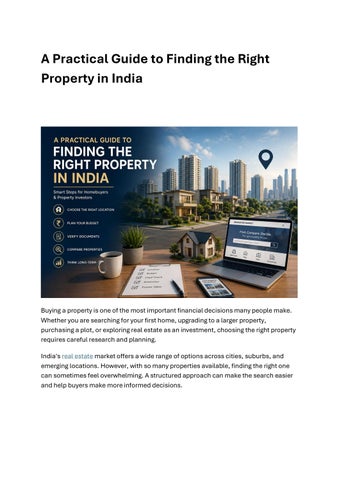
A Practical Guide to Finding the Right Property in India
Buying a property is one of the most important financial decisions many people make. Whether you are searching for your first home, upgrading to a larger property, purchasing a plot, or exploring real estate as an investment, choosing the right property requires careful research and planning. India's real estate market offers a wide range of options across cities, suburbs, and emerging locations. However, with so many properties available, finding the right one can sometimes feel overwhelming. A structured approach can make the search easier and help buyers make more informed decisions.
Understand Your Requirements The first step in finding the right property is understanding what you actually need. Start by defining the purpose of the purchase. A property intended for personal use may have different requirements from one purchased primarily for investment or rental purposes. Consider factors such as the type of property, preferred size, number of bedrooms, amenities, lifestyle requirements, and expected possession timeline. Having a clear list of priorities helps narrow down the available options. It is also important to distinguish between essential requirements and preferences. For example, good connectivity may be essential, while a particular amenity may simply be desirable. This makes it easier to evaluate properties objectively.
Set a Realistic Budget Budget is one of the most important factors when purchasing property. Buyers should consider their overall financial capacity rather than focusing only on the advertised property price. Additional expenses may include registration charges, applicable taxes, maintenance charges, parking costs, interiors, home-loan-related expenses, and other transaction costs. Creating a realistic budget before beginning the property search can help prevent financial stress later. If you are considering a home loan, it is useful to understand your expected down payment, monthly repayment obligations, and other associated costs.
Choose the Right Location Location plays a major role in determining the convenience and long-term suitability of a property. When evaluating a locality, look beyond the property itself. Consider access to major roads, public transportation, workplaces, schools, hospitals, shopping areas, and other everyday facilities. The surrounding environment is equally important. Buyers should consider factors such as neighbourhood quality, availability of essential services, traffic conditions, and overall accessibility.
For investment purposes, it can also be useful to study factors such as development activity, employment hubs, infrastructure improvements, and demand for housing in the locality. However, future growth should never be assumed solely on the basis of promotional claims.
Compare Multiple Properties Finding a suitable property usually requires comparing several options. Instead of selecting the first property that appears attractive, create a shortlist and evaluate each option using similar criteria. Compare properties based on price, location, size, specifications, amenities, connectivity, construction quality, developer reputation, and other factors relevant to your requirements. A comparison helps identify where a property offers genuine value and where compromises may be necessary.
Research the Developer or Seller For properties being purchased from a developer, researching the developer's background can provide useful context. Look at the developer's previous projects, reputation, project history, and available information about the development. For resale properties, buyers should carefully understand the ownership history and transaction details. The objective is not simply to choose a well-known name but to gather enough information to make a comfortable and informed decision.
Verify Property Documents Property transactions involve important legal and financial considerations. Buyers should verify relevant documents before making a commitment. Depending on the type and location of the property, this may include ownership or title documents, approvals, applicable registrations, encumbrance-related records, tax records, building permissions, agreements, and other relevant documentation. Requirements can vary by state, property type, and transaction. For significant purchases, consulting a qualified property lawyer or other appropriate professional can help buyers understand the documents and identify potential issues.
Visit the Property Online listings are useful for discovering properties, but photographs and descriptions cannot replace an actual property visit. During a site visit, observe the property's surroundings, accessibility, construction quality, ventilation, natural light, parking arrangements, common areas, and overall condition. For under-construction projects, buyers should also understand the project's current status and compare the information provided by the developer with the relevant official documentation. Visiting the location can also help buyers understand the neighbourhood and daily travel experience better.
Think About Your Long-Term Needs A property should not only meet today's requirements but also make sense for your future plans. Families may need additional space as their requirements change. Professionals may prioritize access to employment hubs. Investors may consider rental demand, resale potential, and the overall characteristics of the locality. Instead of focusing exclusively on short-term price movements, consider whether the property will continue to suit your objectives over the coming years.
Use Online Platforms for Property Research Digital property platforms have made it easier for buyers to discover properties and research different locations from one place. Platforms such as Properties.market can help users explore property opportunities across India and begin their search based on location and property requirements. Online research can save time by allowing buyers to compare different options before visiting properties in person. However, online information should be treated as a starting point, and important property, legal, financial, and project-related details should be independently verified before making a transaction.
Avoid Common Property-Buying Mistakes Some common mistakes can make the property-buying process more difficult. One mistake is choosing a property solely because of its low price. Another is making a decision based entirely on future appreciation expectations without sufficient supporting information. Buyers should also avoid skipping document verification, ignoring additional costs, failing to compare alternatives, or making rushed decisions because of sales pressure. Taking adequate time to research, compare, inspect, and verify can significantly improve the decision-making process.
A Simple Property-Buying Approach A practical property search can be divided into five stages: 1. Define Understand your requirements, purpose, location preferences, and budget. 2. Explore Search for properties and localities that match your criteria. 3. Compare Evaluate shortlisted properties based on price, location, specifications, connectivity, and other priorities. 4. Verify Inspect the property and verify relevant legal, financial, and project information. 5. Decide Choose the property that best matches your requirements and financial plans.
Final Thoughts Finding the right property in India does not have to be complicated. A clear understanding of your requirements, a realistic budget, careful location research, proper comparison, and thorough verification can make the process more manageable. The goal should not simply be to find a property. It should be to find a property that fits your needs, financial situation, lifestyle, and long-term plans.
Whether you are looking for a home or exploring real estate opportunities as an investment, informed research is one of the most valuable tools available to a property buyer. For additional information on properties and locations across India, visit Properties.market: https://www.properties.market/in/