



Luxury lifestyle, prime property









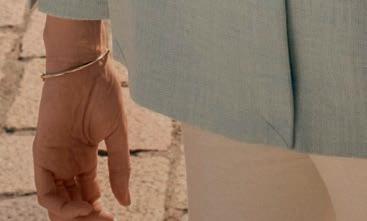










CATCHING RAYS
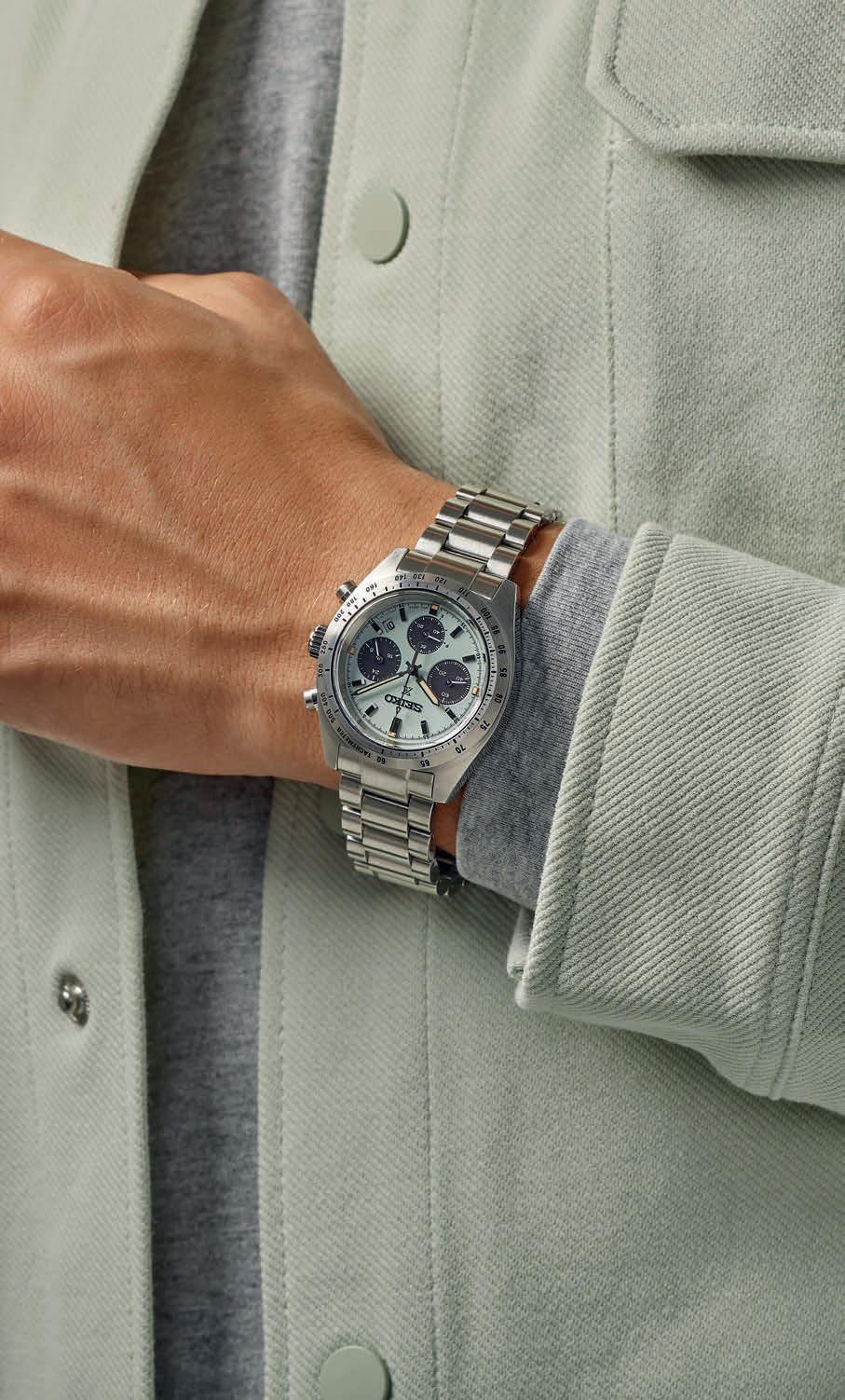
SEIKO’S NEW PROSPEX TIMESPEEDER DESIGNS COME IN RETRO PASTEL COLOURWAYS INSPIRED BY SPORTS CARS OF THE ‘80S AND ‘90S

CATCHING RAYS
SEIKO’S NEW PROSPEX TIMESPEEDER DESIGNS COME IN RETRO PASTEL COLOURWAYS INSPIRED BY SPORTS CARS OF THE ‘80S AND ‘90S
SUMMER IS HERE, AND IT’S THE SEASON FOR SOLAR-POWERED WATCHES, WRITES KATE YOUDE
Brands have embraced solar technology in recent years as an alternative to traditional quartz timepieces. Among them, TAG Heuer released five new limited-edition Formula 1 Solargraph pastel designs in April, having introduced the movement into that collection last year.
In these designs, light passes through the semi-transparent dial to discreet photovoltaic cells beneath. These convert light into energy, which recharges the battery that powers the watch’s solar quartz movement.
Do not fear if you’re reading this on a gloomy British day; the watches work with artificial light as well as the sun’s rays. Two minutes of direct sunlight gives a day’s power, while 40 hours of exposure to light allows the watch to run for up to 10 months in darkness.
A key benefit of such watches is convenience. Maria Laffont, chief product officer at TAG Heuer, says they’re “easy to use”, accurate and eliminate the need to change the battery every two to three years, as is typical for a traditional quartz watch. This appeals to “eco-conscious” customers, she says.
Recent solar-powered additions to Seiko’s Prospex Speedtimer collection feature pastel dials inspired by 1980s-1990s sports cars. The stainless steel chronograph watches have a power-reserve indicator, similar to a
dashboard fuel indicator in a car, on the dualfunction subdial at six o’clock , so the user knows when to expose their watch to light.
But it ’s in the Japanese brand’s Astron designs, which uses GPS satellite signals to set the time, that Rob Wilson, technical support manager at Seiko UK, says the solar technology comes into its own. These watches “really couldn’t exist without [it] because the battery consumption would be far too high”, he says. “GPS is quite a power-hungry application, really.”
It ’s not only sporty models that are harnessing the light. Tiffany & Co. launched its first solar movement last year in the Rope watch. This collection of 18-karat gold and diamond-set pieces draws inspiration from a motif of twisted gold found on archival jewellery creations by the brand’s leading 20th century designer, Jean Schlumberger.
Cartier offers four Tank Must designs with a SolarBeat movement. Sunlight reaches photovoltaic cells under the dial through invisible perforations on the dial’s Roman numerals. By contrast, watches in Tissot’s PRC 100 Solar collection have honeycombstructured solar cells sitting beneath the sapphire crystal.
With brands continuing to innovate, the outlook looks bright for solar watches. “It’s the future of quartz,” says Laffont. L














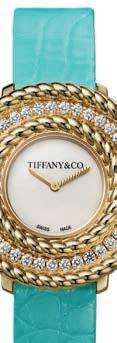










Top to bottom: Tiffany Rope watch in Pearl, £20,500, tiffany.com; Seiko Astron 145th Anniversary Solar GPS limited-edition watch in White and Silver, £2,600, seikoboutique.co.uk ; TAG Heuer Formula 1 Solargraph watch, £1,650, tagheuer.com; Cartier Tank Must watch, £3,350, cartier.com; Tissot PRC 100 Solar 39mm watch, £495, tissotwatches.com
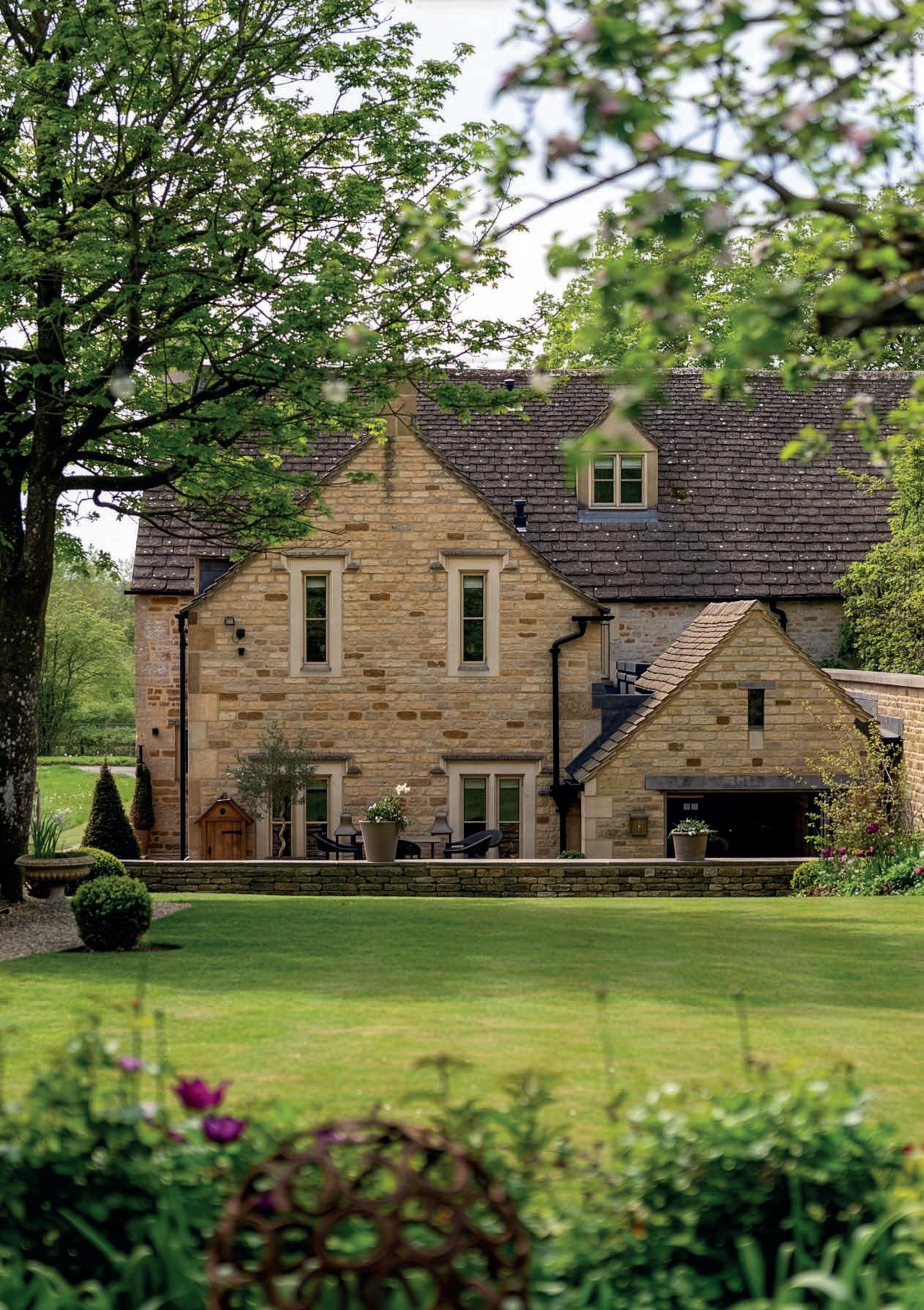
WELCOME ON SALE THROUGH UK
SOTHEBY’S INTERNATIONAL
REALTY FOR £2.5M, HEATH
LAWN, BUILT IN CLASSIC
COTSWOLD STONE BOASTS
FOUR BEDROOMS, OFF-ROAD
PARKING, A POOL TERRACE AND A BOOT-ROOM ANNEXE
Privacy and pubs, historic walled gardens and state-of-the-art gyms, excellent broadband and minimal maintenance – London buyers are more demanding than ever when it comes to the perfect country house. Their vision is often fully formed, complete with rural views, golden stone, dogs and happy children. The London Magazine speaks to those in the know and discovers an A to Z of modern-day rural bliss





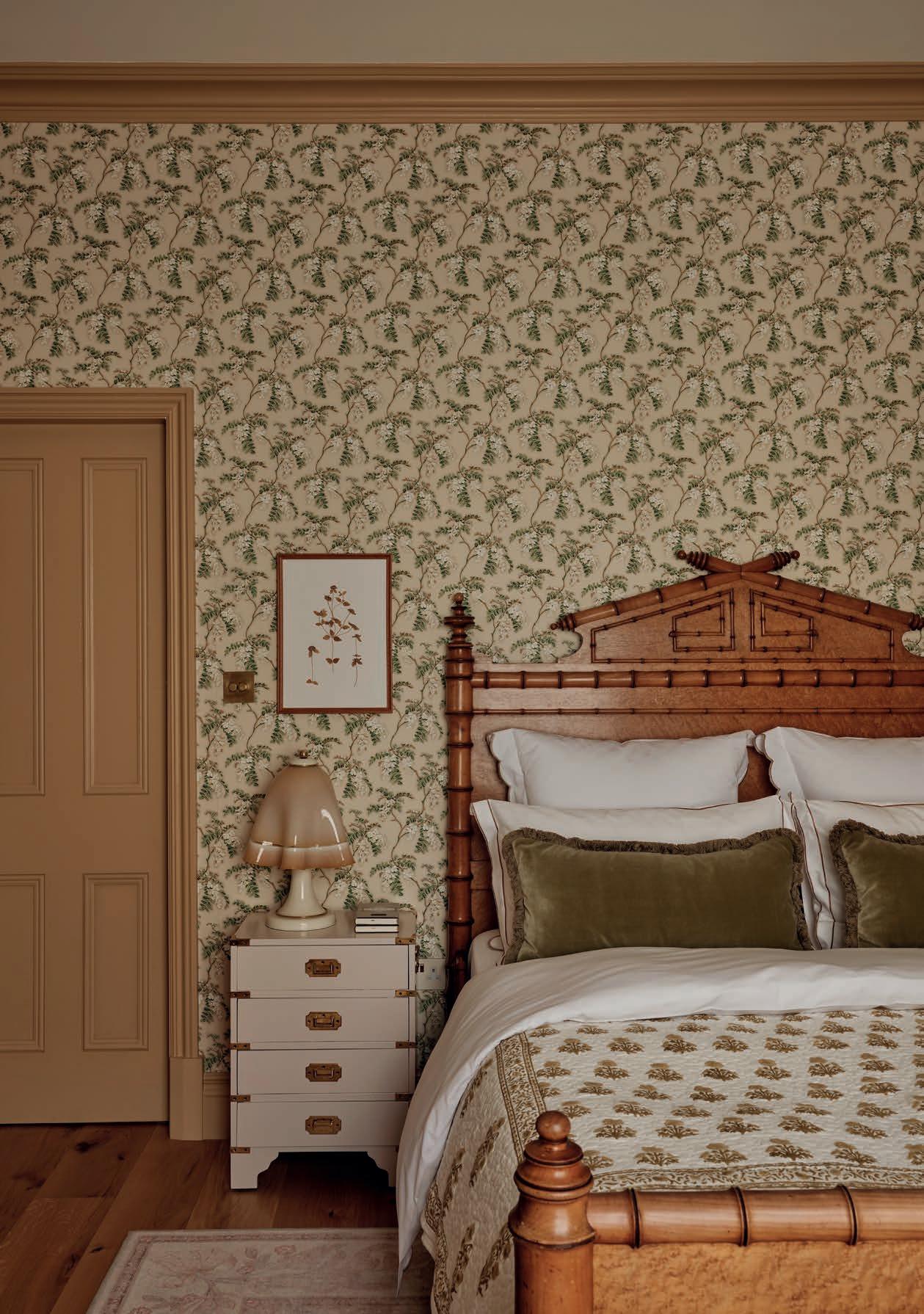
PERIOD DRAMA
This page: Macfarlane Van der Heul teamed up with Milton Architects and Blockhouse Build to sympathetically revive this Victorian villa in Mapesbury, creating a layered aesthetic of nature-themed prints and eclectic furnishings
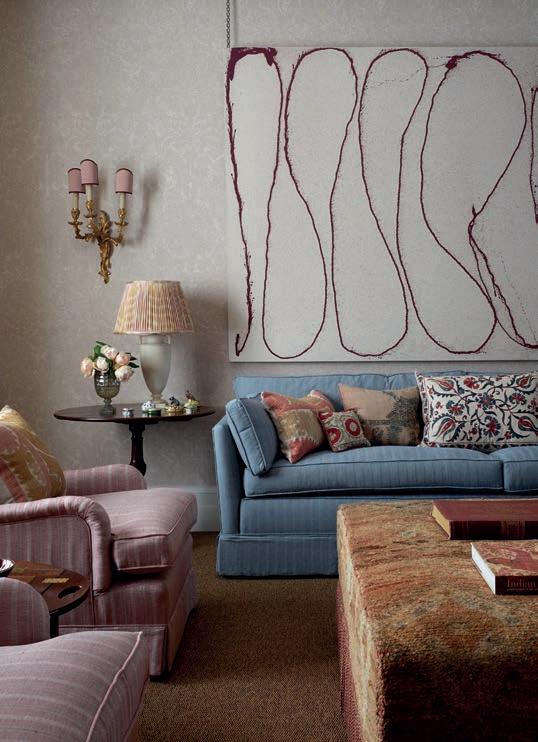
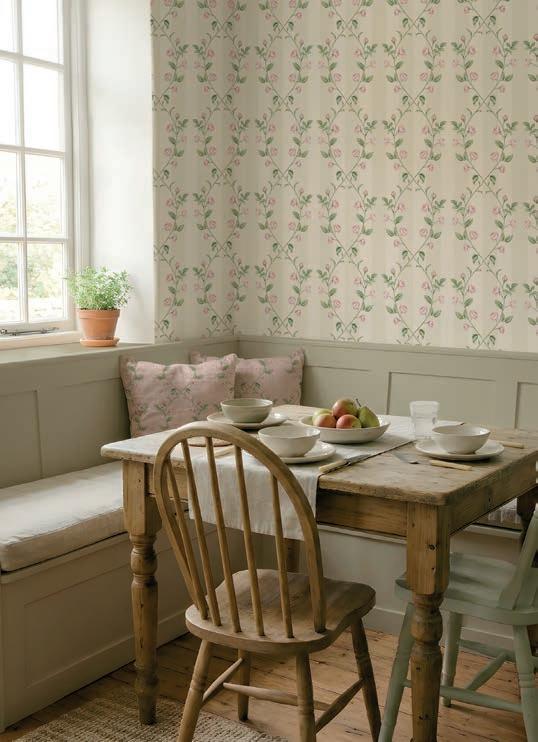
Opposite, left to right: VSP has combined mismatched cushions, comfy furnishings, gentle hues and statement art to dreamy effect in this Dorset sitting room; Lucie Annabel’s
Ascending Rose wallpaper print brings country-classic charm to this breakfast nook


ENGLISH COUNTRY-HOUSE STYLE IS A PERENNIAL FAVOURITE, FOR RURAL AND URBAN HOMES ALIKE. TALLULAH RUSHAYA EXPLORES



Country-house style is as English as a cup of Earl Grey. Emanating warmth and ease, the decor scheme is rooted in tradition. It adds grandeur to sprawling country piles and comfort to townhouses. The style came into prominence in the 1940s, thanks to American-born Colefax & Fowler owner Nancy Lancaster. The self-confessed ‘percolator of ideas’ was instrumental in translating grand southern design influences from her childhood home, Mirador in Virginia, to an English audience. The opposite of ‘over-polishing’, Lancaster’s English country style ethos remains steadfast, resulting in several enduring tropes. From mixed patterns to antique furnishings and trims, every detail adds to the allure. Beyond visuals, it encompasses a way of living, inviting residents to pause and reconnect with nature. Designed to be a refuge, the English country aesthetic continues to capture imaginations, and can be gently adapted with modern and international twists.
After moving to London from Toronto, interior designer Elizabeth Macfarlane, co-founder of Macfarlane Van der Heul (mdvh.co.uk) developed a fascination with English design after visiting her friend’s Georgian townhouse in Kensington. “The grand facade led me to expect the polished interior that you’d find in an affluent North American home, but what I walked into was a different type of grandeur,” she recalls.
The home wasn’t designed but “had evolved over a lifetime or more,” an ethos that has informed the studio. Filled with inherited items, such as worn Persian rugs and aged passementerie, the townhouse felt alive with history.
A culture of collecting is something Elizabeth’s cofounder, Netherlands-born Eva van der Heul, believes makes a house a home. She notes that the English roots of collecting stretch back to the antiquities brought back from the Grand Tours. “I think that collecting is
also tied into the class system in England – old things confer legitimacy – a family portrait, heirloom silver, a Chippendale chair. The result is an eclecticism that’s natural to the English, but striking to us as outsiders.”
While this style is often conflated with misconception s, like rigidity, Elizabeth finds that the biggest is “casual clutter ”. “Matchy-matchy ” arrangements are easier, she notes, but there’s great skill in evolving a room over time.
Undergoing a major renaissance, the country-house style is appealing to a wider demographic. After decades of Scandi-influenced minimalism, Eva points out that “people are craving colour, warmth and personality.” This appetite goes hand in hand with a growing desire for furniture with provenance – what Eva views as an antidote to the pace and disposability “that pervade our times”. “It isn’t just limited to the UK,” she adds. North American romanticism of Englishness is trickling into their interiors, with British designers being increasingly sought after stateside.
“Traditional cabinet makers, Plain English and deVol have an expanding North American client base.” London-based Hunt & Hope – friends of Macfarlane Van der Heul – are busy fulfilling needlepoint orders from the continent.
Specialising in considered interiors, Elizabeth and Eva understand how important it is for a home to reflect its owners’ lifestyle. The pair adore working with homes steeped in history, and have taken on projects across London and beyond. A recent project involved the restoration of a red-brick Victorian villa in the north London conservation area of Mapesbury, after it had been stripped of its period features. Working with Milton Architects and

AT A TIME WHEN VOICES ARE DENIGRATING THE CITY, ARTISTS, GALLERISTS AND AN AUCTION HOUSE ARE POINTING THE SPOTLIGHT ON HOW LONDON HAS INSPIRED GENERATIONS OF CREATIVES, FINDS
London has been on the receiving end of some unwelcome publicity in recent months, much of it from dubious sources. The mayor Sadiq Khan has responded by highlighting the strengths, from sporting, educational and cultural achievements alongside its crime and safety record. There’s another key factor to consider: London’s thriving creative community. The capital has acted as a crucible for centuries, launching the career of painters such as William Hogarth, John Constable, Francis Bacon, Lucian Freud and David Hockney, as well as iconic musicians including David Bowie, Jimi Hendrix and Amy Winehouse.
To underline and celebrate the spirited history and creative power of the capital, London auction house Olympia Auctions (olympiaauctions.com) is hosting its first dedicated London Sale on 16 September. Pictures specialist Nick Hemming-Brown, who is handling the sale, is gathering works from across London’s literary and artistic scene as well as iconic objects, such as Tube maps,
historic maps and drawings of the city’s distinctive yet evolving landscape.
Among the consignments is one of four Millennium medals designed to mark the opening of the Millennium Dome in Greenwich (now the O2). One was gifted to HM Queen Elizabeth II, the other two are in the British Museum and the government collection. This is the only one in a private collection.
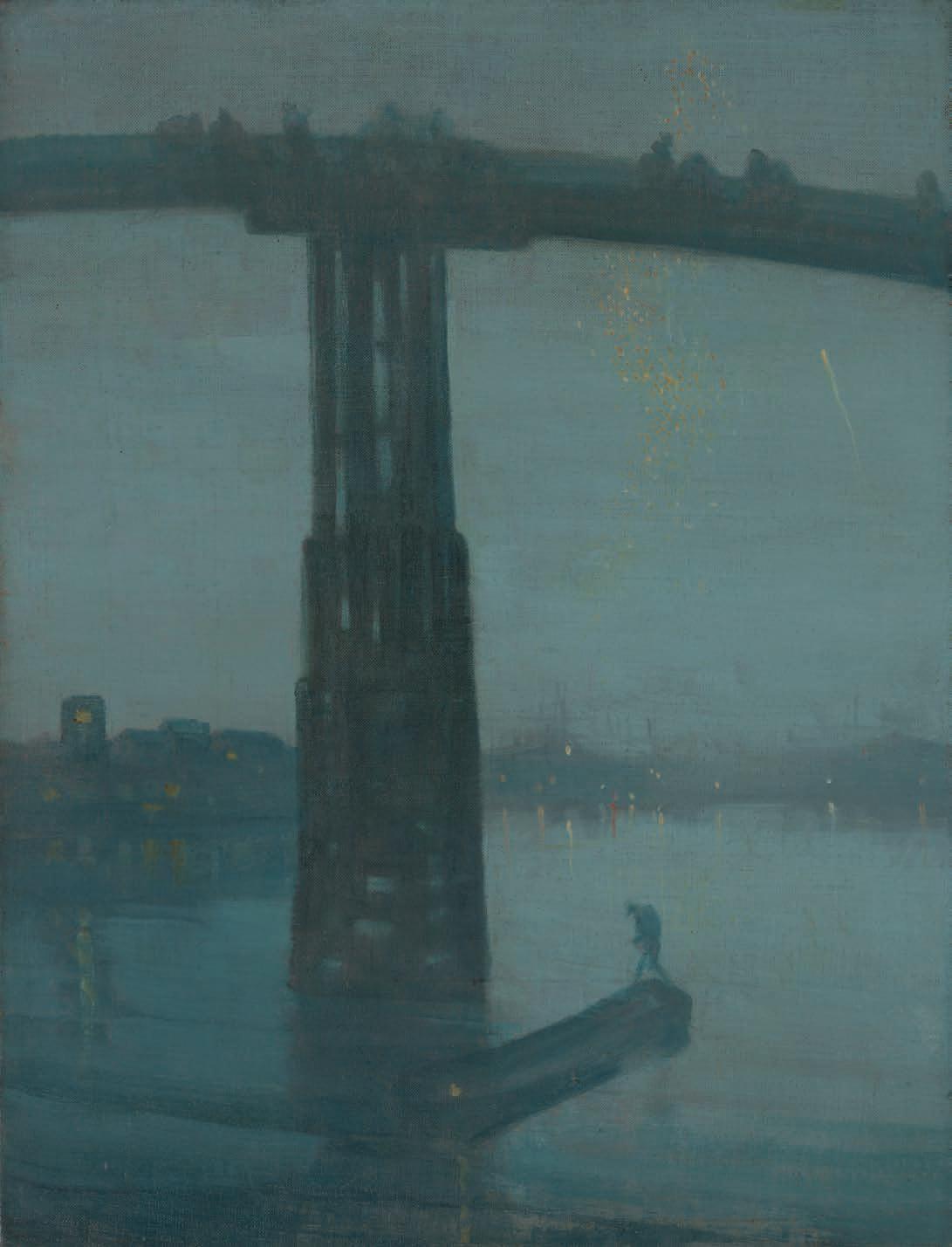
“Our sale is a tribute to the city’s unparalleled cultural legacy and an invitation to rediscover London in all its forms,” says Hemming-Brown, adding that the capital hasn’t only given birth to artists but also acted as a magnet attracting others from overseas. Tate Britain is currently showing the first major European exhibition of American artist James McNeill Whistler in more than 30 years, which features iconic works such as his moody rendition of old Battersea Bridge. “London is a wonderfully inspiring place and, as a proud London auction house, we want to shine a light on that,” adds Hemming-Brown.





FIND THE FINEST HOMES IN THE CAPITAL
pages 78 – 129