








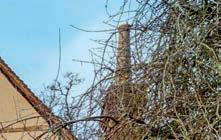




The East Garden at Hatfield House is home to immaculately shaped topiary and elegant parterres.

A family home with royal and political connections that has played an important national role through the centuries, Jacobean Hatfield House in Hertfordshire has suitably grand gardens shaped over generations
This delectable West Sussex prairie garden has evolved to make best use of ingenious plant ingredients to repel a voracious local rabbit population
WORDS CLARE FOGGETT
PHOTOGRAPHS ANNAÏCK GUITTENY
When Toby and Zoe Billington moved into their new house in West Sussex in 2012, they knew what kind of garden they wanted to create. “Zoe was keen to have a cottage garden around the house – blue agapanthus, purple nepeta and whites – and I wanted a prairie garden,” Toby recalls. The couple had applied for planning permission to convert half of the property’s adjoining field into garden, and this was where Toby envisaged having swathes of loose, naturalistic planting inspired by visits to Sussex Prairie Garden and his admiration of designer Piet Oudolf’s work.
What Toby hadn’t banked on, however, was the plague of rabbits that would do their utmost to undo his and garden designer Alex Bell’s plans. “We are infested by rabbits,” Toby laments. But, as a result of their predation over the years, he has now come up with a fairly rabbit-proof version of the prairie-planting style. Gone are the rudbeckia he envisaged – “I planted 500 rudbeckia I’d grown from bareroots over winter and the rabbits ate all but two in one night” – and in their place are Inula magnifica. “They’re pretty much the same colour, although the flowers aren’t quite as good,” he admits, with the forbearance of a gardener who has had to become philosophical in the face of adversity.
Toby and Zoe had seen photos of Alex Bell’s work online and enlisted his help soon after moving in. “Toby’s a keen gardener but he needed help with the design layout and getting a cohesive planting scheme together,” says Alex. “They’d done a lot of work on the house, and we did the first phase of work around the
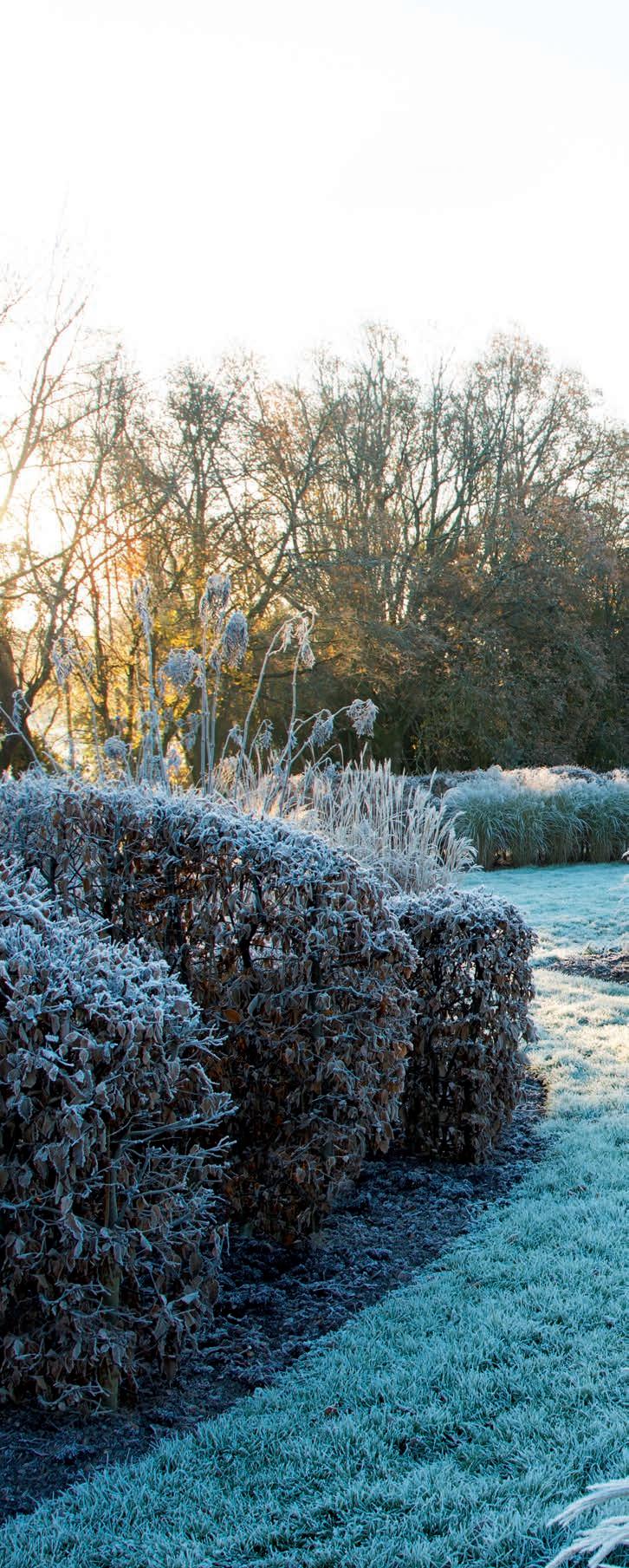
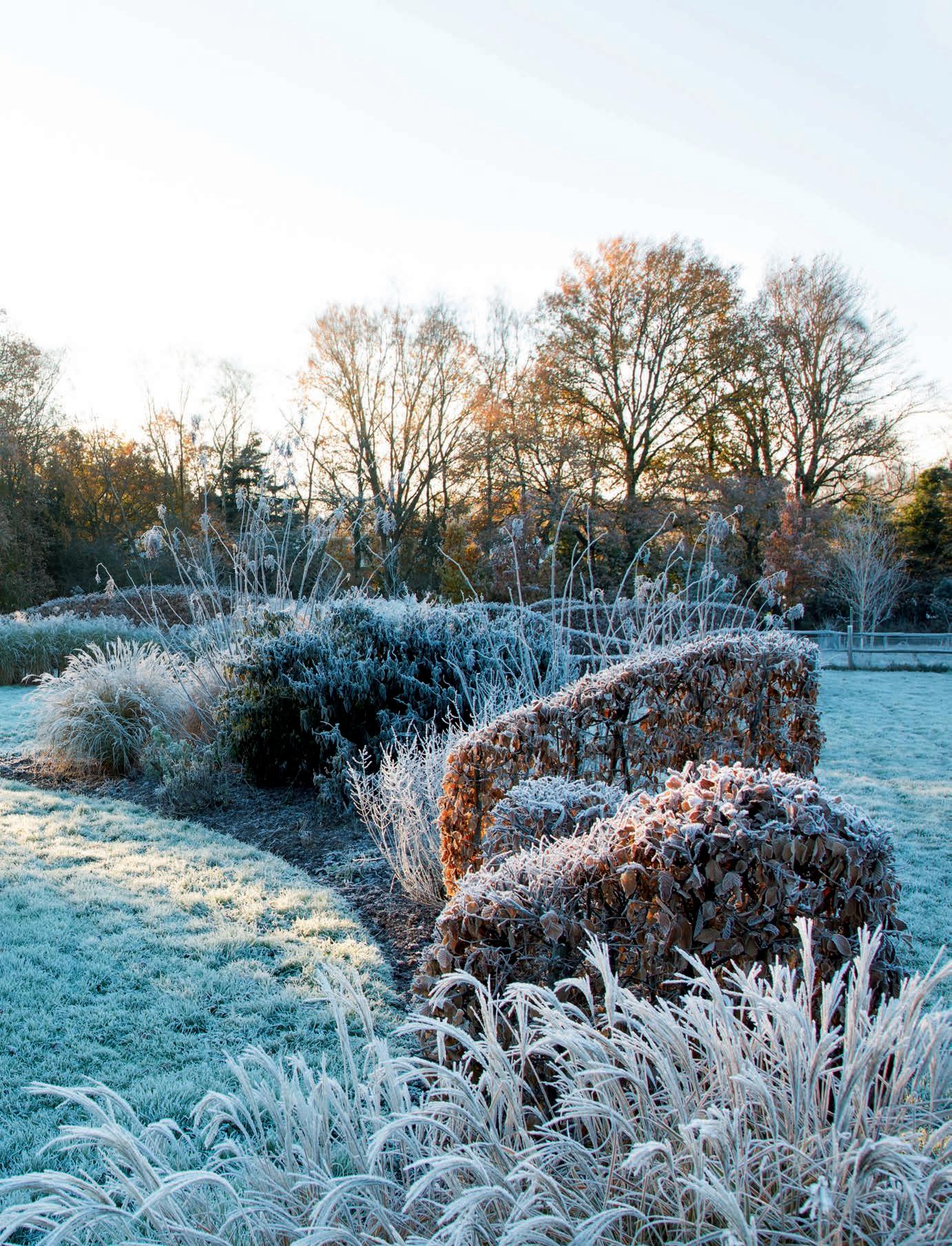
Wide curving grass paths weave enticingly through
Vita Sackville-West’s Sissinghurst is a stalwart of the horticultural canon, but it was Long Barn in Kent where she cut her teeth and where traces of her instinctive genius live on under the stewardship of Rebecca Lemonius
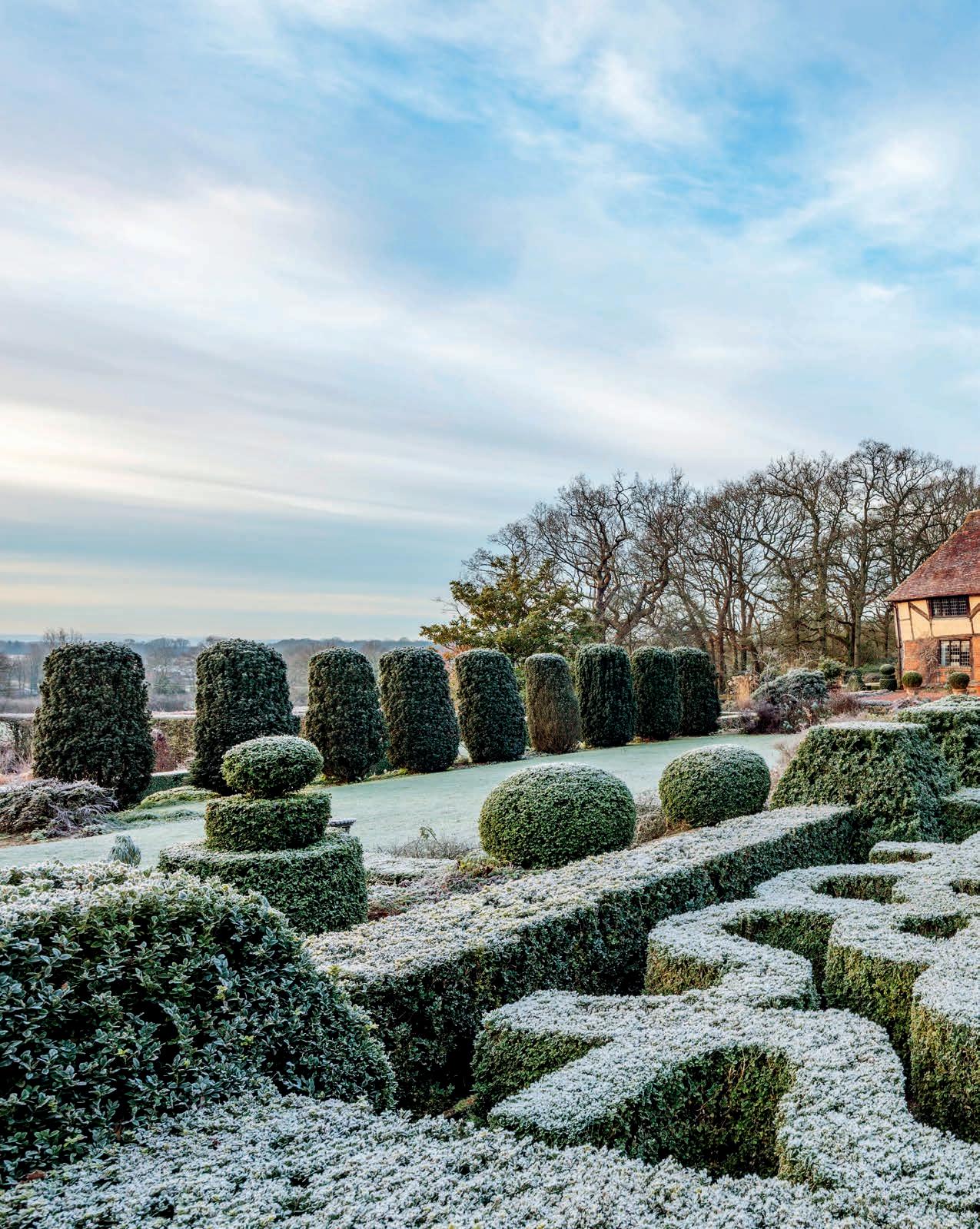
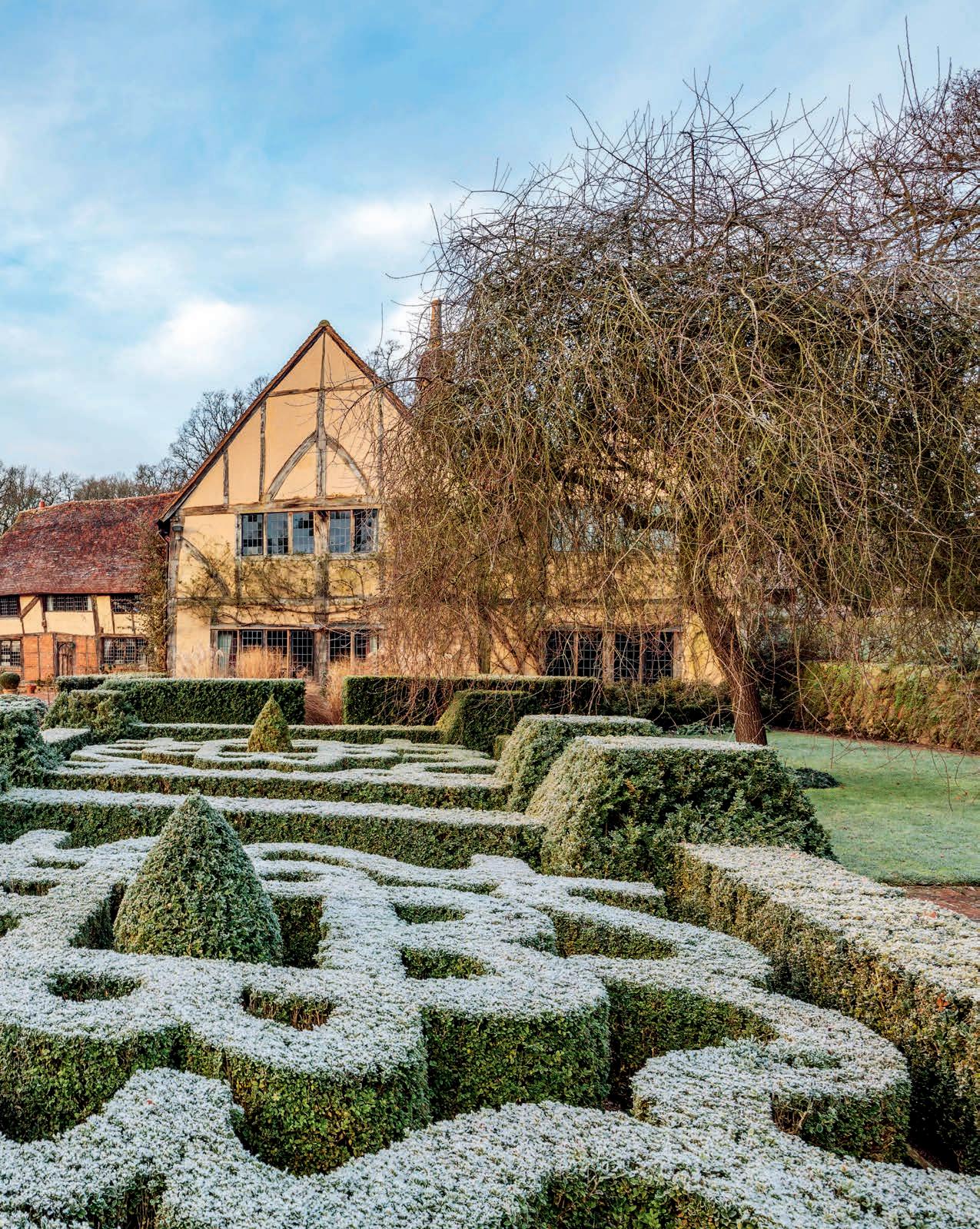
At the far end of the barn, dusted with sparkling frost is a box parterre formed of sinuous interlocking shapes.








Even in the darkest depths of winter these clever container arrangements will sparkle, continuing to charm and cheer throughout the season until spring arrives


WORDS & PHOTOGRAPHS BOB PURNELL








subtle arrangement in

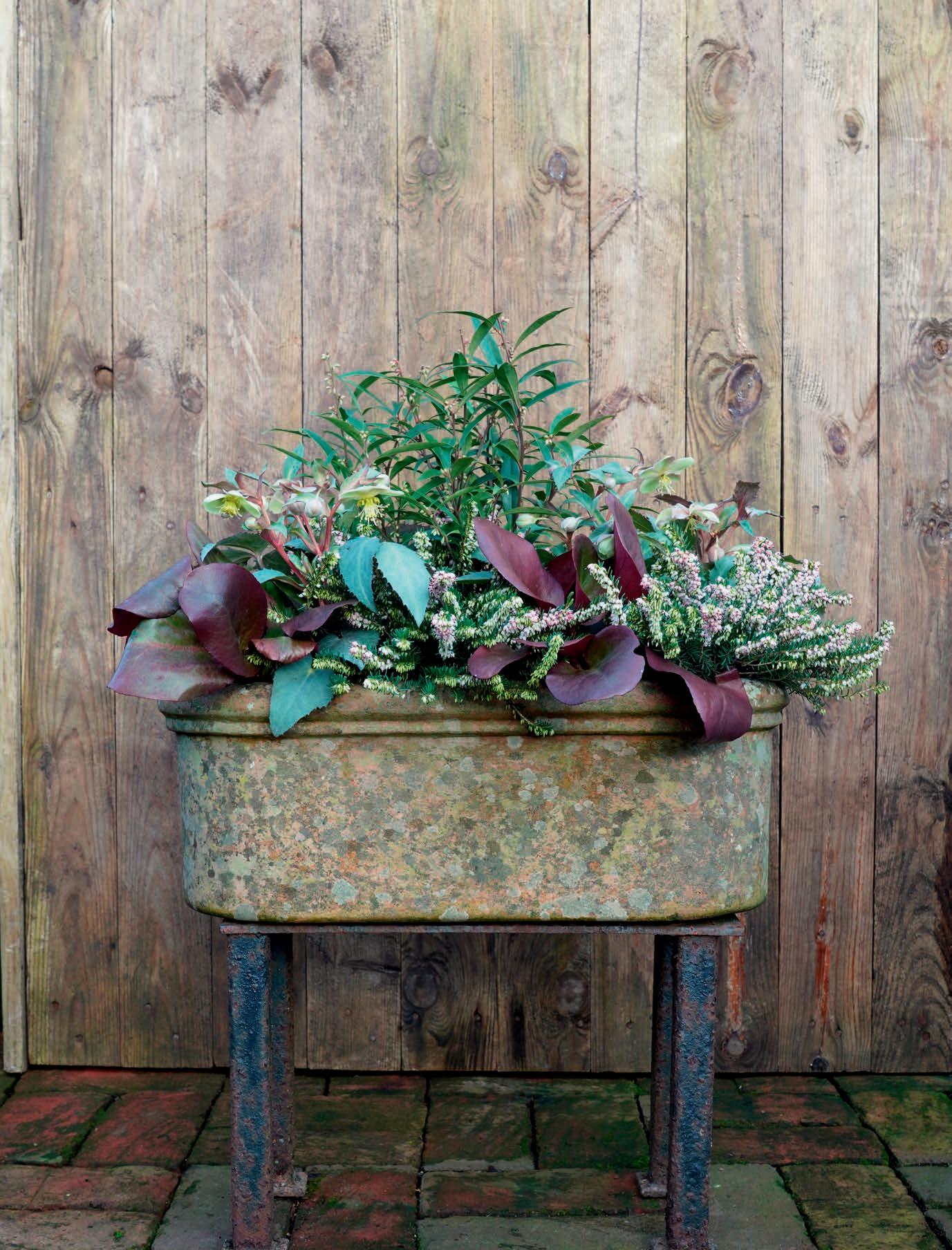
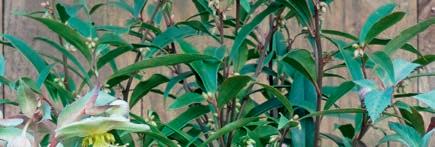
A cherished lichen-stippled terracotta trough makes a fitting home for this elegant line-up of wintry perennials, with the sophisticated muted colour scheme echoing the quiet of the season. In early December these plants will mostly still be in bud – but with the certainty of full bloom by the New Year. It’s usually best to buy container plants in bud and, for me, many are even more appealing in their full-of-promise early stages.
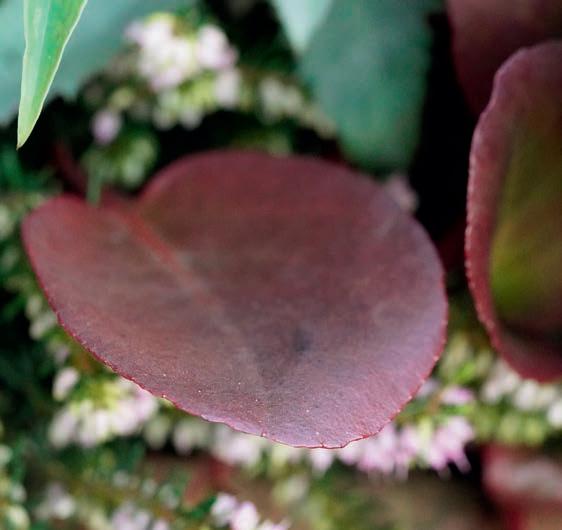
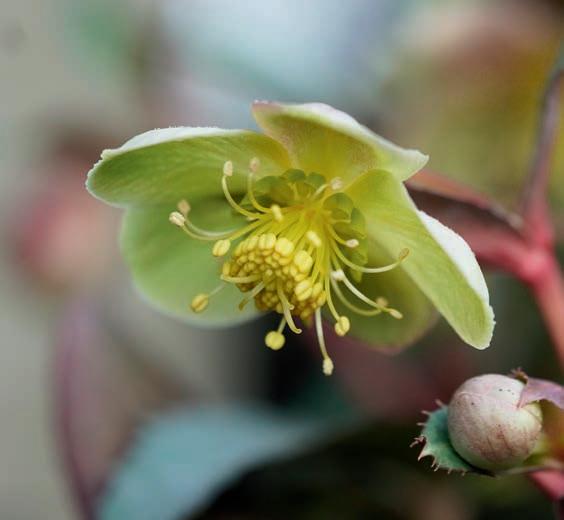
This planting’s strength lies in its sharp contrasts of leaf shape, size and texture, which attract and excite the eye. The large, round, shiny leaves of bergenia contrast with the jagged texture of the hellebore foliage, while the very fine winter heather peeps through. Prized for its pervasive perfume, the purple-stemmed, glossy-leaved sweet box forms the spine of this arrangement.
To extend the season and enjoy a spring flourish, consider adding a few bulbs when planting. I’d suggest dwarf irises such as ‘Katharine Hodgkin’ and ‘Frozen Planet’, Crocus tommasinianus ‘Barr’s Purple’ and snowdrops. Alternatively, buy the bulbs in pots in late winter and squeeze them in among the existing plants.
n Ensure your pot drains freely since these plants dislike being waterlogged. At least one large (or multiple smaller) drainage holes are essential.
n Boost drainage by mixing grit into the compost and raising the container using pot feet, bricks, clay pipes or a stand as I’ve done here.
n Plant densely for impact. Position the sweet box at the back, and arrange the other plants asymmetrically for an informal look.
n Water well to settle the plants in, then check for water once or twice a week.
n Look out for vine weevil grubs. If you find one, be sure to comb through for others.
1. Bergenia ‘Eroica’
Rounded leaves turn rubyred in winter with purple-pink blooms held on stout stems.
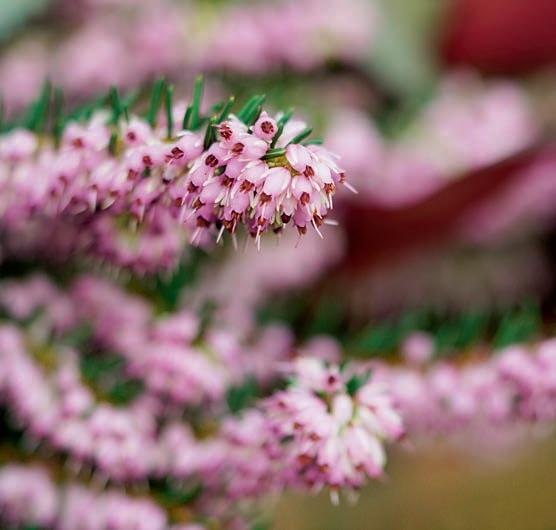
2. Erica x darleyensis
‘Darley Dale’
These reliable evergreens form neat hummocks of tiny needlelike leaves and masses of longlasting blooms.
3. Helleborus x sternii ‘Silver Dollar’
A short hellebore with creamygreen blooms and silvery leaves. It’s not the hardiest, so needs a sunny spot.
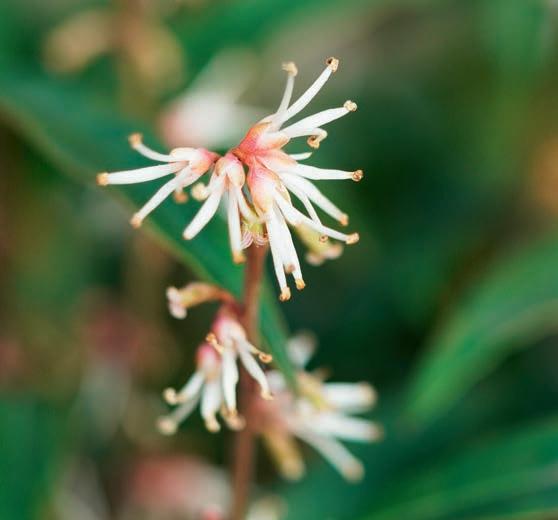
4. Sarcococca hookeriana var. digyna ‘Purple Stem’
In deepest winter the tiny buds open to reveal spidery white blooms with a sweet scent.
BEDGEBURY
As Britain’s National Pinetum prepares to celebrate its centenary, Ambra Edwards explains why it’s high time to look at misunderstood conifers afresh
PHOTOGRAPHS ANNAÏCK GUITTENY
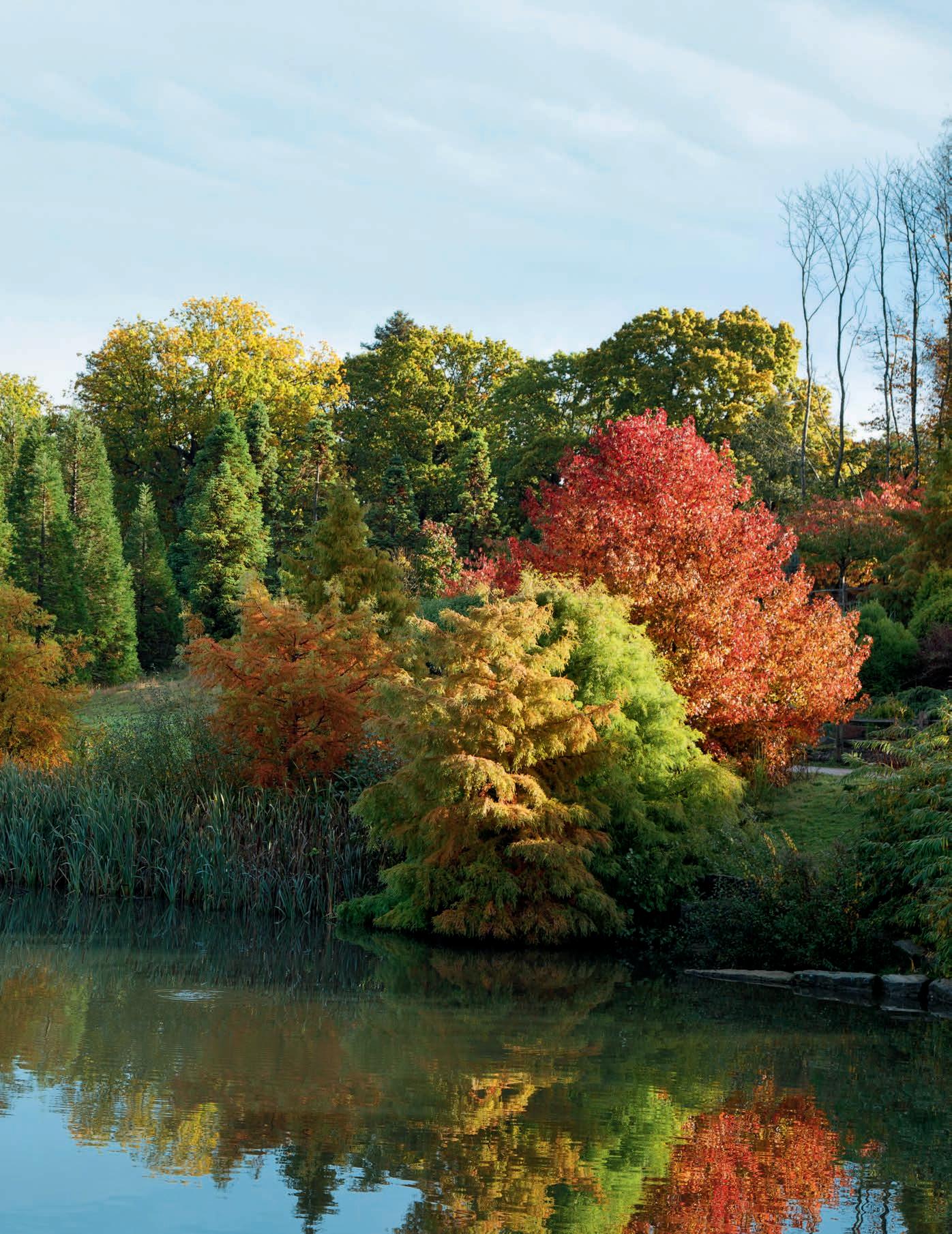

On the banks of Bedgebury’s lake, trees such as acers and liquidambar deliver vivid autumn colour alongside deciduous conifers.