

Risk and reward



Design strategy delivers early results but Haas now faces challenge to hang on



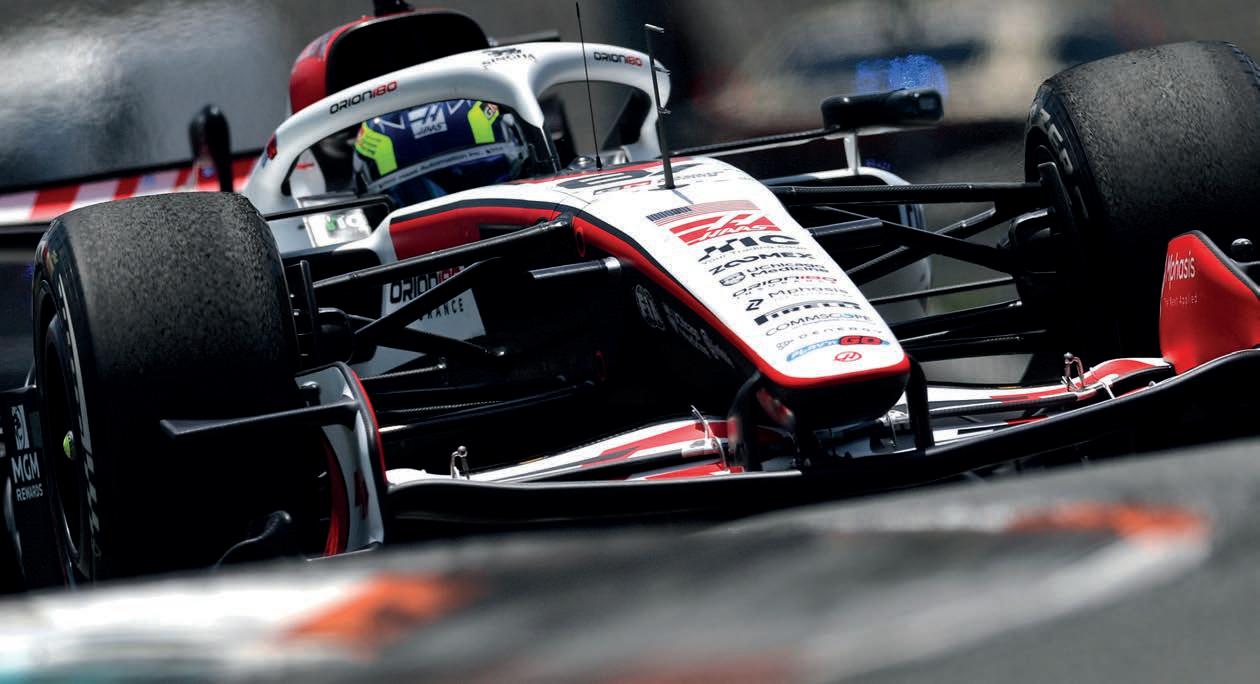
Heading into the summer break, Haas was seventh in the standings and trying to keep Williams and Audi at bay. After a strong start, it dropped behind the breakaway ‘midfield’ teams, Alpine and Racing Bulls
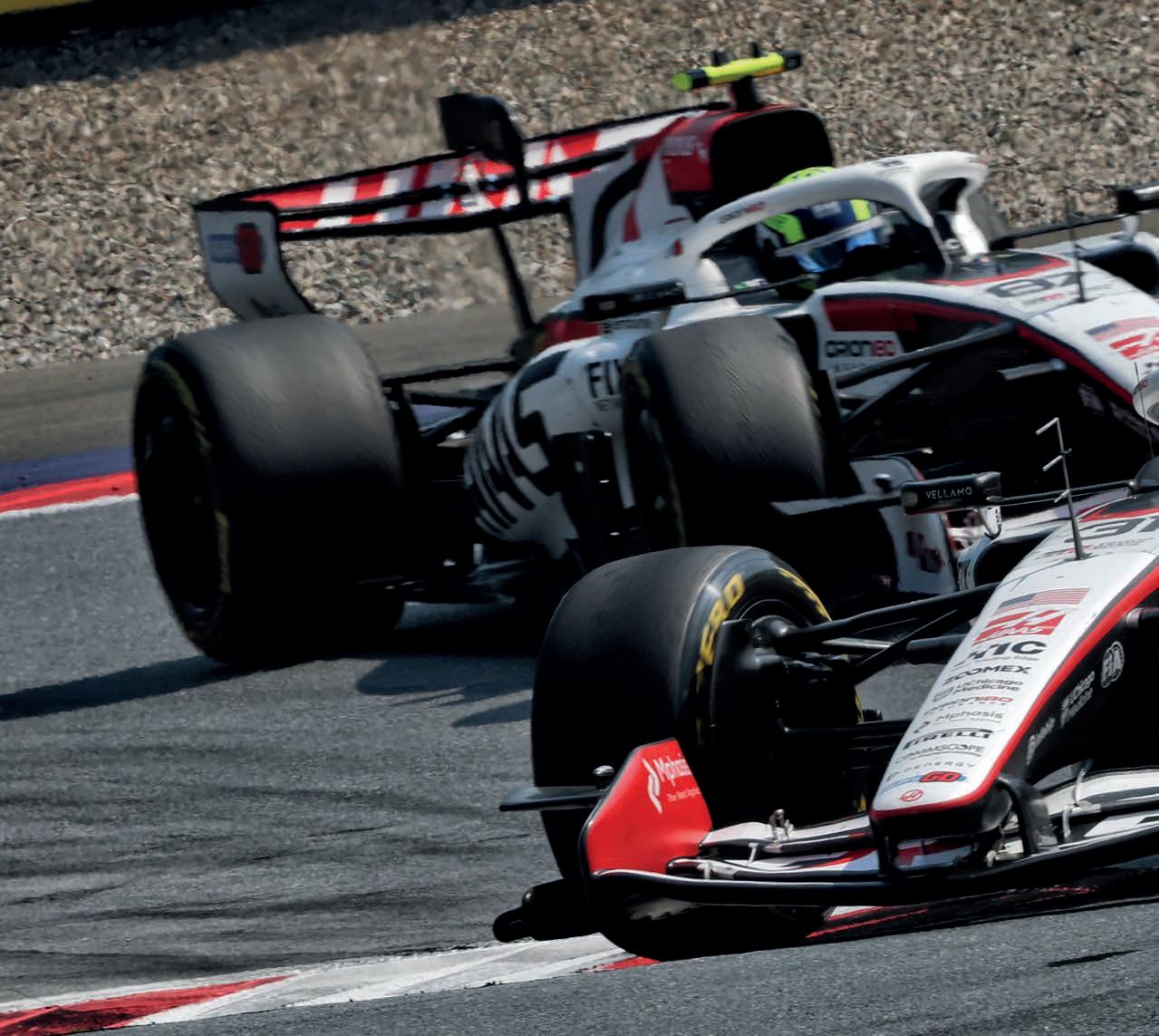
Joining the dots
Haas has made a decent first go of F1’s new regulations, but what is required for it to keep pace with its nearest rivals?
By DANIEL LLOYD
‘I think we can be happy about what we have done. At the same time, we know there is still a lot to do’
Andrea De Zordo, technical director at Haas F1 Team
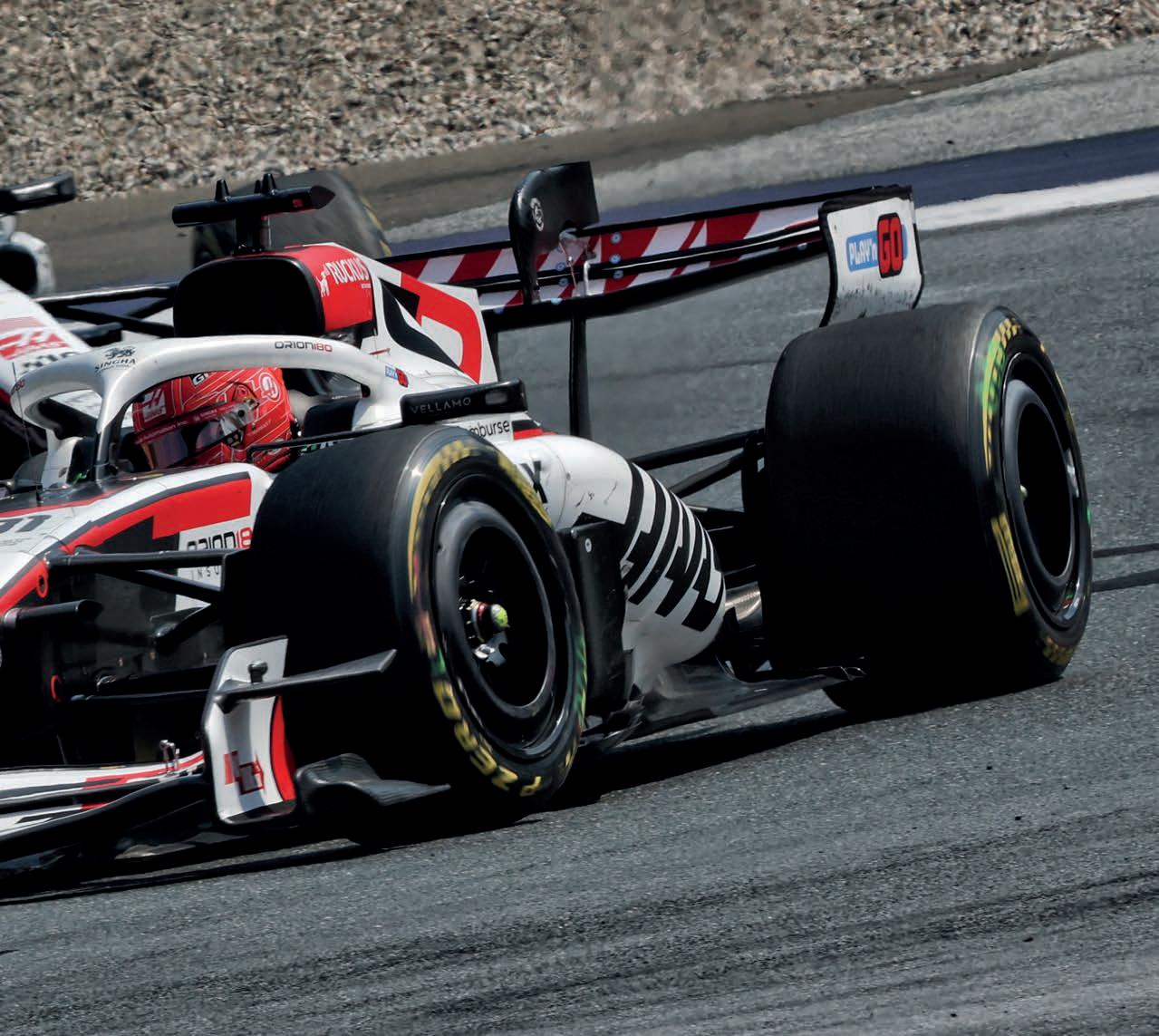
After the third round of the 2026 Formula 1 season in Japan, Haas was fourth in the World Constructors’ Championship standings. Seventh and fifth places for Oliver Bearman in the opening two rounds, and a further top 10 for Esteban Ocon, had put the American-owned squad in an unexpectedly high position. That wasn’t to last long, though, as the likes of Red Bull, Racing Bulls and Alpine all made gains, filtering Haas back down to more familiar territory in the bottom half of the table.
The Ferrari-powered VF-26 has clearly not been a world beater, but nor has it been a disaster. In general, it can be considered a decent first crack at F1’s challenging new regulations. That became apparent at pre-season testing in Bahrain, where the two Haas cars completed 794 laps (4275.48km),
more than everyone except McLaren. Its race pace has also been strong on occasion, but limitations have prevented the VF-26 from being a consistent points scorer, and a member of the breakaway midfield group currently made up of Racing Bulls and Alpine. The team knows this. ‘I think we can be happy about what we have done [but] at the same time, we know there is still a lot to do,’ says Andrea De Zordo, technical director of the team.
As was the case with Audi (formerly Sauber), Haas continued developing its 2025 car throughout last season. Embroiled in a close fight for championship positions and prize money, the team felt it was a risk worth taking. The VF-25 subsequently ended the campaign in eighth, but with the second highest points total for a Haas since the team joined the championship in 2016.
‘As a team, it was important to do that,’ says De Zordo of the approach to keep updating the VF-25. ‘We designed the [2026] car in a very short time. We took a lot of risks during the design of it, trying to delay everything as late as possible. We really took zero margin in everything. We worked night and day for two weeks to arrive in time at the first test, where we were reliable and doing a lot of kilometres, being competitive.’
Lessons learned
In developing the VF-26 for the new regulations, with their higher electrical energy demands and reduced downforce, Haas wanted to avoid some of the pitfalls it entered after the start of the previous rule cycle (2022 to ’25). In year two of the ground effect era, the team underwent the ‘painful exercise’ of overhauling its aerodynamic concept.
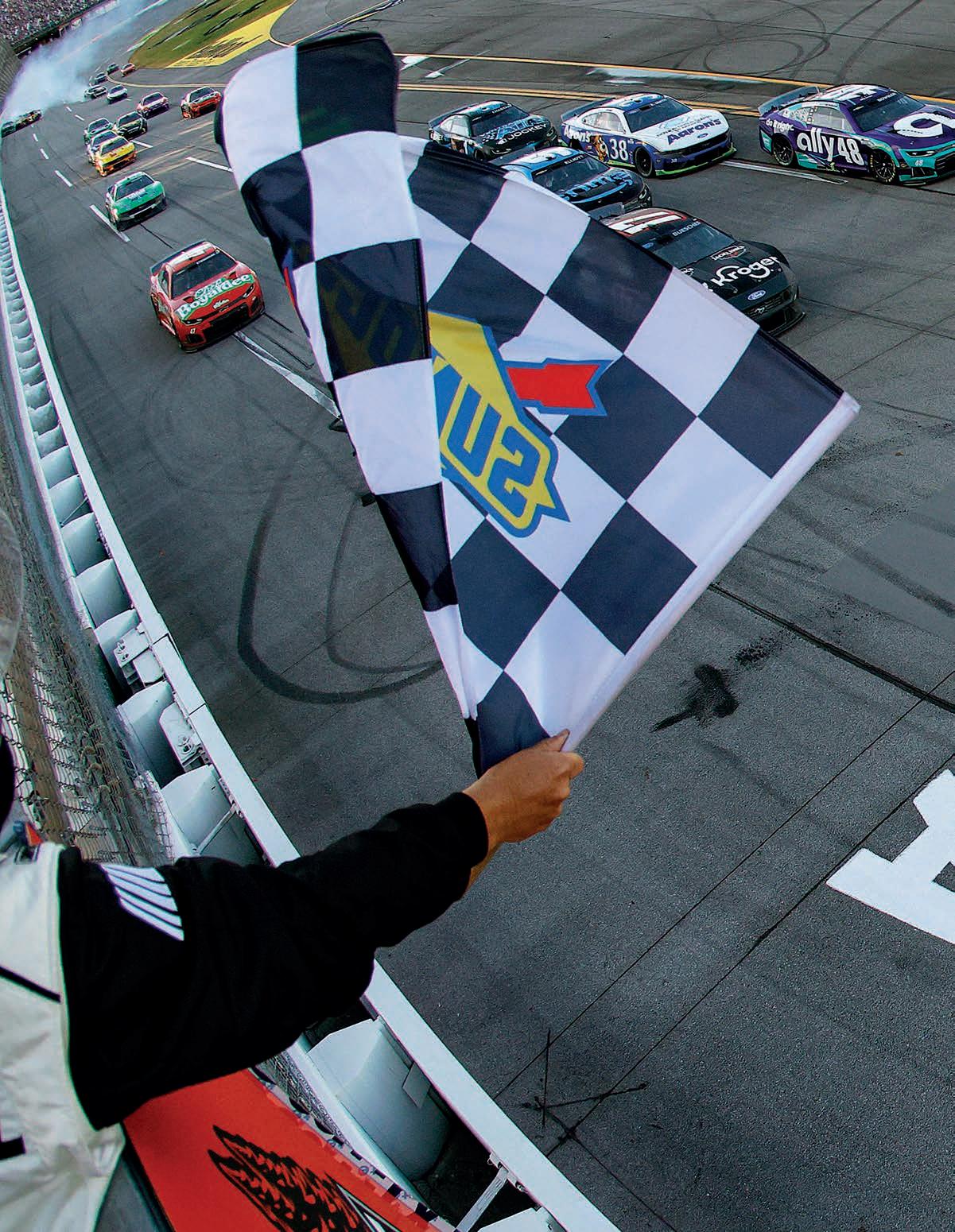

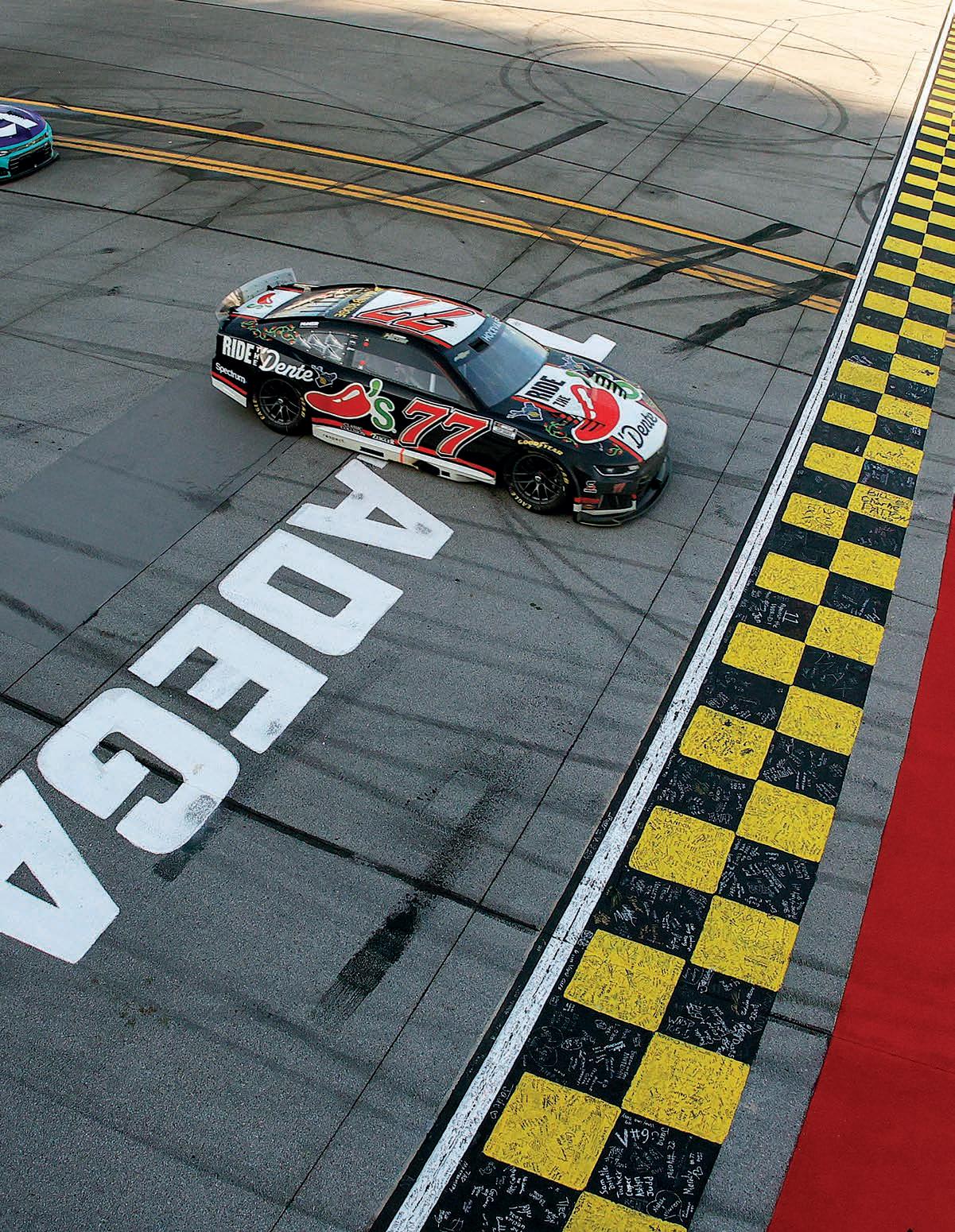
Simulation studies into vehicle performance on superspeedways is complete and a new package is on its way that aims to make it easier to pass without support of another car, and to burst the drag bubble
Package holiday



How NASCAR is evolving to ensure its crown jewel superspeedway events remain the pinnacle of fast, exciting and close racing
By ERIC JACUZZI, VICE PRESIDENT OF VEHICLE PERFORMANCE AT NASCAR
Seven up
How a 7.0-litre V8 and some very effective homemade aero has turned a regular GT4 Ginetta G50 into a GT3 beater
By MIKE BRESLIN
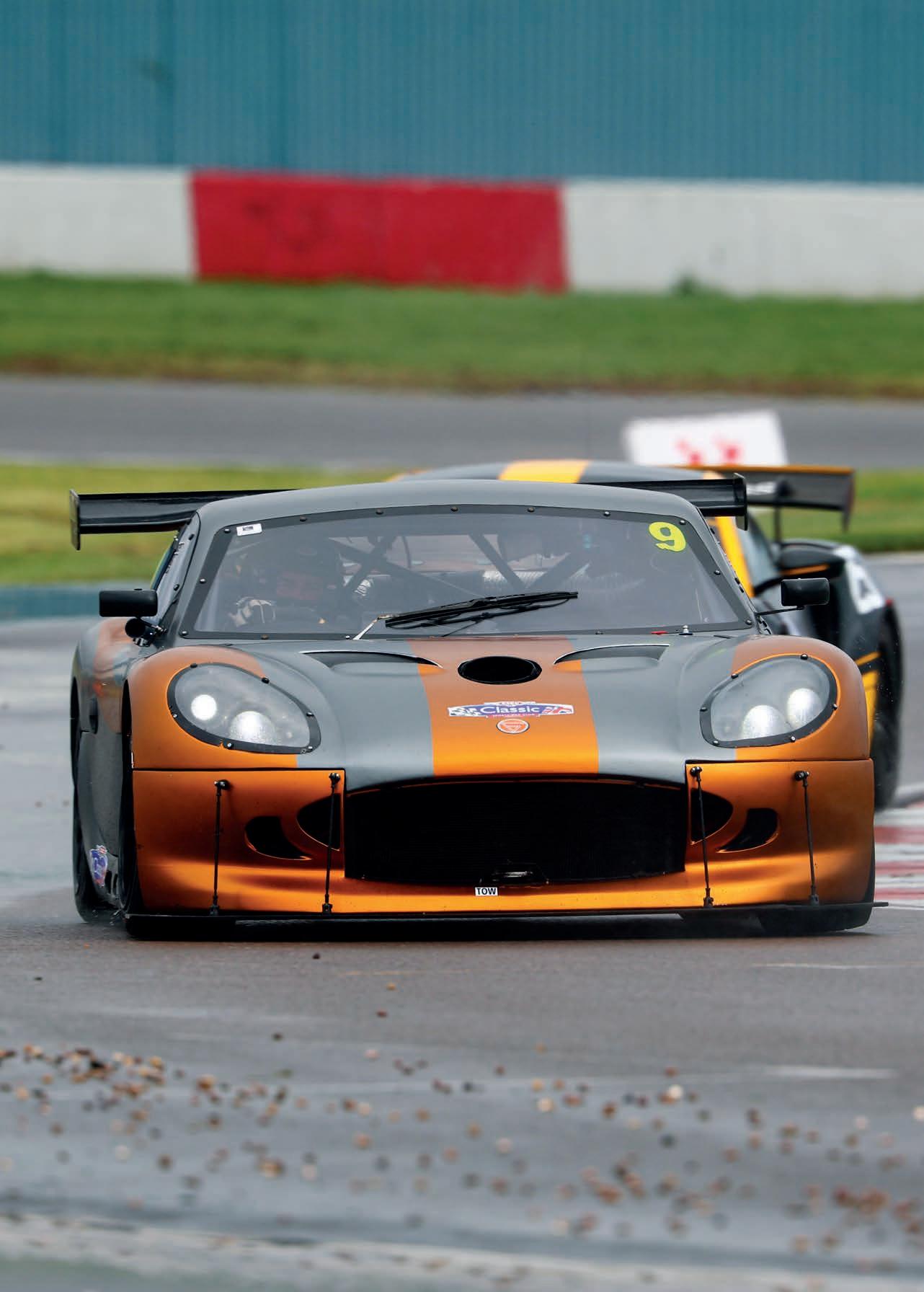
It might look like a regular Ginetta GT4, but this 427 Chevy-powered G50 is proving to be a formidable adversary to older GT3 machinery in races held at Castle Combe

The gap between GT4 and GT3 is pretty big. For instance, there were over eight seconds between the fastest cars in these classes at the Oulton Park British GT Championship round in May. In motor racing terms, that’s an aeon. But, given a championship with open regulations, there are ways of bridging this chasm. Which is what Dylan Popovic has done, beating Ferrari and Lamborghini GT3s in what started life as a standard Ginetta G50 GT4, and winning last year’s Castle Combe GT Championship along the way.
A brief glance at the tech spec on p41 and it would be easy to conclude that Popovic was able to achieve this feat simply by shoehorning a 7.0-litre (427ci) V8 into the engine bay, but there is much more to this project than that. Incidentally, it’s worth noting that Ginetta itself has also gone down the V8 route recently with its GTP8, choosing a 6.2-litre (378ci) Chevy LS3 as the power unit. Popovic did it first, though.
‘We needed a car that was GT3 fast, but on a GT4 budget,’ Popovic says. ‘You can’t really buy anything that’s GT3 spec for less than £150,000, even used. So it was a case of how do we make this thing go a little bit quicker? And now we probably have the biggest engine there is in any Ginetta.’
‘We needed a car that was GT3 fast, but on a GT4 budget’ Dylan Popovic
‘We’re racing a
£60-£70,000
car against £150-£200,000 cars. And that’s very cool’
Dylan Popovic, owner / driver
Beyond the engine transplant, the car has also benefited from high-end technologies such as CAD and 3D printing, though this is not surprising when you hear that Bosniaborn, but long-term UK resident Popovic works in IT, telecoms and software development. The more mechanical side of the project, meanwhile, is looked after by Kevin Richardson of Marlin Cars, a gifted fabricator and race engineer on the Ginetta.
Prints charming
Popovic has owned this G50, which he also campaigns in the CSCC Slicks Series, for around six years, and it is still based on the original spaceframe chassis, which he says he is happy with. From the outside it also still looks very much like a regular Ginetta, but there’s more to that familiar body shape than meets the eye.
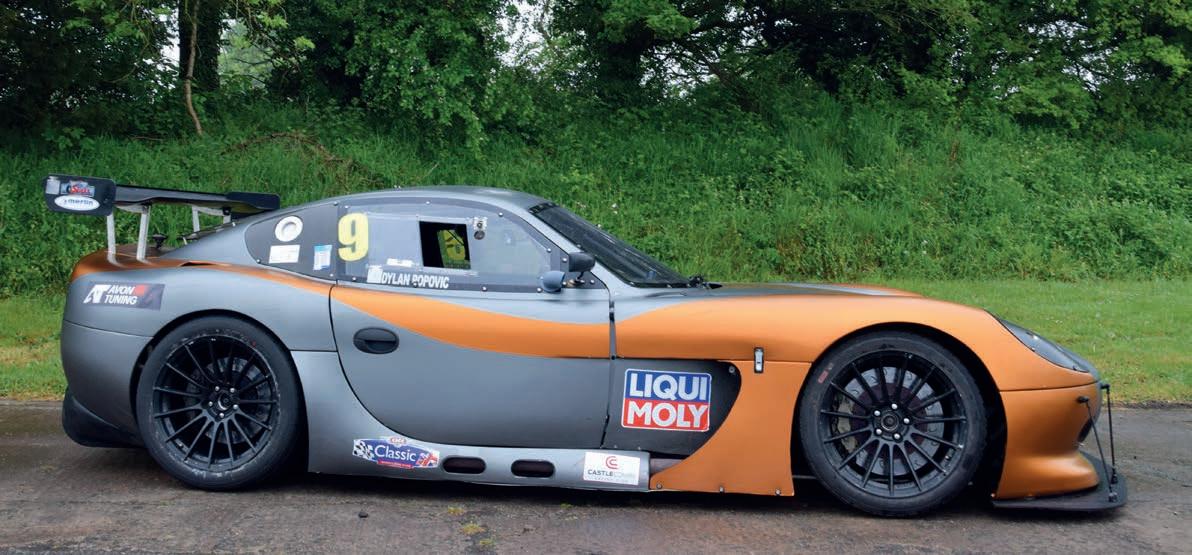
‘The body was mostly glass fibre when I got the car, but this has had a fair bit of carbon put on it over the years as, whatever we improved on the car, it tended to be made in carbon,’ Popovic says. ‘The sides are carbon, the bonnet’s carbon. Basically, just the roof section and the rear clam are still GRP; everything else is carbon.’
This includes some of the additional aerodynamic elements, and also neat little touches like bespoke sills and air ducts to help cool down what can be a hot cockpit. All of this has been produced with some of the most advanced technology you will find in use at this level of motorsport. And yet at the same time, it is also all homemade.
David Stallard Photography
The bodywork on this one-off G50 is largely homemade carbon fibre, with only the roof and rear clam in original GRP
Down to the wire
The wiring loom is a vital part of any racecar, but a high quality one can also be a performance differentiator
By LAWRENCE BUTCHER
Wiring within a racecar is one of those things that goes largely unnoticed by most, until there is a problem. But for those designing and developing cars, it is an integral part of the whole vehicle system. When executed correctly, it brings not just reliability, but also performance.
The array of electronics on modern vehicles is constantly evolving, as greater compute power can be shrunk to bring more capabilities onboard, but that is a topic for another day. Here, we will focus on the seemingly mundane (spoiler: it’s anything but) topic of wiring and interconnects.
The wiring system on a modern racecar, be it a humble clubman effort or a top-level grand prix machine, can be considered the nervous system that ties together vital vehicle functions, from sensors and control
Wiring must be lightweight, yet durable enough to survive both the harsh environment while racing and potential mishandling by mechanics under pressure during service
units to the driver’s cooling and drink system. Wiring must be lightweight, yet durable enough to survive both the harsh environment of a motor race and potential mishandling by mechanics under pressure during service. It must also be resistant to chemicals, such as fuel and brake fluid, happy becoming hot, flexible enough to fit around tight bends and, where necessary, provide shielding from EMF.
Wire selection may seem straightforward, but there are many considerations that must be taken into account. For example, the power each component requires to operate, and the current drawn by it, dictates the wire diameter, or the length of a single wire, and whether voltage drop is an issue, as well as the location of the wires in the car.
Industry standard
The industry standard wiring used by the vast majority of racing applications is Raychem Spec 55 (Raychem is a sub-brand of TE Connectivity), part of what is referred to as System 25, a combined cable and protection system. There is a lower cost Spec 44, but most loom builders will default to the former.
Raychem was the originator of a process that uses radiation to improve the properties of polymers, such as those used for insulation,
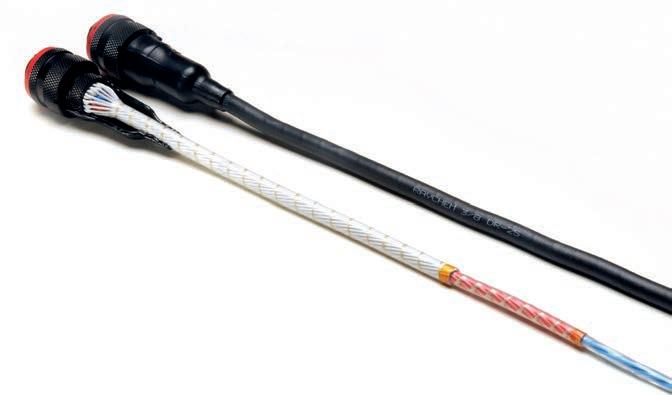
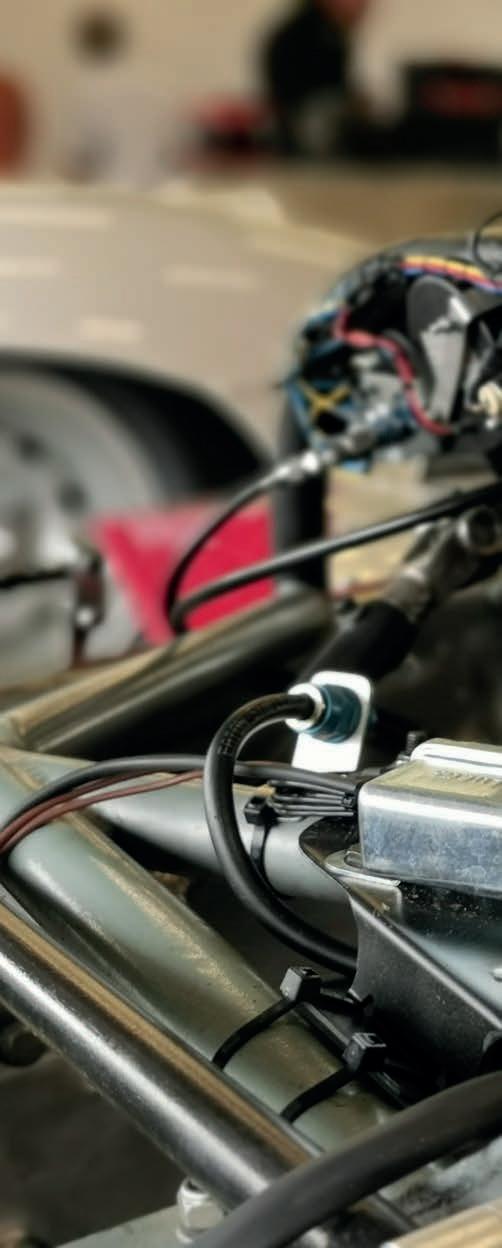
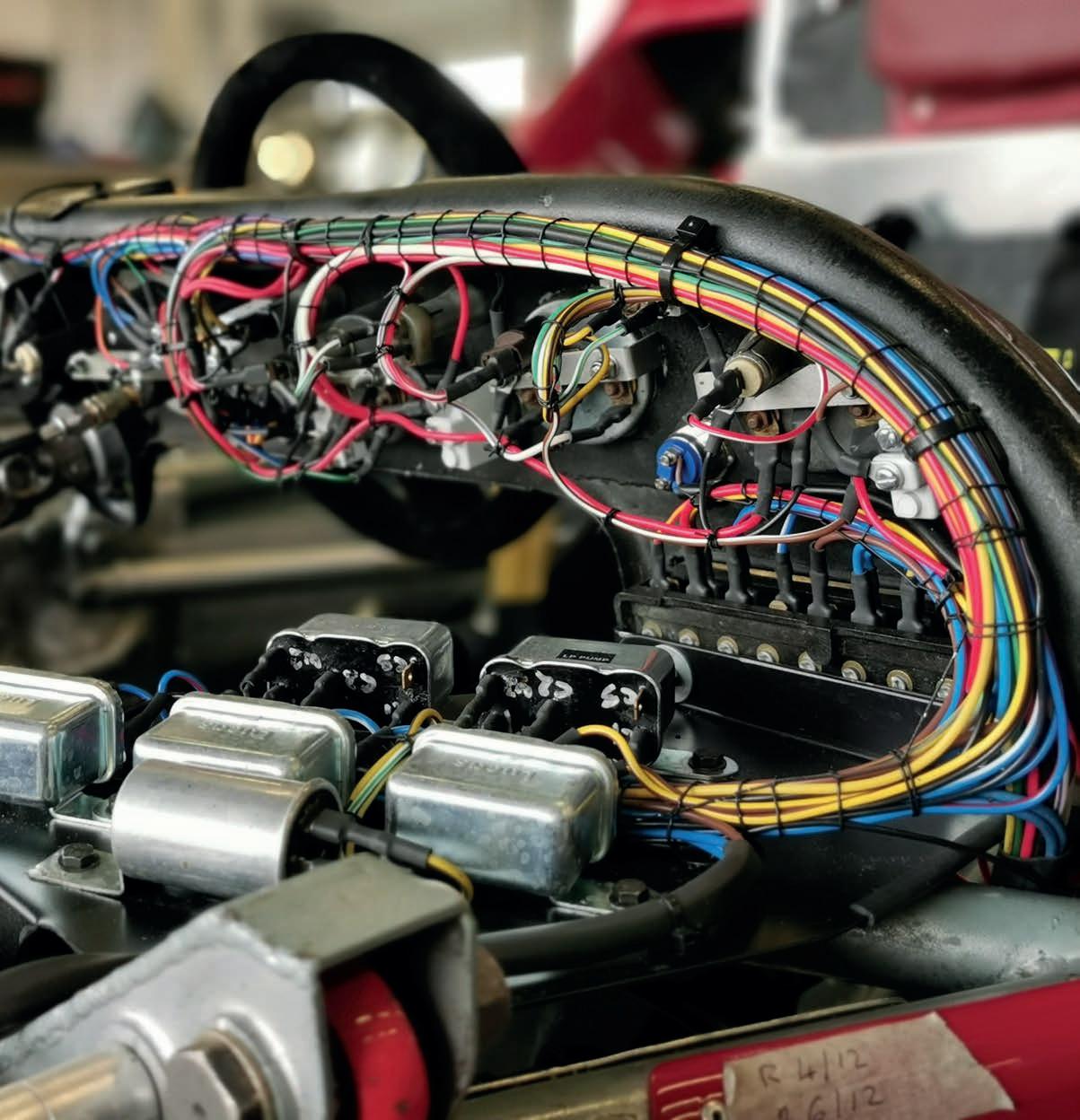
Wiring is often referred to as a ‘black art’, and many people would prefer to forget it even exists, but a well designed and constructed wiring loom is a benefit to any racecar, and the engineers working on it
The power of three
Peugeot has revealed a first glimpse of its third attempt at a Le Mans-winning Hypercar
By ANDREW COTTON
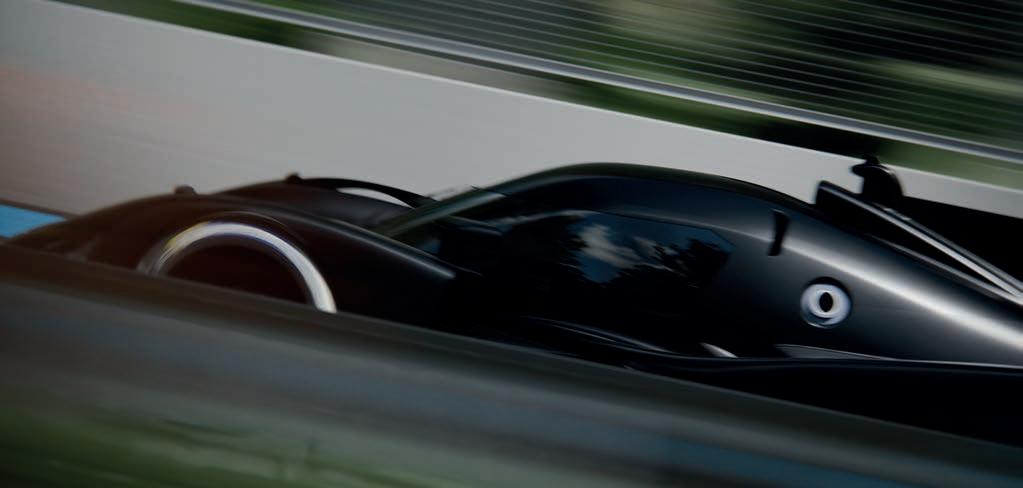
In late July, Peugeot unveiled a teaser image of its third FIA World Endurance Championship challenger, scheduled to make its race debut in 2027. The car, which continues with the 9X8 nomenclature, is heavily updated, even from this year’s iteration. However, it is believed to still use the same tub and 2.6-litre V6 turbocharged engine design as the original. This will make it the third version of the 9X8 in five years.
The car is Peugeot’s latest attempt at trying to push higher up the Hypercar order. It reached 30 WEC race starts at the 6 Hours of São Paulo in July this year, yet has failed to register a victory so far. Considering it was one of the first to enter Hypercar, its record of four podiums and one pole position pales in comparison to the achievements of its rivals, including Toyota, Ferrari, Porsche and BMW.
The original 9X8 was raced without a rear wing after Peugeot’s design team took the letter of the regulations to the extreme.
The plan, which changed several times between 2019 and 2022, was for the drivetrain to deliver hybrid power to the front wheels in all conditions, and nearly 200kW of energy from a total maximum power output of 585kW (784.6bhp). The minimum base weight of the car was initially set at 980kg, although that also changed during
development, first rising to 1100kg, and then reducing once again to 1030kg.
The aerodynamic profile was limited to a fixed point on the lift / drag graph, measured in the Sauber wind tunnel, which was used for all LMH cars homologated for the FIA WEC.
As is the case today, manufacturers could choose just one adjustable aero device –either a front or rear wing – and opinions were divided throughout the grid as to which was the better option.
LMH manufacturers built their own chassis, while engine choice extended to production-derived units that were given more freedom to prepare for racing than a pure motorsport power unit.
Balancing act
Peugeot opted to use a hybrid system, which meant a front-mounted ERS by rule, and built a car that featured a larger front tyre, powerful underbody aero and no rear wing.
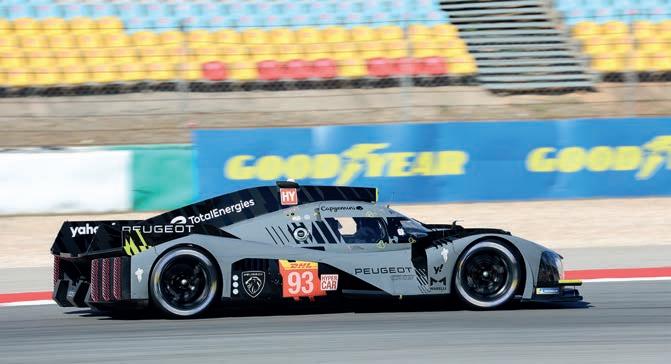
The latest version of the car is scheduled to enter competition next year, and the French manufacturer hopes it will finally unlock the full potential of the 9X8 programme
The wingless 9X8 debuted at Monza in 2022, but the regulations had changed significantly since the design concept was finalised, and the compromises that then had to be carried in the car were clear from the start