
WHERE PATHS MEET
PORTFOLIO
CONTENTS
Curated works from my undergraduate studies and personal projects showcasing a distinct blend of design skills, creativity, and architectural expression.
WHERE PATHS MEET
Curated works from my undergraduate studies and personal projects showcasing a distinct blend of design skills, creativity, and architectural expression.
In collaboration with Kendall Hartley
Arch 411 | Integrate
8th & Farnam St. Omaha, Nebraska
Professor - Beau Johnson
Revit, Rhino, Illustrator, Photoshop, Indesign, Climate Studio
Pages 1 - 10
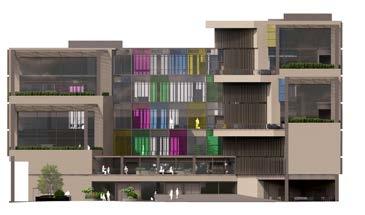
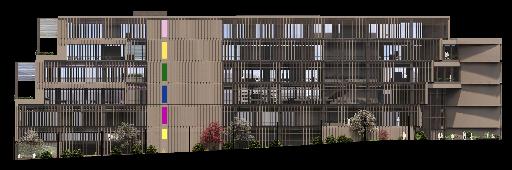
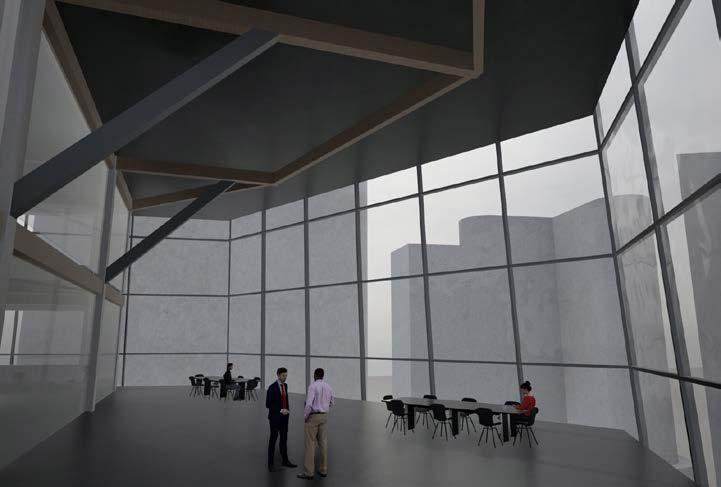
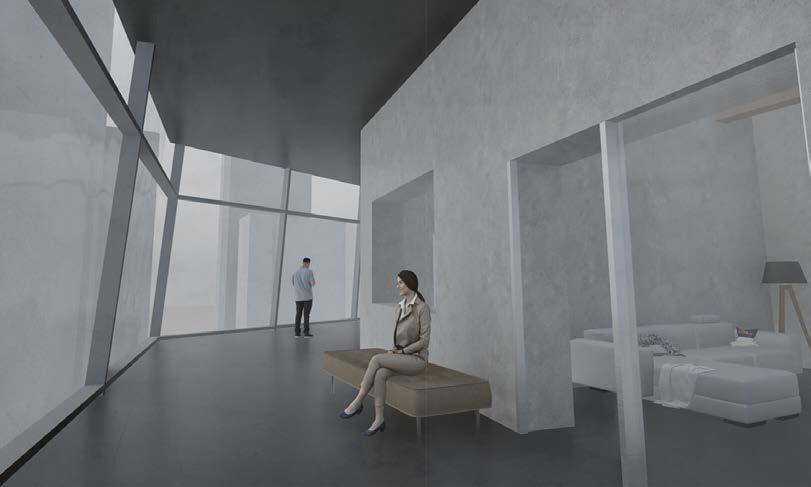
Our project aims to redefine the traditional office environment by creating an inclusive workplace for both office users and the surrounding community. Located on the corner of 8th and Farnam, our site is a breaking point between the central business district and a more park-oriented sector of Omaha.
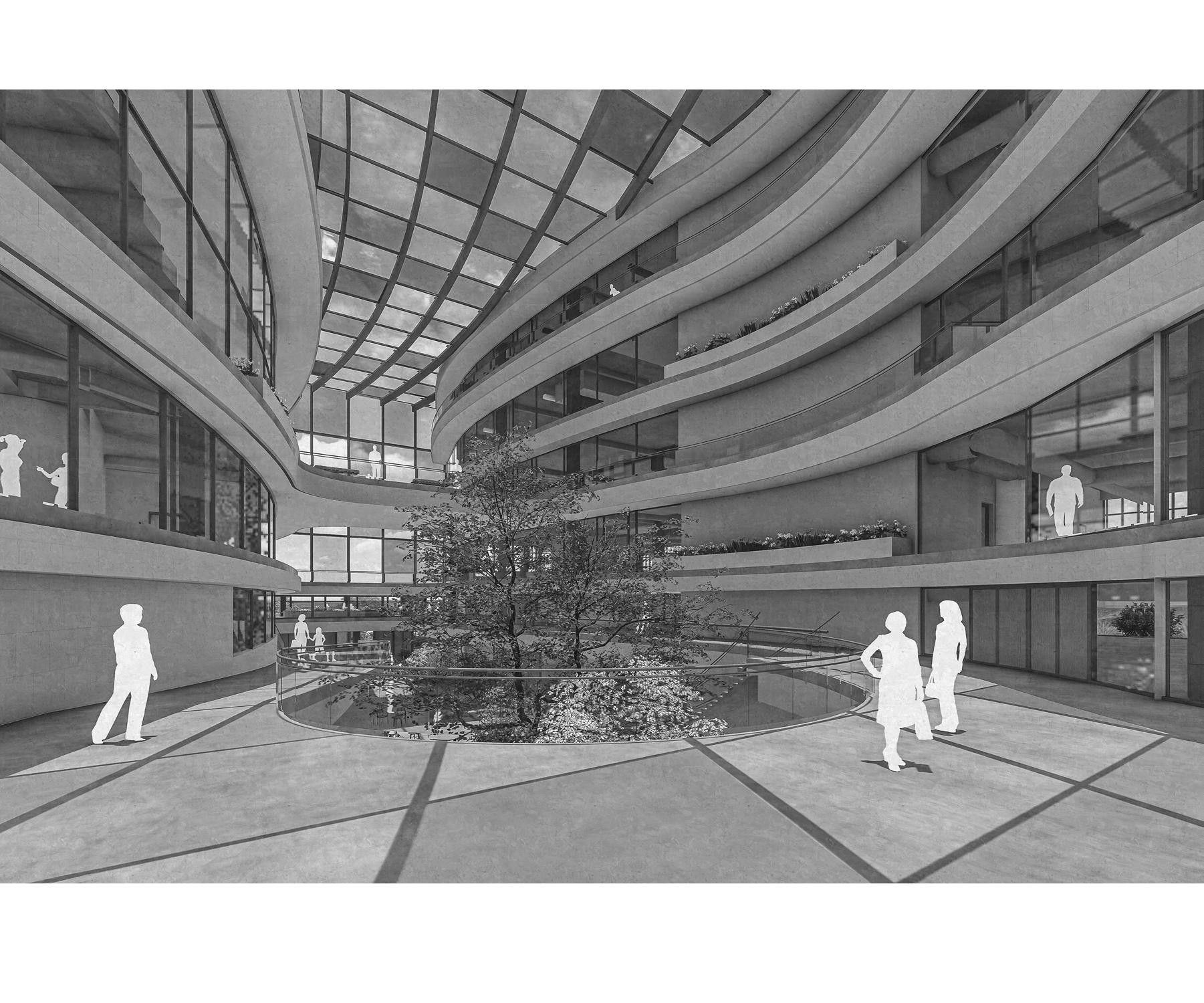
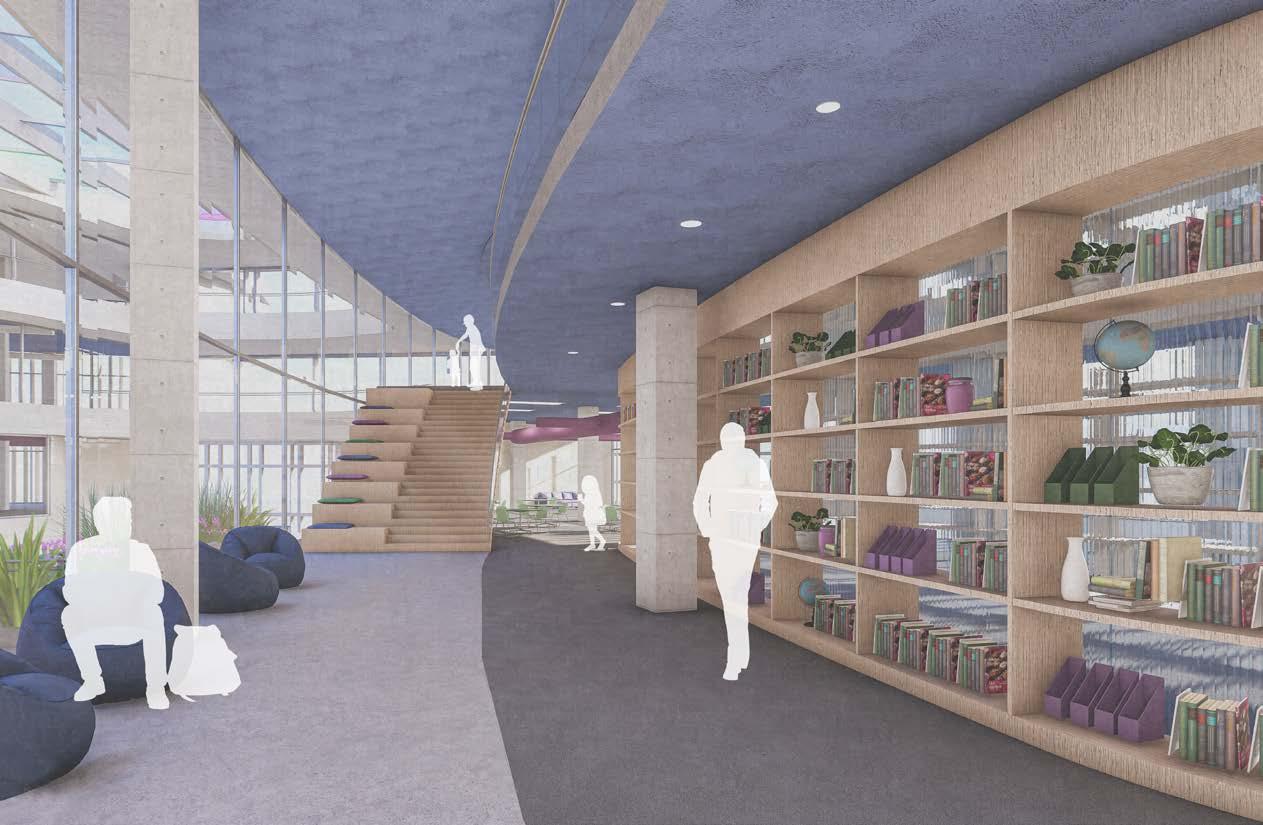
A focus for the project was to integrate these two distinct areas by prioritizing connectivity between office users and the community. This approach seeks to bring employees back to the office by providing amenities that prioritize well-being and productivity. Using careful analysis of the site, we created interactive passageways through the site including many public areas, making it a destination of its own. By prioritizing the needs of both the office occupants and the broader public, our project sets a new standard for workplace design, contributing positively to the built environment
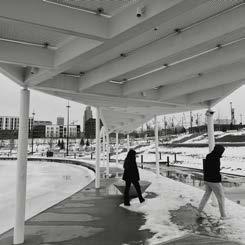
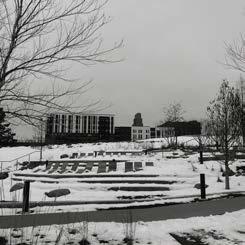
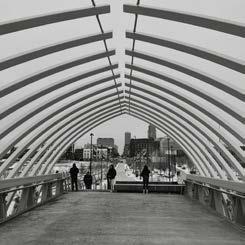
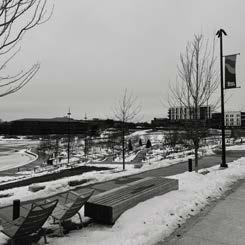
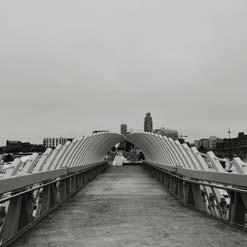
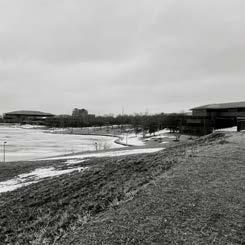
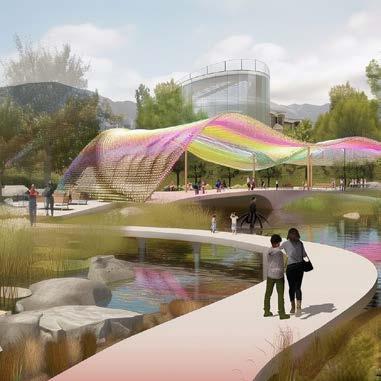
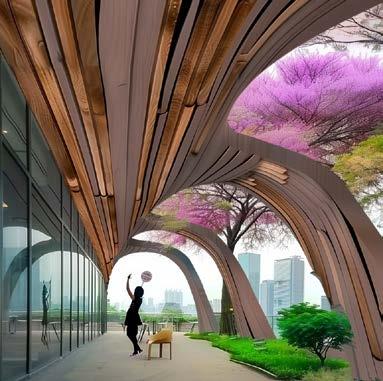
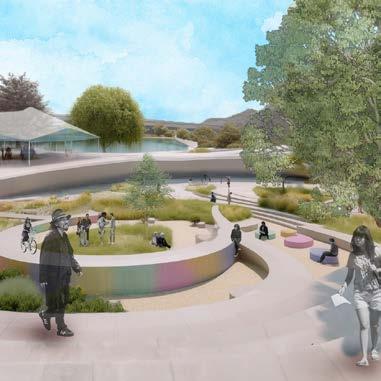
A site study to re-imagine the potential of the space and the built environment. Through these studies we found the importance of incorporating color to evoke different emotions as well as circulation throughout the site. The study also began to pose the question of what to provide employees to create a unique and fun environment to drive people back to the office.
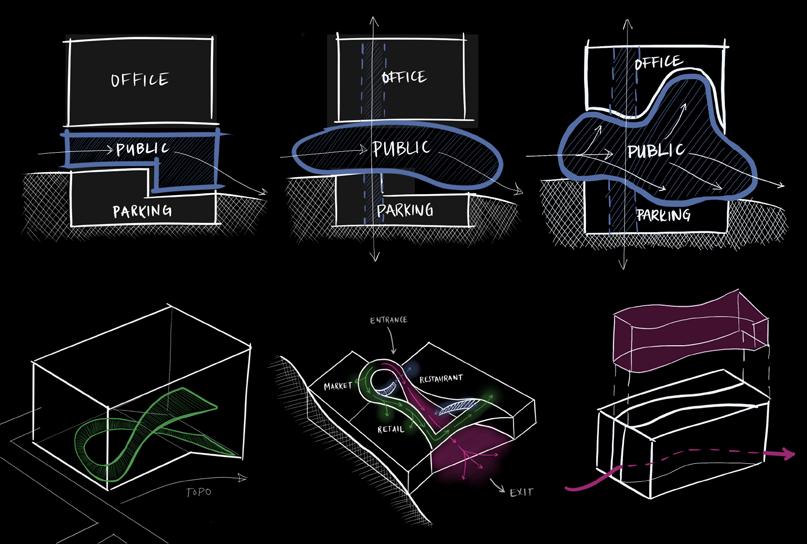
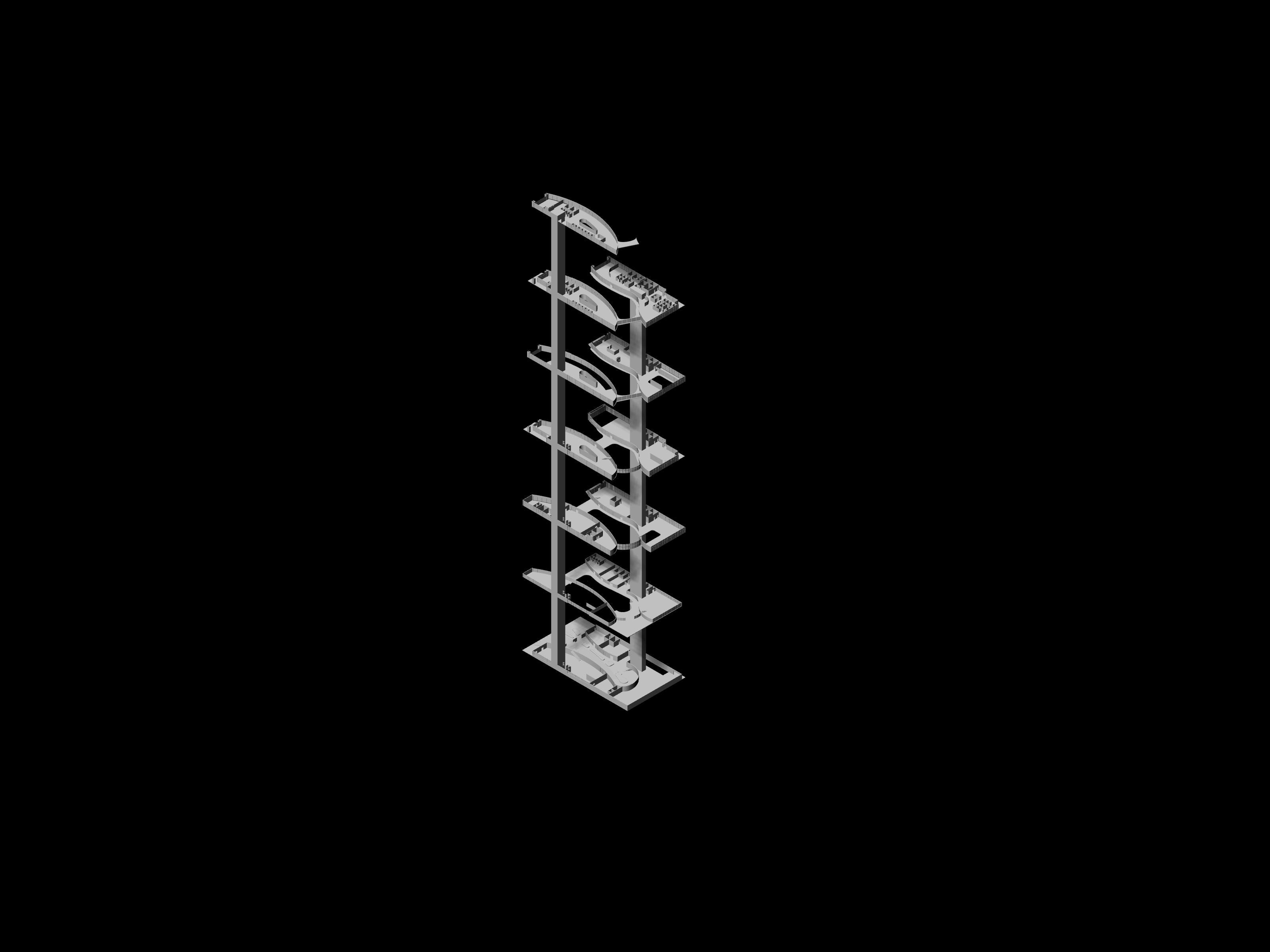
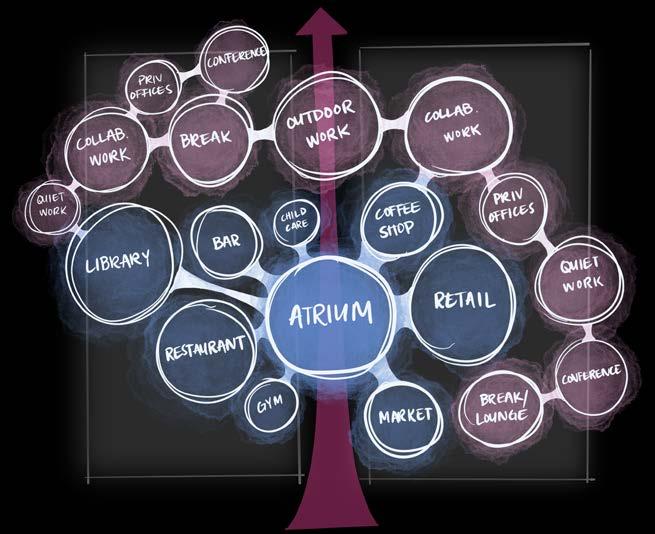
The relationship between program and circulation was integral to this project, as the connectivity between office users and the general public was a central focus. To achieve this, it was necessary to integrate private and public spaces both vertically and horizontally. This was accomplished by incorporating double-height spaces and catwalks within the atrium, facilitating connections between the private and public areas.
1. LIBRARY
2. QUIET WORK AREA
3. PATIO
4. WALKWAY
5. COFFEE SHOP
6. WORK AREA
7. BREAK ROOM
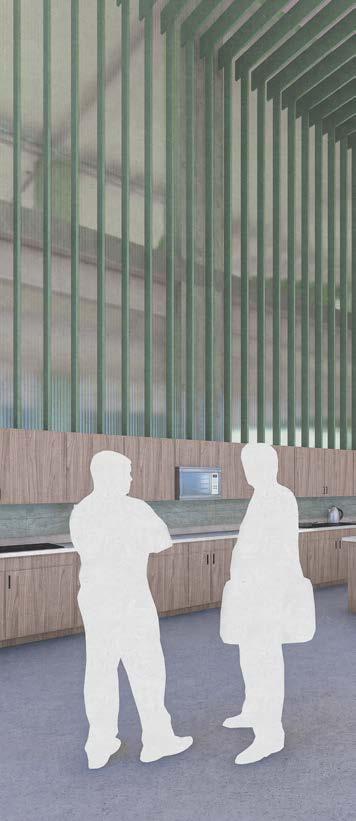
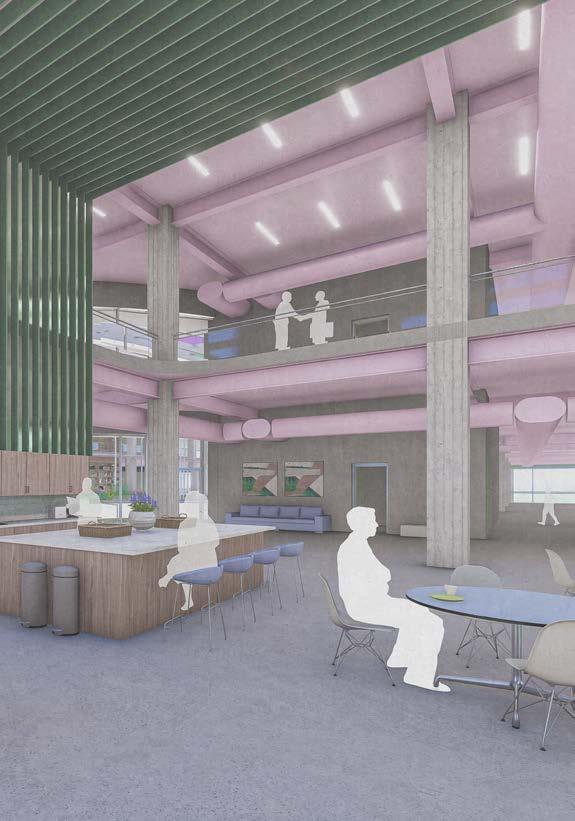
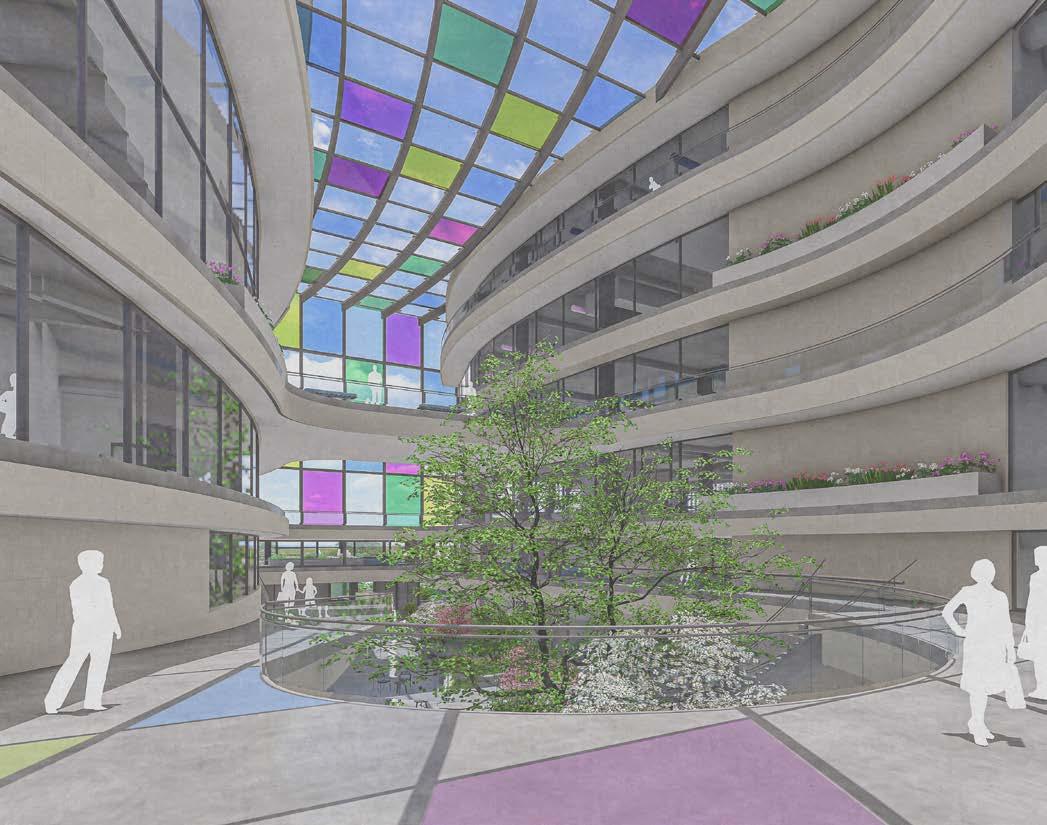
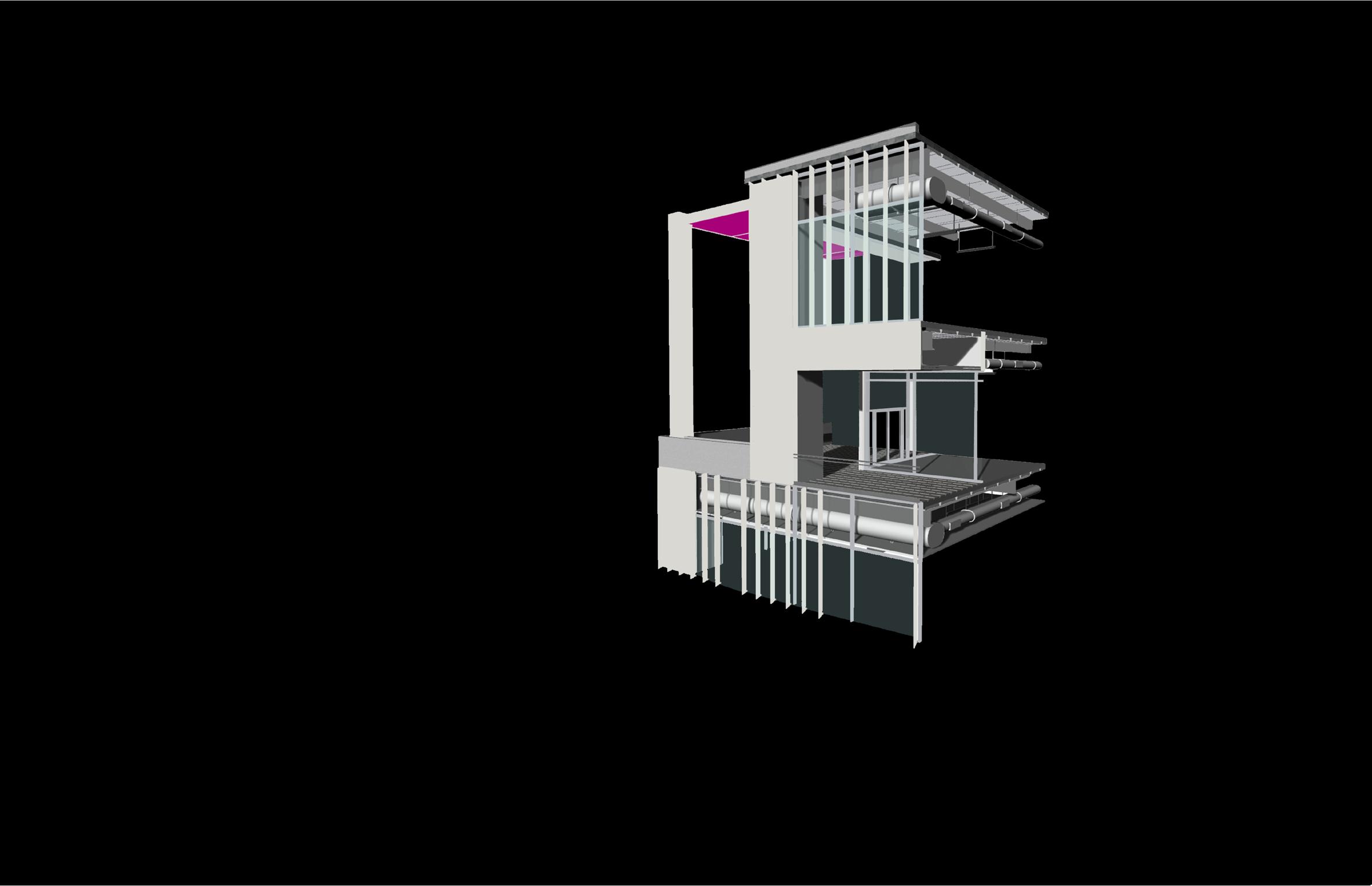
This detailed chunk model illustrates the integration of various building systems and architectural elements within the project. Key features showcased include the HVAC system, lighting design, the structure, exterior balcony condition, a combination of drop and open ceilings, and the perforated metal canopy. Through this model, we gained a deeper understanding of how these components interact to shape the envisioned environment. Further analysis of these systems is presented in the detailed wall section, which provides a comprehensive depiction of all elements and their assembly.
In collaboration with Chloe Martinez & Angela Le
Arch 410 | Collaborate
UNL’s East Campus, Lincoln, Nebraska
Professor - Steve Hardy & Nate Bicak Revit, Rhino, Illustrator, Photoshop, Enscape
Pages 11- 22
This project tackles the important issue of understanding the origins and production processes of our food, considering the broader impacts on culture, society, the economy and the environment.
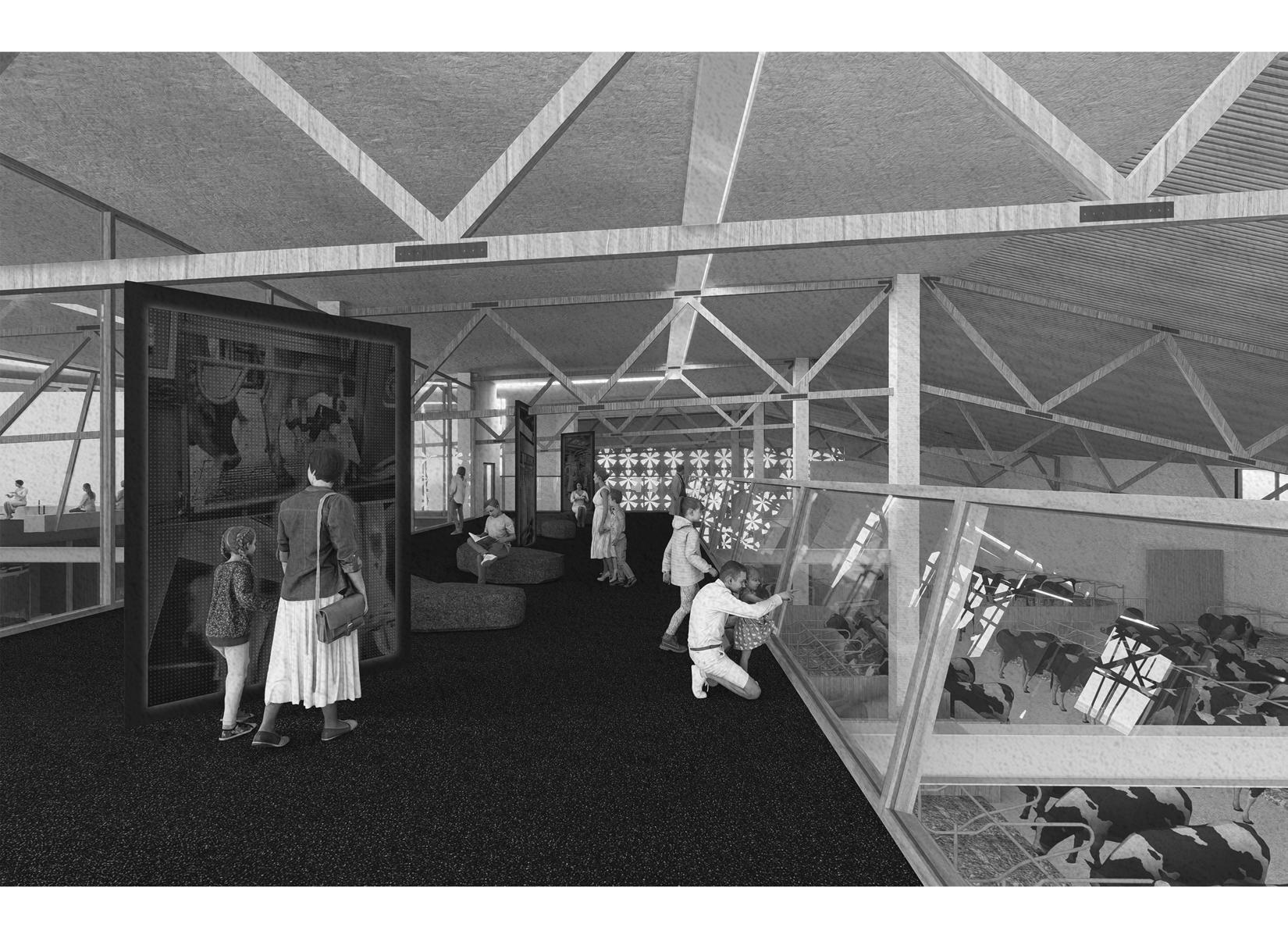
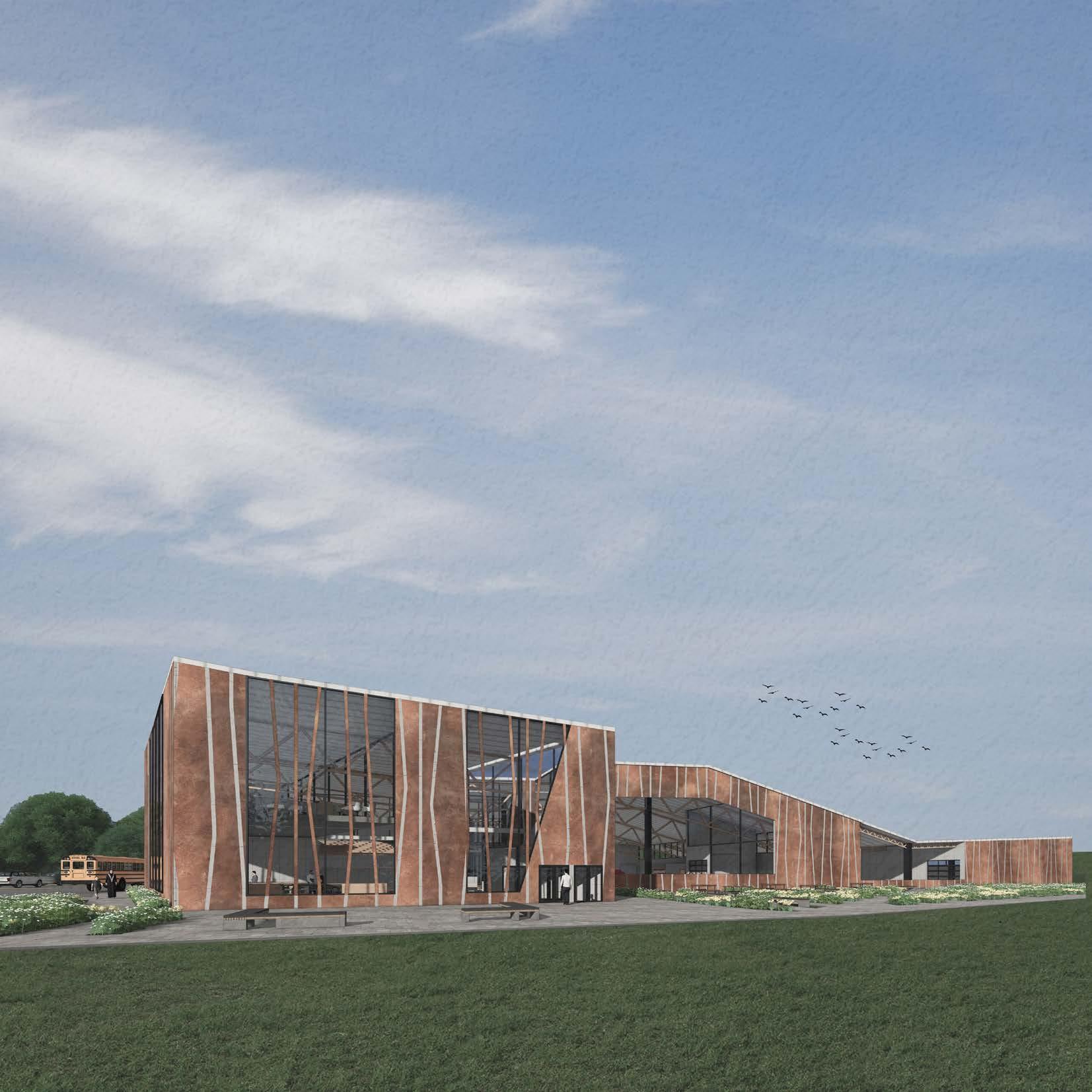
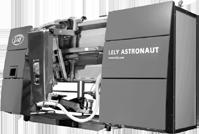
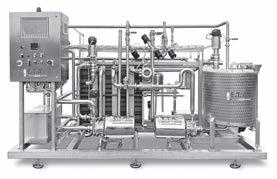
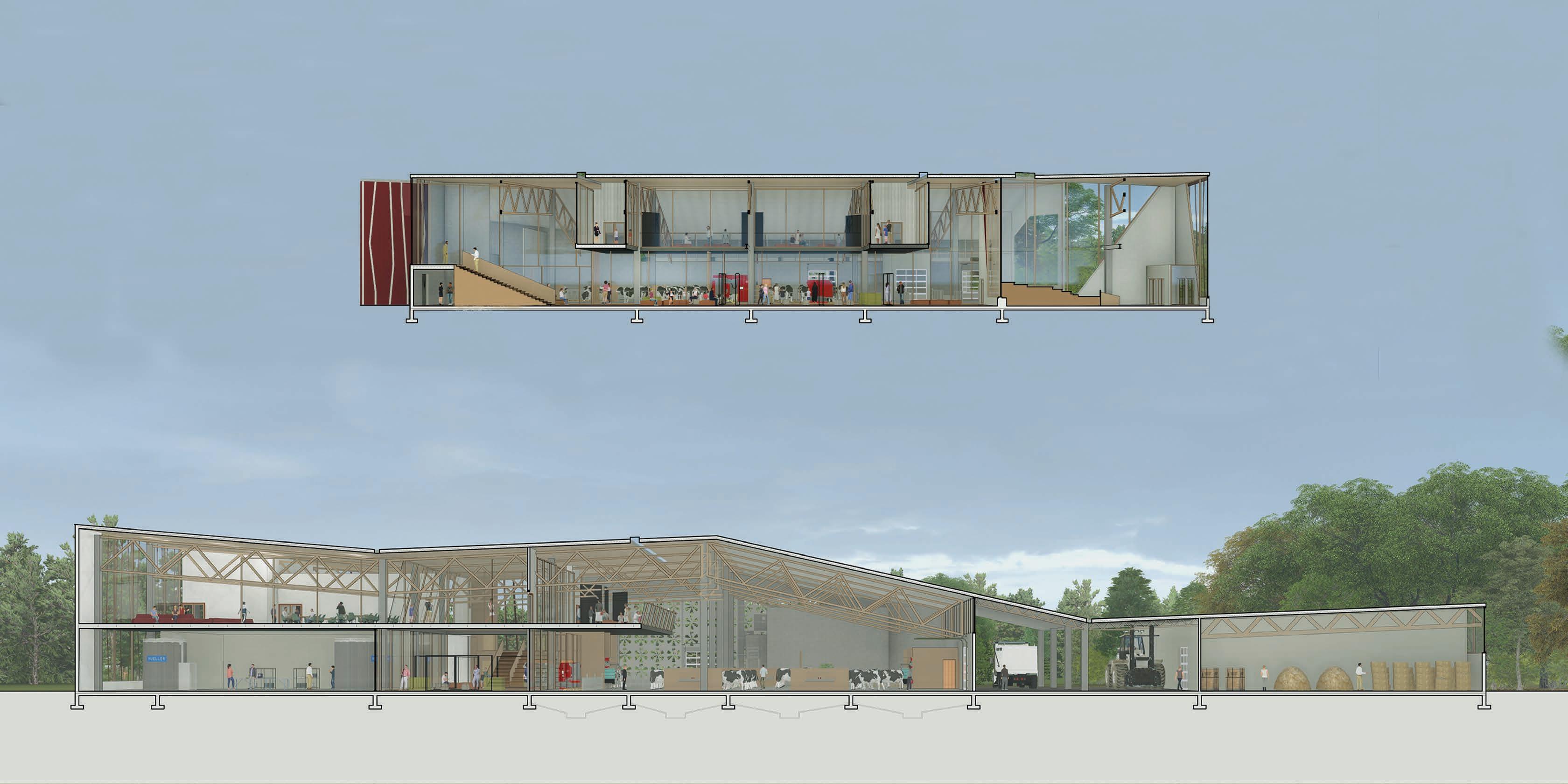
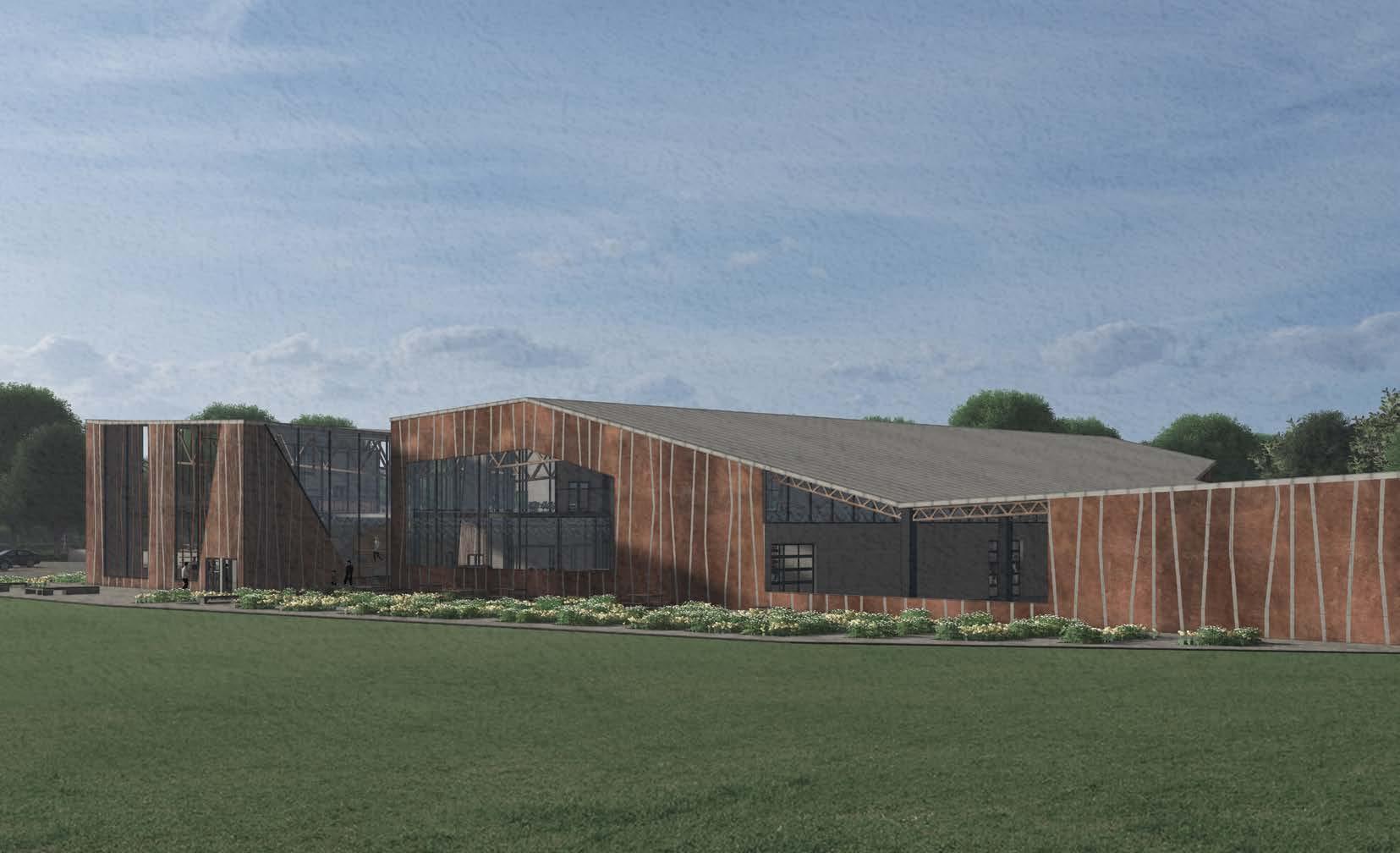
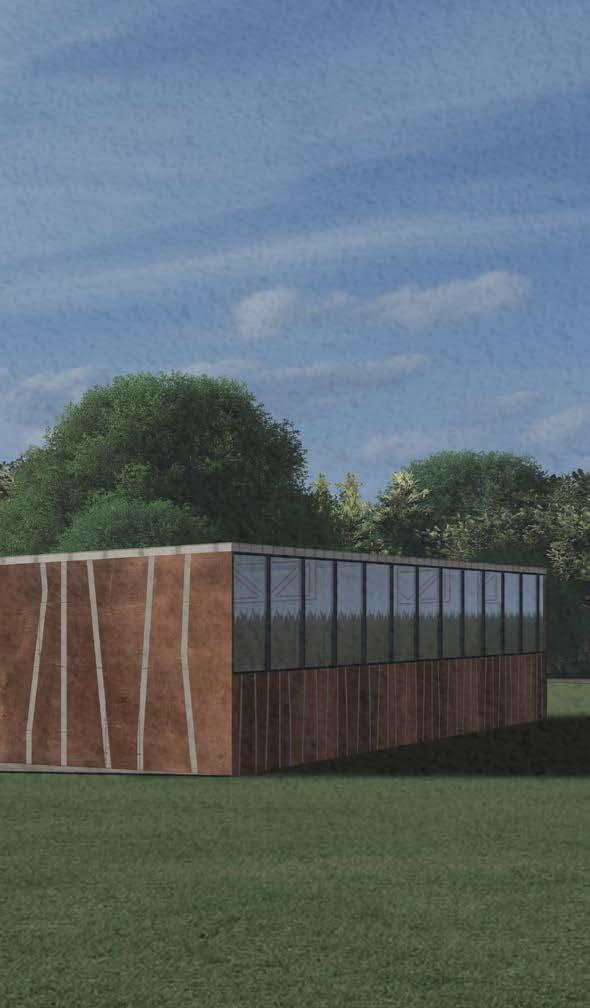
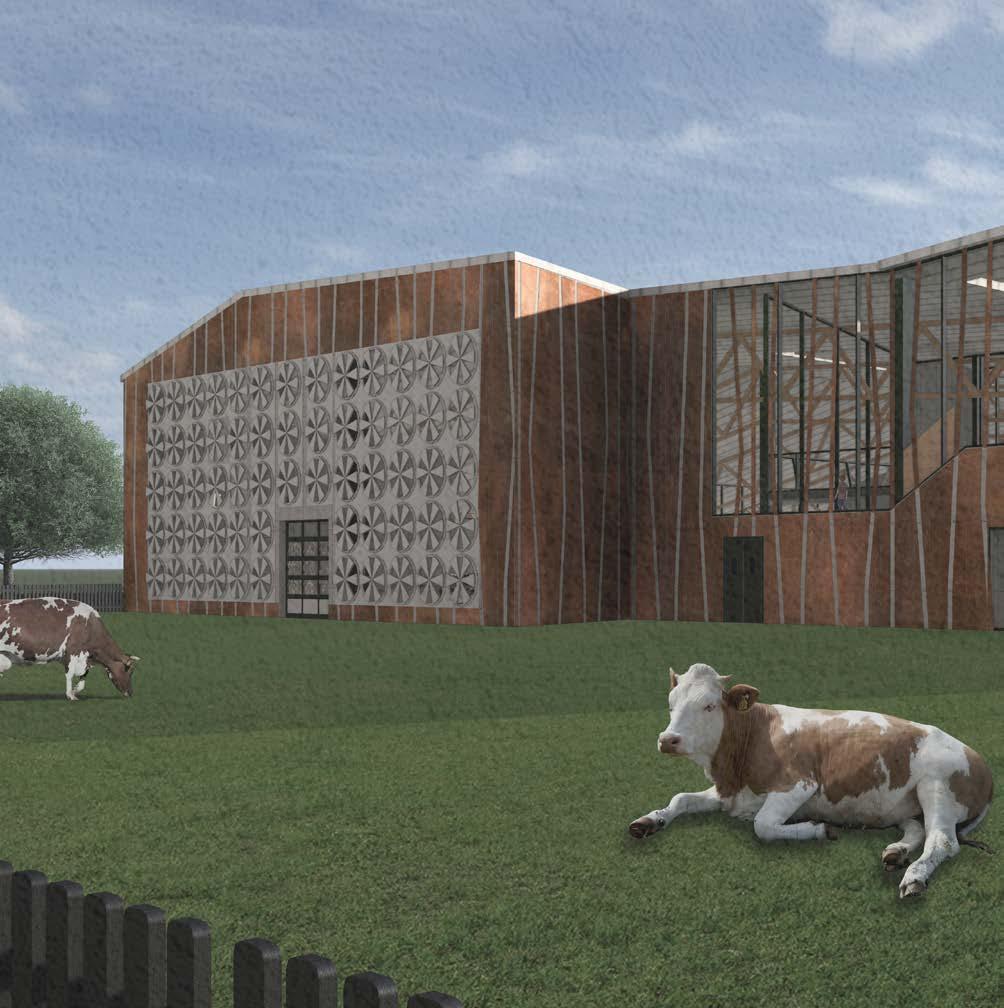
The focus of the project was to explore the built environment’s role in agricultural production and how we can help communicate and shape public perceptions of food production. No Bull Dairy is a robotic dairy educational center that was designed to educate the public on the internal processes of a robotic dairy farm. The design prioritizes transparency, emphasizing the visual exposure of the dairy process, while also allowing for interaction between visitors, staff and animals. The education experience is multifaceted including interactive displays, culinary labs, virtual reality experiences, all aimed at providing a comprehensive and immersive learning environment.

RAW MILK COLLECTION VIA
SOMATIC CELL COUNT
STANDARD PLATE COUNT
PRELIMINARY INCUBATION COUNTS
LAB PASTURIZED COUNTS
COLIFORM COUNTS
PASTURISATION
HOMOGENISATION
CENTRIFUGAL SEPARATION
ULTRAFILTRATION
REVERSE OSMOSIS
SPRAY DRYING
PERMEATE
PACKAGING
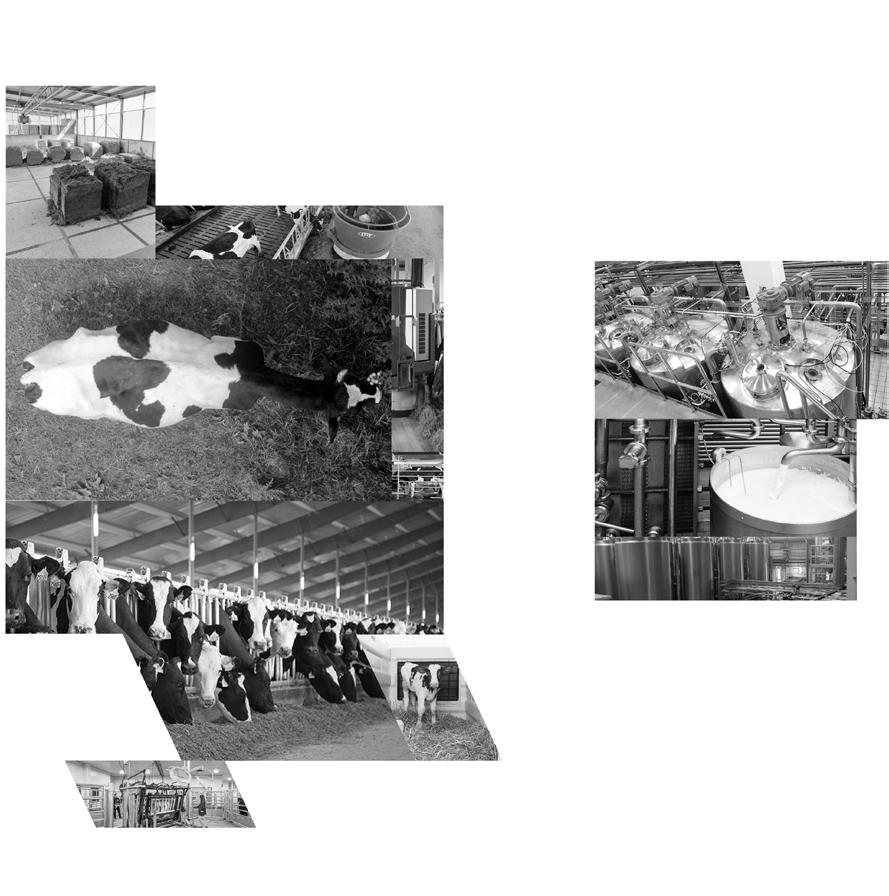
To begin the project, we identified three key concepts to guide our design: “split,” “flow,” and “view.” These principles were carefully chosen to address the well-being of employees, cows, and visitors. “Split” refers to the strategic separation of these groups, ensuring their distinct needs are met. “Flow” emphasizes efficient circulation, enabling smooth operations for both workers and livestock without visitor interference. Finally, “View” focuses on offering visitors a clear perspective of the production process without disrupting the workflow or compromising efficiency.

SITE CIRCULATION DIAGRAM
SITE STRATEGY DIAGRAM
SITE STRATEGY DIAGRAM
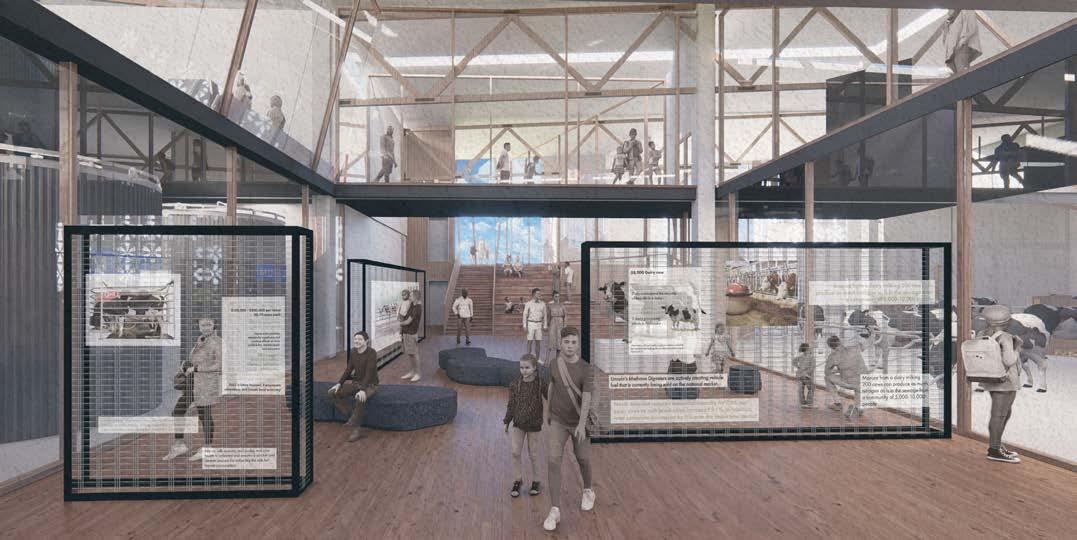
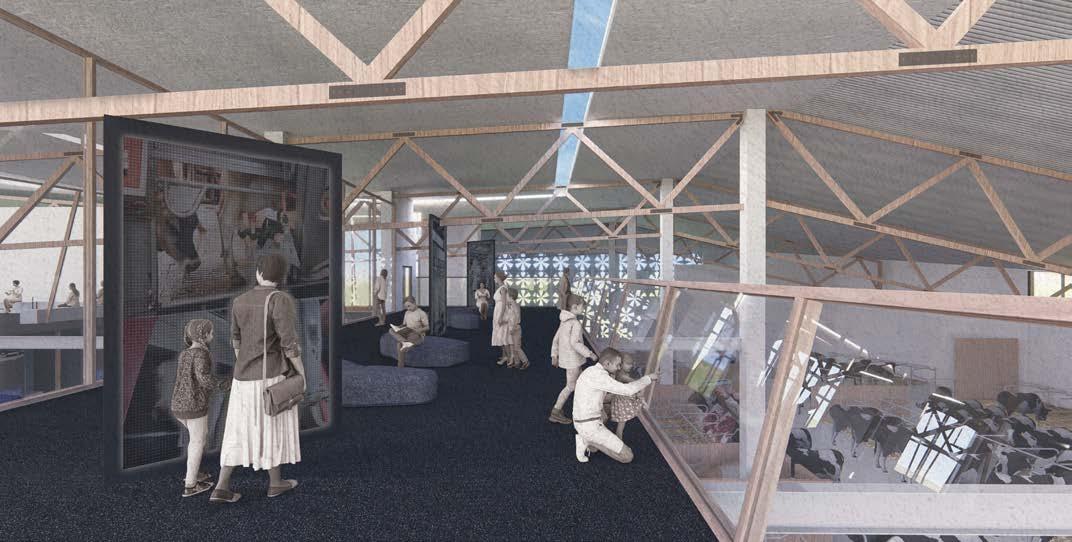



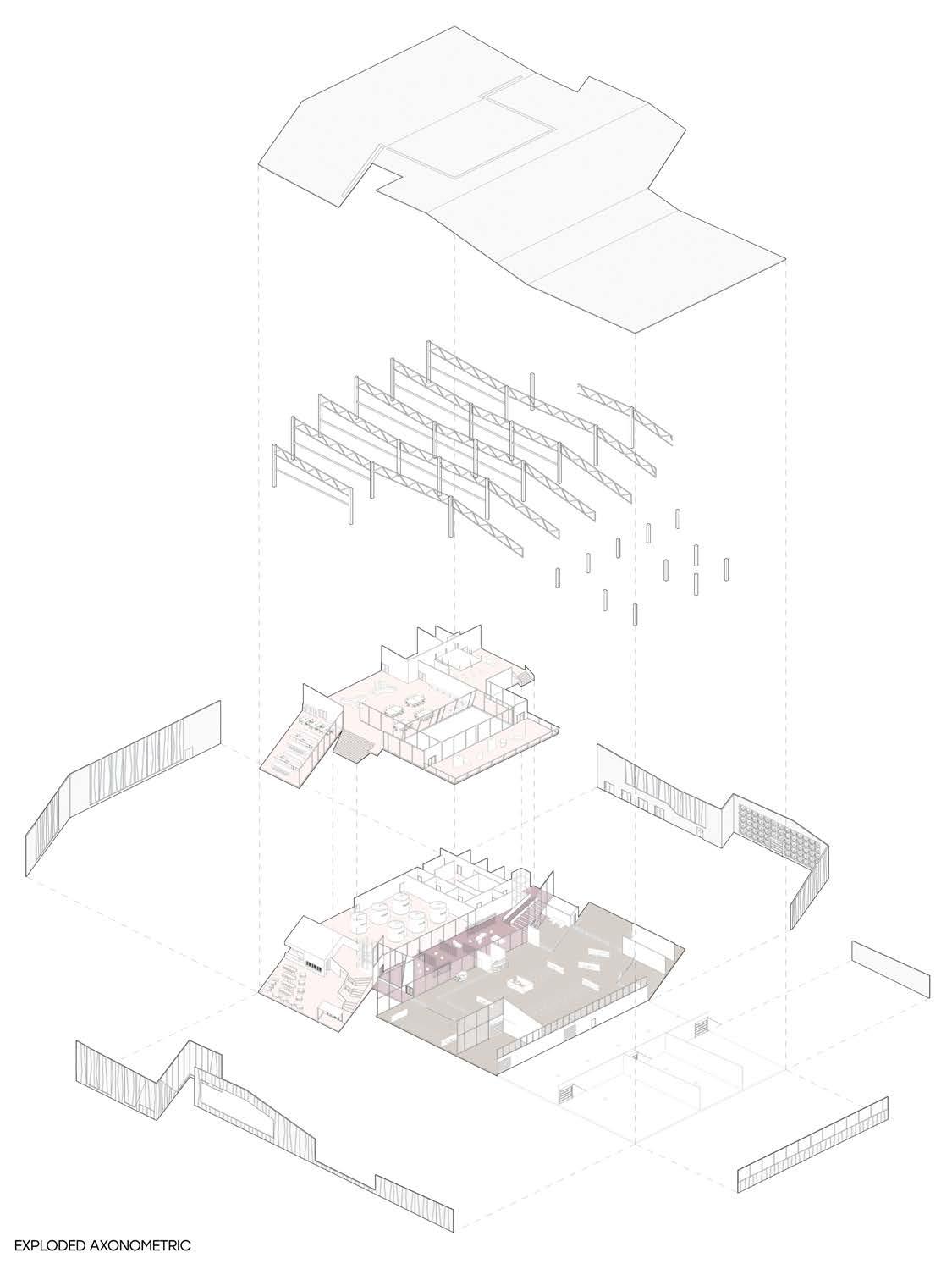
The structure consists of a hybrid system integrating glulam flat trusses, steel beams, and concrete bearing walls. The structure is more than a functional necessity but serves a dual purpose, acting as both a robust support system and an aesthetic expression of transparency. The intentional exposure of the hybrid structural elements, particularly visible from the public domain, serves a didactic function.

In collaboration with Dalton Sedlacek
Arch 311 | Situate
319 Lower North Water St. Chicago, Illinois
Professor - Matt Miller
Rhino, Illustrator, Photoshop, Indesign, Lumion
Pages 23 - 30
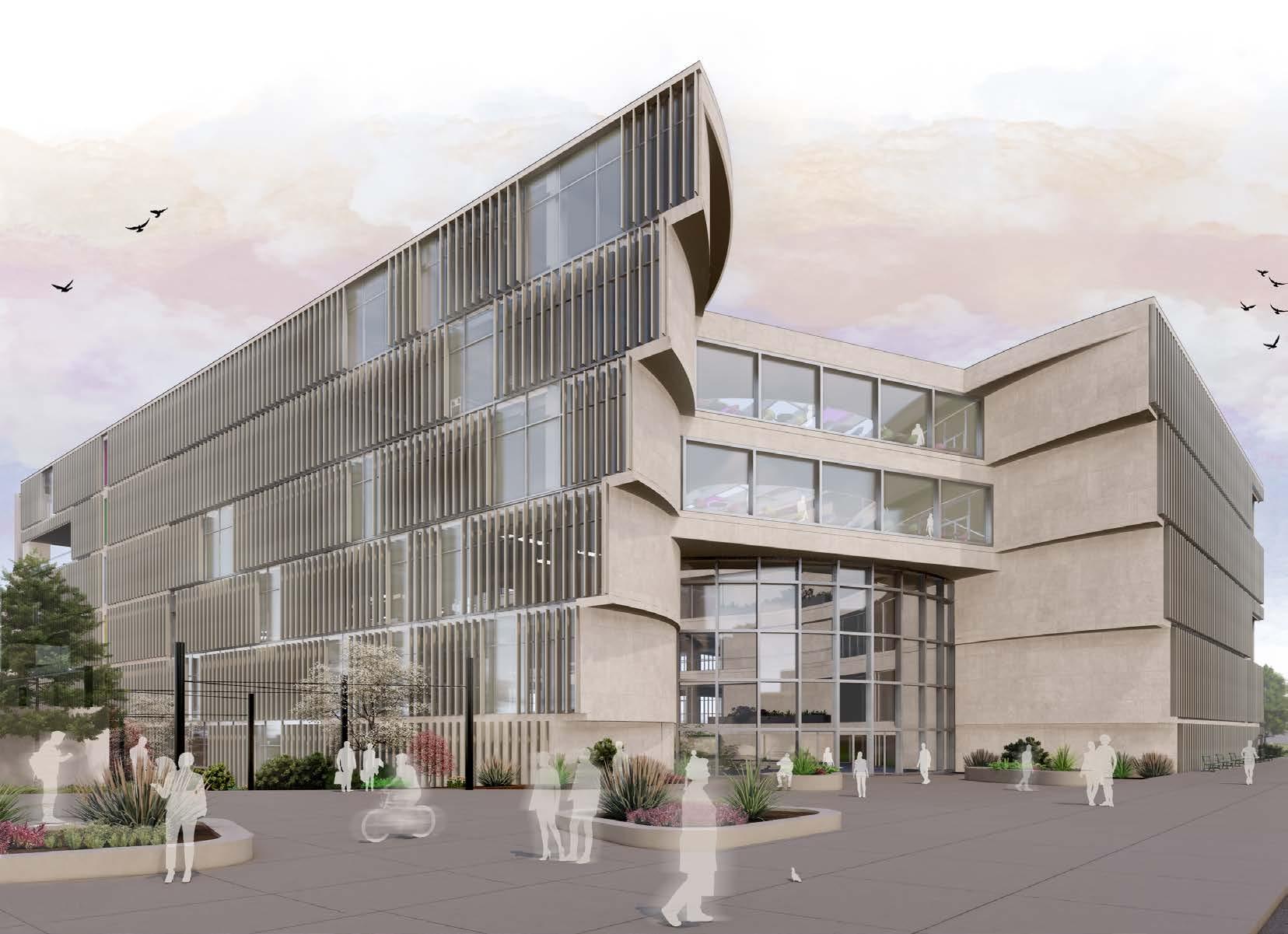
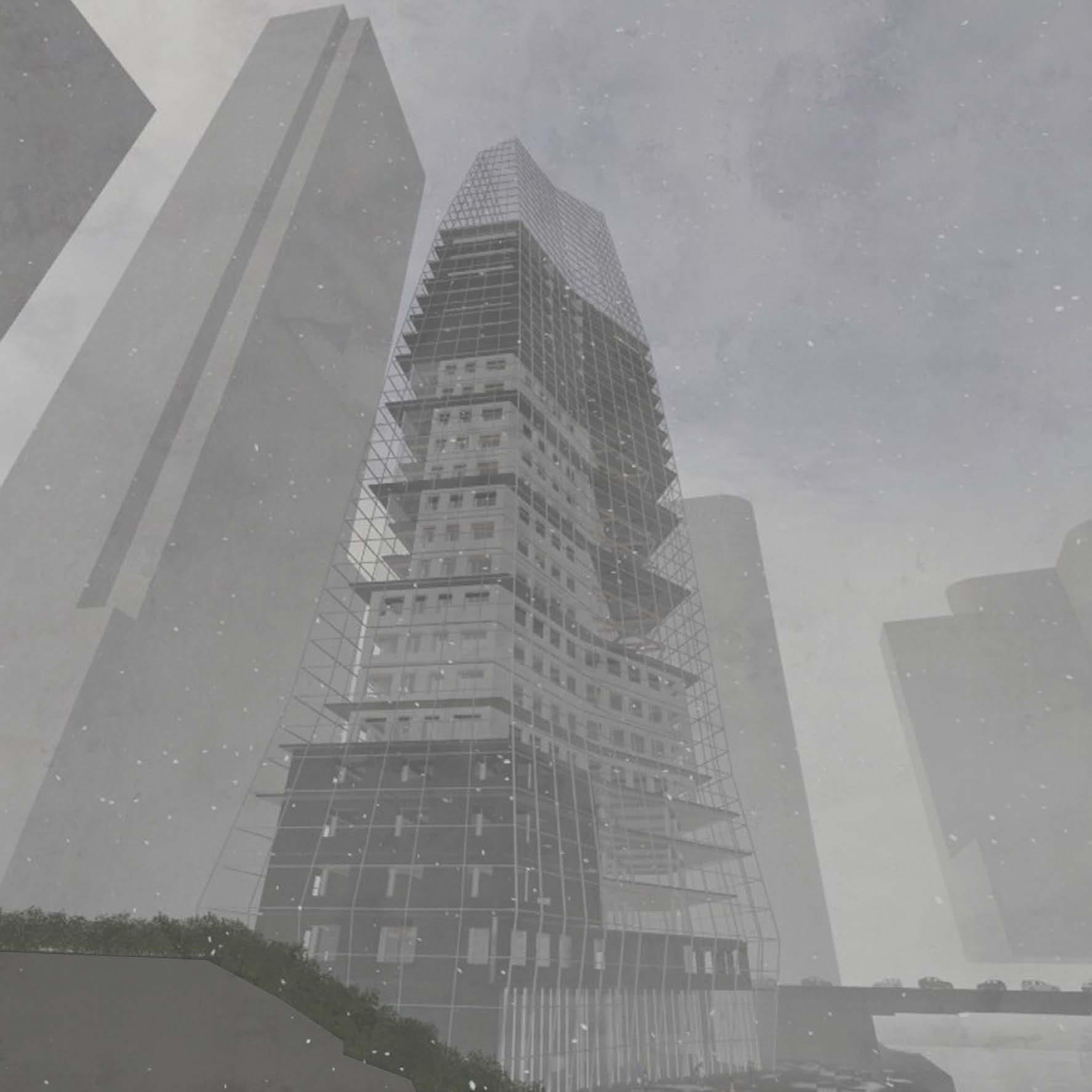
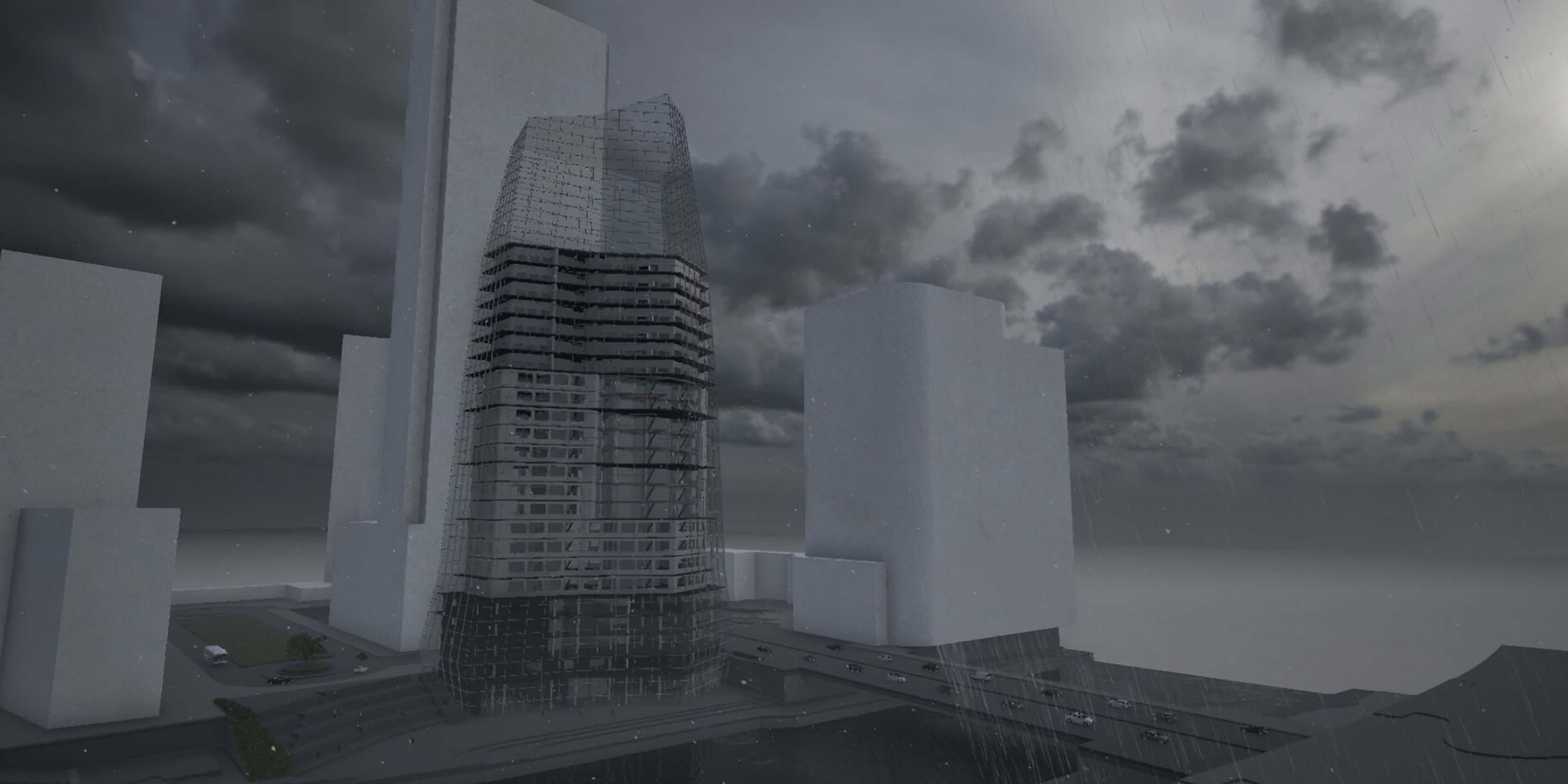
This mixed use office tower stands as a testament to urban sustainability, addressing multifaceted needs while seamlessly blending form and function. The building includes a diverse program, integrating retail, cultural spaces, shared and private offices, and residential units.
The buildings design includes a double skin facade that enhances energy efficiency while also regulating internal temperatures. Beyond the double skin facade our tower uses many sustainability approaches including the use of a green roof, rainwater harvesting systems, and energy efficient lighting. In a post-Covid era where flexibility is paramount, our office tower minimizes the potential for unoccupied spaces by allowing for the reconfiguration of interior layouts as necessary. This is all possible due to our dual structural framework, a primary and secondary structure.
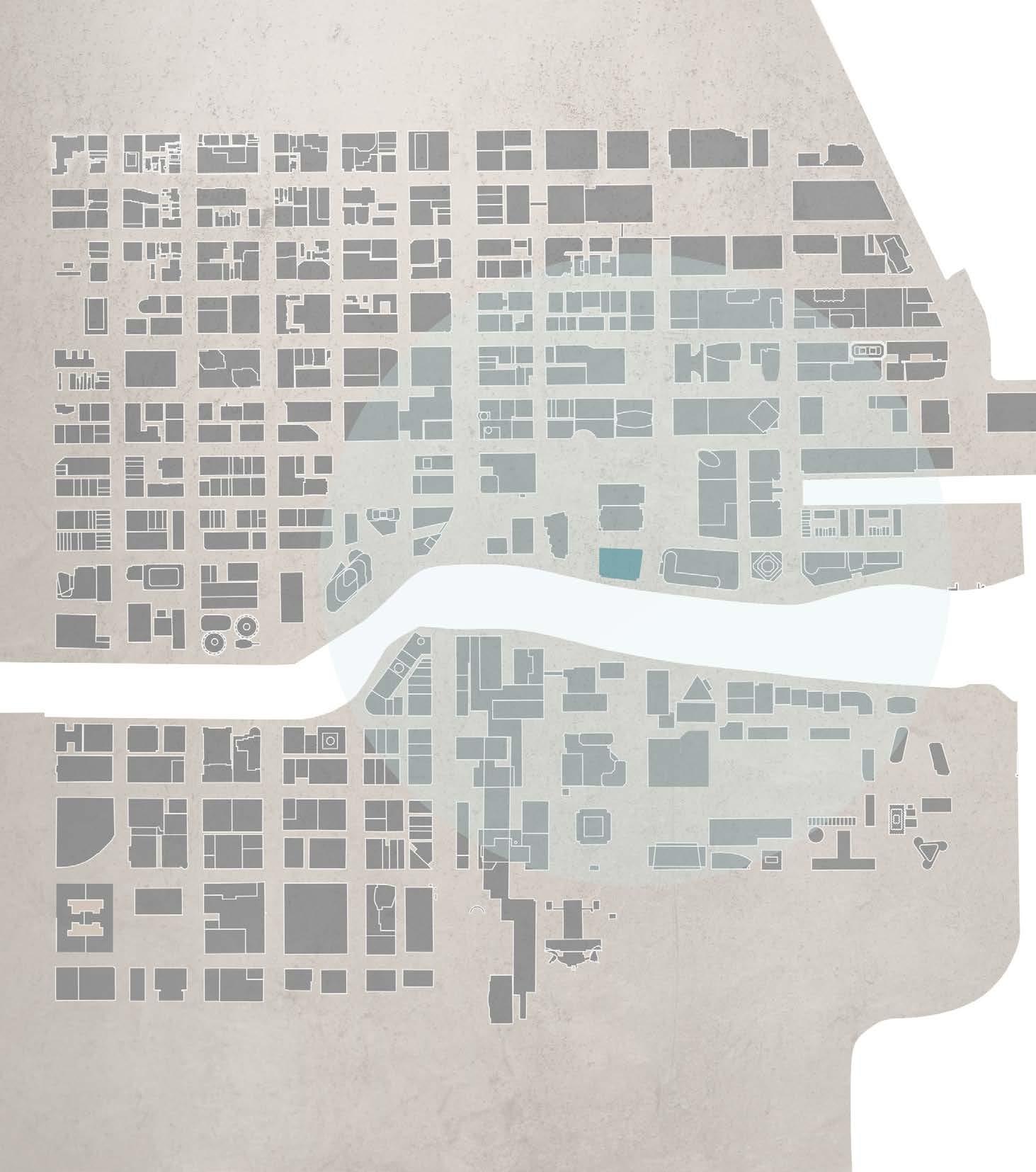
The diagram visually encapsulates pedestrian density, utilizing varying sized bubbles and color gradients to highlight areas of high foot traffic. It shows pedestrian movement patterns, offering valuable insights into the dynamic flow and congregation points within the designated space.

MODE OF TRANSPORTATION
The diagram provides a visual representation of street traffic, employing line intensities to illustrate the volume and flow of vehicular movement.
This bar graph visually captures the diverse modes of transportation in the area surrounding the site, while also depicting the usage frequency through different bars.
High unemployment rates in certain areas limit economic mobility and deepen income inequality. Many residents face barriers to employment, including skill gaps and a lack of access to well-paying jobs.
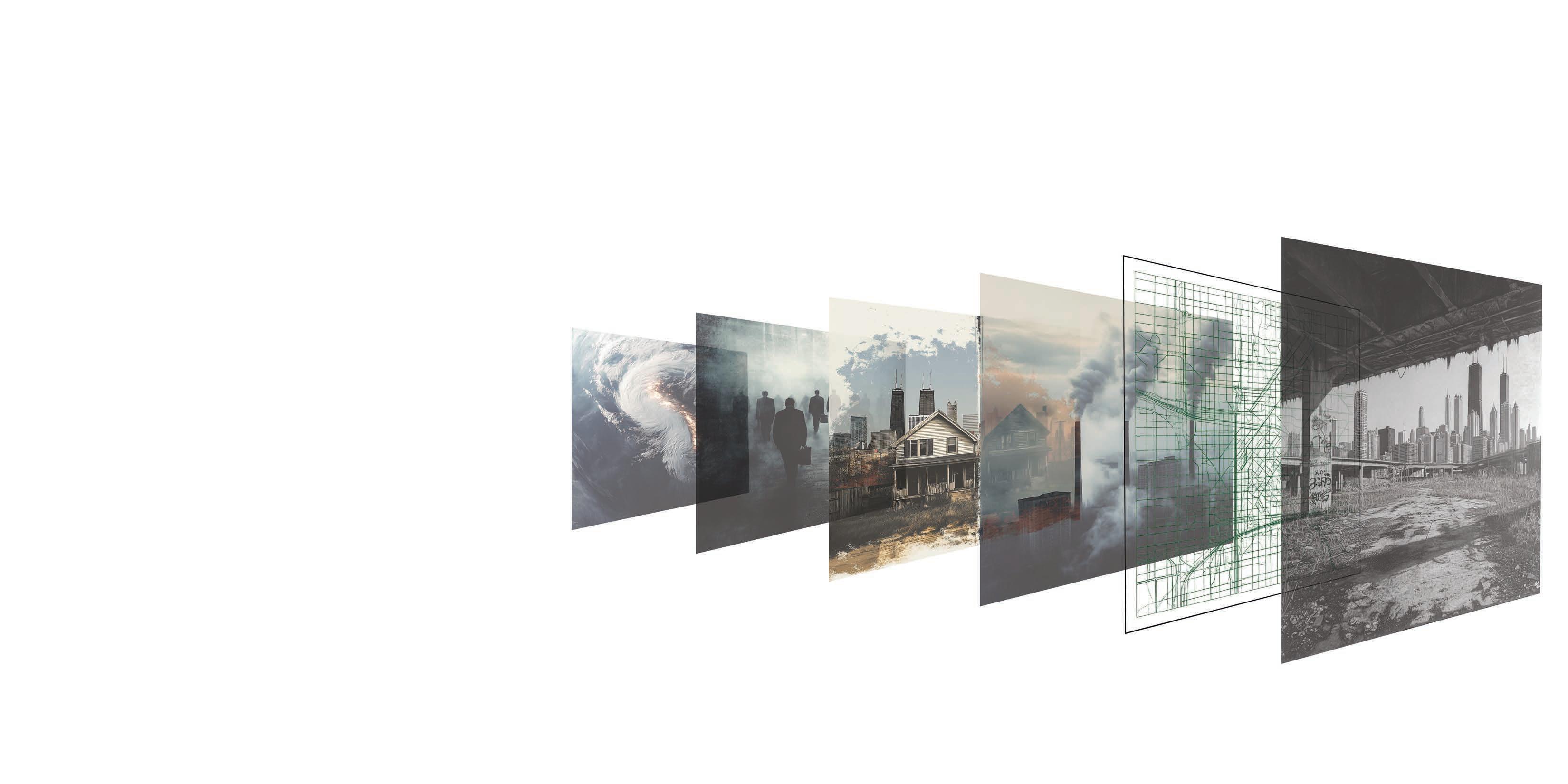
Rising temperatures and extreme weather events, such as heavy rainfall and flooding, are becoming more frequent due to climate change.
Chicago has a shortage of affordable housing, forcing low-income families out of their neighborhoods. This leads to increased homelessness and deeper economic divides.
Aging public transit infrastructure and limited service in certain areas create challenges for residents to access jobs and resources.
Chicago has many vacant lots and abandoned buildings, especially in under-invested neighborhoods. These spaces lower property values and hinder opportunities for community growth and development.
Air and water pollution from industrial activity and traffic emissions pose health risks to residents, especially in low-income neighborhoods.


The implementation of a double-skin facade in this office tower stands as a testament to its commitment to ecological responsibility and sustainable design. The double-skin facade system contributes significantly to energy efficiency by providing an additional layer of insulation, acting as a thermal buffer between the interior and exterior environments. This innovative design mitigates temperature fluctuations, reducing the building’s reliance on mechanical heating and cooling systems.
This building’s structure combines a primary steel framework with a secondary timber structure, a design approach rooted in promoting office flexibility. With the unpredictability brought on by the Covid era, the intent is to enhance adaptability within the tower’s spaces. The steel provides robust support, ensuring stability, while the timber elements offer a dynamic framework that facilitates easy reconfiguration. This intentional blend aims to address the challenges of changing office needs, allowing for seamless adjustments and re-purposing of areas within the tower.
In the wake of evolving work patterns and potential unoccupied spaces, the building’s structural flexibility becomes a strategic asset, promoting a resilient and responsive environment in the face of shifting office dynamics.
2024 Fall
Personal Work
Sketching & textile re-purposing
Pages 31-34
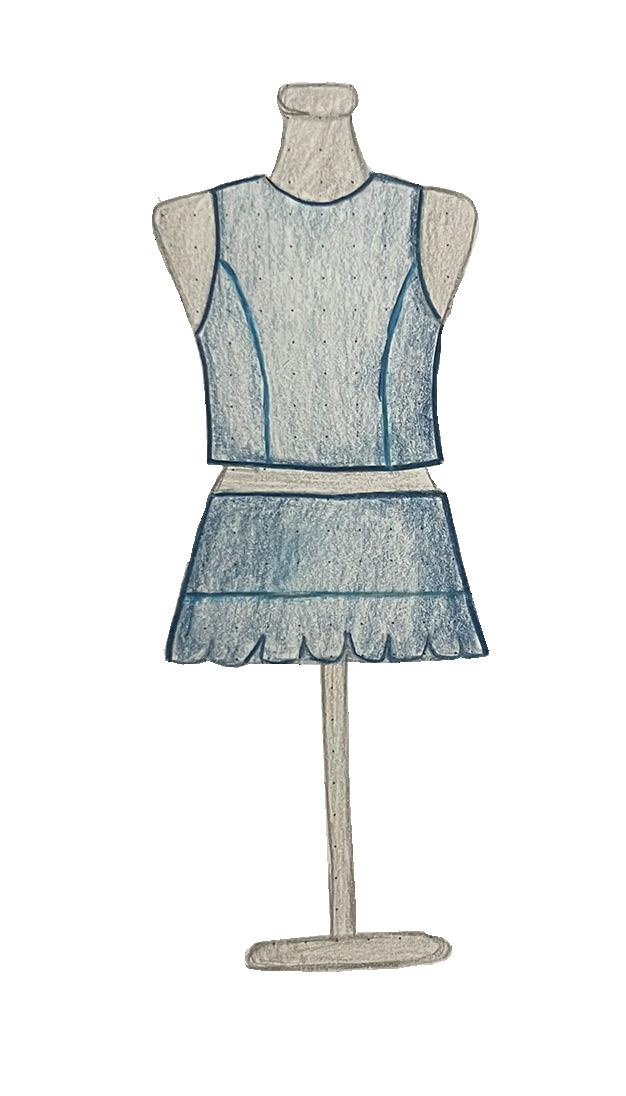
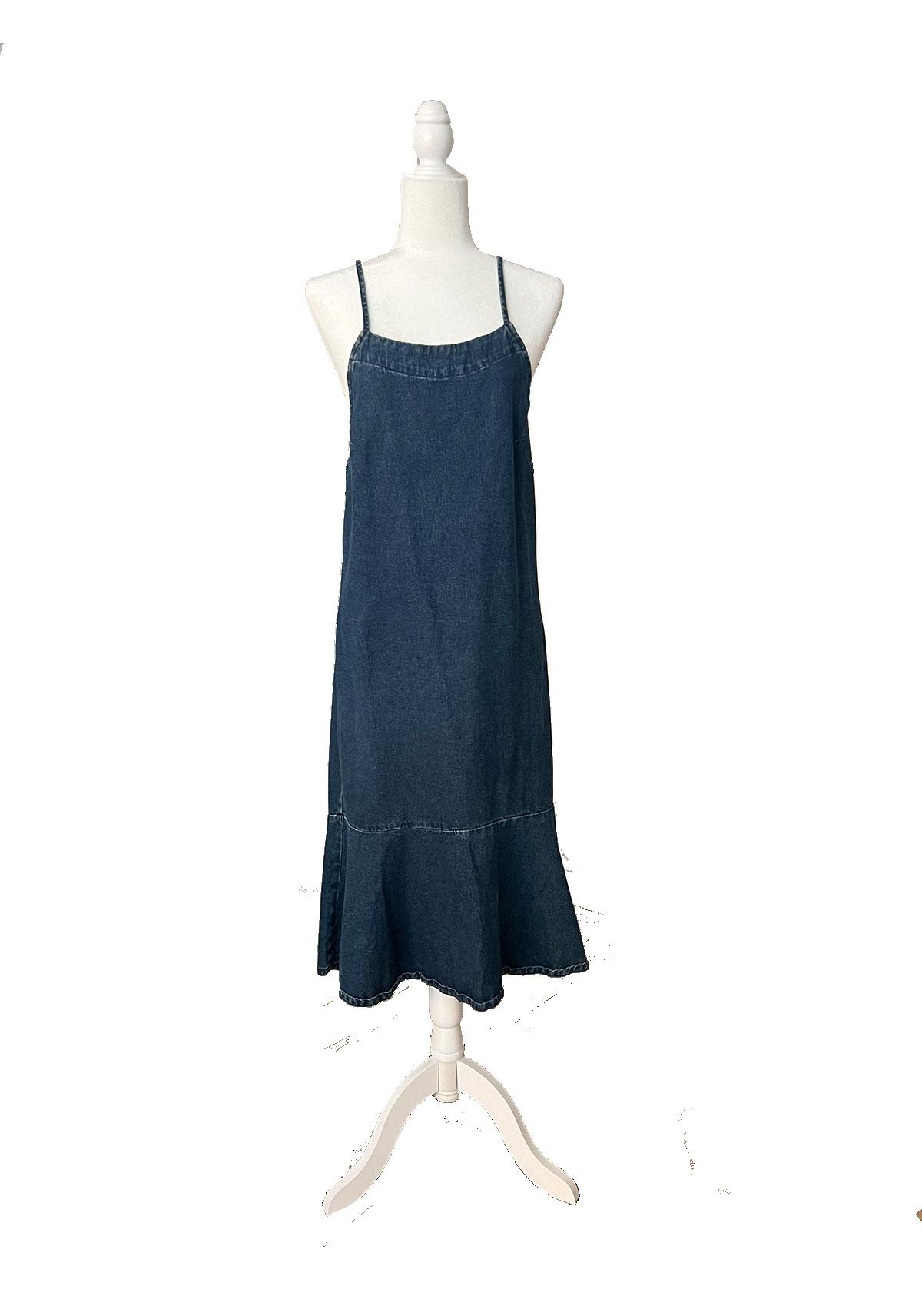
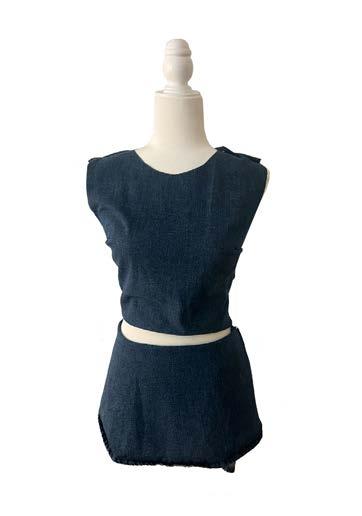
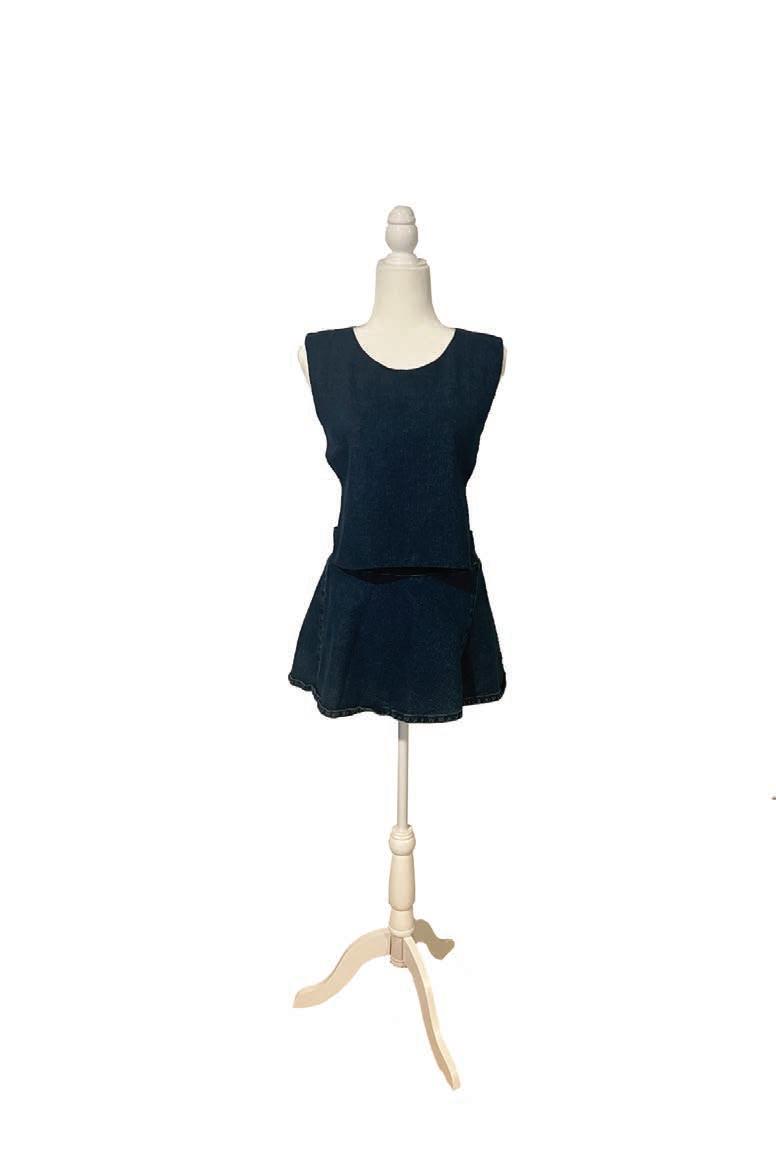
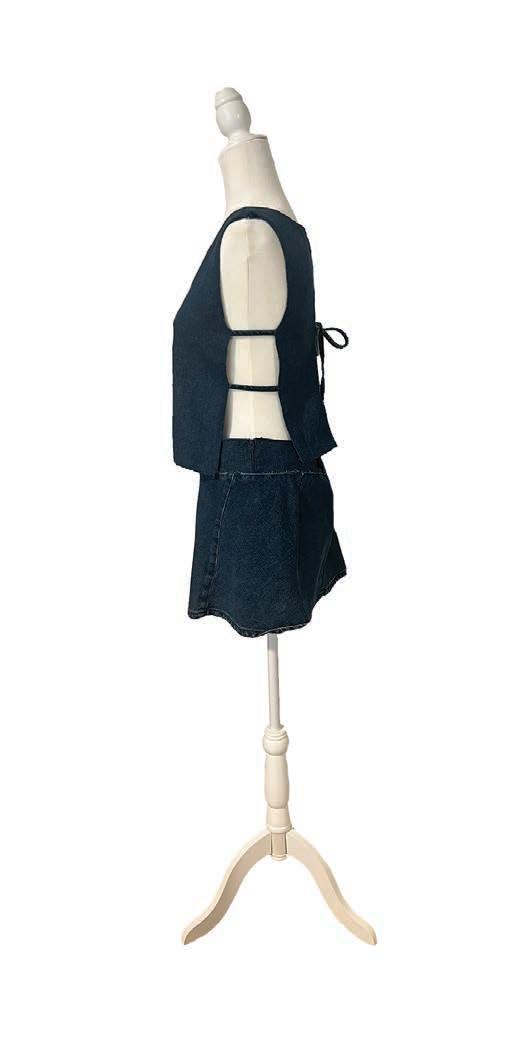
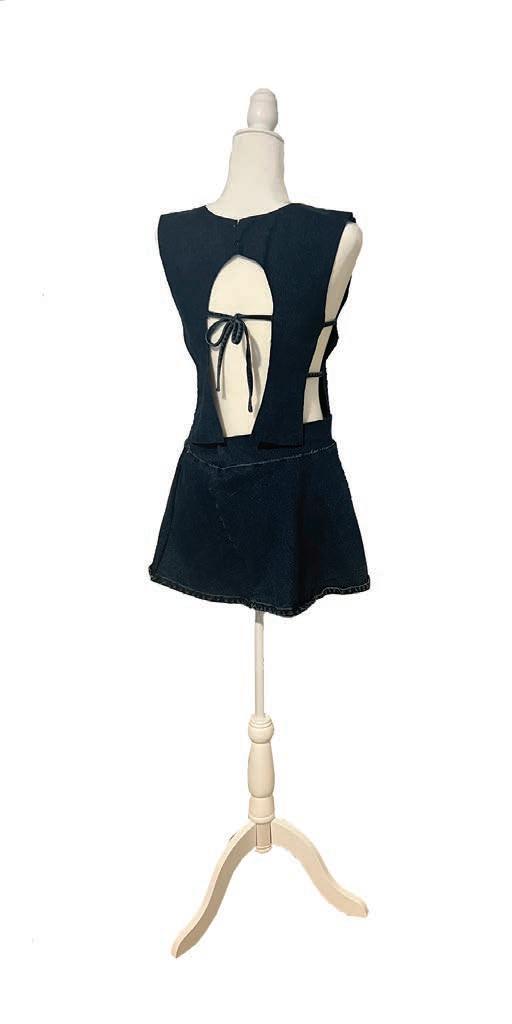
Fashion has always been an important part of my life, as it allows me to express creativity and individuality through design and style. This project reflects my belief that architecture and fashion are closely connected. Both disciplines focus on structure, form, and functionality, shaping how people interact with their surroundings—whether it’s a building or clothing.
Upcycling a dress reflects a passion for sustainability and innovation, which are core values in both fields. Just as architecture uses materials and design to create spaces that evoke emotion and purpose, fashion achieves this by designing garments that move with and adapt to the human body. Through this project, I’m exploring the parallels between the two worlds.
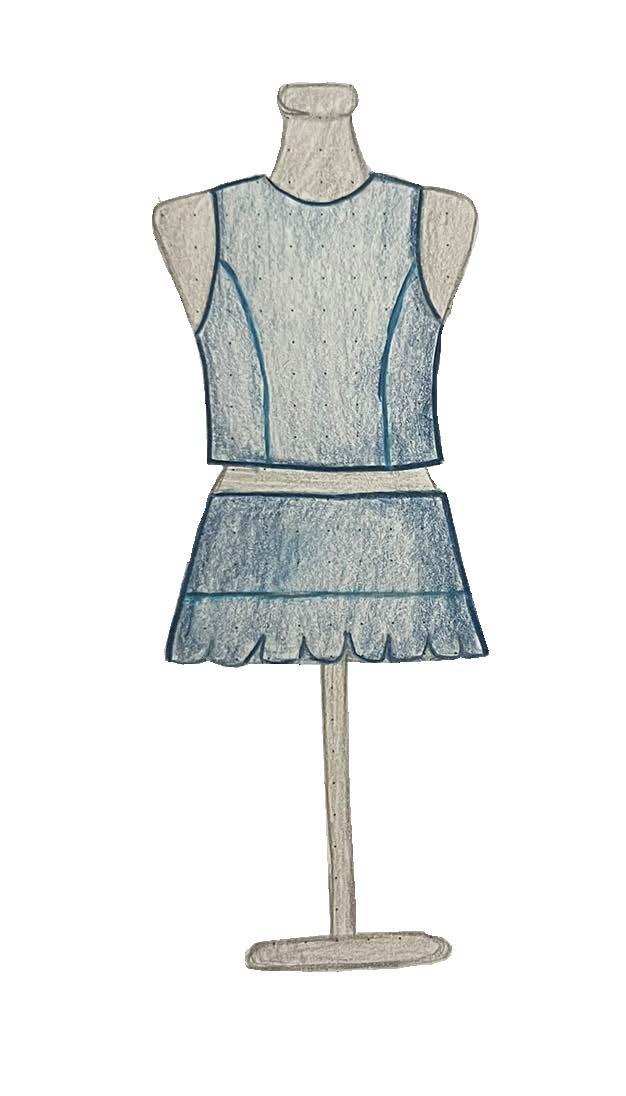
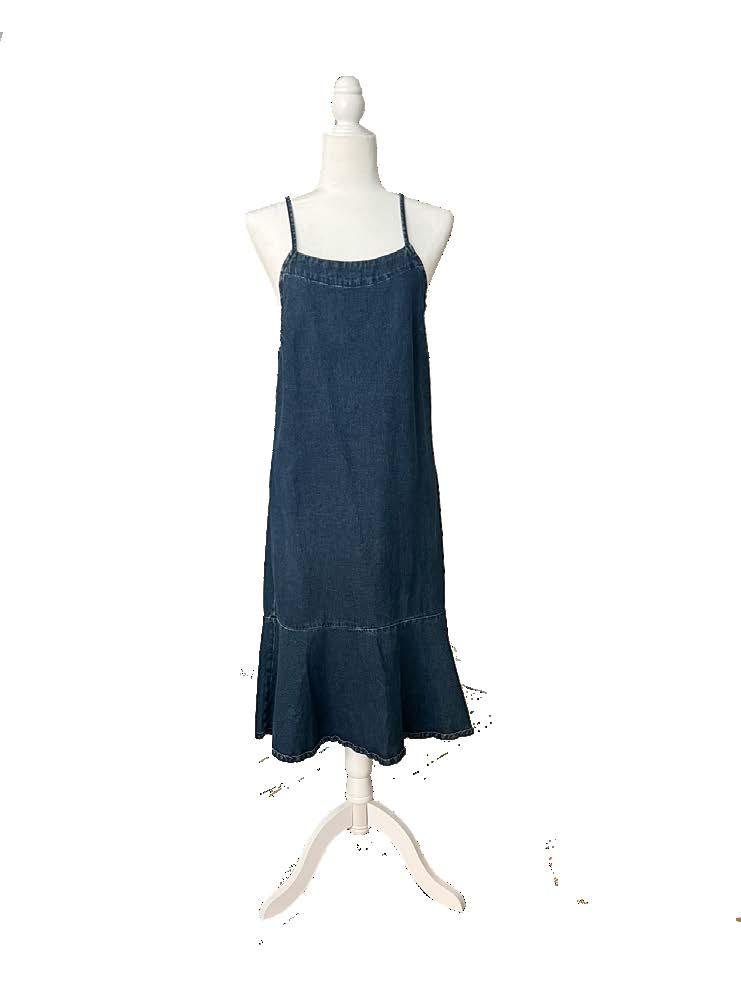
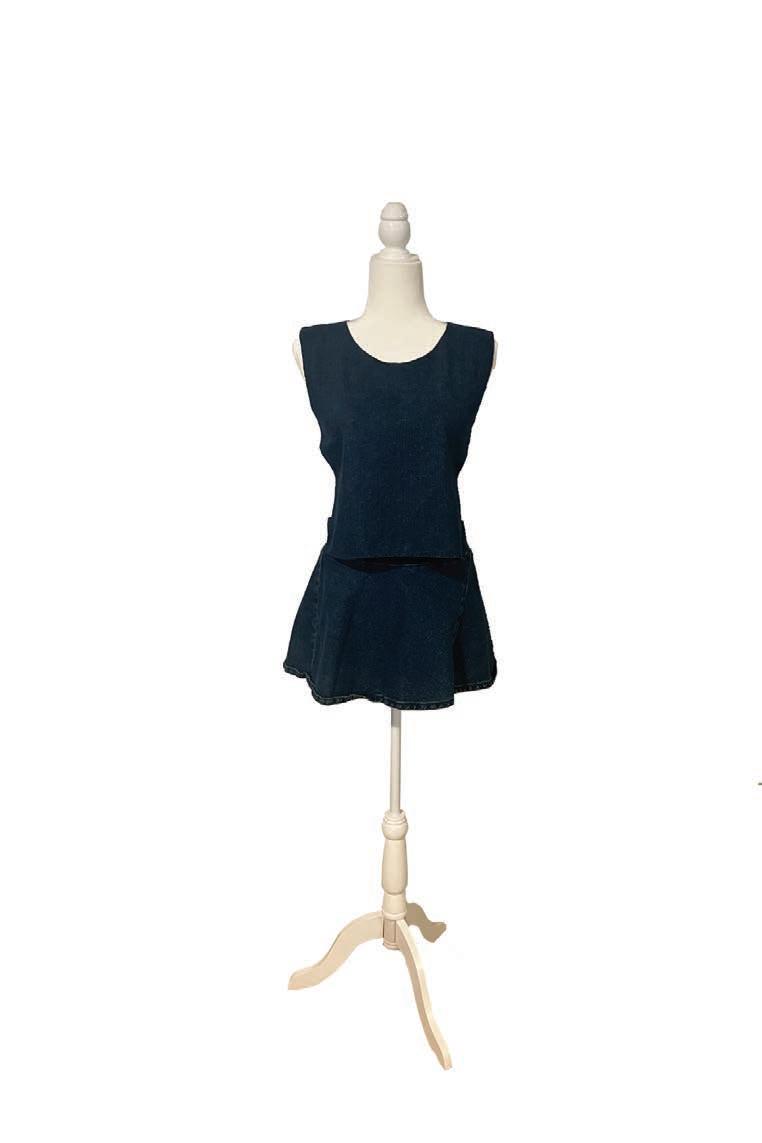
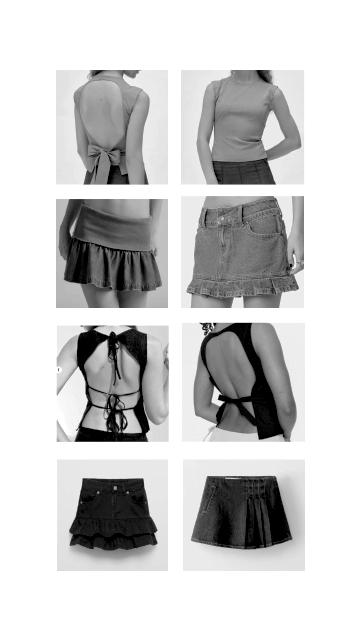
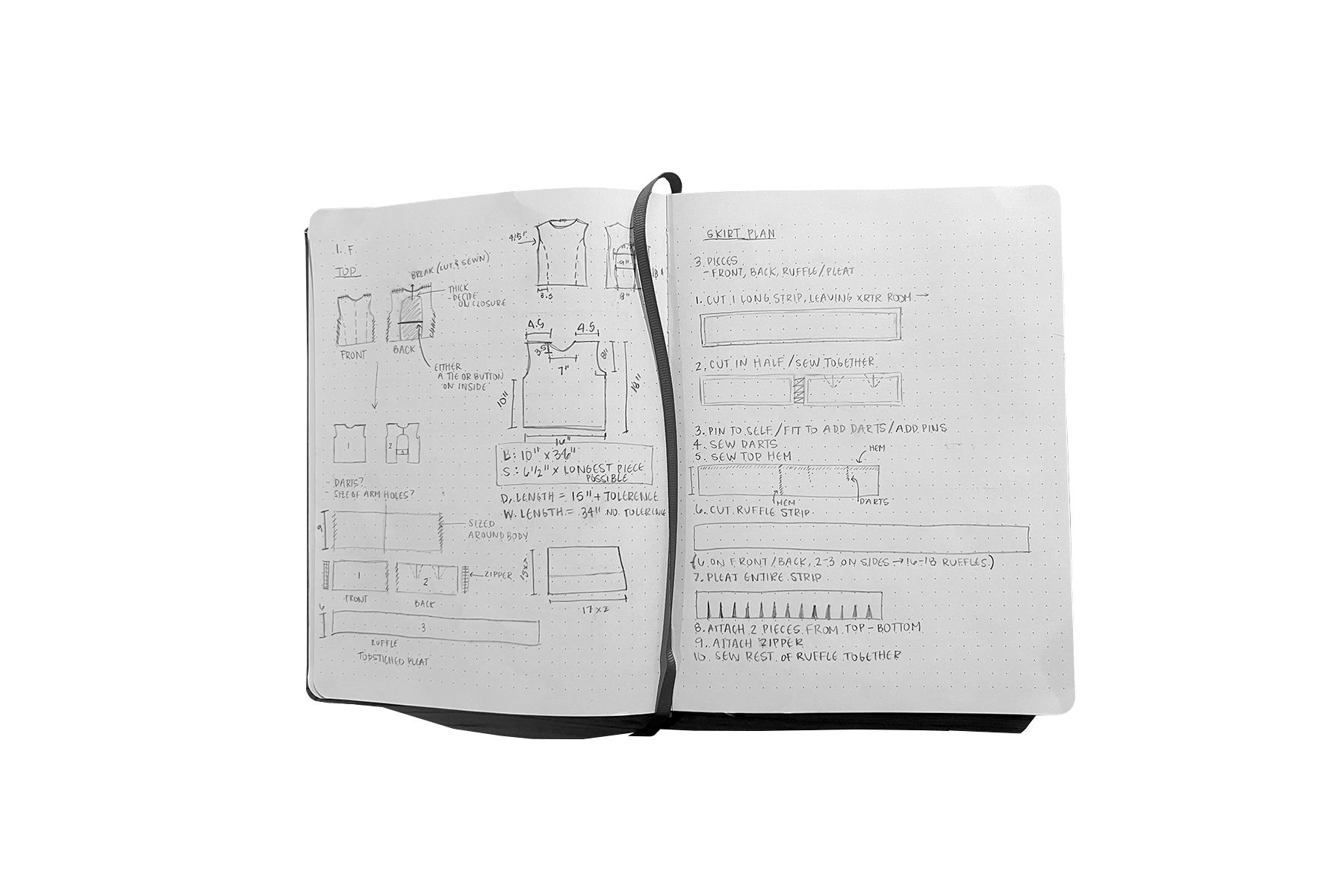
The process began by sourcing the dress from materials and tools. Next, I created a pattern Finally, I added finishing details to complete
from Depop, a site for reselling clothing. I selected a style to reimagine and gathered all necessary with exact measurements, cut the dress to match the pattern, and sewed the pieces together. the design.

THANK YOU