ADVENTURES IN TASTE
Betty Koster
How a Cheesemonger changed Dutch cheese forever
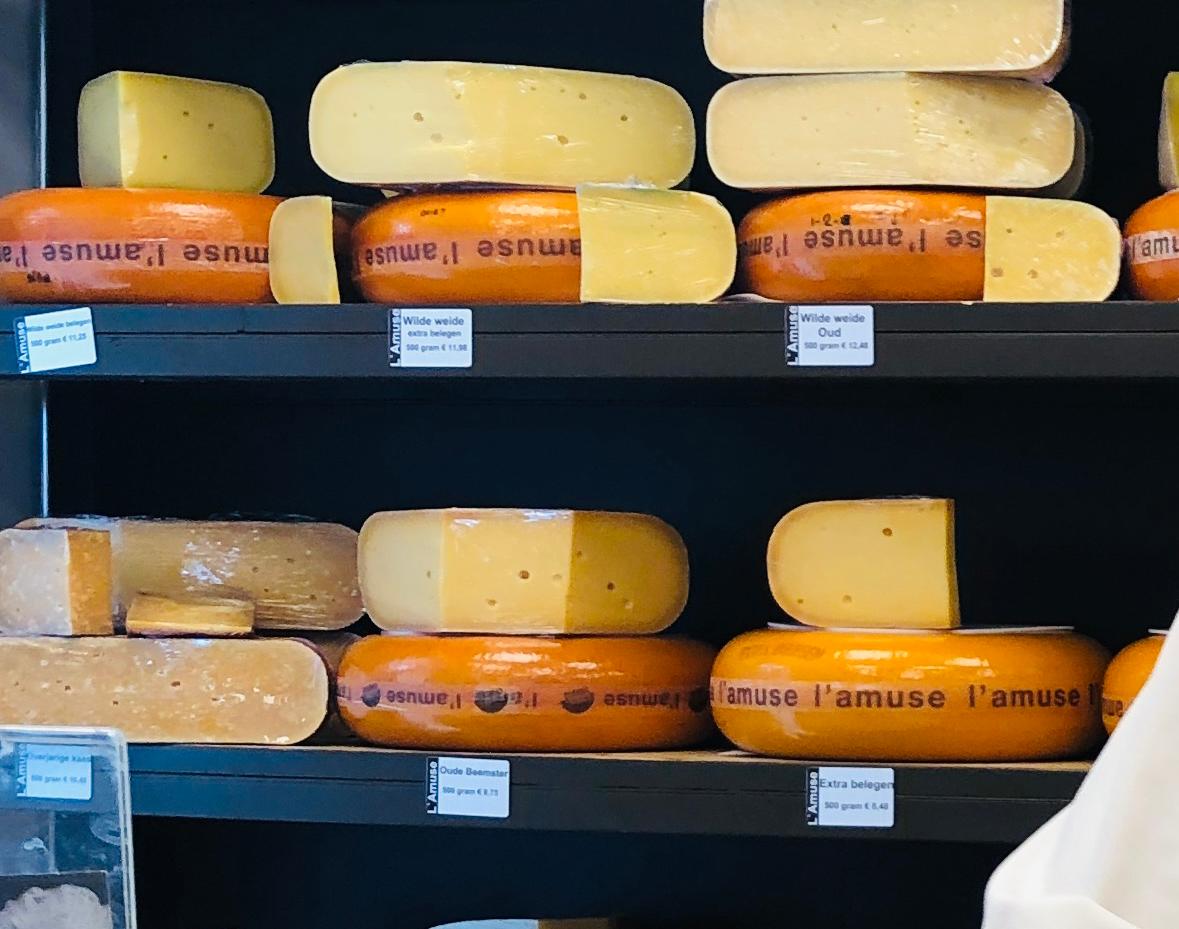
There are cheese shops, and then there is L’Amuse.
In the Netherlands, Betty Koster’s legendary shop has become a pilgrimage site for cheesemongers, affineurs and food lovers from around the world. But the remarkable thing about Betty isn’t simply the cheese she sells.
It’s the way she changed the story of Dutch cheese itself.
For decades, Betty has championed the farmers behind every wheel, challenged industrial thinking, and helped redefine what Dutch cheese means, not only in the Netherlands, but internationally.
For Cheese Journeys founder Anna Juhl, bringing guests to meet Betty isn’t simply another stop on the itinerary.
“It’s one of those experiences that changes how people think about cheese forever.”
Before L’Amuse
When Betty opened L’Amuse in 1989, Dutch cheese looked very different.
Most cheeses weren’t identified by who made them. Instead, they carried generic names like Gouda or the name of a town, sold through wholesalers with little recognition for the farmer behind the product.
“You never knew who produced it,” Betty recalls.
“You didn’t know the story.”
Yet she’d grown up understanding that cheese was deeply personal.
Her grandmother owned a cheese shop, where Betty spent her childhood cleaning cheese, tasting every wheel and learning to recognise quality long before she knew it would become her life’s work.

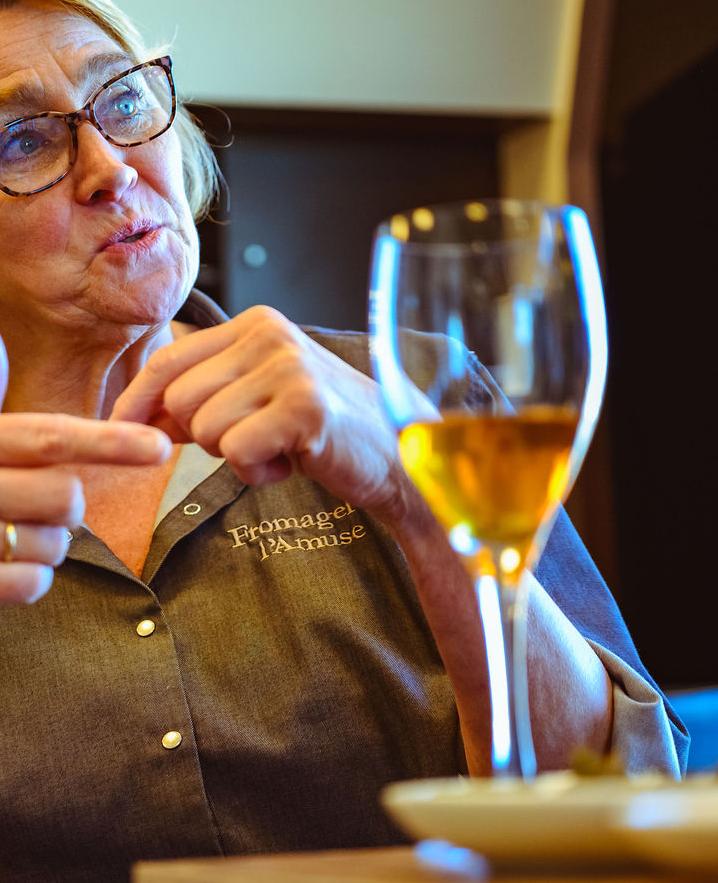
“The first thing you learn is taste,” she says.
“But you also learn that quality matters.” That education would shape everything that followed.
Inspired by a Revolution
A visit to Neal’s Yard Dairy in London proved transformational.
There, Betty encountered something that simply didn’t exist in Dutch cheese retail, the producer mattered. Farmers had names. Customers knew where cheeses came from. The person behind the cheese became as important as the cheese itself.
Speaking with Jason Hinds and the Neal’s Yard team, Betty realised something obvious had been missing back home.
Why shouldn’t Dutch farmers receive the same recognition?
So she changed it.
Instead of anonymous cheeses, L’Amuse began celebrating individual producers, farmers suddenly had identities, they had reputations and, importantly, they had someone willing to tell their story.
Becoming
the Farmers’ Voice
Betty laughs that she always felt like “the farmers’ commercial lady.”
Large industrial producers could afford advertising campaigns, small family farms couldn’t. so Betty became their advocate.
She promoted their work, celebrated excellence and wasn’t afraid to challenge producers when quality slipped.
“If your product wasn’t right,” she says, “I’d tell you.”
The relationship worked both ways, farmers improved, consumers became more knowledgeable and gradually, the Dutch artisan cheese scene evolved.
Today, many Dutch cheesemakers welcome visitors, offer farm tours and proudly introduce themselves to customers.
Forty years ago, almost none of that existed.
Honesty Matters
If there’s one theme that runs through Betty’s career, it’s honesty, she’s deeply uncomfortable with a trend that still exists in parts of the artisan cheese world.
Some affineurs remove producers’ labels, rename cheeses under their own brands and allow customers to believe they’re buying something unique, Betty refuses.
“The producer made the cheese.”
“The affineur helps it become its best version.”
Those are two very different roles, removing the cheesemaker’s identity, she believes, simply repeats the mistakes of the past.
“It’s their product,” she says, “Not yours.”
Teaching Through Taste
Spend an hour behind the cheese counter with Betty and one thing becomes obvious.
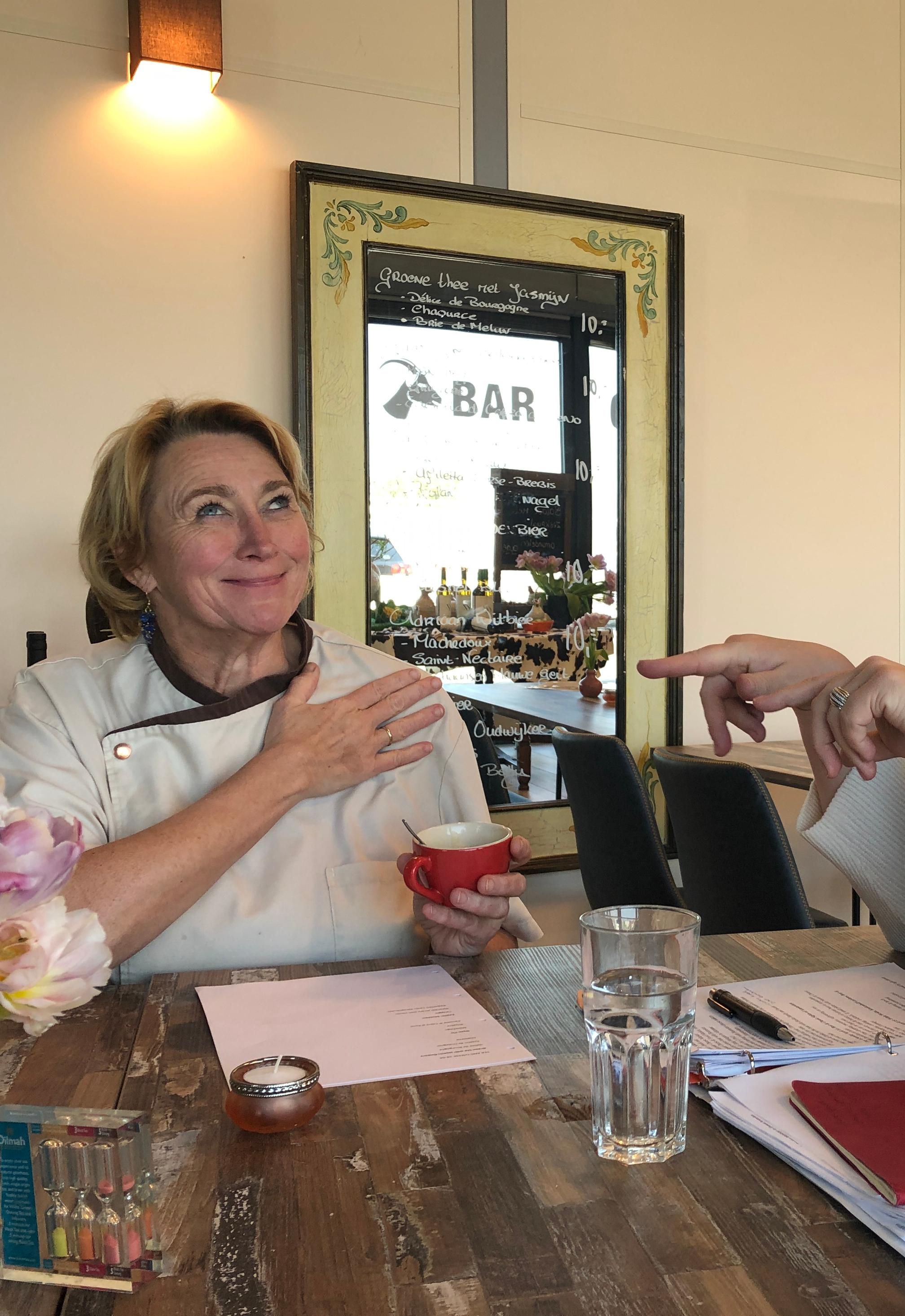
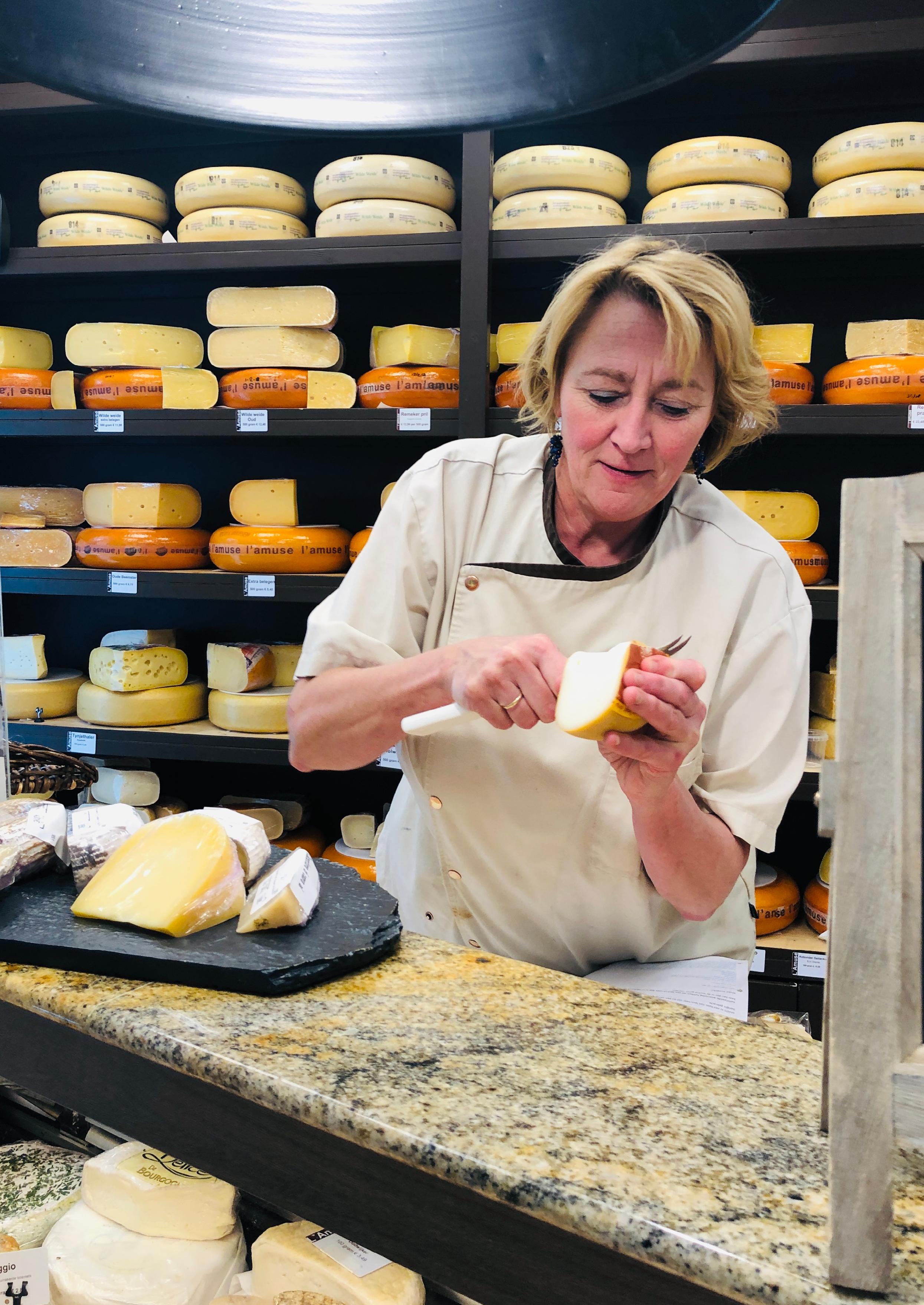
She doesn’t simply sell cheese, she creates moments. Visitors are encouraged to taste everything, Someone insists they don’t like goat’s cheese, Moments later they’re smiling in disbelief after discovering a beautifully aged Dutch goat’s cheese.
“I like making people happy,” Betty says simply.
For Anna, watching Betty work is one of the highlights of every Cheese Journeys tour.
“She makes it look effortless,” she says.
“But what you’re seeing is decades of knowledge, generosity and genuine passion.”
Guests leave with more than a bag of cheese, they leave seeing food differently.
The Art of Pairing
Perhaps nowhere is Betty’s curiosity more obvious than in pairing.
While wine and cheese may be familiar territory, Betty has spent years exploring combinations that surprise people.
Tea and cheese has become one of her signatures, for many American visitors, it’s a completely new concept. But Betty doesn’t believe there are fixed rules.
“You can’t write a book of perfect pairings,” she says.
Cheese changes every day as it matures.
A pairing that works beautifully at three months may be entirely different six months later.
Instead, she’s always searching for those unforgettable moments where everything suddenly clicks.
One of her favourites?
A French Délice de Bourgogne paired with South American rum infused with raisins.
“It just wiped everyone away,” she laughs.
Looking Beyond Gouda
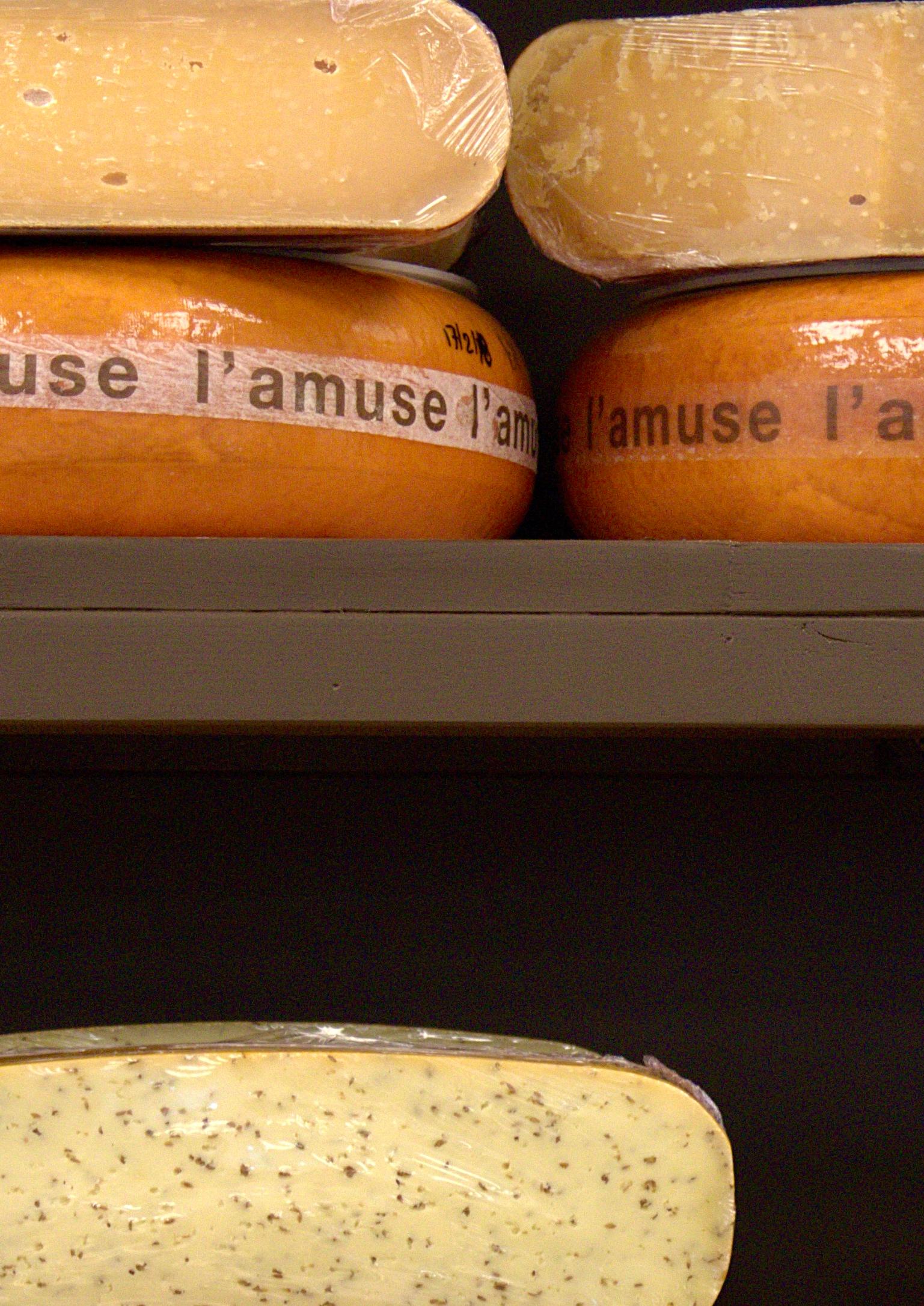
For many visitors, Dutch cheese begins and ends with Gouda. Betty spends much of the tour gently dismantling that assumption. Guests discover regional traditions, raw milk cheeses, sheep’s milk producers, cumin-spiced classics like Leidse kaas, and the remarkable diversity hidden within such a small country. She also explains how history shaped many of these cheeses. The famous cumin cheeses, for example, weren’t created as novelty products. They were practical.
During the Dutch Golden Age, low-fat cheeses destined for long sea voyages were improved with spices that softened their saltiness and dryness while making clever use of the country’s thriving spice trade.
It’s another reminder that great cheeses rarely emerge by accident They’re products of history as much as craftsmanship.
Innovation With Purpose
Despite her respect for tradition, Betty isn’t opposed to innovation She simply believes innovation should improve quality rather than replace it. One example is Rispens, a sheep’s milk Gouda developed in collaboration with cheesemakers and Essex Street Cheese. Many modern sheep’s milk Goudas rely on fast-acting starter cultures that produce flavour quickly but, in Betty’s view, sacrifice character. She wanted something different. Working closely with farmers and cheesemakers, they created a cheese matured naturally, allowing flavour to develop at its own pace.
It wasn’t the easiest route, it certainly wasn’t the quickest, but Betty believes that’s exactly why it matters.
Discovering the Netherlands
Many Cheese Journeys guests arrive expecting windmills, tulips and canals. hey leave with something much richer.
The Netherlands reveals itself as an astonishingly innovative food landscape, shaped by water management, agriculture, international trade and centuries of craftsmanship.
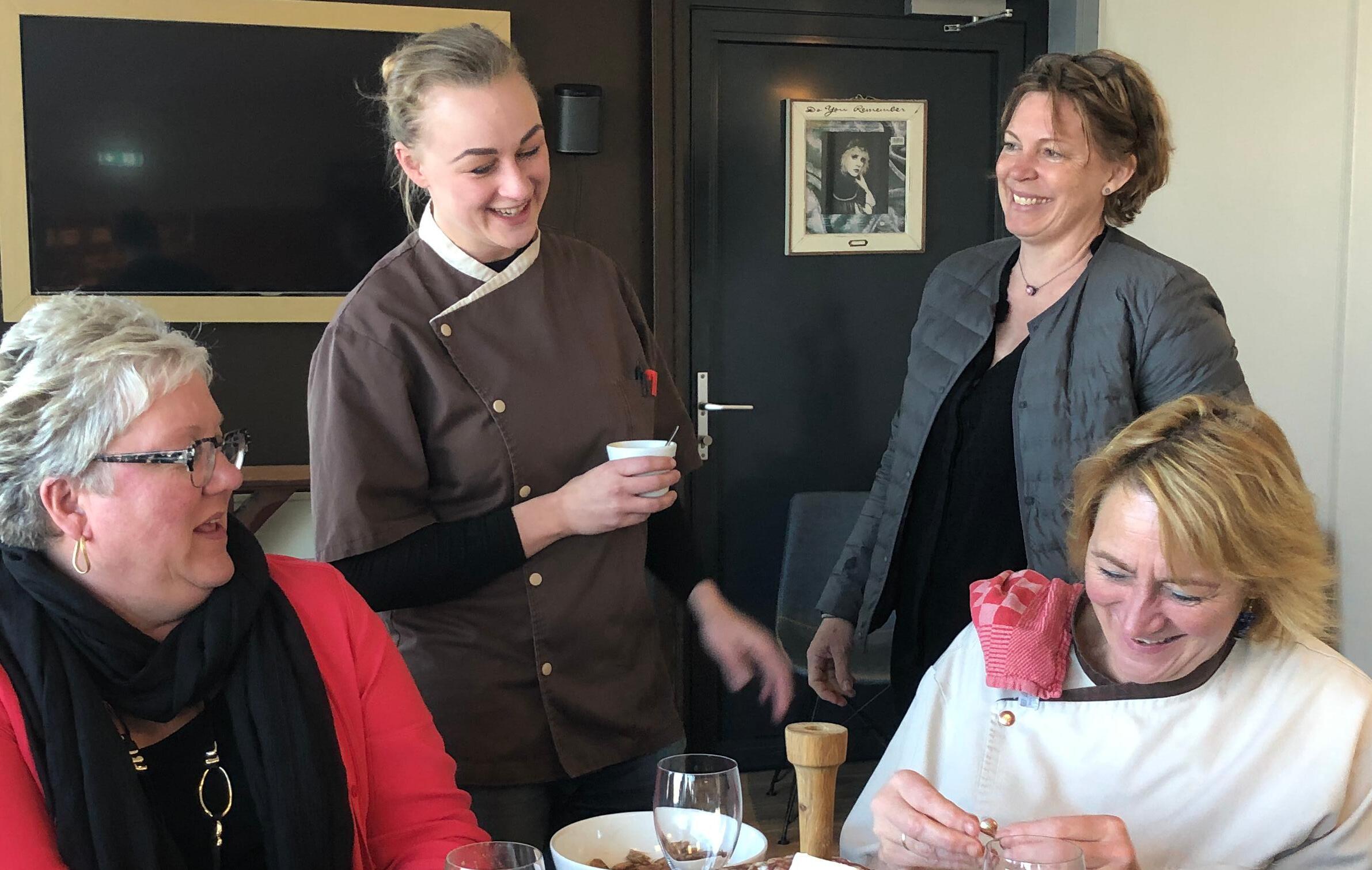
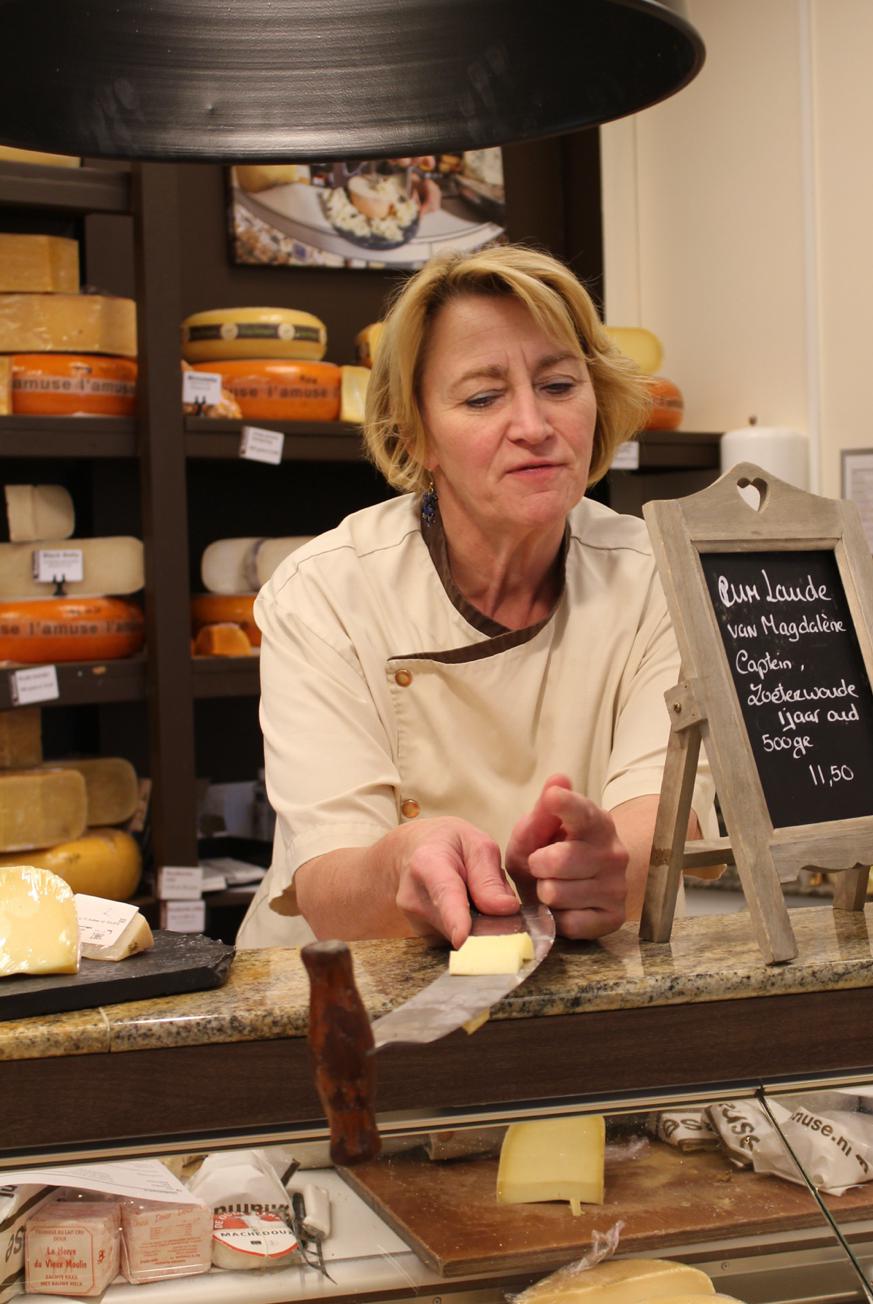
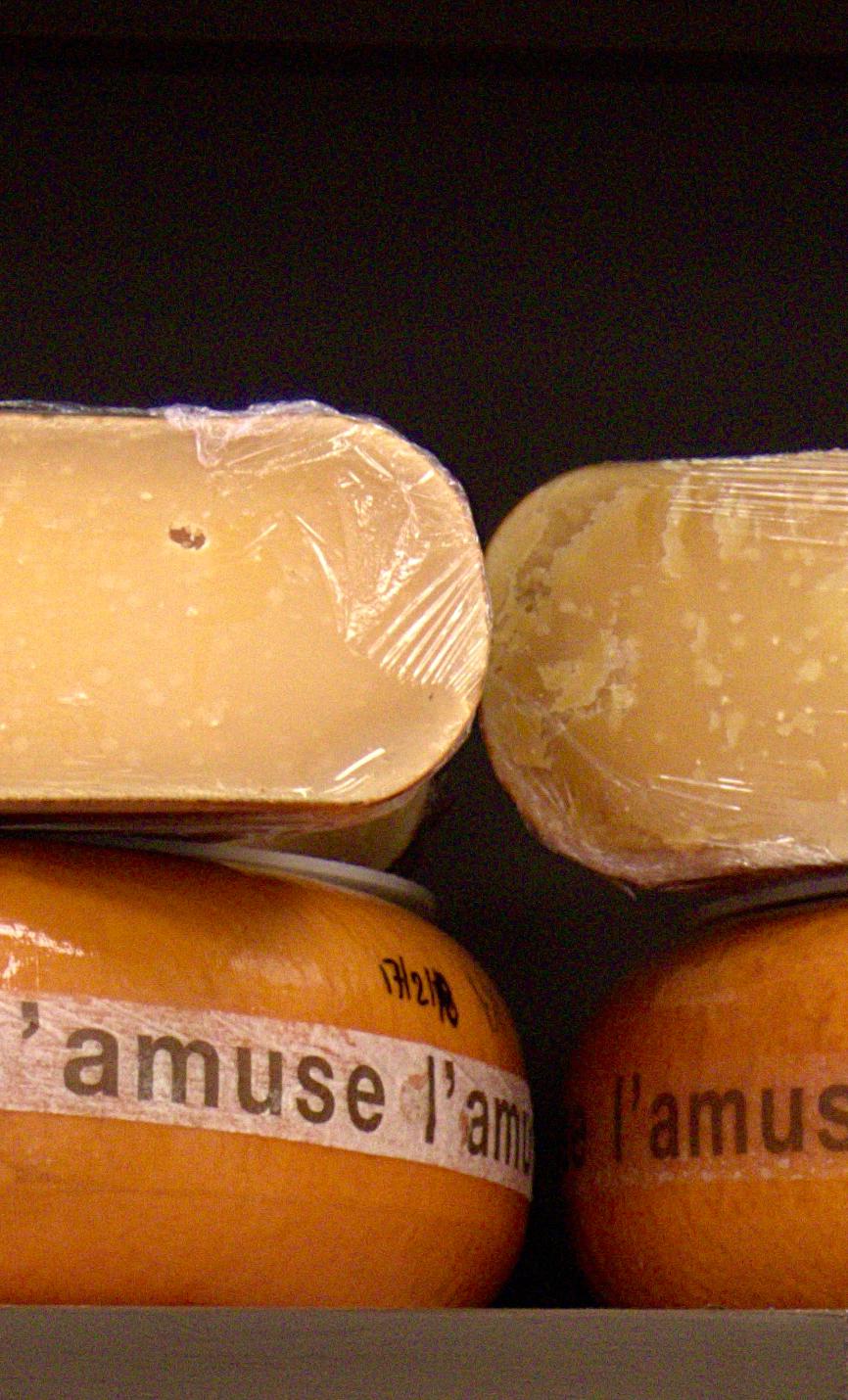
Guests cycle between farms, taste cheese beneath North Sea skies, meet families who’ve been making cheese for generations, and, of course, spend an unforgettable Sunday morning with Betty inside L’Amuse.
For Anna, that’s where everything comes together.
“People realise Dutch cheese isn’t just Gouda.”
“They discover history, landscape, hospitality and craftsmanship all through food.”
Why Betty Matters
Every Cheese Journeys destination has extraordinary producers,but occasionally you meet someone who has quietly changed an entire industry, Betty Koster is one of those people.
She didn’t invent Gouda, she didn’t create Dutch cheesemaking, what she did was remind people that every great cheese begins with a person.
A farmer, a family, a story worth telling.
And that’s precisely what guests discover when they step through the doors of L’Amuse.