
Discharge Before Period Vs Early Pregnancy: Top Signs
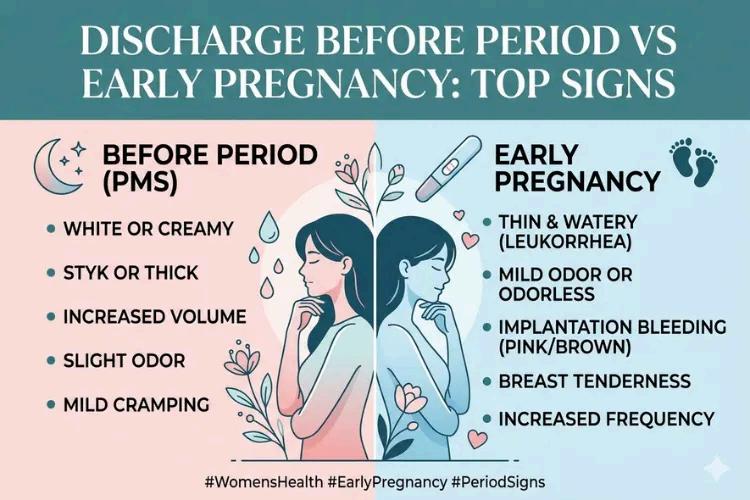
Understanding changes in vaginal discharge is an important part of women’s health. Many women notice unusual discharge a few days before their period, but sometimes these changes can also signal early pregnancy. Differentiating between pre-period discharge and early pregnancy discharge can be confusing, yet paying attention to your body’s signals can make a significant difference.
Vaginal discharge is a natural way your body cleans itself. Its consistency, color, and amount change depending on hormonal fluctuations, your menstrual cycle, and overall health. Knowing the difference between discharge before period and early pregnancy discharge helps you stay aware of your reproductive health and take timely action if needed.
How Your Discharge Looks Can Give Clues
One of the easiest ways to distinguish pre-period discharge from early pregnancy discharge is by observing its appearance.
● Before Period: Discharge typically becomes thicker, creamier, or sticky. It may appear white or off-white and often has no strong odor. These changes occur due to rising progesterone levels preparing your body for menstruation.
● Early Pregnancy: Discharge in early pregnancy is usually thinner and more watery. It can appear slightly yellowish or milky and often increases in quantity. Hormonal changes, particularly the rise of estrogen, are responsible for this increase.
If you want to read more about vaginal discharge changes throughout the cycle, check out our detailed guide on menstrual bleeding patterns.
How Much Discharge Is Normal?
Tracking how much discharge appears and how often it occurs can provide important clues:
● Before Period: The discharge remains fairly consistent in quantity. You may notice a slight increase, but it’s usually not drastic.
● Early Pregnancy: You may experience a noticeable increase in discharge. Some women describe it as “more than usual,” and it can be wetter than pre-period discharge.
A sudden change in discharge quantity, especially if accompanied by other pregnancy signs, may indicate early pregnancy. For tips on monitoring vaginal health naturally, visit our how to flush out excess estrogen guide.
Does It Cause Smell or Itchiness?
● Before Period: Pre-period discharge is generally odorless and does not irritate the skin.
● Early Pregnancy: Discharge is mostly odorless, but hormonal changes may cause mild itching in some cases.
If you notice foul-smelling discharge, irritation, or unusual color, it’s important to consult a healthcare professional promptly. Our luteal phase symptoms guide explains how hormonal changes can affect your body before menstruation.
Other Signs to Watch For
Discharge alone is not always enough to determine if you’re pregnant or simply experiencing pre-period changes. Other symptoms often accompany discharge:
● Before Period: You may experience cramps, bloating, breast tenderness, headaches, or mood swings. These are common premenstrual syndrome (PMS) symptoms.
● Early Pregnancy: Symptoms may include mild cramping, nausea, fatigue, heightened breast sensitivity, or increased urination. Some women notice that these symptoms appear slightly earlier than expected for their menstrual cycle.
Keeping a symptom diary can help you track changes and identify patterns over time. For more insights on early pregnancy symptoms, see our full women’s health resources section.
Timing Matters: When It Happens
Timing is a critical factor in distinguishing between pre-period discharge and early pregnancy signs:
● Before Period: Discharge changes appear a few days before your period. This is usually predictable based on your cycle.
● Early Pregnancy: Discharge changes can appear a week after ovulation, often before a missed period.
Monitoring your menstrual cycle and ovulation can make it easier to interpret discharge changes. For tips on tracking your cycle and fertility, explore our menstrual cycle guide.
Color Differences You Should Know
Observing the color of discharge can also provide clues:
● Pre-Period Discharge: Often white or off-white. As menstruation approaches, it may darken slightly.
● Early Pregnancy Discharge: Usually clear, milky, or slightly yellow. Some women may notice spotting in addition to this discharge, known as implantation bleeding.
Understanding these color changes can help you differentiate between normal cycle variations and potential early pregnancy signs.
How to Know for Sure if You’re Pregnant
While observing discharge can give clues, confirmation requires more reliable methods:
● Take a home pregnancy test after a missed period.
● Track your basal body temperature; a sustained high temperature may indicate pregnancy.
● Consult a gynecologist for a professional test or ultrasound if needed.
For more tips on early detection and health tracking, check out our women’s health tips section.
Simple Ways to Keep Your Vaginal Health on Track
Regardless of whether your discharge is pre-period or early pregnancy-related, maintaining vaginal health is important.
● Wear breathable cotton underwear.
● Avoid scented soaps, washes, or douches.
● Maintain good hydration to support natural vaginal moisture.
● Practice regular hygiene but avoid over-washing, which can disrupt natural flora.
● Seek medical advice for unusual discharge, foul odor, or persistent irritation.
Quick Comparison at a Glance
Feature Before Period Early Pregnancy
Consistency Thick, creamy Thin, watery
Color White/off-white Milky/yellowish
Quantity Slight increase Noticeable increase
Smell Odorless Usually odorless
Other Symptoms Cramps, bloating, PMS Nausea, fatigue, mild cramping
Timing Few days before period 1 week after ovulation or missed period
Conclusion
Discharge before your period and early pregnancy discharge can sometimes look similar, but paying attention to color, consistency, quantity, timing, and associated symptoms can help you differentiate. Observing these changes and keeping track of your menstrual cycle can provide clarity.
If you notice any unusual discharge or discomfort, consult a healthcare professional. Using reliable resources and tools, such as home tests and cycle tracking, will ensure your reproductive health stays on track.
Stay informed, track your cycle, and listen to your body. Proper attention to discharge patterns can help you make timely decisions regarding your health.