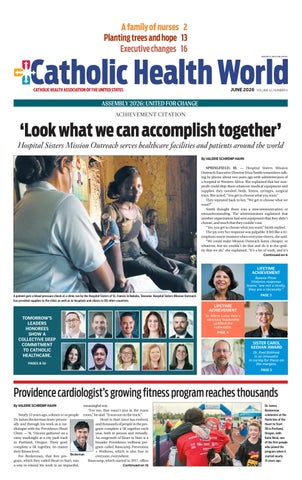
‘Look what we can accomplish together’
Hospital Sisters Mission Outreach serves healthcare facilities and patients around
By VALERIE SCHREMP HAHN
SPRINGFIELD, Ill. — Hospital Sisters Mission Outreach Executive Director Erica Smith remembers talking by phone about two years ago with administrators of a hospital in Western Africa. She explained that her nonprofit could ship them whatever medical equipment and supplies they needed: beds, linens, syringes, surgical trays. She noted, “You get to choose what you want.”
They repeated back to her, “We get to choose what we want?”
Smith thought there was a miscommunication or misunderstanding. The administrators explained that another organization had sent equipment that they didn’t choose, and much that they couldn’t use.
“Yes, you get to choose what you want,” Smith replied. The joy over her response was palpable. It felt like a triumphant movie moment when everyone cheers, she said.
“We could make Mission Outreach faster, cheaper, or whatever, but we couldn’t do that and do it at the quality that we do,” she explained. “It’s a lot of work, and it’s
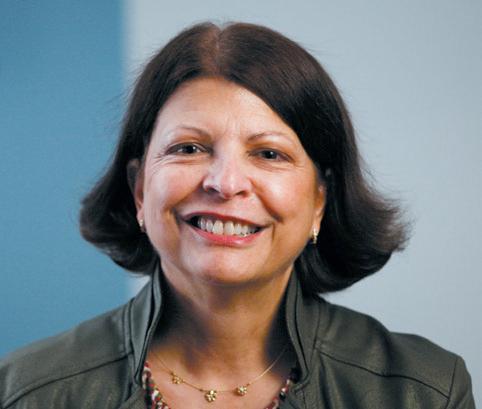
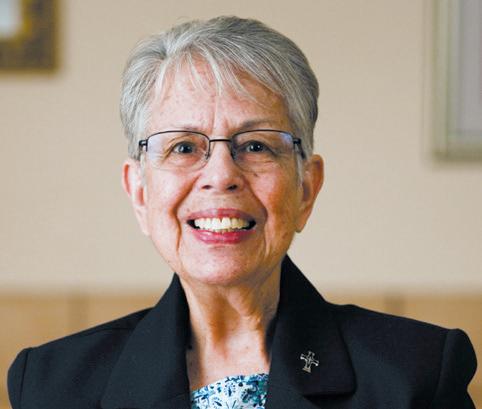
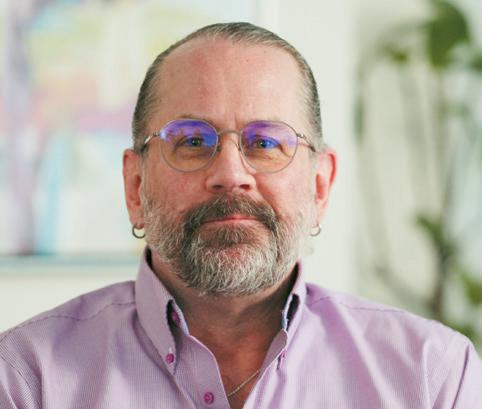
Providence cardiologist’s growing fitness program reaches thousands
By VALERIE SCHREMP HAHN
Nearly 15 years ago, a dozen or so people
Dr. James Beckerman knew personally and through his work as a cardiologist with the Providence Heart Clinic — St. Vincent gathered on a rainy weeknight at a city park track in Portland, Oregon. Their goal: complete a 5K together, no matter their fitness level.
meaningful way.
“For me, that wasn’t just in the exam room,” he said. “It was out on the track.”
For Beckerman, that free program, which they called Heart to Start, was a way to extend his work in an impactful,
Heart to Start since has evolved, and thousands of people in the program complete a 5K together each year, both in person and virtually. An outgrowth of Heart to Start is a broader Providence wellness program called Basecamp Prevention + Wellness, which is also free to everyone, everywhere.
Basecamp, which started in 2017, offers
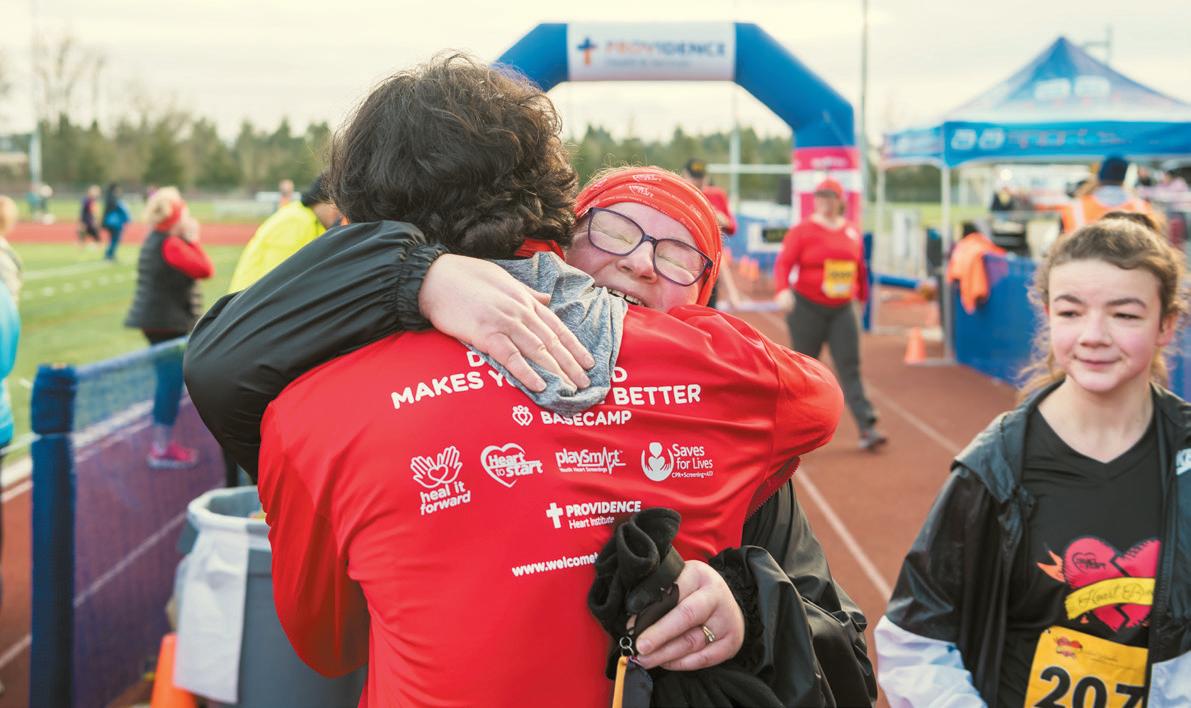
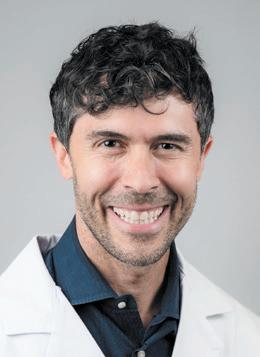
Dr. James Beckerman celebrates at the finish line of the Heart to Start 5K in Portland, Oregon, with Katie Reed, one of the first people who joined the program when it started nearly 15 years ago.
Beckerman
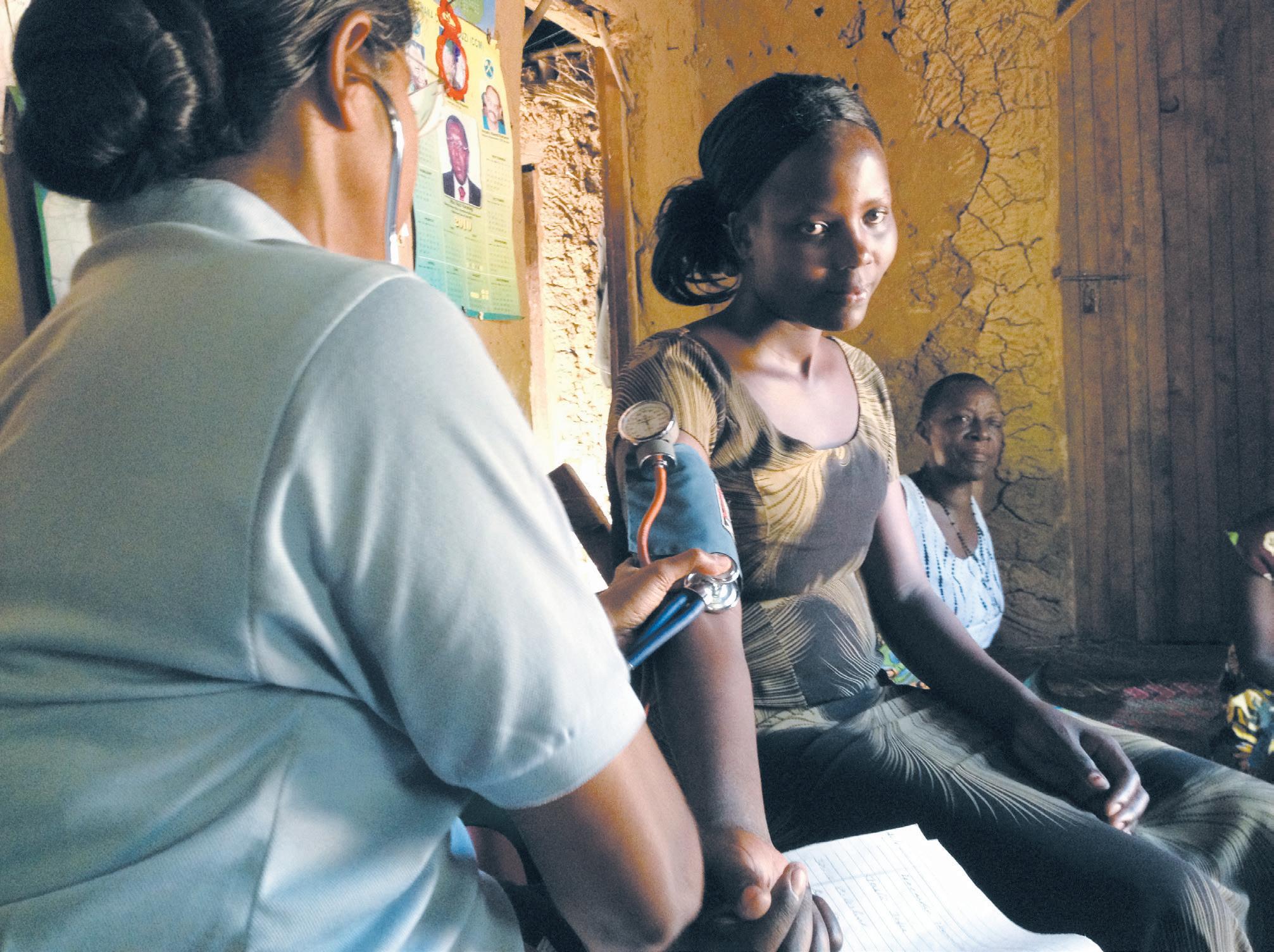
A patient gets a blood pressure check at a clinic run by the Hospital Sisters of St. Francis in Bukoba, Tanzania. Hospital Sisters Mission Outreach has provided supplies to the clinic as well as to hospitals and clinics in 101 other countries.
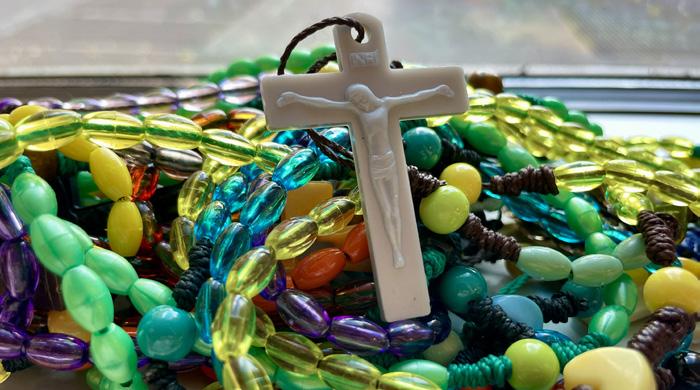
Handmade rosaries
A loyal corps of volunteers at an Intermountain Health hospital in Colorado creates colorful rosaries to give out to patients and their loved ones.
Complex questions
During a CHA webinar, three ministry ethicists illuminated some of the challenging issues raised by laws legalizing assisted suicide and offered insight.

$100 million gift The donation from the estate of a friend and patient of Providence Saint John’s Health Center in Santa Monica, California, will advance prostate cancer research and care.
For a patient with dementia and no family, nurses at Ohio hospital became a surrogate one
By LISA EISENHAUER
When she arrived at Mercy Health — Fairfield Hospital in suburban Cincinnati, the elderly woman was something of a mystery to the nurses assigned to her care. By the time she left 72 days later, she was like family.
The 82-year-old landed at the hospital last September after apparently living alone in her home for years. (For her privacy, Catholic Health World isn’t naming her.) Details about her situation were sketchy, but the nurses heard that a concerned neighbor had asked authorities to check on the woman’s wellness after an incident involving a burning dish of food tossed into a trash can. When the first responders found the woman alone and disoriented, they brought her to Fairfield Hospital. The hospital is part of Cincinnati-based Bon Secours Mercy Health.
Vanessa Reynolds, nurse manager of the medical-surgical unit where the woman took up temporary residence, says that other than a minor infection, the woman was physically healthy. But cognitively she was struggling. “I don’t think she really had a presenting factor, except ‘unsafe to be at home,’” Reynolds says.
The woman also had no apparent relatives nor anyone to speak on her behalf. A judge and then a court-appointed guardian had to research her situation and determine her fate. That’s what accounted for her prolonged hospital stay.
“Early on, we didn’t really have an indication that she was going to stay with us 70-something days, because we didn’t realize that she wasn’t going to have a guardian or any living family,” Reynolds says. “But early on, she made her attachment to us.”
A comforting presence
Ben Gable, one of the charge nurses in the medical-surgical unit, recalls that from her first day, the patient was restless. She was constantly walking around the unit. Her chatter was alternately lucid and scattered. Rather than repeatedly checking on her, Gable pulled up a chair for the woman at the nurses’ station. “She sat there and we hung out,” Gable says. “And she chatted with everybody.”
The next morning, the woman was back at the station, fixing coffee for herself and Gable. In time, he and the unit’s other nurses started giving their self-appointed assistant tasks such as folding towels to keep her busy.
Within days, the woman not only had settled in but also became a comforting presence for the nurses. “She’s, like, giving advice, and she could bring a lot of calm to a crazy environment,” Gable says.
Cari Shoemaker, another charge nurse in the unit, says the woman could sense what sort of mood the nurses were in. “She would read our energy,” Shoemaker says. “That’s what she liked to do.”
Reynolds says one of the practices the woman encouraged among the nurses was to write down their goals and make a plan
that would bring them happiness.
“She was trying to heal us before we were trying to help her,” Reynolds says.
As the legal case to resolve where the woman would go next inched through the court, the nurses took it upon themselves to make her as comfortable as possible. With her permission, some of them went to her home and picked up clothes and familiar items like photos.
“She was here for a long time, and in her confusion, she thought it was her apartment,” Reynolds says. “So we wanted to make it feel like her apartment and her home, not just a hospital setting.”
When Gable saw the woman in one of her darker moods, he took her on a walk around the hospital grounds. The outing calmed her, so outdoor walks became routine for the two.
Over time, Reynolds began to cut the woman’s hair and do her nails. Shoemaker oversaw what limited medical care the woman needed, and she and the other nurses even opted at times to skirt some of the protocols, such as not waking the woman overnight to check her vital signs. Chrystina Tillery, a bedside nurse, became what the others call a “gal pal” to the woman, forming a profound bond.
Clues to the past
The woman’s memories came and went. She would recount bits of her past one day and forget them the next.
The nurses say they didn’t find it especially surprising given her cognitive issues that the woman had been living alone. She didn’t have any ongoing medical issues or use any prescription medication. She could perform essential self-care tasks. She didn’t drive, but somehow she got her basic necessities.
Over the weeks, the nurses were able to pin down some of the woman’s history with the help of the internet and by what they saw at her home. “We just started kind of doing detective work with her and we found obituaries for her sister and her parents, and kind of pieced it together that way,”
Gable recalls.
They learned she had a master’s degree and had been a teacher, although at what level was unclear. She had been married twice. She loved music and she liked to dance. However, neither they nor the court turned up a living relative or a close friend who could speak on her behalf.
Rough transition
By the time it became clear that the court would need to appoint a legal guardian for the woman, some of the nurses stepped up. In the end, the judge appointed someone who was a stranger to the woman. The guardian decided it was unwise for the woman to return to her home, so arrangements were made for her to move to a memory care unit at a nursing home just minutes from the hospital.
The nurses gave the woman pep talks in hopes of bracing her for the transition. Even so, Gable says, “It was awful.” She initially wouldn’t get out of bed at the new place.
“She didn’t have a window and she didn’t really have a community anymore,” Gable notes. “She didn’t have what she had built with us.”
The nurses didn’t give up on their friend, even after she moved into the care of others. They surrounded her as a sort of surrogate family. They made frequent visits. They got her a pet, a mechanical cat that rolls over and purrs.
It took time, but the woman has settled into her new surroundings. Still, the nurses continue to be in her life. Reynolds does her hair and nails. Gable, Shoemaker and Tillery stop by often to check on her and chat and to take her on occasional outings, sometimes back to the med-surg unit to see her old pals.
And the woman is clearly aware that the nurses from Fairfield Hospital are her guardian angels, if not her legal guardian.
“The last time I was with her, she literally said, ‘I don’t know what I did in the world to deserve you all,’” Reynolds says.
Reynolds assures her friend: “You give us just as much as we give you, if not more.”
Health World (ISSN 87564068) is published monthly and copyrighted © by the Catholic Health Association of the United States. POSTMASTER: Address all subscription orders, inquiries, address changes, etc., to CHA Service Center, 4455 Woodson Road, St. Louis, MO 63134-3797; phone: 800-230-7823; email: servicecenter@ chausa.org. Periodicals postage rate is paid at St. Louis and additional mailing offices. Annual subscription rates: CHA members free, others $29 and foreign $29. Opinions, quotes and views appearing in Catholic Health World do not necessarily reflect those of CHA and do not represent an endorsement by CHA. Acceptance of advertising for publication does not constitute approval or endorsement by the publication or CHA. All advertising is subject to review before acceptance.
Vice President Communications and Marketing Brian P. Reardon Editor Lisa Eisenhauer leisenhauer@chausa.org 314-253-3437
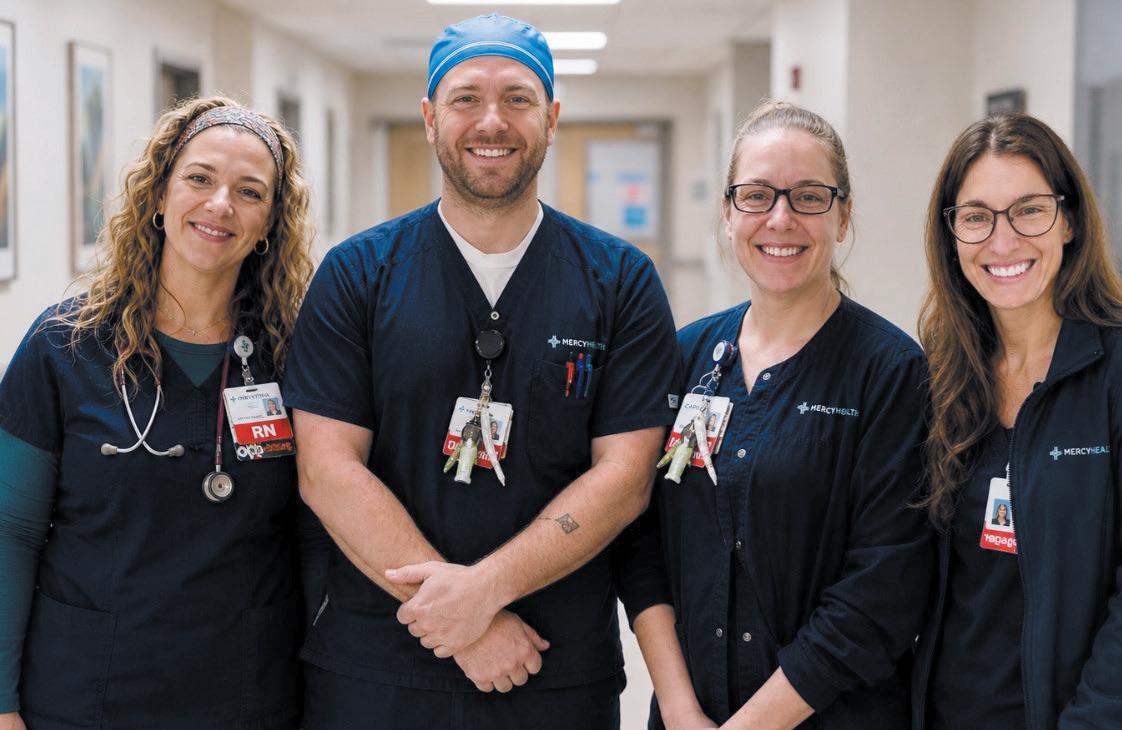
From left, nurses Chrystina Tillery, Ben Gable, Cari Shoemaker and Vanessa Reynolds all developed and maintain a special relationship with a patient with dementia who spent more than two months at Mercy Health — Fairfield Hospital in suburban Cincinnati.
ASSEMBLY 2026: UNITED FOR CHANGE
LIFETIME ACHIEVEMENT AWARD
Bonnie Price works to ensure patients impacted by violence get mission-based care
By JULIE MINDA
When Ava Stokes flew home to Richmond, Virginia, from her Georgetown, Kentucky, college town the day after she was assaulted, she needed evidence-based medical care, medicines to prevent a sexually transmitted infection and a lot of compassion.
She says she found all that and more with the Bon Secours Violence Response Team on the Bon Secours St. Mary’s Hospital campus in Richmond. From the moment she arrived in September 2018, the team treated her with dignity and respect, helped her understand the holistic care available to her, and got her immediate access to medicine. Over the ensuing several years, they remained available to her, helped her connect with additional services, and supported her as she endured three years seeking justice in Kentucky’s court system.
Stokes says the violence response team was part of the network that was critical to her survival — and now to her thriving. “I am grateful for the support system I’ve had,” Stokes says.
She is among the more than 41,000 survivors of violence who have benefited from the team that Bonnie Price established in 1993. Price is a 2026 winner of CHA’s Lifetime Achievement Award, which recognizes leaders who have inspired and mentored others in the ministry and whose accomplishments, over the course of a career, have strengthened Catholic healthcare.
Price, director of the community health — violence response team for Bon Secours Richmond, says she is driven by her passion to care for the underserved. “These are the patients on the margins that don’t always get the care they need,” she says.
She adds that she cannot fathom why every healthcare leader across the U.S. does not prioritize violence prevention and recovery as a top issue to address through approaches like those taken by Bon Secours Richmond. She asks, “Why is this seen as optional?”
A brochure in the break room
When Price was a licensed practical nurse in St. Mary’s Hospital’s emergency department in the early 1990s, she and two nurse colleagues spotted a brochure in the break room about training to collect forensic evidence from sexual assault survivors. Lamenting the lack of trained examiners at the time, Price and the other nurses signed on. They quickly became the go-to experts when survivors came to the emergency department.
Price became increasingly aware of the extensive need for services for assault survivors, and she and the two colleagues founded what would become the violence response team. In time, she became the leader of the team and expanded her knowledge and training to become the subject matter expert on human trafficking and other forms of violence. As she learned of gaps in services, she worked to increase her team’s capabilities and capacity, continually seeking the funds to fuel the team’s expansion.
From its humble beginnings, the program grew greatly. Currently, the staff of nearly three dozen provides holistic care to patients of all ages who have been impacted by violence, including sexual assault, intimate partner violence, human trafficking, workplace violence and other harms. Members of this team are located at two hospitals within the Bon Secours Richmond
market and provide care in spaces outside the emergency room that are specially designed for trauma-informed care. Team members also travel regularly to the other hospitals in the Bon Secours Richmond system.
Services, outreach, advocacy
Price and her fellow team members link patients impacted by violence to medical, spiritual, mental health, legal and socioeconomic care and resources. The violence response team includes highly trained forensic nurses, victim services advocates and community health workers. The forensic nurses complete exams, the advocates remain present to accompany survivors through the healing process, and the community health workers conduct outreach locally.
Price and her team also provide advocacy for survivors, training and education for professionals who work with survivors, and community outreach to curtail the spread of violence.
Beth Richard, manager of community health — violence response team for Bon Secours Richmond, says at multiple points of her career, Price “saw a real need, a need … to help on the worst day of a person’s life” and then responded.
Expansive influence
Price, who has a doctor of nursing practice degree, has built and led training and education programs that have equipped hundreds of clinicians to aid survivors. She leads and coordinates a collaborative of regional community partners that draws several dozen leaders quarterly as well as an advisory board of clinicians, law enforce-
ment, judicial representatives and many other professionals who work with survivors. The most recent of the annual meetings, in March, drew about 50 attendees from 20 agencies.
Price also has created awarenessbuilding programs with numerous community organizations, including churches. She’s met with healthcare leaders throughout Virginia and beyond to spread what she’s learned.
Michael Lutes, state president of Virginia for Bon Secours Mercy Health, says Price’s leadership skills have enabled her to grow this important work both within and well beyond Richmond.
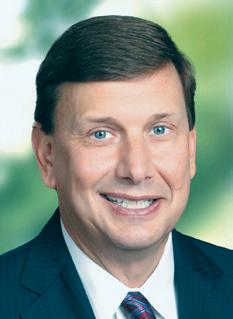
Lutes says in the three years he has known Price, he has been “blown away” by her ability to bring together people of influence to command resources for vulnerable people harmed by violence. Lutes has brought
“
Bonnie and her team made Ava feel safe and heard and protected. They made her feel comfortable. They connected her to therapy when she was ready. They left their door open. The importance of this program is unbelievable.”
— Julia Rice Stokes
Price into his inner circle. “She’s truly a national leader with national expertise,” he says, “and she has fundamentally changed how our health system and community respond to violence.”
Price’s colleague Richard agrees. “Our team’s motto is ‘evolve, change and grow,’” she says, “and Bonnie allows for that.”
Lutes adds that Price “brought a vision” and acted upon it courageously, effectively and compassionately.
‘Face of hope’
Husband and wife Bill and Amy O’Keefe of Richmond learned of Price’s work nearly a decade ago and have been avid supporters since, contributing money and volunteering their time and talents.
Bill O’Keefe says many people want to pretend that trafficking and other violence don’t happen in their communities. He is glad Price and her team are building awareness of the issue and expanding the services available to survivors.
Amy O’Keefe says Price’s work has helped to remove the secrecy, shame and stigma that can stop survivors from seeking services and support.
“They are the face of hope,” Amy O’Keefe says of Price’s team.
Attention to the patient
Lutes says despite Price’s success in building out a network of services, “she has never lost sight of the individual patient.” Richard says over time, the need for violence response services has increased — and the complexity of cases has increased, with many patients having survived multiple assaults and dealing with layers of complex issues. Richard says Price has continually guided the team to respond to the evolving needs of patients in a comprehensive way that respects their dignity.
Julia Rice Stokes, a Richmond-area social worker, is Ava Stokes’ mom. A neighbor had told her about the violence response team several years before her daughter needed it. She is grateful the team was there for her daughter — and for her — nearly eight years ago. “Bonnie and her team made Ava feel safe and heard and protected,” Julia Rice Stokes says. “They made her feel comfortable. They connected her to therapy when she was ready. They left their door open.
“The importance of this program is unbelievable,” she says.
Passing it forward
Ava Stokes says “a theme of my conversations with Bonnie and the team is that I had my control taken, and this was me taking it back.”
She says that with her family, friends, the violence response team, and other supporters at her back, she has made much progress. She has experienced holistic healing. She was instrumental in the conviction of her rapist — a stranger who had been released from prison 76 days before he broke into her apartment and assaulted her.
The strength Ava Stokes gained from her experience inspired her to attain a criminal justice degree, and now she is in a master of social work program. She is a victim advocate learning to provide in-depth support to people impacted by violence.
Price is grateful the program she leads is helping survivors like Ava Stokes. “I would love to see programs like ours across the country,” she says.
Violence response teams, she says, “are not a nicety, they are a necessity.” jminda@chausa.org
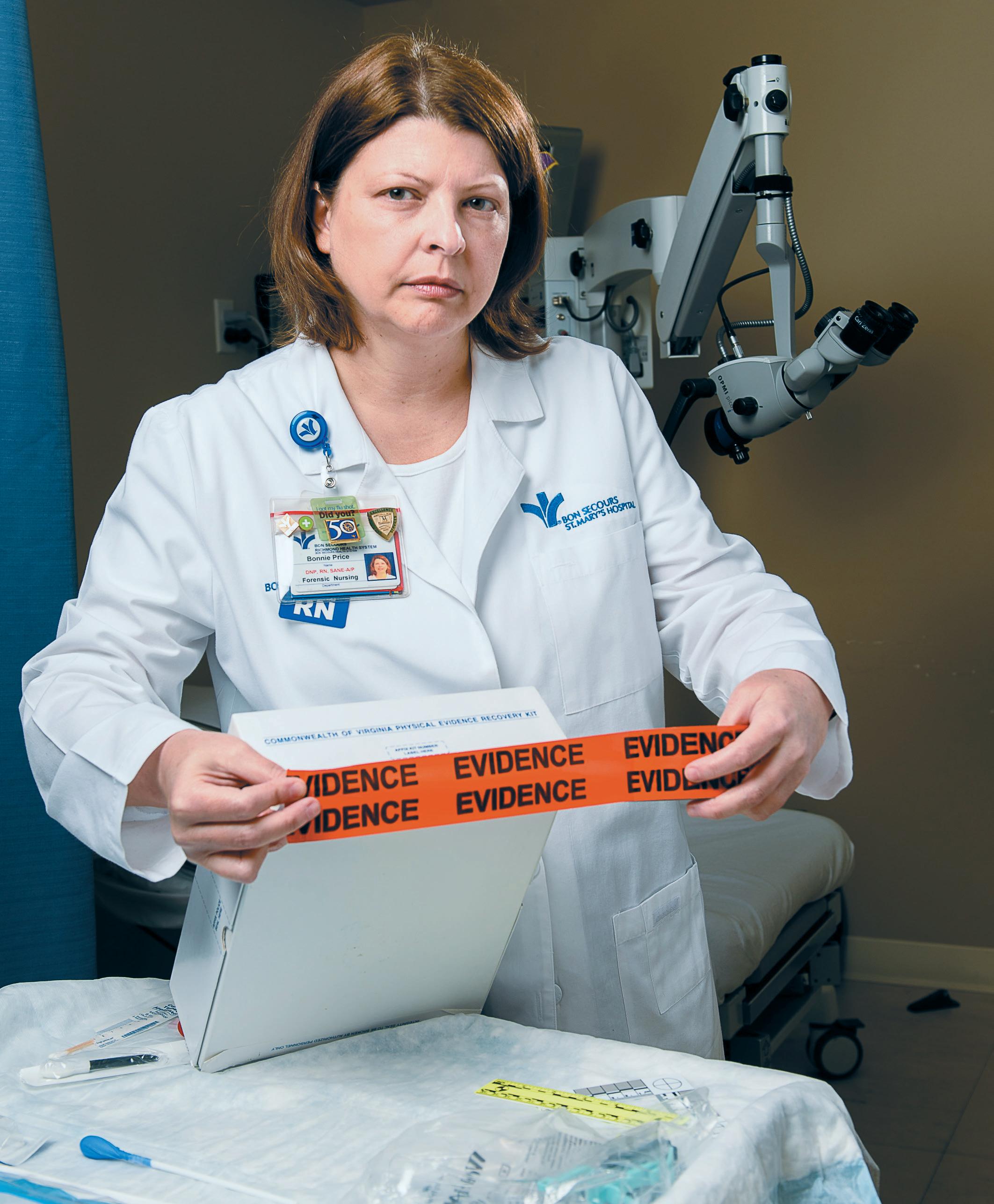
Bonnie Price, director of the community health — violence response team for Bon Secours Richmond in Virginia, has a passion for aiding people impacted by violence. The team she helped to establish for facilities within Bon Secours Richmond provides holistic care to this vulnerable population.
Richard
Lutes
ASSEMBLY 2026: UNITED FOR CHANGE
LIFETIME ACHIEVEMENT AWARD
Sr. Maria Luisa Vera’s visionary leadership has uplifted the vulnerable in South Texas
By JULIE MINDA
The people of Laredo, Texas, on the nation’s southern border, have faced striking disparities for a long time.
As compared to the U.S. population generally, the Laredo population has a high rate of poverty, disproportionately struggles with housing costs, has high rates of food insecurity and has a high percentage of people facing poor health outcomes.
But even the most marginalized people in this area have access to high-quality healthcare and other services, thanks in large part to the visionary leadership of Sr. Maria Luisa Vera, RSM. From 2005 to 2020, Sr. Vera headed Mercy Ministries of Laredo. Because she immersed herself in the community and listened to people, she had a solid understanding of local needs as she shaped Mercy Ministries’ work. That nonprofit includes an expansive medical clinic as well as a domestic violence shelter and food pantry. Since its 2003 opening, Mercy Ministries, which is part of the Chesterfield, Missouri-based Mercy system, has served about 133,000 people.
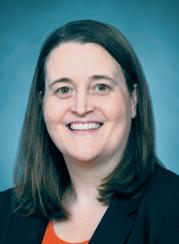
Through her leadership of Mercy Ministries, Sr. Vera “has always advocated for those on the margins,” says Karen Martinez, a grant writer and data specialist for Mercy Ministries’ domestic violence shelter, Casa de Misericordia.
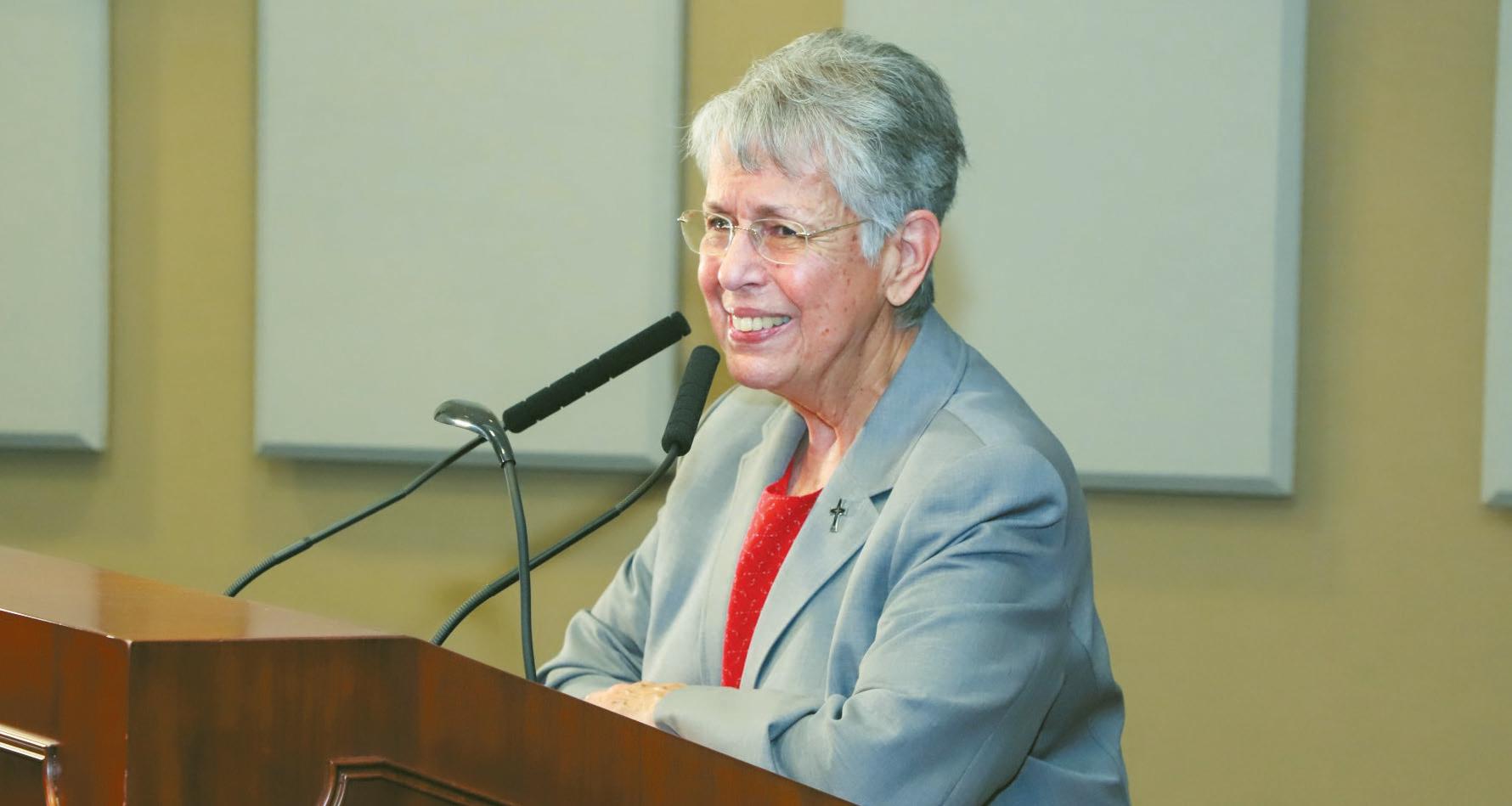
larly drawn to the fast-paced emergency department.
Mercy sisters at the hospital noticed how she excelled at her work. They asked her whether she’d considered a religious vocation. She says she didn’t see herself as a Sister of Mercy until she took part in one of the congregation’s retreats and met other Hispanic women who had joined the congregation. She recalls thinking, “I may want to be a sister. This is crazy.”
gregation, Sr. Vera visited family in Brownsville. While on a telephone conversation during that trip, she accepted Sr. Welsh’s invitation to consider serving in Laredo once again.
A population in need
“We
need to always look beyond the present, and not become so set in what we’re doing now. We can’t get too complacent or comfortable. Catherine McAuley said we can rejoice in the great gifts and talents we have now but we can always be better tomorrow.”
— Sr. Maria Luisa
Vera
tion had an aging mobile clinic van, and Sr. Vera acquired funding to replace it in order to enhance services to the community. She also helped expand a team of outreach workers called “promotoras” to assist people with socioeconomic needs. She also extended that service into more underserved areas of Laredo.
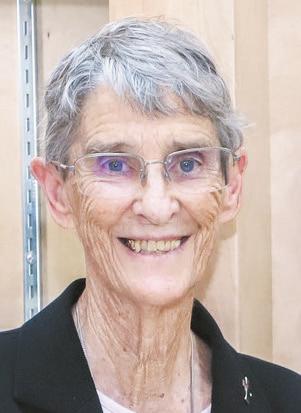
Sr. Vera insisted upon providing exceptional care to the people of Laredo, says Sr. Rosemary Welsh, RSM, director of outreach for Mercy Ministries’ Mercy Clinic Laredo, and executive director of Casa de Misericordia. “She always challenged us to be the best we could be” in delivering high-quality services to the community, Sr. Welsh adds.
And the people of Laredo “are attracted to her and respect her. They feel at ease coming in,” says Ana Garza, a nurse at Mercy Clinic Laredo.
CHA is honoring Sr. Vera with a 2026 Lifetime Achievement Award for her contributions to the Catholic health ministry.
A call to nursing and religious life
Sr. Vera, who is of Hispanic descent, grew up in Brownsville, Texas, on the U.S.-Mexico border. After high school, she wasn’t sure what career path to pursue — she decided to “try out” nursing, following her older sister’s lead. She began as a practical nurse at a Mercy hospital in Brownsville. She says she “fell in love with nursing.” She was particu-
Further discernment convinced her. She says she has a deep concern for people’s health and well-being and wants to provide care for them and their loved ones, and being a sister and a nurse enabled her to serve Jesus and others in a hands-on way.
Transition to leadership
Sr. Vera lived in the Mercy sisters’ convent in Fort Scott, Kansas. She professed her final vows in 1971. She pursued advanced training and education in Catholic nursing schools before returning to the Brownsville hospital to work in the emergency department. When that hospital closed, the congregation deployed her to a Mercy hospital in Laredo, a border town about 200 miles northwest of Brownsville. Sr. Vera says there was a shortage of nurses at the Laredo hospital, plus the congregation appreciated that she spoke Spanish. About 95% of people in Laredo are of Hispanic descent.
Sr. Vera’s later work took her away from Laredo. The congregation elected her to provincial leadership roles between 1985 and 1992 and to regional leadership roles between 1992 and 1995. From 1995 to 2005, she served on the leadership team of the Institute of the Sisters of Mercy of the Americas.
While discerning her next move after two decades in leadership roles in the con-
Mercy had recently divested its Laredo hospital and created Mercy Ministries of Laredo out of two existing entities, the stand-alone clinic and Casa de Misericordia. Mercy Ministries addresses healthcare needs in the outpatient setting. Sr. Vera recognized her talents could benefit a vulnerable population of uninsured and underinsured people, many of them migrants.
“I felt this is where I needed to be,” she recalls.
The U.S. Census Bureau says that just over 20% of Laredo’s population is impoverished, compared to about 10% of Americans generally. The latest community health needs assessment published by the city says about one-third of the residents of Webb County — where Laredo is located — have a housing cost burden of a third or more of their income, about 37% fear they won’t have enough food to eat, and 28% say crime and violence are harming their health or the health of a member of their household. The assessment also says more than 45% of Laredo residents are obese and nearly 20% have a mental health condition.
Sr. Vera anticipated that she would serve just several years in Laredo before retirement. She ended up spending more than a dozen years as president of Mercy Ministries.
Prophetic decision-making
Sr. Welsh, who has been friends with Sr. Vera since they served together as nurses in Brownsville in the 1970s, says Sr. Vera has been “prophetic” in her decision-making as a leader.
Early in her nursing career at Mercy’s Laredo hospital, Sr. Vera pushed for community outreach, a novel concept at the time. She organized blood pressure checks and educational events. She also began a program to teach clinicians CPR, then a rare practice.
Her forward-thinking bent continued while in congregational leadership, when she helped establish the Alliance of Women of Color, a Sisters of Mercy group to encourage diversity and offer support to members. Her trailblazing efforts led to the prioritization of anti-racism efforts by the congregation.
At Mercy Ministries, her pioneering approaches continued. That organiza-
She also forged a collaboration of Laredo-area healthcare organizations to integrate behavioral health services into the primary care environment, a rare approach at the time. And, in the early days of COVID-19, she helped forge collaborations to marshal resources for the people of Laredo.
A vital resource
Garza says there are many people in great need in the Laredo area, and they have a place to turn because of Sr. Vera’s work. “I often think, ‘What would happen to our patients if the clinic wasn’t here?’” she says. “I know there would be lots of people who wouldn’t be taken care of. I don’t know what they’d do.”
Sr. Welsh says Sr. Vera’s tenacity has been key to Mercy Ministries continually evolving its services to respond to local needs. “If she says she’s going to do something, she does it,” Sr. Welsh says.
Sr. Welsh adds that Sr. Vera’s deep care for people has been pivotal to Mercy Ministries’ success in helping people in desperate need. Sr. Vera “really listens to people” — and that includes Mercy Ministries’ staff, clients and local community members, Sr. Welsh says.
Martinez says Sr. Vera’s ability to connect with others in an authentic way built trust with people who can sometimes find it difficult to rely on healthcare institutions. This includes immigrants and people impacted by domestic violence.
Though Sr. Vera is retired, she keeps in touch with Mercy Ministries and remains a consistent presence. She serves on several boards and committees in the Laredo area and for the Sisters of Mercy. She also serves on the Mercy system board of directors. She says she’s drawn on the example of Sisters of Mercy foundress Catherine McAuley in discerning her own leadership path throughout her life.
“We need to always look beyond the present, and not become so set in what we’re doing now,” Sr. Vera says. “We can’t get too complacent or comfortable. Catherine McAuley said we can rejoice in the great gifts and talents we have now but we can always be better tomorrow.” jminda@chausa.org
Martinez
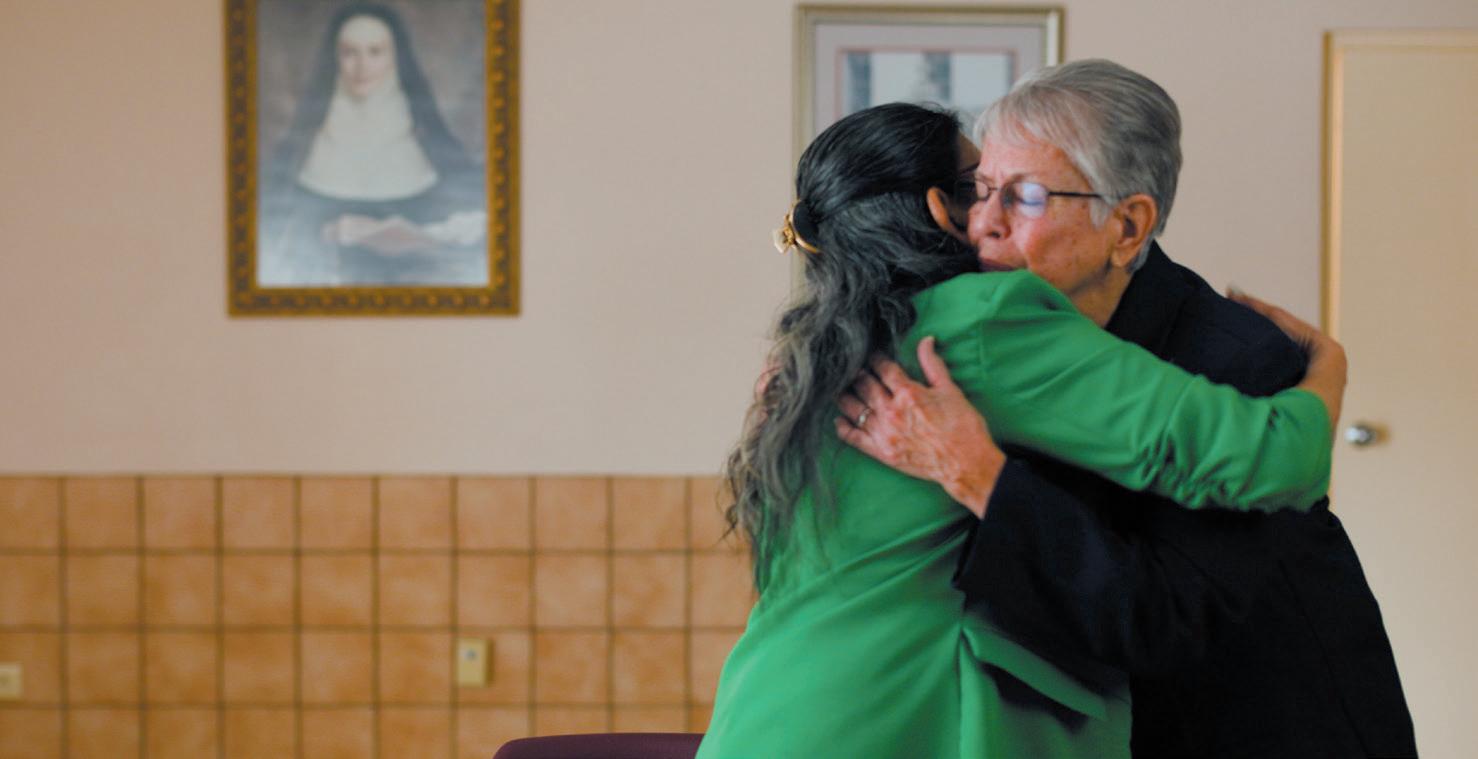
Dora Alicia Ramos, a long-term volunteer and advocate for Mercy Ministries of Laredo, embraces Sr. Vera. Ramos has been a patient at the Mercy Clinic, serves on the clinic advisory committee and is a longtime friend of Sr. Vera.
Sr. Welsh
ASSEMBLY 2026: UNITED FOR CHANGE
SISTER
CAROL KEEHAN AWARD
Dr. Fred Rottnek of SSM Health emerges as innovator in caring for those on the margins
By NANCY FOWLER
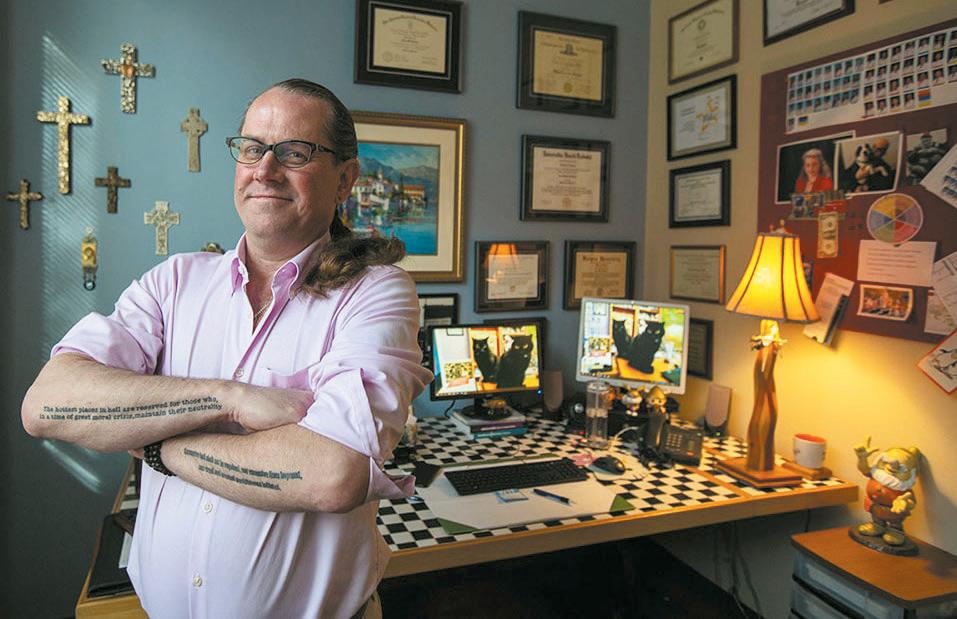
Dr. Fred Rottnek, known worldwide for elevating addiction medicine and reforming inmate healthcare, walks comfortably among the educated and accomplished. But the tattooed, ponytailed SSM Health physician and Saint Louis University School of Medicine professor straddles many cultures.
The first in his family to go to college, Rottnek closely identifies with the bluecollar folks he knew as a boy working in his parents’ St. Louis hardware business. He also finds connection with people who are unhoused, incarcerated, dealing with addictions or struggling with mental illness.
Rottnek first encountered people in shelters through an elective course he took in medical school. One of the most important lessons he learned was that only good fortune separated him from those experiencing homelessness.
“Something went off for me, viscerally, when I realized these are the working-class folks I grew up with,” Rottnek says.
For his work caring and advocating for people on the margins, Rottnek is the 2026 recipient of CHA’s Sister Carol Keehan Award. The award’s namesake is a former CHA president and CEO who has spent her life working tirelessly for equitable healthcare. The award honors someone who is a fierce advocate for social justice and healthcare access.
Addiction care innovator
Now in his 17th year as director of community medicine at Saint Louis University School of Medicine, Rottnek has a secondary appointment in the university’s School of Law. He has written about correctional medicine and addiction medicine for CHA’s Health Progress and served on the journal’s editorial council for seven years. He has won many awards, including the Dr. Norman White Award for Engaged Scholarship and Service given by the Saint Louis University Faculty Senate and a Collaborative Partner Award from the university’s Division of Student Development, which honors staff members with diverse experiences and perspectives for outstanding contributions.
Rottnek is chief medical director of the Assisted Recovery Centers of America, a treatment provider in Missouri. His one stipulation for initially joining the agency was that the work he and the agency developed would be free for other clinicians to duplicate in their own treatment of patients. The Gibson Center for Behavioral Change
in Southeast Missouri and Southeast Missouri Behavioral Health have adapted and used guidelines based on that work.
From 2001-2016, he was medical director of the St. Louis County Jail and Juvenile Detention at Family Courts. In that position, he established a hospice environment for terminally ill prisoners and instituted policies to prevent and contain the spread of the bacterial infection MRSA.
“People who are incarcerated — these are folks we need to care about because they are somebody’s children,” Rottnek says. “When they go back to society, they shouldn’t be going back sicker than how they came in.”
Rottnek was instrumental in creating SSM Health Saint Louis University Hospital’s addiction medicine fellowship — one of the first in the Midwest. During the yearlong program, fellows complete rotations in the addiction medicine consult service, psychiatry, telehealth and maternal fetal medicine at SSM Health Saint Louis University and SSM Health St. Mary’s hospitals as well as at community clinics.
“We built it from the ground up,” Rottnek says. “And where we had just two addic-
tion medicine-trained docs, now we’ve got seven.”
Medical-legal link
Another pioneering effort Rottnek has been behind marries medicine and law. A nascent medical-legal partnership pairs resident physicians at SSM Health Cardinal Glennon Children’s Hospital with Saint Louis University law students to support children and families served by the hospital. The partnership uses legal interventions to address health-related needs, such as safe affordable housing that is compliant with the Americans with Disabilities Act, individualized education programs, and benefits for children with complex medical issues. The interventions may include a conversation, litigation or threat of litigation, and changes in laws, rules and regulations.
“People who are incarcerated — these are folks we need to care about because they are somebody’s children. When they go back to society, they shouldn’t be going back sicker than how they came in.”
— Dr. Fred Rottnek
None of these efforts would be possible without teamwork, Rottnek says. Relationships formed and nurtured over years and decades are key to turning ideas into realities, he says, and the financial piece can be especially critical.
“People think, ‘Oh, Fred does cool stuff,’” Rottnek says. “Well, Fred does cool stuff because Fred works with cool business directors in our department that teach me and work with me on how to make dollars
and cents work.”
Among those assisting Rottnek in funding projects is Lizette Morgan, director of business operations at Family and Community Medicine at the SSM Health SLUCare Physician Group. She admires Rottnek’s ability to relate to everyone.
“I’ve seen him address individuals with the same level of respect whether they have all the alphabets behind their name or whether they’re someone off the street who is unhoused,” Morgan says.
Rottnek treats colleagues with the same level of care he extends to his patients, she says. In January, when a snowstorm blanketed St. Louis, he wanted to be sure everyone in the department was safe.
“He was reaching out, asking, ‘What do you need? What does your family need? How can I help?’” Morgan says.
Involvement in federal efforts
While Rottnek’s focus is often on individuals, his reputation is widespread.
His national efforts include writing materials for the federal Substance Abuse and Mental Health Services Administration to educate healthcare providers about best practices for opioid use treatment in correctional facilities.
Recently, as part of the national court case settlement on opioid treatment that involved manufacturers, distributors and large retail pharmacies, Rottnek was tapped to create a plan to mitigate the harm created by prescription opioids. He donated the funds from this work to the addiction fellowship program.
He is published in numerous medical journals, including Annals of Family Medicine, Journal of the American Board of Family Medicine and Journal of Substance Use and Addiction Treatment
‘Moral inventory’
Early on, Rottnek’s success seemed anything but assured.
In 1986, while pursuing a doctorate at Harvard University on a full scholarship, a malaise Rottnek couldn’t identify led him
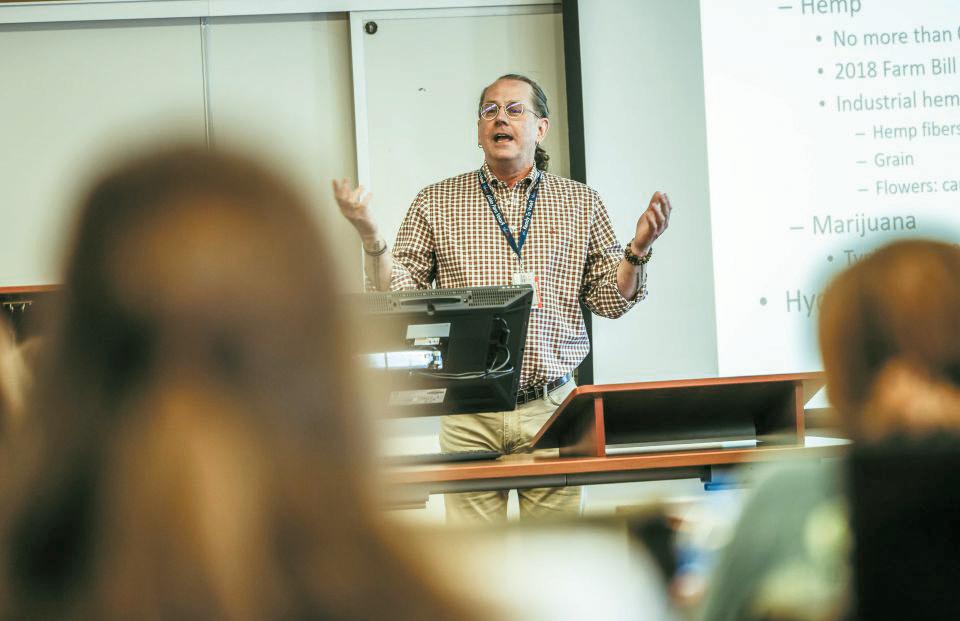
Dr. Fred Rottnek, director of community medicine at Saint Louis University School of Medicine, has been a steadfast advocate of healthcare for inmates and those dealing with substance misuse. Rottnek embraces his blue-collar roots and acknowledges his own past mental health struggles, using his experiences to practice what he calls “radical honesty” with those he treats.
Rottnek has a secondary appointment as a professor at the Saint Louis University School of Law. He is behind a medical-legal partnership that pairs resident physicians at SSM Health Cardinal Glennon Children’s Hospital with law students to support children and families served by the hospital.
Gregg Goldman Photography
Achievement Citation
From page 1
complex to do the work that we do, but we do it for these moments of, ‘Yes, you can choose what you want.’”
For nearly 25 years, this arm of Hospital Sisters Health System has reached out to hospitals and health systems around the world — 120 shipments to 102 countries at last count, affecting a combined service area of an estimated 28 million people — to provide supplies and equipment of their choosing.
For its work gathering and sending needed medical supplies and equipment across the globe, Mission Outreach has earned CHA’s 2026 Achievement Citation, the association’s recognition of innovative programming that changes lives.
Mission Outreach strives to ensure every donation is usable, repairable and appropriate. Its goals include equipping health workers, expanding maternal and child services, supporting disaster and crisis recovery, assisting with medical and surgical missions, and providing biotechnology services to make sure equipment works and to provide technological support.
HSHS President and CEO Damond Boatwright likes to remind others that the Hospital Sisters arrived in America from Germany more than 150 years ago because they saw a need to serve in another part of the world.
“When they heard that calling for help, they only had four words to say: ‘Here I am, Lord,’” Boatwright said. “And so global health being local health, when there’s a need, wherever it is ... we say, ‘Here I am, Lord.’”
Humble beginnings
Mission Outreach started in 2002 in the garage of a convent, where the Hospital Sisters of St. Francis began collecting medical supplies and equipment that HSHS couldn’t use. They thought perhaps the
Rottnek
From page 5
to drop out. After teaching high school for a few years, he decided to become a Jesuit. But plagued by the same despair he’d felt at Harvard, he left the novitiate eight days in. A friend suggested he see a psychiatrist, who diagnosed him with major depression and prescribed Prozac.
“Here I am in a sliding-scale resident clinic in psychiatry, sitting next to people who are actively psychotic, hallucinating,” Rottnek says. “So I did kind of a moral inventory in terms of what’s important to me and thought, ‘Maybe I need to look at medicine.’”
Rottnek attended Saint Louis University School of Medicine from 1991 to 1998, initially eyeing psychiatry but switching to family medicine. He says that decision freed him from some of the boundaries psychiatrists must put into place.
“I can tell my patients, ‘Hey, I know what it’s like to be depressed; let me tell you a little bit about how medications have helped me,’ or ‘I know what it is like to be gay in St. Louis and have friends with HIV,’” Rottnek says. “That kind of radical honesty with people has always been something I’ve really enjoyed.”
Illustrating Rottnek’s commitment to authenticity is a quote attributed to writer and poet Maya Angelou on his arm. Of his many tattoos, it’s one he chose as a reminder to himself. It reads: “I’ve learned that people will forget what you said, people will forget what you did, but people will
missions they partnered with around the world could.
As word spread, requests and donations poured in. The congregation built their first warehouse in 2006. They later built a second one nearby. In 2020, the Hospital Sisters transferred ownership to HSHS because they felt the health system had the capacity to handle future growth. Today,
“ We just honestly would not be able to do anything without them. The patients are so appreciative. You can’t even imagine it.”
— Peggy Frisella
never forget how you made them feel.”
Listening is key
Kelly Everard, a fellow medical professor and researcher who calls Rottnek her “work husband,” directed a clinical interviewing course with him for eight years.
“We would interrupt each other like an old couple,” Everard says. “I’d say, ‘You’re not making sense right now,’ and he would just laugh and say, ‘There she goes again.’”
Rottnek stands out, she says, for his lack of ego and his appreciation for the knowledge and skills of others.
“Fred takes his job very seriously, but he and I do not take ourselves seriously,” Everard says. “One of the reasons we work really well together is that we’re not afraid to make a mistake because the whole point is getting better, making something, trying something new, seeing a problem, trying to solve it.”
Rottnek hopes that in the future Catholic healthcare systems will take an even bigger role in mental healthcare, especially for people who are incarcerated and addicted to substances.
“We really need to lean into that because if not, who else will?” he says.
The personal theology that has guided Rottnek’s career centers on asking people what they need rather than telling them what he thinks.
“I embrace this idea of listening to people, finding out what’s important to them,” Rottnek says. “What are their drivers? What do thriving and flourishing mean for them? And how can I support them as a physician?”
sisters volunteer with the organization.
Half of Mission Outreach’s $1.9 million budget comes from donors and grants. The other half comes from shipping and handling charges paid by donation recipients, fees that domestic health systems pay for pickup of donation, and recycling revenue.
While most equipment and supplies come from HSHS, Mission Outreach now gets donations from other Catholic health systems such as Ascension, Mercy, SSM Health, Avera Health and PeaceHealth.
Mission Outreach has equipped 530 medical mission organizations with supplies and equipment. It has helped save and redistribute 10 million pounds of equipment and supplies, valued at more than $85 million, that might otherwise have been dumped into landfills.
“It’s incredible that they think ahead, they think outside of the box, and they do the right thing,” said Peggy Frisella, founder
of Surgical Outreach for the Americas. The nonprofit provides surgical services for underserved people in Central and South America, performing more than 2,500 surgeries since 2009.
Frisella finds many supplies at Mission Outreach for the life-changing hernia and gynecological surgeries her group performs. “We just honestly would not be able to do anything without them,” she said. “The patients are so appreciative. You can’t even imagine it.”
The nonprofit Kenya Relief has received about a dozen full containers from Mission Outreach over the years, representing more than $2 million in equipment and supplies, including operating room tables, ultrasound machines, portable X-ray units, gowns, drapes and surgical instruments.
“Our Kenyan clinicians often tell us how different it feels to work in an environment where they finally have what they need,”





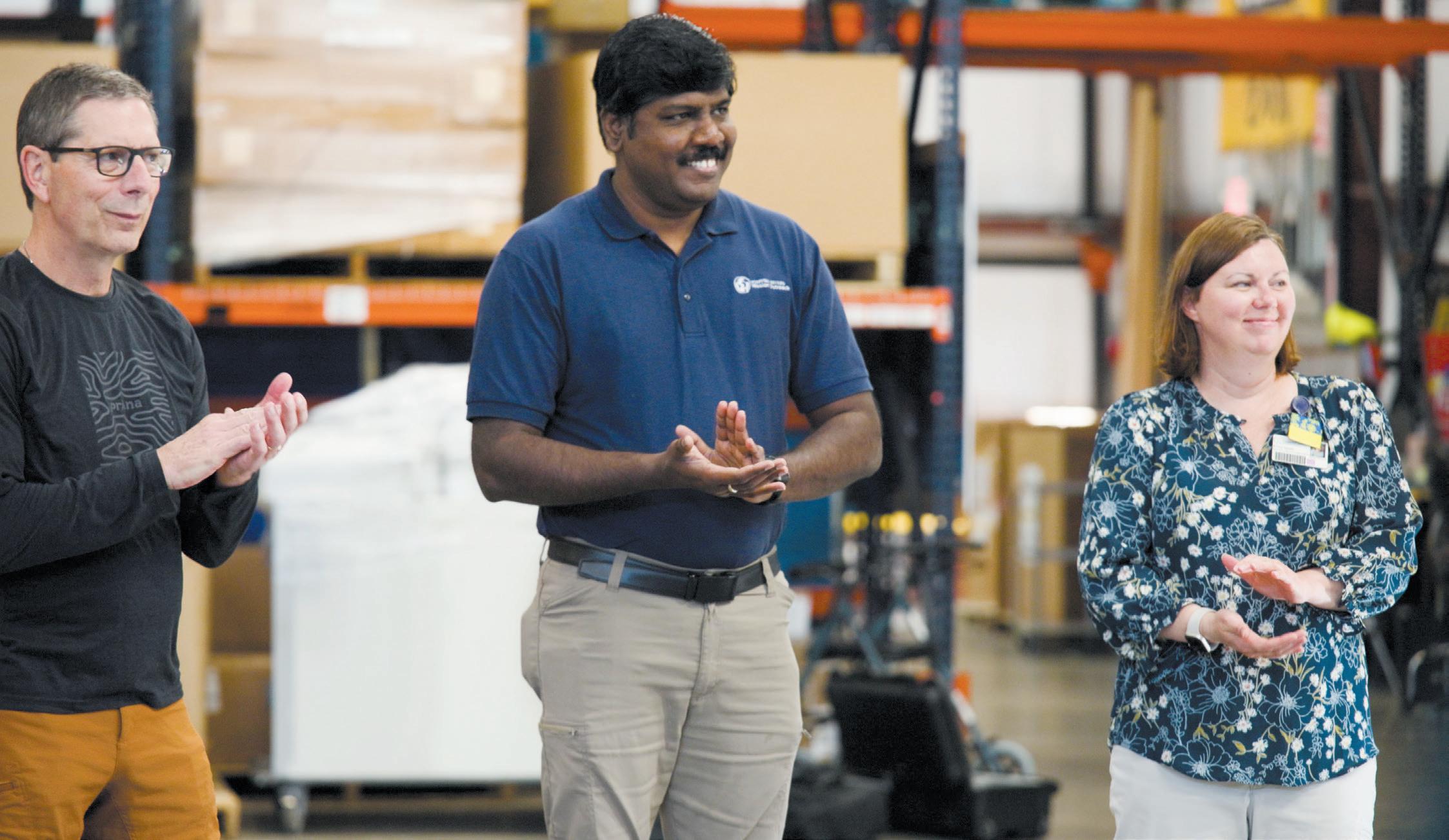
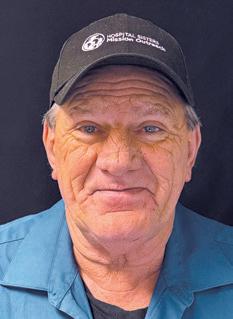
From left, Mission Outreach volunteer Bryan Finn, biomedical engineer Ratish Kumar, and Executive Director Erica Smith applaud at one of the nonprofit's two warehouses in Springfield, Illinois, after the blessing of a shipping container headed to Liberia in April.
Once Films
Boatwright
President and CEO Melissa Cook said. “Nurses don’t have to tell surgeons, ‘We don’t have that,’ and surgeons can perform procedures with modern equipment they would never otherwise access. Patients recover more safely and comfortably because the environment is clean, consistent, and properly supplied.”
The work of many hands
Twelve employees work for Mission Outreach, along with 100 regular volunteers, whose hours collectively equal the work of five full-time employees.
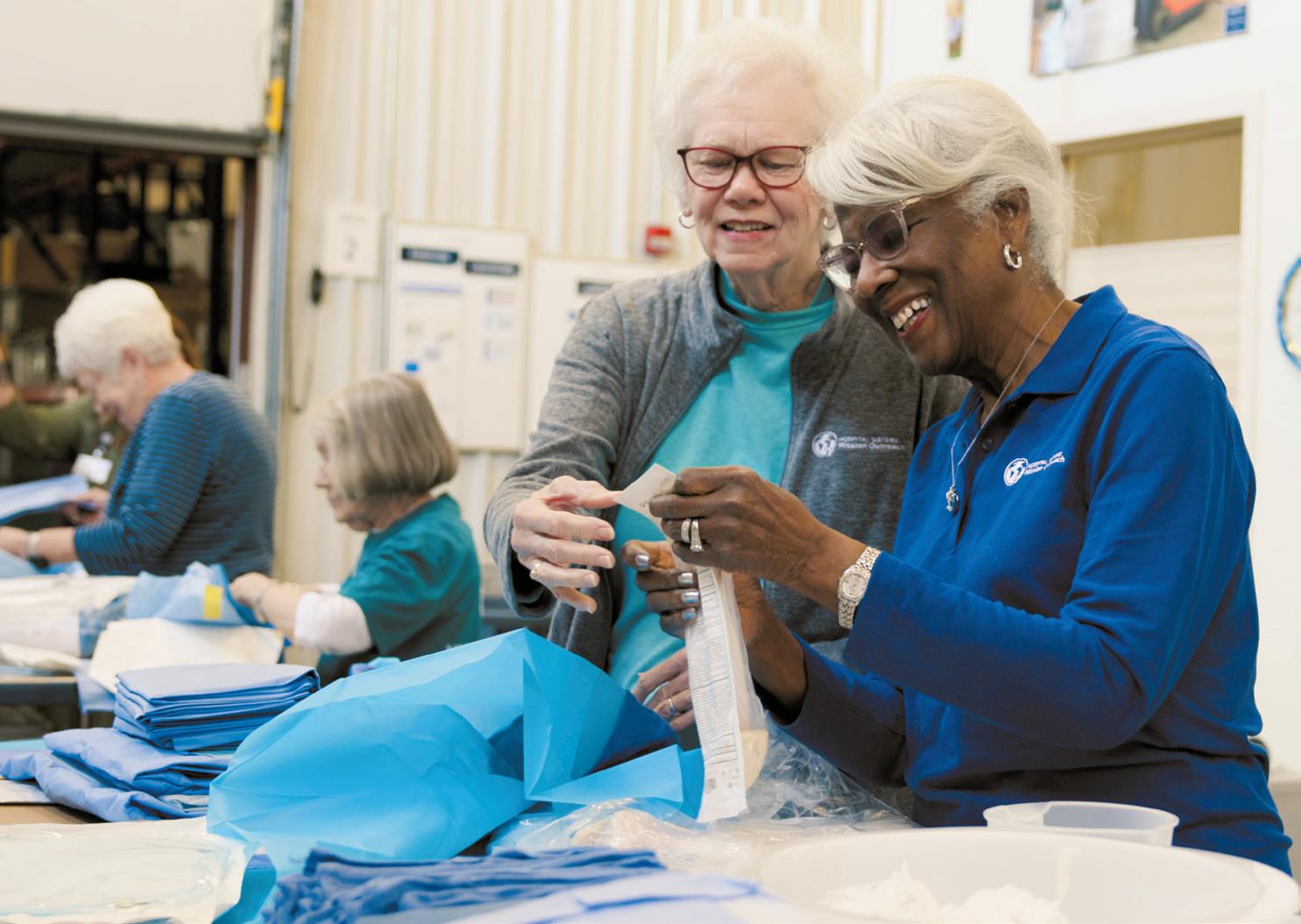
Many volunteers are retired medical workers who know the difference between, say, a reinforced tracheal tube and an uncuffed reinforced tracheal tube. They come in at least once a month, most of them weekly, and sort items and enter them into an online inventory system.
Elaine Kuhn, a retired teacher, loves the welcoming atmosphere at Mission Outreach and the friends she’s made as a volunteer.
“I know I’m just a small part of the process,” she said. “Everybody’s working together in the process that makes everything come together.”
Ratish Kumar, a 2023 Tomorrow’s Leaders honoree, is a biomedical engineer with Mission Outreach. He makes sure that donated equipment, such as patient monitors and ultrasound machines, are in working condition. He also works closely with the partners overseas, ensuring they have the means to maintain and sustain the equipment.
When Kumar joined in 2016, Mission Outreach received a lot of what its leaders referred to as “junk for Jesus,” donations that might be well-intentioned but were unusable or not worth salvaging. He cited a World Health Organization study from 2011 that said 70% of medical equipment donated to developing countries ended up in junkyards.
Mission Outreach came up with an equipment disposition decision matrix to help donors understand what was proper and needed, and what might be better sold elsewhere or scrapped instead of donated. Now, most equipment donated to the organization is in good condition.
“It took us a long time to achieve this stage through constant education and awareness,” Kumar said.
Handling with care
When a hospital in another country makes an order, warehouse workers fit the goods into a 40-foot shipping container. Kenneth Ware, a commercial driver and warehouse associate, is in charge of the task.
“They call me the Tetris master,” Ware said of his ability to fill every nook and cranny of the container.
Larger items, such as exam tables and beds, go in first. Smaller items go in stacked boxes. He likes to make a good impression, so he’ll stack beds and mattresses at one end, so they’re the first thing recipients see when they open the door.
Mission Outreach. Volunteers and staffers watch from Springfield.
“And the people there are just filled with joy, and that’s our motivation,” Ware said. “They say, ‘This was great stuff, the best we’ve ever had.’ We take pride in what we do — everybody here does.”
Spreading the mission
As part of its longer-term partnerships in some countries, Mission Outreach is working on measuring outcomes. St. Joseph Hospital in Tanzania is seeing a difference in mother and baby outcomes after Mission Outreach donated fetal monitors and other birth-related equipment.
A nurse there told Smith: “I’m a better nurse because of this. I have a tool that really gives me the confidence to make decisions.”
“ The people there are just filled with joy, and that’s our motivation. They say, ‘This was great stuff, the best we’ve ever had.’ We take pride in what we do — everybody here does.”
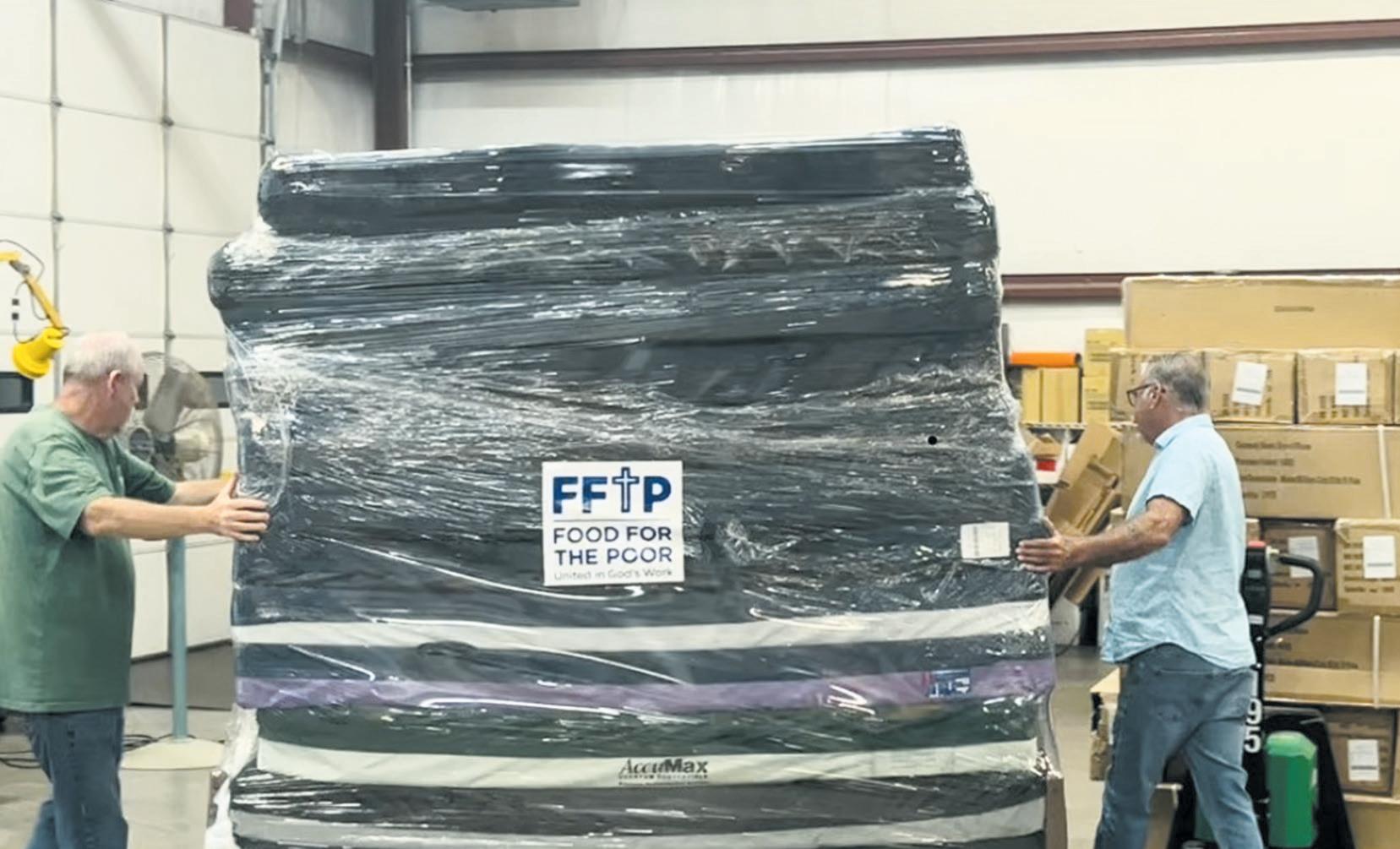
David Wilcox, a carpenter, builds special crates to protect furniture and equipment from being damaged during shipment. Linens and scrubs serve as cushioning material. Shrink-wrap keeps the items nice and snug.
Before the truck hauls the container away, the staff and volunteers gather around it and hold hands. Then, they recite the container blessing, which says, in part: “Provide us wisdom to understand the needs of your people; motivate us to take the appropriate actions; and give us the courage to face the challenges that taking action will create.”
Reaching others
Smith, Kumar and other staffers have traveled around the world to meet with recipients.
At St. Joseph Hospital in Moshi, Tanzania, Kumar conferred with hospital leaders on the location of a new MRI machine and the electricity requirements of other machines. In Ukraine, Smith learned how a portable ultrasound she hand-delivered would be used multiple times a day for orthopedic surgeries on soldiers injured on the front lines. In Peru, Mission Outreach staff watched as a mother offered purified water in a sippy cup to her toddler. The organization, in collaboration with Bon Secours Mercy Health, had sent water purifiers after a violent storm worsened an outbreak of dengue fever.
Often, recipients send videos back to
— Kenneth Ware
Meanwhile, the heart of Mission Outreach beats inside the Springfield warehouses.
One recent early evening, a group of new executives for HSHS came to learn about and help serve Mission Outreach. It’s part of their formation process. They gathered around boxes of scrubs, laughing and chatting as they checked the garments for rips and stains, and folded and sorted them by size.
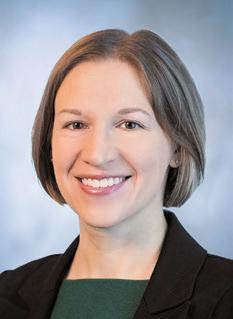
Rachelle Barina, senior vice president and chief mission officer for HSHS and a 2024 Tomorrow’s Leaders honoree, challenges groups like this. She asks: What is your Mission Outreach right now? What are you building out of your garage that is contributing in a way that you can’t imagine 10 years from now?
“The Hospital Sisters of St. Francis have given us a tremendous example, and we today are responsible at Hospital Sisters Health System for continuing their legacy,” Barina said. “That is an amazing thing to see what people of goodwill can do when we come together, when we overcome differences, when we just pause for a moment and think: Can we do better? Look what we can accomplish together.”
vhahn@chausa.org
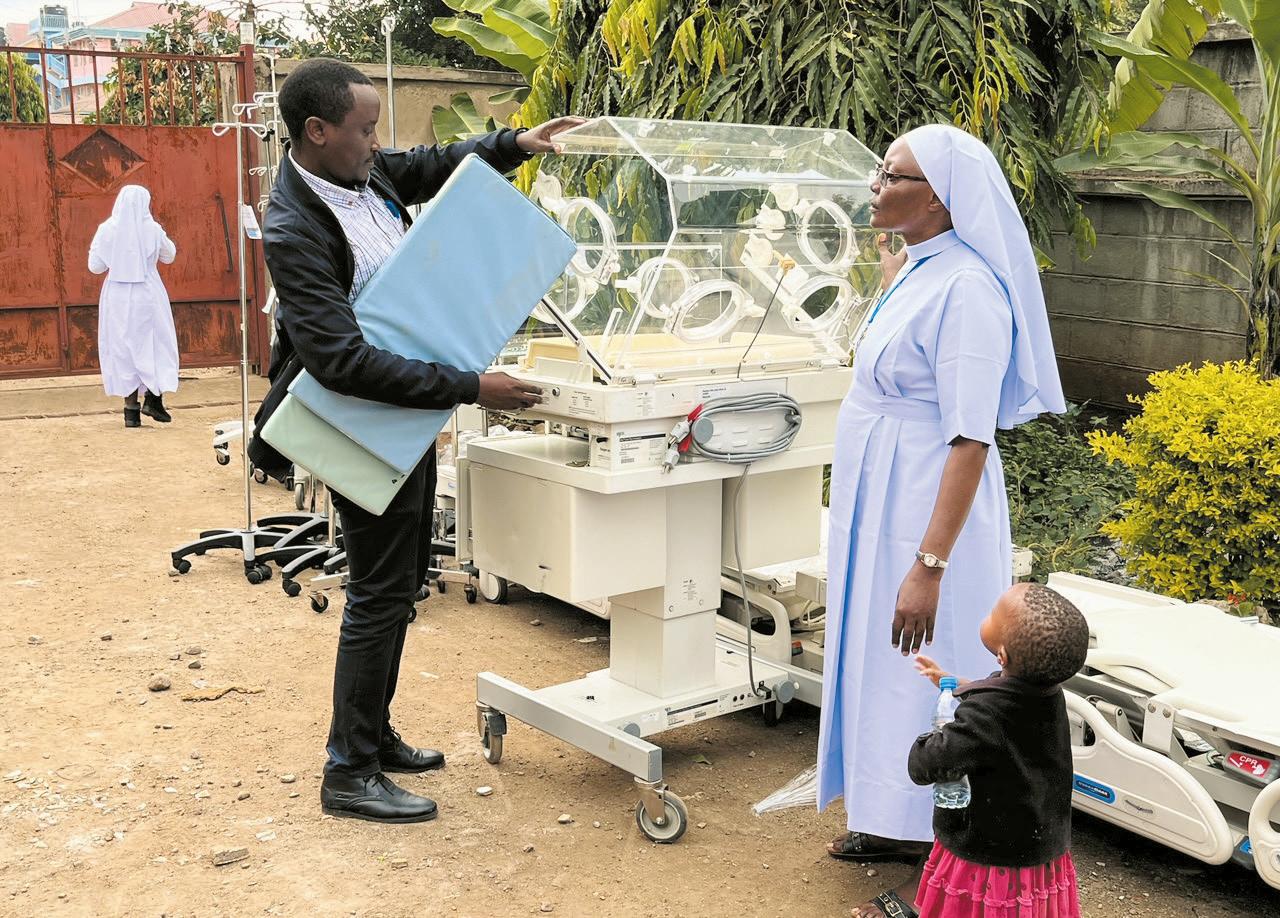
An incubator shipped by Mission Outreach gets a close inspection after arrival at St. Joseph Hospital in Moshi, Tanzania, in June 2024. The shipment also included pharmaceutical-grade freezers, hospital beds and other needed supplies and equipment.
Barina
Ginny Padget, left, and Patricia Davis join other Mission Outreach volunteers in sorting medical supplies.
Mission Outreach team members Jay Rees and Lou Cueto load mattresses onto a shipment going to Jamaica. Donations are carefully crated and packed to prevent damage.
Ware
ASSEMBLY 2026: UNITED FOR CHANGE
TOMORROW’S LEADERS
Up-and-comers blaze a trail while building a transcendent legacy
By KATHLEEN NELSON
Working to build a legacy for the ministry that extends beyond both personal goals and innovations for their own systems, the 2026 class of Tomorrow’s Leaders shows a collective deep commitment to Catholic healthcare. This year, the ministry is saluting 10 leaders age 40 or younger for their contributions. Catholic Health World interviewed the honorees, who will be recognized at the Catholic Health Assembly in St. Louis, about their achievements and inspirations.
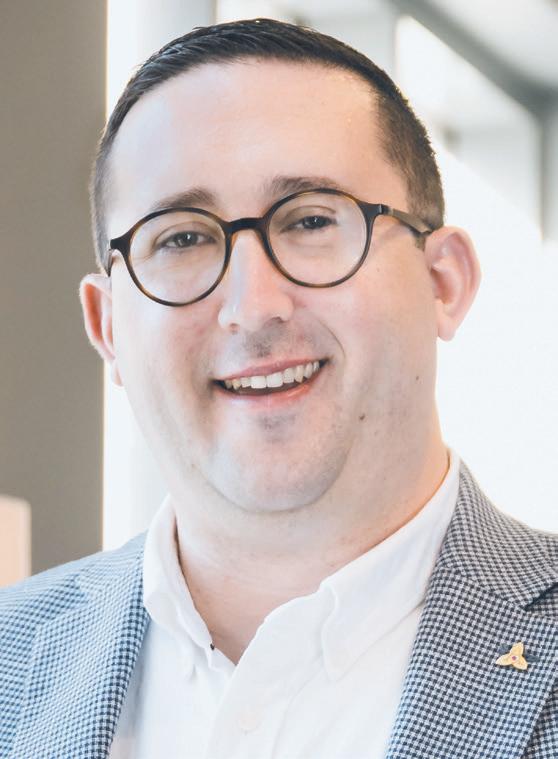
Preston Becker, 35 Director, spiritual care, Ascension St. Vincent Indiana, Indianapolis Achievements
Piloted the expansion of spiritual care into a behavioral health outpatient clinic, primary care clinic and emergency room. Guided a project that reduced the percentage of patients leaving without being seen in the emergency department from 2.82% to 1.01%. (The standard target for high-performing facilities is less than 2%.)
Built the understanding of spiritual care’s role for leadership during formation of the joint venture between Ascension Michigan and Henry Ford Health. Who inspires you? Ron Tremblay (chief mission integration officer at Ascension Oklahoma) has shared his wisdom and grace in helping me navigate unfamiliar situations: hiring people, inspiring people and thinking about chaplaincy in cutting-edge ways.
What experiences helped shape your career? The first time I met a chaplain, I was in high school. I was getting ready for a surgery, and a chaplain stopped in. We laughed a lot, and my anxiety went from through the roof to where I could feel my feet on the floor. Her name was Destiny. As an undergrad, I shadowed a chaplain. I saw how loving this chaplain could be to complete strangers at the worst moment of their lives. I thought if I could learn to do that, the communities I serve would be better for it. What do you like best about your job? I get to help our chaplains remove barriers and make them as present as possible to our patients. I enjoy finding new ways for spiritual care to be involved in
“strategy and operations. Which achievement has been or will be most impactful? Placing care in new settings. For example, people can struggle with chronic illness for years but not be in an acute care setting, where most of our chaplains are. So, we’re introducing spiritual care upstream, creating partnerships and finding space in physician clinics.
Endorsement
“He combines humility with strategic insight, balancing the mission of chaplaincy with organizational needs while revering every person served.” — Antonina Olszewski, vice president of spiritual care and mission integration, Ascension
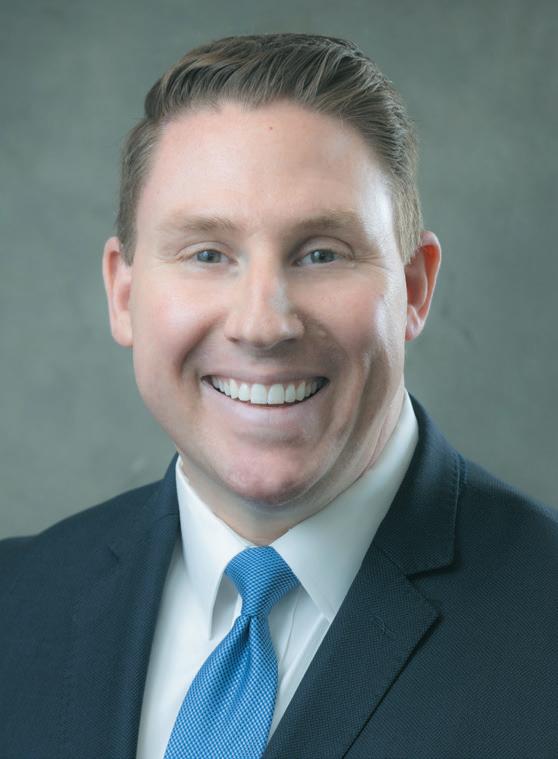
Chad Dilley, 40
President, Ascension St. Vincent Indianapolis
Achievements
Led Ascension St. Vincent Carmel in Indiana to national honors, such as Newsweek’s “America’s Best Maternity Hospitals” and Leapfrog “A” hospital safety grades.
Directed $370 million in capital projects, ensuring that investments align with patient needs and long-term sustainability. Served as regent of the Ameri-
The first time I met a chaplain, I was in high school. I was getting ready for a surgery, and a chaplain stopped in. We laughed a lot, and my anxiety went from through the roof to where I could feel my feet on the floor. Her name was Destiny. ”
— Preston Becker
Rehabilitation Medical Center, Spokane, Washington
Achievements
can College of Healthcare Executives and the board director of ACHE of Indiana.
Who inspires you? My father, Mike, is my biggest role model. He was a career firefighter who rose through the ranks to chief. He emphasized faith as a priority and was the example for me of what both a servant leader and present father look like.
Why is Catholic healthcare a good fit for you? There’s a lot of synergy when personal values align with our institution’s values. In particular, I love the Ethical and Religious Directives for Catholic Health Care Services
In a culture and society that can often be confused, this provides a clear anchor and guidance and identifies what we believe and why we believe it. I find refuge in the ERDs.
Which achievement has been or will be most impactful? What we’ve achieved shows improvements in patient care, but what I’m most proud of is to get all that done while developing people along the way. So I’m most proud of the people who went from individual contributor to
manager, or manager to director, or director to a VP that I helped grow on their journey. It’s not the accolade; it’s guiding the people who helped develop and lead those efforts.
What is your next big goal? (He assumed his current position in November.) Serving the team well on a daily basis, getting to uncover and develop their talents.
Endorsement
“Chad’s ability to marshal the energy and attention needed, coupled with his visionary leadership and operational acumen, allowed achievement of milestones ahead of schedule.” —
Dr. Peter J. Bustamante, regional chief medical officer, Ascension St. Vincent North Region
Led the integration of financial forecasting with clinical operations to improve Medicare performance by $59.8 million. Helped earn Practice Greenhealth Partner for Change awards at Providence Sacred Heart and Providence Holy Family Hospital. Helped drive the first mission fidelity assessment throughout Providence.
Who inspires you? My wife, Abby, is a physician assistant in community health. Daily, she serves others with the love of Christ. Sr. Rosalie Locati, SP, the last Sister of Providence in Spokane, is a mentor and helped shape my journey into mission leadership.
What experience helped shape your career? Before I was in healthcare, my sister and brother-in-law introduced me to Thomas Urban, the CEO of Mercy Health — Fairfield Hospital near Cincinnati. He talked about honoring the founding sisters, service to the community and the
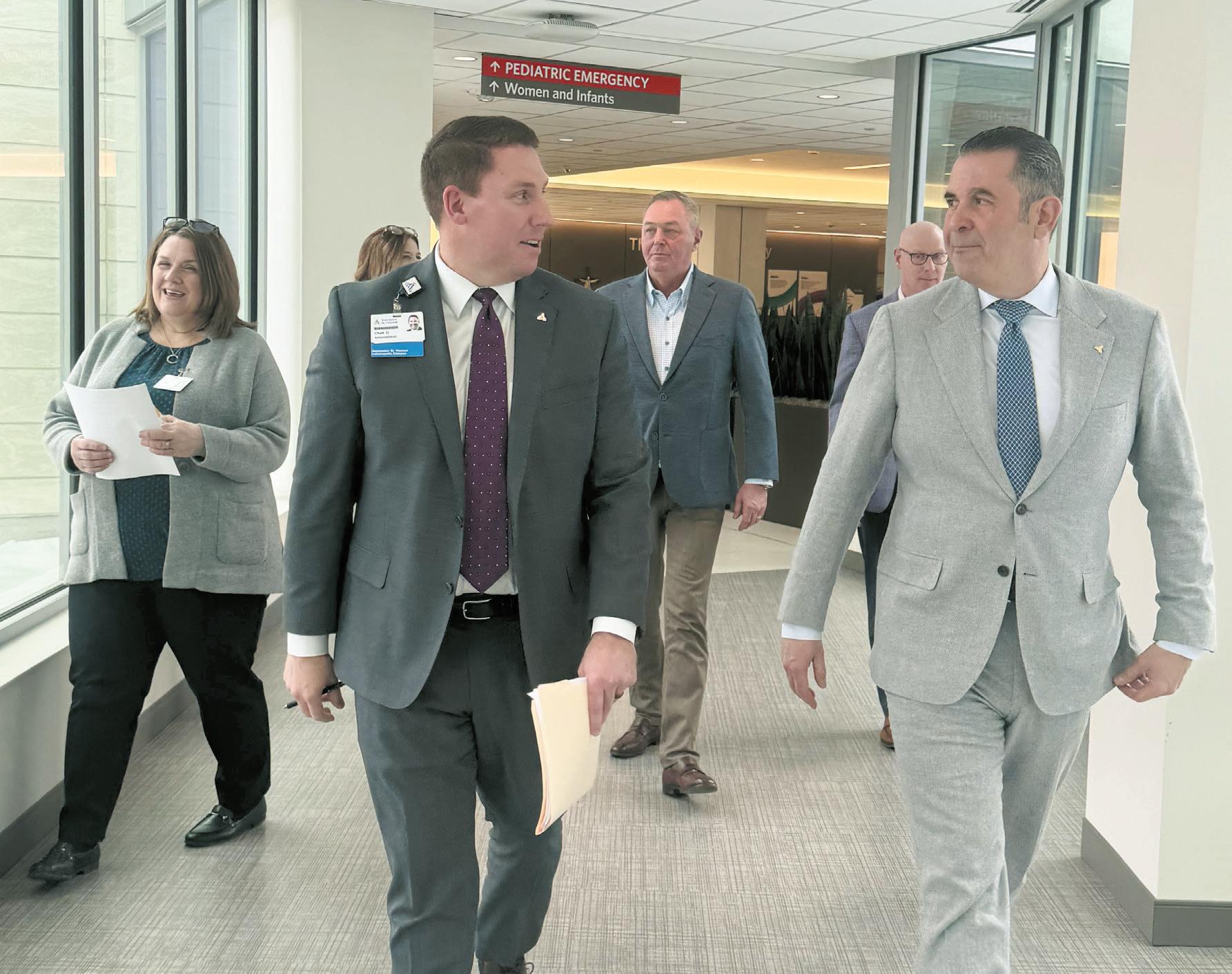
Chad Dilley, left, president of Ascension St. Vincent Indianapolis, escorts Ascension President and CEO Eduardo Conrado during a visit to a St. Vincent campus.
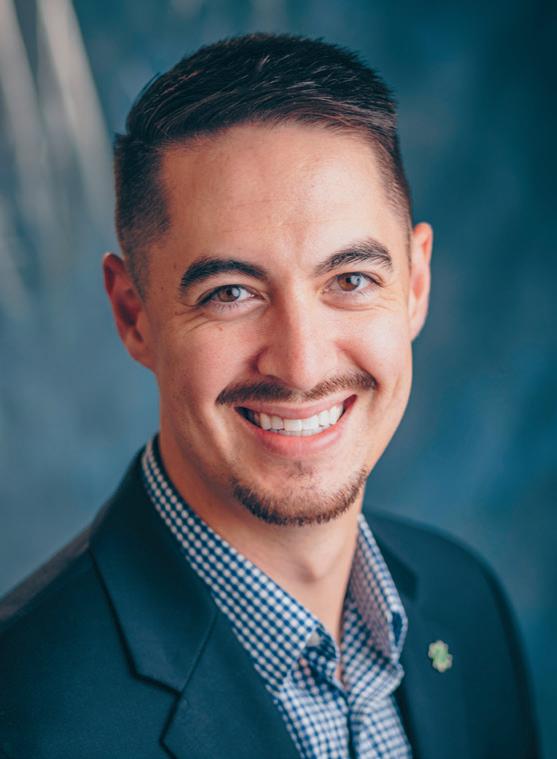
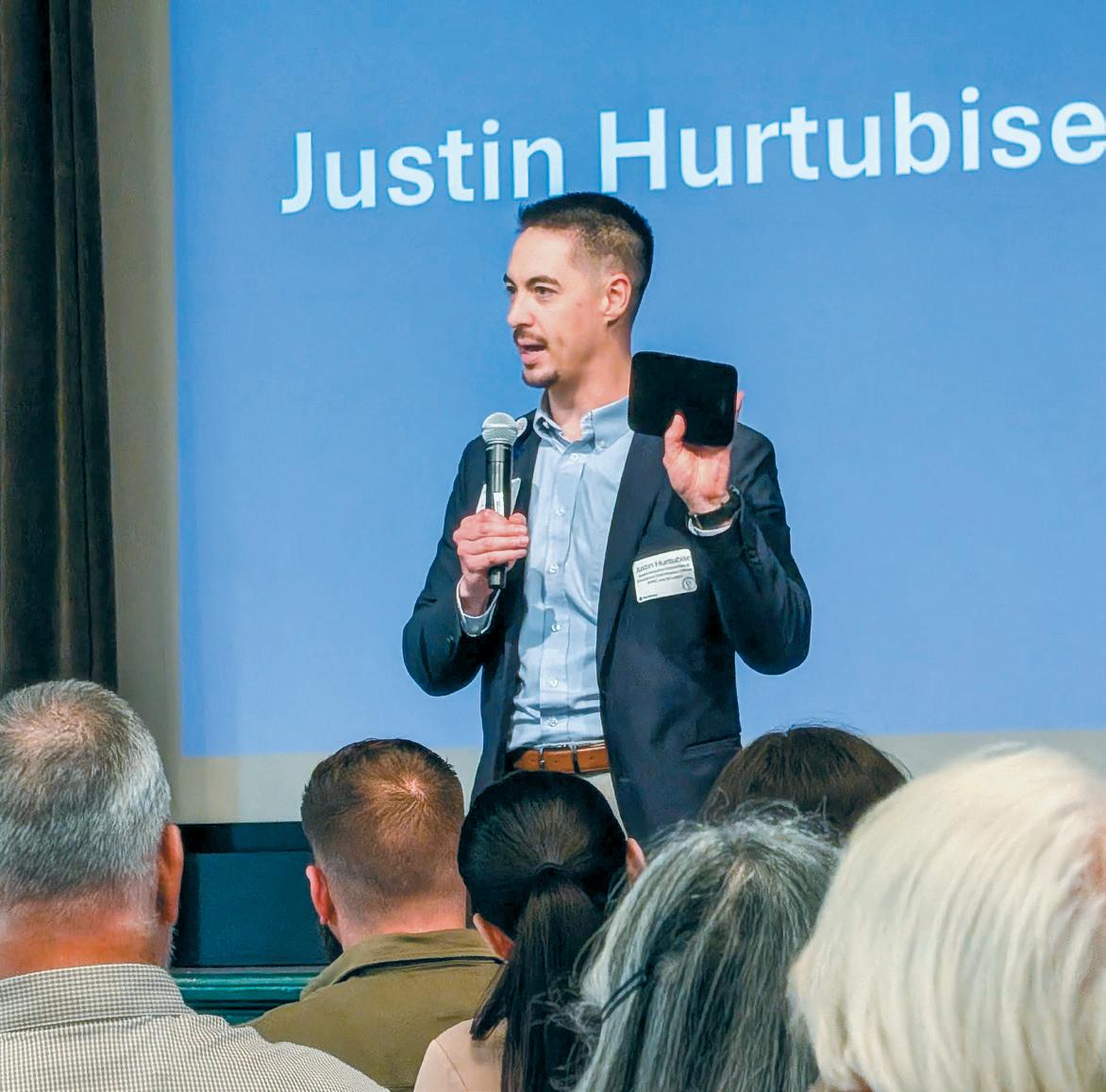
Justin Hurtubise, chief mission officer at Providence Sacred Heart Medical Center & Children’s Hospital and Providence St. Luke’s Rehabilitation Medical Center in Spokane, Washington, offers a reflection at an award ceremony at Sacred Heart.
Justin Hurtubise, 35 Chief mission officer, Providence Sacred Heart Medical Center & Children’s Hospital and Providence St. Luke’s
organizational acumen required in Catholic healthcare. I realized this was something I wanted to pursue.
What do you like best about your job? I serve with incredible colleagues who are a joy to work alongside. Through them, I see our mission illuminated.
Which achievement has been or will be most impactful? I helped develop formation programs for front-line leaders. We have had thousands go through formation and, in turn, they are mission multipliers. The impact of these programs stretches far beyond me.
What is your next big goal? We have secured donor funding for pilgrimages to retrace the footsteps of our founding congregations. My next big goal is to bring these pilgrimages to life.
Endorsement
“In moments of tension or uncertainty, Justin is often the calm in the room, listening intently and lifting the voices of others. Justin is exactly the kind of emerging leader our ministry needs as he is rooted in compassion, skilled in implementation, and courageous in vision and action.” — Anna Franklin, executive director of health equity, Providence central division
Jayna Kelly, 30 Director of nursing, Wamego Health Center, Wamego, Kansas, a member of Ascension
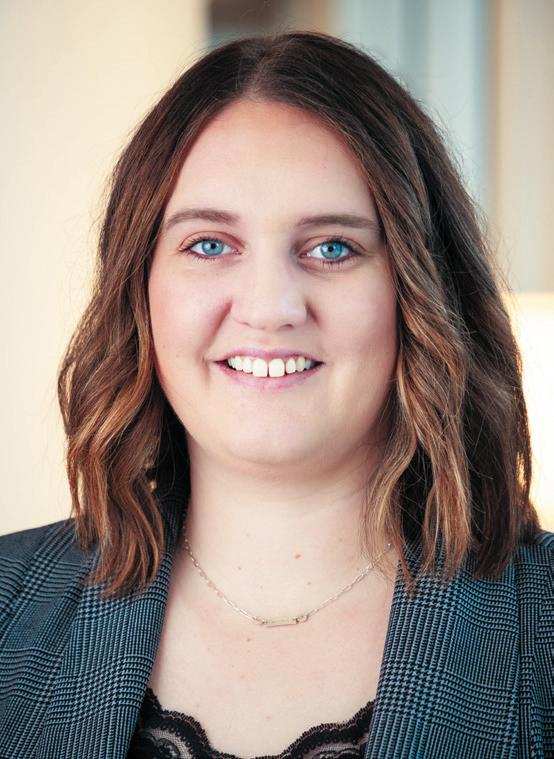
Achievements
Helped Wamego earn the 2026 Outstanding Health Organization of the Year honor from the National Rural Health Association.
Led efforts to reduce 12-month turnover for nurses from 38% to 13%.
Helped improve patient net promoter score, a measure of how likely patients are to recommend a healthcare provider, from 38 to 77.
“ Rare is a leader who can lead from the front, the back, or offer supportive influence to accomplish goals which will improve patient care. Seth does all these things with effortless grace and poise.”
— Dr. Stephanie Duggan
Who inspires you? Our administrator, Brian Howells, has trusted me with decisions, given me space to lead my team, and grounded me in helping the patient. My preceptor, Jennifer Goehring, gave me a seat at the table and opportunities to grow. She is a sounding board when I need it.
What experience helped shape your career? My mom was the administrator here when I was a kid, so I really have grown up here. Being in this role and leading at Wamego is always the path I had in mind.
What do you like best about your job? My guiding principle is we deserve the same quality and access as people in suburban and urban areas, so how can I drive that? My team also inspires me every day. A lot of them were nurses when I was a kid. Their trust in me and willingness to serve our mission has helped me grow more than they know. Which achievement has been or will be most impactful? Having a stable staff and low turnover drives the rest of our achievements: improvements in quality, safety and patient satisfaction. We are at the point where we have no travel nurses.
What is your next big goal? We are in the process of seeking a significant designation upgrade that is an undertaking, but it’s a commitment to our community.
Endorsement
“She approaches every task not just as a duty but as an opportunity to make a positive difference. Her integrity and dedication inspire confidence and trust among patients, staff and community members alike.” — Mindy Osterhaus, nurse manager, Wamego Health Center
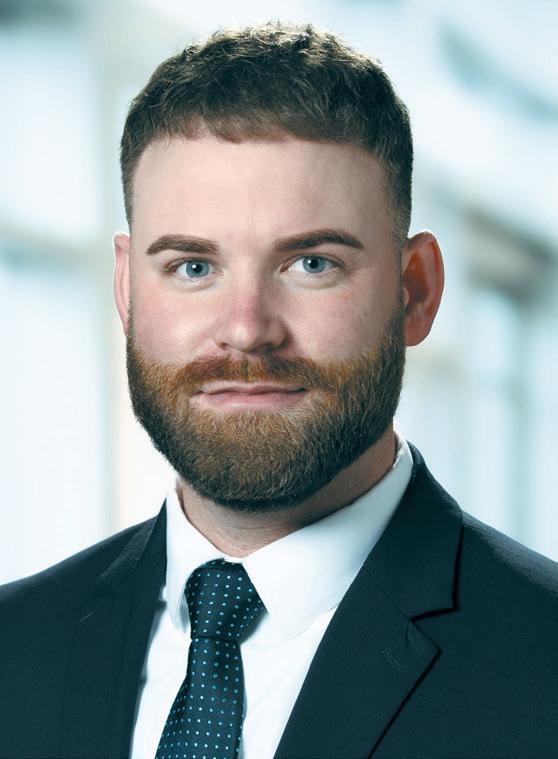
Seth Lovell, 36 System vice president of nursing transformation and innovation, SSM Health, St. Louis Achievements
Created nurse influencers program to recruit talent via social media.
Helped reduce the average time it takes to fill a registered nursing opening to 22 days from 75 and the time between recruitment and hiring to 49 days from 130.
Reduced what SSM Health paid for travel nurses by almost $200 million from 2022-2024. Who inspires you? My grandfather, Orla Pedersen, emigrated
from Denmark. He didn’t know the language and was separated from my grandmother for several years but became a successful entrepreneur. My brother, Brandt, started in the tech industry at the entry level and has demonstrated results at every level. Through disruptions, acquisitions and challenges, he’s made an impact. His team loves working for him. He drives culture.
What experiences helped shape your career? Working in a (nurse) float pool, I had access to all aspects of healthcare, so it’s a little easier to relate when different specialties come up.
When I became a nurse manager, I felt lost. But I learned through mistakes that there are different leadership styles and how to work with them to drive results. Why is Catholic healthcare a good fit for you? I’ve worked
in for-profit and not-for-profit settings, but there’s a more noble cause here: bringing your whole self. For patients seeking care, they benefit from that special presence and the power of God. What is your next big goal? We are taking all of our timekeeping, attendance, internal scheduling, on call and labor technologies and unifying it into one platform. For example, a nurse manger can spend 15-20 hours creating schedules. We’re attempting to automate that process, so nurse managers can spend more time on health and safety outcomes.
Endorsement
“Rare is a leader who can lead from the front, the back, or offer supportive influence to accomplish goals which will improve patient care. Seth does all these things with effortless grace and poise.” — Dr. Stephanie Duggan, chief clinical officer, SSM Health
Megan Mashl, 31 Chief operating officer, St. Paul Elder Services, Kaukauna, Wisconsin, a member of Franciscan Sisters of Christian Charity Sponsored Ministries Achievements
Guided her team to achieve a five-star rating from the Centers for Medicare and Medicaid Services.
Created a lead certified nursing assistant program, sharing leadership so that day-to-day deci-
sions can be made closest to the people who impact the eldercare facility’s residents.
Secured funding for a Dream Bank to sponsor dreams or wishes of hospice patients.
Who inspires you? My parents have instilled a passion for caring for others and a strong work ethic. My grandmothers both lived here (at St. Paul Elder Services), and both passed away this year. My Grandma Mary was so devoted to our Catholic faith and instilled it in us in her 99 years of life. My Grandma Lois had a way of keeping things light and joyful for 88 years. I know they are here, helping to guide my path at St. Paul.
“ Megan leads with her heart, whether she’s working with staff, residents, students or even our therapy dog.”
— Emily Martel
What experiences shaped your career? After my grandfather was diagnosed with Parkinson’s disease, I recall visiting him and thinking nursing homes didn’t have to be like that. I felt a passion to change that.
What do you like best about your job? I really like the connections with our residents, our associates and the entire community. I also get to be a preceptor for healthcare administration students at the University of Wisconsin
Claire, which
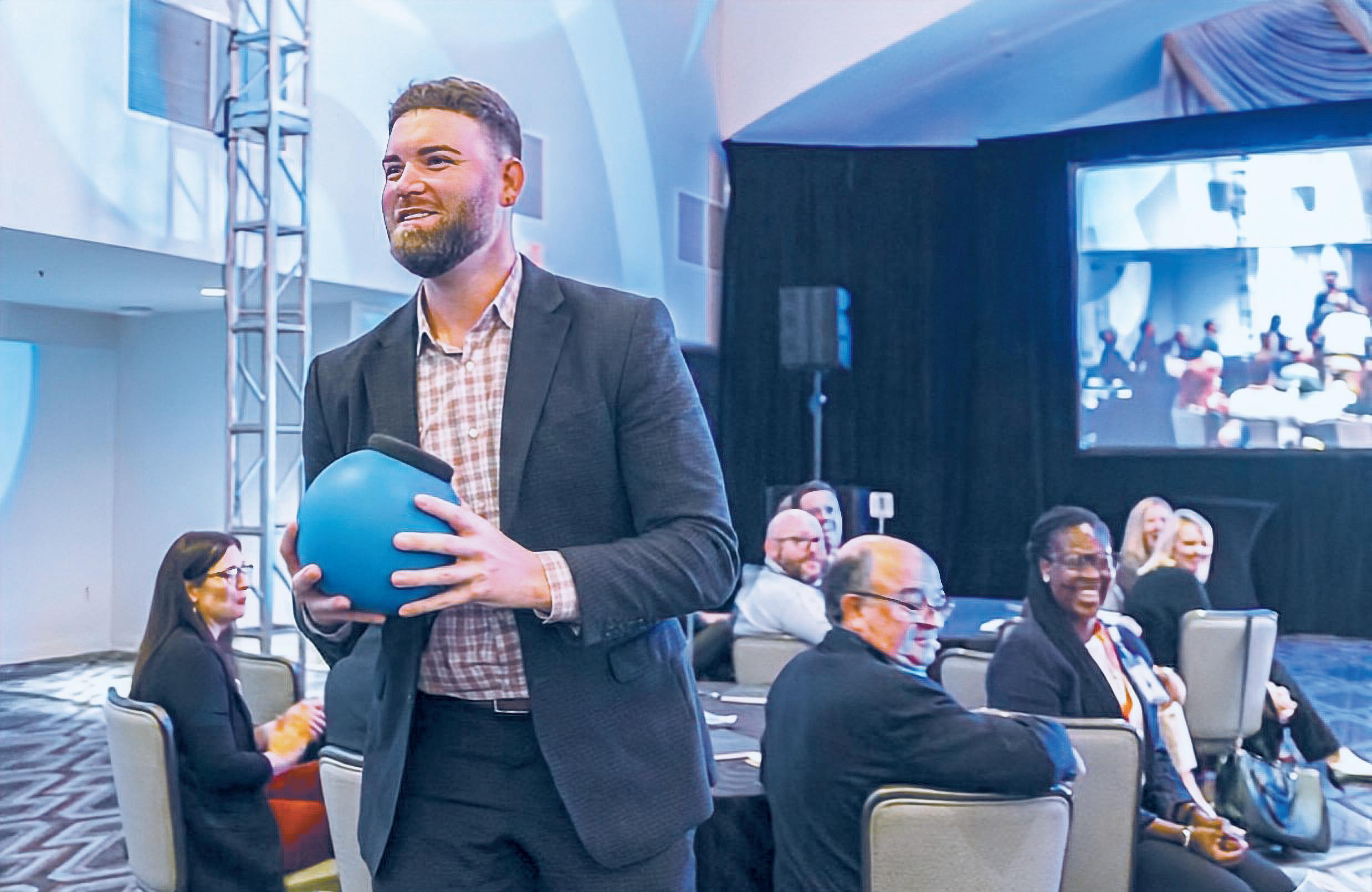
Seth Lovell, system vice president of nursing transformation and innovation at SSM Health, handles a ball-shaped microphone as he answers an icebreaker question during an SSM Health Leadership Council event. The ball gets tossed between speakers.
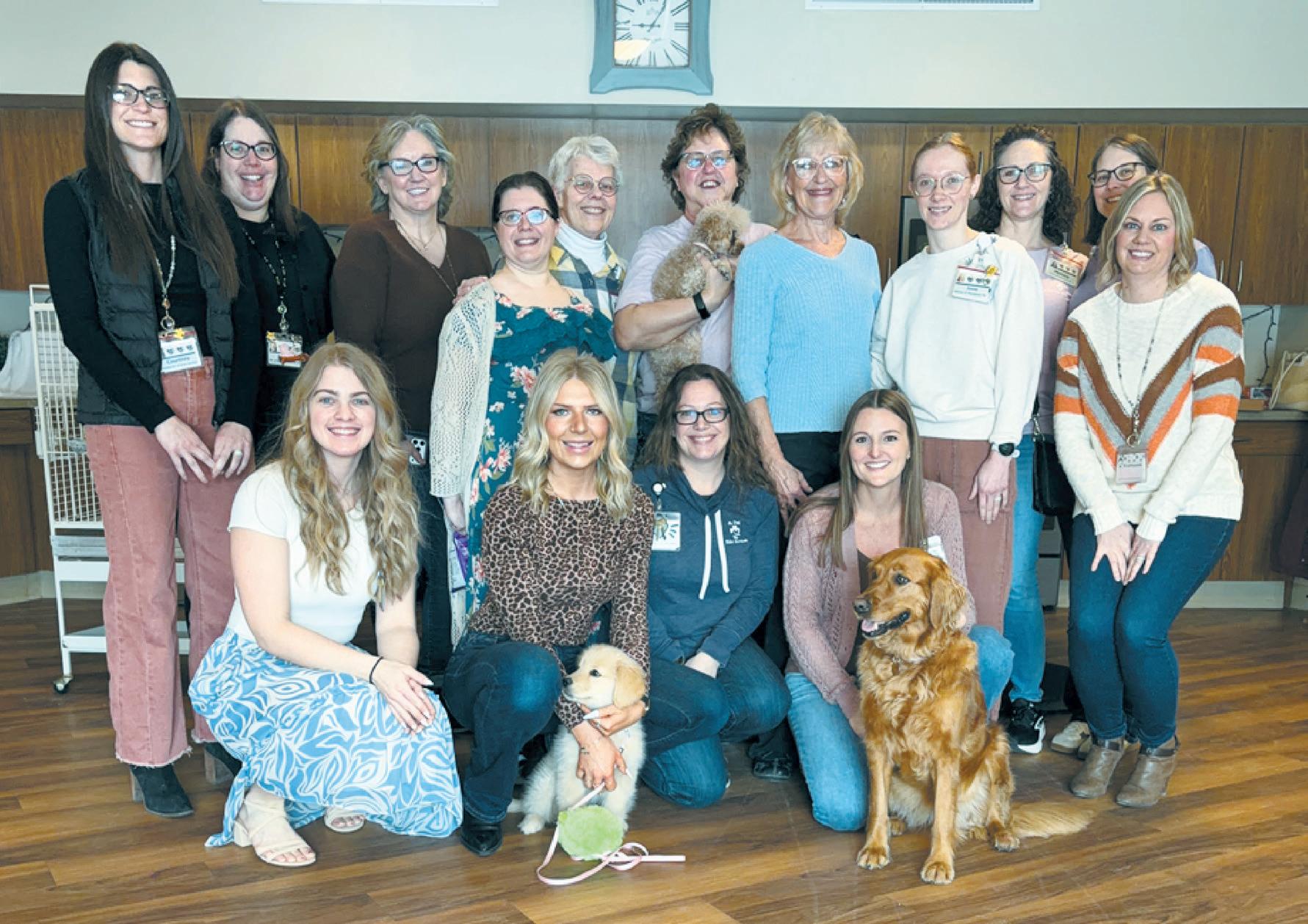
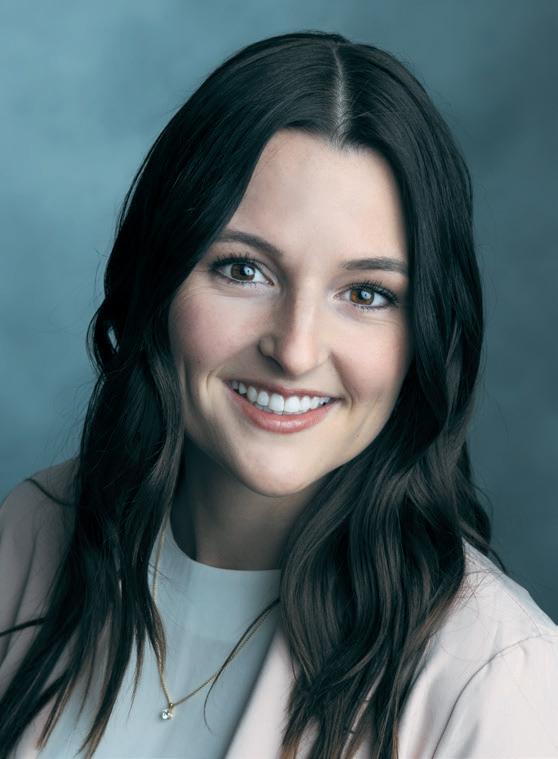
Megan Mashl, bottom right, chief operating officer at St. Paul Elder Services in Kaukauna, Wisconsin, gathers with the eldercare facility’s human and canine staff at an employee recognition ceremony.
grow as a leader and person. I love watching them develop into confident leaders.
What is your next big goal? We are in progress and planning to rebuild our nursing home to focus on future generations and expand services. It will follow the household model of care. We’re intentionally moving away from institutional practices to one that is led by those we serve, making this truly home.
Endorsement
“Megan has prepared me to be a confident leader, an effective administrator and someone who can take on challenges with resilience and grace. Megan leads with her heart, whether she’s working with staff, residents, students or even our therapy dog.” — Emily Martel, assistant administrator, St. Paul Elder Services
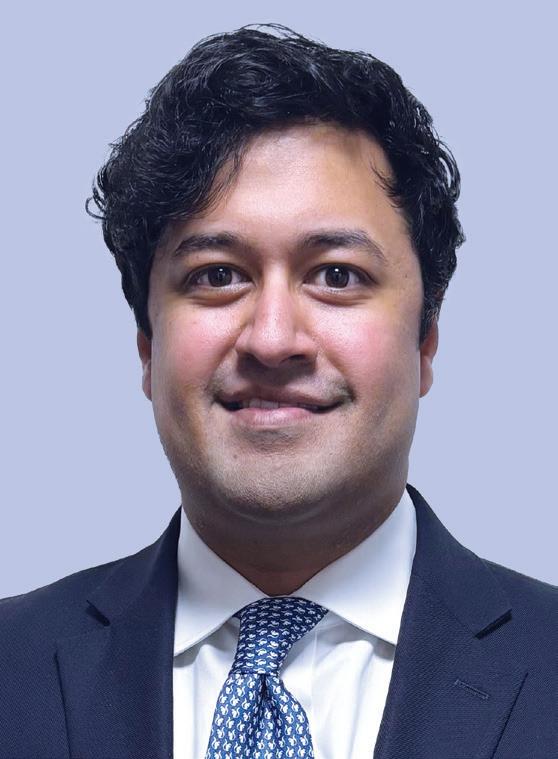
Anup Myneni, 36 Vice president and deputy general counsel, Covenant Health, Andover, Massachusetts
Achievements
Revamped Covenant’s contract management system to improve speed, efficiency and effectiveness. Provides real-time counseling to leaders on emerging business needs and risk mitigation.
“There’s a focus on people holistically.
On Sunday, we pray, ‘Father, send us out to do the work you have given us to do, to love and serve you.’ I can live that out every day of the week.”
— Anup Myneni
Established an open-door policy for problem-solving and collaboration across the legal, risk and compliance functions. Who inspires you? My mom. She has always been tirelessly focused on helping others succeed — whether raising me and my brother or working as an English as a second language teacher. My mom is the best role model in serving others with care and compassion, conducting oneself with integrity, and being genuine. What experiences shaped your career? When I was in high school, I volunteered at Bon Secours Mary Immaculate Hospital in Newport News, Virginia, and its nursing home. I benefited from the wisdom of the care-
group recognized for excellence in nursing practice and patient
givers, patients and residents. Between college and law school, I worked at Epic (Systems Corp.) in Madison, Wisconsin, and was impressed by how many people they touched and the impact they made. In my first job in private law practice, I worked with healthcare leaders in some of the best organizations across the country on some of their most important projects.
What do you like best about your job? I love how varied the work is. No day is remotely similar to the next. I get to support people who are heroes in their communities every day.
Why is Catholic healthcare a good fit for you? There’s a focus on people holistically. On Sunday, we pray, “Father, send us out to do the work you have given us to do, to love and serve you.” I can live that out every day of the week.
Endorsement
“He keenly listens and thoughtfully speaks with a centered presence when presenting to the board of directors or navigating a complex patient placement. He is disarming in his welcoming demeanor, and he is equally resolved in advocating for the voice of the patient or the resident.” — Wayne Carmello-Harper, system vice president, mission integration, Covenant Health
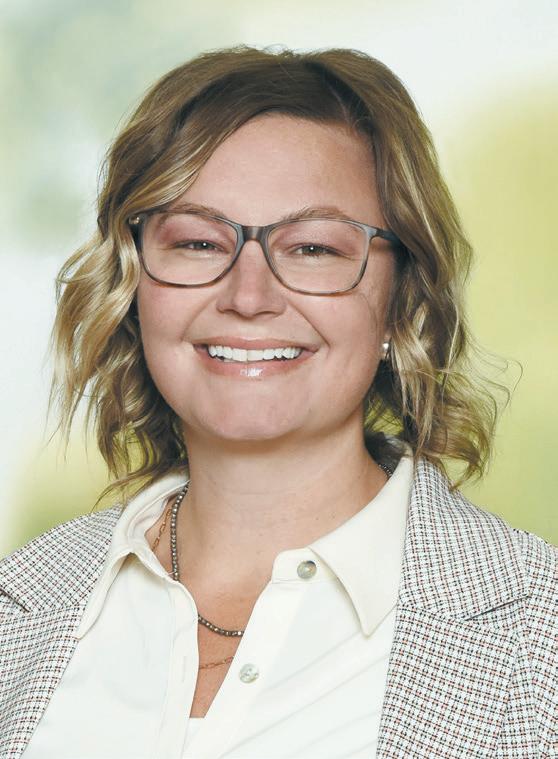
Linsey Paul, 36 Chief nursing officer, Mercy Health — Lima, Ohio, a member of Bon Secours Mercy Health
Achievements
Instituted a framework called 4 Disciplines of Execution (4DX), taking executives to the front lines every week to promote bottom-up leadership. Introduced a monthly opendoor opportunity for co-workers to chat with her in an informal setting.
Helped launch the Lima Leadership Development sessions,
on relational leadership skills, emotional intelligence and team dynamics.
What experiences helped shape your career? I was in a serious car accident at age 9 with my family. I could hear my sister screaming, my brother was hooked up to machines, and they were cutting off my clothes in the trauma bay. A nurse held my hand and told me my parents were down the hall and OK, my sister was reliving the accident, and my brother was getting the best care. That nurse didn’t save my life, but she created trust. My family is good now, but she shaped my perspective on nursing. What do you like best about your job? I love watching leaders grow in confidence and experience those light bulb moments. It’s so easy to get sucked into the daily whirlwind. We have to have ears and eyes for the good, then shout it from the rooftops.
Which achievement has been or will be most impactful? By teaching our middle managers to lead people, giving them the tools of emotional intelligence and helping them work through challenges, we’re advancing from transactional to transformational leadership.
What is your next big goal? It’s continuing to build a culture where nurses and leaders feel supported and anchored. I want us to be known as an organization where nurses build a career and live out a calling.
Endorsement
“She recognizes that sustainable excellence requires strong physician engagement and interdisciplinary collaboration. By creating an environment where the entire team feels heard, valued and supported, she ensures that care delivery is both clinically sound and embraced by the entirety of the care team.”
— Dr. Matt Owens, chief clinical officer, Mercy Health — Lima
Dr. Alyssa Penick, 36 Family medicine residence program clinical faculty, SSM Health St. Anthony Hospital, Oklahoma City Achievements Oversees training of medical students and coordinates curriculum for 27 residents.
Directs Reach Out and Read, ensuring every child in an SSM Health Oklahoma City clinic receives an age-appropriate book at their annual visit.
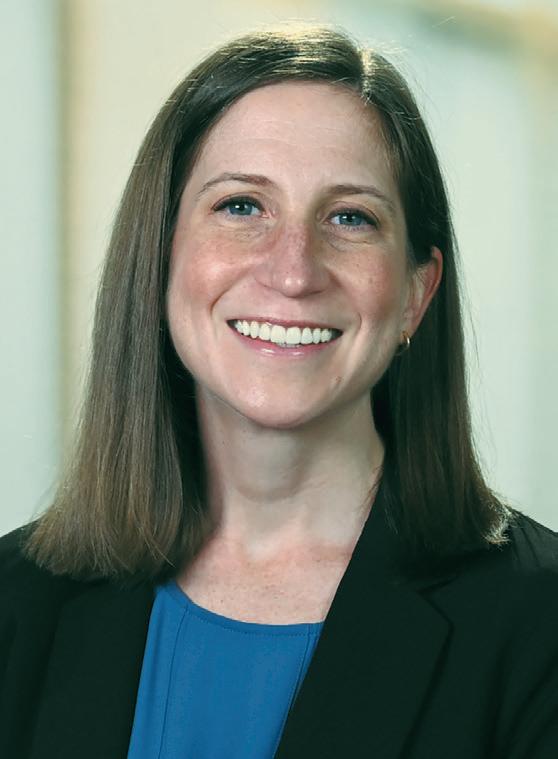
Helped establish and serves as vice president of the Oklahoma City chapter of the Catholic Medical Association.
Who inspires you? In grade school, we learned about many saints, but in college I learned about St. Gianna (Beretta Molla), and her role as mother, wife and physician. Saying “yes” to God in the ordinary vocations to which she was called spoke to me more than any other saint.
Why is Catholic healthcare a good fit for you? Our patients are not always just seeking to get their A1C or blood pressure under control but also want someone to address them on a spiritual level. Being in an environment where that is acknowledged, then being able to ask patients if they have a church community or if I can pray for them adds an extra level of care.
Which achievement has been or will be most impactful?
Reach Out and Read. When we started the program in 2020, I explored why it was important to set children up to succeed: how it enhances relationships with parents and caregivers, helps build resilience and improves graduation rates. It can be as simple as giving them a book and encouraging parents to read with them.
What is your next big goal? I’m invested in promoting ethics in decision-making, so one of my long-term goals is a master’s in bioethics. I have young children, so I don’t know when that will make sense.
Endorsement
“She is a person of prayer who radiates kindness and a servant’s heart to patients, colleagues and learners alike.” — Dr. Cheyn Onarecker, program director, SSM Health Oklahoma St. Anthony family medicine residency
Achievements
Helped establish and support the stroke program at SSM Health’s higher acuity hospitals in Wisconsin.
Guided clinicians in streamlining regional do-not-resuscitate policies and processes to ensure consistent, compassionate endof-life care.
Helped design and implement Hospital Care at Home and Recovery Care at Home programs.
Who inspires you? My dad’s mother, Joan. Her husband died tragically, and she didn’t get to graduate high school. Diabetes left her blind and without a leg, but she always said her favorite hobbies were dancing and playing cards. I wasn’t aware of her struggles as a kid because she was so positive. I think of her when things don’t go according to plan. What do you like best about your job? The variety, the scope, the breadth. I deal with issues that never in my wildest dreams did I imagine I’d be dealing with. Being behind the scenes, I get to work with so many people from different services, like IT or finance, every single day. I’m not a provider in the classic sense. But I work with providers, and I feel I get to be part of the care delivery. Why is Catholic healthcare a good fit for you? I’m Catholic, but I don’t think you need to be Catholic to feel the impact of our mission, vision and values. Reminding us that we’re carrying on a legacy started long ago and connecting to our communities adds a layer that I’m so grateful for.
Which achievement has been or will be most impactful? One of my roles is to alleviate burdens on providers. Streamlining sounds silly, but it helps our providers so much.
Endorsement
“Her ability to apply the law with humanity and care ensures we are compliant with complex legal and ethical requirements while providing exceptional care with the best interests of our patients, providers and community in mind.”
— Dr. Amy Franta, chief clinical officer, SSM Health in Wisconsin
“I’m Catholic, but I don’t think you need to be Catholic to feel the impact of our mission, vision and values.”
— Rachel Polzin
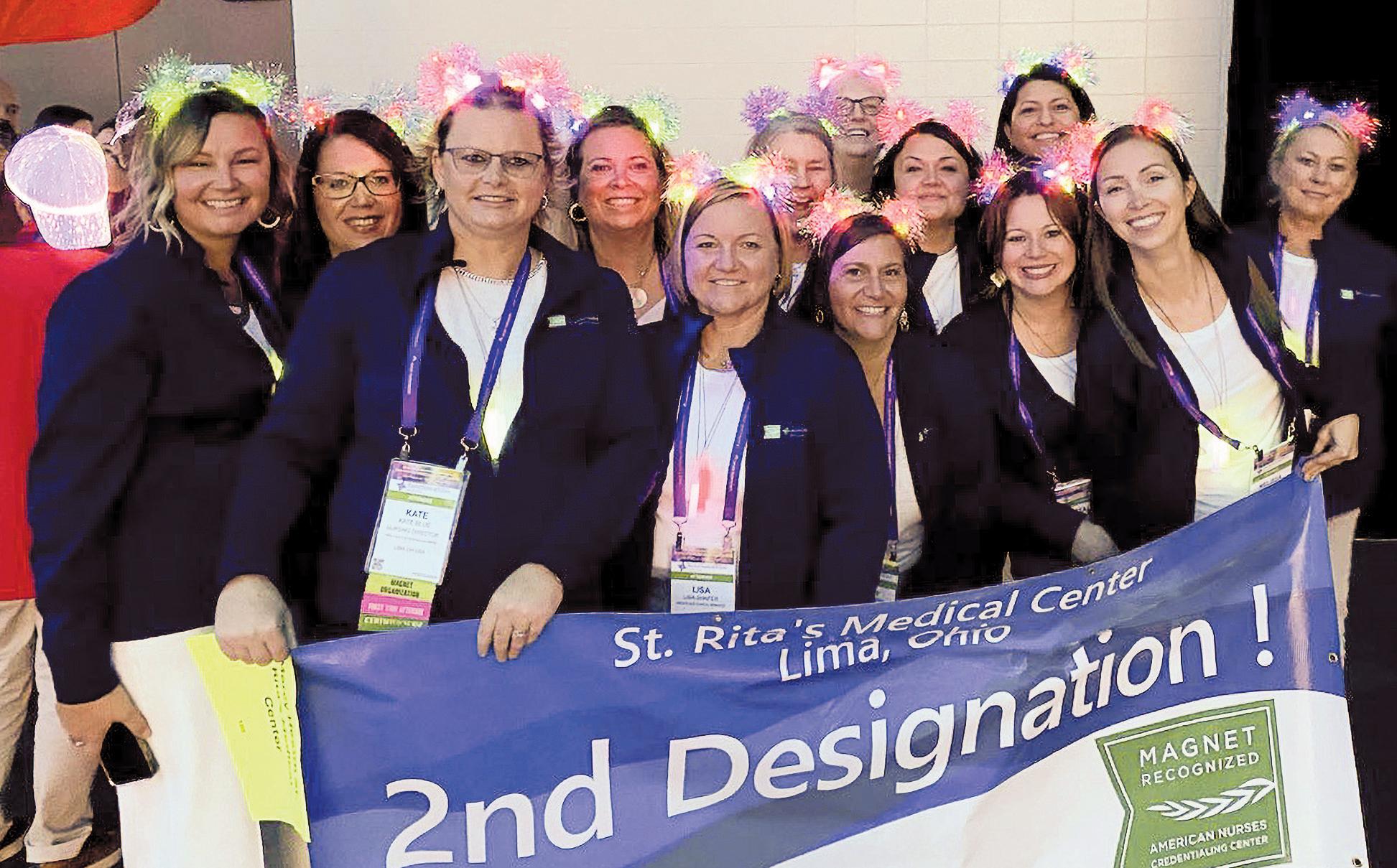
Linsey Paul, far left, chief nursing officer, celebrates with colleagues after Mercy Health — St. Rita’s Medical Center in Lima, Ohio, achieved Magnet designation for the second time from the American Nurses Credentialing Center. The designation places the hospital among an elite
outcomes. focused
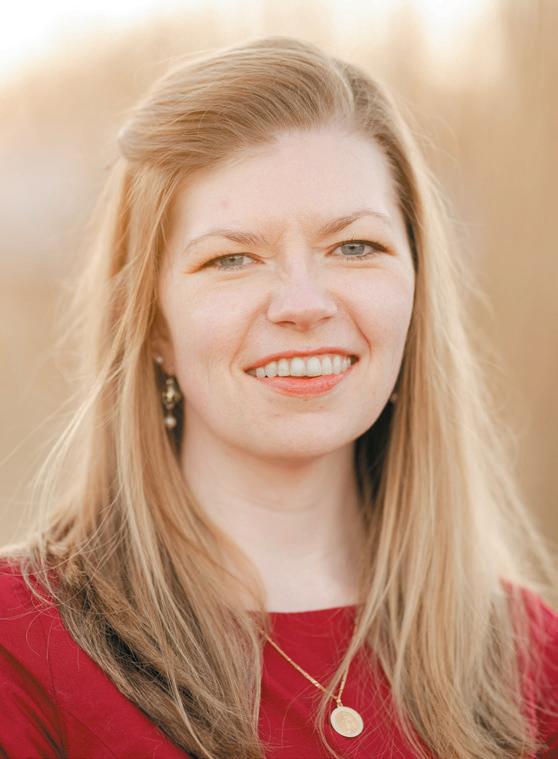
Rachel Polzin, 39
Assistant general counsel, SSM Health of Wisconsin, Madison
‘God’s timing’: Ascension manager puts career on hold to save her brother
By VALERIE SCHREMP HAHN
Coleen Rickey’s faith, as well as her devotion to others, has helped her along her varied career path with Ascension. It also helped her make a decision that likely saved her older brother’s life.
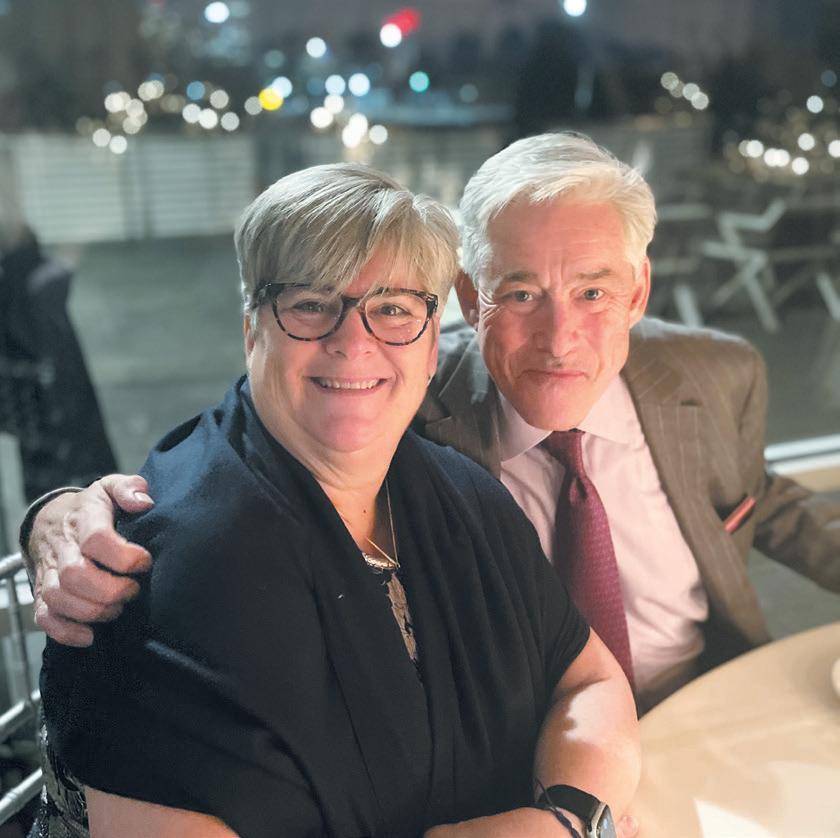
Rickey, 56, now a community health outreach mobile health manager for Ascension St. Vincent’s in Jacksonville, Florida, donated part of her liver to her brother, Harry Tucker, 62, in 2023.
Her decision meant setting aside her career and focusing her life on preparing to become a donor. But she sees it all as part of a divine plan. “I say it’s God’s timing,” Rickey says.
The fast track
Rickey came to work for Ascension about 25 years ago as a manager of patient experience at Ascension St. Vincent’s Riverside Hospital. She later moved into ambulatory care before getting the chance in 2022 to lead and work in consumer and patient experience with Ascension at a national level.
Meanwhile, Tucker, who lives in Sleepy Hollow, New York, had a busy career in sales. About 20 years ago, he was diagnosed with an autoimmune disease called pri-
mary biliary cholangitis, which means his body was attacking his bile ducts and the condition could lead to liver failure.
“I was one of the top salespeople in my company,” Tucker says. “I was running 1,000 miles an hour. I will be honest, I largely ignored the diagnosis because I was asymptomatic for many, many years.”
But then he started to have issues with his balance and blood pressure. In early 2022, he saw a specialist, but he wasn’t sick enough for placement on a liver transplant list. However, he was told he could be a
“
I have a very strong, deep faith, and at the time, I had moved into a role at a national level at Ascension, and was very focused on my career, but this kind of stopped me in my tracks.”
— Coleen Rickey
candidate for a live transplant, if he found a donor.
Stepping up
The siblings are part of a blended family of 10 children. The living donor conversation came up at a family graduation in summer 2022. Initially, a younger brother volunteered but was rejected. “And my incredible sister stepped up,” Tucker says.
Rickey passed initial tests and prayed about her decision. She and her husband have three children, and she knew she had
to be there for them. She also wondered how the operation and recovery would fit into her job timeline.
“I have a very strong, deep faith, and at the time, I had moved into a role at a national level at Ascension, and was very focused on my career, but this kind of stopped me in my tracks,” she says.
Still, she knew she wanted to help.
Their mother, a widow, was a devout Catholic who met their stepfather, a widower, at an ice cream social for single Catholic parents. “Mom was always that constant force about representing the community and recognizing who we are, and our faith is deeply who we are,” Rickey says.
Rickey told her supervisor at Ascension that she was undergoing testing to see if she could help her brother around the same time that Ascension was restructuring. Her supervisors offered her another role. Instead, she decided to accept a severance offer.
“I took those months to 100% dedicate my existence to being ready for (Harry),” she says.
The surgery took place in January 2023 at NewYork-Presbyterian/Columbia University Irving Medical Center in New York. When doctors cut into Tucker to remove his liver, they found it encased in cancer. If they had known about the cancer, he wouldn’t have been a candidate for a transplant, Rickey points out.
“He was a lot sicker than we thought, and likely would have not survived,” Rickey says.
Recovering
and reflecting
The siblings spent time together recovering. Rickey had to stay in the area for at least nine weeks so doctors could keep a close eye on her. Tucker rented a cottage nearby for his sister, and Rickey’s best friend, who is a nurse, flew in from Colorado to advocate for and help care for the two. Neighbors and friends provided daily meals. The two hung out with family and took walks. They jokingly called the experience “Liver Transplant Camp.”
“It’s life-transforming when you see how people help one another without even thinking,” Tucker says.
As a result of the experience, Tucker has “completely reassessed” his life. He left his job running a division of his company, and he’s working in a consultant role. Physically, he says he hasn’t felt better in 25 years. “It’s a critical thing when you don’t have your health, and it dissipates over time, and you don’t notice it until you get it back,” he says. “I have reinvigorated my life.”

As Rickey recovered, she thought about her next career steps. “I wanted to make certain that wherever I did land, that I could bring my faith with me,” she says.
A fresh opportunity
In 2024, a past Ascension colleague told her about the job managing St. Vincent’s Mobile Health Outreach Ministry. Rickey didn’t have a clinical background, but she knew she could run things. And the job meant she could stay close to home in Jacksonville. She got the job, and she loves it, she says. The program provides care for the uninsured, and mobile units travel to neighborhoods in Northeast Florida where care is needed most. The Ascension St. Vincent’s Foundation funds the ministry, which reaches more than 10,000 patients and fills about 2,700 prescriptions a year.
“We’re talking about the most marginalized people in our community, and to give them hope and to transform their lives, every day,” Rickey says. “We have that opportunity in the work that I get to do now professionally. I think that was only because of God’s grace and this whole journey.” vhahn@chausa.org
Proud Gold Sponsor of CHA’s Assembly 2026
SSM Health and nonprofit Forest ReLeaf plant trees and hope
By VALERIE SCHREMP HAHN
ST. LOUIS — Trees can create healthier communities: They shrink the carbon footprint, reduce the heat effect, provide a nice place to relax, and otherwise promote healing.
That’s why SSM Health has partnered with the St. Louis-based nonprofit Forest ReLeaf to plant hundreds of trees and thousands of seedlings with the goal of replenishing the tree canopy in disinvested St. Louis parks and neighborhoods, some of which were devastated by a tornado last May.
Dr. Alex Garza, chief community health officer with SSM Health, based in St. Louis, and Rebecca Hankins, partnership manager with Forest ReLeaf, led a bus tour through north St. Louis neighborhoods to talk about their organizations’ teamwork. The tour was part of the national CleanMed conference May 12-14 in St. Louis. The annual conference for leaders in healthcare sustainability is presented by the nonprofits Health Care Without Harm and Practice Greenhealth.
“The act of planting a tree brings so much hope to a community and it is so valuable and vital,” Hankins said. “We cannot underestimate the power that trees play in people’s lives.”
Environmental justice
Garza explained that the partnership with Forest ReLeaf aligns with the tenets of Catholic social teaching and the teachings of St. Francis, who felt there was no way to separate environmental justice from social justice.
SSM Health, which has locations in Mis-
“The act of planting a tree brings so much hope to a community and it is so valuable and vital. We cannot underestimate the power that trees play in people’s lives.”
— Rebecca Hankins
Catholic healthcare leaders share sustainable efforts during national CleanMed conference
By VALERIE SCHREMP HAHN
ST. LOUIS — Dozens of speakers, including some from Catholic health systems, presented at the national CleanMed conference here May 12-14. The gathering is for leaders in healthcare sustainability and presented by the nonprofits Health Care Without Harm and Practice Greenhealth. Here are some takeaways.
Inhaler emissions can be reduced. Dr. Brian Chesebro, medical director of environmental stewardship with Providence St. Joseph Health, said 160 million inhalers with more than 2.3 million metric tons of carbon dioxide were dispensed in the United States in 2024. Climatefriendlier alternatives can be prescribed, and the same drug or therapeutic class can be dispensed in different ways, such as in an inhaler with less propellant or in a smaller canister. A tool for measuring the estimated greenhouse emissions per inhaler is available on the Providence Center for Environmental Stewardship website.
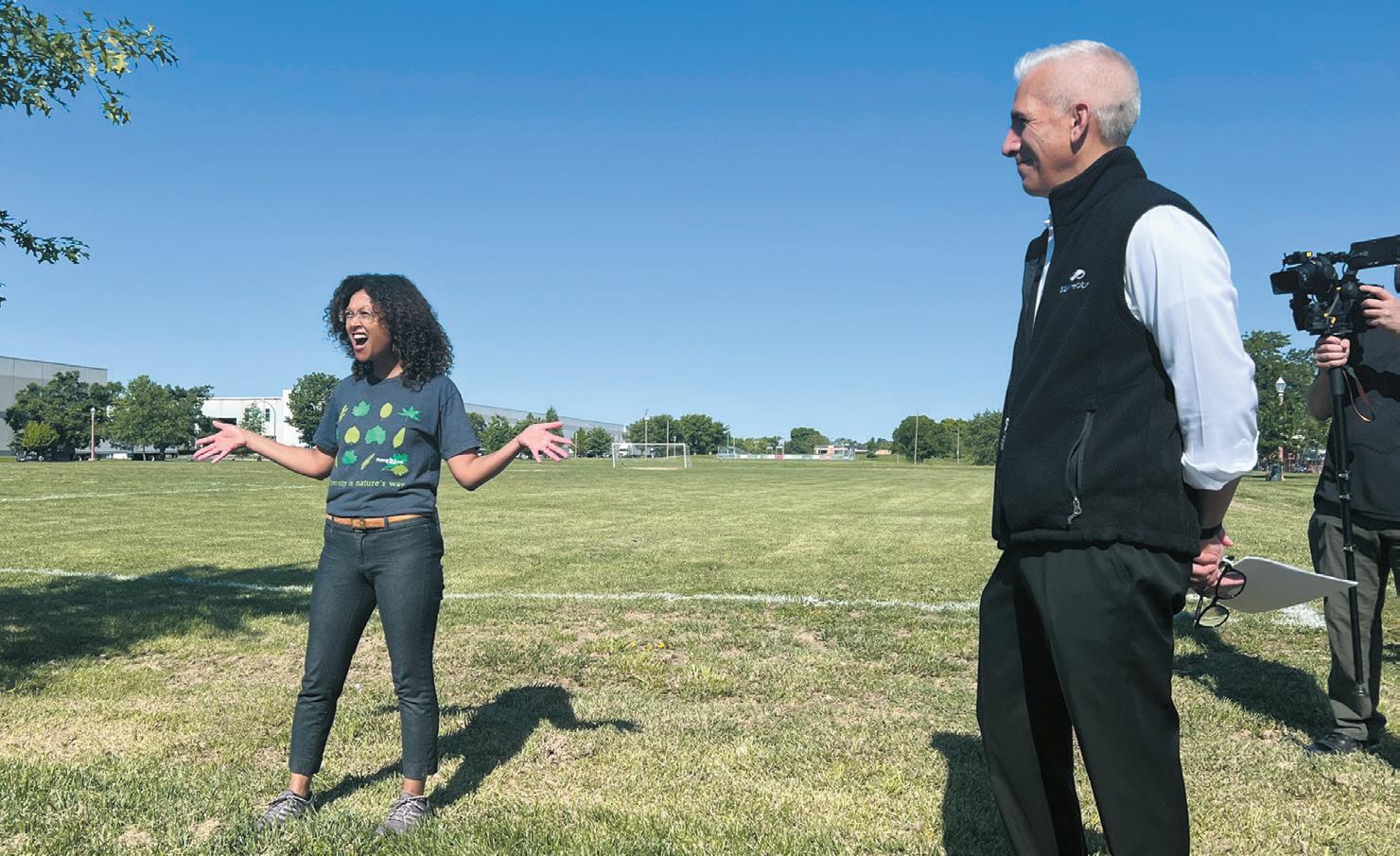
souri, Wisconsin, Oklahoma, and Illinois, has committed to reducing its carbon footprint by 50% by 2030 and to reaching net zero carbon emissions by 2050. The health system has planted about 20,000 trees over the years throughout its service areas.
“Even though planting trees sounds somewhat simple, it’s actually an investment in our communities, and it’s investing in the dignity of the communities — respect, health equity, all those different things — particularly in the neighborhoods that we’re going to be visiting today,” Garza said to tour participants.
A focused partnership
Forest ReLeaf grows about 25,000 Missouri native trees each year to give away for planting on public and nonprofit lands statewide. The group has partnered with SSM Health for about five years, explained Hankins, with events that include tree planting and seedling potting. The two have focused on certain ZIP codes and parks in disinvested neighborhoods in north St. Louis, working together to rebuild more than 370,000 square feet of tree canopy.
“Anything that we can do to reduce that heat effect from all the asphalt and lack of tree canopy is what results in lessening people with cardiac issues, with asthma, with heat exhaustion, all of these things,” Garza said. “I’ll just keep reemphasizing how this is a unique partnership between health and forestry.”
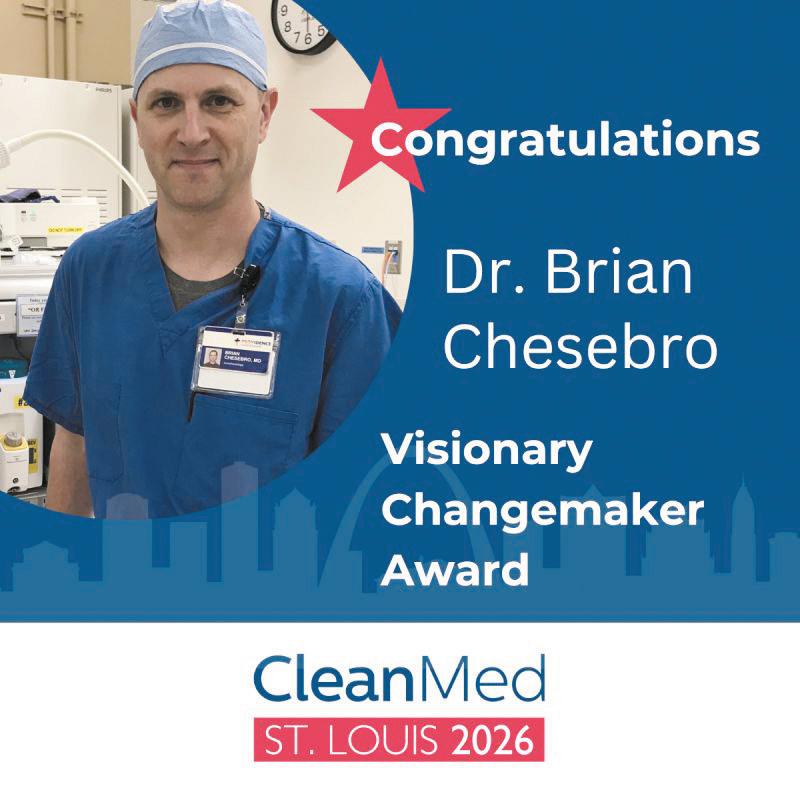
During the closing plenary of the conference, Chesebro received the visionary changemaker award. Health Care Without Harm CEO Emily Bancroft noted that Chesebro was one of the first medical directors of sustainability in the country. “He’s demonstrated that health professionals are not only champions, but essential leaders in achieving climate goals,” she said.
Buyback programs can help save money and the environment. Oriana Turley, program manager of environmental stewardship with Providence, described the system’s reprocessing program, in
Forest ReLeaf is committed to making sure the trees grow and flourish. The group works with the city forestry department on planting trees in parks and regularly waters the trees for the first two summers. It monitors and prunes them for three more years. Currently, the organization is watering 2,000 trees in St. Louis city parks.
The CleanMed group tour stopped at several locations in north St. Louis, where crime rates are higher and life expectancies lower than in neighborhoods just a few miles away. The path of the tornado that swept through on May 16, 2025, taking down houses and trees, remains visible. In north St. Louis’ O’Fallon Park alone, 350 trees were lost to the tornado.
“It really impacted parts of the community that had the least capability to bounce back from the disaster,” Garza explained as the bus crawled by upturned stumps, trees with broken branches, and homes with blue tarps covering damaged roofs and collapsed walls.
Listening to a community
Hankins spoke about the importance of communicating with residents and partners about their needs. For example, she mentioned how several years ago Forest ReLeaf planted trees in the middle of a field in a park, not realizing that people played soccer there. The group then focused on planting trees along the park perimeter, providing shady areas for players to rest.
which employees and clinicians collect used medical devices and the items are sold or donated for refurbishment or recycling. Air transfer mattresses and collection sleeves are the largest category of items by weight that are bought back and recycled by companies and are considered the system’s biggest polluters because of the materials they are made of. In 2025, the system had a 29% buyback rate, recovering more than 555,000 devices and saving more than $10 million.
Collecting items across a system that spans seven states is challenging, Turley said.
“Education, putting the right systems in place to make sure that the bins and the signage and everything is in the right place, to help people do the right thing, is a very difficult task,” she said. “So this is a mountain we will continue to climb. But really important to the cycle and the circularity of the reprocessing program is that we can’t buy back what we don’t collect.”
The system has focus groups and educates leaders about the importance of collecting items. It even had a successful systemwide medical device collection contest among hospitals. “Turns out, when you turn on the competitive nature of clinical folks, things really do happen in a fun way,” Turley said.
Forest ReLeaf also planted saplings in parks that were later vandalized or stolen or were inadvertently mowed down by city workers. Now, the group tries to plant larger trees, and in one park, used protective deer caging designed as an art installation. Forest ReLeaf added signage that explained its efforts. All those trees survived, Hankins said.
“We think that engaging the community, engaging parks, having a purpose for the trees, made people realize, ‘Oh, these are intentional, and they should be here,’” she said.
Hankins encouraged tour participants to use a tree equity score tool published by the nonprofit American Forests. Users can find out how cities and neighborhoods compare to one another based on factors like tree canopy cover and other socioeconomic indicators.
“There’s a huge misconception when you’re in a low-canopy community that the community does not care about trees,” she said. “And that’s not true. They actually care a lot about trees. They just don’t have the means or resources to do something about it.”
Mental and spiritual benefits
One of the bus tour’s stops was Beckett Park, where other conference attendees had mulched the ground around trees planted earlier. SSM Health volunteers had dug the holes, and residents had planted the trees in honor of loved ones lost to gun violence. The project is a partnership between the health system, the tree group and community nonprofit Better Family Life. So far, families have planted about 75 memorial trees in five city parks.
“This was a perfect partnership for all of us,” Garza said. “How many healthcare initiatives can you think of that have a health benefit, an environmental benefit, a mental benefit, and a spiritual benefit?”
Anitress Muhammad, membership coordinator with Better Family Life, told the tour group she was grateful for the partnership and that the community reaction has been positive. Hundreds have gathered at the parks for these tree-planting events, and they can remember their loved ones as they revisit and watch the trees grow.
“It gives us the beauty, the calm, the peace, the life back,” she said. vhahn@chausa.org
Reducing choices can help make better decisions. Thomas Kalla is the senior manager of sustainability with The Resource Group, a supply chain and purchasing subsidiary of Ascension. He discussed its supply chain strategies for purchasing items for Ascension’s more than 3,600 sites of care in 17 states and Washington. He told a story about a shoe salesman who deliberately brought two pairs of shoes out for customers to choose from: If customers had three pairs to choose from, they’d leave without buying anything. The Resource Group takes a similar approach, offering just enough but not too many options.
“Trying to remove those variables, trying to remove those choices, trying to make sure that we bring the right information, is something that’s important,” Kalla said.
The Resource Group has 19 affinity groups and 18 decision teams to determine what to buy and where to buy it. It incorporates environmental sustainability in its decisions and tracks greenhouse gas emissions from suppliers. “One of the examples that we like to use at The Resource Group is a ballpoint pen. When we look at the attributes, we’re making sure: Does it write normally? Does it have the grip that you need?” And, he said, does the supplier help reduce greenhouse gas emissions?
Rebecca Hankins, partnership manager with Forest ReLeaf, and Dr. Alex Garza, chief community health officer with SSM Health, lead CleanMed conference participants on a tour of north St. Louis to talk about their partnership and to show where volunteers have planted trees in neighborhoods and parks.
Dr. Brian Chesebro, medical director of environmental stewardship with Providence St. Joseph Health, got a special honor at the CleanMed conference in St. Louis.
Scan to read an extended version of this story.
Valerie Schremp Hahn/CHA
CommonSpirit bypass patient’s survival ‘nothing short of a miracle’
By VALERIE SCHREMP HAHN
Last summer, Necomedes “Medy” Alisna of Edmonton, Canada, was visiting one of her daughters in Houston when she felt chest pain. She went to St. Luke’s Health-The Woodlands Hospital, and what happened there in the following weeks is still beyond explanation.
“We work with a lot of sick patients,” said Dr. Vivek Patel, a cardiothoracic surgeon. But after what Alisna went through, he said, her recovery was “nothing short of a miracle.”
When Alisna, 65, arrived at the emergency room of St. Luke’s Health-The Woodlands, part of CommonSpirit Health, on July 11, doctors diagnosed her with coronary artery disease. Five days later, Patel performed a quadruple bypass. The surgery went smoothly.
But soon afterward, Alisna’s heart and body started to swell. “She had a profound inflammatory response,” Patel said.
About 12 hours later, he took her back to the operating room to figure out the issue. While the bypasses looked great, he had to keep her chest open, because her heart had swollen too much to fit properly inside.
“She progressively got sick, and then to the point where her heart conduction system just stopped,” he said.
The hospital team put Alisna on an extracorporeal membrane oxygenation, or ECMO, machine that took over for her heart and lungs.
Patel said more than 90% of bypass patients do well afterward. When ECMO must be used after heart surgery, he said there is typically a 50/50 chance of survival,
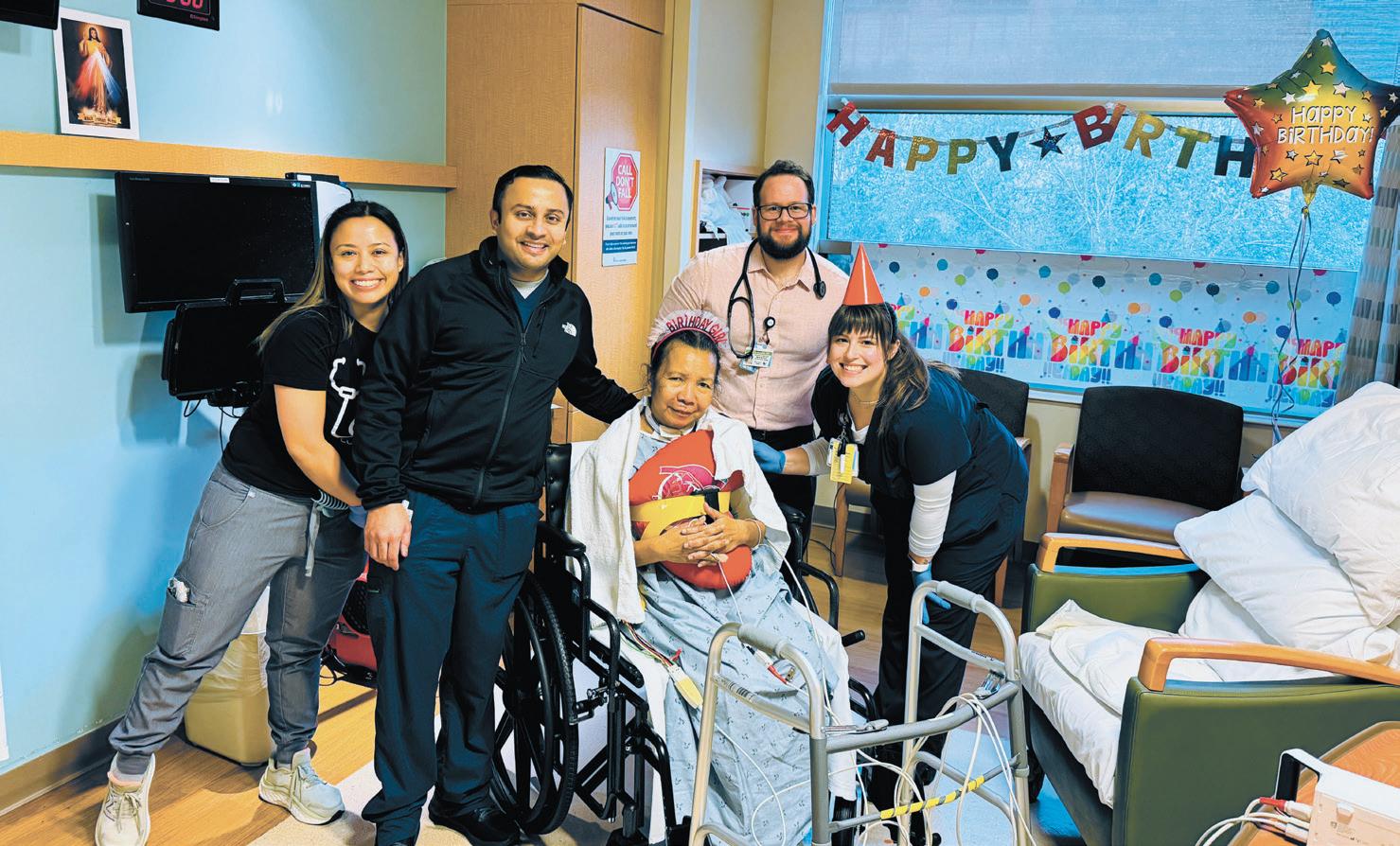
though at St. Luke’s Health-The Woodlands, the survival rate is about 75%.
Preparing for the worst
Alisna is from the Philippines, where she worked as a nurse. At St. Luke’s Health-The Woodlands, she recognized the last name of Beige Aldaba, the ICU manager. Alisna had once treated Aldaba’s father-in-law in the Philippines. Aldaba hadn’t known her father-in-law, but she and Alisna had an instant bond. She began to affectionally call Alisna “Nanay” and Alisna’s husband, Ronald, “Tatay,” Filipino terms for mom and dad.
The ICU staff, knowing the family relied on their Catholic faith, kept a small Jesus figurine near Alisna, placing it on top of the ECMO machine and moving it with her into the operating room.
Alisna continued to have complications. She had to have a minimally invasive
heart pump installed to come off ECMO. She required a ventilator to help with her breathing, and that led to a tracheostomy. Her organs started to fail, and her heart went into ventricular fibrillation for three days, a condition that is usually fatal.
Alisna was so sick that Patel wasn’t sure what else he could do. “I had already prepared the family,” he said. “And I told them, we don’t really understand exactly what’s going on, which was incredibly frustrating because we like to know the problem so we can fix it.”
Julie Ann Acedera, a daughter who lives with Alisna in Edmonton, said the family began calling others to alert them to her mother’s worsening condition. “And on top of that, we were doubting ourselves,” she said. Acedera and her siblings had urged their mother to undergo the bypass surgery.
On July 22, with hope fading, Patel prepared to close Alisna’s chest, but first he
examined her heart again. Dialysis had reduced the fluid in her body, and her heart looked less swollen. He earlier had tried to shock her heart directly using internal paddles and he decided to try again.
That’s when the inexplicable happened.
“Her heart came right back,” Patel recalled. “She had a normal rhythm, and it was perfect.”
Alisna needed a few more surgeries to stop internal bleeding but eventually was taken off the ventilator, feeding tube and dialysis.
The first time Aldaba, the ICU manager, saw Alisna awake and smiling after the breathing tube was removed, she burst into tears. “And I literally told her, ‘This is not good. I just got in here, and now my makeup is ruined.’ And then she started laughing.”
Aldaba said: “She was a miracle.”
‘Like a celebrity’
In all, Alisna was hospitalized for two months, with three weeks in intensive care. She had more than a dozen surgeries and more than a dozen additional procedures. She was discharged Sept. 10. Ultimately, she walked out of the hospital, off dialysis and eating on her own.
Shortly after discharge, her feeding and tracheostomy tubes were removed in the clinic. At the end of October, she reunited with nurses and caregivers at the local American Heart Association Heart Walk. “Medy was like a celebrity,” Patel said. “She was like an influencer. Everyone wanted to take pictures with her.”
Alisna continues to recover and walks one hour a day on the treadmill. She suffered no neurological or kidney damage from her ordeal.
In a recent interview, she expressed her gratitude for the staff at the hospital. “I feel like they’re my family,” she said.

Growing Our Moral Imagination
BY FR. MICHAEL ROZIER, SJ
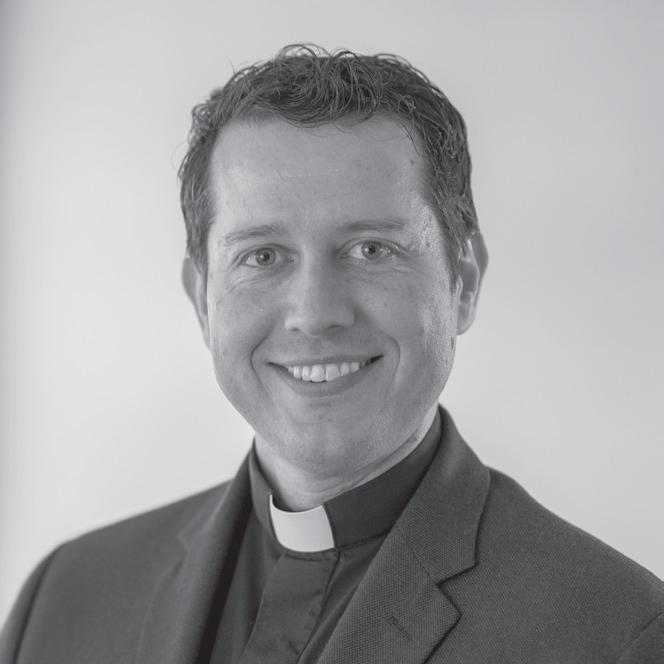


“A
must-read for anyone who believes health care in this country is broken. Fr. Michael provides compelling insights into the healing ministry of Jesus through contemporary interpretations of the Gospel parables, giving us hope that a reimagined system of health care is possible.”
—SR. MARY HADDAD, RSM President/CEO, The Catholic Health Association of
the United States

Necomedes “Medy” Alisna gathers with members of her care team at St. Luke’s Health-The Woodlands Hospital near Houston, including, from left, ICU charge nurse Corinne Herrera, cardiothoracic surgeon Dr. Vivek Patel, ICU intensivist Dr. Cameron McBride, and ICU nurse Coty Simms.
Scan to read an extended version of this story.
Providence, Catholic Charities partner to help discharged patients with complex needs
By VALERIE SCHREMP HAHN
The woman lived in a large homeless encampment in Spokane, Washington. One winter night, others there tried to burn her out of her tent.
She suffered third-degree burns on her arms, wandered away, and collapsed into a snowbank. After four days and three nights outside, somebody found her. Rescuers took her to Providence Sacred Heart Medical Center, where, because of frostbite, doctors had to amputate her feet and hands.
The woman was in the hospital, part of Providence St. Joseph Health, for nine months. Social workers at the hospital got in touch with LouAnn Himel, a social worker with Catholic Charities Eastern Washington, who works closely with the hospital as part of its Stable Placements program to help long-term patients get settled outside of the hospital.
Although hospital social workers had warned Himel that the woman didn’t trust others easily, Himel said the woman welcomed the help. “She was gracious,” Himel said. “She was so grateful to be alive.”
Wraparound support
The Stable Placements partnership began in 2020. Providence Sacred Heart
leaders reached out to Catholic Charities, a longtime partner, to see if the agency could help support select patients after weeksor months-long hospital stays. Many had complex medical and behavioral health concerns even before their stays, and many were homeless, had dementia, or both.
All the social workers wanted to make sure the patients got wraparound support, such as with housing, medication, transportation, and mobility needs, to help avoid a situation that would get them readmitted.
“We don’t follow people outside the hospital,” said Staci Wright, one of two Providence Sacred Heart social workers who focus on patients with extended stays. “It really helps to have eyes on the outside.”
Wright added that if a piece of medical equipment or a medication doesn’t arrive after discharge, or if some other detail isn’t quite right, Himel or Catholic Charities social worker Troy LeBlanc will call, and together they will figure out a solution.
In Washington state, homeless adults often are placed in “adult family homes,” private residences with about five residents and a caregiver.
“Before this program, we were having a lot of people just walk away from the home and they’d come back to the ER,” Wright said. “We’d just continually have to redo the same thing every six months.”
Since its inception, Stable Placements has served 138 clients.
‘Grind it out’
Behavioral health challenges and access to care, mental health issues and substance use, and homelessness and housing instability were the top needs identified in the 2024 Providence Spokane community health needs assessment.
The assessment showed a shortage of affordable housing and that older adults — many of whom were priced out of their homes or have lost a spouse — make up the largest increase in the homeless population.
Wright says the hospital also sees an increasing number of older people using illegal drugs.
David Sackmann, vice president of stabilization services for Catholic Charities Eastern Washington, said homelessness and fentanyl overdose numbers have trended down in Spokane in the last couple years

HEALTH PROFESSIONS EDUCATION
Lead with Purpose. Teach with Impact. Learn from Anywhere.
“...almost all healthcare providers receive no formal education related to the science of teaching, pedagogy, and assessment.” (Hoffer et al., 2021)
DESIGNED WITH YOU IN MIND
•Completely asynchronous & virtual format, part-time structure to accommodate working hours
•Equips healthcare professionals & clinical students for leadership roles through interactive, human-centered learning rooted in Jesuit values of equity & reflection
•Scholarships available for Loyola, Jesuit & Trinity communities-please inquire
Certificate in Health Professions Education & Leadership
4 courses, 13 credit-hours (1 year)
•Fundamentals of Learning & Teaching
Modalities in Health Professions
•Principles of Curriculum Design
•Leadership in Health Professions Education
•Administrative Skills and Organizational Change

but not as quickly as he would like. In the needs assessment, increased fentanyl use and deaths had been cited as a concern.
The only criteria for acceptance in Stable Placements is the client must live in Spokane County upon hospital discharge and be referred from a hospital social worker.
Sackmann said that the problems these patients face are complex, and he’s grateful that, unlike some other social service programs, Stable Placements has no restrictions on the amount of time Catholic Charities can spend working with someone.
“When we have these complicated issues, we have to grind it out and see it through,” he said. “I think that’s a huge factor in being successful.”
He recalled a man the agency started working with in 2023. The man had 51 hospitalizations that year. In 2024, he had 23 hospital visits. In 2025, he had four. Sackmann attributed the improvement to the agency’s continued support for him.
Three other clients who had 126, 192 and 183 hospital visits in 2024 had none the following year, Sackmann said.
In fact, most Stable Placements clients did not return to long hospital stays, and 92% were able to maintain their housing placement after discharge.
“It’s an absolute honor and a privilege to help our clients,” Himel said. “They’re amazing. They’ve just been dealt a really bad deck of cards in their life.”
A gift of thanks
Stable Placements is just one example of Providence Sacred Heart partnering with Catholic Charities. The two have worked together to build St. Anne’s Children and Family Center to help low-wage hospital staffers access child care; the House of Charity Clinic, the oldest and first free medical clinic in the state; and the House of Charity homeless respite program, which has been replicated nationwide and was the 2016 recipient of the CHA Achievement Citation Award.
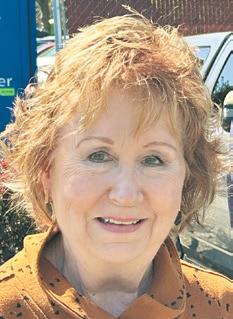
Himel and LeBlanc are longtime social workers and have been part of Stable Placements for a few years. They are familiar with the people who run care homes and usually can help make a good match.
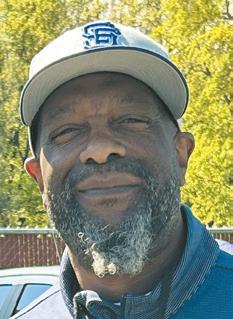
LeBlanc said they do their best to build relationships with clients, and will bring goodies to cheer them up, noting one woman in particular who is calmed by a good cup of coffee.
“I think we do a great job of listening, just holding conversation. I think that gets us a long way, that constant, consistent presence that we provide,” he said. “They begin to trust us, and as a result, they’re more interactive and more prone to tell us what’s going on, so that we can address the problems as they come about.”
Master of Health Professions Education
9 courses, 32 credit-hours (2 years)
Degree Curriculum: 4 Key Domains
•Assessment & Evaluation
•Leadership
•Research & Scholarship
•Teaching & Pedagogy
Sackmann attributes much of the success of the program to Himel and LeBlanc being “very mission aligned, very wonderful people. I try to make excuses to have more and more meetings with them,” he joked.
As for the woman who had to have her hands and feet amputated, when Himel visited her in the hospital, she noticed a driedup bouquet of flowers in the window. The three Providence Sacred Heart surgeons who operated on the woman sent them.
“Do you think you can help me with one thing?” the woman asked Himel. “Can you help me get them a bouquet of flowers? I’m so grateful they saved my life.”
Himel arranged to have flowers sent to the surgeons. Now, the woman is thriving in a care home.
“We visit her frequently, not as frequently as we used to, because we don’t have to,” Himel said. “It’s such a happyending story.”
Wright
Himel
LeBlanc
Sackmann
KEEPING UP
PRESIDENTS/CEOS
Trinity Health and organizations within that system have announced these changes: Robert Baxter to president and CEO of MercyOne in Iowa, succeeding Michael Taylor, who held the role in an interim capacity. Baxter was president of the Toledo, Ohio, market of Bon Secours Mercy Health. Dr. Steve Hanks will be president and CEO of Hartford, Connecticut-based Trinity Health Of New England while continuing to lead Trinity Health New York. Dr. Robert Roose, who leads Trinity Health Of New England’s Community Hospitals, will become interim president of Hartford’s
Heart to Start
From page 1
in-person and virtual classes and resources on movement, nutrition, well-being and health coaching. More than 20,000 people subscribe to Basecamp’s resources, and more than 14,500 people visit the site each month.
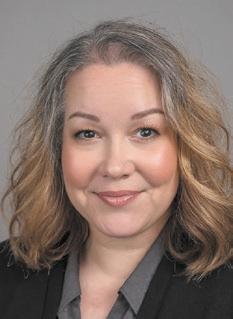
“Your pathways may look different from other people, or (you may have had to) stop or readjust or choose a new path, and Basecamp is that starting ground,” explained Tracie Rose, senior program manager for heart wellness at Providence.
‘Get out there with them’ Beckerman gathered the group at the track simply because he thought it would be fun. He was always sharing exercise advice and doing lifestyle counseling with patients, but he wanted to have a different type of interaction with them and others in the community. That first group made it to the finish line of a 5K.
“Everybody has had an experience where they didn’t want to eat a vegetable, or didn’t want to exercise, or didn’t want to practice piano, even though someone was telling them that it was a good idea,” he said. “I guess in my role as a physician, I’m charged with telling people it’s a good idea, and sometimes just telling somebody that isn’t enough. You need to maybe get out there with them.”
The pandemic forced Heart to Start and Basecamp to go online, which broadened the programs’ reach. Participants sign up for an in-person or online season of Heart to Start that runs from November through February. Beckerman chose those dreary months because people might be more inclined to stay indoors. Instead, they meet online and on the track.
“We’re pretty low tech, high touch,” Beckerman said. “At the end of the day, our real focus is on expanding community in whatever form people find meaningful.”
Dance beats
The training format of Heart to Start
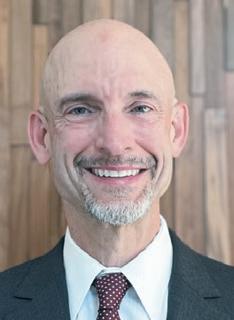
Saint Francis Hospital and Mount Sinai Rehabilitation Hospital. Jennifer Misajet will become interim chief nursing officer. Montez Carter will assume an advisory role supporting Hanks and Roose during this transition. He will depart the organization effective July 1.
ADMINISTRATIVE CHANGES
Hospital Sisters Health System of Springfield, Illinois, and organizations within
that system have made these changes: Jim Barber to president of the Springfield-based Hospital Sisters of St. Francis Foundation and vice president of philanthropy, from interim president. Jennifer Morton to market chief nursing officer for HSHS Wisconsin.
Mark “Mo” Moir to senior vice president and chief people officer for Mercy health system of Chesterfield, Missouri.
GIFTS AND GRANTS
Mercy College of Health Sciences of Des Moines, Iowa, has broken ground on the Joyce E. Lillis School of Nursing. Terrance J. and Joyce E. Lillis provided the lead gift of $2.5 million toward a Legacy of Faith Capital Campaign that will help fund construction. A goal of that campaign is to modernize the college’s downtown Des Moines campus.
The college is connected with Trinity Health and MercyOne.
Saint Francis Hospital’s Curtis D. Robinson Center for Health Equity in Hartford, Connecticut, has received a $1.5 million federal investment to strengthen trauma recovery and victim services across the greater Hartford region. The funding will support critical staffing needs and expand access to coordinated, trauma-informed mental health care for individuals and families impacted by violence. As part of this work, Saint Francis will combine two community-based, trauma-informed therapy programs — the Greater Hartford Family Advocacy Center and Saint Francis’ Hospitalbased Violence Intervention Program — into a single, coordinated care system. Saint Francis is part of Trinity Health.
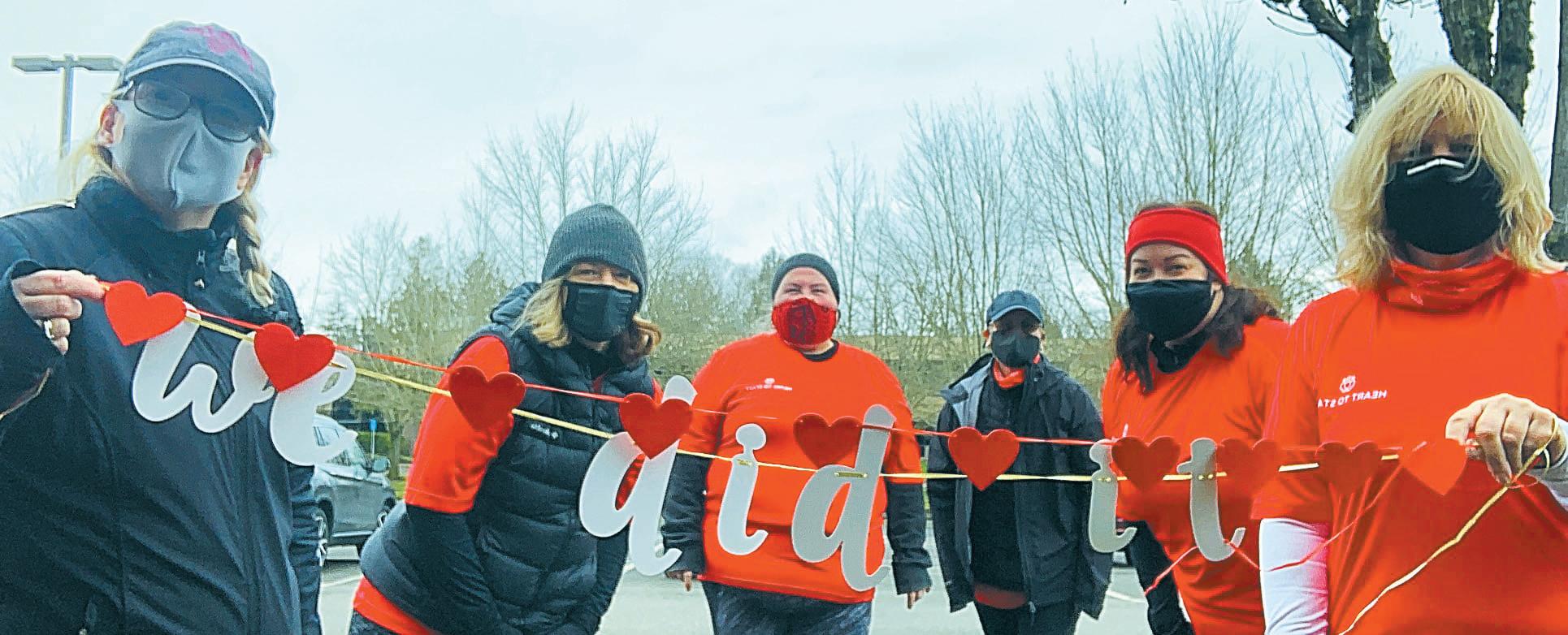
has changed over the years, but those who sign up get access to a workout program in which recordings of Beckerman guide them through their headphones with what he calls “some rockin’ electronic dance beats to get you moving.” The program changes every week with participants moving a bit longer and a bit faster.
Last season, more than 3,200 people registered, two-thirds of them from outside of Portland. They were in 25 states and three countries.
Over the years, Beckerman has found most fulfillment in seeing friendships and a real community form around an exercise goal.
“I think the secret is community,” he said. “People need community, even if they’re not looking for it.”
Basecamp’s growth
Rose signed up for Heart to Start in its second year. After becoming a participant, she helped grow the program into what is now Basecamp with Heart to Start as just one facet. “We just really wanted to continue getting out there and ask: What can we do to help make communities healthier?” she said.
Basecamp’s flagship center is on the west side of Portland on the Providence St. Vincent Medical Center campus. A second location opened on the east side of town, on the Providence Portland Medical Center campus. Each location has fitness
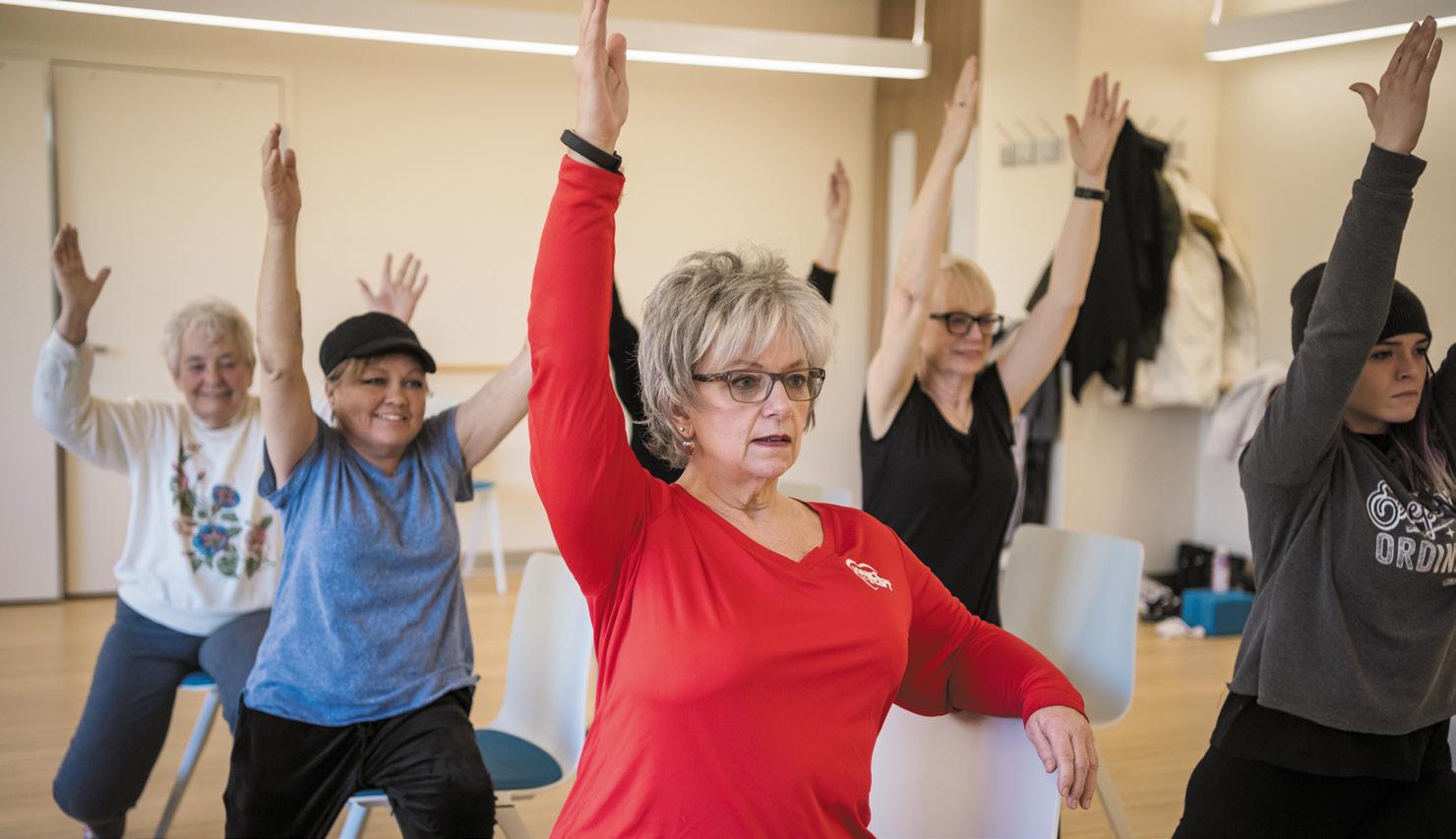
studios offering classes such as flow yoga, mat Pilates and barre. The west location has a common area where Basecamp hosts hybrid events. Heart to Start training groups meet in and around Portland, and anyone can join virtually.
Online, Basecamp offers movement, strength and workout classes as well as cooking classes, recipes, opportunities to submit questions to a registered dietitian, and individual health coaching sessions. Some of the resources are offered in Spanish. Other Basecamp offerings include classes and resources on mindfulness, goal setting, and quitting the use of nicotine products; opportunities to talk to experts on health and wellness; a family-centered lifestyle training program; youth heart screening events; and opportunities to volunteer.
The volunteer program, called Heal It Forward, is built upon the motto that “doing good makes people feel better,” Beckerman said. Opportunities in and around Portland include helping at food banks, cleaning up trails, and sorting clothing for those in need.
“We’re just trying to extend the idea that doing good means a lot of things to different people, and that can mean taking good care of your body, and it’s also taking care of your community,” he said.
Building on resources
Basecamp is run within the Providence Heart Institute of Oregon with funding from the Providence St. Vincent Medical Foundation. A team of five people work on Basecamp programming, guided by Beckerman as their medical director. The team members have backgrounds in marketing, business development, and nonprofit work. They work regularly with videographers and other technicians at Providence St. Vincent, and they also work with about 20 movement instructors and a handful of experts leading the nutrition and wellbeing offerings.
“We don’t want to duplicate big opportunities and big programs that exist,” Rose said. “We really want to say: What is unique and helpful that we can provide that would be well attended or have good participation?”
Rose said the classes benefit both clinicians and patients, because they know the information is from credentialed, vetted
resources. Patients don’t have to sleuth for information elsewhere.
The fact that the classes are offered to anyone, anywhere, fosters connection: Rose’s sister in Pennsylvania participates. When the friend who signed up for Heart to Start with Rose backed out, she quickly found new friends at the track. “And lo and behold, this many years later, some of the people I met that first day are some of my dearest friends,” she said.
Continued motivation
Katie Reed, who worked in information technology with Providence until retiring in 2024, was among the first people who joined Heart to Start. She underwent hip replacements after the fourth season. “I used Heart to Start as my recovery program, and it was awesome, even though I had my cane walking along,” Reed said. “Everyone cheers you on. That’s the best part.”
She has volunteered through Heal It Forward and worked with the Providence team on ideas when they decided to expand Heart to Start into Basecamp. She also has taken fitness classes through Basecamp and appreciates the help to stay fit in retirement.
“That’s been the biggest thing for me,” she said. “I am not going to act my age.”
Reed walks with her husband a few days a week, and she regularly walks with a friend in the Heart to Start program. She has enjoyed connecting with Providence co-workers she wouldn’t ordinarily see otherwise. And she’s made Beckerman “pinky swear” that he will continue Heart to Start another 15 years, so she can walk into her 80s.
Beckerman has seen people who have recovered from open heart surgery use Heart to Start and other Basecamp offerings to continue rehabilitation. He’s seen families with school-age children use the programs to spend time together.
He didn’t know what he was starting at that first rainy night on the track.
“That didn’t seem like a great way to spend my evening, but it turned out to be a great way to spend many evenings and many mornings and lots of spaces in between,” he said. “I’m happy that I stuck with it, and I’m happy that people stuck with me.”
vhahn@chausa.org
A group celebrates at the finish line of the Heart to Start 5K. The COVID-19 pandemic in 2020 forced the program to offer virtual training.
Classes such as this chair yoga one take place at one of two physical locations in Portland, but many resources are available online for anyone to participate.
Moir Barber Baxter
Rose