Encyclical on AI calls for use of ethical discernment
By JULIE MINDA
The use of artificial intelligence is having sweeping and profound impact on people around the world, and its influence will continue to increase significantly in the coming years. The technology could be used for great good or for great harm, according to Pope Leo XIV’s first encyclical letter.
The encyclical, Magnifica Humanitas: On Safeguarding the Human Person in the Time of Artificial Intelligence, was released May 25. The document says it is essential for the decision-makers who are guiding AI’s evolution to engage in comprehensive, ongoing ethical discernment to ensure the technology promotes human flourishing, rather than degrades it.
Three ministry leaders say that while the pontiff did not directly address the implications of AI for healthcare beyond a couple short references, Magnifica Humanitas contains much wisdom that will be invaluable for the Catholic health ministry as it continues to grapple with understanding and implementing AI.
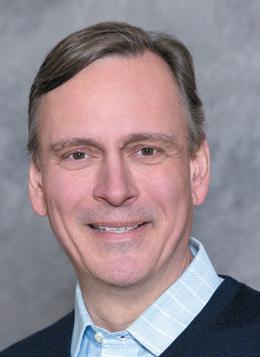
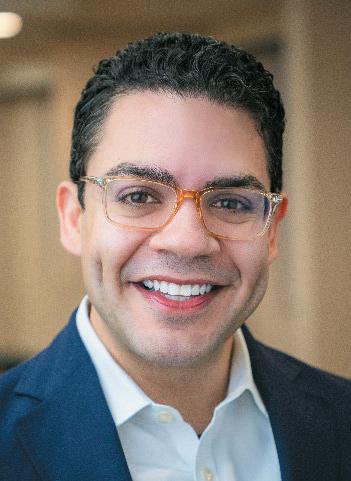
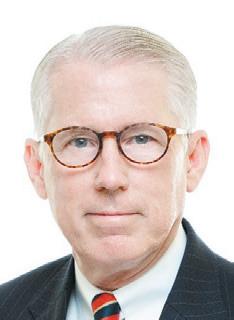
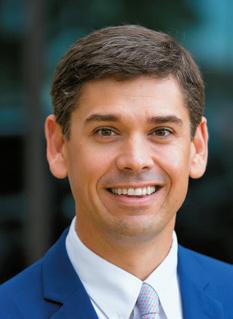
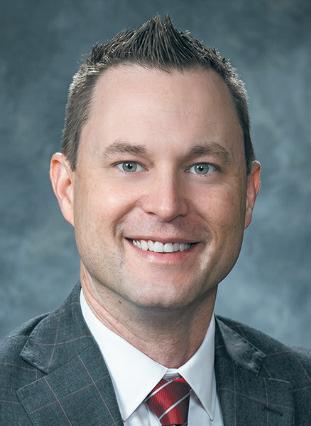
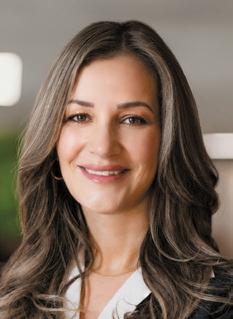
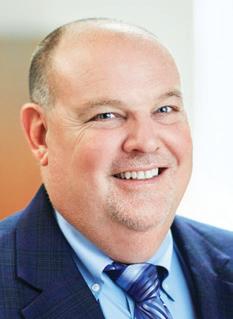
Byron Yount, chief data and AI officer
Health systems build partnerships to bring lifesaving blood to patients at emergency scenes
By VALERIE SCHREMP HAHN
If someone is bleeding profusely — perhaps from a motor vehicle crash, shooting or a hemorrhage — seconds count. Data shows that the chances of dying go up about 11% for every minute a blood transfusion is delayed when a patient is in hemorrhagic shock.
The National Highway Transportation Safety Administration estimates that 37% of trauma patients with severe bleeding could be saved if they got a quick transfusion. And the sooner they get blood into their bodies, the better their chances of survival even weeks after the incident, with some studies showing as much as a 60% mortality reduction.
“You just don’t see those kind of numbers in medicine,” said Dr. Wesley Kyle, EMS medical director of Saint Mary’s Hospital in Waterbury, Connecticut. The hospital is a
‘We must
stand united’
At joyous gathering, ministry leaders call for partnerships, innovation, courage
By JULIE MINDA
ST. LOUIS — Two years after last convening in-person as a ministry, hundreds of Catholic healthcare leaders converged in the Gateway City last month to reunite, share successes, learn about great progress the ministry is making in furthering its mission, understand potential threats and explore how best to proceed.
The 2026 Catholic Health Assembly, with the theme “United for Change,” drew more than 500 attendees to the Marriott St. Louis Grand from June 2 to 4. CHA President and CEO Sr. Mary Haddad, RSM, welcomed attendees by focusing on the need for the ministry to pursue the goal of empowering bold change to elevate human flourishing, the heart of CHA’s vision statement.
Catholic leaders explore how to advance the common good
By JULIE MINDA
ST. LOUIS — The Catholic Church and its ministries are working hard to understand the needs of vulnerable people and respond in a holistic way. But how can the church respond effectively when it is facing significant barriers, opposition and
resistance?
Several leaders of the church and its ministries examined this key question during a panel discussion at the 2026 Catholic Health Assembly. CHA President and CEO Sr. Mary Haddad, RSM, moderated the session titled “United for Change: Catholic Leadership in Advancing Human Flourish-
ing and the Common Good.” The panelists were Archbishop John J. Kennedy, secretary for the disciplinary section of the Vatican’s Dicastery for the Doctrine of the Faith; Steven P. Millies, professor of public theology and director of the Bernardin Center at the Catholic Theological Union in Chicago; and
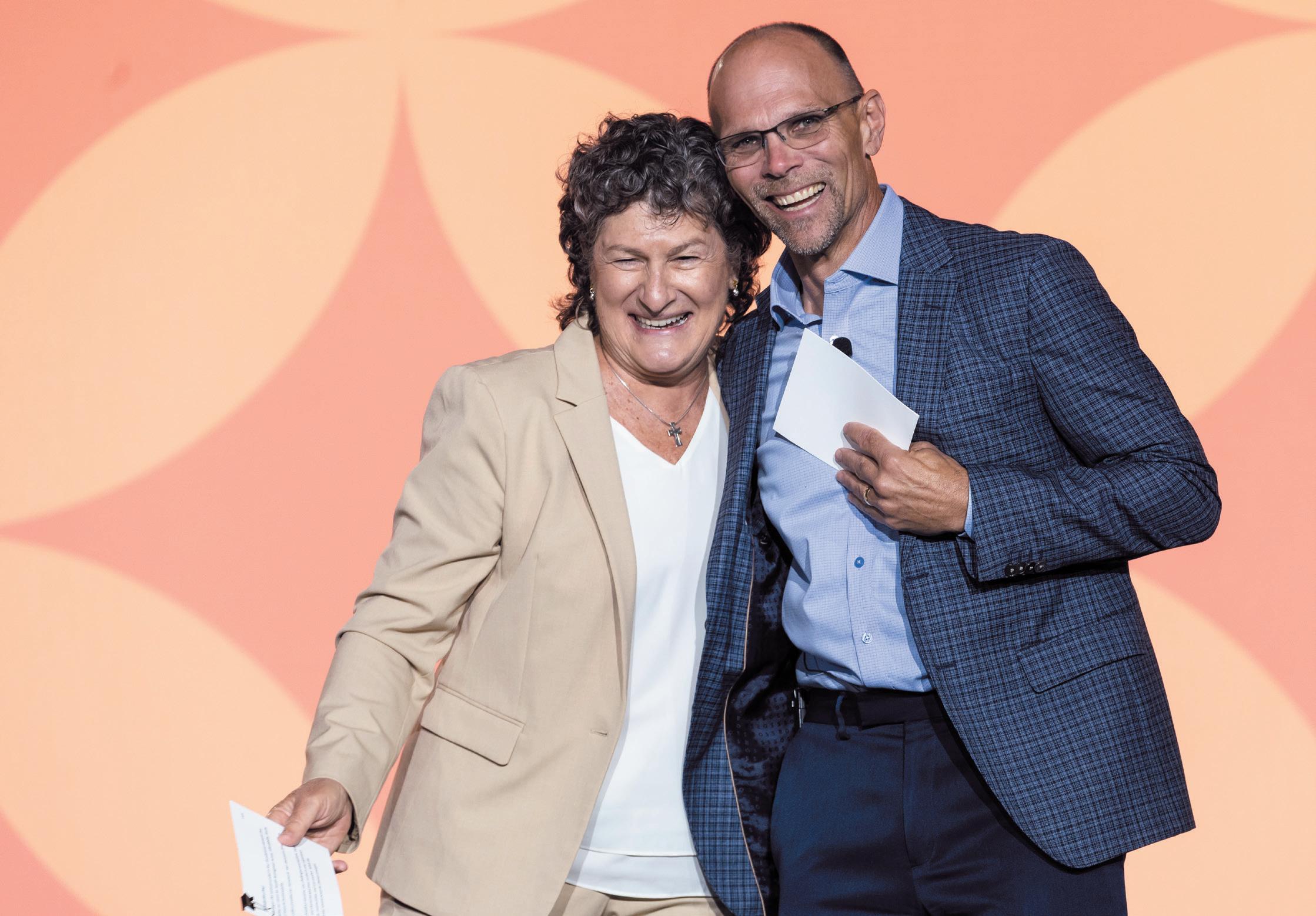
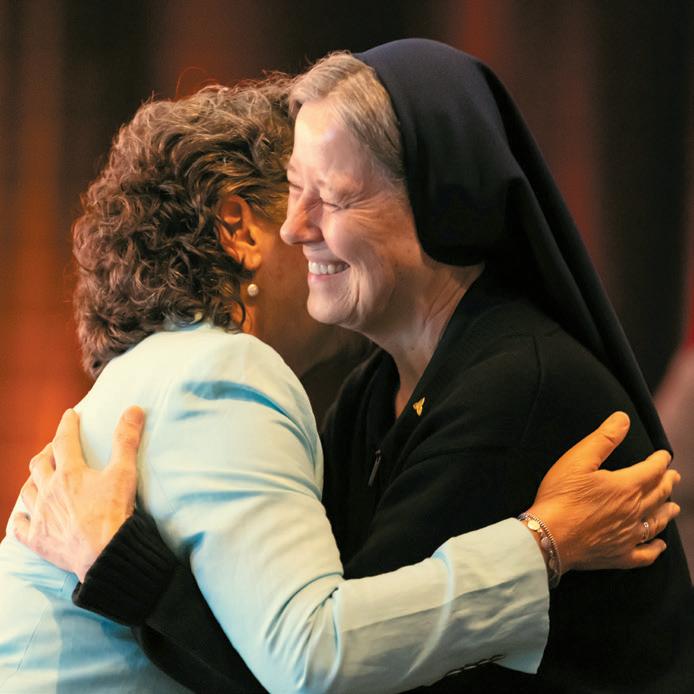
After three days of networking, brainstorming and inspiration, Sr. Mary Haddad, RSM, CHA president and CEO, and Joe Gage, 2026-2027 CHA board chairman and Bon Secours Mercy Health chief administrative officer, bring the 2026 Catholic Health Assembly in St. Louis to a jubilant close.
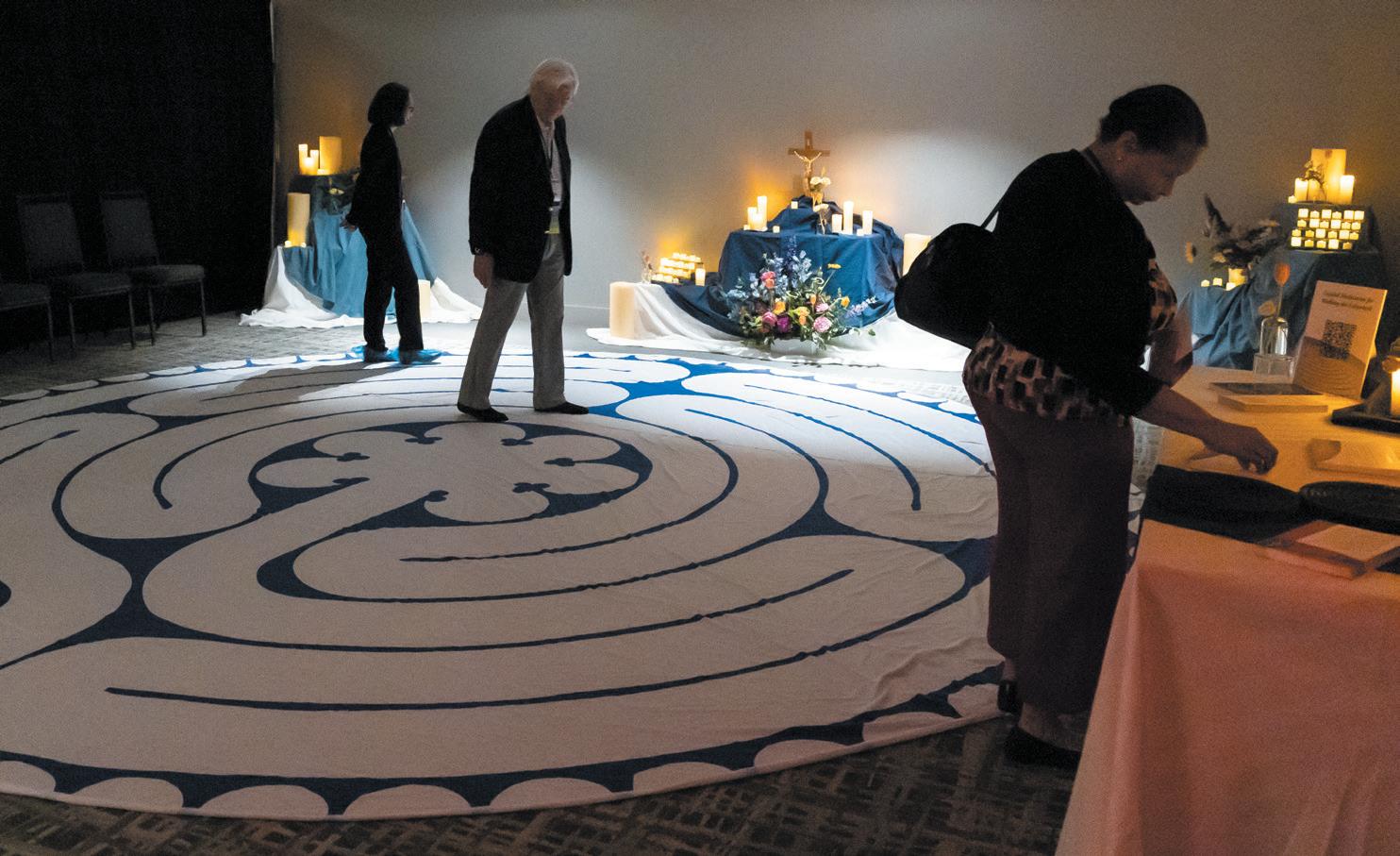
Assembly attendants follow the spiritual labyrinth at the center of the Assembly’s sacred space. A guided meditation was part of the experience.
‘My
hope is that we courageously cooperate to strengthen one another’
JOE GAGE
2026-2027 chairperson
CHA Board of Trustees
Chief administrative officer at Bon Secours Mercy Health Cincinnati
I am a first-generation lay leader. For the last 15 years, I have been formed as a mission leader by sisters who invested in me. I believe Catholic healthcare is precious gift that should be preserved and should prosper. And I am happy, and humbled, to serve you as CHA chair.
I believe Catholic healthcare is a precious gift which our foundresses gave to our young country. In Catholic healthcare we are unique in our calling, our care and our service. Our calling invites each person to join an international missionminded community and to find their personal purpose in serving the greater good of others. Our care aims to heal in mind, body and spirit. And we are unique in our value of human dignity which compels us to serve all who come with compassion, love and care. By doing this, we became an appreciated local institution — valued for helping our local communities to thrive. But today, the collective challenges we face are bigger than all of us. Think for a moment about our challenges: repeated
national policy reforms from both the left and the right. Medicare. Medicaid. Managed Medicare. HHS. CMS. Pharmacy costs. 340B challenges. Site neutrality. Nonprofit scrutiny. Religious suspicion. Well-funded competitors. Platform hyperscalers. And now, AI.
These challenges are bigger than all of us. The largest of us cannot speak loudly enough in the national dialogue to be a prophetic voice for Catholic healthcare. Some among us languish because we cannot access the tools, technologies and resources to continue serving our local communities. And yet, we must conquer these challenges if Catholic healthcare is to thrive in our local communities for another generation.
I believe the solutions to these challenges can be found in the “seeds” of our formation. Here are two from my experience, which we need to “plant”:
1. Our formation in mission makes us stronger together.
Before joining Catholic healthcare, I worked for a railroad during a national merger, in the airline industry during 9/11, and for a major for-profit health system during a turnaround. These hard lessons taught me that a well-integrated merger can make you stronger, that scale and speed are tools which enable an organization to thrive and respond to crisis.
But the critical key came from my first mission leader and former CHA chair,
Sr. Doris Gottemoeller, RSM. Sr. Doris taught me that forming our people in mission was just as important as developing our skills and strategy. And when we merged three Catholic systems that were then deeply tested through the COVID crisis, Sr. Doris was right: Our formation in mission and values gave us the unique path, purpose and strength we needed to thrive through mergers and crisis, through challenge and change. Our mission formation makes us stronger together.
2. We must come together in unity.
The Assembly theme was “United for Change.” Jesus said, “Truly, truly, I say to you, unless a grain of wheat falls into the earth and dies, it remains alone; but if it dies, it bears much fruit.” Of course Jesus is speaking of his death which produced the “fruit” of the church. But for us in Catholic healthcare, I believe that is also a challenge and call:
In Jesus’ metaphor, the tragedy is the fruitlessness of a seed that “remains alone.” That is a challenge to us in Catholic healthcare.
While trying to preserve our own ministry, we cannot silently allow others to languish and fail.
We must set aside the individualism which separates, dilutes and defeats us.
Our greatest threat is tribalism.
But “if the grain of wheat falls in the earth and dies … it bears much fruit.” For us, I
believe that’s a call:
To come together. Work together. Serve together.
To speak with a singular, collective “prophetic” voice.
To act in unity.
To lend our time, talent and treasures to strengthen each other.
To make the “bold changes” needed to use the modern tools of technology to provide new access and affordable care in our local communities.
We will do difficult things. We must. That is not the question. Our question is: Will we do those in a way that strengthens each other and Catholic healthcare?
During CHA sponsorship training, CHA President and CEO Sr. Mary Haddad, RSM, summarized this truth well when she said: “A sponsor acts on behalf of the church, not the individual ministry.”
We have the opportunity now to combine for the collective good. To create communities and cultures that work in concert to serve and heal.
My hope is that we courageously cooperate to strengthen one another. That we plant our “grains of wheat” and renew ministries which innovate on scale. That through our bold changes, humans flourish in our communities.
For me, I am ready to plant with you. To be “planted” for you. The future of Catholic healthcare is worth it. And I am glad to serve you.
Telling the truth louder: Reflecting on the impact of Catholic healthcare
OREST HOLUBEC
2025-2026 chairperson
CHA Board of Trustees
Chief mission experience officer, Providence St. Joseph Health Renton, Washington
In our journey to serve the health needs of our communities, our Catholic healthcare ministries have been beacons of hope and healing, driven by steadfast commitment to our shared mission and values. This service, grounded in our faith and our Catholic moral tradition, transcends what we are legally mandated to report to maintain our tax-exempt status, reaching far into the lives of those who are poor and vulnerable who too often find themselves on the fringes of society’s safety net. It is in these margins that our calling to serve becomes not just an act of charity, but a mission of profound love and justice. A mission that our founding congregations have asked us to hold in trust.
Our deep commitment to service comes from our belief that every person is made in
the image of God and has equal and inherent dignity. Modeling this belief requires deep humility. The late Sen. John McCain tied dignity and humility together in one of my favorite quotes: “Humility is selfknowledge that you possess as much inherent dignity as anyone else, and not one bit more.” And for the deeply humble I would add, “and not one bit less.”
However, humility often leads to quiet service — and in that quiet, the work of making the world a better place for everyone can go unseen or be taken for granted. In fact, humility, integral to our ethos, can create tension when faced with the need to share our contributions. It’s an understandable dilemma: How can we talk about the breadth of our work without seeming like we are bragging? How can we do it without looking like we’re merely trying to sell more services or attract commercially insured patients at the cost of those with little or no insurance? Yet, in remaining silent or communicating ineffectively, we miss the opportunity to inspire, educate, advocate and ultimately expand the reach of and support for our mission.
In 2009, I was discerning my future in Catholic healthcare and interviewing for
a communication role at what was then Providence Health & Services. I’ll never forget my interview with Chief Nursing Officer Debbie Burton. Knowing that, along with charity and simplicity, humility was one of the three named virtues of the Sisters of Providence, I flat out asked her if Providence’s culture would be open to showcasing our stories in new and different ways that would get attention and hopefully reach more people. Without missing a beat, she told me: “Yes, because you won’t be bragging — you’ll be telling the truth louder! Who can be opposed to that?”
Telling the truth louder isn’t about seeking praise or recognition — it’s about transparency, education, advocacy and most importantly, it’s about inspiring action. It’s about celebrating the value and necessity of Catholic healthcare in transforming lives and the health of our communities. It’s about giving voice to the voiceless, sharing the stories of those whose lives have been transformed, and animating the profound ripple effects that arise from compassionate
and excellent care.
By sharing the truth of our work in new ways, we inspire and invite others to join us in this mission. We challenge misconceptions and encourage broader support for systems and policies that foster equitable access to healthcare. We make it harder for single-issue advocates and other detractors to be critical of us — at least publicly. We underscore the pivotal role of Catholic healthcare as a champion of human dignity and social justice through our presence and perseverance in advocating for those most in need.
In “telling the truth louder,” we in Catholic healthcare can build bridges of understanding and partnership, rallying communities around a shared vision of health for a better world. Let’s recommit to bringing our work to life and sharing our truth broadly and shining a light on our service to ensure that every person, especially those who are poor or vulnerable, have access to compassionate care inside and outside our hospital walls!
Burn survivor John O’Leary urges: ‘Just say yes to being used for good’
By VALERIE SCHREMP HAHN
ST. LOUIS — When he was 28, John O’Leary, scarred and sullen, sat bored in the back row of church.
Then, something the pastor said caught his attention.
“For those of you who feel today as if your life cannot be used for good, listen to me,” the pastor said. “Your life is a precious, priceless gift. And with that gift, you’ve got one job: Just say yes to being used for good.”
O’Leary recalled this story June 4 during the closing day of the Catholic Health Assembly. His appearance wrapped up a gathering that brought more than 500 people to downtown St. Louis.
O’Leary, now 48, suffered burns on 100% of his body when he was 9 while playing with gasoline and a match at his family’s home in suburban St. Louis.
Doctors at St. John’s Mercy Medical Center, now Mercy Hospital St. Louis, put his chances of survival at 1%. He spent five months in the hospital and endured several surgeries.
Spreading the story
As a teenager and as a young man, O’Leary saw himself as a scarred, lost person. He worked in construction — not a great fit for a guy with amputated fingers, he pointed out. His life began to change for good the day after his visit at the church, when a woman called to ask if he would speak to her third-grade Girl Scout troop about his injuries and recovery. The speaking gig led to another, then others, then a book about his life, On Fire, another book, In Awe, and, in 2025, a major motion picture about his life, Soul On Fire
O’Leary spoke about the many caregiv-
ers who helped him. Nurse Roy Whitehorn held up young John and told him: “Boy, you are gonna walk again. And I’ll walk with you.”
He recalled how Dr. Vatche Ayvazian, his primary burn doctor, praised the custodian who cleaned O’Leary’s hospital room as the most important person to the boy’s recovery, since he kept the room clean and germ-free.
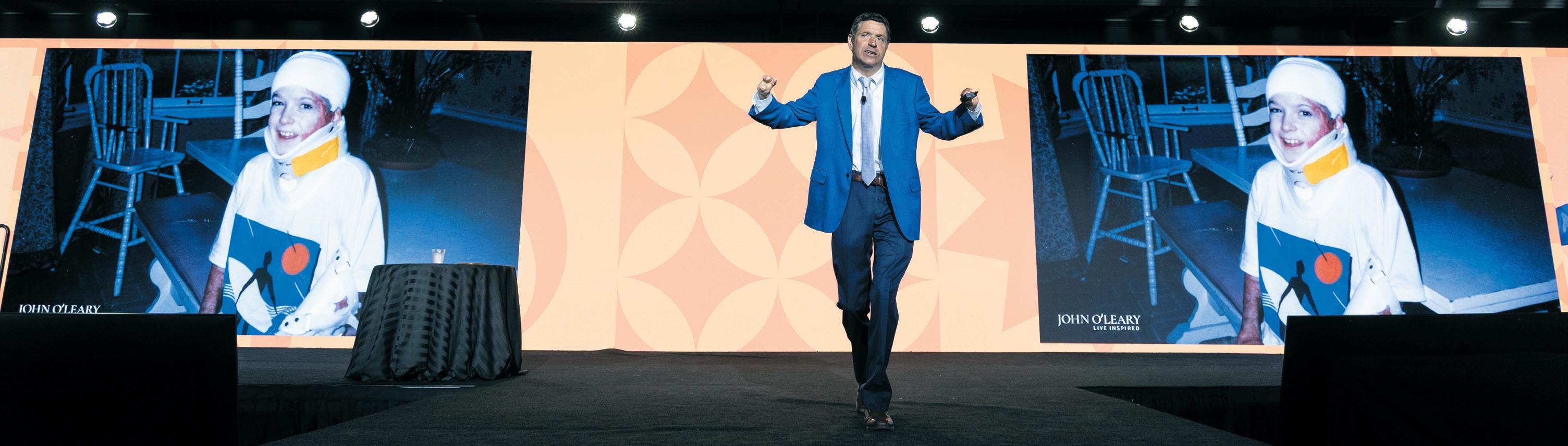
O’Leary showed slides of Ayvazian at his wedding and again on the red carpet at the premiere of the movie. In both photos, Ayvazian holds O’Leary’s scarred hands in both of his. “I want you to look just for a moment at the way he shakes his former patient’s hands, seeing the dignity in the brokenness,” O’Leary said.
O’Leary showed the movie poster for
Soul On Fire, a silhouette of the O’Leary character facing a collage of faces depicting those who helped him: his wife, his parents, his caregivers.
“Most movie posters make it all about the hero,” he said. “If it’s a story called Superman, you see a picture of Superman in the front flexing. With our film, they take the main guy, I guess, and they turn him around backwards, and they turn him into a silhouette in order to draw focus and light on where it belonged, which is the body of Christ: the ordinary, unassuming servants who showed up for little John the day he was burned.”
Showing up in daily life is often difficult, he said. “How do you flourish when you don’t feel like it? How do you lead when you wish someone else would step forward?” he asked the crowd.
He provided three tips for doing just that.
1. Look east, watch the light come through the darkness, and be grateful. People can be grateful for things like hot coffee, cold beer, a pair of jeans that fits
“We begin today by celebrating the fact that little things in life aren’t. It’s the building blocks that allow us and those we are called to lead forward to truly flourish.”
— John O’Leary
just right, and the belief that God works through broken people, O’Leary said. “We begin today by celebrating the fact that little things in life aren’t,” he said. “It’s the building blocks that allow us and those we are called to lead forward to truly flourish.”
2. Have the ability to take action, because your work matters. O’Leary recalled the story of Ayvazian praising the custodian as an example. He recounted how he reunited with nurse Whitehorn at a speaking engagement years after the accident. Whitehorn told O’Leary that he was most surprised to learn that after so many years, his own work mattered. “The mission mattered,” Whitehorn told O’Leary. “I was part of someone else’s merit.”
3. Live on fire for more. “Don’t settle with the ways we’ve always done things,” O’Leary said, stating that it’s easy to lead on an island. He asked: “What does it take to lay down your life and make it about something bigger than ourselves?”
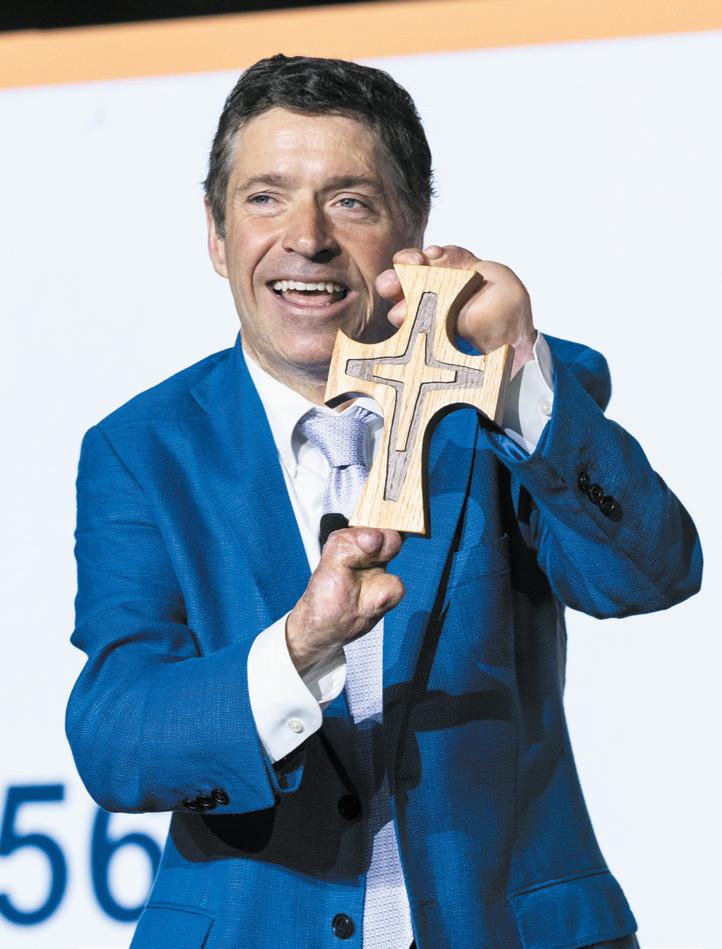
O’Leary held up a wooden cross he had been gifted after speaking recently to some Sisters of Mercy in suburban St. Louis. He was particularly moved by the gift and recalled how he spent his months as a child looking at the cross on the wall in his hospital room.
“Sometimes, when you’re lonely, you need a friend,” O’Leary said, “and sometimes when you’re struggling, you need the reminder that the story doesn’t end like this: that there’s reason for hope, that redemption is still possible.”
The cross now hangs over his desk as a reminder of what flourishing looks like in action.
“You’re part of this type of miracle for those you serve,” he said.
vhahn@chausa.org
Joe Gage of Bon Secours Mercy Health leads CHA board; new members take seats
Joe Gage, chief administrative officer at Bon Secours Mercy Health, became chairperson of CHA’s Board of Trustees for 2026-2027 as of July 1.
In addition, CHA’s membership elected Fahad Tahir, president and CEO of Ascension Saint Thomas, as vice chairperson/chairperson-elect of the board. The members also elected three new board members who were recommended by the board’s governance committee: Becky Urbanski, who retired from positions with Benedictine and Duluth Benedictine Ministries; Katherine Vergos, president of the Las Vegas market of CommonSpirit Health; and Rhoda Weiss, president of Health Market Leaders.
The membership also reelected three board members: Eduardo Conrado, president and CEO of Ascension; Dr. Marijka Grey, president of physician enterprise for the Tennessee/Georgia market of CommonSpirit Health; and
a
Mercy executive.
John O’Leary challenges leaders and caregivers at the Catholic Health Assembly in St. Louis to use their struggles to work for good.
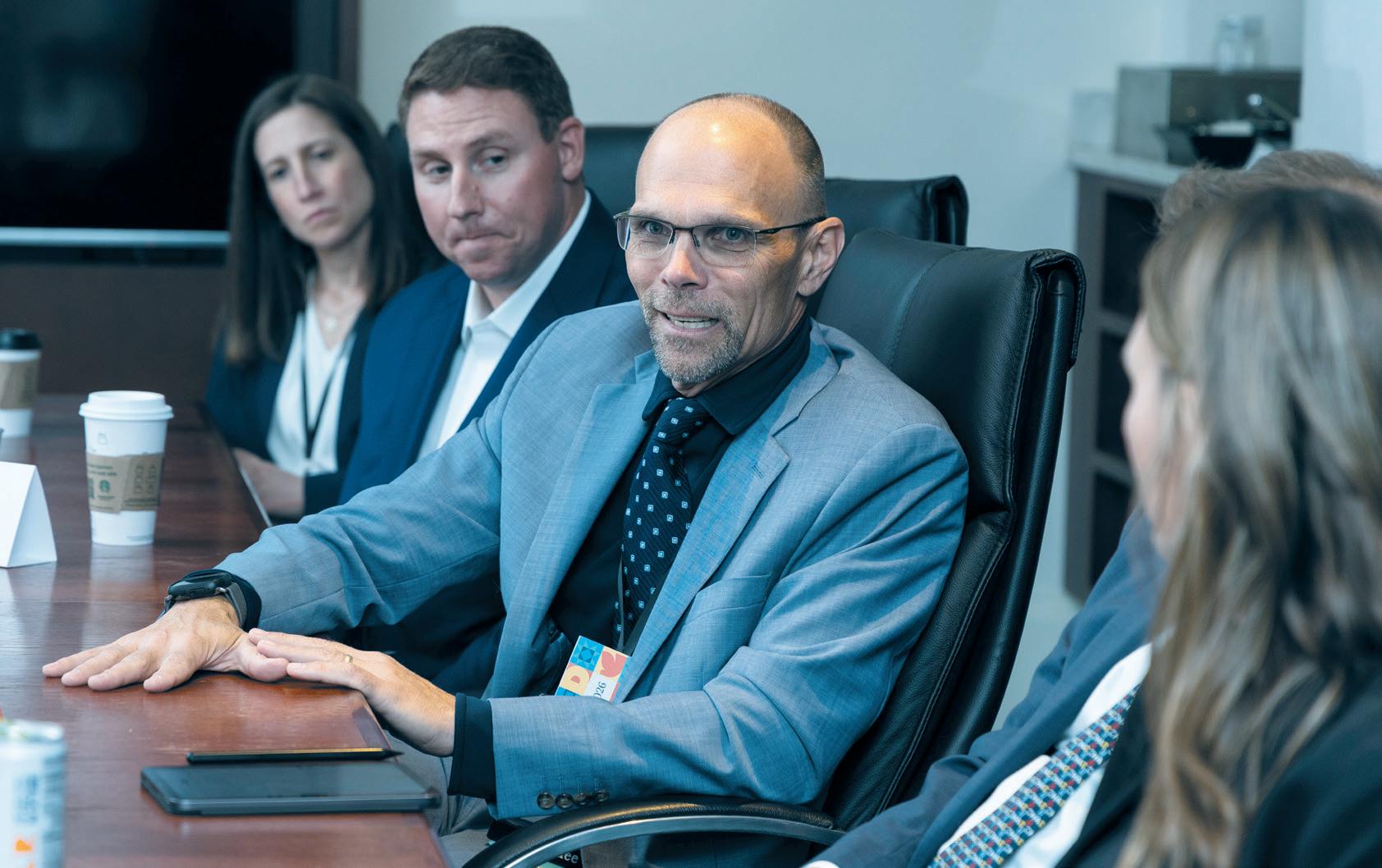
Joe Gage, 2026-2027 chairperson of the CHA Board of Trustees, speaks during a discussion with the Tomorrow’s Leaders honorees at the 2026 Catholic Health Assembly in St. Louis.
O’Leary holds up a wooden cross gifted to him by the Sisters of Mercy in St. Louis. The cross now hangs in his office.
David Brooks calls for reclaiming human dignity in dehumanizing age
By VALERIE SCHREMP HAHN
ST. LOUIS — David Brooks wasn’t born a Catholic, but if his wife has anything to do with it, he will die one, he told those gathered at the Catholic Health Assembly here on June 3.
The crowd laughed, then applauded. Brooks, a bestselling author, former op-ed columnist at The New York Times, and a recurring commentator on PBS News Hour, was born Jewish.
He said he has been inspired by Catholic social teaching and spoke of its transformative power as well as the power of Christian humanism in an era of dehumanization and modern technocratic culture.
Depression and suicide rates are up, 36% of Americans report feeling lonely much of the time and 45% of high school students report feeling hopeless and despondent a lot of the time, Brooks said.
“So we’ve become sadder, and when you become sadder, you become meaner, because you perceive your sadness as a threat to your existence, and you lash out,” he said.
He talked about his sister-in-law, who is a head nurse at a hospital in New Jersey, and how she struggles to keep staff who are burned out and targeted by patient abuse.
Pope Leo XIV and Pope Francis both spoke of “the technocratic paradigm,” or a creeping dehumanization of culture, Brooks said. “It believes in technological progress while ignoring the spiritual basis of all our institutions, and this threatens universities. ... I imagine it threatens hospitals,” Brooks said. “And the answer is Christian humanism. The answer is Catholic social teaching. The answer is personalism.”
Illuminating and recognizing Brooks said that in any group of people, there are two basic types: diminishers and
Panel
From page 1 ASSEMBLY 2026:
Consensus emerged among the panelists that the church and its ministries must unite to bring hope to people in need. Robinson said the ministries of the church “are realizing … that we are so much stronger together. It’s a natural partnership, because we are kindred spirits, (we use the) same language, same resources to draw from and same population that we care about.”
Working in silos
The panelists surfaced numerous challenges that people are facing across the world. Robinson referenced the many people in need of material goods, including the chronically homeless. She said there is a continual onslaught against human dignity.
On a deeper level is a more existential need, she said: Everyone is searching for meaning.
The church is seeing these cries for material and higher-order support in the context of a secular society, where it often meets resistance. Millies noted that the opposition may not necessarily be to what the Catholic Church believes or what its ministries are doing, but to how they are doing it.
Millies added that there is an individualism and “siloing” that has crept into the church and its ministries, resulting in many of them confronting barriers alone. He called this separateness a “dangerous habit.”
Friendship and fraternity
The panelists said the answer to such challenges can be found in Catholic social
illuminators. “Diminishers make people feel small and unseen, they stereotype and they label, they’re not curious about you, they never ask you a question,” he said. “Illuminators, on the other hand, beam their attention upon you.”
So how does one engage in mutual recognition? Brooks offered some tips.
1. Gaze at others in a way that shows that you look at them as a person, that they are a priority.
2. Engage in what Pope Francis called “accompaniment,” which Brooks described as “an other-centered way of being in a normal circumstance of life. It’s paying attention to: What is that other person going through?”
3. Know how to be a good conversationalist. Brooks said conservation experts told him that people should “treat attention as an on-off switch, not a dimmer.” Also be a “loud listener,” unafraid to pause and reflect, and don’t try to top a story. Also ask good questions and find the “gem statement,” or something deep down to agree on even if there is disagreement about other things.
Witnessing suffering
Brooks mentioned a friend who was suffering from depression, and how he struggled to say and do the right thing for this friend. Brooks found out later that it was best to remain a normal, easygoing
friend and to acknowledge the man’s pain and ask him to describe it, because it was so isolating.
Brooks said that when Viktor Frankl, the Austrian psychiatrist and Holocaust survivor, was in a Nazi concentration camp, Frankl questioned other people around him contemplating suicide. “Life has not stopped expecting things of you,” Frankl told them. “There are still things you are called to do in this world,” including to be a witness to those who are also going through suffering.
Knowing how to witness suffering and accompanying others are among the basic social skills that Brooks believes are the embodiment of how Jesus wants people to be.
He told a story about a girl named Kate, who was hit by a car when she was 14 and suffered a severe head injury. She endured multiple surgeries. As she was recovering months later from one last surgery, several healthcare workers came into the room to visit. “Kate, you wouldn’t remember me, but I was in the attending physician who was in the emergency room when you came in that first day,” one said. “Kate, you wouldn’t remember me, but I was the nurse who was on the original operating team when you were brought in,” another said. The parade of visitors continued, and the girl’s father asked what was going on.
A nurse told him that for every 10 kids they see with Kate’s injury, nine of them die. “We need to come back,” said the nurse. “We need to see her, because that is what keeps us coming back to work every day.”
Brooks paused as he finished the story, and apologized for tearing up. “That is what mutual recognition is about. That is a life of purpose. That is the life that Jesus wants us to live.”
vhahn@chausa.org
a wealth of talent to draw from in the Catholic Church, to be part of the work that needs to be done. He mentioned multiple times that young people could play a vital role. He said that youth today are drawn to Catholicism and expressing curiosity and interest in its timeless teachings.
He said the church should be willing to show the world the hope it offers.
Millies acknowledged that it can be awkward to work through the challenges of encountering the plurality of the secular world, but he pointed to the example of church leaders who have been open to change as a model. For instance, in the early days of the HIV/AIDS crisis, when Catholic sisters were treating those with the disease, they faced severe backlash from groups that said they were not doing enough. Rather than balk at the criticism, they looked inward, Millies said, and determined they should bring their HIV/AIDS work more in alignment with gospel values.
Not alone
teaching, and it has to do with unity.
Millies said Pope Leo XIV’s Magnifica Humanitas encyclical contains a “shocking, jaw-dropping” concept that can provide an answer to the challenges the church and its ministries are facing. The pope linked the social teaching of the church with shared discernment. In other words, Millies said, “We’re doing this together.” He added that Pope Francis’ Fratelli Tutti encyclical provides ideas for how to cooperate. Millies said that encyclical reframed Catholic social teaching, putting solidarity, friendship and fraternity at the heart of everything the church pursues.
Robinson noted that as a representative of the largest humanitarian network in the
world, Catholic Charities USA, she could attest to the value of the church’s ministries working together for good. She said it’s important for those ministries to continue to commit to that work, and to expand it.
She noted that Catholic Charities is focused on telling the story of the good work going on in the church, and she said storytelling is an important tool to advance solidarity in the future. She said stories can “show people that there is a reason for hope, and who doesn’t want to belong to such a consistent conscious effort to be a beneficial presence in the world?”
Interacting with the secular world
Archbishop Kennedy noted that there is
To frame how the church and its ministries can work together, Archbishop Kennedy called to mind his experiences as a three-time pilgrim on the Camino de Santiago in Europe. He said pilgrims encourage one another, sharing supplies with people who are faltering and providing aid to them. He said, “It does change your mind on how you see your life. … it makes you more grateful, and it makes you more aware of the needs of other people, and that you’re walking with them. …. If we try to help each other a little bit more, the world could be a better place.”
He added, “None of us is walking alone. That’s the meaning of the church. We have a way forward. We can do it together.” jminda@chausa.org
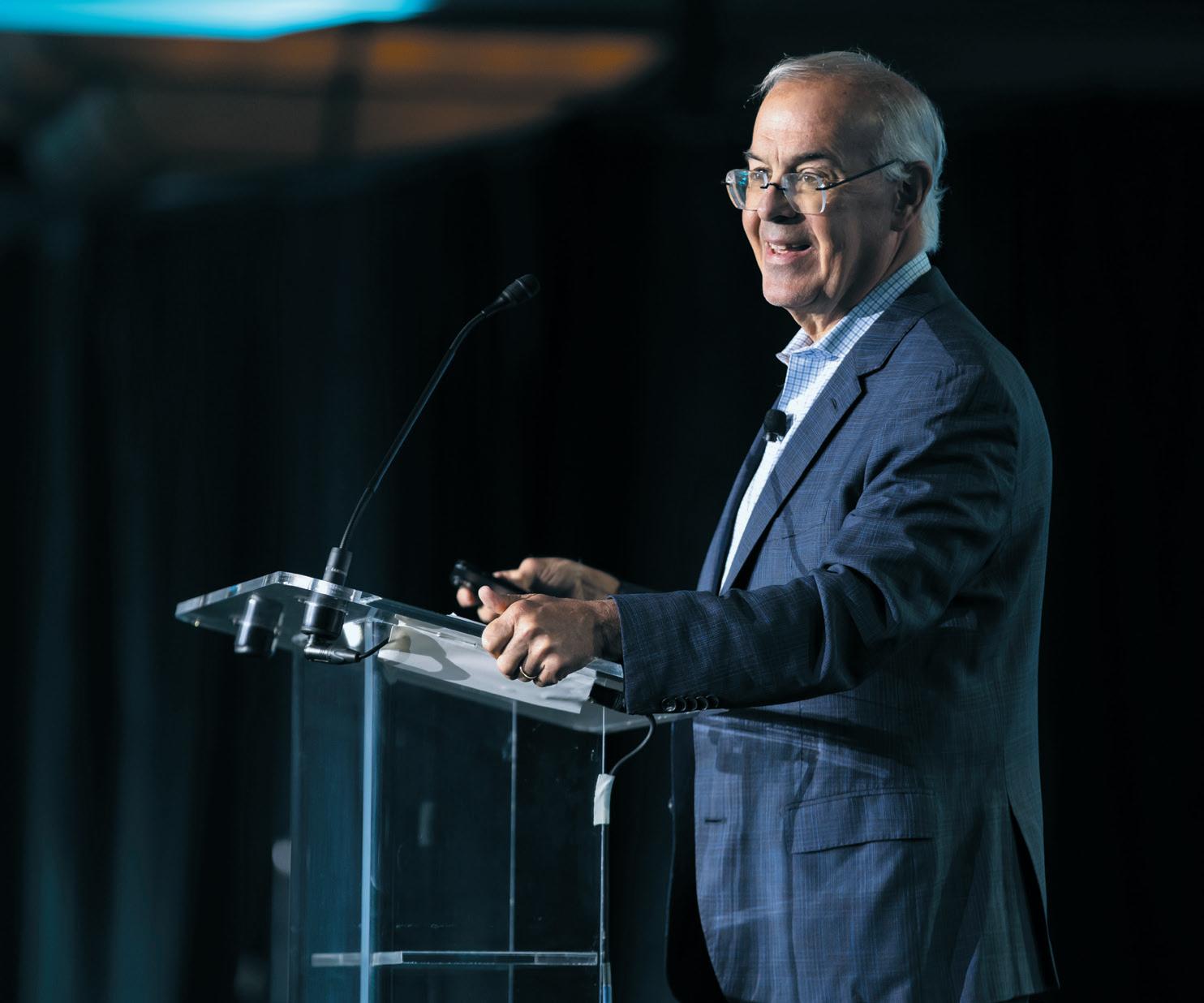
Writer and commentator David Brooks speaks of the transformative power of Catholic social teaching as well as Christian humanism at the Catholic Health Assembly in St. Louis.
Kerry Alys Robinson, president and CEO of Catholic Charities USA.
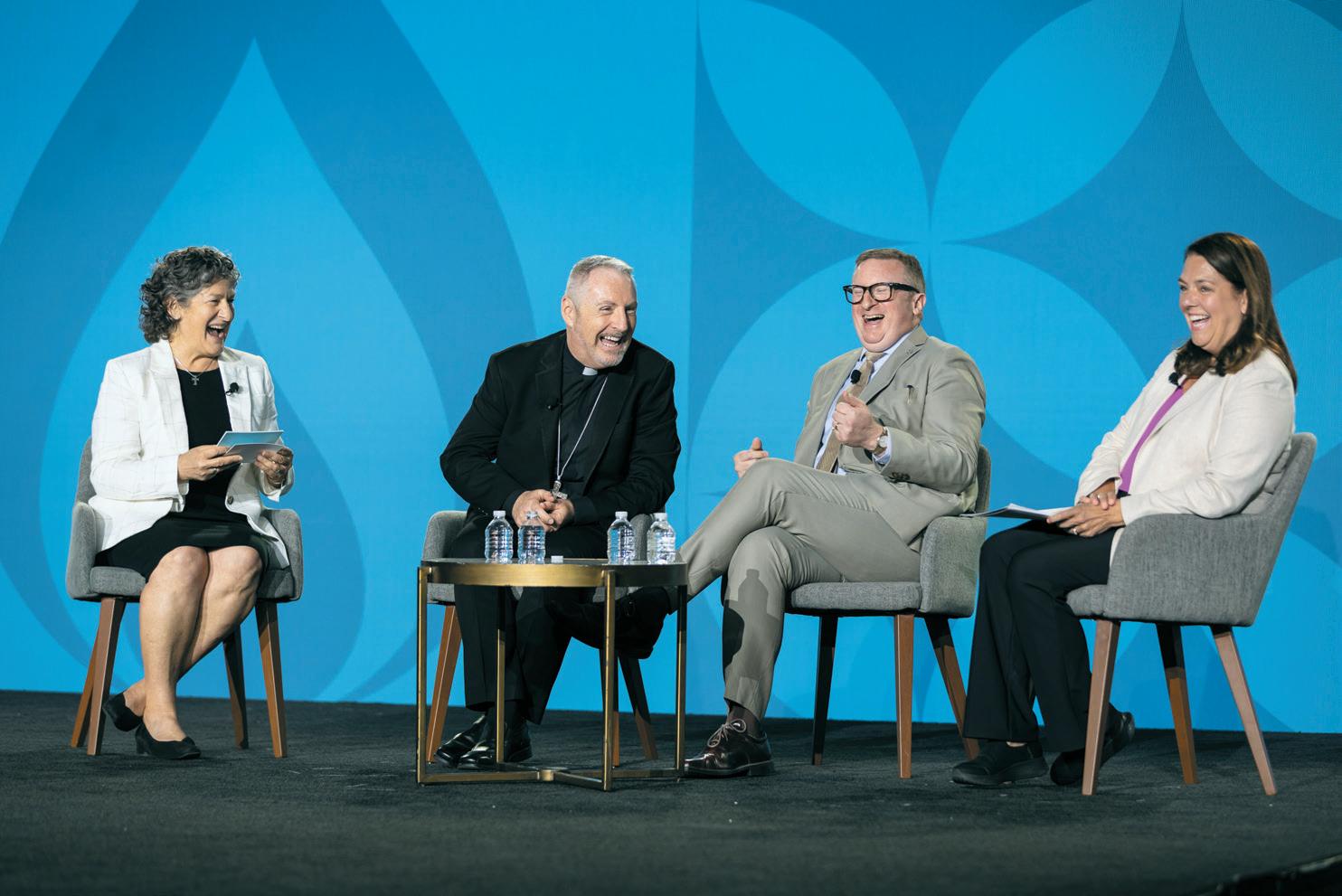
Sr. Mary Haddad, RSM, left, CHA president and CEO, moderates a panel discussion at the Catholic Health Assembly that featured, from left, Archbishop John J. Kennedy, secretary for the disciplinary section of the Vatican’s Dicastery for the Doctrine of the Faith; Steven P. Millies, professor of public theology and director of the Bernardin Center at the Catholic Theological Union in Chicago; and Kerry Alys Robinson, president and CEO of Catholic Charities USA.
Former surgeon general says healthcare system is at ‘watershed moment’
By JULIE MINDA
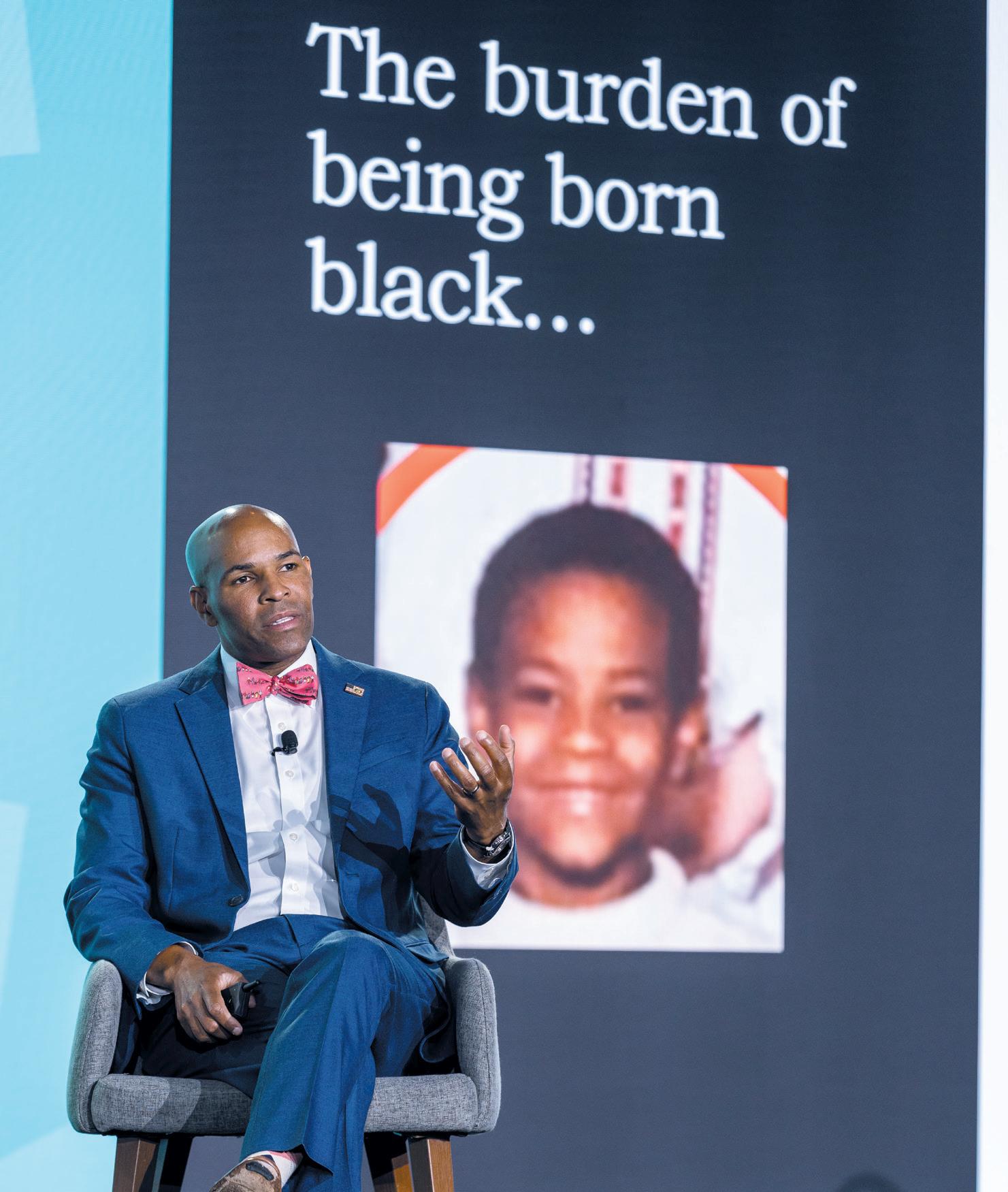
ST. LOUIS — At the opening session of the 2026 Catholic Health Assembly here, Dr. Jerome Adams, who served as the nation’s 20th surgeon general, said it’s his vision that the country can promote human flourishing in which everyone has the opportunity to make healthy choices and be the best version of themselves. He said Catholic healthcare could play an instrumental role.
“We are stewards of a system under strain, but we are also the architects of what comes next,” Adams said. “So the challenges are real — and I don’t shy away from any of the challenges you all face — but the opportunities are even greater. And so, go out and grab those opportunities!”
Adams built upon that concept as he discussed the healthcare system during a “fireside chat” with CHA Board Chairman Orest Holubec. Holubec is chief mission experience officer at Providence St. Joseph Health.
Adams began the chat describing his upbringing as a poor Black child in the rural South. Because of his severe asthma, he had to go to the hospital many times as a child. Once he had to be medevaced to the emergency department and almost died. He said he intuitively understood inequities from his earliest experiences.
Gifted in science, technology, engineering and math, Adams became an anesthesiologist, then a university professor, then Indiana state health commissioner. He ascended to the role of surgeon general in 2017.
As the Trump administration’s lead physician, Adams helped to guide the U.S. response to numerous national health crises, including an opioid epidemic, an e-cigarette and vaping epidemic and the COVID-19 pandemic.
He currently is a speaker on public health and a distinguished professor, presidential fellow and executive director of health equity initiatives at Purdue University.
Viciously attacked
During his address at the Assembly, Adams shared experiences from his nearly four years as surgeon general.
He recalled the early months of the pandemic when reliable data was lacking on where COVID was most severe, and so the administration was making policy choices based on bad data. He said this led to poor decisions, such as mass shutdowns, when shutdowns based on good, targeted data would have been best.
He spoke of waiting to go on a news broadcast to discuss public health restrictions when he heard the broadcasters announce his segment. They said he’d be asked about President Donald Trump’s decision to invite people to a large rally where protective masks would not be mandated, despite the COVID threat. Adams
recalled that when he went live and was asked the question, he told viewers that they should make masking decisions based on their own personal circumstances, the environment and the risk factors.
“I got ripped to shreds because I didn’t condemn Trump,” he recalled.
He noted, though, that he based his commentary on the way he approaches medicine, equipping people with information to make their own choices.
He also shared a memory from what was one of the proudest moments of his life, being recognized in a White House ceremony. He remembered that his mother was scowling in the photos because of her
disdain for the president.
While he brought out that memory with a smile and a laugh, he summarized the challenges of his tenure during the pandemic by saying, “I was in the public spotlight, trying to be the best I could, while the ones I tried to serve attacked me viciously.”
‘Watershed moment’
Adams drew upon his decades of service in healthcare to reflect on what he called today’s “watershed moment in healthcare delivery.”
He acknowledged that there are many concerns plaguing the healthcare delivery system, and delineated many of them. He spoke of how most healthcare dollars go toward the medical model of care, or the care that takes place after someone becomes ill, rather than to preventive measures that can help keep people well. He decried that the polarization of the nation has led to people making important decisions about healthcare through a political lens. He spoke of the aging of America even amid a decline in the healthcare workforce. And he talked about how financial pressures are putting a tremendous strain on providers, sometimes forcing the closure of vital medical facilities.
He said some of the biggest problems the healthcare system is facing have to do with public sentiment. People have become very angry that the nation is spending so much money on healthcare but getting very poor outcomes. People are going into severe debt and even bankruptcy because of the rising cost of care. And there is so much distrust of healthcare by some Americans that many people are forgoing essential care.
Adams said despite these headwinds, he remains optimistic. He said healthcare leaders can come together to focus on preventive care and community benefit. They can build important partnerships with others to advance the common good. They can cross the political aisle to work toward something better.
He said a good place to start is on rebuilding public trust.
And, he said of all those involved in the healthcare delivery system, “If we focus on what we have in common, we will actually be in a lot better place.”
Ministry providers can use AI to advance their mission, panelists say
By JULIE MINDA
ST. LOUIS — Artificial intelligence is impacting virtually every sector of society, and its use is sure to increase exponentially. Most healthcare providers are embracing the technology and learning ever more ways to use it.
But how can ministry providers understand the potential pitfalls of using this technology? And how can they ensure they are using it in a way that advances, rather than undermines, their mission?
These are some of the questions that two ministry representatives and a vendor pondered during the breakout session, “The Perils and Promises of AI in Catholic Health Care,” at the 2026 Catholic Health Assembly. The panelists were Avera Health Chief Legal Officer and General Counsel Richard Korman, Bon Secours Mercy Health Chief Marketing Officer Sandra Mackey, and Brado AI CEO Andy Parham. Brado AI is a marketing and consulting firm that focuses on the digital world.
During the presentation, Mackey said that one way ministry providers can continue to develop trust “is to demonstrate how we can ethically use technology as a tool guided by the Catholic social teachings and the strong mission that we all
believe in.”
Mackey said that Bon Secours Mercy Health recognizes that AI can be a tool for great innovation.
She said just as the founding sisters did when they fielded new technologies of their day, current leaders are listening to people’s needs, seeking to understand those needs, then applying the technology to meet those needs, careful to use ethical discernment throughout.
Mackey said Bon Secours Mercy Health is applying AI to help patients navigate their healing journeys. The health system is using the technology to create connectedness with patients, to smooth their transitions in the healthcare system and to make sure they don’t feel alone.
Removing friction and tension
Brado AI is a technology vendor that is helping Bon Secours Mercy Health, CHA and other Catholic healthcare systems meet their goals through AI applications. Parham said the company has spent about 30 years studying how people behave online.
He noted that Brado AI and its clients understand that most people’s healthcare experiences begin in digital spaces, and they are working to make sure that patients’ experiences are as frictionless and tension-
less as possible.
Brado AI helped Bon Secours Mercy Health develop a chatbot called “Catherine,” named for Sisters of Mercy founder Catherine McAuley. That chatbot interacts with patients, using conversational language to ask questions about their needs while conveying empathy. The chatbot is transparent that it is not a human, Parham said.
He said Catherine is helping guide patients from step to step as they access care. Bon Secours Mercy Health and Brado AI have found that this chatbot gets patients to treatment faster, gets them to the correct provider more quickly than humans had in the past, and delivers a return on investment to the health system.
Wild West
Korman said Avera has been using AI to further its mission.
He acknowledged that the development and implementation of the technology generally is like the “Wild West.” But, he said, in healthcare there is much promise for using AI for good if health systems and facilities remain vigilant about the threats and realistic about the benefits.
Korman surfaced many threats, such as: The technology can concentrate power
in a few private hands. It is unclear how accountability can be maintained generally. Human bias and preconceived notions, woven into programming and use, could taint AI applications and cause them to function in an unjust way. Also, it can undermine and erode human encounters. It can treat patients as data.
And yet, he said, if used correctly, AI holds great potential to be beneficial. It can improve diagnostic accuracy, predict people’s health deterioration and provide recommendations to help prevent that deterioration. It can be used to personalize treatment plans. AI can help reduce medical errors and unnecessary treatment. It also can reduce administrative burden, including medical documentation.
Korman said, “AI must inform decisions to the betterment of all, and we, as the individuals in charge of AI, must ensure that.”
He concluded his address with a quote from Pope Leo XIV’s recent encyclical, Magnifica Humanitas: “We must lovingly safeguard the grandeur of humanity bestowed upon us and revealed in its fullness in Christ, the splendor of which no machine can ever replace.”
Dr. Jerome Adams, the nation’s 20th surgeon general, speaks at CHA’s Catholic Health Assembly on the hope for change in healthcare. Adams referenced his own health challenges as a child in the rural South.
United
From page 1
She said the current healthcare system is broken, unaffordable and unsustainable. She said, “to empower change, we must stand united.”
That theme continued throughout the gathering.
Bearing
abundant fruit
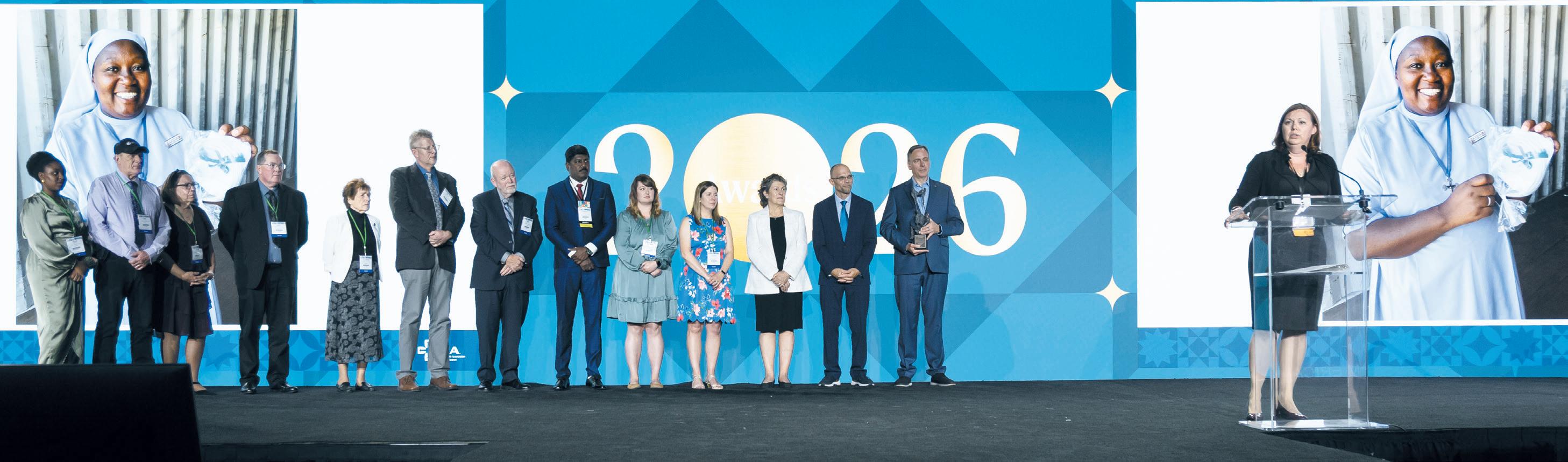
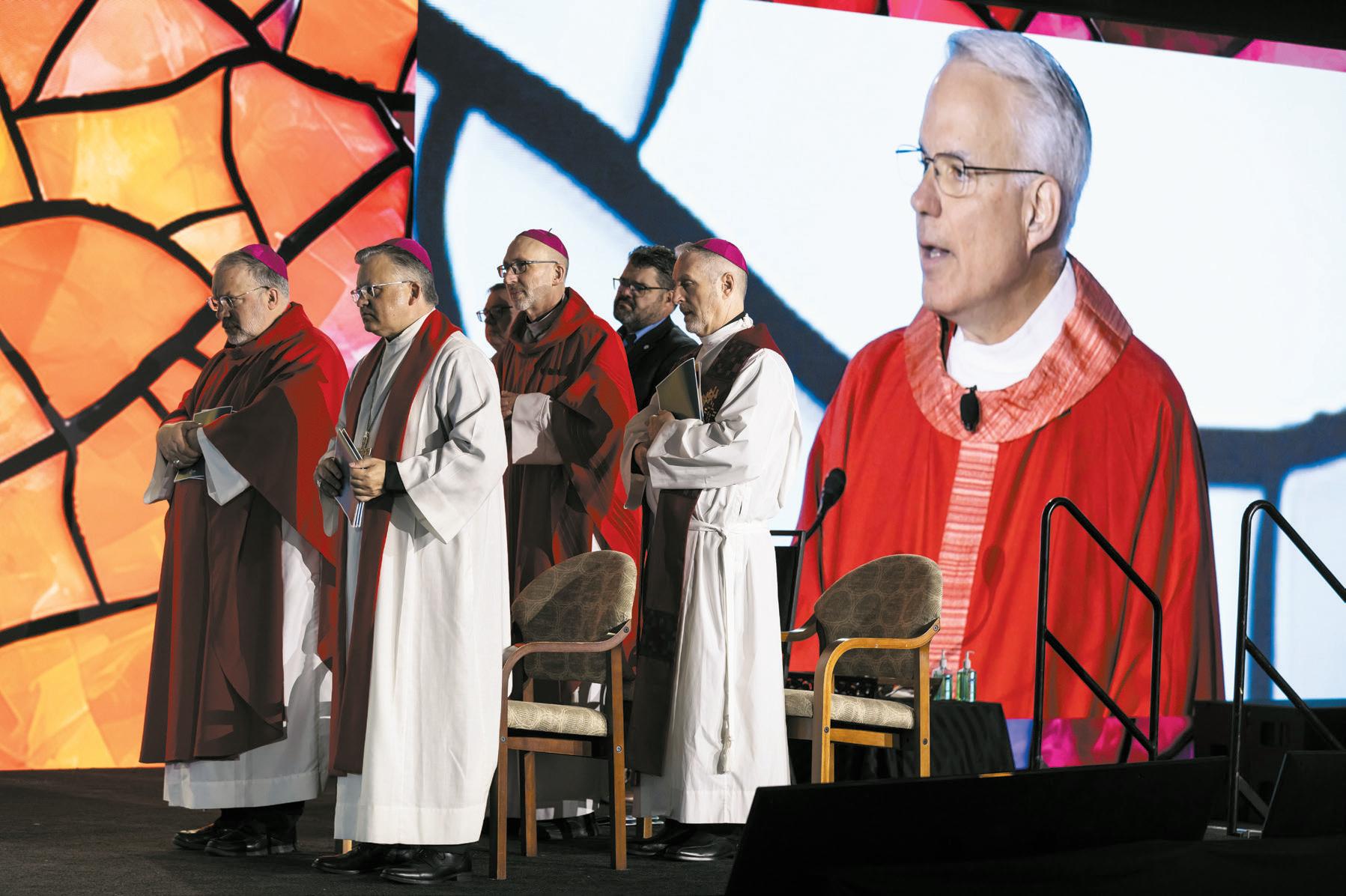
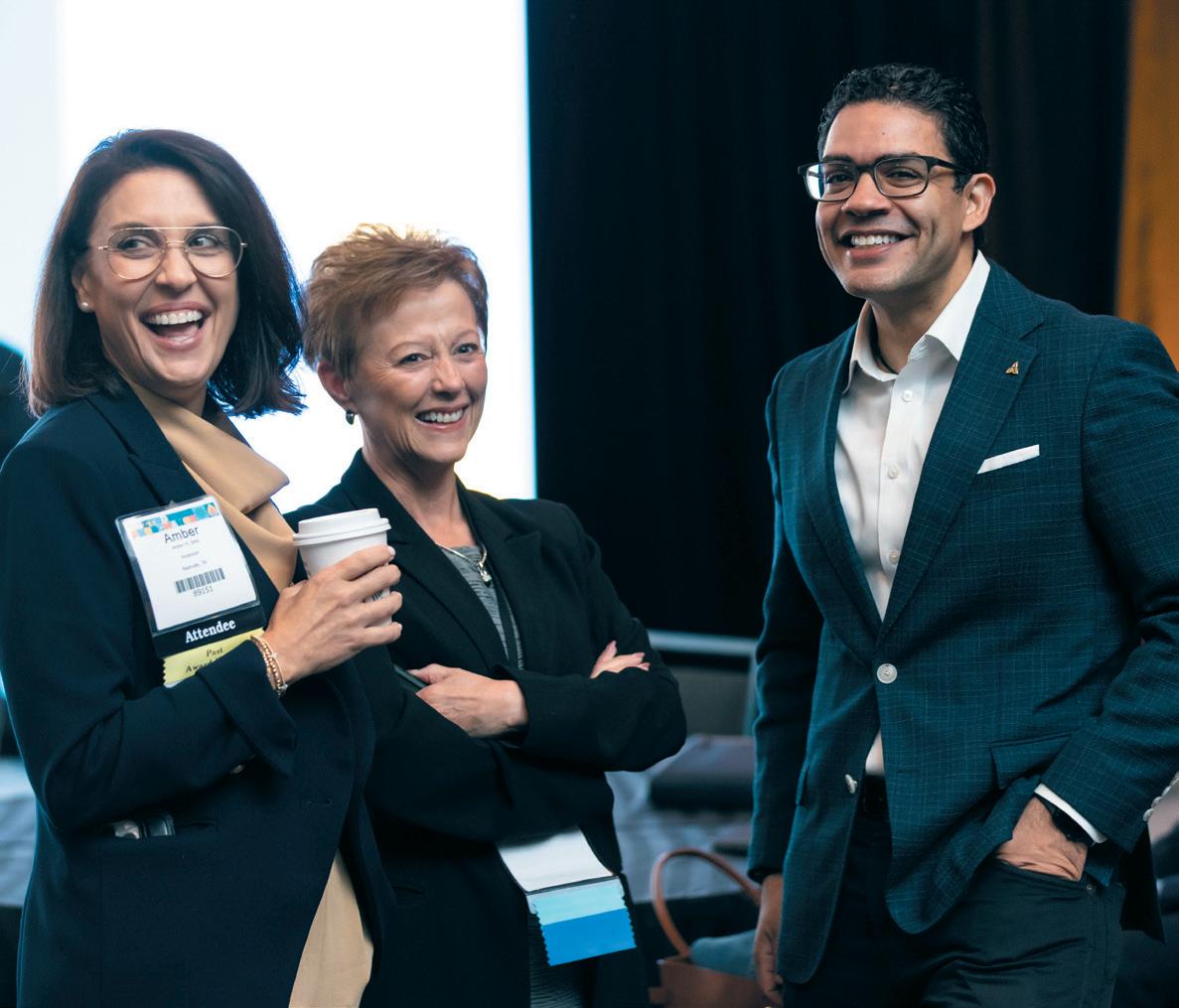
The biennial Assembly included three nationally known keynote speakers, a dozen breakout sessions, a panel discussion on human flourishing, listening sessions on reimagining healthcare, peer conversations centered on specific areas of ministry focus, and an awards ceremony for outstanding ministry leaders. The Assembly also included networking opportunities, time for reflection in a curated sacred space, meaningful liturgies and a Mass and tour of the Cathedral Basilica of St. Louis.
During an opening session, Sr. Mary read excerpts from a letter that Pope Leo XIV wrote to Assembly participants. He wrote that “the future of the Church’s mission in health care in the United States of America … depends upon your union with Christ and with one another. As long as you remain united to him, sharing in his life and motivated by the love in his heart, there is no doubt that you can continue to bear abundant fruit through caring for the sick and suffering.”
During her address, Sr. Mary shared highlights of recent ministry activity. She said amid sweeping threats to government programs including Medicaid, CHA has remained a strong advocate for vulnerable Americans who rely on those programs. She said as marginalized people including immigrants find themselves in danger, Catholic health facilities continue to be a refuge and their staffs a companion to those in need. And as critics challenge the tax-exempt status of not-for-profit providers, CHA is telling the story of the extensive community benefits Catholic healthcare facilities provide to their communities.
Sr. Mary spoke too of how the ministry is strengthening its relationships and collaborative work with the church, its bishops and its individual ministries and dioceses. Eight church leaders attended this year's Assembly.
“My first message to you is: Be not afraid. You have what the rest of society is hungry for: a spiritual and moral tradition.”
— David Brooks
Eminent attendees
CHA was honored to host several leaders from the Roman Catholic hierarchy at the 2026 Catholic Health Assembly. Among the distinguished guests were:
Cardinal Blase J. Cupich, archbishop of Chicago
Archbishop John J. Kennedy, secretary for the disciplinary section of the Vatican's Dicastery for the Doctrine of the Faith
Archbishop Robert Casey of Cincinnati
Archbishop Mitchell T. Rozanski of St. Louis
Bishop John Doerfler of Marquette, Michigan, and United States Conference of Catholic Bishops' liaison to the CHA Board of Trustees
Bishop Godfrey Mullen of Belleville, Illinois
Bishop Thomas J. Paprocki of Springfield, Illinois
Bishop John Stowe of Lexington, Kentucky
‘Be not afraid’
The three keynote speakers at the Assembly underscored the power of taking action for good.
Dr. Jerome Adams, who served as surgeon general during the first administration of President Donald Trump, acknowledged the formidable hurdles healthcare providers face, including mounting financial pressures, intractable workforce challenges, the dangerous politicization of healthcare and the negative perceptions many Americans have about the healthcare system. Despite these concerns, Adams said he remains optimistic, believing that by working in partnership with others, the ministry can advance the common good.
“I do remember that the two most important commandments (from) Jesus were love God and love your neighbor,” he said, “And I don’t think we’re doing enough to love our neighbors right now,”
In another session, David Brooks, a bestselling author, former op-ed columnist at The New York Times, and a recurring
commentator on PBS News Hour, spoke of the great challenges to the morale of the American people, including widespread hopelessness, despondency, mental illness, and dehumanization. He said people can choose to counter this malaise by being intentional about connecting with others and being present and a positive force for them.
“My first message to you is: Be not afraid,” he said. “You have what the rest of society is hungry for: a spiritual and moral tradition.”
And, closing keynote speaker John O’Leary encouraged the assembled ministry leaders to seek out beauty, focus on gratitude, say yes to mission-based opportunities, take action for good and pursue a life of purpose. He suffered lifethreating and severely debilitating injuries in a fire when he was a child. By taking on life’s challenges head-on, he emerged to become a nationally known speaker and author whose life story was made into the movie Soul On Fire
“I am going to remind you, I hope, today, as we dance forward, of what it looks like to truly flourish in a marketplace that is quick to forget what that looks like,” he said near the start of his presentation.
A reimagined system
The Assembly gave attendees opportunities to network with one another and to engage in discernment and conversation on key issues of importance to the ministry.
This included peer conversations facilitated by CHA staff in the interest areas of advocacy, communications, community benefit, quality and strategy, mission, ethics, formation, global health, sponsorship and spiritual care.
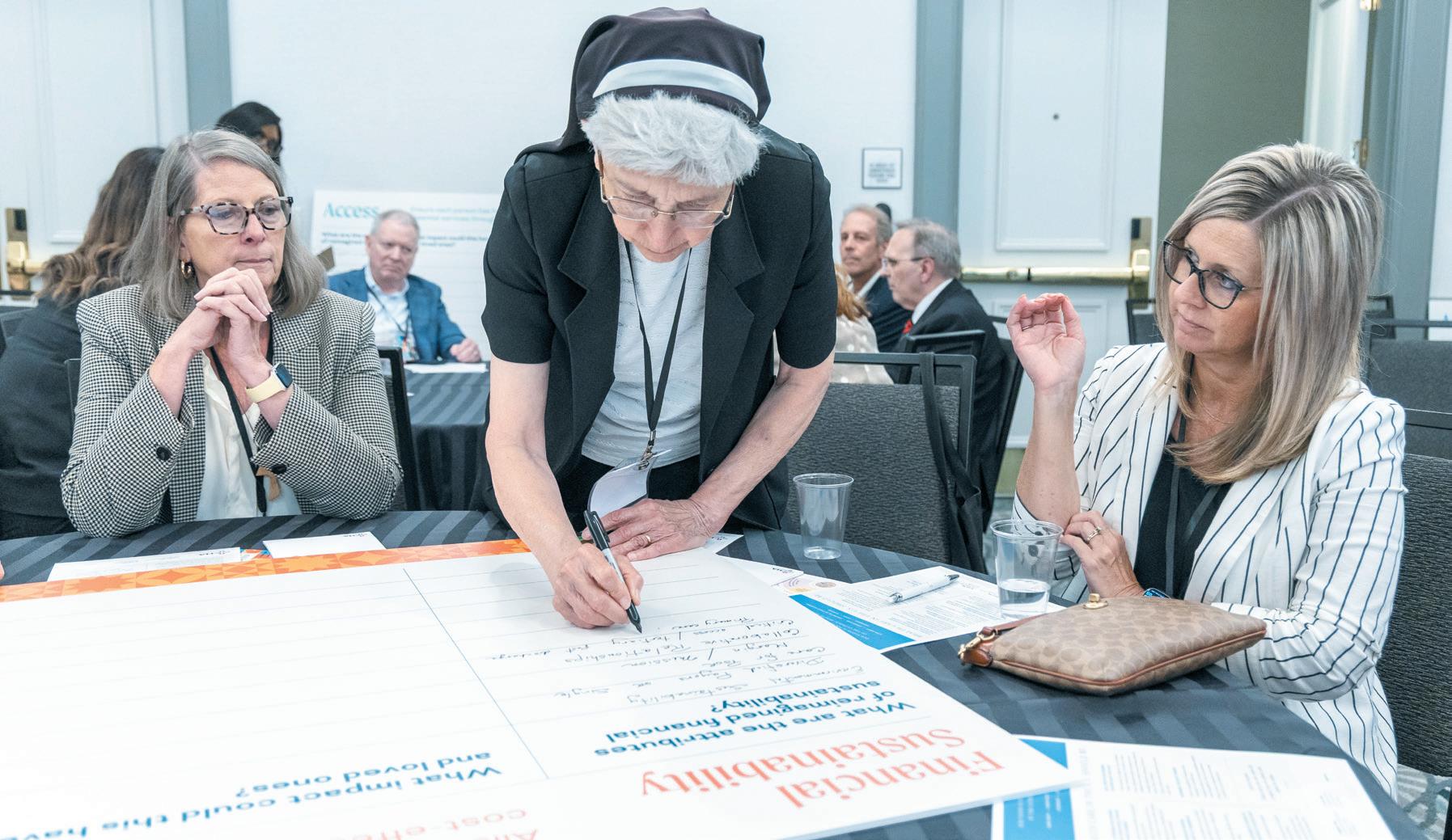
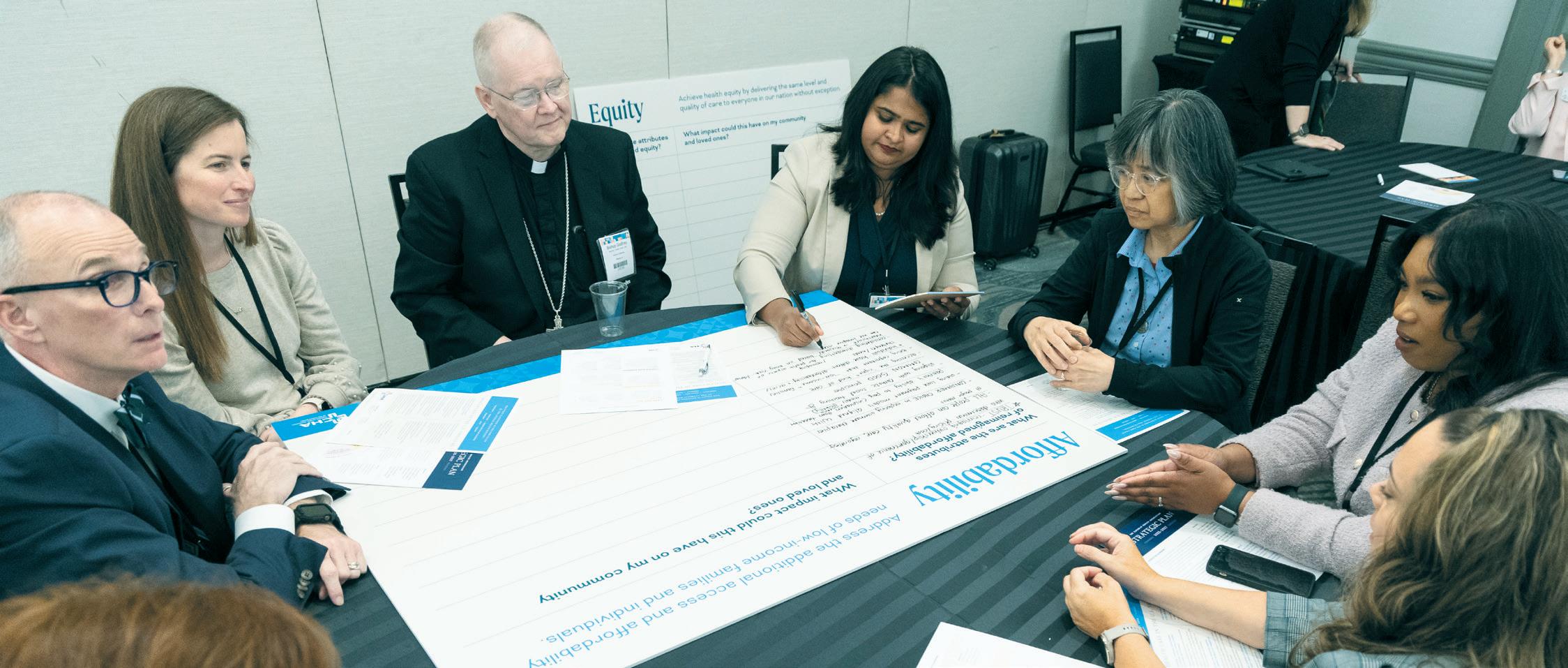
The meeting also featured listening sessions reminiscent of the synodal conversations sparked by Pope Francis. The topic was Health Reimagined, one of the three pillars of CHA 2025-2027 strategic plan. The other pillars are Care For All and United For Change.
During the Assembly’s closing, Joe Gage, 2026-2027 CHA board chairman and Bon Secours Mercy Health chief administrative officer, shared a summary of what listening session participants covered as they talked about the four foundational elements that define the ministry’s vision for health reimagined. Those elements are access, affordability, equity and financial sustainability.
“Your discussions brought (the elements) to life,” Gage said. “Across these breakout sessions, you challenged assumptions, explored possibilities, shared perspectives, (and) gave us insights rooted in your experience serving patients, communities and one another.”
“The future of healthcare will not be built by any one organization acting alone. It will be built through partnership, innovation, courage, and a shared commitment to the people and the communities we serve.”
— Sr. Mary Haddad
Some of the themes Gage shared from the sessions included:
Healthcare access is about making care easy to reach and healthcare facilities worthy of trust
Transparency is essential to the ministry’s work
Patients and their families are experiencing significant challenges and the ministry must seek to understand their experience
The ministry must find ways to ensure people feel seen, heard and respected
The solutions the ministry finds to current challenges must be scalable
“We need new ways of doing things, we need sustainable ways of doing things,” Gage said. “What we do makes a difference, and we’re lucky” to have the opportunity to further the mission.
Sr. Mary closed out the Assembly on a hopeful note, saying, “The future of healthcare will not be built by any one organization acting alone. It will be built through partnership, innovation, courage, and a shared commitment to the people and the communities we serve.” jminda@chausa.org
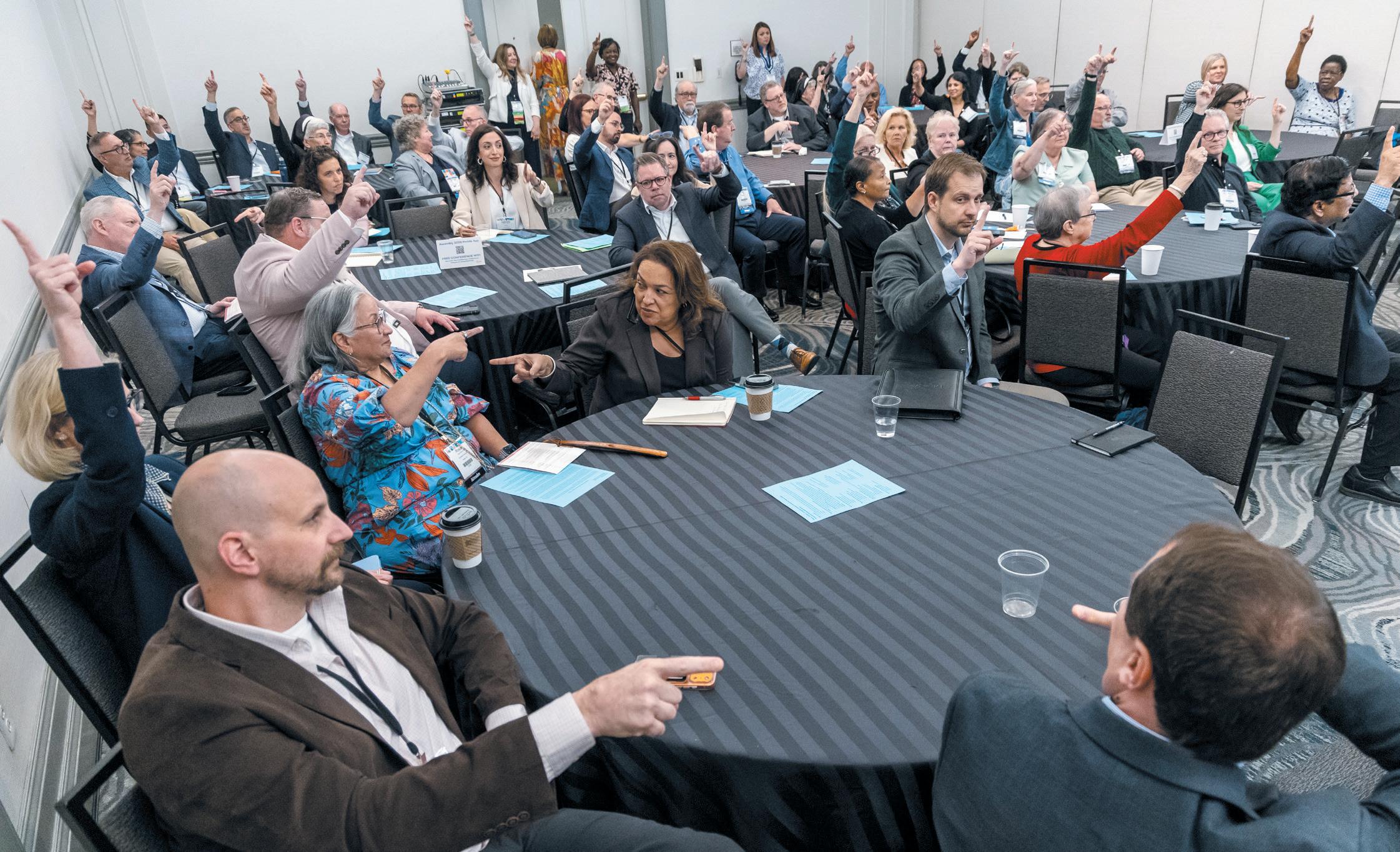
Assembly attendees take part in the breakout session “Applying Mission Integration Approaches for More Effective Colleague Engagement.”
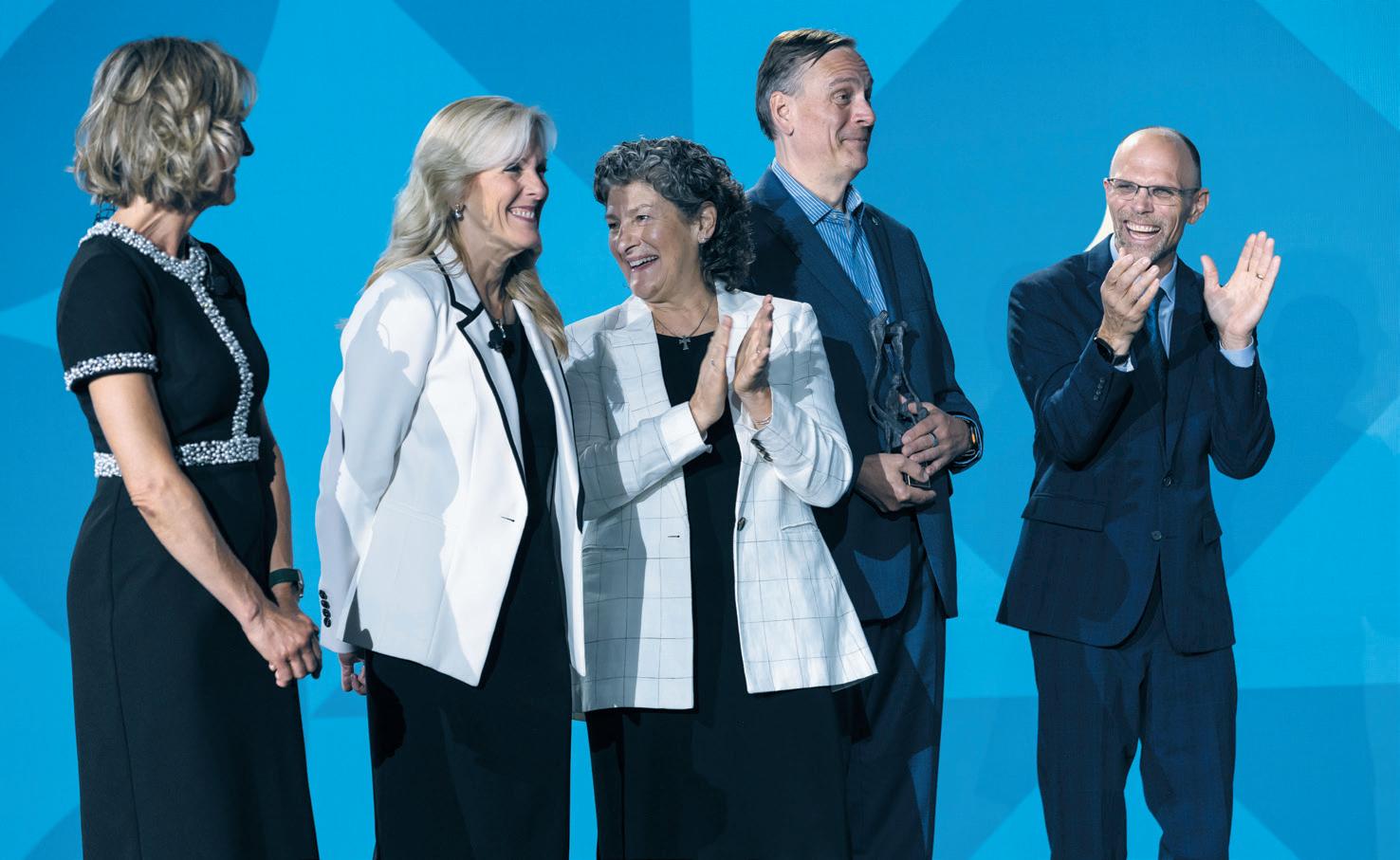
CHA President and CEO Sr. Mary Haddad, RSM, gathers onstage with CHA board members during the awards dinner at the Assembly. From left are Trinity Health Senior Vice President of Public Policy and Advocacy Tina Weatherwax-Grant, retired Mercy health executive Cheryl Matejka, Sr. Mary, Providence St. Joseph Health Chief Mission Experience Officer Orest Holubec and Bon Secours Mercy Health Chief Administrative Officer Joe Gage.
The 2026 Catholic Health Assembly brought leaders from across Catholic healthcare to St. Louis to celebrate the work of the ministry and discuss how to continue and build on its success in providing compassionate care. More than 500 attendees spent three days networking, sharing ideas, honoring outstanding care providers and programs, hearing inspirational messages, and experiencing sacred moments together.
A look at ideas shared at the 2026 Catholic Health Assembly related to access, affordability, equity and financial sustainability.
Access Affordability
Ensure each person has health benefits covering essential services through each stage of life.
Universal and equitable access
Workforce capacity
Psychological safety and trust
Convenience and timeliness
Community-based care
Technology
Address the additional access and affordability needs of lowincome families and individuals.
Lower out-of-pocket costs
Transparency
Preventative care
Expanded affordability
Innovative financial models
Patient education and empowerment
Equity
Achieve health equity by delivering the same level and quality of care to everyone in the nation without exception.
Human dignity and belonging
Trust-based relationships
Inclusion and representation
Health, literacy and education
Social determinants of health
Whole-person care
Financial sustainability
Allocate resources transparently and encourage cost-effective care and administration.
Long-term viability
Value-based care
Stewardship
Collaboration over competition
Payment and regulatory reform
Workforce investment
Listening sessions draw out ideas for healthcare transformation
By VALERIE SCHREMP HAHN
ST. LOUIS — During the 2026 Catholic Health Assembly, attendees met in breakout groups to brainstorm and share ideas related to access, affordability, equity and financial sustainability, and to suggest how to amplify the voice of Catholic healthcare in a changing healthcare landscape.
Among the thoughts shared at the Health Reimagined Listening Sessions was that care should be available when and where people need it, that providers should be transparent about costs and that healthcare systems need to find a path to longterm financial sustainability.
CHA President and CEO Sr. Mary Haddad, RSM, and incoming CHA board Chairman Joe Gage, chief administrative officer at Bon Secours Mercy Health, highlighted some of the ideas at the Assembly’s close.
Sr. Mary said the CHA executive team would use the ideas to develop a practical roadmap to help “identify priorities, sequence our efforts, define ownership, establish milestones, and turn aspiration into meaningful progress. The future of healthcare will not be built by any one organization acting alone.”
Gathering more input
CHA has been getting input over the last several months from members of its board and leaders of member systems during visits around the country. The organization is working with consultants to get more feedback over the coming months.
“Establishing that foundation is really important for us to then refine what a new vision for healthcare really looks like,” Amy Ballance, vice president and chief of staff at CHA, said in an interview.
Katie Hurley, vice president, general counsel/compliance officer at CHA, said in the interview that the listening sessions showed “something needs to change, and everyone seems to agree on that.”
Hurley added that she was encouraged that people were engaged and energetic during the discussions. “What this project is trying to get at is: How will we change it, and what will it look like? Those are the unanswered questions that we’re trying to engage with our members to try to bring some clarity, so that we have some action steps that we can take forward on behalf of the ministry,” she said.
Sr. Mary said the suggestions made in the listening sessions “demonstrated that the ideas do exist, the energy is palpable, the commitment is evident. Our responsibility now is to turn that momentum into meaningful change.”
Here is a summary of the ideas from the listening sessions:
Access: “When we talked about access, we heard a consistent message: Access is not simply about affordability; it’s about making care easy to reach, easy to navigate, and worthy of trust,” Sr. Mary said at the
sustainability.
Assembly closing. “You all emphasize the importance of ensuring people can receive care when and where they need it.”
Affordability: “We heard a reminder that healthcare costs are really creating challenges for people, hard challenges for families, for our communities,” Gage said. “That’s tough, and it’s more real now than it’s ever been. But in our discussions, we also heard you give us some solutions that we need greater transparency, that we need simpler experiences, that we need to make sure that people have access to preventative care. We need to make that affordable.”
Equity: “Our conversations around equity bring forth something fundamental,” Sr. Mary said. “Equity cannot be a separate initiative. It’s integral to all that we do, and to our mission. It must be embedded throughout the entire healthcare experience. Breakout groups emphasized the importance of ensuring people feel seen, heard, understood and respected.”
Financial sustainability: “We recognize that incrementalism no longer works, that we actually need sustainable systems that are going to create the capacity for us to fulfill our mission, not just today, but for generations to come,” Gage said. “The participants’ dialogue in the sessions reminded us that innovation without sustainability or scalability really won’t work. But without our mission, without our values driving what we do and how we do it, it’s worthless. We need new ways of doing things. We need sustainable ways of doing things.”
vhahn@chausa.org
“
Equity cannot be a separate initiative. It’s integral to all that we do, and to our mission.”
Participants in Health Reimagined Listening Sessions meet in breakout groups to suggest thoughts on healthcare access, affordability, equity and financial
Ministry leaders say encyclical on AI provides valuable direction
By JULIE MINDA
It’s been mere weeks since Pope Leo XIV issued the encyclical Magnifica Humanitas: On Safeguarding the Human Person in the Time of Artificial Intelligence, and already Catholic healthcare leaders including ethicists are seeing the importance of the document and seeking ways to share its wisdom and apply it to the ministry’s work.
Daniel Daly, executive director of the Center for Theology and Ethics in Catholic Health, said the encyclical urges AI decision-makers to engage in conversation and discernment about how AI is developed and deployed, and the ministry is taking that to heart.
“The next steps for the ministry are really to cultivate conversation on this,” Daly said. “I would say the first thing is to get leaders of AI, the chief information officers, ethicists and mission leaders together to talk about this. Because I think it needs to be a document that we sit with, and that we try to understand and then that we implement.”
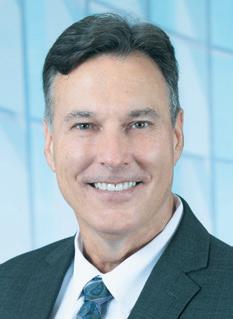
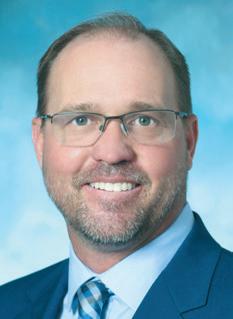
Byron Yount, chief data and AI officer for the Chesterfield, Missouri-based Mercy system, and Becket Gremmels, CommonSpirit Health system vice president, theology and ethics, said their organizations are exploring how best to communicate with their associates and other stakeholders about the encyclical, educate them on its contents and discern how it applies to them.
Yount said Mercy will be applying the encyclical’s wisdom to its existing AI work, which already is built on a foundation of ethical discernment. He said there is and will continue to be “an intentional, deliber-
Encyclical
From page 1
for the Chesterfield, Missouri-based Mercy system, said, “I think the significance is that Pope Leo was placing AI among the central social questions of his papacy, so he’s not really treating this as a technical sidebar, but essentially he mentions it as being a defining question about the human person.”
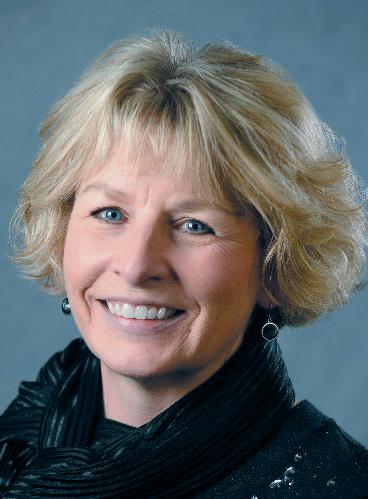
Becket Gremmels, CommonSpirit Health system vice president, theology and ethics, thinks the encyclical is “groundbreaking in a lot of ways. ... it’s very timely and very prescient and hopefully it will have the influence it deserves.”
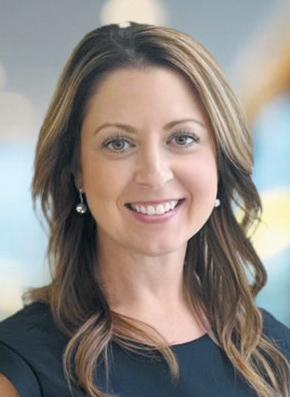
Daniel Daly, executive director of the Center for Theology and Ethics in Catholic Health, said, “The most important message is essentially that Pope Leo is calling on leaders to participate in discernment. … And this is not a rejection of AI, but putting AI in its proper place.”
An ongoing conversation
The 42,000-plus-word document is a continuation of an ongoing conversation on AI by the Vatican.
In early 2020, the Vatican’s Pontifical Academy for Life joined Microsoft, IBM, FAO and the Italian Ministry of Innovation in becoming the first signatories to the “Call for an AI Ethics,” a document developed to “support an ethical approach to AI and to promote a sense of responsibility among organizations playing a leading role around AI development and use,” as is described on a website about the document. Since then, the Vatican has led efforts to study AI and to provide wisdom on its use. Ministry members, including Yount, are involved with
ate implementation of AI.”
Gremmels said CommonSpirit likewise has been deploying its extensive AI strategy, with Catholic healthcare ethics at the core. He underscored that this is practical ethics, carrying the ministry’s values into real-life applications.
Guidance from council
Mercy operates 55 acute care and specialty hospitals across Arkansas, Illinois, Kansas, Missouri and Oklahoma.
Yount said Mercy already has a robust set of AI applications in use across its facilities. The system has a multidisciplinary council that has guided all AI decisions from the start and continues to be intricately involved.
Yount said that council will digest the encyclical’s content and determine how to apply it to Mercy’s work in the field. “We’ll
“ The
most important message is essentially that Pope Leo is calling on leaders to participate in discernment. … And this is not a rejection of AI, but putting AI in its proper place.”
— Daniel Daly
such efforts.
In June 2024, Pope Francis spoke to the leaders of the Intergovernmental Forum of the G7 about effects of artificial intelligence on the future of humanity.
Vatican contemplation of the impact of technology on society goes back many decades, Gremmels noted. “I think Pope Leo making this his first encyclical and doing so on the 135th anniversary of Rerum Novarum really speaks to how he sees AI moving forward and the influence it is going to have and is already having on human development and society itself,” he said. Rerum Novarum, or Rights and Duties of Capital and Labor, is an encyclical issued by Pope Leo XIII in May 1891 warning about the threat the industrial revolution posed to working-class people.
Humans as protagonists
Yount said the pontiff is clear in the encyclical that humans are responsible for how AI is deployed. The pope says the technology should be a force for good that promotes human flourishing.
Gremmels noted that Pope Leo mentioned discernment more than 30 times in the encyclical. The document is a call to take a pause, and to ensure ethics is woven into the very code involved in developing AI.
Daly said the pope writes of the importance of humans not remaining on the
continue on the path we’re on, we won’t lose sight of the mission, and we’ll take the opportunity to add to that wall and bring more people on,” he said. His reference to the wall relates to the numerous times in the encyclical that Pope Leo contrasts the tower of Babel with the walls of Jerusalem.
Pope Leo said humans created the tower of Babel without reverence to and alignment with God’s will, and that brought about destruction. Conversely, the people who rebuilt the walls of Jerusalem in the Old Testament were dedicated to doing God’s will and building in line with his mission, and they flourished.
Yount said he and other leaders at Mercy already are incorporating concepts from the encyclical into meetings and are determining how best to help associates and others understand the encyclical and talk about it.
sidelines as AI technology is developed — humans are to be the protagonists.
Critique of technocratic paradigm
Daly, Gremmels and Yount said Magnifica Humanitas covers numerous important points about the potential dangers of unrestrained use of AI technologies.
Daly said the pope expressed important concerns, including that AI could displace human workers, degrade meaningful work opportunities, and undermine people’s intellectual prowess.
There’s also a warning about movements and perspectives that threaten human dignity. For instance, Daly said, the pope critiques a technocratic paradigm that says that all problems and solutions are technology-centric. The pope also criticizes transhuman and posthuman movements that say technology will enable humans to surpass their limitations. These are problematic perspectives that counter human dignity.
Yount said he especially appreciated the pontiff’s words of caution about how AI technologies can interfere with human relationships. The encyclical warns that AI could try to replace, mimic or reduce human interaction and that developers and users of AI should counter this.
The pope’s warning that AI is not neutral but driven by the biases of those who develop and use it is a very important caution, too, said Yount.
War analogies
Gremmels said that while the encyclical does not focus on the healthcare sector, there are many concepts in a section on AI in war that extrapolate well to healthcare.
For instance, Gremmels said, the pope warns that only humans — and not AI — should make judgments of other humans.
He said the encyclical is sure to prove vital in helping to form people’s consciences on AI.
Bridging the gap
CommonSpirit has 138 hospitals in 24 states across the U.S. Gremmels said the system has deployed hundreds of AI applications and many more are slated for launch soon. Like at Mercy, ethical discernment has been at the heart of all these deployments and will continue to be, he said.
He said as CommonSpirit integrates the learnings from the encyclical into the work of all its facilities, and as the system advances the ongoing conversation, a key focus will be on practicalities: How are the values of Catholic healthcare actually being incorporated into every facet of AI application, and how is that being monitored on an ongoing basis?
He noted that there is a gap in understanding between ethicists and AI tech specialists, and a key challenge is to bridge that gap. This will include helping ethicists to better grasp the technological concepts and helping programmers understand in-depth what’s at stake from an ethical perspective. The technology specialists will need to fully appreciate the importance of safeguarding humanity from AI threats.
“We have a radical new technology with grave potential for harm and for good, and we are making it widely available,” Gremmels said. “We need to take a pause” to ensure proper guardrails are in place.
He added, “There is a call for Catholic healthcare to ask: What does it mean to actually do good with AI? What is the vision? We are having that conversation now.”
And only humans should have decisionmaking power over life and death matters of other humans. Transparency and chain-ofcommand accountability are also essential in the use of AI in healthcare, just as they are in war. Gremmels covered many of these concepts in a recent CHA webinar.
Daly noted that many other sections of the encyclical also apply to healthcare. For instance, when the pope writes of the potential for AI to worsen inequities between the powerful and the powerless, this is a warning that is very relevant to people on the margins in healthcare, Daly said.
Life, more abundantly
Gremmels said a refreshing focus of Magnifica Humanitas is that guiding AI is not just about not doing harm. It also is about doing good. Gremmels said Pope Leo “brings in the social doctrine a lot, so the common good, the impact of power, work, truth, peace.”
Yount added that the encyclical makes clear that AI needs to be in service of humans. It is to promote human connections and human dignity.
Daly said Pope Leo sets forth a vision in the document for the benefits that AI can provide when implemented within proper ethical limits. He said the pope’s focus on human flourishing calls to mind the scriptures about Jesus coming so that people might have life, and that they might have it more abundantly. And, if AI does not promote that flourishing, it will not serve the common good.
Yount agreed, “The pope is calling us to leverage AI for good, with the dignity of the human person at the center. It’s not about efficiency or productivity, it’s about human dignity.”
jminda@chausa.org
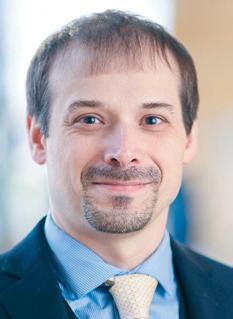
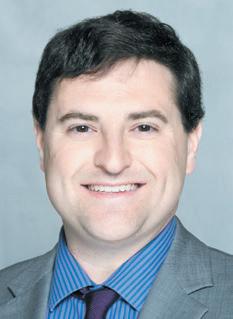
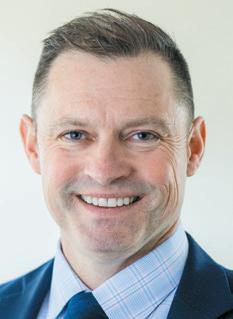
ETHICS ON CALL
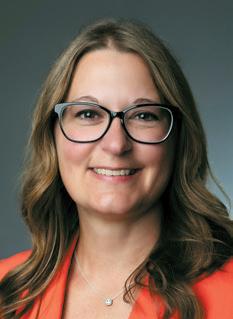
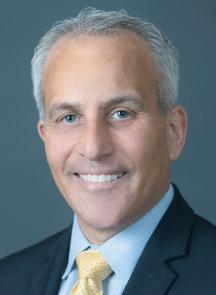
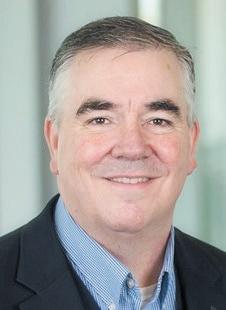
Yount Gremmels Daly
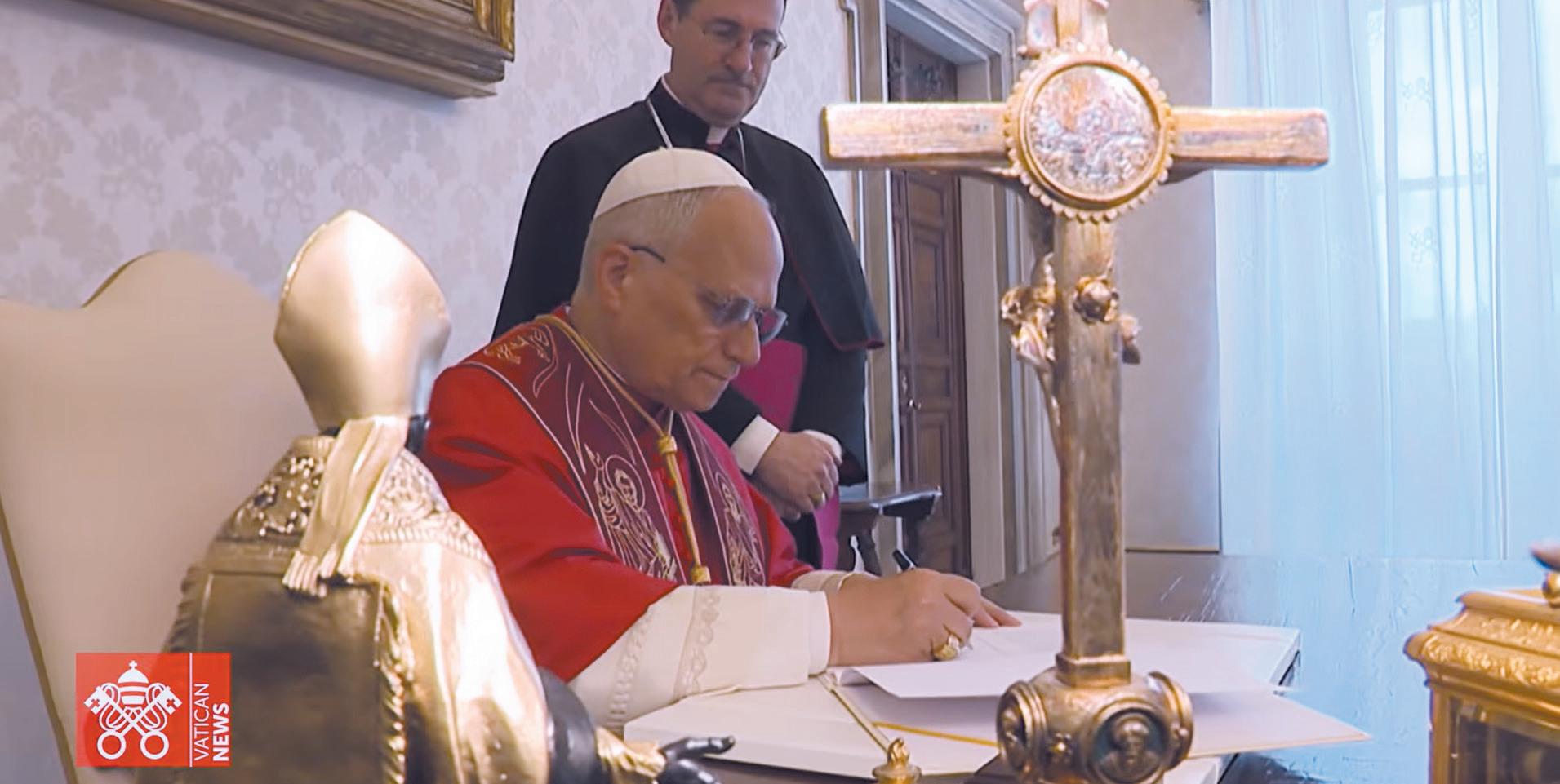
In a screenshot from a video posted by Vatican News, Pope Leo XIV signs Magnifica Humanitas: On Safeguarding the Human Person in the Time of Artificial Intelligence, the encyclical letter. He released the document May 25.
Blood
From page 1
member of Trinity Health Of New England.
“Essentially, there has never been an intervention in our lifetime in the house of medicine that has such a potential to dramatically reduce death,” Kyle said.
Estimates are that about 2% of emergency medical services nationwide have the capability to transport whole blood or blood components in ambulances. Typically, blood is only available on medical helicopters or within hospitals.
Trinity Health Of New England is one of several Catholic health systems and facilities partnering to ensure emergency responders come equipped with whole blood.
Logistical challenges
Leaders of Catholic hospital systems say creating prehospital blood transport programs is logistically tricky. It requires careful collaboration among local blood banks, EMS agencies and hospitals, as well as funding for training and for equipment to store and transport the blood in ambulances.
While whole blood, which contains red blood cells, plasma, and platelets, is favored as the gold standard, some agencies that lack the infrastructure to store whole blood can use components.
“Having it out there, being able to give it quick into the patient, is really what matters,” said Dr. John Pettini, chief of Trinity Health Of New England EMS, who was instrumental in establishing the first prehospital blood program in the northeast in 2020, partnering Saint Francis Hospital in Hartford, Connecticut, with American Medical Response Hartford. At that time, the closest prehospital blood program was in North Carolina. Since then, Saint Francis, also part of Trinity Health Of New England, has partnered with two other local EMS agencies, expanding coverage.
Pettini recalled hearing from a medic who went to a call for a prison inmate who was hemorrhaging from an ulcer. The man got a blood transfusion on scene. The medic told Pettini that within two minutes the look of the patient went “from death to life.”
Military beginnings
In April, Trinity Health Of New England announced a partnership led by Saint Mary’s Hospital with EMS providers to supply emergency responders with whole blood. The Connecticut Health and Educational Facilities Authority supported the initiative with a $75,000 grant. The grant will pay for coolers that hold blood in the ambulances and enable GPS tracking of blood; advanced blood and fluid warmers; and rapid transfusers, which warm the blood and help get it into patients quickly.
“I think that this is a service that
undoubtedly serves the poor and underserved populations more than any others,” said Kyle, a member of a regional SWAT team and a combat physician who has performed blood transfusions during active duty.
Before prehospital blood programs started appearing about 10 years ago within civilian EMS systems in Texas, the miliary was using whole blood transfusions on the field and soldiers as ready donors, or “walking blood banks.” Texas lawmakers recently budgeted $10 million to further expand prehospital blood transfusion programs.
Pettini pointed out that a prehospital blood transfusion program in New Orleans is credited with helping reduce the murder rate there by improving assault victims’ chances of survival and that data from Washington is similar.
A nationwide spread
Other Catholic health systems and hospitals have partnered with local agencies to establish prehospital blood programs. The Prehospital Blood Transfusion Coalition offers an interactive map of the programs.
In Des Moines, Iowa, a partnership that
“ You just don’t see those kind of numbers in medicine. Essentially, there has never been an intervention in our lifetime in the house of medicine that has such a potential to dramatically reduce death.”
— Dr. Wesley Kyle
Building relationships
Officials in that area started talking about the program about two years ago, and it became financially possible after voters in Canyon County approved an ambulance district tax last year. Building the program also required good relationships with the American Red Cross and the ambulance district as well as support from health system leaders.
“I find so much relief working in a place where they truly mean what they say,” Mentzer said of working at Saint Alphonsus. “If we need something because it’s going to make our community a safer and better place, they’re not going to bat an eye.”
Pettini, of Trinity Health Of New England, says his young trauma surgeon colleagues returned from surgical conferences this year astounded to meet others who cannot get blood transport programs started in their own communities: The blood banks won’t cooperate or they face regulatory challenges, he was told.
Pettini and Kyle continue to spread the word about their programs and walk others through challenges.
Pettini said the point is to help others, and to give victims, especially the underserved, a greater chance of survival.
includes MercyOne, the Des Moines Fire Department, and West Des Moines EMS started in late November and is the first of its kind in Iowa, according to the city of Des Moines. MercyOne is part of Trinity Health.
In Frisco, Colorado, first responders are working with CommonSpirit St. Anthony Summit Hospital to carry units of whole blood in a program funded by the National Highway Transportation Safety Administration, according to a January press release.
SSM Health supports prehospital blood administration programs that began last year in Sauk County in central Wisconsin, where many area residents live far from hospitals and trauma centers. Dr. Aurora Lybeck, SSM Health EMS director, called the addition to Baraboo, Reedsburg and the Dells area groundbreaking, according to a story from the WiscNews website.
Lybeck said: “The evidence tells us that there is so much more benefit (to on-site transfusions) when we have these prolonged transport times.”
Rural
challenges
In Idaho, “people work hard and play hard,” said Dr. Caleb Mentzer, Saint Alphonsus Regional Medical Center–Boise trauma and acute care surgeon. “The wonderful, great outdoors that we have access to offers a lot of ways to hurt yourself,” he noted.
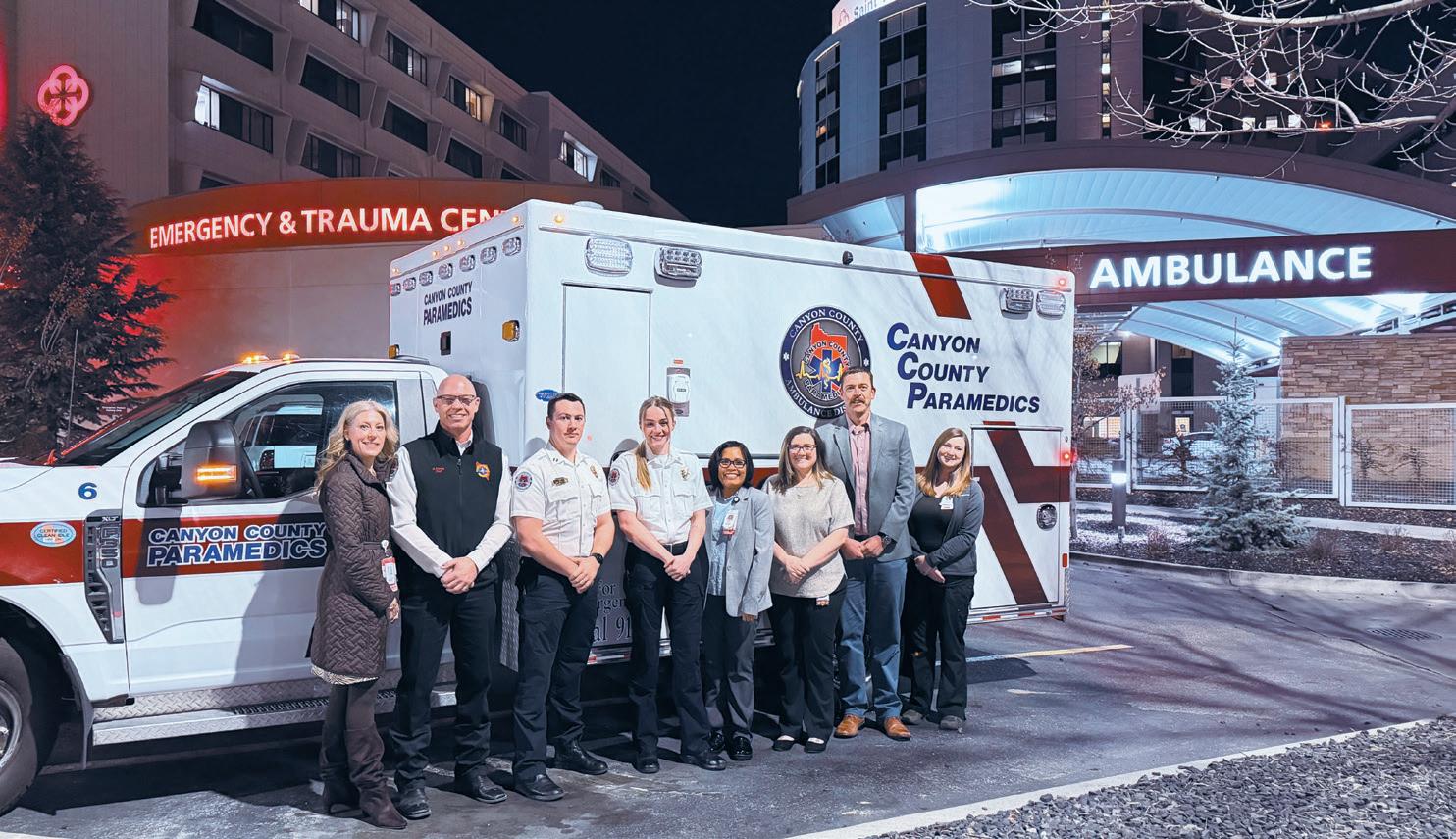
Saint Alphonsus Regional Medical Center–Boise is also a member of Trinity Health. In February, the system launched a partnership with Canyon County Paramedics and the American Red Cross to deliver whole blood to patients who need it, such as victims of car accidents, falls, snow injuries, bike accidents and gunshot wounds.
The blood is typically carried by ambulance in coolers that maintain stable temperatures for up to 72 hours. Unused blood is returned to the hospital five days before it expires for use there.
The area that the Saint Alphonsus Health System serves is experiencing historic population growth. Construction is underway to more than double the size of the Saint Alphonsus Medical Center–Nampa.
“There’s a fair amount of sprawl, and it gets really rural, really quick here,” Mentzer said. “Thirty minutes outside of town, and you are isolated. You are essentially without cell phone service for big chunks of it.”
Sometimes injured patients have to be transported via ambulance because it’s difficult to access them by helicopter. Even then, the journey, which could span several hours, might first include time on horseback or an ATV.
“Blood really does make a difference,” he said.
“That’s kind of our mission, right? There’s got to be hope and help,” he said. “I think that’s what it’s all about working in a Catholic health system.”
vhahn@chausa.org
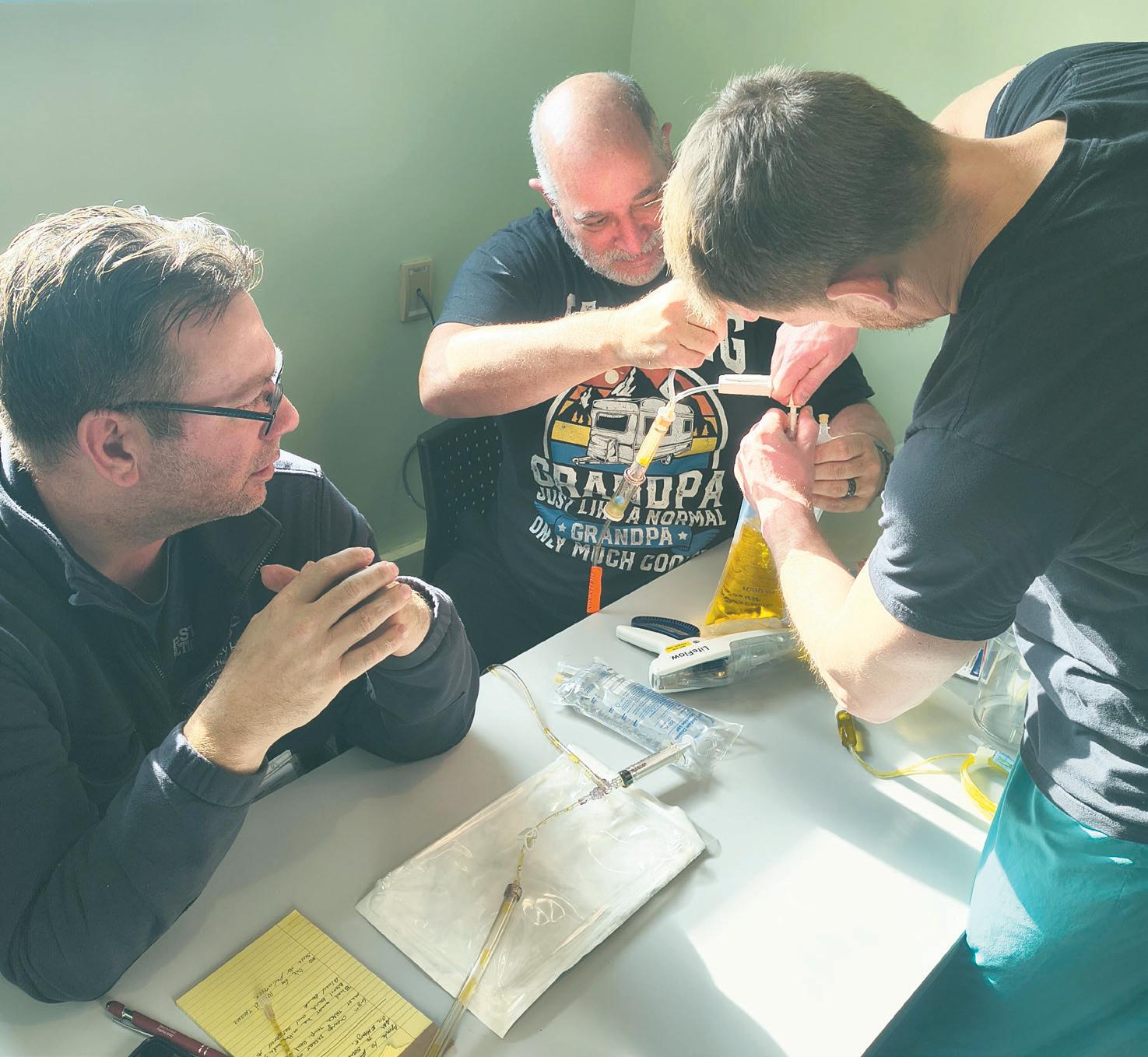
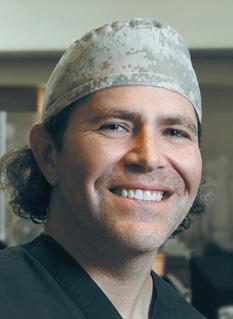
Dr. Wesley Kyle, right, EMS medical director of Saint Mary’s Hospital in Waterbury, Connecticut, instructs Trinity Health Of New England paramedics on the administration of whole blood.
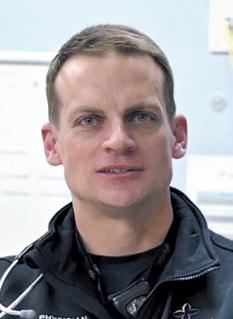
Kyle
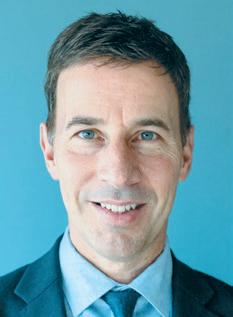
Pettini
Teams from Idaho’s Saint Alphonsus Regional Medical Center–Boise, Canyon County Paramedics, and the American Red Cross have worked together to stock ambulances with whole blood.
Mentzer
KEEPING UP
PRESIDENTS/CEOS
CommonSpirit Health and organizations within that system have made these changes:
Dr. William G. Jones to CommonSpirit Health Arkansas market president, from president of CHI St. Vincent Infirmary in Little Rock, Arkansas.
Chad Melton to president of the Puget Sound market for Virginia Mason Franciscan Health. He was market president in an interim capacity while also leading Silverdale, Washington-based St. Michael Medical Center as hospital president.
Christopher Bredeson to president of Virginia Mason Medical Center, part of Virginia Mason Franciscan. Bredeson was EvergreenHealth chief operating and strategy officer.
Ascension markets have made these changes:
Will Condon to CEO of Ascension Sacred Heart in Northwest Florida, from president and CEO of Ascension Sacred Heart Hospital Pensacola, which is part of that market.
Scott Kashman to CEO of Ascension
St. Vincent’s Health System in Northeast Florida, from CEO of Ascension St. Vincent’s Riverside in Jacksonville, which is part of that market.
Tripp Owings to Ascension Kansas ministry market CEO, from CEO of HCA Florida Brandon Hospital in Brandon, Florida.
Sean McAfee to president and CEO of Ascension St. Vincent’s St. Johns County in St. Johns, Florida, from interim president and CEO.
Ascension said the Condon and Kashman appointments reflect a structural change establishing Ascension Florida East and Ascension Florida West as distinct markets.
Amanda “Mandy” Shelast to president of Mercy Southeast Communities, based in Cape Girardeau, Missouri. In this role, she leads Mercy Hospital Southeast and Mercy’s clinics and services in Cape Girardeau and surrounding communities across Southeast Missouri. She previously was network president for Sanford Health. Shelast succeeds Eric Ammons, who retired.
Dr. Shaun Kemmerly to president of Our Lady of the Lake Children’s Health, from interim president. The Baton Rouge, Louisiana-based children’s hospital is
Sr. Bernice Coreil, DC, dies; served in ministry leadership for decades
By JULIE MINDA
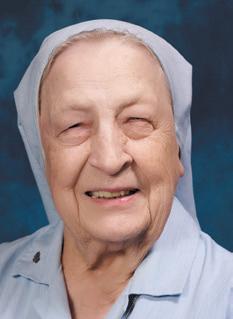
Sr. Bernice Coreil, DC, who served in Catholic health ministry leadership for about seven decades, died May 25 at Seton Residence in Evansville, Indiana. She had transitioned into her last role in 2024. Her dedication to the ministry earned her CHA’s Lifetime Achievement Award in 2003.
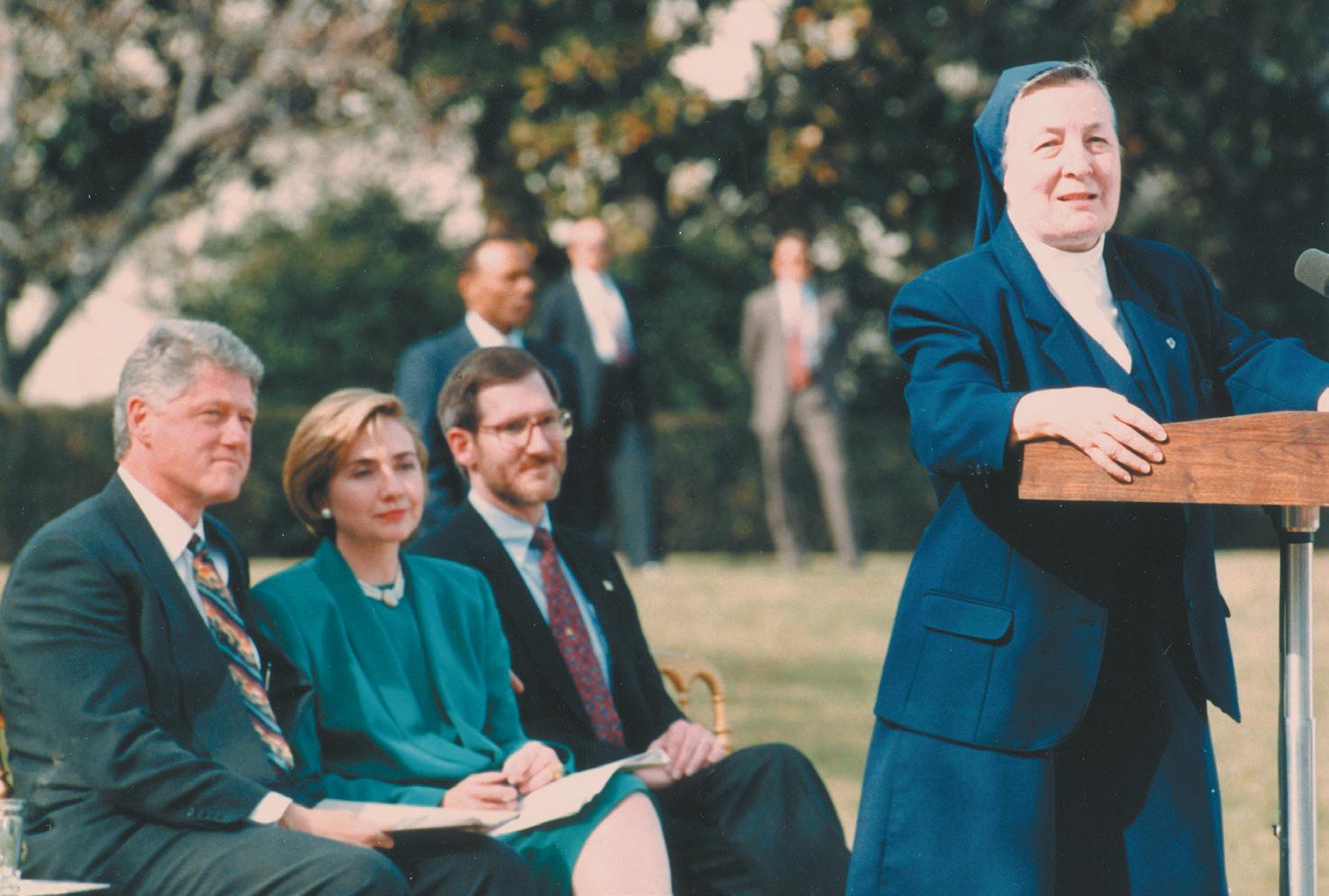
Sr. Mary Haddad, RSM, CHA president and CEO, said: “Sr. Bernice’s passionate commitment to healthcare reform and universal coverage positioned Catholic healthcare as a leader in the national debate during the Clinton Administration.
“Her courageous and moral leadership has left an indelible mark on Catholic healthcare, and her influence will be known for decades through those she influenced over her long career.”
Sr. Coreil was born Feb. 13, 1929, in New Orleans. She entered the Daughters of Charity Province of St. Louise in 1953. She earned a bachelor of science in business administration from Regis College in Denver and a master’s in healthcare administration from George Washington University in Washington. She also received an honorary degree from Aquinas Institute of Theology in St. Louis.
Early in her career, Sr. Coreil worked in finance and administration roles at hospitals the Daughters of Charity had founded or sponsored, including facilities in El Paso, Texas; Mobile, Alabama; Los Angeles; Birmingham, Alabama; and New Orleans.
As visitatrix of the 11-state West Central Province of the Daughters of Charity, she had responsibility for nine of the congregation’s hospitals.
Sr. Coreil spent six years building and organizing the Daughters of Charity National Health System, where she served over time as special projects consultant, senior vice president of systems integration and executive assistant to the president.
In 1999, Daughters of Charity National Health System merged with the Sisters of St. Joseph Health System to form Ascension Health. She was an executive adviser to a succession of Ascension’s presidents and CEOs until 2024, when she began a role with a ministry of prayer in St. Louis and Evansville.
Sr. Coreil played a pivotal role in the healthcare ministry in the 1980s and 1990s as she served on a CHA task force and testified in federal government hearings on the role of nonprofit hospitals and how they should be treated around taxation and community benefit. She worked with the CHA task force that developed foundational documents on how nonprofit healthcare fulfills its mission to care for its communities and how to document nonprofit activities. That task force helped shape the Social Accountability Budget that later informed federal community benefit reporting requirements.
In connection with such efforts, she built
“ Her courageous and moral leadership has left an indelible mark on Catholic healthcare, and her influence will be known for decades through those she influenced over her long career.”
— Sr. Mary Haddad
relationships with numerous high-profile political figures, including President Bill Clinton. It is said that he helped ensure that despite her small stature, she could reach the microphone at a White House event by placing a platform at the base of the podium.
Sr. Pat Talone, RSM, former CHA vice president of mission services, said “for a woman who was short in stature, her influence in Catholic healthcare is that of a giant.”
Sr. Coreil served on CHA’s board of trustees, including a stint as chair.
When Sr. Coreil was honored at CHA’s Catholic Health Assembly in 2003, Douglas French, then-president and CEO of Ascension Health, read a letter to Sr. Coreil from Clinton. It said in part, “With your limitless compassion and determination to get things done, you demonstrate the power of faith in action and embody all that the Catholic Health Association and a lifetime achievement award stand for.”
Sr. Coreil said at the award ceremony, “let us have the courage of those who have gone before us, to make a difference. To see that every human being in our country has accessible, appropriate and affordable healthcare in the future.
“I think we can do it,” she said.
There was a wake May 28 and a burial Mass May 29 on the Seton Residence campus. Sr. Coreil is buried in St. Joseph Cemetery in Evansville. jminda@chausa.org
ADMINISTRATIVE CHANGES
Hospital Sisters Health System of Springfield, Illinois, announced these changes:
Aryn Hunter to chief administrative officer for HSHS St. John’s Children’s Hospital in Springfield, Illinois, a new role at the facility.
Rachel Kraynak to system director of operational advancement.
Organizations within Mercy health system of Chesterfield, Missouri, have made these changes:
Matt Lohmeier to vice president of mission for Mercy St. Louis.
Pamela Slaven-Lee to president of Mercy’s Southeast Missouri Hospital College of Nursing and Health Sciences in Cape Girardeau. Slaven-Lee succeeds Steven Langdon, who retired.
Jason Boren to chief operating officer of Holy Cross Health in Fort Lauderdale, Florida, part of Trinity Health.
Greg Walaitis to vice president of the Ascension Saint Thomas Foundation in Nashville, Tennessee.
Trinity Health Michigan has opened a replacement facility in Southeast Michigan
By JULIE MINDA
Trinity Health Michigan has opened a replacement facility for Trinity Health Livingston in Southeast Michigan.
The health system moved hospital operations from its 52-bed legacy campus in Howell to the new 56-bed campus in Brighton, about 10 miles away, on April 19.
The Howell facility, which was built in 1956, had become outmoded and not conducive to today’s technology and approaches to providing care, Trinity Health Livingston President John O’Malley said. Trinity Health Michigan added the $238 million replacement hospital to the campus of Trinity Health Medical Center Brighton. That medical center has 18 shortstay unit beds and eight operating rooms.
Philanthropists contributed $5.3 million toward the Brighton construction.
The new hospital has 56 acuityadaptable beds, allowing medical teams to care for patients with a wide range of conditions and severity levels. The facility also has a nine-bed observation unit. O’Malley said the hospital’s imaging technology is state of the art. Trinity Health Livingston has also boosted staffing from more than 780 to more than 840.
O’Malley said at the new site, the medical providers can treat patients with a higher level of acuity and with more complex conditions. For example, clinicians can perform colon and rectal procedures that they did not have the capability to perform at the old site. O’Malley expects more specialty procedures to be added.
The new facility is already ready for growth. O’Malley said the campus will soon add 24 beds to bring the count to 80.
Trinity Health Livingston has a purchase agreement in place with Catholic Healthcare International, which is to take possession of the Howell campus Aug. 3. That purchaser is planning to transform the site into a replica of Padre Pio’s Home for the Relief of Suffering in San Giovanni Rotondo, Italy. jminda@chausa.org part of FMOL Health.
Sr. Bernice Coreil, DC, addresses a gathering of healthcare professionals on the White House lawn in 1994 as President Bill Clinton, Hillary Rodham Clinton, and others look on.
Sr. Coreil
Jones
Boren
Owings
Lohmeier
Shelast Slaven-Lee
Condon Kraynak
Hunter Walaitis
Kashman McAfee
Catholic health ministry pushes to expand global WASH efforts
By VALERIE SCHREMP HAHN
Water is foundational for health and life itself, and Catholic healthcare systems continue to work with other institutions and partners on clean water, sanitation and hygiene initiatives at medical sites across the globe.
Those initiatives took the spotlight this spring at a conference convened by the Vatican. The initiatives, known as WASH for short, include school education programs about hand-washing techniques and cleanliness supported by the Catholic Health Association of India, infrastructure improvements and other work supported by Catholic Relief Services in 16 countries, and drilling of boreholes, supported by Cross Catholic Outreach, that improve water access in Zambia.
Bruce Compton, CHA’s senior director of global health, said after that gathering that he would like to leverage initiatives worldwide so they aren’t one-off efforts of individual hospitals or systems. He would like WASH to be part of other partnerships that also address issues like workforce and supply chain.
“How do we build on it so that it really does have scalability?” he asked.
Compton and Sr. Mary Haddad, RSM, president and CEO of CHA, represented the organization at the international gathering, “Committed to WASH in Healthcare Facilities,” in Rome, convened by the Vatican’s Dicastery for Promoting Integral Human Development. Leading Catholic entities joined participants and leaders of several other religions to highlight their progress and announce new commitments to WASH.
In a statement, Pope Leo XIV offered his blessing for the gathering and said he
was “pleased to see so many organizations of various faith backgrounds working together on this pressing issue and seeking to improve the living standards of our brothers and sisters.”
‘A moral imperative’
Sr. Mary highlighted for those gathered that 30% of people worldwide get healthcare in facilities that lack reliably clean water and sanitation, undermining patient safety and good health outcomes. She pointed out that the COVID-19 pandemic instilled lessons about how the health of one country can impact the health of another.
She said that faith-based providers have a particular responsibility to ensure WASH is in place because in many low-income countries they run 20% to 40% of the facilities, with the Catholic Church being the largest provider.
“For us, WASH is not merely a technical shortcoming, it is a moral imperative,” she said.
Several Catholic health systems support organizations such as Catholic Relief Services, Catholic Medical Mission Board, and Caritas Internationalis in advancing WASH.
Among them is Bon Secours Mercy Health, represented at the gathering by Director of Global Health Camille Grippon. She described for the group the system’s efforts in securing safe drinking water in Haiti and Peru, as well as in preventing the spread of waterborne diseases at healthcare facilities there. The system’s office of Global Ministries also has supported an initiative in the Philippines through the work of Catholic Relief Services.
“Our commitment really extends the good work of the church and our responsibility for global solidarity for those who are most vulnerable,” Grippon told the gather-
ing. “How can we come together as a donor body as well to do more collectively?”
Building on a pilot program
Compton said that an effort to get WASH implemented in Catholic healthcare facilities worldwide started with the initiative Global Water 2020. Under that initiative, the Dicastery for Promoting Integral Human Development launched the Catholic WASH in Healthcare Facilities Initiative and started with a pilot program assessing about 150 Catholic healthcare facilities in about 24 countries.
Despite being disrupted by the COVID19 pandemic, about 80 Catholic healthcare facilities out of the initial group have been funded or partially funded. The effort led to more projects beyond those named in the pilot, Compton said.
“I feel like the next step is: Who’s going to step up and say this is something that’s really important and needs to be leveraged at a high level?” Compton said.
He said that the gathering highlighted the “indispensable leadership” of Catholic health systems, women religious, and faithbased organizations in advancing WASH work worldwide. CHA will continue to play a convening role, bringing together people to share best practices, reduce duplication and to ensure efforts are aligned with Catholic social teaching and with the guidance of the Vatican.
Compton would like to see WASH projects be part of a broader conversation and effort in improving healthcare worldwide. He sees WASH in healthcare facilities as a defining issue at the intersection of faith, health and human development.
“It’s such a foundational issue,” he said. “But like everything, we need to focus on the full picture, not just one piece of the picture.”
vhahn@chausa.org
Let us tell you what we need, say those on the front lines of Ebola outbreak
By LISA EISENHAUER
Medical workers at the center of the Ebola outbreak in south central Africa need help, but healthcare leaders and Catholic relief groups assisting in the region urge would-be donors to be mindful of sending only what is requested and respectful of local expertise.
Speaking during a networking call that CHA convened in May, Nkatha Njeru, CEO of the African Christian Health Associations Platform, said in the Democratic Republic of Congo, where the deadly virus appears to be spreading largely unchecked, five facilities within the organization’s network had reported cases. Affiliates of the organization operate more than 10,000 care sites in 32 African nations.
Njeru, who joined the call from Nairobi, Kenya, said there are gaps in early detection and triage of Ebola cases, in preparedness among healthcare providers, in supplies of protective medical gear and disinfectants, and in capacity to isolate patients with the virus.
For groups that want to jump in with assistance, Njeru had advice. “Right now, one of the things that I know is that in emergencies, cash support is often the most effective and responsive, because it will help local organizations be able to use the money to get what they need immediately,” she said.
An international emergency Bruce Compton, senior director of global health at CHA, moderated the call. He pointed to Ebola crisis resources on CHA’s website. Those resources include a link to the World Health Organization’s declaration that the Ebola outbreak in the DRC
Ebola facts
Ebola disease is caused by an infection with an orthoebolavirus. Orthoebolaviruses are found primarily in sub-Saharan Africa. Orthoebolaviruses can cause serious and often deadly disease, with a mortality rate as high as 80%-90%.
Ebola does not spread the same way as respiratory viruses like flu and COVID. You cannot get it from being near someone. It is spread through contact with the body fluids of an infected sick or dead person.
Source: Centers for Disease Control and Prevention
and Uganda is a public health emergency of international concern, WHO’s highest alert level.
As of June 22, the Centers for Disease Control and Prevention reported that the DRC had 1,118 confirmed cases of Ebola and 291 deaths. Uganda had 20 confirmed cases and two deaths in the outbreak.
WHO said the outbreak “requires international coordination and cooperation to understand the extent of the outbreak, to coordinate surveillance, prevention and response efforts, to scale up and strengthen operations and ensure ability to implement control measures.”
‘We do know how to deal with it’
During the CHA call, Christian Acemah, executive secretary of the Uganda National Academy of Sciences, stressed the value of frontline nations’ experience and expertise as the world responds to the crisis. He noted that Uganda has been controlling disease outbreaks for decades, including outbreaks of Ebola.
“This last one in West Africa, we had Ugandan doctors go over there to Liberia, Guinea and Sierra Leone, partly because
of that experience,” Acemah said. “No one ever wants to be known as, ‘We are the Ebola people,’ but we do know how to deal with it.”
That Uganda can lead its own response to the outbreak is not in doubt, Acemah said, but whether it will be allowed to is.
“The more important question is whether international partners can have the humility and presence of mind to coordinate effectively amongst themselves,” he said.
Njeru urged that faith-based providers be part of any coordinated response to the outbreak. She noted that those providers are responsible for much of the healthcare in African nations. In DRC, she estimated that 70% of “street-based” healthcare comes from providers supported by Catholic and other religious organizations.
The response to the Ebola emergency, Njeru said, is complicated by many factors, including ongoing civil conflicts in DRC that have uprooted much of the population. Other complications include mistrust of healthcare providers and misinformation about Ebola that is spreading through communities. “We are hoping that faith leaders are going to play a critical role as trusted
champions and advocates at this juncture,” Njeru said.
Compassionate response
Meredith Stakem, health technical adviser with Catholic Relief Services who is working with teams in DRC and Uganda to mount a response to the Ebola crisis, said church leaders are part of that response. She compared skepticism around the Ebola outbreak in DRC and the response to that around the COVID-19 pandemic in the United States.
Stakem said the medical approach to containing Ebola “doesn’t always resonate with the population, so we have been working with church leaders to be that voice to help us get the word out in ways that people understand the message here and have an opportunity to discuss their concerns.”
Erica Smith, president and executive director of Hospital Sisters Mission Outreach, stressed that any relief efforts meant to assist the nations where Ebola is spreading should be based on what the people on the front lines say is needed.
“The first thing that we should do, if we are in an area or we have access to resources that are needed, is to stop and listen to people who are local and to locally established organizations working in-country,” Smith said.
She added that providers who aren’t in areas directly impacted by Ebola can help counter the fear and misinformation the outbreak has spurred by amplifying the voices of experts on the ground. She said sharing the words of trustworthy experts will promote a “compassionate and intelligent response.”
Daughters of Charity, working with their technical partner, Water Engineers for the Americas & Africa, installed a public water tap in Iwaro Oka, Nigeria, in 2022. A well project inside their St. Catherine’s healthcare complex gave the sisters enough water to share some with the community.