‘A resource on the spot’: Avera pantries help ensure patients don’t go hungry
By NANCY FOWLER
In 2022, when Sioux Falls, South Dakota-based Avera Health conducted a community health needs assessment and began screening at some clinics, some results were surprising. Between 10% and 15% of patients reported problems with having enough to eat. In some locations, it was as high as 30%, according to Lacey McCormack, director of rural research at the Avera Research Institute.
“I cannot tell you how many people said they were shocked to see how high the food insecurity was,” McCormack says. “And when we identify an issue, we ask: How can we address it?”
McCormack and others came up with an idea called Wellness Pantries. The pilot project distributes food where it’s convenient: at patients’ medical appointments.
“We wanted to provide a resource on the spot,” McCormack says. “With this setup, we are able to do just that.”
The Avera Research Institute and Avera’s Community Partnerships program work with Feeding South Dakota, a hunger relief organization that provides the food. The first Wellness Pantry opened in late 2024 in rural Parkston, South Dakota, followed in February by two inside Avera McKennan Hospital & University Health Center’s obstetric and pediatric specialty clinics in Sioux Falls. In July, two more opened in primary care clinics in Sioux Falls.
Patients, or caregivers bringing children
CHRISTMAS TRADITIONS
At Benedictine Duluth, staff, residents and some four-legged friends bring Christmas story to life
By JULIE MINDA
In the lead-up to the third annual living Nativity Dec. 3 at the Benedictine Living Community — Duluth continuum-of-care facility in Minnesota, the campus is abuzz with excitement.
Rev. Christine Sabol, a spiritual care director for the facility and the orchestrator of the production, is figuring out which residents and staff to cast for each of the dozen or so roles. The would-be actors are perusing the options in the costume closet. Sabol is scheduling the arrival of the animals, which are part of
‘Hope can be a lot stronger than fear’: Wisconsin man returns yearly as Santa to Ascension NICU
By VALERIE SCHREMP HAHN
Around this time of year, as Christmas approaches, Greg Phelps dons his Santa suit, puts on his white beard, fake belly and black boots, and drives to Ascension SE Wisconsin Hospital — St. Joseph in Milwaukee.
He walks to the neonatal intensive care unit, a place all too familiar to him and his family.
He comes to visit the babies.
“It makes us feel special and brings
Special delivery
Every Christmas Eve at midnight, nurses at Bon Secours St. Francis Hospital in Charleston, South Carolina, bring baby Jesus from nursery to Nativity.
PAGE 19
Safe Parking LA gives people who are unhoused a secure place overnight
By VALERIE SCHREMP HAHN
LOS ANGELES — The 61-year-old woman, who goes by her artist name, Sundog, wants a home. But she’s made her temporary shelter, her 2003 Toyota Camry, as comfortable as possible.
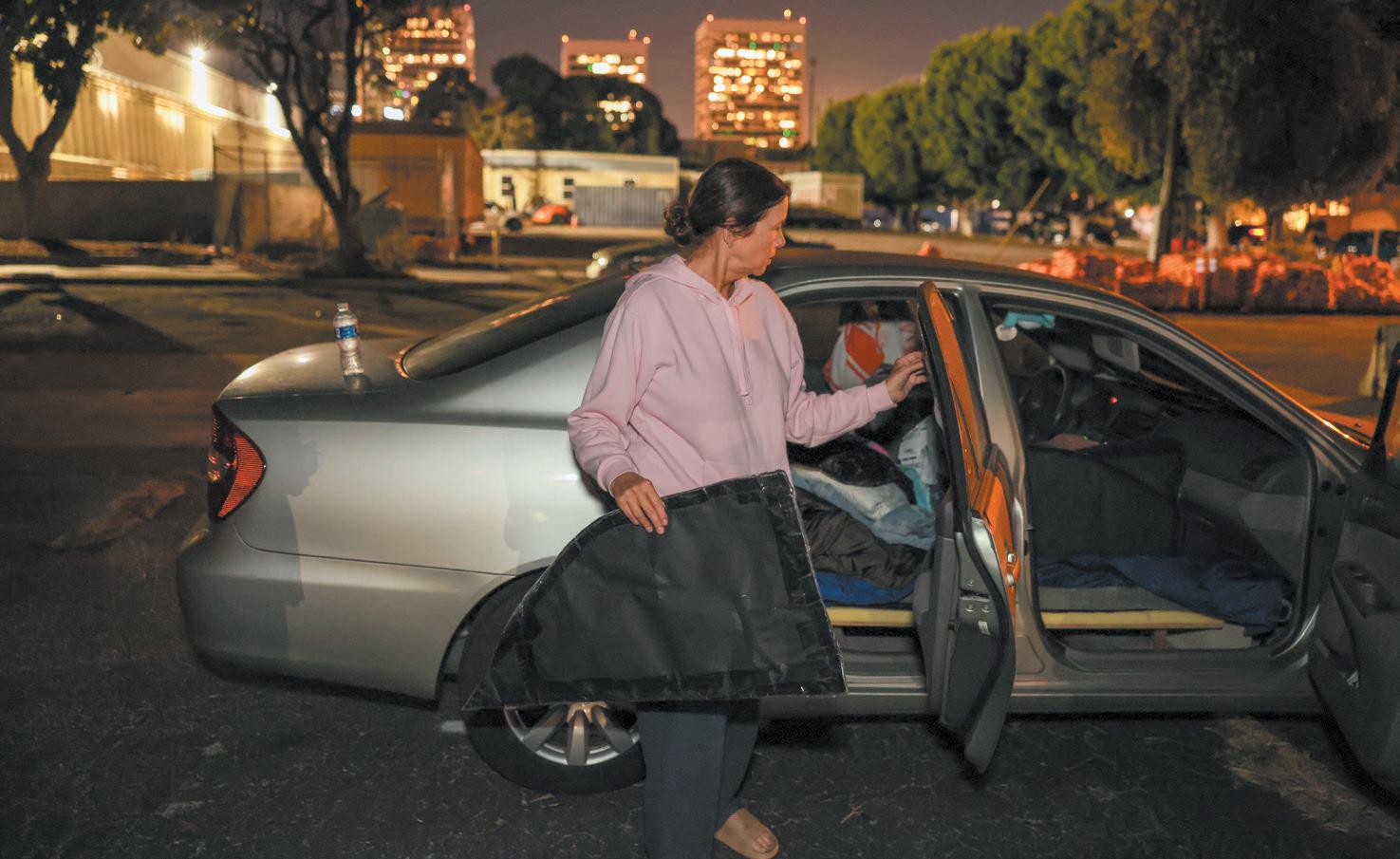
She removed the front passenger seat and installed a piece of plywood as a base for a thin mattress, a piece of upholstery foam, and a sleeping bag.
“So that’s it,” says Sundog, demonstrating how she stretches out with her head toward the back of the car and her feet near
the dashboard. She motions to a jumble of empty plastic cups and a lunch cooler on the back seat. “That’s usually a little neater over there. But it just is what it is.”
Sundog has been living out of her car since Christmas Eve of last year, a present she says she gave herself after leaving a living situation with an alcoholic roommate. For a few months, she parked near the beach, trying to stay under the radar but always worrying about her safety. Then she learned about Safe Parking LA, which provides safe overnight parking for people who
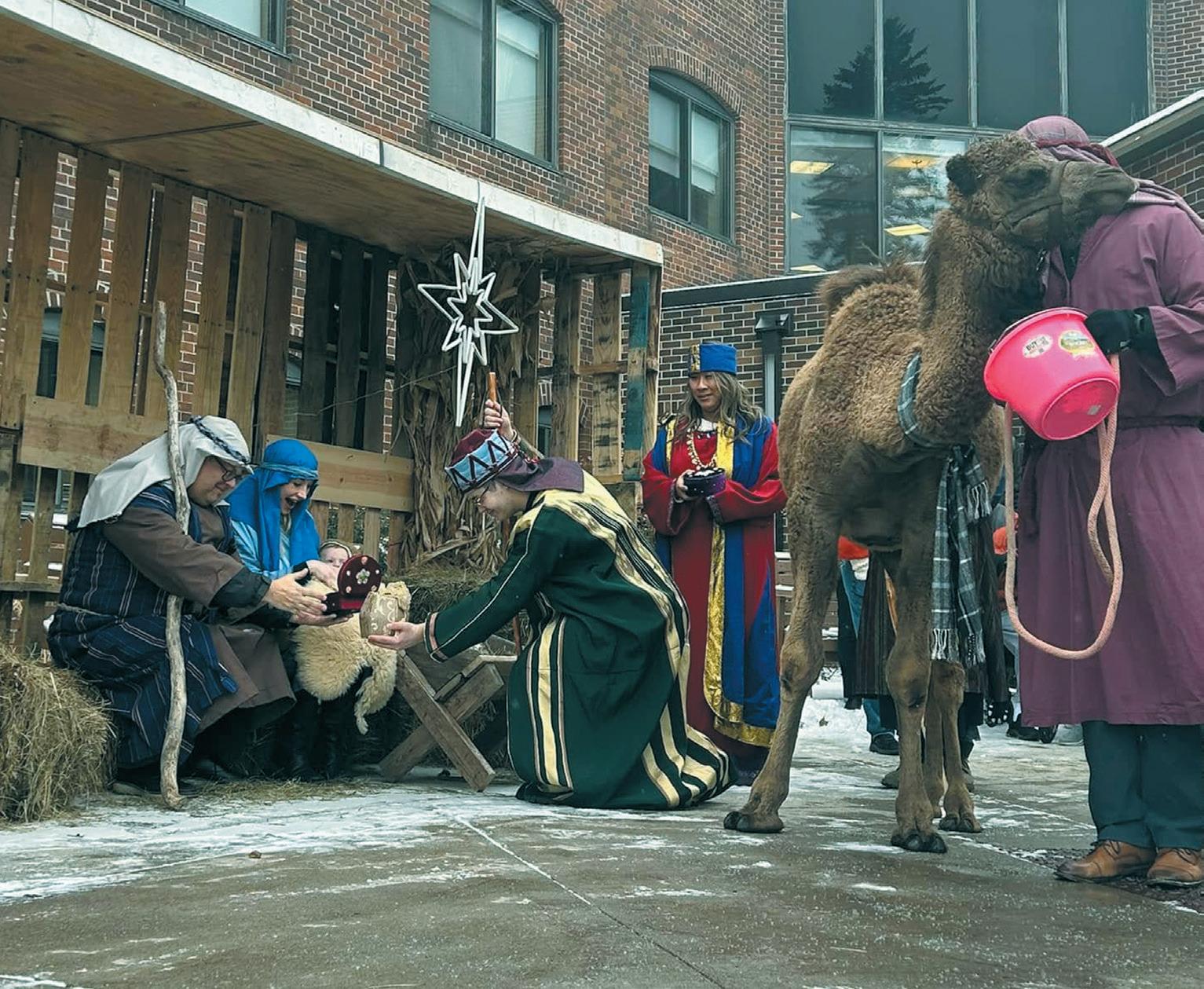
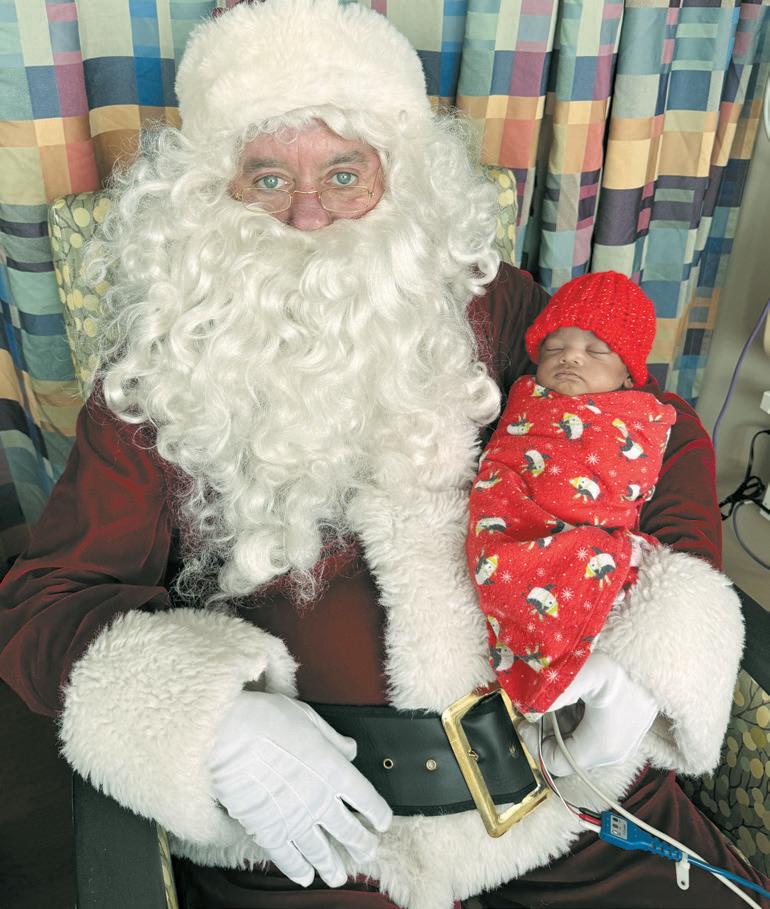
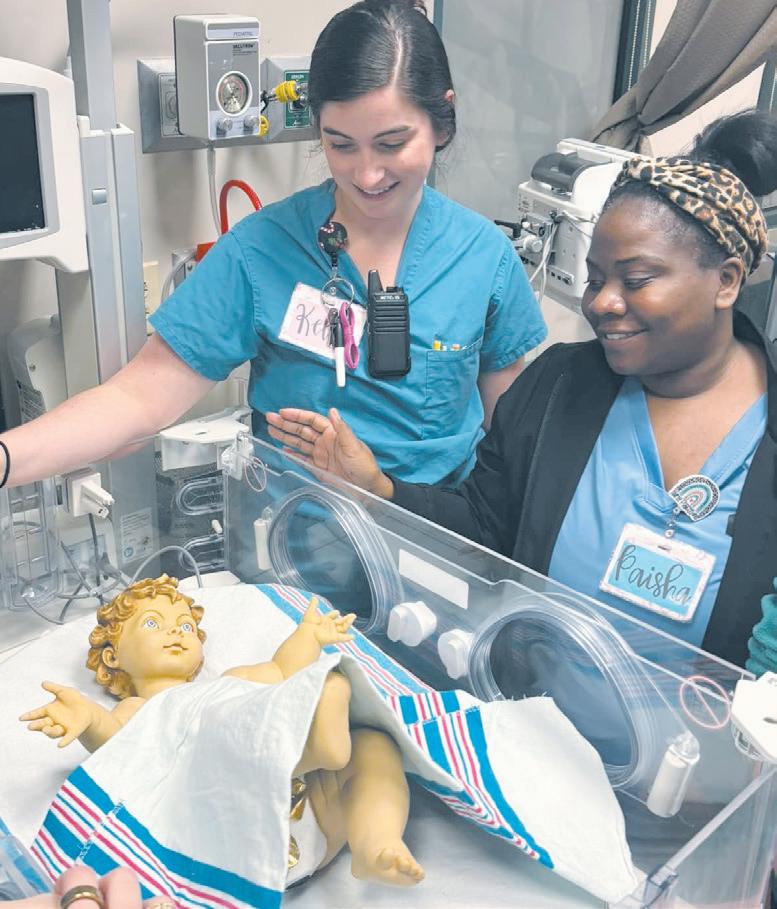
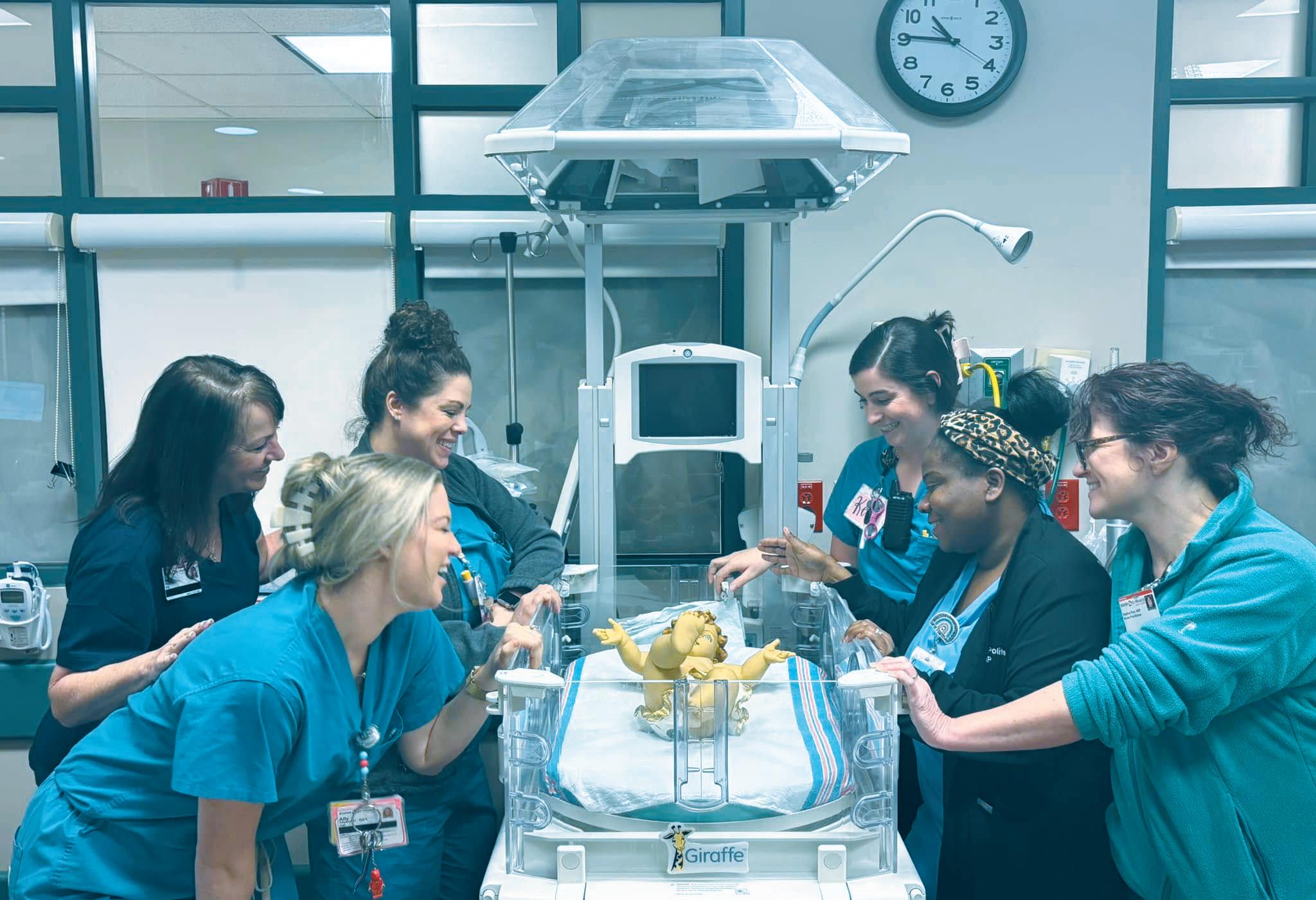
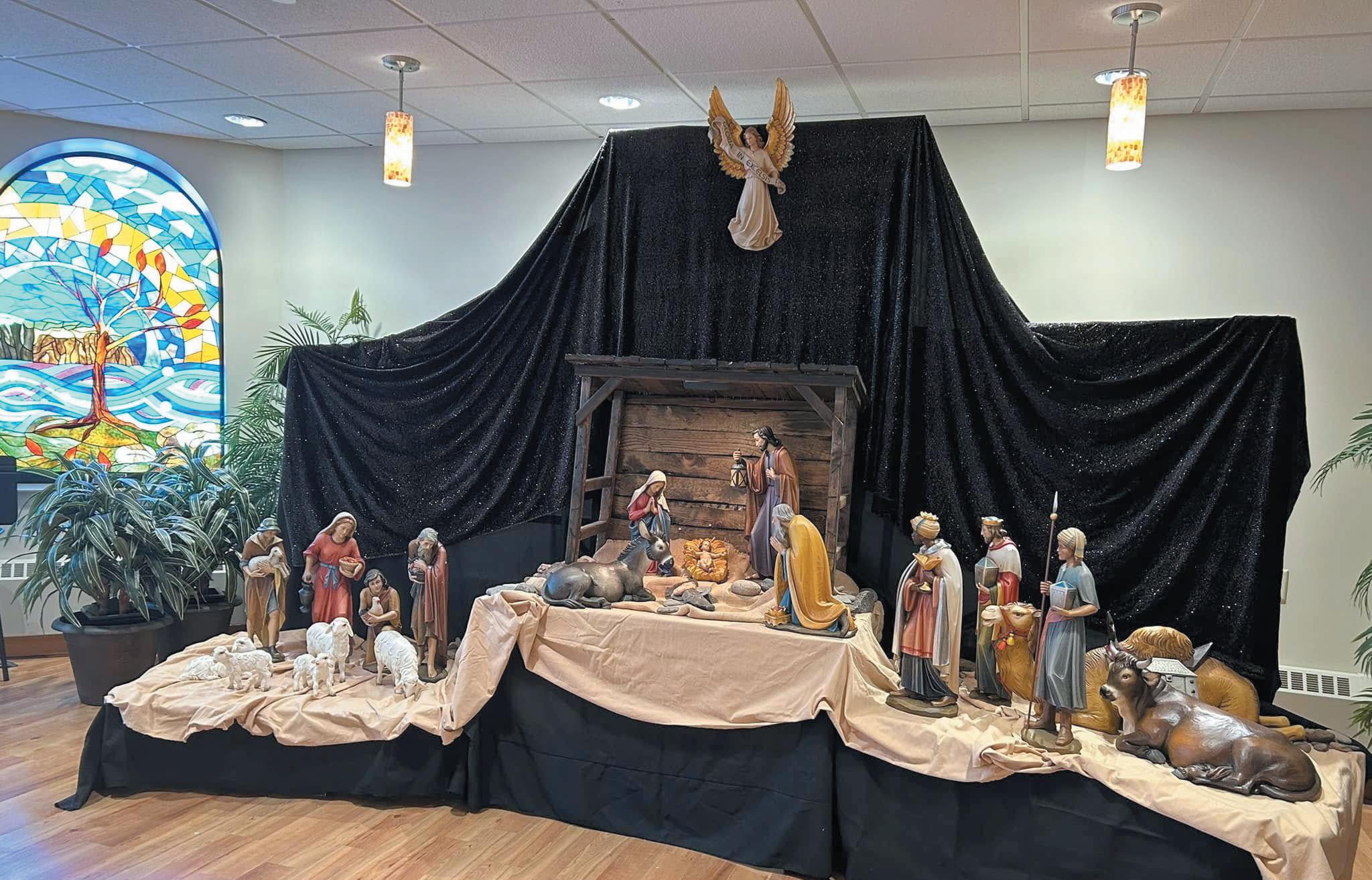
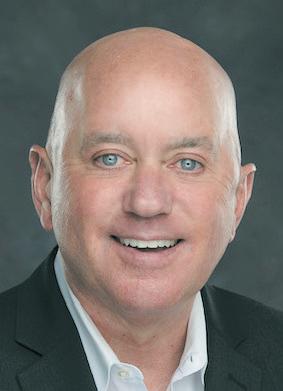
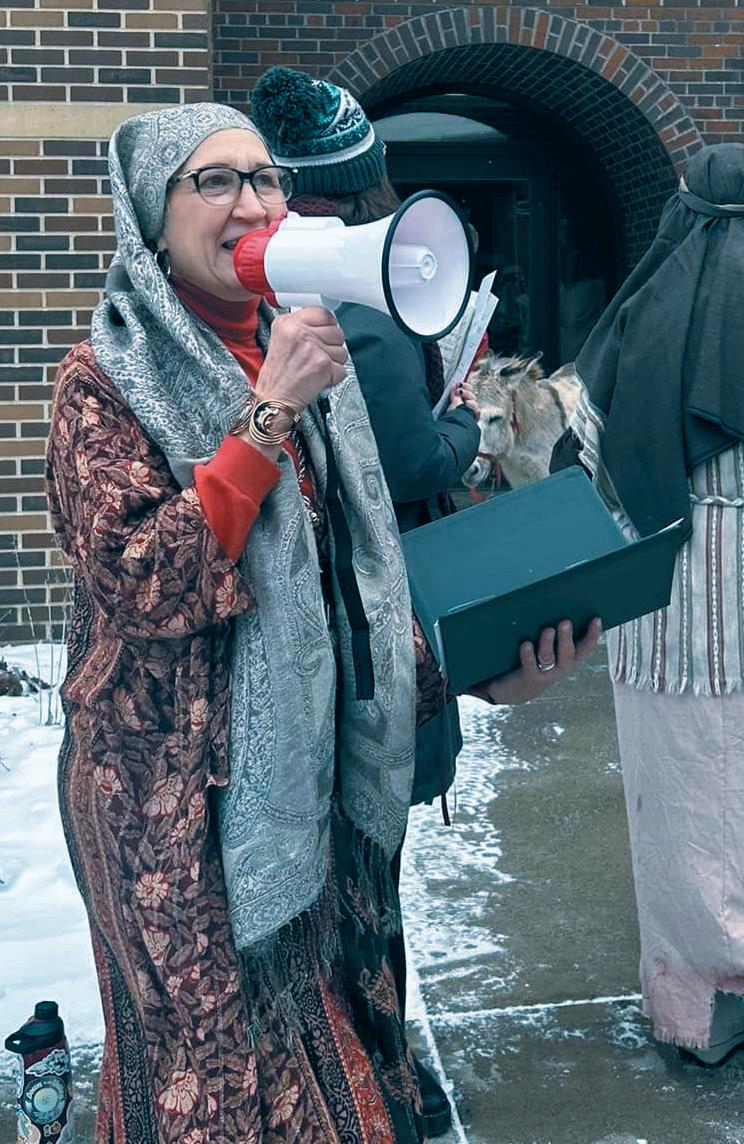
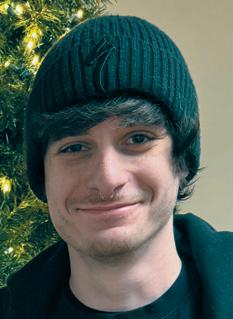
Top: Residents and staff of Benedictine Living Community — Duluth in Minnesota — joined by a camel with a very large personality — present a living Nativity during the 2024 Advent season. Bottom left: Greg Phelps, in his Santa suit, holds a baby in the neonatal intensive care unit at Ascension SE Wisconsin Hospital — St. Joseph. His son Kyle, 27, spent time in the same NICU when he was born. Bottom right: Kelli Grevey, left, and Paisha Thaxton-Polite, nurses at Bon Secours St. Francis Hospital in Charleston, South Carolina, stand by a statue of the baby Jesus in the nursery. The statue is delivered to the hospital’s Nativity every Christmas.
A woman who goes by her artist name, Sundog, demonstrates how she covers the windows of her 2003 Toyota Camry for sleeping overnight at a parking lot in West Los Angeles. A nonprofit called Safe Parking LA provides a security officer, bathrooms and support at lots for people who live out of their vehicles.
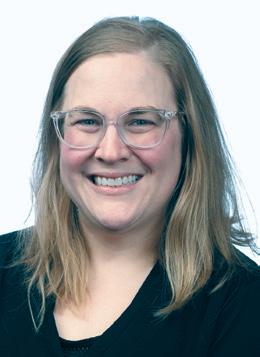
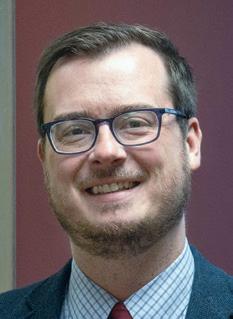
McCormack
Combatting misinformation
Look to Catholic social teaching to foster trust, promote health equity, and support public health in an age of medical skepticism, a theological ethicist at Boston College urges.
Catholic response to storm Catholic health systems and relief agencies with relationships in the Caribbean stepped up relief efforts after Hurricane Melissa left a path of destruction in the region.
Path to sainthood
A mission leader at Mercy College of Health Sciences in Des Moines, Iowa, is guiding the process to advance the sainthood cause of Servant of God Annella Zervas.
Christmas story challenges all to creatively and compassionately find ways to help those in need
By OREST HOLUBEC
2025-2026 Chairperson
CHA Board of Trustees
Chief mission experience officer
Providence St. Joseph Health
“She wrapped him in swaddling clothes and laid him in a manger, for there was no room for them at the inn.” (Luke 2:7)
This passage is rich with interpretations and theories, shedding light on the historical context and circumstances of that day. It also feels strikingly familiar to the challenges facing Catholic health care today.
What we know is that Mary and Joseph embarked on a journey to Bethlehem, driven by a census decreed by the emperor. They were not alone in this venture; throngs of others made their way to the town, all in search of accommodations, stretching Bethlehem’s limited resources to their breaking point.
Upon their arrival, Mary and Joseph faced the harsh reality that there was no room for them “at the inn.” In those times, an inn likely referred to a home offering simple lodgings for travelers. Bethlehem was teeming with people returning to their ancestral homes for the census, and all available rooms were claimed by weary travelers, a scene that mirrors the crowded emergency departments and full hospital beds at many of our Catholic health care ministries. The landowners who took in
IN BRIEF
CHRISTUS Health partners with church to give away 900 turkeys
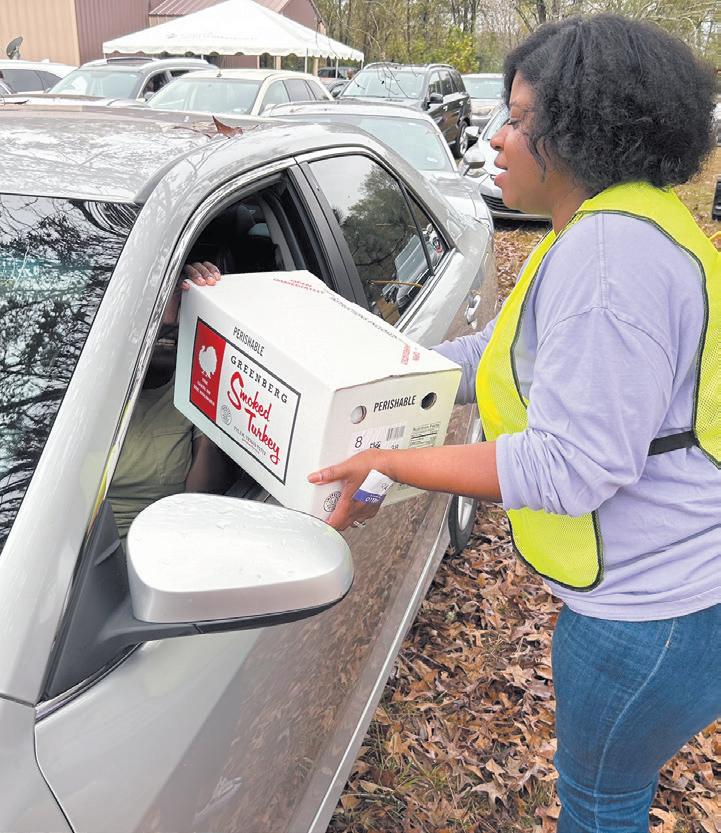
A partnership between CHRISTUS Health and Oak Grove Church of God in Christ in Tyler, Texas, resulted in a donation of 900 fully cooked turkeys to the local community as part of their Thanksgiving Turkey Giveaway.
This is the fifth year that CHRISTUS has paired up with a local church for the event. More than 75 CHRISTUS volunteers were on hand at the distribution.
“This outreach is such a privilege to be a part of, as it brings the community together and ties into our mission, to improve food access in our community and surrounding areas,” said Liz Shelton, an administrator at CHRISTUS Mother Frances Hospital in Tyler.
Hundreds of cars lined up, some as early as 4 a.m. for the drive-thru distribution.
“God is multiplying our efforts, and we can feed almost 9,000 people by giving out these turkeys. This is what ministry is all about,” said Cedrick Granberry, a leadership council member for CHRISTUS Mother Frances Hospital and a minister at
travelers in that era likely tended to animals and maintained stables on their property. Mary and Joseph found refuge in such a stable, and the story unfolds from there: “Away in a manger, no crib for a bed, the little Lord Jesus laid down his sweet head.”
Knowing those details, let’s imagine what happened between the time they were turned away by the innkeeper and the time they found themselves in that stable. After multiple rejections, did they sneak into a stable out of desperation, hopeful to make it through the night without being kicked out? Or, perhaps, were they not turned away, but instead offered the only available space protected from the elements by a compassionate innkeeper whose beds were occupied by others in need?
I choose to believe that a compassionate and overwhelmed innkeeper, struggling with the desire to meet seemingly unlimited needs with very limited resources, did his best to accommodate Mary and Joseph, just as our caregivers strive to find creative ways to serve every patient who comes to us, even when space, resources and staff are stretched thin. Instead of sending Mary and Joseph to the inn next door to face another rejection, he offered his humble stable, and seeing that Mary was pregnant, cleaned a manger as best he could and filled it with fresh hay in preparation for her soon-to-beborn child.
The inspiring work of a nurse manager at one of our Providence ministries brings this story to life for me. At this ministry, patients used to have to wait for hours in a crowded emergency department waiting room, while behind closed doors, caregivers
A
Oak Grove Church of God in Christ.
To see more examples of CHA members’ good works during the season of giving, go to chausa.org/chw.
Franciscan Missionaries of Our Lady
Health System is now FMOL Health Franciscan Missionaries of Our Lady Health System has changed its name to
served those they could with limited beds. The nurse manager recognized that there was “no room for them at the inn” but was not satisfied, knowing we could do more to help those waiting. She persuaded leadership to allow a nurse and physician team to leave the confines of the emergency department and venture into the waiting room, where licensed spaces were established right by the door. There, they assess and treat patients, ensuring lab tests and other needs are addressed before a bed becomes available. Just as the innkeeper creatively offered refuge in a stable to Mary and Joseph amidst limited resources, the nurse manager stepped up to meet the challenge of caring for patients despite overcrowding.
As we reflect on the humble beginnings of Christ’s birth and the unwavering dedication of Catholic health caregivers who live out the mission, we are reminded that the essence of compassion and justice lies in the willingness to find solutions and offer solace even when resources are stretched thin. Just as the innkeeper may have offered shelter in a stable to Mary and Joseph, our health care ministries strive to recognize dignity and provide care for all in the face of overwhelming demands. This story of innovation and compassion, animated by the nurse manager and her team, echoes our commitment to see the face of Jesus in every person we serve. In this season of birth, hope and renewal, may we be inspired to continue opening our hearts to all who seek comfort and healing, embodying the spirit of the Nativity through acts of kindness, creativity, and compassion.
Merry Christmas!
FMOL Health.
The health system based in Baton Rouge, Louisiana, announced the change Nov. 3. The system serves communities in Louisiana and Mississippi.
In a press release unveiling the brand change, FMOL Health said the new name “publicly unifies the health care system’s network of hospitals, clinics and care facilities throughout the Gulf South. While local markets have always been a part of the larger network of care, this move provides better clarity to the alignment between the health system and its facilities.”
EJ Kuiper, president and CEO of FMOL Health, said in the release: “For over 113 years FMOL Health has brought bestin-class care to the communities we are privileged to serve. We are excited to introduce our new brand that honors the commitment to health care excellence in each of our markets, while emphasizing the strength of one unified regional health system.”
FMOL Health said the new brand will be rolled out across all physical locations, digital platforms and patient materials in the coming months. The system will merge its new name with those of its hospitals and clinics.
The Seventh Edition of the ERDs: What You Need to Know CHA member-only webinar Dec. 11 | 1 – 1:45 p.m. ET
Gathering Graces as Pilgrims of Hope: What does hope look like at the close of the Jubilee Year? Dec. 16 | 1 – 2 p.m. ET
United Against Human Trafficking Networking Call Jan. 22 | 1 – 2 p.m. ET
Foundations of Catholic Health Care Leadership — Live Thursdays Jan. 29 to March 19 | 1 – 3:30 p.m. ET
Palliative Care Financial Sustainability — Updates to the 2026 CMS Physician Fee Schedule Feb. 2 | 2 – 3 p.m. ET
Opinions, quotes and views appearing in Catholic Health World do not necessarily reflect those of CHA and do not represent an endorsement by CHA. Acceptance of advertising for publication does not constitute approval or endorsement by the publication or CHA. All advertising is subject to review before acceptance.
Vice President Communications and Marketing
Brian P. Reardon
Editor Lisa Eisenhauer leisenhauer@chausa.org 314-253-3437
Paulo Pontemayor Debbie Rayhab Brian Reardon Diarmuid Rooney Amanda Schreier Kim Skinner
Lisa Smith Indu Spugnardi Lucas Swanepoel Betsy Taylor Sheryl Ullrich JoJo Weatherspoon Dyana White
“May
the God of hope fill you with all joy and peace in believing, so that you may abound in hope by the power of the Holy Spirit.”
— ROMANS 15:13
May the LIGHT OF
shine brightly in your heart this season, bringing peace, healing, and lasting joy.
This Christmas, may the light of the Incarnate Word shine brightly in your heart, bringing peace and joy to you and those you love.
Thank you for your faithful service and compassion throughout the year — may God’s love surround you now and always.
Merry Christmas
stained glass windows from the main chapel of the Casa de Retiros Verbo Encarnado. Pachali, Guatemala.
As we honor the birth of our Lord, may God’s grace be with you this Christmas and throughout the New Year. For today in the city of David a savior has been born for you who is Messiah and Lord. - Luke 2:11
The Promise ofJoy
ROMANS 12:12
REJOICE IN HOPE, BE PATIENT IN TRIBULATION, BE CONSTANT IN PRAYER.
As we celebrate the birth of Christ, we hold close the hope and joy His love brings to the world. Wishing you a blessed Christmas and a new year filled with faith, peace and joy.
Wishing you peace, joy and hope this Christmas
O come let us adore the wonder of His creation this Christmas season and every day.
At Ascension, our caregivers, support teams and subsidiaries join together in gratitude for the gift of community. May the love of Christ fill your heart this season and guide us in answering God’s call to bring health, healing and hope to all.
O come, all ye faithful, joyful and triumphant, O come ye, O come ye to Bethlehem; Come and behold Him, born the King of angels; O come, let us adore Him, O come, let us adore Him, O come, let us adore Him, Christ, the Lord!
“Fear not: for, behold, I bring you good tidings great joy of
And the angel said unto them, which shall be to all people.”
- Luke 2:10
May this season of joy bring good health to you and all those you touch. Warm wishes for a blessed new year.
Be Still
May the peace of our Holy Savior comfort and guide you this holiday season and always.
From your friends at Avera, we wish you a Merry Christmas and a hope-filled year to come.
“The light shines in the darkness, and the darkness has not
overcome
it.”
John 1:5
From a humble manger came the light that heals our deepest wounds. This Christmas, we celebrate the gift of light that shines in every caregiver and every moment at Providence St. Joseph Health.
Now there were shepherds in that region living in the fields and keeping the night watch over their flock. The angel of the Lord appeared to them and the glory of the Lord shone around them, and they were struck with great fear. The angel said to them, “Do not be afraid; for behold, I proclaim to you good news of great joy that will be for all the people.” – Luke 2:8-10 (NAB)
Last Christmas Eve, Pope Francis announced the Jubilee Year of Hope as he opened the Holy Door of St. Peter’s Basilica, a door he would not live to see closed. Possibly, this is his prayer for us, our communities, and for all the people, that we might never close this door. Christmas blessings, Covenant Health
Caring for our communities in Minnesota, North Dakota & Wisconsin covenanthealth.net
“So now faith, hope, and love abide, these three; but the greatest of these is love.” – I Corinthians 13:13
Hospital Sisters of St. Francis celebrate 150-year legacy
By VALERIE SCHREMP HAHN
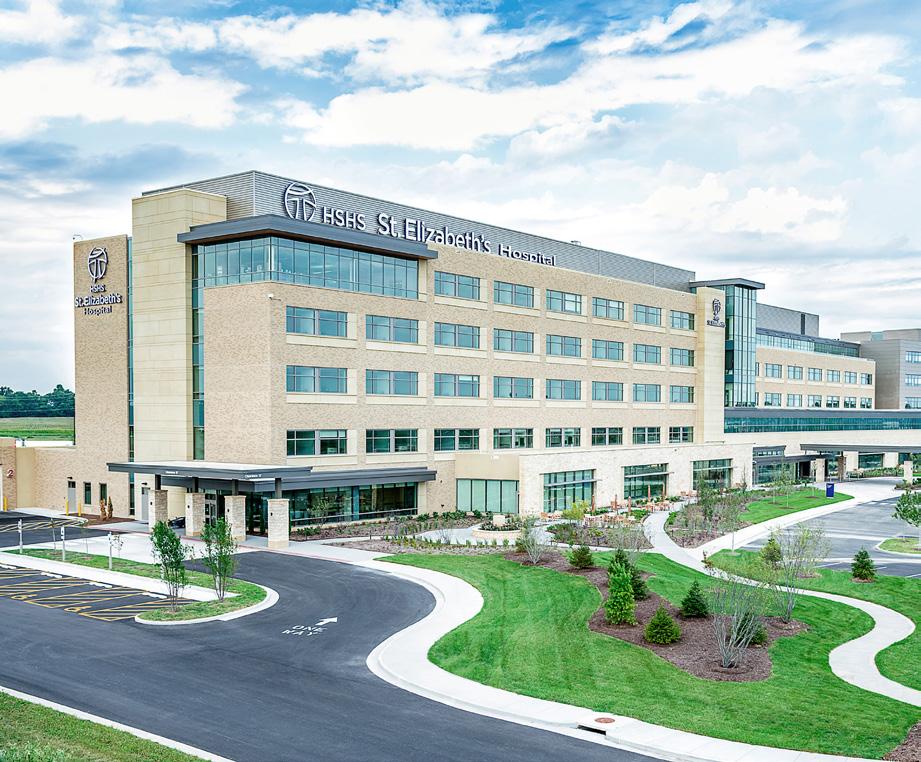
O’FALLON, Ill. — Almost exactly 150 years after the first Hospital Sisters of St. Francis arrived in Illinois from Germany to start what became Hospital Sisters Health System, a group of more than 30 members of the congregation gathered here from nearby and around the world to celebrate — and cheerlead. “Thank you for all you do,” said Sr. Ann Pitsenberger as she toured the women and infants center at HSHS St. Elizabeth’s Hospital on Nov. 7 with two sisters from Japan and a fourth from Germany. “We appreciate all of you carrying on what we began.”
The Hospital Sisters of St. Francis’ visit culminated a year of celebrations for Hospital Sisters Health System, which has 13 hospitals and more than 130 health centers and clinics throughout Illinois and Wisconsin.
In early November, 16 sisters arrived in Springfield, Illinois, the congregation’s base in the United States, from Germany, Japan, Poland and India — the other nations where the congregation has provinces — to celebrate with their counterparts in America.
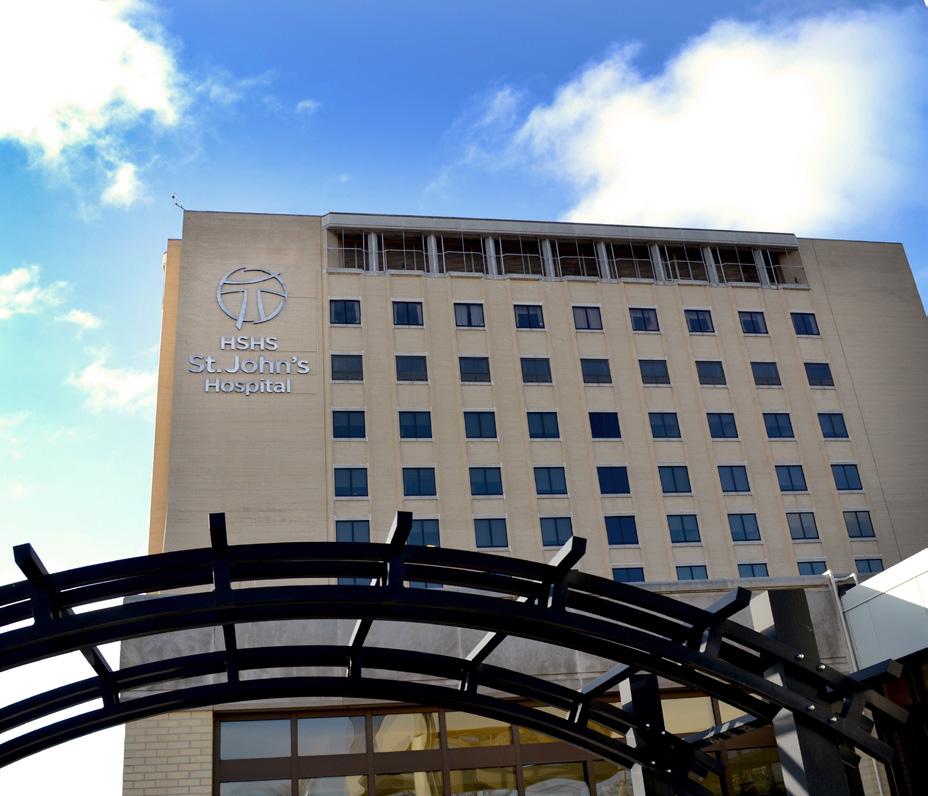
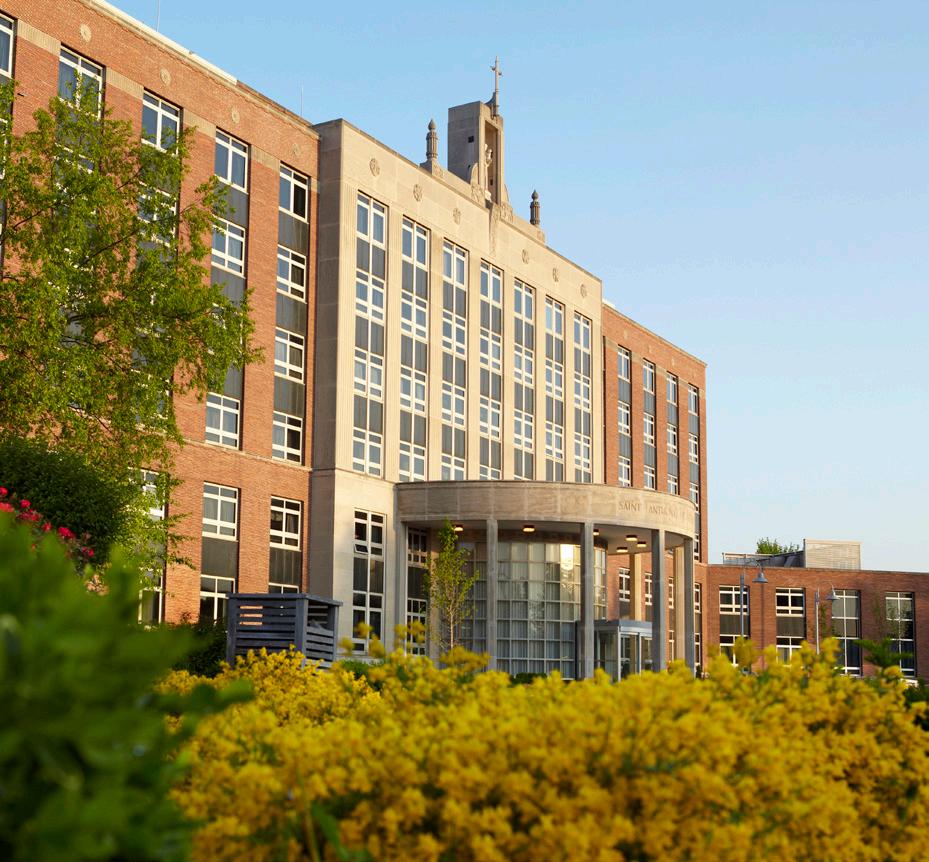
The visit marked the 150th anniversary of the congregation in America and of the original four hospitals, all in Illinois, in the health system: HSHS St. Elizabeth’s, HSHS St. John’s Hospital in Springfield, HSHS St. Francis Hospital in Litchfield, and HSHS St. Anthony’s Memorial Hospital in Effingham. HSHS St. Mary’s Hospital Medical Center in Green Bay, Wisconsin, is celebrating its 125th anniversary.
In an interview prior to the sisters’ visit, HSHS President and CEO Damond Boatwright said the year has been one of celebration and reflection. “I’ve been able to see the best of our ministry as a result of this,” he said. “With the celebration, I’ve also seen an outpouring of gratitude to the sisters for the legacy that they are now leaving us.”
A journey of faith
The sisters’ story is one Boatwright gets to tell repeatedly as he and others at HSHS strive to carry on their legacy of healing.
In 1844, the congregation of the Hospital Sisters of the Third Order Regular of St. Francis was founded in Telgte, Germany, to care for the sick. Over time, the sisters wanted to expand their ministry. In 1875, Bishop Peter Baltes of Alton, Illinois, invited them to his diocese. That Oct. 16, 20 sisters set sail from Rotterdam in the Netherlands. During the voyage, they endured seasickness, storms and even a hurricane before arriving in New York harbor on Nov. 4. From there, they traveled two days by train to Alton and then by wagon to the cathedral, where Bishop Baltes welcomed them to America and his diocese.
The bishop told the sisters they would need to learn English. “He said we should often use the word ‘alright’ in all situations of life,” the diary of one of the sisters says. “We should say, ‘alright, alright.’ Then we would accept crosses, sufferings and everything else as coming from the hand of God.”
Within days, the sisters fanned out into Illinois and established hospitals, most of them in small homes. Over the ensuing years their ministries spread throughout the state and into Wisconsin, Indiana, Missouri, the Southwest and across the globe.
The story amazes Boatwright. He points out that the women, some in their teens,
left their families to travel to a foreign land and serve others who did not speak their language. Though they were welcomed by many, others didn’t embrace Catholics, he said.
“I think they made believers out of even the skeptical people at the time because of their unwavering purpose, which is to serve those who had never even heard their names.
“I think they opened up hands and opened hearts as a result,” he continued. “And the community responded in kind by valuing their presence.”
In 1886, the sisters opened the St. John’s College of Nursing in Springfield, and it remains the oldest Catholic hospital-
““I think
they made believers
out of even
the skeptical
people
at the time because of their unwavering purpose, which is to serve those who had never even heard their names.”
— Damond Boatwright
affiliated nursing program in the United States. Boatwright pointed out that the school of nursing is a solid example of continuing the legacy of the sisters, who worked as nurses. He also pointed out that Hospital Sisters Mission Outreach, the global aid ministry of the sisters, makes dozens of shipments of medical supplies around the world each year.
“How do we recognize what the sisters did 150 years ago, when they came over on the boat to help us?” he said. “We’re going across the ocean to help others in very similar ways.”
An international celebration
The sisters’ recent visit to O’Fallon was to the system’s newest hospital. It opened in 2017 after moving from nearby Belleville, where it was originally in a two-room house. The visit included small group tours of the hospital, an unveiling of a statue of St. Elizabeth in the lobby, a look at renderings of a planned $116 million campus expansion, and a Mass celebrated at nearby St. Clare of Assisi Catholic Church. Plans for the week included a tour of the Heritage Museum in Springfield and even a drone show at the motherhouse.
The sisters had traveled by plane and by coach — undoubtedly an easier journey than that of their predecessors, they said.
Sr. Maureen O’Connor, superior of the order in America, said that this year on the 6th of each month — the day of the month the 20 founding sisters arrived in Alton — the sisters gathered to read from the founding sisters’ diaries and letters.
“I think all of the sisters in America have felt a real deep connection with these women,” she said.
Sr. M. Margarete Ulager, general superior of the order, said that in October, she and other sisters from Germany traveled to Rotterdam to stand at the seashore and say the founding sisters’ names out loud.
She recalled the bishop’s advice to them, to use the words “alright, alright,” as they accepted God’s challenges. She asked those in today’s ministry to do the same.
“We came to honor our sisters here present, those who are now in the mystery of eternity, but also to honor all those workers, employers and those who are taking up the
Community celebrations
Each Hospital Sisters Health System hospital has marked its anniversary with a Mass celebrated by a bishop and by hosting events, such as picnics and special meals for colleagues. Other events have been unique, such as:
In Effingham, Illinois, the final in a series of mosaic panels created by Dr. Ruben Boyajian, a general surgeon, was unveiled at HSHS St. Anthony’s Memorial Hospital. The final panel commemorates a fire at the hospital in 1949 that resulted in 77 deaths, including 11 infants. The sisters turned their convent into an emergency hospital until a new hospital was built.
In Litchfield, Illinois, the Litchfield Museum and Route 66 Welcome Center put up a display to feature a history of HSHS St. Francis Hospital. The hospital auxiliary also published a special edition cookbook in honor of the anniversary with more than 300 recipes from people affiliated with the hospital and system.
In Springfield, Illinois, a virtual version of a Heritage Museum at the St. Francis Convent opened in March. Visitors to the website can “tour” the rooms and displays to learn about the sisters and their ministries. One exhibit features a bronze sculpture depicting the sisters caring for Mary Todd Lincoln, the widow of President Abraham Lincoln, during the last years of her life.
In Green Bay, Wisconsin, colleagues at HSHS St. Mary’s and St. Vincent Hospitals collected food and clothing for local organizations that help families in need, organized a community coloring contest and crafted a historical timeline of the hospital. St. Mary’s was founded by the Sisters of Misericorde. The Hospital Sisters of St. Francis assumed sponsorship in 1974.
responsibility and carrying our
and heritage into the
Sr.
said. “We can’t express enough how grateful we are.” vhahn@chausa.org
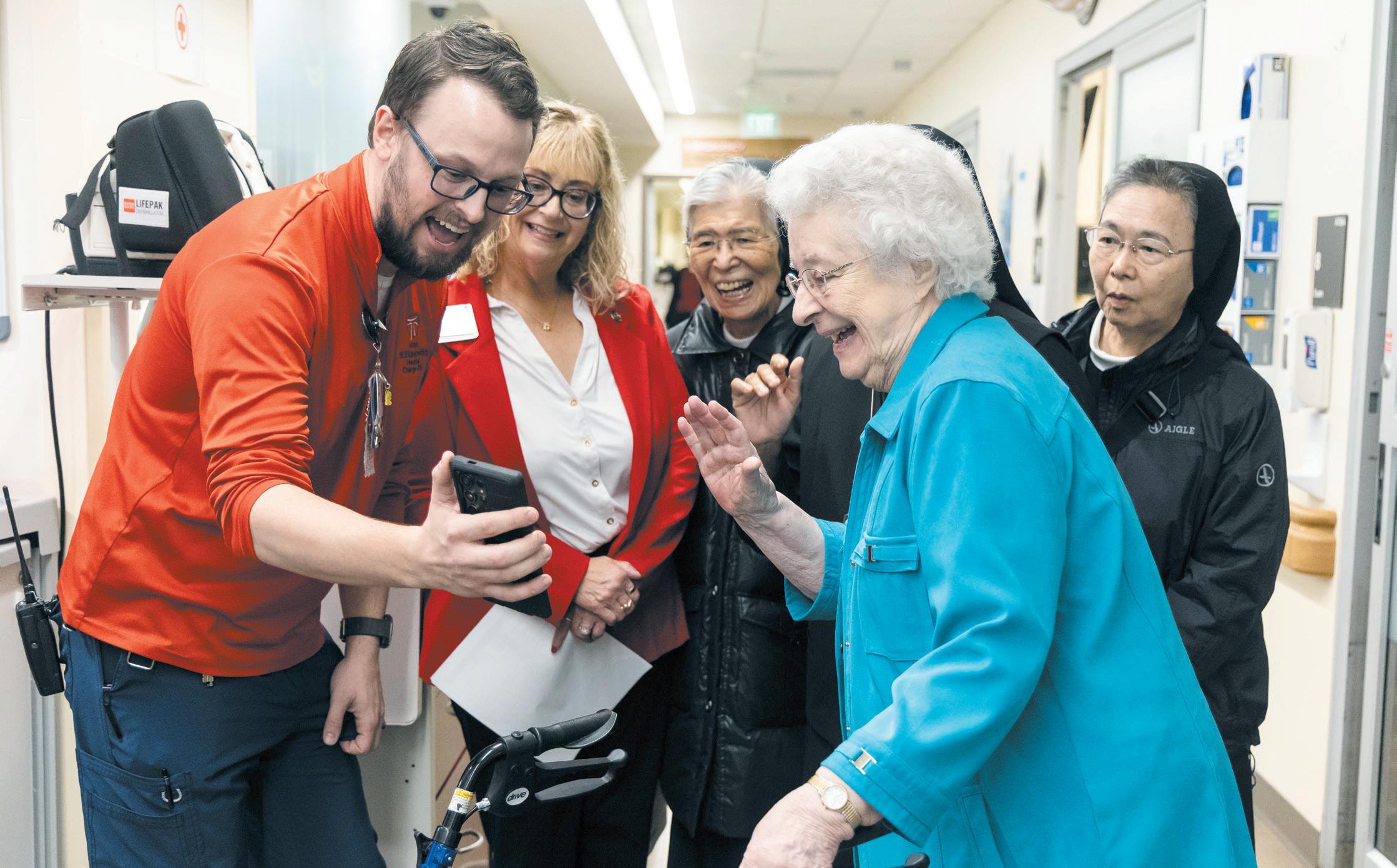
Bradley Goetting, emergency room charge nurse at HSHS St. Elizabeth’s Hospital in O’Fallon, Illinois, shares his phone so Sr. Ann Pitsenberger, in blue, and others can say hello to his 1-year-old daughter, Maezy.
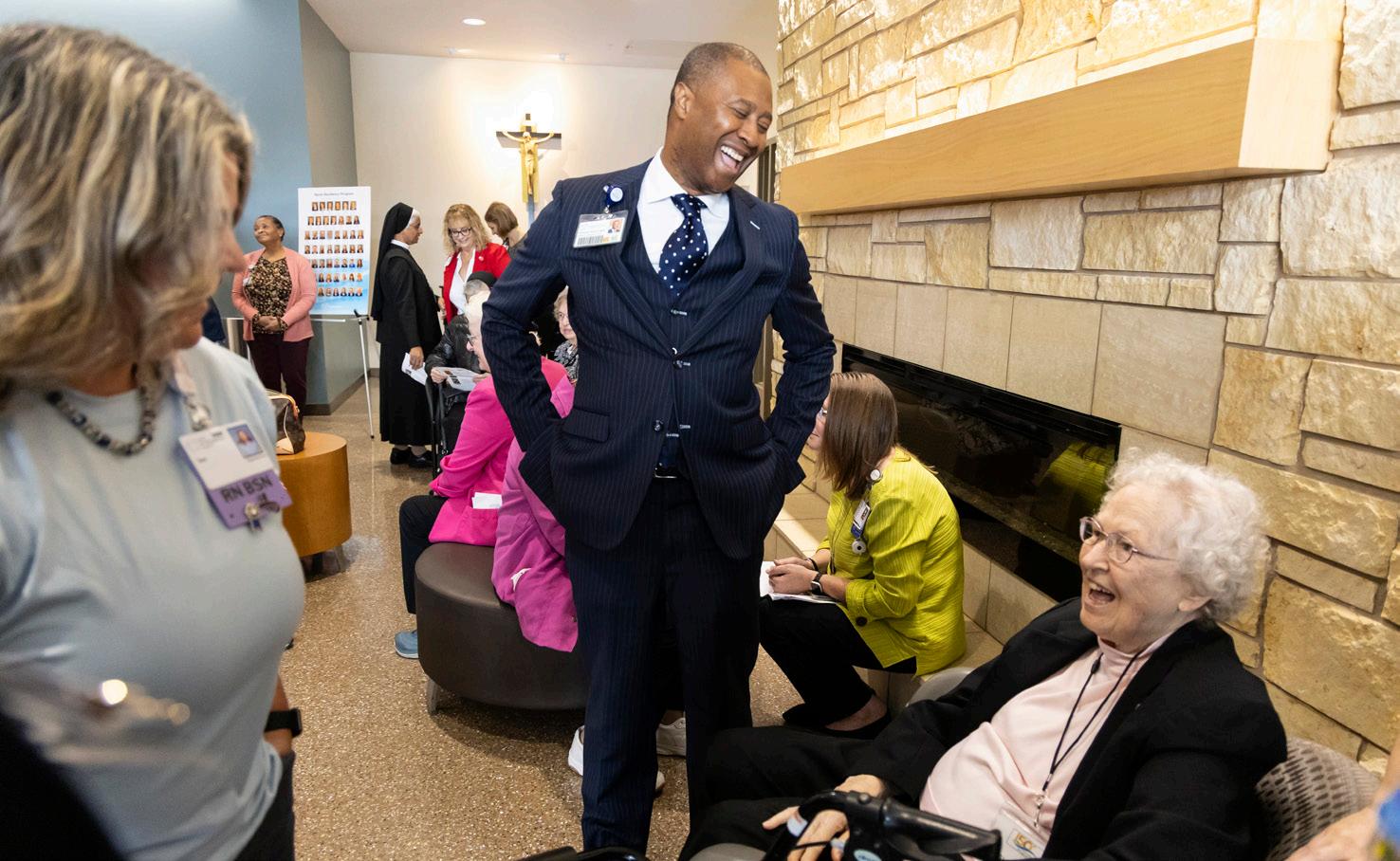
Hospital Sisters Health System President and CEO Damond Boatwright jokes with Sr. JoAn Schullian while Tara Riesenberger, nursing educator, looks on.
Photos by Jerry Naunheim Jr./@CHA
legacy
future,”
Ulager
Bishops’ updated health care directives revise language and guidance
The updated Ethical and Religious Directives for Catholic Health Care Services approved by the United States Conference of Catholic Bishops on Nov. 12 revise language and guidance on providing care, especially to transgender persons.
However, a CHA ethicist says the revisions continue to uphold Catholic health care’s commitment to care for all. “The changes reflect already established church teaching,” said Nathaniel Hibner, senior director of ethics for CHA.
Hibner thinks those who have not been involved in the revision process, which began in June 2023, will be surprised by the extent of the changes, even though the revisions don’t mandate material changes to current clinical practice.
The updates “reaffirm the church’s teaching on the dignity of all persons and their right to life from conception to natural death,” according to a statement from CHA President and CEO Sr. Mary Haddad, RSM. CHA ethicists, other staffers and members provided written commen -
tary throughout the revision process, as did other Catholic health care and ethics groups.
This is the seventh revision to the ERDs, which were first written in 1921 as a short set of ethical norms for Catholic hospitals.
The USCCB issued the last edition in 2018 and addressed issues surrounding institutional partnerships and Catholic identity.
Regarding care for transgender persons, Hibner said the latest revisions are consistent with the current position of Catholic health care providers, who do not perform sex reassignment surgeries, elective surgeries, or other procedures to alter or remove sexual organs that are otherwise healthy.
A theological note issued by the USCCB’s Committee on Doctrine in 2023 addressed many of the issues about transgender care.
The directives encourage Catholic health care providers to offer emotional and psychological support, cognitive behavioral therapy and/or spiritual care for transgender persons and their families.
“Catholic providers will continue to welcome those who seek medical care from us and identify as transgender,” Sr. Mary said in her statement. “We will continue to treat
these individuals with dignity and respect, which is consistent with Catholic social teaching and our moral obligation to serve everyone, particularly those who are marginalized. Catholic health care will also continue to advocate for the right of everyone to access high-quality health care.”
The USCCB revised a directive about procured abortion to reflect language used in an encyclical issued by Pope John Paul II in 1995. Catholic health care providers do not perform direct abortions, and the revised ERDs do not prohibit clincians from providing medically indicated care to a woman who is suffering from serious or life-threatening conditions during her pregnancy.
Other language changes include updates to clinical terminology, such as referencing people with a “neurological injury” instead of in a “persistent vegetative state.”
CHA will continue to communicate with members about the revisions through webinars, articles and podcasts. CHA will also update its annotated version of the ERDs.
Hibner said the ERDs do not give answers for every scenario: The document is meant to be a succinct guide for health care professionals to understand the immediate concerns or goals when they face ethical issues in care. He noted that ethicists and mission leaders can provide further guidance.
Hibner pointed out that as medicine and science evolve, the document will be updated again.
Hibner said that the document’s introductions outline teachings and scripture on topics like human dignity, the common good, justice and free will, and that those lasting values guide what is in the directives.
“We’re upholding the beliefs that get outlined in the introductions,” he said. “So those beliefs continue, even in this revision.”
ERDs history
Understanding what the ERDs are, how they have been revised, and what themes are emerging in the current version is essential for all those serving in Catholic health care today, Hibner writes in a column for Health Progress chausa.org/hp
150 Years of Healing, Guided by Faith.
The Legacy Continues—in Our Hands.
One hundred and fifty years ago, twenty Hospital Sisters of St. Francis crossed an ocean to answer a call.
They left their homeland in Germany and arrived in Illinois, carrying little more than faith, courage and a mission: to care for the sick, the poor and the forgotten.
From those humble beginnings grew a ministry that has touched countless lives—from the first Catholic nursing school in America to 13 hospitals and hundreds of care sites across Illinois and Wisconsin.
Today, that same spirit lives on in every HSHS colleague, nurse, physician and volunteer. In every act of compassion, in every moment of healing, we carry forward the Mission the Sisters began in 1875—a mission rooted in love, dignity and the healing presence of Christ.
As we close our 150th anniversary year of our four founding hospital locations, we honor the past, celebrate the present, and look forward with hope to the next 150 years of service.
Because the Mission they began lives on—in our hands.
We are Hospital Sisters Health System.
Hibner
Sr. Mary
Safe Parking LA
are living in their vehicles and connects them with resources to help them return to permanent housing.
“I love the security guard,” says Sundog, who works for a nonprofit doing cleanup along the beach during the day. “Now here, I do not feel unsafe. At all. I felt unsafe everywhere when I was out.”
Sundog is staying the night in West Los Angeles, in a parking lot owned by the city but used in a special agreement with Safe Parking LA.
Currently, Safe Parking LA operates in the San Fernando Valley, Hollywood, Downtown Los Angeles, and West Los Angeles, including on the campus of the Veterans Affairs Medical Center. The group plans to open a women-only parking lot with inclusive services such as traumainformed care. Dignity Health, a member of CommonSpirit Health, recently awarded $250,000 for that program through the health system’s Homeless Health Initiative.
The group is also supported locally by Dignity Health — California Hospital Medical Center, which gave $35,000 to Safe Parking LA to help fund initiatives for people who park overnight at the Los Angeles Convention Center, a few blocks from the medical center. The 30 allotted parking spaces are in a covered garage that has bathroom facilities.
Hospital systems can be valuable partners, says Carmela Carreño, Safe Parking LA’s director of development. “It makes sense because they see people come into their emergency room, and through their screening process, they find out this person is actually living in their car,” she says. Hospital employees who know about Safe Parking LA refer patients to the group, she says.
A vulnerable population
Since Safe Parking LA got started in 2017, it has received more than 11,000 inquiries and permitted more than 3,000 vehicles for safe parking. To get a permit, people must apply to the program, have a valid driver’s license or provisional permit, and have an operable vehicle and proof of ownership. Safe Parking LA does not screen for immigration status.
“Our name is Safe Parking, and that’s really our core, which is to provide a safe and also legal place to fulfill the basics of biology: a restful night’s sleep, and a restroom,” says Matthew Tecle, executive director of the organization.
“We couple that with case management services to help provide an opportunity to stabilize a lot of folks who are in our programs.”
He explains that his organization’s offerings are slightly different from those of groups that work with people who are completely unsheltered, who might sleep in parks or encampments. “However, I like to tell people that folks who are in cars will end up in encampments,” he says. “It’s just sort of the nefariousness of homelessness, you sort of slide further over time.”
After 30 days of enrollment in the program, participants can apply for assistance from Safe Parking LA for things like vehicle maintenance, credit repair, and a first month’s rent once they find stable housing. In 2024, 152 participants transitioned into housing, a 47% housing placement rate for people who had exited the program.
A step away from housing
Of the more than 771,000 people experiencing homelessness in the United States, over 187,000 of them, or 24%, were in California, according to the U.S. Department of Housing and Urban Development’s estimates of homelessness in 2023 and 2024.
According to the 2024 Greater LA Homeless Count, people experiencing vehicular homelessness make up more than 44%, or more than 23,000 adults and children on any given night, of Los Angeles County’s unsheltered population.
Homelessness reached record highs in 2024, though it grew at a higher rate nationwide, 18%, than in California, 3%.
One study of people experiencing homelessness in California found that for most people, the cost of housing had become unsustainable. Those studied reported a median monthly income of $960 in the months prior to their homelessness and thought that one-time financial help or rental subsidies would have kept them housed.
The people in the study who lost housing were local: Almost all of them were last housed in California, and 75% of those surveyed had last lived in the same county. Nearly half had lived in a housing situation where their name wasn’t on a lease or mortgage.
There are many reasons someone who is homeless might want to stay in their vehicle, advocates say. They may not feel safe in a shelter, if they find availability in one. Living in their vehicle can be a way to keep a family together. It allows them to drop off a child at school, go to work and keep a pet that they might have to give up if they went to a shelter. Some safety net programs require those they help to give up their vehicle.
Carreño says most of those helped by Safe Parking LA haven’t been homeless before and usually have jobs or are retired and have a source of income like a pension. “Sometimes they just need light touch support,” she says. “They need help to stabilize so that they’re not being penalized with tickets and putting themselves in unsafe situations.”
A night on a parking lot
Safe Parking LA provides overnight security at the lots, which generally open at 7:30 each evening. The vehicles line up to park and the drivers sign in with the security guard, who motions them toward their allotted spot. Portable toilets and sinks are available at lots that don’t have permanent ones. Sometimes volunteers or Safe Parking LA employees bring food or other free items, like socks or soap.
On this particular October evening at the West Los Angeles location, Tecle and Carreño bring a tray of chicken Parmesan and caprese sandwiches, donated by a nearby Italian restaurant.
A young woman in a sedan pulls into her parking spot and cheerfully greets the workers. “I have five,” she says. “Me and my four kids.”
With a smile, she thanks Carreño for the last five sandwiches on the tray and returns to her car. The tinted windows obscure any activity inside.
Quiet hours begin at 10 p.m. If people arrive after that, they are asked to pull in and get settled quietly. If they aren’t going to stay in the lot more than a few nights in a row, either because they are staying with a friend or elsewhere, they are asked to check in with their caseworker. Participants are expected to leave by 7:30 the next morning.
A 54-year-old man, who asks that his name not be used, parks in the lot in his 18-foot cargo van, a Ram ProMaster 2500. He says it has everything he needs — a refrigerator, a bed, solar power — except running water. He bought the van in 2018 when he worked on Hollywood film crews and could travel and live in the van as he worked on location. But then he got diagnosed with cancer and faced a choice: make rent or pay the $1,400 co-payment for medicine.
“I was already paying a lot of money for rent a couple years ago,” he says. “So, here I am.”
He’s had a couple of surgeries and is “doing well,” he says. He discovered Safe Parking LA about four or five months ago. He was moving slowly because of the surgery, and while he had kept a low profile on the streets, he thought it might be safer here.
“It’s a smart idea,” he says. “You know, the streets in any city, it is what it is. People are most vulnerable when they are sleeping. So, this is great. It makes perfect sense. I’m sure it’s a huge need in every big city, but I’m surprised that there aren’t more.”
He’s on Social Security now, but he hopes to get back to work.
Meanwhile, Sundog, in the next aisle of the lot, settles down for the evening. She’s made window covers from poster board and quilt batting, which helps keep out the light and cold. She neatly labeled each cover so she knows which one goes where, and jokes that she tried to make the labels look “designer.”
When she does go to sleep, it will be a little more soundly than if she were parked elsewhere.
“People walk by here, I don’t care who they are, because there’s a security guard watching,” she says. “But if I was trying to sneak in here and sleep, then you’re wondering, oh, are the cops gonna come? Who are the people that are walking by? Did they see me get in my car? Do I have to be worried about who saw me, a single female? That kind of thing. So I can’t handle it. I cannot handle that.”
Safe Parking LA has helped her pay for an oil change, insurance and a storage unit. She has asked for and received assistance for training, so that she can work as a security guard herself somewhere.
She watched YouTube videos on how to live out of a car and thought she could handle it. “But no, I don’t want to,” she says. “I want to live different. I want to live, like, inside.”
vhahn@chausa.org
Of the more than 771,000 people experiencing homelessness in the U.S., over 187,000 of them, or 24%, were in California. — U.S. Department of Housing and Urban Development’s estimates of homelessness in 2023 and 2024
Those who have experienced homelessness share advice on Dignity Health council
By VALERIE SCHREMP HAHN
While trying to improve the health and lives of people who are experiencing homelessness, Dignity Health, a member of CommonSpirit Health, looks for advice from those who know best.
All but one of the 13 members of the Research and Equity Advisory Council for Housing Insecurities, or REACHI, have experienced homelessness. They provide guidance and perspectives to CommonSpirit Health’s Homeless Health Initiative team.
The group, started in 2022, initially focused on California but this fall has expanded to Washington state.
Recent grantees
Last summer, Dignity Health announced $1 million in funding to four communitybased organizations that help those who are homeless. REACHI helped decide who got the grants. The grantees are:
The Rightway Foundation of Los Angeles County, which helps homeless foster youth transition to adulthood.
Sunnyside 5 Student Housing of Los Angeles County, which provides transitional housing for young adults.
Safe Parking LA, which focuses on ending vehicular homelessness. This grant will help pilot a safe parking program for women and provide inclusive, genderresponsive services, including traumainformed care.
Community Action Board of Santa Cruz County, which will provide interim housing and wraparound services for people in the Pajaro River floodplain encampments.
The REACHI council meets quarterly, and subcommittees meet as needed, and members are compensated for their time.
“Our intention was really creating a space that was for our members, even though we have obviously our priorities internally, we wanted it to really be a space for them and for them to truly feel leadership in the work that we were doing together,” says Nicole Wilson, CommonSpirit’s community health and housing system manager.
Lived experience
Suzette Shaw, who has experienced homelessness and is now an advocate for people living in the Skid Row neighborhood of Los Angeles, is one of the founding members of REACHI. She says that Safe Parking LA’s grant application to start a program for women stood out to her, because women in that position are particularly vulnerable and because she herself had once lived out of her SUV.
“I just felt really compelled to apply to be a part of REACHI because it would allow me to be the voice,” she says.
Wilson says the model of having people with lived experience on the council is invaluable and can be extended across other initiatives.
“It has been hugely impactful to our grant process and how we fund,” she says. “But I think more than that, it’s been about: How can we really think about this as a model and a practice for how we serve vulnerable populations whose voices are often not represented and not at the table?” vhahn@chausa.org
A man gets situated for a night of sleeping in his car at the Los Angeles Convention Center, in an area of a parking garage overseen by Safe Parking LA. Dignity Health—California Hospital Medical Center gave $35,000 to the nonprofit to help fund initiatives for people who park in the 30 allotted parking spaces.
Carreño
Tecle
Wilson
Shaw
Glenn Marzano/@CHA
With new protocol in place, Holy Name sees sharp rise in palliative care consultations
By LISA EISENHAUER
When Holy Name Medical Center made palliative care screenings standard protocol for patients admitted to its intensive care unit, the goal was for the screenings to result in a 30% increase in palliative care consultations.
“I think we anticipated a big increase, far higher than our goal, but we were shocked to see it was a 139% increase in consults from 2023 to 2024,” says Lauren Boniello, nurse manager of Holy Name’s 19-bed ICU.
In real numbers, palliative care consultations rose to 275 last year, compared to 115 in 2023.
Other metrics also point to positive changes related to the screenings. For example, more ICU patients accessed palliative care and the unit saw a drop in “code blue,” or cardiac crisis, events from 19 in 2023 to 14 last year. Also, a survey found that 75% of the ICU staff thought the palliative care screening process had a positive impact on them.
Lisa Blumer, palliative program manager, says the findings reflect how views are changing toward palliative care, which is focused on holistic comfort care based on a patient’s needs and goals. She sees those changes even among fellow care providers. In the past, her team hadn’t been welcomed by the ICU staff, but now they have what she calls a “beautiful collaboration.”
A health equity issue
Blumer and Boniello championed the protocol that led to palliative care screenings becoming standard for ICU patients and got the buy-in needed from leadership and colleagues at the hospital in Teaneck, New Jersey. The screenings started in September 2023.
Blumer says in the past some patients might have known about palliative care or been informed about its availability by providers, but that wasn’t true for every patient. She and Boniello saw education about and access to palliative care for all patients as a health equity issue.
“It aligns with our hospital mission and the mission of the Sisters of St. Joseph of Peace that started our hospital to make sure that we’re paying full attention to underserved patients and removing any barriers to care by standardizing it,” Blumer says, “and then to really alleviate suffering and make sure that we’re providing care that’s not just body, but the mind and the soul.”
The palliative care and ICU teams both got education on the palliative care protocol, which is based on the Palliative Care Referral Criteria developed by the Center to Advance Palliative Care. The information technology staff created orders in the electronic records system that prompt the protocol upon admission of a patient to ICU.
Staff screen the patients — or, for patients who are unable to speak for themselves, whoever can speak for them — within 48 hours of admission. The screenings cover a variety of factors such as the patients’ medical history and their goals for care.
If the screening indicates that patients could benefit from palliative care, they and their family are invited to have a consultation with someone on Blumer’s team to explain the services available to them, which are generally covered by insurance. Those services include care from a multidisciplinary team of providers who are trained in pain and symptom management and emotional and spiritual support, as well as access to a neuropsychologist, an on-site pharmacy and transportation support.
An ongoing expansion
Holy Name’s efforts to expand knowledge about and access to palliative care are ongoing. Goals of its efforts include enhancing data collection, automating screening and consultation orders, and expanding the program as appropriate to other units and settings.
Boniello and Blumer have spoken at conferences to discuss how Holy Name set up its protocol and how successful it has been.
“We are happy to share, and we’re happy to collaborate with other organizations and other leaders who would like to implement it as well,” Boniello says.
Avera food pantries
From page 1
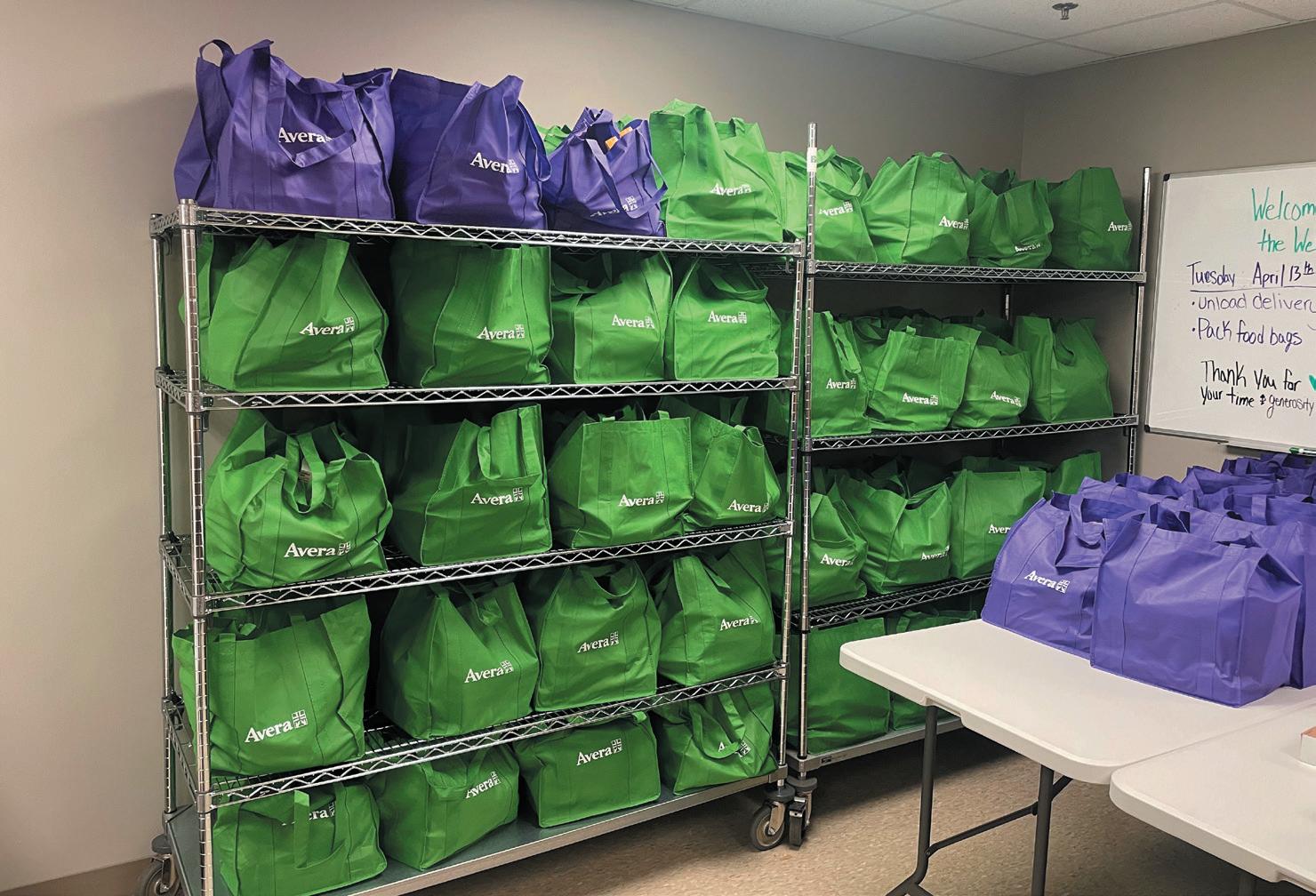
to appointments, are screened for social determinants of health — nonmedical conditions affecting health outcomes. Questions include whether or not in the past 12 months they’ve run out of food and had no money to buy more. If that’s the case, they may take home from each appointment a six- to seven-pound bag of thoughtfully prepared shelf-stable foods.
“If we’re handing out cereal, we also want to make sure and hand out shelfstable milk,” says McCormack, who oversees the Sioux Falls-area pantries. “If we hand out a grain, we want to make sure there’s a protein and vegetable to go with it.”
In Sioux Falls locations, staff carve out time during the workday to order food weekly from Feeding South Dakota, which delivers it to a central location. Community volunteers assist with unpacking, sorting and bagging the food. The bags are then taken to clinics for distribution. A portion of a federal Healthy Start grant for maternal and infant health covers the two to four hours a week of staff time.
The program isn’t meant to be a regular source of food but an emergency stopgap. Food bags have a QR code that directs people to information about other food pantries and hot meal locations. McCormack says that while no one should go hungry, access to healthy food is especially critical for people dealing with illness.
“It’s hard to be told by a doctor to manage your diabetes by eating different kinds of foods when you can’t access them or afford them,” McCormack says. “It’s also hard for people to think about their health when they’re hungry.”
Prioritizing patient dignity
The original Wellness Pantry in Parkston operates in Avera St. Benedict Health Center facilities. Another rural operation, inside Avera St. Mary’s Hospital in Pierre, South Dakota, opened Oct. 29. Unlike pantries in Sioux Falls, rural sites are fully volunteer efforts. Some who donate their time are from the wider community, others are St. Benedict staff coming in after work or during lunch breaks.
Staffers screen all clinic, emergency room and hospital patients at St. Benedict for food insecurity — defined as experiencing daily challenges with hunger. Those who qualify can take home a bag of food which also contains a $15 fresh produce voucher, redeemable at a local grocery store.
Lindsay Weber, president and CEO of Avera St. Benedict, says preserving patient dignity is of utmost importance. This emphasis even goes into the choice of how the food is packaged.
“The bags here are orange or green, the same ones a patient would leave the facility with, containing their clothing,” Weber
says. “So it’s not obvious there’s food in the bag.”
Patients may be more likely to accept food from a medical setting, Weber says.
“They’re comfortable telling the medical provider that they might be food insecure, but they may not be comfortable going to the local food pantry,” she says.
As far as Weber knows, pantries embedded in medical settings is a unique concept.
“A Wellness Pantry certainly aligns with our values of compassion and hospitality, and caring for our patients — mind, body and spirit,” Weber says.
Worsening situation
More than 12% of South Dakotans experience food insecurity, says Lori Dykstra, Feeding South Dakota’s CEO. Fifty-six percent of them make too much money to qualify for the federal Supplemental Nutrition Assistance Program.
Across the United States, 14% of people are food insecure, according to the Feeding America organization. That translates into 47 million Americans, including one in five children.
It’s a dire situation for individuals and families, especially when it comes to children’s health and development, Dykstra says. “Food is medicine,” she says.
The situation is getting worse and will likely worsen further, she says. During the federal government shutdown that stretched to 43 days, 42 million Americans had to make do with unreliable or reduced SNAP benefits. Dykstra doesn’t know exactly how additional changes to SNAP through the One Big Beautiful Bill Act will affect hunger. But she fears new Medicaid work requirements that begin in January 2027 will put an impossible strain on all food pantries.
“If people lose their Medicaid, and can’t afford health care, they’re going to move to the next charitable system,” Dykstra says. “In the past, when people have lost either Medicaid or SNAP, they turn to the food banks — and we can’t handle all of that.”
Among the Sioux Falls, Parkston and Pierre locations, Avera Wellness Pantries have distributed a total of 1,600 bags of food as of Oct. 30. Feeding South Dakota and Avera are working together to continue expanding the program. More rural-area pantries are planned for Lake Andes and Tripp, South Dakota, and 15 more are in the works for Sioux Falls.
McCormack considers the program a success for many reasons including that word is spreading despite no marketing efforts. She is warmed by the response of adult and pediatric patients.
“Patients sometimes break down because they didn’t know what they were going to feed their families for dinner that night, and kids say they’re excited to come to their appointment because they know they’re going to get food,” McCormack says. “But mostly, people say they feel taken care of.”
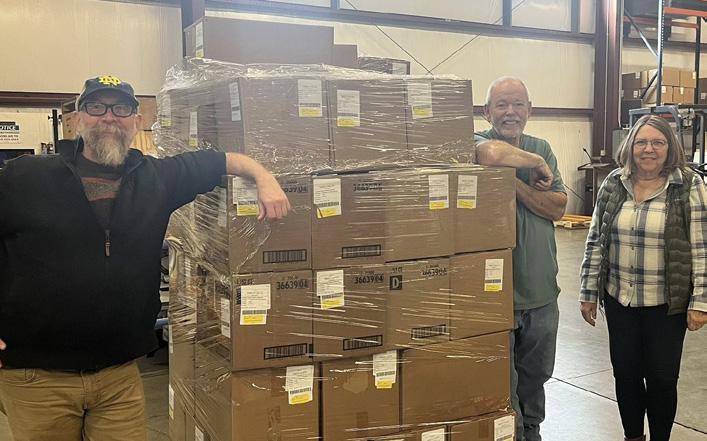
Bags of shelf-stable foods are ready for give away at a Wellness Pantry at Avera McKennan Hospital & University Health Center in Sioux Falls, South Dakota. Avera Health operates six pantries with plans to add more. The food bags are meant to be emergency stopgaps.
Weber
Dykstra
Scan to read an extended version of this story.
Blumer
Boniello
How to help fill workforce gaps in nursing?
SSM Health influencers create social media content, make personal connections
By VALERIE SCHREMP HAHN
The SSM Health Jobs social media accounts serve up a little bit of everything: a rubber glove challenge between two registered nurses and a scrub tech, a clip from a nurse executive’s recent interview on a podcast, Bible quotations to help nurses endure tough times.
The decision to post content from nurse influencers on social media was strategic — one way to catch the eye of job hopefuls and fill workforce gaps that were exacerbated by the COVID-19 pandemic.
It’s working. Some of the nurse influencers who make the videos also serve as recruiters, answering questions by direct message and doing phone interviews, and often offering jobs to qualified candidates on the spot. After an offer is accepted, each new hire goes through the usual preboarding process, which includes a background check, license verification and drug screening.
“A lot of people have chosen nursing because of some of the videos the nurse influencers have made,” said Caitlyn Obrock, who was one of the system’s first nurse influencers and is now system director of workforce strategy and scheduling.
Between 2022 and 2023, the system increased registered nurse hires by 140%. Compared to the 2022 baseline, RN hires increased 109% in 2024 and were up 128% as of June.
The influencers’ efforts have been so successful in recruiting nurses that SSM Health has expanded into creating similar content and recruitment strategies in other areas, such as surgical and radiation technician roles.
As of early December, the nurse influencer program has produced 4,100 shortform video posts, drawing 154 million impressions, or views, and 3.4 million engagements, meaning likes, comments, shares and saves. The @ssmhealthjobs account is on Instagram, TikTok, Facebook, and YouTube shorts.
The human side
The videos often show the human side of nursing, like the joy of returning to the floor with “a little treat,” such as an iced coffee drink, or the frustration of dropping nearly everything during a visit to the supply room. One video shows the proposal on the same helipad at SSM Health St. Anthony Hospital in Oklahoma City where the two nurses involved met more than two years earlier. (She said yes.)
“I can think of multiple times that the nurse influencers were nearly brought to tears,” Obrock said. “They say, ‘Oh, I really made a difference connecting with each individual nurse to share, whether it’s their first job or their 20th job, that we are all still humans and desire to be wanted and valuable.’”
Seth Lovell is a registered nurse and SSM Health’s vice president of nursing transformation and innovation.
“We’re hoping that we’re inspiring the next generation of health care workers,” he said, “because maybe they just simply saw a video that showed how much fun or how much purpose or highlights the meaning that they’re able to get by doing some of this care. It could literally just be that simple.”
Solving a workforce problem
Like many health systems, since the COVID-19 pandemic, SSM Health saw huge increases in costs to hire temporary staff and wider workforce gaps.
“What started out as a truly pull-thethread moment really kind of unraveled for us,” Lovell said.
SSM Health leaders asked him in 2022 to focus on stabilizing the workforce and think of ways to make the system more attractive to recruits.
He had heard complaints about the cumbersome application process, such as that it sometimes took three to five weeks to get an offer after several rounds of screening and interviewing. At the same time, system leaders saw more negative posts and videos on social media about health care and nursing.
“We weren’t a part of that conversation,” Lovell said.
System leaders also had to dispel rumors and misinformation that had started in local Facebook groups for nurses and spread among SSM Health caregivers. They wanted to tell their own story.
“I essentially put a proposal together that would wildly change our nurse recruitment process,” Lovell said. “It would be inclusive of social media, because we wanted to be in that digital town square.”
He added that SSM Health wanted to connect with potential staffers and have a message that resonated. “We wanted to be a part of trends and talk about some of the best sides of nursing and some of the challenging ones,” he said. “So that was what was unique: bringing it all together.”
Viral content
Dozens of the SSM Health Jobs posts have gone viral, but the one that touched a nerve and went megaviral was a 26-second TikTok video about the differences between day and night shift nursing. As of early December, the post had more than 5.4 million views and 308,000 likes.
In the clip, a nurse says: “I’m day shift. I get all the Daisy awards.”
Her counterpart says: “We’re night shift. We get leftover pizza.”
“We’re night shift nurses. Of course we’re always cold,” says another nurse as he wraps a blanket around his shoulders while sitting at a computer keyboard.
“We’re night shift. Of course we like dark humor,” says another as he walks through a hospital corridor.
One TikTok, with 2.5 million views, simply shows a method for pulling off the edges of transparent film dressing so it won’t irritate the skin.
Another video, with 983,000 views, shows a woman sitting at a laptop with the caption “when you’re trying to work, but the nurse influencer team walks by.” She looks into the hallway, unamused, as a small cavalcade of nurses parades by, smiling and laughing and holding up their phones.
Messaging with a mission
Some system leaders were skeptical when the program rolled out, so the influencer team had to share their vision.
“We’ve had a chance to sit down and say, ‘Hey, just so you know, this isn’t just someone coming up with a random idea. We have trends that we’re looking at,’” Lovell said.
The program got its start in St. Louis and has evolved over time. Currently, a team of five nurse influencers in the St. Louis region, Wisconsin and Oklahoma works full time creating content and connecting with potential recruits.
Meanwhile, some bedside nurses create content to send to the influencer team for posting. Everyone in the system is welcome to send ideas to the influencer and social media marketing teams. A manager oversees the influencer team. Depending on the complexity of the content, it can require nothing but a quality review before being posted. Some content requires scripting and higher-end video production. The
influencers work with the social media marketing team to produce that content. The social media team owns the strategy, process and performance of the work, Lovell said, and the influencers are responsible for producing the content and working with members of the social media team to come up with ideas and follow trends.
Influencers are taught to not record in a patient area or have private patient information visible in the background. Lyrics to music that accompanies videos should be appropriate. Videos go through a review process before they’re posted.
And, yes, a few posts have missed the mark unintentionally and been removed, Lovell said. One included a missed step in a procedure for putting on and taking off sterile gloves, and one showed a caregiver’s name badge that allowed people to find their personal social media profile. But some, like the one about the differences between day shift and night shift nurses, drew questions but remained posted, even after leader reflection.
“They’ve actually said, ‘No, let’s leave it up. This is a reality of what nursing is, and we support your genuine story,’” Lovell said.
Growing interest
Word about the nurse influencer program is spreading. Obrock and Lovell said they’ve had about 40 hospitals and health systems reach out, wondering how to optimize the recruitment side but also asking how to get legal and marketing teams to say yes to TikTok.
“People are starting to get really specific, which tells me they’re trying to figure out
how to operationalize something like this,” Lovell said.
Obrock advises other systems to have a strong vision for their influencer and social media programs and adapt the programs to their needs. She also advises focusing on creating a personal, customized experience for job seekers and having recruiters available to answer questions and make the process as seamless as possible.
Lovell tells systems to jump into and be a part of the conversation in the digital town square, even though that increased visibility might feel scary.
He also advises systems to create relatable content. “To be relatable (it) has to be genuine and real and authentic,” he said. “And I think that you’ll find that there’s more value there than you’ll ever realize.” vhahn@chausa.org
JANUARY 29 — MARCH 19, 2026
Foundations Live is an interactive eight-week engaging virtual program with sessions each Thursday from 1–3:30 p.m. ET.
DESIGNED FOR LEADERS LIKE YOU!
The purpose of Foundations Live is to equip new and current leaders with a solid grounding in the Catholic identity of the health ministries they serve. The program helps leaders understand their essential role in advancing the healing mission of Catholic health care and offers opportunities to articulate and integrate the distinctive aspects of Catholic health care across operations, in service to the needs of patients, families, communities and the common good.
Lovell
Obrock
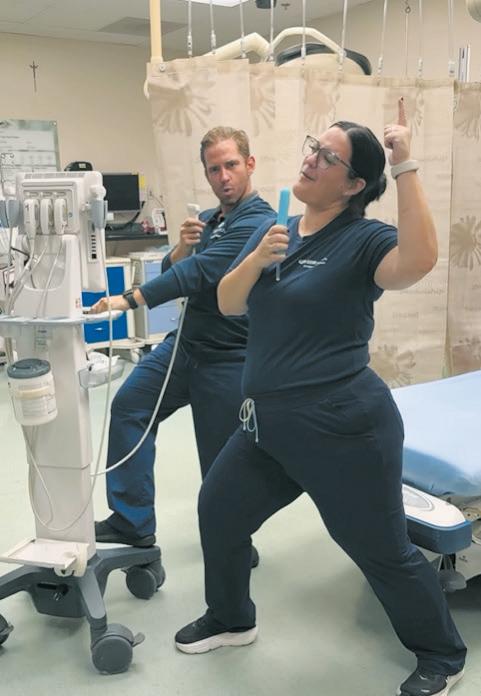
Sam Dicianno, a nurse influencer, and Ashley Bryson, a nurse with SSM Health St. Joseph Hospital — Lake Saint Louis, lip sync to Taylor Swift’s “Ready for It?” to tout the life of an ER nurse.
Special delivery
Every Christmas Eve at midnight, nurses at Bon Secours St. Francis Hospital bring baby Jesus from nursery
By VALERIE SCHREMP HAHN
The day before Christmas Eve, the nursery at Bon Secours St. Francis Hospital in Charleston, South Carolina, gets an extra special guest.
A statue of baby Jesus comes out of storage, and a nurse places him in a bassinet. His bright blue eyes look at the ceiling. Sometimes, a little foot sticks out of his swaddling clothes.
“And everybody’s like, what in the world is that?” said Christina Westberg, a nurse in the special care nursery. “Because we’re used to seeing babies that move.”
Nobody’s exactly sure when the tradition of bringing the baby Jesus to the hospital Nativity at midnight on Christmas Eve started. It began when the old St. Francis Xavier Hospital was in downtown Charleston and sponsored by the Sisters of Charity of Our Lady of Mercy, before they transferred sponsorship to the Sisters of Bon Secours in 1989. The sisters thought the nurses in the nursery should bring the Jesus statue to the manger since they were charged with caring for newborns.
Mark Dickson, the vice president of mission for Roper St. Francis Healthcare, explained the tradition continued when the new hospital opened in 1996. The sys-
KEEPING UP
PRESIDENTS/CEOS
CommonSpirit Health and some organizations within that system have made these changes:
Julie Manas to president of CommonSpirit Health’s Northwest Region, effective Jan. 2. The region covers 12 hospitals and a network of outpatient sites. Most recently, Manas was division president for Quorum Health, where she held operational responsibility for 12 hospitals and affiliated clinics across nine states. She is a former CHA board chair.
Doug Kleam to president of Dignity Health St. John’s Regional Medical Center in Oxnard, California; and St. John’s Camarillo Hospital in Camarillo. Most recently, Kleam was president of Dignity Health — St. Bernardine Medical Center in San Bernardino, California.
Brian Smolskis to president and CEO of Dignity Health’s California Hospital Medical Center of Los Angeles. He was chief operating officer for multiple acute care hospitals within PIH Health and president of PIH Health Physicians.
Jeremy Essman to president of three Catholic Health hospitals in New York:
to Nativity
tem has four hospitals in and near Charleston, and Bon Secours St. Francis is the only Catholic one.
Sr. Gemma Neville, whom Dickson considered a mentor, was one of the first Sisters of Bon Secours in Charleston, and she arranged for the donation of a new Nativity set to the hospital, he said. The Nativity, which came from Italy, is nearly life-sized. In the weeks leading up to Christmas, the hospital displays it outside the entrance, in front of the stained-glass windows of the chapel.
“I call it sacred artwork,” Dickson said of the Nativity. “It resonates with people. They love it. Families will walk up and just stand in front of it, you know, gazing and praying and just loving it.”
But at the same time, the Nativity scene causes a bit of consternation — as Christmas approaches, some people are concerned that Jesus is missing.
“So we get lots of people frantically coming into the front information desk saying, ‘Someone stole Jesus,’” he said. “We have to explain: no, we wait for Christmas. Actually, right at midnight, and it’s part of our tradition.”
On Christmas Eve, in the minutes leading up to midnight, baby Jesus gets some extra attention from the nurses. Sometimes,
Kenmore Mercy Hospital, Mount St. Mary’s Hospital in Lewiston, and Lockport Memorial Hospital. Essman succeeds Walt Ludwig, who retired from Kenmore Mercy in October.
Catholic Health Executive Vice President and Chief Operating Officer Jim Garvey was president of Mount St. Mary’s and Lockport Memorial prior to Essman’s appointment. Most recently, Essman was system vice president of hospital operations at Concord Hospital in New Hampshire, overseeing three hospital campuses as well as additional outpatient facilities. Catholic Health is based in Buffalo, New York.
Dr. Timothy P. Graham to president of three Trinity Health hospitals in Ohio: Mount Carmel Dublin, Mount Carmel New Albany and Westerville’s Mount Carmel St. Ann’s. He was interim president for Mount Carmel St. Ann’s and Mount Carmel New Albany, succeeding Diane Doucette, who retired in June.
ADMINISTRATIVE CHANGES
Trinity Health of Livonia, Michigan, and facilities within that system have made these changes:
Mandi A. Murray to Trinity Health executive vice president and chief legal officer.
Le-Ann Harris to regional chief nursing officer of Trinity Health Mid-Atlantic region. Edward J. Willard to chief strategy and business development officer for Trinity Health Mid-Atlantic region.
Liz Matuk to president of Mount Carmel Medical Group, part of Columbus, Ohio-based Mount Carmel Health System.
Organizations within Providence St. Joseph Health have made these changes: Dr. Daniel Spoon to chief medical officer of the Providence St. Joseph Health Montana Service Area. Vaughn Williams to chief operating officer of Providence St. Vincent Medical Center in Portland, Oregon.
Jason Miller to vice president of hospital operations for the St. Elizabeth campus of CHRISTUS Southeast Texas Health System. The facility is in Beaumont, Texas.
Dr. Marijka Grey to president of the physician enterprise for the Tennessee and Georgia Market of CommonSpirit Health.
people from different departments, even adult units, gather in the nursery.
The nurses wheel the bassinet with the baby Jesus statue down the hallway, walk out the main doors of the hospital, and place him in the manger. Security officers keep watch. The group takes a few pictures.
There isn’t much fanfare. No speeches. Mostly, it’s quiet.
But at that moment, it’s Christmas.
Westberg experienced the tradition for the first time last year, her first year as a nurse. “It was nice seeing everybody kind of come together on a holiday, where all of us are away from our families, and we could be together,” she said.
And last year, she and her colleagues went back to the nursery for another delivery: A mother was bringing a new life into the world on Christmas Day.
Dickson said the midnight tradition is a tangible reminder that those in Catholic health care continue the healing ministry of Jesus Christ.
“And it’s not just a nostalgic looking back 2,000 years, when Jesus physically was born and walked the Earth,” he said. “It’s a continuing sacramental presence in the world, and we are a witness to the world for Jesus and the healing ministry.”
vhahn@chausa.org
Oregon’s Providence St. Vincent Medical Center celebrates 150th anniversary
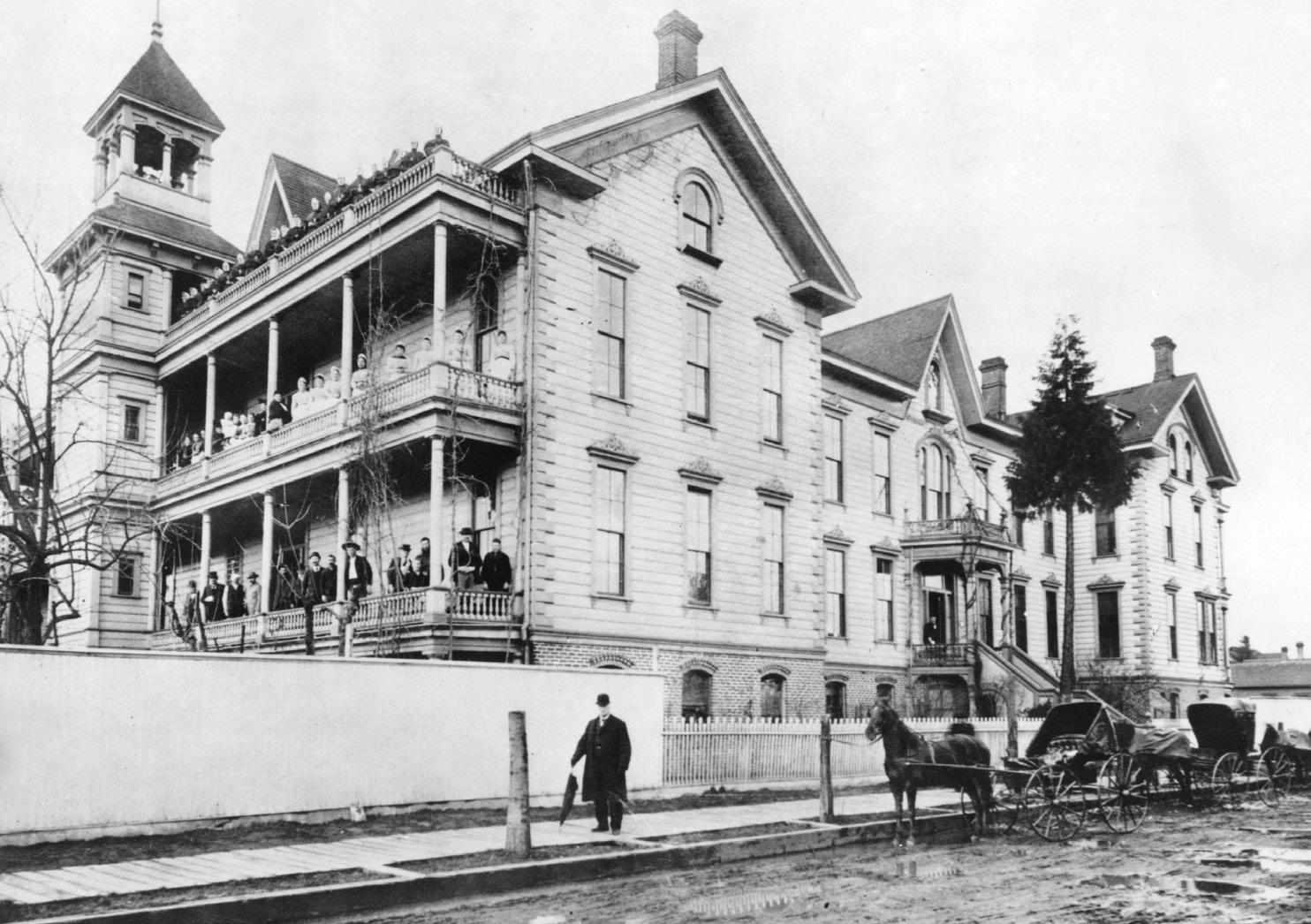
Providence St. Vincent Medical Center in Portland, Oregon, is marking its 150th anniversary. It was the first permanent hospital in Oregon.
The Sisters of Providence founded the facility, led by the trailblazing Mother Joseph. She and four other Sisters of Providence had made an arduous journey from Montreal to the Pacific Northwest, arriving in what was then known as the Washington Territory in 1856. According to Cornerstone: Reflections on Oregon’s First and Future Hospital, a commemorative book that some retired Providence St. Vincent staff and a board member created, the sisters arrived on the frontier to find a world of rugged conditions and hardship. There were no hospitals, few schools and few charities to serve people in need.
After establishing a school, orphanage and small hospital in Vancouver, Washington, the sisters were besieged with requests from other frontier communities to establish more ministries. After pleas from the Diocese of Oregon City for the sisters to open a Portland hospital, the Sisters of Providence agreed to do so once they learned that the
local St. Vincent de Paul Society would provide a parcel of land as well as $1,000 toward construction costs. The sisters named the hospital in the society’s honor.
Cornerstone says Mother Joseph drew up the hospital’s architectural plans herself, oversaw construction and even handselected construction materials. It is said that at one facility the sisters constructed, Mother Joseph once tore down and reconstructed a chimney herself when the masonry failed to meet her standards.
The sisters admitted their first patient to the Portland hospital in June 1875, a few weeks before the official opening of the three-story wood-frame hospital. One physician and five sisters ran the facility, which had the capacity for 75 patients.
In the ensuing century and a half, Providence St. Vincent has grown exponentially, relocating twice. The hospital now has more than 5,000 staff and an inpatient capacity of 539 beds and is in the process of updating the campus. It has renovated the emergency department and is building a heart hub, part of $177 million in planned capital projects.
The baby Jesus statue stays in the nursery at Bon Secours St. Francis Hospital for a day or so before nurses bring the figure to the hospital’s outdoor Nativity at midnight on Christmas Eve.
This is the first permanent hospital in Oregon, opened by the Sisters of Providence in Portland in 1875. Over the years, Providence St. Vincent Medical Center has expanded significantly, relocating twice.
Manas Essman Williams Smolskis Murray
Spoon Kleam Graham Grey
Live Nativity
From page 1
the Nativity and available before and after for petting, and inviting Duluth-area performers to share their talents as part of the event. Local singers are practicing the tunes they’ll perform. And Benedictine Duluth is receiving light-a-bulb donations for the memorial tree it will light immediately before the living Nativity begins.
“I get a little nervous about the living Nativity,” Sabol admits. “There are so many variables, and everyone has so many different capabilities. But I have to remind myself, if it’s chaotic, oh well! It was chaotic the night Jesus was born. And, however the living Nativity at our campus unfolds, it will be real. And it will bring the Nativity to life, and that’s the beauty.”
An instant favorite Sabol says the holiday event started small a couple of years ago and has taken on a life of its own.
Benedictine Duluth, which has independent living, assisted living, skilled nursing, memory care, a day program and
NICU Santa
From page 1
a little glimmer of hope and Christmas magic dur ing this special time that (parents are) supposed to be home with their families and celebrating,” said Shawnda Van Derel, one of the lead nurses on the day shift in the NICU.
Greg, who turns 60 this month, takes pictures with the babies, holds them if circum stances allow, and visits with family members who heard he’s coming.
His son, Kyle Phelps, 27, comes along. Kyle hands out stuffed ani mals for each baby and attached to each toy is a note detailing his fam ily’s story.
“Even though we don’t know you,” it says in part, “we understand what you are going through and our prayers are with you. We hope your baby will be home soon. Merry Christmas.”
home health, took donations to purchase a ceramic manger scene about a decade ago, a set that remains a focal point today. People came to love the figures, and community members began visiting the campus to see the set. Having an influx of visitors inspired the campus to have a petting zoo one year, and a pet blessing another year.
As a former parish pastor, Sabol was familiar with living Nativities and mentioned the concept as a group of staff and residents were coming up with ideas of how to expand Benedictine Duluth’s Christmas activities for the campus community and visiting guests. Staff and residents immediately embraced the idea and set plans in motion for the first Nativity.
Each year has been a little different, Sabol says, with a unique mix of staff, residents and community members pitching in and with varying logistical details. But the basic format has remained about the same: About a dozen residents and staff dress in period costume, playing the roles of the holy family; the wise ones, as they are called for this performance; and shepherds and angels. There is a reading of the Christmas story from Scripture and some spoken lines by the actors. Local performers carol or play
tunes throughout the Nativity. And visitors can stop by the petting zoo before or after the performance. Some of the animals from the petting zoo are recruited into the living Nativity. No one can tell how cooperative those four-legged actors will be!
A community effort
Dozens at Benedictine Duluth and the surrounding community will pitch in to make the living Nativity special this year.
Plans call for hot chocolate, cookies and caroling in the facility’s lobby, the lighting of the memorial tree, then a procession to Benedictine’s circle drive to start the program. The actors and visitors will walk along the circle drive as the actors portray the Nativity story. Benedictine Duluth’s new director of nursing will take on the role of Joseph. A staff member will play Mary as her 1-year-old plays Jesus. A resident from independent living who Sabol says was “the cutest little angel” last year will again don a halo. The facility’s executive director, Brian Pattock, will play King Herod, having played Joseph last year. There’s been some
Inspired by a special visit
Kyle was born at the same hospital three months prematurely, on Nov. 24, 1998. He weighed 2 pounds, 9 ounces at birth, and spent the first 98 days of his life at the hospital, most of the time in the NICU.
The experience stuck with Greg and his wife, Marlene, who didn’t have family in the area, and who also had a toddler daughter, Caroline, at home.
“It’s a pretty intimidating environment,
A few days before Christmas 1998, a man dressed as Santa came to the NICU. He took pictures with the infants and spoke briefly to Greg. The man’s baby granddaughter had recently been in the NICU, Greg remembers the man explaining.
“You know, every outcome, every patient scenario, is different,” Greg said. “But for a few minutes, it just really helped to make us smile and remember it was Christmas, and for that minute or two it just kind of took the stress off our back.”
As a souvenir of the visit, the Phelps fam-
jostling for the role of camel wrangler. Last year, Sabol says, the camel stole the show, refusing to cooperate with the wrangler, a 6-foot-4 man who mistakenly thought he could easily maneuver the animal.
As Dec. 3 approached, the costume closet was bursting with garments donated by a local parish that was replacing the ones it had used for its living Nativity. Sabol made her own contribution, her greatgreat-great-grandmother’s embroidered night gown, for an angel’s dress. The maintenance crew was busy building a creche on wheels for easy maneuvering the night of the event.
A ‘bright, happy mood’
The Benedictine Duluth campus is home to the Benedictine Sisters of St. Scholastica Monastery motherhouse as well as a college founded by the sisters and some corporate offices of the eldercare system. Janis Kivela Hooey, communications manager for Benedictine, says in prior years, staff and sisters from all those organizations have shown up to enjoy the living Nativity — last year, the sisters sang at the campus’ entrance to welcome visitors.
“We were all outside — we all came, and there was this bright, happy mood, and it was very emotional as we were all reacting to the moment,” she says.
Resident Viola Maas jokes that as an observer this year, she expects to keep tabs to make sure the production is historically accurate. If her daughter, who is on the Benedictine Duluth administrative team, repeats her role as donkey handler, Maas anticipates some hilarity if the animal shows its stubborn side.
Resident Ifiemi “Iffy” Ombu says she plans to portray one of the wise ones, and she says joining the reenactment will be a blessing.
She recalls that last year, she was very pleasantly surprised to run into a friend at the living Nativity. She wonders what fun serendipity will happen this year.
Hooey says, “the living Nativity is a great kickoff to the Christmas season.”
jminda@chausa.org
western suburb of Milwaukee. Kyle lives in Minneapolis and works in media production for a real estate agency.
It’s important to Kyle that he shows up at Christmas, too.
ily got a Polaroid picture of Santa with Kyle, who is difficult to spot within the trappings of his Isolette. Santa leans over and faces the camera.
On Kyle’s first birthday, the family returned to the NICU to deliver a sheet cake to thank the nurses. The cake delivery turned into a yearly
When Kyle was about 4, one of the nurses told the family that the previous Santa had moved or retired. The nurse asked if Greg would like to take Santa’s place.
“It was kind of a spur-of-themoment, ‘Yeah, I will,’” he said.
“And it’s been a tradition for a couple decades now.”
In addition to bringing in a cake every year on Kyle’s birthday, father and son return closer to Christmas for the Santa visit. They haven’t missed a year, even when the family moved to Portland, Oregon, for about five years.
In 2019, they were featured on a segment of the “Today” show for their NICU visits. During the COVID-19 pandemic, when inperson visits weren’t allowed, Kyle created a stand-up cutout of a larger-than-life-sized Greg in his Santa suit — “COVID Claus” they called him — and nurses posed the cutout next to the babies for photos.
‘A beacon of hope’ Greg and Marlene live in Pewaukee, a
“You certainly want to be like a beacon of hope in that moment,” he said. “You know, it’s a very vulnerable moment for them. No one wants to spend Christmas in the NICU. So me just being there can kind of serve as a way for these parents to see that their kids are going to be OK, or they can grow into a healthy individual.”
Kyle loves the tradition with his dad and recalls his perspective of the job when he was younger and still believed in Santa. “There was that, ‘Oh, I know Santa is real, but my dad is like Santa 1.5,’ which I really liked. It was really cool,” he said.
One day, Kyle said, he will take over the Santa duties, but he and his father aren’t finished as a duo just yet.
Van Derel said the NICU staff is happy that Kyle and Greg continue their long tradition. “We’re grateful that the Phelpses had such a positive experience at Ascension St. Joseph and honored that they return to our NICU every year,” she said.
Greg remembers those times in the NICU with his baby son, including the dark day a doctor thought Kyle had an intestinal infection and might die. It’s a story he keeps to himself during his Santa visits.
“With Kyle’s outcome, I always think — and I tell this to parents when I’m there, too — is that hope can be a lot stronger than fear, and the seemingly insurmountable can be overcome,” he said. vhahn@chausa.org
This statuary Nativity set, which Benedictine Living Community — Duluth has been displaying every Christmas season for about a decade, draws many visitors to the campus. The staff came up with the idea of the living Nativity as another way to engage those visitors.
The living Nativity generates excitement and anticipation for Christmas throughout the eldercare campus.
A Polaroid photo captured the moment in 1998 when Santa stopped by the Isolette holding Kyle Phelps in the neonatal intensive care unit at Ascension SE Wisconsin Hospital — St. Joseph in Milwaukee.