COMMUNITY IMPACT: HELPING VULNERABLE POPULATIONS FLOURISH
In Virginia, Bon Secours boosts section of Richmond with small business grants
By JULIE MINDA
Anthony Cornwall long has had a passion for serving delicious food. Since 2021, patrons of his Bono’s Caribbean Cuisine food truck in Richmond, Virginia, have been enjoying his unique style of cooking, which blends Jamaican flavors into Southern comfort foods. His wife, Cortney Cornwall, says several years ago the two of them began thinking about also opening a brickand-mortar restaurant, but they feared the costs would be too much. A friend told them about a grant program.
They applied to Bon Secours Richmond’s Supporting East End Entrepreneurship Development, or SEED, grant program.
Continued on 6
Providence joins in creating platform to forestall mental health crises
By JULIE MINDA
Providence St. Joseph Health is partnering on a federally funded effort to create an online model to help predict, prevent and manage mental health and substance use disorders.
The health system is recruiting participants for a project being led by Ksana Health to develop a predictive model that improves mental health intervention. Ksana Health, a technology company focused on creating digital tools to improve mental health care, will use a $17.9 million federal grant to gather data that will build up a “large health behavior model” to better understand and respond to mental illness, Providence said in a press release.
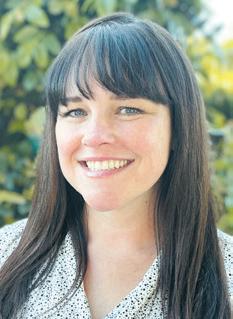
“By collaborating with Ksana and other partners, we have an opportunity to help develop data-driven tools that can better identify and address behavioral health needs earlier, ultimately improving outcomes for the communities we serve,” said Staci Wendt, director of research for Providence’s Health Research Accelerator.
She added that “Providence is taking part in this partnership as part of our 2030 Vision to expand access to whole-person care, advance health equity and lead in innovation.”
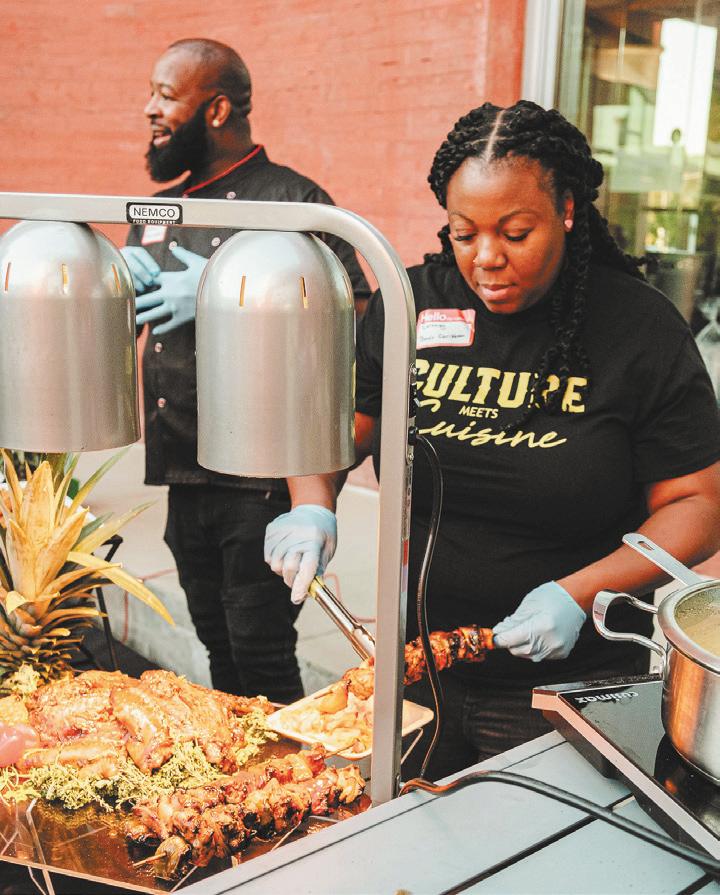
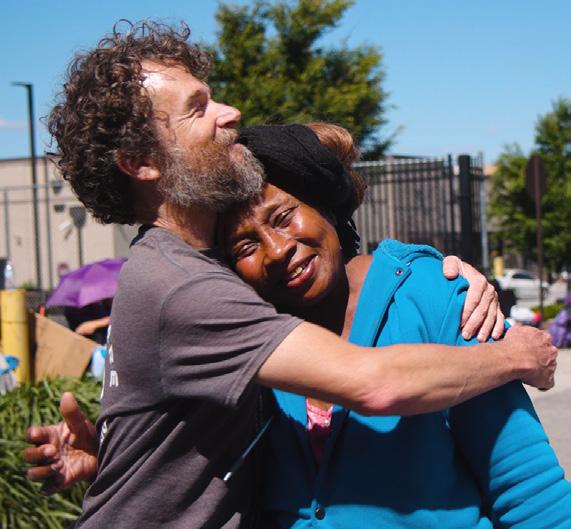
Anthony and Cortney Cornwall serve Southern comfort foods that incorporate Jamaican flavors from the food truck they operate. They have received funds from Bon Secours Richmond, Virginia’s Supporting East End Entrepreneurship Development grant program to open a restaurant.
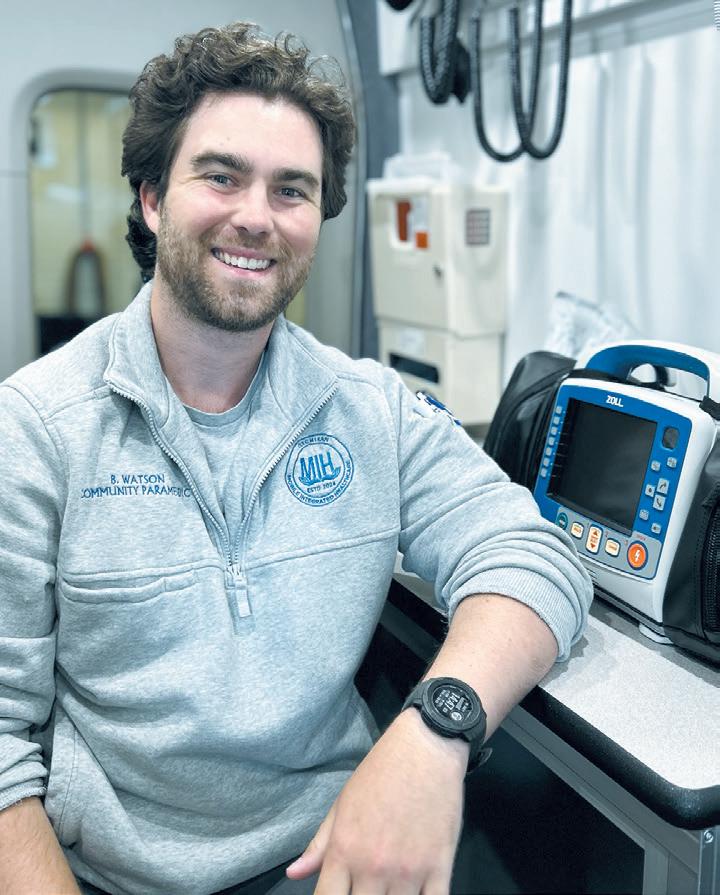
Ben Watson, a paramedic, uses a van as a mobile clinic as part of his work with PeaceHealth Ketchikan Medical Center to help reduce readmissions among “high utilizer” patients. He says the van is particularly useful for reaching unhoused patients.
PeaceHealth partnership brings care to the doorstep in Ketchikan, Alaska
By VALERIE SCHREMP HAHN
If there’s a problem accessing healthcare in Ketchikan, Alaska, the community has a way of coming up with creative solutions. Last year, a landslide took out a road connecting the town to its north end, where many PeaceHealth doctors live. Residents used boats to ferry the doctors to and from work.
Conversely, Ben Watson, a paramedic with the city of Ketchikan, meets with patients where they are. He can do a followup EKG, draw blood and bring it to the hospital and set up a telehealth appointment. For those who can travel, he can arrange transport for an appointment.
Continued on 7
PAGE 6
‘We
did the right thing’
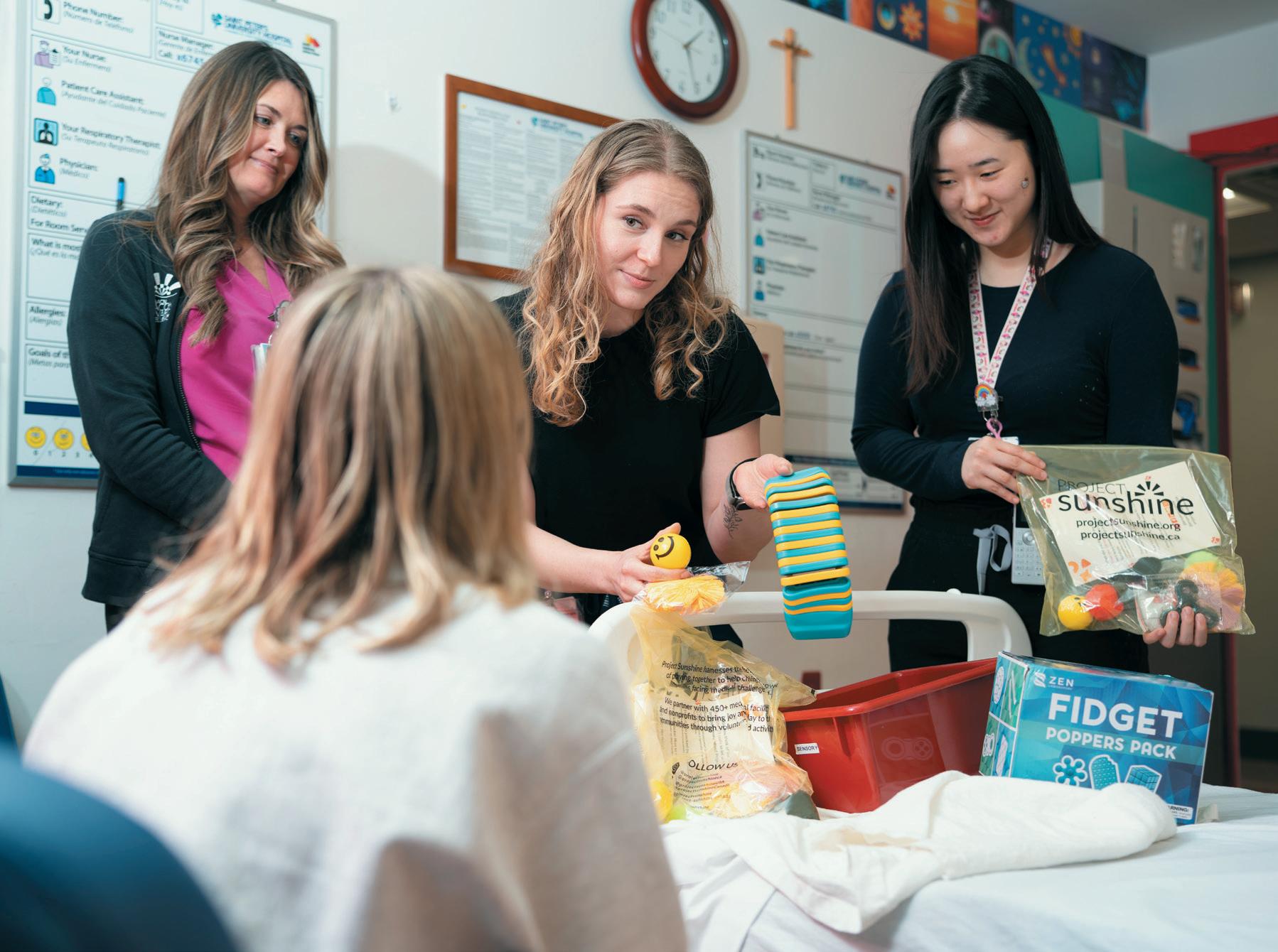
Members of the child life team in the pediatric intensive care unit at Saint Peter’s Children’s Hospital in New Brunswick, New Jersey, offer patients a selection of sensory-friendly fidget toys designed to promote comfort and reduce stress during hospital stays. The emergency departments at that hospital and at Saint Peter’s University Hospital have become certified autism centers. STORY ON PAGE 8
Ascension St. John supports trafficking victims in Oklahoma to find safety, dignity and hope
By VALERIE SCHREMP HAHN
Sara Gadd of Ascension St. John Medical Center in Tulsa, Oklahoma, can’t think of anyone more vulnerable than human trafficking victims, who often are so used to the abuse they don’t realize that they are being victimized. They weren’t kidnapped or lured into a scary white van. Some say they willingly prostituted themselves at a hotel. Or maybe they took a job paying $2 an hour,
because it’s better than what they were getting paid before. It’s sometimes difficult to help people in these desperate situations because they don’t know what’s happening to them is a crime, Gadd says. The staff at Ascension St. John knows and is poised to help connect them to resources to escape their situations and traumas that could cause shortand long-term health consequences. “Healthcare is amazing for this work,” she said.
Wendt
Civil rights pilgrimage
CHA is co-sponsoring a pilgrimage for Catholic health leaders to
Catholic Medical Center starts program to welcome new members into the church
By VALERIE SCHREMP HAHN
Catholic Medical Center in Manchester, New Hampshire, has been Matt Landeck’s workplace since he was a teenager. Because of a new program that helps employees explore entry into the Catholic Church, it also has played a major role in his faith journey.
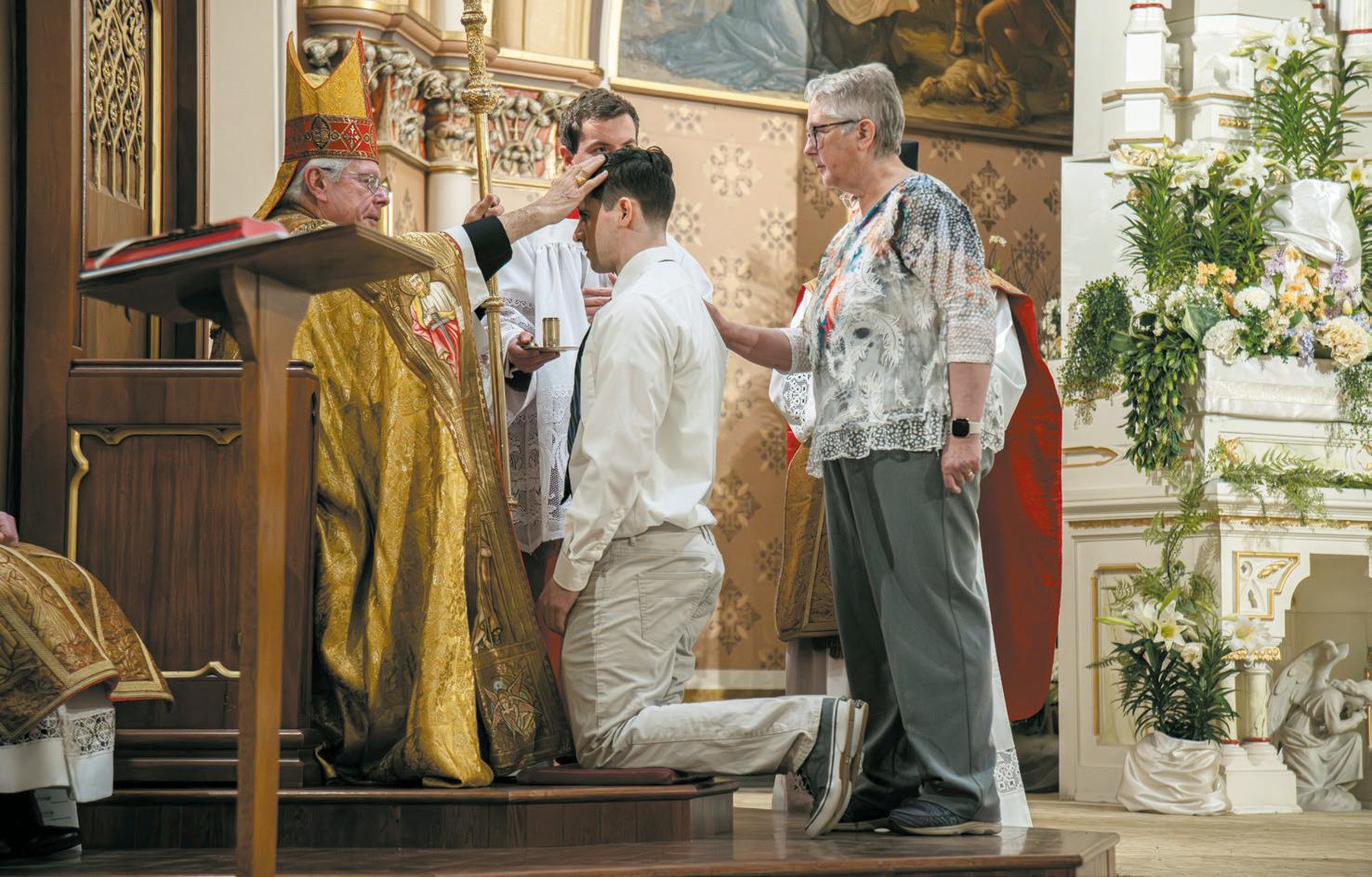
Landeck, 33, is the first and so far only Catholic Medical Center employee to go through its new Order of Christian Initiation of Adults, or OCIA, program. Landeck was received into the Catholic Church in front of friends and family on Holy Saturday this year.
“It was an honor to journey with him,” said Marc Guillemette, the hospital’s vice president of Catholic identity and mission, who started the initiative.
An OCIA program at a hospital is unusual. The process of educational, spiritual and sacramental formation usually takes place exclusively at a Catholic church. The hospital is sponsored by the Diocese of Manchester, and Bishop Peter Libasci gave the hospital program his permission and support, with the recommendation that candidates go through the rites and be received into the church at St. Joseph Cathedral, just up the street from the hospital.
Guillemette and his wife had been involved in OCIA in his previous home parish in Watertown, Massachusetts, and he had other experience with it. “So it’s something I love. I think it’s great to journey with people as they enter the church,” he said. He thought promoting a program at the hospital would be a good way to reach people with busy lives.

Sparked by a television show
Meanwhile, the hospital had become a way of life for Landeck, who started out in the kitchen at age 16, moved to various roles, and is now a catheterization lab coordinator. Some of his relatives also work at the hospital. He hadn’t been raised in any religion and had considered himself agnostic until one day last fall, when he watched an episode of the TV series The Chosen on Amazon Prime.
The story of Jesus and his walk with the disciples intrigued him, and Landeck watched more.
“I started doing my own research, picked up my first Bible, and then it happened by chance,” Landeck said. “I saw Marc’s email about him wanting to start OCIA at Catholic Medical Center, so I reached out to him.”
Guillemette responded, and in January the two began meeting weekly in Guillemette’s office, usually over the lunch hour. They discussed readings from the Journey of Faith series from Liguori Publications. They also attended Mass and met with OCIA candidates in programs elsewhere in the diocese at St. Joseph.
Guillemette said he was impressed by Landeck’s curiosity and insights. “He’s young, he’s got a lot of things he could do,
and yet this thirst for God, to learn about the church — it was humbling to be with him,” he said. “That he would want to do this is just powerful for me. I was raised in the faith, it’s been a part of my life, and for someone to not have that, and then to want it, it’s just really like, wow.”
A growing group
Landeck’s aunt served as his sponsor, and he was received into the church among a group of 333 others in the Manchester diocese. That number reflects a 54% increase in converts, including already-baptized and unbaptized, from last year, according to the National Catholic Register. The newspaper reported that many U.S. dioceses had heavy and sometimes record conversion numbers this Easter.
Guillemette said he and the hospital will begin advertising the next OCIA program in early fall. He hopes Landeck will be able to encourage others and share his experience.
Landeck said: “You should look into things if you’re curious about them. And that’s what drove me to want to do this. There’s something out there. Look into it, make your own decision. And if it’s not for you, it’s not for you. If it is, great.” vhahn@chausa.org
Eastern Iowa’s Mercy donates surplus furniture to nonprofit
By JULIE MINDA
When Eastern Iowa’s Mercy Medical Center moved its senior living and care facility from its downtown Cedar Rapids location to a new campus in the city’s suburbs almost three years ago, the healthcare system decided to outfit the residences with all new furniture.
The old furnishings recently found a new purpose. Mercy Medical Center donated more than 400 items from the legacy site to a Cedar Rapids-based nonprofit that collects quality, reusable furniture and household goods to give to people who are transitioning from homelessness into housing stability.
Beginning June 4, the KJ Haul Away waste removal company began transporting the hundreds of items that Mercy is giv-
ing to Central Furniture Rescue. In phases, Mercy is donating nightstands, end tables, chairs, couches, desks, lamps, mattresses, lift recliner chairs, artwork and other household goods to the nonprofit.
Central Furniture Rescue is receiving the furnishings at its warehouse where the organization is preparing the items for local families to have at no cost for when they move into new housing. People who are moving toward stable housing receive referrals to Central Furniture Rescue from a variety of Eastern Iowa partner organizations, including shelters, case management organizations and housing organizations.
The furniture is from a residential care facility that Mercy closed when it opened the HallMar Village replacement site in suburban Cedar Rapids. Mercy formed a joint ownership arrangement with Roseville,
Minnesota-based Presbyterian Homes & Services on the $96 million continuum-ofcare campus that opened in 2023. That campus has more capacity, more levels of care and more amenities than the legacy site.
Melissa Dean, Mercy director of mission outreach and community benefit, said in a release that Mercy is “grateful to partner with Central Furniture Rescue and KJ Haul Away to ensure these items can be repurposed. It’s rewarding to know that furnishings that once served our residents can now help individuals and families throughout our community.”
Central Furniture Rescue estimates Mercy’s donation will help as many as 65 families. The organization said 11 to 14 tons of material was diverted from disposal in a landfill. jminda@chausa.org
Mission in Long-Term Care Networking Call Aug. 27| Noon – 1 p.m. ET
Interdisciplinary Panel Discussion on Issues and Best Practices in Developing Partnerships Aug. 27| 1 – 2 p.m. ET
Virtual Mission Leader Seminar 2026: Honoring Human Dignity and the Common Good Sept. 8, 15, 22, 29| 1 – 2:30 p.m. ET each day
We Are Called Networking Call Sept. 10| 1 – 2 p.m. ET
Community Benefit Networking Call Sept. 17 | 1 – 2:15 p.m. ET Civil Rights
Catholic Health World (ISSN 87564068) is published monthly and copyrighted © by the Catholic Health Association of the United States.
POSTMASTER: Address all subscription orders, inquiries, address changes, etc., to CHA Service Center, 4455 Woodson Road, St. Louis, MO 63134-3797; phone: 800-230-7823; email: servicecenter@ chausa.org. Periodicals postage rate is paid at St. Louis and additional mailing offices. Annual subscription rates: CHA members free, others $29 and foreign $29.
Opinions, quotes and views appearing in Catholic Health World do not necessarily reflect those of CHA and do not represent an endorsement by CHA. Acceptance of advertising for publication does not constitute approval or endorsement by the publication or CHA. All advertising is subject to review before acceptance.
Vice President Communications and Marketing
Brian P. Reardon
Editor Lisa Eisenhauer leisenhauer@chausa.org 314-253-3437
Associate Editor Julie Minda jminda@chausa.org 314-253-3412
Associate Editor Valerie Schremp Hahn vhahn@chausa.org 314-253-3410
Graphic Design Norma Klingsick
Advertising ads@chausa.org 314-253-3477
© Catholic Health Association of the United States, August 2026
Matt Landeck, a catheterization lab coordinator at Catholic Medical Center in Manchester, New Hampshire, was received into the Catholic Church on Holy Saturday at St. Joseph Cathedral after taking part in the hospital’s new Order of Christian Initiation of Adults, or OCIA, program. With him is his sponsor and aunt, Cheryl Gagnon, and blessing him is Bishop Peter Libasci of the Manchester diocese.
‘They gave us space to enjoy his life’
Dignity is at heart of Bon Secours Richmond hospitals’ perinatal
bereavement care
By LISA EISENHAUER
Meg Walker and her husband knew well before their firstborn, Jacob, was due that their time with him would be brief. At 16 weeks, her obstetrician had identified a terminal birth defect called anencephaly that inhibits neurological development.
The Richmond, Virginia, couple were determined to see the pregnancy through and to spend whatever time they could with Jacob. It turned out to be seven hours, all of them spent in the arms of family.
Ten years later, Walker says the experience, while sad and painful, was also an unforgettable celebration of life that she, her husband, John-Mark Walker, and their extended family can look back on with joy.
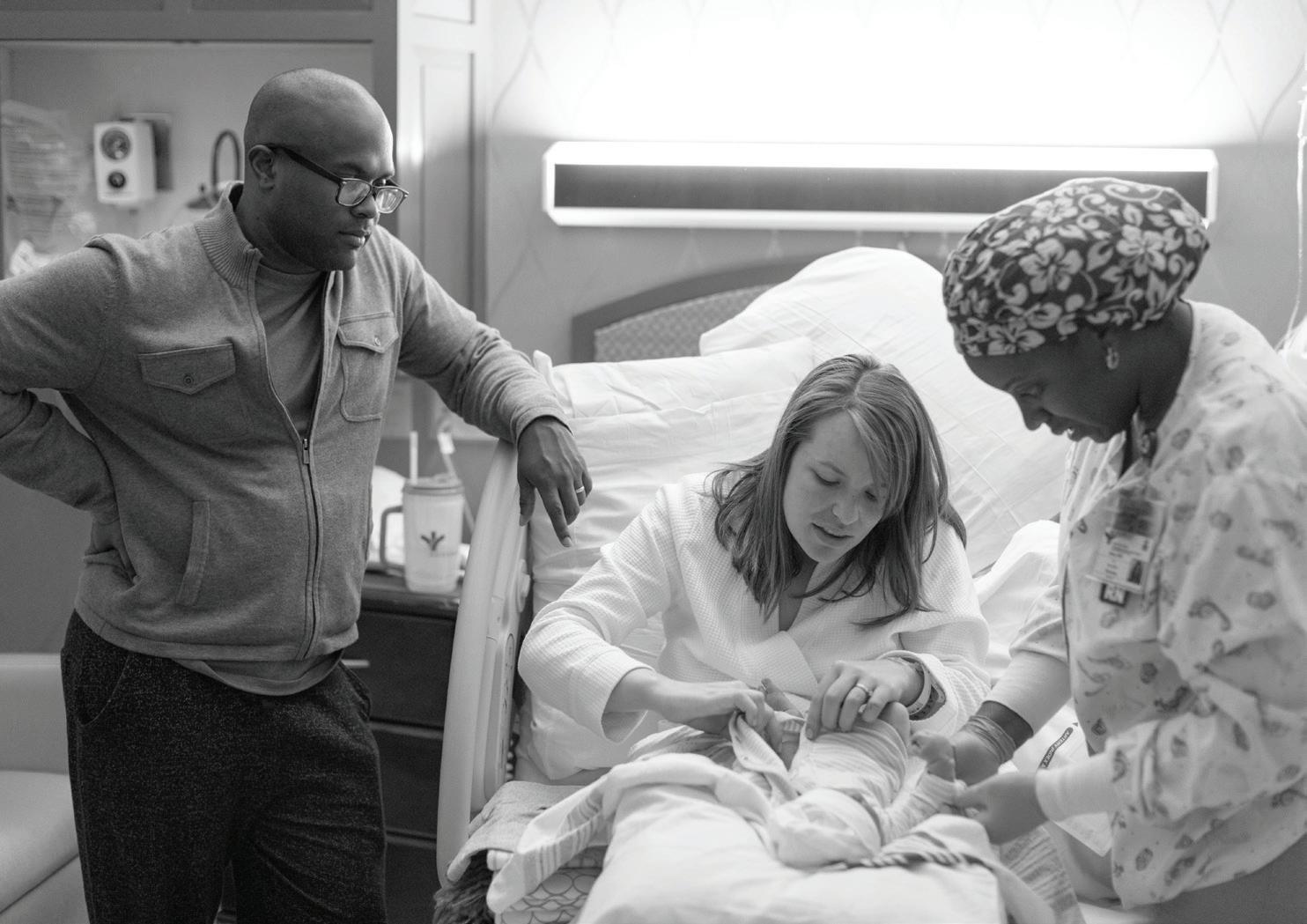
She credits much of that to the tenderness Jacob was shown by the labor and delivery staff at Bon Secours St. Mary’s Hospital. “They gave him any extra care he might need, like suctioning,” Walker says, “but really what they did is they gave us space to enjoy his life.”
St. Mary’s and the other hospitals within the Bon Secours Richmond market with birthing centers, St. Francis Medical Center, Memorial Regional Medical Center and Southside Medical Center, are intentional about perinatal bereavement support. All are part of the Bon Secours Mercy Health system.
Amy Hill, bereavement coordinator for labor and delivery at St. Mary’s, says the infants lost before birth, at birth or shortly thereafter are “our little quiet patients.”
She and the others on the staff ensure the infants get dignified care.
“They are a person. They deserve to be talked to. They deserve to be handled with care,” Hill says.
In addition to tending to the infant with dignity, the hospitals’ labor and delivery staffs accompany mothers and other family members through their grief, ensure that
Time and remembrances
The Centers for Disease Control and Prevention says one in every 175 births is a stillbirth. The March of Dimes estimates that up to 20% of pregnancies ends with a miscarriage. That organization says that while a woman’s body might need months to recover from a stillbirth or miscarriage, the emotional recovery can take much longer.
Along with emotional support, St. Mary’s and the other Bon Secours Richmond hospitals offer families means to extend their precious time with stillborn infants. Each hospital provides access to CuddleCots, temperature-controlled basinets that slow the physical changes that occur after death.
The hospitals’ staffs also give families the opportunity to have pictures taken with their infants. Hill says the offer is sometimes initially met with reluctance but then with gratitude once relatives see the photos.
The pictures can become part of the personalized memory boxes that St. Mary’s labor and delivery staff make for families. The boxes include other mementos, such as imprints of the baby’s footprints and tiny bracelets with the infant’s name.
Hill remembers a first-time teenage father who saw the memory box that had been given to his baby’s mother and asked for one of his own. She saw the emotion in his face as he examined every item.
While most families are grateful to get the keepsake boxes, occasionally the offer is declined. The St. Mary’s staff still makes one and tucks it away, in the event of a change of heart.
Hill remembers a young mother who left her infant’s box behind. A couple of years later, the same woman was expecting again and planning her delivery at St. Mary’s.
“Before she delivered, she called and asked us about that box,” Hill says. “And I cannot tell you how much it touched my heart that we had that box to give to her.”
Another keepsake Bon Secours hospitals offer families comes courtesy of the nonprofit Weighted Angels. The organization creates plush stuffed animals of various types that weigh 1 to 9 pounds. Families are given a stuffed animal that matches the weight of their lost infant.
The hospitals also hold annual remembrances to honor the lost infants and reconnect families and the caregivers who were at their sides at their time of loss. St. Mary’s invites the families of lost infants back for a communal celebration of life for their lost infants. The event includes a butterfly release.
Celebration and grief
In the months before Jacob’s birth, the Walkers met with the St. Mary’s labor and delivery staff and well as with staff from Noah’s Children, a Bon Secours Richmond pediatric palliative and hospice care program, to plan for his arrival and for what they knew would be a too-brief life.
At Jacob’s birth, the St. Mary’s team set up a delivery room for Walker and her husband and another one where Jacob’s extended family could gather to meet him.
The St. Mary’s staff recorded Jacob’s weight and length, helped his parents bathe and dress him, and made hand and foot imprints. Those items and more contributed to a memory box that Walker still cherishes.
She had chosen St. Mary’s for Jacob’s delivery in part because she and her siblings were born there. Even though the hospital is where she said goodbye to her firstborn, she says she never thought of going elsewhere when she was again expecting.
“With every subsequent child that I had, which I’ve had four more since then, every single time, I would have nurses come in and say ‘You’re Jacob’s mom,’ and they would remember him and acknowledge him and celebrate him,” Walker says. “And so, really, their bereavement care was at a level that I think many people do not receive, and it made such a difference in our ability to celebrate our son, but also to grieve our loss.”
leisenhauer@chausa.org
Saint Anne eldercare campus opens hospice suites to provide holistic end-of-life care
By JULIE MINDA
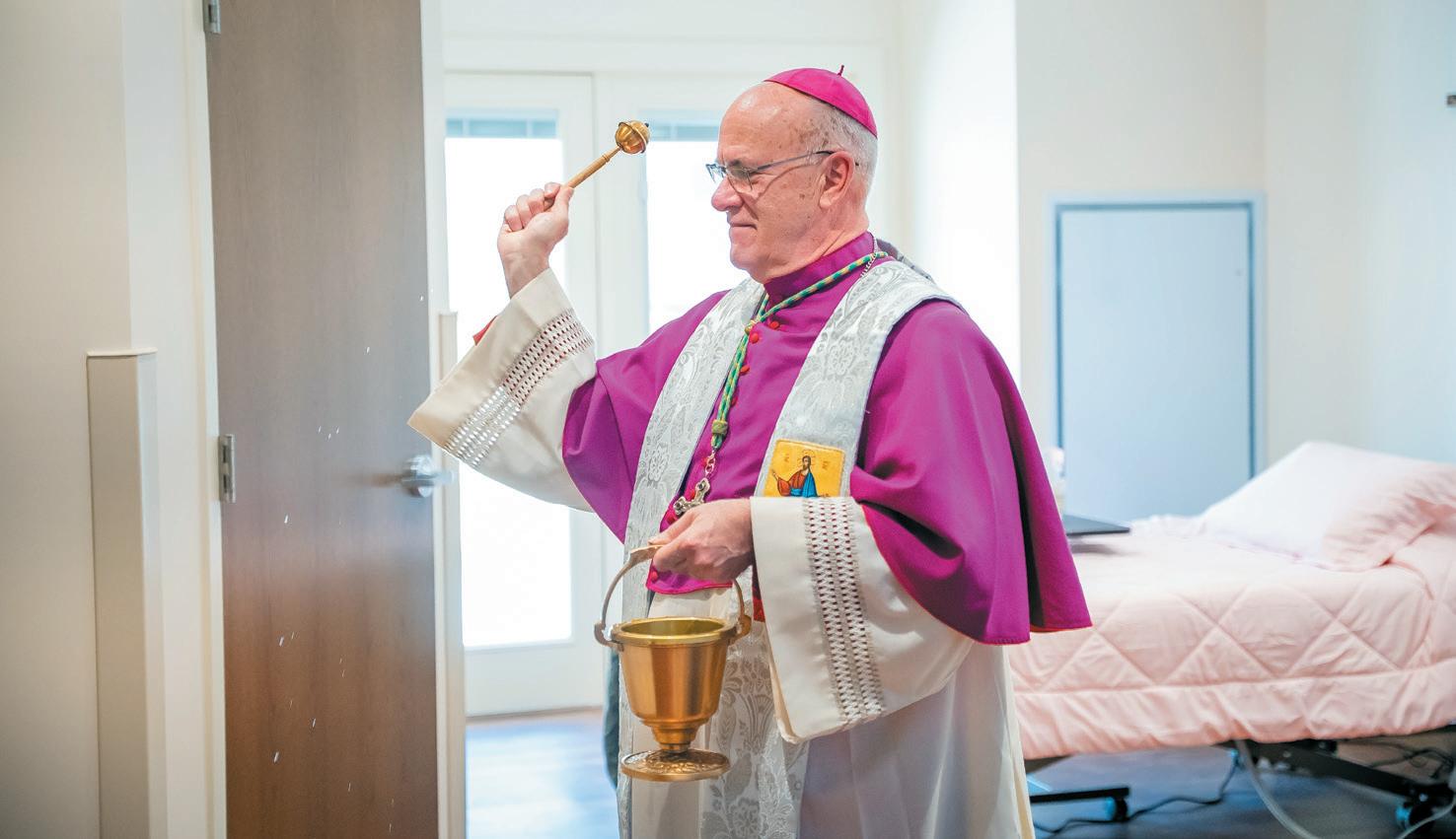
Saint Anne Communities, an eldercare campus in northeast Indiana, has opened a five-suite wing that offers people at the end of life holistic care and services.
In the Saint Joseph Hospice Suites, staff provide medical, spiritual and emotional care to residents as well as support to their loved ones. Facility leaders said Saint Anne designed the suites to have a homelike feel. They said a key priority is to surround the residents and their loved ones with prayer, comfort and dignity.
Bishop Kevin C. Rhoades of the Diocese of Fort Wayne — South Bend said in a statement, “We pray this beautiful new space will be a blessing to patients, families and all those who minister to them in their final days.” That diocese sponsors Saint Anne. Gap in services
Elaine Wilson is chief operating officer and Emily Thiel is community engagement specialist for Saint Anne Communities, which offers 162 nursing home beds and rehabilitation suites, 88 apartments, 14 memory care apartments and adult day services in Fort Wayne. They also offer an independent and assisted living community in Huntington, Indiana.
Wilson said a wing of the Fort Wayne facility had become outdated. When determining how best to use the space,
Saint Anne leaders assessed local needs and decided to respond to the often-expressed desire for faith-based hospice care.
Wilson said the services Saint Anne provides are the result of listening to the community. She said Saint Anne asked people what they wanted in their final moments and designed a unit with their desires in mind.
Thiel families get to spend time with their infants, and create personal keepsakes that honor the life that was lost.
Thiel added that local Catholics had voiced concern about the growing acceptance in society of physician-assisted suicide.
Saint Anne wanted to offer a loving alternative for people at the end of life, she said.
While Indiana lawmakers have considered legislation to legalize physician-assisted suicide, such legislation has not passed there as it has in 13 other states and the District of Columbia.
Support from diocese and others
According to a website on the new accommodations, each of the Saint Joseph Hospice Suites that opened in early June provides a serene, private space with a kitchenette, shower, bathroom, couches and chairs and a patio. The wing has a lobby and nurses’ station as well as a small chapel. Patients and families also can access a larger chapel that serves the broader campus. The suites also offer respite care to
assist caregivers of people with life-limiting illnesses.
The wing cost $1.2 million to build. The local diocese contributed $10,000, and the Mary Cross Tippmann Foundation provided funding as well.
Thiel said Saint Anne was intentional about design choices, even down to the artwork.
Each suite is dedicated to different religious figures. For instance, one is dedicated to the Holy Family, another to Our Lady of Guadalupe. Staff have put books and other resources on the religious figures in the rooms.
Spiritual care
According to Wilson, Saint Anne hopes the suites help patients achieve what Catholic social teaching terms a “good death.”
Saint Anne has a full-time chaplain who lives on campus who can provide spiritual guidance and comfort to residents of the suites as well as their loved ones. Retired priests also live at Saint Anne and can assist the chaplain.
Bishop Rhoades explained on the hospice suites’ website that “having a Catholic Hospice Home ensures that the dying will be served in a manner following the church’s ethical teachings in an atmosphere of love and prayer.” jminda@chausa.org
Scan to read an extended version of this story.
Lindsay Fauver Photography
Meg and John-Mark Walker tend to their newborn son, Jacob, during his brief life at Bon Secours St. Mary’s Hospital in Richmond, Virginia, with the help of Amy Hill, bereavement coordinator for labor and delivery. Meg Walker says the hospital’s compassionate and dignified care of Jacob helped the family celebrate his life and grieve his loss.
Bishop Kevin C. Rhoades of the Diocese of Fort Wayne — South Bend in Indiana blesses one of the new hospice suites at Saint Anne Communities in Fort Wayne prior to the suites’ opening.
Wilson
Human trafficking
From page 1
Ascension St. John’s human trafficking team has offered support and resources to more than 400 suspected victims of human trafficking since 2018, including 49 new ones in 2025.
Replicating the approach
Gadd works systemwide to help individual Ascension markets start or develop their programs. The system has care sites in 16 states and Washington, D.C.
Each market’s human trafficking program operates a little differently, with varying types of partnerships. Some markets deal more with issues involving gangs, some with issues involving immigrants and some with families trafficking their children for money. An interstate highway running through a city doesn’t necessarily mean more trafficking: Gadd estimates that half of the victims Ascension St. John has helped have never left Oklahoma.
“They’re born here, raised here, haven’t been out of here,” she said. “I think out of the 400 people we’ve offered help to, I think two were actually kidnapped.”
A human trafficking situation involves someone profiting by coercing, threatening or forcing someone else into doing something they wouldn’t normally do or want to do.
Gadd said trafficking can take many forms, such as a husband who tells his wife that their crying baby won’t eat and she can’t buy formula until she prostitutes herself at a hotel for $1,000 and turns over the money to him.
Identifying victims
Gadd worked for the Tulsa County Sheriff’s Office for 13 years, and that’s where she became interested in fighting human trafficking. She eventually became chair of the Oklahoma Coalition Against Human Trafficking. In 2018, Ascension St. John hired her to run its response team.
Part of her job is to teach the staff how to spot trafficking victims. She asks them to focus on the things that don’t make sense: Why does that mom have all that money when she’s homeless? Why does that child act like they’re engaged to someone who is in their 60s? Why does that infected arm appear to have a past break that went untreated?
“It could be nothing, it could be something,” Gadd said. “And it’s really just learning how to ask: Why does that not make sense? And how do we ask more questions, so that we can find out?”
The work of identifying victims isn’t limited to clinicians. An environmental services worker might overhear a remark while cleaning the floor. Chaplains are an excellent resource, Gadd said, because when one walks in the door, patients’ visitors tend to leave, and patients feel more comfortable telling their stories.
If hospital staff suspect a patient is a victim, they call in specifically trained responders to assess for human trafficking. An advocate who works with this specialized response team may then reach out to do a more in-depth interview, asking questions such as: Are they a victim? Do they want resources? What would help them once they are discharged from the hospital? Do they want police to be involved? Do they need housing, clothing, or a birth certificate?
“We’ve had victims who — talk about losing dignity — they’ve had their name changed so many times by human traffickers they’ve been sold to, and they don’t even remember their original name,” Gadd said.
A hotline number is given to patients who may be leaving because they aren’t yet ready for help. That way, they can contact the trained responders if they want, Gadd said.
Ascension St. John: Recognizing the Gap in Our Compassionate Care
Partnerships
Forges vital connections with community organizations and law enforcement to ensure comprehensive victim support and safe referral pathways.
Screening
Integrates a discreet, standardized process into the workflow to sensitively assess for human trafficking indicators during patient interactions.

agement with patients who want to remain in contact with Ascension St. John and get help. That can include helping them apply for disability benefits, schedule outpatient medical care, get a driver’s license, or pay rent for a month to escape from their trafficker.
The advocate works out of the Case Family Safety Center, which is near the hospital. The center offers resources such as assistance with police reports, protective orders, immigration referrals and interpretation services, and consultation with district attorney staff and the Tulsa Police Department’s family violence unit. Laws and administrative rules in Oklahoma have changed in recent years so that law enforcement and victim services and medical providers can better work together. Victims now are asked about their situation and given resources often before they’re interviewed by police, Gadd said.
Gadd advises hospitals that their human trafficking program can be as big or as small as they want, as long as they do something. A rural, three-bed hospital should know how to encourage victims to call a national hotline, she said. A huge health system may want to put together a response protocol. Gadd shares a tool kit with other systems. The tool kit includes information on developing a pilot program, handouts to identify relevant staff and community partners, instructions for how to educate staff, and sample protocols.
“Your staff is seeing it, they know they’re seeing it. They’re discouraged because they don’t know what to do about what they




Protocols
Establishes clear, step-by-step guidelines for safely identifying, documenting, and assisting suspected human trafficking victims.
Training
Equips all associates with the essential knowledge to recognize subtle indicators and respond with confidence and compassion.
see,” she said. “Just give them the resources to respond to that patient. Nobody went into healthcare not wanting to help, so giving them the resources to respond to that patient can change everything.”
Poised to help
Gadd said victims often don’t tell a police officer that they’re being trafficked because that same police officer may have just arrested them for shoplifting or prostitution. Also, many victims don’t know about shelters, so they don’t seek help there.
“Healthcare, though, everybody has to go to the doctor at some point, because they trust their doctors and they’re going to tell us more, and we have that opportunity to say, ‘Hey, this shouldn’t be happening, can we do something for you?’” Gadd said.
When the Ascension St. John program started, organizers were reluctant to promote it for fear that traffickers would stop bringing victims to the hospital. But they learned the opposite was true. Traffickers thought they had such control that their victims wouldn’t ask for help at the hospital.
And after victims found out there were resources available, more than half accepted help. “And then, even if they left, they’d come back,” she said. “Once they knew there was a safe place, they’d come back.”
Hope and a future
To keep helping others, Gadd hangs on to the success stories. She thinks of trafficking survivors who got their driver’s license, enabling them to drive to their first job mak-
The human trafficking education and response program at Ascension St. John in Tulsa, Oklahoma, includes standard training and resources to help healthcare workers identify and respond to the needs of victims in a traumainformed manner.
5
ing $9 an hour versus the $100 they made for their trafficker on the street. “But it’s theirs, and they got to choose that job,” she said.
She thinks of the mothers who got their kids back from state custody because they have a house now, and they’re safe.
“There’s a whole lot of hope in what we do,” she said.
She thinks of one immigrant who had been trafficked most of her life and was separated from her family. She came to Ascension St. John because she had a terminal illness. “She couldn’t be sold anymore, and when she finally could access medical care it was too late to save her,” Gadd said.
Hospital staff spoiled her with her favorite foods. They made sure her family got to the hospital to reunite with her. And when she died, her family took her back to their home country for burial. “I think that restored as much dignity as you can to an individual. She died free with family by her side instead of alone on a hotel room floor somewhere,” Gadd said.
A few months later a family member contacted the staff to thank them for their help so that the relatives were able to reconnect and have that special time together.
Gadd said she loves working for Catholic healthcare because it’s not about the money or numbers.
“It’s about people. It’s about that vulnerable person that came into our services for care, and we were able to offer more than just a prescription, more than just a cast on a body part. We offer them a future.” vhahn@chausa.org

Honoring Human Dignity and the Common Good
Mental health
A concerning gap
According to the National Institute of Mental Health, in 2022, the latest year cited on the institute’s website, there were an estimated 59.3 million adults aged 18 or older in the U.S. with a mental, behavioral or emotional disorder. The institute said young adults aged 18-25 years had the highest prevalence of mental illness, at 36.2%. This compares with adults aged 26-49 years, at 29.4%, and those aged 50 and older, at 13.9%.
The institute said an estimated 15.4 million U.S. adults aged 18 or older had a serious mental illness, which the institute said is a “mental, behavioral, or emotional disorder resulting in serious functional impairment, which substantially interferes with or limits one or more major life activities.”
Providence’s release said such conditions contribute to an 8% annual loss of gross domestic product.
Bill Wright, Providence chief research officer, noted in that release that “behavioral factors are a leading cause in a large majority of patient conditions that the healthcare industry treats.”
Despite the high prevalence and multilayered burdens of mental illness, Providence said, screening and early intervention systems are lacking as are reliable ways for clinicians to predict the best treatment options.
MENTAL ILLNESS IN THE UNITED STATES
The prevalence of mental illness, defined as a mental, behavioral or emotional disorder, based on statistics from 2022:
An estimated 59.3 million Americans 18 or older, or 23.1% of U.S. adults, have a mental illness; 30 million received treatment in the previous year.
The observed prevalence was higher among women, 26.4%, than men, 19.7%.
Adults age 18-25 had the highest prevalence, 36.2%, compared to those age 26-49 years, 29.4%, and those 50 and older, 13.9%.
The prevalence was highest among the adults reporting two or more races, 35.2%, followed by white adults, 24.6%. It was lowest among Asian adults, 16.8%.
Harnessing technology
Providence pointed to three converging advances for addressing these prediction and treatment gaps through technology:
The ability to measure behavior at population scale through mobile devices that are used ubiquitously in society.
The aggregation, or pulling together, of digitized medical records.
The breakthroughs in artificial intelligence use for drawing powerful information from massive databases.
Ksana Health came up with a plan for using these advancements to research behavioral health intervention. The concept is that Ksana Health and partners
will develop artificial intelligence models trained on behavioral data provided continuously through research participants’ smartphones and wearable technology. CEO Nick Allen said the research will advance Ksana Health’s mission to “transform behavioral healthcare through the use of cutting-edge technology and scientific evidence.”
Participant recruitment
Providence is one of multiple organizations taking part in the research project, its
COMMUNITY BENEFIT 101

first partnership with Ksana Health. Providence is seeking to recruit up to 25,000 patients to take part in the research study. Providence has 51 hospitals and a network of other care sites across five western states. Another partner, MedStar Health Research Institute of Columbia, Maryland, is recruiting patients from its East Coast footprint to bring geographic diversity to the project, according to Providence’s release.
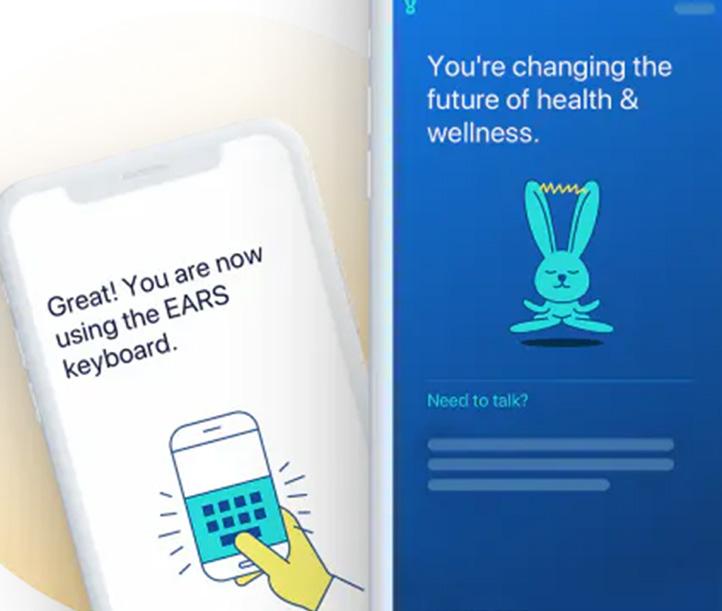
Providence St. Joseph Health is partnering with Ksana Health to develop a platform that improves mental health intervention using artificial intelligence. These are screenshots of what participants of a related study might see on their smartphones as they participate.
Providence patients who consent and are accepted to be research participants will complete a survey and download Ksana Health’s “Effortless Assessment Research System,” or EARS. On the EARS app, the participants will answer a couple of questions each day about their mood, and the app will collect data from their wearable devices. This will include data on their sleeping, physical activity and other behavioral patterns. The participants also will answer a weekly set of questions. At the end of their three months of participation, they will complete a final survey.
Platform development then pilot
Wendt explained that the partnering organizations currently have the funding to collect the data that will be the foundation for the development of the model. She said if the partners successfully recruit enough patients to participate, the organizations will receive funding to build the model.
Wendt said the model building will take about two years. Then the group will pilot the model and then will launch it.
Ksana Health’s Allen said, “Once the model is developed, we believe it will introduce a new set of possibilities for early detection, prevention and more effective treatments for mental health problems by being able to answer the questions: What works for whom and when?”
Providence’s Wright said in the release that “given the proliferation of smartphones and watches, if we can harness the sensing capabilities of those devices and link behavioral signals to patient health records, we can build a new model of personalized, proactive behavioral healthcare.
“This innovation can be a major component of the delivery model of the future,” he said. jminda@chausa.org
Source: National Institute of Mental Health
Allen
With $10 million gift, SSM Health establishes community impact fund
By JULIE MINDA
A SSM Health foundation will use a $10 million donation from one of the health system’s board members to launch a fund for addressing social determinants of health of vulnerable patients.
SSM Health Foundation — St. Louis will create the SSM Health — St. Louis Community Health Impact Fund with Carolyn Kindle’s philanthropic gift. SSM Health and its foundation will use the fund to partner with organizations that address socioeconomic needs, including housing, food and transportation in St. Louis.
Kindle is CEO and an owner of St. Louis’ professional soccer team, St. Louis CITY SC. She also is president of Enterprise Mobility Foundation, a charity that supports nonprofits nationwide.
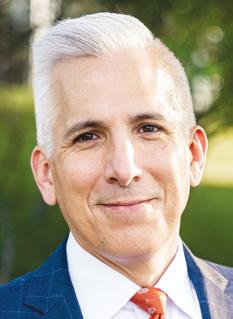
In a press release on the new fund, Dr. Alex Garza, SSM Health chief community health officer, said that medical care alone is insufficient to help patients who have significant social barriers become healthy. He explained that the new fund “helps us build the ability to try and address the sometimes-immense needs of patients who, although (they) recover clinically, will struggle to stabilize once they leave our care.”
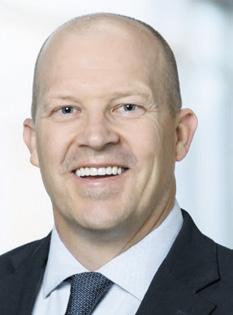
Jeremy Fotheringham, regional president of SSM Health’s St. Louis and Southern Illinois markets, said in the release that Kindle’s gift “provides us with the opportunity to greatly increase our health ministry’s ability to extend our mission into the communities who need it most.”
Kindle said in the release that the fund
Grants
From page 1
They were approved and have received one grant per year since 2024. The money is helping them to transform an abandoned building in Richmond’s East End into their restaurant’s future home.
“This funding has been extremely valuable,” Cortney Cornwall says. “And we’ve received coaching and business connections to mentors and to other entrepreneurs.”
The Cornwalls’ budding business is among more than 60 companies in the East End that have received a total of more than $1.2 million in SEED grants from Bon Secours Richmond since 2011. The recipients also receive business guidance, mentorship and other support. The assistance is helping a variety of local enterprises — including restaurants, a bakery, ice cream shop, beauty salon, and wellness center — to launch, evolve and grow.
In a press release, Michael Lutes, state president of Virginia for Bon Secours Mercy Health, says, “The SEED program is a testament to what can happen when an anchor institution commits to supporting its community, and we are proud of the impact it has had on local entrepreneurs.”
Redlined neighborhoods
Promoting better outcomes
Garza said SSM Health will focus on organizations and initiatives that advance clinical goals of SSM Health patients.
The system already has identified two initiatives that will receive Community Health Impact Fund dollars.
Through its existing Bread Basket Program, SSM Health partners with the St. Louis Area Foodbank to provide healthy food to patients in need. The program served 3,276 patients last year. Dollars from the Community Health Impact Fund will boost that program and help connect it more directly with clinical goals of patients.
For instance, Garza said, SSM Health and its partners are exploring how they might address patients’ food insecurity while also correlating the response with specific clinical outcomes. They may do this by offering patients medically tailored meals.
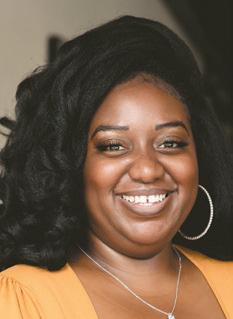
Shekinah Mitchell is director of community health and neighborhood engagement for Bon Secours Health in Richmond. She says the East End has deep historical roots — Patrick Henry is said to have delivered his famous “Give Me Liberty or Give Me Death” speech there in the late 1700s. The community increased greatly in population over its history, and in time several vibrant business corridors took shape.
“represents an investment in the long-term health and vitality of our community.”
Optimization, expansion
Garza said in an interview that SSM Health has developed the framework for the new fund and is building out the programming. He said the key principle is that the fund will bolster the efforts of organizations that support patients who have acute socioeconomic needs.
He noted that SSM Health by and large does not directly address patients’ nonmedical needs, such as for housing, transportation and food, but the system partners with others to ensure these needs are addressed because these social determinants are key to promoting patients’ health.
The money from SSM Health will help those partners optimize and expand their efforts, Garza said, noting that nonprofit organizations like these often are cash-strapped.
But then, Mitchell notes, the area was hit by multiple blows, especially the practice of redlining — that is when marginalized populations are denied bank loans. Some residents fled. By the early 2000s, the business corridors were suffering. Dilapidated and vacant properties and other worrisome signs of urban decay popped up.
Bon Secours Richmond launched its SEED grant program in this context. Mitchell explains a key priority was to revive blighted properties, particularly by funding businesses that could enliven the “front porch of the neighborhood,” those dilapidated tracts along the business corridors.
She says the priority has been to partner with innovative entrepreneurs who see themselves as part of the community, are engaged with the area and wish to give back and to do good. Many of the people who apply for the grants live in the East End and want to contribute to its revitalization by opening businesses that can serve the area, employ local residents and attract other development.
‘Tale of two cities’
Mitchell notes that the SEED grants are part of somewhat of a renaissance in the East End. Parts of the community have been receiving broader investment and have seen gentrification. But, she notes, there are some neighborhoods that continue to experience stark poverty. These left-behind areas have large swaths of public housing units, and community health needs assessments show a high level of chronic disease, including diabetes and obesity.
“It’s like a tale of two cities,” Mitchell says of the dichotomy of gentrified neighborhoods just blocks from struggling areas.
The SEED grant cycles have focused on bolstering low-income neighborhoods.
The SEED program provides grants of up to $25,000 to individuals to start, develop or grow their business in three East End neighborhoods: Church Hill, Shockoe Bot-
SSM Health will determine which organizations to support using insights from community health needs assessments and related performance indicators and goals.
Three pillars
Garza noted that the fund’s framework is focused on three pillars: impacting patients, impacting community and impacting the health system.
He said that through contractual partnerships with community-based organizations with expertise in addressing the social determinants of health, SSM Health will secure direct services for patients.
At the same time, SSM Health will work collaboratively with the partner organizations to help build their capacity to serve the broader community.
A focus of the partnerships will be demonstrating the direct impact of the partnerships on clinical outcomes and the cost savings for the health system as a whole.
tom and Fulton. A panel of local leaders, including former grant recipients, reviews all applications and selects the recipients. Recipients can receive grants up to three times, for a maximum of $75,000.
Boot camp
Mitchell says all businesses that apply for a SEED grant become part of a network, whether they get grants or not.
Businesses in the network can at no cost receive coaching from other entrepreneurs and business experts, help writing a business plan, technical assistance, marketing advice and other support.
Any business, including those benefitting from SEED, can take part in a separate program — Bon Secours Richmond's Entrepreneur 101 Boot Camp — and those that have existed for five or more years can take part in 201 Boot Camp, which provides more advanced guidance and resources, including assistance connecting with banks, the municipal government and other players that can help the businesses to stabilize and expand.
Another separate Bon Secours Richmond program that businesses can apply to access is Parsley’s Kitchen, a commissary kitchen that offers companies affordable rates to use its equipment. The kitchen is on the campus of Bon Secours Richmond Community Hospital in the East End and is located within Bon Secours Richmond’s Sarah Garland Jones Center.
Several organizations partner with Bon Secours Richmond, including business consultant InUnison, which provides much of the outreach, technical assistance and coaching and handles the practicalities of the application and fund distributions.
Building community
Mitchell says she is seeing “ripple effects” in the East End from Bon Secours Richmond’s SEED program.
She says strong businesses can restore
The other initiative that will receive funding is medical respite. SSM Health plans to work with community organizations including Haven Recovery Homes and LIV Recovery Sober Living to establish more formal relationships to provide medical respite for discharged patients who need housing while they heal. The partnering organizations already offer support to address socioeconomic needs. This includes nutrition, transportation, case management, peer support and housing navigation. The partnership with SSM Health will secure placements for identified patients. The partnership also will bolster the organizations’ ongoing efforts to increase their reach to the broader community.
Garza said the impact fund will help ensure these programs are more tightly aligned with clinical outcomes and with what is important to SSM Health and to the community. jminda@chausa.org
vibrancy to a community. “These entrepreneurs are incredible people doing incredible work,” she says, “and I feel privileged to affirm their value.” She adds, “It makes me proud to work in a place that thinks out of the box, that has a bigger idea of what health is.”
“Bon Secours has a long history of supporting the community, and this is another powerful way they are improving the community. They see that the community doesn’t just need healthcare, we need long-term change.”
— Cortney Cornwall
Cortney Cornwall says she is among the many business owners who have a great appreciation for what Bon Secours Richmond is doing. She says it’s been exciting to watch the restaurant take shape — it could open later this year. She and her husband have used the SEED funds for renovations, equipment, a heating and air system and other necessities.
“Our hope is for it to become a successful restaurant serving good food in a welcoming environment,” she says. “And we hope to be an example that encourages others to invest in the Fulton community.” Cornwall adds, “Bon Secours has a long history of supporting the community, and this is another powerful way they are improving the community. They see that the community doesn’t just need healthcare, we need long-term change.”
Mitchell
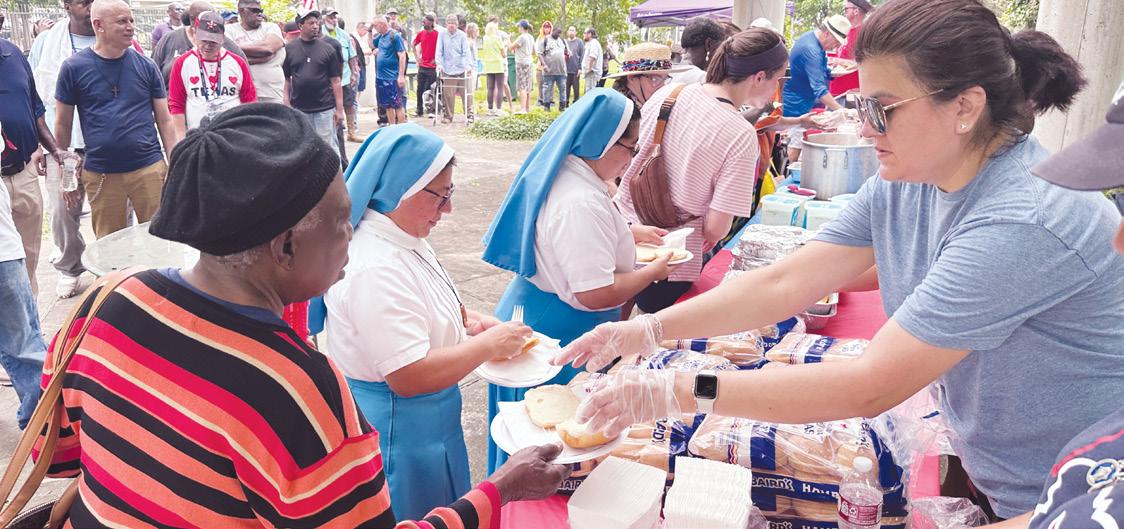
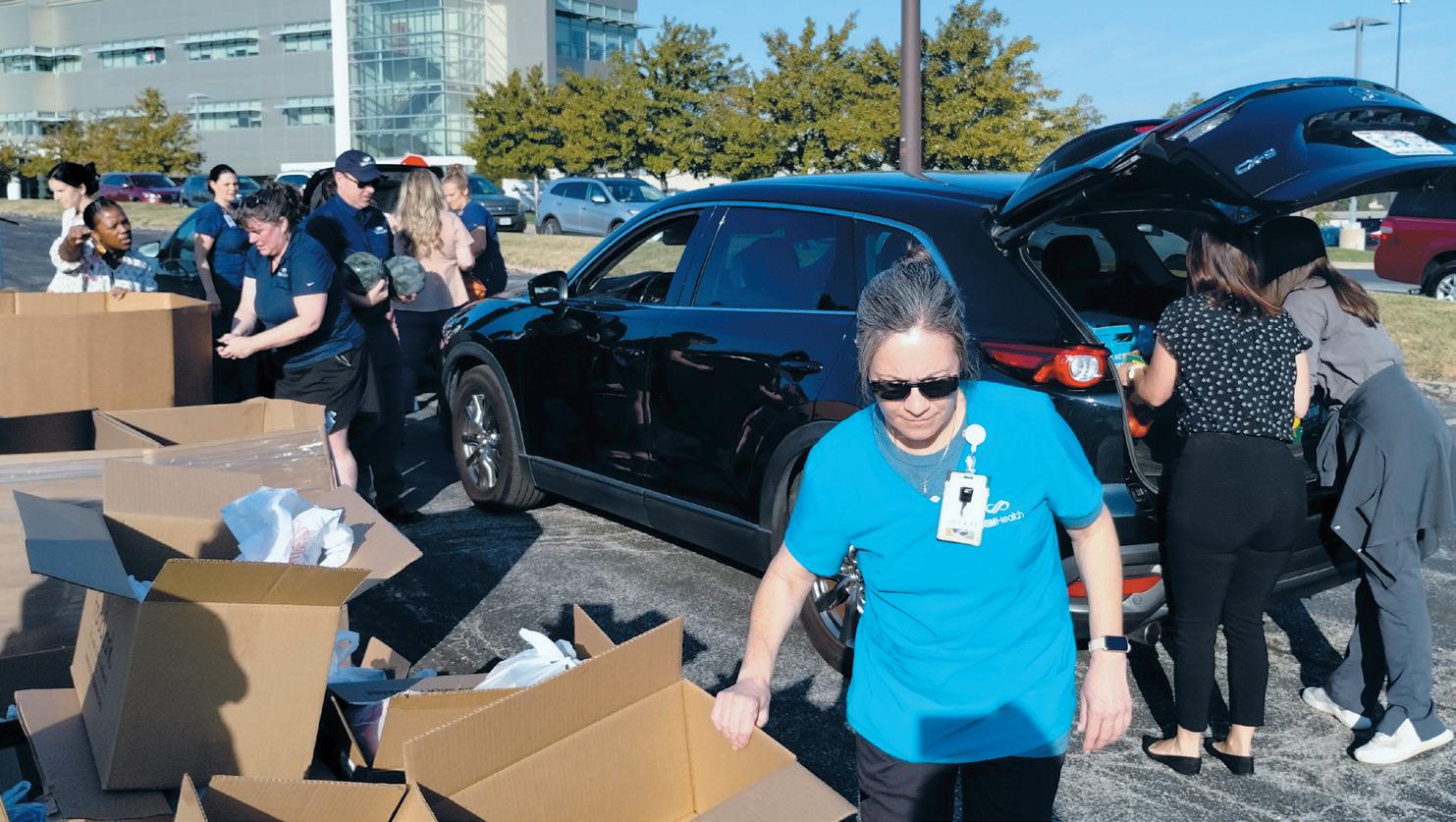
SSM Health Foundation — St. Louis has launched a Community Health Impact Fund to support organizations addressing the social determinants of health. One beneficiary is the Bread Basket Program, a partnership between SSM Health and the St. Louis Area Foodbank. The food bank helped organize this food distribution at SSM Health DePaul Hospital in suburban St. Louis.
Fotheringham
Garza
KEEPING UP
PRESIDENTS/CEOS
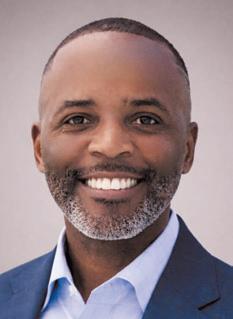
Anthony Coleman to hospital president for Dignity Health — St. Bernardine Medical Center and Dignity Health — Community Hospital of San Bernardino, both in San Bernardino, California. These leadership roles are newly combined for the CommonSpirit Health hospitals. Coleman was president and CEO of Cedar Hill Regional Medical Center, GW Health, in Washington.
Kurt DeVaney to president of CHRISTUS Health Mount Pleasant in Texas, from chief operating officer of CHRISTUS Good Shepherd Medical Center in Longview, Texas. He succeeds Patty Boeckmann, who is retiring.
ADMINISTRATIVE CHANGES
Amanda Chawla to chief supply chain officer of Providence St. Joseph Health, effective Aug. 24.
PeaceHealth of Vancouver, Washington, has made these changes: Matt Swafford to executive vice president and chief financial officer, effective Sept. 21; and Heather McEvoy to chief philanthropy officer for PeaceHealth’s Vancouver and Longview communities.
Paul Ferguson to Central Illinois market chief operating officer for Hospital Sisters Health System.
Dan Ensell to senior vice president of mission integration for Chesterfield, Missouri-based Mercy.
Deborah Vaughn to executive director of the FMOL Health St. Dominic Foundation of Jackson, Mississippi.
GIFTS AND GRANTS
CommonSpirit Health’s CHI St. Vincent has received a $5 million matching gift from Boots and Alan Warrick to support the Anthony Center for Advanced Cardiac Care at CHI St. Vincent Infirmary in Little Rock, Arkansas. The facility named the
Mobile healthcare
From page 1
Watson works with the Mobile Integrated Healthcare Program, which the city and the Ketchikan Wellness Coalition launched in 2024, with $100,000 in community benefit funding from PeaceHealth. By providing nonemergency, at-home care, the program has helped reduce readmissions among “high utilizer” patients at PeaceHealth Ketchikan Medical Center by more than 80% over the last three years. Overall, the hospital has seen a reduction of about 43% in readmissions over 12 months. The program comes at no charge for city residents.
“A lot of it is just outreach and education,” Watson said. “That’s a huge part of what I do.”
He pointed out, as an example, that explaining to patients the side effects of medication can reduce their trips to the hospital.
Watson routinely helps people who are unsheltered get healthcare. He also helps those who do have homes but for whatever reason have difficulty getting in and out of them. The home of one of Watson’s elderly patients is up about 200 stairs, not unusual for rugged Ketchikan. He said there’s “no way” she can get down the stairs to a doctor’s appointment, so, he goes to her.
Adaptability
Watson thinks of himself and those who work alongside him as “worker bees” of the hospital. “We’re able to go into places that maybe they can’t get to ... whereas we can be really flexible with our schedule and our time and what we’re able to do,” he said.
Last year, the Alaska Hospital and Healthcare Association gave the Innovation in Patient Safety and Quality Award to the program’s leaders for “taking progressive
center for John Ed and Isabel Anthony, who previously donated $5 million toward the center. A press release said opening the new center will enable CHI St. Vincent to continue to expand its heart program for the most complex cases, combining inpatient and outpatient heart care services including cardiac electrophysiology and cardiothoracic surgery programs in one location. The center is to open in 2027.
The Avera Foundation has received a $1 million gift from retired First Dakota National Bank CEO Larry Ness and his wife, Dianne Ness. The gift furthers the foundation’s $7 million Building Hope Here campaign to support the construction of the Avera Cancer Institute in Yankton, South Dakota. The institute will be in the Ness Family Center. The Ness family also helped facilitate a $500,000 dollar-for-dollar match of community donations by First Dakota National Bank. When the $17 million cancer institute is complete, it will offer medical oncology, radiation oncology, chemotherapy infusion, clinical research, genetic counseling and other support services in one location.
and effective steps to improve patient care and outcomes.” Other city fire departments and the Alaska Department of Health have talked to the program’s leaders about how it works, Watson said.
Watson thinks one reason the program is successful is that it’s adaptable.
“I think some of the things we do, you’d just be like, why are you doing that? That’s not something a healthcare organization does,” he said.
For example, he’s gone grocery shopping for people to buy food that helps prevent conditions like gout flare-ups, he said. That could avert 911 calls. “If we can tie it to healthcare, we’re going to do it,” he said.
Identifying patients
Primary care providers, home health clinicians, hospice workers, or someone on the city’s EMS crew refer patients to the program. Watson also identifies patients at readmissions meetings with PeaceHealth Ketchikan Medical Center staff.
Those meetings focus on who has returned to the hospital and try to identify
“ It can be challenging for people, especially isolated people, to access things they need up here. But thankfully, from what I’ve witnessed ... as long as you’re willing to ask for help, there’s
no shortage of people willing to step up and do their part.”
— Ben Watson
CHRISTUS expands tuition-free healthcare training program across Central Louisiana
CHRISTUS Health is expanding a tuition-free cohort program in Louisiana to help strengthen the local healthcare workforce and create new opportunities for students who want to enter the field.
CHRISTUS St. Frances Cabrini Health System launched its cohort program in August 2024 at Louisiana State University in Alexandria to support nursing students. That program has helped 28 Louisiana State students.
Starting this fall, the program will expand to serve nursing students at Northwestern State University’s CENLA campus in Alexandria, respiratory therapy students at Louisiana State University Eunice and licensed practical nursing students at Central Louisiana Technical Community College. The program is expected to help 35 more students each year with these expansions.
The cohort program provides up to $25,000 in tuition coverage for selected stu-
gaps in care. Patients with frequent emergency department readmissions are often the most vulnerable ones who face housing insecurity, mobility challenges and chronic conditions.
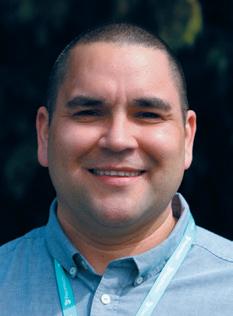
“We review every single readmission,” said Louis Scott, a quality facilitator at PeaceHealth who digs through data to identify issues, “and having Ben on that team has been like a whole new door has opened up.”
Watson often knows these patients and their circumstances and can identify blind spots that hospital staff missed. “Our readmissions numbers have been much better since Ben joined the meeting, so I definitely give him some credit for that, without a doubt,” Scott said.
When the program started, Watson and PeaceHealth staff identified more than 50 people as high utilizers of EMS and the emergency room for basic needs. Last year, the number was down to 34, and as of midMay this year, Watson counted eight.
In 2023, the year before Watson started with the program, the city had about 2,900 EMS calls a year. The average went down to about 2,450 calls the last couple of years, and this year, the number of calls may drop to around 2,000. “I’m worried I will work myself out of a job,” Watson joked.
Lessening the strain
Carolyn Henry is the quality and patient safety manager at PeaceHealth Ketchikan. Reducing readmissions is one of the system’s strategic targets, she said.
Both the city and the hospital want to keep people from needing to go to the ER and to lessen the strain on resources, she said.
She calls the mobile health program “a beautiful partnership.”
dents, which covers most or all of the tuition cost for the entirety of the program at each of the colleges or universities. Participants also receive specialized training and other resources to support them.
The money comes from the CHRISTUS Cabrini Foundation.
Upon graduation and licensure, students are also guaranteed employment at CHRISTUS St. Frances Cabrini Health System, which includes a flagship hospital in Alexandria and other services.
“We have a powerful opportunity to help strengthen and sustain our communities by continuing to invest in and grow a reliable healthcare workforce,” Monte Wilson, CEO of CHRISTUS St. Frances Cabrini Health System, said in a press release. “We are proud to partner with these incredible schools to prepare the next generation of highly skilled caregivers while also removing the burden of paying for tuition.”
“In our community ... we do have limited resources,” she said. “So we have to share those things. We share these patients, right?”
Ketchikan and PeaceHealth have a longstanding connection. The city owns the hospital building, and PeaceHealth has leased it since 1963. The Mobile Integrated Healthcare Program evolved from that relationship and out of the Ketchikan Wellness Coalition, a nonprofit made up of individuals, organizations, businesses, local government and others to improve the quality of life for residents.
Watson can refer people to PeaceHealth’s Priority Care clinic for same-day appointments. He also refers people to a weekly clinic run by the mobile healthcare program and the Salvation Army for vaccinations and sexually transmitted disease testing. The Salvation Army provides the space for the clinic.
Watson also drives a van that acts as a mobile clinic. The mobile clinic is particularly nice for unhoused patients, giving them a space to talk to Watson or another clinician privately. That helps build trust and leads to better outcomes, Watson said.
He keeps medications locked in a safe in the van for patients, most of them unhoused, so they live without fear of those medications getting stolen from them on the street. “I know where they all hang out,” Watson said of these patients. “I can find them and give them their medicine.”
He also refers unhoused patients to resources to help them get into permanent housing.
“It can be challenging for people, especially isolated people, to access things they need up here,” Watson said. “But thankfully, from what I’ve witnessed ... as long as you’re willing to ask for help, there’s no shortage of people willing to step up and do their part.” vhahn@chausa.org
Scott
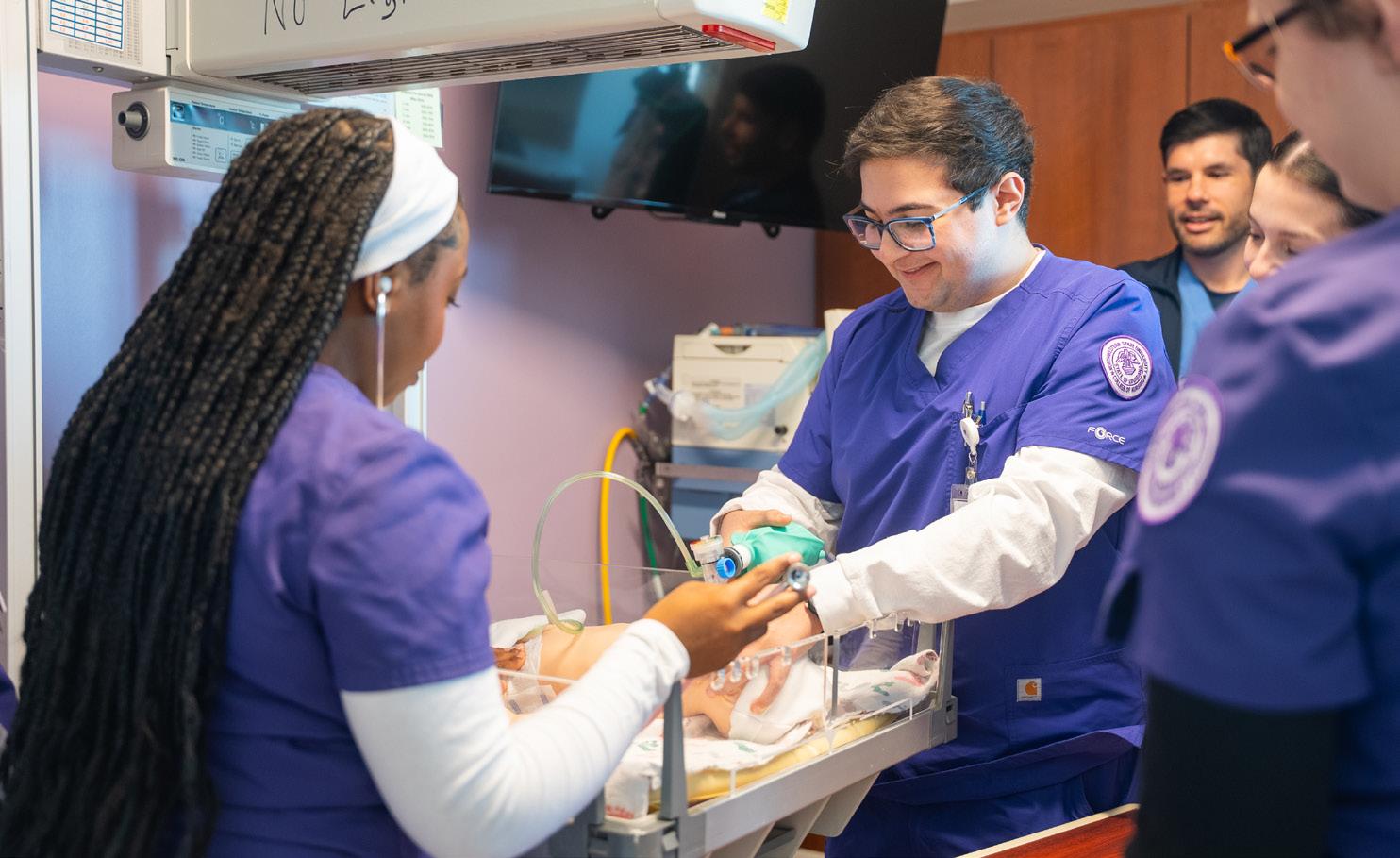
The CHRISTUS St. Frances Cabrini Health System is expanding its tuition cohort program. Nursing students like these at Northwestern State University in Alexandria, Louisiana, as well as students in select programs at two other schools will have tuition covered and a guaranteed job within the system.
Coleman Swafford DeVaney McEvoy Chawla Ferguson
Young HSHS volunteer’s contribution is music to patients’ ears
By DALE SINGER
Meher Garg and her grandmother live thousands of miles apart, but when Meher plays her violin over FaceTime, those miles give way to smiles.
The intercontinental serenade to a grandmother who lives in India and has Alzheimer’s disease is just one example of how the 17-year-old links melody to caring. At HSHS St. John’s Hospital in her hometown of Springfield, Illinois, Meher goes door to door as a volunteer musician, bringing patients welcome comfort through her violin.
“I was so inspired and curious by what I saw with my grandmother, I searched music therapy online,” Meher said. “The most effective music therapy comes from live music, and the best form of music therapy is where patients can be interactive or with music that patients have a personal connection to.”
Inspired to share her talent
Meher started playing piano at 5 and since has added violin and flute to her repertoire. She said her grandmother, a retired music teacher, was her first instructor and has been the inspiration behind her music therapy.
“When she first developed Alzheimer’s, it progressed extremely quickly,” Meher said. “And you could see visually that the music was having an effect. I would play her favorite song, ‘Rainbow in the Sky,’ and on FaceTime her eyes would light up. She would sit up, and you could just see it in her face.”
Meher’s mother, Ruchi Gupta, a gastroenterologist in Springfield, recalled how the isolation prompted by the COVID pandemic affected her daughter’s relationship

with her grandmother.
“My mom started struggling with dementia and being forgetful, so Meher would cheer her up instantaneously whenever my mom would FaceTime her,” Gupta said. “Meher would play, and I think that really kept her out of deep depression. That opened Meher’s eyes as to how music can heal in many ways.”
Meher agreed that the pandemic gave her a strong sense of how music can be medicinal. She had been playing violin in the Illinois Symphony Youth Orchestra, which went on hiatus during the crisis.
“I kind of felt this loneliness,” she said. “Then I realized certain people never have access to live music.”
When the pandemic ended, Meher and her 13-year-old brother, Veer, started a group called Melody Therapy, with musicians from local school bands and the youth orchestra. Its motto is: “Empowering healing and emotional growth through music
and mindfulness.” Veer, soon to be a high school freshman, plays trumpet and piano and “really likes math,” Meher said.
“We arrange little concerts, and the live musicians perform different instruments,” she said.
‘A peaceful distraction’
Britney Davis, assistant nurse manager of the orthopedic unit at St. John’s, has seen firsthand how Meher’s music can soothe patients and their families.
“When Meher walks onto our unit with her violin, you can immediately feel a sense of calm and comfort fill the hallways,” Davis said. “Her beautiful music provides patients with a peaceful distraction from the stress of being hospitalized. Many patients stop what they’re doing just to listen, and it’s not uncommon to see smiles
and tears of joy or hear heartfelt comments about how much her music has brightened their day.”
Davis recalled Meher’s effect on a patient who was experiencing postoperative pain. “As Meher began playing her violin, the patient’s focus shifted from their discomfort to the beautiful music filling the room,” she said. “You could see their expression soften as they relaxed, smiled and simply enjoyed the moment.”
Connecting music to memories
When she plays for patients with Alzheimer’s or dementia, Meher reaches out to their families for song suggestions.
Once, at the request of a patient’s daughter, she played “Hey Jude.” The daughter said her mother used to sing The Beatles classic to her. Another time, on the Fourth of July, one of her listeners was a veteran, so she played “The Star-Spangled Banner” for him. “It was an amazing experience,” she recalled. “He saluted.”
When Meher and her fellow musicians visit Alzheimer’s and dementia care centers, in addition to performing, they make keepsakes for patients.
“We basically take objects that are meaningful to patients, like for one patient it was her rosary beads and bracelets, and we make a memory box that we present to the patients as we play live music,” she explained.
Given how she is already using her talents to bring patients comfort, it’s probably not surprising that Meher, soon to be a high school senior, is looking ahead to a career as a physician.
For now, she is fitting her musical volunteer work into a busy schedule. “I’ve just tried to prioritize certain things, and I try to do things that bring me joy,” she said.
Emergency staffs at Saint Peter’s Healthcare get autistism-focused training
By VALERIE SCHREMP HAHN
The emergency department can be a stressful place for anyone, in particular for patients with autism and their caregivers. The emergency departments at Saint Peter’s University Hospital and Saint Peter’s Children’s Hospital in New Brunswick, New Jersey, are seeking to ease that stress and promote understanding.
The departments at each hospital, which are both part of Saint Peter’s Healthcare System, have become certified autism centers through the International Board of Credentialing and Continuing Education Standards.
Each member of the departments’ staffs underwent 14 hours of online training. The departments made physical changes such as painting exam rooms a calming gray. They added features to improve patients’ experience including tube-shaped aquariums with plastic fish and water sounds; an interactive projector for playing games or for watching soothing nature scenes; and a variety of items like noise-canceling headphones, sunglasses and fidget toys that channel restlessness and reduce anxiety.
Creating a calmer space
The certification process at the children’s hospital started about two years ago when an assistant manager wondered how the hospital could better handle what seemed to be an increasing number of patients on the autism spectrum. A study published in JAMA Network Open in 2024 found that diagnosis of autism among U.S. children had increased fourfold from 2000 to 2020.
Jacqueline Maloney, nurse manager of pediatrics, the pediatric intensive care unit and the pediatric emergency room at the children’s hospital, said the idea was to “give our staff the proper tools to work
with this population coming into a hospital, where it’s not great for anybody with a sensory concern.”
She points out the experience can involve loud noises, bright lights, and many people walking in and out of the room. In an emergency, neurodivergent patients may be unable to communicate that they are feeling anxious or in pain.
The university hospital emergency department staff saw the need to help the same population, and found the same organization to help. The hospital turned an emergency room bay into a sensory room, adding the calming aquarium and installing the interactive projector on the ceiling. The hospital received its designation earlier this year.
The designation “marks a powerful step forward in creating a more inclusive, responsive healthcare environment for all patients,” Myron Pincomb, board chairman of the credentialing organization, said in a statement.
The credentialing board offers autism, sensory and neurodiversity training and certification for professionals around the world, including people in healthcare, education, public safety, travel and corporate sectors. The hospitals are listed in the IBCCES Accessibility App, which is free to download and provides guidance on certified destinations and sensory-friendly spaces.
Officials with the credentialing board walked through the Saint Peter’s Healthcare System sites to make suggestions. Janine Brys, nurse manager of adult emergency services at Saint Peter’s University Hospital, said the group was impressed by the university hospital’s menu of fidget items and took pictures of it to share. “I think it was a learn-
ing experience” for both groups, Brys said.
Other area hospitals that heard about the autism certification of the emergency department at the children’s hospital are calling to see if they can transfer children with special needs to the hospital, Maloney said. The hospital has a child life team with a lot of experience with the autistic population, and they gave the emergency department staff advice.
‘A sense of relief’
While the adult hospital offers patients a menu of available sensory items, the children’s hospital transports the sensory items on carts, allowing clinicians to turn most any area there into a sensory-friendly spot. The children’s hospital also has large communication boards patients can use to point out things like the location of their pain or what food they prefer to eat.
Rooms and other areas in both hospitals are painted a shade called “amazing gray,” which has a calming effect.
“Our walls before were kind of a yellowish color,” Brys said. “I’ve never in my life had a color do something to me, and when I walked into the room, I was like, oh, my gosh — it really did make you feel calmer.”
Maloney said caregivers of children who are autistic are relieved to know clinicians are specially trained, that specific resources are available, and that they don’t necessarily have to explain or advocate as much for their children. “It’s a sense of relief, and it’s a sense of, thank God, because you just made my stay a little bit less stressful, not only for my child, but for us,” she said.
Brys said that caregivers tell her it’s a tough decision to bring their adult children with special needs to a hospital or ED, because it can take the patient two or three
weeks to settle back into their routine. Getting the patients seen sooner may prevent a worsening medical situation, she pointed out.
Clinicians know to ask caregivers what might work best to communicate with a child or to do a procedure like a blood draw. They come up with creative solutions, such as singing to a patient to calm them.
Brys inserted an IV as a patient walked around the room at the caregiver’s suggestion. “It does make it a little tricky, but it’s so much better than to traumatize the patient even more with putting them in a restraint. It just makes life a lot easier,” she said. “I just think the education has kind of opened up that creative thinking of how we can get this done.”
Helping everyone
The changes and new tools help more patients than just those who are on the autism spectrum. Someone with a behavioral health issue who is unable to sleep might be calmed by “popping balloons” on the interactive projector, Brys pointed out. That distraction can mean other patients aren’t disrupted.
Recently, an elderly patient and her sister, who were neurotypical, happened to be placed to wait in the adult sensory room. “She was getting a little restless,” Brys said of the patient.
Brys put an interactive bingo game on the projector, and soon everyone heard chuckles and giggles coming from the room as the women played. “It was so good for the staff to hear it,” she said. “We were all laughing.”
That reinforced to the staff that every patient appreciates their efforts, she said.
“We did the right thing, and not just for one population, but it can be used for all,” she said. vhahn@chausa.org
Meher Garg uses her musical gifts to bring joy to patients, including those at HSHS St. John’s Hospital in Springfield, Illinois.
Davis
Maloney
Brys