We take our hat in our hand in an appeal for your financial support. Advertising revenues sustain the Press. But ad revenues fluctuate and in some months fall off. Our nostalgic voice is popular with thousands of readers. The paper flies off the shelves. Since we have no pay wall to prevent one from scooping up the Press, some folks take multiple copies. To change the business model now to charge for it would be unfair and confusing.
The Press’s independent journalism takes time, money and hard work to produce, distribute and increase circulation. We want to keep our product accessible and in print for all, something you can hold in your hand and treasure. So here’s our pitch:
If you like our reporting, please support it with a one-time contribution by check of $10, $25, $50, $100 or more, so our future will be much more secure. Thank you for understanding our truthful appeal. – Rich Kraham
The prom is a large piece of school life. It can also be a huge expense, which discourages some students from going. Chatham High arts teacher Christina Scott says, “I don’t want to see them not have the opportunity because they don’t have the money.”
About four years ago her daughter was going to two proms, and, of course, needed a dress, but Scott found the prices exorbitant, “One was the same price as my wedding dress! In 2001!” She also heard some people saying they wouldn’t be going, because they couldn’t afford a dress. “That made me think about how many moms have closets filled with dresses that will never be worn again.” So, she asked for donations, got permission to use the Kinderhook Library Community Room, and the ‘Say Yes To The Dress’ giveaway began.
She thought maybe a few people would come, but driving up to the library saw a line waiting. “About 75 girls from six different schools got dresses.” Three years later there were about 100 from Columbia, Rensselaer and Dutchess counties!”
No students work at the giveaway: “We want them to realize they can just come and try on dresses.” Collecting donations starts in the summer. Ads are put up in schools, and the librarian at Ichabod Crane collects dresses as well.
What about the rest of the prom finery? “Oooh! Accessories!” Scott said. This year, for the first time, there are shoes and party purses. Two years ago, a closing bridal boutique sent a box of jewelry.
Say Yes To The Dress will be held March 22 at the Kinderhook Library, and is, Scott stressed, available to students from all six county school districts, not just about Chatham. She also emphasized that all the dresses and accessories are totally free.
For humans by humans
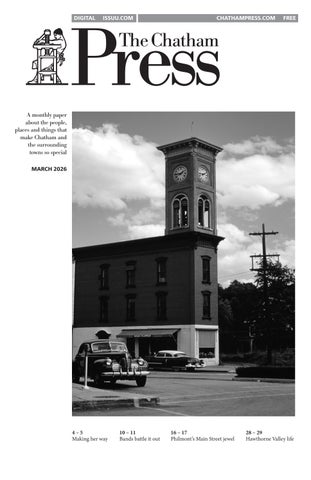
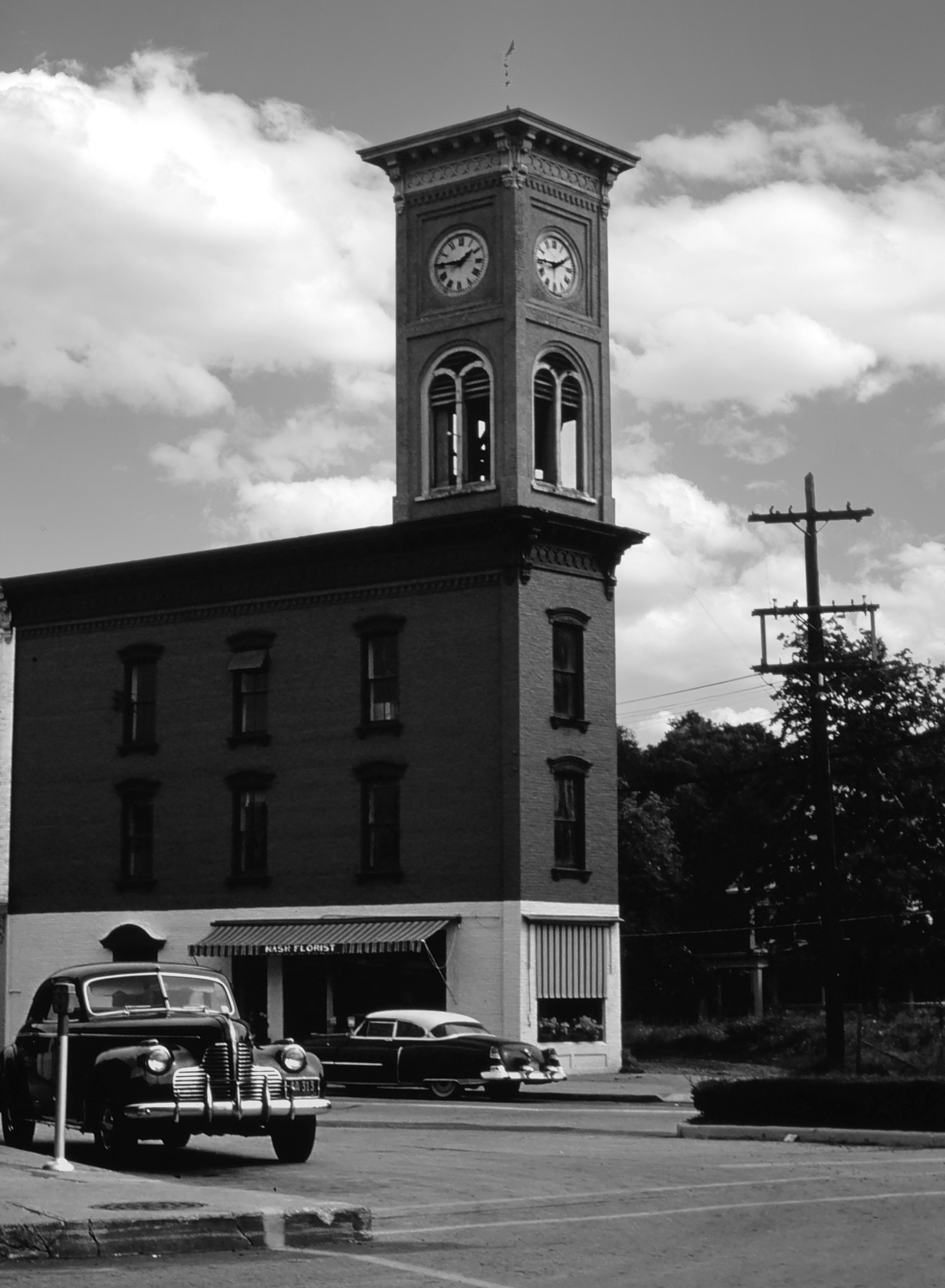
Cover photo: Richard A. Lindmark. September 17, 1960. Kodachrome slide
Maisie May learns to do her way
From Chatham to California, local artist Maisie May Rugen finds her voice. Her latest EP, “Little Miss Behavior,” reflects her continuing growth as an artist.
By Vivienne Murphy
When Maisie May bought a rubberbridge guitar from a small shop in East Los Angeles, she wasn’t sure she deserved it. She didn’t consider herself a “good enough” player yet, and the instrument felt too sacred for a musician who had not yet reached the height of her career. So, she made herself a deal: If she used the guitar to write her next project, she’d earn it. That very guitar went on to build the sound and spirit of Little Miss Behavior, an EP that reflects an artist growing into confidence, self-trust, and emotional clarity.
Rather than chasing the latest trends, Maisie May gravitates toward music that centers raw emotion and honesty. Her sound blends intimate pop soundwriting with indie-style techniques, pairing contrast-soft vocals with bold emotional themes and unconventional
production choices. Her songs feel like diary entries, drifting between confession and playfulness, making even the most personal moments come across as light and inviting to the listener.
Maisie’s songs capture a wide range of influences, both human and musical. Artists like Imogen Heap, Caroline Polachek, Charli XCX, and Dido have certainly shaped her appreciation for personality and vulnerability in pop, though much of her inspiration stems from everyday life experiences. Friends, ex-lovers, family members, co-workers, and even interactions in her restaurant job shape the flow of her music, reflecting the recurring theme of people moving in and out of her life. “I don’t write with relatability in mind,” she says. “I write with sincerity in mind, then hope that resonance will follow.”
A guitar named Louise
This emphasis on sincerity is also the backbone of the songwriting process, which for Maisie, starts with a feeling rather than words. Whether it’s a lyric fragment or a melody hummed into her phone, emotional truth is always the center from which the song builds. Rather than following a linear step-by-step approach, she allows the lyrics and melody to come together naturally and in real time. This technique takes much of the pressure off her as an artist, as she can focus freely on finding her own voice in her music. She values this steady growth, viewing each EP she releases as the achievement of a new “milestone.”
With Little Miss Behavior, Maisie May steps into a new level of confidence, which she describes as a turning point in understanding
PERFORMANCE PHOTO BY JOHN CHIGAS
her own voice and her role in shaping the music alongside her collaborators. The songs explore desire, identity, and morality with a sense of curiosity rather than self-judgment, creating a space for her to delve into complex themes unapologetically. Sonically, Little Miss Behavior continues her willingness to experiment and “get weird,” though only in ways that feels intentional in serving the emotional core of each track.
This project embraces contrast, such as intimacy paired with moments of boldness, creating an evolved sound that highlights a deeper trust in her artistic instincts. That trust is embodied in one of the EP’s most personal details: Every demo was written and recorded on the rubberbridge guitar she bought at that small East Los Angeles shop, now named Louise. The guitar appears throughout the EP, its distinct tone quietly tying all the songs into one, turning Little Miss Behavior into a remarkable achievement of both creative commitment and self-belief.
For years, Maisie May was afraid to fully name music as her life’s commitment, even though everything she pursued pointed in that direction. She constantly set five-year timelines and backup plans for herself because she knew that taking this path was a risk. “It’s such a daunting craft to commit your life to,” she says. “I was always in denial about whether or not I was really doing that.”
Shedding “conditions”
However, this past year, the doubt she had felt for so long transformed into clarity. As she reached the end of one of her self-imposed timelines, she realized that leaving music behind would feel like “abandoning [her] child.” Letting go of deadlines and external markers of success brought an unexpecting sense of freedom. Although she is still balancing making music with her restaurant job, she describes this period as the first time she’s ever felt truly successful. Learning to separate self-worth from industry timelines and numbers has allowed her to fall back in love with music without conditions.
By finding collaborators who feel like creative soulmates and recognizing how
closely her voice is tied to her inner state, she has been able to solidify this monumental shift in both her music career and her everyday life. “The strength in my singing voice is a direct correlation to how I feel about myself,” she reflects. Upon this realization, she now approaches her music as an artistic extension of herself, not just an occupation.
After spending several years in New York City, Maisie May reached a point of emotional and creative burnout. A city that once felt electric had become heavy, making her feel lost and out of alignment. So, when a friend casually suggested moving to California, she took it as a sign to follow her instincts. Rather than questioning the choice, she went for it and didn’t look back. When she arrived in Los Angeles, everything started falling into place. Within a month, she had secured a place to live, a job, and a close friend willing to make the move alongside her. The lack of resistance felt symbolic, especially after a long period where nothing seemed to flow correctly. For her, the transition to Los Angeles wasn’t about escaping reality, but about recognizing that it was time for a fresh start. “Hot take,” she says, “but running away from your problems is a little underrated if you’re doing it with intention.”
Unsurprisingly, the shift also came with a fair share of culture shocks. Since arriving, she’s adjusted to “disgustingly beautiful weather,” comical levels of plastic surgery, legendary traffic, undrinkable tap water, self-driving cars, food-delivering robots, and the surreal experience of $25 smoothies; all reminders that while her landscape changed dramatically, her humor and humble attitude remain the same.
Chatham’s never far
Despite the distance from her hometown, Maisie May carries Chatham with her everywhere she goes. She still remembers acting on the MacHaydn Theatre stage as a child, an experience that instilled in her the confidence to perform and an early understanding of storytelling and character.
Growing up in a small town shaped not only her imagination, but her sense of grounding which acts as a counterbalance to the ego and money-driven mindset that can come with city life. That influence continues to mirror through her songwriting, such as in the closing line of “Eden”: “I miss my garden,” which is a direct reference to her home in Chatham. Elements of her small-town upbringing manifest quietly throughout her work, woven into complex themes of longing, morality, and return.
Staying grounded, she says, comes down to constant self-check-ins and reminders that worth isn’t measured by numbers, timelines or external validation. Surrounding herself with people who are grounded in their morals and lifestyles has become essential, especially after learning how easily your sense of self can alter when no one around you has a solid foundation. It’s a practice rooted in selfawareness and the assurance that growth can happen without losing yourself.
For artists coming from small towns, her advice is simple: let where you come from remain part of your story. Don’t rush becoming someone else, and don’t mistake patience for stagnation. Trust your own voice and your own instincts, not someone else’s. With Little Miss Behavior, Maisie May is honoring the path that led her here, and allowing the music to continue unfolding at its own pace. •
PRESS PHOTO BY AUBREY WIPFLI
SINGLE ART BY AUBREY WIPFLI
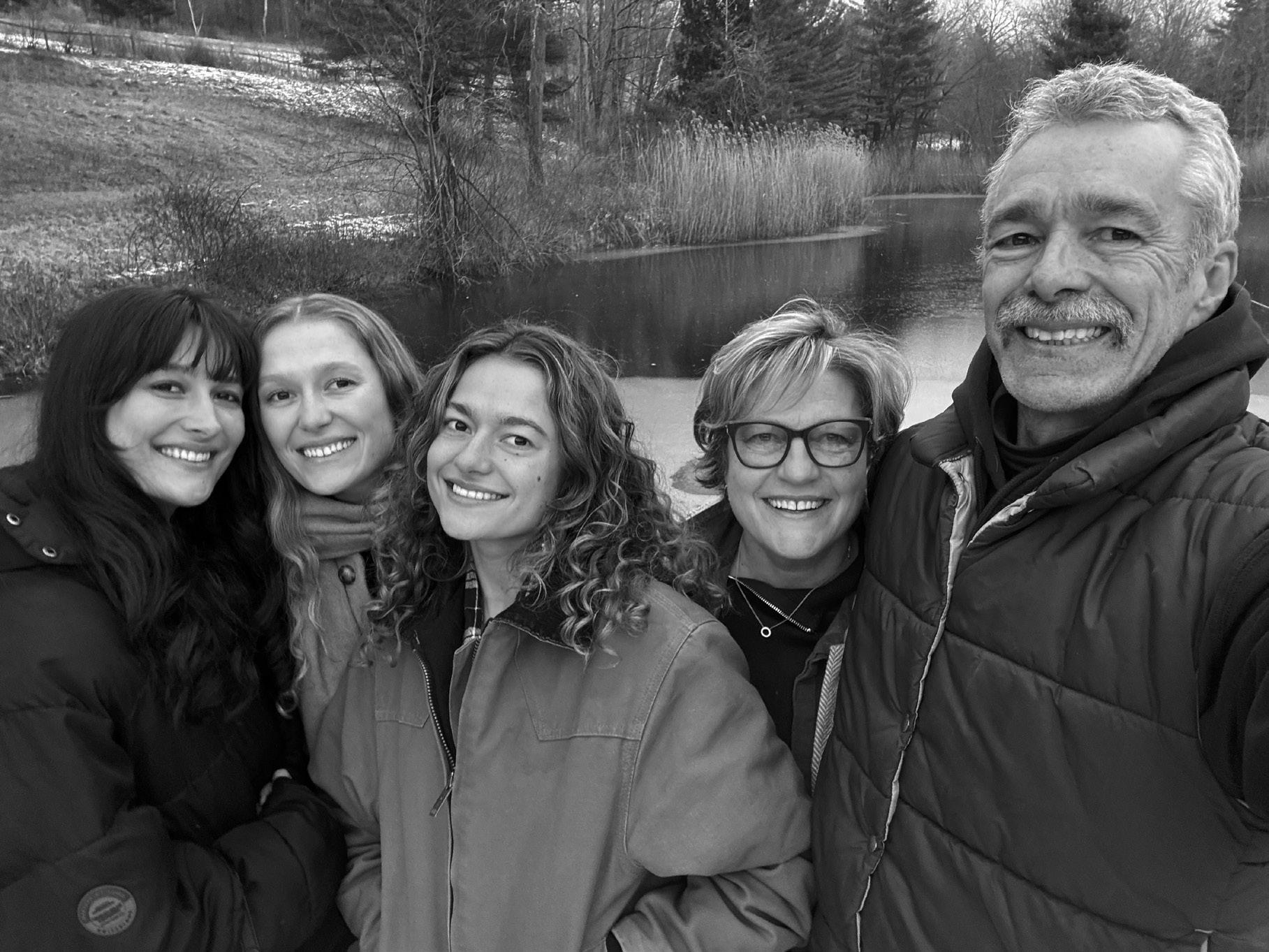
The Rugen clan. From left, sisters Olivia, Grace, and Maisie. Mom Lisa, and dad Dr. Glenn.
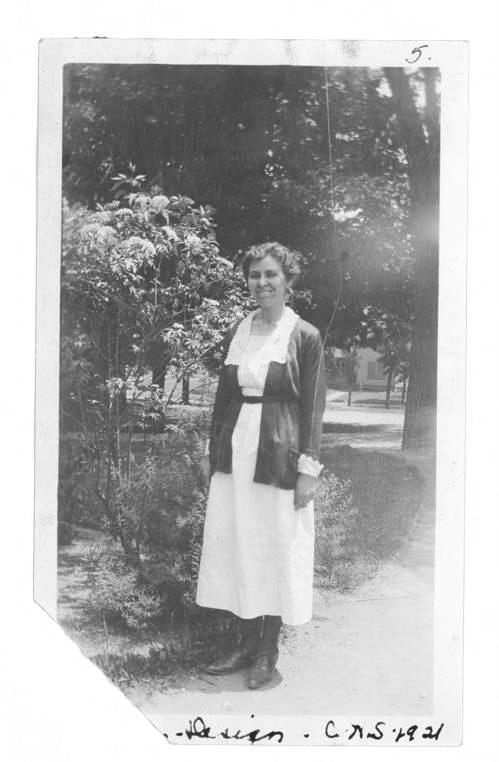
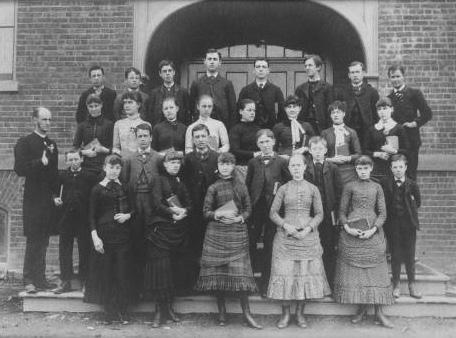
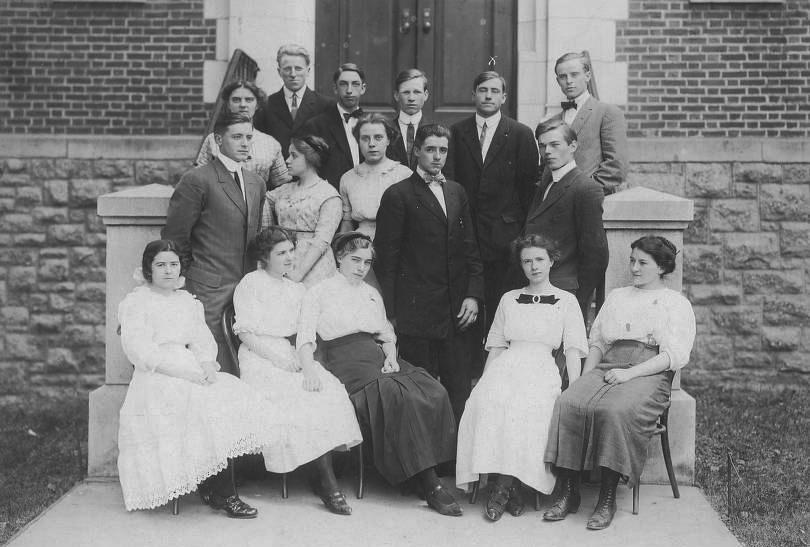
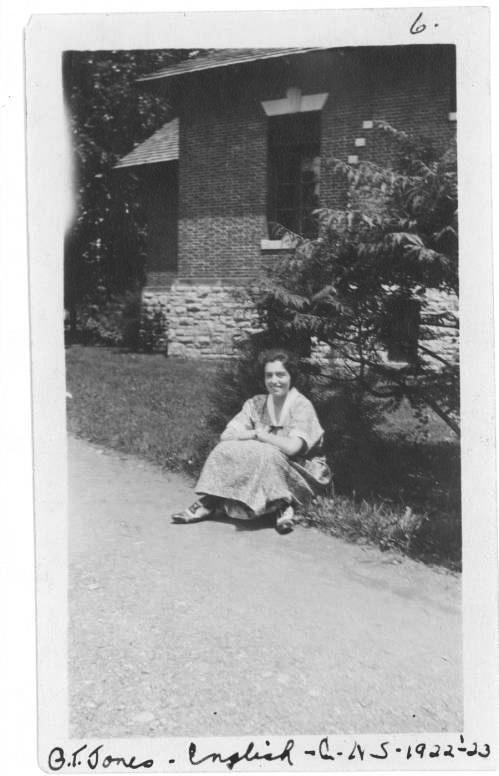
Chatham High
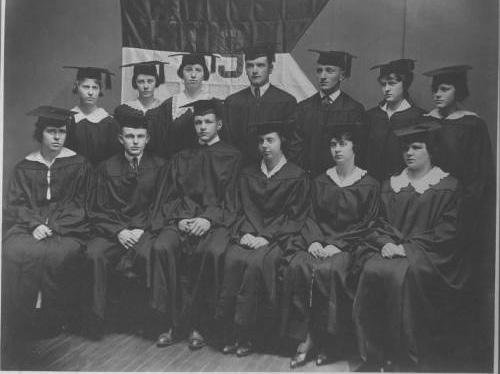
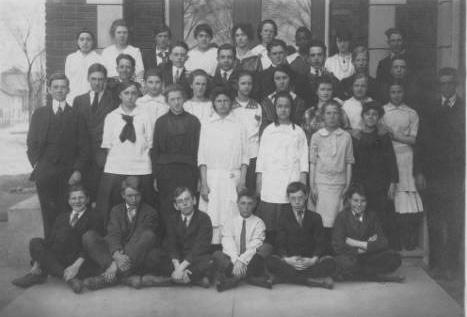
This month, it’s a real blast from the past, as we look back at Chatham teachers and classes from more than a century ago. See Tom Callahan’s story on page 9 of attending school on Woodbridge Avenue in the 1950s and ‘60s.
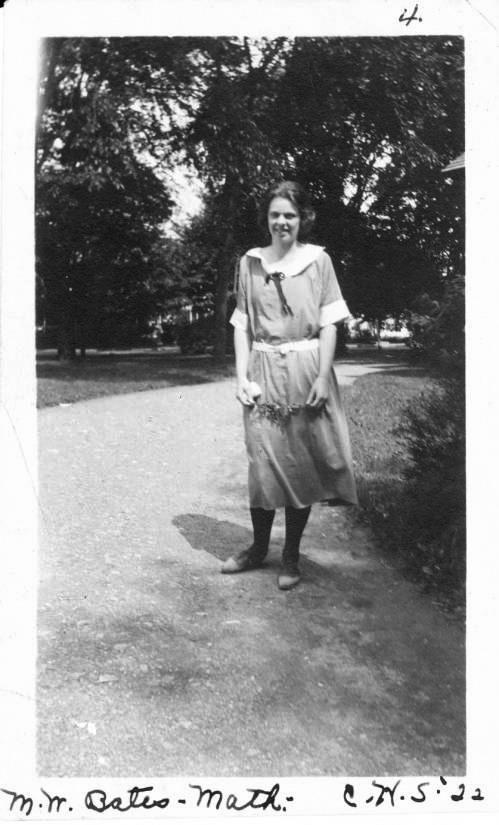
Photos: Top row, L-R: M.W. Bates, 1922; Ruth Van Allen, 1921, design teacher; Gladys Jones, English teacher, 1922-23.
Middle row: 1884, unknown class; Class of 1919.
Bottom row: Class of 1912; 8th grade class, unknown year.
One Size Fits All
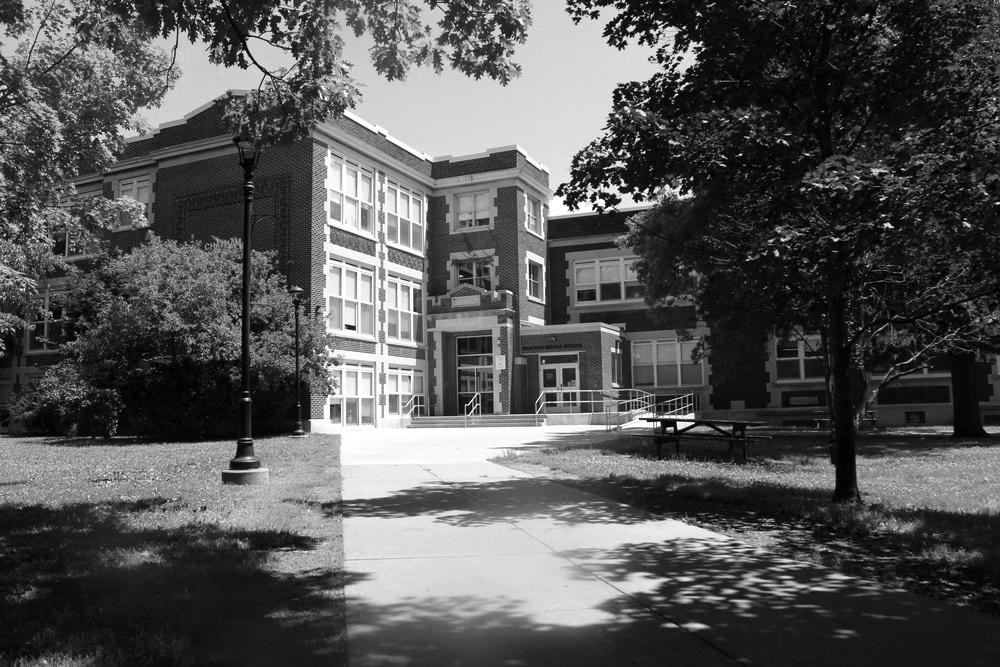
What spent much of its life as the Chatham Union Free School has seen plenty across three centuries. Following years of serving as the site for K-12 education, the construction of the Mary E. Dardess Elementary School in the late 1950s/early 1960s peeled away grades K-6. When the “new” high school was complete and ready for service in 1973, the building on Woodbridge Avenue would be left to serve grades 6–8 as a middle school, which continues to this day.
By Tom Callahan
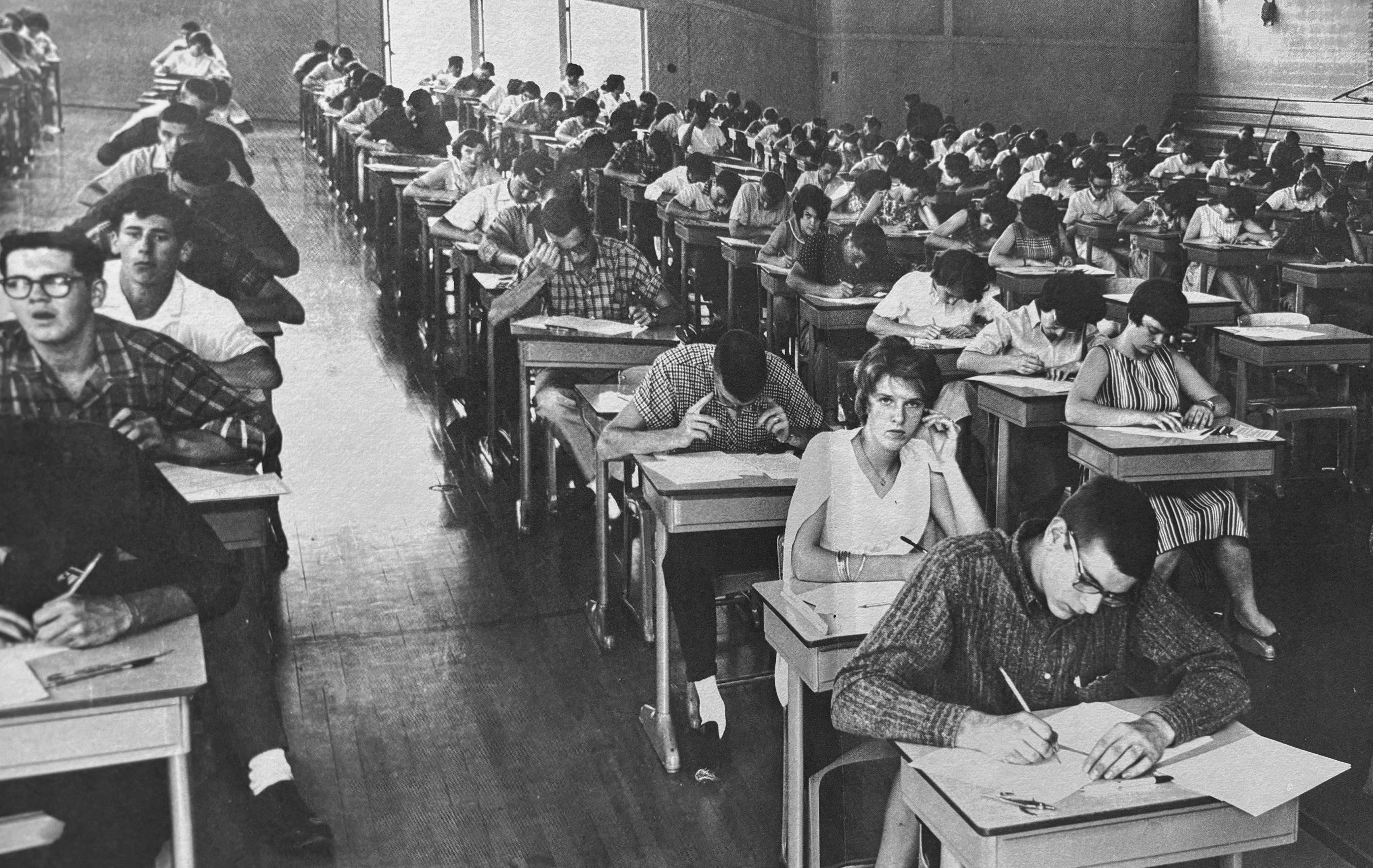
It’s very unusual these days to spend your entire K-12 schooling in a single building, but I and hundreds of other Chathamites did just that in the mid-20th century. The school was a big World War I era boxy brick place on Woodbridge Avenue, right next to the much more charming Carnegie Library, completed a few years earlier. The school was three stories tall with high ceilings and large windows which could be opened and closed with a long wooden pole. After its initial construction, a few additions were made, most significantly a cafeteria and large gym where the annual Regents exams were administered. If the day was hot, the doors could be opened to provide some welcome ventilation. The building had no air conditioning.
When we were in elementary school (K-6), most of our classrooms and homerooms were furnished the same – a U.S. flag on the wall behind the teacher’s desk, framed photos of Washington and Lincoln, and a loudspeaker on the wall which broadcast Principal Mary E. Dardess’ morning announcements, such as, “The student who attempted to flush a jacket down a toilet in the second floor boys room should fess-up immediately or he will be in big trouble.”
On the playground
The highlight of elementary school was, of course, the playground that was wedged-in between the back of the library and the left side of the school – a nice shady spot with the era’s most modern (1930s to 1960s) playground equipment. At the end of the street where I now live in New Jersey there’s an elementary school playground. The ground is covered with spongy soft plastic and wood mulch chips and the equipment is constructed from colorful plastic and fiberglass. During recesses several
playground monitors keep a sharp eye on things lest any little tyke gets hurt.
We were made of tougher stuff. We had a metal slide about 12-feet tall, ending in a shallow sand pit. Next to it were the “monkey bars,” maybe eight-feet tall plus some sort of big steel and wood merry-go-round where you could sit and spin around until you fell off or puked – or both. You were protected throughout from injuring yourself in a fall by hard asphalt pavement. What didn’t maim you made you stronger.
Shortcut up ahead
If we survived elementary school, we moved on to junior high (grades7-9). No one had yet invented the concept of “middle school.” We didn’t actually go anyplace; we stayed in the same building though we had different teachers. One of our favorites was Mr. Weaver who taught English and was the victim of a memorable student prank in our junior or senior year. I don’t recall all the details now, but the basic plot was simple: We all had to write a long paper which counted for a major portion of our class grade. One of our classmates took a clever shortcut. Back in those days it was popular to enclose your paper in a fancy cover when you turned it in. The student concocted a beautiful cover but skipped writing any paper at all. When the day came to return the papers, Mr. Weaver called the student up to his desk and the conversation went something like this:
“Bob (not student’s real name), I’m afraid that I lost your paper. I still have the cover but somehow misplaced the paper after grading it. I’m so sorry. I don’t remember the grade, but think it was a B+.”
“B+? but I worked so hard on it!”
“I could tell that. OK, the best I can do is an A-”
And so it went. Nobody was expected to keep copies in those days before Xerox and most papers weren’t even typed, but written in cursive – Yes, we all knew how to write cursive way back then!
Missile crisis
The most memorable event in our careers on Woodbridge Avenue came in October of our senior year when we almost got nuked by the Russkies. For two weeks in the middle of the month, the Cuban Missile Crisis raised the imminent specter of a nuclear war that we had diligently prepared ourselves to face since kindergarten. Now, the end of the world seemed finally to be at hand. For over a decade the government had mandated safety drills that we now know would have been completely useless in real life except for holding out a faint glimmer of hope.
First, we were to report to our homerooms where someone would close those tall windows with the long pole and lower the shades. Then we would crawl under our desks and put our heads between our knees. The final instruction was not spelled out in the official pamphlet, but most of us had already guessed it: “Kiss your ass goodbye.”
Thirteen years ago, when I was back in town for the 50th reunion of the Class of ’63, I managed to get an invitation to look around inside for the first time since graduation. I had hoped for a nice stroll down memory lane, walking through wide halls and down broad staircases where I had asked little kids for their hall passes when I was on Safety Patrol, but everything inside had changed. Progress, I suppose. I really liked the old school better, which I suppose isn’t uncommon for old geezers like me. •
An anxious group of Chatham High students take the SATs in 1962 in the gym.
Teenage bands battle it out
Three groups/one musical night in Philmont as teens battled for fun and glory in the late ‘60s. Who takes home the bacon?
By Jim Calvin
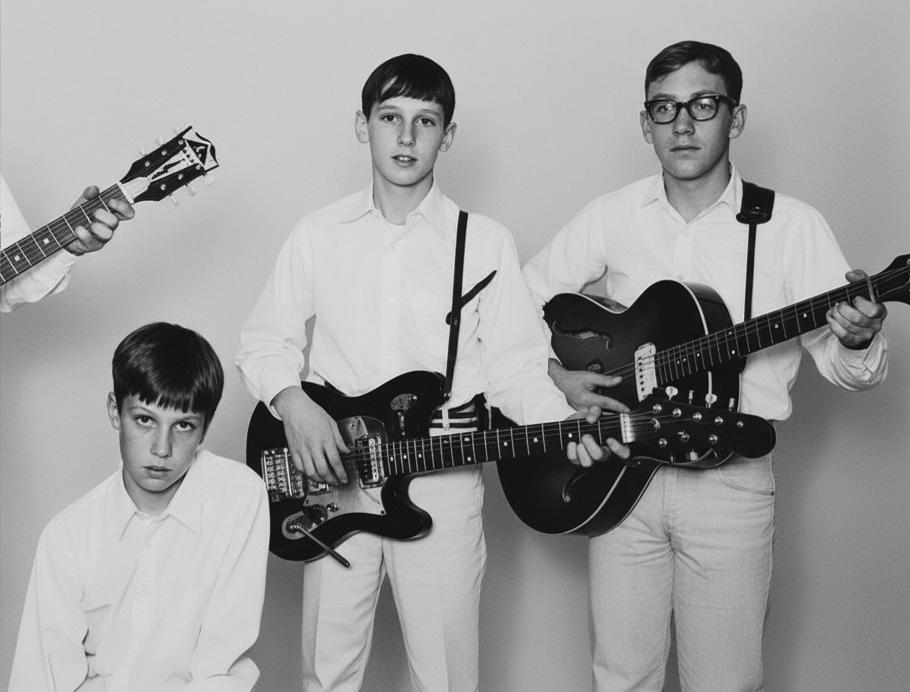
Guitarist Jim Dykeman soulfully plucked the first few notes of “Mustang Sally” as drummer Tom Richards’ hi-hat set a rhythmic pace. Don Snow joined in on bass, followed by the horn section – Ken Lansing, Mike Wildermuth and Gary Wallace – and then vocalist Fred Potts.
Thus, the group known as the Brass Dimension opened Philmont’s three-way “battle of the bands” on a chilly winter night in February 1968. Or a mild evening in July 1968. Or it might have been a year earlier or later.
Now in their 70s, the surviving participants recall the girls and the glory surrounding their teenage garage-band experiences, but details of any given performance are clouded by the passage of time, the multitude of local band battles back then, and the constant shuffling of band rosters.
Most of them were too young to drive, so eye-rolling parents or wise-cracking older siblings chauffeured them in vans and station wagons to church basements, school gyms, American Legion halls and other venues to entertain. In Philmont, the combatants – almost exclusively Ockawamick school students – lugged drum sets and amplifiers up the wide, creaky wooden stairs of the Clara Harder Youth Center to assigned corners of the basketball court and began plugging in, tuning up, and readying to competitively rock.
Bell-bottomed spectators sat in folding chairs tapping their feet or milled about the dimly lit hall singing along as the bands –Brass Dimension, The Cult, and The Kno – performed “Louie Louie” by the Kingsmen, “Midnight Hour” by Wilson Pickett, “Gloria” by Them, “House of the Rising Sun” by the Animals, and other chart-toppers.
Located on Church Street, the host facility had been built in 1909 by a member of the family that owned Philmont’s mills, naming it the Crusader Club. It was later donated to the village. Throughout the 1960s, it was a beehive of youth activities including basketball, crafts, dances, pool, campouts, parades, and softball on the adjacent ballfield, recalls Claudia “Cookie” Mossman of Winsted, CT, its nurturing program director for much of that period.
The Cult
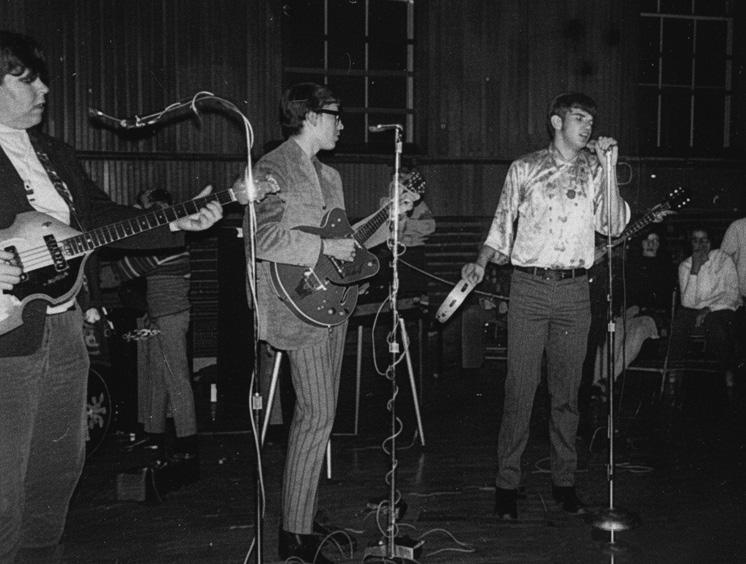
Playing tunes like “People Are Strange,” “Time Is On My Side,” and “For Your Love,” The Cult was led by Pete Von Sholly, one of Columbia County’s premier guitarists. He wielded a Gretsch Chet Atkins Country Gentleman – a model made famous by George Harrison. Von Sholly also had a fuzztone pedal, enabling The Cult to replicate “Satisfaction” by the Rolling Stones.
During childhood, Von Sholly was mesmerized by the magazine “Famous Monsters of Filmland” and began devouring classic monster movies on black-and-white TV. Moving to Los Angeles in 1976 to become an illustrator, he has forged a prolific career as a Hollywood storyboard artist on over
100 feature films, including “The Shawshank Redemption,” “The Green Mile,” “The Mask,” and “Mars Attacks.”
“He has storyboarded a Pumpkinhead, a Pinhead (Hellraiser series), Jason from Friday the 13th, Freddy Krueger, and Chuckie,” says Von Sholly’s web site. “In addition, he has churned out monster-filled graphic novels, model kits, and trading cards. He has created lavishly illustrated editions of classic horror books by H.P. Lovecraft, Joe R. Lansdale and Stephen King.”
Steve Bell played bass, Mike Pierro the drums, and Steve Wildermuth, in a Nehru shirt and medallion, sang and played tambourine. As the band evolved, they would be joined by vocalist Gary Mabb, organist Craig Keil, and the aforementioned Mike Wildermuth – Steve’s cousin – on guitar. After earning an arts degree from the College of St. Rose, Steve Wildermuth of Ghent worked locally for Lorbrook Industries and New York Telephone, and since 1972 has been an award-winning visual artist with gallery
Members of The Cult perform at a Philmont battle of the bands circa 1968. Left to right are bassist Steve Bell, lead guitarist Pete Von Sholly, and vocalist Steve Wildermuth.
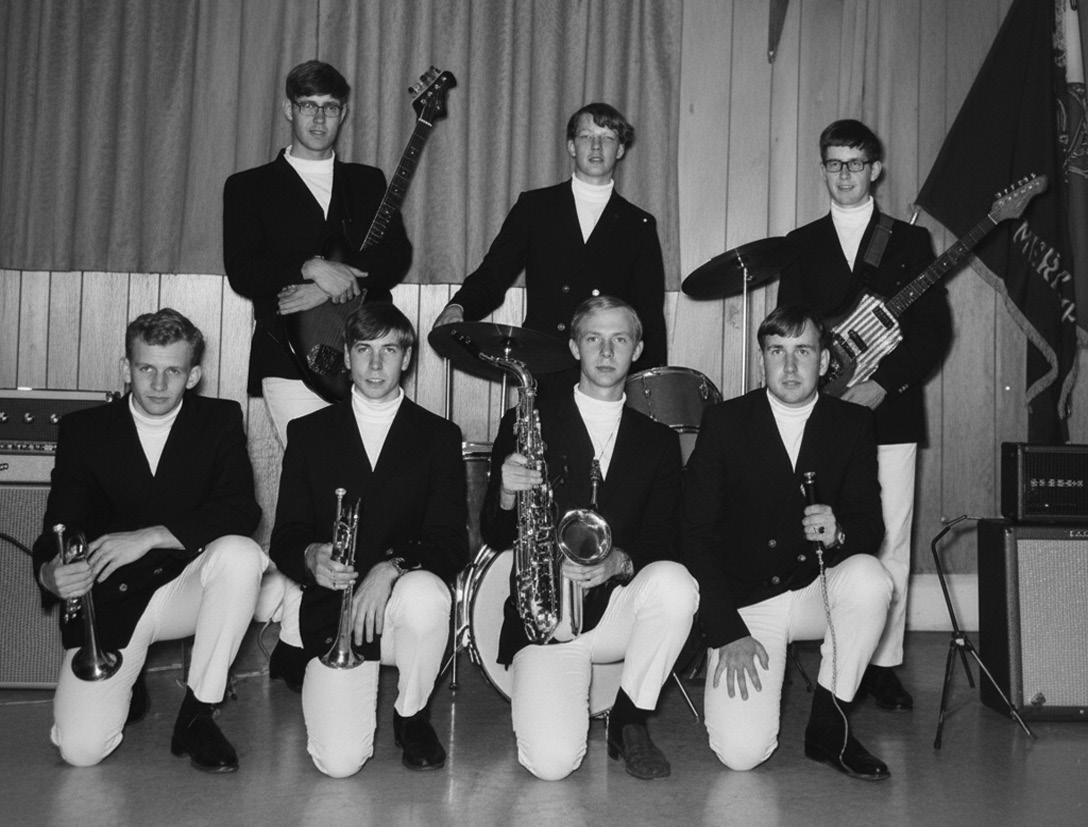
The Brass Dimension comprised, left to right: Front tow, Gary Wallace, Mike Wildermuth, Ken Lansing, Fred Potts. Back row, Don Snow, Tom Richards, Jim Dykeman.
showings across the region. He’s also been a liturgical musician for over 40 years, and the music minister at Our Lady of Hope Church in Copake for 17.
The Brass Dimension
Fred Potts recalls some band members visiting a discount clothing store and spotting an outfit comprised of white pants, doublebreasted blue blazers, and white turtlenecks.
“We started trying ‘em on and saying hey, this looks pretty sharp,” he related. “We were the best dressed band.”
For 38 years, Potts taught fifth and sixth grades, and coached football and basketball, at Coxsackie-Athens schools. He lives in Claverack now.
While drawing a blank on the Battle of Philmont, Dykeman says they did capture third place in a regional band battle at Beck’s Roller Rink in Ravena, then took turns possessing the trophy for a month, the way hockey champions pass around the Stanley Cup.
“The truth is that the other bands were better than us, but we had a following of good- looking girls, and that really helped the applause meter,” said Dykeman.
Before retirement, Dykeman worked as a teacher and later a principal with several schools in Columbia, Greene and Ulster counties. Throughout much of that time, he played with a group called the Main Street Band. He resides in Greenville.
Trumpeter/guitarist Wallace and saxophonist/guitarist Lansing went on to careers in law enforcement. Wallace, who lives in Claverack, was a City of Hudson police officer for 27 years and has worked part-time with the Sheriff’s Department ever since. Lansing served as police chief in Cayuga Heights, an Ithaca suburb, before serving two terms as sheriff of Tompkins County. He later moved to Burkesville, Kentucky, where he is running for jailer this November.
“We used to practice in my dad’s cellar with the lousy seven-foot ceiling,” Lansing recalled. “That was a lot of noise with all those instruments playing at once.”
Snow lives in Arvada CO. Recently he was playing bass with several country music groups as a member of Swallow Hill Music in Denver.
Trumpeter/guitarist Mike Wildermuth had a band with Snow, Richards, and Mike Guarino when they were just 13. Practicing in his Maple Avenue basement, they named themselves the “Cellar Rats” and charged neighborhood kids a nickel to hear them play. At 15, Wildermuth bought a 1966 Gibson Melody Maker guitar at Osborne’s Music Center in Hudson. Today, he lives in Citrus Heights, CA, where he has played with several groups, including an Allman Brothers tribute band, at fairs and festivals.
The Kno
Guitarist Mike Guarino played the opening bars to the Turtles’ “Happy Together” as bassist Chuck Celentano, guitarists Bob Marcelli and Curt Brandow, and drummer Donnie Coons joined in.
There had been a younger lineup consisting of Celentano, Coons, Brandow and Lenny Edwards called The Electrons.
Brandow had a 30-year career with the U.S. Postal Service. From 1978 to 2017, he also was a baseball umpire at the high school and college levels, first in the Hudson Valley, then Virginia and the Carolinas. He now lives in Deland, FL.
Mike Guarino was a psychologist for New York State working with physically assaultive individuals in the Capital District until 1985, then transferred to Western New York working in a variety of facilities serving youth with psychiatric disorders. Retired since 2015, he recently moved to Sun Lakes AZ.
Marcelli hosted practices behind the Elm Tree Motel in Craryville, which his family
owned. A retired Greene correctional officer, he now lives in Delmar with a collection of 14 acoustic and electric guitars.
Sought-after singer Gary Mabb, residing then in Philmont and now in Winston Salem NC, had connections with all three of the competing bands, having initially played with Dykeman, Wallace, Snow and David Poole; appeared later on with Celentano’s band; filled in once with The Cult; and ultimately joined Von Sholly, former Shades of Brass member George Wolff, and two other Hudson-area musicians in a group called Axis.
The format of Philmont’s “battle” remains blurry. It might have been each band playing
a set, then the field narrowing to two for a single-song play-off. Questions about judges and their criteria elicit only shrugs.
The bottom line is that, two generations later, nobody interviewed for this article remembers who won that night. But maybe that’s as it should be. Because for most of them, the chance to perform live with their peers and in front of their followers meant far more than a medal ever could.
As Ken Lansing said, “It was a huge part of our lives back then.” •
Jim Calvin of Valatie is a former Managing Editor of the Register-Star and the principal of Calvin Communications.
Mike Wildermuth.
A group called The Electrons featuring, left to right, Donnie Coons, Chuck Celentano, Curt Brandow, and (not pictured) Lenny Edwards was a precursor to The Kno.
Helping those who help
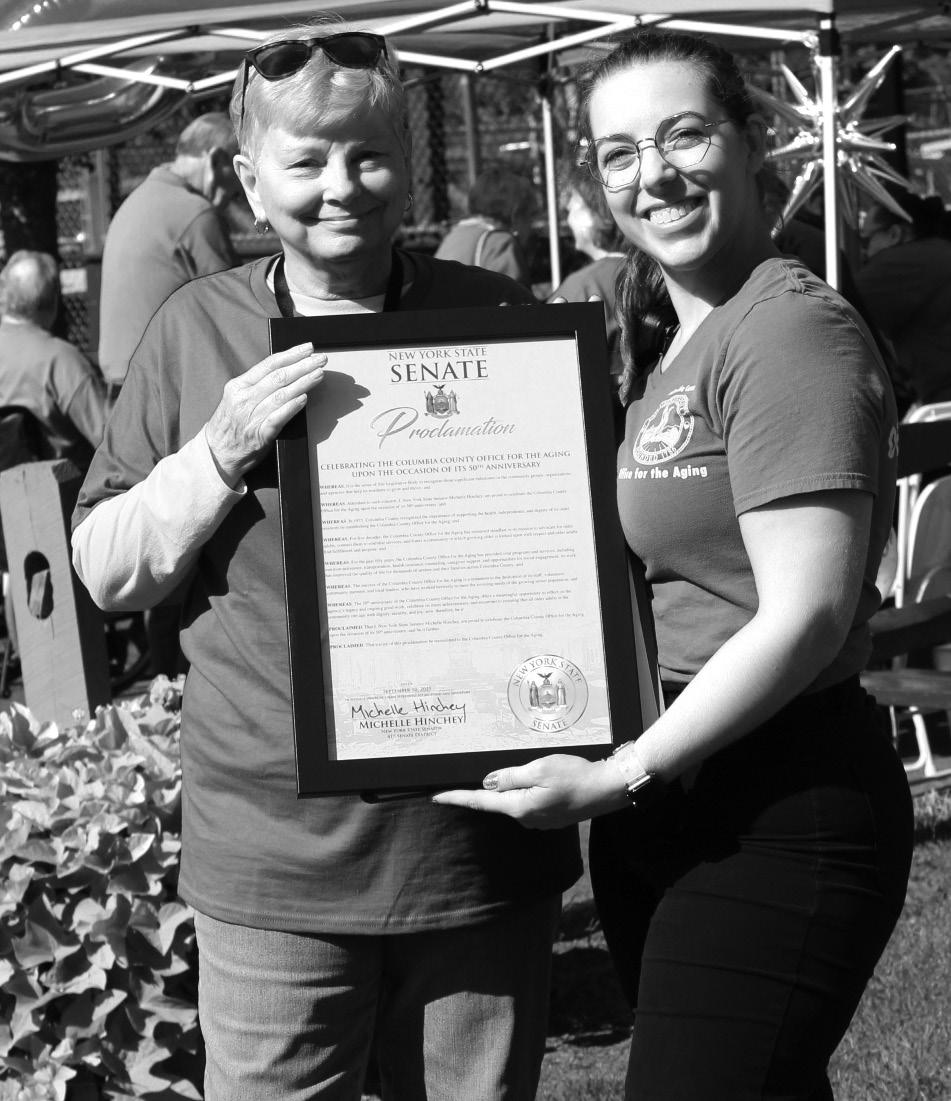
Columbia County Office for the Aging pilot program will give caregivers a respite.
By Barbara Peduzzi
Caregiving, watching over and tending to another person, usually a relative or other loved one, has gone on for generations. Hundreds, no, probably thousands, of people are checking on, helping with meals, dressing, bathing, paying bills, doing laundry and more, for someone who no longer can do these things for themselves. It can be a grueling, stressfilled full-time job, without time off, to run errands, shop, not even a break to take a walk, without finding part-time care, or bundling the person to bring along and hope there are no delays, no glitches, no problems along the way.
All of which leads to the question, “Who cares for the caregiver?” The Columbia County Office for the Aging is working on a pilot project to answer that.
Director Nina Benvenuto knows first-hand that taking someone with dementia out in public can be challenging and exhausting, and says the program will help eliminate situations such as one she was once in. “I took my grandmother, in early stages of dementia, to a mall. I was still looking at things while she was at the cashier, and when I went up to her, I realized she was completing an application for a credit card!” The clerk had not recognized her inability to understand what he was asking her to do.
Benvenuto said the department has been working on the project officially for about a year, with several factors leading to it. One thing making the need evident was the growing number of calls from people inquiring about just such a service.
Former OFA staff member Michele Kraham was a main proponent, “It was one of her dreams for years.” Kraham retired two years ago, but became a consultant on the project. Meanwhile, Lynda Scheer, an OFA consultant and CaregiverCoordinator for the Recharge & Renew Respite pilot progam, has proven instrumental in the program’s development.
Getting the ball rolling
Then, at a chance meeting with Jay Aronson, a member of the Canaan Congregational Church, Benvenuto mentioned she was running the OFA department. Aronson in turn told her that the church was interested in setting up a respite program for caregivers. OFA gave them the option of running the program, but Aronson said they felt families needing it would be more comfortable with the agency in charge.
It will start small but strong. The Canaan church and St. James Catholic Church in Chatham will be the first hosts, for four hours a day, once a month each. Eight or nine volunteers are trained to staff the sites.
Caregivers can drop off their loved one and, said Benvenuto, “Get a haircut, go to the bank, go to lunch. It’s their opportunity to recharge while their loved one is being cared for. There will be all sorts of activities provided, like chair yoga, Zumba, a game with pool noodles and balloons.” A meal is included, but those taking part must be able to use the toilet and feed themselves, and cannot need medical care while at the site.
The program will not work for everyone, she admitted, “But it’s going to help a lot of people, it’s a step in the right direction.”
Benvenuto specifically outlined doing laundry, without a washer and dryer in house. “You have to pack up the laundry, then the person and what they need, keep them occupied while the laundry is done, and pack
up everything to go home. So many stressors!” The program will allow time to do or drop off laundry without those.
Caregivers can also stay at the site and visit with the staff if they prefer.
Those interested in taking advantage of the program must call the OFA office, “Like any other program, and go through an intake process.” After answering basic questions ‘Are you a resident?’, then ‘Are you or the person you care for over 60?’ they are assigned to a case manager and assessed for inclusion.
An existing program can send someone to provide respite at the person’s home.
The St. James Catholic Church has expressed interest in holding a caregiver support group during the respite hours. Benvenuto said, “I think this would be very, very helpful. It’s exciting that they’re thinking ahead, the ripple effect this could have on the community.”
Future goals
Expanding locations and hours to “hit each area of the county as much as possible, make it something people can count on and build into their schedules,” are current goals. Towards this, she has met with the Columbia County Library Association. Several libraries are interested in becoming respite sites, and have started working out schedules so that the program can be held a couple of days a week throughout the county.
Grants helping start the program came from New York State Caregiving and Respite Coalition, NYS Assemblywoman Didi Barrett,
and Ever Home Pilot of NYS OFA. Those and funding from OFA are providing for such things as the Caregiver Coordinator. The goal is to make the program an official part of Columbia County OFA.
The National Family Caregivers Support Program is their model for the pilot. People wishing to become a respite volunteer can train through the New York State Caregiver Coalition.
Kraham will soon fully retire, which Benvenuto admitted is bittersweet. “I think she has put so much work in for the program. It’s gonna be a bummer to see her go, but I’m glad to see her officially retire.”
She emphasized wanting people to know how much careful planning, how much “blood, sweat and tears” have gone into putting this together, and how much the office wants to see it thrive so it can grow and continue.
“One thing I’ve learned through this process is there’s a lot of people out there who want to provide support and who care,” Benvenuto noted. She urges people to call and find a program that works for them. •
OFA consultant and Caregiver Coordinator for the Recharge & Renew Respite pilot progam Lynda Scheer and OFA Director Nina Benvenuto. [ inset] Michele Kraham.
A Philmont Jewel
McNan’s serves the Philmont community in many ways. Great sandwiches at a fair price are but the half of it.
By Barbara Peduzzi
Setting plates of sandwich and salad samples on the cozy table in the front window of McNan’s on Main Street, Philmont, Michael Myers reasoned that to accurately write about their store, I would have to try some of the fare offered. Who was I to disagree?
The interview began with his story about he and wife, Nancy, moving to the former Catholic Church rectory in Philmont. “Nancy’s sister-in-law brought me to it, we got to the door and the priest came out and I felt at home. That was on Nancy’s birthday. We moved in on my mother’s birthday. We went to get the key at Dad’s Diner in Copake, and a lovely woman named Helen said, ‘Sit with me.’ Told why we were there, she said, ‘I was married in that house, 41 years ago today.’”
He went on to explain that they both commuted for eight years, he to a chef position at a B&B in Millerton and she to a bank in Salisbury, CT. In the 2010 recession, they needed to look for other jobs. Nancy said, “It all opened up to, what are we gonna do? I had worked in a supermarket, and the bank, Michael cooked,” and McNan’s was born.
Where to be?
They looked at other properties in the village, Michael said, before “we walked in here, I saw the ceiling and said, This place has character.” It took a year-and-a-half for plans to be made and executed, equipment installed and health department approvals. The store opened on July 26, 2013.
While planning the store and looking for tips, on the Fourth of July they spent four hours talking with the owner of the former Town and Country. “We knew John at Harney & Son -- he told us, ‘Price your food and people will come.’”
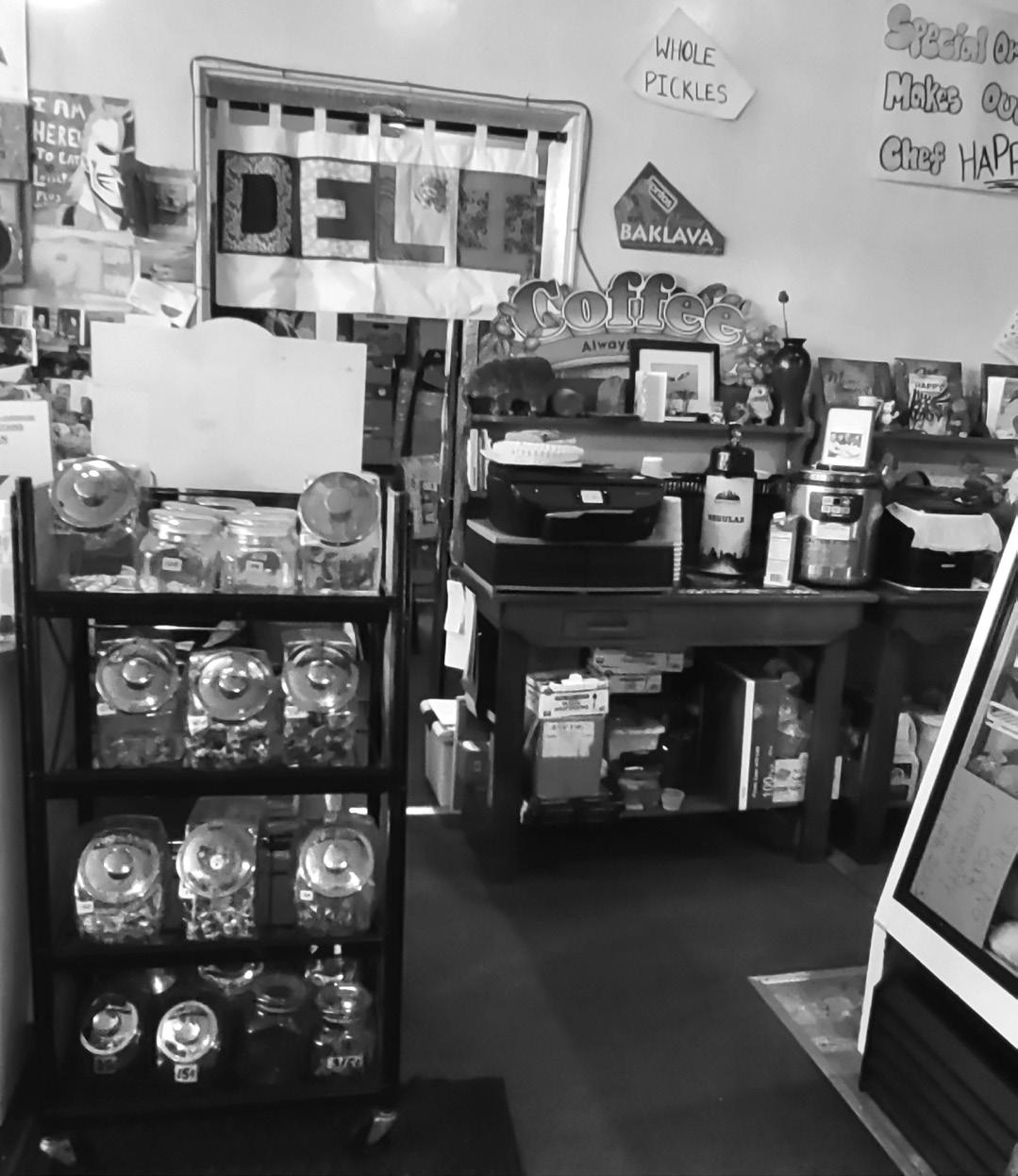
“When we came into town, we didn’t want to compete, we wanted to complement what was already here,” they emphasized. The stock runs the gamut from six-for-a-quarter candies (as close to penny candy as can be
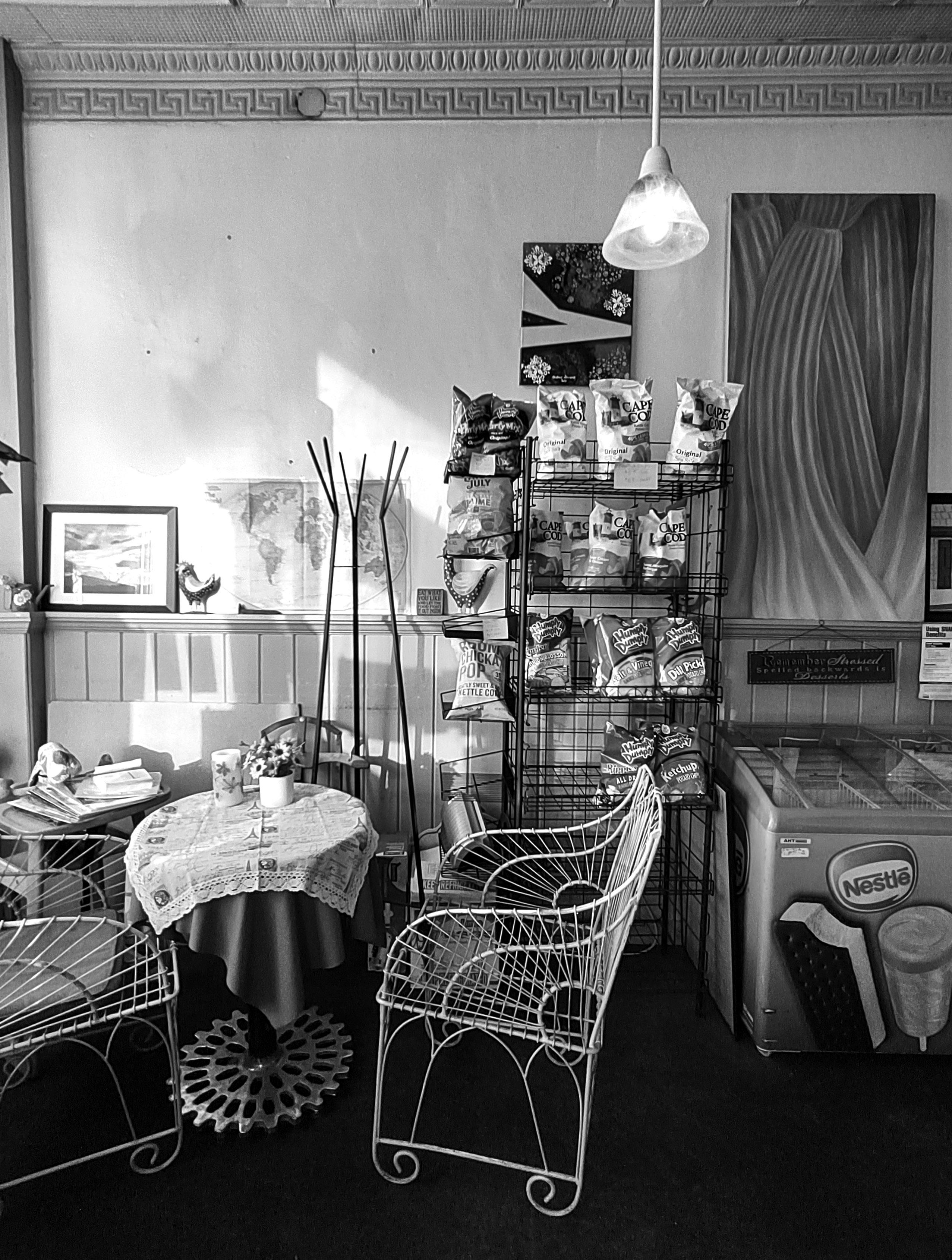
Eclectic could be one way to describe the décor at McNan’s, with every inch of space being used for their extensive stock and charming collection of art works and memorabilia. Welcoming would be another, with a sun warmed table backed by a rack of what one customer described as their ‘interesting chips’.
found anymore!) to sandwiches, salads and desserts to canned goods, produce, meats and staples. “When we first started, even before we thought about opening,” Nancy explained the variety: “There was nothing here. If you needed an onion, you had to think ahead and go to Hudson.” Michael chipped in, “You couldn’t get cottage cheese, sour cream, vegetables.”
Nancy continued, “This is our stock room, every week we hand pick.” Michael noted, “We wanted a price for the community, not rely on weekenders.”
The menu shows a dozen-plus sandwich choices, all named for local people and places, such as the Pine Haven Kicked Up Grilled Cheese and The Highfalls. Both McNan’s consider the Speeds’ Racer Reuben their specialty (which this writer will attest to being Very Tasty), but they also, Michael brags, feature “wonderful roast beef, roasted at the facility in Troy.” Tagteaming answers, Nancy threw in “We go there and get it every week,” and Michael finished, “Freshest we can get.”
Another customer favorite is the carrot cake; we will join that vote. Most baking is done there, but a few things are purchased, Nancy explaining, “We don’t have time to do it all.”
People people
A self-described people person, Michael feels, “That’s what’s fun about this place. I don’t come to work, I love what I’m doing, I come to play. Absolutely love the customers, we have a nice customer base.” A large section of one wall behind the counter is covered with slips of paper with names on them; knowing customer names is important to the McNans. “It doesn’t matter what you do, you should enjoy it,” they agreed.
“It takes a village,” they feel, with Michael describing their mission, “Like the Cheers’ song, ‘where everybody knows your name.’” They describe the store as a central place, where people come to shop and feel comfortable. While we talked, a woman came in to sign a petition for a new town judge. They also, since the village office is only open part-time, do a calendar for water bills and pass along details on putting garbage out, and Nancy is part-time cash clerk for the village court.
In summer, they bring in a student through the New York State Work Force, who will work for four-to-six weeks learning “how to be an employee.”
There have been at least half-a-dozen of those, one of whom was hired afterwards for three years because “she was phenomenal.” They proudly noted that she is now in nursing school.
Through a COARC-managed work program with the Taconic Hills Central School District, a student usually comes in to work about four hours a week. “There are just wonderful people around,” Michael feels. Nancy put in, “It’s hard when there’s bad press for the town, it’s not what the whole community is, you gotta look for the good.”
“With the economy, it’s not easy for
anyone doing food right now,” Nancy observed, remembering that during the Covid pandemic they started having free books for kids, which has continued to three basketsful of those now. “In November, when nobody got SNAP, we felt we needed to help them for all the support they gave us. We started free dinners, doing almost 200 of those. If the government closes, we’ll do it again.”
Vinyl records, too
Art work and knick-knacks abound, scattered along walls and on shelves and counters, many of them given by customers. Large paintings of bananas, peas, celery and other produce stand out. Those came, Michael said, “From a garage sale. We asked, How much? The woman said she’d invested in the canvas and so on, the bananas were her last project in college, ‘$5 each?’ We had $40, gave it to her and took them all.” She later came to see what they’d done with her pieces.
While Nancy said, “We’re not big on letting people know the behindthe-scenes things,” they did divulge instances of helping when it was needed, such as snacks for hungry kids, patience with people from the Philmont Hearth, the free dinners and working with a food pantry to help people shop. The community has apparently discovered those things, though. Nancy revealed that during the pandemic, they both came down with Covid, and had to close the store. Someone set up a GoFundMe page, raising $6,000 to offset their lost income.
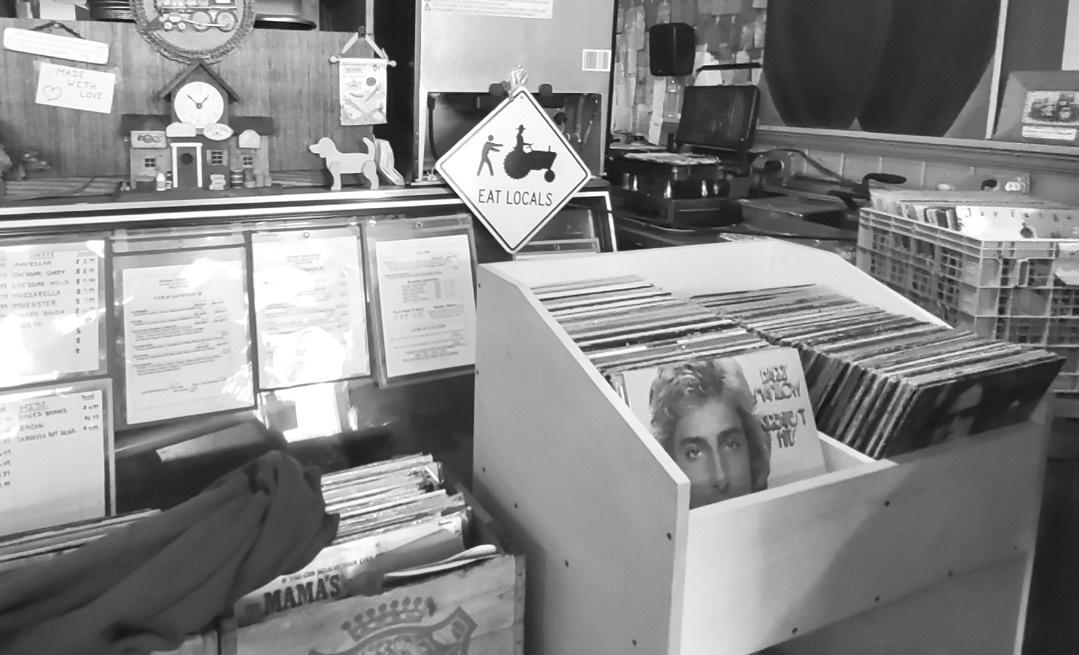
They also do catering platters, and specialty cakes made to the customers whim, such as a girl who wanted “a unicorn with a turkey on its back,” and a sheet cake made as an opened book for a retiring librarian. And, for audiophiles, there are crates of vinyl LP records to browse through. While no changes are on the horizon for the shop or menu, they do plan to put in a new three-bay refrigerator, and replace a failed freezer.
Customer comments included Chase, who said he is an occasional visitor whose favorite thing is how cozy it is: “They make a really good sandwich, and also have unique stuff, interesting chips. It’s a really neat place.” Ben loves Michael, “Whistling to the salads.” He is a weekly regular. “Always served with a happy face. A smile and charm and good coffee and salads, a sense of family. The food is delicious, but the service is nutritious.” Kim came in to sign the petition, and texted later to rave, “These are two of the nicest people you’ll ever meet. They go above and beyond, whether old returning customers or brand new. Terrific sandwiches and salads, great catering services as well.”
As Nancy put it, “We pride ourselves on we can take care of the average person getting a sandwich, and also catering.” It all works, and works well for both they and the community which they are a large part of. Now, when can we get back there for more carrot cake? •
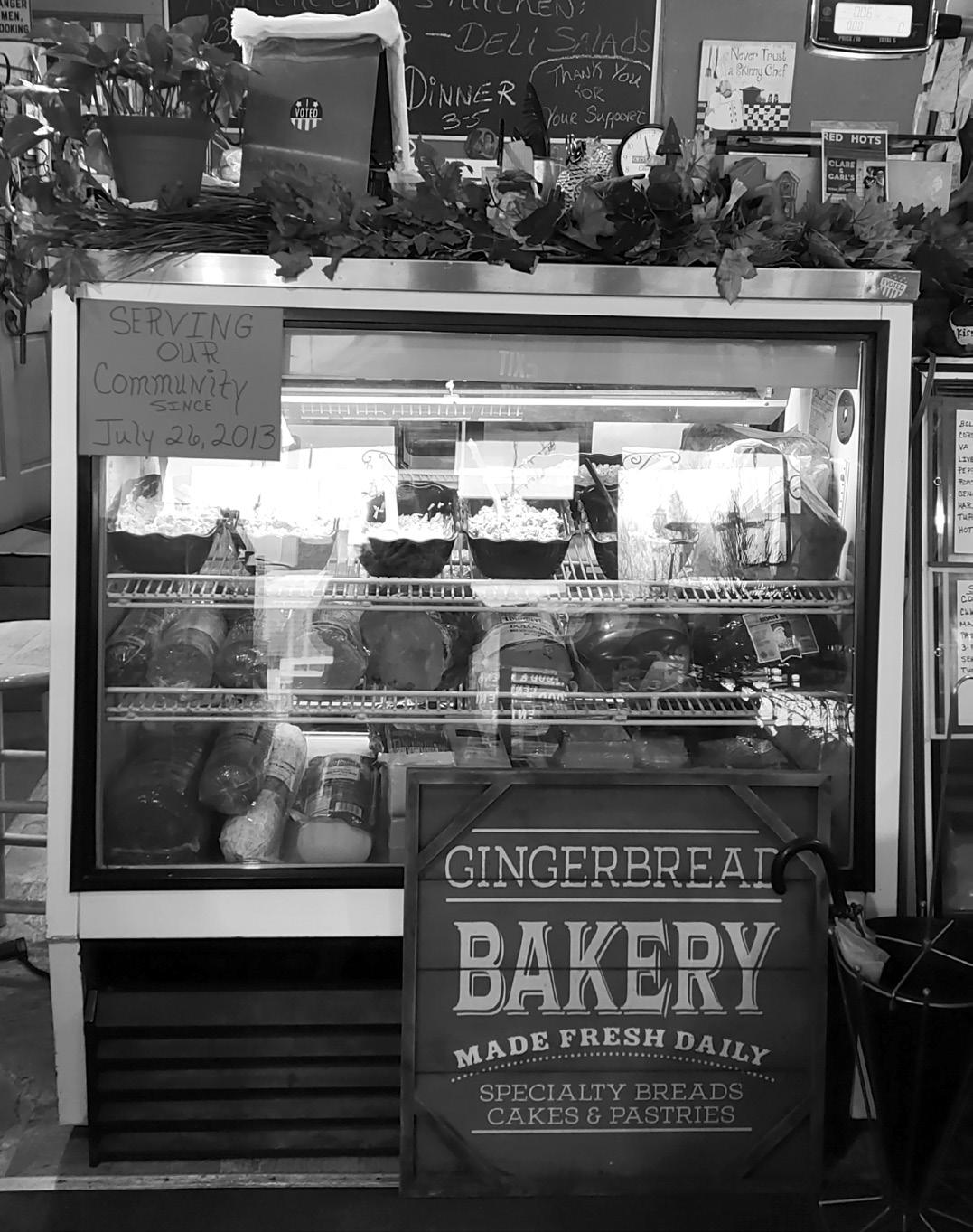
The sign “Serving our community....” is the mission of McNan’s. They do it with free dinners, helping young people and a number of other ways, so much so that the community gave back by helping them get through the pandemic shutdown.
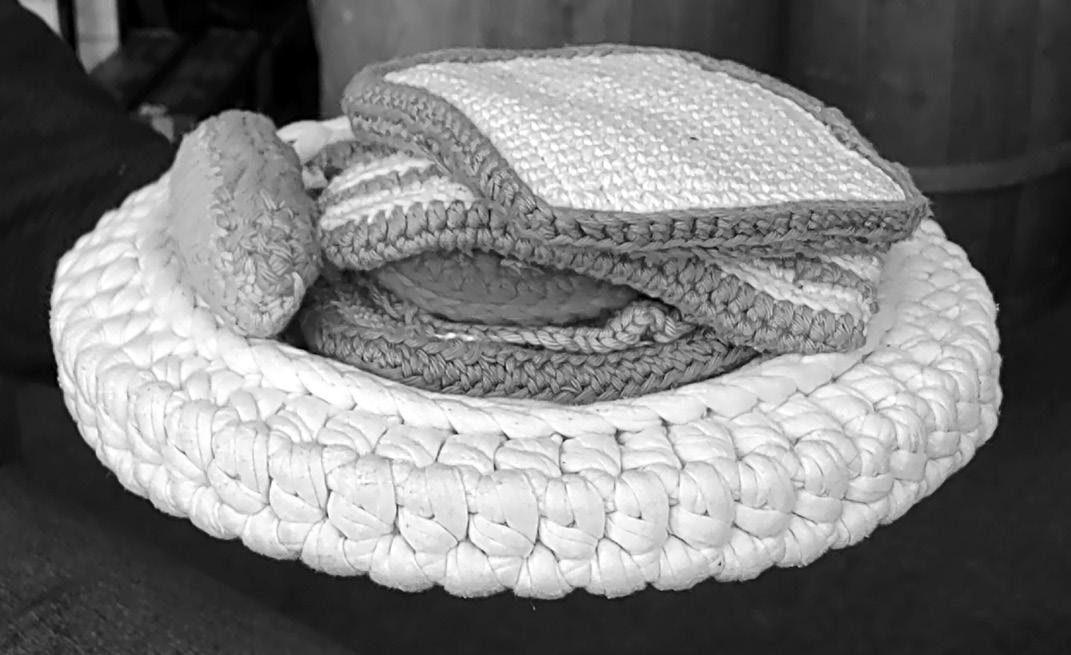
Customers show their appreciation through gifts, such as this hand-crocheted ‘BLT’ on a plate.
As close to old-time penny candy as you’ll find any more, the cannisters hold single pieces of sweets at prices such as 6 for 25 cents. Counters, walls and cooler tops hold an eclectic collection of art works and knick-knacks.
“I saw the ceiling and said this place has character,” Michael Myers said of the decision to make the former gun shop into McNan’s. Slips with customer names line the back corner wall, his way of remembering them all. Waiting for your sandwich? Browse the record collection.
CMS 2025-26 2nd quarter
honor roll
GRADE 6 HONOR ROLL
Jacob Beauchemin, Amaya Brantley, Case Burrows, Daphne Coalter, Caleb Coon, Axel Cruz, Evelyn Cruz, Evelyn Howe, Zoey Keyser, Brianna Marquillo, Amelia Middleton, Hollen Nagy, Juan Oliver, Sophia Ortiz, Edward Raska, Callan Rowan, Sheily Ruiz-Morales, Tanner Sharpe, Benjamin Tibbitts, Liliana Trowbridge, Reid Van Alstyne, Niko VanAlstyne, Jenna Van Eck, Zoe Williams, Dakota Witherell, Jasmine Zuniga.
GRADE 6 HIGH HONOR ROLL
William Akin IV, Todd Andersen, Anna Artist, Addison Barwell, Dakota Bowen, Emmett Derreumaux, Kailash Flores, Smith Galvin, Ember Herbest, Asher Herrmann, Arianna Laurange, Wyatt Leone, Everly Mabey, Belinda Marquillo, Malcolm Mlynarczyk, Ethan Ramirez, Emmett Searl, Calvin Touchstone, Pepper Wall, Emma Welch, Kaylie Williams.
GRADE 7 HONOR ROLL
Jamison Barnes, Logen Bashford, Theodore Carr, Charlie Delaney, Ashton Gile, Robert Kahn, Carter Link, Catherine Reyome, Clara Rossman, Samantha Salvatore, Vincent Schweizer, Liam Smith, Athena Stack, Skylar Styckiewicz, Emerson Sublett, Easton Tessitore, Turner Van Alstyne, Aiden VanAlstyne, Everly Ward, Audrey Williams, Jackson Zwingelberg.
Michael Ashline, Skylar Blass, Seth Burdick, Rowan Carney, Seraphina Coalter, Noah Coleman, Levi Coon, Trentyn Dusenbery, Lillian Friedman, Jacob Geddes, Blake Haefner, Brayelle Haner, Sierra Hanson, Abbott Holsapple, Abbie Horton, Chloe Jones, Ryan Kaninenberg, Madison Kormos, Lila Macchiaroli, Mia Middleton, Brody Newton, Fiona Rowan, Elijah Tibbitts, Ryleigh VanAlstyne, Riley Wilber.
GRADE 8 HIGH HONOR ROLL
Connor Garrity, Addisyn Herrmann, Stella Mlynarczyk, Evan Reichardt, Miles Schuster.
honor roll CHS 2025-26 2nd quarter
GRADE 9 HONOR ROLL
Preston Billingham
Skylar Bowen
Nicholas Butta
Oneida Derreumaux
Lily Furnari
Sophia Furnari
Olivia Jones
Elena Kahn
Tanner Kelly
Sophia Konkus
Ryan Link
Lilianna Marasco
Dylan Ruiz-Morales
Hayden Speed
Laney Steltz
GRADE 9 HIGH HONOR ROLL
Reese Agostinello-Burrows
Benjamin Artist
Braeden Barnes
Amelia Charron
Eleanor Davis
Sam Davis III
Zoe Ewers
Wren Fisch
Jack Galvin
Dorothy Jones
Alonna Leggett
Emily Leonard-Miller
Madison O’Dell
Oliver Poland
Brynn Spucches
Joseph Stocklas
Nicholas Vaccariello
Madeline Waring
Sula Williams
Willow Yacobellis
Stella Zigon
GRADE 10 HONOR ROLL
Shane Bagley
Caitriana Coalter
Liam Cowhig
Madison Fugman
Maddox Gaylord
Philip Genovese
Nathan Hatcher
Nyrie Jeanty
Makenzie Laurange
Jonathan Levine
Brayden Mesick
Kellen Pell
Sage Pratt
Jemma St Aubin
Kendra VanWagner
Hunter Wilson
GRADE 10 HIGH HONOR ROLL
Anya DeGroff
Maya Doyle
Natalie Dunbar
Emily Engel
Narayan Flores
Ava Goodrich
Jadyn Howard
Valfreyja Howard
Keira Langley
Lola Lezama
Tulsi Macchiaroli
Hazel Michalek
Charles Rose
Abigail Scheriff
Isla Stack
Lucy Tassinari
Logan Van Wie
Sabrina Wiseman
GRADE 11 HONOR ROLL
Emmett Bishop-Hayes
Amaya Brown
Annaleigh Butts
Wyatt Carr
Kaylee Couitt
Valeria Cruz
Aiden Dallas
Olivia Feiden
Noah Hanson
Camila Jimenez Morales
Nicholas Lyons
Emily Moschini
Maycee Oakes
Agustin Sanchez Jr.
Shelby Schrader
Katie Sutherland
Evelynn Visconti
Elizabeth Wallin
Aden Wiessner
GRADE 11 HIGH HONOR ROLL
Pax Cooper
Jenna Davis
Sydney DeLuca
Jamison Edwards
George Eutzy III
Timothy Ewers
Siena Freiermuth
Adam Geel
Bryanna Geerholt
Skylar Groom
Nixie Jeanty
Dianrong Jiang
Taylor Kubisek
Alexander Lee
Aiden McShane
Bailey McShane
Cassandra Michalek
Dax Patel
Spencer Peduzzi
Annika Poland
Dayaa Powell
Lylah Rowe
Adelaide Searl
Landon Van Alstyne
Cloe Wall
Riley Wilson
Ezra Wood
GRADE 12 HONOR ROLL
Gabriel Bervy-Morse
Oliver Carroll
Brody Casivant
Charlotte Coalter
Ariana Costa
Maddox Dallas-Wright
Zachary Ellis
Ava Rae Ford
Kajlie Gile
V Gould
Tula Haley
Carolyn Hammond
Sebastian Kramlich
Benjamin Levine
Conner Madsen
Hunter Palmer
Tyler Palmer
Logan Rockefeller
William Rojas-Cruz
Carter Starks
Nathaniel Tibbitts
Owen Wiler
Annabelle Wright
GRADE 12 HIGH HONOR ROLL
Rylie Barden
Jaidan Blair
Suzy Bonesteel
Daimiyn Bonhotel
Eliza Braley
Paxton Brownell
James D’Alessio
Frank Davis III
Zachary Distin
Madisyn Domkoski
NaTasha Drumm
Lauren Elcox
Josiah Eugenio
Reed Fisch
Tyler Gebel
Lily Hall
Bronson Haner
Andrew Horton
Johann Kristen
Karina Lezama
Jose Linares Galicia
Madeleine Metrando
Meta Mae Mountain
Alexis Nehmens
Ellery Pierce
Mira Pierce
Thomas Pierro
Dominic Sauca
Samantha Silver
Aubrey Smith
Norah Sotherden
Brayden Steltz
Cooper Steltz
Jayden Valdez
Phila Visconti
Finn Williams
TidBits
Chatham’s first tv
As the beginning of May 1947 rolled in, a Chatham Courier headline blazed the news of “Chatham’s First Television Set Installed; Reception Excellent.”
“The first television set in this area has been purchased by Frank Garvey of Chatham, and is now in operation at his hotel in the village. The set, which was made by General Electric, carries the nightly telecast from WRGB, the GE television station in Schenectady.”
“Reception in Chatham, according to television experts who installed the set, is ‘excellent’ and the best within an area of 100 miles. The telecasts from New York cannot be picked up in Chatham, Mr. Garvey said, but as soon as the relay station in North Hillsdale is completed, over seven New York stations’ telecasts may be seen and heard in Chatham.”
“Sports fans will undoubtedly be on hand Friday evening at Garvey’s hotel to witness the telecasts of boxing bouts from Troy. The evening programs begin at 7 p.m.”
What’s that smell?
“Hollywood May Have ‘The Voice’ But Only Chatham Has ‘The Smell,’” announced the Courier the same week the first tv landed in the village.
“Hollywood may have ‘The Look,’ ‘The Voice,’ and ‘The Face,’ but we believe that Chatham is one of the few places to claim ‘The Smell.’ Oh, so you doubt our words? Well, you doubting Thomas’ (and Thomasess’s), just go up and stand on the southern end of Main Street in our fair town, when the wind is from the northeast, and take a sniff.”
“The other day a representative of this paper, using his nose for news, took a walk to try to smell out the cause of this delicious odor. As he went up Main Street, the aroma got stronger and stronger, ‘til lo and behold, what did he find? He found Chatham’s latest, and most novel, business enterprise: a popcorn wagon with a peanut roaster thrown in!”
“Battling his way through the crowd of youngsters swarming around the little wagon, he finally got to the counter and started his interview with the owner. Between pushes by the youngsters, orders by grownups for popcorn, and various other hindrances, this
is what he found out. It developed that the owner is Harry McCarty, who, with his wife, are operating the wagon. Mr. McCarty stated that the wagon was built by himself and Phil Moore, local carpenter, last fall and this past winter. It utilizes a brand new Super Star Pop Corn Machine.”
“After talking to Mr. McCarty about the wagon, and snapping a few pictures, the Courier representative stumbled off, mumbling something about ‘little kids pushing’ and ‘why does pop corn have to smell so good?’”
“Oh, well, it’s all in day’s work.”
First Woman Prez
It was mid-July 1973 when the Courier presented the following front page headline: “Chatham Board Elects First Women President.”
“Mrs. Ann T. Wenk, who recently became the first woman to head a Chatham school board of education, presided at her first meeting Tuesday evening when the board named committees for the school year. Mrs. Wenk was named president at an organizational meeting Thursday of last week and succeeds William H. Butt of East Chatham, RD, who had held the post for four years. Arthur Roraback, Jr., was named vice president, succeeding Dr. Anthony DiGiovanni. Theodore C. Wendland of Hillsdale was appointed head custodian for the district at the Tuesday meeting.”
“Appointed to school board committees were: Facilities, Arthur Roraback, chairman, Donald Cochran, Dr. Anthony DiGiovanni; Finance, William Butt, chairman, John Doyle, A. Roraback; Transportation, Donald Burns, J. Doyle, Muriel Faxon; Relations, D. Cochran, Christine Van Alstyne, M. Faxon; Activities, Dr. DiGiovanni, W. Butt, D. Burns, C. Van Alstyne.”
“Bids were accepted for the new high school
building as follows: Venetian blinds, Amsterdam Fabricators, Brooklyn; stage equipment, T.S. Drake, Syracuse; carpeting, Central Square Interiors, Chatham; site development grading, Helwig Excavators, East Greenbush; and paving, H.S. Vincent and Co., Selkirk.”
“Appointments were made: Mrs. Elizabeth Rundell, district clerk; Dorothy Losee, treasurer; Mrs. Linton Bowman, tax collector; Keith Flint, attorney; Reginald Pattison, accountant; Dr. Charles Mesick, school dentist; Dr. Oscar Wilcox, school physician; State Bank of Albany, Chatham branch, official depository. School board meetings will be held the second and fourth Tuesdays or each month.”
“In other business, the Hood Ice Cream Company was awarded the ice cream contract.”
Station demolished
“Original Station at Chatham Demolished,” announced the Courier as February 1956 was coming to an end. “This week saw the end of an era going back 115 years, when the Boston and Albany Railroad demolished Chatham’s original railroad station. The structure was located just west of the present B&A depot and had been used for the last 20 years as an equipment shed.”
“It was a wooden structure 60X25 and two stories high. Railroad men believe it was the original station for the Western railroad which was the forerunner of the present Boston and Albany and whose tracks westward from Chatham were opened for traffic in 1840. Of course the exact date of the erection of the old building is unknown but it is estimated that it must have been built about 115 years ago.”
“After it was no longer used as a passenger station it became a freight house and at one time W.A. Bump, Division Engineer, together with L.M. Muzzey, long a resident of Chatham and assistant to Mr. Bump, had their offices in it. Later it was used as a repair shop and then as headquarters for the road’s local plumbers and carpenters.”
“Another landmark went this week also when the B&A sold the old freight house at East Chatham and it is now being torn down. This building is estimated to be about the same age as the former Chatham station, now a thing of the past.” •
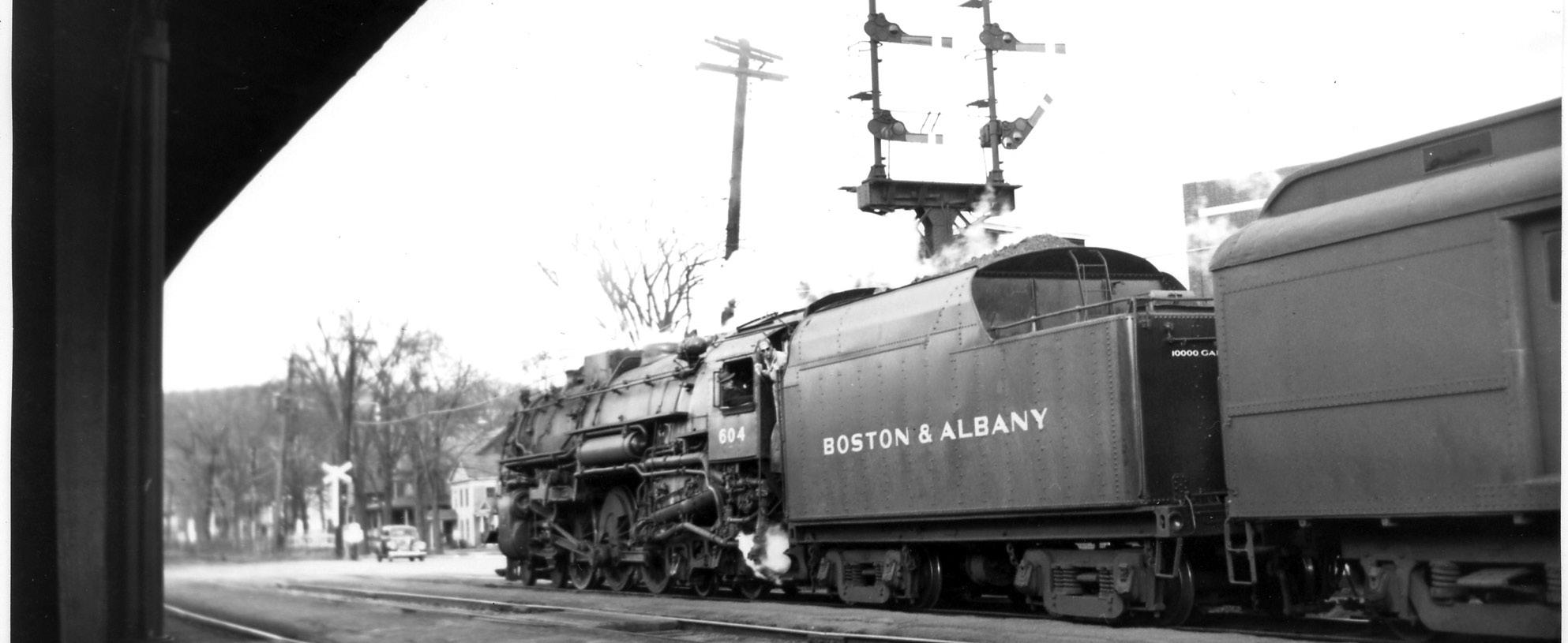
A Boston & Albany train approaches the Main Street crossing on April 22, 1950.
Ann T. Wenk
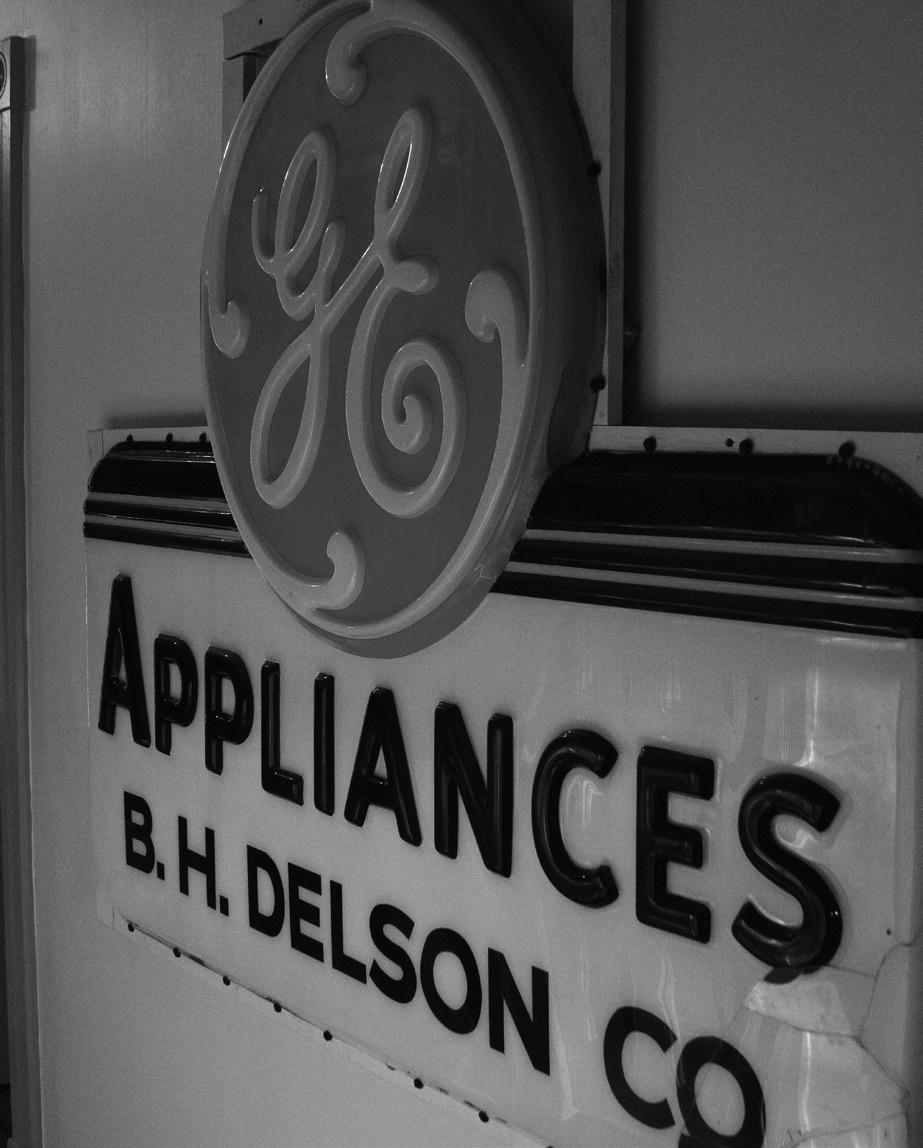
“If we don’t you don’t have it, need it”
It
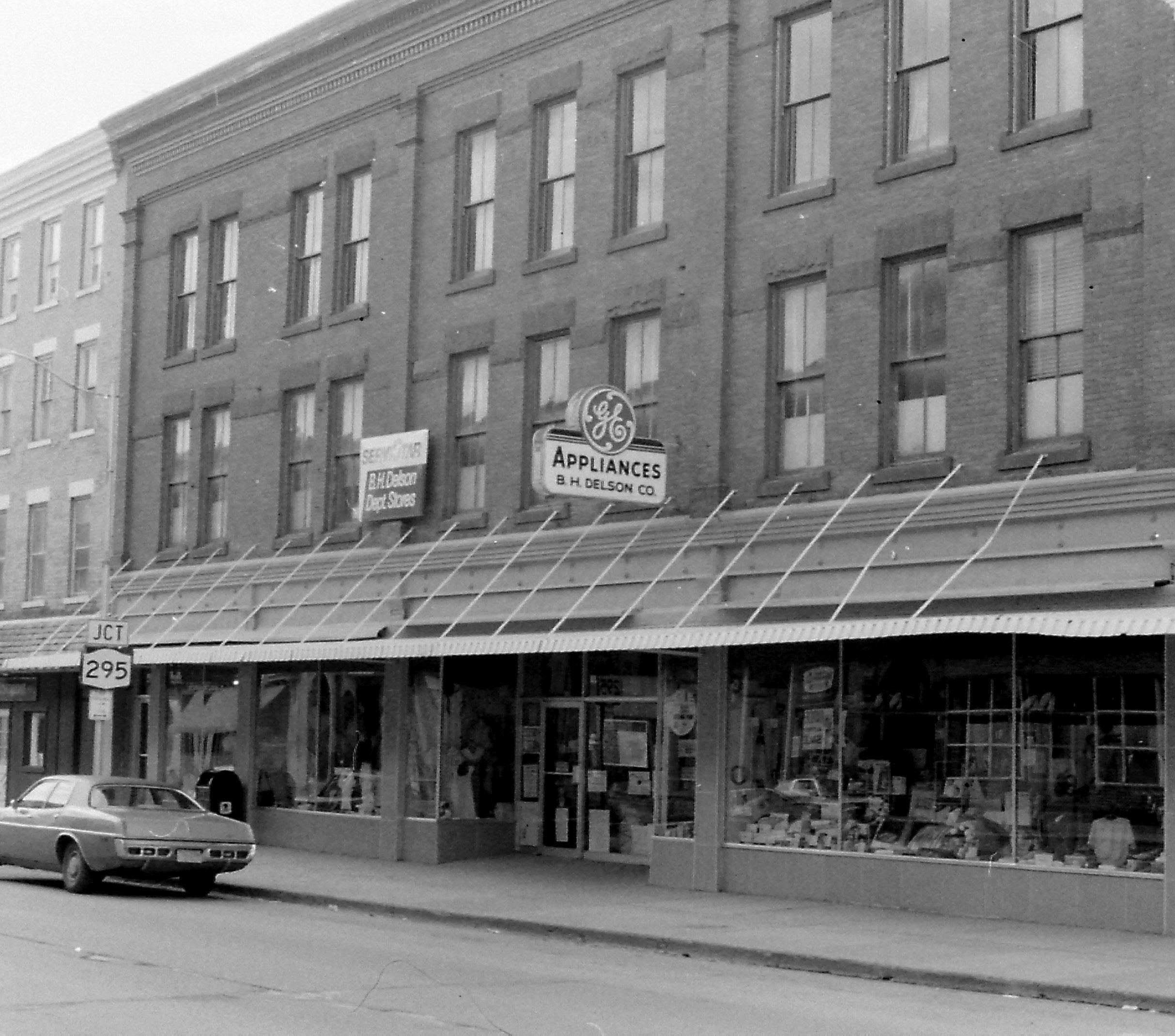
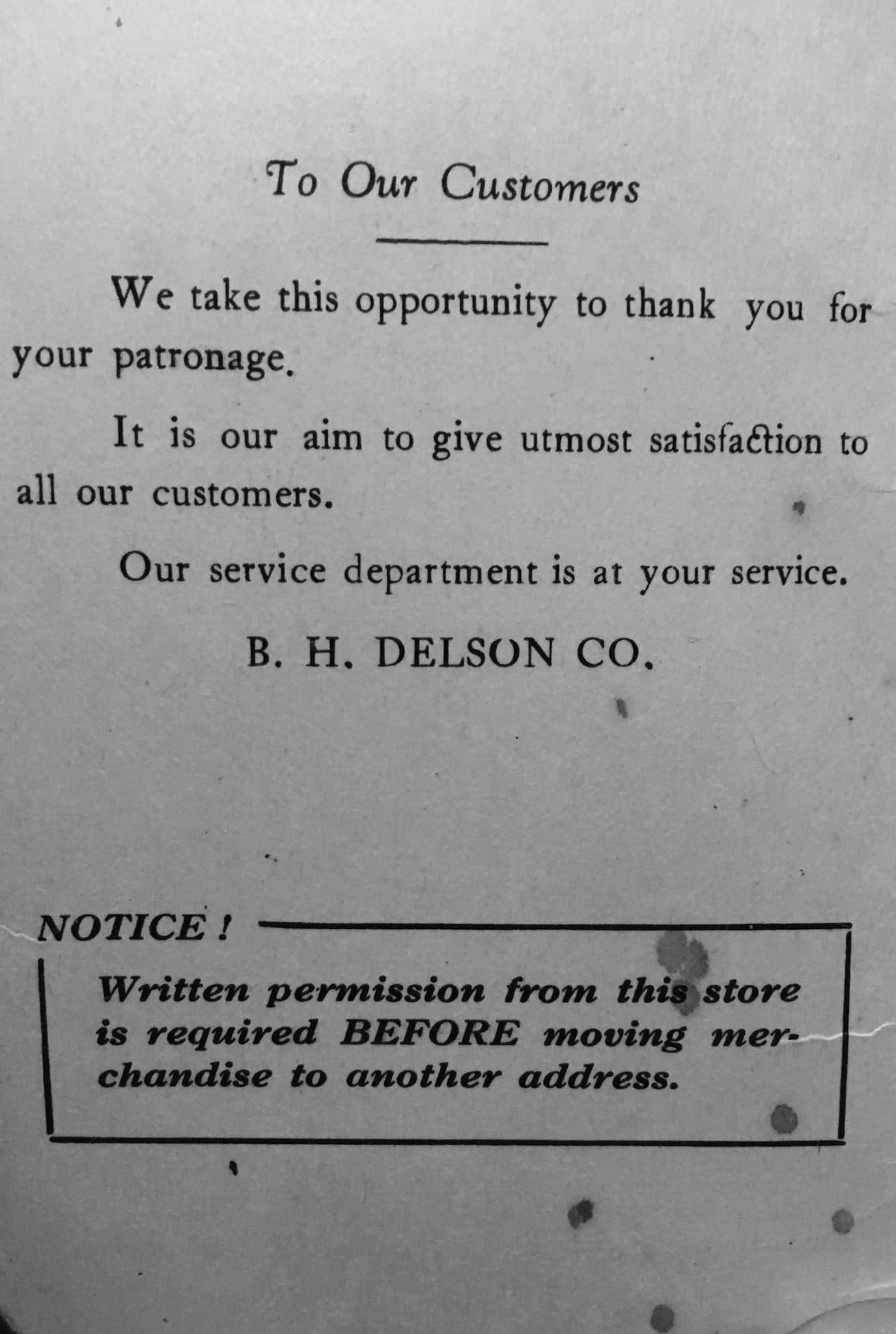
was more than the B.H. Delson’s motto. It was what the store lived.
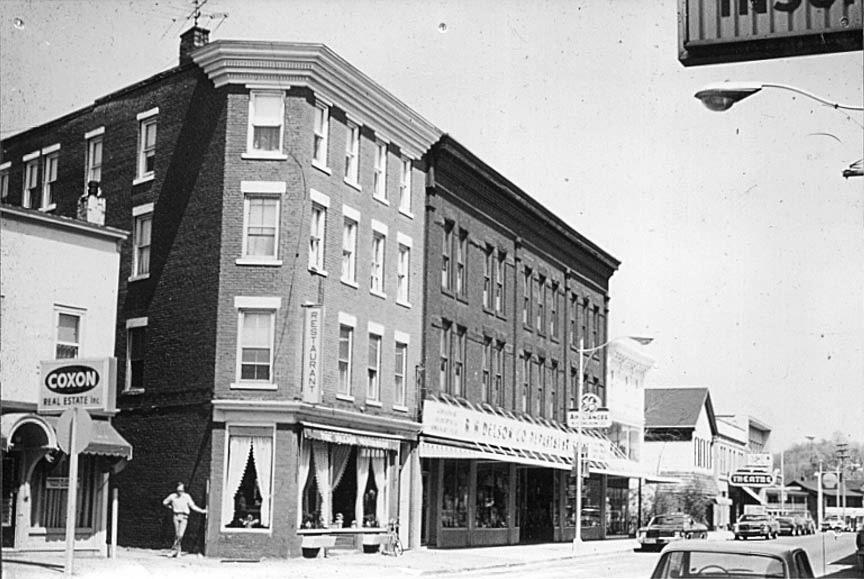
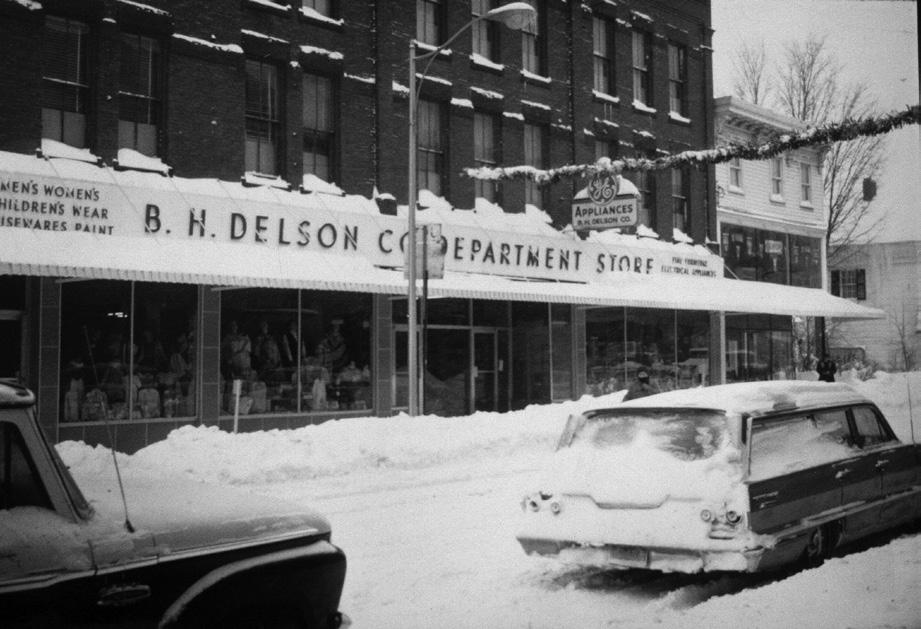
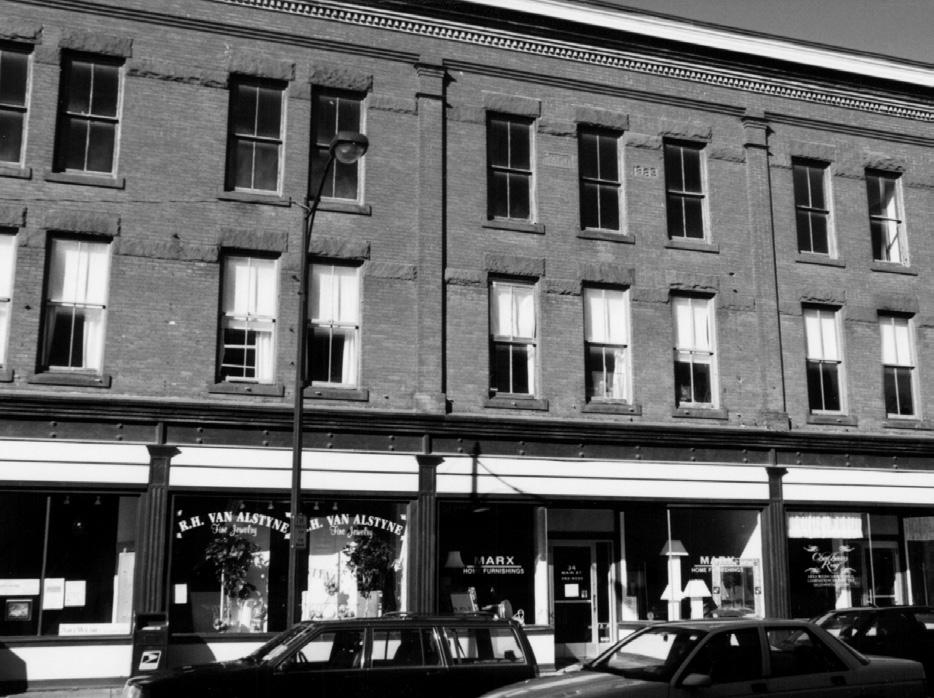
Although the space is now occupied by Re-Wraps, Melinda’s Consignments, and Peint O Gwrw (“The Pub”), old-timers will no doubt never think of that section of Main Street, Chatham, as home to anything other than Delson’s, where indeed, from October, 1934, until the early 1990s, if they didn’t have it, you didn’t need it.
For children, entering the front door, taking a couple steps to the right, heading down the stairs and taking a hard left brought them to the toy department, where one would discover no end of doohickeys and gee-gaws designed to make kids turn to their parents with pleading eyes.
PHOTO BY RICHARD E. LINDMARK
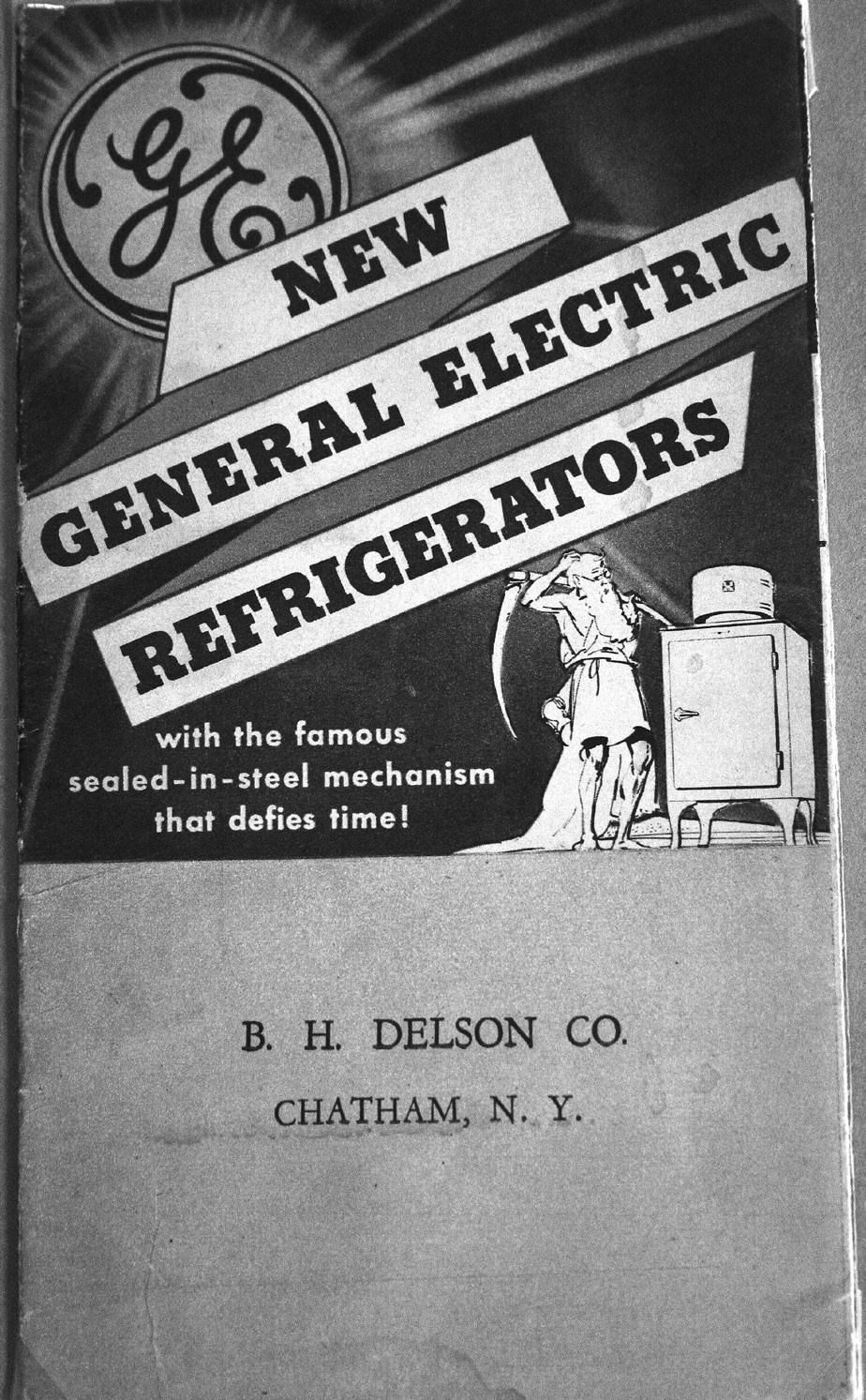
Apart from the toys, downstairs was also where Harold “Red” Fischer oversaw the hardware department, while Al Neven took care of appliances, bedding, and the ladies and men’s departments upstairs.
Store manager Phil Mann, whom everyone, and we most sincerely mean everyone, reverentially referred to as Mr. Mann, was on constant store patrol with what might be best described as a threatening look on his face, but much of his demeanor was simply a ruse, said his daughter, Lois Neven: “He had to pretend he was very stern so the kids wouldn’t rob him blind. Really, he was a pussycat.” Lois worked part-time during the summer in the store from the age of 14, and “it was a big part of my life.”
As it turned out, Lois’s husband, Al Neven, served as assistant store manager for 16 years, from “the late ‘70s to 1995,” he said.
Unique place
“It was an amazing experience,” said Neven, whose children, Todd, Scott, and Heidi, worked at Delson’s in their teens. The employees were “an interesting group of people. Hardly anyone ever left. It was a unique place.”
Delson’s employees were renowned for knowing their customers and for going the extra mile, something Neven observed time and again, he said. “In the ladies’ department, men would come in a day or so before Christmas and Helen Golden (for 54 years a clerk in the ladies’ department, an institution within an institution) or Helen Rose would hand them a wrapped present for their wives. The men would come back in after Christmas and say, ‘My wife said I got her just what she wanted. How did you know that?’”
On another occasion, Neven said, “people came in all excited about getting their first home in the country. They bought a bed, and we agreed to deliver it to their new home in Chatham Center. They wanted to stay there so bad. When we got there, it turned out the house was about half done and still under construction. Still, we got the bed in place and they stayed. We gave that kind of service.”
To Rich Lindmark, a Delson’s employee from 1979-1985, “the place was great. I’d come home from school at SUNY-Brockport and they’d put me right to work for the weekend. They were great bosses there. Everybody thought that Mr. Mann was this big ogre, but he had a heart of gold. He was very generous.”
Lindmark said Delson’s offered “that personal service you don’t get now. Everybody knew somebody. I enjoyed that interaction and personal contact with people. We had a blast there.”
Sheila Shaw worked for ten years “in the basement with head honcho, Red. It was a great place to work. Red was a great guy to work for. He and Phil cared about you and your family.”
Shaw chuckled when she recalled the sign Red had hung in the basement: “Rule #1 – the boss is always right. Rule #2 – refer to Rule #1.”
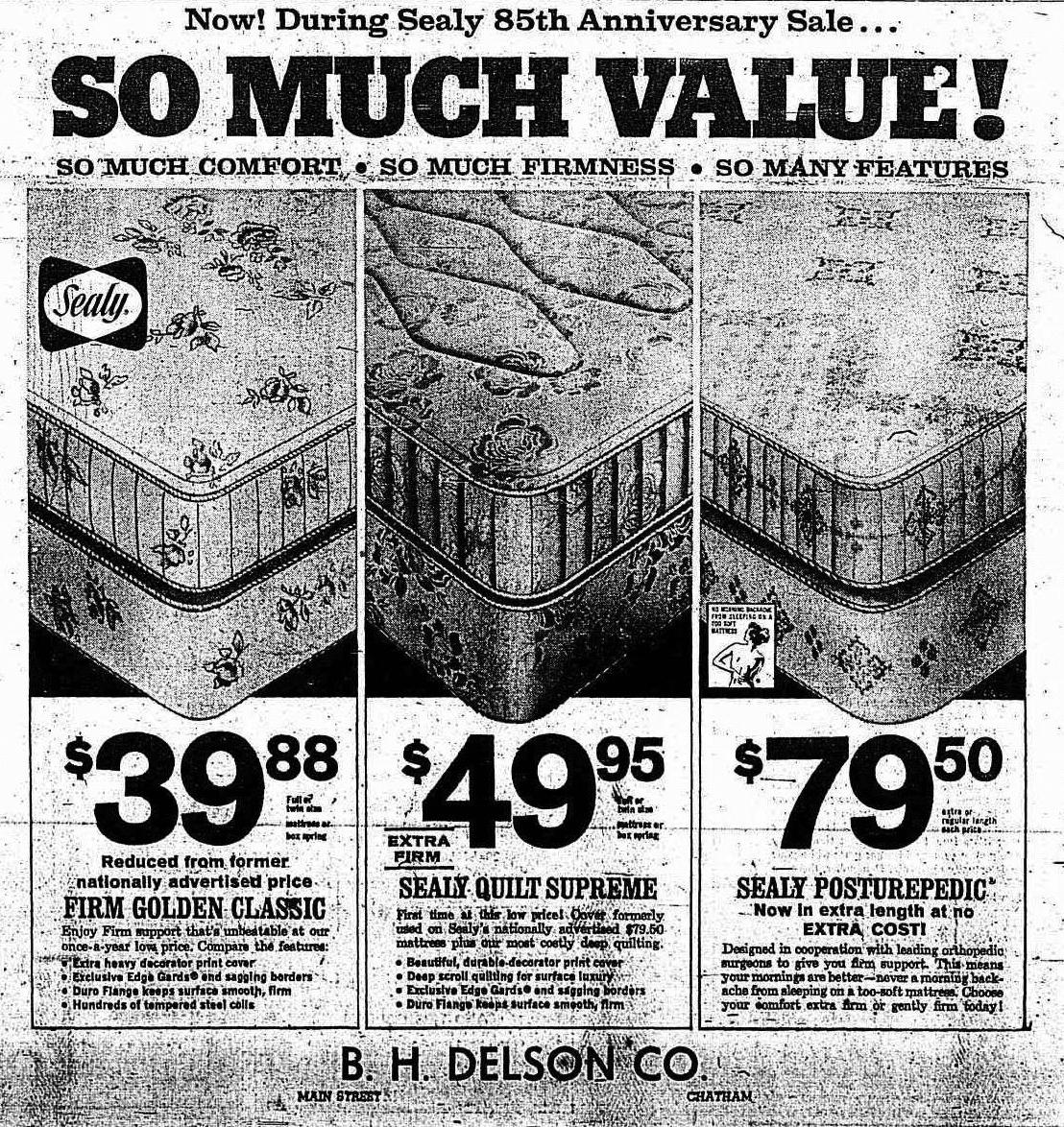
The Delson’s motto rang true, said Shaw. “I don’t know what you couldn’t buy there. Socks. School supplies. Clothes. You name it. And if they didn’t have it, they’d order it. They didn’t mind ordering just one thing.”
Generosity
Shaw said that Delson’s was “very generous to the public. They would give to needy causes. If there was a fire, they’d give things away for nothing or at a slight charge. Mr. Mann got a bad rap from some people, but he was superb.”
Al Neven agreed with Shaw’s assessment of his father-in-law: “For people who didn’t
have a lot of money, he’d let people pay a couple bucks a month. And people would live up to it.” Not only that, but “Mr. Mann could find anything in the store. There were no computers then. The store had eight different cash register stations.”
Red Fischer was with Delson’s for “forty years. I started out sweeping floors. We’d get a lot of stuff in by rail, so we’d go over to the freight office and bring it back. As a kid, though, I got fired. I was goofing off.”
Subsequently, along came World War II and Fischer wound up in the Marines, in which he spent “almost four years. After the war was over, Mr. Delson got involved in a GI training program. He took me back. I received a small salary and the GI Bill gave me some extra income.”
As manager of the downstairs, Fischer said, “I did most of the buying for housewares, hardware, and toys. Later on, we went heavier into furniture. Ben Delson was good to the employees. We always had a Christmas party when he was alive, and picnics in the summer. He expected a lot, but he treated you well.”
Who was
that man?
Don Fischer, Red’s son, recalls the day a
customer came in and couldn’t figure out with whom in the store she’d spoken in regards to her situation. Finally, she said it was “’the old guy in the brown sweater,’ meaning my father,” Fischer said. “Well,” he added, referring to the basement of Delson’s, where he himself worked from the late 1970s to the mid-80s, “it wasn’t the warmest place to work.”
“It was a great group of people to work with.” As to customers, “You saw people all the time. You were on a first-name basis with hundreds of people from the village and the surrounding area. You also knew all the merchants on the street – Larry Patlen, Sam Goodman, Jules Brown, Joe Curcio.”
Bunny Delong got her start at Delson’s during one Christmas in the late 1970s. “I was a clerk downstairs. We waited on customers, stocked shelves. When we weren’t busy, we dusted. After Norma Sitzer retired, I was put in charge of the toys. Red was famous for saying, ‘Who’s watching the back?’ Nobody ever wanted to be stuck in the back of the store.”
Among Delong’s more famous customers were David Canary of “Bonanza” and “All My Children” fame and actress Anne Meacham
Middle
(“Another World”). “I never waited on Harry Belafonte, although I saw him in the store,” she said.
But working in Delson’s made even its employees notable – “People in later years would look at me and say, ‘Where do I remember you,’ and I’d mention Delson’s. ‘That must be it,’ they’d say,” Delong added. Apart from those interviewed for, and mentioned in, this story, familiar names from the Delson’s era resound, and it wouldn’t be complete without braving a stab at what is surely an incomplete list: Doris Gardina, Karen Martino, Shirley Davis, Earl Rose, Dora Jensen, Abby Lassig, Esther Winter, Georgine Miller, Tom Kirkbright, Norma Dunn, Ken Herrick, Jean Rickert, Frank Mochrie, Tess Every, Muriel Krauss, Laura Vosburgh, Frieda Borghi, Joe Ingham, and Helen Straub.
Al Neven offered perhaps the most ringing testimonial to Delson’s impact: “There was this couple who would come from Rochester to visit one of their sisters here. After the sister died, they still came from Rochester at least once a year to come to Delson’s.” • This story originally appeared in the May, 2010 issue of The Chatham Press.
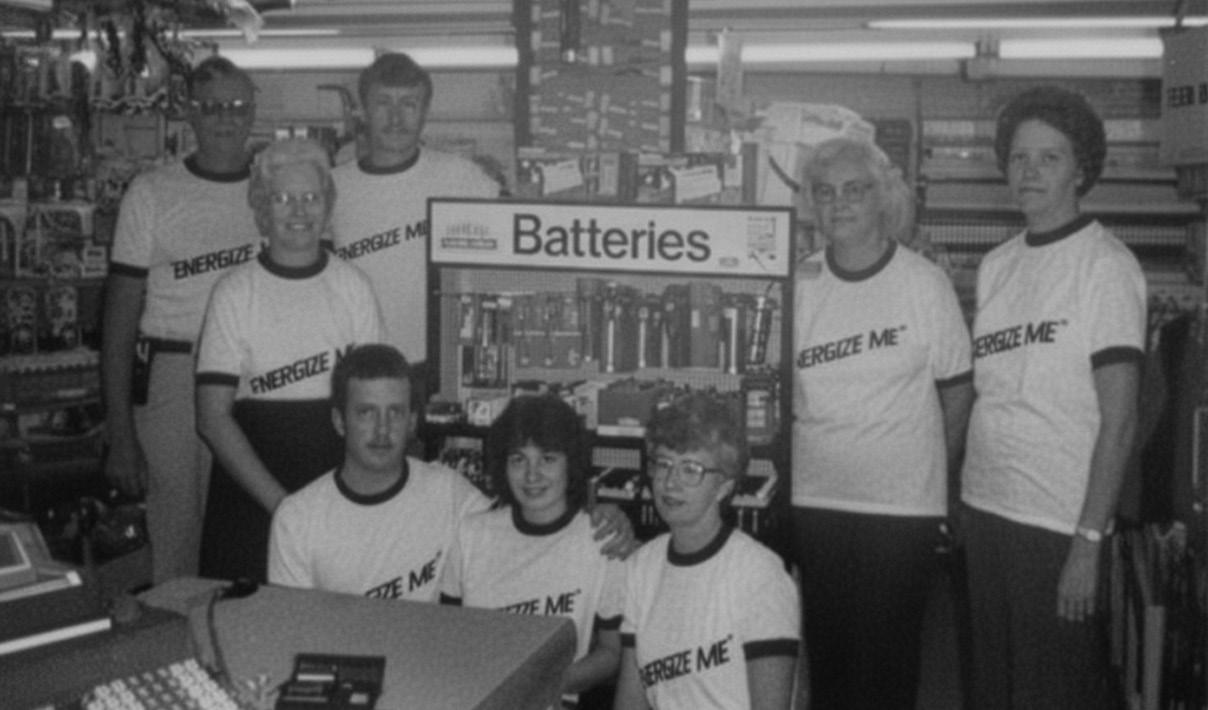
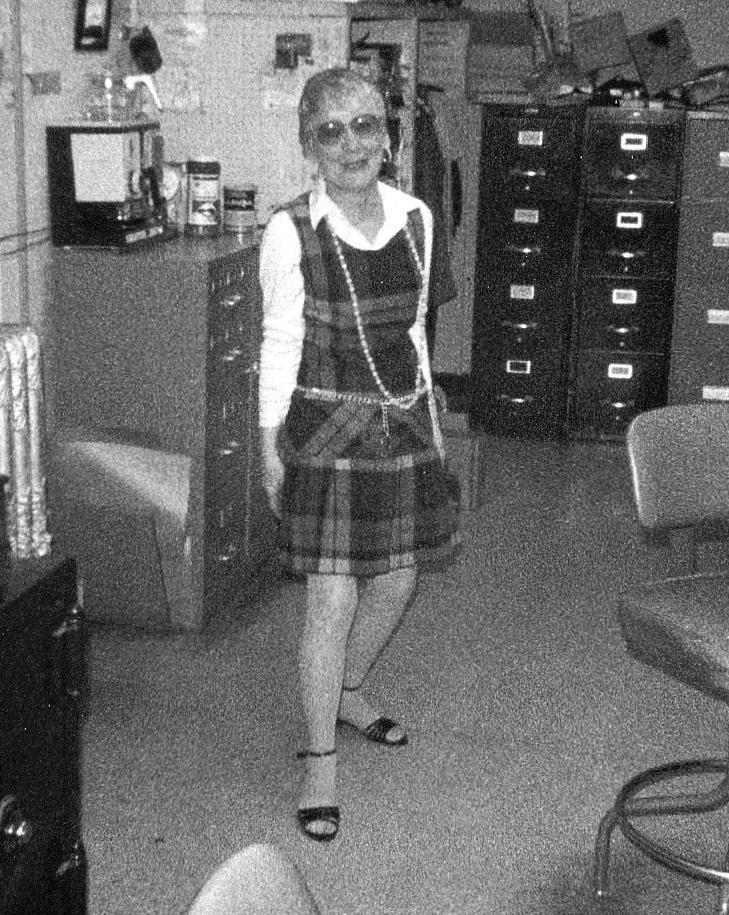
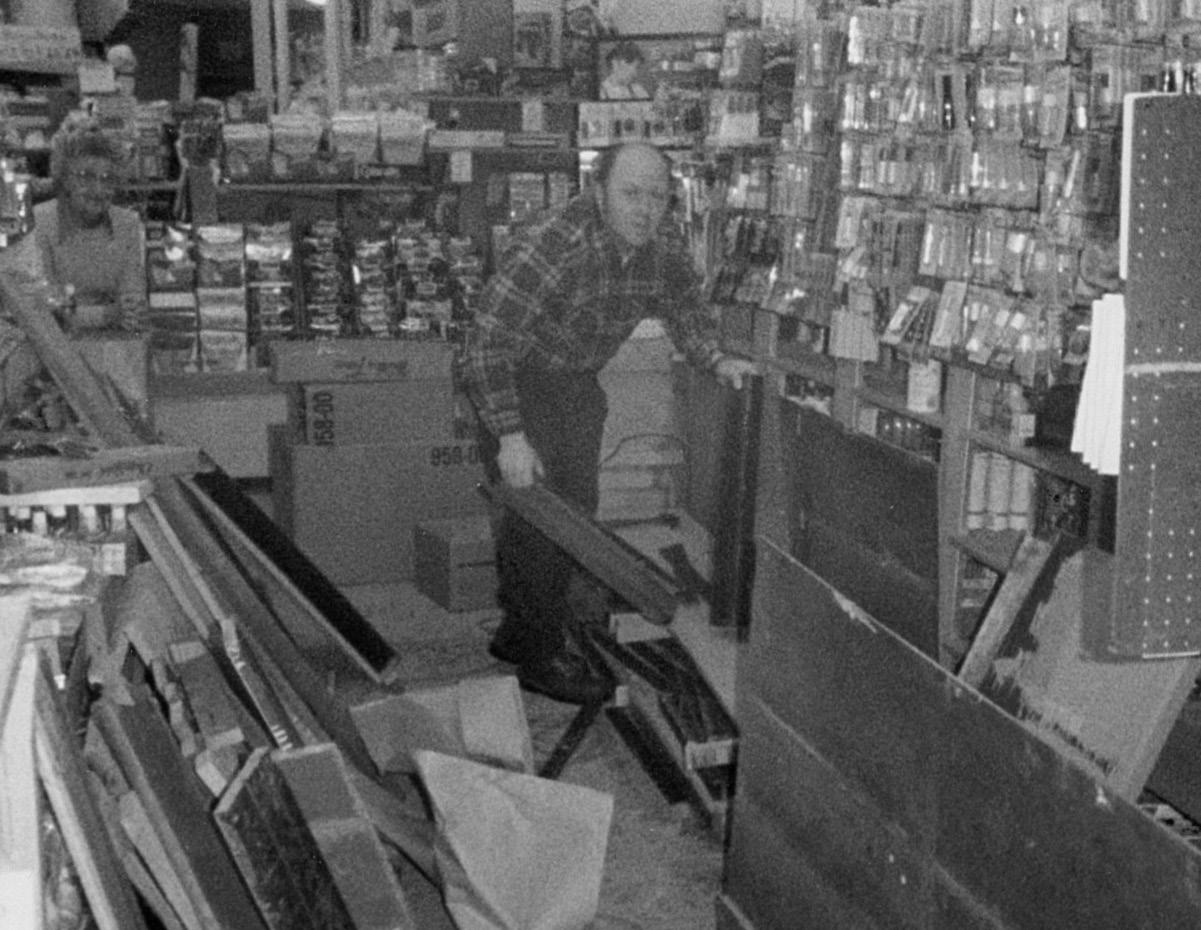
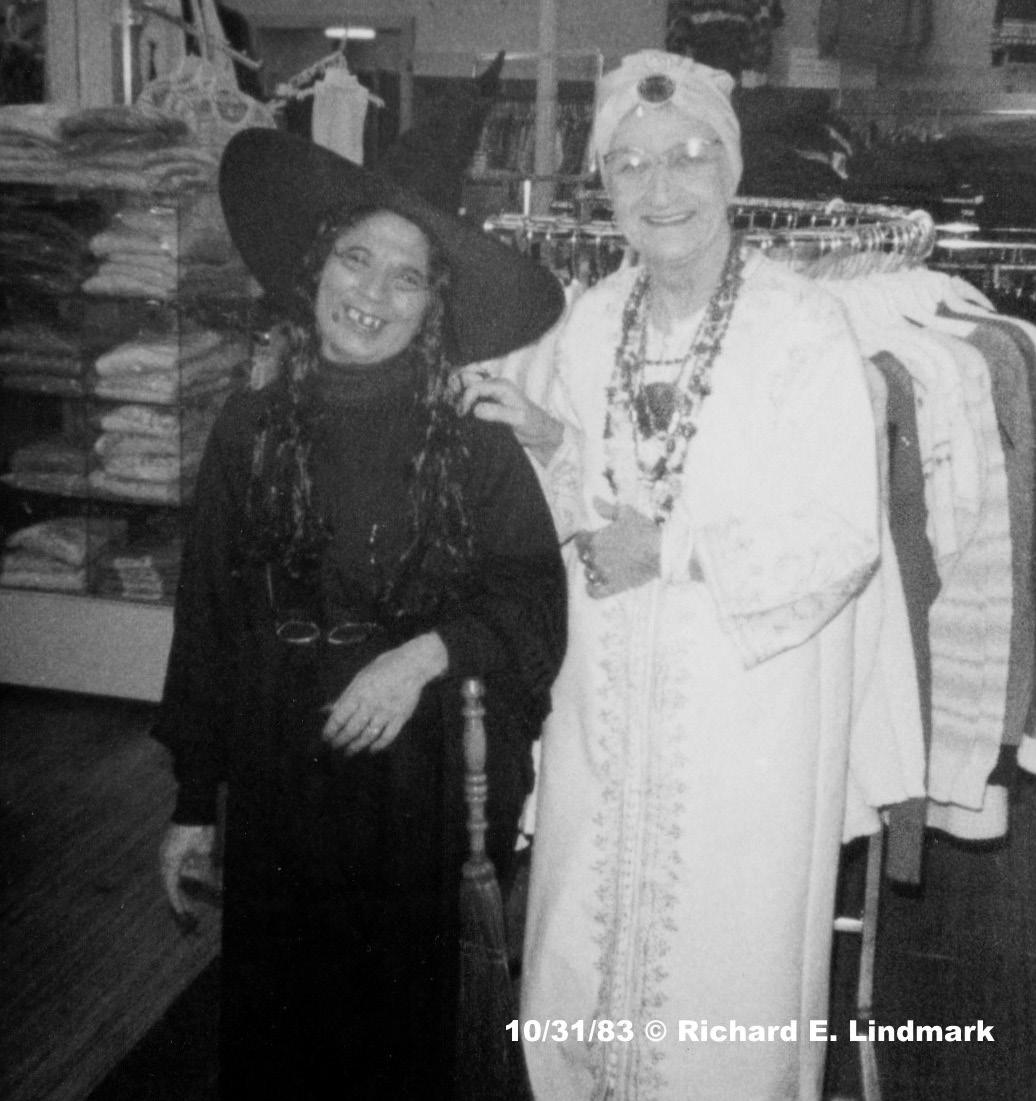
Top left: The “Basement Gang” on September 9, 1983. Standing, L-R, Harold “Red” Fischer, Norma Sitzer, Don Fischer, Doris Young Norma Dunn. Front, L-R, Ernie Lindmark, Christy Shanahan, Sheila Shaw. Top right: Helen Rose and Joe Ingham.
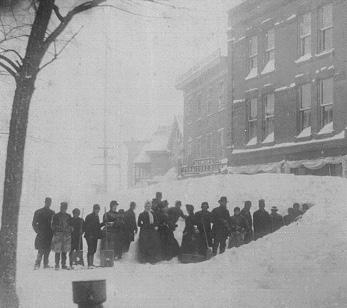
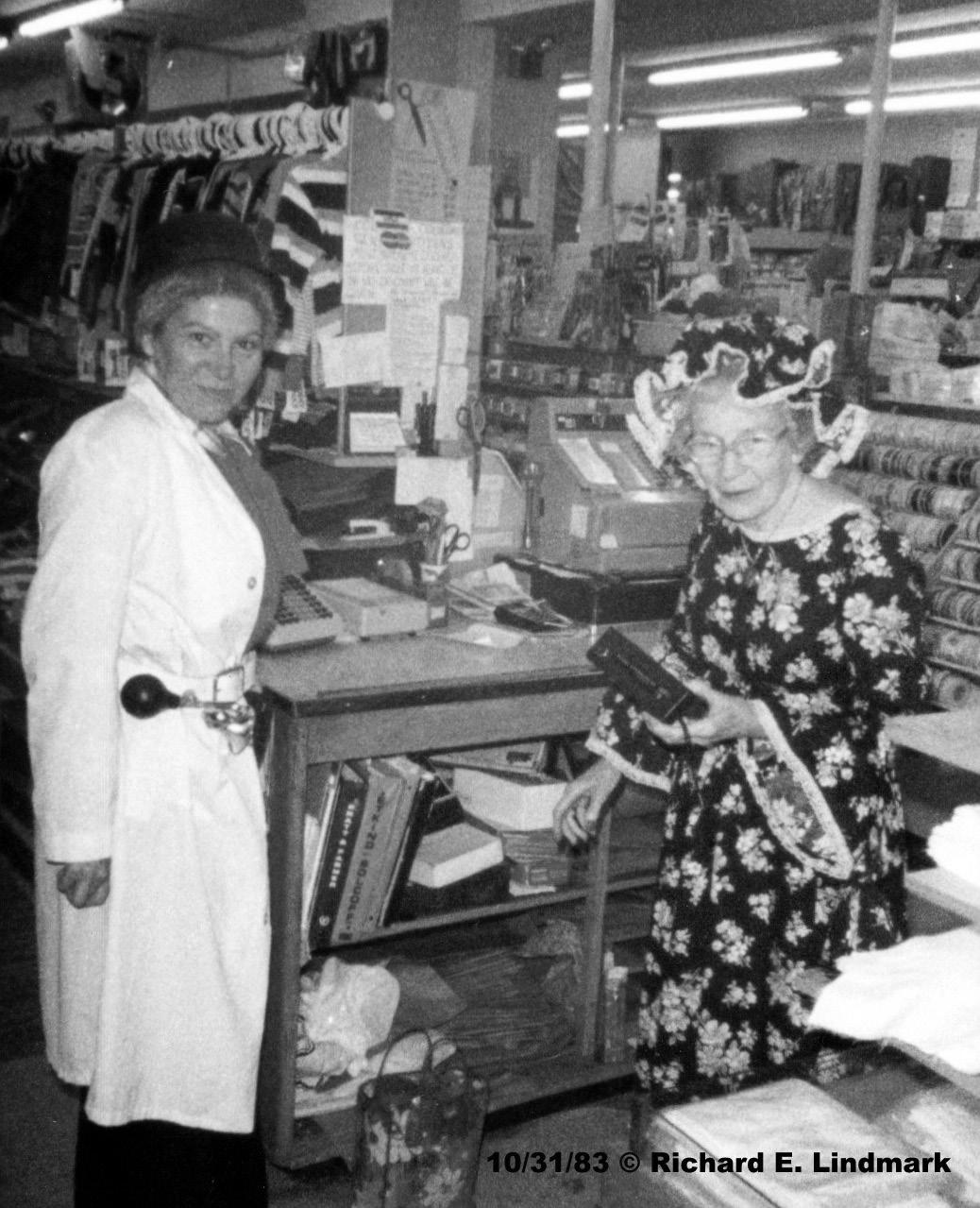
row: Left, Chathamites during the Blizzard of 1888 in front of what would become the Delson’s building. Right, Tess Every and Helen Rose, Halloween 1983.
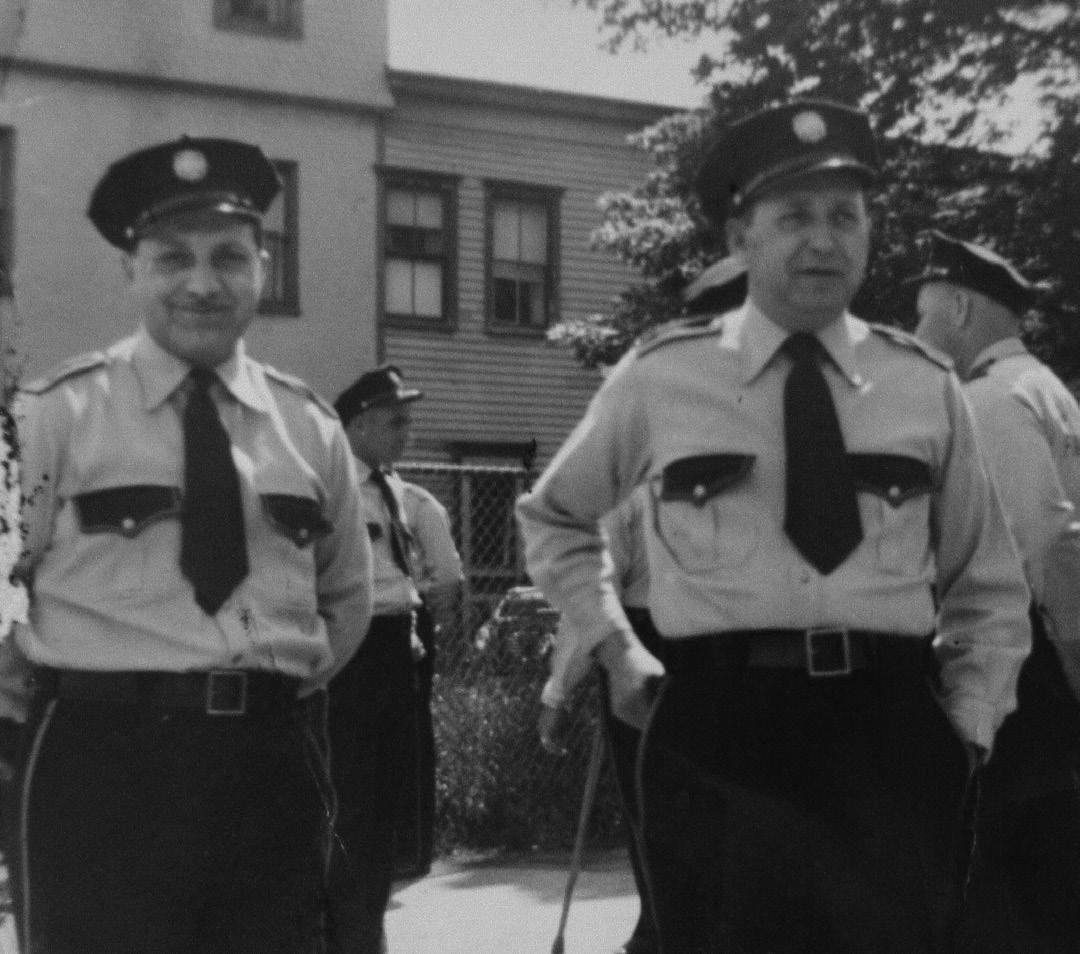
Bottom row: L, Helen Straub, Halloween 1983. C, Shirley Davis, Esther Winters, Halloween 1983. R, Phil Mann, left, unknown on right.
Hawthorne Valley Life at
For many, the Hawthorne Valley Waldorf School and farm in Harlemville remain a mystery. Our intern aims to set the record straight.
By Thomas Patterson
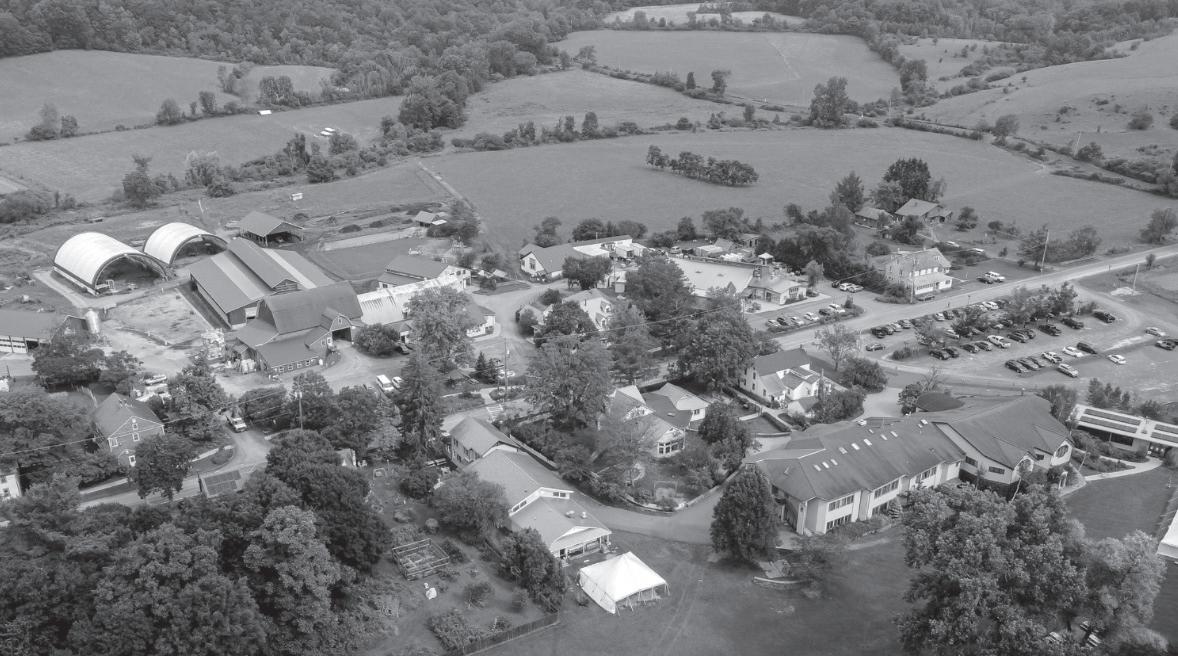
Hawthorne Valley is a place where education, agriculture, and pure fun meet together, with over 900 acres of pastures and forests, a creek running through the back of the schoolyard, numerous trails throughout the land, and a few ponds.
The Hawthorne Valley Waldorf School provides a hands-on approach to learning, emphasizing imagination, critical thinking, and engaging in the world around us. The farm houses cows, sheep, horses and chickens, with its own bakery and creamery that supplies the Hawthorne Valley Farm Store. The animals are kindly raised; the cows’ horns are not cut off, and the chickens are free to wander. The Visiting Students Program invites children from other Waldorf schools to visit and work on the farm for a week, typically in the third grade, to experience life on the farm. The school holds a fascinating history of growth within the small town of Harlemville.
The school follows the traditional Waldorf School curriculum and teachings of Rudolph Steiner, an Austrian philosopher and social reformist. Waldorf schools teach that the child goes through stages of development and experiences the different capacities of those changes. “If you have a strong will to achieve your goals, to understand how the world works and engage with it, you can do a lot with life,” says Janene Ping, one of the kindergarten teachers and kindergarten chairperson. She has
been teaching at Waldorf since 1991. Mrs. Ping says that in addition to intellectual intelligence, social emotional capacities are very important ways of hearing the world.
1973
The school started in 1973 in a farmhouse in Harlemville, where the farm and Visiting Students Program were already in place. Teachers from the Rudolph Steiner Waldorf School in New York City wanted students to have an experience of country life and founded the school with a kindergarten and four grades. The school was also near the Camphill Village in Copake, another innovation of Steiner’s, where people live alongside others with developmental differences. The workers there wanted a Waldorf school for their children to attend.
The school started in a small renovated farmhouse, now housing the kindergarten, first grade, and assembly hall. The school quickly added a lower school building and grew up to eighth grade, graduating two classes. The parents and faculty were disappointed to see so many students going to the public schools after graduation and, in 1980, opened the high school.
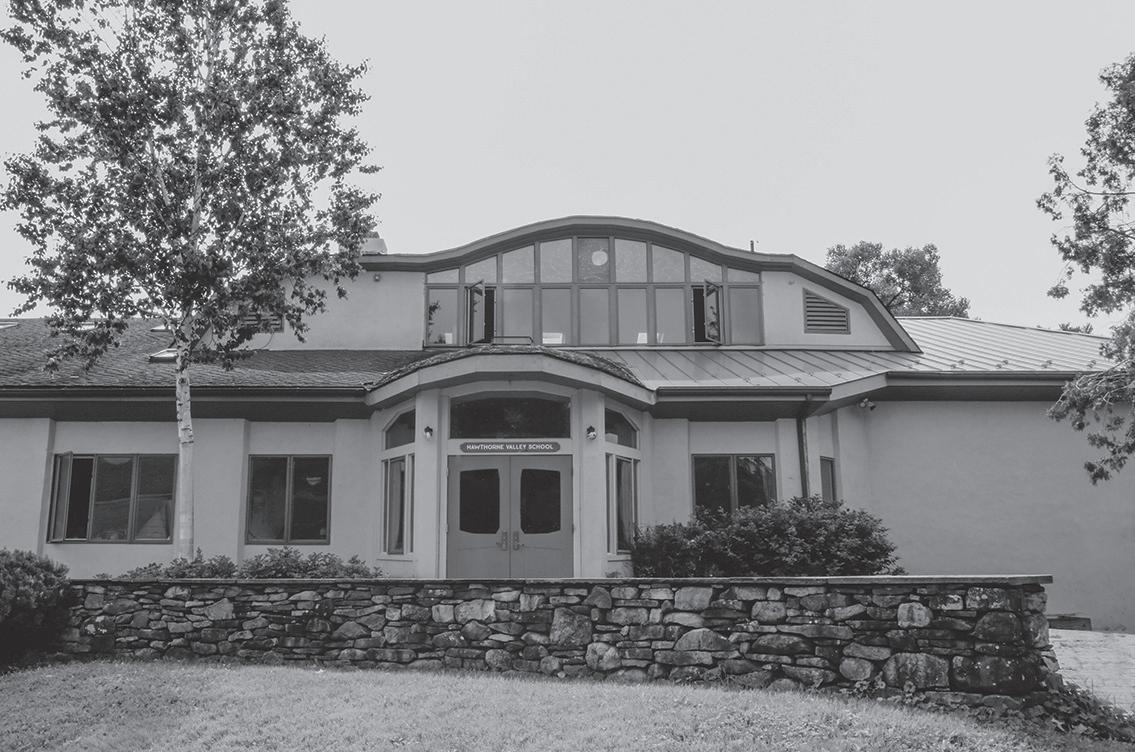
The high school building was originally quite small, and many buildings currently on campus were not there. The high school was expanded in both directions to make up what the main
building is today. The first year enrolled six ninth graders, six tenth graders, and three fulltime teachers. In 1983, the first class of seniors graduated, during which time the high school had grown to about 40 students.
Dr. Simon Frishkoff, the current science and drama teacher and high school chair, has been teaching at Hawthorne Valley since 2007. He also is an alumnus, having joined the second grade in 1976 and graduating in 1987. He recalls playing basketball in the loft of the farm’s hay barn, as there was no basketball court, practicing for the basketball team. “It had a large enough wooden floor that you could put a hoop at one end and bounce the ball around in there, but that was our “gym,” he said.
Fire
In 1988, a fire burned down much of the lower school building, and students had to learn in donated, improvised classrooms. The whole community showed up to rebuild the burnt structure. Work began to expand the high school to house the lower grades. Since then, Hawthorne Valley has added a practical arts building, a basketball pavilion for use during rain and snow, and a kitchen for preparing school lunches and offering cooking classes.
Hawthorne Valley still reaches back to its roots by giving farming classes to the students of the lower and middle school, in which they
harvest vegetables in the garden, gather and cut firewood, cook, and otherwise interact with the farm. The younger grades often visit the farm and animals, feeding the cows and riding the horses. The one- and two-week summer camps give children the experience of farm life by having them help out around the farm’s creamery and bakery, harvesting the fields, cleaning the stables, and other tasks around the property.
The school recently added a geothermal heating system, substantially lowering its impact of waste onto the land. Water pipes run under the ground to heat the water to around 50 degrees, which then requires much less energy to heat further, rather than heating up cold water. Solar panels have been installed on the basketball pavilion roof, to further reduce cost and environmental impact. Some people at Hawthorne Valley consider the project as a way to learn about regenerative heating and fossil fuel usage.
Visitors are invited to walk on the recently cleared Biodiversity Trail, visit the Farm Store, and say hello to the horses. Hawthorne Valley is a truly magical place, with a rich history, abundant nature, and amazing community. •
Thomas Patterson is an 8th grade student at Hawthorne Valley School. He prepared this story while serving as an intern to The Chatham Press.
Top left: Simon Frishkoff teaching at Hermit Island, 2011. Top right: Main house c. 1920s. Bottom left: Simon Frishkoff’s 1987 Hawthorne Valley yearbook photo. Bottom right: Kindergarten building, 1920s.
SportBits
COURTESY OF JOE SLATTERY
Rivalries
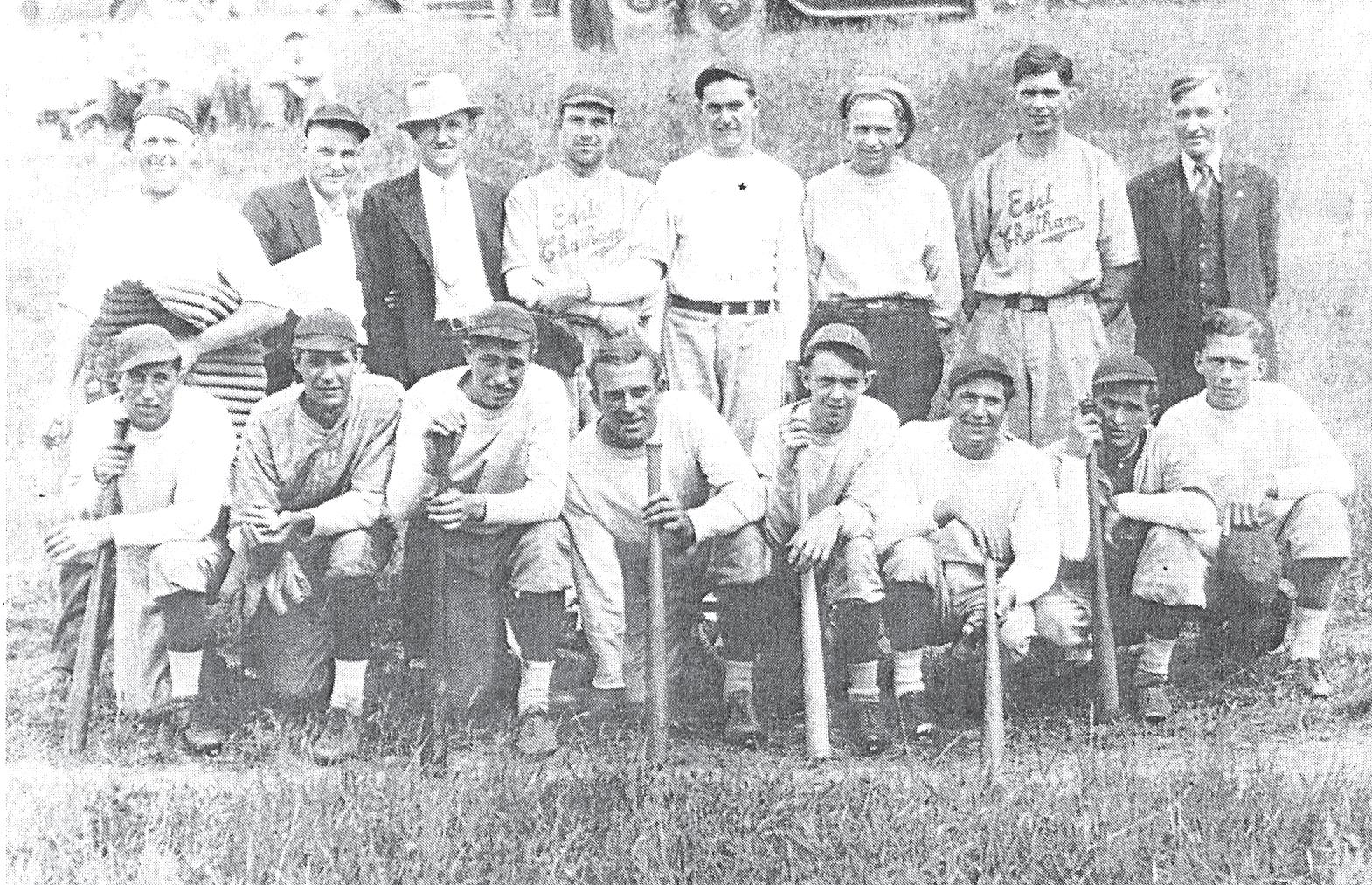
The East Chatham Indians, playing at Lant Park just off state Route 295, on the old Lant Farm between Rock City Road and what’s now the Berkshire Spur of the NYS Thruway, were one of many town teams playing each weekend during the summer of 1934. Managers arranged games with rival teams who agreed to come in return for the $8 to $10 contributed of the spectators. Players furnished whatever uniforms were used with occasional help from the team treasury.
Although the Indians played for the pure fun of it, they also wanted a chance to win. Harold Linker, their crack pitcher, was paid $10 to make sure he came to each game. (The umpire was paid $3.) “Punk” Bemiss, the team’s regular catcher, so respected Linker’s fastball that he reinforced his old catchers’ mitt with a fresh piece of thick beefsteak purchased just before the game started. Some of the town teams played by the Indians came from Lee, West Stockbridge, Cohoes, Schenectady, Albany, Valatie, and Chatham. The keen rivalry between East Chatham and Chatham was often settled by a game held at the Chatham fairgrounds before a large and enthusiastic crowd.
Morris cagers
Down at the Morris Memorial in early 1966, “Frank Curcio sank 26 points to pace the Warriors to a 41-34 win over the Spiders in a Pony League game in YMCA play,” reported the Courier.
“John Cozzolino fired 11 points and Mike Tessitore four for the Warriors. John DiMuro and Don Akin led the Spiders will 11 points each, Dean West had 10 and Bill Ingham two. Mark Franks was top scorer for the Apaches with 12, Gary Barber netted five and Gary Buchan two. Randy Clements scored six, Dan Kelleher four and Don Welch three for the Braves.”
“Ron Verney’s 23 led the Mets to a 2914 triumph over the Winners and th
Globetrotters downed the Celtics, 23-21, in the Cold League. Jim McKay hooped 11 for the Globetrotters, Doug Akin and Paul Fiero six each. Scott Merchant had 13 and Rich Williams eight for the Celtics. Ed Russell and Dave Grant canned four each for the Mets and Dave Hart had nine, Dave Laurange four and Dennis Dodge one for the Winners.”
At the upcoming second annual Hudson Valley Junior Bowling Association tournament scheduled for Chatham Bowl, junior bowlers from Chatham set to participate are “Bantam girls Georgann Bostwick, Lynn Cross, Susan Fila, Evelyn Coonradt, and Marilyn Coonradt. For the Bantam boys, Bob Westover, Rich Goodrich, Bill Kimok, George DeLong, and Jim May. For the Junior girls: Jody Cash, Sharon Johnson, Nancy Fila, Cydney Cross, and Nancy Cummings. Junior boys, Don Macfarlane, Jack Mesick, Ron Hart, Jim Young, and Dave Cross. Senior boys, Tom James, Ron Legere, Cliff Campbell, Ed Northup, and Konrad Raup.”
1920 hardball
In the summer of 1920, reported The Chatham Courier, “Interest in Chatham’s twilight baseball league is increasing every week and the playing of the games is rapidly improving. The teams are apparently evenly matched and some of the contests have been filled with thrills and excitement from the first inning to the last. These games are played every Wednesday and Friday evening at 6:45 on the fairgrounds, weather permitting.”
On the previous Friday evening, the Chatham nine took down Fort Orange of Castleton by a score of 2-1 in 11 innings.
“Some game! One hour and fifty minutes for eleven innings! And ‘Pep’ Smith has at last located his batting eye, he batted .500. Vosburgh collected his usual two hits in four trips to the plate. Who said Broderick was a rank bush leaguer? Seven assists and then he
knocks in the winning run with a single and that wasn’t his only hit. He got two. Jordon also had a great day, getting two hits and sliding home with the winning tally. Harvey didn’t issue a pass and Wiltse of Castleton allowed but one. The Castleton twirler deserves a lot of credit and but for an error he might have come out on top. But then, they scored their only run when Hover misjudged a fly ball and let a man in. The kid is young yet and will improve,” reported the Courier.”
“There was plenty of excitement in the sixth when Chatham tied the score at 1-1. Again in the tenth the visitors had three men on with two out and things looked bad. But it was their last and only chance, Vosburg killed it by fielding a fast one and stepping on second base for a forced out.”
“Manager LaPointe had a great day. For the first five innings he was deep in despair but after that you couldn’t hold him.”
Attendance was reported at 500.
CHS hoops
At the end of January 1990, Chatham Panthers cagers had raised their league record to 4-5 against Taconic Hills, behind 24 Ed Bemiss points. The starting five of Bemiss, Todd Wemitt, Dan Gregg, Jason Summers, and Todd Macfarlane shot off to an early lead and never looked back in the 88-47 victory. They would later go on to Sectional competition, where they were stopped in the first round by Granville. Rounding out the ’88-’89 squad were Rich Kneller, Kyle Schermerhorn, Dana Coonrad, Brian Madsen, Pete Trawinski, Chip Snyder, Greyson Welch, and Jordan Valdina.
The Chatham varsity girls hoopsters, behind the play of Kari Andersson, Nadine Haner, Heather Davis, Kim Sampson, Isabel Diez, Annie Bloomberg, Nikki Fredericks, and Kristen Becker, would go on to finish their season at 10-10.
•
The East Chatham Indians Baseball Team was photographed just before a local game in 1934. Left to right, front row are Joe Bonifacio, Harold Linker, pitcher; Lewis Bemiss, Charles “Punk” Bemiss, catcher; Joe Slattery, Tony Bonifacio, Jules Surowiec and Donald Barry. Left to right, rear row are Fred Freehan, umpire; Ken Freehan, secretary-scorekeeper; Leon Gearing, manager; Walter Kirby, Maurice Arrighi, Harley Hodgkins, Joe Barry and Frank Donnelly, co manager. Neil Decker, Stanley Staron, Bert Bemiss and Bob Butcher were team members absent the day of the picture taking.
With three offices in Copake, Valatie, and Chatham we are here to help you with any of your insurance needs. Contact us today for a quote on your home, auto, business, health insurance or life insurance. We are the Kneller Agency and we’re here to insure your world.