We take our hat in our hand in an appeal for your financial support. Advertising revenues sustain the Press. But ad revenues fluctuate and in some months fall off. Our nostalgic voice is popular with thousands of readers. The paper flies off the shelves. Since we have no pay wall to prevent one from scooping up the Press, some folks take multiple copies. To change the business model now to charge for it would be unfair and confusing.
The Press’s independent journalism takes time, money and hard work to produce, distribute and increase circulation. We want to keep our product accessible and in print for all, something you can hold in your hand and treasure. So here’s our pitch: If you like our reporting, please support it with a one-time contribution by check of $10, $25, $50, $100 or more, so our future will be much more secure. Thank you for understanding our truthful appeal. – Rich Kraham
Noah Summers and his dad, Jason, were recently out trying their luck on Queechy Lake, when Noah brought in this handsome 1.13-pound small-mouth bass.
SHE’S DONE IT AGAIN.
Last year we told you about Marcia Curran “running away to join the circus.” This year, she not only did it again, she’s going it at twice and more.
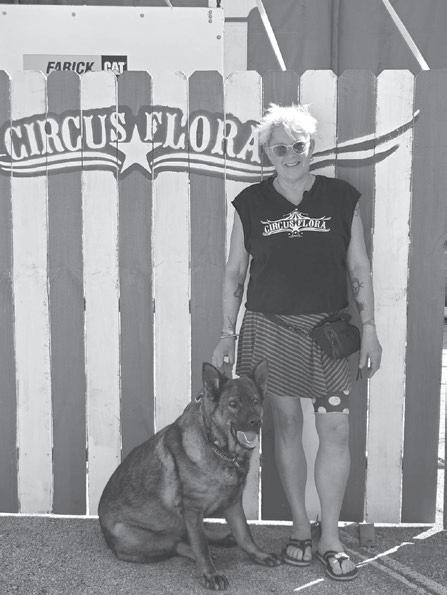
On a brief stop home in Chatham, Curran said she just finished several weeks with Circus Flora, “A fixture in St. Louis. Its 39th year, very much part of the city.” Performances are in a huge red tent, describing it as “Such a character in the show.” Living beside that in the camper she bought last year, “I loved being next to it day and night.”
“In general, I did jobs no one else would. I get fixated on them and try to do them really well.” Those included front of house tasks and face-painting, plus things like keeping bulbs in strands of lights around the tent, and, she laughed, “People say I’m living the dream,” emptying garbage.
“People think of circus as fantasy, magic, but the performers risk their lives every day, training, training, training to perfect their skills. It is always very real.” Curran said she loves meeting all the new people, “I love learning how these artists do what they do.”
What’s next? She left mid-July to join Circus Smirkus, whose performers are “very high-level skills 14-to-18-yearolds.” Based in Greensboro, VT, they travel throughout New England. She is tasked with getting their concessions running smoother, and we don’t doubt she will.
She’s also looking forward to working on an annual performance with Hudson’s Bindlestiff Circus, in a graveyard!
“The circus helped me learn ‘Look what we’re doing!’”
Publisher Rich Kraham
Managing Editor Jesse DeGroodt
Designer Steve Teabout
Contributors George Benson, Tom Callahan, Karen Holt-Lent, Vivienne Murphy, Barbara Peduzzi
Circulation John Paul Jones
Advertising Advertising deadline is the 12th of each month. Contact Rich Kraham at rkraham@fairpoint.net
Mail PO Box 343 Chatham, New York 12037
Phone 518.291.9339
Email jdd.press@gmail.com
Marcia Curran and her faithful traveling companion, beside the huge striped tent housing her first of three circus jobs this summer.
You Can Go Home Again
Despite some evidence to the contrary, the author proves one can indeed return to the domicile of their youth.
By Tom Callahan, Jr.
Would you like to take a trip down “memory lane” and revisit your youth? If you’re still relatively young, probably not. As you age, however, the prospect of such a journey becomes more enticing. At least that’s what I’ve found. But is it actually possible?
Most of us have heard the title of Thomas Wolfe’s famous 1934 novel, “You Can’t Go Home Again,” even if we haven’t read the book. In brief, Wolfe told the story of an author who tries to recreate the hometown of his youth only to encounter trouble with folks living there who disagreed with his memory. In later decades Wolfe’s title became a symbolic warning to those foolish enough to embark on the journey.
When I came home for my 50th high school reunion in 2013, I was pretty much in full nostalgia mode. I parked on Woodbridge Avenue and took a walk around the grounds of the school that I had attended K-12. It looked very familiar, much as it did on graduation day. I even encountered the principal on the sidewalk and told her why I was there. She asked if I would like to come in and look around. It was summer and the place was empty. “Yes!” I replied, thinking this is indeed my lucky day. I expected the interior to be somewhat different after 50 years -- but was shocked when nothing looked familiar; it could have been any old school building anywhere in the country. Oh dear: Wolfe was right. But last year, through sheer luck and incredible generosity, I found a much more personal exception to Wolfe’s maxim.
Some background to my tale is required. I was born on a cold January morning in 1945 at Chatham Community Hospital and soon came home to a modest duplex that my parents rented from a couple who lived in the other half of the house. For the next decade I lived the life portrayed in vintage TV shows like “Leave It To Beaver,” “Father Knows
Best,” and maybe even a hint of “Dennis the Menace.” Though we were happy there, my parents wanted to own a house and in 1955 we built our own home nearby, where I lived until I left for college and started a teaching career in New Jersey.
Though the new place was larger and more modern I never stopped thinking about our first home, just up the street. I saw it every day over the next decade and then every time I came north to visit my parents. Strange as it
might seem, I never set foot in the yard again, saw the inside of the house or even knew who lived there. No one was ever outside when I passed by. Sometimes as an adult I stopped and rang the doorbell, hoping that someone would answer. I planned to stretch the truth a bit by saying “I was born in this house,” in hopes that they might say, “Would you like to come in and look around?” No one ever answered; perhaps I looked like a salesman or a religious fanatic. Either way, I was plumb out of luck.
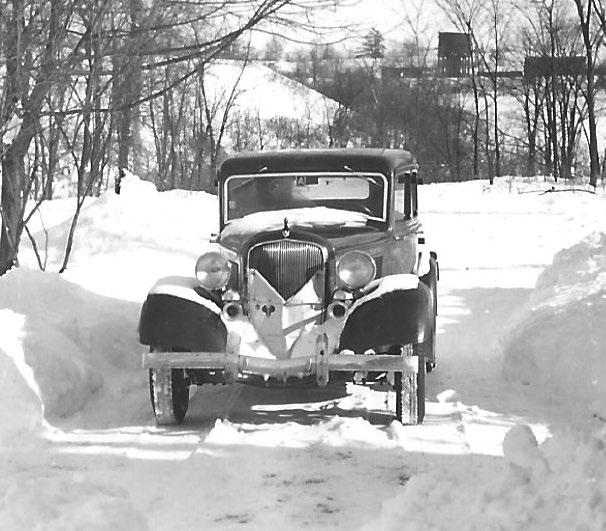
Driveway, January 1945.
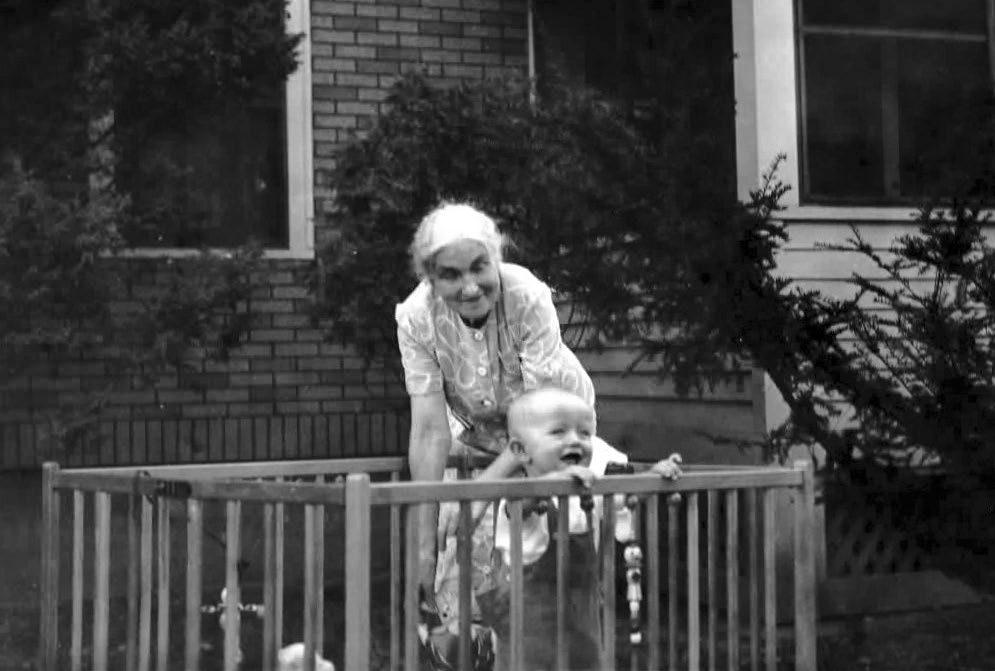
Tommy with his grandmother in the front yard, 1945.
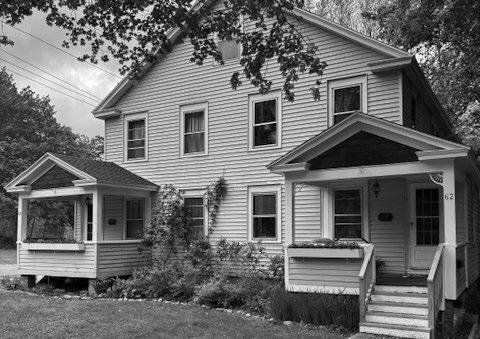
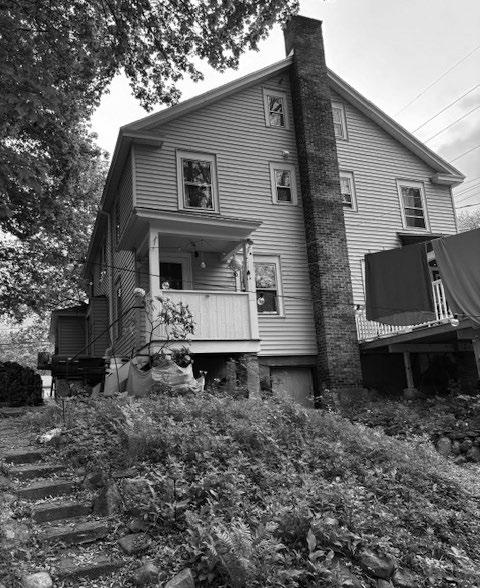
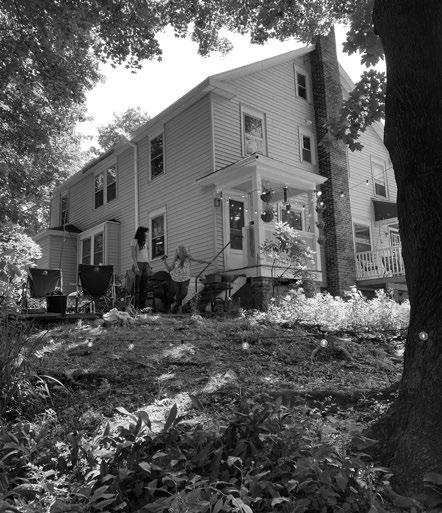
Front of house, 2024.
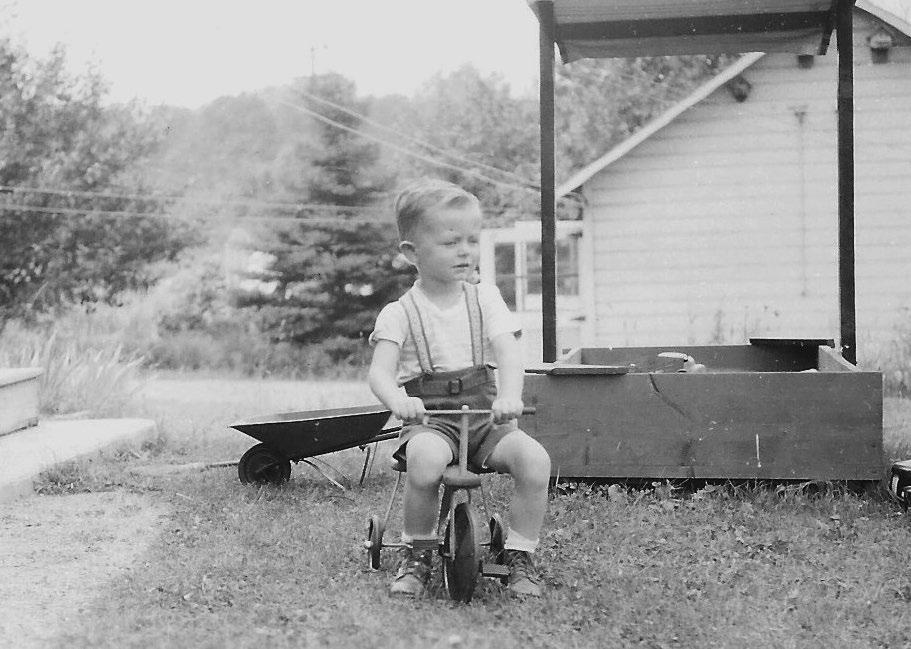
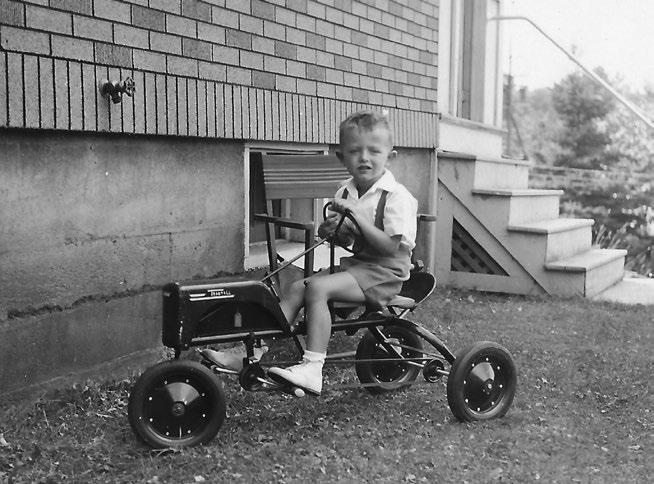
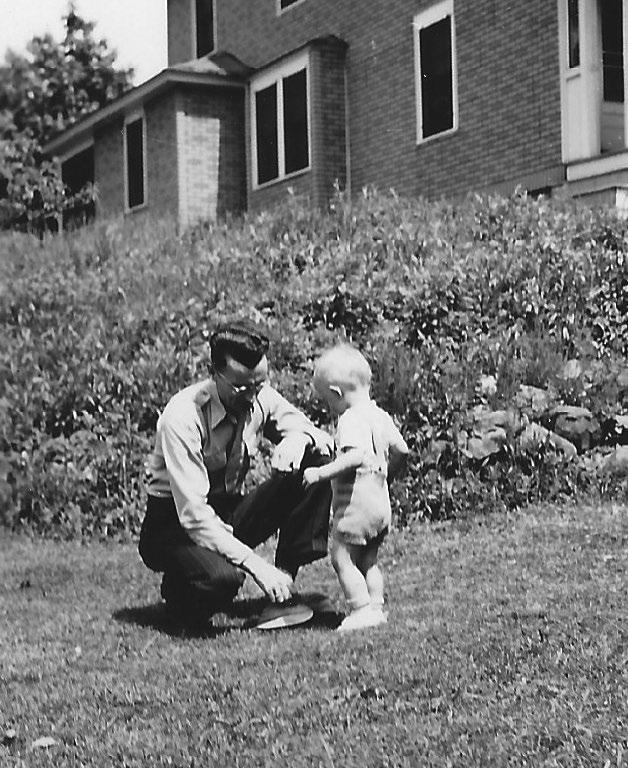
Tommy in side yard, 1946
Tommy in side yard 1947.
Then, last year when I was telling my tale of woe to a Chatham friend, he casually remarked, “That house was sold last year ... and I know the person who bought it. Do you want me to ask if you can visit?” Absolutely!
On a hot June morning last year my wife and I arrived to find our generous host waiting on the front porch. I was elated but also nervous that this tour might turn out like the disaster of my high school visit a decade earlier. I was confident that I remembered exactly what the house and yard looked like when I lived there, but was I right? It had been 70 years, after all. Maybe the inside had been renovated to be “open concept.” Maybe my memory was crappier that I believed.
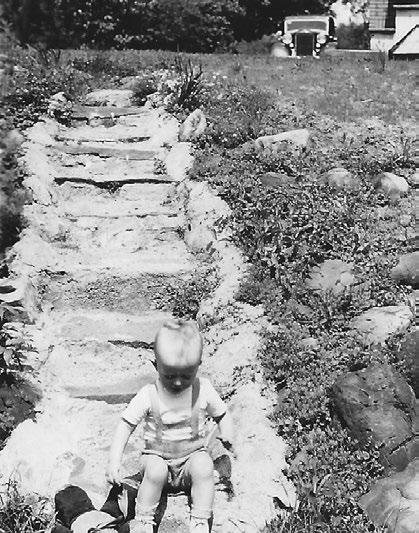
I came armed with old photos from the 1940s and ‘50s, most of which featured yours truly as an infant, a toddler or a kid on a tricycle. But the photos also documented, though unintentionally, the yard and the exterior of the house. The siding during my tenure was the ubiquitous asbestos fake brick look of the period. Now it’s a much nicer aluminum. The back porch was enclosed in my day, now it’s more open, though the same size with the same concrete steps and steel pipe railing. The awkward stone steps from the side yard down to the back yard are exactly the same as they had been in 1945, as the relevant photos show. All in all, not much had fundamentally changed outside, except that there are many more trees now than then. So far, so good, but now came the acid test: the interior. I had no vintage photos of the interior. So far as I know, none were ever taken. All I had for comparison were my memories.
I held my breath as I stepped through the front door into the living room. Is it possible to see that same room in two different time periods at the same time? I think I did – the 2024 room actually before my eyes and the 1950 room in my memory. The same proved to be true in other rooms as well. The dining room bay window seat where my black cat, Inky, loved to sleep was still there, as were the stairs that I had tumbled down on a Christmas morning while playing with my new Slinky toy. The kitchen looked much the same as well, except that the old coal stove that we had early on was gone, as was a pantry that had been removed some decades ago. It also looked smaller than I remembered it, largely because I was a lot smaller when I last saw it.
Upstairs the three bedrooms had not changed, except for the furniture, nor had the house’s small single bathroom, except for the updated plumbing. “Did you have a clawfoot tub?” our host asked. “Yes, we did.”
“Now it’s in the basement.” I purposely saved my old bedroom for last, a corner room with nice views. This was the place where I did business with the tooth fairy, the room where the Easter Bunny left my jellybeans and chocolate rabbits, the operating theatre where I extracted baby teeth with some fishing line tied around the doorknob. It was a joy to see it again, looking much as I had left it 70 years earlier. Turning to our host I asked, “Are the attic stairs still in my closet?” Yes, indeed. This private access to the large walkup attic had effectively more than doubled my personal kingdom.
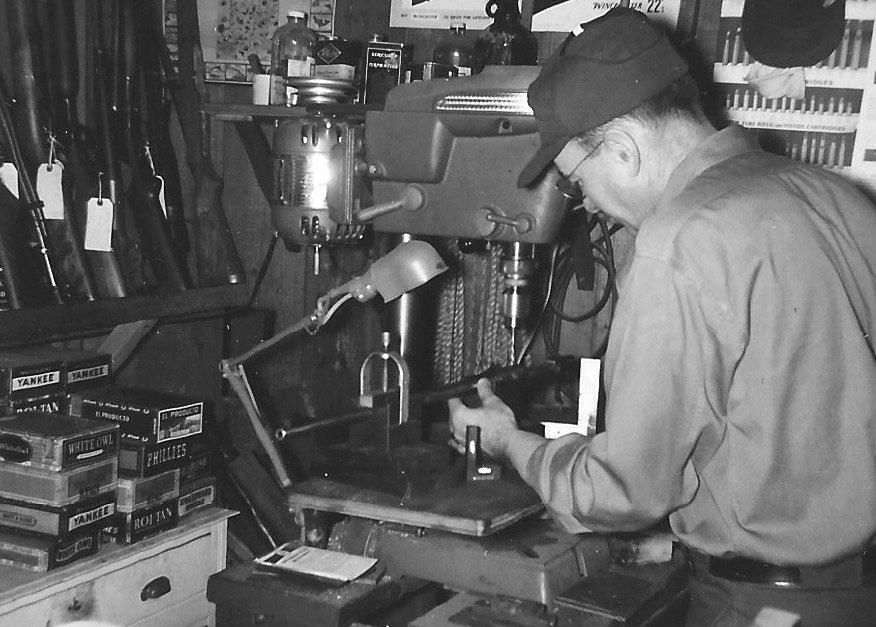
Before we left, we even got a tour of the basement, which had undergone the most change over the decades. Gone were the massive wood and coal burning furnace, now replaced by a much smaller and more efficient heating plant. My father’s workshop, where we had spent many happy hours, was unrecognizable, which was disappointing though hardly surprising. It was now filled
with several decades worth of stuff (like the old clawfoot tub) that had no other place to live. The new owner is optimistic about evicting the junk and reclaiming the space.
After about an hour we said our farewells. I was thrilled and our host was also happy to have had a guided tour of the house’s early history. She now has photos that she had never known existed and a new source for information about what her house and neighborhood were like in “olden times.”
I certainly understand the logic behind the
phrase “You Can’t Go Home Again” and the inherent folly of trying to look at a little kid’s realm through octogenarian eyes. Still, I am extremely pleased to have had the opportunity to finally make the long journey home while I could still enjoy it and, against the odds, to find my early childhood home pretty much intact. And, of course, I am especially grateful to the current owner whose generosity made my journey possible. •
Professor Tom Callahan taught the history of the Middle Ages at Rider University.
Steps down to back yard, 2024
Same steps, 1946
Side of house, 2024.
Side of house, 1946.
Tom Callahan, Sr., in basement gun shop, 1954.
On the street
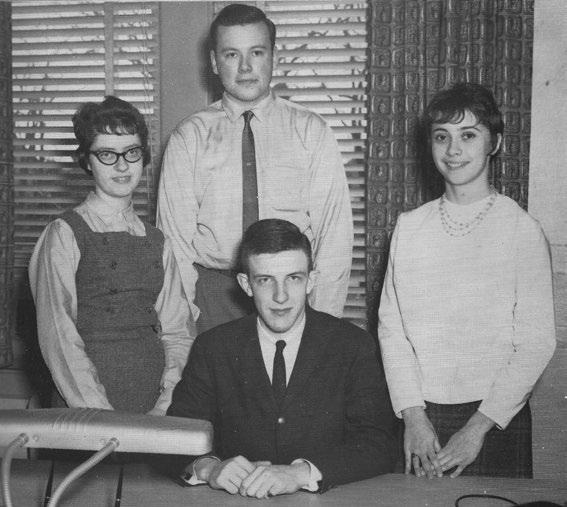
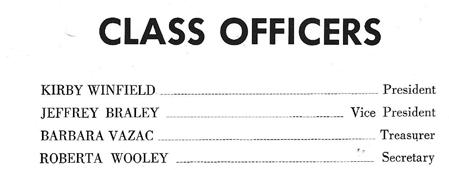
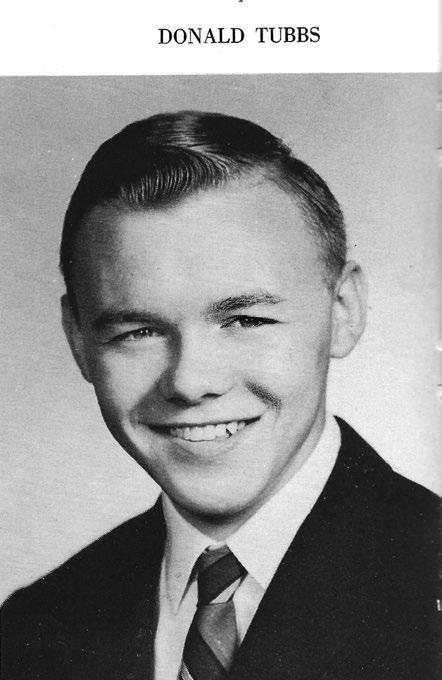
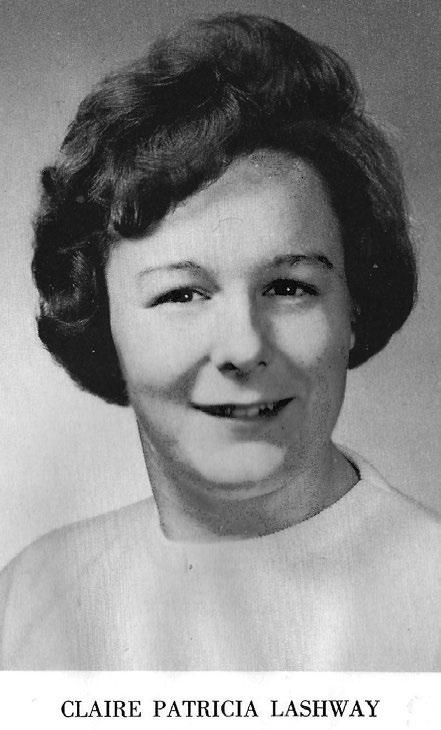
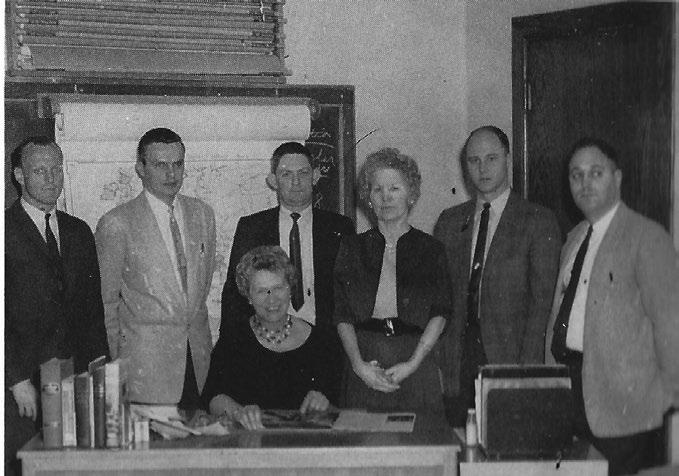
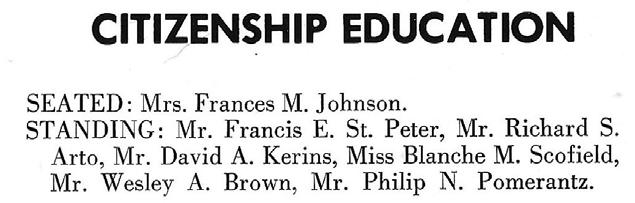
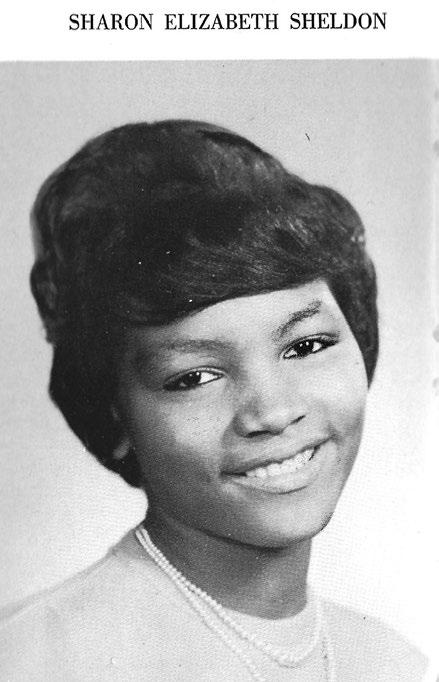
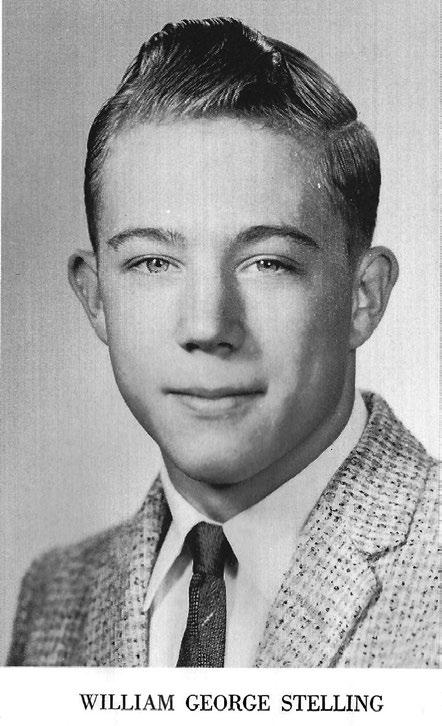
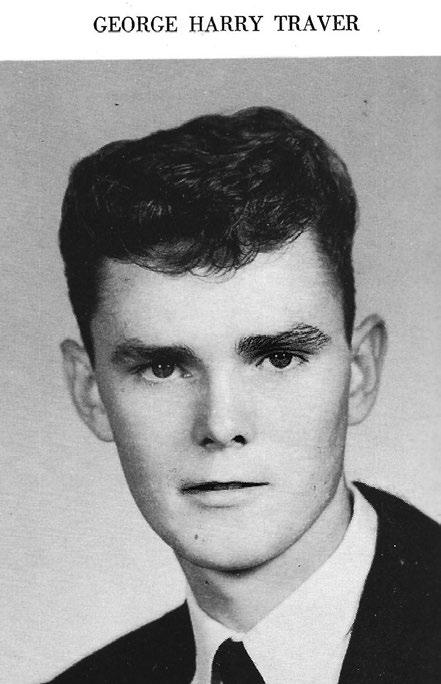
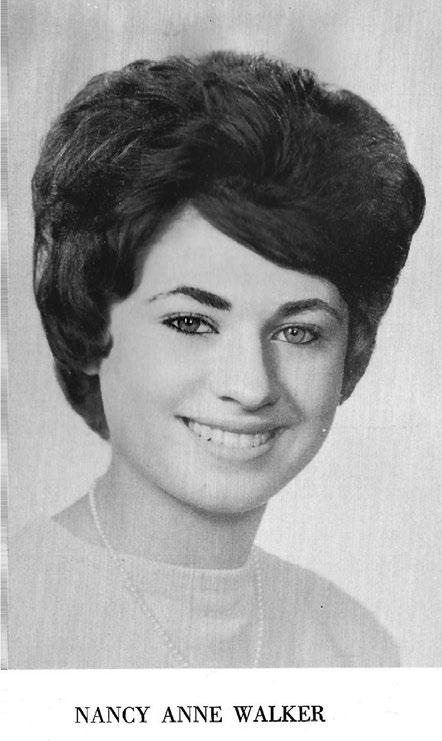
This month, we take a look back at members of the Chatham High Class of 1962 and those who taught them.
Vietnam-Era Veterans
This list of Vietnam-era Veterans was compiled from names supplied by the Chatham American Legion and Ghent Veterans of Foreign Wars as a way to recognize the service of those in the Chatham era who served at that time. We are aware that this list is, at best, incomplete. If you are aware of someone who should be added, please contact us at jdd.press@gmail.com and we will publish those names at a future date.
Brian Weaver
Carleton McCagg (KIA)
Charles Brown
Charles Cayot Jr.
Charles D. Brown
Charles E. Northup
Charles H. Albertson
Charles J. Radley
Charles Northup
Dennis B. McKay
Donald Gilbert
Donald Knott
Donald O’Connor
Douglas Cornoni
Douglas I. Stalker
Douglas Johnston
Eric B. Shyer
Eric Bebee
Everett A. Rossman
Frederick E. Reynolds III
Frederick Malmberg
Gary Davis
Gary Rubio
Gary Sitzer
Gary Vogel
George H. Traver
George Schermerhorn
Gerald Rowe
Guy A. Madsen
Guy Madsen
Harold Willis
Harvey McCagg
Herman G. Osswald
James Leggett
James M. Keeler, Jr.
James N. Dingman
James O’Leary
James Ridley
Jeffrey W. French
Jerry Robinson
Jim Dingman
Jim Garrity
John C. Schrader
John E. Pulver
John Fredericks
John J. Holt
John Kelly
John Wallace
Joseph M. Diskin
Keith Sitzer
Kenneth C. Schermerhorn
Kenneth Wilber
Melissa J. Hogan
Patrick Wemitt
Paul K. Mesick
Paul Merwin
Paul P. Novosel
Peter J. Kaufman
Ralph McCagg
Ralph Showers
Richard C. Stiffler
Richard Curtis
Richard Fiero
Richard M. Mearns
Robert Adams
Robert D. Moran
Robert Pirrone
Robert Popow
Robert Warner Sr.
Ronald E. Piester
Ronald MacFarlane
Stephanie E. Shirley
Terrance W. Coon
Terry N. Cozzolino
Thomas Aldrich
Thomas C. Hopkins
Thomas Kelleher
Thomas R. Casey
Tim Tuthill
Todd Folmsbee
Walter Engel
William A. Lowder
William Hogan
William Thorne
Chatham and the Milk Runs
The saga of Borden’s milk began in Texas and eventually found a home in Buckleyville.
By George Benson
My dad grew up on a farm on the east side of the Tenmile River outside of Dover Plains. The Tenmile River is a little over 15 miles long before it joins the Housatonic, but who’s counting? During his rambunctious youth, he used to sneak back into the house mornings when the milk train left the Dover Plains station. He never did fool his mother, who recognized the stair creak even as the train went past. I was never told this history until I was much too old to take advantage of it. But milk trains were a daily event on the Harlem Railroad line and Chatham was an essential hub of the process.
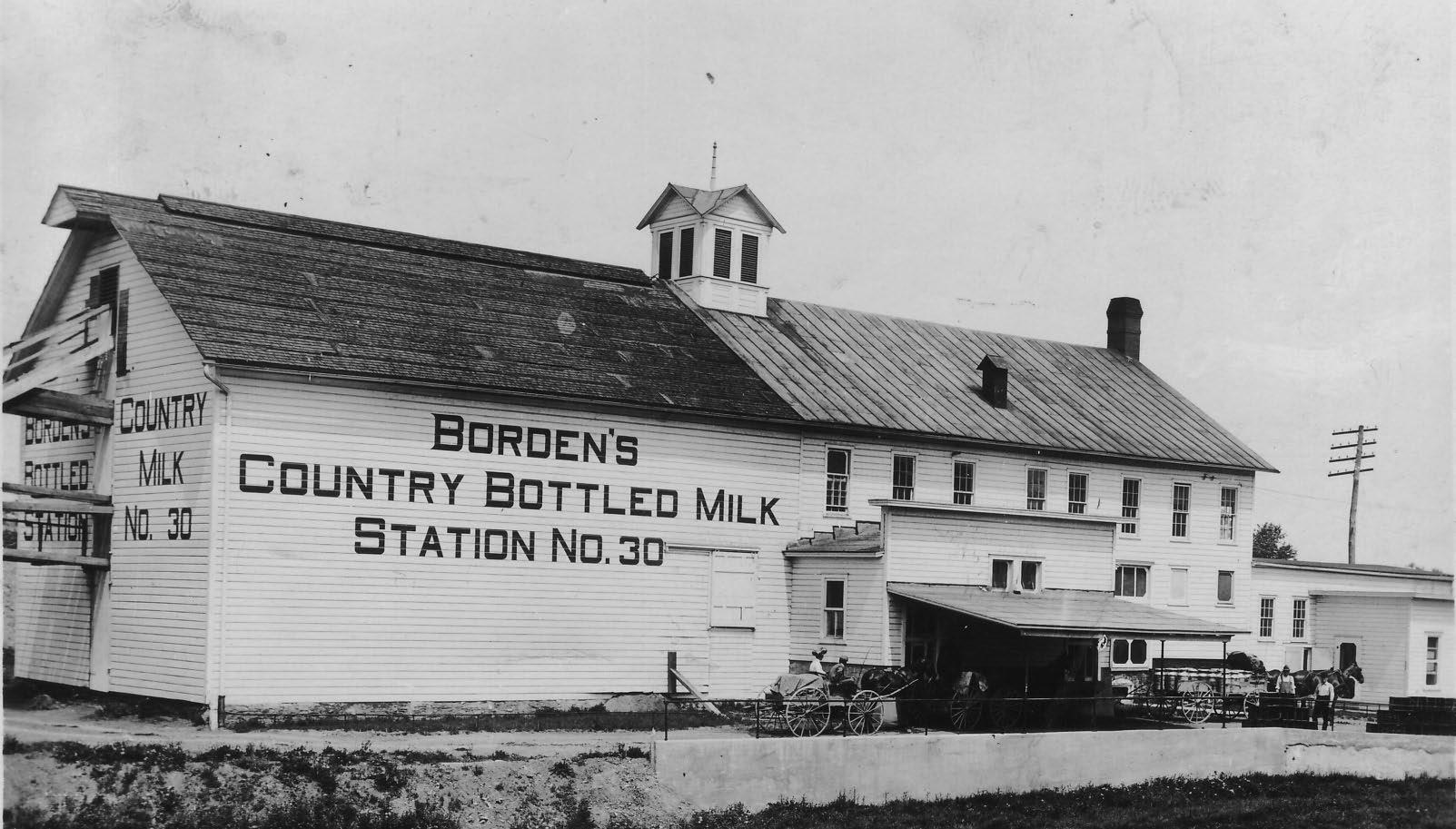
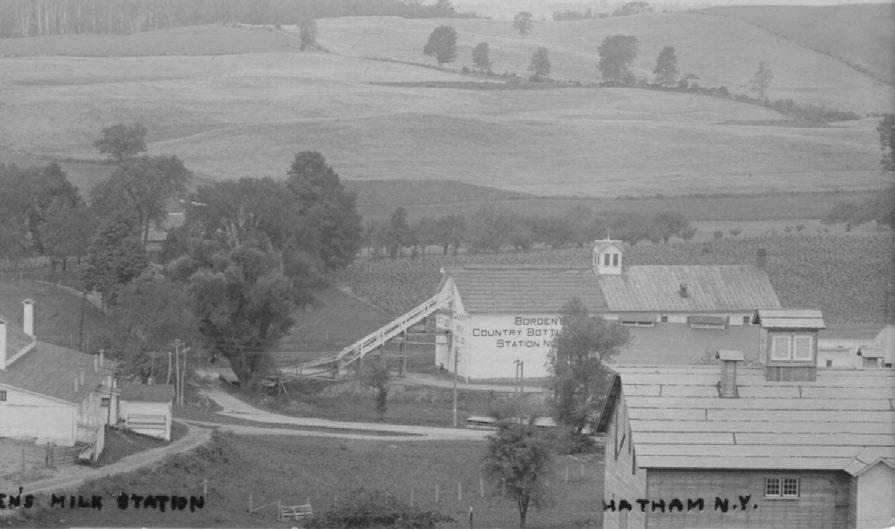
Borden’s Condensed Milk Company plant in Buckleyville was the site of one of Borden’s milk plants. Gail Borden was born in Norwich, New York in 1801, fourth cousin to Lizzie Borden. Borden apprenticed as a surveyor with his father but only had two years of formal education. At age 21, he moved to Mississippi and taught school but also worked as a county surveyor for seven years. He then moved to Fort Bend, Texas, raising cattle and surveying until Stephen Austin hired him. He plotted the towns of Houston and Galveston and worked on the first topographical map of Texas.
In 1835, he with partners created the second regularly published Texas paper. As the Mexican Army closed in, they moved the printing presses east but were eventually arrested. All their equipment was thrown into Buffalo Bayou. The Texas Revolution ended a week later.
Short on funds, Borden sought loans using his ranch property as collateral. His financial trouble worsened. Sam Houston
appointed him Galveston Collector of Customs. His political career ebbed and flowed. In 1844 his wife died of yellow fever, and he became interested in disease cures. He was convinced that refrigeration could be part of the solution. In 1849, he used the concept of Native American pemmican to make a “meat biscuit.” The biscuit was designed for army, navy and expeditions because it was portable and resisted spoiling. In 1851, he was awarded the Great Council Medal at the London World’s Fair for the biscuits.
Borden started his biscuit company with about four million dollars in today’s currency but declared bankruptcy in 1852. The biscuits never caught on and people complained about the taste and texture.
However, on the boat trip back from England several cows got sick. Cows were often kept on passenger ships for fresh milk. Several children and the cows died. This was a recurring problem in areas where shipments of bad milk caused health risks to larger communities. On board, Borden said his goal
was that “milk will be as common as sugar.” Borden became convinced that vacuums could reduce milk volume without curdling or scorching the milk. He knew that Shakers condensed fruit juices and herbal remedies with vacuum pans. In fact, during the Civil War he concentrated blackberry juice and shipped a free batch to General Sherman. Sherman told him he had done more to combat dysentery than all his Army surgeons. In 1856, working out of Wassaic, he received a patent for the process. In 1858, Eagle Brand condensed milk was known as durable, pure and economical. To protect the quality of the milk Borden created the Dairyman’s Ten Commandments. Farmers had to wash udders, sweep barns, and scald and dry the strainers twice a day. The Civil War increased demand and Borden built plants along the railroads of the day to build his empire. Borden died in 1874 and in 1899 the New York Condensed Milk Company changed its name to Borden Company to honor him.
Elsie the Schodack Cow
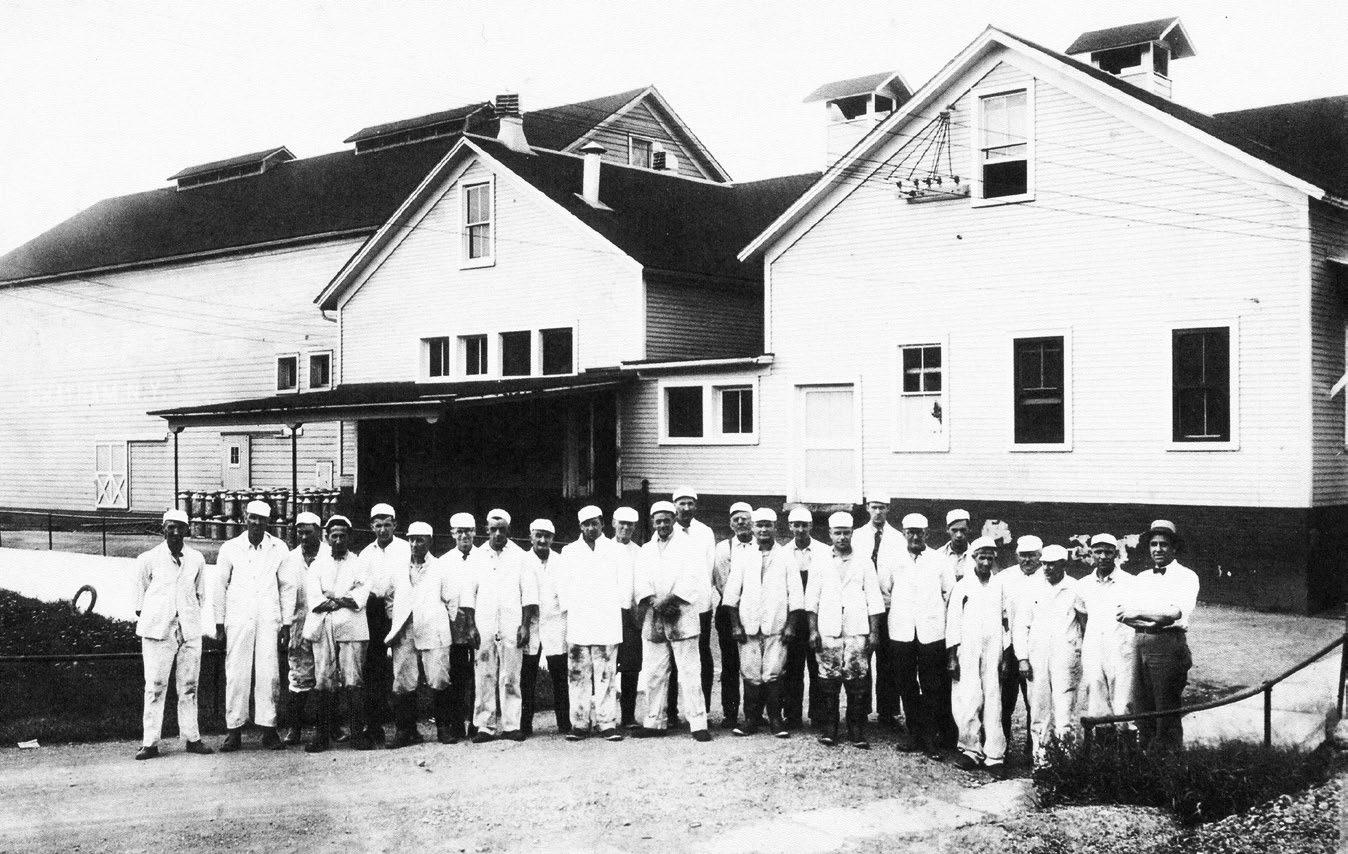
But as time went on the demand for fresh milk also grew and train milk runs provided the means. In 1885 Borden introduced the milk bottle that allows cream to rise to the top where it can be separated or remixed. The bottles are still used today. The milk runs carried passengers up to 1925, when they were designated freight only. Apart from ice produced in the Buckleyville plant, Borden’s pond and other streams and ponds provided ice during the winter, which were cut into blocks and stored with sawdust in barns and bunkers until warm weather, when it was used to refrigerate cars for the milk runs to cities particularly New York City.
In 1936, Borden’s ad company published cartoons of cows chatting about milk purity. They initially were placed in doctors’ offices but were later in New York newspapers. A radio commercial included the line, “Dear Mama: I’m so excited I can hardly chew. We girls are sending our milk to Borden’s now! Love, Elsie.” Although many different names were used for cows in the ads, “Elsie” caught on and she started receiving her own fan mail. A cartoon image was produced, and Borden’s placed it on their bottle cap. At the New York 1939 World’s Fair Borden showcased a merrygo-round milking machine process that could milk multiple cows. They demonstrated it with a herd of 150 Jersey cows. Seven women were present to answer questions and they tracked what they were asked. At the end of the first month, according to Borden, 20 percent were about the rotolactor, 20 percent were about restrooms, and the remaining 60 percent were about which cow was Elsie. One particularly photogenic cow who apparently was good at making eye contact was designated Elsie. Fourteen million people viewed her at the fair. Elsie went to Hollywood in a private train car, appeared in the movie “Little Men” under the stage name of Buttercup, and was featured in a Macy’s window. She also toured, sponsoring 10 million dollars’ worth of war bonds. Unfortunately, the original Elsie died in a traffic collision in 1941.
Her replacement was a Jersey named Noble Aim Standard from Moordenier Hills
Farm in Schodack on Moordenier Kill. Moordenier Kill is Dutch for Murderer Creek, referring to nine Dutch settlers killed in 1643 by Native Americans. In 1947, Elsie gave birth to Beauregard, a name won in a Borden contest that drew more than a million entries. Elsie and Beauregard traveled across the U.S. in the “Barn Colonial” tractor-trailer with a built-in bedchamber. But Beauregard could not have been born out of wedlock so Elmer the bull was introduced as the husband and is currently best remembered for the glue. Our local Elsie retired but her successors went on into the 1970s.
The Corkscrew Chatham Line
Chatham was central to milk runs because many local lines connected in Chatham. In 1851, the New York & Bennington Railroad was chartered to connect Chatham to within six miles of Bennington. A road connected the station to Bennington. During the next year the Lebanon Springs Railroad took over the financially failing project. Lebanon Springs was at the time one of the U.S.’s most famous resorts. Although the 55-mile line was not profitable mainly because it was seasonal, the owners hoped to entice Cornelius “Commodore” Vanderbilt to purchase it, claiming it could provide an alternate route
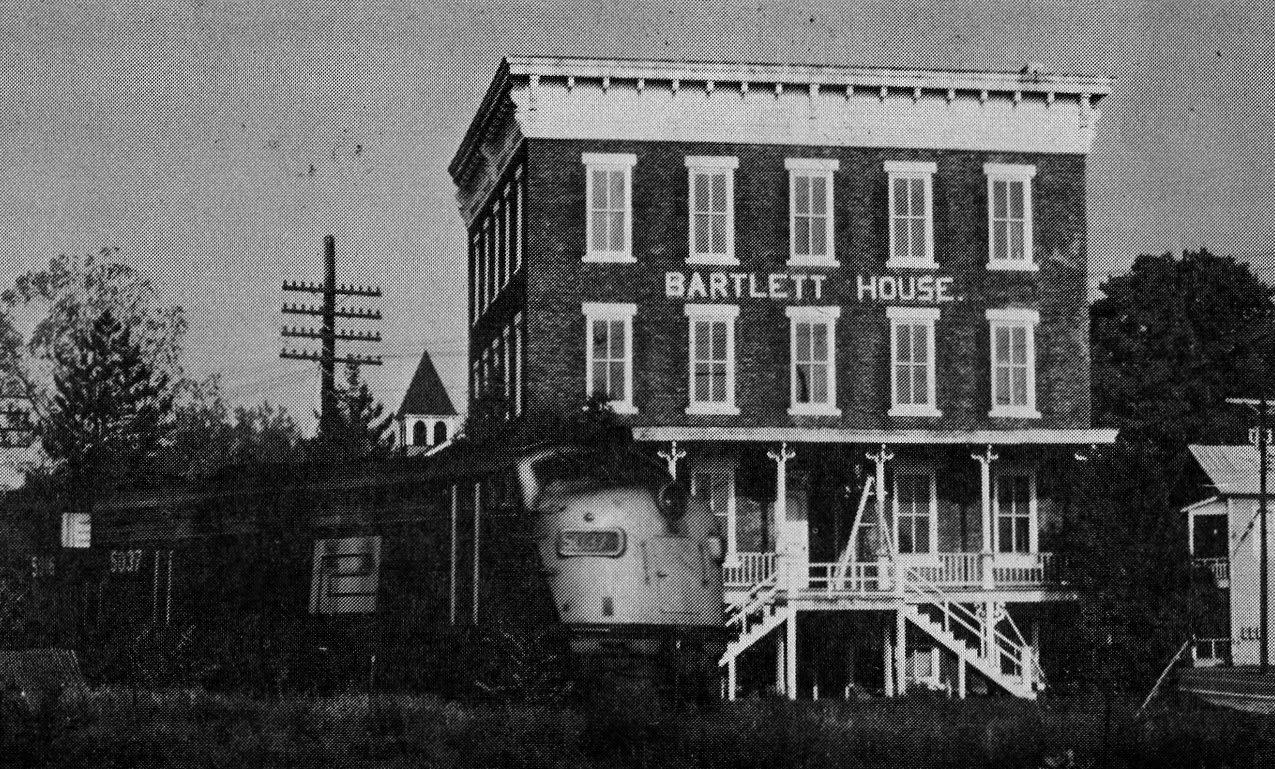
to Quebec through Chatham from New York City. It also intersected with Boston and Maine line. But the original route had two-hundred-sixty-three curves and multiple steep grades. While Vanderbilt thought it would only be viable for 50 or 60 years and passed on purchasing it, he toyed with the owners and use it as leverage against competitors. The route was dubbed the Corkscrew Chatham line. However, the line did profitably deliver Vermont milk from Rutland south to Chatham bound for New York City. Passenger service ended in 1931 and the freight line closed in 1953. In 1952, Chatham sent a 32-car train to West 30th Street in New York City. It had six milk cars and additional coal cars and army tanks on flatbeds. Twelve cars derailed in Patterson, two milk cars jackknifed and collided with the depot lifting it off its foundation and coal was spilled. A section of track and ties were displaced. Amazingly no one was injured. Milk runs were soon ended primarily due to milk tank trucks with cooling systems. These trucks could go directly to farms as the quality of roads improved, including the Eisenhower Interstate System, and World War Two rubber rationing ended. The era of train milk runs had ended. • George Benson taught math and science at Chatham High throughout the 1970s.
Former Chatham High Players
Players Reflect on State Titles
By Vivienne Murphy
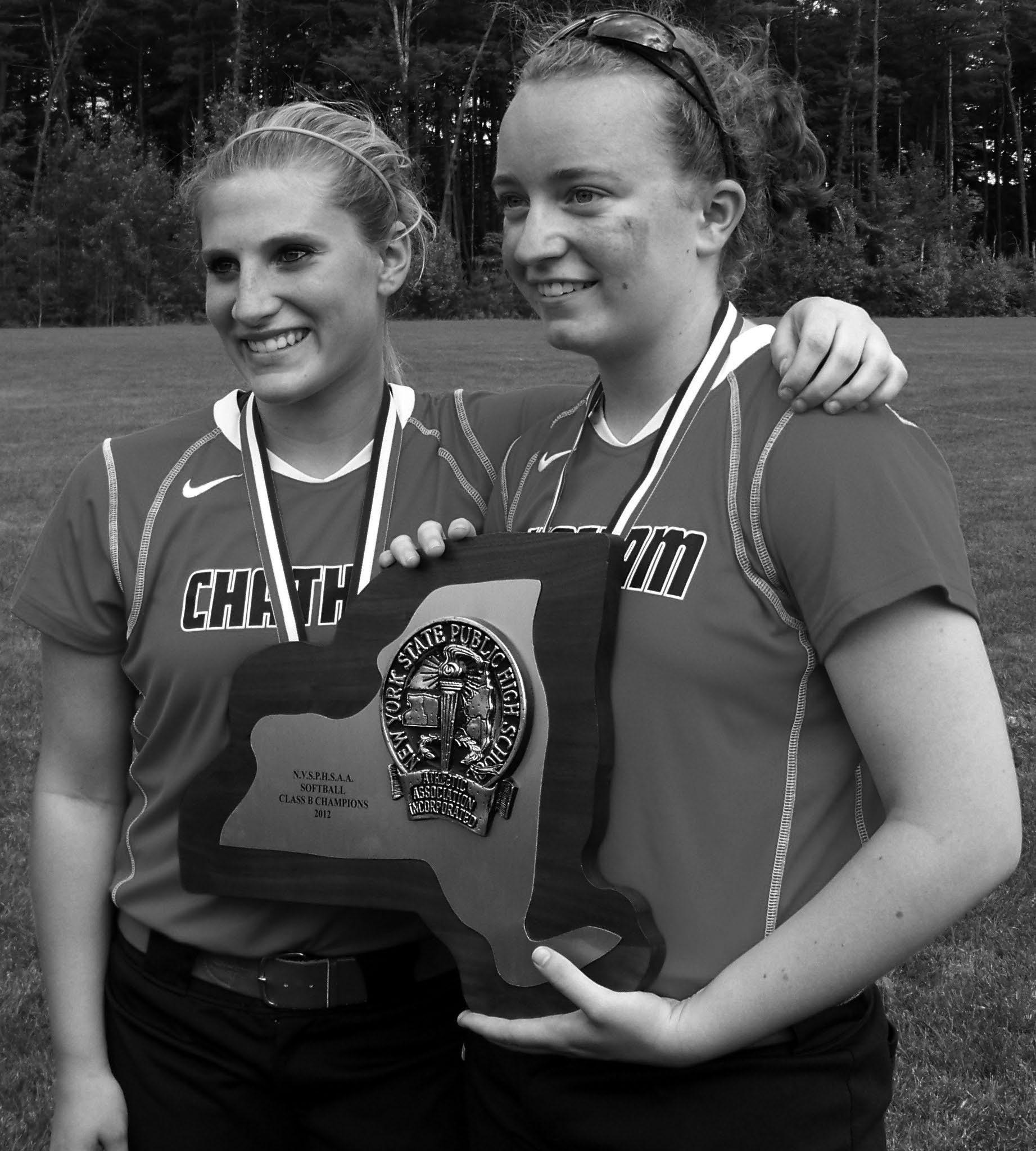
When the final out was called and the cheers echoed across the Adirondack Sports Complex in Queensbury, New York, the 2012 Chatham Varsity Girls Softball team knew they’d made history. But what they didn’t know then was just how deeply that championship would shape their lives. Now, over a decade later, former players reflect not just on the trophies and the titles, but on the friendships, confidence, and lessons they carried far beyond the diamond.
Senior captains Courtney Mesick and Karsyn Sawyer with the proof. They’ve played side-by-side since they were nine years of age.
Karsyn Sawyer, who was a senior in 2012, recalls the experience as exciting yet somewhat calm. As a team, she felt that everyone was focused on having fun together and enjoying the game that there was no time to overthink. She compares the experience to playing wiffle ball as a kid, remembering the pure joy she felt the whole run on and off the field, as if she and her teammates were just playing for fun.
On an individual level, pride and relief are the feelings which resonate most strongly with Sawyer from the 2012 championship. It was particularly special for her as a senior to end her athletic career at Chatham with such an incredible experience. After years of dedication to the sport leading up to the 2012 championship, Sawyer now had a win to celebrate and share with her family.
Caitlin Gilligan, who was a junior in 2012, remembers being completely overwhelmed with joy. She says she didn’t stop crying for a full hour when the game ended. She describes the experience as surreal, with so much adrenaline building up. Even now, she still remembers how the team made all of the outs that last inning to hold on to their victory, so this is a memory she holds very dear to her.
Michaela Smith, who was a junior in 2012, vividly remembers catching the final out at first base and everyone on the team running into the circle to hug and congratulate each other. She describes the enormous sense of pride felt in that moment, especially being so young and not having many other huge accomplishments yet in life. She says it was one of the first big things she did in her life.
For Sawyer, the championship experience profoundly shaped how she approaches challenges in life today, and she credits Coach Brantley as a major influence. From the beginning, he set high expectations and held the team accountable. He instilled in Sawyer and her teammates the belief that if you take care of the little things, everything else will fall into place. This mindset continues to guide Sawyer in both her personal and professional life.
Among the many life lessons Coach Brantley taught—”control what you can control,” “let go of what doesn’t go your way,” “there’s a fine line between confidence and cockiness,” and “hard work and discipline lead to success”—each had an immediate impact on the team, and they’ve continued to influence
Sawyer beyond the field.
Coach Brantley isn’t just a coach who builds great athletes; he builds great people by equipping his players with the tools they need for life. It wasn’t until Sawyer went to college and heard about other teams’ experiences that she fully realized how special the program at Chatham truly is. Over the years, her appreciation for her team, coaches, and overall experience has grown immensely; she now understands just how fortunate they were.
Gilligan says the “never say never” mindset has stuck with her ever since her playing days. She vividly remembers the start of the 2012 season, when Coach Brantley boldly told the team they were going to win the state championship. At the time, none of the girls believed him. But that doubt didn’t last long.
Throughout the season, Brantley instilled a relentless “can-do” mentality in his players, so much so that simply uttering the word “can’t” during practice meant running sprints. It was a tough-love approach that paid off.
For Gilligan, the biggest lesson wasn’t just about winning, it was about believing. “There’s no such thing as impossible,” she says. “You make your own success.” It’s a mindset she’s carried into every challenge since.
For Smith, winning the state championship gave her a lot of confidence in high school, especially going into senior year. However, when she went to college away from Chatham and did not continue to pursue softball, her identity shifted. “Growth happens on the edge of comfort,” says Smith, and this is what pushed her to explore who she was outside of the game.
Smith believes winning the state title did not directly change how she approaches challenges in life. As she gets older, she feels glad that she was committed to a sport for so long and had wonderful teammates and coaches. That being said, she keeps that part of her life separate, and has since then focused on other challenges such as making it through graduate school.
Sawyer, Smith, and Gilligan have all stayed connected with former teammates over the years. Smith remains especially close with Kayla Doty—now Kayla Miller—and says it’s been meaningful to grow alongside each other beyond the game. The two often reminisce about their softball days, especially
the unforgettable 2012 championship, though their friendship has continued to blossom through every stage of life. Sawyer and Gilligan keep in touch with many of the girls through social media and say they’re proud of everything their teammates have accomplished since high school.
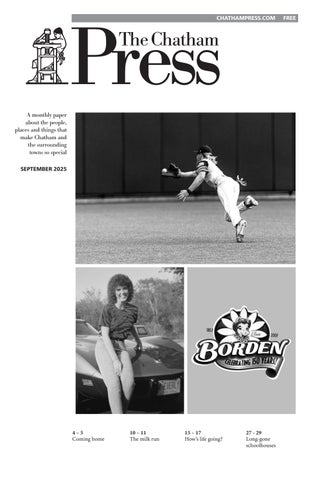
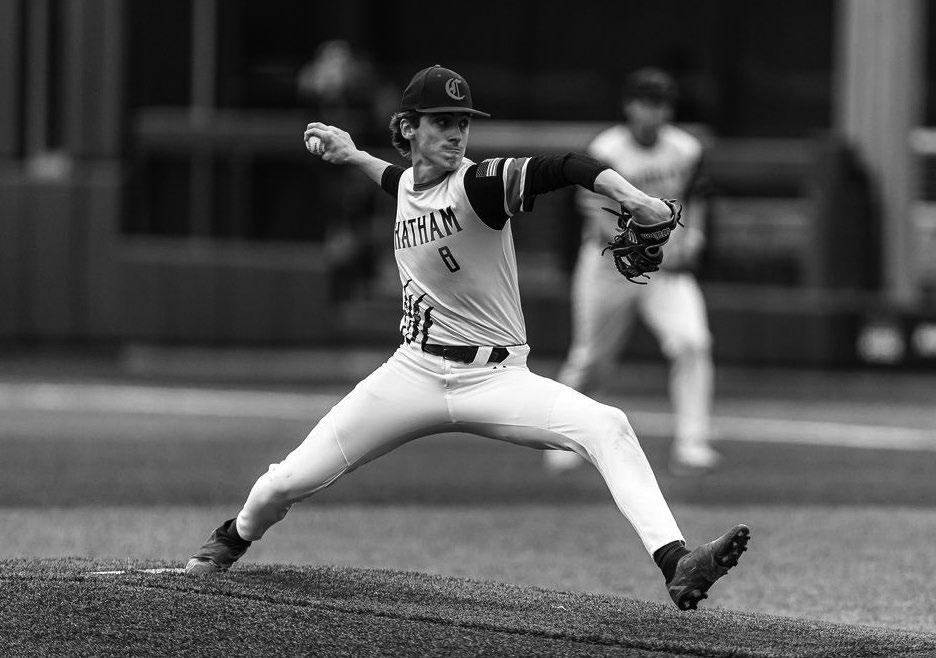
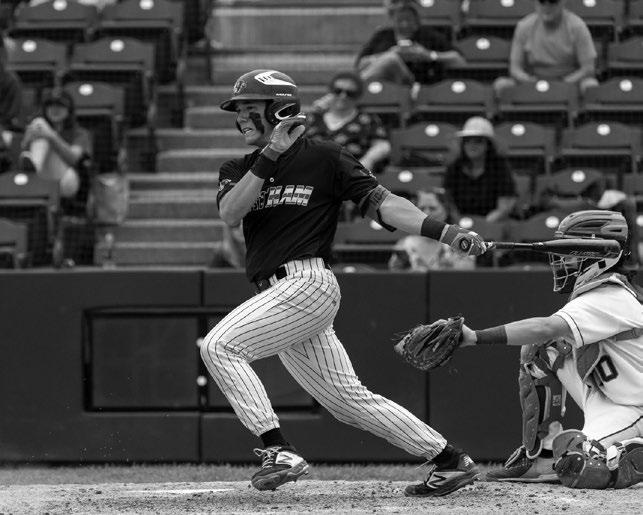
For a decade, the girls’ softball team of 2012 stood as the only Chatham team to win a state title, until in 2022, when the boys’ baseball team beat Chester Academy in their final game and won the New York State Class C Championship title. The following year, the team secured another title after they beat Ticonderoga 20-1 on June 3, 2023, becoming the 2023 NYSPHSAA Class C Regional Champions. Then, in 2024, the Chatham Panthers boys baseball team achieved a remarkable three-peat, winning the New York State Class C championship for the third consecutive year in a row by defeating Burke Catholic with a score of 11-5.
Now, a little over a year later, the players and coaches of the winning 2024 team reflect on their experience and how the state title still impacts their lives today.
LJ Morse was a senior in 2024 and was part of the championship baseball team. What stands out most to him about the championship run wasn’t just the titles, it was the sense of family within the team.
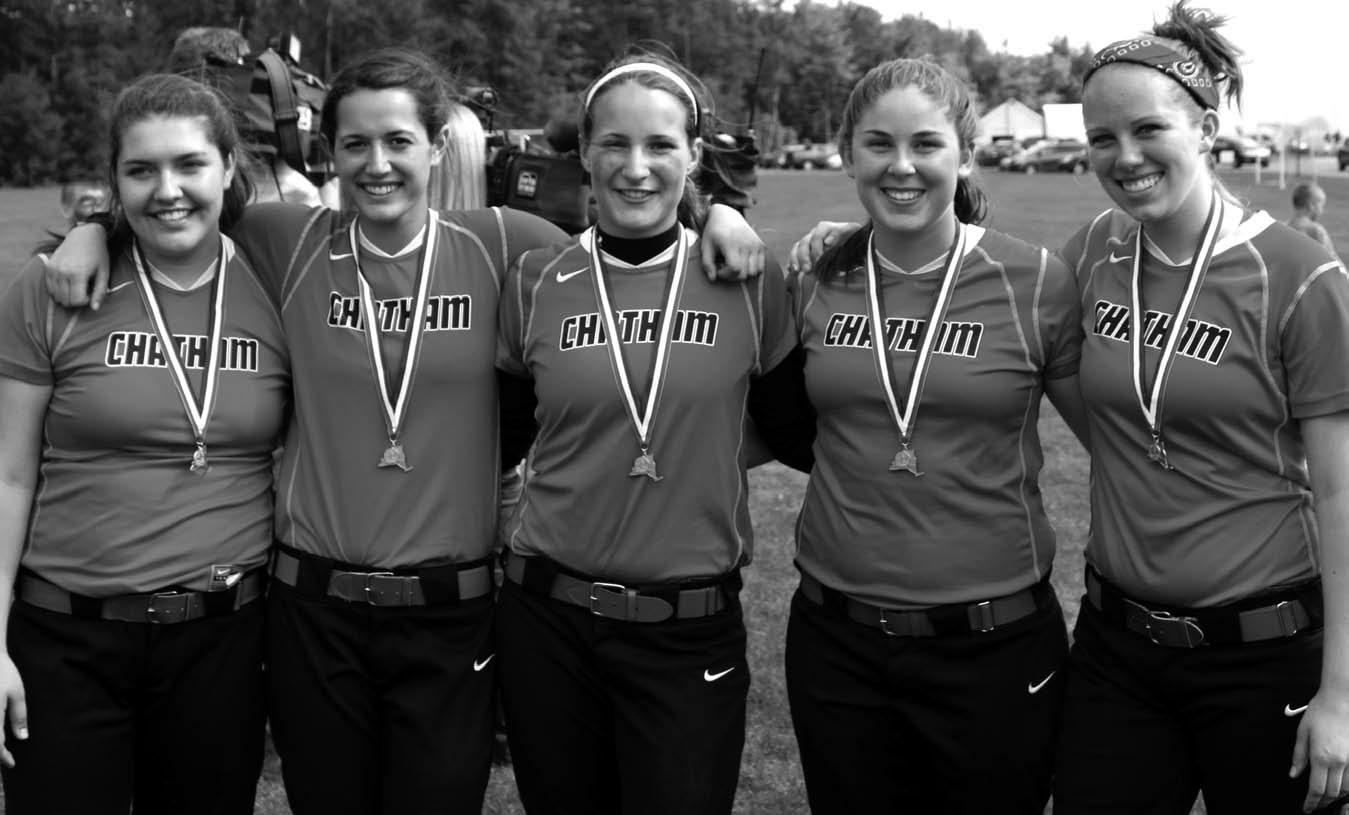
Next year’s core, the (2012) present day juniors: Left to right, Erica French, Leah Layton, Kayla Doty, Michaela Smith, Caitlyn Gilligan.
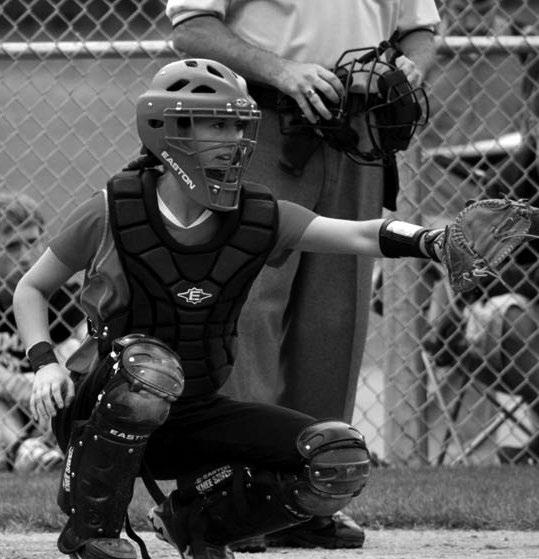
Leah Layton, a.k.a. the Catcher, prepares for a Doty windmill.
The bond with teammates and coaches left a lasting impact, shaping his confidence and teaching him the value of trust and support. He learned that no matter how difficult life gets, you don’t have to face it alone. To this day, he remains close with several former teammates, and now works for Coach Doyle, who hired him at his property management company. Being part of three state championships is a once-in-a-lifetime experience that still amazes him.
Jake Taylor played on the championship baseball team in 2024 as a senior. He remains close with many of his former teammates. They still talk almost every day, often reminiscing about the unforgettable journey to the state championship. One memory that stands out most is the final out of the championship game, a moment Taylor says will stay with him forever. Looking back, he still finds it hard to believe they pulled it off. The doubt from others that season only fueled their determination to return to the title game and finish the job. While he wishes he could experience that feeling one more time, he’s simply grateful to have been part of something so special.
Joseph Williams is an assistant coach for the Chatham Panthers baseball team. Even a year later, Williams still feels a sense of pride and joy from their 2024 victory. While the emotions aren’t as euphoric as they felt in the moment, he now looks back with a deeper appreciation for what the team accomplished. From grueling practices and team banter to the daily competition that helped them grow as players and people, the memories remain vivid. He also credits the unwavering support from the school and community, including fans without direct ties to the team, who followed them from the regular season all the way to the state championship. That support, he says, will continue to benefit the baseball program at Chatham for years to come.
Coach Scott Steltz, recently named to the New York State Baseball Hall of Fame’s Class of 2025, says his primary objective as head of the Chatham Panthers varsity baseball team is to use the game as a vehicle to teach life lessons. He aims to instill confidence, preparation, resilience, and a commitment to constant improvement both individually and as a team. He emphasizes his role in building a competitive yet supportive, family-like environment where players could grow as athletes and people, regardless of their position. To Coach Steltz, winning the state title symbolized that the coaching staff had succeeded in shaping the players’ character and providing experiences and memories that will last a lifetime. Steltz says his next steps as a coach are to continue instilling the characteristics needed to be successful on and off the field into his players and hopes to see them carry these values into life as well.
More than just banners on a wall, the state championships left a lasting legacy of friendship, growth, and life lessons that continue to shape these former players and coaches long after the final out. •
The Chatham
Tate Van Alstyne
Cam Horton
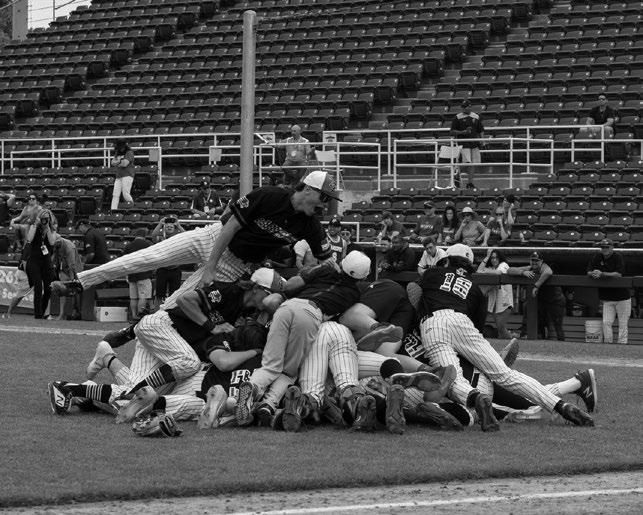
CHS baseball dogpile
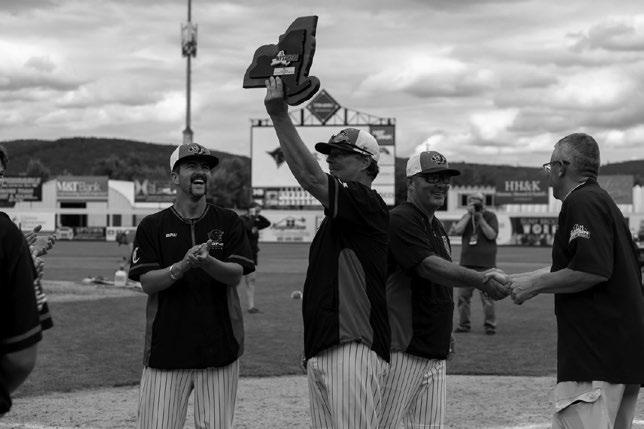
Coaches Joe Williams, Scott Steltz, Dan Doyle
PHOTO CREDIT: AARON GROOM
The Early Days Of Philmont Business
A young village adds livery service, an undertaker, and cemeteries as it looks to, and enters, a new century.
By Charles R. Nichols
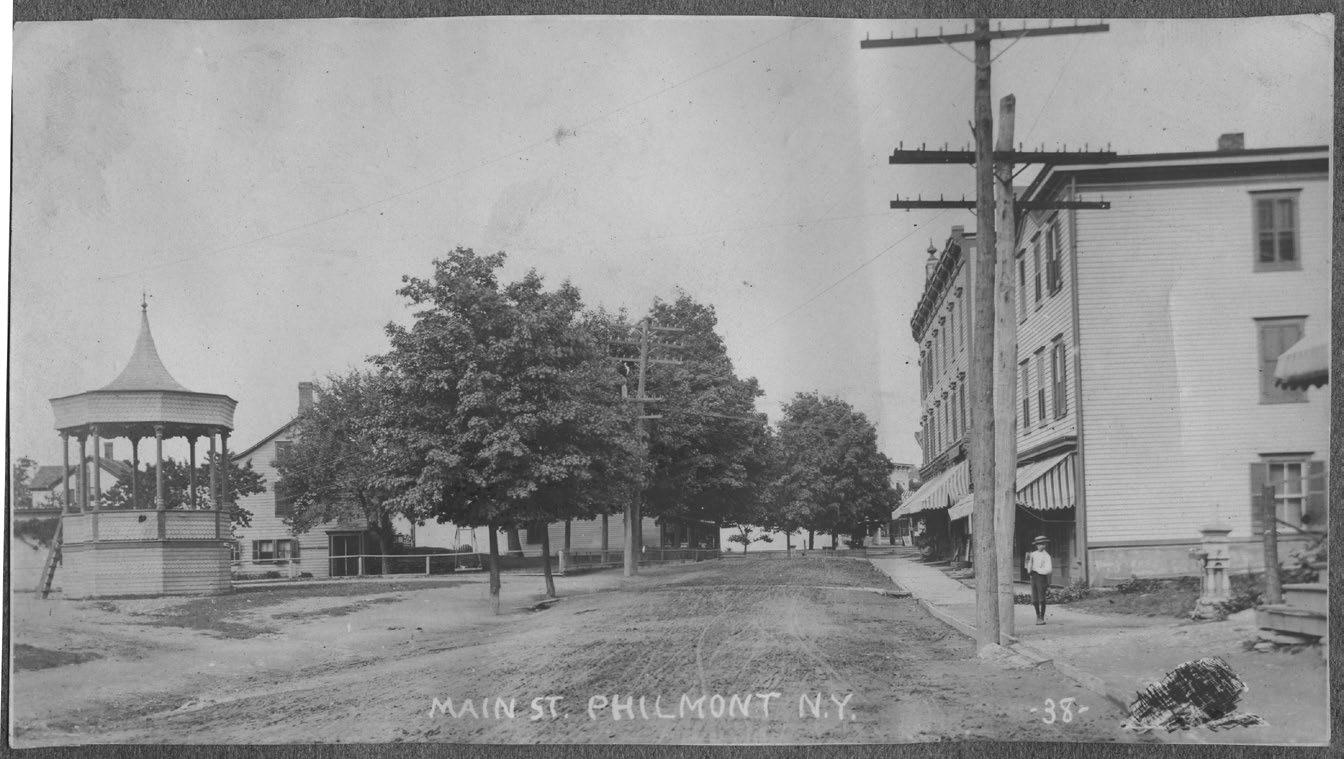
One of the very necessary businesses in early Philmont was a livery stable for the care and rental of horses and related equipment in the era before mechanized travel. In 1872, Charles Whiteman bought a building at the corner of Martindale Street and Lumber Street (Summit Street and Elm Street) and started a livery business.
The Village of Philmont continued to grow in population and by 1886 a larger location was needed to support the growing need for transportation. So, a property on lower Summit Street was purchased, and the barn converted to the commercial use. Wagons kept on the first floor, stable in the basement, and haymow on the top floor. This arrangement, by the way, was not uncommon in other properties where horses were kept for owners’ use.
The livery business continued to grow, with the railroad bringing in people in need of transportation to tend to their business, as well as local requirements.
The facility on Summit Street was large enough to keep horses owned by others also. The local undertaker kept his team there.
Whiteman supplied a “stage” to travel between the Harlem station in Philmont and the Boston & Albany station in Mellenville. His advertisements at the time stated his stage met all trains. His business also included carrying the mail from train to post office. To fill the need for horses, some were purchased in New York City, brought up to Hudson on the night boat and driven to Philmont.
One special horse was a black horse named Major, who learned several tricks including come on whistle, opening his stall door, and returning to his stall when unhitched. In 1904, Major was stolen, along with a high wheel wagon and harness. A
postcard was used to spread the reward notice for any information about the horse, wagon, and the 50/55-year-old man with a gray moustache believed to be the thief. I found no record of the return of the horse, or arrest of the thief.
With the appearance of the automobile, the livery business gradually became obsolete. Charles Whiteman didn’t change and adopt the new machine, but his family and decedents did by first offering automobiles for hire, eventually moving to a more populated area and dealing in cars.
The Undertaker
Another of the very necessary businesses in early Philmont was that of undertaker, a service we all require sooner or later. Up until the turn of the century -- the 20th century -- this service was provided by various businesses in Hudson. One of the last burial services done for a Philmont resident before we had our own facility was done by M.E. Brennan, Undertaker, 410 Warren Street, Hudson, in 1908. The bill for this particular burial came to a whopping $153. Considering that this included everything from soup to nuts -- Oak Casket ($100) to Rev. Macdonald’s services ($5), it is quite a contrast with today.
In 1909, Sherman L. Mead received diplomas certifying that he was qualified as an undertaker. He immediately set up shop on Summit Street. In addition to the rooms in the home for viewing, a barn in the back was used for preparing the deceased. Transportation was provided by a team of matched horses to pull the hearse, and also, when harnessed to a four-wheel buggy, for family transportation.
The horses were stabled in Whiteman’s stable across the street.
Sherman Mead was in business over 40 years. The next village undertaker was Clint Traver. He used his home on Church Street, and for extra parking, the Masonic Lodge lot across the street. Clint was an avid sportsman, and hated to lose at anything. He was also known not to be averse to gambling. Rumor had it that he had the dubious pleasure of being a victim of the only known instance of a poker game robbery in Philmont!!
The third, and last, village undertaker was James Johnson, who opened his business in his home on Main Street July 1, 1981. When the undertaking business is an owner/operator situation, the ideal setting seems to be an older, larger home in a residential section as this history shows. This allows room for living for the family, while some of the rooms can be used for viewing. A garage or barn is a plus, and the very occasional use of the streets for parking is not a hardship on the neighbors.
A necessary adjunct to the undertaker’s work is a burial site. We have two cemeteries. One, called the Union Cemetery, is located in Mellenville. The association was organized in 1860 and probably the name was caused by the impending Civil War -- quite a few things were named “Union” to show patriotism. The Rules and Regulations were printed in 1861, where it was noted the site consisted of 10 acres enclosed. A Clum and a Philip were among the officers.
The second cemetery was the Sacred Heart Cemetery, on Martindale Road just outside of Philmont. Again, there were two gates at different times. I have no sure date for this cemetery, but the first Catholic Church was built in 1882, and the indication is that the cemetery was contemporary. • Charles R. Nichols was a lifelong Philmont resident with a passion for history.
From Hobby To A Full-fledged Business
Car care is in the details at The Detail Lab.
By Barbara Peduzzi
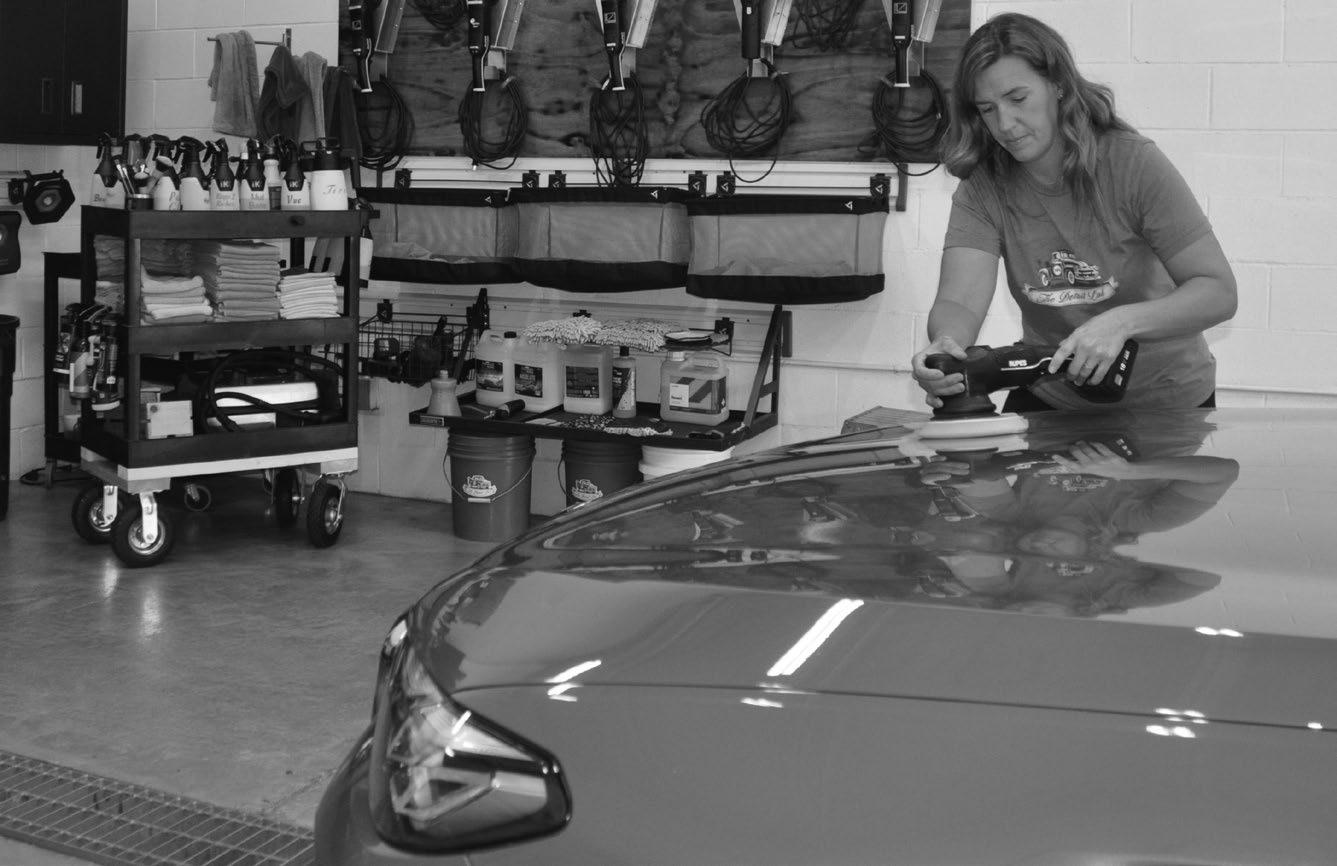
Detailing isn’t something most of us think of for our cars, just get in, turn the key or push the button and go. Maybe a wash and take out accumulated trash every now and then, when we have time and think of it. But, to Robyn Sweet, who is The Detail Lab, it is a hobby grown into a business that takes her from Chatham across the country.
Sweet grew up in Chatham and graduated from Chatham High. Her roots were evident when she ended our interview with, “Well, I gotta go bring hay in.”
So, exactly what is “detailing?” Sweet explains it can be as simple as a wash, all the way to a high-end restoration. Usually, it involves both the exterior and interior of a vehicle and includes polish and protective coatings to both.
From hobby…
A Columbia County 911 dispatcher for 15 years, Sweet started detailing as a hobby, “It wasn’t detailing, it was keeping my car
clean. It soon became my mental escape because I could focus on one thing, not 1,000, multitasking.”
Wanting to learn more about detailing and polishing, she went to classes in California and Florida. The hobby turned into “kind of a side gig,” done on weekends when she was not dispatching, and she soon “got really busy” with part-time work. Word of her expertise spread, and led to Sweet becoming a detail industry trainer.
…to business
That in turn led to a tough decision, “Stick around 911 or open a shop.” She chose the shop, “To see how it went,” and moved in to the space in March of 2020, “Just as the Covid shut down was going on.” Sweet feels that actually helped her, because people had time to bring their cars in. “They were paying more attention to things like cars, maintaining them, holding on to them because it was so tough to buy or trade them.”
She had to get tools and equipment for the new shop, plus add to her skills and knowledge, much of which came through learning from others within the industry. “Oh, my gosh!” was her reply to a question about getting tips. “Lots of friends locally would say ‘stay small.’ It wasn’t at the time, but now is my favorite,” she said, adding, “I run my shop like a mom and pop shop, keep it small.”
The name The Detail Lab pays homage to a black Labrador pet, gone but living on in photos around the shop. It is located at 1 Taconic Place in Chatham.
Building skills is ongoing. Working on classic vehicles with different surfaces means using products meant for those, she said, but with that, “Everything is evolving, paints, tools, polishes, compounds, chemistry.”
Sweet’s skills have also evolved, to the point where she is asked to travel to automobile events around the country. One
that stands out is the prestigious Monterey, CA, Car Week, working with a team at the invitation-only show to detail a mix of classic and reveal (new models not yet on the market) cars displayed at the Quail Golf course. Also in Monterey is the Jet Center MotorLux, “A big party with reveals of some pretty cool cars.” Detailing all the vehicles for the high-end Haggerty Auction is another.
Asked about limits of vehicles she works on, she answered with a laugh: “My own. I typically don’t turn down any.”
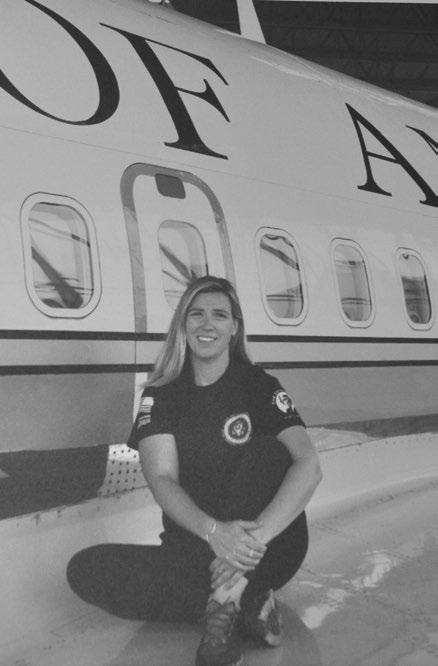
Speaking of no limits, Sweet has also detailed airplanes, notable among those retired Air Force One at the privately run Museum of Flight at Boeing Field in Tukwila, WA. She was invited to join a team working on all of the planes there. “The gentleman who runs the museum selects leaders in the industry with skills and knowledge. It’s a long week, but a lot of fun,” she paused and added, “A Chathamite, in Seattle, working on airplanes!”
The team provides surface preservation for the planes, “A whole hanger full of them,” which are shown off in an outdoor hanger.
As a trainer and field technician for a tool manufacturer making sanders and polishes used in the industry, “I get to go to some pretty cool events in the auto industry, working with other detailers throughout the country to teach how to make things shiny.”
Relationships are a large part of her business. “I love customer relationships, probably more than I love clean cars. I recognize the car before the face. I love the small-town USA thing and that’s how I run my business. It stands on relationships.”
Looking around the small lobby to her shop, Sweet mused, “Sometimes I open the door and say ,‘How did this happen?’, because I’m ‘just a chick from Chatham.’” It happened through the attention to relationships and details at The Detail Lab. •
On The Road With The Everly Brothers
Growing up in Chatham, Karen Holt-Lent developed a fascination with “all things Everly Brothers.” Eventually she would become heavily involved in the Everly Brothers International fan club.
By Karen Holt-Lent
Iwas 12 years old in 1970. During that summer, I watched an episode of “Johnny Cash Presents the Everly Brothers” on TV. It was going to be a summerlong, weekly replacement show. That’s all it took. I was hooked for life. The Everly Brothers were “magic” and I could not get enough of them.
After that initial introduction into all things Everly, I remember my dad, Mickey Holt, taking me shopping from the ages of 1215 to buy Everly Brothers albums. This started my journey into the world of Everly. For the next 20 years, I traveled far and wide to attend their concerts. I avidly collected Everly music, including every one of their albums, photos, news, articles, magazines, and memorabilia of all kinds.
Before long, I was writing concert reviews for their fan club, Everly Brothers International. The fan’s club home base was in Holland, with other worldwide bases. All of my U.S. news and reviews were published in EBI’s periodic newsletter, which circulated around the world. Through my exciting Everly years, I met fans from all over the world, even introducing one of them to Don and Phil. She was visiting from Switzerland, just to see a couple concerts.
I was allowed backstage at many of the concerts I attended over the years, which was a delight and an honor in my eyes. I never took this privilege for granted or lightly. I mostly just felt blessed. On a few occasions, I was greeted with kisses from Don and Phil. No everyone can say they have been kissed, on the lips, by both Everly Brothers!
Lake Tahoe
Because of the Everlys, I was able to meet other musicians and several of their opening acts during my travels. On this list were, among others, Albert Lee, Duane Eddy, and Bill Medley of the Righteous Brothers. I remember Bill taking my cocktail napkin
and autographing it. One of the very favorite memories from my Everly years was attending concerts in Lake Tahoe with my mom, Alice Holt. We had such a wonderful week and, of course, had time to play the slots at Harrah’s, which mom was very lucky at, as I recall. We always had front row/stage seats for every show everywhere I went.
We ran into Duane Eddy on that trip and, when we told him how much we enjoyed his famous twang, he grinned at mom and told her in his well-known drawl “you can find my music in the bottom of old rock bins.” So modest! On that Tahoe trip, I presented Don Everly with a beautiful photo album I had made for him. On another trip, I gave Phil a bottle of Dom Perignon and two wine glasses for he and Don to enjoy. They also had some of my poetry.
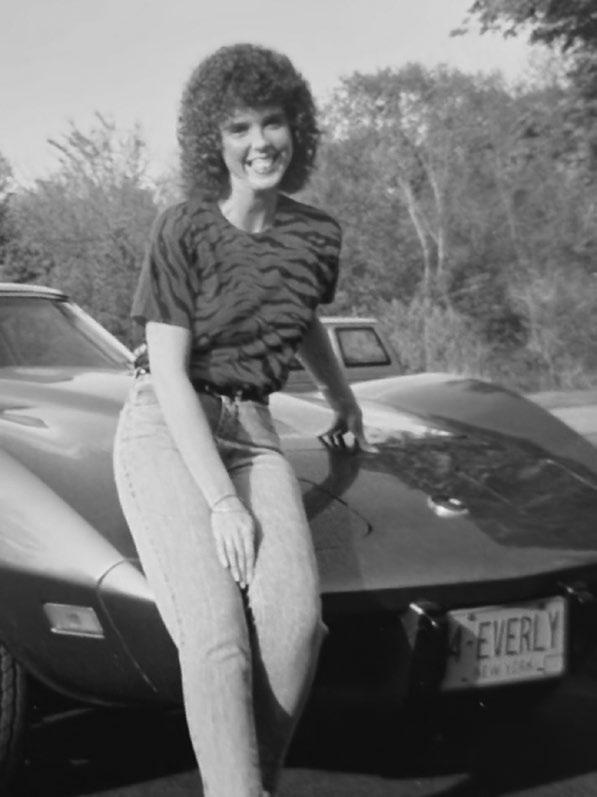
4-EVERLY
I had a bright, blue, 1976 Corvette at the time, which proudly boasted 4-EVERLY on the license plates. I was very amused at one concert when a group of young fans started shrieking at me as I stepped out of my car. They had spotted my plates and assumed I was part of the Everly entourage. I remember holding red roses at the time and laughing merrily. One of the best parts of my Everly years was meeting so many other fans and becoming friends with many of them.
Some of the venues I attended, throughout the years, were in Lake Tahoe (twice), Las Vegas; Atlantic City; Beverly, MA; Wallingford, CT; Hampton Beach, NH; and Latham. One night in Las Vegas, as I headed to the elevators after the last concert of the night, the Everly’s manager escorted me and we had a lovely chat. He made sure I was safely on the elevator, headed for my room. We had such a nice talk and he told me how much he appreciated my respect for Don and Phil. Some fans were really unruly but I
always treated the beloved Everly Brothers as I wanted others to treat me. I respected their privacy completely.
I had the privilege of having my picture taken with Don and Phil on several occasions, both before and after their shows. I remember being backstage after a concert in Beverly, MA, one summer night. We were outside, under the moonlight, with stars twinkling everywhere. Don came out and we had our picture taken together there in the starlight. We were on a high deck and it seemed like we were floating. That is my favorite. The photo holds a special place in my Everly scrapbook, which is bulging with memories.
The Collection
At one time, my Everly collection was immense and unimaginable. It had EPs, posters, 45s, taped concerts and gifts from other Everly collectors around the globe. I had all their t-shirts and other clothing items as well, even an Everly nightshirt that Don happily signed for me. Unfortunately, I had to get rid of a fair amount of those things when we had to move, rather suddenly, a few years ago. I do, however, still have all of their albums, both old and new, and my beloved scrapbook that I’ll never part with.
When speaking about the Everly’s music, most people conjure up memories of “Wake Up, Little Susie,” and “All I Have to Do Is Dream.” However, their newer, more modern music was, and always will be, fantastic. I remember peoples’ surprise at my liking the “older brothers” better than the popular musicians of my time.
I cherish all of my Everly years and memories very much. I still enjoy going through my scrapbook every now and then, fondly remembering all the good times and fun years. It was a good run, to say the least. •
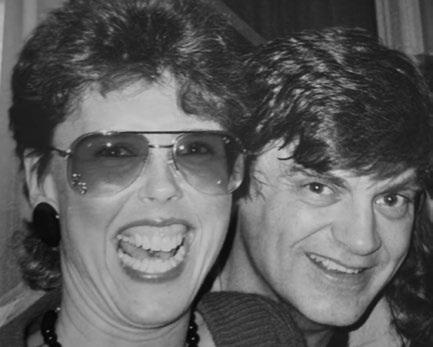
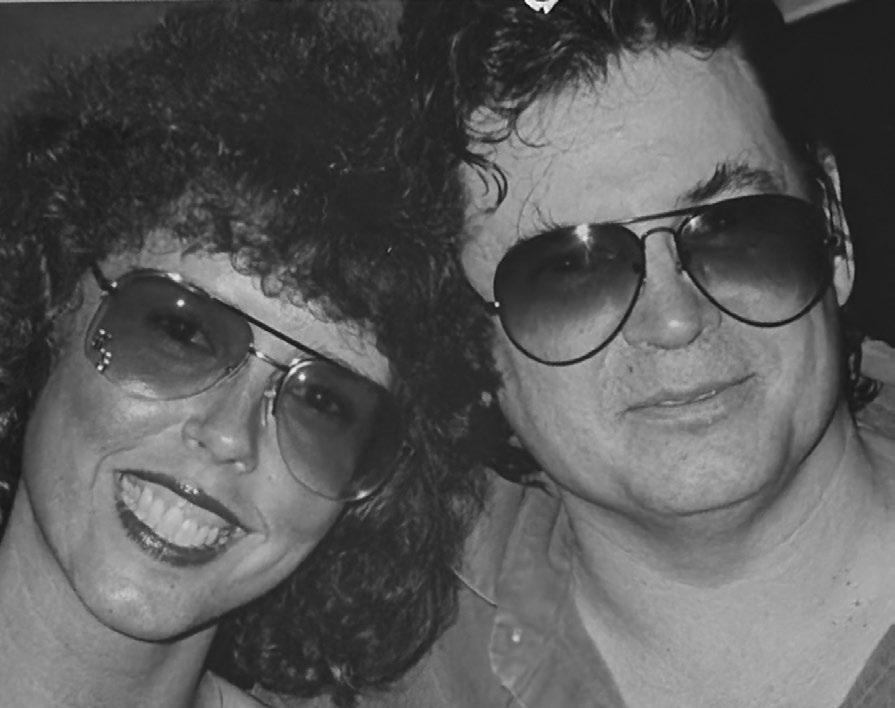
Top left, Karen Holt-Lent with Phil Everly. Bottom left, with husband, Scott Lent. Right, Holt-Lent with Don Everly.
TidBits
In late February, 1982, in the Chatham Courier appeared the following as a letter to the editor, penned by Helen “Betty” Tank. It offers a first-hand look at what life living in Chatham as a major railroad hub was like. Tank’s memory of her life in Turkey and the Middle East, “Pushing My Shadow 19391945,” remains available. She had traveled to England in August, 1939, and was stranded there by the outbreak of World War II.
To the Editor,
One way to attack insomnia or induce sleep is to switch cars. For those of us old enough to recall the Rutland milk barreling down through the Rock Cut, its whistle wailing for the crossing at Gale’s and then almost simultaneously for the Fairview Ave., Chatham, crossing and the one at Kinderhook Street, it is an exercise for the memory. First these cars must be switched from the Rutland tracks to the Harlem tracks and in the process cross the Boston & Albany tracks. Then the Rutland engine must be turned around either on the turntable near the site of the present Blue Seal Feeds or next to the Rutland engine house across the Steinkill in “Brooklyn,” as it was called as it lay “over the river.” Then there is a freight that has pulled in from the west on the B&A for the Hudson line and a few more for the Rutland. Also probably a few cars on the sidetrack in “Brooklyn” that have to be hitched to the eastbound train. By the time you have kept them from bumping each other excessively, you are hopefully in dreamland.
How many nights in my growing up period on Fairview Avenue in “Brooklyn” did I hear the Rutland milk come in? It became a part of one’s sleep. There are many of us who grew up with the smells and sounds of the railroads and were proud that Chatham was a railroad center. How many of us can remember what it was like to hang out the wash when the wind was blowing smoke across the yard. Hopefully, you didn’t hang it out that day. Mother used to say she didn’t think she’d live to see the end of coal dirt, but she did with the coming of diesels. At last the attics were sucked free of cinders and coal dust, and the curtains hung clean for longer than one day. How many know what it was like to wake up each morning and find the window sills covered with grime? Yes, and the insides of one’s nostrils, too! Chathamites lived in this for years and there was little complaining. It was accepted as the way of life and was the means of living for the community.
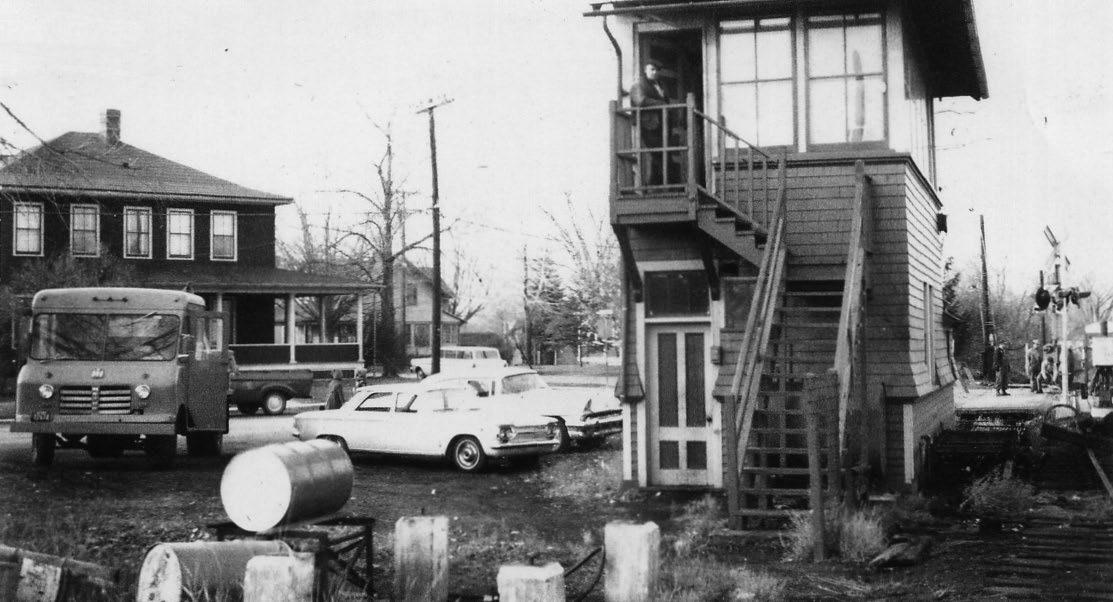
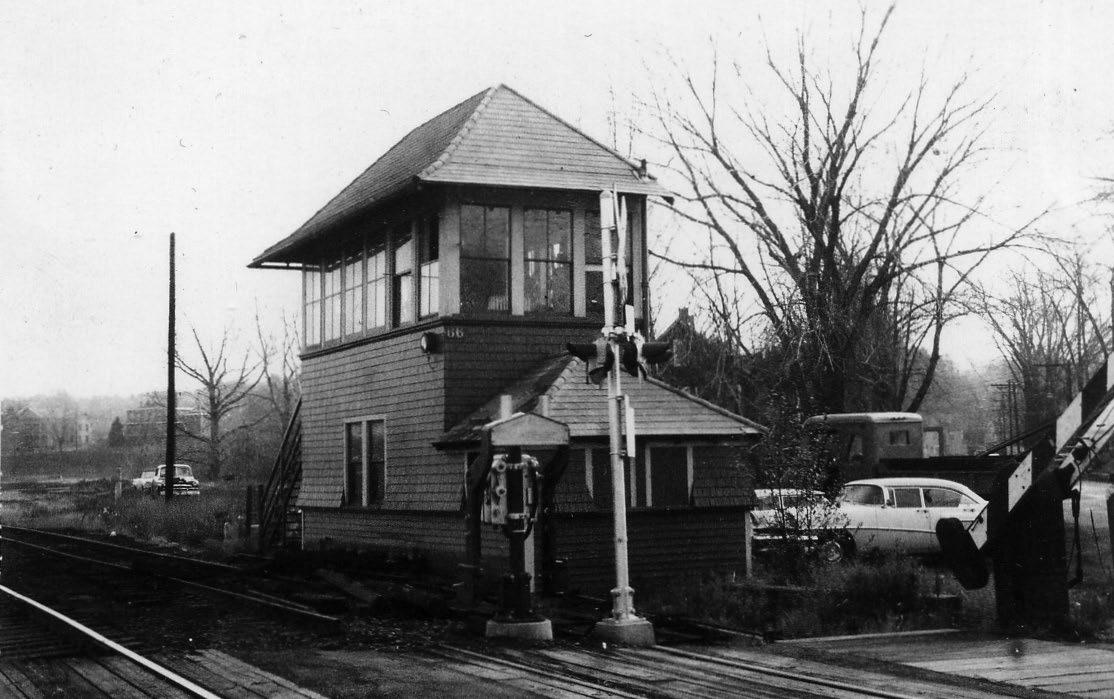
There were double gates at the Main Street crossing. Not the dinky things that are there now and which, by the way, can come down on your car if you are not careful. These were great long things controlled by a man in the nearby tower. The gate at Woodbridge Avenue was also controlled by a tower, and I can remember one Halloween when the towerman let Cora Loomis and I put them up and down for the fun of it and open and shut some minor (?) switches by pulling long levers. The crossings at Hoffman Street and Church Street had gatemen who cranked them up and down. One of these gatemen was Bertie Lovejoy – on the rotund side – and he lived in the house which still stands behind the former Hess Market. George Angell, after he retired from the freight office, cranked another.
The Park Row-Kinderhook Street crossing did not have gates but a watchman carrying a small sign. Do you remember the little station that stood at the end of Park Row across from what was then the Potter house? It was
a one-room building that served the Rutland and was managed by a good friend, George Flanagan. Remember once crossing in front of an engine there on the way to school. I knew it was switching but I didn’t think it would move when I was crossing! It did with a big puff of steam, fortunately backwards. Gave me the scare of my life.
The kids from “Brooklyn-Over-the-River” used to take a short cut to school up the steep bank on a path that led through the present trailer court by the Steinkill to the top of the railroad embankment where we would follow a narrow path alongside the track to Kinderhook Street. At noon there invariably would be an engine switching and though it was safe enough to walk beside it, it was hairy never to know when a whoosh of steam was going to maybe scald your legs. This was no doubt why I usually walked to school with Mr. Flanagan. I just felt safer. Not that he condoned this trespassing on railroad property.
He didn’t really and was always after my brother and Bill Beyer not to cross the bridge. It didn’t stop them, and they even rode their bicycles across it at times although it was bumpy as there were no planks in the middle then. Earlier there had been planks and my mother used to tell how Aunt Marne used to wheel her babies across as it saved going down the hill and up. Some time, probably in the 1920’s, the railroad added two wooden platforms on the trestle as a place to stand in case you were caught by a train.
For the record you may be interested to
know that the crossing on the Rutland called Gale’s was on the now abandoned road which would be a continuation of the road from High Bridge. That road crossed Route 66 (north of Chatham about a mile) and came out on the present road to Rock City on the continuation of River Street. It was called Gale’s, my father said, because man named Gale lived in a house, long since vanished, which stood on the northeast comer of the crossing. The man, Gale, was a foreman who worked for my father’s grandfather, John Tank (born in England), who was under contract to build the granite towers for the Rutland trestle. They still stand on Center Street in and near the Steinkill. As I recall the story, this Gale was an excellent workman, and he so liked this area that he settled here after the bridge was finished. While I am recalling old times, did you know that there was a bridge across the Steinkill from the vicinity of Fairview Avenue (at the base of Mather’s hill to be exact) to River Street about across from where Dutch Hughes now lives? Die foundation stones still show on the River Street side but can be best seen from the opposite shore, just above the remains of the power dam. This bridge probably preceded the bridge on Center Street and I believe was washed away. How different the village might have grown if it had been kept. One wonders if it were there before, after, or during the days of the blast furnace. Does anyone know? •
Helen E. Tank Chatham, New York
The Woodbridge Avenue tower, ID’d as “66,” stood watch over countless trains coming and going from Chatham over the years.
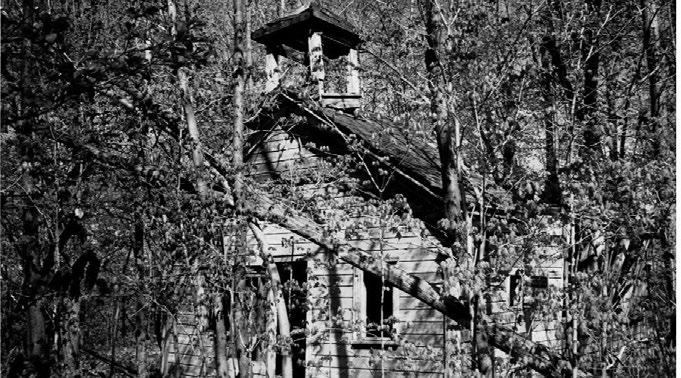
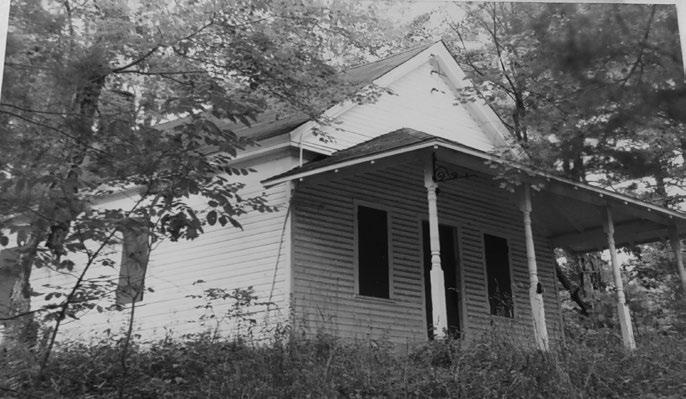
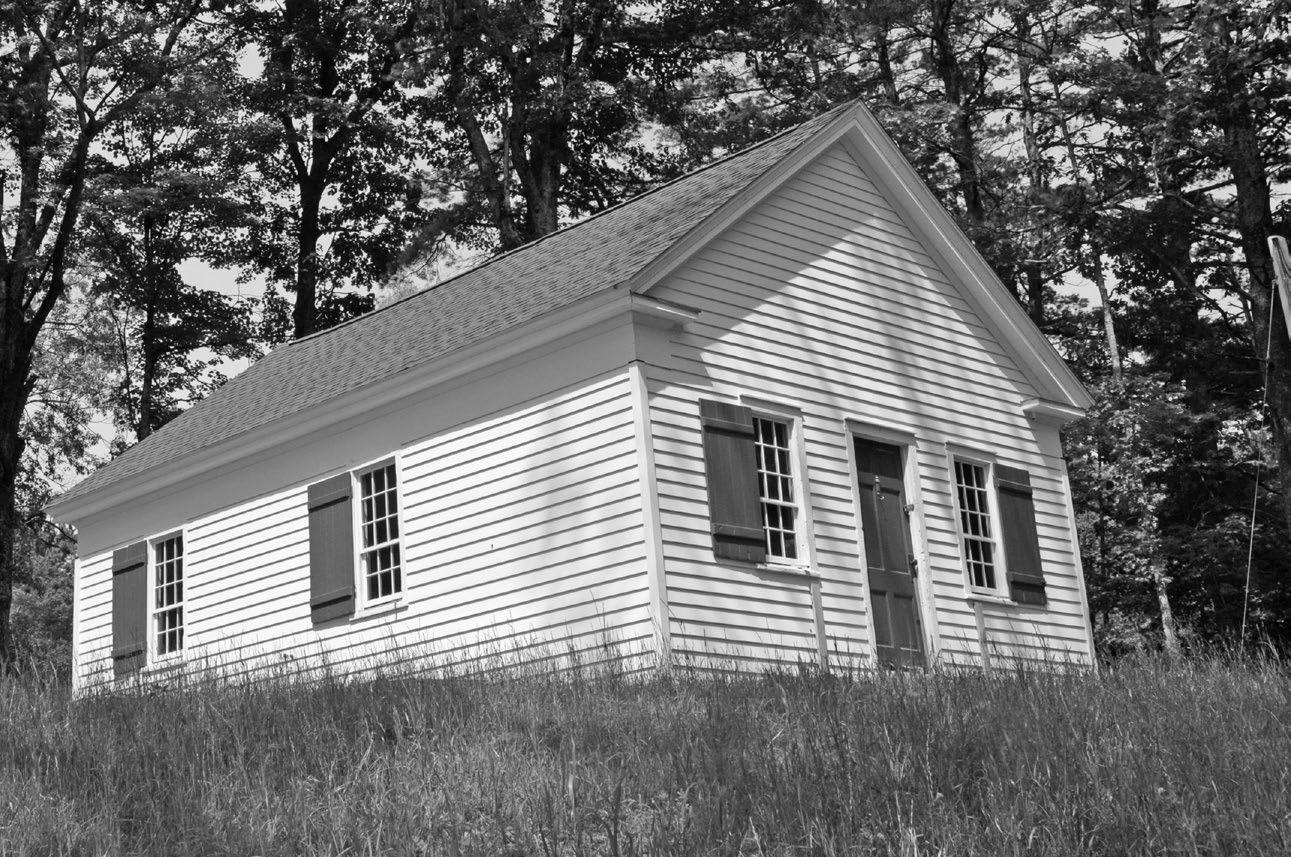
Many One-Room Schoolhouses of Old Still Stand
Some remain as they were, while others have been repurposed. Either way, they represent a simpler time that may not have been all that simple, but one way or another, learning occurred.
By Barbara Peduzzi
“School days, school days, dear old golden rule days ...”*
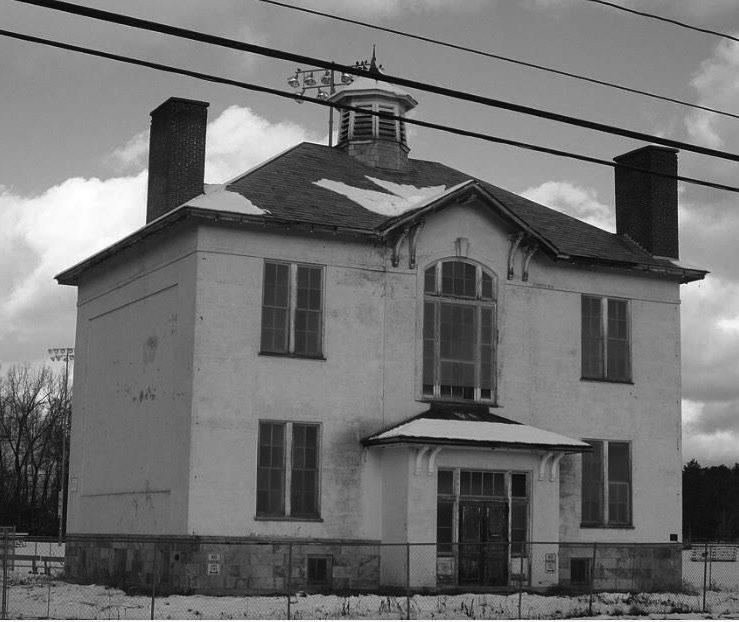
New Lebanon had three schoolhouses. This, on the site of the current juniorsenior high school, was added to the National Historic Registry in 1991. It became unsafe and was demolished; the cupola is now in Shatford Park. The Roaring 20s Brewery occupies another -- it is on the National Record of Historic Buildings. The third, in East Nassau, is now an apartment building.
Some of us are of an age to remember that little ditty, written when schools were not the mega-learning facilities they are these days.
Back then, most schools were one room, with one teacher handling all the students and all the grades. Some were in town, but many were set amid farms, where the children walked a mile or more to get to their classes. You know, “Miles, uphill both ways, in the snow, every day!”
Thanks to the diligent efforts of town historians Dodie Gearing, Gregg Berninger, David Harrison and Elizabeth Sheffer-Winig, there is a great deal of information available about these one-room schoolhouses in the towns of Canaan, Ghent, Austerlitz and New
Jenny Berlt Gearing attended this Dunn District school in the Town of New Lebanon, and returned as a teacher after graduating with honors from the State Normal School in New Paltz. Teachers Eva Wadsworth and Bernice Grabow influenced her decision to enter the same profession. Grabow had boarded with Gearing’s grandparents while teaching at the school.
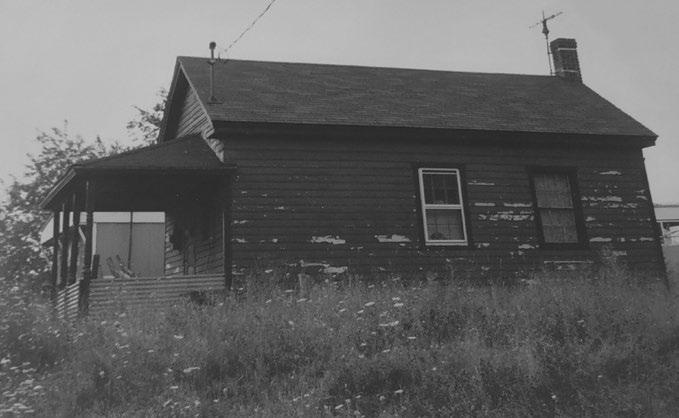
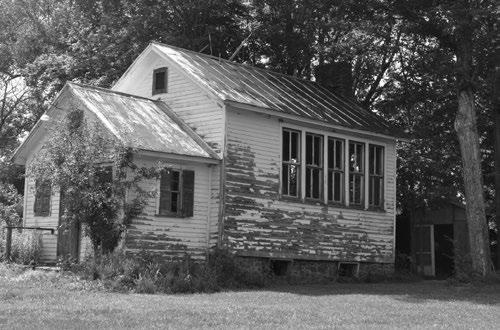
There may be a few scraps of timbers left, but the Rock City Road school, at the intersection with Highland Road, has given way to time, weather and gravity since this photo was taken in the late
Lebanon. Their work includes locations, photos and stories of the schools, teachers and students. They also outline how classes moved from the one-room spaces to larger, more centrally placed schools, and eventually to the multibuilding learning centers of today.
Sadly, some of the long-ago schools have vanished, victims of time and disuse. Some still stand, as they were “back in the day,” albeit usually showing their age. Several have been repurposed into homes or business or community use, with the original structure usually easy to pick out of additions and renovations.
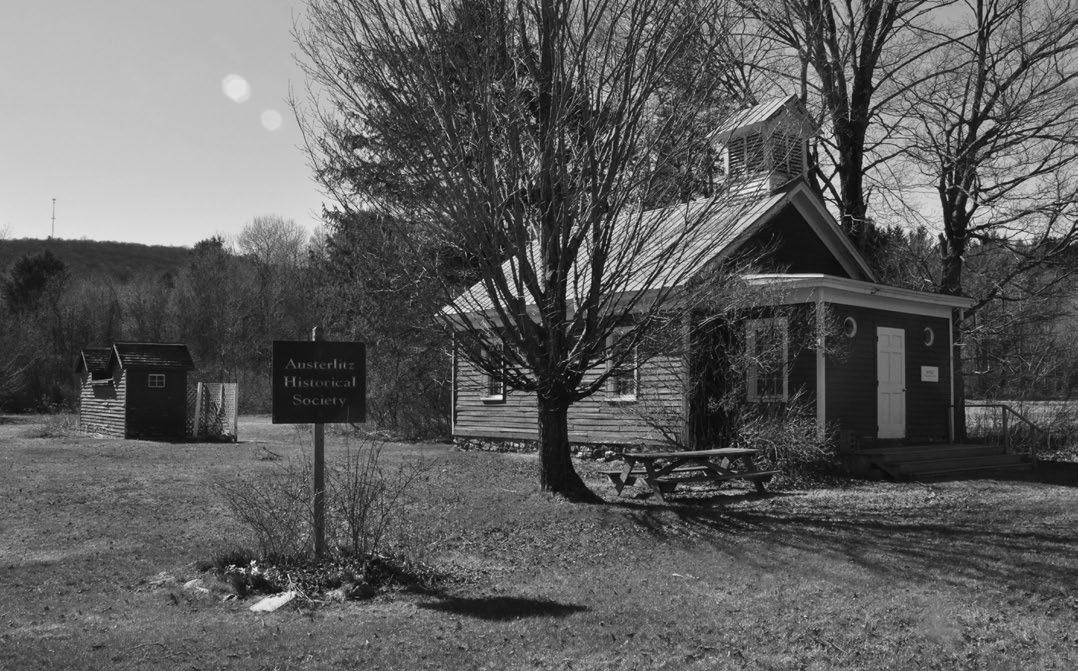
One, in Red Rock, is an ongoing restoration project. The East Chatham Liquor Store is the current resident of the schoolhouse building in the center of the hamlet. Peek into the one at the Old Austerlitz grounds, or on Frisbee Street, to see how long-ago youngsters learned their ABC’s – their “’reading and ‘riting and ‘rithmetic, taught to the tune of a hick’ry stick.” Imagine the teachers handling students of all ages, abilities and interest levels. And, maybe, be a bit glad for large, heated and cooled buildings with computers and labs and one subject for teachers – oh, yes, and for indoor plumbing.
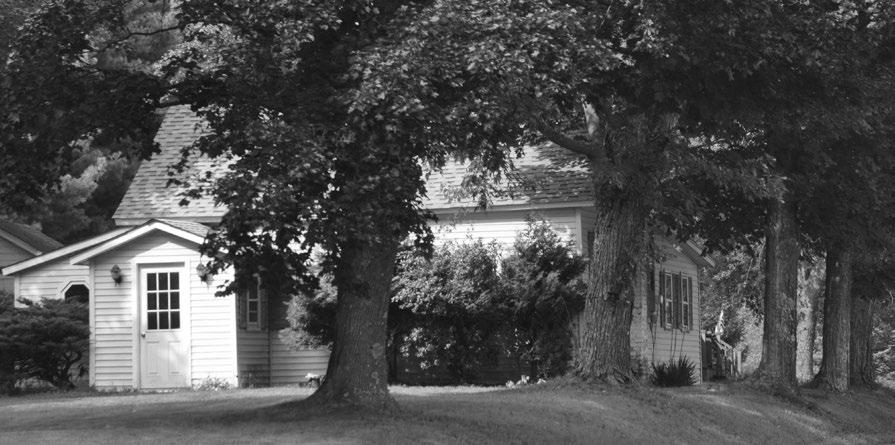
Additions made a home from the original schoolhouse on County Route 9 near near Arch Bridge Road in Ghent.
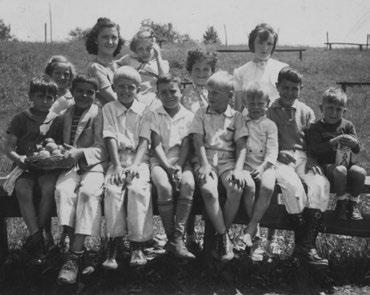
An older student holds Elaine Goodrich in this photo of Rock City Road students at a picnic. Year unknown.
1990’s.
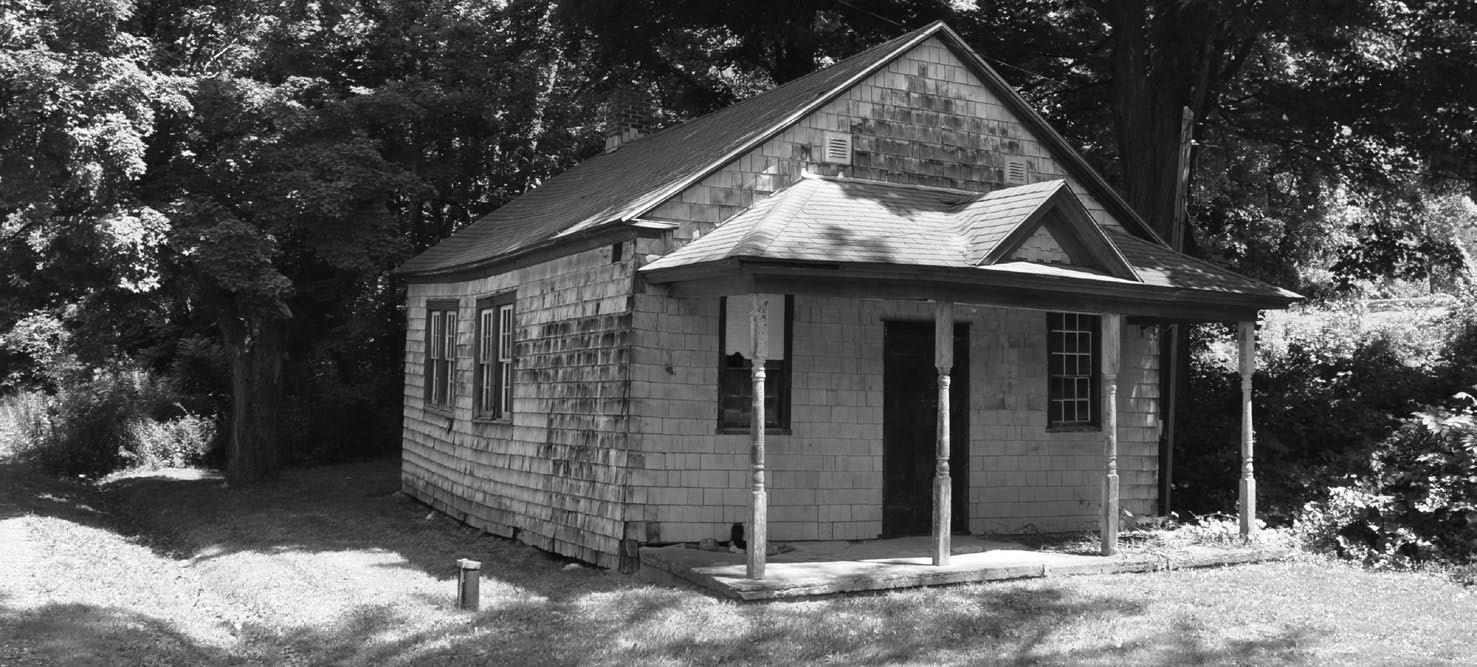
The Red Rock school on County Route 24, before restoration work was begun.
The porch is gone, but the rest of the Red Rock school is being renovated to one day show off how students of bygone days learned their lessons.
This was probably the Piersonville School, on County Route 9 near Ten Broeck Road. Under the tree behind it, you can see a small structure that was a very necessary place for students and teachers; these are still in evidence at many of the remaining schools. The satellite dish by a front corner hints that it has been occupied, but it now seems vacant.
Take a photo tour with us of some of the remaining structures, and think back to what it would have been to gather knowledge in them. Then think about what the people who did that accomplished. These buildings were vital parts of their communities, and of our history and growth.
PS: We know of someone who as a preschooler was enamored of the bridge that used to span Route 203, near McCagg Road, to let the students on the way to and from the schoolhouse there (now a private home) cross safely. They’d wait to see it every time they rode to Chatham. One day it was gone. The mom driving had to turn around to show that it had not been missed, it was no longer there, resulting in a torrent of tears, and a still to-this-day memory of it. Does anyone else remember it, and know exactly where it was? It’s probably too much to wish for a photo.
* “School Days”, by Will D. Cobb and Gus Edwards, featured in the Broadway show of the same name in 1907. •
Photos and story information thanks to Town Historians Dodie Gearing, Gregg Berninger, Dave Harrison and Elizabeth Sheffer-Winig.
The schoolhouse on the grounds of Old Austerlitz, on Route 22, is charmingly restored to show where youngsters over a century ago learned their ABC’s. The entire complex is a step back in time; the pancakes at the annual Blueberry Festival are well worth a special trip.
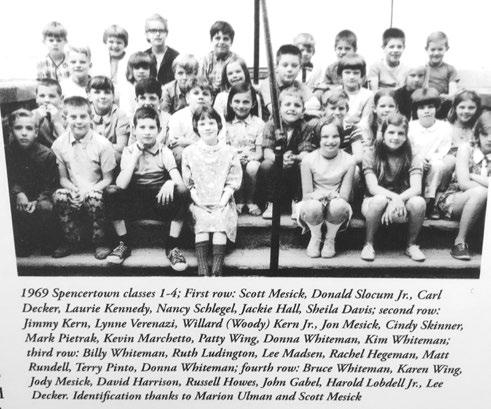
The Austerlitz Museum holds a treasure trove of past school days, with photos, writings and memorabilia of schools, teachers and more. How many students in this 1969 photo do you recognize?
The school at the corner of Frisbee Street and Goetz Road still stands. I’m taking a guess that this is the school my father and several of his brothers and sisters were at the day their house down the road burned.
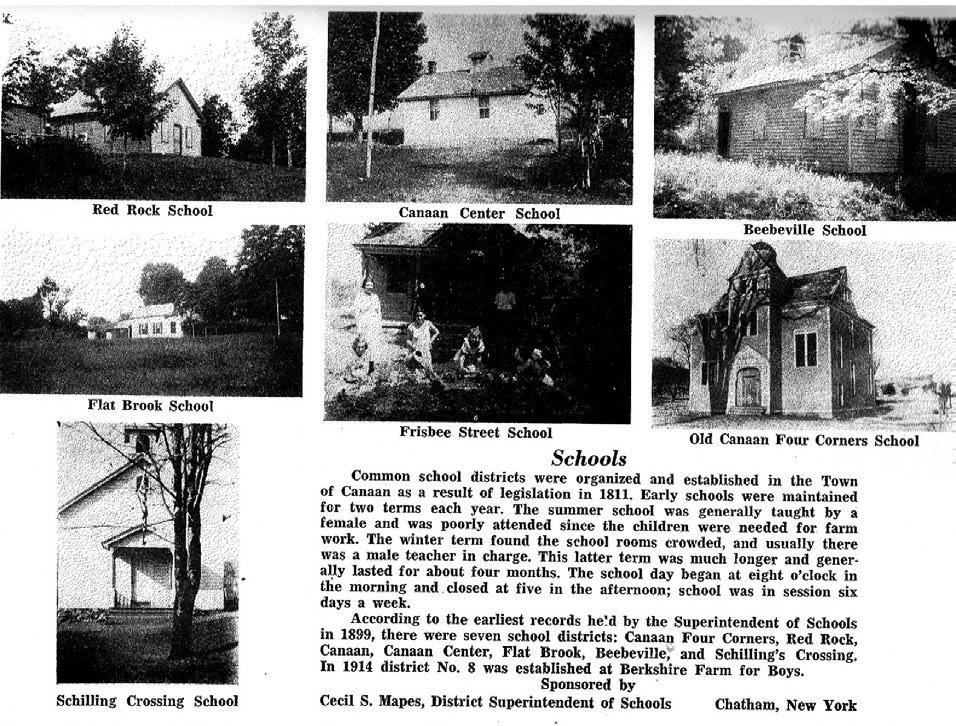
As told in the 1959 Canaan Bicentennial booklet, the seven school districts in the town in 1899 were Canaan Four Corners, Red Rock, Canaan, Canaan Center, Flat Brook, Beebeville and Schillings Crossing. Classes started at eight and ended at five, six days a week. Fewer students attended during the summer when many were home doing farm work. The teacher then was usually a woman, with a man taking over in winter when more students were in class. Several letters from the 1800s tell facts of the schools then, in the 1976 “Reflections” Bicentennial book.
SportBits
Junior Panthers win
“Chatham JVs notch third win,” announced a Courier headline in late October, 1972. “Chatham’s junior varsity football team ran its victory skein to three straight on Monday, taking’ a 28-14 triumph over Voorheesville’s junior varsity. Carl Mathews tallied a pair of touchdowns for Coach Jack Havlik’s junior Panthers. Mathews registered the first on a 20-yard jaunt and Gregg Coolidge added the two-point conversion.”
“Coolidge registered Chatham’s second TD on a 15-yard run around end. The conversion try failed. Steve Nieto set up the third Chatham TD when he intercepted a Voorheesville pass. Mathews then tallied on a 15-yard gallop. Coolidge added the conversion points. Paul Winkler had the final Chatham six-pointer, scoring on a double reverse play from 16 yards out.”
“Jeff Modleski and Tim Jones were cited by Coach Havlik for outstanding defensive play. Tamarac is at Chatham on Monday afternoon at 4 for the final jayvee game of the season. The junior Panthers lost their first two games, 12-0 to Coxsackie-Athens and 18-8 to Averill Park. The Panthers then picked up wins over Taconic Hills 22-6, Maple Hill 12-0, and Voorheesville.
Inaugural season
That same week, under the headline “Chatham luckless in soccer,” the Courier noted that “Chatham completed its initial soccer season since centralization by losing its season finale to Ichabod Crane 7-0 and ended the campaign with an 0-8 record in Patroon Conference play.”
“A junior varsity team played a pair of games with Hudson’s jayvee unit and lost both outings, 2-1 and 1-0. In the latest clash, Rick Nash scored a goal in the second overtime period to give Hudson the triumph. The winning goal came after 3:05 of play. Coach
Ed Knight’s team scored only two goals during the season. Joe Smith tallied one in the season opener when Chatham dropped a 2-1 decision to Hudson and Dave Acciani had the other in the 4-1 loss to Ichabod Crane. The lone goal scored in jayvee outings was by Mike Gabel in the 2-1 loss to Hudson.”
“Coach Knight did not use varsity, junior and senior players, in the two games with the Hudson jayvees. Only freshmen and sophomores played in those games. ‘We gained experience, were not beaten badly except for two games, 6-0, by Albany Academy and 7-0 by Ichabod Crane, but we still have to look at an 0-8 record,’ said Coach Knight. ‘We plan on doing much better next season. We’ll at least try to break even and we should be able to hold our own against the best of them the following season,’ Coach Knight said. The Panthers booters lost to Hudson, 2-1, to Albany Academy 6-0, to Taconic Hills 1-0, to Crane 4-1, to Albany Academy 2-0, to Hudson 2-0, to Taconic Hills 2-0 and to Crane 7-0.”
“Coach Knight announced that varsity letters will go to Dave Acciani, Dan Perry, Dave Madsen, Mike Benvenuto, and Joe Smith, freshmen; to Paul Martin, John Carty, Mark Groudas, Dan Hegeman, Mark Ruxton, Dave Cozzolino, sophomores; Dick Dodge, Meyer Meyerson, Jim Bemiss, and Jim Layton, juniors; and to Scott Livingston and Mike Brown, seniors.”
“Jayvee letter winners are Bob Keller, Hank Meyerson, Kevin Simmons, Mike Gabel, Rick Mesick, Walt Layton and Ben Hegeman, manager, all freshmen; Jack Thorne. Bill Collins, Bob Gulotty, Greg Verenazi, Chuck Rugen, Dave Dennis, Larry Elliot, Jeff Jones, sophomores, and Gary Kittle, junior.”
Sox prevail
“The only thing hotter than the temperature last Sunday afternoon at the Chatham Central School diamond was the
right arm of pitcher Larry Schroeder and the Chatham Blue Sox bats as the locals tripped the E. D. Jones and Sons Company nine of Pittsfield 5-3 before a crowd of 150 in sizzling 85 to 90 degree weather,” noted The Chatham Courier in late June, 1956.
“Schroeder had the Bay Staters baffled with his Dukes Mixture pitches until the eighth when Manager Dan Healy’s entry finally dented home plate. In the eight innings he twirled, Schroeder doled out six hits, walked five, and fanned five. He was relieved by southpaw Bob Keller in the ninth who struck out two of the four batters he faced. The parboiled spectators saw Schroeder get a lead he never lost when Mickey Holt led off for Chatham in the first and promptly smacked the first pitch thrown by Gordon Kross high over the centerfield scoreboard and across Woodbridge Avenue. The pitch was a chest high fastball and Mick’s clout was one of the longest at the local field this summer.”
“A solo Sox score came in thesecond on singles by Jim Sherman, Keller, a force play, and Paul Modleski’s sacrifice fly, Sherman barely sliding in under the rifle-shot relay from left by Johnny Allen. Two more Sockers tallied in the fifth on walks to Holt and Charley Cooper, a sacrifice, and Busher Akin’s line single to left.
The Jones Boys got into the scoring act in the eighth when Al Clyson singled, Ryan walked, both advanced on a wild pitch and scored when relief pitcher Frank Costanzo singled. Pellerin’s single and two Sox errors accounted for the final Jones run in the ninth.”
“Paul Modleski finished Chatham scoring in the bottom of the eighth when with one down he laced one of Costanzo’s curves over the right field fence. Kross left in the fifth for Pittsfield after allowing five hits, one walk, and fanned two. Costanzo, a little curveballer, went the rest of the way on four hits, four walks, and three whiffs. Butch LeClare, Pittsfield centerfielder, had three singles in four trips to pace his team.” •
Soccer lettermen Greg Verenazi and Bob Gulotty. Steve Nieto picked off a key interception.
With three offices in Copake, Valatie, and Chatham we are here to help you with any of your insurance needs. Contact us today for a quote on your home, auto, business, health insurance or life insurance. We are the Kneller Agency and we’re here to insure your world.