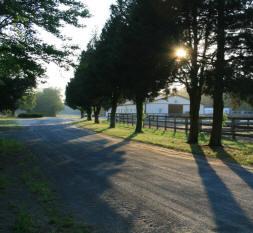
We’ve had a couple of warm days now to help us remember why we live here and how much we love our horses.
We are gaining momentum and looking forward to the warm weather and the upcoming shows and events we have planned.
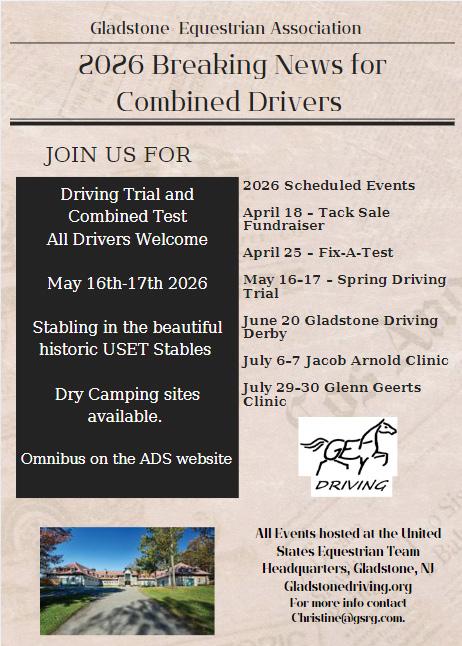
We have the Marilyn Payne clinic, the first weekend in April.
The Luis Denizard clinic April 18th and 19th, we still have a couple of rider slots available and the location is absolutely beautiful. We are very lucky to be able to use Bonnie and Chet Halka’s farm for our clinics.
The Memorial Day Weekend show is open for entries and we are very excited to see everyone there.
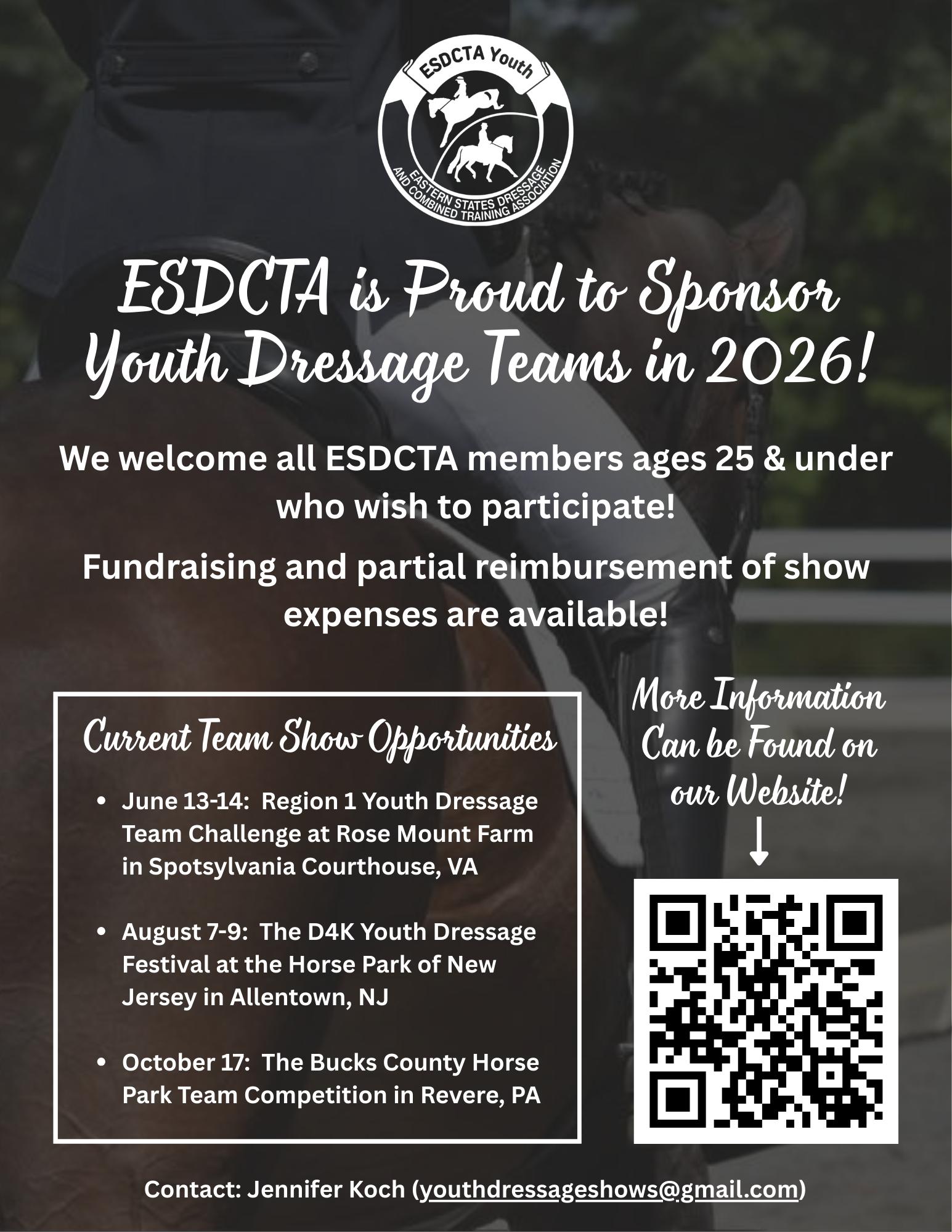
In order to better serve our members, we have made a change to this year’s location for the Championship Show. This year, it will be on October 11th at the Horse Park of New Jersey. Next year we will rotate the show back to the USET. Hopefully giving all of our members a chance at a shorter drive every other year to attend the Championship Show.
Have a wonderful month, see you out there at the clinics and at the shows.
Volunteer Coordinator Jen Koch youthdressgeshows@gmail.com
CROSS COUNTRY...
News Across Our Region
COMMUNITY NEWS
If you’re reading this, you are probably a member of ESDCTA, but I’m sure you know of someone who rides dressage or events who is not a member. You know all about the wonderful things offered like educational programs, clinics with big name trainers, horse shows, year-end awards, and not least, that sense of being part of a community of likeminded people. The more members ESDCTA has, the better the programs we can offer. Our membership numbers are also important considerations when state and local governments decide on legislature that affects us (like open space), and we advocate for our sports (We helped get better footing at the HPNJ). Please reach out to your equestrian buddies and tell them about all of the benefits of membership and have them sign up. The more the merrier!
WHAT’S YOUR TALENT??
Let us know what you would like to help us with in 2026. All skills and interests wanted. Have an idea? We want to hear about it. Remember, this club is what YOU make it. Contact president@esdcta.org if you are interested.
NEWSLETTER COMMITTEE
Have a great article that you would like to share?
Please send article to: Meredith Rogers: newsletter@esdcta.org All submissions are due by the 15th of the month. Due to space considerations, the editor reserves the right to edit submitted articles. If necessary, articles will be edited and returned for your review. AND YOU GET VOLUNTEER HOUR FOR EACH STORY!
Milestone
Please Contact this newsletter if you know any ESDCTA members who have achieved any Milestones. Success at a show, regional/national/international award, new horse, or anything else you want to celebrate.
e-mail: newsletter@esdcta.org
MEMBERSHIP QUESTIONS
For membership questions including updating physical or e-mail addresses please contact: Heidi Lemack membership@esdcta.org
Deadline: 15th of prior month Email: newsletter@esdcta.org
Please have electronic ads in Adobe PDF or .jpg format You will receive an invoice for ad via email.
Email: treasurer@esdcta.org
Amateur Dilemma
By Meredith Rogers
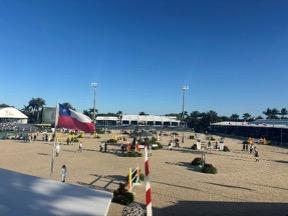
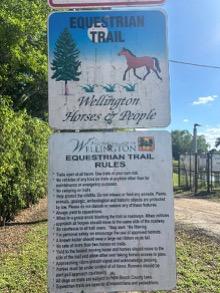
Last month I had the privilege of attending a retreat hosted by the Equibody exercise program in warm Wellington, Florida. If you’ve never been to Wellington during the height of the equestrian snow bird season, I highly recommend taking a long weekend and immersing yourself in a totally different world. It’s not unusual to see people in breeches and boots strolling the aisles of Publix (grocery store). There are numerous tack and feed stores within driving distance, not to mention the shops at the shows, themselves. Lavish equestrian properties are around every corner. The sidewalks are wide enough for golf carts or horses being led, and the street crossing signs have replaced the image of a person walking with that of a horse! And, of course, there are the horse shows – dressage, jumping, hunters, and lots of ponies. This was my second trip down there, and after a 10-year hiatus, I noticed nothing much had changed.
The retreat brought together people who otherwise might never have come across each other. We were from all over the country, and even from Canada. Some of us rode dressage, others jumped either in a stadium or cross-country. Some had been riding for a long time and others were new or had taken a break. Some had 1 horse, others multiple horses; some had their horses at home and others boarded. Our personal lives were also different: married/not married, with/without children, we were of different ages, and none of us did the same thing for a living. However, we all had a great time together because we were all devoted to our riding. The main objective for all of us was to be the best rider we could be for our horses.
The love of horses was unifying. It was so nice being surrounded by like-minded people who you didn’t have to justify your life choices to because they got it. Of course you had to buy that new saddle! Having a horse show is definitely an acceptable reason for missing some distant relative’s life event! You get the idea. We are a horse community here within ESDCTA, as well. So, the next time you’re at a show or clinic or the local tack store, have a look about and give a nod and a smile to those around you. We get it.
Pictures courtesy of Anne Edgley, one of my retreat-mates
Horse Treats
By Meredith Rogers
We’re in the middle of shedding season so why not put to good use all that hair! Numerous industries use horse hair to make their products. There’s body hair, tail hair, and the mane, all with different properties that make it valuable material for different applications.
Tail hair is interwoven with other fibers, such as wool, cotton, and silk, to make fabric for upholstery, clothing, carpets, and rugs. The horse hair imparts durability and strength, making the fabric resistant to stretching and creasing. Fabrics made with horse hair are also thought to have an elegant luster. Tail hair is also used to make brushes, including brushes for brushing horses. It retains it’s shape and stiffness while remaining soft, even when wet, making it ideal for paintbrushes, shaving brushes, and others. Tail hair is also used in making bows for string instruments. About 100-200 individual strands of hair are glued together and then attached to the bow’s stick.
Tail and mane hair has been used to make wigs and hairpieces since the 18th century. Back then people in influential positions (eg, judges, nobility, etc) wore white powdered wigs that in today’s currency cost $10,000 each! The powder, made of cornstarch and lavender, was used to delouse the wig and also because the wigs stunk. The price has come done considerably since then but horse hair wigs are still sought after because horse hair can be blended with human hair and other fibers to create a natural-looking hair piece at a lower price point than a 100% human hair wig.
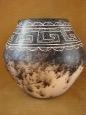
Various art forms use horse hair. Native Americans, specifically the Navajo and Pueblo tribes, have used it in their pottery for centuries. Legend goes that a potter in Pueblo accidentally left her hair on the hot pottery while taking it out of a kiln and liked the way it looked. The hair is added to the wet clay and then burns away during firing, leaving a unique pattern. Horse hair jewelry is a popular way to memorialize a lost horse.
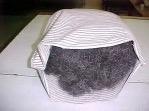
If you’re tired of waking up with a stiff neck, you may want to try using a horse hair pillow. This is where all that hair that’s been clogging your curry comb can go. It’s considered a good material for stuffing because it’s hypoallergenic and breathable, providing firm support with natural springiness.
From Our Friends at Lehigh Valley Dressage Association
2023 On the Levels” - Adding to Your Dressage Knowledge Bank
Arena Optional: USDF Book Club
By Ellen Broadhurst
By Ellen Broadhurst
Arena Optional is a monthly column devoted to Adult Amateur unmounted education. Our focus is to explore the (vast!) educational resources offered free to members by the USDF. Over the next months, we’ll be diving into the USDF University archives to dig up buried treasure.
This month, we’re going to review the March 18, 2026 USDF Book Club book. The USDF Book Club happens once a quarter live via Zoom. USDF Book Club offerings are available for purchase for a discount through Trafalgar Press. Past offerings are available on the USDF website for review by USDF members.
The next Book Club is scheduled for June 17, 2026, and we’ll be discussing Fur Mama, with author Diana du Pont.
USDF Book Club:
“How to Ride the Horse You Thought You Bought”
By Anne Buchanan
Review by Ellen Broadhurst
There is a particular skepticism that comes with being an adult amateur rider who already takes regular lessons: why, exactly, would one need a book to explain how
to ride? I have a trainer and my trainer works with me diligently every day to improve my riding. I approached “How to Ride the Horse You Thought You Bought,” by Anne Buchanan with precisely that mindset: is this book really for me?
I have often described the sport of dressage as being like a massive curtain that I occasionally get a glimpse behind. “How to Ride the Horse You Thought You Bought” offered another peek behind the “I didn’t know I didn’t know this!” curtain, answering questions I hadn’t even realized I should be asking. I was transfixed as I thumbed through the pages, recognizing myself in them and quickly seeing how it could become a valuable part of my dressage journey, both as a journal and an ongoing reference.
What Buchanan does especially well is translate the language of live instruction into a clear, systematic primer. The concepts riders hear every day, like contact, connection, half halts, straightness, and timing that are delivered as staccato corrections for me to execute in the saddle are unpacked in full chapters with straightforward explanations and supporting videos that feature ordinary riders (like me!).
The result is a kind of bridge between live lesson experience and deeper understanding: the same ideas, but organized in a way that allows riders time to study and digest. At its core, “How to Ride the Horse You Thought You Bought” is a book about attempting to give riders structure around “invisible” concepts. Good riding is often defined by feel, an elusive quality that instructors intuitively use and understand themselves, but struggle to articulate. I equate teaching feel to teaching smell; these are experiential things. You can talk about half-halts, contact, and balance all day, but feel only clicks when the rider experiences it in their own body.
Buchanan takes on the ambitious task of putting that “feel” into words. She breaks down not just what riders should do, but how, when, and why they should do it, and perhaps most valuably, how to tell whether it’s working. For riders who have watched others produce seamless transitions and uphill balance while not seeing the “how” to replicate it, this book offers a practical roadmap.
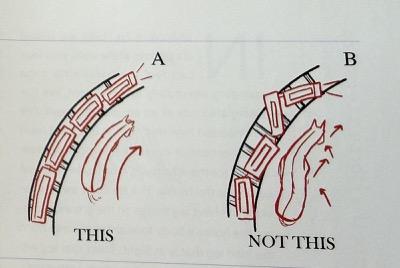
The structure of the book reflects Buchanan’s background as an educator and reinforces its usefulness as a reference tool. Recurring elements, such as cautionary notes about common pitfalls, exercises that extend learning, and cleverly drawn “this” versus “not this” sketch comparisons, help sharpen the rider’s eye and judgment.
Buchanan also emphasizes a set of foundational principles that operate simultaneously in any effective ride: forward energy, connection, consistency, transitions, flexion, and the half halt. These are presented not as isolated skills but as interdependent building blocks that, when combined, create reliability and clarity in the horse. And the concept is presented in both words and a simple diagram that is easy for riders to understand and internalize.
Again reflecting Buchanan’s background as an educator, one of the book’s most distinctive strengths is its focus on the learning process itself. The included study guides encourage riders to take an active role in their education by organizing ideas, assessing progress, and in a brilliant stroke that made me literally gasp, “of course we should be doing this!” working collaboratively with your barn mates.
Buchanan suggests that group study can be a powerful tool, and she’s right. For many adult amateurs, the barn aisle is already a place where after school learning happens. This book gives those discussions direction, helping like-minded riders turn casual horse talk into meaningful, structured learning.
Another fascinating piece of Buchanan’s background also adds a unique dimension to her perspective. Based in Lexington, she has worked most recently training riders on Racewood Simulators, the Mechanical Horses designed to help riders develop feel without the variability of a live horse. Buchanan advocates for their use as a way to experience correct movement and position in a consistent, repeatable way. While no simulator can replicate the full complexity of a living horse, her argument is compelling: these machines function as tireless schoolmasters, offering riders a clearer sense of what they are trying to achieve on a live horse.
Ultimately, “How to Ride the Horse You Thought You Bought” succeeds because it meets riders where they are. It does not replace instruction but enhances it, reinforcing lessons in a format that can be revisited again and again. For the adult amateur, and especially one juggling limited ride time, inconsistent access to coaching, or simply the desire to understand rather than just execute, it is an exceptionally valuable resource.
It turns out that even when you have a trainer supervising your rides, there is an enormous value in diving deeper into what they mean.
Freestyle Fun
By Paige Zimmerman
In mid-March, Ducati and I had the opportunity to be a demo pair for the USDF Continuing Education in Freestyle Judging Program, hosted by the Delaware Valley Combined Training Association (DVCTA) at Boyd and Silva Martin’s beautiful facility, Windurra USA. It was great to get out and shake off the cobwebs on my 4th level freestyle, as well as receive feedback so that we can have successful, harmonious rides this show season.
I love riding freestyles, and I love creating them. I feel that they’re the perfect opportunity to show off your horse’s strengths, as they give you the freedom to highlight movements and place them in such a way that the judge can see them more clearly than in a regular test. On the flip side, I like that you also have the opportunity to be clever about your choreography and place the weaker movements in spots where the horse prefers to do them, or where they are easiest. Plus, it’s just really fun to ride to music, and the process of music editing and creation is very rewarding.
Having these programs in our area is such a treat and a tremendous educational opportunity, since the purpose of them is to educate our dressage judges. The USDF website states, “The Continuing Education in Dressage Judging Program was developed by the USDF Judges Committee to provide continuing education opportunities, on a regional level, for USDF L Graduates and those enrolled in the USDF L Education Program.” Riders and trainers can audit these programs and reap the benefits of the education. USDF outlines several different modules of continuing education programs, each focusing on a different topic, and this time we were all lucky that DVCTA chose to run the freestyle program. I was very happy to have been selected to ride, because I really wanted to get some feedback before the start of show season.
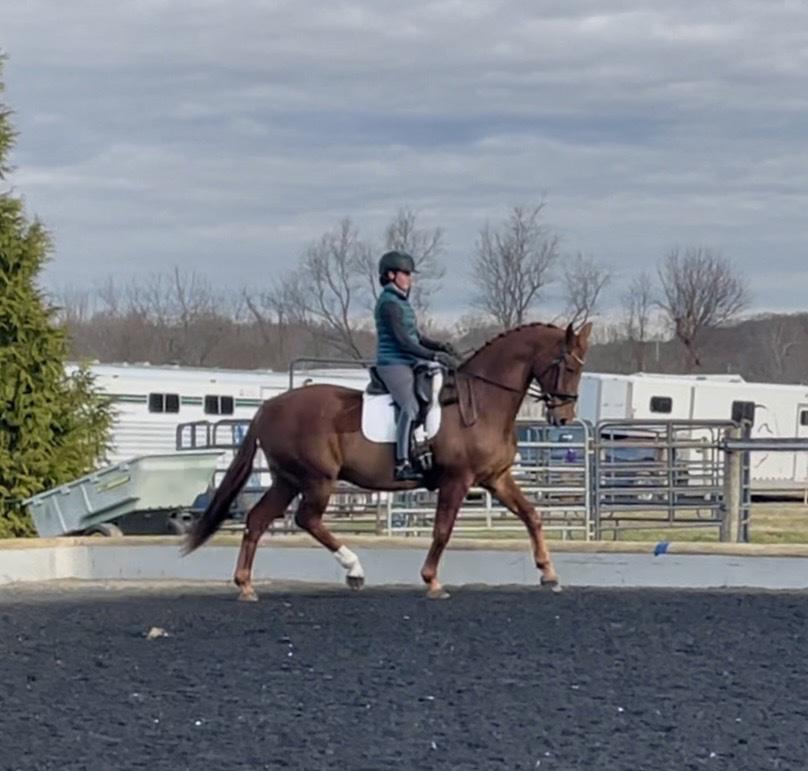
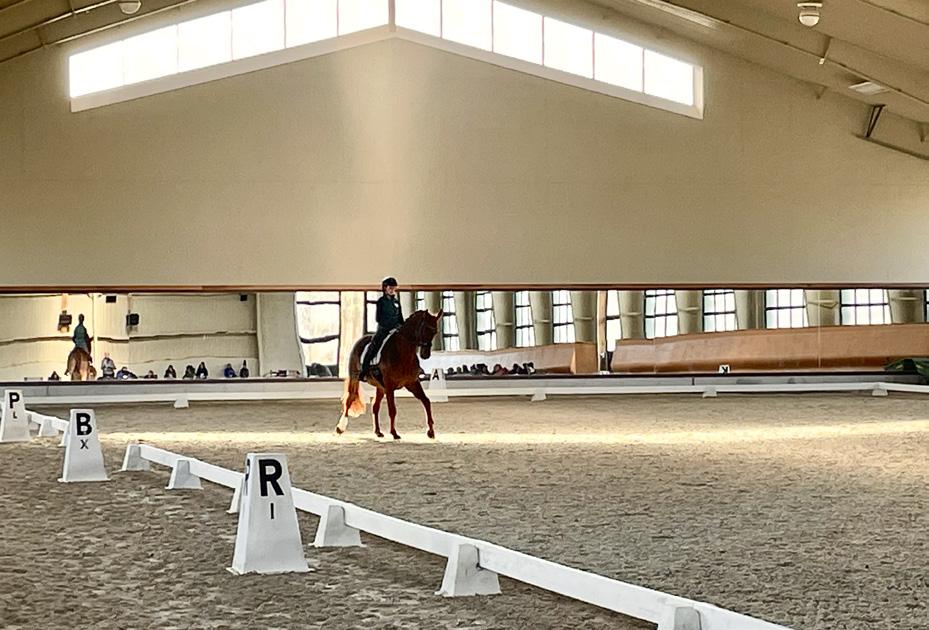
At Windurra, Ducati was a very good boy! Everything went about as well as it could have gone for our first outing of the year. He warmed up very well and was nice and peppy, and then he saw a horse on a treadmill for the first time, which blew his mind! But he recovered quickly. Olivia had to soothingly pet his head (LOL), and then he felt like himself again. We only had a few blips with those tricky right lead flying changes, although the counting in our tempis was correct. In my freestyle, I highlight our lateral work and pirouettes, which definitely paid off, as Ducati especially enjoys the pirouettes and finds them easy. I also do my canter and walk work before the trot work, which keeps him nice and forward in the trot afterward. In general, I was very pleased with how he felt and how it went.
After the freestyle ride, the head judge Dolly Hannon provided us with some feedback, going through the score sheet and explaining her reasoning behind certain scores. She was a great instructor, and she got a great read on Ducati and I after seeing all of our strengths and weaknesses during our ride. She said that getting the right lead change cleaner is the best way to improve our scores, which of course is a work in progress, but she suggested a good exercise to work on it. She said that at the USDF Trainer’s Conference in Florida this past winter, they worked a lot on yielding the horses off the leg from each side, really encouraging that suppleness through the body and the positive reaction to the leg while keeping the harmony and lightness. She had me start in the left lead canter and yield Ducati off my right leg towards the quarterline from the rail, making sure I had him really soft on the right and moving easily from my right leg to my left (outside) rein. Then I was to straighten him, make sure I wasn’t pulling on the right rein, and ask for the right lead change. This definitely helped clean up the change, although I know I still need to work on keeping him straighter in the neck in the changes. Regardless, it was a very helpful exercise! It is something that we have worked on at home before, as well, so Ducati was familiar with the exercise and responded well to it.
Our final score was 72.900%, which I am very excited to build upon. Thank you Lauren Annett for inviting me to ride in this program! I had a fabulous time. And thank you to DVCTA for organizing the event. It’s a pleasure to have these opportunities in our local community. It’s so nice to have lots of local GMOs and teams that are eager to host educational events for us all to learn from. Additionally, thank you to the team at Windurra for opening up your facility. I’d never been before, and it’s a gorgeous property with a top-notch setup. And last but certainly not least, thank you, Olivia Steidle, for your support, coaching, trailering, and much more: it’s always a fun day together!
Winter Homework Paid Off
By Paige Zimmerman
It’s been a long and busy winter! Ducati and I participated in two clinics over the last few months: one with Felicitas von Neumann-Cosel (our usual!), and one with a world-ranked German team rider, all thanks to a grant that was generously awarded to us by ESDCTA. We had planned to ride in a third clinic with Silke Rembacz, but that clinic had to be rescheduled due to weather and time constraints. I am looking forward to riding with her, hopefully soon. It’s safe to say that there have been plenty of exciting things going on despite the snow, mud, and rain we’ve all been bombarded with. I can only hope that we’ll have good luck with the weather for our show season after all this, and I am very much looking forward to drier days.
I hadn’t had the chance to ride with Felicitas since last summer, so it was wonderful to get feedback and new tools! Ducati has changed a lot over the past few months, and he is getting stronger in his ability to carry and in the flying changes. To start off, we worked on developing the canter to improve the flying changes and tempis. Felicitas had me practice a rhythmic exercise of rocking him back into a pirouette-like canter, then giving forward with the hand to encourage him to release and find more suppleness through his topline, and then sending him more forward again. It was a game of back-and-forth. My timing had to be quick enough that he could rock back and soften in his neck without losing his balance. I had to be able to keep him on my seat without holding him up, and make sure that when I gave forward, I didn’t just drop him but instead simply gave him room for his neck to get longer. Then, when I sent him forward again, he could push from behind into a longer neck and stretch to the contact even while still in a collected canter. It’s not a long and low stretch, but more like creating positive tension over his topline and encouraging self-carriage as well.
We also worked on this exercise in canter haunches-in to help develop the pirouette canter and his adjustability, allowing him to collect and then move forward out of the well.
collection again without becoming tight through the topline. It was important that when I gave with my hand and sent him forward, he could lower his neck and lift his back, creating more forward flow so that he gained more jump and suspension. When we returned to the changes, he had a much easier time flowing through them and keeping the hind leg active, which created nice, clean changes. We have been working hard all winter to improve Ducati’s changes, so it is incredibly gratifying to be able to work on them without sacrificing his relaxation or focus.
Nearing the end of the lesson, we moved to the trot, working toward creating passage steps without him tightening or raising his neck as he collected. We have been doing our homework over the last few months to develop a better quality trot and steps toward passage, and things are starting to fall into place. It gets a little closer every day! He seems to enjoy it, and when he finds his rhythm, I feel that he clicks in. He can hold it for a few steps, but it gets quite difficult. We get the best steps coming out of the passage idea, when he’s adding power and pushing out of the more collected steps. I need to figure out the timing to get that amount of suspension and power in a smaller step, which has always been a challenge for us. Having the hind leg be active, and him rocking back onto his hind end while also lifting his back, is a lot to think about and challenging for a horse with a very long back, but I feel that the strength is building.
Thank you to Felicitas for coming and teaching us all! I always have a great time and come away with new feelings to replicate in my everyday riding.
I was very excited about our second clinic with a world-ranked German team rider. This clinic was organized locally, and I was very grateful that a few others and I had the opportunity to ride with her for a weekend and get great feedback from very experienced eyes on the ground. I had a lot of fun in our lessons and felt that she pushed Ducati and me to keep moving forward and continue to prioritize harmony while creating that big power from behind that we need at the FEI levels. She made it clear that it’s important that he doesn’t raise his neck when the work gets harder, and that he needs to remain long and loose throughout his body, especially when collecting more for work in the pirouettes, and of course in the flying changes, as well.
She emphasized that keeping the flow in the half-passes and trot work is really important, and I felt that our canter half-passes flowed well too. She had a great eye and was very clear that the basics need to be solid so that everything else becomes easy. Toward the end of our rides, we worked on thinking about the passage, and she had me make sure that I didn’t hold him in the front to slow him down but instead imagined bouncing the trot higher and keeping my leg asking for power from behind. We got some really nice steps that I was very proud of.
I’m very grateful to have been able to ride in this clinic, especially with someone whose riding I’ve admired for a long time! I want to thank her for coming all the way from Germany and teaching us. It was a lot of fun!
Thank you to Olivia Steidle and other clinic organizers for working hard to make these clinics possible. And I would be nowhere without Olivia’s everyday training and support, of course. Once again, thank you to ESDCTA for the grant that enabled me to participate in these clinics. I’m very grateful and learned a ton. I can’t wait to see how our show season begins!
News from Outside the Ring
New Research Into Nosebands
The effects of noseband tightness was tested on 8 horses, and results were recently published. All horses were studied using their own bridles and bits, with a simple Cavesson noseband. For each horse, the noseband was tightened to the equivalent of 2 fingers (loosest), 1 finger, or no fingers (tightest). In addition to measuring stride length on a straight line, the horses were observed for any signs of discomfort (eg, mouth opening, abnormal tail movements, etc). Results showed a clear decrease in stride length the tighter the noseband, going from 2.14 meters down to 1.90 meters, a difference of 11%. This was despite a lack of outward signs of discomfort. Reasons given for the decrease relate to the way the nerves run along the head and how the fascia connect different muscle groups. You can read the full paper here: https://horse-sport.s3.ca-central-1.amazonaws.com/wp-content/uploads/2026/03/18112754/nosebands-stride-length.pdf
Next Year’s Florida Trek Will Look Different
If you plan on heading south next winter you will see a huge change from the previous 15 years. The Global Dressage Festival show grounds are being replaced by a high-end housing and recreation community. The last show on the grounds concluded just a few short weeks ago, and construction is already underway at Wellington International (where the hunter/jumpers are). There will be new horse barns and competition arenas specifically for dressage, and a new grass derby field is also being built since it’s also losing its home at Global. Under the agreement with the community, construction of the housing complex cannot be started until all of the horse facilities at Wellington International are completed and approved for use. Stay tuned, the barns and arenas should be finished by the end of May, and the first Global Dressage Festival competition at the new site is slated for January 13-17, 2027.
Class: 3 -
Bridle
Bit O Woods Farm Dressage Schooling Show
3/15/26
Class: 4 -
Bridle
Class: 11 -
Class: 18 -
Class: 19 - Open Division
Bridle
Class: 22 - Open Division
Class: 23 -
-
Horse Park Of New Jersey Winter Dressage Schooling Show