FALL 2026 EDITION
05
NEW AT THE TABLE: CAMPUS DINING CONCEPTS STUDENTS ARE TALKING ABOUT
07
LOVE AT FIRST BITE TAKES OFF ACROSS THE COUNTRY
17
A MATCH MADE IN DINING: FROM STUDENT STAFFERS TO LIFELONG PARTNERS
21
THE TEAM EFFORT BEHIND FEEDING THE ATHLETES OF THE 2026 SPECIAL OLYMPICS USA GAMES
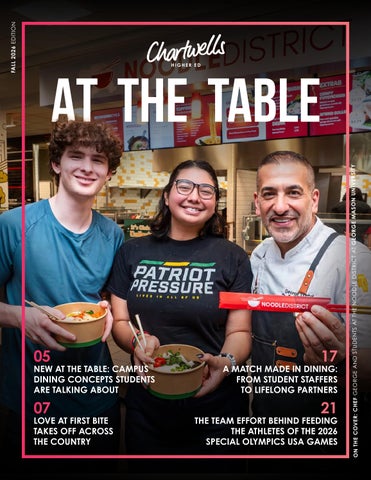
ON THE COVER: CHEF GEORGE AND STUDENTS AT THE NOODLE DISTRICT AT GEORGE MASON UNIVERSITY
AT THE TABLE
PICTURED: LOADED BRISKET BAKED POTATO FROM THE CATTLE DRIVE AT UNIVERSITY OF TEXAS RIO GRANDE VALLEY
1 | AT T H E TA B L E
C H A R T W E L L S H I G H E R E D U C AT I O N | 2
THE MOMENTS THAT BRING US TOGETHER F O RE WORD BY E VA WO J TALEWSK I CH IE F E X E CU TIVE OFFI C ER CH AR TWE LLS H IG H E R E DUC ATI ON
Some of the most meaningful moments in college happen outside the classroom. They’re found around shared tables, through campus traditions, and in the everyday connections that make a university feel like home. At Chartwells, we have the privilege of being part of those moments, creating dining experiences that bring people together, celebrate community, and leave a lasting impact. As I reflect on the incredible work happening across our campuses, I am continually inspired by the creativity, passion, and dedication of our teams. Their commitment to listening to students, embracing innovation, and building meaningful connections is what makes our work so special. It’s how we bring Dining, Made Personal to life, creating experiences that reflect the unique cultures, traditions, and needs of each campus community. In this edition of At the Table, you’ll discover how that commitment takes shape in the everyday moments that make campus dining so much more than a meal. By listening to student voices and working closely with our university partners, we’re creating experiences that celebrate individuality, foster a sense of belonging, and become a meaningful part of the college journey. You’ll also meet some of the remarkable people who bring our mission to life. We celebrate Senior Executive Chef George Charbel at George Mason University and General Manager Ashley Pitts at Cal State Fullerton, whose passion and dedication reflect the incredible talent across our organization. You’ll also read the heartwarming story of Steve and Donna Martens, who met as student workers at the University of Wisconsin–La Crosse more than 40 years ago and went on to build lifelong careers and a life together. Their story is a wonderful reminder that the connections we make through food can last a lifetime. I am incredibly grateful for our dedicated teams and the continued trust and collaboration of our campus partners. Together, we’re creating more than exceptional dining experiences. We’re building communities, celebrating milestones, and making memories that stay with students long after graduation. Here’s to the moments that bring us together and the lasting connections we create along the way.
PICTURED: STUDENTS ENJOYING GAME DAY AT UNIVERSITY OF TEXAS RIO GRANDE VALLEY
0 3| |A A TH 3 T TT H E ET AT A B LB EL E
C H A R T W E L L S H I G H E R E D U C AT I O N | 4
TABLE OF CONTENTS 05
How Student Feedback, Local Partnerships, And Culinary Creativity Are Shaping Campus Dining.
11
Welcome Back, Welcome Home: Love at First Bite Takes Off Across the Country
13
Meet the Chef Making Dining, Personal George Mason Chef Sets the Chartwells Standard
15
The Recipe for Leadership: Ashley Pitts’ Journey from Overnight Chef to General Manager
17
45 Years at the Table A Match Made in Dining
19
Ready When It Matters Nevada Dining Supports First Responders
21
Feeding Champions The Team Effort behind Feeding the Athletes of the 2026 Special Olympics
25
Feeding Game Day: Stadium Eats That Score Big
29
The Campus Dining Signal: Listening for What Students Will Need Next
5 | AT T H E TA B L E
FRESH IDEAS, MADE PERSONAL
J AC K F R U I T S A L A D F R O M K A B O B - I T E X P R E S S AT T H E U N I V E R S I T Y O F C H I C AG O .
C H A R T W E L L S H I G H E R E D U C AT I O N | 6
HOW STUDENT FEEDBACK, LOCAL PARTNERSHIPS, AND CULINARY CREATIVITY ARE SHAPING CAMPUS DINING. Great campus dining starts with understanding the people and communities we serve. Across the country, our teams are turning student feedback into exciting new concepts, bringing celebrated local chefs to campus, and creating convenient dining options that fit the way students live. These new dining destinations bring our commitment to Dining, Made Personal to life, blending culinary creativity, student insights, and meaningful partnerships to create experiences that go beyond the plate.
BRINGING LOCAL FLAVOR TO CAMPUS At the University of Chicago, four new dining concepts are bringing local culinary talent, cultural traditions, and fresh flavors to campus. Through partnerships with celebrated Chicago chefs and a commitment to authentic cuisine, UChicago Dining is creating experiences that reflect the rich diversity of the surrounding community.
Little Betty Smokehouse at University of Chicago
Little Betty Smokehouse Hutchinson Commons A longtime culinary partnership has found a permanent home at the University of Chicago. Award-winning Chicago pitmaster Chef Dominique Leach, known for her celebrated Lexington Betty Smokehouse in the city’s historic Pullman neighborhood, has brought her signature barbecue to Hutchinson Commons. Leach has been a familiar face at UChicago for years, participating in campus events and serving as a judge for the university’s annual grill competition. The opening of Little Betty Smokehouse builds on that relationship while bringing authentic Chicago flavors directly to students. Named in honor of Leach’s grandmother Betty King, the concept celebrates Southern cooking traditions with smoked brisket, pulled pork, loaded mac and cheese, and creative new offerings such as barbecue tacos and Betty’s Beef, a smokedbrisket take on the Chicago classic.
CONTINUED >
7 | AT T H E TA B L E
The Hunt Logan Center for the Arts At the University of Chicago’s Logan Center for the Arts, a new café is bringing food, art, and community together in a celebration of Chicago’s creative heritage. Developed in partnership with Little Black Pearl and the Richard Hunt Legacy Foundation, The Hunt honors the life and legacy of renowned Chicago sculptor Richard Hunt while creating a welcoming space for students, faculty, and the surrounding community. The experience extends beyond the menu. Designed by Little Black Pearl founder Monica Haslip, the space incorporates archival photographs, exhibition posters, and design elements inspired by Hunt’s sculptures. In the kitchen, celebrated vocalist and culinary artist Chef Lizz Wright brings her soulful approach to food with Southern-inspired dishes, signature sandwiches, all-day breakfast, and house-made baked goods. Building on a longstanding partnership between Little Black Pearl and the Logan Center, The Hunt creates a unique destination where culinary creativity and artistic expression come together around the table.
traditions with dishes such as conch fritters, pigeon peas and rice, Bahamian mac and cheese, and refreshing tropical beverages. Beginning on campus, Bahama Shack brings a unique cultural dining experience beyond the traditional dining hall, with the flexibility to serve the greater Chicago community. Kabob-It Express the University of Chicago Explore the full story.
The Hunt at University of Chicago
BAHAMA SHACK Food Truck The vibrant flavors of the Bahamas have arrived at the University of Chicago with the launch of Bahama Shack, a new food truck developed through UChicago Dining’s partnership with Chartwells. Bringing the concept to life was a nearly twoyear effort, with Chef Thomas Gilbert helping navigate the operational requirements and collaborating with Bahamian culinary experts to ensure authenticity. Under the culinary direction of Bahamian-born Chef Courtney Neil, the menu celebrates island
Bahama Shack at at University of Chicago
C H A R T W E L L S H I G H E R E D U C AT I O N | 8
INSPIRED BY STUDENT VOICES CAL POLY | KAI POKE What started as a seasonal pop-up has become a permanent student favorite at Cal Poly. Kai Poke first launched in fall 2025, giving students a taste of its signature and build-your-own bowls, poke burritos, and fresh sides. The enthusiastic response, supported by student survey feedback, led the team to bring the concept to 1901 Marketplace. The menu features customizable options including ahi, tofu, New Kai Poke Venue at Cal Poly pork belly teriyaki, and chicken katsu. Since its permanent opening, Kai Poke has generated 30% sales growth compared with the location’s previous concept, demonstrating the impact of turning student preferences into action.
GEORGE MASON UNIVERSITY | NOODLE DISTRICT When 34% of George Mason University survey respondents expressed interest in made-to-order pho, ramen, and noodle dishes, the Mason Dining team got to work creating an entirely new concept. Developed collaboratively by the campus culinary, operations, marketing, and sustainability teams, Noodle District opened in August with a menu of signature ramen and pho bowls and customizable options. Students can choose their noodles, broth, protein, and toppings, creating a meal that reflects their individual tastes.
Chef George Charbel’s Noodle District
Even the name pays tribute to the campus community, with “District” referencing Mason’s proximity to Washington, D.C. The result is a dining experience developed around the preferences of Mason students.
UNIVERSITY OF FLORIDA | SOCIAL TACO Student feedback revealed a strong appetite for more Mexican-inspired dining options at the University of Florida, prompting Florida Fresh Dining to introduce Social Taco at United Table, UF’s new international food hall. The new street taco concept brings student-requested flavors to campus, featuring proteins such as carne asada and pollo asado alongside fajita vegetables. With meal plan retail equivalency available, the concept makes it easier for students to enjoy their favorite flavors throughout the week.
Loaded Nachos at Florida Fresh Dining
CONTINUED >
9 | AT T H E TA B L E
MADE FOR THE WAY STUDENTS LIVE UNC CHARLOTTE | HALF MOON EMPANADAS
UNIVERSITY OF UTAH | TRAILHEAD DINING
UNC Charlotte has welcomed a taste of Miami to the Popp Martin Student Union with Half Moon Empanadas, the brand’s first university location outside Florida.
The University of Utah’s newest residence hall, Trailhead, is bringing dining, convenience, and community together under one roof. Its 135-seat café features three concepts alongside a graband-go market, giving students more ways to dine throughout their busy schedules.
Designed for students on the move, the concept serves freshly baked, portable empanadas with savory and sweet fillings. At $5.49 each, the menu provides an affordable option for breakfast, lunch, dinner, or a quick snack between classes. The new location has already seen an enthusiastic response, with opening-week sales increasing nearly 70%, highlighting the demand for flavorful, convenient dining options.
All Pho U serves Vietnamese favorites featuring house-made broths and noodles, while QDOBA offers customizable Tex-Mex classics. Local favorite The Other Side Donuts, selected through student voting, brings signature baked treats, coffee, and savory breakfast options to campus. The addition of Base Camp provides high-protein meals, allergen-conscious selections, and convenient grab-and-go choices. With mobile ordering and Swoop Swaps dining plan access, the new locations offer flexibility and variety just steps from students’ residences. TEXAS A&M UNIVERSITY | REV’S AMERICAN GRILL
Half Moon Empanadas at UNC Charlotte
Aggie pride is taking center stage at Texas A&M University’s newly refreshed Rev’s American Grill. Located in the Memorial Student Center and named in honor of Reveille, the university’s beloved mascot, the reimagined dining destination brings together campus tradition, an updated menu, and a renewed sense of school spirit. The transformation introduces a stronger visual identity that celebrates the traditions unique to Texas A&M. Student feedback also helped shape the refreshed dining experience, creating a space where Aggies can enjoy familiar favorites, connect with friends, and celebrate what makes their campus special.
Rev’s American Grill at Texas A&M University
C H A R T W E L L S H I G H E R E D U C AT I O N | 1 0
UNIVERSITY OF NORTH ALABAMA | WENDELL’S PLACE A new dining destination at the University of North Alabama is bringing fresh flavors and everyday convenience to a space rooted in campus history. Located in the Wendell W. Gunn University Commons, named by the community in honor of the university’s first Black student, who enrolled in 1963, Wendell’s Place offers a welcoming place for students to gather, recharge, and connect. The concept brings two experiences together in one convenient location. Brews serves handcrafted coffee, Piper & Leaf teas, smoothies, and specialty beverages, while Bites features breakfast sandwiches, wraps, salads, and graband-go favorites. With weekday beverage service extending into the evening, Wendell’s Place gives students more flexibility to enjoy fresh food and familiar favorites throughout their day.
Wendell’s Place at University of North Alabama
Bagel Sandwich: Ham & Swiss with Honey Dijon Aioli, served on an Asiago bagel.
Jar of Tea: Piper & Leaf is a local tea company based in Lacey’s Spring, Alabama, approximately 90 minutes from the UNA campus.
1 1 | AT T H E TA B L E
Love at First Bite: THE FIRST OF MANY MILESTONES CREATING MEANINGFUL CONNECTIONS THROUGH EVERY STAGE OF THE COLLEGE JOURNEY College is filled with defining moments, from the first friendships made on campus to the milestones celebrated along the way. Through Milestones, our signature student engagement program, we’re creating dining experiences that evolve alongside students throughout their four years of college, fostering belonging, encouraging personal growth, and preparing them for life beyond graduation. The journey begins with Love at First Bite, our signature welcome-back celebration that brings students together through food, interactive experiences, and opportunities to build lasting connections. This fall, our teams brought the celebration to life in ways that reflected the unique spirit of each campus community.
P H O T O BY C A L P O LY C A M P U S D I N I N G
C H A R T W E L L S H I G H E R E D U C AT I O N | 1 2
A NEW CHAPTER AT THE UNIVERSITY OF KENTUCKY At the University of Kentucky, one of our newest campus partners, Love at First Bite invited Wildcats to look beyond their first semester and imagine the years ahead. Students wrote letters to their senior-year selves, capturing their hopes and aspirations, and shared personal goals on a Milestones Wall. The experience connected the excitement of a new beginning with the friendships, achievements, and memories still to come, setting the stage for a journey that UK Hospitality will continue celebrating throughout students’ college years.
BUILDING SKILLS AND CONNECTIONS AT BAYLOR At Baylor University, Love at First Bite introduced students to opportunities for learning and personal growth that extend beyond the welcome-back celebration. During a First Year Eats Teaching Kitchen, Executive Chef Joel Edwards helped 17 students prepare nutritious overnight oats, teaching practical skills they could use in their residence halls. The experience also introduced a College Survival Teaching Kitchen series planned for the year ahead, creating ongoing opportunities for students to learn and connect through food. Together, these experiences demonstrate how Milestones is making dining part of the college journey, creating connections and memories that grow with students through graduation.
1 3 | AT T H E TA B L E
Chef George Charbel 2026 CHEF OF THE YEAR
C H A R T W E L L S H I G H E R E D U C AT I O N | 1 4
GEORGE MASON’S CHEF SETS THE CHARTWELLS STANDARD Once a month, 50 lucky students at George Mason University score one of the most coveted tickets on campus: a seat at the Supper Club, a monthly themed dinner organized by Mason Dining services. Students are treated to an intimate, bistro-style meal that turns ordinary campus dining into something extraordinary. The mastermind behind the concept is Senior Executive Chef George Charbel who has spent years blending high-end culinary flair with genuine community connection. It’s that rare ability to make a massive university feel like a close-knit table that earned him recognition as Chartwells Higher Education’s 2026 Chef of the Year. Step into one of his monthly Supper Clubs, and you immediately see how George has elevated Mason Dining by pairing culinary excellence with an exceptional guest experience. At a recent Italian Pasta Party, guests were treated to tableside Caesar salad service and a walking cannoli station. Under his leadership, meal plan participation grew by 4% during his first year, guest satisfaction increased by more than 2.5% and his team delivered more than 45 intentional, branded culinary events in a single semester. The numbers are significant, but they do not fully explain Chef Charbel’s impact. That can be seen in the way he develops his team, creates opportunities for students and invests in the next generation of culinary leaders. Through hands-on coaching and creative collaboration, Chef Charbel is helping prepare the next generation of culinary talent. And he is quick to give credit to the people around him: “No chef succeeds alone. Behind every great meal, memorable experience and achievement is a talented team working together with passion, purpose and pride.” That perspective is at the heart of Chef Charbel’s leadership. He is not only creating memorable meals. He is building a team, raising expectations and showing what campus dining can become when culinary ambition is matched by care, consistency and strong execution.
1 5 | AT T H E TA B L E
From Overnight Chef to General Manager: Ashley Pitts Is Redefining Leadership at Cal State Fullerton
For Ashley Pitts, the general manager of dining services at Cal State Fullerton, food is much more than sustenance; it is a profound language. As a self-described introvert, Pitts learned early on that the culinary arts offered a way to connect with others and extend a warm welcome without needing to say a word. Today, this unique perspective is at the heart of her leadership approach, shaping the way she nourishes both her team and the students she serves. Her journey with Chartwells Higher Education began in 2017 at the University of Houston,
where she took on the demanding role of an overnight chef manager at Moody Towers. Working the third shift in a 24-hour dining hall was a challenging but highly formative experience. It was during these grueling hours that Pitts learned the critical importance of preparation, realizing that the work done overnight laid the necessary foundation for the day ahead. Chartwells has consistently provided Pitts with avenues to expand her capabilities. After rising to the role of executive sous chef in Houston, she relocated to California during the COVID-19 pandemic to become the executive chef at Cal State San Bernardino. Three years later, she was asked to bring her culinary expertise to CSUF to serve as their executive chef, a strategic move that eventually led to her recent promotion to general manager. Pitts’ transition from the kitchen to the general manager’s office was fueled by her innate curiosity and desire to understand the broader business operations. Even while serving as an executive chef, she actively engaged in conversations about budgets and food costs, seeking to know the “why” behind the numbers rather than just accepting them. By voluntarily stepping into client-facing meetings long before she applied for the GM position, Pitts steadily built the relationships and financial acumen necessary for executive leadership. Her culinary background heavily influences her current management style, which is deeply rooted in collaboration and mentorship. Growing up in a food-driven family, she spent countless hours in the kitchen with her grandmother, absorbing the rich traditions of Cajun and Creole cooking. Just like her grandmother guided her, Pitts enjoys working side by side with her staff.
“We all have areas of expertise, and if we bring that together, it’s probably going to create a better outcome than I can imagine on my own,” Pitts said.
C H A R T W E L L S H I G H E R E D U C AT I O N | 1 6
Making Room at the Table
I N 2 0 2 4 A S H L E Y WA S R E C O G N I Z E D A S C H A R T W E L L S ’ C U L I N A R Y D I F F E R E N C E M A K E R O F T H E Y E A R A N D AT T E N D E D C O M PA S S G R O U P ’ S C O M PA S S N I G H T O F S TA R S AWA R D S C E R E M O N Y I N O R L A N D O , F L O R I D A .
She also is determined to dismantle the stereotype of the loud, aggressive commercial kitchen. Acknowledging that the hospitality industry is inherently stressful, she intentionally cultivates a lighthearted and fun work environment. By showing genuine compassion for her team as individuals rather than just focusing on their performance, she ensures that her team can laugh and smile through the daily pressures. A significant catalyst for Pitts’ professional growth has been Chartwells’ “Women in Culinary” group. Joining this supportive network helped her discover her own voice and gave her the confidence to step out of her comfort zone and apply for the general manager role. “When you’re introverted, you don’t put yourself out there a lot,” Pitts said. “Being in this group showed me that it’s good to raise your hand.”
1 7 | AT T H E TA B L E
IT STARTED IN THE DINING HALL AND LED THEM RIGHT BACK Amid the clatter of trays and the daily hum of conversation inside a dining hall at the University of Wisconsin – La Crosse in 1981, a love story was quietly beginning to simmer. Donna Bartz was a student manager in dining services, and Steve Martens was a food and beverage runner. They ran in the same friend circles outside of work and even played racquetball together, but they were dating other people at the time.
45 YEARS AT THE TABLE DONNA AND STEVE WEDDING 1985
However, Steve soon experienced a moment of clarity before he graduated. While looking out the front window of his house, he watched Donna walk by on her way to class and heard an internal voice tell him, “You’re gonna marry that girl.” Nearly five decades later, they are back on campus, both in management roles in UWL’s dining services and happily married for 41 years. They proudly credit their shared careers in college food service as the secret ingredient that has kept their marriage going strong amid long hours and several relocations.
C H A R T W E L L S H I G H E R E D U C AT I O N | 1 8
“When you work in food service, you know how it goes,” Donna said. “Some other people may ask, ‘What are you doing?’ ‘Why are you there so late?’ When you’ve done those jobs yourself, it helps you to understand better.” From co-workers to couple Their campus food service careers began right after college with a company that eventually merged with Compass Group. Steve went to the University of Wisconsin – River Falls, while Donna, who graduated two years later in 1983, started at the University of Wisconsin – Whitewater. Steve eventually transferred to the Whitewater campus, where their relationship blossomed. Their jobs required lengthy shifts and late-night inventory sessions, but the couple found joy by going out together after work. They tied the knot in March 1985, planning their wedding and honeymoon to Hawaii around the university’s spring break so they wouldn’t miss a meal service. They had a daughter soon after.
Donna and Steve at their UW La Crosse anniversary party
Balancing a marriage and long hours
“If she’s gone even for a day, I feel like I lost my left arm.” Their careers took them to colleges in Chicago and Tennessee before they settled at North Central College in Naperville, Illinois, where they worked for 25 years. During that time, Steve often worked grueling six- or seven-day weeks catering events for the college president, from formal dinners and cocktail parties to football tailgates. Navigating a marriage while working side-byside in a demanding industry requires a special kind of harmony. The couple set a strict 30-minute limit on talking about their workday when they get home.
“We’ve learned to laugh,” Donna said. “We don’t take everything so seriously. We know each other’s weaknesses and strong points. That helps, but it’s more important that we laugh a lot.” In 2017, the couple brought their journey full circle by returning to UWL, the very place they first met. Today, Steve serves as the resident district manager of dining services, and Donna is the associate director of dining services for the Whitney Dining Center. Through countless meals service, Donna and Steve have maintained a profound, unbreakable connection. “If she’s gone even for a day, I feel like I lost my left arm,” Steve said. “Even at work it’s not the same when I know her soul is not on campus.”
1 9 | AT T H E TA B L E
Nevada Dining Supports First Responders and the Campus Community During Northern Nevada Wildfires As Northern Nevada faced one of its most challenging wildfire seasons, Nevada Dining stepped forward to support both the emergency personnel protecting the region and the community members impacted by evacuations and loss. Within the first 10 days of August, two humancaused wildfires, the Bug Fire and Stallion Fire, ignited in Northern Nevada. As the fires grew, evacuation orders forced more than 13,000 residents to relocate, creating challenges for displaced families as well as the emergency response teams working long hours on the front lines. Later in the month, the Hawk Fire ignited northwest of Reno, further impacting the region and underscoring the widespread effects of wildfire season across Northern Nevada. While the University of Nevada, Reno campus remained safe and operational, many students, faculty, staff and community members were directly affected. Some faced evacuation orders or uncertainty about their homes, while others answered the call to protect their communities. For the Nevada Dining team, the response began with a simple question: How can we help?
The answer was to open the doors of Pack Place, the university’s all-you-care-to-eat dining hall, to those who needed support most. Students, faculty and staff affected by the wildfires were offered reduced meal pricing, including $5 breakfast and lunch options and $10 dinners. In total, 188 individuals utilized these dining hall offerings during the emergency response period. In addition, Nevada Dining donated 1,500 meals to first responders working on the front lines and extended complimentary dining hall access to firefighters, law enforcement officers, EMTs, paramedics and support crews as a small token of appreciation for their service. The response from local agencies was heartfelt. The Washoe County Sheriff’s Office shared:
“Thank you so much again to you and your team for generously donating all of those sandwiches! They went like hotcakes to our staff. We focused on our staff that were pulled out in the field to support the fire or that were called in for mandatory backfill while others were out on the fire. Thank you again for your care and generosity!”
C H A R T W E L L S H I G H E R E D U C AT I O N | 2 0
The CrossRoads Community Support team inventorying products for community distribution.
For many, the impact was personal. One University faculty member lost part of her home in the Hawk Fire, while her father, who lived nearby, lost his entire house. Reflecting on the devastation, she shared, “This fire has hit home.” At times like these, a meal becomes more than nourishment. For a first responder coming off the line, it’s a hot plate and a seat to stay put in for a while. For a student whose family has been displaced, it’s one less stress factor in a day already filled with them. For both, it serves as a reminder that their community is standing behind them. All fires reached 100% containment by the end of August 2026. Combined, the fires burned for 19 days and impacted approximately 150,491 acres, including 137,607 acres in Nevada and 12,817 acres in California. While the fires have since been contained, their effects continue to be felt across the region. Nevada Dining’s mission is to “Feed the Pack,” but during this wildfire season, that commitment extended beyond campus boundaries. By providing accessible, nutritious meals and a welcoming space for both those affected by the fires and those working to contain them, Nevada Dining demonstrated that caring for a community during a crisis does not always require grand gestures. Sometimes, it is as simple
as holding the door open, serving a warm meal and ensuring that everyone who walks through feels supported. Through these efforts, Nevada Dining remained committed to serving not only the university community, but the broader Northern Nevada region during a time of need.
Nevada Dining team unloading cases of food and water for first responders.
Nevada Dining and CrossRoads Community Support Team coming together to distribute product to the impacted community and first responders.
2 1 | AT T H E TA B L E
MORE THAN A MEAL
C H A R T W E L L S H I G H E R E D U C AT I O N | 2 2
THE TEAM EFFORT BEHIND FEEDING THE ATHLETES OF THE 2026 SPECIAL OLYMPICS USA GAMES Long before the first Special Olympic athlete arrived in Minneapolis, people across the country were already raising their hands, volunteering for extra shifts, packing suitcases and traveling hundreds of miles, or simply saying yes to helping wherever they were needed. For nearly two years, the M Food Co. dining team at the University of Minnesota worked alongside university leaders and Special Olympics organizers to prepare for the 2026 Special Olympics USA Games. But when the event finally arrived, it wasn’t the planning or logistics that defined the experience. It was the people. For nine days, the University of Minnesota became home to more than 3,000 athletes and 1,500 coaches representing all 50 states and every corner of the country. Dining halls turned into gathering places where competitors refueled, families came together and new connections formed between people who may have never otherwise crossed paths. “The meals mattered, but what mattered even more was how people felt when they walked through our doors,” said Justin Anderson, senior executive chef at the University of Minnesota. “We wanted every athlete to know they belonged here. Our team made it their mission to create a place that felt welcoming, familiar, and full of care.” As athletes settled into campus life and routine, dining team members quickly moved beyond serving meals. They learned names. They remembered their favorite foods. They took
extra care with dietary needs and found ways to make every athlete feel seen. Athletes from Team Hawaii shared how much they missed familiar flavors from home. After hearing that, the culinary team prepared SPAM fried rice, a favorite Hawaiian comfort food that gave them a personal touch when they needed it most. For the athletes, it was more than a meal. It helped them feel cared for, grounded, and ready to compete. Later in the week, after winning gold medals, members of the team returned to thank the staff who had made the meal possible. It was a simple gesture, but one that captured the spirit of the Games.
“We wanted every athlete to know they belonged here.” Justin Anderson, SENIOR EXECUTIVE CHEF AT THE UNIVERSITY OF MINNESOTA.
Moments like that happened throughout the week. Athletes from Wisconsin were thrilled to find fresh cheese curds waiting for them after a long day of competition. Team members became the athletes’ biggest fans, stopping between shifts to chat, laugh, and celebrate victories. On the final evening, a spontaneous dance party broke out in one of the dining halls, transforming an ordinary dinner service into a joyful sendoff. “Some of the most meaningful moments happened between meals,” Chef Justin said. “You’d see athletes teaching team members dances, sharing stories about their journey or just laughing together. Those are the memories people carried home.” CONTINUED >
2 3 | AT T H E TA B L E
The experience also brought together associates from campuses across the country. Experienced dining teams traveled to Minnesota to support the operation, working shoulder to shoulder with local teams and colleagues from across Chartwells and Compass Group. Many arrived not knowing exactly what the week would bring, but what they quickly found was a shared purpose. Together, the teams adapted to changing schedules, accommodated a wide range of dietary needs, and helped create a dining experience that allowed athletes to focus on competition, recovery, and celebration. “The collaboration was incredible,” according to Chef Justin. “People stepped into whatever role was needed. Everyone understood that this week was bigger than any one of us.” When the Closing Ceremonies concluded and athletes began their journeys home, the impact continued. Surplus food from the Games was donated to local organizations, helping provide meals for nearly 4,000 members of the Minneapolis community. Looking back, the success of the week was measured by more than the 110,000 meals served. It was found in athletes who traveled thousands of miles, the conversations shared across dining tables, teammates who crossed the country to support one another and the countless small acts of hospitality that reminded every athlete they were welcomed, valued and celebrated. “The 2026 Special Olympics USA Games were a beautiful demonstration of what happens when a team truly shows up,” said Christine Sovereign, President and CEO of the 2026 Special Olympics USA Games. “The university and its dining team completely exceeded expectations, going above and beyond to personalize experiences and make Games week amazing for our athletes and their families.”
When the closing ceremonies ended and athletes began their journeys home, the spirit of service continued. Leftover food was donated to support nearly 4,000 neighbors in the Minneapolis community, extending the impact beyond the Games themselves. For one unforgettable week in Minnesota, food was the personal connection. And the people behind it made all the difference.
C H A R T W E L L S H I G H E R E D U C AT I O N | 2 4
“The 2026 Special Olympics USA Games were a beautiful demonstration of what happens when a team truly shows up.” Christine Sovereign, PRESIDENT AND CEO OF THE 2026 SPECIAL OLYMPICS USA GAMES
2 5 | AT T H E TA B L E
STADIUM EATS THAT SCORE BIG
C H A R T W E L L S H I G H E R E D U C AT I O N | 2 6
FEEDING GAME DAY: HOW CAMPUS DINING IS ELEVATING THE STADIUM EXPERIENCE When fall football Saturdays arrive, the energy on campus isn’t just in the student section it’s sizzling at the concession stands. This season, Chartwells dining teams across the country are elevating the stadium experience with creative, over-the-top menu items, local partnerships, and fanfriendly pricing that keep stadium crowds fueled from kickoff to the final whistle. At Bowling Green State University, BGSU Dining took over athletics concessions at Doyt Perry Stadium and completely revamped the game-day lineup in just eight weeks. Along with slashing prices on core fan favorites by about 30%, they debuted showstopping creations like the Glizzila, an allbeef foot-long hot dog topped with brisket, coleslaw, fried onions, and BBQ sauce, and Falcon’s Nest Nachos, featuring kettle chips piled high with pulled pork, pickles, cheddar, and fried onions. Over at UNC Charlotte, fans can get big flavors without breaking the bank thanks to the new
Fresh takes on stadium favorites are elevating the game-day experience at BGSU.
BGSU’s Glizzila - all beef foot-long hot dog topped with brisket, coleslaw, fried onions and barbecue sauce
CONTINUED >
2 7 | AT T H E TA B L E
Budget Blitz menu, offering five core stadium staples like value tacos, pretzel bites, and hot dogs, all at afordable prices. For those craving something bold, the stadium lineup now features The Albinator, a ribeye and provolone sandwich topped with roasted and fried onions inspired by Head Coach Tim Albin, alongside Gouda mac and cheese bites. The stadium also welcomed alumni-owned Gleezy Dog, a double-smoked, all-beef hot dog made with brisket. Meanwhile, Texas-sized flavor took over the University of Texas Rio Grande Valley with the expansion of their wildly popular Cattle Drive concept. Loaded brisket potatoes, brisket sliders, and the new “Cattle Dog” helped drive an incredible 59% increase in transactions during the season opener. And at the University of North Alabama, UNA Dining helped celebrate a milestone by feeding fans at the inaugural kickoff in the brand-new Bank Independent Stadium, pairing classic concession staples with local flavors from Fourth Planet BBQ, Miami Ice, and Bojangles.
Fresh takes on stadium favorites are elevating the game-day experience at BGSU.
Whether it’s a coach-inspired signature sandwich or a footlong loaded hot dog, one thing is certain: college football fans are winning big at the concession stand this fall. Concessions at University of Texas Rio Grande Valley
The Albinator, a made-from-scratch fan favorite, features thinly sliced ribeye on the grill, provolone melted just right, roasted peppers and onions for that sweet-savory play, piled on a fresh hoagie roll and finished with crispy onion petals for crunch.
C H A R T W E L L S H I G H E R E D U C AT I O N | 2 8
UNIVERSITY OF NORTH ALABAMA DINING KICKS OFF NEW ERA O F G A M E D AY D I N I N G A T B A N K I N D E P E N D E N T S T A D I U M
2 9 | AT T H E TA B L E
Real Voices. Real Insights.
C H A R T W E L L S H I G H E R E D U C AT I O N | 3 0
STUDENT VOICES: SHAPING WHAT’S NEXT IN CAMPUS DINING What makes a great campus dining experience? According to more than 2,000 students, it’s about more than what’s on the menu. It’s about having food they can count on, options that fit their everyday lives, and meaningful connections that make campus feel like home. Our newest Campus Voices report brings these perspectives to life, drawing on 300 focus groups across 50 campuses to better understand what builds trust, creates value, and keeps students coming back. The findings reveal that students are prioritizing consistency over endless choice, seeking flexible dining options that meet their individual needs, and looking for meals that support their wellness goals. From high-protein, nutrient-rich foods to authentic global flavors, students
want dining experiences that reflect who they are and how they live. But perhaps most importantly, students reminded us that dining is about more than food. While digital convenience continues to shape their routines, familiar faces, welcoming spaces, and engaging events remain essential to creating a sense of belonging. These insights build on our 2026 Campus Dining Index and Campus Dining Signal reports, helping our teams understand not only what students want today, but what they may need next. Together, these findings reinforce our commitment to Dining, Made Personal, creating experiences that help students feel seen, supported, and connected to their campus communities.
All content © Chartwells Higher Education © 2026 Compass Group USA, Inc. All rights reserved.
Follow Us @ChartwellsHigherEd
Connect With Us Linkedin.com/company/ chartwells-higher-education-division-/
Watch Us /ChartwellsHigherED
Chartwells At The Table Magazine is the proud winner of the 2026 Gold Brand Storytelling and Editorial Publication Award from Hermes.