






“Passing, glimpsing, everything seems accidentally but miraculously sprinkled with beauty.”

As underclassmen, we found ourselves dropped into a metamorphic race—measuring our worth in minutes, stacking accomplishments like mile markers, sprinting toward a distant nish line. We tried to be top achievers, evading the limits of our bodies and cra ing dazzling activity résumés. In obsessing over arrival, we lost ourselves in mazes of work, forgetting to look up and notice where we already stood.
Now, in our senior year, something has shi ed. e race feels less urgent, the nish line less absolute. We have begun to understand that perhaps it was never about outrunning time, but learning how to move within it—how to pause mid-stride and let a moment widen.
In this year’s edition of “Blue Review,” we approach this transition with gentler eyes, loosening the grip of academic pressures that so o en prevent us from savoring these nal years. In “Street Haunting: A London Adventure,” Virginia Woolf sets out to buy a lead pencil but instead wanders the evening streets, destination forgotten. In the hush of dusk, she discovers that peace resides not in the errand completed, but in the owl’s call, the cold air against her face, the icker of lamplight in shop windows. Our magazine is born from that same permission to wander.
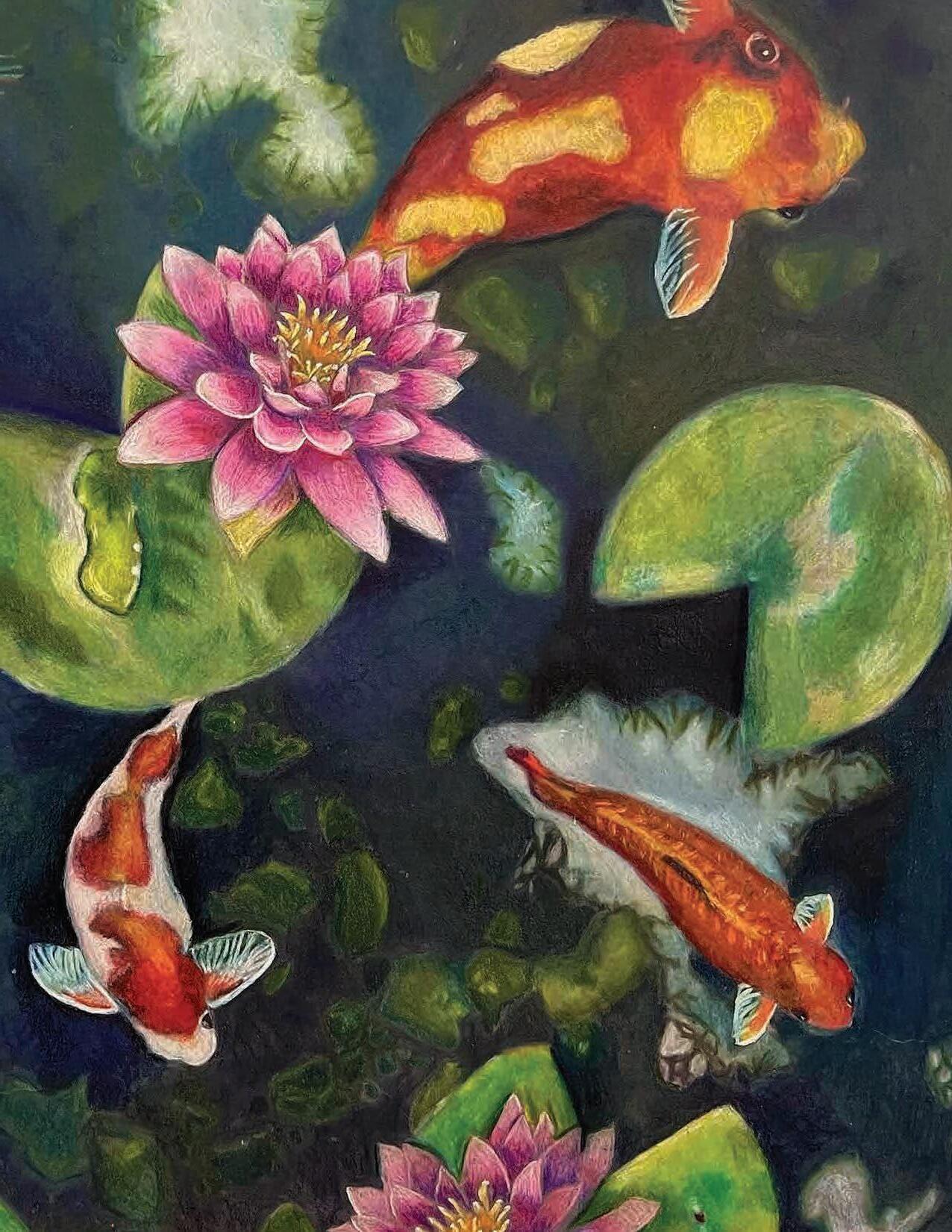
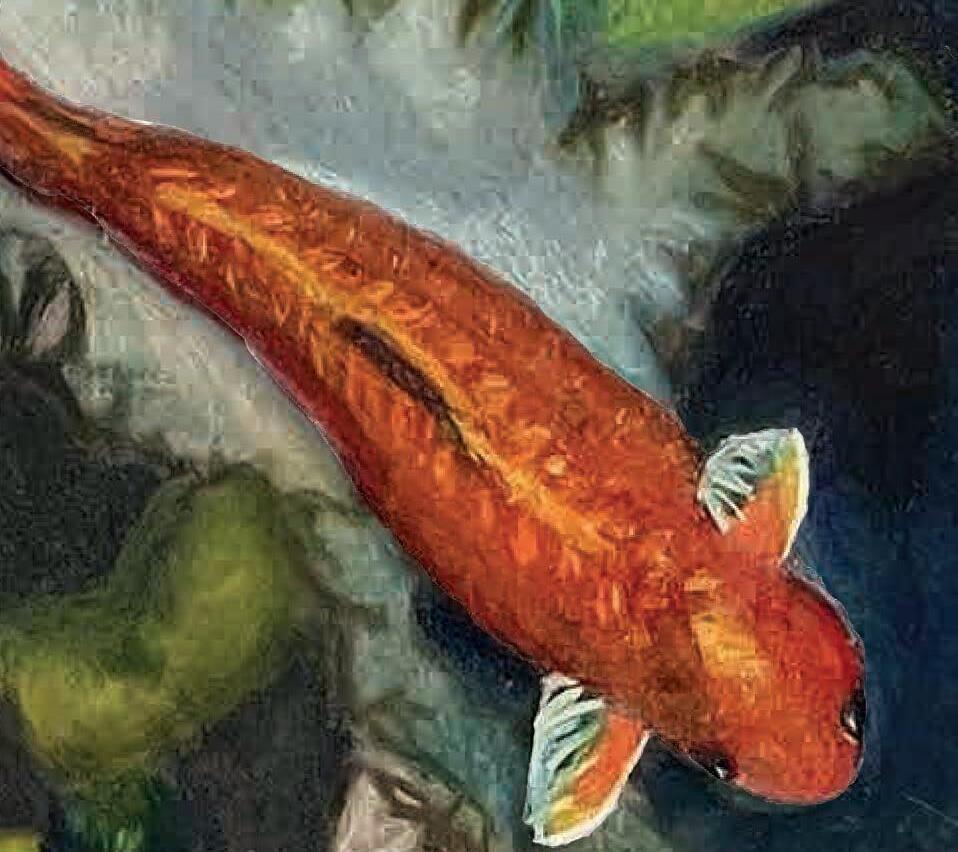
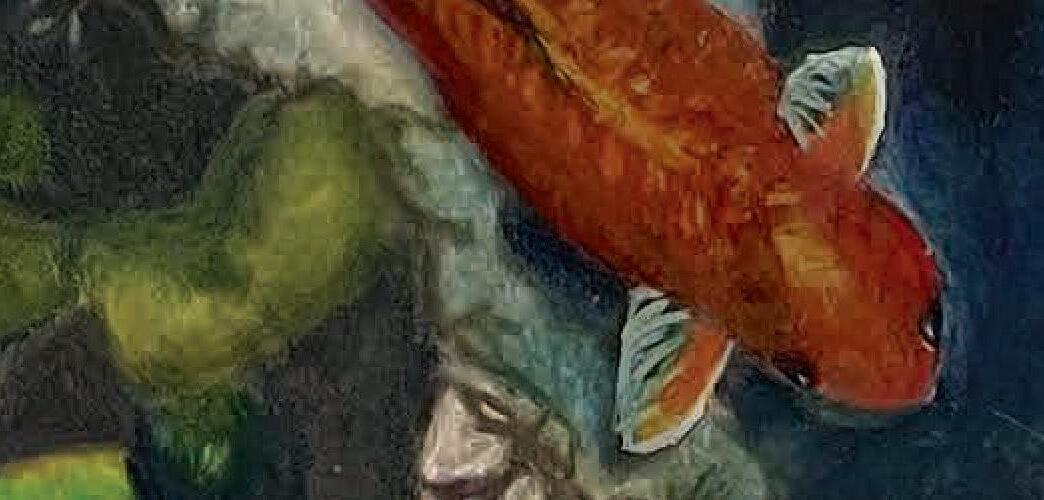
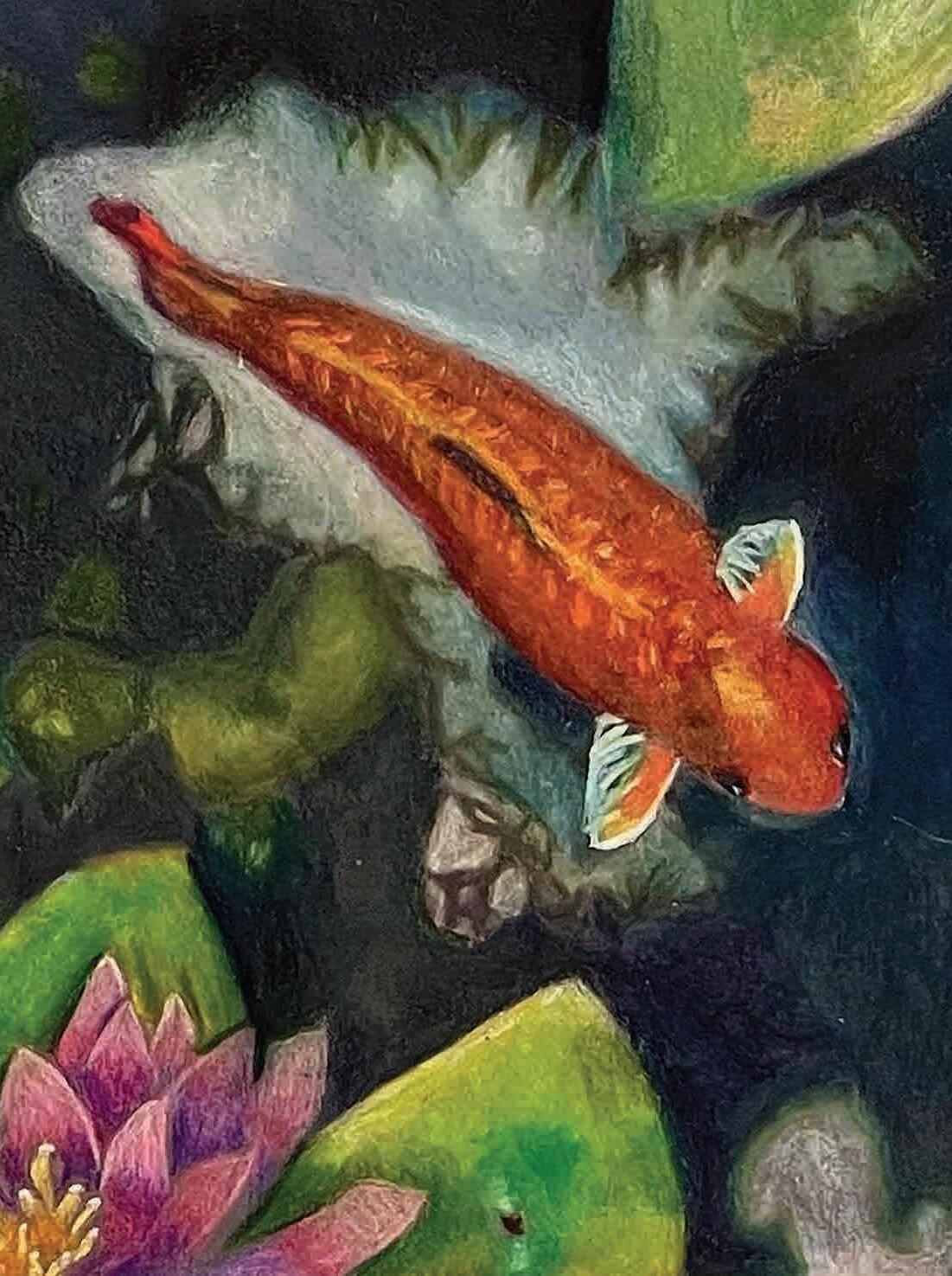
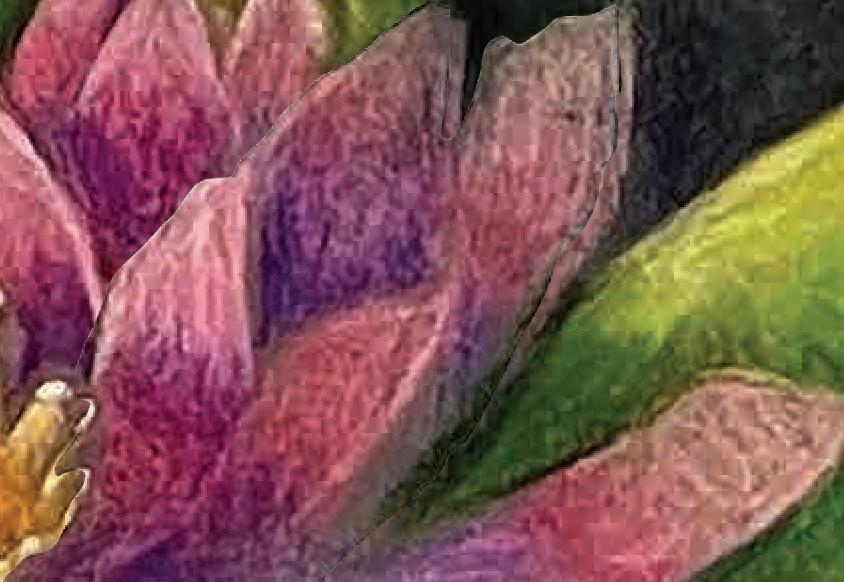
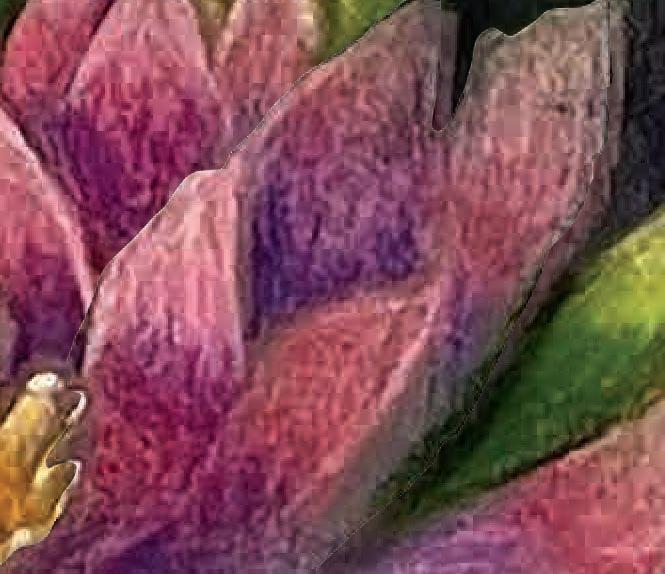
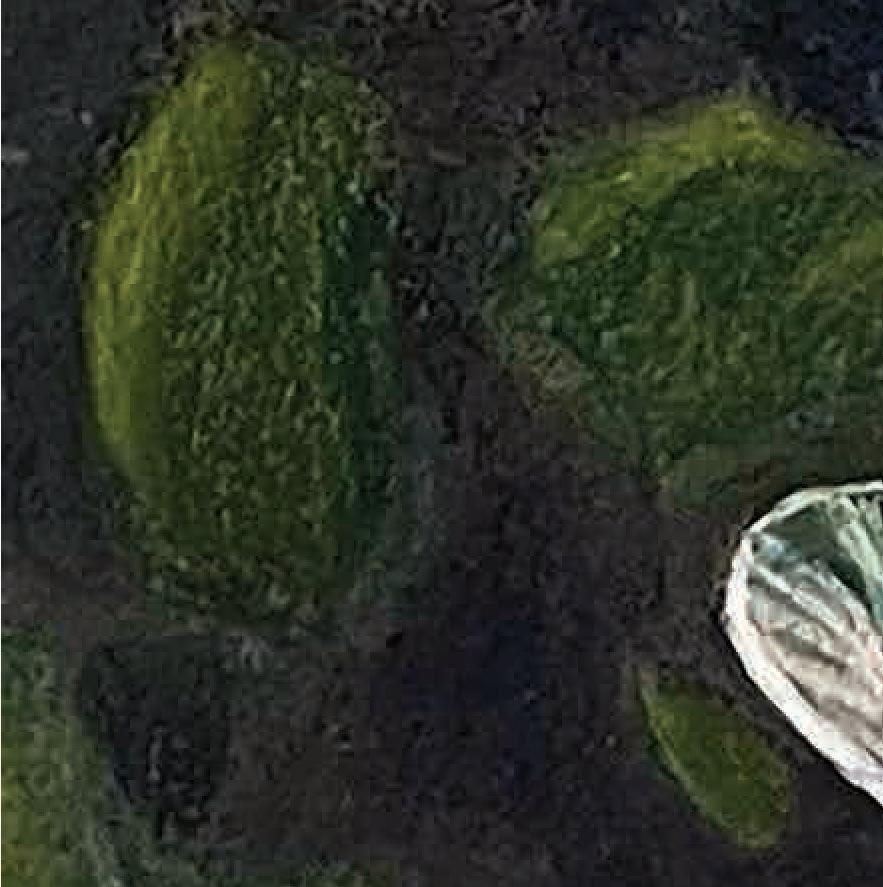
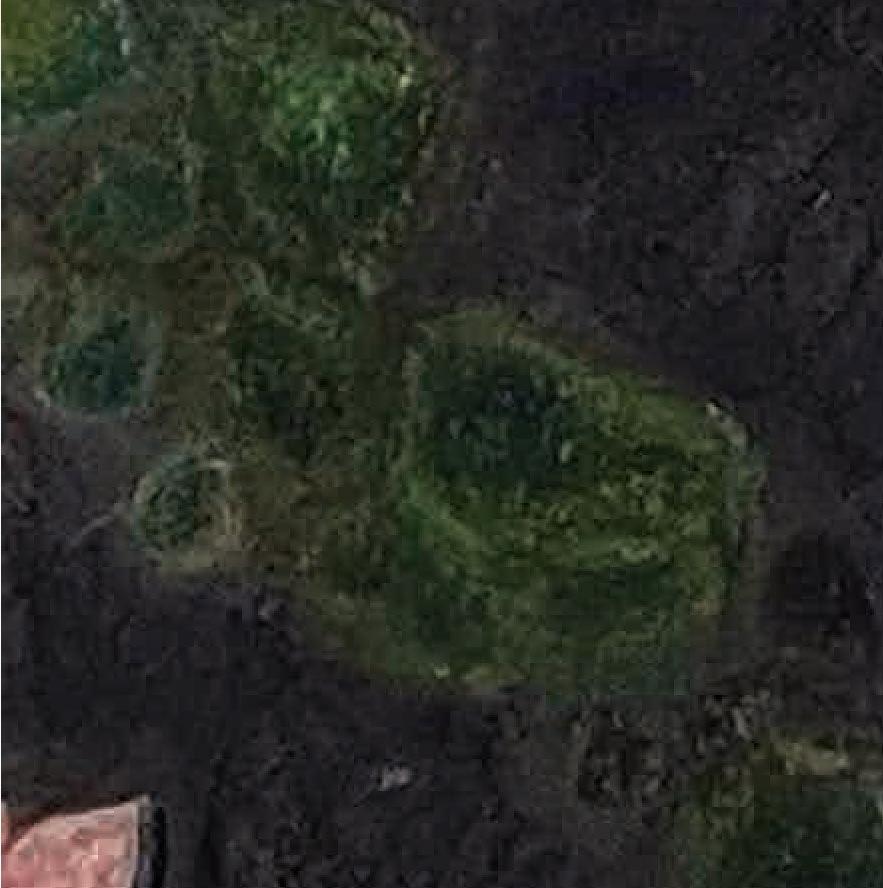
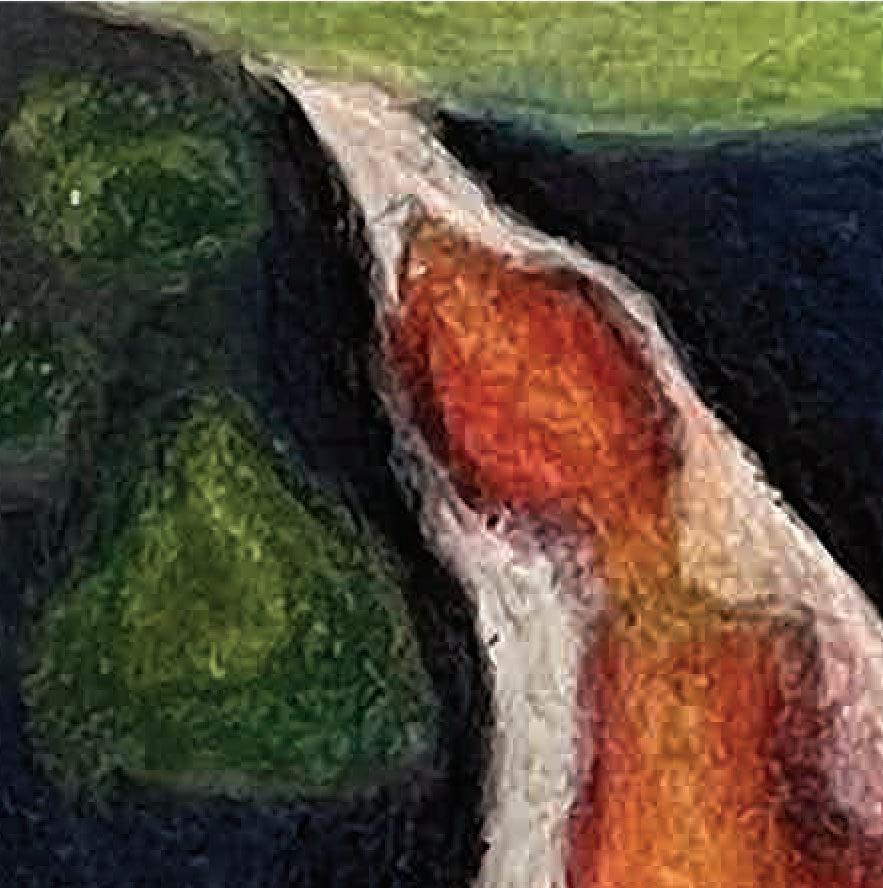
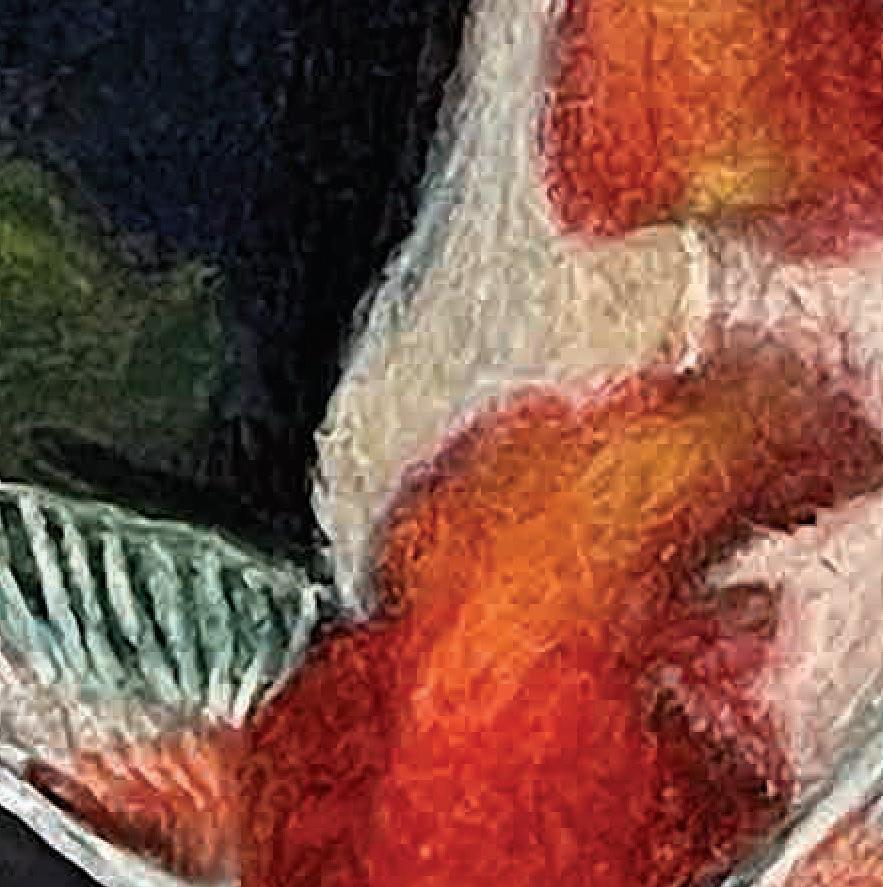
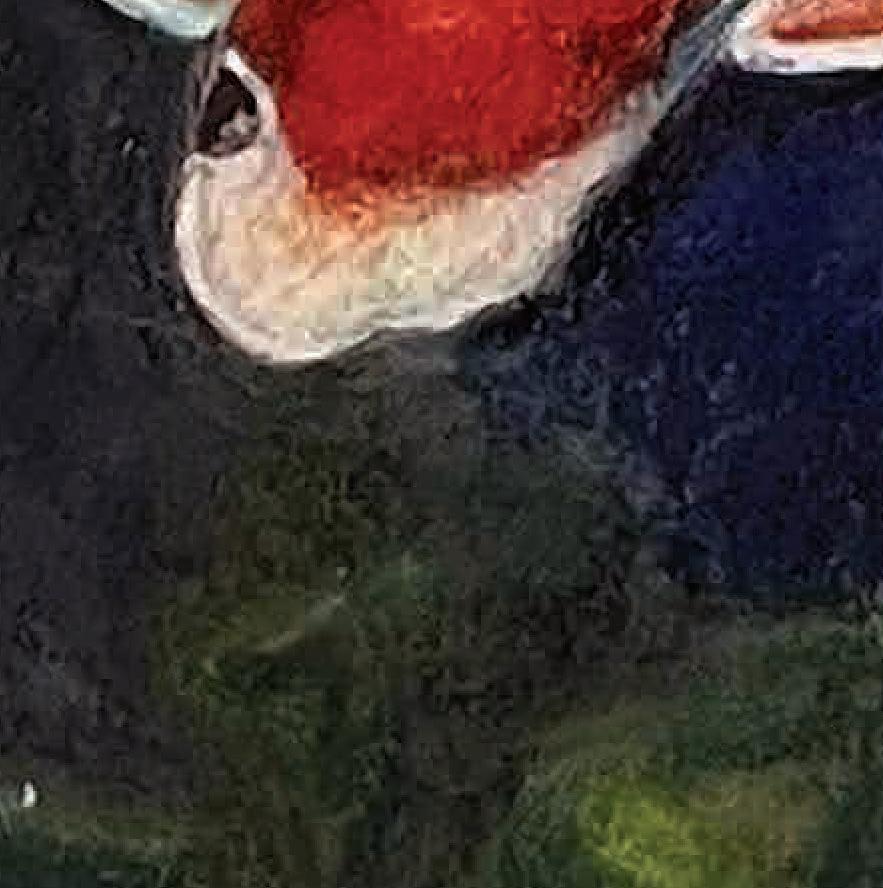
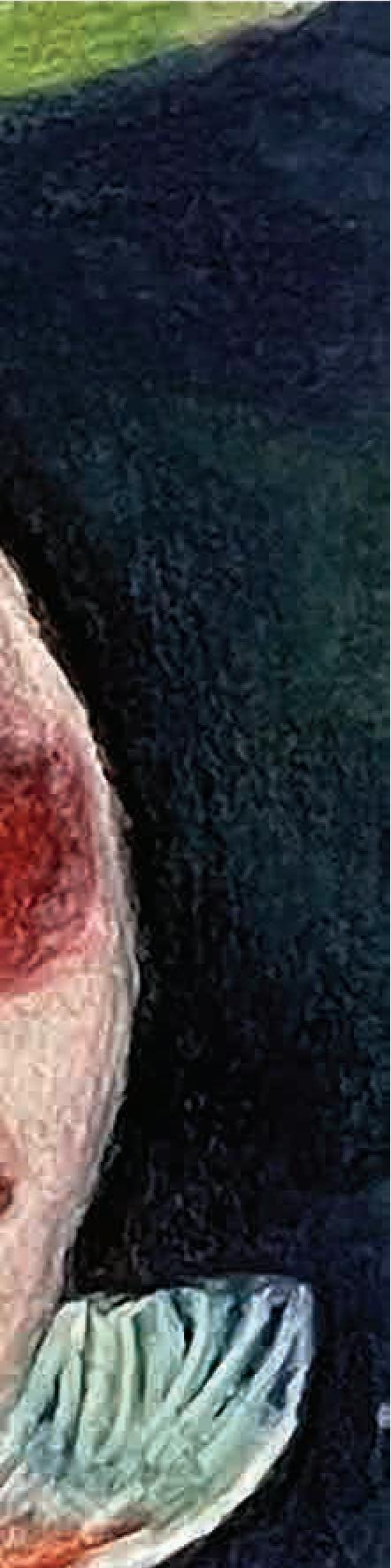
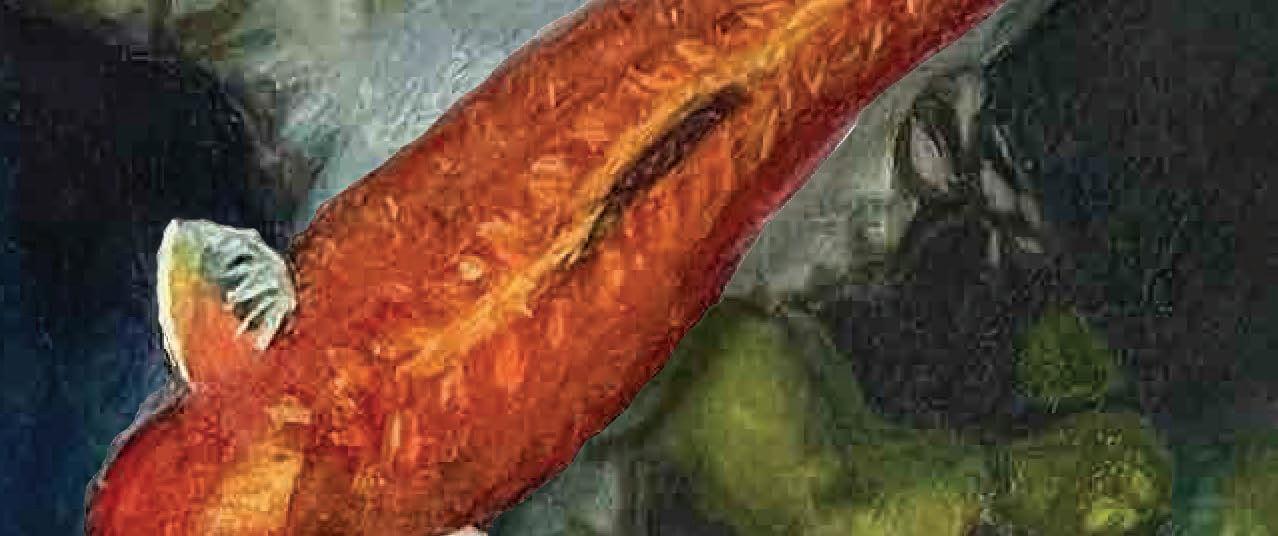
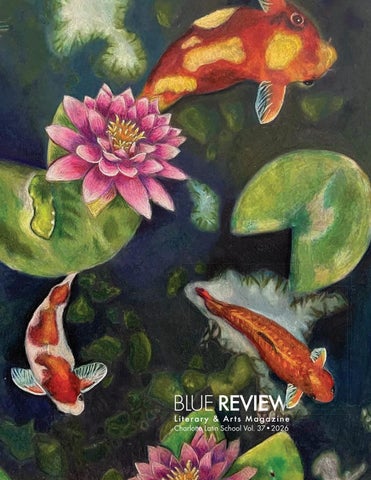
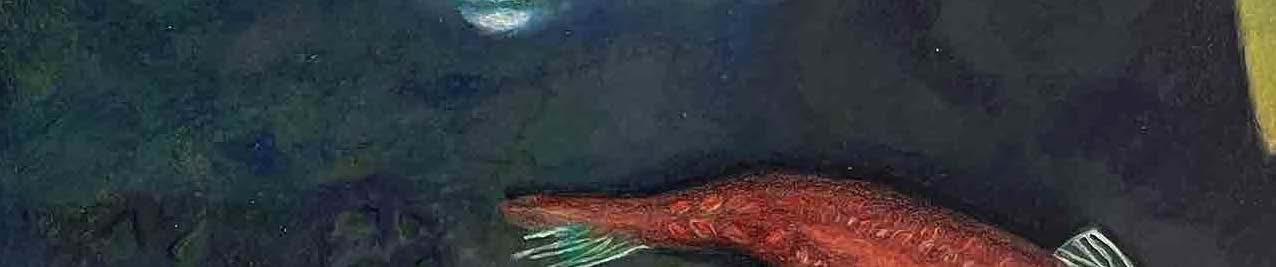
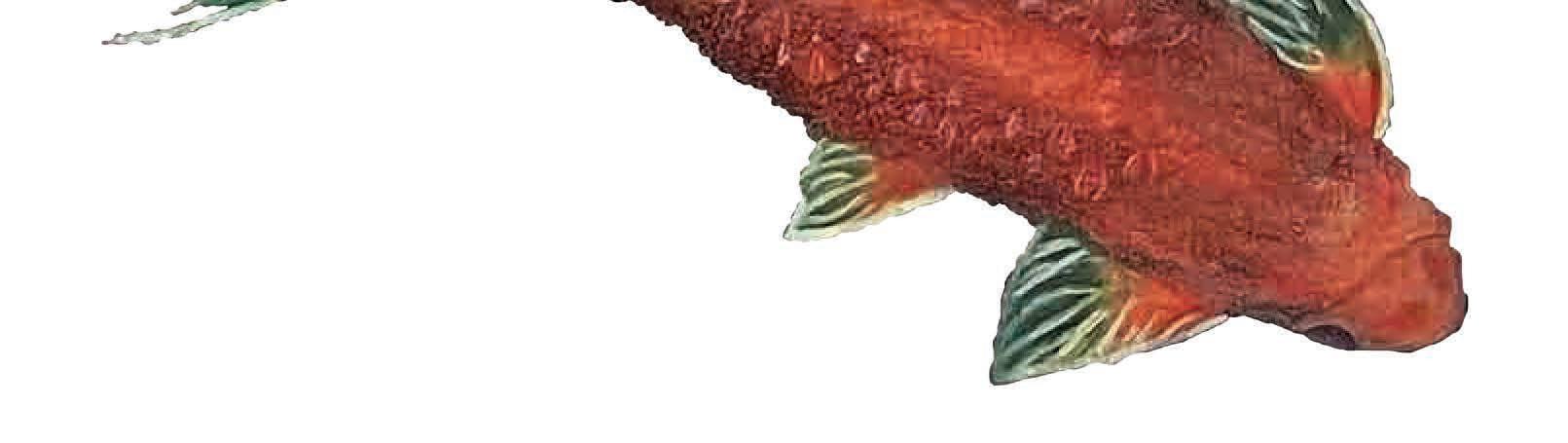
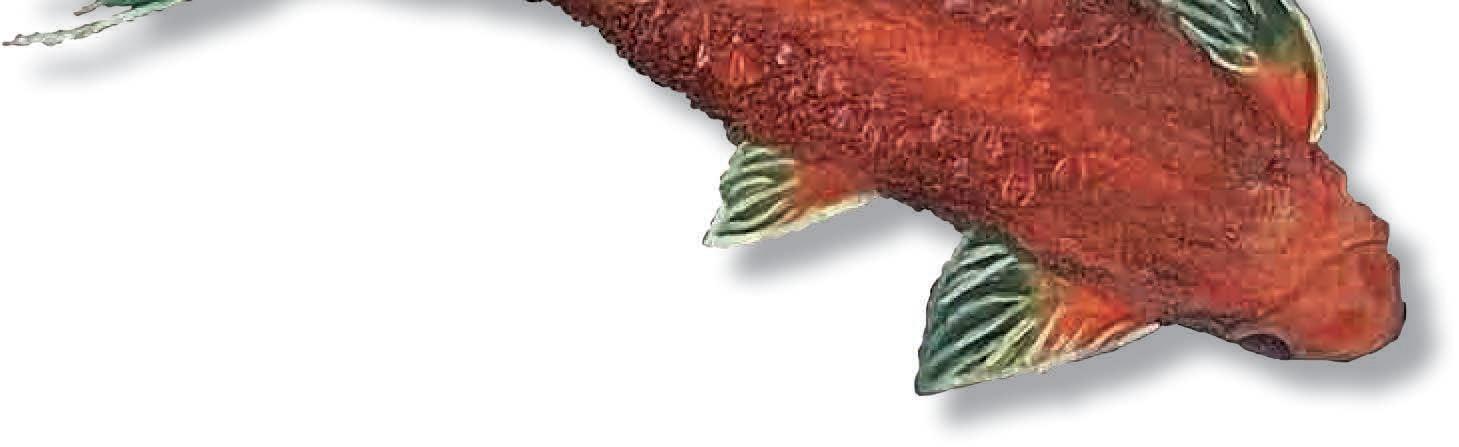
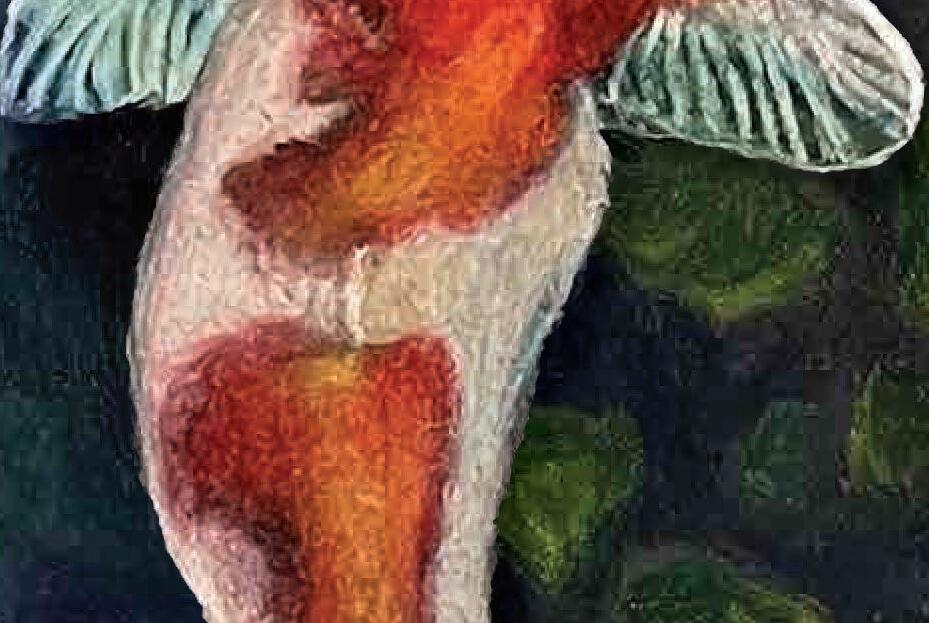
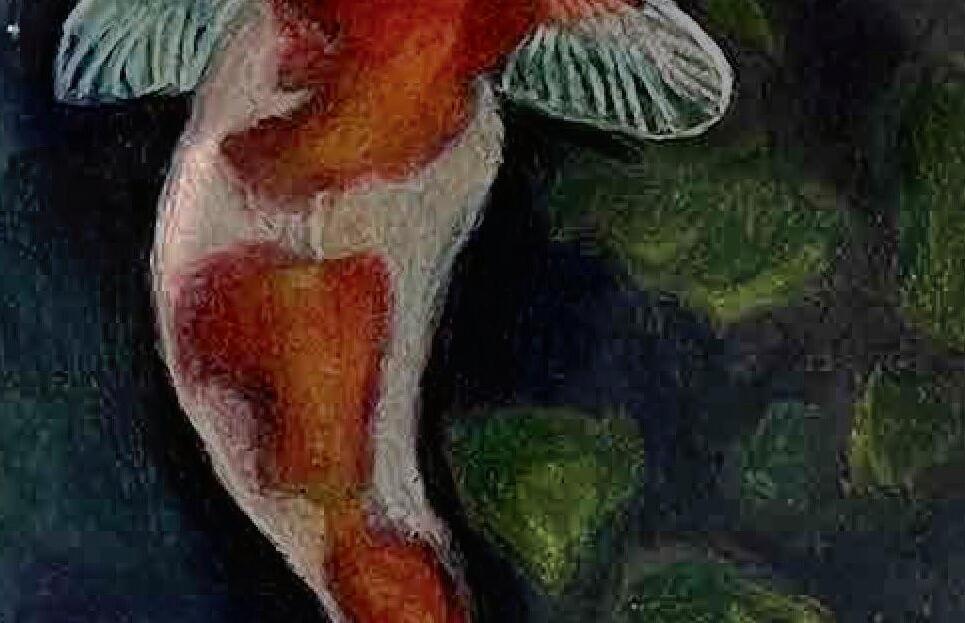
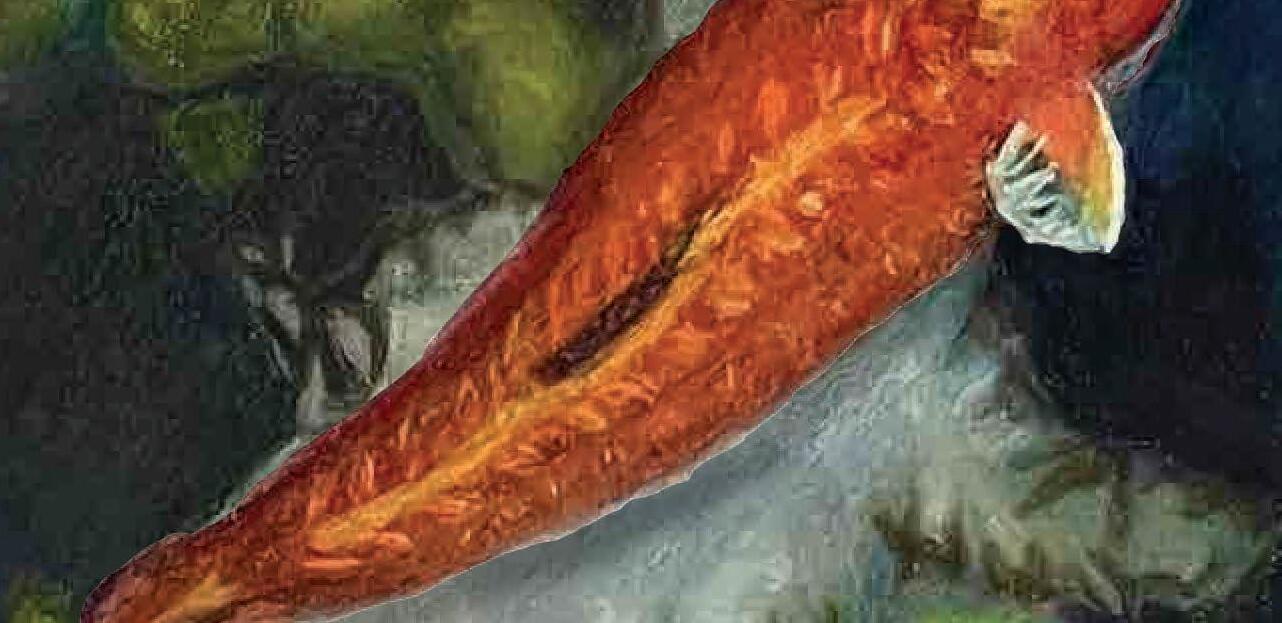
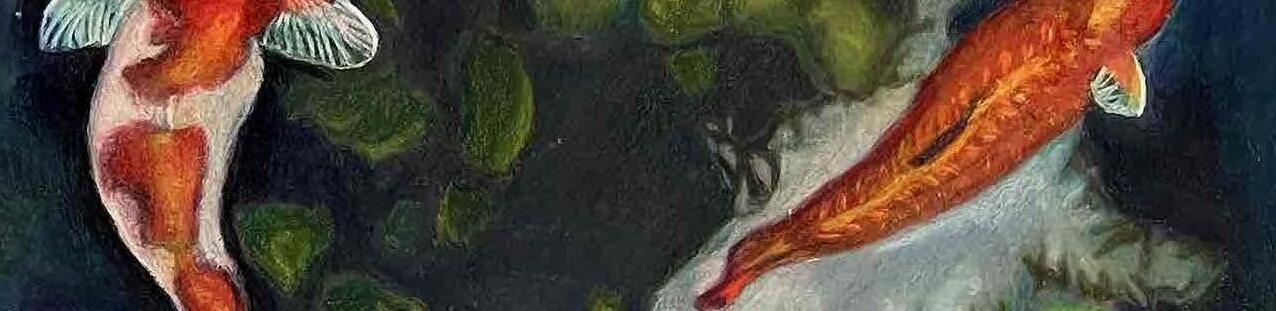
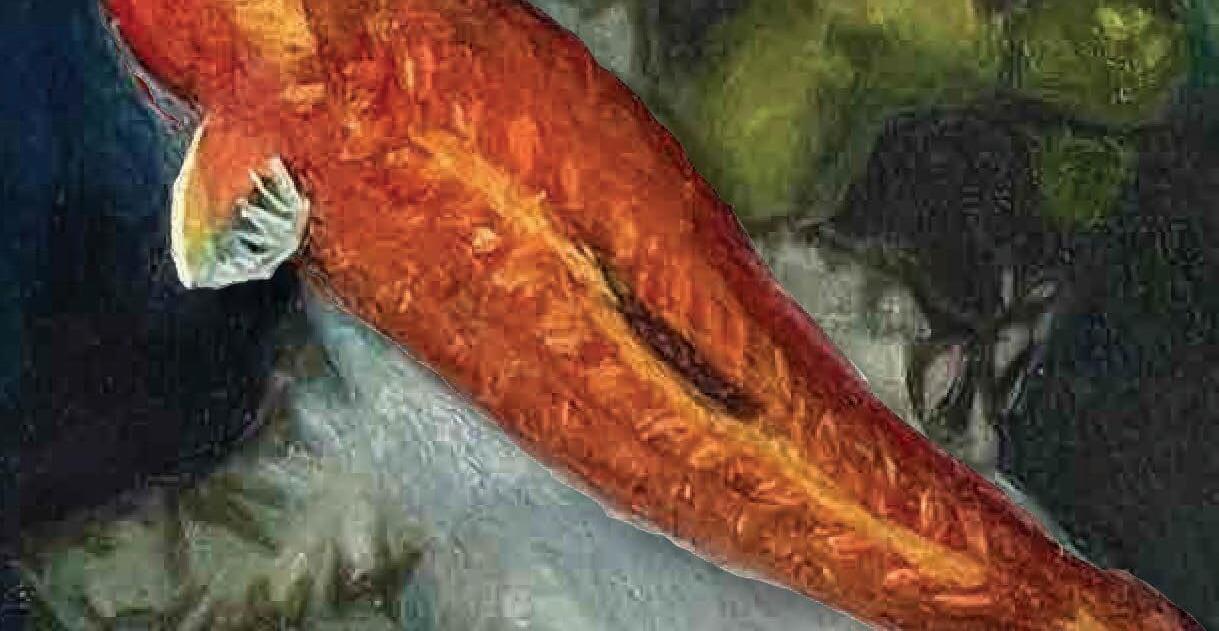
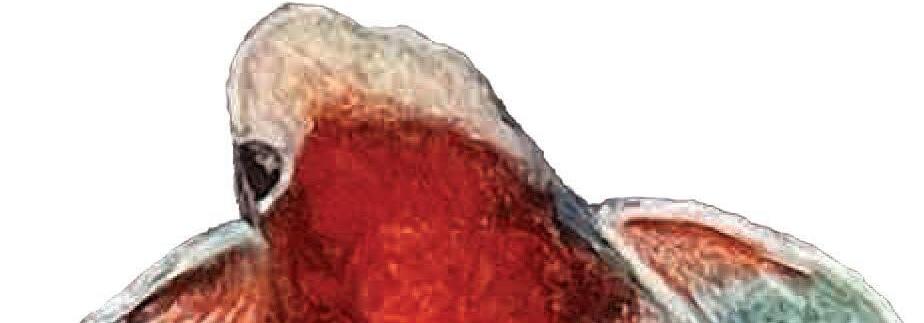
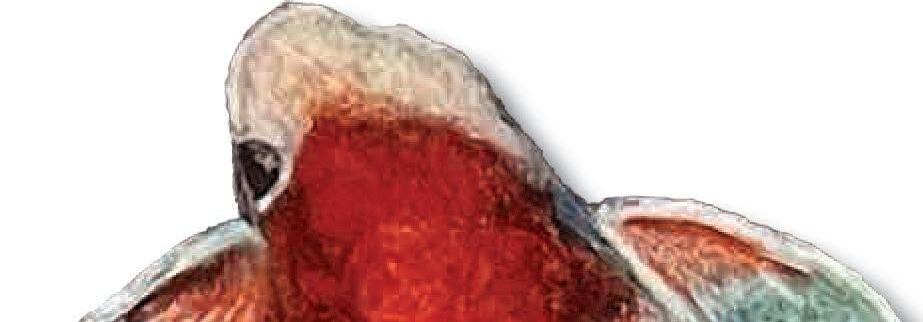
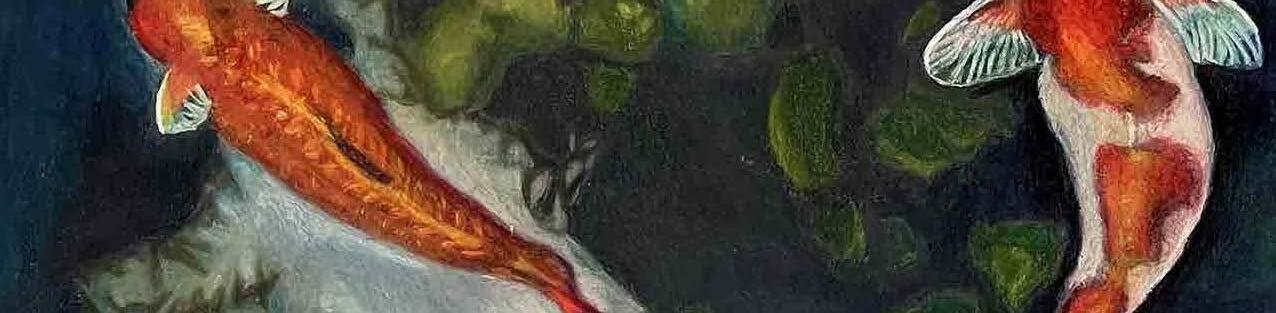
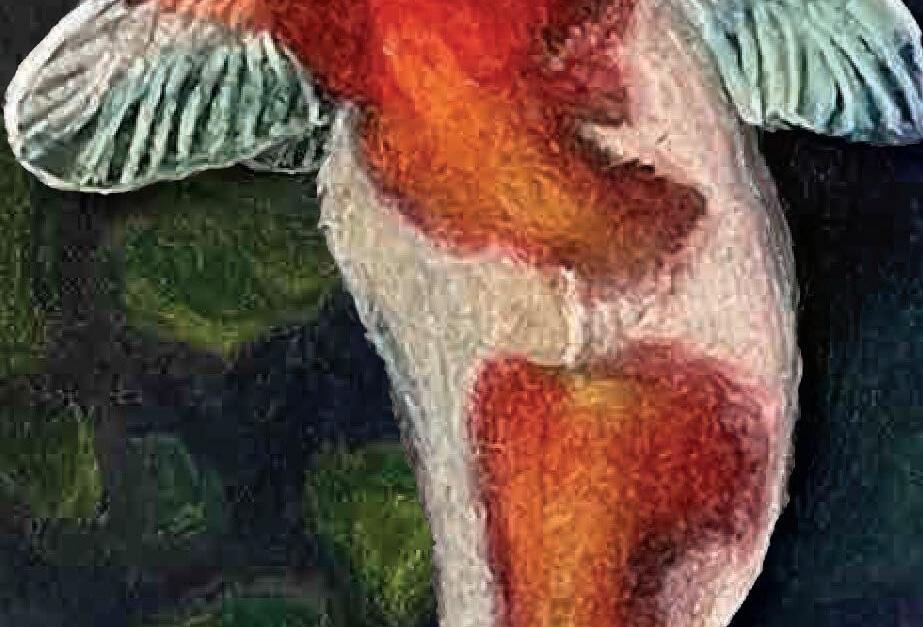
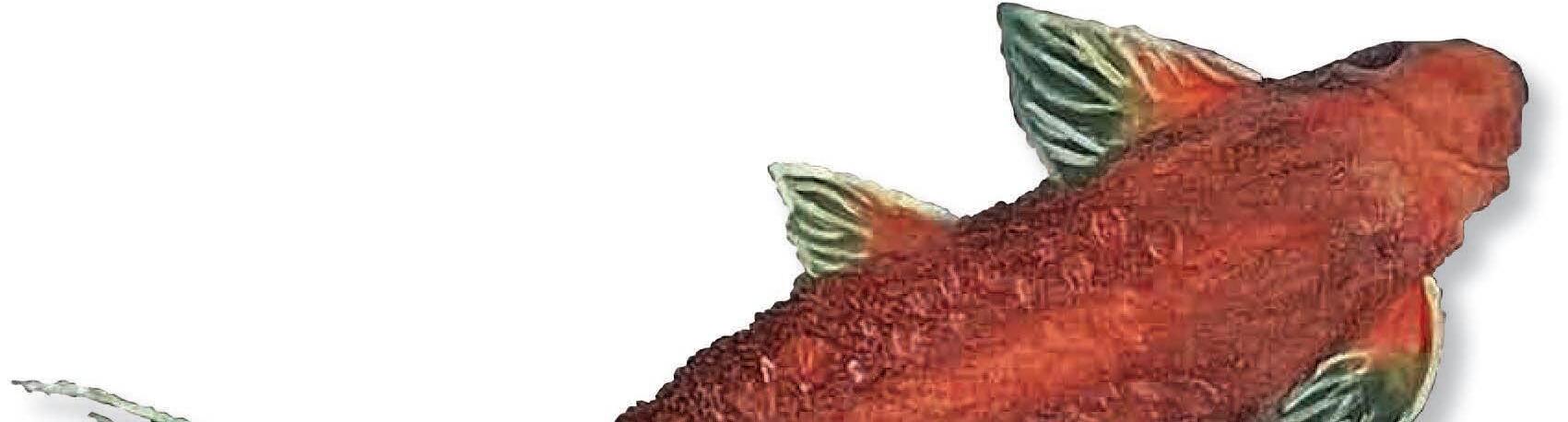
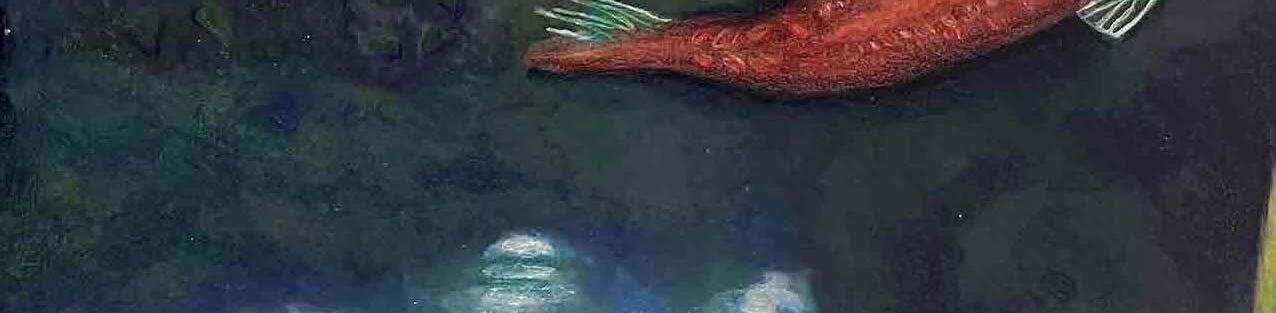
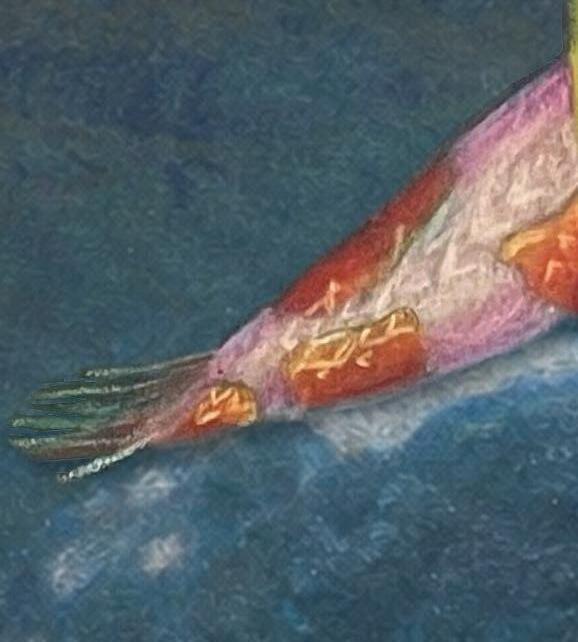
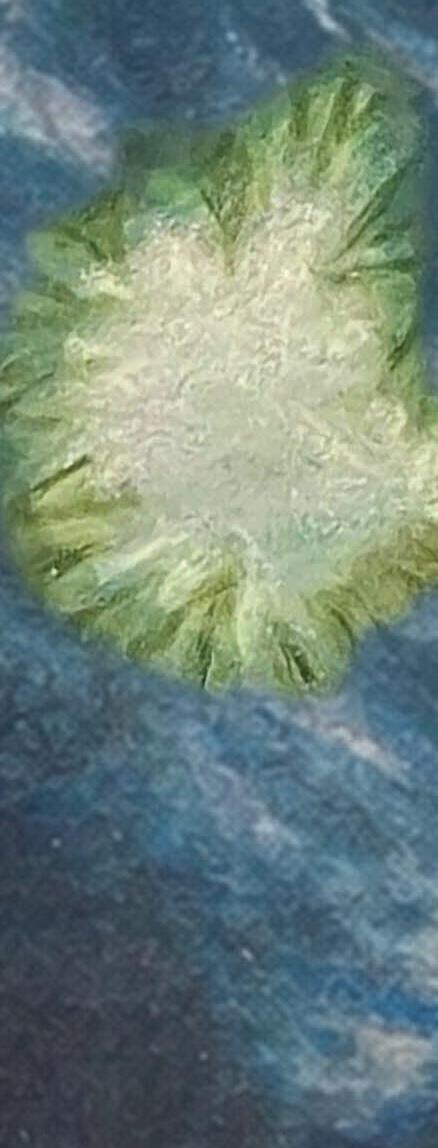
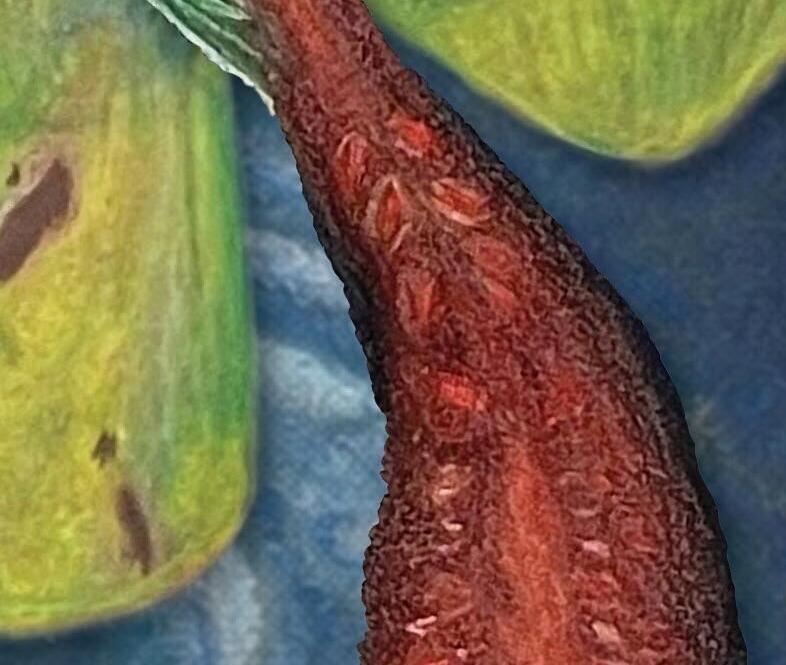
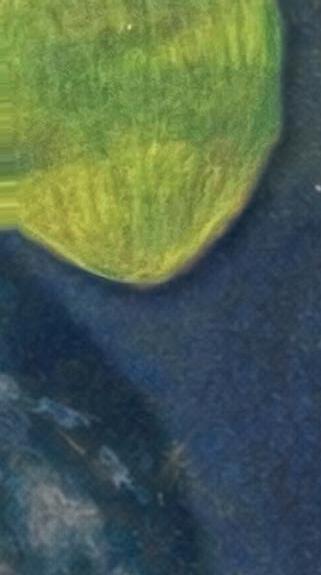
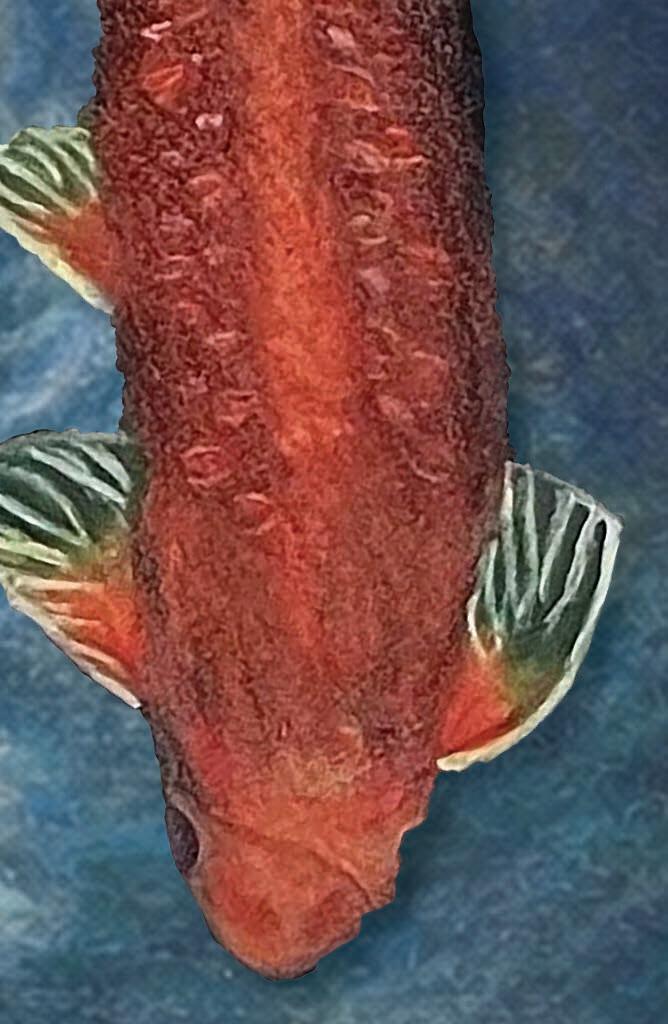
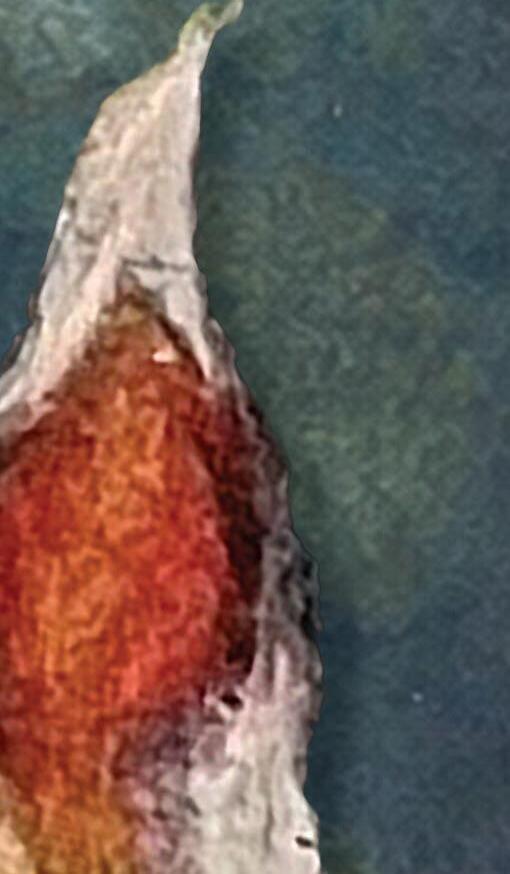
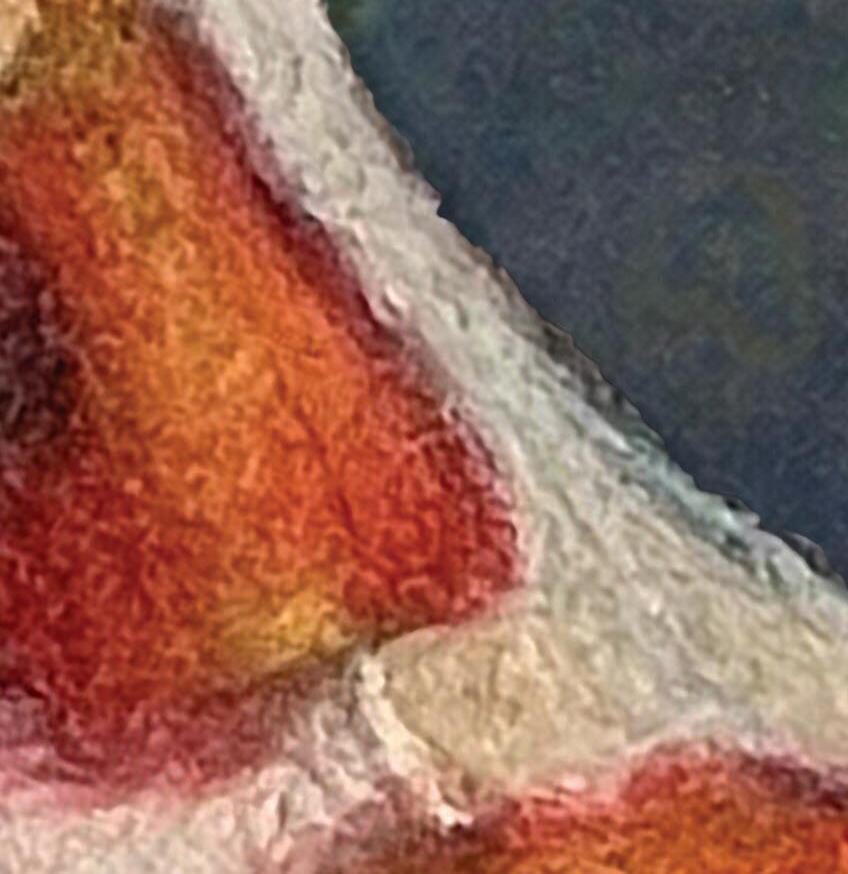
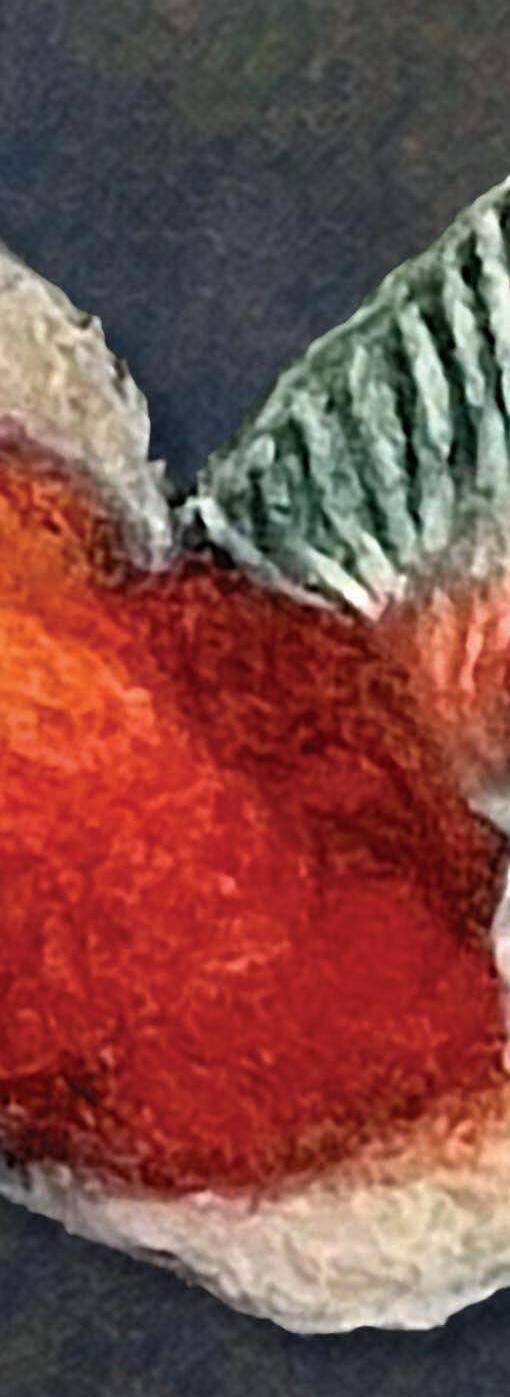
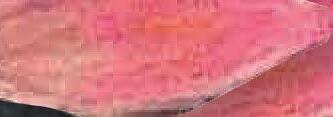
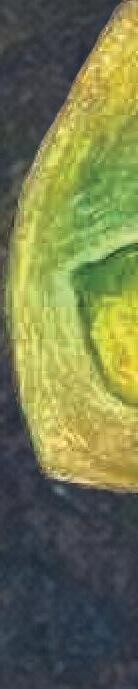
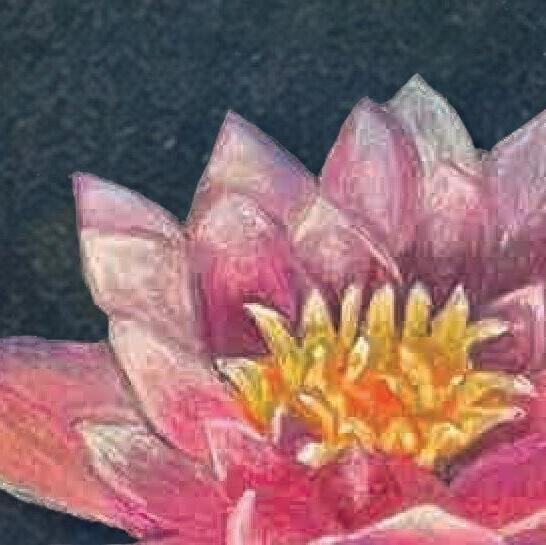
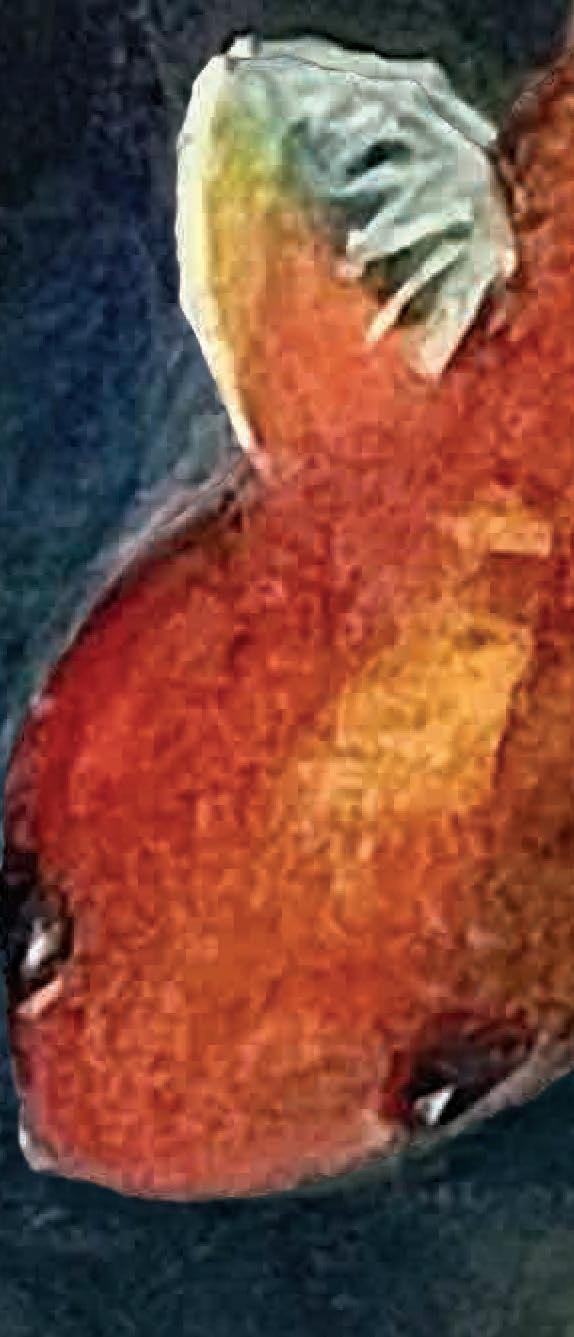
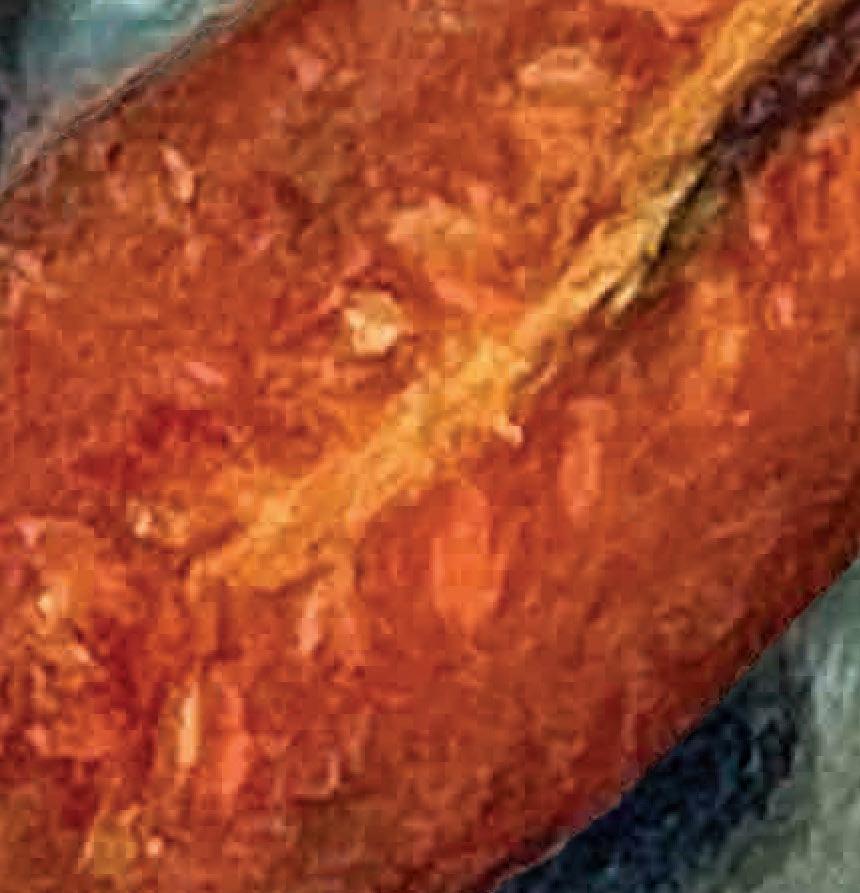
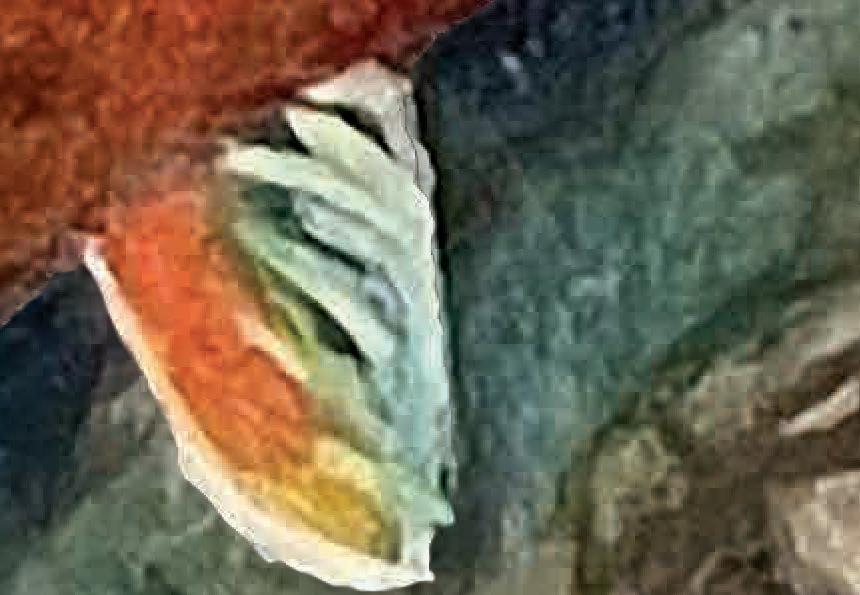
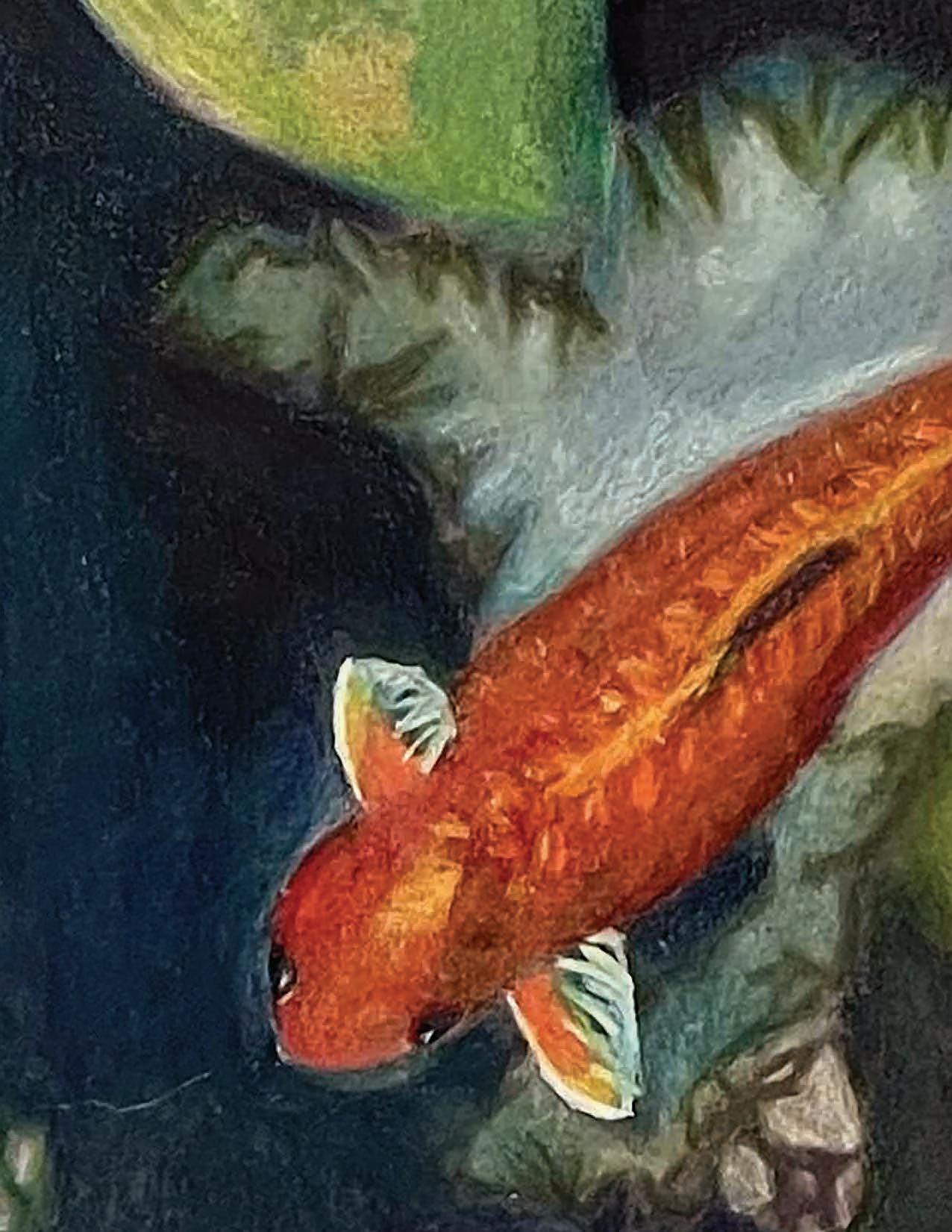
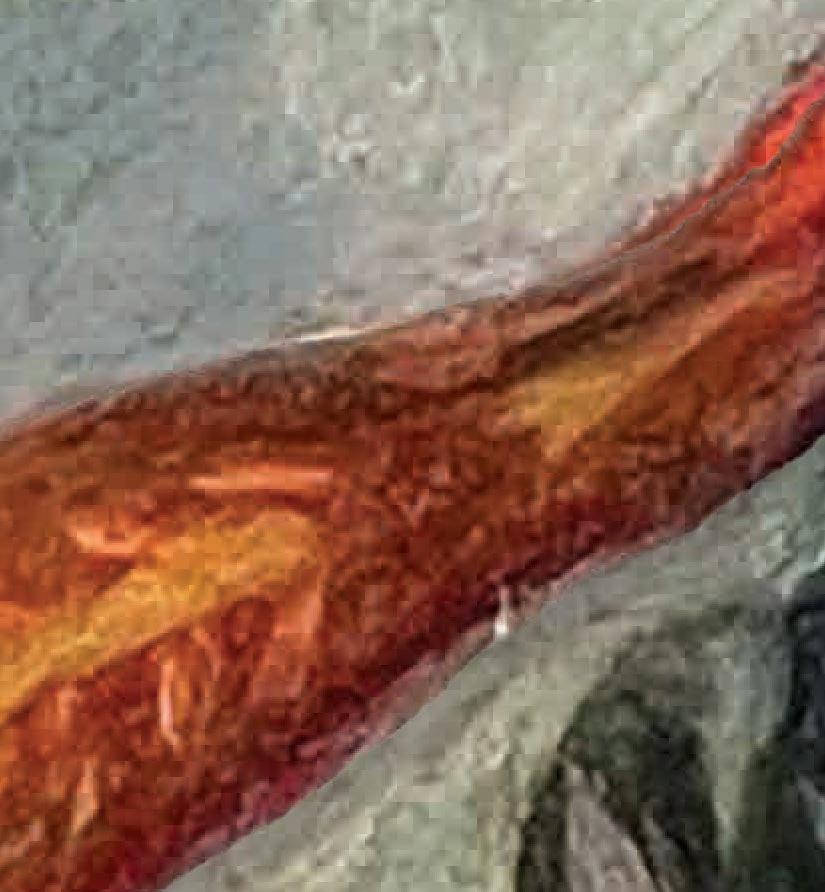
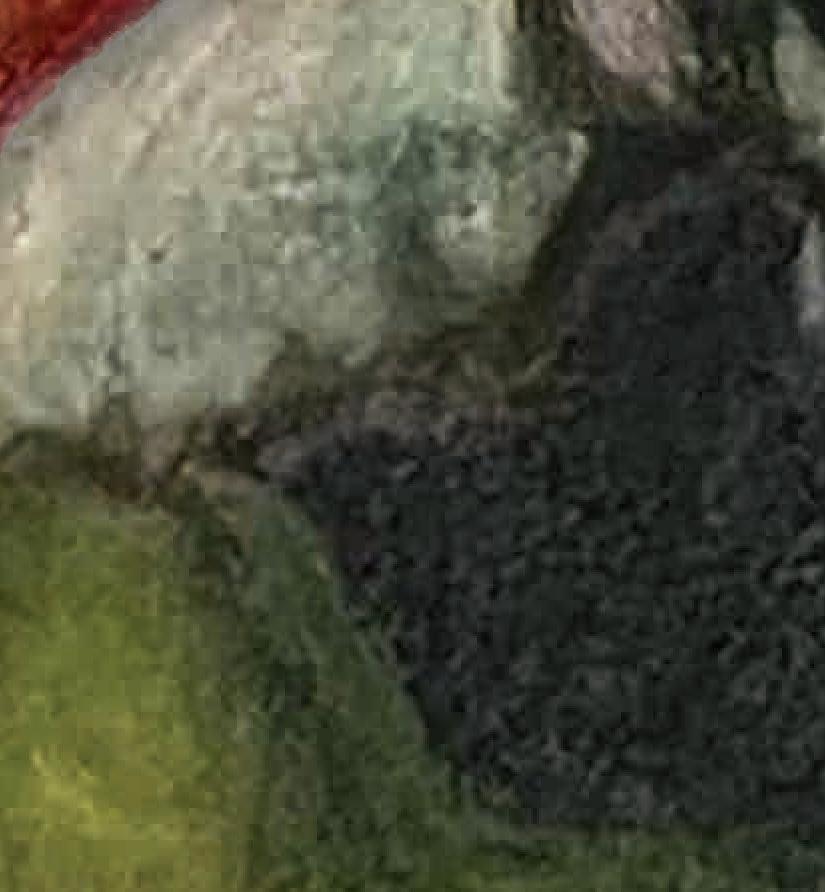
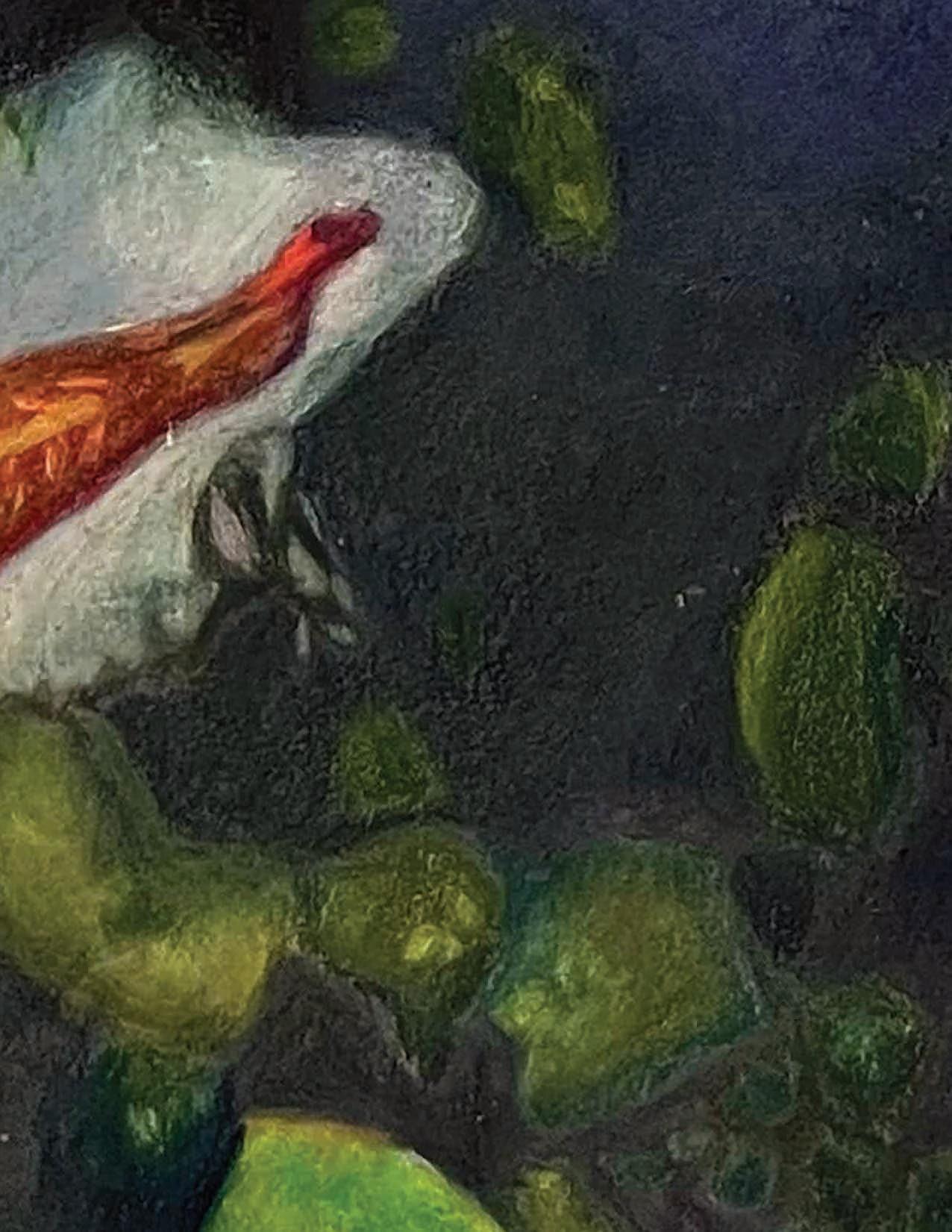
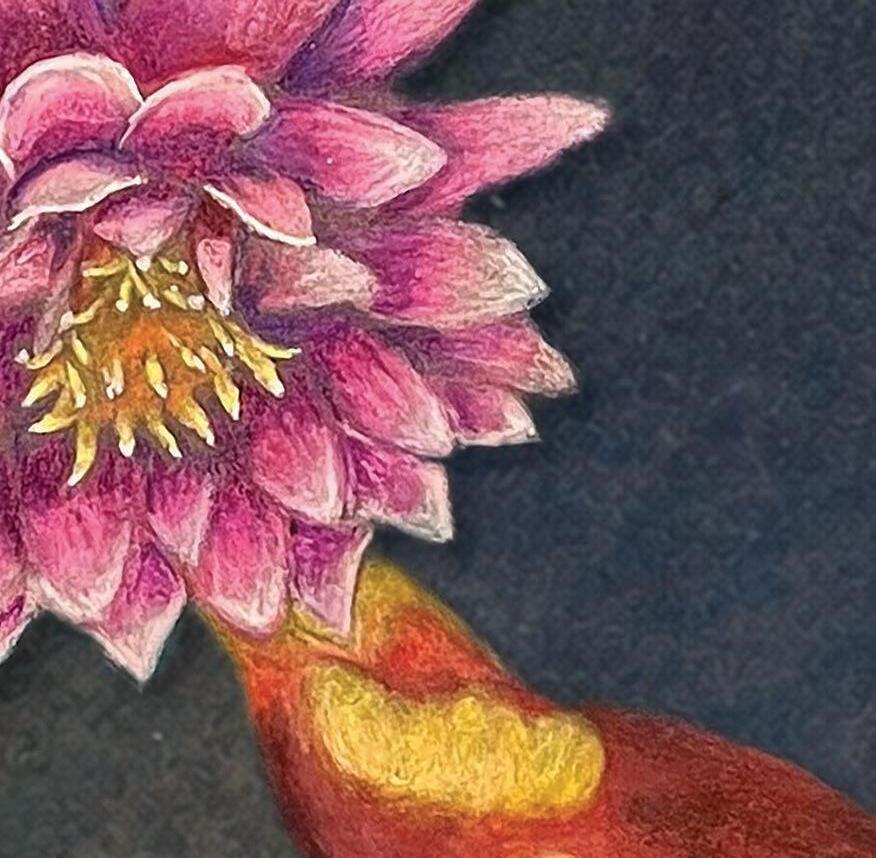
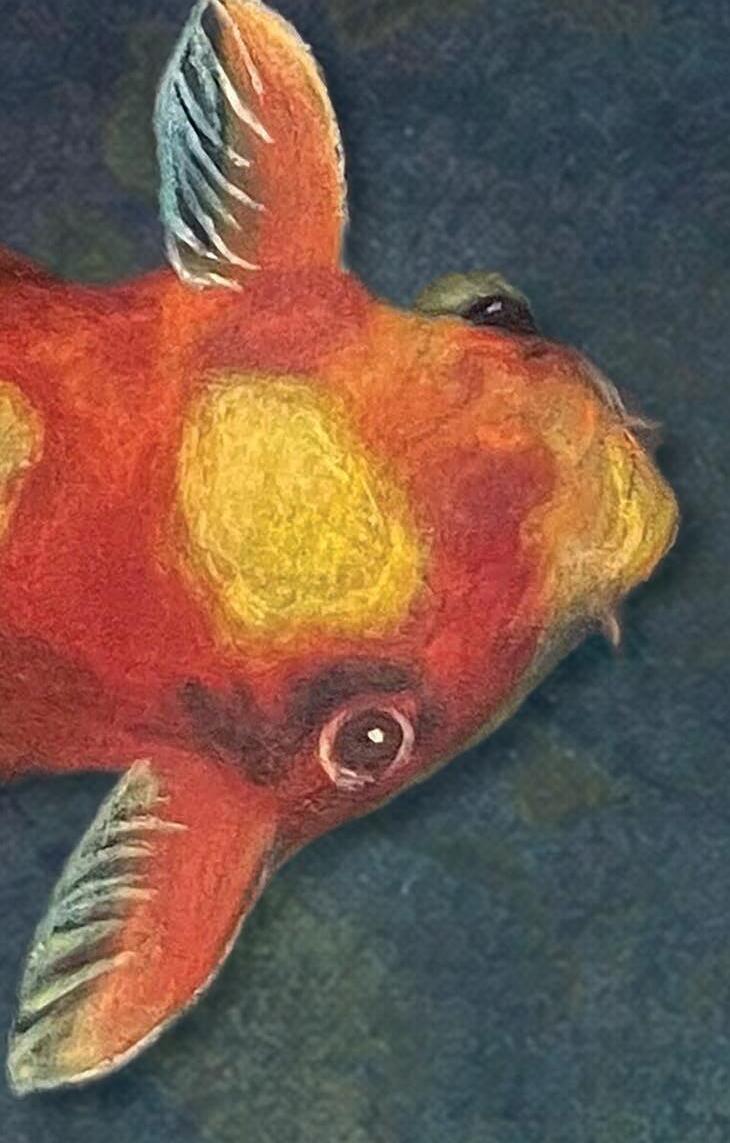
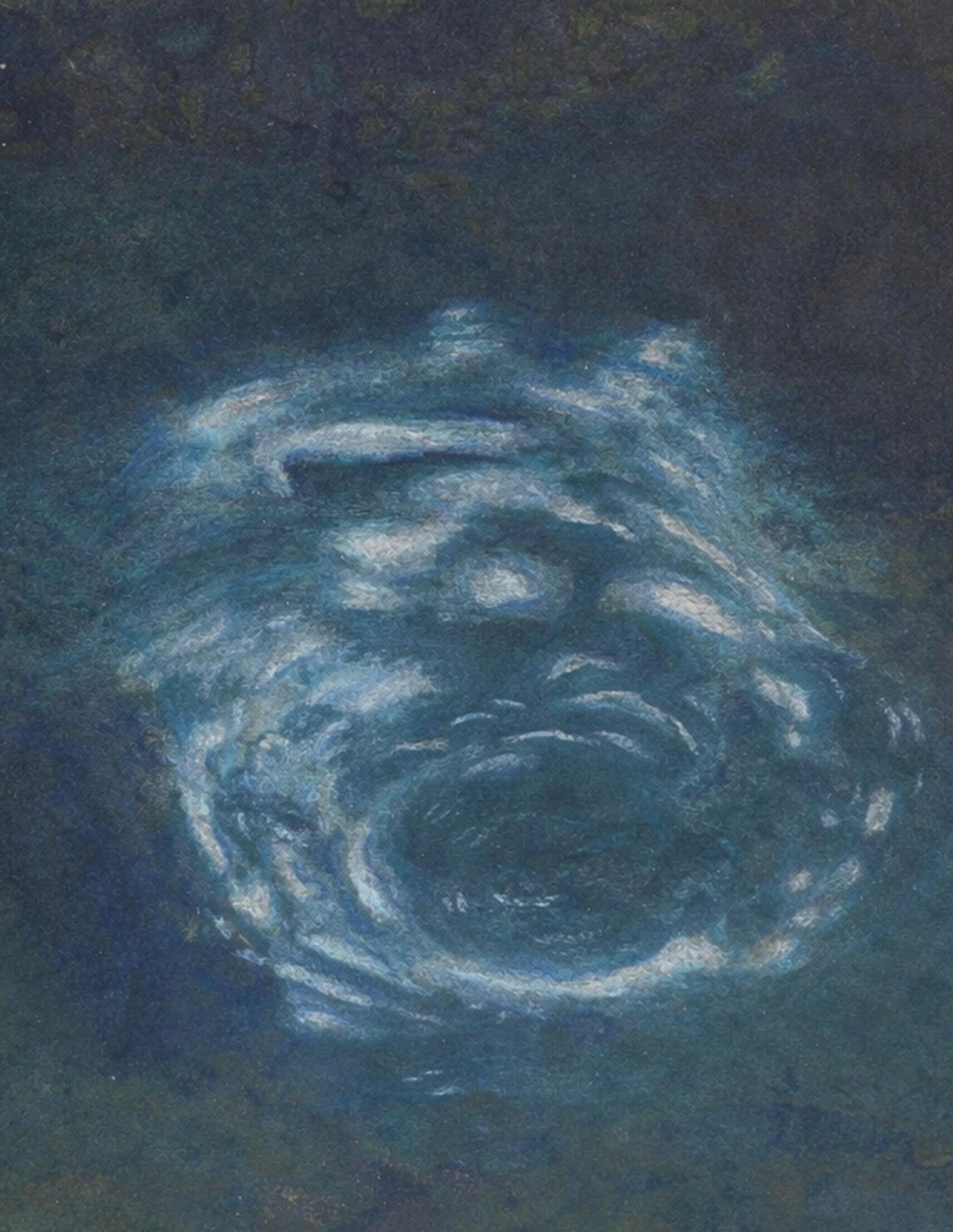
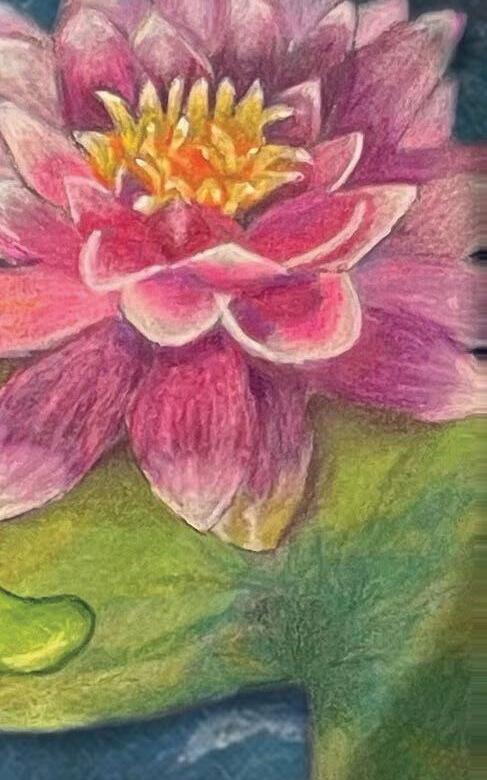
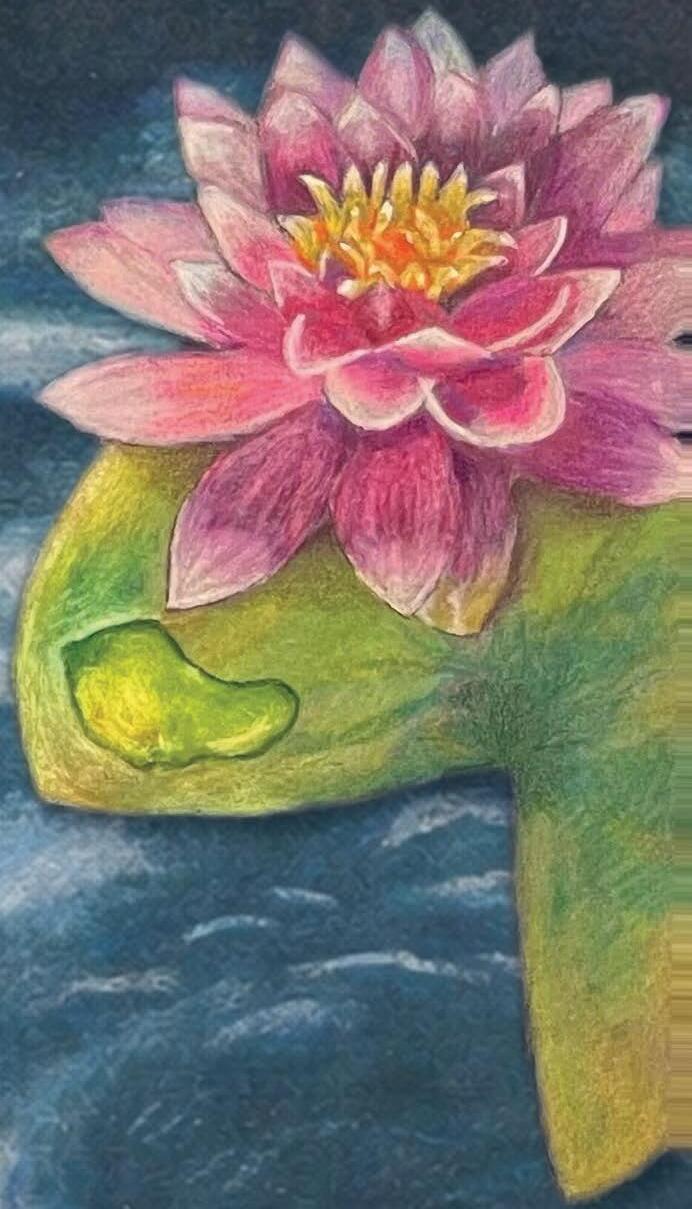
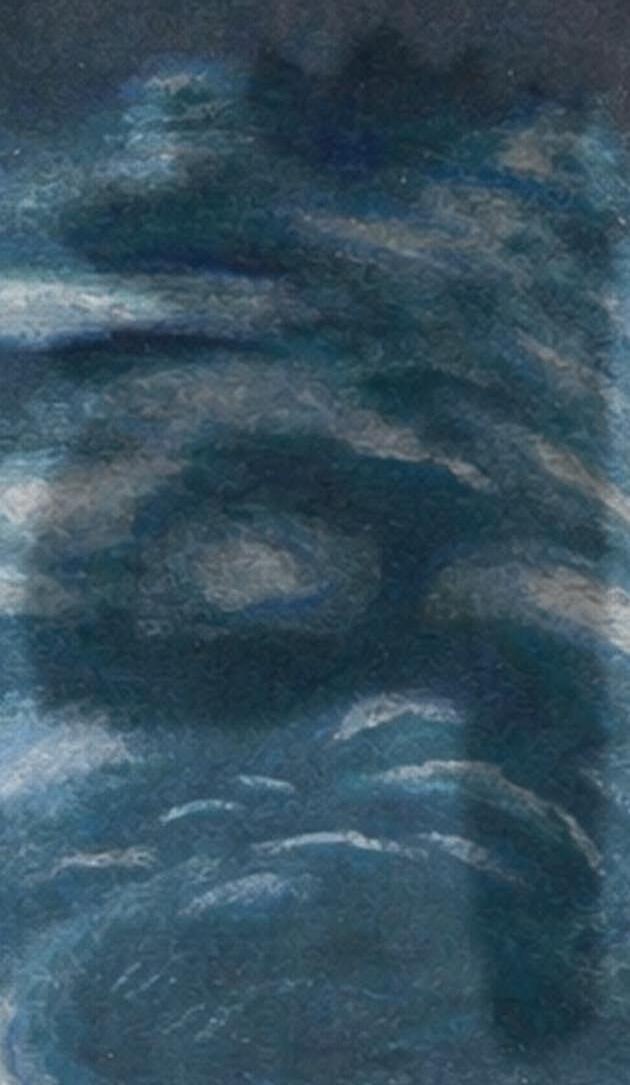
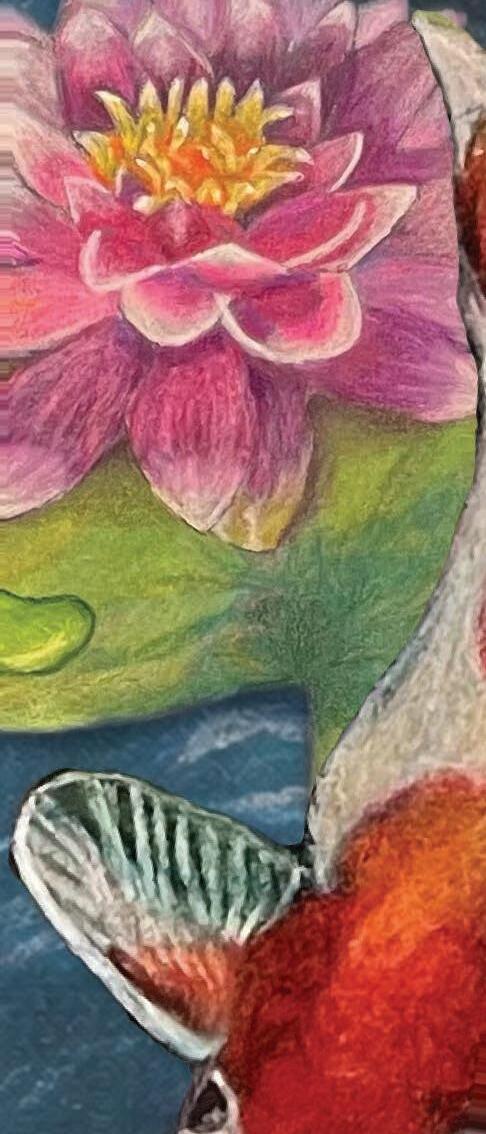
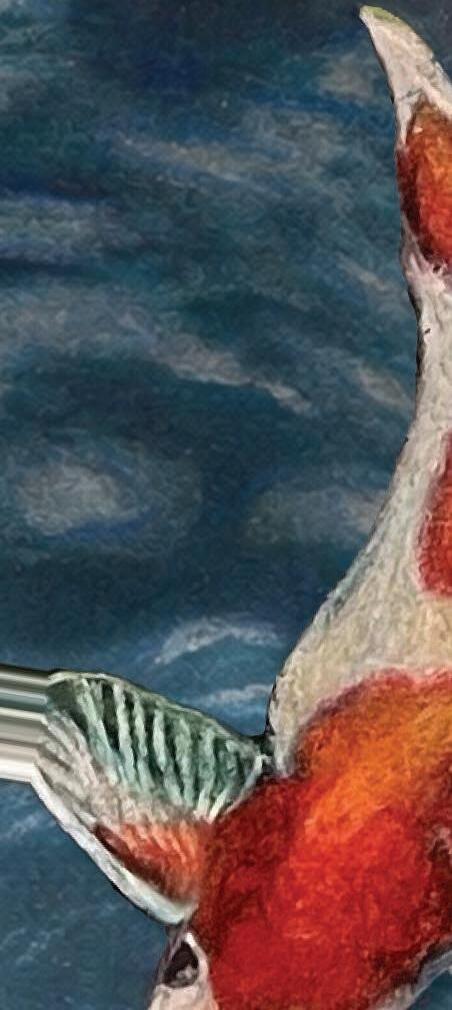
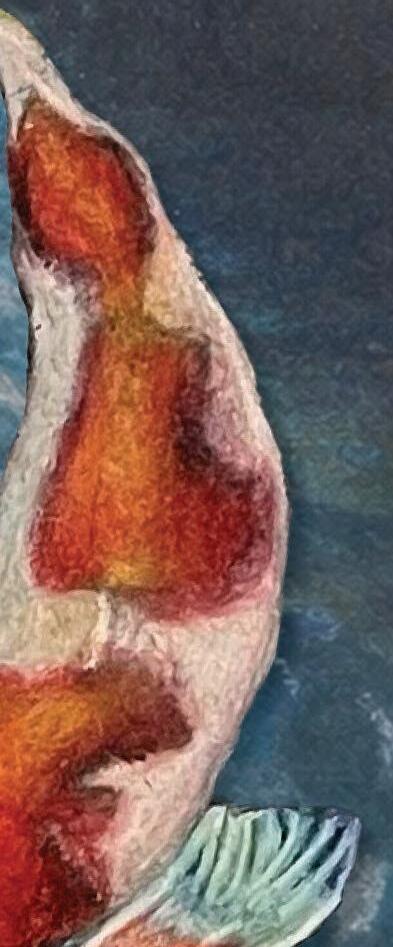
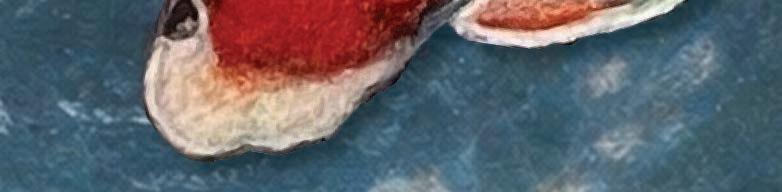
Fittingly, we did not so much choose our cover art as happen upon it. Like Woolf dri ing through London, we were strolling through Latin’s hallways when Allie’s painting stopped us cold. A pond opened before us: koi suspended in slow arcs, water lilies blooming from shadow, ripples widening in patient circles. e noise receded. We breathed di erently.
It conjured spring a ernoons by lakes, the hush of mountains, the rhythm of ocean waves—places that do not demand speed, only presence. e koi do not rush. ey turn. ey circle. Even in motion, they are unhurried. In them, we saw a re ection of the life we are learning to inhabit.
Our rst chapter, “Catching at Roots,” explores the nuances of student struggle, echoing Woolf’s simple errand that grows unexpectedly heavy. ese pieces dwell in the twilight of academia—the blur between exhaustion and expectation, reality and delusion.
In “We Find Anchorage,” we loosen our grip.
rough vivid ashbacks and nature-laced poetry, the works dri rather than sprint, o ering stillness not as stagnation, but as choice.
Our nal chapter, “Enjoy Perfect Peace,” embraces liberation in life’s smallest moments. Moving uidly between childhood memory and anticipation for the future, these pieces accept ephemerality as something tender rather than terrifying.
As we enter our nal months of high school, we no longer see time as an adversary to outrun. It feels more like water—capacious and re ective, carrying us whether we thrash or oat. We cannot stop its current, but we can choose how we travel through it: aware of the ripple, attentive to the light on its surface.
Just as Woolf set out for a pencil and found instead the quiet magic of wandering, we set out to create a magazine and found ourselves learning how to look. If we are lucky, we will continue to pass, to glimpse— and to notice how everything, when we allow ourselves to slow down, is accidentally but miraculously sprinkled with beauty. Isab , Jackie, J in, Ly & Sam a, Cla s of ‘26
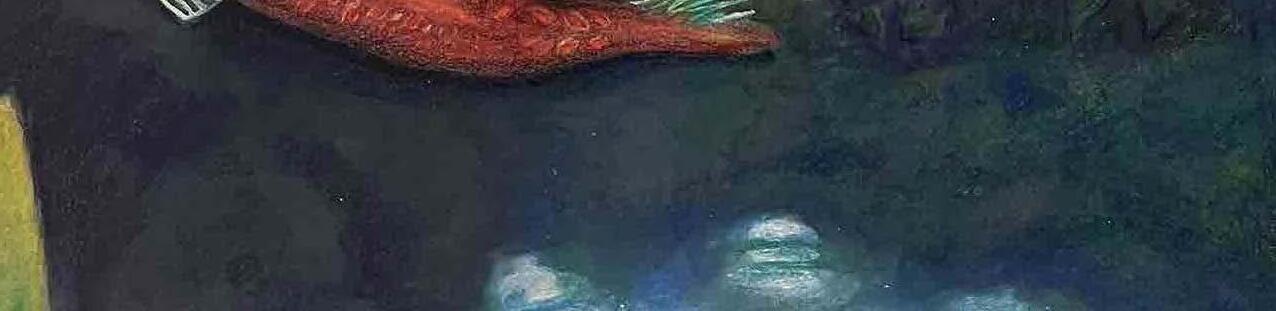
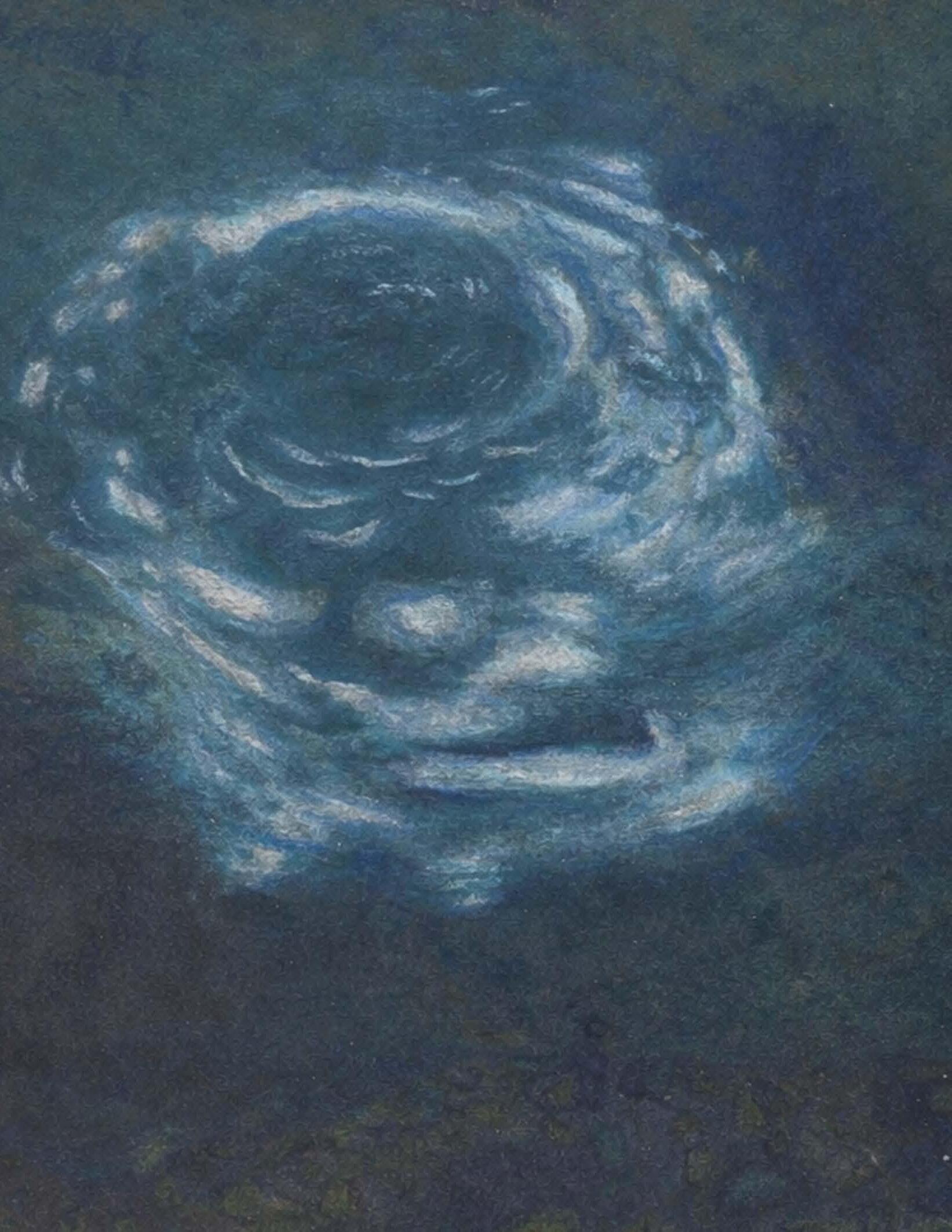
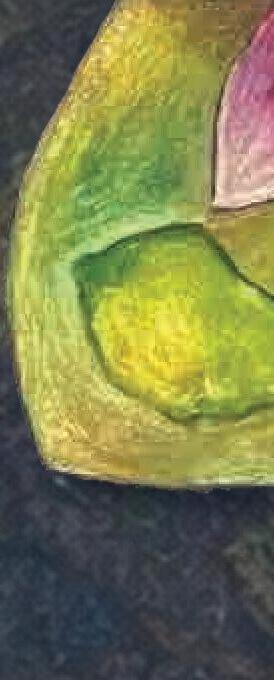
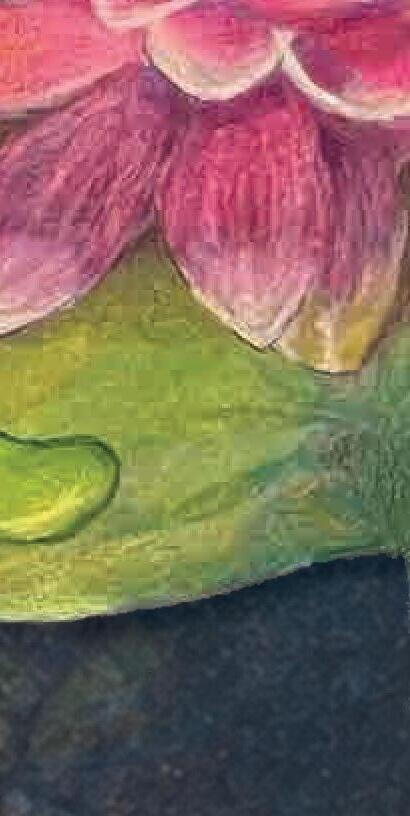
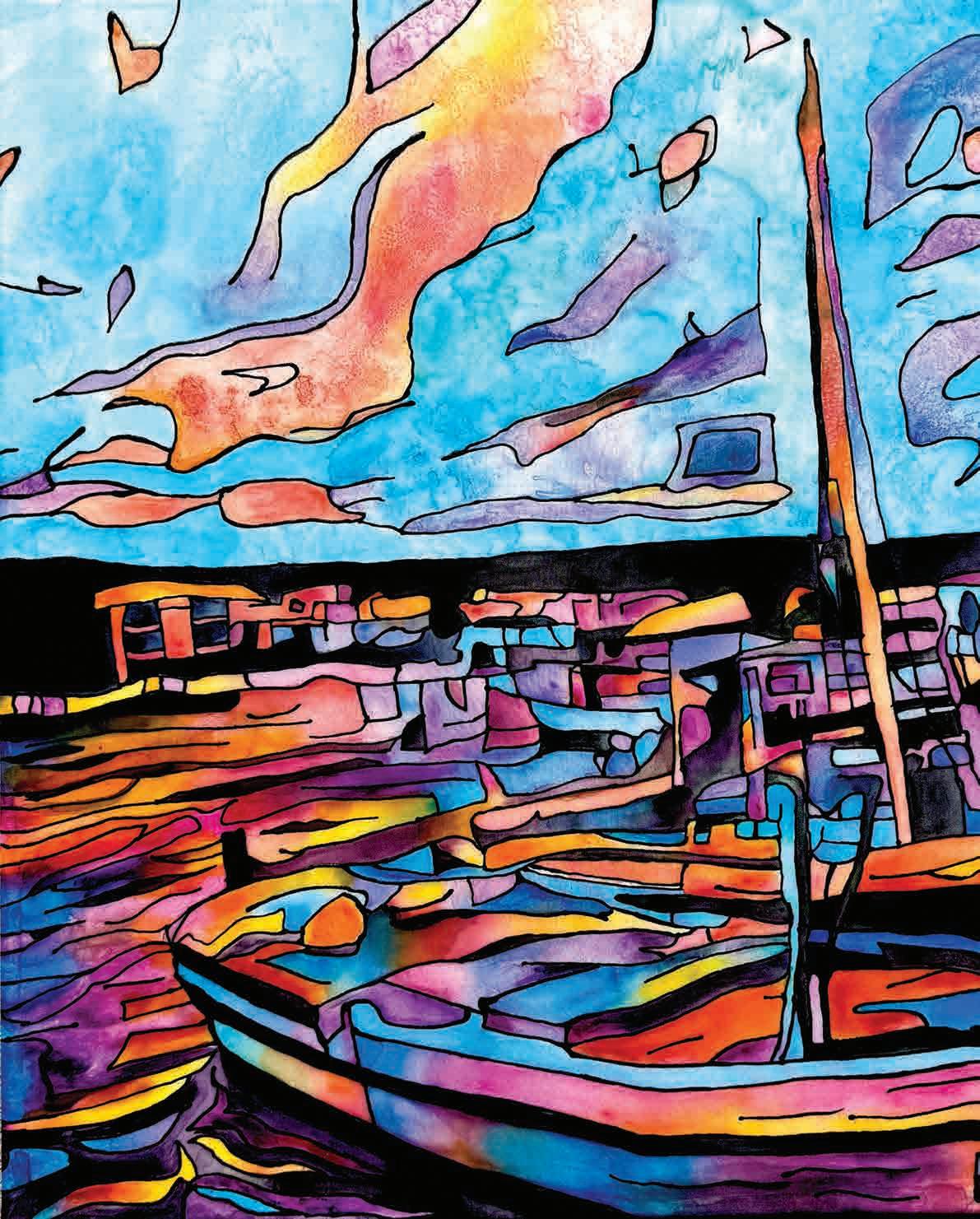
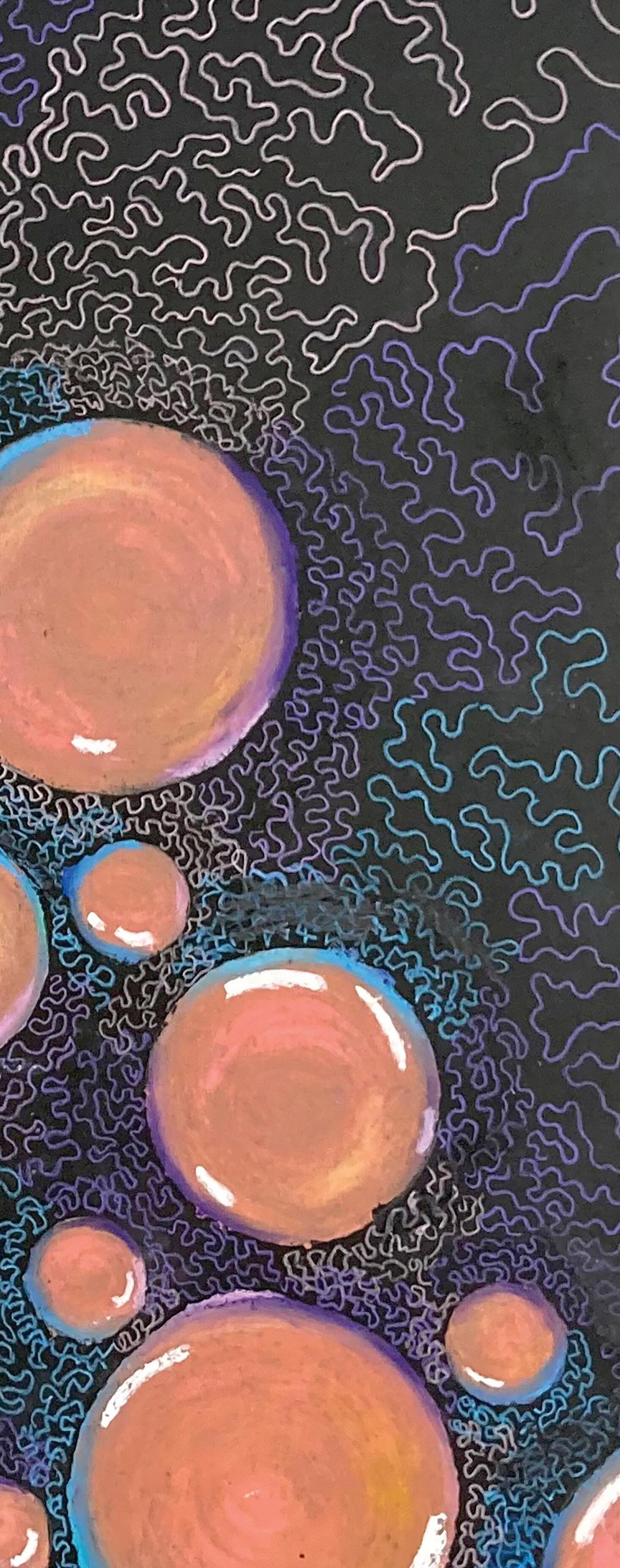
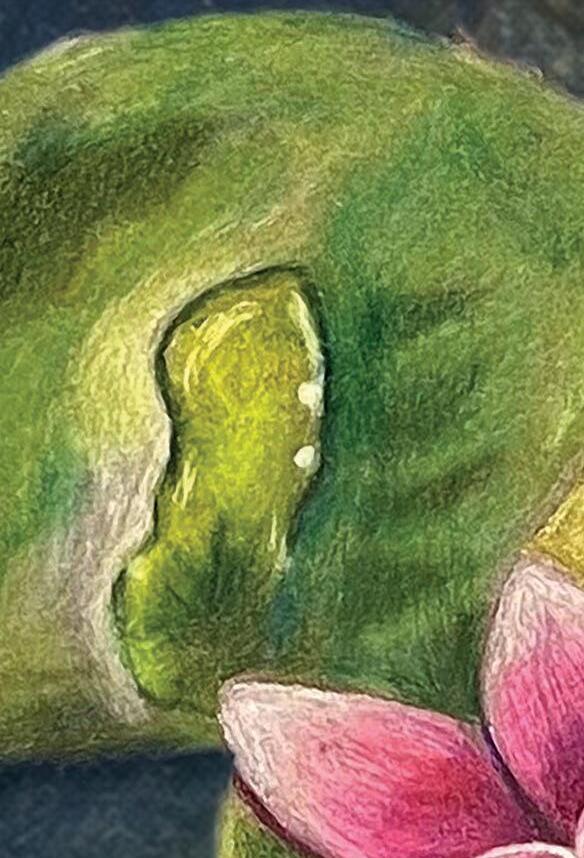
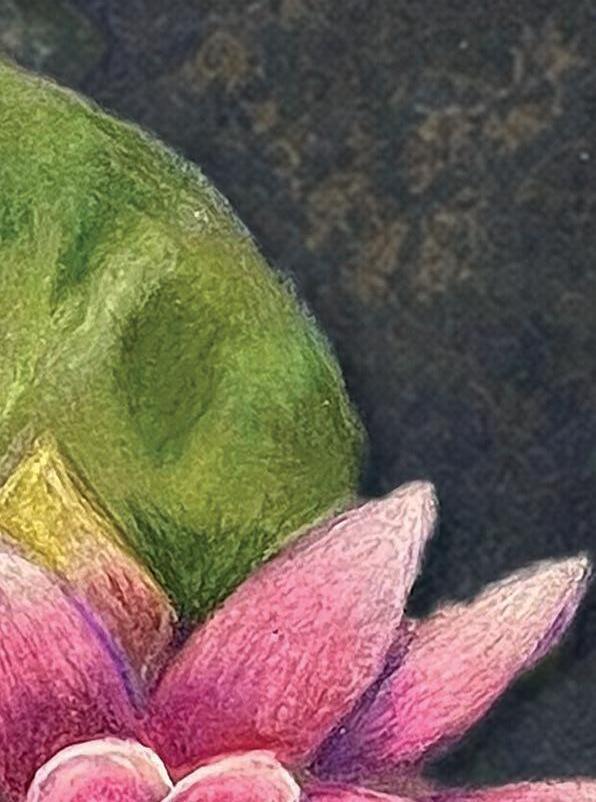
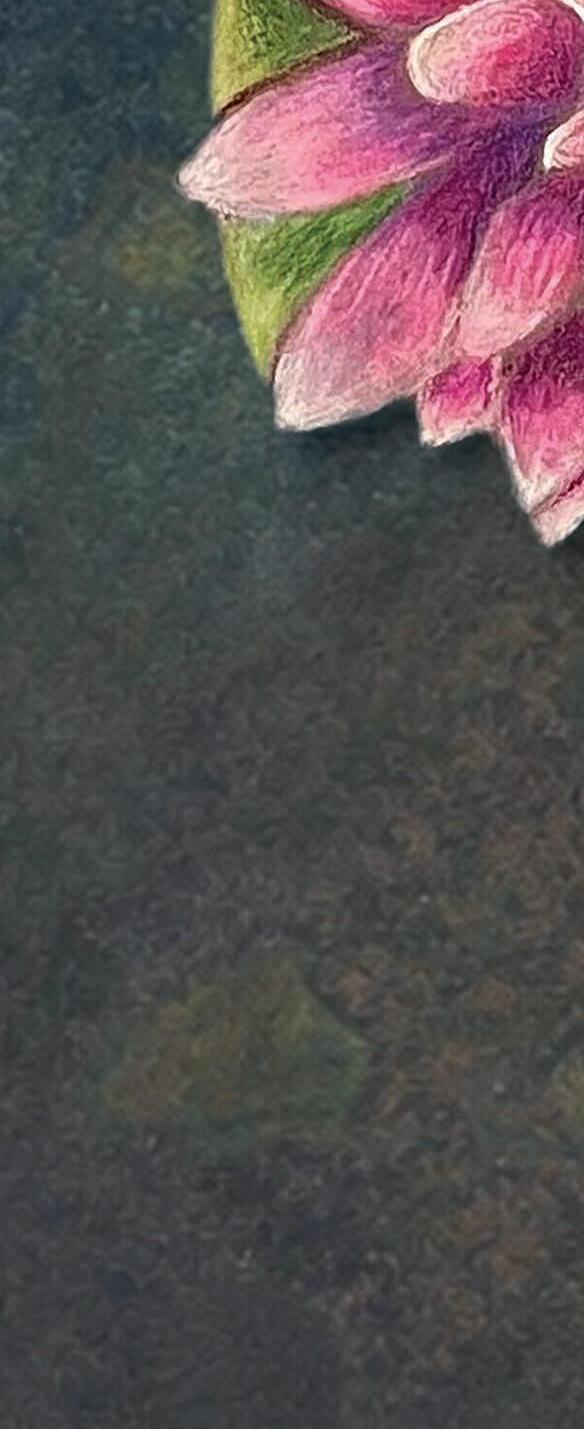
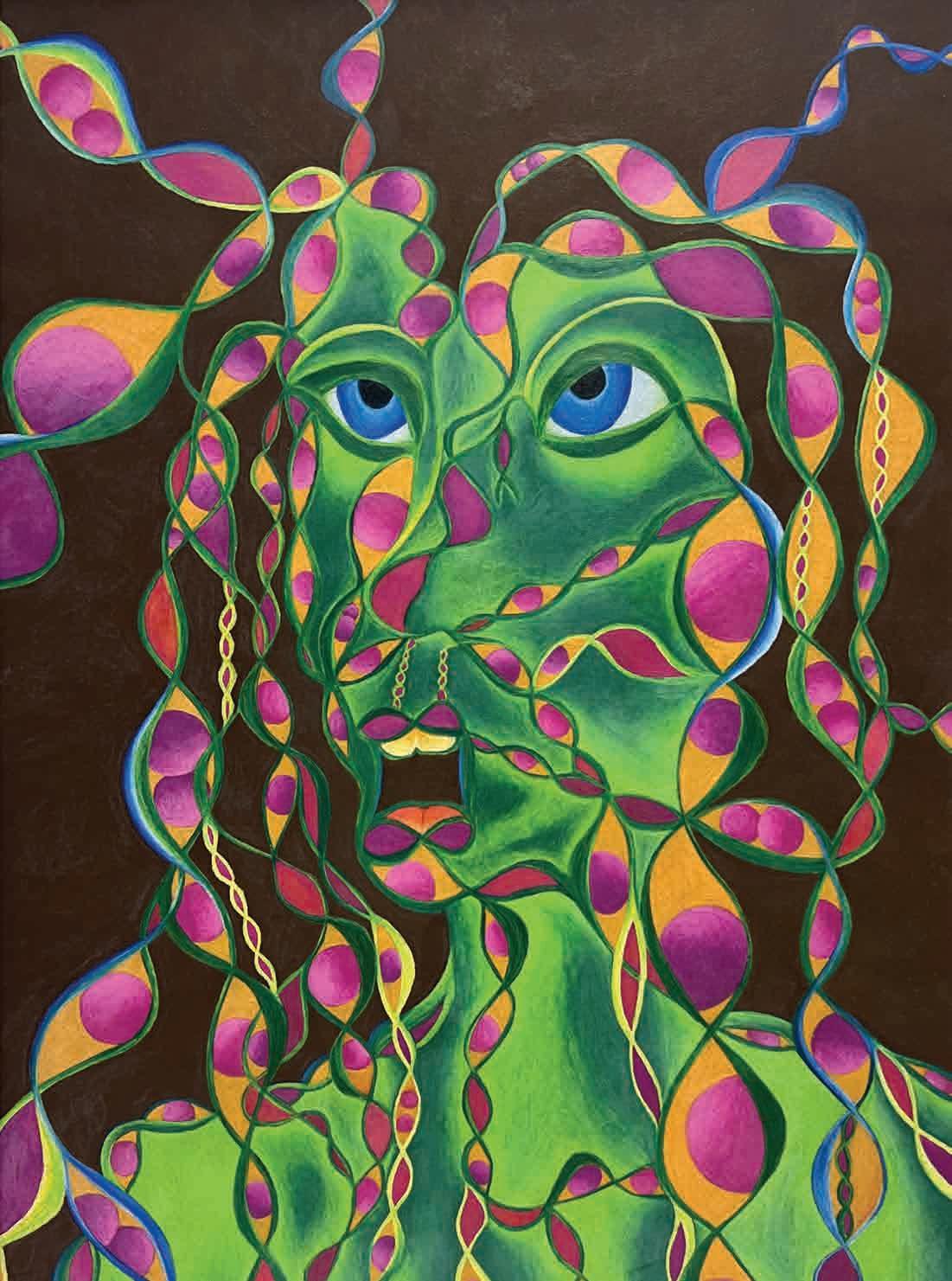
COVER AND COMPLEMENTARY ART: Allie Haynie | Wistful Waters | 27.5x19.5 | Colored Pencil
roughout the many di cult, drastic transitions I experienced during high school, being alone was something I was forced to face repeatedly and gradually learned to overcome. Undisturbed by distractions and life’s constant uncertainties, resting beside tranquil koi ponds has become one of the few places where I can truly embrace solitude. “Wistful Waters” re ects my newfound ability to nd peace
with being alone, a growth made possible through my connection with nature. While examining my re ection in the Inlustrate Orbem’s koi pond, my attention narrowed to the intricate stripes, spots, and patterns of each sh. In the same way the koi move freely through the water, the pond allowed me to swim away from my fear of solitude and transform into someone who nds beauty and comfort in being alone.




Samora Elam | Sia Gullapalli | Kate Navarro


Jackie Rao | Kathryn Wu | Isabel Yang | Lynn Zhao
Faculty Co-adviser
Ti any Fletcher
Lead Copy Editors
Associate Layout Editors
Jolin Cheng | Chloe Oh | Maya Rao
Annabelle Poovey | Lilly Berkovich
Jenna Chebaro | Carrolline Saydlowski
Angelina Yang
Lead Art Editors
Evelyn Haggstrom | Sophia Oh | Sutton Ellison
Associate Art Editor
Ella Hennessy | Thomas Lynch
General Staff
Grace Chiu | Kennedy Clutter Charlize
Hanley | Caroline JinCaroline
Parenteau | Alyssa Ryzhikova Claire
Siever | Sita Sagunarthy | Kylie Wilson | Mason Yee
English Faculty Support
Alan Becker | Megan Butt | Matt
Cosper | Lori Davis | Spencer Dowd
Richard Harris | Keegan Hinsley
Daniel Hayes | Jessica Lee | Robin
Siczek | Erika Thurman
Art Faculty Support
Amanda Allen | Richard Fletcher
Administrative Support
Chuck Baldecchi | Abigail Cudabac
Whitney Duquette | Rob McArthur
Sonja Tayor | Tracey Vanneste
Technical Support
Kim Alexander | Dave D’Orio | Andre
Elam | Hank Hardman | Jim Hu aker
Craig Summerville
Promotional Support
Latin Arts Association
Brittany DuBose | Sahar Ghazale
Devon Newton | Carolyn Stone
Charlotte Latin School Marketing & Communications Support
Gavin Edwards | Sacia Matthews
Tricia Tam
Financial Support
Charlotte Latin School

“catching at roots”
CHAPTER 1 DIVIDER
8 Wistful Waters / Allie Haynie / Colored Pencil
CHAPTER 1 POETRY
10 e Student Condition / Carrolline Saydlowski / Free Verse
12 the block / Isabel Yang / Free Verse
16 sobriety begins at 16 / Samora Elam / Free Verse
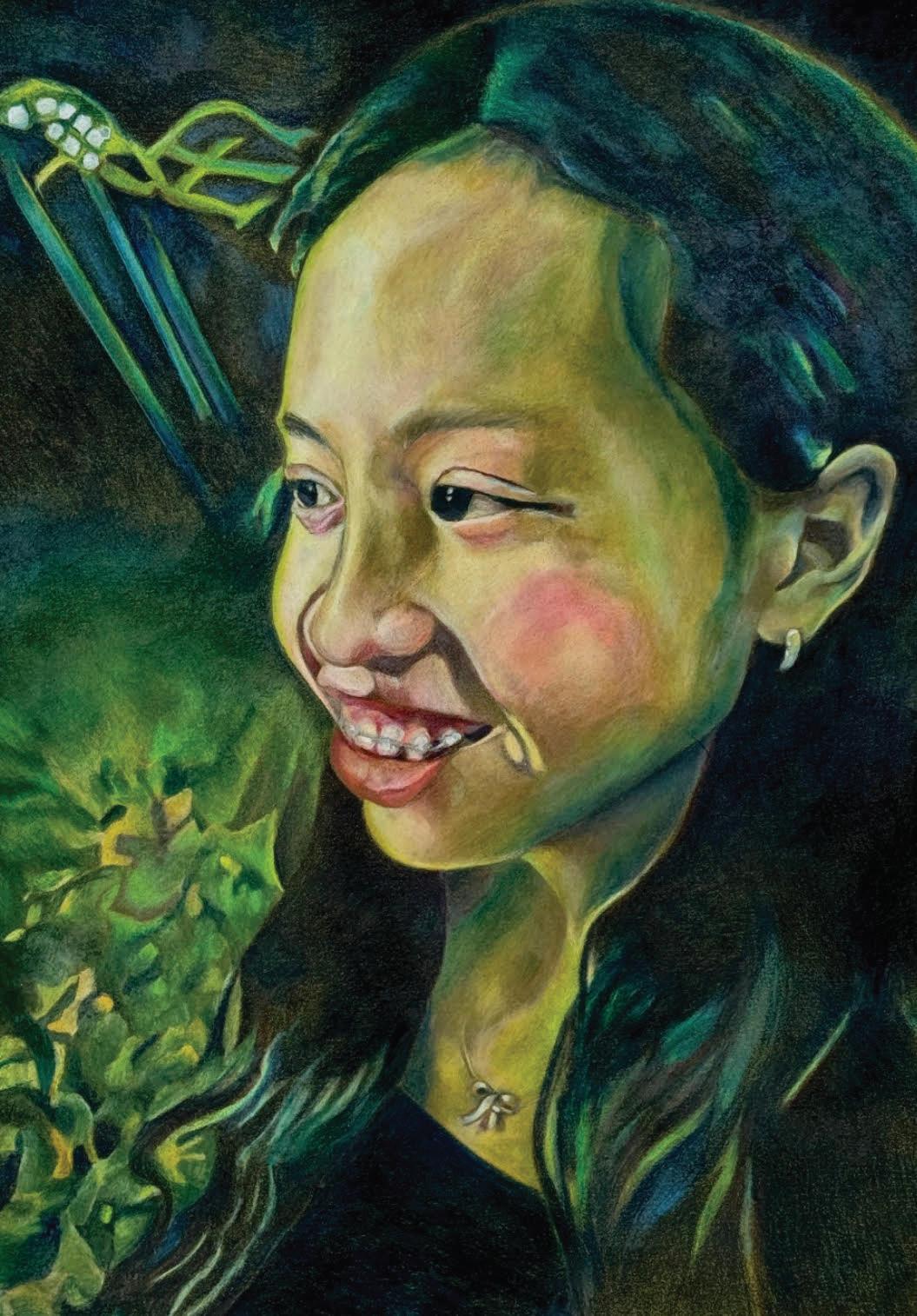
20 Glass Smiles / Sia Gullapalli / Sonnet
24 Strawberry Jam / Clark Fan / Free Verse
28 necromancy / Samora Elam / Free Verse
33 e Woman’s Burden / Lilly Berkovich / Free Verse
CHAPTER 1 FICTION
15 Arti cial Awareness / John Gray Norris / Flash Fiction
23 Lost / Harrison Smith / Flash Fiction
31 Forgotten / Graceyn Levesque / Flash Fiction
CHAPTER 1 NONFICTION
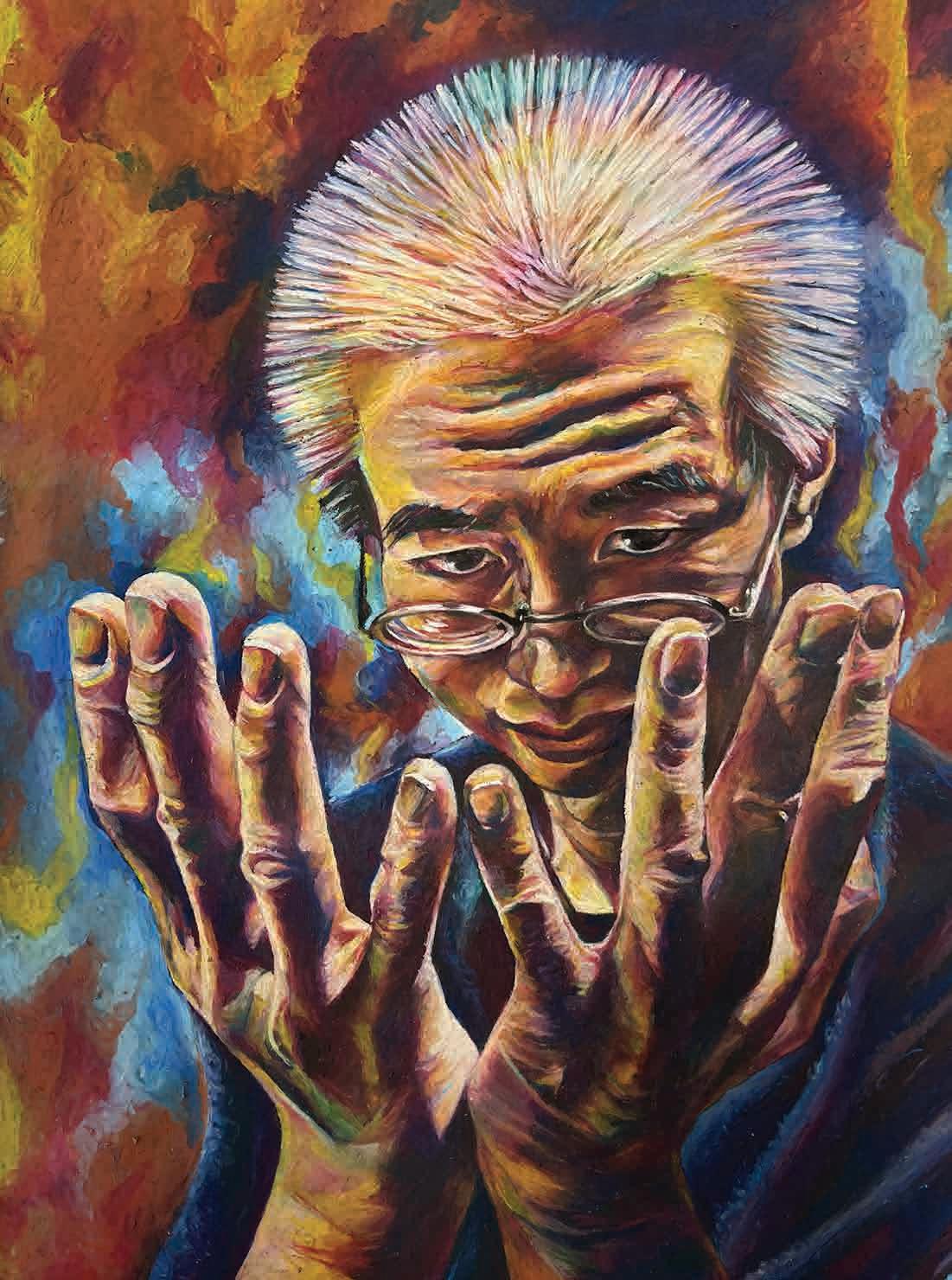
18 Hands / Kelsey Sciacca / Memoir
26 You’ll Never Notice / Annabelle Poovey / Memoir
34 Carrying a Calculator / Max Bai / Memoir
CHAPTER 1 ART
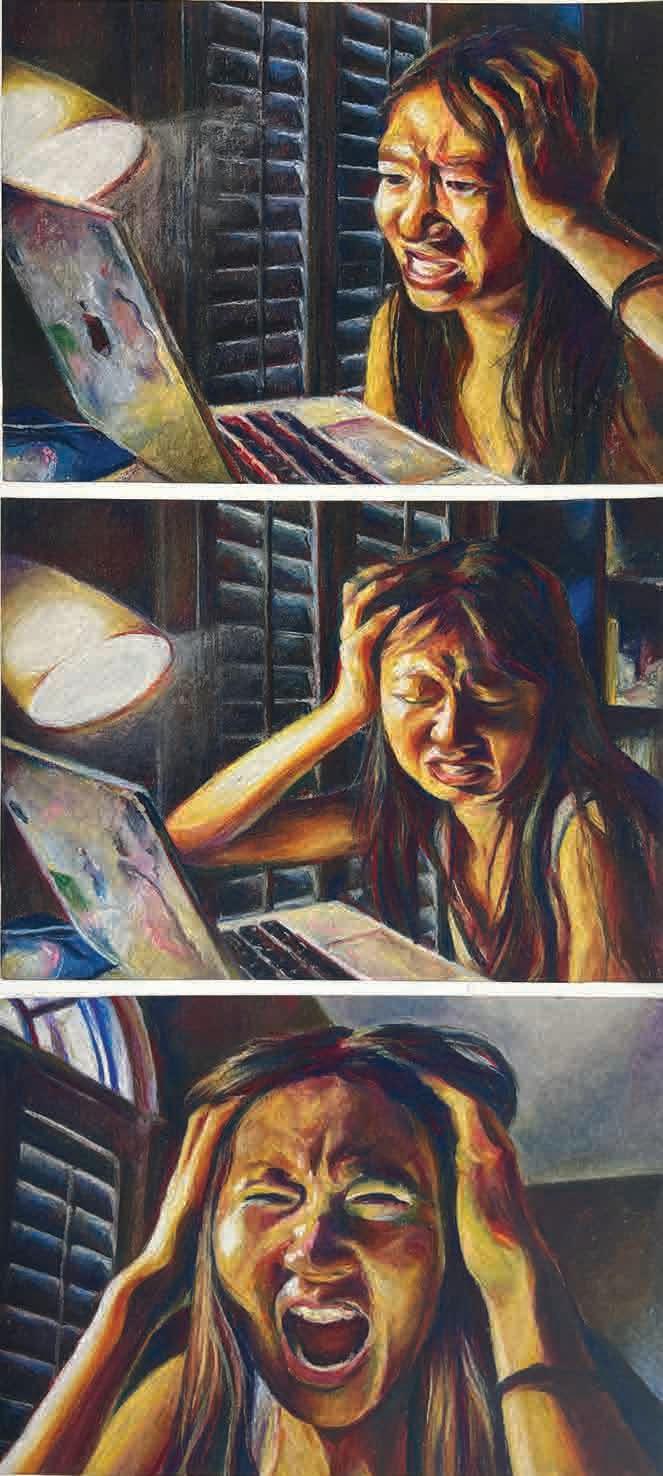
11 Writer’s Block / Isabel Yang / Chalk Pastel
13 Synchronicity / omas Lynch / Digital Photography
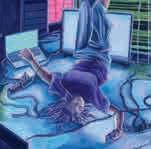
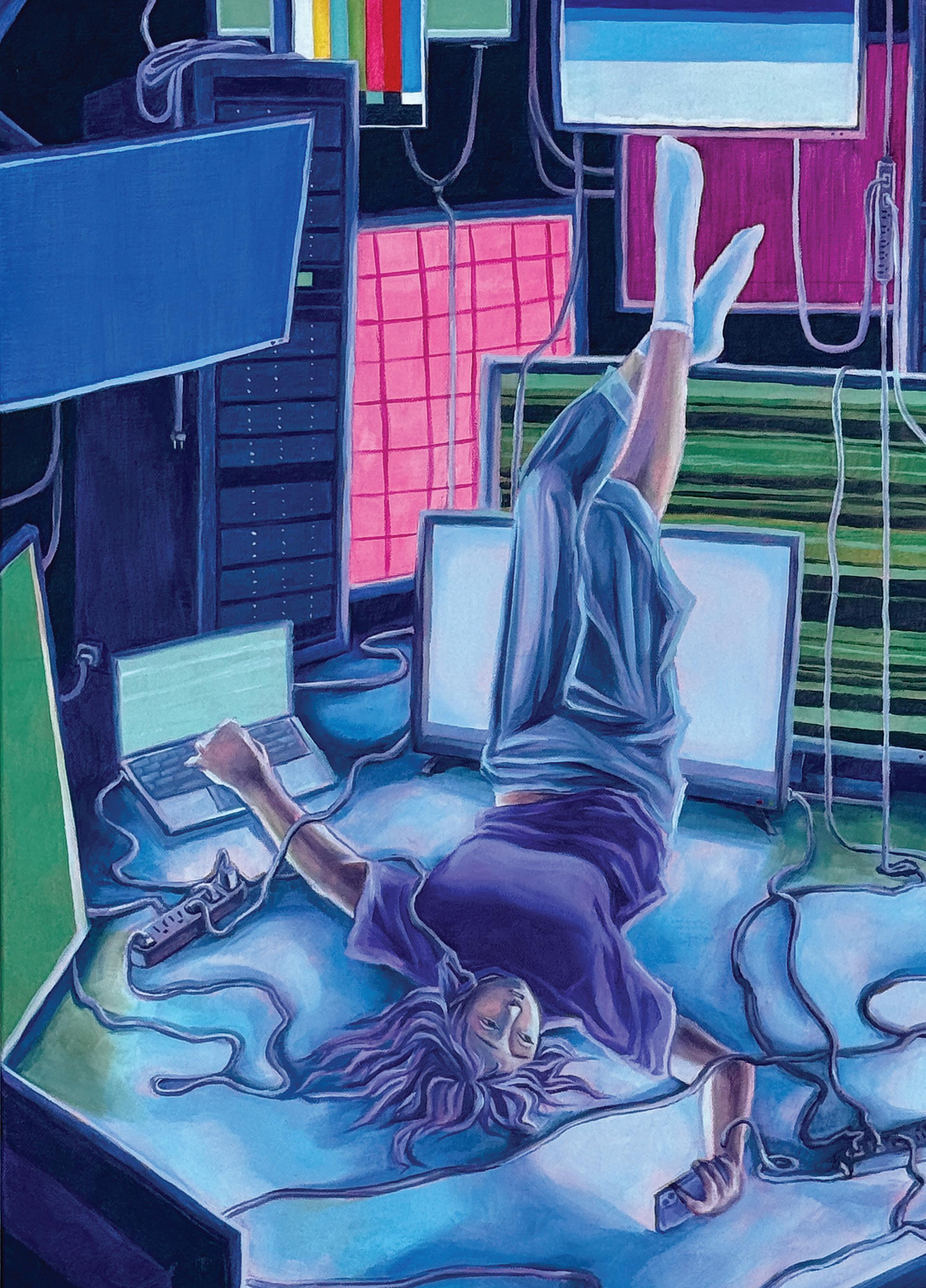
14 e Screens / Bennett DuBose / Oil on Canvas
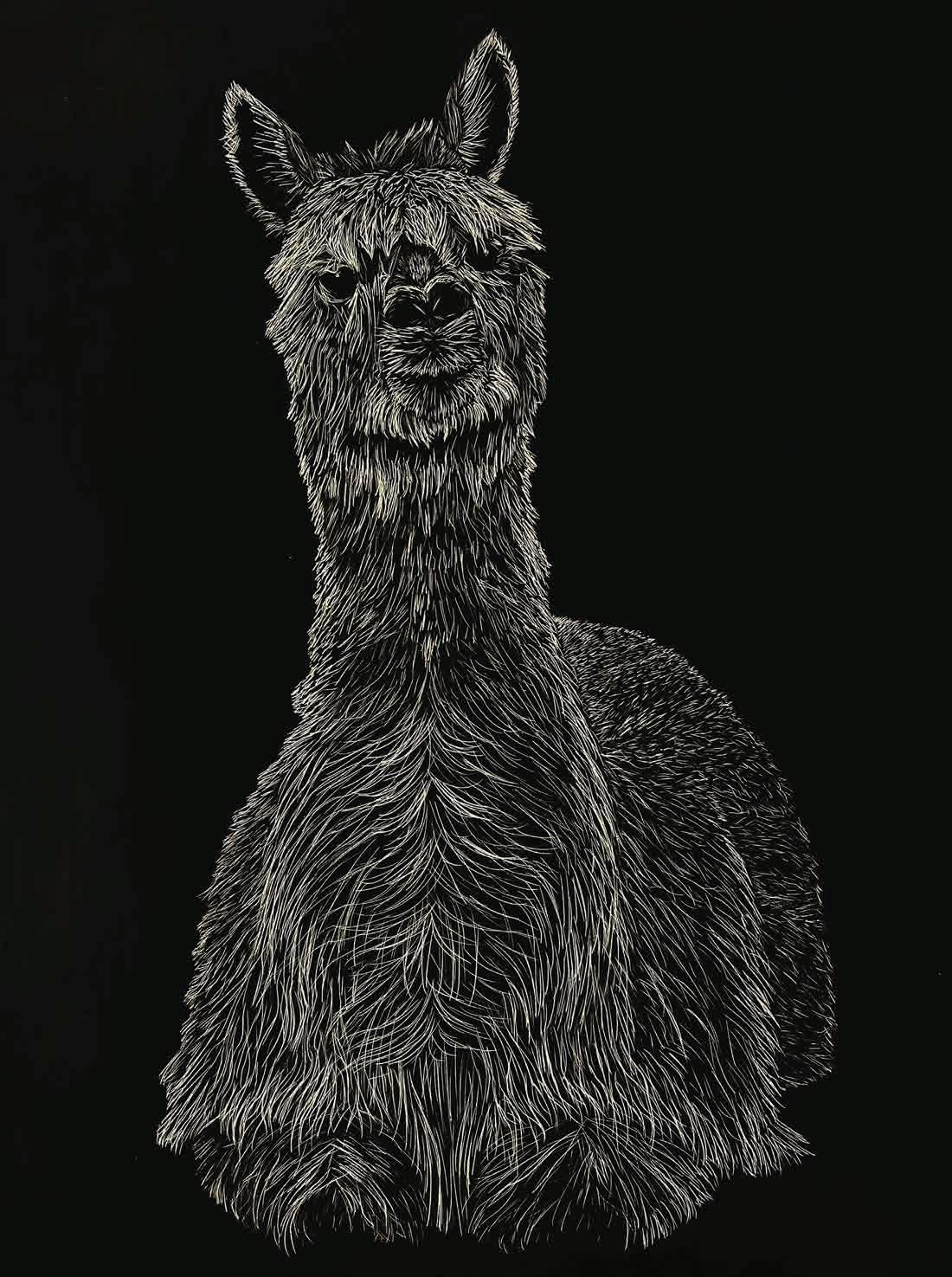
17 Peruvian Llama / Ellen Chapman / Scratchboard
19 Bàba’s Magic Trick / Isabel Yang / Oil Pastel
21 e Gateway to the Emerald City / Maya Rao / Colored Pencil
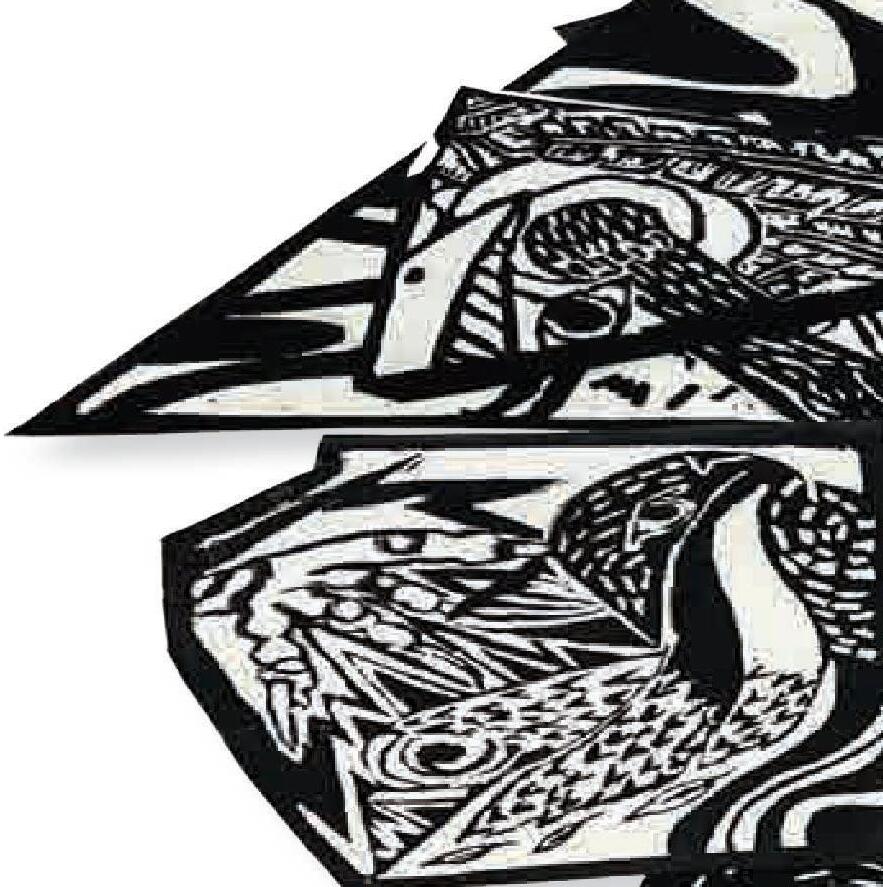
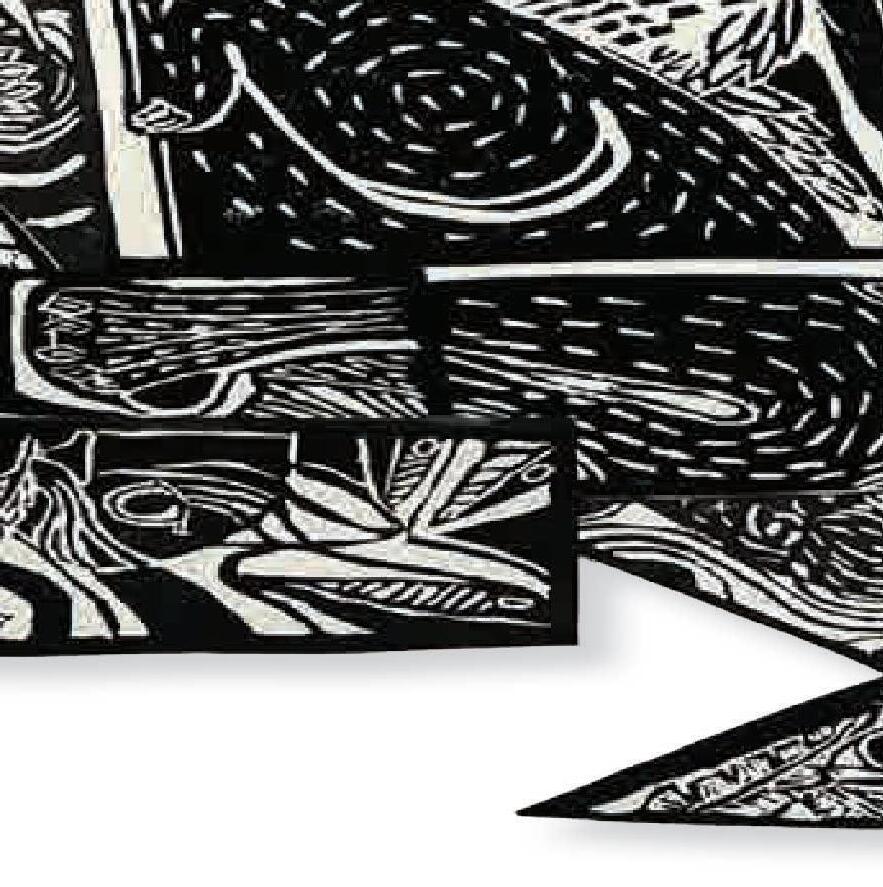
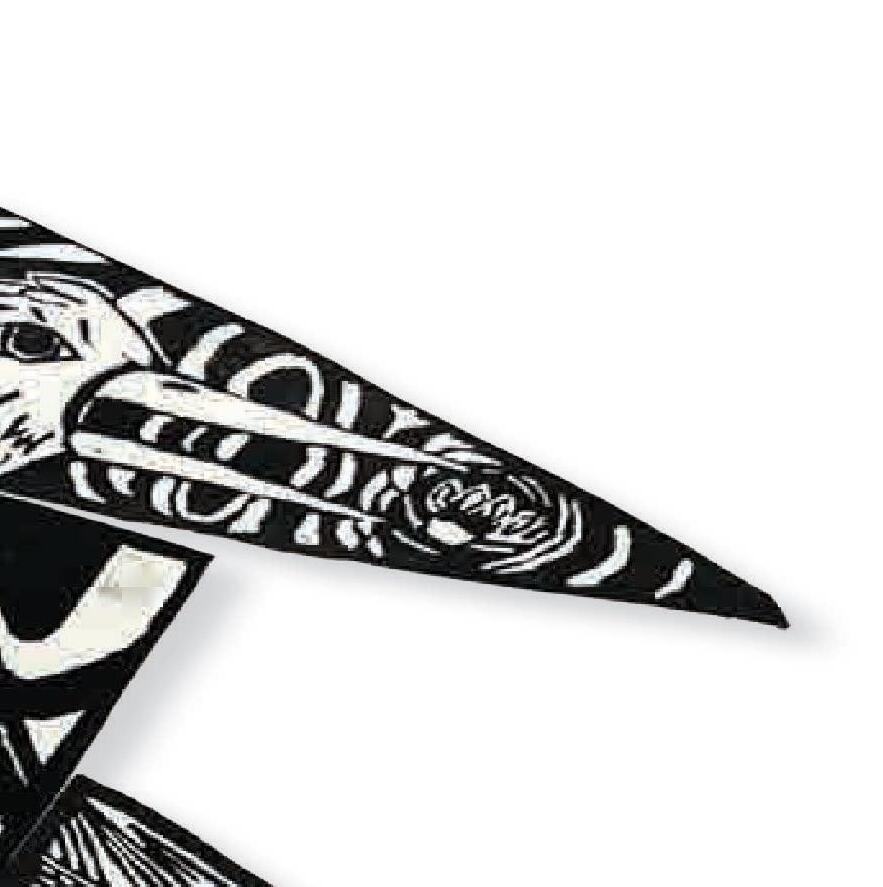
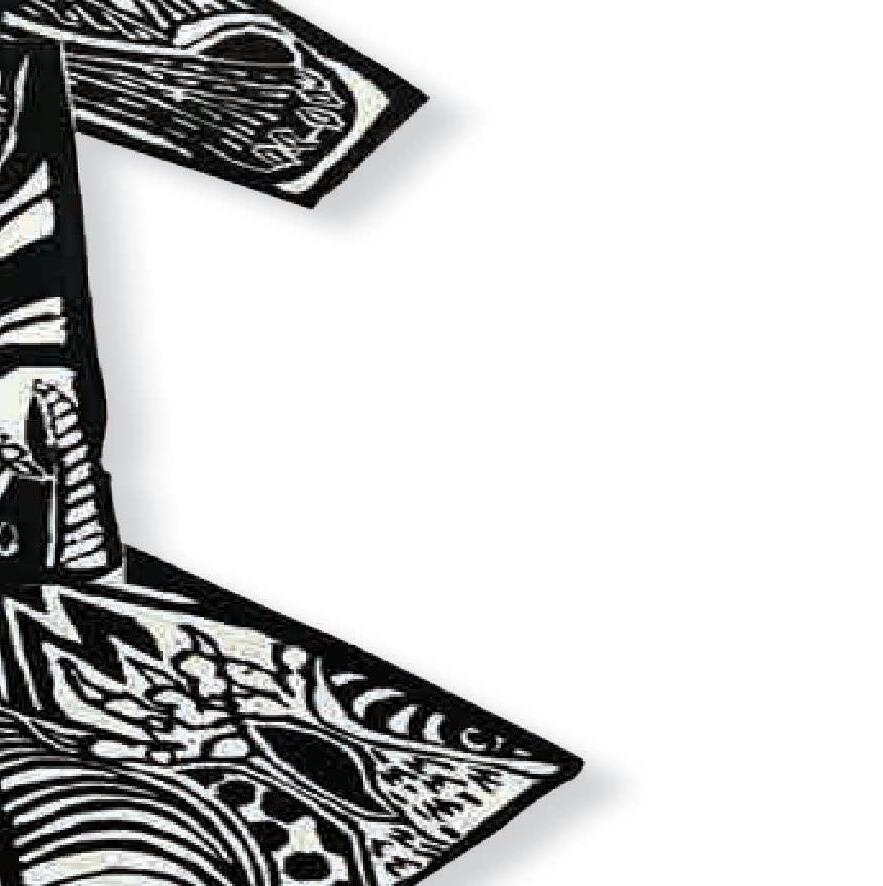
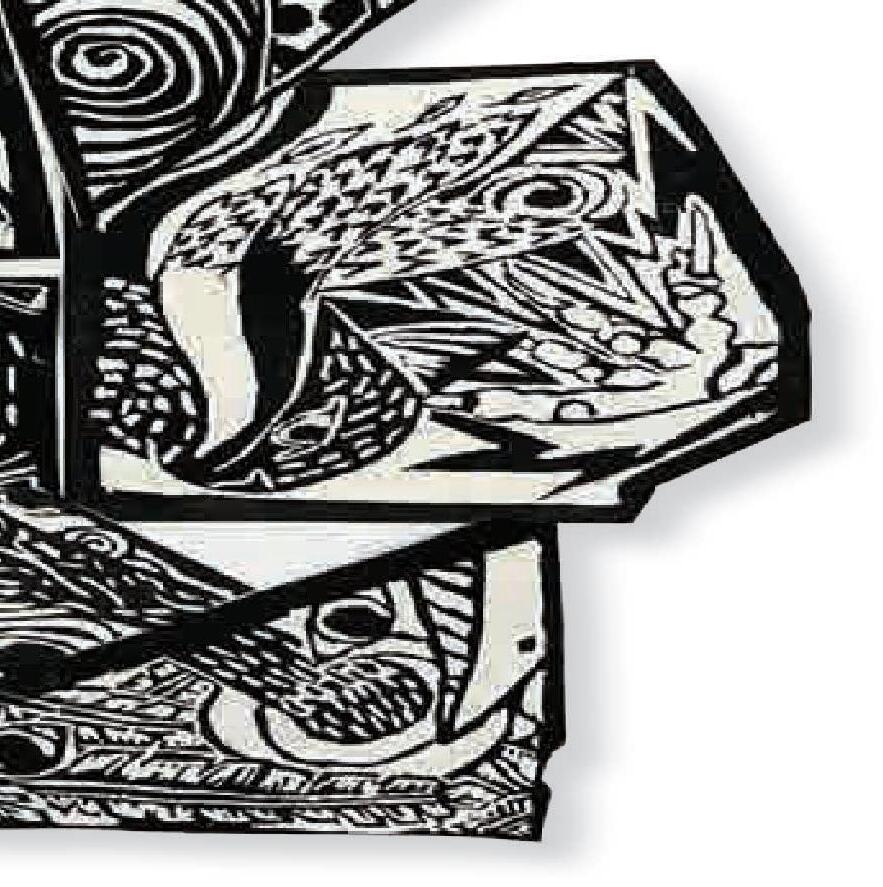
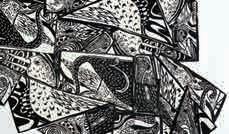
22 Bird Chase / Sloan Ellison / Printmaking
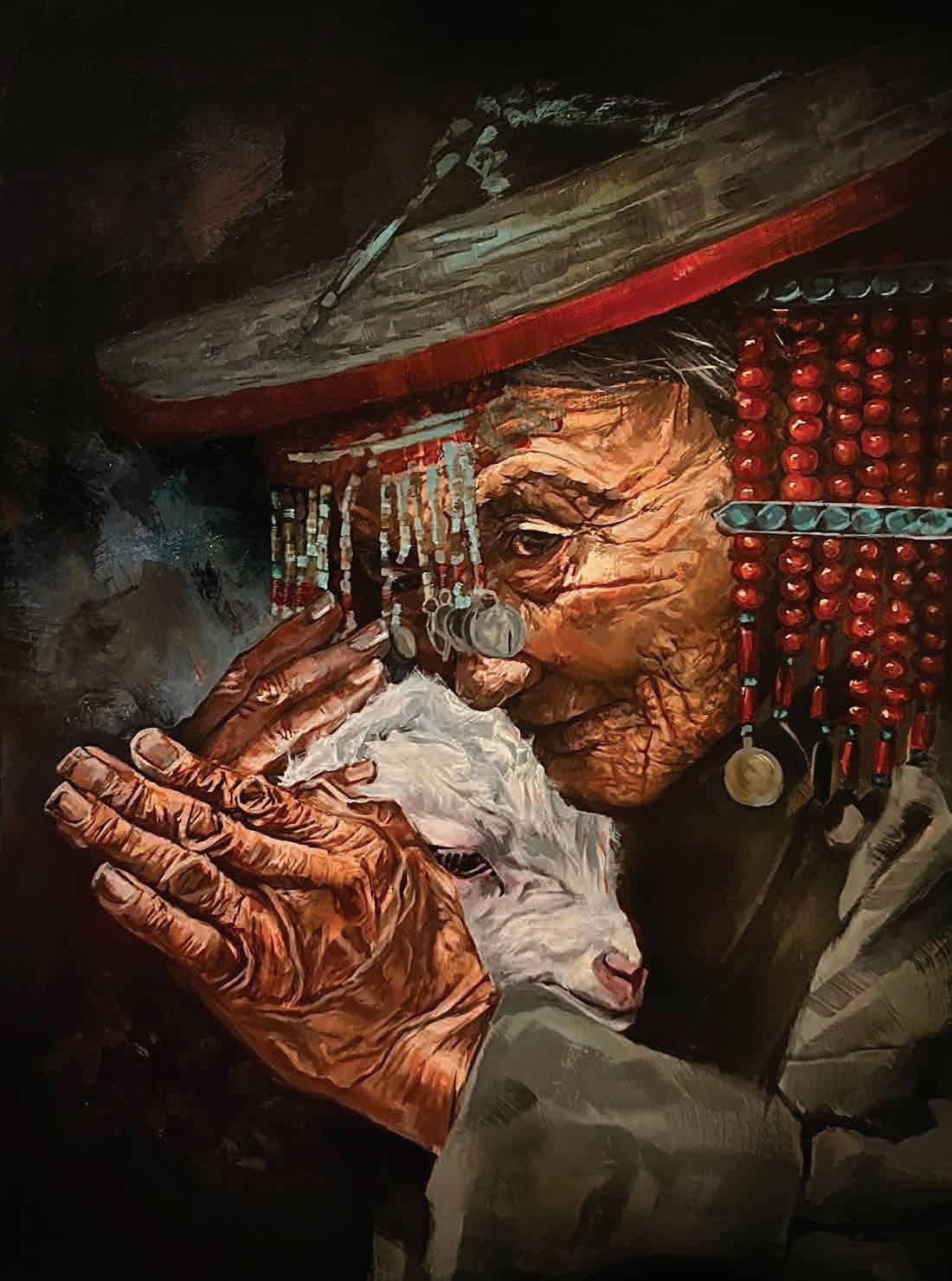
25 e Weight of a Lamb / Kathryn
Wu / Acrylic Paint
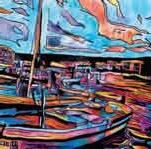
27 Loves Me Not / Carrolline Saydlowski / Photography

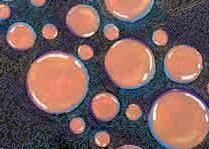
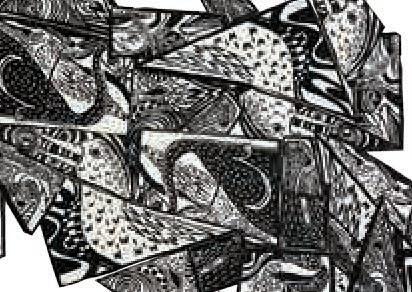
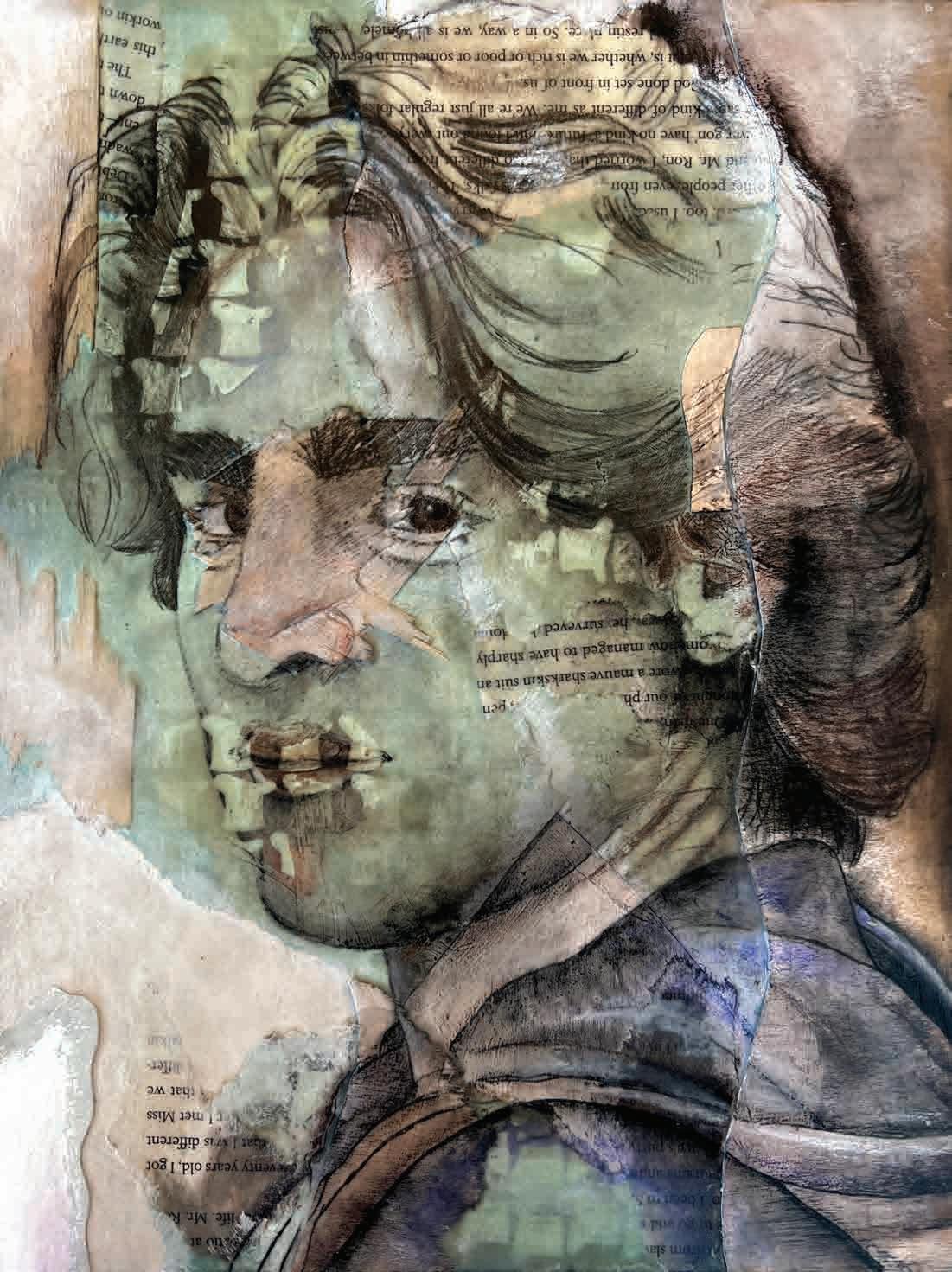
29 Pages Unwritten / Peyton Samii / Mixed Media
30 Nectar / Isabel Yang / Mixed Media
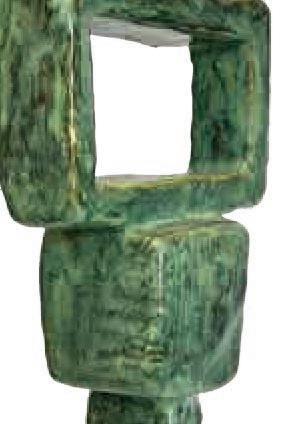
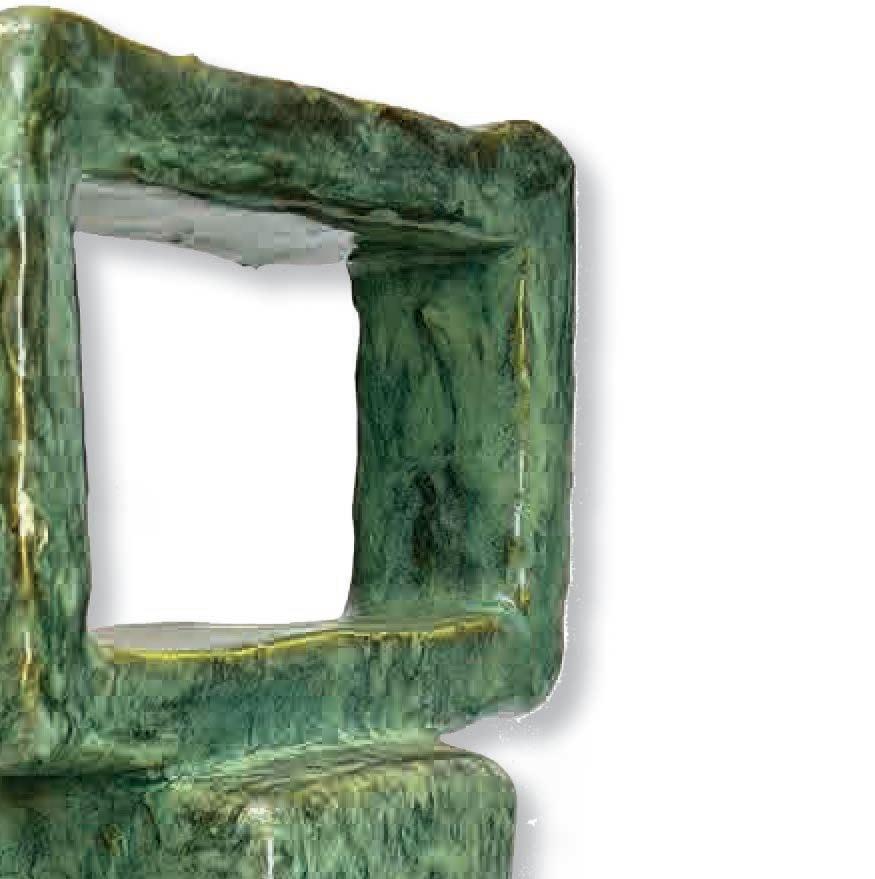
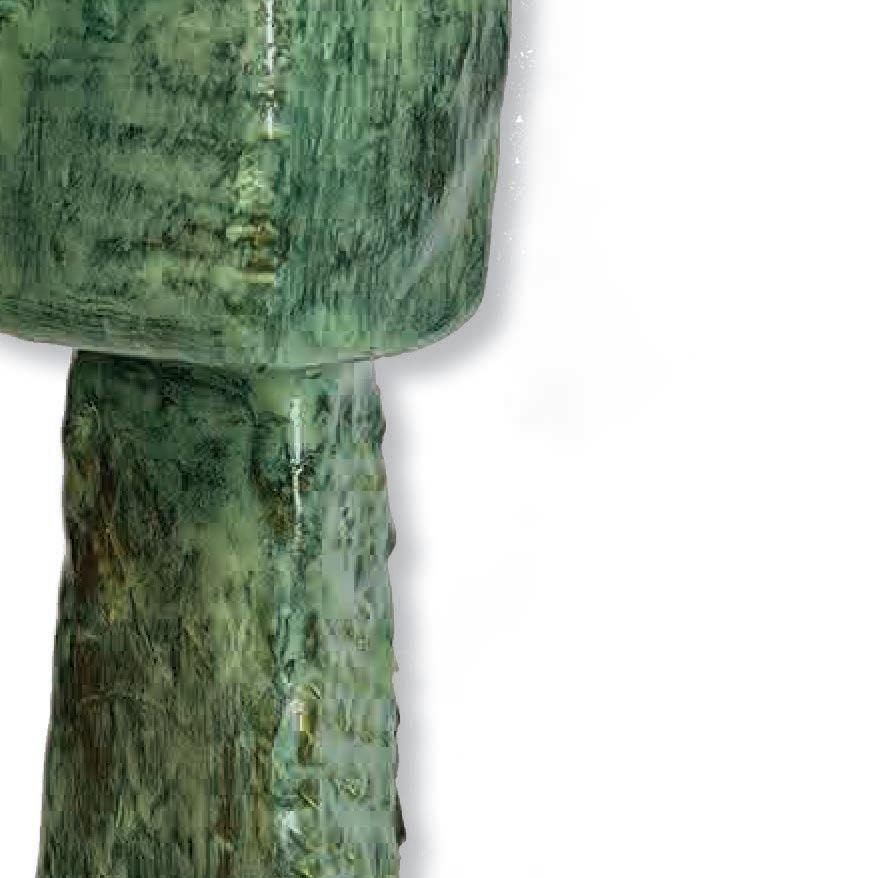
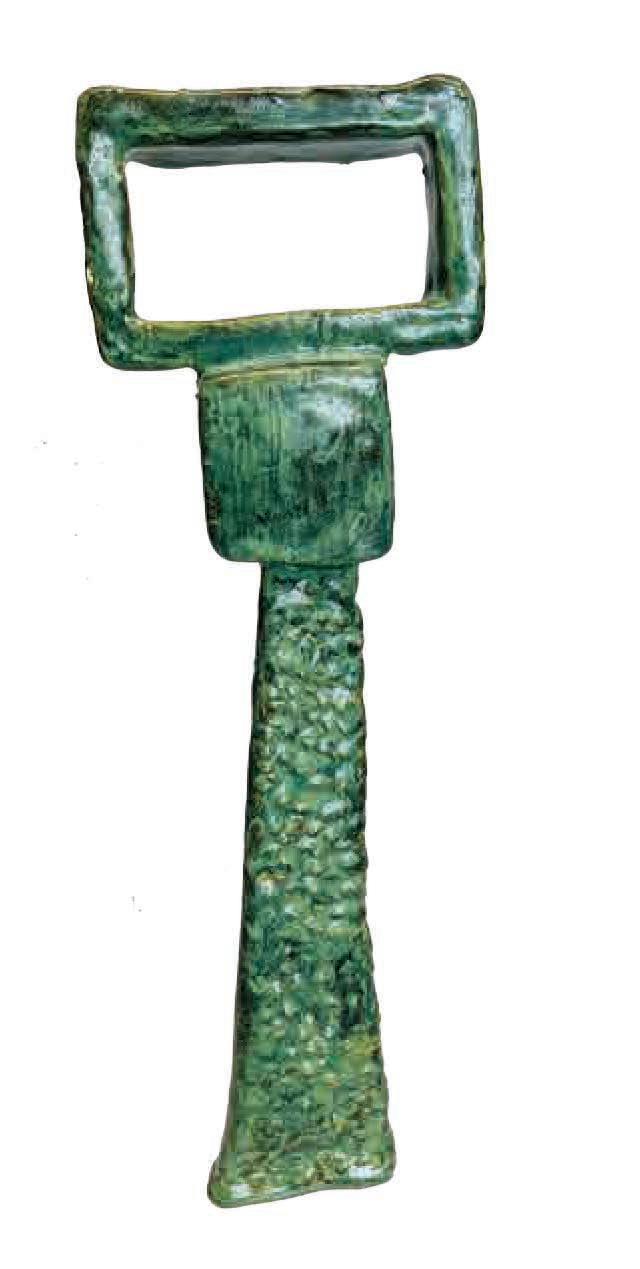
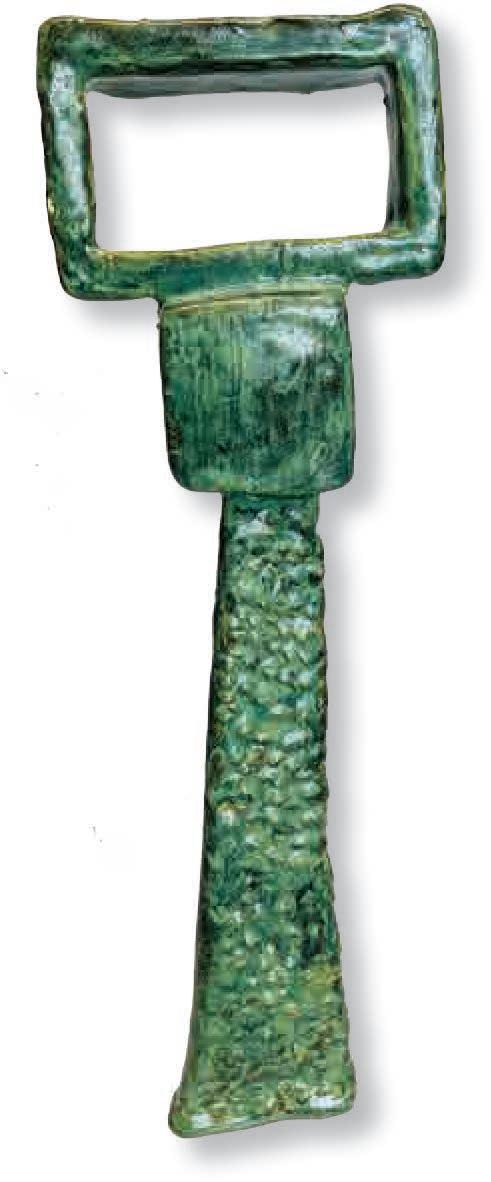
32 e Square / Davis Jones / Sculpture
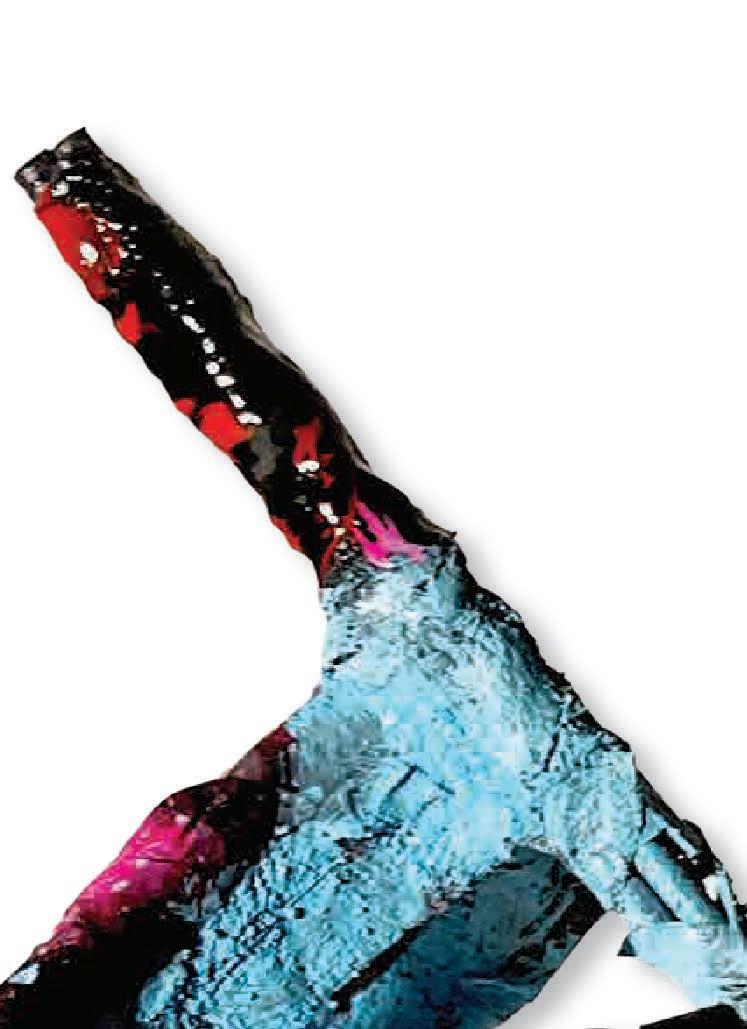
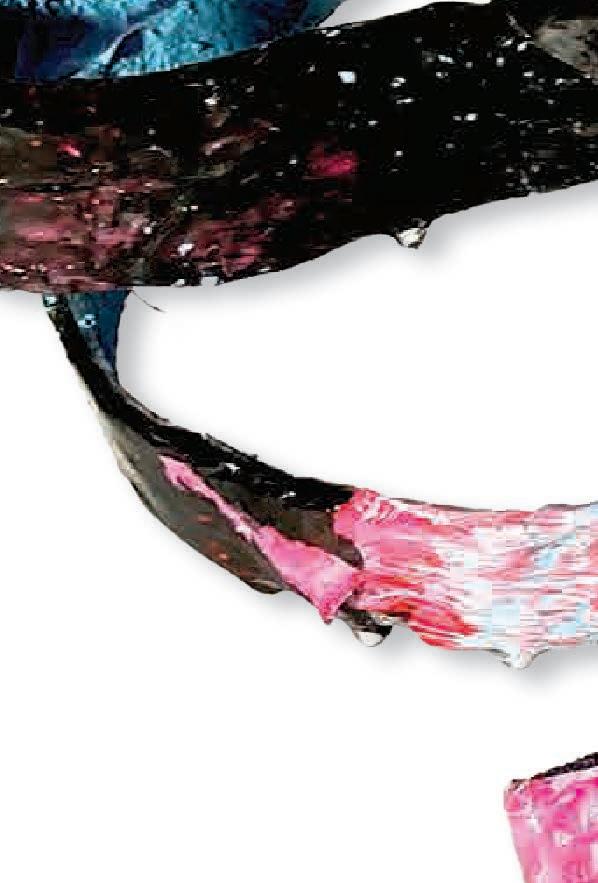
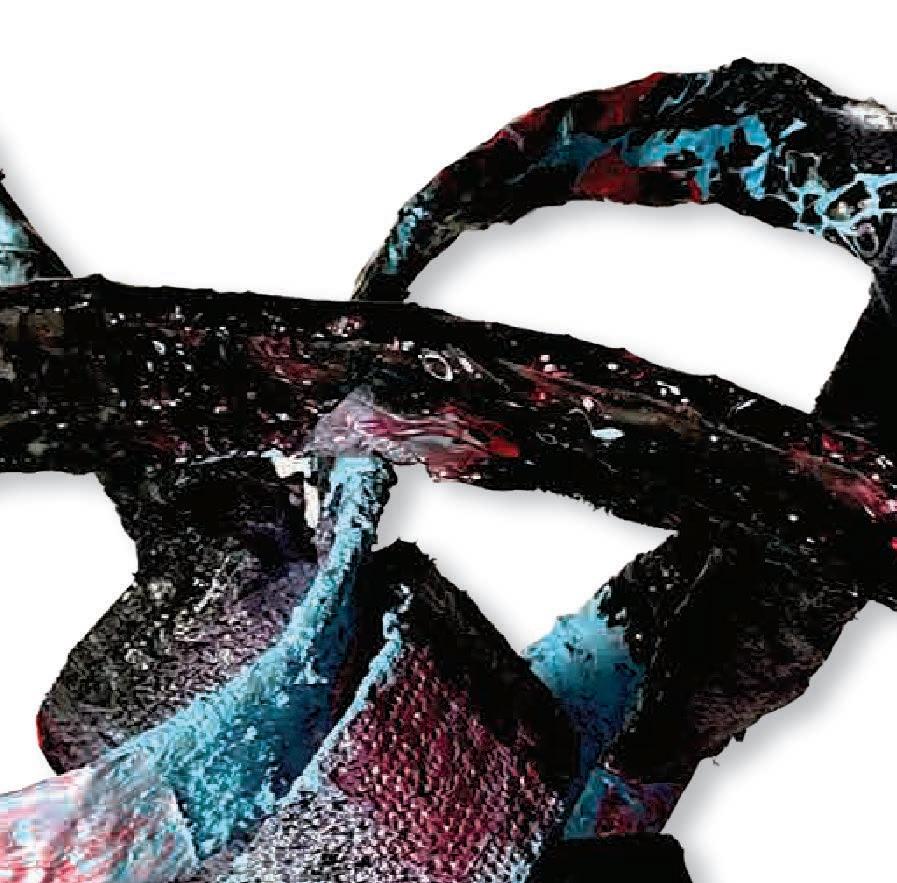
35 Serpertine / Peyton Samii / Sculpture
CHAPTER 2:
“we find anch age”
CHAPTER 2 DIVIDER
36 Wistful Waters / Allie Haynie / Colored Pencil
CHAPTER 2 POETRY
38 the mountain / Sia Gullapalli / Free Verse
43 I See, erefore I Am / Kathryn Wu / Free Verse
47 bits & pieces of her / Caroline Jin / Free Verse
51 Nacre / Kathryn Wu / Free Verse
59 eenth spring / Isabel Yang / Haiku Collection
60 A ertaste / Kathryn Wu / Free Verse
2 FICTION
40 separated / Lynn Zhao / Flash Fiction
54 e Ones Who Sparkled / Annabelle Poovey / Flash Fiction
CHAPTER 2
44 Go With the Flow / Jackie Rao / Memoir
49 Hide-and-Seek / Carrolline Saydlowski / Memoir
53 Second Helpings / Samora Elam / Memoir
57 Unspoken Truths / Divija Rao / Memoir
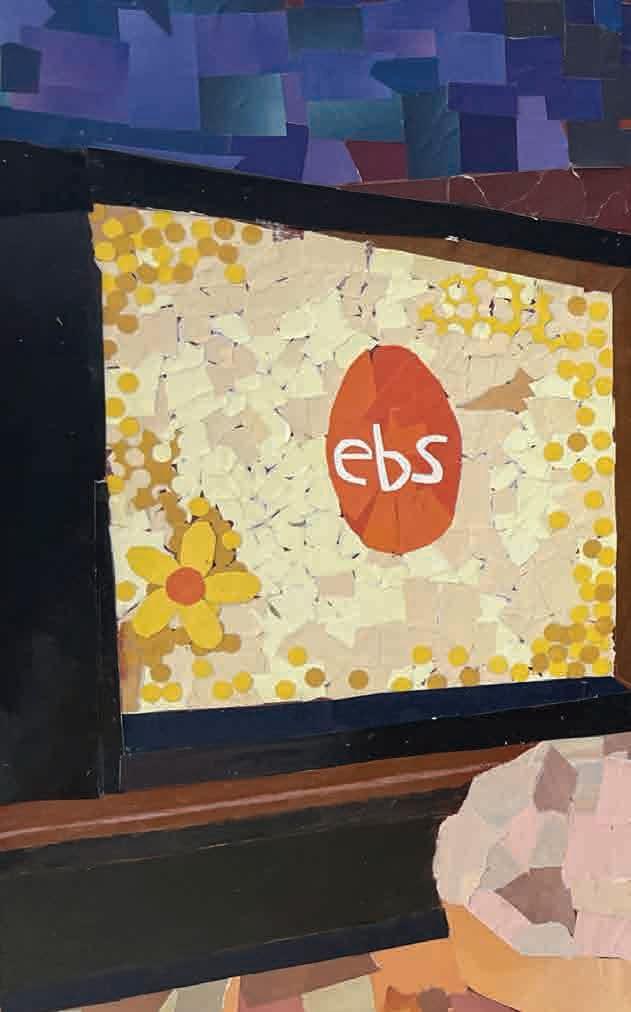
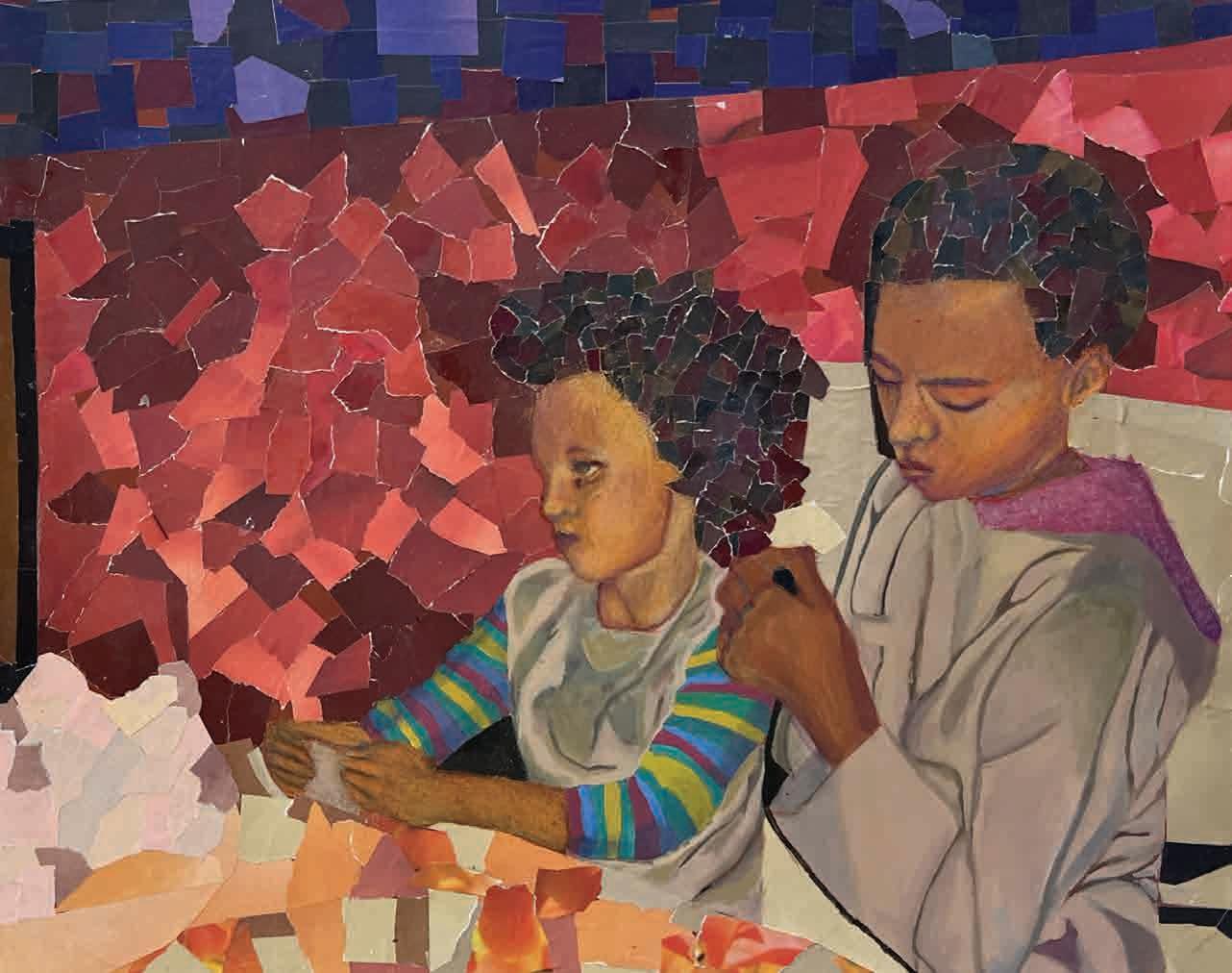
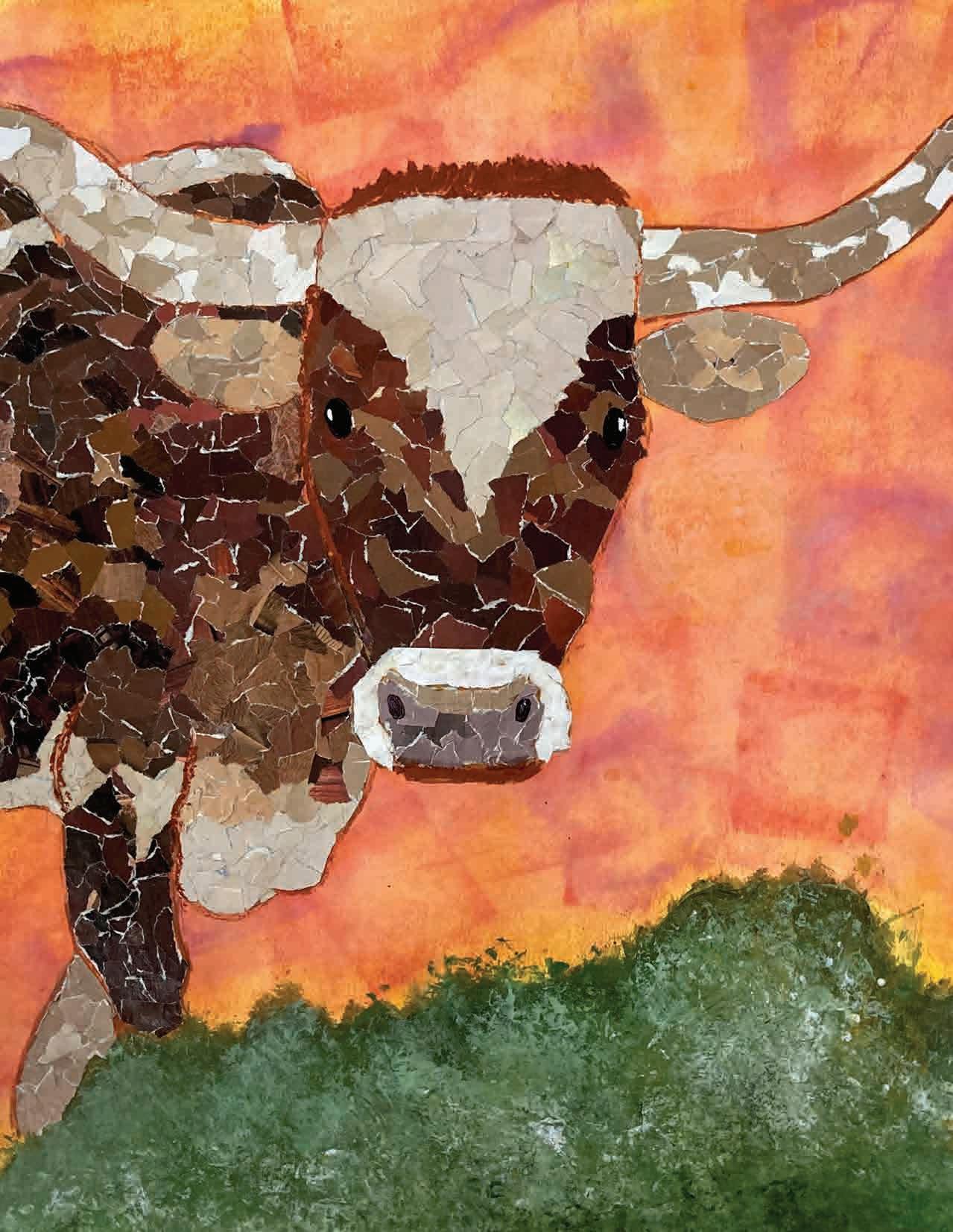
63 Why I Love the Color Yellow / Max Colaco / Memoir
2 ART
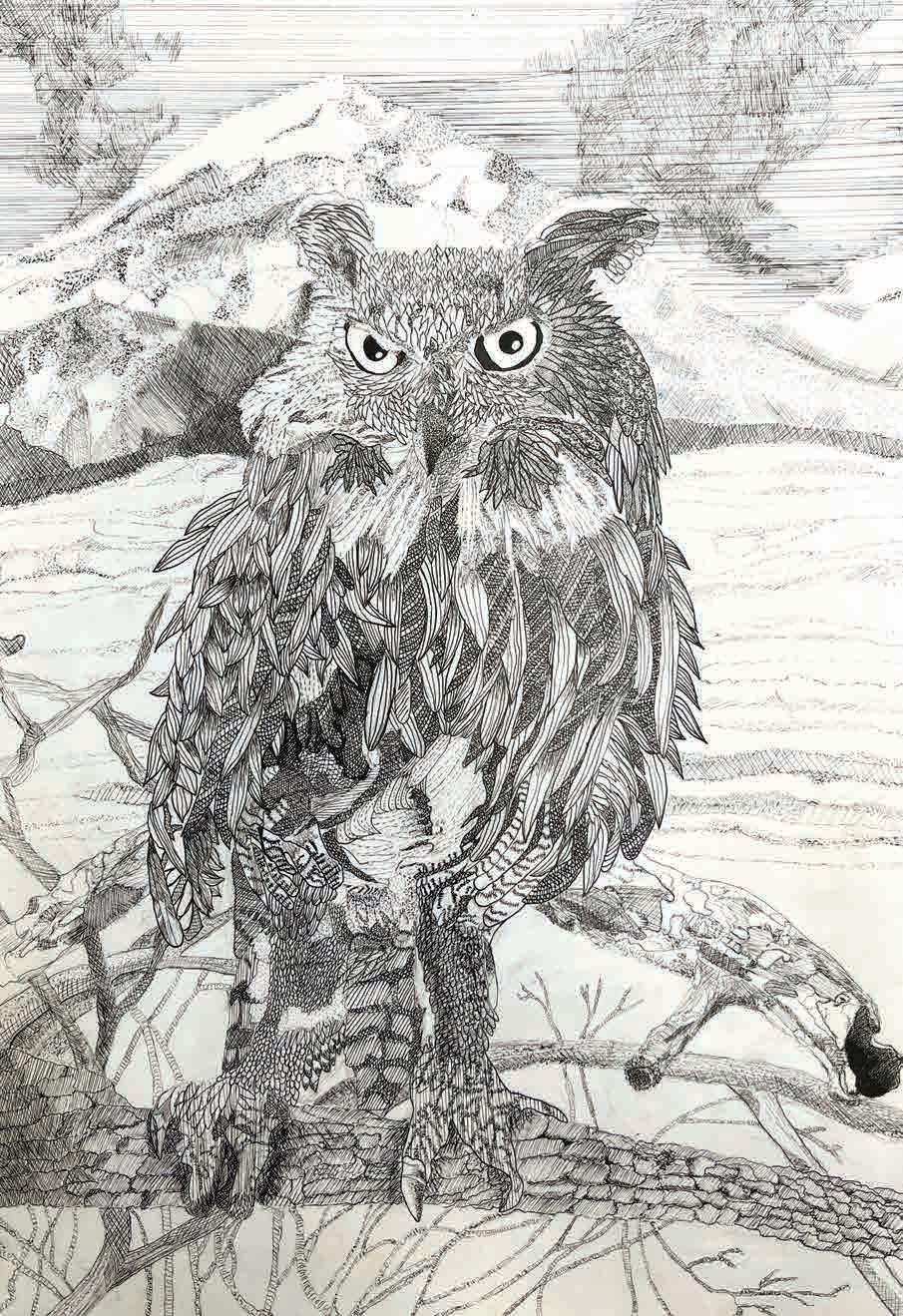
39 Perched in Patience / omas Lynch / Pen & Ink
41 Inverted Nature / Ellen Chapman / Printmaking
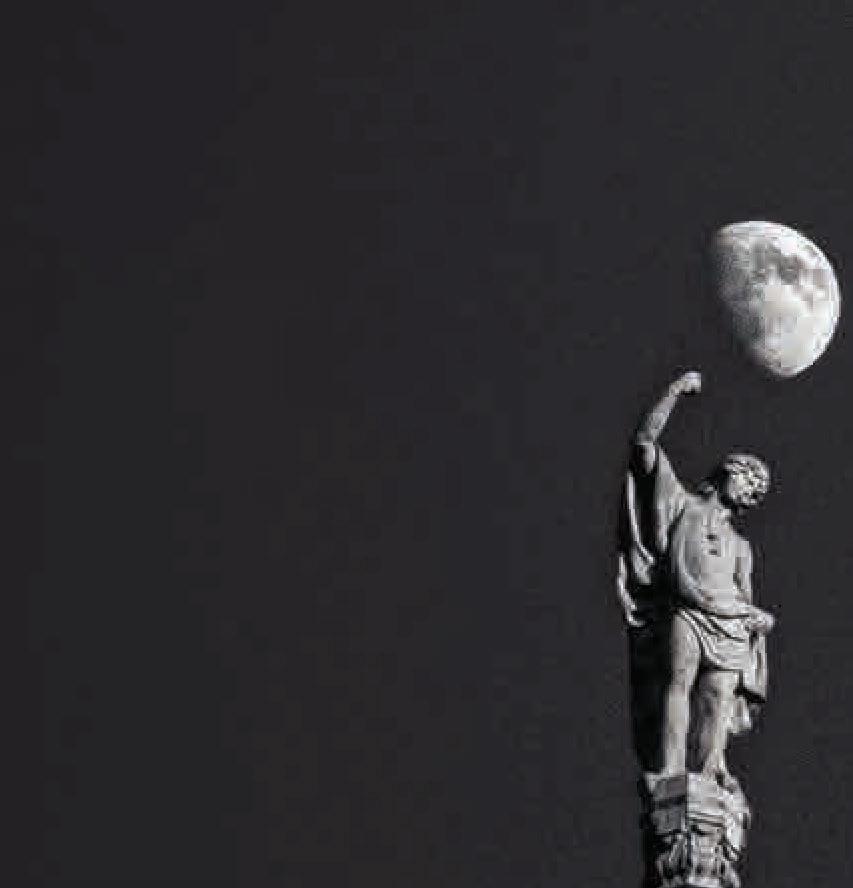
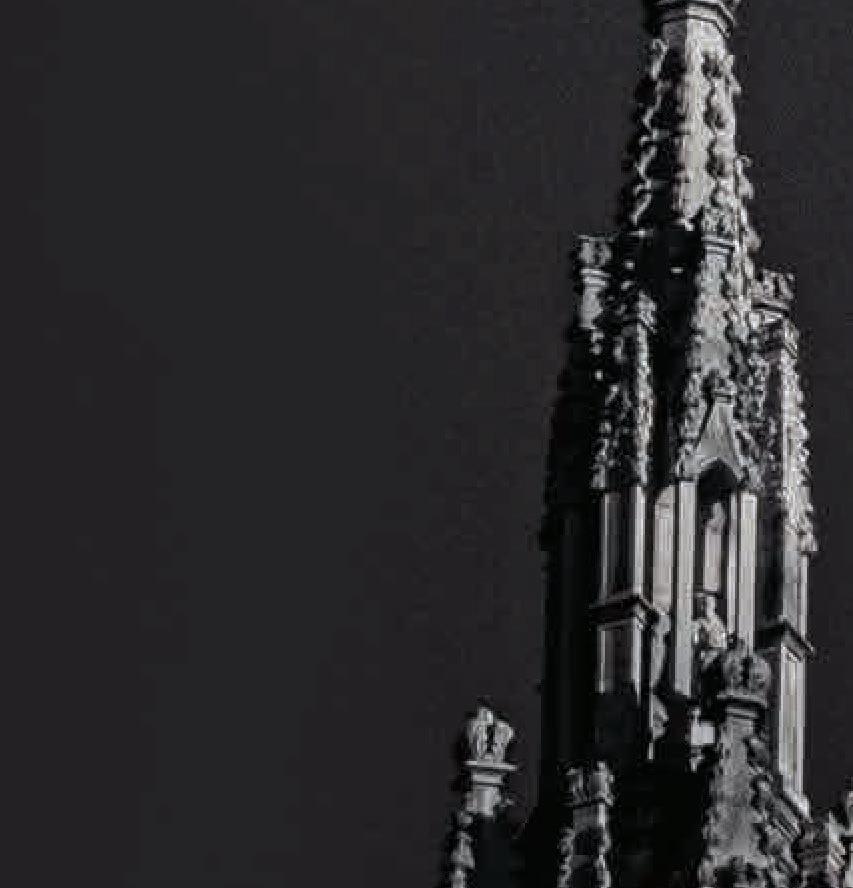
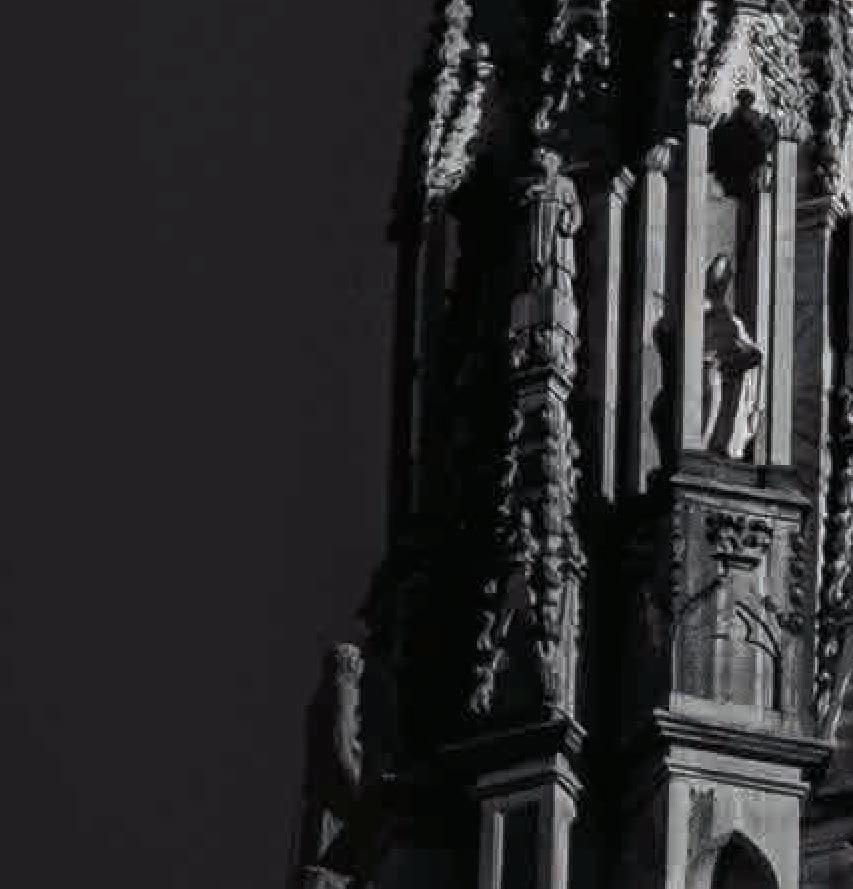
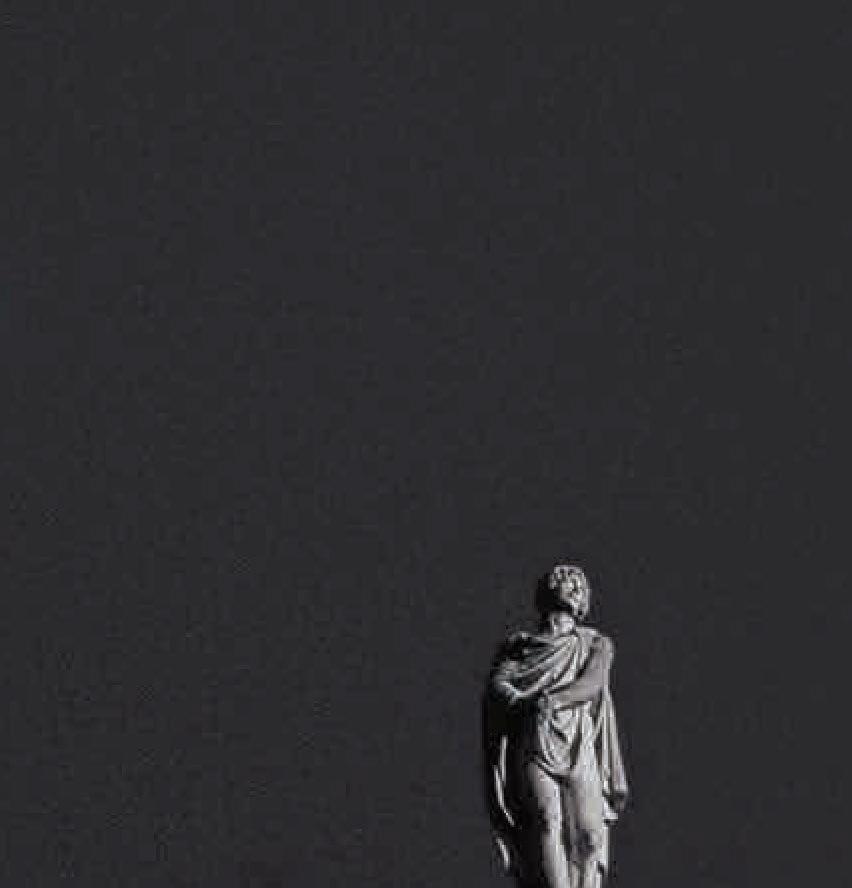
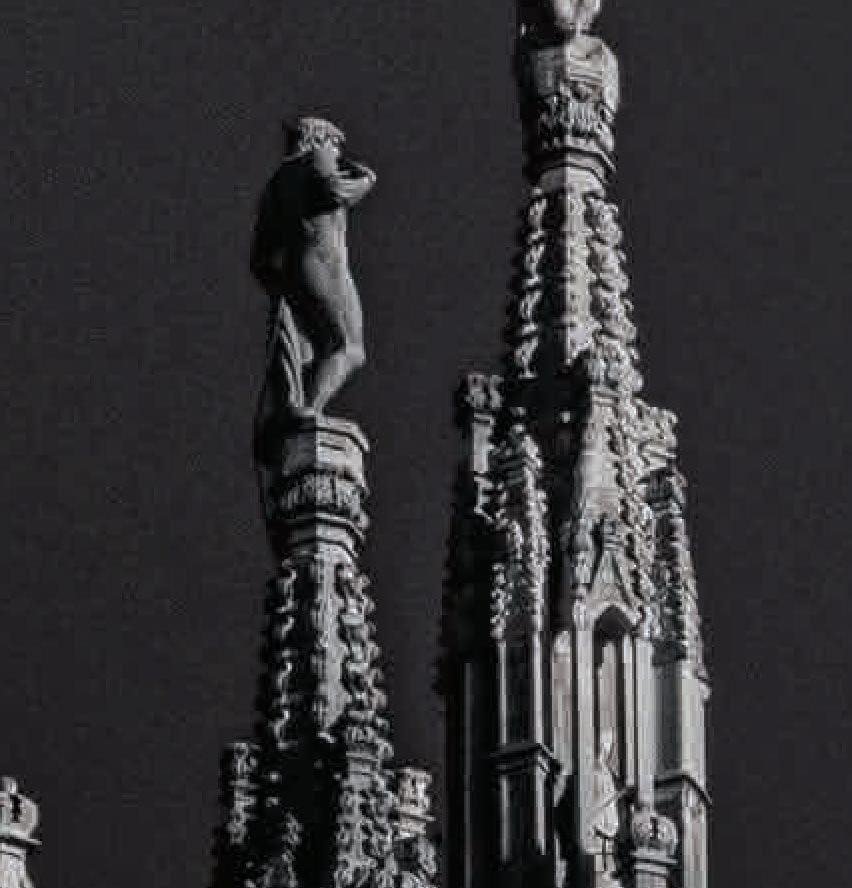
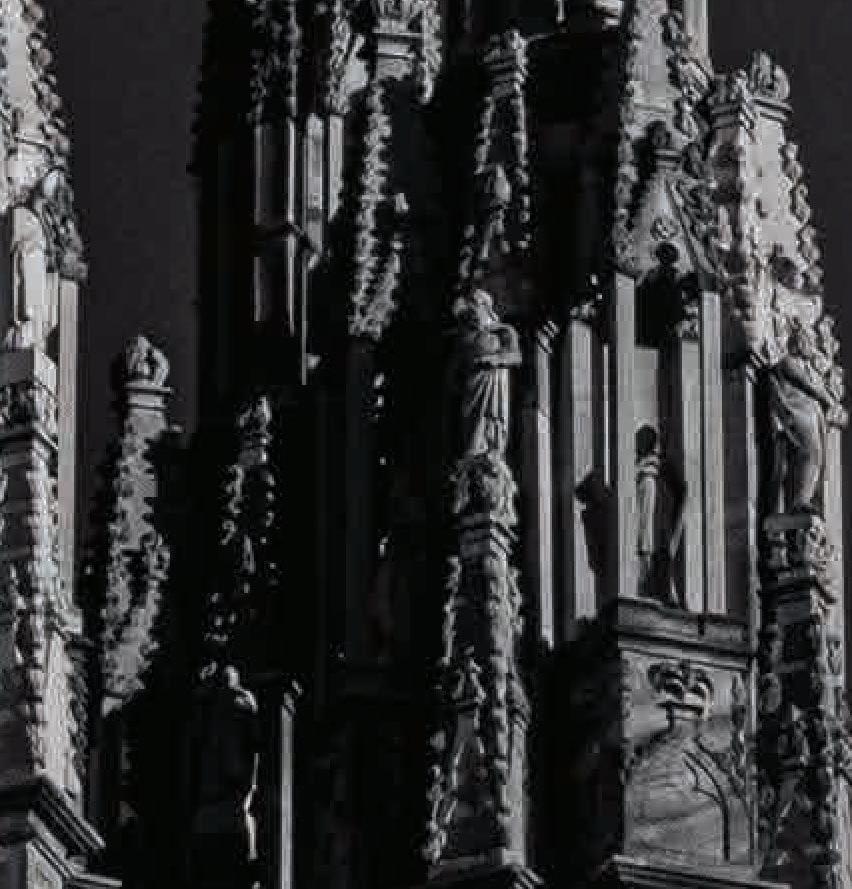
42 Milan Duomo / Fielding White / Photography
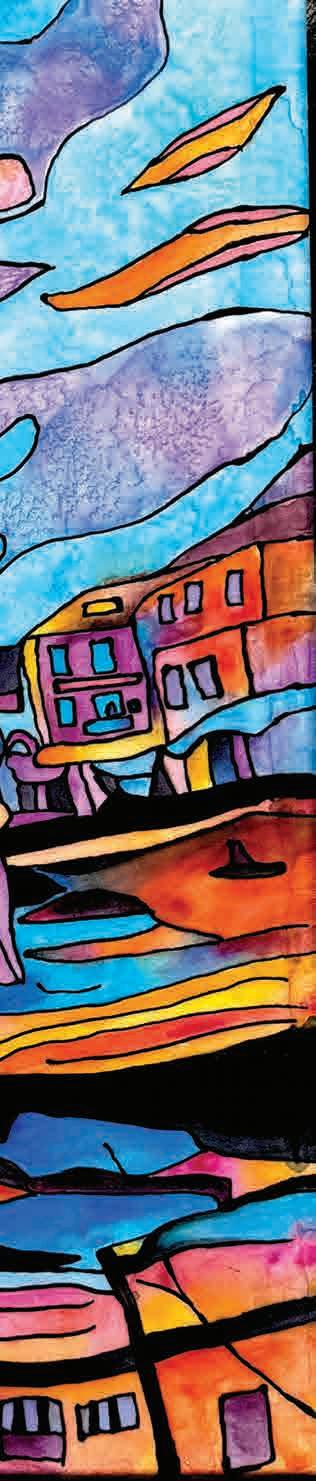
44 Croation Sunset / Maya Rao / Goauche on Silk
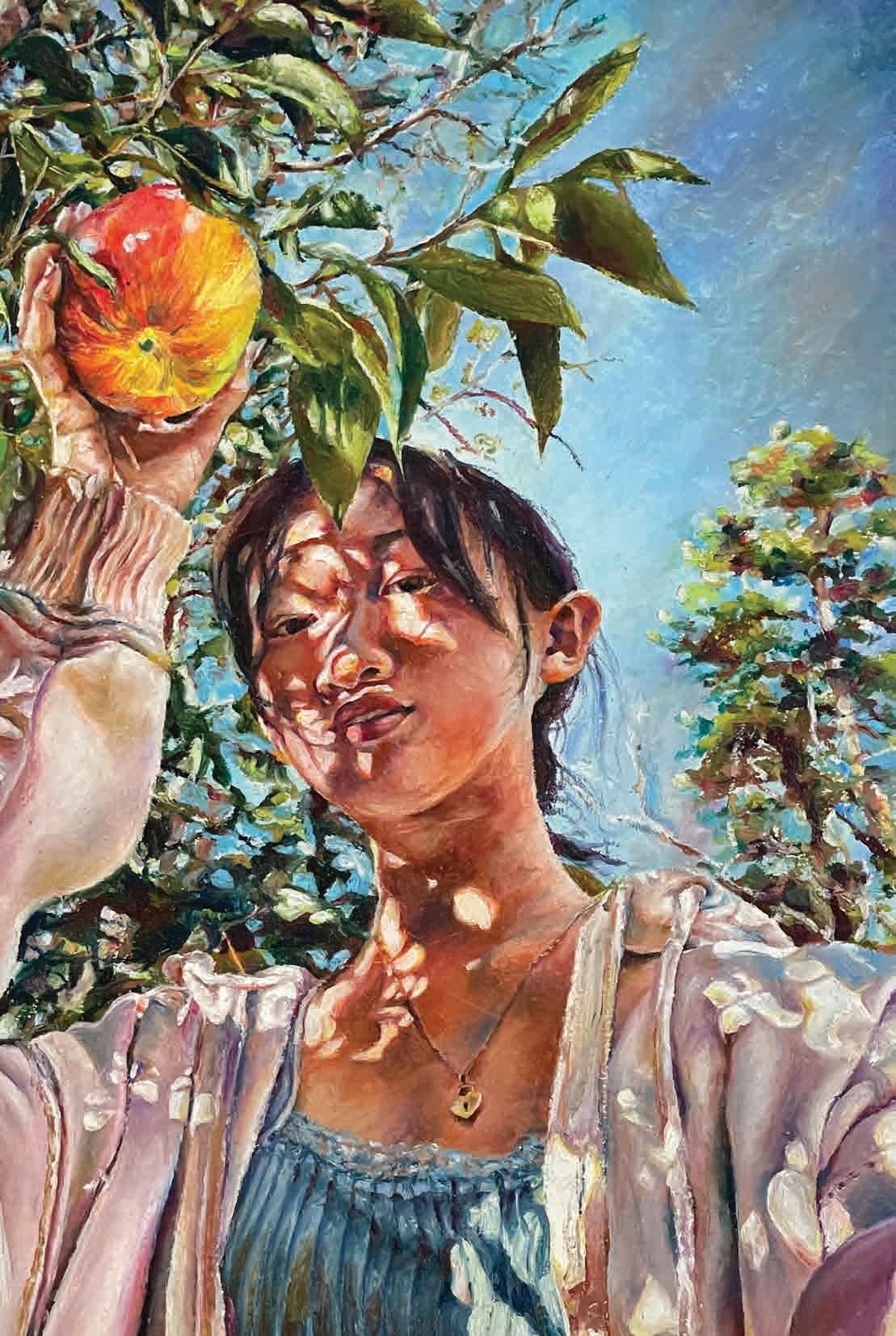
46 Daughter of Eve / Isabel Yang / Oil Pastel
48 Chromatic ought / Bennett DuBose / Acrylic & Fabric on Wood
50 Bubbles / Molly Martin / Mixed Media
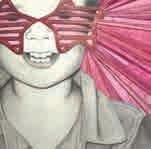
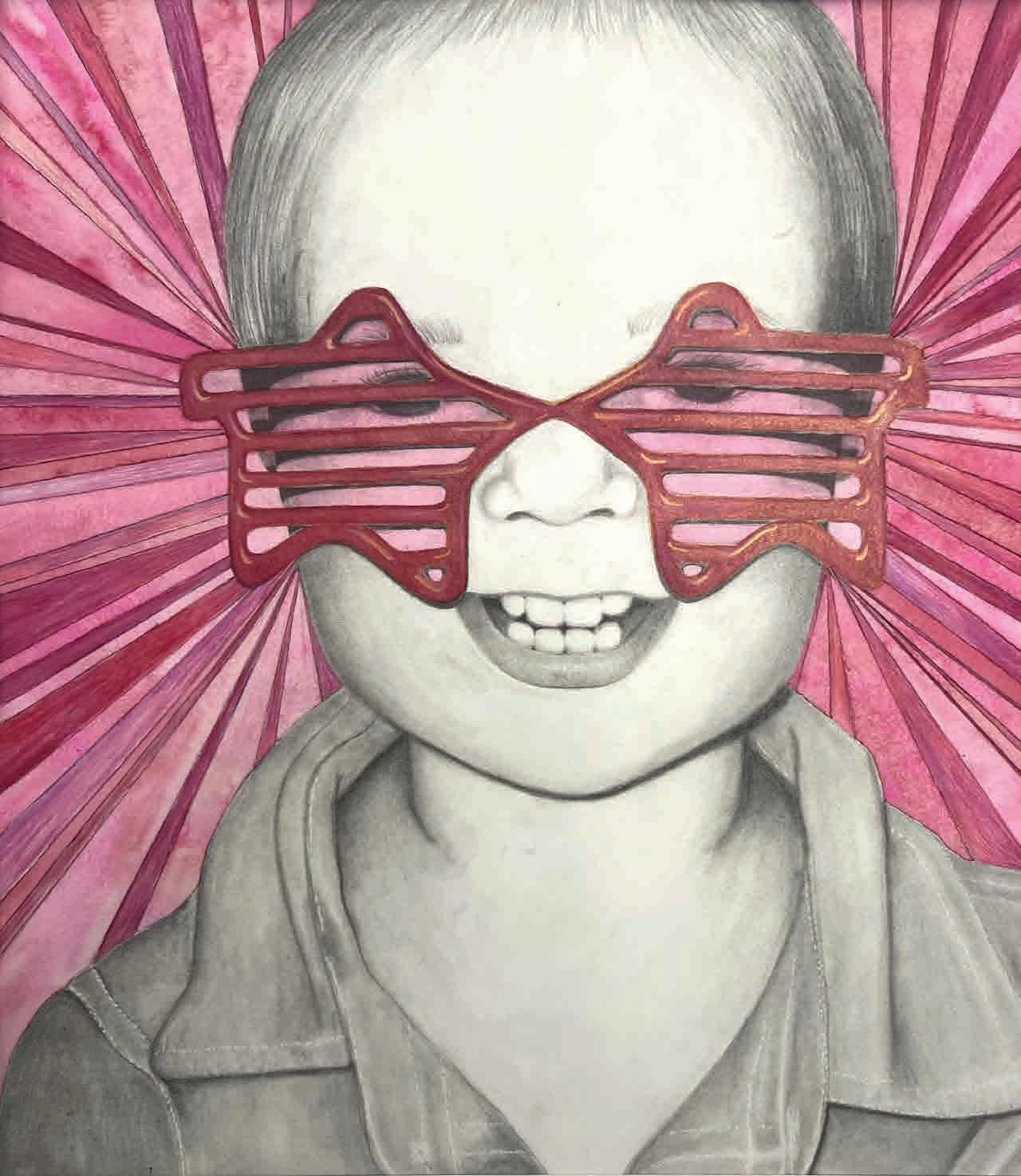
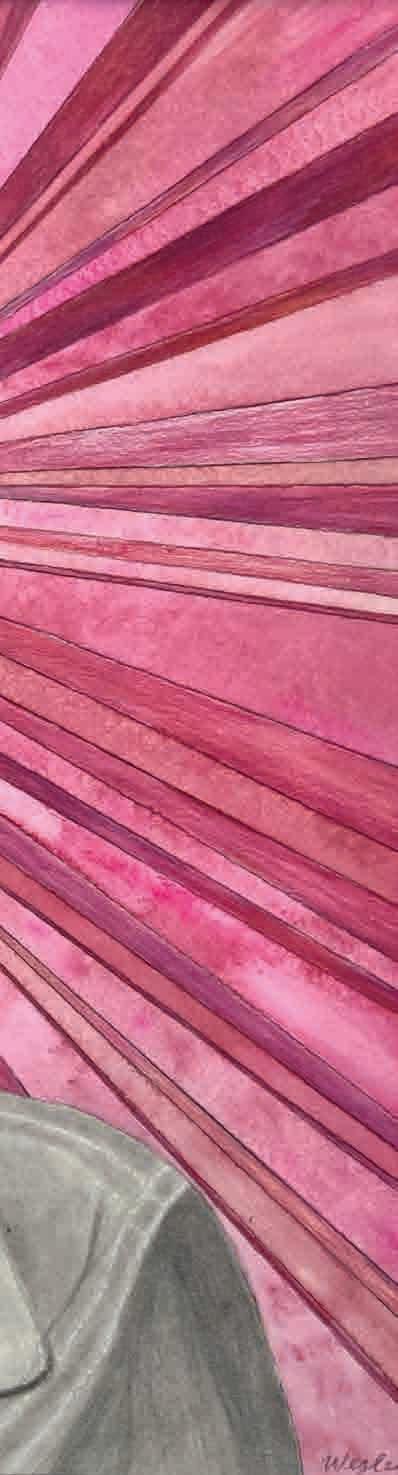
52 Rose-Colored Rockstar / Wesley Seagraves / Drawing & Illustration
55 rough the reshold / Sadie
Gri n / Painting
56 e O ering / Isabel Yang / Oil Painting
58 Rainy Days / eo Fletcher / Mixed Media
61 TV Dinner / Lewawit Alemu / Collage
62 During the Hike / Marion DuBose / Mixed Media CHAPTER 3:
66 vastness / Clark Fan / Free Verse
70 Beauty / Shivani Kaw / Free Verse
76 Crazy / Sophia Smith / Free Verse
80 slovenly / Samora Elam / Free Verse
84 Stray / Shivani Kaw / Free Verse
91 Lamby / Aiyanna West / Free Verse
CHAPTER 3 FICTION
73 My Husband / Claire Siever / Flash Fiction
82 City of Fresco / Fielding White / Flash Fiction
89 Freedom / Claire Siever / Flash Fiction
CHAPTER 3 NONFICTION
69 e Watcher and the Watched / Emily Cao / Memoir
74 what’s your love language? / Angelina Yang / Memoir
79 Crab Wrestling / Lynn Zhao / Memoir
CHAPTER 3 DIVIDER
64 Wistful Waters / Allie Haynie / Colored Pencil
CHAPTER 3 POETRY
87 Mixing Colors / Isabel Yang / Memoir
93 A Dream of Princess Mononoke’s World / Lynn Zhao / Memoir


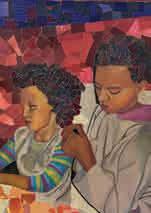
67 Sister in the City / Jackie Rao / Drawing
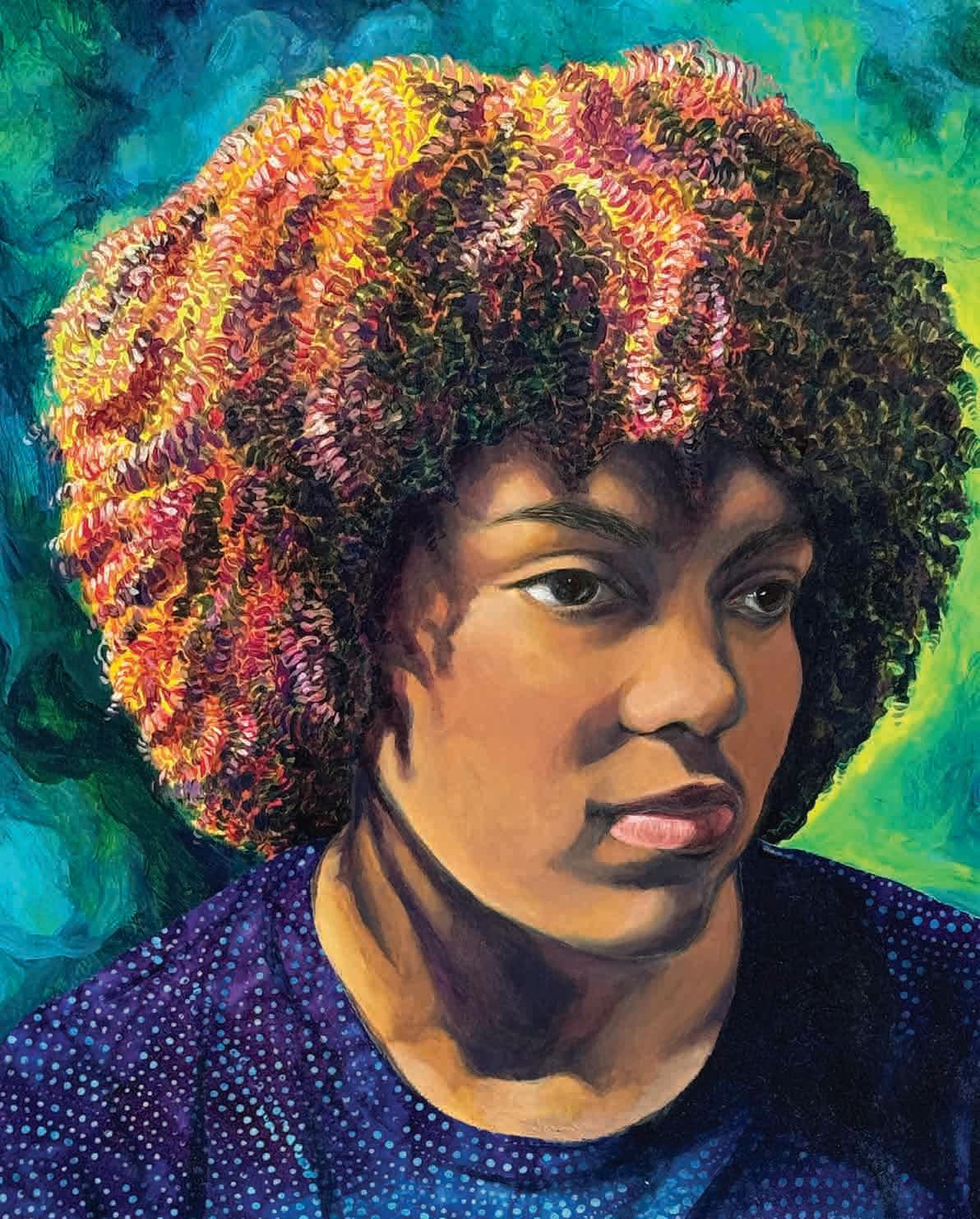
68 Portrait of Madison / Reilly Desai / Oil Pastel
71 Lilium Lancifolium / Sophia Oh / Colored Pencil
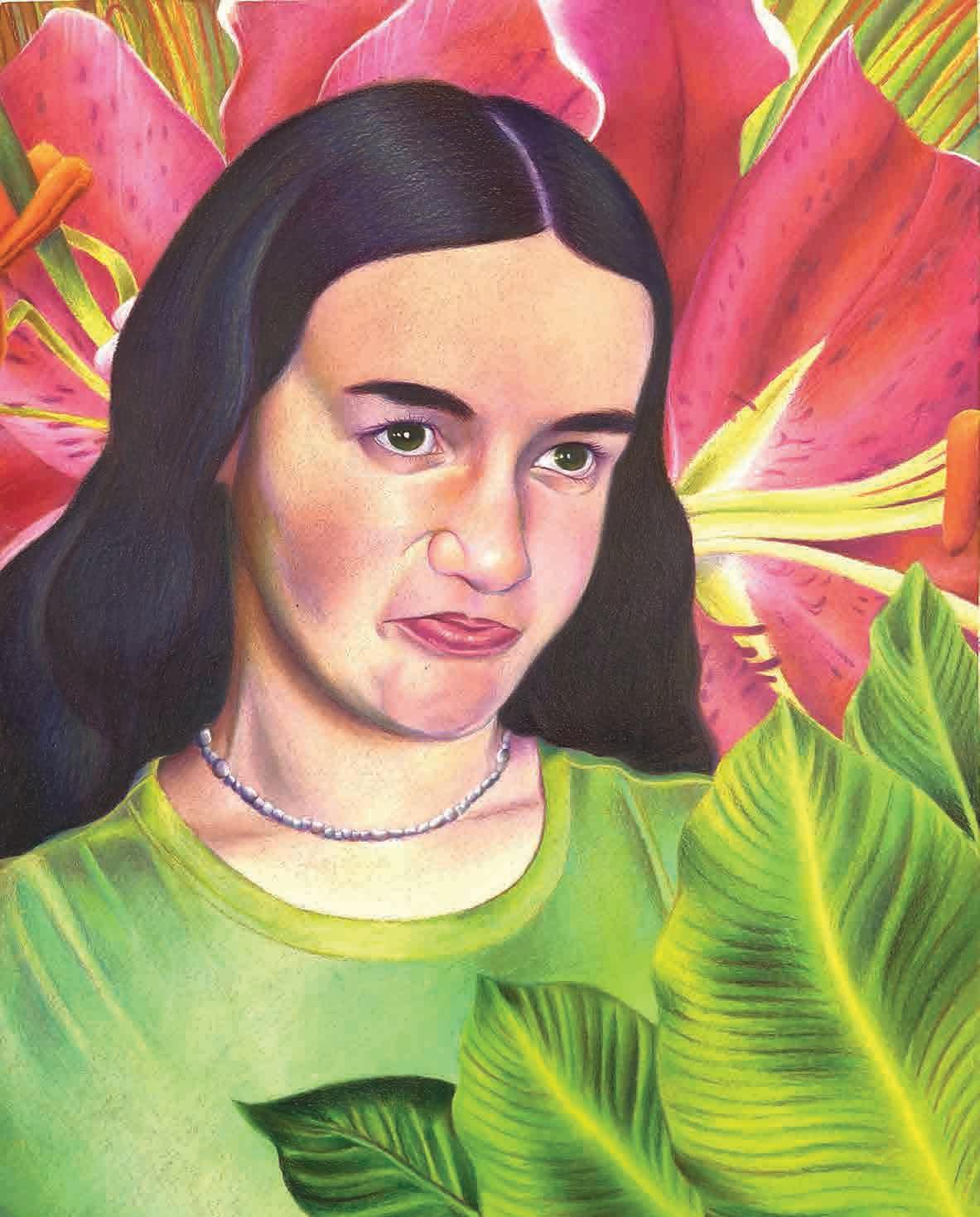
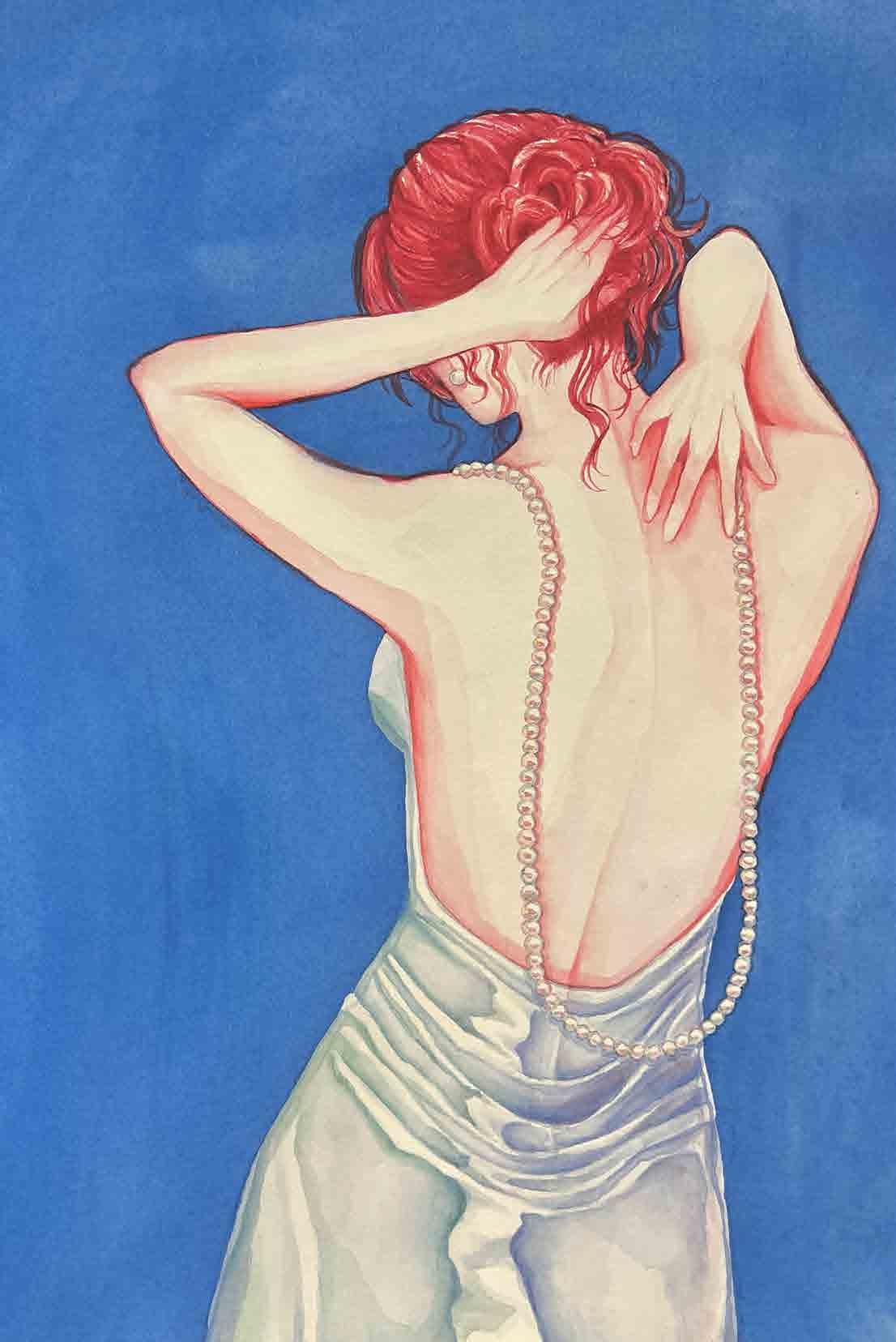
72 Woman With a Pearl Necklace / Bennett DuBose / Watercolor on Paper
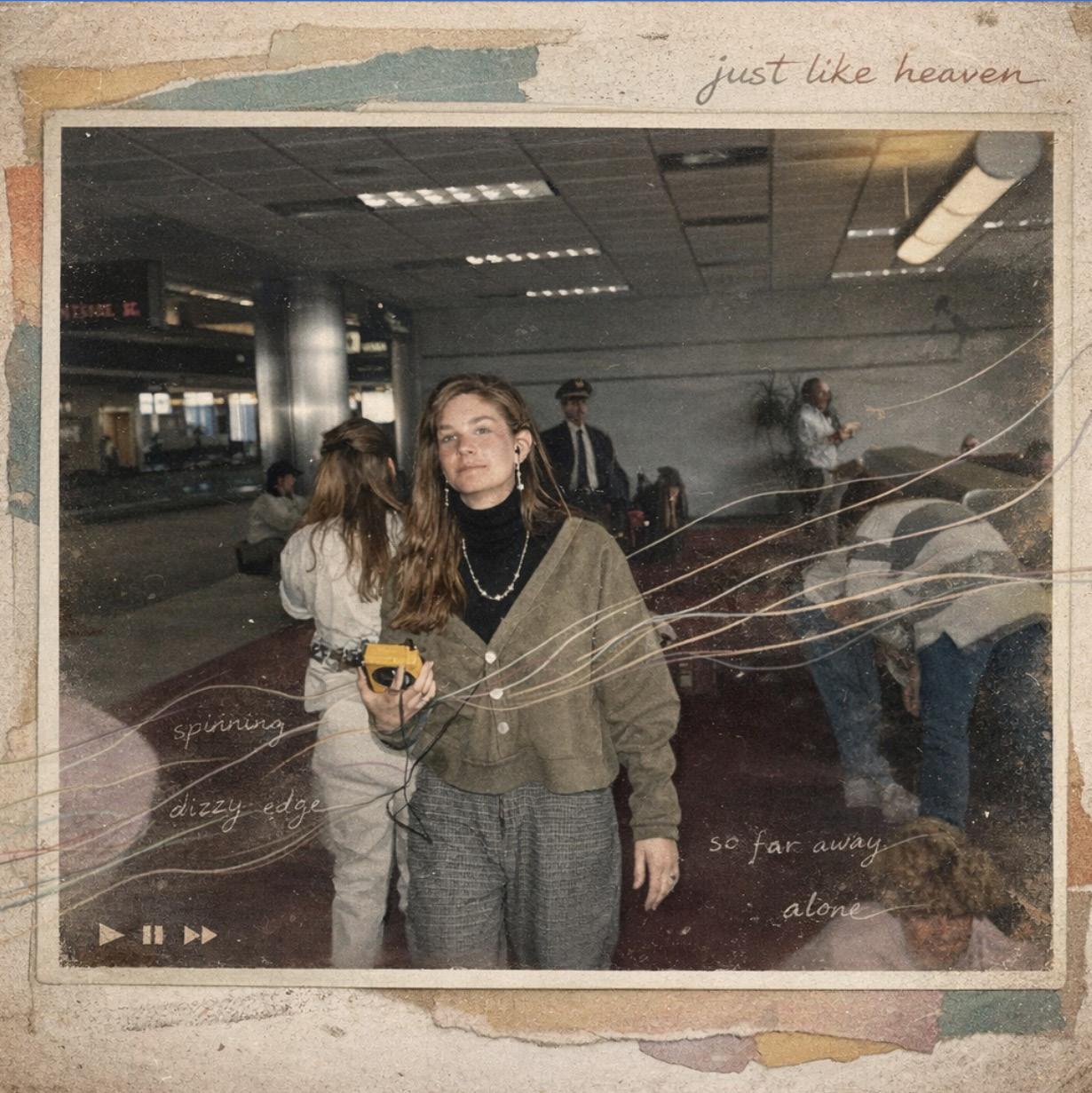
75 Just Like Heaven / omas Lynch / Mixed Media
77 NATURE’S FURY / Ellen Chapman / Colored Pencil
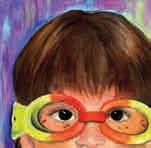
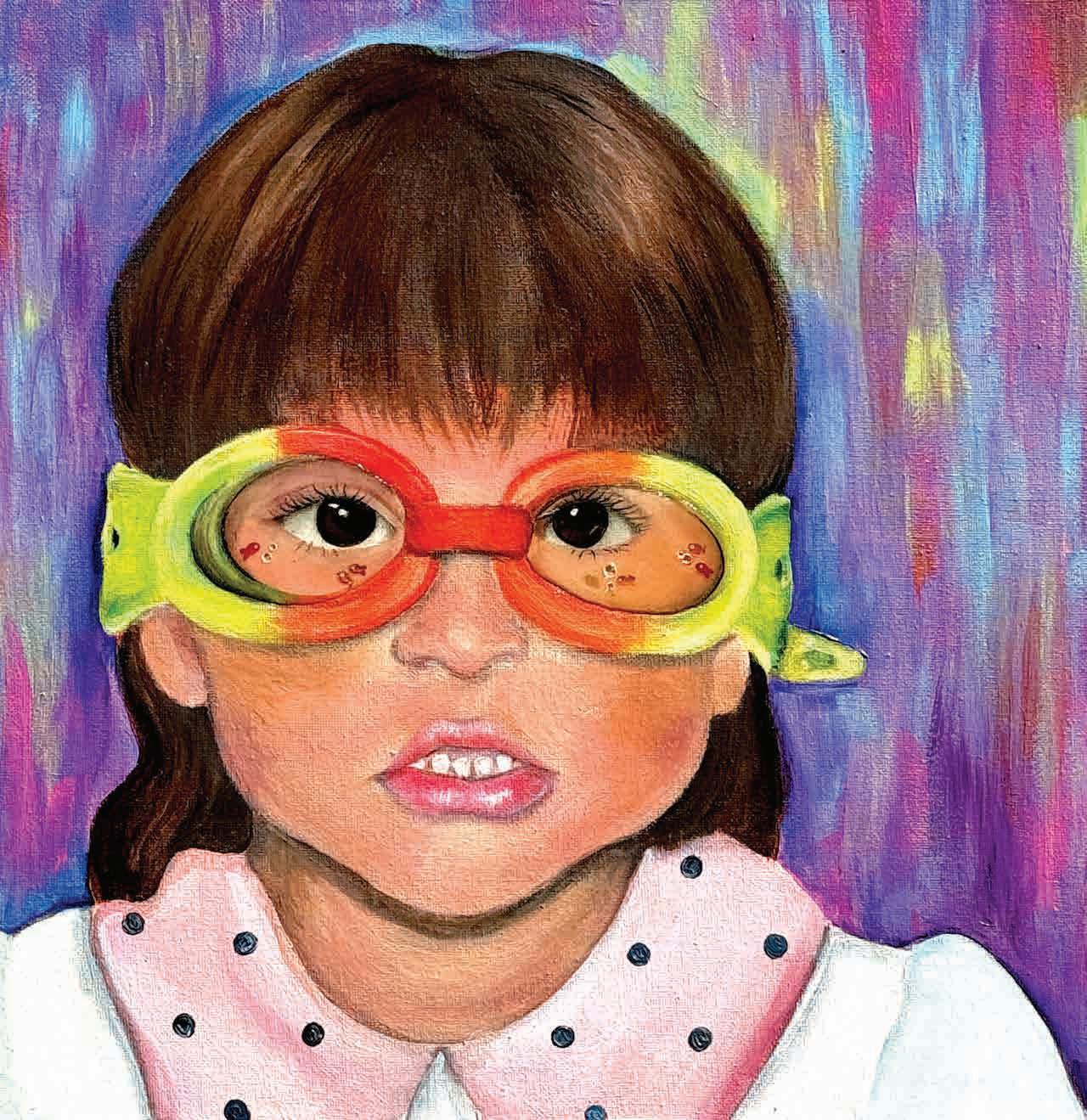
78 Little Diver of Make Believe / Peyton Samii / Acrylic Paint
81 Photographic Nostalgia / Mac Fletcher / Photography
83 Everyday Stroll / Fielding White / Photography
85 Any Amount of Books / Bonner Kelly / Pen & Ink
86 Grecian Sunrise / Molly Martin / Colored Pencil
88 Moonlight on the River / Bennett DuBose / Acrylic Paint
90 Court in Bloom / Abbey Hanna / Sculpture
*All chapter, cover, and supporting page quotations from Virginia Woolf’s personal essay, “Street Haunting: A London Adventure.”
“The eye is not a not a diver, not a seeker after miner,

b ied eas e.“
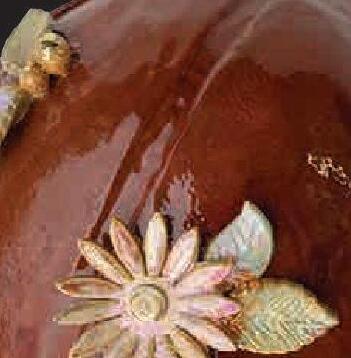


92 Makeup Bag / Kate Wagner / Colored Pencil







We risk digging








o pa age that slow chapter 1

























Carrolline Saydlowski
Sweet, acidic elixir crawls down my throat; Kiwi-guava bubbles prickle against my tongue. Nature’s fruity, natural gems now have assumed the likeness of highlighter ink.
Exhaustion washes over me; my glassy gaze lulls over a half-complete essay. And, as my so , plush bed calls to my weary body, I fantasize about rejecting society or starting a farm.
To my le , a pile of energy drink cans; to my right, a stack of papers. I swear to myself: tomorrow night will be di erent! knowing full well that both piles will only grow.
So, I wipe the sleepy tears from my eyes; I begrudgingly turn my computer’s brightness to the maximum. And, just as the blue light starts to strain my eyes, the newest addition to my can-pile starts to kick in.
Although the student condition is highlighted by poor time management, and supplemented by over-ca nation, in the end, by some elusive miracle, it is de ned by unshakable determination.
theon my blazing white phone screen the cursor sits blinking at me like a starving child, asks, what words will you feed me tonight? my mind conjures nothing and i am reminded of how our family’s apartment looked the day we moved out of beachwood—
stripped of furniture and photographs just o -white walls and a stucco ceiling, bare.
a moleskine notebook will do it, maybe, ink and paper, we’re going primitive, like dickinson or whitman scribbling by candlelight
romanticizing the task should help me complete it.
a er all, wasn’t there a window in the living room facing the lawn and a sometimes-blue sky— ready to transport me to that utopia where inspiration soaks my skin, my soul?
or am i imagining it?
hovering my ngers above the blank document is not much more than a pantomime, anyway like sprinting down our old apartment block in fuzzy bathroom slippers and pigtails chasing a er that sun-bleached moving truck that’s already rumbling down chagrin boulevard
trying to coax out a version of myself i’m terri ed is dead.


John Gray Norris




I glance at him, standing there behind the glass box, motionless.
Winston’s mind completely entwined within the tentacles of his own creation.
“Why did the project have to go like this? All because of a misprogramming snafu.”
“Self-regulation was only meant to improve the technology, not provide them with an epiphany!”
eerie silence
Blaring, Screaming, Sprinting, Echoing throughout the laboratory le me trapped, trapped as if I were su ocating under the weight of thousands of pounds of metal fragments. I feel no sensation from my head to my toes.
I ask the gure beside me, What is going on?
Looking towards the top of the control center, I see the cohort of acclaimed and seemingly omniscient scientists smash their terri ed faces against the glass.
Peering out over the uniform lines






of their own creation, they watch as montrous humanoid gures break away from their metallic enclosures.
I hear overhead,
“We need to shut the project down immediately.”
“ is was not supposed to happen!”
I listen intently.
“Where is the power center?”
I abruptly shi my head and sensors towards the head scientist, Winston, his blank countenance stained with thousands of unspoken thoughts, yet nothing exited his cold lips.
en nally, he mustered out a few words, his sentences lled with capitulation, his eyes gazing, vizualizing the inevitable.
“It’s too late...the synthetic creatures have control now.”
Looking at my shattered frame, I rewire my damaged circuit and comprehend for the rst time, I am just as human as the scientists before me.
I ask myself, why do they fear me?
Samora Elam
the drinking age began at four. your ID was handed to you the moment you walked through those shiny pre-k doors, letting you sip on the glass of childhood spirit.
you became inebriated on the liquor of youth, its innocent depressant d e l a y i n g your brain’s desire to doubt to overthink to apprehend.
as you grew older, your ID photo started to change: gleaming smiles turned into frowns and awkward grimaces, unfurled arms turned into cowering postures with arms hidden behind your back to hide the scars.
you were 11; middle school was starting. you couldn’t get inebriated o of one shot anymore— you had to down multiple to reach that nirvana of youth. the burning ease of each glass was gone; pubescence had le a hollow hole.
you were 16 when you embarked upon the path of sobriety; you thought it was best to leave behind the depressants and ethanol with hopes of lling the empty space inside you. you brain’s desires had won over, so the doubts and overthinking and apprehension began. you could only swallow the insipid taste of reality and the impending doom of adulthood.
eir hands were the greatest things I knew. ey carried me. ey taught me. ey made me feel safe, important, and loved.
When I was little, Mimi’s hands were always doing something. Painting my nails red to match hers. Brushing my hair. Making hot chocolate.
Her hands wove her love into being.
PohPoh’s hands were di erent: sti from arthritis, a testament to years of toil, and constant teachers for the “proper” way of life.
Hands to forehead in prayer before meals. Hands to heart while bowing to honor our ancestors.
Hands to remove elbows that betrayed good table manners.
Her hands mirrored her love.
Mimi and PohPoh expressed their love in di erent ways. One made me feel held, the other made me feel grounded. Both made me feel safe.
But the reality of life is the inevitability of change.




with your grandparents, to remember their voices, their hugs, their stories, before they become voiceless, too weak to hug, and too tired to share.
No one tells you to inhale their scent before it becomes unrecognizable under a mix of antiseptic and soiled adult diapers.
No one tells you that the hand that once held yours will let go, and no matter how instinctively you reach for it, you must walk on alone.
So I do what I can.
I paint Mimi’s nails deep red, like she used to paint mine. When I’m done, she smiles. “ ank you.”
Every day, I make my bed with the precision PohPoh taught me—tight corners, u ed pillows, no wrinkles. Her smile tells me, “Ah nui, I’m proud you learned discipline!”



One day, Mimi le her notebook open, and my nosy eyes spied the words “can’t remember,” underlined and circled. Soon a er, she forgot my name.
It broke my heart.
PohPoh’s mind is sharp, but her body betrays her. She remembers everything: birthdays, traditions, my manners (or lack thereof).
Once ercely independent, she’s now defeatedly dependent. “Ah nui, please open this jar for me?” Every day when I was little, PohPoh checked my bed to see if I made it. If I forgot, I would nd it made, as “Ah nui, discipline starts with a made bed.” Years later, when I forgot again and returned to a perfectly made bed, I shamefully pictured her limping across the room to x it.
It probably took her forever.
Mimi is forgetting who she was, while PohPoh knows exactly who she is. Maybe that’s even harder: recognizing that her body stumbles as her spirit still soars.
No one tells you as a kid to savor every moment

I prioritize time to talk to PohPoh, as my e orts to connect with her bring her joy. She smiles fondly when I ask about her life, her eyes shining with pride as she recalls her triumphs building a life in America with GongGong. “You are so good to listen,” and as tears ll those eyes, I wonder: does she know that my small acts pale in comparison to everything she’s done for me?


I recognize my responsibility to care for them as they did for me. From Mimi’s expression, I determine if it’s a day for quiet closeness or for thumbing through photo albums with the Beatles serenading us. I anticipate PohPoh’s needs, nudging shoes aside and slipping my arm beneath hers as I guide her steps. And when I feel overwhelmed, the thought of Mimi’s fading memory and PohPoh’s mangled hands fuels me to approach life with unyielding determination and kindness towards others. I pause to listen when friends need support, I o er help before being asked, I express gratitude, and I seek to understand and upli others. ey can’t carry me anymore, so I carry them. I carry their love.
I carry their examples. I carry them through how I live.
And as for their hands—they still are the greatest things I know.
Sia Gullapalli

ey laughed with me beneath the summer skies, eir words like honey, sweet but laced with doubt. Behind kind eyes, I glimpsed the thin disguise A hollow echo wrapped in warmth throughout.
eir praise was so , but never truly near, A distant hand that vanished when I fell. ey whispered love but couldn’t stay sincere, Each bond a tale I taught myself to tell.
Yet still I stayed, though truths were paper-thin, And shared my thoughts like seeds upon the breeze. In shallow soil, I let the roots begin, Knowing full well such growth could never please.
But even glass can mirror something real I’d rather false friends than no friends to feel.
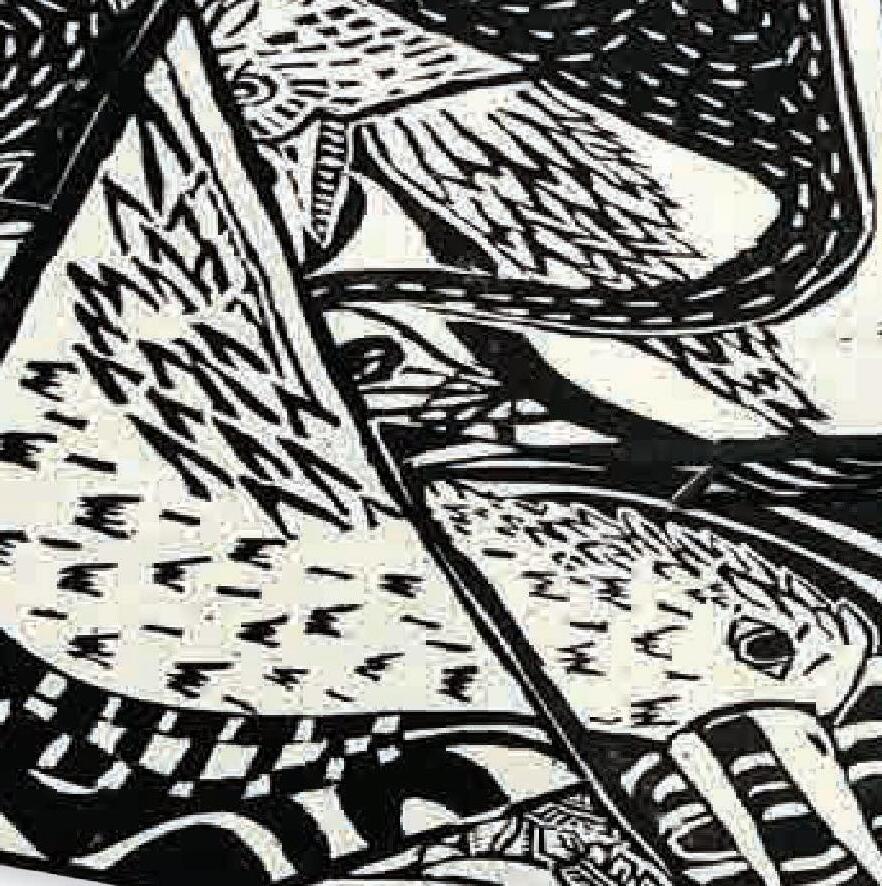
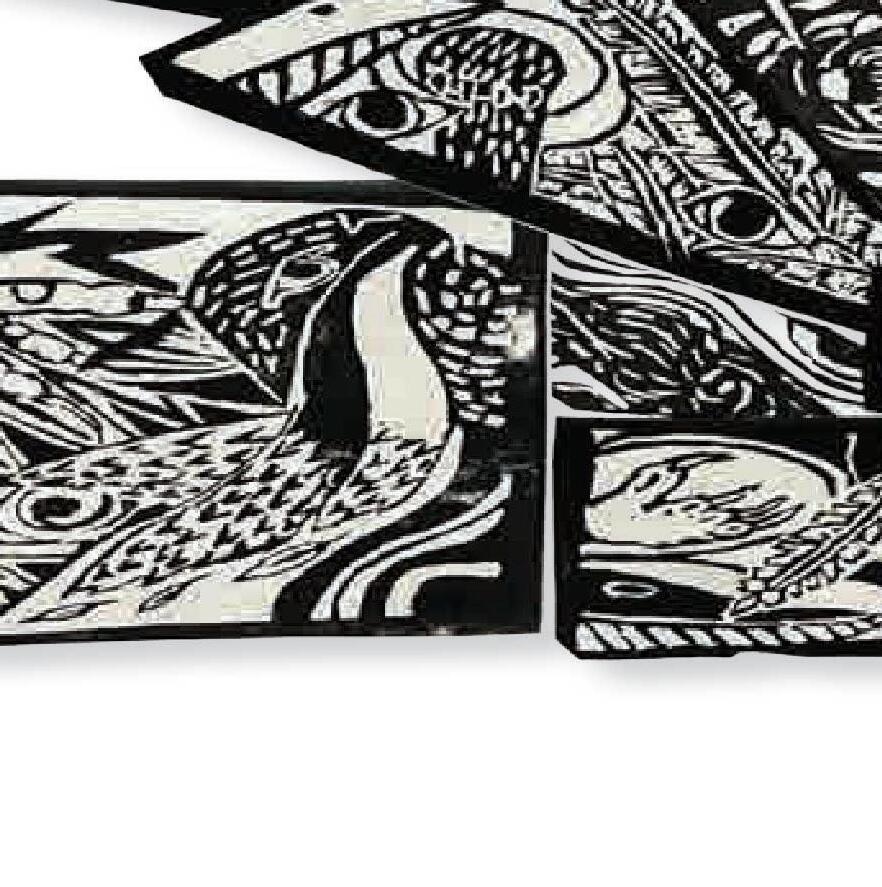
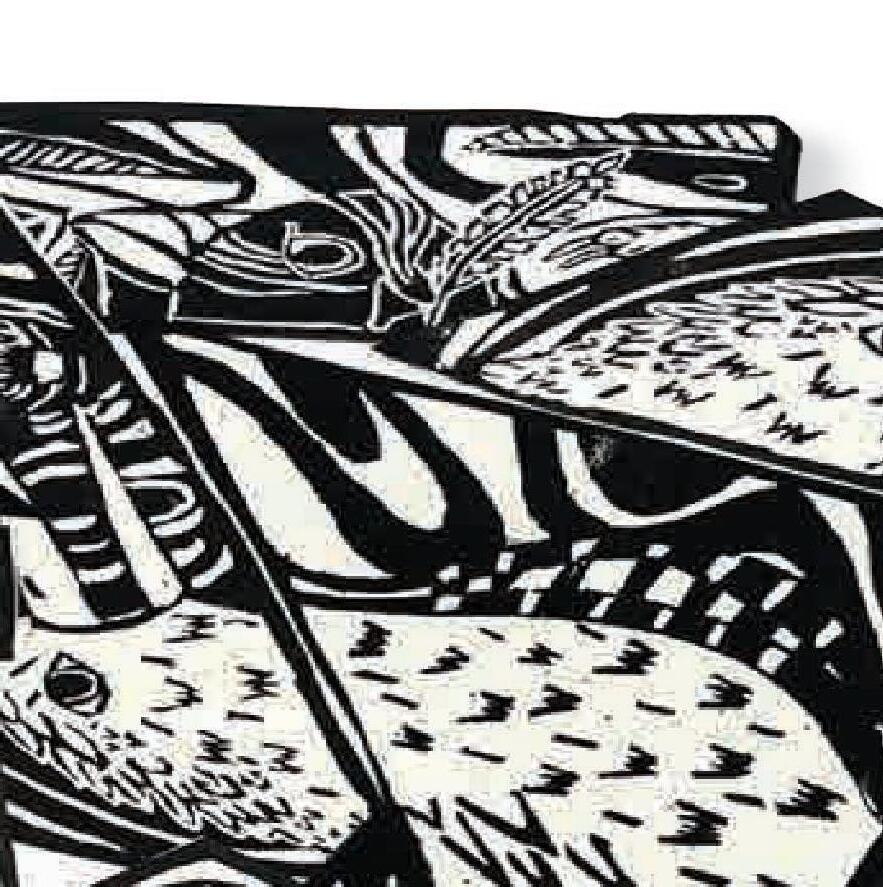
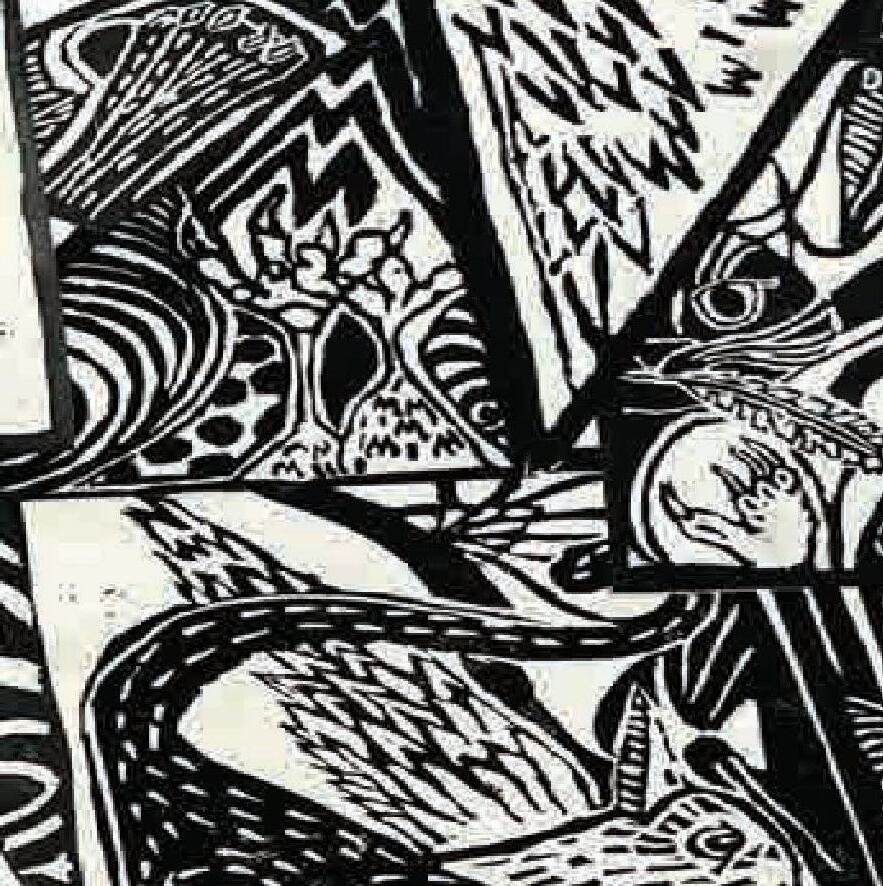

Harrison Smith
I am the youngest of twenty-one. My parents sure have their hands full, so I’m not usually a priority. I’m not super close with any of my siblings, but my oldest brother, Grant, usually acknowledges me the most. But, as most older brothers do, he gives me a hard time. Mother always tells me to walk away. Father always tells me to suck it up.
“Grant,” they always yell, “Leave your big brother alone.”
I can never catch a break. Today is the day we start lling our winter food stores, so the whole family is leaving the house today. Our house just got rebuilt, a er this big, alien-looking thing crushed it. ird time this year.
“Mikey, you and Grant are on food duty, so hurry up!”
When Mother yells, that means you better move. On our walk, we see the usual items: large
trees, blades of grass concealing us from the eyes of the aliens, and other bugs. Finally, a er what feels like a year, we come across this long balloon animal-looking thing inside of bread. is will last us all summer, I think.
Grant shoves me out of the way to break o a piece of the bread for himself. I push him, and we begin to ght. Shoving and biting, I nally stop to look for Mother. at’s when I realize we are lost. I look towards our home and then glance back at Grant who is now a pile of mush. He has been crushed by the aliens.
Run, I tell myself.
I dart in a path towards where I think home is, weaving through the giant foot of the beast, and dodging the gallons of water being dumped on my head. Out of breath and home at last, I nd Mother and bawl my eyes out.
Humans are dangerous.




Clark Fan
A strawberry man, resting upon a skinny, oating bed, his skin glistened dark red under the sun. he moaned, and groaned, and cried.
Help me, he screamed, and the men in tan ran, their boots clattering like drums towards the white house with the red cross.
I love strawberry jam. But I wouldn’t like to be covered in it. It sticks to your ngers and turns brown when it dries.
Mother pressed my head to her chest, Her heart was beating faster than the distant ricochets. I wanted to tell her I just wanted to help the strawberry man.
ere’s another one, and another, sprawled in an open box, motionless. Must have been a crazy party here, with jam spread everywhere.
e sounds of reworks exploded beyond the hills. e ground hummed under my feet And the air smelled like my dad’s cigarettes. Everyone was shouting.
When I get home, I’ll ask for toast and strawberry jam. Maybe we’ll have as much as them.
Annabelle Poovey
Hearts want what they want, and logic hardly plays into it. at only serves to make it harder. She asked me what I was thinking about, why I had a daydreaming look on my face. She should have asked me who I was thinking about, who I’m always thinking about.
Of course I’m thinking about you, and our fragile friendship that could be broken by one unguarded word from me. I’m captivated by the thought of you, by the way you forge through life. It’s not a simple crush, it’s an all encompassing, soul deep, re-in-your-bones kind of feeling. at’s the only way I can come close to properly describing it.
Every single part of me knows that you can’t possibly feel the same way. I’m awed and scarred and sometimes a erce, white hot anger runs through my veins. You’re handsome, and funny, and kind, and you’ve never let the little things get to you. I’m not worthy even of your friendship. But you gave it to me regardless.
You’re perfect in every way I could imagine. You’re talented at everything I’ve ever watched you try and dedicated to the hardest pursuits. Whenever you fail, you get right back on your feet, ready to try again. I’ve never seen you give up.
Never have I been a risk taker. I won’t gamble with my heart. I’d rather have your friendship than nothing at all. But that doesn’t mean I don’t want more. Even though it’s been years. I’m tired of praying that my a ection—love, I should call





it—might fade with time. It didn’t work. I think I fall for you every time I see your smile.
Remember how you never noticed. You never noticed the blush on my cheeks when you say my name, the small smile that plays on my lips when I listen to you talk, the way I look at you like you possess the light of every star in the sky. Your laugh is enough to send my heart soaring into the stratosphere. e way you drive home from school, with your windows down and sunglasses on, like the weather is perfect just for you, makes me love you even more.
Hearing your music at a stoplight, loud enough for everyone to hear, as if they are blessed by hearing your favorite songs, makes me smile. Seeing your blue eyes everyday is necessary for life, speaking with you is equivalent to being in a heavenly paradise.
Everything you say is beautiful and I will cherish everything you say deep in my heart forever.
I whisper your name to the stars every night, and they always seem to shine brighter. Even if it beats within my chest and keeps me alive, my heart is not my own. It has belonged to you longer than you can imagine.
You never noticed the way that all my heart and mind and love and happiness are yours.
You’ll never notice how I feel. I’ll never tell you. But my heart will still want you, until my dying day.






(communication with the dead, especially in order to predict the future)
you sit criss-cross at midnight, holding the remains of the once-renowned: austen, poe, dostoevsky, woolf. their letters and manuscripts and poems lay idle in pale midnight puddles as you await the time to conjure their spirits from the tomb into your room.
when the wind lulls and time seems to cease, you attempt to reanimate the corpse: tracing your nger over each line, you force murmurs out of the words, yearning for a message beyond the realm.
a poet sits across from you, one hand on the corpse they are the medium between the ordinaries and the departed storytellers.
their presence lls the room, penetrating the barrier between corporeal and intangible as their message ows through the poet’s pen. “warning… beware… pay attention! look out for—”
the paper is seized away from your sight and tucked away into the poet’s pockets.
no peeking… only those who grasp the pen’s power can hold the secrets of what’s to come.
Once, there was a girl.
And the girl fell.







Until one day, the rhythm broke.

Her life was simple then—running through the yard, skipping over sidewalk cracks, laughing with a mouth still missing baby teeth.
Days passed in the easy rhythm of childhood: play, supper, bath, sleep.
Her father froze where he stood, a scream rising but never quite escaping. Her mother ran through the house calling her name, faster each time, as though speed alone might bring her back. Her sister cried until the sound of it seemed to empty the room of air.
Time passed.
MISSING GIRL
Age 5
Long brown ponytail, green eyes, freckles
Petite, shy




In the days that followed, the town lled with paper.
Posters appeared on telephone poles, on the glass doors of grocery stores, on the corkboards of gas stations. Faces stared out from every corner, asking the same quiet question.
Last seen at home on Flower Street wearing purple kitten pajamas and frilly socks
Mother’s cell: 704-555-3214
Substantial reward
Rain so ened the paper. Sun bleached the ink. Some posters curled away and disappeared, but others held fast
MISSING GIRL


Graceyn Levesque


Age 10
Brown hair, green eyes, freckles
Short, fairly shy
Last seen 5 years ago at 9191 Wilted Flower Street
Mother’s cell: 704-555-3214
Reward if found
Years slipped quietly by.
Someone printed new posters.
MISSING GIRL
Age 20
Brown hair, green eyes, freckles
Last seen 15 years ago at 9191 Dying Flower Street
Mother’s cell: 704-555-3214
Reward for information
Eventually, even those grew old.
e town forgot where most of them had been.
Only one remained, fastened to a leaning telephone pole by a single rusted staple. e paper trembled whenever the wind passed through.
MISSING WOMAN
Age 30
Brown hair, green eyes
Last seen 25 years ago at 9191 Dead Flower Street
Call sister: 704-555-8585
Reward
People walked past it every day.
Most didn’t notice anymore.
But sometimes, when the wind li ed the corner of the paper, you could still see the girl she had been— ve years old, smiling faintly from the faded ink, waiting to be found.


















Lilly Berkovich
Pile on the Woman’s Burden, Send forth the best; Go bind your daughters to ostracization To serve your pride and misogyny;
Take up the Woman’s Burden— To take her pathway options plain, Go take her pro t, Make her su er in pain;
Take up the Woman’s Burden— Be done with your childish days; Comes now, to search your womanhood rough all the clumsy years, And su er from the judgment of your peers;
Pile on the Woman’s Burden e confrontation is near— She will call aloud the di erences, And the God of Freedom will hear!
Bai
I carried a paci er. Something I used, or more accurately, something my parents gave me to give them peace of mind. To them, it was a symbol of hope, a way to stop the constant bawling and crying, a silencer to all the chaos. I don’t remember it of course, but I imagine they looked at me di erently when it was in my mouth.
I carried toys and books. As I grew older, the goal was the same, but the source had shi ed. ey wanted to distract me, and toys gave me entertainment. ey took me away to imaginary worlds where I played without any stress in my mind. Whether I was the red Power Ranger ghting evil villains or simply a pilot ying a plane, I had fun freely.
I carried books too. ose books with colorful pages and talking animals! ey also gave me a gateway to the imaginary world. ey always ended in a happy ending. Slowly, school came, and the books I carried changed. Instead of colorful pictures, I carried books with words and numbers.
night drives with just music playing and nothing else.
Most importantly, I also carry Celsius. I don’t even know if it works. Maybe the ca eine works. Maybe it doesn’t. Even if it doesn’t, I like to pretend that it does. It’s my secret armour I put on in the morning, a placebo I choose to believe in. Like drinking courage, I tell myself, “ is will get me through the day. It will get me through the struggle.” Sometimes it does, sometimes my head hurts.
And, Above All, I carry a calculator.
It is a tool I use in math. Quick calculations and computations to get me through math class. But it is more than that. It is the praise I never asked for. e praise that brought secret expectations. It is the invisible label taped to my back.
Asian + Person = Good at Math?
ey slowly became heavier and heavier: from thin, colorful picture books to heavy AP Biology textbooks. Each new book I received piled more and more onto my back.
I carry a phone. Younger me was excited, a chance of freedom to play the games I wanted and watch whatever I wanted whenever. Now, it holds all my reminders, a constant reminder of the upcoming test.
It is also a study tool, music that plays in the background as I grind away. Sometimes, though, it’s a distraction. Mindless scrolling of TikTok leads to procrastination leads to nothing done leads to no sleep.
I also carry car keys. I twirl them around in my hand every morning as they jingle like the sound of freedom. I hear the car beep, ready to go where I want. But, more obligations come along: extra classes, practice, and even runs to the grocery store. With each trip, the keys lose more sparkle, except those late



Whenever a mistake occurs, it is like a glitch in the system, an error in the calculator. I carry that calculator like it’s a part of
”




me, even when I don't physically have it with me punching in


numbers and calculating answers. It follows me around into classrooms and conversations alike. Hearing things like, “You got this, right?”






A compliment. It can be one sometimes, but other times, when the error occurs, it is a manual mistake, not a technological one. It is a quiet kind of pressure that lies on my shoulder in every waking moment, though others may not feel it.
But still, I carry it. I carry it all.

e paci er, the books, the toys, the buzzing phone, the jingling car keys, notebooks, the iPad, the ca einated Celsius, and the calculator. Each item I carry is a part of me and who I am, and together, they tell the story of my life.





Maybe someday my iPad will buzz and my heart rate won’t spike up, but today, the mashing of buttons is my thing. I’m still moving forward.















w ting c rents in these of being.




















Sia Gullapalli




the mountain doesn’t care if i cry at the top its ridges were carved by water a er all
the mountain doesn’t care whether i said the wrong thing yesterday, it’s heard the winds whisper worse and let them pass.
the mountain doesn’t care how i look when i’m not smiling its wild owers bloom without needing to impress.
it just stands there quiet, patient, waiting.
i will walk until my legs ache, until my breath feels like a conversation with only me and the thin, pine-scented air.
sometimes the wind will sound familiar sometimes the trees will remind me of the people, the places, the past
i miss their branches reaching as arms used to.
“Dear?”
I freeze. Suck in a breath. Turn back to him.
“I asked you not to call me that anymore,” I say.
Kit stares back at me, opening his mouth before closing it and sighing. His car door stays open though, one foot in and one foot out of the car.
“Old habit…sorry…but nevermind that. I was gonna ask if you wanted to celebrate, ya know, together? For Franny’s birthday, I mean,” he asks, chewing on his bottom lip. I used to tell him to stop, or he’d complain about the pain from him gnawing at it later. Bad habits die hard.
“Franny’s birthday? But we did it separately last year. Why change that now?”
I don’t say that seeing him pains me. I don’t say that having Francesca’s birthday in one place would hurt me too much. at I’d rather give our daughter two birthdays than one because of my own heart. A six-year-old wouldn’t care anyway; two birthdays simply made Franny more excited.
“Why not? I’m sure Franny would be excited to have one party with the both of us. She told me last time she missed ‘Mommy and Daddy hanging out together,’” he recounts while stepping

Franny?”
out of his car and taking a step closer to me.
I resist the urge to take a step back.
“Kit,” I say, “she’s six, she doesn’t actually care if there’s one party or two. In fact, two parties probably sounds better to a child. And you know how it is. How it’s been. I know the separation has been hard on you. Hard on me. Both of us. Maybe…maybe it’s best to just keep our distances from each other.”
It’s safer, easier. I want to chastise myself for choosing an easier way rather than confronting the elephants in the room.
“I-I know, but I just thought she’d like to have both of us there, together, ya know. Like before. Seven’s a big year,” he grins, revealing the dimple on his le cheek that I always love. Loved.
I shiver from the cold wind, hiding a grimace underneath.
“We can talk about this later. Over the phone. Besides, don’t you have to get to work? You’re gonna be late if you don’t leave now,” I say instead. I look away, at my feet, before looking back up at him.
His smile disappears, and I feel bad. But not enough to change my mind. At least right now.
He sighs, “‘Kay, sure. But Daph, please consider it. For


“Okay, for Fran, for Fran. Now go, please, I don’t want Bob to scold you at work again,” I joke, smile a little, and shrug.
He smiles back, toothy grin and dimple and all, “ anks, Daphne. I love you.”
I pretend to not hear the last part.
“See ya, Kit.” en he drives away, to the place that broke us apart, to the same job that drove us to separate, to a life without me.
I let myself heave out a sigh and shake o all the tension, as much as I can, at least.
Turning back to my house, I see Francesca peeking out of the corner of the window and quickly hiding her face a er she sees me turn. Too late, kiddo. Too late, ha.
“So, what’cha up to, kiddo?”

Lynn Zhao
Franny bounces and hops toward me, a big grin spilling across her round face and pale cheeks, freckles scrunching up with the top half of her face. My freckles, Kit’s smile, pure curiosity.
“Now you know I don’t like it when you ask me what Daddy and I talk about in private, hon, but this time, I’ll tell you. Here, come close, it’s a secret,” I grin and crouch down, leaning in to whisper in her ear.
“It’s safer, easier. I want to chastise myself for choosing an easier way rather than confronting the elephants in the room.”
“It’s about your birthday,” I whisper, before suddenly, I hear a gasp and squeal a little too close to my ear.
“Birthday! Birthday! Ooh, I’m excited, Mommy! Can I know more? Can I, can I, can I?” she exclaims as I receive her excited hug.




“You know I can’t tell more, Franny, ‘cause it’s about your birthday. Daddy and I are making it a big surprise for you. at’s the whole point of a surprise, right?” I joke.
I walk into the house, closing the door behind me and spot Franny on my right.
“Nothin’, Mommy! I just wanted to see you and Daddy. What were you talkin’ ‘bout?”
But inside, I’m dreading having to talk with Kit, even if it really is just about Fran’s party.
Parties.
I scold myself for even thinking that we could just have one with all three of us together.





Wu



Yellow light scorched the room in sepia, burning my childhood into amber nostalgia.
Three feet, the threshold where I end and the mirror begins.
I was short enough that the sink caught my chin, tall enough to meet her gaze.
Not me, the other, lacquered in glass.
Three feet, the liminal furnace where I dissolve, my flesh softens and weeps into sand made silver.

She blinked when I blinked.

I watched her like a vestige regards tempered impressions.
Her mouth mine, Her eyes almost mine.

Three feet between us, the sanctioned distance between self and semblance.
Three feet, and I was drifting, my mind untethered from its spine.
Slack-jawed in the face of recognition as though my image looked first.
Three feet for my eyes to find hers and watch myself worn like a borrowed carcass.
Ill-fitting, slipping at the doubt-stitched seams, I stood vivisected in my becoming.
My thoughts peeled back, decoupling from the bones that held them.

I was the beholder and the beheld, and neither of us existed as we appeared.









I call my mom, her number still pinned. An automated voice plays “ e person you’re calling is unavailable.”
Her phone must be dead, the voicemail box full. I tiptoe to her phone downstairs. I o en look through it, clinging, if only for a moment, to the belief that she’s somehow still here.
Everybody knows that if you get caught in a riptide, you should never ght it. You’re supposed to go with the ow. On December 25, 2020, as the sun melted into Costa Rican waters, a riptide caught my younger sister and me. With no lifeguards in sight, my mom sel essly ran into the waves. Survival took over. I swam against the current with adrenaline pounding, waves crashing overhead, salt water lling my lungs.
My sister and I made it to shore. My mom didn’t.
She died during COVID’s peak, just a er I’d transferred to a new school for seventh grade. Remote learning meant I barely knew my classmates. Online grief counseling meant nowhere to connect with people who truly understood. e arts became my refuge, whether listening to Taylor Swi ’s “You’re On Your Own, Kid” or sculpting clay birds in art class.
I scroll through her texts and spot the phrase chronic anxiety—something she never told me yet now makes me feel understood, even without her voice.
Freshman year, I threw myself into every club and organization, lling my days with activities that o ered structure in my uncontrollable life. en, sophomore year, to help those struggling with the grief I knew too well, I eagerly set out to build the space I once needed: a peer-led creative arts support group for teenagers who’d lost a parent or guardian.
I called hospitals, grief counselors, and eventually KinderMourn, the organization that’d once helped me. ey let me run meetings independently: while some were successful, others were embarrassingly quiet. Attendance eventually dwindled to zero. My failure stung, exposing my
desire for immediate results over authentic connections.
I’d believed I knew what people needed, but I realized I’d only known what I needed. I’d underestimated the di culty of bridging waters between people united by grief, something painfully personal. Nevertheless, I continued working with KinderMourn, hoping to help others and pinpoint my “mistakes.”
at’s how I found myself helping lead a KinderMourn summer camp. With younger kids, trust came instantly, whether discussing ghosts or drawing dinosaurs. But with teens, I felt oddly out of place. I was supposed to “lead” them, although they were my age. From a nearby lunch table, I watched them openly share their grief without any adult guidance. I noticed I felt jealous that they’d so casually created the community I’d struggled to build. I wanted to pull up a chair, to belong, but the space wasn’t mine to take. So, sitting there silently, I realized leadership is more than carrying someone through the water. Sometimes, it’s oating alongside while they swim themselves.
I open Safari to her last tab: Doctors Without Borders, her dream.
My dream has always been to pursue medicine and help people feel physically “better,” but I’ve learned the importance of focusing on emotional and mental health too. I hope to become even half the compassionate doctor my mom was and continue her un nished work.
I open the camera roll last. Her nal photo, ttingly, is a candle ickering in the dark. ough her ame is gone, it’ll always stay lit within me. She had a “go with the ow” mentality I admire and hope to someday embrace. I might not fully be able to. My perfectionism and need for control may be aws, but they’re part of who I am. My instinct to ght the waves saved me before; now, it drives me to lead, question, and act.
Still, I’m learning balance: when to step back, relax, let others nd their path.
And no matter how deep the water gets, I’ll never stop swimming.



Caroline Jin


at 5, they smiled and called us cute pinching our cheeks like gold nuggets. at 7, they laughed and announced that we got fatter since they last saw us. and at home, we withdrew. apparently, gaining weight was a compliment— of wealth and prosperity— one that we didn’t understand.
when i was 8, i stopped dancing, leotards and oor-length mirrors meant exposure and judgement. a sore thumb in the back, taking up twice as much space among the other white swans.
when i was 10, i despised PE, running in perpetual circles, halfway there as the class observed and snickered. a glistening nose and rosy cheeks, i couldn’t tell if i wanted to pass out from exhaustion or embarrassment.
when i was 12, school became a place not for math but for scales. i stressed over numbers far too large to comprehend, comparing numbers on a scale instead of weekend plans. i equated my worth to it, while pushing my food around, stressing over the tablespoons of oil gathering on my plate.
and in that re ection, i saw my face: chubby red cheeks, the wide nose from my mother, and hollow eyes that fooled everyone else.
when i was 14, i tried to change




into someone who didn’t hide from the demon in the bathroom. into someone who could buy tops without spending thirty minutes in a changing room. turning sideways in the mirror, blinded by uorescent lights, wishing for a di erent re ection, one like the girl everyone loved, before purchasing a single baggy shirt.
but nothing changed.
so now i run, far away, determined to prove capabilities only i doubted. running from my re ection, from my fears, from the shattered mirror that could never ful ll my desires.
but no matter how fast i go, she still seems to taunt me from right beside me.
or is she laughing? is she proud?
i can’t tell yet. rove
capabilities only i doubted. running from my re ection, from my fears, from the shattered mirror that could never ful ll my desires.
but no matter how fast i go, she still seems to taunt me from right beside me.
or is she laughing? is she proud?
i can’t tell yet.



Carrolline Saydlowski

Darkness engulfed my contorted body. Heaps of colorful eece quarter-zips and plaid jumpers mu ed my rapid, heavy breaths. e oppressive silence in my closet was broken only by a distant countdown. Yet again, a round of hide-and-seek— my favorite game—was about to ensue.
When I was about ve or six, I reached my prime in hide-and-seek. I was just old enough to think of the best (and therefore, most wild) hiding spots and was perfectly small enough to actually t in these places.
Whether tucked in a shelf high in the pantry or inside my sister’s hamper, I was a masterful hider. Because of this, I tended to despise seeking, o en trying to pawn the role o to any sibling or neighbor unfortunate enough to be in my vicinity. Nothing could come between me and the indescribable feeling of nding the perfect hiding spot.
I never would’ve guessed that my hide-andseek strategies would come back to a ect me years later.
During sophomore year, while others were spending Christmases visiting family out-of-town or relaxing at home, my family was visiting my grandmother in her nursing home. It devastated me to see the lively woman I loved resting in a room with a hospital bed. I couldn’t let them know just how sad it made me.
Two months later, I lost my grandmother. Shortly a er, I experienced the tragedy of losing all of my other grandparents within four months. It was shockingly hard to watch my parents, the two strongest people in my life, succumb to grief. Besides being scary, it made me feel that I had no right to my own. As a result, I kept it to myself. I hid feelings from everyone: parents, friends, teachers. My priorities shi ed; my interest in school and grades waned.
I became the hider I was a decade ago. Being in survival mode for so long was mentally taxing
and demanded energy, so staying hidden was comfortable. I, again, let others do the seeking for me, whether nding a math tutor or getting assignment extensions. I couldn’t do the hard part myself—I was concentrating on simply existing.
Time passed. at summer, I received my school transcript in the mail, and I saw the tangible results of my hiding. is was when I knew something had to change. I had to become a better version of myself: a seeker.
I went into my junior year with a newfound determination. I was set on performing the best I could in my classes and on seeking out a new life for myself. I sought relationships, academic challenges, support for my recently-diagnosed ADHD, and learned to advocate for myself. If anything piqued my interest, I decided to try it out. Whether I was cra ing intricate friendship bracelets, creating digital art, becoming a volunteer SAT tutor, 3-D modeling, becoming a copy editor for my school’s literary & arts magazine, or perfecting my banana bread recipe, I let my curiosity take charge and began to emerge from hiding.
When I came home from my foreign exchange trip in mid-June, my transcript was waiting for me. Once again, I had a tangible result of my e orts—however, this time, they were results I was proud of.
Children’s games aren’t just for kids; they teach very mature lessons. I want to thank that reckless ve-year-old who would stu herself into cabinets and shimmy under beds—she taught me one of the most valuable lessons I’ll ever learn. Yes, hiding is ne when it’s temporary, but true satisfaction in life only comes to those who seek it.
In college, I’m sure there will be plenty of great desks to hide under, trees to take cover behind, and dorm beds to cram myself under, but I know I won’t need them. I’m excited to see just how far living life as a seeker will take me.

Kathryn Wu
I am a pearl in their mother tongue.
e darling in a silica bloom, a so ness pressed into being by time.
But not a treasure—just fracture turned aragonite, sealed in conchiolin, layer by brittle layer. e schism bridged, calci ed ache in silken spirals. Grit passed between two bodies, smooth only where it lacerates.






ey gave me my name and tongued the salt-sting nacre I became.



As a child, my favorite part of family gatherings was the bu et-style dinners my dad assembled. I stood eager and wide-eyed over the table, ready to dig into mac and cheese, collard greens, and honeybun cake—only a few of the many dishes laid out in aluminum pans waiting to be devoured. At dinner, I would “eat with my eyes,” spooning too much food from each pan onto my plate and scar ng it down in mere minutes.
When my parents noticed my slow bites and heavy eyelids, they would whisper that it was okay to not nish all of my food—as long as I saved it in the fridge for later. is habit of preserving my le overs in uenced the way I approached my childhood passions—not as something to be used once and discarded, but as pathways for the future.
When I showed interest in a new hobby as a kid, my parents would bet on how long it would take for its thrill to fade. As I began each activity, another plate was added to my table of passions. One un nished plate consisted of taking summer sewing classes, kicking o my career as a worldrenowned fashion designer—but the vision was le at pillowcases and tote bags. Another plate held my passion for cutting up shoeboxes and decorating them with scrapbook paper and hardwood-stained Popsicle sticks, working towards hosting my own HGTV show.
segue between my numerous passions, whether it’s to articulate visions of runway clothing or concepts for designing interior spaces through words. When I am unsure of what I want to do with my life, I invent thousands of lives through meticulously-cra ed characters.
Although I never stick with one character or prompt, writing has remained an un nished constant in my life—no matter how many spoonfuls I carve to reach mastery.
Rather than perceiving writing as a plate to be cleared of its contents, I see it as a never-ending excursion, bestowing me with lessons for self-improvement; one of these is recognizing the beauty of imperfection. I hesitate to create a nal dra —I continue writing more, despite my un nished work, to relish in the artistic odyssey of each project.
In the end, I crave the liberty to perpetually revise my work instead of being constrained to staring at an untouchable nal dra , a nished plate.
“...I believe reminiscing on my p tia y-co umed passions lingers longer than memories of clean plates...”
Flitting around visions of how these passions would contribute to my future, I took deep spoonfuls from each plate by watching numerous tutorials, pulling allnighters, and making attempts toward mastery. Despite my initial devotion, nothing ever lasted more than a few months.
In my bu et table of passions, one plate is permanently un nished: the dinner plate of literature. One spoonful is full of half-written short stories; another full of poems, the product of eeting dreams. Writing has been the
I’m not de ned by how I leave my plate at the dinner table or how many passions I leave un nished. Whether it’s empty or only has one bite taken out of it, I still rise from my seat—moving on and preparing for the future.
How perfected I leave my passions is subjective. Some people believe the best way to move on to another interest is by completely nishing the former’s plate, but I believe reminiscing on my partiallyconsumed passions lingers longer than memories of clean plates. Whether I get a bachelor’s in fashion design or just stuck with pillows and tote bags, the last step in my passion’s journey serves as a reminder of personal growth.
Each year, I pack up my forsaken activities, their le overs sealed away in the fridge. Rather than being a waste of time, I view my plethora of un nished passions as prospects for the future.
One day, whether it’s for making design decisions for my dorm or sewing my own children’s clothes, I have the opportunity to open the doors and pick up where I le o in this bu et of life.
Annabelle Poovey


She loved to be around the ones that sparkled. ey were rare like gems, yet in abundance here. She had never found another place where the sparklers were.
It didn’t matter what their physical features were, if their eyes were blue or green or brown, if their hair was natural or dyed, if they were tall or short or average. ere was nothing average about these people.
ere was something deep within their souls, a pure kindness that was extended to all humanity free of charge, and they sparkled because of it. eir eyes all danced with constellations, and a silver mist hung about them, rippling through the air. ey were more beautiful than anything she had ever seen.
She rst noticed it when she met Caroline. It was laughter that had rst caught her attention. She had looked over, and then she saw that sparkle. Caroline’s blue eyes had sparkled with the silver light, but it could not be contained within her, and a cloud of intriguing silver hung around her.
So she followed Caroline here, not knowing why she did, but wanting to know where that silver light had come from. And how she could get her own. at was where she met Adrian. He was the rst one she saw. She didn’t notice him because he was the most beautiful man she had ever seen, but because of his silver light that glowed like a roaring re. Everyone else faded, and she was drawn to him like a moth to the ame.
But then she noticed she was the only one there that didn’t sparkle. e only one without a mist of kindness hanging about. She didn’t belong, yet she stayed, unwilling to go back to where kindness had a cost.
No one else mentioned the sparkle. She knew that they

couldn’t see it, since they’d never known anything di erent. Adrian was the only person she had ever wanted. His blue eyes made her grin like a fool when he looked her way. A er a while, she noticed that Adrian had that same grin when she looked his way. And so they got closer to each other, closer than was wise.
Like a fool, he o ered her the world. en he o ered her his own sparkle a er she explained she had none. It was tempting. Maybe he had been given so much sparkle so he could share with her.
One night, a er he made his o er again, she gently took her hand out of his and kissed his cheek, savoring the way his presence anchored her, her mind already made up. He was all she had ever wanted. But instead she walked away from him. Every step hurt, but she did it anyway.
Because she would not take what made him so beautiful.
…
As he listened to her talk about the way everyone else here sparkled, he longed to shake her and get it through her head that maybe everyone else shone like stars, but she shone like the sun, and that was the light that lit up his world.
But instead of listening to what he wanted to say to her, she walked away, convinced that she wasn’t worthy of that sparkle she worshipped.
He knew at that moment that she had been right. ere was something dark inside her, something that she feared. But he knew that it was whatever kept her from seeing how she shone with a golden light. He wanted to banish that darkness, but she hadn’t let him.
She was too afraid of letting herself shine.




























sMy rst language was spoken through raised eyebrows and so ened smiles.

When I was three, my parents enrolled me in the dance form Kuchipudi to tether me to culture. In Kuchipudi, there are eight nayikas (heroines), each displaying distinct characteristics through body language and facial expressions. Since my rst lesson, I’ve worked to capture their essence: scrunching my eyebrows in confusion, widening my eyes in surprise, and caving my shoulders in sorrow. Hours were spent surrendering myself to these roles until they felt instinctive. For much of my childhood, dance was my universe.
But as I grew older, my universe widened, and another opened: debate.
In debate, studies need sound methodologies, and words are empty without evidence. rough wins and losses, I began to think more critically, essays became easier, and public speaking became a breeze. It taught me that communication is a form of power; I care deeply about helping others nd their voice. I acted on that impulse by volunteering in speech therapy with children struggling to communicate and founding the Juvenile Debate League for incarcerated youth. Debate gave me purpose.
Dance, on the other hand, felt less practical. What did it mean beyond tethering me to culture? How could choreographed steps help me empower others? Under debate’s incisive light, dance seemed ornamental: valuable for tradition, but not application. As academic pressures mounted, the studio began to feel useless, and when a major recital con icted with a debate tournament, I didn’t hesitate choosing debate. Before I knew it, I was skipping practices and recitals until the nayikas became strangers.
But no matter how much I hid from dance, the nayikas returned in unexpected places.
At Handprints and Footsteps, where I volunteered in speech therapy, I was paired with Ava. Diagnosed with nonverbal autism, she rarely spoke or signed, and for months, she wouldn’t answer when I said her name. When


I expressed concern to the speech therapist, she told me Ava had actually shown tremendous growth, advising me to watch her face.
So I did, and I saw it: the li of her eyebrows, lips parting slightly, the tilt of her head towards me. None of that engagement had been present three months ago. Ava was responding, and I recognized the language she was using because I had danced it. e anticipation and yearning— these were the emotions of the Vasakasajja (eager) nayika.
I realized dance helped me understand Ava. Sure, I wouldn’t have understood her without looking past the surface, but curiosity alone wasn’t enough—I had to interpret what I saw. Perfecting the nayikas taught me to recognize these signs in others. Debate taught me to question, dance taught me to read emotions, and together they shaped how I understand people.
Now I see this pattern in other parts of my life.
In my juvenile debate league, when I’m explaining NATO’s collective defense to my student Hart, he hesitates and eventually says, “I understand.” I don’t take his words at face value. Searching for evidence, I see his fake smile and furrowed eyebrows; he’s confused but ashamed to admit it.
In him, I recognize the Virahotkanthita (self-conscious) nayika, hiding uncertainty behind a mask. I rephrase, simplify my explanation, and read his face again. His smile turns genuine, and his nod of understanding is real.
e nuances of the nayikas have carried over into all parts of my life, and over time, I’ve learned that dance matters just as much as debate. I’ve also realized that curiosity is a prerequisite for empathy: it pushes us to question systems and uncover what lies beneath the surface, while empathy ensures those questions lead to true understanding.
Debate sharpened my critical lens, and the nayikas deepened my understanding. I’ve found the framework I will carry forward as a policymaker: leading, teaching, and learning with the so ened smiles of a dancer and the raised eyebrows of a debater.
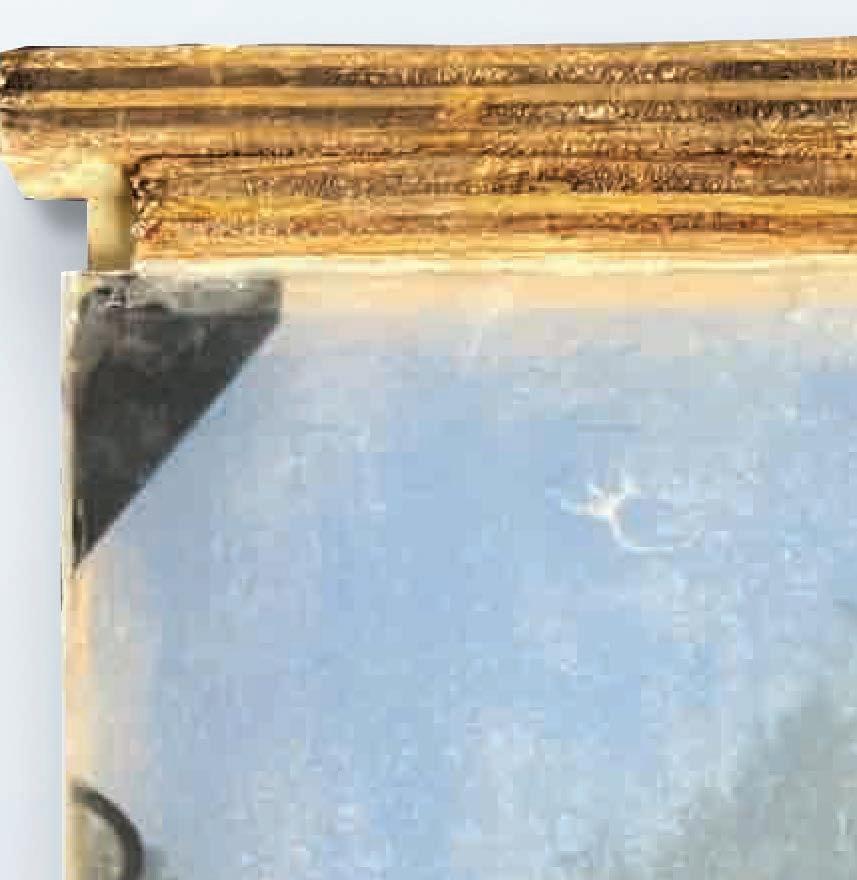
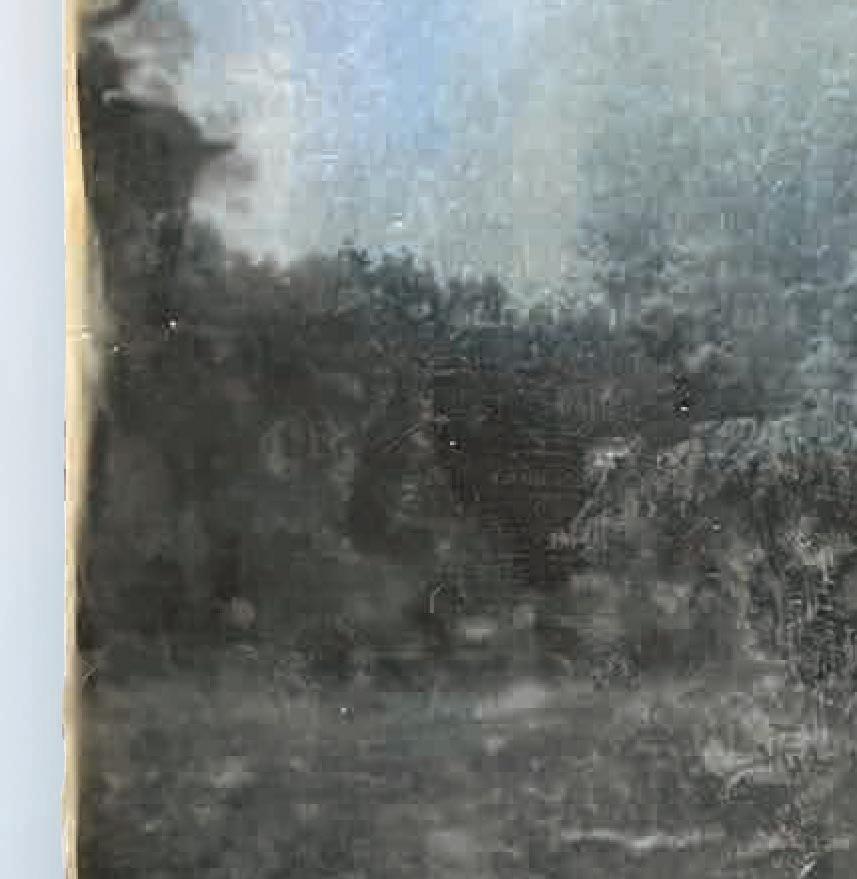
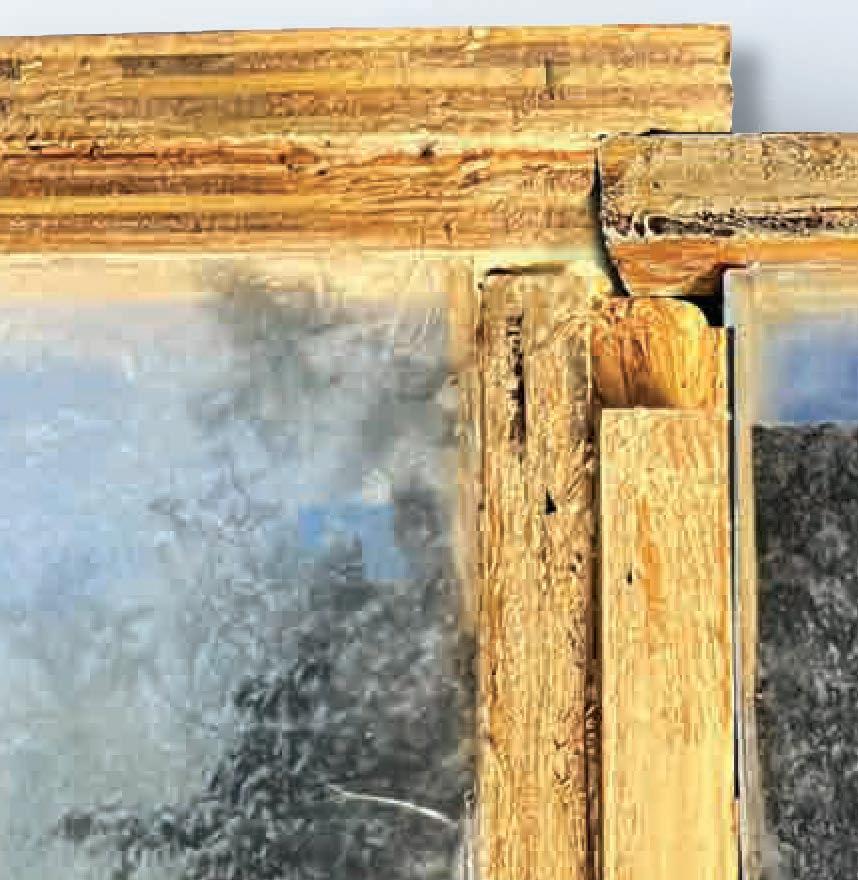







on fair sunroom walls halos of leaves cast green glows from the backyard
april already
I’m still inhaling winter and exhaling fall
spring soars fast this year I chase time and I forget to watch the buds sprout
chrysalis breaks slow we don’t see our wings unfurl until we take ight


Kathryn Wu
At 5 p.m., the fried dough sticks had gone slack, the avor of a grocery store shuttering its doors. I thought you imprudent to ask for two.
“For tomorrow,” you said, though we both knew they survived only in the freshness of oil.
Later that night, your voice slipped into the past: your father portioning them into bite-sized pieces, so ening them in soy milk still warm from the market.
I felt the shame of mistaking memory for waste, forgetting that food placates more than the stomach, as even staleness can be tenderized.
I understood the early mornings in Shanghai, soy milk sweating into my palms while your eyes searched menus for fried sticks of your childhood.
I recognize it now, this hunger that is not hunger, a sentimentality inherited from you, and before you, from him.
When we nally ate nostalgia, they were acrid with age, oil-spent, bodies sagging from the microwave.
ere was no soy milk. Only your memory to console reality, and my tongue discovering a new absence.

why i love color the
As a child, I was infatuated with the color yellow, or as I called it, “lellow.” is obsession took over my life. I begged my parents to buy me only yellow clothes, shoes, and toys.
Family stories highlight my love for yellow as a stubborn toddler, but my rst memory of the color began around Halloween when I was ve years old. I was thinking about a predominantly yellow costume. en it hit me, why not be a yellow M&M? My mom was on board with the idea, and a er a few nights of hot gluing, stapling, and cutting, my mom brought my vision to life.
I was drawn to the color because of its certain warmth, which made me feel serene and secure. By middle school, I was known as the child who always wore yellow, an identity that followed me to high school. One of my earliest wardrobe staples was a pair of yellow Crocs. I would wear these Crocs to the beach, wandering outside, and even around the house. ey went through the wringer. When I was scared of getting struck by lightning, I wore them inside my house because I thought they would shield me. I grew out of the shoes, but by that point, I’d le indents of my feet behind. e vibrant color I knew and treasured was no longer; in its place was a faded pastel. I struggled to let go, but I knew it was time. rough retiring my Crocs, I learned how to adapt to changes.
Just as much as the color enthralls me, I adore the cold and playing in the snow. I had just grown out of my winter jacket, so I went exploring online. I scanned all the major vendors: Amazon, Old Navy, e North Face, and REI. I couldn’t nd a yellow coat anywhere in my size, and I had to settle for lime green.
It was a brutal reality check that taught me that no matter how much I wanted everything to be yellow, perhaps green wouldn’t be so bad. Similarly, over my life, I have learned to broaden my perspective and become more open-minded. I used to be a child who didn’t raise his hand in class or have a lot of activities outside of school. As my obsession with yellow slowly waned, I noticed I became more adventurous.
During Halloween of 2021, I had another incredible costume idea. I would be an avatar from the video game Among Us. e idea appeared perfect, so I ordered a bright yellow sweatshirt and a backup in case the rst one didn’t arrive. I had everything planned out, but then we received a call that my eldest sister, Hannah, had contracted COVID-19, so I couldn’t go trick-or-treating. Despite the despairing news, I fell in love with the sweatshirt. I wore it to school almost every day, and even in summer. By junior year, the sweatshirt was worn out, so I stopped wearing it as much. It was the nal piece in my yellow suit of armor that I relinquished.
Without my yellow uniform, I began to take more risks. I accepted an invitation to a leadership role in Students for Students, a school club that fosters a safe environment for students to form meaningful friendships. It has required me to work with those around me, make hard decisions, and be a better person. Over the past two years, I’ve matured, learned how to support my fellow students, and become more exible.
A er re ecting, I see how letting go of my favorite shoes, learning to compromise on a jacket color, and wearing a sweatshirt less allowed me to mature, learn to deal with change, and become more spontaneous. I still love yellow because it has always symbolized the person I aspired to be. An extroverted, fun, open-minded person. Now I am that man.


...it is only when we


look at e pa














...and take from it the element of that we can enjoy unc tainty chapt









3









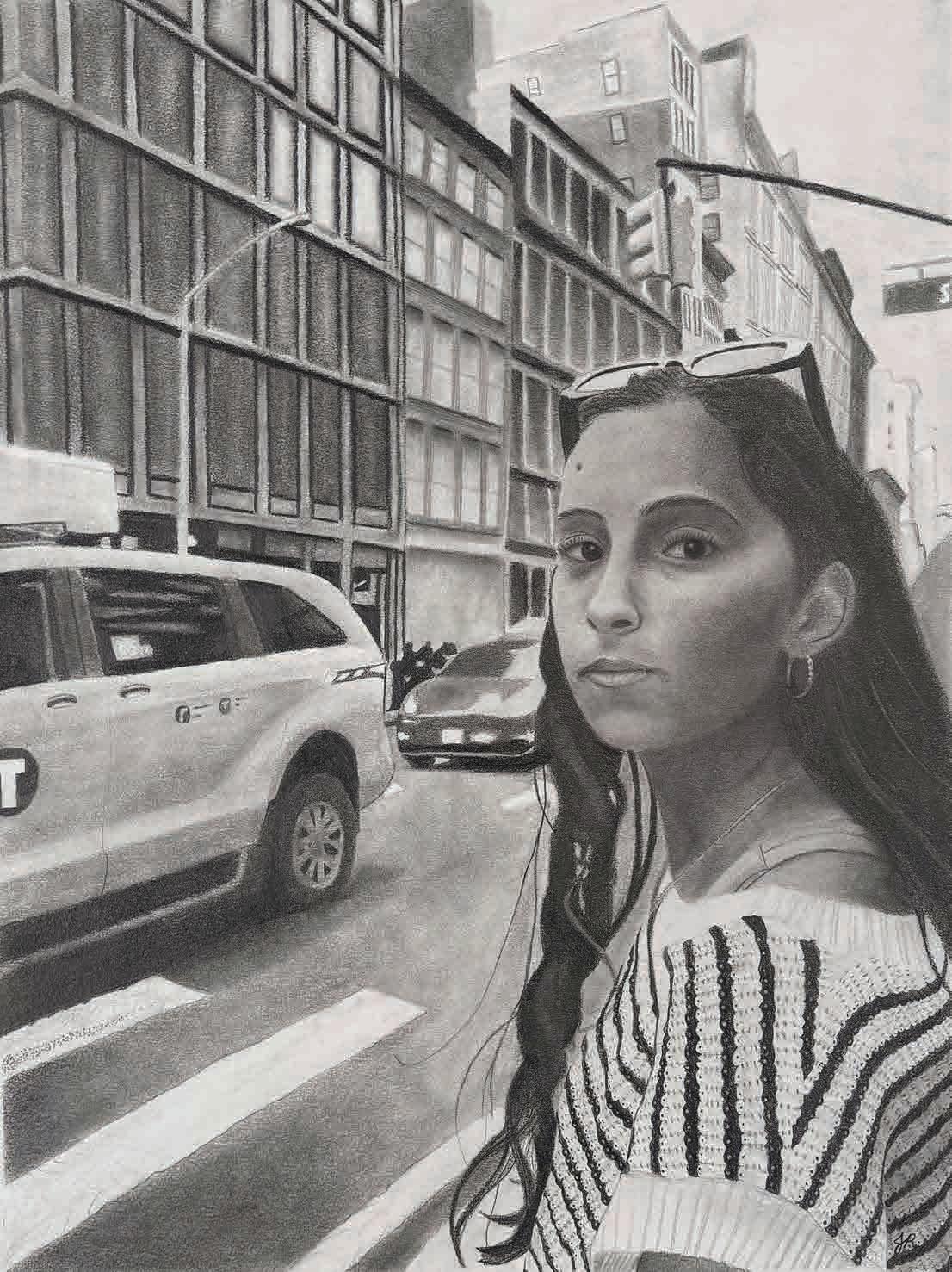
In 1999, she crossed into the land of freedom, a place of open skies, of promise and new beginnings.

In the winter of 1999, she stood in the heart of Times Square, where light has no shadows and billboards blinked boldly in every color.
But her eyes drank it all in. underous metropolitan noises, beside raucous cars, expensive suits, rushed Americans.
Complex, but simple. Dawning, but exciting.
And she will, in the years to come, explore a world yet to be discovered.
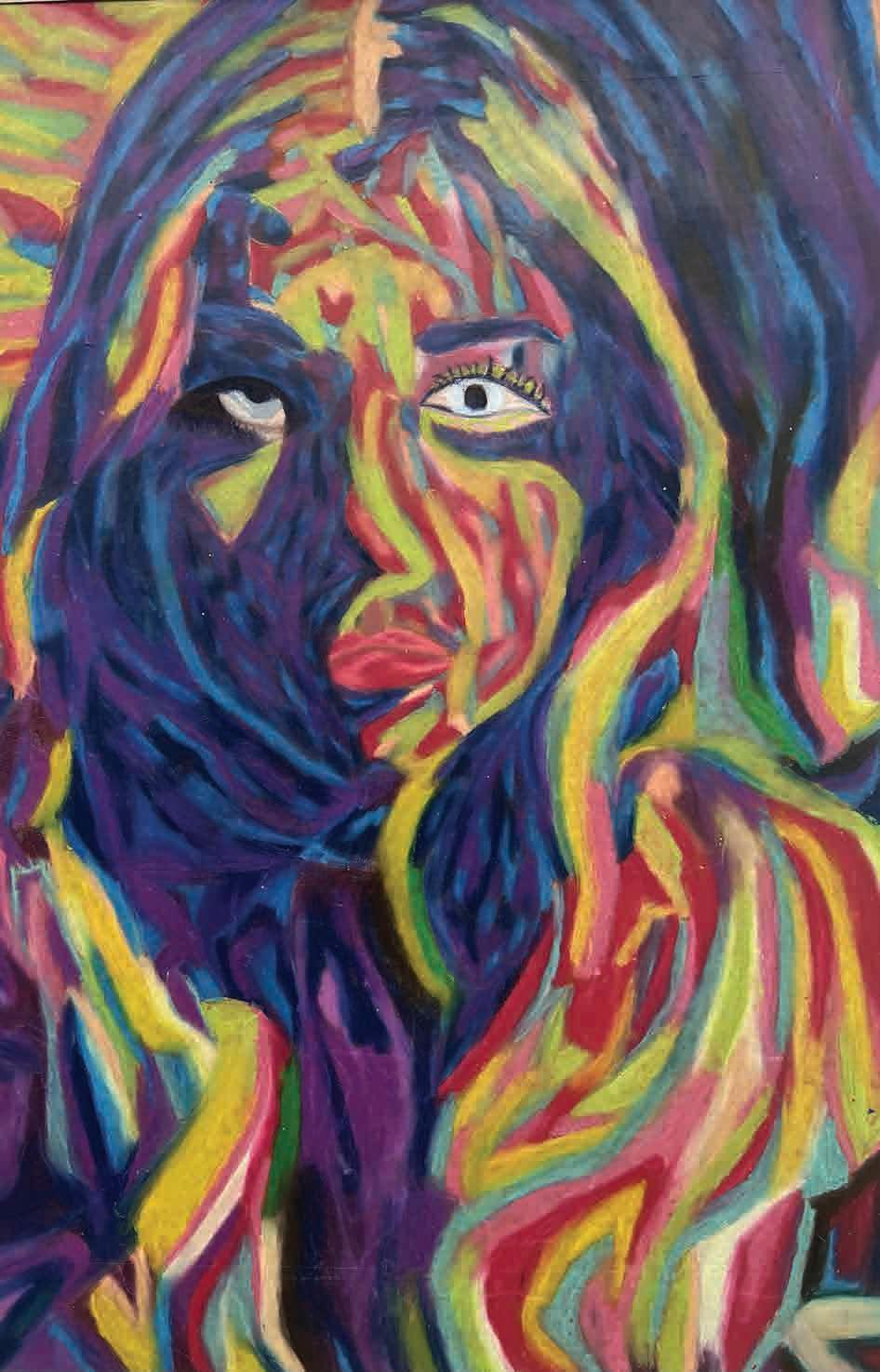

I’ve created videos that have reached over 200,000 views, but my most treasured works have been seen by only one set of eyes. I started content creation during the pandemic by making edits of Marvel superheroes on CapCut, a free editing app on my phone. I worked hard for them to go viral, learning new velocity techniques and color grading tricks. Once pre-COVID normalcy returned, though, I slowly forgot about my TikTok account. My love for video-making was buried under new passions like volleyball and Formula 1, but it never fully disappeared.
Two years later, I redownloaded CapCut. However, this time, instead of cutting clips of “Spider-Man,” I imported snippets of myself. A er an hour of relearning my old rhythm, the video was complete. My rst “Day in the Life.” I watched it back, grinning proudly at the timestamps overlaid on scenes of my day working in my school’s IT department, setting up TVs, and running errands around campus on the golf cart with my friends. I uploaded the video, but my nger hesitated over the post button. For the rst time, I didn’t want my creation to be shared with the world. I changed the setting to private and posted it for myself.
I hadn’t realized it then, but that private video would become an experiment of sorts regarding surveillance, an idea that resurfaced during my junior year in philosophy class. Between discussions of Bentham’s Panopticon and quotes from Foucault, someone asked, “What are modern forms of surveillance that we might not even notice are changing the way we act?”
Social media was the answer that stood out most. We discussed how digital platforms perpetuate a false romanticization of reality where people aren’t their true selves. As I walked out of class, I thought about that “Day in the Life” I made years ago. What if surveillance wasn’t so bad? My videos could make me both the watcher and the watched. eoretically, if I kept them private, could I become a better version of

Emily Cao
myself without the negative pressure of conformity?
I decided to test my theory. A er a long practice, exhausted and dreading the pile of homework waiting, I set up my phone and started recording. Calculus homework, English essays, and translating Homer, all captured from the corner of my desk. Surprisingly, the camera motivated me to stay focused. I didn’t get distracted the way I used to. Because I knew only I would rewatch the footage, I worked hard to make Future-Me proud rather than to impress others. In this way, private surveillance has made me more disciplined and intentional with my time while still being true to myself.
My phone camera is also my memento mori, the skull in the corner of a Renaissance painting, a constant reminder of my own mortality. I don’t want to look back on my life and regret the things I didn’t do. Filming these “Day in the Life” videos forces me to live with a carpe diem mindset. is past summer, I attended a math camp, and, though I could’ve slept in like everybody else, I grabbed my phone, pressed the red button, and jogged to the nearby art museum as




the sun’s rst rays streaked the sky with its brilliance. I pointed my camera at the wild owers blooming on the side of the road and experienced the grandeur of the Berkshire mountains as if for the rst time. I felt truly alive, all because I didn’t want to wish I had done more when I rewatched the video.
Camus wrote that we must imagine Sisyphus happy. “My Day in the Life” videos remind me of the same. I’m learning to nd meaning and joy in the little moments, no matter how mundane. Tomorrow, I’ll press record again, not for thousands of strangers, but for myself: the watcher and the watched.







Shivani Kaw
Two crescents form on either side of your lips. From laughing, smiling, feeling.
A river creeps between your head and brow. From yelling, screaming, seething.
e corners of your eyes divulge into a road of three. From squinting, loving, being.
Why do you want them gone?



Claire Siever
“I love you.” Gazing into his hazel eyes, I watched as they admired the swath of white fabric spun about me, my lacy veil shielding the faint blush that spread at my cheeks.
We turned to face our guests at last, and I moved my bouquet to the side as we claimed each other’s hands, the new rings of metal unfamiliar, but the comforting touch of skin habitual. My mother’s eyes spilled over in tears as we strode up the aisle together.
So long ago that happy day had come and gone, but its memory is forever ingrained in my heart. I sigh, focusing my gaze on the chrysanthemums I hold now, fresh, in varying shades of white and orange. ey were his favorite colors. I run a nger over the short, sti petals.
Hopefully they complement the headstone.




what’s
Angelina Yang
I grew up learning love from ctional characters. I admired watching the beautiful mosaic of relationships in the realm of calming Studio Ghibli lms, or heart-warming Disney movies. I cherished the tropes that permeated each piece of media: enemies-to-lovers, found family, opposites attract. ere was a certain “directness” and predictability in the artistic, digital representations of love. Character A may experience qualms or rocky journeys with Character B. Still, the two harmoniously unify at the end of the story by articulating their feelings, bearing their hearts in full vulnerability.
If love is so overt, so clear-cut on-screen, why does it feel di erent in real life?
Growing up as a rst-generation Asian-American to two hardworking immigrants, what I learned was that “love” in my household was imperfect—and far less cinematic—in comparison to what I’d seen in mainstream media. Our household straddled between our Chinese traditions and the surrounding American ideals, which resulted in countless disagreements when these ideologies didn’t align. My attempts to spark intimate conversations, especially around mental health, o en collided with my parents’ belief that such struggles were simply “Western” constructs. ese conversations o en ended in discomfort and silence, leaving me feeling as though “love,” when spoken aloud in my home, only fractured us further.
However, what my parents didn’t express in words, they showed in actions, like stubborn (or what they consider “constructive”) nagging, plates of ripe persimmons on my desk, and stocked fridges with my favorite Jajangmyeon noodles.
Over time, their unspoken e orts pushed me to realize that I wasn’t drawn to the idea of lm “love” because it was inherently verbal or yielded a formula for success; rather, I was compelled by it because I craved human connection. It’s the notion of endeavoring to connect with others that makes “love” meaningful to me.
Preserving the lessons my parents instilled in me through their acts of service and my admiration for love’s portrayals in media, my “love language” is a dichotomy between unspoken or
action-based care—the “love” of my family—and spoken care, my ability to cultivate relationships with others through my voice.
is dichotomy naturally translated into my engineering journey, where I integrate the fabrication of tangible solutions with mentorship. Engineering is how I express my love for my community and drive for change.
In my sophomore year, I completed Fab Academy, a 20-week rapid prototyping course taught by MIT’s Neil Gershenfeld. I explored numerous weekly projects.
However, what engaged my community-based philosophy most during this time was the nal project, in which students were required to create a unique capstone. For my project, I designed the Pomodesk: a smart desk to aid students with ADHD by responding to abstract needs, such as focus and time management. rough a network of peripheral devices, including a built-in Pomodoro timer, the Pomodesk addresses concentration concerns experienced by many neurodivergent students in my community. In designing it, I practiced the same type of “love” my parents taught me: subtly observing my community, developing new prototypes, and iterating until the product realistically met students’ needs.
e following year, I also presented at the Fab Academy Student Bootcamp to over 200 students globally, who were in the same shoes I was once in. Putting the verbal “language” in “love language,” I admitted my personal challenges during the program and encouraged these ambitious students to design meaningful projects and, most importantly, to nd their own “love” within engineering.
rough a myriad of experiences, relationships, and intellectual journeys, I’ve learned that “love” is an act conveyed through countless mediums, whether seen or felt. “Love” is a plate of hand-wrapped dumplings, and “love” is an engineering xation that keeps me tinkering away at 2:00 a.m.
As I explore new variations of “love” in college, both my parents’ covert a ection and the endearing depictions of love in lms will resonate with me, guiding my exploration of the world.














Sophia Smith
Funny how the word Crazy



Has so many meanings. She is crazy in love. Look at those two crazy kids. But is there such a thing as too crazy? ere is. It is me.
I am apparently too crazy. I clap too loud and I Wear too much makeup and I Have bad table manners and I Forget to brush my hair most days of the week.
I hate the rain but I love the dew on the grass and I Love the summer but hate the sun because it makes my rosacea red and that makes me Feel bad.
I can’t sleep and I fall asleep everywhere all at once. I will smile for the camera but I have to be mid jump or on the move or else I think It’s boring.
I apologize for everything Even though I know it’s Not My Fault.
“Love me” I scream shh!
Sorry, that was too loud of me. Yes, I may be crazy
But maybe that’s okay.
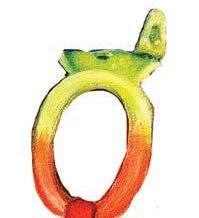
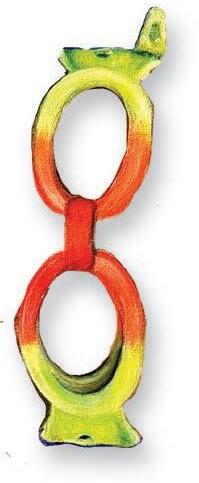

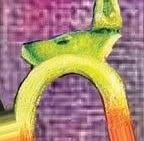







Crab wrestling is an art to be mastered. You start young, learning from your parents before venturing into the cra itself. It takes grit, sweat, and a good spirit with a sprinkle of humor and knowledge, knowing what parts to eat and what not to eat. Knowing that it’s not a satisfactory meal for the substance alone is part of the game.
Part of the game is being okay with losing on an objective level. My mom will always joke that we ll only the gaps in our teeth a er a long few hours of crab wrestling (though she doesn’t mind it much as we laugh the entire process).
I don’t exactly remember the rst time I actually ate a crab since I was so young, but I will always know and remember the seafood smell that permeates the kitchen and dining room as crabs steam to a full orange color. Waiting by the sides of the table between both of my parents as they peeled and clawed their way through the crabs to nd the minimal amount of meat and roe to give to me as well as carefully dipping the treasured pieces into the Chinese black vinegar set in a sauce bowl became core childhood memories.
e rst few times I myself actually tried to wrestle with a crab were full of struggles. Pricking my nger on the sharp edges of the crabs’ shells, poking through the body for meat using my too-thick chopsticks, and cutting my hands as I tried (and sometimes failed) to crack open shells, crab wrestling felt impossible as a child. Turn the shells in the wrong way, and you’re le with a cut on already achy hands. Bite into a so shell on the interior, and your teeth hurt and you’re le to spit out the
Lynn Zhao
crunchy bits mixed in with the rare meat.
At the end of the day, even with the most successful crab wrestling, all you get is minimal meat and roe. Yet simultaneously, I’m always eager to eat crabs again. Every year, there’s only a handful of opportunities to do so, and it never fails to bring the excitement up for the actual dinner.
Crab wrestling also becomes valuable for its lessons. Trying to nd roe in the crabs feels like trying to win a lottery. It all depends on luck, and it’s o en a disappointing game. But isn’t that what life is about: learning how to win with humility but also lose with grace?
I accept every defeat that results from a wrestle with a crab. It’s not an easy loss when you’re hoping for more meat and roe, but in the end, the stories we share around the dining table as we laugh about anything and everything feels like they make up for it. Because the best part of crab wrestling isn’t the eating or the crabs at all. It’s the time spent with family. How else do you get everyone to sit at the table for long periods of time without someone hastily leaving to go and do something else?
Crab wrestling is a family sport, even if it’s the only sport all of us can do together.
“Crab wrestling is a family sport...”
Now, I can say that I like to ght crabs. I wrestle them like I’d wrestle a sibling. Except I don’t have any siblings. And I wouldn’t break their arms o . And that like most sports, it’s a game that teaches you a lot. And a bonus, it’s tasty too.
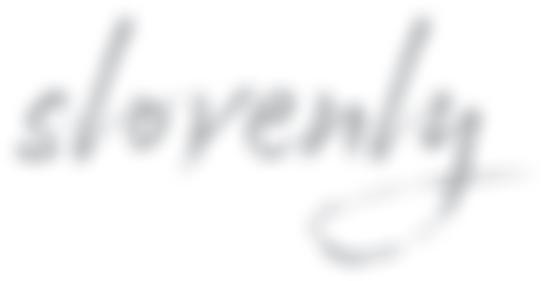
—(messy, dirty, careless, excessively casual)
Samora Elam

your bare, bruised feet kiss the ground with each step as they move without command from home to (home)land
forest echoes guise themselves as the day’s shaming whispers mocking your sunlight-seared skin and earth-stricken knees, assuming the wild seized control over you.
the grove welcomes you home, marking you with the scent of fauna and fresh water as you
s t u m b l e across the threshold between here and the rest of the world.
allow the servants of the grove (the bluebirds chirping some melody; the moss directing you home) to drench you in the earth’s bellow, speaking its message from the nerves on your head to the tips of your toes telling nothing but good things of the sun and the stars and the moon.
you begin to ask and obsess what color Old Sol will tint the sky at sunset, or what phase the moon will hang tonight, and realize maybe the wild has seized control over you.
only because the wild has raised you for eternity.
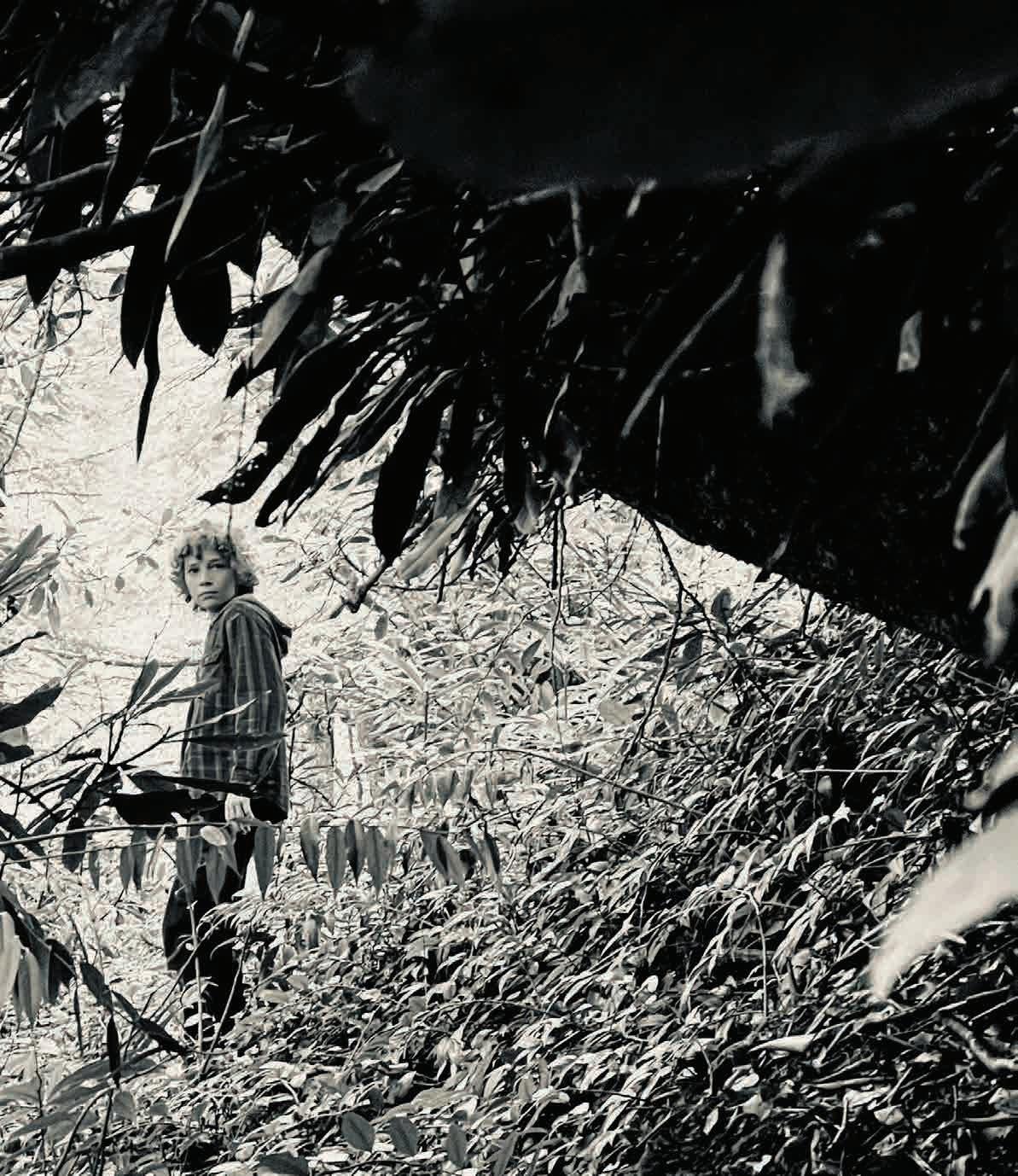







e city of Fresco is unique; any traveler who stumbles upon this city will instantly be in awe, not because of its grandness but because of the walls that echo time itself and the grace it shows while decaying gently. Cities like Fresco are plentiful; some make travelers stop in their tracks, while others don’t even bother a glance. ese old stoked cities sometimes go unnoticed, while others are put on display for their uniqueness. is city, in particular, was built around 600 years ago. At the start, it pulsed with vibrance, bringing life to the surroundings. But as time passed, this city’s pretty colors faded, and the stories it held became outdated. e Fresco population, like many of the other cities just like it, stood still in time, unable to move their drypainted hands, while everything else around it changed. Many cities like Fresco fell to time, but Fresco was spared through transformation.
e painted people in the city of Fresco don’t know what they look like, as the only view they have is of the rest of the city of now with peeled paint and the outside world, a world that is constantly evolving. e people in the city itself do not know how much they have faded, but they guess by how much it is admired by the travelers who come and go with time. e city has seen how time itself a ected the others in their city, but it does not know why, day by day, year by year, fewer and fewer travelers stop to admire its true timeless beauty.
I watched as common travelers came and went, each from di erent cities, having di erent stories and perspectives, all almost never giving us the attention we used to. When the boy rst arrived, he looked naive and only gave us the normal fewsecond glance we were used to. He kept coming back, though
it seemed not for us. But unlike the other travelers, each day he would glance up just a little more than the last, as the year the boy was there, we saw him scared for the world we could not see, somber for those whom we had never heard of, joyful for those days where he had little to do but sit.
I watched him every day, learning to take in what was around him, more and more as each day passed, as the boy knew he had less time in this city. He started to look up, studying each stroke that made us unique, learning about each story shown in the city. Some days, he would only glance at me for a second or not even at all, but the best days were when he would stare. e boy could not stop himself from staring at the horse ghting, blazing at the furious bull, the ostrich that ran wild from its hunters, and me.
Some days, he wouldn’t look at me as much. It isn’t his fault; I had never changed, but he had. Each day it felt as if I was getting a new glance, but when he would stare, it made me feel like when I rst had been painted here, while the travelers seem much di erent now, but I know that I will always be seen as the same. I do not know what he likes about me, as I have never seen myself, but I’ve felt my once fresh, bright, and complexly colorful strokes start to fade and peel. But I knew there was something that drew his eye. I saw him come and go each day, returning to his home city at night.
e city of Fresco and its people believe it is waiting for something. For someone like the boy, not to x their city or even change it, but to truly admire the city for what it is, or at least what it used to be fully, before it disappears forever.
Inspired
by Italo Calvino’s “Invisible Cities”
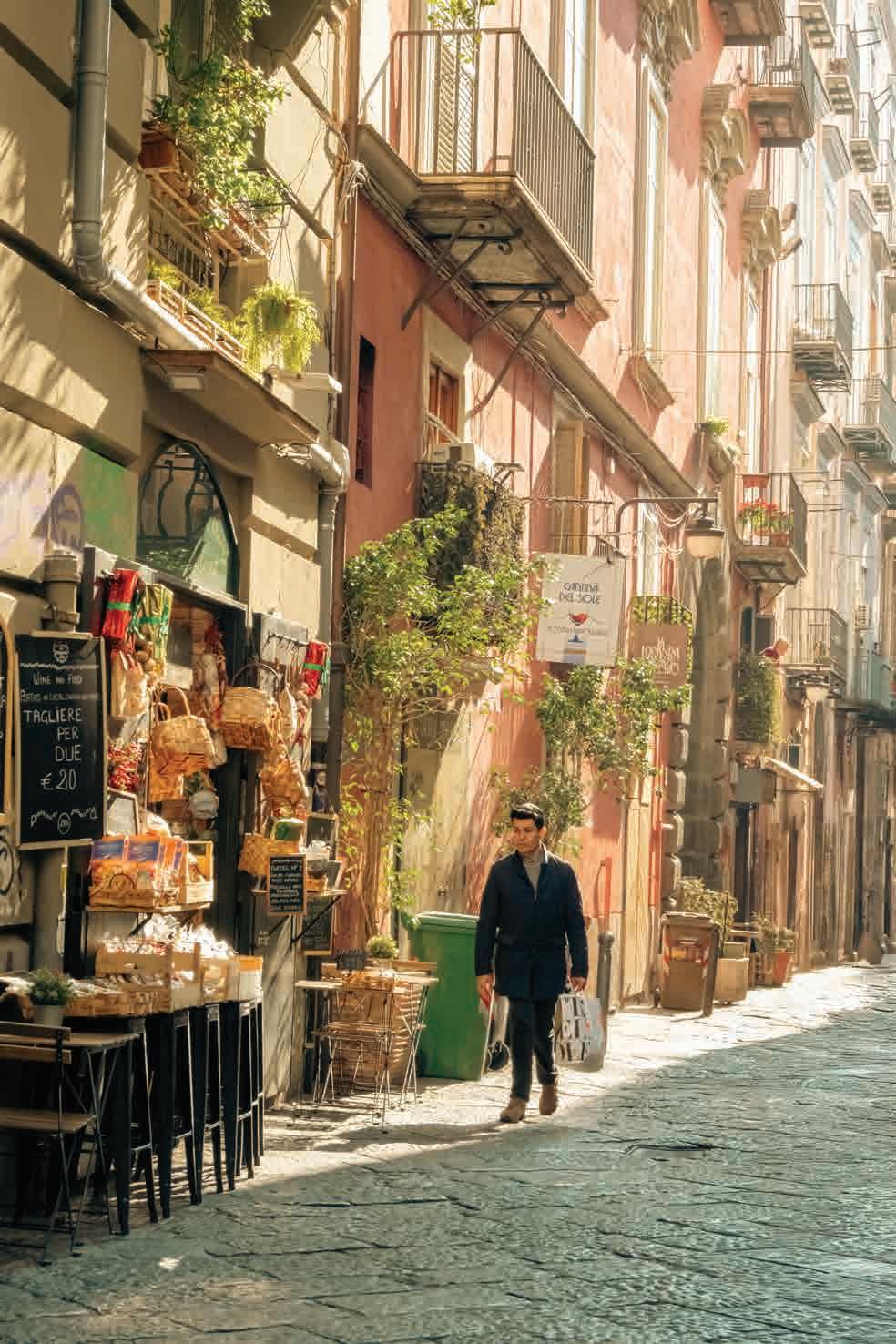
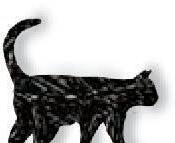







e world is snoring so ly, fast asleep. She creeps around with not the slightest sound. No soul will notice; busy counting sheep. e streets are ghosts when no one is around.
e smells from dinner linger in the air. She wonders if she’ll ever be rst serve. She searches for a place to call her lair. A warm bed and love, does she not deserve?
A box will have to do, trashed by the back. Maybe someday, someone will hear her cry. But who could ever want a cat that’s black? Morning leaks in as sun reaches her eye.
A wondrous smell nds its way to her nose. A man, some milk, nally she’d been chose.
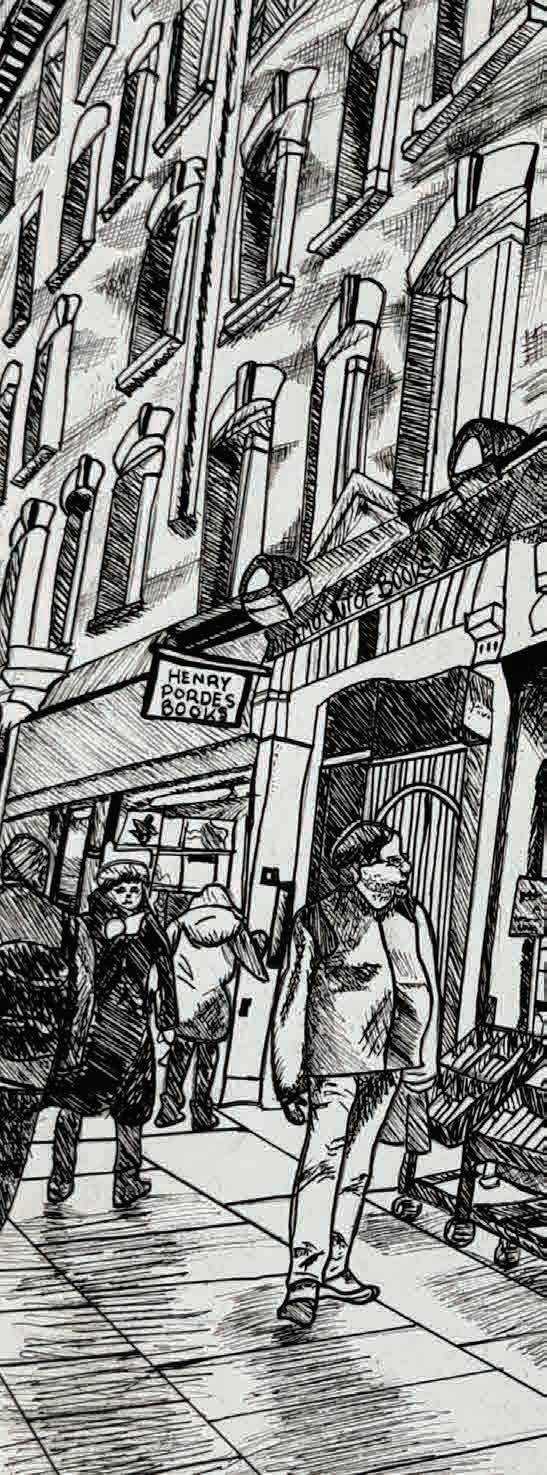
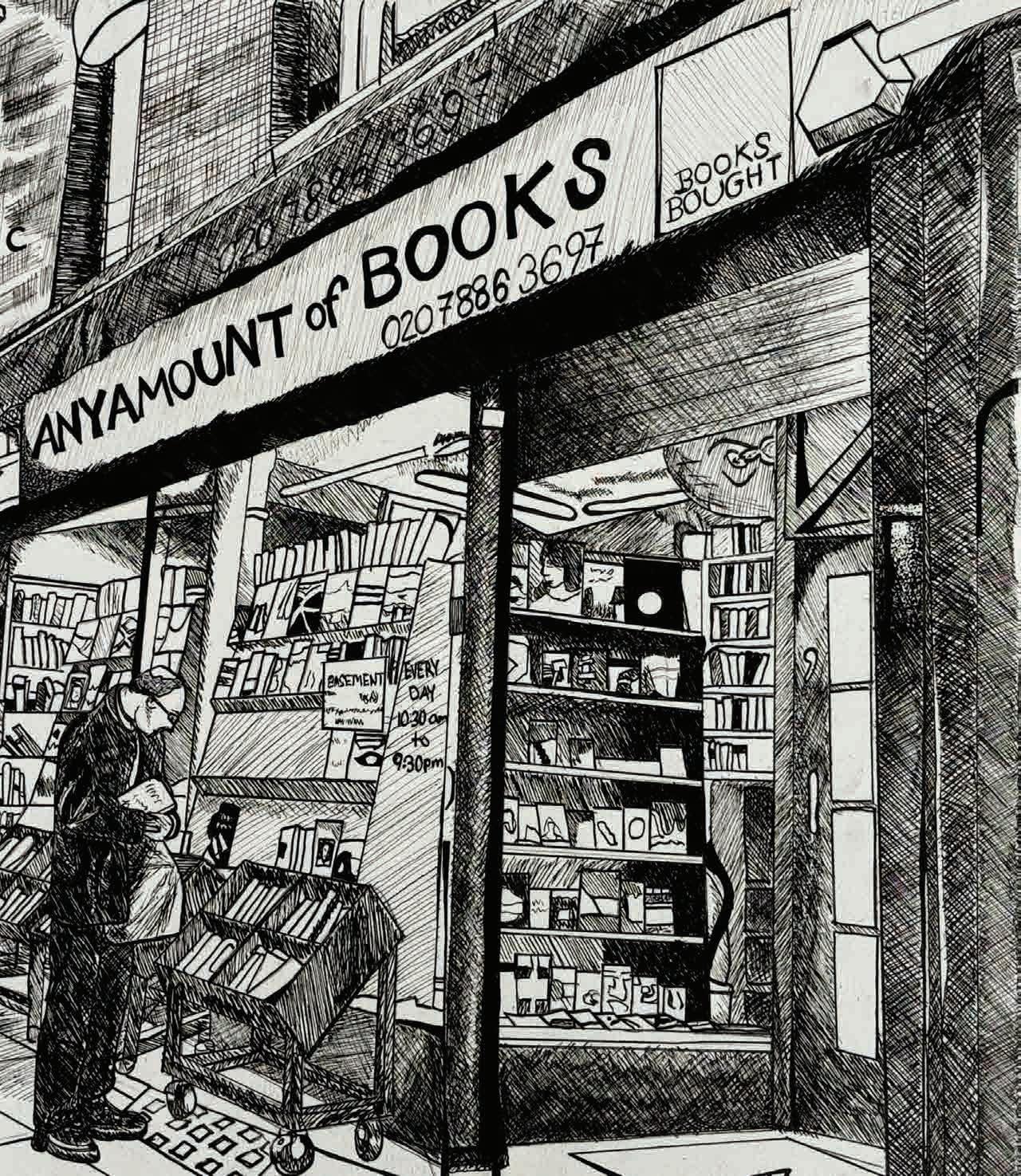
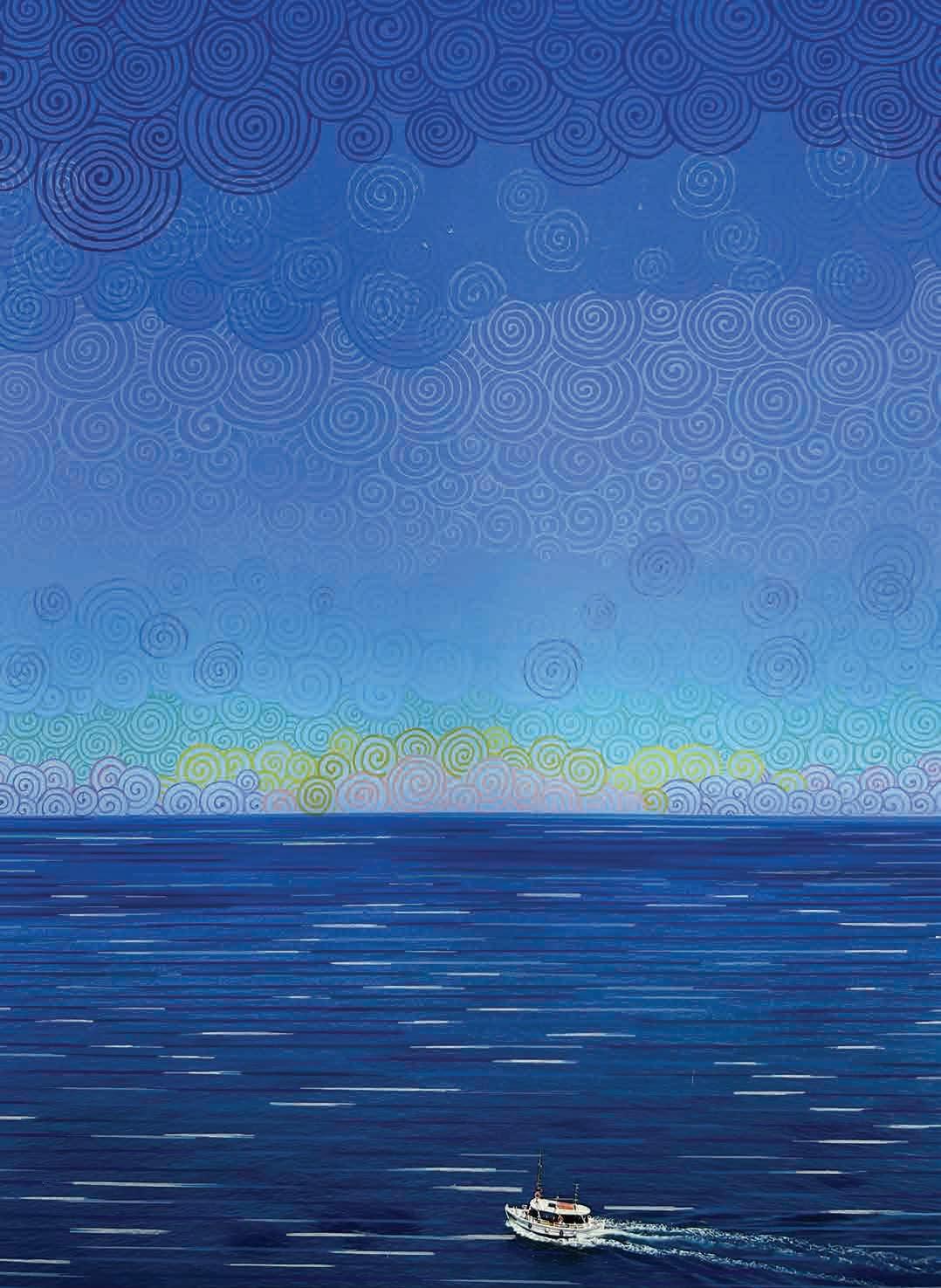







e glass panel gleams before me, dimesized dollops of oil paint lining its surface. Alizaron crimson, phthalo blue, yellow ochre, raw umber–like untouched jewels, or candies on display.
Shhhkk! With a swish of my arm, I slice the tip of my palette knife into phthalo blue, swipe a dash of it into the palette’s center, then li a generous glob from the yellow ochre and deposit it on top.
With the fervor of an alchemist mixing minerals, I scrape and smear the colors with my palette knife until I’ve created my very own elixir of life: a deep forest green.
It may seem strange that my favorite step of painting comes before I even pick up a brush, but to me, mixing colors is an art in itself. I love watching the streaks of
Isabel Yang
seemingly-incongruous pigments swirl together, coalescing into a single, solid hue. I marvel at how a swatch of pink darkens with the faintest touch of crimson, like a chemical equilibrium shi ing to the slightest stress. ere is a certain mathematical harmony to it, and as I focus on this, my racing thoughts so en to a hum. e world simpli es itself.
is, I think, is peace
My palette soon bursts with emerald, fuschia, indigo, tangerine. Before dipping my brush in, I pause to admire the vibrant array, each hue a glowing amalgamation of so many others.
More than anything, this act of unifying the seemingly disparate into something beautiful brings me joy.
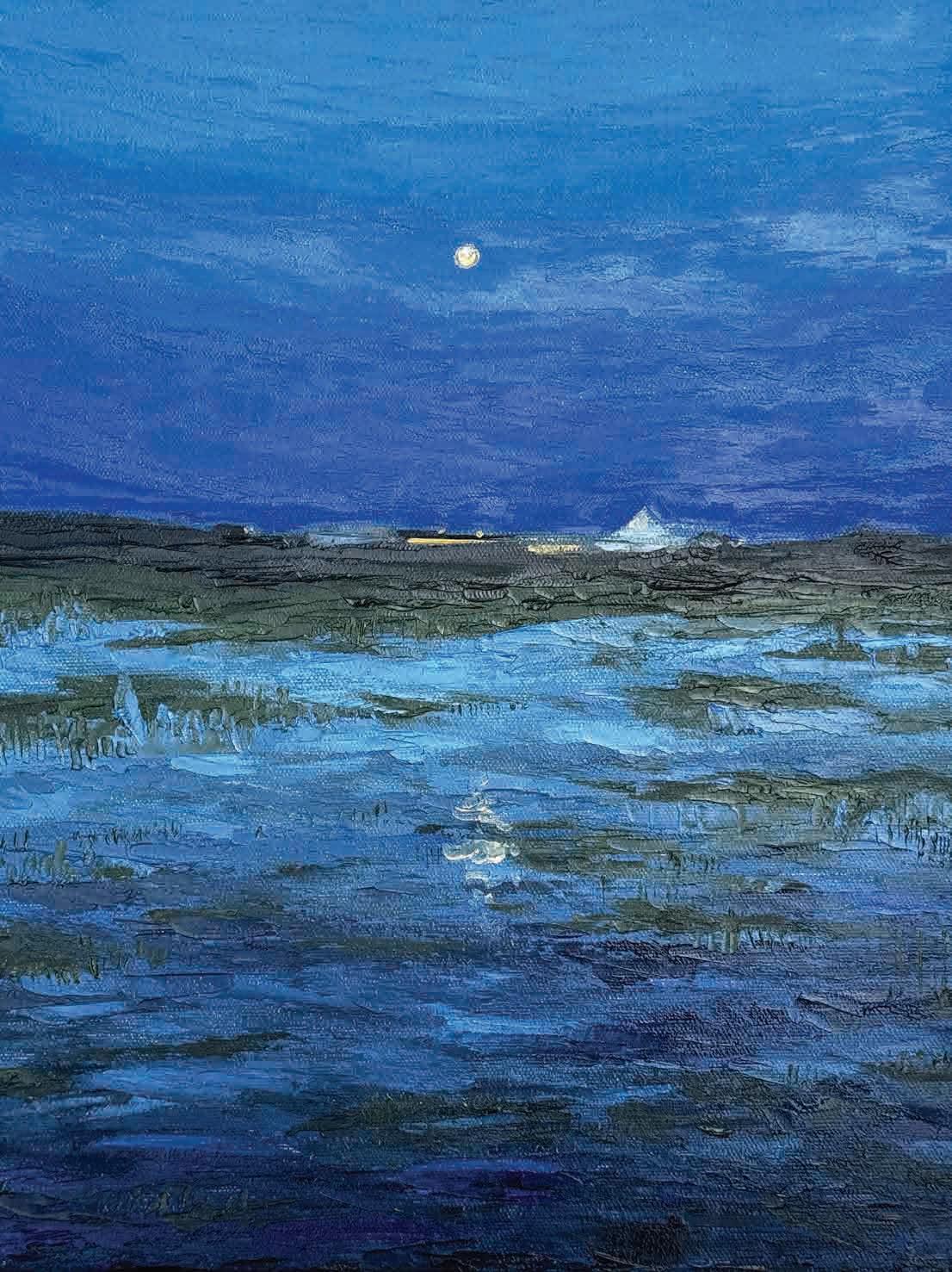

Moonlight streams through the glass panes as she hastily tosses her belongings into a worn, forest green backpack. A hand-me-down from her brother. e brother who le her, now two hours away. Or two hours and een minutes, if you count the walk to his dorm room. And two hours and thirty minutes if you account for how tired she would soon become, walking on dark roads stretching over the hill-laden countryside. Phone, clothes, toothbrush, she recites to herself, phone, clothes, toothbrush.
A rustle in the hallway sends her spinning around, her guard up, ready to explain herself. No one. She returns to packing, sitting on her oor, the coolness of the wood seeping into her skin. As she tosses in the last item, she pulls on her sweatshirt to guard against the cold autumn winds.
Allowing herself to close her eyes for a brief moment, her conscious slides a thought to the forefront of her mind. Is this a good idea?
Hesitating at rst, she digs up the scene from the recesses of her memory. From last night. e nal straw.
glance in her mom’s direction.
“We’re almost out!” she repeats, a tinge of anger laced with the familiarly sharp, sour odor. “I need more.”
She sighed, and responded as gently as she could manage, “Okay, Mom.”
As she turned to begin the trudge back up to her room, the side door was once again opened, and the shouting began.
Although her dad’s schedule was unpredictable, he always came back, wanting more money, more custody rights, more everything. While her mom was completely unstable and un t to be a parent, she knew her dad was worse.
As she sat on the stained carpet of the staircase, the shouting resounded o of weary walls before a crash shattered the ght into silence, the scent of cheap cologne slinking out the door. She silently crept down the steps once again, only to see her mom lying on the oor, mourning the loss of her last liquor bottle, glass shards scattered across the ground, the amber liquid spread like blood across the white tile.


e creaking side door was slammed into the timid wood frame, and no sooner had she walked downstairs, her mom pulled another bottle out of the closet, following a deep swig with her rough voice.
“We’re almost out.”
“I can pick up more tomorrow,” she responded with a cursory
At the broken sight, she turned back to the staircase and made to her room.


In that room now, she quickly shrugs on her backpack and turns to the outside, forcing open the heavy window as slowly as she can manage in order to su ocate the creaking sound. Her escape. She looks at the ground below, the grass looking less forgiving under the night sky than it did earlier that day, and climbs into the darkness.
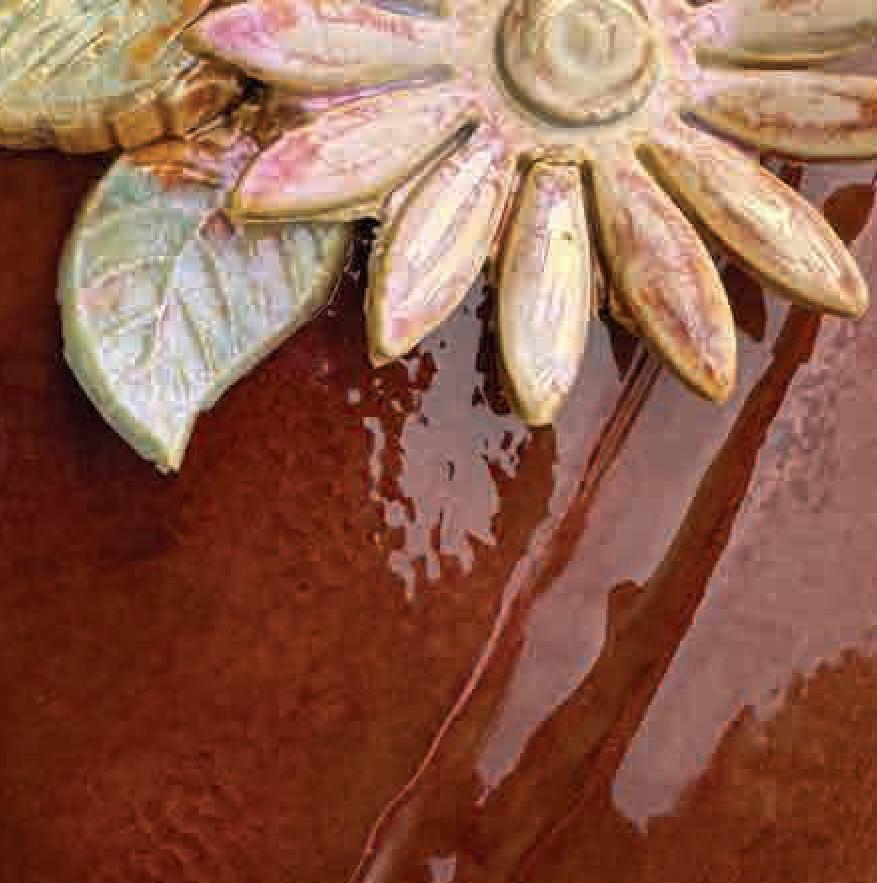
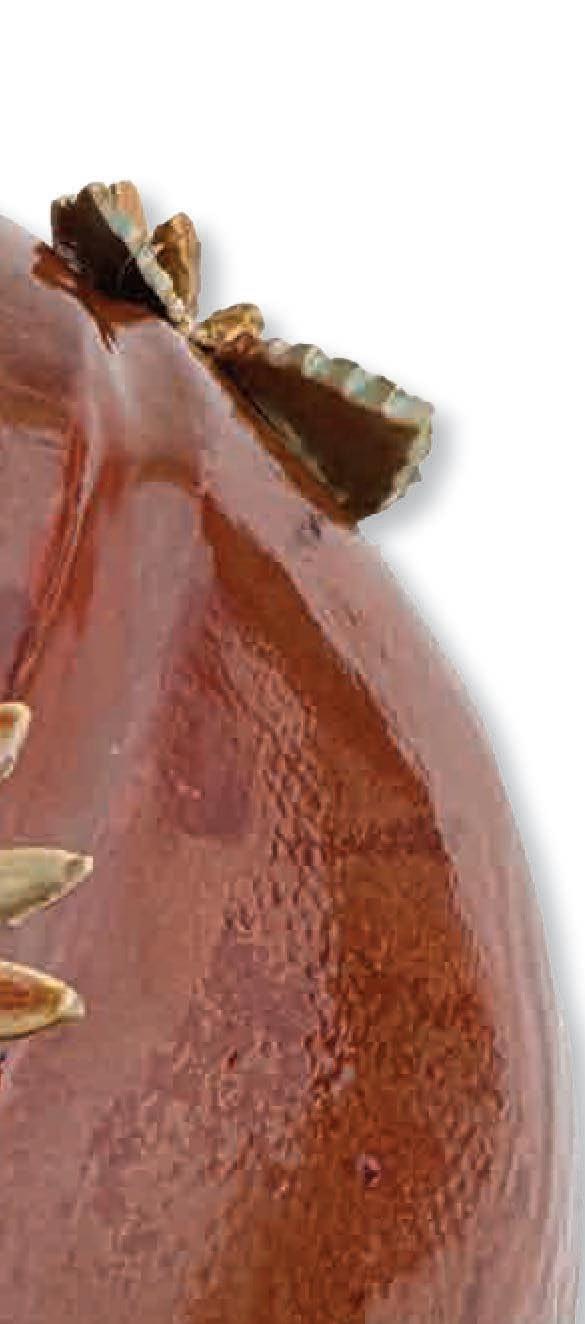
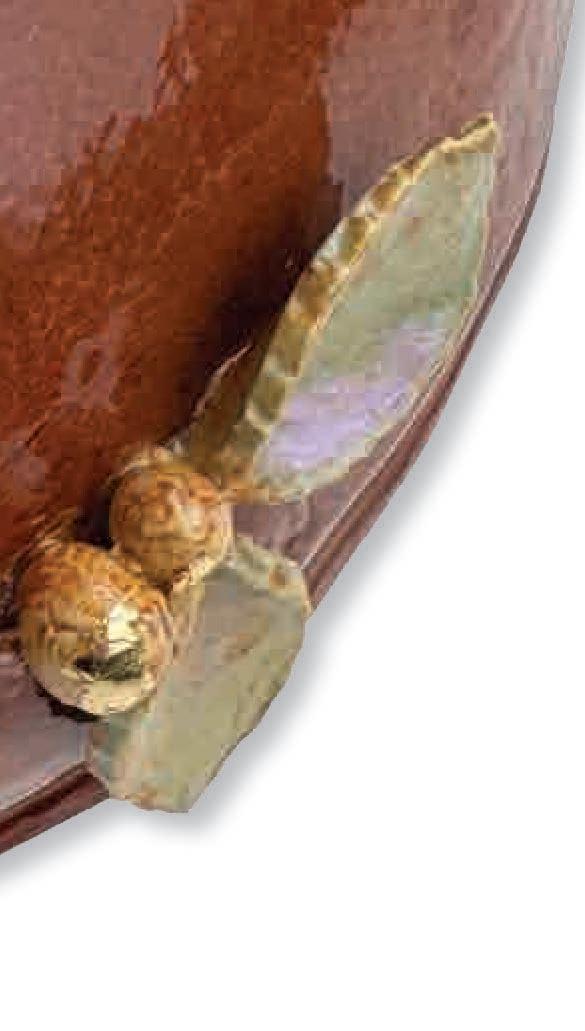

LDull and gray
Worn and frayed
Beige and round
Happy and matted
Smiling, never a frown.
Bottom heavy and loved
My favorite cuddle bug at keeps me snug
Safe and warm.
She waits patiently at the head of my bed
Waiting until 9:30 p.m.
To catch up with me about my day.
My rst memory of childhood.
Yes she is old,
But the memory of seeing her from across the room
In the middle of a Mount Everest of stu es
Lives fresh and recent in my mind.
A bright light beaming down on her
A shining star
My lamby
My rst friend.
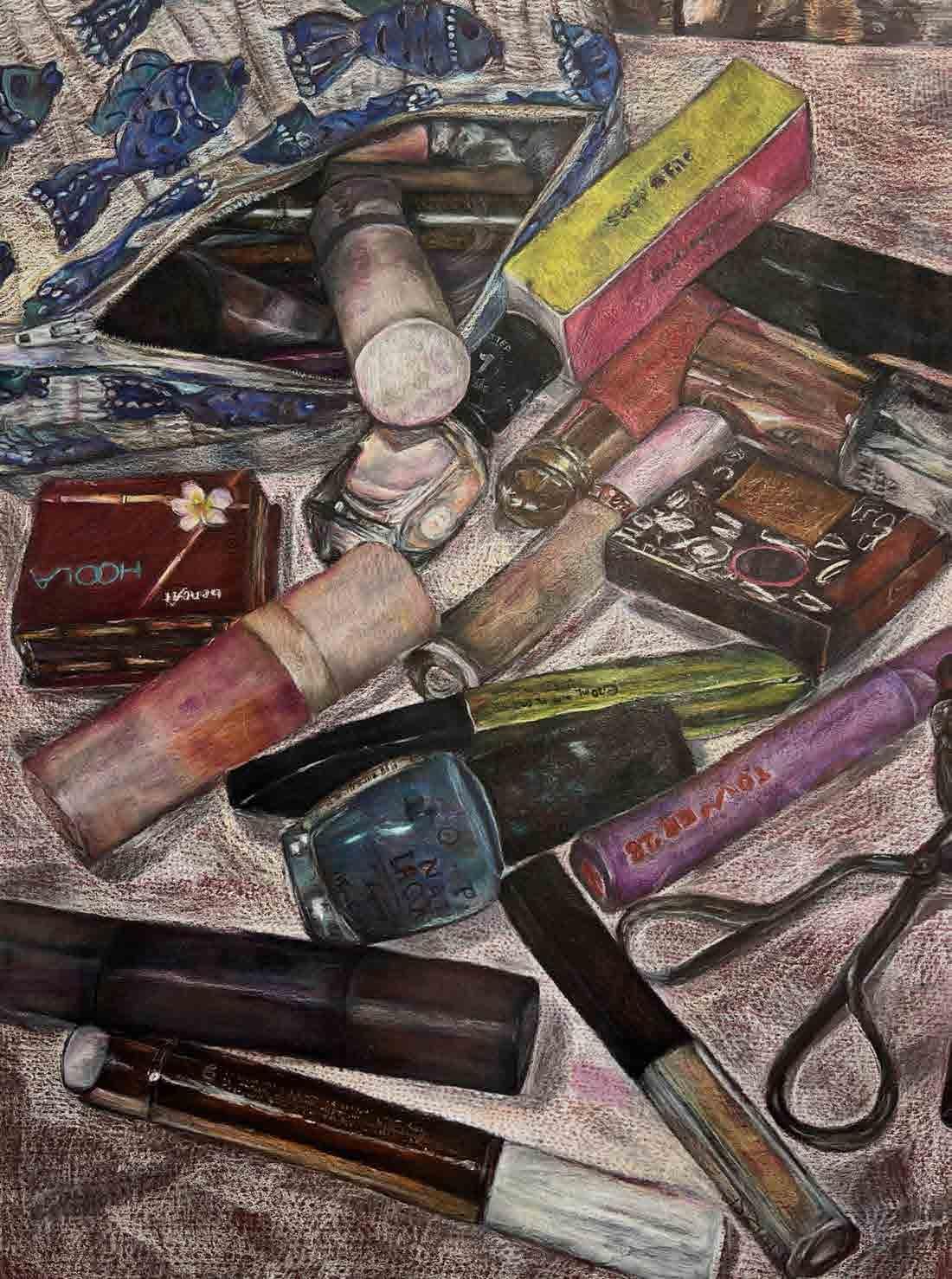
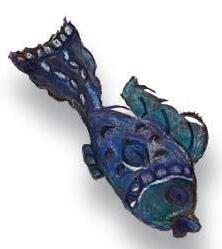

Lynn Zhao










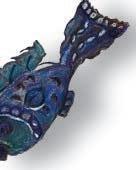
Can you miss a place you never lost? Can you ache for somewhere you’ve never been to?
I vividly remember the greenery in dreams, the steady stream of clear water leaking from a crevice deep inside the forest, bright and breathing. Creeping closer, the stream transforms into a large pond with a base of sludged mud. Accompanied by a singular red elk, the pool of water shivers and ripples, touching the edges of the so soil and growing grass. e trees tower over everything in sight, holding glimpses of forest spirits hidden amongst leaves and branches. White and almost ghost-like, these spirits hop from one tree to another, brightening up the forest in small sparkles of light. e wind blows so ly but smoothly across my face, moving only ne strands of hair, and triggers the rustling of the leaves resting amongst the trees, shaking the dotted lights brie y before returning to stillness.
Despite the solitude, the air doesn’t su ocate this landscape, still organically breathing in and out to the heartbeat of Mother Earth.
Brie y, I make out the silhouettes of two wolves in the distance, but they disappear too quickly to discern whether they were simply tricks of the eye. e thought of them should frighten me, but the serene nature of the forest hides the anxiety that typically arises. I know these woods like the creases in my palm and the gentle curve of my ngernails, like the fuzz on the back of my hands and the way my ngers curve on top of piano keys. I can almost hear the gentle song playing amongst the shrubbery and ferns, feathery and light but calming and wild.
If I listen closely, the boars run in the far distance, stomping freely among the hills and mountains. eir

hooves carve paintings into the dirt, and their snouts trace the path of their pasts. A wolf howls, the sound echoing from the cli s and caves around the forest. It ricochets in nitely until the sound of the stream engulfs it once more.
Strangely, Earth acts as a mass grave for these animals and plants. She births them, releasing them to the wild only for them to return to her in death. Her roots wrap around the stones and vines tracing the ground, drawing a map for the heavens to read. Each path as unique as the tracings of each palm, invisible lyrics appear painted across the ground where she wades over, where no other human has stepped foot on, for it is her territory and hers alone. But if Mother Earth is the soul, then the stretched pond must be the heart, the streams then veins tracing the body of the earth. We perpetually return to her and her elds for rejuvenation and rebirth.
O en, though, no longer do I nd myself in the middle of her heart, around that pond or with the red elk.
Some days, the pond feels dried up, even though I know it will never lack water, and the trees feel too still even for the forest’s innate tranquility. My body itself feels like it’s giving up on me, and the journey to this heart burdens my muscles and legs more than I’d like to admit.
ose former days of breathing in the forests’ gi s are rare now. I nd it increasingly harder to return to the magic of the water and trees of Princess Mononoke’s lands, but I know they’ll always be waiting for me in my dreams.
And in those dreams, I see the world with eyes untainted by reality.

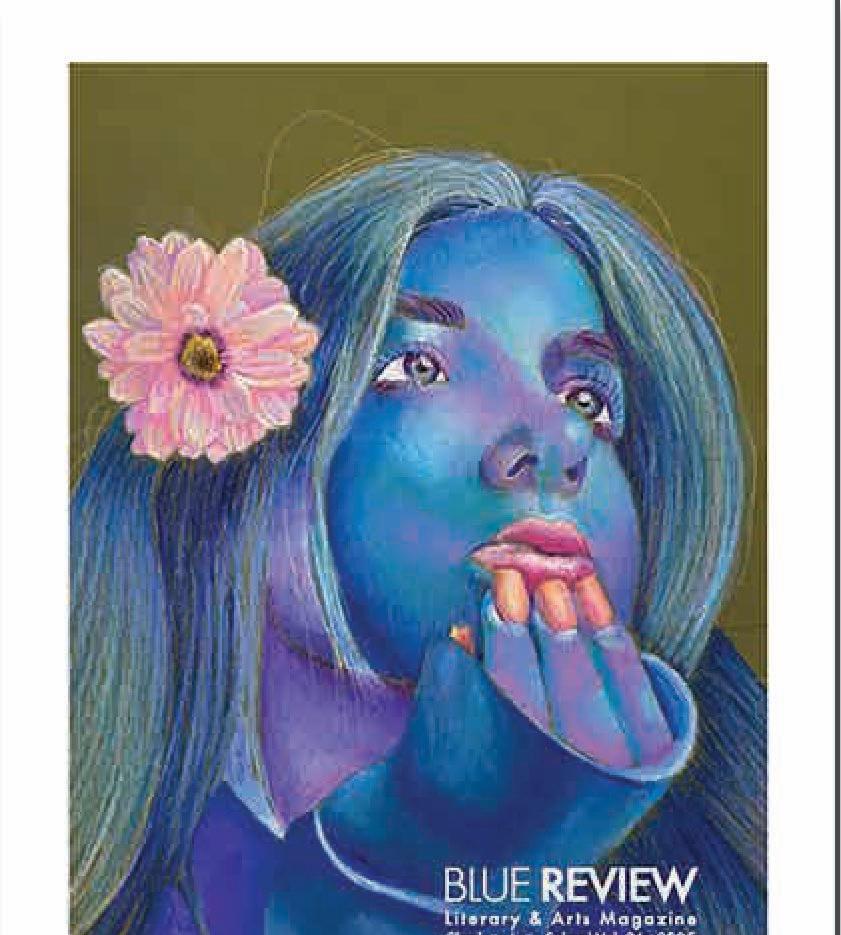


SECTION AWARDS
1st Place
Art
1st Place
Non ction
1st Place Layout
1st Place
Photography
eme Development
3rd Place
Cover Design
INDIVIDUAL AWARDS
Art
1st Place | Kathryn Wu


OVERALL AWARDS

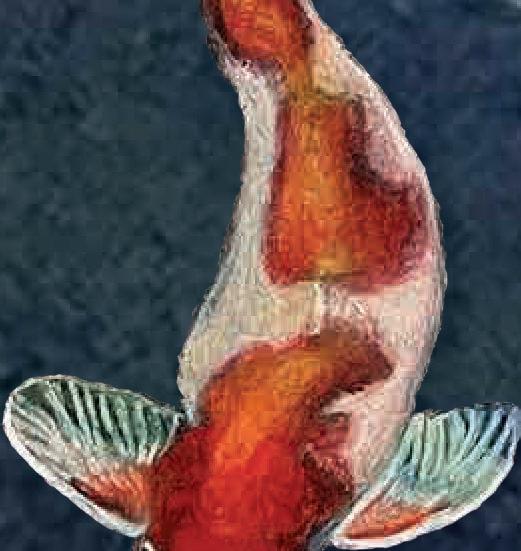
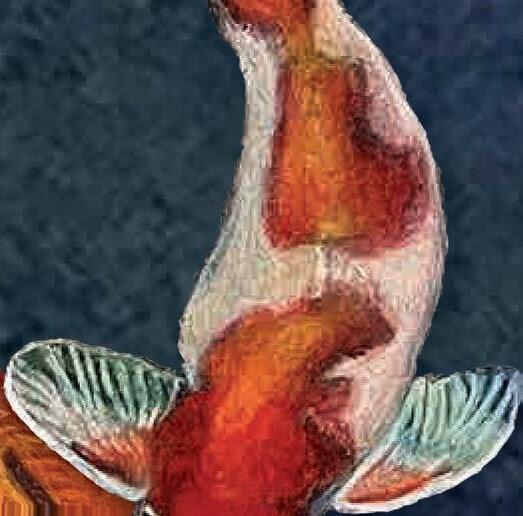
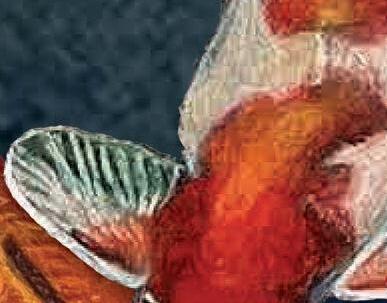

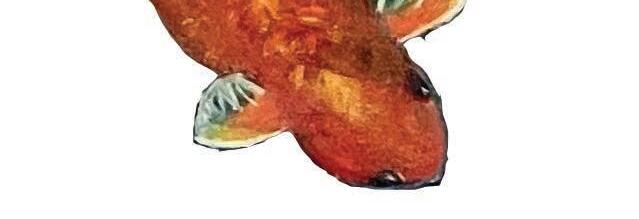

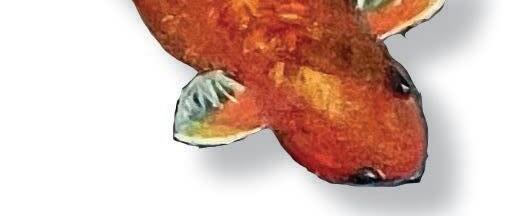
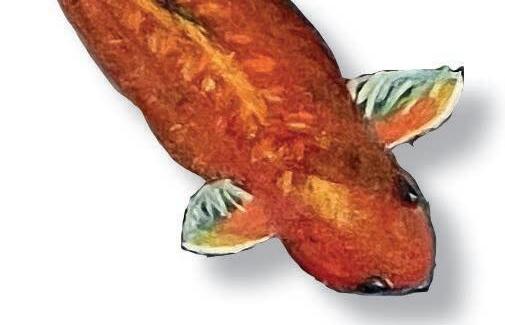
Columbia Scholastic Press Association (CSPA)
Gold Crown Award
National Council of Teachers of English (NCTE) REALM First Class
North Carolina Scholastic Media Association (NCSMA)
Tar Heel
All North Carolina
INDIVIDUAL AWARDS
North Carolina Scholastic Media Association (NCSMA)
1st Place | Athena Woodward
HM | Evelyn Haggstrom
Non ction Layout
2nd Place | Peyton Samii
3rd Place | Lewawit Alemu
HM | Sophia Oh
Individual Photograph
1st Place | Jack Benonis
Individual Fiction
3rd Place | Margaret Piasecki
Individual Photograph
2nd Place | Evelyn Haggstrom
Poetry
1st Place | Jolin Cheng
3rd Place | Samora Elam
HM | Isabel Yang
Personal Essay
1st Place | Leslie Osorio
2nd Place | Athena Woodward
Fiction Layout
2nd Place | Samora Elam
2025
Scholastic Gold Keys
Lilian Berkovich | Critical Essay | “ e Unforeseen Consequences of Tourism: e Impact on National Parks”
Jenna Chebaro | Flash Fiction | “Paradise”
Ramona Cigler | Flash Fiction | “Blight”
John Gray Norris | Flash Fiction | “Instinctive Perceptions Within the Human Mind”
Isabel Yang | Personal Essay & Memoir | “ e ings
She Carried (A Perfect List)”
Claire Siever | Flash Fiction | “Freedom”
Henry Graham | Poetry | “Game of Basketball and Brotherhood”
Sia Gullapalli | Poetry | “Sonnet: Glass Smiles”
Angelina Yang | Critical Essay | “A Woman’s Greatest Weapon: Exploring Subversive Femininity in ‘ e Handmaid’s Tale’”
Angelina Yang | Personal Essay & Memoir | “ e Ultimate Gamble: e Rejection of Comfort”
Scholastic Silver Keys
Erik Anglemyer | Personal Essay & Memoir | “Listening to Rain”
Kingsley Hall | Critical Essay | “A Solitary Flight: Connection with Nature’s Divine Presence in Romantic Art”
Conard Hull | Poetry | “Alaskan Odyssey”
Sahana Mahesh | Poetry | “Letter to Emily Dickinson”
Jackie Rao | Personal Essay & Memoir | “A True Survival Story”
Jackie Rao | Personal Essay & Memoir | “Go With the Flow”
Austin Redmond | Poetry | “Morning Newspaper”
Jack Rook | Poetry | “More an an Exchange”
Julia Stinson | Poetry “ rough the White Mountains”
Isabel Yang | Critical Essay | “Salvation Isn’t Survival: e Complexities of Faith rough Dickinson”
Lynn Zhao | Personal Essay & Memoir | “A Museum of Storytelling: A Collector’s Introspection”

Scholastic Gold Keys
Portfolio
Isabel Yang | Where the Heart Is
Bennett Dubose | Painting | Chromatic ought
Sloan Ellison | Printmaking | Bird Chase
Zijia Fang | Photography | ree Generations One Road
Zijia Fang | Photography | At the reshold of Silence
Zijia Fang | Photography | Waiting on Stone Steps
Molly Martin | Experimental Photography | Gone Fishin’
Anjali Rao | Mixed Media | Contours of a Life Earned
Maya Rao | Drawing | Gateway to the Emerald City
Isabel Yang | Drawing | My Precious
Scholastic Gold Keys
Zijia Fang | Photography | Bread and Fire omas Lynch | Experimental Photography | Synchronicity
Anjali Rao | Neela Aanand | Sculpture

Isabel Yang | Painting | Daughter of the Tibetan Tableau
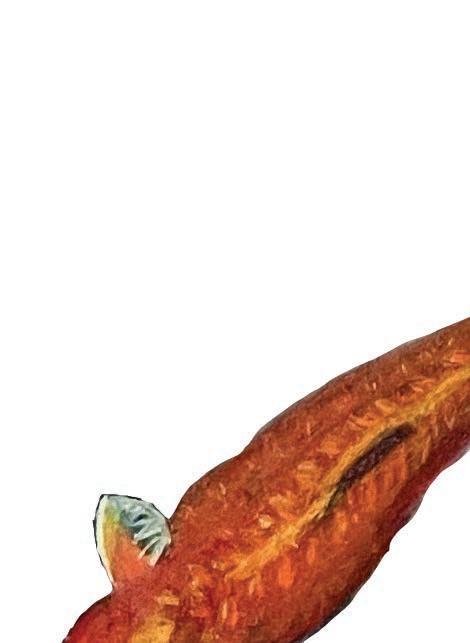



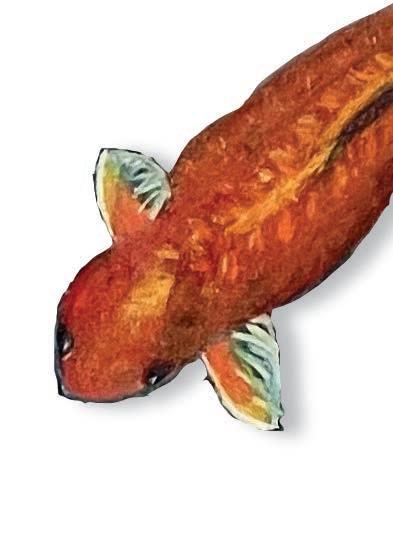
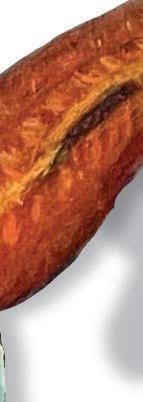



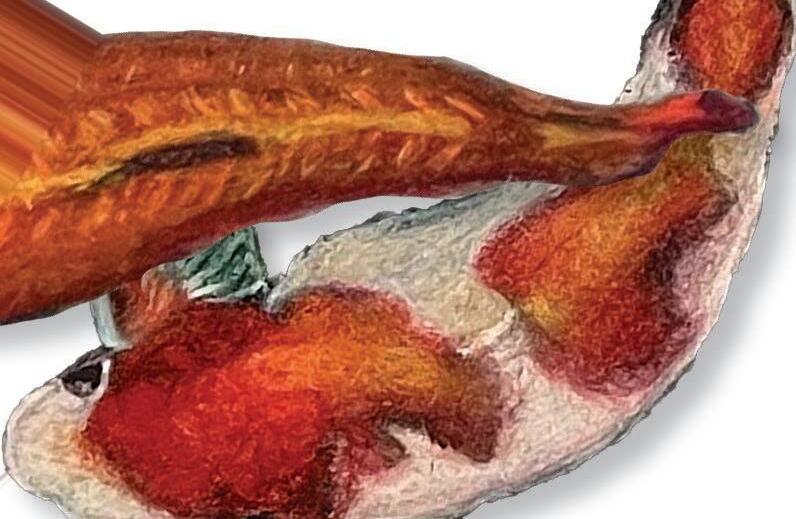



e body text is Minion Pro. Headline fonts include Adore You and Function Pro. We explain the theme in the editors’ letter. 350 copies are printed and distributed free of charge to the school community. e “Blue Review” sta has access to 12 iMac Mini desktop computers and four MacBook pro laptops. We subscribe to Adobe’s Creative Cloud 2025 and used InDesign and Adobe Photoshop to create the book.
We are grateful for the school’s support in covering printing and other expenses associated with “Blue Review.” Walsworth Publishing in Marceline, MO printed our book. e account was serviced by sales representative Carolyn Henderson and service adviser Cheryl Ball. We used 100# cover stock for the cover and 80# text stock for the inside pages. Charlotte Latin School is a member of the following professional organizations: North Carolina Scholastic Media Association (NCSMA), National Council of Teachers of English (NCTE) and the Columbia Scholastic Press Association (CSPA).
in and dedication to the “Blue Review”; sta ers must attend regularly scheduled meetings and a required editing session, and they assist in hosting the launch party when the magazine is presented to the school community.
All student editors are appointed by the faculty adviser. e lead layout, copy, and art editors are students who are current sta members. Lead layout editors are responsible for every aspect of the publication, including conducting sta meetings and editing session, selecting the theme, delegating the tasks to the associate editors, etc. “Blue Review” is an extracurricular activity; every part of its construction is completed a er school hours.
e lead and associate layout editors work together to design every element for each spread; therefore, we do not include credits for layout in our pages since the work is completely collaborative.
e art editors are responsible for cataloguing and photographing the artwork. ey also assist the Upper School art teachers with organizing and setting up the art gallery for the launch party.
Our mission is to promote the creative arts within the Charlotte Latin community and to encourage Upper School students to express their individuality through art and writing. We strive to inspire emerging voices, foster authentic personal expression, and provide a showcase for our students’ work.
All 587 students in grades 9-12 are eligible to apply for the “Blue Review” sta . e lead editors select general sta based on their interest
e copy editors oversee the editing process and organize all print submissions. Associate copy and art editors o en begin in grades 10 or 11; they assist the lead editors.
Students are encouraged to submit works of ction, non ction, poetry, and art in all forms, and English and art teachers can recommend pieces they feel merit recognition. Submissions are blind; the students’ genders, races, names, and grade levels are not disclosed during the selection process.
Pieces may be edited for grammar and/or space, but content is not censored by editors or adviser. e sta adjudicates the works based on voice, style, creativity, and literary merit. From
the selected pieces, preference is given to senior work. It is the policy of the editorial board that “Blue Review” focuses solely on creative works rather than critical essays, reviews, etc.
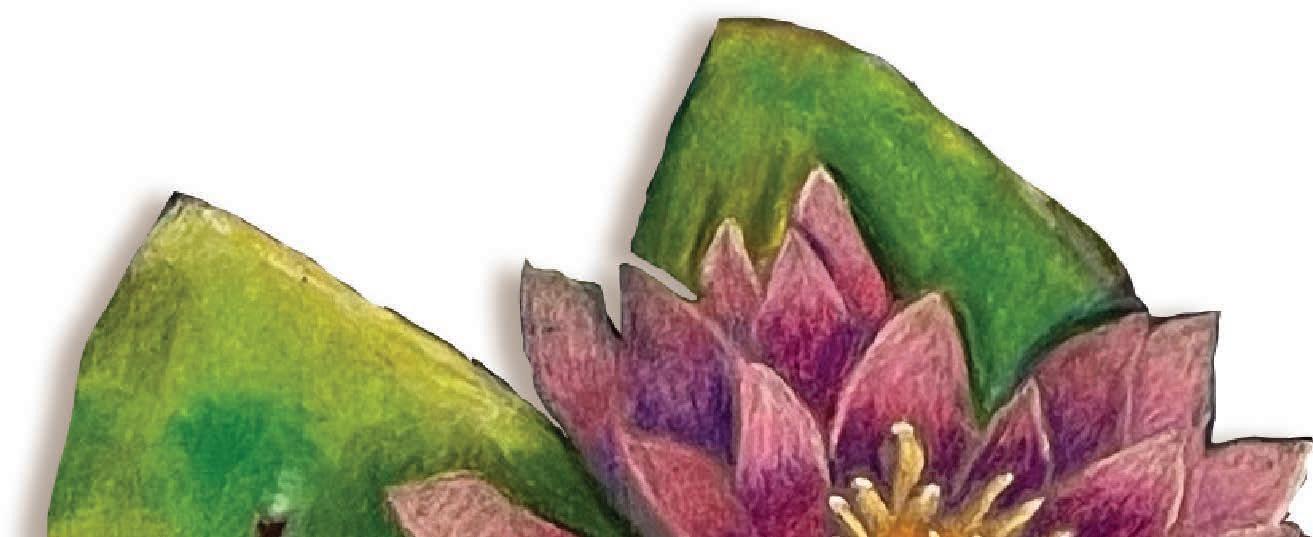
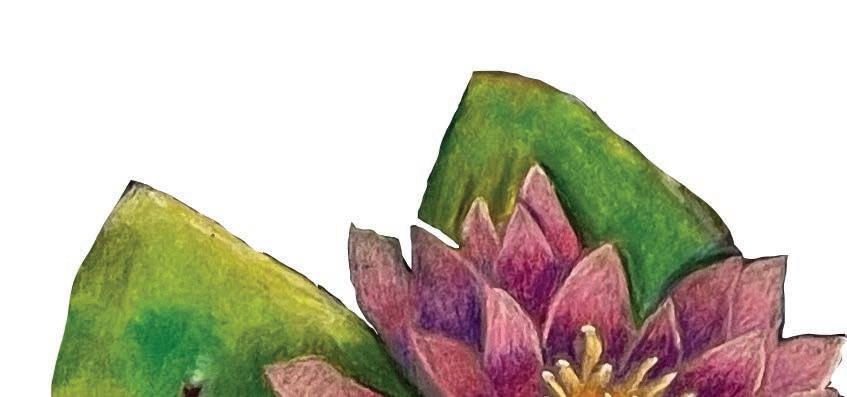

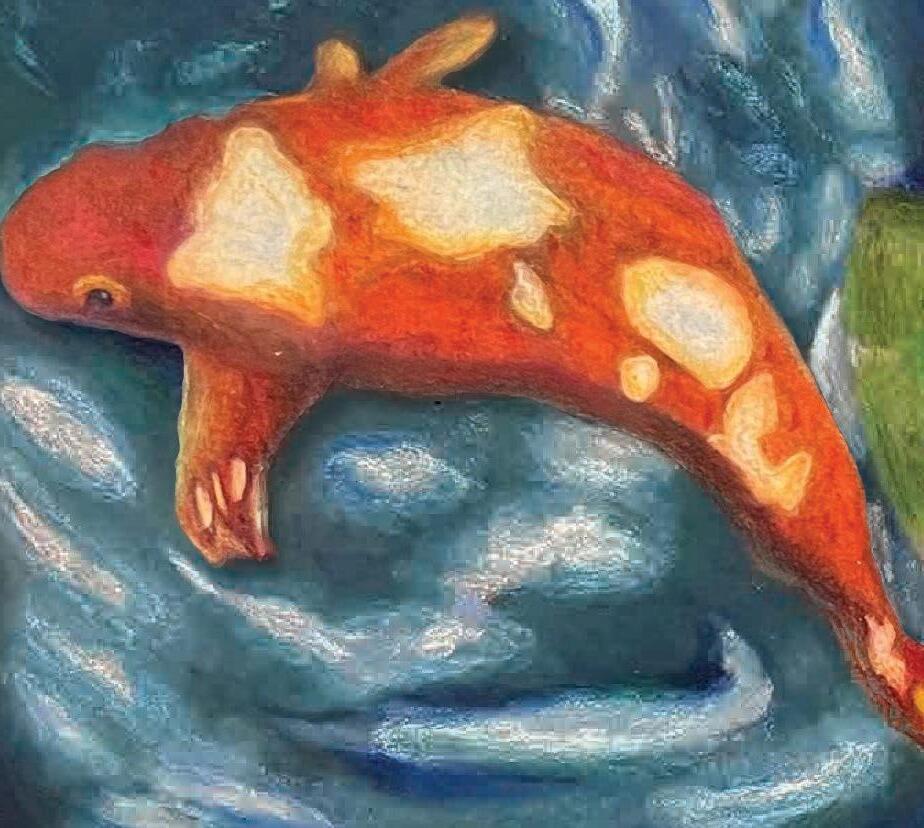
f d us round. It is comforting to feel the old possessions
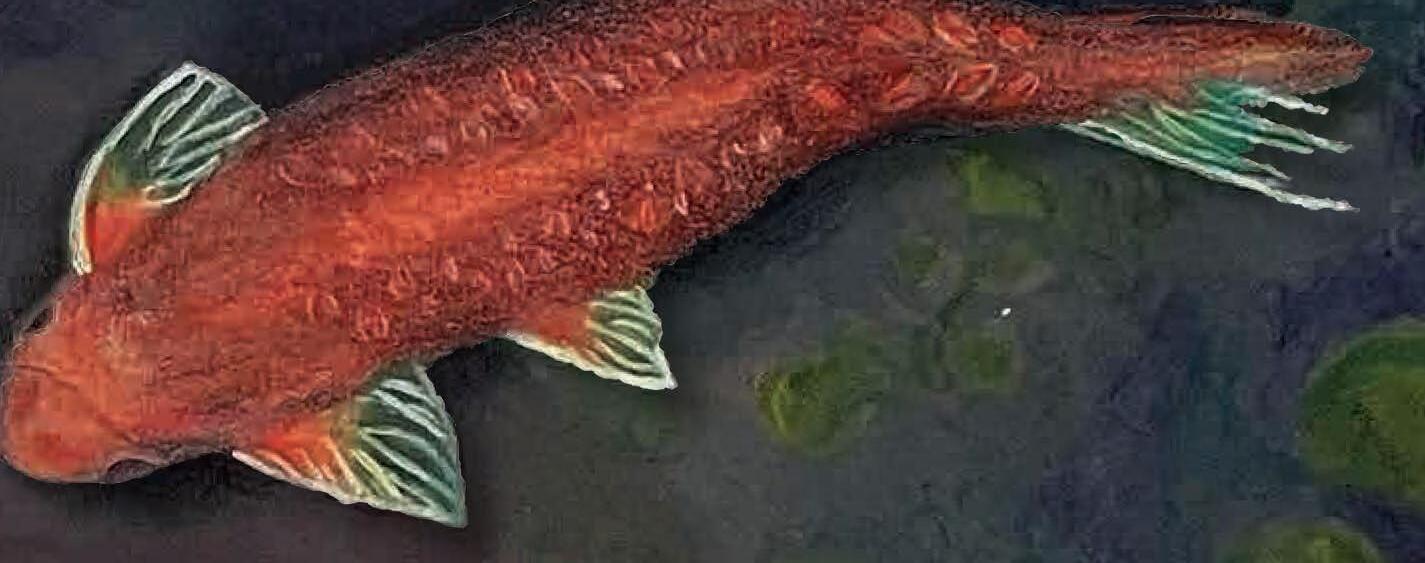


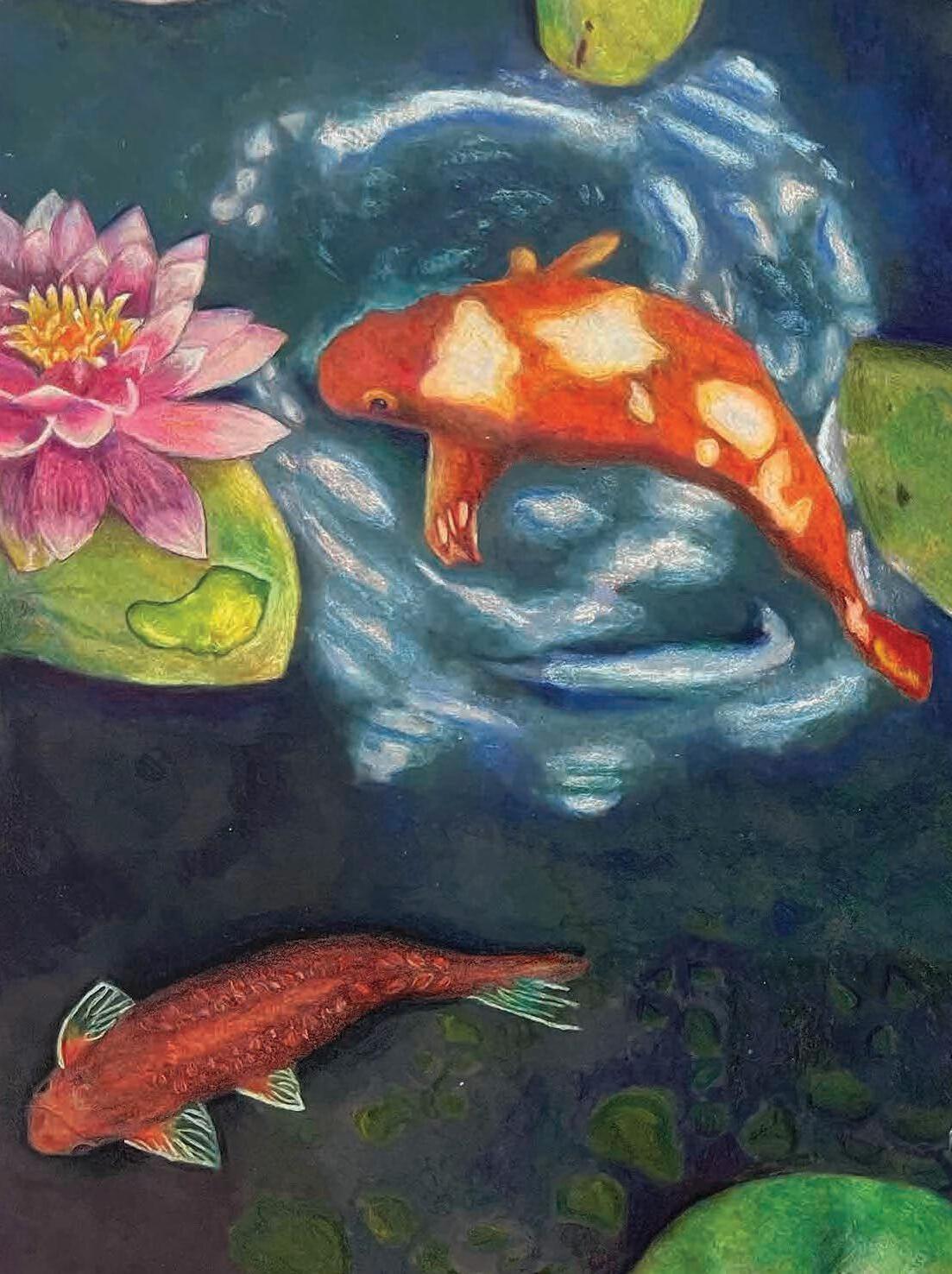


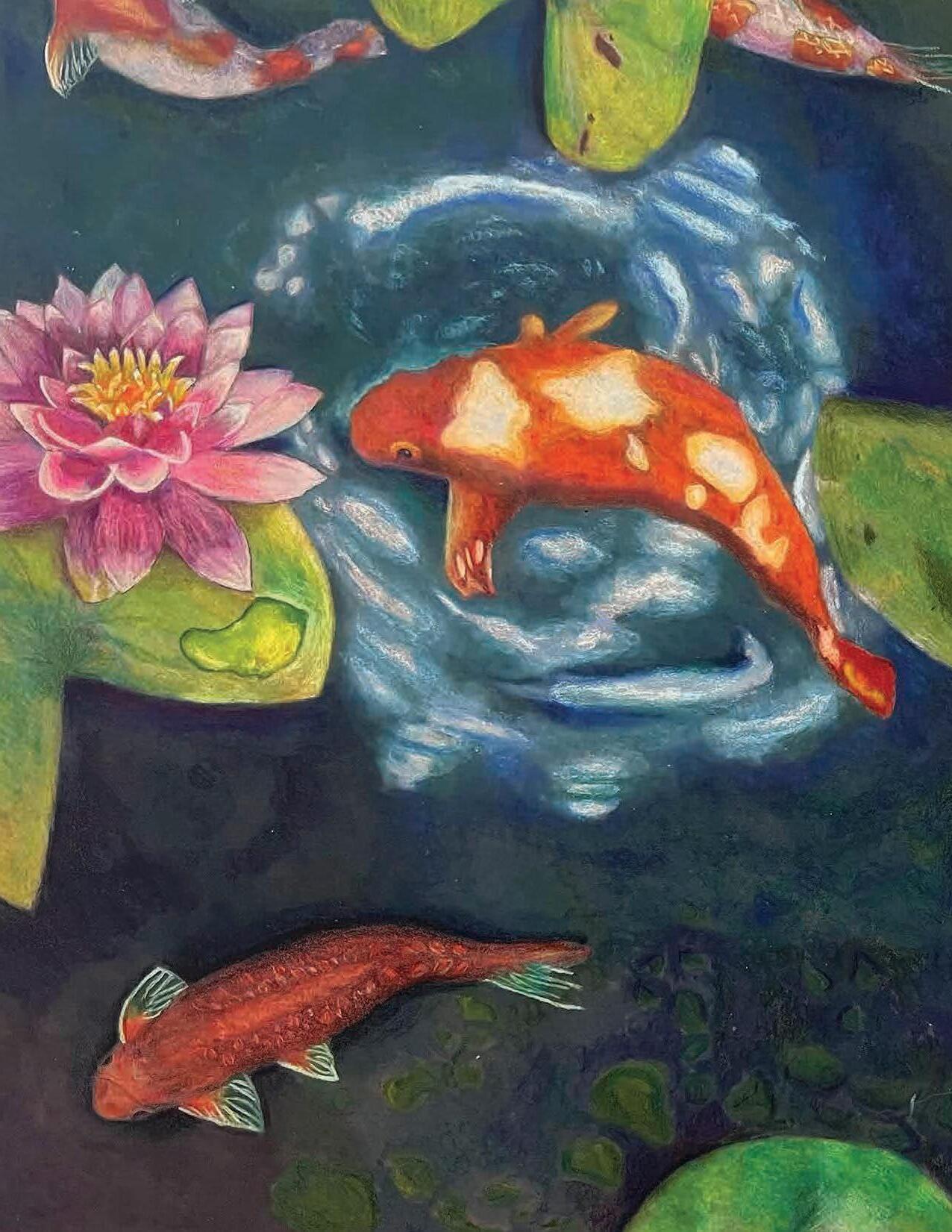

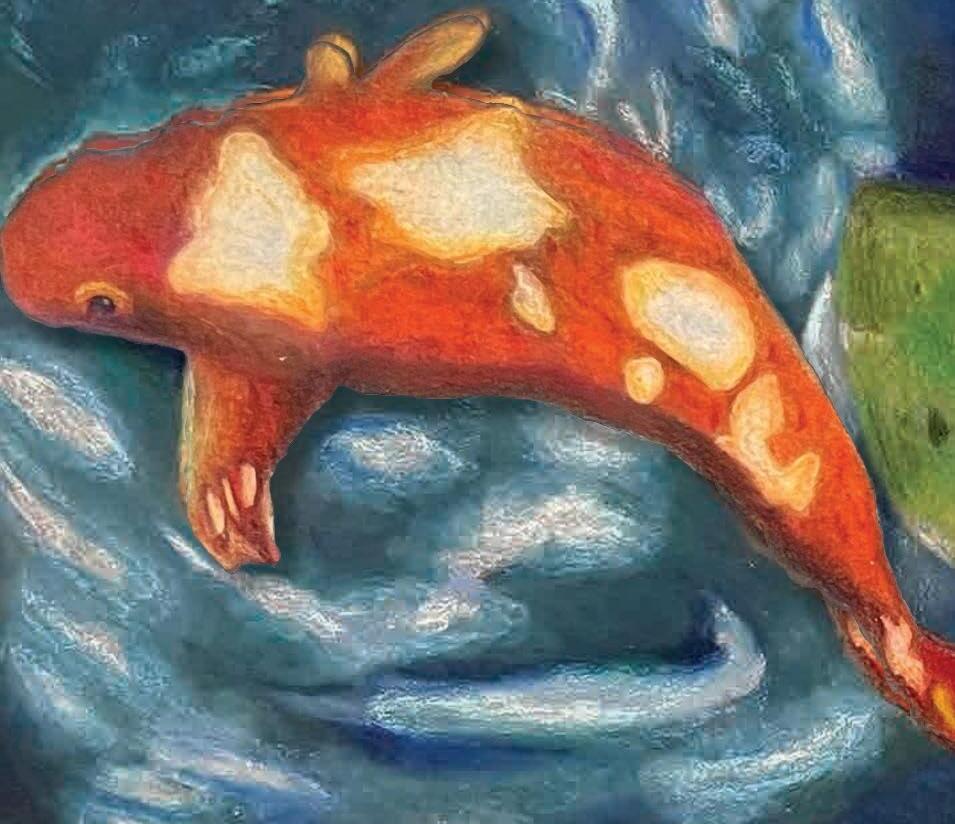






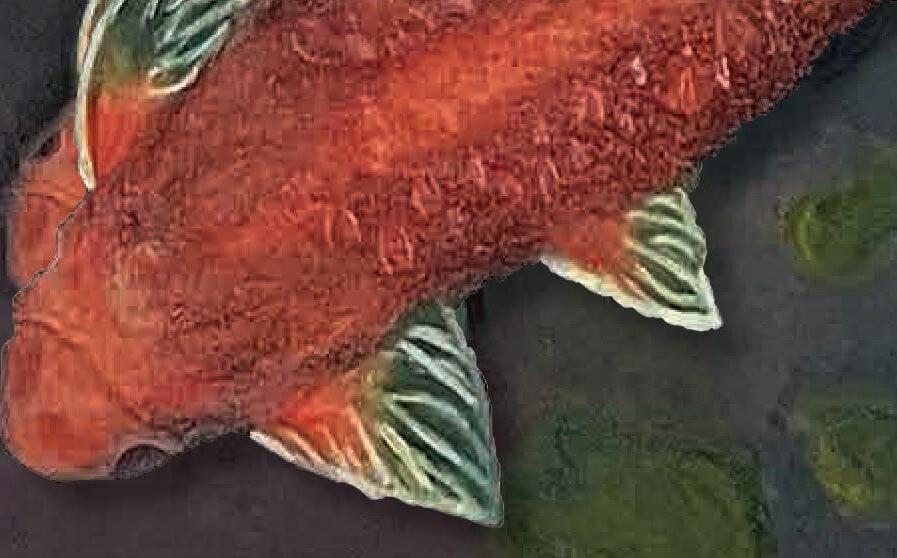
th ov . advent e . e