TABLETS IN EDUCATION: DIGITAL LEARNING TRENDS AND INNOVATIONS In the rapidly evolving landscape of education, technology plays a pivotal role in shaping the way students learn and educators teach. One of the most transformative innovations in recent years has been the integration of tablets into the classroom. This shift towards digital learning has opened up new avenues for interactive and personalized education. In this blog post, we will explore the latest trends and innovations in using tablets for education.
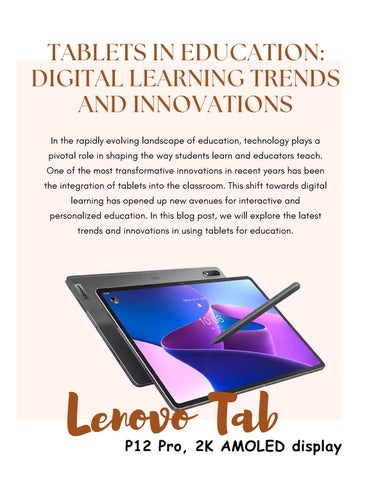
Lenovo Tab
P12 Pro, 2K AMOLED display
THE RISE OF DIGITAL LEARNING
Traditional classrooms are increasingly giving way to digital learning environments, and tablets have emerged as powerful tools in this transition. The portability, interactive capabilities, and a vast array of educational apps make tablets an ideal companion for students of all ages.
PERSONALIZED LEARNING EXPERIENCES One of the key advantages of tablets in education is the ability to tailor learning experiences to individual students. Educational apps can adapt to a student's pace of learning, providing additional challenges or support as needed. This personalized approach not only caters to diverse learning styles but also helps students grasp concepts more effectively.
INTERACTIVE TEXTBOOKS AND MULTIMEDIA LEARNING Tablets have replaced heavy backpacks laden with textbooks with a lightweight, interactive alternative. Digital textbooks often include multimedia elements such as videos, animations, and interactive quizzes, making the learning experience more engaging and dynamic. Students can delve into complex topics through interactive simulations and visual aids, enhancing their understanding of subjects.
GAMIFICATION FOR EDUCATION Gamification has become a popular trend in education, and tablets provide an ideal platform for incorporating game-like elements into the learning process. Educational games can make learning enjoyable, motivate students to solve problems, and reinforce concepts in a playful manner.
AUGMENTED REALITY (AR) AND VIRTUAL REALITY (VR) EXPERIENCES The integration of augmented reality and virtual reality into educational apps opens up new dimensions of learning. Students can take virtual field trips, explore historical sites, or dissect virtual organisms. These immersive experiences bring abstract concepts to life, making learning more memorable and impactful.
ASSESSMENT AND ANALYTICS The integration of augmented reality and virtual reality into educational apps opens up new dimensions of learning. Students can take virtual field trips, explore historical sites, or dissect virtual organisms. These immersive experiences bring abstract concepts to life, making learning more memorable and impactful.
OVERCOMING CHALLENGES: DIGITAL LITERACY AND EQUITY While the benefits of tablets in education are vast, challenges exist. Digital literacy becomes crucial, not just for students but also for educators. Additionally, ensuring equitable access to technology is essential to prevent the emergence of a digital divide. Schools and policymakers must work together to bridge these gaps and provide equal opportunities for all students.
THE FUTURE OF TABLETS IN EDUCATION As technology continues to advance, tablets will play an increasingly integral role in the education ecosystem. Artificial intelligence, adaptive learning algorithms, and further innovations in AR and VR are poised to further revolutionize how students learn and educators teach. In conclusion, tablets in education represent a transformative force, bringing about a shift from traditional teaching methods to interactive, personalized, and engaging learning experiences. As we continue to embrace digital learning, the role of tablets in education will only evolve, shaping the future of education for generations to come.
www.lenovo.com/au/en/tablets/