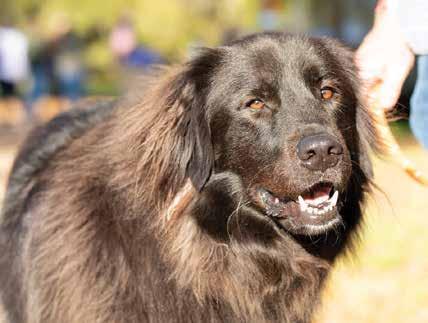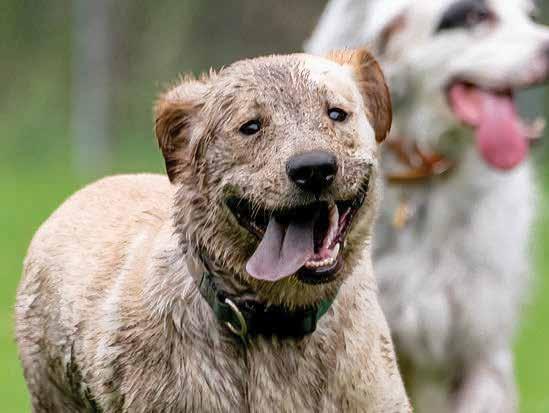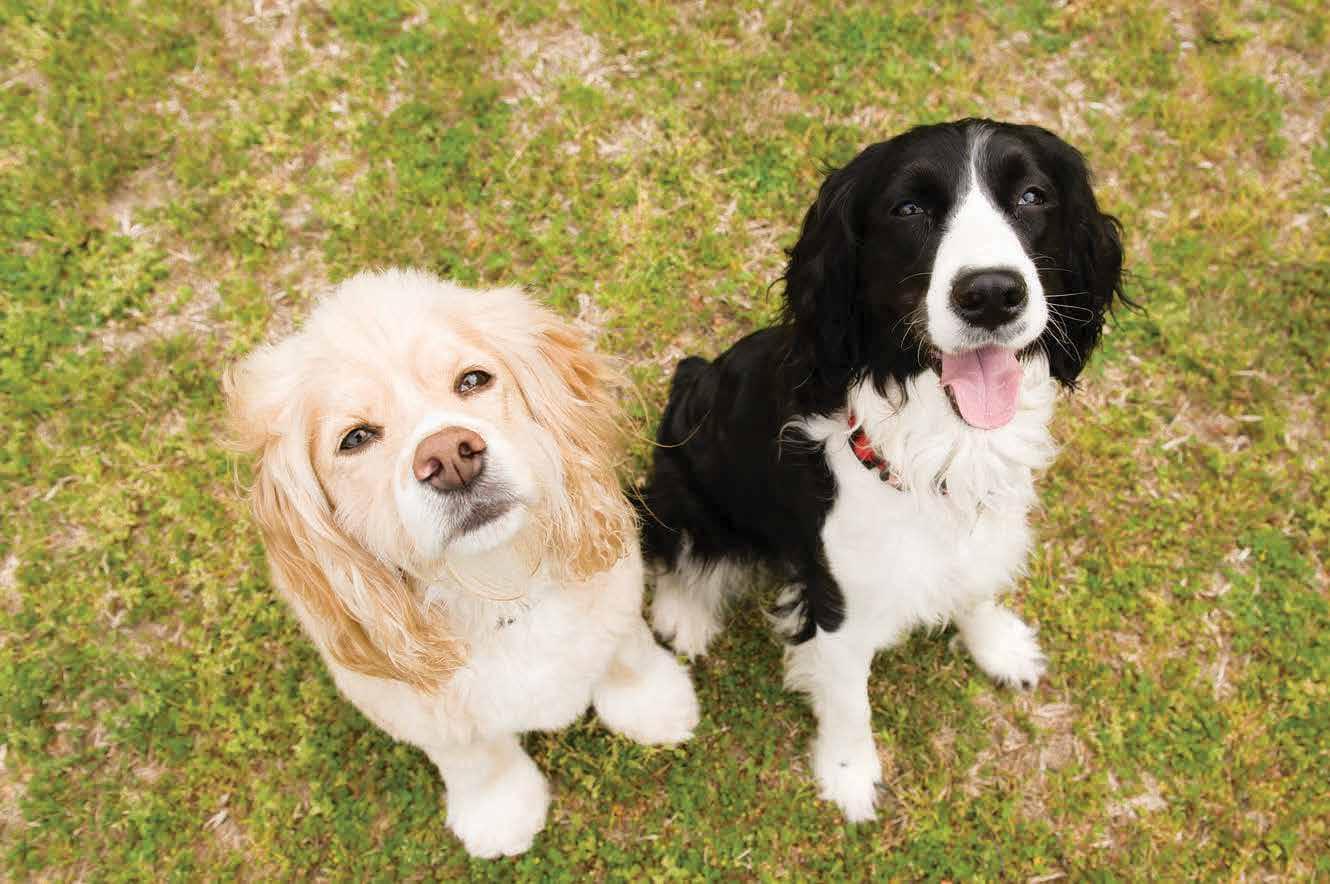



DIXIE Rescue dog






















































Publisher: Charleston Animal Society
Editor-in-Chief: Dan Krosse
Managing Editor: Joe Elmore
Sponsorships: Danielle Zuck
Graphic Design: mclaughlin design
Copy Editors: Kylie Wiest, Joe Elmore, Cristina Guillermo
Writers: Dan Krosse, Joe Elmore, Dr. Lucy Fuller, Natassia Donohue, Britain Jones, Wendy Gilder, Kennedi Harris, Nikki Gaskins Campbell
Photographers: Jeanne Taylor, Dan Krosse, Dr. Sophy A. Jesty, Will Howell, Kay Hyman, Christine Brugge, Maddie Petrus, Carli Carr
For inquiries regarding sponsorships, distribution or suggestions in Carolina Tails contact:
2455 Remount Road North Charleston, SC 29406 (843) 747-4849 CharlestonAnimalSociety.org
Executive Committee & Officers
Martin Deputy, Chair
Aussie Geer, Vice Chair
Jane Graham, Vice Chair
Gerri Greenwood, Vice Chair
Brantley Meier, Secretary
Don Smith, Treasurer
Louise Palmer
Edward “Ted” Corvey, III, Esq.
Luigi Bravo
Board Emeriti
Hank Greer
Laurel Greer
2026 Members of the Board
William Asche
Linda Bakker
Cara Bibbiani
Luigi Bravo
Caroline Clark
Edward “Ted” Corvey, III
Martin Deputy
Aussie Geer
Jane Graham
Gerri Greenwood
President
Media & Marketing
For
Krosse,
Tommy Hall
Shelly Leeke
MaKeva McDaniel Brantley Meier Matt Miller
Arlene Morris Dick Murphy Carolyn Murray
Palmer
from Texas to the nation’s capital.
(843) 329-1541.
had to make an unexpected surgery stop at Charleston Veterinary Referral Center just as the walk was cathing its stride. (Photo: Dr. Sophy A. Jesty, DVM, DACVIM).

Dear Friends,
As we turn the page to a new year, I am filled with immense pride reflecting on the remarkable achievements of 2025 at Charleston Animal Society. It was a year of profound impact, where we continued our unwavering commitment to ending unnecessary euthanasia, overpopulation, and animal cruelty.
• We Celebrated the conclusion of our Sesquicentennial Year
• We Celebrated the record achievement of building the first No Kill State across the southern U.S. and America’s Heartland
• Petco Love reinvested another three years in our No Kill South Carolina statewide initiative
• We held the 8th Pick Me! SC in a row – the country’s largest annual statewide dog and cat adoption event
• We accomplished 13 years of exemplary audits
• We held a record-breaking Gala raising critical funds for saving animals
• We worked to secure a major federal appropriation to address critical workforce development gaps across South Carolina
• As the largest sheltering system in South Carolina, we assumed the operation of Berkeley County’s sheltering system (4th largest in SC) to build out a No Kill Tri-County region
• We continue to have the most Certified Animal Welfare Administrators (vanguard credential in the animal welfare field)
• See a detailed breakdown of 2025 on pages 14 and 15
In this Spring issue of Carolina Tails, we’re thrilled to share inspiring stories that highlight our work and the incredible animals who inspire us. Discover the heartwarming journey of Aloka the Peace Dog, who made an emergency stop in Charleston during the sensational 2,300-mile peace walk, led by the venerable monks who Aloka first met on a walk in India as a stray (pg. 8). I hope to see you at Paws in the Park on March 21 at Brittlebank Park (pg. 10). Dive into our 2025 Lifesaving in Review on (pg. 14), and dive deeper into the numbers behind our impact. Learn fun ways to give back to animals (pg. 16) and learn what our legislative focus will be for animals in Columbia (pg. 17). Don’t miss our Spring Pawfold superstars (pg. 18) and don’t miss meeting South Carolina’s first animal cruelty detective, who works right here in the Lowcountry (pg. 32)
If the number of achievements and the overwhelming number of animals that we’ve supported this year is amazing to you, you’re not the only one. I have been with the Animal Society
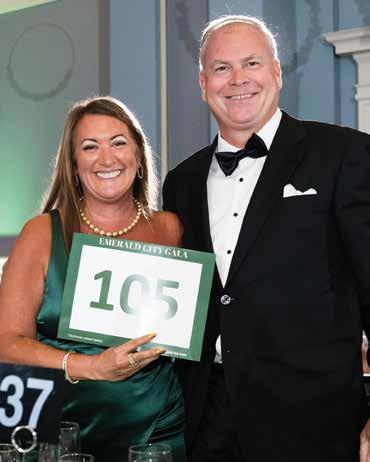
for nine years and every year they never cease to amaze me in the amount of dedication and the pure volume of animals that we touch in our community and beyond. It has been one of my proudest accomplishments to be able to support the Animal Society on the Board Directors and most recently as Chairman in that mission. As I roll off the board, I am secure in the fact the Board, new Chair and staff will continue these great accomplishments and mission as they have for another 152 years.
Your continued partnership fuels these successes, and for that, we are deeply grateful.
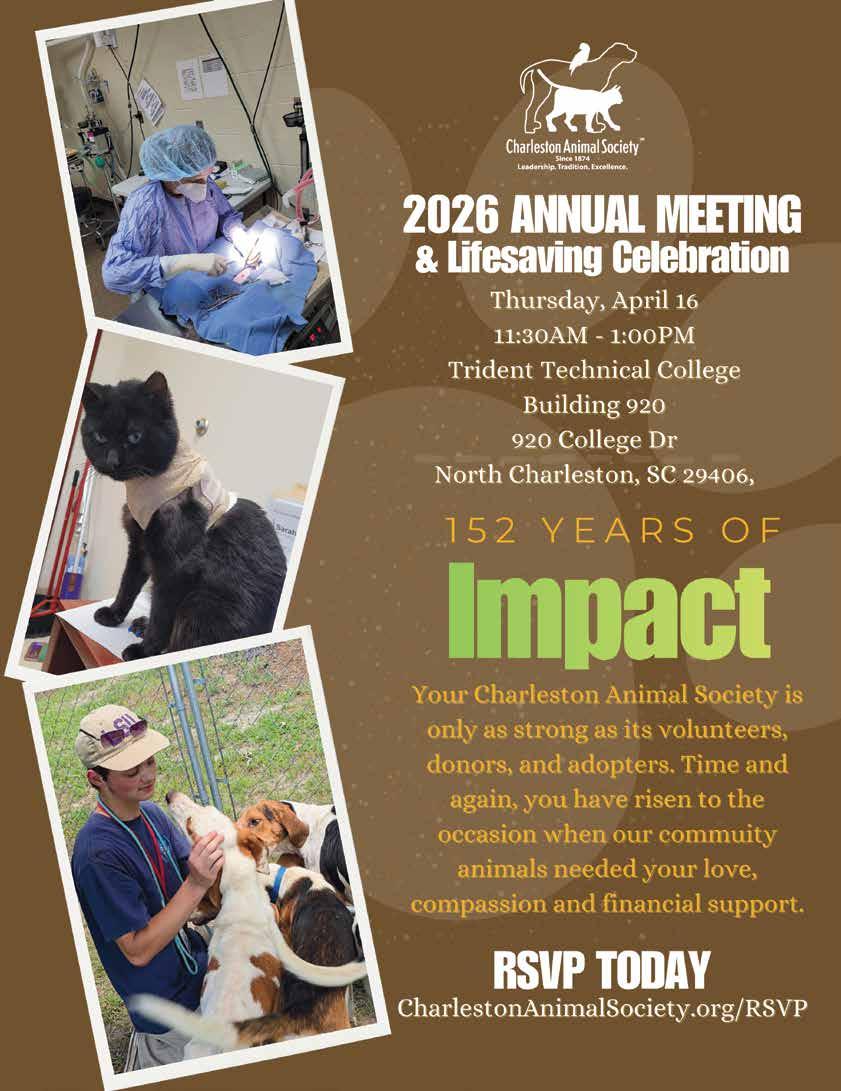
Please join us for a major announcement at our Annual Meeting, April 16 at Trident Technical College.
With gratitude,

W. Martin Deputy Board Chairman Charleston Animal Society
In January, the U.S. Environmental Protection Agency (EPA) announced plans to end testing on animals by 2035. EPA officials say they will prioritize developing and implementing high-quality alternatives to reduce testing on vertebrate mammals, like rabbits, mice, rats, and dogs, to align with regulatory requirements, and the high bar of gold standard science.
While a minimal amount of animal testing is still required to support statutorily mandated regulatory responsibilities to test certain chemicals, the EPA says it will work in targeted ways to further reduce it however possible and collaborate with other government agencies, researchers, and advocates to develop and validate the use of alternative methods for toxicity testing. Last fall, an $87 million “organoid development center” was opened by the National Institutes of Health. The center allows biomedical research that doesn’t involve animals. Other nonanimal research alternatives include computer modeling using AI, and working with human volunteers.
We all know that our dogs never live long enough. With an average age span of 10 to 13 years, researchers are looking into ways to extend canine lives. The company, “Loyal,” is a clinical-stage veterinary medicine company that is seeking FDA approval for the drug LOY-002. The company is also accepting clinical trial participant applications on its website. The drug would be targeted at dogs older than seven and is attempting to treat metabolism (how the body converts food into energy), rather than focusing on one particular ailment. Rapamycin is another anti-aging drug that may receive FDA approval this year. Rapamycin is used in humans to prevent rejection of human organ transplants. Researchers are looking to see if this drug can improve a dog’s heart health, mobility, cognitive function, and lifespan, by making better use of a body’s cell energy. If approved, it isn’t clear if these drugs will have any impact on cancer, the most common cause of death in dogs.
Come to these events that support Charleston Animal Society!
March 14: St. Patrick’s Day Block Party Park Circle, North Charleston 12pm – 6pm
March 21: Paws in the Park Brittlebank Park, Charleston 12pm – 4pm
March 22: Stingrays Paws & Pucks Night North Charleston Coliseum 3pm – 6pm
April 11: Rock & Adopt
Sk8 Charleston, 1549 Oceanic St., Charleston 12pm – 5pm
April 16: 2026 Annual Meeting Trident Technical College, North Charleston 11:30am – 1pm
April 18: Brewery Running Series (5k Fun Run) Frothy Beard, 1401 Sam Rittenberg Blvd., Charleston 11am – 3pm
April 18: Scooters Coffee Adoption Event 9585 Palmetto Commerce Pkwy 11am - 2pm
“If you see, leave ‘em be!” That is the best advice animal organizations can give to Good Samaritans who respond to the meows of what appears to be abandoned kittens. Many people don’t realize that nearly all new kitten litters are not far from their mothers. Mom is just away temporarily to find food or she is hiding from you. Please don’t “catnap” the baby kittens! Spring is when thousands of kittens are born in communities across America flooding animal shelters. Each year, more than 6,000 felines are brought into Charleston Animal Society, half of which are kittens and neonates. Charleston Animal Society rescues over 90% of the animals, including most of the cats and kittens, each year in Charleston and Berkeley Counties. Kitten season occurs approximately three times during the year, beginning in early spring, peaking in early summer, then rebounding in fall.
Dr. Lucy Fuller, Chief Veterinary Officer for Charleston Animal Society, warns that the younger the kitten is, the less likely it is to survive without its mother. That’s why we should all think twice before removing a kitten from the outdoors. It is extremely difficult to replace a mother’s milk and natural nutrients. Even with every effort taken, kittens rescued too young can have a less than 50% chance of survival. Good intentions from people can be disastrous for these young kittens. Ideally, kittens should not be taken from their mother until they are five to six weeks old. A kitten this age is about the size of a typical square tissue box, anything smaller should be left with mom. Also, five-to-six-week-old kittens are standing upright, full
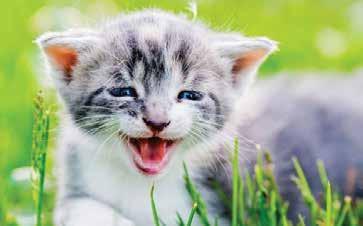
of energy, and running and playing.
So, while you are right to be concerned if you see kittens in the great outdoors, please remember to “leave them be,” until you are sure the mother is not still involved. Mothers don’t typically abandon their kittens.
1. Leave kittens with mom!
2. Become a foster at CharlestonAnimalSociety.org/foster
3. Get your cat spayed or neutered!
4. Charleston Animal Society provides traps for freeroaming cats to have them fixed and then returned back to their homes. Visit our Pet Supply Store, conveniently located in the Charleston Campus lobby! We carry everything you need for your new furry friend’s smooth transition into their new home — plus plenty of fun items for pet lovers, too.
• Adoption Starter Kits • Crates & Carriers • Collars & Leashes
Toys
Treats • T-Shirts & More!



By BRITAIN JONES
Through rain, sleet, and snow, across 10 states, over four months — a group of Buddhist monks captivated millions of us during their 2,300mile Walk for Peace from Fort Worth, TX to Washington, DC between October and February. Whether we showed up in person along the route or followed on social media, one presence quietly captured our hearts along the way.
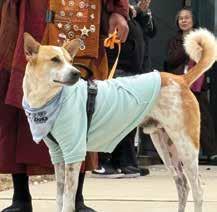
Aloka, known affectionately as “the Peace Dog,” walked beside the monks as they traveled from town to town, offering a gentle reminder of connection, presence, and compassion. His calm demeanor and quiet companionship became part of the journey itself, until an injury required the walk to pause, at least for him. It was here in South Carolina when Aloka began showing signs of pain in his right hind leg. The monks sought veterinary care to ensure his comfort and long-term well-being. After an initial evaluation, Aloka was referred by Batesburg Leesville Animal Hospital (near Columbia), to Charleston Veterinary Referral Center (CVRC), a specialty veterinary hospital in Charleston. There, a thorough orthopedic examination and diagnostic imaging revealed a cranial cruciate ligament injury in his right knee (similar to an ACL in humans); an injury that can cause significant pain and instability if left untreated.
Recognizing the significance of Aloka’s role in the Walk for Peace, CVRC chose to cover the full cost of his care, viewing it as an honor rather than an obligation.
The monks were presented with multiple options for managing Aloka’s condition, including both surgical and non-surgical approaches. After thoughtful discussion, they chose to move forward with surgery, not to hasten a return to the road, but to relieve Aloka’s pain and give him the best chance at a comfortable future. “They didn’t want Aloka to remain in pain for the rest of the walk,” said Sophy Jesty, Medical Director at CVRC. “The decision put Aloka first.” It was a choice rooted in patience and care, and a reminder that love truly goes the distance, even when that distance requires slowing down.
The procedure performed
was a tibial plateau leveling osteotomy, or TPLO, a specialized orthopedic surgery designed to stabilize the knee joint. The surgery was performed by Dr. Patti Sura, DVM, DACVS, a board-certified veterinary surgeon at CVRC. Recognizing the significance of Aloka’s role in the Walk for Peace, CVRC chose to cover the full cost of his care, viewing it as an honor rather than an obligation.
This type of generosity is part of CVRC’s long-standing community commitment. As an example, they have been a lifesaving supporter of Charleston Animal Society since they opened 15 years ago. “Since the start, CVRC has been there for our community animals,” said Charleston Animal Society Chief Veterinary Officer Lucy Fuller, DVM.
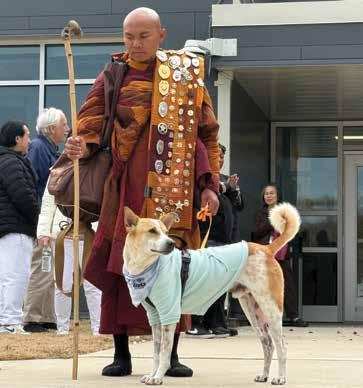
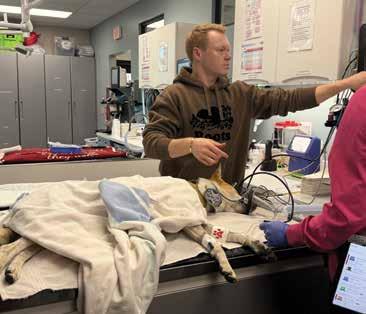
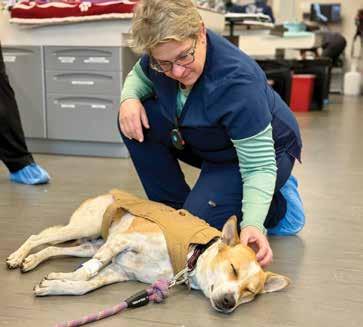
ABOVE: Aloka strikes a proud pose with a venerable monk Bhikku Pannakara after surgery at CVRC. As a stray, Aloka started to follow the monks as they traveled through India. TOP RIGHT: CVRC Anesthesiologist, Dr. Emmett Swanton, prepares Aloka for her cruciate ligament surgery. RIGHT: Dr. Patti Sura, the BoardCertified Surgeon who performed Aloka’s TPLO procedure, comforts Aloka during recovery.
Following surgery, Aloka recovered under the attentive care of CVRC’s medical and rehabilitation teams. Gentle therapies such as laser treatment, icing, and range-of-motion exercises were introduced to support healing during the critical post-operative period.
On January 22nd, Aloka was released back into the care of the monks, who continued his post-operative care as they completed the Walk for Peace in our nation’s capital. While Aloka had to stop walking alongside the monks during this phase of recovery, he was still seen at some of the stops along the way. His return to activity will be slow, thoughtful, and guided by healing rather than distance.
In the weeks ahead, Aloka’s recovery will continue to be closely monitored. His next set of follow-up X-rays was planned for just over eight weeks after surgery. If the bone has healed well, he will be allowed to gradually return to activity under veterinary guidance. The focus remains on long-term comfort, stability, and quality of life.
Social media posts following Aloka’s recovery went viral, racking up 60,000 to more than 100,000 “likes” per post with millions of video views and 1.5-million followers across Facebook and Instagram. In several posts the monks praised the care Aloka received at CVRC including one that reads, “Aloka is being so well taken care of at the
rehab center! They are truly treating him like the star he is.”
For the team at CVRC, caring for Aloka was more than a medical case. “It has been an immense honor to care for Aloka and to support the community surrounding the Walk for Peace,” the CVRC team shared.
“We are grateful to have been part of his journey and look forward to cheering him on as he continues to heal.”
Aloka the Peace Dog is a four-year-old “India Pariah.”
In 2022, as the monks were on a journey through India, this canine companion started following them and wouldn’t leave their side. Aloka was later brought to the U.S, to join the monks who live in Fort Worth, Texas. The message of the Peace Walk is that by embracing compassion and letting kindness guide us, we can all make a difference.
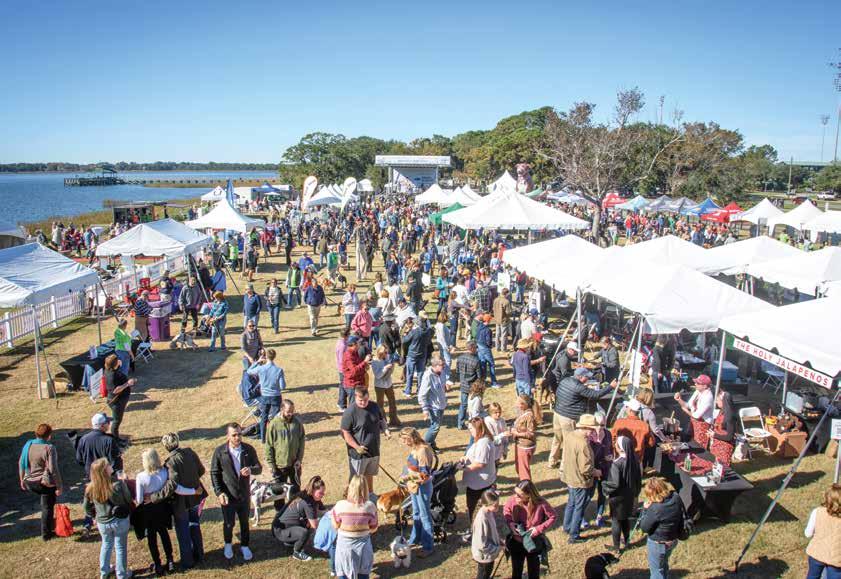
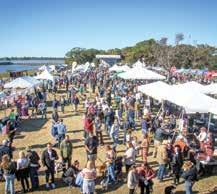
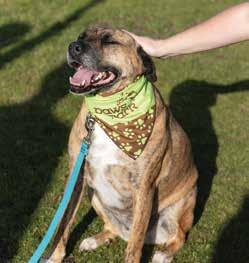
South Carolina’s largest pet-friendly festival is back, with live music, brews, a chili cook-off and all the oysters you can eat! Charleston Animal Society’s Paws in the Park, presented by Fetch Pet Insurance, returns to Brittlebank Park on Saturday, March 21, from 12pm – 4pm, transforming the scenic waterfront into a four-hour celebration of animals, community, and lifesaving impact.
Thousands of animal lovers will gather at 185 Lockwood Drive for a high-energy afternoon packed with fun. The musical lineup includes headliner FlashMob, who promise to get you dancing with 80s/90s throwbacks, Motown, Funk, Disco, EDM, House, and Country. Before FlashMob, enjoy country sensation Lauren Hall and Gino Castillo’s Cuban Cowboys salsa band. It’s music for everyone!
At the heart of Paws in the Park is what Charleston Animal Society does best: bringing people and pets together. The event will feature a dedicated adoption
area, giving attendees the chance to meet dogs looking for loving homes. Throughout the day, guests can also explore interactive mission moments highlighting Charleston Animal Society’s lifesaving programs, including foster care, spay and neuter services, humane education, cat sanctuary, and the organization’s nationally recognized No Kill South Carolina initiative.
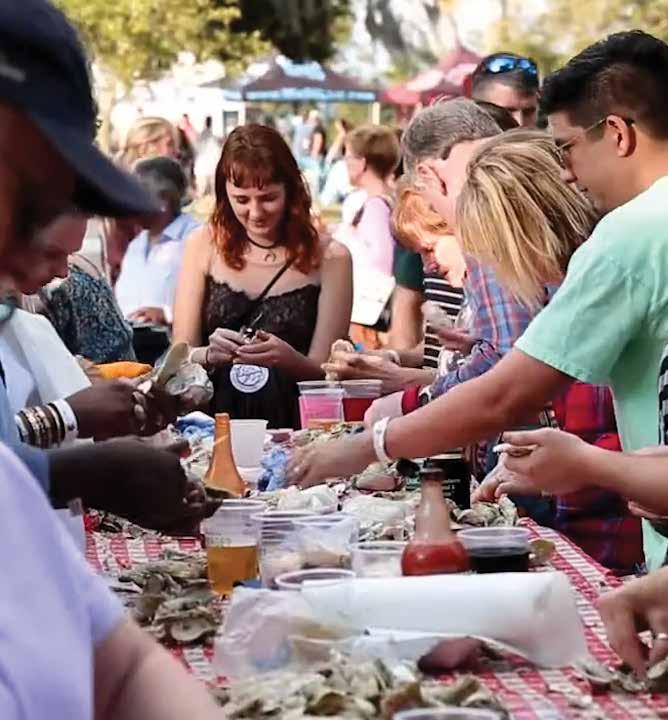
Food and drink are a major part of the fun, with something for every taste. The Barks & Brews experience will feature beer from several participating breweries, along with wine and prosecco provided by Delicato. Beer will be supplied by Southern Crown Partners, while soft drinks and water will also be available. The popular Nutrl Zone, including Tito’s Vodka, will return, along with an oyster roast providing free oysters as long as the 125 bushels last.
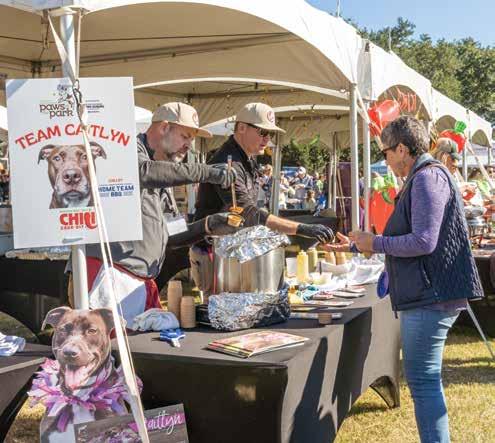
One of the most anticipated highlights is the Chili Cookoff, which aims to bring together 25 local restaurants and teams,
each serving up their best recipes for bragging rights and a good cause. Teams will also participate in fundraising efforts leading up to the event, helping raise critical support for animals in need. Not into chili? No worries. Two food trucks will also be on site, with a portion of proceeds benefiting Charleston Animal Society.
The festival atmosphere continues with a VIP area catered by Dish & Design, sponsor activations, and a full slate of kids’ activities, including face painting, a stilt walker, and bubble therapy—making Paws in the Park a true family affair. Live 5 News Meteorologist Lexi Horvath will emcee the event, while DJ Boogie spins tunes for the crowd from on top of the Bud Light Build-a-Bar.
More than a festival, Paws in the Park is a celebration of compassion, community, and the lifesaving work that happens every day at Charleston Animal Society. So, on March 21st, come sit, stay and play all day!

General Admission: $40 ($50 day-of)
General Admission+: $55 ($65 day-of)
GA+ includes a commemorative glass and a 5-ounce beer sample from each participating brewery.
A $15 Barks & Brews upgrade will also be available onsite. CharlestonAnimalSociety.org/PiP
PARKING
Discounted Lots Nearby
ADA Parking
Shuttle Service by Coastal Limo
EVENT TIME & LOCATION
March 21, 12pm – 4pm
Brittlebank Park
185 Lockwood Boulevard
Charleston, SC 29401



PET ADOPTIONS
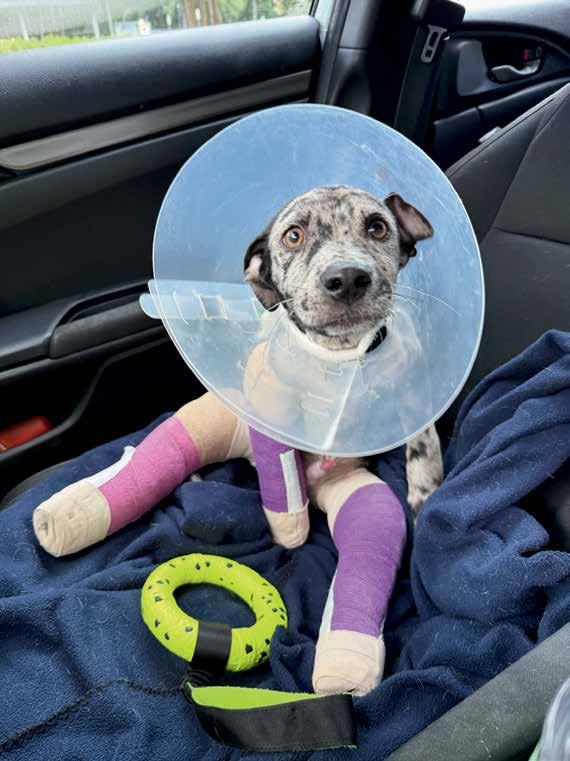
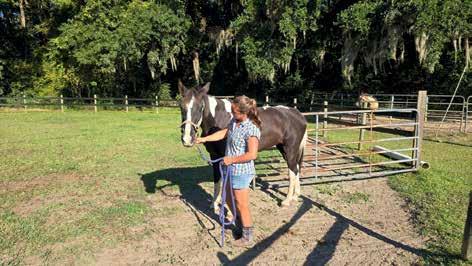
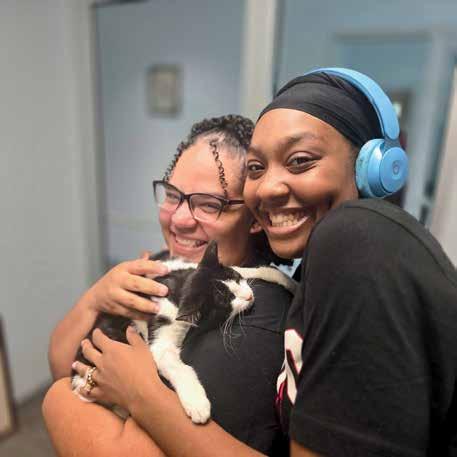
Found loving homes for 6,161 homeless animals, from hamsters to horses, mostly dogs and cats.
LOST & FOUND
Provided 4,662 hours of research and casework to reunite 777 animals with their loved ones.
FOSTER HOMES
Cared for 3,784 of the most vulnerable animals through volunteer foster homes so they can lead healthy and thriving lives with families.
EMERGENCY RESCUE
Rescued 447 animals from harm’s way through 38 emergency rescue operations.
SPAYING / NEUTERING
Spayed or neutered 14,649 animals to prevent the births of countless unwanted litters in the Sam Greer Spay/Neuter Clinic.
SHELTER MEDICINE
Alleviated the suffering of 12,475 shelter animals in need of veterinary care through the animal hospital.
DISEASE PREVENTION
Administered 39,112 lifesaving vaccines to prevent the outbreak of deadly diseases such as rabies.
COMMUNITY CAT PROGRAM
Sterilized, vaccinated, and microchipped 3,340 community cats, followed by the return to their natural habitat to reduce their population and prevent thousands of homeless kittens and free roaming cats, along with preventing the deaths of countless birds.
ADVOCACY & INVESTIGATIONS
Provided forensics investigation support to law enforcement agencies in 91 cruelty cases.
COMMUNITY CARE
Provided 1,310 dogs and cats with veterinary care, pet food, or other assistance to help keep them safe and healthy with their families.
TEACHING COMPASSION
Taught 34,618 compassion lessons to 13,478 students, helping to reduce violence to people and animals while reinforcing humanitarian values.
FERAL CAT SANCTUARY
Prevented suffering and cruelty for 141 displaced or threatened outdoor cats through permanent sanctuary.
Joe Elmore, CAWA, CFRE
President & CEO
Joy Huber, CPA, SHRM
Vice President & CFO
Aldwin Roman, CAWA
Vice President & COO
Review 10+ years of audited financial statements and IRS Forms 990 at CharlestonAnimalSociety.org/financials-governance/
EXECUTIVE COMMITTEE & OFFICERS
Martin Deputy, Board Chair
Aussie Geer, Vice Chair
Jane Graham, Vice Chair
Gerri Greenwood, Vice Chair
Brantley Meier, Secretary
Don Smith, Treasurer
Louise Palmer
Edward “Ted” Corvey, III, Esq.
Luigi Bravo
BOARD EMERITI
Hank Greer
Laurel Greer
2026 BOARD MEMBERS
William Asche
Linda Bakker
Cara Bibbiani
Luigi Bravo
Caroline Clark
Edward “Ted” Corvey, III
Martin Deputy
Aussie Geer
Jane Graham
Gerri Greenwood
Tommy Hall
Shelly Leeke
MaKeva McDaniel
Brantley Meier
Matt Miller
Arlene Morris
Dick Murphy
Carolyn Murray
Naomie Olindo
Louise Palmer
Don Smith
By NATASSIA DONOHUE; Charleston Animal Society Chief Relationship Officer
Did you know that Charleston Animal Society is not only one of the country’s oldest animal organizations—and the first in South Carolina— but also the largest animal shelter system in the state?
Thanks to compassionate animal lovers like you, we help over 35,000 animals every year, from our local community in Charleston and Berkeley County to our No Kill South Carolina partners as far away as Oconee County. About 50% of our funding comes from the incredible generosity of individual donors, locally owned businesses, and corporate partnerships. We truly cannot save lives without you!
If you’re looking to make a difference this year, there are many ways to support the variety of animals who come to us for help—from hamsters to horses. It is because of your support that we are able to answer every call.
Here are six ways to give and make an impact:
BECOME AN ANIMAL HERO
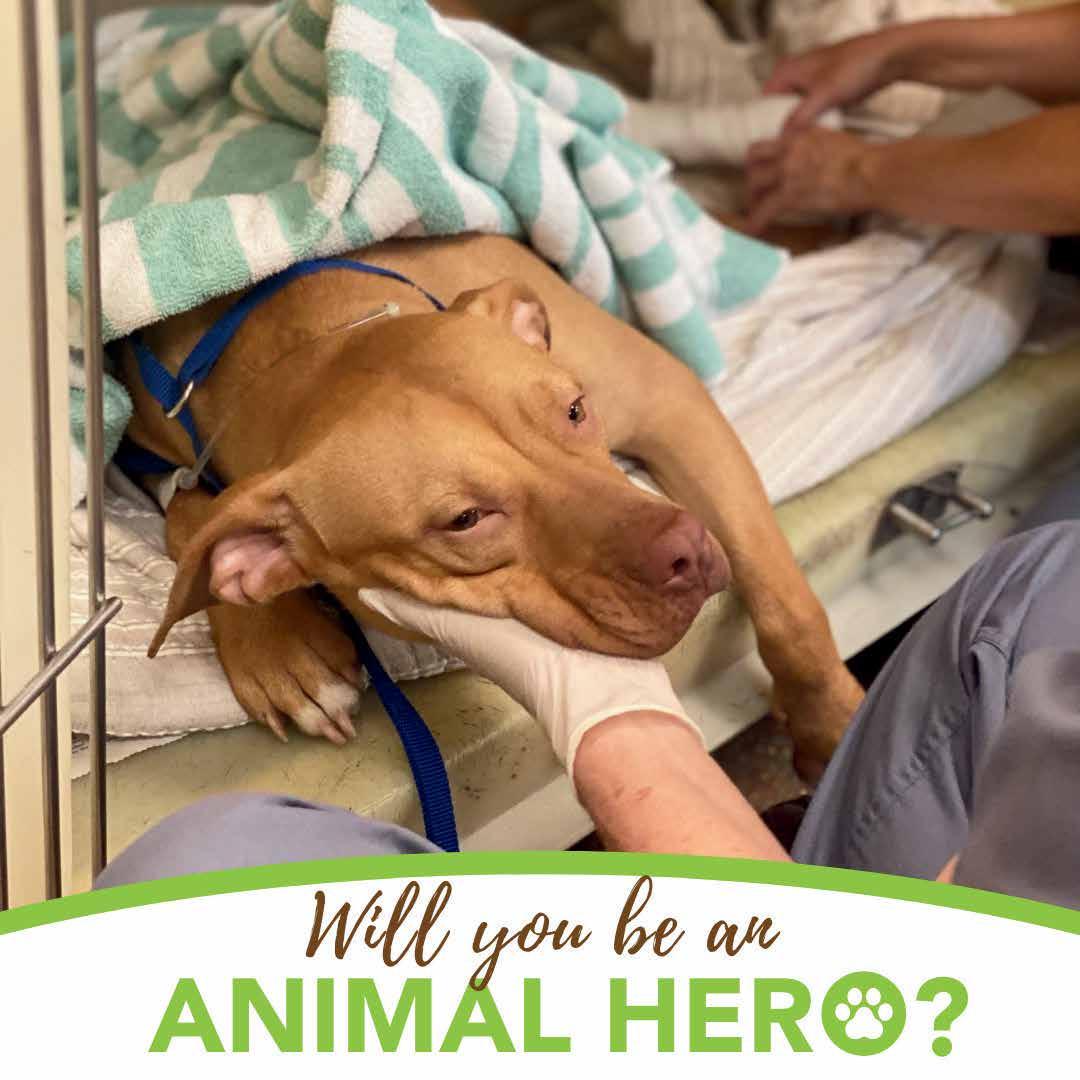
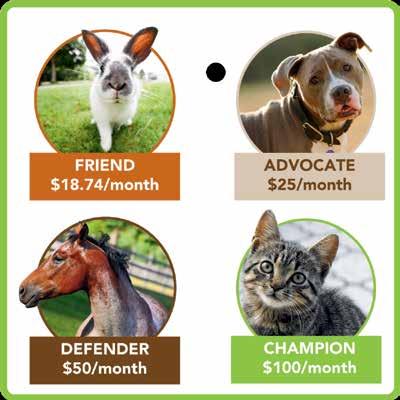
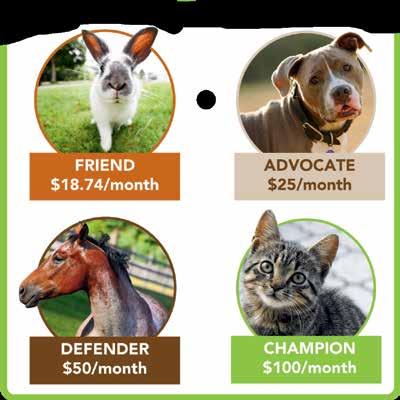
As an Animal Hero monthly donor, your recurring support ensures a sustainable stream of funding for animals all year long. Starting is easy: set up your recurring gift once, and your donation will be automatically processed monthly. You decide the amount and the date, and enjoy knowing you’re saving lives. Plus, every new Hero who gives $18.74 or more receives some exclusive swag!
SHOP ONLINE
Represent your favorite animal shelter with our colorful t-shirts, comfortable sweatshirts, or a classic ball cap. Our online apparel store features a variety of styles for men, women, and children, in a wide array of colors. Feel good every time you wear your gear, knowing that your purchase helped save a life! Find everything you need at CharlestonAnimalSociety.org/Shop.
HONOR SOMEONE IN YOUR LIFE
Looking for a meaningful gift? Make a touching donation in honor of a
special someone, or in memory of a beloved person or pet. Those you are honoring will receive a special card from Charleston Animal Society. For a more lasting tribute, we also offer custom-engraved bricks.
This year’s Paws in the Park Celebration brought to you by Fetch Pet Insurance is going to be a fantastic time for everyone who comes. When you buy a ticket, you’re not only going to enjoy the music, the chili, and your friends, but you will also support the lifesaving work of Charleston Animal Society. We hope to see you at Brittlebank Park on March 21 at noon!
The 2026 Hank and Laurel Greer Lifesaving Raffle is another way to give to the animals in a fun, innovative way! This year you will have a chance to win a brand new Toyota Grand Highlander Hybrid. Be one of the first to buy a chance when the car is unveiled at Paws in the Park on March 21.
Rescue Brew is always a favorite fundraiser for supporters of Charleston Animal Society. This year’s contest will launch with nominations in August. Entering is simple: just upload a photo of your dog or cat, get your friends to vote ($1.00 per vote) and your pet could be on the next can of Rescue Brew sold across the Lowcountry!
No matter how you give, or the size of your gift, every contribution helps an animal in need. Whether it covers the cost of a nourishing meal, provides warm bedding, or supports urgent, expert veterinary care, your donation ensures the animals we love receive the second chance they deserve.
For more information on ways to give, or to learn more about the impact of your gift, please contact Natassia Donohue, Chief Relationship Officer, at 843-329-1558 or email ndonohue@charlestonanimalsociety.org.
By JOE ELMORE; Charleston
Animal Society President & CEO
Charleston Animal Society is South Carolina’s leading animal welfare organization, supporting the care of 35,000 animals annually through sheltering, veterinary care, cruelty prevention, and lifesaving programs. Our legislative priorities focus on practical, data-driven reforms that improve public safety, increase efficiency, and save taxpayer dollars—while saving lives.
LEGISLATIVE PRIORITIES
Reduce Mandatory Stray Hold Times
The Issue
South Carolina law currently requires 5-day and 14-day stray hold periods. These extended holds severely limit shelter capacity, increase animal stress, and contribute to euthanasia due to space constraints.
SC stray hold periods are 25 years old and were created before the digital age. Nearly all reunifications that take place occur within the 72 hours, with most happening within 24 hours.
Proposed Solution
Reduce mandatory stray hold requirements to 3 days, consistent with neighboring states such as North Carolina and Tennessee.
Why It Matters
• Increases animal flow and shelter capacity
• Reduces illness and stress-related deaths
• Decreases euthanasia caused by overcrowding
• Saves taxpayer resources while saving lives
Requested Action
Support legislation reducing mandatory stray hold times statewide.
Amend the South Carolina Rabies Act
The Issue
Current law restricts rabies vaccination to veterinarians only, limiting access for pet owners and preventing many shelters from vaccinating animals promptly.
Proposed Solution
Allow trained and certified vaccinators, in addition to veterinarians, to administer rabies vaccines.
Why It Matters
• Expands access to rabies vaccination statewide
• Strengthens public health protection
• Enables shelters without on-site veterinarians to vaccinate immediately
• Improves animal health and lifesaving outcomes
Requested Action
Support amendments to the Rabies Act as proposed by Pawmetto Lifeline.
Strengthen Shelter
Reporting & Transparency
The Issue
Government-run shelters are not required to report consistent, timely operational data, while nonprofit shelters are required to submit annual reports. Government-run shelters account for the overwhelming majority of animals entering South Carolina shelters; without their data, statewide reporting is incomplete and insufficient for informed decision-making.
Proposed Solution
Mandate reporting for all shelters and rescue groups and expand the frequency, scale, and scope of reporting.
Why It Matters
• Provides timely, actionable statewide data
• Enables faster intervention for at-risk shelters
• Improves access to funding opportunities
• Increases accountability and transparency
Requested Action
Support legislation expanding shelter reporting requirements.
Lifetime Animal Possession Ban for Felony Animal Cruelty
The Issue
Individuals convicted of felony animal cruelty may legally continue to possess animals.
Proposed Solution
Establish a lifetime ban on animal ownership for individuals convicted of felony animal cruelty.
Why It Matters
• Prevents repeat abuse
• Protects animals and communities
• Aligns penalties with the severity of the crime
Requested Action
Support legislation to enact a lifetime possession ban.
Oppose H.4137 – Protect Charitable Bingo Operations
The Issue
House Bill H.4137 would effectively reintroduce video poker, jeopardizing lawful charitable bingo operations.
Why It Matters
• Threatens critical nonprofit fundraising, including Florence Bingo
• Undermines long-standing charitable gaming safeguards
Requested Action
Oppose H.4137.
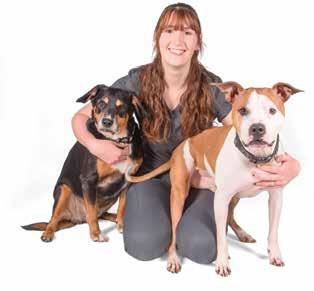
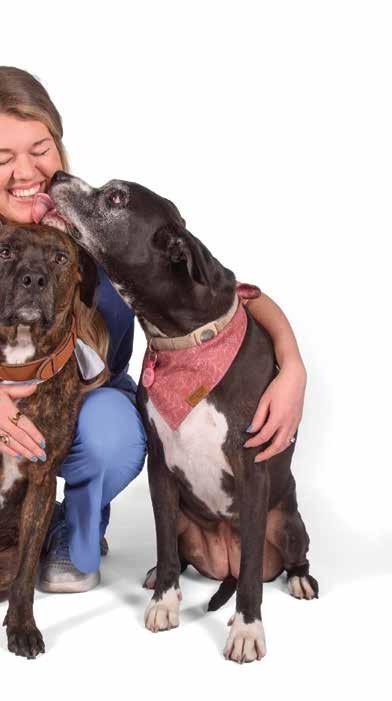
In addition to the quality health care provided at Charleston Harbor Veterinarians clinic, you will also find passionate staff members who treat clients’ pets as if they were their own. Carolina Tails had a chance to catch up with CHV’s customer service representative and three veterinary technicians along with their own fur-kids for a “Pawfold” exclusive!
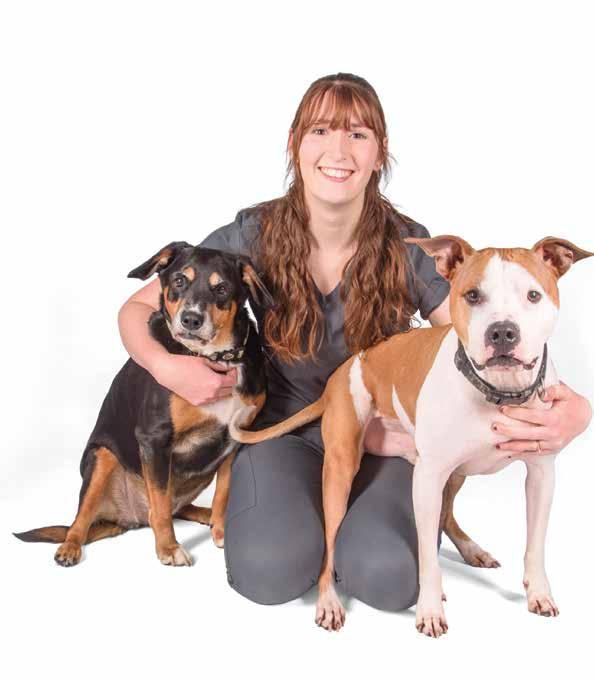
CAYTIE, ZOEY, & REECE
Caytie fell in love with Zoey at a shelter, after Zoey and her litter mates were found in a dumpster. “Zoey is my soul dog,” says Caytie, “and she was raised by my very senior cat, so despite weighing 70 pounds now, her favorite place to nap is on the back of the couch!” Three years ago, Caytie met Reece when she was the technician for his euthanasia appointment. Although the owner claimed he had behavioral issues, Caytie’s heart saw nothing but sweetness in him and the rest is history.
HANNAH L., ZULU, & YAGO
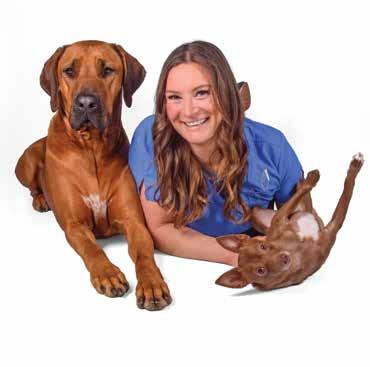
Best friends Zulu, a 110-lb. Rhodesian Ridgeback, and Yago, an 11-lb. Chi-Pom mix, are a marvelous odd couple to watch, especially while they’re on runs with Hannah or at agility classes! While Zulu was thoughtfully chosen as a great fit for Hannah’s active lifestyle, Yago was found as a stray and originally came to Hannah as a foster. His sweet nature and fast friendship with Zulu quickly led to Yago joining the family. “We love going to the beach, hiking, and playing with neighborhood friends,” says Hannah, “and now I’m looking for a dad for them.”
HANNAH F., RAYA, & BODE
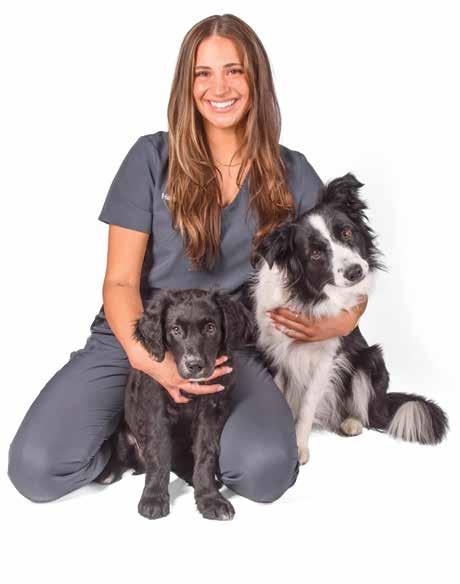
A fan of the Border Collie breed, Hannah knew she had to adopt Raya, who was the last of her litter. “I cannot imagine my life without her… her dark brown eyes truly reach to my soul,” says Hannah. A typical Border Collie, Raya was herding the family cats at just eight weeks old. Four years later, Hannah is looking for a bigger yard while Raya is enjoying teaching her new brother Bode how to be a good boy.
SAVANNAH, SIMBA, & NALA
Simba was adopted at four months old after spending his young life in three different shelters. In just two weeks, he transformed from a fearful puppy into a loyal friend—so much so that Savannah and her husband knew they had to open their hearts and home to another. They returned to the shelter and adopted another puppy who they named Nala. Savannah says, “They have been best friends ever since, and have brought us immeasurable joy along the way.”
By DAN KROSSE
As Charleston Animal Society Shelter Health Manager Becca Richard types in medical record notes for a dog she just helped examine on a cloudy February day, she may not realize the data points she’s entering are helping to improve veterinary care for animals around the world.
The same goes for Adoption Counselor Laci Lassiter. The information she is sharing and gathering from a new adopter may soon be examined by a researcher at one of the world’s most prestigious veterinary institutions, the University of Pennsylvania School of Veterinary Medicine (Penn Vet). “Research at Charleston Animal Society is having an international impact,” said Penn Vet’s Brittany Watson, MS/VMD/PhD/DACVPM. “Penn Vet and Charleston Animal Society have a longstanding research partnership.”
Dr. Watson began her career in shelter medicine at Charleston Animal Society and went on to become a key figure at Penn Vet as the Director of Shelter Medicine and Community Engagement, the Co-Head of the Behavior, Welfare, and Human-Animal Interaction Research Division, an Associate Professor in Shelter Medicine and Community Engagement, and a Clinician Educator (CE). This shelter-academia connection has blossomed into dozens of research projects that touch on a wide range of topics aimed at improving outcomes for shelters and new pet owners.
In November, Watson and fellow Penn Vet researcher Lauren Powell, Ph.D., visited the Charleston Animal Society campus to not only present findings on key studies, but to inspire staff with the knowledge that each of them are making a difference beyond the walls of the Animal Society. Powell could not say enough about the staff’s professionalism, “Their strength in keeping records and helping us reach adopters has been instrumental in what we’ve been able to do.”
Powell spoke about one myth that research involving Charleston Animal Society has helped debunk: “the black dog myth.” There has long been speculation that a dog’s coloring impacts their chance at adoption. Not so, according to Penn Vet’s research. Researchers scoured through more than 10,000 Charleston Animal Society adoption records and photos. They also conducted interviews with adopters. Dr. Powell and her team discovered “black dogs were being adopted as much as other-
color dogs.” As for black cats? Dr. Powell says a future research project may focus on that question.
South Carolina routinely ranks near the top of the list for dogs with heartworm infections. Mosquitoes that bite an infected animal ingest the baby worms (microfilariae) and then pass them on to the next dog or animal they visit. This vicious cycle translates into an estimated 8 out of 10 shelter dogs in the state testing
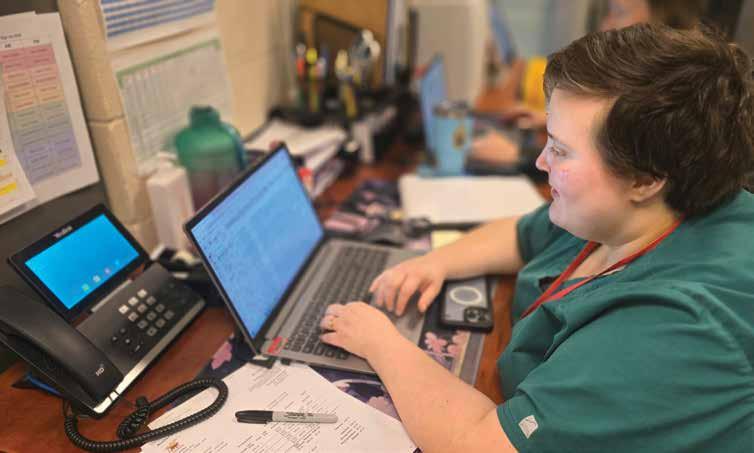
TOP: Shelter Health Manager
Becca Richards enters information about one of Charleston Animal Society’s shelter animals. RIGHT: Charleston Animal Society adoption counselors like Laci Lassiter contribute to research that is shared around the globe.
positive for heartworm.
Using this knowledge, Penn Vet researchers gathered vials of heartworm-tainted blood from Charleston Animal Society for testing inside a lab to determine how best to prevent mosquitoes from passing the worms on to their next victim. While the eradication of heartworm is still a long way away, Dr. Watson said this research is an important step forward.
Penn Vet researchers also published work focusing on the pet adoption experience at shelters. Using surveys with adopters and data from adoptions and returns (9% of adoptions), researchers found that those who adopt sometimes have unrealistic expectations. Some adopters think a new dog or cat will
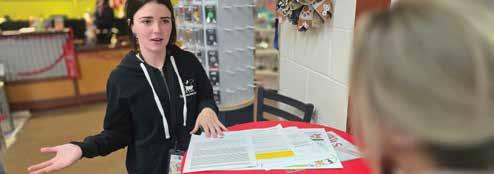
bond with them immediately. Some don’t see the personality traits they were hoping for. Others are disappointed in behavior during the initial few days. Researchers did find that most returns take place within 30 days. The takeaway? Using this information to help adopters through the process more effectively by spending more time on those adopting specific breeds and stressing the importance of giving enough time for animals to decompress in a new home.
“We can use this knowledge with adoption counselors who can instill realistic expectations and hopefully reduce the risk of returns,” Dr. Powell said.
Before the Penn Vet team’s visit was over,
Charleston Animal Society staff broke off into small teams to help develop potential future projects. A variety of ideas included technical surgery research such as “scrotal wraps and splash blocks,” and research on how pet adoption can impact adopters’ mental wellbeing. Dr. Watson says future research will involve Charleston Animal Society’s nationally-recognized humane education program. The goal is to learn how to replicate the program’s impact around the world, while continuing to build empathy in children who participate.
“Charleston Animal Society is an on-theground nonprofit working with academia to develop new strategies,” Watson said. You can find more details on Penn Vet’s research in veterinary journals and in news articles around the globe.



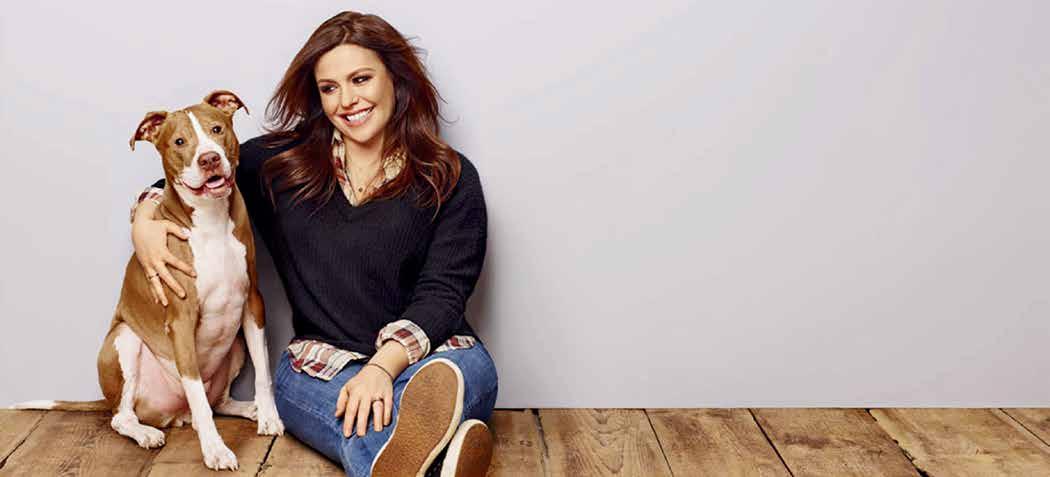
With heartfelt thanks to the Rachael Ray Foundation for standing beside Charleston Animal Society and the lifesaving programs, critical services, and compassionate care across our
By KENNEDI HARRIS, Spartanburg County Pet Resource Center Community Relations Manager
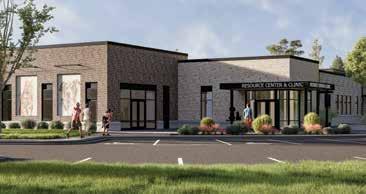
A center made to serve the needs of both people and their pets is taking shape in Spartanburg County. Not only is the Spartanburg County Pet Resource Center (PRC) a first of its kind facility for the Upstate, but it follows national shelter trends aiming to prioritize a proactive approach to animal welfare challenges.
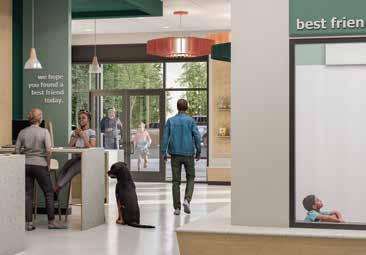
Construction is expected to be completed by the end of March 2026. The 26,600 square foot facility is purpose-built to reflect the mission of keeping people and pets together. “Having two separate lobbies allows us to clearly separate public-facing services we are offering such as community support, Safety Net appointments, and education—from shelter animal care and adoptions.” said Animal Welfare Services Director Chelsea Brooks.
Inside the PRC’s adoption lobby, you’ll meet with counselors ready to introduce you to adoptable pets both in-house and in foster homes. The resource lobby is the go-to entrance for pet owners needing assistance such as rehoming support, veterinary care, or food and supplies. The 1,178 square foot education room sits between the two, serving as a space for training sessions, foster orientations, humane education programs, partner meetings, and community events.
As a limited-intake facility, the PRC will provide shelter and care to stray or surrendered animals in Spartanburg County – but the goal is to reduce intake altogether. This approach is how Brooks says they plan to make the biggest impact, “county leaders and local animal advocates recognize that many pets enter shelters not because they are unwanted, but because families are facing temporary challenges; may that be financial, emergent, housing instability, or lack of access to basic care and veterinary needs,” she said.
This gap in resources is especially notable in underserved and socioeconomically disadvantaged communities. By considering both ends of the leash, the PRC helps families navigate through temporary hardship.
“Our Safety Net team serves as the frontline connection between the PRC and the community,” said Brooks. The PRC’s Safety Net Program will provide pet owners experiencing hardship with services such as low-cost or no-cost veterinary services, behavioral guidance, and temporary foster support. Outside of the applicant-based program, the team also provides access to pet food, supplies, and referrals to trusted partners.
The Safety Net team also works closely with Animal Control officers, bringing support to pet owners facing potential ordinance violations or fines.
The goal of keeping people and pets together extends beyond preventative services for pet owners. The PRC is also focused on keeping pets under their care out of kennels too. For that, the PRC will rely on animal lovers in Spartanburg County—and in return provide them with meaningful resources and support.
A foster parent is responsible for providing love and care, while the PRC provides everything the foster needs for success. Keeping pets out of the shelter environment will reduce overcrowding and create more positive outcomes, “animal behaviors often decline as their length of stay in the shelter increases despite providing the best practices for shelter life and enrichment,” Brooks said. “Our goal is to keep animals in foster where their mental, physical, and behavioral health will not decline and increase their chances of finding their forever home.”
As the Spartanburg community eagerly awaits the PRC’s opening, leaders and staff are excited to bring supportive resources to pet owners and those interested in owning pets. To connect with the PRC team for partnership or volunteer interest, email them at communityprc@spartanburgcounty.org.
By CRISTINA GUILLERMO Charleston Animal Society Executive Assistant
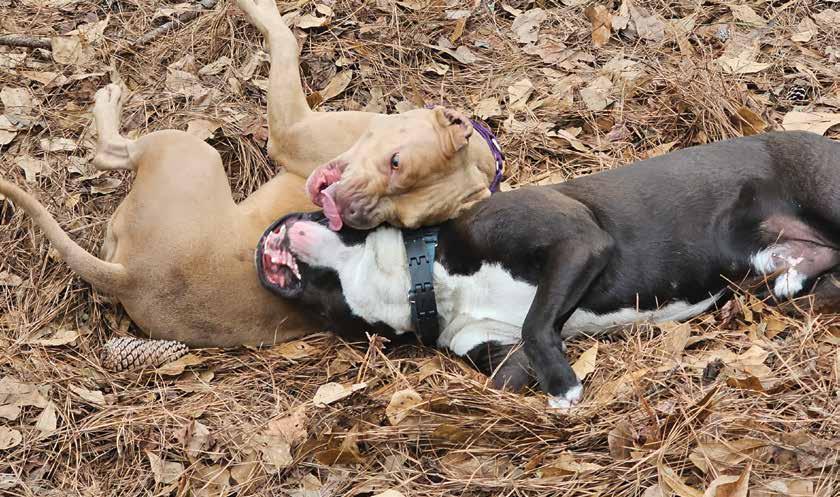
Behavior issues are a leading factor in the euthanasia of shelter dogs. High energy, anxiety, and jumpiness are behavioral issues that often deter potential adopters who can’t look past the stress responses caused by the shelter environment itself. This can lead to long stays and eventually euthanasia.
However, Charleston Animal Society is working to change that narrative through the Lazin Animal Foundation Behavioral Transition Center. For a young dog named Paulie Walnuts, that difference meant everything.
Funded by the Lazin Animal Foundation, the Behavioral Transition Center, operated by Charleston Animal Society staff, offers a stark contrast to the hustle and bustle of a traditional animal shelter. Set in the quiet Charleston County countryside, the facility provides a calmer atmosphere designed to decompress stressed animals. The property is a haven not just for dogs, but also two goats and numerous felines residing in the on-site Bear Greer Memorial Cat Sanctuary. It was here that Paulie Walnuts found his second chance.
Paulie’s journey began at the main shelter, where he had started to decline. Overwhelmed by the environment, he became jumpy and exhibited frantic, high-energy behavior. While common in stressed dogs, these traits tend to push away potential adopters looking for a calm family pet.
Recognizing that Paulie just needed a change of scenery and focused attention, staff thought Paulie would benefit from a move to the Lazin Behavioral Transition Center. The difference in the setting was palpable, giving Paulie lots of space to run and burn off his anxiety.

More importantly, he received intensive, personalized care. Staff implemented a rigorous schedule involving 20-minute training sessions four times a day. The training addressed his jumping and energy levels, but it also revealed a hidden trait: Paulie was an incredibly smart dog. He quickly learned numerous tricks, proving that his “bad behavior” was most likely the cause of unchanneled intelligence and living in a stressful environment.
After spending three months struggling at the main shelter and three months thriving at the Lazin center, Paulie’s wait came to an end when he was adopted by the Junge family.
According to his new owners, the transition was almost instant. Despite his history of high energy, the moment Paulie climbed into the car with the Junge family, he immediately calmed down. “He just needed a family, and as soon as he got into the car Paulie knew he was where he needed to be,” said William Junge. “He’s perfect,” added Holly Junge. “He’ll just lie on the couch and when we come home from work, he just looks up at us as if to say, ‘what’s up?’”
Today, Paulie Walnuts is a far cry from the frantic dog that struggled and was overlooked by adopters for months at the main shelter on Remount Road. His improvement has been so significant that he no
longer requires behavioral medications. Instead, his new prescription is simple: love, treats, and positive reinforcement.
Paulie’s story stands as a testament to Charleston Animal Society’s mission to save all healthy and treatable animals. Partnerships like those with the Lazin Animal Foundation and loving adopters like William and Holly Junge are further proof that with the right environment and a little patience and love, even “difficult” dogs can become perfect family members.
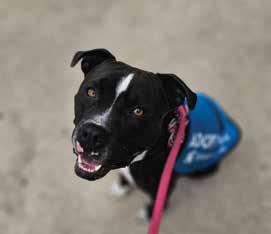
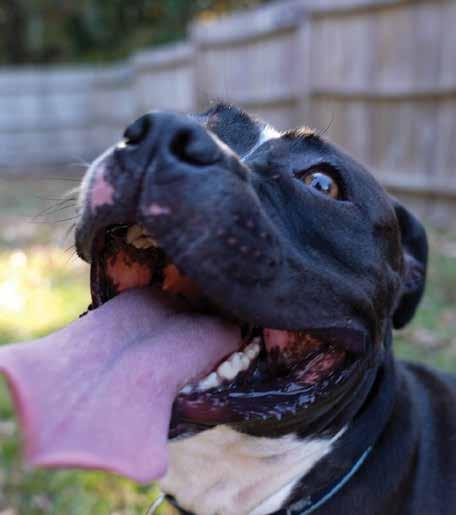
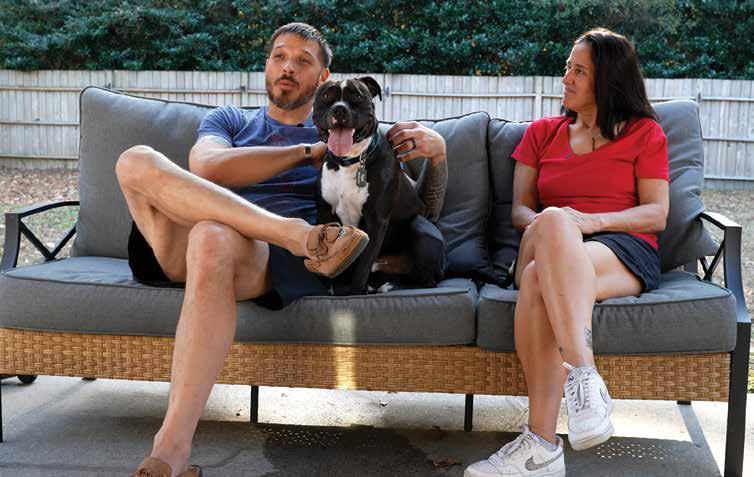
INSET LEFT: Paulie Walnuts looking dapper at an adoption event. TOP LEFT: Paulie Walnuts working on his socials skills at the Lazin Behavioral Transition Center. RIGHT: High-energy dogs like Paulie Walnuts behave much better after exercise. BELOW: Paulie Walnuts looking extremely happy with his new parents William and Holly Junge.
By DAN KROSSE
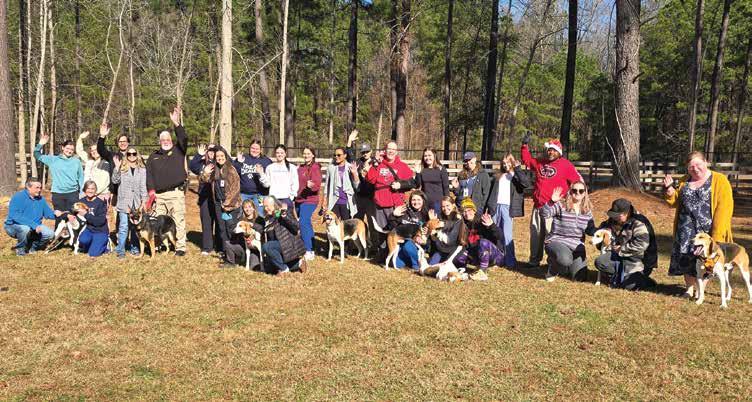
Five months after 34 hounds and one shepherd were rescued from terrible conditions in Goose Creek, SC – many of them came together to celebrate a new year and a new life in new homes. In December, the dogs were brought together for a reunion at Charleston Animal Society’s Berkeley Campus, to celebrate our community who always steps forward to help our animals in need.
You’ll recall that Charleston Animal Society in partnership with the Berkeley Sheriff’s Office, aided in the rescue and care of more than 35 dogs seized from a Berkeley County property on July 2. Goose Creek Police assisted in the seizure. The operation followed the execution of a search warrant issued by the Sheriff’s Office after receiving reports of possible neglect and mistreatment of animals on the premises.
“You hate to see these stories of people being cruel to animals, but it’s wonderful to see this other side of the story that people don’t see enough of.”
The dogs were found crammed together in small, elevated kennels that were soaked with urine and feces. Many of the dogs looked underweight and had no access to clean food or water.
Staff members were thrilled to reunite with the dogs, “We never get to see animals after they get adopted, especially dogs that came from such a horrible situation,” said Kennel Technician Kassie Clark. “They’re a little bit chunky. It’s really good to see they’re in good homes now.”
As adopters spent time getting to know each other and the other dogs, one adopter commented, “You hate to see these stories of people being cruel to animals, but it’s wonderful to see this other side of the story that people don’t see enough of.”
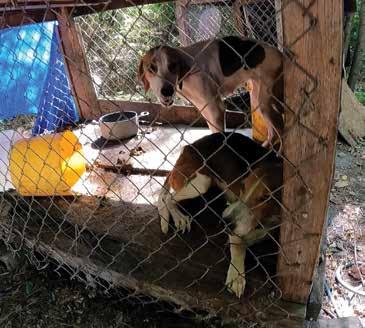
Last July, 35 hounds were found packed into small kennels with no clean food or water.
Thank you to the Berkeley Sheriff’s Office for bringing these dogs justice, thank you to the countless fosters and volunteers who stepped up to shower these dogs with love, and a big thank you to the adopters who gave these dogs a brand-new start.
By DAN KROSSE
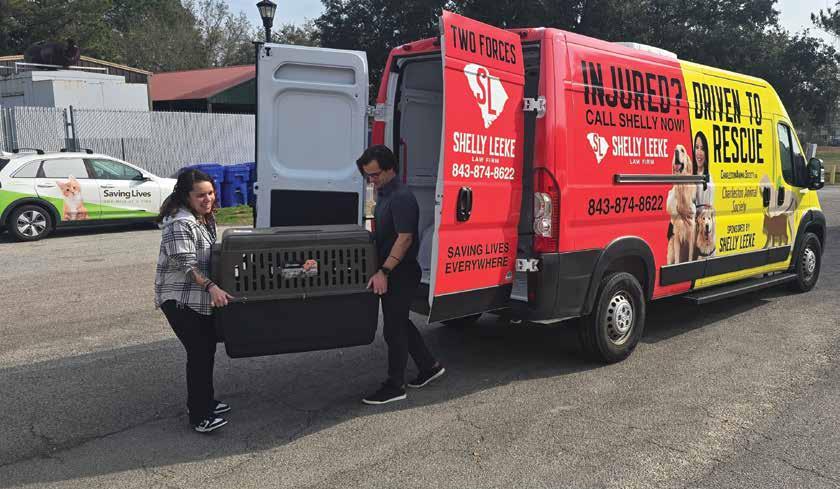
Charleston Animal Society is proud to announce the launch of its newest rescue resource — The Lifesaving Express, a fully outfitted Ram ProMaster cargo van donated by Shelly Leeke Law Firm to support lifesaving animal transport throughout the Lowcountry and beyond.
With more than 500 cubic feet of interior space, the Lifesaving Express can carry up to 20 dogs or 40 cats at one time, significantly increasing the organization’s capacity to safely and humanely move animals in need.
“We are so proud to donate this vehicle to Charleston Animal Society’s lifesaving mission,” said Shelly Leeke, owner of the Shelly Leeke Law Firm and a member of Charleston Animal Society’s Board of Directors. “As we had written on the side of the van, Charleston Animal Society is ‘driven to rescue.’ We are honored to play a part in helping more animals reach safety and eventually find loving homes.”
The Lifesaving Express will be utilized across a variety of lifesaving programs, with an early focus on transporting
animals from the shelter’s Berkeley Campus, where intake numbers continue to surge.
“The Lifesaving Express will allow us to bring animals to the main campus for medical treatment and spays or neuters,” said Charleston Animal Society Vice President and Chief Operating Officer Aldwin Roman, CAWA. “This will also open up opportunities to take animals out to adoption events across the area.”
In addition to local transport, the van will be used for:
• Large-scale rescue operations
• Emergency medical and cruelty response
• Interstate adoption transports
• Shelter-to-shelter movement to relieve overcrowding
The need for versatile, reliable transport has never been more urgent. Charleston Animal Society continues to take in more than 90% of stray animals in Charleston and Berkeley Counties, and facilities remain crowded with pets waiting for homes. Frequently, saving lives depends on moving animals from overloaded shelters to rescue partners or adopters ready to welcome them.
“With this new lifesaving tool, we can
ensure that more animals get where they need to go — whether that’s a medical clinic, an adoption center, or a rescue partner out of state,” said Charleston Animal Society President and CEO Joe Elmore, CAWA, CFRE. “The gift of this van directly translates to more lives saved.”
The Lifesaving Express has already proven its impact.
The van transported 21 dogs from Lexington County Animal Services to help them respond to a 100-plus animal cruelty seizure, ensuring the victims could access care and safe housing.
In another lifesaving mission, 30 cats traveled to the Massachusetts Society for the Prevention of Cruelty to Animals (MSPCA) for adoption — a strategic lifesaving transfer designed to relieve critical overcrowding at Charleston Animal Society’s Berkeley Campus.
Transfers like these allow shelters to open space for more animals quickly and find eager adopters in communities with more shelter capacity.
By DAN KROSSE
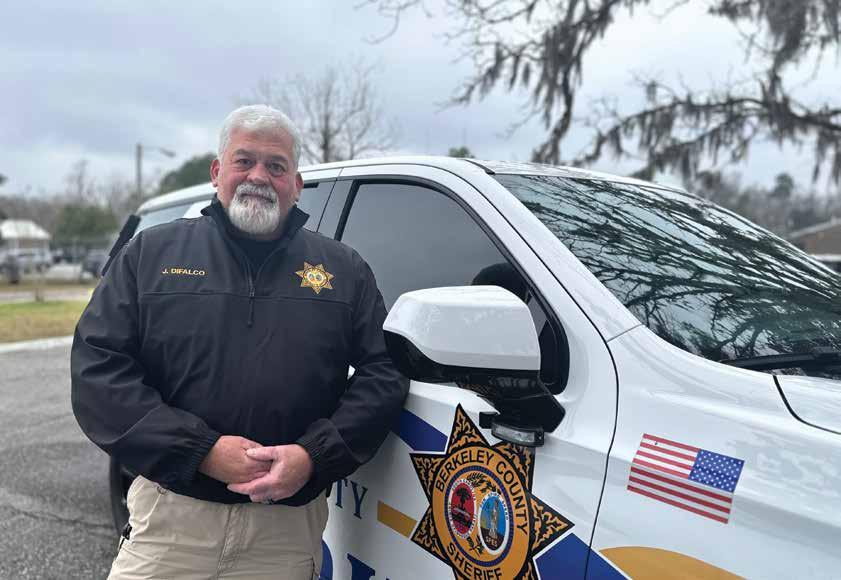
Above Detective Corporal John DiFalco’s desk sits a small statue of St. Francis of Assisi, the patron saint of animals. Through the nature of his job, he finds animals that are frightened. Sometimes injured. Sometimes deceased. But every time, DiFalco says, that animal deserves compassion before anything else, and this is why he always pauses to say a prayer for the victim.
It’s an uncommon ritual for an uncommon job. DiFalco is the only dedicated animal cruelty detective of his kind in the state of South Carolina, a role that blends traditional law enforcement with animal welfare expertise. His cases demand sharp investigative instincts, legal precision, and police experience, but above all, a relentless commitment to giving a voice to animals who cannot speak for themselves.
Animals he can never forget. Like Willow, a dog who needlessly died of heatstroke
this past summer, chained on pavement that reached 123°F, with an internal body temperature of 143°F. DiFalco had the difficult job of taking the temperatures himself. This detective didn’t miss the chance to stand in court to speak in front of a judge for Willow. The owner entered into a plea agreement.
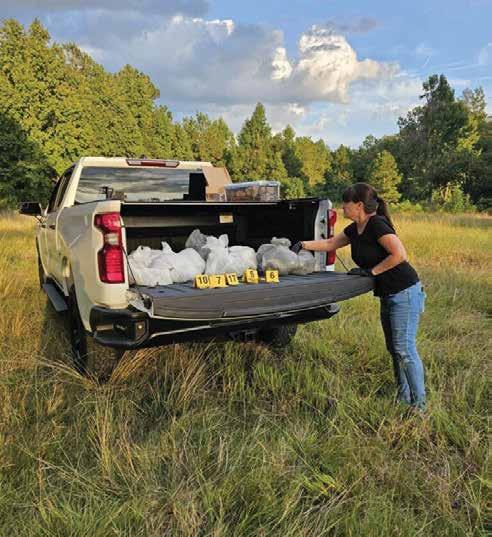
Shortly after he took the cruelty investigator position, DiFalco’s first major case was a tough one. He calls it “trial by fire.” An entire cat colony was allegedly poisoned near Summerville on October 6, 2024, leaving 13 cats dead. Jaclyn Cesari and her teenage daughter found the cats and called the Berkeley County Sheriff’s Office. DiFalco came to the scene and Cesari will never forget his compassion, “It was so thorough of an investigation, and I never thought that they would do this. I’m so grateful.” DiFalco’s detective work netted five arrests — a case still
winding its way through the courts. The work can be heavy. Scenes are sometimes heartbreaking, filled with neglect or suffering that most people would struggle to witness. Yet DiFalco approaches each call with a calm focus and years of experience that includes being part of the rescue response to the Twin Towers attack on 9-11. Colleagues say his steady presence helps both animals and people feel safe during difficult moments.
Charleston Animal Society Vice President and Chief Operating Officer Aldwin Roman, CAWA says the Berkeley Sheriff’s Office deserves a medal for appointing a specialized detective for cruelty cases. “Detective DiFalco is a truly rare breed. Few communities are fortunate enough to have dedicated animal cruelty investigators like him, even though that level of focus is exactly what these
heinous crimes demand,” Roman said. “He is steadfast in his pursuit of justice, giving a voice to countless victims who have none.”
In fact, Berkeley County Sheriff Duane Lewis was named the 2025 South Carolina Sheriff of the Year by the state Sheriff’s Association, in part because of his foresight in developing the animal cruelty investigator position. Agencies across the state have noticed what Berkeley County is doing and are considering emulating it. One has asked that DiFalco come help them get set up and even provide training.
“BUT
When asked if people are critical of public resources being used for cruelty investigations, with statements like “it’s just a dog,” or “it’s just a cat,” DiFalco lights up. He goes into full Pet Detective mode and says the only people he hears those kinds of statements from are the
people he is investigating. “I will turn it around, because if somebody is willing to do this to an animal, they’re willing to do it to a human,” DiFalco explained. “Two studies that were done show a correlation between serial killing and animal abuse. It’s different stages of what they (serial killers) do.”
Since Charleston Animal Society began running the Berkeley Animal Center (now the Berkeley Campus) in July, the Society and DiFalco have worked closely together. In fact, on day two of the new partnership, 35 hounds and one shepherd were rescued from horrible conditions in Goose Creek. DiFalco led the effort, that found a repeat offender at the center of the case.
As the dust settled and new homes needed to be found for the animals, DiFalco and his wife Carrie stepped forward to adopt the lone shepherd who was found living without clean food or water. To say Farrah’s life has completely turned around would be an
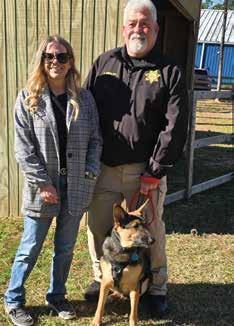
FAR LEFT: Detective DiFalco has more than 40 years of law enforcement experience and is the only dedicated animal cruelty detective in the state. LEFT: The bodies of cats who were allegedly poisoned in Summerville were placed in the back of Detective DiFalco’s truck and marked as evidence. ABOVE: Detective DiFalco and his wife Carrie adopted Farrah after a cruelty case he investigated in Goose Creek.
understatement, “Oh she’s spoiled,” DiFalco chuckles.
Late last year, DiFalco spoke about his work to a captivated crowd of almost 200 people at Charleston Animal Society’s annual Lifesavers Luncheon. He spoke about the need to re-think some of South Carolina’s cruelty laws, especially ones that still describe animals as “property.” His office tells part of that story. Case files include photos of animals who made it through their darkest days. And above it all, the statue of St. Francis stands as a quiet reminder of why the work matters. The brief pause during each investigation — that moment of reflection — grounds him in compassion before he steps into the difficult work that lies ahead. “It gives me peace of mind knowing our community has someone like him,” said Roman.