ADVANCING AND IMPROVING SINCE 1919 THE UPSHER-SMITH STORY




ADVANCING AND IMPROVING SINCE 1919 THE UPSHER-SMITH STORY
UPSHER-SMITH BEGAN in 1919 as a company dedicated to serving the unmet needs of cardiac patients. That dedication continues to guide the company today, even as it expands its reach to developing pharmaceuticals that treat diseases of the central nervous system and other health conditions. Committed to transforming healthcare challenges into opportunities, Upsher-Smith has a lively past that demonstrates its commitment to honesty and ethics, innovation in the development of new products, and its constant focus on the welfare of patients and customers. It all started with a plant that blossomed colorful flowers . . .

TOP: The company’s early stationery captured the sights of F. A. Upsher Smith’s foxglove farm.
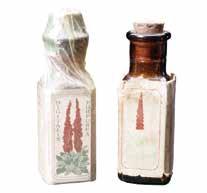
ABOVE: Upsher-Smith’s bottled digitalis extract.
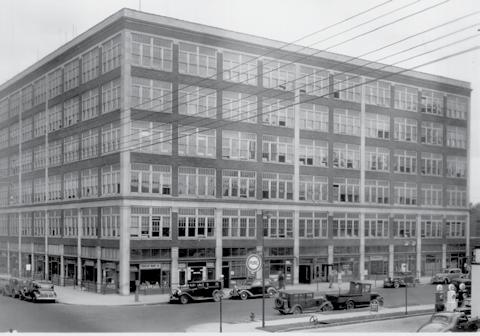
BOTTOM: The Sexton Building in Minneapolis housed the first home office.
2 THE UPSHER-SMITH STORY
IN THE EARLY YEARS of the twentieth century, the leaves of a plant called foxglove held the key to survival for many people suffering from congestive heart failure and atrial fibrillation. From foxglove leaves digitalis could be extracted, a drug that helps relieve irregular heartbeat. The promise of this plant launched Upsher-Smith.
The purple and white flowers of foxglove covered the field of Frederick Alfred Upsher Smith’s summer home near Wayzata, Minnesota. In 1919, English-born pharmacist and chemist Upsher Smith started a company to refine the digitalis. Operating in a laboratory in the Sexton Building in Minneapolis, the company’s great innovation was to deliver digitalis in a standardized potency — with consistency in dosage and quality from one batch to the next — an advancement never before achieved in the 134 years since the drug’s discovery. Upsher-Smith had given new life to an old drug, and physicians and pharmacists throughout North America made sure that this improved medication benefited thousands of people.
By producing digitalis and other pharmaceutical compounds, UpsherSmith did its part to give people longer and more healthful lives. At mid-century the pharmaceutical business underwent a revolutionary transformation. Synthetic drugs overtook those derived from plants and other natural sources, huge chemical conglomerates grew powerful, and the most successful companies invested heavily in building large sales forces. By the 1960s, despite its early innovations, Upsher-Smith had receded into the background.
A nineteenth-century economic depression in Britain and the death of his father propelled Frederick Alfred Upsher Smith into pharmaceutical study as a child. Financially strapped, his mother indentured him to an English druggist who taught the thirteen-year-old the secrets of the trade. “He obviously loved it because he produced so much as a chemist,” says UpsherSmith’s president, Mark Evenstad, who has researched the company’s history and his family’s past. (He notes that the family name, unlike the company name, has no hyphen.)
Once established in a pharmacy career, Upsher Smith immigrated to the United States in 1907 and made his way to Minnesota to work as the chief chemist for a pharmaceutical firm in St. Paul. He eventually became the director of the well-regarded Minnesota Institute of Pharmacy.
“We would not go into a drug store in the surrounding area in which Dad did not know the pharmacist, one of his former pupils,” son James Upsher Smith remembered.
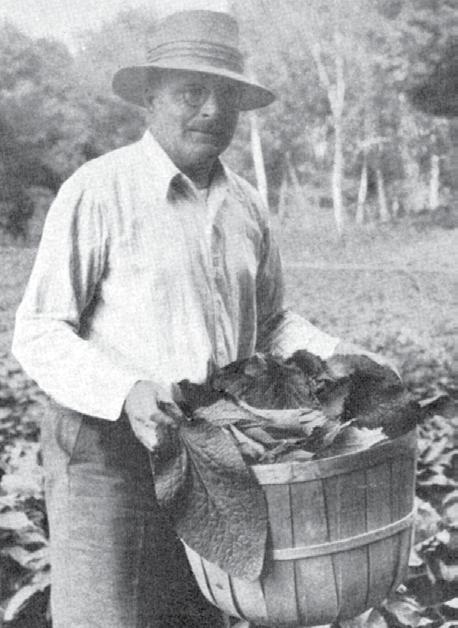
Meanwhile, F. A. Upsher Smith spent summers with his family in a rural home near Wayzata, where he cultivated foxglove and refined digitalis. In 1919, he started the company that bears his name to manufacture the drug in a standardized potency.
F. A. Upsher Smith saw his company expand into the development of other pharmaceutical compounds before his death from pneumonia in 1947, when son James took over the business. v
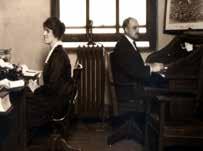
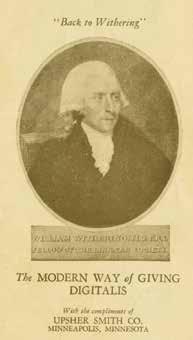
CLOCKWISE: F. A. Upsher Smith at work with an office assistant, circa 1920; a brochure from 1927 on the benefits of digitalis; Foxglove Farm is featured in another early company publication.

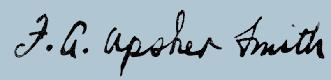


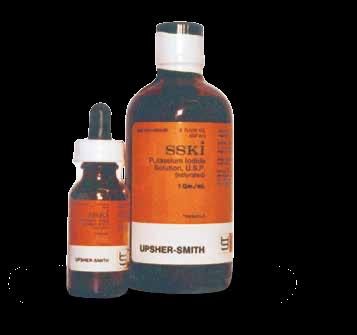
TOP TO BOTTOM: By the 1980s, Upsher-Smith’s letterhead stood for pharmaceutical progress; new articles of incorporation in 1970 marked the launch of a reinvigorated company; bottles of SSKI, the first product that Ken Evenstad developed.
KEN EVENSTAD REMEMBERS THE DAY WELL. In the middle of May 1969, he and his wife Grace received a call from one of Grace’s relatives. Her Uncle Jim — James Upsher Smith — was selling the company, the relative said. “And my wife said, ‘What company?’” Ken recalls. “We had no idea that Upsher-Smith was a family business. It was a very small company at that point.”
Nearly extinct, Upsher-Smith had a name that still meant something to pharmaceutical wholesalers. Ken, a 25-year-old pharmacist with entrepreneurial inclinations but little money, wanted to buy it. He scraped together $1,500 and became the new owner. “And so that became the company I wanted to grow,” Ken says. “I had a product idea already, and I just needed a company — a vehicle — for selling it.”
FIRST
Ken felt confident in making this risky acquisition because he had previously formulated a product called SSKI, a new stabilized solution of potassium iodide, an expectorant helpful in the treatment of emphysema. Pharmacists had traditionally spent long hours of their own compounding potassium iodide crystals into a liquid. Ken understood the pharmacists’ dislike of this laborious process, and he knew the need for a stable, pre-dissolved preparation. Using the venerable Upsher-Smith name, Ken successfully sold SSKI by direct mail.
SSKI ramped up quickly. Mark Evenstad, Ken’s son, recalls the memorable day of his childhood when his dad “went off to work in an AMC Gremlin and came home in a Jaguar.”
That new car aside, Ken poured his profits back into the business. Upsher-Smith pioneered the dispensing of unit-dose generic medications, which helped to eliminate the need for hospital pharmacists to individually measure doses of drugs. By developing a reliable unit-dose product line, the company rose to the industry challenge by eliminating drug dosing errors and improving the welfare of hospital patients.
Upsher-Smith’s sales reached $1 million by 1977 and doubled within two years. The company grew cramped in its original headquarters in the Sexton Building in downtown Minneapolis. Ken felt ready to construct a new 12,000-square-foot home in the nearby suburb of Plymouth. “Once I realized that our sales were more than adequate to pay for the building and still grow the company,” Ken says, “I felt that we had sort of arrived at that point. It gave me comfort knowing that we had our own building and had room to expand, which we did every few years.” During the next quarter century, the company exploded in size.
Innovative products fueled that growth. During the 1970s, the FDA restricted sales of potassium chloride tablets because they increased the likelihood of intestinal ulcers. This was a drug that doctors frequently prescribed to treat the depletion of potassium caused by hypertensive medications. Upsher-Smith responded to the problem by formulating Klor-Con, a low-cost powder form of potassium chloride that did not damage the colon. The company followed with
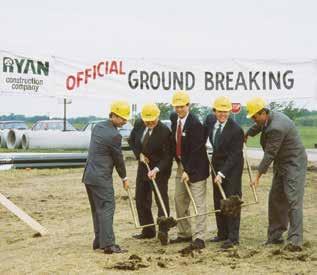
ABOVE LEFT: The ceremonial first shovelfuls of earth raised to build Upsher-Smith’s first freestanding headquarters in Plymouth, Minnesota.
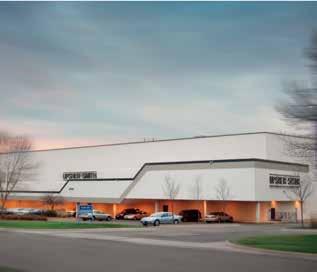
ABOVE RIGHT: The completed Plymouth building.
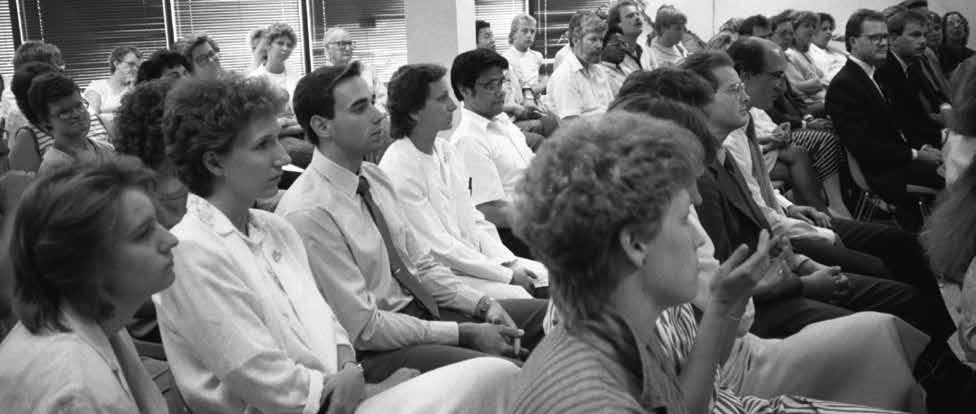
TOP: During the 1980s and 1990s, Upsher-Smith team members achieved breakthroughs in product development and licensing.
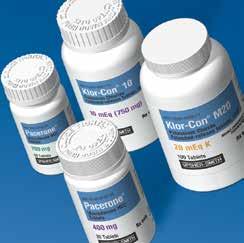
ABOVE: Upsher-Smith introduced Klor-Con and Pacerone as branded generics, a product category that has brought Upsher-Smith great success.
the introduction of extended-release Klor-Con tablets. Klor-Con grew into the fastest growing brand of potassium chloride tablets and emerged as one of America’s top-selling prescription drugs. “That was a huge deal!” remembers marketer Denise Dolan, who joined Upsher-Smith in 1982. “That was really, really exciting.”
During the 1990s, Upsher-Smith made a similar breakthrough with Pacerone, an affordable anti-arrhythmic drug for heart patients. With skillful planning, the company was able to secure FDA approval for Pacerone in just ten months, close to half the average approval time. Upsher-Smith had yet again filled a strong need in the marketplace, and the company’s annual sales nearly doubled.
In addition, another drug manufacturer licensed Upsher-Smith’s formulation for a cholesterol control medication. This agreement led to the approval and marketing of Niaspan — a billion-dollar product that ultimately resulted in significant royalties for Upsher-Smith.
Both Klor-Con and Pacerone are examples of a new category of generic pharmaceuticals that Upsher-Smith championed. Applying innovation to its formulations to tailor its products for certain categories of patients, such as Klor-Con for people with hypertension, the company created branded generic products that inspired loyalty. Upsher-Smith rose above other contract manufacturers of generic products that would sell at the lowest price. The company added value and was consequently able to increase sales. “Our brand really gave the connotation of quality, and we talked a lot about that,” Ken says, “as well as excellence, and that was our differentiating factor.”
Ken Evenstad, who bought UpsherSmith in 1969 and built it into a successful and forward-thinking pharmaceutical firm, graduated from the highly regarded University of Minnesota College of Pharmacy. After meeting his wife Grace on a blind date, he practiced pharmacy in St. Paul, Minnesota. “I became a pharmacist because I wanted to help sick people. But I found that in the pharmacy, my hands were tied by the doctors, and I felt that I couldn’t really help patients as much as I thought I could in industry,” Ken says. “I was driven by wanting to do something more important than what I was doing.”
Ken’s warmth, honesty, creative thinking, and hard work guide the company today. Although he retired as UpsherSmith’s president in 2003, he serves as the company’s chairman and has achieved his long-held dream of owning a winery, Domaine Serene in Oregon. v


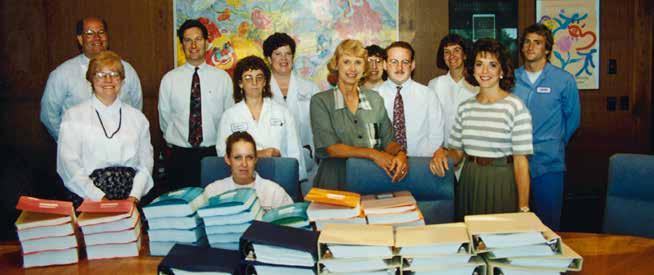
ABOVE: As it has for decades, Upsher-Smith’s company culture stresses creative problem solving and teamwork.
BELOW: The acquisition of Rosemont Pharmaceuticals in 2001 gave the company valuable additional know-how and capabilities.
In 1987, the company began partnering with University of Minnesota pharmaceutical researchers to develop a revolutionary therapy for acute epilepsy repetitive seizures. Diazepam, a drug often prescribed to treat seizures, was expensive when administered intravenously. Could a diazepam suppository be effective and less expensive? Rising to the challenge, Upsher-Smith formulated Diastat, the first diazepam gel.
This was Upsher-Smith’s first venture in formulating medications for central nervous system disorders. The company would continue to follow that exciting course during the 2000s.
Throughout this time of growth, Upsher-Smith evolved a distinctive culture that emphasizes creative problem solving, caring for customers, and excellence. Because of the unique culture, many of Upsher-Smith’s employees have worked at the company for decades and continue to find satisfying challenges that inspire them each day.
In 2001 the company made its first acquisition. Rosemont Pharmaceuticals of Denver brought geographic diversity to UpsherSmith as well as additional manufacturing capacity and capabilities. Today the Denver facilities are essential to Upsher-Smith’s future.

IN 2003, KEN EVENSTAD passed the leadership of UpsherSmith to his son, Mark, whose involvement with the company began when he was 12. Mark remembers his father asking him as a child whether Upsher-Smith should invest the money and energy necessary to develop Klor-Con into a successful product. “Well, you just do what you have to do,” Mark recalls replying.
In the next few years, Mark mowed the company’s lawn, worked in the machine shop, and assisted in shipping and receiving. Over time, his responsibilities increased in sales, marketing, and business development. Like his great-grandfather, Frederick Alfred Upsher Smith, Mark served a complete apprenticeship.
As president, Mark Evenstad inherited a distinctive approach to business inspired by the private ownership of Upsher-Smith. Without responsibility to public shareholders focused on shortterm profits, the company could take a longer view of its goals and strategies. Instead of worrying about stock fluctuations, “it’s about just working hard, caring about who your customer is, and making sure that you have transactions that people want to repeat again and again — where nobody feels like they’re getting the short end of the stick,” Mark says.
At the same time, Upsher-Smith has evolved into a company devoted to looking for ways to improve the lives of patients and bringing improvement in medications to the marketplace. It does so with an esprit de corps unique in the pharmaceutical industry.

ABOVE LEFT: Mark Evenstad (left) worked his way up in the company and worked closely with his father Ken.
ABOVE: This Upsher-Smith logo was designed to pay homage to the company’s past while foreseeing a bright future.
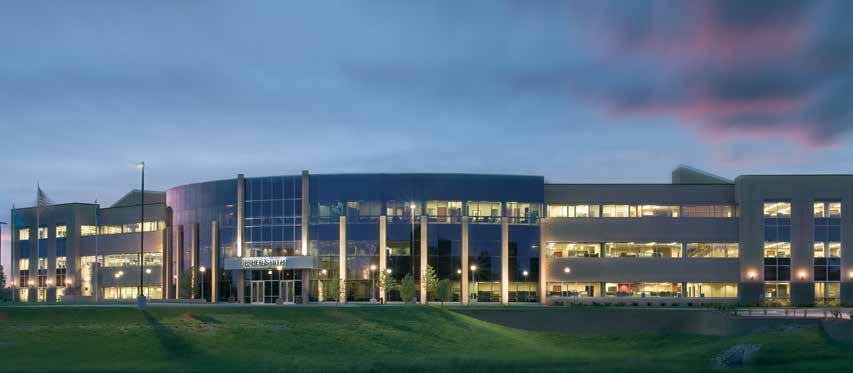
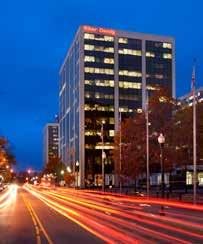
TOP: The company’s present headquarters, recently expanded, symbolizes Upsher-Smith’s creativity and values.
ABOVE: Business growth in the twenty-first century inspired the company to establish a satellite office in Morristown, New Jersey, in 2010.
By 2003 the company had outgrown the small footprint of its home in Plymouth and began construction in nearby Maple Grove of new headquarters for Upsher-Smith’s corporate, administrative, and laboratory employees that embodies the company’s values and spirited morale. Clad in glass and full of light and art — one light fixture is made from wine bottles — the building has a two-story atrium, a striking curvilinear entry staircase, lots of wood and other natural materials, and an eclectic design perfect for bringing together the creative thinking of all Upsher-Smith employees.
Meanwhile in 2010, to handle its expanding business, UpsherSmith added a satellite facility in Morristown, New Jersey.
An expansion of the company’s headquarters, which brings new administrative, laboratory, and warehouse space to the building and increases its area by 63 percent, is set for completion in 2014.
During the 2000s, Upsher-Smith launched many products in the fields of women’s health, dermatology, and cardiology. But the biggest new initiative has come in the development of pharmaceuticals valuable in the treatment of disorders of the central nervous system (CNS). These new products epitomize the drive to improve the lives of patients, which the company has set as its highest goal from its earliest years.
A focus on the CNS was not completely new, because the company had previously achieved success with its Diastat medication
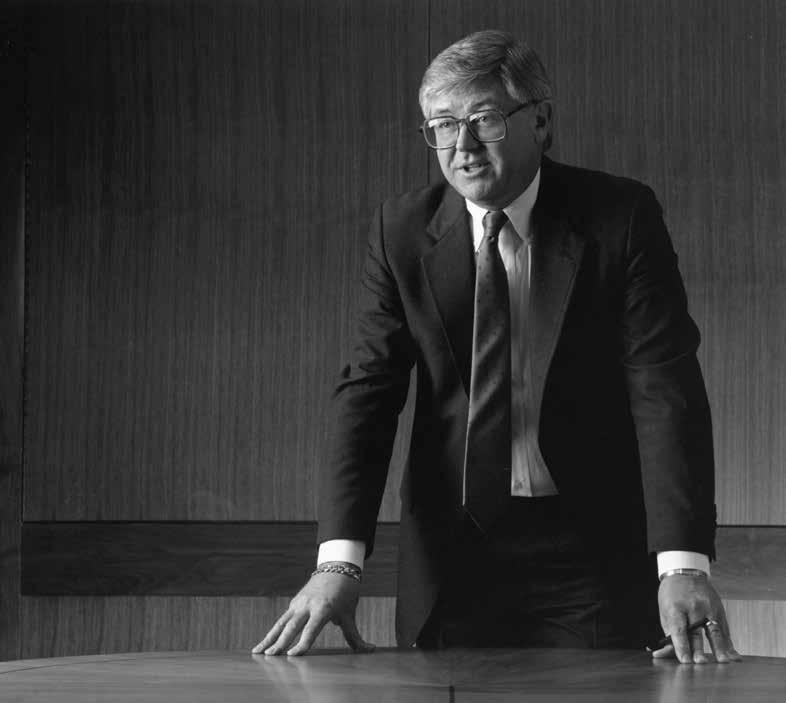
Mark Evenstad was born into the family that founded Upsher-Smith and made the business flourish. As president beginning in 2003 he has branded the company with his own style of entrepreneurship and emphasis on bringing biomedical science and technology to the rescue of patients, their families, and caregivers.
He grew up learning the business from the inside, and he has shaped Upsher-Smith into an organization increasingly accomplished at brainstorming innovative therapies, introducing important new products, creating effective partnerships, and building a highly evolved sales and marketing operation. v

to alleviate epilepsy seizures. In 2007, however, Upsher-Smith believed the time was right to spark a surge of growth. “We were in a place where we could take on something bigger,” says Mark Evenstad, whose grandmother suffered from a CNS disease. “And what we kept finding were all of these tragic neurological diseases that affect entire families, and Big Pharma didn’t think treatments were viable for development. We found that nobody had innovated anything new in epilepsy treatment for years, so that was the first thing we set about doing.”
Driven by a passion to meet patients’ unmet needs, the company has forged partnerships with a vast network of CNS physicians, researchers, and advocacy organizations. This work has produced three innovative pharmaceuticals targeting epilepsy in different phases of development. Additional new pharmaceuticals are in development for Parkinson’s disease and Alzheimer’s disease. The CNS initiative has brought the company a new staff with fresh and innovative ideas, and there’s every expectation that these people and products will send Upsher-Smith into a period of rapid growth.
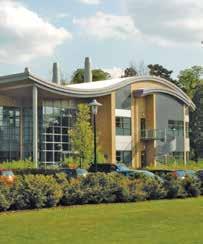
To enable these achievements in CNS treatment, Upsher-Smith acquired Proximagen in 2012. The London biotechnology company with research facilities in Cambridge is just a few miles from the birthplace of company founder F. A. Upsher Smith. Proximagen, traditionally strong in research, specializes in the creation of therapeutics for CNS diseases. Brought together with UpsherSmith’s skills in pharmaceutical development, the combination is formidable. “This is yielding things that are absolutely life-changing,” Mark says.

Products that treat disorders of the central nervous system will be the company’s strong focus in the years to come.
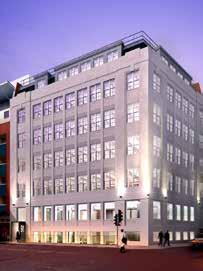
TOP LEFT: The London headquarters of biotechnology leader Proximagen, which Upsher-Smith acquired in 2012.
TOP RIGHT: Upsher-Smith’s Galaxy Portfolio features a line of innovative epilepsy therapies.
ABOVE: The research facilities of Proximagen in Cambridge, England.
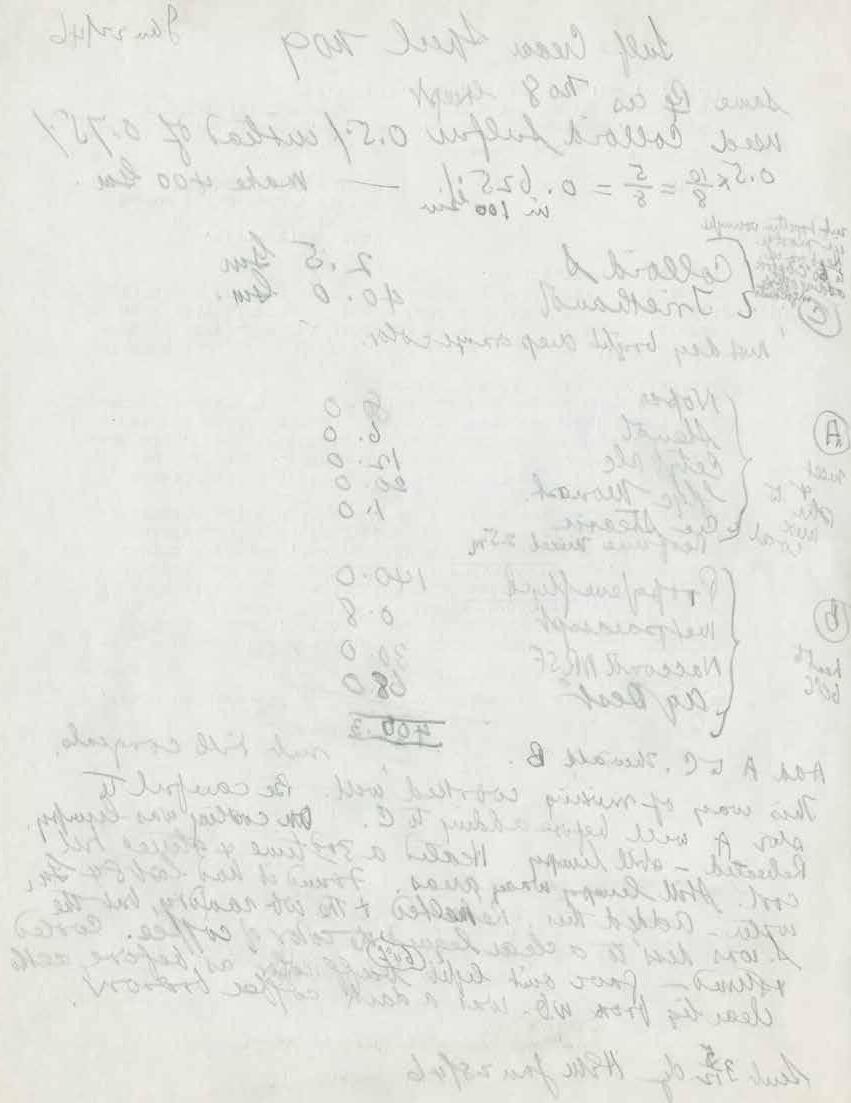
ENDLEAF: A page of formulary notes of Frederick Alfred Upsher Smith, dating from 1946.

The richness of the company’s history contributes to its success and demonstrates its stability. But Upsher-Smith’s innovative work now reaches from Minneapolis to Denver to Morristown to Cambridge in the UK. In all of those locations, the company’s employees share a conviction. “They want to make a difference in people’s lives . . . and in their own careers,” Mark observes. In the years ahead, Upsher-Smith will continue to search for more opportunities to meet patients’ needs and to work with investigators and physicians to tailor its creative output to those needs. And it will persist in seeing the satisfaction of those needs as challenges. v
UPSHER-SMITH BEGAN in 1919 as a company dedicated to serving the unmet needs of cardiac patients. That dedication continues to guide the company today, even as it expands its reach to developing pharmaceuticals that treat diseases of the central nervous system and other health conditions. Committed to transforming healthcare challenges into opportunities, Upsher-Smith has a lively past that demonstrates its commitment to honesty and ethics, innovation in the development of new products, and its constant focus on the welfare of patients and customers. It all started with a plant that blossomed colorful flowers . . .
TOP: The company’s early stationery captured the sights of F. A. Upsher Smith’s foxglove farm.
ABOVE: Upsher-Smith’s bottled digitalis extract.
BOTTOM: The Sexton Building in Minneapolis housed the first home office.
2 THE UPSHER-SMITH STORY
IN THE EARLY YEARS of the twentieth century, the leaves of a plant called foxglove held the key to survival for many people suffering from congestive heart failure and atrial fibrillation. From foxglove leaves digitalis could be extracted, a drug that helps relieve irregular heartbeat. The promise of this plant launched Upsher-Smith.
The purple and white flowers of foxglove covered the field of Frederick Alfred Upsher Smith’s summer home near Wayzata, Minnesota. In 1919, English-born pharmacist and chemist Upsher Smith started a company to refine the digitalis. Operating in a laboratory in the Sexton Building in Minneapolis, the company’s great innovation was to deliver digitalis in a standardized potency — with consistency in dosage and quality from one batch to the next — an advancement never before achieved in the 134 years since the drug’s discovery. Upsher-Smith had given new life to an old drug, and physicians and pharmacists throughout North America made sure that this improved medication benefited thousands of people.
By producing digitalis and other pharmaceutical compounds, UpsherSmith did its part to give people longer and more healthful lives. At mid-century the pharmaceutical business underwent a revolutionary transformation. Synthetic drugs overtook those derived from plants and other natural sources, huge chemical conglomerates grew powerful, and the most successful companies invested heavily in building large sales forces. By the 1960s, despite its early innovations, Upsher-Smith had receded into the background.
A nineteenth-century economic depression in Britain and the death of his father propelled Frederick Alfred Upsher Smith into pharmaceutical study as a child. Financially strapped, his mother indentured him to an English druggist who taught the thirteen-year-old the secrets of the trade. “He obviously loved it because he produced so much as a chemist,” says UpsherSmith’s president, Mark Evenstad, who has researched the company’s history and his family’s past. (He notes that the family name, unlike the company name, has no hyphen.)
Once established in a pharmacy career, Upsher Smith immigrated to the United States in 1907 and made his way to Minnesota to work as the chief chemist for a pharmaceutical firm in St. Paul. He eventually became the director of the well-regarded Minnesota Institute of Pharmacy.
“We would not go into a drug store in the surrounding area in which Dad did not know the pharmacist, one of his former pupils,” son James Upsher Smith remembered.
Meanwhile, F. A. Upsher Smith spent summers with his family in a rural home near Wayzata, where he cultivated foxglove and refined digitalis. In 1919, he started the company that bears his name to manufacture the drug in a standardized potency.
F. A. Upsher Smith saw his company expand into the development of other pharmaceutical compounds before his death from pneumonia in 1947, when son James took over the business. v
CLOCKWISE: F. A. Upsher Smith at work with an office assistant, circa 1920; a brochure from 1927 on the benefits of digitalis; Foxglove Farm is featured in another early company publication.
TOP TO BOTTOM: By the 1980s, Upsher-Smith’s letterhead stood for pharmaceutical progress; new articles of incorporation in 1970 marked the launch of a reinvigorated company; bottles of SSKI, the first product that Ken Evenstad developed.
KEN EVENSTAD REMEMBERS THE DAY WELL. In the middle of May 1969, he and his wife Grace received a call from one of Grace’s relatives. Her Uncle Jim — James Upsher Smith — was selling the company, the relative said. “And my wife said, ‘What company?’” Ken recalls. “We had no idea that Upsher-Smith was a family business. It was a very small company at that point.”
Nearly extinct, Upsher-Smith had a name that still meant something to pharmaceutical wholesalers. Ken, a 25-year-old pharmacist with entrepreneurial inclinations but little money, wanted to buy it. He scraped together $1,500 and became the new owner. “And so that became the company I wanted to grow,” Ken says. “I had a product idea already, and I just needed a company — a vehicle — for selling it.”
FIRST
Ken felt confident in making this risky acquisition because he had previously formulated a product called SSKI, a new stabilized solution of potassium iodide, an expectorant helpful in the treatment of emphysema. Pharmacists had traditionally spent long hours of their own compounding potassium iodide crystals into a liquid. Ken understood the pharmacists’ dislike of this laborious process, and he knew the need for a stable, pre-dissolved preparation. Using the venerable Upsher-Smith name, Ken successfully sold SSKI by direct mail.
SSKI ramped up quickly. Mark Evenstad, Ken’s son, recalls the memorable day of his childhood when his dad “went off to work in an AMC Gremlin and came home in a Jaguar.”
That new car aside, Ken poured his profits back into the business. Upsher-Smith pioneered the dispensing of unit-dose generic medications, which helped to eliminate the need for hospital pharmacists to individually measure doses of drugs. By developing a reliable unit-dose product line, the company rose to the industry challenge by eliminating drug dosing errors and improving the welfare of hospital patients.
Upsher-Smith’s sales reached $1 million by 1977 and doubled within two years. The company grew cramped in its original headquarters in the Sexton Building in downtown Minneapolis. Ken felt ready to construct a new 12,000-square-foot home in the nearby suburb of Plymouth. “Once I realized that our sales were more than adequate to pay for the building and still grow the company,” Ken says, “I felt that we had sort of arrived at that point. It gave me comfort knowing that we had our own building and had room to expand, which we did every few years.” During the next quarter century, the company exploded in size.
Innovative products fueled that growth. During the 1970s, the FDA restricted sales of potassium chloride tablets because they increased the likelihood of intestinal ulcers. This was a drug that doctors frequently prescribed to treat the depletion of potassium caused by hypertensive medications. Upsher-Smith responded to the problem by formulating Klor-Con, a low-cost powder form of potassium chloride that did not damage the colon. The company followed with
ABOVE LEFT: The ceremonial first shovelfuls of earth raised to build Upsher-Smith’s first freestanding headquarters in Plymouth, Minnesota.
ABOVE RIGHT: The completed Plymouth building.
TOP: During the 1980s and 1990s, Upsher-Smith team members achieved breakthroughs in product development and licensing.
ABOVE: Upsher-Smith introduced Klor-Con and Pacerone as branded generics, a product category that has brought Upsher-Smith great success.
the introduction of extended-release Klor-Con tablets. Klor-Con grew into the fastest growing brand of potassium chloride tablets and emerged as one of America’s top-selling prescription drugs. “That was a huge deal!” remembers marketer Denise Dolan, who joined Upsher-Smith in 1982. “That was really, really exciting.”
During the 1990s, Upsher-Smith made a similar breakthrough with Pacerone, an affordable anti-arrhythmic drug for heart patients. With skillful planning, the company was able to secure FDA approval for Pacerone in just ten months, close to half the average approval time. Upsher-Smith had yet again filled a strong need in the marketplace, and the company’s annual sales nearly doubled.
In addition, another drug manufacturer licensed Upsher-Smith’s formulation for a cholesterol control medication. This agreement led to the approval and marketing of Niaspan — a billion-dollar product that ultimately resulted in significant royalties for Upsher-Smith.
Both Klor-Con and Pacerone are examples of a new category of generic pharmaceuticals that Upsher-Smith championed. Applying innovation to its formulations to tailor its products for certain categories of patients, such as Klor-Con for people with hypertension, the company created branded generic products that inspired loyalty. Upsher-Smith rose above other contract manufacturers of generic products that would sell at the lowest price. The company added value and was consequently able to increase sales. “Our brand really gave the connotation of quality, and we talked a lot about that,” Ken says, “as well as excellence, and that was our differentiating factor.”
Ken Evenstad, who bought UpsherSmith in 1969 and built it into a successful and forward-thinking pharmaceutical firm, graduated from the highly regarded University of Minnesota College of Pharmacy. After meeting his wife Grace on a blind date, he practiced pharmacy in St. Paul, Minnesota. “I became a pharmacist because I wanted to help sick people. But I found that in the pharmacy, my hands were tied by the doctors, and I felt that I couldn’t really help patients as much as I thought I could in industry,” Ken says. “I was driven by wanting to do something more important than what I was doing.”
Ken’s warmth, honesty, creative thinking, and hard work guide the company today. Although he retired as UpsherSmith’s president in 2003, he serves as the company’s chairman and has achieved his long-held dream of owning a winery, Domaine Serene in Oregon. v
ABOVE: As it has for decades, Upsher-Smith’s company culture stresses creative problem solving and teamwork.
BELOW: The acquisition of Rosemont Pharmaceuticals in 2001 gave the company valuable additional know-how and capabilities.
In 1987, the company began partnering with University of Minnesota pharmaceutical researchers to develop a revolutionary therapy for acute epilepsy repetitive seizures. Diazepam, a drug often prescribed to treat seizures, was expensive when administered intravenously. Could a diazepam suppository be effective and less expensive? Rising to the challenge, Upsher-Smith formulated Diastat, the first diazepam gel.
This was Upsher-Smith’s first venture in formulating medications for central nervous system disorders. The company would continue to follow that exciting course during the 2000s.
Throughout this time of growth, Upsher-Smith evolved a distinctive culture that emphasizes creative problem solving, caring for customers, and excellence. Because of the unique culture, many of Upsher-Smith’s employees have worked at the company for decades and continue to find satisfying challenges that inspire them each day.
In 2001 the company made its first acquisition. Rosemont Pharmaceuticals of Denver brought geographic diversity to UpsherSmith as well as additional manufacturing capacity and capabilities. Today the Denver facilities are essential to Upsher-Smith’s future.
IN 2003, KEN EVENSTAD passed the leadership of UpsherSmith to his son, Mark, whose involvement with the company began when he was 12. Mark remembers his father asking him as a child whether Upsher-Smith should invest the money and energy necessary to develop Klor-Con into a successful product. “Well, you just do what you have to do,” Mark recalls replying.
In the next few years, Mark mowed the company’s lawn, worked in the machine shop, and assisted in shipping and receiving. Over time, his responsibilities increased in sales, marketing, and business development. Like his great-grandfather, Frederick Alfred Upsher Smith, Mark served a complete apprenticeship.
As president, Mark Evenstad inherited a distinctive approach to business inspired by the private ownership of Upsher-Smith. Without responsibility to public shareholders focused on shortterm profits, the company could take a longer view of its goals and strategies. Instead of worrying about stock fluctuations, “it’s about just working hard, caring about who your customer is, and making sure that you have transactions that people want to repeat again and again — where nobody feels like they’re getting the short end of the stick,” Mark says.
At the same time, Upsher-Smith has evolved into a company devoted to looking for ways to improve the lives of patients and bringing improvement in medications to the marketplace. It does so with an esprit de corps unique in the pharmaceutical industry.
ABOVE LEFT: Mark Evenstad (left) worked his way up in the company and worked closely with his father Ken.
ABOVE: This Upsher-Smith logo was designed to pay homage to the company’s past while foreseeing a bright future.
TOP: The company’s present headquarters, recently expanded, symbolizes Upsher-Smith’s creativity and values.
ABOVE: Business growth in the twenty-first century inspired the company to establish a satellite office in Morristown, New Jersey, in 2010.
By 2003 the company had outgrown the small footprint of its home in Plymouth and began construction in nearby Maple Grove of new headquarters for Upsher-Smith’s corporate, administrative, and laboratory employees that embodies the company’s values and spirited morale. Clad in glass and full of light and art — one light fixture is made from wine bottles — the building has a two-story atrium, a striking curvilinear entry staircase, lots of wood and other natural materials, and an eclectic design perfect for bringing together the creative thinking of all Upsher-Smith employees.
Meanwhile in 2010, to handle its expanding business, UpsherSmith added a satellite facility in Morristown, New Jersey.
An expansion of the company’s headquarters, which brings new administrative, laboratory, and warehouse space to the building and increases its area by 63 percent, is set for completion in 2014.
During the 2000s, Upsher-Smith launched many products in the fields of women’s health, dermatology, and cardiology. But the biggest new initiative has come in the development of pharmaceuticals valuable in the treatment of disorders of the central nervous system (CNS). These new products epitomize the drive to improve the lives of patients, which the company has set as its highest goal from its earliest years.
A focus on the CNS was not completely new, because the company had previously achieved success with its Diastat medication
Mark Evenstad was born into the family that founded Upsher-Smith and made the business flourish. As president beginning in 2003 he has branded the company with his own style of entrepreneurship and emphasis on bringing biomedical science and technology to the rescue of patients, their families, and caregivers.
He grew up learning the business from the inside, and he has shaped Upsher-Smith into an organization increasingly accomplished at brainstorming innovative therapies, introducing important new products, creating effective partnerships, and building a highly evolved sales and marketing operation. v
to alleviate epilepsy seizures. In 2007, however, Upsher-Smith believed the time was right to spark a surge of growth. “We were in a place where we could take on something bigger,” says Mark Evenstad, whose grandmother suffered from a CNS disease. “And what we kept finding were all of these tragic neurological diseases that affect entire families, and Big Pharma didn’t think treatments were viable for development. We found that nobody had innovated anything new in epilepsy treatment for years, so that was the first thing we set about doing.”
Driven by a passion to meet patients’ unmet needs, the company has forged partnerships with a vast network of CNS physicians, researchers, and advocacy organizations. This work has produced three innovative pharmaceuticals targeting epilepsy in different phases of development. Additional new pharmaceuticals are in development for Parkinson’s disease and Alzheimer’s disease. The CNS initiative has brought the company a new staff with fresh and innovative ideas, and there’s every expectation that these people and products will send Upsher-Smith into a period of rapid growth.
To enable these achievements in CNS treatment, Upsher-Smith acquired Proximagen in 2012. The London biotechnology company with research facilities in Cambridge is just a few miles from the birthplace of company founder F. A. Upsher Smith. Proximagen, traditionally strong in research, specializes in the creation of therapeutics for CNS diseases. Brought together with UpsherSmith’s skills in pharmaceutical development, the combination is formidable. “This is yielding things that are absolutely life-changing,” Mark says.
Products that treat disorders of the central nervous system will be the company’s strong focus in the years to come.
TOP LEFT: The London headquarters of biotechnology leader Proximagen, which Upsher-Smith acquired in 2012.
TOP RIGHT: Upsher-Smith’s Galaxy Portfolio features a line of innovative epilepsy therapies.
ABOVE: The research facilities of Proximagen in Cambridge, England.
ENDLEAF: A page of formulary notes of Frederick Alfred Upsher Smith, dating from 1946.
The richness of the company’s history contributes to its success and demonstrates its stability. But Upsher-Smith’s innovative work now reaches from Minneapolis to Denver to Morristown to Cambridge in the UK. In all of those locations, the company’s employees share a conviction. “They want to make a difference in people’s lives . . . and in their own careers,” Mark observes. In the years ahead, Upsher-Smith will continue to search for more opportunities to meet patients’ needs and to work with investigators and physicians to tailor its creative output to those needs. And it will persist in seeing the satisfaction of those needs as challenges. v
Copyright © 2014 Upsher-Smith, Inc.
Printed in the USA. All rights reserved.
Sexton Building photo (page 2) by Robert C. Busch, courtesy of Hennepin County Library Special Collections
PRODUCER: CorporateHistory.net
RESEARCHER/WRITER: Jack El-Hai
DESIGNER: Christine Reynolds
PRINTER: Daily Printing, Inc., Plymouth, MN