








































































































































Hairpin windings squeeze more copper into a motor’s stator, but the gains depend on frequency, current, insulation and process cost.
BorgWarner wins three electric motor contracts in China and South Korea
Vishay launches new optocouplers for EV electronics isolation stages
ITECH launches DC electronic loads with 1.8 MW parallel capacity
Pacific Power Source automates compliance testing for V2G systems
6K Energy and CRG Defense sign 7-year deal for domestic cathode supply
New Eagle puts MCS, CCS and vehicle supervisory control into a single ECU
chargebyte’s CCL MCS brings ISO 15118-20 over Ethernet to megawatt charging
Schaeffler’s dedicated hybrid transmission enters volume production
Turntide expands axial flux motor portfolio for hybrids and EVs

ROHM’s new 5th-gen EcoSiC devices cuts SiC MOSFET on-resistance 30%
EU consortium aims to fit a 22 kW on-board charger in a 4-liter package
Transense to supply Surface Acoustic Wave sensing tech for Cummins motor
Fraunhofer IISB develops 750 kW hairpin winding traction motor for aircraft
Arteco expands low-conductivity coolant options for EV cooling systems
Amorim introduces cork composite for thermal runaway management
Peak Nano and Advanced Conversion partner on DC-link capacitors
FAA finalizes special conditions for ZeroAvia’s 600 kW electric aircraft engine
Sion Power’s Licerion cells for defense and aerospace deliver 500 Wh/kg
ENNOVI patents adhesive-free lamination for battery cell contacting systems
Workhorse sells 100 electric trucks to Gateway Fleets
Nivalis acquires SolarEdge e-Mobility to advance electrification of TRUs

Coke Canada Bottling adds 7 Volvo VNR Electric trucks in BC and Quebec
Big Orange goes green: UT Knoxville to deploy nine electric trucks
Norwegian ferry operator orders 20 Candela electric hydrofoil vessels
Humble raises $24 million to develop an autonomous Class 8 electric truck
Flemish transport agency deploys its 1,000th electric bus
Chinese OEM Windrose brings its electric trucks to the US
Volvo’s new electric trucks feature multiple PTO options
Scotland to invest £45 million to support deployment of 334 electric buses
Mercedes-Benz Trucks opens orders for eArocs 400 electric construction truck
Uber and Rivian partner to deploy up to 50,000 autonomous robotaxis
U Power’s electric trucks complete battery-swap integration
Harbinger unveils new electric/hybrid medium-duty work truck
e-HYDRIVE hybrid drum drive powers cement mixer without engine idling
Xos to roll out V2G capability across its full EV lineup
WattEV orders 370 Tesla Semis for deployment in California
Maryland utility will subsidize 28 electric school buses in a V2G pilot





EV Realty opens Inland Empire truck charging hub with 76 ports
Walmart rolls out ABB A400 EV fast chargers at seven sites in metro Phoenix
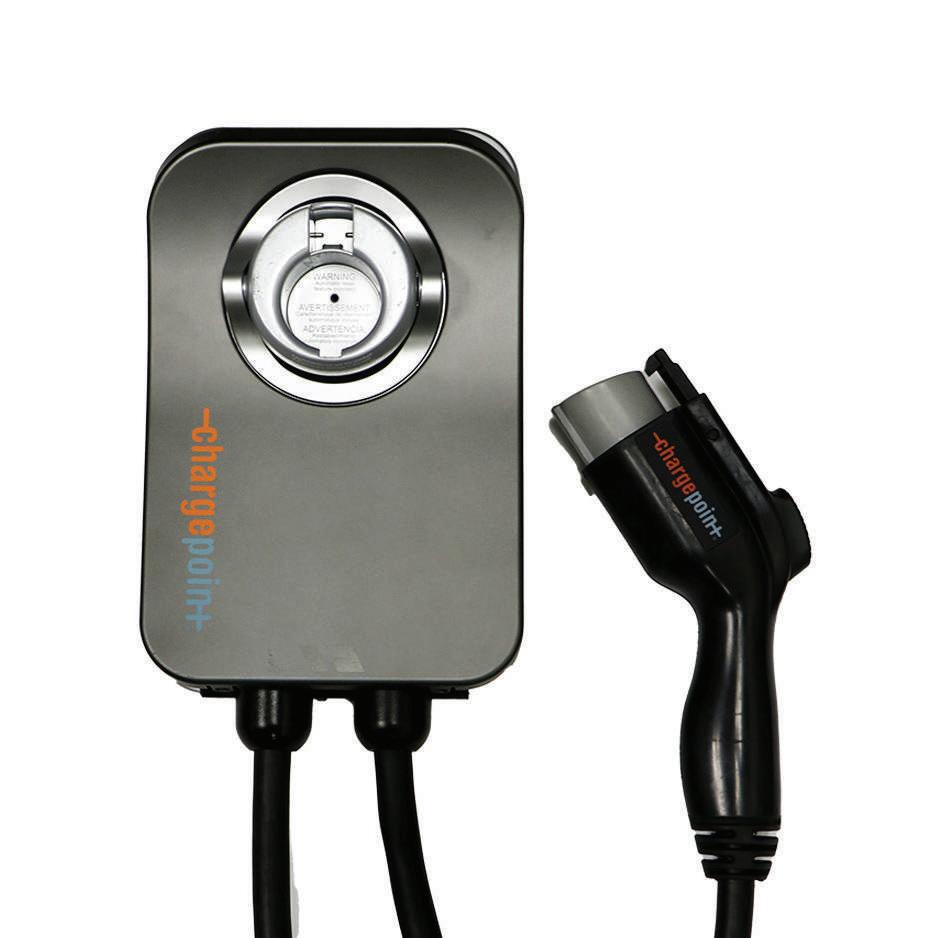
ChargePoint’s Express Solo EV charger delivers 600 kW
ABB’s new EV chargers: a distributed system that optimizes power delivery
XCharge and JOJO launch 9 new public EV charging sites in Chicagoland
Pionix’s new Virtual Charger Park offers EV charging infrastructure testing
VEV completes 5 MW heavy truck charging deployment across three UK hubs
Isle of Wight to deploy 1,500 EV chargers

Utility Engie to install 3,000 public EV charging points in Belgium
Duracell selects Driivz as software provider for its UK EV charging network
Everged replaces outdated EV chargers at no up-front cost
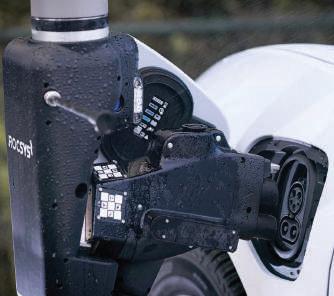
Rocsys unveils multi-bay hands-free charging solution for robotaxi fleets
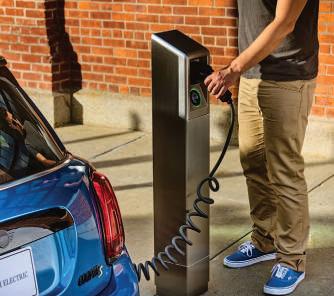
it’s electric to deploy 1,000 curbside EV chargers in Philadelphia
Tesla opens first Megacharger station to Semi customers in California

Publisher Senior Editor
Technology Editor
Segment Leaders
Christian Ruoff
Charles Morris
Jeffrey Jenkins
Joel Franke
Mark Rogers
Jeremy Ewald
Graphic Designers
Tomislav Vrdoljak
Contributing Writers
Jeffrey Jenkins
Charles Morris
Christian Ruoff
John Gartner
John Voelcker
Cover Image Courtesy of
Special Thanks to
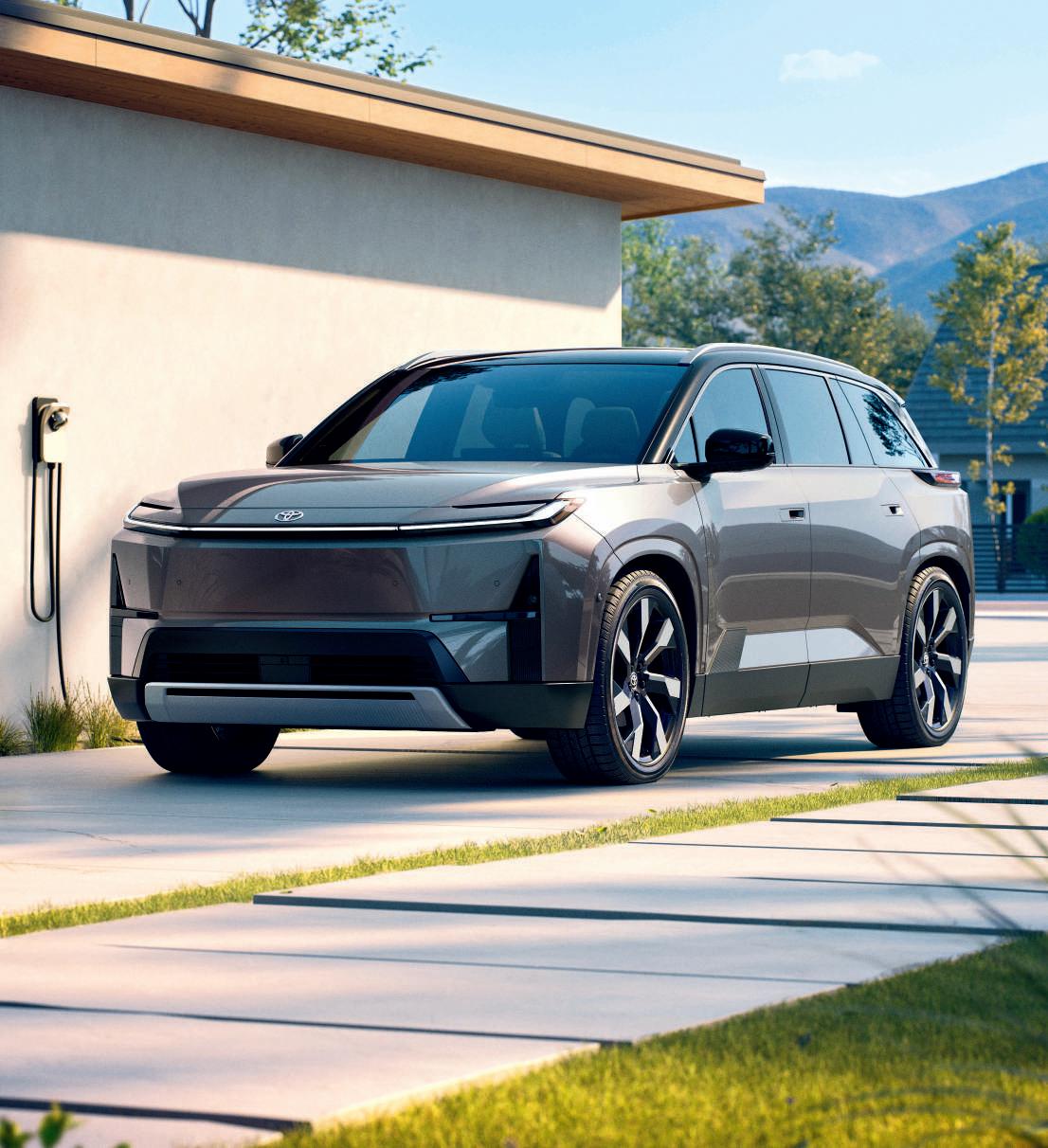
Toyota
Kelly Ruoff
Sebastien Bourgeois
ETHICS STATEMENT AND COVERAGE POLICY
For Letters to the Editor, Article Submissions, & Advertising Inquiries Contact: Info@ChargedEVs.com
AS THE LEADING EV INDUSTRY PUBLICATION, CHARGED ELECTRIC VEHICLES MAGAZINE OFTEN COVERS, AND ACCEPTS CONTRIBUTIONS FROM, COMPANIES THAT ADVERTISE IN OUR MEDIA PORTFOLIO. HOWEVER, THE CONTENT WE CHOOSE TO PUBLISH PASSES ONLY TWO TESTS: (1) TO THE BEST OF OUR KNOWLEDGE THE INFORMATION IS ACCURATE, AND (2) IT MEETS THE INTERESTS OF OUR READERSHIP. WE DO NOT ACCEPT PAYMENT FOR EDITORIAL CONTENT, AND THE OPINIONS EXPRESSED BY OUR EDITORS AND WRITERS ARE IN NO WAY AFFECTED BY A COMPANY’S PAST, CURRENT, OR POTENTIAL ADVERTISEMENTS. FURTHERMORE, WE OFTEN ACCEPT ARTICLES AUTHORED BY “INDUSTRY INSIDERS,” IN WHICH CASE THE AUTHOR’S CURRENT EMPLOYMENT, OR RELATIONSHIP TO THE EV INDUSTRY, IS CLEARLY CITED. IF YOU DISAGREE WITH ANY OPINION EXPRESSED IN THE CHARGED MEDIA PORTFOLIO AND/OR WISH TO WRITE ABOUT YOUR PARTICULAR VIEW OF THE INDUSTRY, PLEASE CONTACT US AT CONTENT@CHARGEDEVS.COM. REPRINTING IN WHOLE OR PART IS FORBIDDEN EXPECT BY PERMISSION OF CHARGED ELECTRIC VEHICLES MAGAZINE.







We’re reading a lot about tipping points, in ection points and no-brainers these days. In many markets, commercial EVs have been beating ICEs on a total cost of ownership basis for years. Now, as battery prices drop and diesel prices rise, electric increasingly beats diesel, period. Electri cation is becoming a necessity, because eets running diesel can’t compete with EVs on a cost-per-mile basis.
A few recent news items that indicate that the landscape has shi ed:
• 56% of new city buses registered in the EU in 2025 were BEVs. (Fuel cell buses are clinging to a 4% market share, thanks to subsidies.)
• Electric heavy trucks have reached a 25% market share in China (yes, we’re talking about heavy long-haul trucks, o en considered to be the hardest vehicle segment to electrify). Electri cation is causing a measurable decrease in China’s diesel consumption.
• In 2025, Australian mining giant Fortescue ordered 360 Liebherr T264 battery-electric haul trucks—194-ton behemoths with 3.2 MWh battery packs. One analyst predicted (before the start of the Iran war) that the company’s $4-billion investment would save it $400 million in fuel costs per year.
• Europe saw a 34% year-on-year surge in passenger EV registrations in April. e point is worth restating: EVs remain an unstoppable long-term force in the auto industry, globally and in North America. In the US, some recent headlines have badly overstated the case against EVs, relying on sales comparisons stripped of context to declare that consumers are done with electrics. As John Voelcker reports (page 42), that narrative is nonsense.
A lot of US EV demand was borrowed from the future. Analysts estimate that the expiration of purchase incentives on September 30 pulled at least 125,000 EV sales into Q2 and Q3 of last year, creating a de cit that the market is now working through. We’re also learning more about which EVs buyers actually want: compact electric SUVs, yes; huge, expensive electric pickups, not so much. As lower-cost EVs arrive this year and next, they are likely to broaden the market. Many foreign automakers, however, are largely leaving the US out of their lower-cost EV plans. Toyota has 30 battery-electric models in the pipeline, but only a few of these are expected to be sold here.
Other sectors of the US EV industry are thriving. Tesla has come out of its hibernation to start volume production of the long-awaited Semi, which boasts better specs and much lower prices than anything the legacy truck-makers can o er. Truck-as-a-service provider WattEV has ordered 370 units. Chinese brand Windrose has also started selling electric semi-tractors in the US.
Tesla is already stealing market share from legacy brands—in the last round of applications for California’s vouchers for Class 8 tractors, the Tesla Semi received 90% of the applications. And CARB just announced a new $250-million pot of funding for electric medium- and heavy-duty trucks. No wonder the legacy truck OEMs are furiously lobbying and litigating to eliminate fuel economy and emissions standards in the US and Europe.
In the charging infrastructure space, industry heavyweights such as Tesla, EA and new entrant IONNA are rolling out next-gen, more user-friendly charging stations at a rapid clip. Meanwhile, retailers from Walmart to Wawa to Bojangles are deploying their own branded charging networks.
Mobile and semi-mobile charging has emerged as a way for companies to avoid long waits for utility interconnects and to future-proof their installations. See our interview on page 64 with DC-America President Nathan Bowen.
Christian Ruoff | Publisher EVs are here. Try to keep up.





At Parker, we’re not just keeping pace with the electrification revolution. We’re leading it. Our diverse portfolio of cutting-edge technologies combines innovation with efficiency to drive the future of electric vehicles.
Our highly engineered solutions, including thermal management materials, adhesives and coatings, enhance safety, reliability and performance across EV applications.
Join us at the Electric & Hybrid Vehicle Technology Expo in Stuttgart, Germany!

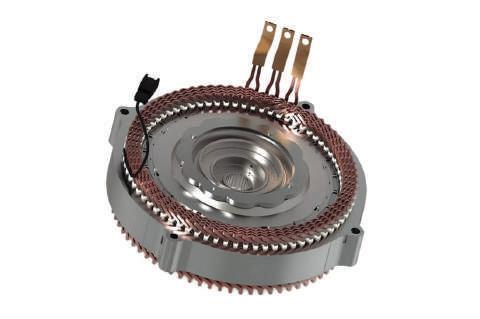
BorgWarner has secured three electric motor contracts with Asian OEMs—one in South Korea and two in China—spanning battery electric, plug-in hybrid and hybrid vehicle applications. Production across the three programs runs in phases from June 2026 through September 2027.
In South Korea, BorgWarner will supply a stator assembly for a new battery-electric B-segment SUV. Production is to begin in September 2027. e contract follows BorgWarner’s earlier hairpin eMotor supply to the same customer for a multi-purpose vehicle platform.
In China, BorgWarner secured a P2 motor contract using its patented S-winding technology for global plugin hybrid platforms. e motor is designed for integration with 1.5-liter and 2.0-liter turbocharged engines, targeting compact packaging and high power density in hybrid drivetrains. BorgWarner says S-winding enables high performance in a smaller footprint than conventional winding con gurations. Production is expected in February 2027.
e third contract, also in China, covers a generator motor for a three-speed hybrid transmission system. is motor uses BorgWarner’s ultra-short hairpin winding, which the company says improves e ciency and packaging over standard hairpin approaches. Production launches in June 2026, supplying both domestic Chinese programs and hybrid vehicles for export markets.
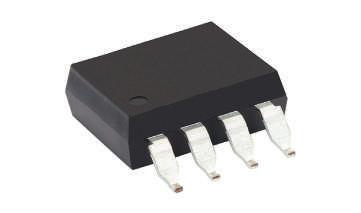
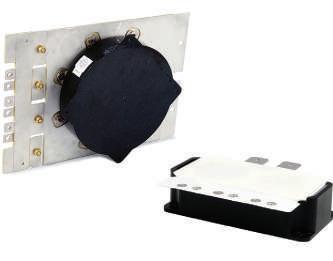
Vishay Intertechnology has introduced two AEC-Q102-quali ed optocouplers designed for galvanic isolation in high-voltage EV applications—on-board chargers, DC/DC converters and battery management system isolation stages. e VOWA617A and VOWA618A come in a widebody SMD-8 package and are built around the combination of high creepage distance and comparative tracking index (CTI) that grid-connected automotive isolation stages require. Creepage distance—the path length along a surface between two conductors—directly determines how much voltage a component can withstand without surface arcing or tracking. At ≥11 mm, these devices o er 38% more margin than the typical 8 mm found in competing solutions, according to the company. e CTI of 600 gives them a Material Group 1 rating, the highest insulation category; standard optocouplers typically come in at CTI 175. Together, those two gures determine whether a component meets reinforced insulation requirements for grid-connected equipment.
e core electrical specs: VIORM of 1,500 Vpeak and VIOWM of 1,060 VRMS—increases of 6% and 19%, respectively, over competing devices—backed by a 5,300 VRMS isolation voltage and VIOTM of 8,000 Vpeak. e collector-emitter voltage is rated to 80 V. Current transfer ratio runs 50-600%, with the CTR spec measured at an input current of 5 mA for the VOWA617A and 1 mA for the VOWA618A. Operating range is -40° C to +125° C with a junction temperature capability of +145° C—well beyond the +85° C ceiling of typical consumer-grade optocouplers.
Samples and production quantities are available now, with 8-week lead times.


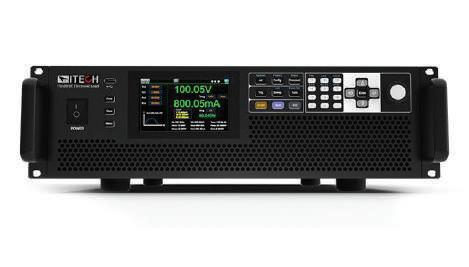
ITECH launches IT8100A/E DC electronic loads with 1.8 MW parallel capacity and 150 A/µs slew rate
ITECH has released the IT8100A/E Series DC electronic loads, a high-power test platform targeting EV charging station validation, power battery testing, fuel cell testing and AI power supply evaluation. e series scales from single units to parallel systems reaching 1.8 MW.
Power density is 7.2 kW per 3U rack unit, scaling to 86.4 kW in a 37U cabinet. e dynamic slew rate is 150 A/μs, designed to reproduce rapid current transients in switching power supplies, charging systems and fuel cells. A 1.5× short-term over-power capability handles peak load conditions without requiring an oversized test con guration. A dedicated high-current variant, 60 V / 2,400 A / 6 kW, targets next-generation AI GPU and computing power supply testing where supply voltages are low and currents are high.
e series spans four voltage levels: 60 V, 150 V, 600 V and 1,200 V. e 1,200 V ceiling covers testing for 800 V
EV charging architectures, in which DC link voltages at the load can exceed standard 400 V infrastructure levels. ree product families—the IT8100A Series, IT8100E Series and the dedicated high-current load—support exible parallel con gurations from benchtop scale to MW-class platforms.
Ba ery designs that stay in-step with the evolving EV landscape begin with the Avery Dennison por olio of pressure-sensi ve EV Ba ery tape solu ons. Our adhesive technologies help pack manufacturers and OEMs:
• Reduce ba ery flammability
• Boost dielectric strength
• Op mize design and assembly
Discover our unique and comprehensive tape solu ons at tapes.averydennison.com/evba ery or scan below:




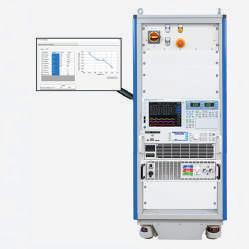
Paci c Power Source has launched the SmartTSPV Inverter Test System, a pre-integrated compliance testing platform targeting solar inverters, EVSE with vehicle-to-grid (V2G) capability and other distributed energy resources. e company says any grid-tied device that needs to meet IEEE 1547.1, UL 1741 SB or EN50549 certi cation is a candidate. e system was developed with QualityLogic and Tektronix Elektro-Automatik and is available now.
As the company explains, UL 1741 SB is increasingly required for V2G-capable chargers connecting to the utility grid, and the validation process—covering voltage and frequency ride-through, reactive power control and anti-islanding—involves the same complex, sequenced grid support function testing that has made IEEE 1547.1 certi cation a bottleneck for solar inverter makers. A synchronized test environment is critical: grid events, inverter responses, measurement capture and protocol commands must align precisely. SmartTS-PV combines an AC grid simulator, DC power supply and load, measurement and data acquisition hardware, and QualityLogic’s automated pass/fail so ware into a single platform that handles that coordination automatically.
Paci c Power Source and QualityLogic cite approximately 32 hours of actual test time against IREC’s 8-12 week estimate for manual NRTL testing.
Targeted customers include string, central and hybrid inverter manufacturers, energy storage developers, test labs, utilities and certi cation bodies.

6K Energy and CRG Defense have entered a seven-year agreement to establish a domestic supply chain for cathode active materials (CAM) powering defense battery systems. Under the deal, CRG Defense will source single crystal NMC811 from 6K Energy’s North Andover, Massachusetts facility, where additional capacity is to be added in late 2026. e agreement includes a Quarterly Purchase Plan to maintain consistent supply for CRG Defense’s programs.
When 6K Energy’s PlusCAM facility in Jackson, Tennessee comes online in early 2028, it will become the primary production source. e facility uses 6K Energy’s proprietary UniMelt platform—a microwave plasma-based process for manufacturing advanced materials—to produce NMC811 and other high-nickel cathode chemistries.
e timing is tied directly to federal mandates. e FCC’s December 2025 ban on foreign-produced UAS critical components and Section 842 of the FY 2026 National Defense Authorization Act—which prohibits the Department of Defense from procuring batteries from foreign entities of concern—have created urgent demand for compliant domestic supply chains. CRG Defense manufactures battery cells and packs at US facilities for drone platforms and other defense applications.
“Rebuilding a resilient US battery supply chain requires both early commitment and long-term partnerships,” said Saurabh Ullal, President of 6K Energy. “Our PlusCAM facility is designed to deliver sustainable battery cathode material at scale for the most demanding defense applications.”
Patrick Hood, CEO of CRG Defense, said the deal means drone platforms “will now be powered by technology that is truly American-made from the chemistry up.”
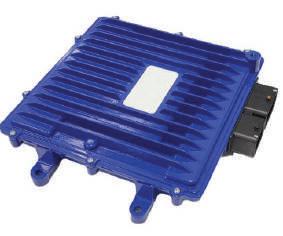
New Eagle has launched the OpenECU NX3, a vehicle control platform that combines Megawatt Charging System (MCS) and Combined Charging System (CCS) charging protocols with full vehicle supervisory control—powertrain, charging and auxiliary management—in a single ECU. New Eagle says it’s the rst production-ready controller to integrate both charging standards alongside supervisory control in one unit.
e NX3 runs on New Eagle’s OpenECU platform and Raptor toolchain, supporting both model-based design and C-code development work ows from early development through production. It’s designed to meet ASIL-D functional safety requirements and ISO 21434 cybersecurity standards. New Eagle credits expanded hardware and so ware capabilities from its acquisition of Pi Innovo for enabling the platform.






Commercial EV programs running MCS—the high-power DC charging standard for heavy-duty vehicles—alongside CCS and a separate vehicle supervisory controller typically require multiple ECUs, each carrying its own integration and validation overhead. More controllers mean more wiring, more failure points and more development cycles.
“We’re eliminating multi-controller complexity and delivering a single, production-ready platform that accelerates deployment of next-generation EV systems,” said Kevin Alley, Chief Commercial O cer at New Eagle.













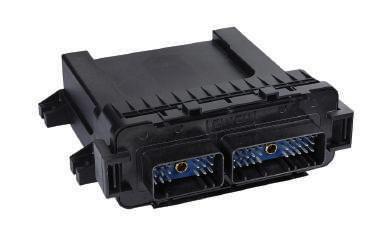
chargebyte has introduced the Charge Control L MCS (CCL MCS), a stand-alone charge controller that handles the complete ISO 15118-20 communication and safety stack for Megawatt Charging System-equipped trucks, buses and heavy machinery. e company is now accepting pre-orders for samples.
e CCL MCS sits in the low-voltage path between the MCS inlet and the vehicle, and eliminates the need for additional ECUs. It’s built around two NXP S32K146 processors, and implements charging communication over 10BASE-T1S Ethernet—the single-pair automotive Ethernet layer speci ed for MCS—replacing the power line communication (PLC) approach used in CCS deployments. Interfaces include CAN-FD and CAN with vehicle CAN at 500 kbit/s, native support for Isabellenhütte IVT-S and IVT-3 current shunts, and UDS-based rmware updates.
Integrated functions include dual HV interlock, HV switch control with weld detection, a full inlet controller (ID, CE, PE, lock, button), temperature monitoring on both DC paths and LED control. Protection rating is IP6K9K (ISO 20653), operating range is -40° C to +85° C, supply input is 9-32 V, and the Cinch housing measures 153 × 146 × 56 mm and weighs 400 g. Each unit ships with a per-unit end-of-line test.
10BASE-T1S o ers lower latency and better noise immunity than PLC—signi cant at the power levels MCS targets.
With this new controller, chargebyte o ers heavy-duty OEMs and body builders a way to o oad the entire ISO 15118-20 stack to a quali ed, production-ready ECU, rather than developing it in-house.
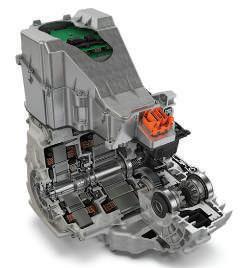
Schae er will launch its MultiMode dedicated hybrid transmission (DHT) into volume production this year with multiple European and Asian vehicle manufacturers. e launch comes as the company reports growing customer demand for hybrid powertrain solutions—not just as a transitional technology, but as a long-term product category in markets outside Europe.
e MultiMode DHT is a compact integrated unit that weighs 125 kg and delivers up to 145 kW of peak power. It packages two electric machines, power electronics and hydraulics for clutch actuation, cooling and parking lock into a single module. Schae er supplies the associated so ware and control functions from a single source.
ree driving modes are supported: electric-only, serial and parallel. In serial mode, the internal combustion engine runs at a xed e ciency point decoupled from wheel demand—a well-established approach for keeping ICE fuel consumption low during mixed-mode operation.
e company has also shown other new production-ready components aimed at hybrid ICE applications. e spoke damper, a torsional vibration absorber mounted directly in the crankcase, eliminates the need for an external cranksha seal, cutting friction and packaging volume. It’s already in volume production at Chinese manufacturers, and additional production starts are planned for later in 2026. Schae er’s latest-generation camsha phasing—which uses a brushless DC motor with integrated electronics for variable valve timing across load and speed ranges—entered production at the company’s Taicang, China plant last year.
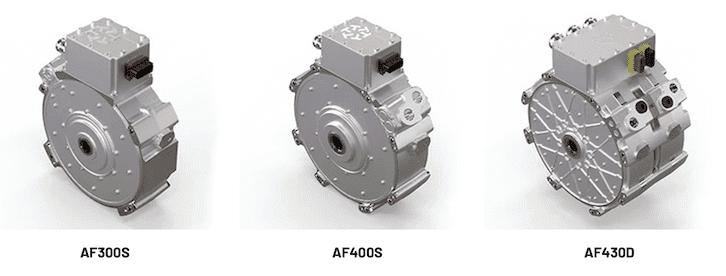
Turntide Technologies has expanded its axial ux motor lineup with two new models. e AF300 delivers more than 192 Nm of continuous torque, and the AF400 delivers up to 290 Nm. Both are available in single- and double-stack con gurations, giving OEMs a range of performance options in the same compact axial ux form factor.
e previously announced AF430S (single-stack) and AF430D (double-stack) are the rst in the portfolio to use cast casings, which Turntide says improve durability, consistency and production cost e ciency. e cast casing design is built for high-volume production. Turntide plans to extend cast casings across its full axial ux lineup.
Axial ux motors’ low-pro le design allows installation in space-constrained platforms without platform redesign—a key pitch to OEMs and eet operators looking to hybridize or electrify existing equipment. For
diesel eet operators, hybrid retro ts using these motors can reduce fuel consumption by 10% to 20%, according to the company.
“Hybridization is gaining momentum because it delivers what we call a dual green e ect,” said Steven Hornyak, CEO of Turntide. “It reduces fuel consumption and emissions while improving operating economics at the same time. Turntide’s axial ux motors make it possible to deliver hybrid systems where space and performance have typically been limiting factors.”


ROHM says its new 5th-generation SiC MOSFETs, supplied under the EcoSiC brand, deliver approximately 30% lower on-resistance during high-temperature operation compared to its 4th-generation devices. e comparison is at Tj=175° C with equivalent breakdown voltage and chip size. e reduction in resistance was enabled by structural enhancements and manufacturing process optimization, not geometry scaling.
Lower on-resistance at high operating temperatures is important for traction inverter design. SiC MOSFET on-resistance rises with temperature, and devices run hottest under peak load—exactly when losses are most critical. A 30% reduction at Tj=175° C means there is less conduction loss per switching cycle, which supports either smaller packaging or higher continuous output from the same chip area, or some combination of both.
Target applications include xEV traction inverters, OBCs, DC-DC converters and electric compressors. ROHM’s 4th-generation—which began sampling in June 2020—has been broadly adopted in automotive and industrial applications. e 5th generation targets the same segments with improved high-temperature e ciency.
ROHM has been shipping 5th-generation bare dies since 2025, and completed full device development in March 2026. Discrete device and module samples are scheduled for July 2026 deliveries, and additional breakdown voltage and package options are planned.
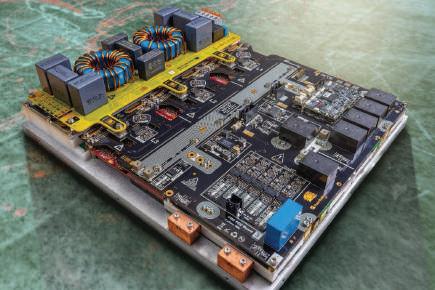
A European consortium led by Fraunhofer IZM is developing a 22-kilowatt on-board charger with a volume of 4 liters—a third of the 12-liter market average for comparable systems today—using monolithically integrated, bidirectional gallium nitride (GaN) semiconductors from In neon. e work is part of the EU-funded HiPower 5.0 project, running from August 2025 through June 2028.
e enabling technology is the bidirectional GaN switch. Conventional OBC designs use separate semiconductors for forward and reverse current ow. e monolithic GaN component handles both directions in a single device, reducing component count and enabling circuit topologies that weren’t practical with silicon. Fraunhofer IZM demonstrated a non-bidirectional 22 kW OBC prototype in 2024—HiPower 5.0 adds the bidirectional GaN capability and targets further e ciency and cost improvements.
Fraunhofer IZM treats design decisions as a whole-system problem rather than a component-by-component exercise. e charger features multiple electronic components embedded directly into the circuit boards, a design that shortens electrical paths, reducing parasitic losses and saving space.
e HiPower 5.0 project addresses 6 use cases in the automotive and marine shipping elds. It has a budget of €33.7 million, and brings together partners from 10 European nations, including OEMs, Tier 1 and Tier 2 suppliers, power electronics specialists, universities and research institutions. Notable participants include In neon, Mercedes-Benz, Mahle, Valeo, Siemens, Vitesco Technologies, TDK Electronics and AVL.































DECEMBER 7 - 10, 2026
SAN DIEGO, CA
San Diego Convention Center



































FOR MORE THAN 25 YEARS, the Advanced Automotive Battery Conference (AABC) has brought together the leaders shaping the future of automotive battery technology. Established to assess the current state of the industry while providing informed perspectives on what lies ahead, AABC remains a trusted forum for understanding the technologies and strategies driving vehicle electrification worldwide.














The program explores the critical technical and business challenges influencing the pace and direction of electrification, from nextgeneration battery chemistries and performance requirements to manufacturing scale-up and supply chain dynamics. Through in-depth presentations and strategic discussions, attendees gain valuable insight into the evolving needs of the global automotive market.
Join chief battery technologists from leading automotive OEMs as they share development priorities and projected battery requirements, alongside key suppliers presenting their latest innovations and future roadmaps. AABC offers a unique opportunity to connect with decisionmakers across the battery ecosystem and position your organization at the forefront of this rapidly advancing industry.

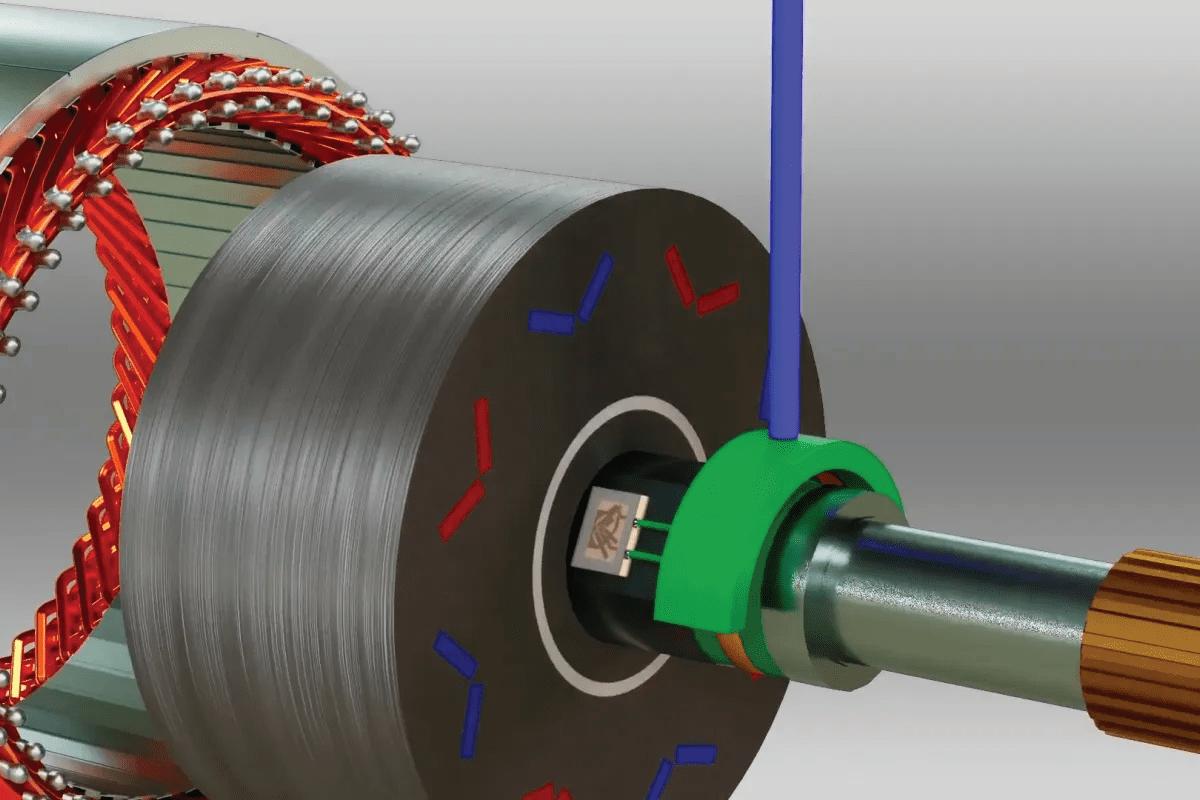
Transense Technologies has landed a role in a Cummins-led project to develop a sensor-enabled smart electric motor for heavy-duty zero-emission vehicles.
e 12-month project, called DriveSense, is backed by the Advanced Propulsion Center’s R&D program and partially funded by the UK government through the DRIVE35 Innovation Fund.
e DriveSense project is intended to help develop next-generation smart electric drive systems and power electronics for heavy-duty vehicles that can be manufactured at scale in the UK. e project partners plan to develop and demonstrate a motor that can measure conditions inside the machine while it operates.
Transense is contributing its SAWsense technology, which uses Surface Acoustic Wave sensors to capture real-time torque and temperature data from inside electric motors. is kind of embedded sensing can give motor and drivetrain developers a better view of how a system is performing under load, and where e ciency losses, thermal stress or durability issues may be showing up.
e combination of real-time sensing with new motor and inverter technologies is expected to support more e cient and reliable electric drive solutions.
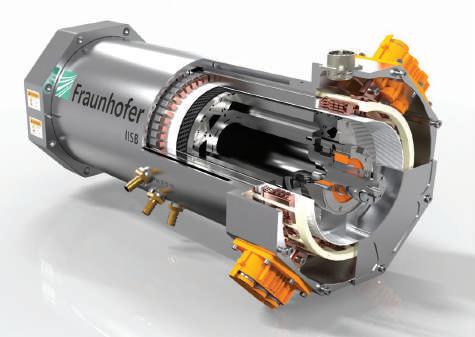
Fraunhofer IISB has developed a 750 kW permanent magnet traction motor for hybrid-electric regional aircra . e motor was developed entirely at Fraunhofer IISB—concept, CAD, manufacturing, assembly and validation.
e motor is Fraunhofer IISB’s contribution to Project AMBER, a Clean Aviation EU program in which GE Aerospace is also taking part. e program aims to develop a ~2 MW hydrogen fuel cell hybrid-electric propulsion system for regional aircra . e parallel hybrid architecture pairs the IISB motor/generator with Avio Aero’s Catalyst turboprop engine.
Fraunhofer’s motor achieves 8 kW/kg power density in a 94 kg package, thanks to a combination of thin-lamination electrical steel, hairpin windings and direct oil-spray cooling.
e machine uses NO15 (0.15 mm) electrical steel—a thin-lamination grade that reduces eddy current and AC losses at high rotational speeds.
e stator uses a 4×3-phase hairpin winding arrangement with four electrically decoupled sections, each driven by its own inverter. Distributing the windings this way improves fault tolerance—a failure in one section doesn’t take down the others. Hairpin windings also allow higher current density in the slot and better thermal contact with the stator core than conventional round-wire coils. Direct oil-spray cooling manages the resulting heat load, enabling the machine to deliver rated power at a 65° C coolant temperature.











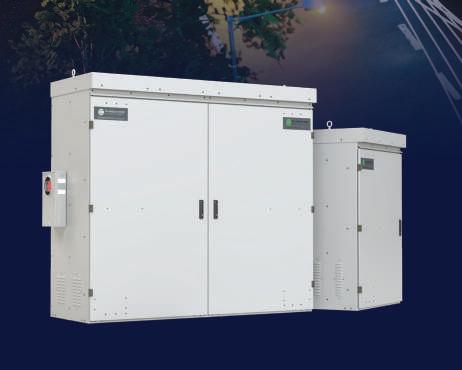



Coolant provider Arteco has added two new coolants to its Freecor EV Milli range—Freecor EV Milli 20 (SiOAT) and Freecor EV Milli 30 (P-OAT)—completing a three-product lineup of low-electrical-conductivity (LECC) formulations for indirect cooling systems in EVs. e existing Freecor EV Milli 10 uses standard OAT technology. e two new additions feature silicate-OAT and phosphate-OAT variants.
All three are monoethylene glycol (MEG)-based and maintain electrical conductivity below 100 µS/cm, compliant with China’s GB 29743.2 standard and ASTM D8566 for low-conductivity EV coolants. ey’re intended for indirect cooling of battery packs, electric motors and power electronics—the circuits where coolant leaking into a high-voltage system poses a short-circuit risk.
Low electrical conductivity is a critical property for EV coolants. Conventional antifreeze runs at conductivities orders of magnitude higher, which is acceptable in combustion engine cooling systems but problematic near high-voltage BEV components. Keeping conductivity below 100 µS/cm limits fault current if coolant contacts live components.
According to Arteco, the thermal performance of its coolants supports battery longevity and faster charging cycles. e products also include a brazing ux compensation package that protects aluminum heat exchangers from residue buildup, and organic corrosion inhibition. e three OAT variants give manufacturers exibility to match coolant chemistry to their system architecture—OAT, Si-OAT and P-OAT di er in inhibitor longevity, silicate or phosphate contributions, and interactions with aluminum components. All variants are available with bio-based or recycled base uids under Arteco’s ECO coolant program. Freecor EV Milli 20 and 30 are now available through Arteco’s distribution network.
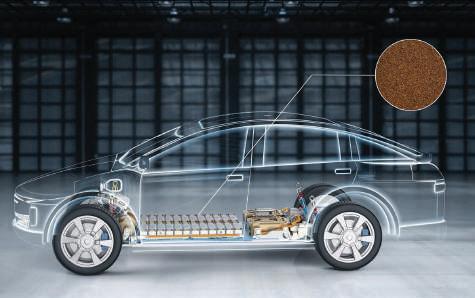
Amorim Cork Solutions has developed a new cork-based engineered composite designed to contain thermal runaway in both EV battery modules and stationary energy storage systems. e new ETP058 combines thermal insulation, ame resistance and mechanical compressibility in a single material.
e composite has a thermal conductivity of 0.054 W/m·K and meets UL94 V-0 ammability rating for samples thicker than 2 mm. Flame exposure testing at temperatures approaching 1,000° C showed a gradual and controlled rise in backside temperature, which Amorim says demonstrates the material’s ability to slow intercell heat transfer during a thermal runaway event. ETP058 also compresses under mechanical load, allowing it to maintain contact and structural stability within a module during high-temperature events.
ETP058 combines cork granules with a re-retardant formulation. Cork’s microcellular structure provides naturally low thermal conductivity, resilience and low weight—properties that translate to cell-separator and module-enclosure applications where mass and compressibility both matter. Cork is harvested from the bark of the cork oak without felling the tree, making it a renewable raw material.
Amorim has not yet announced speci c customer programs or a commercial availability date for ETP058.




























































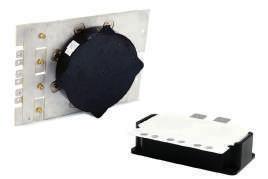
Peak Nano and Advanced Conversion have announced a partnership to co-develop DC-link capacitor solutions engineered speci cally for 800 V+ SiC inverter systems in EVs.
DC-link capacitors sit between the battery bus and the inverter in an EV powertrain, smoothing voltage ripple and absorbing switching transients. SiC MOSFETs switch far faster than the silicon IGBTs they replace, which drives both higher dV/dt and more heat into the capacitor—well beyond what conventional designs based on biaxially oriented polypropylene (BOPP) lm were built to handle.
e collaboration pairs Peak Nano’s NanoPlex LDF (Low Dissipation Factor) capacitor lm with Advanced Conversion’s Power Ring capacitor platform.
NanoPlex LDF maintains a dissipation factor below 0.0004 up to 150° C. Conventional BOPP lm can’t match this headroom, Peak Nano explains, as BOPPbased designs require signi cant derating at the temperatures typical in high-power SiC inverters.
e Power Ring platform tackles another key constraint: commutation loop inductance. Its ultra-low-inductance architecture reduces voltage overshoot at SiC switching events, so inverter designers can avoid the derating and oversizing that higher-inductance capacitor packages typically require.
Peak Nano CEO Jim Welsh said the partnership “puts the right lm and the right manufacturing platform together for the rst time,” and establishes “a new benchmark for DC-link performance in e-mobility on land, sea and air.”
Target applications include Formula E and high-performance automotive, electric buses and heavy trucks, o -highway vehicles and electri ed aviation.
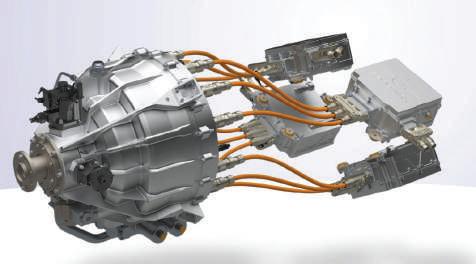
e FAA has published nal special conditions for ZeroAvia‘s Model ZA601 electric engine, establishing the bespoke regulatory requirements the company must satisfy to certify its 600 kW propulsion system for commercial use in aircra . e rule took e ect March 18.
e ZA601 is an electric motor, controller, and high-voltage electrical system that powers the propulsion sha in ZeroAvia’s ZA600 hydrogen-electric powertrain.
e ZA600 feeds DC power from a hydrogen fuel cell through bidirectional inverters to a direct-drive motor running at 2,200 rpm. It is designed for 10- to 20-seat turboprop-class aircra certi cated under Part 23 of FAA regulations.
In US aviation certi cation, special conditions are used when a technology has “novel or unusual design features” that existing rules don’t cover. Part 33—the FAA’s engine air-worthiness standard—was written for turbine and reciprocating engines. It doesn’t address high-voltage electrical systems, motor controllers, or the failure modes speci c to electric propulsion. Rather than apply rules written for fundamentally di erent hardware, the FAA writes bespoke requirements. Getting them nalized is a meaningful step: it de nes what ZeroAvia must now prove in testing. e ZA601’s conditions cover ratings, operating limits, durability, re protection, overspeed behavior, control systems, vibration, ingestion, containment and high-voltage electrical system safety.
Full certi cation remains some way out. ZeroAvia has said it now aims to earn certi cation of the fuel cell system alone in 2027, and certi cation of the complete ZA600 powertrain up to two years later.
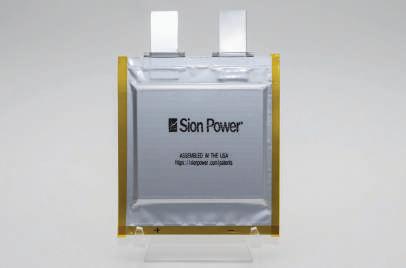
Sion Power says its lithiummetal cells deliver specific energy of 500 Wh/kg
Sion Power is expanding its Licerion lithium-metal battery program to supply cells and battery systems for US defense and aerospace applications. e cells are engineered to yield speci c energy exceeding 500 Wh/ kg. According to the company, this is up to 200 Wh/kg greater than current lithium-ion technology, even with silicon anode enhancements.
Lithium-metal anodes store substantially more energy per kilogram than graphite because lithium metal is lighter and more electrochemically active, the company explains. For weight-constrained platforms, increasing speci c energy from the 300-350 Wh/kg delivered by advanced Li-ion tech to 500 Wh/kg translates directly into longer endurance and expanded payload capacity.
e Licerion platform includes both primary (single-discharge) and secondary (rechargeable) con gurations. Target applications include long-endurance UAS, tactical and counter-UAS drones, missile and loitering munition platforms, autonomous maritime and ground vehicles and space systems.
Sion Power operates a 110,000 sq cell manufacturing facility in Tucson, Arizona. e company is expanding its lithium-metal program in response to US policy— NDAA provisions are designed to support domestic battery supply chains and increase demand for American-manufactured advanced cells.
Sion says it can demonstrate Licerion cells and integrated battery systems today, and expects to begin product shipments in late 2026.
“Our lithium-metal technology provides the stepchange in energy density required to support longer-range missions, increased ight duration and higher payload capability while maintaining a US-based manufacturing capability aligned with national security priorities,” said Pamela Fletcher, CEO of Sion Power.
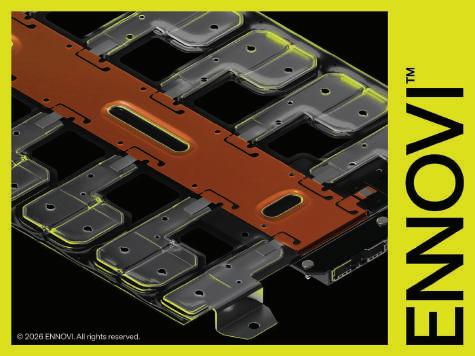
ENNOVI has secured a German patent for its adhesive-free lamination technology for battery cell contacting systems (CCS). e laser-based process eliminates the adhesives used in conventional hot and cold lamination, and the company says the technology is already validated—meaning that OEMs can adopt it without having to prove out the manufacturing process themselves.
CCS components connect and integrate individual cells within a battery module, typically combining busbars, voltage sensor lines and the physical laminate layers that hold them together. Conventional CCS lamination bonds those layers using adhesives in hot or cold press processes. ENNOVI’s laser lamination achieves the same bond without adhesive material. e technology supports cylindrical, prismatic and so pouch cell architectures. With this patent, ENNOVI now o ers three lamination options (hot, cold and adhesive-free) for its CCS designs, allowing battery engineers to choose a process matched to their cell format.
Risk reduction is ENNOVI’s main commercial argument for its new process. Developing a new lamination process in-house takes time and carries quali cation uncertainty. Using a pre-validated, patented technology lets engineering teams skip that work. ENNOVI supports co-development and tailored engineering engagement, which it says allows OEM partners to maintain control over their product roadmaps.
e technology was developed at ENNOVI’s Advanced Solutions Engineering Center in Neckarsulm, Germany, which includes prototyping, testing and R&D capabilities. e facility holds ISO 9001:2015 and TISAX certications—the latter covers automotive supply chain data security requirements.
By Jeffrey Jenkins
Hairpin windings squeeze more copper into a motor’s stator, but the gains depend on frequency, current, insulation and process cost.
The evocatively-named hairpin winding has been touted by various motor manufacturers as the next step in the evolution of EV traction motors for, oh, a good 10-15 years at this point.
But the traditional process of constructing stator windings out of individual strands of magnet wire is still with us, and likely will be for decades to come, because hairpin windings are more of a complementary technology than one destined to upend tradition. In most applications there might only be a slight advantage for one winding technology over the other, especially when manufacturing and lifetime operational costs are
factored in, but that doesn’t mean there are no cases in which one construction will prove to be clearly superior to the other.
e traditional method of constructing a motor winding from individual strands of round (or less commonly, square) magnet wire is supremely exible with respect to the wire gauge that can be handled, the number of turns, the number of wires in parallel, and whether the windings are concentrated or distributed (more on that below). ere is also the not-to-be-underestimated 100+ years of manufacturing experience.
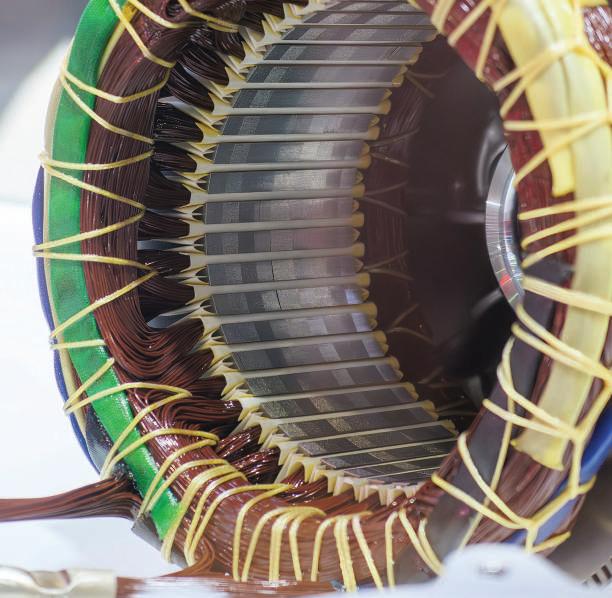
One major downside, however, is the relatively poor ratio of conductor area to slot area, or ll factor (typically 55%), especially when many turns are needed to achieve a given voltage rating, or many wires must be paralleled to reach a given ampacity, because each wire has an insulating coating which uses some proportion
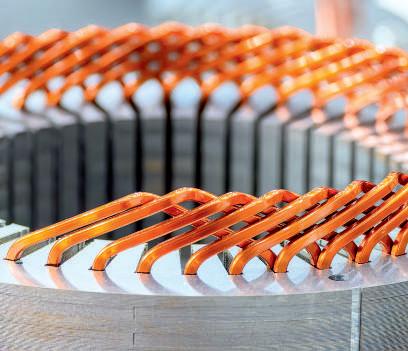
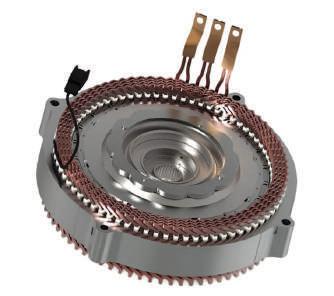
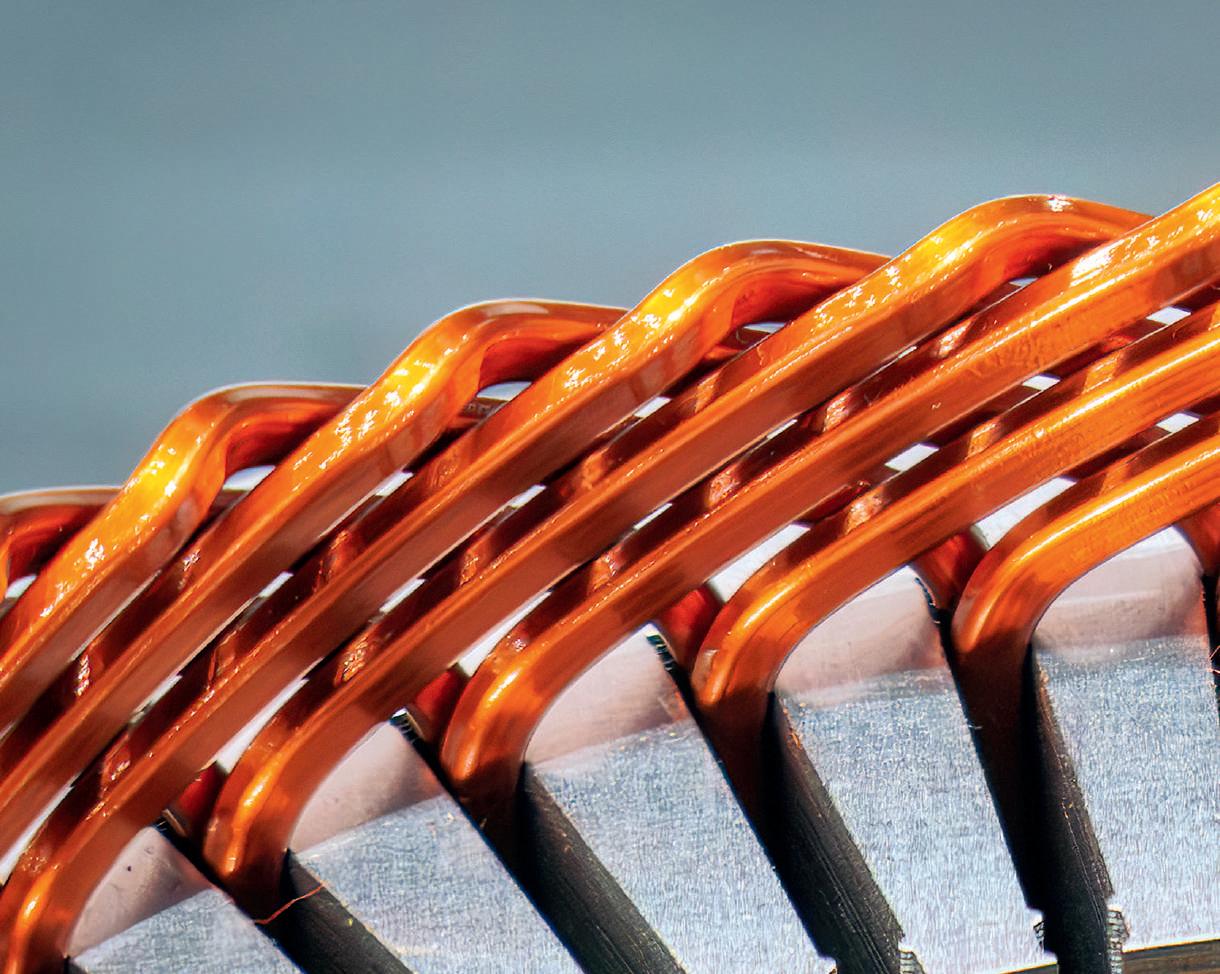
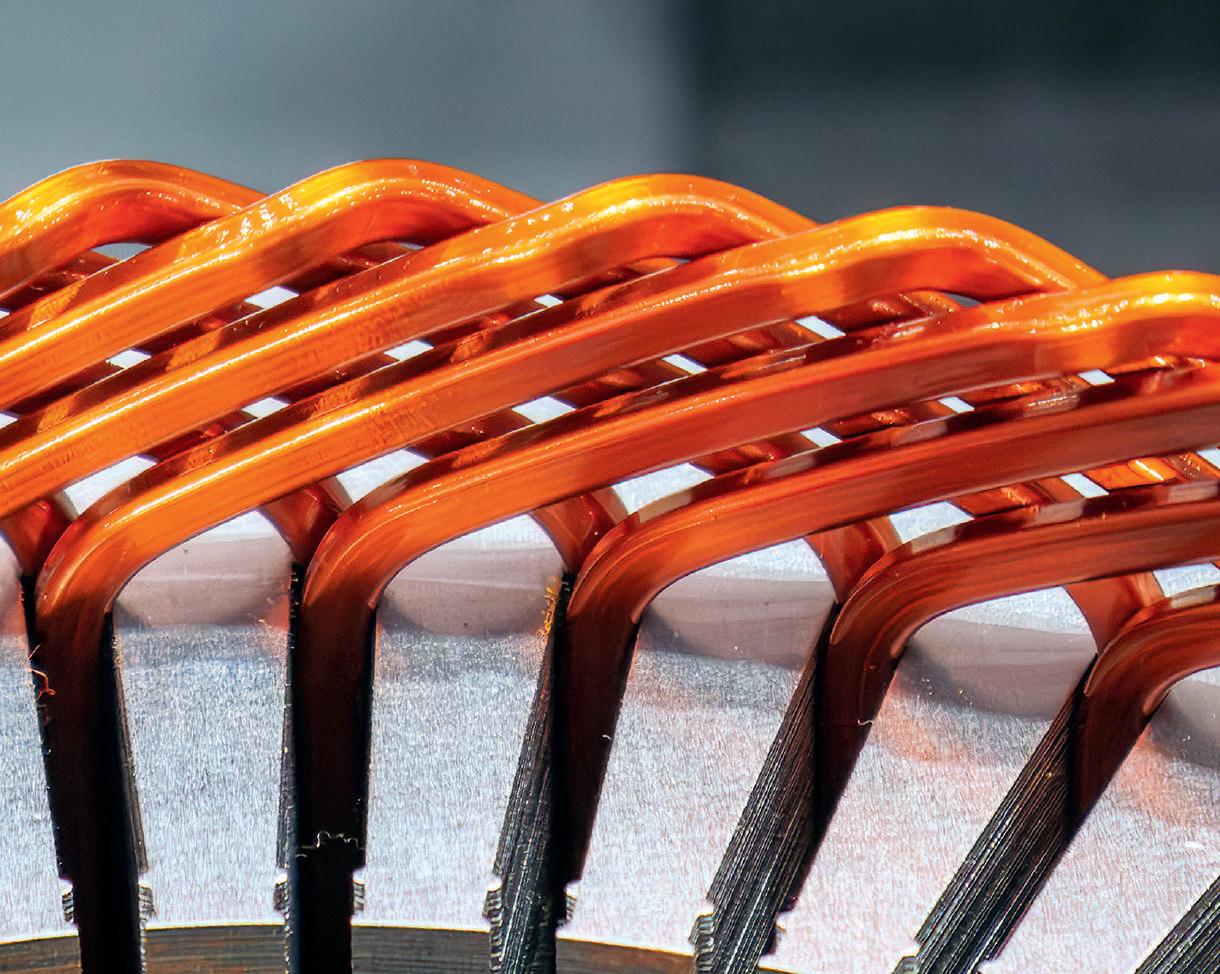
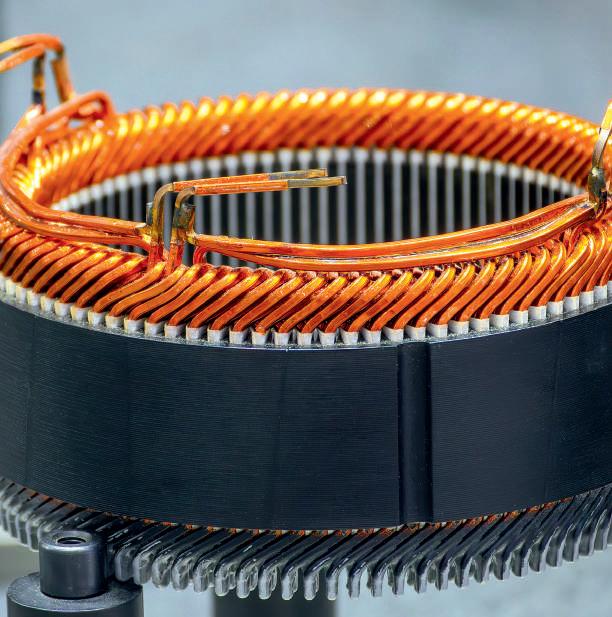
The hairpin winding sidesteps some of the issues that plague wire windings (while introducing others), as it is comprised of short copper segments that are formed into a shape that, well, resembles a hairpin.
of the slot area. is issue can be ameliorated by using a single conductor—especially if it is square—that lls the entire slot width, but at some point the wire will be too di cult to wind—even into preformed coils for later insertion into the stator slots—without risk of damaging the insulation, and/or be too sti to pack nicely inside the slot.
At lower fundamental frequencies (i.e. RPM), such a large wire will also start su ering excessive losses from skin e ect, which is the phenomenon that causes alternating current to penetrate less deeply into a conductor as frequency goes up, increasing its e ective resistance. For example, the skin depth in copper at a reasonable maximum fundamental frequency of 400 Hz (or 12,000 RPM for a 4-pole motor) is 3.3 mm, which gives a wire diameter of 6.6 mm, roughly equivalent to #2 AWG. (A quick-n-dirty equation for the skin depth in mm for copper is 66 / (f^0.5).)
I’m about 99% certain that round magnet wire isn’t even made in such a large gauge (a quick check of the MWS website shows that #6 is their maximum—which is still pretty impressive!), but even if one goes with square wire (which is available in larger sizes), I doubt there is an automatic coil winding machine capable of handling it (and if there is, I really doubt you want to see its price). Setting all that aside for the sake of argument, however, a 6.6 mm diameter wire has an ampacity of 137 A at a current density of 4 A / mm2 (which is ambitious, but not totally unreasonable), resulting in a maximum power rating for a 3-phase AC motor of approximately 95 kW, with a battery voltage of 400 VDC. Going with a 6.6 mm square wire boosts the ampacity to 174 A—because a round wire has 78.5% of the copper area of a square one (Pi / 4)—but the resulting ~121 kW still fails to impress. us, the EV traction motor


Cross Section View
Wire Wound Stator
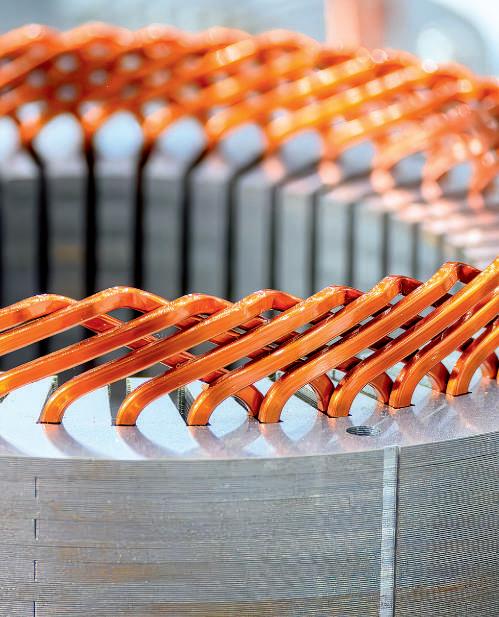
They can be sized to fi t precisely into each stator slot (or vice versa) to achieve a much higher packing factor (typically 70%) without undue risk of damage to the insulation during the insertion process.
using wire windings inevitably needs those windings to have many turns of many wires in parallel to end up in the sweet spot of battery voltage vs phase current vs total losses while still being cost-e ective to manufacture. e hairpin winding sidesteps some of the above issues that plague wire windings (while introducing others), as it is comprised of short copper segments that are formed into a shape that, well, resembles a hairpin. ese hairpin-like segments are then inserted into the stator slots directly and their ends bent so they can be welded one to the next to form a complete winding. It is also possible to preform wire windings into a squarish-shaped coil that can be directly pressed into its respective pair of slots, but even more slot area is required to avoid insulation damage, resulting in an even worse packing factor. Basically then, hairpins being made from a single stout conductor is a bene t rather than a curse, and it also means they can be sized to t precisely into each stator slot (or vice versa) to achieve a much higher packing factor (typically 70%) without undue risk of damage to the insulation during the insertion process. Skin e ect still sets a limit on how thick each hairpin can be, but it is even possible to cheat this devil, somewhat, by making the hairpins rectangular in cross-section—another quick check of MWS shows that they can make rectangular magnet “wire” up to ~10 mm wide, for a total cross-section of 66 mm2, or nearly double that of a round 6.6 mm diameter wire.
Another consideration is the question of how much torque ripple (i.e. vibration) a particular winding arrangement will produce, and the two choices here are “concentrated” or “distributed,” which more or less mean what they say. In a concentrated winding structure, there is one coil for each pole, for each phase (i.e. 6 coils in a 2-pole, 3-phase motor), whereas in a distributed winding structure each pole is split into several coils that overlap each
Bending/Twisting


other by one or more stator slots (sort of like slices of salami on a deli tray). Motors using a concentrated winding structure can be very compact for a given power out-put and are less expensive to manufacture, but su er from high torque ripple and a trapezoidal back EMF waveform, which makes it harder for the inverter to control stator currents accurately and leads to higher losses in the entire inverter-motor circuit from harmonic heating. is structure is never used in EV traction applications (that I’m aware of, anyway). Conversely, motors with a distributed winding structure have much smoother torque output, a sinusoidal back EMF waveform, and better loss distribution (though o en with a higher total copper loss, because there is simply more copper). at said, it is too di cult to bend the rather stout hairpins into the tight-radius turns that a concentrated winding requires, so a distributed structure it is.
Contacting/Welding
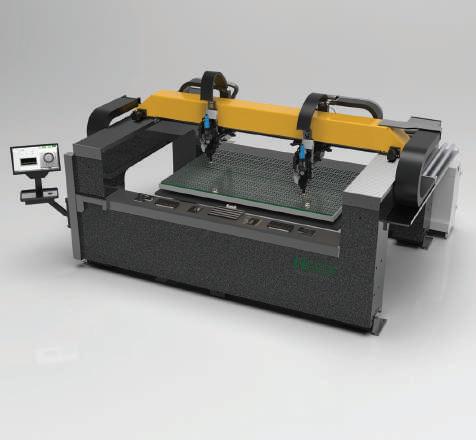
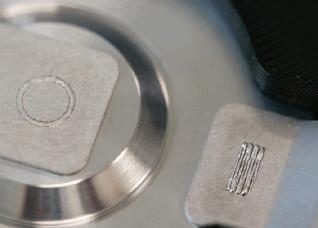
So far the hairpin winding construction sounds like an overall win, but—and there’s always a but—I’m betting some of you have already spotted a major downside, which is the sheer misery of how to join together many dozens— or perhaps many hundreds—of individual hairpins to create each motor winding coil. e usual rst step—o en done before the hairpins are inserted into the stator—is to strip the insulation from the ends so that each can be joined to the next one in the chain. Depending on the speci c type of insulation, it can be removed with heat, a laser, a chemical or an abrasive. Heat-stripping is usually done by dipping the hairpin ends into a molten metal or salt bath, so it is quite possible to process many hairpins at once. at said, there is always the risk that the insulation close to the stripped ends will be damaged by heat conduction, so allowance must be made for this (or plan on potting this end of the winding later on). Stripping with a laser minimizes this issue, and will work on just about any kind of insulation (and even clean the copper underneath), but it is obviously more expensive both in up-front capital and ongoing operational costs, and it is one of the slower methInsertion


It is too diffi cult to bend the rather stout hairpins into the tight-radius turns that a concentrated winding requires, so a distributed structure it is.



8th & 9th July 2026 •

ods, because each wire end has to be processed individually. A few types of magnet wire insulation can be chemically stripped, so can also be processed in batches, as with heat stripping, but with a similar caveat about damage to the insulation near the stripped ends. Finally, stripping with an abrasive—typically a sanding belt—seems to be most popular, as it works on every type of magnet wire insulation, like a laser, but the capital investment and operational costs are far lower. While each hairpin needs to be processed individually, the cycle time is a mere fraction of a second, so it’s fairly quick overall, and there is no risk of damage to the insulation beyond the stripped ends.
A er stripping, one or more hairpins are pressed into their respective pairs of (insulation-lined) slots in the stator (depending on how many turns each coil requires). e stripped ends are then bent to meet up with the next hairpin in the chain. is is fairly easy as long as the hairpin cross-sectional area vs bend angle is reasonable—needing to apply too much force is yet another risk factor for insulation damage, a er all.
Once the ends have been bent to the correct angle, they are physically and electrically bonded together, either with soldering, brazing or welding. Soldering results in a relatively low-strength joint and requires the application of a ux that must subsequently be removed, so it’s not the best choice here. Brazing is basically a hotter version of soldering— ux and ller metal also required—but results in a much stronger joint (typically stronger than the base metal, in fact). Welding is by far the most popular method, and the simplest, least capital-intensive process is resistance welding (aka spot welding), in which the two hairpin ends are pressed together with considerable force by electrodes which send a huge pulse of current through them, causing them to fuse.
e main problem here is that copper is a very good conductor of heat and electricity, so it takes a massive current to spot weld it—easily into the kA or 10s of kA range for a weldment of this size. A more practical method is TIG (Tungsten Inert Gas) welding (or brazing) of just the top of the joint—this has been used to assemble conventional automotive alternators for many years now, so it has proven to be very reliable and cost-e ective (though not necessarily the speediest method). Finally, there is the moderately exotic method of laser welding (ignoring the really exotic method of electron beam welding) which can be very fast, is very easy to reposition to accommodate

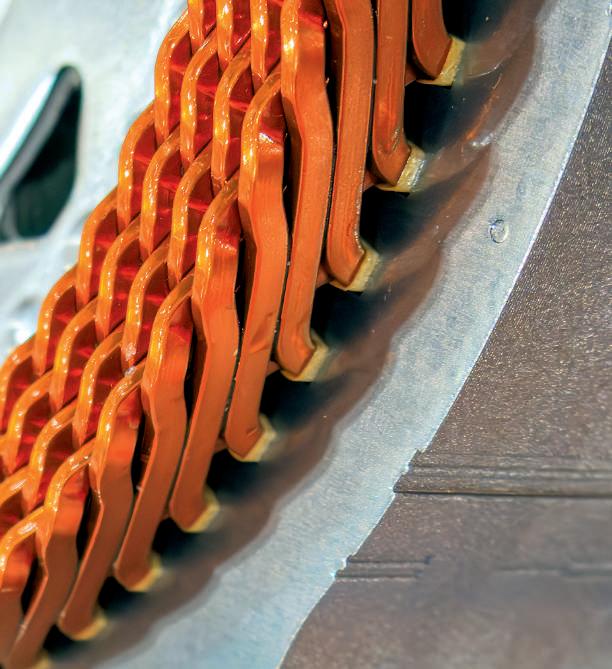
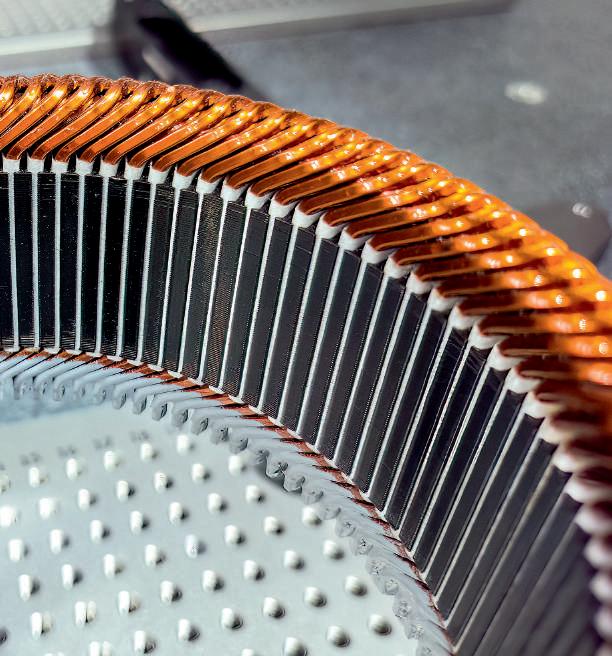
It does seem that the continuously formed process has an overwhelming advantage in assembly time and per-unit cost, so it is likely the way of the future.
di erent designs, and produces a high-quality joint with low porosity, but which su ers from a high upfront capital cost and high operational costs (mainly due to the poor electrical e ciency of lasers and the fact that metals tend to be re ective). e nal step in the conventional hairpin assembly process is to re-insulate the welded ends and, optionally, potting such just to make extra-sure things don’t break apart at high speeds.
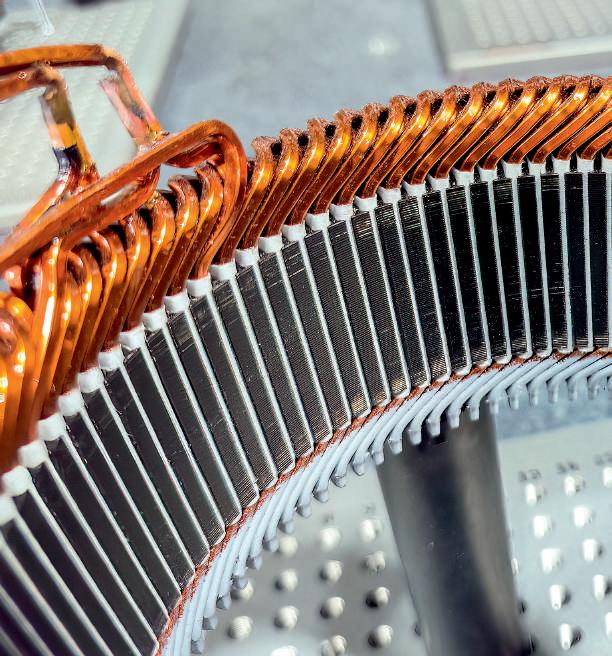
If this description of the hairpin stator manufacturing process still sounds devilishly complex to you—simplied and condensed as it is—well, you’re not alone, hence the feverish pursuit of what is variously referred to as a wave, or continuously formed (or ow) hairpin winding. Buzzword bingo aside, the basic premise is fairly easy to understand, which is to preform an entire coil (or even the entire winding structure) on a tapered mandrel (one reference refers to said mandrel as a “sword,” which I quite liked).
e taper on the sword makes it easier to unload the preformed coil/winding onto a segmented belt that xes each hairpin at the correct distance while is rolled into a cylinder on an arbor with ngers under each hairpin that can push them outwards. e arbor is then inserted into the stator so that its ngers are lined up with the stator slots, at which point the ngers are pushed out to press the hairpins into the slots. In theory, anyway—this is very much a “devil is in the details” kind of thing, and the whole continuously formed hairpin process is a radical departure from the conventional methods of hairpin winding manufacture, which itself is a radical departure from how a wire winding is typically manufactured.
While it is debatable which manufacturing method has the lower overall capital cost, it does seem that the continuously formed process has an overwhelming advantage in assembly time and per-unit cost, so it is likely the way of the future.
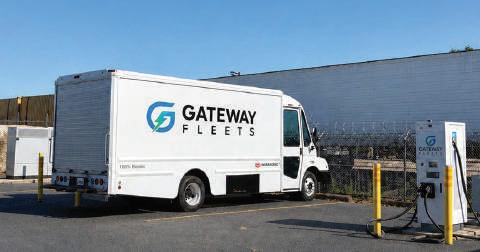
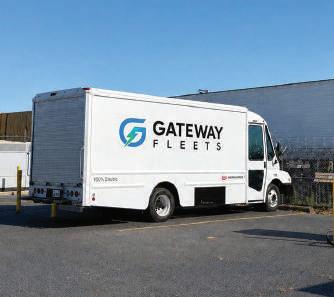
Workhorse, a North American manufacturer of electric trucks, step vans, shuttles and buses, has sold 100 W56 electric step vans to Gateway Fleets, a California-based provider of bundled EV and charging solutions for commercial delivery operators. California truck dealer Kingsburg Truck Center (KTC) will handle delivery.
Gateway Fleets o ers a bundled model to eet operators, including purpose-built electric trucks, onsite charging infrastructure, eet support and exible nancing arrangements. Gateway o ers EVs through a lease structure, enabling operators to enjoy the fuel and maintenance savings of EVs while avoiding large upfront capital expenditures. e company currently operates depots in Southern California, and is scaling its network across the region and beyond.
“Gateway Fleets understands the challenges eets are facing right now, and they’ve built a business model designed to solve it,” said Scott Gri th, CEO of Workhorse. “Gateway’s bundled model enables eets to seamlessly add electric trucks to their eet by handling every aspect of electri cation.”
Gateway o ers Workhorse’s Standard Wheelbase (178inch) step van with a 210 kWh battery pack that provides a nominal range of 150 miles. e van has 1,000 cubic feet of cargo space and a payload of 10,000 lbs.
All W56 models are produced at Workhorse’s manufacturing facility in Union City, Indiana, which is capable of producing up to 5,000 vehicles per year on a single operating shi .
“We’ve seen fuel cost savings of up to 65 percent on active delivery routes, based on a year-long, real-world case study at our Riverside, California site,” said Jamie Miller, Chief Revenue O cer of Gateway Fleets.
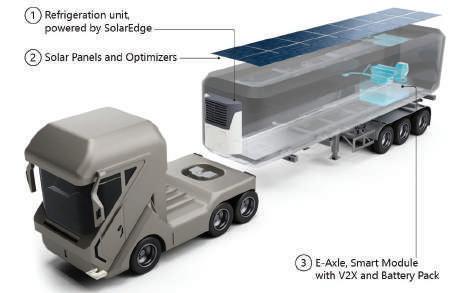
Transport Refrigeration Units (TRUs) represent an excellent use case for electri cation. e units run on inecient diesel generators, and shore power to run electric units (eTRUs) is o en available at sites where refrigerated trailers load and unload.
Nivalis Energy Systems develops electri ed refrigerated transport solutions designed to help eets transition away from diesel-powered TRUs. Designed for both retro t and new trailer applications, Nivalis products support a wide range of trailer sizes and operational requirements.
Nivalis’s commercially available TRU-Power solution provides electrically powered refrigeration via a battery system. e integrated architecture enables refrigerated trailers to operate for extended periods with minimal reliance on grid charging. Nivalis began deployments across North American grocery and logistics operations in 2023.
Now the company has acquired SolarEdge e-Mobility, a European manufacturer of electri ed trailers. e acquisition gives Nivalis access to SolarEdge’s engineering and R&D capabilities, including a new third-generation platform that combines battery storage, roo op solar PV and regenerative e-axle technology.
e acquisition will also enable Nivalis to expand into Europe by taking advantage of SolarEdge’s established market presence and service network.
Nivalis reports that government incentives in some parts of North America can support up to 100% of the cost of electri ed refrigeration systems.
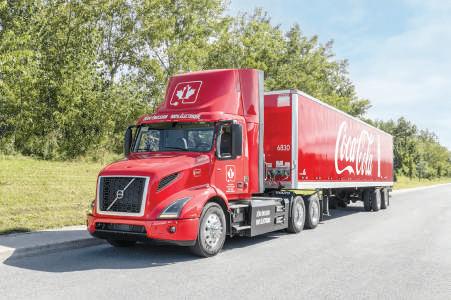
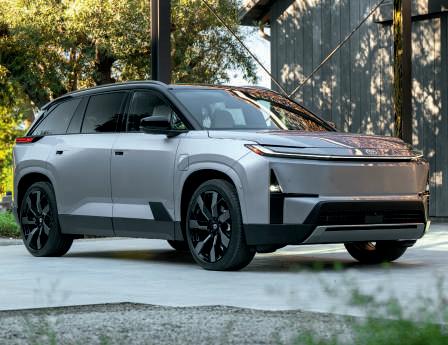
Coke Canada Bottling has deployed seven new Volvo VNR Electric trucks across two provinces, bringing its total Canadian electric eet to nearly 40 vehicles. ree trucks have arrived in Quebec City; four more are set for delivery this spring in Vancouver.
e VNR Electric runs a six-battery con guration that enables a range of up to 440 km (275 miles) on a single charge, enough for several daily round trips between distribution centers and customer locations. To support the expansion, the company installed one 180 kW Heliox Flex charger with three dispensers in Quebec City, and two 180 kW Heliox Flex chargers with six dispensers in Vancouver.
e family-owned company launched its rst electric pilot in Montreal in 2023. Its eet now spans vans, onroad trucks and yard tractors, all on local and regional distribution routes where predictable, high-frequency operations suit battery-electric technology. e new Volvo trucks serve Coke Canada’s Lower Mainland and Quebec City regions.
“Coke Canada Bottling has taken what they learned early on and turned it into a practical, multi-region deployment,” said Matthew Blackman, Managing Director, Canada, Volvo Trucks North America. “When you see electric trucks running predictable, high-frequency routes like these, it shows how well the technology ts into everyday eet operations.”
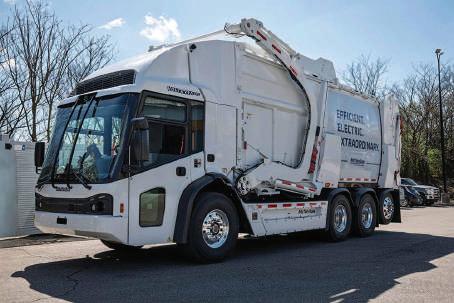
e University of Tennessee, Knoxville plans to deploy nine electric trucks, including a refuse truck that will be used to collect recyclable materials.
e Volterra electric refuse truck is built by McNeilus (a subsidiary of Oshkosh) in Murfreesboro, Tennessee, using aluminum from Alcoa, which is not far from the UT campus.
A refuse truck is an ideal use case for electri cation.
e truck will spend its days in constant stop-andgo motion, li ing, compacting and hauling materials around UTK’s sprawling campus. Electric motors paired with hydraulic systems handle li , compression and pickup along the route.
e truck’s 499 kWh battery pack delivers up to 200 miles of range, or roughly 110 “picks,” the industry term for each stop. e truck supports DC fast charging as well as overnight Level 2 charging.
UTK hasn’t speci ed what tasks its other eight new EVs will be used for, but has reported that each will have a 240 kWh battery pack, which is “perfectly suited for the work they’ll do.”
e trucks feature an onboard route-planning system that calculates the most e cient path, helping drivers to stay on schedule while maximizing battery performance. Some of the new trucks support bidirectional charging, enabling them to serve as mobile power banks in the event of a power outage.
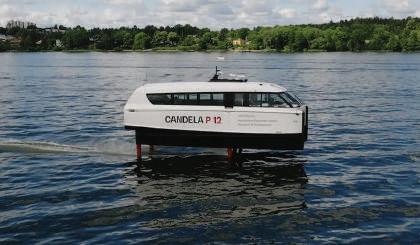
Norwegian ferry operator Boreal has ordered twenty P-12 electric hydrofoil vessels from Sweden’s Candela Technology. e new vessels will speed up commuting along Norway’s ord-lined coast, where water travel is an essential part of daily transport.
Norway has many electric ferries in operation, but electrifying hurtigbåtar, the high-speed passenger vessels that ply many rural routes, has been challenging, as conventional e-ferries lack the range and speed to replace the diesel-powered fast ferries that connect communities along the country’s 100,000 kilometers of coastline.
e Candela P-12 combines a cruising speed of 25 knots with a range of around 40 nautical miles, making electric operation practical on routes previously only served by diesel vessels.
e P-12 features computer-controlled hydrofoils— wings mounted beneath the hull—that li the vessel above the water at speeds above 18 knots. Flying above the waves reduces drag, and energy consumption drops by around 80 percent compared with conventional vessels of similar size. e P-12 is already in successful use in Stockholm’s public transport system.
“ e Candela P-12 is the only electric passenger vessel that combines longer range with high speed without requiring extensive charging infrastructure. Our investment will enable new high-speed routes both in cities and in rural areas,” says Nikolai Knudsmoen Utheim, CEO at Boreal.
e P-12 can fully recharge in an hour using standard DC fast chargers, avoiding the expensive megawatt-scale charging systems required by larger electric ferries.
Are you ready to share the highways with 80,000-pound trucks that drive themselves? Well, it may take a while, but they’re coming. And all agree that like all autonomous vehicles, they will be electric vehicles.

Autonomous truck startup Humble has emerged from stealth, and announced a prototype of a fully autonomous, cabless electric hauler designed for freight transportation. e company has raised $24 million in seed funding, led by investment rm Eclipse.
e Humble Hauler was designed from the ground up, taking advantage of the latest AV/EV technology. e company has developed a universal platform that supports multiple vehicle con gurations. e rst vehicle will be built to move shipping containers.
Removing the cab makes the hauler “signi cantly lighter” than a traditional Class 8 tractor/trailer, and the vehicle’s design enables 360° coverage of its surroundings with camera, LiDAR, and radar, which “allows for true dock-to-dock operation.” e hauler uses vision-language-action (VLA) models that “allow it to reason about the world and take the right action even in scenarios it’s never experienced.”
“For the rst time, freight can be fully automated all the way to the loading dock,” said Eyal Cohen, Humble’s founder and CEO. “We are making freight sustainable, safe and e cient, and we’re doing it with an exceptional team of industry veterans and AV experts. Our rst vehicle was completed in just six months.”
Humble has completed its rst prototype, and is now partnering with logistics and supply chain rms to begin autonomous testing and commercialization pilots. e new funding will support continued development of next-generation vehicles, initial pilot deployments, and early manufacturing.

Transport agency De Lijn, which serves the Flanders region of Belgium, has commissioned its 1,000th electric bus, and is steadily ordering more. In 2025, De Lijn ordered more than 650 new e-buses, which will be deployed in phases in the coming years.
By 2035, the company plans to phase out diesel buses entirely. is will require a eet of 3,800 e-buses, representing major investments not only in new vehicles, but also in charging infrastructure, energy supply, so ware, training and maintenance.
“ e 1,000th electric bus is a clear signal that Flanders is moving forward towards sustainable and future-oriented public transport,” said Flemish Minister of Mobility Annick De Ridder. “ e Flemish Government provided a turbo investment of 400 million euros for the purchase of electric buses.”
De Lijn is investing heavily in so ware and employee training during this transformation. In 2025, some 1,400 drivers received speci c e-bus training, and 176 technicians received training in electromechanics.
Electric buses require less mechanical maintenance than diesel buses, and lend themselves to a di erent, more data-driven approach, De Lijn has found. Maintenance is increasingly shi ing towards prevention and monitoring, reducing the need for urgent repairs and increasing the reliability of service.
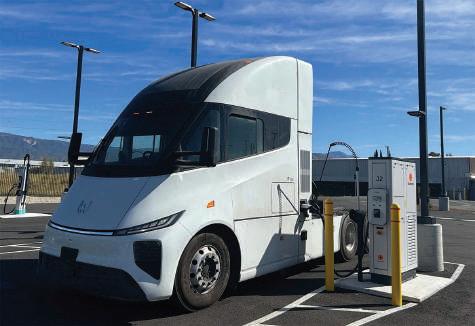
e Chinese aren’t coming—they’re here. Electric truck maker Windrose has completed its rst US delivery, handing over a long-haul electric semi to Texas logistics rm Allogic for $285,000.
e company is moving at China speed—founded in 2022, it has earned regulatory approval in China, the US, Europe and South America.
Windrose’s R700 Class 8 electric tractor features an 800 V platform, a 729 kWh battery pack that enables about 640 km of range, 1,400 hp and megawatt-level charging capability. Windrose uses LFP cells from Chinese supplier CALB.
Xos Trucks will be Windrose’s partner in the North American market, importing fully built R700 tractors and handling sales, delivery and customer support through its existing network. CEO Dakota Semler said short-haul and drayage eets have already placed orders.
Windrose plans to build up to 2,000 trucks in 2026, and hopes to scale up to 10,000 units per year by 2027.
e company aims to deliver “several hundred” trucks in the US in 2026.
US tari s on imported trucks are factored into the vehicle’s price. CEO Han Wen said the company can be pro table under the current tari structure, but is exploring options to reduce tari costs—perhaps opening and assembly facility in Arizona or forming a manufacturing partnership with partner Xos Trucks at its Tennessee plant.
Volvo Trucks has launched several new or updated electric truck models, aimed at several di erent use cases.
e new FH Aero Electric with extended range is designed for long-haul and intercity transport. It features a rear compact e-axle that integrates two electric motors and a six-speed gearbox and delivers up to 460 kW (623 hp) of power. It supports 700 kW charging speeds on MCS or 350 kW on CCS. Volvo estimates that charging the eight battery packs from 20% to 80% using MCS should take approximately 50 minutes—within the legislated rest period for truck drivers in the EU.
Total capacity is up to 48 tonnes GCW (Gross Combination Weight), and payload is up to 28 tonnes. e exible battery con guration allows operators to optimize the balance between range and payload. An electric power take-o for refrigerated units eliminates the need for a separate diesel generator.
e next-gen FH, FM and FMX Electric models are designed for on-road construction, regional distribution, urban logistics, utilities, refuse and special heavy applications. A new dual-motor drivetrain with an eight-speed gearbox is designed to maximize electric torque, and delivers up to 540 kW (731 hp) of power. Range is up to 470 km, and charging speed is up to 350 kW on CCS.
Total capacity is up to 65 tonnes GCW, and payload is up to 23.8 tonnes (4×2 tractor). ese trucks are available with twin-drive axles and low gearing for maximum exibility. Multiple power take-o con gurations are available, including split motors or dual-motor output for cranes, hook li s or tipper bodies. Truck and body can be operated simultaneously.
“We’re really sharpening our o ering here. We are broadening it and making electric solutions possible for an even wider range of transport assignments,” says Roger Alm, President of Volvo Trucks. “ is means we can fully match the business needs of our customers. It has never been easier to replace diesel trucks with electric ones.”
Scotland has con rmed £45 million in new funding under the third round of the Scottish Zero Emission Bus Challenge Fund (ScotZEB3). is pot of gold will support the deployment of 334 zero-emission vehicles and associated charging infrastructure.
All projects will be funded by a combination of public and private cash. Fleet operators will collectively contribute over £163 million, and public funding complemented by private investment contributions will come to over £118 million.
e ScotZEB3 allocation marks the nal round of direct capital funding from the Scottish government aimed at helping large bus operators to electrify their eets. Since 2020, cumulative investment through ScotZEB and the Scottish Ultra-Low Emission Bus Scheme (SULEBS) has reached £154 million, enabling the deployment of around 800 buses and related infrastructure.
e ScotZEB3 programme will deliver 227 buses and 107 coaches to several eet operators:
• Rock Road will procure 14 Alexander Dennis double-deck buses, along with 69 single-deck units from Alexander Dennis and 10 from Wrightbus.
• First Bus will repower 15 double-deck buses, and acquire 22 new double-deck vehicles from Yutong.
• Ember will procure 100 Yutong coaches.
• Stagecoach will introduce 7 coaches, 21 single-deck buses and 16 double-deck buses, all from Yutong.
• Lothian will add 60 double-deck buses, built by Volvo/Alexander Dennis and Wrightbus.
“ is nal investment of £45 million from the Scottish Government through ScotZEB3 signals our commitment to a zero-emission future for Scotland’s bus sector,” said Cabinet Secretary for Transport Fiona Hyslop. “Since 2020, we have invested over £154 million in zero-emission buses and infrastructure. With every £1 of public funding leveraging over £2.50 of private investment, ScotZEB3 has demonstrated that government and industry can work together to deliver transformative climate action.”
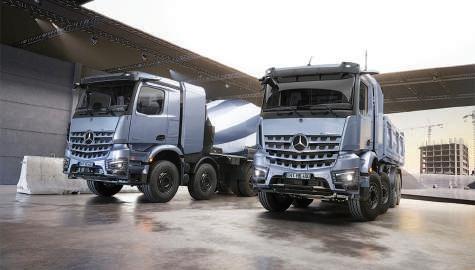
Mercedes-Benz Trucks began sales of its new battery-electric eArocs 400 in April, expanding its electric portfolio to include the construction segment.
Customers in an initial 13 EU markets can now order the eArocs 400, which made its debut at last year’s bauma trade fair in Munich. Beginning in the third quarter of 2026, the base vehicle will be produced at the Mercedes-Benz plant in Wörth am Rhein, followed by integration of the electric drivetrain by Paul Group, headquartered in Vilshofen an der Donau.
e eArocs 400 is equipped with two LFP battery packs, each o ering 207 kWh of capacity, housed in a battery tower behind the cab. It’s designed speci cally for urban and near-road construction work, and in many use cases, it can complete a full work day without intermediate charging.
e eArocs 400 is initially o ered in two versions, with technically permissible gross vehicle weights of 37 and 44 tonnes. It is available in an 8×4/4 axle con guration and four wheelbase options, and is suitable for applications such as dump bodies and concrete mixer bodies.
Key components from the second-generation Mercedes Benz eActros portfolio have been incorporated into the eArocs 400.
e eArocs 400 features an 800-volt onboard electrical architecture, as well as an integrated 3-speed transmission, providing a continuous output of 380 kW and a peak output of 450 kW. e truck supports charging at up to 400 kW via the standard CCS2 charging interface, available on both sides of the vehicle.
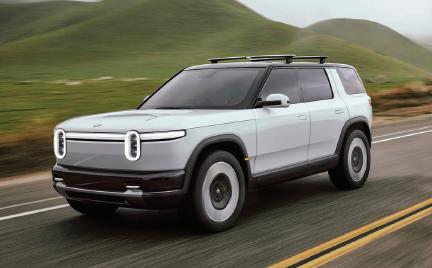
Rivian and Uber have announced a partnership to deploy 10,000 fully autonomous R2 robotaxis in the rst phase of the R2 robotaxi rollout. Initial deployments are expected to begin in San Francisco and Miami in 2028.
Uber will invest up to $1.25 billion in Rivian through 2031, subject to the achievement of certain milestones. e goal is to build a eet of autonomous Rivian R2 robotaxis, which will be available exclusively through the Uber platform. e companies hope to deploy thousands of unsupervised Rivian R2 robotaxis across 25 cities in the US, Canada, and Europe by the end of 2031.
In December 2025, Rivian announced its third-generation autonomy platform, which includes a multi-modal sensor suite including 11 cameras (65 megapixels), 5 radars and 1 LiDAR. e consumer platform is driven by two of Rivian’s in-house RAP1 chips, capable of 1,600 TOPS of AI computing performance.
“ is partnership with Uber will help accelerate our path to level 4 autonomy to create one of the safest and most convenient autonomous platforms in the world,” said RJ Scaringe, founder and CEO of Rivian. “ e scale of Rivian’s growing data ywheel, coupled with RAP1, our state-of-the-art in-house inference platform, and our multimodal perception platform make us excited for the rapid advancement of Rivian autonomy over the next couple of years.”
“We’re big believers in Rivian’s approach—designing the vehicle, compute platform and so ware stack together, while maintaining end-to-end control of scaled manufacturing and supply in the US,” said Dara Khosrowshahi, CEO of Uber.
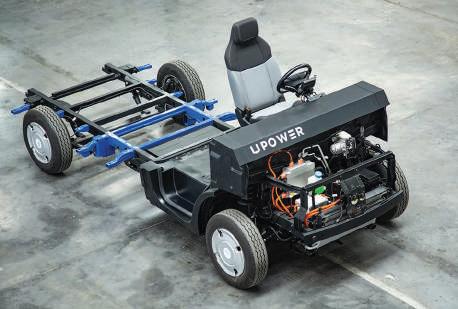
U Power has completed comprehensive operational testing and full-stack integration of the battery-swapping system for heavy-duty truck prototype vehicles it has designed for sale in ailand.
e completion of testing marks a step forward in U Power’s collaboration with ailand-based Whale Logistics to deploy 1,000 battery-swapping heavy-duty trucks in the country. e strategic partnership, which was formalized in December 2025, paves the way for the production and delivery of the rst batch of heavy truck tractors by May 2026.
e battery-swapping heavy-duty truck project was jointly developed by U Power, heavy truck supplier SAIC Hongyan Automotive and technology company UNEX EV.
e prototype vehicles underwent three months of full-condition road testing, during which the key systems were thoroughly evaluated. Following full-stack integration, all technical parameters met design speci cations and aligned with Whale Logistics’ requirements for electri ed highway logistics transportation, enabling the companies to move to mass production.
Supported by U Power’s UOTTA battery-swapping solution, which enables battery swaps within minutes, electric trucks can match the operational e ciency of legacy fuel-powered trucks, the company said.
At the same time, vehicle operators can avoid substantial investments in grid expansion and charging infrastructure while eliminating concerns about battery performance degradation.
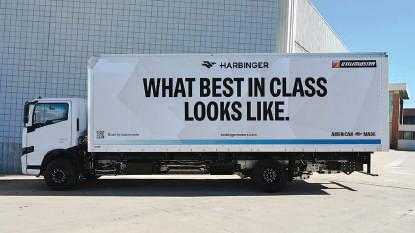
Commercial EV manufacturer Harbinger has unveiled a new medium-duty, low cab forward (LCF) vehicle that is available in either an electric or plug-in hybrid con guration. e new HC Series Cab is designed to deliver enhanced maneuverability, driver comfort, safety and operational cost savings. It doubles as a mobile power station to deliver sustained power for tools and equipment on job sites for prolonged periods.
e HC Series Cab has a 26,000-pound gross vehicle weight rating (GVWR). It can be up tted with a variety of bodies, including cargo boxes, stake beds, atbeds and more. e LCF architecture enables longer cargo boxes on shorter wheelbases, allowing eets to increase usable cargo volume without increasing overall vehicle length.
Unlike EVs that are retro tted from combustion engine platforms, all of Harbinger’s trucks are built from the ground up on the company’s vertically integrated electric architecture. Harbinger’s electric chassis includes all major vehicle systems, which the company designs and manufactures in-house, including the powertrain, battery system, steering, brakes and more. “ is vertically integrated approach keeps costs low and provides a higher-performing, safer, and more durable solution than electric vehicles built upon legacy diesel and gasoline platforms,” the company explains.
Harbinger’s range-extended hybrid platform uses a gas engine to recharge the batteries, extending range up to 500 miles, depending on up t con guration and drive cycle. e vehicle can also recharge its batteries while parked without external power. e platform supports full power take-o (PTO) functionality to operate hydraulic and body-mounted equipment. Harbinger is introducing an onboard AC inverter option that delivers up to 15 kW of exportable power on both EV and hybrid models, enabling crews to run external tools and job site equipment directly from the vehicle.
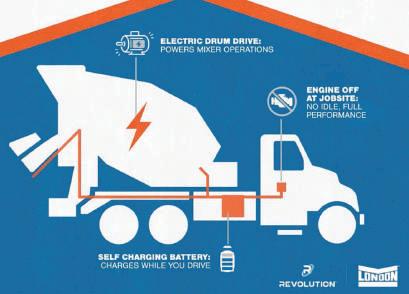
Revolution Concrete Mixers and London Machinery have developed a hybrid drum drive system that’s designed to power cement mixer operation without engine idling. e new e-HYDRIVE system addresses “one of the ready-mix industry’s most persistent operational challenges”—unnecessary idling during loading, waiting and pouring—and also reduces fuel consumption and emissions.
e e-HYDRIVE is designed to deliver full drum performance at the job site with the chassis engine o . Early eld testing demonstrated measurable reductions in idle time and fuel consumption across daily production cycles.
Traditionally, mixer trucks must run the chassis engine to power the drum during loading, waiting, and pouring.
e hybrid system charges the battery while the truck is driving, then powers the drum electrically (the truck can also operate traditionally if needed).
Designed for both new builds and retro ts, the e-HYDRIVE is designed to require no signi cant modi cation to existing mixer components, allowing seamless integration in active eets while minimizing downtime.
As part of its development, e-HYDRIVE has operated in active production environments with Amrize, a concrete producer known for evaluating emerging technologies. is collaboration allowed Revolution | London to validate durability, usability and real-world performance under demanding operating conditions.

Commercial EV builder Xos has begun V2G (Vehicle-to-Grid) production on a major electric school bus platform in North America, and plans to add bidirectional capability to its entire product portfolio, including step vans, powertrains and energy storage solutions.
In April, Xos began production of a bidirectional-charging school bus platform serving tens of thousands of routes across the US. Fleet vehicles entering production at this stage will be able to discharge stored energy back to the grid during peak demand events, opening a direct revenue stream for school districts and operators, without requiring hardware retro ts. ( is capability does not retroactively apply to existing Xos vehicles already in the eld.)
By embedding bidirectional capability at the depot level, Xos enables eets to reduce peak demand charges, defer infrastructure upgrades, and participate in utility demand response programs.
Commercial eets present excellent use cases for V2G deployment. Vehicles follow predictable schedules, and return to a central depot each night. In particular, school buses typically sit idle outside of morning and a ernoon routes, so stored energy can be made available to the grid for extended periods without a ecting daily operations.
“V2G is a fundamental shi in how commercial eets create value,” said Dakota Semler, CEO of Xos. “Starting with one of the most widely deployed vehicle platforms in America and extending across our full product catalog, we are turning new Xos-powered depots into a grid asset. We’re delivering the ability to generate revenue, cut peak demand costs, and strengthen community energy resilience without adding complexity to daily operations.”
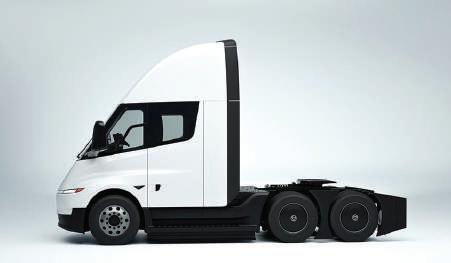
It’s been a long wait, but it appears that Tesla Semis will soon be hitting the highways in substantial numbers.
e largest order to date comes from WattEV, a California-based Trucking-as-a-Service (TaaS) company, which is buying 370 units. e company expects the rst 50 trucks to enter service in 2026, and the full eet to be in operation by the end of 2027.
WattEV says its vertically integrated model, which includes trucks, megawatt-scale charging and leasing, lowers EV adoption barriers for carriers by reducing upfront capital costs.
Some 300 of the Tesla Semis will be deployed at the Port of Oakland, where WattEV is planning to launch new MCS-capable charging sites. Early deployments will also take place at the Port of Oakland and in Fresno. Additional depots at Stockton and Sacramento are in the planning stages.
WattEV currently operates 75 trucks across Southern California, on drayage and middle-mile routes, and six depots, at the Port of Long Beach, San Bernardino, Gardena, Bakers eld, Vernon and Oxnard. e company says 15 more locations are currently under development.
WattEV CEO Salim Youssefzadeh said his company selected the Tesla Semi following a competitive RFP process. Cost, performance and availability were the factors that helped Tesla to beat out its legacy OEM rivals.
“We expect diesel fuel costs will continue to be a decisive factor in eet procurement decisions,” Youssefzadeh said. “Our electri ed freight solutions allow us to deliver goods at better economics compared to diesel today, and as energy costs diverge further, the economic case only strengthens.”
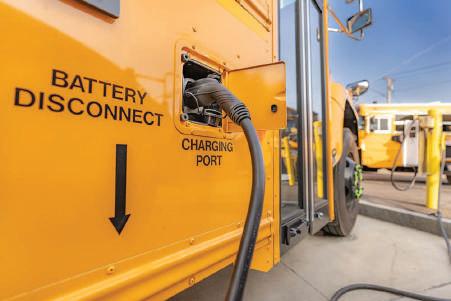
Electric utility Potomac Edison, a subsidiary of FirstEnergy that serves some 285,000 customers in Maryland, has received approval from the Maryland Public Service Commission to launch a pilot program aimed at helping local school systems transition to zero-emission school buses, EVinfo reports.
Maryland’s Climate Solutions Now Act of 2022 requires public school systems to purchase zero-emission vehicles. Potomac Edison aims to address one of the biggest barriers to EV adoption by covering the cost difference between diesel and electric buses (up to $250,000 per unit), along with the cost of charging infrastructure and any necessary electrical upgrades.
e $11.1-million pilot program will support the deployment of up to 28 electric school buses within Potomac Edison’s Maryland service territory, and will provide technical and administrative assistance to help school systems plan charging locations, install equipment and train personnel. e program will also include access to vehicle-to-grid technology, allowing Potomac Edison to evaluate how energy stored in bus batteries can be fed back to the grid when vehicles are not in use.
“ is program is designed to help make [the EV] transition more practical and a ordable,” said Jim Myers, FirstEnergy’s President of West Virginia and Maryland. “We’re reducing upfront costs and o ering hands-on support to help school systems integrate electric buses smoothly. At the same time, we’re exploring how these buses can support grid reliability through innovative technology.”
WTH is Toyota thinking? Is it serving up new EVs as the US market collapses? Not at all—its methodical approach validates the EV transition.
By John Voelcker


When an auto reporter gets pretty much the same question on the same day from two di erent people—one at a major auto brand, the other a fellow reporter—his attention is naturally piqued. Here’s the question, edited for clarity:
Why is Toyota launching several new EVs now? e bZ, C-HR EV, bZ Woodland, Highlander EV, maybe even more? A er all those years of focusing on hybrids, downplaying EVs, repeating that hybrids make more sense…now the Toyota brand plans to sell four new EVs, and two more from Lexus?
Especially a er the relaxation of CAFE penalties, the end of zero-emission vehicle (ZEV) mandates, and the elimination of all federal e orts to limit vehicle emissions…why sell EVs if they are not needed, and yield zero or negative pro t?
Is there some demand the rest of the industry does not see? Does the new North Carolina battery plant have some cost advantage? Is there some irreversible supplier commitment? Or were the programs simply too far along to be shelved? What could be the real reasons for Toyota launching all these new EVs?
It’s a great set of questions. And it has several answers.
Toyota is a large ship that turns slowly—but over more than four years, that’s exactly what it has done.
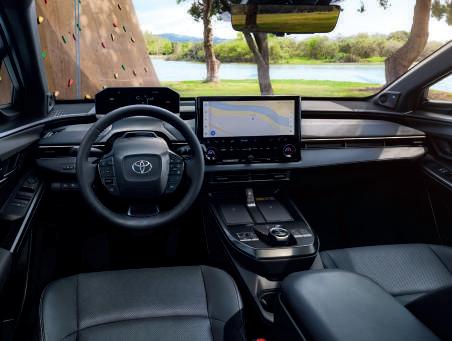

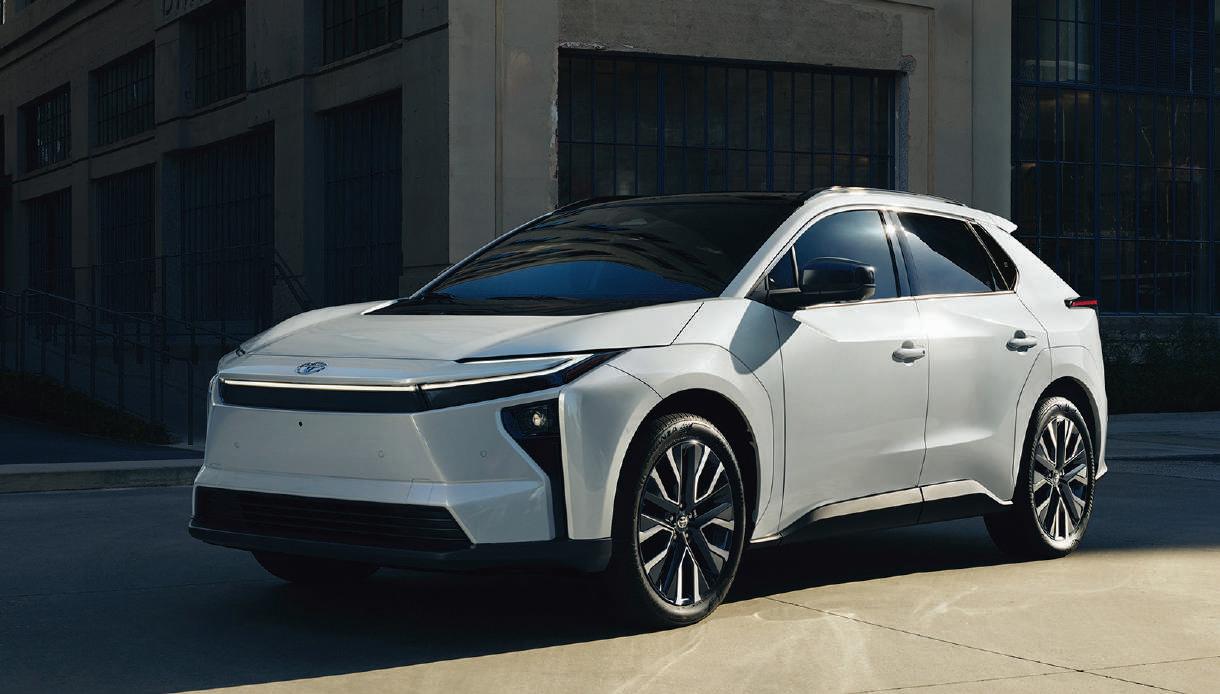
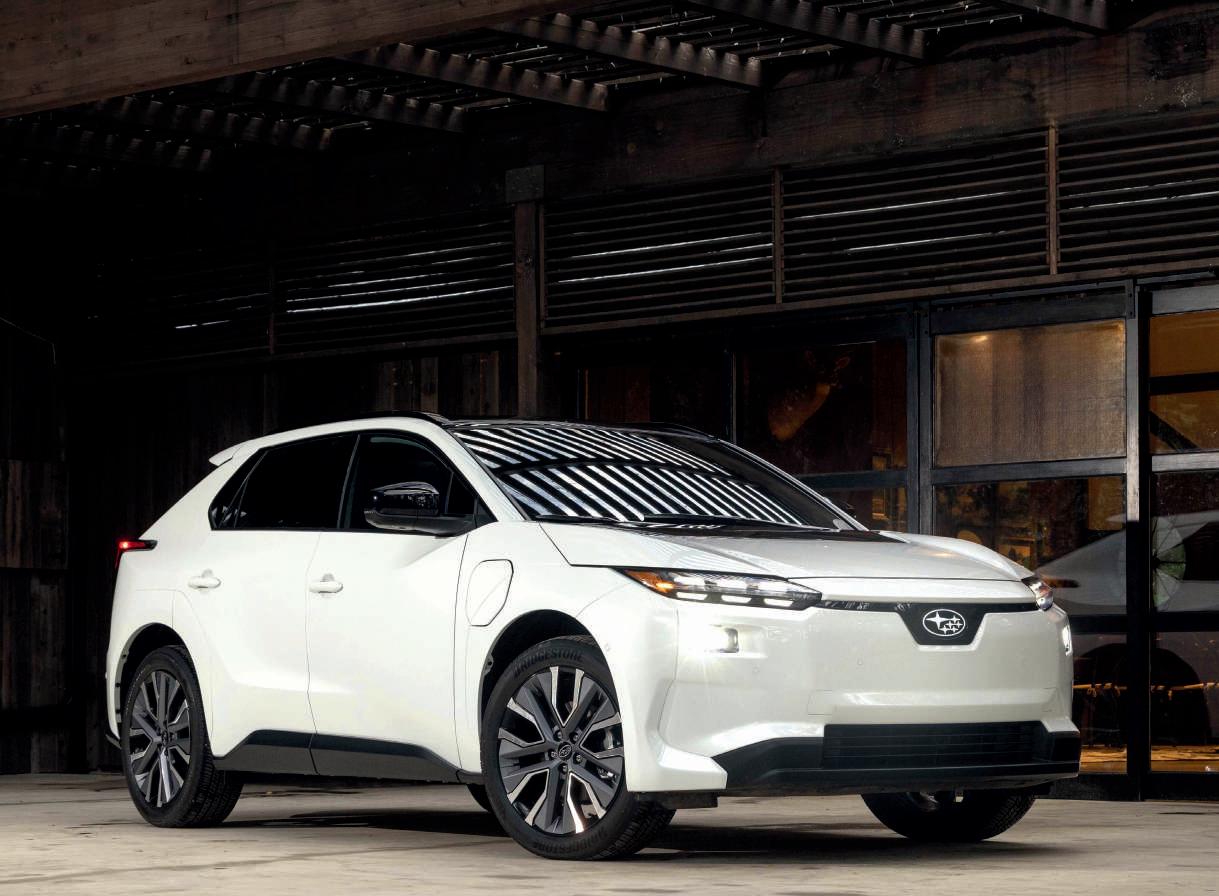
Subaru will share each of the four EVs with Toyota.
1 Toyota is doing exactly what it said it would do.
Silicon Valley interloper Tesla showed that you could sell EVs in volume if they were compelling, had sufcient range, and were fun to drive. Now every automaker has some variant of that formula. A er the years in which the Model S, Model 3 and Model Y became global successes, Toyota decided it would have to compete or be le behind.
In December 2021, the automaker announced that it would spend $35 billion to build a range of EVs, from small to large. Toyota is a large ship that turns slowly— but over more than four years, that’s exactly what it has done. So, its four electric models coming to the US—plus two more from Lexus—should hardly be a surprise to anyone who was paying attention.
Only a few of the 30 di erent battery-electric models it expects to o er globally by 2030 will be seen in North America. Many target developing markets in Asia and Central and South America, where EV demand is growing—but for smaller, lower-cost models
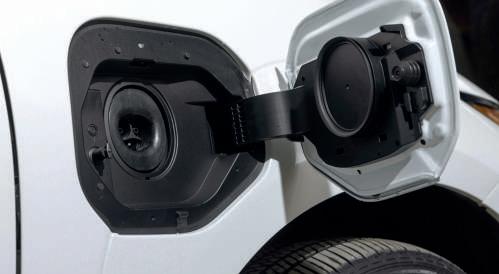
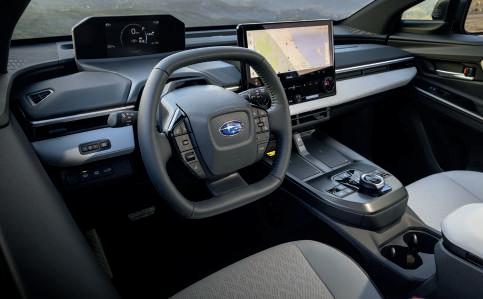


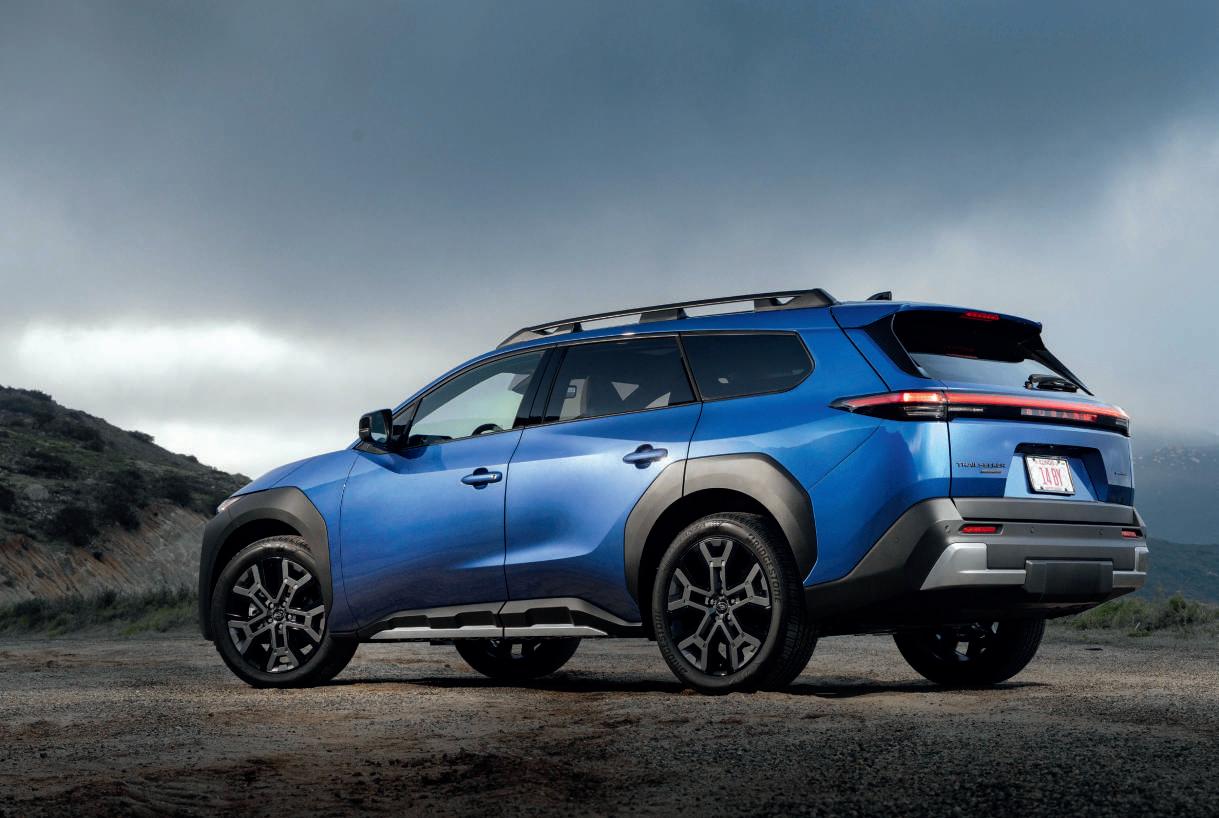
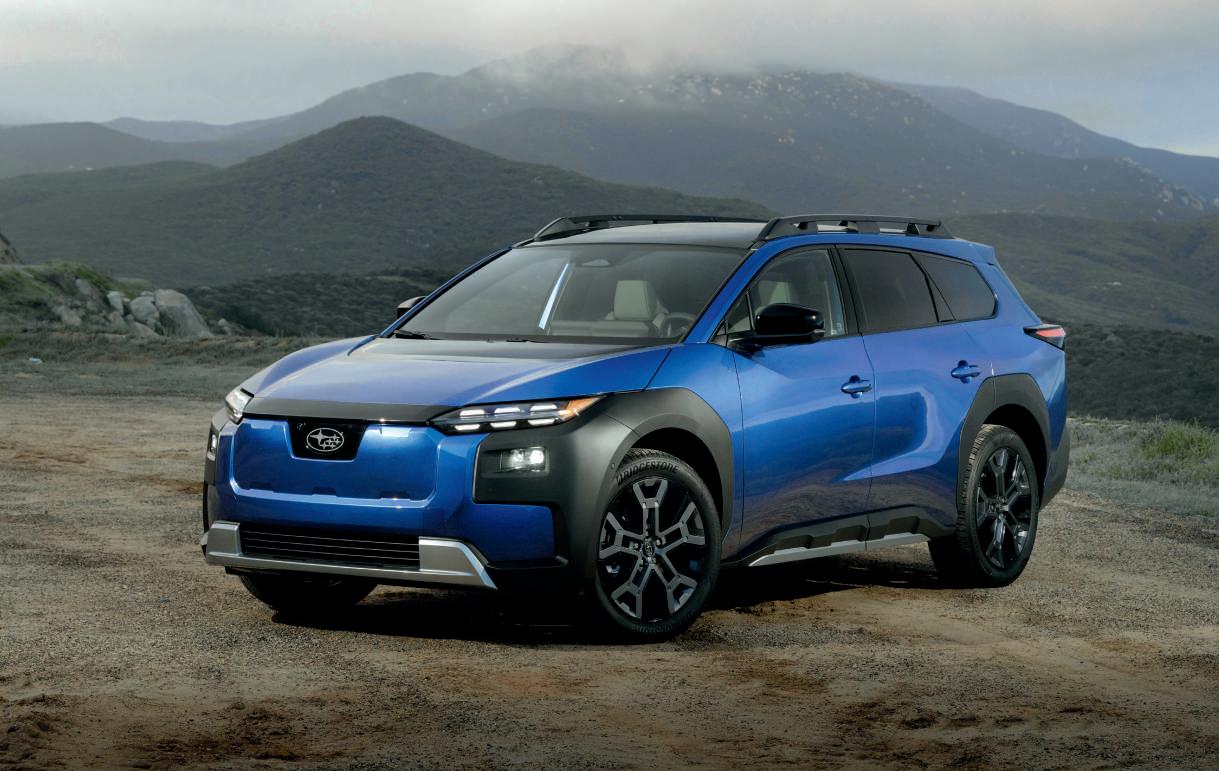


that aren’t meant to “federalize,” or comply with North American safety and equipment rules.
Like most carmakers, Toyota o en localizes production where it sells the highest volumes of a given vehicle. So, its battery-electric Highlander will be the rst EV it builds here, in its huge assembly plant in Georgetown, Kentucky. Its batteries will come from a new cell plant in North Carolina that represents a total investment of $13.9 billion—a lot for any automaker. However, Toyota says the plant can build batteries for conventional hybrids, plug-in hybrids and batteryelectric vehicles—hedging its bets, but also extracting maximum value from its capital.
2 Toyota can afford to play the long game. Perhaps more than any other maker, Toyota deliberates over its future plans—and executes them on its own schedule. As Telemetry analyst Sam Abuelsamid told e Detroit News, “Toyota is not o en the rst to market with a new technology. But they take their time. ey try to do it right.”
Toyota executives said 15 years ago that the company didn’t break even on its hybrid-electric technology un-
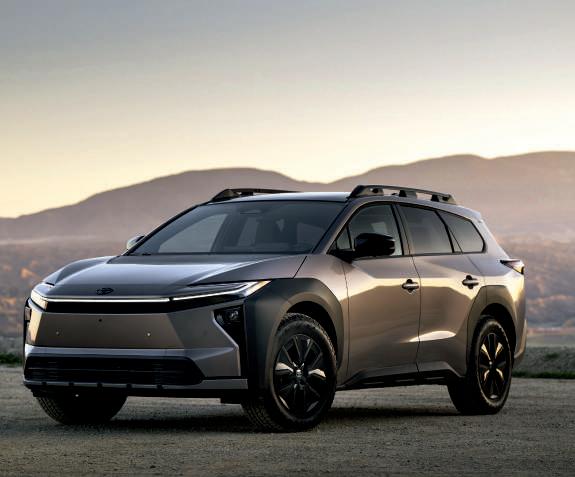
Toyota deliberates over its future plans—and executes them on its own schedule.

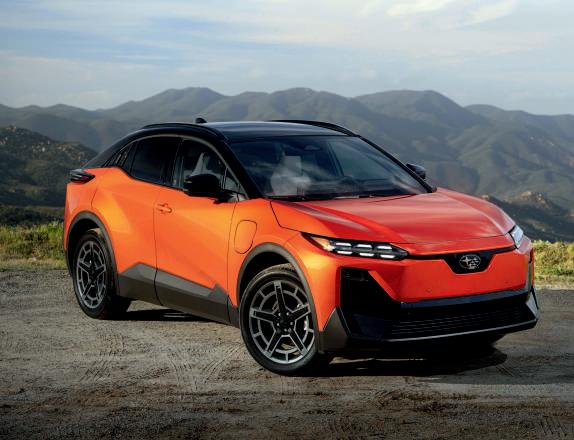
til midway through the second-generation Prius model cycle (2004-2009). It endured 10 years of investment and losses to establish what is now the dominant global position in hybrid vehicles. e Prius went on sale in Japan in 1997, and entered a second generation in 2004, but Toyota didn’t launch a second hybrid model until the Highlander Hybrid in 2005. It took Toyota a long time to accept that EVs were practical vehicles for mass-market buyers, even in the US. Some of the company’s statements on their extremely limited use cases haven’t aged well. But once the company grew convinced that EVs were here to stay, and that consumers genuinely wanted and liked the best ones, it had prodigious resources—in cash and engineering talent—to throw at the problem of building and selling them.
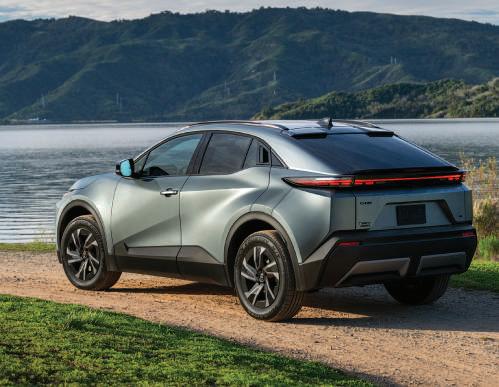
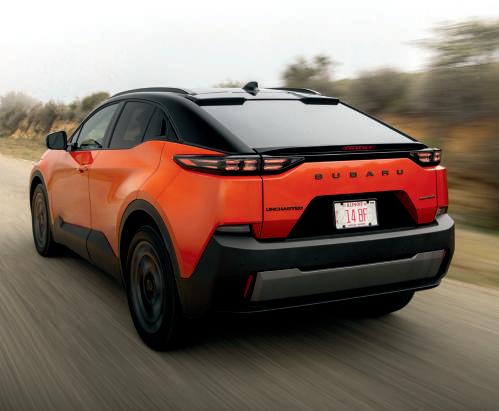
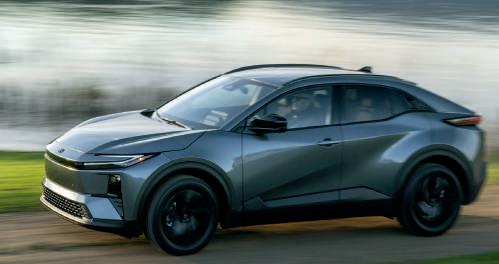
Once Toyota grew convinced that EVs were here to stay, it had prodigious resources—in cash and engineering talent— to throw at the problem of building and selling them.
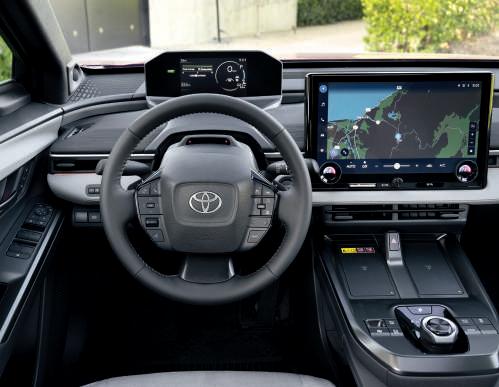
With products that propel the future, BorgWarner has over 130 years of experience helping our partners get to where they need to go. With the world’s foremost technologists and engineers, committed to collaboration and excellence, we’ve developed a portfolio of innovative solutions, including our Exhaust Gas Recirculation components.


Exhaust Gas Recirculation

Let’s do something BIG.



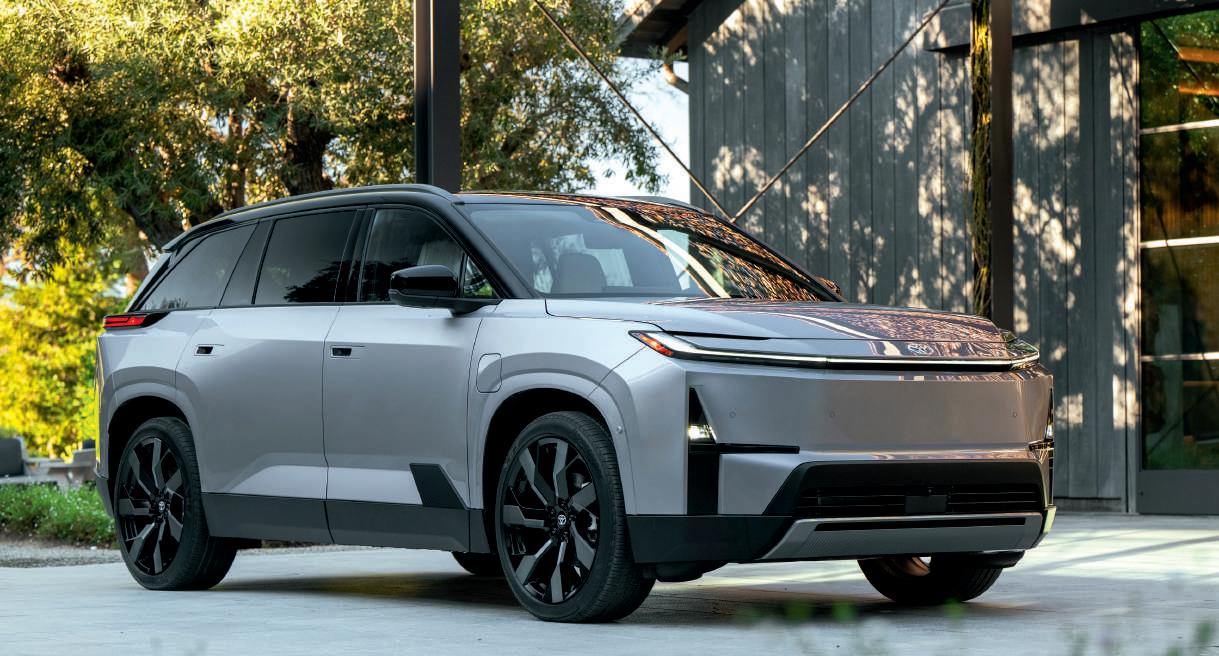
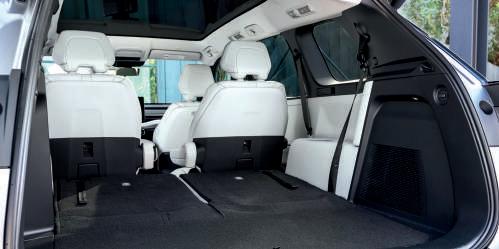
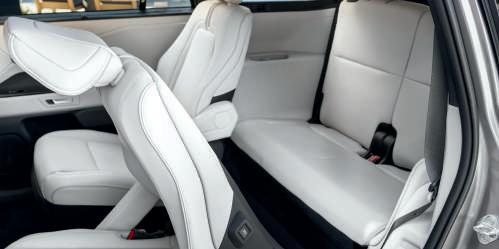

So, Toyota launched one EV in the US—the 2022 bZ4X—and took four years to learn from that experience. The first bZ4X was a flawed vehicle in many ways, from slow charging rates to the limited operating info it gave drivers. But Toyota is a remorseless machine, and it constantly refines its technologies. The first Japan-only 1997 Prius was starkly primitive, clunky, and very slow. Thirty years later, its hybrids are pretty much flawless. Its first-generation Mirai fuel cell vehicle was also slow and clunky—the second generation is a far more compelling car, despite using a fuel that’s a dead end for US passenger vehicles. For Toyota, Abuelsamid explained, “continuous improvement [known as kaizen] has always been their thing. They listened to the complaints, and they made the bZ dramatically better in the span of a mid-cycle update.”
The $14 billion it put into its North Carolina battery plant (for EVs and hybrids) is an example of Toyota taking its time. The electric Highlander (and its Subaru Getaway twin) it will build in Georgetown, Kentucky is another. Never count Toyota out—when it puts its mind to a problem, it often comes out on top. There may be missteps, and it may take a few model generations, but once it decides to do something, it usually figures out a way to build and sell the cars at a profit.
Toyota’s most aggressive traditional competitor, Hyundai, hasn’t taken its foot off the pedal on its EV strategy, either globally or for North America. It’s often said that Toyota isn’t worried about the VW Group,
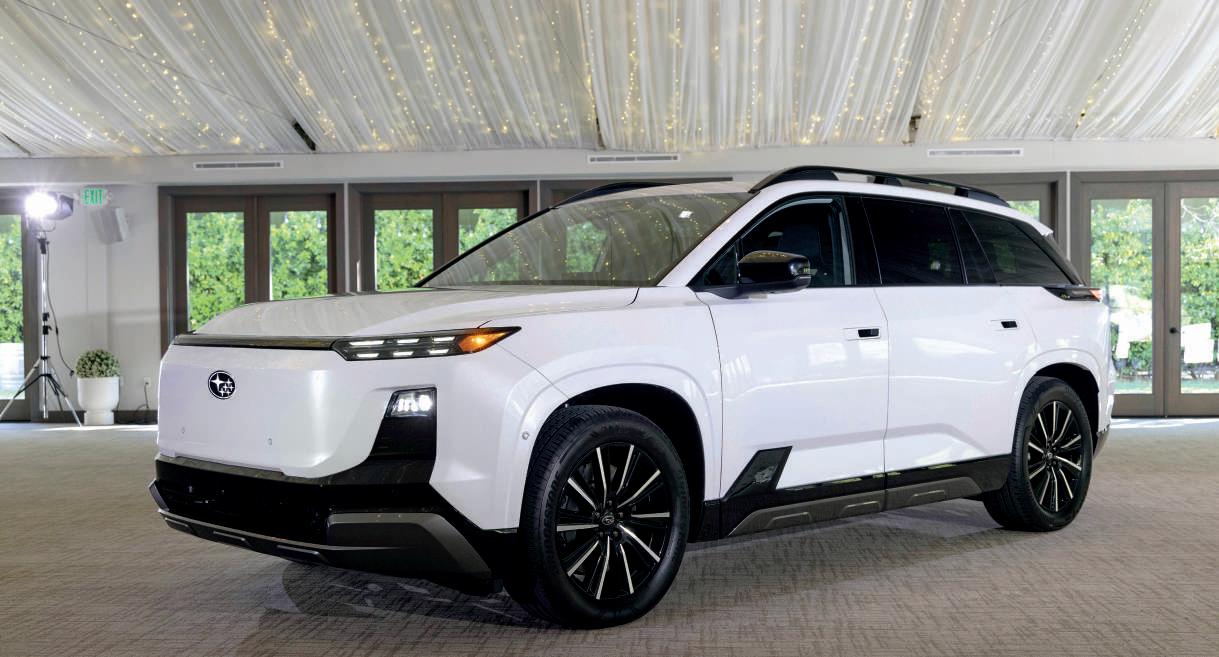
GM or Nissan—but it is worried about Hyundai, and how rapidly it iterates and innovates. Frankly, the fact that Toyota plans to sell four EVs in the US feels like nothing so much as validation of the entire EV transition.
3 Subaru sales support Toyota’s US volume. We’ve not seen a lot of “badge engineering” among big carmakers lately. (That’s the practice of two entirely different car brands selling identical vehicles.) But the strategy has returned with a vengeance, as tiny Subaru (a company that sells barely one million cars a year globally) will share each of those four EVs from Toyota (a company that sells ten times as many units globally).
In the US, Subaru buyers may be among the most likely to buy EVs. Environmentally conscious, practical and adventurous—that’s the right combination for a first-time EV buyer. But Subaru just didn’t have the cash to build its own EVs—or even hybrids, for that matter. Enter Toyota, which owns 20 percent of Subaru, and now sells it hybrid systems for multiple gasoline models. The two companies have collaborated on more recent EV models, though to our eyes, the 2026 Subaru Trailseeker is the only one that really “looks like a Subaru.”
How much can Subaru add to sales of Toyota EVs in the US? For their one shared vehicle to date, the Toyota bZ4X / Subaru Solterra electric SUV, Toyota sold 45,000 over three model years—and Subaru added an additional 32,000 sales to that total. The cars are virtually identi-
It’s often said that Toyota isn’t worried about the VW Group, GM or Nissan—but it is worried about Hyundai, and how rapidly it iterates and innovates.
cal, but that’s a notable uptick in production volume that helps to spread costs. At least in North America. Subaru now sells a startling 76 percent of its total global production here, so its sales outside North America won’t help Toyota’s EV volume. But here, it matters.
4 It’s not about the environment.
Auto executives have o en viewed EVs not as good cars or desirable products in their own right, but as a regulatory necessity to meet environmental rules. (Note the opening statement that EVs are “not needed” due to the end of CAFE penalties and ZEV mandates—that’s purely an automaker point of view.) In the early days of the EV transition, some automakers sold electric “compliance cars,” some of them not very good. Many were simply discounted until they sold in adequate volume to stay on the right side of regulators. Makers saw it as just an annoying cost of doing business.
But environmental concerns are not why most consumers buy EVs. Polarized US politics may paint them
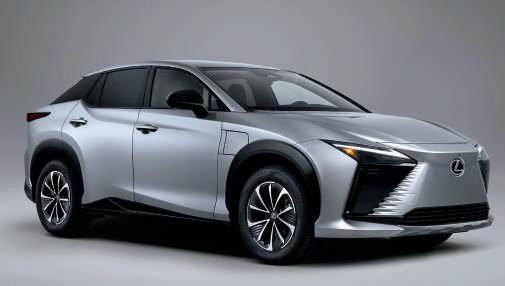
with a green brush, but EVs sell because—once a buyer comes to understand how they work and how to recharge them—owners nd they’re simply better vehicles. e fact that they’re far cheaper to operate is an added bonus that only hits home a er purchase. Survey a er survey shows that once they’ve made the switch, the vast majority of EV buyers never want to go back to gasoline.
at message gets passed along over time via friends, relatives, neighbors and coworkers—just as it did for hybrids, starting 20 years ago. For EVs, we don’t know how long it will take for that message to sink in more widely. What’s the slope of the sales-increase curve? at will be the really interesting question for the next 10 years or so.
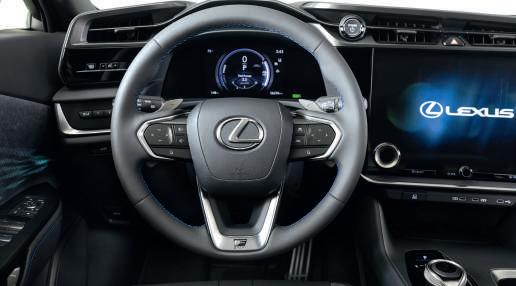

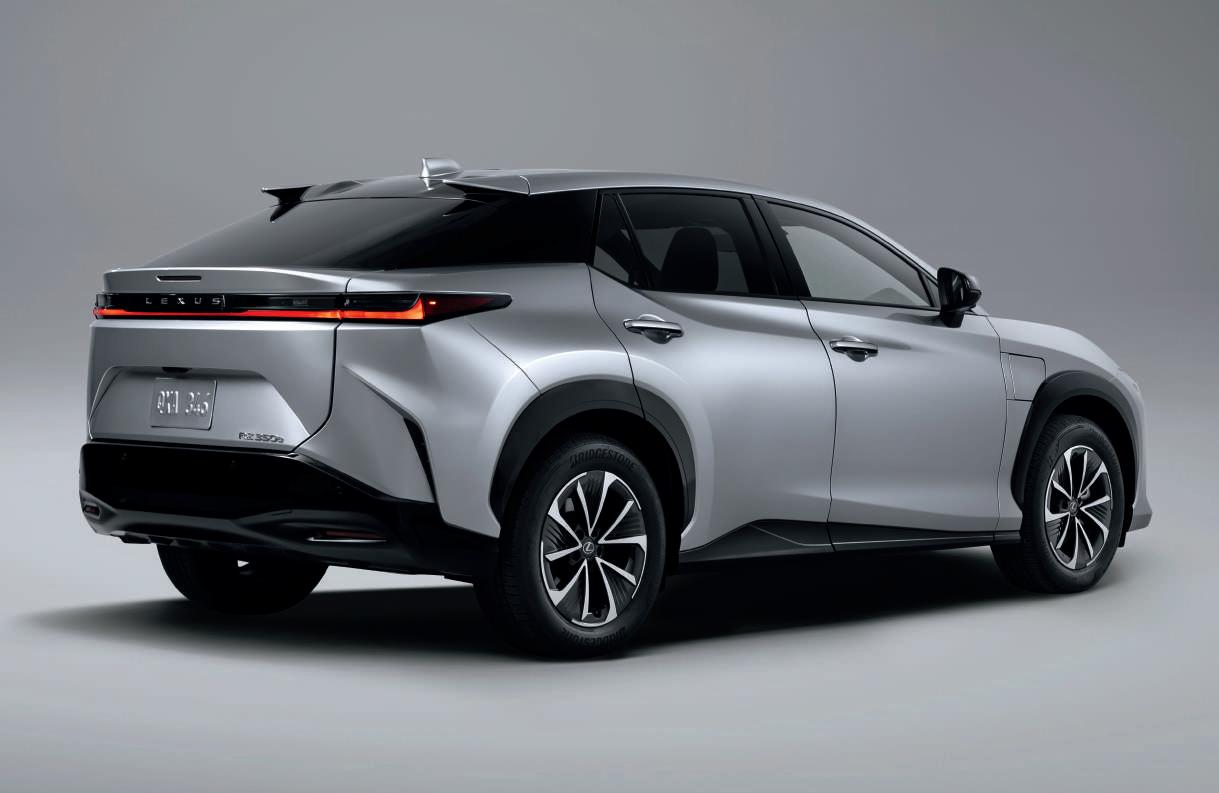
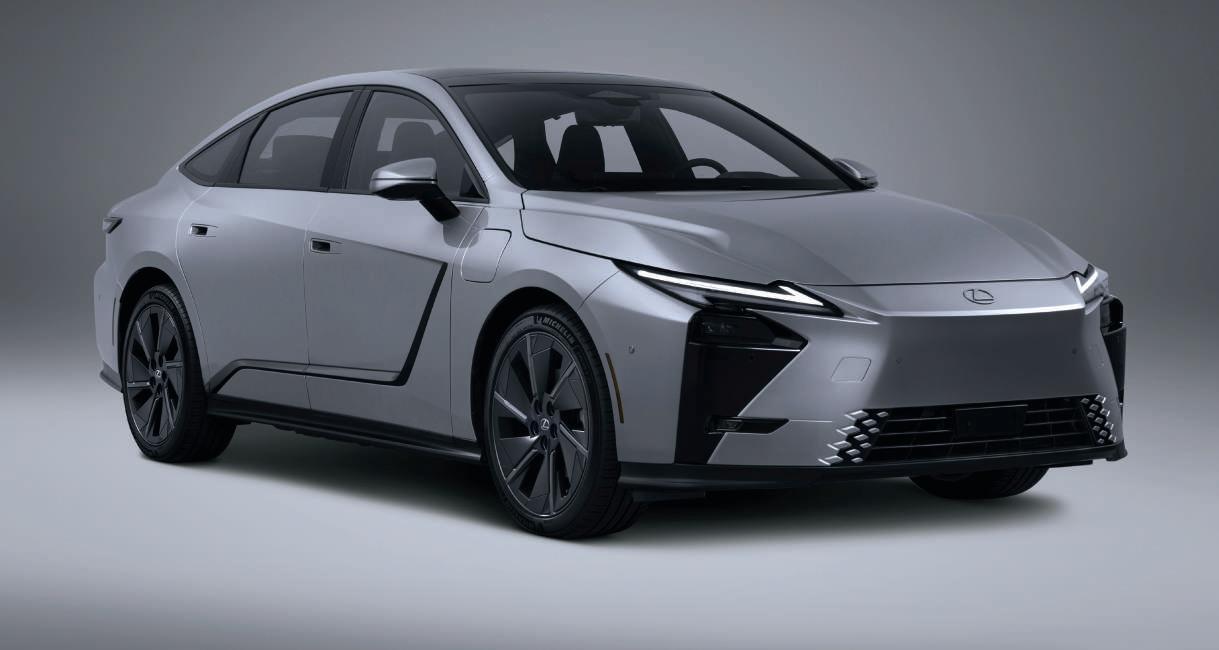
5 EVs aren’t going away.
It bears repeating that electric vehicles are here to stay, globally and even in North America. In the US, we’re presently su ering through a regrettable period of dumb headlines, with context-free sales comparisons, proclaiming that US consumers are no longer interested in buying EVs. at’s nonsense.
Yes, year-over-year EV sales fell by 36 percent in Q4 2025 and by 27 percent in Q1 2026, per data from Kelley Blue Book. “EV sales in Q1 2026 were lower by 7.8 percent compared to the previous quarter, an improvement [that suggests] the sales drop a er government incentives were terminated has slowed. EVs accounted for 5.8 percent of total new-vehicle sales in Q1, unchanged from Q4 2025 and well below the peak of 10.6 percent in Q3 2025.” But analyst Loren McDonald of
We’re presently suffering through a regrettable period of dumb headlines, with contextfree sales comparisons, proclaiming that US consumers are no longer interested in buying EVs. That’s nonsense.
Chargenomics estimates that 125,000 or more EV sales were pulled forward to Q2 and Q3 last year, anticipating the end of purchase incentives last September 30. We’re now working through that de cit.
We’ve learned that some types of EVs are more popular than others: electric compact SUVs do well, large and pricey electric pickup trucks pretty much don’t. Less expensive EVs to come are likely to work even better—shoppers are more willing to take a chance on a $30,000 EV than a $50,000-plus one. ose cheaper EVs are coming this year and next. Toyota may decide to launch some lower-priced EVs—on its own timeline, of course.
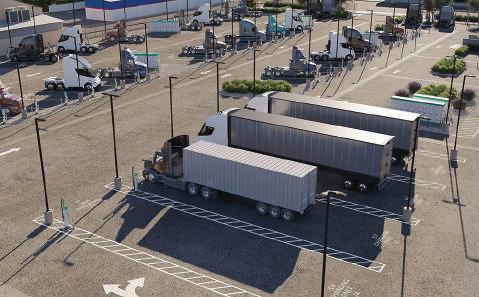
EV Realty has opened its agship multi- eet truck charging hub in San Bernardino with 76 high-power charging ports and 9 MW of capacity, su cient to serve over 200 medium- and heavy-duty trucks per day. e site is designed to serve all makes and models of medium- and heavy-duty trucks with both CCS and MCS charging ports.
e site is strategically located near the San Bernardino Intermodal Facility, in an area that is home to nearly 17,000 medium- and heavy-duty trucks. It sits near Interstates 10 and 215, along a major freight lane from the Ports of Los Angeles and Long Beach.
e site is purpose-built for logistics operations— technology and operational design choices have been informed by eet customers. Charging hardware from Kempower allows charging at up to 1.2 MW with MCS and 500 kW with CCS. So ware and eet management tools powered by Synop provide power management, reservations, reporting, and eet insights on cost, range and e ciency. On-site sta , security, parking and on-site amenities are available 24/7.
Announced customers include national carrier J.B. Hunt Transport, beverage distributor Gate City Beverage, and Nevoya, a fully electric carrier.
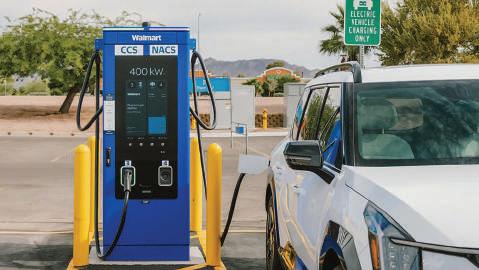
Retail giant Walmart already o ers EV charging at many of its stores, but it’s in the process of rolling out its own branded charging network, and it’s moving quickly. e latest deployment to be announced: ABB E-mobility is installing A400 All-in-One DC fast chargers at seven Walmart locations in the metropolitan Phoenix area.
Nine Walmart locations with a total of 38 ABB E-mobility A400 chargers are slated to come online in the coming months.
ere are over 5,200 Walmart and Sam’s Club stores across the US, and the company estimates that 90% of Americans live within 10 miles of a Walmart location. Walmart’s market research indicates that o ering EV charging will entice customers to visit its stores more o en, and spend more time in the store on each visit. Walmart customers can start charging sessions directly through the Walmart app.
“As part of Walmart’s commitment to helping customers save money and live better, we’re excited to bring a retail-integrated EV charging experience to the communities we serve,” said Adam Happel, GM Walmart EV Charging. “We’re building a convenient and reliable network that gives our customers the ability to charge their EVs quickly and a ordably without having to change their daily shopping routines.”
e ABB E-mobility A400 All-in-One chargers feature dual CCS and NACS connectors, and can each deliver up to 400 kilowatts of power—200 kW to two vehicles at once or the full 400 kW to a single car. e A400 includes a 32-inch con gurable display for brand integration, promotions and advertising, and features a modular architecture designed to facilitate future expansion and/ or upgrades. ABB’s ReliaGear switchboard will enable Walmart to add energy resources such as battery energy storage solutions.


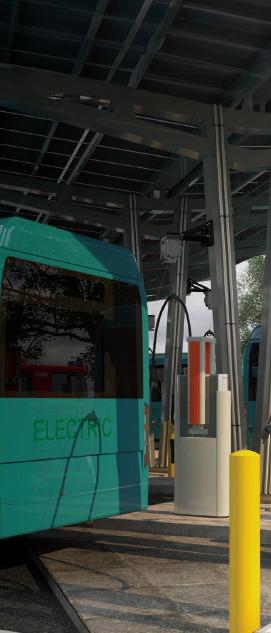

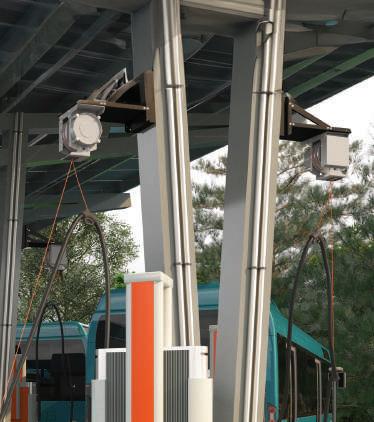
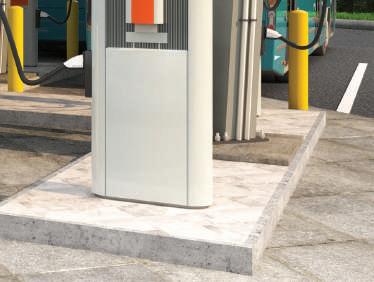


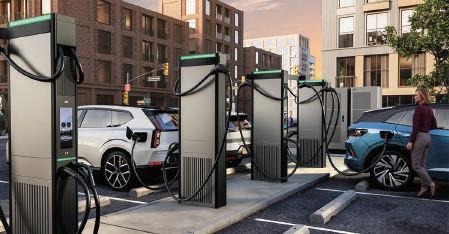
ABB’s
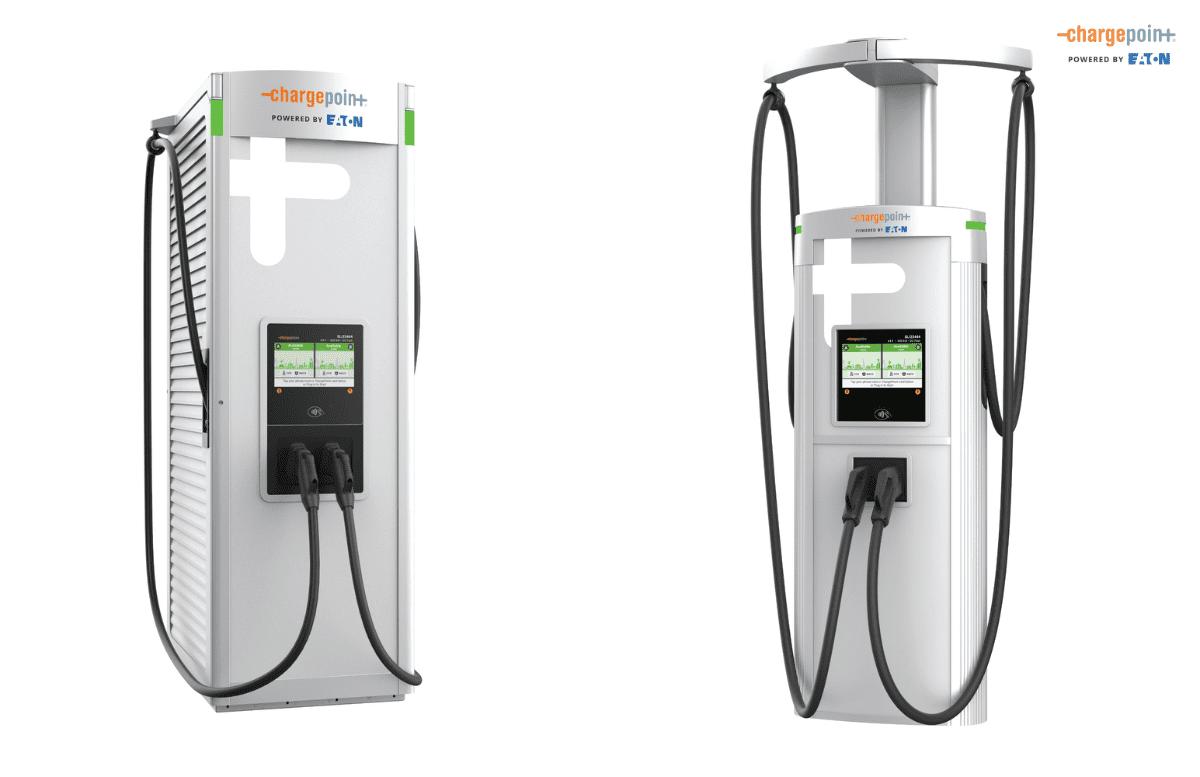
ChargePoint has introduced a new standalone EV charger that’s capable of delivering power at levels of up to 600 kW.
e new Express Solo incorporates ChargePoint’s next-generation DC fast charging architecture, and was codeveloped by ChargePoint and intelligent power management company Eaton. It will be the company’s rst DC charger to be sold in Europe as well as in North America.
Express Solo features a small footprint, making it suitable for deployment at sites with limited space, such as urban gas stations or convenience stores.
Express Solo can simultaneously charge two EVs, and can be paired with an additional dispenser to charge up to four vehicles. When charging multiple vehicles, an Express Solo can deliver any combination of power levels up to 600 kW per port.
“ e Express DC fast charging architecture delivers di erentiation. Not just by higher output, but by how economically, e ciently and exibly that power is delivered,” said Rick Wilmer, CEO at ChargePoint. “Express Solo combines unmatched power density, direct DC input capabilities for solar integration and battery storage, and a modular architecture that scales with minimal cost and complexity.”
ABB has introduced a new modular, air-cooled split system that “separates the generation from the dispensing of power.” ABB’s new OM M-Series “enables charging systems to be con gured around distinct mission pro les rather than deployed as generic hardware.”
ABB explains: “ e M-Series connects centralized power cabinets to a portfolio of purpose-built dispensers: Solo, Duo, Dock and Ultra, supporting CCS1, CCS2, NACS and MCS. is separation enables charging infrastructure to serve distinct customer segments, each with di erent utilization patterns, dwell times and economic requirements.”
e M-Series scales from 200 kW to 1.2 MW, and supports up to 24 charge points. Power capacity can be expanded in the eld in 400 kW increments across up to three interconnected cabinets.
e M-Series is built around three site typologies, each with di erent power requirements, utilization patterns and economic constraints:
• Public fast charging: Sites scale from a single 400 kW cabinet to 1.2 MW across up to 24 charge points in 400 kW increments.
• Retail and hospitality destinations: At supermarkets, fuel retailers and logistics hubs, the system dynamically balances between high-power charging at low utilization and lower-power parallel charging at higher site utilization, maximizing capacity use as demand uctuates.
• Commercial eet depots: Operators electrifying mixed van, truck and bus eets make capital commitments under high uncertainty. e M-Series enables expansion in 400 kW increments, aligning infrastructure cost with actual eet growth rather than projections. e system supports both high-power opportunity charging and lowerpower overnight charging without requiring dedicated infrastructure for each use case.





JUNE 10 & 11, 2026
CHICAGO, USA





2,000+

Energy storage • Power electronics • Drive systems & EVOLUTION CONFERENCE


ENGINEERS & OEM DECISION MAKERS



160+ SOLUTION PROVIDERS





Source electrification and software solutions




































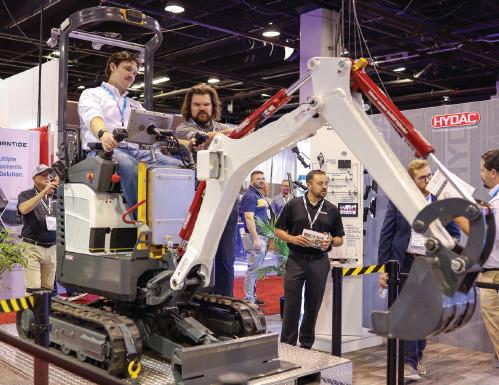
REGISTER FOR YOUR EXPO PASS









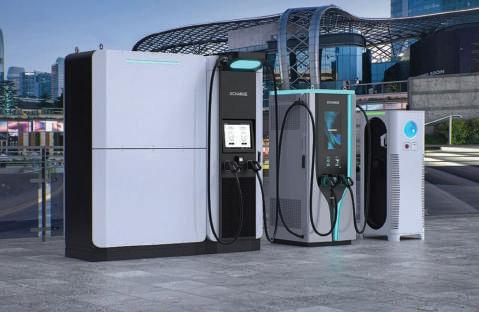
Battery-integrated EV charging specialist XCharge North America and EV charging operator JOJO Superfast EV Charging will collaborate to deploy nine new public EV charging sites in Illinois.
e two companies will bring 800 kW of ultra-fast charging capacity to nine initial locations in the Chicagoland region, located at branches of the home improvement chain Menards.
XCharge NA will manufacture the chargers and oversee site construction from concept to completion through its turnkey solutions team.
Each site will feature four C6 Smart DC Fast Chargers, providing a total of eight charging ports per location. Charging stations at Menards locations in Crestwood and Bridgeview are now operational, and seven more are scheduled to come online by the end of this year.
“For too long, residents of the South Side of Chicago have been plagued by range anxiety, but today, we’re changing that narrative,” said Joe Sheehan, CEO of JOJO Superfast. “Our goal at JOJO’s is to build the most accessible ultra-fast network in the state, and XCharge’s unmatched technology and hardware are the keys to making that scale possible.”
Pionix, a provider of open-source EV charging so ware, has launched a new cloud-native so ware platform that enables charge point operators and charging management providers to create digital twins of charging stations and EVs for load testing and real-world scenario validation.
Pionix’s Virtual Charger Park (VCP) enables technicians to instantly spin up thousands of virtual chargers for rigorous load testing. Each instance is con gurable, allowing users to simulate diverse charger types without touching a physical test bench.
At the heart of this system is EVerest, a universal opensource rmware stack that serves as a proxy for the entire hardware ecosystem. Testing against EVerest enables developers to test against a standardized so ware stack, ensuring interoperability across a vast range of physical chargers with no need to have physical units in a lab.
Pionix’s VCP runs 100% production-grade EVerest code, ensuring that if a protocol sequence or state transition works within the VCP, it is practically guaranteed to work in the eld.
Key VCP features:
• Massive scalability: Spin up 1 to 10,000+ virtual chargers in minutes to stress-test backends under unprecedented loads.
• Full protocol spectrum: Native support for AC/DC/ V2G, OCPP 1.6/2.0.1/2.1, ISO 15118-2/-20, and Plug & Charge.
• OCPP golden SUT: O cially selected by the Open Charge Alliance as an OCPP implementation that helps OCA to continuously validate their o cial test tool (OCTT) and the o cial OCPP test cases.
• Automated CI/CD: Use simulation APIs to script regression tests and inject failures on every code commit.
“ e VCP removes physical constraints entirely,” said Dr. Marco Möller, CEO of Pionix. “We are providing the industry with a tool that matches the velocity of so ware innovation. If it works in the VCP, it works in the eld.”
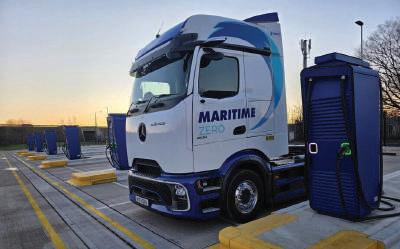
VEV has completed the installation of 5 MW of high-power DC charging infrastructure across three Maritime Transport logistics depots in the UK—one of the largest heavy goods vehicle charging deployments in the country.
Eighteen DC chargers with individual unit capacities ranging from 100 kW to 400 kW are now in place at depots in Wake eld, Tilbury and Doncaster, designed to support up to 36 electric trucks charging simultaneously. When fully operational, 56 electric HGVs will draw power from the three sites, each expected to cover approximately 120,000 km per year.
VEV handled full design and delivery: site layout, power systems engineering, civil works, charger installation and integration with its VEV IQ smart charging platform. VEV IQ provides real-time visibility into charger and energy performance, automated load balancing and optimized charging schedules to manage power across the depot network.
e project is part of Maritime’s eet electri cation program under its Maritime Zero division, supported by the UK government’s Zero Emission HGV and Infrastructure Demonstrator (ZEHID) Program. e broader rollout targets 13 Maritime depots across its national network.
“We’ve got big ambitions on electri cation, and this is a massive step forward from pilot phase into operational reality within our network,” said Tom Williams, Deputy CEO at Maritime Transport.
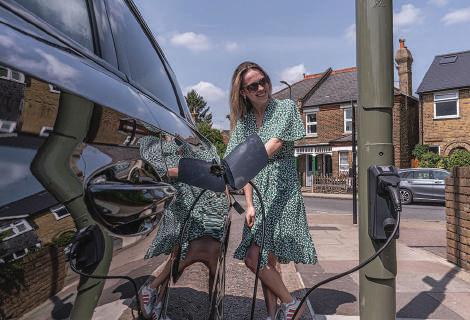
e Isle of Wight is a picturesque island just o the southern coast of England—it’s mainly known for its mild climate, coastal scenery and verdant rural landscape. Among the isle’s many seasonal visitors was Charles Dickens, who is said to have worked on David Copper eld, considered his most autobiographical novel, while staying on the island.
Modern writers and others seeking inspiration from the island’s natural beauty will soon nd it easier to visit in their EVs—and going electric will be more attractive for local residents as well. e Isle of Wight, which has about 140,000 residents and over 2 million annual visitors, is about to become a real-world testing ground for curbside charging.
Curbside EV charging specialist char.gy has been awarded a contract by Isle of Wight Council to design, install and maintain a network of over 1,500 public EV charge points, together with installation partner Joju. e rollout is supported by £1.6 million in funding from the Local Electric Vehicle Infrastructure (LEVI) program. e expansion of local, on-street charging infrastructure will address one of the biggest barriers to EV adoption in residential areas. Residents without access to o -street parking will be able to charge EVs near their homes.
“At char.gy, our focus is on enabling every resident, especially those without o -street parking, to make the switch to electric vehicles with con dence,” Char.gy CEO John Lewis said.
“ is is fantastic news for the Island, especially for those who don’t have driveways. Installing over 1,500 new charge points will make a tangible di erence for residents right across our communities, at no cost to the local budget,” said Councillor Julie Jones-Evans, Chair of the Economy, Regeneration, Transport and Infrastructure Committee.
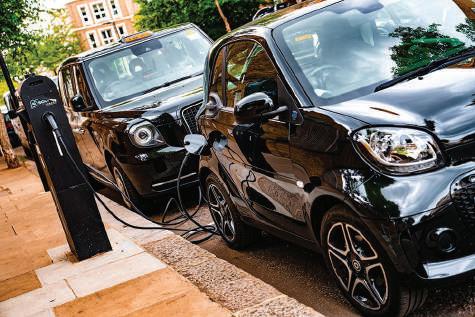
French multinational electric utility Engie has won a public contract to install and operate 2,926 EV charging points in the Belgian region of Wallonia.
e new AC charging stations, each with a capacity of 22 kW per charging point, will be distributed across 242 municipalities in Wallonia. Installation will take place over the next two years, and Engie, through its dedicated brand Engie Vianeo, will manage operations for a period of ten years.
is contract follows a similar agreement signed in March for the Brussels-Capital Region, covering 1,640 charging points.
Currently, Engie operates nearly 7,000 charging points across Belgium, located in Flanders and Brussels. (Belgium is divided into three regions: Flanders, Wallonia and the Brussels-Capital Region.)
Looking ahead, Engie aims to deploy 12,000 charging points across Belgium by 2028. Engie supplies electricity to 27 countries in Europe and 48 countries worldwide.
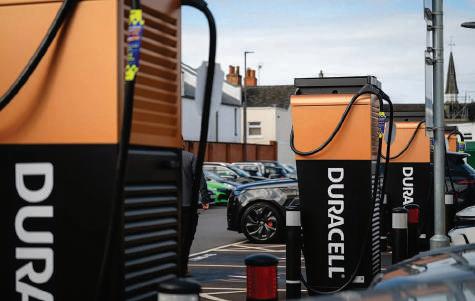
EV so ware provider Driivz, a Vontier company, has been selected to power the Duracell E-Charge EV charging network across the UK.
e Driivz so ware platform provides “robust session data, accurate billing and transparent settlements” for charge point operators. e E-Charge Network will use Driivz’s roaming capabilities, as well as real-time monitoring, remote diagnostics and proactive issue resolution.
Driivz’s EV charging so ware platform is designed to enable optimization of all EV charging operations, including charger monitoring and proactive and remote issue resolution. It includes a con gurable billing engine; a white-label charging app and driver web portal; and a reporting and analytics platform.
“Duracell E-Charge is being built to set a new benchmark for ultra-fast charging in the UK. at means high uptime, simple pricing and a consistently reliable experience for drivers,” said E-Charge Managing Director Mark Bloxham. “Driivz gives us the platform to scale quickly while maintaining control, performance and commercial e ciency as the network grows.”
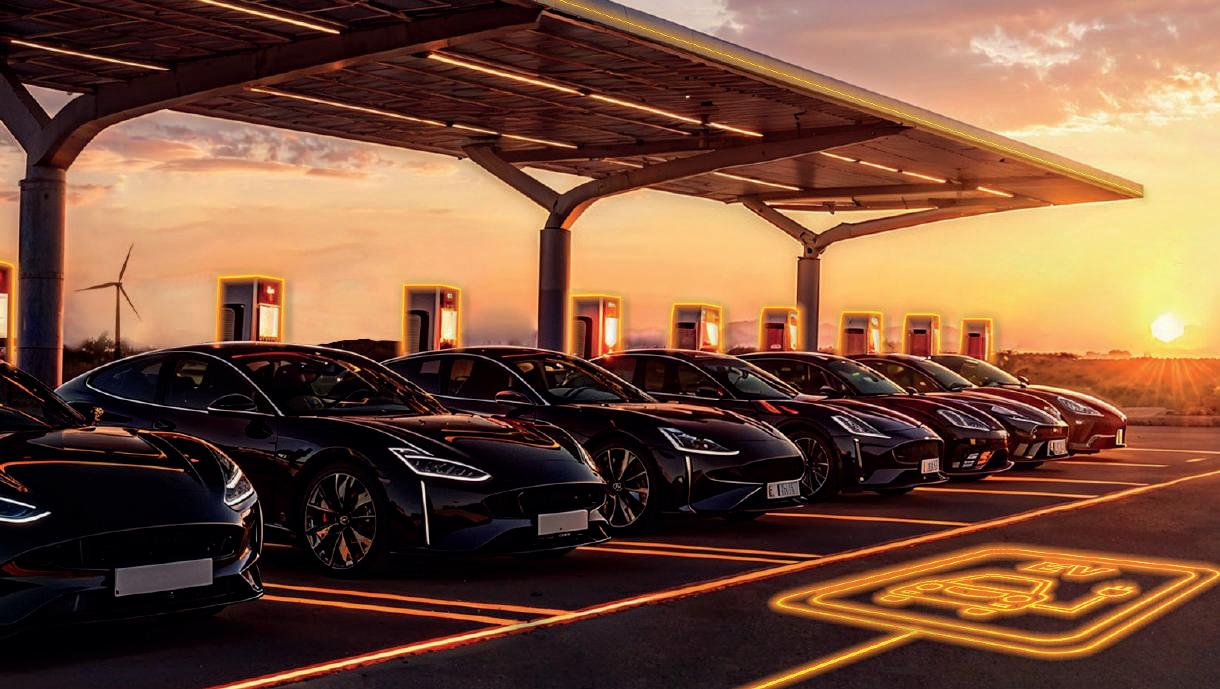




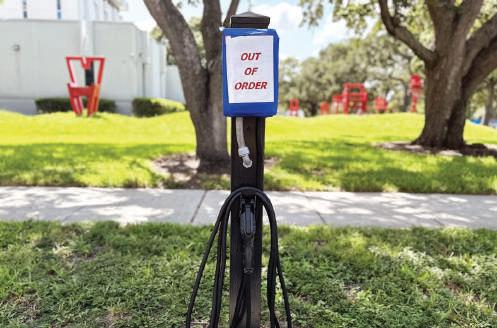
Energy technology company Everged has launched a turnkey solution designed to help EV charging site hosts replace broken, outdated, out-of-warranty or unsupported charging stations with new equipment at zero up-front cost.
As is typical in the early years of any new technology, the EV charging industry has seen not only rapid technological change, but also waves of consolidation and bankruptcies among EVSE manufacturers and providers. First-generation chargers were o en installed with no clear plan for future maintenance. Many site hosts nd themselves with chargers that are non-functional for one reason or another, and that now need to be replaced at great expense.
With its new Zero Cost Swap Program, Everged aims to remove the nancial burden of upgrading EV charging infrastructure. e company fully funds the removal, replacement, installation, activation and ongoing maintenance of new equipment.
Everged’s comprehensive, end-to-end solution includes:
• Zero CapEx—all hardware and installation costs are covered.
• Replacement of legacy or non-functional chargers with modern Level 2 or DC fast charging equipment.
• 24/7 monitoring, maintenance and driver support.
• Real-time alerts and remote diagnostics.
• Optional revenue-sharing opportunities.
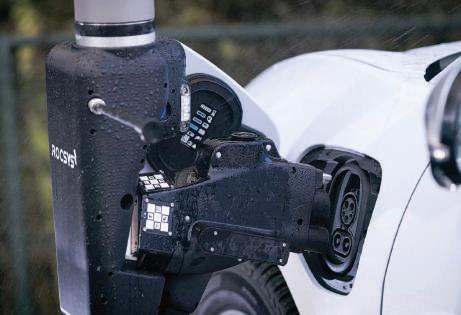
Rocsys has unveiled a new hands-free charging solution speci cally designed for robotaxi eets. Rocsys has trained the new Rocsys M1 system on six years of data gleaned from using its existing system in active port operations and other high-duty environments. e M1 is currently in pilot deployment, and the company aims to begin a large-scale rollout in 2027.
e M1’s modular, multi-bay architecture allows a single system to seamlessly serve multiple vehicles across up to 10 bays. Flexible overhead mounting options, including ground- and roof-mounted con gurations, are designed to integrate with virtually any depot layout, and to allow activities such as cleaning and inspection to take place during charging.
e system combines computer vision with motion intelligence, and is designed to adapt to variations in lighting, weather and vehicle positioning, achieving consistent performance. Rocsys says it achieves a 99.9%+ plug-in success rate in live environments.
Rocsys M1 is interoperable with di erent EVs, chargers and connector types. An overhead rail-mounted design with a exible, long-reach robotic arm is designed to enable reliable connection and disconnection across mixed eets, regardless of charging inlet positions.
e M1 is part of the Rocsys Platform, which integrates hardware, so ware and services to support autonomous eet operations. e platform includes the Rocsys Portal for operational visibility, APIs for integration with customer IT systems, and remote monitoring with expert eld support.
Rocsys has also announced a $13-million Series A funding extension led by Capricorn Partners, bringing total funding raised to date to $56 million.
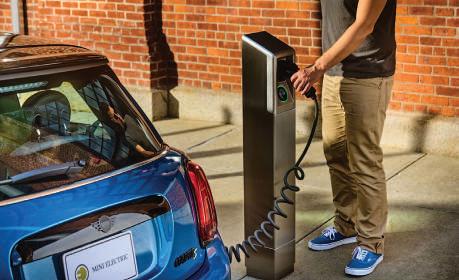
it’s
Brooklyn-based curbside charging pioneer it’s electric has reached an agreement with the city of Philadelphia to install up to 1,000 Level 2 curbside chargers across the city.
e agreement gives it’s electric an exclusive license to install and operate curbside Level 2 EV chargers on Philadelphia streets. e company plans to roll the chargers out across all 18 of the city’s planning districts, with a focus on areas that currently have little or no public charging.
it’s electric’s chargers can draw power from nearby buildings and utility poles, a feature that reduces the need for expensive grid upgrades and long waits for utility interconnects. e rst group of chargers is expected to go live in early 2027.
More than 60 percent of Philadelphia households lack access to o -street parking. e city says site selection is being guided by equity and real-world demand. Priority areas include neighborhoods with a high density of rideshare drivers and limited access to existing chargers. it’s electric says its Philadelphia waitlist already includes thousands of residents looking for curbside charging options.
“Philly is the kind of city where curbside charging isn’t a nice-to-have—it’s the only way most residents will ever be able to own an electric vehicle,” said Nathan King, cofounder and CEO of it’s electric. “ e city’s vision and its city council’s leadership have provided the foundation to build the most ambitious urban charging network in the country.”
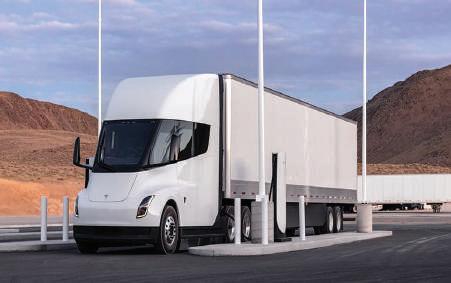
A er years of development, Tesla is ramping up production of its electric Semi, and simultaneously beginning to roll out the necessary charging infrastructure. e company currently plans to deploy 66 Megacharger locations across the US.
Tesla already has two Megacharger sites operational— one at Gigafactory Nevada and one in Carson, California. However, these appear to be designed to serve Tesla’s own eet operations. Now the company has opened its rst Megacharger station aimed at Semi customers, in Ontario, California.
Tesla’s Megacharger locations are planned for the busiest freight corridors in North America: I-5 on the West Coast, I-10 running east-west, and I-95 and I-75 on the East Coast. e company aims to have 37 sites operational by the end of 2026, and 46 sites by early 2027.
e Ontario site is in the heart of the Inland Empire, one of the busiest freight corridors in the world.
Tesla’s Megachargers can deliver up to 1.2 MW of charging power, but the company says this rst public Megacharger cranks out only 750 kW.
e company has been moving at an impressive pace in recent months, demonstrating 1.2 MW charging in December, announcing a deal with truck stop operator Pilot in January, and opening its rst customer-facing station in March (shades of the good old Tesla!).
Meanwhile, the company’s competitors have not been idle. Chargers based on the Megawatt Charging System (MCS), an open standard that supports charging speeds up to 3.75 MW, are already in operation in Europe and the US, and truck OEMs Daimler, Volvo and Scania all plan to deploy MCS-compatible electric trucks in 2026. EVSE manufacturer Kempower has deployed MCS charging hubs at three locations in Scandinavia, and one in San Bernardino, not far from Tesla’s new site.
A modular approach to solving EV charging’s installation
By Charles Morris

A
t the moment, the big bad bottleneck for commercial EV deployment is charging infrastructure. However, the problems don’t generally have to do with the hardware or so ware—EVSE manufacturers o er a wide selection of AC and DC chargers, functionality and reliability are steadily improving, and sophisticated so ware tools are available for managing charging networks and optimizing energy use.
No, the real stumbling block is charger installation. Site preparation, trenching, etc is expensive and time-consuming, and installing and commissioning chargers in the eld can be an onerous task. Furthermore, companies o en face the dilemma of installing
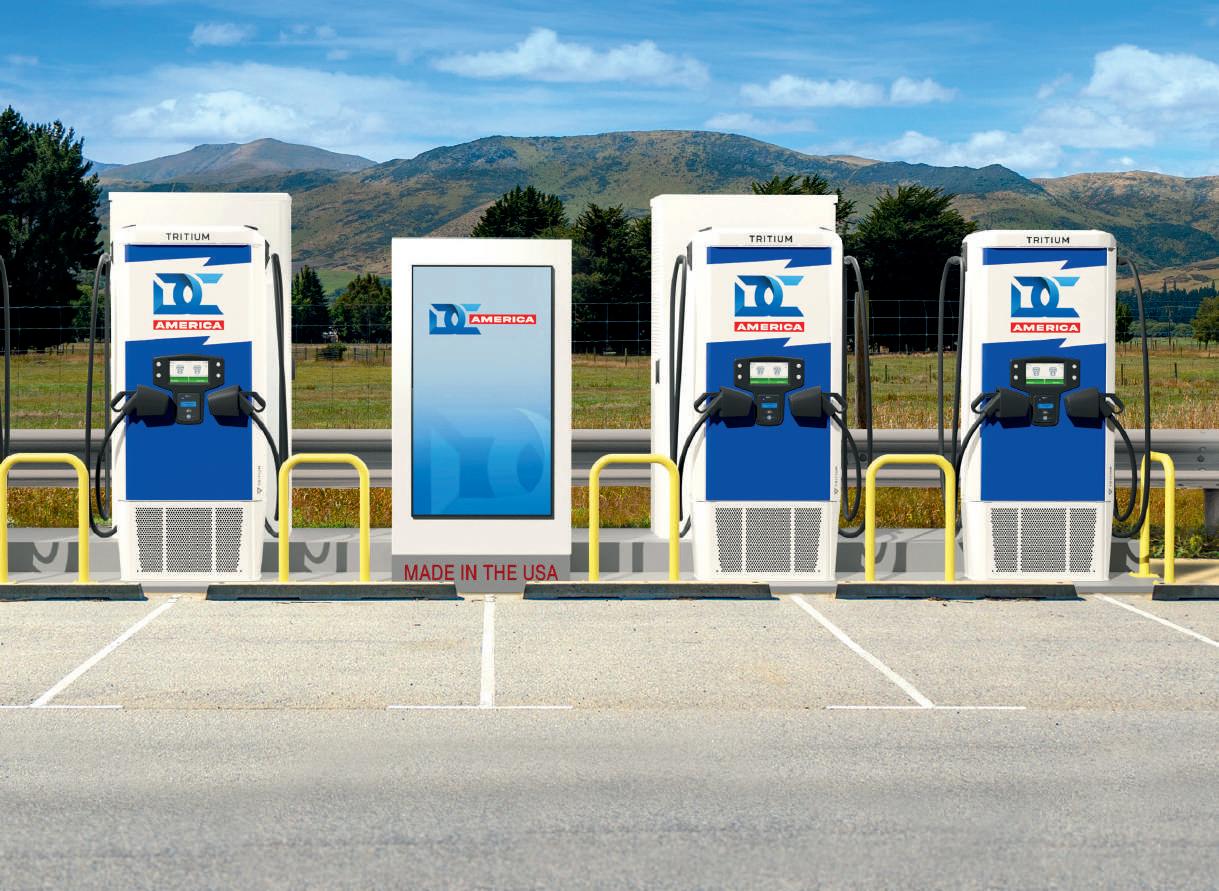
permanent hardware in a changing business environment. Fleets grow, use cases change, and the charging setup that took months to install may prove not to be suitable for a company’s needs a couple of years later. And of course, technology is evolving at a frantic pace, and no one wants to rip and replace functionally obsolete EVSE after only a few years.
To work around these issues, some companies turn to mobile charging solutions, such as Soneil’s trailer-mounted chargers, or Beam’s self-contained solar-powered charging stalls. DC-America offers a more permanent, but extremely flexible, solution. The company manufactures and installs turnkey charging stations with all the necessary components—transformers, switchgear, power cabinets, dispensers and more—mounted on a metal skid, which can be connected to the electrical service at a single point. All welding, assembly and commissioning is done at the company’s Huntington, West Virginia facility.
How does this solution save time and money, and future-proof a charging installation? We’ll let DC-America President Nathan Bowen explain.
Q Charged: Let’s start with a brief history of the company and your background.
A Nathan Bowen: I was building prefabricated skids for the energy industry—natural gas compressor stations, or stuff that would go at a power plant. My background’s in the electrical field, so my aspect of it was doing the wiring, commissioning, pre-wiring sensors.
About 2021, the NEVI funding came out. We had
We can deploy these in less than four hours in most cases.
been watching the EV market, and we applied our knowledge of building prefabricated infrastructure to charging infrastructure.
Basically any component that you see on a charging site— electrical switchgear, panel boards, transformers, any combination of Level 2 chargers and DC fast chargers—we can mount it on a skid and pre-wire it and commission it before it leaves our facility. We can even put light poles, cameras, or any electrical component that you can think of on the skid. In most cases, this greatly reduces the amount of trenching. We can deploy these in less than four hours in most cases. It took a couple years to get the marketing out, but in the past year, it’s really taken off, and we’re getting a lot of traction in the fleet behind-the-fence space. We also do public charging stations for some CPOs—any companies that want to take advantage of prefabricated infrastructure.
There are many advantages to it: quick deployment obviously, but in a lot of cases, especially in fleet behindthe-fence, what we see is either that folks are leasing their space, or they’re potentially interested in redeployment. Things change, and they want to have the ability to move infrastructure to where they need it without losing all that underground infrastructure investment. As quickly as we can put it in the ground, we can disconnect it, put it on a truck, and send it down the road.
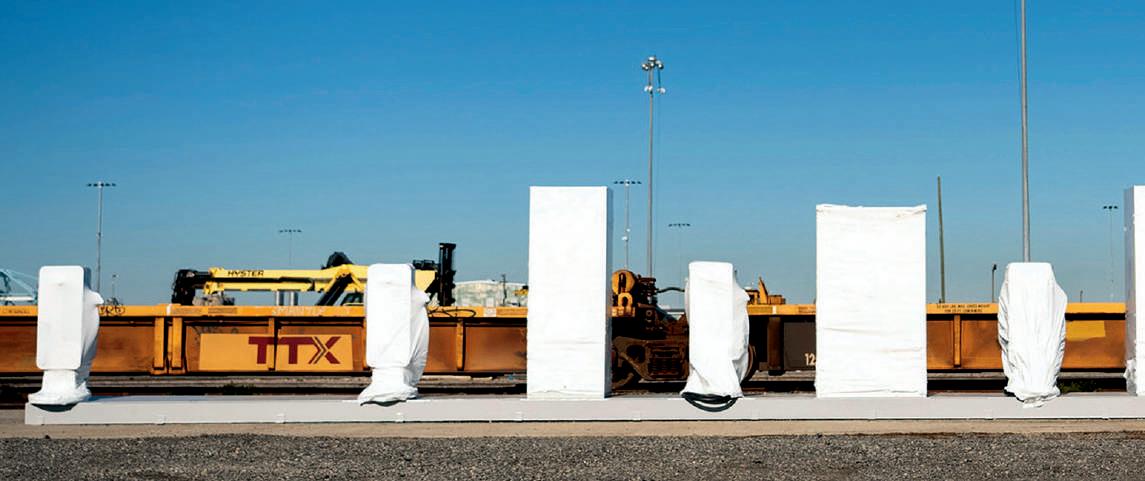
Q Charged: ere are several di erent avors of mobile charging out there. Might we call your product a semi-mobile solution?
A Nathan Bowen: It’s more of a permanent/semi-permanent solution, and we cover both ends of that spectrum. We have stu that’s been out there for several years and they have no intention of moving it, but we make single chargers on a small platform that could be put in the back of a pickup truck with quick connections, and they’re 100% intended to be mobile.
We’ve tried to be exible. We’ll work with any charger manufacturer (customers can provide their own chargers, or we will), and we do custom designs, depending on what the needs are. We worked with one particular client that was trying to ll a need with single-phase situations where there’s no three-phase power, so all the components that it takes to operate a three-phase DC fast charger, we combined that into a mobile unit.
We’re currently looking at more and more stu with battery energy storage. Especially for public charging, when you look at demand fees, it may make a lot of sense to use energy storage to bu er that power. However, once utilization gets to a certain point, the energy storage may not have as much of a positive e ect as it would at another location, so having the ability to move infrastructure around and redeploy can play a big role in the success of public infrastructure, and even eets for that matter.
Also, I’ve seen over the past couple years how much technology’s changed. is skidded infrastructure gives you a good base for keeping up with technology advances because you can change hardware a er the fact. If you put conduit in the ground, you’re stuck with the conduits you roughed in, whereas if you’ve got a completely open raceway that’s accessible from the top, you can switch technology in the
future—if you’re starting with an all-in-one charger and you’re going towards a distributed DC system, you have the capability to switch those components out later.
Q Charged: To be clear on the terminology, the skid is the structure that the equipment sits on and the raceway is what the electrical wires pass through?
A Nathan Bowen: Yeah, so that raceway system would be within that skid. e size of the structure is somewhat dictated by the size of the chargers, distance between chargers and equipment—the switchgear, panel boards.
Q Charged: Let me go down the list of components that a customer might have mounted on that skid: chargers, dispensers, power cabinets, transformers, panel boards, battery storage, accessories like lights, security cameras. What else?
A Nathan Bowen: Emergency shutdown (ESD) buttons, multiple power sources, canopies, bollards, tire lling stations, vacuum cleaners...
Q Charged: As everybody in the charging business tells me, one size does not t all. Do you have a standard skid, or do you sit down with customers and discuss exactly what they need?
A Nathan Bowen: Some of the stu we do try to standardize on. If you’re prefabricating something, to save money you need to keep it as standard and production-oriented as possible. We’ve sized our standard to t the footprint of probably 80% of equipment that’s out there. We’ve looked at standard parking stall widths that keeps us to certain dimensions with our skids. But absolutely, there’s some
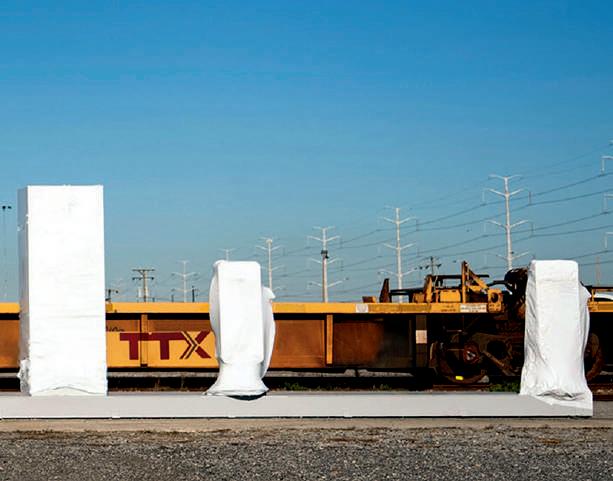
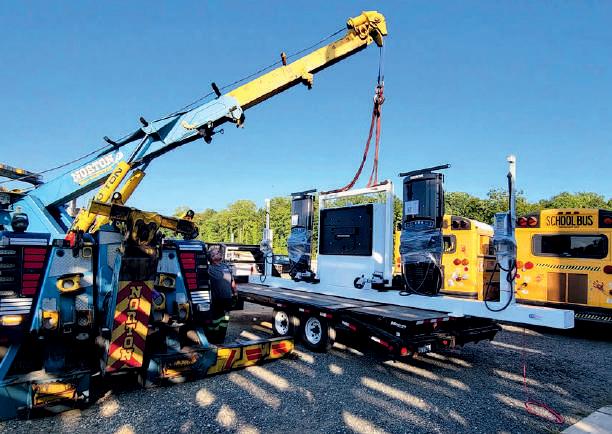
one-o stu that people do, and we’re happy to take that on.
Sometimes we get customers that want a very wide parking spot—maybe it’s a eet application with large trucks. Maybe you have shrubbery or something in the way. Sometimes you have to modify things to get around 90-degree turns or something like that. We can handle the non-standard stu , but it’s a big advantage to prefabricated infrastructure to try to replicate it and build it over and over the same way.
Q Charged: You make the hardware, but of course, deploying charging also involves a stack of so ware and services, and some eets choose to go with a turnkey company that o ers charging as a service. Do you work with some of those companies?
A Nathan Bowen: Yeah, probably 90% of our business is for charging as a service, trucks as a service, CPOs.
This skidded infrastructure gives you a good base for keeping up with technology advances because you can change hardware after the fact.
On the other hand, just out of trying to be a good steward towards the EV industry here in West Virginia, we’ve o ered turnkey stu to some of the school districts and the local turnpike authority. We did some jobs where we basically did turnkey, but that’s not our business model. I’m trying to manufacture a product to make these charging providers as successful as possible. I don’t want to compete with them.
In some cases, we provide chargers. We have relationships with the major charger manufacturers, but probably the majority of our customers want to provide the chargers themselves. We install their chargers and typically commission them.
Q Charged: Commissioning is a term I hear a lot, but what does that mean exactly?
A Nathan Bowen: It starts at the panel board. ere’s a lot of settings, especially on higher-amperage breakers, that should be engineered and set up prior to use. Commissioning includes setting up overcurrent protection—anytime you’re over a thousand amps, you have to have LSIG [an advanced system used in modern circuit breakers that protects against overload, short circuits and ground faults], arc ash remediation, so there’s settings that go along with that, depending on the particular circuit from the utility. e rst thing we do is set up the breaker to be able to turn the power on to the chargers themselves. We test the wiring, check that everything was put in properly. You want to con rm that you don’t have any insulation breakdown in the cabling. Point-to-point check: is everything wired correctly for communications, whether it be CAT5 or CAN bus. e DC side, the AC side, make sure all those terminations are good. And then ring up the charger— depending on who the charger manufacturer is, sometimes these come with SIM cards for communications.
There’s nothing like having a hardwired input into a controller rather than going up to a cloud and coming back down and getting delayed information.
Q Charged: It sounds analogous to when you buy a new computer—you have to go into the settings and set everything up the way you want it.
A Nathan Bowen: Yeah. It depends on who we’re working for—sometimes we’re coordinating the charge management so ware with the hardware, making sure that’s all talking before it goes out. And payment terminals, that’s another biggie. Sometimes it doesn’t get to that point in our facility because of security issues—some folks want to set it up themselves—but in some cases we end up making sure the whole thing works and can charge vehicles before it leaves our facility.
I think it’s a huge selling point to have the chargers pre-commissioned. When I roll out there, I’m charging a vehicle within a few hours, I’ve already worked out all the bugs. I would want to see that because usually you’re on a site, a site host is watching you, and they either see you do really well or they see you fumble. I like the rst scenario.
Q Charged: ere are a few—I won’t say controversies, but discussions—about di erent technologies that I hear a lot about. First, distributed charging versus standalone units. Are there advantages to both, or is distributed the coming thing?
A Nathan Bowen: I think there’s advantages to both, but if you’re going to oversubscribe a site, distributed makes a lot of sense.
Q Charged: Can you clarify what you mean by oversubscription?
A Nathan Bowen: Let’s say you have a site where the utility will only give you 1,000 amps, but you have enough chargers out there that you could potentially
utilize 1,800 amps. One advantage of a dynamic system is that you can still have high-power chargers connected to a 1,000-amp service, but through so ware, you’re able to smartly shi this power around. So oversubscription means that the nameplate power capacity of your chargers is more than what your input power from the utility is.
You could somewhat do that with all-in-ones as well— there’s so ware that lets you peak shave and keep the total amperage under 1,000 amps, for instance. It’s just that, with distributed, you’re able to shi it around based on the state of charge of the vehicles. As a vehicle increases its state of charge, obviously the output of the charger is going to decrease, so you’re able to reallocate that power to another charger and keep them all at the highest rate possible.
It’s a little more complicated installation, but with our system, we do that really well because we have a wideopen raceway and we can separate AC and DC cabling.
ere’s a lot of conduits that have to be roughed in right to make that happen. If it was a stick-built site, it’s a little more complicated install.
All-in-ones have their place. ey’re easy to install. It’s typically less conduits to install it. Ultimately, dynamic, in my opinion, wins. at’ll probably make some people mad, but I personally think that oversubscription of power is probably not done as well with all-in-ones as it could be in the dynamic world of being able to shi power around where you need it.
Q Charged: Another discussion I’ve heard is onsite vs cloud-based processing for things like energy management. You can have a processor on site to do that, or you can send everything o to the cloud.
A Nathan Bowen: I’m a fan of onsite hardware. Especially if you’re wanting granular information, there’s nothing like having a hardwired input into a controller rather than going up to a cloud and coming back down and getting delayed information. Probably the majority of the industry doesn’t do it that way. I’m not necessarily saying it’s a bad thing, but hardwired onsite equipment is hard to beat. Let’s say you lose 5G connectivity—in most cases, those systems are still able to work.
Q Charged: What are your thoughts on credit card readers?

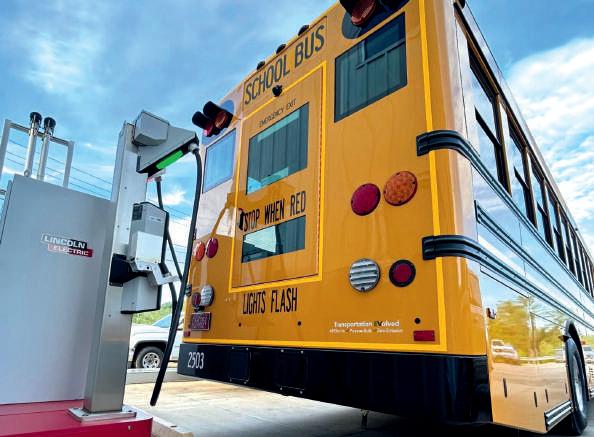
A Nathan Bowen: It’s a tough integration. That’s been my experience. In my opinion, that’s one of the tougher things to do with public charging—payment processing and authentication. I’m no expert at that, but I’ve dabbled in payment processing enough to know that I don’t want to do that for a living.
Q Charged: I’ve heard people say that credit card readers aren’t designed to work outside in the rain and the snow.
A Nathan Bowen: But you see them at gas stations all the time.
Q Charged: Tell me more about microgrids. ere’s all kinds of components you can put on your skids—not only batteries, but solar panels, propane generators or other energy sources for an o -grid location.
A Nathan Bowen: Yeah. Any of those items, I can put it on a skid and connect it. I don’t see it a lot right now, but I think in the future, you may see that more. I’ve had a lot of people ask about solar canopies, and we can build them, but the scale of that is not doing much for DC fast charging. You would have to have something larger-scale, but absolutely, it can be integrated into what we’re doing.
Q Charged: What about vehicle-to-grid? You work with some school districts, and school buses are considered an ideal use case for V2G.
A Nathan Bowen: ere’s people doing it, but I wouldn’t say it’s large-scale yet. For us, it’s just another electrical item. I think it’s great technology. e school bus is the perfect application for that. I’ve seen some companies that advertise that battery life is actually better when controlled with their so ware as opposed to normal day-to-day use of
It’s very diffi cult in a rural state like this to put in what NEVI was speccing out: four 150-kilowatt chargers, every 50 miles.
that electric bus. ey have the technology to maintain the integrity of the battery itself with all the discharge cycles.
Q Charged: What’s going on with the NEVI program? It was going great guns, then they said, “No, we’re going to shut this down,” then they said, “We’re going to start it up again.” I think a lot of people got burned committing to investments, then having to start over.
A Nathan Bowen: Yeah. I live in a rural state, and non-Tesla infrastructure is fairly infrequent. Probably the majority of the Tesla infrastructure is not compatible with the CCS adapters. I drive a GMC Sierra EV, and the Supercharger here in town, I can’t use it. Down the road in Charleston, I can’t use it. ere’s only a few stations in the state I can use—there’s very little CCS infrastructure. Now, we did have the privilege of putting some in on the West Virginia Turnpike, which really helped EV travel, especially coming into the state from the south. But it’s very di cult in a rural state like this to put in what NEVI was speccing out: four 150-kilowatt chargers, every 50 miles. Some people are going to disagree with me on this, but it’s di cult for that to make sense in every location. ere’s just not enough utilization. It’s not going to make money. I like the idea of giving the states a little more latitude. I would put more emphasis on sizing infrastructure for growth, and having the ability to grow later.
Q Charged: at sounds like a good selling point for your products, because you can put in a small installation today and easily expand it in a few years.
A Nathan Bowen: Yeah, I think it’s perfect for it, but I want to see public charging be successful everywhere, even without my product. I think real conversations need to be had—especially in underutilized areas, do we force a certain size station on everyone? I think we ought to avoid a one-size- ts-all solution.
By John Gartner
The US public charging “network” didn’t emerge from a single master plan. It grew out of grants, bankruptcies, corporate settlements, acquisitions—and one automaker that decided it couldn’t wait.
Since the current generation of EVs emerged more than 15 years ago, the “network” of EV charging stations in the United States has been a patchwork of sites run by a constantly changing landscape of players. e recent rollback of federal support for EVs and charging infrastructure has cast the industry into even greater turmoil that could further erode driver and investor con dence. A er all this time, how can an industry seeking to dis-
rupt transportation still be circling through the revolving door of market expansion, contraction and participants? And what does the future hold for the charging network’s ability to meet EV driver needs? ese articles provide an overview of how the network has morphed, the challenges therein, and insights on how to keep it growing.
According to the US Department of Energy’s Alternative Fuels Data Center, as of November, 2025 there were more than 80 companies listed as charging network operators, and 77,000+ public charging locations. Only seven companies operate more than 1,000 locations, and fewer than half manage 100 locations or more.
ose big seven got there via a surprisingly small set of origin paths:
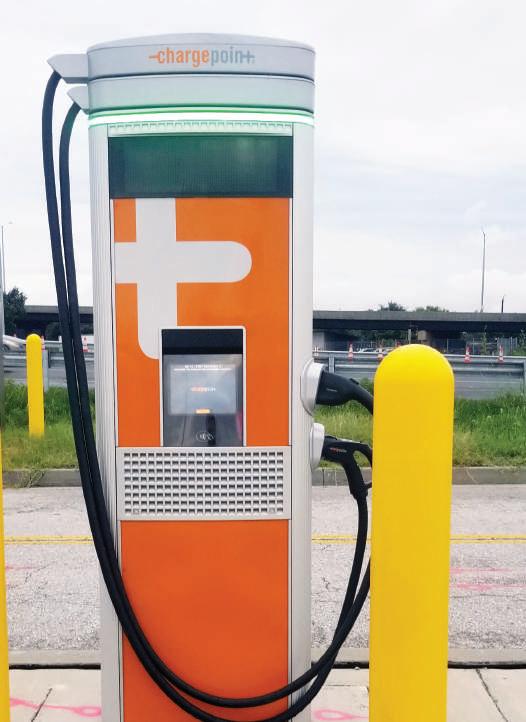
• Federal stimulus and early grants (ChargePoint and the roots of Blink)
• Court settlements and penalties (Electrify America and EVgo)
• Startup-to-acquisition pipelines (EV Connect, Shell’s charging buildout via Greenlots and others)
• A vertically integrated OEM network (Tesla)
Here’s how each of them came to be—and why they survived while countless others faded out.
ChargePoint: the ARRA boost plus a platform play
ChargePoint of Campbell, California began as Coulomb Technologies in 2007, and now boasts the largest US charging network, with nearly 43,000 locations. e company was one of two awardees of the federal American Recovery and Reinvestment Act (ARRA) funds in 2009 to develop charging stations. e $15-million ChargePoint America project was launched in 2010 and required the company to provide matching funds. e project resulted in the deployment of 4,600 residential and public chargers in 10 metropolitan areas, which coincided with funding for 2,000 EVs that would have their performance and charging habits studied by the DOE. Also in 2010, the California Energy Commission provided an award of $3.4 million to Coulomb to install chargers across the state. e company adopted the ChargePoint name in 2012.
ChargePoint’s diversi ed business model has included the manufacture of its own equipment, the licensing of its so ware platform for managing charging stations
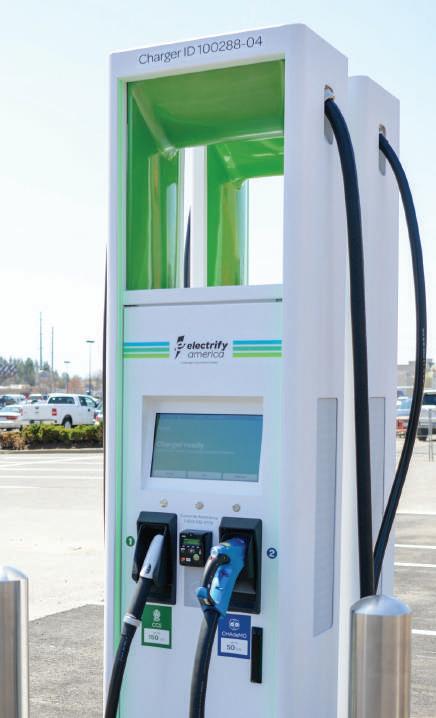
manufactured by other companies, the sale of equipment to site host charging operators, and recurring revenue from site hosts who use the company’s so ware platform to manage revenue and performance.
ChargePoint continued to grow as a privately-held company and raised several rounds of funding, including an early investment from infrastructure giant and hardware partner Siemens. In February 2021, ChargePoint went public through a special purpose acquisition company (SPAC). In June 2021, ChargePoint (CHPT) reached a market cap of more than $8 billion. Since going public, ChargePoint has never produced an annual pro t, and in November of 2023 the company replaced longtime CEO Pat Romano with current CEO Rick Wilmer. ChargePoint notably had two signi cant rounds of layo s in 2024, and in its scal year ending in January of 2025 had total revenue of $417 million and a net loss of $277 million. As of February 19, 2026, the market cap had fallen to $146 million.
Why this origin matters: ChargePoint shows how early federal funding helped seed network scale—and how scale doesn’t automatically translate into pro ts.
Blink Charging’s roots can be traced to Ecotality, a transportation and energy storage company founded in San Francisco in 1999. In 2007 Ecotality acquired eTec, an alternative fuel infrastructure company. In 2009 Ecotality was awarded a $99.8-million grant to install chargers under the ARRA’s EV Project. During the program, which
ended in December 2013, more than 12,000 AC and DC EV chargers were installed in 20 metropolitan areas. e program captured data from more than four million charging events, which was the most comprehensive analysis of EV charging at the time.
e company’s initial public o ering was on May 19, 2010, and by June 2011, the stock was trading at $2.80 per share. An October 2013 report from the DOE’s O ce of Inspector General O ce of Audits and Inspections cited concerns that were highlighted in reports during 2013, including that “the cost for some commercial EV chargers was about 200 percent higher than the original budgeted cost per unit,” and doubted that Ecotality would be able to complete charger installation and data collection deadlines. In September of 2013, Ecotality led for Chapter 11 bankruptcy, and the company’s assets were auctioned o the following month.
ose assets were purchased by Car Charging Group, a competing EV charging company that was founded in 2009. Earlier in 2013, Car Charging Group had scooped up the assets of networks Beam Charging and 350Green, an EV charging startup that had been shuttered a er its founder had been convicted of fraud and sent to prison. Car Charging Group, which was publicly traded, changed its name to Blink Network in 2017. (It now calls itself Blink Charging.) e company continued to grow, and in June of 2022, Blink acquired SemaConnect, an East Coast operator of charging stations, for $200 million. Since that time, Blink has never reported an annual pro t. As of November 2025, it had a stock price of less than $2 per share.
Why this origin matters: Blink’s story shows how early “boom” buildouts didn’t vanish when the rst wave collapsed—they were bought, rebranded, and folded into today’s market.
Electrify America is a privately-held subsidiary of the Volkswagen Group. In 2016 Volkswagen agreed to settle multiple criminal and civil claims with the US Department of Justice, the EPA and the California Air Resources Board in response to claims that the company altered diesel vehicles sold in the US market so that during emissions testing they would register far lower pollutant emissions than were allowable.
As part of the settlement of the cases (which eventu-
ally climbed to nearly $20 billion in penalties), VW was required to invest $2 billion in “ZEV charging infrastructure and the promotion of ZEVs.” Some $800 million of this was to be spent in California, and $1.2 billion across the rest of the United States.
In February 2017, VW announced Electrify America, LLC, a subsidiary created to implement the settlement’s required $2-billion investment in charging infrastructure and ZEV promotion—separate from the Volkswagen Environmental Mitigation Trust. Since then, Electrify America has had additional investors beyond the original settlement-required investment (for example, Siemens became a minority shareholder in 2022).
e initial rollout of charging stations was to take place in four 30-month cycles (10 years), and the settlement agreement enabled Electrify America to own, operate and collect revenue from the stations.
Despite the challenges of establishing a business unit, designing charging hardware, integrating a new soware platform and then acquiring and equipping a site, the rst Electrify America location opened less than a year and a half later. e original Cycle 1 plan called for 450 chargers to be installed by Q2 2019, but by the end of 2020, just 323 stations were open. In the following years, progress in building out the network signi cantly accelerated—by the end of 2024, Electrify America had installed 4,800 DC fast charging stations in 47 states. For the current Cycle 4 Investment Plan, between January 2024 and December 2026 the company will spend $412 million on infrastructure, of which $130 million will be spent on upgrades and repairs, even though the oldest equipment was installed in 2018. Commercial charging equipment is widely expected to last up to 10 years, but technology advances have made some of the older, slower stations obsolete.
Why this origin matters: Electrify America is the clearest example of “forced market creation”—a network built because a settlement required it, not because the business case was already proven.
Based in El Segundo, California, EVgo was founded in 2010, and like Electrify America, has its roots in a legal dispute. On April 26, 2004, the California Public Utilities Commission approved a settlement with energy conglomerate NRG and frequent partner Dynegy to settle claims that the companies had set electricity prices at
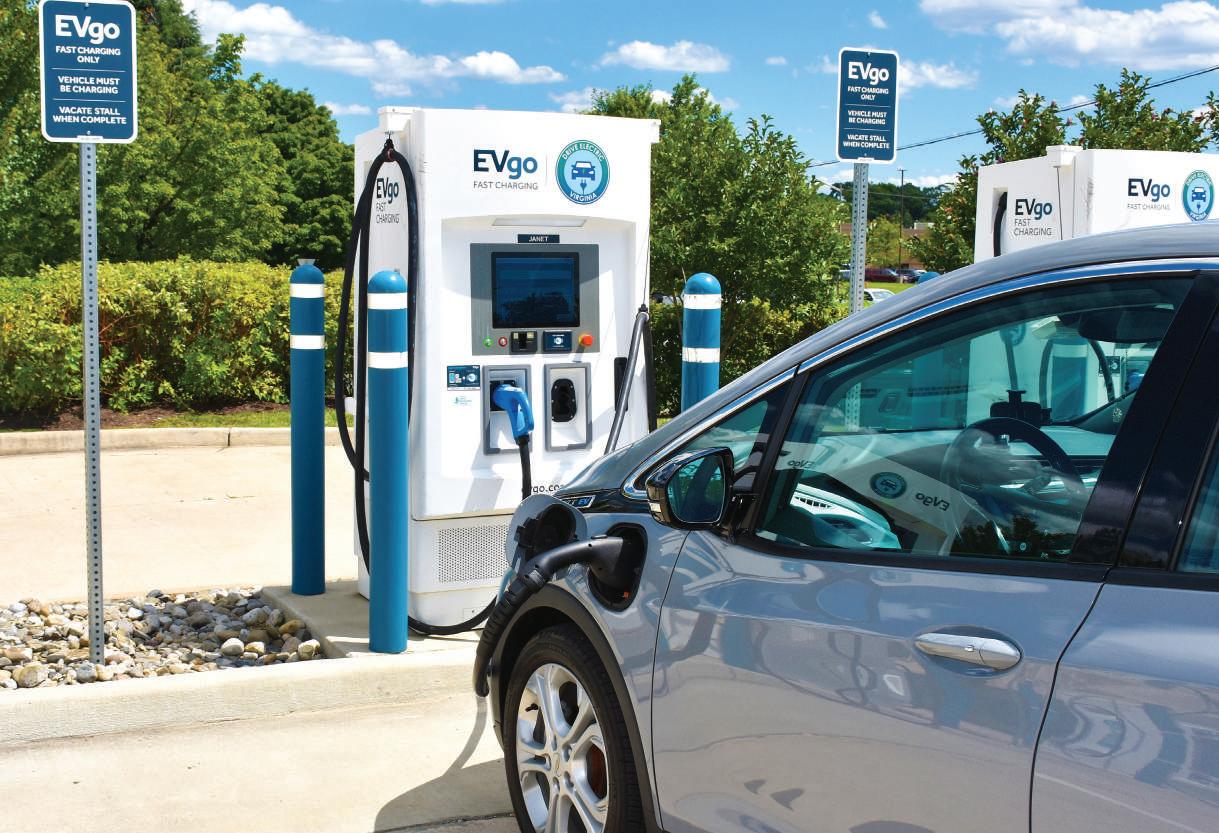
“unjust and unreasonable rates” during California’s energy crisis in 1999-2000. e settlement between the parties was initially approved by the Federal Energy Regulatory Commission on April 27, 2012, and required NRG to invest $102.5 million in EV charging station projects, including $50.5 million to build “Freedom Station” fast chargers in four metropolitan areas of California. While the agreement was in the midst of nal regulatory approval, NRG created EVgo in 2010 to develop charging stations.
In an interview with the author in May of 2012, Arun Banskota, then President of NRG Energy’s EV Services, said that consumers bene tted from the settlement because “NRG’s investment and innovation in DC fast chargers will break open the EV market by addressing the number-one challenge facing the industry—range anxiety. is settlement puts the state on the path to creating a backbone of fast charging stations.”
A er several parties, including ChargePoint, objected to EVgo being permitted to generate revenue from the stations and have the exclusive right to temporarily sell equipment to the selected site hosts, the settlement was amended and nalized on February 24, 2016. e nal agreement modi ed how some of the funds for charging station “make-ready” and demonstration programs were to be spent.
EVgo continued to build its network in other states, while parent NRG saw its stock fall by more than 60 percent between 2014 and 2016. In May of 2016 NRG
sold its majority stake in EVgo to Vision Ridge Partners for about $50 million. In December of 2016, EVgo announced the selection of the Driivz so ware platform to manage its network of chargers.
In January of 2020, infrastructure company LS Power acquired EVgo. In July, EVgo and GM reached an agreement to build charging stations that would result in tripling the size of EVgo’s network. en, in July of 2021, EVgo combined with Climate Change Crisis Real Impact Acquisition Corporation, forming a SPAC (as ChargePoint also did) to go public. Also in July of 2021, EVgo acquired Recargo (the author is a former employee), the parent company of PlugShare, a popular application that helps EV drivers to nd charging stations. EVgo’s stock peaked at $18.90 per share in November of 2021, and as of November 2025, traded at under $3.
For both Electrify America and EVgo, being legally bound to spend tens of millions of dollars seems a curious way to launch charging networks. Dave Packard, a former charging industry executive who held roles at ChargePoint and charging equipment company ClipperCreek, was initially skeptical of the settlement agreements. But in a recent interview he said he doesn’t believe that the nascent industry was ultimately harmed. “I don’t think they necessarily stole market share. I think they created market share,” Packard said.
Why this origin matters: EVgo highlights how regulation can create the conditions for a network, and ownership and strategy can change hands as the market shi s.
EV Connect: the quieter software-first path (and a strategic acquisition)
In contrast to the more complicated histories of some of its competitors, EV Connect has been inconspicuous. e company was founded in 2009 and, like EVgo, it’s based in El Segundo, California. e company has focused on developing charging management so ware and partnering with hardware makers, OEMs and utilities. It has developed an open platform (similar to that of Greenlots) that will operate on a wide variety of hardware, including charging stations from ABB, BTC Power, Efacec, Siemens and Tellus Power.
In 2011, EV Connect and hardware manufacturer ClipperCreek won an award from the California Energy Commission of $2.3 million to upgrade chargers. In 2016, EV Connect was invited to participate in Southern California Edison’s (SCE) Charge Ready pilot. By 2018, more than 1,000 charging stations using the company’s so ware were in operation in SCE’s program. In 2021 the company was again selected by SCE and received part of the $436-million program rollout.
In 2019, EV Connect received $12 million in funding, including an investment from Japanese electronics company Mitsui. In July of 2020, competitors EV Connect and Greenlots integrated their so ware platforms to allow customers of either network to “roam” (a term borrowed from the mobile phone industry) and pay for charging at each other’s stations, one of the rst such competitor agreements in the industry. In March of 2022, EV Connect was named one of Time magazine’s 100 most in uential companies. en, in June of 2022, global infrastructure company Schneider Electric acquired EV Connect. In September of 2023, founder Jordan Kramer le the company.
Why this origin matters: EV Connect represents the so ware platform layer—less visible to drivers, but critical to making multi-hardware networks work at scale, especially inside utility programs.
Shell Recharge Solutions is owned by Shell USA, a subsidiary of Shell, the Dutch/British oil giant that owns thousands of refueling and convenience store locations. e Shell Recharge network was largely built through acquisitions. In 2017, Shell made its entrée into EV charging when it acquired Dutch charging station oper-
ator NewMotion. Shell rst entered the US EV charging market with the acquisition of so ware platform company Greenlots in January of 2019. Greenlots was founded in Singapore in 2008 and operated its US headquarters in Los Angeles. Like EV Connect, the company focused on licensing so ware with its SKY charging platform and partnered with hardware companies such as ABB and Eaton to create charging solutions. Greenlots was a strong supporter of enabling networks and equipment to share data, and in 2014 became a founding member of the Open Charge Alliance, which supports the Open Charge Point Protocol (OCPP) standard that is in widespread use by networks globally.
In July of 2017, Energy Impact Partners, a coalition of utility companies, invested in Greenlots. e company earned a signi cant win to grow its network of chargers when in January 2018, Electrify America selected Greenlots’ platform for its initial rollout of EV chargers. In November of 2021, Shell dispensed with the Greenlots name and took up the Shell Recharge Solutions moniker.
In March of 2023, Shell purchased Volta, a network of ad-supported EV chargers that had been in operation since 2010, for $169 million. Just two and a half years later, in August of 2025, Shell announced that it was closing the Volta network as the rst step in exiting the third-party charging market. In December of 2024, Shell announced it would no longer support the use of its so ware on third-party stations, and would instead focus on operating chargers at convenience locations owned by the company. In November of 2025, Shell sold the Volta network to JOLT, an international network of ad-supported charging stations, as its rst entry into the US market.
Why this origin matters: Shell’s charging arc follows the energy major playbook: scale quickly through acquisitions, then refocus on the sites and customers you control.
Tesla Motors was founded in July 2003 and rapidly grew into the leading EV manufacturer in the US. e company didn’t want its customers to be frustrated by an EV charging industry that was not keeping pace with rising EV sales. erefore, in September of 2012, the company launched the Supercharger network of DC fast chargers in California. Tesla boldly developed its own technology for charging stations and connectors, a strategy that
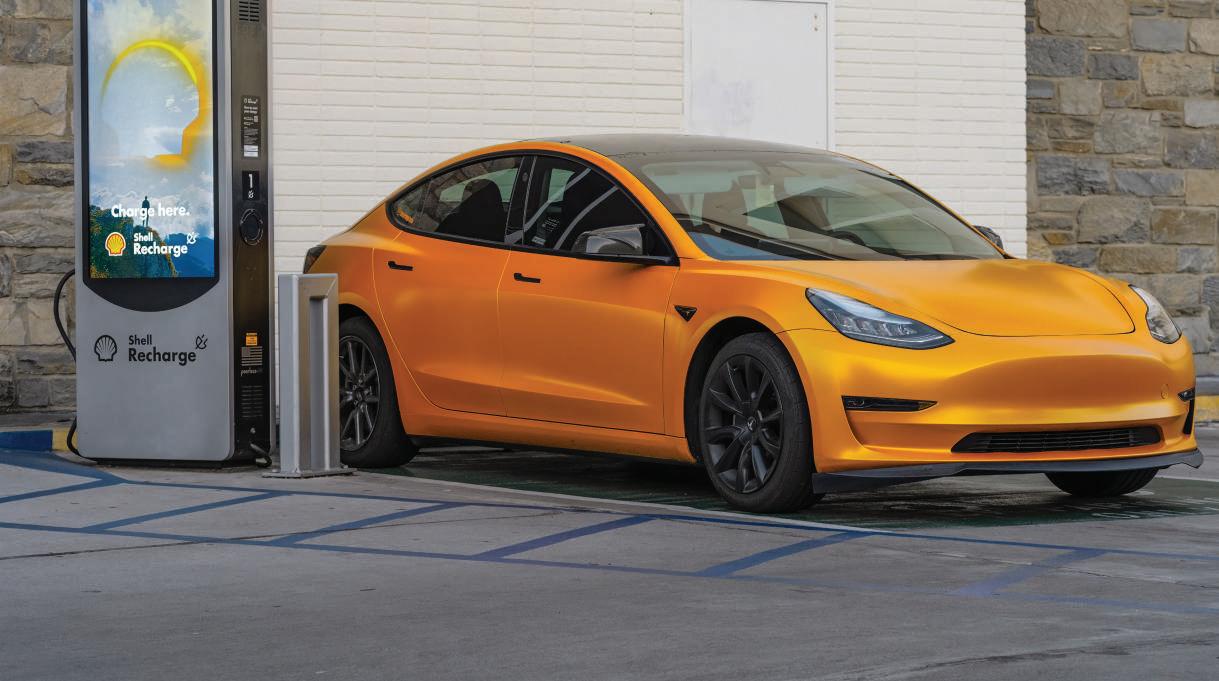
proved to be highly prescient and rewarding. By the end of 2013, the Supercharger network ran the length of the US West Coast along the two largest highways. It rapidly expanded across the entire US.
Tesla provided charging at the Supercharger network to its customers without fees, instead bundling the cost of the network and electricity into the purchase price of the vehicles. Tesla uniquely had capital to help nance its network because the company was collecting fees from its automotive competitors. Starting in 1990, California and other states required automotive OEMs to manufacture a certain number of EVs or other fuel-e cient vehicles. Companies that failed to meet the targets could purchase automotive regulatory credits from OEMs who exceeded the targets. Many OEMS chose to purchase hundreds of millions of dollars’ worth of these credits from Tesla rather than produce electric vehicles. Bolstered by these annual windfalls, a er a decade of operation Tesla rst achieved pro tability in the rst quarter of 2013. e market for regulatory credits continued to grow—between 2022 and 2024, OEMs handed Tesla more than $6.3 billion in credit revenue.
During the 2010s, Tesla was diversifying by adding solar and battery storage products to its o erings. It dropped the word “Motors” from its name in 2017. Tesla continues to leverage these technologies at many of its charging locations to reduce operating costs and increase their energy e ciency. Tesla continued to upgrade its charging technology to more quickly charge vehicles and stay ahead of competitors. In addition to the fast Supercharger network, Tesla began paying to install Level 2 Destination chargers at retail and dining locations. By 2017, Tesla had added more than 5,000 AC chargers. While the rest of the industry was utilizing two international standards for connecting vehicles and chargers
(CCS and CHAdeMO), Tesla continued to use its proprietary technology. A major change came to the charging market in November of 2022, when Tesla opened its technology to competitors as the North American Charging Standard (NACS), which was subsequently adopted as an industry standard (SAE J3400). By summer of 2023, many of the largest OEMs, including Ford, Volvo, GM and Rivian, agreed to implement NACS in their vehicles. By all accounts, this has since accelerated demand for charging and increased revenue at Tesla’s locations, and prompted further expansion of the Supercharger Network.
e Supercharger Network had a hiccup in April of 2024 when Tesla CEO Elon Musk abruptly red the entire team a er a spat with lead Rebecca Tinucci. Within two weeks, however, many of the sta were rehired.
Why this origin matters: Tesla’s charging strategy is the opposite of the one most networks have followed—vertical integration rst, standardization later, and a customer-experience motive that reshaped the market.
ese seven companies have endured while many others have come and gone. A myriad of long-forgotten startups, and several failed attempts by European energy companies to replicate their successes in the US (e.g. Enel and Engie), have proven that operating a successful charging network requires tremendous resiliency and ingenuity.
Next in the series: Now that we know where the big networks came from, the next question is obvious—how much of charging demand has been market-driven, and how much has been policy-driven?






As the EV transition spreads around the globe, some of the markets that auto industry analysts lump together as “Rest of World” could leapfrog supposedly more advanced markets in the US, Europe and Japan, for several reasons. Many of these developing countries rely on expensive imported oil, and they have no domestic auto industries to resist the EV transition.
However, compatibility problems have reared their ugly heads. e problem is not just the usual competition among standards that’s typical of the early stages of any tech transition—it seems to be rooted in more basic issues of economics and governance, and it may cause headaches for EV drivers in these markets for some time to come. e charging challenge arises through the convergence of several global trends. Chinese companies have been aggressively expanding in the so-called ird World for some years. ey’re building roads and power plants and selling consumer goods all over the planet. When it comes to cars, what consumers in these countries want is low-priced EVs, and “Western” automakers have none to o er. Chinese auto brands are moving in, steadily stealing market share from long-time leaders like Toyota. e problem is that cars coming from China o en ship with charging connectors that are incompatible with charging stations imported from the US or Europe.
Chinese EVs are pouring into Mexico, and many are equipped with the standard Chinese GB/T connector, but many charging stations, imported from the US, feature J1772 and/or CCS1 connectors.
Costa Rica’s EV market share (18% in Q1 2026) is the second-highest in Latin America (a er Uruguay) and three times the number in the US. Car buyers can choose EVs from dozens of Chinese brands, some models for less than $20,000. But many are shipped with GB/T connectors that require adapters to work with CCS chargers. A string of public EV chargers was recently deployed along a busy route that connects San José to the Paci c coast, but the plugs were designed for European models that few Costa Ricans buy.
Ned Funnell, an EV charging expert who now works for Norwegian rm Zaptec, told me that this is a common situation in developing markets. “In Eastern Europe, Central America and South America, China has become the EV factory for the world and without regulatory oversight, people are importing whatever they can get their hands on and whatever’s cheapest without much consideration for charging standards. If you go to Croatia or Costa Rica or Mexico or Argentina, they have a broad mix of used EVs imported from the US or Europe, and new EVs imported from China, which might have CCS1, CCS2, GB/T—you
By Charles Morris
end up with this crazy mix and there’s no telling what connector you’re going to nd on any given charger people are installing. For auto dealers, that o en ends up being GB/T because that’s the cheapest way to go. You tell your import agent in China, ‘We’ll take it how it comes, send the charger that works with the car.’ It creates a big mess.”
It’s an even bigger mess than it might seem, because adapters don’t always work, due to so ware issues.
“We’re running into that right now,” Ned Funnell told me. “I’ve got a project trying to gure out why this particular Chinese EV won’t charge on our unit, which is CCS1-compatible, but the charge controller is speaking the wrong communication standard.” e vehicle had a CCS1 inlet, but its charge controller appeared to be con gured for a di erent regional CCS pro le or rmware con guration, so it failed to handshake correctly with the CCS1 charger.
When Canada recently decided to allow a limited number of Chinese EVs to enter the country, some asked if connector compatibility would be a problem. It’s probably safe to say that it won’t be, because rich countries are generally diligent about enforcing standards for imported vehicles. In Norway, there are loads of Chinese EVs on the road, but plug compatibility isn’t an issue. “Norway harmonizes a lot of their regulations with the EU, which has been very successful in insisting on connector standards,” Ned explained. “ at’s why Teslas sold in Europe have to have CCS2 instead of the NACS connector.”
e problem in developing countries may not be a lack of standards, but rather a lack of enforcement, Ned told us. “ ey don’t necessarily have the resources to spend on enforcing something like connector standards, and it’s been common for a long time to have gray-market imports that aren’t going through the ideal legal channels, but they’re still showing up in the country, especially with used vehicles. In the absence of regulation, the market gets into a chaotic mode.”
As many have observed, this is a typical pattern in developing countries (sadly, it may soon be the norm here in the US): regulations exist, but for various reasons they aren’t consistently enforced.“Look at a market like Ukraine—they’ve obviously got much bigger problems to worry about, and that’s o en the case for these developing countries,” says Ned.
Most nations don’t have to deal with a war on their own soil, but all are having to adapt to higher fuel prices, which hit lower-income workers very hard. “ ey’re having a fuel crisis, and any way that [their citizens] can get their hands on EVs, [government agencies] are not necessarily going to block that.”