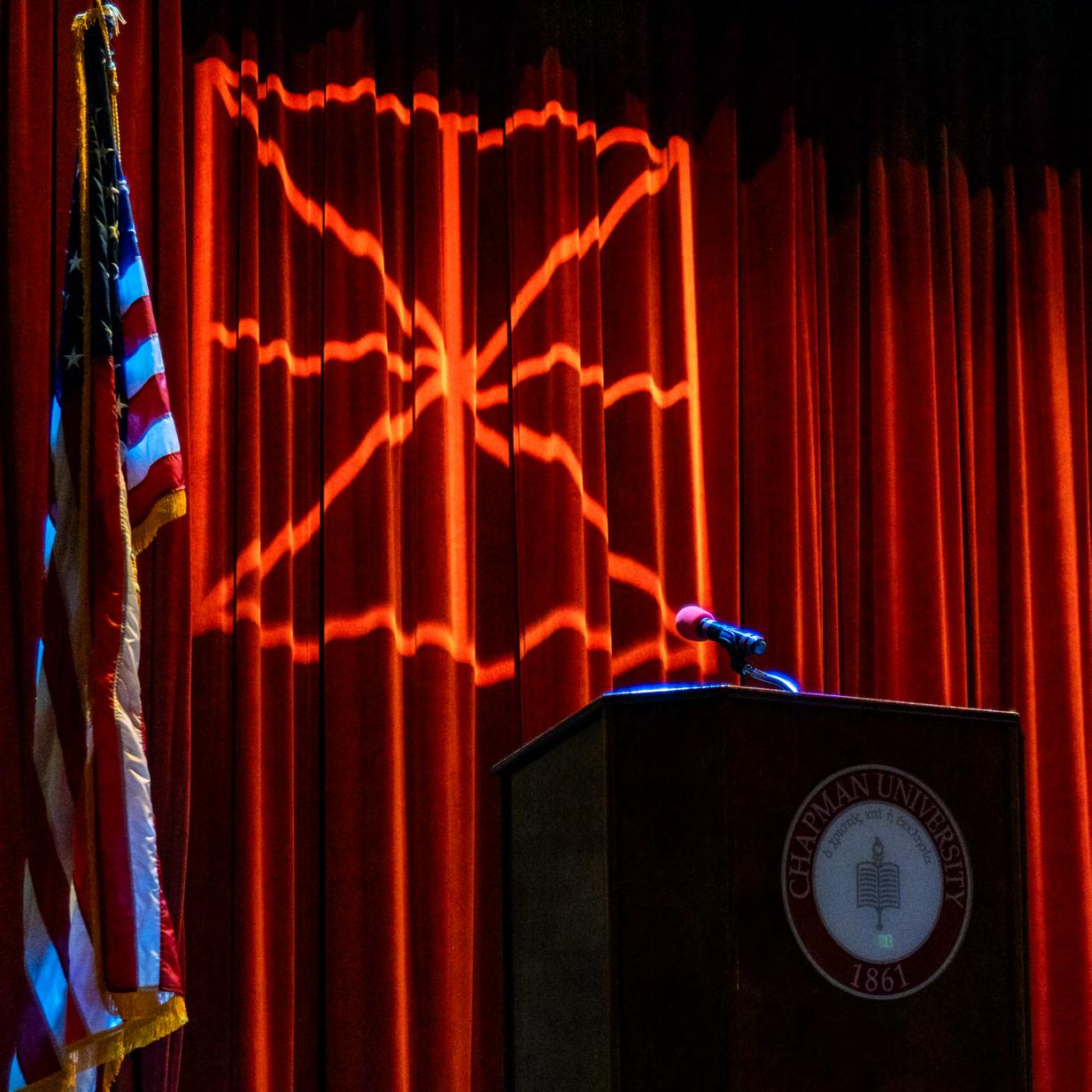
KENNEDY HALL l MAY 1, 2026
Believe it or not, the Fowler School of Law celebrated its thirtieth anniversary this year. Reflecting on this incredible milestone, I’m drawn to thinking about the remarkable momentum we have achieved since then.
As you’ll see in the following pages, those thirty years of momentum have culminated in the form of some truly amazing achievements this year: Great wins by our competitions teams, an ascending entertainment law program, a phenomenal entering 1L class, tremendous faculty and staff and our famously enthusiastic and welcoming students and alumni, our “Chapman Family.”
This year, for example, we hosted our second “SCOTUS in Focus” event, in which faculty provided expert analysis of a broad range of cases before the Supreme Court, the annual Law Review Symposium created a forum for a deeply thought-provoking examination of data privacy that thrilled a packed room and the Entertainment Law Symposium thoughtfully plumbed the many opportunities and challenges of AI in the entertainment industry.
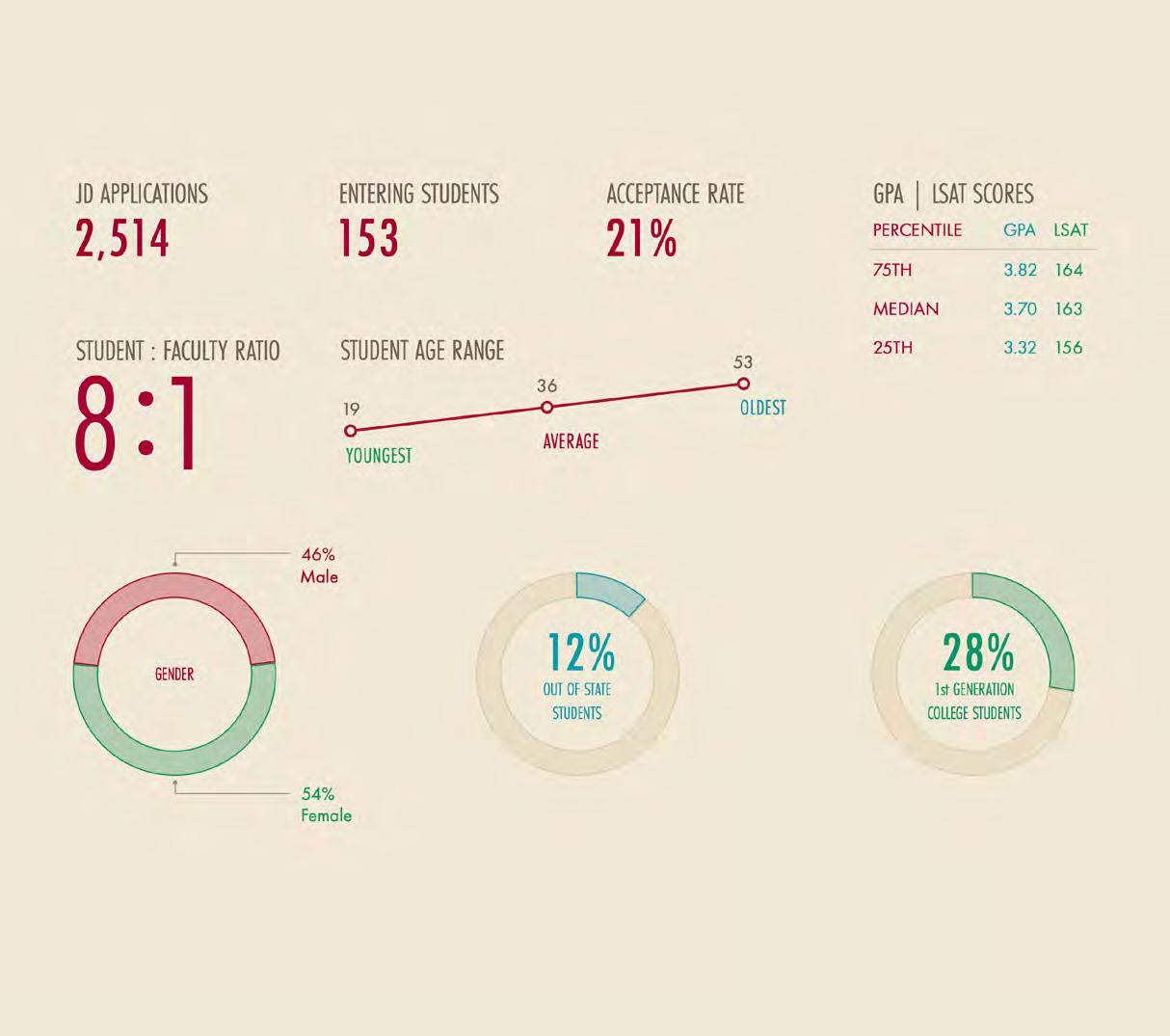
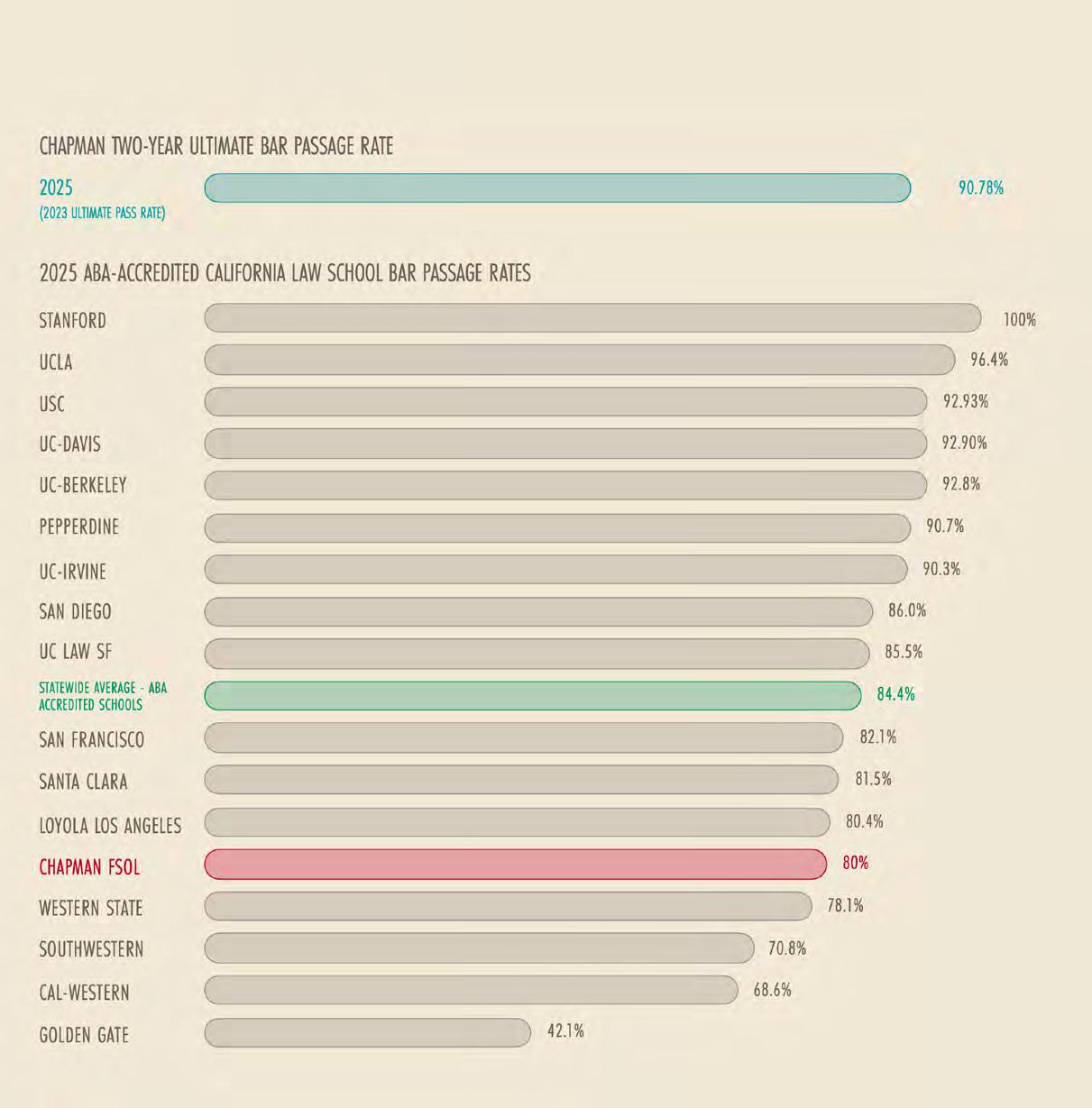
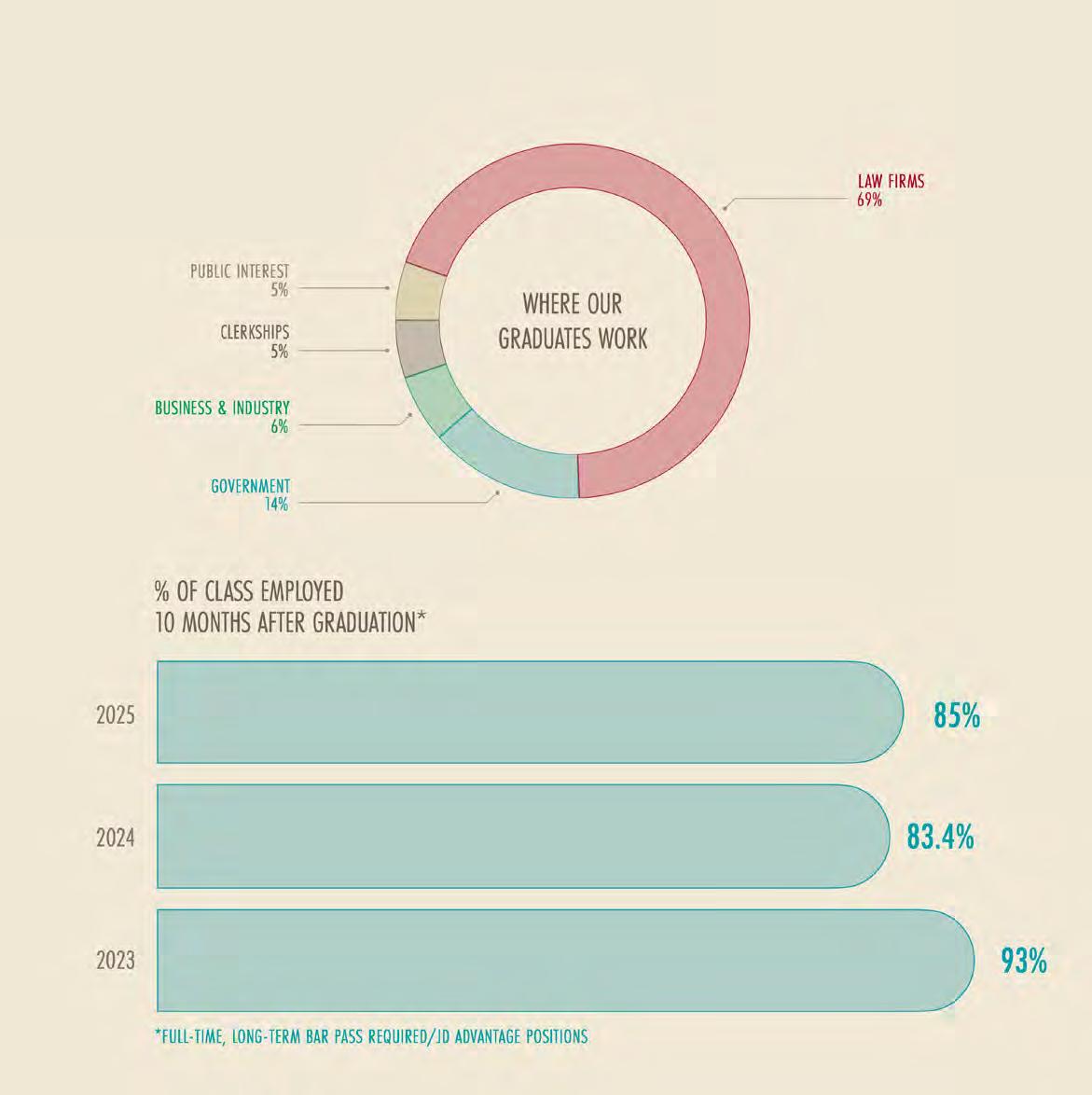
Last year’s achievements can partially be measured in a handful of great numbers. Our student advocacy competition teams are ranked 27th in the nation by U.S. News and World Report. The Entertainment Law program was ranked one of the five best in the country by Jurist Magazine. Our two-year ultimate bar passage rate of 90% far exceeds the standard requirement for ABA-accredited schools. This year’s entering 1L class had the best median GPA and LSAT credentials in the law school’s history. Over 85% of our graduates are securing roles in the legal workforce within ten months of graduation. Our faculty to student ratio of just 8:1 guarantees that our students have uncommon access to an expert faculty and the unique ability to get to know professors who care about their successful progress through law school.
Beyond the numbers, Fowler School of Law has developed a reputation as a cheerfully competitive environment where students collaborate in order to succeed, where faculty and staff work tirelessly to place students on the path to achievement, and where the school’s intellectually rich milieu continues to nourish and challenge our students.
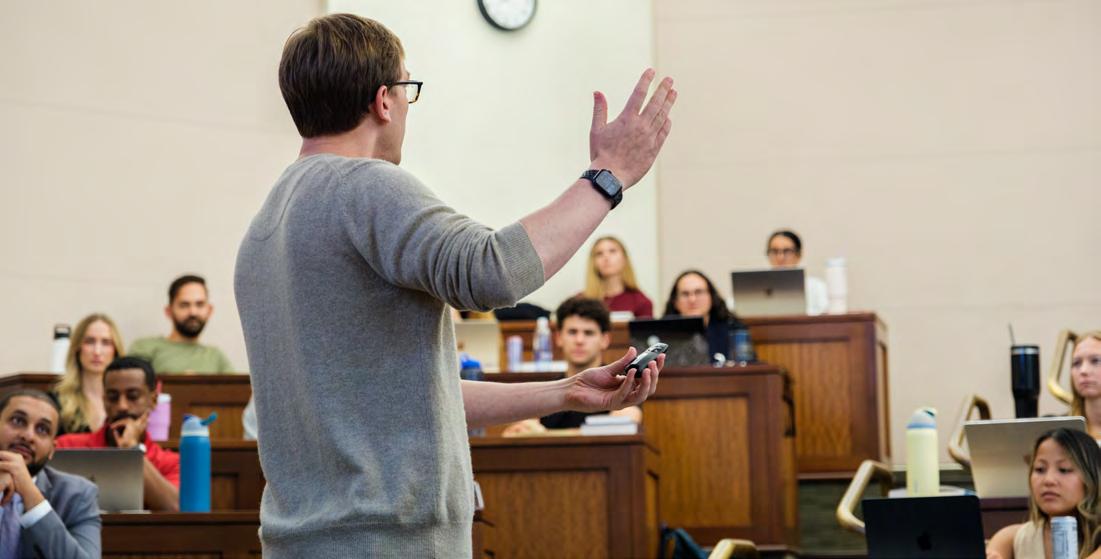
Our classrooms, or course, are sanctified places where teachers thoughtfully work with students in an interactive and encouraging spirit. Through dialogue, discussion and lecture, Fowler professors assist students to comprehend complex legal concepts and, perhaps more importantly, inculcate the practical and professional skills that today’s employers have come to expect from our graduates. Indeed, preLaw Magazine ranked Fowler as one of the top schools in the nation for practice-prepared education.
The achievements chronicled in these pages are a testament to the incredible growth of the Fowler School of Law over the last thirty years as well as a showcase of the achievements of the recent 2025/26 academic year. And while these pages give us all reason to feel tremendous pride in the school’s accomplishments so far, they should also provide a great source of optimism for the next thirty years as well.
Thank you for being part of our community!
With kind regards
KENNETH STAHL Interim Dean, Fowler School of Law
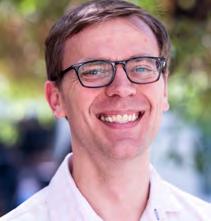

PROFESSOR JOHN BISHOP was nominated as a Committee Member of the ABA Mediation Committee. As Student Advocacy Director he has overseen the rise of our teams to #27 in the 2026 US News Trial Advocacy Specialty Rankings, and #2 in the 2025 ABA Competitions Cup.
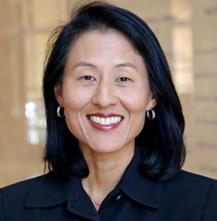
PROFESSOR ABIGAIL
PATTHOFF was appointed Chair of the AALS Section on Legal Writing, Reasoning and Research for 2026, as well as serving as Chair-elect for the AALS Section on Legal Writing, Reasoning and Research in 2025.
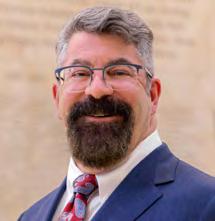
WILLIAM P. FOLEY II PROFESSOR OF CORPORATE LAW SUSANNA
RIPKEN retires this year after serving the Fowler School of Law since 1997. She leaves behind an incredible legacy, including three decades of teaching excellence, exemplary contributions legal scholarship and an indelible example of commitment to our students. We are deeply saddened to see her
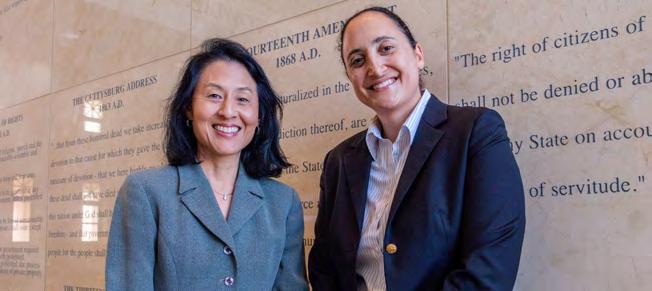
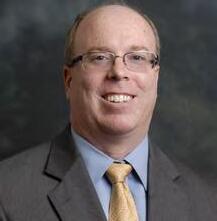
DR. PAUL PATON, KC served on numerous IBA and ABA commissions this year: Future Legal Services Commission (IBA); Section on Public and Professional Interest Council (IBA); Alternative and New Law Business Structures Committee (IBA); Standing Committee on International Trade in Legal Services (ABA).
DR. RICHARD REDDING was appointed Fellow of the Society of Clinical Psychology in 2026.
go and we wish this remarkable Chapman professor everything of the best for the adventures ahead of her. She will be greatly missed by our faculty, our staff, alumni and current students alike.
KAZEMI has been voted the Lisa Litwiller 1L Professor of the Year, and PROFESSOR SUSANNA RIPKEN has been awarded the M. Katherine Darmer Professor of the Year Award for the 2025-26 academic year. Nominated by the Fowler School of Law student body, Professors Kazemi and Ripken exemplify the highest standards of professionalism, academic rigor, classroom excellence and legal scholarship at the Fowler School of Law. Well Done to you both!
In 2021, the United States government identified countering corruption as a core national security interest for the first time. However, corrupt police and military forces supported by the United States in countries including Iraq, Afghanistan, and Nigeria, actively undermine security and reveal a profound weakness in the previous administration’s strategic anticorruption priorities. Where the recipient government lacks the will to combat corruption, traditional anti-corruption tools are ineffective.
Experts on combating international corruption, from government, the academy, and civil society agree on the importance of focusing anti-corruption efforts on first, not contributing to the problem. This focus has largely resulted in proposals for increased vetting of potential private sector vendors and contractors and understanding the absorptive capacity of recipient nations for foreign assistance. These proposals have not sufficiently focused on the difference between recipient states that lack the capacity to combat corruption in the security sector and those that lack the will to do so. Successive U.S. administrations have identified the problem of lack of political will and recognized the critical threat it poses to security, but they have not adopted a comprehensive approach for addressing it. The Biden national strategy to combat global corruption did not clearly address the problem.

Kazemi, Nahal, Starving the Beast: A New Vetting Model to Prevent Corruption in International Security Sector Assistance, 16 Harv. Nat’l Sec. J. 2, 1 (June 2025)
This Article argues for a novel approach, calling for legislation to require that the U.S. government vet potential recipients of security sector assistance (SSA) and prohibit cooperating with corrupt units. The Article establishes that the Leahy Amendments are the appropriate model from which to design such legislation. By adopting a Leahy-based approach, Congress can ensure that combating corruption does not recede as a national security priority. A vetting requirement would create clear, consistent guidelines for determining what constitutes prohibited corruption and how governments can remediate their corruption risk to make barred units eligible for assistance again. Finally, a codified process for identifying specific and limited exceptions to the prohibition in exigent circumstances would require Executive Branch agencies to clearly articulate when certain priorities require precedence over corruption concerns, instead of allowing various agencies to work at crosspurposes to each other.
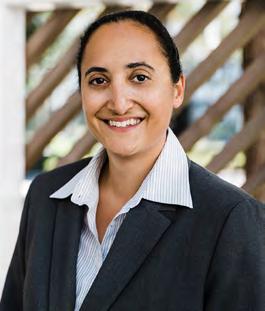
Assistant Professor Nahal Kazemi’s scholarship focuses on rule of law issues, national security and authoritarianism. She has been published in a number of academic journals on issues ranging from transitional justice and universal jurisdiction to birthright citizenship to disarmament and European security institutions.
In Rucho v. Common Cause, the Supreme Court held that partisan gerrymandering is a nonjusticiable political question. The Court’s opinion admits that “[e]xcessive partisanship in districting leads to results that reasonably seem unjust.” The injustice is the ability of the majority party to use political gerrymandering to entrench itself as the governing party and to remain so, long after that party falls out of favor.
Although Rucho was an Elections Clause case, it is easily applicable to states’ exercise of their Electors Clause power. Republicans will wield this new, nonjusticiable power (and the concomitant political cover that it provides) to gerrymander the Electoral College. And, when they do, it is likely that Democrats will follow suit. Rucho encourages, enables and ensures an arms race to the end of meaningful participation in presidential elections in many states.
Here is the template, using Texas (where Republicans have a state government trifecta) as an example, for the “Gerrymandered Electoral College”: The set of elector candidates that is elected is the one that corresponds to the candidates for president and vice-president who win the most individual Texas Congressional districts. The winners of each Congressional district shall be the candidates for President and Vice President who receive the highest number of votes in that Congressional district. This system for allocating Texas’s

Noyes, Henry, Gerrymandering the Electoral College: State Legislatures
Unbound, forthcoming in the Marquette Law Review (2026)
electoral college votes mimics the Electoral College system used to elect the President...
The Gerrymandered Electoral College (1) satisfies the Constitutional requirement of population equality, (2) it mimics the actual Electoral College in its anti-majoritarian nature, (3) it exploits the fact that political gerrymandering is a nonjusticiable political question, and (4) in the second example above, it leverages the fact that States have plenary power over the allocation of their Electoral College votes to avoid oversight, constraint or regulation by Congress. This last aspect is particularly powerful. Once a State establishes “Electoral College Districts” and enacts a Gerrymandered Electoral College, Congress will be powerless to override it. This Article then considers the outer limits of a state legislature that is unbound by political will or constraint. Unlike the existing “District Systems” in use in Maine and Nebraska, it is a winnertake-all system (thus maximizing the State’s influence on the presidential election) that is NOT based on the popular vote for the relevant sovereign territory.
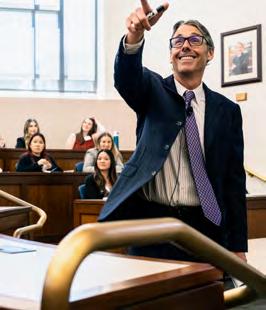
Henry Noyes’ research and writing focuses on rules of procedure, rules of evidence and contractual agreements governing dispute resolution. He joined Chapman in 2005 after more than a decade as a litigator specializing in commercial litigation. He was named a “Northern California Super Lawyer” by Law&Politics.
This Article explores the emerging rights of nature movement as a radical departure from traditional environmental approaches, grounded in a “new consciousness” that challenges the anthropocentric world-view.
The Article sets the stage for a defense of the rights of nature by providing a comprehensive critique of the current model of economic development, primarily focused on GDP, which has proven detrimental to environmental health by neglecting broader values; the Article also highlights alternative measures adopted by entities like the UN and EU that incorporate factors like happiness. Rights of nature builds upon that foundation for a broader understanding of development and presents a more holistic approach for the protection of nature and animals. Finally, Part IV illustrates a positive departure from GDP obsession through Bhutan’s creation of a special purpose city in Gelephu, emphasizing sustainable and holistic development models.
“The concept of “rights of nature” represents a profound cultural transformation rather than merely a shift in policy or regulation. This movement challenges the deeply entrenched anthropocentric world-view that has dominated much of Western thought, advocating instead for a reciprocal relationship with the environment.”
Page 250
“For Indigenous peoples, the idea that nature possesses rights is not revolutionary but rather a continuation of ancient traditions that honor and respect the Earth as a living, spiritual being.”
Page 250
“In the United States and many other countries, people, especially the younger generation, are aware of the precarious state of nature and want change.”
Page 247

Cao, Lan, From Property to Personhood: Reimagining Nature’s Place in the Legal Order, 50 Wm. & Mary Env’t L. & Pol’y Rev. 2, 245 (2026)
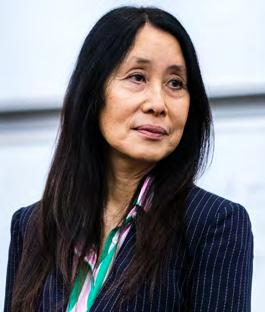
Professor Lan Cao holds the Betty Hutton Williams Endowed Professorship in International Law and is the Director of the International Law Program. Before Joining the Fowler faculty she served for more than a decade on the faculty at William & Mary Law School, where she was the Boyd Fellow and Professor of Law.
Many cities and states facing a severe housing crisis have taken steps to reform restrictive land use regulations that block the production of new housing. These efforts have been hindered, however, by the prevalence of homeowners associations that impose overlapping restraints on housing production through private deed restrictions. In response, many cities and states have considered enacting laws to “override” or invalidate these private deed restrictions.
In a previous article, I argued that state legislatures have the power to override private deed restrictions, notwithstanding potential arguments under the Constitution’s Takings and Contract Clauses. Increasingly, however, local governments have also been taking the initiative to reform their land use regulations. Accordingly, this article takes on a related question–do local governments have the power to override covenants? This question is more complicated because the doctrine of home rule and other related principles place some limitations on local land use powers that do not apply to state governments. In particular, local governments may be restricted in their ability to affect “private law” obligations, possibly including the enforceability of private deed restrictions. Nevertheless, I argue that local governments do have the power to override covenants, and that, in fact, local governments may be better positioned to do so than state governments are.

Stahl, Kenneth, The Power of Local Governments to Invalidate Private Deed Restrictions, forthcoming in the Iowa Law Review (2026)
Local governments possess knowledge of local conditions that enable them to tailor overrides appropriately, and local governments’ sensitivity to the concerns of landowners makes it unlikely that they would overreach in regulating private property rights. More broadly, local government scholars today are divided over whether local land use control has the potential to be something more than just a license for NIMBYs (“Not in My Backyard”) to block needed housing. This article shows that local power and local knowledge need not be synonymous with “no,” and there is a way to affirm the capabilities of local democracy without it devolving into unchecked parochialism.
“Local governments can and should use their land use powers to include rather than exclude and address their share of the regional need for housing at all income levels. More than one hundred municipalities have already begun to do that by reforming their zoning regulations to permit more housing. But this is only a start.”
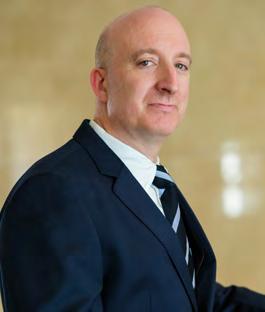
Kenneth Stahl is the interim dean of Fowler School of Law. He is director of the Environmental, Land Use and Real Estate Law certificate program and a leading expert on land use, local government and housing law. His scholarly work focuses largely on housing law and policy, especially addressing the “Not in My Backyard” (NIMBY) syndrome.
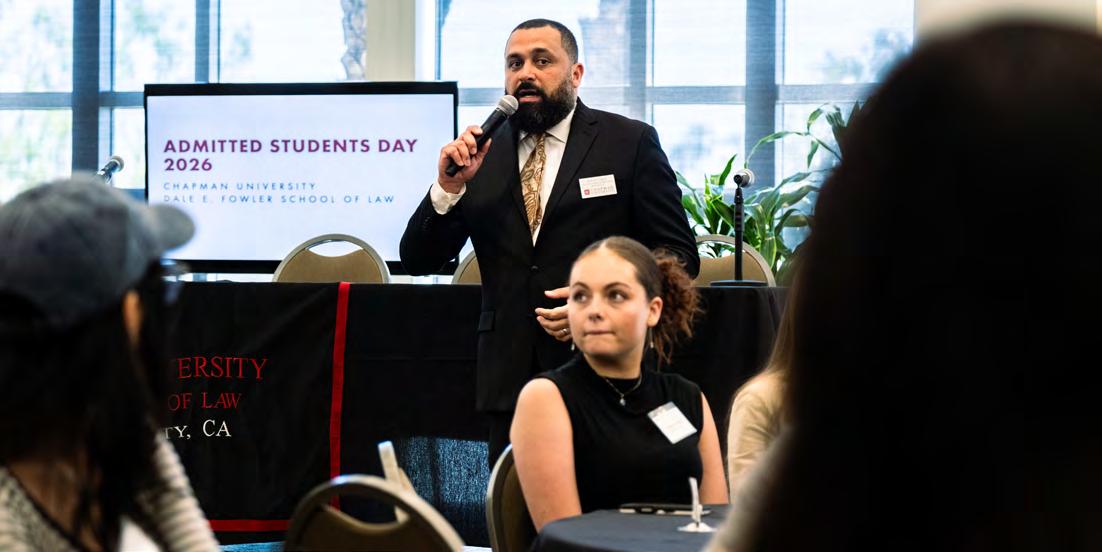
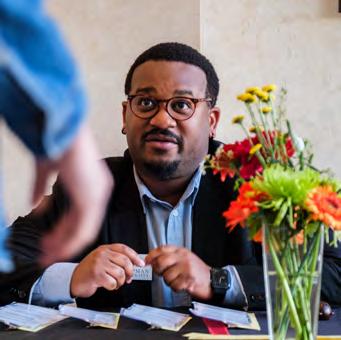
Admissions and recruitment events are often the first point of connection between prospective students and the Fowler School of Law. This year, that connection has been stronger than ever. Our Admissions team participated in more than 80 recruitment events across the United States and Canada, attracting a highly competitive and dynamic incoming class. The fall 2025 cohort reflects both breadth and excellence, representing 68 undergraduate institutions and more than 43 academic majors, 28% of whom are first-generation students. The Class of 2028 is also among the most academically accomplished classes in the school’s history, with a record median LSAT score of 163 and a median undergraduate GPA of 3.70.
The Admissions Office also saw significant growth in its signature programming. Attendance at the annual PreLaw Winter Institute doubled, underscoring increasing interest among prospective students. This day-long, on-campus program offers participants an immersive introduction to the law school experience, featuring sessions led by faculty, alumni and current students. In addition, the team expanded its outreach efforts at the high school level through initiatives such as CRF Law Day, the CRF Mock Trial Bootcamp and the Elizabeth G. Macias Santa Ana High School Legal Scholars Academy, collectively welcoming more than 500 students to campus.
Throughout the year, the Admissions team hosted four Open House events, drawing
record attendance and engaging more than 500 prospective students. Each event highlighted a different aspect of the law school experience and featured informative discussion panels.
Our fall programming included sessions outlining the application process and featured panels with current law students, our career services team and our alumni. Spring events focused on academics, featuring faculty and students to provide a full picture of campus life. Together, these events play a vital role in showcasing the strength of Chapman’s programs and fostering the welcoming, communitycentered environment that defines the Fowler School of Law.

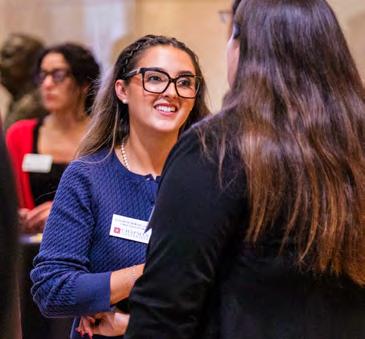
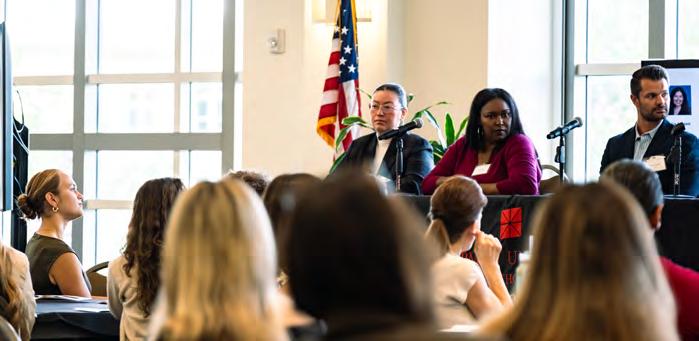
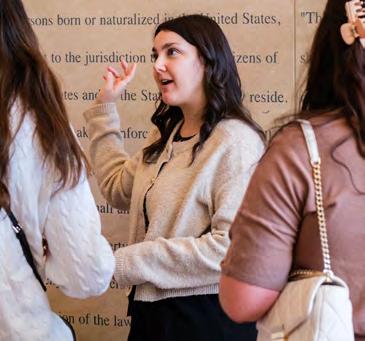
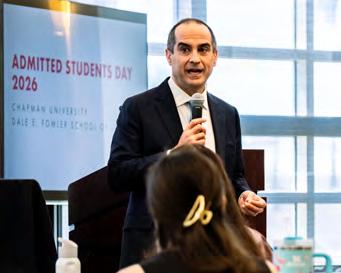
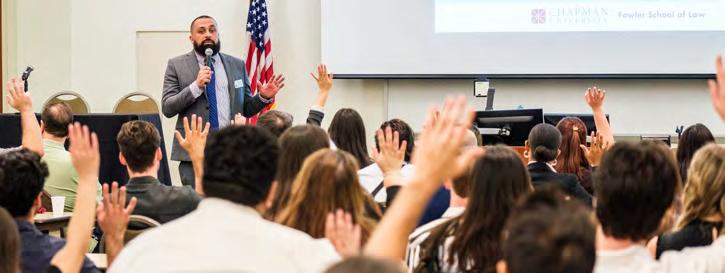
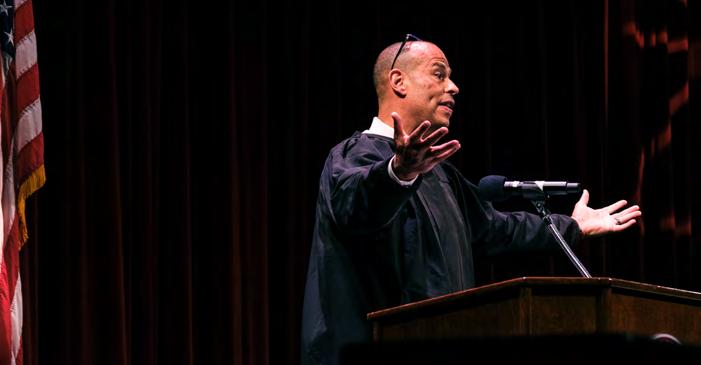
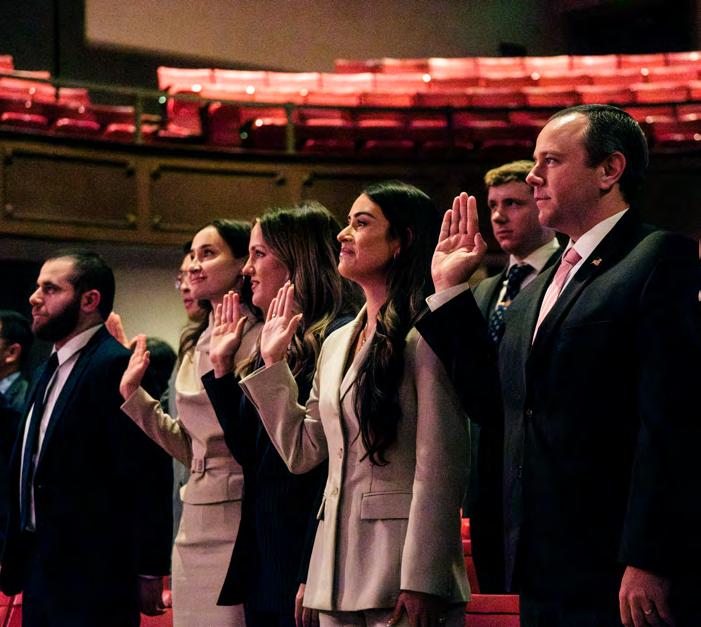
It takes a special effort to succeed in the California bar exam, easily one of the most difficult, if not the most difficult bar exams in the country. Meeting this challenge head-on is Fowler School of Law’s bar-preparation team, led by Associate Dean Mario Mainero and Assistant Dean Sarira Sadeghi, who guide our first-time, and a few repeat bar-takers, through the final hurdle before professional accreditation. And they certainly have their work cut out for them, from three group preparation sessions each week, to commercial review sessions, to the grading of thousands of written submissions with in-depth feedback sessions, a community of staff, faculty and Chapman alumni carries our graduates through this process each year, consistently ensuring an exceptional barpassage result.
The July 2025 California Bar exam saw 127 Fowler graduates sit the exam, with an astonishing 80.31% pass rate, a five-point improvement over the results from last year, bringing our two-year bar-passage rate for graduates to a remarkable 90.78%.
For the 7,362 applicants who wrote the July 2025 California Bar exam, 79% were firsttimers, but the success rate, which showed some improvement over recent years, remained low at 69.7 percent for these test-takers, while the pass rate for repeat test-takers was as low as 12.4%. The Chapman outcome of an 80% success rate for first timers, coupled with a 90% success rate over two years (for repeat takers), illustrates both how well-prepared Chapman law graduates are for the bar and why the Chapman bar preparation team have become the stuff of legend.
This wonderful achievement also marks the conclusion of a very special chapter in the
history of our school as Professor Mario Mainero, the architect of much of the incredible success that the school has enjoyed in bar exam passage in previous years, steps down from his role spearheading the school’s bar-prep efforts and passes the baton to his close colleagues, Assistant Dean of Academic Achievement Sarira Sadeghi and Assistant Director of Academic Achievement Sarah Filer. We’re looking forward to seeing the program go from strength to strength under their leadership.
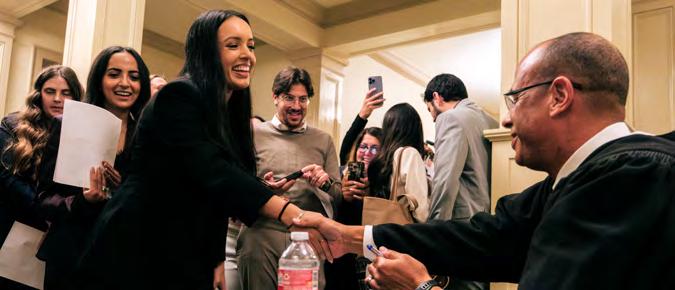
We extend a hearty Fowler “Well Done!” to all the 2025 bar-takers for overcoming this final hurdle to admission to the California Bar and applaud each and every graduate who passed. We extend our applause and warmest pride to our Chapman graduates, as well as to the faculty, staff and alumni who worked so hard to secure this remarkable achievement for themselves and the school.
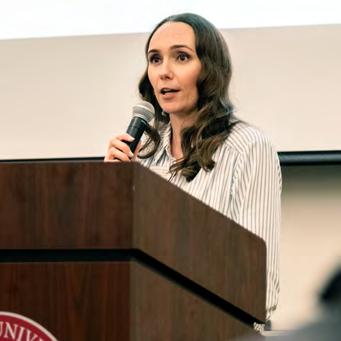
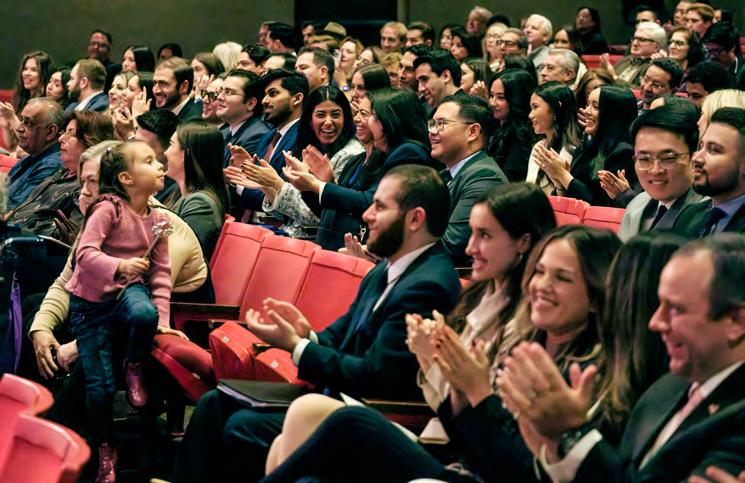
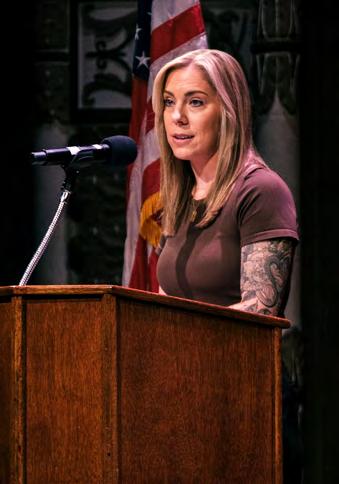
3. Admitted attorneys applaud their class. 4. Alumni Board Chair Kaitlin Peterson (JD/MBA ‘16) addresses the audience.
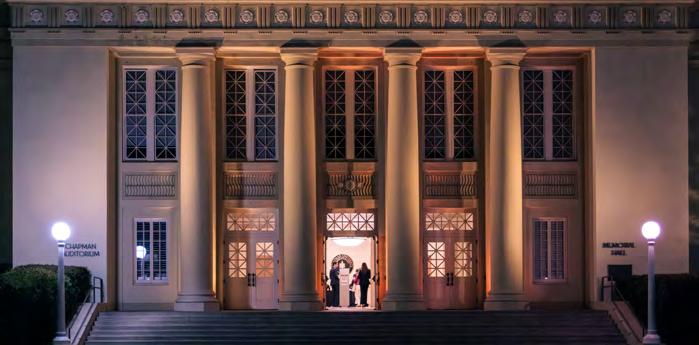
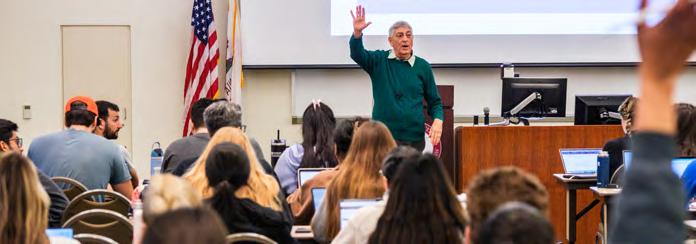
5. Memorial Hall Exterior. 6. Bar-prep session with Professor Mainero. Page 13, Professor Mainero in action.
The high praise our Career Services Office (CSO) receives from employers about contact with Fowler School of Law students reflects the strength of our students and the effectiveness of our individualized advising model, with employers describing our students as “Well-prepared,” “Very impressive,” and “Highly professional.”
It is feedback that is borne out of our 1L Professional Development Program, a mandatory five-session first-year seminar series that provides structured, practical training early in students’ legal education. These skills-based workshops are targeted at student preparation for summer positions, and students develop
the professionalism, communication skills and workplace readiness that employers consistently value. As one first-year student recently shared, “The CSO makes professional development fun.”
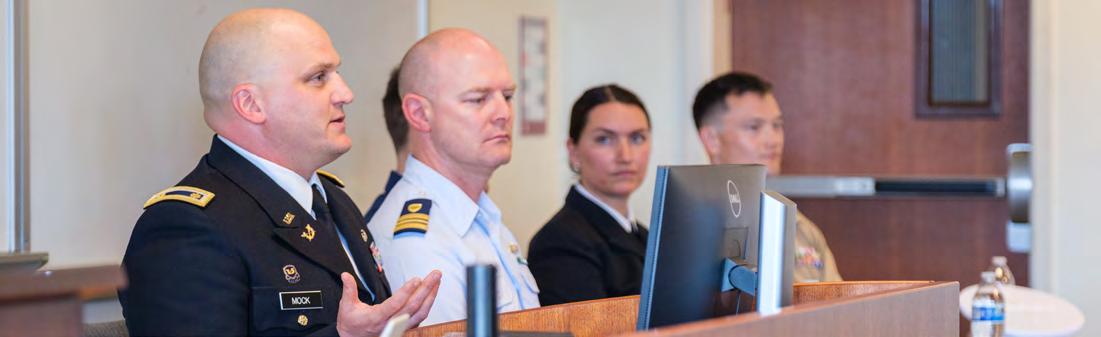
This foundation of early professional training is reflected in the outcomes of the Class of 2025, currently employed across some of Southern California’s leading law firms, government agencies and public interest organizations, with the vast majority securing full-time, long-term positions requiring bar admission or where a J.D. degree provides an advantage. Notably, this graduating class boasted no less than five graduates who accepted
roles as JAG officers, and six who secured judicial clerkships, including five federal clerkships.
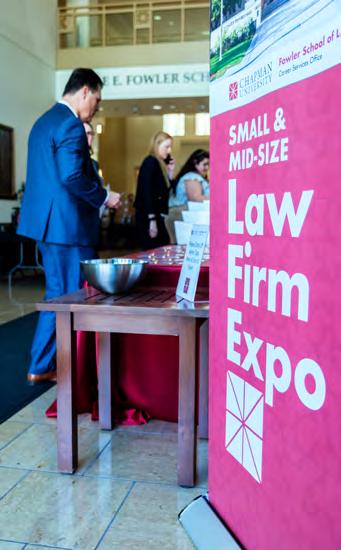
This year also marked a significant expansion of our employer engagement efforts. The CSO team hosted its first Small and Mid-Sized Firm Expo, welcoming more than 25 firms to campus and providing students with a dynamic opportunity to connect directly with this key segment of the legal marketplace. Another initiative reflecting the school’s continued focus on strengthening pathways into the Southern California legal community for our graduates.
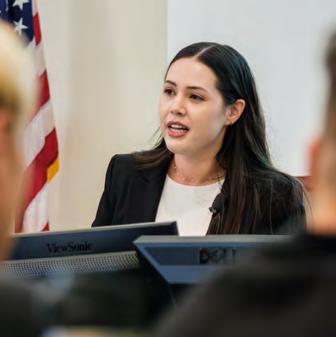
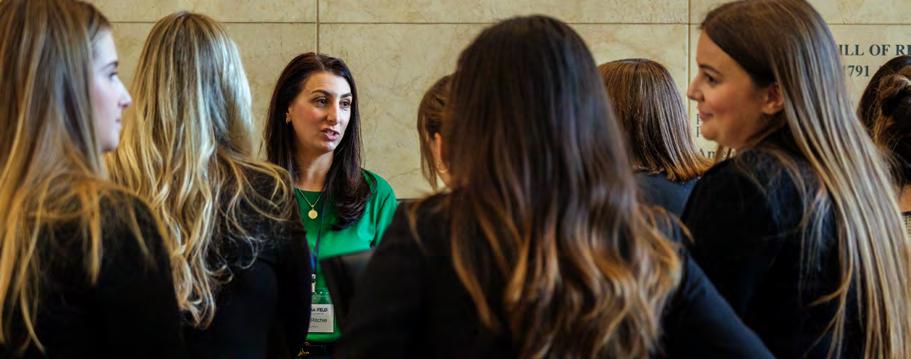
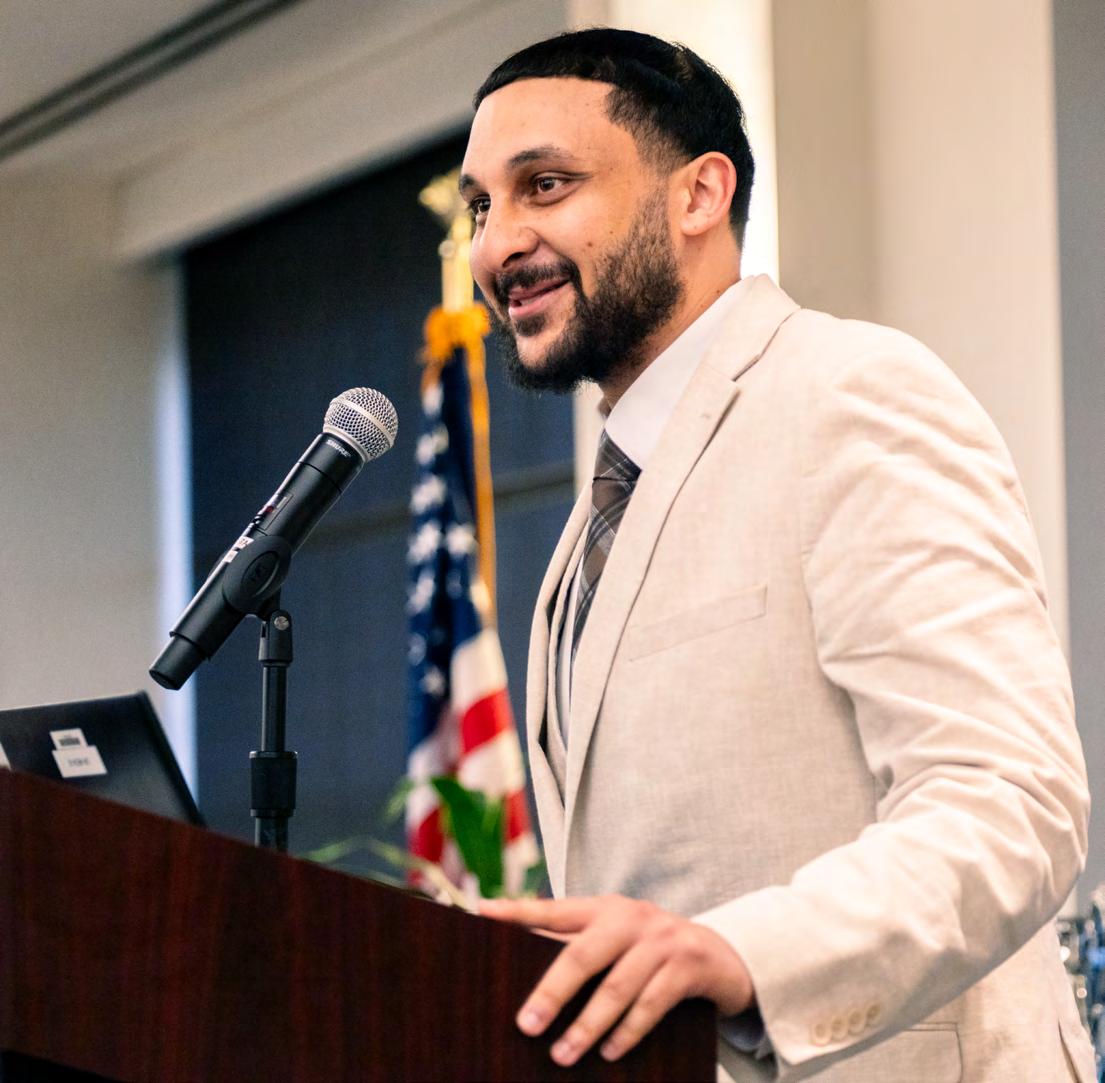
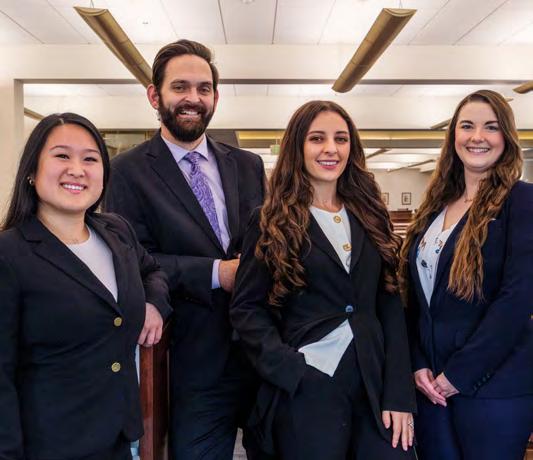
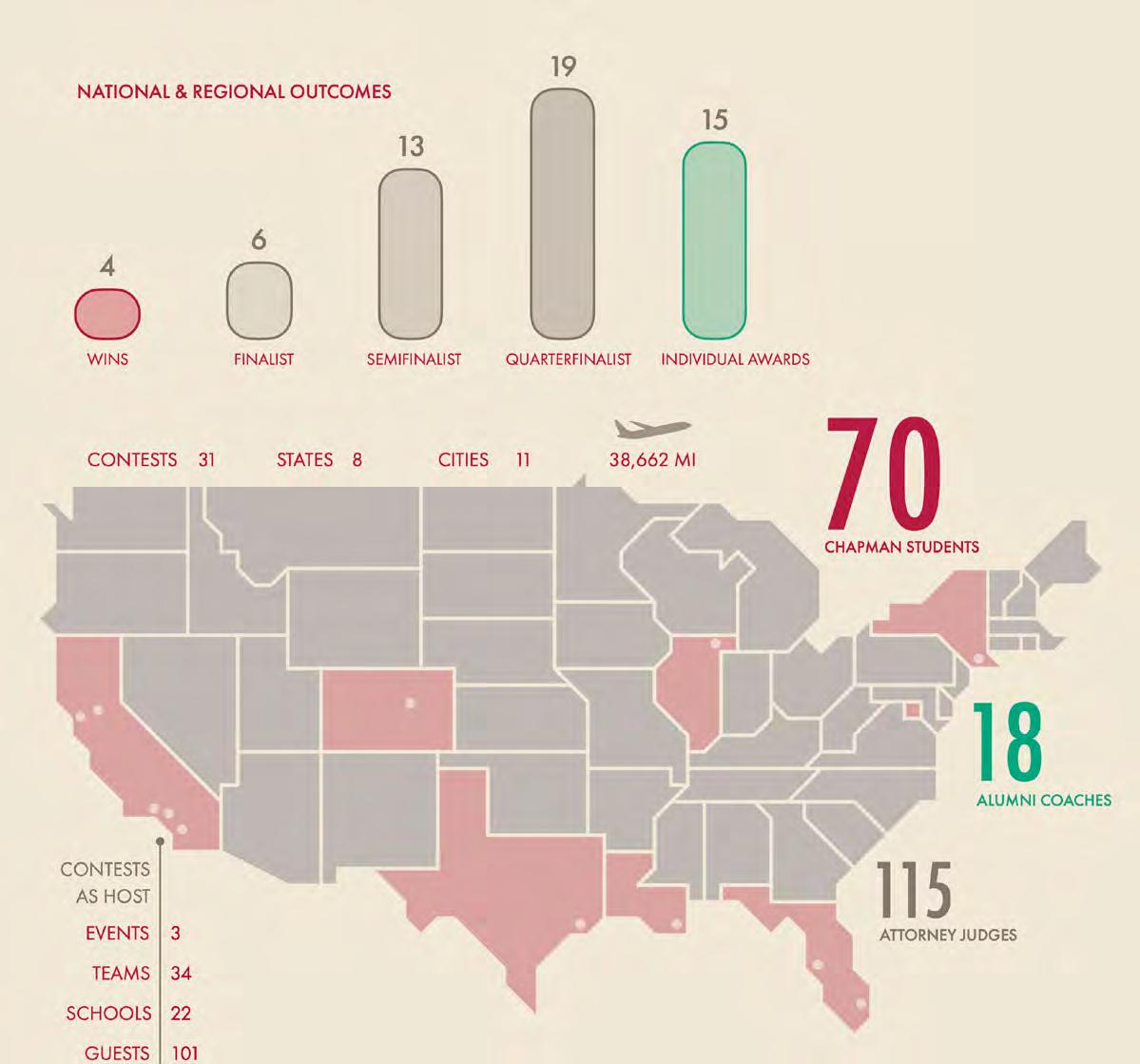
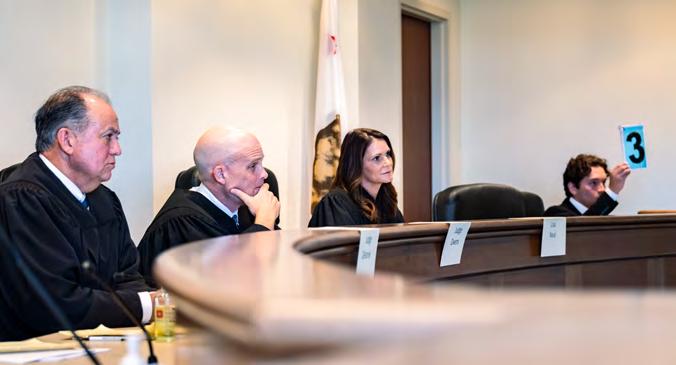
Our students faced a new challenge in 2025-26: How do you transition from a single year of competitive greatness to a legacy of continued success?
Over the last year, Fowler School of Law students met that challenge by announcing Chapman to the nation like never before. Training at the state of the art Wylie Aitken Trial Courtroom and competing in courthouses and law schools from California to Texas to Florida to New York, Chapman students showed the country that we expect to stand with the best.
For a practicing attorney, success in the courtroom is only the tip of the iceberg: late nights of reading, researching and preparation are the foundation of a successful result in court. Our students prepare for practice by living that reality each semester. For our mock trial students, it takes the form of late nights in Kennedy Hall rehearsing an opening statement, with trial attorneys watching and critiquing every move. For moot court students, the case research begins even before their fellow
students have returned to campus, and then they withstand the scrutiny of their classmates, coaches and Chapman alumni on a legal panel. For dispute resolution, it’s contingency after contingency, modeled through simulating disputes, counseling clients, preparing for arbitration and negotiating deals with real deal-makers looking on.
The quality of the work reveals the quality of the student and demonstrates the Chapman difference: students who step into practice having already worked side-by-side with their new colleagues, ready to immediately make a difference in our legal community.
There will be a target on our backs from now on. Just because we’re good doesn’t mean we’re good enough. Our students will have to adapt to an even greater challenge: How do you stay successful when everyone knows they have to give you their best shot to win? We look forward to meeting new challenges in 2026 and beyond!
Page 17, Nancy L. Schultz Excellence in Advocate Award Winner Jonathan Metry.
Pages 18, 19, 21 & 22
1. From left, winners of the ABA Arbitration Regional, Thuy-Vi Le, Kevin Lorusso, Sofia Lorusso and Kathleen Mitchell.
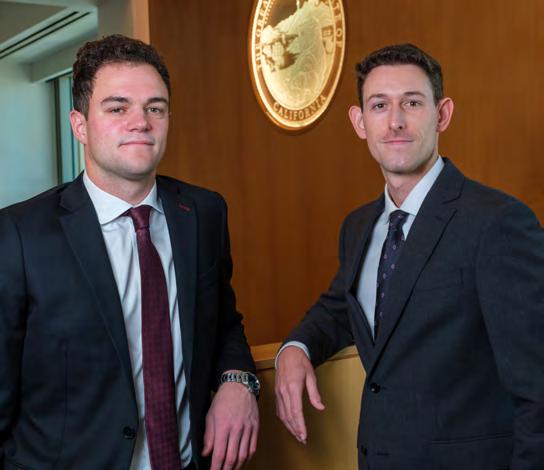
2. Jack Mays (L) and Jake Reed (R), finished as quarter-finalists in the ABA Negotiation National Championships, after winning the regional leg.
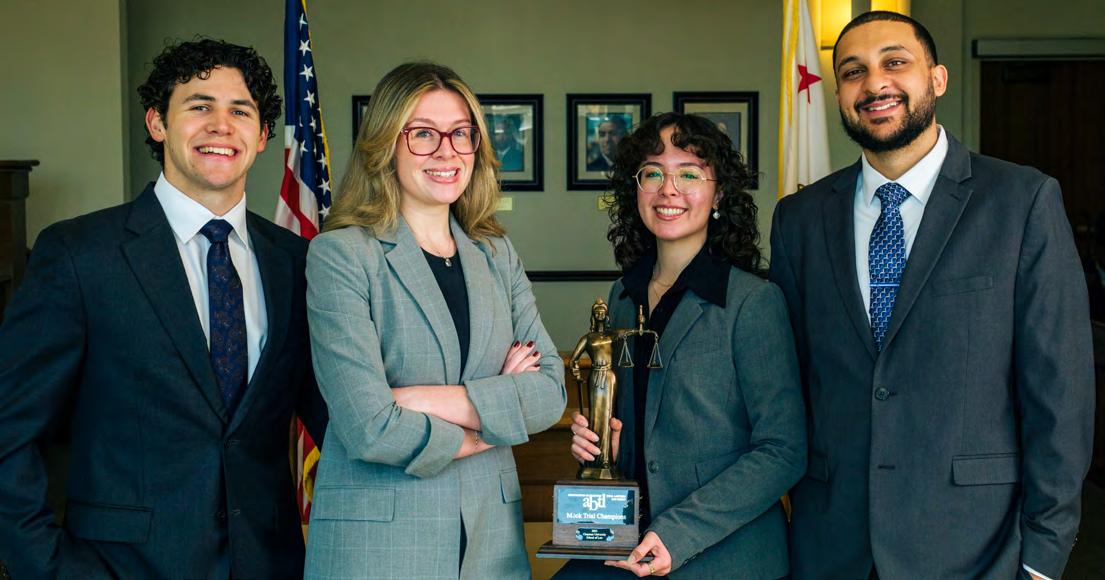
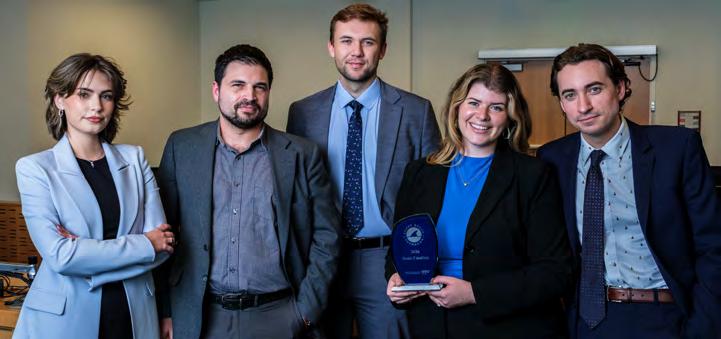
3. From left, Dane Morris, Madeline Dahlin, Lorelei Olivas and Jonathan Metry, winners of the Association of Business Trial Lawyers Mock Trial Competition.
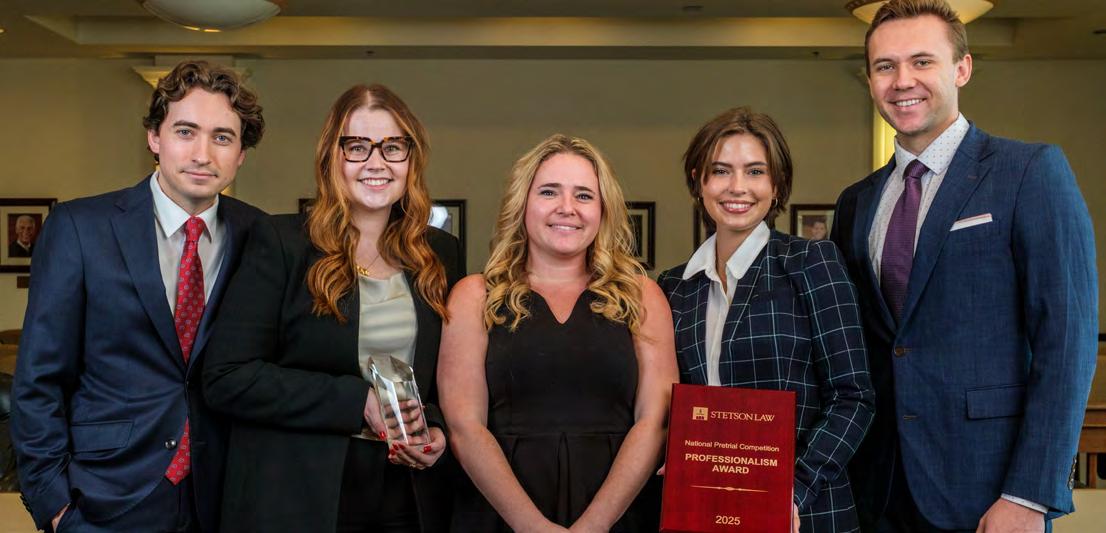
4. Runners-up in the invitation-only National Pretrial Competition, (from left) Joey Ruggiero, Aubrey Adams, Katie Robinson (JD ’21) (Coach), Victoria Gray and Matt Cotti, the team also received the Professionalism Award for this contest.
5. Professor John Bishop briefs the competitions team collective at the start of term.
6. Alumnus and student advocacy coach Eric Rasyidi (JD ‘20).
7. Winners of the 2025 National Sports Law Negotiation Competition, Alex Roth (L) and Harper Clayton (R).
8. From left, Renee Cabato, Matt Cotti and Elizabeth Bowers.
9. From left, Victoria Gray, Joe Kahn (Coach) (JD ‘25), Matt Cotti, Cora Kirschbaum and Joey Ruggiero finished in the Top-4 at the Shark Beach Showdown. 10. Hannah Hussey (L) and Elizabeth Bowers (R), finalists in the National Veterans Law Moot Court Competition.
11. Alumnus and student advocacy coach Clay O’Neal (JD ‘13).
12. Teammates Jake Reed, Alex Roth and Jack Mays.
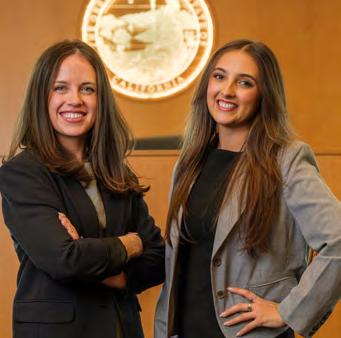
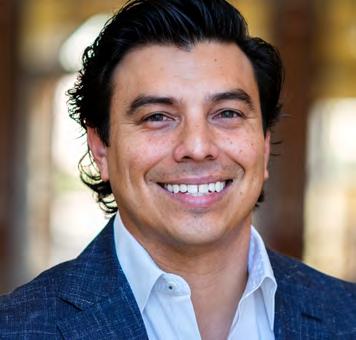
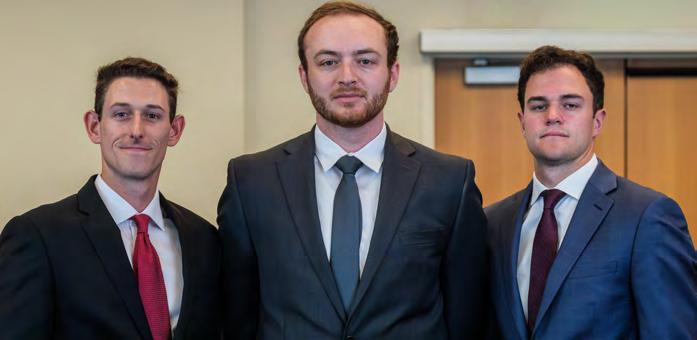
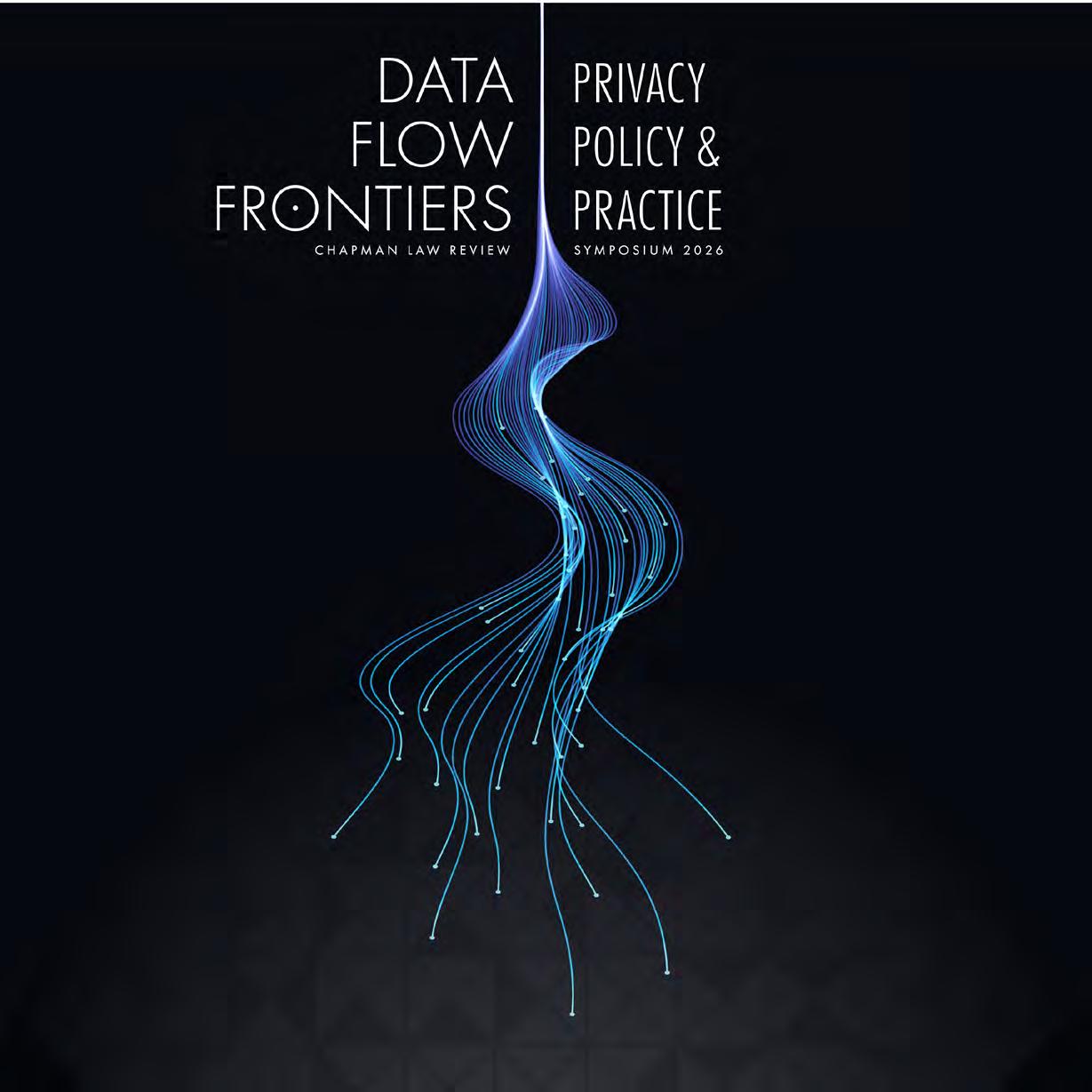
Kennedy Hall played host to the 2026 Chapman Law Review Symposium, Data Flow Frontiers: Privacy, Policy & Practice, on February 6, a sold-out affair featuring esteemed scholars and practitioners in data privacy. With a keynote address from Berkeley data privacy scholar, Professor Paul M. Schwartz and two panel discussions, the first, examining the terms and conditions we accept daily to utilize software and other tech services; and the second, examining market-driven innovation versus rightsbased protections that are struggling to keep up with technological innovations. The Kennedy Hall audience was enthralled by the discourse and bleeding-edge developments discussed by this exemplary group of legal scholars and practitioners.
Our thanks go out to an amazing group of panelists from around the nation, including Professor Jon M. Garon,
Nancy Libin, Lily Li, Professor Gregory S. McNeal, Gretchen A. Ramos, Professor John M. Yun, Professor Mason Clark and Fowler Professor Nahal Kazemi. Our guests provided the Kennedy Hall audience with nothing short of a tour de force of expertise and insight into this fascinating, emergent field of law.
This annual symposium is always a Fowler School of Law team effort, with our Chapman Law Review members working tirelessly to plan, market and coordinate the event. Special mention must be made of Chapman Law Review team members Jack Mays (Editor-in-Chief), Riya Beri (Executive Program Editor), Brianna Gerth (Executive Managing Editor) and Hannah Hussey (Executive Business Editor), along with CLR faculty advisor Professor Celestine McConville, for their participation and remarkable efforts in preparing for the event.
1
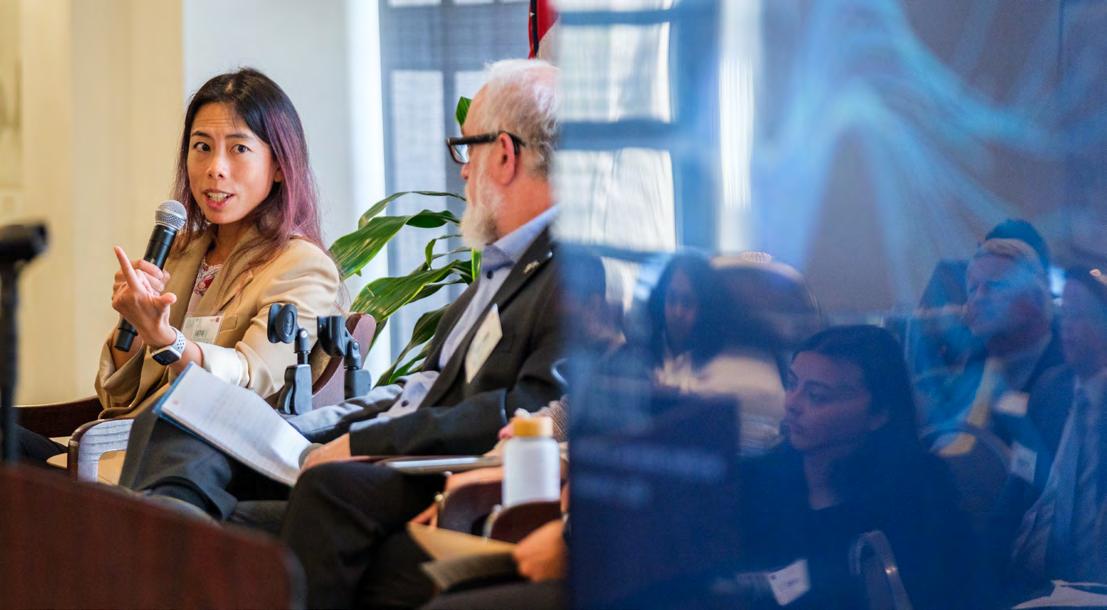
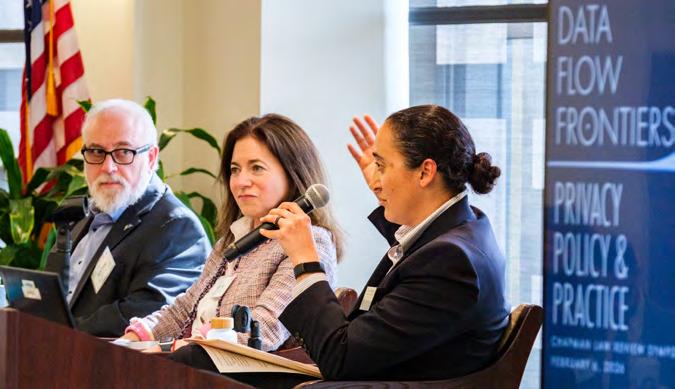
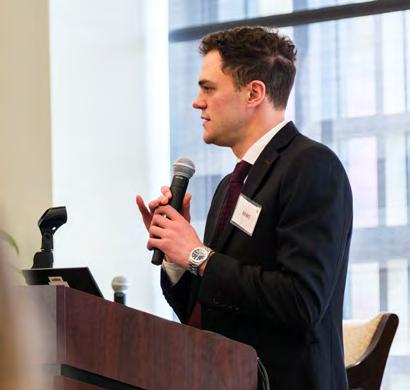
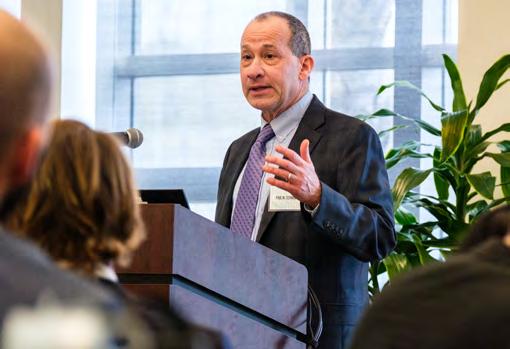
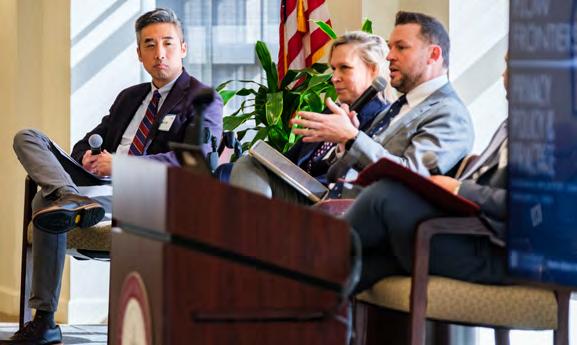
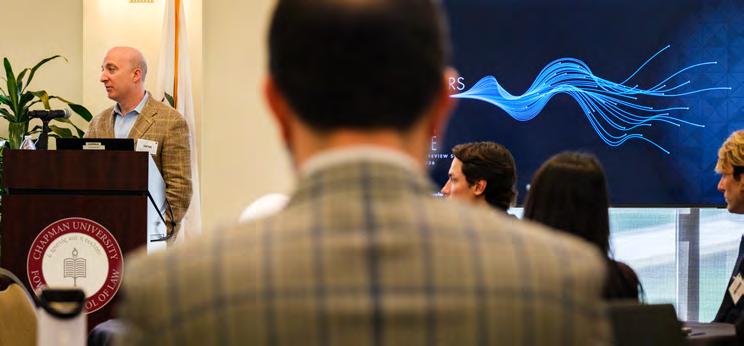
1. Page 24, Symposium panelists in discussion.
2. Moderator Nahal Kazemi (R) addresses panelists, Nancy Lubin (C) and Jon Garon (L).
3. Chapman Law Review Editor-in-Chief Jack Mays introduces the panel.
4. Keynote speaker Paul M. Schwartz addresses the audience.
5. Panelists Gregory McNeal (R), Gretchen Ramos (C) and John Yun (L) in discussion.
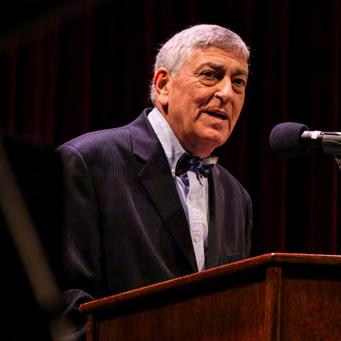
6. Fowler School of Law Interim Dean Kenneth Stahl welcomes symposium guests to the school.
Drawing together Fowler School of Law faculty, students and alumni, October 23rd’s SCOTUS in Focus discussion panel delivered a masterclass in legal scholarship, providing a nonpartisan forum for discussion, debate and a thorough weighing up of the merits of key United States Supreme Court decisions from the 2024-25 term.
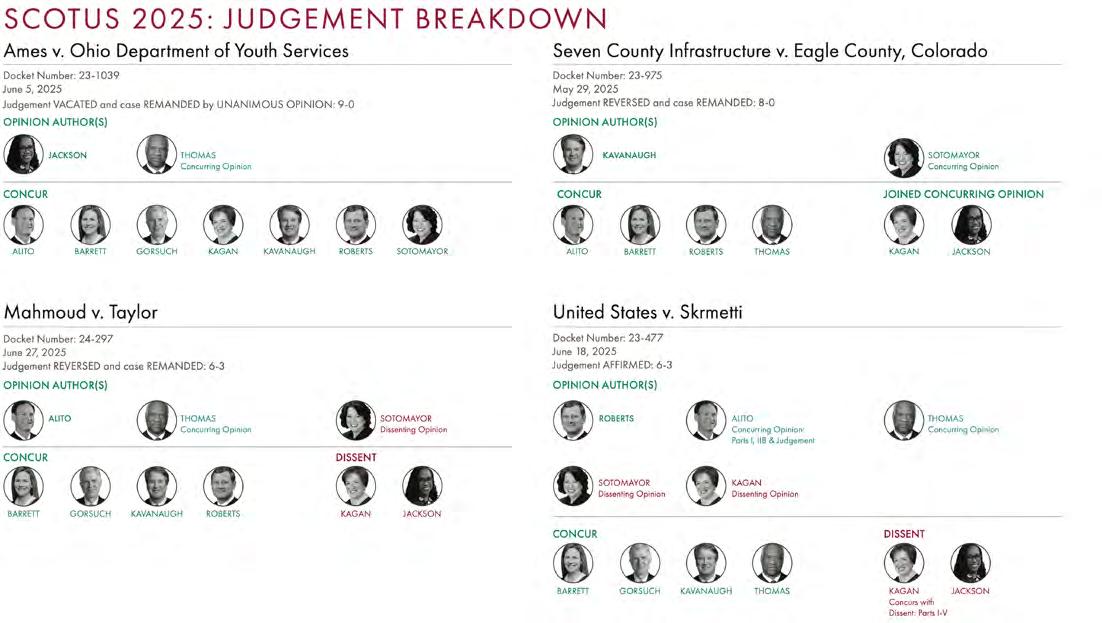
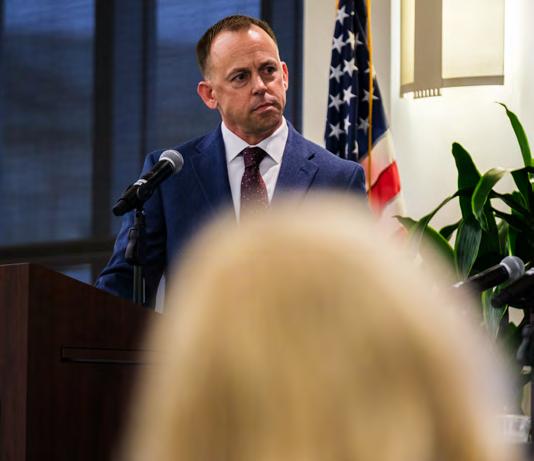
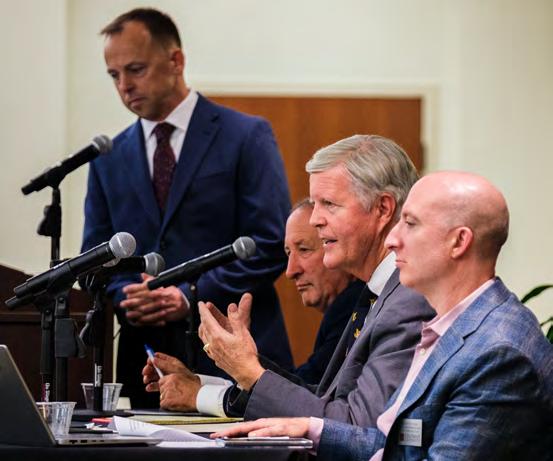
Faculty panelists, Interim Dean Kenneth Stahl, Dr. Tom Campbell and Professor Larry Rosenthal, led by special guest moderator, decorated United States Marine Corps Judge and Chapman alumnus LtCol Alex Douvas (JD ’05), tackled SCOTUS decisions and opinions on cases as disparate as Ames v. Ohio Department of Youth Services, Mahmoud v. Taylor, Seven County Infrastructure v. Eagle County, CO, and United States v. Skrmetti.
The panelists took the Supreme Court decisions and opinions to task while considering the intricacies of each of these cases and giving careful regard to the implications for similar cases as well as how these decisions may impact lower court decisions in the future.
An annual fixture on the Fowler School of Law event calendar, now in its second year, SCOTUS in Focus offers the Fowler School of Law community unique insights into decisions from the most senior jurists in the land, shedding light on their legal reasoning and framing the issues at stake within the contemporary pageant of national affairs, scholarly excellence and intellectual rigor. This year’s event provided a showcase of professionalism, collegiality and civility as faculty panelists dissected the issues and carefully inspected the merits of each case.
1
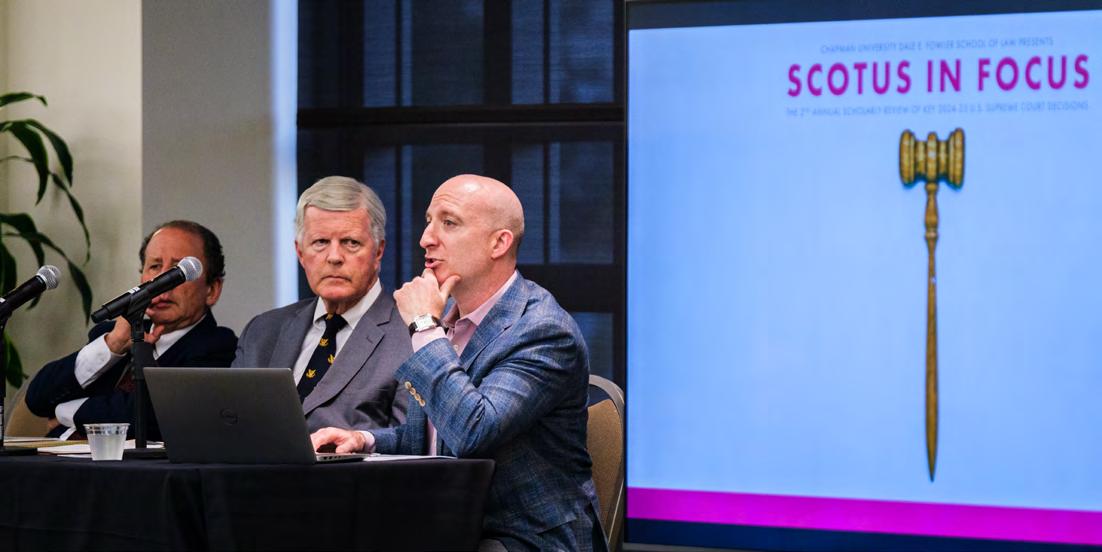
1. Page 26, Interim Dean Ken Stahl unpacks a SCOTUS decision for the audience.
2. Event program infographic detailing the SCOTUS decisions under discussion.
3. Moderator, alumnus and decorated USMC Judge LtCol Alex Douvas (JD ‘05).
4. Panel pictured with moderator, as Professor Tom Campbell (middle) presents.
APRIL 10, 2026
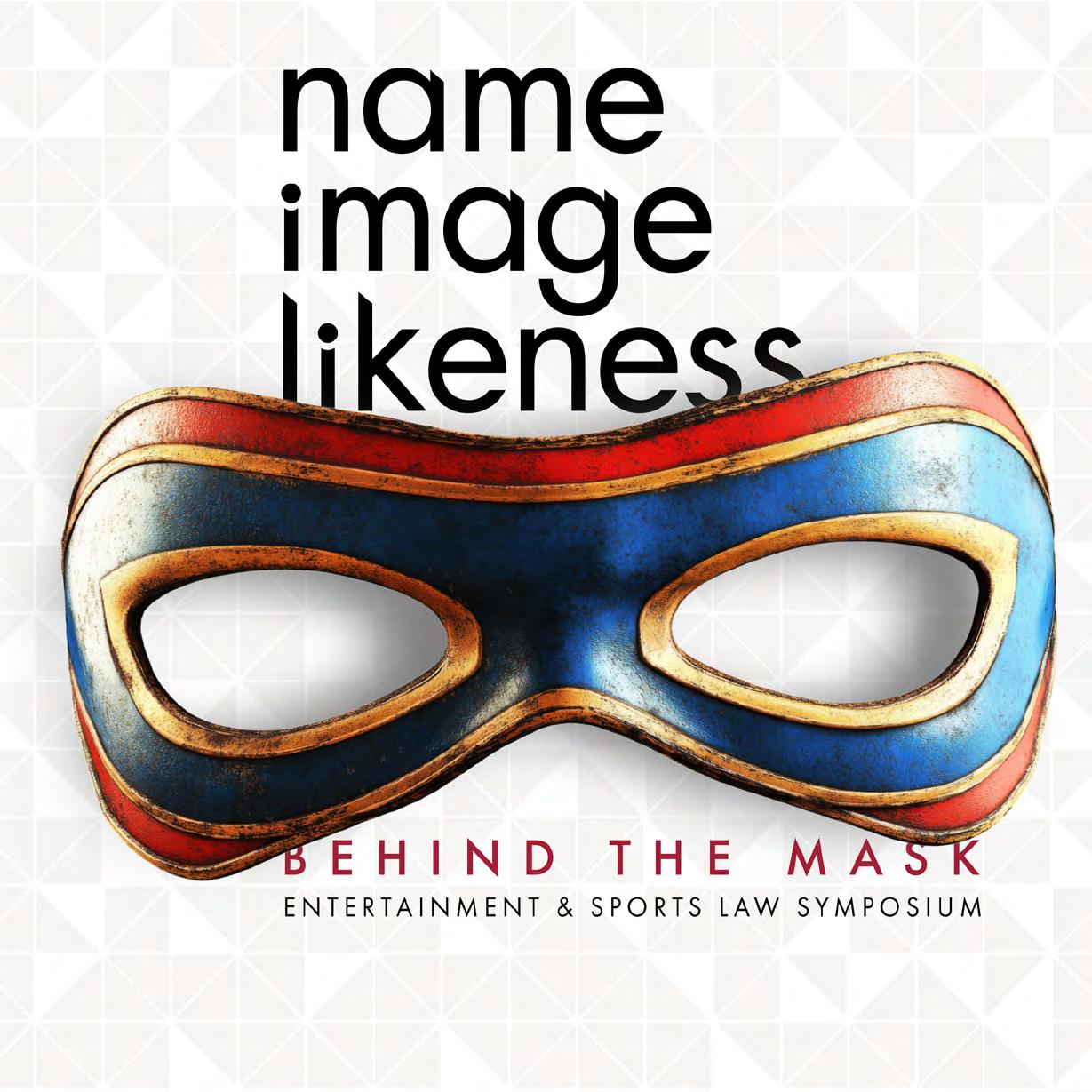
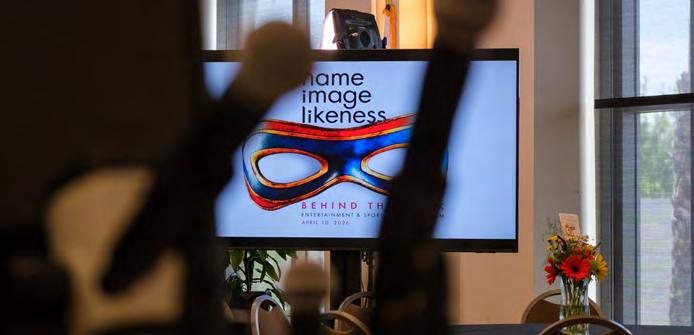
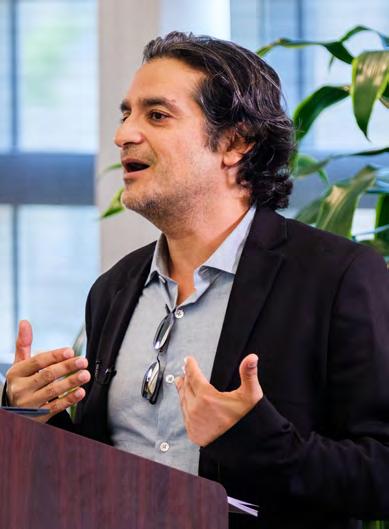
The 2026 Fowler School of Law Entertainment and Sports Law Society symposium, Behind the Mask: Name, Image, Likeness, kicked off a day of entertainment law scholarship and insight from this fascinating area of law with an illuminating panel discussion: Name, Image, Likeness: Transforming the Business of Sport.
The business of Name, Image and Likeness legislation was challenged and probed by panelists, David Braun of Glushon Sports Management, Marissa Dishaw of CAA Sports, LLC and Luana Harris of RBC Wealth Advisory, as moderator and Chapman alumnus Chris Koras (JD ’11) and his panel of industry experts walked our audience through the contemporary landscape of NIL deal-making opportunities and challenges that face agents, lawyers and sports personalities alike in this evolving legislative landscape.
Southwestern Professor John Tehranian presented a penetrating keynote address, “NIL Rights and Equality in the Age of AI,” covering everything from copyright questions surrounding an early daguerreotype portrait of Oscar Wilde to more contemporary problems facing NIL through the proliferation of Generative Artificial Intelligence (AI), while thoroughly examining the details of NIL legislation within the evolving history of this particular practice niche.
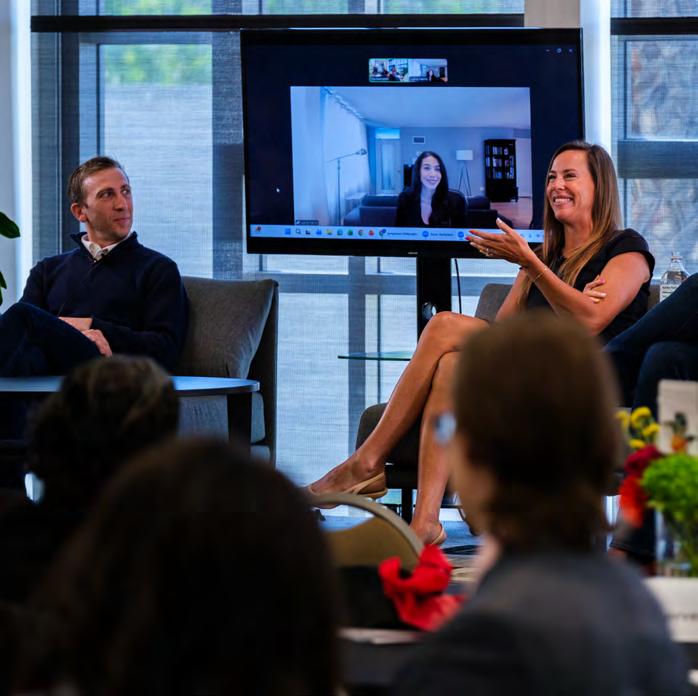
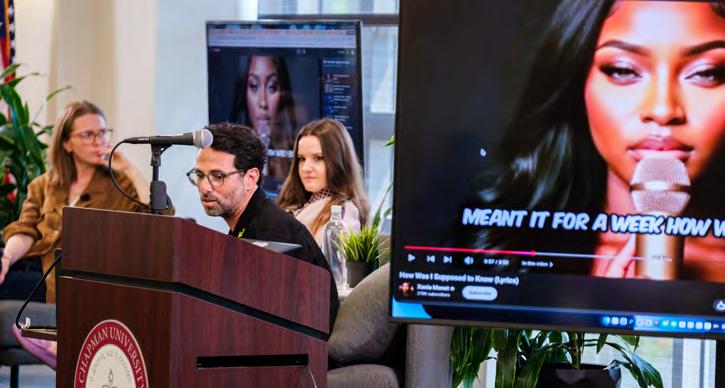
Wrapping a full day of Entertainment and Sports Law debate and discussion, our second panel challenged questions surrounding the ownership and control of media identities. Guests Lottie Webb, creative AI producer for Particle6, Jagger Waters, AI strategist and producer along with moderator Fred Grinstein, adjunct professor at Dodge College of Film and Media Arts and cofounder of Machine Cinema shared their insights into the current state of AI and how it is used to produce various forms of media, while
challenging audience perceptions and biases around an industry and technology still very much in its infancy. A huge Fowler thank you to our engaging panelists and keynote speaker for delivering another exceptional Entertainment Law Symposium at the Fowler School of Law.
Page 29
1. Screens being prepared for the NIL: Behind the Mask Symposium.
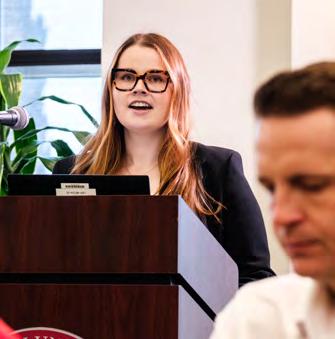
2. Entertainment & Sports Law Society President Aubrey Adams welcomes guests to the event.
3. Chapman alumnus and panel moderator Chris Koras introduces his panel.
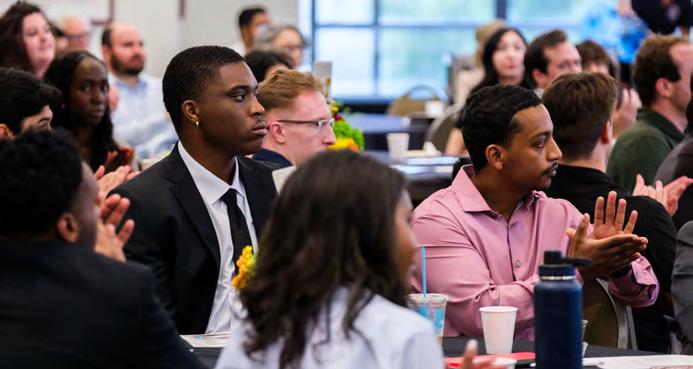
4. NIL: Behind the Mask audience.
Page 30
5. Keynote speaker Professor John Tehranian.
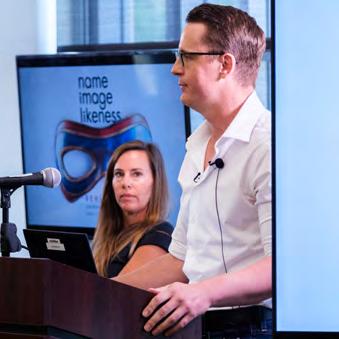
6. Panelists (L-R) David Braun of Glushon Sports Management and Marissa Dishaw of CAA Sports.
7. Panelists Lottie Webb (L), Jagger Waters (R), and moderator Fred Grinstein (C-front).
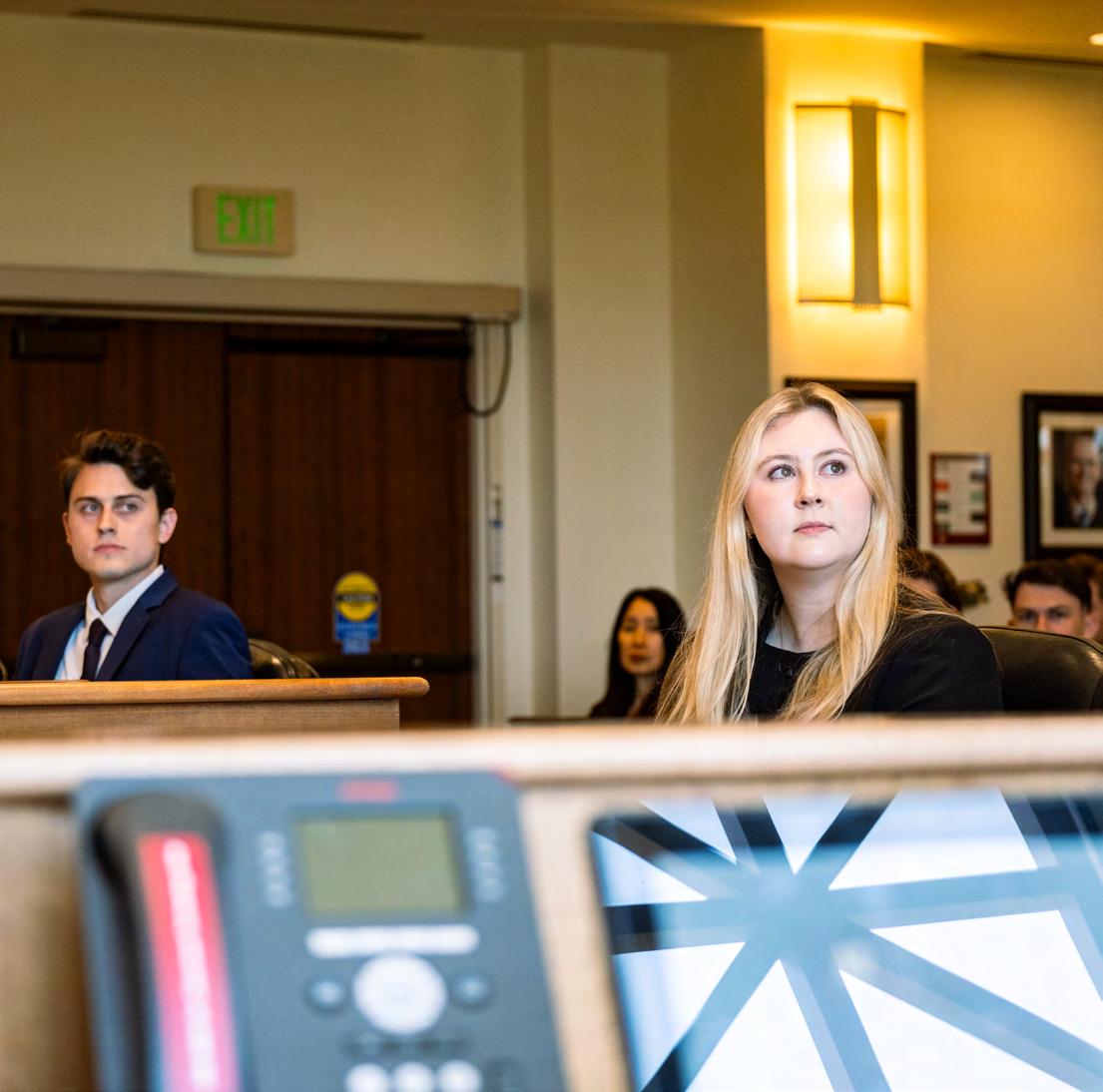
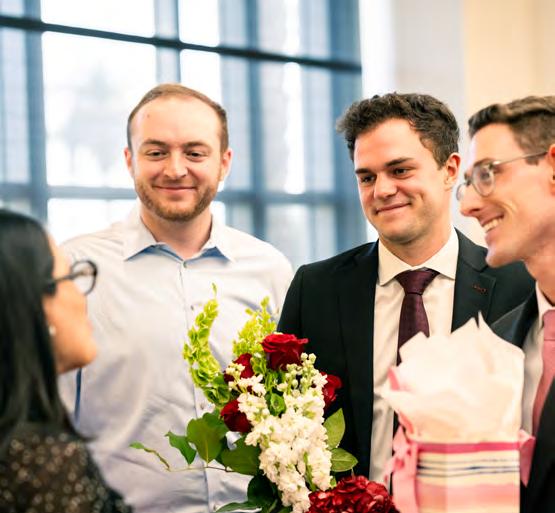
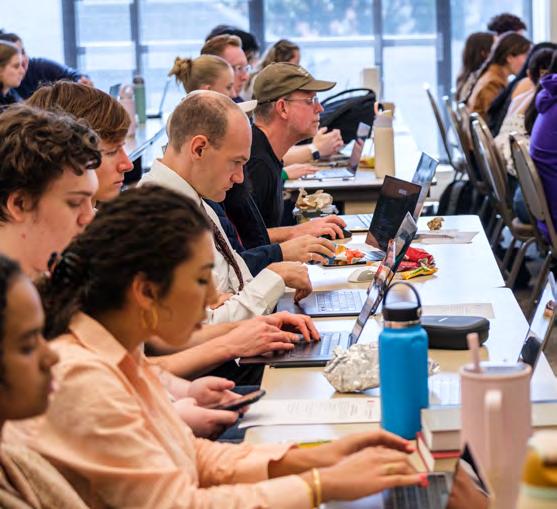
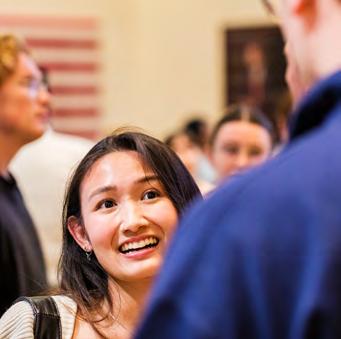
At the heart of the Chapman Family lies the community created by our student body. Students dedicate their time and energy to fostering a sense of community and are immensely enthusiastic in their engagement with one another. Our student organizations host a wide range of events throughout the academic year, catered to varied interests–community-based events, networking panels, donation drives and even trivia nights. They thrive on supporting their fellow classmates while also playing an impactful role within the Orange County community at large.
Events like our Wellness Fair and Cultural Crossroads Week bring our student community together to raise awareness about issues like the importance of mental health and well-being, and celebrating individual cultural backgrounds and heritage. Additionally, many student organizations hosted panels and banquets to celebrate the accomplishments of their organization, connect with students who share similar interests and provide opportunities for their members to network and learn from practicing legal professionals.
Debuting events like Furry Felines and partnering with local therapy animal owners also showcased the importance of finding time to decompress from the stresses of law school. These events provided a welcome reprieve from studying for examinations
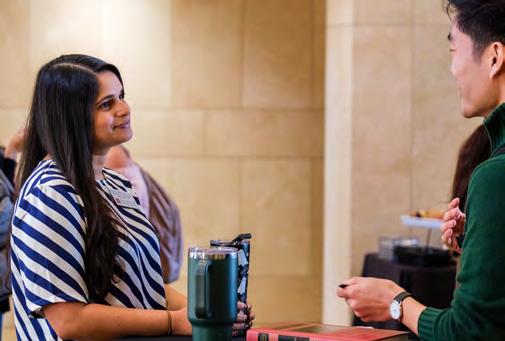
and writing papers and our students were able to take a lunch hour off and a wellearned breather before returning to their studies. As the motto goes: You Have to Be Well to Do Well! Something our Student Affairs team strives to achieve to help grow and strengthen our remarkable student community.
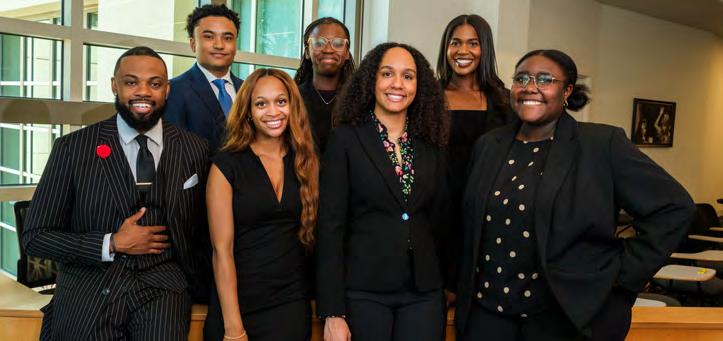
4. The 2026 Black Law Students Association (BLSA).
5. Students participate in Cultural Crossroads Week.
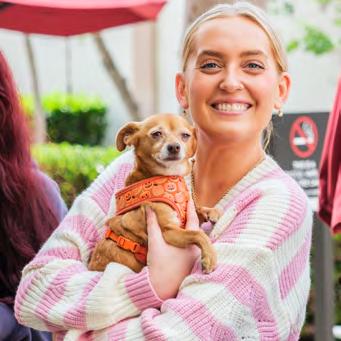
6. A Chapman Student poses with a furry friend.
7. Members of the Chapman Law Review team.
8. Asian Pacific American Law Student Association.
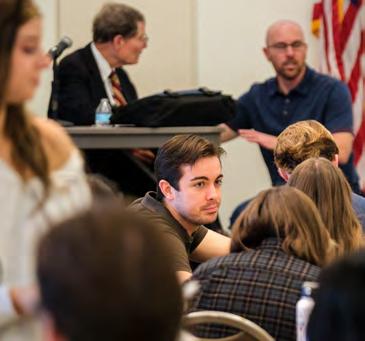
9. Awaiting the start of a Federalist Society debate.
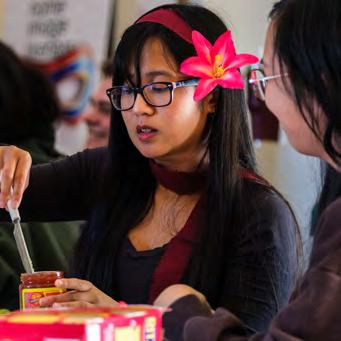
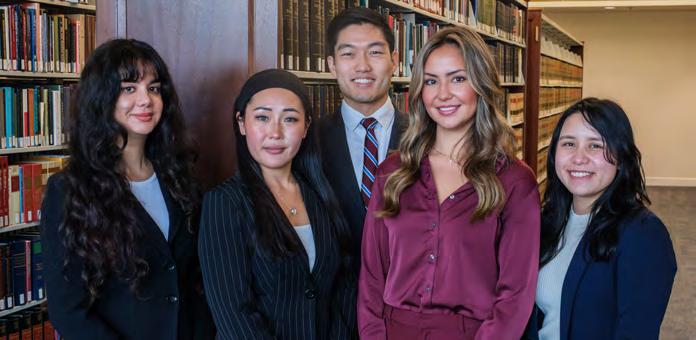
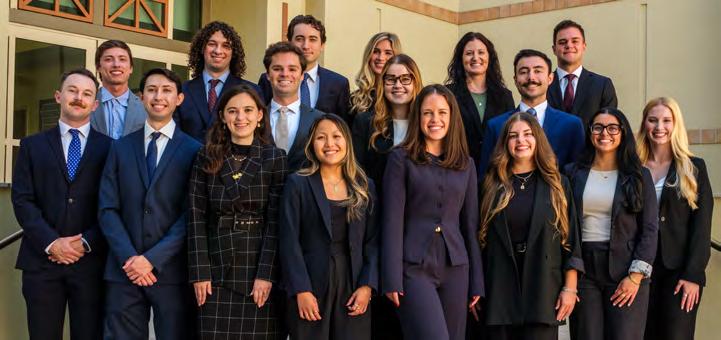

10. Members of the 2026 Chapman Law Review Editorial Board
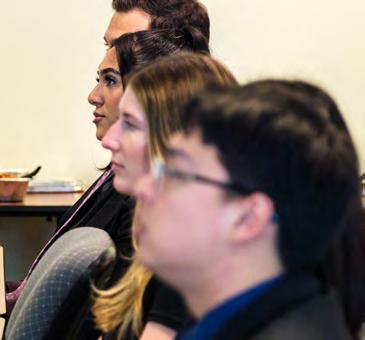
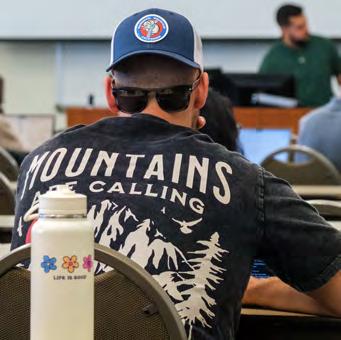
11. A 1L student settles in a class begins.
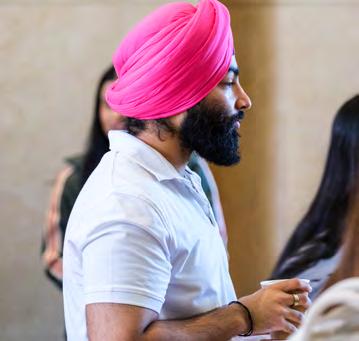
12. A 1L student enjoying a cup of chai during Cultural Crossroads Week.
13. Therapy dogs are always a huge hit on campus and a welcome break from studies.
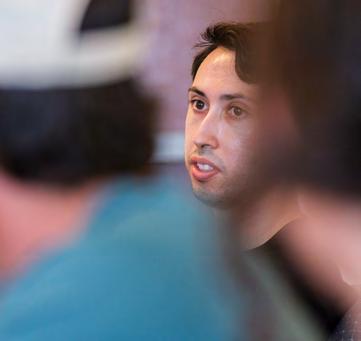
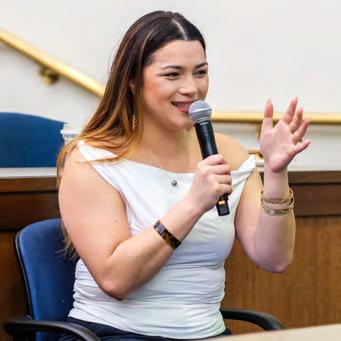
14. Student led panel discussion are organized and moderated by our students.
15. Students pictured during a Chapman Law Review team meeting.
16. Current students and faculty welcome pre-law students to campus.
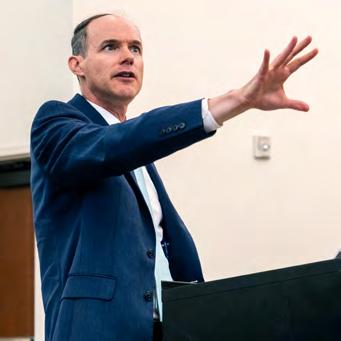
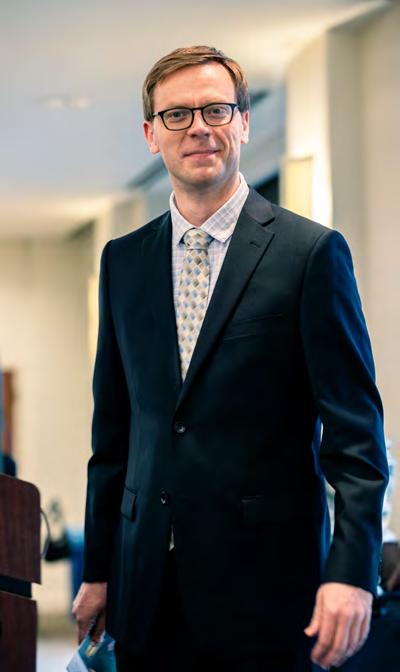
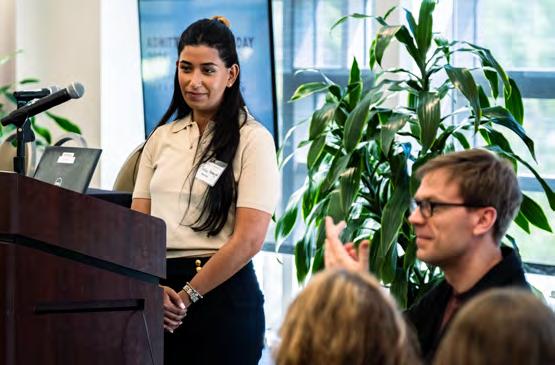

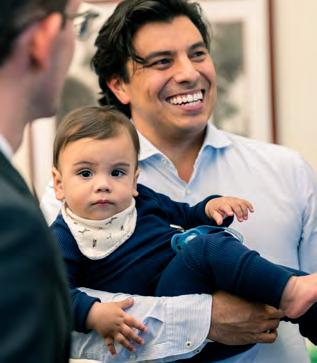
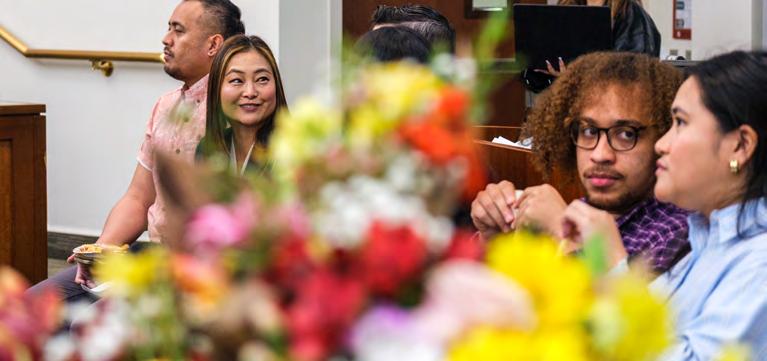
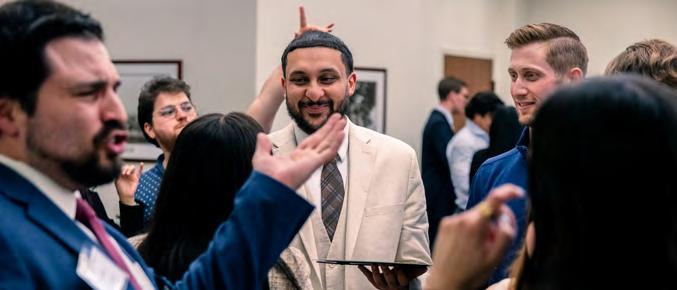
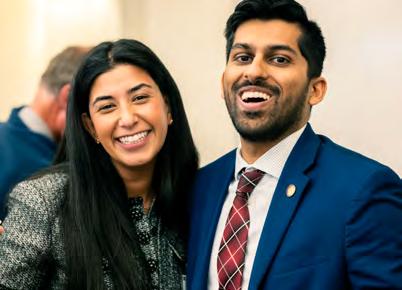
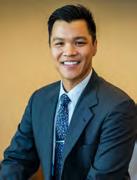
Eric Rasyidi’s (JD ’20) path from a law student navigating the uncertainty of graduating during the COVID-19 pandemic to his current role as Associate General Counsel at Glidewell Dental Laboratories is a story of resilience, adaptability and community. With expertise in intellectual property, trademarks, employment and labor, and business transactions, Rasyidi has built a career that reflects both his entrepreneurial spirit and his commitment to supporting others.
Rasyidi’s decision to attend Chapman University Fowler School of Law was shaped by his desire for both challenge and community. As a student, he immersed himself in advocacy programs, serving on the Moot Court Board as Competitions Chair, competing on the Mock Trial and Alternative Dispute Resolution (ADR) teams, and earning recognition through awards like the Fowler School of Law Rutan & Tucker Golden Gavel competition. His participation in competitions sharpened his litigation skills, which became the foundation for his early career.
After graduating in 2020, at a time when job opportunities were scarce, Rasyidi began his career in insurance defense litigation. While he credits this period with refining his courtroom advocacy and exposing him to the lifecycle of litigation, it also prompted a deeper reflection about the kind of lawyer he wanted to be. Through conversations with his wife and mentors, Rasyidi transitioned into transactional practice, joining a boutique Orange County firm specializing in corporate, intellectual property and employment law. There, he provided guidance to small businesses and creative entrepreneurs, an experience that ultimately led him to his current in-house counsel role.
Throughout his career, Rasyidi has emphasized the importance of relationships...
Scan the QR code to continue reading at our blog
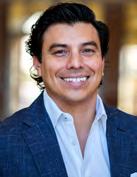
Law school trains students to research, memorize and perfect legal arguments. The Alternative Dispute Resolution (ADR) student advocacy program does the opposite: It teaches students to listen, adapt and respond in real-time. That difference is exactly what drew alumnus Clay O’Neal (JD ’13) to Chapman’s ADR program and what continues to bring him back each year as a coach and leader, long after graduating. O’Neal has built a legacy in competitive student advocacy rooted in mentorship, high standards, kindness and his remarkable passion for mentoring law students.
O’Neal’s connection to ADR began early in law school where, as a Chapman student, he gravitated toward experiences that felt practical and dynamic. While many advocacy programs emphasize research and scripted arguments, ADR immediately stood out to him for another reason: it was skills-based and interactive with immediately observable results. Most importantly, it required students to think on their feet. Much like sports, ADR demands preparation and discipline, but once competition begins, the choices that matter and outcomes they precipitate happen in real time. Competitors may walk in with a carefully crafted game plan but the opposition’s playbook is always unpredictable, a challenge that was more than a little enticing as O’Neal earned his stripes in competitive dispute resolution while still a student.

As a student, O’Neal served as President of the ADR team and participated in Mock Trial contests. Through ADR, he had the opportunity to compete internationally, traveling to places like Paris, Dublin and Kyiv, and credits his time in student advocacy as one of the most profound aspects of his law school experience. When he speaks with law students about the realities of legal practice, he likes to remind them that most cases never reach trial...
Scan the QR code to continue reading at our blog

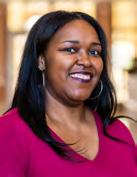
Alissa “Lisa” Hurns’ (JD ’18) career is a reminder that a path to success does not need to be linear to be meaningful. A former human resources professional turned attorney and now entrepreneur, she has built a practice grounded in relationships, community impact and authenticity.
Raised in Los Angeles’ Crenshaw community, Hurns grew up in a household centered on service and trust, as the daughter of a father who was a preacher and a mother who was an evangelist. Surrounded by older cousins who mentored her, she learned the value of listening and giving back early in life. A difficult loss during her youth deepened her sense of empathy—something that continues to shape how she connects with clients and young people today.
Before law school, Hurns spent over 20 years in human resources, where she found a natural intersection between the law, business operations, accounting and people-focused work. While working for a large international veterinary care and diagnostics chain, the in-house counsel took notice of her writing and analytical skills and encouraged her to consider law school. That encouragement proved pivotal. Demonstrating both foresight and resourcefulness, Hurns used stock she earned through the company to help finance her legal education.
Entering law as a non-traditional student, Hurns initially envisioned a future outside of employment law, but her professional background ultimately drew her back to it, where she found her experience to be a distinct advantage. After transferring to Chapman University’s Fowler School of Law, she immersed herself fully in the experience, remembering Chapman as a “breath of fresh air” and quickly became known for her outgoing, community-oriented presence—someone who made an effort to connect with everyone...
Scan the QR code to continue reading at our blog

Jodee Storm Sullivan (JD ’24) built a career out of something she once hoped to avoid: she had scant interest in being in a courtroom and no plans to try. These days, she’s a litigator who routinely returns to Chapman to coach moot court, the same program that changed her mind.
Her 1L year looked the way most first years do: It was full, fast and structured around learning how to read cases, write clearly and keep her head above water while drinking from the proverbial fire hose. The idea of standing up and arguing in front of judges didn’t really factor into that version of law school, at least not for her.
That all changed at the end of her first year, when Golden Gavel, Chapman’s annual 1L moot court competition, rolled around. As part of their Legal Analysis Writing and Research class, Chapman Law first-years spend weeks preparing an appellate-style argument based on a case problem, presenting it in live rounds before judges. For Sullivan, it started the same way everything else had that year—as just another requirement. It was something to prepare for, complete and move on from. Then she got into it. After the first round, something felt different. Sullivan was more engaged than she expected. She found herself thinking about how her argument landed, replaying questions, wanting another chance to do it better. When she advanced through rounds of competition, it stopped feeling like an assignment and started to feel like something she wanted to excel at. Then she advanced again. And again. By the time she reached the finals of the contest, and in spite of her many plans for law school, Sullivan was becoming a litigator.

In spite of herself, Sullivan won Golden Gavel, and something shifted, even if she couldn’t fully name it yet. “I didn’t realize it at the time,” she says now, “but that moment changed my life forever...”
Scan the QR code to continue reading at our blog

The law is about people.
Many, even those who have never touched a casebook, recognize the LSAT, the trials of 1L and the bar exam. In law school it is easy to get caught up in the trudge of cases, assignments, cold calls, and legal questions; but behind every assignment, research question and judicial opinion are people.
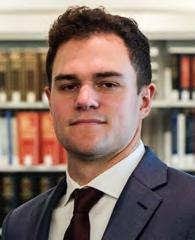
People inform or influence every step a lawyer takes and my classmates and friends from Fowler School of Law’s Class of 2026 exemplify every ounce of this notion: Brianna Gerth and Lorelei Olivas will serve as public defenders, safeguarding individual liberty. Jonathan Metry and Miles Jones will advocate for those who have been wronged. Harmony Castiglione and Riya Beri will represent organizations, helping manage costs that ultimately affect consumers. A law school that puts its people first is a school that prepares its students properly for the practice of law by creating an environment that nurtures knowledgeable, civil and considerate legal professionals.
And Chapman cares about people. This was evident when Admissions Dean Justin Cruz was the only representative from any law school to personally call me when I was admitted to the school. It was evident when the nowPresident of the University, Matt Parlow, was willing to hop on a phone call with a prospective student whom he had never met. And it was evident when Chapman alums spoke so highly, so candidly and so optimistically of the school and its growing network of lawyers: The Chapman Family.
As someone from the Boston area, working in New York, with no immediate family members who had ever attended law school, the Dale E. Fowler School of Law was one of the
least likely places I imagined I would end up. I chose Chapman because the people I met showed me again and again that I would be attending an institution where the students and their long-term success would be a priority.
As a student, I have personally enjoyed the value of an 8:1professor-to-student ratio, where distinguished faculty invest their time in their students. During my time here, several student advocacy competition teams have been crowned national champions; we have organized successful events, including sold-out symposia and public interest initiatives like the Public Interest Law Foundation (PILF) gala in collaboration with our student body and broader community; and we have built lifelong friendships that transcend tracks, specializations and grades.
I’m still baffled by how I was selected from this accomplished cohort as Editor-in-Chief of the Chapman Law Review. It has been an extraordinary honor — one made possible by the enduring support of family, friends, and the Chapman community. I came to Chapman because of its people. I leave grateful to be a better professional, future jurist and human being because of them.
I cannot wait to see what the future has in store for all of us.
JACK MAYS Class of 2026 Editor-in-Chief, Chapman Law Review
Chapman University
Dale E. Fowler School of Law
Donald P. Kennedy Hall
One University Drive
Orange, CA 92866
AMICUS #3
Spring 2026
Printed in Orange, California
May 7, 2026
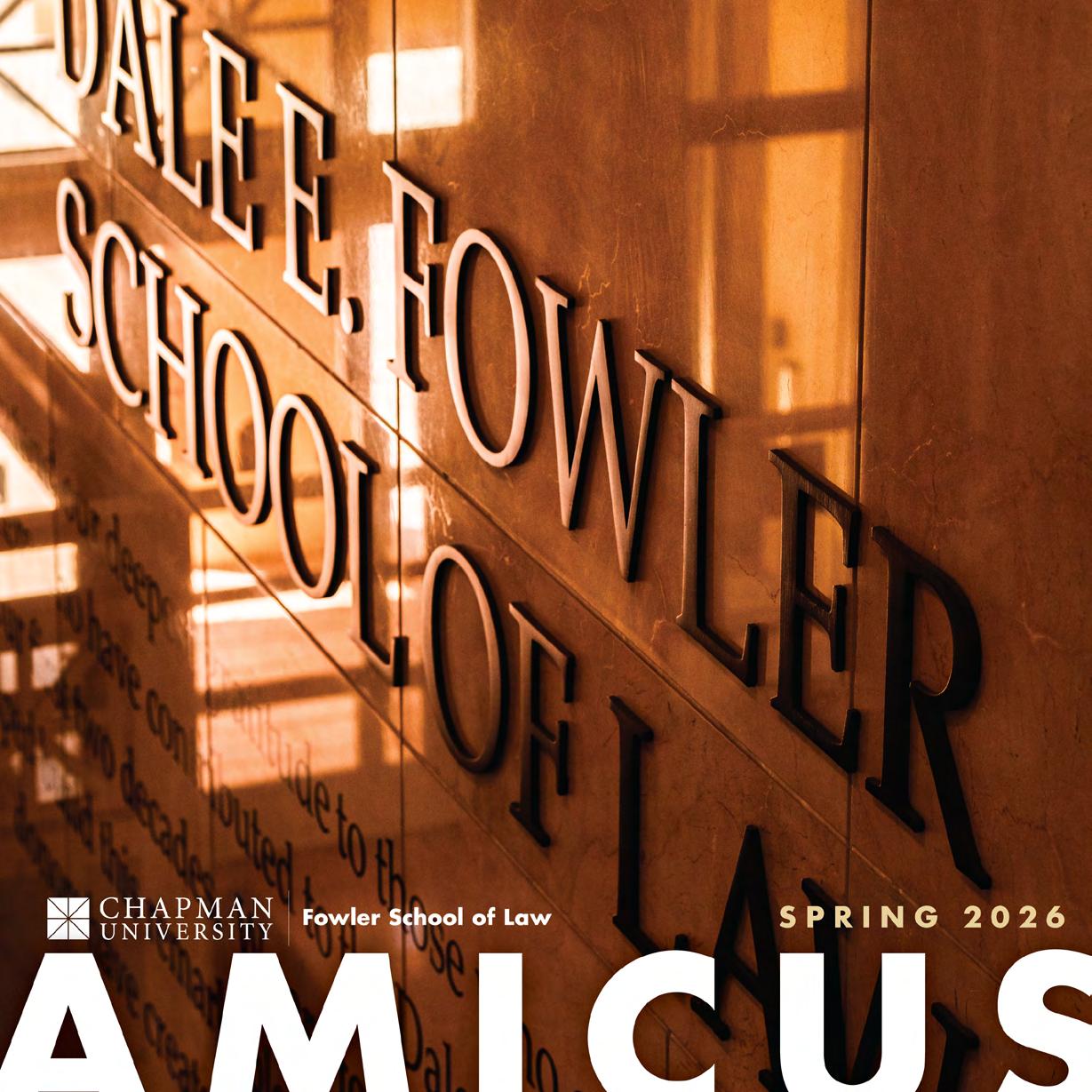
Cover Photo: Kennedy Hall Interior
This photo: A student patiently awaits an employers interview.
Special thanks to:
Paul Paton, Deepa Badrinarayana, John Bishop, Ken Stahl, Lan Cao, Nahal Kazemi, Mario Mainero, Henry Noyes, Jessica John, Justin Cruz and the Admissions team, Camille Heenan, Philip Der Mugrdechian, Kimberly Rasmussen, Aaron Rodriguez, David Bowers, Jack Mays, the Student Writers team of Aubrey Adams, Lorelei Olivas and Melanie Wu, Sukbae Kim, and Greg Irwin.
Principal photography, book design and layout by Deane Sutic.
2026 Student Writers: Aubrey Adams, Lorelei Olivas and Melanie Wu.
Alumni profiles on pages 38 & 39 written by Aubrey Adams and Melanie Wu.
GENERAL CONTACT
Chapman University
Dale E. Fowler School of Law
Donald P. Kennedy Hall
One University Drive Orange, CA 92866
Chapman.edu/law

SUPPORT THE FOWLER SCHOOL OF LAW
Scan the code to visit our advancement webpage:

OFFICE OF ADMISSION
Donald P. Kennedy Hall 1st Floor
Chapman University One University Drive Orange, CA 92866 (714) 628-2594
lawadmission@chapman.edu

CAREER SERVICES OFFICE
Donald P. Kennedy Hall 3rd Floor, Center for Student Engagement
Chapman University
One University Drive Orange, CA 92866 (714) 628-2533
lawcareerservices@chapman.edu