


by Steven Ellwood
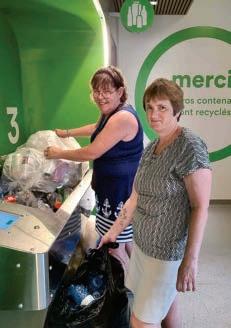
There's no doubt that Diane Daigle-Dinel is a busy woman these days. The empties have been coming in fast and furious. For those who have been following the developing story, Diane's charitable organization, Diane's Dream, has been accepting recyclables such as empty beer and pop cans, and wine



bottles. She then transports them at her own expense to recycling stations, cashing them in, and donating the proceeds to deserving local community organizations.
Recently, she did a double draw - two draws in two days. As always, the draws were done live on the Chapleau Community Bulletin Board on Facebook. The first draw benefitted the Chapleau Figure Skating Association with $500. The second went to the Chapleau Firefighters Association - another $500. Double draw, double donation!
If you'd like to support the cause you can contact Diane Daigle-Dinel through Facebook Messenger. Keep those empties coming and keep the Dream alive!


Charlie Angus / The Resistance
For the last seven months, the people of Kashechewan have been living as refugees, 1300 kms away from home in Niagara Falls.
A pump failure at the community’s water treatment plant caused parasites to get into the water system. Dozens became sick. Families were forced to leave everything behind.
Perhaps you’ve heard of Kashechewan. Every spring, the community faces the threat of evacuation because it sits on a huge floodplain protected by a dike wall with serious imperfections.
The latest water crisis was the result of failing infrastructure.
During my 21 years in Parliament, the issues facing the community of Kashechewan were always on my mind. Soon after I was first elected, I flew to the community (there are no roads in the northern part of my constituency) and was shocked by the terrible conditions of the housing, the school and the substandard water plant.
Then, in 2005, an E. coli outbreak in the water drew international attention. I fought like hell to get the government to start addressing the issue of bad water on the northern reserves.
I sat at the table with Minister Andy Scott when the agreement was
Township of Chapleau
20 Pine Street W. P.O. Box 129 Chapleau, ON P0M 1K0
t(705) 864-1330 f (705) 864-1824 www.chapleau.ca
(Rate of Pay = $32.60 / hour)
(Probationary Rate = $27.71 to $32.60 / hour based on experience)
The Township of Chapleau is seeking a full-time experienced equipment operator for its Transportation and Environmental Services Department. This is a unionized environment.
The Township offers a competitive compensation package, which includes membership in the OMERS pension plan and benefits.
The successful candidate must possess the following qualifications, skills and abilities:
Grade 12 diploma or grade 12 equivalent from an accredited Canadian educational institution. (See note below)
Valid D-Z Ontario driver’s license.
A minimum of three (3) years of operating experience on various types of heavy snow and earth-moving equipment.
Work on a rotational basis in the area of refuse collection and other night shift duties.
Work both individually and in a team environment.
Take training and upgrading.
Candidates must submit a typed resume complete with a covering letter and proof of education, qualifications, skills and abilities, in confidence by 12:00 noon, Thursday, August 6, 2026, to the undersigned.
Consideration will be given to candidates without grade 12 or grade 12 equivalent if such candidates submit, with their resume, a grade 12 equivalent prescreening test report, such as the CAAT, prepared by an accredited Canadian testing facility.
In accordance with the Municipal Freedom of Information and Privacy Act, the information gathered is collected pursuant to the Municipal Act 2006 and will be used for the purpose of candidate selection. We are an equal opportunity employer.
We thank all candidates in advance and wish to advise that only candidates selected for interviews will be contacted.
Jeff Sisson, Public Works Manager Township of Chapleau P.O. Box 129 Chapleau, Ontario P0M 1K0
Ph: 705-864-1334, Fax: 705-864-1824
jsisson@chapleau.ca July 23, 2026
Version française disponible sur demande.
signed with the federal government to relocate the community to higher ground.
That was over two decades ago.
In the years that followed, I sat in on meetings with Minister Jim Prentice, pushing the government to follow up on the promise to move the community to safe ground.
Minister after minister came and nothing changed for the people of Kash.
Just a few years ago, the Trudeau government sent up representatives to sign another agreement committing to a new relationship.
The people are still waiting.
Kashechewan is not an isolated situation. Across Northern Canada, First Nations communities continue to live with chronic underfunding of infrastructure. When systems fail, the government response comes at a snail’s pace.
The same story has played out in Attawapiskat, Martin Falls, and Neskantaga (which has gone 30 years without safe drinking water). Canada is one of the richest countries in the world. So how did we allow this to happen?

I know many of you have questions. That’s why I want to share this conversation with Tyson Wesley of Kashechewan First Nation. He speaks with clarity, honesty and deep love for his community.
If you want to understand how this crisis continues — and why it should matter to Canadians — I hope you’ll take the time to watch.
Vale contractor chips away at the Sudbury Superstack Top-down demolition continues at Copper Cliff smelter

Vale Base Metals is displaying the piecemeal progress it’s been making in the dismantling of the Superstack at its Copper Cliff smelter in Sudbury.
In a July 24 Facebook post, Vale said the 1,250-foot (381metre) stack has been reduced by 210 feet (64 metres) since the formal demolition job began on June 1. Early work actually began in 2025 with the removal of the stack’s liner.
“We truly are starting to notice the Superstack getting shorter day by day,” the nickel and copper mining company said in the post.
The current height stands at 1,036 feet (315.7 metres), roughly the same height it was on July 1970 once the continuous concrete pour was underway, the company said. Cont’d on P.6

Michael J. Morris
D.O. Payette paid tribute to Chapleau pioneer citizens for "great foresight and enthusiasm" in building the community
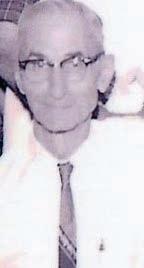
Arriving in Chapleau in 1904, by the time he became president of Smith and Chapple Ltd. some 26 years later, D.O. (Ovide) Payette had seen many changes in the community.
When Mr. Payette took over the store with Arthur J. Grout in 1930, from V.T. Chapple and Stuart Smith, he wrote a major article for the Chapleau Post. It is a fascinating insight into Chapleau in its early years.
Here are some of the highlights from the article which is included among the Richard Brownlee papers, kindly loaned to me by his daughter Margaret Rose and her husband Bobby Fortin.
Having arrived in the Fall of 1904, "I have seen great changes in the town...," he wrote in 1930. "Those were the days of smaller engine power on the CPR, with more though smaller, trains and consequently a greater number of crews... The crews did not 'get over' the road as quickly as now (1930), and the engine-
men carried huge lunch pails capable of holding sufficient food for three days, while the train crews practically lived in the vans."
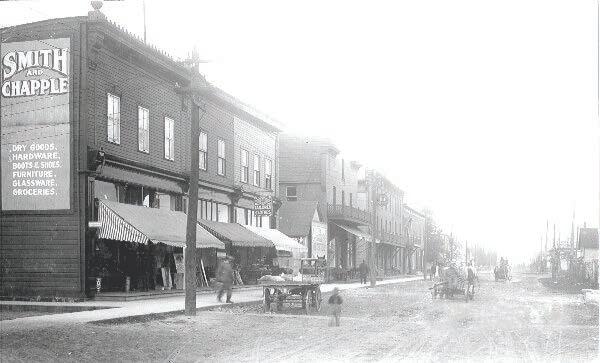
"At least one-half of what is now Chapleau was bush. Besides the doctor's residence there were some five or six houses across the track and, instead of the present overhead bridge (referring to the horseshoe bridge), one got to the station by a level crossing at the west end of Birch Street.
"There were no electric lights, and coal oil was used almost exclusively for lighting purposes. The stores and hotels used acetylene gas. As this was before the advent of water works the water supply was had from pitcher pumps which drew the water from well points driven into the ground at varying depths."
Fire protection was provided from a hand reel and some 500 feet of hose while the fire station was a small shed at the rear of the St. John's Anglican Church rectory (now being used as a second hand store), water being drawn from
a well there with a four-man hand pump.
Wow, sure not much fire protection if you happened to live very far from the "fire station". There was a four-room public school which in later years was transformed into Chapleau High School on Pine Street. St. John's church was small wooden structure on the tennis court while Sacred Heart Roman Catholic Church was at its present location but burned down in 1918, and was replaced within one year by the present building. The Methodist church was located on the site where Trinity United Church is today.
"The sidewalks, where there were any, were of plank and the service drainage was nil except what nature provided."
However, Chapleau had been incorporated as a municipality in 1901, just before Mr. Payette's arrival and he pays great tribute to several citizens with "great foresight and enthusiasm" for the community.
Cont’d on P.4
Cont’d from P.3
He referred specifically to G.B. Nicholson, J.B. Dexter and V.T. Chapple who "by their persistent efforts, succeeded in getting for the town a good system of water works, a fine town hall, three fine schools, a good system of fire protection including the present fire hall (replaced in 1978), and several miles of sidewalks."
Mr. Nicholson was Chapleau's first reeve serving from 1901 to 1913; Mr. Dexter, a member of Chapleau's first council worked for the CPR, then became a businessman, and later town superintendent as well as chief of the first volunteer fire brigade. Mr. Chapple was a businessman.
As an aside, all these developments took place between 1901 and about 1922 when the
high school was opened. By 1914, after Dr. J.J. Sheahan had arrived, the Lady Minto Hospital, the only hospital between Sudbury and Fort William was opened.
Mr. Payette also noted that the CPR also "kept pace with the progress of the town" by enlarging the shops and roundhouse, building a new station, freight sheds, a large ice house and several dwellings.
J. McNiece Austin "also did his share in modernizing the town by putting in an electric light plant and a power house on the sight of the former saw mill operated by Mageau LeBlanc Lumber Company. George Fife, who served as reeve of Chapleau from 1938 to 1942, and the grandfather of Robert Fife, the CTV News Ottawa Bureau Chief and host of 'Question
Period' arrived to become manager of the electric light company.
Mr. Payette was not only involved with Smith and Chapple over the years, but was very active in community activities. By 1906, he appears in a photo of a Chapleau hockey team and he later managed teams. He also played in the Town Band and was bandmaster. In the 1930s, he was referred to as "the catalyst" behind the founding of Chapleau winter carnivals. He also served as fire chief, member and chairman of the high school board, manager of the Chapleau Memorial Arena, member of the Knights of Columbus, choirmaster at Sacred Heart Roman Catholic Church member of the Chapleau Rotary Club, and he also golfed and curled..
Mr. Payette also wrote about Smith and Chapple in its early years but that is a story for another day.
to Protect Workers in the North New investment will help more than 500 workers in northern Ontario gain in-demand skills, protect local jobs and build a stronger, more resilient economy
The Ontario government is partnering with the Government of Canada to invest more than $7.2 million through the Canada-Ontario Workforce Tariff Response to help protect workers in the North, strengthen critical industries and build a more competitive and resilient economy in the face of global economic uncertainty. This investment will help more than 500 workers across northern Ontario upgrade their skills, transition into in-demand careers and ensure local employers have the skilled workforce they need to grow and succeed.
"Ontario's greatest competitive advantage is our world-class workforce," said David Piccini, Minister of Labour, Immigration, Training and Skills Development. "Protecting Ontario means making sure workers have the skills to succeed no matter what comes our way. Through these investments, we're helping workers transition into good-paying careers, supporting employers facing economic pressures and strengthening the industries that will drive Ontario's future prosperity."
Ontario will deliver the funding through Skills Advance Ontario, which partners with employers and training providers to help workers transition into the sectors that are driving economic growth and building the province's long-term competitiveness. Today, funding is being provided to four organizations across northern Ontario:
• Algoma Steel Inc. is receiving $1,486,153 to help upskill 250 of its employees, providing technical and skills training that will strengthen their capabilities as the company's operations evolve. This investment supports a
highly skilled workforce in northern Ontario and strengthens Algoma Steel's long-term competitiveness.
• Canadian Skills Training and Employment Coalition (CSTEC) is receiving $1,550,992 to help 120 manufacturing workers build the skills needed for careers in the trades such as welding and industrial mechanic. Delivered over 4 to 18 weeks in multiple Ontario communities, including Sault Ste. Marie, the program will combine industry-recognized safety certifications with paid work placements to prepare workers for opportunities in highdemand sectors.
• Confederation College of Applied Arts & Technology is receiving $2,780,400 to help 110 tariff-impacted workers and jobseekers affected by forestry and pulp and paper sector restructuring in Thunder Bay transition into indemand careers. Participants will receive training in heavy equipment operation, millwrighting, welding, electrical work and commercial driving, equipping them with the skills needed to fill local labour market needs.
• Washagamis Bay Investment Corporation is receiving $1,395,150 to train 40 jobseekers, primarily Indigenous participants from the Treaty #3 region, for careers in housing construction, forestry and telecommunications infrastructure in the Kenora area, helping address local workforce needs while creating pathways to rewarding, long-term employment.
The Skills Advance Ontario program is funded through the Canada-Ontario Workforce Tariff Response, a $228.8 million investment to expand training and employment supports for
those impacted by tariffs and global trade disruptions. This initiative will help up to 27,000 workers across the province retrain, upgrade their skills and stay competitive in key sectors of the economy, including softwood lumber, steel and automotive manufacturing.
“This is a direct investment in the hardworking people of northern Ontario,” said Patty Hajdu, federal Minister of Jobs and Families and Minister responsible for the Federal Economic Development Agency for Northern Ontario. “As tariffs and global economic pressures continue to affect workers and communities, no one will be left behind. By equipping more than 500 workers with the skills they need for high-demand careers, we are building stronger, more resilient communities across northern Ontario, ready to meet the challenges ahead.”
Ontario continues to take decisive action to protect workers, businesses and communities in the face of global trade disruptions. By investing in skills training and helping employers retain experienced staff, the province is strengthening key industries and building a stronger, more competitive and resilient economy that can create good-paying jobs for generations to come.
Skills Advance Ontario (SAO) is funded in part by the Government of Canada through the Canada–Ontario Workforce Tariff Response. Applications for the Skills Advance Ontario program are accepted on an ongoing basis through Transfer Payment Ontario.
Employment Ontario is providing free Cont’d on P.7
Veterans and active service members can now visit Ontario’s world-class provincial parks for free seven days a week
The Ontario government has expanded free day-use access to provincial parks for Veterans and active members of the Canadian Armed Forces, who reside in Ontario. Starting today, Veterans and active service members can visit any of the province’s Ontario Parks for free seven days a week, including long weekends and statutory holidays, removing an additional barrier for those unable to visit Ontario’s world-class parks and natural spaces during the workweek.
“We are immensely grateful for the courage and sacrifices made by the brave men and women who dedicate their lives to defending our country and protecting our values of freedom and democracy,” said Todd McCarthy, Minister of the Environment, Conservation and Parks. “Expanding access to our incredible provincial parks is a token of appreciation for their service and commitment. Through this program, I hope all past and active service members can enjoy everything that Ontario Parks has to offer.”
Veterans and active members of the Canadian Armed Forces can access free day-use entry to more than 340 Ontario Parks across the province by reserving in advance through the Ontario Parks Reservation Service or by
Township of Chapleau
20Pine Street W.P.O.Box 129 Chapleau, ON P0M1K0
t(705) 864-1330
f(705) 864-1824
www.chapleau.ca
Please note that there will be a special meeting of Council to be held on WEDNESDAY, AUGUST 5, 2026, at 12:00 p.m.
IN COUNCIL CHAMBERS
2026 BUDGET
ADOPTION OF FINAL BUDGET
2026 TAX RATES BY-LAW
ADOPTION OF 2026 TAX RATES
Written comments on either matter may be submitted to: Réjean Raymond, CAO/Clerk Township of Chapleau
20 Pine Street W., P.O. Box 129, Chapleau, ON P0M 1K0 cao@chapleau.ca
Deadline for written comments: Tuesday, August 4, 2026, at 4:00 p.m.
AVIS DE RÉUNION EXTRAORDINAIRE
Veuillez prendre note qu'une réunion extraordinaire du Conseil se tiendra le MERCREDI 5 AOÛT 2026, à 12 h
DANS LA SALLE DU CONSEIL
BUDGET 2026
ADOPTION DU BUDGET FINAL RÈGLEMENT SUR LES TAUX D'IMPOSITION 2026
ADOPTION DES TAUX D'IMPOSITION 2026
Des commentaires écrits sur l'une ou l'autre de ces questions peuvent être soumis à:
Réjean Raymond, DG/Greffier Canton de Chapleau 20, rue Pine O., C.P. 129, Chapleau (ON) P0M 1K0 cao@chapleau.ca
Date limite pour la soumission de commentaires écrits : le mardi 4 août 2026, à 16 h
presenting valid Canadian Armed Forces identification — such as a Veteran’s Service Card, Canadian Forces Identification Card, Record of Service Card or Temporary National Defence Identification Card — and proof of Ontario residency with photo identification upon arrival. Free entry also extends to friends and loved ones accompanying a service member or veteran in the same vehicle.
Since launching free weekday access for veterans and active members of the Canadian Armed Forces in 2019, Ontario Parks has welcomed more than 228,000 weekday visits from Veterans, active members of the Canadian Armed Forces, and their families and friends. Spending time in nature supports both physical and mental health, reduces stress and improves overall well-being. Expanding access to every day of the week ensures more Veterans and active service members can experience these benefits, while supporting Ontario’s work to create more outdoor recreation opportunities across the province.
As part of its plan to protect Ontario, the province continues to create new outdoor recreation opportunities, strengthening local tourism and ensuring families can continue to enjoy Ontario's natural heritage for generations to come.

Free day-use entry for Veterans and active members of the Canadian Armed Forces members covers all occupants arriving in the same vehicle.
There is no limit on how often eligible Veterans and active Canadian Armed Forces members visit a park using free day-use entry. However, advance reservations are recommended during busy periods.
Ontario is home to nearly 150,000 Veterans and approximately 9,000 Canadian Armed Forces members are released from military service each year.
Nominations for the 2026 Ontario Veterans Award for Community Service Excellence (OVACSE) are now open until September 4, 2026.
Ontario’s provincial parks system includes over 340 parks and over 300 conservation reserves, protecting approximately 9.8 million hectares across the province – larger than the total landmass of New Brunswick.
Vale contractor chips away at the Sudbury Superstack
Cont’d from P.2
International demolition experts ICC Commonwealth were handed the job to demolish the stack using a top-down method in using concrete breaking equipment at the chimney’s summit. Demolition work is expected to take three to four years. Located at Vale’s Copper Cliff smelter, the massive industrial chimney has been a landmark piece of mining infrastructure on the city’s landscape since construction began in the early summer of 1970. It went into operation in 1972.
Considered an engineering marvel and the tallest chimney in the Western Hemisphere, the stack was built to disperse smelter emissions over a broader geographical area, leading to a community effort to regreen the local landscape that had been scarred by decades of ground-level pollution from nickel smelting.
The Superstack was rendered obsolete and shut down after Vale brought its $1-billion Clean AER project online in 2020, allowing the company to significantly cut emissions using a wet gas cleaning plant to capture sulfur dioxide.



Last weeks solutions

On Aug. 12, 1964, Charlie Wilson, part of the group responsible for the 1963 Great Train Robbery, one of the biggest thefts of its kind, escaped from the Winson Green Prison in Birmingham, England, with the aid of several men who broke into the facility for that express purpose. He was not recaptured until 1968.

Type 2 diabetes, which accounts for more than 95% of diabetes cases, impacts everything from our eyes to our nerves. Overtime, it can lead to vision loss, heart attacks, and even limb amputations.
Prediabetes refers to a condition where there is higher than normal blood sugar levels and thus a higher risk of developing type 2 diabetes.
Given the effects of living with type 2 diabetes, it’s important to discuss considerations for management and prevention. Gum health, diet, and vitamin D are examples of three areas we should pay attention to. Click on the links below to learn more.
1. Gum health.Diabetes and gum disease have a close relationship. Diabetes can increase the risk of developing gum disease and having gum disease can increase blood sugar levels. Blood sugar control is essential for diabetes management. Research shows that professionally delivered gum disease treatment
can lower blood sugar levels for up to one year in people living with both diabetes and gum disease.
2.Diet.People living with type 2 diabetes are twice as likely as those without diabetes to develop and die from cardiovascular diseases. Modifying one’s diet is a common strategy for managing and preventing chronic diseases. Research shows that after six months, the low glycemic index (GI) diet, Mediterranean diet, plant-based diet, high protein diet, low fat diet, and moderate carbohydrate diet can improve blood sugar levels and body weight in people living with type 2 diabetes. The low GI diet also demonstrates a significant reduction in the risk of experiencing major adverse cardiovascular events. More research on long-term impacts is needed.
3. Vitamin D.The relationship between vitamin D and diabetes has been an area of interest for scientific studies. Research shows that vitamin D supplementation at a moderateto-high dose of 1000 IU or more per day may decrease the risk of developing type 2 diabetes in people living with prediabetes, and especially in those who are not classified as obese. Further research on how dosing and body mass index impacts benefits is needed.
While these strategies provide some positive benefits, there is no ‘one size’ fits all approach, meaning they may not be suitable for all people. Consult with your healthcare team about whether these strategies are a good and safe fit for you based on your own needs and preferences. Together you can develop a more tailored approach.
Cont’d from P.4 employment services and training programs for jobseekers, workers and employers online, via phone or chat or in person at more than 700 service locations across Ontario. In the 20242025 fiscal year, the Employment Ontario network helped over 693,000 Ontarians. Ontario programs like Protect Ontario Workers Employment Response (POWER) Centres, Better Jobs Ontario and Integrated Employment Services are also receiving additional funding through the Canada-Ontario Workforce Tariff Response.
In 2025, the Ontario Government launched My Career Journey, an online portal designed to support students and job seekers finding in-demand jobs in the face of U.S. tariffs,
ensuring Ontario has the skilled workforce needed to protect and drive our economy. Through Budget 2025, the Ontario government invested $75 million to train up to 7,800 additional students at colleges, universities and Indigenous Institutes across the province for in-demand jobs in construction and urban planning.
In May, the Ontario government announced $1.7 billion to fund 70,000 more seats for in-demand programs at publicly assisted colleges and universities, including skilled trades. This is part of the government’s new longterm funding model, which will bring $6.4 billion to our colleges, universities, and Indigenous Institutes.
The Bottom Line
• From vision loss to nerve damage, type 2 diabetes can negatively impact the entire body.
• Professional gum disease treatment and dietary modifications can decrease blood sugar levels in people living with type 2 diabetes, while vitamin D supplementation may do so in people living with prediabetes.
• Consult your healthcare team about actionable strategies for managing or preventing type 2 diabetes.

Located on the Chapleau Cree First Nation SUMMER HOURS will be from 7 a.m. - 10 p.m., 7 days a week
Drop by and check out our line of Authentic Native Crafts, Unique Gift Ideas, Jewellery, and Gift Certificates TOO!
We also carry road trip snacks, which includes Subs, Chips, Pop, plus a whole lot more.
Your Propane Refilling Station


(ORILLIA, ON) – Through the Provincial Strategy to Protect Children from Sexual Abuse and Exploitation on the Internet (Provincial Internet Child Exploitation Strategy), a joint initiative involving the Ontario Provincial Police (OPP) and 25 other police services, 63 individuals were charged and 51 victims were identified in the fight against online child exploitation.
As part of Project Time, a coordinated provincial effort to identify and apprehend those who prey on children, investigators targeted individuals making, possessing and distributing child sexual abuse material. Victims were also identified and safeguarded, with appropriate support provided to those impacted.
Project Time results include:
• 51 victims identified
• 63 individuals arrested
• 213 charges laid
• 814 electronic devices seized
• 264 criminal investigations conducted
• 154 ongoing investigations
• Two accused were in a position of trust and authority in their communities
• Eight accused were repeat offenders Members of the Provincial Internet
Child Exploitation Strategy recognize that law enforcement cannot combat these crimes alone. Parents, educators, child advocacy organizations, government and technology providers are essential in keeping children safe.
Further details relating to the accused and their respective charges are available in the attached Addendum of Charged Persons. Some of the accused cannot be identified due to a courtissued publication ban.
The Provincial Internet Child Exploitation Strategy police partners have noted a significant rise in reports of online child sexual exploitation and child sexual abuse material in recent years. To learn how to keep children safe, visit Canadian Centre for Child Protection.
Anyone with any information related to child sexual exploitation should contact their local police or report it to cybertip.ca.
"Project Time is a testament to the dedication and commitment of law enforcement professionals across Ontario and Canada to protect children from exploitation. The results of this operation demonstrate the power of collaboration, the strength of the Provincial Internet Child Exploitation Strategy and the relentless pursuit of those who prey on the most vulnerable.”

Strategy provides a unique, provincially-coordinated effort recognizing regional needs and issues, as well as the challenges associated with geographically dispersed victims throughout Ontario.
The Provincial Internet Child Exploitation Strategy’s 26 member police agencies include:
• Barrie Police Service • Woodstock Police Service
• Belleville Police Service • York Regional Police
• Brantford Police Service
• Chatham-Kent Police Service
• Cornwall Police Service
• Durham Regional Police Service
• Greater Sudbury Police Service
• Guelph Police Service
• Halton Regional Police Service
• Hamilton Police Service
• Kingston Police
• London Police Service
• Niagara Regional Police Service
• North Bay Police Service
• Ontario Provincial Police
• Ottawa Police Service
• Peel Regional Police
• Peterborough Police Service
• Sault Ste. Marie Police Service
• Thunder Bay Police Service
• Timmins Police Service
•
– OPP Detective Staff Sergeant
Tara Clark, Provincial Internet Child Exploitation Strategy Lead
- Thomas Jeferson
About The Provincial Internet Child Exploitation Strategy
Ontario’s Provincial Strategy to Protect Children from Sexual Abuse and Exploitation on the Internet (Provincial Internet Child Exploitation Strategy) is comprised of the OPP Child Sexual Exploitation Unit, 25 municipal police services, the Ministry of the Attorney General, the Ministry of the Solicitor General and Victim Services of Stormont, Dundas, Glengarry and Akwesasne through the Ministry of Children, Community and Social Services. The Provincial Internet Child Exploitation