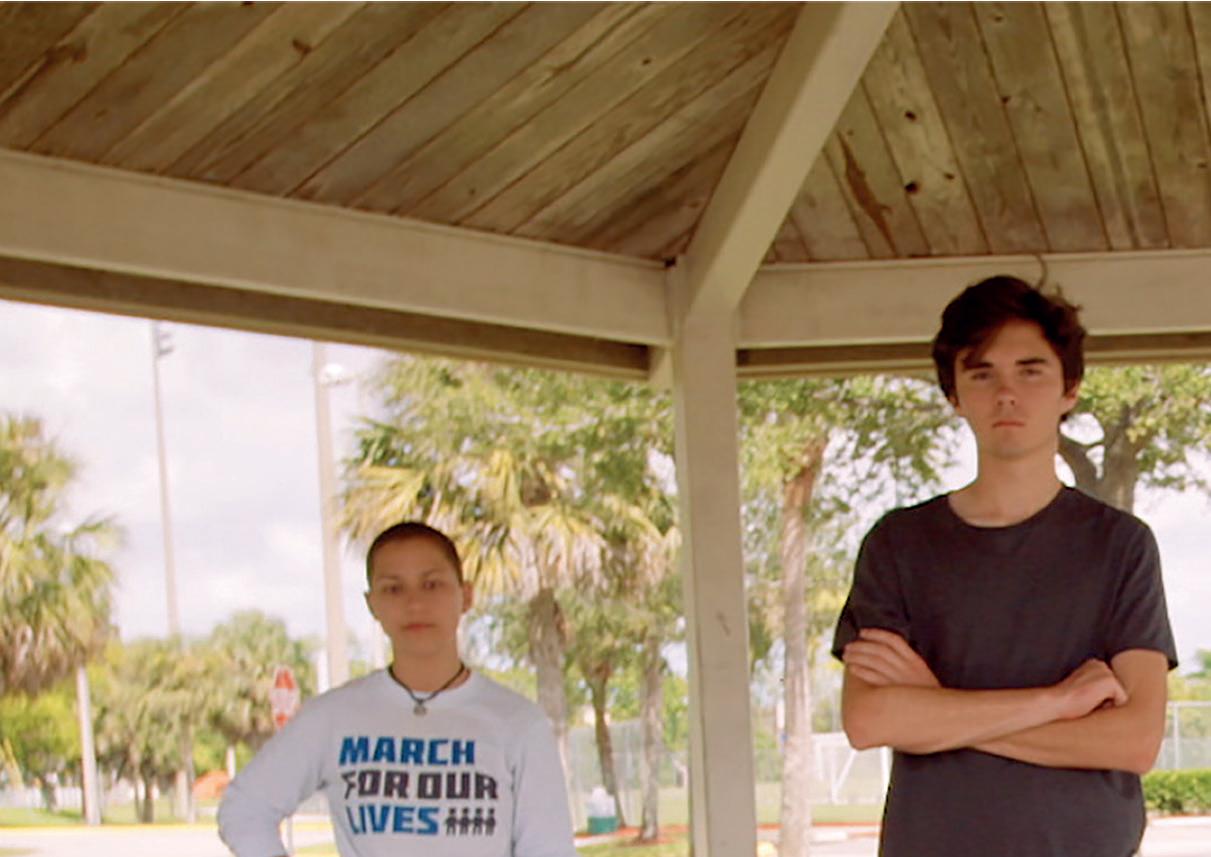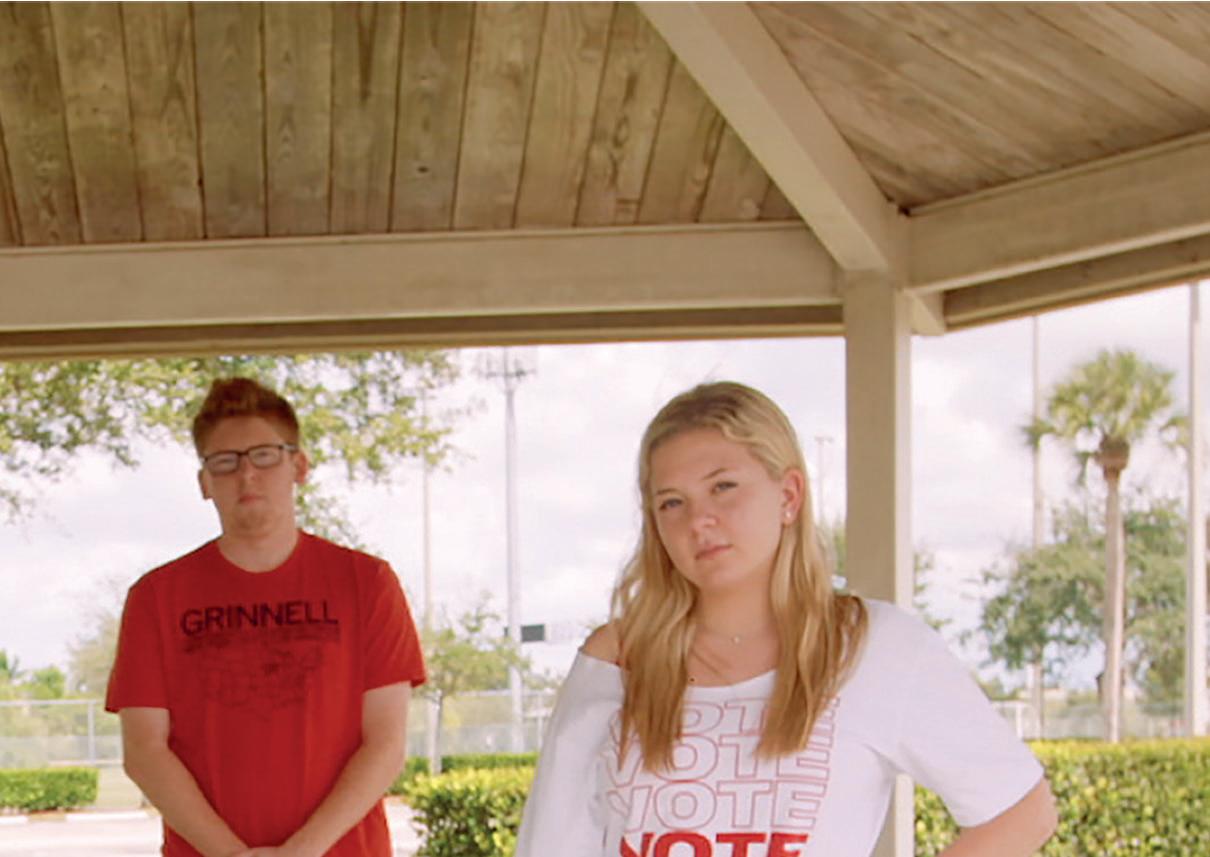









“They say a good guy with a gun stops a bad guy with a gun. We call BS. They say guns are just tools like knives and are as dangerous as cars. We call BS. They say no laws could have prevented the hundreds of senseless tragedies that have occurred. We call BS. That us kids don't know what we're talking about, that we're too young to understand how the government works. We call BS.”
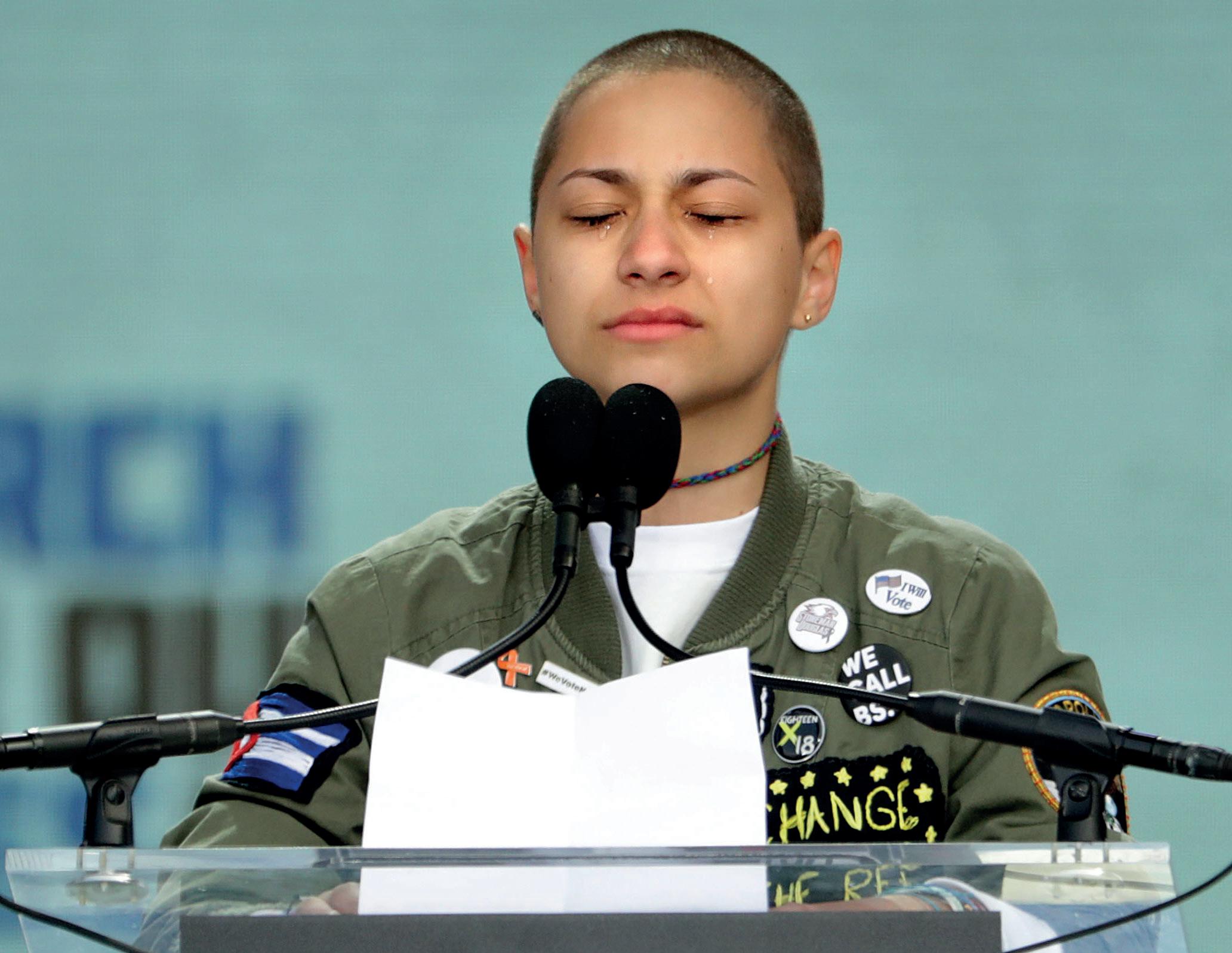
‘We call BS’. We call it bullshit. This is what 18-year-old Emma Gonzalez repeats over and over again in her speech at an anti-gun rally in the United States (US) in 2018. Emma, who now calls themself X, stands in front of the large, grey building of the district court in Fort Lauderdale, Florida. The few hundred people who have gathered, including many of X’s peers, are dead silent. They see tears rolling down X’s face and hear how their words are sometimes fiery and sometimes stick in their throat. A few times X has to take deep breaths before they can continue speaking.
“We are up here standing together because if all our government and president can do is send thoughts and prayers, then it's time for victims to be the change that we need to see. We are going to be the kids you read about in textbooks. Not because we're going to be another statistic about mass shootings in America, but because we are going to be the last mass shooting.”
X gets a big round of applause. The student, who is completing their final year of high school, articulates what everyone at the rally wants: an end to gun violence in the United States and to never have a school shooting again.
‘When I stepped off the stage, my friends said ‘you’re trending on Twitter’,’ X, now 23, says from their cheerful room. All the colours of the rainbow are present on the wall behind their webcam in the decorations and objects hanging there, such as mugs and posters. In contrast to the speech the activist gave, X now often has a smile on their face. On their lap sits the cat Missy.
‘I said, ‘I don’t have Twitter at all. Is everyone in the country talking about me? How can that be, there are only something like 200 people here.’’
Soon X finds out that news channel CNN broadcast their speech live and millions of people heard it. The footage of the ‘We call B.S. speech’ also goes viral on social media. Along with other students who survived the Parkland High School Shooting , X’s signature buzzcut
and their impactful speech has quickly made them one of the leading anti-gun faces in the United States.
On the morning of 14 February 2018, three days before the rally in Fort Lauerdale, few people had ever heard of Parkland, Florida. The small town, or actually more suburb of Miami, is a gated community like America has many. There are detached, relatively new middle-class houses with yellow-tinted walls and red roofs. Those taking a stroll through Parkland will see palm trees between the driveways to the garages. The trees grow well in Florida’s warm climate. The lawns are neatly mowed short, almost like sports fields. Along the concrete pavement connecting the houses are green metal benches that get warm in the sun.
‘Nothing really ever happens. Apart from living, there’s not that much to do,’ Matt Deitsch (26) says, thinking back to the place where he grew up. Young people like to go to the ice rink nearby to skate, cheer on hockey
games or, in the case of boys, talk to girls. Those with cars drive to a car park outside Parkland to hang out and chat together.
‘On the day of the shooting, I saw rows of police cars racing by as I walked out of the gym and I heard a helicopter. I knew right away that something was wrong. This never happens in Parkland.’
Matt, then 20, happens to be home in Parkland for family birthdays. He graduated from Marjory Stoneman Douglas High School and is now studying in Los Angeles. On seeing the police, he grabs his bike and rides after the cars. He sees that they are driving towards the school, where part of the street is cordoned off with police tape.
‘I am opposite the area the police cornered off and I call my mother. She says there is a shooting at the school and we don’t know what exactly is happening. I quickly drive home and turn on the television. There I see on the news an image from the helicopter that flew over earlier: rows of children walking out of the school building with their hands in the air.’
Matt is worried, as he knows his brother and sister are attending classes at the school that day, as they do every day. ‘It goes through my head that sending them messages might not make sense. Maybe they are hiding somewhere and that’s why they turned off their phones.’
‘Luckily, I quickly got a message from my friend Delany Tarr. She is with my sister Sam and they are safe. The shooting started exactly when Sam had class in another building. Then I also heard from my brother, Ryan. He too is safe, he is even filming the events because he is a school journalist. That footage was later broadcast by the BBC, CNN, and Al Jazeera.’
Matt’s family was lucky, they survived the attack and even try to celebrate Sam’s 15th birthday that night. After all, they had already bought pizza and cake. A real celebration, it is not. Sam is inconsolable and can only cry. Ryan, on the other hand, is furious. He feels betrayed by the adults who were responsible for their safety.
X also survives the attack and is reunited with their family. At the time of the attack, they and other students were in the school’s auditorium. An alarm went off and the group had to wait for two hours until the police let the students out. X later learns that a friend, Carmen Schentrup, did not survive the day.
‘The people who didn’t yet know if their families were safe were waiting at the Mariott hotel, one of the assembly points,’ says Matt. ’Everyone was waiting for their children and didn’t know if they were alive or
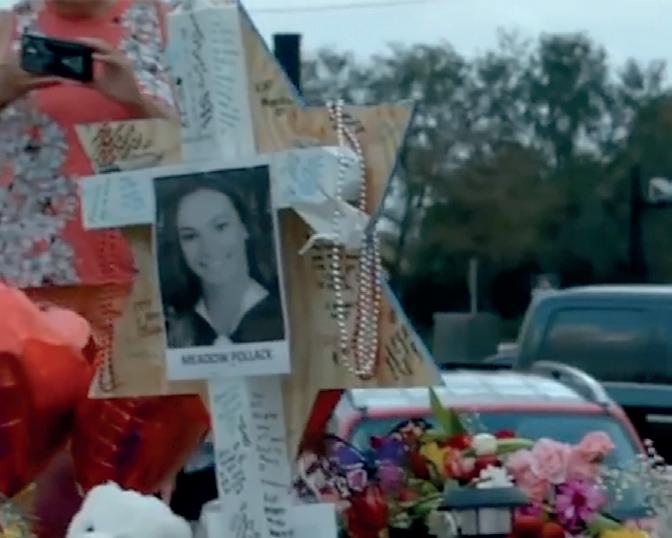
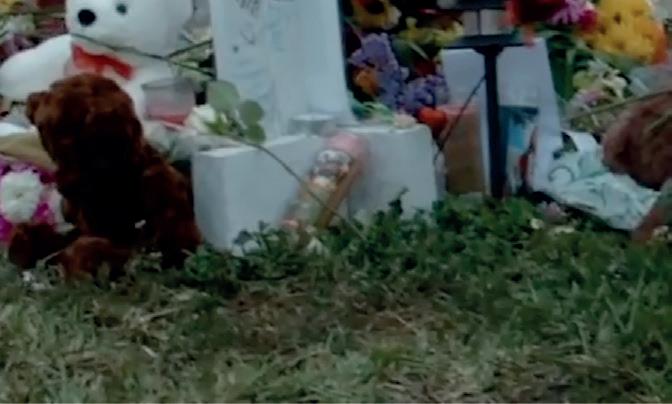
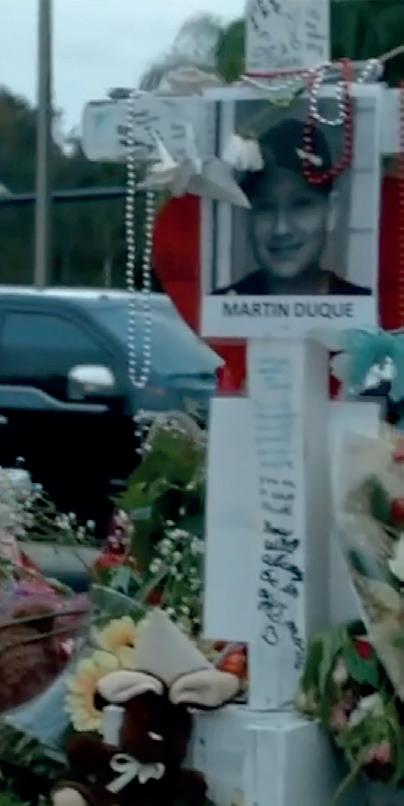

dead. You haven’t heard from them. You completely freak out. And the room slowly empties. The 17 families that are left, scream in anger and confusion. Only around two or three in the morning do we know who we have lost, who have been injured and who are still in the hospital fighting for their lives.’
The shooting of Marjory Stoneman Douglas, which is becoming known as the Parkland High School Shooting, is world news. It becomes clear that a 19-year-old former student of the school walked in armed and opened fire. He killed 14 students and three staff members of the school and wounded 17 others before fleeing and being apprehended by police. It is the one of the deadliest school shooting to date in the United States.
Parkland is shocked. In the days that follow the shooting, students come together to share their emotions. Anger, sadness and frustration are present in the home of Cameron Kasky, one of the students who survived the shooting. Cameron’s parents are on holiday, so his home soon becomes a safe haven for a group of Marjory Stoneman Douglas youth who survived the shooting.
‘It was a place where we could be young and angry together, without the judgements of adults who would try to calm us down or change our minds,’ Matt says. The group not only finds support in each other’s presence but also feels a strong urge to take action. They want to ensure that the victims in Parkland are not forgotten within weeks when the events fade from the news. The many media outlets reporting on the shooting, they say, need to tell different stories.
‘The way the news covered the events, it was like a fucking sport,’ says Matt. ’It was just about the num-
62 March for Our Lives
ber of victims increasing. But all these numbers have a face. I just saw their lost potential. You had Carmen Schentrup (16), who was trying to cure diseases and was going to study medicine, or Nicholas Dworet (17), who was competing to become an Olympic swimmer.’
As the students in Cameron’s house notice that many journalists try to reach relatives and schoolchildren via Twitter, they figure they can use it to tell a different story. At set times, the group starts posting tweets about gun regulation with the hashtag Never Again, referring to the shooting. It seems to work. The hashtag is picked up and becomes a trendy topic on Twitter. It is one of the topics most people talk about on the platform. Soon the group is known as Never Again MSD, Never Again Marjory Stoneman Douglas.
‘I will never forget the list of trending topics on Twitter that was there one day,’ says Matt. ’First, there was a topic about Donald Trump and his relationship with Russians, so it was something in the spirit of 16 Russians. There was also a new music video by Drake that had just come out, so next was the name of the song, God’s Plan. And after that, third, was the hashtag Never Again. That’s how we started to get known.’
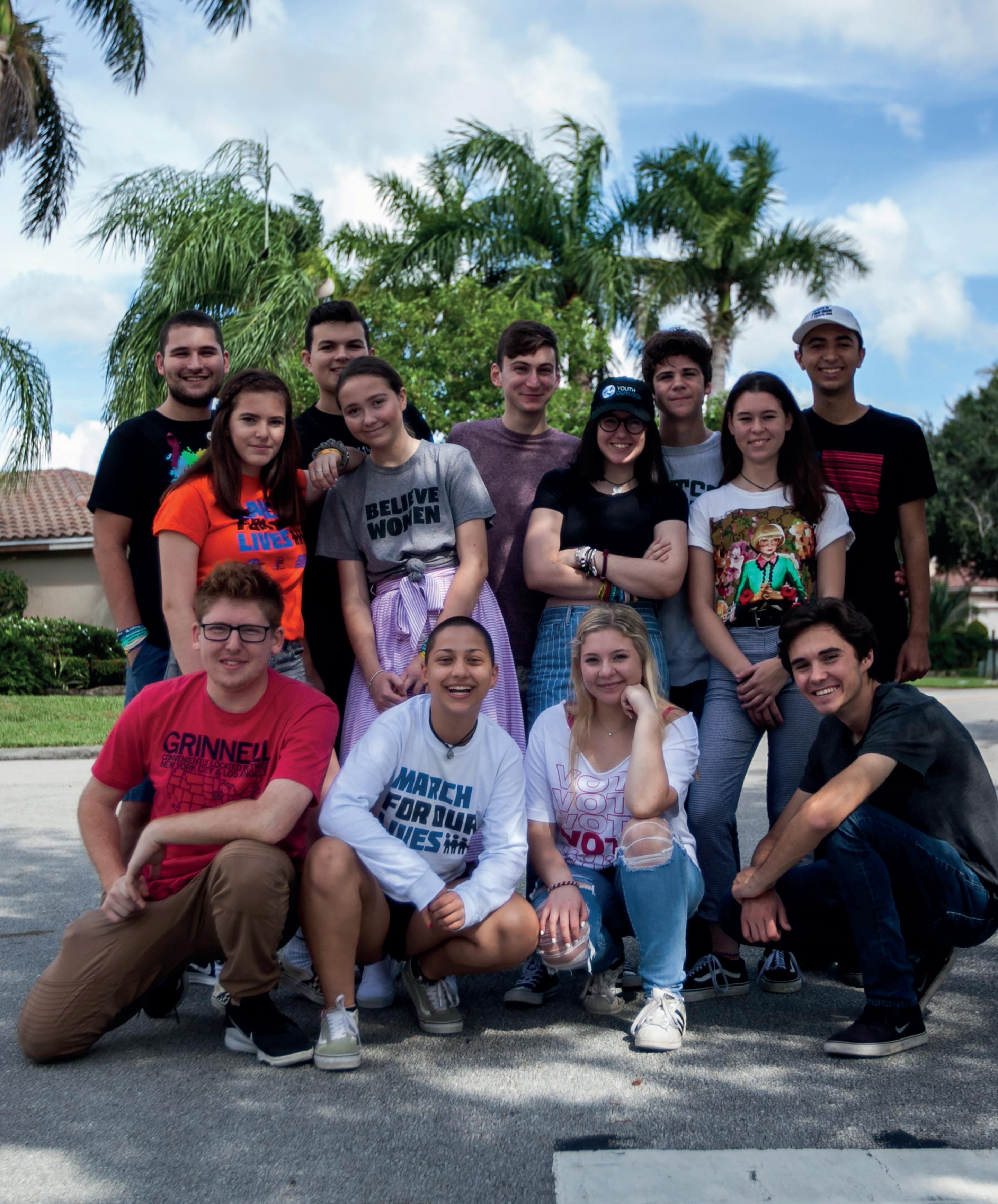
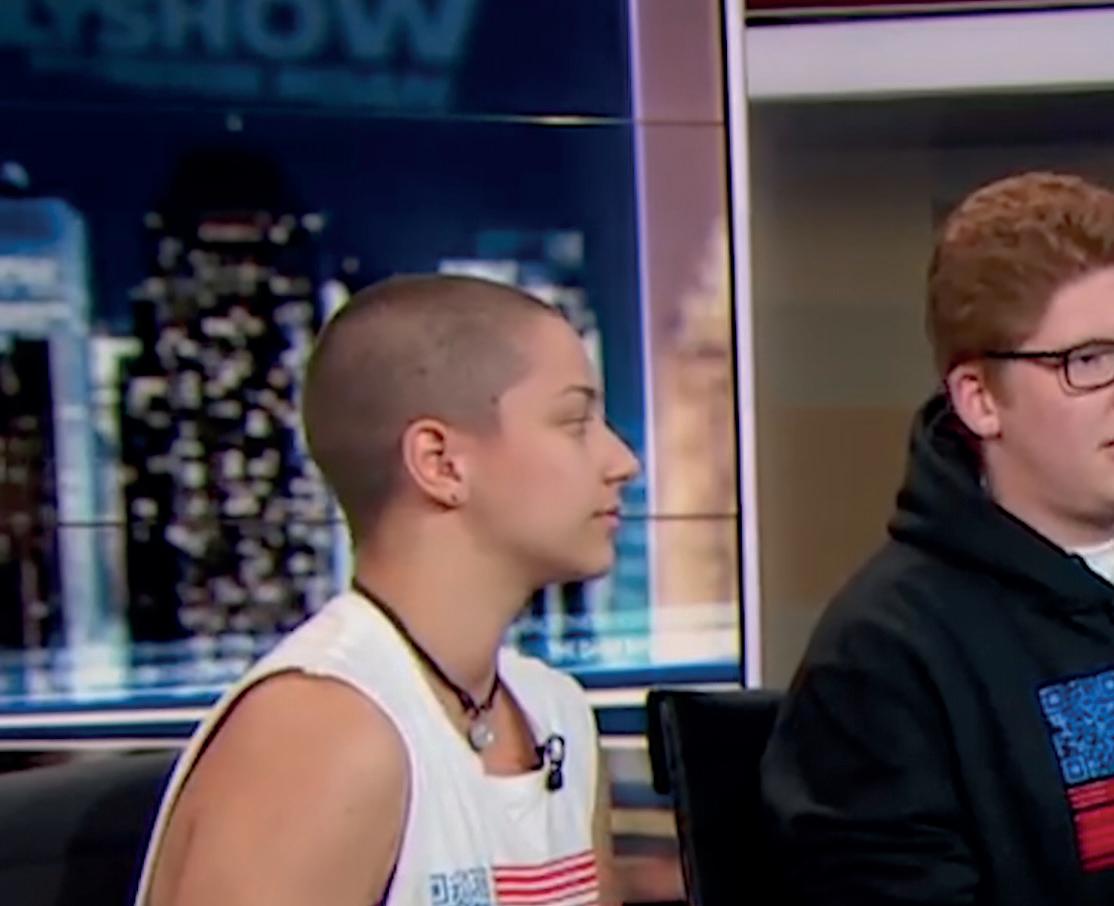
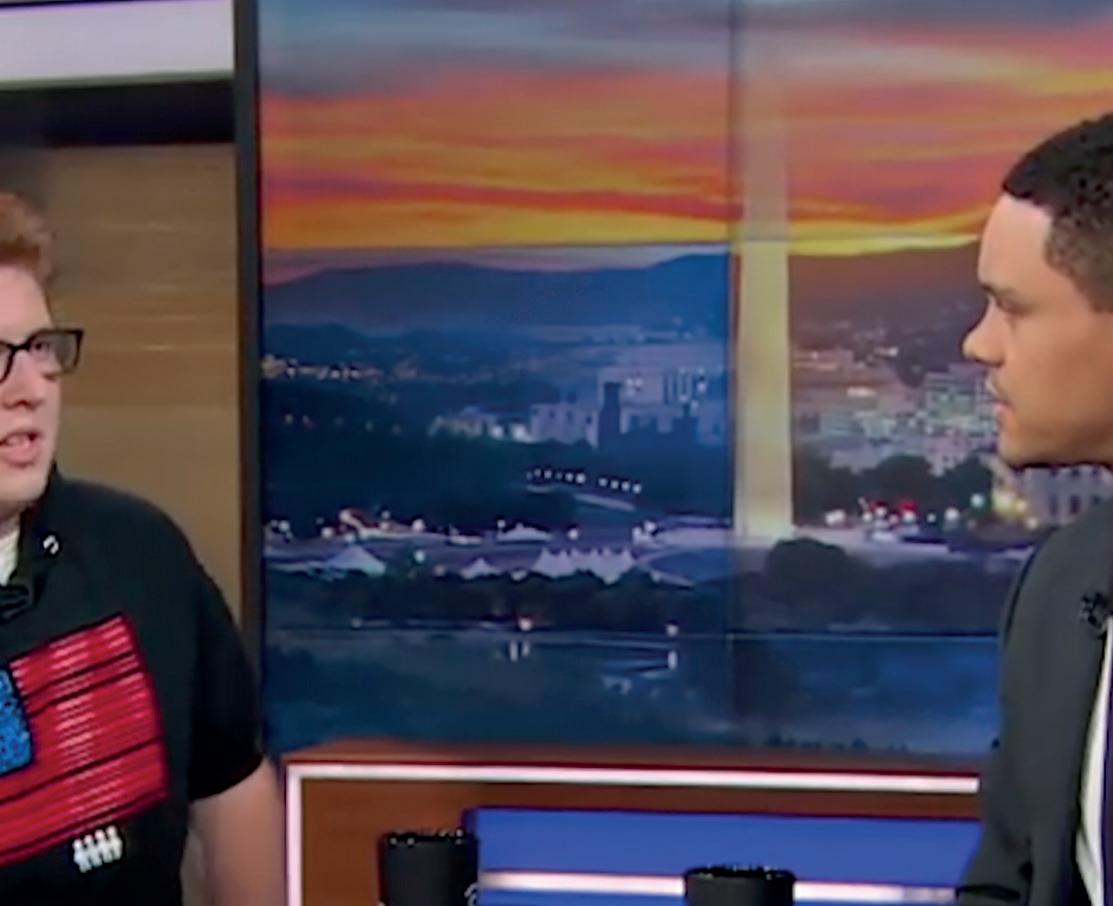
In a short time, the Never Again group grows to about 30 students. Mainly friends of Cameron and friends of friends join. Matt, his brother Ryan and his sister Sam are there, and after their ‘We call B.S. speech’, X also joins. Other names in the group that later become known are David Hogg, Jaclyn Corin and Alex Wind. Meanwhile, the students have many followers on social media and give as many interviews as they can to get their message out.
‘We did our best to reduce any conversation that was about our personal lives to political topics,‘ says X. “Interviewers would ask ” So you’re 18 years old, what do you do on your weekends?’ We then started talking about why we were really there: the problems of gun violence, not our hobbies. We didn’t want to be defined that way. We weren’t trying to become celebrities, we were trying to make a change.’
The students advocate for stricter laws to restrict gun ownership and speak out against politicians and officials who receive donations from the National Rifle Association (NRA), the largest lobbying organisation of gun ownership and the gun industry in the US. They are also starting to organise demonstrations to go with as many students as possible. On 21 February, for instance, 100 students ride buses for eight hours to the Florida government building in Tallahassee to protest. Less than a week after the Parkland shooting, this is also how an idea for a larger protest came about. ‘The
thought was, ‘how do you change things?’ - Well by marching in Washington,’ says Matt. A march against gun violence is to take place in Washington D.C., the political capital of the US, on 24 March: the March For Our Lives.
Students are working day and night to organise the march. Cameron’s house remains the meeting place and becomes a kind of crisis centre for the students.
‘We worked mostly sitting on the floor and everyone was constantly calling interviewers or organisers,‘ says X. ‘Actually, we didn’t eat ”real” food. We could survive for a week on one box of donuts. A lot had to be arranged for the march. Students were often in contact with adults who knew how to do this. For example, they knew how many toilets we had to arrange, or how to apply for a permit.’
‘For example, we got help from people who had experience organising big protests, such as from the Women’s March,’ says Matt. ’So many people helped us by making their contacts, money and their relationships with institutions available. That’s how we were able to make the march as big as it eventually became.’
‘Many people may have thought that the adults had taken over, but this was not true,’ says X. ’They helped with their connections to make our vision come true. People thought our parents had pushed us to the forefront, but our parents often didn’t even know where we were. They called us constantly to ask if we would sleep at home that night, saying ‘you just survived a shooting, we want you home.’ But we thought what we were doing was more important than sleep, food or family. There was a chance of something similar happening again tomorrow, we had to avoid this. It was literally never allowed to happen again.’
‘We also came up with ideas ourselves,’ says Matt, ’For example, to make sure whole schools could join. Using crowdfunding, we were able to arrange buses for them. We actually started removing all the obstacles that would stop people from attending.’
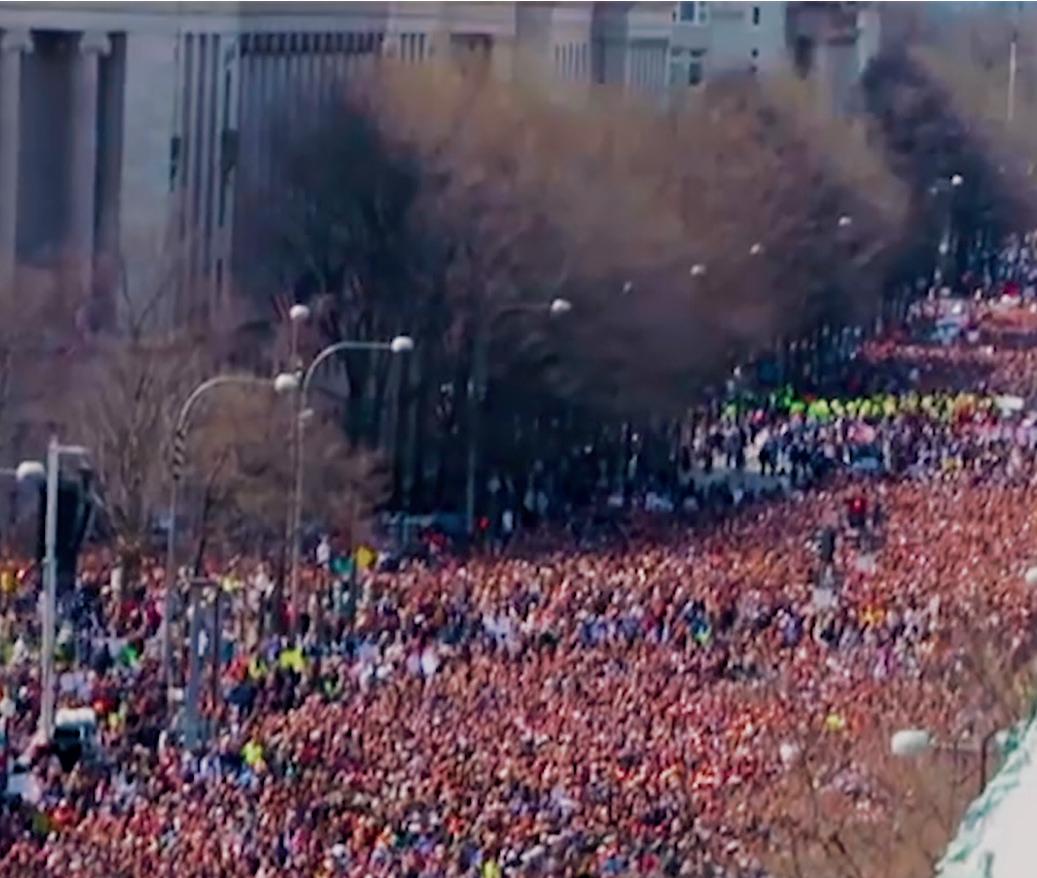
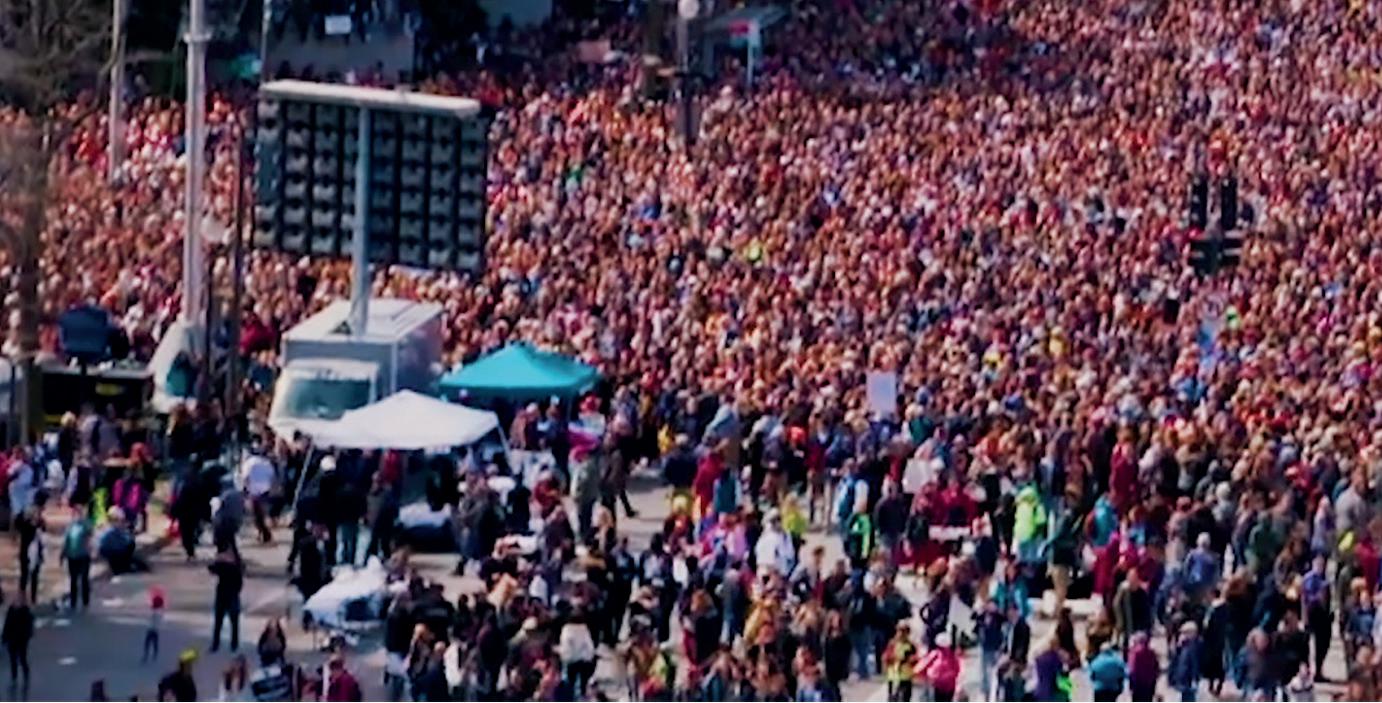
It is becoming increasingly clear that the march is going to be big. Celebrities like George Clooney, Oprah Winfrey or Stephen Spielberg make big donations, giving the idea even more publicity. Big companies are also supporting the march. Fashion company Gucci donates money and taxi company Lyft offers free rides for protesters. Matt: ‘When we announced the march, the March For Our Lives, we thought maybe a hundred people would turn up, if we were lucky. We didn’t care if ten or a hundred people would show up. We thought
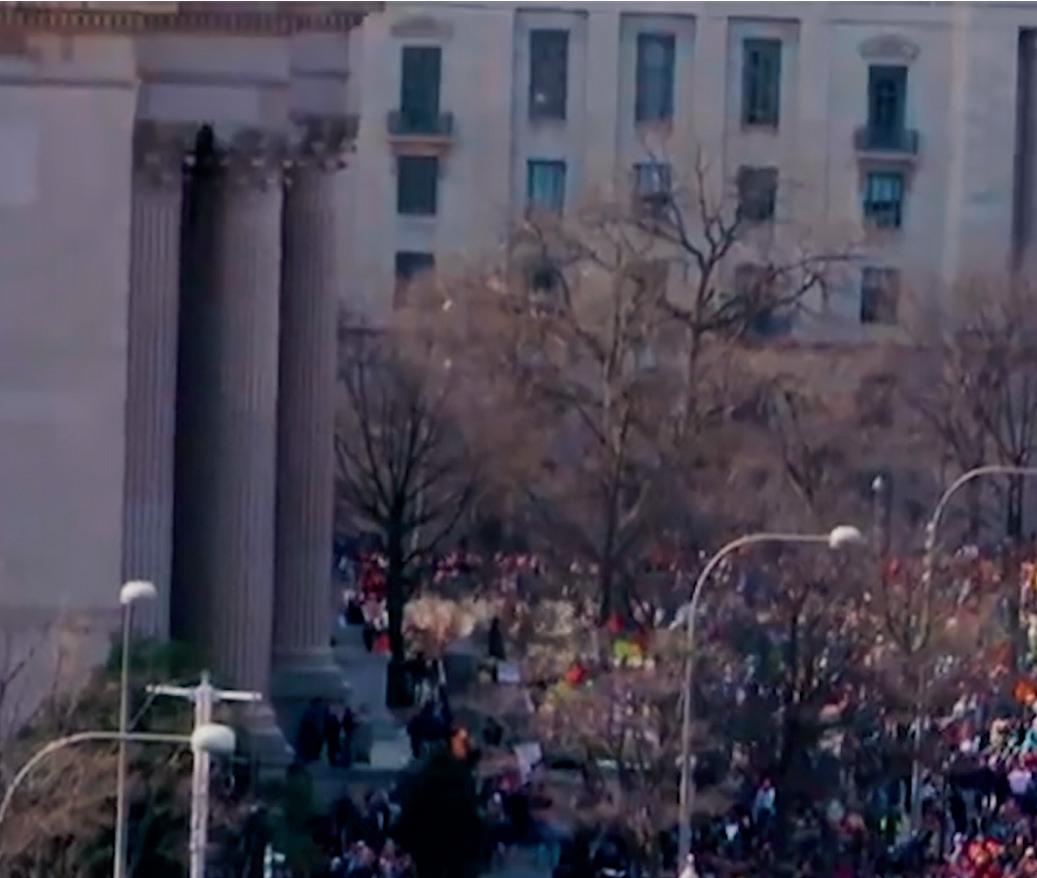
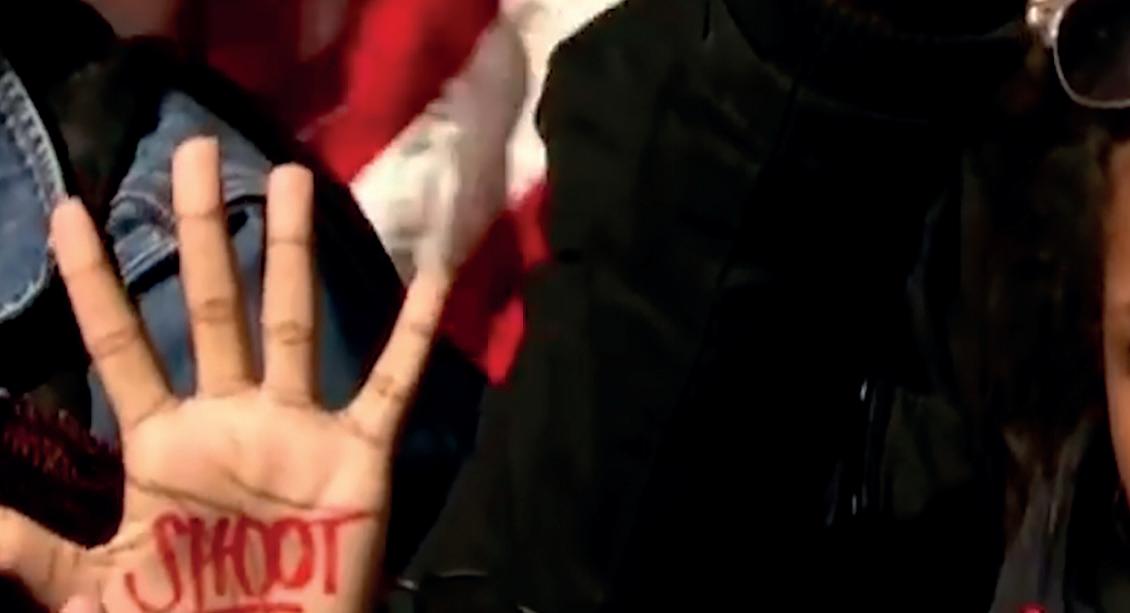
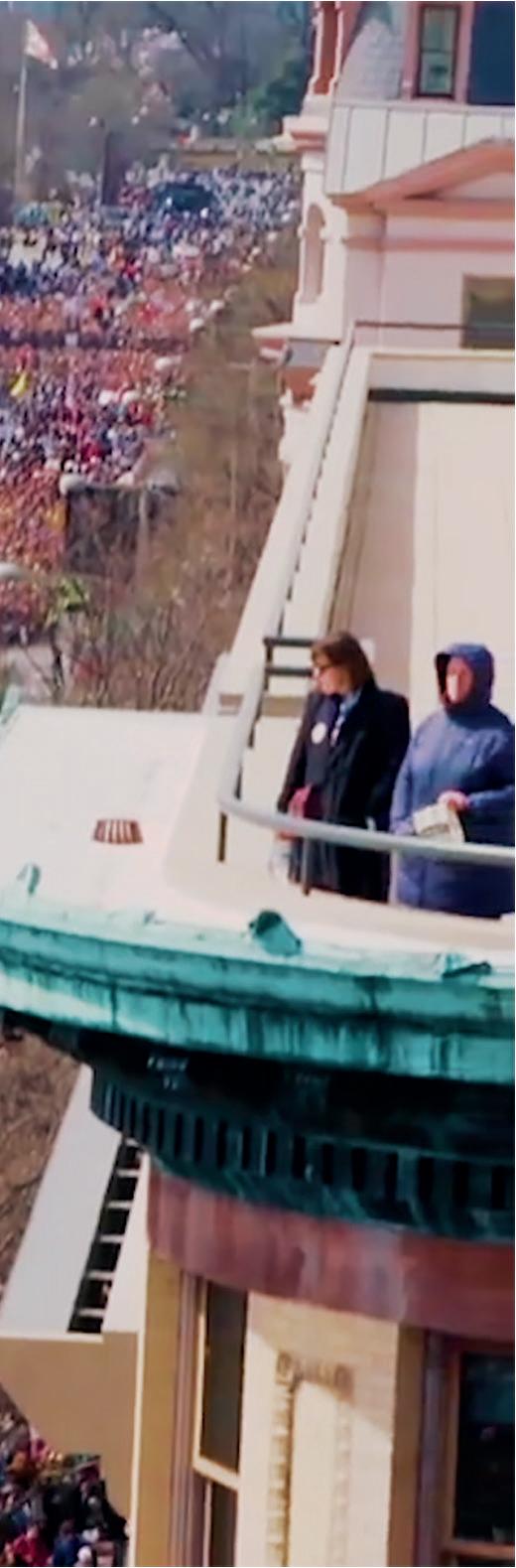
‘we are going to do this because it has to happen. We have to make demands.’’
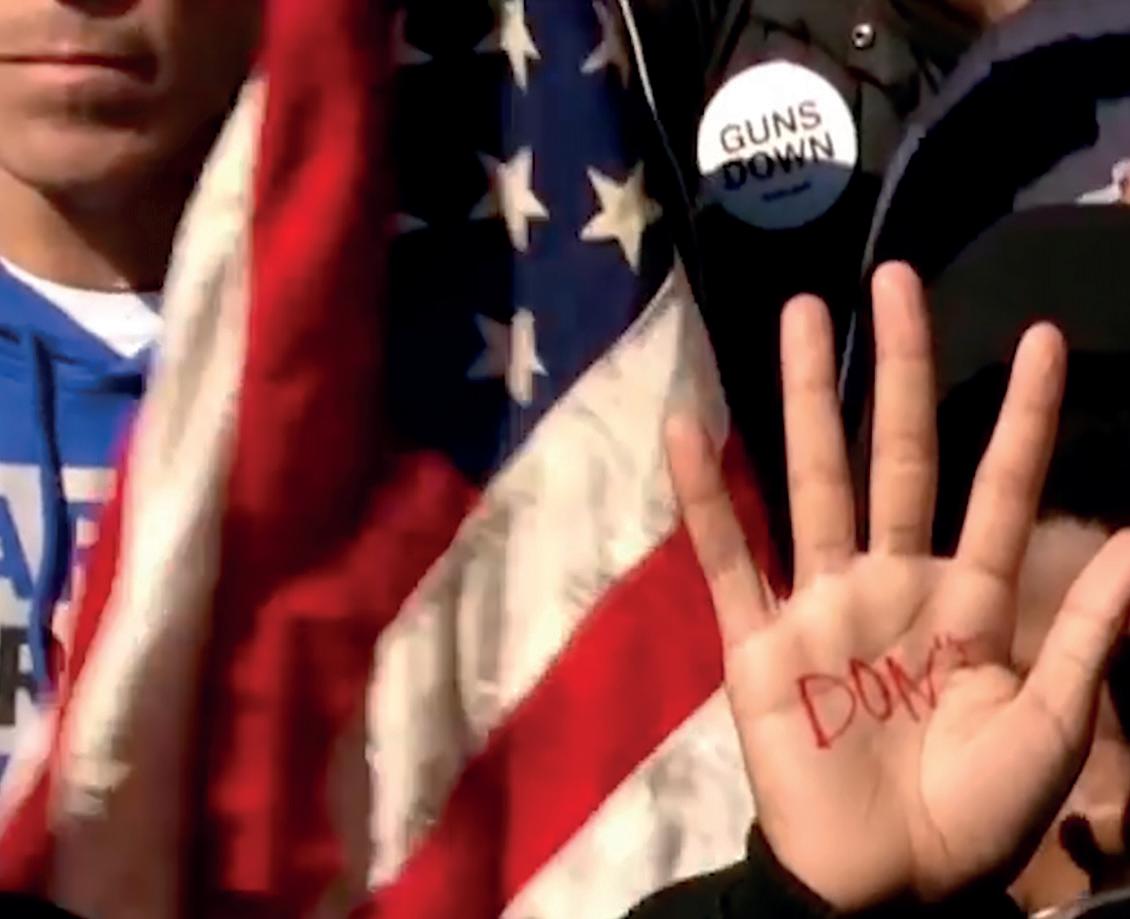
The march attracts far more than a hundred people. Besides Washington, marches are even taking place in several cities around the world, organised by local members of the March for our Lives.
X: ‘It was really insane. Due to time differences, marches on the other side of the world had started half a day earlier than the march in Washington. We saw people starting demonstrations in different places and we thought ‘oh my god, it’s starting.’ It is starting while we ourselves have not even started our march yet. This is going to be a full 24 hours of protest. Oh my gosh.’ There were as many as 800 sister events taking place all over the world, even in countries where there is no gun violence.’
Matt: ‘That was the most incredible thing, to see long lines of young people all over the world in action along with us.’
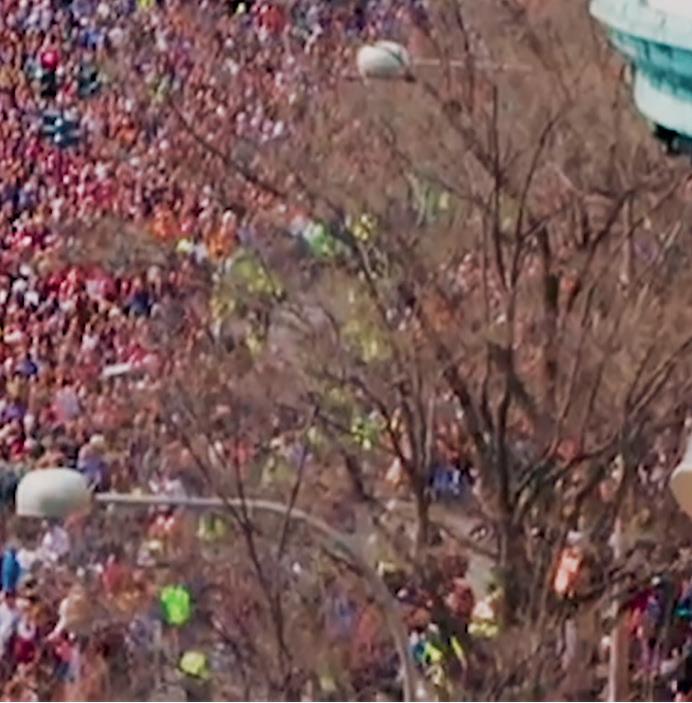
X: ‘In Washington, almost a million people attended the event, the highest number ever at a protest in Washington.’
Matt: ‘At the beginning of the day, I wanted to walk the route of the march. I think I walked maybe 15 or 16 blocks before I realised I had to go back. It wasn’t doable.’
X: ‘We thought, well, if we call it a march, then we should march too. But when everyone had arrived, there were so many people. There was just no room to move anywhere. So in the end, we didn’t even march.’
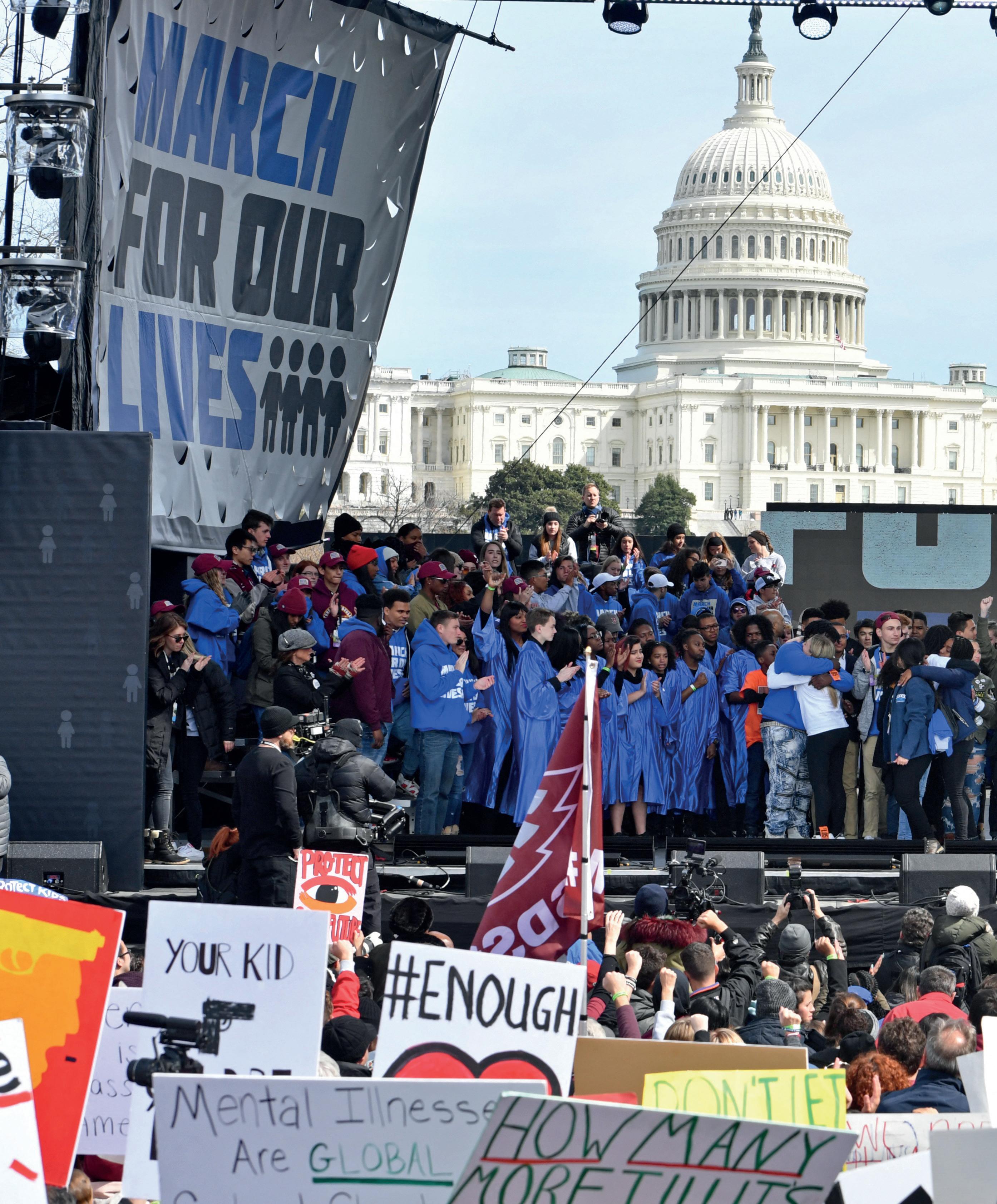
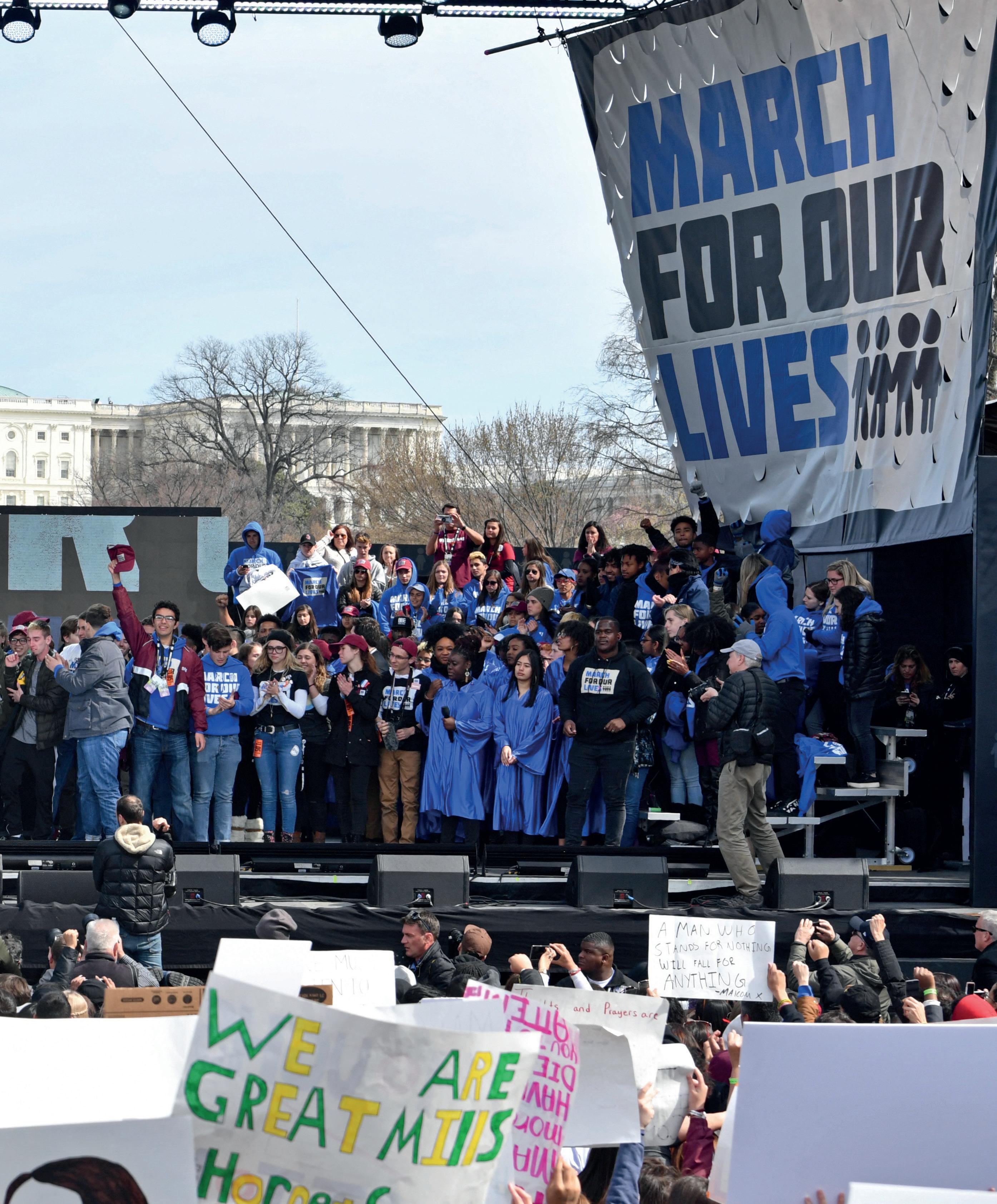
The overwhelming turnout made the march historic overnight. In the US alone, between 1.2 and 2 million young people participate in the marches in different cities across the country, while across the rest of the world, even more young people participate. By some estimates, the march is the largest protest ever to take place in a single day in Washington. For example, more people attended in comparison to the March on Washington, where Martin Luther King uttered the iconic words ‘I Have A Dream’ in 1963. In addition, the nationwide demonstration is one of the largest youth protests in the US since the Vietnam War and one of the largest protests in US history.
Speaking on the stage in Washington are only young people under the age of 20, who have various experiences of gun violence across the country. Among them are several students who survived the Parkland shoot-
ing. Also speaking is Yolanda Renee King, the nineyear-old granddaughter of Martin Luther King. As the last speaker, X gets to speak.
‘In the days before the march, I initially had no idea what to say. I was not afraid to speak, but to slip up. Yet I also knew it wouldn’t matter if I made a mistake. The energy was perfect. Everyone in the crowd had their hearts in the same place.’
Instead of words, it is the silence that makes the most impression during X’s speech. After mentioning all the names of the victims in Parkland, they fall silent for several minutes as tears roll down their face. The audience watches, beginning to clap once and shout slogans once, but X remains silent behind the microphone. Then an alarm clock goes off, indicating that X has now been on stage for as long as the Parkland shooting lasted.
‘Since the moment I stepped on stage, six minutes and 20 seconds have now passed,’ X says, turning off the alarm. ‘The shooter has ceased shooting and will soon abandon his rifle. Blend in with the students as they escape and walk free for an hour before arrest. Fight for your lives before it’s someone else’s job.’
The march is a success. The whole world is outraged about gun violence and all the thousands of young people who are done with it and made themselves heard. The organisers held a small celebration. “We were so
proud of what we had achieved. But we also didn’t feel like we were done yet,’ says X. ’It felt like we had made a really good start, But we knew that gun violence in the United States is such a big issue, it can’t be solved overnight. We knew we couldn’t just take all guns away from the hands of every American who owned them. That was not our goal either.’
Shortly after the march, therefore, a group of March For Our Lives organisers embark on a bus tour across the country. They are campaigning against guns and calling on young people to use their right to vote so that new laws can impose restrictions on gun ownership.
‘We went to strategic places around the country where we knew there were elections where politicians were supported by the NRA. They were often taking on young politicians who wanted to make the world a better place. We gave these young, enthusiastic politicians attention and funds. Thus, we got some politicians supported by the NRA off their positions. We also inspired many young people to stand for election or vote. There
were so many difficult conversations, but everywhere we went, you could see that we were really making a difference. People came up to us to tell us how inspiring they found what we had done.’
The young people of March for our Lives are visibly influencing politics. In Florida, there is a new law, the Marjory Stoneman Douglas High School Public Safety Act. On 9 March, even before the march took place in Washington, it was signed by the state’s governor. Among other things, the law raises the minimum age for young people in Florida to buy a gun from 18 to 21. ‘That was very surprising. There had never been a gun law passed in Florida that the NRA didn’t want. But that summer we managed to change the direction the gun laws policy was going. It was so shocking and amazing,’ said X.
Over the summer, dozens of laws are passed in different states that make gun laws stricter. There is also a particularly high participation of young people in US
‘We are going to be the kids you read about in textbooks. Not because we're going to be another statistic about mass shooting in America, but because we are going to be the last mass shooting.’ MARCH
for Our Lives congressional elections in 2018. About a third of young people vote, 10 per cent more than in the 2014 election.
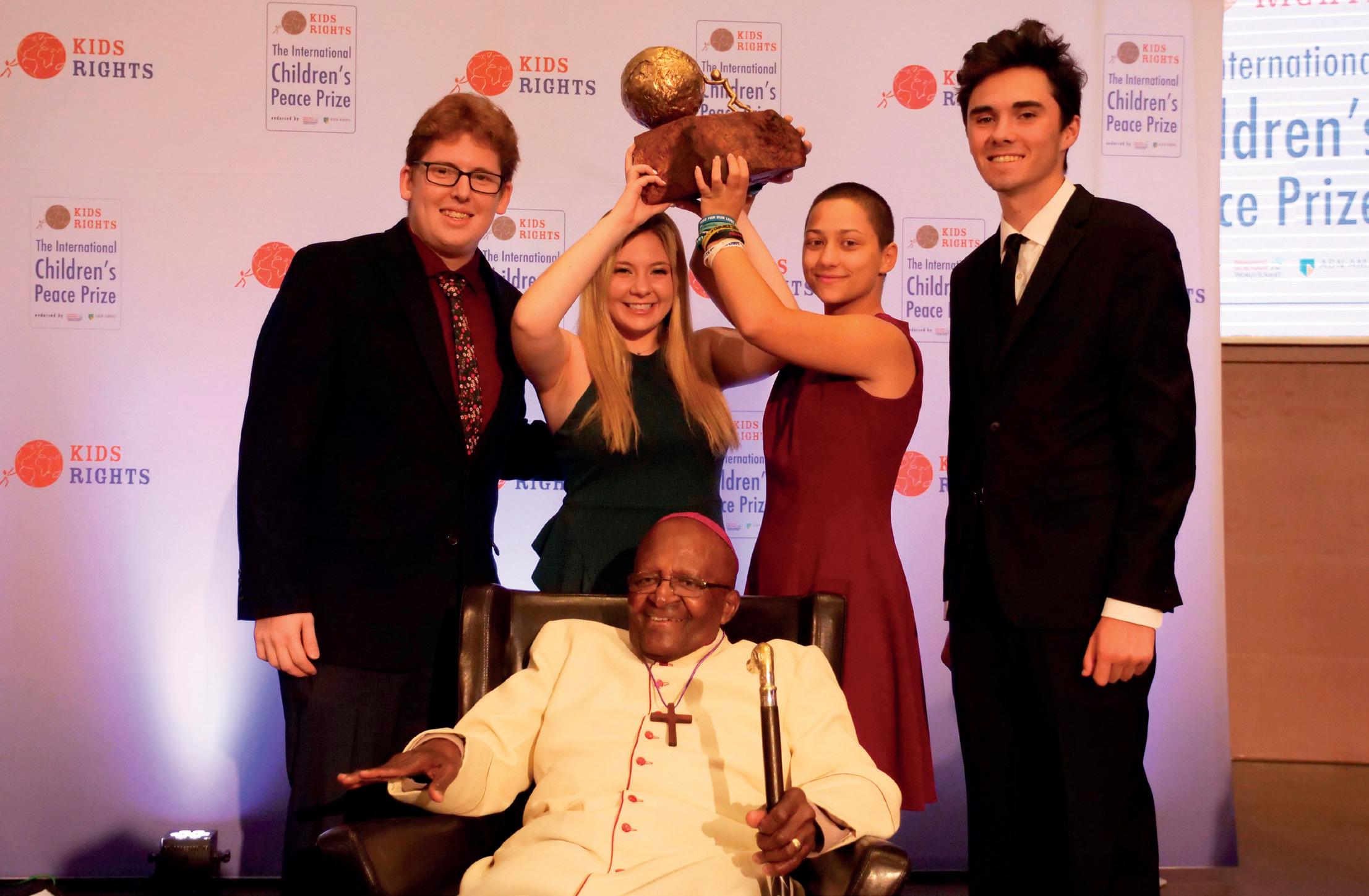
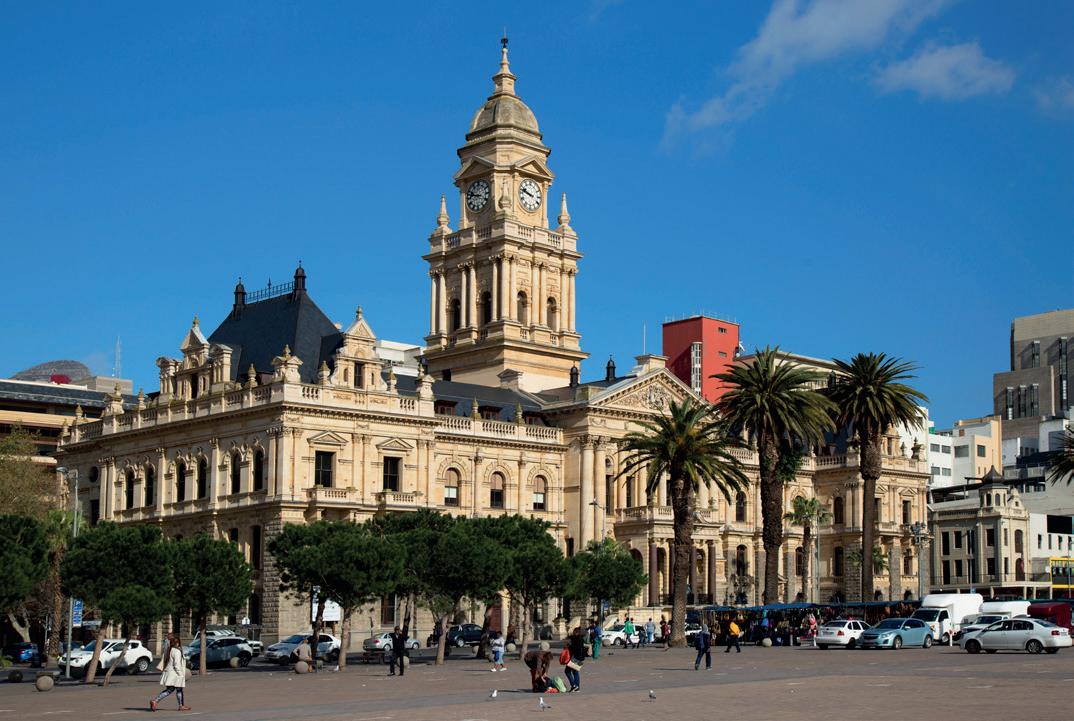
For their work in fighting gun violence, and building a global youth movement, the initiators of the March For Our Lives win the 2018 International Children’s Peace Prize. As a special tribute to emeritus Archbishop Desmond Tutu, the ceremony is in Cape Town, South Africa, where the Nobel laureate and patron of Kidsrights lives. The ceremony takes place at the historic City Hall, the city’s former town hall. It is the building where Tutu led Nelson Mandela onto the balcony in 1990 and Mandela gave his first speech after his 27 years in captivity, just before being elected South Africa’s first black president. At the award ceremony, Tutu equated the movement launched by American youth with the greatest peace movements in history. ‘I am very impressed by these children, whose powerful message is reinforced by their youthful energy and un-
wavering belief that children can - no, must - improve their own future,’ he said. Tutu presents the Nkosi to David Hogg, Jaclyn Corin, Matt Deitsch and X Gonzalez, who accept the award on behalf of all the initiators of the March For Our Lives.
Also present at the ceremony is a life-size statue of Joachim Oliver, one of the students who did not survive the Parkland shooting. In this way, the deceased students are still represented at the ceremony. ‘I won’t soon forget that,’ says Matt, ’To share that moment with him. It felt like we had done everything not for ourselves, but for them. I did everything for all the people we had lost.’
For many of the young people present from March for Our Lives, the trip to South Africa is the first time they have left the US. ‘I don’t know where to start if I want to share what I learned in the 48 hours I was there,’ says X. ‘To receive the statue from Tutu’s hands and to be in the same building where Nelson Mandela once was. I felt so many overwhelming emotions, that I can’t even name them. But they were overwhelming in a good way. It felt like we were part of all the activists before
us. Winning the Children’s Peace Prize gave the organisation international legitimacy.’
‘The award ceremony also made us finally reflect on how far we had come,’ says Matt. ’At the time, I was working about 110 hours a week. The bus tour was 63 days long, during which time we visited 100 cities. The march itself was six weeks without sleep. We could finally pause, look back and receive compliments. These felt like an embrace. I cried a lot during the trip.’
Besides inspiring meetings with Desmond Tutu and his family, who were also present, the 2018 winners also met Children’s Peace Prize winners from previous years.
‘It was so inspiring to meet young people like us who have been taking action even longer than us. It made me realise how grateful I was that we were active as a group. Many of them had to struggle alone for their goals. I wished I could help them more, that I could go back in time to help them,’ says X. On the flight back home, X happens to sit next to Neha Gupta. Canada’s 2014 Children’s Peace Prize winner. ‘We talked for the full eight-hour flight. We had so much in common and joked and laughed so much. By the time the plane landed, we were best friends. I miss her.’
Six years after the launch of March For Our Lives, young people from the organisation are still actively protesting and lobbying against gun violence. More than 300 laws have already been passed in several US states on gun safety. In addition, many large companies have severed their ties with the NRA and many politicians with ties to the NRA have not been re-elected. More young people vote in every election, partly due to campaigns by the organisation. Since 2023, there has been an Office of Gun Violence Prevention in the White House. Meanwhile, the organisation is largely led by young people from all over the US and not just Parkland anymore. After the bus tour of the US in 2018 and the tough period during the organisation of the march, many of the organisation’s original founders are weary. ‘Myself and many of the original 30 people then decided to step down from the organisation,‘ says X. “We thought that was a lot, it is now time to rest and study. In fact, many of us were in our final year and had to choose whether to study or concentrate on the organisation. Most chose to study. One of the few who took a gap year to continue working on March For Our Lives is David. He stayed the longest of all the original students to make sure the organisation ended up in good, trustworthy hands. I am forever grateful to him for that.’ X studied at the New College of Florida, where they could put together their own programme of courses. ‘I want-
ed to study activism, so I chose all subjects related to how the world works. For example, I learned how emotions and experiences play a big role in activism, and that many of the things I have done in the past were not always the best ways to be an activist.’
After finishing college and making up for missed time with their parents, X is trying to put this new knowledge to use. ‘I am now looking at ways to encourage people during and in the run-up to elections to be active in their communities and come out to vote. I think too many people now have a kind of apathetic feeling, so they don’t vote.’
Matt decides after the bus tour and winning the award that he wants to focus more on the international dynamics of gun violence. ‘I thought focusing on just the US was a dead end, because a lot of gun violence is funded by the international military machine. For example, organisations like NATO have contracts that require countries to put money into the military.’
He works with several international organisations, such as Kidsrights’ State of Youth and Amnesty International’s Youth Task Force. He also becomes a member of politician Bernie Sanders’ campaign team and, after he fails to win the election, decides to learn more about activism at university.
‘Now I am again an organiser with all kinds of different organisations promoting democracy. For example, organisations that stand up for workers’ rights or children’s rights. I no longer focus on one problem, because you cannot solve one problem at a time. All problems are connected, therefore you have to tackle them all together.’
And the rest of the initiators from Parkland? Did they also remain activists? ‘Many of them I didn’t really speak to anymore,’ says X. ’I am still in touch with maybe five or six of them. We didn’t really know each
other well in school and were in touch mainly because we were busy organising. When we stepped down from that, there wasn’t much reason to talk to each other.’
‘I think the energy and motivation I saw in all my fellow students never goes away. Once that is in your soul, it stays there. You don’t suddenly become a Wallstreet businessman when you have started on this path. It is part of who you are.’
WHO: Initiators of the March For Our Lives
STAND UP FOR: Stricter gun laws to stop unnecessary gun violence.
CHANGEMAKER: Fight for stricter gun laws to stop unnecessary gun violence and motivate young people to vote to help bring about change.
LIKES:Most in the group love dance, theatre, music and going to concerts.
INSPIRATION: Martin Luther King, Malcolm X, Angela Davis, Desmond Tutu
STUDIES: Activism (X), Film and subjects on how to bengt change (Matt), History (David), Public Administration (Jaclyn). The rest of the group is diverse.
IN 10 YEARS: Will hopefully no longer need the existence of March For Our Lives because gun violence will hopefully no longer be an issue
MESSAGE TO CHILDREN: ‘The best thing you can do is learn as much as you can. But, you can never know everything, so never pretend to know everything. That way, you can see what is going wrong with problems and it is your job to speak up so that things can change. So many problems also already have solutions. It is up to us to apply them.’
Sofie Whitney
Sarah Chadwick
Sam Deitsch
Ryan Servaites
Ryan Deitsch
Matt Deitsch
Lauren Hogg
Kirsten McConnell
Kevin Trejos
Kaylyn Pipitone
John Barnitt
Daniel Williams
David Hogg
Delaney Tarr
Diego Pfeiffer
Dylan Baierlein
X González
Jaclyn Corin
Jammal Lemy
Brendan Duff
Alfonso Calderon
Bradley Thornton
Adam Alhanti
Cameron Kasky
Alex Wind
Charlie Mirky
Chris Grady
Daniel Duff