Malala Yousafzai 2013
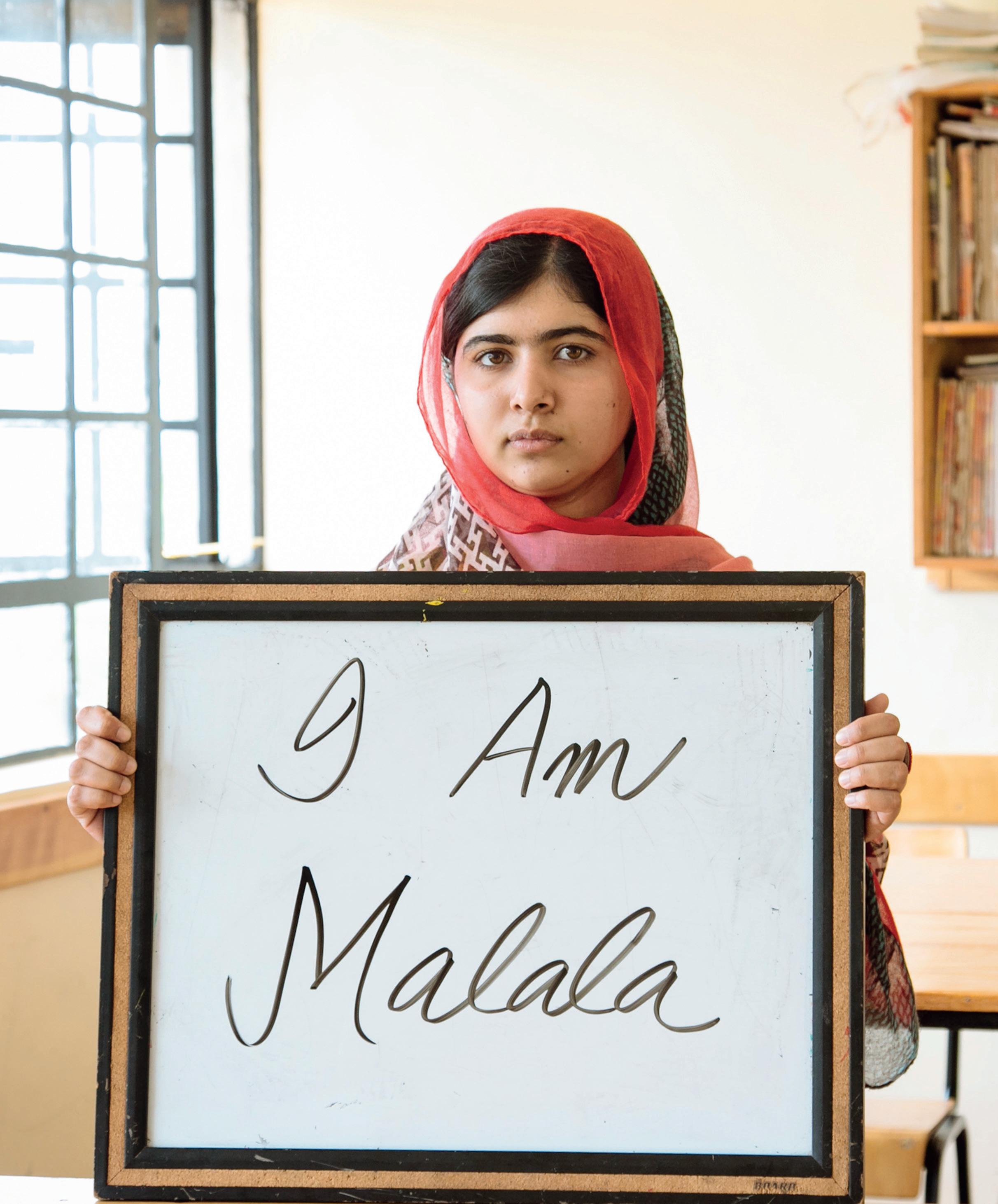
Malala
Yousafzai



“They cannot stop me, I will get my education. If it is at home, school or any place.” Malala Yousafzai made these remarks in Mingora, Pakistan when she was eleven years old. They characterize her determination, her passion for education and her strong sense of justice, and are at the core of her social activism, which has made her world famous. “I want to live in a world where education is valued in every corner of the world and no one is excluded. The challenges are enormous, but at the heart of the solution is one simple thing: the right of every girl to be educated.” She speaks these words when she is sixteen in The Hague, where she receives the International Children’s Peace Prize. That same passion and sense of justice are still very much present. Only five years have passed, but she has experienced enough to last a lifetime.”
Malala is the most famous Children’s Peace Prize Winner to date. Children and adults all over the world know her, especially girls. What does that mean to her? In the midst of the circus of her life, she remains calm and determined in her campaign, as she calls it. “I’m doing well,” is the first thing she tells me. “I go to school in Birmingham. I missed quite a few classes because of all the interviews, travels and my work for the Malala Foundation, all of which caused my results to suffer. But now I want to completely focus on my studies, because I have exams this year. Education is important for everybody, for every child, including myself,” she laughs. “I have this big dream and ambition to help my country, Pakistan; I want to focus on education, not just in my country, but elsewhere as well. Around the world 57 million children can’t go to school, 32 million of which are girls; that has to change.
Malala is giving the interview in the central library in Birmingham, which she ceremoniously opened a year previously. She has decided to no longer conduct interviews at home, because it disrupted family life too much.
It illustrates how busy her life has become now that she is a world famous social activist. Every day she receives numerous requests to give talks or to appear on television programs. There aren’t many people in the world who haven’t heard about the dramatic attempt on her life on 9 October in 2012. As a result of the attempt, she moved to Birmingham, and no longer lives in Mingora, Pakistan. And why? Simply because she wants all girls in her country to go to school. It is their basic right and she keeps fighting for it, relentlessly and passionately.
“I don’t think about the attack very often, I can’t remember it anyway. I do get flashbacks sometimes; they come out of nowhere. And I’m reminded about it every time I look in the mirror,” Malala says calmly. “I survived, and the way I see it, Allah (God) has given me a second life to continue my struggle.”
Her life changed dramatically since the attack, which, miraculously, she survives. The bullet goes through her left eye socket into her shoulder and narrowly misses her brain. Doctors in Pakistan and later in Birmingham help her recover. She spends two and a half months in hospital and undergoes surgery. A part of her skull is replaced with an implanted titanium plate and she gets a hearing aid in her left ear.
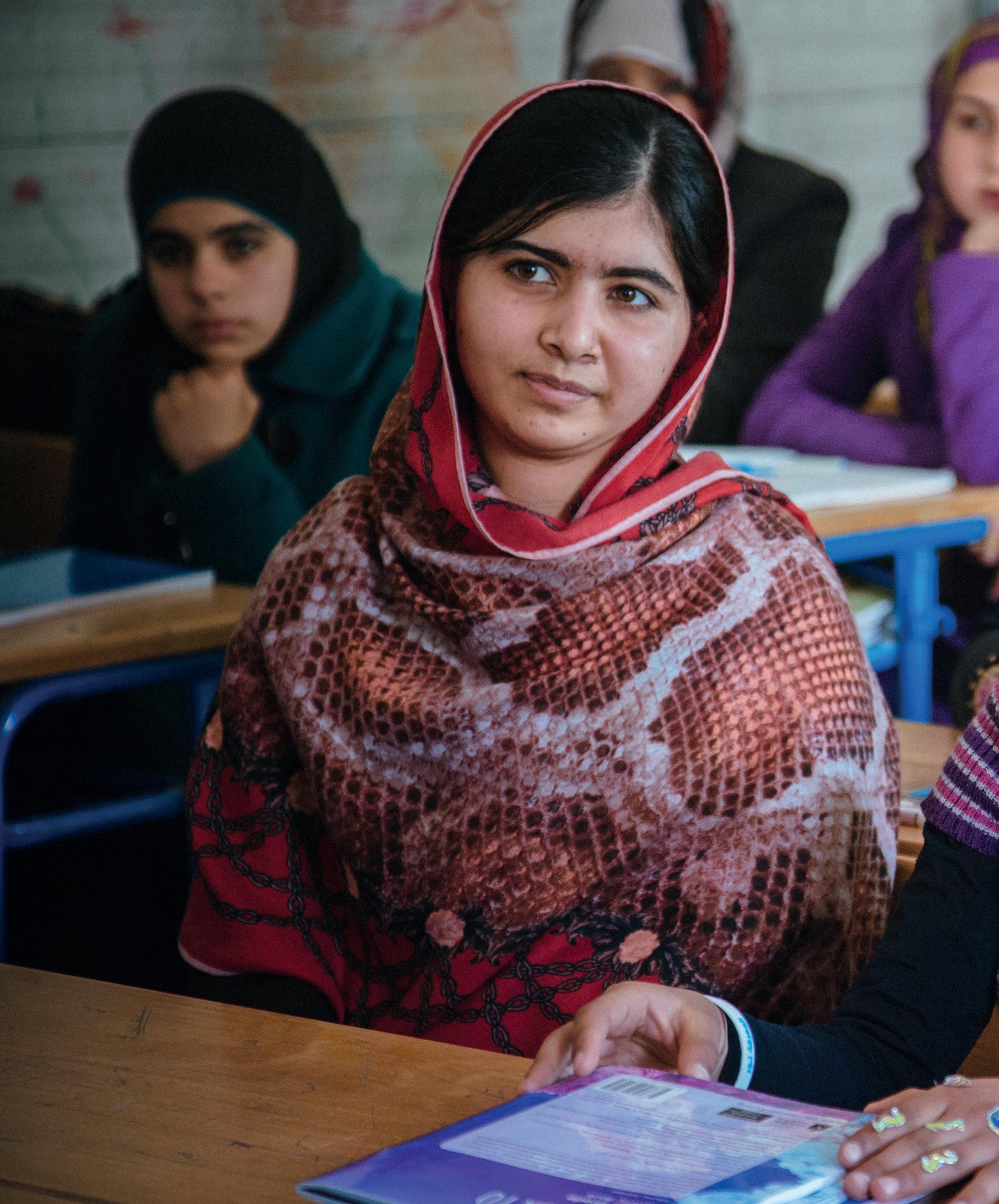
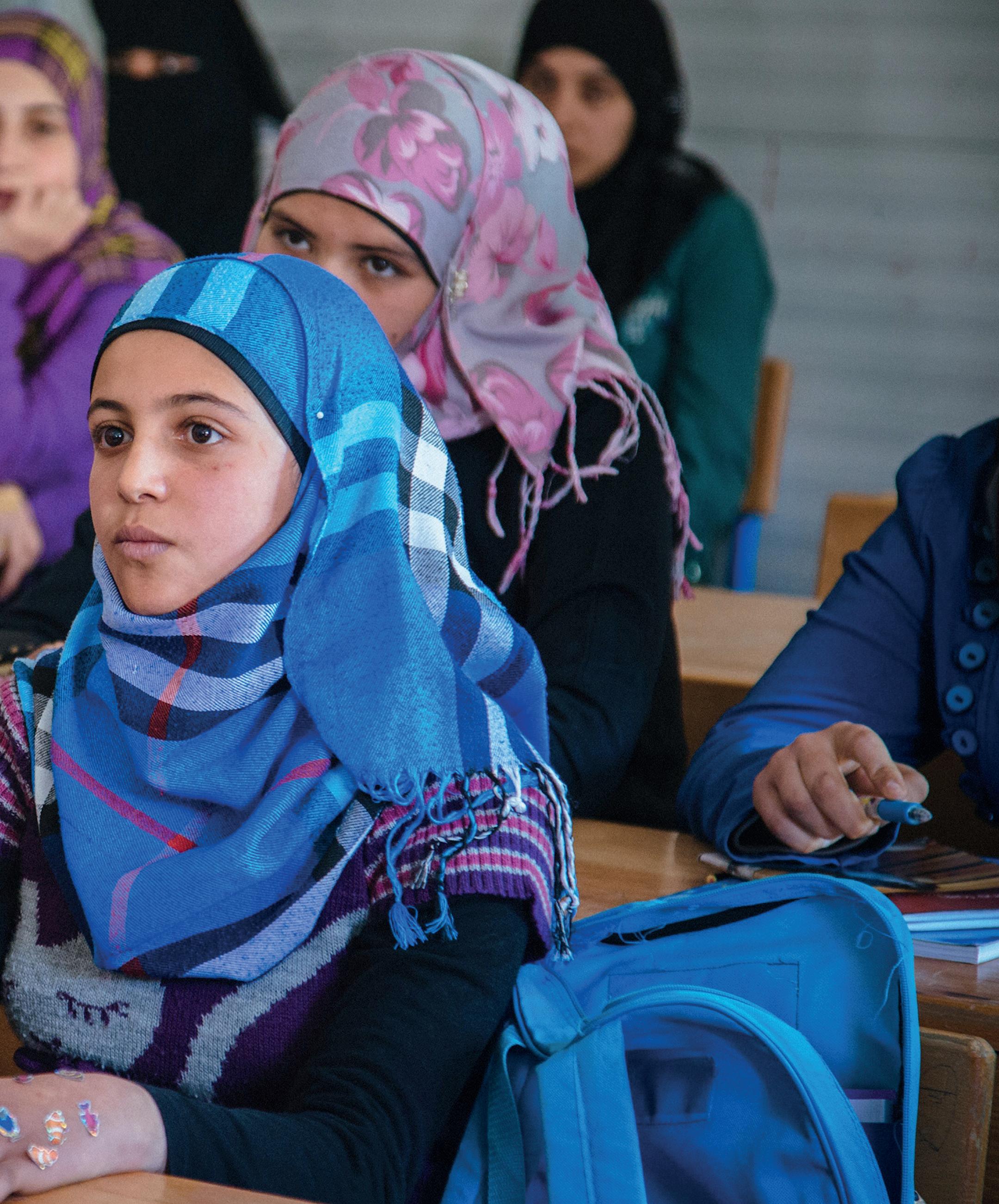
After months of recovery she is doing so well, that she can do what she loves most; go to school. It’s just in another country, another city and another school.
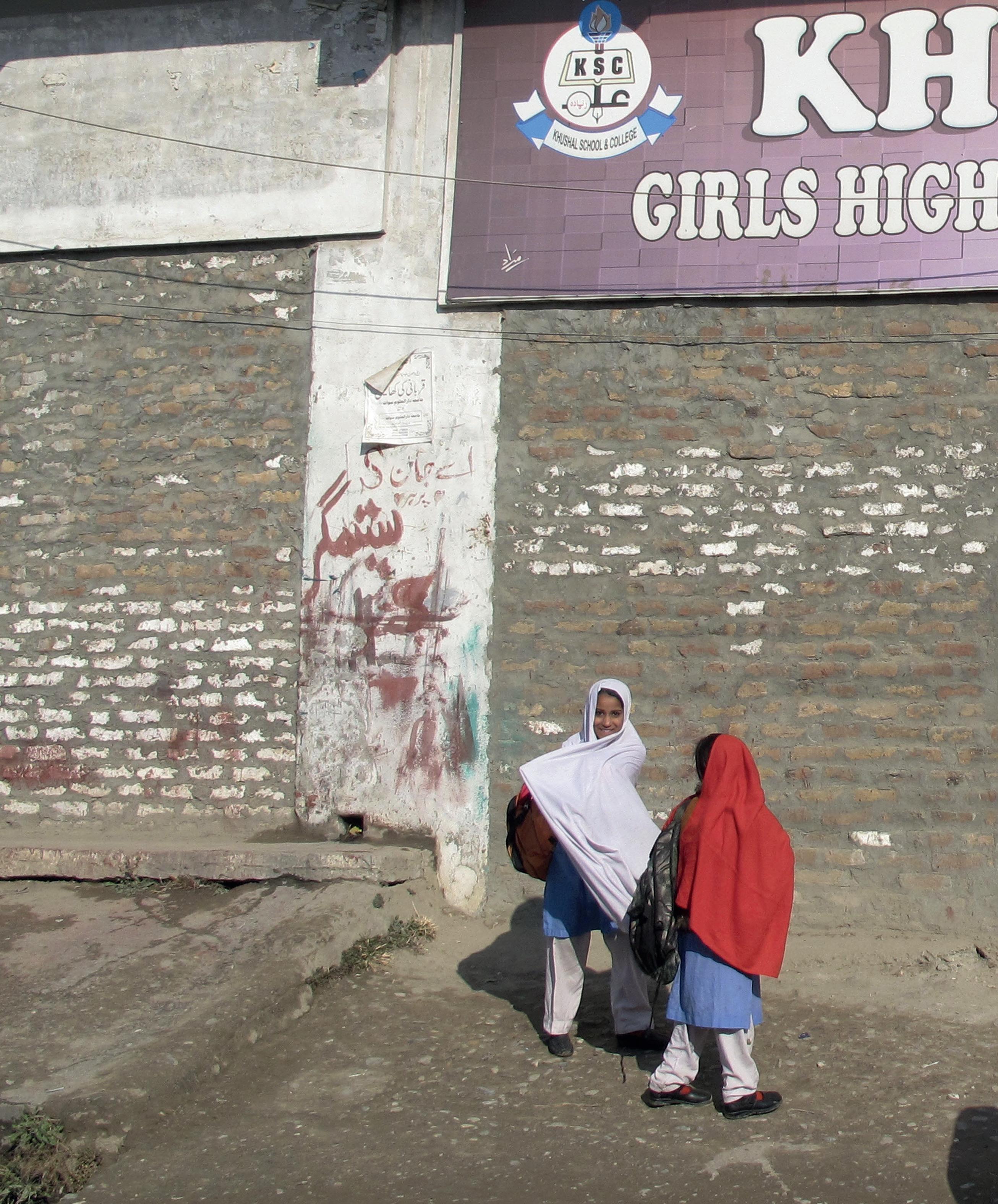
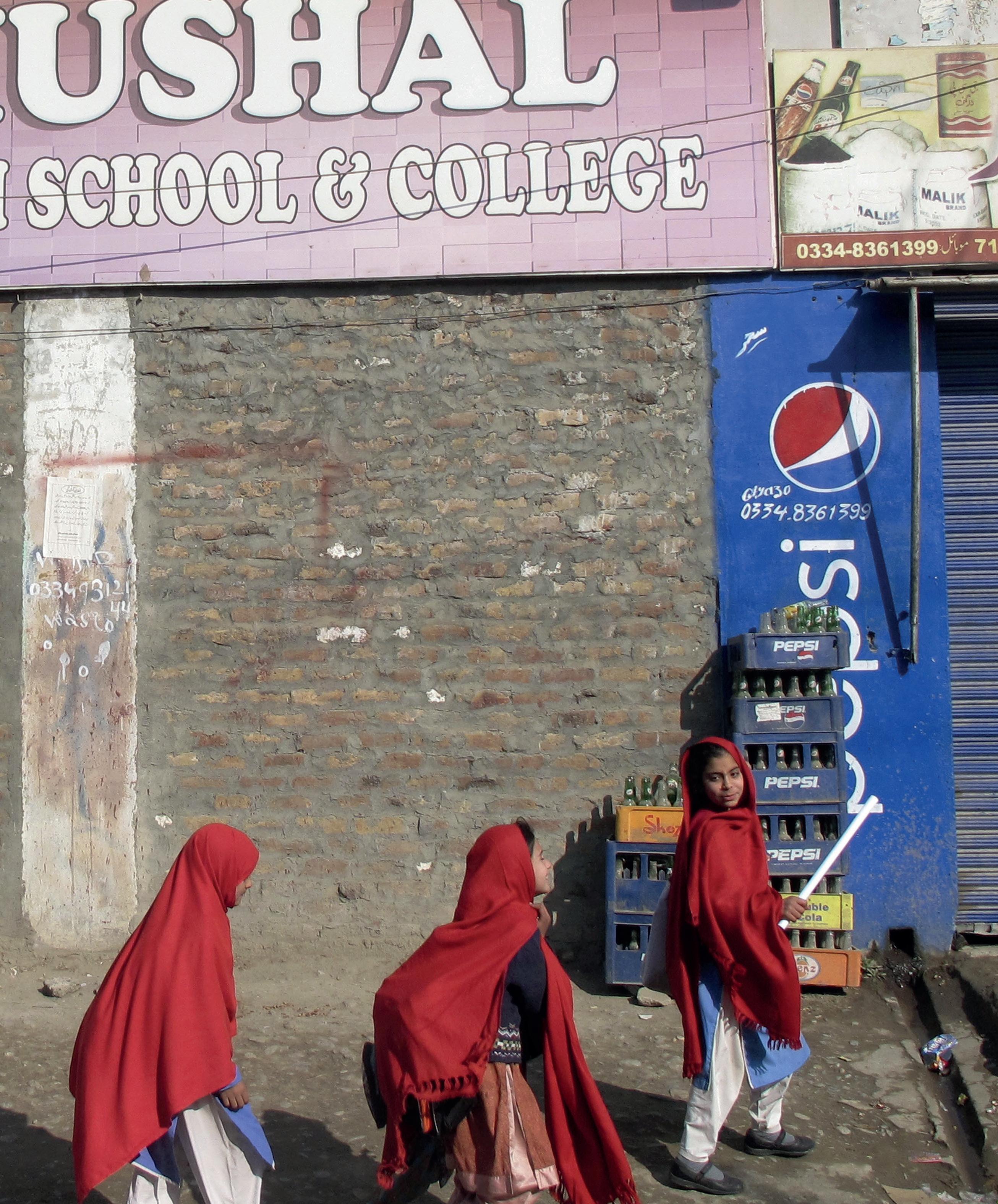
Malala grew up in Mingora, a city in northern Pakistan. She describes her Swat Valley as a heavenly realm of mountains, waterfalls and crystal clear lakes. Her family is of Pashtun ethnicity. They are a hospitable and proud people, but they are traditional too. In their culture, girls don’t usually go to secondary school. Her father, Ziauddin has other ideas. He believes that girls, in particular his daughter, should go to school and be educated. He has realized his dream of starting a secondary school for both boys and girls. Malala attends her father’s Kushal School and is one of the best students in her class. Her brothers attend the same school. Mother Tor Pekai has never been to school.
“I was just one target for their bullets, there are many others, whose names I don’t know. It is for them that we must continue our campaign to ensure that all children al around the world have the chance, have the access, have the right to go to school.”
MALALA YOUSAFZAI
The family leads a relatively normal life, until the political climate changes. After 2007, Swat is in the grip of radical Muslims who form an MMA-government, and gradually the situation becomes grim. Televisions and CDs are banned because they are haram, in violation with Islamic law. Women are no longer allowed to go to the bazaar, and their freedoms are restricted. A ‘moral’ police is established to check if people are abiding by the rules. Anyone who disagrees with them is publicly flogged or executed. The men with beards, led by Mullah Fazlullah, sow fear. They don’t want girls to go to school and blow up 150 schools in 2008 alone. These are frightening times for Malala and her family, though it also marks the birth of her activism.
“My friends and I did not understand what was so wrong about going to school. My father said the Taliban are afraid of pens,” Malala says indignantly. “He organized a march for peace at school and encouraged us to speak out about what’s going on. We were interviewed with a few other pupils. My father encouraged me, and said, ‘You are a child and you have the right to make yourself heard.’ That is how I ended up on a talk show of BBC Urdu. I was nervous, because I knew all of Pakistan could
- 5 JANUARY 2009
“I WAS GETTING READY FOR SCHOOL AND ABOUT TO WEAR MY UNIFORM WHEN I REMEMBERED THAT OUR PRINCIPAL HAD TOLD US NOT TO WEAR UNIFORMS AND COME TO SCHOOL WEARING NORMAL CLOTHES INSTEAD.”
“SO I DECIDED TO WEAR MY FAVOURITE PINK DRESS. OTHER GIRLS IN SCHOOL WERE ALSO WEARING COLOURFUL DRESSES. DURING THE MORNING ASSEMBLY WE WERE TOLD NOT TO WEAR COLOURFUL CLOTHES AS THE TALIBAN WOULD OBJECT TO IT.”
- 14 JANUARY 2009
“I WAS IN A BAD MOOD WHILE GOING TO SCHOOL BECAUSE WINTER VACATIONS ARE STARTING FROM TOMORROW. THE PRINCIPAL ANNOUNCED THE VACATIONS BUT DID NOT MENTION THE DATE THE SCHOOL WAS TO REOPEN.”
“THE GIRLS WERE NOT TOO EXCITED ABOUT VACATIONS BECAUSE THEY KNEW IF THE TALIBAN IMPLEMENTED THEIR EDICT [BANNING GIRLS’ EDUCATION] THEY WOULD NOT BE ABLE TO COME TO SCHOOL AGAIN. I AM OF THE VIEW THAT THE SCHOOL WILL ONE DAY REOPEN BUT WHILE LEAVING I LOOKED AT THE BUILDING AS IF I WOULD NOT COME HERE AGAIN.”
- 15 JANUARY 2009
“THE NIGHT WAS FILLED WITH THE NOISE OF ARTILLERY FIRE AND I WOKE UP THREE TIMES. BUT SINCE THERE WAS NO SCHOOL I GOT UP LATER AT 10AM. AFTERWARDS, MY FRIEND CAME OVER AND WE DISCUSSED OUR HOMEWORK. TODAY IS THE LAST DAY BEFORE THE TALIBAN’S EDICT COMES INTO EFFECT, AND MY FRIEND WAS DISCUSSING HOMEWORK AS IF NOTHING OUT OF THE ORDINARY HAD HAPPENED.”
“TODAY, I ALSO READ MY DIARY WRITTEN FOR THE BBC IN URDU. MY MOTHER LIKED MY PEN NAME GUL MAKAI. I ALSO LIKE THE NAME BECAUSE MY REAL NAME MEANS ‘GRIEF STRICKEN’.”
hear me, but I plucked up my courage and said: ‘How dare the Taliban deprive me of my fundamental right to education?’ People congratulated me afterwards and my father told me I should go into politics.”
When Malala is given the opportunity to write a blog on the BBC Urdu website, her entries get a lot of attention. With the help of journalist Abdul Hai Kakar, she writes under the pseudonym Gul Makai (Cornflower, who is a heroine in a Pashtun folk tale) about everyday life and the terror of the Taliban. “He told me about the diary of Anne Frank, the Jewish girl who went into hiding with her family in Amsterdam during the Second World War. That inspired me. I was eleven years old and wrote a lot about school, for example about the day I was no longer allowed to wear my much-adored school uniform and colourful dresses.” Newspapers start to quote her stories and more people read her blog. Happy with these developments she becomes aware of the power of the printed word. Her father Ziauddin is aware of the dangerous situation: “Yes, of course it was a risk, but I believe that not speaking out is a greater risk, because that would mean surrendering to slavery and terrorism.” Around this time, the New York Times asks her father to help make a documentary for their website, to show the world what’s happening in Pakistan. Eventually Malala is the main focus and she is followed on her last day at school before it closes on 15 January 2009. It marks the end of Ziauddin’s dream. Fourteen years of hard work and idealism are literally locked away. The city becomes a war zone.
A month later the ban is lifted and the girls are allowed back to school, as long as they wear a burka. But the situation in Swat continues to be dangerous. After looking the other way for a long time, the Pakistan government and the army finally take action seven months later in July 2009. The army announces they have driven out the Taliban. But Falullah and his men have entrenched themselves in the mountains and resume their actions. Malala and her father continue to speak out for the right to education and make regular news appearances. In recognition of her bravely writing the blog and speaking out for education, Malala is nominated for the International Children’s Peace Prize in October 2011. She vividly remembers how happy she was. “I thought it was a great honour. Suddenly I received international attention, people from the other side of the planet
supported us. It was amazing. And the responses in our country were huge. People were honoured, and proud of me.”
Ziauddin is disappointed when Malala does not win: “I was convinced she would win, every father naturally thinks his child is the best, but Malala did not believe that. She thought Chaeli was the right winner and she was the first one to congratulate her when she won on 21 November 2011. The nomination was big news in our country. Malala became a symbol of resistance against the Taliban.” Prime minister Yusuf Raza Gilani thinks it’s a pity that Malala did not win either. Three days later he awards her the newly established Youth Peace Prize, which is renamed the ‘Malala Prize’.
“The KidsRights Prize opened many doors,” Ziauddin continues. “Up to then we had some say in what the media wrote about us, but now that was over. It became a huge media-hype in Pakistan. She received many requests for speaking engagements and people wanted their picture taken with her.” All the attention is good for the cause, but makes the situation more dangerous for Malala and her family. One day the Pakistani journalist Shehla Anjum visits the family Yousafzai. She lives in Alaska en saw the New York Times documentary. “She told my father the Taliban had made a death threat aimed at me and showed it to us on the computer,” Malala says. “I wasn’t worried then, but my parents were. It was strange, we always thought my father would be at risk and now the focus shifted to me, a child. I did start locking the big gate to our house at night. It was weird. We’d been safe when the Taliban were in Swat, but once they left we were no longer safe.”
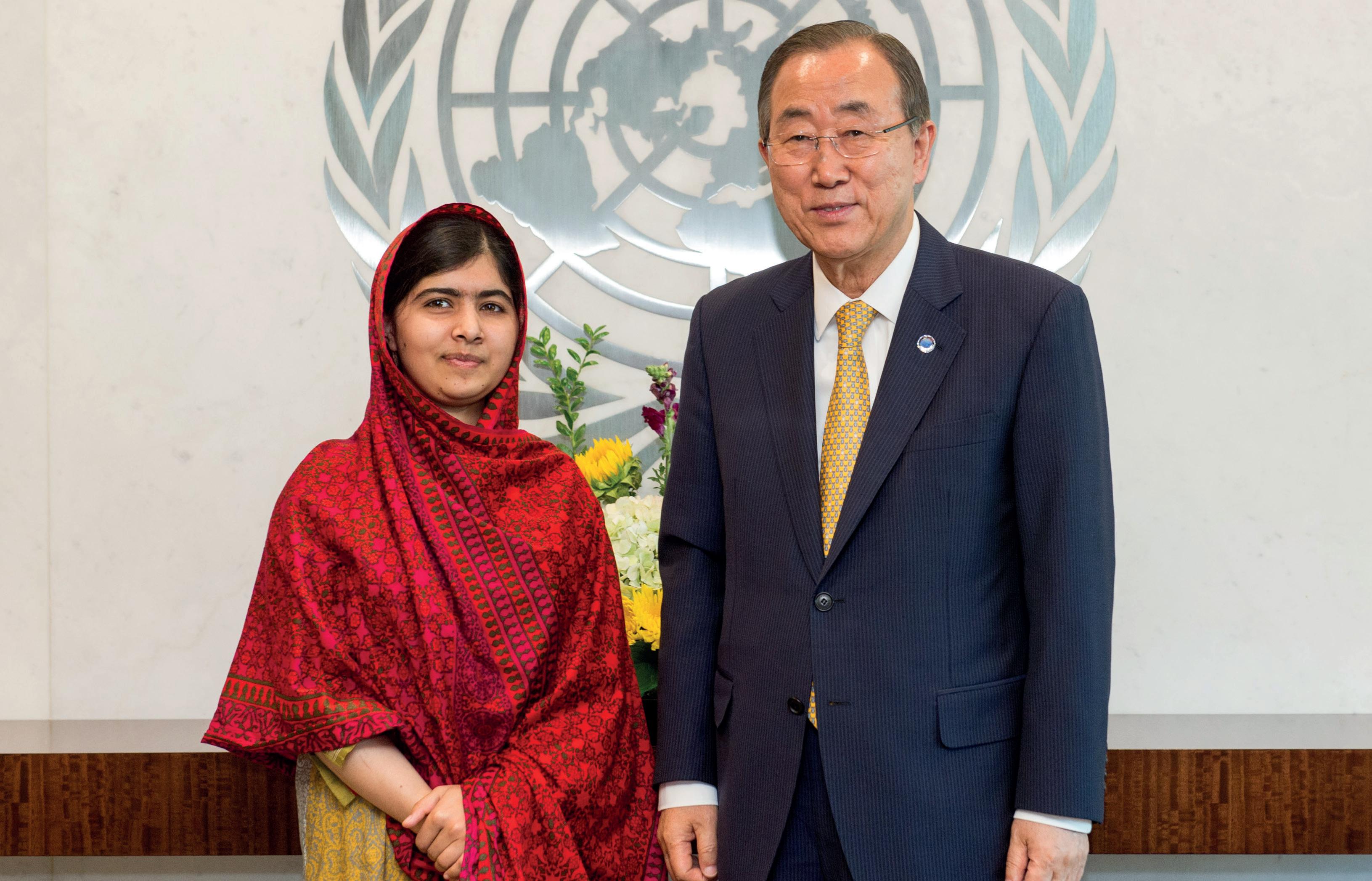
The attempt on the fourteen-year-old’s life is global news. The Taliban claim responsibility for the attack and declare that Malala is a Western-oriented girl who always contradicts them. President Asif Ali Zardari of Pakistan calls it an “attack on civilized people.” All over the world, people are perplexed. President Obama calls the attack “barbaric” and “tragic”. Secretary-General of the UN Ban Ki Moon condemns the “horrific and cowardly act” of the Taliban and calls on the Pakistani government to arrest and punish the perpetrators. Thousands of people send cards and presents to Malala in the hospital. There are enough to fill twenty-five boxes. Pakistan is in shock. There are demonstrations everywhere and countless prayers are said. Ziauddin is overwhelmed: “The day after the attack, masses of people took to the streets with banners, something that had never happened before.
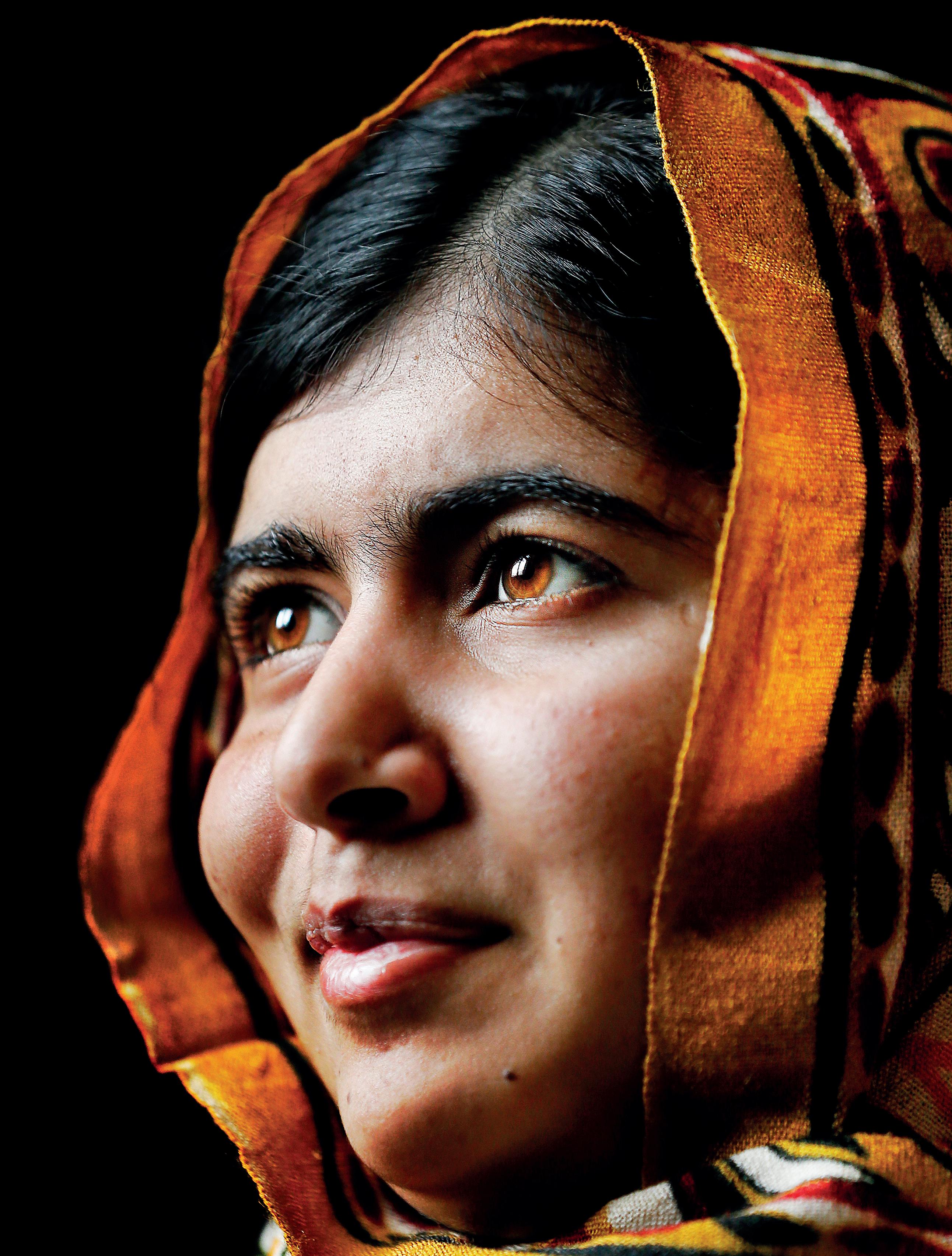
The banners said ‘Shame on you, Taliban.’ It was unthinkable to say that in Pakistan. The word Taliban is never said out loud, let alone in the same sentence as shame. It was unique.”
In early February 2013, Malala makes her first public announcement after the attack. In a video message, which is shown globally, she shows the world her will is not broken: “Today you can see that I’m alive, that I can talk and that I can see. I can see everybody. Every day I get a bit better. And that is because everyone prayed for me. Because of those prayers, Allah has given me a second life.”
She recovers so quickly that she can go back to school a month later. She goes to The Edgbaston High School for Girls. It’s a happy day for her; she can wear a school uniform again, carry her book bag and walk to school as a free person.
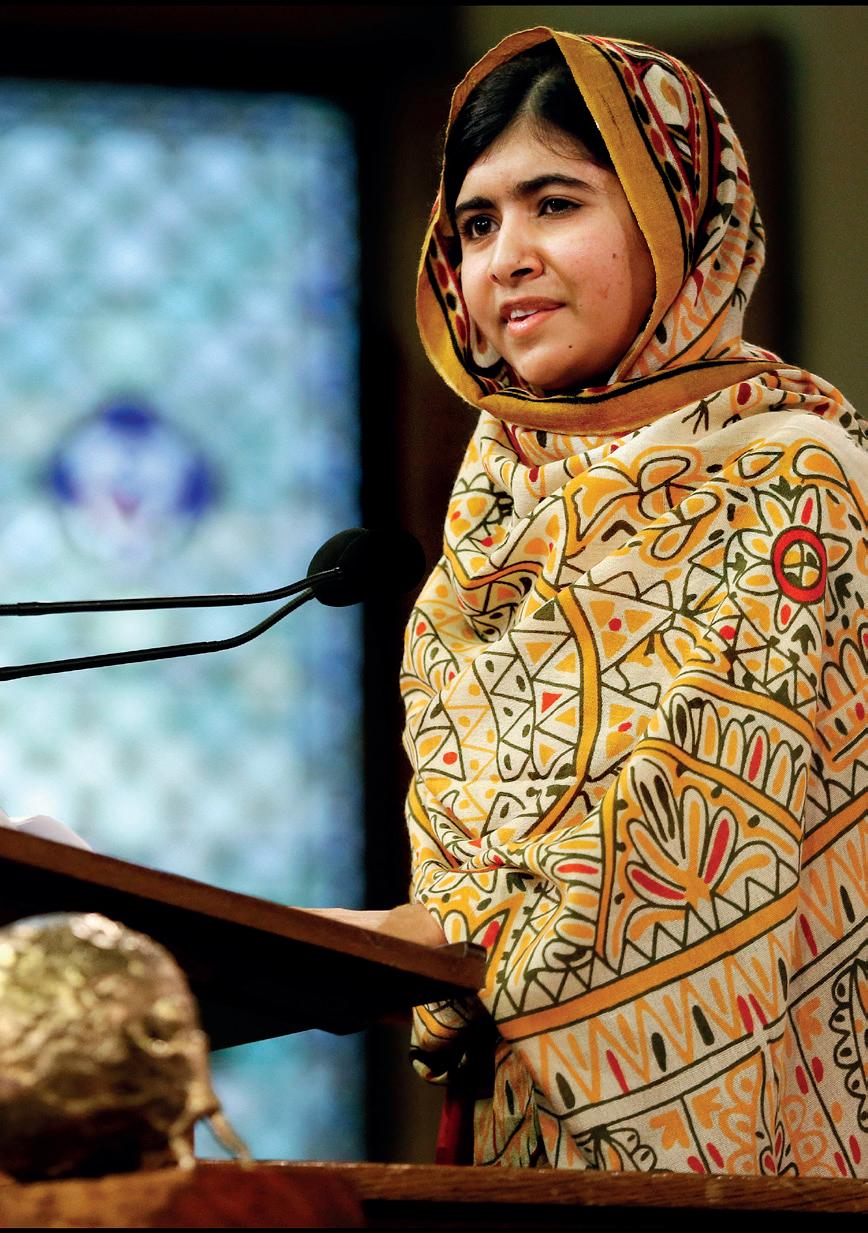
As it turns out she does not have much time to go to school regularly. She gives interview after interview and becomes an icon for the right to education for girls. On her sixteenth birthday in July, she travels to New York to speak to 500 young leaders at the United Nations. She gives a passionate speech lasting twenty minutes, in which she stands up for the right to education and
for women’s rights, but she also champions peace in Islam and the power of forgiveness. Her eloquent words travel across the globe again. “Let us pick up our books and our pens,” she says. “They are our most powerful weapons. One child, one teacher, one book and one pen can change the world. Education is the only solution.”
She receives a standing ovation.
She was excited. “It was a bit scary to be in that famous place in front of so many people, but I knew what I wanted to say and I thought: this is your platform Malala, you are speaking on behalf of all the children in the world who can’t go to school.”
She specially wore a white head scarf that belonged to former Pakistani Prime Minister Benazir Bhutto, who was assassinated in 2007. “I was given the scarf by her children, who gave it to me as a symbol of hope. I was very proud to wear it over my favourite sjalwar-kameez (traditional pair of pants and a tunic). When I received it I tried to smell her, to sense her. She is a big source of inspiration for me, she was a great female leader.”
Her family is there to watch her speech as well. Her mother, visibly moved, is comforted by Yoo Coon-Taek, the wife of Secretary-General Ban Ki Moon, who is seated beside her in the assembly. “She told my mother she specially wore a green dress, because green is the colour of the Pakistani flag.”
12 July is officially declared ‘Malala Day’, and Ban Ki Moon calls Malala “my daughter of the UN.” It is a big birthday present for the sixteen-year-old Malala. Her little brother Atal is bored during his sister’s speech. He picks his nose and afterwards asks Malala: “I don’t understand why you’re so famous. What have you actually done?” Malala finds it very funny. “He thought the Statue of Liberty and Central Park were much more interesting.” Her father, who is surprised at her success, does not agree with her style of speaking. In Pakistan, he learned to speak by raising his voice and by talking with emotion. His daughter finds strength in simplicity, which she does with ease. “That is my style, but my father recently held a TED Talk in which his way of speaking looks remarkably similar to mine, so he’s learning from me now,” she says with a smile.
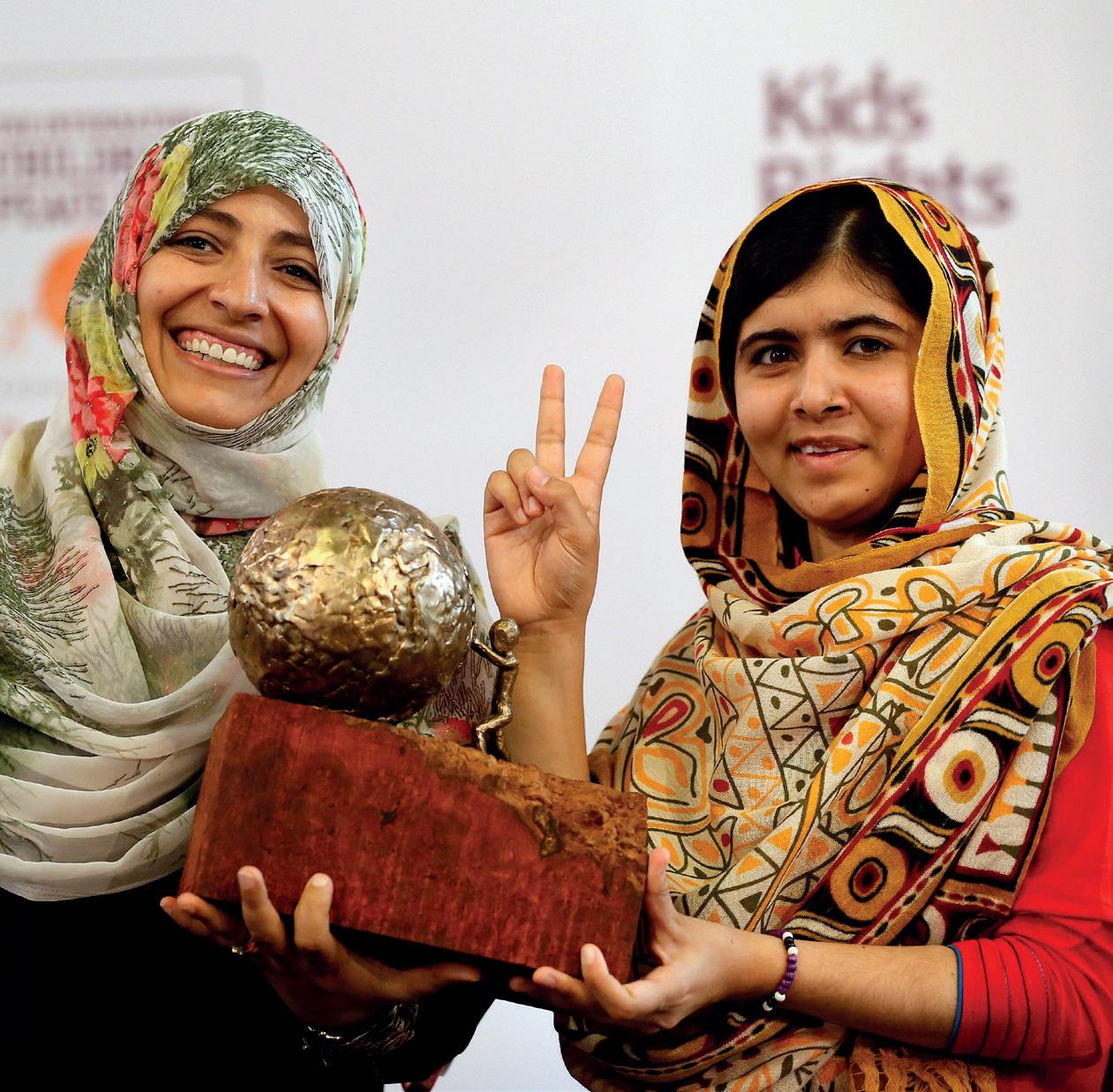
On 6 September, Malala receives the International Children’s Peace Prize in The Hague, from Nobel Peace Prize Laureate Tawakkol Karman from Yemen. An independent Expert Committee unanimously chose her as the winner. There are no other nominations. The report of the jury says: “Malala has proven that children can make
themselves heard at a young age and change the world. Even after the attempt on her life she showed courage by choosing to relentlessly continue her efforts.” She feels she’s been acknowledged. “After the attack I had a choice,” she says, “stop or continue my campaign. I chose to continue. The way I see it, even death supports my cause, so I don’t have to be afraid anymore. I feel stronger and braver. I have support. I’m not alone. Hundreds, thousands of people stand with me. And when I heard about the Children’s Peace Prize for the second time I thought: this is MY prize. It felt like coming home. I’m very happy with it.”
Malala’s first nomination for the Children’s Peace Prize in 2011 made bigger headlines than actually winning it in 2013. “The nomination brought international recognition, and to be honest, it really launched my national and international campaign,” Malala says. We can only speculate whether the attempt on her life would have been made if she had not been nominated. Ziauddin is clear: “The nomination brought opportunities and risks, the Pakistani Peace Prize brought opportunities and risks, my encouragement and support for Malala brought opportunities and risks. I did not stop her because I believe it is her right make herself heard. Many have encouraged her as we all felt uncomfortable about the situation. But
in the end all Pakistanis are responsible. Because why was she given so much attention? Because they had had enough. Here is a girl who speaks from the heart, let’s support her, she represents so many people. That is the real reason. We have lived through a very critical phase in her life, but thank God, it worked out in the end.”
Malala’s fame takes her to unusual places and gives her the opportunity to speak to important people and celebrities. Her calendar of October 2013 shows a list of extraordinary meetings and events. First of all she launched her autobiographical book I am Malala one year after the attack. She wrote her remarkable life story with journalist Christina Lamb. A few days later, she heard she was nominated for the Nobel Peace Prize; she is the youngest nominee ever. When she does not win, she reacts matter-of-factly: “I don’t think I deserve that prize yet. Only when I have reached my goal, sending as many children to school as possible, I may deserve it.”
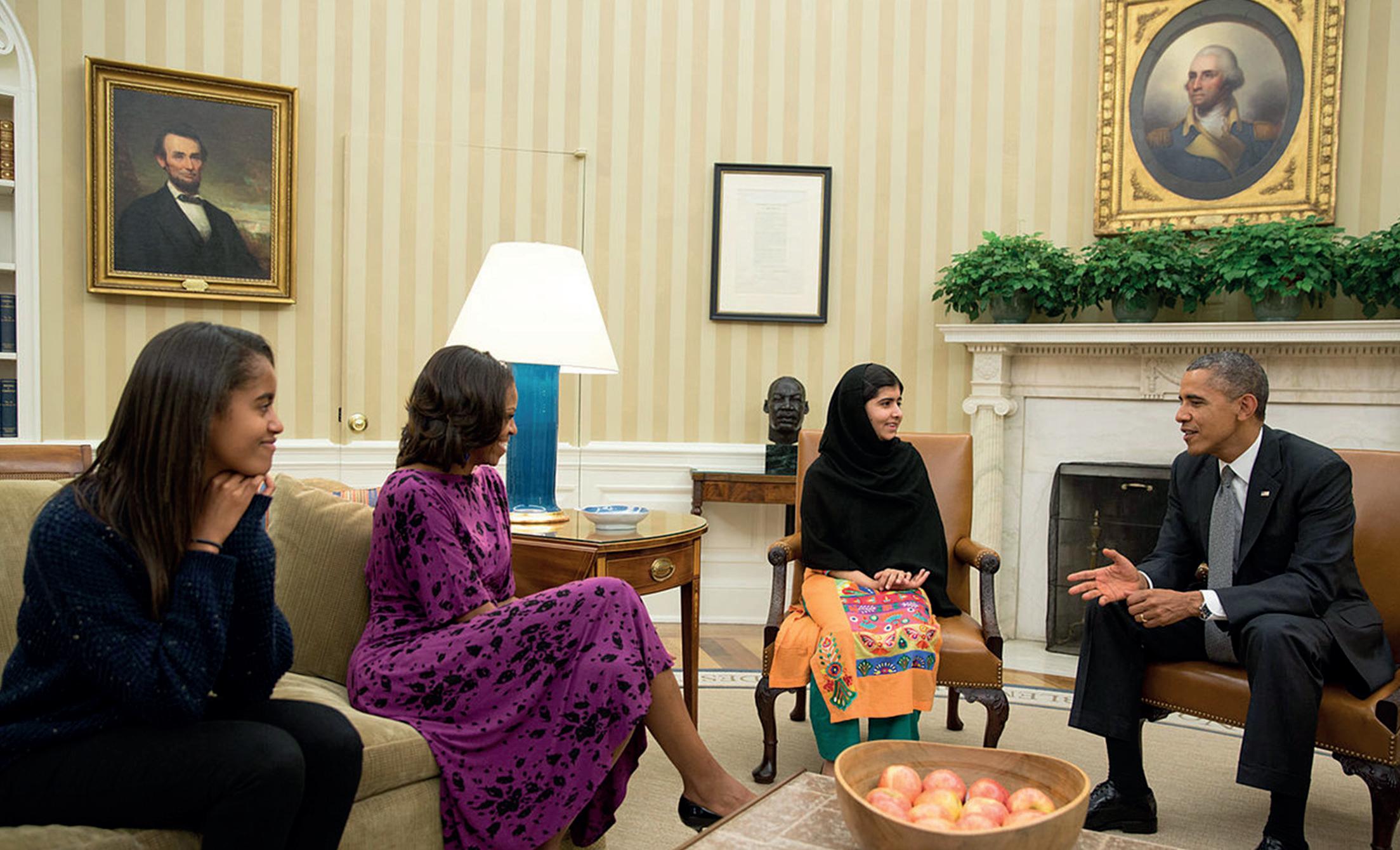
That same month, she visits President Obama and his family at the White House and drinks tea with Queen Elizabeth at Buckingham Palace. Malala is surprisingly
calm and grounded. “I’m honoured to have met these people, they are important people to know, because they are the leaders who can bring about change. The queen was very nice.”
What did she discuss with President Obama? “I confronted him about the drone attacks by his country on Pakistan. Innocent victims are killed, which leads to feelings of vengeance and hate. In addition, terrorists may be eradicated but not terrorism itself. I told the president that I believe you can only stop terrorism with education. You can’t stop a war with a war. There have been hundreds of attacks since 2004.” And, did he answer her? “The President gave political answers,” she smiled knowingly. “But he did say the number of drone attacks would decrease.” Did she have her picture taken with the president? A selfie, perhaps? “Well, that would have been quite difficult, he’s so tall. I would have had to stand on a chair or he would have had to sit down. But no, there was no time for a selfie,” Malala laughs. “I gave my book to his daughter, Malia, she’s about my age. She gave me some honey from the bees at the White House. It was a nice meeting.”
Leaving the library, Malala is stopped several times by people who want to take her picture. She poses friendly and patiently. Doesn’t she get tired of the adoration? “It’s part of the job,” she says resignedly, “I don’t feel like a star, though people sometimes treat me like one. But I’m really just an ordinary girl.”
At home, the Children’s Peace Prize can be seen prominently on the mantle piece in the living room.
“Malala has won over twenty international awards,” Ziauddin smiles, “from the Sakharov Prize to the Pride of Britain, but the Children’s Peace Prize is the most important one.”
Her hospitable mother Tor Pekai has prepared an elaborate Pakistani lunch. She doesn’t like English food. She did go out to diner with her husband recently at a small Bengali restaurant in the neighbourhood. It’s a simple pleasure, but very special for her. She has recently started going to school every day and is learning English. “Mama, say something in English,” Malala asks her mother cheerfully. “My name is Tor Pekai,” she starts off bravely. “I am from Pakistan, I have three children and I
live in Birmingham,” she finishes with a beaming smile. Malala is proud of her mother. “Now that she’s learning the language, she can go shopping and read the prices at the chemist. She doesn’t feel so lonely anymore. She’s a quick study and asks me for help with her homework. Isn’t that great?” Her mother’s emancipation affects her father too. “Sometimes he helps in the kitchen by doing the dishes or setting the table. It’s a step in the right direction,” she jokes. “But we still have my two brothers. I have my work cut out with them. I always talk about democracy, but I can be a real dictator at home and tell them they have to finish their homework on time. I like to fight with them, we almost never agree on anything.”
The playful exchanges with her brothers keep Malala grounded. They are a warm family that already had a good bond, but the events surrounding Malala has made that bond even stronger. They had to deal with the fear of the attack and the involuntary move to another country where everything, absolutely everything is different. Just imagine it. Malala really had to get used to the Unit-
ed Kingdom. “Everything here is different. In the beginning I had no friends at school and I did not understand the jokes. They did not get my sense of humour either. I missed my friends terribly. Fortunately, I call and Skype my best friend Moniba in Pakistan twice a month so we can tell each other our ‘breaking news’. She tells me about the situation at school, about our classmates and how everything is going in Mingora. I love to hear those stories. We laugh and bicker a lot. I do miss her.”
She hopes to write her exams in 2015 and then go to university. “I hope I’m good enough to be accepted to Oxford or Harvard. I’m thinking about studying history. I am mainly interested in 20th century history. History helps us understand what is happening in the world. My dream and ambition is to go into politics and become prime minister of Pakistan one day. That is how I can serve my country. I always wanted to be a doctor, which is a great profession too. But as prime minister, I can be the doctor of the whole country,” she smiles knowingly. Isn’t it a dangerous choice? After all, her hero Benazir Bhutto was killed. “You know, the Taliban have already attacked me with bullets, I’ve been there already. Everybody will die one day, nobody lives forever. The most import thing is that the mission I stand for continues. I will carry on my work. I am not afraid to die.”
In addition to her studies she wants to devote herself to her foundation, the Malala Fund. Its aim is providing education for all children, all over the world. The 100,000 euro award money in the Children’s Peace Prize project fund is therefore spent entirely on building two secondary schools in Shangla, Pakistan. On her seventeenth birthday, she was in Nigeria to talk to the parents of some of the girls who were kidnapped by Boko Haram. She regards the girls as her sisters. It was a moving meeting. She also spoke to president Goodluck Jonathan of Nigeria and insisted that he talk to some of the girls who had managed to escape.
It’s her fervour and passion that drive her to do this. She’s looking forward to turning eighteen years old, so she can travel the world as a grown up woman for the projects of her fund. Nobody can ignore Malala. She has made an incredible journey, from schoolgirl to international symbol for children’s rights, in particular for girls. Making her voice heard has taken her far and will take her even further. The Taliban bullets have not silenced her. On the contrary, her voice is more powerful than ever.
On the 10 October 2014, the Nobel Peace Prize is awarded to Malala and the Indian Kailash Satyarthi for their fight against oppression of children and young people, and their call to education for all children. Malala is the youngest Nobel laureate ever.
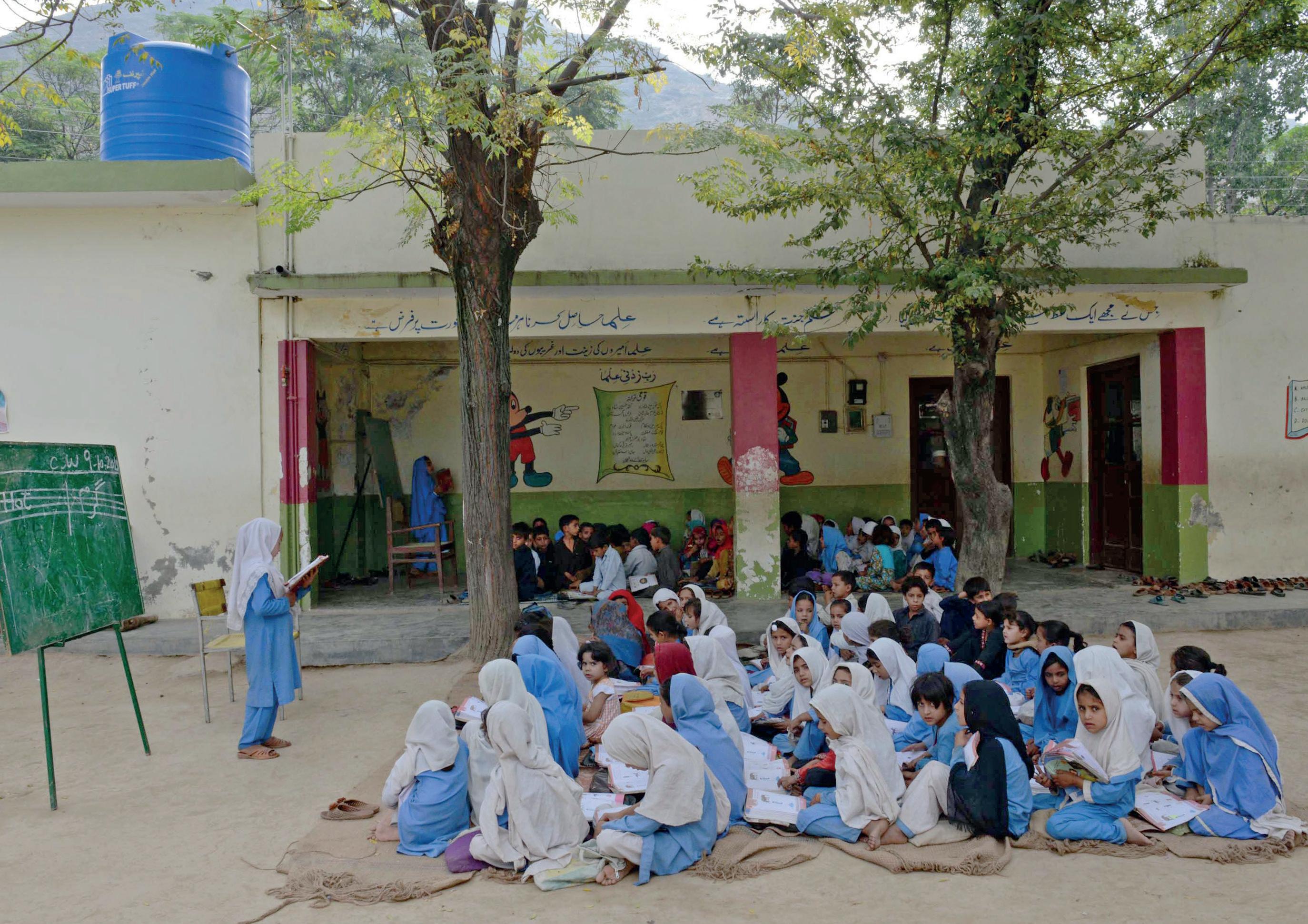
“I don’t mind if I have to sit on the floor at school. All I want is education. And I am afraid of no one.”
MALALA YOUSAFZAI
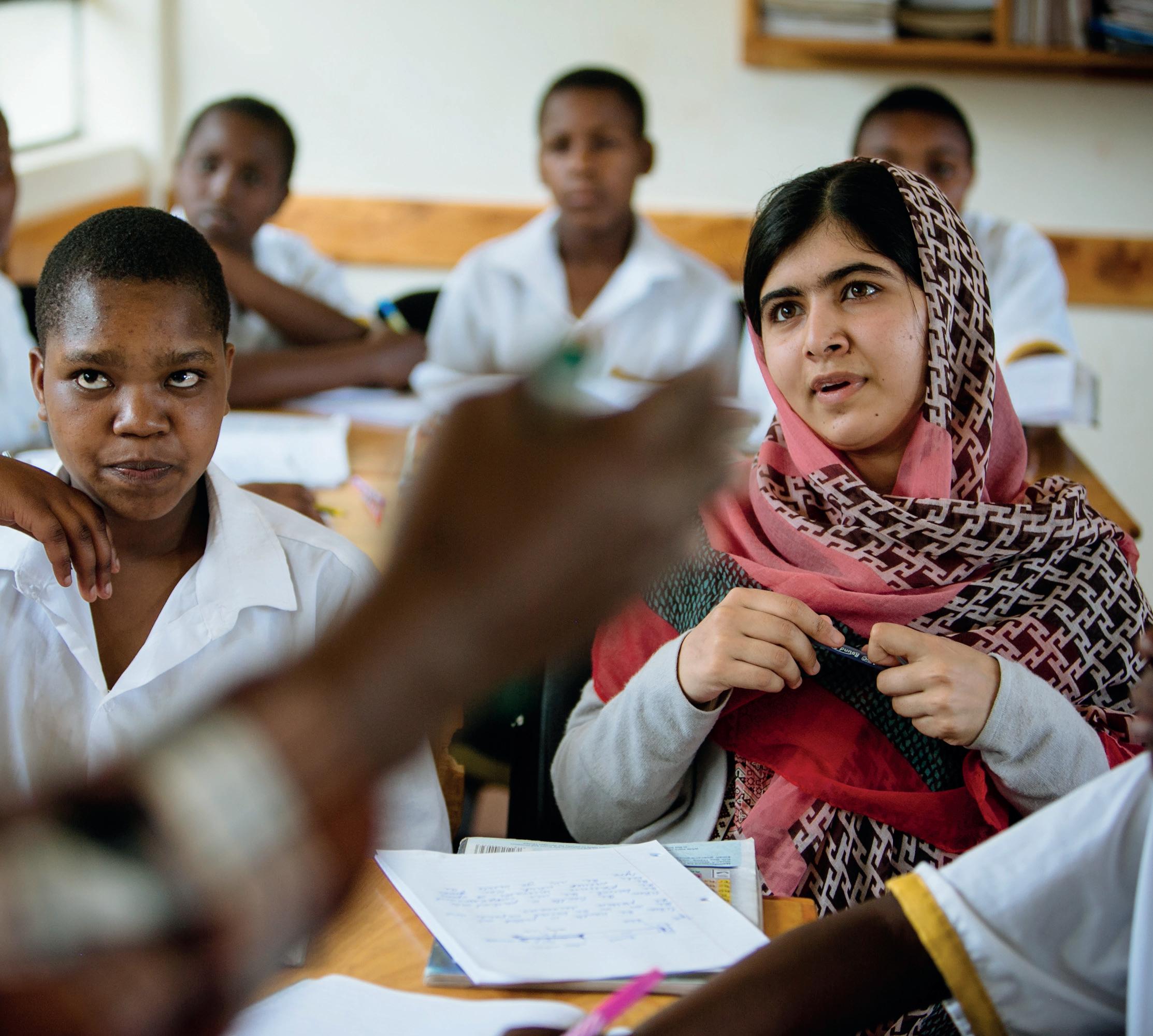
WHO: Malala Yousafzai (1997)
FIGHTS FOR: The right to education for children, and girls in particular. Art. 28 The Convention on the Rights of the Child.
MOTTO: “One child, one teacher, one book and one pen can change the world.”
CHANGEMAKER: Fights for a world where everyone can go to school. Believes that education lies at the heart of change. Stands up for the importance of education for girls.
LOVES: Table tennis, cricket, reading, listening to Pakistani and Indian music and fighting with her brothers.
INSPIRATION: Benazir Bhutto and Chaeli.
STUDIES: Wants to study history or political science at the university.
IN TEN YEARS’ TIME: Active for the Malala Fund and in politics.
MESSAGE TO CHILDREN: “It is the right of every boy and every girl to get educated. Let us pick up our books and our pens. They are our most powerful weapons.”
WEBSITE: www.malalafund.org