DEMOLITION NORTH AMERICA

Issue #2
May/June 2026
Demolition Discussion : Donald Barris III on DB3 Group and his demolition journey
Case Studies:
From Total Wrecking & Environmental, Trifecta Services Company, Jackson Demolition and East Coast Demolition
NDA Phoenix, CONEXPO-CON/AGG
DNA reports back from the biggest and best events







Welcome to issue #2 of DNA magazine—bringing to North America what Demolition Hub has delivering in the UK for nearly six years.
In this issue of DNA, we bring you industry news, case studies, demolition contractor interviews and reviews of the year’s biggest and best events so far. We also keep you up to date on news from the NDA and AEM.
This issue’s Demolition Discussion interview is with Donald Barris III of DB3 Group. Having started from the ground up, Donald passed through various blue and white collar roles until he faced a dilemma caused by competing interests. He resolved it by setting up on his own. In his interview he lays out his plans for the group he founded and his values-driven approach.
Case studies come from Total Wrecking and Environmental’s demolition of McKee Run Generating Station, Trifecta Services’ demolition and restoration project at Clemson University in South Carolina and Jackson Demolition’s massive alternative energy decommissioning project in Florida. We also feature East Coast Demolition’s (ECD) precise, controlled demolition of an aging concrete silo in Chesapeake, Virginia.
Having already done World of Concrete in January and with ConExpo on the horizon, I found myself in Phoenix, Arizona for the NDA’s Demolition Phoenix event. And what an event it was, in particular the Live DEMOlition event—a playground for adults with its seriously BIG demos, displays and operator challenges. If you haven’t yet been... put it on your calendar now.
Getting a new magazine off the ground is always a challenge but it’s been a good one and we look forward to serving you with many more issues of Demolition North America.
If you would like to be featured in our contractor or supplier interviews or tell the world about one of your projects in a DNA case study, reach out to me at ben@chambers.media.
Stay safe,

Ben Chambers
PUBLISHER
Ben Chambers ben@chambers.media +44 1903 952 648
MANAGING EDITOR
Toby Wilsdon toby@chambers.media +44 1903 952 645
ADVERTISING SALES
Ben Chambers ben@chambers.media +44 1903 952 648
Wayne Bristow wayne@chambers.media +44 1903 952 649
DESIGN
Joe Chambers joe@chambers.media
PRODUCED & PUBLISHED BY
Demolition Hub Ltd
Suites 5-6 Chapel House, 1-6 Chapel Road, Worthing, West Sussex BN11 1EX. United Kingdom
demolition@demolitionhub.com +44 1903 952 640
Demolition Hub Ltd is a proud member of the National Demolition Association

Demolition Hub Ltd is a media partner for the Demolition Group of America

Demolition North America is published six times a year. The subscription rate is $60 per year. Subscription records are maintained at Demolition Hub Ltd, Suites 5-6 Chapel House, 1-6 Chapel Road, Worthing, West Sussex BN11 1EX, United Kingdom
Articles and information contained in this publication are the copyright of Demolition Hub Ltd and may not be reproduced in any form without the written permission of the publishers. The publishers cannot accept responsibility for loss of, or damage to, uncommissioned photographs or manuscripts.
NDA
Celebrating certified demolition technicians; OHSA injury update
AEM
Announcing 2026 officers while recognizing leaders past and present

With Donald Barris III. The founder and President of DB3 Group speaks to DNA magazine
A landmark project: Total Wrecking & Environmental’s Demolition of McKee Run Generating Station
The Revival of the Tillman Hall Auditorium: Trifecta Services Company’s restoration and demolition at Clemson University, South Carolina
Jackson Demolition undertakes a massive alternative energy decommissioning project in the sunshine state
34 CASE STUDY
East Coast Demolition brings about a precise top-down demolition of a 120-foot coal silo Chesapeake, Virginia
38 EVENTS
APEX and International Rental Exhibition (IRE) shows come to Maastricht
SaMoTer
NDA Phoenix—Phoenix, AZ
It’s all go at the NDA’s annual get-together. DNA magazine’s Ben Chambers brings you his reflections on the event
CONEXPO-CON/AGG 2026 — Las Vegas, NV
Back in Vegas once again, Ben Chambers meets all the players in the construction industry
CDRA Conference & Tradeshow — Tampa, FL
The newly rebranded event better reflected the strong connection between it and the Construction & Demolition Recycling Association (CDRA)
INDUSTRY

60 PROFILE
After 50 years in demolition robots, Brokk’s evolution continues with more power and more innovation
Volvo CE closes Rokbak due to global challenges
National Demolition Association Celebrates First Certified Demolition Technicians, Setting a New Industry Standard
The National Demolition Association (NDA) announced the first 15 individuals to earn the prestigious new Certified Demolition Technician (CDT) certification. This inaugural group of certified professionals completed the rigorous certification process, demonstrating their expert knowledge and skills essential for safe and efficient demolition operations.
The CDT certification allows these individuals to showcase their expertise, providing them and their companies with a significant competitive edge in the job market.
“The CDT is an excellent way to recognize your team, boost their confidence, provide them a career path and ensure your team members receive the recognition they deserve for their hard work,” said Tim Homrich, chair of the NDA Certification Board.
The CDT credential specifically recognizes the essential knowledge and skills of field workers who perform hands-on demolition tasks daily. Whether operating heavy equipment, performing ground labor or conducting selective removal, CDT-certified professionals play a vital role in the safe and efficient execution of demolition projects.
NDA’s CDT certification recognizes individuals who have demonstrated fundamental competence across all critical aspects of demolition, including safety, environmental best practices, operations and people management.
“We are proud to recognize these individuals for their commitment to professional development,” said Ben Hayden, the 2025 NDA president.
“To better serve our diverse workforce, our next testing window will now be available in Spanish, in addition to English. Offering a Spanish version allows all our demolition professionals— both men and women—to demonstrate the essential knowledge and skills necessary to succeed in today’s demanding workplace.”
The CDT designation promotes safe and quality
practice throughout the industry through its ongoing requirements for professional growth. The beta test of the CDT exam saw 23 individuals participate.
NDA extends its congratulations to the following individuals for obtaining the certification:
• Abdulrahman Alharb, Homrich
• Gregory Butler, North American Dismantling Corp.
• Steven Lloyd Feick, Homrich
• Thomas Holcomb, North American Dismantling Corp.
• Lee Jackson, Homrich
• David Jacobs, Homrich
• Ross T. Joslin, Lindamood Demolition
• Garrett Malady, North American Dismantling Corp.
• Cody Manor, Homrich
• Alberto Perez, Milburn
• Blake Robinson, Veit & Company Inc.
• Daniel Rugila, Homrich
• Gale Thomspon, North American Dismantling Corp.
• Oscar D. Villasenor, Milburn
• John D. Waters Sr., Ferma Corporation
Having CDT-certified professionals on your team will help your projects operate with greater safety and efficiency and strengthen your company’s reputation as an industry leader. NDA encourages demolition contractors to consider employee applications to take an upcoming exam.
The next testing and application window is now open through March 31, 2026.

demolitionassociation.com/ Certification/CDT

OSHA Injury Update
Standardized Codes
The Occupational Safety and Health Administration (OSHA) is taking a significant step forward in workplace safety by releasing its 2023 injury and illness data using standardized codes.
For the first time, OSHA applied the Occupational Injury and Illness Classification System to the narrative fields in Forms 300 and 301, capturing details about how incidents happened and what caused them. These codes help OSHA organize and analyze similar cases more efficiently, making it easier to identify trends and patterns. By strengthening the clarity of injury and illness narratives, OSHA is improving the foundation for effective prevention strategies. This advancement also highlights how artificial intelligence can enhance OSHA’s ability to protect the health and wellbeing of workers nationwide.
Updated Injury Tracking Application Resources For 2025 Submission
OSHA published updated resources for its Injury Tracking Application (ITA) in December, in advance of workplace injury and illness data submission for 2025, which began on January 2, 2026. Updated resources include frequently asked questions and the ITA User Guide, which outlines the stepby-step process for electronic submission.
Visit the ITA Coverage Application to help determine who is required to submit workplace injury and illness data. For users, the ITA Help Desk is available to assist with ITA-related questions or issues. Please submit a help desk ticket at the ITA website and select ITA Help Desk Request under “Other Helpful ITA Resources.”
For more information, see OSHA’s Recordkeeping Requirements webpage.
osha.gov/sites/default/files/OSHA_2024_Work-Related_Injury_and_Illness_Summary.pdf
Injury tracking Application: osha.gov/injuryreporting
ITA Coverage Application: osha.gov/itareportapp
ITA User Guide: osha.gov/sites/default/files/ita_user_guide.pdf
Record keeping requirements: osha.gov/recordkeeping
AEM Recognizes the Past While Facing the Future
The Association of Equipment Manufacturers has announced the election of its 2026 officers and directors while recognizing member companies for their decades of leadership and inducting individuals into its hall of fame.
Forward Thinking
The AEM announced the election of its 2026 officers and board directors during its annual business meeting in Aventura, Florida. The newly installed leadership team will guide AEM as the association tackles a transformative agenda of advocacy, workforce development, sustainability and innovation in the off-road equipment industry.
“As we usher in this distinguished group of officers and board members, we’re not simply filling seats, we’re elevating the engine drive behind AEM’s mission,” said Megan Tanel, President and CEO of AEM. “Our volunteer leaders bring vital perspective, bold ambition and an unwavering commitment to shaping the future of off-highway



equipment manufacturing. Together, we are more poised than ever to empower our members, fortify our global industry presence and deliver impact for the two million-plus jobs our sector supports.”
2026 AEM Officers Include:
• Megan Tanel, President & CEO, AEM, Secretary
• Phil Kelliher, Senior Vice President Cat Rental & Used, Caterpillar, AEM Chair
• Kurt Coffey, Vice President, CASE IH, North America, CNH Industrial America, AEM Vice Chair
• Melvin Porter, President & Chief Executive Officer, Link-Belt Cranes, AEM Treasurer
• Erica Baird, Executive Director - Global Sales and Service, Cummins, CE Sector Board Chair



Honoring Milestones
Through its predecessor organizations, the AEM has a heritage of more than 130 years and while looking to the future, the association is proud of its members past and present. Through its Hall of Fame, it also recognizes individuals from relevant sectors who made an outstanding contribution the impact of which can still be felt today.
The association commends member companies celebrating milestone anniversaries in 2025. These companies have demonstrated exceptional commitment to advancing the equipment manufacturing industry while supporting AEM’s mission of building a safer, stronger, and more innovative future.
“For more than a century, AEM’s strength has come from the commitment and leadership of our member companies,” said Paul Flemming, AEM Vice President of Membership and Sales. “We are honored to celebrate these organizations for their long-standing engagement and contributions to our industry. Their partnership and participation help propel equipment manufacturers forward in North America and around the world.”
AEM congratulates the following milestone members and thanks them for their ongoing dedication to the industry:

25 Years
ALLU USA Inc.
Ammann America
Asphalt Zipper Inc.
Costex Tractor Parts
Hercules Machinery Corp.
Horton Inc.
Hydraulicircuit
Technology
Kinshofer North America
Klein Products
Moba Corporation
RavcoWylie Systems
Service Trucks International
TrafFix Devices
Xtreme Manufacturing
75 Years Kuhn North America
100 Years Bomag Americas Caterpillar Etyrne
Metso USA

Hall of Fame
At the finale reception of the Association of Equipment Manufacturers (AEM) Annual Conference in Miami, Florida, the AEM Hall of Fame welcomed three innovative leaders into its ranks.
The AEM Hall of Fame officially inducted Billy Robert “B.R.” Lee, founder of LeeBoy; Art and Panny McElroy, founders of McElroy Manufacturing; and Nicolaus August Otto, engineer and inventor with Deutz, into this prestigious group. Judges carefully considered an impressive pool of high-caliber nominations, ultimately selecting this trio as the 2025 AEM Hall of Fame class. All three inductees were honored posthumously.
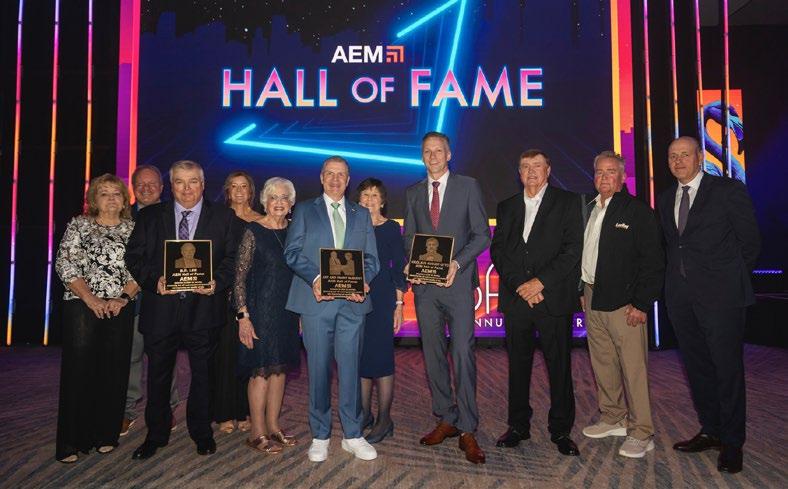
Keith Lee accepted the award for B.R. Lee, Chip McElroy accepted the award for Chip & Panny McElory, and Dr. Sebastion Schulte accepted the award for Nicolaus August Otto.
AEM President and CEO Megan Tanel said: “B.R. Lee, Art and Panny McElroy, and Nicolaus August Otto each embody the spirit of innovation and dedication that drives our industry forward. Their creations undoubtedly transformed the equipment manufacturing industry and inspired future generations to continue pushing forward.
AEM is honored to add them to our Hall of Fame.”
Billy Robert “B.R.” Lee, Founder, LeeBoy
Billy Robert “B.R.” Lee revolutionized the commercial paving industry through innovation, leadership, and unwavering dedication to the paving professional.
In the 1960s, he began crafting affordable pullboxes from scrap metal in his backyard garage, addressing the needs of small contractors. In 1970, B.R. spawned an entirely new industry with his invention of the first self-propelled commercialclass paver. It was gas-powered with variable widths and intuitive controls, transforming productivity and accessibility. This breakthrough marked the genesis of the LeeBoy brand.

Lee’s commitment to customer feedback drove continuous innovation, including heated screed extensions and the industrystandard eight-foot paver. He also developed specialized equipment like the Force Feed Loader and Maintainer for the North Carolina Department of Transportation, and pioneered
features now standard across the industry.
Beyond engineering, Lee built a culture centered on customer satisfaction. Every employee was responsible for ensuring equipment met user needs, no matter their role. His leadership was rooted in humility, integrity, and family values. Employees and dealers alike were treated as extended family, with relationships often sealed by a handshake. Lee’s social responsibility was equally profound. He quietly supported employees and community members in need.
At his core, B.R. was a simple, yet brilliant, farm man who worked hard sun-up to sun-down and had a habit of doing the right thing, simply because it was the right thing to do. LeeBoy’s success as a company today is a direct result, 61 years later, of B.R.’s ability to successfully imprint his multigeneration farm values on the corporate culture.

Art and Panny McElroy, Founders, McElroy Manufacturing
In 1954, Art and Panny McElroy launched McElroy Manufacturing from their Tulsa, Oklahoma garage as a fabrication shop for local companies like American Airlines, WL Walker, and Allied Bearing. With Panny handling the books and Art at the helm, the company flourished, taking on more contract work and expanding their facilities. By the late 1960s, McElroy was shipping its fintube
machines around the globe—but the company’s potential wouldn’t be fully realized until 1969, when Art designed a machine that could weld a newly-introduced high-density polyethylene plastic pipe. By 1973, with his passion and focus on the potential of the fledgling polyethylene pipe market, McElroy had built the most complete range of equipment globally, capable of fusing from ½” to 48” pipe. In the years that followed, his inventive mind combined with his engineering and manufacturing expertise led to many further advances and improvements in products that shaped this industry into what it is today.
Art and Panny established a reputation not only for their quality products, but also for their ability to make customers feel welcomed and valued. It wasn’t uncommon for business meetings to turn into family dinners that laid the foundation for long-lasting friendships between the McElroys and their customers—many of which last to this day.
Art and Panny were instrumental in laying the foundation for many of the company’s most successful ventures, including McElroy University, McElroy’s commitment to supporting its products globally, and the network of channel partners that are critical to selling, supporting, and servicing McElroy’s many machine lines. The couple held themselves to a high standard and committed to leading by example, whether in terms of customer service, machine quality, or just making others feel genuinely welcome.
After Art passed away in 1988, Panny took the company’s reins, continuing the vision she and her husband had worked to realize. Almost a decade later, Panny decided it was time to retire as President and CEO of McElroy, passing the title along to the couple’s son, Chip McElroy. Their daughters, Donna (McElroy) Dutton and Peggy (McElroy) Tanner, serve as the company’s Executive Vice President of Finance and Executive Vice President of Sales for Emerging Markets, respectively.
To this day, the plastic pipe fusion industry owes much of its success to the tireless work of Art and Panny McElroy. Through their commitment to quality, the company continues to reach new heights with each passing year.

Nicolaus August Otto, Engineer & Inventor, DEUTZ
Nicolaus August Otto transformed the world through his groundbreaking work in internal combustion technology. Originally a merchant and traveling salesman, Otto’s fascination with engines led him to experiment with combustion systems at a time when the field was still in its infancy. In 1862, he began developing his own four-stroke engine. Just two years later, he
co-founded N. A. Otto & Company in Cologne with Eugen Langen, the world’s first factory dedicated solely to internal combustion engines, and the forerunner of today’s DEUTZ AG.
Their atmospheric gas engine won a gold medal at the 1867 World Exhibition in Paris for its efficiency. But Otto’s most enduring contribution came in 1876 with the invention of the four-stroke engine, a design that became the foundation for modern internal combustion engines.
Otto didn’t stop there. He further enhanced engine independence with the development of magnetic low-voltage ignition, a prerequisite for making an internal combustion engine independent of the mains gas supply. His innovations helped mechanize small trades, boost industrial growth, and democratize access to mechanical power. Adaptable to various fuels and applications, it revolutionized how power was generated and used. Otto’s leadership turned complex engineering into practical solutions. His vision earned him global recognition, including an honorary doctorate in 1882 alongside Alexander Graham Bell. His legacy lives on in every car, truck, and industrial engine today, proof that one man’s curiosity and persistence can reshape the world.
The AEM Hall of Fame has been recognizing luminaries in the agriculture and construction equipment manufacturing industry since 1993 and includes such names as Benjamin Holt (Caterpillar), Joseph Cyril Bamford (JCB), Jerome Increase Case (CNH Industrial), John Deere (Deere & Co.), Gus Ramirez (HUSCO International) and Mary Andringa (Vermeer). The induction of Lee, the McElroys, and Otto brings the total number of inductees to 74.
DEMOLITION DISCUSSION
Donald Barris III
Founder & President at DB3 Group
Donald comes from a multi-generational demolition family with experience in various field and management roles. His background includes in-depth technical knowledge on demolition means and methods including mechanical demolition, interior demolition, felling of structures, and crane removal. He provides relevant project and task safety observations, employee observations, in addition to educating the workforce and safety professionals on demolition safety. Donald has more than 25 years’ experience supporting a wide range of decommissioning and demolition programs that serviced multiple sectors of oil, chemical, automotive, transportation, power, pharmaceutical, mining, commercial, medical, and education.
We want to remember those staff members that ensure the stakeholders involved with the demolition process are successful and ensure the staff are also happy and successful
What is your earliest demolition memory?
Wow, there are so many memories ranging from being a kid at a plant in Philo, Ohio and messing around on skid steers and excavators to felling my first structure at an automotive facility in Michigan. However, the earliest demolition memory was witnessing my father at work. We were at a pharmaceutical plant in northeast Pennsylvania and witnessing how he treated the crew, to the client, to the client’s safety representative, and all the pressure and stress in a typical day for him. It was never something you could imagine when at home in the comfort of your home and being in high school.
So, this one day there was a skid steer operator on a turbine deck driving around with the bucket in the air and inadvertently snagged the elevated 20-plus hanging torch hoses and wiped out—just completely broke all of them. A call comes out over the radio to shut it down and for everyone to meet outside of the boiler house. We were all lined up like it was a firing range with our back against the wall. My old man was just livid, and he was definitely letting us know how he felt with some very selective choice words and a few slams of his hard hat to the ground. The intensity was scary at the same time.
That first week and that moment definitely provided me with a better understanding of my old man and everything that he had to face on a day-today basis just to provide a good living for his family. It also showed me the passion that he had for the work and doing it the correct way. Influential on my demand of myself and to strive for absolute perfection in everything and his passion that I witnessed everyday has definitely remained with me.
What attracted you to the demolition industry?
I wouldn’t say I was initially attracted to it fresh out of high school as it was more just a means to pay for college and to avoid the debt that came with it. However, it didn’t take me long to fall in love with the industry—the camaraderie of the team executing the work; the work hard and play hard mentality; the passion to be the best for everyone, to be there to help your colleague / friend / “work family” be successful in what they were doing; and to have heated moments on the jobsite. Yet, when you exited the site that we were all laughing about the day or telling past stories while having an adult beverage—those heated moments stayed inside the fence.
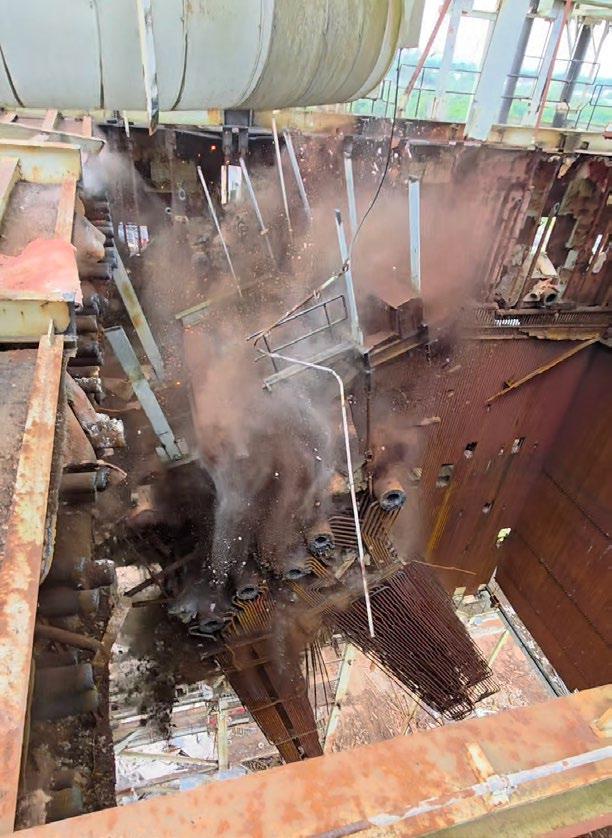
The work though was just amazing—the adrenaline of demolishing something whether it be from high burning or operating the equipment. Being a couple hundred feet off the ground and climbing steel to rigging down equipment and steel via crane to the felling of structures to running a machine and wrecking structures that exceed the reach of your attachment and where you are looking straight up from roof window of the cab. Then to do it well and safely and trying to perfect the art of it all—nothing like it.
How has your career progressed? Have there been any milestones or sidesteps?
My career progression was mostly typical of someone in the demolition industry—start as a general laborer on a fire hose to ground burner, high burner, foreman, operator, supervisor, estimator, and project manager. I probably compared milestones and advancements to my father’s career progression—which I advanced a little quicker than he did but much of it is a result of the mentoring from him, uncles, and the rest of the crew.
My development into white-collar roles really occurred when I relocated to Boston as a Project
Manager. It was my first exposure to the position, and it shaped a lot of how I manage projects. The demand of the position, the workload, negotiation skills were all influenced by learning the position in the New England area.
Regarding sidesteps or tangents, my teens and early to mid-20s were solely focused on learning the craft and remaining loyal to my father, uncles, and the crew. Where he went, we all went—he would turn down opportunities if the crew was not going to be taken care of or paid appropriately. When shifting into whitecollar roles, I made some decisions driven by the desire to earn respect in the industry or chase more money— if faced with the same decisions today, I would not make the same choice. No regrets because I would not be where I am today without making those decisions.
I think making the transition from contracting to consulting was a little bit of a tangent. I think most would usually climb the corporate ladder within the demolition industry, however, somebody that I would refer to as a mentor and who really educated me on the “how” to be a consultant was just persistent in having me come support him on a demolition project. In the end, I went and it has been fun and rewarding.
How did The DB3 Group start and how has it evolved?
The start of The DB3 Group was completely unexpected. I was working at an engineering firm managing demolition projects and just felt that I needed a change—I am a results driven person and I am truly here to help owners, contractors, and everyone involved in the process to be successful and that service was not really being provided to my expectations.
So I resigned and was going to travel the world for a year or two, then come back and work for a demolition contractor. However, I had two past clients offer me positions to work for them. Both discussions took place within hours and I informed both that I would use the weekend to evaluate life.
Later that day, after talking with friends and family, I called both back and told them that I couldn’t help either client if I worked for the other. The one told me to start my own company—I asked if I could count on him being a client and he did not provide the most reassuring response. I called the other client and had a similar conversation and he asked if I could get insurance. I hung up, called some friends and a few
hours later I was informed that I could be insured. I called both back and they said they would run it up the ladder. Both called me back first thing on Monday morning and asked who to address the MSA to. I did not even have a company name or anything so let’s just say the following several weeks were a lot of fun.
We have just finished year one and looking to use year two to continue developing the brand, more networking and build stronger partnerships with clients, contractors, subcontractors, and all those involved in the process. This year will expand the development of the Project Specifications, on-site and off-site project management to include budgetary estimates for owners, conducting the environmental surveys required to perform demolition projects, provide services to contractors such as quality reviews, estimating, operating procedures, project management, and further support contractors to improve on meeting the expectations of owners.
Tell us about your team and working culture. What do you bring to this?
I want to bring back the loyalty in business—to remember the clients that have stood by you since the beginning or those that have worked in a true partnership with your organization, and not to have profitability as the only measurement in making business decisions.
Additionally, I want to remember the loyalty of the staff who drive the overall success of the business. At The DB3 Group, success is not defined by profitability— was the work executed safely, was it completed on schedule and within budget, and were the contractors and clients satisfied with the process?
Therefore, we want to remember those staff members that ensure the stakeholders involved with the demolition process are successful and ensure the staff are also happy and successful. We all know a business needs to be profitable to be sustainable, however, we want our business to compensate the team, give them that desired work/life balance, and get back to my roots where the teams felt like a family—a work family—a family by choice.
I want the team to come to work and leave work happy even on the toughest of the days or when faced with the toughest of challenges. So for me, what can I do to make people’s lives better—what can I do to make their lives better and just not today but, in their future, and the future of their children. How can I help
that person grow as a person, both personally and professionally?
What kind of projects is DB3 Group specializing in?
Currently, the DB3 Group has been focused in the power and industrial sectors, leveraging my 20-plus years of executing and managing projects in those sectors; both as a contractor and consultant. Our team will be based on true experienced managers in the selfperforming of demolition and environmental projects. Having this type of DNA promotes success for the contractors and owners—we can support both. Should issues develop on a project, we will know how to get those answers to keep projects moving forward, understand means and methods to provide improved feedback, understand schedules and how long specific work tasks and projects should take.
We understand what the contractors need to be successful while also minimizing impacts to the owners. The understanding of the work and needs of the contractors to be successful really assist in the pre-planning phases of a project. We attempt to create a true partnership between the owners, contractors, and ourselves.
Are there any standout projects from your career?
An early standout project that brought tremendous growth for me was a demolition project at an automotive plant in Detroit. I spent a year working with a
crane picking precipitators and structure from the roof of a boiler house, felling the coal handling structures, all within an active facility. I think this was a project where I really made the transition from a “kid” just having fun, to needing to take it seriously, be sharp each and every day, and legitimately take safety seriously for the crew and myself—while also having fun.
LoveJoy Wharf in Boston, Massachusetts was influential. It was a project for a great client, yet was problematic from the moment that I inherited it from a senior manager. The project was over budget, behind schedule, and the pressure and intensity on site was high. Our Operations Manager was hurt from a motorcycle accident and I was managing 10 other projects at various stages in the life of the project, which compounded the issue.
This project really reinforced the concept of a partnership between a client and contractor—all the credit to the General Contractor and the team because they really put the effort into and worked with me to make a bad situation have the best possible outcome. Every night, we sat for hours and at times even ordered food to walk through the next day’s activities in every detail, the week’s activities for both our work but also the GC’s other trades work, and how we could coexist and limit impacts to the other trades. In the end, it proved that partnerships could exist between clients and contractors and that it did not have to be a combative relationship. The GC team and I ultimately became friends and I was able to reinforce my position in the demolition market in the New England region.
What makes The DB3 Group different?
There is a strong possibility that I am one of the very few consultants in the U.S. that has essentially filled every position involved with a demolition project, therefore that type of true understanding and ability to execute demolition and abatement work at a high level can bring much added value to all those involved with demolition projects.
Tell us about any memberships or accreditations you or The DB3 Group have.
We are member of the National Demolition Association, I am a member of the Safety Committee, and was recently added as a Board member.
As a recent startup, how are you sourcing new talent?
This will be a real challenge, as I want to operate in a different fashion from other consulting and engineering organizations. I want to bring individuals like myself, who has real demolition experience, not simply to present “warm bodies” to the clients and contractors. “Warm bodies” may not provide much value when it involves demolition projects. Therefore, my struggle is that to recruit talent, I am essentially robbing the demolition industry of existing talent. I am contemplating how to navigate this issue but at the moment, it has been the talent contacting me for opportunities.
Tell us about any engagement DB3 Group has or aims to have in the community.
I would really like to develop a program or participate in existing programs in two immediate areas. During my time living in Denver, the local shelter implemented a program that would take people in transition to re-entering society and provide them with training as flagman for road or other construction projects and then support finding them jobs. They also established relationships with local companies that would provide them with opportunities upon availability. The demolition industry has a large need for workforce and workforce development—therefore, I would like to attempt to implement programs that could help those re-entering society to be a positive contributor to society while also bettering their own lives and that of their families.
Also, I’d like to try to give back to the communities where the projects The DB3 Group is supporting
are located—whether it be neighborhood cleanup, supporting local shelters, women’s shelters, animal shelters, or other needs in that local community. Something that can just give back to people and help them have a happier life.
How do you see the demolition industry developing over the next few years?
I see the demolition industry continuing the push to reduce risk and rely heavily on explosive demolition and digital technology. However, I fear the industry will become too dependent and we will experience a greater knowledge gap between those more seasoned demolition minds and younger generations. For example, you have people in the industry that consistently push explosive demolition and unfortunately many of them have limited or no experience in the safe felling of structures. They push these items due to their own lack of experience or knowledge.
In many cases this could be the best approach and one that limits risk to stakeholders and staff. However, what happens when projects cannot allow the use of explosives? The loss of knowledge and it not getting passed to younger generations will negatively impact our industry. So, I think there needs to be a balance between all the different approaches and rely on those that truly know the business and the various methodologies in demolition.
My approach is to promote the success of all stakeholders and clearly support the contractors to be successful. I do not focus on things being done “my way” or a different way—rather let’s discuss the project, figure out the best approach that fits the contractors’ capabilities and the contractors’ individual teams. Create that plan and support in executing it.
What are the biggest developments you have seen in the industry?
The inclusion of more structural engineering support for demolition projects has had a positive impact on the large structural industrial projects.
There is a constant demand for faster, larger equipment with greater reach and ever more capabilities. Remote-controlled excavators and robotic equipment have been extremely beneficial in reducing risk and protecting workers. Advancing the robotic equipment in executing structural weakening cuts on structures with precision, and
quality checking the work would be a game changer in limiting risk.
The National Demolition Association (NDA) is actively promoting Certifications as a way to provide a career path for employees and companies to stand out in the bidding process. I believe the Supervisor (CDS) and newly developed Technician (CDT) credentials will bring a higher level of professionalism and credibility to the industry. Once these credentials take off in the market, we will explore Certifications to other areas of demolition. Personally, I hope that they can expand the CDS and perhaps a Certification for a safety professionals.
Do you have any notable projects in progress or in planning?
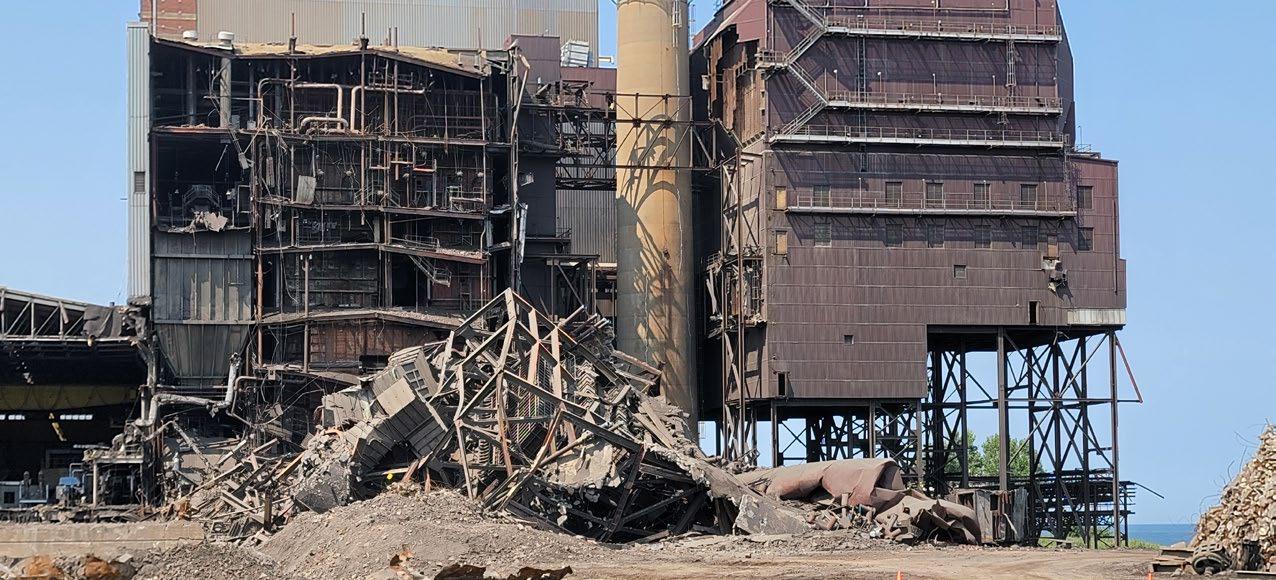
We just finished a boiler demolition in Texas at an active facility and are in the planning phase of multiple similar ones—active facility, ongoing construction project of new power units or newly completed power units. A solar power plant could potentially be in the pipeline and a few active industrial plants are also in the works.
How do you envisage DB3 Group in five to ten years?
I hope we are industry leader in providing consultancy services to clients and contractors specializing in demolition. When the idea of The DB3 Group was started, I asked myself if the company and myself could be great, could we lead the industry or would we just be another consulting firm—so I hope that those questions would be favorably answered.
I wanted to give back to small businesses or startups striving to be successful and sustainable, and give back to people of color and women in the industry and provide them with the same opportunities that I was afforded. Again, the vision is to be successful in supporting these groups.
And what about you in a few years?
Hopefully happy, having fun, making a positive impact and supporting the growth of as many people as possible. That may sound clichéd, but if you know me, you know it’s of great importance to me. Maybe I’ll have this crazy thing called life figured out. That would be nice.
AND FINALLY
Who do you most admire?
All the hardworking women and persons of color in my life. To see all the things they must experience, especially in today’s environment, to continue living life the best they can, continue providing for their families and for a society that doesn’t necessarily appreciate them or treat them with the respect they deserve.
What do you do for fun?
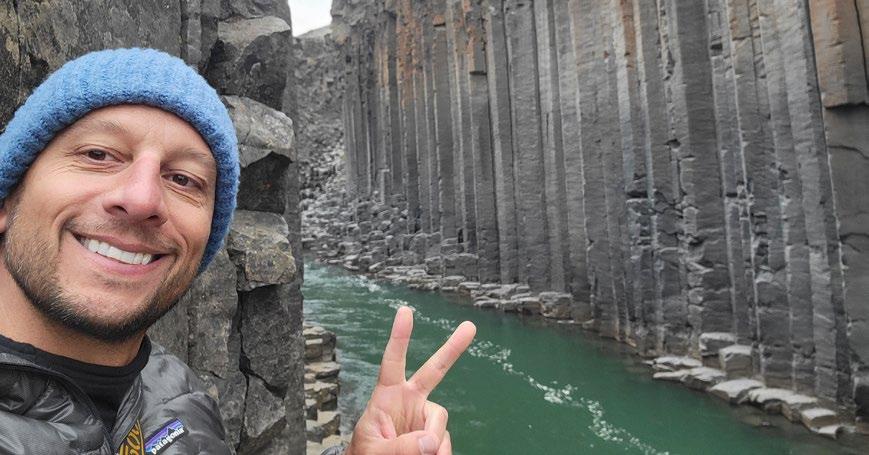
Beyond the fun adult activities…? Well, demolition, skydiving, scuba diving, hiking, and traveling.
When and where were you happiest?
Besides currently, it would have been when I elected to travel the United States with my pup, Pearl. I quit my job on a Friday, moved out of my apartment by Sunday, went to Costa Rica for over a week and decided that when I returned to Boston I was going to pick up my pup, go to REI, secure camping and survival gear and take an adventure until I was out of money.
We set out a few days after I returned and we travelled the U.S. visiting friends, family, and most importantly hiked and camped nearly all the National Parks in the lower 48. Easily the best decision that I ever made and one of the best years of my life.
What’s your bucket list activity?
Travel the world and experience everything the world has to offer.
CASE STUDY A Landmark Project:
Project:
McKee Run Generating Station
Location:
Dover, Delaware
Client:
City of Dover
Contractor:
Total Wrecking & Environmental
Structure:
Oil and gas-fired power plant
Duration:
Nine months
Total Wrecking & Environmental’s Demolition of McKee Run Generating Station
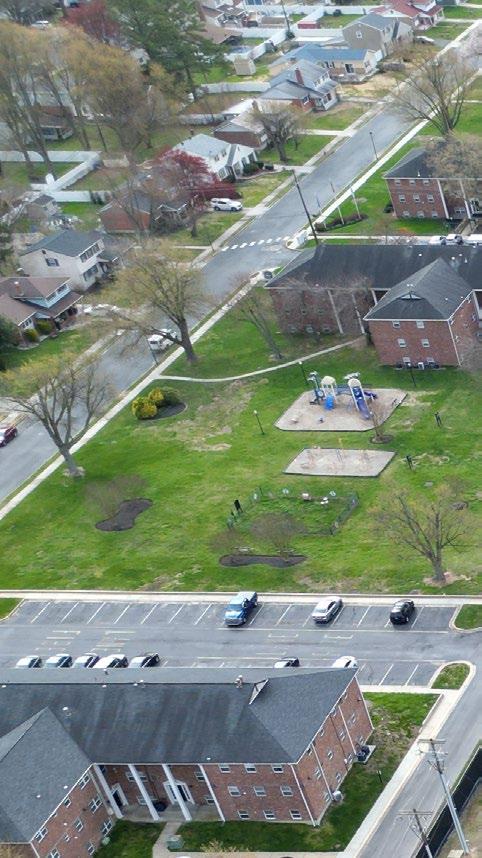
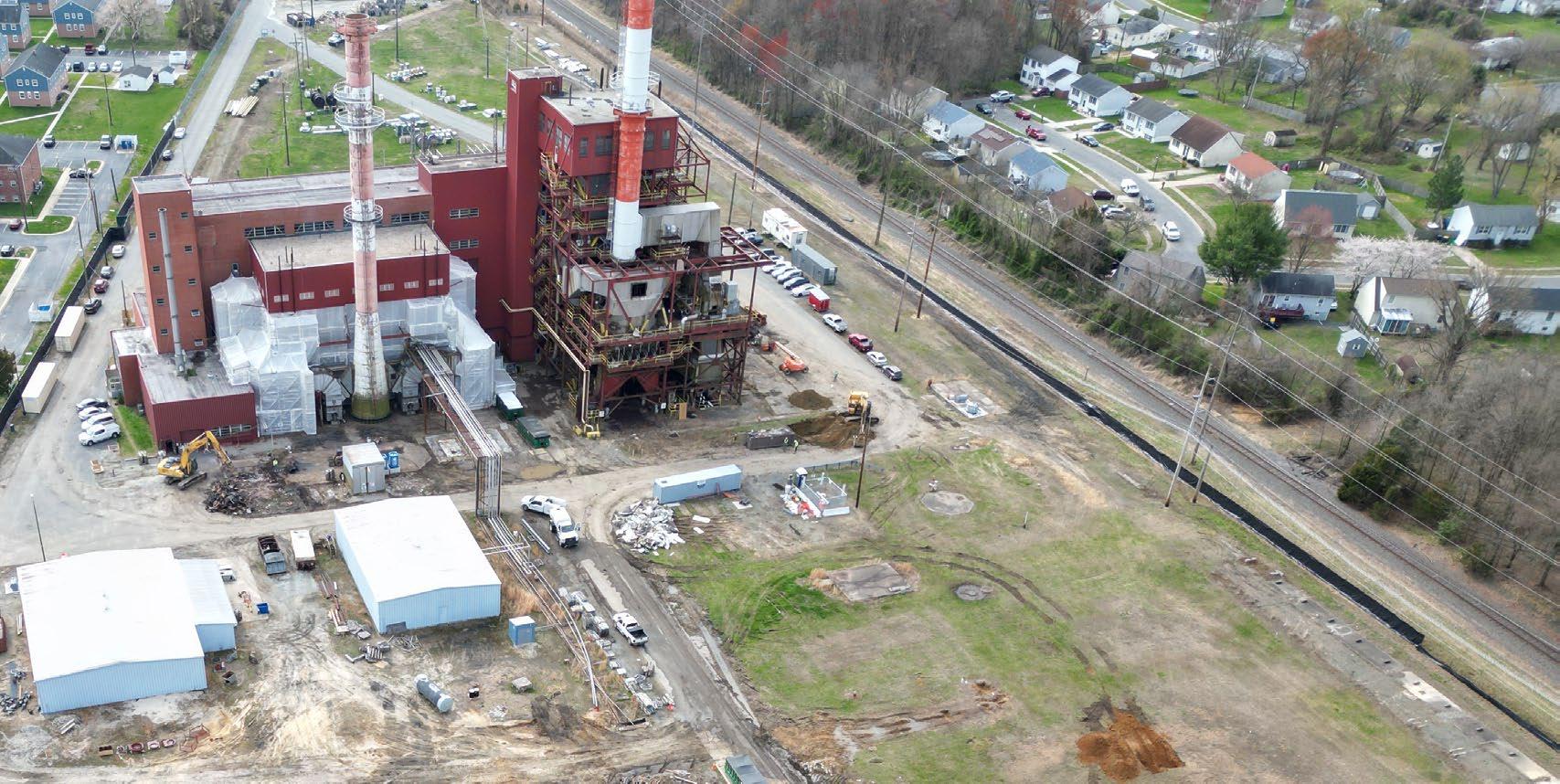
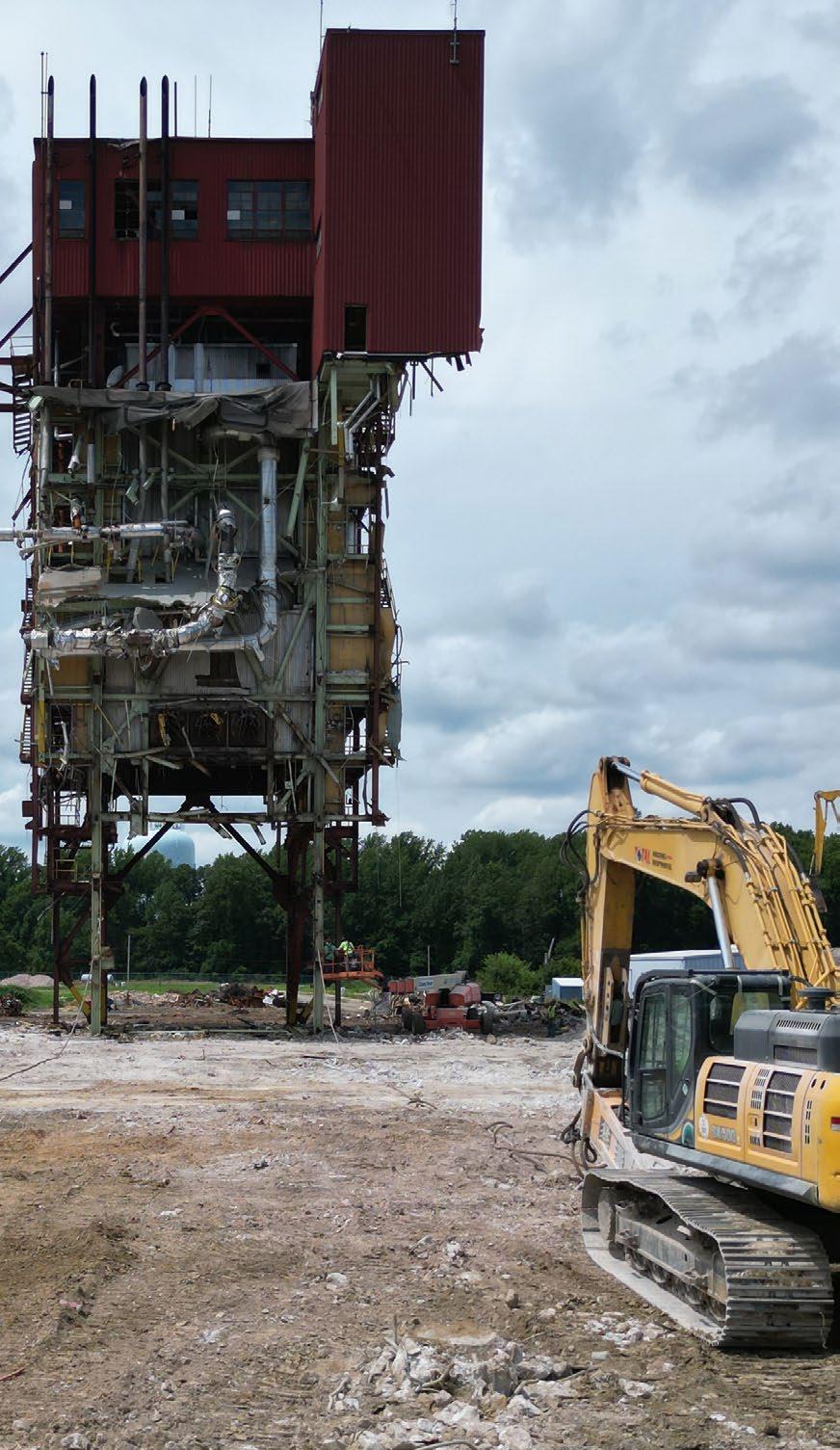
Some demolition services are just another day at the office. Others? They embody everything we love about the work we do. The McKee Run Generating Station in Dover, Delaware was one of those projects—big, complex, and packed with challenges. Built in 1961, this power plant had been literally keeping the lights on for decades, but by 2021, it was officially out of juice. The city needed it gone. Safely, efficiently and with as little impact on the surrounding community as possible. That’s where Total Wrecking & Environmental stepped in.
From the moment we won the bid, we knew this was going to be the kind of job we talked (and hopefully bragged) about for years to come. The site was right next to a residential neighborhood, meaning there was zero room for error. We had to be surgical—no dust storms, no noise complaints, and all.
And last but certainly not least, we had to make sure as much of the material as possible was recycled, all while staying on budget and finishing ahead of schedule.
Fast forward nine months later—yes, ahead of schedule—and McKee Run was nothing but a clean, graded lot. We’d recycled 95% of materials, not a single resident complaint had been filed, and we racked up 36,000+ safe work hours with zero incidents.
Not bad for a day’s work… or, you know, almost a year’s work. So how did we pull it off? Let’s take a look.

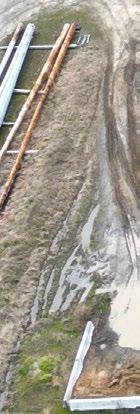
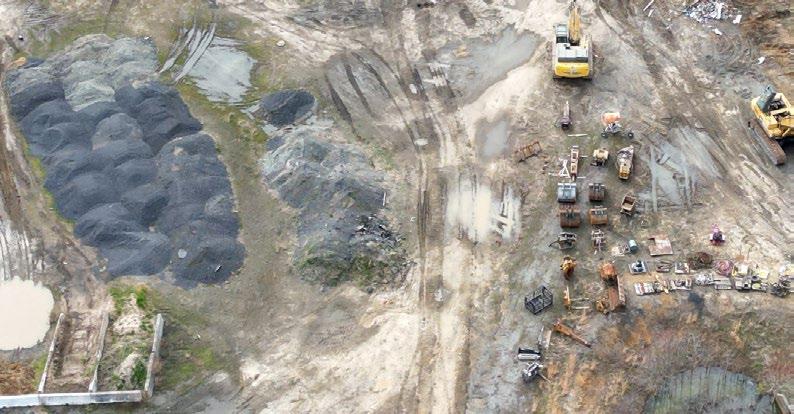
THE LEGACY OF MCKEE RUN
Built in 1961, this power plant was a workhorse. It started with two Westinghouse 16.5 MW units running on coal, then shifted to fuel oil and natural gas in the 1970s. By 2008, it was burning No. 2 fuel oil and gas, trying to keep up with changing regulations. But no matter how many upgrades it went through, its days were numbered. By 2017, two of its three units had been retired, and by June 2021, the entire plant had officially powered down for good. Why? The same reason so many older power plants are disappearing—tighter environmental regulations, aging infrastructure, and the push for cleaner, more efficient energy. It was clear to city officials that it was time for Dover to move on.
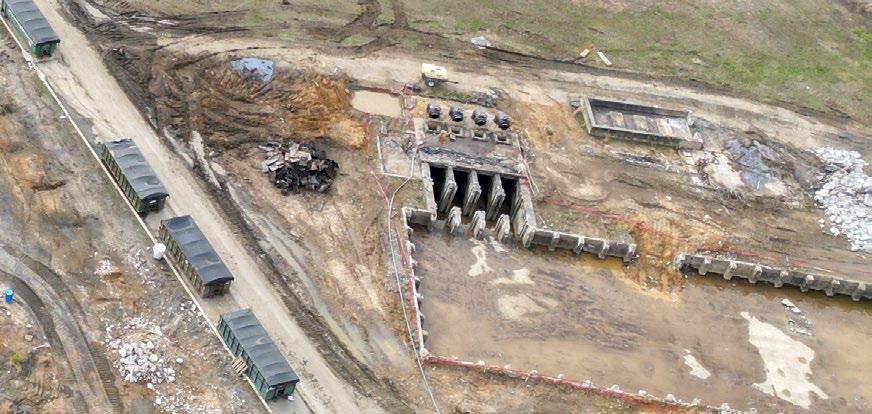

WHY CALL IN TOTAL WRECKING?
When the City of Dover decided McKee Run had to go, they didn’t just pick a demolition company out of a hat. This was a high-profile, high-risk job, and they needed the right team for it. So, they put the project out for competitive bidding, a process that included prequalifications, bid submissions, contractor shortlisting, multiple rounds of interviews and public city council meetings.
Total Wrecking & Environmental won the contract not just because we know how to take down power plants (though we have a very long and proven track record doing just that), but because we understand the bigger picture:
• Safety-first approach
• Sustainability-driven methodology
• Community-focused execution
Dover’s biggest concern was making sure residents weren’t impacted by noise, dust, or disruptions, and like every jobsite we’ve worked on, we were all-in on making that happen.
THE GAME PLAN
The city expected the project to take 10–14 months, a very fair estimate given the scale of work ahead. But we had other plans. Our goal? Get it done faster, safer, and cleaner than expected. Spoiler alert: we finished the project top to tail in just nine months.
With a 46-person crew split between demolition and asbestos abatement, we mapped out a step-by-step strategy to take McKee Run apart methodically, a detailed plan that preserved valuable materials, minimized disruptions, and ensured every safety measure was locked in place.
Up next? The real work begins. Let’s break down how we tackled the demolition, piece by piece.
THE DEMOLITION PROCESS: STEP BY STEP
Taking down a power plant isn’t like knocking over an old building. You can’t just bring in an excavator, swing a wrecking ball, and call it a day. There’s hazardous material to remove, valuable equipment to salvage, and a whole lot of planning to make sure the process is safe, controlled, and efficient. Here’s how we dismantled McKee Run Generating Station, one step at a time.
Phase 1: Prepping the Site
Before the first piece of steel came down, we had one job: make the site safe and secure. That meant:
• Disconnecting all remaining utilities
• Setting up dust control measures to protect the neighborhood from the migration of dust offsite
• Coordinating with city officials to ensure permitting and compliance
Once the groundwork was laid, it was time to start clearing out the hazardous stuff.
Phase 2: Handling Hazardous Materials
Like any older power plant, McKee Run had its fair share of hazardous materials, from asbestos in the building materials to PCB’s, oil universal waste, and electronic components that included bulbs, ballast and mercury vapor switches, that needed careful removal.
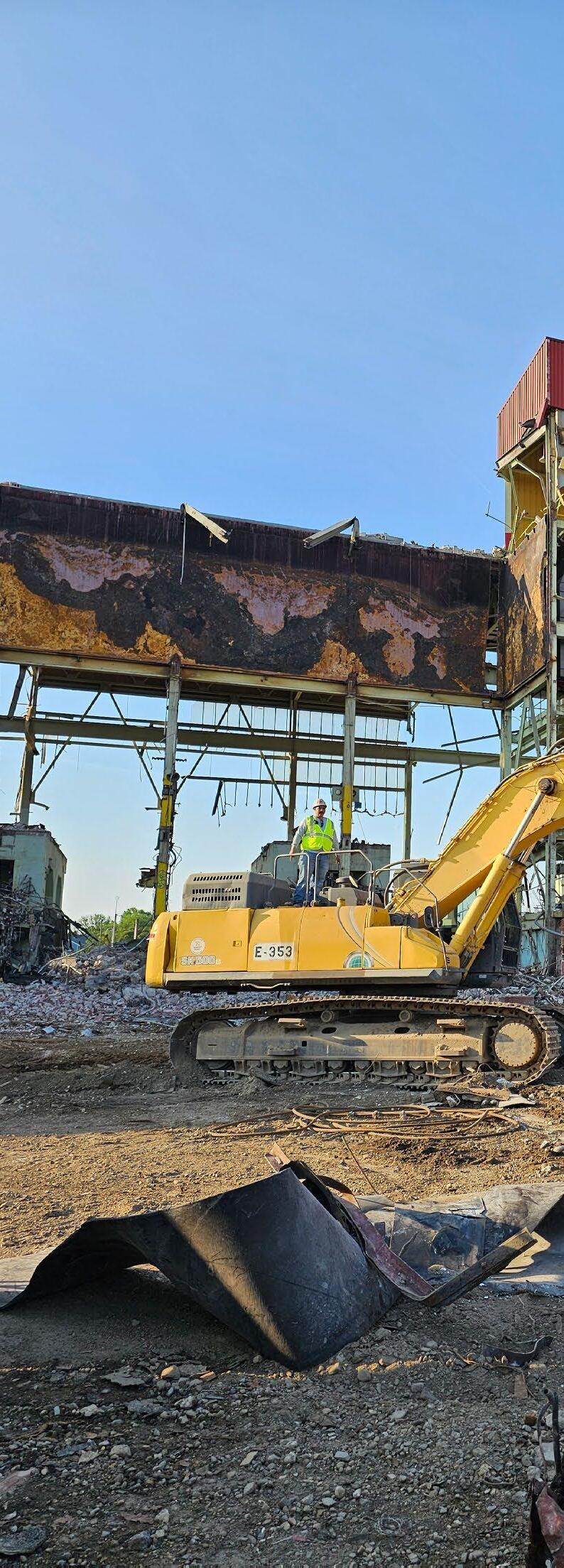
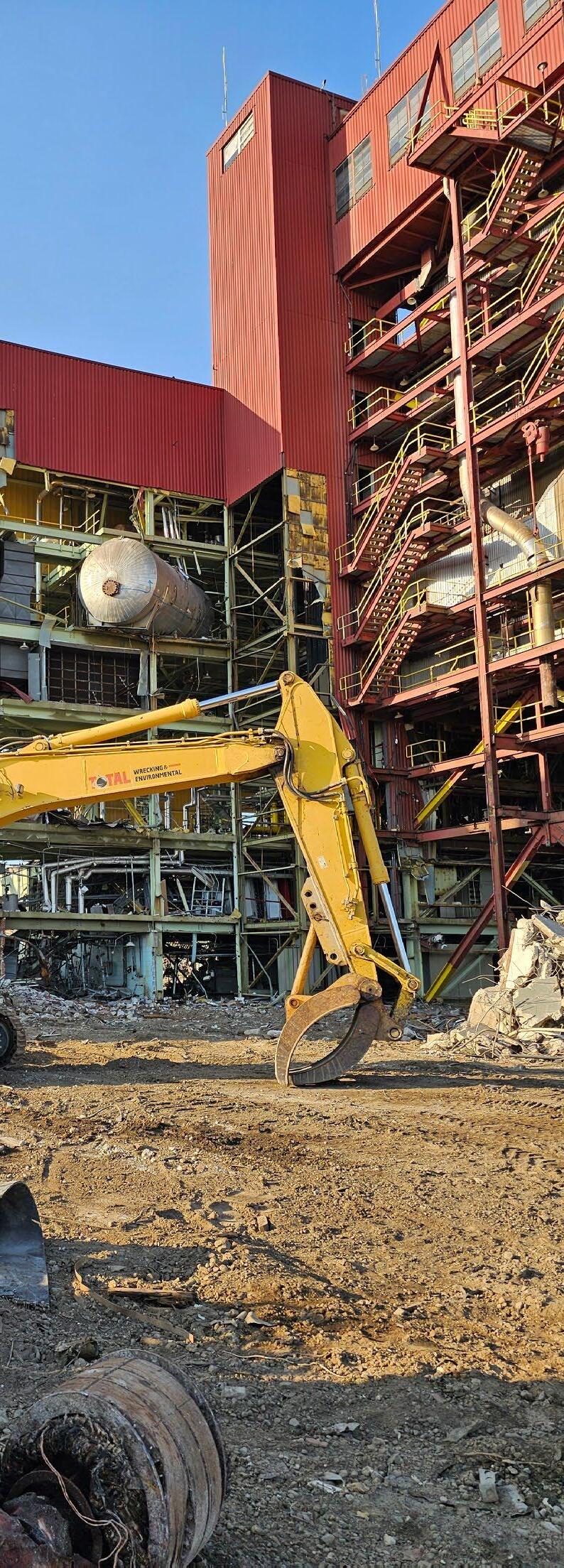
This part of the job fell to our 23-person abatement crew, who worked in tandem with the demolition team to safely extract and dispose of everything properly. Key steps included:
• Asbestos abatement—All asbestos-laced materials were removed systematically before demolition could begin.
• Hazardous waste extraction—Universal waste, transformer oils, mercury switches, and old wiring that couldn’t go straight to scrap were removed.
• Salvaging valuable materials—Copper wiring and massive turbine shafts were carefully cut and rigged for removal in order to be safely repurposed.
Phase 3: Mechanical and Structural Demolition
With the site prepped and hazardous materials removed, we could move on to the really fun part—bringing down the structures. Our biggest demolition areas included:
• Cooling towers: These structures (155 ft x 53 ft and 180 ft x 54 ft) had to be taken down piece by piece. They were constructed with a mix of pressure-treated wood, fiberglass, and plastic trays. These structures were demolished top down using excavators with grapple attachments.
• Turbine generator: This structure was demolished using six-ft torches and the repowering of their onsite overhead crane. Our team carefully cut through turbine shells and carefully lowered them to the ground safely. Every cut was made with precision, surgical and tightly controlled, ensuring no unexpected collapses.
• Boiler demolition: This was the heart of the plant, containing boilers, transformers, and other large steel structures.
The following equipment was critical in making all of this happen:
• 100,000-pound excavators with shears, grapples, and hydraulic hammers
• 110-ft high-reach excavator for precision work
• 6-ft torches for controlled dismantling
• 950 front loader and 10,000-lb telehandler for material handling
Phase 4: Circulating Water Line
Grouting and Site Restoration
Even after the major structures were down,
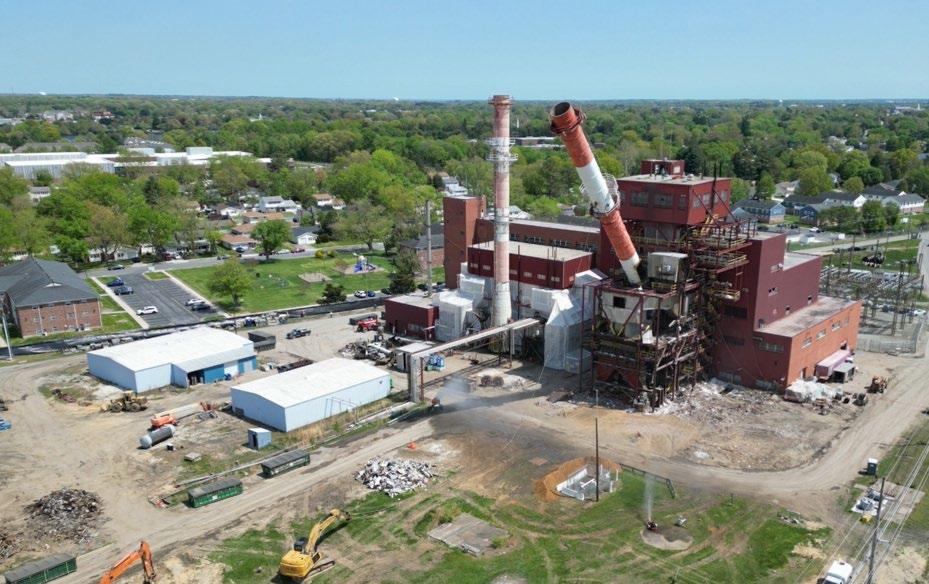
Total Wrecking still had some housekeeping to do around the jobsite, including:
• Water line grouting—Abandoned underground water lines needed to be sealed and flow-filled to prevent future ground shifts.
• Final grading and leveling—The site was backfilled, graded, and leveled to create a clean slate for future redevelopment.
THE RESULTS: A PROJECT COMPLETED WITH EXCELLENCE
When you take down a massive industrial facility like McKee Run, it’s about doing it right. Safety, efficiency, sustainability, and community impact all play a role in measuring success.
Finishing Ahead of Schedule
The City of Dover estimated this project would take 10–14 months, which is a totally reasonable timeline considering the complexity of power plant demolition. But Total Wrecking doesn’t aspire to do “totally reasonable” work. Instead of 10–14 months, we wrapped it up in
just nine. That’s months ahead of schedule, while maintaining a level of quality and safety you simply can’t find with another industrial demolition contractor. How did we do it? Meticulous planning, expert crews, and a dedication to everyone working in lockstep every step of the way.
36,000+ Safe Work Hours
Demolition is inherently dangerous work, and safety at Total Wrecking is non-negotiable. One wrong move in a job like this could mean serious injuries, or worse. That’s why every single one of our extensively trained 46 crew members followed strict safety protocols from day one, which resulted in:
• Zero safety incidents
• 36,000+ incident-free work hours
• No injuries, no delays, no mishaps
95% of Materials Recycled
A demolition site is a gold mine of recyclable materials, especially if you know what you’re doing. And we do. Rather than sending everything to a landfill, we made sure to salvage and repurpose as much as possible:
• Turbine—Carefully cut, lowered to the ground and removed to be recycled
• Copper wiring—Extracted and recycled
• Steel and scrap metal—Processed for reuse
• Other recoverable materials—Diverted from waste streams
• All concrete was recycled and used as backfill The only materials that couldn’t be reused were the cooling towers. Everything else was safely reclaimed, recycled, or repurposed.
Zero Resident Complaints
One of the biggest concerns with a project like this is not disrupting the surrounding community. McKee Run sat right next to a residential community, which meant we had to be surgical in our execution. Noise, dust, and traffic disruptions could have easily led to frustrated residents and city officials. But thanks to our careful demolition strategy, dust control measures, and community engagement efforts, the project resulted in:
• Zero noise complaints
• Zero dust complaints
• Zero concerns from residents
In fact, the City of Dover’s Electric Director, Paul Waddell, praised our team in a glowing letter of recommendation, noting how our team showed up to a community meeting before the project even started to answer questions and address concerns, kept communication open and transparent throughout the entire project, and took extra steps to minimize impact on the surrounding area. And it paid off! The entire project was completed without a single complaint.
A BENCHMARK FOR INDUSTRIAL DEMOLITION
For Total Wrecking & Environmental, and we hope for the entire industry at large, the McKee Run project was a case study in how to do things the right way. Total Wrecking didn’t just meet expectations, we blew right past them. And we’re proud of that. We finished ahead of schedule, kept every single crew member safe, recycled nearly everything on site, and left the community happier than we found. With McKee Run now just a memory, Dover has a clean site ready for future redevelopment, and we have yet another major success story under our belt. Now, we’re looking forward, more prepared than ever for the next big challenge.
CASE STUDY
The Revival of Tillman Hall
Trifecta Services Company

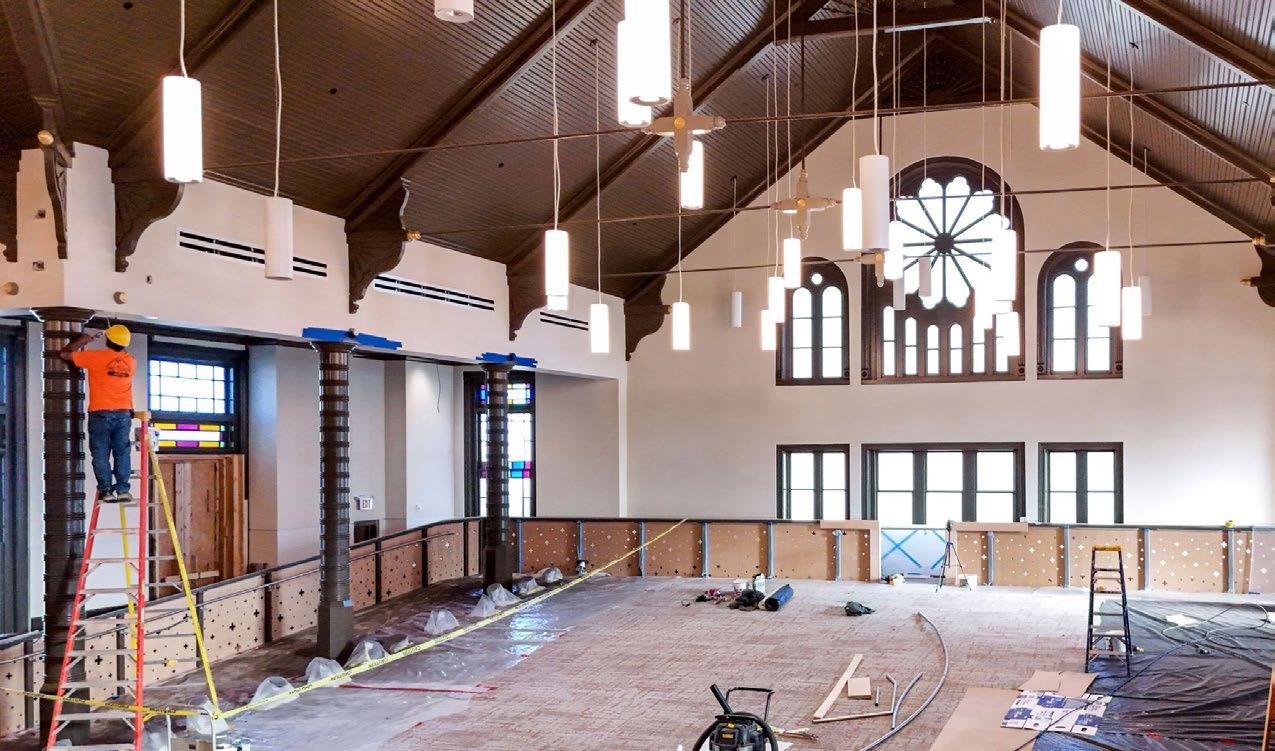
In a project that combined structural ingenuity, historical reverence and sustainability, NDA member Trifecta Services Company earned top honors in Category 1 of the 2025 NDA Excellence in Demolition Awards for its work on the Tillman Hall Auditorium restoration and demolition at Clemson University in Clemson, South Carolina. This ambitious undertaking pushed the limits of selective demolition in an active, historically significant structure, delivering both a technical triumph and a tribute to the past.
A Historic Mission
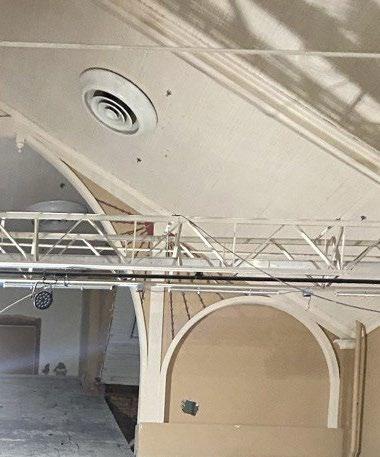
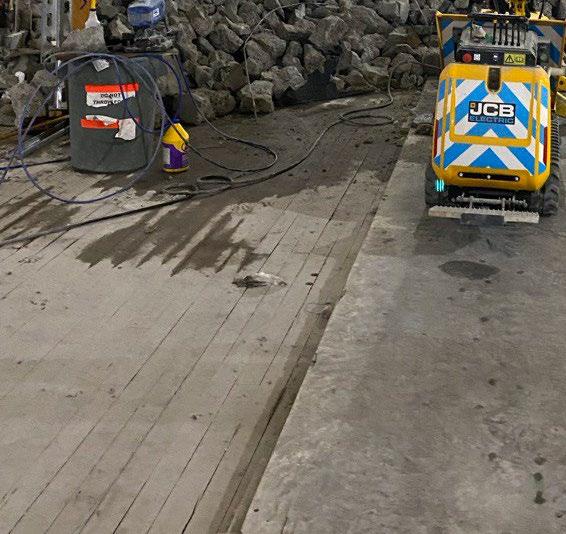
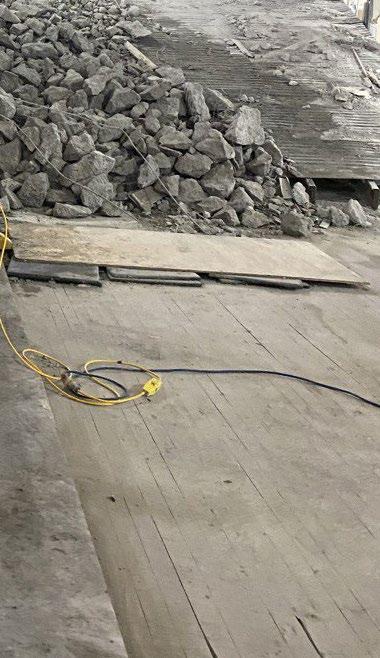
The goal of the Tillman Hall project was to restore the university’s iconic auditorium to its original 1893 appearance. Over the years, the space had been altered with non-original structural elements, most significantly massive two-foot-thick concrete bleachers installed above delicate original wood flooring.
Trifecta’s mission was to surgically remove these intrusive additions without harming the building’s historic features, which included intricate mosaic tilework, original brick and windows.
The was selected for its deep experience in historic preservation and its proven ability to manage complex demolition operations in sensitive, partially occupied buildings. The company’s history of success with delicate structural work made it the top choice for general contractor Harper General Contractors and Clemson University. Trifecta mobilized on October 8, 2023, and
finished ahead of schedule on January 23, 2024, an impressive feat given the scope and complexity of the job. At peak activity, approximately 12 workers were on site, including demolition crews, abatement specialists, safety personnel and historic preservation professionals.
Innovation at Work
Executing the demolition without compromising the structure’s integrity required advanced techniques and precision tools, including:
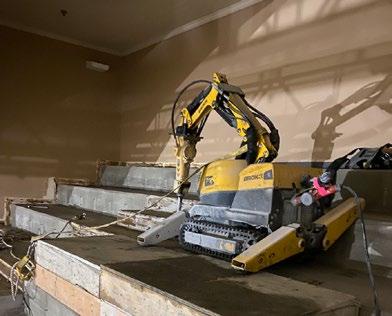
• Brokk 70 demolition robot: This compact, remote-controlled robot delivered surgical demolition capabilities with minimal vibration, critical when working above historic materials.
• Steel shore posts and land bridges: These were used to redistribute weight safely across vulnerable floors, allowing demolition of heavy concrete bleachers without stressing the original wood below.
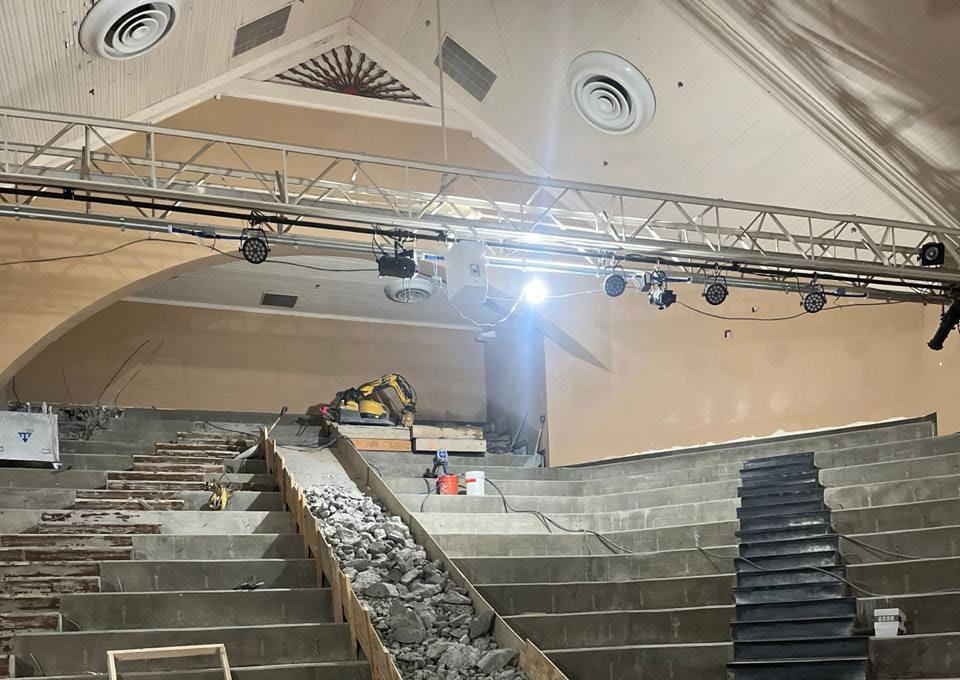
• Real-time vibration monitoring: Sensors ensured that even the subtlest movements were tracked, protecting fragile brick and mortar.
• 54 demolition drawings: An unusually high number for such a small footprint, these plans reflected the intricacy and structural sensitivity of the job.
Step-by-Step Execution
From initial planning to final handoff, Trifecta approached the project with meticulous coordination and precision. Each phase was carefully designed to balance structural safety with historic preservation, ensuring that no detail was overlooked in the restoration of this iconic space. Here’s how the complex demolition unfolded:
1. Planning phase: Dozens of detailed demolition and shoring drawings were developed to prepare for every contingency.
2. Hazardous material abatement: Crews installed full containment systems and negative pressure
zones to remove asbestos-containing materials and lead-based paint—while the building remained partially in use.
3. Selective demolition: All non-original finishes and interior walls were carefully dismantled.
4. Concrete bleacher removal: The most technically demanding phase, this involved removing the 2-foot-thick concrete structures using the Brokk robot, steel shoring, and weight management systems.
5. Salvage operations: Historic mosaic tiles, windows, and other features were preserved for reintegration into the restored space.
6. Final prep: Once cleared and stabilized, the auditorium was turned over to the restoration team for rebuilding.
Sustainability and Stewardship
Trifecta made sustainability a priority. Approximately 90% of all materials were salvaged or recycled, including steel, concrete and architectural elements.
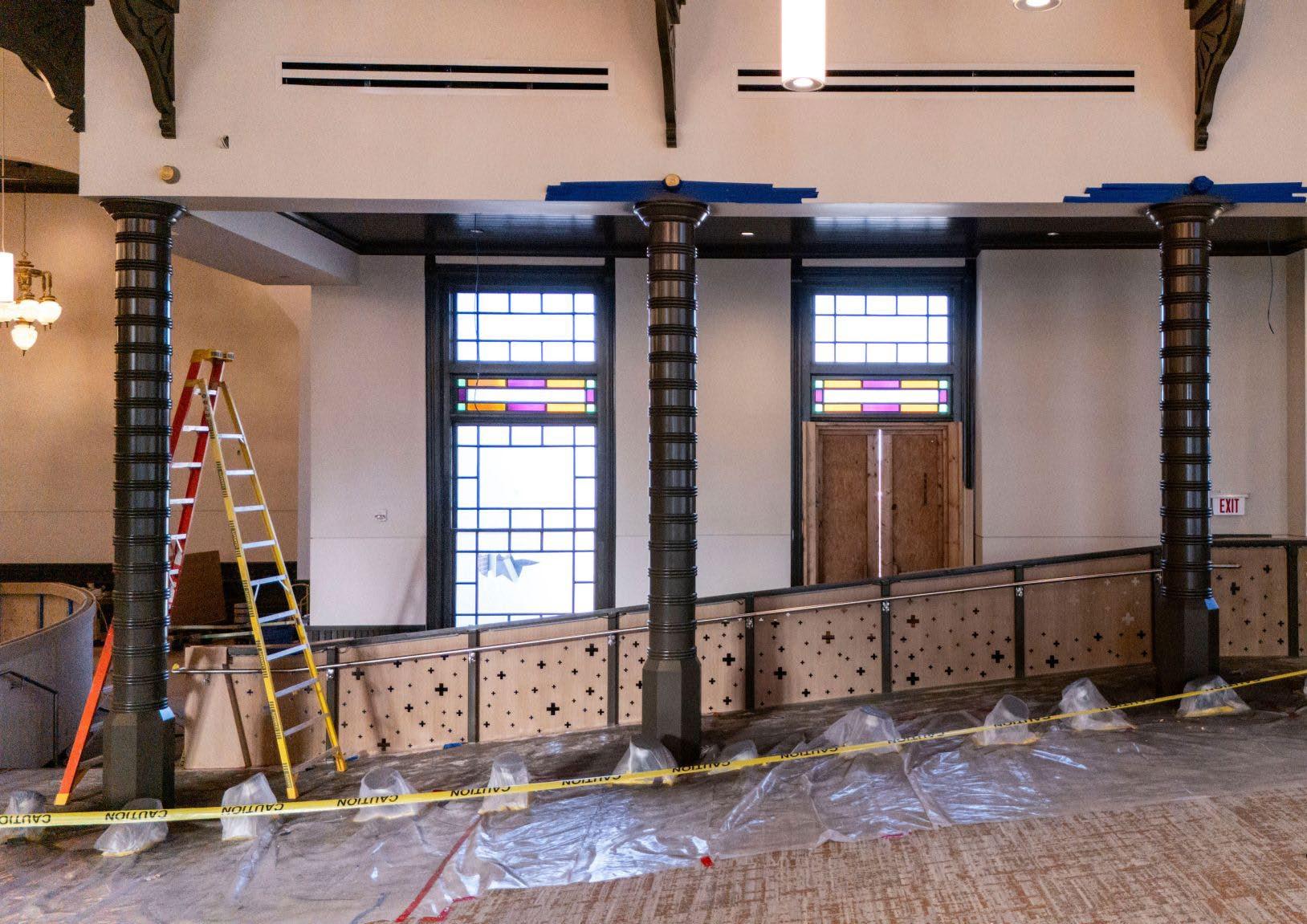
Salvaged materials were not only diverted from landfills but also reused in the restored auditorium, preserving the original craftsmanship. Hazardous waste was minimized through stringent abatement protocols, setting a high environmental standard for historic renovation projects.
Challenges Overcome
This was no ordinary demolition. Trifecta navigated numerous technical and logistical challenges:
• Removing massive concrete bleachers without damaging the underlying antique wood floors.
• Maintaining the integrity of fragile historic masonry and tile during vibration-intensive work.
• Performing asbestos and lead paint abatement while parts of the building remained operational.
• Keeping active sprinkler lines functional throughout the demolition process.
• Managing the demands of 54 separate demolition drawings tailored to the structure’s sensitive conditions.
Defining Success
Beyond the physical work, the project also served the local community. Trifecta employed a regional workforce and sourced materials from nearby suppliers. These efforts supported local economic development and created hands-on training opportunities in historic preservation and construction, further deepening the university’s connection to the surrounding area.
For Trifecta, success wasn’t just defined by the early completion date or technical execution. It was about honoring Clemson’s architectural heritage, protecting irreplaceable craftsmanship, and demonstrating that complex demolition can be carried out safely, sustainably and with cultural sensitivity.
CASE STUDY
Sunshine State Success
Jackson Demolition
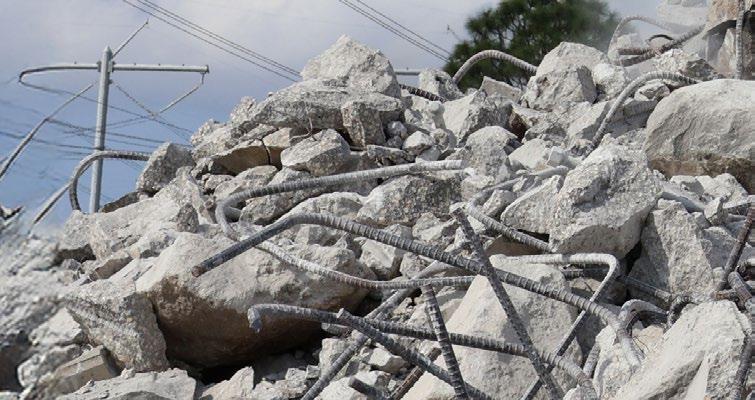
In addition to believing that every project they undertake is a part of a larger picture, much of the appeal of being a demolition contractor is the broad range of projects a company can be called upon to tackle. Structures of every shape, size and construction, and projects with differing levels of simplicity or complexity, make for a challenging — but rewarding — career. One that fits the “unique and challenging” category, a massive alternative energy decommissioning project in Florida, has been on NDA member Jackson Demolition’s docket since spring 2024. While ideally suited for projects of that type and scope, the Schenectady, New Yorkbased company nevertheless upped its game with the purchase of a new demo attachment. The result of that purchase was a dramatic reduction in per-structure processing time and a far more efficient workflow. A bright outcome, for sure.
Jackson’s Roots
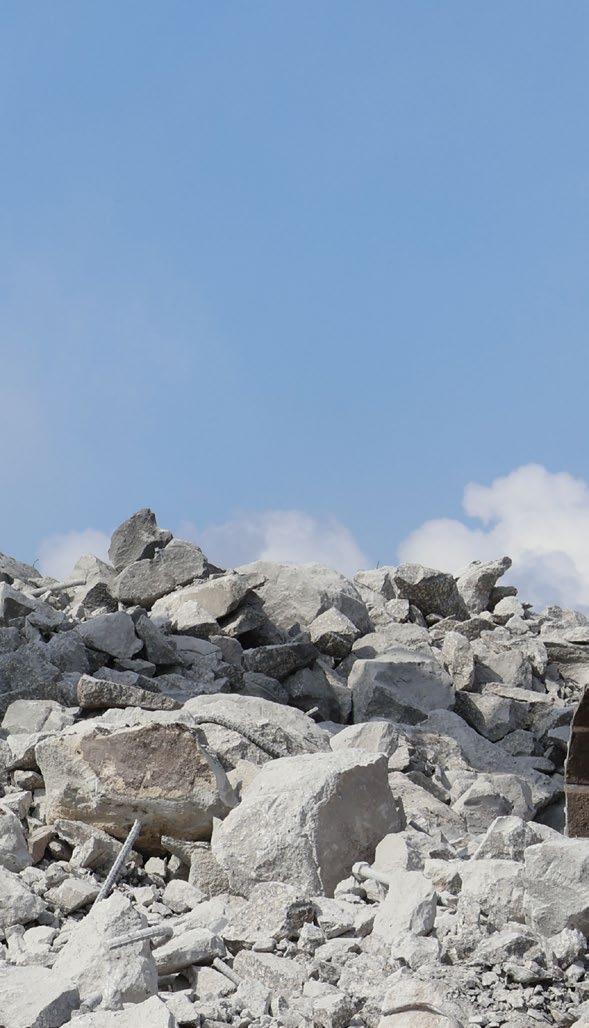
The job Jackson Demolition is undertaking, an alternative energy production site that is being decommissioned, is massive, covering an area larger than several hundred football fields. After removing the above-ground components of the site, Jackson’s team had to focus on the subgrade footings, which numbered in the thousands. When complete, the project will yield some impressive volumes of material, nearly all of which will be recycled. According to Chris Jackson, the company’s lead operator/superintendent, while the project is the first of its type they’ve done, it is still right in their wheelhouse.
“We are a family-owned and operated business and have been since being founded in 1949,” he says. “When the company was started by my uncle and my father, they focused on tree work and only had an old Ford truck and an even older crane. But when my dad, ‘Sandy’ Jackson, took over later, he really moved the company forward and made us what we are now: a full-service demolition company with a focus on industrial demolition and asset recovery.”
Today, with 150 employees and a formidable fleet of iron, Jackson Demolition works up and down the East Coast and throughout the Southeast, handling a range of demolition projects including power plants, paper mills, petrochemical plants and more, as well as abatement, recycling and the aforementioned asset recovery.
Valued Expertise
The bid to process the thousands of concrete structures contained on the site was, understandably, competitive. However, Jackson Demolition’s reputation for efficiently tackling large projects paid dividends.
“Our expertise was put into play immediately upon getting on site,” Jackson says. “We were faced with a massive expanse of up-front work that needed to be quickly and safely performed so that the footers and foundation blocks, which extended downward, could be exposed and processed. And our team answered that call.”
To get the production they needed to complete the work in the allotted time, Jackson has about 55 employees on-site, performing a number of different jobs at one time.
“One crew is removing the ferrous material, another the nonferrous, another excavates to expose the concrete, another moves the severed concrete blocks and so on. It is a real group effort,” Jackson says.
Solid Support System
Jackson is quick to admit that the concrete facet of the job is by far the one that presented the most challenge. Each base consists of a reinforced concrete footer that extends downward some 4-5 feet, capped off by a concrete block — also heavily reinforced — measuring as large as 5 feet square.
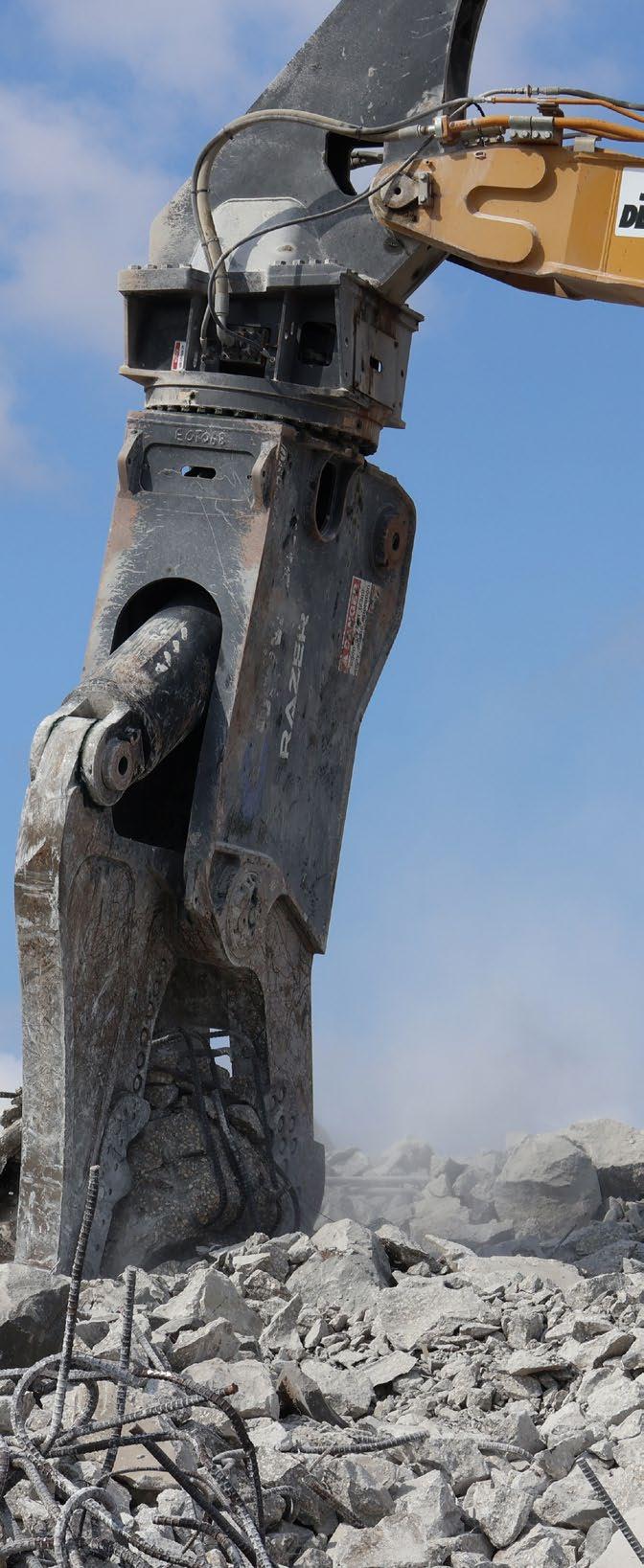
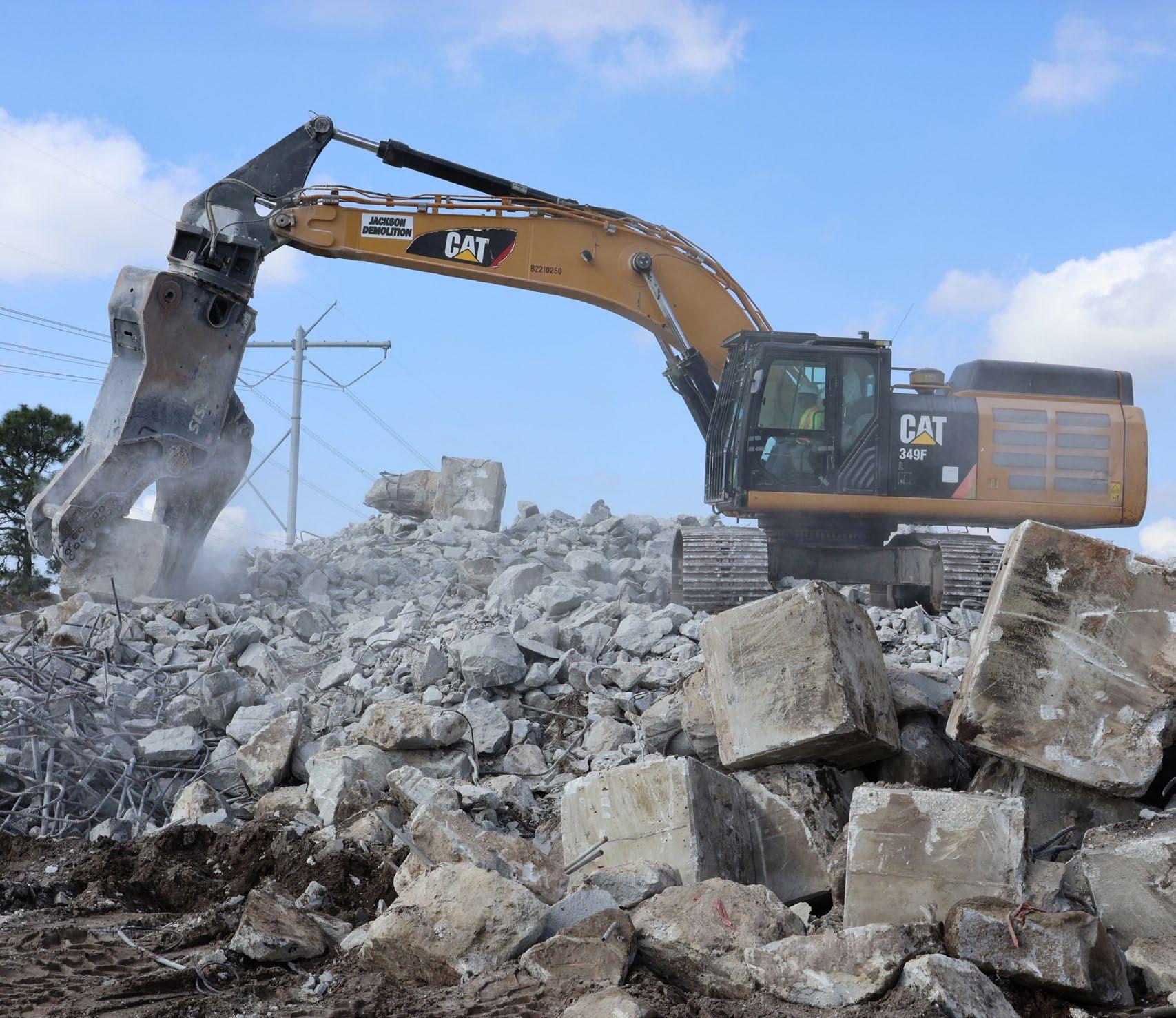
“To process the concrete, we made a specific equipment purchase in advance of the job,” Jackson says. “We reached out to the team from Genesis Attachments and, based on their recommendation, purchased a Genesis GDT 890 Razer Demolition Tool. It is the largest model of that tool Genesis offers, and we knew we would need every bit of it — we have not been disappointed.”
Jackson’s GDT 890 is a demo-designed tool, ideal for use as a concrete processor and demolition shear. The number of crushing teeth and their locations can be customized to meet project needs, and the bolt-on teeth can be interchanged and reversed front to back for longer life and lower cost of operation. Jackson will readily attest to the attachment’s performance. “We’ve been operating it for nine months now, on some challenging concrete structures, without so much as a need to rotate any of the blades,” he says.
Overachiever
As is often the case, changes in approach have occurred since the Genesis Razer came on-site. Jackson’s original intent was to use the tool to cut the pilings located below each concrete block. “We would dig around it on three sides and cut the piling, making the block ready for removal,” he says. “But the Razer was just too fast for that facet of the operation, leaving the operator with a lot of downtime while the blocks were being processed.”
The block processing to which Jackson alludes included first hammering each one with a hydraulic hammer, then using a pulverizer attachment to further downsize the concrete, free up the rebar, etc. That process, they quickly learned, created a logjam in that part of the operation
“It clearly wasn’t working,” Jackson says. “So, we crushed a few blocks using the Razer and found that it both downsized the concrete and freed up about 85% of the bar inside. But the real compelling fact was time: the previous method — using two machines and not getting it anywhere near as clean — took about eight minutes per block. By comparison, the Genesis Razer got us to where we need to be with each block in about 45 seconds. Once we made the move, our production soared. That attachment is just a beast.”
The Recovery Effort
One of Jackson Demolition’s key strengths is a commitment to recycling as much material as possible from each project they undertake, and the solar project was no exception, according to Chris Stradtman, the company’s project manager.
“We have been
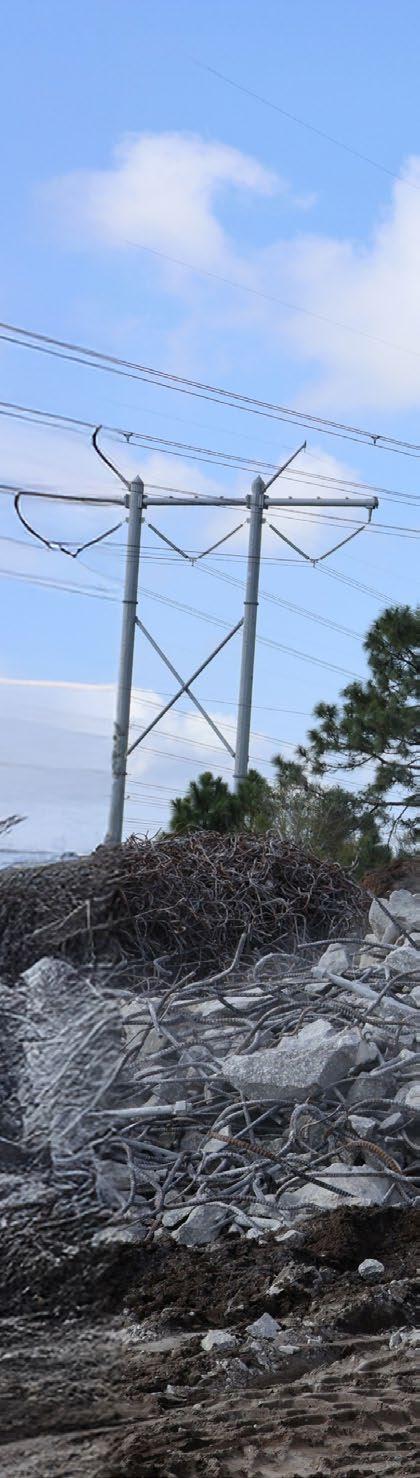
aggressive about recycling everything we can out here,” he says. As a result, by project’s end, we will have recovered and recycled about 8,000 tons of ferrous material and 7,000 tons of nonferrous — all of which is being taken to a local scrap recycler. In addition, we will recover more than 30,000 cubic yards of concrete, which will be used on-site to make it ready for redevelopment.
The project, which started in spring 2024, is slated to be completed within an 11-month period. According to Jackson, that deadline will be more than doable, largely because of the production they are now getting with the Genesis Razer.
“We have been Genesis users for a long time
now; we probably have close to a dozen of their attachments in our fleet company-wide,” he says.
“We like the fact that the company is always striving to create solutions geared toward making the work of contractors like us better. This job, which could have been a real challenge, is instead a textbook success story for us. The team we have out here deserves a whole lot of the credit, but there’s no denying the impact that attachment has made for us. It’s been a big part of our success.”
CASE STUDY
No Room For Error
East Coast Demolition
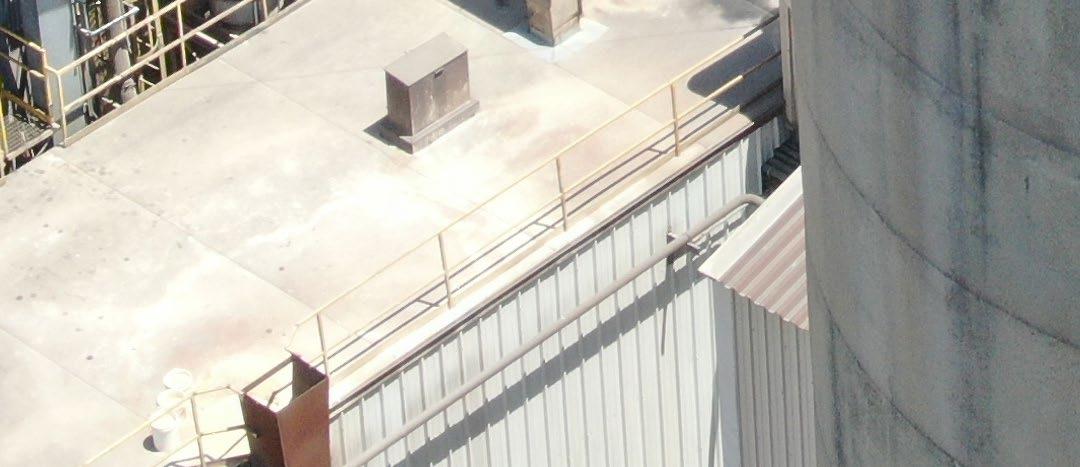
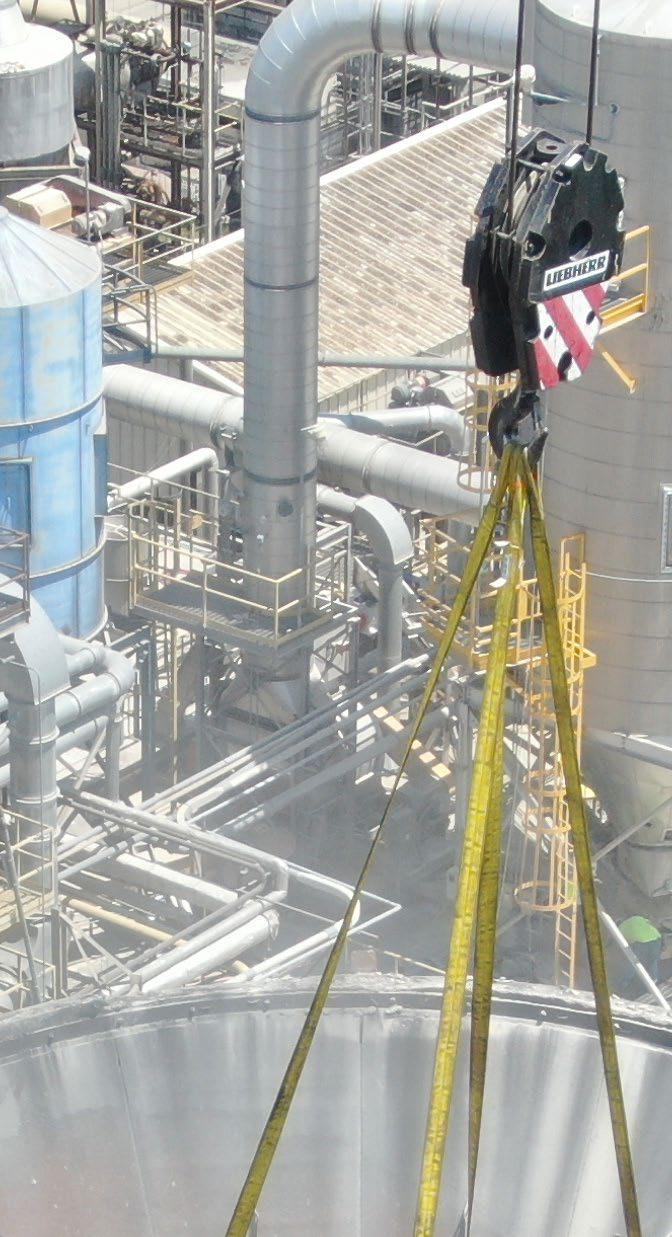
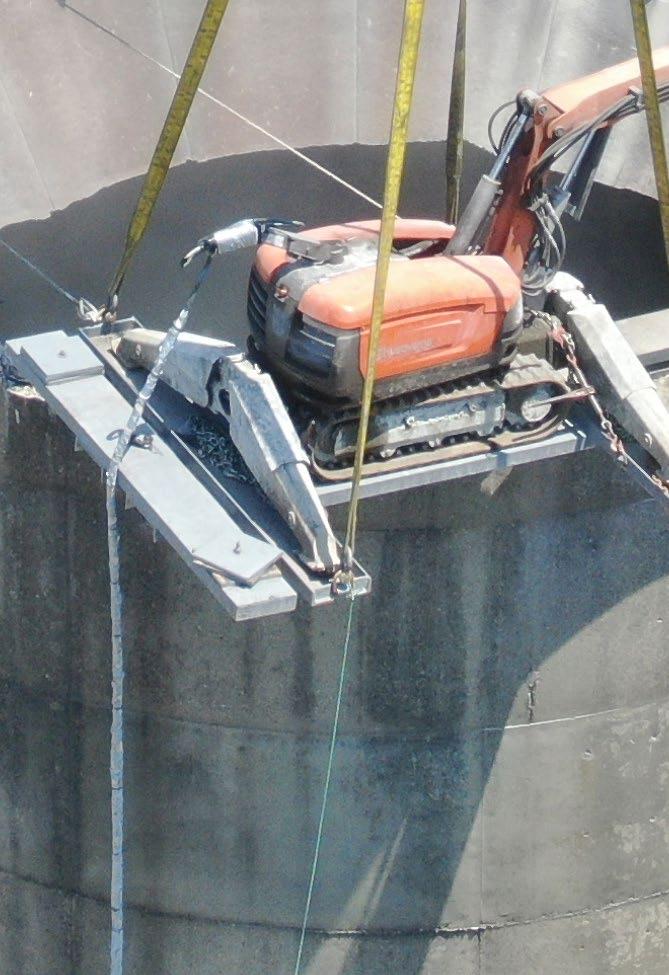
When a company in Chesapeake, Virginia, needed to remove an aging concrete silo, it turned to NDA member East Coast Demolition (ECD) to execute a precise, controlled demolition.
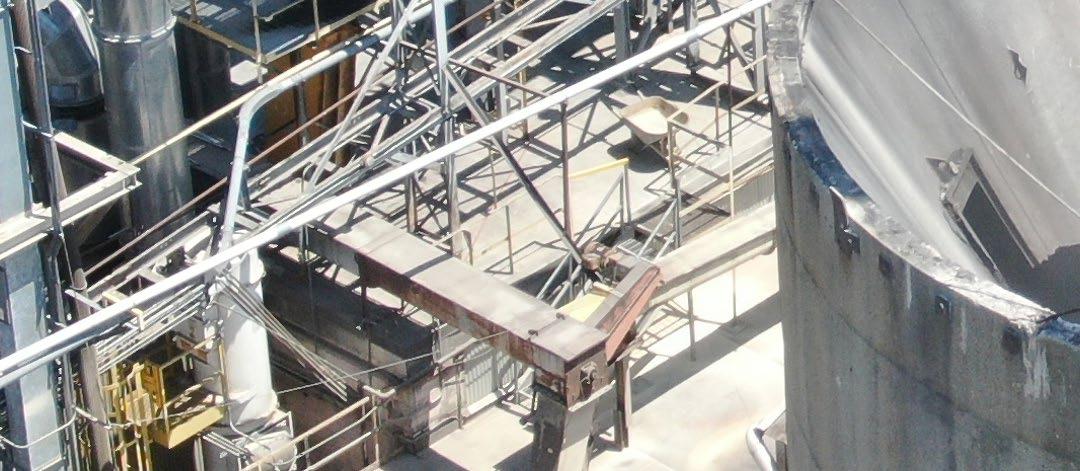
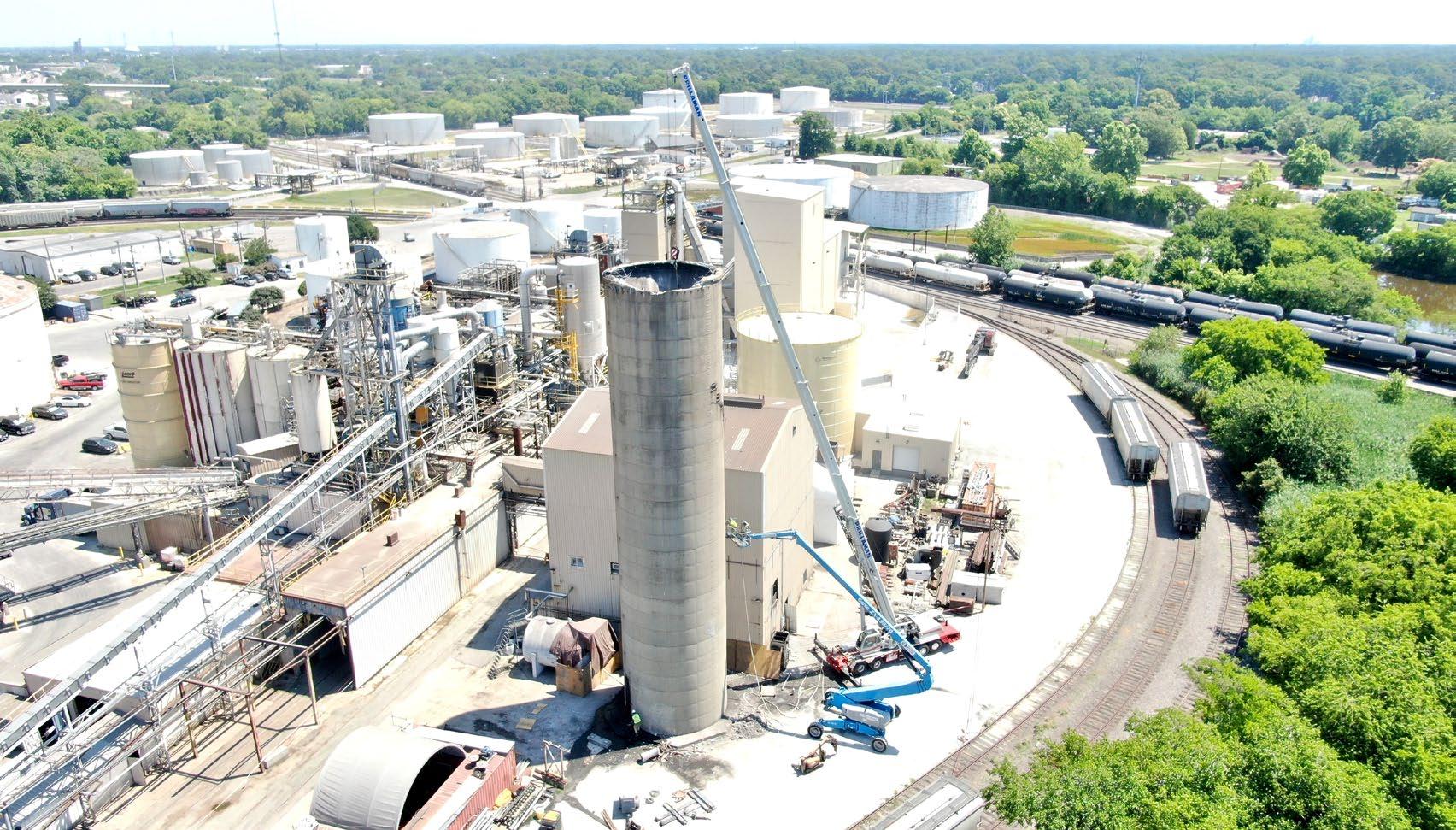
The 120-foot-tall structure, once used to store coal for a boiler plant, had become obsolete, occupying valuable space and posing a possible safety risk as it aged. However, its proximity to other assets—just 15 feet from a live boiler plant and an auxiliary water tank—made the project uniquely challenging.
“There was a lot of activity around the silo, including an adjacent train rail line and an active plant,” says Ricky Webb, chief operating officer of ECD. The company wanted to maintain the integrity of current operations while ensuring the ongoing safety of its employees.
A Trusted Partner
For a Difficult Job
ECD was chosen for the job due to its extensive experience with similar high-risk demolitions. “ECD was called in because of the complexity of the project and because we were a trusted partner,” Webb says. “We had completed projects for this client in the past and had a proven track record for removing silos near live infrastructure. We also owned and operated a lot of our equipment, so we could control schedule and costs.”
The project began in June 2024 and took approximately three weeks to complete. Given the height and the tight confines of the site, ECD opted for a combined demolition strategy, utilizing both high-reach and robotic demolition equipment.
“
CD was called in because of the complexity of the project and because we were a trusted partner
The Complex Top-Down Demolition Strategy
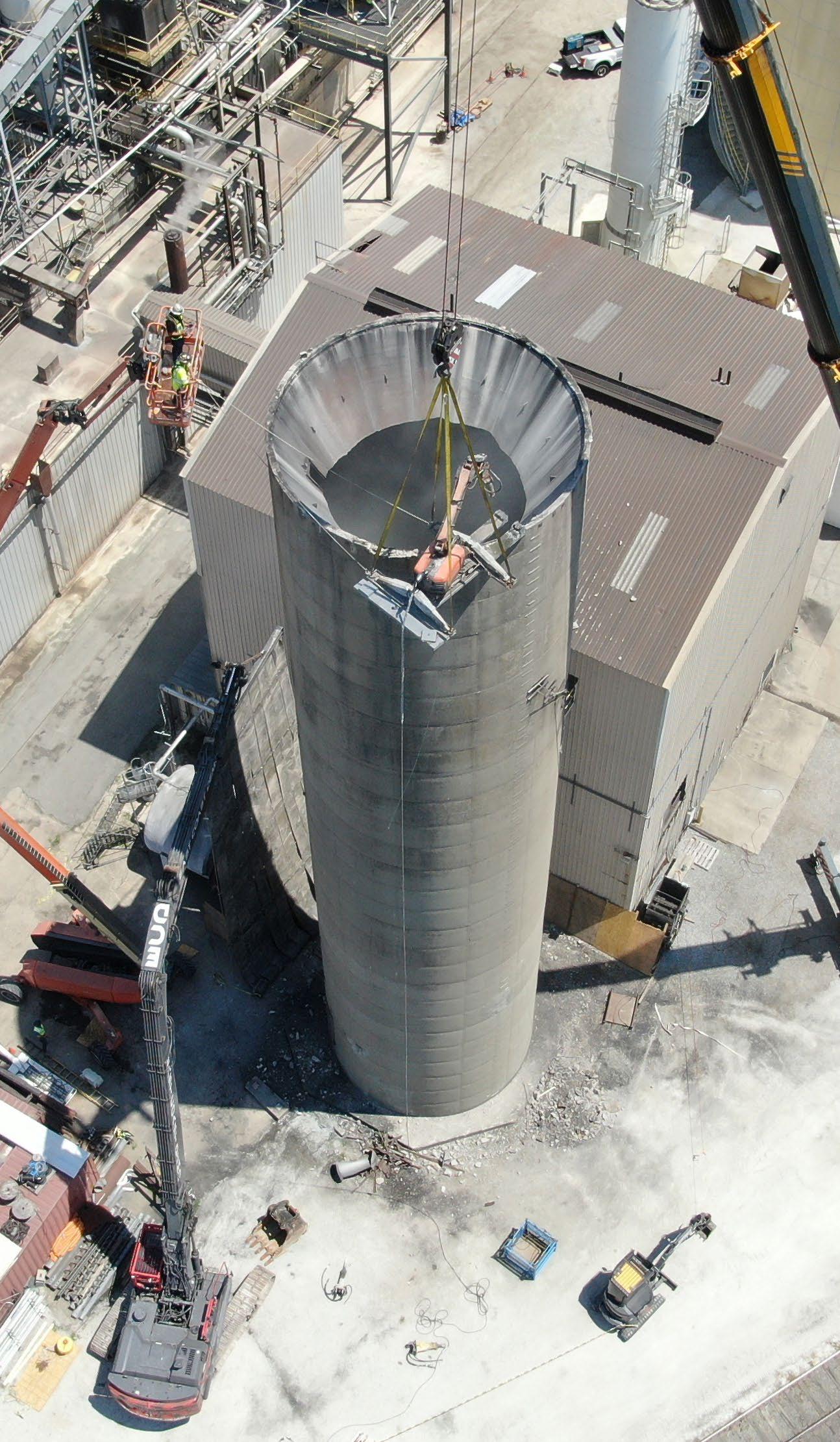
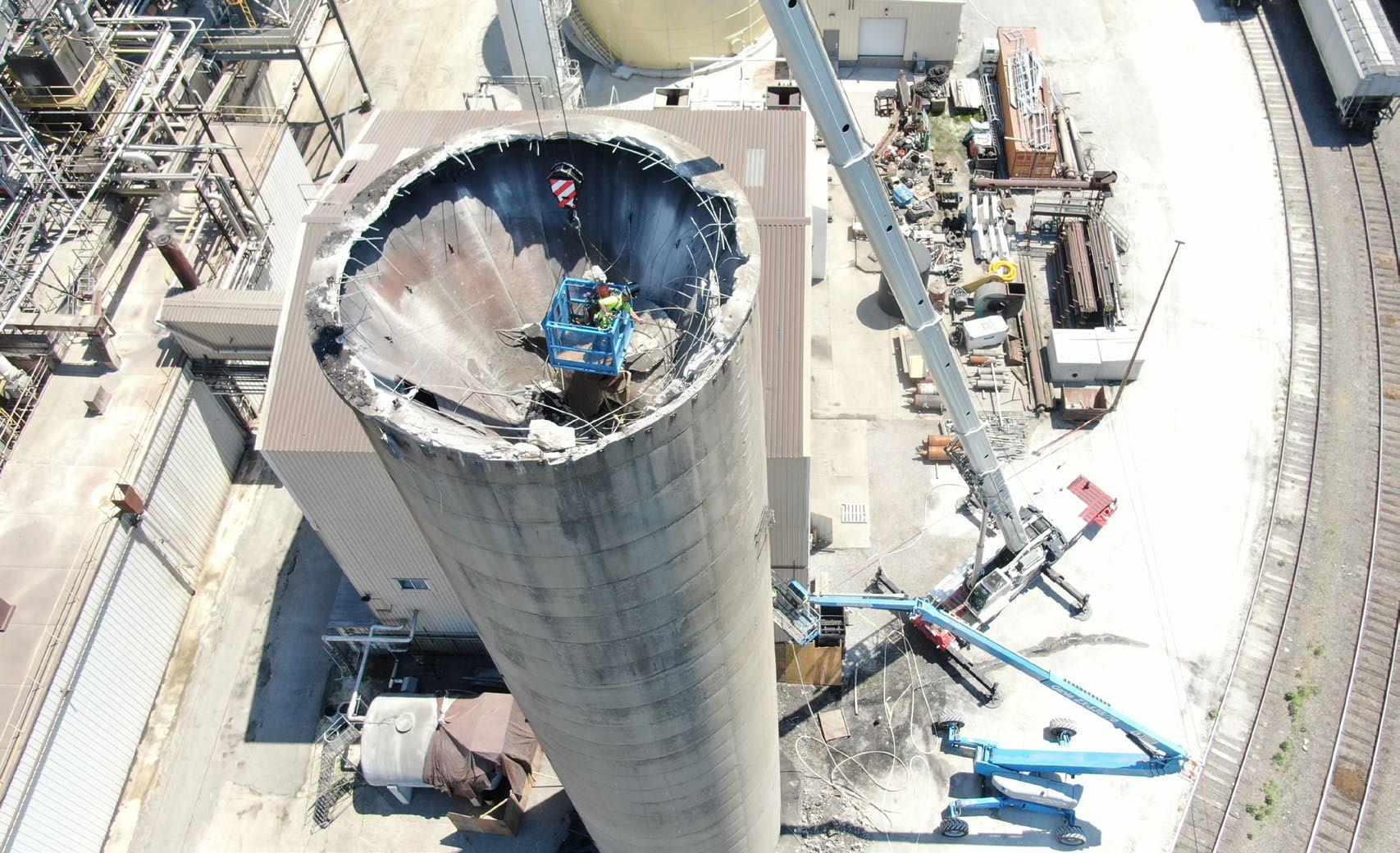
The demolition plan was anything but standard. At the top of the silo sat a 30-foot-wide, 25-footdeep steel cone hopper, still attached inside. It also featured a concrete lid and a conveyor system, all of which had to be safely removed before the structure could be taken down.
“This created the complexity to the top-down demolition methods,” Webb says. “All the weight and this hopper were in the top 25 feet of the silo where the high reach could not reach. So, we had to figure out how to get that all out safely and without having any access to the inside of the silo.”
Without as-built drawings to show exactly how the cone was attached, the team had to proceed carefully, making real-time adjustments as they worked downward.
ECD brought in Concor Inc. from Greenville, North Carolina, to handle robotic demolition using a Husqvarna DXR 300, while ECD crews focused on cutting and torching the steel components. “Teaming up with them allowed ECD to focus on torching out the cone and detaching it from the silo while the DXR chewed into the concrete
lid and sides to expose the attachment points of the cone for ECD to cut,” Webb says.
The Step-by-Step Process
• Concrete lid removal: The DXR 300 began breaking apart the lid at the top, with material funneling down into the steel cone below.
• Cone disassembly: Once the debris became too large to fit through the funnel, the team torched off the bottom quarter of the cone and conveyor system.
• Exposing the steel ring: As the DXR continued removing concrete, a steel support ring holding the cone in place was revealed. The ECD crew cut the ring in sections, allowing the DXR to continue its controlled demolition below.
• Containing debris: All materials were removed falling within the silo to contain all debris, keeping 95% of the material within the footprint.
• Transition to high-reach demolition: Once the structure was reduced to 100 feet, ECD’s Volvo EC480HR high-reach excavator took over, processing the concrete into small, manageable pieces to minimize the impact of falling debris. A
crane held a 20-foot by 60-foot debris curtain to ensure material remained within the footprint.
• Final cleanup: At 40 feet, the Volvo 300SB finished the demolition, handling foundation removal and load-out.
Equipment and Crew Expertise
The demolition required a well-coordinated mix of equipment, including:
• Volvo EC480HR high-reach excavator – Used for precision demolition from 100 feet down
• Husqvarna DXR 300 – Handled top-down robotic demolition
• Volvo 300SB – Managed the lower demolition, load-out and cleanup
• 80-ton crane – Held the demo robot and man basket for safe operation
• 150-foot boom lift – Allowed personnel to oversee and control demolition operations
ECD’s five-person crew executed the plan while ensuring the live infrastructure below remained undisturbed.
Overcoming Unexpected Challenges
The greatest hurdle was the unknown nature of the silo’s attachments. “The cone being attached to the top of the silo with no as-builts or way to really know how it was secured was the biggest challenge, as
well as unknown weights,” Webb says. “We couldn’t see the cone until the concrete lid was removed.”
A high level of pre-inspection, engineering and planning went into the project before work began. The confined space and the necessity of keeping the plant operational meant every move had to be calculated.
A Safe and Sustainable Outcome
Despite the complexities, ECD completed the job without incident. “We consider it very successful,” Webb says. “We had no collateral damage, no injuries and we did not create any delays or downtime within the plant.” Even better, the entire demolition was completed with sustainability in mind. “100% of the concrete, steel and soils were recycled,” he says.
Beyond the technical success, the project served as a valuable learning experience for the team. “Our crews showed that they can adapt and overcome unknown complexities within short time frames, all while safely working toward the end goal.”
For ECD, this project reinforced its reputation as a go-to demolition contractor for high-risk, high-precision jobs. With innovation and expertise, the company proved that even the most challenging structures can be safely brought down — one careful cut at a time.
eastcoastdemolition.com projects@eastcoastdemolition.com 252-232-7740
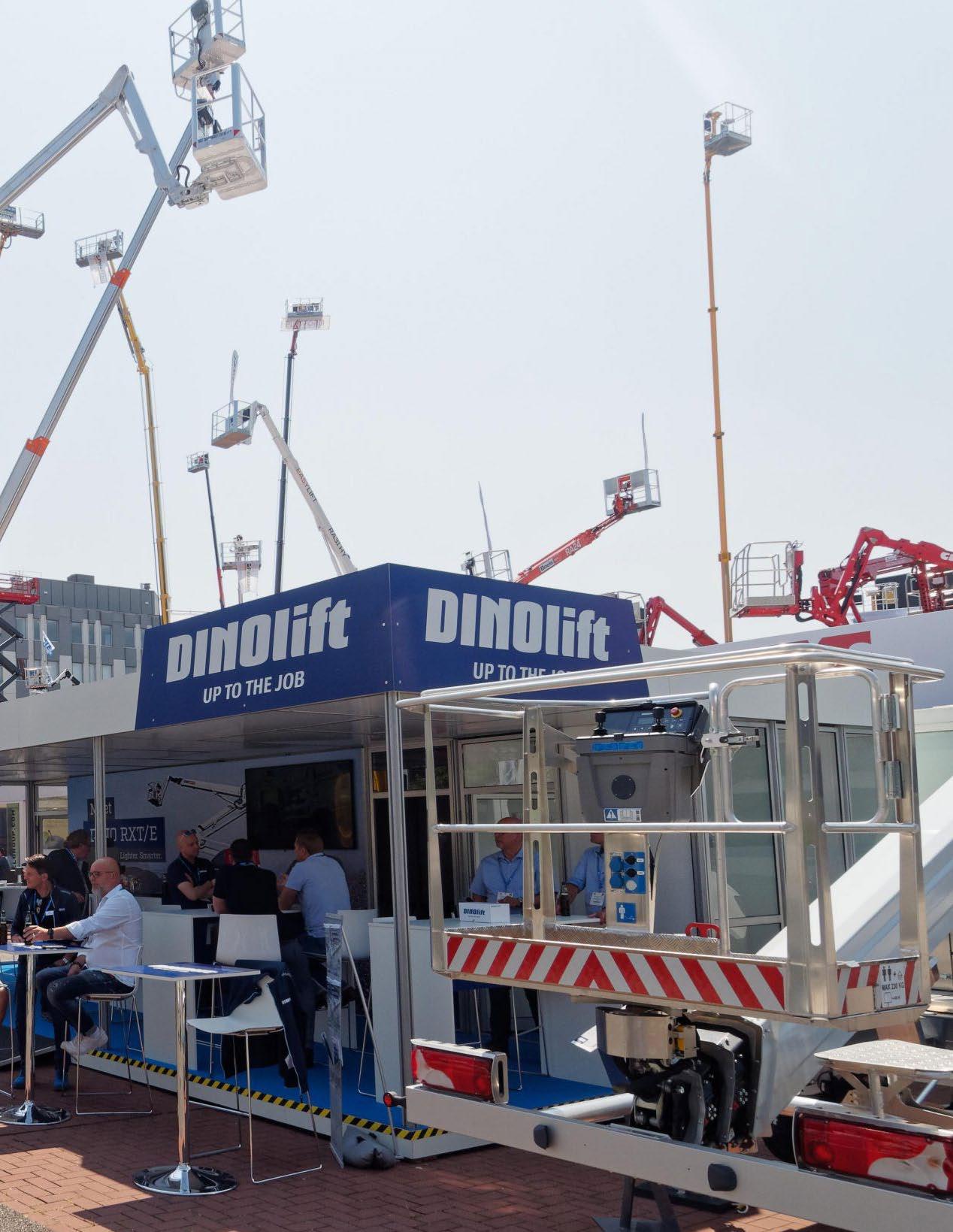
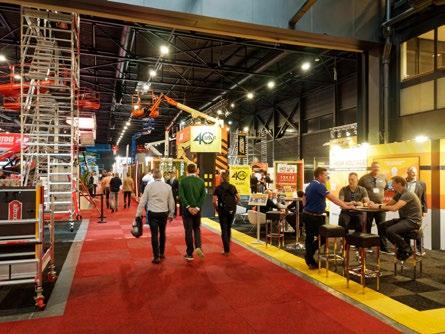
More Than 180 Companies to Exhibit at APEX and International Rental Exhibition (IRE) Shows in Maastricht
The two exhibitions, co-located at the MECC venue and held alongside the European Rental Association’s annual convention, will showcase equipment and technology targeted at all types of equipment rental companies.
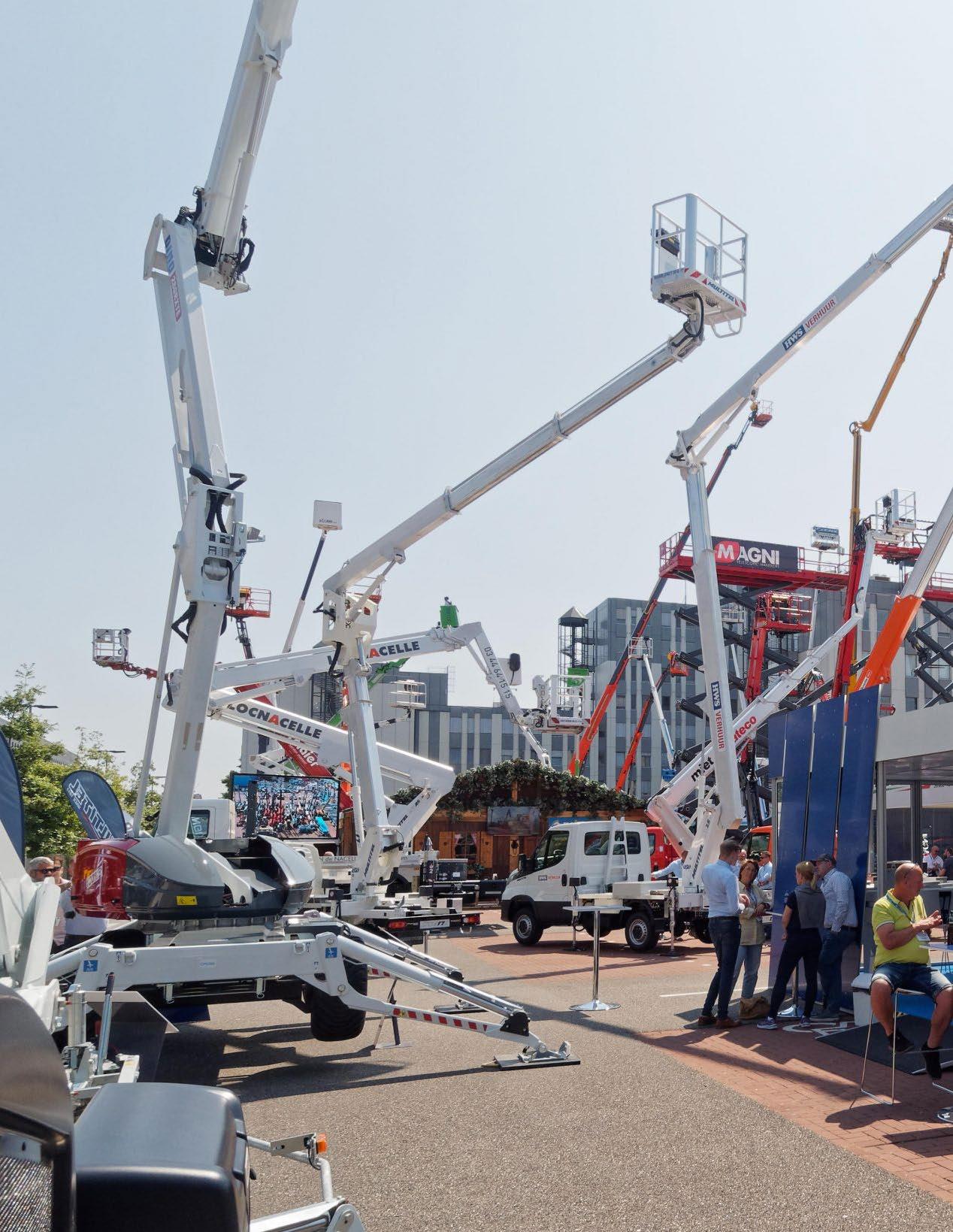
This year will see a particular focus on new technologies being adopted by equipment rental businesses, including electric compact equipment, rental software and digital technologies, and power generation products including battery energy storage systems (BESS).
Within IRE alone there will be 17 companies demonstrating rental software, telematics technology and AI solutions for rental, and 13 exhibitors showing power generation and battery story solutions.
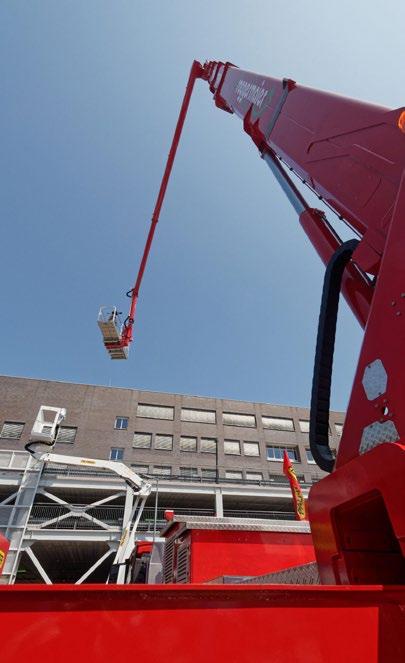
At APEX, more than 100 exhibitors will cover the entire range of modern access products, from scissor lifts and self-propelled booms to access towers and fall arrest systems.
Three Days Dedicated to Rental
Steve Webb, Head of Events at KHL Group, said: “The three special days of APEX and IRE are designed around the needs of equipment rental companies.
“The two shows are full integrated – a single registration is required – and in addition to the hundreds of products and technologies on show, there will be a dedicated space on the show floor for exhibitors to give short product or technology talks. That’s a first at IRE and APEX.”
Peter Douglas, CEO and Managing Director of IPAF, said APEX was a fantastic, one-off show: “I think it’s really important for IPAF members to attend APEX.
“If they are powered access companies, all of the access manufacturers and suppliers to the industry are in attendance. But equally, if they are generalist rental companies, the IRE show
is just next door. It’s quite a compact show, one that you can get around in a relatively short time, with all the manufacturers and suppliers for general rental equipment there as well.
“I invite all of our members – almost 2,000 companies in 82 countries around the world – to come and join us at APEX in June. I look forward to seeing you there.”
Alongside the IRE and APEX shows, the European Rental Association will hold its 20th annual convention on 3 and 4 June. That will include the European Rental Awards dinner on 3 June.
Carole Bachmann, Secretary General of the ERA, said: “The 20th anniversary is a big milestone for the association and we’ll celebrate in Maastricht from 2 to 4 June. We expect a lot of members to join us to recognize the progress we and the industry have made during those 20 years.
“The combined events – IRE, APEX and the ERA Convention – are a great way for us to have all our members and exhibitors and stakeholders joining together. We have not only the convention and the IRE and APEX exhibitions, but also the European Rental Awards dinner, where we celebrate the successes of the industry.”
Visitor Information
Visitors can register in advance online – see the websites below – and registering for one of the shows gives access to both. Free shuttle buses will run to MECC Maastricht from Brussels Zaventem Airport and Düsseldorf Airport for the full week, from 1 to 5 June, with a travel time of around 1 hour 15 minutes.
For those flying to Amsterdam Schiphol, the train to Maastricht takes between twoand-a-half and three hours and driving takes under two and a half hours.
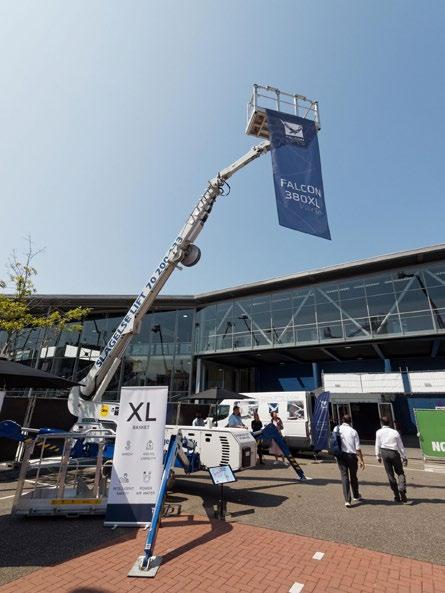
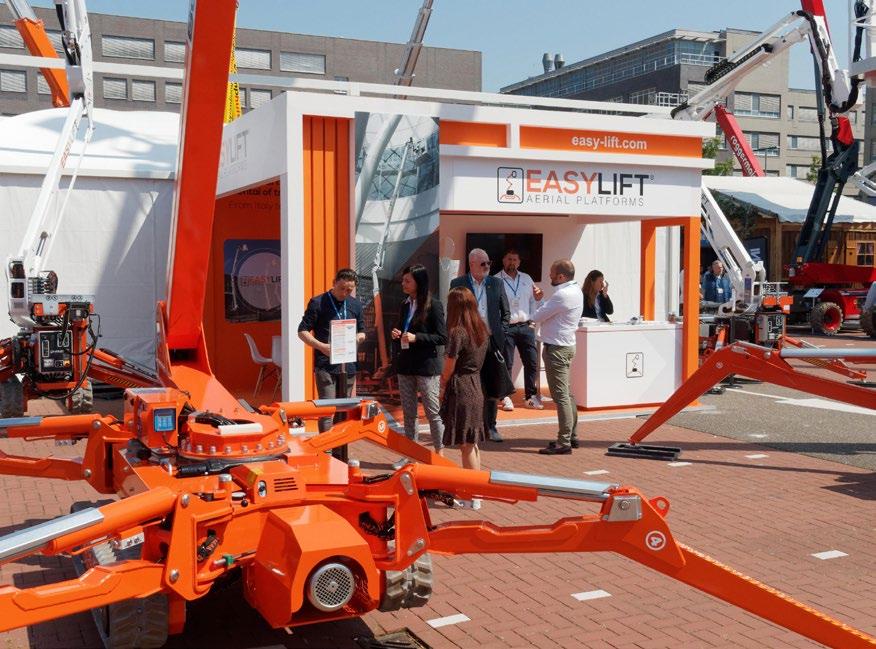
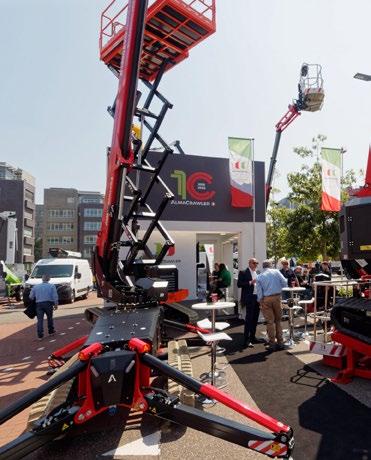
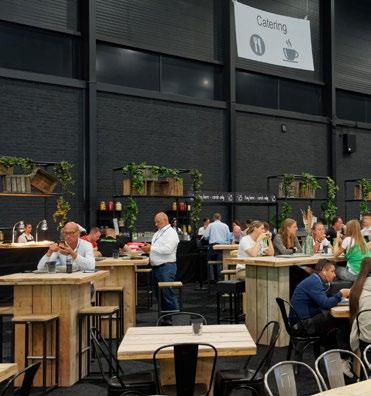
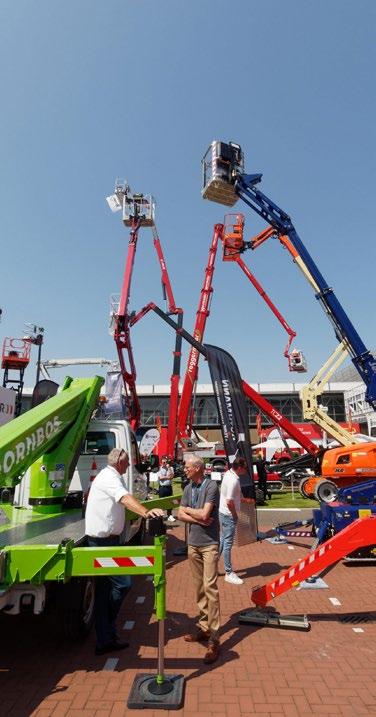
Top Construction Machinery Brands Attend SaMoTer 2026
From May 6-9, SaMoTer 2026 welcomed top names in the construction machinery industry to Verona: leading international brands were all in attendance, alongside one very high-profile return. With six show halls and three outdoor areas, the exhibition organized by Veronafiere in collaboration with UNACEA and CECE confirmed its status as a strategic hub where the entire construction world came together, discussed issues and planned for the future.
SaMoTer brings together technologies, solutions and services for every segment in the supply chain, including demolition, earthmoving, lifting-hoisting, drilling, crushing, concrete and construction site vehicles, not to mention equipment and engine components and spare parts, logistics, services and ICT.
The earthmoving sector has been the soul of the exhibition for more than sixty years and, in addition to Volvo CE returning in style to launch its new range of machines and services, the show was attended by brands iconic for power and innovation such as Caterpillar, Develon, Dieci, Hidromek AS, Hitachi, Hyundai, Kemroc, Kobelco, Komatsu, Leica Geosystems, LiuGong, Mantovanibenne, Takeuchi, Oilquick, Sany, Sunward Europe Heavy Industry, Topcon, Simex, Cangini Benne and XCMG.
The Crushing and Demolition area welcomed Indeco, MB Crusher S.p.A., Keestract, Gasparin, Sandvik, Trevi Benne and VTN Europe S.p.A. in the forefront, major brands that are currently redefining efficiency dynamics for urban and infrastructure construction sites.
General Manager of Veronafiere, Adolfo Rebughini said: “SaMoTer has been the be-there event for the construction machinery industry for over sixty years by keeping pace with the future. The
return of major international brands also confirms the consolidated calibre of the project and the market’s confidence in its ability to generate value for companies and trade operators.
“Against a background of unprecedented change driven by digitalization and automation, SaMoTer 2026 comes forward as the platform where innovation translates into strategies and business opportunities for the entire supply chain.”
SaMoTer Event Manager, Matteo Pasinato said: “We have organized a truly not-to-be-missed edition of SaMoTer tailor-made for professionals. There were increasingly accessible and dynamic events, where visitors and exhibitors interacted through full-immersion formats, with live demos and theme-based visitor itineraries. A trade fair of this kind simply has to be experienced and not just visited.”
SaMoTer 2026 promised to be one of the show’s most international and innovative editions— and it delivered. It was joined by the SaMoTer Academy, the new strategic project set in motion in collaboration with Engim Veneto—a spin-off created to accompany transformation in the construction machinery sector through high-quality and highly qualified training in cultural as well as technicalprofessional terms.
Revolutionizing On-Board Weighing With Cloud Integration for the Earthmoving and Mining Sector
In the industrial transport, earthmoving, and logistics sectors, companies face increasingly complex challenges every day: ensuring vehicle safety, optimizing loading operations, complying with regulations and at the same time reducing operating costs. In this context, technology becomes an essential ally.
OUTSET, an Italian company with more than 20 years of experience, has established itself as a benchmark in on-board weighing, cloud connectivity, and TPMS monitoring systems. Its goal is simple yet ambitious: to provide reliable and intelligent solutions designed to optimize operations and reduce operating costs.
The company participated in this year’s SaMoTer 2026, the trade fair dedicated to construction machinery, earthmoving and the mining sector. OUTSET presented a series of cutting-edge technological solutions in on-board weighing, designed to enhance efficiency and productivity for industry professionals.
Among the key innovations unveiled at the fair were:
• T1 LOADER LFT weighing system for wheel loaders: An innovative solution certified for third-party sales with MID OILM R51 certification, ensuring the highest levels of precision and reliability,
• T1 DIGGER AL advanced technology for excavators: A system with four next-generation inclinometers, designed to precisely compensate and manage surface, excavator arms and bucket,
• AI-powered algorithms: A key innovation that accelerates weighing operations and
compensates readings even in adverse positions, ensuring real-time accurate data,
• Next-generation wireless technology: Use of automotive long-range Bluetooth modules eliminates the need for complex wiring and improves system reliability,
• Zero maintenance and ease of use: Thanks to an innovative diagnostic data analysis, OUTSET systems provide consistent performance without the need for frequent interventions,
• T1 CLOUD direct connection to the cloud and customers’ ERP systems: A solution that eliminates the need for external hardware, ensuring seamless integration with business workflows.
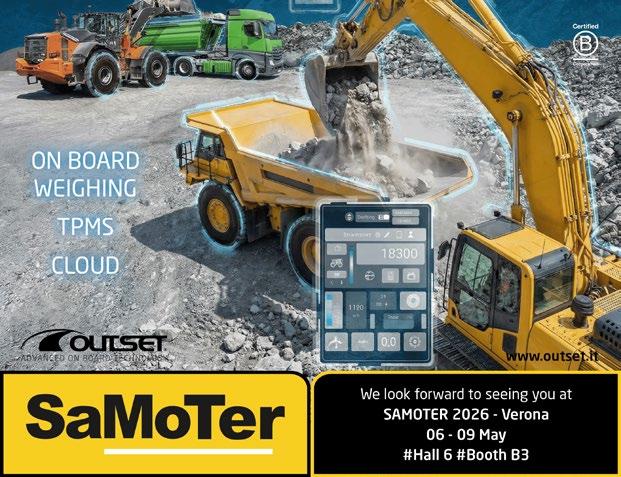
There are demolition events, and then there is the National Demolition Association’s annual convention and expo—this year, DEMOLITION PHOENIX.
Let me say this from the outset—Americans do not do things by halves. If they host an industry event, they make it bigger, louder, hotter and shinier, somehow fueled in equal parts by machinery, networking and caffeine. Fair play to them because Phoenix absolutely delivered.
Earlier this year I headed across the pond to Arizona for the NDA’s flagship annual gathering and from the moment you landed you could feel the scale of it all. Nearly 1,200 attendees descended on Phoenix for the event, which has rapidly become one of the largest and fastest-growing demolition conventions anywhere in the world.
And you know what? It deserves the hype. The event was hosted at the Phoenix Convention Center, although calling it a convention center almost feels unfair because the place is absolutely gigantic. You walk in and immediately you are hit with the unmistakable smell of fresh carpet tiles, polished exhibition stands, coffee, machinery brochures and ambition. Lots of ambition.
Now, I have attended a lot of demolition events over the years and there is always a
danger that exhibitions become rows and rows of people handing out pens while someone awkwardly eats pastries in the corner pretending to look interested in hydraulic attachments. Not at Phoenix. This thing had real energy.
The exhibitors were out in force, the manufacturers had brought the big toys, and there was a real buzz around the entire week. Everyone from equipment suppliers and contractors through to demolition specialists, recyclers, safety experts and asbestos professionals seemed to be there. You could not walk more than twenty feet without bumping into somebody you knew or somebody you probably should know.
That, for me, is the magic of these events. Yes, there are meetings. Yes, there are seminars. Yes, there are presentations about safety, workforce development, regulations and technology.
But the real value comes in the conversations—the random chats over a beer, networking, introductions that suddenly become opportunities, stories from site and the “you’ll never believe what happened on this job” moments. That is where industries are built.
The NDA themselves have clearly recognized that because a huge focus of the
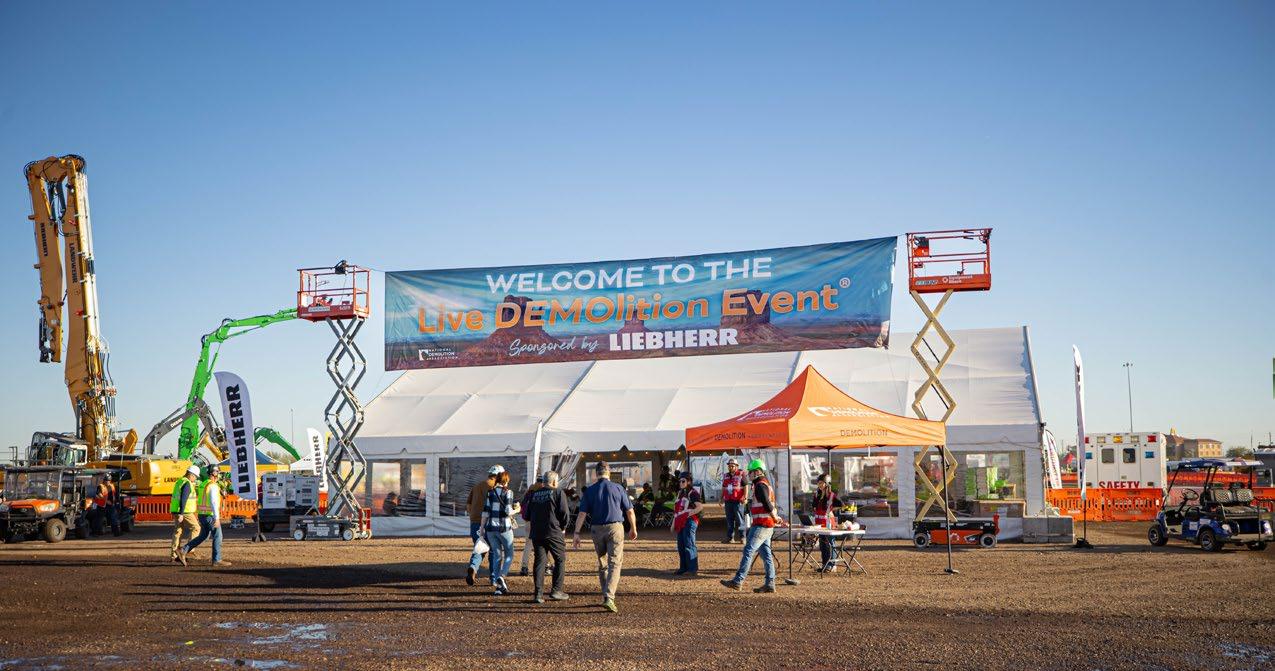
event this year centered around workforce development, safety leadership, technology and strengthening the future of the industry.
Demolition faces the same challenges worldwide—attracting young people, retaining skilled operators, improving safety standards and adapting to rapidly evolving technology. Whether you are sitting in Sussex or Arizona, those conversations sound remarkably similar.
Now then… Let’s talk about the Live DEMOlition Event®. Because this is where things get properly fun.
If you have never experienced it before, imagine a demolition playground for grown adults. Excavators, shears, breakers, material handlers, robotics, dust suppression systems and enough heavy metal to make a rock festival blush.
Hosted this year at Firebird Motorsports Park just outside Phoenix, the Live DEMOlition Event is exactly what our industry should be about—hands-on, practical, noisy and packed with enthusiasm. And the Americans absolutely love it.
Shuttle buses full of demolition professionals rolled into the desert ready to operate machinery, test equipment and generally behave like excited children who had consumed too much sugar. Honestly, I fit right in.
The scale of the equipment on display was phenomenal. Liebherr once again sponsored the Live DEMOlition Event and showcased crawler excavators including the R 938 and R 950 models, alongside an operators’ challenge that had attendees keen to prove they still had silky smooth hands on the controls.
What I particularly liked was the balance between fun and professionalism. Yes, there was excitement, people were loving the machinery, there were endless social media videos of excavators crushing concrete in glorious Arizona sunshine. But underpinning all of it was safety.
The NDA are absolutely serious about that side of the industry and it showed throughout the event. PPE requirements, safety waivers, planning and operational professionalism were front and center.
And it matters. Because demolition has changed massively over the years. The old cowboy image that some outsiders still associate with demolition simply does not reflect the reality of the modern industry. Events like Demolition Phoenix showcase exactly how sophisticated, professional and technically advanced demolition has become.
Of course, it would not be an American event without some serious evening entertainment
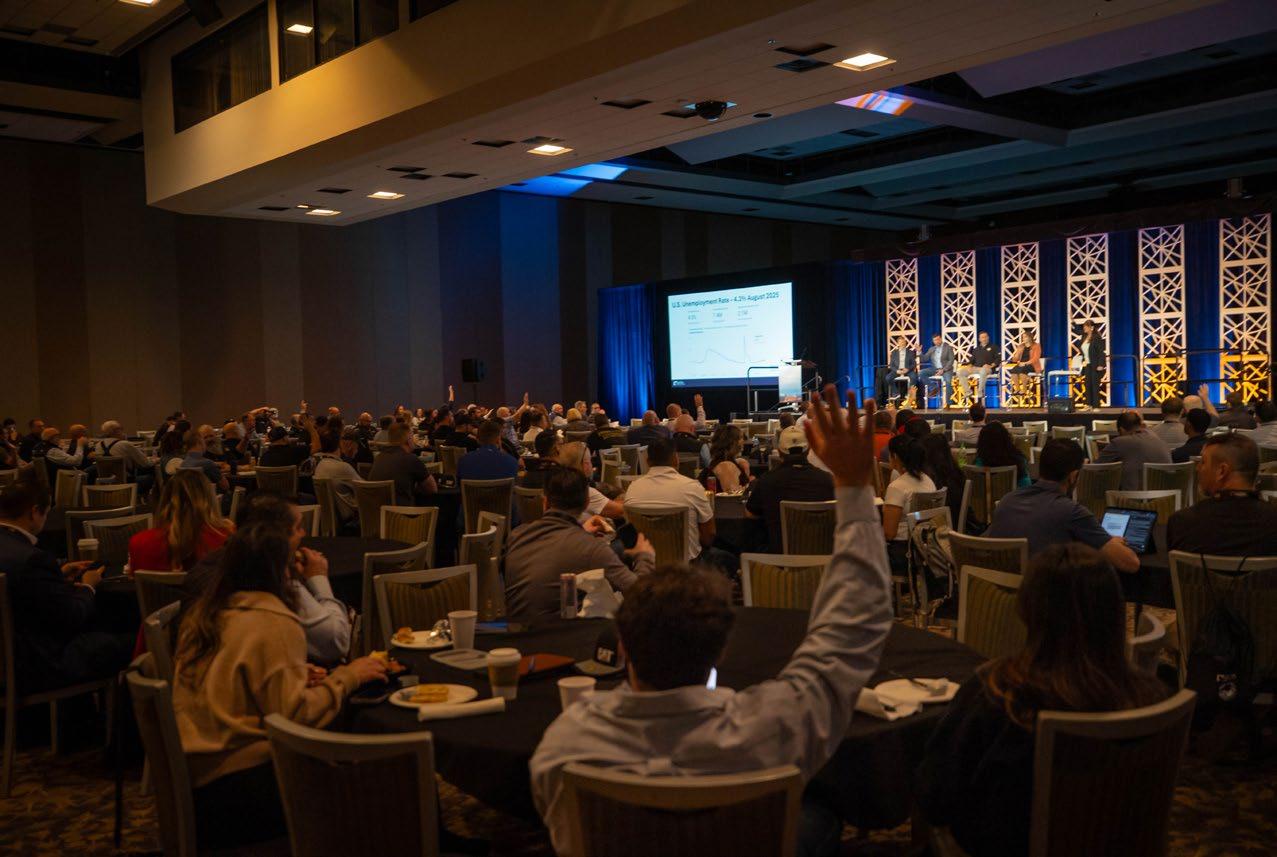
thrown into the mix—once the daytime business was done, Phoenix came alive. Networking events, receptions, dinners, drinks and conversations stretched long into the evening—where relationships really develop.
There is something about the demolition industry worldwide where people genuinely enjoy each other’s company. We work hard, the jobs are stressful, projects are demanding—so when the opportunity comes to relax together, the industry absolutely embraces it.
The hospitality throughout the week was exceptional. Everybody was welcoming, friendly and genuinely passionate about demolition. You could feel the pride people had in being part of the industry.
Too often people outside the demolition industry misunderstand what we do. They see destruction where we see engineering, logistics, safety, precision, sustainability and regeneration. Phoenix celebrated that brilliantly.
The other thing that struck me was how similar
the UK and US demolition industries really are once you get everyone in the same room. Different accents perhaps, slightly different regulations and maybe larger pickup trucks on the American side, but fundamentally the same mentality.
Proud industries. Proud contractors. Proud people. And a shared understanding that demolition people are simply built differently.
As I flew home from Arizona, slightly exhausted, slightly sunburnt and carrying approximately seventeen kilograms of brochures I would never look at again, one thing was crystal clear—The NDA know how to put on an event. DEMOLITION PHOENIX was professional, educational, entertaining and genuinely valuable for anybody serious about the industry. From the exhibition floor and seminars through to the Live DEMOlition Event and evening networking, it delivered exactly what a modern demolition convention should. Big machinery. Big conversations. Big personalities. And thankfully, in true demolition style—absolutely nothing subtle at all.
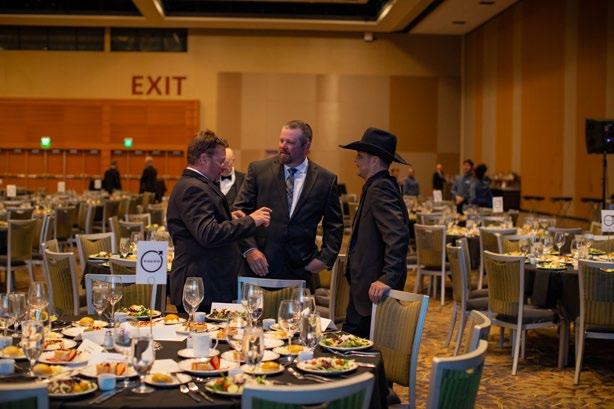

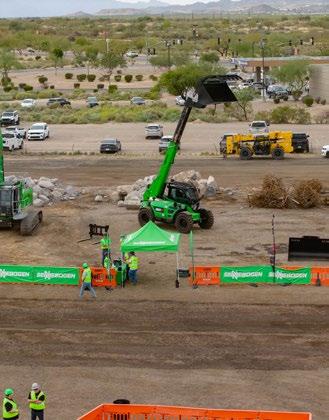
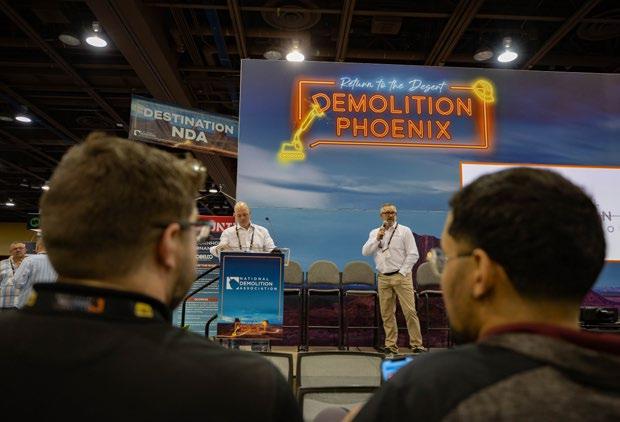
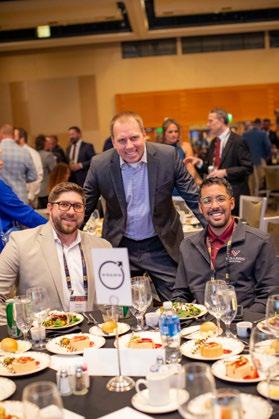
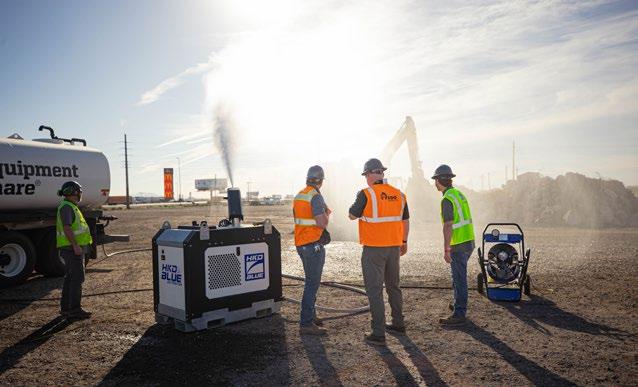
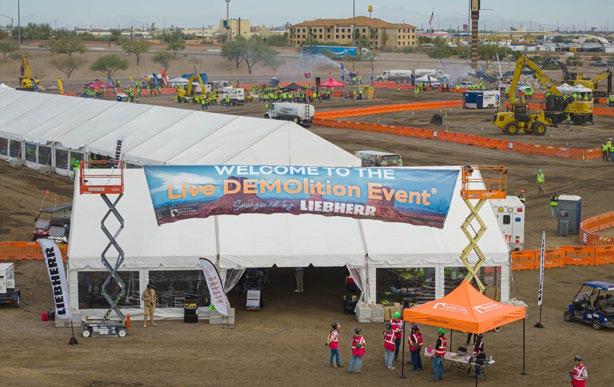
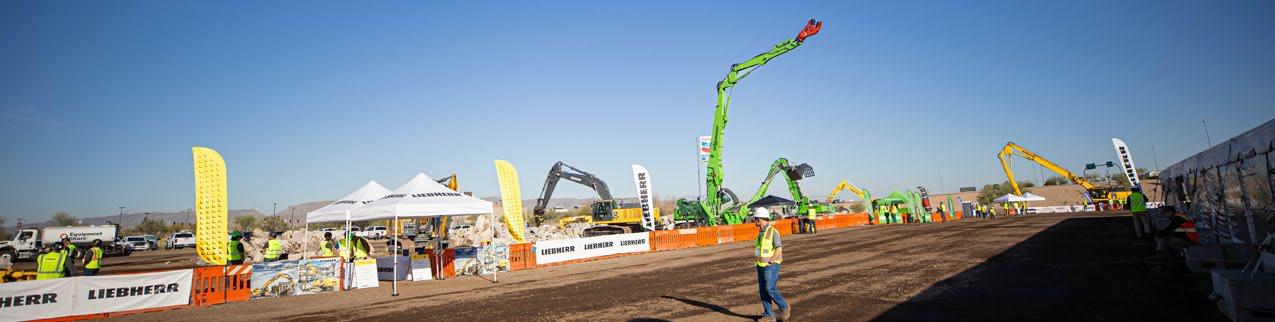

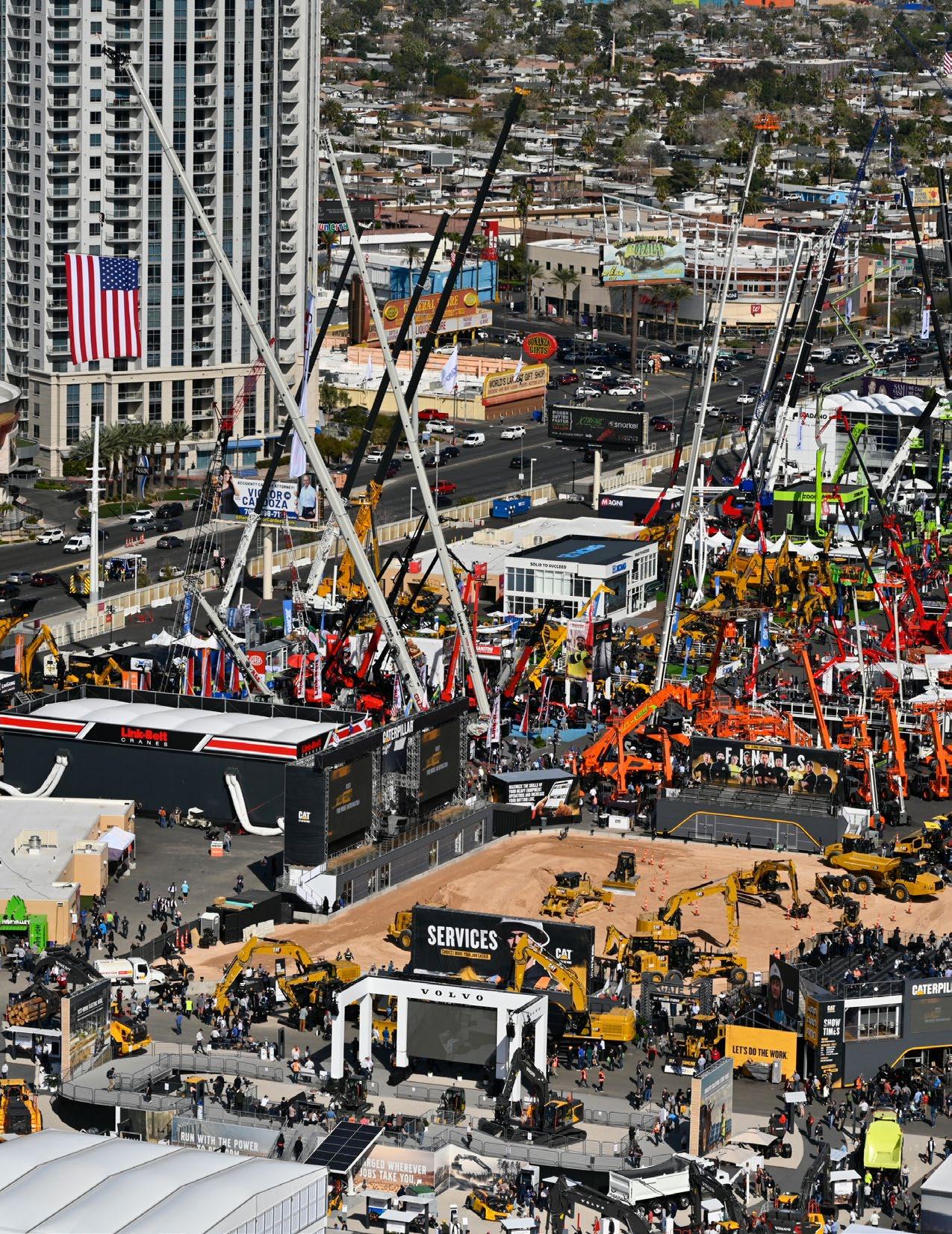
CONEXPO-CON/AGG 2026
• 2,000 exhibitors: equipment from top companies across every sector of construction
• 150 education sessions: Insights from expert industry leaders exploring new ideas
• 139,000 attendees: The ultimate industry reunion
Ground Breakers Stage
The new keynote stage in West Hall transformed into a high-energy forum where top leaders and leading brands unveiled the ideas that will shape tomorrow’s jobsite.
Attendee Workshops:
Industry peers and leaders shared best practices, challenges and personal experiences unique to women, small businesses and maintenance professionals. Workshop included the following:
• Shop Talks and Walks Workshop – Attendees learned preventative maintenance and equipment efficiency through hands-on demos.
• EmpowerHER Workshop –Women in the industry gained a unique opportunity to network and enjoy peer-led discussions that inspire and educate.

• Small Business Workshop – Led by industry leaders dedicated to the unique needs of small business owners, entrepreneurs and familyowned businesses.
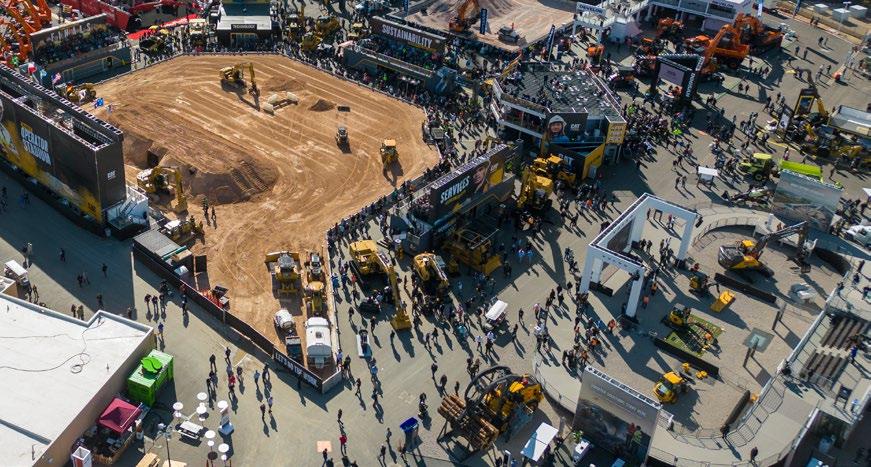

Ground Breakers Stage Features Caterpillar, Amazon Web Services and John Deere
CONEXPO-CON/AGG’s new Ground Breakers Stage, presented by The Sherwin-Williams Company, featured innovators and visionaries from companies including Caterpillar, Amazon Web Services (AWS) and John Deere.
Show Director Dana Wuesthoff said: “The Ground Breakers Stage is bringing forth the most innovative leaders in our industry who are making strides in autonomous and technological advances and changing the way we work, hire and build.”
Caterpillar Group President of Construction Industries, Tony Fassino took to the Ground Breakers Stage on Wednesday March 4, spotlighting how Caterpillar is tackling the industry’s toughest challenges head on, pushing boundaries and shaping the future for its customers.
Fassino said: “Every three years, Las Vegas transforms into the epicenter of construction innovation with companies ready to show you what’s next. We are excited to show you what’s ready right now during CONEXPO-CON/ AGG’s new Ground Breakers Stage series.”
Wuesthoff commented: “We’re thrilled to welcome Caterpillar to the stage as we advance the conversations around innovation during CONEXPOCON/AGG. Caterpillar’s forward-thinking approach embodies the transformation that drives our industry and helps us all build for the future of tomorrow.”
John Deere’s Senior Vice President and Chief Technology Officer Jahmy Hindman was joined by John Deere colleagues Maryanne Graves (Manager, Product Management) and Jonny Spendlove (Manager, Precision Construction) on the Tuesday, spotlighting the innovation and technological advances propelling the construction industry forward.
“We’re genuinely excited to be part of this first-ever keynote event at CONEXPO-CON/

AGG,” said Hindman. “Contractors are out there every day building the roads, bridges and systems that connect our lives—and they’re facing real challenges like finding skilled workers. At John Deere, we’re committed to helping them tackle those challenges with technology that’s not just smart, but purposeful—designed to help them get more done, more efficiently, and more profitably.”
Amazon Web Services’ Director of AWS IoT Services Dave Kranzler took to the Ground Breakers Stage on Thursday 5 March, spotlighting how advances in AI, automation and connected technologies are reshaping the construction industry, reducing costs and creating safer, more sustainable jobsites.
In conclusion, Wuesthoff said: “John Deere is pioneering conversations that are crucial to our industry and we’re thrilled for those conversations to have converged at the Ground Breakers Stage. We were also delighted to welcome AWS—digital transformation is changing how the world builds.”
Other keynote speakers range from the leaders of Fortune 100 companies to successful entrepreneurs, with more announcements to be shared in the coming months.
conexpoconagg.com showmgmt@maritz.com 414-272-0943
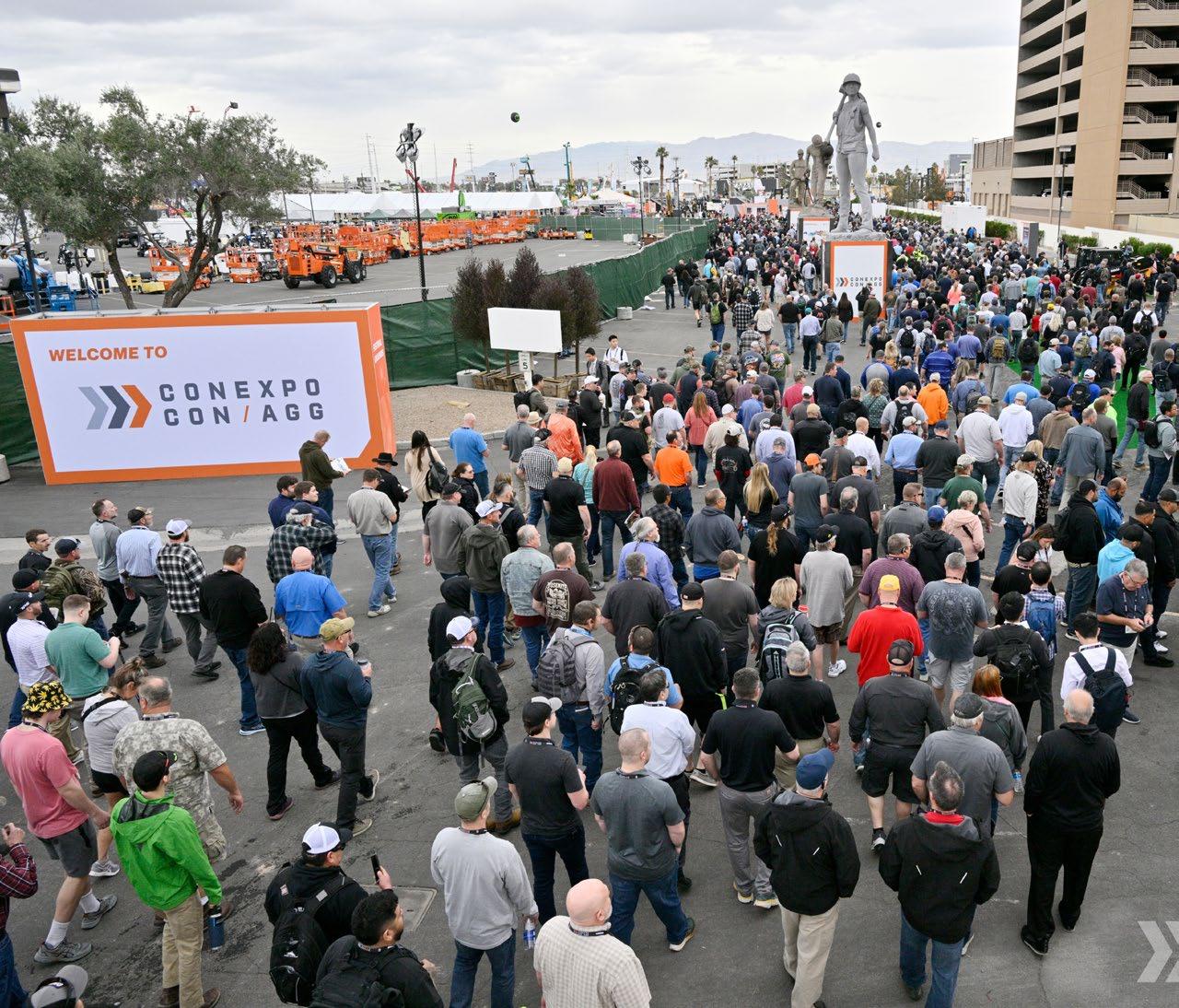
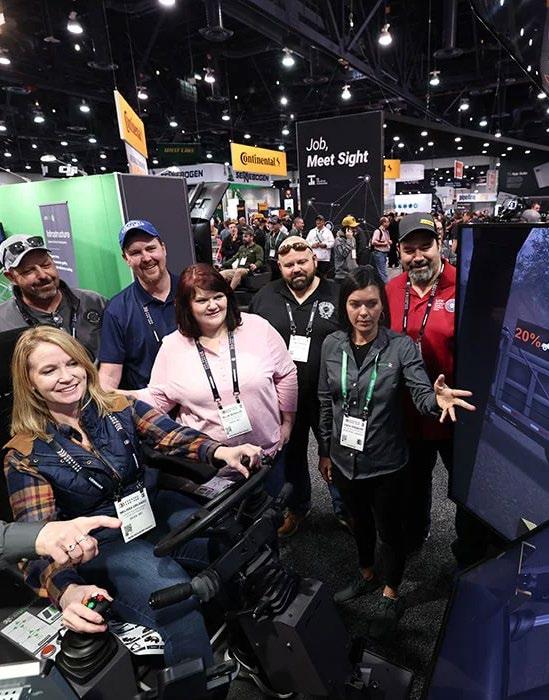
Hands-on Learning Takes Center Stage With Shop Talks and Walks
On Saturday 7 March, the Shop Talks and Walks Workshop turned attention to the technicians, operators and maintenance pros who keep machines humming and jobsites productive.
This immersive, hands-on event was designed for industry professionals eager to sharpen their skills in preventive maintenance and equipment efficiency, offering a full day of interactive sessions, expert demonstrations and real-world insights that help attendees reduce downtime, lower operating costs and improve safety.
“Technicians and operators are at the heart of every successful project,” said Show Director, Dana Wuesthoff. “Shop Talks and Walks is designed to recognize their expertise and give them new tools to lead maintenance innovation in the field.” Attendees included:
• Maintenance professionals looking to refine their craft
• Owners, operators and fleet managers seeking performance and cost-saving improvements
• Technicians ready to explore the latest tech and best practices
Whether responsible for a fleet or one critical machine, participants gained strategies to reduce downtime, boost productivity, and strengthen their maintenance approach.
Hands-on Demos and Industry Insights
The workshop provided equipment deep-dives, live Q&A sessions and maintenance-focused demos led by top industry manufacturers including Caterpillar, Hyundai, John Deere, Kubota, SANY, Vermeer and Volvo.
The day began with a Breakfast Spotlight Panel titled The Future of Maintenance: Insights from Tech Leaders in Equipment Solutions. Speakers included:
• Austin Conti, CEO and Co-Founder of Tenna
• Alex Craft, CEO and Founder of Heave
• Luke Powers, CEO and Co-Founder of Gearflow
They discussed how artificial intelligence, predictive analytics, and digital tools are transforming maintenance practices across the construction industry.
Following the keynote, attendees took part in guided sessions on the show floor, exploring topics such as fleet health management, service strategies, and next-generation maintenance technologies. The workshop featured:
• Equipment deep-dives for learning by doing
• Live demos and Q&As with maintenance experts
• How-to sessions tailored to today’s equipment and technologies
• Knowledge-sharing forums for building industry connections
It involved far more than just talking. Attendees walked away with practical insights and connections that translate directly to smoother operations and longer equipment lifespans, including:
• Strategies to reduce downtime and boost productivity
• Exposure to leading-edge maintenance trends and technologies
• Actionable tools for optimizing equipment performance
• A stronger community of industry peers with shared goals
conexpoconagg.com showmgmt@maritz.com 414-272-0943
Caterpillar Exhibits Highlight Innovations That Reshape What’s Possible
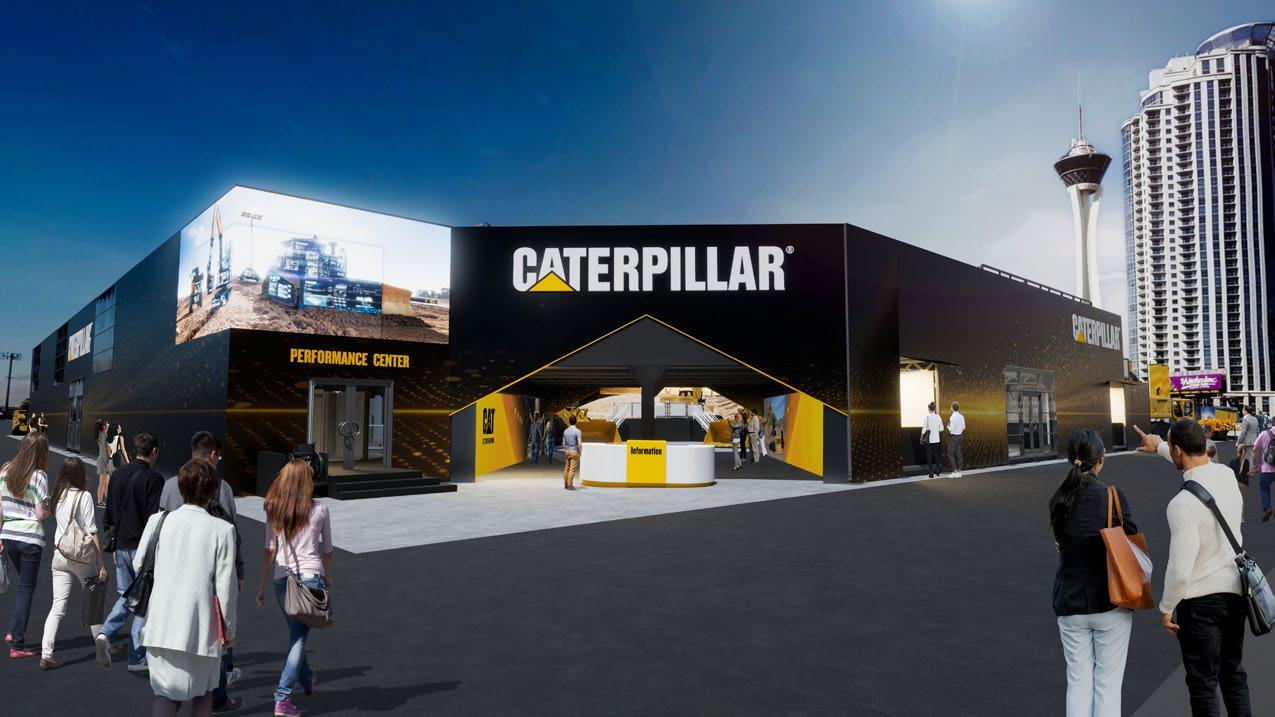
Closing its year-long centennial celebration, Caterpillar’s CONEXPO-CON/AGG exhibits demonstrated the company’s commitment to helping its customers Reshape What’s Possible. From new machines and technology to services and rental options, visitors saw first-hand how Caterpillar delivers the innovation, flexibility and support that provide exceptional value to its customers globally.
Anchoring the company’s participation, Caterpillar’s Festival Grounds exhibit featured Operator Stadium, which hosted the nine finalists participating in the company’s third Global Operator Challenge. Caterpillar expanded its presence at CONEXPO-CON/AGG with a West Hall display dedicated to Caterpillar’s compact construction equipment, while Cat® Industrial Power Systems exhibited its latest industrial diesel engine innovations in its South Hall exhibit.
Technology, Connectivity and Safety
The exhibits showcased the latest technologies in the construction industry that are meeting today’s needs and anticipating tomorrow’s challenges. Visitors to the exhibit experienced the company’s evolution in autonomous machines and the tangible impact of AI on the industry. These advancements in intelligent systems and integrated digital platforms are designed to deliver continuous value that evolves and optimizes customer outcomes. The company also highlighted the latest tech tools that allow customers to focus more on service and operational efficiency.
Caterpillar showcased the latest VisionLink features in equipment management, productivity and safety, which help customers operate more efficiently, effectively, and safely across operations of all sizes and brand mixes. Additionally, attendees were able to explore end-to-end capabilities, including full fleet solutions with Cat Grade.
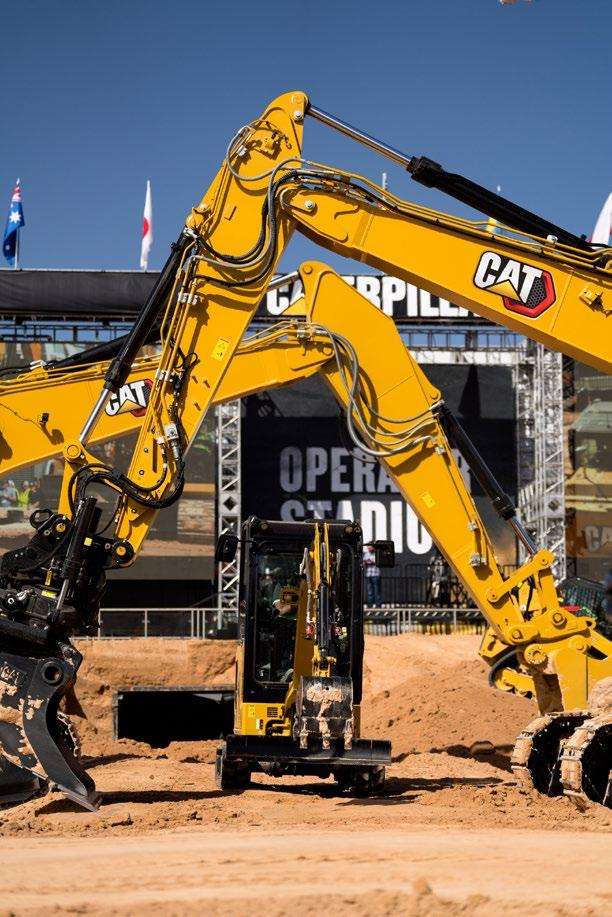
The full capabilities of Cat Command were on display, including remote-control, semi-autonomous and autonomous capabilities in the construction and quarry industries. The latest addition to the Cat Detect portfolio, Collision Mitigation, was introduced during both the company’s live equipment demonstrations in Operator Stadium as well as with a hands-on experience.
New
and Improved Machines, Reshaping the Future of Construction Equipment
Cat Building Construction Products (BCP) showcased expansions in its compact equipment line in the West Hall exhibit, with Caterpillar experts providing an overview of an enhanced customer experience designed to give customers more options and flexibility.
Meanwhile, at Caterpillar’s 70,000 sq ft outdoor exhibit at Operator Stadium, visitors checked out more than 30 machines, including the new compact
radius Cat 319 small hydraulic excavator, which excels in a broad range of road construction, site development, underground utilities, construction maintenance and forestry applications.
Celebrating 30 years since the Cat Asphalt Paver introduced the Mobil-trac Undercarriage to the industry, an AP1055 Asphalt Paver was on display, featuring the latest customer-driven updates and a new extended-life smooth plate for the Cat SDX Screed Plate system.
CONEXPO-CON/AGG attendees saw future designs for new motor grader and dozer models, including a preview of the next generation Cat 150 motor grader offering both joystick and lever controls, as well as the next generation 160 motor grader with joystick control. The new dozer on display unveiled Caterpillar’s second high drive electric drive medium dozer that offers high levels of productivity, fuel efficiency, and ease of operation, as well as low service and maintenance costs.
Custom-Tailored Programs and Solutions
Simplified With the Customer in Mind Caterpillar announced that Cat Vantage Rewards is changing to Cat Rewards, with a new, simplified program offering exclusive benefits and enhanced customer value. Additionally, the Cat Card will rebrand to the Cat Commercial Account to better convey the product’s role as a flexible finance solution for customers purchasing parts, attachments, rentals, repairs and more.
Services Commitment
Attendees learned more about the new Services Commitment now available in North America with new, renewed, or upgraded Customer Value Agreements (CVAs). This new Services Commitment CVA is about getting customers back to work with dealers committing to next-day parts and twoday repairs. Now, if either of these commitments isn’t met, customers receive Cat Credits.
Customers will continue to have the flexibility to choose the best CVA option for their unique needs, as offered by their local Cat dealer.
Cat Rentals
Cat Rentals showcased its newly refreshed brand and modernized digital experience, demonstrating
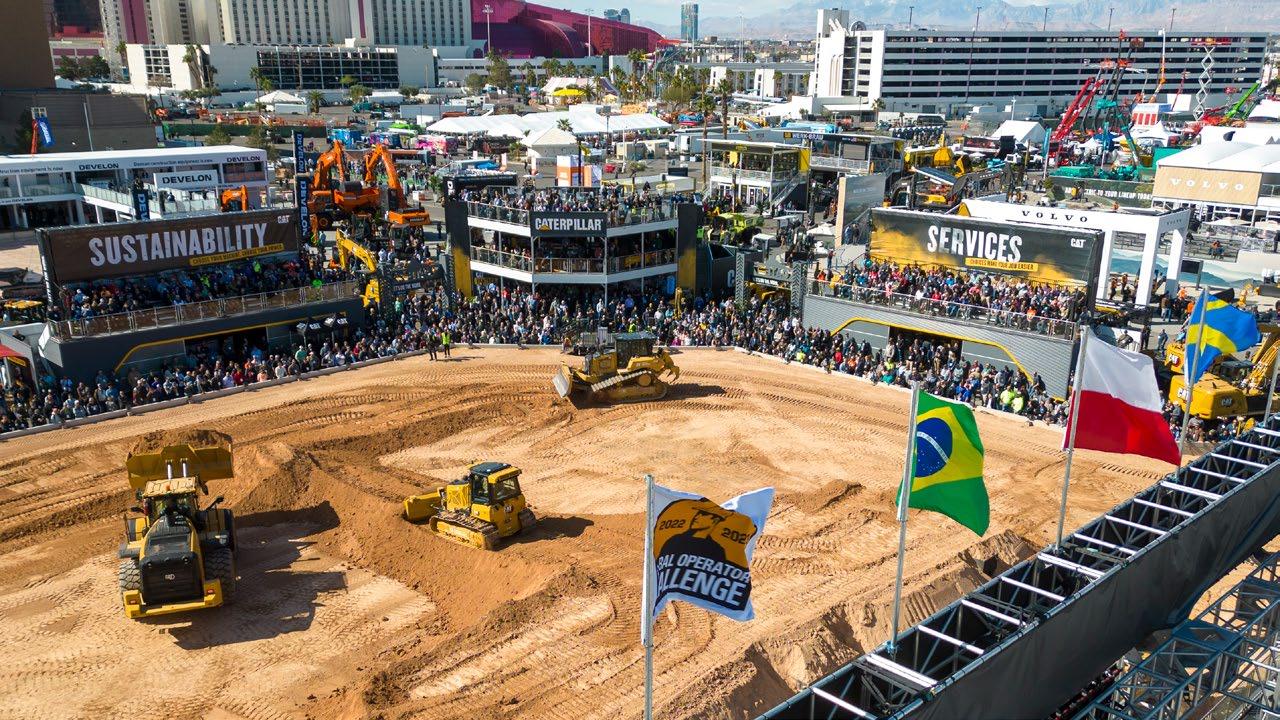
how the same trusted dealer network is ready to deliver more—more convenience, more options, and a better online experience. Guests saw the new look of Cat Rentals while exploring catrentals. com, where improved search capabilities make it easier than ever to find the right equipment from 70+ trusted brands. Cat Rentals experts demonstrated the enhanced online portal, where customers can submit rental and service requests, call off equipment, make order changes, view basic telematics and equipment locations, and much more.
Power Systems and Solutions
The strength and breadth of Caterpillar power systems and solutions, which are designed to meet customers’ productivity and reliability requirements, were on display in the South Hall. The booth included a new high horsepower C3.6 engine and the new power-dense C13D, both of which meet EU Stage V and U.S. EPA Tier 4 Final emission standards. Caterpillar is committed to extending engine lifecycles, with the booth showcasing how it supports customers’ aftermarket needs with Cat parts and service solutions including connectivity, condition monitoring and a remanufactured C7 engine. The C2.2, the new high horsepower C3.6 and the C18TT also featured in the Festival Lot display.
Speaking ahead of the show, Caterpillar Group President Tony Fassino said: “We look forward to giving attendees an up-close look at Caterpillar’s latest advancements and groundbreaking technologies in the construction industry through our demos, handson experiences and interactive exhibits. Visitors will see how Caterpillar can solve their toughest challenges as we reshape today’s worksite while providing them an understanding of what is possible in the future.” It’s fair to say Caterpillar achieved just that.
cat.com/conexpo2026
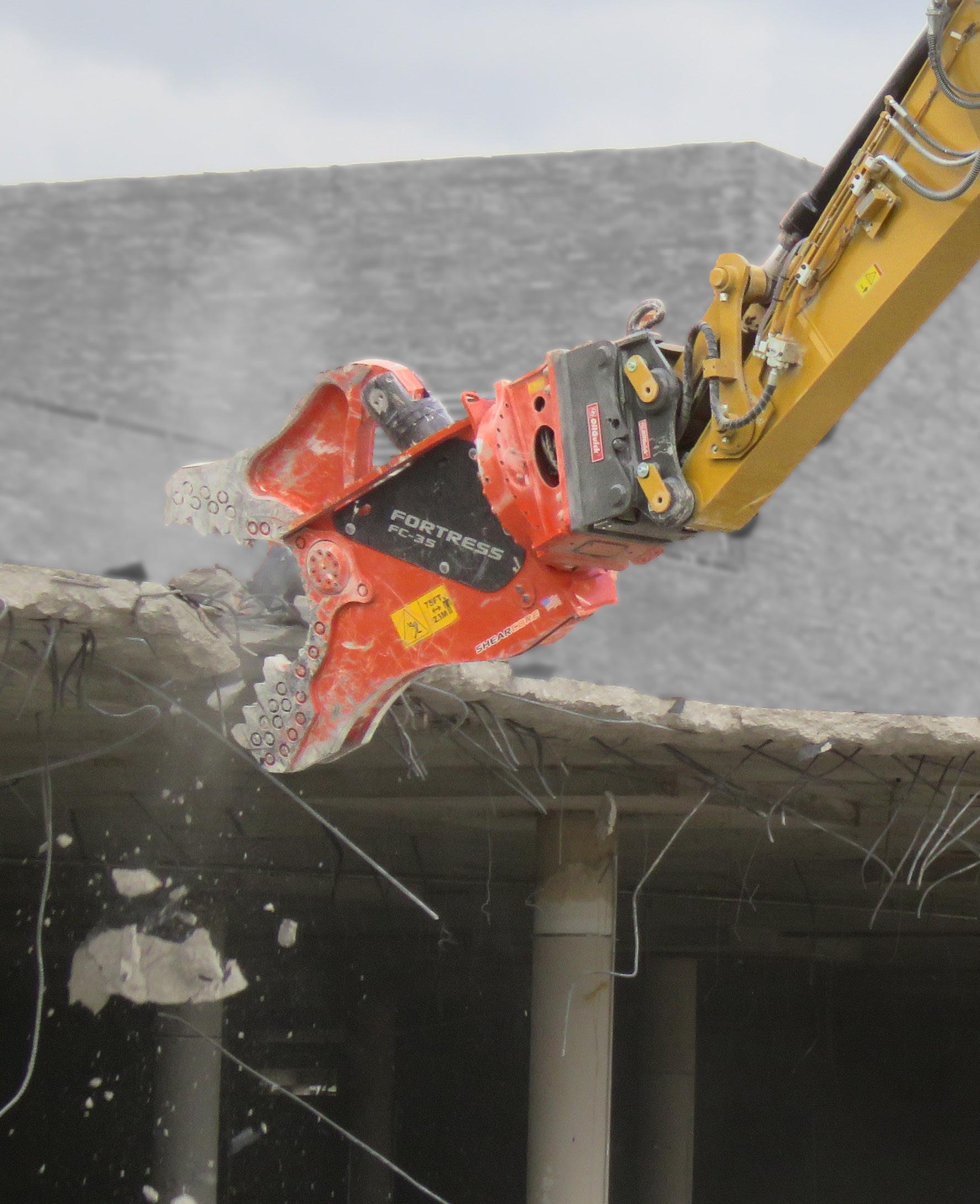
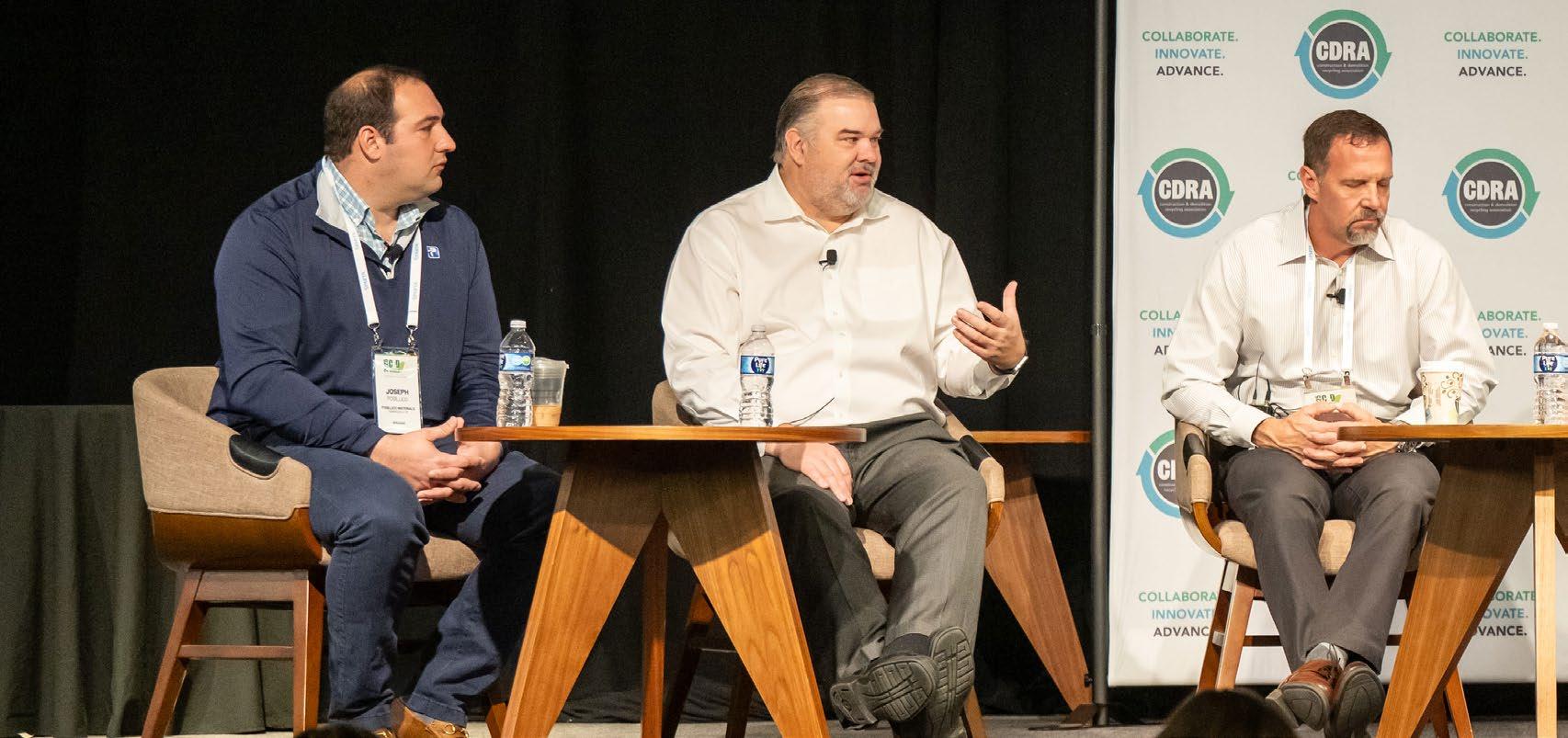
Bringing Together the C&D Recycling Sector
The C&D World Conference was renamed the CDRA Conference & Tradeshow in time for this year’s event in Tampa, Florida to better reflect the strong connection between the event and the Construction & Demolition Recycling Association (CDRA), the leading voice in the construction and demolition (C&D) recycling industry.
The updated name reinforces the conference’s role as the annual gathering for both CDRA members and non-members who are professionals in the C&D recycling sector and aligns with CDRA’s mission and values of advancing the industry, influencing the future of recycling and collaborating with leading recycling professionals, vendors and stakeholders to share knowledge and experience.
Conference attendees—including executives and management from leading C&D recyclers, waste management companies, construction material suppliers, specialty sectors, government agencies, consulting firms and industry suppliers—continued to enjoy high-quality programming and valuable networking opportunities that have made the conference the must-attend event in the industry.
This year’s program included:
• Informative programming enabling you to stay ahead of the curve, with sessions focused on critical industry trends and topics
• Unparalleled networking connecting you with executives, managers and decision-makers from across the C&D recycling sector
• An exhibit hall featuring the latest equipment and services from industry-leading suppliers
The Construction & Demolition Recycling Association (CDRA) is the established nationwide forum for construction and demolition (C&D) recycling and the only national trade association that promotes recycling C&D materials.
For more than 30 years, CDRA has provided education, networking and a unified voice for recyclers of construction materials, including wood, concrete and aggregates, asphalt shingles, gypsum wallboard, metals and more.
CDRA’s members include regional recyclers, haulers of all sizes, national waste management companies, contractors, building products manufacturers, technology suppliers, public agencies, sustainability professionals and other stakeholders.
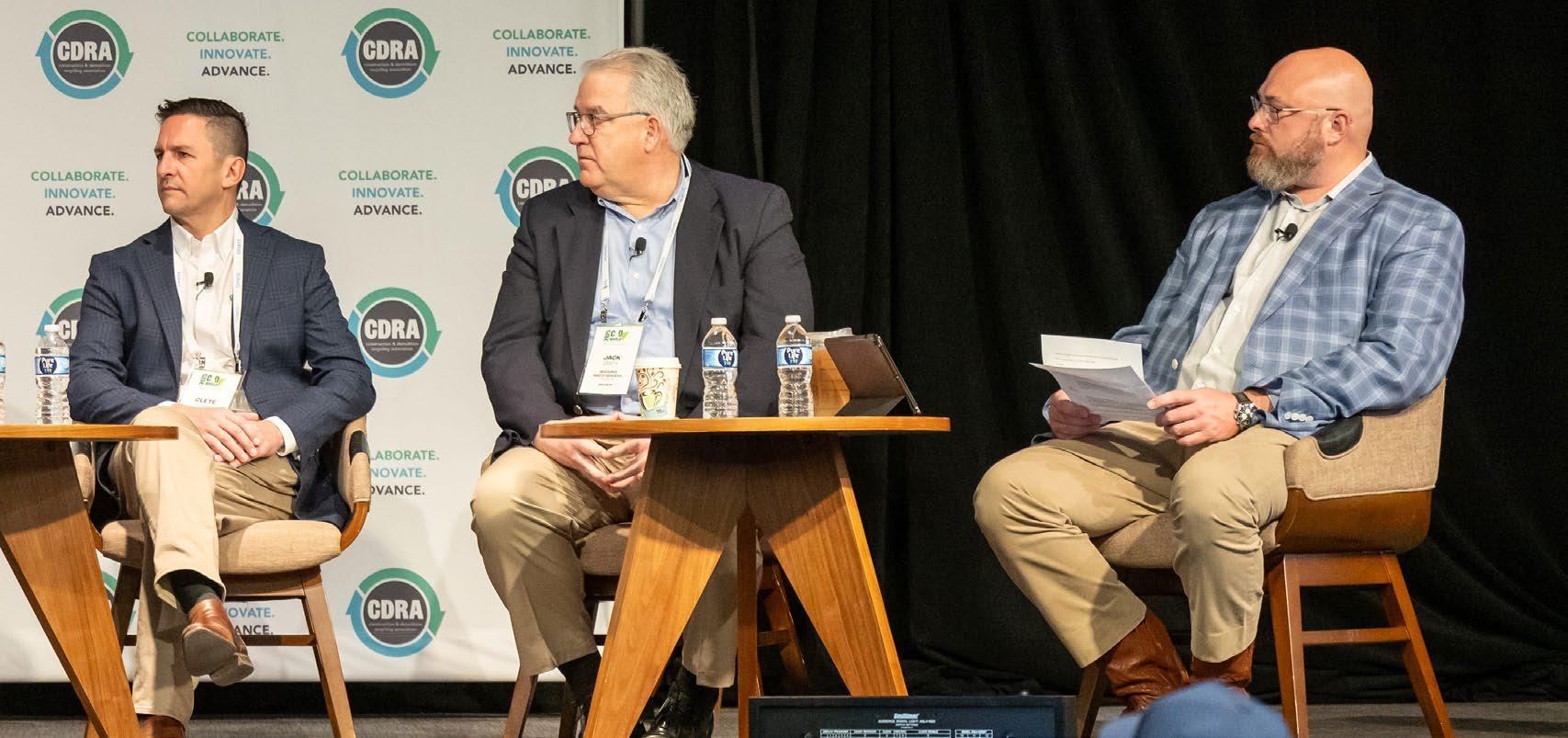
Speakers at CDRA 2026
Chad Abell: Coastal Waste & Recycling
Lauren Asfour: Posillico Wash Plant
Amanda Atkinson: Holder Construction Co.
Stephen Bantillo: RCI
Geoff Brock: IPS-Integrated Project Services LLC
Allen Burns: Richard S. Burns and Co.
David DeVito: ReSource Waste Services
Brooke Fishel: Gypsum Association
Josh Fontenot: Kinderhook Industries LLC
Joseph Goicochea: Ohio Environmental Protection Agency
Patti Hamilton: Coastal Waste & Recycling
Will Hancock: OEM-Florida
Jason Haus: Dem-Con Cos.
Brock Hill: Premier Recycle
Michael E. Hoffman: National Waste & Recycling Association
Dan Horton: ASR Systems LLC
Andi Johnson: Construction & Demolition Recycling Association
Boyd Jones: Michael Brothers Cos.
Amanda Kaminsky: Building Ecosystems
Effram Kaplan: Brown Gibbons Lang & Co.
Bill Keegan: Dem-Con Cos.
Christine Kiourtsis: Renewable Recycling Inc.
Erin Kirkpatrick: Swinerton
Dave LaFleur: Coastal Waste & Recycling
Troy Lautenbach: Lautenbach Recycling
Charles Lomangino: Coastal Waste & Recycling
Jim Marcinko: WM
Davey Mishra: Clairvest Group Inc.
Dave Mitchell: The Leadership Difference Inc.
Michelle Mountjoy: Ohio Environmental Protection Agency
Kristyn Oldendorf: Solid Waste Association of North America
Andrew Paluszkiewicz: Eco Materials LLC
Matthew Petrie: WIN Waste Innovations
Pete Ristagno Jr: Pete & Pete Container Service Inc./Boyas Excavating
Lois Rose: Sarasota County, Florida
Nelson Russom: Turner Construction
Michael Stepic: Rubber City Engineering and Environmental LLC
Bernard Styer: American Demolition Corporation
Leroy Taggart: Marsh & McLennan Agency LLC
John Thomas: Waste & Recycling Solutions
Joe Ursuy: Comerica Bank
Terry Weaver: USA Gypsum
Robin Wiener: Recycled Materials Association
Randy Wolf: RCI
Lincoln Young: Rockwood Sustainable Solutions
Volvo CE to Close Rokbak Business
Due to rising costs and global trade challenges, Volvo CE will close its Rokbak articulated hauler business and concentrate resources on its portfolio of other hauling solutions.
For more than four decades, Rokbak, formerly Terex Trucks, has proudly delivered reliable off-highway articulated haulers to customers worldwide. However, rising operational and supply chain costs, combined with global trade challenges such as the US tariffs, have significantly impacted financial performance, making continued operation unsustainable. Production of Rokbak articulated haulers is expected to stop in the second half of 2026, subject to a consultation process.
Supporting Rokbak Customers and Partners
Volvo Construction Equipment (Volvo CE) is committed to the ongoing success of Rokbak customers and dealer partners. Dedicated support will be available and customers and dealers will continue to receive aftermarket services support throughout the transition and into the future. A core Rokbak team will remain in place to deliver aftermarket services, including parts, sales, technical support and training.
“This is an incredibly difficult time for our entire company, our valued employees and our loyal customers and partners,” said Paul Douglas, Managing Director of Rokbak. “We are extremely grateful for all the support we’ve received over the years. Our focus now is on ensuring a smooth
transition, providing ongoing support to our fantastic team, customers and partners, and honoring our commitments.”
The Rokbak Journey
In 2014, the Volvo Group acquired the off-road product line from Terex Trucks and established a new division within Volvo CE. After seven years of investment, the Rokbak brand was launched in September 2021 with the RA30 and RA40 articulated haulers. Since then, the robust trucks have been delivering reliable, fuel-efficient performance on tough job sites around the world.
“Our haulers are designed and built in Scotland and loaded with generations of experience and pride,” concluded Paul. “When we launched the Rokbak brand, it was a hit worldwide and embraced by our team, customers and dealer partners. The trucks became known and loved for their reliability, durability and uptime.
“This makes it even harder to announce our plans to close the business, but despite extensive efforts, ongoing operations have unfortunately become unsustainable.”
The Rokbak closure is subject to the completion of a collective consultation process, which is expected to conclude by Quarter 3, 2026.
Volvo CE will work closely with unions, government representatives and regulatory bodies to ensure a responsible and supportive transition for employees impacted by this decision.
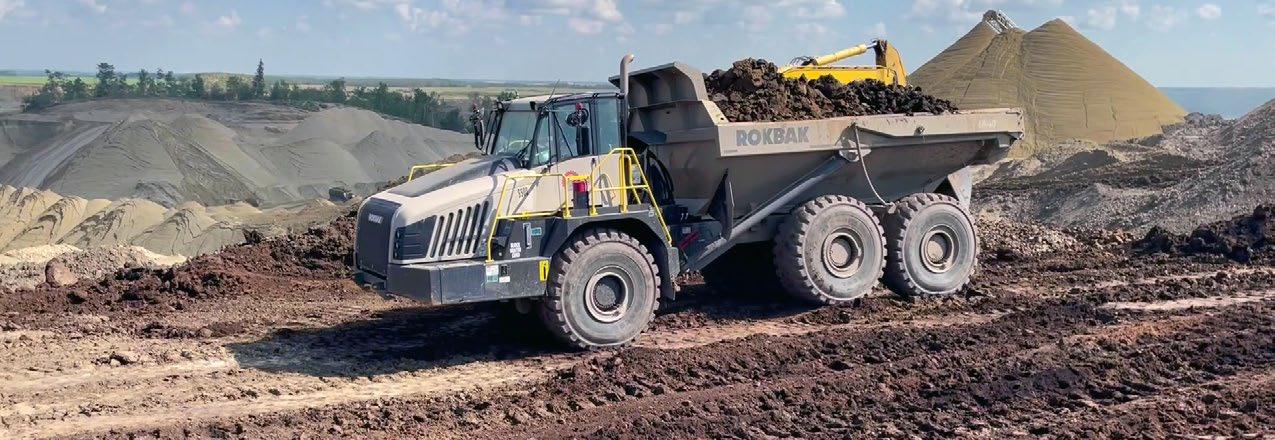
Demolition runs on FieldFlō


FieldFlō is the management platform purpose-built for demolition subcontractors. From real-time safety tracking to instant compliance documentation, FieldFlō keeps your projects moving, your crews safe, and your margins protected.
Centralize Operations
Time, materials, equipment, waste tracking and compliance in one dashboard
Strengthen Safety
Customizable and trackable forms, certification tracking and bilingual training videos
Job Profitability
Know your budgets vs. actuals in real-time. Save $80K+ Annually Proven ROI per office.

SCAN ME
A Decade Later, the Evolution Continues: Brokk Introduces the Brokk 110+
Ten years after the introduction of the iconic Brokk 110, Brokk, the world leader in remote-controlled demolition, announces the launch of the Brokk 110+, now equipped with Brokk SmartPower+.
The Brokk 110+ builds on the versatility and field-proven performance of the original Brokk 110—one of the most widely used demolition robots in the world—and elevates it with new intelligence, greater efficiency and enhanced reliability.
Brokk showcased the 110+ alongside other innovations at World of Concrete 2026 in January.
“Versatility, capability and trust have defined the Brokk 110 for a decade,” said Martin Krupicka, CEO of Brokk Group. “The Brokk 110+ continues that legacy, offering a noticeable step forward while staying true to the compact form that operators rely on.”
The new Brokk 110+ retains everything operators value about its predecessor but introduces advanced capability through Brokk SmartPower+, designed to maximize uptime,
optimize power delivery, and simplify service.
With its more powerful sibling, the Brokk 130+, the Brokk 110+ fills its own place in Brokk’s compact class.
It delivers a clear performance step up from the Brokk 110 while maintaining the size, mobility and access that made the original a global favorite.
Key Innovations of the Brokk 110+
• Exceptional versatility—from tight access to demanding demolition
• Superior mobility across stairs, corridors and uneven surfaces
• Compact transport profile—fits in elevators, small trucks or car trailers
• Dual power capabilities—16 A and 32 A
• Full 360-degree work radius for optimal reach
• Powered by Brokk SmartPower+ for enhanced performance and reliability
brokk.com
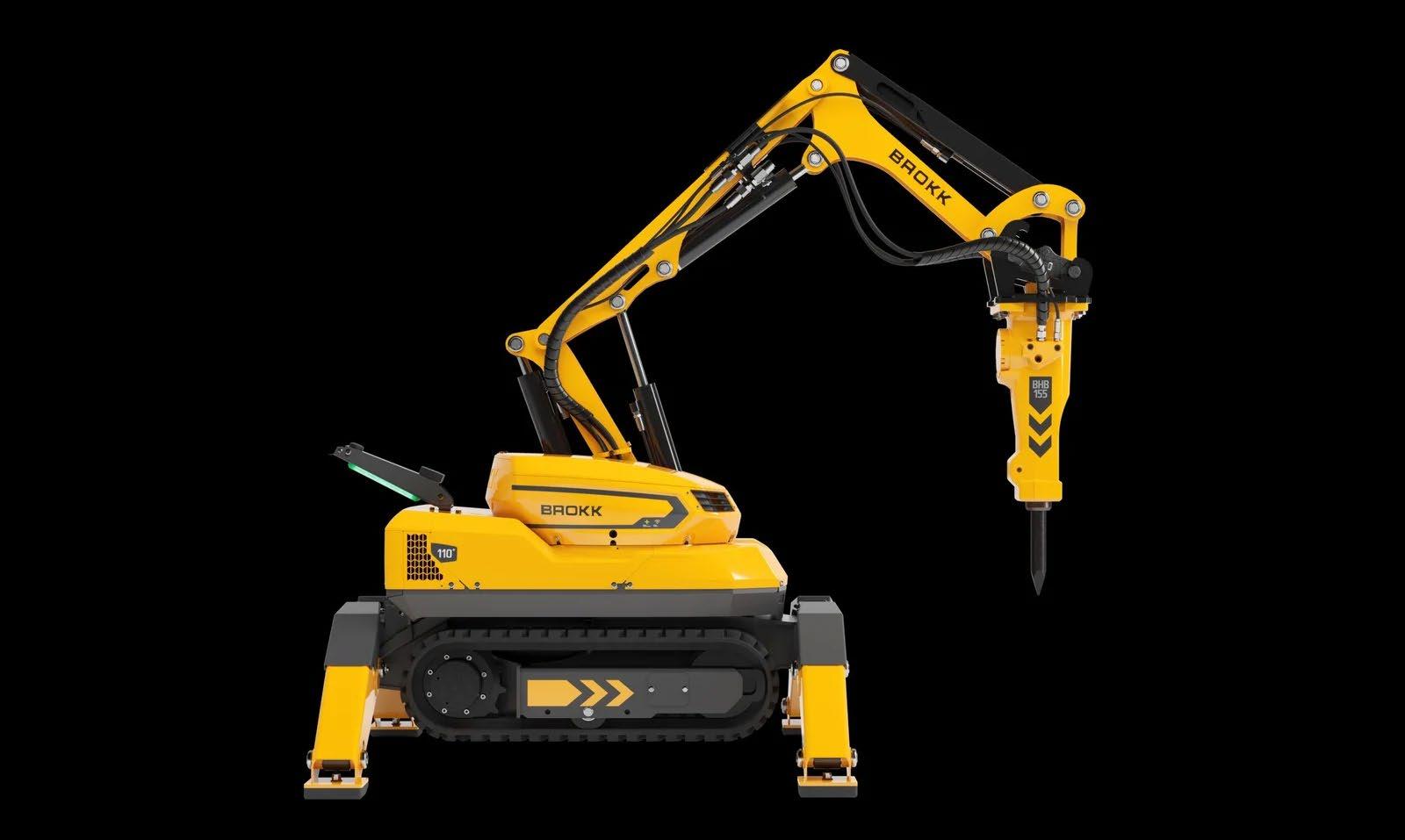
Brokk Offers the Brokk 130+
More Power in Compact Demolition
The Brokk 130+ is a powerful new demolition robot engineered to push the boundaries of performance. With increased power, a newly developed BHB 175 breaker, and the intelligence of Brokk SmartPower+, the Brokk 130+ sets a new standard.
“With the Brokk 130+, we are taking demolition power and efficiency to the next level,” said Martin Krupicka, CEO of Brokk Group.
system adjustments protect key components, improving reliability and longevity.
Designed to handle the toughest jobs, the Brokk 130+ represents a bold step forward, combining more power, smarter technology and greater efficiency to redefine remote-
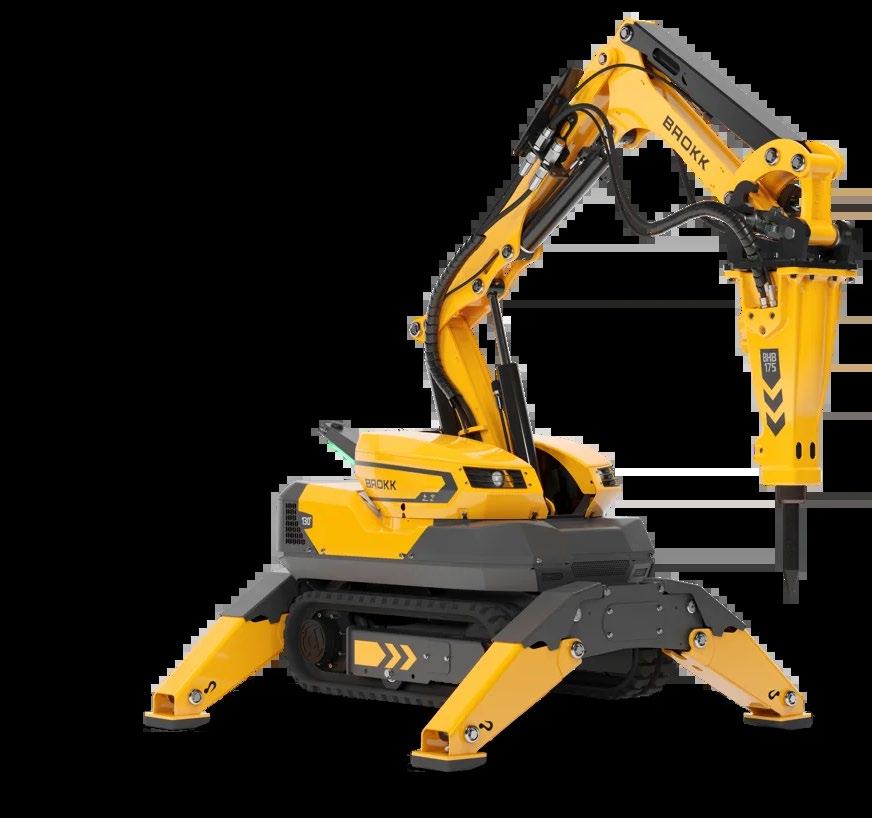
Brokk Celebrates 50 Years as Pioneer in Demolition
Brokk Inc., the North American distributor for Brokk demolition robots and Aquajet Hydrodemolition equipment, proudly marks the brand’s 50th anniversary in 2026. Since 1976, Brokk has consistently pushed the boundaries of what is possible in the demolition industry, transforming hazardous work environments and redefining productivity, prevision and safety on jobsites worldwide.
Brokk celebrated its 50th anniversary and showcase its equipment innovations at Booth C4333 in the Central Hall during World of Concrete 2026 from January 20-22.
Brokk’s journey began in northern Sweden, inside a smelter furnace at Rönnskärsverken. Faced with dangerous manual demolition tasks, brothers Lars and Per-Martin Holmgren envisioned a new solution: a remotely operated machine capable of doing the job with greater safety and efficiency. Their first prototype did far more than solve a local challenge,
it laid the foundation for an entirely new industry.
From that first machine to today’s advanced fleet operating around the globe, Brokk has remained true to the same core mission to protect workers, increase efficiency and engineer equipment built for the most demanding environments.
“Brokk was born from necessity, to protect workers and improve productivity in some of the toughest industrial settings,” said Martin Krupicka, CEO of Brokk Group. “Fifty years later, that driving purpose remains unchanged. While our technology has evolved dramatically, our commitment to solving real-world challenges for our customers is as strong as ever.”
Today, Brokk robots operate in industries including construction, cement and metal processing, nuclear decommissioning, tunneling, mining and more. Brokk continues to develop specialized machines and attachments designed to meet the evolving needs of complex and high-risk workplaces.
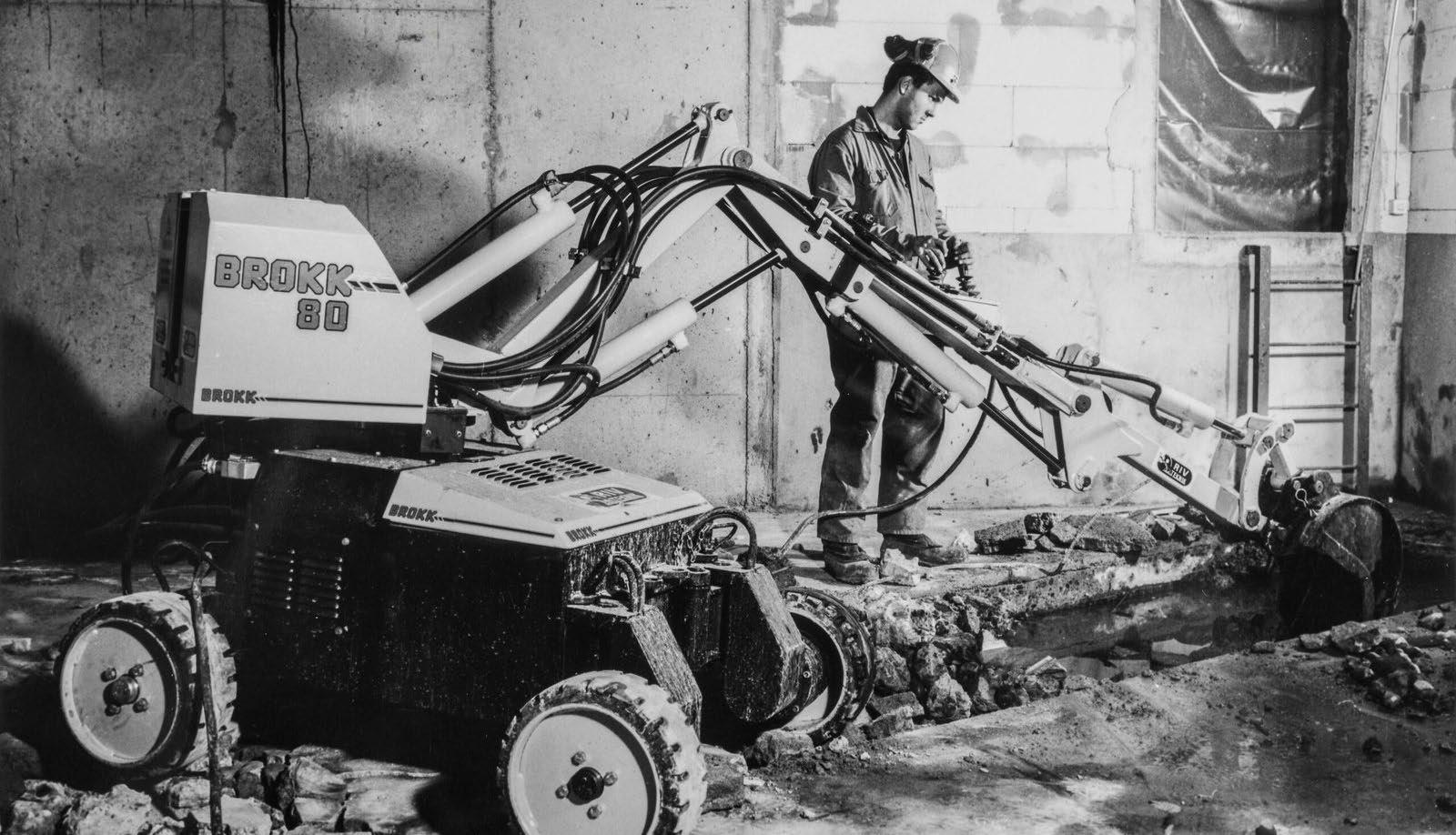
Darda Introduces the New MB200 Bolt Cutter in North America
Darda sets the standard in safety, performance and efficiency with the launch of the MB200 Bolt Cutter.
The MB200 is a compact, hydraulic bolt cutter designed to reliably cut high-strength reinforcing steel up to 32 millimeters in diameter using a cold-cutting process—completely without sparks or flames.
The attachment, designed for Brokk demolition robots and other compact carriers, is now available in the United States and Canada through Brokk Inc. and Darda North America. Visitors to World of Concrete 2026 were able to see the new Bolt Cutter attachment paired with a Brokk demolition robot.
Unlike cut-off grinders, saws or oxygen lances, which expose operators to significant safety risks, the MB200 Bolt Cutter delivers maximum safety even under extreme conditions. Its controlled hydraulic cutting process eliminates fire hazards and flying sparks, making it ideal for use in sensitive environments, confined spaces or areas with elevated safety requirements.
Developed specifically for demolition, dismantling and precise rebar cutting, the MB200 combines outstanding cutting power with exceptional ease of handling. Its compact and ergonomic design allows powerful, clean operation even in tight or hard-to-reach areas, providing professionals with a reliable solution for fast and efficient steel cutting.
With the MB200 Bolt Cutter, Darda delivers a new, high-performance tool for professionals who demand speed, safety and reliability — without compromise.
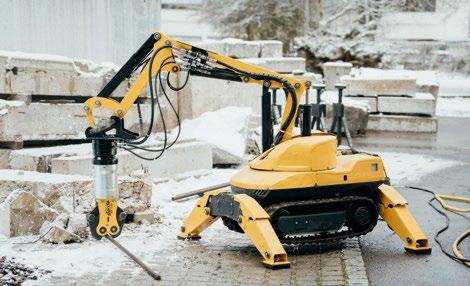
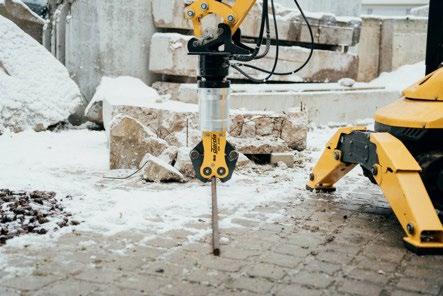
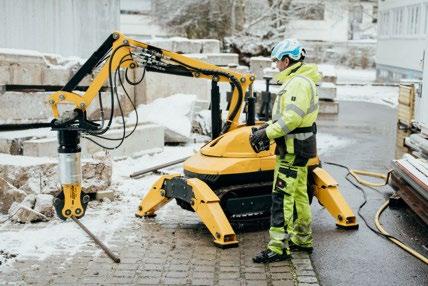
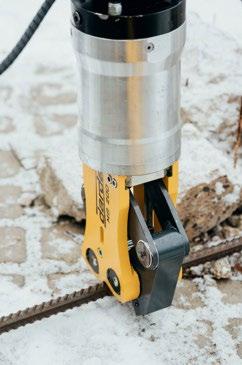
compact and ergonomic design allows powerful, clean operation even in tight or hard-to-reach areas, providing professionals with a reliable solution for fast and efficient steel cutting.
Darda sets the standard in safety, performance and efficiency with the launch of the MB200 Bolt Cutter.
The MB200 is a compact, hydraulic bolt cutter designed to reliably cut high-strength reinforcing steel up to 32 millimeters in diameter using a cold-cutting process.
The MB200’s controlled hydraulic cutting process eliminates fire hazards and flying sparks, making it ideal for use in sensitive environments, confined spaces or areas with elevated safety requirements.
The MB200’s