Welcome to the final issue of 2025 – a fitting close to what has been an exceptionally busy and energising year for demolition.
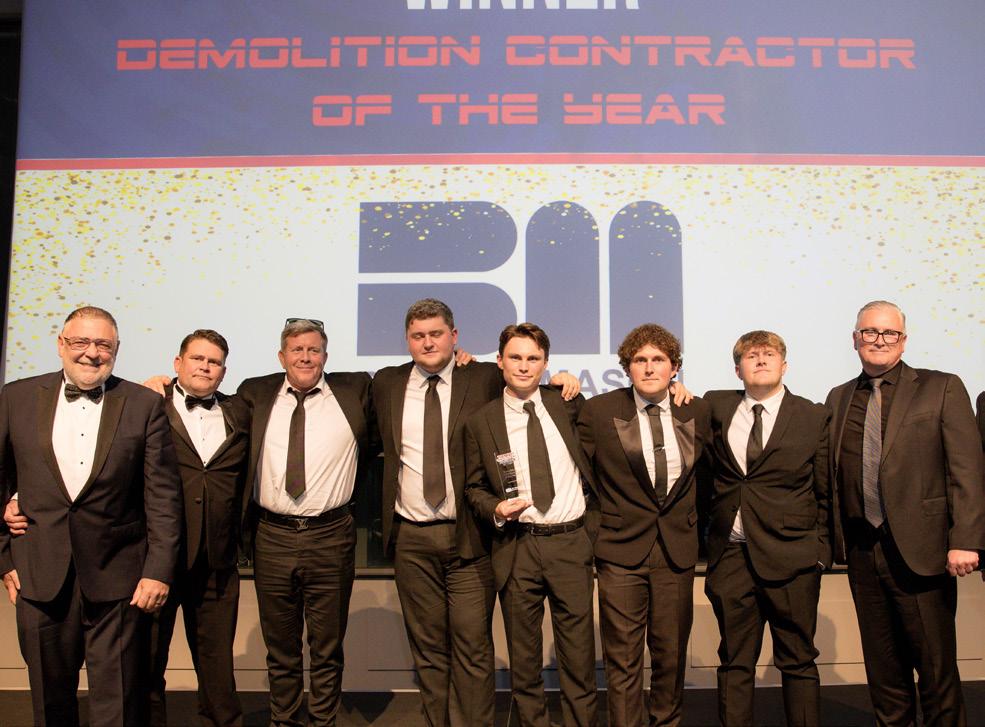
As we recently celebrated our fifth birthday alongside a phenomenal British Demolition Awards this past September, we now look ahead to the start of our seventh calendar year. With that milestone comes a clear commitment: our standards will not slip. From our respected position within the industry, we remain focused on delivering a unique, reliable and forward-thinking publication.
To reinforce that promise, we’ve set out our sixpoint mission statement for 2026 – a pledge that we are far from resting on our laurels as we continue to champion demolition across the UK and beyond.
2026 Mission statement
• Maintain our position as the UK’s most active demolition media platform, delivering more site visits and firsthand project features than any other publication,
• Remain wholly impartial, providing fair, balanced and brand-agnostic coverage across contractors, manufacturers, suppliers and associations,
• Champion a positive, solutions-focused editorial tone that highlights innovation, best practice, safety and the people behind the industry,
• Promote the industry and its workforce at every level, regardless of commercial relationships,
• Act as the industry’s unofficial PR engine, amplifying achievements and elevating UK demolition nationally and internationally,
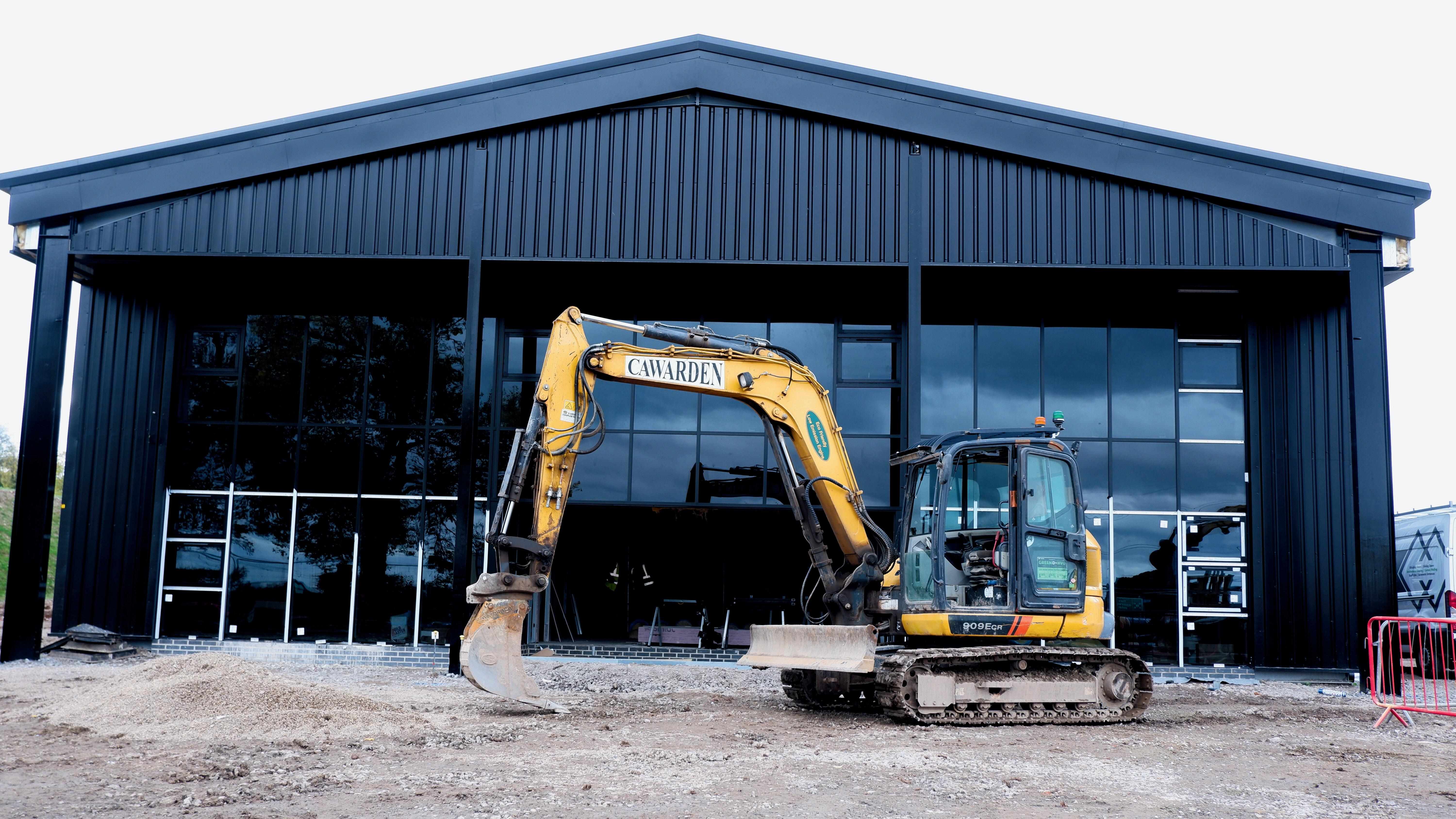
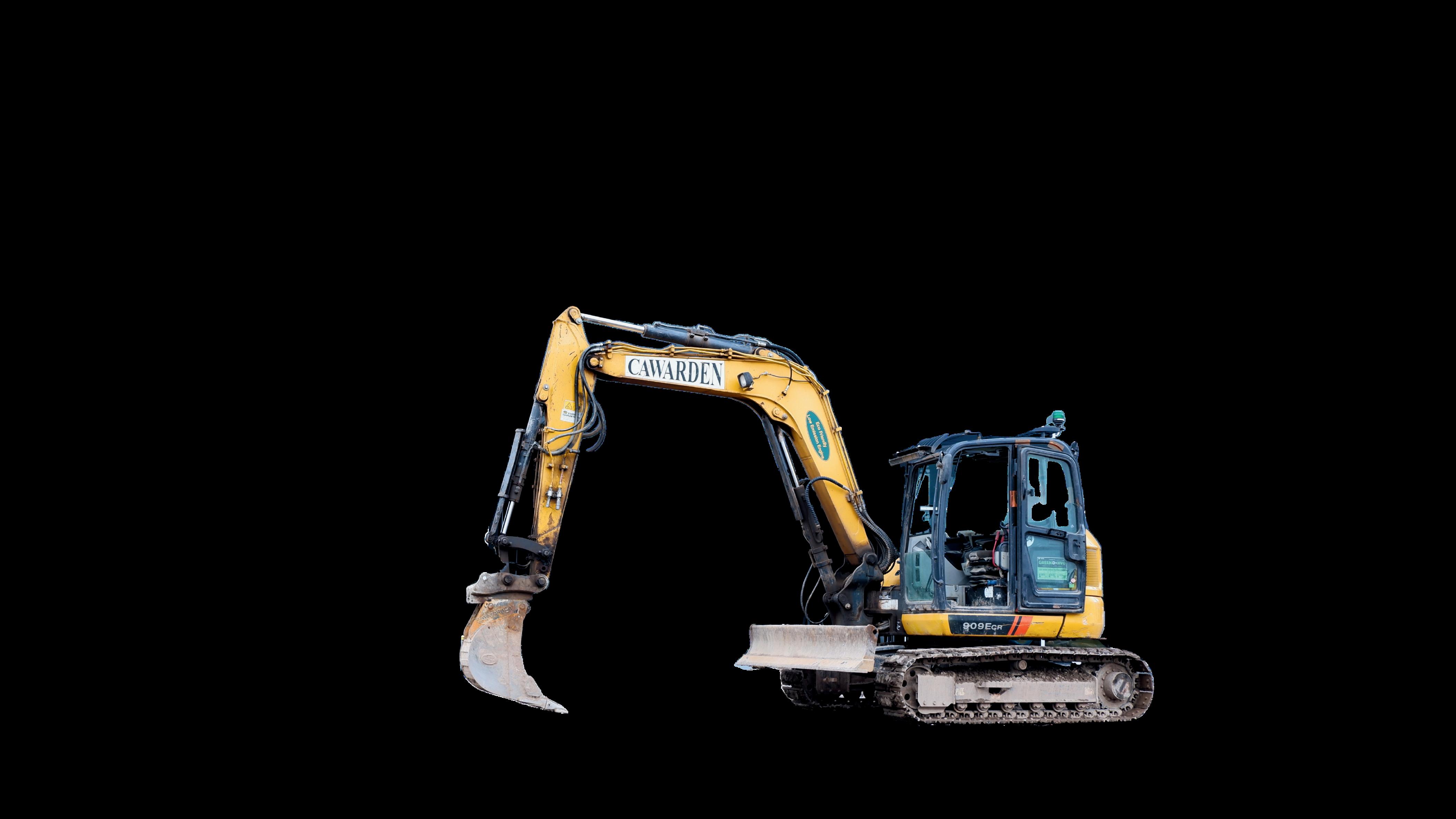
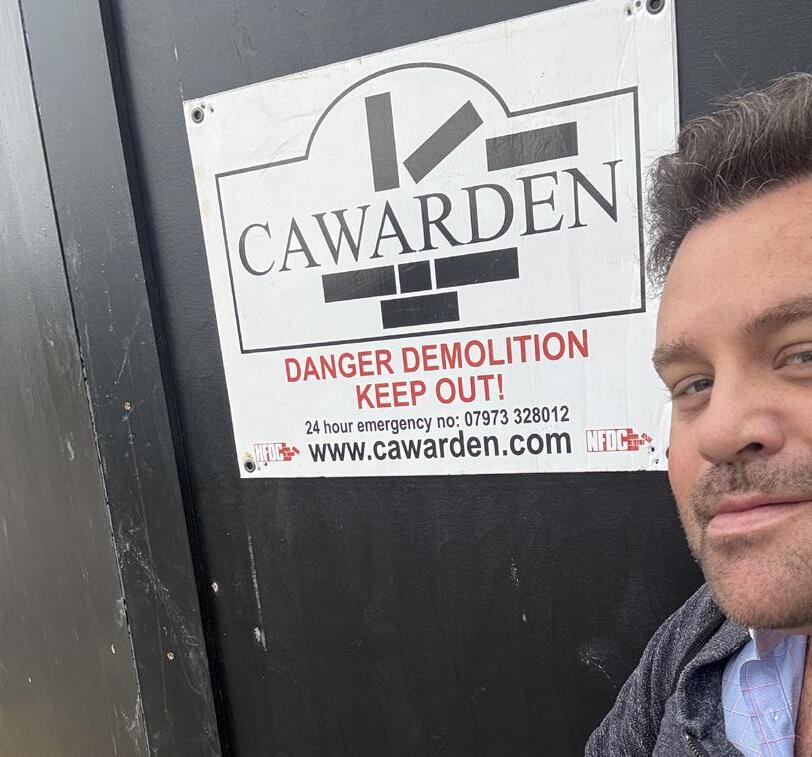
• Celebrate the people and organisations that define our sector through the inaugural DEMMY Awards. Always keen to celebrate progress, we’re launching a new regular feature: Demolition Wins. By tracking social channels and industry news, we’ll showcase the upcoming projects you’re proud to have secured – starting this month with Cawarden and Downwell. Share your successes and you could see them in print throughout 2026.
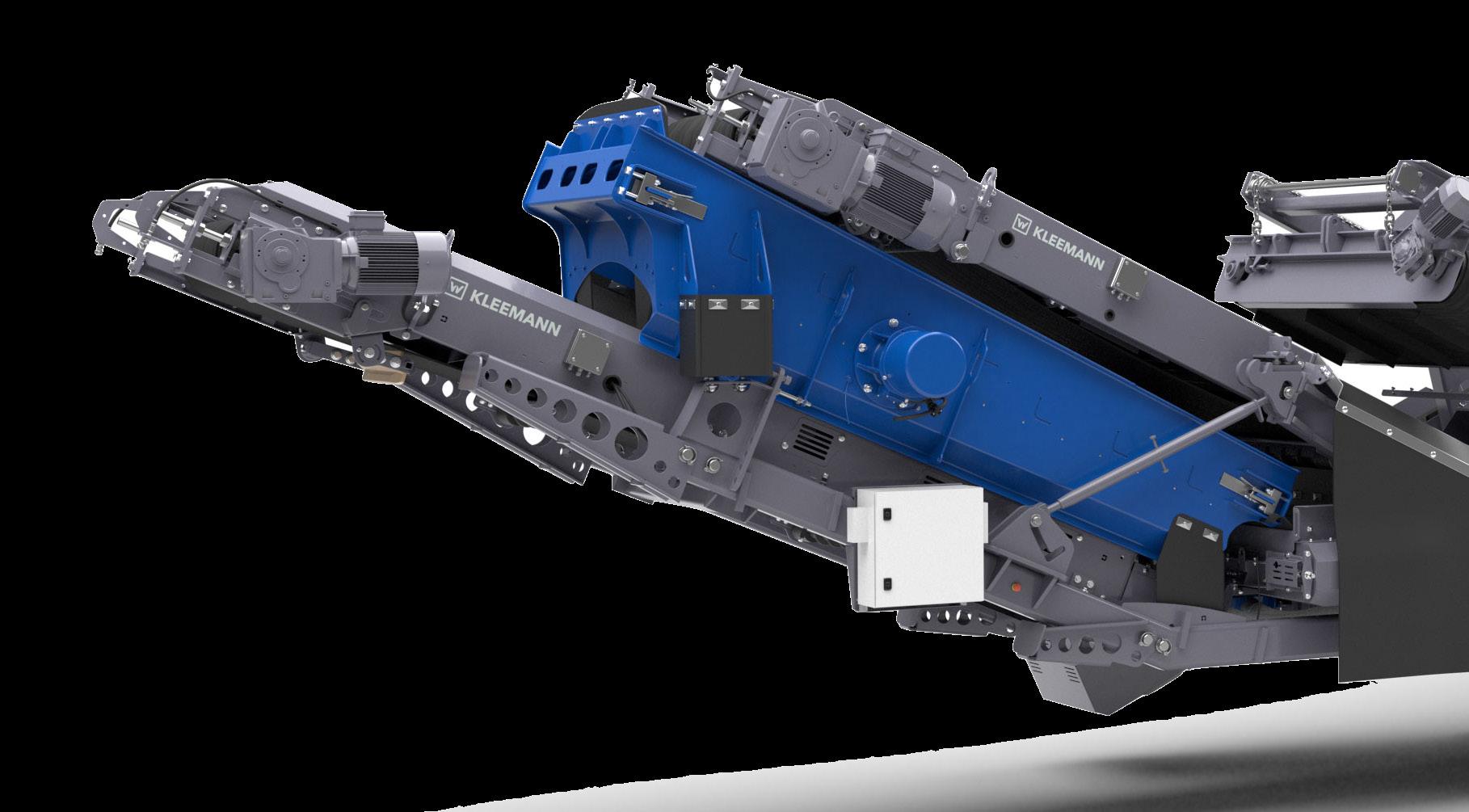
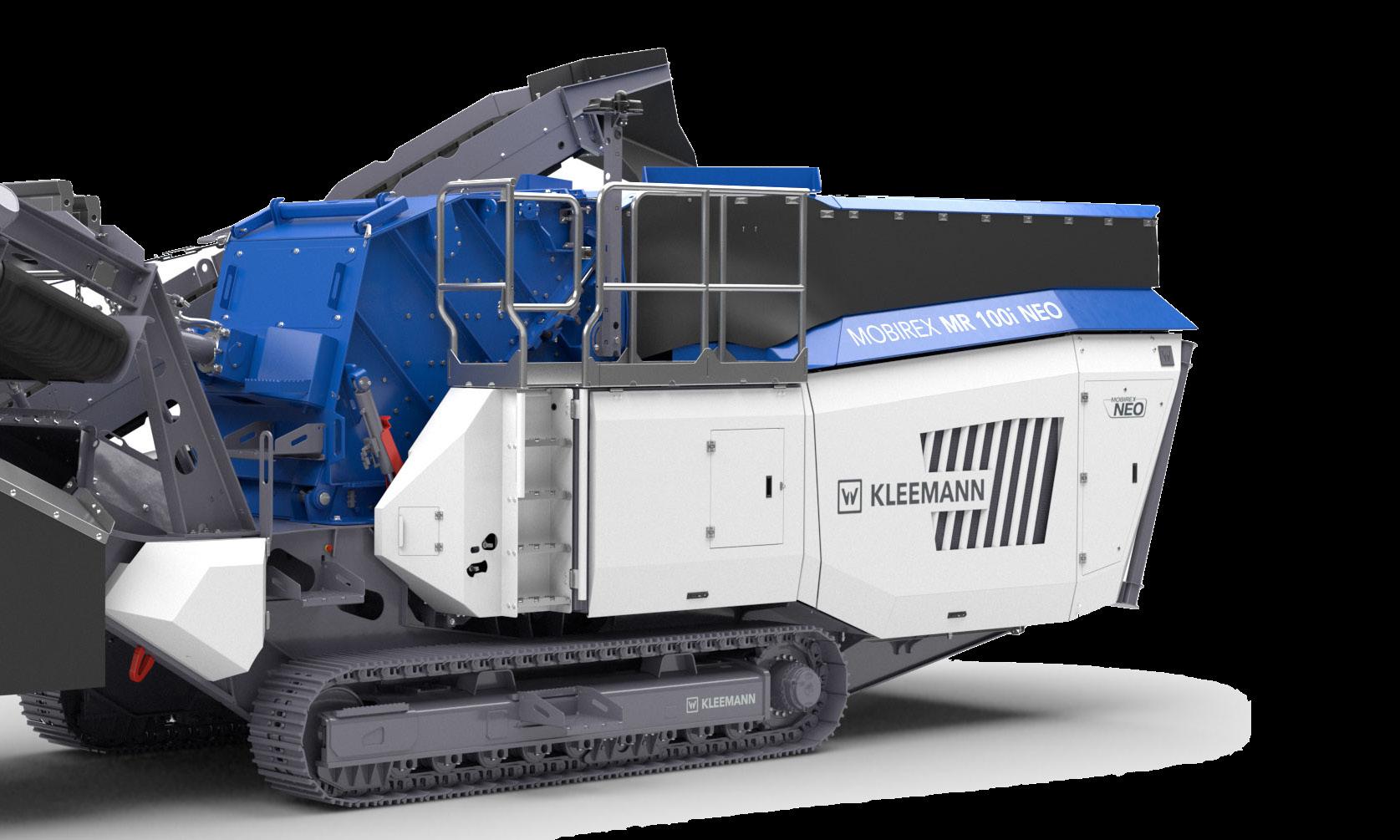
In this issue, we bring you full coverage of the British Demolition Awards, catch up with BPH Head of Sales and Marketing, Chris Clayton, and pair this with our Demolition Discussion featuring Chris Janes of Maylarch. You’ll find strong case studies, a festive tech feature, and to crush the winter blues – a dedicated look at crushers.
Finally, a sincere thank you. In six years, we’ve never carried so many paid advertisements. It’s a humbling signal of how firmly Demolition Hub has become the industry’s go-to media platform. As promised, we won’t let you down.
Thank you and please do keep using us.
Ben Chambers
PUBLISHER
Ben Chambers ben@chambers.media 01903 952 648
EDITOR
Toby Wilsdon toby@chambers.media 01903 952 645
COLUMNISTS
Richard Dolman
Terry Lloyd
PHOTO CONTRIBUTOR
Sky Revolutions
ADVERTISING SALES
Ben Chambers ben@chambers.media 01903 952 648
DESIGN
Joe Chambers joe@chambers.media
PRODUCED & PUBLISHED BY Demolition Hub Ltd Suites 5 & 6, Chapel House, 1-6 Chapel Road, Worthing, West Sussex BN11 1EX demolition@demolitionhub.com 01903 952 640
Demolition Hub is a proud member of the National Demolition Association
Demolition Hub is the media partner for the European Demolition Association and the Indian Demolition Association
Demolition Hub is published six times a year. The subscription rate is £60 per year. Subscription records are maintained at Demolition Hub Ltd, Suites 5 & 6, Chapel House, 1-6 Chapel Road, Worthing, West Sussex BN11 1EX
Articles and information contained in this publication are the copyright of Demolition Hub Ltd and may not be reproduced in any form without the written permission of the publishers. The publishers cannot accept responsibility for loss of, or damage to, uncommissioned photographs or manuscripts.
CONTENTS
6: NEWS
MGL Group and ESH Construction reach milestone
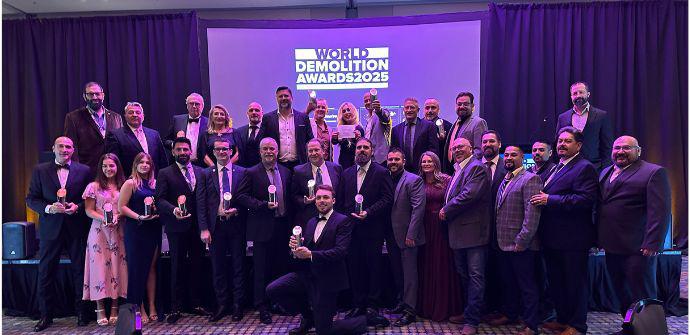
TOTAL Controlled Demolition wins at World Demolition Awards
8: DEMOLITION WINS
Upcoming projects secured by: Cawarden Downwell Group
12: DEMOLITION DISCUSSION
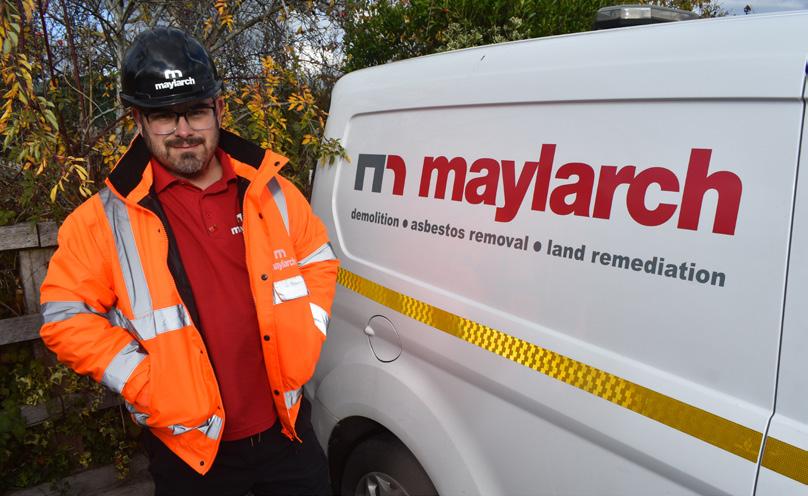
Chris Janes, Demolition Site Manager at Maylarch Environmental, part of the M&M Group
17: CASE STUDY
British Demolition Award-winner DSM Demolition brings down the Royal Liverpool University Hospital
23: CASE STUDY
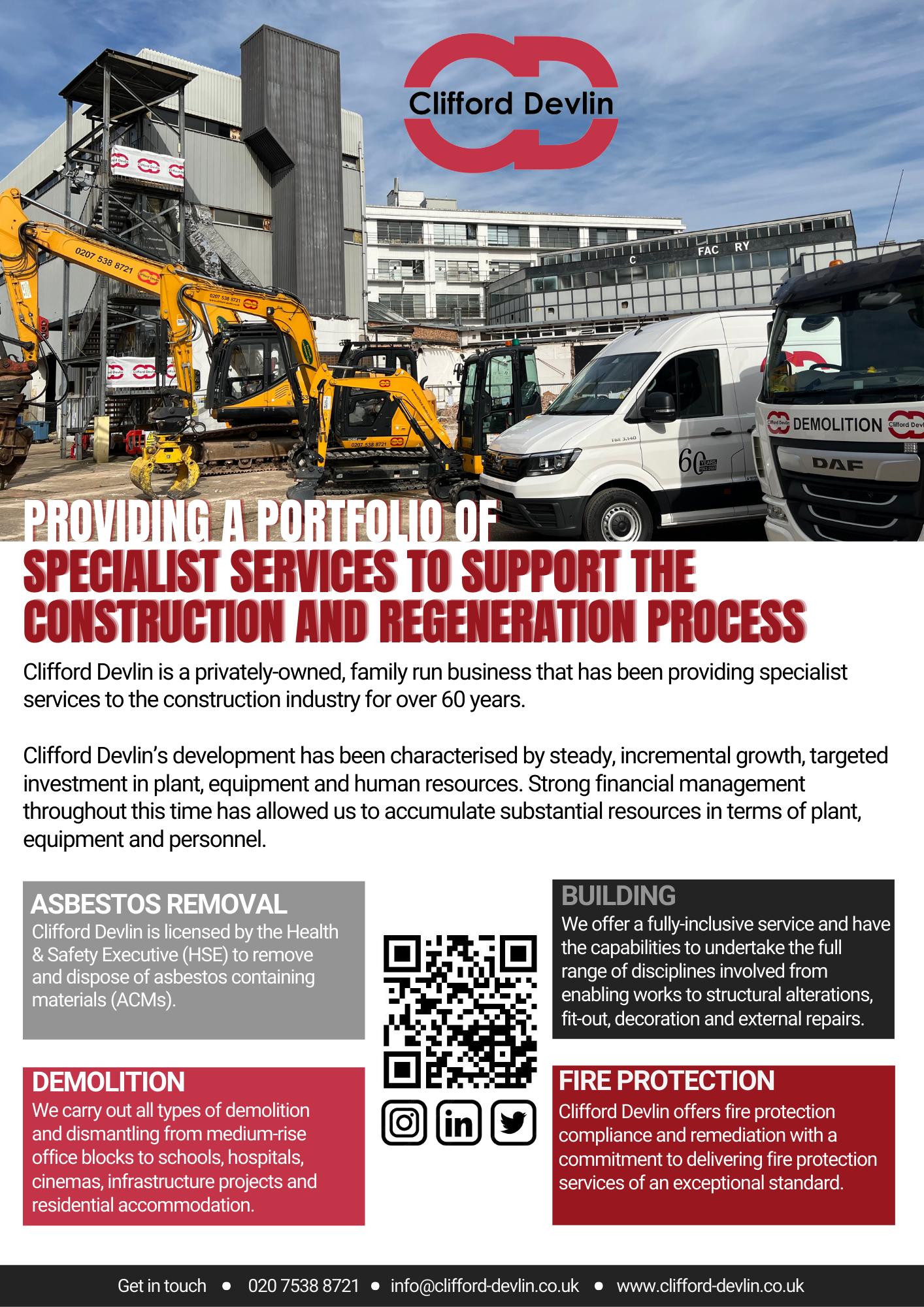
Clifford Devlin’s British Demolition Awardwinning Tower Suites project in London
26: TECHNOLOGY FEATURE
Brigade Electronics
Caterpillar, supplied by Finning UK
SiteZone Safety
So-Trak Xwatch
36: SUPPLIER TALK
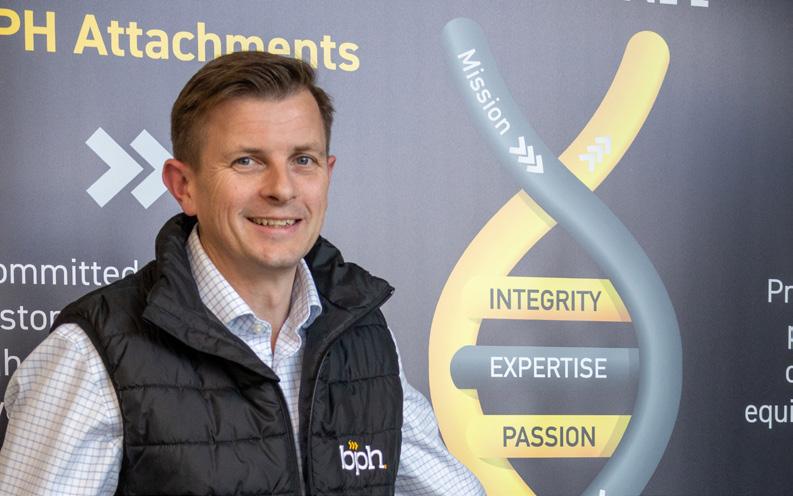
Chris Clayton, Head of Sales and Marketing at BPH Attachments on this family business and its pre-Demmy Awards open day
Safety Innovation of the Year and Apprentice of the Year
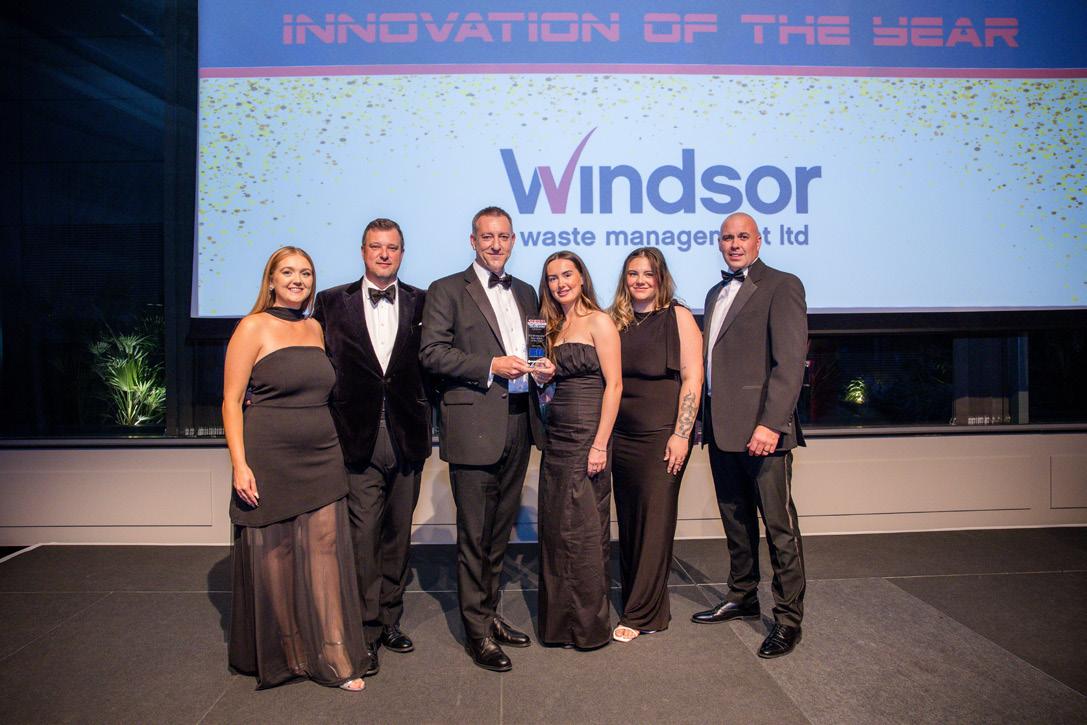
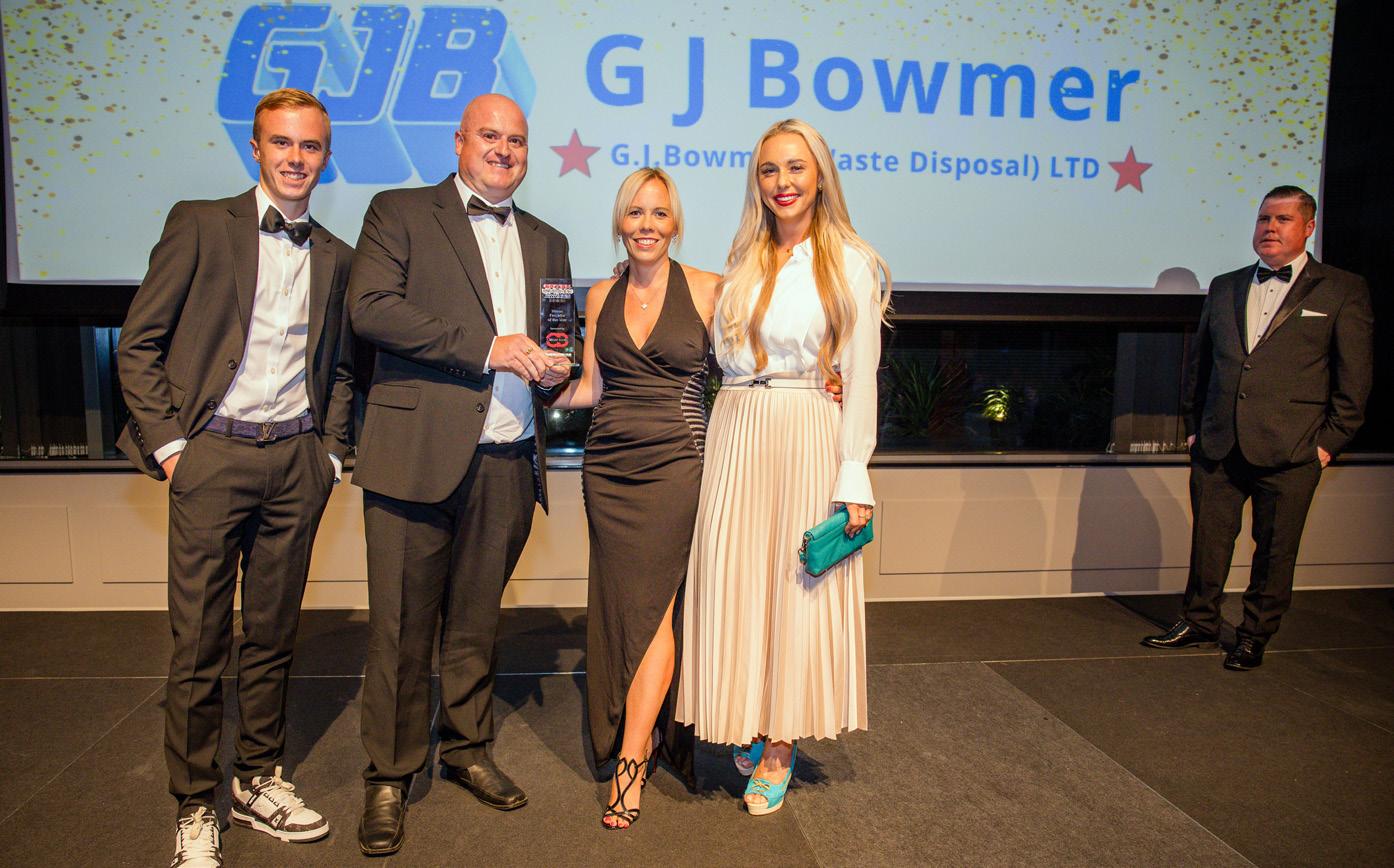
Waste Provider of the Year
Sub-Contractor/Partner of the Year
Recruitment Provider of the Year
Demolition Project of the Year under £1m
Demolition Project of the Year over £1m
Demolition Supplier of the Year
Demolition Contractor of the Year
Demolition Hall of Fame
78: OUT AND ABOUT
Snapshots of Ben and the Demolition Hub team’s activities between issues
82: DEMOLITION HUB ON SITE Photos from Demolition Hub’s site visits
84: EDA STEELWRIST DEVELON GINGER DELEO
Dolinšek
Rotar Promtehservice
90: ASSOCIATIONS
Institute of Demolition Engineers
Construction Equipment Association
Construction Plant Association
102: OPINION
Richard Dolman of AR Demolition: Payment reform: A turning point for the demolition industry Terry Lloyd of Paragon Bank: Demolition SMEs have huge part to play in infrastructure
106: PROFILE
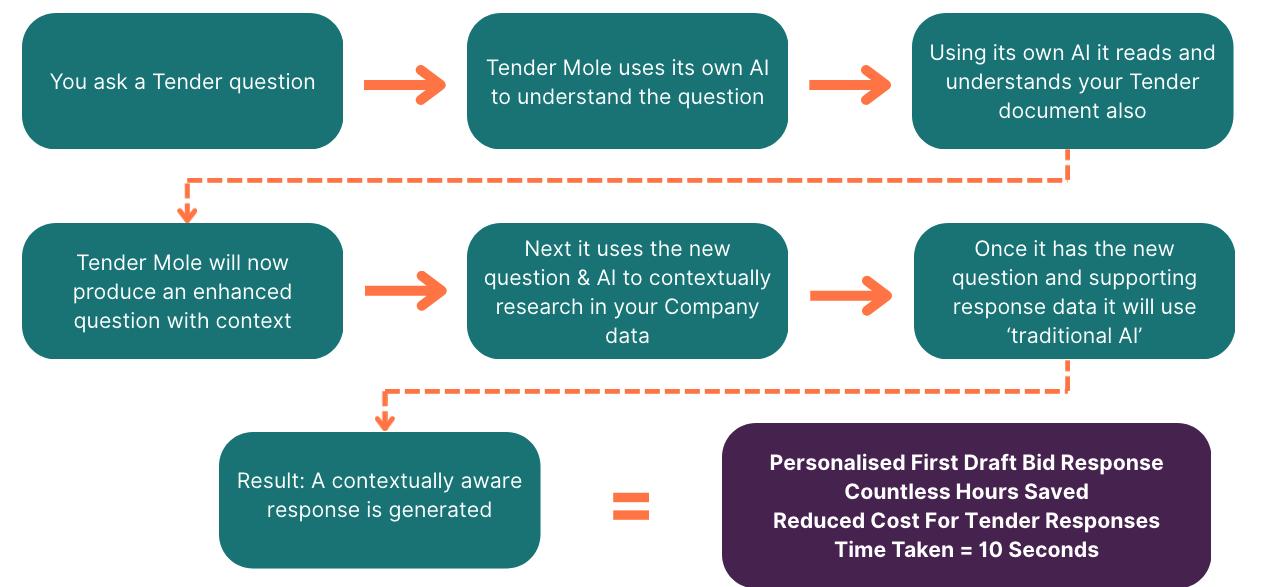
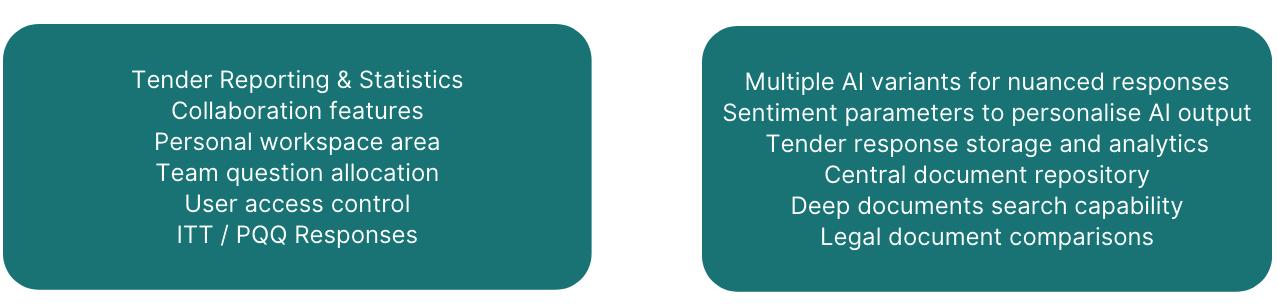
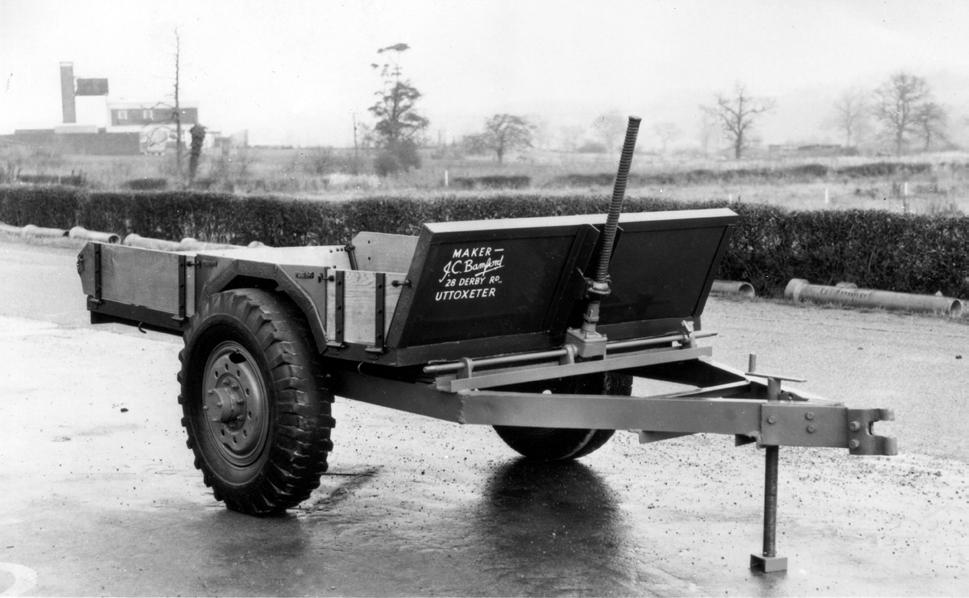
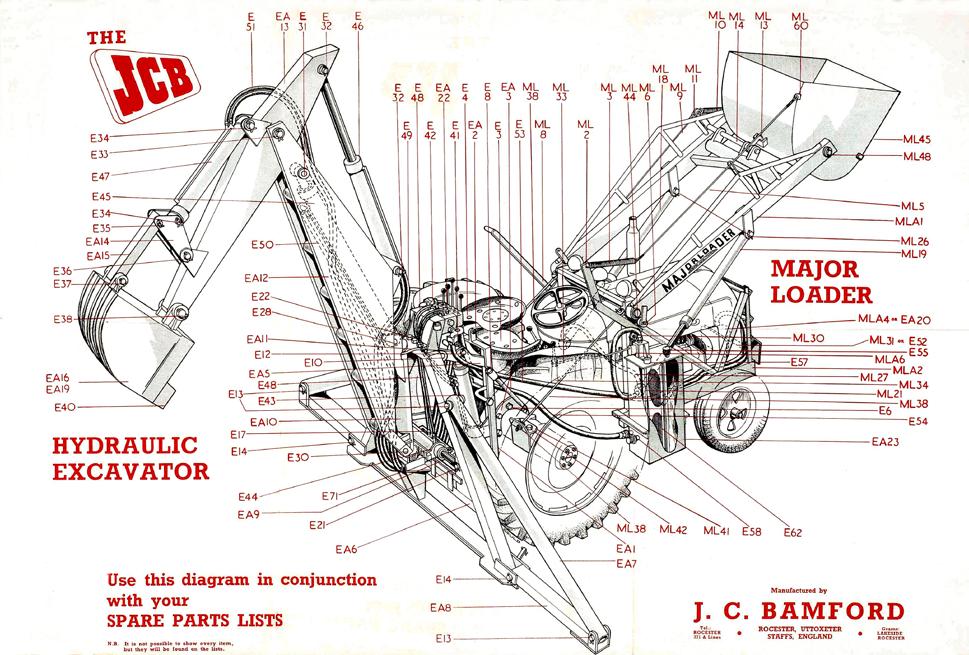
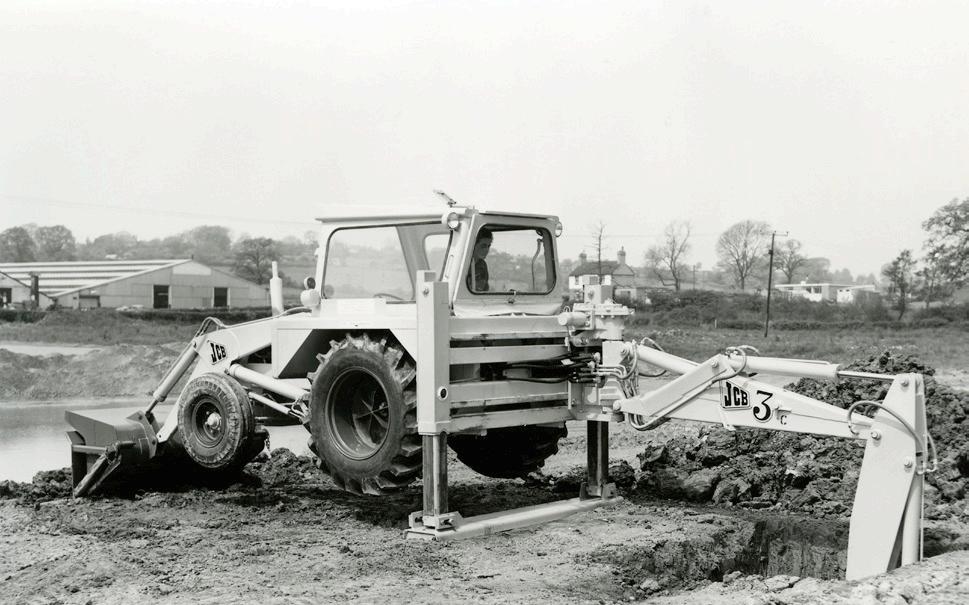
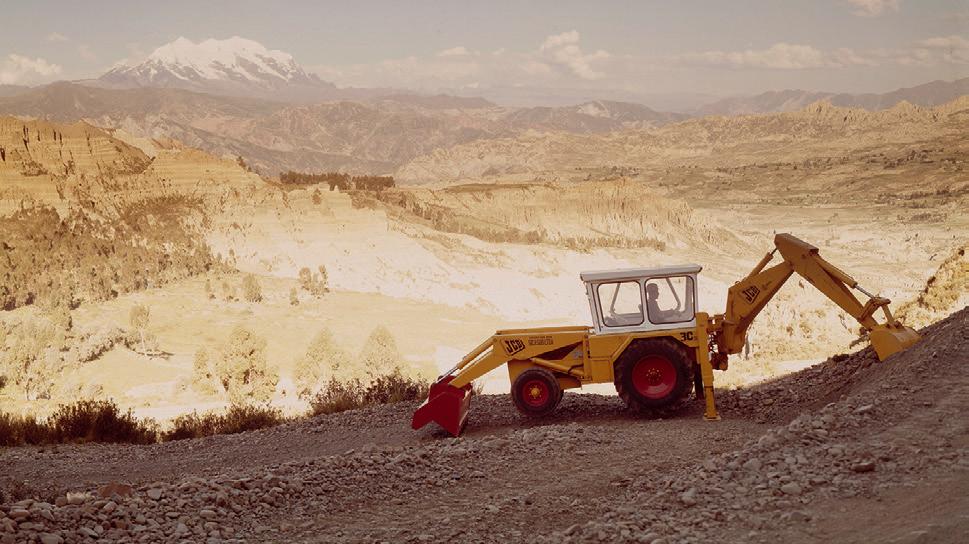
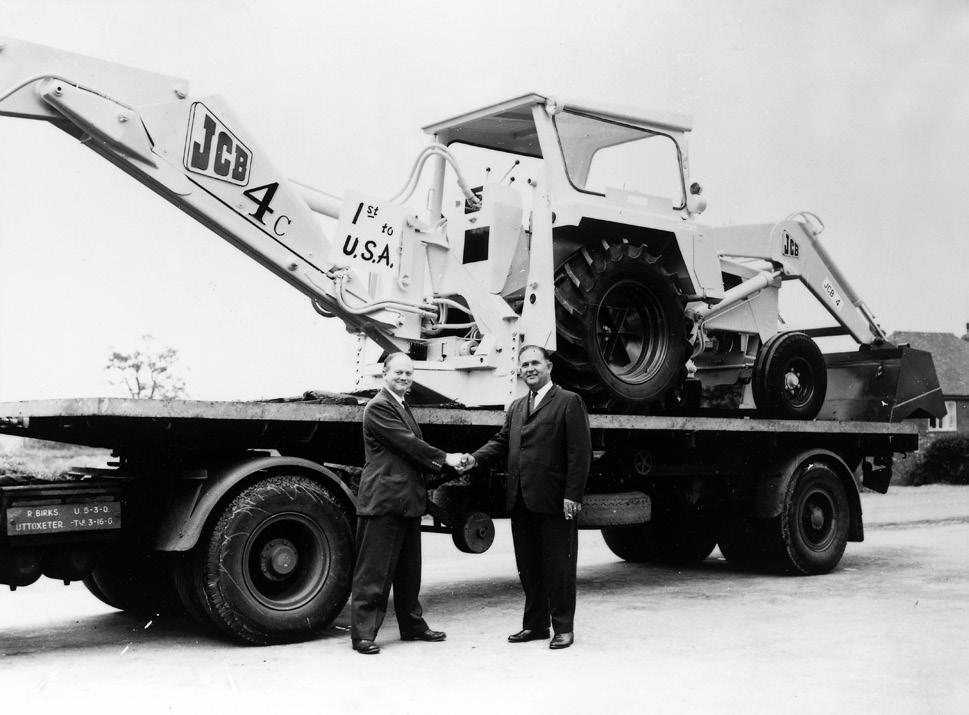
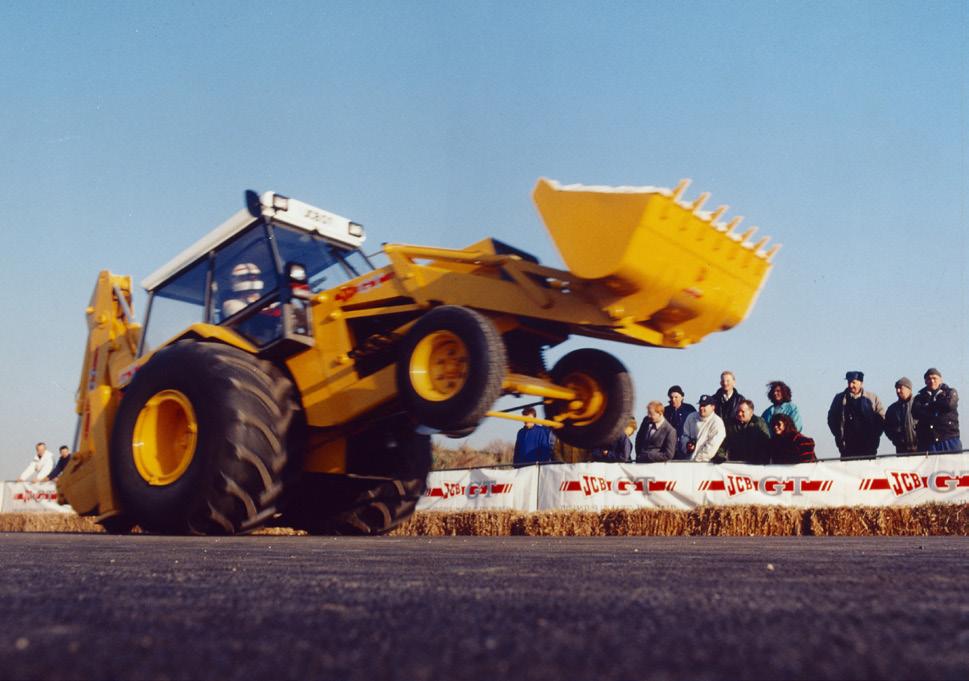
Rory Kilpatrick of Tender Mole tells us about how the AI tender writer can massively reduce time and money spent on tenders JCB celebrates its 80th birthday
116: RECRUITMENT
The latest demolition jobs from Romax Solutions
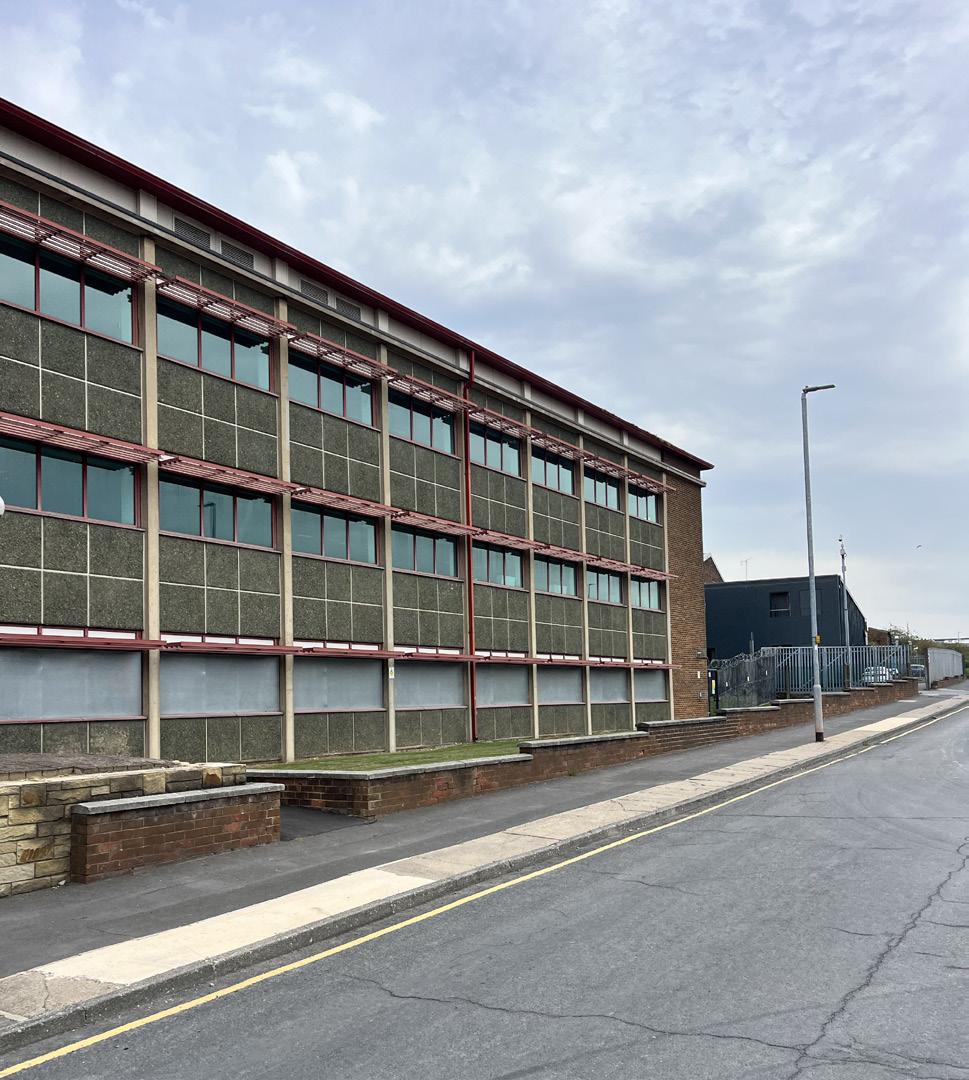
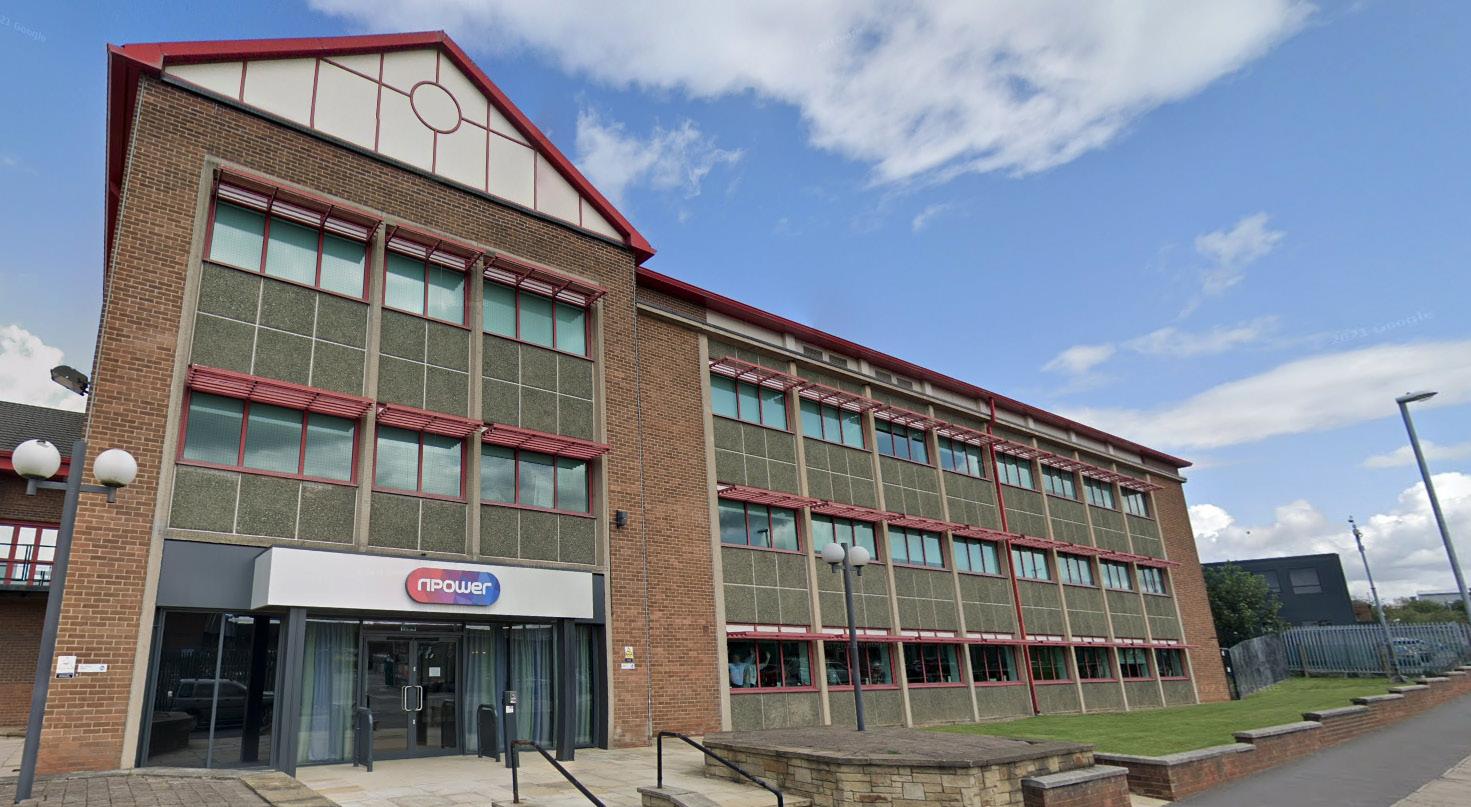
Milestone reached as next construction phase is set to begin at Eston Precinct
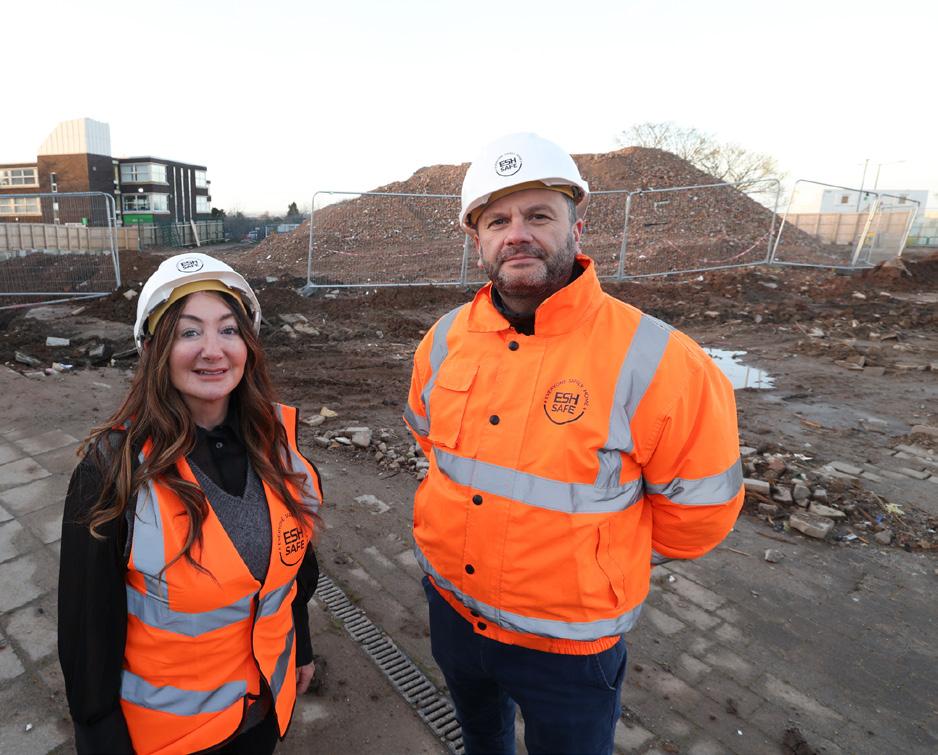
North of England contractor, Esh Construction, is working in partnership with Redcar and Cleveland Borough Council to transform the Eston Precinct retail facility and enhance the overall appearance of Eston as a vibrant and welcoming destination.
This follows the demolition of the existing precinct by Esh Construction’s subcontractor, MGL Group, beginning earlier this year and paving the way for seven new retail units and an outdoor leisure space. The new precinct will provide 14,600 square feet of high-quality retail space for residents and visitors.
The initial phase of the project saw 18 retail units and six flats located above the units safely brought down, harnessing remote demolition technology. Asbestos was also removed – including notifiable materials – to ensure the safety of the site. The foundations are scheduled for removal as the new construction phase advances. In total, the demolition phase processed 4,454 tonnes of type 1 and 230 tonnes of recycled 6F2 materials into a recycled product.
Grant Watson (above right), Construction Manager at Esh Construction, said: “We are proud to bring our expertise to the Eston Precinct redevelopment and to be moving onto the next stage in the project.
“Working collaboratively with our client, we are looking forward to seeing the positive impact that this scheme will have in Eston and we remain committed to bringing forward initiatives to maximise social and economic benefits throughout.”
With the site now cleared, bulk earthworks and engineering fill will be carried out to enable foundations for the new building to be installed. Next year, passers-by will see steel frames being installed as the new precinct begins to take shape.
Planned improvements to the surrounding external areas include new paving, trees, benches, and upgraded lighting and power infrastructure –supporting events and markets and establishing Eston Precinct as a thriving community destination.
Councillor Lynn Pallister (far left), Cabinet Member for Growth and Enterprise at Redcar and Cleveland Borough Council, said: “This next phase marks an exciting milestone and it’s fantastic to see such progress taking shape. Residents will soon notice significant improvements to the area, including the steel framework for seven new retail units and a beautifully landscaped outdoor space.
“The new precinct will offer high-quality retail opportunities for both residents and visitors, creating an inviting place to shop and spend time. I want to thank everyone for their patience and am delighted to see these plans becoming a reality.
“With demolition now complete and preparations underway to ready the site and resources, you can expect to see a lot of activity starting on site in January.”
The project is being funded by the UK government and Tees Valley Combined Authority. Phase one is expected to be completed by autumn 2026. Esh is working alongside Identity Consult, Space and Fairhurst to deliver the scheme.
TOTAL Controlled Demolition Services Ltd:cContract under $1 Million
by Michael Quinn, Business Development and Compliance Manager
TOTAL Controlled Demolition Services
We are incredibly proud to announce that TOTAL Controlled Demolition Services Ltd has been named a winner at the 2025 World Demolition Awards, taking home the title for Contract under $1 Million for our technical deconstruction works at Heaps Rice Mill, Liverpool.
We are so proud to be recognised on the world stage for the precision, safety, and technical excellence that define our approach to every project. This award marks a defining moment in our company’s history – and a celebration of the dedication and skill of the entire TOTAL team.
A huge thank you to Demolition & Recycling International for hosting another worldclass event, and to the judging panel for recognising the complexity, innovation, and care that went into the Heaps Mill project.
We also extend congratulations to all the other finalists and winners – each helping to
raise global standards and showcase the very best of our industry.
And a special thank you to Wayne Bagnall for proudly representing TOTAL and collecting the award on our behalf.
From everyone at TOTAL Controlled Demolition Services Ltd, this is more than an award – it’s a milestone that reflects our people, our progress, and our passion for delivering demolition done right.
Cawarden has been awarded a contract by Bath Council, following its appointment to the transformative Procure Partnerships Framework, to deliver demolition and associated works at a former industrial site. The project will begin with the safe removal of asbestos in line with the demolition survey, before progressing to the demolition of the buildings down to slab level. This latest award further highlights Cawarden’s proven expertise in delivering safe, sustainable, and compliant demolition solutions for local authorities across the UK.
Leeds:
Cawarden has been awarded the contract to demolish the former EON Utilities building in Leeds. The scope of works includes the safe removal of asbestos, a full stripout and the demolition of the utility offices. In addition, the basement will be propped and backfilled, ensuring the site is left safe and ready for future use. This project showcases Cawarden’s ability to deliver technically challenging demolition schemes while preparing sites for regeneration and future development.
DEMOLITION WINS
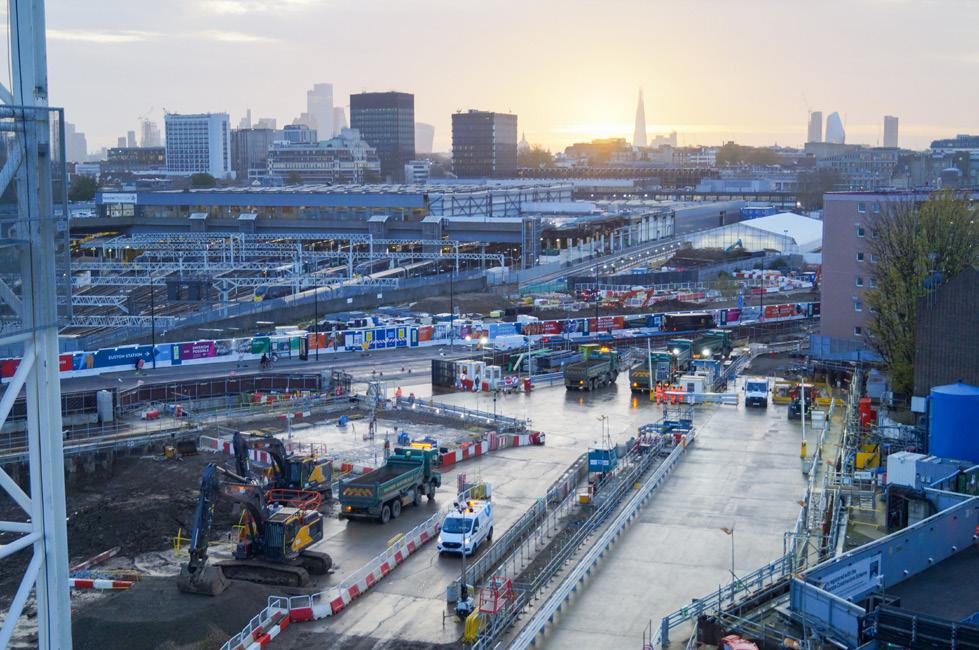
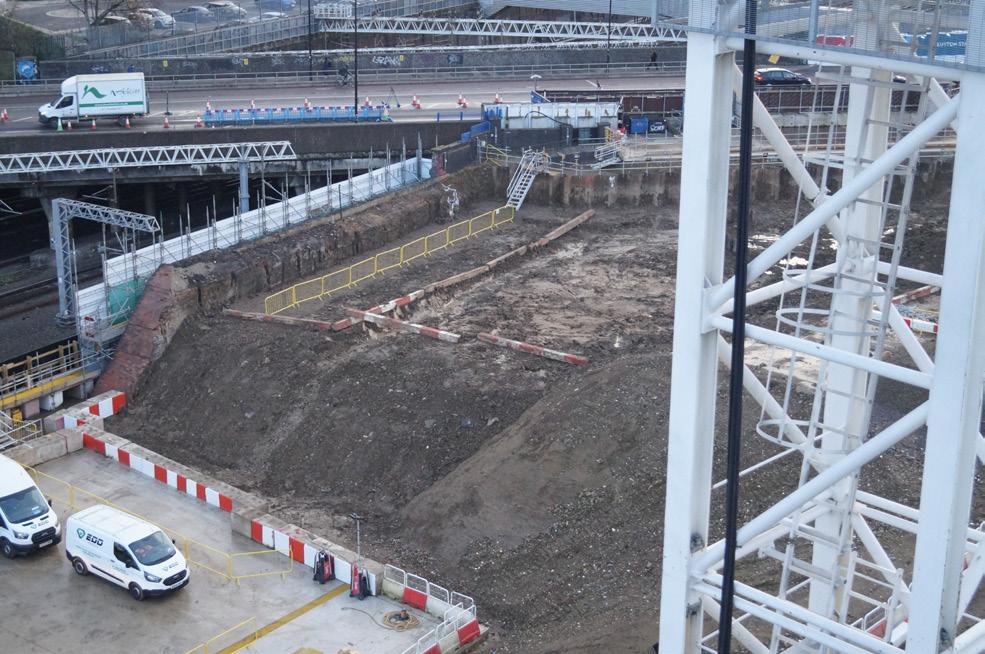
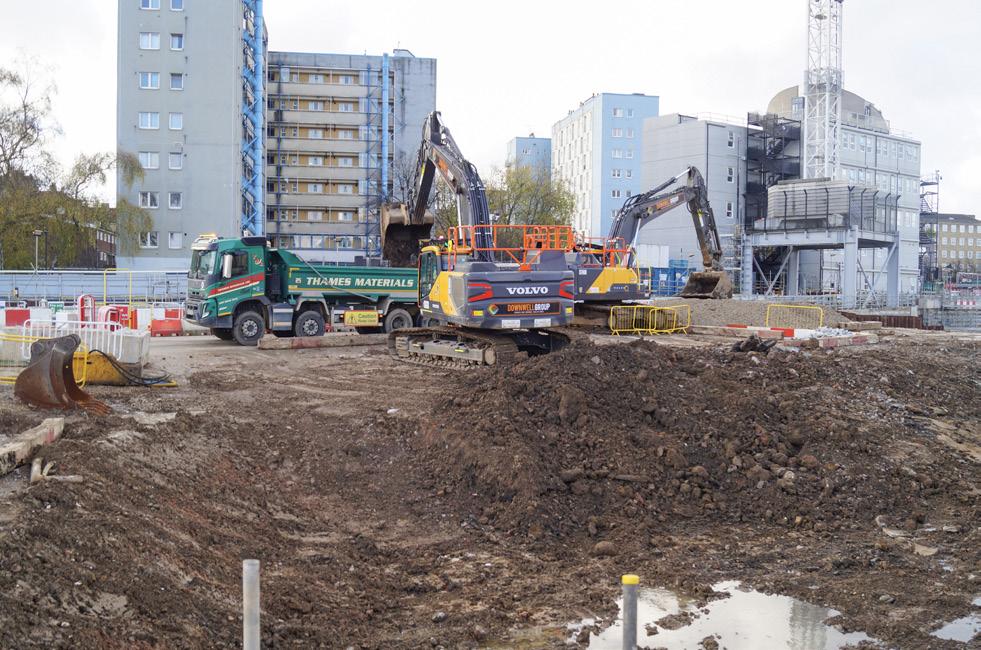
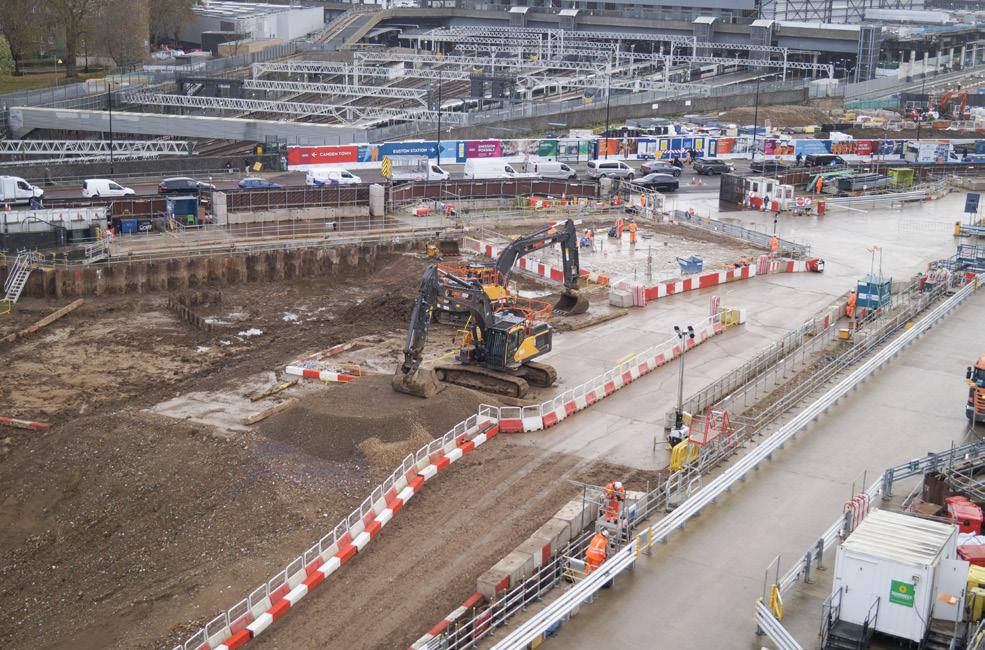
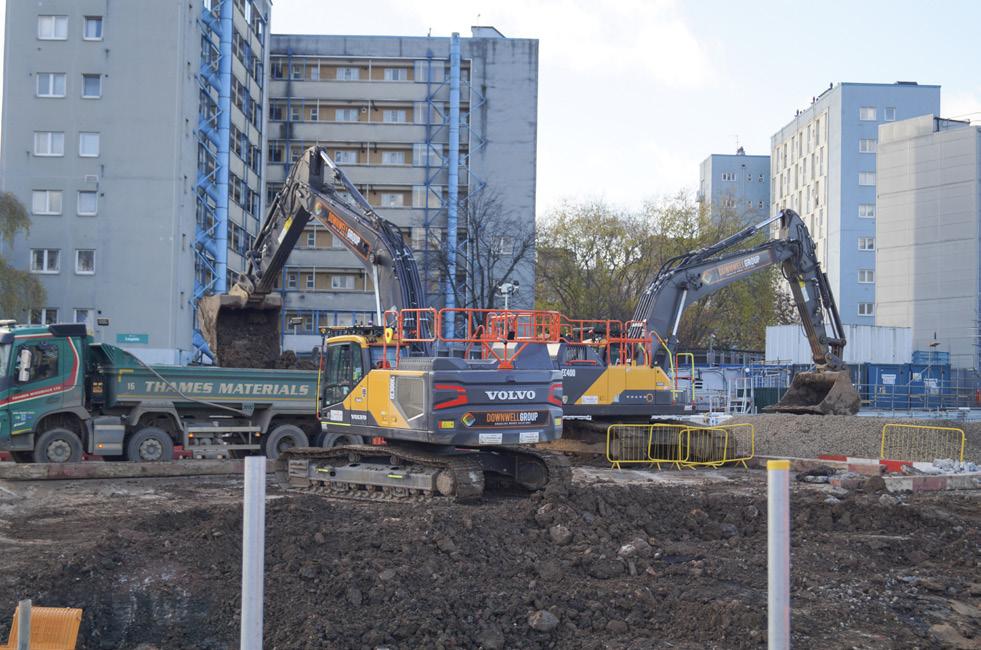
Downwell Group Enabling works, HS2 development, near Euston Station
Downwell has been appointed by Skanska, Costain and STRABAG joint venture (“SCS”) to deliver enabling works as part of the prestigious HS2 infrastructure development at Euston Approaches in London. This high-profile project involves:
• Removal of a substantial retaining wall within the Euston Throat area,
• Excavation and clearance of 14,000m3 waste material to prepare the site for future HS2 construction phases,
• Careful planning and execution in a constrained urban environment, ensuring minimal disruption to surrounding operations and compliance with strict programme requirements.
Central to the project is Contracts Manager, Andy Moore. Since joining Downwell in January, Andy’s 30 years’ experience in civils enabling works has supported several complex projects for clients across London and the south-east. This depth of knowledge will be critical to managing the technical and logistical challenges in the HS2 works.
Andy said: “I’m proud to lead on a project that showcases Downwell’s full capability within one of the UK’s most significant infrastructure projects. Some of the largest developers and leading contractors approach us for enabling works solutions. It’s our breadth of capability, combined with proactive collaboration and value engineering, that ensures every site is fully prepared for the next phase of development.”
Challenges and expertise
Working within a live rail environment and one of London’s busiest transport hubs presents unique challenges. Downwell brings proven expertise in:
• Operating under tight programme constraints while maintaining the highest standards of safety and environmental compliance,
• Deploying specialist plant and equipment for safe and efficient wall removal,
• Implementing processes fully aligned with SCS’s waste management and sustainability requirements, ensuring responsible handling and disposal of materials,
• Maintaining continuous liaison with SCS and HS2 stakeholders to deliver seamless progress.
Progress and outcome
The project is now live, with heavy machinery arriving on site and works commencing. Initial activities include preparation for the removal of the retaining wall and waste clearance operations. This phase is critical to the HS2 programme, creating the foundation for future construction at one of London’s busiest transport hubs. Downwell’s involvement demonstrates our capability to deliver high-profile, technically challenging projects in constrained environments while meeting the highest safety and sustainability requirements.
downwell.co.uk
info@downwell.co.uk 01708 932 300
DEMOLITION DISCUSSION
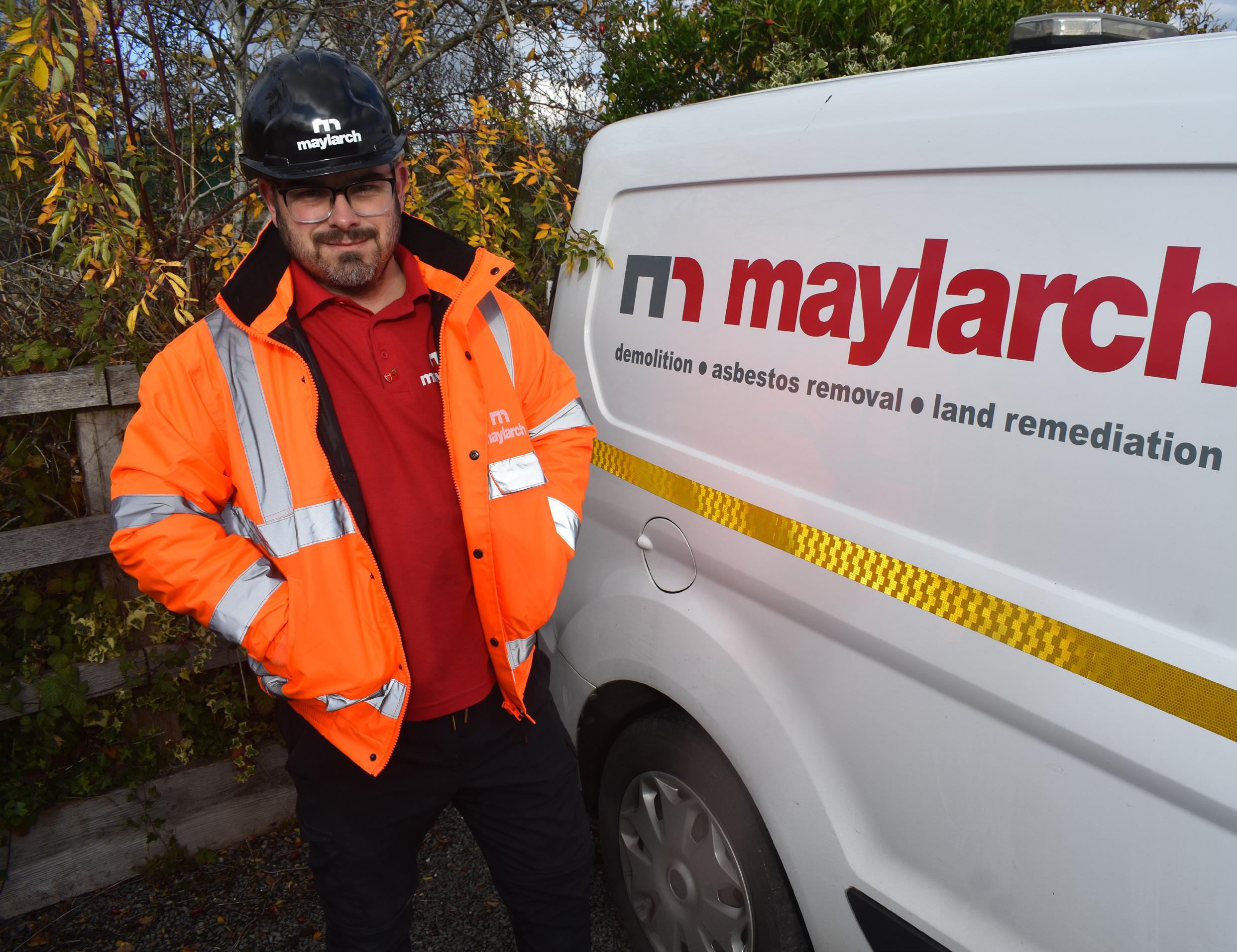
Interviewee: Chris Janes
Role: Demolition Site Manager
Company: Maylarch Environmental Ltd
Chris Janes is Demolition Site Manager for the Oxfordshire based environmental services contractor Maylarch Environmental Ltd. His career with Maylarch and in the demolition sector began while he was still a teenager, before the turn of the millennium. He is Maylarch’s longest serving employee and has worked on some of the most notable projects locally and across the south of England in that time. It’s an industry he is passionate about and one that has enabled him to feel fulfilled both in and outside of work.
What’s your earliest demolition memory?
My earliest memory would be my first day at Maylarch, back in 1999. At the time, I was a demolition operative and my first job was at Abingdon Barracks.
The family feel of the business struck me immediately and that hasn’t changed in those 26 years. Everyone who joins the business to this day is welcomed in the same way I was –it’s always been a fantastic place to work.
How did you start out in the industry?
From an early age I worked as a plumber, electrician and a carpenter. I like being hands on. A member of Maylarch’s senior management team lived a few doors down from me at the time and when an opportunity came up I spoke to him. At the time I viewed the job as a time filler but I’ve turned it into my career and have loved every moment and challenge.
How has your career progressed to where you are now?
I started at the bottom as a labourer. The changing point for me was when Maylarch became a licensed asbestos removal contractor
a few months after I joined. I became a supervisor in our asbestos removal department and spent 15 years with the team.
I’m happy in my role now as site manager and enjoy being the link between the site, the client and contracts managers. It’s a role where I’m definitely working to my best potential.
Tell us about Maylarch and how it has evolved in size, scope and range of services?
Maylarch was founded 15 years before I joined the business. Originally we were a property development organisation but today specialise in three key areas: demolition and enabling services, licensed asbestos removal and land remediation.
Our clients span from local authorities to the NHS, universities, housing associations and a number of private clients. We’re Oxfordshire based, but operate across the south and in 2018 we became part of the M&M Group, which encompasses M&M Waste Solutions and M&M Zero. We’re now effectively a one stop shop for waste management and recycling.
What about your team and working culture?
The team is fantastic, I can’t fault them.
“The family feel of the business struck me immediately and that hasn’t changed in those 26 years”
And I put that down to the welcoming, family feel of the business, which is instilled into everyone from day one.
Of course, we operate to five core values too: safety, integrity, teamwork, customer focus and sustainable development. We strive for excellence in every aspect of our work, while at the same time balancing our own growth with environmental and social responsibilities.
What kind of projects do you work on most frequently, and how broad is the range?
No two days are the same, that I can guarantee. The demolition arm of our operation ranges from working across brownfield sites, tower blocks, schools, hospitals and even listed buildings. Given we’re on Oxford’s doorstep we do a lot of work with Oxford University too.
Many of the jobs – particularly those in the city – are incredibly intricate and require exceptional attention to detail, particularly when you’re working in close proximity to live public spaces.
Our asbestos removal and land remediation work has become more frequent over the years
too as the business has grown by employing more staff and expanding its operational footprint.
Tell us about any standout projects from Maylarch’s history. What experience did you take away from them?
Lucy Faithful House in Oxford stands out from my 26 years at Maylarch. We were required to demolish a five-storey former homeless shelter in the city centre. As you can imagine, it was an incredibly complex job which was magnified as the building stood 1.5 metres away from a live care home.
The building was derelict and it took a huge amount of teamwork and good communication to deliver the job efficiently and – above all –safely. Knowing we carried out the works without impacting the care home’s residents was the most rewarding part. They even invited us round for cakes and drinks once the job had been completed. That’s the power of the work we do and why I love it.
What makes Maylarch different from the competition? Why work with it?
I’ve never left the business, so I’m probably
not best placed to answer why we stand out as an employer. But to remain with the same organisation for 25 years, there has to be a positive working atmosphere and that I know Maylarch delivers. The business is progressive, forward-thinking, ambitious and looks after its staff with regular training and CPD opportunities.
From an operations point of view, like any successful business it has had to diversify by providing the services mentioned which has helped grow our workforce to 190 staff across the group.
How do you gain business and spread the word about your services? Does membership of associations affect this?
Our tendering process includes screening of all enquiries to ascertain if we want to do the job, the associated risks, the client and type of procurement involved.
On formal tenders with a quality submission, a team is assembled to deal with their areas of expertise, headed up by the operations director. Being members of the NFDC and ARCA definitely helps us in our marketing strategy of targeting the clients that we want to work with. A lot of them insist on both memberships for the relevant trade.
We have massively improved our online and social media presence in the last two years, this is helping us engage with new customers and spreads the word on how we operate in a professional manner across our three disciplines.
Tell us about any memberships or accreditations you or the company have. How critical are they to business?
The quality of our operation is reviewed annually and certified by the NFDC and ARCA (Asbestos Removal Contractors Association).
It goes without saying that clients want to work with a quality and trustworthy contractor, which these accreditations safeguard. We’ve also achieved certification to Acclaim, and assessment to specialist schemes include Achilles UVDB, RISQS – contractors for Network Rail Managed Infrastructure – and NESST, National Emergency Services Support Taskforce.
Tell us about apprenticeships, training and how you source new talent. We view apprenticeships as a crucial outlet to attracting new talent and developing the next generation of skilled workers. But it should be noted that apprenticeships aren’t available exclusively to young and new employees looking to establish and develop those key skills required in the role.
We use vocational training as a way to upskill existing staff too which helps everyone to work to their best potential. That applies to colleagues who work on site and those back at our headquarters who work behind the scenes in various administrative roles. Helping the next generation is something I get a great deal of satisfaction from. I love seeing young workers develop and grow in confidence by learning from our team on the job. It’s something that’s actively encouraged at Maylarch.
Tell us about any engagement your company has in the community.
We’re proud to be rooted in the communities we operate in, especially from our headquarters in Oxfordshire. Giving back to likeminded organisations that deliver positive, tangible change to local people is a key part of our ethos.
That’s why this month The M&M Group was proud to partner with Oxford United in the Community in support of the charity’s work to inspire happier, healthier and better-connected communities across the county by harnessing the power of football. We see the value in supporting charities like Oxford United in the Community and supporting those who live to help those less fortunate than ourselves.
What measures is Maylarch taking in regard to the climate crisis and sustainability?
Our industry is misunderstood, in my opinion. Joe Public thinks that demolition contractors just knock buildings down, without realising the after-care process that prioritises sustainability at every corner.
Last year, we diverted more than 98% of waste collected from jobs from landfill. We sent 29,679 tonnes of waste to our colleagues at M&M Waste Solutions for recycling – that’s the weight of 2,120 double decker buses. And our recycling rate is only improving year on year from 95 per cent in 2022 and 97 per cent in 2023. It’s a part of our operation that is highly misunderstood and one we take pride in.
How do you see the demolition industry developing and do you foresee changing demands on contractors in the medium term? There will always be a requirement to renovate, or even rebuild, buildings. In Oxfordshire and the county’s surrounds, there is a large number of listed buildings that cannot be demolished excluding special circumstances. That’s why, personally, I don’t see much change from a supply and demand point of view.
What are the biggest technological developments you have seen and what will be the future game changers?
There’s far less manual handling on site these days, which makes the job easier for the team. One of my first jobs as a teenager was operating a jackhammer for two weeks straight. It’s a physical job due to the weight and vibrations and I probably wouldn’t be up for such a task these days.
But the tools we use – like everything in life –have evolved massively, which makes the work less arduous and more efficient. Health and safety has experienced a massive shift for the better too.
Do you have any notable projects in progress or in planning?
Yes – Harefield Academy, a project where I was responsible for the entire site. It involved the complete demolition of a pioneering timber-framed structure, which was the first of its kind in Europe to be dismantled.
The demolition process required meticulous planning and a phased approach. The top two storeys of the building were removed in the reverse sequence of its build to ensure stability and safety at every stage. The lower section was demolished using mechanical means.
This case set a precedent for the deconstruction of similar engineered timber buildings in the UK and across Europe, which the team and I are very proud of.
How do you envisage Maylarch in five to ten years?
After navigating the challenges of Brexit and the pandemic, Maylarch has emerged stronger and more resilient. With a clear focus on strategic growth and operational excellence, the next decade promises exciting opportunities for expansion and innovation. Joining The M&M Group will enhance our visibility and create new opportunities to tender for larger projects and frameworks.
And what about you in a few years?
I’ve progressed a lot since joining Maylarch. And right now, I’m fulfilled in my role as site manager. It provides me with a great mix of leading a quality team and helping the next generation in the same way I was supported at the start of the millennium.
One thing I would say to anyone considering a career in demolition is to research potential employers. Look at their accreditations, memberships and former projects. It’s a varied industry with lots of opportunities to learn and progress, but working with the right team is crucial and Maylarch delivers that.
AND FINALLY
What do you do for fun?
I’m a social person, and love spending time with my friends and family – be it on holiday, in my local pub or just at home. I played football to a decent level as a youth player and still keep across sport as much as I can.
What gets you out of bed in the morning?
My alarm clock and my Mrs! Joking aside, and without wishing to sound too cliched, I’ve always been proud of my work and being able to provide for my children. That’s what gets me out of bed each morning, the drive to do work to my best potential and live an enjoyable life outside it.
When and where are you happiest?
On a cruise or when experiencing different cultures. I love the Mediterranean and it links back into what I do for fun. I love being outdoors and interacting with other people, which I think is a crucial skill to have when working on site. You need to be able to communicate effectively with confidence, and I think meeting as many different people and experiencing different scenarios in life contributes to achieving that.
Case study
Project: Demolition of Royal Liverpool University Hospital
Structure: High-rise hospital buildings including one 16-storey block
Client: Liverpool University Hospitals NHS Foundation Trust
Principal contractor: DSM Demolition
Duration: 126 weeks
Project value: £15.3m (Forecast)
Site area: Approximate gross floor plate area, including roofs, of 140,000m2
Scope of works:
Removal of asbestos-containing materials; removal of loose FF&E; soft strip; demolition of buildings to ground floor slab level; removal of slabs and foundations; crushing of materials to 6f2; backfilling voids and tunnels to an engineered specification; cut and fill works laying to levels to an engineered specification; builders works; hoarding works
The site is home to the Old Royal Liverpool University Hospital Estate. The first phase of the hospital was designed by Holford Associates and built by Alfred McAlpine between 1963 and 1969. The second phase was completed and the hospital eventually opened in 1978 and has served the city of Liverpool up to its permanent closure in October 2022. The former hospital had 685 beds and covered an approximate gross floor plate area, including roofs, of 140,000m2. The main hospital building was a significant structure in itself and was one of the largest in Liverpool when built. Nearly all of the buildings were of in-situ reinforced and precast concrete construction.
DSM Demolition was appointed principal contractor for the high-profile demolition of the Royal Liverpool University Hospital (RLUH), a landmark project in the heart of Liverpool city centre. Awarded through the Crown Commercial Services demolition framework, DSM successfully fended off 11 competing NFDC contractors to secure the contract – scored on a 40% price and 60% quality basis. The Trust sought a partner who could deliver an environmentally sensitive, safe and highly coordinated demolition programme alongside the fully operational new hospital.
From the outset, this was no ordinary demolition job. The original hospital consisted of high-rise structures, some exceeding 16 storeys in height, in close proximity to live clinical areas including cancer wards, treatment theatres and outpatient services.
Key challenges:
• Operational environment: Demolition had to take place beside a live hospital and pedestrian/ public zones leading to the city centre,
• Incomplete asbestos survey at tender stage: Mandatory asbestos surveys had not been fully completed, posing uncertainties to programme planning,
• Regulatory scrutiny: Due to the scale and complexity, proposals were reviewed with the Health and Safety Executive (HSE) prior to work commencing,
• Live radiological pharmacy unit: DSM had to revise the work programme around a sensitive, active pharmaceutical space,
• Ecological constraints: Works were suspended during nesting seasons to comply with environmental legislation.
Planning and communication
DSM carried out extensive site, ecological, structural, and environmental surveys. A robust
Demolition and Environmental Management Plan (DEMP) was developed, including thresholdbased emission controls for noise, dust and vibration. Five mobile monitoring stations were deployed 24/7 around the demolition footprint. DSM conducted regular consultations with NHS clinical teams to ensure shared understanding and safety coordination. This collaborative strategy was key to maintaining hospital operations without disruption.
Site logistics and safety
• Erection of extensive hoarding and seven 24/7 manned security points,
• Dynamic logistics planning to adapt to phasing and public/clinical interface,
• Regular stakeholder briefings and live updates shared with hospital estates and facilities staff.
Workforce and equipment
At the peak of operations, DSM had more than 100 site operatives and 10 supervisory/admin staff deployed. Key equipment included:
• Two Ultra High Reach Demolition rigs, each capable of reaching over 60 metres,
• A fleet of heavy-duty excavators, crushers and site-specific attachments,
• More than £12 million in mechanical plant and accessories,
• Total plant working hours exceeded 14,000.
Materials management and recycling
DSM adopted a circular economy approach, prioritising on-site processing of materials
and off-site reuse where viable. Concrete and masonry were crushed on-site, retained materials supported future plot redevelopment and excess materials were reused on other regional projects. Approximately 7,500 HGV movements logged for waste removal and material delivery.
Health, safety and environmental excellence
During ultra-high reach demolition, DSM identified a historical structural flaw. A controlled collapse was executed under full stoppage and review by HSE inspectors. DSM subsequently developed a new High-Reach Demolition Protocol, now under peer review by the National Federation of Demolition Contractors (NFDC). This protocol is intended for nationwide rollout, supporting improved standards across the industry. DEMP outcomes included:
• Continuous monitoring of environmental impact,
• Real-time alerts on dust, vibration, and noise breaches,
• Zero reported incidents of clinical or patient service disruption,
• Site staff trained in emergency and hospital-specific protocols.
Social value and community impact
DSM achieved a £19,992,118 social value contribution, measured in line with National TOMS (Themes, Outcomes and Measures).
This included local employment, skills development, environmental initiatives and third-party collaboration. Examples of community engagement included:
• Local supply chain engagement,
• Public information boards and digital updates,
• On-site tours for engineering students and NHS staff,
• Regular neighbourhood impact assessments,
• 3,000 DSM sponsored wildflower seed packets given out for people to grow at home,
• 3,000 DSM sponsored sunflower seed packs to be given away for people to grow at home,
• 20 DSM sponsored bulk packs of bulbs and seeds supplied to local schools.
Awards and recognition
As well as achieving the Demolition Project of the Year Over £1m at the British Demolition Awards, the project was the proud recipient of the HEFMA Award presented by the Health Estate and Facilities Management Association, recognising DSM’s exemplary communication and collaboration with third-party stakeholders throughout the demolition process. Recognition included:
• British Demolition Awards 2025: Demolition Project of the Year over £1m,
• Liverpool University Hospitals NHS Foundation Trust: Sustainability Award for Best Partnership 2023,
• Health Estates and Facilities Management Association: Project of the Year 2024,
• The Institute of Healthcare Engineering and Estate Management: Sustainable achievement of the Year 2024.
Qualifications
DSM holds and applied the following certifications during the project:
• NFDC Membership,
• ISO 9001, 14001, 45001 (Quality, Environmental, and Health & Safety),
• CHAS and Constructionline Gold,
• Considerate Constructors Scheme (CCS),
• Fully licensed asbestos removal and waste carrier certifications.
The demolition of the Royal Liverpool University Hospital demonstrates DSM’s ability to execute complex, high-risk projects in sensitive, live environments while upholding best-in-class environmental, safety, and social value standards. The project exemplifies innovation, collaborative working, and technical excellence - hallmarks of DSM’s approach.
Testimonial
Willing collaboration between DSM, LUHFT and CSH has allowed us to be innovative and design a programme that delivers meaningful social value locally. The nature recovery ranger programme has enabled us to connect staff, patients, visitors and the wider community with nature in a far more substantive way than we thought possible, helping raise environmental awareness and improving physical and mental wellbeing. The wildlife value of our estate has been significantly improved through the introduction of new management techniques and our new biodiversity action plan will help drive further positive changes in how we care for our green spaces in future. None of this would have been possible without the generous support of DSM.
Case study
Project: Tower Suites
Structure: Main building – reinforced concrete frame
Site area: Function room
Scope of works: Removal of Reinforced Autoclaved Aerated Concrete (RAAC) panels and associated soft strip works
Budget: £360k without variations
Contractor: Clifford Devlin
Client: RED Construction
Start date: 18 February 2025
Completion date: 30 June 2025
case study
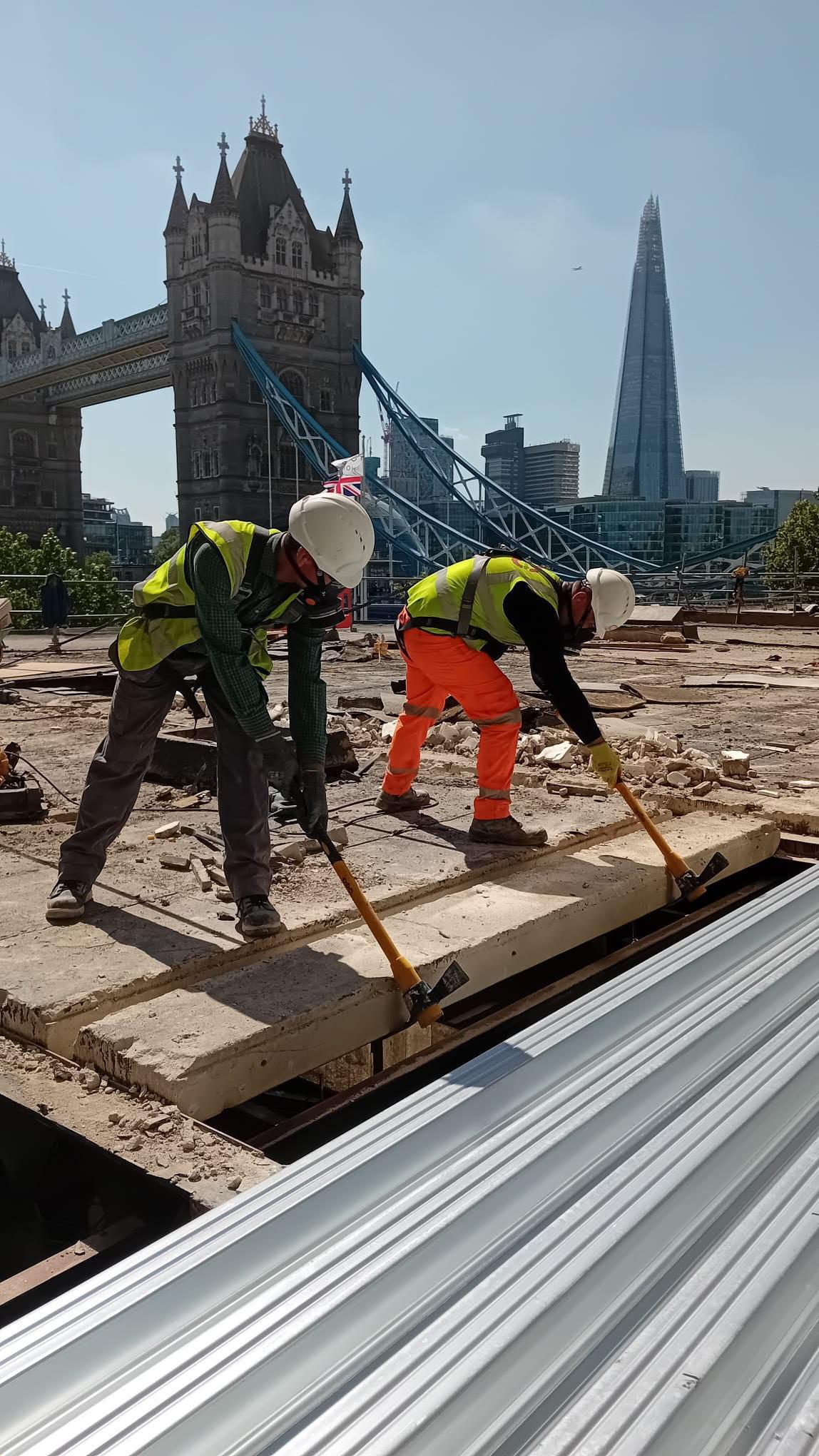
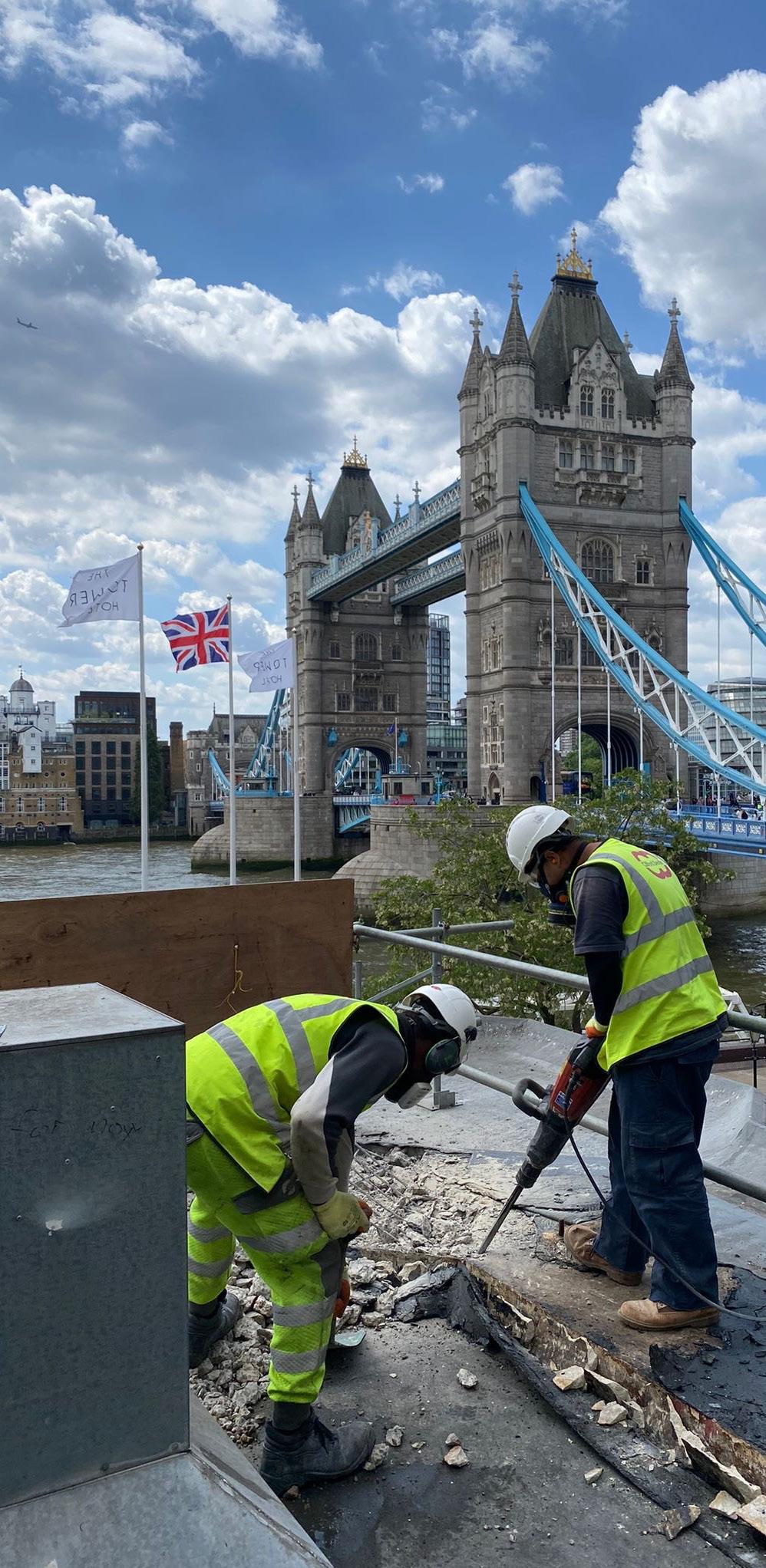
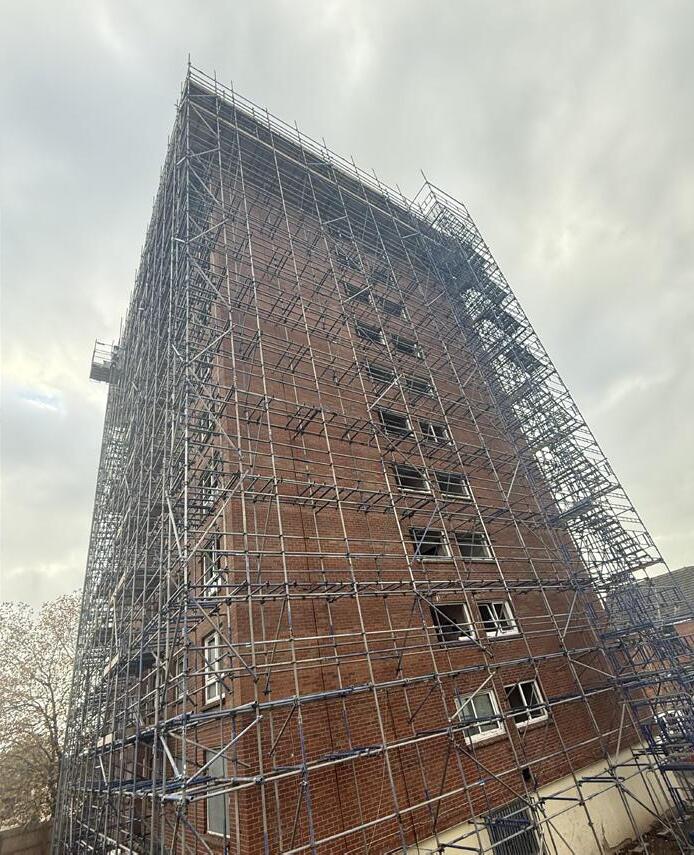
Clifford Devlin was appointed to deliver the removal of Reinforced Autoclaved Aerated Concrete (RAAC) panels and associated soft strip works near Tower Bridge, in the heart of central London. This project was one of the first high profile RAAC projects carried out in central London since the media reveal of the RAAC epidemic in 2023.
This project was undertaken for a long-standing, repeat client as part of a major refurbishment programme, following the identification of RAAC panels during a structural inspection.
Given the increasing national awareness of the risks posed by RAAC, particularly its potential to fail without warning, the safe and efficient removal of the material, which was designated a critical early phase of the works.
These fragile panels, commonly used in mid-to-late 20th century construction, posed unique technical and safety challenges, particularly in an occupied building setting.
Clifford Devlin’s remit included the full soft strip of identified areas and the safe, compliant removal of the RAAC roof panels. The hotel remained operational throughout the project, requiring an adaptive and collaborative approach to ensure minimal disruption to guests.
Delivering complex demolition and removal works within a live environment demanded not only technical expertise but also strong communication and coordination. Our team worked closely with both the project management team and the hotel’s operational staff to implement a phased delivery strategy.
By carefully scheduling noisy or disruptive works during quieter periods, we ensured that building operations could continue uninterrupted and that guest comfort was maintained at all times. To undertake the works safely and efficiently, we deployed a team of ten highly experienced demolition operatives, supported by an experience demolition manager.
This team brought a dynamic mix of handson expertise and leadership, allowing us to maintain consistent progress and quickly resolve challenges on-site. Ideas were shared openly across the team, and our operatives played an active role in problem-solving, ensuring momentum was sustained even as complexities arose.
To ensure safe access to the RAAC panels located in the roof structure, a combination of access towers and Mobile Elevated Work Platforms (MEWPs) were employed. The removal of the RAAC panels themselves was carried out manually, with extreme care and precision, due to the
brittle and unpredictable nature of the material. Scaffold designs were adapted on a zone-by-zone basis to suit the varied internal layouts of the structure, allowing for both safety and efficiency. Once removed, the panels were packaged and transported off-site for specialist disposal in full compliance with waste handling regulations.
The room below our work area was the hotel restaurant, therefore it was imperative that our works sailed along the critical path as the clients roofing contractor were installing the new profile roof system directly behind us to minimise the time that the hotel was exposed to the elements.
The project presented a unique set of logistical and operational challenges due to the shared use of a loading bay with an active hotel.
Careful coordination was essential to ensure construction activities ran smoothly alongside ongoing hotel deliveries.
This required a high level of planning and communication to avoid disruptions to daily hotel operations and maintain a safe, efficient work environment.
Adding to the complexity, the work zone was directly visible from several guest rooms, placing the team’s activities under constant observation. This elevated the importance of maintaining a clean and professional site at all times. Noise, dust, and visual impact were all carefully managed to protect the hotel’s reputation and ensure guest comfort throughout the project duration.
A major technical achievement was the installation of internal waterproofing. This system not only provided essential protection to the hotel’s interior against potential water ingress but also played a structural role.
By distributing weight more evenly, it reduced point loading across key areas, enabling the use of heavy equipment and allowing for safe and efficient removal of waste materials. This dual-purpose solution exemplifies the project’s smart, integrated approach to engineering challenges within a sensitive, live environment.
Robust health and safety management was at the core of the project. Detailed RAMS were developed and implemented, and the site was tightly controlled through continuous supervision, physical exclusion zones, and live environment mitigation strategies.
Dust suppression, air quality monitoring, and noise control were deployed throughout, ensuring a safe and respectful working environment for all stakeholders.
Clifford Devlin’s commitment to excellence was further reflected in the recognition of its workforce. During the course of this project, team members were awarded “Operative of the Month” on two separate occasions, a testament to their diligence, professionalism and high standards of work.
Danut Fundulea, Site Manager, RED Construction said: “Regarding the RAAC removal in Tower Suites, we can all agree that it was not an easy task especially due to the live environment and continuous site discoveries (asbestos, steel angles, etc) but we must admit that Clifford Devlin always performed well, always had a quick response to whatever the challenge was and the quality of workmanship and documentation was up to the desired standards.”
clifford-devlin.co.uk
TECHNOLOGY FEATURE
Brigade
Why UK construction sites are turning to advanced safety technologies
A construction site is undoubtedly one of the most dangerous environments to be working in. In this article, Emily Hardy, Export Marketing and Sales Regulation Manager of Brigade, the commercial vehicle safety solutions expert, looks at how the increase in advanced safety technologies is making a major contribution to site safety.
The construction industry is known as the bellwether of the UK economy and, according to the Office for National Statistics, in the second quarter of 2025 there were well over two million employees in the sector, with around a third self employed. Keeping them safe is a top priority for site managers.
A construction site can be a hazardous place to work. Massive machines turning and reversing are frequently operating in close proximity to groundworkers, and the chances of front, rear and side blind spots leading to collisions are high. With projects running to tight deadlines, work will often continue into the evening or throughout the night, creating poor visibility. Bad weather conditions, mud and dust also increase the likelihood of an incident.
Keeping operations running safely and smoothly is a constant concern. Despite huge strides in site safety, the latest Health and Safety Executive (HSE) report states that the construction sector still accounts for the largest number of workers involved in fatal incidents in the UK – and 18% of these were workers struck by a moving vehicle on site.
Health and Safety legislation, Duty of Care obligations and requirements from bodies
such as the HSE mean that companies must demonstrate they are using ‘reasonably practicable’ measures to reduce risks to workers.
In the UK, many construction sites are now starting to specify that certain vehicle and machinery safety technologies must be in use in order to operate. Last year Balfour Beatty became the first major UK contractor to mandate vehicle safety cameras with AIassisted human form recognition (HFR) on excavators above 13 tonnes, forward tipping dumpers over six tonnes, articulated dump trucks weighing more than nine tonnes, rollers of 13 tonnes and above, telehandlers, bulldozers and wheeled loaders. Cementation Skanska now requires HFR cameras on its large-diameter piling rigs and cranes. The momentum towards compulsory use is beginning to gather pace and it’s unlikely to be long before other standards recommend or even specify AI-assisted HFR
cameras to ensure compliance with guidelines.
The Construction Industry Plant Safety Group recently released a good practice guide on the use of machine mounted human form recognition systems as effective means to minimise people being struck by moving machinery.
AI cameras are rapidly becoming faster and sharper at eliminating blind spots. Using algorithms, they deliver a safe outcome by constantly learning from each experience.
Intelligent camera systems, such as Brigade’s HFR HD Backeye®360 camera system, aid manoeuvrability by providing drivers with a 360° view of their vehicle in a single image. Many HFR detection cameras on the market only provide 270° coverage, which isn’t enough to eliminate all blind spots. Brigade’s system also merges images from four cameras positioned around the vehicle and provides a real-time ‘bird’s-eye view’ of the vehicle and its surroundings on an in-cab monitor, whereas some other cameras use multiple screens which can be confusing when a driver has to make a split-second decision.
AI cameras locate and recognise pedestrians within a pre-defined zone and reliably inform the driver visually and/or audibly of their presence. The algorithms train the system
to recognise human beings and zone out trees, piles of building materials, temporary structures or other distractions. This reduces the possibility of a false alarm; constant false readings are likely to go unnoticed or lead to them being switched off entirely. Brigade’s AI350 system uses a single display for both allround vision and human form recognition to alert the operator of a vulnerable site user.
Site operators are increasingly looking for ways to manage technology, including generating information on zone incursions and for health and safety monitoring and training. Brigade’s live cloud platform and reporting, including optional email alerts, allows operators to understand and manage incidents. Operators are also increasingly wanting to understand the context of incidents or incursions.
These cameras can make such a noticeable difference both to site safety and to the confidence and focus of vehicle operators that responsible contractors are unlikely to hold back from the AI-enhanced revolution for much longer.
Caterpillar, supplied by Finning UK and Ireland
How engineers are using AI to identify and fix machine faults much faster
Telematics is transforming fleet management and equipment monitoring, keeping machines working reliably, saving fuel and helping to evaluate site efficiency and operator performance. In this article, Nikolaos Kakoudakis, Digital Performance and Service Operations Manager at Finning UK & Ireland, the world’s largest dealer of Cat® equipment, parts and aftermarket services, discusses how engineers are using AI to provide a better service to machine owners and operators to identify and fix issues faster or before they even occur
Modern plant machinery is filled with sensors. These measure everything from the position and movement of every part of the machine, to engine temperature, fuel level and burn, idle time,
tool loading, payload weight and even seatbelt fastening. While many of these sensors form part of systems that feedback to the operator, they are also connected to telematics allowing them to send data to back-office systems like Cat VisionLink.
At Finning we use this data, especially fault codes and physical measurements like pressure or temperature, to remotely monitor the condition of machine. The condition monitoring engineers at Finning are now using machine learning in combination with data from other sources, such as fluid analysis to identify and fix issues more quickly and efficiently than ever before. This is a great example of how AI is allowing skilled people to focus on high-value, problem-solving tasks, by taking away high-volume, low-skilled work.
Machine learning, a subset of AI, focuses
on analysing data to identify patterns and make predictions. The condition monitoring team at Finning are using this technology to remotely diagnose faults when a breakdown occurs, dramatically improving the first-time fix rate. And as the system learns, it is helping them to provide a better service, by predicting issues and recommending preventative interventions before a breakdown occurs.
For example, the system recently helped the condition monitoring team to identify an opportunity to prevent breakdowns caused by increasing engine temperatures on wheel loaders. In most occurrences these breakdowns are foretold by a fault code warning of High Engine Temperature, but this code is relatively common and rarely warrants immediate engineering intervention on its own if it is due to ambient environmental conditions. By trending this data, we can determine when other factors, such as blocked radiators, are contributing.
While machine operators and fleet managers quite rightly act on the high probability that no immediate action is required, the Condition Monitoring engineer’s job is to spot the incidences when this warning requires intervention.
In this case, the team used the machine learning
in the Cat Foresight system to cross reference hundreds of parameters, to compare the times when this exception was followed by a breakdown, to the times when it wasn’t. This enabled them to work out that when the trends are accompanied by certain working conditions, operator behaviours or mechanical load factors, there was a much higher chance of predicting failure.
By sorting through thousands of data points in seconds, this system enables the condition monitoring team to extract much richer, detailed information, and provide a much more effective service. So, instead of just knowing that a particular machine has active events low pressure in brake accumulators, with access to such a wealth of data means engineers can now accurately forecast the percentage risk that a breakdown is imminent, and act accordingly.
One of the key factors that helps the team use AI to unlock the expertise of team members, is the exceptionally large amount of data that they have access to. This includes not only the telemetry data from the thousands of machines that Finning looks after, but also data from Condition Monitoring recommendations that have been created by Caterpillar® dealers globally.
Altogether this means tens of thousands of machines, and each machine can have as many as 80 different sensors. This makes for a lot of data, and while it is impossible for service engineers to trawl through every single data point, or even every fault code notification, this is the kind of job that machine learning systems are made for.
This use of AI cannot replace the human intelligence of the engineer, the system relies on the people training it. While people still need to make the decisions, machine learning enables them to make highly accurate decisions, leading to improved outcomes for the people and businesses who rely on machine uptime.
Since the implementation of this technology, the first-time fix rate on call outs for Finning engineers has risen significantly. The system has also unlocked remote troubleshooting opportunities. Now, issues like highlighting braking defects due to low pressures, or excessive wear due to suboptimal operator behaviour, can be flagged up and solved on the ground before they become issues.
There is huge potential for AI to inform better decision making on safety, efficiency, sustainability, operator training and much more. Put simply AI is here to stay, and using machine learning to improve predictive maintenance is just the beginning.
finning.com
0800 028 7778
Evolution or revolution? Protecting demolition crews from moving plant
by Gary Esctott, Managing Director, SiteZone Safety
SiteZone turned 15 last year, and as with any milestone, it got me reflecting on the past 15 years. Looking back to 2011, where OnGrade Ltd (SiteZone as it’s known) was a fledgling company, something started to change in the world of mobile plant-to-pedestrian safety.
Deaths caused by plant-pedestrian collisions had hovered around 30 per year and the issue was climbing rapidly up the safety agenda across all sectors. Construction giants like Balfour Beatty had only three years earlier introduced initiatives like “Zero Harm,” signalling a shift in focus toward eliminating workplace incidents.
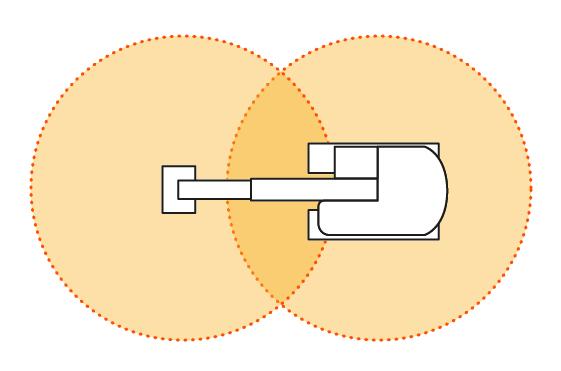
Tag-based proximity warning systems had arrived, with SiteZone Safety among the early providers. These systems gained traction quickly as companies embraced this new technology. We were a young business with a product that seemed like a panacea: a bubble of safety around a machine, where every worker had a tag to ensure they stayed out of harm’s way. Job done!
But hindsight is a wonderful thing.
We quickly learned two key lessons. Firstly, not everyone welcomed us with open arms, even though our goal was to keep them safe. Secondly, our initial vision of “solving” plant-topedestrian safety was overly simplistic. Different industries and applications had unique needs and a one-size-fits-all approach wasn’t sufficient.
Fast forward to 2025 and our core product has remained largely the same in functionality, but it’s evolved in response to customer feedback and industry demands. Innovations like BucketZone, SmartBubble, and the introduction of data analytics have enhanced the system’s capabilities. Today, SiteZone has nearly 200 million hours of operation and is deployed on 230 sites across the UK. Customers appreciate that it “does what it says on the tin”, but therein lies a challenge: evolutionary improvements often lack the excitement of revolutionary change.
The allure of shiny and new vs. proven and evolved
When new technologies appear on the market, they often attract attention because they promise groundbreaking change. AI-powered safety systems, advanced cameras and autonomous vehicles are examples of innovations that captivate the imagination. However, excitement can lead to hasty decisions if the limitations of these technologies are not fully understood.
For example, AI-powered cameras still can’t see around corners, walls and piles of debris, or through dust, rain, fog and harsh conditions. A fundamental limitation that can lead to blind spots in critical situations, often found in environments like demolition. They also can’t cover the bucket/ grab of a machine like an excavator. In contrast, a, tag-based proximity warning system like SiteZone remains effective in environments with obstructed views because it doesn’t rely on line-of-sight. And a BucketZone antenna allows for zone coverage around the end of the arm of an excavator.
This is a case where a more mature technology has strengths that newer systems do not.
Then there’s the data burden. Cameras generate vast amounts of footage that needs to be watched and stored. Reviewing all of it is impractical, and failure to review could carry serious consequences after an incident. To make fast, effective decisions that will really change behaviours on-site, you need easy to understand data at a glance. We provide weekly reports with your key risks from personnel, location, machine, time of day and day of the week, so you can make informed decisions.
Sometimes doing what it says on the tin is exactly what a product needs to do. Let’s take the modern three-point seatbelt as an example. It was invented in 1959 by a Swedish engineer working for Volvo and was no doubt a revolution in safety at the time. However, since then the fundamental design has remained the same with evolutions such as pre-tensioners, load limiters and adaptive systems that have all undoubtedly improved the original but built around the initial product.
Making the right choice: Proven vs. new
• When evaluating safety technologies, it’s essential to look beyond the marketing hype. Ask critical questions:
• What are the product’s limitations? Understand not just what it can do, but what it cannot do,
• How does it perform in your types of sites? Proven technologies often have extensive track records and user feedback to draw from,
• Does it meet your specific needs? A new product might have impressive features, but if it doesn’t address your challenges, it’s not the right solution,
• What does it cost compared to more traditional technology? New and shiny often attracts a premium. Is it worth it? In most cases the traditional product does the job just as well (or probably better).
Choosing what’s right for you
The decision between evolutionary and revolutionary technology shouldn’t hinge on newness or tradition but on suitability for the task at hand. New technologies can offer exciting possibilities, but mature, proven systems often provide reliability and simplicity that newer alternatives lack. At the end of the day, the best choice is the one that fits with your requirements, mitigates your risks and keeps your people safe at work.
So-Trak feature
So-Trak Ltd is a UK-based leader in telematics and asset-tracking technology, delivering innovative and affordable solutions that help demolition, construction, plant hire and civil engineering companies protect, monitor and manage their valuable equipment. With more than two decades of experience in technology development and customer-focused innovation, So-Trak has built a reputation for reliability, simplicity, and strong aftercare.
The company’s range of compact, rugged, and flexible devices are designed to withstand the harshest site conditions, offering peace of mind for businesses that rely on high-value machinery and mobile assets. From large demolition excavators and dumpers to smaller equipment such as generators, trailers, and non-powered site containers, So-Trak’s solutions provide precise, real-time data that enables managers to stay in control of their operations 24/7.
Each tracking unit connects to a powerful,
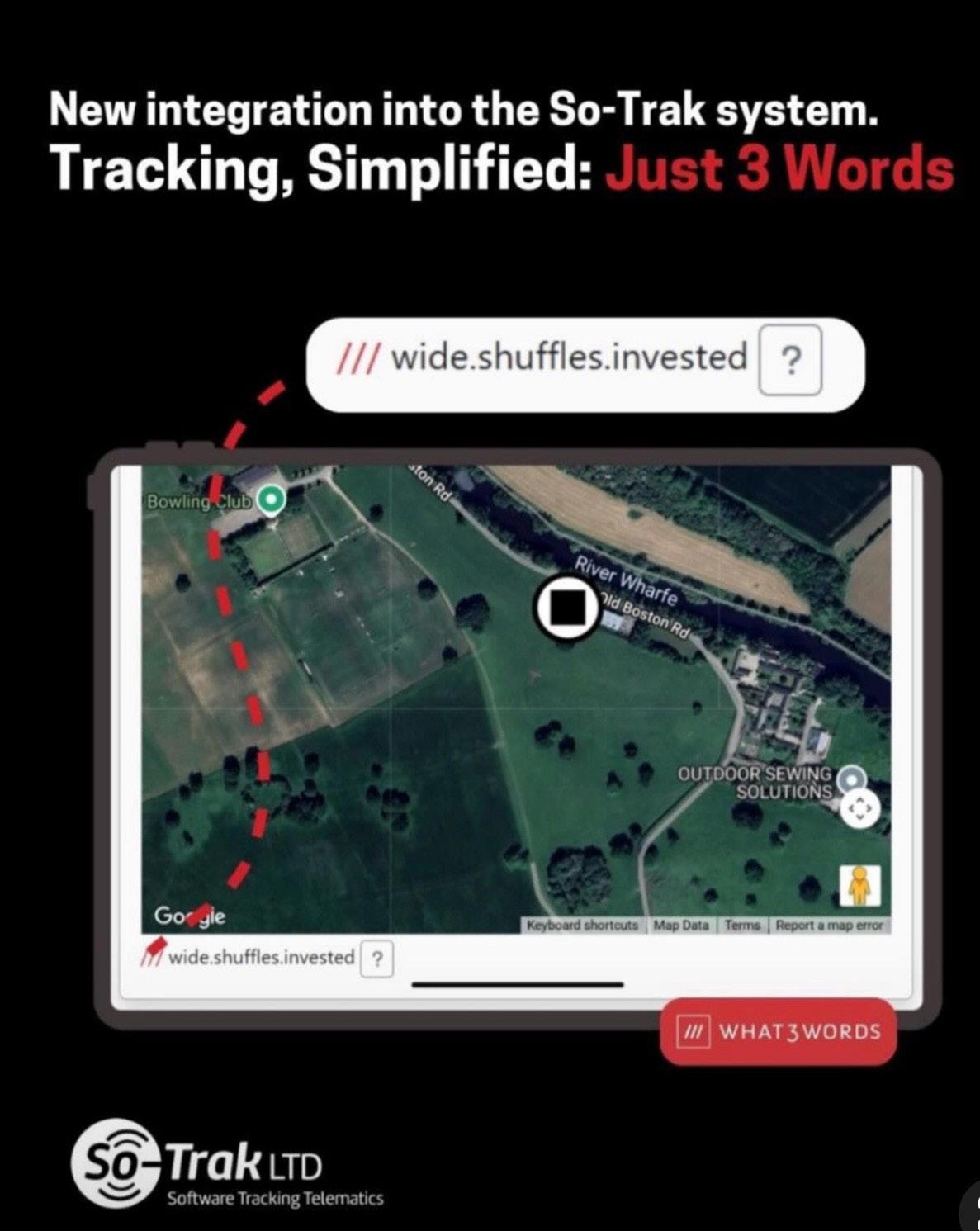
web-based platform that delivers live updates, typically within seconds, allowing users to see exact asset locations, review detailed movement history and receive instant alerts for unauthorised use or out-of-hours activity. For demolition firms, where equipment is constantly moving between projects and sites are often exposed to theft risks, this real-time visibility is invaluable.
In addition to location tracking, So-Trak’s technology supports remote immobilisation –enabling site managers to disable a machine instantly from a smartphone, tablet or PC if it is tampered with or used without permission. Custom scheduling allows authorised working hours to be programmed, ensuring equipment is only active during defined periods, which reduces misuse and enhances site safety.
The platform also provides comprehensive data reporting, from journey logs and engine hours to idle time and utilisation rates, helping businesses identify inefficiencies, improve maintenance scheduling and cut operating costs. For non-powered assets such as containers or trailers, So-Trak offers long-life battery-powered trackers with up to ten years of performance, which can be easily self-installed and transferred between assets as needed – ideal for demolition and plant hire firms that require flexibility.
The system’s accuracy, typically within a few metres, ensures that assets can be located quickly, even across multiple sites or storage yards. What sets So-Trak apart is its commitment to customer-centric innovation: every feature and function has been developed in response to real-world challenges faced by site managers and plant operators. Hardware is tough yet discreet, their software interface intuitive and user-friendly and their customer support highly praised for responsiveness and clarity.
So-Trak’s clients consistently report improved productivity, reduced downtime and a stronger sense of control over their fleets. In an industry where every hour of machine time matters, having clear insight into where assets are and how they are used can make the difference between profit and loss. Theft remains one of the biggest issues across demolition and construction and So-Trak’s security features – live alerts, motion detection and remote immobilisation – form a powerful deterrent and recovery tool.
At the same time, the operational data supports smarter management, with insights that can reduce
fuel consumption, prevent unnecessary journeys and even help lower insurance premiums by demonstrating proactive risk management. For demolition companies, which often work in challenging, fastmoving environments, So-Trak’s technology delivers not only security but also efficiency and accountability, ensuring that valuable machinery is working when and where it should.
The system’s scalability means it can support small contractors with a handful of machines just as effectively as it can manage large, nationwide fleets. Devices are transferable and easy to install, so businesses can adapt their tracking coverage as their plant inventory changes. So-Trak’s technology embodies the future of connected site management – combining security, insight and sustainability in one accessible platform.
By delivering technology that pays for itself through improved efficiency and asset protection, So-Trak offers a genuine costneutral solution for businesses seeking to modernise their operations. As the demolition industry continues to embrace digital transformation, So-Trak stands out as a trusted partner that understands the sector’s specific needs and challenges.
Our mission to make asset management smarter, safer and more efficient resonates strongly with companies determined to stay ahead in a competitive, fast-evolving market.
So-trak.co.uk
info@so-trak.co.uk 0113 856 0780
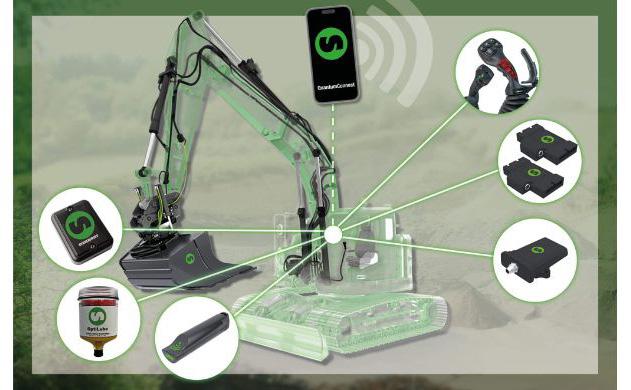
Xwatch EVC
– the first full safety system for electronically controlled machines
Xwatch Safety Solutions, part of Hexagon, launched its latest innovation – the EVC (Electronic Valve Control) system – at Plantworx 2025.
Designed to work exclusively with the new Mk2 platform, EVC provides full safety control for a growing class of machines equipped with electronically controlled hydraulics.
Until now these machines – such as the JCB Hydradig and Caterpillar’s next-generation equipment – haven’t been compatible with conventional safety systems built for hydraulic control. For example, Caterpillar’s 320 and 323 models use electrohydraulic main control valves, eliminating traditional pilot lines and making conventional integration impossible. With EVC, Xwatch becomes the only safety provider capable of managing critical parameters, including height, slew and rated capacity, on machines utilising electronic hydraulic architecture.
Building on the success of the Xwatch EHOC (Electric over Hydraulic Control) system, which first enabled safety control on machines with electronic control interfaces, the new EVC system takes that innovation further – delivering full compatibility with OEM machines that rely entirely on electronic hydraulic architecture.
The EVC system is built on the foundations of the new Mk2 platform, Xwatch’s next-generation safety system. Mk2 combines proven reliability with smarter engineering and full OEM integration. With a PL d-rated safety architecture (ISO 13849-1), 30% faster installation and telematics-ready connectivity, Mk2 sets a new standard for protecting machines and operators on complex construction sites.
Dan Leaney, director of sales at Xwatch, said: “EVC represents a significant advancement in safety control for electronically managed machines.
OEMs are increasingly adopting electrohydraulic systems, which previously posed major integration barriers for safety devices. With the EVC system and our Mk2 platform, we’ve developed a robust and reliable solution – enabling full parameter control on machines that were previously incompatible with conventional safety systems.”
EVC offers a practical solution to a growing technical challenge, providing contractors and OEMs with a reliable safety system for machines designed around electronic hydraulics.
Visitors will also be able to see the SS2 rollover protection system in action, fitted to a Select Hire dumper. SS2 not only monitors machine angle, speed and rollover risk in real time but also cuts the engine when a dangerous threshold is reached – stopping the machine before a rollover occurs. This critical intervention helps protect operators and equipment, significantly reducing the risk of serious incidents on site.
Alongside launch, EVC, Xwatch demonstrated XW-Insite, its most advanced and fully integrated telematics and safety platform to date. Developed in collaboration with technology partner PVS Data, XW-Insite connects live machine and safety data through a cloud-based dashboard, accessible both on site and remotely. The system provides real-time visibility of machine health, fuel usage, operator behaviour and live safety event data, helping plant managers and contractors to improve compliance, efficiency, and operational planning across mixed fleets.
xwatch.co.uk
sales@xwatch.co.uk 01633 987 344
SUPPLIER TALK
Interviewee:
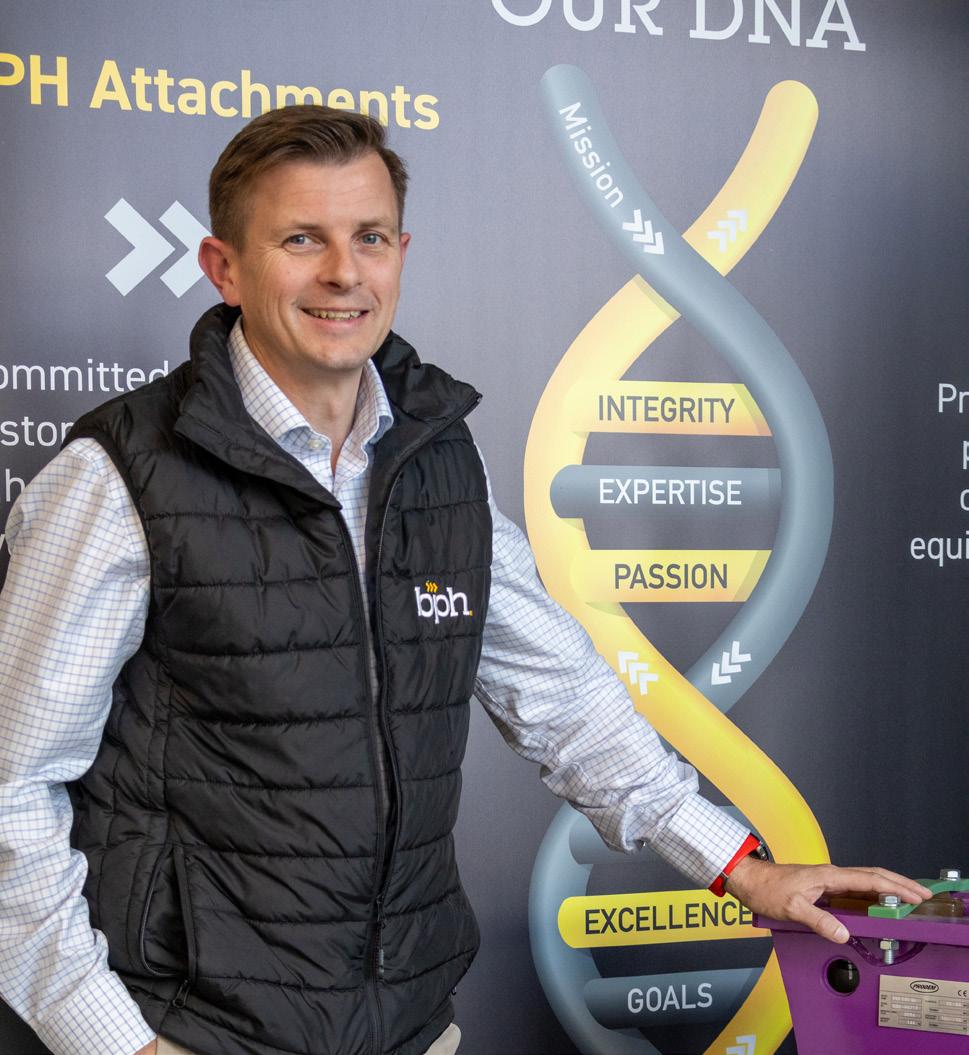
Chris Clayton
Role: Head of Sales and Marketing
Company: BPH Attachments
What is your core message to our demolition contractor readership?
BPH Attachments is a third-generation family business with over 50 years of experience and one of the UK’s largest specialist attachment providers. We deliver world-class customer service and support throughout the entire life cycle of your attachments – from purchase, servicing and parts to trade-ins when it’s time to upgrade. With more than 1,300 attachments available for hire across four depots and full nationwide coverage, we offer the flexibility, expertise and reliability to keep your operations moving.
Give us some background on BPH.
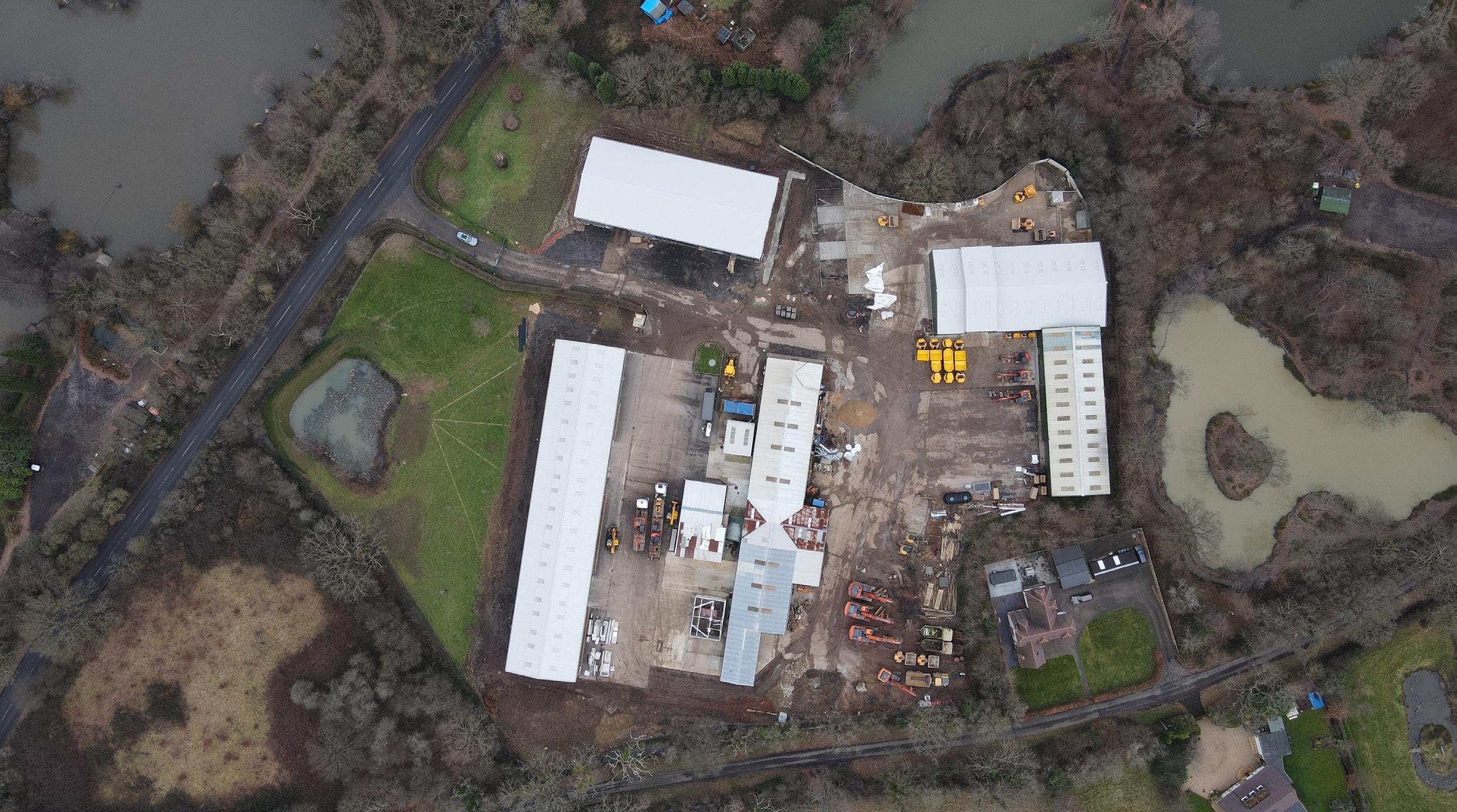
Founded in 1972 as a plant hire company serving the south-east, we expanded into attachments in 2001, offering hire, sales and service. Since then, we’ve grown rapidly and now operate from four locations across the UK. In 2023, we moved into our purpose-built, five-acre head office, complete with dedicated attachment workshops, enabling us to provide bespoke solutions – often with next-day turnaround. Our hire fleet has grown to more than 1,300 attachments, ranging from one-tonne breakers to 100-tonne+ pulverisers and shears. We became the LaBounty dealer in 2021 and are now the sole distributor for the UK and Ireland. We are also the exclusive importer of the PRODEM range and have established a UKwide dealer network. In addition, we represent OilQuick, Dynaset, Auger Torque and Berti. What began with just a handful of staff has
grown into a team of over 120, including specialist workshop engineers and a national sales force.
How did you start out in the industry, what attracted you to it and how has your career developed to where you are now?
I actually started out in the construction industry in 2008 as an area sales manager for Hilti selling power tools and associated construction fixings. However, after nearly 16 years working for a global corporation, I decided to use my experience and skills with a smaller company that had strong values aligned with my own, this is how I found
BPH. I only started the role in 2024 and have found the experience to be excellent, exactly what I hoped it would be. In terms of milestones, I completed a three-year MBA (Leadership) in 2024 which has really helped me to step into my role as Head of Sales and Marketing.
This role at BPH is fantastic as it allows me to use my experience and knowledge to support growth through the business yet not lose touch with the fun parts of selling, being in front of customers and helping with their challenges. I am a petrolhead, so seeing big machines cutting or crushing stuff is a real bonus for me.
Tell us about the services you provide and how your relationship with clients works.
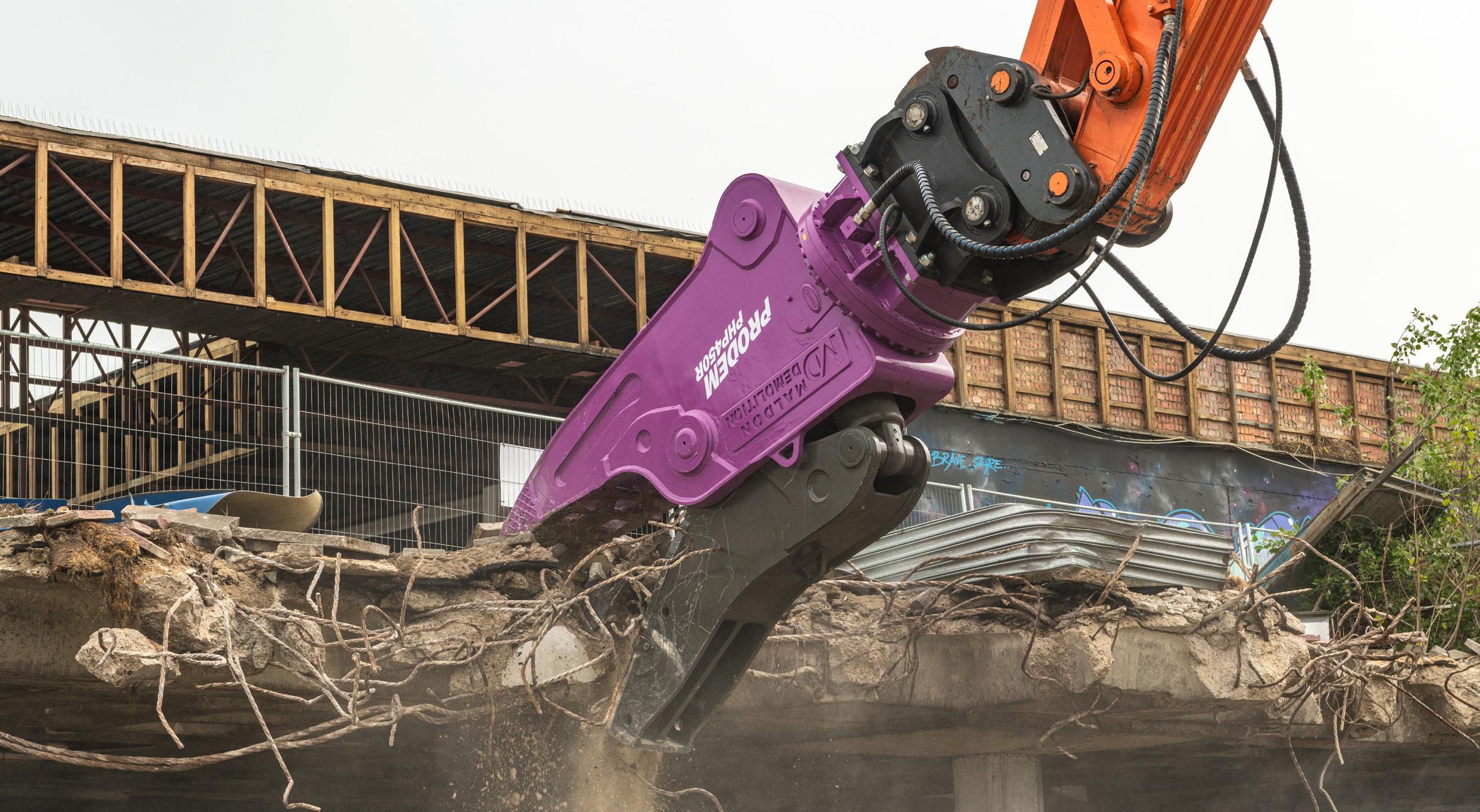
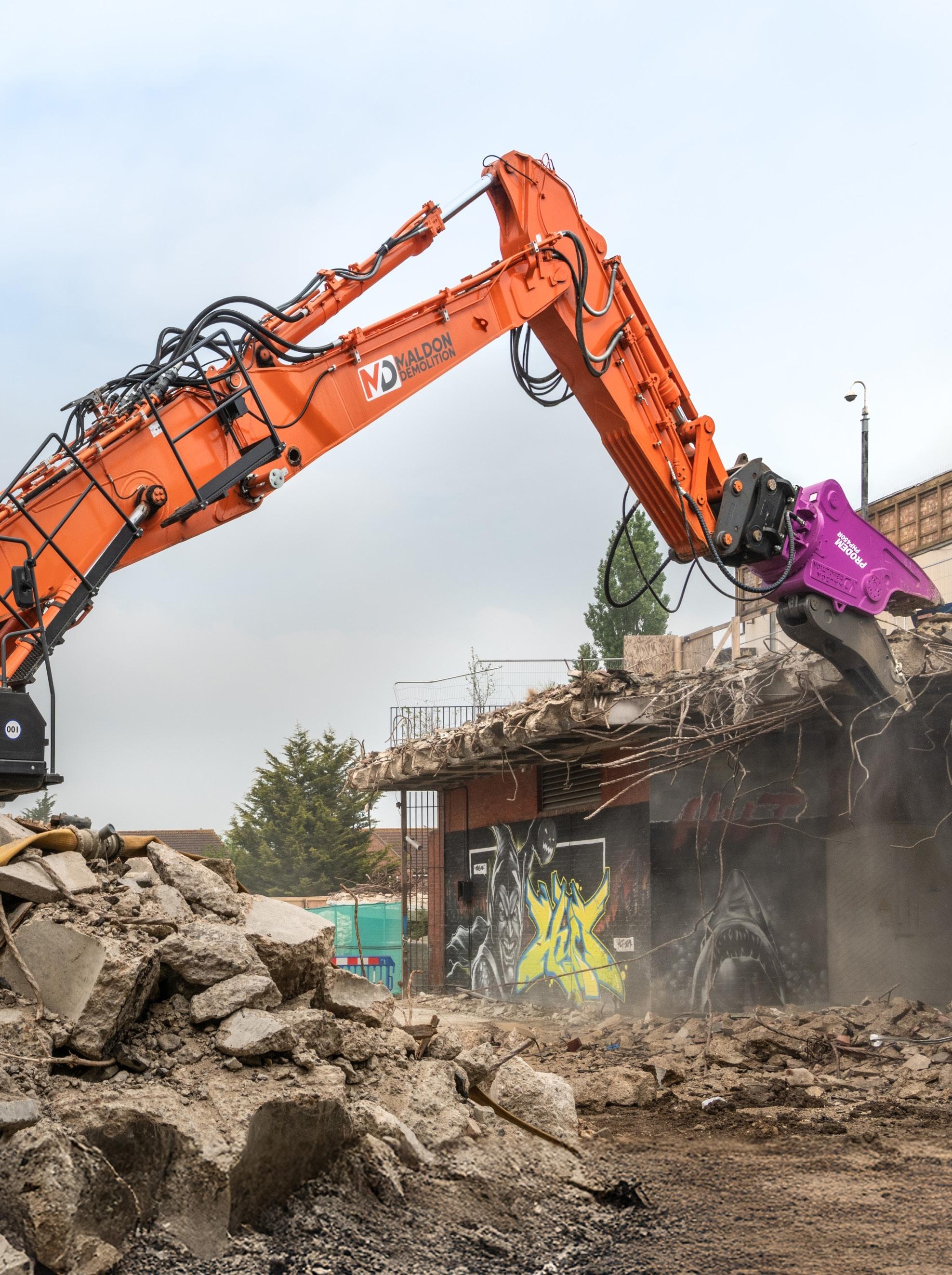
BPH Attachments offers a complete range of services, including the repair and maintenance of any make or model of attachment. We also provide bespoke solutions to meet all kinds of customer requirements. Thanks to our purpose-built facilities – featuring fully equipped workshops, a fabrication shop and two plasma CNC machines to name a few – we take on a wide variety of interesting and specialist projects. We even have our own spray shop, where we’ve painted attachments in everything from standard finishes to bright pink at a customer’s request.
In addition to servicing, we supply a large range of new attachments. Because we can support these with comprehensive parts and after-sales service, we’re able to look after them throughout their entire lifespan. We also offer attachment hire, with a fleet of more than 1,300 units spread across
four depots, giving us true nationwide coverage and the capacity to meet any customer need.
We have a transport division running between our depots and now actually take on specific jobs to move larger attachments around the UK for our customers. We pride ourselves on our customer service and our ability to act as a genuine “one-stop shop,” fully aligned with our vision to be the supplier of choice.
What makes BPH different from your competitors? What are your USPs?
We can meet the most demanding customer needs nationwide. Our hire fleet is more than 1,300 attachments strong; our services such as the fabrication shop mean we can turn around repairs or brackets for attachments in 24 hours; our direct sales force is on hand to support customers anywhere in the UK or Ireland at site or office.
Tell us about your team and working culture. Our vision and mission is what brings our teams together, whether sales or engineers, we have staff with tenures of over 20 years. Being a thirdgeneration family business, you get the sense of being part of something bigger than yourself.
How has the scope of BPH’s business developed over time and are you in the process of developing your range of services? The attachment business began in 2001 with a limited product range, primarily hydraulic breakers. Over the years, the range steadily expanded, eventually leading to the creation of
the Hire division. As demand grew for reliable, high-performance equipment capable of meeting the tough requirements of the hire industry, BPH secured sole importer rights to PRODEM in 2010. This significantly broadened our offering and provided access to highquality, durable and productive attachments.
Due to continued growth, BPH Attachments and Plant has relocated several times. In 2023, we moved to our current head office in Ashington, West Sussex – a purposebuilt, five-acre site. We have recently added a further 1.5 acres to accommodate a dedicated demonstration area, enabling us to host customers, suppliers and dealers.
Today, the business operates from four locations: our Head Office in West Sussex, along with branches in Bristol, North London and Leicestershire.
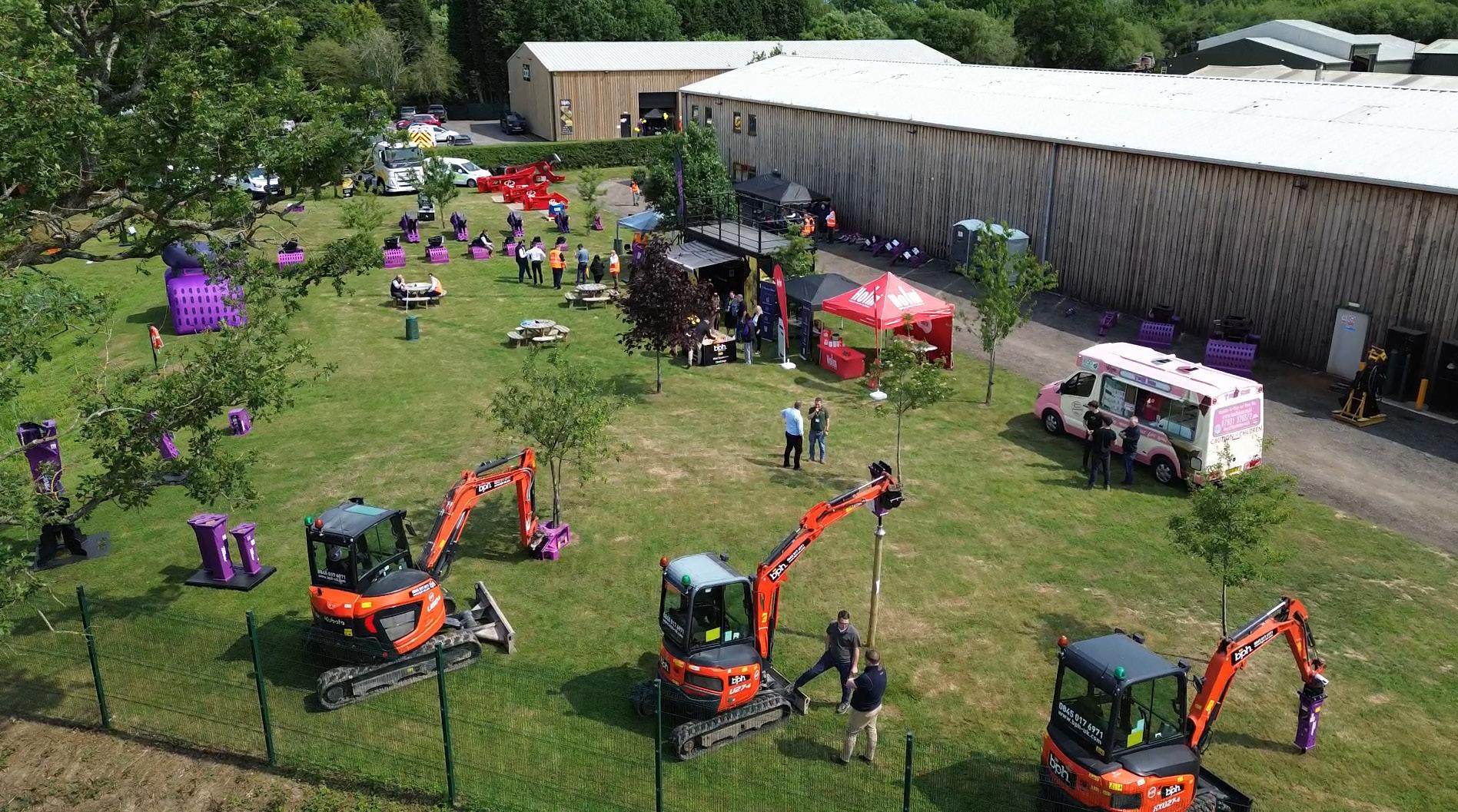
Tell us about BPH’s open day prior to the Demmy Awards in Brighton on 17 April? What can demolition contractors expect to get out of it? Customers will be greeted with a tea or coffee and BBQ; they will be able to wander around a display of demolition specific attachments in the scenic garden area adjacent to our demonstration area; there will be staff on hand to answer any questions they may have; there will be workshop tours where they can see how our engineers use the dedicated facilities to service, repair and PDI all our attachments.
We will have our demonstration area open with several larger machines and attachments showing what they can do best, customers will get the chance to get hands on using different demolition specific attachments and there will even be a competition or two, with some top prizes to be won.
We will have specific open day deals on all our attachments, including new, used and hire, and will also have a selection of our plant machinery on display for those customers who work in the south-east.
Tell us about recruitment and how you source new talent. Is there a good pool of potential new recruits and are they armed with the right skills? Because our workforce is so varied – from drivers and engineers to sales professionals – we are constantly looking to the market for people who understand the industry. Recruiting individuals with highly specific skills can be challenging; for example, experienced engineers in hydraulic attachments represent only a small
percentage of the wider engineering workforce.
As the business has grown, the need to expand our team has increased. In response, we’ve developed a comprehensive training and onboarding programme that helps new employees integrate smoothly into the company. This is supported by ongoing training for all staff to ensure they stay up to date with evolving working practices, including health and safety and general fabrication skills.
One thing that has helped us recruit is the culture and brand at BPH. Recent survey results tell us that we are known for our customer service and offering support with complete solutions. When recruiters know of us and our culture, this helps us to attract people to our business.
What are the biggest technological developments you have seen/experienced in the heavy plant/attachments industry and what do you envisage will be the future game changers? Are AI or robotics impacting your business – do you see it as a threat or a tool?
As the demolition industry develops and we see new generations moving through businesses, it is inevitable that it will start to integrate more technology into the day to day at office and site. We have had GPS tracking available for years on attachments, it’s only in the last four to five years this has started to get uptake. We can now monitor the attachment for temperature and vibration and it won’t be long before they can give us even more detailed feedback.
I do suspect there will be a link in digital communication between the machine and attachment and likely to any computer anywhere in the world. Just as BIM (Building Information Modelling) has become common in constructing buildings, I suspect this will work its way to demolition of those buildings. Things like augmented reality overlaying through the cab screen exactly where to crack the concrete or cut the steel, even adjusting the machine automatically to ensure the operator can be pinpoint accurate.
How do you see the outlook for the demolition supply sector generally?
The UK population continues to grow, increasing pressure on housing, transport and utilities. As infrastructure ages, more structures become unsuitable for modern use – whether due to energy inefficiency, safety concerns or the need to repurpose sites for highervalue developments. This naturally drives the continued need for demolition, refurbishment or complete replacement of outdated buildings.
Demolition is widely regarded as an early indicator of future construction growth, as projects typically begin with site clearance. As major regeneration schemes, infrastructure upgrades and housing projects progress through planning, the demolition sector is expected to benefit from the early stages of this activity.
Overall, while recent years have presented challenges, the underlying demand for renewal and redevelopment suggests a more positive outlook ahead for the UK demolition market.
As the demolition market begins to show signs of growth, we can expect a corresponding increase within the supply chain. Several demolition companies are already experiencing strong progress this year, with project pipelines extending into 2026 and beyond. Naturally, this momentum is also benefiting their suppliers.
However, the supply sector has faced significant pressure to deliver cost-effective solutions in response to rising costs and tighter margins for contractors. Many suppliers have had to adapt quickly, diversifying their offerings and improving efficiency to remain competitive and supportive of their customers’ needs.
While the coming years may present challenges for some, those suppliers who remain flexible, innovate and align themselves closely with market demands will be well positioned to succeed as the industry continues to evolve. I am keen to highlight the outlook for the UK demolition market for next year. It is no secret that demolition activity has softened in recent years, influenced by factors such as rising material costs, planning delays and wider economic
uncertainty. However, long term demand remains strong.
What measures is BPH taking in regard to the climate crisis and sustainability?
How do you foresee this developing both for BPH and the industry in general?
Sustainability is a core priority for our business and it played a major role in the design of our head office in West Sussex. The site is heated by a biomass boiler and the building itself was developed with energy efficiency in mind to minimise our carbon footprint. We also operate structured recycling processes for materials such as oils and wood, following a circular approach of reduce, reuse and recycle.
Our repair workshops and extensive stock of new and used spare parts allow us to extend the working life of attachments. When equipment eventually becomes no longer cost-effective to repair, we are able to take it in part-exchange and ensure it is recycled responsibly.
Across the wider industry, on-site productivity plays a crucial role in reducing waste and lowering CO2 emissions. Minimising downtime and avoiding unnecessary material loss both support this goal. Recycling has become increasingly prominent in the demolition sector, with an emphasis on effective material separation – such as ensuring rebar is completely removed from concrete so both can be recycled efficiently.
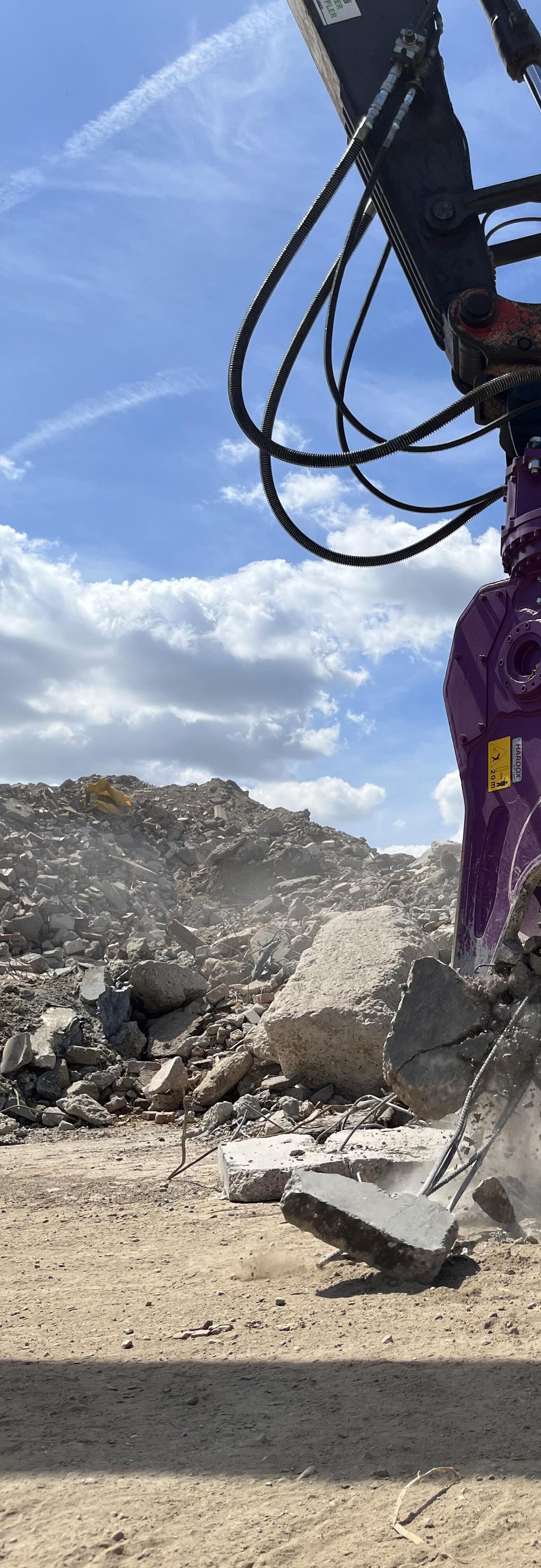
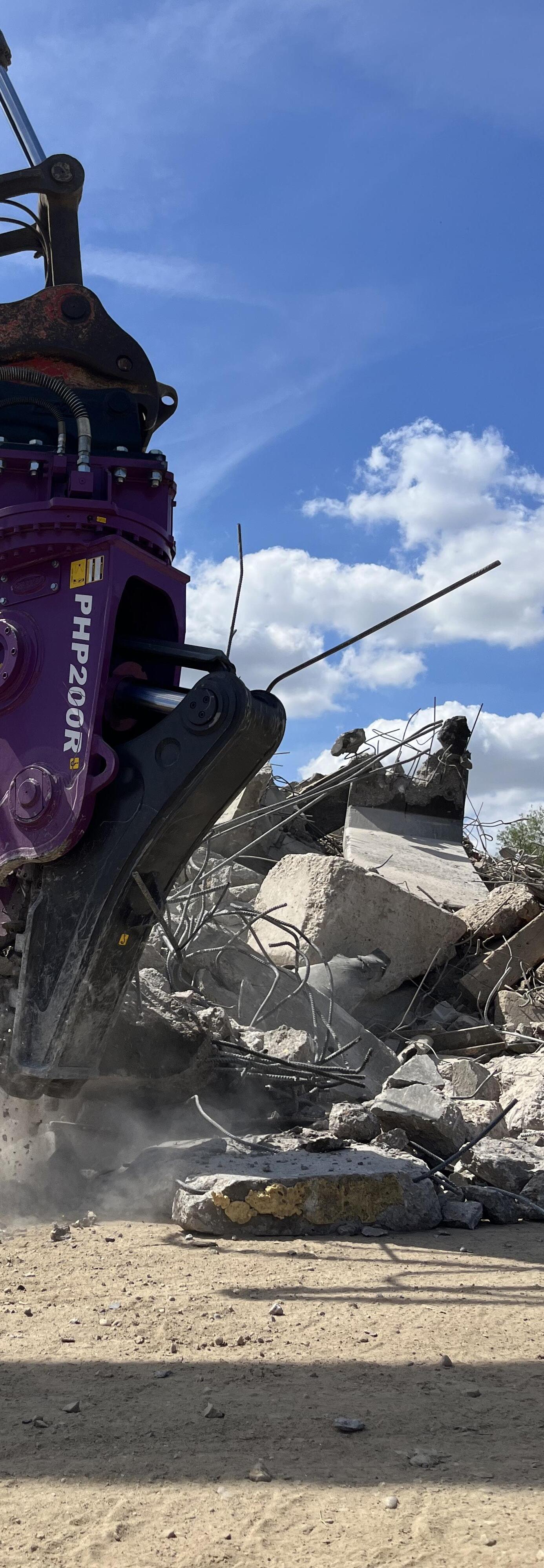
This is where high-quality, well-maintained attachments make a significant difference. For example, a correctly designed and properly serviced pulveriser will remove far more concrete
from rebar than a lower-quality or poorly maintained alternative, improving recycling rates while reducing overall costs and environmental impact.
Tell us about any engagement BPH has in the community, or social responsibilities (CSR)?
BPH actively supports both national and local charities, including The Lighthouse Charity and the Brain Tumour Trust. For our upcoming Open Day, we will also be raising funds for St Catherine’s Hospice.
We work closely with local businesses when selecting vendors for our supply chain. For example, we recycle our steel offcuts through a local company, H.D. White, amounting to approximately 50 tonnes per year.
In addition, we are planning to partner with a local community charity for a staff team-building initiative in 2026, further strengthening our commitment to supporting the communities around us.
BPH is a family business. How do you envisage it in five to ten years?
Over the past five years, our investments have created a solid foundation that enables us to fully support our customers and continue expanding the business. We now want to build on this momentum and further enhance our customer
offering through both attachment innovation and improved services. A recent example is the introduction of a three-year warranty on our selector grabs – made possible by our investment in our service team and workshop capabilities.
On the product side, we will keep developing, refining and broadening our attachment range across both applications and sizes. We recently broke our own record with the largest concrete cracker we have had in our hire fleet, weighing in at seven tonnes. Our hire fleet will also continue to expand and we expect it to exceed 2,000 attachments in the coming years.
As for the family side of the business, it’s safe to say we may never see the day when Simon Bastable (second generation – and father) isn’t the first to arrive at work… although I might occasionally beat him to it!
And how about you in a few years?
After nearly 18 months in the role, I still have the same enthusiasm I felt on day one. I’m committed to supporting the business as it grows and works toward its vision of becoming the supplier of choice. I’m ambitious about helping the family develop new products, services and even explore new markets.
I value the opportunities for growth within the company and hope to take on a broader leadership role in the future. I’m eager to make a positive impact on the industry and build a lasting legacy
PRODUCTS
Product name: LaBounty Shears
Tell us about one of your key demolition-relevant products.
We are the LaBounty Dealer for the UK and Ireland. If you are in demolition you will know about LaBounty shears, they have been making them since the 1970s and most of those are probably still in service.
These shears have been at the forefront of innovation for decades and have proven themselves for quality in all that time. Coupled with the backup and support from BPH, this makes it the market leader.
Outline the key functions of the product. Ability to suit any application and machine size, they are even used sub-sea. Rotatable blades and the genuine tip blade is rotatable meaning you get more use from this shear. The geometry of the shear means it cuts quicker and more efficient meaning you can reduce the body size and therefore weight. This means you can fit a more powerful shear on a smaller machine.
How is it critical for demolition contractors?
The LaBounty shear is an ideal choice for demolition contractors. Its adaptability across different steel types makes it suitable for a wide range of applications – from dismantling steel structures to cutting material down afterwards.
With rotatable blades, downtime is reduced, keeping operations running smoothly. Its compact body, compared to other shears of the same size, offers improved access in tight spaces and excellent visibility for the operator. Combined with the shear’s cutting speed, this results in significantly improved productivity on site. When paired with BPH’s nationwide service and support, we ensure customers get the maximum value from their equipment. In addition, we now offer attachment tracking and usage monitoring, giving customers complete visibility and helping them ensure they’re getting the best performance from their asset.
Can you quantify any of these benefits?
Yes we have appetite guides for all the LaBounty shears, meaning customers can work out how much their shear can do in a day.
How have you found take-up among demolition contractors?
The LaBounty shear is one of those attachments almost every demolition contractor has used or has in their fleet, it’s proven itself over the last 50 + years. If we are speaking to customers about shears, we always ask what they are using it for and what they want to achieve. This helps guide what model or even shear is best for them. The most common needs from a customer are reliability, service and support for the shear. Finally, they want the asset to be an asset – what will the shear be worth in 10 years’ time? LaBounty shears often last over 20 years and can still hold 50% of their value at this age.
AND FINALLY
What do you do for fun?
Motorbikes, classic cars (I’ve restored a few classic minis) and learning to play the piano
What gets you out of bed in the morning?
Wanting to be successful for my family. I get up at 3am and normally head to the gym before going to work at 6am.
When and where are you happiest?
Tinkering with a classic car or a motorbike
What’s the most expensive nonessential thing you’ve ever bought?
I bought a boat right before lockdown so never used it
What’s your bucket list activity?
Drive an F1 car
What would you do for a company excursion, money no object?
Head to the F1 GP in Dubai
What’s your favourite food/cuisine? Chinese
What’s your tipple of choice?
I am ashamed to admit it …. WKD Blue
If you could be remembered for one thing, what would it be?
A great leader
If you could invent any tool for your daily life, what would it be?
An AI diary that listens to conversations and automatically creates meetings and job lists.
TRAINING FEATURE
Leica Geosystems launches industry-first training and announces dealer network expansion
Machine control and surveying equipment specialist Leica Geosystems, part of Hexagon, is announcing the launch of a new three-tiered training programme for installation engineers and technicians.
The programme rollout, which began in September 2025 with its first Level One course, attended by members of the Flannery Plant Hire
team, is now open to all customers, dealers, and partners. It comes as its dealer network continues to expand with a new dealer, Aska Attachments, having joined the team on stand at Plantworx.
Commenting on its investment in training and its dealer expansion, Mark Laud, Business Director UK Distribution at Leica Geosystems, part of Hexagon said: “Thousands of machines now use
Leica Geosystems 3D machine control on some of the largest and smallest projects in the UK and Ireland. Over the years, we have built the largest dealer network to support them. This continues to expand with the addition of Aska Attachments and its team, who are already working with end-users.
“With new machines getting fitted daily and new entrants to the industry, we recognised we could further support our dealers and customers as they expand their capabilities for both the installation and maintenance of our solutions.
“By developing a progressive learning programme with three levels, delivered by our expert team from our own Leica Geosystems School in Shropshire, we can not only share our knowledge but also practically show how our ecosystem works. This includes both machine control hardware and software, as well as our surveying equipment and solutions, such as our base stations, which support the creation of 3D models used onsite and the high levels of accuracy customers require.
“It’s great to see Flannery Plant Hire already taking advantage of the Level 1 training, with their team, who have really enjoyed the experience.”
Talking about the different levels of training being offered, Eurig Price, Engineering Support Manager, added: “Our programme starts with Level 1, which we call Onboarding, which is focused on engineers and technicians, both those with existing experience and others who are completely new to our product range and even the sector.
“Level 1 is a three-day course that combines classroom and practical sessions in our sandpit at The School, providing participants with a deep understanding of our products and solutions. It’s
also the start of their journey with us, which can lead to Level 2 training, focusing on installation, maintenance, and technical remote support. This includes the practical elements of installation, such as wiring and calibrating a new system, as well as calibrating attachments like buckets. It also supports advanced troubleshooting and the sharing of best practice work methods.
“Finally, Level 3 is our most advanced training, which aims to support the creation of qualified trainers who can then deliver Level 1 and 2 training to their colleagues, helping everyone to deliver the best possible outcomes for equipment owners and end users.”
Breaking down barriers: How NDTG is opening demolition career paths in UK prisons
Everyone deserves the opportunity to start again. For those preparing to leave prison, the transition back into society is often defined by one key factor: employment. Finding meaningful work not only builds confidence but is also one of the most powerful ways to reduce reoffending.
The National Demolition Training Group (NDTG) – the UK’s leading provider of demolition training and certification, including the industryrecognised CCDO card scheme – has long championed skills, safety and employability in demolition. Through its training programmes, NDTG helps individuals gain practical skills, achieve recognised qualifications, and move into sustainable careers. Today, that mission is expanding further through its work with the prison service under the Breaking Down Barriers initiative.
A partnership built on opportunity
Launched in 2024 by the NDTG in collaboration with the National Federation of Demolition Contractors (NFDC), Breaking Down Barriers focuses on training and inclusive hiring by opening up demolition as a career pathway for people who may otherwise face barriers to employment. In partnership with the Ministry of Justice, the Department for Work and Pensions (DWP), and the Prison Service, the initiative brings industry training directly into UK prisons – giving candidates a second chance to step into the world of work equipped with skills, certification and confidence.
This year has seen the programme in action at HMP Springhill in Buckinghamshire, HMP Norwich, HMP Grampian and HMP/YOI Isis in south-east London, with NDTG trainers delivering demolitionfocused training to residents preparing for release.
HMP Springhill: Creating new futures
In August, NDTG staff and NFDC representatives, alongside member companies, attended an open day at HMP Springhill, giving residents the chance to explore demolition as a career option. With demonstrations on the demolition simulator, an open Q&A and face-to-face discussions with employers, the event opened minds to the wide variety of roles available in demolition. Following this, NDTG delivered a
structured training programme for a group of residents, who left prison equipped not only with recognised qualifications and essential PPE, but also with the employability support needed to find work on release.
HMP/YOI Isis: Supporting young offenders
Building on the success at Springhill, NDTG has also started training at HMP/YOI Isis, a resettlement prison for young men aged 18–25. Across four groups running until March 2026, candidates will receive demolition-specific training and career guidance designed to prepare them for employment. Importantly, each participant is supported beyond the classroom through links with recruitment agencies that specialise in demolition and construction.
Breaking down barriers, building up the industry
For the demolition industry, initiatives like this offer more than social value – they also help to address the skills shortage by widening the recruitment pool and promoting inclusive hiring. With CCDO certification and NDTGled training, ex-offenders can re-enter society with confidence, while demolition businesses benefit from skilled, safety-conscious operatives ready to contribute from day one.
Speaking about the programme, John Lynch, NDTG Chairman, said: “Breaking Down Barriers is more than just a training initiative – it’s about giving people a genuine second chance. We know the difference employment makes in reducing reoffending, and demolition is an industry that thrives on resilience, teamwork
and skills that many of these individuals already have. By opening the door to training and careers, we are helping to change lives while strengthening the future of our industry.”
As NDTG continues to expand its Breaking Down Barriers work across the UK, the message is clear: demolition is an industry built on skills, safety and opportunity – and it is ready to welcome those prepared to take their next step.
SL Training
SL Training is a UK leading provider of a wide range of construction, demolition, plant and health and safety NVQs, with an excellent reputation for providing outstanding, affordable qualifications in all disciplines from Level 2 through to Level 7. We strive to make a positive difference to safety and competency of individuals in all construction sectors.
As a training business we understand the importance of delivering excellent demolition qualifications and so we have our own dedicated team of assessors to help you get the most out of what you are learning and to allow you to thrive within the industry. Within the demolition industry we offer a wide range of qualifications listed below:
• Level 2 NVQ diploma in Demolition,
• Level 3 NVQ diploma in Demolition
– Top Man Operative,
• Level 3 NVQ diploma in Demolition
– Demolition Chargehand,
• Level 3 NVQ diploma in Demolition
– Demolition Plant,
• Level 4 NVQ diploma in Construction
Site Supervision – Demolition,
• Level 6 NVQ diploma in Construction
Site Supervision – Demolition.
All NVQs are delivered on site via observations, knowledge discussion and witness testimonies, thus adding career development and proving competence at all demolition levels as required by the NDTG.
Euan.barker@pibrm.com 07561 115 482
CRUSHERS FEATURE
Arden
Equipment
Power, performance and precision
For more than 60 years, Arden Equipment has been designing, manufacturing and marketing high-performance attachments for demolition machinery, recycling applications and much more. As a French company with an international reach, it has established itself as a major player thanks to its robust, reliable and durable solutions, engineered to meet the demanding needs of industry professionals.
At the core of its identity lie innovation, quality and customer proximity. Each Arden Equipment attachment is developed to deliver maximum productivity, optimal safety and long-term profitability on site. The company also follows an eco-responsible approach, designing equipment that addresses the challenges of energy transition and recycling.
Hydraulic concrete crushers – power and versatility
Among Arden Equipment’s flagship products, the BBH hydraulic concrete crushers stand out for their high power and productivity. Designed for excavators from 13 to 80 tonnes, they offer crushing capacities tailored to each application.
With a large jaw opening, the Arden Equipment concrete crusher offers higher productivity than universal or dedicated attachments equipped with concrete jaws. Thanks to their advanced technical features and optimised kinematics, BBH crushers deliver extremely high tooth force, making them ideal for secondary demolition. Every model is engineered to ensure efficiency, precision and durability, even when tackling the most demanding structures.
The BBH range is also highly modular. Numerous options can be added, including Arden Jet (an integrated water-spray system that reduces dust emissions), a closing plate, a Speed Valve (for faster work cycles) and a Booster, which increases working pressure and productivity. These features significantly enhance performance while reducing energy consumption and environmental impact.
Productivity and time saving for your demolition and recycling sites
By allowing scrap metal to be recovered directly on the construction site, they will save significant amounts of time during your recycling tasks. A closure kit can be installed on the BBH014, BBH020, and BBH031 to suit your waste types according to the desired shredding. The BBH models are equipped with a bar cutter inside the jaws close to the rotation axle as standard.
Advantages
• Available with or without rotation for the BBH014, BBH020, BBH031,
• Inverted cylinders to protect the rod inside the frame. The supply is routed through the rod,
• Bolted, cast and interchangeable demolition teeth with nut protectors, allowing for easy individual replacement on site,
• High tooth force thanks to the oversized cylinder.
Options:
• Booster: The BBH014, BBH020, BBH031 are available with the booster option, which allows a multiplied force when the jaws are closing, providing a better cycle time and reducing energy consumption,
• Arden Jet: This option is available on all crushers. Water is sprayed at high pressure to reduce dust emissions on job sites,
• Full plate: Used to refine the granulometry,
• Speedvalve: The Speedvalve can be installed on all crushers. It reduces the cycle time of opening and closing the jaws on the demolition tool,
• Teeth: Two teeth can be fitted on the BBH1300 frame.
A trusted partner for the future of demolition
With its complete range of attachments –crushers, shears, buckets and quick couplers – Arden Equipment has established itself as a trusted partner for construction and demolition professionals. Users are increasingly adopting a holistic approach that integrates both demolition and the recovery of materials from job sites – recycling is fully embedded in their working methods to optimise waste management. By combining French industrial knowhow with a strong international presence, Arden Equipment reaffirms its commitment to developing solutions that make demolition safer, faster and more sustainable.
Crusher Consumables Ltd: Delivering the parts that keep industry moving
In the crushing, quarrying, demolition and recycling sectors, machinery is pushed to extremes. Wear is inevitable and when components fail, every hour of downtime can cost thousands. That’s why operators turn to Crusher Consumables Ltd – a supplier specialising in high-quality crusher spare parts and wear parts designed to keep plants running efficiently and reliably. With a comprehensive and constantly evolving product range, the company has become a trusted source for businesses that depend on durable, accurately manufactured components.
A comprehensive range of wear parts
Crusher Consumables Ltd supplies a wide selection of wear parts compatible with many leading crusher and screening brands. These are the components that take the most punishment on site – the parts that must withstand constant abrasion, impact and pressure. The company’s wear-part offering includes:
• Jaw plates (various profiles and materials)
• Blow bars / hammers for impact crushers
• Cone crusher mantles and concaves
• Side plates, cheek plates and toggle plates
• Liner plates, wear plates and breaker plates
• Cutting edges and tips
• Apron liners and impact curtains
All wear parts are manufactured to meet demanding performance standards, with options available in a range of materials including manganese steel, chrome iron, martensitic steel and composite ceramic-enhanced variants. This allows customers to choose parts tailored to their application – whether they need maximum impact resistance, prolonged wear life or optimal balance between the two.
Machine and structural components
Beyond high-wear components, Crusher Consumables Ltd also supplies an extensive selection of structural and machine parts. These often-overlooked components are
critical to keeping crushers functioning safely
operators running machinery from several different brands or managing older equipment where OEM supply chains have slowed or ceased.
Supporting customers with knowledge and service
While the company’s product range is extensive,
a single brand or product type, customers can select from a broad range of materials, profiles, and configurations. This enables them to optimise performance, achieve better wear life, and reduce operating costs.
Each part supplied is chosen or manufactured to high standards, giving customers
Kleemann KLEEMANN MR100(i) NEO Mobile Impact Crusher
The NEO line is the new powerful compact class from Kleemann. With the MOBIREX MR 100(i) NEO mobile impact crusher, Kleemann presents the first family member of the new NEO line. The machine is efficient, powerful and extremely flexible. Regardless of whether there is limited space on the job site, or whether job sites change frequently, thanks to compact dimensions and a low transport weight, deployment of the MOBIREX MR 100(i) NEO / NEOe is flexible, fast and highly versatile. Operation ranges from different recycling applications, such as the processing of concrete, mixed rubble and asphalt, to the processing of soft to medium-hard natural stone. Due to its compactness, the machine is particularly well suited for use in urban mining, i.e. directly on site on inner-city construction sites or similar areas.
High final product quality
Very high product quality is expected from an
with large impact circle and a very wide variety of rotor ledge option, but also by the optional four square metre single-deck post screening unit. This makes it possible to produce a classified final grain size. Thanks to integrated oversize grain returning, the post screening unit is designed such that it can be easily retrofitted as per “plug & play”. Operators can therefore react flexibly to changes in application areas. The use of an optional wind sifter can optimise the final product quality even further by removing contamination in the material such as the lightweight materials (e.g. wood and plastic). The airflow can be controlled depending on the material.
Sustainable solution
The new impact crusher from Kleemann is available in two versions: Depending on the application, it is possible to operate the machine all-electrically and free of emissions, thanks to the E-DRIVE drive concept with an external power
dependent fan reduces not only noise emissions but also fuel consumption. Thanks to water spraying at relevant points such as the crusher inlet, the discharge conveyors and the post screening unit, dust development can be reduced considerably.
Lock & turn quick access
Tool-free opening of the crusher is a further positive feature that guarantees fast service and maintenance. Laurin Winter, Product Manager for Kleemann said: “Our Lock & Turn Quick Access allows customers to open the crusher very quickly at the push of a button. This is performed in a mere 30 seconds. The operator has a full view of the crushing chamber very quickly and without any manual intervention at all. A rotor ledge replacement, for example, is extremely convenient. We regard this as a clear competitive advantage – which we have additionally secured through a patent application.”
Fully automatic crusher gap adjustment
Additional unique features in this machine class are the fully automatic crusher gap adjustment and zero-point determination, which have already proved their value with the Kleemann impact crushers in the EVO2 and PRO lines. “The gap
adjustment at the push of a button is a real gain in comfort for the operator. As a result, tedious manual measurement of the crushing gap through narrow doors on the crusher side is a thing of the past,” explains Laurin.
Simple plant operation
Thanks to the SPECTIVE operating unit specially tuned to the functions, operation of the MR 100(i) NEO / NEOe is simple and intuitive. With SPECTIVE CONNECT from Kleemann, operators have all relevant data on speed, consumption values and fill levels at their fingertips on a smartphone or tablet and prepared in a clearly arranged manner. SPECTIVE CONNECT also offers detailed troubleshooting aids to assist with service and maintenance.
MB Crusher A dreamy escape: Demolishing on the Côte d’Azur
The Côte d’Azur, with its breathtaking coastline, golden beaches and endless sunshine is a well-known dream destination. You can easily envision yourself chilling by the pool with a refreshing beverage – it is an idyllic retreat to unwind after a long day or bask in the warmth of summer. Fun fact: in France, there are more than three million swimming pools, many of which are more than 10 years old.
The need for modernisation
Older pools often come with several drawbacks. They tend to have ageing structures that require frequent maintenance, lack modern innovations, consume high amounts of energy and provide reduced comfort and efficiency. As a result, many homeowners opt to replace them with more contemporary, eco-friendly alternatives. However, demolishing an entire swimming pool can be costly and challenging, particularly when it comes to managing site waste.
A challenging site with limited access
MB Crusher’s client, ATV Terrassement Nicolino & Fils, a master craftsman in earthworks and demolition, took on a particularly complex project. The site posed several major difficulties, including restricted access that made it difficult to manoeuvre heavy machinery, a tight working space limiting equipment operation and the need to ensure safety for both workers and the surrounding environment. To tackle this challenge, the team used a BF60.1 S4 crusher bucket and an MB-S14 S4 screening bucket, installed on a KOBELCO SK 140 SRLC excavator.
Despite these challenges, the demolition process progressed efficiently. Initial earthworks required creative problem-solving due to limited space, while on-site crushing transformed demolition materials into reusable resources. Screening further ensured materials could be repurposed for future projects.
“The use of our excavator equipped with the crusher bucket allows us to quickly and efficiently transform construction waste into reusable materials,” the company manager said. “This technique not only optimises the site cleaning
process but also helps reduce the environmental impact of our activities. Indeed, by crushing on site we avoid transporting heavy materials to external treatment facilities, thereby minimising carbon emissions associated with transport.”
A compact mobile recycling centre
Once the pool was demolished, a screening process was implemented to maximise material reuse:
• On-site crushing reduced waste and transportation costs,
• Recycled materials were integrated into new developments,
The BF 60.1 Crusher Bucket stands out for its compact size and lightweight build, durability and robustness and ability to access difficult sites such as historic centres or mountainous areas and the MB-S14 S4 Screening Bucket complements it perfectly. It is compact and easily transportable, indispensable for volumetric separation and compatible with various types of construction machinery.
This combination is a portable compact recycling centre that provides efficient, environmentally responsible demolition and material reuse – even on one of the most complex sites in the Côte d’Azur.
And the best part? With all the money saved using MB Crusher units, you might just afford that dream villa in the Côte d’Azur – pool included.
mbcrusher.com info@mbcrusher.com
Terex Mobile Solutions
Turning demolition waste into opportunity
Sustainability is becoming a clear priority in demolition and mobile crushing and screening equipment is increasingly helping contractors meet this challenge. Terex brands Powerscreen®, Finlay® and EvoQuip® provide solutions that enable materials to be processed directly on site, reducing environmental impact while improving operational efficiency.
Pat Brian, Vice President, Terex Aggregates said: “As the construction industry moves toward a circular economy, Terex mobile crushing and screening solutions are helping contractors turn waste into opportunity. Reducing carbon footprint and enabling on-site recycling improves efficiency and drives positive environmental change.”
Demolition waste consisting of debris from building projects generally contains a wide variety of heavy materials such as brick, concrete, metals, sand, soil and many others. Traditionally, much of this material followed a linear ‘take-makedispose’ path, ending up in landfill. Today, the
focus is shifting toward circularity, where waste is minimised and natural resources are conserved by recovering and reusing such materials.
The move toward circularity in demolition is driven by several key factors. Environmental responsibility is now essential to meet global climate goals and reduce carbon emissions. Legislation is a major driver, therefore, as both national and local regulations mandate waste reduction and incentivise sustainable practices. The practice of recycling and reuse also creates economic value by lowering disposal costs and generating revenue from recovered materials.
On-site processing plays a key role in this approach, turning debris into high-quality recycled aggregates suitable for use in new construction. The recycling process typically begins with sorting mixed material into categories such as concrete, brick, wood and metal. Powerscreen, Finlay and EvoQuip mobile crushing and screening equipment can then
size-reduce and separate these materials, which can then be reused as product on site or sold. Powerscreen and Finlay machines are widely used for processing rubble, asphalt, tiles, bricks, plaster and drywall, while EvoQuip offers compact solutions for smaller demolition sites. Around 40% of EvoQuip machines are now used in recycling applications, reflecting the growing demand for resource-efficient practices.
Localised support for such projects is provided through Terex’s extensive distributor network, offering guidance on equipment selection, maintenance and parts to keep operations running efficiently. This collaborative approach helps contractors achieve long-term success while contributing to a more sustainable future.
As well as recovering material from demolition projects, mobile crushing and screening equipment reduces the need for transporting material offsite, cutting emissions and streamlining operations.
Terex also produces a range of conveyors that can be integrated with crushing and screening equipment to help limit double handling, reducing reliance on wheel loaders and improving site safety. These efficiencies support sustainability targets while maintaining
productivity and reducing overall project costs.
Finally, advances in mobile crushing and screening technology make onsite processing practical and efficient, accelerating adoption of circular methods across the sector. Hybrid and electric drive options are available across the Terex brands to reduce emissions and lower fuel consumption. Electric drives also operate more quietly than traditional diesel engines, making them particularly suitable for urban environments where noise restrictions are common and demolition projects are often located close to residential or commercial areas. Precision screening and crushing systems enable accurate material separation and contaminant removal, helping contractors meet strict quality standards for recycled aggregates.
“Terex continues to invest in hybrid power and resource-efficient technologies to help customers lead the way in sustainable demolition practices,” added Pat Brian. “Through innovation and collaboration, our goal is to deliver solutions that not only meet today’s demands but also anticipate the challenges of tomorrow.”
terex.com
mpcommunications@terex.com
events
Tech-forward construction show
CONEXPO-CON/AGG 2026 to feature Amazon Web Services and John Deere as keynote speakers
CONEXPO-CON/AGG, taking place in Las Vegas from Tuesday 3 to Saturday 7 March 2026, has announced top industry innovators and visionaries as speakers at the show, complementing robust educational programming and more than 2,000 exhibitors across the 270,000 square metres of exhibit space.
Keynotes and presentations on the new Ground Breakers Stage, presented by The SherwinWilliams Company, will include John Deere’s Senior Vice President and Chief Technology Officer Jahmy Hindman and Amazon Web Services’ Director of AWS IoT Services Dave Kranzler.
Hindman will be joined by John Deere colleagues Maryanne Graves (Manager, Product Management) and Jonny Spendlove (Manager, Precision Construction) on the Tuesday at 11 am, spotlighting the innovation and technological advances propelling the construction industry forward.
“We’re genuinely excited to be part of this first-ever keynote event at CONEXPO-CON/AGG,” said Hindman. “Contractors are out there every day building the roads, bridges and systems that connect our lives – and they’re facing real challenges like finding skilled workers. At John Deere, we’re committed to helping them tackle those challenges with technology that’s not just smart, but purposeful – designed to help them get more done, more efficiently, and more profitably.”
Dave Kranzler will take the Ground
Breakers Stage on Thursday 5 March at 10 am, spotlighting how advances in AI, automation and connected technologies are reshaping the construction industry, reducing costs and creating safer, more sustainable jobsites.
Dana Wuesthoff, Show Director at CONEXPOCON/AGG said: “The Ground Breakers Stage is bringing forth the most innovative leaders in our industry who are making strides in autonomous and technological advances and changing the way we work, hire and build.
“John Deere is pioneering conversations that are crucial to our industry and we’re thrilled for those conversations to converge at the Ground Breakers Stage.
“We’re also delighted to welcome AWS as a Ground Breakers Stage keynote. Digital transformation is changing how the world builds and we know our attendees will be eager to hear from AWS about the opportunities to reimagine construction efficiency, safety and sustainability.”
Every three years, nearly 140,000 construction leaders gather in Las Vegas to discuss innovation, technological advances, challenges and opportunities impacting the more than $2 trillion U.S. construction industry. Other keynote speakers range from the leaders of Fortune 100 companies to successful entrepreneurs, with more announcements to be shared in the coming months.
Hands-on learning takes centre stage with Shop Talks and Walks
On Saturday 7 March, the Shop Talks and Walks Workshop turns attention to the technicians, operators and maintenance pros who keep machines humming and jobsites productive.
This immersive, hands-on event is designed for industry professionals eager to sharpen their skills in preventive maintenance and equipment efficiency. It offers a full day of interactive sessions, expert demonstrations and real-world insights that help attendees reduce downtime, lower operating costs and improve safety.
“Technicians and operators are at the heart of every successful project,” said Show Director, Dana Wuesthoff.
“Shop Talks and Walks is designed to recognise their expertise and give them new tools to lead maintenance innovation in the field.”
Shops talks and walks: Get handson demos and industry insights
Held from 8:30 am to 1:30 pm in the West Hall of the Las Vegas Convention Center, the workshop provides equipment deep-dives, live Q&A sessions and maintenance-focused demos led by top industry manufacturers including Caterpillar, Hyundai, John Deere, Kubota, SANY, Vermeer and Volvo.
The day begins with a Breakfast Spotlight Panel titled The Future of Maintenance: Insights from Tech Leaders in Equipment Solutions. Speakers include:
• Austin Conti, CEO and Co-Founder of Tenna
• Alex Craft, CEO and Founder of Heave
• Luke Powers, CEO and Co-Founder of Gearflow
They will discuss how artificial intelligence, predictive analytics, and digital tools are transforming maintenance practices across the construction industry.
Following the keynote, attendees will take part in guided sessions on the show floor, exploring topics such as fleet health management, service strategies, and nextgeneration maintenance technologies.
Workshop features
• Equipment deep-dives for learning by doing
• Live demos and Q&As with maintenance experts
• How-to sessions tailored to today’s equipment and technologies
• Knowledge-sharing forums for building industry connections
It’s not just talk. It’s about walking away with practical insights and connections that translate to smoother operations and longer equipment lifespans.
Who it’s for
• Maintenance professionals looking to refine their craft
• Owners, operators and fleet managers seeking performance and cost-saving improvements
• Technicians ready to explore the latest tech and best practices
Whether responsible for a fleet or one critical machine, participants gain strategies to reduce downtime, boost productivity, and strengthen their maintenance approach.
What you’ll gain
• Reduce downtime and boost productivity
• Exposure to leading-edge maintenance trends and technologies
• Actionable tools for optimising performance
• A stronger community of industry peers with shared goals
This workshop focuses on building lasting efficiency and giving attendees the tools to keep their equipment running at peak performance.
Shop Talks and Walks at a glance
Date: Saturday, 7 March
Time: 8:30 am–1:30 pm
Location: West Hall, Level Two, Las Vegas Convention Center
Cost: $199
conexpoconagg.com
exhibitors@aem.org
+1 414 272 0943
New exhibitors bring fresh innovation to the Executive Hire Show 2026
The Executive Hire Show 2026 is shaping up to be one of the strongest yet with the 19th edition of the event now completely sold out. With just over two months to go, every space has been taken for what promises to be one of the most significant years in the show’s history. The event takes place on 11 and 12 February 2026 at the CBS Arena, Coventry.
The Executive Hire Show attracts senior decision-makers from national and independent hire companies, tool and equipment suppliers and plant hire professionals from across the UK and Ireland. The 2025 event drew more than 200 exhibitors and over 2,000 visitors and early indications suggest that 2026 will surpass those numbers.
A major talking point this year is the arrival of 25 first-time exhibitors, each bringing something new into the hire marketplace. In access and lifting, LGMG, Navigator Lifts,
and SHS Handling Solutions will make their debuts, offering fresh options for businesses focused on efficiency and materials handling. Digital and software innovation continues to expand with Big Change, 777 Networks, Build Concierge, Prosure Engineering Ltd t/a SharePlant, and Genzero joining the line-up –introducing technology designed to support smoother workflows, better connectivity and smarter fleet and hire management.
Lighting gains two new names: Airstar Light and Readylite, both offering portable systems suited for night work, events and low-light environments – an
area in growing demand as contractors look for reliable, easy-to-deploy solutions.
Plant and construction machinery welcomes Liebherr GB Ltd, Avant Tecno, Maxa Group and Kelly Tanks, adding new depth for hire businesses exploring fleet growth, specialist machinery or diversification into new applications.
Power generation and management remain a critical focus across the sector, and newcomers Power-2go, Fuelco, and A J Power will showcase solutions geared towards dependable power on temporary and remote sites.
Rounding off the list of first-time exhibitors, the power tools and accessories category introduces Toolpak Ltd, RUBI, Wolff Tools UK, RollyCarri, QMP – Quality Metal Products, Timco, Rhinovating, and Globe Technology – bringing specialist tools, handling systems, consumables and accessories that support day-to-day contractor needs.
Together, these new exhibitors demonstrate the scale, innovation and practical thinking that continue to drive the hire industry forward.
Adding further strength to the floor, two highly respected brands – Hilti and Kubota – are
returning to the show, reinforcing their continued support for the UK and Ireland hire markets. With 148 manufacturers confirmed, the 2026 Executive Hire Show promises two busy, focused, and commercially valuable days for professionals looking to expand fleets, discover new ideas, and build trusted supplier relationships.
Chris Moore, Publishing and Event Director, said: “Selling out the 2026 show is a clear sign of how committed this industry is. Exhibitors are ready to do business, visitors are ready to invest and the level of innovation coming through is stronger than ever. The hire sector doesn’t stand still, and the Executive Hire Show continues to be the place where those real conversations and commercial decisions happen.”
The Executive Hire Show 2026 promises to be another unmissable event for hire professionals, showcasing the latest equipment, safety innovations and sustainable solutions designed for today’s fast-changing industry.
executivehireshow.co.uk
FACHTAGUNG ABBRUCH 2026
FACHTAGUNG ABBRUCH 2026 takes place on 13 March at STATION-Berlin, Luckenwalder Straße 4–6, 10963 Berlin, only 100 m from Gleisdreieck metro station.
Television journalist and physicist Kristina zur Mühlen will again be moderating the conference and the keynote speech: Companies in 2035 – Changing values in leadership and working environments, will be given by Sven Gábor Jánszky, futurologist, entrepreneur and author.
There will be expert presentations on a range of topics, each followed by a discussion. There will be plenty of practical relevance with reports on renovation and disposal during the demolition of a power plant, a cooling tower and at a motorway junction. Further presentations will cover topics ranging from asbestos in demolition, circular demolition, to AI-supported analysis processes.
A trade exhibition featuring a wide variety of products will be open throughout the conference, from 08.00 until 23.00. After the main conference proceedings at 18:00, our dialogue evening at the bar of the Hotel Berlin offers the opportunity to socialise and network over a buffet and drinks in a relaxed evening atmosphere.
A shuttle service will run between the Hotel Berlin and STATION-Berlin from 07.30 until 23.00 The entire conference programme will be simultaneously translated into English.
For further information, please refer to www.fachtagung-abbruch.de/en where you can register online until 20 February. A block of rooms has been reserved at the Hotel Berlin from 12 to 14 March. Accommodation is not included in the conference fee. We look forward to seeing you at Europe’s largest demolition congress.
Participation fee / Scope of Services:
The participation fee is €470 per person plus 19% VAT. For DA members and representatives of public authorities, universities and external engineering firms the participation fee is €430 plus VAT. Participation includes:
• Attendance at lectures and the accompanying trade exhibition at STATION-Berlin
• Coffee breaks, conference drinks and lunch in the STATION-Berlin
• Participation in the dialogue evening, including dinner and drinks at STATION-Berlin
• Free use of shuttle buses throughout the day (07.30 to 23.00) between the Hotel Berlin and STATION-Berlin
• Download of the conference documents
fachtagung-abbruch.de/en
Registration in the STATIONBerlin from 08.00
10:00 Opening
Andreas Pocha, Deutscher Abbruchverband
10:05 Companies in 2035 – Changing values in leadership and working environments
Sven Gábor Jánszky – futurologist, entrepreneur, author
10:50 Challenges in the selective demolition of a 1.3 million m3 production building while production continues.
Peter Mues, AWR Abbruch
11.15 – 12.00: Coffee break
12:00 Remediation and disposal during the dismantling of the former Biblis nuclear power plant.
Thomas Wellmann, ERM; Markus Brilon, RWE Nuclear
12:25 Cooling tower dismantling/ demolition: Precision with the rope excavator under extreme conditions.
Philipp Bunde, sat. Industrie-Abbruch
12:50 Rubble happens! Analysis of mineral construction waste with AI Max-Frederick Gerken, Optocycle
13:15 – 14:40 Lunch
14:40 Selected examples of demolition blasting.
Members of the Professional Committee Blasting Technology, Deutscher Abbruchverband
15:10 Earning money with circular demolition – A meaningful collaboration.
Katrin Mees, Deutscher Abbruchverband; Christopher Wrociszewski, Concular
15:25 Asbestos in building demolition –Requirements for contractors and workers.
Berit Schuchmann, BG Bau
15:50 The Mönchhof-Dreieck
junction: Dismantling while the motorway remains open.
Thomas Holzheu, Thomas Rieder, Max Wild
16:15 – 16:45 Coffee break
16:45 The world’s first fully electric building demolition.
David Porst, METZNER recycling; Peter Bauer, Volvo CE Germany
17:10 Occupational safety, modern and innovative – With practical insight and a wink.
Ann-Christin Vennes, Vennes Erd und Tiefbau Abbruch; Philipp Ellsäßer, QIKY
17:35 AI-supported analysis processes – New approaches to classifying mineral waste on construction sites
Carl Wolfgang Finck, Mineral Waste Manager
18:00 Conclusion
Kristina zur Mühlen
Andreas Pocha
19:00 – 23:00 dialogue evening at the STATION-Berlin
On 4 September, London played host to one of the most anticipated events in the demolition calendar: the seventh annual British Demolition Awards, proudly organised and delivered by Demolition Hub.
Once again, the industry gathered under one roof to celebrate excellence, innovation and the sheer hard work that drives the sector forward. This year’s awards proved to be the biggest and most vibrant to date, reaffirming their reputation as the must-attend night of the year.
The evening brought together contractors, manufacturers, engineers, suppliers and clients from across the UK and beyond, creating a unique environment where the entire demolition community could network, recognise achievement and enjoy a well-earned celebration. From emerging specialists to longestablished industry leaders, every corner of the sector was represented, reflecting the diversity and strength of modern demolition.
The ceremony honoured outstanding accomplishments across a broad range
of categories from project delivery and technological innovation to sustainability leadership, safety excellence and rising talent. Each winner demonstrated not only technical skill and dedication, but also the adaptability and creative thinking that continue to elevate UK demolition on a global stage. The calibre of entries was stronger than ever, signalling an industry that refuses to stand still.
Alongside the awards presentation, guests enjoyed first-class hospitality, compelling video showcases and the dynamic atmosphere the event has become known for. The night also served as a celebration of the relationships that underpin the sector, giving companies the chance to reconnect with partners, forge new alliances and acknowledge the teams who make success possible.
As Demolition Hub reflects on seven years of hosting these awards, the message is clear: the industry is thriving, evolving and more ambitious than ever. The 2025 British Demolition Awards set a new benchmark – and excitement is already building for what next year will bring.
Windsor Waste Management
Environmental Innovation of the Year
Winning Environmental Innovation of the Year at the British Demolition Awards is a huge achievement for Windsor Waste Management and one that means a great deal to our team.
For more than 25 years, we’ve specialised in asbestos disposal and have always looked for ways to improve environmental outcomes for the demolition industry. This award recognises our work with ARI Global Technologies to introduce thermochemical asbestos treatment to the UK – a revolutionary process that destroys asbestos fibres and transforms them into a safe, reusable material.
Currently, landfill remains the only option for asbestos waste. This technology has the potential to completely change that, offering the first truly viable alternative in the UK. It not only reduces reliance on landfill but also supports circular economy principles, giving hazardous material a second life as a construction resource.
We’re proud that the judges recognised the environmental and industry impact this innovation can deliver. It’s a reflection of our team’s hard work, commitment, and forward-thinking approach to hazardous waste management.
This award motivates us to continue driving progress, and we’re excited to take the next steps toward making a commercial thermochemical asbestos treatment plant a reality in the UK.
wisg.co.uk enquiries@winwaste.com 01708 559 966
A night to remember: Cawarden recognised three times over
The seventh annual British Demolition and Asbestos Awards 2025 lit up the stunning Leonardo Royal Hotel, St Paul’s in London, as professionals from across the sector gathered to honour excellence, innovation, and the people who make our industry exceptional.
Cawarden’s success across three major categories highlighted its dedication to safety, investment in emerging talent and recognition of lifelong contribution to the demolition industry.
Oliver Crooks, Commercial Director at Cawarden reflected on the night: “It was a fantastic evening celebrating the very best of our industry. To all the winners and nominees – it’s great to see how we are, together, continuing to push boundaries and elevate what we as an industry can achieve. I’m especially proud of the Cawarden team; the passion, innovation and dedication made this night one we’ll remember for a long time.
“A special mention must go to Malcolm Lowes, whose induction into the Demolition Hall of Fame is a fitting tribute to an extraordinary career, and to Brandon Hargreaves, our Apprentice of the Year, whose drive and potential represent the future of our industry.
“A huge thank you to Ben Chambers and the Demolition Hub team for hosting another outstanding event, and to the judges for recognising the people and projects that drive our sector forward.”
cawarden.com
cawardeninfo@cawarden.com 01332 820 488
Brandon Hargreaves Demolition Trainee/ Apprentice of the Year
The full story behind Brandon Hargreaves’ incredible win at the 2025 British Demolition Awards is one of grit, growth and genuine impact. Since joining Cawarden in 2023, Brandon has consistently demonstrated initiative, technical skill and a quiet determination that’s earned him the respect of colleagues across the business.
From contributing to major projects and embracing digital tools, to leading outreach during National Careers Week, Brandon’s journey is a powerful example of what happens when opportunity meets drive. His award for Apprentice/Trainee of the Year is a testament to everything he’s achieved so far – and the potential still ahead.
See why Brandon stood out to the judges. Scan the QR code to watch his nomination video, which captured his journey, his impact, and – in Brandon’s own words – “It’s changed my life.”
Samuel Crooks, Contracts Director at Cawarden, said: “Congratulations Brandon –your story is just beginning and we’re proud to have you as part of the Cawarden family.”
Cawarden Safety Innovation of the Year events
In an industry where safety is paramount, Cawarden’s Health and Safety Training Video Library stood out as a game-changing initiative. Produced entirely in-house and presented by the company’s own subject matter experts, the bespoke, scalable library integrates real-world scenarios into training – making safety education more inclusive, practical and effective.
By embedding these videos into dayto-day operations, Cawarden ensures safety remains a living priority, tailored to the realities of demolition site work. Crucially, the library complements – rather than replaces – traditional and mandatory training, enhancing it with consistent, accessible and engaging content.
Scan the QR code to watch Cawarden’s nomination video and discover how this innovative approach is reshaping safety training for the Derby-based contractor.
The judges recognised this forward-thinking approach with the Safety Innovation of the Year award, applauding the team’s dedication to keeping people safe and informed.
G.J. Bowmer (Waste Disposal) Ltd Waste Provider of the Year
The British Demolition and British Asbestos Awards, held on 5 September, was once again a standout event, bringing together the very best in the industry to celebrate innovation, achievement and excellence across all sectors. The evening was a true reflection of the people and businesses driving progress within demolition, asbestos removal, and waste management, and this year’s event exceeded all expectations.
From the moment we arrived, it was clear how much care and organisation had gone into creating such a seamless and enjoyable experience. The venue looked incredible, the schedule ran perfectly and the atmosphere was buzzing with energy and anticipation. Seeing our company banners proudly displayed throughout the venue was a real highlight, a visual reminder of how far we’ve come and how much pride we take in being part of this growing, forward thinking community.
The night became even more memorable when we were announced as the winners of the Waste Provider of the Year award. This is an incredible achievement for our team and one we’re extremely proud of. It reflects the dedication, communication, quality and service that underpin everything we do. Winning this award reaffirms that our commitment to doing things the right way – responsibly, transparently and collaboratively – is making a real difference in the industry.
Our success is built on teamwork, consistency and the strong relationships we’ve built with clients and partners over the years. This recognition isn’t just a milestone for us; it’s a motivation to keep raising the bar, continue improving and keep delivering at the highest standards.
One of the most rewarding parts of the event was the opportunity to reconnect with familiar faces and meet so many new people within the field. It’s always inspiring to see
the shared passion and drive that unite everyone working in demolition and asbestos management. The conversations, laughter and networking moments throughout the evening were a reminder of how strong and supportive our industry truly is.
Each year the British Demolition and Asbestos Awards continues to grow in scale and quality, and 2025 was undoubtedly the best yet. The organisers deserve huge credit for creating such a professional, engaging and enjoyable event that continues to elevate the profile of our industry. It’s fantastic to see how much progress is being made year on year, from the innovation in practices and sustainability efforts to the collaboration and community spirit that continue to strengthen.
Winning this award is a proud moment for us, and we’re already looking forward to what the future holds. The event left us inspired, motivated and more determined than ever to continue leading with excellence, integrity, and passion.
Here’s to another successful year ahead, and to seeing everyone again at next year’s event.
UK Site Hoarding Sub-Contractor/Partner of the Year
On behalf of all of us at UK Site Hoarding Ltd, we were truly honoured to accept this award for Sub-contractor of the Year
Firstly, I’d like to thank the judges and Demolition Hub for recognising the work we do. This is a huge moment for our company and we’re incredibly proud to have been considered.
As subcontractors, we know we’re often working behind the scenes – but every project we deliver relies on trust, teamwork and a shared commitment to safety and quality. This award reflects not just the work of UK Site Hoarding, but the collaboration we’ve had with so many incredible demolition contractors and industry partners across the UK.
To our clients, thank you for giving us the opportunity to contribute to your projects. To our team, this is for you – your hard work, professionalism and dedication make all the difference every single day.
Finally, congratulations to all the British Demolition award winners and nominees. Being part of such a passionate and skilled industry is something we never take for granted. Thank you again for this fantastic recognition.
Oliver Bassett, Managing Director UK Site Hoarding
uk-sitehoarding.co.uk
info@uk-sitehoarding.co.uk 0800 689 0506
We had a fantastic time at the British Demolition Awards in London representing 360 Recruitment. The night was spent celebrating with industry professionals and to top it all – we walked away with the Recruitment Provider of the Year award! A big thank you to Ben Chambers and all the team for an unforgettable event – we will see you again next year!
Elle Marchetti, Senior Recruitment Consultant, 360 Recruitment
360rec.co.uk
info@360rec.co.uk 0115 9233 366 360 Recruitment Recruitment Provider of the Year
Clifford Devlin – Tower Suites
Demolition Project of the Year Under £1m
“We are delighted to see our projects and people recognised at such a great industry event. These awards are a testament to the dedication of our teams and the high standards we strive to uphold in every project we undertake in our demolition and asbestos divisions. Winning Project of the Year under £1m for our RAAC removal project at Tower Bridge signifies our excellence in RAAC remediation.”
Liam Hennessy, Managing Director, Clifford Devlin
clifford-devlin.co.uk
info@clifford-devlin.co.uk 020 7538 8721
DSM
Demolition
–
Royal Liverpool University Hospital Demolition Project of the Year Over £1m
Everyone at DSM Demolition is absolutely delighted to have been awarded Project of the Year over £1m at the British Demolition Awards for our work on the Royal Liverpool University hospital. This prestigious recognition is a true honour and reflects the hard work, dedication, and professionalism of our entire team.
The Royal Liverpool University hospital project was a highly complex and challenging scheme, requiring meticulous planning, innovation, and the highest standards of safety and environmental responsibility. Winning this award is not only a testament to the technical expertise delivered throughout the project but also to the way DSM consistently operates as a business with integrity, collaboration, and a commitment to excellence at every stage.
This accolade demonstrates the value of the approach we take as a company: investing in our people, harnessing cutting-edge technology and delivering results that meet and exceed client expectations. We are proud that the project has been recognised on a national level and even prouder of the teams whose professionalism and skill made it possible.
We would like to sincerely thank the British Demolition Awards and the panel of judges for selecting DSM for this honour. To have our efforts acknowledged by such a respected industry body is incredibly rewarding, and it motivates us to continue raising the bar in demolition practice.
On behalf of everyone at DSM, we are grateful for this recognition and look forward to delivering many more industry leading projects in the future.
dsmgroup.info info@dsmgroup.info 0121 322 2225
HSP Site Supplies
Demolition Supplier of the Year
We are thrilled that HSP Site Supplies was awarded Demolition Supplier of the Year at the British Demolition and Asbestos Awards 2025 – a recognition that reflects our unwavering commitment to innovation, safety and sustainability in the demolition industry. This accolade is especially meaningful as it was awarded based on our submission showcasing the Easygel range from BCL Invent, which HSP Site Supplies is proud to be the exclusive UK distributor of. Easygel represents a transformative leap forward in demolition technology – a suite of products designed to simplify and enhance the safe handling of hazardous materials, particularly asbestos and other contaminants. With its intuitive application, reduced environmental impact and superior performance, Easygel has quickly become a gamechanger for contractors and site managers across the UK.
Winning this award is not just a recognition of a product – it’s a celebration of collaboration, forward thinking and a shared vision for a safer, smarter demolition future. We extend our deepest thanks to BCL Invent for its groundbreaking innovation and to the judging panel for recognising the impact Easygel is having on real-world projects.
At HSP Site Supplies, we’ve always believed that the right tools can make all the difference. Easygel is proof that when science meets practicality, the results are extraordinary. This win motivates us to continue pushing boundaries, supporting our clients with cutting-edge solutions and championing best practices across the industry.
To our customers, partners and the demolition community – thank you for your trust and support. We’re honoured to stand at the forefront of this industry and look forward to driving even more innovation in the years ahead.
Brown & Mason is proud to have been named Contractor of the Year at the 2025 British Demolition Awards, marking a second consecutive win following its 2024 success.
This recognition reflects our consistent delivery on technically demanding projects, where rigorous planning, meticulous risk control and safety-first execution meet inventive problemsolving and clear client collaboration. It rewards sustained operational excellence across a diverse portfolio delivered to tight programmes and stringent regulatory requirements.
Our 2025 submission highlighted how we blend deep technical expertise with practical innovation: advanced explosive engineering, precision mechanical dismantling, targeted investment in modern plant, digital tools and specialist training. Our integrated approach, combining explosives, mechanical dismantling, structural engineering and controlled asset recovery, means we tailor the technique to the project rather than the other way round. It also underlined our commitment to environmental responsibility, circular material recovery and thorough stakeholder engagement on live sites. Across the business we are accelerating efforts
to reduce carbon and improve material reuse, aligning delivery with broader sustainability goals.
Winning Contractor of the Year again is a tribute to the skill, dedication and pride of everyone across Brown & Mason – on site, in planning and supporting roles. It recognises that the best outcomes come from experience married to curiosity: seasoned teams who apply proven methods while continuously refining techniques, investing in apprenticeships, CPD and research to work safer, smarter and cleaner.
We’re grateful to our clients, partners and supply chain for entrusting us with their most complex projects, and to the judges for recognising an approach that places people and performance on equal footing. As we head into 2026, we’ll keep raising the bar on safety, sustainability and technical excellence, and continue to share our learning to help the whole industry progress.
HALL OF FAME DeMOLITION
Terry Brown - Brown & Mason
Demolition Hall of Fame Class of 2025 – Demolition Legacy
Terry Brown dedicated a lifetime to demolition, starting work on site at 15 until his retirement at 75. During this time, he saw rapid progress across both the industry and Brown & Mason.
The modern image of a demolition professional
Across his demolition career, Terry saw radical changes in regulations, documentation, welfare and mechanisation. When his father, Alf Brown, started in demolition, Terry had just finished school and began working on site.
In his 2022 memoir for the NFDC Terry noted “I can remember when you did everything by hand. You cut steel up and then you would use a sledgehammer on a cold morning to hit the steel because it was frozen to the ground, then you would load it into skips by hand. There were no machines.”
In the years that followed, Terry steered the business to meet the changing landscape of demolition, taking on large contracts that built Brown & Mason’s reputation as an industry giant. As a respected figure and long-time member of the NFDC, Terry also worked with his peers to ensure standards were raised across the industry for the benefit of all.
Terry’s son Nick reflected on his father’s dedication to demolition: “He
put Brown & Mason on the map, and it wouldn’t be the recognised global business it is today without his passion and insight.
“The industry changed so much in his time and he kept ahead of the trends, from early adoption of specialised demolition machines to installing proper welfare facilities on site at a time where the industry standard was, in his words, “a tin of Swarfega and a cold tap”.
He worked his way up from labouring on site to running the whole business, and I think this is what gave him such a deep understanding of demolition – it’s something that’s continued today, four generations into the family business.”
HALL OF FAME DeMOLITION
Malcolm Lowes - Cawarden
Demolition Hall of Fame Class of 2025 – Demolition Person
The night’s most special moment came with the induction of Malcolm Lowes, Cawarden’s Demolition Director, into the Demolition Hall of Fame.
Nominated by Demolition Hub’s own Ben Chambers, Malc was welcomed into the Class of 2025 in recognition of his 44-year career – a journey that began as a general labourer and evolved into a legacy of leadership and impact.
In his heartfelt acceptance speech, Malc reflected on the friendships, challenges and triumphs that shaped his path: “This industry is fantastic. It’s tough, it’s challenging, but it’s also rewarding and filled with some of the best people you could ever hope to meet.”
Malc now joins fellow legends, including Cawarden Managing Director William Crooks, Robin Powell, and Howard Button to name but a few –each a pillar of our profession.
Congratulations Malc, your story inspires us all.
LEADERS IN DEMOLITION AND WASTE MANAGEMENT
Demolition & Enabling Works
Zero-to-landfill
Our unique capability to repurpose virtually all construction and demolition waste from site helps our public sector, local authority, commercial and residential clients achieve zero-to-landfill targets.
Demolition
Structural alterations
Site clearance
Soft strip
Asbestos management
Remediation
Earthworks & civils
Temporary works
Waste Management Aggregates & Concrete
Snapshots of Ben and the Demolition Hub team’s activities between issues
OUT and ABOUT
Snapshots of Ben and the Demolition Hub team’s activities between issues
OUT and ABOUT
Demolition Hub is the media partner for the European Demolition Association
STEELWRIST launches QuantumConnect
EDA member STEELWRIST has unveiled QuantumConnect, a groundbreaking tiltrotator control system platform designed to enhance excavator efficiency, safety, and operator experience. Developed in collaboration with SVAB, QuantumConnect introduces modular architecture, intuitive A9 joysticks, and real-time haptic feedback for greater precision and comfort.
The system features advanced connectivity via a 4G-enabled gateway, allowing remote diagnostics, over-the-air updates, and seamless integration with Machine Control Systems and MiC 4.0 standards. Installation is streamlined through the InstallMate app, offering guided setup and cloud-based configurations.
QuantumConnect also integrates STEELWRIST’s LockSense safety technology and supports automated tool recognition via ToolRec. With full compatibility across excavator brands, it marks a major leap in smart excavation technology. Rollout has begun globally in 2025 through STEELWRIST’s dealer network.
QuantumConnect is fully supported by mobile apps and complies with international standards.
steelwrist.com/en-uk
First Develon DX140RDM-7 demolition excavator arrives in Benelux
Belgian demolition company Afbraakwerken De Schepper Kris is the first in Benelux to receive the new DEVELON DX140RDM-7, a compact high-reach demolition excavator.
Supplied by Syms Techniek, the 23-tonne machine boasts a 16-metre reach and is ideal for small-scale demolitions in confined spaces. Its debut project involves demolishing multistorey buildings in Turnhout to make way for the ‘De Globetrotter’ community centre.
The DX140RDM-7 features a hydraulically expandable undercarriage for stability, quick transport capabilities and safety systems
including overload protection with sensor feedback. Fitted with a Eurosteel quick coupler, Zijtveld grab and Trevibenne shear, it also includes an automatic lubrication system and a camera for high-reach visibility.
Previously limited to a 15-tonne excavator, De Schepper Kris expanded capabilities with this purchase, following a successful trial. This marks a significant step in the company’s growth, which, though only five years old, is backed by decades of demolition expertise from its founder.
eu.develon-ce.com/en
GINGER DELEO enters the European Decontamination Institute
The European Decontamination Institute, EDI, is pleased to announce that GINGER DELEO has joined its growing network of professionals.
A subsidiary of the GINGER Group, GINGER DELEO specialises in nuclear decommissioning and the downstream nuclear cycle, with a strong focus on environmental responsibility and risk management.
The French company, which is a member of the French association, SEDDRe, plays a key role in radiation protection, safety, radioactive waste management, asbestos removal and environmental remediation. Their operations span from strategic consulting to hands-on project supervision, including decontamination, dismantling, source management and circular economy practices.
By joining EDI, GINGER DELEO strengthens the Institute’s technical expertise and enhances its ability to address the unique challenges of decontamination in high-risk and regulated environments, especially in the nuclear sector.
groupeginger.com/en
EDI’s ‘How to Decontaminate
Asbestos’ guide is ready
We are delighted to share that the European Decontamination Institute has released a comprehensive new guide titled How to Decontaminate Asbestos.
This publication serves as a valuable resource for professionals involved in renovation, demolition and decontamination projects across Europe and provides a detailed overview of asbestos management, covering every stage from identification and risk assessment to safe removal, transport and disposal.
Our aim with this guide is to promote safety, compliance and environmental responsibility by highlighting the latest European regulations and industry best practices and to offer step-bystep recommendations to help companies and workers manage asbestos-containing materials safely and effectively, minimising health risks to both professionals and the general public.
About the guide
Asbestos was widely used in construction and
industry for many years due to its remarkable strength, durability and insulating qualities. However, when materials containing asbestos are damaged or disturbed, they can release tiny fibres into the air that present serious health risks to both workers and the general public.
For anyone involved in renovation, demolition, or decontamination activities, it is vital to understand what asbestos is, where it may be located and the potential hazards it poses when improperly handled.
If you are interested in learning more about the guide, bear in mind that it is openly available for everyone by filling the request-for-content form.
DOLINŠEK, the EDI’s newest member
The European Decontamination Institute is pleased to announce that DOLINŠEK TRANSPORT has officially joined the association, further strengthening the Institute’s network of leading companies committed to safe, efficient and environmentally responsible decontamination and demolition practices across Europe.
The familiar Slovenian company has over 30 years of experience in the industry and has built a strong reputation for its comprehensive demolition and waste management services, combining technical excellence with environmental care. Based in Slovenia, the company provides end-to-end project solutions, always ensuring precision, quality and full regulatory compliance at every stage.
They place great emphasis on responsible waste removal and processing, ensuring construction residues are properly treated and delivered to authorised facilities.
Its membership highlights the company’s
dedication to advancing European standards for health, safety and environmental performance in the construction and demolition sectors.
The European Decontamination Institute is delighted to welcome DOLINŠEK TRANSPORT into its international community.
dolinsektransport.si
ROTAR introduces the new XL models within its RCC concrete cutter range
ROTAR, the leading Dutch manufacturer of attachments for demolition and recycling, proudly introduces the new XL models within its RCC concrete cutter range. These next-generation tools integrate ROTAR’s exclusive Ramplifier technology, which instantly doubles cylinder power on demand – delivering exceptional cutting forces for the toughest reinforced concrete.
For more than 40 years, ROTAR has been synonymous with durable, high-performing attachments. The new RCC XL models (20, 25, 30, and 45) continue that tradition with a 100 mm wider jaw opening and deeper cutting edges, making them ideal for demanding demolition and recycling applications.
At the heart of the design lies the Ramplifier system, a self-regulating power booster that activates additional hydraulic pressure only when needed – reaching up to 700 bar. This ensures maximum cutting power with minimal wear,
reduced cycle times and outstanding efficiency.
The RCC series also offers flexible rotation options (hydraulic or mechanical “Hide & Turn”) and replaceable crusher teeth and cutting blades for easy maintenance. With unmatched performance, intelligent power management and rugged reliability, the RCC XL series sets a new benchmark in concrete demolition.
rotar.com
Shine as a speaker or sponsor at the EDA Annual Convention 2026
The EDA Annual Convention 2026 will take place from 10 to 12 June in Dublin, and it is the perfect place for networking and to make your brand shine between the international industry professionals.
Three sponsorship packages
Each level offers specific benefits, such as logo placement, exhibition area and free tickets for the Welcome Cocktail or the Gala Dinner. The higher the level, the greater the benefits and opportunities:
• Gold sponsorship
• Silver sponsorship
• Bronze sponsorship
Do you want to go further? Do not worry, you can upgrade your sponsorship by adding an extra or exclusive sponsorship. You can choose to offer a lanyard, conference materials or a delegate bag to the public. Another profitable option is being a sponsor at the welcome cocktail or at the gala dinner, which includes offering a welcome speech to the participants and displaying corporate material.
Special offer
In addition, when choosing your sponsorship, we offer the profitable combined sponsorship package. This means that for those companies that hire sponsorship packages for the EDA Convention and the Yearbook a 5% discount will be applied on each of the selected options. Lose no time to get your sponsorship at the EDA Annual Convention and boost your brand.
Call for papers now open
As we begin shaping the professional programme for next year’s flagship event, we are pleased to announce that the call for papers is now open. If you have a compelling case study, innovative project or technical insight you’d like to showcase to the industry, we encourage you to submit your proposal about a topic related to demolition, decontamination, or recycling. Selected speakers will receive a free pass to the professional programme. Over the years, experts from both the private
and public sectors have contributed as speakers at the Convention, sharing their experience and enriching the dialogue within the sector. If you’re interested in speaking at the 2026 Convention, simply submit your proposal through the form provided on the webpage below. The call for papers closes on 15 February.
europeandemolition.org/convention
Industry supplier Promtehservice joins the EDA
Promtehservice, which specialises in spare parts and service of construction and road-building machinery, has entered the EDA. Founded in 1996, Promtehservice is a Ukrainian supplier with more than 20 years’ experience in the field of spare parts and service for construction and road-building machinery. The company focuses on long-term and effective partnerships with its customers, alongside the quality of its products, which has guaranteed them such a good position in the market.
Promtehservice supplies articles like filters and lubricants, undercarriage, bolts, nuts, fixing elements, hydraulics, drilling equipment, attachments or buffers and pads. They offer 20,000 products for the machines by heavyindustry manufacturers such as Atlas, Case,
Caterpillar, Daewoo-Doosan, New Holland, Hitachi, Hyundai, JCB, Komatsu, Liebherr, Terex, Volvo, Shantui, PengPu, XCMG, Sunward, LiuGong, Bobcat, Bomag, Hamm etc.
pts.ua/en
EDA members raise the bar at World Demolition Summit
The European Demolition Association is delighted to celebrate the remarkable success of its members at the World Demolition Summit 2025, where several companies from the EDA community earned top international recognition. Their achievements highlight the innovation, safety and collaboration that continue to drive the demolition industry forward.
Meet the winners
DESPE S.p.A
• Safety and Training Award
• Recycling and Environmental Award
• Collaboration in Demolition Award –together with SAFEDEM and WHEATLEY
SAFEDEM
• Collaboration in Demolition Award (jointly with DESPE S.p.A)
DDM DEMONTAGE
• Civils Demolition Award
LAURINI OFFICINE MECCANICHE
• Manufacturers’ Innovation Award: Plant and Equipment
ACDE® EUROPE
• Manufacturers’ Innovation Award: Tools and Attachments
These distinctions underline how EDA members continue to lead the industry by example. Congratulations to all the winners!
associations
McLean urges recruitment re-think at IDE autumn seminar
More than 100 demolition experts were on hand for pioneering thought leadership talks at the Institute of Demolition Engineers’ autumn seminar in London in September.
Held at One Great George Street in the heart of Westminster, the seminar featured lectures from those at the cutting edge of the demolition industry, as well as some of the doyens of innovation in demolition engineering.
Subjects discussed ranged from innovative demolition techniques to the deployment of artificial intelligence in the tendering process, as well as updates on legal and insurance matters.
The seminar was led by new IDE President Adrian McLean, who took the opportunity to outline plans for the IDE’s 50th anniversary gala ball next year, to be held on 19 September at The Belfry, the iconic golf club near Sutton Coldfield outside Birmingham.
Speaking about the state of the demolition industry and the IDE’s role within it, Adrian was also unequivocal about the challenges faced and the necessary solutions. “We face the same challenges as every other industry,” he said, “most notably attracting and keeping young people, and making sure that they’re engaged.
“In my view we’re sending too many young people to university. We need more in the workplace, doing jobs they can do with their hands –then if they’re really good at it, then can progress to management level or set up their own businesses.
“People have looked down their noses at careers like construction and demolition for too long. It’s going to be a huge part of our nation’s economy for the next generation and we need to encourage our young people into work, to learn responsibility and become decent contributors to society.”
Among those giving talks were two young engineers James Simpson and Nic Matheson from McGee, who talked about their innovative facade retention system, particularly for retaining facades on historic structures.
Also speaking was Rory Kilpatrick from Tender Mole, a ground-breaking app that mines a contractor’s existing documents and uses AI to compile tenders that truly reflect the company’s capability to meet the requirements of the project.
The two talks were the finale on the day’s schedule, following a series of six other discussions before lunch.
They included a talk from Keltbray’s Tim
Lohmann, who urged demolition leaders to innovate and pioneer new technologies to tackle the opportunities presented by the low carbon economy.
“Someone once invented the hydraulic hammer, and we found a use for it,” he said. “What are we going to do to create the machines and methods which will help us deliver materials into the circular economy?”
Paul Dennis from insurance broker Fenchurch encouraged delegates to consider the unique challenges of insuring the demolition industry, including particulars such as padlock proof in case of plant theft, policy exclusions and professional indemnity.
Next up was David Kocurek, pioneer of telescopic demolition rigs, who was accompanied by his niece Rebecca Kelly and received an honorary fellowship of the IDE from Adrian before his talk.
David said: “Thanks to you guys in the demolition industry I have had an amazing time over the course of my career.
“I love making these machines – I’ve had a brilliant life and a large part of it has been due to my relationships in the demolition industry. I never dreamed that our family name would be known around the world.”
Laurance Mosley from Bath-based YourEco discussed the DC current risks when decommissioning solar installations safely – a pressing issue as the first systems installed begin to reach their end of life.
Then Wayne Bagnall MBE discussed asbestos and demolition challenges in heritage buildings, with a presentation on some of the incidents through partial demolition projects, and ongoing health risks despite falling death rates from asbestos contamination.
Summarising the day, Adrian said: “As an institute we have access to some brilliant expertise, as well as innovative minds which are creating the future of our industry.
“The IDE has an important role to play in showing the world how demolition should be done properly, now and into the future.”
ide.org.uk
info@ide.org.uk
01634 790 548
Push limits. Smash barriers. Break boundaries. And when you’ve conquered all those obstacles? You discover your full capacity for greatness. World of Concrete delivers all the real-world solutions that will crush your challenges and take your expertise to new heights. Growth opportunities are everywhere, whether you’re getting hands-on with game-changing tools and tech or shaking hands with your future partners. Ready for maximum success? Nothing’s standing in your way.
ACHIEVE PEAK PERFORMANCE
VIEW GLOBAL EVENTS
EXHIBITS: JANUARY 20-22, 2026
EDUCATION: JANUARY 19-22, 2026
LAS VEGAS CONVENTION CENTER
CEA board welcomes Chris Sleight
The CEA (Construction Equipment Association) has announced that Chris Sleight, Managing Director of OffHighway Research, has joined its Board. Chris is recognised as one of the leading authorities on global construction equipment markets, with over 25 years of experience in market intelligence, forecasting and industry analysis. He holds an honours degree in civil engineering and began his career with KHL Group in 1997, where he edited two of the industry’s most respected magazines – International Construction and Construction Europe. Following KHL’s acquisition of Off-Highway Research in 2015, Chris moved into the consultancy and data business, becoming Managing Director in 2018. Under his leadership, Off-Highway Research has become a trusted source of independent data and insight for the global construction equipment industry, supporting OEMs, dealers, rental companies, and industry associations. Chris has worked closely with the CEA over
the years, contributing to discussions on global equipment trends and providing data to inform policy and advocacy work.
Chris said: “I’m pleased to be joining the CEA Board and look forward to working with the Association and its members. Off-Highway Research has collaborated with the CEA for many years, and I hope to bring useful insights from global markets to support the Association’s work on data, forecasting, and industry intelligence.”
CEA Chief Executive, Viki Bell, said: “Chris has been a long-standing supporter of the CEA, first in his role as a journalist and through his work with Off-Highway Research. He brings valuable knowledge of global construction equipment markets and years of experience in market intelligence and forecasting. His appointment will enable the CEA to provide members with clear, reliable information to support their businesses and we are delighted to welcome him to the Board.”
Chris’s appointment follows the recent addition of Phil Battle of SMT GB to the Board, ensuring the CEA continues to have a broad mix of experience and perspectives from across the industry.
thecea.org.uk
info@thecea.org.uk 0208 253 4502
CITS CESAR Awards celebrate tackling machinery and equipment theft
Police officers and industry professionals dedicated to tackling machinery and equipment theft were recognised at this year’s CITS CESAR Awards, held on Thursday 6 November at JCB World Headquarters.
The awards took place following the CITS Conference, which brought together senior police officers, government representatives and industry leaders to address the continuing threat of theft and fraud across the construction and agricultural sectors.
Hosted by Dave Luscombe, the ceremony celebrated the achievements of individuals and teams who have made outstanding contributions in preventing theft, recovering stolen assets, and supporting collaboration between industry and law enforcement. Award winners included:
• Outstanding Investigation – PC
Sam Smith, Essex Police
• Dedication to Fighting ACE Crime – PC
Andrew Katowski, West Yorkshire Police
• Outstanding Officer – PC Alex Tacon, Norfolk Police
• Best Team – Kent Police Rural Crime Team and Thames Valley Police Rural Crime Team
• Outstanding Contribution to Tackling ACE Crime (Non-Police) – Vince Lane (RAPID) and Clair Frame (Tool Marking)
The CITS CESAR Awards are sponsored by Datatag ID and the CEA, which owns the official CESAR Scheme – the industry’s recognised security marking and registration programme. Delivered by Datatag, CESAR continues to play a crucial role in supporting policing efforts, providing a proven deterrent to theft and helping recover stolen machinery and tools across the UK.
Viki Bell, Chief Executive of the CEA, said: “The CITS CESAR Awards shine a light on the officers and partners who go above and beyond to protect our industry. Their work makes a real difference, from recovering stolen equipment to dismantling organised crime networks. It’s encouraging to see the collaboration between police, government and industry continuing to strengthen year after year.”
Kevin Howells, Managing Director of Datatag ID, added: “These awards are about recognising the hard work, innovation and determination shown by those who share our commitment to tackling machinery and equipment crime. The partnership between policing and industry is at the heart of CESAR’s success and the results we’ve seen are a credit to everyone involved.”
thecea.org.uk
info@thecea.org.uk 0208 253 4502
BEST TEAM: Thames Valley Police Rural Crime Team with Dave Luscombe, Special Projects Consultant liaison for the CESAR Scheme
CEA hydrogen workshop explores barriers and opportunities for hydrogen-powered machinery
The CEA (Construction Equipment Association), supported by JCB, hosted a landmark hydrogen workshop in October, bringing together OEMs, regulators and hydrogen specialists to explore the barriers to bringing hydrogen-powered construction machinery to market. It marks the first in a planned series of CEA-led technical sessions focused on alternative energy solutions.
The workshop attracted around 60 delegates, including senior representatives from OEMs, regulators, and the wider hydrogen sector.
The session was initiated by Victoria Hutson, Group Standards and Legislation Manager at JCB, who approached the CEA with the idea of creating a neutral, cross-industry forum to examine the challenges of bringing hydrogenpowered construction machinery to market.
Chaired by Viki Bell, Chief Executive of the CEA, the morning session featured presentations from JCB’s Homologation and Compliance Manager Nick Pease and Victoria Hutson, who outlined the regulatory hurdles preventing hydrogen internal combustion engines (H₂ ICE) from achieving certification under current EU and UK non-road machinery frameworks.
Delegates heard that EU Regulation 2016/1628 currently excludes hydrogen ICE from standard testing protocols, meaning type approval must proceed through the “new technology” route
under Articles 35 and 36 — a complex and time-consuming process that differs across territories and limits the speed of market entry. Updates were shared on the development of approval pathways in the UK, the UN ECE, India, and North America, with the UK Vehicle Certification Agency (VCA) now able to issue GB approvals based on Article 35 authorisations.
The afternoon session turned to hydrogen infrastructure and technology. Dr Emma Guthrie, CEO of the Hydrogen Energy Association (HEA), presented the current UK hydrogen policy landscape and an overview of more than 70 lowcarbon hydrogen production projects nationwide. She highlighted hydrogen’s critical role in hardto-electrify sectors such as heavy transport, off-grid power, and construction equipment.
Liebherr’s Hans Knapp outlined progress on hydrogen machine development and refuelling technology, including collaboration with Maximator and Vienna University on a “fluid piston” refueller offering rapid 700-bar fuelling without compressors or grid power — a potential breakthrough for on-site operations.
Viki Bell, Chief Executive of the CEA, said: “This workshop was an important step in bringing the industry together to address real-world barriers to hydrogen adoption. We remain fuel and technology neutral — our role
is to help members navigate change, share knowledge, and ensure the regulatory landscape supports safe and practical innovation.”
Victoria Hutson, Group Standards and Legislation Manager at JCB, added: “Thank you to CEA for hosting this event and to all the speakers for making this an insightful and exciting session. The engagement from participants was wonderful — we all have the same challenges, and together a hydrogen future for EMM is real.”
Dr Emma Guthrie, CEO of the Hydrogen Energy Association, commented: “Many thanks to Viki Bell for hosting this event and to Victoria Hutson for inviting me to speak on behalf of the Hydrogen Energy Association. It’s great to see the interest in hydrogen as an enabling solution for the construction sector. I very much enjoyed the discussions and interactions with the attendees and look forward to continuing the conversation.”
Further CEA workshops are planned, focusing on other low-carbon power solutions as the association continues to facilitate collaboration and practical progress across the construction equipment sector.
thecea.org.uk
info@thecea.org.uk
0208 253 4502
Evening of industry celebration at CPA’s inaugural Gala Dinner
The construction plant sector came together in an evening of industry celebration at the Construction Planthire Association’s (CPA) first ever Gala Dinner, hosted at St George’s Hall in Liverpool.
Attended by almost 300 guests from across the plant-hire and wider construction industry, the evening was packed with incredible moments – from Peter Haddock’s high energy performance as Master of Ceremonies, to inspiring words from former football player and manager John Barnes and plenty of laughs courtesy of comedy legend Bobby Davro. Beatbox band DUKE provided a truly original fusion of live vocals with a combination of beat-boxing and harmonies.
In a complete surprise on the evening, CPA Chief Executive Officer Steve Mulholland announced four recipients of Special Recognition Awards to recognise a lifetime of achievement in construction plant. CPA President Brian Jones also welcomed guests to the stunning neoclassical St George’s Hall – Liverpool’s architectural crown jewel. He said the CPA continues to innovate, reflecting the needs of the industry, and that the Gala Dinner was the latest development enabling professionals to celebrate their achievements.
CPA CEO Steve Mulholland said: “We really are trying at CPA to pull the industry together. That’s what nights like this and the numerous events we have planned – both professional, social and a mix of the two – are all about. Ultimately at CPA we are here to provide a united voice supporting the sector, to do our bit to ensure that the voice of CPA and our members is heard for the good of the industry.”
On the night Steve awarded Special Recognition Awards to Trevor Jepson of City Lifting, Josh Llewellyn of Gaia Group, Peter Brown of the CPA
and Trevor Gamble of the Gamble Group.
In making the first award to Trevor Jepson, Steve praised Trevor for his “quiet passion and phenomenal knowledge of every facet of his business – not least of all his ability to keep up with the most modern technologies available in the crane sector”.
The next recipient was Josh Llewellyn. Steve said: “In my lifetime, Josh has been one of the original thinkers, continuing to be so. Starting up businesses with new ideas, equipment and services – with no sign of slowing down.”
The final two awards of the evening were made to the CPA’s Peter Brown and Trevor Gamble, in recognition of the role they played in establishing the first industry accredited Plant Training Scheme CTA in the 1990s, which later became known as the Construction Plant Competence Scheme (CPCS) –an exemplar scheme run by industry for industry.
Steve said: “Peter and Trevor ensured practical change for the betterment of Plant Operatives from within, rather than being mandated to by others. The amount of time and knowledge given selflessly by Peter, Trevor and others made it the benchmark for others to follow.”
The CPA Gala Dinner was an unforgettable night of fine dining, legendary speakers, and industry celebration, with a three-course menu prepared by a team of five-star Michelin experienced chefs.
Left to right: Special Recognition Award-winners Josh Llewellyn of Gaia Group and Trevor Jepson of City Lifting; comedian Bobby Davro, Special Recognition Award-winners Peter Brown and Trevor Gamble; and CPA Chief
Executive Steve Mulholland
To help inspire young people into the construction plant sector and plug the skills gap for plant operators, the Construction Plant-hire Association (CPA) has invested in a state-ofthe-art Plant Simulator housed in a bespoke branded trailer.
The Plant Simulator has been purchased from market-leader Tenstar Simulation and it allows plant operators of the future to get hands on, operating a range of equipment including dumpers, excavators, telehandlers and tower cranes using realistic controls and 3D motion.
The simulator is housed in a bespoke trailer manufactured by Ifor Williams Trailers, allowing the simulator to be easily and safely transported all around the country. The CPA Simulator will be used at schools, colleges and careers events nationwide to raise awareness about plant operating and encourage young people to consider construction plant as a future career path.
The simulator will also appear as a prominent feature on the CPA stand at the Executive Hire Show at Coventry Building Society Arena in February 2026.
CPA Chief Executive Officer Steve Mulholland said: “Our industry offers jobs for life and it’s really important that we highlight these opportunities to young people before they leave school or college. Unless they have a family connection to the industry, many young people just aren’t aware of plant operating or other career paths the sector offers.
“The simulator will help us connect with school children, college students and others, allowing them to use immersive technology to experience what it’s like to actually drive a piece of plant machinery. It’s the next best thing to actually sitting in the cab and operating a real machine.
“One of the winners from the CPA Stars of the Future Awards 2025 entered the industry as a direct result of trying her hand on a Plant Simulator at a careers event at her school, so
it just shows the huge potential they offer in attracting young people to our industry.”
Thanks to a plug-and-play system developed by Tenstar Simulation, the Plant Simulator is easy to move and set up at premises or events. It has three advanced LED screens that provide realtime simulation and can be used with a virtual reality headset that produces a 360-degree view.
DON’T LET FIRE HOLD UP THE JOB
Demolition sites run on tight deadlines with no room for downtime.
A single machine fire can halt progress and throw schedules off track.
Fireward’s automatic fire suppression systems detect and suppress fires in seconds, protecting operators and equipment to keep work moving safely and on time.
Half-Built Promises: New report reveals cracks in UK construction pipeline
A major new report by
Oxford Economics for the CPA warns that Britain’s £530 billion construction and infrastructure pipeline is “starting to crack”, with skills shortages, falling investment and delivery delays threatening to derail government growth plans.
The report warns that construction is stalling under the combined strain of skills shortages, weak investment and chronic delivery delays – leaving flagship projects, from new hospitals and homes to airport expansions, at risk of grinding to a halt.
However, it also highlights the opportunity for government and industry to work together to unlock investment and close the productivity gap – a step that could generate up to £315 billion in long-term economic growth, helping fund national priorities without adding to public debt.
The analysis warns that while ministers talk of “getting Britain building”, much of the pipeline “lacks the workforce, certainty or funding to move beyond announcements”. Businesses that provide the machinery and skilled operators underpinning construction say they cannot plan or invest without predictable workloads, leaving delivery capacity “dangerously thin”.
The report paints a stark picture:
• The UK needs 250,000 additional construction workers to deliver planned projects – yet nearly half a million are due to retire in the next 15 years,
• 44% of firms report labour shortages restricting activity – the worst figure of any major UK sector,
• Apprenticeship completion has slumped to 53%, while pay for young workers in construction has fallen below wage rates in the retail sector,
• Construction productivity has declined 0.1% a year since 1997,
• Only 14% of major government projects are rated on track, and less than half the National Infrastructure Pipeline has confirmed costs or funding,
• Funding certainty plunges from 68% this year to just 33% by 2030, creating what Oxford Economics calls “a crisis of confidence” for investors and contractors.
The report primarily identifies Britain’s productivity problem as a capital problem. Decades of under-investment in machinery, technology and infrastructure have left the UK falling behind its competitors. Whereas manufacturing productivity has risen by 3.5% a year since the late 1990s, construction has gone backwards.
Steven Mulholland, CEO of the CPA, said: “This report is a call to action for ministers. Britain’s construction pipeline is cracking under the strain of unrealistic targets, uncertain funding and a shrinking workforce.
“Unless the government restores confidence and fixes the fundamentals, the next decade will be defined by half-built promises and rising costs.
“The plant-hire sector is one of the most capital-intensive in the economy, with our members shouldering much of the investment risk needed to keep Britain building. With stable policy and predictable pipelines, we can channel private capital into public
HALF-BUILT BRITAIN: UNLOCKING THE NATION’S INFRASTRUCTURE GROWTH PLANS
This report from Oxford Economics provides a timely and insightful assessment of the opportunities and challenges facing the UK’s construction and infrastructure sector. It demonstrates that while the government’s National Infrastructure Strategy sets a strong direction, delivery will depend on a stable policy environment, predictable pipelines and a confident supply chain capable of meeting the country’s ambitions.
The construction plant-hire sector is at the heart of this effort. It is one of the most capital-intensive parts of the construction industry, providing the machinery, technology and expertise that make every major project possible. The construction plant-hire sector contributes around £14 billion to UK GVA, supports more than 190,000 skilled jobs and collectively hold tens of billions of pounds of productive capital in plant and machinery. This investment base is the backbone of Britain’s ability to build and grow.
That level of investment in new productive plant and machinery as well as skilled people depends on confidence. Investing in new fleets and equipment is a long-term decision that requires a strong pipeline of work and a predictable framework for tax, investment allowances and regulation. Skills training and investment in people are also huge priorities for the sector. Recent changes in areas such as employer National Insurance and proposals to restrict business property relief have increased cost pressures and introduced an existential threat for family-run, capital-intensive firms, which make up the vast majority of the supply chain that delivers the projects. Frequent policy changes, however well-intentioned, risk undermining business confidence and reducing the sector’s capacity to reinvest and uncertainty over future costs can delay decisions that are vital to raising productivity and meeting decarbonisation goals.
The report also underlines a wider truth – public investment alone is unlikely to deliver the UK’s infrastructure ambitions. Success will ultimately rely on creating the conditions to leverage private capital into projects through new partnership models that share risk, speed up delivery, and reduce the burden on the public balance sheet. Alongside this, reform of planning, regulation and project delivery will be essential to provide the certainty and efficiency needed to turn ambition into outcomes.
There remains much to be optimistic about. With a consistent policy framework, a stable fiscal environment, and genuine collaboration between government and the private sector, Britain can deliver the modern infrastructure it needs to drive growth and productivity across the wider UK economy. The plant-hire sector stands ready to play its part – providing the capital, skills and confidence required to turn plans into progress.
Steve Mulholland Chief Executive, Construction Plant-hire Association
infrastructure without adding to national debt.
“If ministers match our willingness to invest with clarity and confidence, we can turn ambition into action and build the growth, jobs and prosperity Britain needs.”
The report warns that “announcements are outpacing delivery capacity”, with too few projects fully costed or shovel-ready. It highlights that construction productivity has fallen consistently because investment in capital equipment and infrastructure has lagged behind peer economies. In contrast, countries such as Germany and France, which have maintained stable capital pipelines, have seen sustained productivity growth despite similar demographic pressures.
Oxford Economics notes that while government capital spending is set to rise by 3.6% annually to 2029-30, much of this increase is already absorbed by energy transition costs and existing liabilities – leaving transport, housing and local infrastructure underfunded.
To break that cycle, the CPA has submitted a package of policy proposals to the Treasury ahead of the Autumn Budget to stabilise delivery and restore business confidence across the construction supply chain.
The plan includes:
• Fix the pipeline – publish a fully costed update of the National Infrastructure Pipeline with secured funding beyond 2028,
• Reverse the rise in employer National Insurance, easing labour-cost pressures across construction supply chains,
• Extend full expensing to leased assets, allowing hire firms to reinvest £1.3 billion a year in new capital equipment,
• Maintain the current Fuel Duty rate, protecting SMEs hit by the loss of red-diesel relief.
• Retain Business Property Relief, preventing succession-related closures of family-run firms,
• Reform the Growth and Skills Levy to give full flexibility and fund all SME apprenticeships. The CPA argues that the government can still harness the strength of the construction sector to deliver growth, with every £1 spent generating £3 in wider economic value. By working hand in glove with industry, Britain can build the world-class infrastructure needed to drive growth and prosperity.
Payment reform: A turning point for the demolition industry
by Richard Dolman, CEO, AR Demolition
As CEO of a leading demolition company, I welcome the UK government’s new Small Business Plan consultation as one of the most significant policy moments for our sector in recent memory. For too long, demolition and wider construction have been hampered by outdated payment practices that undermine cash flow, stifle innovation and put otherwise healthy businesses at risk. The consultation’s proposals – from stricter payment terms to reform of retentions – could represent a turning point.
The reality we face today
Demolition firms, particularly SMEs, sit at the front end of the construction cycle. We mobilise early, carry high upfront costs and often complete packages of work before a project even breaks ground. Yet despite this, our invoices are too often subject to extended payment terms, protracted disputes or retentions that bear little relevance to the nature of our work.
The numbers speak for themselves.
Across the UK economy, late payments cost £11 billion a year and force 38 businesses to close every day. Within demolition, these pressures are magnified by the fact that many of us operate on slim margins while dealing with hazardous environments, tight schedules and significant compliance responsibilities. Cash flow is not a nice-to-have in our industry; it is the oxygen that keeps companies alive.
What the proposals mean for demolition
The government’s consultation outlines a series of measures that could directly benefit demolition companies:
• 60-day maximum payment terms would bring discipline to a system where clients too often push SMEs on to 90 or even 120-day schedules,
• 30-day limits on invoice disputes would prevent payments being endlessly delayed under the pretext of “checking”,
• Board-level accountability would mean
those commissioning works – including large contractors and developers – can no longer hide behind procurement teams when payments are late, • Fines and spot checks would finally put teeth into enforcement, ensuring this is not just guidance but a new culture of compliance.
Perhaps most crucially, the consultation tackles retention clauses. In demolition, retentions are particularly problematic. Unlike new-build projects, our work is often completed in weeks rather than years, with no ongoing defect liability. Yet we still find ourselves subject to 3% or 5% retentions, which may not be released for years – if at all.
Two options are on the table: a complete ban on retentions or a requirement for funds to be ring-fenced. Either option would be a huge step forward. A ban would remove an outdated and unnecessary burden altogether. Ring-fencing would at least protect subcontractors if a main contractor or client became insolvent – a risk that has sadly become all too real in recent years.
Why this matters now
This is not just an issue of fairness. Payment reform goes to the heart of the sustainability of our sector. Demolition is playing an increasingly important role in the UK’s transition to net zero, supporting brownfield regeneration, circular economy practices and safe urban renewal. But none of this is possible if good companies are continually squeezed out by poor payment practices.
Improved cash flow would enable demolition firms to invest in new equipment, digital tools, and training. It would support innovation in areas such as selective demolition and materials recovery. And it would allow us to provide more stable employment in communities across the UK.
A call to action
Of course, no reform is without its challenges. Some clients will resist, citing increased administrative burdens. Others may seek new ways to shift risk down the supply chain. As an industry, we must remain vigilant and ensure that these reforms are implemented in both spirit and letter.
But the direction of travel is clear. The government has recognised that late payments and retentions are a systemic problem. The consultation provides a oncein-a-generation opportunity to fix it.
As a demolition leader, my message is simple: engage with this consultation. Share your experiences. Explain how late payments and retentions affect your business. If enough of us speak with one voice, we can help shape a payment culture that supports growth, resilience, and longterm sustainability in demolition and beyond.
For our sector, this is more than a technical policy change. It is a chance to finally secure the fair treatment we have long deserved.
If you would like to be featured in our Opinion section, please contact toby@chambers.media
Demolition SMEs have a huge part to play as UK investment into infrastructure gains momentum
by Terry Lloyd, Head of Vendor, Paragon SME Lending
The UK’s infrastructure sector is on track for a record year, with debt issuance expected to exceed £42 billion by the end of 2025 – figures not seen since 2021. Gaining momentum in infrastructure investment is being driven by government-backed projects in energy, transport, water and construction; all of which rely on demolition firms to prepare sites and manage environmental risks.
Yet despite their critical role, many demolition SMEs face persistent barriers to accessing the finance needed to modernise equipment, meet compliance standards and invest in sustainable practices.
At Paragon SME Lending, we work with suppliers to offer vendor finance solutions that help demolition businesses secure the equipment they need, from excavators through to site monitoring technology. These assets are increasingly essential as clients demand improved safety, greener and more efficient operations.
Vendor finance enables firms to spread the cost of investment, maintain working capital and respond quickly to project requirements – something which is particularly valuable in demolition, where contract timelines are tight and equipment needs can shift rapidly.
Recent government reforms have created a more favourable environment for infrastructure delivery. For example, last year government launched the National Infrastructure and Service Transformation Authority (NISTA) – bringing together the expertise of the National Infrastructure Commission (NIC) and the Infrastructure and Projects Authority (IPA) – and in June, it launched the UK’s 10-Year Infrastructure Strategy to restore investor confidence. Backed with a promised and, in theory, transformative £725 billion of government
funding over the coming decade, it aims to deliver much-needed improvements to hospitals, schools, railways, roads, airports and more. According to NISTA, over 200 major projects are currently in the Government Major Projects Portfolio, providing a stable pipeline for contractors and suppliers.
Demolition businesses stand to benefit from this momentum, but only if SMEs are equipped to contribute.
Paragon works with over 16,000 SMEs UKwide, and in the six months to June, we saw an 11% increase in lending volumes across asset finance alone, a reflection of our ambitious appetite to support small businesses to grow and scale at a time when they need it most. Over the last year, we’ve also provided over £40 million in asset finance and unsecured loans under the British Business Bank’s Growth Guarantee Scheme, for demolition firms, this has meant funding for equipment upgrades and operational improvements, contributing to a more resilient sector.
We’ve also seen increased demand for financing other assets such as site security systems and welfare units, investments which improve day-to-day operations and help SMEs deliver against regulatory obligations.
Not only this, but thanks to investment in digitisation, we’ve also reduced loan application approval times by 60%, because we recognise speed is just as important as flexibility.
As infrastructure investment accelerates, it’s essential that demolition businesses –often the first on site – are equipped to meet demand. Vendor finance offers a practical solution, enabling firms to invest in their future without significantly risking cashflow.
We’re committed to supporting the sector with flexible and fast finance which reflects the reality SMEs are facing. When demolition SMEs are given the support to thrive, they make it possible for UK’s infrastructure ambitions to be delivered.
If you would like to be featured in our Opinion section, please contact toby@chambers.media
Tender Mole: Digging through demolition tenders with AI
by Rory Kilpatrick
At a recent seminar of the Institute of Demolition Engineers in London, something unexpected happened – a room full of demolition professionals got excited about software. The trigger was a presentation on Tender Mole, an AI-driven tool for tender writing, which sparked such interest that the Q&A session ran 20 minutes overtime. For an industry focused on high-reach excavators and controlled explosions rather than IT systems, the enthusiastic reception spoke volumes. It underscored a growing truth: in demolition, modernising the tender process can be a gamechanger. It not only saves valuable time but also opens the door to bidding for more work.
The time-consuming reality of tendering
Bidding for demolition contracts is a necessary but time-consuming slog. Preparing a tender submission means poring over client requirements, digging up evidence of past projects, ensuring all health and safety and environmental plans are in order, and crafting detailed method statements. It’s not unusual for a mid-sized contractor to spend weeks assembling a single bid. One industry survey found teams spend an average of 30 hours crafting a single proposal – almost four full working days.
For smaller contractors, the challenge is even greater. Without dedicated bid teams, it’s often a case of “all hands to the pump”, with senior managers dragged in to help. Over a year, those hours quickly add up, especially as firms must chase dozens of opportunities.
All that effort carries a significant cost. A UK study by the University of Reading found that contractors invest roughly 22% of their operational turnover into tendering, with the average winning bid costing about £60,000 in time and resources. Across both wins and losses, bid costs averaged 0.57% of the project value – an expense that eats into the margins demolition firms work hard to protect. It’s no surprise many in the industry view tendering as a headache – necessary, but often inefficient and draining.
Bringing AI to bids: What is Tender Mole?
Tender Mole is an AI powerhouse designed specifically to tackle this problem. In short, it completes the heavy lifting in bid responses for you. Its core objectives are simple: it must be easy to use, so well-priced that cost isn’t a barrier, and it must give valuable time back to your business so you can focus on core activities.
Tender Mole “digs” through your company’s information and the tender documents to unearth the nuggets you need for a winning submission. Using AI combined with your own expertise, the platform removes hours of research and first-draft writing, enabling you to concentrate on fine-tuning and strategy.
Some might be sceptical – “We tried ChatGPT or Microsoft Copilot and it didn’t work for us.” That’s a familiar story. Generic AI chatbots can feel like hype when you realise how much effort is still needed to coax a half-decent response out of them.
Tender Mole is different. It doesn’t rely on a single AI model. Instead, it uses multiple AIs working together, each challenging the others to produce the best possible response every time. Most importantly, these AIs are trained on your company’s own data – case studies, past bid responses, technical documents, product information, and method statements. Effectively, they become a digital member of your team with instant access to your corporate memory.
For the technically minded, Tender Mole uses a retrieval-augmented generation (RAG) model underpinned by a multi-index vector database.
In plain English, it understands the meaning and context of words in your documents, and can recall and reuse them in accurate, context-rich ways. For everyone else, the key point is: you don’t need to understand how it works to benefit from it.
How Tender Mole works in practice
1. Tender-specific AI – When you upload your tender project documents, Tender Mole creates a dedicated AI for that project. It now understands every word, sentence and paragraph, and crucially, the context,
2. Enhanced questions – When you input a tender question, the AI wraps all relevant context from the documents around it. You can also add win-themes or set the tone of the language,
3. Company AI integration – This enhanced question is passed to your company AI, which drafts a tailored response,
4. Purchasing Director AI – Here’s where it gets clever. Another AI, trained to believe it is a Purchasing Director who wrote the tender, reviews your draft. It scores your answer and gives feedback such as “emphasise this” or “you’ve missed something important”.
5. AI Checker – human-like responses – One of Tender Mole’s most important innovations is the AI Checker. It ensures every answer reads as if it has been written by a human. The language is natural, professional and persuasive – never robotic. To evaluators, your response looks and feels just like it came directly from your bid team.
6. Automated improvements – Instead of leaving you to apply changes manually, Tender Mole can revise the draft itself at the click of a button. You can repeat
this cycle until you’re fully satisfied.
7. Polished outputs – A final AI tops and tails the response, and with another click you can generate a fully formatted Word document.
8. Presentation builder – If you’re invited to present weeks later, Tender Mole generates a professional presentation with slides and speaker notes in seconds – removing yet another burden from your team.
In effect, think of Tender Molve not as “one AI” but as a team of AIs working together, each with a different role, all focused on helping you win.
Key features and benefits for demolition firms
• Ease of use: Load your tender, add a question, click answer – done,
• Rapid information retrieval: Find that asbestos removal case study or ISO accreditation instantly. No more digging through folders,
• Quality draft responses: Strong first drafts based on your best historic answers, ready to refine,
• Purchasing Director built in: Test your draft responses against what the client is actually looking for – and uncover missed details that could make or break a close-run bid,
• AI-checker: Guarantees your responses read like they were written by a human professional,
• Scratch Pad AI: Ask ad-hoc questions or draft technical sections like demolition method statements,
• Central repository: A single source of truth for case studies, policies, CVs and past bids, always up to date,
• Collaboration tools: Timelines, calendars and Gantt charts keep everyone on track, from estimators to project managers.
Carbon Neutral Hoarding Contractor
Supply and erect all types of temporary and permanent fencing throughout the UK
HOARDING
Within five years through due diligence and hard work, we have become one of the most recognisable hoarding contractors throughout England, Scotland and Wales. Our teams work across the country, delivering superior service.
EnviroHoard – UK Site Hoarding Ltd has a net zero hoarding option that has a full site-specific design pack, project-specific carbon embodiment report and is 100% recycled.
IN-HOUSE SERVICES
GATES: In our fabrication workshop we design and manufacture a range of site hoarding gates to any specification, including bi-fold and tri-fold. We also sell our gates independently to other fencing contractors and design and manufacture bespoke metal shoes for ‘no dig solutions’.
KENTLEDGE BLOCKS
Free-standing has become the favoured option for hoarding. UK Site Hoarding Ltd has the ability and capacity in our new yard to manufacture blocks in house, reducing costs and transport mileage for our clients.
STRATEGIC INVESTMENT
UK Site Hoarding Ltd has just invested in a new yard, enabling us to purchase more materials, reducing our costs and making our prices highly competitive.
GRAPHIC SERVICES AND PRINTING
UK Site Hoarding has partnered with iPrint Manage to provide the one-stop solution for all hoarding and graphic requirements. From Dibond to vinyl, wayfinding and signage, we can design, print and install your development vision and project details to the public.
EMAIL:
Real results: Quality up, time back
The proof is in the outcomes. Demolition firms using Tender Mole are already reporting 100% quality scores on tenders – essentially perfect marks from evaluators. Achieving such scores is rare, and shows how effectively the tool ensures no requirement is overlooked.
Equally important is the time saved. Tasks that once consumed days now take hours. One bidder shared that writing a methodology answer used to take an entire afternoon; with Tender Mole’s draft in place, it was done before the coffee went cold.
Every hour saved is time gained for more valuable work – planning projects, meeting clients, or simply avoiding scrambles before a deadline. For lean demolition firms, that’s a real advantage. It also means contractors can bid for more work, expand into new areas, or keep expertise inhouse rather than outsourcing to consultants.
The return on investment is clear: if preparing a tender used to take 25+ hours, and Tender Mole cuts that dramatically, winning just one extra project covers its cost many times over.
The future of tendering in demolition
The enthusiastic reception at the IDE seminar suggests demolition is ready for change. In a sector where competitive advantage often comes from machinery or specialist
know-how, process efficiency in the back office could soon be just as decisive.
This doesn’t mean humans take a back seat. Tender Mole calls it Augmented Intelligence – the partnership between people and AI. Engineers and bid managers bring insight, creativity and judgement; the AI brings speed, recall and consistency. It’s the same logic as GPS for excavators or software for structural calculations: a tool that helps skilled professionals do their jobs better.
The demolition industry has sometimes been seen as traditional, but it’s also full of problemsolvers. As one commentator noted, the sector is getting younger and more tech-savvy, and is open to innovations that deliver real value.
For those resisting, think back to typewriters vs computers, or faxes vs email. Change always comes, and those who adapt first reap the rewards. As one analogy goes: if you’re racing from the UK to France, will you swim – or take a plane? Your competitors won’t just be flying, they’ll be booking first-class seats on a chartered jet if they embrace the technology early.
tendermole.com
rorykilpatrick@tendermole.com
0203 355 2878
DXR REMOTE DEMOLITION ROBOTS
OPTIMISED POWER FOR ALL WORKING CONDITIONS
EXPERIENCE A NEW LEVEL OF CONTROL
Husqvarna DXR demolition robots are known for their high-impact force and long reach. The solid chassis provides impressive stability, making it a powerful platform for a wide range of attachable tools.
The remote-controlled DXR works in various areas, keeping the operator out of harm's way.
MEET THE DXR 95, OUR COMPACT AND LIGHTWEIGHT DEMOLITION ROBOT WITH HIGH HITTING FORCE.
80 years of innovation – JCB marks massive milestone
On 23 October 1945, Joseph Cyril Bamford launched a small business in a humble Uttoxeter garage that would go on to transform the construction industry. Fittingly, it was also the day his son Anthony was born. “Being presented with a son tended to concentrate the mind,” Mr Bamford later recalled, “and when you were starting at the bottom, there was only one way to go and that was up.” Using wartime scrap, he built and sold a tipping trailer for £45, ingeniously refurbishing the buyer’s old cart for resale at the same price – a sign of the inventive spirit that would define JCB.
By 1947, JCB had outgrown its first premises, moving to a stable block at Crakemarsh Hall, and by 1950, to the former cheese factory in Rocester, which remains the company’s World Headquarters today. Innovation was immediate: in 1953, Mr Bamford unveiled the JCB Mk 1 backhoe loader, the first machine to combine a front shovel and rear hydraulic excavator. That same year, the iconic JCB logo first appeared, setting the stage for a brand recognised around the world. The backhoe would go on to become a global phenomenon, with more than one million manufactured across three continents.
The 1960s saw JCB expand internationally and push into new ventures. JCB Aviation, founded in 1961, allowed customers to visit the Rocester factory by plane; the next year, the company staged its first “Dancing Diggers” show and opened a subsidiary in Holland. Exports took off and in 1964 employees shared in a £250,000 bonus, enough for some to buy their first homes. By the decade’s end, JCB had earned its first Queen’s Award for Export Achievement, with Mr Bamford himself made a Commander of the British Empire. Expansion continued across Europe, North America, and India, laying the foundations of the global enterprise JCB is today.
In 1975 JCB’s founder retired, passing the reins to his son, Anthony. He told JCB staff in his farewell message: “Anthony faces the tough job of moving JCB forward through the next decades into a new century. This is a demanding task but he has been well trained for it and is supported by a very strong team from works staff to management. There cannot be any limit to the successes.”
Innovation remained the lifeblood of the company. From the 3CX Sitemaster backhoe loader in 1985 to the Fastrac tractor in 1990, JCB repeatedly redefined industry standards. The
DECONSTRUCTION
company also became synonymous with ambitious feats, from the 100mph JCB GT backhoe to setting the world diesel land speed record in 2005. Charitable work flourished alongside engineering achievements, with the NSPCC and Lady Bamford Charitable Trust receiving ongoing support, both in the UK and India.
The new millennium saw continued growth, with the production of the 500,000th machine in 2004 and expansion into China, Brazil, and the United States. The company’s engineering academy and Innovation Centre ensured that JCB was cultivating talent for decades to come, while groundbreaking product launches such as the DualDrive backhoe kept the firm at the cutting edge of construction technology.
In recent years, JCB has turned its focus to zeroemission technology. By June 2020 JCB was also previewing the construction industry’s first ever hydrogen powered excavator – the 20-tonne fuel cell-powered 220X.
JCB switched away from fuel cell technology in 2021 when JCB Chairman Anthony Bamford challenged the company’s engineers to make a major breakthrough in the use of hydrogen as a fuel in a combustion engine. Since then, the company has employed 150 engineers and invested more than £100 million to develop hydrogen combustion engines.
JCB’s hydrogen combustion engine was shown for the first time at the 2023 CONEXPO-CON/AGG exhibition in Las Vegas and by 2025 JCB achieved the first full EU type-approval for its hydrogen engine for use in non-road mobile machinery. The UK government’s landmark law change now allows hydrogen-powered construction and agricultural machinery on public highways. Lord Bamford reflected, “JCB’s customers are patiently waiting for our hydrogen-powered equipment to make a difference on their job sites. They won’t have much longer to wait.”
JCB’s 80th anniversary year has been a celebration of heritage, innovation and global influence. In 2024, the one millionth engine was produced, and the DIGatron truck and DualDrive backhoe were introduced, enhancing efficiency and productivity for operators. The company also continued its sporting and charitable initiatives, hosting the first LIV Golf by JCB tournament and supporting underprivileged children through the NSPCC. At the start of JCB’s 80th anniversary year, King Charles visited the World HQ to the delight of thousands of employees and was given an insight into JCB’s hydrogen engine combustion technology.
From a £45 trailer in a tiny garage to one million engines, a million backhoes, and pioneering
hydrogen-powered construction equipment, JCB’s journey is a testament to vision, engineering genius, and relentless innovation. October 2025 marked not only the 80th birthday of JCB Chairman Lord Bamford but also a company that has truly shaped global construction. With JCB Transmissions soon producing its three millionth component and hydrogen machinery entering real-world trials, the story of JCB continues to be written – one groundbreaking machine at a time.
recruitment
Since being established in 2012, Romax Solutions has set a high standard when it comes to recruitment. Finding the best candidates is our driven desire and passion, we aim to meet the recruitment needs of a diverse range of clients within the construction industry. Being based just outside of London gives us easy access to service all clients throughout Essex, London, Kent and surrounding areas while also having the capabilities to support and service nationwide projects and clients.
With a depth of knowledge, our experienced and trusted staff are on hand to deliver a bespoke service to each and every client, supplying reliable and talented staff of all levels both nationally and locally.
Romax Solutions
is fully accredited by the Recruitment and Employment Confederation and the National Federation of Demolition Contractors. These accreditations have enabled us to work alongside other NFDC members to meet their scope of needs on multiple projects. These projects range from small scale strip outs to large scale power station decommissions.
We are also always keen to add new talent to our current pool of candidates nationwide. These include those from management level downwards, including skilled demolition operatives and even those just starting out their demolition careers. We work effortlessly to ensure all candidates are fit for purpose, including using accredited training providers to upskill our operatives.
CCDO Operative (Cat B Non-licensed asbestos removal) Wandsworth, south-west London
Role: CCDO Operative with Cat B, for demolition works
Rate: £17 – £19 p/h
Requirements:
• CCDO Green/Red qualification
• Cat B Non-licensed asbestos removal
• Full PPE
• Minimum of two years’ experience in demolition
• Good timekeeping and willingness to work
What we offer:
• Ability to work through CIS / self-employed
• Weekly payments
• Assistance in regard to progression within construction
• Ongoing labourer work for the right candidate
For more information and to work on this project please contact the account manager of this specific job on 07557 196 353
Romax Solutions provides long term work for the right candidates depending on reliability and willingness to work.
CCDO Operatives
Oxford Circus, central London
Role: CCDO Operatives, work involves demolition, soft strip, long term works.
Rate: £16 – £18 p/h
Requirements:
• CCDO Green/Red Card
• Full PPE
• Minimum of two years’ experience within construction as a CCDO
• Good timekeeping and willingness to work
What we offer:
• Ability to work through CIS / self-employed
• Weekly payments
• Assistance in regard to progression within construction
• Ongoing work for the right candidate
For more information and to work on this project please contact the account manager of this specific job on 07557 196 353
360 Operator (D90) Victoria, south-west London
Role: 360 Operator (D90) required for a demolition breaking works
Rate: £21 – £22 p/h
Requirements:
• Blue CPCS (NVQ Level 2) + D90 ticket
• Full PPE
• Minimum of three years’ experience as a 360 Operator and in demolition
• Good timekeeping and willingness to work
What we offer:
• Ability to work through CIS / self-employed
• Weekly payments
• Assistance in regard to progression within construction
• Ongoing work for the right candidate
For more information and to work on this project please contact the account manager of this specific job on 07557 196 353
Romax Solutions provides long term work for the right candidates depending on reliability and willingness to work.
CCDO Burner Shoreditch, east London
Role: CCDO Burner for burning works taking down structural steel works
Rate: £20 – £22 p/h
Requirements:
• CCDO/ CSCS card
• Oxy Fuel Cutting qualification
• Full PPE
• Minimum of three years’ experience within construction as a CCDO Burner
• Good timekeeping and willingness to work
What we offer:
• Ability to work through CIS / self-employed
• Weekly payments
• Assistance in regard to progression within construction
• Ongoing labourer work for the right candidate
For more information and to work on this project please contact the account manager of this specific job on 07557 196 353