






Y N E T E E S SMART SOLUTIONS P R O V I D I N G


Over 20 years of experience
Custom designed solutions
Well-maintained equipment
The latest technology
Long or short-term hire
Supply of multiple types of aggregates
Trained and certificated operators
A passion for serving our client’s needs
Tyne Tees Crushing and Screening Ltd offers a complete package of crushing and screening solutions to quarry operators, demolition contractors, civil engineers, local authorities, and waste management companies nationwide.
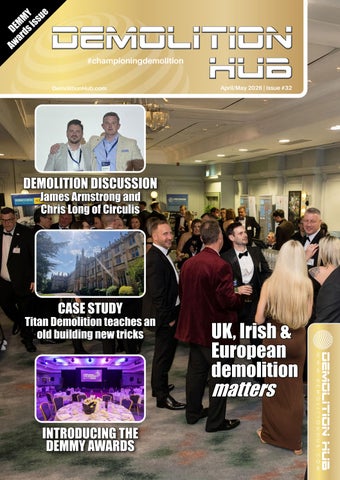
Spring has sprung, and with it the DEMMY Awards have entered our calendar, complementing the British Demolition Awards – as ever, held on the first Friday of September.
The new event celebrates the individuals in demolition who make the whole enterprise possible. The nine awards recognised diverse groups such as plant operators, site managers, health and safety professionals, marketing gurus and the stars of tomorrow.
The event took place in Brighton on 17 April – where, unlike most of the country, the sun was shining. As with the British Demolition Awards (coming soon), it was a great opportunity to network, enjoy fine food and drink, celebrate your peers and have fun. And it’s really gratifying to see just how much the recognition demonstrated by a DEMMY Award meant to all the winners. They can rightly be proud of themselves.
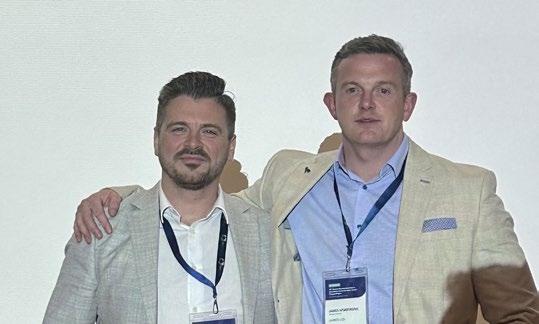
As well as reviewing the inaugural DEMMY Awards and all their winners, in this issue we bring you the Demolition Discussion with James Armstrong and Chris Long joint Managing Directors of Circulis Group (formerly James Ltd), a demolition consultancy working largely in the energy and power decommissioning sector. Driven by James and Chris, the rebranded business is growing into a global force.
The Supplier Talk interview comes from Vincent Sheng of the newcomer to the UK market, Yuchai Equipment. Amongst other products, the Chinese OEM is bringing its small to medium sized excavators to the table –well worth checking out.
With the new financial year underway, we have product features on asset finance and excavators, so if you’re thinking of investing in new kit, check these out first.
We have a diverse range of case studies this issue. Titan Demolition undertook preparatory internal works for the remodelling of Thomas’s College, a newly relocated private school in Richmond. O’Connell brought down The Leys, an ageing tower block in Leicester with challenges including asbestos, a protected colony of bats and a dense urban setting. Finally, Windsor Waste Management partnered with Chelmsford Demolition to deliver a high-volume, time-critical asbestos waste disposal solution including the successful trial of the company’s new 20-yard asbestos container bags designed to improve site efficiency, safety and compliance.
We hope you enjoy this issue and we will see you soon.
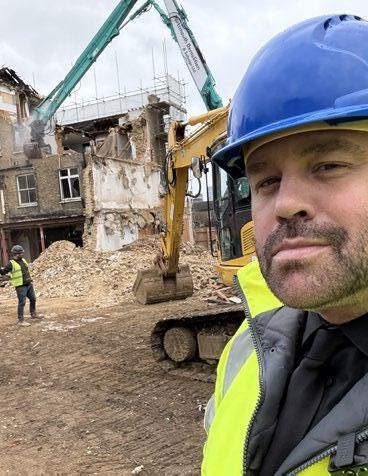
Ben Chambers


PUBLISHER
Ben Chambers ben@chambers.media 01903 952 648
MANAGING EDITOR
Toby Wilsdon toby@chambers.media 01903 952 645
COLUMNIST
Terry Lloyd
PHOTO CONTRIBUTOR
Sky Revolutions
ADVERTISING SALES
Ben Chambers ben@chambers.media 01903 952 648
DESIGN
Joe Chambers joe@chambers.media
PRODUCED & PUBLISHED BY Demolition Hub Ltd
Suites 5 & 6, Chapel House, 1-6 Chapel Road, Worthing, West Sussex BN11 1EX demolition@demolitionhub.com 01903 952 640
Demolition Hub is a proud member of the National Demolition Association

Demolition Hub is published six times a year. The subscription rate is £60 per year. Subscription records are maintained at Demolition Hub Ltd, Suites 5 & 6, Chapel House, 1-6 Chapel Road, Worthing, West Sussex BN11 1EX
Articles and information contained in this publication are the copyright of Demolition Hub Ltd and may not be reproduced in any form without the written permission of the publishers. The publishers cannot accept responsibility for loss of, or damage to, uncommissioned photographs or manuscripts.

6: THE DEMMY AWARDS
The inaugural DEMMY Awards, brought to you by Demolition Hub with reactions from the winners and some sparkling images from the night
20: DEMOLITION DISCUSSION
James Armstrong and Chris Long, Joint Managing Directors of demolition consultancy Circulis Group
31: CASE STUDY
O’Connell Demolition Ltd brings down a seven-storey tower block hemmed in by housing on every side, with asbestos in the roof peaks and a protected bat roost nobody expected. This was The Leys.
35: CASE STUDY
Windsor Waste Management partners with Chelmsford Demolition to deliver a highvolume, time-critical asbestos waste disposal solution
41: CASE STUDY
Titan Group brings together soft strip, asbestos management and structural demolition and temporary works in a Grade II listed environment
48: SUPPLIER TALK
Vincent Sheng of Yuchai Equipment on building the incoming Chinese brand’s presence in the UK
54: EXCAVATOR FEATURE
JCB 370X
Liebherr R 924 G8 and R 945 G8 crawlers
SANY SY500HRD
Yuchai demolition excavators and robots
62: FINANCE FEATURE
Interview with Funding Circle’s Head of Marketplace, James Lovett
Paragon SME Lending’s Phil Hughes on why it’s time to back the UK’s demolition SMEs
Sheppex Asset Finance’s Jonathan Asplin on financing the future of demolition equipment
Steve Moody, founder of SKM Asset Finance argues asset finance should be viewed as a catalyst for growth
Swoop’s Connor Kerry on financing assets without putting cash flow at risk
All the news from Demolition Hub’s trip to sincity for the world’s biggest and best construction machinery show







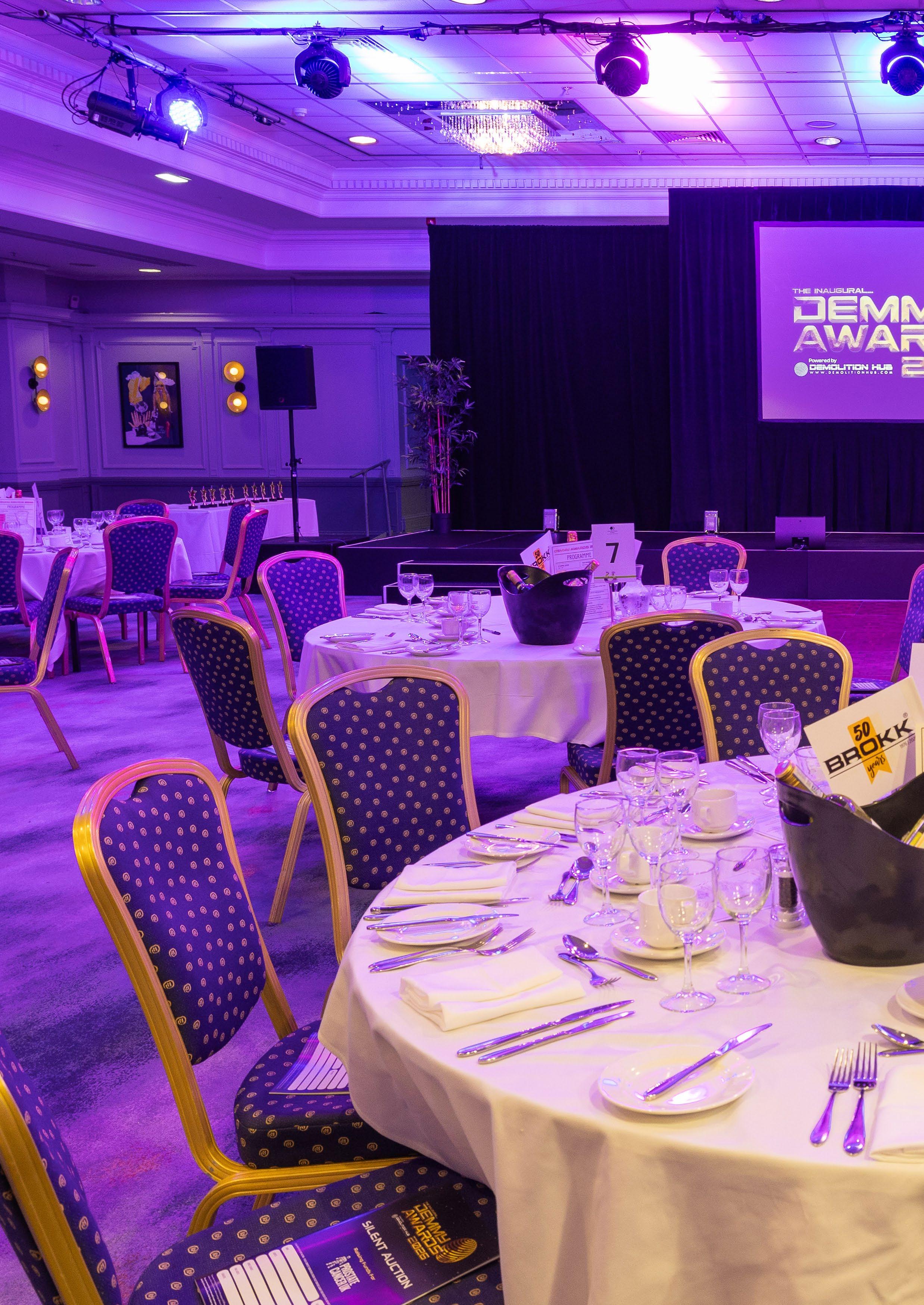
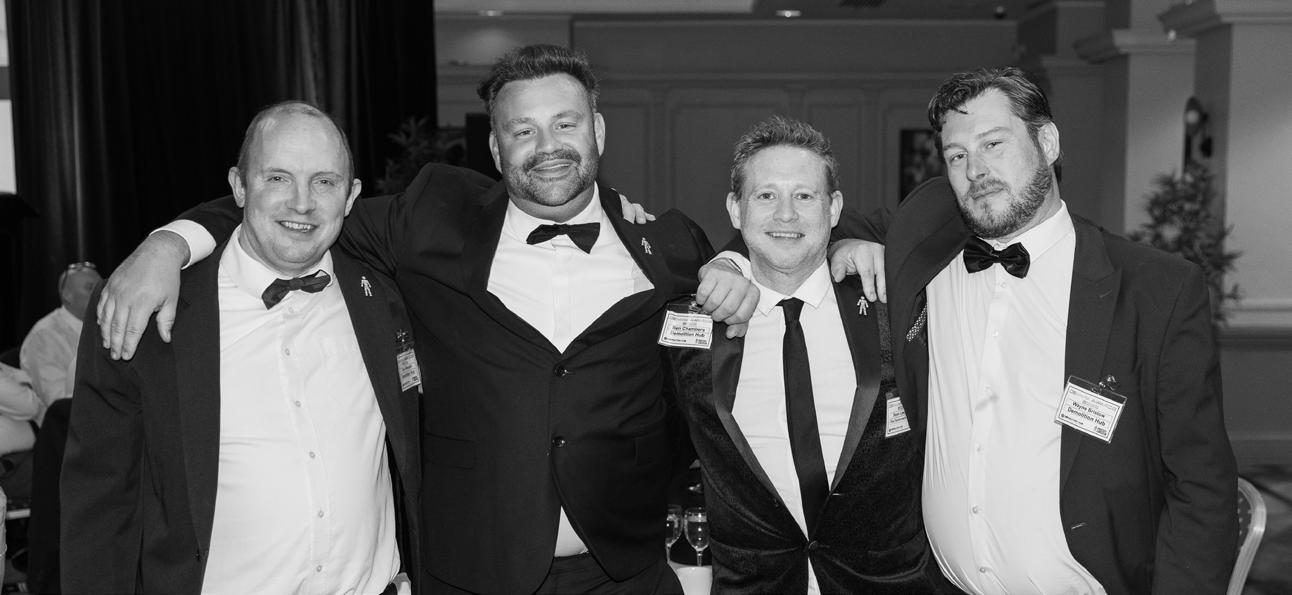
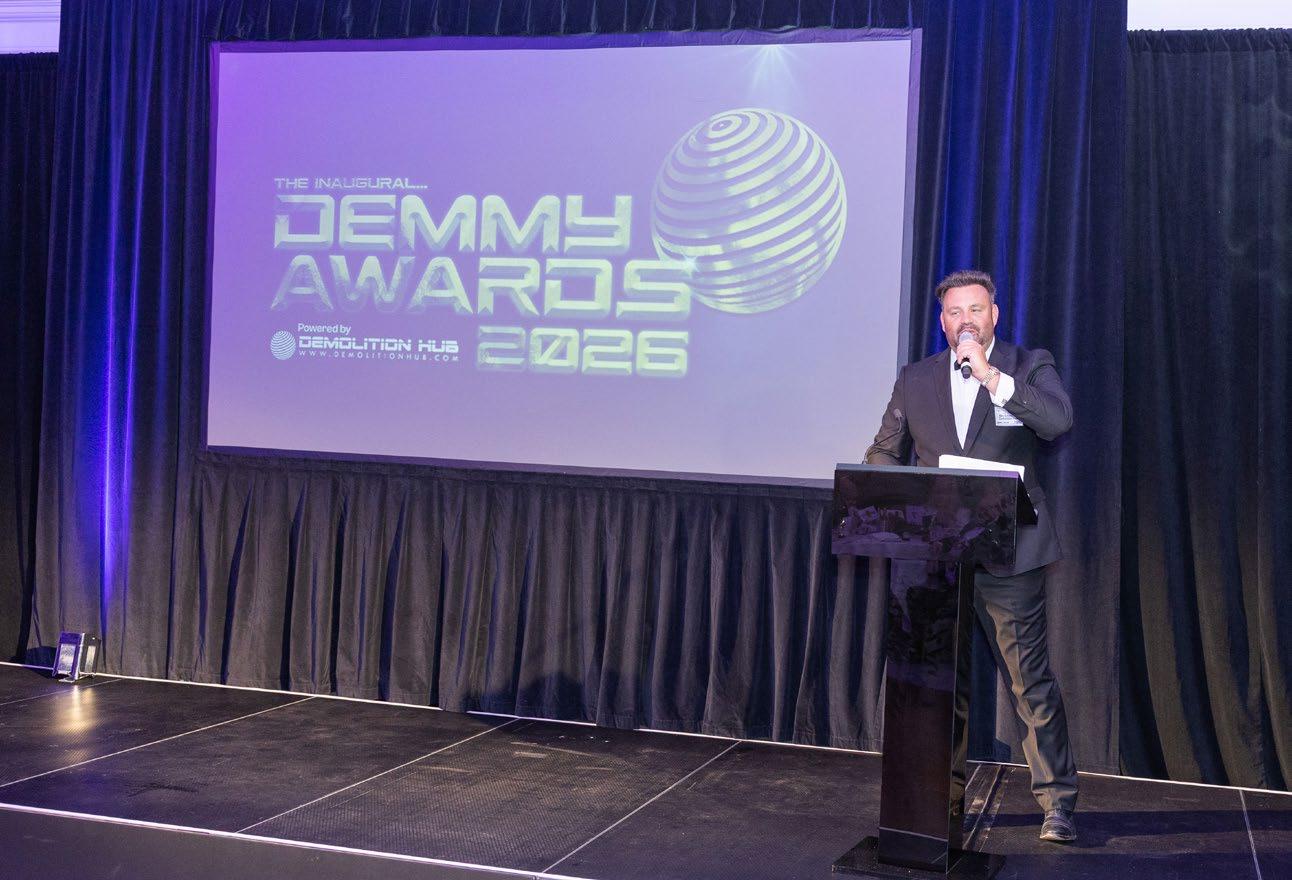
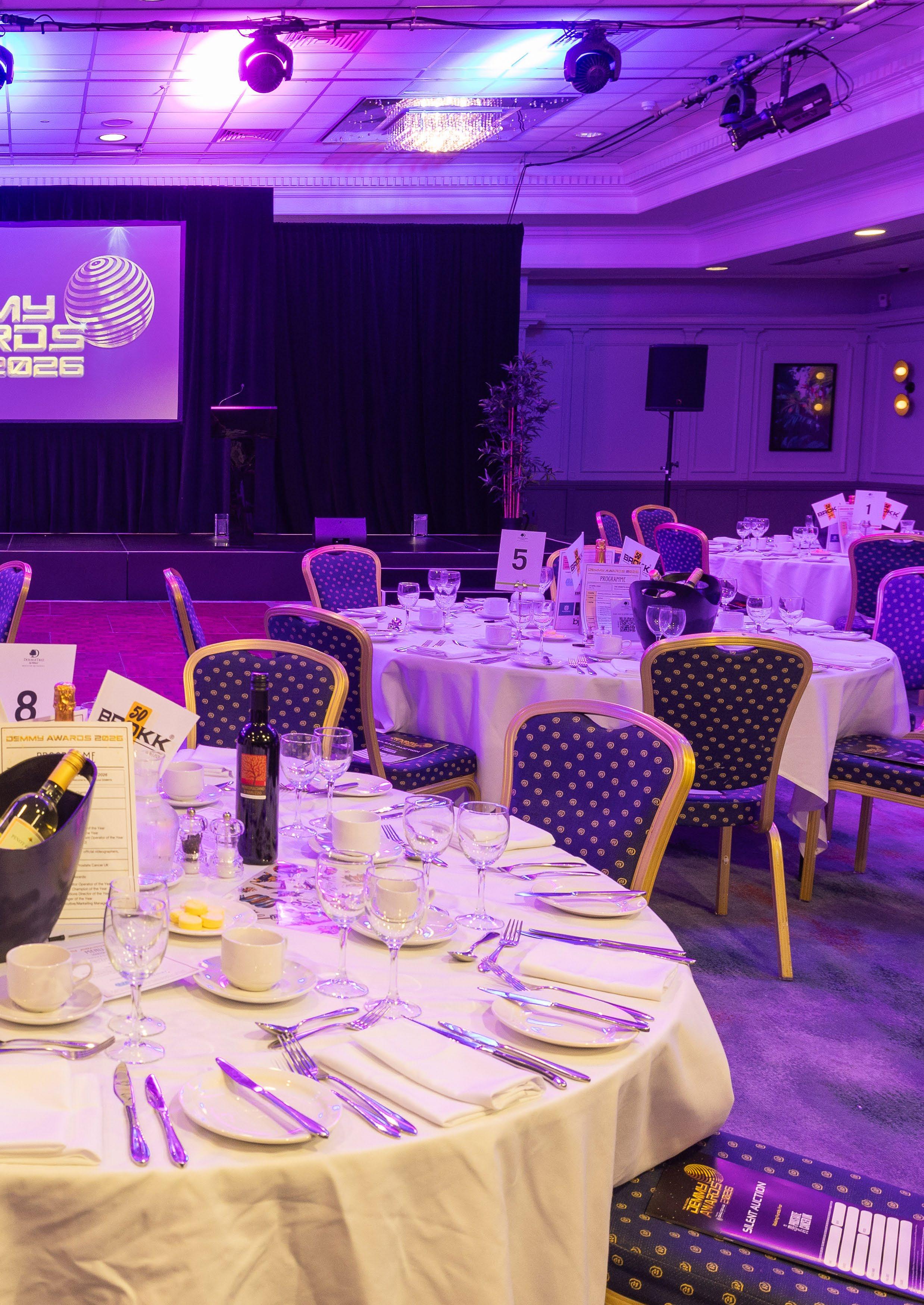
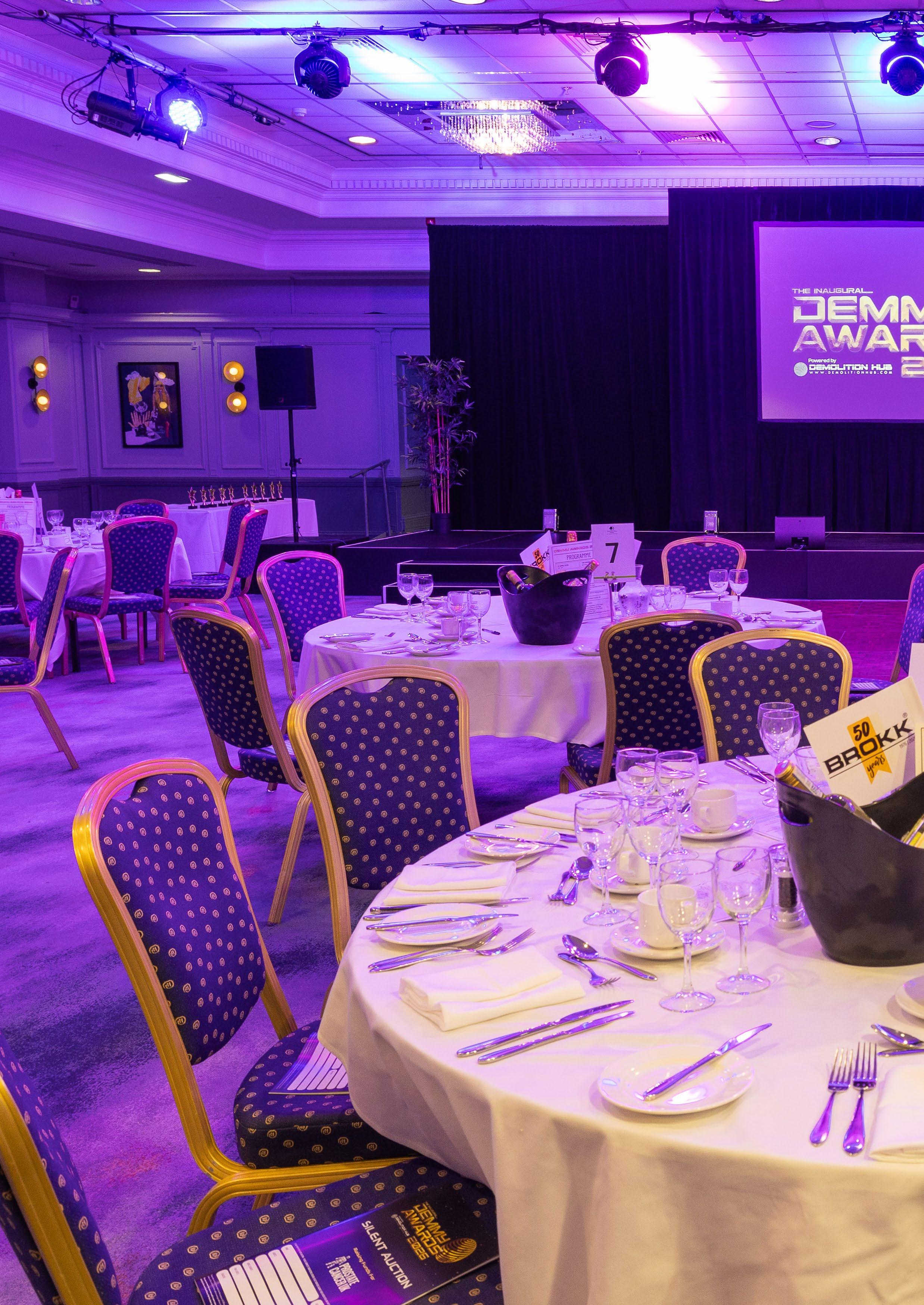
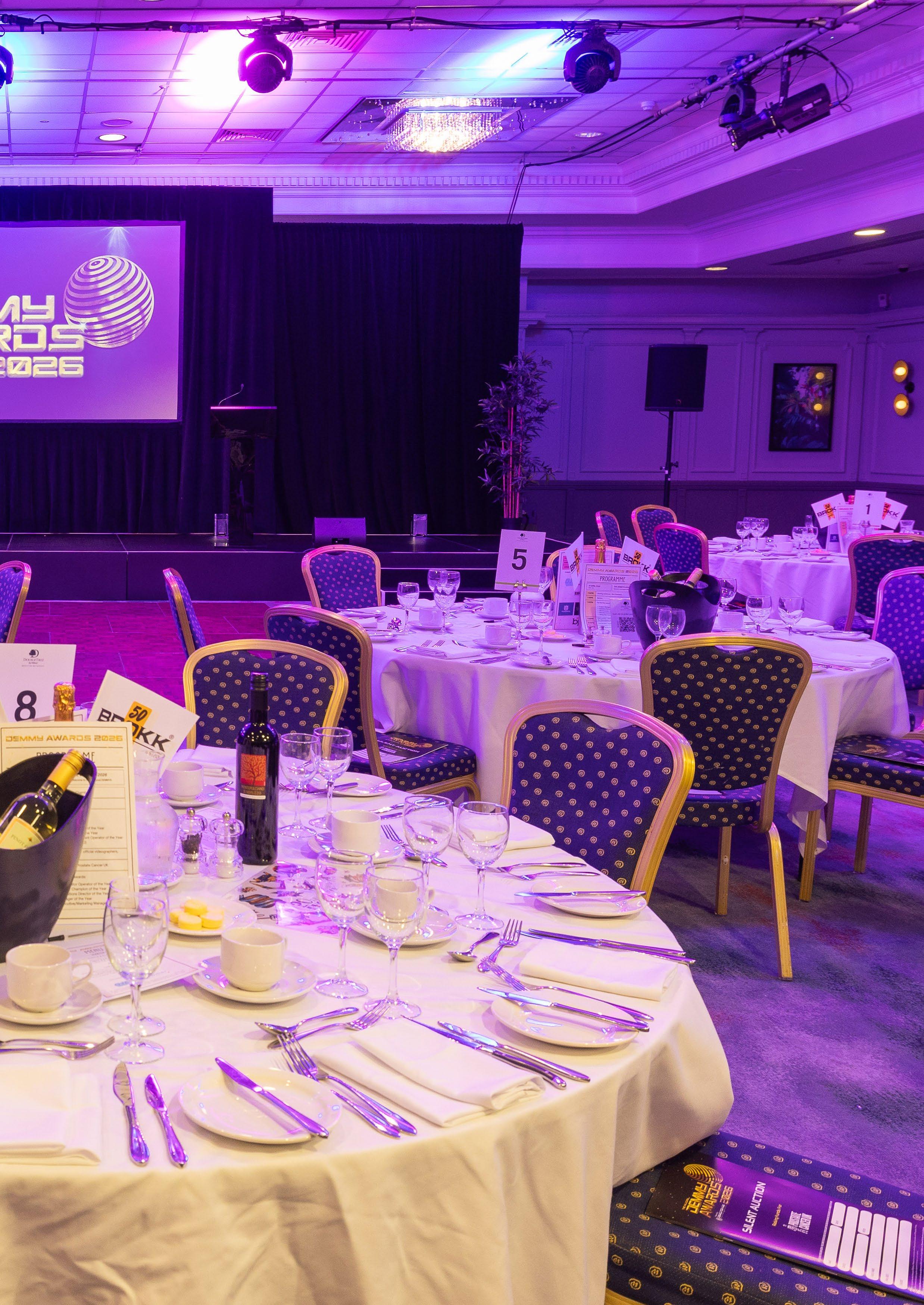
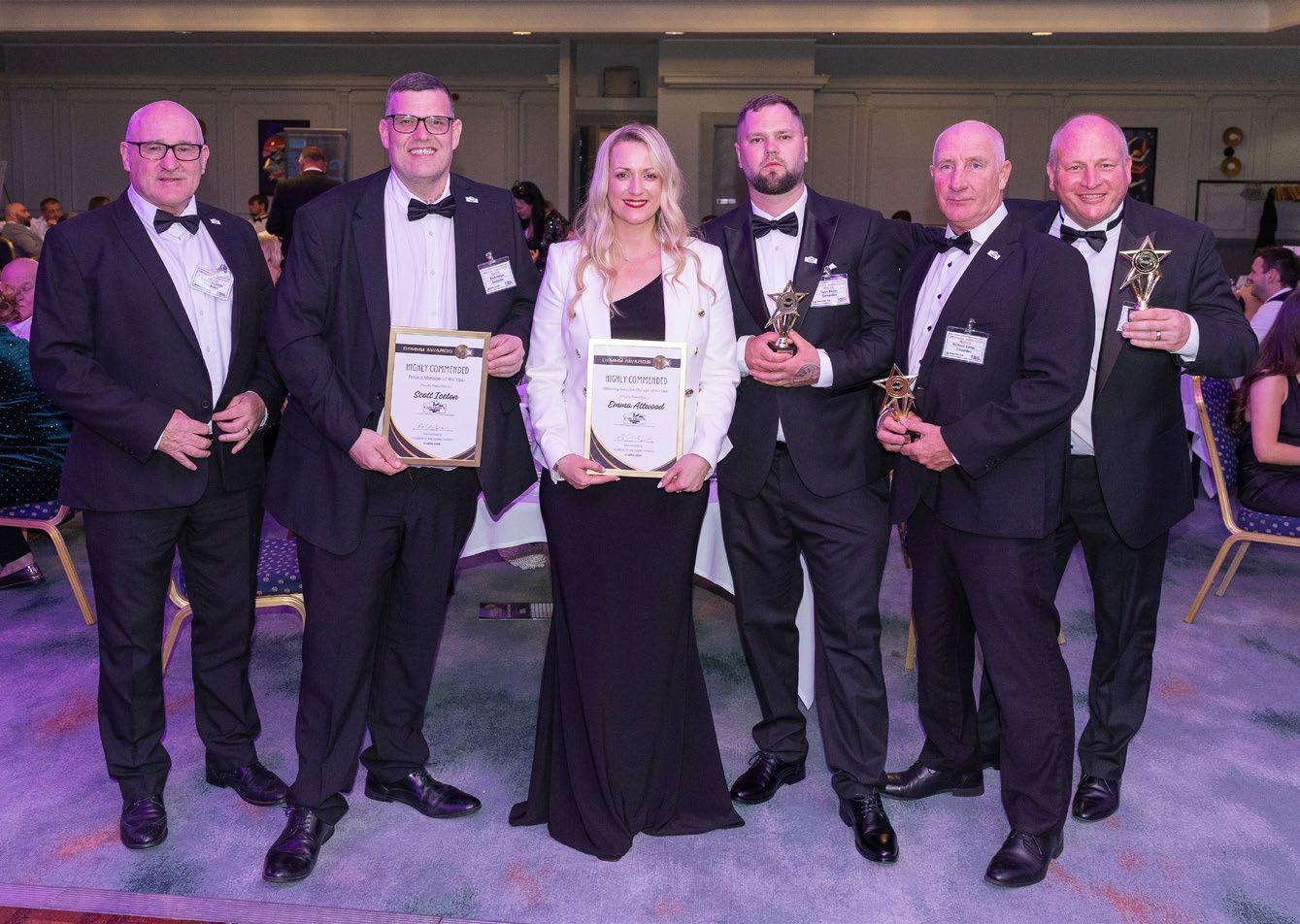
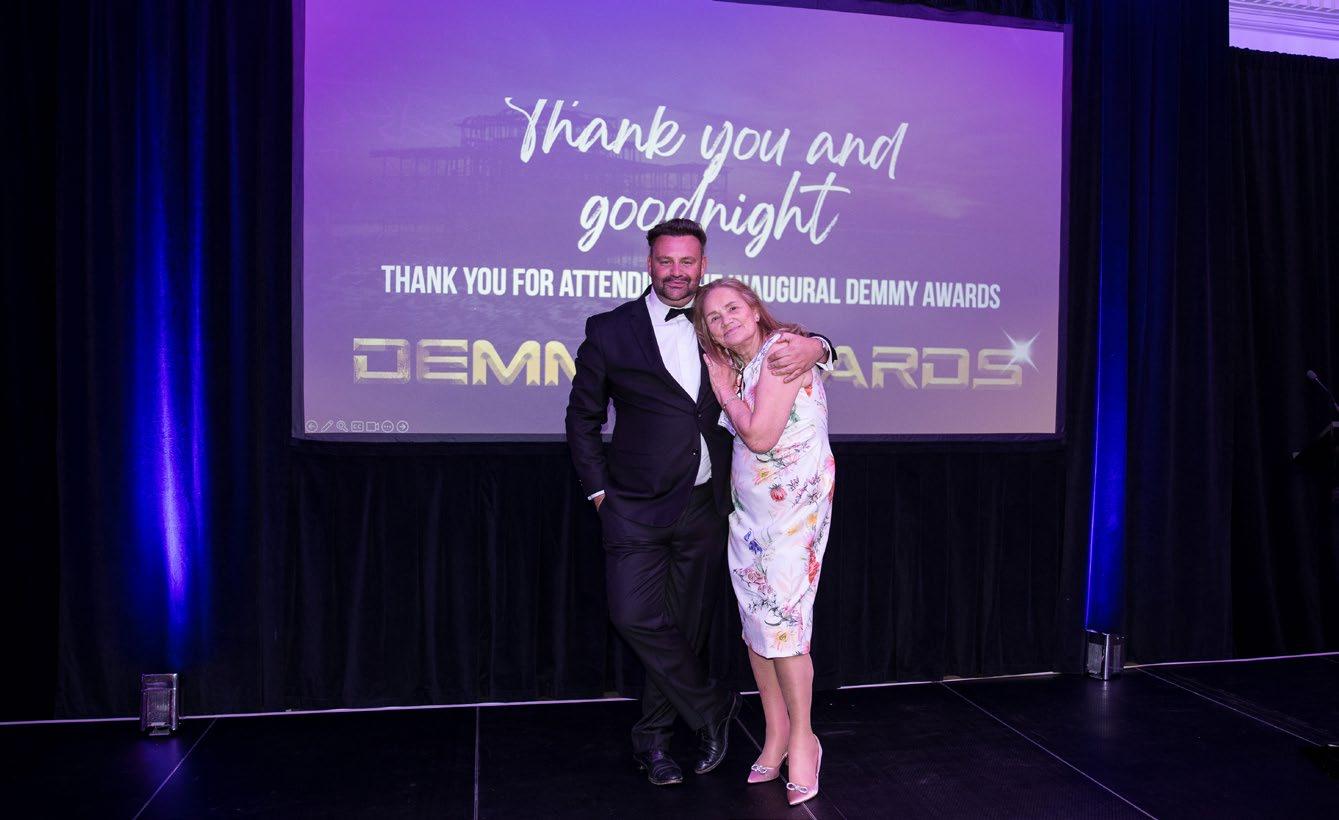
The inaugural DEMMY Awards, brought to you by Demolition Hub Ltd, took place at the Hilton Metropole Brighton on 17 April 2026, bringing together professionals from across the UK demolition community.
The people-focused event was created to celebrate the individuals who go above and beyond to make projects happen in the demolition and asbestos industries. Recognising personal rather than corporate achievement, the DEMMYs highlight roles across the full spectrum of the industry, from on-site operators to leadership and support functions.
To mark the occasion BPH Attachments, one of the sponsors of the DEMMYs, hosted a pre-DEMMYs Open Day at its headquarters at Ashington, West Sussex. The fun-filled day was packed with hands-on challenges, live demonstrations showcasing demolition equipment in action, and opportunities to meet BPH’s highly experienced team.
Corporate achievements continue to be
recognised at the annual British Demolition Awards in September and as with the BDAs, judging for the DEMMYs is undertaken by a fully independent panel. Both events are a fantastic opportunity to celebrate talent, network with peers and have some fun.
The categories recognised were:
• 360 Excavator Operator of the Year
• Contracts Manager of the Year
• High-Reach Excavator Operator of the Year
• Marketing Executive of the Year
• Project Manager of the Year
• Rising Star of the Year
• Technical/Operations Director of the Year
• Kieran Madden of DSM
• Asbestos Removal Professional of the Year
• Remote-Controlled Equipment Operator of the Year
Read on to hear reaction from the award winners themselves.
by Ben Chambers
I came up with the idea for the DEMMYs almost immediately after the seventh staging of the British Demolition Awards. If I am honest, it was born out of a slightly melancholy feeling at the thought of having to wait a whole year before we could put on an event like that again. And the truth is, we know how to run an event – there is absolutely no question about that.
We understand the balance between networking, professionalism, recognition and celebration. We know how to create an atmosphere where the industry can come together, reward excellence, build relationships and properly let its collective hair down.
Year after year, we deliver events that people genuinely look forward to attending. What quickly became clear was that the feeling was shared not just by me, but by the entire team and, importantly, by those who attend our events. Quite simply, none of us wanted to wait another year.
That said, the DEMMYs were also born from a wider ambition. Many readers will know that
we have long wanted to make a significant push toward attracting school leavers, college students, and graduates into the demolition and asbestos sectors. It was through discussions surrounding what eventually became the Rising Star Award at the DEMMYs that the concept really began to evolve. Initially, the idea was centred around recognising younger people entering the industry and excelling early in their careers.
But the conversation quickly widened. We realised there were countless individuals across the demolition and asbestos remediation sectors who deserved recognition, machine operators, technical directors, project managers, asbestos professionals, and many others who consistently go above and beyond, often without public acknowledgement. Some were at the very beginning of their journey, while others had dedicated decades to the sector. And just like that, the DEMMYs were born.
One of the immediate distinctions between the British Demolition Awards and the DEMMYs
was clear: while the British Demolition Awards celebrate companies, the DEMMYs celebrate individuals – the people behind the industry. All we needed then was a name.
That part never takes me long. Inspired by the glamour and prestige of Hollywood’s Emmy Awards – that star-studded annual television and film celebration – I wanted something with a similar sense of occasion, but with its own demolition industry personality. A black-tie event with a memorable, slightly tongue-in-cheek yet fitting name. The DEMMYs simply felt right.
Of course, launching an event is always daunting. Many fail to gain traction. Sometimes nobody books seats or tables, sponsorship doesn’t materialise and organisers can lose a substantial amount of money. So, in true “suck it and see” fashion, we decided to play it smart.
We created a boutique-event in Brighton, just 10 miles along the coast from our offices –close enough to manage comfortably, yet still special enough to feel like an occasion. But from the beginning, the response from the industry exceeded expectations. Tables sold, sponsorship came quickly and the atmosphere surrounding the event built momentum almost immediately.
What has been most rewarding of all is seeing the genuine appreciation shown by those who power the demolition industry every single day at being recognised with a nomination or award for what they do.
The DEMMYs – affectionately dubbed The People’s Awards – now look set to become a permanent fixture in the demolition and asbestos industry calendar. And you know what, we are already planning next year’s event.

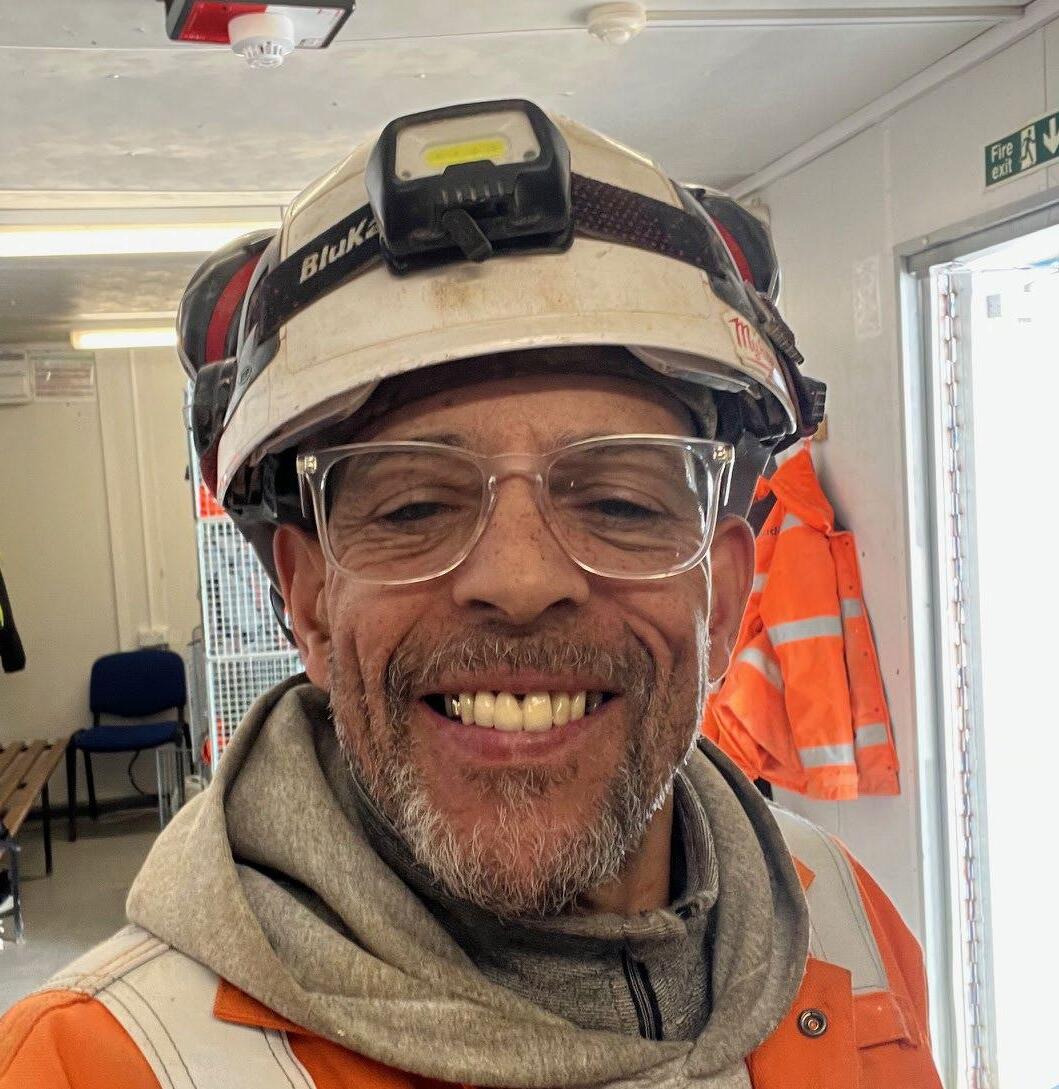
I have been in the industry for over 30 years, starting off in diamond drilling and concrete cutting. I’ve been operating robotic demolition machines for about 16 years and working as a freelance for the last six years or so.
Due to the physical wear and tear drilling and cutting puts on a body, I ended up with a spine condition and lost a lot of functionality and strength. I’ve had two discs removed in the C spine and they want to remove two in my lumber spine, so the only way to keep me in the industry was via robots. The first time I put the controller round my waist I knew this was what I wanted to do.
I absolutely love my job and to be awarded Operator of the Year is just amazing. I had no idea I’d been nominated and to be recognised by the industry for my work has blown my mind. I didn’t work to receive this award, it’s just what I love doing.
I received a picture of my name up in lights at the ceremony and thought it was a spoof. I had to contact Ben Chambers to find out what was going on. And he confirmed it.
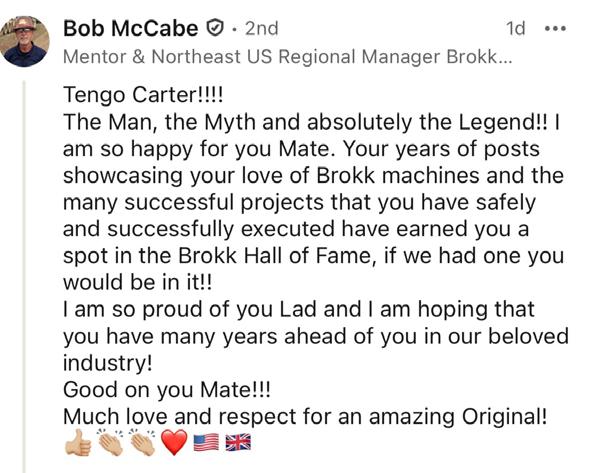
The response to my winning this award has certainly been eye opening – I’ve included one particular comment. I really didn’t know so many were watching me and my posts on LinkedIn etc.
A huge thank you to everyone at Demolition Hub for putting on
the awards and to the judges and those who nominated me.
fourt it!
We were honoured to attend the inaugural DEMMY Awards and the evening was made even more special with two members of the team being recognised among an exceptional field of talent.
As a business that has supported the demolition and asbestos removal sectors for over 25 years, people have always been at the heart of what we do. We specialise in the compliant collection and disposal of hazardous and asbestos waste, working closely with contractors across the UK to deliver a reliable, straightforward service they can depend on. Our focus remains on compliance, consistency and doing the job right, and that is only possible because of the people behind the business.
These achievements represent the strength of our wider team and the culture we continue to build. We are committed to investing in our people, creating opportunities for development and ensuring that our customers receive the highest standard of service as a result.
We would like to thank Demolition Hub for creating an event that recognises the people behind the industry. While projects and innovations are vital, it is the individuals – the ones solving problems, building relationships, and driving standards forward – who truly make the difference day to day.
The DEMMY Awards provide an important platform to celebrate that, and we are grateful to have been part of its inaugural year. As we look ahead, we remain focused on what we do best: supporting the demolition sector with compliant, dependable waste management services and continuing to champion the people who make it all possible.
Group Marketing Manager, Kris Plunkett’s achievement reflects both her impact within the business and her commitment to raising the profile of the wider industry. Reflecting on the recognition, Kris said: “Winning Marketing Manager of the Year is something I’m incredibly proud of. Having joined the demolition industry just two years ago, it’s been a huge learning curve, but one I’ve genuinely enjoyed. There’s a real opportunity in this sector to communicate
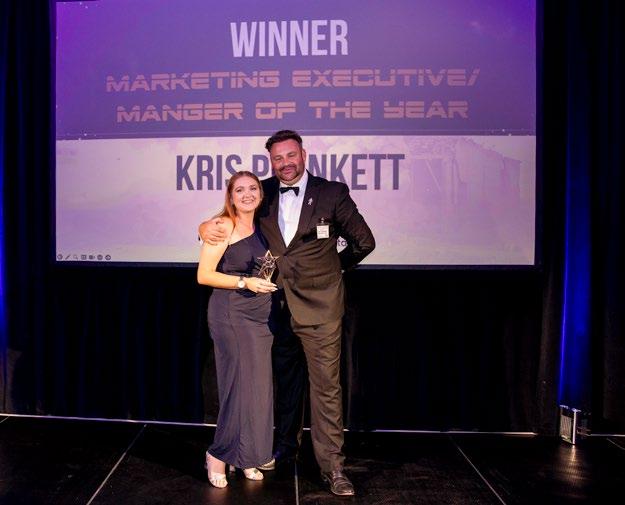
the value of what we do more effectively, and I’ve been fortunate to have the support of a team that’s open to new ideas. Recognition like this is a reflection of that collective effort.”
Our Client Relationship Manager, Gabby Sarbutts, was Highly Commended in the Rising Star category, a well-deserved acknowledgment of her hard work and progression within the business. Gabby said: “It was such an inspiring evening, surrounded by so many driven and passionate individuals. To be recognised in the Rising Star category is a real honour and it reflects the opportunities I’ve been given at Windsor Waste Management to develop and grow within my role. The industry is full of opportunity, and events like this highlight just how much talent there is growing with it.”







“I’m really pleased to see our staff recognised individually for their hard work and efforts. It’s brilliant that the industry’s often unsung heroes are being celebrated. Congratulations to all of the winners, and to Demolition Hub for hosting such a brilliant event. The event itself was excellent – everyone thoroughly enjoyed it – and it’s always good to spend time with people in the industry that you wouldn’t normally get the chance to cross paths with.”
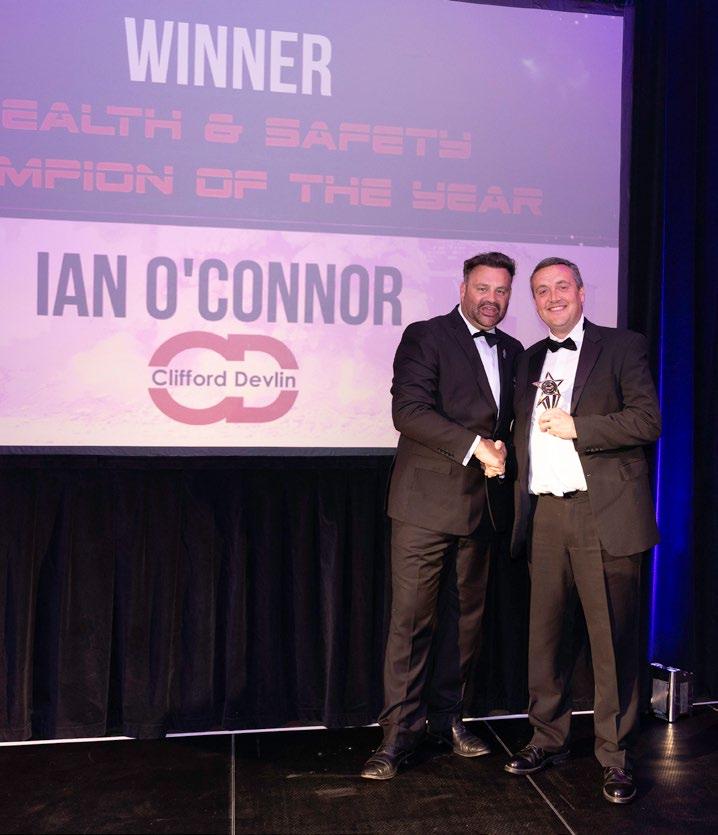
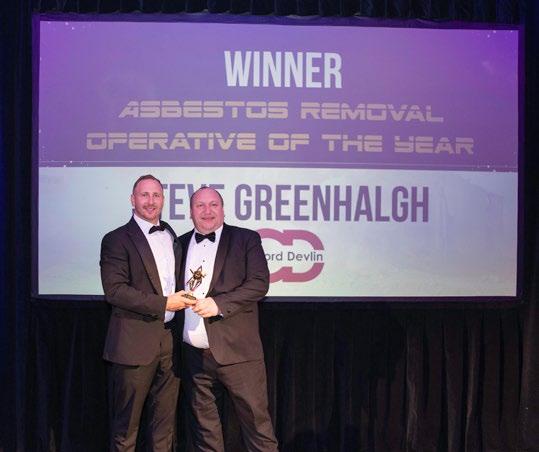
I’m am so proud to accept this award from Demolition Hub. To receive the Health and Safety Champion of the Year at the inaugural DEMMY Awards makes it even more meaningful. But this award isn’t about me; it represents a culture within the company that puts safety first – every person, every site, every day. In demolition the risks are real and there’s no room for shortcuts. It takes a whole team of people who look out for each other and make safety the standard on every single job. Everyone, from our site operatives to our management, plays their part in making sure we all go home safe at the end of the day. Ultimately, it’s about people doing safety because they want
to, not because they are told to. That’s what really matters.
I have a great health and safety team around me with Jo-Anne Bolder and Philip Rose, so we’ll take this accolade together, but it’s everyone at Clifford Devlin that earned it. Thank you.
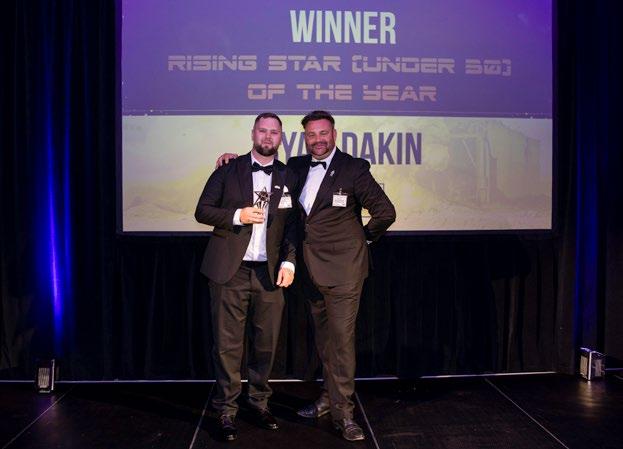
Ryan Dakin, Winner, Rising Star Award
I’m genuinely grateful to Cawarden for the support they’ve given me over the years, helping me progress from labour through to management. I’d also like to thank the Demolition Hub for recognising that journey with the Rising Star Award – it means a great deal.
Scott Iceton, Highly
It was a real privilege just to be nominated, so to be highly commended is something I’m incredibly proud of. This industry runs on teamwork and I want to thank everyone who’s supported me throughout my career.
Richard Camp, Winner, High Reach Operator of the Year
After more than 40 years in the industry, to be
recognised like this is a tremendous honour. I’m proud to represent Cawarden and the demolition industry as a whole.
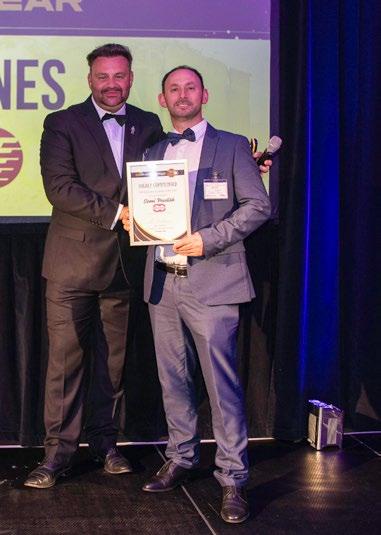
Attwood,
I’m thrilled to have received the Highly Commended Marketing Manager of the Year award. It’s an honour to have my career recognised, particularly after thirteen years working in demolition. I genuinely couldn’t imagine working in another industry – the pride and passion of the people is why I love what I do. I’m grateful to Cawarden for their support and for the opportunity to be part of such a forwardthinking business. Thank you to Demolition Hub for a fantastic evening; celebrating our industry and the people within it is exactly what made the inaugural DEMMY Awards in Brighton so special.


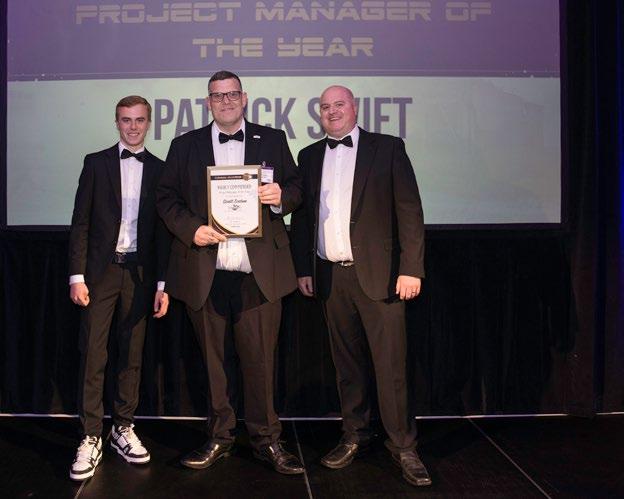
Pat Swift, Project Manager of the Year
I’m genuinely honoured to receive this award and proud to represent DSM Demolition at the DEMMY Awards. This recognition reflects the hard work, commitment and professionalism of our entire team, who consistently deliver to the highest standards, not just me. It’s a privilege to be part of such a dedicated group, and I’m grateful for the support of my colleagues and peers across the industry. Thank you.
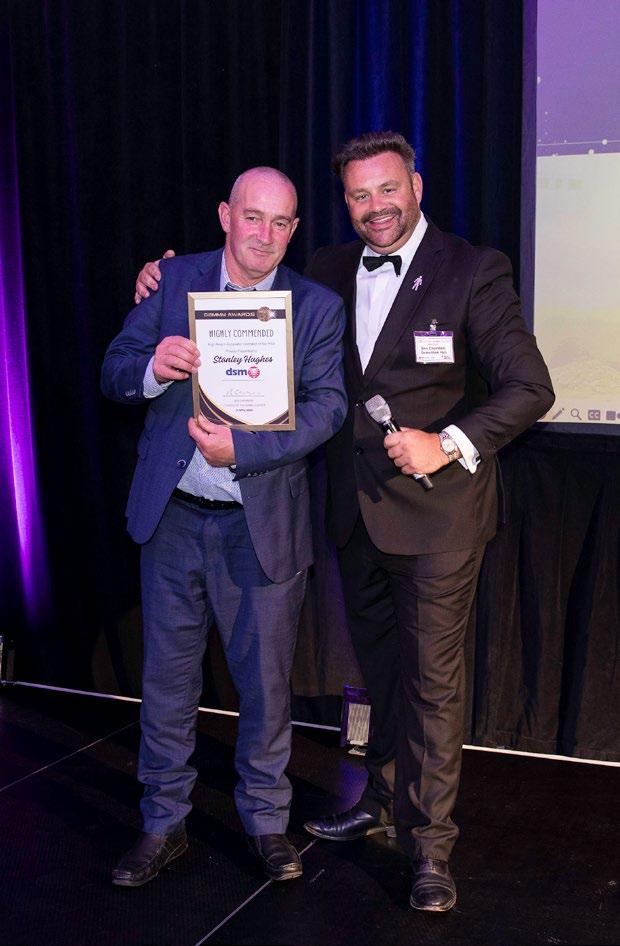
I’m really pleased to be Highly Commended for High Reach Excavator Operator of the Year –wasn’t expecting that at all! Big thanks to everyone at DSM Demolition for the support and for putting up with me day to day. It’s a cracking team to be part of and this means a lot. Cheers to everyone who made it happen. Looking forward to next year.
Amazing to have picked up 360 Excavator Operator of the Year. I didn’t see that coming! Big thanks to the team at DSM Demolition who I work with daily across various sites – proper proud to be part of it!
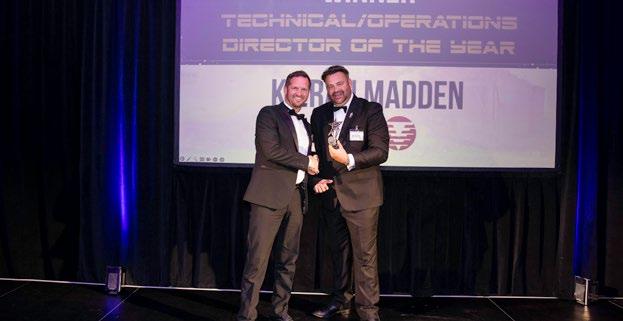
I’m truly honoured to receive the Technical Director of the Year award. This recognition reflects the collective effort, expertise and dedication of the entire team at DSM Demolition.
I’m proud to work alongside such talented colleagues who all consistently strive for excellence and innovation in everything we do. Thank you to everyone who has supported me, this achievement is very much a shared success.


A huge well done to Martin, who walked away with Highly Commended in the Technical Director of the Year category at the DEMMY Awards. It came as recognition of the leadership, operational oversight, technical expertise and day-to-day graft Martin brings to complex demolition and
recycling works at TRD.
It was a great moment for the whole team and testament to the hard work happening across the business. It was great to attend the awards in Brighton and catch up with our colleagues across the sector. And we have to say, the TRD crew turned up in style. Everyone looked incredible, with Stella and Alison stealing the show.
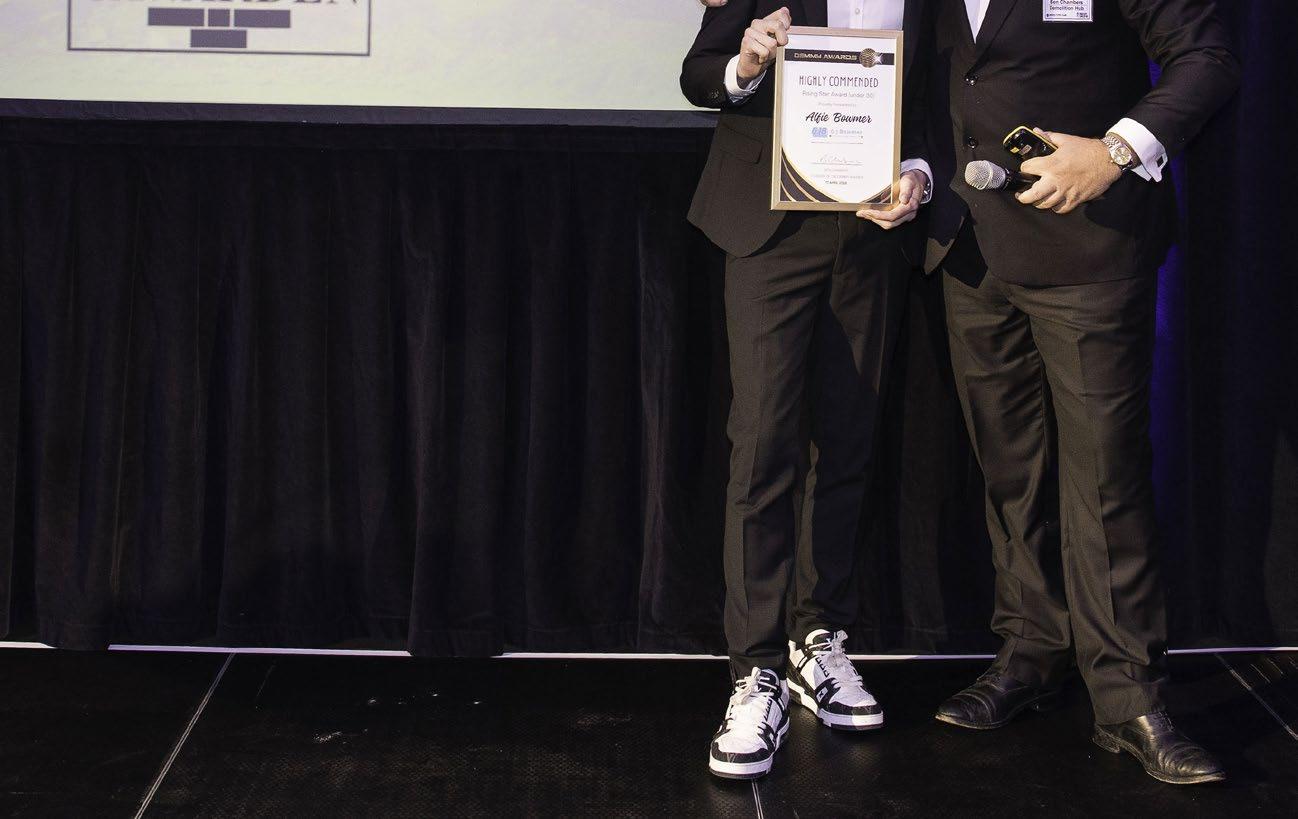
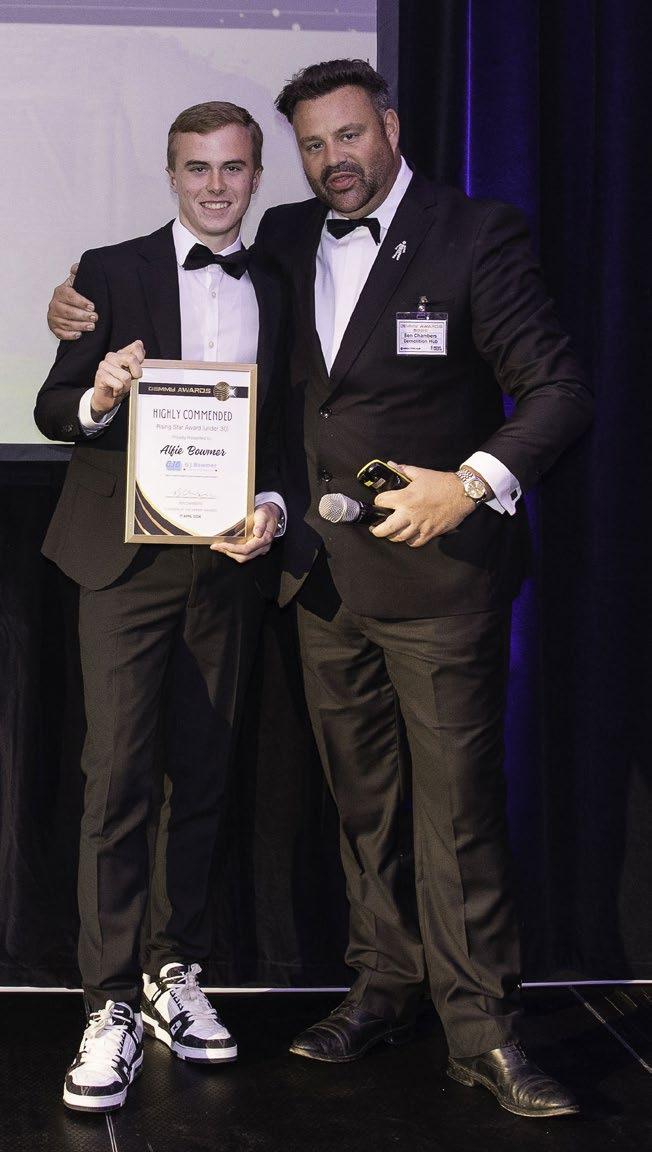
Bowmer, Highly
Gary Bowmer said: “What an amazing night at the inaugural DEMMY Awards in Brighton. I’m so proud of my son Alfie who got Highly Commended in the rising star category. Keep doing what you do Alfie and I am sure one day you will win. Congratulations to everyone who won and those highly commended.
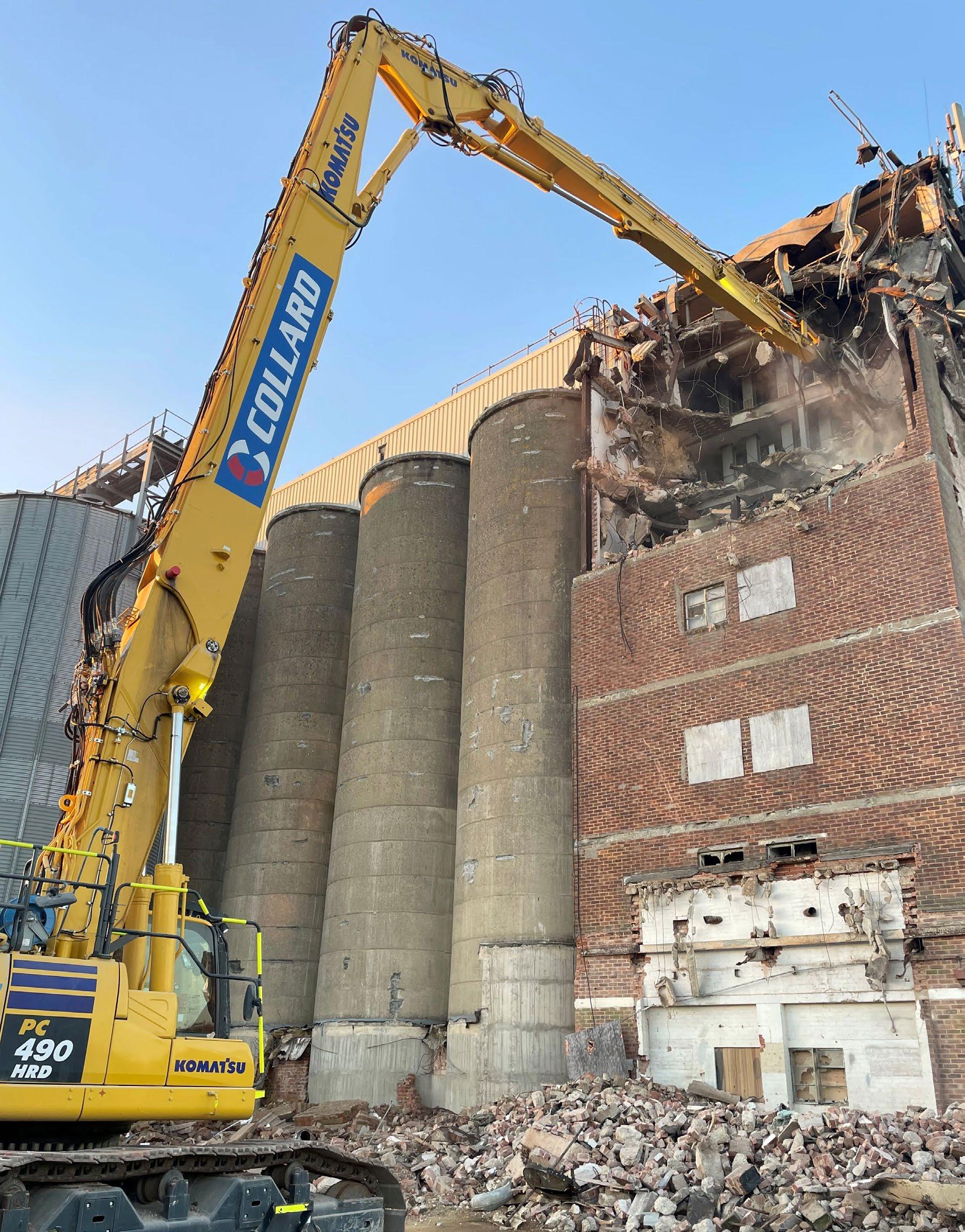
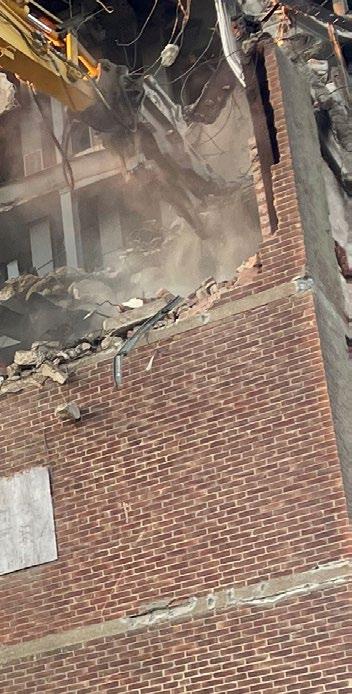
Our unique capability to repurpose virtually all construction and demolition waste from site helps our public sector, local authority, commercial and residential clients achieve zero-to-landfill targets.
Demolition
Structural alterations
Site clearance
Soft strip
Asbestos management
Remediation
Earthworks & civils
Temporary works
Demolition & Enabling Works


Interviewee: James Armstrong and Chris Long
Role: Joint Managing Directors
Company: Circulis Group
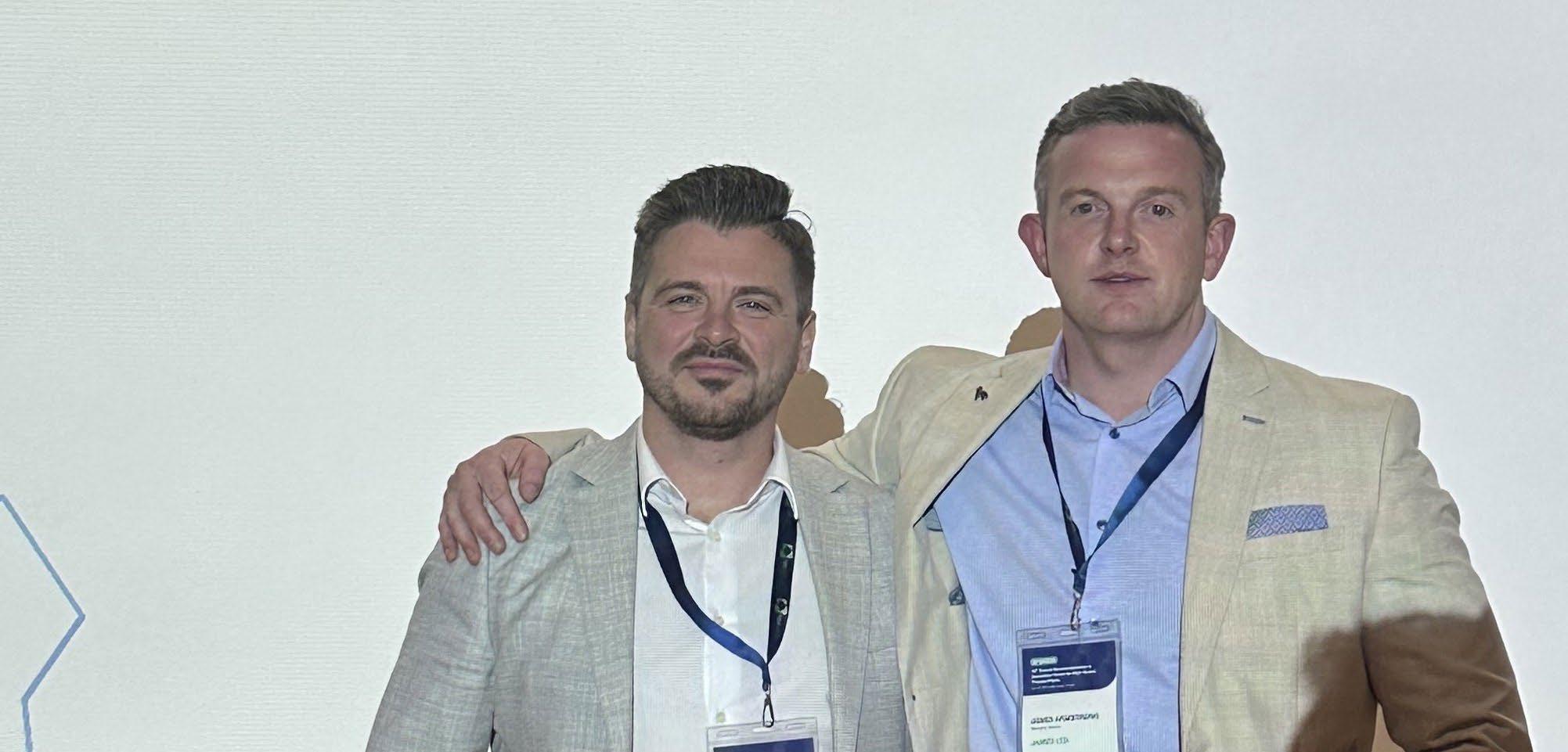
What’s your earliest memory in demolition?
James Armstrong: My earliest demolition memory goes back to being a young child growing up in Prudhoe and seeing Thompson’s of Prudhoe wagons and excavators moving through the town. Those images stayed with me and sparked an early interest in heavy engineering and industrial change.
Professionally, my first real exposure was more aligned with dismantling than traditional demolition. My background is in heavy steelwork, oil and gas, and major industrial turnarounds, where I was involved in dismantling large structures and removing complex plant items within refineries and chemical manufacturing facilities.
That early exposure to high-hazard industrial environments gave me a strong understanding of planning, sequencing and risk management from the outset.
Chris Long: My earliest memory of demolition was in the mining industry, where I was responsible for the explosive demolition of a headgear – a large circular concrete structure positioned above a rock shaft around 1,100 metres deep. We constructed a new headgear adjacent to the existing structure, installed a slide path and during a planned shutdown removed the old structure, commissioned the new one and then explosively felled the original headgear.

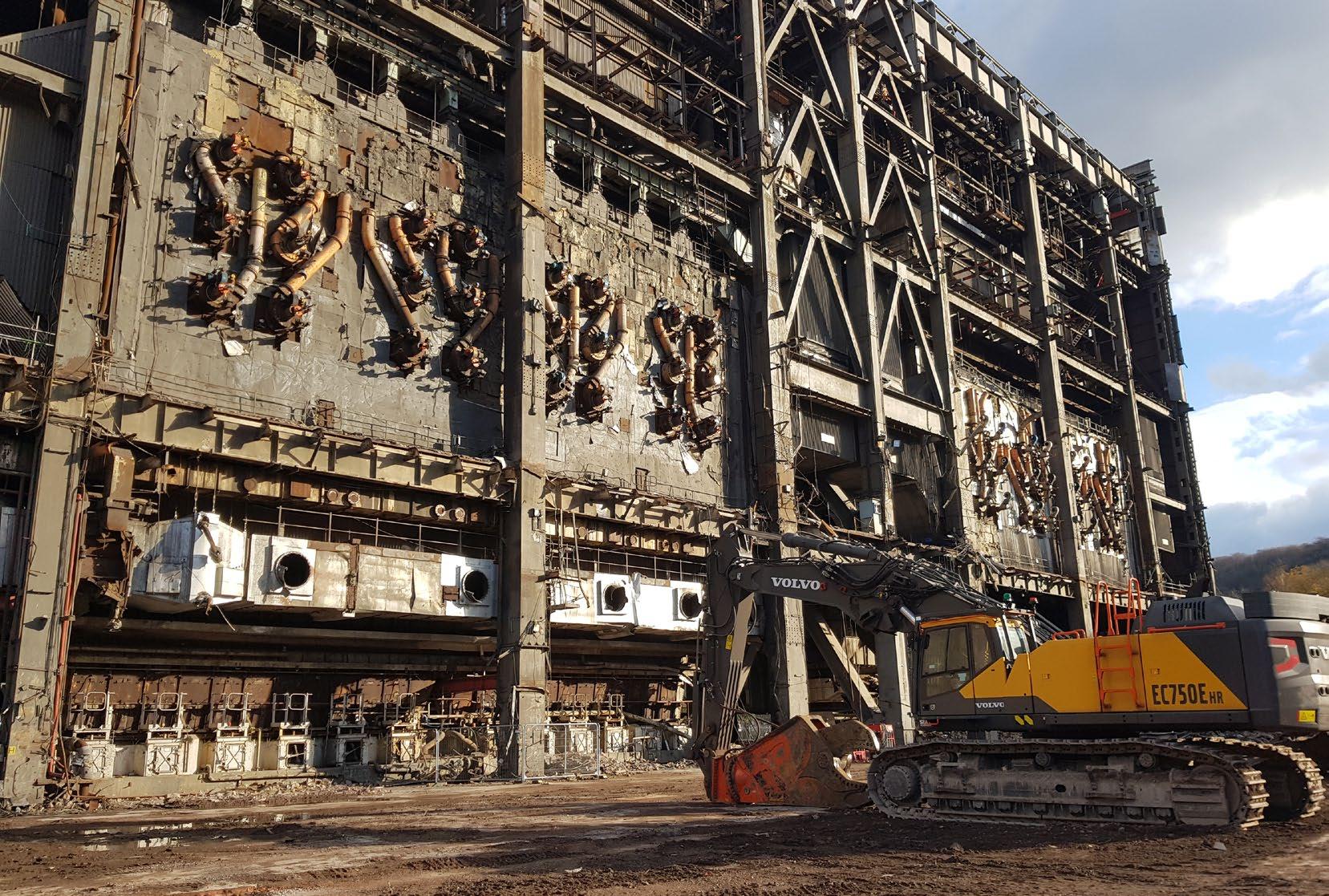
I was the Engineer and Project Manager for that scheme, and it was a defining project early in my career.
CL: James and I both worked at another consultancy, James was already there when I joined, and one of my first jobs was working with him on a power station in London.
The opportunity to work globally was what really attracted me. At that stage I was able to travel extensively and gain experience across sectors such as power, chemicals and pharmaceuticals. That diversity was important to me because I never wanted to become limited to one specialism.
JA: Before moving into consultancy, I spent a number of years working in oil and gas turnarounds across Europe and was often away for months at a time – which wasn’t great with a young family
That environment gave me an excellent grounding in project management and front-end planning. During major shutdowns, every activity had to be meticulously prepared, isolations, access, dismantling, refurbishment, reinstatement and the sequencing of critical-path works, all within live high-hazard facilities. Those are exactly the core attributes required in decommissioning
and demolition planning.
Whether you are preparing for the controlled dismantling of a refinery unit, a chemical manufacturing plant or a major power generation asset, the fundamentals remain the same: robust preparation, risk-based thinking, interface management and detailed sequencing.
Working in confined spaces and other high-risk environments also gave me a very strong riskbased mindset, which translated naturally into decommissioning and demolition consultancy.
What drew me into consultancy was the strategic element reviewing methodologies, challenging assumptions and helping clients make complex works safer and more efficient. It is something I have remained passionate about ever since.
Tell us about James Ltd, its evolution and the transition to Circulis Group.
JA: The business began with strong roots in engineering design and technical consultancy. My background is in heavy fabrication and engineering design, so that was a natural starting point.
As the business has grown internationally, it has evolved far beyond a traditional consultancy. Today we are increasingly involved in decommissioning, demolition, remediation, brownfield regeneration and enabling future development.
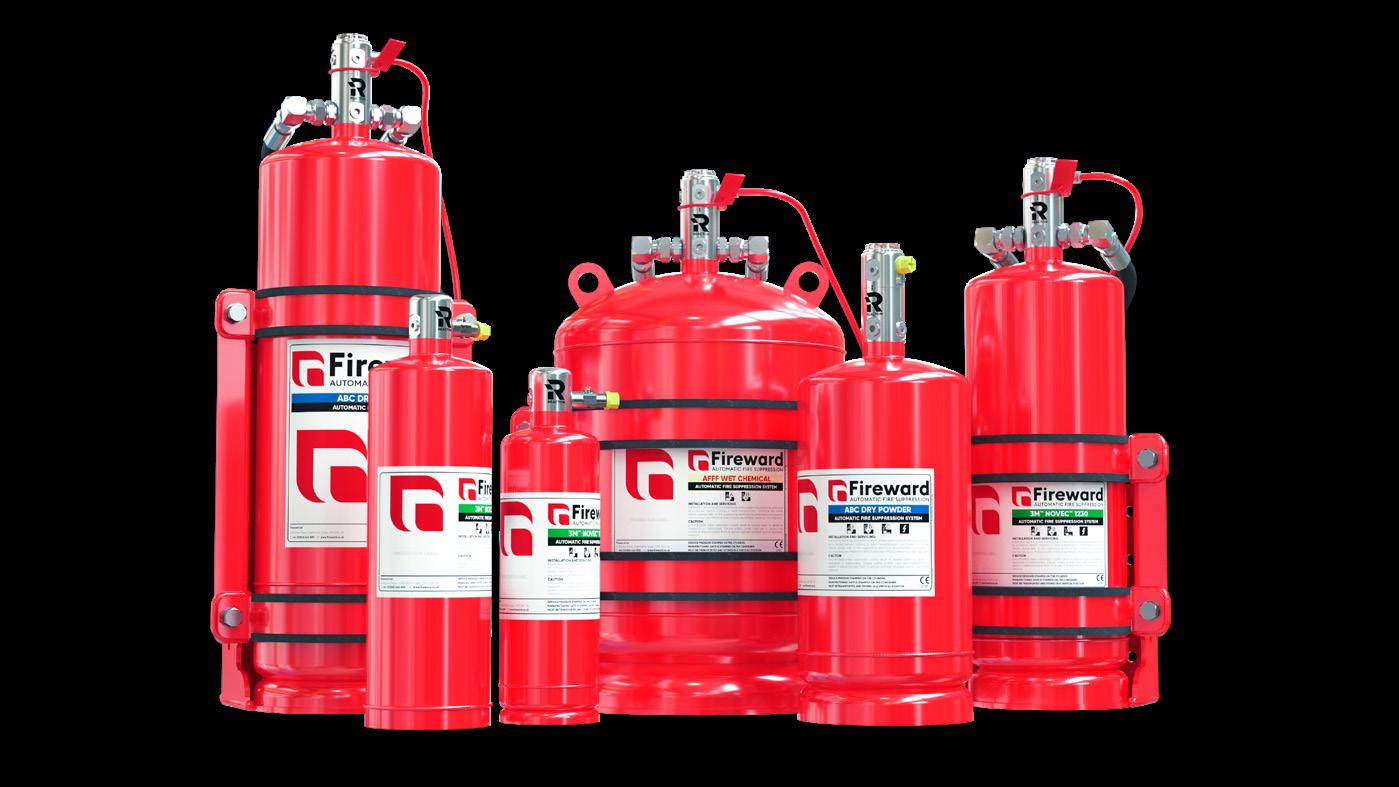
Demolition sites run on tight deadlines with no room for downtime. A single machine fire can halt progress and throw schedules off track.
Fireward’s automatic fire suppression systems detect and suppress fires in seconds, protecting operators and equipment to keep work moving safely and on time.






Chris came up with the name Circulis and it perfectly reflects what we do. Much of our work is about helping clients transition assets safely and efficiently while maximising reuse, minimising waste and enabling sites to move into their next phase of life.
CL: As the business has expanded globally, we have moved from a single operating company into a group structure. Circulis Group better reflects both the scale and strategic direction of the business.
Historically, many projects stopped at demolition. Today, clients increasingly need support through the full lifecycle decommissioning strategy, demolition, remediation, site investigation and redevelopment. That is very much aligned with the circular economy model.
JA: We are also seeing significant growth in sectors such as petrochemical, offshore and nuclear decommissioning, which naturally complements our existing expertise.
Who do you work with and how?
JA: We work extensively across high-hazard industries including petrochemical, oil and gas, offshore, power generation and nuclear. This includes working directly for end clients as well as alongside Tier 1 contractors, but a key differentiator for us is our independence.
Even when we are engaged through contractors, we remain fully impartial and will always have the necessary difficult conversations where safety, compliance or delivery risk requires it, which I’m sure they will confirm. But at the same time, collaboration is fundamental. These are often multi-year, technically complex projects and success depends on strong working relationships across the entire team.
Are there any standout projects that you can mention?
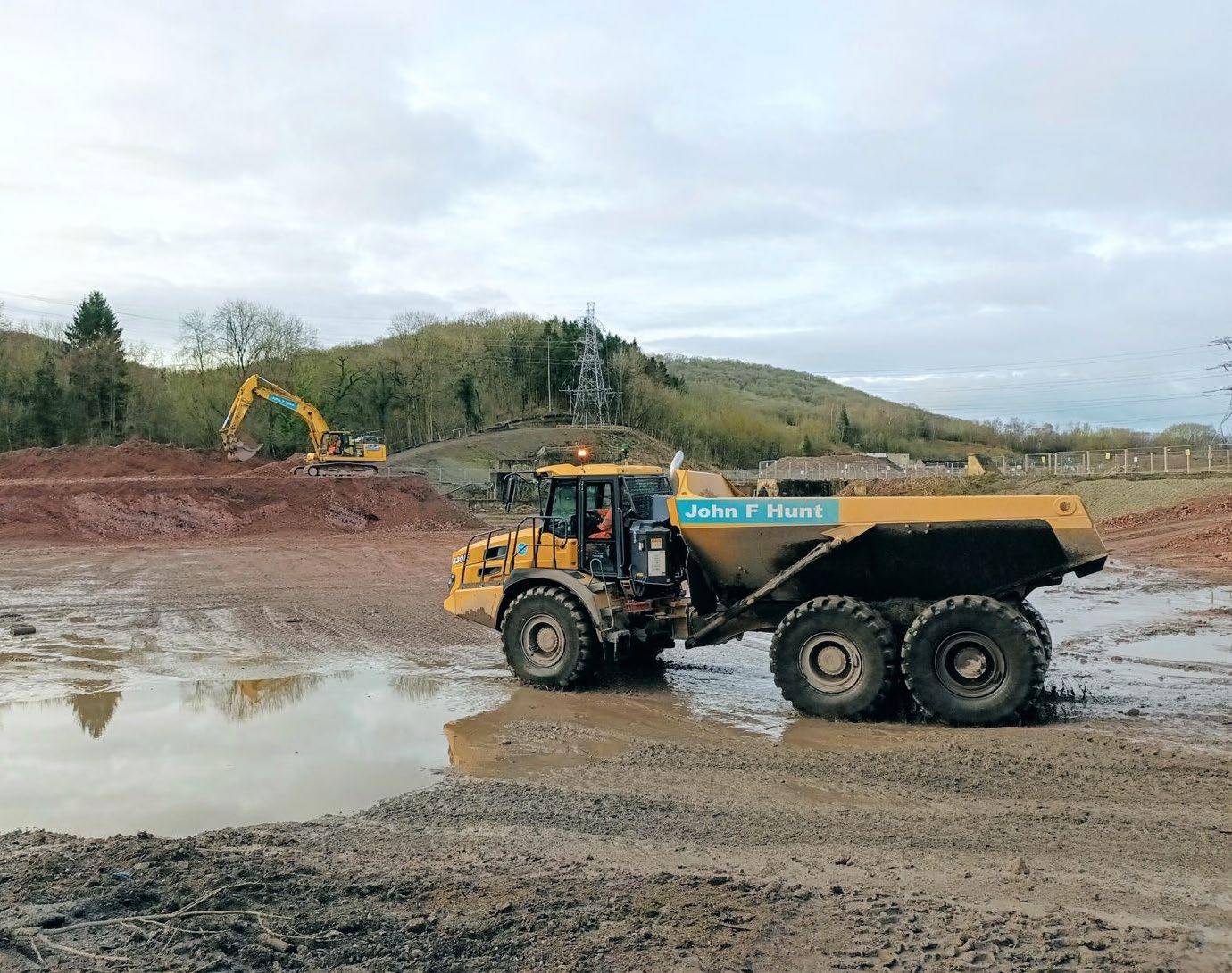
JA: Our work with INEOS Inovyn at Runcorn was certainly a standout project. It involved highly complex chemical manufacturing assets and









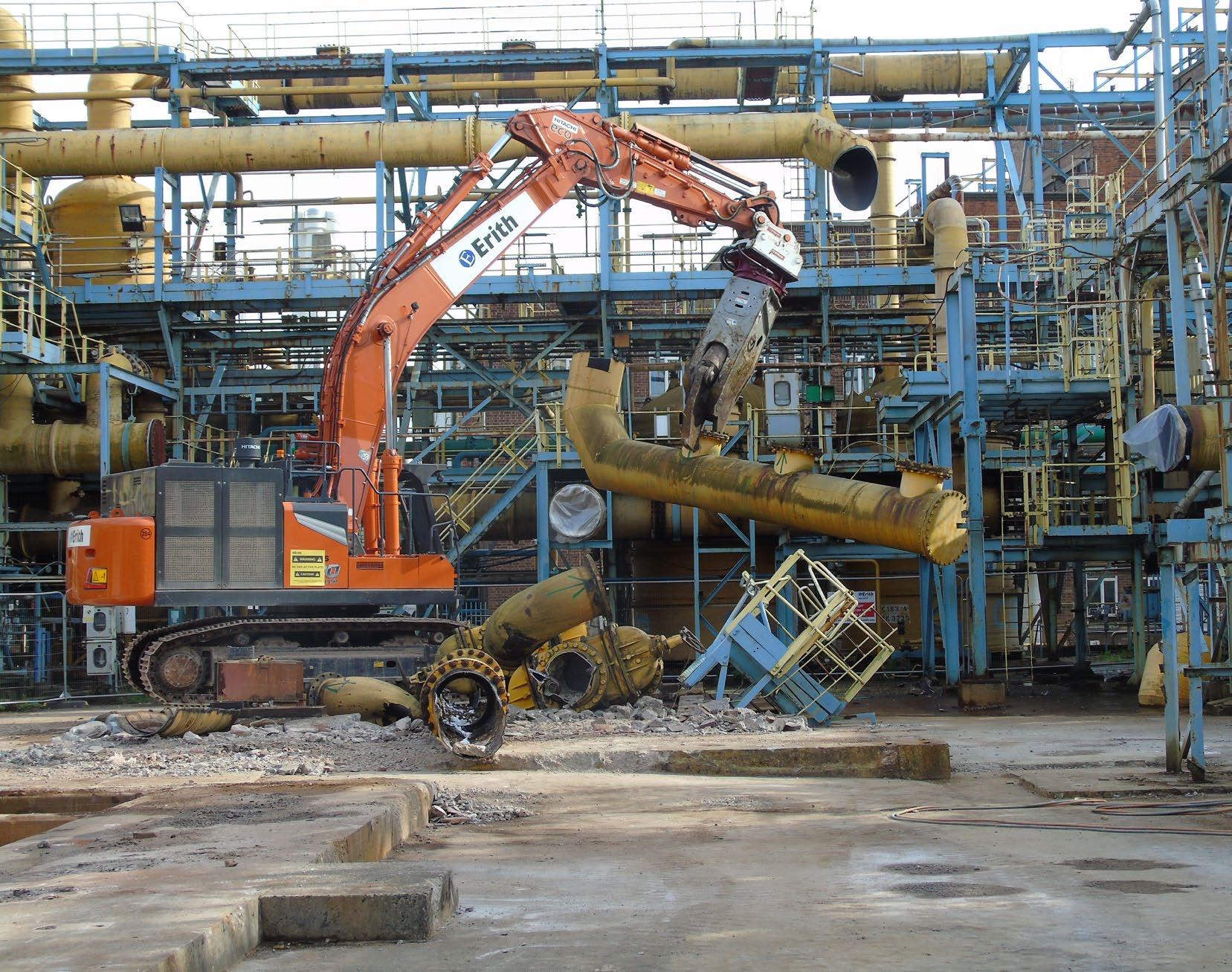
required a number of challenging decommissioning and demolition strategies.
CL: That programme included mercury assets, sulphuric acid systems and commencement of the demolition of the power station, which is situated within a live operational facility. Projects like that really demonstrate the value of specialist planning and risk management in high-hazard environments.
How do you get your name out there and win projects?
JA: This remains one of the biggest challenges in our sector because much of our best work sits behind client confidentiality and NDAs. As a result, a large proportion of our growth has come through reputation, repeat business and recommendation. That is something we are incredibly proud of.
Over the last four to five years, we have consistently more than doubled turnover year on year. We are also becoming increasingly visible through LinkedIn, conference speaking engagements and industry workshops.
Tell us about your memberships or accreditations.
JA: We hold ISO 9001, ISO 14001 and ISO 45001 accreditations. We are members of the Association for Project Safety and provide certified Principal Designer services. We are also looking at additional industry memberships, including the Institute of Demolition Engineers.
CL: We are also members of the Temporary Works Forum as temporary works is a fundamental part of our every-day projects.
JA: Temporary works is a major part of what we do, particularly in industrial demolition and dismantling, whether it be a part of a blowdown, pre-weakening of a large plant item or simply site set up.
How do you source talent and keep staff skills up to date?
JA: This is one of the biggest challenges in our sector because the talent pool is relatively small. We look for people with strong engineering
DXR REMOTE DEMOLITION ROBOTS

Husqvarna DXR demolition robots are known for their high-impact force and long reach. The solid chassis provides impressive stability, making it a powerful platform for a wide range of attachable tools.
The remote-controlled DXR works in various areas, keeping the operator out of harm's way.

MEET THE DXR 95, OUR COMPACT AND LIGHTWEIGHT DEMOLITION ROBOT WITH HIGH HITTING FORCE.

fundamentals, risk-based thinking and a high level of attention to detail.
Interestingly, not having a pure demolition background can often be an advantage, because we train people to think strategically about asset closure and risk.
We hold regular global knowledge-sharing meetings, circulate lessons learned and safety alerts, and ensure everyone maintains their CPD in their respective disciplines.
Tell us about your engagement in the community.
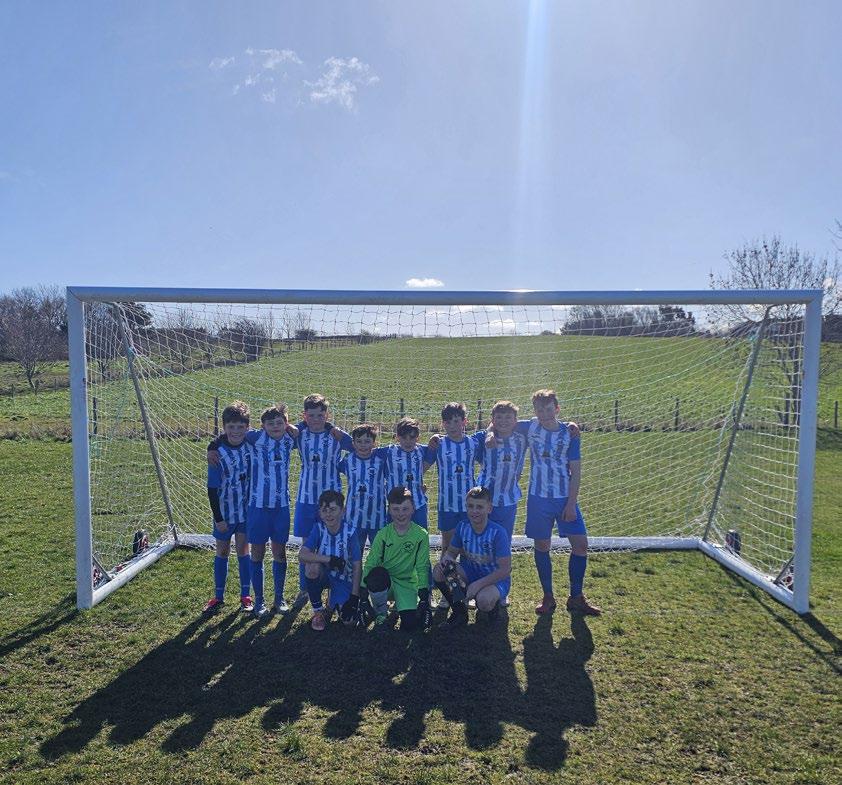
JA: We actively support local community initiatives, including sponsoring two local football teams, which are my son’s teams. For us, giving something back locally is important.
How do you see the decommissioning industry and your clients developing?
CL: The global energy transition is effectively our project pipeline. Whether driven by sustainability, energy security, economics or industrial change, there is a major shift in how legacy industrial assets are managed. That means increased demand for decommissioning, demolition, remediation and brownfield regeneration.
Tell us about your relationship with AI. Can planning be done by AI?
CL: AI is already helping improve productivity and efficiency across planning and tendering. However, engineering judgement, leadership and professional accountability must remain with experienced people.
AI is a tool that supports workflows, but it cannot replace real-world site experience or human decision-making.
Do you have anything notable in progress?
JA: We are currently seeing increasing volumes of work outside the UK, particularly in early-stage strategy and planning for large industrial assets. We have also recently signed a contract covering four industrial projects in Europe.
How do you see the company in five to ten years?
JA: I see Circulis Group becoming a globally recognised specialist in decommissioning, demolition, remediation and the industrial regeneration of brownfield sites. We are already seeing strong growth beyond Europe and expect to establish multiple international branches.
CL: Our ambition is to be the recognised specialist partner for high-hazard industrial asset closure and regeneration globally.
And how do you see yourselves in a few years?
CL: Still running the ship.
JA: Absolutely. A huge part of why the business works so well is the relationship Chris and I have. He is not only my business partner but also one of my closest friends. We challenge each other, support each other and ultimately bring out the best in one another.
That balance is a huge part of why the business has grown the way it has.





Who do you most admire?
I admire people who get things done, especially when they don’t feel like it.
For me, that discipline to act regardless of motivation is what really separates intent from achievement. It’s easy to do things when you feel motivated, but the real measure of a person is what they do when they don’t.
A good example is getting up at 4am to go to the gym before work because you know you simply won’t have another opportunity in the day. As business owners, the days can be long and unpredictable, so if something matters to you, whether it’s your health, your family or your goals, you have to make it happen.
I have a huge amount of respect for people who consistently push themselves, follow through on what they say they are going to do, and make things happen even when it would be easier not to.
That mindset applies just as much in business as it does in life.
What do you do for fun?
I’m a huge sports fan and love spending weekends watching my boys play football and rugby. I also have a real passion for cars, especially classic Fords such as an Escort RS Cosworth, which is definitely on the bucket list.
What’s your favourite cuisine?
Mediterranean and Near Eastern cuisine – fresh, simple and full of flavour. Ideally enjoyed with a good bottle of wine.
What’s your tipple of choice?
Tequila, but the real stuff, not the kind you shot on a weekend away with the lads. I prefer a quality 100% agave tequila like Don Julio or Fortaleza either blanco or reposado. Best served over ice with a slice of lime and/or tonic.
What would you be in an alternative life?
I would love to be an infinite energy flying through the endless distance and time of space. A bit far out, I know, but exploring the cosmos with no limitation of time and existence seems like the ultimate adventure.
Who do you most admire?
James for getting up at 4am to train and for giving me the motivation to get up and train also. I also admire people who work hard for their goals and push things forward challenging norms and setting strong examples for people to follow.
When and where are you happiest?
When I am with my family and closest friends in a nice warm climate having the best time, relaxing and enjoying life.
If you could invent any tool for your daily life, what would it be?
A copy of me that can go out and do my day job while I spend my time doing the things we all go to work for. Elon Musk is nearly there with his AI robots and progressive Neuralink technology, so who knows, that may become a reality one day.
circulisgroup.com info@james-ltd.co.uk 0333 090 7331



0203 831 2353
Protect Your Construction or Demolition Sites Security Deployed, when you need it most.
Tailored security plan for your site -Mobile -Electronic -On-site Security
Guaranteed Quote in 1 Hour – Fast, competitive, transparent pricing On-Site Security Audit Fully Licensed & Insured Why Leverage Security?
Price Match Guarantee - Found a lower quote? Send us the Quote & Weʼll match it!
Same-Day Officer Deployment Specialised in High-Risk Sites 24/7/365 Security
"Leverage Security goes above and beyond. They don’t just stand guard, they proactively protect, ensuring our site is always secure and compliant. We trust them to keep our projects safe."
— Inaam Properties


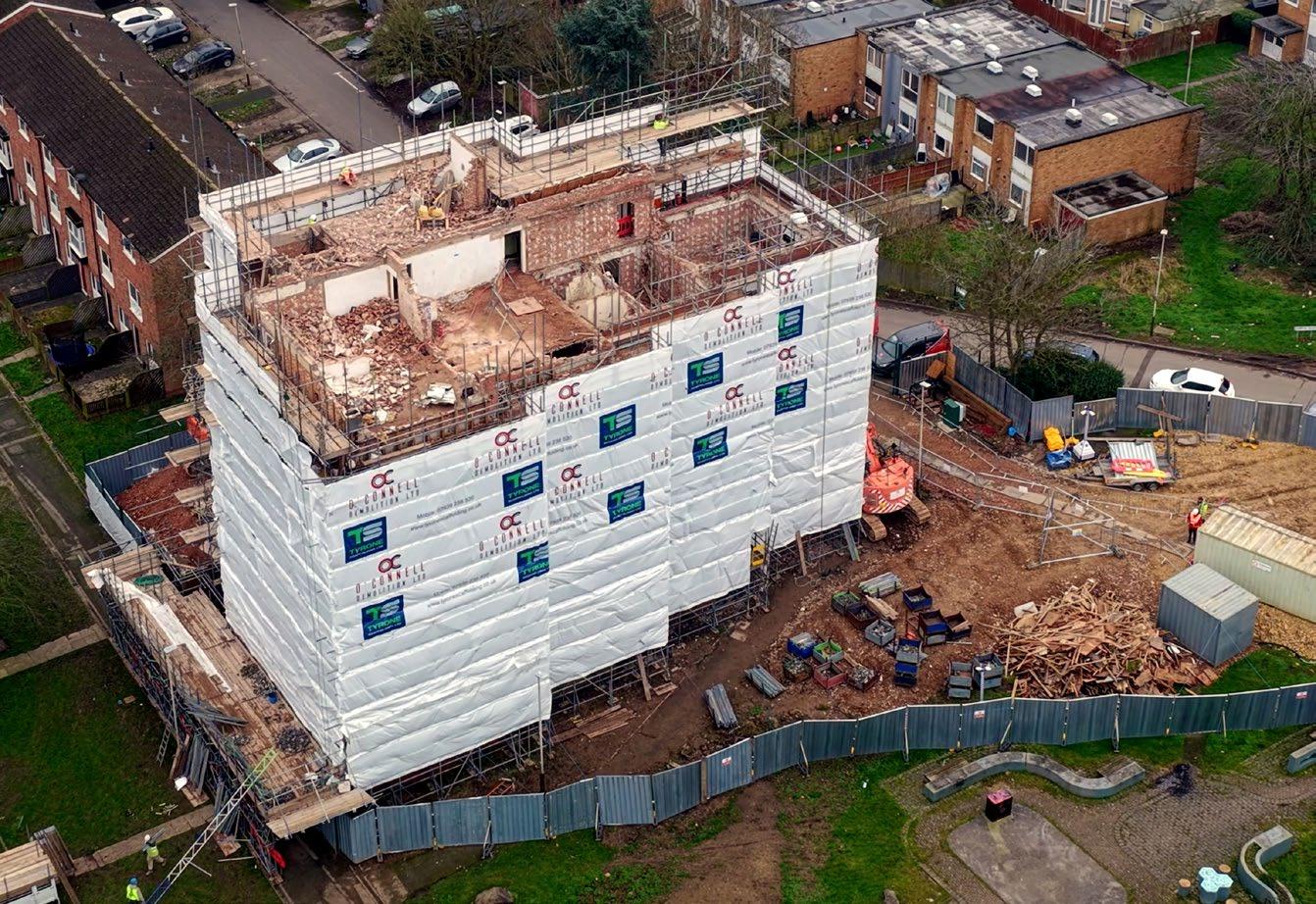
Project: The Leys, Leicester
Structure: Seven storey 1960s reinforced concrete residential tower block in a dense urban setting
Contractor: O’Connell Demolition Ltd
Client: Leicester City Council
Duration: 10 weeks
Techniques: Licensed asbestos removal, full soft strip, controlled top down demolition, remote demolition (Brokk), on site crushing
Specific Challenges: Pitched roof AIB requiring bespoke scaffold access, bat roost discovery mid programme, temporary works to lift motor rooms, Brokk floor to floor movement via lifting gantries, live residential environment
Significant Plant: High reach excavator, Brokk remote demolition robot, specialist mobile crushing plant, birdcage scaffold, temporary works bridging beams
Future Use: Residential redevelopment

A seven-storey tower block, wrapped in scaffold, hemmed in by housing on every side. Inside: asbestos in the roof peaks, a protected bat roost nobody expected and remote demolition robots being craned between floors. This was The Leys.
The Leys had stood in Leicester since the 1960s –seven storeys of reinforced concrete, flat roofed in parts, pitched in others, laced with asbestos containing materials and surrounded on all sides by occupied housing. Leicester City Council appointed O’Connell Demolition Ltd as Principal Contractor to bring it down safely, protecting the neighbours and leaving a clean platform for new homes. The brief was simple. The project was not.
More than a standard top down
Top down demolition follows a standard sequence: scaffold, containment, machines working floor by floor, arisings crushed, site levelled. The Leys followed that pattern, but it also threw up a series of complications that demanded engineering solutions well beyond the standard approach.
First, the asbestos. The R&D survey had identified AIB within the pitched roof structures. The team erected external scaffold to the affected elevations and installed internal birdcage systems within the roof voids, creating a fully enclosed environment for the licensed operatives. It was an investment in bespoke access that kept the asbestos phase on programme and on the right side of the regulator.
Bridging beams at roof level
The lift motor rooms projected above the main structure, creating difficult elevations for the scaffold encapsulation. The motor room walls could not take lateral scaffold loads, so tying in directly was ruled out. The temporary works team designed bridging beams to span the openings, giving the scaffold independent support around these projections. A small detail in the scheme of the project, but the kind that prevents failures on complex structures.
Partway through soft strip, the team discovered a bat roost. Under the Wildlife and Countryside Act 1981 and the Habitats Regulations 2017, work in the affected area stopped immediately. The discovery was reported to the client and Natural England the same day, an EPS licence application was submitted and an ecologist was appointed to provide a watching brief.
Meanwhile, the site team resequenced the programme, pulling forward work in unaffected areas to keep the overall timeline intact. The licence was granted, the watching brief was maintained and the bat roost caused zero programme delay. On a project with this many moving parts, that took more than good fortune. It took a team that knew the legislation and had the programme flexibility to work around it.
The tight footprint and proximity of housing meant high reach plant could not safely access the full structure. The contractor deployed Brokk remote demolition robots for internal works on the upper floors, compact, electrically powered machines that break out concrete without putting operatives in the demolition zone. For each level the team installed temporary lifting gantries, craning the machines into position as the sequence progressed downward. It gave precise, floor by floor control and reduced vibration to adjacent properties.
On a site hemmed in by housing, letting arisings pile up is not an option. Specialist mobile crushing plant ran throughout the top down phase, processing material as it was generated and producing 6F2 fill for immediate reuse


in backfilling and levelling. The result: 100% material reuse on site, zero waste to landfill and fewer HGV movements through surrounding residential streets. The compound stayed tight and organised throughout, even under pressure for space.
Keeping the neighbours informed
The demolition team ran a structured neighbourhood liaison programme for the duration of the works. Residents received advance notice of high impact activities, had a named site contact for enquiries and were kept updated as the programme progressed. Dust suppression including misting cannons and wheel wash ran continuously, with boundary monitoring confirming that dust, noise and vibration stayed within limits. Across ten weeks, there were no complaints from the surrounding community.
The outcome
• Ten weeks
• On programme
• On budget
• Zero incidents
• Zero environmental non-conformances
• Zero complaints
• 100% of arisings reused on site
• Protected species licence secured and managed without delay
• Clean, level site handed back to Leicester City Council for the next stage of the estate’s regeneration
The pitched roof asbestos, bridging beams, bat roost and Brokk logistics each had the potential to stop the programme or generate an incident. None of them did, because the team had planned for the expected and were equipped to deal with the unexpected.
About O’Connell Demolition Ltd
O’Connell Demolition Ltd is a specialist demolition contractor delivering complex demolition, asbestos removal and enabling works across the UK. The company operates entirely with its own workforce and plant, with particular experience on live NHS hospital sites, heritage structures and constrained urban settings. Current and recent clients include Leicester City Council, Surrey & Sussex Healthcare NHS Trust, Queen Victoria Hospital NHS Foundation Trust, Royal United Hospitals Bath, University Hospitals Bristol and Weston, Mid & South Essex NHS Foundation Trust and Manchester University NHS Foundation Trust.
5029


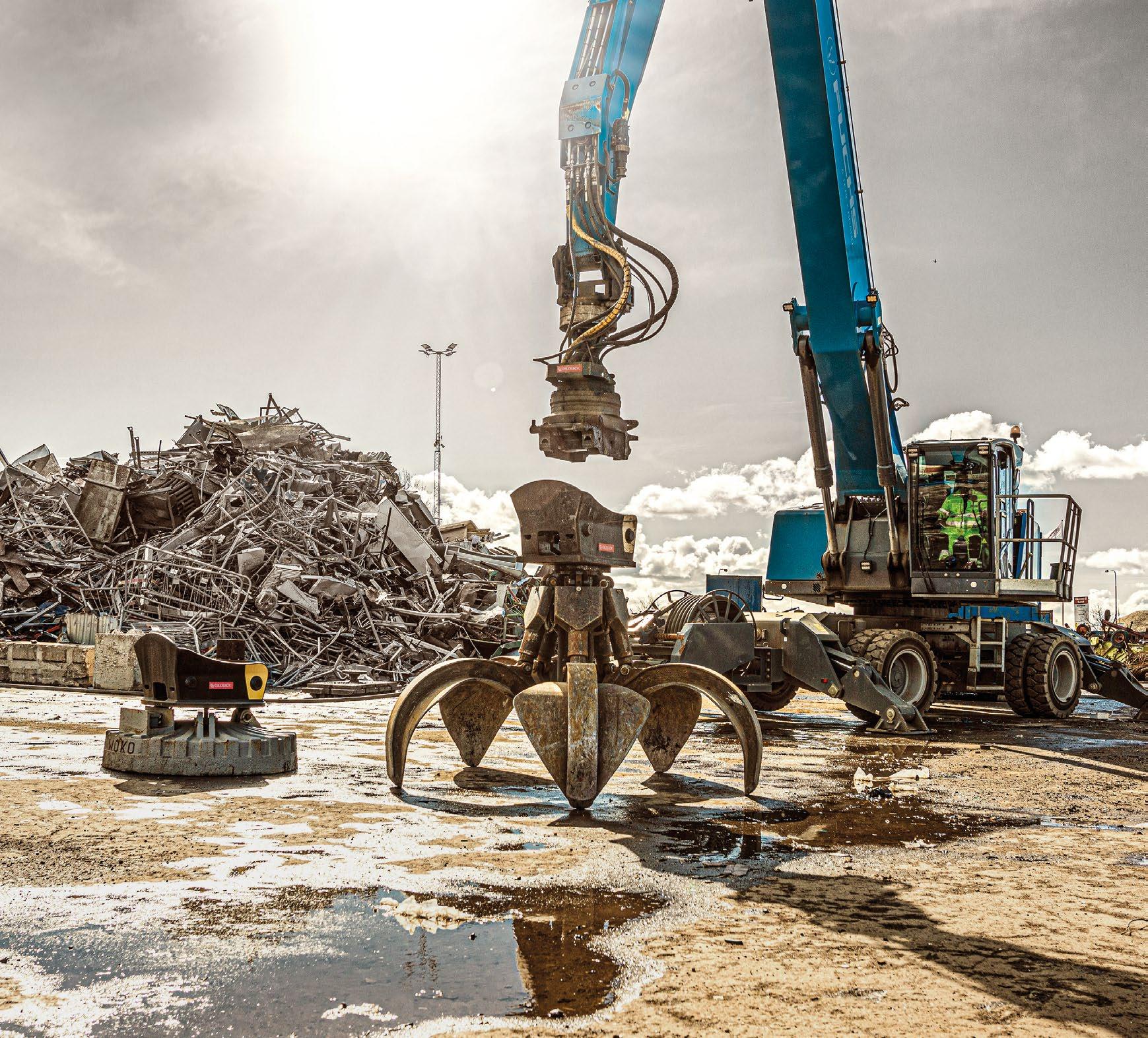
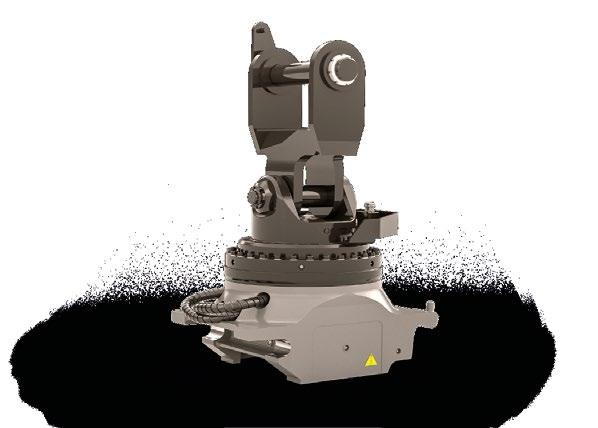
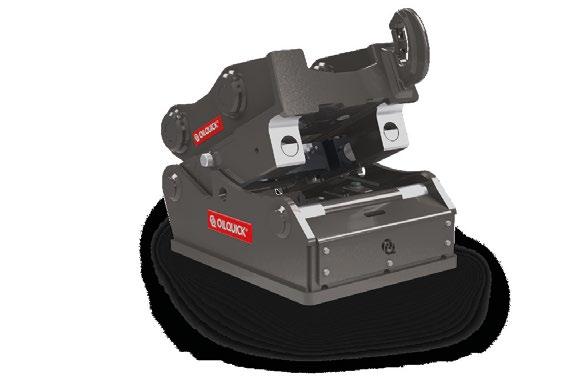
FULLY AUTOMATIC QUICK COUPLER SYSTEMS FOR TOOL CARRYING MACHINES
OilQuick Features:
• Lightning fast change of hydraulic, electrical and mechanical attachments from inside the cab.
• Always the right attachment for the job.
• Distributes oil, grease, water and electricity.
• No staff around the machine during tool changes.
• Improved workplace safety.
• Meets and exceeds safety standards globally.
• Reduce the number of machines on the site.
Parts and Service:
From new facilities in UK, OilQuick now provides spare parts and first-class servicing and repairs for all OilQuick couplers, ensuring customers receive full aftersales support close to home.

With a large stock of genuine OilQuick parts available directly from our UK warehouse, customers can now benefit from faster delivery times and improved availability across the country.
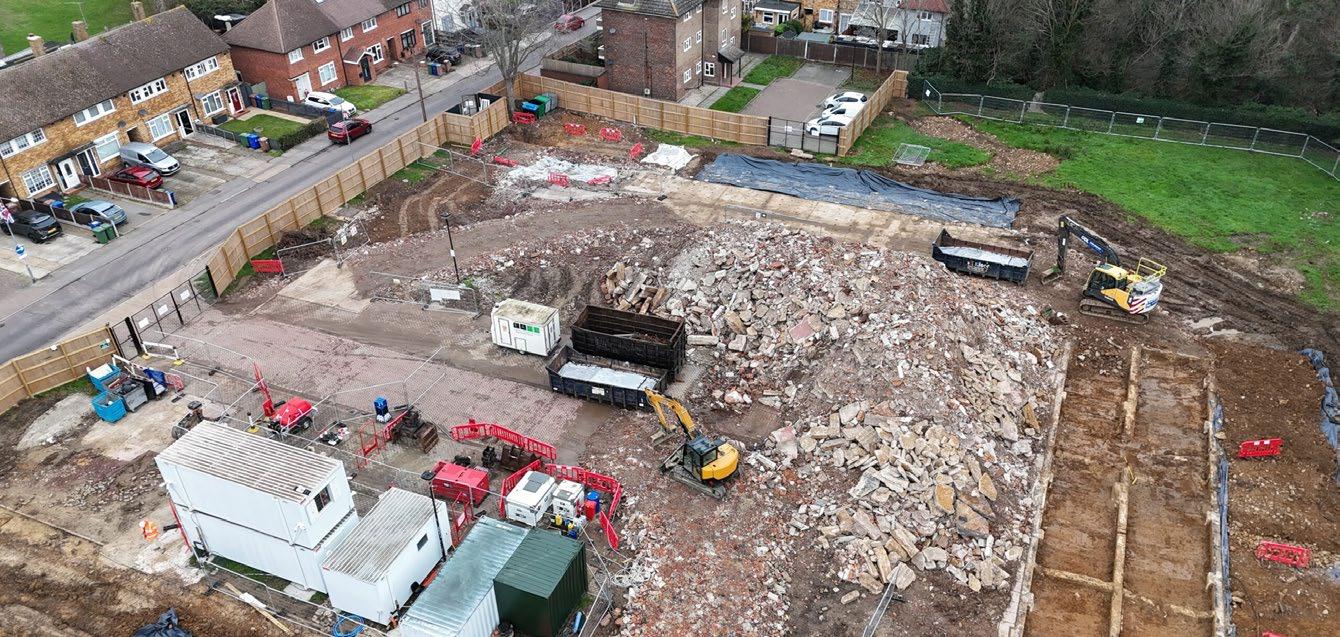
Project: Teviot Avenue Redevelopment, Essex
Structure: 1950s blocks of flats built from non-traditional materials
Setting: Residential street in Aveley
Scope of works: Demolition of three blocks of flats containing 36 council homes
Contractor: Windsor Waste Management with Chelmsford Demolition
Client: Marfleet & Bradshaw
Other stakeholders: Thurrock Council
Start date: August 2025
Completion date: January 2026
Future use: High-quality, affordable, modern council homes, regenerating a key residential area through the delivery of improved housing standards for the local community
Techniques: Segregating hazardous waste to minimise use of landfill – contaminated soil was sent for treatment while demolition materials contaminated with cement-bonded asbestos were disposed of in landfill. Two bin exchanges every day for eight weeks between December and January. The project included a field test and trial of Windsor Waste Management’s new ADR-compliant asbestos container bags. Fully compliant hazardous waste consignment tracking was provided with real-time coordination between site management and transport operations
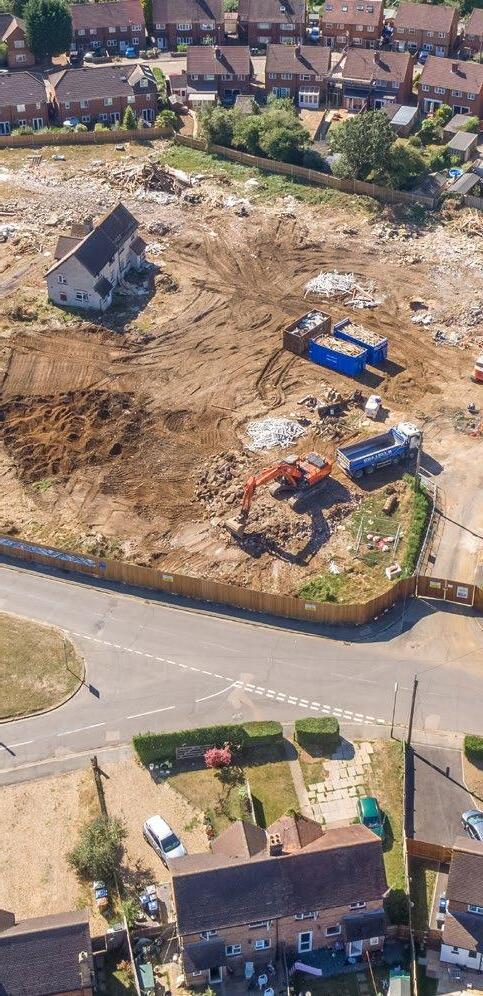
In winter 2025/2026, Windsor Waste Management partnered with Chelmsford Demolition to deliver a high-volume, time-critical asbestos waste disposal solution at the Teviot Avenue redevelopment in Aveley, Essex. The regeneration scheme will replace three ageing blocks of 1950s non-traditional council flats with 48 new affordable homes, providing improved living standards for residents and supporting long-term community development.
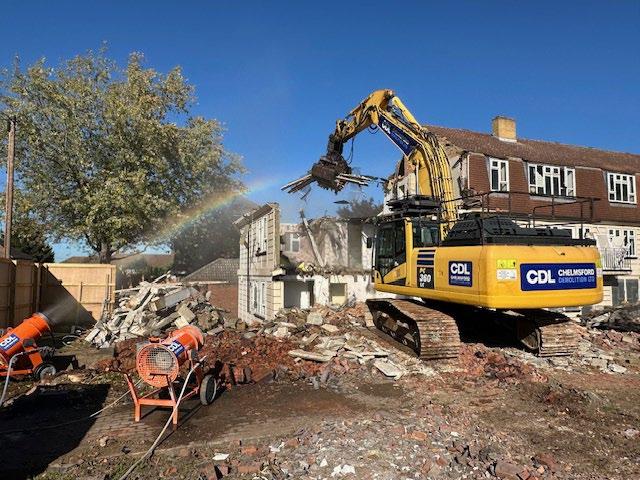
Across an eight-week period between December and January, Windsor Waste Management removed 539 tonnes of asbestos-contaminated material using forty-seven 20-yard bins, all while maintaining a strict two-per-day exchange strategy to maintain the demolition works schedule.
Critically, this project also marked the successful trial of Windsor Waste Management’s new 20-yard asbestos container bags – an innovation designed to improve site efficiency, safety and compliance across the demolition sector.
Teviot Avenue forms part of a transformational redevelopment initiative led by Thurrock Council to modernise outdated housing stock built using nontraditional construction methods in the 1950s.
The original buildings contained cementbonded asbestos within structural elements and surrounding materials. As demolition progressed, significant volumes of hazardous materials were generated, including:
• Soil contaminated with cement-bonded asbestos,
• Concrete and rubble contaminated with cementbonded asbestos,
• Cement-bonded asbestos sheets.
Chelmsford Demolition required a disposal partner capable of matching production output daily –without delays, without compliance risk and without storage bottlenecks on site.
With demolition already underway since August 2025, the waste disposal phase during winter presented both logistical and environmental challenges.
Given the projected waste volumes and compressed timeframe, early coordination between Chelmsford Demolition and Windsor Waste Management was critical. Key planning considerations included:
• High daily waste output: The site required two 20-yard asbestos bins exchanged every day,
• Winter working conditions: Operations took place during December and January, requiring careful route planning and contingency scheduling to avoid weather-related disruption,
• Segregated disposal streams: Contaminated soil required specialist treatment prior to final
disposal, while asbestos-contaminated rubble and bonded materials were directed to licensed hazardous landfill facilities,
• Compliance assurance: All collections required full hazardous waste consignment documentation, ADR-compliant transport, and strict adherence to duty of care obligations.
To ensure responsiveness, Chelmsford Demolition’s site team maintained direct communication with their Windsor Waste Management Account Manager, enabling real-time scheduling adjustments where required.
• A total of forty-seven 20-yard bins were delivered, exchanged and removed over the eight-week period,
• A structured exchange strategy scheduled two bin movements per day,
• Transport planning ensured vehicles were routed efficiently to maintain uninterrupted demolition works,
• Waste was sealed and secured in accordance with hazardous waste regulations prior to leaving site, eliminating risk of fibre release during transit.
A key differentiator on this project was the trial of Windsor Waste Management’s new 20-yard asbestos container bags, developed specifically to improve safety, compliance and operational efficiency within the demolition industry.
Traditionally, asbestos containers are lined with polythene and, once filled, manually enveloped and sealed. This process can be:
• Time-intensive,
• Labour-heavy,
• Susceptible to inconsistent sealing standards,
• Dependent on on-site wrapping quality.
The new 20-yard asbestos container bag system provides a purpose-designed, compliant containment solution that:
• Saves significant time on site: The integrated bag design reduces manual lining and enveloping time, allowing demolition teams to maintain productivity, particularly critical when operating to a two-exchange-per-day schedule,
• Enhances security and containment: The engineered bag system provides a more consistent and secure method of sealing compared to traditional lining methods, reducing risk of fibre escape and improving containment integrity during transport,
• Improves compliance confidence: With a controlled, standardised containment solution, contractors gain added assurance that waste is packaged in accordance with regulatory requirements before leaving site.
Chelmsford Demolition’s trial demonstrated that the container bag system is not only practical under high-volume conditions but also particularly suited to fast-paced demolition projects.
This innovation represents a significant step forward for the demolition industry, combining safety, efficiency and compliance into a single, scalable solution.
• Contaminated soil was transported to specialist treatment facilities,
• Concrete, rubble and cement-bonded asbestos were transported to licensed hazardous landfill,
• Each load was tracked and documented, ensuring complete traceability and environmental compliance throughout the project lifecycle.
The Teviot Avenue asbestos disposal project was completed safely, compliantly and on schedule. Key achievements included:
• 539 tonnes of hazardous material removed,

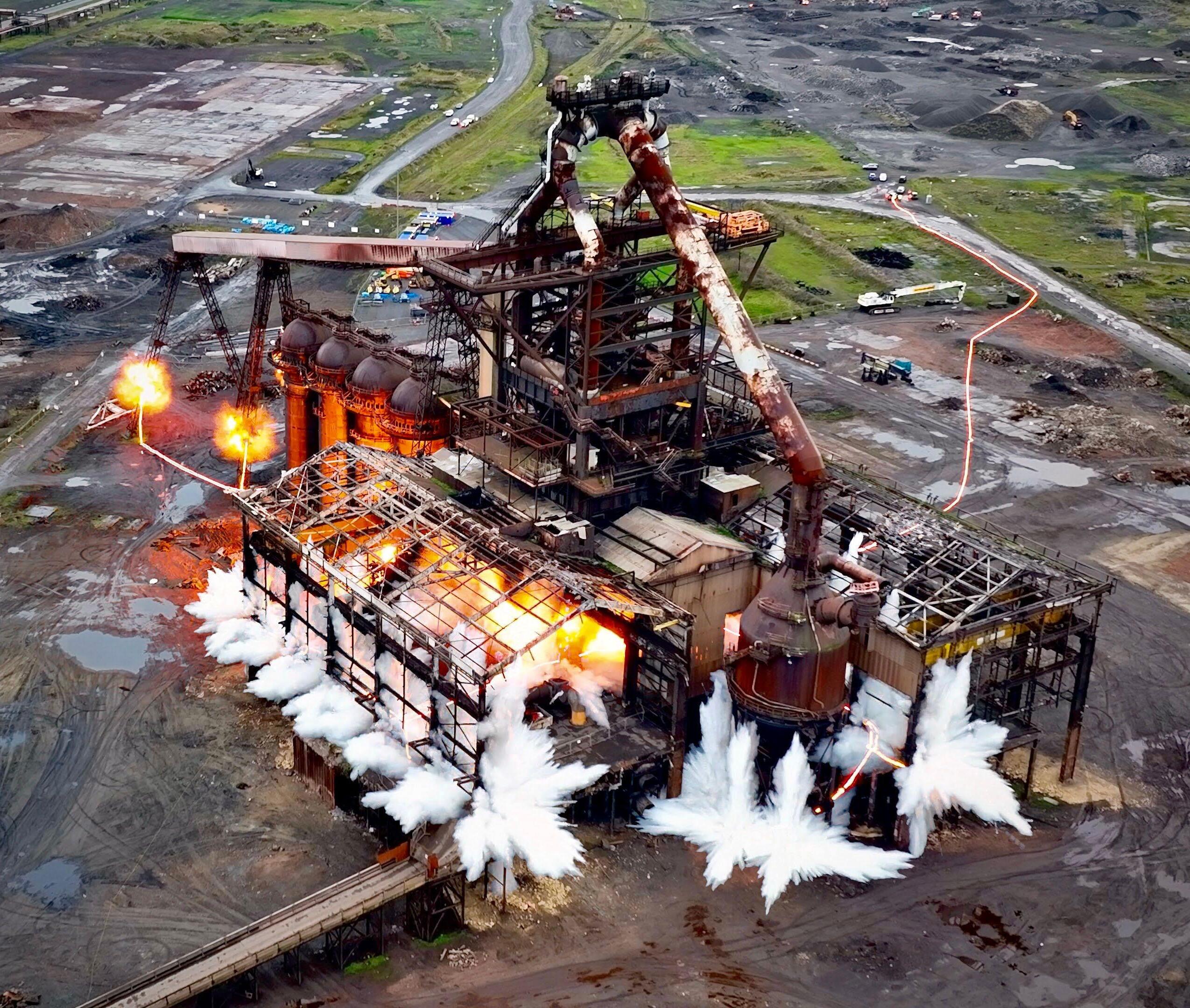

Dust. Precision. In demolition, you only get one chance to capture the moment per fectly Our aerial, ground and sacrificial cameras record ever y angle with total accuracy even inside the structure We work seamlessly with your engineers and safety teams to film controlled explosions, industrial blowdowns and complex dismantles nationwide Because when the structure falls, your footage has to stand tall.
• 47 containers managed across an eight-week winter schedule,
• Full regulatory compliance maintained with complete waste audit trail,
• Successful real-world trial of the 20-yard asbestos container bag system,
• Full regulatory compliance maintained with complete waste audit trail.
The ability to sustain high-frequency bin movements while simultaneously trialling and validating an innovative containment solution demonstrates Windsor Waste Management’s commitment to continuous improvements within the demolition sector.
“Windsor Waste provided a first-class service for the disposal of ACMs from both the structures and contaminated substructures playing a key role in returning a hazard free site for our client. Our client relationship executive Cerys Barrett was always available to ensure off and on-site project management was delivered as efficiently as possible during some tough winter conditions. We will definitely look to partner with Windsor Waste Management on all future projects and are currently in procurement discussions for other large-scale asbestos disposal projects. Windsor Waste Management provides a professional and good value for money service and we would recommend using their services to other companies within our industry.”
James Bailey, Director, Chelmsford Demolition
Conclusion
The Teviot Avenue redevelopment exemplifies the importance of partnership in high-volume, timesensitive demolition works. By working closely with Chelmsford Demolition’s operational requirements, Windsor Waste Management ensured that hazardous waste disposal aligned seamlessly with high-pressure project demands. Moreover, the successful implementation of the new 20-yard asbestos container bag system highlights Windsor Waste Management’s proactive investment in innovation.
When managing more than 500 tonnes of asbestos-contaminated material in winter conditions within eight weeks, success depends on:
• Proactive communication,
• Logistical precision,
• Compliance-first processes,
• Operational agility.
This project reinforces Windsor Waste Management’s position not only as a trusted disposal partner, but as an industry innovator driving safer, smarter asbestos waste solutions for demolition contractors across the UK.
More about Chelmsford Demolition
Chelmsford Demolition is an experienced demolition contractor delivering safe, efficient and environmentally responsible demolition services across commercial, residential and industrial sectors. Its team combines technical expertise with a strong focus on project delivery and health and safety compliance.
More about Windsor Waste Management
Windsor Waste Management is a market leader in asbestos disposal. They are a significant provider of total waste management services to construction, demolition and related industries across the UK. With over 25 years of experience and an unrivalled reputation, they manage storage, collection and disposal solutions for asbestos, demolition, construction, business and hazardous waste.



Project: Thomas’s College, Richmond
Structure: Grade II-listed mid-19th century former university building
Scope of works: To prepare a collection of historic buildings for transformation into a modern educational setting, including soft strip, asbestos management, structural demolition and temporary works
Contractor: Titan Group
Client: Quinn London
Start date: 2024
Completion date: 2025
Future use: Co-educational private school
Techniques: Asbestos encapsulation, licensed removal works supported by negative pressure units, temporary structural support
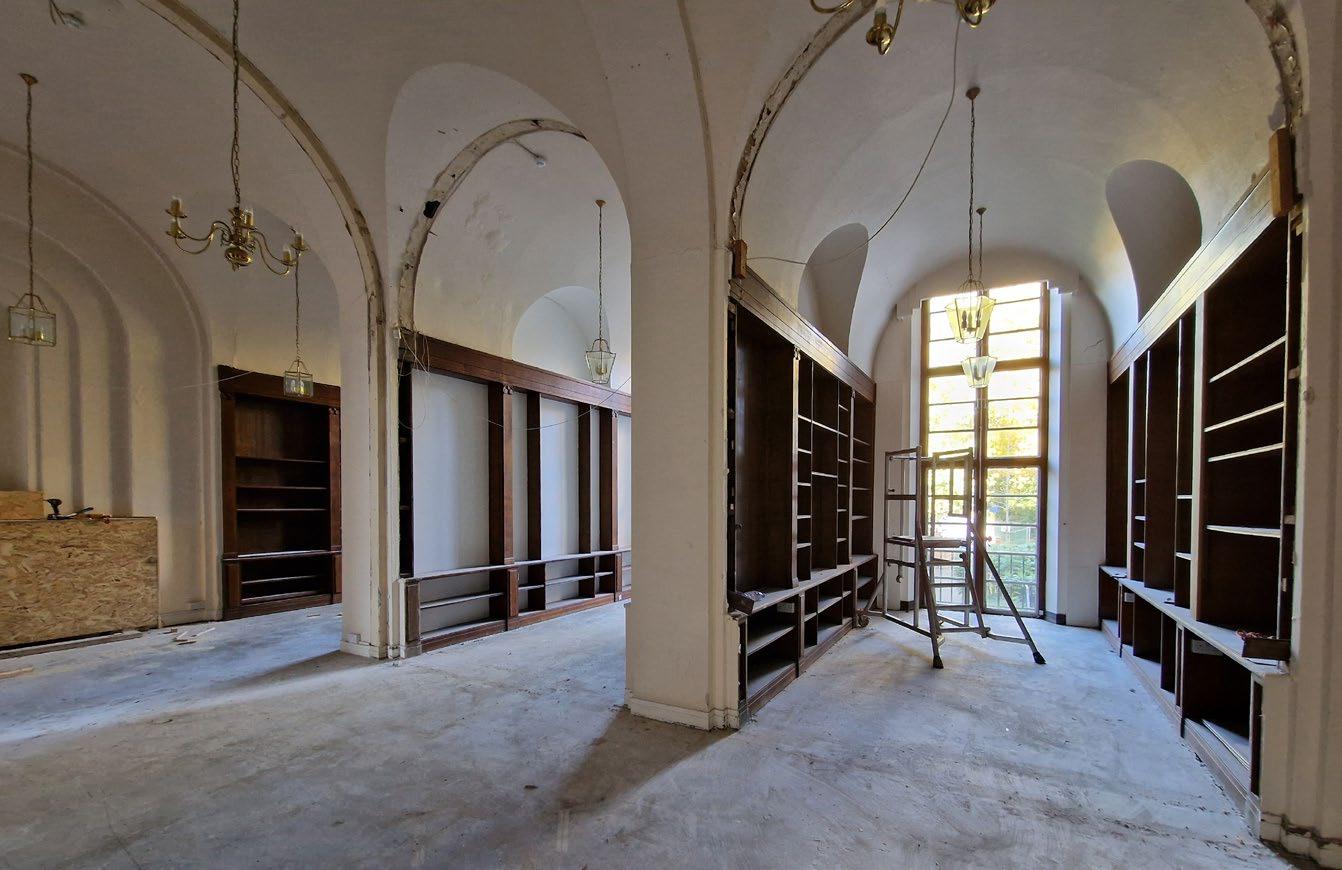
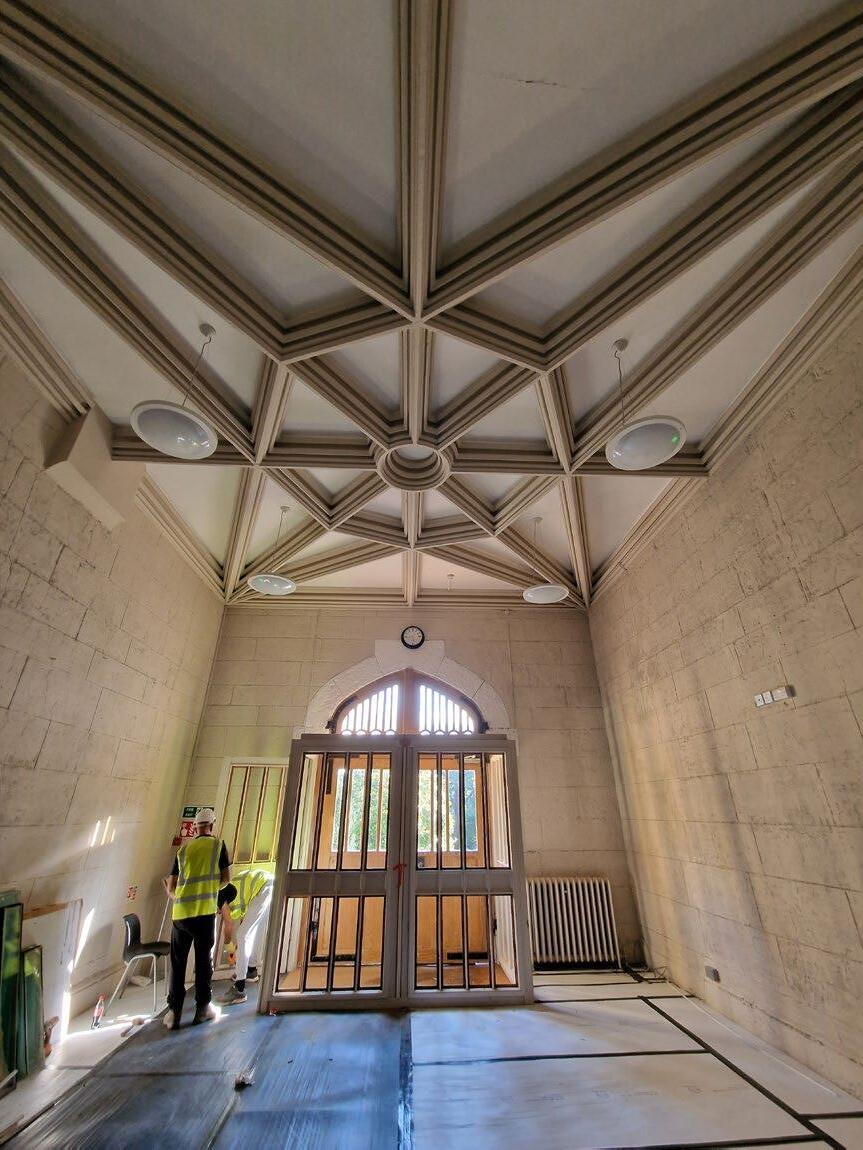
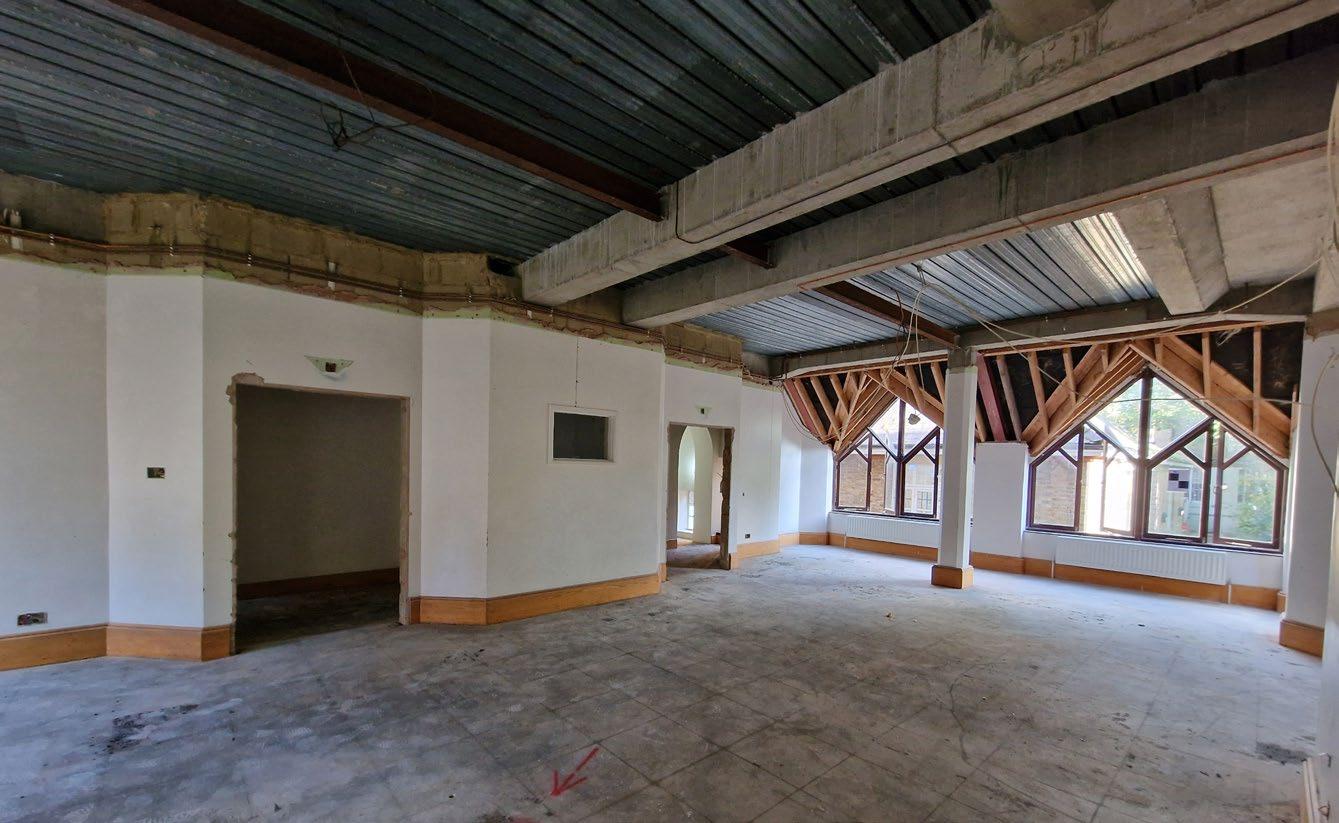
Titan Group’s work at Thomas’s College in Richmond offers a clear view of how demolition is evolving within complex, heritage-led refurbishment. Delivered for Quinn London between 2024 and 2025, the project brought together soft strip, asbestos management, structural demolition and temporary works within a Grade II listed environment dating back to 1842.
The brief was to prepare a collection of historic buildings for transformation into a modern educational setting. This involved opening up internal spaces, reconfiguring layouts and enabling new structural interventions, all while preserving the character and integrity of the original buildings.
The challenge was not simply technical, but every action had to be weighed against its potential impact on the fabric of the building. Progress could not come at the expense of preservation, and removal had to be carried out with a clear understanding of what needed to remain.
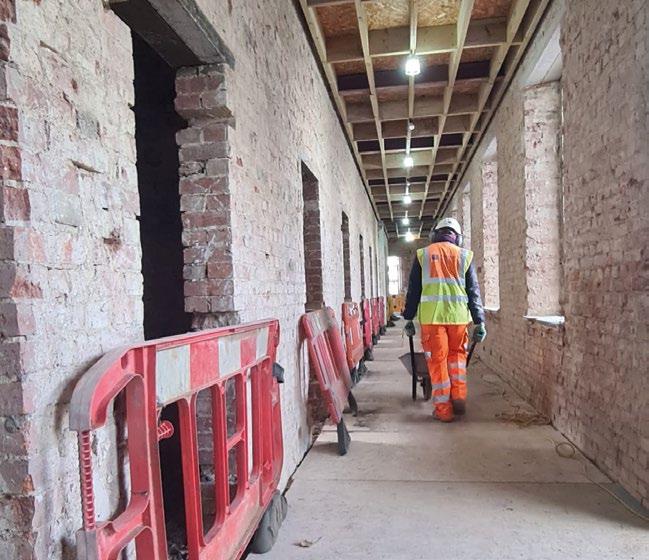
The project began with a phased strip-out across the site, covering multiple interconnected
buildings with varying conditions and histories of alteration. Rather than approaching this as a straightforward clearance exercise, Titan Group treated it as an investigative stage. Each area was opened up gradually, allowing the team to understand the structure beneath finishes and later interventions before committing to more intrusive works. This approach created visibility across the site and allowed informed decisions to be made as conditions became clearer.
Original features were identified early and protected accordingly, with careful delineation between elements to be retained and those to be removed. Sequencing played a critical role in maintaining both safety and programme, ensuring that areas were only progressed once risks had been properly assessed and controlled. This measured approach proved essential, as it established a strong foundation for the more complex stages that followed.
As expected with buildings of this age, asbestos was encountered in a number of locations. While
its presence was anticipated, its distribution was inconsistent and, in some cases, only revealed once works were underway. Materials were identified within pipe lagging, floor buildups, ceiling voids and decorative finishes that had been applied over decades. Some of these had been captured through pre-demolition surveys, but others emerged as hidden layers were exposed during the strip-out process.
Rather than relying on a fixed strategy, Titan Group adopted a responsive and site-led approach to asbestos management. In areas where removal posed a risk to historic fabric, encapsulation was used to safely contain materials while preserving the surrounding structure. In locations where structural works were required, full removal was carried out to ensure that the building could be safely adapted. The sequencing of asbestos removal was closely aligned with demolition activities, allowing areas to be cleared and released in a way that supported the overall programme.
Licensed removal works were undertaken within controlled environments, supported by negative pressure units, strict decontamination procedures and continuous air monitoring. These controls ensured that fibre release was effectively contained and that the safety of operatives and the surrounding environment was maintained at all times. Within a listed building, this level of control is critical, as containment is not only about compliance but also about protecting the integrity of the structure itself.
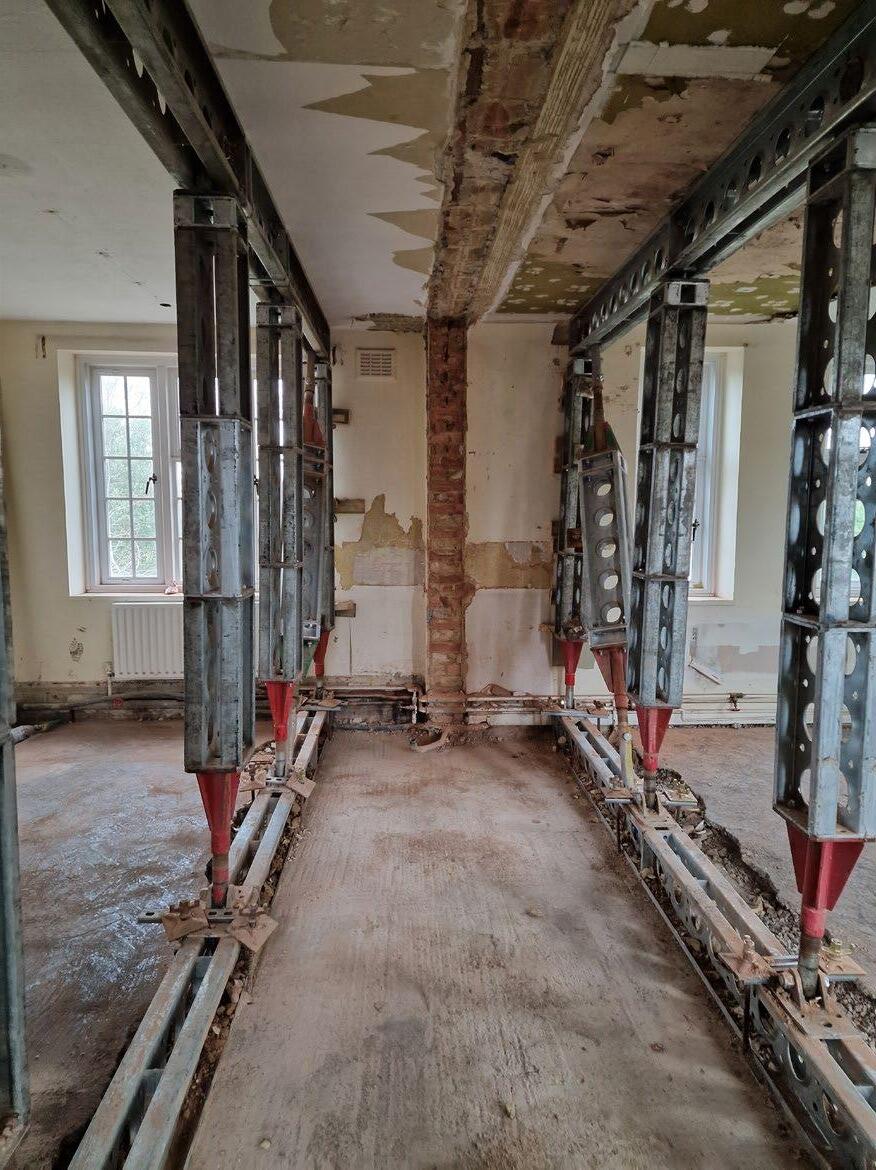
With strip-out and asbestos risks managed, the project moved into its most technically demanding phase. Structural demolition works were required to facilitate the creation of larger, more flexible teaching spaces. One of the key interventions involved the removal of fireplaces while retaining the chimney stacks above, a process that required careful sequencing and precise execution.
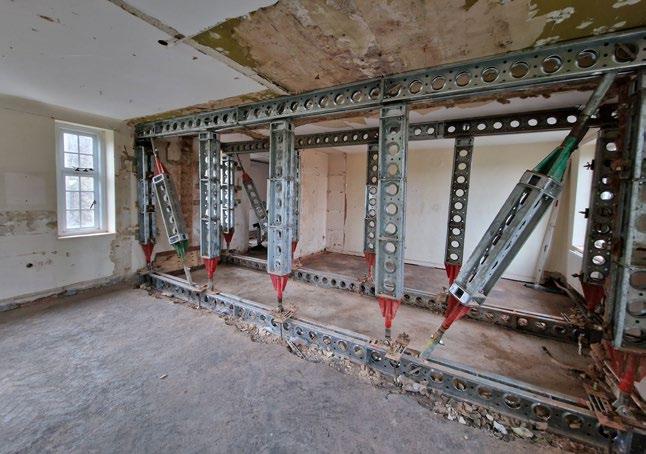
Temporary supports were installed to carry structural loads before any demolition works commenced. Once these systems
were in place, masonry could be broken out in a controlled manner, with ongoing monitoring to ensure stability was maintained. Similar levels of coordination were required for floor alterations and the formation of openings to accommodate new service routes.
Temporary works played a central role throughout the project, underpinning each stage of demolition and alteration. Supporting retained structures, stabilising partially altered elements and maintaining safe working conditions all depended on a robust and adaptable temporary works strategy. Designs were not static but were continually reviewed and refined as new information became available. This adaptability was essential when working within an existing structure where conditions can evolve as works progress.
Alongside the technical demands, the project required a high level of control in relation to
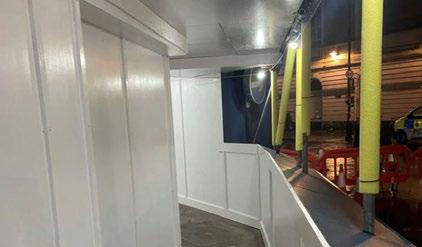
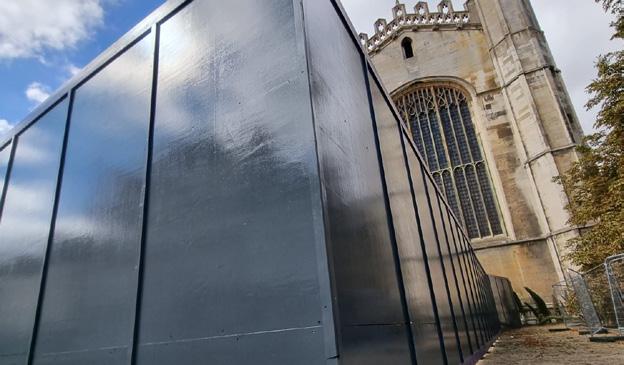
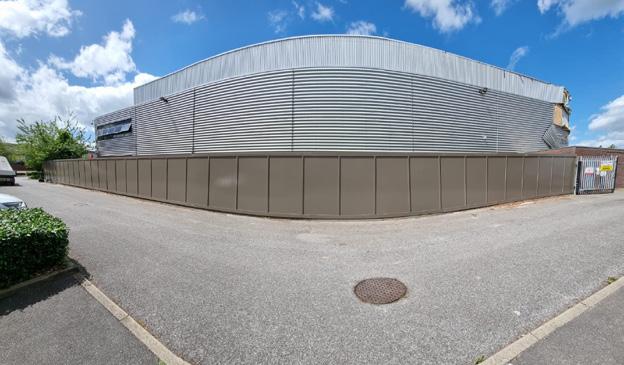
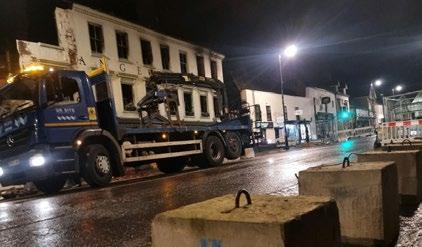
Supply and erect all types of temporary and permanent fencing throughout the UK
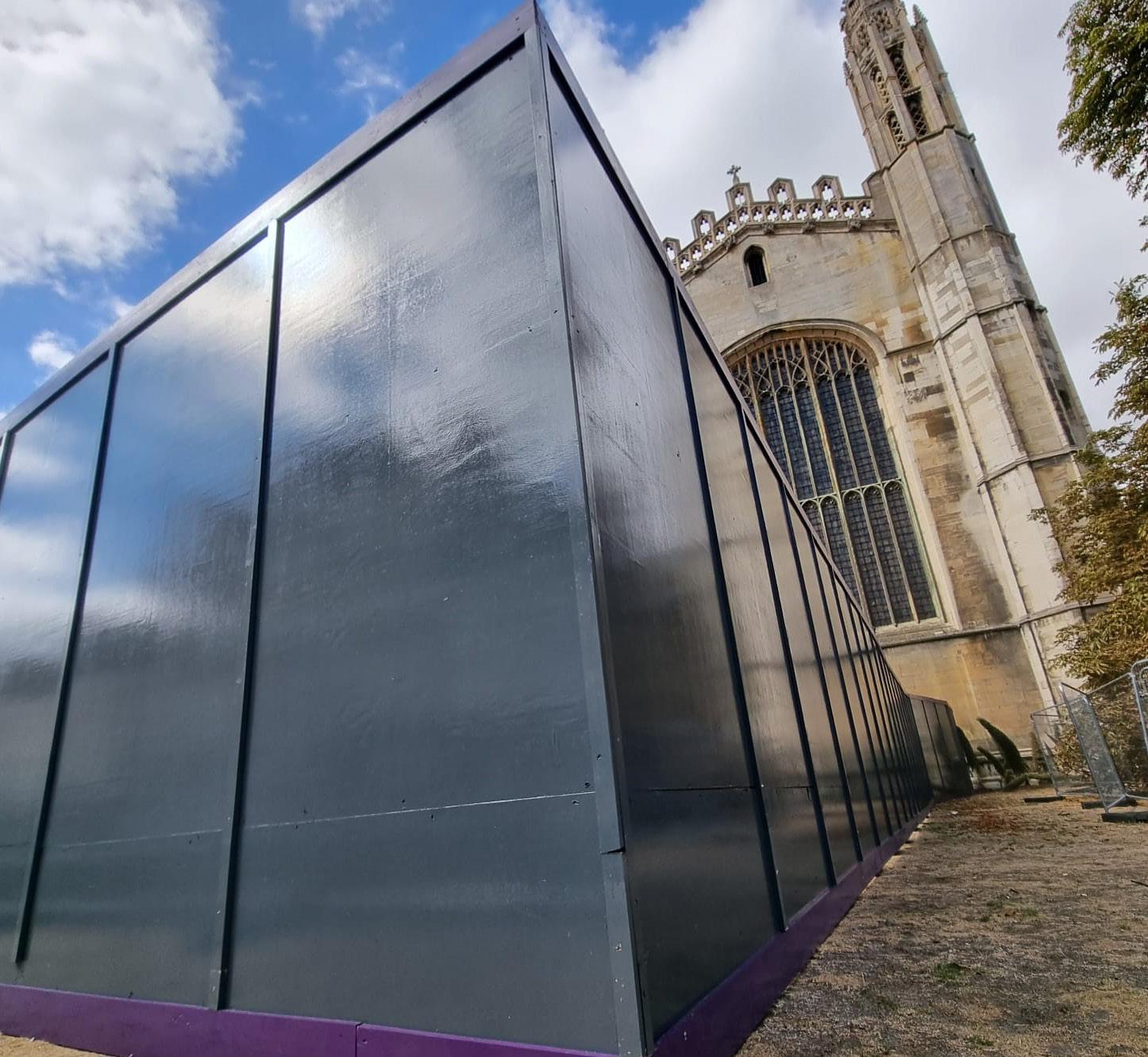
Within five years through due diligence and hard work, we have become one of the most recognisable hoarding contractors throughout England, Scotland and Wales. Our teams work across the country, delivering superior service.
EnviroHoard – UK Site Hoarding Ltd has a net zero hoarding option that has a full site-specific design pack, project-specific carbon embodiment report and is 100% recycled.
GATES: In our fabrication workshop we design and manufacture a range of site hoarding gates to any specification, including bi-fold and tri-fold. We also sell our gates independently to other fencing contractors and design and manufacture bespoke metal shoes for ‘no dig solutions’.
Free-standing has become the favoured option for hoarding. UK Site Hoarding Ltd has the ability and capacity in our new yard to manufacture blocks in house, reducing costs and transport mileage for our clients.
UK Site Hoarding Ltd has just invested in a new yard, enabling us to purchase more materials, reducing our costs and making our prices highly competitive.
UK Site Hoarding has partnered with iPrint Manage to provide the one-stop solution for all hoarding and graphic requirements. From Dibond to vinyl, wayfinding and signage, we can design, print and install your development vision and project details to the public.




safety and environmental management. Dust, noise and vibration were carefully managed to protect both operatives and the building fabric. Measures were implemented to limit the spread of dust within enclosed areas, while vibration monitoring ensured that sensitive elements were not adversely affected by demolition activities. Access routes were planned to avoid contact with retained features, and the movement of materials was controlled to minimise disruption and potential damage.
The building itself was treated as an asset throughout the process, not simply a structure to be dismantled. This mindset influenced every aspect of the methodology, from how works were sequenced to how materials were handled on site. It reinforced the importance of control and precision, particularly within a heritage environment where the consequences of error can be significant.
As the project progressed, the building continued to reveal new information. Additional asbestos was identified in areas that had previously been inaccessible and variations in construction required adjustments to planned methodologies. Rather than causing delays, these challenges were managed through a process of continuous review. Risk assessments were updated, method statements refined and
temporary works designs revised to reflect current conditions. This allowed the project to maintain momentum while ensuring that safety and quality were not compromised.
Titan Group’s integrated delivery model played a key role in supporting this adaptability. By managing strip-out, demolition and temporary works within a single team, the project benefited from consistent oversight and reduced interface risk. Communication was streamlined, decisionmaking was more immediate and changes could be implemented without the delays often associated with multi-contractor environments. This proved particularly valuable on a project where uncertainty was an inherent part of the process.
By the completion of Titan Group’s works, the buildings had been carefully prepared for the next stage of construction. Internals had been stripped back to reveal the structural framework, asbestos risks had been addressed and key structural alterations had been completed. Temporary works remained in place to support the ongoing refurbishment, ensuring stability as new elements were introduced. Crucially, the historic character of the buildings had been preserved, providing a solid foundation for the transformation that would follow.
A consistent and controlled approach to



FieldFlō is the management platform purpose-built for demolition subcontractors. From real-time safety tracking to instant compliance documentation, FieldFlō keeps your projects moving, your crews safe, and your margins protected.
Centralize Operations
Time, materials, equipment, waste tracking and compliance in one dashboard
Strengthen Safety
Customizable and trackable forms, certification tracking and bilingual training videos
Job Profitability
Know your budgets vs. actuals in real-time. Save $80K+ Annually Proven ROI per office.

material handling and waste management underpinned the works. Arisings were removed progressively as works advanced, avoiding unnecessary buildup within the building and maintaining clear, safe working areas. Materials were segregated at source where practicable, with timber, metals, inert materials and hazardous waste separated into defined streams and handled accordingly. Waste movements were tracked and recorded throughout, providing full transparency and traceability in line with environmental and regulatory requirements.
The project highlights a broader shift within the demolition industry. As refurbishment and reuse become more prominent, particularly within historic environments, the role of demolition contractors is becoming increasingly complex. Projects such as Thomas’s College demonstrate the importance of flexibility, technical understanding and integration with the wider construction process.
For Titan Group it shows how careful planning, adaptable methodology and integrated delivery can successfully navigate the challenges of working within a historic structure, while maintaining the standards of safety, sustainability and control expected of the industry today.
Interviewee: Vincent Sheng
Role: General Manager
Company: Yuchai Equipment
What is your core message to our demolition contractor readership?
For demolition contractors, equipment must ultimately do three things well: work reliably, adapt to different job sites and remain economical to operate. Our message is simple – compact machines are becoming increasingly important in demolition. As projects move into urban areas and indoor environments, contractors need equipment that is powerful enough for demanding work yet compact and flexible enough to operate in confined spaces.
At Yuchai Equipment we focus precisely on this segment. Compact excavators, electric machines and specialised equipment allow contractors to do more with fewer machines and lower operating costs. In demolition, versatility is just as important as power.
Give us some background on Yuchai Equipment.
Yuchai Equipment is part of Yuchai Group, founded in 1951 and now one of China’s largest industrial engine manufacturers. Today the group employs more than 16,000 people and generates multibillion-pound annual revenues. Yuchai engines are widely used in trucks, buses, construction equipment and power systems around the world. Building on this strong engineering heritage, Yuchai Equipment focuses on compact construction machinery, including excavators, skid steer loaders, wheel loaders, etc.
Today our machines are exported to more than 100 countries and regions and international


markets are becoming increasingly important to our future development. Our philosophy is simple: build reliable machines that help customers get the job done efficiently.
How did you start out in the heavy plant industry, what attracted you to it and how has your career developed?
My career began as a mechanical engineer working in excavator R&D for another global construction equipment manufacturer, where I was involved in structure design and development.
Starting as an engineer gave me a strong appreciation of how machines are built and how design decisions affect performance and durability in real jobsite conditions. Later I moved to the UK and worked as a product manager before eventually taking responsibility for the British market. That experience allowed me to understand
the industry from a customer perspective –particularly the needs of contractors, rental companies and dealers.
Today, as General Manager of Yuchai Equipment, I oversee the company’s global development and overall operations.
Tell us about Yuchai Equipment’s offering in the UK. How is the UK rollout going?
The UK is an important market for compact equipment and we see strong long-term opportunities here.
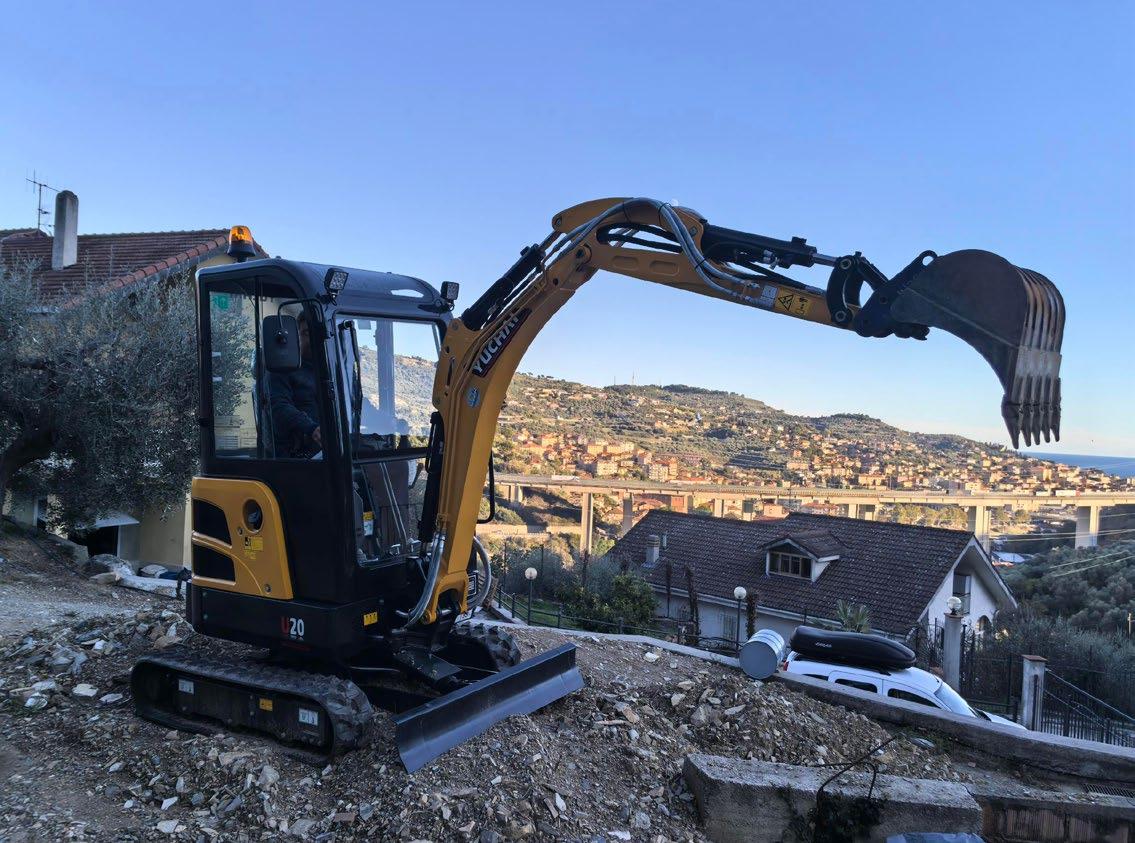
Our current product range for the UK includes compact excavators and wheel loaders, skid steer loaders and electric compact machines designed for urban construction and demolition environments. Machines such as the YC135 and YC215 excavators provide strong performance for heavy-duty applications including demolition work, while smaller and electric machines provide solutions for indoor or restricted job sites.
Our focus in the UK is on building a strong dealer network and ensuring reliable aftersales support for customers.
How does your relationship with customers work?
As a relatively new brand in some European markets, building trust is extremely important. We work closely with professional dealers who understand their local markets and can provide strong service support. Dealers play a key role not only in sales but also in parts availability, technical support and aftersales service.
Our goal is to build long-term partnerships rather than simply sell machines. We support dealers with training, marketing support and product development feedback.
In terms of marketing, we are increasing brand visibility
through exhibitions, dealer partnerships and industry media.
What makes Yuchai different from its competitors?
The compact equipment market is highly competitive, so having a clear identity is essential. At Yuchai Equipment our differentiation comes from engineering heritage, specialisation in compact equipment and the ability to innovate quickly.
First, we benefit from the engineering background of Yuchai Group, one of China’s largest engine manufacturers. This gives us strong expertise in powertrain integration. The integration of engine, hydraulics and machine structure is critical for reliability and efficiency, and this is an area where our background brings real advantages.
Second, we are deeply specialised in compact equipment. Rather than covering every segment of construction machinery, we focus on compact excavators and compact jobsite equipment. This allows us to respond quickly to the needs of contractors working in urban construction, utilities, landscaping and demolition.
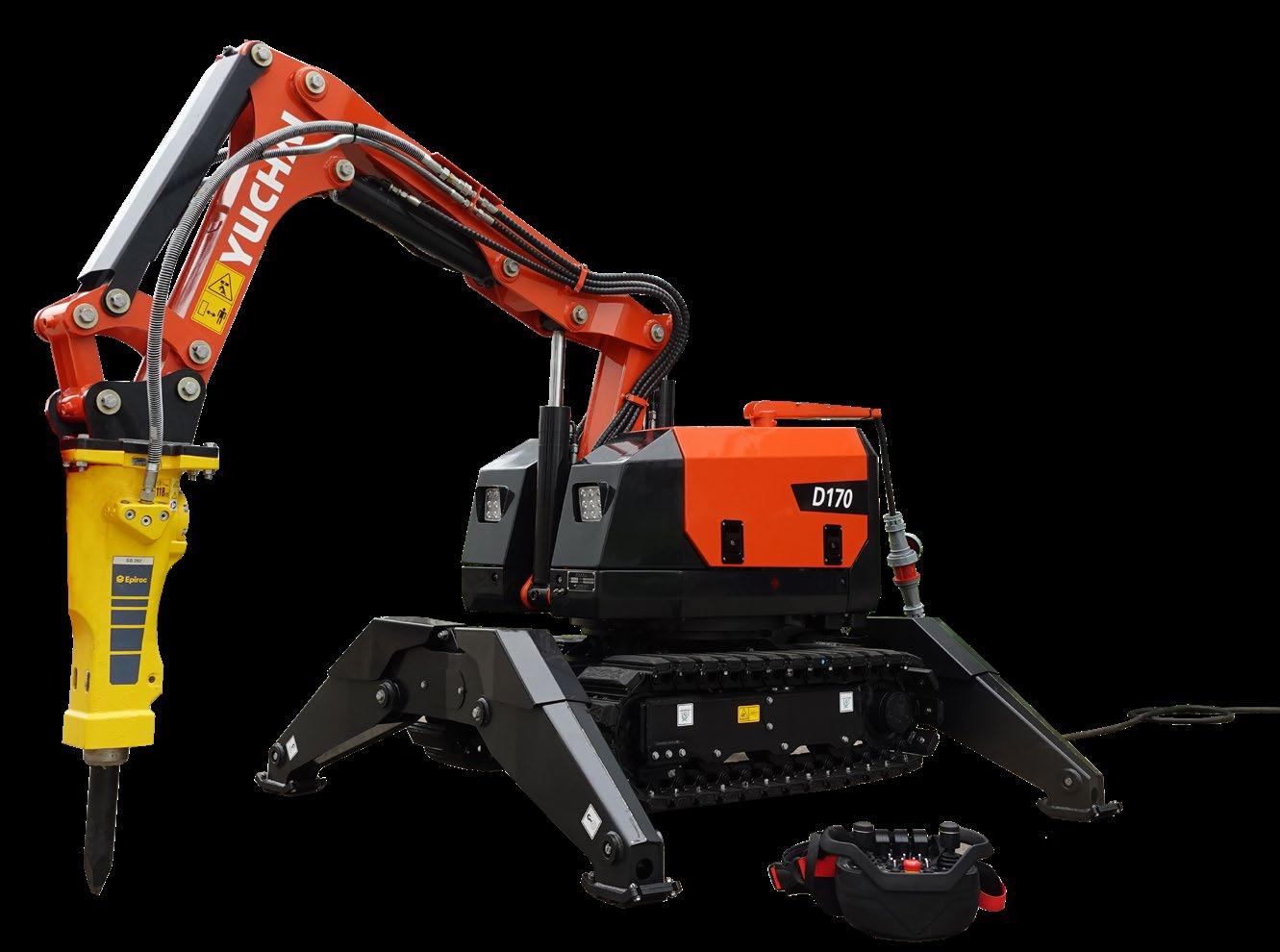
Third, we move quickly in areas such as electrification and new product development. Products like the Y20E electric mini excavator, S35 electric skid steer loader and the D170 demolition
support each other and work towards the same goal.
The company encourages open communication and fast decision-making, which allows us to respond quickly to customer needs and market changes. Personally, I try to bring both engineering thinking and international market experience into the organisation.
How has the scope of Yuchai’s business developed over time?
Domestically, Yuchai Group has built a very strong position in the engine industry over many decades. For Yuchai Equipment, the focus in recent years has been expanding into international markets, particularly Europe.
We see significant growth opportunities for compact equipment globally, especially as urban construction and infrastructure renewal projects increase.
What do you envisage will be the future technological game changers in heavy plant?
Electrification is one of the most important developments in compact equipment today. Urban construction and demolition projects increasingly require machines with lower emissions and lower noise levels. Electric machines are well suited to these applications.
Yuchai is actively developing electric equipment such as the S35 electric skid steer loader and the Y20E electric excavator, which are ideal for indoor demolition and confined environments. Digital technologies and AI are also becoming increasingly important tools for improving machine diagnostics, fleet management and operational efficiency.
How do you see the outlook for the demolition supply sector generally?
Demolition is evolving quickly as projects move increasingly into urban environments. This creates demand for smaller, more specialised machines that can operate safely in confined spaces and under strict environmental regulations.
We believe compact excavators, electric machines and remote-controlled equipment will play an increasingly important role in the future of demolition.
Does Yuchai have any notable projects in progress or in planning?
Yes, we are currently expanding our compact equipment range for sectors such as utilities, landscaping and rental. One interesting project in development is a stand-on skid steer, which we believe could be a very practical solution for many contractors.
In parallel, we are also exploring electrification and smarter machine technologies as part of our long-term product strategy.
What is Yuchai’s strategy regarding sustainability and zero-carbon machines?
Sustainability is an important focus for the industry. Yuchai Equipment is actively developing electric compact equipment to meet the growing demand for low-emission machines, particularly in urban environments. Electric excavators and loaders will play an increasingly important role in demolition and renovation projects where emissions and noise are critical considerations.
How do you envisage Yuchai in five to ten years?
Our ambition is to become a trusted compact equipment brand globally. In Europe we aim to establish a strong dealer network and build longterm partnerships with professional distributors and contractors. Globally we will continue investing in compact equipment, electrification and specialised machines for modern job sites.
And how about you in a few years?
I hope to continue helping grow Yuchai Equipment into a strong international brand and building a team that can succeed in global markets.
Product name: S35 Electric Skid Steer Loader
Tell us about one of Yuchai’s key demolitionrelevant products.
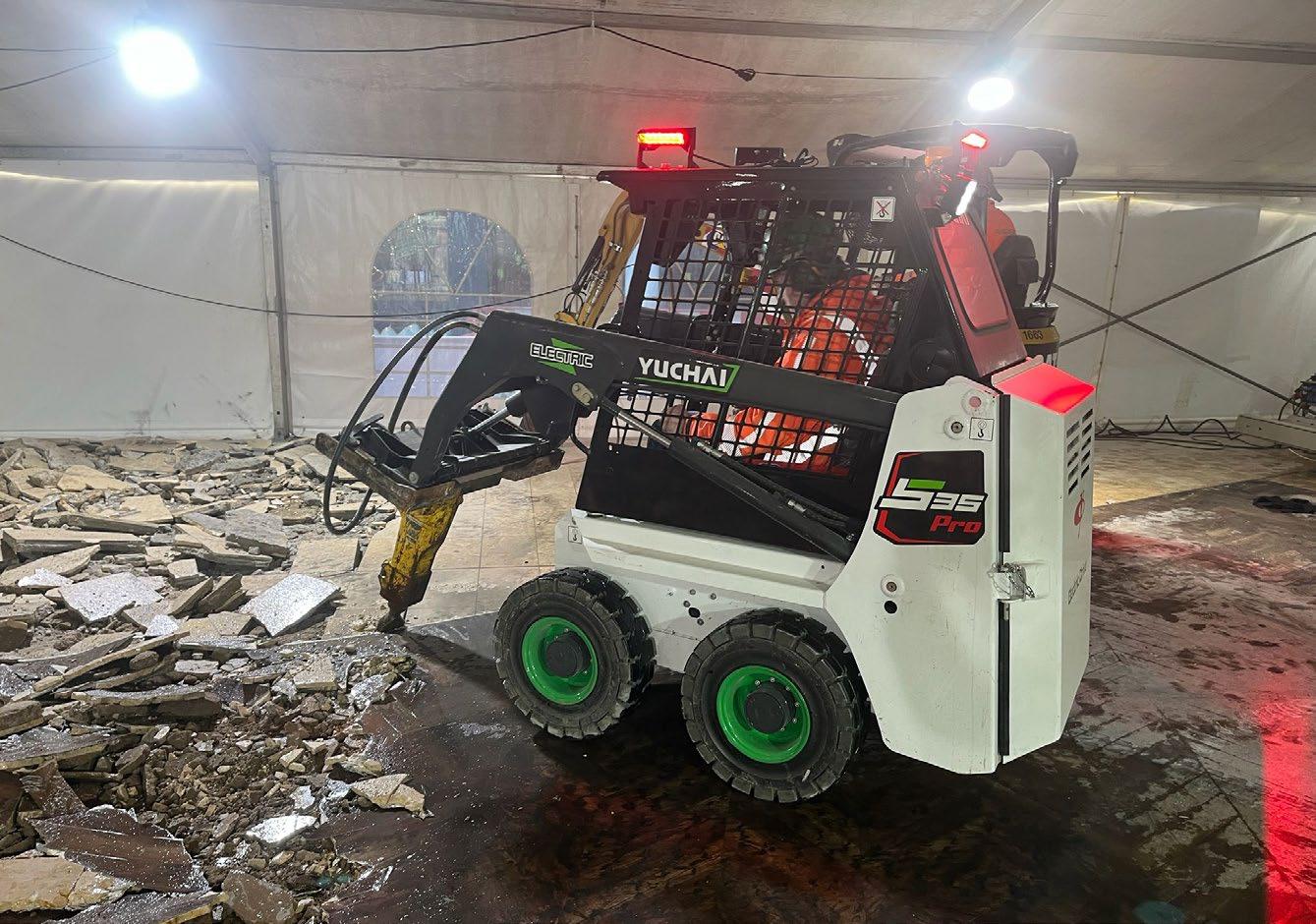
One of our products that is particularly relevant for demolition contractors is the S35 electric skid steer loader.
The S35 is a fully electric compact skid steer designed for urban construction, interior demolition and renovation projects where traditional diesel machines may not be suitable. Modern demolition work increasingly takes place in confined environments such as buildings, basements and city centres, where noise, emissions and space constraints are critical.
By combining the versatility of a skid steer platform with all the advantages of electric power, the S35 offers a compact and highly manoeuvrable machine capable of working efficiently in sensitive environments.
Outline the key specifications of the product. The S35 is designed as a compact but capable
electric machine that can perform a wide range of jobsite tasks.
Key specifications include:
• Rated operating load: 350 kg,
• Hydraulic flow: 20.5 L/min,
• Battery options: 21.29 kWh and 29.17 kWh lithium battery packs,
• Operating endurance: approximately six to eight hours or up to nine to eleven hours, depending on configuration
Despite its compact size, the S35 delivers strong hydraulic capability, allowing it to operate a variety of attachments commonly used in demolition and construction environments.
Like most skid steer platforms, it can be equipped with different tools for material handling, breaking, loading and site clean-up, making it a highly versatile support machine on demolition sites.
How is it critical for demolition contractors?
Why should they buy it?
For demolition contractors, access and flexibility are often just as important as raw power.
Many demolition projects today involve interior stripping, renovation work or selective demolition, often inside buildings or in densely populated urban areas. In these environments, diesel equipment can face restrictions due to ventilation, noise limits or emissions regulations.
The S35 solves many of these problems. Because it is fully electric, it produces zero exhaust emissions and operates at significantly lower noise levels than conventional machines. This allows contractors to work indoors or in sensitive environments without the limitations associated with diesel-powered equipment.
From a business perspective, this means contractors can take on a wider range of projects, particularly those involving indoor demolition, renovation or night-time urban work.
At the same time, electric machines typically offer lower operating costs and reduced maintenance requirements, helping contractors improve efficiency while reducing downtime.
In simple terms, the S35 allows demolition contractors to work in places where traditional machines cannot – and that opens up new opportunities.
Can you quantify any of the S35’s benefits?
One clear advantage is operating endurance and cost efficiency. Depending on the battery configuration, the S35 can operate for up to a full working shift, making it suitable for most daily
jobsite tasks without interruption.
Electric equipment also reduces the need for fuel and engine-related servicing, which can significantly lower routine maintenance requirements. Over time, this can translate into lower operating costs and improved total cost of ownership, particularly for contractors who frequently work in urban or indoor environments.
Tell us about the development of this product. Is it evolution or revolution?
The S35 represents both evolution and adaptation to a changing market. Skid steer loaders have long been valued for their versatility on construction and demolition sites. What we have done with the S35 is take that proven concept and adapt it to the needs of modern urban job sites.
Electrification is becoming an increasingly important trend across the construction industry. Cities are tightening environmental regulations and contractors are looking for equipment that can operate in more sensitive environments.
The S35 reflects this shift. Rather than replacing traditional machines entirely, electric equipment is expanding the possibilities of where and how contractors can work.
How are you finding take-up among demolition contractors?
Interest in electric compact equipment is growing steadily, particularly among contractors involved in urban demolition, refurbishment and interior projects.
When introducing the S35 to demolition contractors, the most effective approach is often demonstration and real jobsite experience. Once contractors see the machine operating in confined spaces, the advantages become very clear. We also work closely with our dealer network to introduce the machine to customers who are exploring electric alternatives for urban projects.
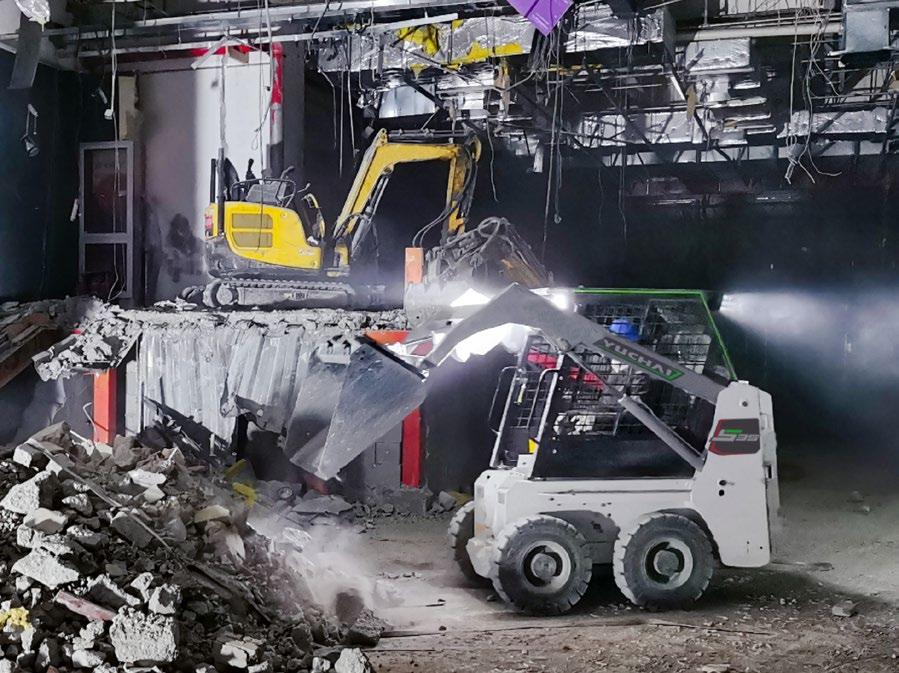
Electric equipment is still a developing segment, but awareness and acceptance are increasing quickly across the industry.
What feedback have you had?
Feedback so far has been very encouraging. Contractors particularly appreciate the machine’s quiet operation,

compact size and manoeuvrability, which make it very practical for working inside buildings or in restricted environments.
The flexibility of the skid steer platform is also frequently highlighted. With the right attachments, the machine can support a wide range of jobsite tasks beyond demolition itself, including material handling and site clean-up.
How do you see its development?
Looking ahead, we believe electric compact equipment will become an increasingly important part of modern construction and demolition sites. Urbanisation, environmental regulations and the growth of interior renovation projects are all driving demand for low-emission and low-noise equipment. Battery technology, energy efficiency and machine intelligence will continue to improve, allowing electric machines to take on more demanding tasks.
At Yuchai Equipment, we see products like the S35 as an important step in this transition. The future jobsite will not be defined by one type of machine – it will be defined by the right machines for the right environments. Electric compact equipment will be a key part of that future.
What do you do for fun?
I enjoy travelling and exploring different places and cultures. But after working in this industry for years, it’s difficult not to notice excavators wherever I go. Even on holiday, I sometimes catch myself looking at a jobsite and wondering what machine they’re using.
What gets you out of bed in the morning?
The alarm clock… unfortunately. But also the challenge of building something new and developing a brand internationally.
What’s your favourite food/cuisine?
That’s a difficult question – especially when it comes to British food! If we are talking about British dishes, I would say Sunday roast. But my favourite will always be authentic Chinese cuisine – real regional dishes, not the local Chinese takeaway version.
What’s your tipple of choice?
I actually have a very poor alcohol tolerance, so I usually keep things light. But if I had to choose something, it would probably be a gin and tonic.
If you could be remembered for one thing, what would it be?
Helping build something meaningful – whether that’s a successful company, a strong team, or long-term partnerships. In business, machines and technology will always evolve, but trust and collaboration are what truly last.
yuchaicm.com vincent.sheng@yuchai.com
One of the UK’s leading demolition and dismantling contractors has invested in a new JCB 370X tracked excavator.
A world leader in complex demolition, Dundee-based Safedem has taken delivery of JCB’s most powerful excavator for its latest projects across the UK. Supplied by dealer Scot JCB, the new 370X has been specified with additional cab and body protection for the rigours of the demolition environment
The family-run business, now in its fourth generation, has been operating in the demolition sector for over a century and is internationally renowned for its use of explosives engineering and technical precision.
Safedem Managing Director, William Sinclair said: “This business is built on relationships and we’ve always had a strong one with JCB. My grandfather was in the RAF with Joseph Cyril Bamford and today we work closely with Scot JCB which provides us with outstanding support. As a UK business working all over the world, it’s inspiring to see what JCB has achieved globally. Wherever we go, we find a JCB on site. That speaks volumes.
“We’ve lost count of how many JCB machines we’ve bought over the years and they have never let us down. The new 370X is a good size machine for demolition and handles everything we throw at it. We were looking forward its launch and it has not disappointed. It’s the biggest machine

JCB makes, it’s powerful, robust and it’s already proving to be a stable, fuel-efficient machine that is comfortable for our operators.”
The JCB 370X is ideally suited to Safedem’s heavy-duty requirements, combining more power and strength with lower fuel consumption and improved operator comfort. Its 240kW Stage V engine delivers a 14% power increase over its predecessor, while redesigned hydraulics and extended service intervals boost productivity and reduce total cost of ownership.
Founded in 1974 and employing 40 people, Safedem Ltd is one of the leading demolition and dismantling companies in the UK with specialist services such as explosives and facade retention available worldwide. It has built a reputation for delivering some of the most challenging demolition projects in the world – including the Guinness World Record for the tallest building demolished using controlled explosives. Its compact but specialised fleet is equipped for high-impact work and includes multiple JCB demolition excavators.

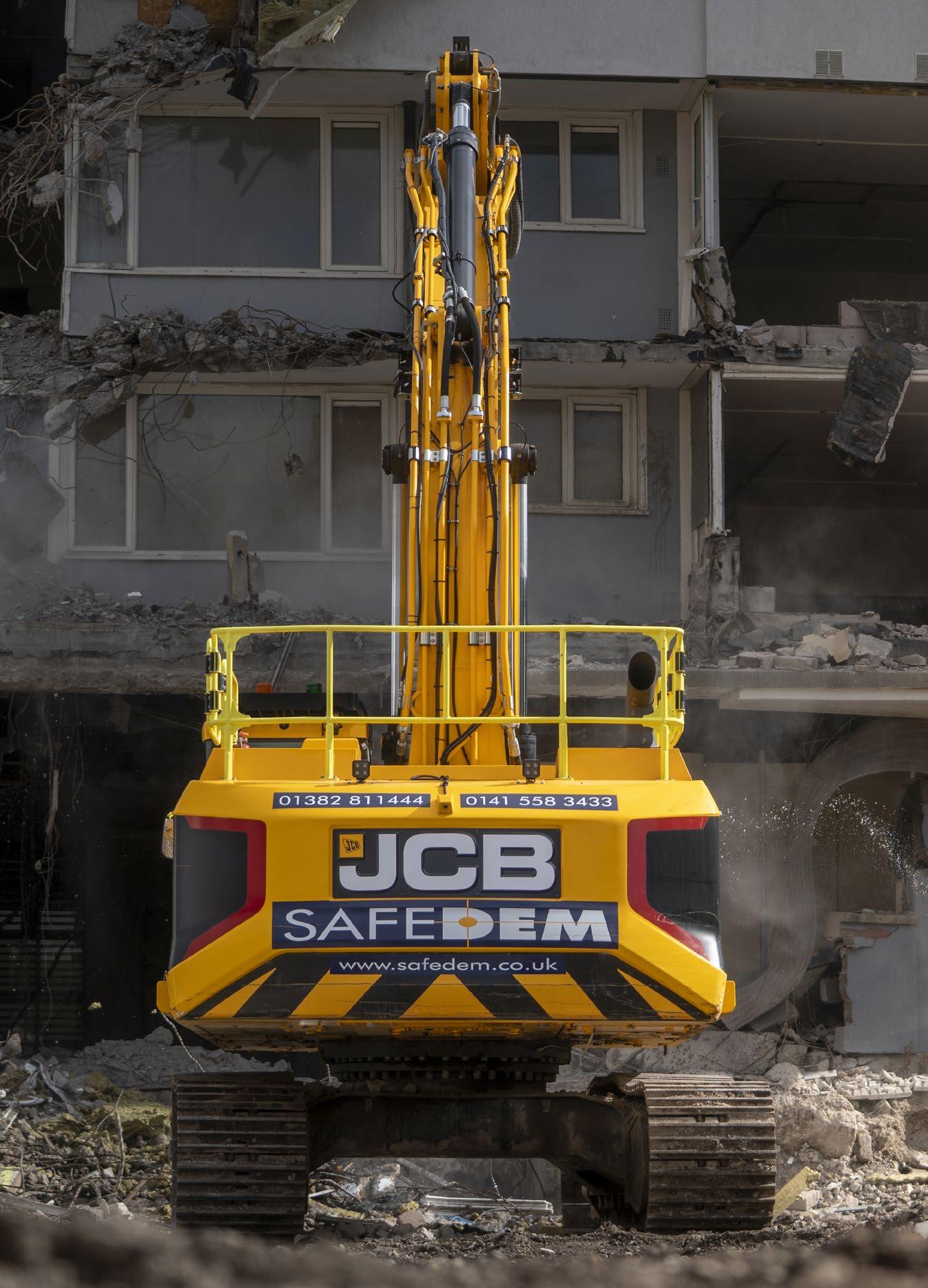


Mountains of paperwork, manual errors, and endless back-and-forth are slowing down your jobs and frustrating your teams and clients. FieldFlō replaces outdated systems with one easy-to-use platform built for demolition contractors. From safety training and compliance to time tracking and project insights, you’ll have real-time visibility, safer sites, and stronger margins.
Run Smarter Demolition.
Centralize Operations
Time, materials, equipment, waste tracking and compliance in one dashboard
Strengthen Safety
Customizable and trackable forms, certification tracking and bilingual training videos
Job Profitability
Know your budgets vs. actuals in real-time.
Save $80K+ Annually Proven ROI per office.

Liebherr has reaffirmed its commitment to innovation, reliability and customer-focused development through the latest advancements of its Generation 8 crawler excavators. Designed for demanding earthmoving applications worldwide, these machines combine forward-looking engineering with practical solutions that enhance efficiency, operator comfort and long-term durability.
As construction becomes more connected, more automated and more safety-oriented, Liebherr continues to invest in machines and digital solutions that enable customers to work smarter, safer and more sustainably. The result is a product family that delivers measurable value on the jobsite while laying the foundations for the next era of intelligent earthmoving technology.
The Liebherr Generation 8 crawler excavators were introduced to the global market in 2019. They have a futuristic design and a completely redesigned architecture in order to improve convenience, safety ergonomics and performance. From the R 922 to the R 945, the Generation 8 range combines outstanding performance with reduced fuel consumption, supported by a comfortable operator environment and simplified, safe maintenance access. Proven in diverse applications worldwide, this generation continues to evolve, driven by Liebherr’s commitment to providing customers with the highest possible performance and longterm reliability.
Liebherr has expanded the capabilities of its Generation 8 crawler excavators with a suite of technologies designed to improve efficiency, precision and on-site safety. The standard LPE (Liebherr Power Efficiency) mode now optimises hydraulic and engine performance to fuel consumption by up to 10%, while a unique ground-level diesel exhaust fluid filling pump streamlines refuelling and eliminates contamination risks.
The integrated Leica 2D guidance system offers intuitive, high-precision control and can be
upgraded to 3D-ready configurations for more demanding applications. To enhance productivity, the Bucket Fill Assist automates fast, consistent bucket loading, complemented by a real-time weighing system with ±2% accuracy and full traceability via Liebherr Connect – both available with 500 hours of free trial use. Completing the package, the Skyview 360°system provides an all-round heated camera view for reliable obstacle detection, significantly improving safety in confined or busy job sites.
The R 924 and R 945 on display
Liebherr presented two of its most advanced Generation 8 crawler excavators at ConExpo, each configured to deliver optimal performance for demanding earthmoving applications.
The R 924 G8 featured a 2,390-mm undercarriage, 800-mm track pads, a five-tonne counterweight, a 5.7-m mono boom and a 2.9-m stick. Powered by a Tier 4 Final engine delivering 129kW, the machine weighs approximately 25 tonnes, combining agility, stability and efficiency.
The larger R 945 G8 is equipped with a 2,900-mm undercarriage, 750-mm track pads, a 9.4-tonne counterweight, a 6.45-m mono boom and a 3.25-m stick. Its Tier 4 Final engine provides 220kW, supporting an operating weight of around 45 tonnes. Together, these two models embody Liebherr’s approach to robust design, high productivity and advanced technology for the modern jobsite.
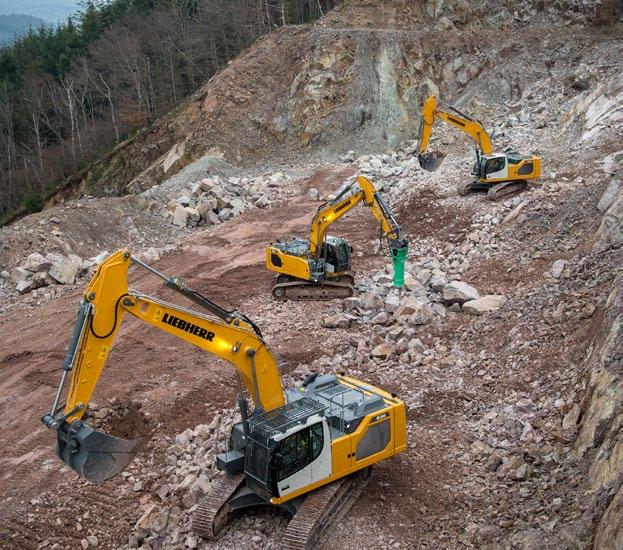
As the UK construction and demolition sectors continue to evolve, businesses demand machinery that combines cutting edge technology, robust engineering and outstanding long term value. SANY UK stands firmly at the forefront of this movement, delivering a powerful range of excavators and demolition ready equipment designed specifically for the toughest applications.
Backed by SANY Group’s global R&D and manufacturing network, with industrial parks and facilities across the world, SANY UK benefits from extensive engineering expertise and world renowned components sourced from leading suppliers, reinforcing the reliability, durability and advanced capabilities that customers rely on daily.
SANY’s demolition excavators are distinguished by their power, productivity and unwavering stability – critical traits when working in environments that demand absolute precision and operator safety. SANY’s UK demolition range includes both high reach and heavy duty crawler excavators engineered specifically for dismantling structures, handling debris and performing demanding demolition tasks.
The standout high reach model, the SANY SY500HRD, is a specialist machine built to combine reach, strength and operator safety. Designed for endurance, the SY500HRD integrates reinforced steel bodywork, a wide and stable undercarriage and a long boom built for high reach demolition while maintaining balance and control. These characteristics ensure dependable performance in complex, high risk environments where precision and safety are critical.
Demolition is one of the most demanding and hazardous segments of the construction industry and SANY has placed operator safety at the forefront of its engineering philosophy. The SY500HRD, for example, is equipped with a tilting ROPS/FOPS certified cab, allowing operators to maintain optimum visibility during high reach work. Safety glazing, protective grilles and integrated rear and side view cameras enhance visibility and reduce risk. Automated
range limitation systems help prevent accidental overreach or collision, ensuring that both operator and equipment remain fully protected.
Inside the cab, ergonomic design promotes comfort and reduces fatigue during long shifts. Features such as a fully adjustable heated seat, climate control, intuitive controls and a large high resolution display create a work environment tailored for productivity. With these design considerations, SANY ensures that operators can work efficiently and comfortably – an important factor in maintaining precision during delicate demolition tasks.
SANY’s demolition excavators are built with cost of ownership in mind. Steel bodywork, simplified maintenance access, extended service intervals and robust component design contribute to lower running costs and increased asset longevity.
Through its nationwide dealer network, SANY UK ensures rapid service response, genuine parts supply and ongoing technical support – all essential for demolition contractors who rely on maximum uptime. Safety, durability and comfort are central pillars of the SANY design ethos, reflecting a consistent commitment to delivering machinery that meets the needs of modern demolition practices.
SANY UK has established itself as a force within the UK’s demolition machinery market. Combining global engineering expertise, a commitment to reliable and powerful equipment, and robust nationwide support, SANY provides demolition contractors with machines that deliver exceptional stability, safety and precision. With continued investment in UK operations and a growing range of demolition optimised excavators – led by the formidable SY500HRD –SANY UK is well positioned to support the future of safe, efficient and high performance demolition across the UK.

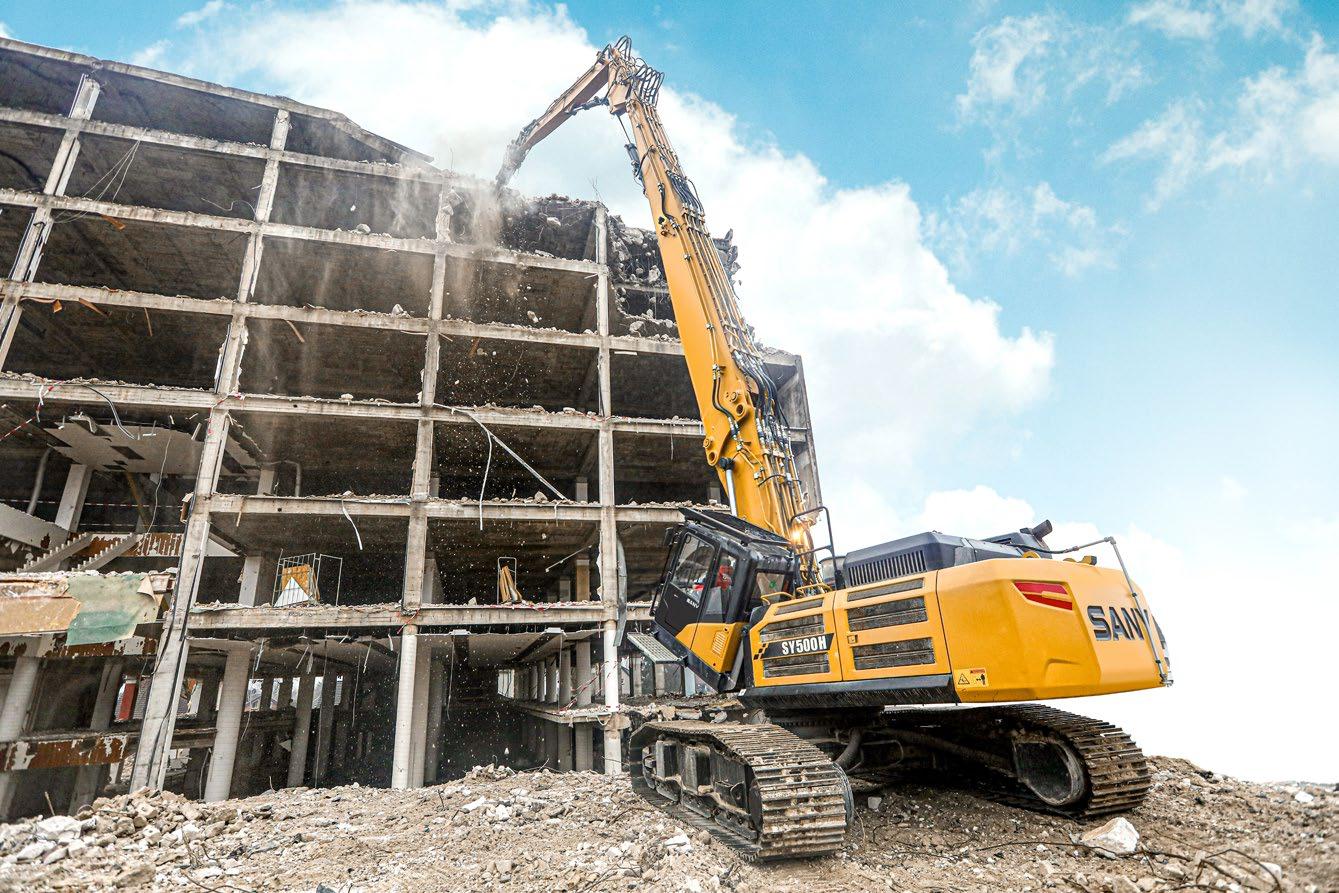
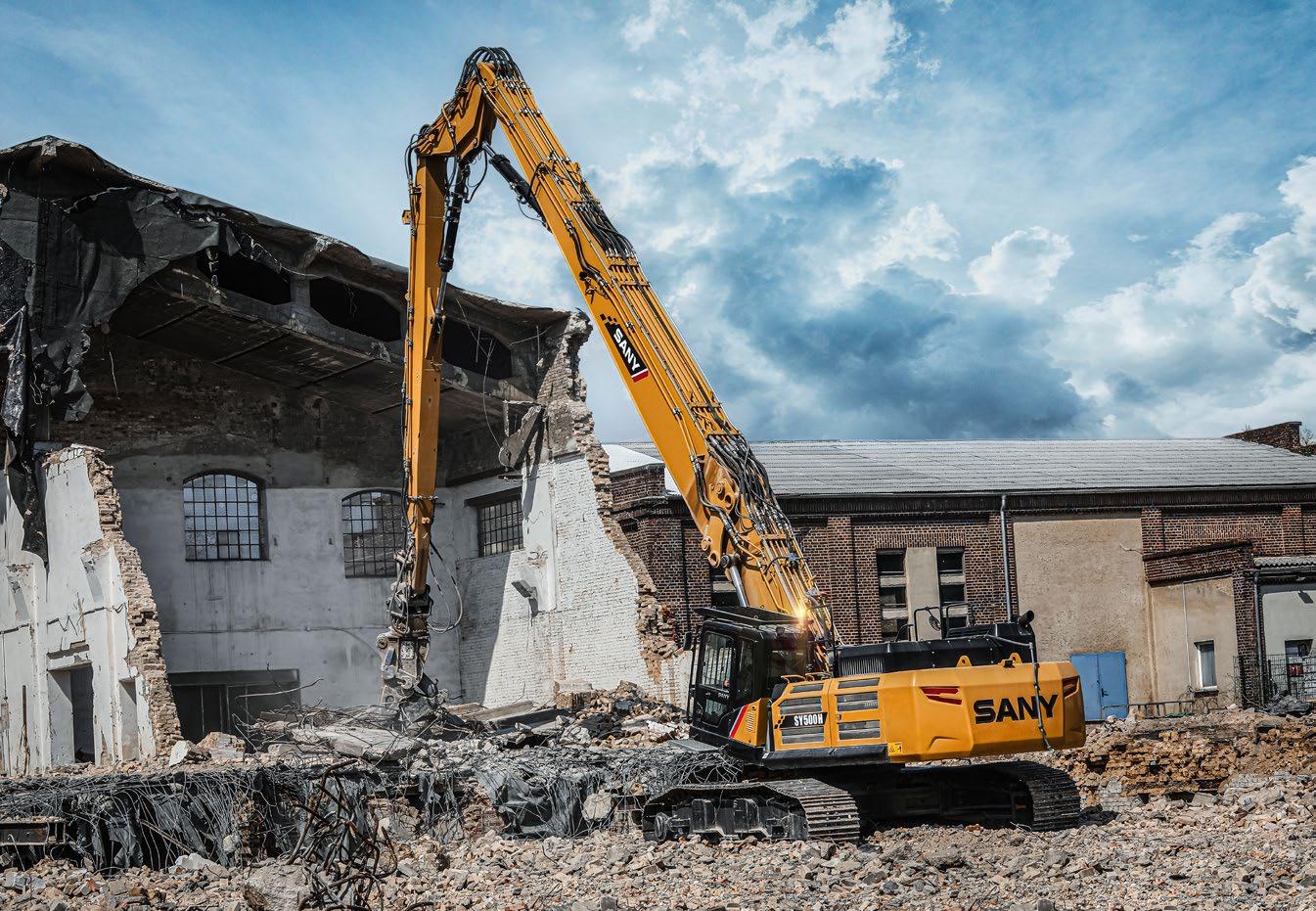
Demolition projects are evolving as urban redevelopment, renovation and selective demolition become increasingly common across Europe. Contractors are often required to work in confined environments, inside existing structures or in densely populated urban areas. As a result, compact, versatile and low-emission equipment is becoming increasingly important for modern demolition operations.
As a manufacturer of compact construction machinery, Yuchai Equipment develops machines designed to meet the needs of these demanding applications. The company is part of the Yuchai Group, one of China’s leading engine manufacturers with decades of experience in powertrain engineering. Drawing on this industrial background, Yuchai focuses on compact excavators and specialised equipment designed to deliver reliability, efficiency and versatility across a wide range of construction and demolition tasks.
Compact excavators play an important role in demolition work thanks to their flexibility and ability to operate in restricted environments.
Machines in the 13 to 22-tonne class provide the stability and hydraulic performance required for demanding demolition applications, particularly when operating attachments such as hydraulic breakers, crushers or shears.
Yuchai’s YC135 and YC215 excavators are examples of machines suited to this type of work. Equipped with auxiliary hydraulic circuits, these excavators can support a wide range of demolition attachments while maintaining the stability required for breaking and material handling operations. Their compact design also makes them suitable for urban demolition projects where space is limited and manoeuvrability is essential.
Beyond structural demolition, contractors often rely on compact excavators for multiple tasks on the same job site, including sorting demolition material, loading trucks and preparing
the site for the next stage of construction. The versatility of compact excavators allows contractors to complete a wide range of operations with a single machine.
Another important development within the demolition sector is the growing demand for electric equipment, particularly for indoor demolition and refurbishment projects. Work inside buildings, tunnels or other enclosed environments often requires machines that produce low noise levels and zero exhaust emissions.
To support these applications, Yuchai has introduced electric compact equipment solutions such as the Y20E electric mini excavator. This machine is designed for indoor demolition, renovation work and other confined job sites where traditional diesel-powered equipment may not be suitable. Electric machines offer the advantages of zero emissions, reduced noise levels and smooth operation, helping contractors meet increasingly strict environmental and workplace requirements.
In certain demolition scenarios, remotecontrolled equipment also plays an important role. Yuchai’s D170 demolition robot is designed for breaking and demolition work in confined or hazardous environments where operator safety is critical. With remote operation and compact dimensions, the robot can be used for structural removal, concrete breaking and other selective demolition tasks in locations where larger machines cannot operate efficiently.
By combining compact excavators for structural demolition, electric machines for indoor environments and remote-controlled demolition robots for specialised tasks, contractors can adopt a flexible equipment strategy suited to the different phases of modern demolition projects.
Yuchai is continuing to expand its international presence, with a growing focus on the European market through a developing dealer network providing machines, parts and service support to local customers.


Interviewee: James Lovett
Role: Head of Marketplace
What is your core message to our demolition contractor readership?
We recognise that time is short for the people and families that run demolition businesses in the UK; who often don’t have time to down tools to weigh up all the different finance options out there. The market is varied and there are many different ways to crack a nut or perhaps I should say take down a building in the case of the demolition industry. Like in demolition, finance isn’t a one size fits all scenario and each problem could have multiple solutions.
Whether you need cashflow to enable you to take on a new contract or asset finance to invest in new excavators, we can help you navigate the options so you can decide what is best for you. As well as our own industryleading loan, FlexiPay and credit card products, we offer asset finance and invoice finance, working across the market and through strong relationships with high street banks, challenger banks and alternative funders to ensure our customers can access the funding they need –even if it’s not a Funding Circle loan. We pride ourselves on our unbiased and transparent approach that finds the right product to meet your needs.


Give us some background on Funding Circle and the range of services it provides. How your relationship with clients work?
Small businesses are the undisputed backbone of Britain’s economy – driving innovation, creating jobs and fuelling regional growth. Yet all too often, the financial system puts barriers in their way. Accessing capital remains complex, slow and uncertain, holding back the ideas and ambition that power the UK’s growth engine.
Funding Circle exists to change that. We are the UK’s leading SME lending platform, built to back small businesses. Since 2010, we have extended more than £17bn in credit to over 125,000 UK businesses, helping them power the economy and their communities.
We use proprietary data and insight to deliver a superior customer experience across a full suite of SME finance needs. Technology is critical to making those products better and the process smoother, but we believe in automation where

it helps, people where it matters. We combine the efficiencies of AI with the judgement and care of our expert teams and partners. SMEs can apply in as little as six minutes and 73% of our borrowers receive an instant decision.
Over the last few years, we have evolved from a single-product lender into a multi-product platform that allows businesses to borrow (Term Loans), pay later (FlexiPay), spend (Cashback business credit card) and more (through our Marketplace which includes products such as asset finance). Enabled by our proprietary data and AI-powered technology, we provide SMEs with the right product at the right time to support them through every stage of their growth.
Our goal is to be the most trusted financial partner for SMEs, and we are proud of the impact we have in powering them. In 2025 alone, lending through Funding Circle contributed £7.9bn to GDP, supported 117,000 jobs and generated £2.2bn in tax receipts.
How is digital tech and AI involved in Funding Circle’s business?
Everything we do is powered by the combination of our proprietary technology and data and how we combine that with human expertise. This is the moat around the business.
We have 15 years of proprietary data, which has produced over 10 billion data points from business financials to loans taken, transactions made and loans repaid. These data points feed our AI-powered models, now in their ninth generation.
Our SMEs want speed and ease so they can get back to doing what they do best –running their businesses. Thanks to our data, our technology and our dedicated account managers, we provide them with a fast and seamless journey. Our customers complete their applications in as little as six minutes, 73% of them get an instant decision and they can have money in their accounts in 24 hours. Our models are three times better at discriminating risk than a standard bureau score which means we can say “yes” to more businesses. This drives strong customer satisfaction scores with NPS of 79 and TrustPilot score of 4.6.
And we aren’t standing still, we’re continuing to build, develop and release new features. Our technology and data stack enables us to be quick to market as we launch new products and features to the market – enriching our products and continually improving our customer experience.
We’re also actively embedding GenAI applications across our business. We see AI as a significant lever over the medium term to improve our customer experience, increase productivity and open up new opportunities.
In 2025, we launched our mission to make Funding Circle AI-native. What we mean by that is that AI is an integrated part of how we work and think, augmenting our human expertise to deliver better customer outcomes.
How have the requirements of business funding changed over recent years and how do you meet these needs?
Over the last few years, we have evolved from a single-product lender into a multi-product platform that serves more of our customers’ needs. For example, we have seen increased demand for working capital products and shorter-term lending.
In 2021, a customer transacted with us roughly once every 30 minutes. Today, a customer transacts with us every 38 seconds. Our multi-product approach is creating a powerful flywheel effect: more products lead to more engagement, which gives us deeper insights, allowing us to build even better products for the future.
The macroeconomic backdrop in 2025 has again been mixed. We have seen flat GDP, low consumer confidence, business insolvencies ahead of their historic trend and rising unemployment. Despite this, our business continues to deliver. Our credit models have proved their effectiveness through the cycle. Demand has remained strong with a 29% yearon-year increase in credit extended.
When I speak to our customers, I’m always reminded of their resilience, agility and optimism –proving the adaptability of UK small businesses.
How has the scope of Funding Circle developed over time and are you in the process of developing its range of services?
Today, our business is in the strongest position it has ever been but we still believe we’re just getting started. We continue to see strong demand for our products, we’re operating in large addressable markets, and in 2025 we supported more SMEs than ever before.
2025 was a standout year in terms of our financial performance. Revenue grew 28% to £204 million, delivering our 2026 revenue guidance a year early. This revenue growth was

underpinned by strong volume growth driven by continued product innovation and strong borrower demand. PBT reached £20 million, up from £3 million in 2024.
We have diversified and expanded our product suite beyond our core long term loans, with nearly half of our credit extended in 2025 coming from other products. Today, we offer over 10 different credit products to our customers when we also take into account our Marketplace offering. This breadth of product range enables us to deepen our relationship with our customers as well as attracting new customers.
We are increasingly becoming our customers’ trusted financial partner. We are building powerful insights into our customers with a perspective on their creditworthiness and standing as a business. This provides a strong platform for growth beyond our product set of today.
Do you have any notable developments in progress or in planning?
Reflecting on 2025 – in our term loans business, we launched a new shorter-term loan product at the end of H1 last year to meet new use cases and serve new credit segments. We have rolled out enhanced self-service capabilities whilst expanding our credit product availability through Marketplace (where we refer businesses to third party lenders where they have more suitable products available).
Following the beta launch of our cashback credit card at the end of 2024, we have continued to iterate and improve our products. New feature enhancements drive increased usage as we expand the use cases and usefulness of our products. In 2025, these included accounting integrations, multiple company cards, and Apple Pay and Google Pay were launched earlier this year.
We will continue to develop at pace through 2026 and beyond, building and iterating much loved products.
What is the profile of your clients?
Our SMEs are on average 5-7 people businesses with an average of 10 years of trading history. We serve a broad range of SMEs across all industries and across all areas of the country.
Tell us about your team and working culture.
We have a strong and engaged team. Our mission-led culture has always been a high point of the Funding Circle business and in 2025, we were pleased to have reached a record engagement score of 74%. Our team has received individual and collective recognition in the industry with 11 awards last year, including the NACFB Unsecured Lender of the Year for the seventh year running. In 2025 we launched our refreshed People Pact: “On A Mission”. Our philosophy centres on five pillars: to back small

business, grow fast, belong together, build better and be different.
As Head of Marketplace my goal is to ensure we work with lenders that focus on delivering good customer outcomes as well as ensuring that we offer a competitive proposition for the businesses that come to us. We need to ensure we can support businesses no matter their priority – whether it’s speed, price, structure or flexibility, we have very close relationships with 28 carefully selected lenders that enable us to deliver.
We regularly review our panel of partners but purposefully haven’t engaged every lender in the market because we want to have deep relationships with our partners and know their products and processes intimately. This allows us to deliver unique product innovations and use technology to streamline the process leading to a better solution for the customer.
Commercially we believe that if we focus on getting the right deal for a customer – even if that isn’t through a Funding Circle product – we will build long-term relationships that see customers coming to us time and time again and really add value.
Tell us about any engagement Funding Circle has in the community. Does the business have any “hinterland” activities?
In 2025 our lending supported 117,000 jobs and contributed £7.9bn to UK GDP. To put that into context – every £1m of lending through our platform contributes £2.7m to GDP, 39 jobs and £700,000 in tax revenue.
We maintain multi-year partnerships with Hatch Enterprise, which supports underrepresented entrepreneurs, and Thrive Mental Wellbeing, which offers mental health support to all UK SMEs.
Funding Circle has been a proud sponsor of Premiership Rugby since 2022, backing big players and small businesses and celebrating what they do for their community. Small businesses need a great team supporting them, just like in rugby.
In 2025 we teamed up with TNT Sports as their first-ever official business finance partner, bringing the “team behind the team” spirit to live sports coverage across the UK.
How do you envisage Funding Circle in five to ten years?
Funding Circle is in the strongest position it has ever been in, but we’re still just getting started. Our vision is to be the UK’s most trusted financial partner for small businesses. We are building powerful insights into our customers with a perspective on their creditworthiness and standing as a business. This provides a strong platform for growth beyond our product set of today.
And how about you in a few years?
I’ve been with Funding Circle for nearly 14 years. I have worked for other lenders but one of the things that really stands out about Funding Circle is our focus on the customer and our drive to constantly do better for businesses.
Lots of businesses will say this, and of course there is always room for improvement, but I firmly believe Funding Circle does this much better than most. So in five to ten years I would be very happy to be here continuing to drive forward our goal of helping businesses get the funding they need. fundingcircle.com
by Phil Hughes, Deputy Managing Director, Paragon SME Lending
If you work in demolition or construction, you don’t need newspaper headlines to tell you the last few years have been challenging. Materials inflation, labour shortages and volatile demand have all tested the sector. But despite the noise, something important is being missed –construction and demolition SMEs are proving far more resilient, adaptive and ambitious than headlines suggest.
At Paragon, we lend to thousands of SMEs across the built environment, and the reality we see every day stands in stark contrast to broader pessimism. UK business owners –particularly in demolition – are pragmatic problem solvers. When challenges emerge on site or in the market, they innovate, diversify and keep moving.
Our recent survey of 1,000 SME leaders found 65% are optimistic about their own business prospects, even though less than half feel positive about the UK economy. That gap matters. It shows those closest to operational reality believe in their ability to grow, win work and invest – even as the wider economic conversation remains gloomy.
In construction and demolition specifically, this resilience is visible in how firms are responding to structural pressures. Over a quarter (28%) of SMEs are exploring new markets, whether that’s public sector frameworks, retrofit opportunities and infrastructure-related contracts. Meanwhile 28% also said they are investing in staff training, a critical step as new regulations and higher safety standards evolves the sector’s skill needs.
Crucially, wider industry data points toward a sector preparing for growth rather than retrenchment. The UK’s infrastructure pipeline, for example, is expanding at pace: the national infrastructure sector is on track for a record year, with debt issuance expected to exceed levels last seen in 2021 – momentum driven by major government-backed projects in energy, transport, water and construction, all of which rely on demolition expertise at early stages of
delivery. At the same time, the government’s launch of the National Infrastructure and Service Transformation Authority (NISTA) in 2025 reinforced long-term certainty in project delivery and helped restore investor confidence in the UK’s 10-Year Infrastructure Strategy, another positive signal for future demolition demand.
We’re also seeing confidence return in the data behind the scenes. Construction material price inflation – one of the biggest pressures on contractors – fell sharply through 2024 and into early 2025, even entering deflation territory according to ONS indices. That easing of cost pressures provides a stronger foundation for contractors to price work competitively and invest in their businesses.
Alongside these macro trends, SME activity remains quietly robust. ONS business demography data shows 9,355 construction business creations in Q4 2025, up 2.46% year-onyear. This activity includes specialist contractors, civil engineering firms and plant services businesses.
None of this minimises the challenges construction and demolition businesses face – particularly around planning uncertainty, increasing compliance demands, skills availability and cashflow pressures. But the data shows a sector that is rebuilding confidence, embracing innovation and positioning itself for future growth.
SMEs in construction and demolition are not waiting for conditions to improve – they’re adapting and progressing already. It’s time the national narrative caught up.
by Jonathan Asplin, Construction Specialist, Sheppex Asset Finance

Demolition has always been a capital-intensive industry, but the financial pressures surrounding equipment investment are becoming more pronounced.
Excavators, high-reach machines and specialist attachments represent substantial outlays, often running into hundreds of thousands of pounds. At the same time, contractors must remain agile in a market where project opportunities can appear quickly and margins remain tight.
As a result, we see many demolition businesses opting for innovative finance solutions for their machinery. Rather than committing significant capital to outright purchases, many contractors are turning to asset finance as a strategic way to support plant renewal and to protect cashflow.
This flexibility can be particularly important in a sector where projects vary in scale and timelines can shift rapidly.
The experience of our long-term client MRD Plant evidences this concisely. The Midlandsbased company supplies plant and equipment to demolition contractors and has seen growing demand for modern machinery capable of handling increasingly complex demolition projects.
Tom Chapman, owner of MRD Plant, has worked with Sheppex since he started the business. Recently Tom was looking to acquire a new RubbleMaster RM100, which was required to support an increase in contract crushing and aggregate supply capacity, and he asked me to structure asset finance for the acquisition.
Sheppex Asset Finance coordinated with both MRD Plant and the supplier, Red Knight 6, to implement a 60-month hire purchase
agreement. This facility allowed MRD Plant to expand its operational capacity while aligning repayment terms with projected cash flows, maintaining liquidity and minimising the impact on working capital.
Specialist finance providers working closely with these industries tend to develop a strong understanding of the commercial realities contractors face. At Sheppex Asset Finance, this often means structuring funding around heavy machinery while taking into account factors such as utilisation and project cycles.
Of course, the most appropriate funding structure will vary from business to business. Considerations such as utilisation levels, project pipelines and expected equipment lifespan all influence whether contractors favour hire purchase, leasing or other forms of asset backed finance.
What is clear, however, is that financing decisions are playing an increasingly important role in how demolition businesses plan and manage growth. With equipment costs continuing to rise, the ability to structure funding effectively can help contractors remain competitive while maintaining financial stability.
Sheppex’s experience in the construction and plant sectors ensures our team can provide perspective not only on asset finance, but also on related financial considerations such as invoice financing, tax funding, business loans and refinancing strategies, helping the industry make informed decisions around growth.

sheppex.com
jasplin@sheppex.com
07990 012 064
by Steve Moody, Founder and Director of SKM Asset Finance

Managing a demolition firm in 2026 requires more than just operational expertise. You face a unique set of capital challenges that standard construction firms rarely encounter. Your machinery is highly specialised and subjected to extreme wear and tear. The sheer cost of a single high-reach excavator or a fleet of Tier 4/Stage V compliant machines can place a significant strain on your balance sheet. Strategic asset finance provides a way to navigate these high-entry costs. It allows you to acquire the kit you need without depleting your working capital. In an industry where cash flow is king, keeping your reserves intact is essential for managing project-based fluctuations and unexpected site costs.
The economic landscape in early March 2026 offers a specific window of opportunity for demolition contractors. The Bank of England base rate sits at 3.75%. This reduction is finally filtering through to commercial lenders. You can now access finance at more competitive rates than we have seen in the previous 24 months. Lower interest rates reduce the total cost of ownership for your fleet. This makes it an ideal time to review your current agreements. Refinancing existing assets or securing new lines of credit for up-coming projects can significantly improve your bottom line. Use the current rate environment to lock in predictable monthly payments.
Tax strategy: Use AIA before your own year end
Your financial year end is a key planning point. For UK demolition contractors, the Annual Investment Allowance (AIA) remains a practical way to reduce tax liability. You can claim 100% tax relief on qualifying plant and machinery investments up to £1 million per year.
To make full use of AIA, plan purchases around your own year-end. Aim to have the equipment in use or the finance agreement signed before your accounting period closes. This lets you deduct the full value from taxable profits in that period. Speak with your accountant and map purchases to your timing.
Financing the transition to sustainability
The demolition industry faces increasing pressure to meet stringent environmental standards. Urban sites in the UK often require Stage V compliant machinery or low-emission electric alternatives. These machines carry a higher price tag than their older counterparts.
Asset finance bridges the gap between regulatory requirements and financial reality. You can spread the cost of greener technology over its useful life. This ensures you remain eligible for high-profile urban contracts without a massive upfront capital outlay. Financing sustainable assets also demonstrates your commitment to ESG (Environmental, Social and Governance) criteria, which is increasingly important to major developers and local authorities.
The capital intensity of demolition
Demolition is one of the most capital-intensive sectors in construction. A standard excavator is rarely enough. You need high-reach machines, heavy-duty shears, pulverisers and specialised dust suppression systems. Each piece of equipment represents a six-figure investment. Traditional high-street banks often struggle to understand the residual value of demolition
kit. They see the harsh working environments and the risk of damage. They might offer generic loans that do not fit the specific lifecycle of your machinery. Specialist asset finance providers look at the industry differently. We understand the value of a well-maintained fleet and the necessity of high-spec attachments.
Navigating the lending market alone is timeconsuming and often results in rejected applications. Demolition is frequently labelled as a high-risk industry by generalist lenders. This is where a specialist broker becomes your most valuable partner.
At SKM Asset Finance, we have 28 years of experience specifically within the industrial and construction sectors. We know which lenders have an appetite for demolition assets. We know how to present your business case to highlight your strengths rather than just your risks. Our 98% success rate on getting finance proposals approved is a testament to our ability to secure funding where others fail.
Maintaining a healthy cash flow is critical when managing large-scale demolition projects. Delays in site clearance or payment cycles can create significant pressure. Rather than tying up all your liquidity in fixed assets, use finance to keep your cash liquid. This flexibility allows you to bid on larger contracts, hire more staff, or invest in new site technologies. You gain the ability to scale your business based on opportunity rather than just your current bank balance.
Not all finance agreements are the same. You need to choose a structure that matches your business goals.
• Hire purchase: A simple way for businesses to acquire equipment or vehicles by spreading
the cost over fixed monthly payments, with ownership transferring once the final payment is made,
• Finance lease: A flexible funding option that allows businesses to use essential assets while spreading the cost over time, without the need to purchase the equipment outright,
• Operating lease: A cost-effective solution that lets businesses use the latest equipment for an agreed period with fixed payments, often resulting in lower monthly costs, without the responsibility of ownership,
• Refinance: A smart way to unlock cash tied up in existing business assets, improving cash flow while continuing to use the equipment as normal.
As you plan your fleet strategy for the remainder of 2026, consider the value of expert advice. We provide a bespoke service tailored to the demolition sector. We handle the paperwork and the lender negotiations so you can focus on running your sites.

Our goal is to be a catalyst for your growth. We offer transparent, straightforward advice and a range of products designed to help you succeed in a competitive market.
Let us help you break down the financial barriers to your next big project.

skmassetfinance.co.uk steve@skmassetfinance.co.uk 01202 855 080
by Connor Kerry, Head of Asset Finance, Swoop

In demolition, standing still is rarely an option. Contractors need reliable machinery, specialist attachments and the capacity to take on bigger or more complex projects. But investing in high-value assets is not always straightforward, especially when cashflow is under pressure and project costs often land before customer payments do.
That is exactly why asset finance matters. For demolition firms, the issue is usually not whether to invest, but how to invest without tying up too much cash in the process. Buying equipment outright can sometimes make sense. But in many cases, it can leave businesses with less flexibility at the very time they need it most.
This is a sector where cash can get stretched quickly. Mobilisation costs, labour, transport, fuel, insurance, maintenance and compliance all need to be covered, often before the project has fully paid out. Add in uneven payment cycles, rising operating costs and the need to keep equipment running efficiently, and it is easy to see why preserving working capital is so important.
Asset finance gives businesses another route. Instead of committing a large amount of cash upfront, firms can spread the cost over time and
keep more money in the business for day-to-day operations and growth.
That is not a niche trend. The Finance & Leasing Association says its members provided nearly £40 billion of finance to businesses and the public sector in 2024, supporting around a third of UK investment in machinery, equipment and purchased software. In other words, finance is already a core part of how UK businesses invest.
For demolition contractors, that can be especially valuable. The right funding structure can help a business secure the plant it needs while protecting headroom for wages, fuel, repairs, subcontractors and new work coming through the pipeline.
The question then becomes what kind of finance best fits the business. Hire purchase can work well for firms that want to own the asset at the end of the term. Leasing may be more attractive where flexibility is the priority, particularly if equipment needs are likely to change over time. Refinance can also be a useful option for businesses that already hold valuable assets but want to unlock cash from them to support wider operations or investment.
This matters even more in a market that still demands careful decision-making. Many businesses want to invest, but they also want to remain agile. Workloads can shift, costs can rise, and payment timings do not always line up neatly with business needs. Asset finance can help bridge that gap, allowing firms to invest with more confidence and less strain on cash reserves.
The equipment decision itself is changing too. Demolition contractors are not just thinking about whether a machine can do the job. They are also considering reliability, operating efficiency, emissions, compliance and the cost of downtime. In some regions, emissions standards for non-road mobile machinery are already shaping purchasing decisions. Across the board, there is growing pressure to run leaner, more efficient operations. That makes investment
in newer, better-performing equipment more commercially important.
Preparation is also key when approaching lenders. Businesses are usually in a stronger position when they can clearly explain what the asset is for, how it supports revenue, and how repayments fit into the wider picture of the business. Up-to-date accounts, clear management information, sensible cash flow forecasts and evidence of current or expected contracts can all help. In specialist sectors such as demolition, lenders will also look at track record, asset quality and the wider context of the business, not just headline turnover.
Data from business funding platform, Swoop Funding, shows the strongest outcomes often come when firms start early. They assess their options before the need becomes urgent, compare structures carefully and think beyond
the upfront purchase price alone.
For demolition contractors, asset finance is not simply a way to buy equipment. Used well, it can be a practical tool for protecting cash flow, improving resilience and giving businesses the confidence to invest for growth. So, if you’re operating in the demolition industry and ready to take on that new project speak to one of Swoop’s experts.


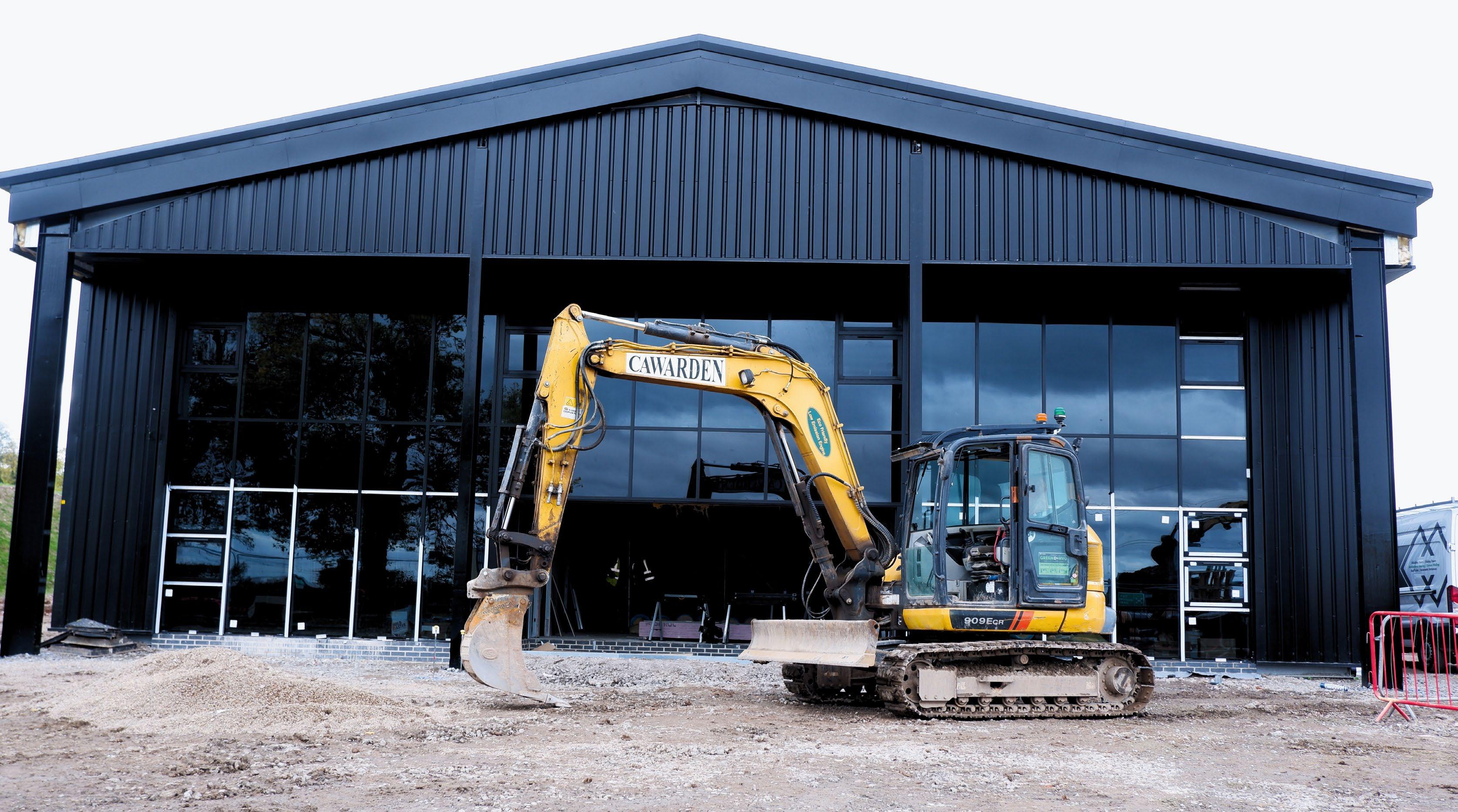

• 2,000 exhibitors: equipment from top companies across every sector of construction,
• 150 education sessions: Insights from expert industry leaders exploring new ideas,
• 139,000 attendees: The ultimate industry reunion.
The new keynote stage in West Hall transformed into a high-energy forum where top leaders and leading brands unveiled the ideas that will shape tomorrow’s jobsite.
Industry peers and leaders shared best practices, challenges and personal experiences unique to women, small businesses and maintenance professionals. Workshop included the following:
• Shop Talks and Walks Workshop: Attendees learned preventative maintenance and equipment efficiency through hands-on demos,
• EmpowerHER Workshop: Women in the industry gained a unique opportunity to network and enjoy peer-led discussions that inspire and educate,
• Small Business Workshop: Led by industry leaders dedicated to the unique needs of small business owners, entrepreneurs and familyowned businesses.

On Saturday 7 March, the Shop Talks and Walks Workshop turned attention to the technicians, operators and maintenance pros who keep machines humming and jobsites productive.
This immersive, hands-on event was designed for industry professionals eager to sharpen their skills in preventive maintenance and equipment efficiency, offering a full day of interactive sessions, expert demonstrations and real-world insights that help attendees reduce downtime, lower operating costs and improve safety.
“Technicians and operators are at the heart of every successful project,” said Show Director, Dana Wuesthoff. “Shop Talks and Walks is designed to recognise their expertise and give them new tools to lead maintenance innovation in the field.” Attendees included:
• Maintenance professionals looking to refine their craft,
• Owners, operators and fleet managers seeking performance and cost-saving improvements,
• Technicians ready to explore the latest tech and best practices.
Whether responsible for a fleet or one critical machine, participants gained strategies to reduce downtime, boost productivity and strengthen their maintenance approach.
The workshop provided equipment deep-dives, live Q&A sessions and maintenance-focused demos led by top industry manufacturers including Caterpillar, Hyundai, John Deere, Kubota, SANY, Vermeer and Volvo.
The day began with a Breakfast Spotlight Panel
titled The Future of Maintenance: Insights from Tech Leaders in Equipment Solutions. Speakers included:
• Austin Conti, CEO and co-founder of Tenna,
• Alex Craft, CEO and founder of Heave,
• Luke Powers, CEO and co-founder of Gearflow.
They discussed how artificial intelligence, predictive analytics and digital tools are transforming maintenance practices across the construction industry.
Following the keynote, attendees took part in guided sessions on the show floor, exploring topics such as fleet health management, service strategies and next-generation maintenance technologies.
The workshop featured:
• Equipment deep-dives for learning by doing,
• Live demos and Q&As with maintenance experts,
• How-to sessions tailored to today’s equipment and technologies,
• Knowledge-sharing forums for building industry connections.
It involved far more than just talking. Attendees walked away with practical insights and connections that translate directly to smoother operations and longer equipment lifespans, including:
• Strategies to reduce downtime and boost productivity,
• Exposure to leading-edge maintenance trends and technologies,
• Actionable tools for optimising equipment performance,
• A stronger community of industry peers with shared goals.
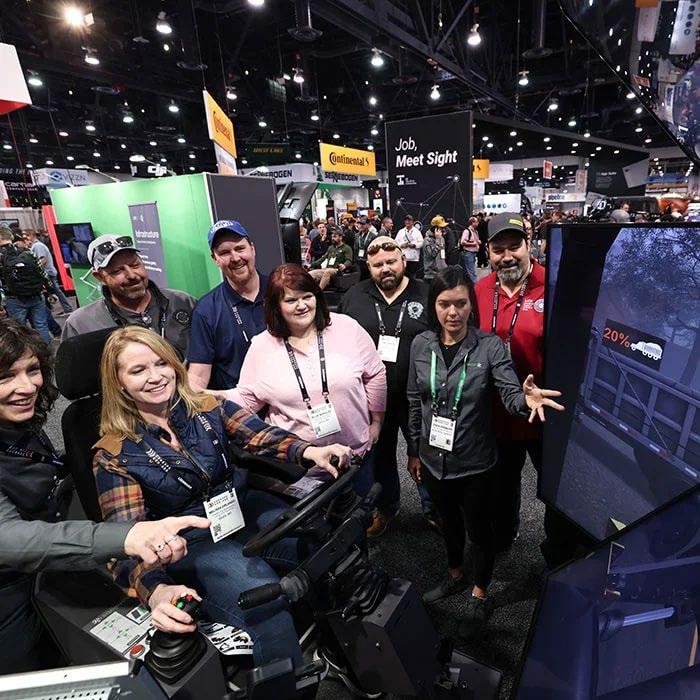
CONEXPO-CON/AGG’s new Ground Breakers Stage, presented by The Sherwin-Williams Company, featured innovators and visionaries from companies including Caterpillar, Amazon Web Services (AWS) and John Deere.
Show Director Dana Wuesthoff said: “The Ground Breakers Stage is bringing forth the most innovative leaders in our industry who are making strides in autonomous and technological advances and changing the way we work, hire and build.”
Caterpillar Group President of Construction Industries, Tony Fassino took to the Ground Breakers Stage on Wednesday 4 March, spotlighting how Caterpillar is tackling the industry’s toughest challenges head on, pushing boundaries and shaping the future for its customers.
Fassino said: “Every three years, Las Vegas transforms into the epicenter of construction innovation with companies ready to show you what’s next. We are excited to show you what’s ready right now during CONEXPO-CON/AGG’s new Ground Breakers Stage series.”
Wuesthoff commented: “We’re thrilled to welcome Caterpillar to the stage as we advance the conversations around innovation during CONEXPO-CON/AGG. Caterpillar’s forward-thinking approach embodies the transformation that drives our industry and helps us all build for the future of tomorrow.”
John Deere’s Senior Vice President and Chief Technology Officer Jahmy Hindman was joined by John Deere colleagues Maryanne Graves (Manager, Product Management) and Jonny Spendlove (Manager, Precision Construction) on the Tuesday, spotlighting the innovation and technological advances propelling the construction industry forward.
“We’re genuinely excited to be part of this
first-ever keynote event at CONEXPO-CON/AGG,” said Hindman. “Contractors are out there every day building the roads, bridges and systems that connect our lives – and they’re facing real challenges like finding skilled workers. At John Deere, we’re committed to helping them tackle those challenges with technology that’s not just smart, but purposeful – designed to help them get more done, more efficiently, and more profitably.”
Amazon Web Services’ Director of AWS IoT Services Dave Kranzler took to the Ground Breakers Stage on Thursday 5 March, spotlighting how advances in AI, automation and connected technologies are reshaping the construction industry, reducing costs and creating safer, more sustainable jobsites.
In conclusion, Wuesthoff said: “John Deere is pioneering conversations that are crucial to our industry and we’re thrilled for those conversations to have converged at the Ground Breakers Stage. We were also delighted to welcome AWS – digital transformation is changing how the world builds.”
Other keynote speakers ranged from the leaders of Fortune 100 companies to successful entrepreneurs, with more announcements to be

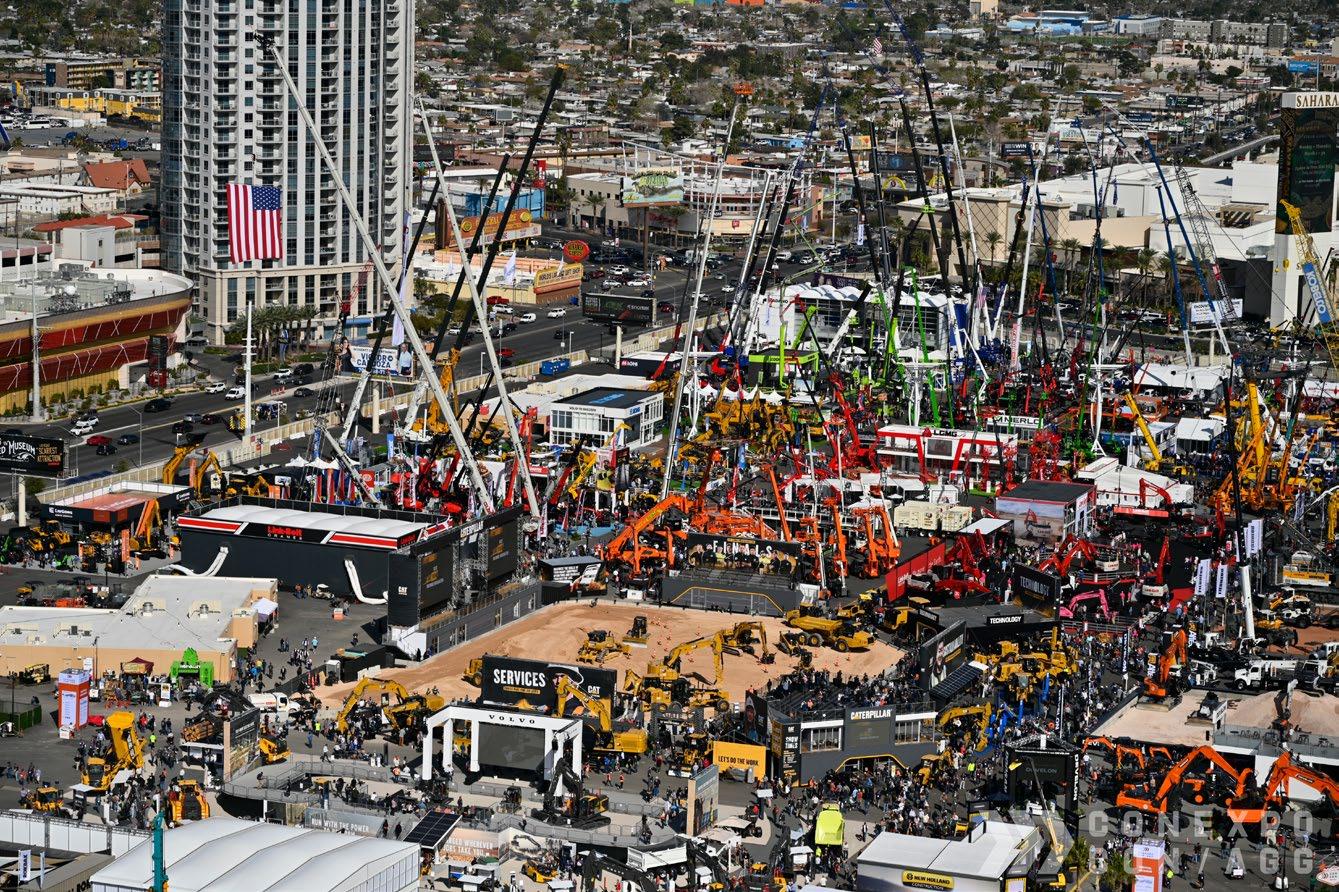
As Caterpillar brought its year-long centennial celebration to a close, the company’s CONEXPOCON/AGG exhibits demonstrated Caterpillar’s commitment to helping its customers “Reshape What’s Possible”.
From new machines and technology to services and rental options, visitors saw first-hand how Caterpillar delivers the innovation, flexibility and support that provide exceptional value to its customers globally.
Caterpillar expanded its presence at CONEXPOCON/AGG with a West Hall display dedicated to its compact construction equipment, while Cat® Industrial Power Systems exhibited its latest industrial diesel engine innovations in its South Hall exhibit.
The exhibits showcased the latest technologies in the construction industry that are meeting today’s needs and anticipating tomorrow’s challenges. Visitors to the exhibit experienced the company’s evolution in autonomous machines and the tangible impact of AI on the industry. These advancements in intelligent systems and integrated digital platforms are designed to deliver continuous value that evolves and optimises customer outcomes. The company also highlighted the latest tech tools that allow customers to focus more on service and operational efficiency.
Caterpillar showcased the latest VisionLink features in equipment management, productivity and safety, which help customers operate more


efficiently, effectively and safely across operations of all sizes and brand mixes. Additionally, attendees were able to explore end-to-end capabilities, including full fleet solutions with Cat Grade.
The full capabilities of Cat Command were on display, including remote-control, semi-autonomous and autonomous capabilities in the construction and quarry industries. The latest addition to the Cat Detect portfolio, Collision Mitigation, was introduced during both the company’s live equipment demonstrations in Operator Stadium as well as with a hands-on experience.
Cat Building Construction Products (BCP) showcased expansions in its compact equipment line in the West Hall exhibit, with Caterpillar experts providing an overview of an enhanced customer experience designed to give customers more options and flexibility.
Meanwhile, at Caterpillar’s 6,500-square metre outdoor exhibit at Operator Stadium, visitors checked out more than 30 machines, including the new compact radius Cat 319 small hydraulic excavator, which excels in a broad range of road construction, site development, underground utilities, construction maintenance and forestry applications.
Caterpillar announced that Cat Vantage Rewards is changing to Cat Rewards, with a new, simplified programme offering exclusive benefits and enhanced customer value. Additionally, the Cat
Card will rebrand to the Cat Commercial Account to better convey the product’s role as a flexible finance solution for customers purchasing parts, attachments, rentals, repairs and more.
The strength and breadth of Caterpillar power systems and solutions, which are designed to meet customers’ productivity and reliability requirements, were on display in the South Hall. The booth included a new high horsepower C3.6 engine and the new power-dense C13D, both of which meet EU Stage V and U.S. EPA Tier 4 Final emission standards. Caterpillar is committed to extending engine lifecycles, with the booth showcasing how it supports customers’ aftermarket needs with Cat parts and service solutions including connectivity, condition monitoring and a remanufactured C7 engine. The C2.2, the new high horsepower C3.6 and the C18TT also featured in the Festival Lot display.
Speaking ahead of the show, Caterpillar Group President Tony Fassino said: “We look forward to giving attendees an up-close look at Caterpillar’s latest advancements and groundbreaking technologies in the construction industry through our demos, hands-on experiences and interactive exhibits. Visitors will see how Caterpillar can solve their toughest challenges as we reshape today’s worksite while providing them an understanding of what is possible in the future.”
It’s fair to say Caterpillar achieved just that.
caterpillar.com
Eagle Crusher unveiled its new Talon line of heavyduty crushing and stockpiling equipment for recycling applications at CONEXPO-CON/AGG. On display was the new TalonTrax mobile crushing plant and the new TalonStack mobile stockpiling conveyor, along with the next generation UltraMax 1400-OC crushing and screening plant and a current-model, triple-deck E-Plant.
Introducing TalonTrax: Ultra-mobile power meets production
The TalonTrax has been designed for ultra-mobile crushing without sacrificing power or production on the jobsite. At the heart of the TalonTrax is Eagle Crusher’s new TalonMax (TM-15) impactor, featuring an open-rotor design that reduces weight while still providing the same crushing capabilities for which Eagle Crusher equipment is known.
The impactor also features a new, thicker blowbar design to increase overall wear life and a dual power plant that can be powered by the onboard diesel engine or switched to external power from a genset or line power.
The plant features a dual-motor, under-crusher pan feeder with industry-leading discharge clearance in excess of 580 mm to enable greater material flow and virtually eliminate clogging, as well as an easily removable discharge conveyor that allows for quick access to the under-crusher area, as well as to the discharge conveyor itself, for inspection, maintenance and cleaning of both.
TalonTrax comes equipped with a crossbelt permanent magnet that removes steel contaminants from crushed material. The magnet is reversible to allow steel discharge from either side and stays on for transport.
Additionally, the TalonTrax features a heavy-duty hopper construction sized for feeding with a loader
or excavator and a grizzly bypass chute and cross conveyor with flop gate allowing for either removal of the material that passes through the grizzly deck for stockpiling or blending back with the crushed material.
TalonStack: Self-propelled stockpiling reimagined
The new TalonStack self-propelled, radial stockpiling conveyor has been designed to improve productivity and mobility while minimising operator costs. With Eagle Crusher offering a wide range of TalonStack sizes, it was the TalonStack 65 on display at the show.
Also exhibited at the show was the next generation UltraMax 1400-OC portable impactor plant, one of the most versatile crushing and screening plants for larger jobs.
Discharge material feeds to a separate conveyor coming out of the side of the crusher at a 90-degree angle and was shown with the optional pan feeder. The next generation plant has been designed for simpler maintenance and ease of operation.
E-Plant: The industry’s triple-deck innovation
Eagle Crusher’s E-Plant, first introduced in 2014, is the industry’s only true high production tripledeck screening/crushing system on one chassis. It transports in one pull, for the aggregate, asphalt, and recycling industries and was featured at the Eagle Crusher booth. E-Plant is also available in a two-deck model.
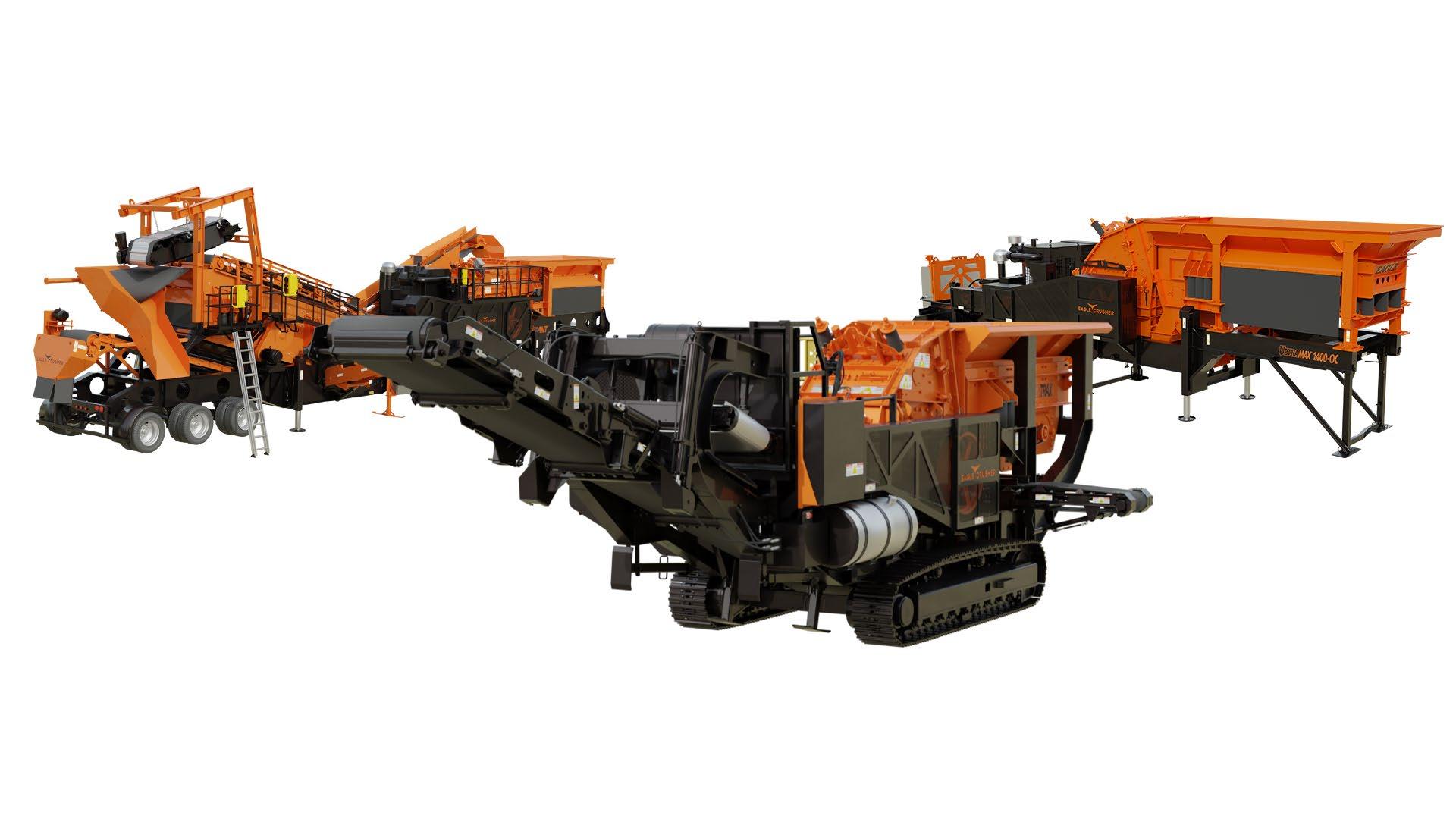
At Conexpo 2026, Liebherr once again ranked among the show’s largest exhibitors, delivering a hands-on-the-future experience of construction. Leveraging its expanded presence the company unveiled new machines, demonstrated mature digital solutions and underlined its long-term investment in the construction market.
Across its more than 6,000 square-metre booth, Liebherr presented more than 30 machines and technology exhibits, brought to life through daily live demonstrations and a dedicated technology pavilion highlighting advances in digitalisation and assistance systems. Liebherr’s second booth, in the Platinum lot, showcased deep foundation machines, attachments and digital solutions for specialised construction applications.
Liebherr used Conexpo 2026 to show what “Hands on the future” means in practice – machines in operation, applied digital solutions and longterm investments shaping the construction site of tomorrow. The approach is grounded in practical engineering and close customer collaboration, focusing on technologies that improve safety, reliability and planning today while enabling increasingly connected, data-driven operations.
Earthmoving and material handling equipment represented the largest share of Liebherr’s Conexpo lineup, with a focus on durability, efficiency and long service life. Under demanding jobsite conditions, this focus was reflected in machine concepts designed for continuous operation, efficient power delivery and low total cost of ownership. Central to the exhibit was the articulated dump truck, TA 230 Litronic, shown in live operation throughout the week, engineered for heavy-duty applications, high payload efficiency and reliable performance over
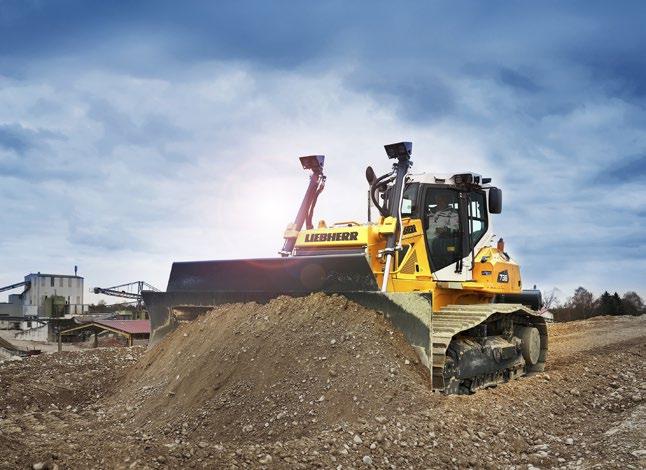
long service lifecycles. Additional highlights included the Generation 8 crawler dozers, including the PR 716, developed for grading and site preparation, as well as the crawler loader LR 636 G8. Both machines are designed for sustained operation in challenging environments, where durability and precise machine control are critical. The machine features hydrostatic drive technology, optional 2D and 3D grade control and an ergonomically designed cab.
The R 945 crawler excavator was presented as a solution for heavy-duty quarrying and earthmoving, emphasising precise machine control, fuel-efficient operation and long-term reliability. Its robust machine design and optimised drive systems are intended to deliver consistent performance and reduced wear in high-load applications. The wheeled excavator A 924 demonstrates Liebherr’s approach to compact design and mobility for infrastructure and civil engineering projects, while the mid-sized wheel loader L 546 was shown in live demonstrations equipped with active personnel detection and the Skyview 360-degree camera system, reinforcing Liebherr’s focus on operator
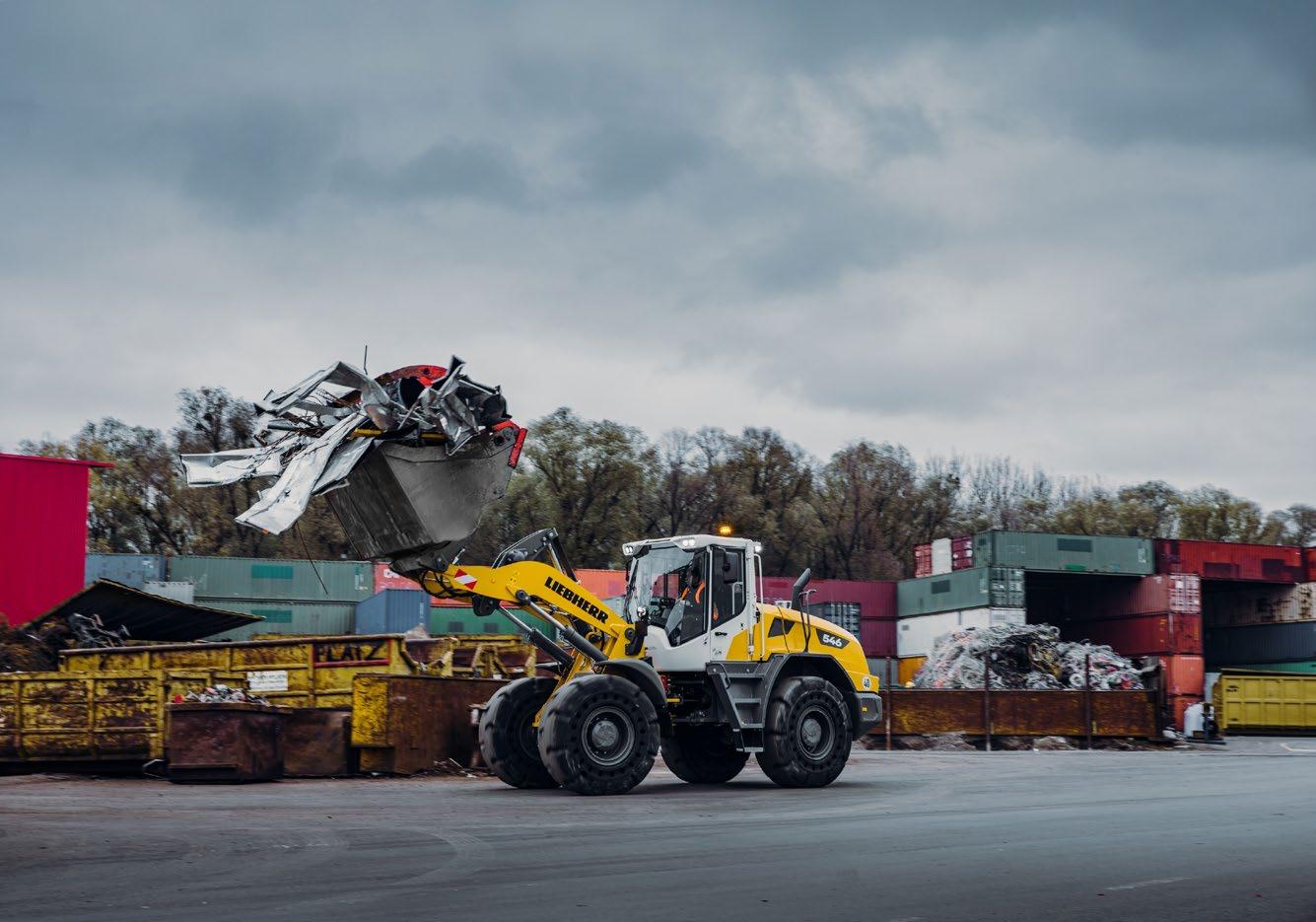
awareness and jobsite safety.
Electrification and energy efficiency were represented by machines such as the LH 60 M Industry E, an electrically driven material handler designed for a wide range of applications. Operating emission-free and quietly, the machine uses an energy recovery system to reduce overall consumption while maintaining high handling performance. Liebherr’s XPower wheel loaders, including the L 550 and L 586, further illustrated how application-specific kinematics and power-split drive technology are used to balance performance, fuel efficiency and robustness across recycling, industrial and classic loading applications, with a clear focus on durability and consistent performance throughout the machine lifecycle.
Live demonstrations in the dedicated demo area gave visitors direct insight into how Liebherr machines and assistance systems perform under real working conditions. The demonstrations highlighted practical applications of operator
assistance systems, digital solutions and alternative drive technologies, reinforcing Liebherr’s focus on measurable jobsite value rather than static display. Featured demo machines included the R 914 Compact excavator, L 546 mid-sized wheel loader, TA 230 articulated dump truck, PR 716 crawler dozer and the 38 XXT truck-mounted concrete pump.
Liebherr’s digital solutions and services were presented in a dedicated pavilion, where visitors explored how software, connectivity and data-driven tools are applied across construction operations today. Demonstrations included MyLiebherr for fleet and performance management and Crane Planner 2.0 for realistic 3D lift and site planning. Visitors were also able to experience the Liebherr simulator, which provides a realistic training environment and supports safer, more economical operator qualifications.

The two exhibitions, co-located at the MECC venue and held alongside the European Rental Association’s annual convention, will showcase equipment and technology targeted at all types of equipment rental companies.
This year will see a particular focus on new technologies being adopted by equipment rental businesses, including electric compact equipment, rental software and digital technologies, and power generation products including battery energy storage systems (BESS).
Within IRE alone there will be 17 companies demonstrating rental software, telematics technology and AI solutions for rental, and 13 exhibitors showing power generation and battery story solutions.
At APEX, more than 100 exhibitors will cover the entire range of modern access products, from scissor lifts and self-propelled booms to access towers and fall arrest systems.
Steve Webb, Head of Events at KHL Group, said: “The three special days of APEX and IRE are designed around the needs of equipment rental companies.
“The two shows are full integrated – a single registration is required – and in addition to the hundreds of products and technologies on show, there will be a dedicated space on the show floor for exhibitors to give short product or technology talks. That’s a first at IRE and APEX.”
Peter Douglas, CEO and Managing Director of IPAF, said APEX was a fantastic, one-off show: “I think it’s really important for IPAF members to attend APEX.
“If they are powered access companies, all of the access manufacturers and suppliers to the industry are in attendance. But equally, if they are generalist rental companies, the IRE show is just next door. It’s quite a compact show, one that you can get around in a relatively short time, with all the manufacturers and suppliers for general rental equipment there as well.
“I invite all of our members – almost 2,000 companies in 82 countries around the world – to come and join us at APEX in June. I look forward
to seeing you there.”
Alongside the IRE and APEX shows, the European Rental Association will hold its 20th annual convention on 3 and 4 June. That will include the European Rental Awards dinner on 3 June.
Carole Bachmann, Secretary General of the ERA, said: “The 20th anniversary is a big milestone for the association and we’ll celebrate in Maastricht from 2 to 4 June. We expect a lot of members to join us to recognise the progress we and the industry have made during those 20 years.
“The combined events – IRE, APEX and the ERA Convention – are a great way for us to have all our members and exhibitors and stakeholders joining together. We have not only the convention and the IRE and APEX exhibitions, but also the European Rental Awards dinner, where we celebrate the successes of the industry.”
Visitors can register in advance online – see the websites below – and registering for one of the shows gives access to both. Free shuttle buses will run to MECC Maastricht from Brussels Zaventem Airport and Düsseldorf Airport for the full week, from 1 to 5 June, with a travel time of around 1 hour 15 minutes.
For those flying to Amsterdam Schiphol, the train to Maastricht takes between two-and-a-half and three hours and driving takes under two and a half hours.


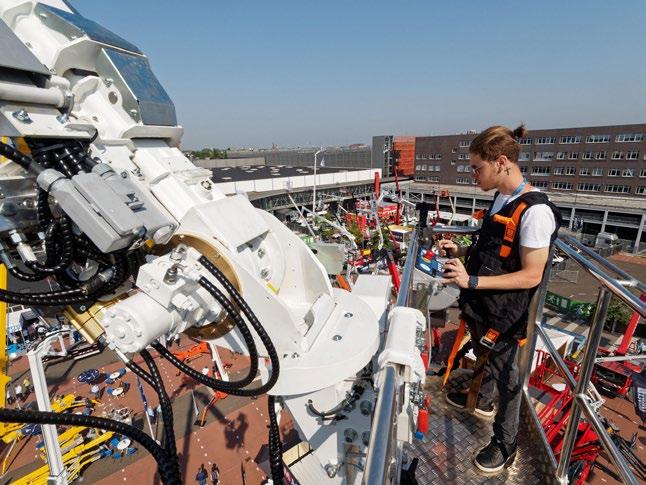
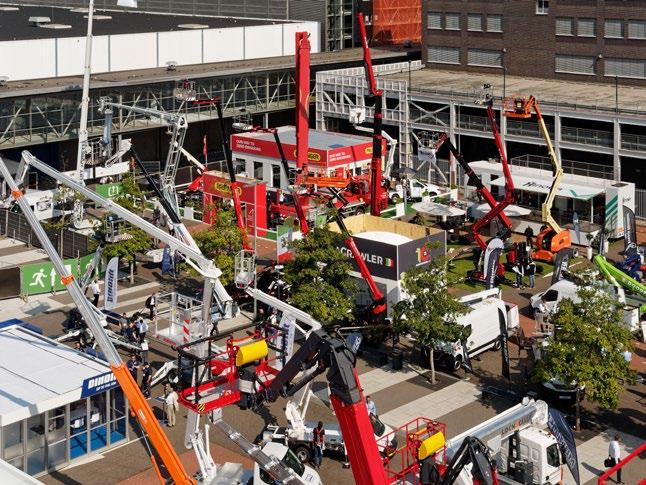
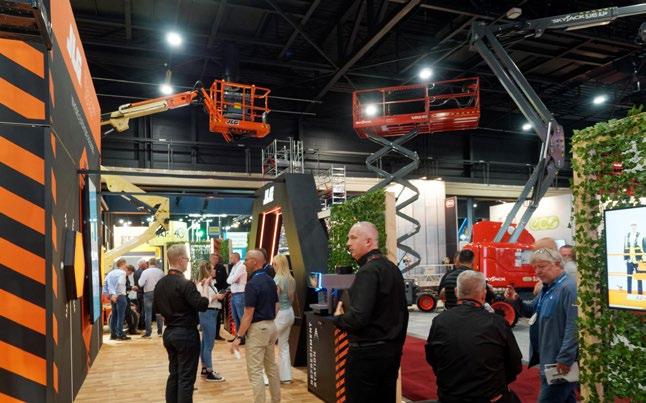
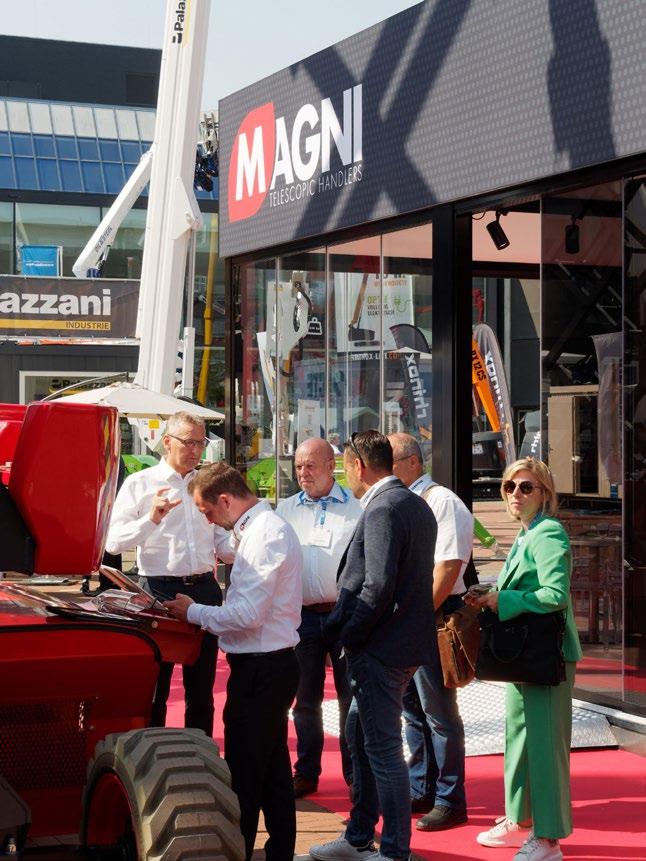
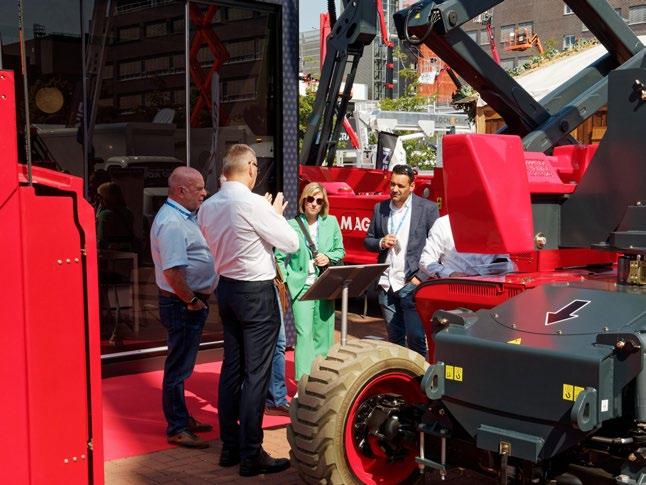
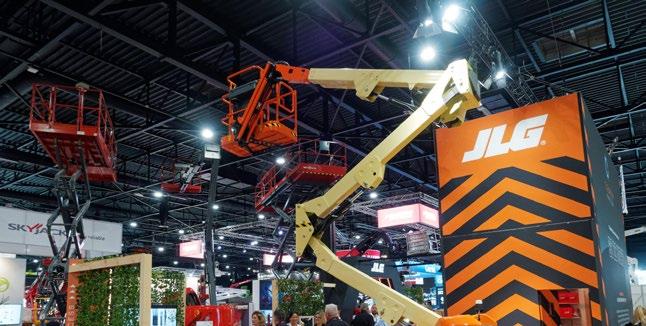
The Construction Plant-hire Association (CPA) Conference is returning this year with a brand new format, theme and venue. Taking place on Thursday 21 May 2026 at One Great George Street, Westminster, London, the theme of the one-day event is Unlocking the Nation’s Growth Plans.
The CPA Conference 2026 will be the tenth the CPA has held and will be hosted by Peter Haddock, who is well known throughout the plant-hire industry as a content creator, journalist, vlogger and event host.
Peter has hosted a number of CPA events in recent years and will co-ordinate a series of industry speakers and panel discussions at the event relating to key topics including opportunities for the construction planthire sector, building skills for the workforce, communications and decarbonisation.
The event has a fresh format for 2026, with the conference part of the day taking place in the morning, followed by a three-course sit-down lunch in the afternoon and an exhibition to allow maximum networking opportunities.
It is the first time that the conference is being hosted in London and the venue – One Great George Street – is a historic Grade II listed building located in the heart of Westminster

and the headquarters to the Institution of Civil Engineers (ICE).
The overall theme of the CPA Conference 2026 is closely linked to a major new report that has recently been produced by Oxford Economics for the CPA. Entitled Half-Built Britain: Unlocking the Nation’s Growth Plans, the report warns that Britain’s construction engine is stalling under the combined strain of skills shortages, weak investment and chronic delivery delays – leaving flagship projects, from new hospitals and homes to airport expansions, at risk of grinding to a halt. However, it also highlights the opportunity for government and industry to work together to unlock investment and close the productivity gap – a step that could generate up to £315 billion in long-term economic growth, helping fund priorities without adding to national debt.
Graham Robinson, Global Infrastructure and Construction Lead at Oxford Economics and one of the world’s leading construction economists, will delve into detail about the report in the first session of the CPA Conference 2026 before a panel discussion with leading figures from the plant-hire industry.
“Maximise networking opportunities, and a wellpositioned, impressive venue in the heart of Westminster”
The second session will cover skills, careers and training with Molly Gill, an award-winning Plant Operator with Flannery Plant Hire, relaying her experiences. Molly switched careers after realising her job as a Nursery Assistant offered limited prospects.
With no construction experience, she joined the Operator Skills Hub’s government funded Skills Bootcamps, where she earned her Articulated Dump Truck (ADT), Dumper and Tracked Dumper tickets before advancing to secure her Excavator qualification. She is now a fully qualified Plant Operator working on housing and infrastructure projects across the UK. Her rapid rise saw her named Young Plant
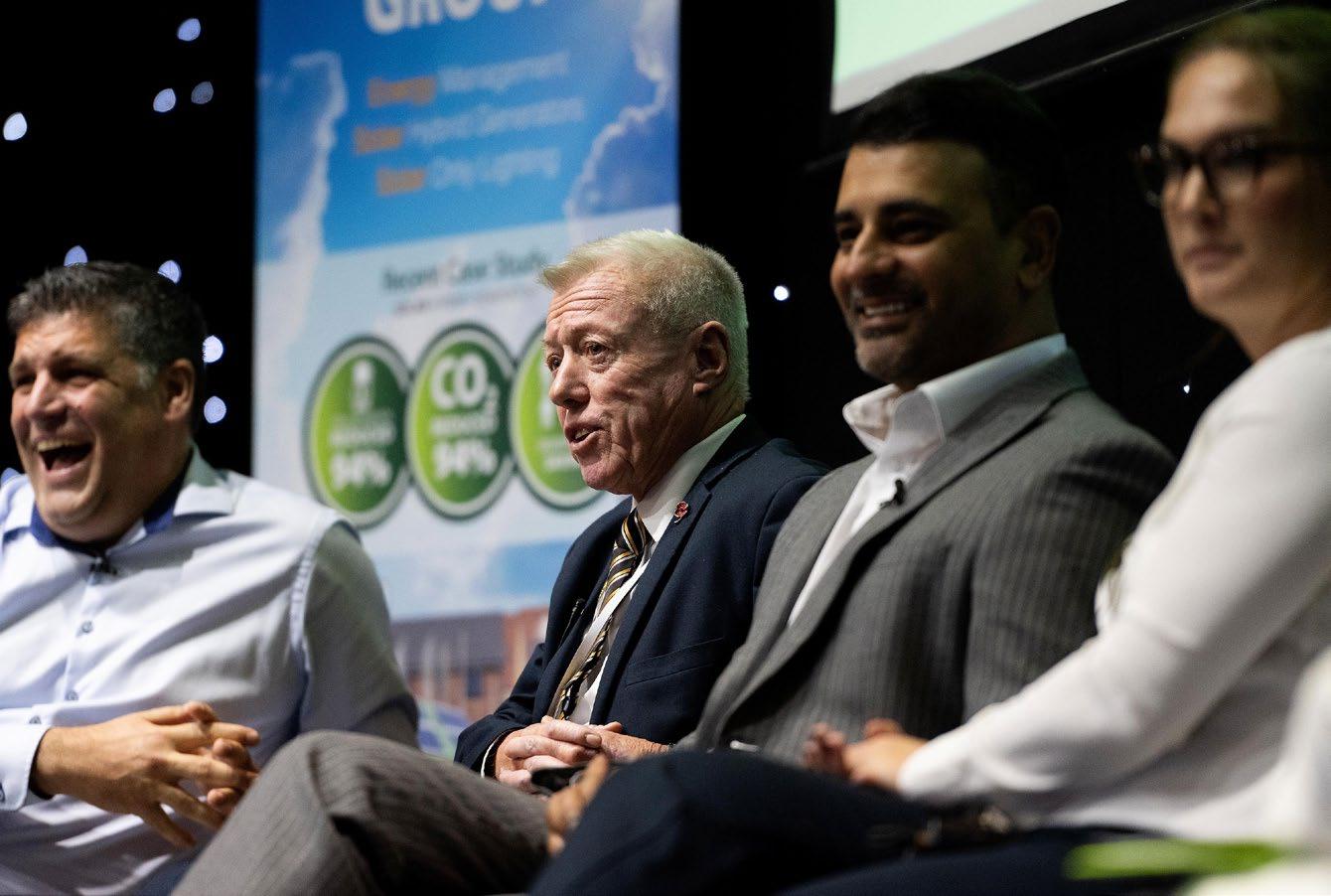

Operative of the Year at the Construction Planthire Association’s Stars of the Future Awards 2025. The skills session will also feature a panel discussion and Q&A facilitated by Peter Haddock.
The third session of the conference will be delivered by Lee Cain, founder of strategic advisory firm Charlesbye and Downing Street Director of Communications under Boris Johnson. Lee will outline how to develop effective communication strategies in a crowded digital and social media space.
The final panel session of the conference part of the day will be led by CPA Decarbonisation and Sustainability Manager Luis Bassett, who will
provide an overview of CPA’s perspective and plans relating to decarbonisation – one of the broadest and fastest moving challenges the planthire sector faces – before short presentations from guest speakers. These will cover current market and low-carbon equipment prevalence, financing options for the purchase of cleaner equipment, telematics and carbon reporting, and ESG before a Q&A session.
CPA Chief Executive Officer Steve Mulholland said: “This will be the tenth conference that the CPA has hosted and it has a brand-new theme, a fresh format with a sit-down lunch and an exhibition to maximise networking opportunities, and a well-positioned, impressive venue in the heart of Westminster.
“With the recent launch of the CPA/Oxford Economics Report, there is a wealth of topics for us to explore how CPA members and the wider construction community can unlock the nation’s growth plans. We’re in the process of building a packed agenda for the day and it’s gearing up to be a great event. We’re looking forward to welcoming everybody to One Great George Street,” he added.
An impressive range of showground improvements has been confirmed by the organisers to further enhance the visitor and exhibitor experience at this summer’s Hillhead exhibition.
New site developments include:
• The return of a dedicated ‘Red’ exhibitor car park at the east end of the site, which will be larger than ever before. This will allow the redirection of up to 1,400 cars from the main Hillhead Lane entrance, streamlining traffic flow and reducing queues at the show’s peak visiting times,
• A £105,000 upgrade to the Wi-Fi network, with a ring of fibre extended across the site to improve connectivity. This will allow a larger number of free hot spots for visitors and improve bespoke digital solutions for exhibitors,
• A temporary EE/BT mobile phone mast has been secured for the 2026 show, providing an excellent service for users of these networks. Other network users will be able to make Wi-Fi calls from the additional hot spots being provided around the site,
• Following the successful relocation of the
Hillhead Café into the Showground Pavilion, an additional coffee lounge will also be added this year, meaning more catering options and outdoor seating for both visitors and exhibitors,
• A major upgrade to the site water system will allow an increased number of toilet units across the site. The upgrade will also facilitate an additional water refill station with visitors able to access free chilled water at the Registration Area, Showground Pavilion, and in the Organiser’s Office. Refillable bottles will be available to purchase but visitors are encouraged to bring their own.
With more than a record-breaking 600 exhibitors expected, the Registration Pavilion has been extended to create additional indoor stand capacity.
Operations Director, Harvey Sugden said: “This year, we look forward to welcoming almost 300 indoor exhibitors – more than ever before – as the momentum generated by the 2024 extension of the Showground Pavilion has driven record demand and paved the way for even further expansion in 2026.”
The Showground and Registration Pavilions will present an even broader showcase of cuttingedge products, technologies and solutions, highlighting how decarbonisation, digitalisation and automation are driving the industry’s transformation.
The UK’s largest quarrying and construction equipment exhibition takes place from 23–25 June 2026 at Hillhead Quarry, near Buxton, Derbyshire.
hillhead.com
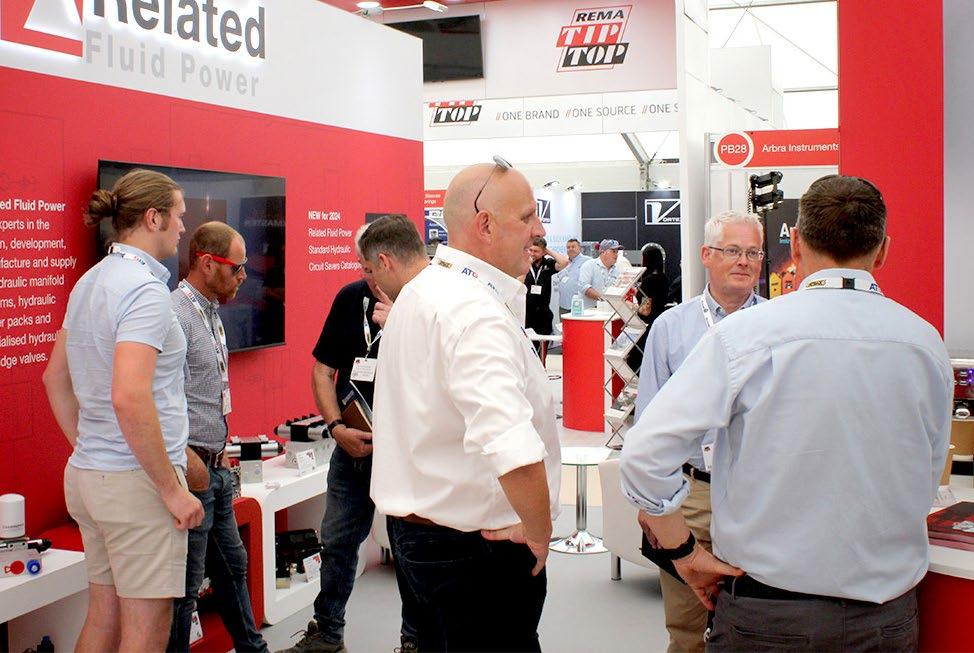

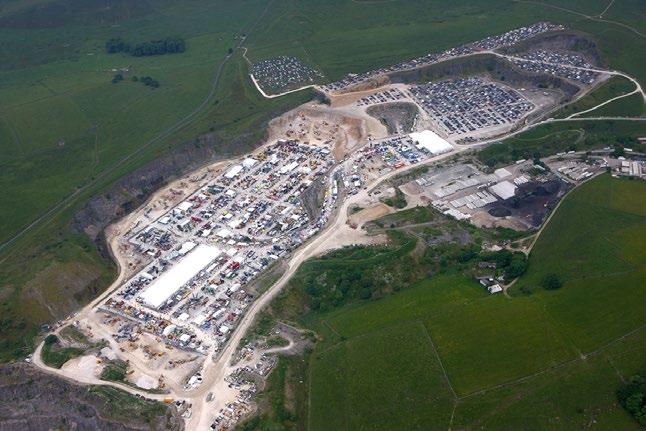
Taking place from 6-9 May, SaMoTer 2026 welcomes top names in the construction machinery industry to Verona: leading international brands have all confirmed attendance, alongside one very high-profile return. With six show halls and three outdoor areas, the exhibition organised by Veronafiere in collaboration with UNACEA and CECE confirms its status as a strategic hub where the entire construction world can come together, discuss issues and plan for the future.
SaMoTer brings together technologies, solutions and services for every segment in the supply chain, including demolition, earthmoving, lifting-hoisting, drilling, crushing, concrete and construction site vehicles, not to mention equipment and engine components and spare parts, logistics, services and ICT.
The earthmoving sector has been the soul of the exhibition for more than sixty years and, in addition to Volvo CE returning in style to launch its new range of machines and services, the show will be attended by brands iconic for power and innovation such as Caterpillar, Develon, Dieci, Hidromek AS, Hitachi, Hyundai, Kemroc, Kobelco, Komatsu, Leica Geosystems, LiuGong, Mantovanibenne, Takeuchi, Oilquick, Sany, Sunward Europe Heavy Industry, Topcon, Simex, Cangini Benne and XCMG.
The Crushing and Demolition area welcomes Indeco, MB Crusher S.p.A., Keestract, Gasparin, Sandvik, Trevi Benne and VTN Europe S.p.A. in the forefront, major brands that are currently redefining efficiency dynamics for urban and infrastructure construction sites.
General Manager of Veronafiere, Adolfo Rebughini said: “SaMoTer has been the be-there event for the construction machinery industry for over sixty years by keeping pace with the
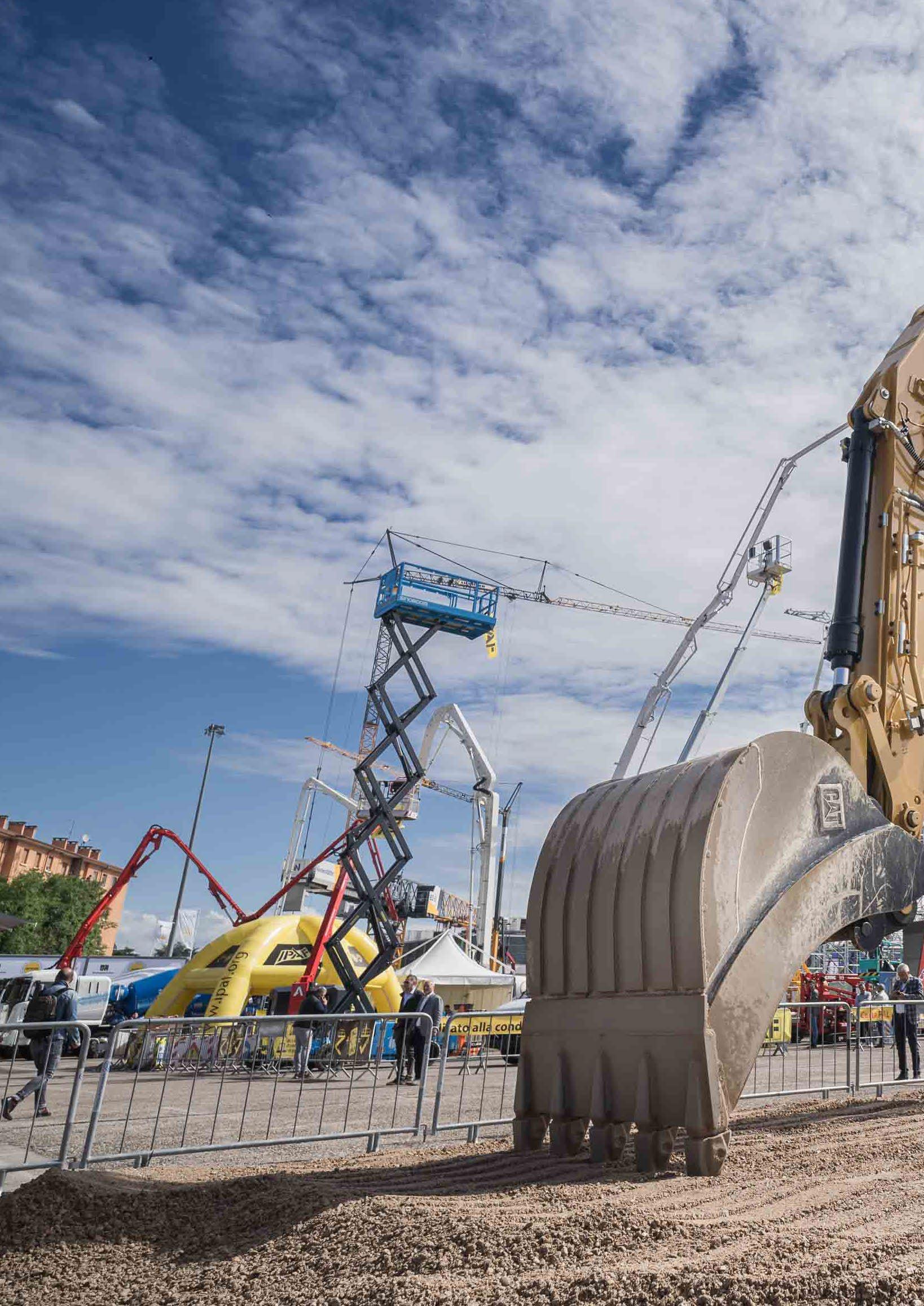
future. The return of major international brands also confirms the consolidated calibre of the project and the market’s confidence in its ability to generate value for companies and trade operators.
“Against a background of unprecedented change driven by digitalisation and automation, SaMoTer 2026 comes forward as the platform where innovation translates into strategies and business opportunities for the entire supply chain.”
SaMoTer Event Manager, Matteo Pasinato said: “We are organising a truly not-to-be-missed edition of SaMoTer tailor-made for professionals. There will be increasingly accessible and dynamic events, where visitors and exhibitors can interact through full-immersion formats, with live demos and theme-based visitor itineraries. A trade fair of this kind simply has to be experienced and not just visited.”
SaMoTer 2026 promises to be one of the show’s most international and innovative editions. It will be joined by the SaMoTer Academy, the new strategic project set in motion in collaboration with Engim Veneto – a spin-off created to accompany transformation in the construction machinery sector through high-quality and highly qualified training in cultural as well as technicalprofessional terms.
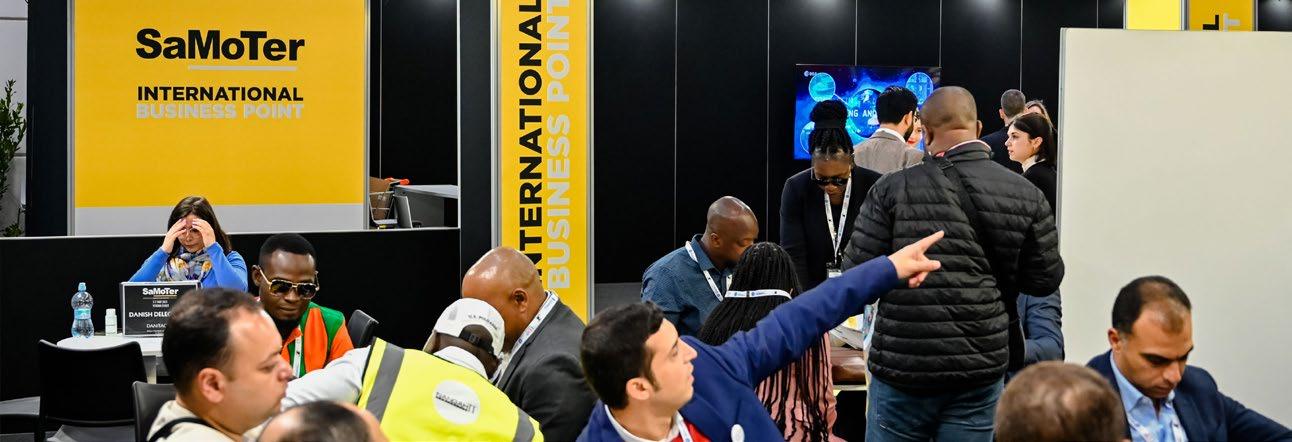
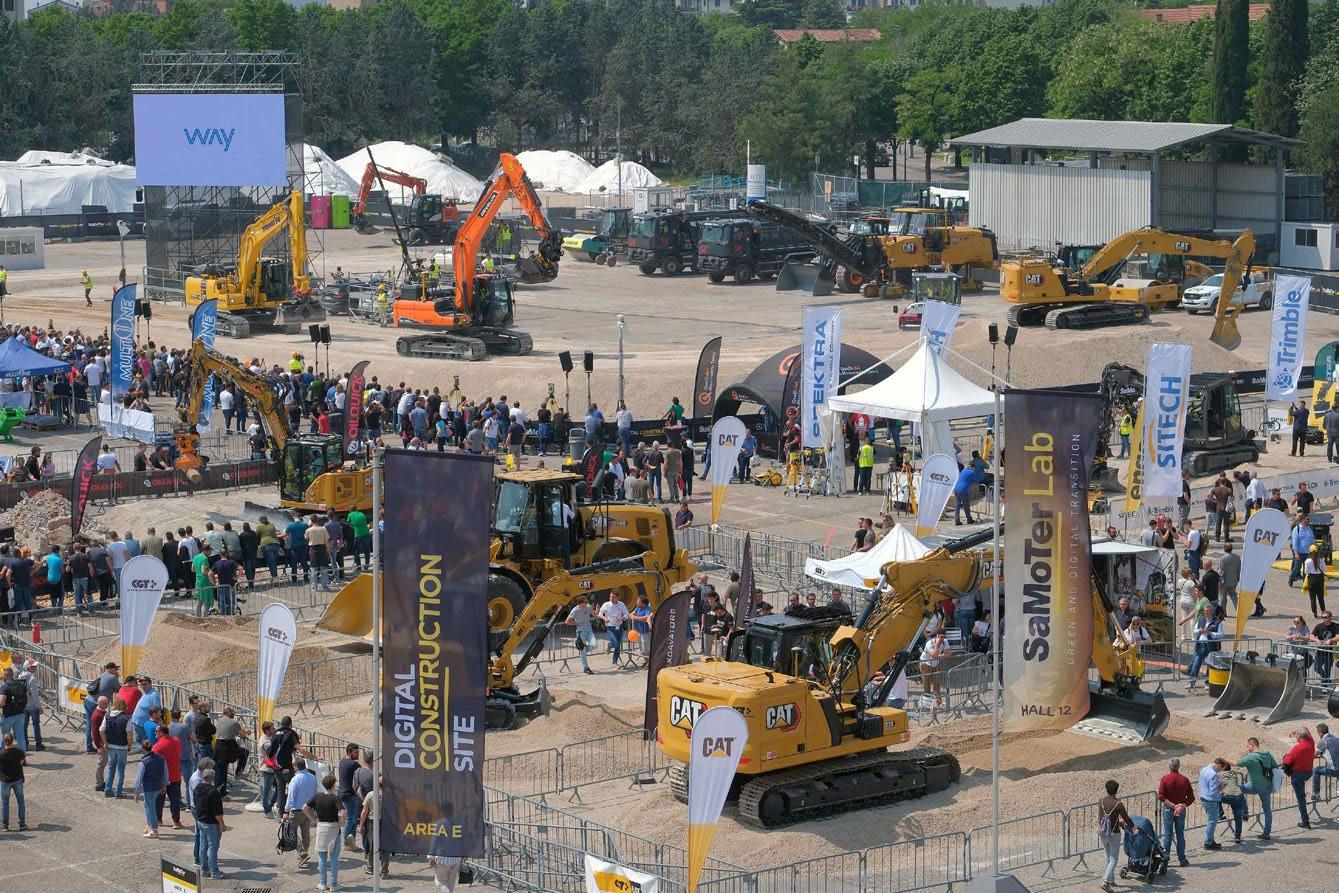
In the industrial transport, earthmoving, and logistics sectors, companies face increasingly complex challenges every day: ensuring vehicle safety, optimising loading operations, complying with regulations and at the same time reducing operating costs. In this context, technology becomes an essential ally.
OUTSET, an Italian company with more than 20 years of experience, has established itself as a benchmark in onboard weighing, cloud connectivity, and TPMS monitoring systems. Its goal is simple yet ambitious: to provide reliable and intelligent solutions designed to optimise operations and reduce operating costs.
The company will be participating in the upcoming SaMoTer 2026, the trade fair dedicated to construction machinery, earthmoving and the mining sector. OUTSET will present a series of cutting-edge technological solutions in onboard weighing, designed to enhance efficiency and productivity for industry professionals.
Key innovations to be unveiled at the fair
• T1 LOADER LFT weighing system for wheel loaders: An innovative solution certified for third-party sales with MID OILM R51 certification, ensuring the highest levels of precision and reliability,
• T1 DIGGER AL advanced technology for excavators: A system with four nextgeneration inclinometers, designed to precisely compensate and manage surface, excavator arms and bucket,
• AI-powered algorithms: A key innovation that accelerates weighing operations and compensates readings even in adverse positions, ensuring real-time accurate data,
• Next-generation wireless technology: Use of automotive long-range Bluetooth modules eliminates the need for complex wiring and improves system reliability,
• Zero maintenance and ease of use: Thanks to innovative an diagnostic data analysis, OUTSET systems provide consistent performance without the need for frequent interventions,
• T1 CLOUD direct connection to the cloud and customers’ ERP systems: A solution that eliminates the need for external hardware, ensuring seamless integration with business workflows.
Don’t miss the opportunity to discover the future of onboard weighing. We look forward to welcoming you at Booth B3, Hall 6 at SaMoTer in Verona from May 6-9 2026 to experience our latest innovations first hand.
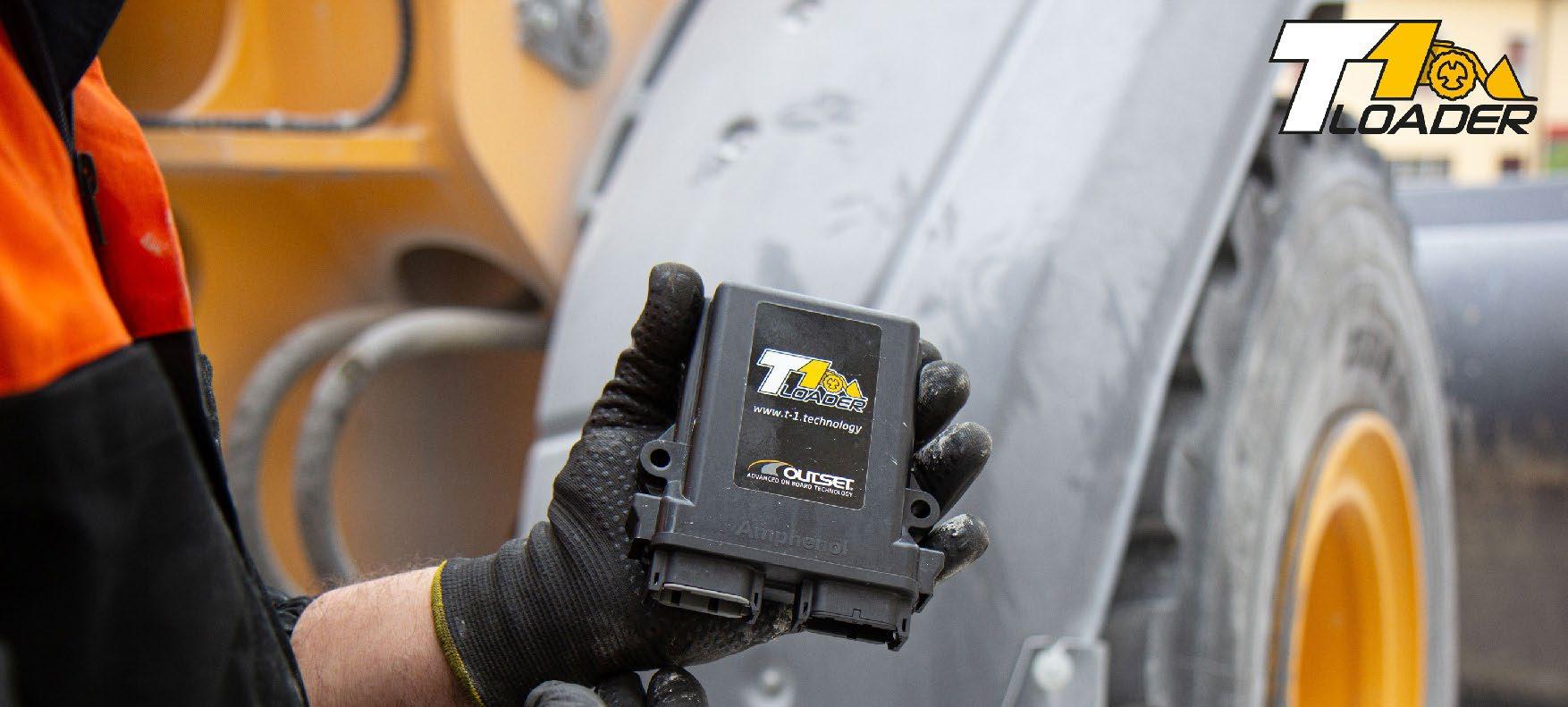


Snapshots of Ben and the Demolition Hub team’s activities between issues





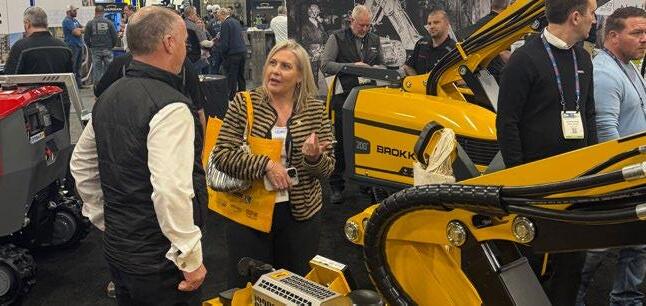
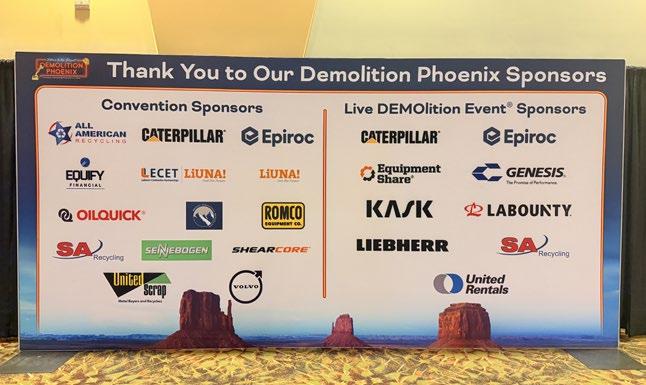


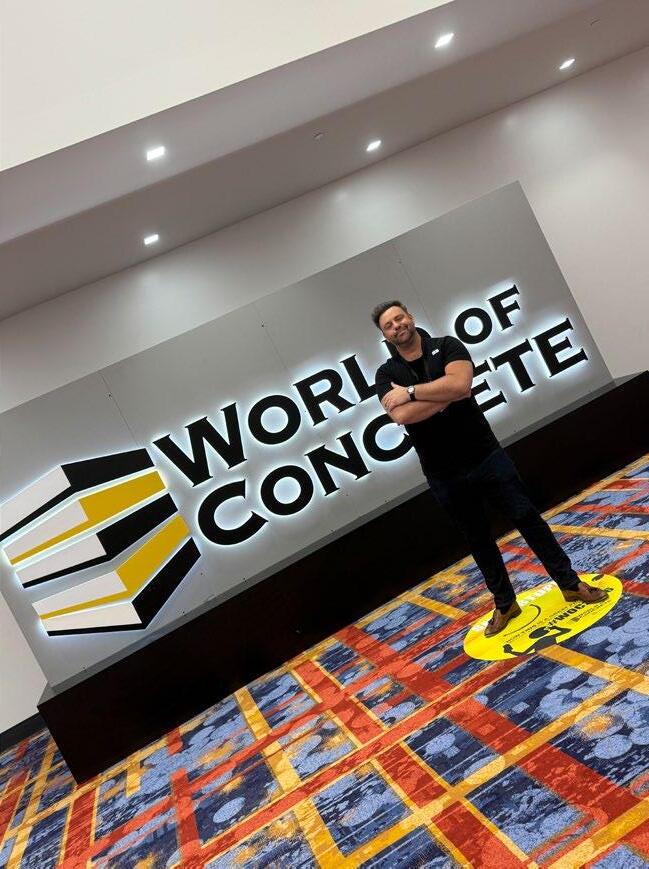


Snapshots of Ben and the Demolition Hub team’s activities between issues



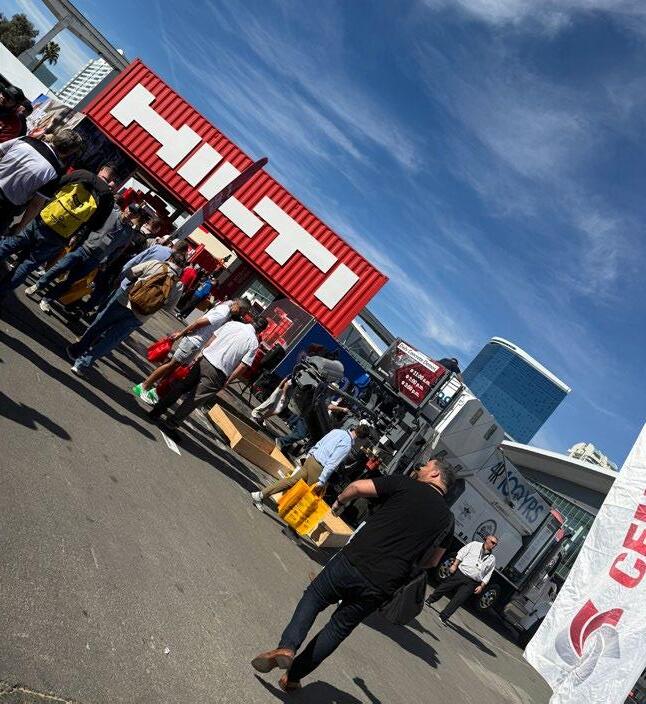
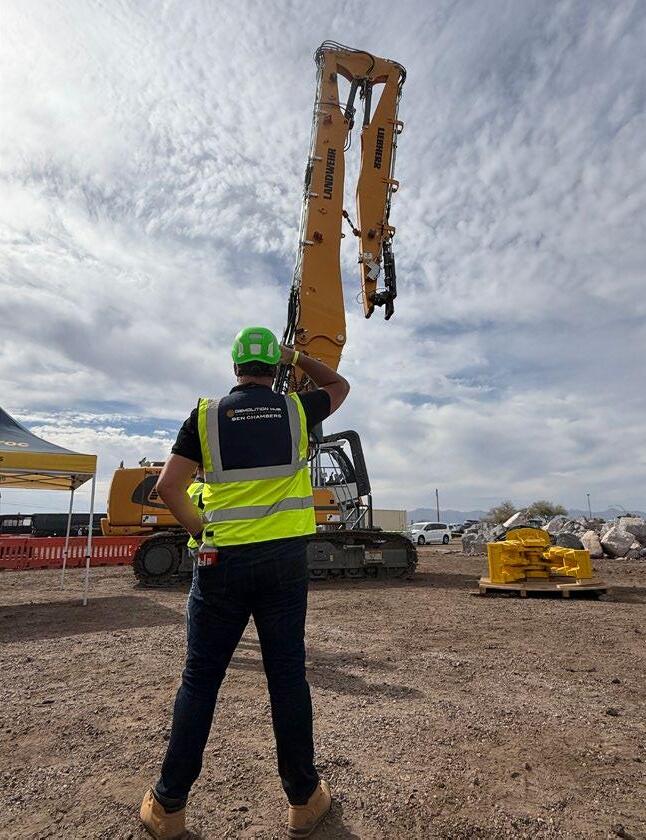

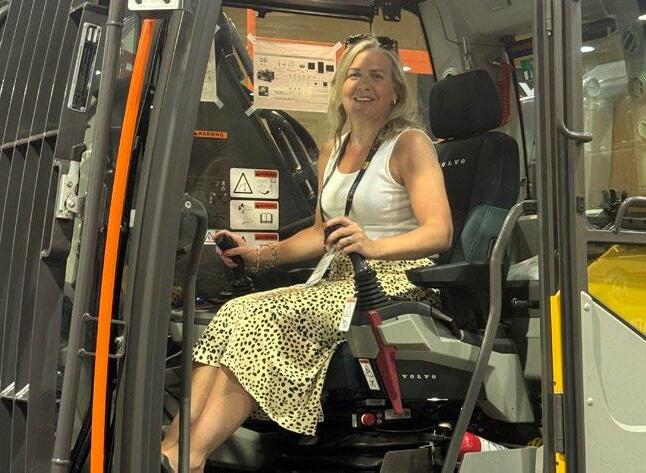
Snapshots of Ben and the Demolition Hub team’s activities between issues




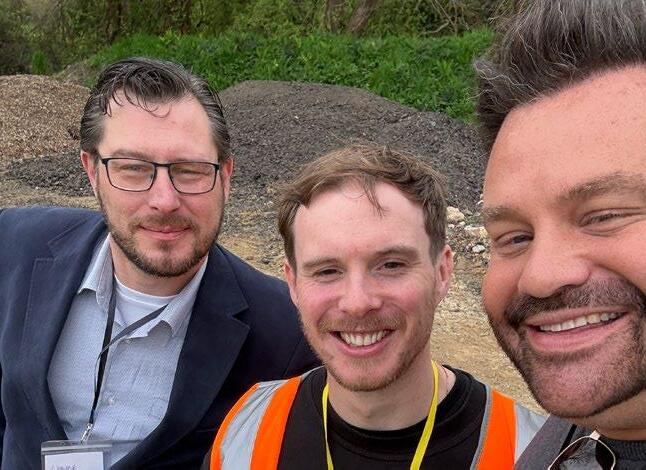
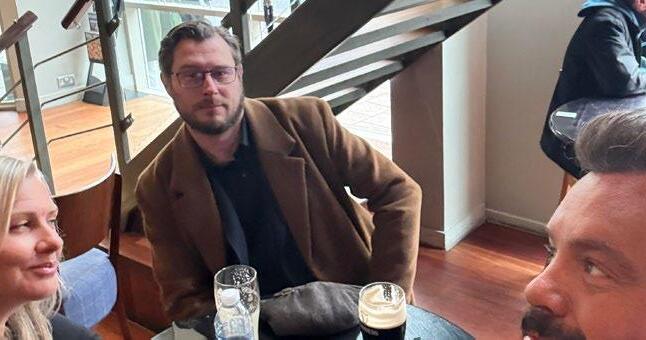


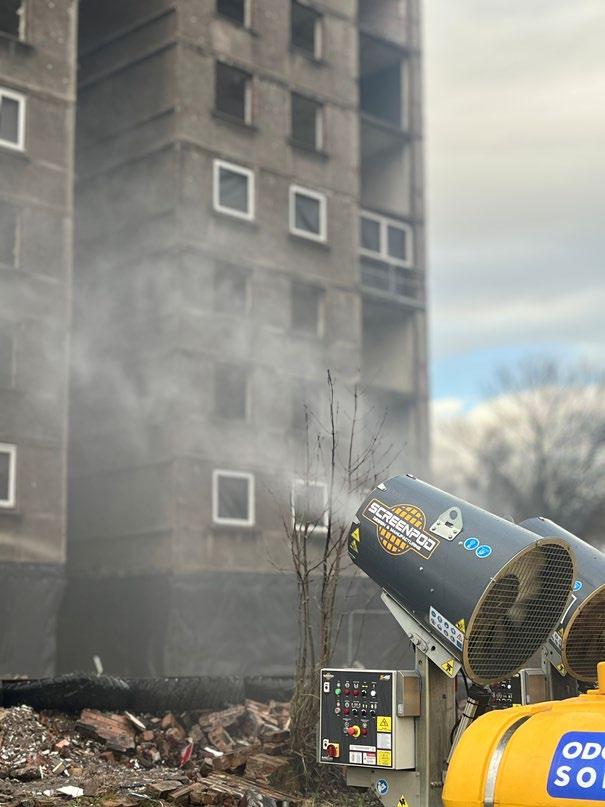
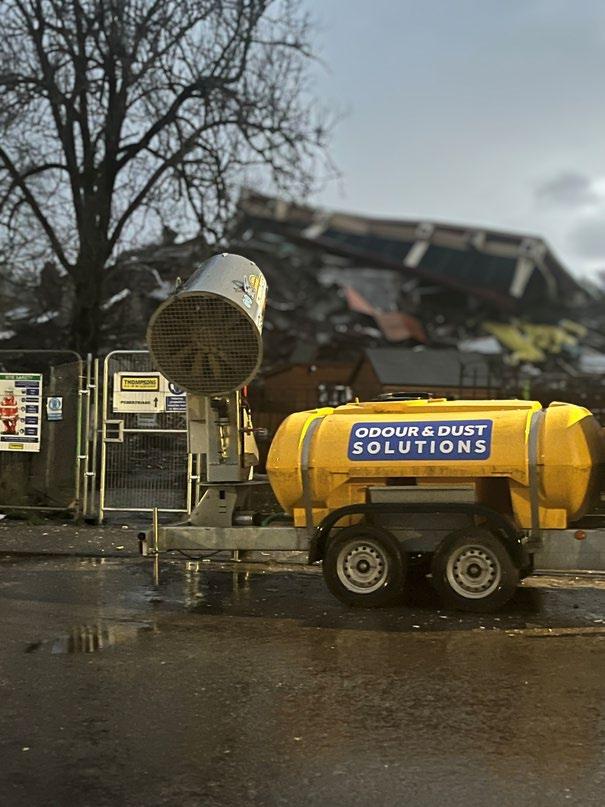





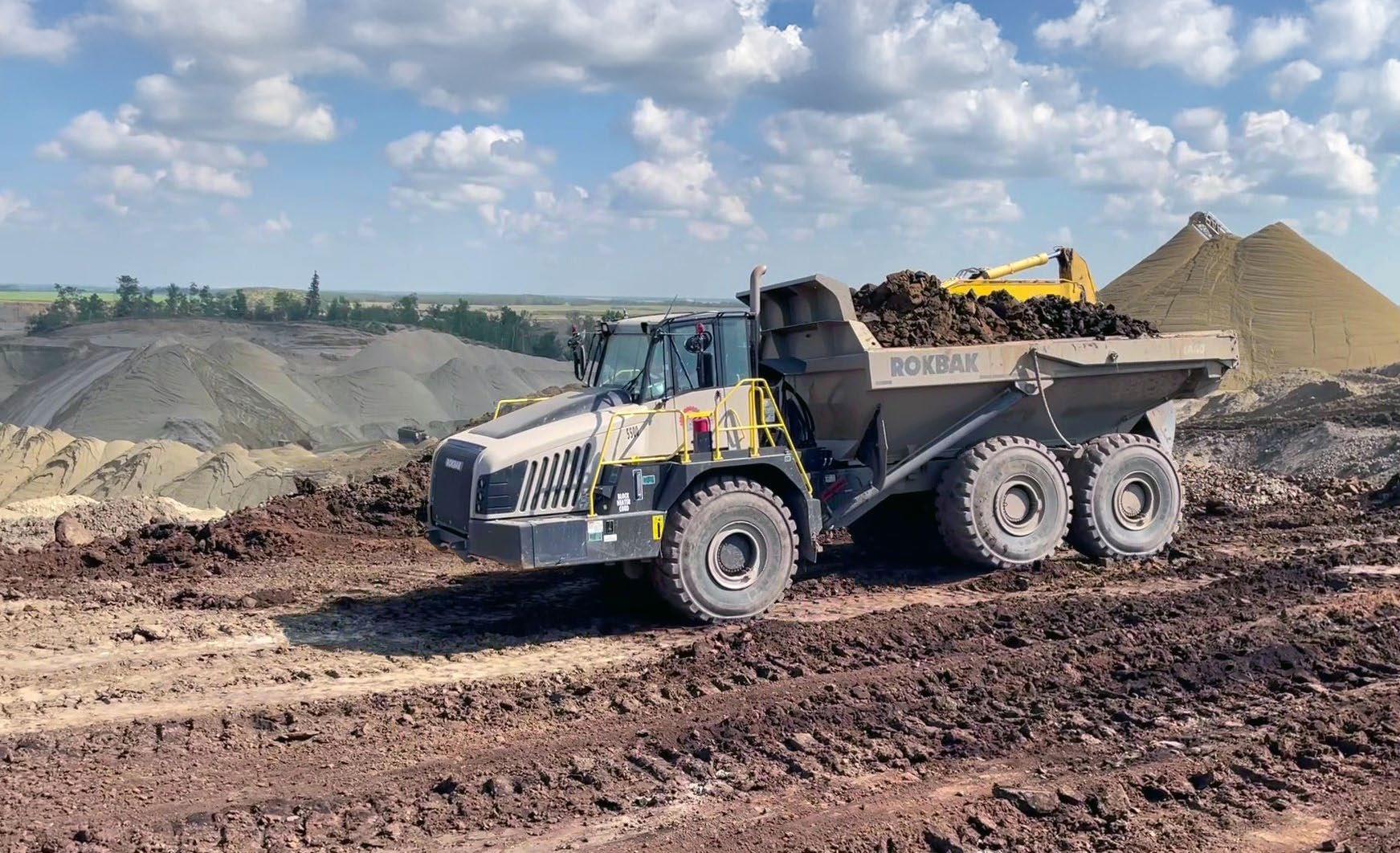
Due to rising costs and global trade challenges, Volvo CE will close its Rokbak articulated hauler business and concentrate resources on its portfolio of other hauling solutions.
For more than four decades, Rokbak, formerly Terex Trucks, has proudly delivered reliable off-highway articulated haulers to customers worldwide. However, rising operational and supply chain costs, combined with global trade challenges such as the US tariffs, have significantly impacted financial performance, making continued operation unsustainable. Production of Rokbak articulated haulers is expected to stop in the second half of 2026, subject to a consultation process.
Volvo Construction Equipment (Volvo CE) is committed to the ongoing success of Rokbak customers and dealer partners. Dedicated support will be available and customers and dealers will continue to receive aftermarket services support throughout the transition and into the future. A core Rokbak team will remain in place to deliver aftermarket services, including parts, sales, technical support and training.
“This is an incredibly difficult time for our entire company, our valued employees and our loyal customers and partners,” said Paul Douglas, Managing Director of Rokbak. “We are extremely grateful for all the support we’ve received over the years. Our focus now is on ensuring a smooth transition, providing ongoing support to our
fantastic team, customers and partners, and honouring our commitments.”
The Rokbak
In 2014, the Volvo Group acquired the off-road product line from Terex Trucks and established a new division within Volvo CE. After seven years of investment, the Rokbak brand was launched in September 2021 with the RA30 and RA40 articulated haulers. Since then, the robust trucks have been delivering reliable, fuel-efficient performance on tough job sites around the world.
“Our haulers are designed and built in Scotland and loaded with generations of experience and pride,” concluded Paul. “When we launched the Rokbak brand, it was a hit worldwide and embraced by our team, customers and dealer partners. The trucks became known and loved for their reliability, durability and uptime. This makes it even harder to announce our plans to close the business, but despite extensive efforts, ongoing operations have unfortunately become unsustainable.”
The Rokbak closure is subject to the completion of a collective consultation process, which is expected to conclude by Quarter 3, 2026.
Volvo CE will work closely with unions, government representatives and regulatory bodies to ensure a responsible and supportive transition for employees impacted by this decision.
rokbak.com
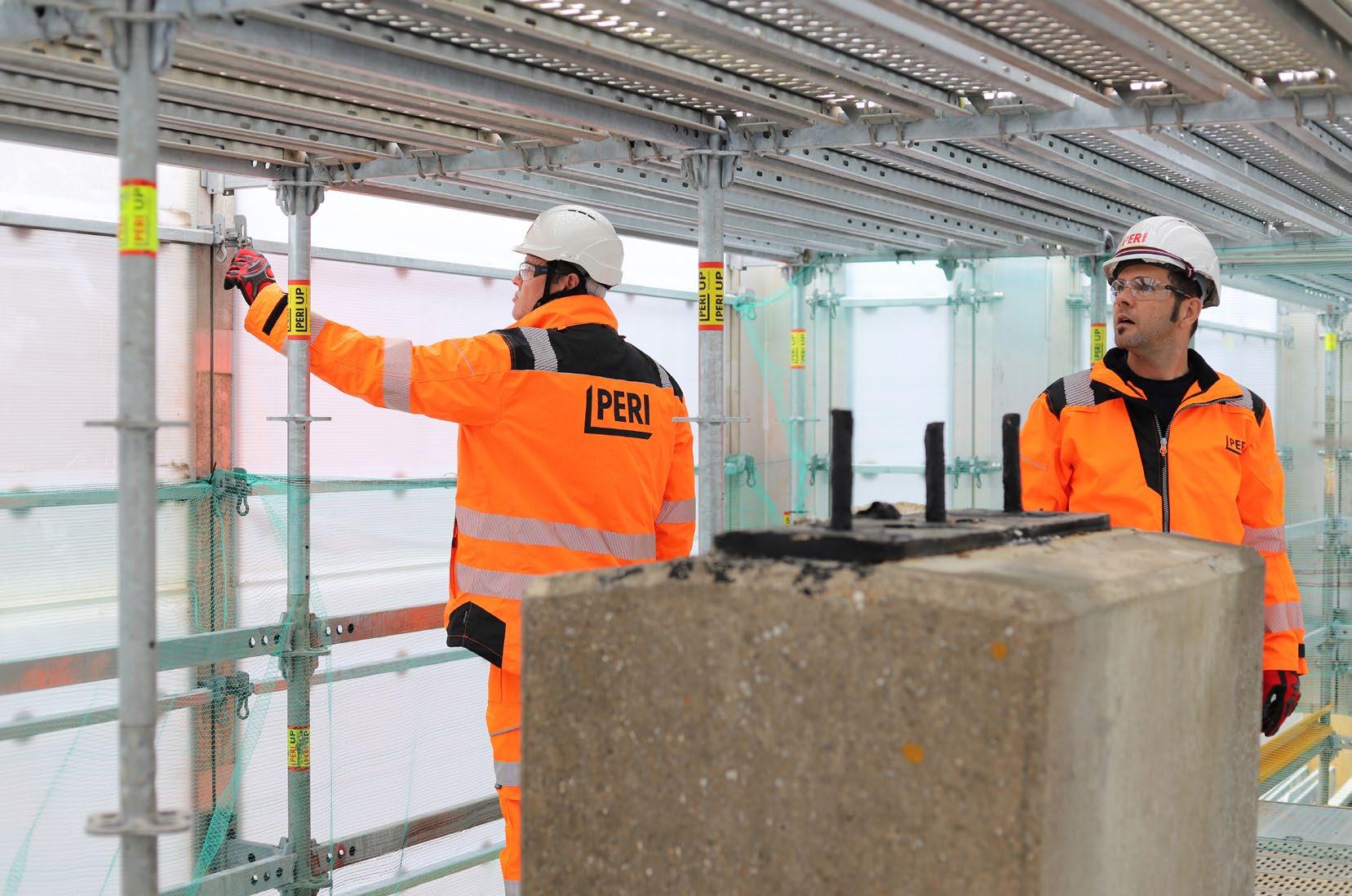
The Old Cock Footbridge, a National Highways project over the A21 in Kent, saw contractor Jackson Civil Engineering partner with PERI for the UK debut of the award-winning PERI UP Cladding system.
The innovative enclosure system provided a fully sealed containment area for the hydrodemolition of the two bridge piers, with its lightweight, translucent panels creating a bright working environment while protecting the public and workers from water and debris.
The project highlights PERI UK’s comprehensive capabilities as, beyond the cladding for the demolition phase, the company also fabricated bespoke timber formwork for the pier reconstruction, providing a complete ‘demolition to reconstruction’ solution.
Formwork and scaffolding specialist PERI UK marked the first UK deployment of its innovative PERI UP Cladding on the Old Cock Footbridge, a complex demolition and reconstruction project located over the A21 road between Sevenoaks and Tonbridge, delivered for National Highways.
The new, flexible enclosure system was used
by Jackson Civil Engineering to create a fully sealed containment area around two old bridge piers that were undergoing hydrodemolition simultaneously.
Hydrodemolition, which uses high-pressure water jets to blast away old concrete, can create significant safety risks. Hence, the PERI UP Cladding provided a robust barrier, protecting site workers, the nearby public and traffic on the major A-road below from high-velocity water and flying debris.
Award-winning innovation
PERI UP Cladding, which was named Product of the Year at the 2024 NASC (National Access & Scaffolding Confederation) Awards, introduces several key innovations that set a new standard for protective enclosures. Chief among these is a focus on operative safety; the lightweight panels feature an integrated handrail for easy one-person handling and are installed from a secured position within the scaffold, eliminating the risk of working at an exposed edge.
Unlike traditional sheeting, individual panels can be opened or removed to create localised access without dismantling the surrounding
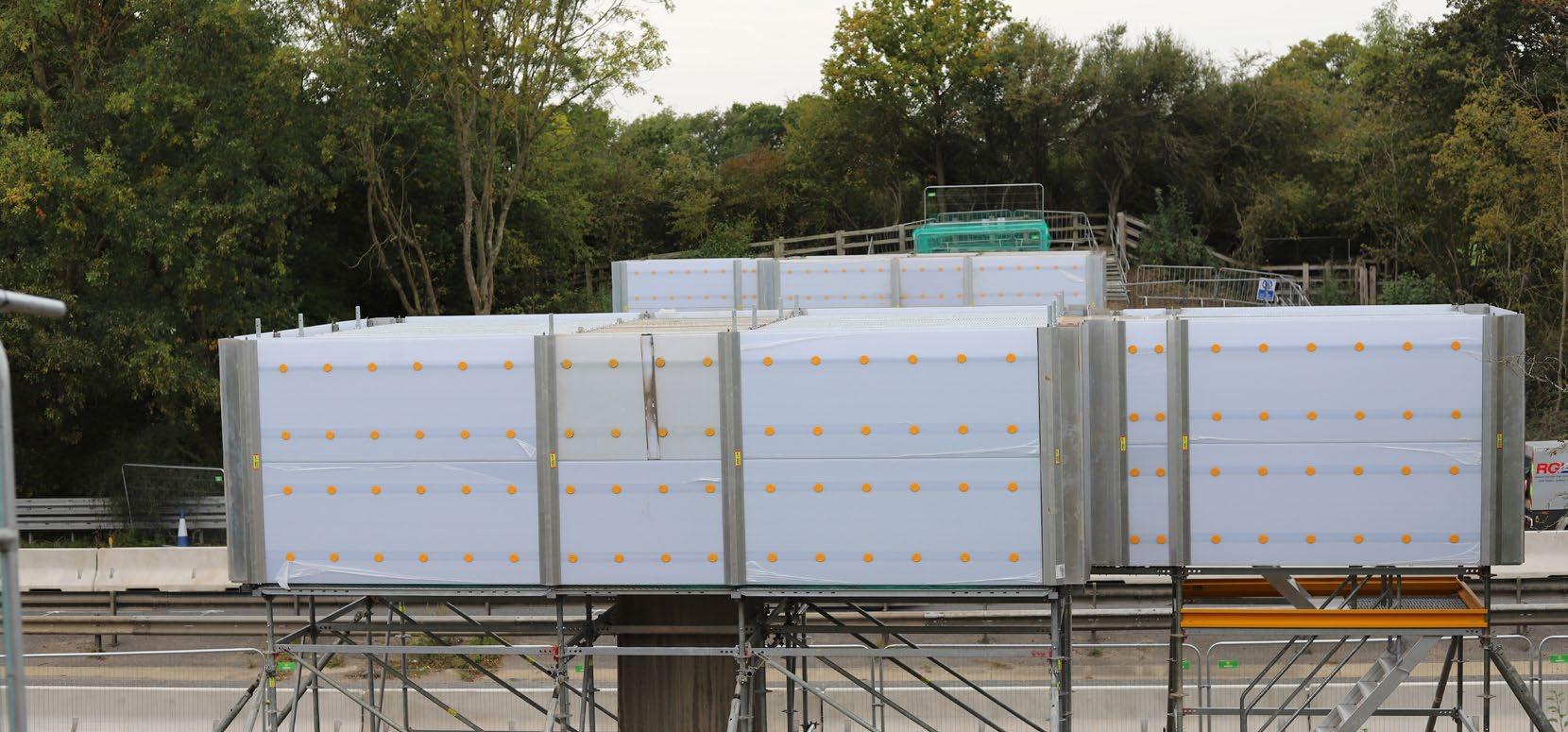
structure, significantly speeding up work processes. Furthermore, the durable, translucent panels effectively contain dust and construction noise while allowing natural daylight into the work area, creating a brighter and more productive environment.
The new cladding joins the PERI UP range, a modular scaffolding system trusted by contractors since the 1990s. Continuously developed, the line has expanded to offer a complete toolkit for temporary access, shoring and support across a wide range of construction and civil engineering projects. A core principle of the PERI UP system is a focus on efficiency and user-friendliness, incorporating features such as lightweight components to simplify handling and accelerate assembly.
“For a job such as the Old Cock Footbridge, the PERI UP Cladding gave us the robust containment we needed to mitigate the risk of debris dispersal, especially as we were working next to a live road,” said Robert Booth, project manager at Jackson Civil Engineering. “We received fantastic feedback from our site team, particularly regarding the translucent panels. Working in a bright, naturally lit environment has been a huge plus for both safety and efficiency.”
PERI UK’s involvement on the Old Cock Footbridge project extended beyond the demolition
phase to its subsequent reconstruction. While the hydrodemolition phase was underway, the company’s fabrication department started working on the bespoke timber formwork to cast the new piers. A custom designed solution was required due to the piers’ unique shape as well as the need for a high-quality cosmetic finish with minimal visible tie-holes.
“This project highlighted PERI UK’s comprehensive capabilities,” said Patrick Connachan, Senior Sales Engineer for infrastructure at PERI UK. “We not only provided a cutting-edge containment solution for the demolition but simultaneously fabricated bespoke formwork for the pier’s reconstruction, demonstrating our commitment to being a true onestop solution for our clients from start to finish.”
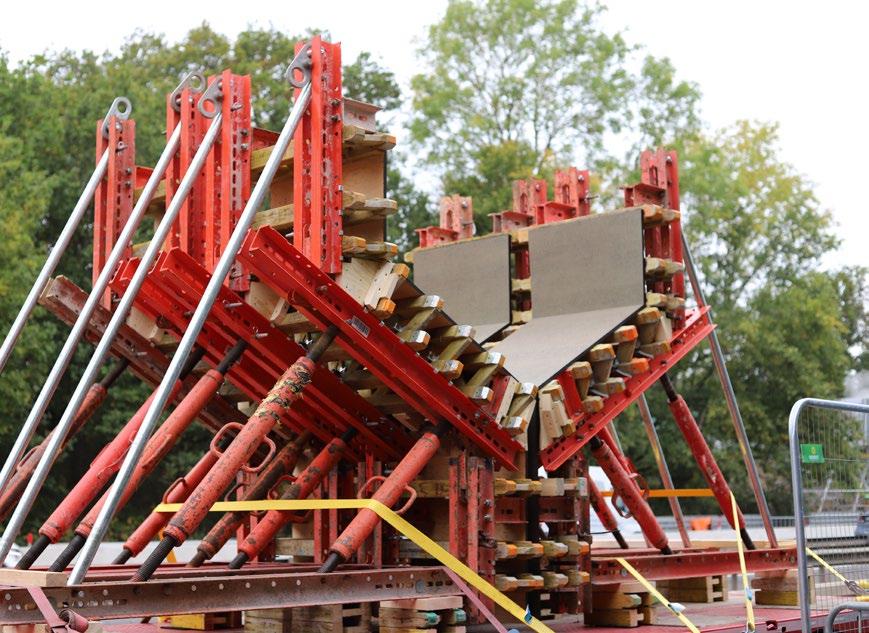














by Terry Lloyd, Head of Vendor, Paragon SME Lending
The demolition sector, like the rest of British business, is navigating a period defined by opportunity on the one hand and volatility on the other.
Public sector investment and infrastructure spend is forecast to grow significantly, with major construction programmes across hospitals, schools, water and transport all requiring demolition businesses at the forefront. At the same time, contractors the nation over are facing tighter margins, increasing compliance demands and a housing market still struggling to gain momentum.
Despite a volatile economy, there is a consistent demand for demolition expertise. This means contractors with the capability to scale up quickly and safely are likely to have their pick of the work.
By scaling, I don’t mean just buying bigger excavators. To prepare, firms should be looking at improving yards, upgrading monitoring technology, adding specialist attachments, enhancing environmental controls, investing in sustainability and ensuring every part of the operation can withstand higher workload demand.
At Paragon, consistency has always been a core part of our approach. This year marks a decade of supporting UK SMEs, during which time we’ve provided more than £3.5 billion in lending across nearly 60,000 facilities. Much of that support has gone to the construction, plant hire and demolition sectors, which rely on specialist equipment and require lenders who genuinely understand their world.
Over this decade-long journey, we’ve seen firsthand that firms who invest in long-term finance partnerships, over transactional lending, tend to be the ones in the strongest position when new
opportunities arise. They can move quickly, bid for larger packages and modernise their operations without overextending themselves.
Take GBM Demolition, for instance. A familyrun recycling and waste management business, we recently supported the firm with a £500,000 facility to acquire a new waste site in Rutland. Their investment enabled them to strengthen capability, enhance resilience and ultimately better position themselves for future demand. This principle holds true across the demolition sector – the right finance at the right time enables firms to take decisive steps that would be far harder and riskier using cash alone.
In a competitive industry built on reliability, readiness matters. As demolition SMEs look ahead, the strongest foundations may well be the ones behind the scenes. If the past 10 years have shown us anything, it’s that the only certainty with the economy, is uncertainty.
Markets fluctuate, private housing demand rises and falls, costs shift and SMEs often feel the pressure most. That’s precisely why a strong finance partnership should be considered an essential part of long-term commercial sustainability.

Since being established in 2012, Romax Solutions has set a high standard when it comes to recruitment. Finding the best candidates is our driven desire and passion, we aim to meet the recruitment needs of a diverse range of clients within the construction industry. Being based just outside of London gives us easy access to service all clients throughout Essex, London, Kent and surrounding areas while also having the capabilities to support and service nationwide projects and clients.
With a depth of knowledge, our experienced and trusted staff are on hand to deliver a bespoke service to each and every client, supplying reliable and talented staff of all levels both nationally and locally.
Romax Solutions
is fully accredited by the Recruitment and Employment Confederation and the National Federation of Demolition Contractors. These accreditations have enabled us to work alongside other NFDC members to meet their scope of needs on multiple projects. These projects range from small scale strip outs to large scale power station decommissions.
We are also always keen to add new talent to our current pool of candidates nationwide. These include those from management level downwards, including skilled demolition operatives and even those just starting out their demolition careers. We work effortlessly to ensure all candidates are fit for purpose, including using accredited training providers to upskill our operatives.

(Cat B Non-licensed asbestos removal)
Wandsworth, south-west London
Role: CCDO Operative with Cat B, for demolition works
Rate: £17 – £19 p/h
Requirements:
• CCDO Green/Red qualification
• Cat B Non-licensed asbestos removal
• Full PPE
• Minimum of two years’ experience in demolition
• Good timekeeping and willingness to work
What we offer:
• Ability to work through CIS / self-employed
• Weekly payments
• Assistance in regard to progression within construction
• Ongoing labourer work for the right candidate
For more information and to work on this project please contact the account manager of this specific job on 07557 196 353
Romax Solutions provides long term work for the right candidates depending on reliability and willingness to work.
Role: CCDO Operatives, work involves demolition, soft strip, long term works.
Rate: £16 – £18 p/h
Requirements:
• CCDO Green/Red Card
• Full PPE
• Minimum of two years’ experience within construction as a CCDO
• Good timekeeping and willingness to work
What we offer:
• Ability to work through CIS / self-employed
• Weekly payments
• Assistance in regard to progression within construction
• Ongoing work for the right candidate
For more information and to work on this project please contact the account manager of this specific job on 07557 196 353
Role: 360 Operator (D90) required for a demolition breaking works
Rate: £21 – £22 p/h
Requirements:
• Blue CPCS (NVQ Level 2) + D90 ticket
• Full PPE
• Minimum of three years’ experience as a 360 Operator and in demolition
• Good timekeeping and willingness to work
What we offer:
• Ability to work through CIS / self-employed
• Weekly payments
• Assistance in regard to progression within construction
• Ongoing work for the right candidate
For more information and to work on this project please contact the account manager of this specific job on 07557 196 353
Romax Solutions provides long term work for the right candidates depending on reliability and willingness to work.
Role: CCDO Burner for burning works taking down structural steel works
Rate: £20 – £22 p/h
Requirements:
• CCDO/ CSCS card
• Oxy Fuel Cutting qualification
• Full PPE
• Minimum of three years’ experience within construction as a CCDO Burner
• Good timekeeping and willingness to work
What we offer:
• Ability to work through CIS / self-employed
• Weekly payments
• Assistance in regard to progression within construction
• Ongoing labourer work for the right candidate
For more information and to work on this project please contact the account manager of this specific job on 07557 196 353