
THIS special edition of The British Army Review takes a hard look at the prospect of conducting the first duty of government – the safety and security of its people – if faced with the possibility of increasing isolation from those partners upon whom we have traditionally relied. Although, as we shall see, when one says ‘traditionally’ relied, that ‘tradition’ is, in the long history of British military power, a very recent one.
The Cambridge English Dictionary offers four definitions of the word ‘isolation’. Two are about keeping people apart from others (either to punish or to protect, as in establishments such as prisons or hospitals). More usefully, in the sense that we explore the concept in this British Army Review, are their first and last definitions: “the fact that something is separate and not connected to other things” and, perhaps tellingly, “the condition of being alone, especially when this makes you feel unhappy”.
Since Adam Smith, in chapter one of his 1776 work The Wealth of Nations, articulated his belief that the first duty of government is “protecting the society from the violence and invasion of other independent societies”, it has been widely accepted that no nation can prosper if it is not kept safe from the malicious acts of other nations that wish it ill. This duty to the citizens that a government serves includes three elements: national security; public safety; and defence. British governments, for several centuries, have understood this requirement and addressed it in varying ways: the rule of law and good order within the homeland; the possession of sufficient strength to coerce, overcome or deter potentially hostile actors abroad; the pursuit of trade and financial relationships; and the maintenance of friendships, coalitions, pacts and alliances.
The current Government of the UK is no exception in this respect, and, across departments, frequently refers to this duty. For example, the front page of the Home Office website states: “The first duty of the government is to keep citizens safe and the country secure.”1 And, beyond Government, the population at large, when they pause to think a little on the subject, tend to agree. More than 14,500 British businesses and organisations, for example, have signed the Armed Forces Covenant, which states in its opening lines: “The first duty of Government
AUTHOR
Major General (Retd) Dr Andrew Sharpe is Director of the British Army’s CHACR.

is the defence of the Realm.”2 More directly relevant to the British Army, the [then] Prime Minister opened the 2025 Strategic Defence Review (SDR) with the words: “My first duty as the Prime Minister is to keep the British people safe.”3
That same document says, in the Secretary of State’s foreword, that: “The SDR signifies a landmark shift in our deterrence and defence: moving to warfighting readiness to deter threats and strengthen security in the Euro-Atlantic. This will be achieved by the UK leading within NATO and taking on more responsibility for European security. That’s why our defence policy is ‘NATO First’. The UK’s strategic strength comes from our allies and, in a dangerous world, our unshakeable commitment to NATO means we will never fight alone.”4
Is it safe to state with certainty that ‘leading within NATO’ and our ‘commitment’ to the alliance means that we will never fight alone’? What of others’ commitment to NATO? What if all of our calculations have been based upon a NATO that felt cohesive and powerful at

1gov.uk/government/organisations/home-office
2assets.publishing.service.gov.uk/media/5a8152b0e5274a2 e87dbcff3/20161215-The-Armed-Forces-Covenant.pdf
3-4gov.uk/government/publications/the-strategic-defencereview-2025-making-britain-safer-secure-at-home-strongabroad/the-strategic-defence-review-2025-making-britainsafer-secure-at-home-strong-abroad
the time of writing, but short months later may not appear to be as collectively strong and ‘unshakeable’ as is our stated commitment to it? In a world where the foundational principles of the Alliance are not just being tested by its principal enemies, but also by the most powerful and influential of its own members, is it safe to continue to assume that ‘we will never fight alone’? Certainly, we would likely be very foolish to choose to fight alone, but the current context is calling into question so many established certainties that the use of the word ‘never’ seems increasingly imprudent. And, furthermore, in making an assumption that we will never fight alone, is it safe also to assume that capability gaps, whatever they may be, will be covered for us by others?
Possibly the most telling line, not just in the opening piece by the Secretary of State, but perhaps in the whole of the SDR, is the simple statement that “the UK’s strategic strength comes from our allies…”. At face value, this statement suggests that we cannot, strategically, look after ourselves. It implies that we rely now, and will continue to rely, on others to ensure that we have strategic strength. The SDR does not say, anywhere, that Britain must be able to stand up for itself, on its own in a hostile world, and regardless of the foreign and defence policy decisions of others, be they friends, neutrals or enemies. And this may well be a fair, realistic, practical and sensible articulation of what must be the context of our strategies and policies, and therefore that it should drive how we make our allocations and provisions. But, surely, we cannot guarantee that this will be so.
Much has changed in the short time between the publication of that SDR in July 2025 and the writing of this commentary less than a year later. What might it mean, in real terms, if the UK were to find itself ‘leading in NATO’ without America? Or, what might it mean for Europe, without a cohesive NATO, to face the threat of large-scale war on European soil even closer to home than Ukraine? America’s isolation from NATO and Britain’s post-Brexit distancing from Europe may leave Britain in a state of defence isolation that it may be difficult to describe as ‘splendid’, as it was in the 19th century.
British ‘Splendid Isolation’, as a deliberate policy, was the underlying principle of the nation’s international affairs from about
1820 through to the start of the 20th century. Made popular as a term by George Canning (first as Foreign Secretary and then as Prime Minister) in the 1820s, it is a phrase often misunderstood. On the surface it suggests a Britain isolated and aloof from the rest of the world, looking only to itself for security, stability and prosperity. In fact, the ‘isolation’ in question was largely about removing Britain from the Machiavellian machinations of European politics and relationships, and concentrating instead on the strengthening of (and profiting by) an ever-growing global empire. So, isolation from European rivalries, certainly; but isolation from the world at large, certainly not. Furthermore, as we shall see later in this publication, this isolation from European affairs (and a reliance on our ability to hold sway globally) was based upon an unrivalled strength, both economic and military, that allowed Britain to dictate the terms of its ‘isolation’. This edition of The British Army Review will, amongst other things, therefore re-visit the doctrine of ‘Splendid Isolation’ in order to draw instruction and insight for our current context.
I was recently watching a re-run on the television of the BBC’s documentary coverage of the 2018-2019 sea trials of HMS Queen Elizabeth. I was, in the wake of the HMS Dragon fiasco, struck by the irony of one particular scene in the programme. At a wardroom dinner, the officers of the ship’s company, after the loyal toast, are seen (and heard) singing Rule Britannia, with great gusto. And rightly so: long may the officers of the Royal Navy continue to sing patriotic sea-centric songs at their dinners! Yet I was struck by the irony of the scene, on two levels, as they sang.
First, particularly in the wake of the events surrounding the US/Israel-Iran War, it really does not feel, at this moment, as if Britannia has the same global reach and
“Britain could afford to choose and pursue a doctrine of ‘splendid isolation’, at the time not long after Rule Britannia was written, precisely because it could ‘rule the waves’, as the song encourages it to do, and thus dictate its own place in the world. Now, not so much!”
sea-borne influence today as it did when the words and music of that song were written in 1740 by James Thomson and Thomas Arne. In 1740 Britain did rule the waves, with a fleet of ships of the line that was more than double their nearest rivals and, by 1760, was larger than the fleets of France, Spain and the Netherlands combined. At its peak in the Napoleonic Wars, the Royal Navy had around 750 ships of the line (and by the end of the Second World War could put over 2,300 vessels to sea, despite starting the war in 1939 with only 116 surface warships and 21 submarines). In 1990, just after the Berlin Wall had come down, and before the ‘Peace Dividend’ was harvested, the Royal Navy still had five carriers and amphibious ships, 51 frigates and destroyers, and 29 submarines. By contrast, those officers singing with such gusto were members of a navy with just two carriers, six destroyers, eight frigates and ten submarines.
Second, (and they should know better) most of the officers made the same mistake as so many proms singers do by singing “…Britannia rules
as I heard them, laden with hubris under the current circumstances.
‘So what?’ you might rightly ask. Well, it struck me, watching the programme as I was at a time when we were drawing this British Army Review together, that Britain could afford to choose and pursue a doctrine of ‘splendid isolation’, at the time not long after that great song was written, precisely because it could ‘rule the waves’, as the song encourages it to do, and thus dictate its own place in the world. Now, not so much! And yet, as one re-reads the SDR, one is tempted to read in its assured tones a feeling that much of Whitehall still believes that Britain will be able to make its own choices about the strategic context in which it finds itself, much as it did in centuries past when Britannia still ruled the waves, and a third of the globe besides.
The reality is that now, in the opening quarter of the 21st century, Britannia must shape her strategic defence aspirations around those of her friends and allies. The SDR explicitly states this. Despite that, however, the implications of a distancing from Europe and a possibly fragile NATO (at least as we currently know it) might mean that UK Defence, and therefore the Army, need to think harder about the implications of increased isolation. What if Britain’s allies find themselves in circumstances where either they choose not to, or are unable to, rally to the UK’s side when it is under threat and the Government has look to its first duty to keep its citizens safe?
Having explored Britain’s self-imposed doctrine of isolation, and understood not only


extension, its 2026 equivalent, the so-called Donroe Doctrine. Even the most superficial of studies will show how the 19th century version is very different from that being pursued by the current US Administration, and thus the characterisation of the two positions as being alike has been unhelpful. The first was set out by President James Monroe in 1823. At a time when America was a new and expanding nation, the then President put forward an approach to internal and international affairs that invited Europe to leave the concerns of America (North and South) to Americans, concentrating their empire-building aspirations anywhere but in what Monroe characterised as the “new Western Hemisphere”.
In short, Monroe’s view (and that of a line of successive US Presidents) was that the New World and Old World should now remain separate spheres of influence. The context of the time is important: vast lands in America, everywhere west of a line from the Great Lakes to Louisianna, were yet to become absorbed into the Union of what we might now recognise as the United States, and a young America had enough on its plate, as a rising power, to deal with, in terms of internal exploration, conquest and settlement, alongside war with Mexico in the 1840s, and a still-to-go-through Civil War in the 1860s, before what we might call modern America finally took shape. Thus Monroe’s point was not so much about US domination globally (as characterised by President Trump), but rather a plea, indeed a demand, that the ever-expanding colonial powers of Europe, and especially Britain and France (but also, in South America, Spain and Portugal) should seek to fulfil their global imperial aspirations elsewhere and leave America, North and South, to Americans to sort out for themselves.
The effects of this long-held approach by America were that the US stayed, by policy, comparatively disengaged from the rest of the world, in terms of power diplomacy. America’s rising strength and cohesion was as focussed upon the need to get on with solving its own internal problems as it was with the ebb and flow of others’ affairs. At the same time, because America was the ‘Home of the Free’ from all over the world, it was (and is) by design a global melting pot, drawing its citizens from every corner of the globe, it was reluctant to take sides in European squabbles. At the outbreak of the First World War, for example, nine out of every hundred Americans were German, either by birth or by first generation descent. In 1939 it was still between six and seven in every hundred. As the First World War raged in Europe, the US stayed as firmly on the sidelines
“The so-called Donroe Doctrine of the present US Administration... is not a mirror of its 19th century predecessor, in either context or application... At its heart is a belief that the US has sufficient power that it does not need friends or allies, and, when necessary, can prosper without them to pursue its own agenda.”
as it could, being drawn in only when a combination of unrestricted submarine warfare threatening US trade and security, and the Zimmermann Telegram (suggesting that Germany would help and support Mexico in recovering New Mexico, Texas and Arizona) caused public outrage and a momentum towards war. Once the war was over the American instinct for neutral withdrawal from others’ problems returned. Despite Churchill’s best efforts and family links, the US resisted attempts to bring it back to a European war throughout 1939, 1940 and 1941. Thus the close engagement by the US in European affairs has only lasted from December 1941 (Pearl Harbor) until now – some 85 years. For the rest of its history the US has been, by instinct, necessity and policy, isolationist.
Thus the Monroe Doctrine as a lasting bedrock for US foreign policy was driven by a mixture of necessity and natural neutrality caused by the global diversity of the US immigrantmade population. A return to 1823 is no longer about necessity, but, on the contrary, about power and ability. To use an analogy, Monroe wanted the young US to be allowed to grow up and find its way in the world without unnecessary parental interference; Trump believes that the US has more than grown up, and has long overtaken its ‘parents’ by every measure of success. The adult US is thus certainly no longer a dependant, and, on the contrary, it now resents its aging parents’ dependency upon it. The time has come, Trump argues, to strike out, full of mature confidence, and boosted by accomplishment and strength, on its own.
The so-called Donroe Doctrine of the present US Administration, therefore, is not a mirror of its 19th century predecessor, in either context or application, and one struggles to find anything but the shallowest of parallels between the two. At its heart is a belief that the US has sufficient power that it does not need friends or allies, and, when necessary,
can prosper without them to pursue its own agenda. Regardless of its rationale, this ‘new return’ to isolationism is having and will continue to have profound effects on the UK, Europe, NATO and the wider world.
Britain has therefore found itself in a situation before in which it made its foreign policy and defence decisions apart from America and Europe, but that was when Britain’s ‘isolation’ was by choice and based on such strength and global reach that the isolation in question could be of our own design and backed by such strength that it could, indeed, feel as if it were ‘splendid’ as a policy. But this time, driven by a context not of our own making, the implications for UK Defence, and therefore for the British Army, are worth serious consideration. This edition of The British Army Review therefore asks three questions.
First, we consider what ‘Splendid Isolation’ meant for Britain in the past and how it was enabled as a doctrine of choice. Armed with a better understanding of what Britain required to prosper under such a context we will attempt to make some judgements, for Defence more widely, but for the Army in particular, about what might be required if Britain were to find itself increasingly isolated, not by choice this time, but by context and circumstances. What might we need to maintain our ‘strategic strength’ ourselves if we can no longer rely as much as the SDR implies on drawing that strength from our allies?
Second, we will look at America and consider the implications for NATO and, by extension, Britain, if what the US Administration has characterised as a latter-day Monroe Doctrine were to result in an increasingly isolationist US.
Third, we look beyond Britain and America alone, to those other allies upon whom we currently rely so much. Bringing the second and third areas of exploration together we ask a series of questions: what would an increasing isolation from America mean for UK Defence and for the British Army; what do our European allies (especially the French, Germans and Poles) think of Britain’s aspiration for ‘leading within NATO’; and what would all of those allies like to see from the British Army in this context?
Taken together, our reflections upon history and our consideration of current context may help us to think rather more deeply, in an ever-more-quickly-changing strategic situation about what the British Army might be able to do to make the SDR’s aspirations to seek security within a 21st century Alliance more realisable.
AUTHOR
Professor Andrew Stewart is Head of Conflict Research at the CHACR.

OFTEN linked with discussions about national defence, there has been a long tradition of questioning Britain’s place in the world and the role and function it should occupy. During the 19th century, security was predicated almost entirely on an unassailable command of the seas. Naval policy was formalised in 1889 under the ‘Two-Power Standard’, which mandated that the Royal Navy must be equal to or greater than the combined strength of the world’s next two largest navies (typically France and Russia). With the homeland secure, this maritime dominance and global sea control also ensured there would be no challenge to the Indian Empire which, since the loss of the American Colonies at the end of the previous century, was deemed vital for national security.
1David Brown, ‘Lord Palmerston and the ‘civis Romanus sum’ principle’, gov.uk (Blog), 20 Mar. 2015, history. blog.gov.uk/2015/03/20/lord-palmerston-and-the-civisromanus-sum-principle
2Christopher Howard, ‘Splendid Isolation’, History (Vol.47, No.159; 1962), 34-36.
The final tenet of national defence policy was an absolute refusal to engage in restrictive European military pacts. In 1848, British Foreign Secretary Lord Palmerston delivered a defining parliamentary speech declaring that Britain has “no eternal allies, and no perpetual enemies”, effectively extolling the paramount quality of national interests and geopolitical alignments based on pragmatism “rather
than permanent friendships or ideological attachments”.1 Coined by Canadian politicians critical of its adoption, ‘Splendid Isolation’ followed. The First Lord of the Admiralty, Lord Goschen, speaking in February 1896, best described what many viewed as a freedom from unwelcome commitments: “Our isolation is not an isolation of weakness, or of contempt for ourselves; it is deliberately chosen, the freedom to act as we choose in any circumstances that may arise.”2 At its core, the concept represented Britain’s deliberate avoidance of binding, peacetime continental alliances, granting the nation total freedom of action on the global stage. The term was inherently ambiguous: supporters praised it as a conscious policy of freedom that kept the country out of “entangling alliances” and European quarrels; critics increasingly condemned it as a dangerous position of diplomatic weakness that left the country without friends in an emergency.
This created a tense political – and social – dispute in which there was often bitter disagreement. To sustain this isolation from Europe, arguments were made for consolidating the English-speaking settler colonies and creating a united ‘Greater Britain’ which could match the rising continental scale

of the United States and Russia. Others called instead for a return to the ideals of ‘Little England’ and a nation isolated from Europe’s imperial and military rivalries, more consistent with Britain’s historic commitment to selfgovernment.3 The Oxford English Dictionary traces the first published usage of the term ‘Little Englander’ to January 1889, although there is a good deal of evidence to show it being commonly used well before then as a derogatory term. Simply put, it referred to someone who was viewed as an opponent of an active international policy or role for Britain, historically with regard to the British Empire, but, over time, referring to the relationship with the European Union or its predecessors.4
By the late 1890s, Britain faced simultaneous threats from a Franco-Russian alliance, the rise of the German High Seas Fleet and the emergence of Japan and the United States as naval powers. The maritime balance of power shifted and Britain suddenly found it impossible to be strong everywhere at once. As the cost of modern warships soared and rival nations industrialised, it also could not afford to build enough warships to defend the English Channel, the Mediterranean and its East Asian colonies simultaneously. The Boer War further exposed its diplomatic vulnerability and the extent of European Anglophobia. It proved that in the face of a potential European coalition, Britain’s isolation meant “absolute impotence” and that the nation could not stand alone against an armed continent.5 In his 1898 ‘Long Spoon’ speech, the British politician Joseph Chamberlain publicly pronounced the death of isolation, warning that Britain could no longer stand alone. Recognising that the virtual limits of its financial and military power had been reached, First Lord of the Admiralty Lord Selborne and First Sea Lord Admiral John Fisher also realised that the goal of worldwide sea control had to be surrendered to maintain supremacy in the decisive European theatre against a rising Germany.
To compensate for a ruthless redistribution of the fleet, Britain required diplomatic agreements to secure its peripheries. The 1902
3J.A. Hobson, The Psychology of Jingoism (London: 1901).
4‘Little Englander, Noun’, Oxford English Dictionary; Isaac Chotiner, ‘From Little Englanders to Brexiteers’, The New Yorker, 11 Nov. 2019, newyorker.com/ magazine/2019/11/18/from-little-englanders-to-brexiteers
5G.W. Monger, ‘The End of Isolation: Britain, Germany and Japan, 1900-1902’, Transactions of the Royal Historical Society (Vol.13; 1963), 103-121.
6G.P. Gooch and Harold Temperley (eds.), British Documents on the Origins of the War 1898-1914, Vol.III (London: 1928), 402-403.

“Ultimately, ‘Splendid Isolation’ was a luxury only made possible by Britain’s absolute naval dominance during the 19th century. A shifting global balance of power left the nation dangerously isolated, financially overstretched and militarily vulnerable.”
Anglo-Japanese Alliance formally ended Splendid Isolation. By securing Japan’s naval assistance against the Franco-Russian alliance, Britain was able to safely withdraw battleships from the China Station without surrendering its regional interests. Two years later, the Entente Cordiale with France settled colonial disputes – such as in Egypt and Morocco –and functioned as an arms control agreement. This relieved the Royal Navy of the burden of checking French power in the Mediterranean, allowing further concentration of British ships in home waters to face the German High Seas Fleet. One of the key documents of pre-1914 British policy, published in January 1907, Sir Eyre Crowe’s Memorandum on the Present State of Relations with France and Germany, identified England’s geographic condition as an island as the one “immutable condition” that governed her relations with other nations. It also acknowledged that Britain would be unable to stand alone if a combination of rival powers chose to threaten it: Splendid Isolation was no longer workable and the best policy was to be in accord with other nations as much as possible.6 Later that year, the signing of the Anglo-Russian Convention settled longstanding colonial disputes and also created the conditions for the Triple Entente, an informal but powerful alliance which appeared to further weaken the German position.
For the British Army, the end of Splendid Isolation ultimately fundamentally altered its purpose. While maritime dominance acted as the primary defensive shield, unlike its continental rivals there was no need for large standing land forces or the imposition of
conscription. Isolated from European land wars, a modest, volunteer force functioned primarily as an imperial police force, requiring only small garrisons to protect overseas possessions, as any major seaborne invasion of British territory would be intercepted by the fleet. The new strategic environment – and the alignment with France – had profound implications, forcing British military planners to contemplate a major European conflict. By 1905, the General Staff began planning for a war on the continent, specifically to counter a German incursion through the Low Countries into France. This marked the birth of the ‘continental commitment’ and a transformation from a small colonial policing force into one that would not many years later send a million-man expeditionary force to the trenches of France.
Ultimately, ‘Splendid Isolation’ was a luxury only made possible by Britain’s absolute naval dominance during the 19th century. A shifting global balance of power left the nation dangerously isolated, financially overstretched and militarily vulnerable. Its abandonment was a pragmatic recognition of relative decline and a resulting need to pool military resources with newly restored or newfound allies. In addition to tying its strategic destiny to the European balance of power, Britain also began to link itself more closely with the United States. Despite having experienced a traumatic and violent separation – viewed by one side as a revolution to secure freedom and liberty for all but by the other as an insurgent insurrection – the two countries nonetheless started what proved an initially hesitant process of drawing
closer together. In the late 19th and early 20th centuries, relations were characterised by deep suspicions regarding maritime supremacy, with the United States demanding ‘freedom of the seas’ and Britain relying on its naval dominance to reject these calls.7 This changed in 1901 when the American fleet was removed from the Two-Power Standard calculations, acknowledging at least tacitly the need for it to now protect British hemispheric interests. Three years later the Committee of Imperial Defence decided it need not be included in defence planning, placing it apart from any other Great Power, although the General Staff continued to plan for a possible invasion of Canada.8
The First World War “created a genuine alliance for the first time, but it was an odd kind of partnership, intense while it lasted but also curiously remote”.9 When the United States entered the conflict in 1917, its army possessed little institutional experience in modern, industrialised warfare.10 Consequently, the British Army assumed a critical role in bridging this gap, with British officers and non-commissioned officers instructing incoming American doughboys in artillery coordination, trench warfare and combat tactics. This intensive integration fostered mutual respect between the officer corps of both nations as American commanders were granted unrestricted access to study British intelligence, logistics and organisational methods. American officers visited French commands as well, but the British Army’s approach appealed more because British soldiers’ discipline, effectiveness and aggressiveness seemed to surpass that of the French Army. There were high-level disagreements, notably between General John J. Pershing and Field Marshal Douglas Haig, regarding the amalgamation of troops under foreign command. It was not until the Allied counter-offensive in mid-July 1918 that American troops, now organised into
“At the military level the experience nonetheless established a deeply embedded institutional memory within the British Army, highlighting the unique operational synergy that could be achieved by fighting alongside the Americans.”
7David Dimbleby and David Reynolds, An Ocean Apart: The Relationship Between Britain and America in the Twentieth Century (London: 1988), 46-47.
8Donald Cameron Watt, Succeeding John Bull: America in Britain’s Place, 1900-1975 (Cambridge: 1984), 27; Samule Wells Jr, ‘British Withdrawal from the Western Hemisphere, 1904-1906’, Canadian Historical Review (Vol.49, No.4; Dec. 1968), 354-355.
9David Watt, ‘Introduction: The Anglo-American Relationship’, in Wm. Roger Louis and Hedley Bull (eds.), The ‘Special Relationship’: Anglo-American Relations Since 1945 (Oxford: 1986), 2.
10Tyler R. Bamford, ‘United in a Great Cause U.S. and Allied Military Relations in World War I’, Army History (Summer 2020), 29-49.
11Anne Orde, The Eclipse of Great Britain: The United States and British Imperial Decline, 1895-1956 (New York: 1996), 50-51; Ritchie Ovendale, Anglo-American Relations in the Twentieth Century (New York: 1998), 15.
12John Charmley, Churchill’s Grand Alliance: The AngloAmerican Special Relationship (London: 1995), 4-5.
13Watt, Succeeding John Bull, 32-33.
14Alastair Buchan, ‘Mothers and Daughters (Of Greeks and Romans)’, Foreign Affairs (Vol.54, No.4; Jul. 1976), 651-653.
15The latter is indeed significant, D C Watt has pointed to what he termed “the irresponsibles” in Britain who displayed “an almost criminal neglect of Anglo-American relations”; D C Watt, Personalities and Policies (London: 1965), 37-38.
16Craig Saucier, ‘Mr. Kerry goes to Washington: Lord Lothian and the genesis of the Anglo-American alliance, 1939-1940’, LSU Doctoral Dissertations (2008).
the First US Army, saw any significant action in large numbers. The brunt of the fighting, however, was still borne by the British and French.11 Described as demonstrating “both camaraderie and friction”, at the military level the experience nonetheless established a deeply embedded institutional memory within the British Army, highlighting the unique operational synergy that could be achieved by fighting alongside the Americans. At the political level, however, President Woodrow Wilson’s constant moralising, even an insistence on being termed as an ‘associate power’ and not a formal ally, created considerable tensions.12 It has also been argued that it was his intention, particularly after the American entry into the war, to impose a peace settlement on not only the Germans, but the Allies as well. This required that America’s allies were not defeated but weakened.13
The interwar period was devoid of a ‘Special Relationship’. As one distinguished commentator noted, the reality was that “each country turned inwards to brood upon its own troubles”.14 American isolationism was met with British suspicion.15 Intellectual debate dimmed whilst discussion of commerce and foreign affairs and thinking about common issues of international security were conducted in the most guarded of manner. Disputes over war debts and American isolationism generated profound British cynicism and economic rivalry.16 The British adoption of ‘Imperial Preference’ tariffs in 1932 to protect its empire directly clashed with US Secretary of State Cordell Hull’s vision of an open global trading system, stymieing early efforts to build an Anglo-American front against fascism. The military relationship was fraught with suspicion following the 1922 Washington Conference, with tensions peaking five years later around the failed Geneva Naval Conference where disagreements over cruiser quotas led to
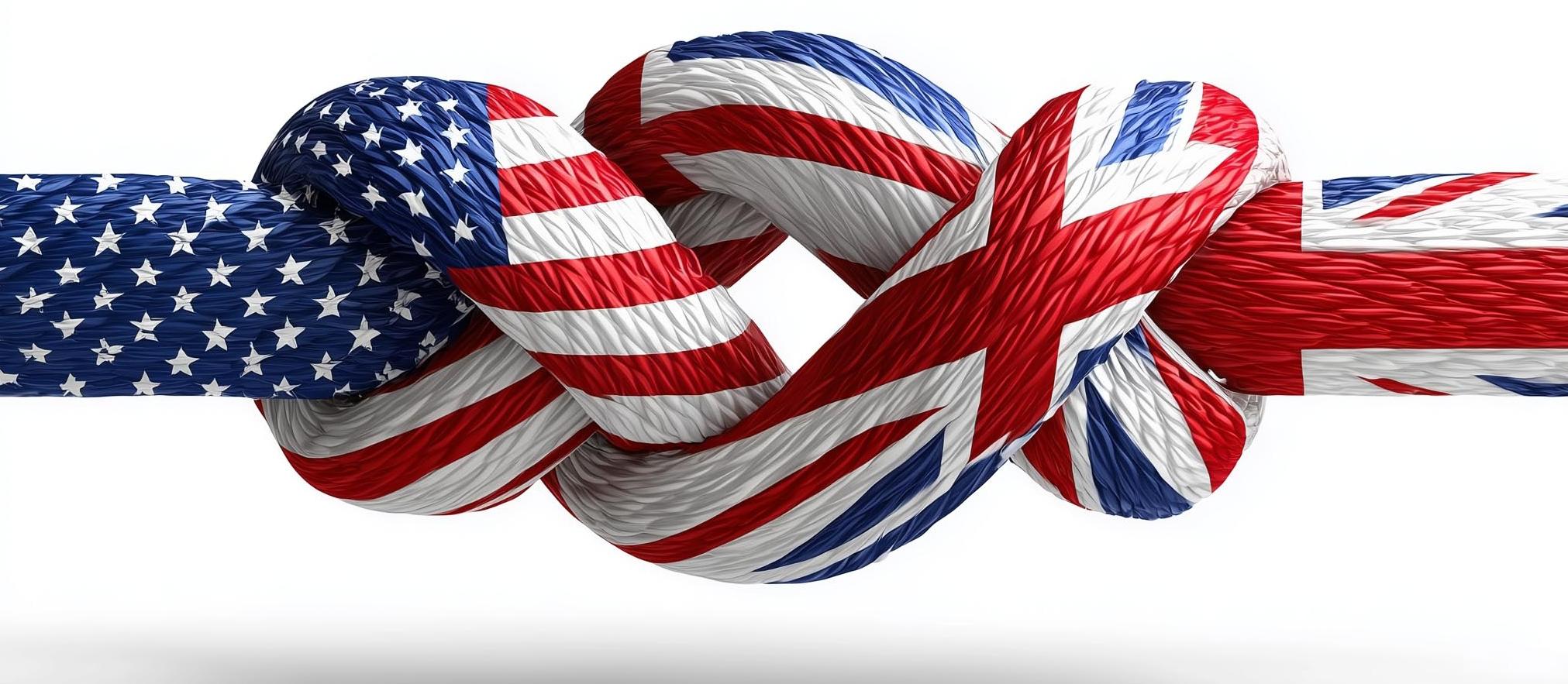
war scares in the press.17 In Britain, a Foreign Office official, Robert L. Craigie, maintained there now appeared to be a danger of “drifting towards a situation of real gravity” and that war was “not unthinkable between the two countries”.18 President Coolidge, in an Armistice Day speech, offended many in Britain, not simply by contrasting American idealism with European militarism, but by claiming the First World War had cost the United States more than any other belligerent. Although the military rivalry was largely defused by the 1930 London Naval Conference, unbeknown to Britain, the War Department in Washington DC had approved war plans for conflict with Japan (code name Orange), Germany (Black), Mexico (Green) and England (Red). The Blue-Red conflict, it was envisaged, would begin over international trade: “The war aim of Red in a war with Blue is conceived to be the definite elimination of Blue as an important economic and commercial rival.” The planners anticipated a war “of long duration” because “the Red race” is “more or less phlegmatic” but “noted for its ability to fight to a finish”.19
This general discord was principally the result of the transfer of global leadership. One commentator noted the “position of arbiter” in the European balance of power passed to the United States, leaving Britain increasingly to perform “in the old game on the old chessboard no longer as a queen, but as a pawn”.20 In January 1938 the American leader President Franklin Roosevelt had suggested discussion on the underlying tensions surrounding global events but his British counterpart Neville Chamberlain remained suspicious of “woolly and dangerous proposals”.21 He had previously warned one of his sisters “it is always best and safest to count on nothing from the Americans but words”.22 With the war only a few months old, in January 1940 he wrote again: “Heaven knows I don’t want the Americans to fight for us – we should have to pay too dearly for that if they had a right to be in on the peace terms – but if they are so sympathetic they might at least refrain from hampering our efforts and comforting our foes.”23
The true institutionalisation of the AngloAmerican military alliance occurred under the existential pressures of the Second World War but, under close scrutiny, the experience points more to a functional, often transactional, relationship rather than anything special. With the fall of France and the catastrophic material losses at Dunkirk, Britain was left desperately reliant on American industrial production. Before his untimely death, the British ambassador in Washington DC Lord Lothian
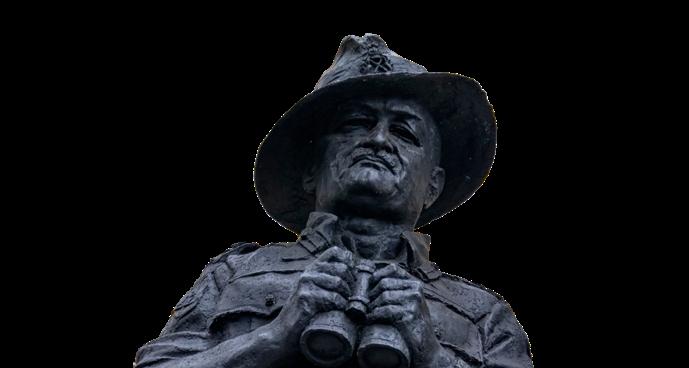
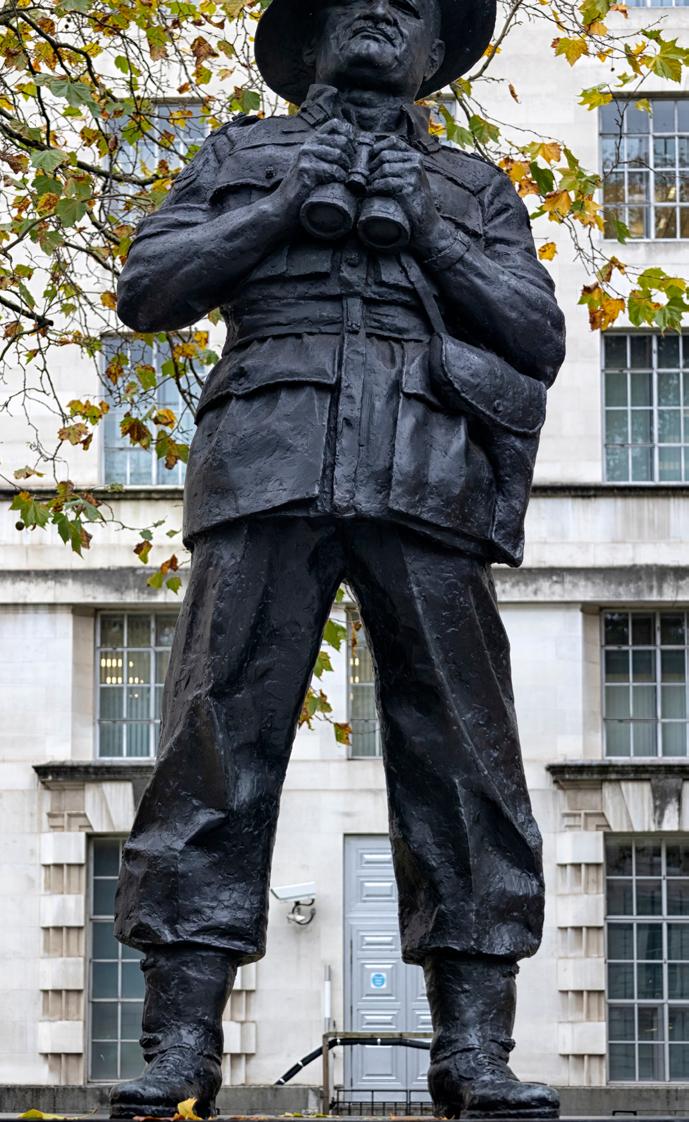
“About his country’s key ally [General Bill Slim] was driven to write, they were ‘so difficult to understand, so unreasonable; they approach quite straightforward problems from such extraordinary angles’.”
played a vital role in brokering deals such as the Destroyers-for-Bases agreement, securing support at the cost of giving long-term strategic leverage over British imperial territories.24 Lend-Lease aid subsequently provided an essential lifeline to re-equip the British Army, but the relationship evolved far beyond mere material transaction into a highly integrated architecture of command. The wartime partnership was institutionalised through Combined Boards and integrated commands, an arrangement unmatched by any other alliance in history.25 For the first time, British and American forces operated under unified, integrated command structures in theatres spanning from Europe to the Southwest Pacific. The British willingly accepted American generals as supreme commanders, blending their forces with American and Commonwealth troops to multiply their operational effectiveness exponentially. American military personnel spread around the British world system, deploying in their thousands to construct air and naval bases across territories in the Caribbean, West Africa, the Middle East and the Pacific. While the half-American prime minister and driving force behind closer co-operation Winston Churchill publicly framed this as the two nations becoming
“somewhat mixed up together”, Britain’s independent strategic posture was weakened as a growing asymmetry in military leverage grew.26 For better or worse, this period permanently altered the British military, tying its logistical supply chains and strategic planning inextricably to the United States. And at the same time, American financial aid was not mere charity; it was used strategically to dismantle the closed British economic system centred around its empire and which was replaced by a financial dependence on Washington.27
Despite the wartime collaboration, “the two partners were quite different political animals, they often had different aims and did not hesitate to spell them out”.28 The real issue was that “on the British side of the Atlantic there were many who tended to dismiss the Americans as moralizers who would be generous with advice and opinions but who could not be trusted to back up their words with actions”.29 As another historian has noted: “The average Englishman, right up to World War II, regarded the Americans as
17John E. Moser, Twisting the Lion’s Tail: American Anglophobia between the World Wars (New York: 1999), 58-59.
18Orde, The Eclipse of Great Britain, 88-89, 97-98.
19Peter Carlson, ‘Raiding the Icebox: Behind Its Warm Front, the United States Made Cold Calculations to Subdue Canada’, Washington Post, 30 Dec. 2005.
20Andrea Bosco, ‘From empire to Atlantic ‘system’: the Round Table, Chatham House and the emergence of a new paradigm in Anglo-American relations’, Journal of Transatlantic Studies (Vol.16, No.3; 2018), 222-223.
21John Harvey (ed.), The Diplomatic Diaries of Oliver Harvey, 1937-1940 (London: 1970), 67-86.
22Chamberlain to Hilda Chamberlain, 17 December 1937, quoted in Keith Feiling, The Life of Neville Chamberlain (London: 1946), 325.
23Neville Chamberlain to Ida Chamberlain, 27 January 1940, Neville Chamberlain Papers, NC18/1/1140, University of Birmingham.
24James R. Leutze, Bargaining for Supremacy: AngloAmerican Naval Collaboration, 1937-1941 (Chapel Hill: 1977), 94-104; Sir Llewellyn Woodward, British Foreign Policy in the Second World War, Vol.1 (London: 1970), 365-375.
25Paul Kennedy, ‘The continental commitment and the special relationship in 20th century british foreign policy’, The RUSI Journal (Vol.128, Issue 3; 1983), 12.
26Saucier, ‘Mr. Kerry goes to Washington’, 315.
27Warren F. Kimball, ‘Lend-Lease and the Open Door: The Temptation of British Opulence, 1937-1942’, Political Science Quarterly (Vol.86, No.2; Jun. 1971), 232-259.
28Kennedy, ‘The continental commitment…’, 12.
29C.J. Bartlett, ‘The Special Relationship’: A Political History of Anglo-American Relations since 1945 (London: 1992), 1-2.
surpassingly strange and largely irrelevant… The general American image of the British for 150 years was of a nation of more or less menacing snobs.”30 Lord Halifax, who became ambassador following Lothian’s death, compared working with American government departments to being like “a disorderly day’s rabbit shooting” during which: “Nothing comes out where you expect and you are much discouraged. And then, suddenly something emerges quite unexpectedly at the far end of the field.”31 At the Casablanca Conference held in January 1943, while accepting that Roosevelt and General George C. Marshall, the US Army Chief of Staff and perhaps leading military figure of the war, were “true friends”, referring to the other Americans present, Major General Sir John Kennedy wrote: “Under their hearty and friendly manner one feels there is suspicion and contempt.”32 As the Director of Military Operations concluded: “The Americans are extremely difficult to know.” Even General Bill Slim – perhaps Britain’s greatest wartime commander, and widely respected for his objective and reasoned outlook and sage common-sense words – apparently found it a challenge. About his country’s key ally he was driven to write, they were “so difficult to understand, so unreasonable; they approach quite straight-forward problems from such extraordinary angles” and were prone to “introduce consideration of their own national politics and hangovers from their past history, none of which have the faintest bearing on the matter of immediate issue”.33
The struggle to understand one another applied both ways. A 1943 American report, shared with the Foreign Office in London, concluded that “approximately one quarter of the American public is more or less antiBritish, feeling that Britain is fighting a war primarily for motives with which they do not sympathise”.34 There was a genuinely virulent isolationist sentiment. In the summer of 1940 so intense was it that the chairman of the Senate Foreign Relations Committee felt he could openly advise the British leadership
to abandon the British Isles in the face of any German invasion, warning that there would be no intervention from his country in the war.35 For the first joint land operation conducted together, the landings in North Africa in November 1942, orders were issued by the senior American commanders that any military personnel heard making derogatory remarks about Britain or British forces were to be sent home.36 Writing post-war, the celebrated, and often controversial, British historian Arnold Toynbee attempted to explain the issue: “American feeling and policy were still governed by past facts which had already become partly or wholly irrelevant to the international situation in which the United States was now actually placed. Perhaps the most powerful of these influences from the past was the fact the over 9 percent of the living generation of white inhabitants of the United States and the ancestors of all of them no longer ago, at the earliest than ten or twelve generations back, had, at some particular moment, deliberately pulled up their roots from ancestral ground in Europe and had crossed the Atlantic in order to start, on the American side of it, a new life free from the unhappy elements in their European heritage.”37
As the Second World War concluded, the rapid emergence of a Soviet threat and the realities of the atomic age further entrenched the military dimensions of the wartime collaboration. An American international relations expert, William Fox, labelled Britain a ‘super-power’ when he coined the term in 1944, and it remained an extant global power, a “colossus whose war-hardened leaders had no intention of stepping aside or serving as junior partners to anyone”.
38 Churchill’s Fulton Missouri ‘Iron Curtain’ Speech two years later formally coined the term ‘Special Relationship’, described as “one of the most significant speeches on international affairs in modern history”, but more recently framed as a missive to an “imagined community”.
39 Aimed at securing ongoing American commitment to preventing Soviet expansion, he embedded this within his ‘Three Circles’ doctrine,
attempting to keep Britain at the nexus of the Empire, Europe and the United States.40 Yet, it soon became clear that the advent of longrange bombers and nuclear weapons were eroding Britain’s strategic depth and effectively ending the geographic invulnerability of the British Isles. When combined with the huge economic burden of fighting two global conflicts in a little over 30 years, this meant the nation was highly dependent on a continued American military presence in Europe and the utilisation of global imperial resources.41
Functional cooperation in the nuclear, defence and intelligence spheres became the most secretive, enduring and tangible pillars of the military alliance. Notably, as demonstrated with the formalisation of the 1947 ‘Five Eyes’ intelligence-sharing network and the following year’s UKUSA signals intelligence agreement, which bound permanently the signals intelligence apparatuses of both nations and provided successive generations of British commanders with tactical and strategic awareness that far exceeded their own independent capabilities.42 It was nuclear cooperation, however, that became the ultimate symbol of
30Watt, ‘Introduction: The Anglo-American Relationship’, 1-2.
31Diary, 29 August 1941, Ben Pimlott (ed.), The Second World War Diary of Hugh Dalton 1940-45 (London: 1986), 277.
32John Kennedy, ‘Handwritten Diary’, 14 January 1943, Kennedy Papers, Kennedy 4/2/5, 6, Liddell Hart Centre for Military Archives.
33Alex Danchev, Very Special Relationship - Field-Marshal Sir John Dill and the Anglo-American Alliance (London: 1986), 39-40.
34‘Sub-Committee 1 on American Opinion, Preliminary Report’, 27 Jan. 1943, FO371/34086, The National Archives, Kew.
35Senator Key Pittman of Nevada; ‘Lord Lothian’s Job’, Time, 8 Jul. 1940.
36Draft telegram ‘Most Secret and Personal’, 13 Mar. 1943, FO371/36606, The National Archives, Kew.
37Arnold Toynbee and Frank T Ashton-Gwatkin (eds.), Survey of International Affairs: The World in March 1939 (London: 1952), 1.
“By anchoring itself to the United States within the framework of NATO, this not only signalled a longterm military attachment to Europe but also provided the means for the British Army to maintain its status as a premier fighting force.”
38Ashley Jackson and Andrew Stewart, Superpower Britain: The 1945 Vision and Why it Failed (Oxford: 2025), 45.
39Steve Marsh, ‘Anglo-American relations and the past present: insights into an (ongoing) mythologisation of a special relationship’, Journal of Transatlantic Studies (Vol.17, Issue 3; 2019), 310-340.
40Isaiah Berlin, ‘Mr. Churchill’, The Atlantic, Sept. 1949. 41Jackson and Stewart, Superpower Britain, 79, 136.
42Andrew Mycock, ‘The UK After Brexit: Can and Will the Anglosphere Replace the EU’, Cicero Foundation Great Debate Paper (No.19/02; Jul. 2019).
the special relationship. Following the 1958 Mutual Defence Agreement, Britain was provided with advanced nuclear delivery systems highlighting the degree to which the purportedly independent deterrent increasingly relied on American technology.43 A major diplomatic crisis followed in 1962 when the Skybolt missile programme was unexpectedly cancelled, although Prime Minister Harold Macmillan was able to instead secure an inexpensive agreement for Polaris submarinelaunched ballistic missiles.44 In the 1970s, the Labour government’s secret Chevaline programme to update Polaris renewed the nuclear relationship, especially in testing, fissile materials and technology exchange. Britain later secured the US Trident 2 (D5) missile system in exchange for just five per cent ($116 million) towards its research and development costs. All of this was a byproduct of the 1943 Quebec Agreement, which made the two countries partners in atomic bomb research and mandated mutual consent before the results could be used. And by anchoring itself to the United States within the framework of the North Atlantic Treaty Organization (NATO), this not only signalled a long-term military attachment to Europe but also provided the means for the British Army to maintain its status as a premier fighting force, utilising the alliance to share the immense financial and logistical burden of deterrence.45
Even so, throughout the opening phase of the Cold War and beyond, the inherent asymmetry of the relationship became increasingly apparent. The 1956 Suez Crisis brutally demonstrated that the British military could no longer act independently without the explicit permission and economic backing of the United States, shattering the illusion of British parity. Professor Sir Lawrence Freedman has argued that American and international alarm at London’s actions was a watershed moment for the ‘Special Relationship’, the decolonisation movement and British foreign policy. Certainly, after Suez the British resolved never to get out of step again with American foreign policy and this was the point at which British governments began to be obsessed with the idea of a special relationship: “Its future strategy would be to trade loyalty for privileged access to Washington’s foreignpolicy making.”46 The idea prevailed that the British were like the civilized, administrative Greeks who needed to guide the powerful but vulgar American ‘Romans’, an analogy described by one historian as a “snare and a delusion” which ultimately proved to have no basis.47 It was only a few years after Suez that former Secretary of State Dean Acheson’s blunt observation that Great Britain had “lost an empire and not yet found a role” provoked
“Never allow yourselves to be separated from the Americans.”
outrage among the British establishment, even if it accurately captured the strategic reality of an increasingly strained military capability.
And despite a strategic narrative of resolute solidarity, there have been very public divergences. In 1967, US Ambassador David Bruce warned that a unilateral determination and announcement of British cuts east of Suez risked incurring from the US President “a rebuke of titanic proportions” and was more likely than any other issue in the past few years to cause “bitter” Anglo-American controversy. He had previously warned Harold Wilson about not sending a British brigade to support American forces in Vietnam but
43Steve Marsh and John Baylis, ‘The Anglo-American “Special Relationship”: The Lazarus of International Relations’, Diplomacy and Statecraft (Vol.17, No.1; 2006), 178.
44Douglas Brinkley, ‘Dean Acheson and the ‘Special Relationship’: The West Point Speech of December 1962’, The Historical Journal (Vol.33, No.3; Sept. 1990), 606.
45Kennedy, ‘The continental commitment…’, 9-12.
46Lawrence Freedman, ‘The Special Relationship: Then and Now’, Foreign Affairs (Jun. 2006), 2.
47Alex Danchev, ‘On Specialness’, International Affairs (Vol.72, No.4; Oct.1996), 743.
48Jonathan Colman, A “special relationship”?: Harold Wilson, Lyndon B. Johnson and Anglo-American relations “at the summit”, 1964–68 (Manchester: 2018), 147166.
49Freedman, ‘The Special Relationship, Then and Now’, 61-73.
50Ibid., 63-64.
51Patrick Porter, ‘Last charge of the knights? Iraq, Afghanistan and the special relationship’, International Affairs (Vol.86, Issue 2; 2010), 374-375.
52Andrew Stewart, ‘Still Special?’, CHACR Commentary (May 2024).
military co-operation continued.48 The same was true in 1973, during the Yom Kippur war, and much like has happened recently during the most recent American-led military action in the Arabian Gulf, when access to British bases was denied to American military aircraft. Despite these disagreements, during the Falklands War, the then US Secretary of Defense Caspar Weinberger bypassed diplomatic neutrality and domestic political opposition to secretly provide Britain with intelligence, aviation fuel and the use of the American base on Ascension Island.49 Professor Sir Lawrence Freedman assessed this as “a reminder that the politics of major powers reflect a calculation of interests and an analysis of the dynamics of conflict – and that the policies adopted by the United States are a product of shifting power balances within a particular administration as much as a product of any built-in ideological disposition”.50
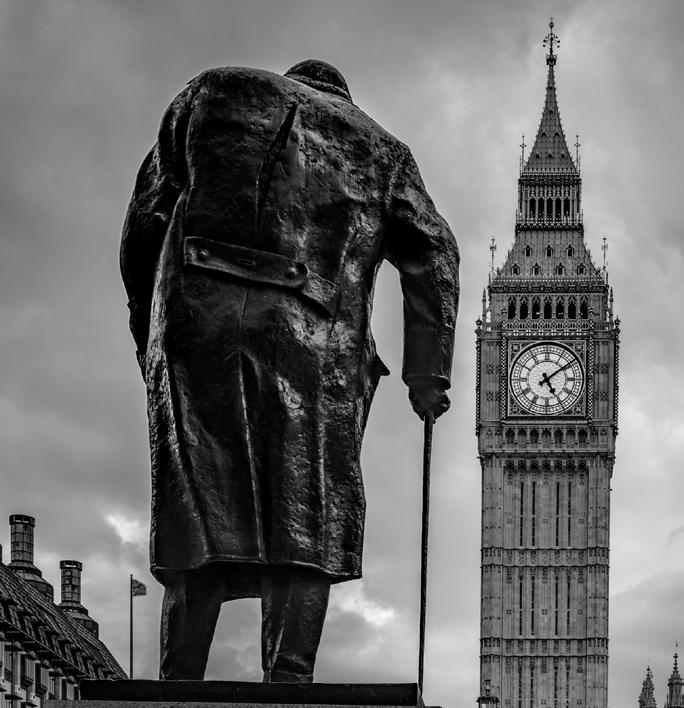
Despite many challenges, since 1945 Britain has managed post-war decline to generally great effect, playing worsening cards with considerable skill and, while there have been low points, it has retained the leading global role which it reaffirmed through its leadership during two global conflicts. In terms of the Special Relationship, while it “has never been purely a child of sentiment”, it has allowed for a claim that London endures in a primus inter pares sense and “leverage without equal among America’s friends”.51 The transition from Splendid Isolation to the Special Relationship was neither natural nor inevitable; rather, it was a hard-headed, often reluctant, strategic recalibration compelled by Britain’s relative imperial decline and the necessity of accommodating the ascendant hegemony of the growing power across the Atlantic. Ultimately, both doctrines were mechanisms designed by the British state to manage the geopolitical trauma of imperial decline. While Splendid Isolation relied on the actual possession of unassailable global power, the Special Relationship relied on the discursive performance of shared values to borrow power from the United States. Moving into the post-post-Cold War strategic environment, one in which the conflict between Ukraine and Russia has lasted longer than the First World War while tension and instability in the Gulf and Indo-Pacific regions show little sign of resolution, it still presents currently unmatched defence and security benefits even if these come at a diplomatic cost.52 Reflecting Churchill’s reported final advice in 1955 to his cabinet, “never allow yourselves to be separated from the Americans”, British defence reviews have consistently reaffirmed the preeminent security and defence relationship with the United States as the cornerstone of
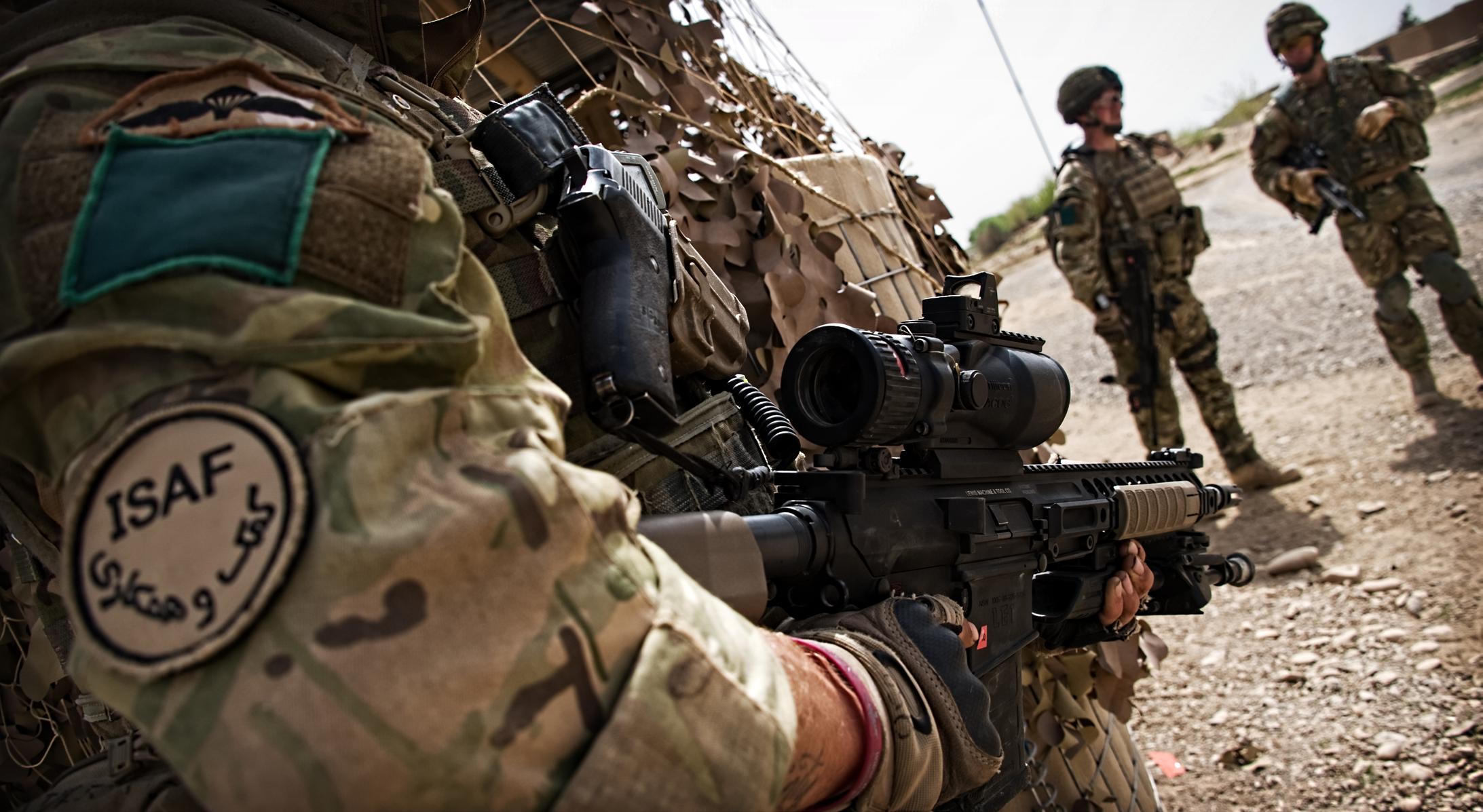
“Key [to the survival of the special relationship]... has been a generally consistent willingness ‘to pay the political and material price of being America’s most loyal ally and of pursuing policies that simultaneously reinforce Anglo-American relations and guard against US desertion’, what has been described as a ‘blood price’ deploying forces to fight ‘shoulder to shoulder’, providing troop contributions far exceeding those of other allies and taking on military tasks that the United States wanted to avoid.”
British military policy. Militarily, the hard reality remains the British military’s capacity to deploy globally relies heavily on a range of key enablers and multipliers provided by American partners, ranging from close air support to logistics and strategic lift capabilities. Deploying to modern theatres is carried out almost exclusively beneath an operational and intelligence umbrella provided by the Pentagon. With the undeniable benefits derived from the special relationship and significant financial challenges revealed by the recent debate about the Defence Investment Plan, this would appear to further cement the necessity of American interoperability.
53David Canndine, ‘A “special relationship” as unbalanced as ever U.S.-Britain’, International Herald Tribune, 25 Nov. 2003.
54Steve Marsh and John Baylis, ‘The Anglo –American “Special Relationship”’, 201.
55Alex Danchev , ‘Greeks and Romans: Anglo‐American relations after 9/11’, The RUSI Journal (Vol.148, Issue 2; 2003), 18; Alan Dobson and Steve Marsh, ‘AngloAmerican Relations: End of a Special Relationship?’, The International History Review (Vol.36, No.4; 2014), 686-688.
56Oliver Franks, ‘Britain and the Tide of World Affairs: Lecture 3: The Atlantic Bridge’, Reith Lectures, 21 Nov. 1954 (transmission).
With no war fought between them since 1812, the same language, laws and literature and a shared history and the realism and realpolitik of such leaders as Churchill and Roosevelt, Macmillan and Kennedy, Thatcher and Reagan and Blair and Clinton/Bush, there is clearly much which binds the two countries.53 One suggestion is that there have been two critical aspects in explaining the survival of the relationship, namely the continual importance attached by the foreign policymaking elite in London to linking the United States with British global ambitions.54 Key to this has been pointing to the “traditions, symbols and practices” of events during the Second World War and applying them to contemporary circumstances reinforced by “personal diplomacy, summitry and networks of close personal relationships”. Added to this has been a generally consistent willingness “to pay the political and material price of being America’s most loyal ally and of pursuing policies that simultaneously reinforce Anglo-American relations and guard against US desertion”, what has been described as a “blood price” deploying forces to fight “shoulder to shoulder”, providing troop contributions far exceeding those of other allies and taking on military tasks that the United States wanted
to avoid, such as early leadership of the International Security Assistance Force.55 To which can be added the nuclear weapons, almost unlimited support on the UN Security Council, access to political and military intelligence and a willingness to devote an unusually high percentage of gross national product to military purposes. Nothing has really changed since Oliver Franks, British ambassador in Washington from 1948 to 1952, delivered the Reith Lectures and observed that in “Anglo-American relations British policy has to pass the test: can the British deliver?”.56
Reflecting on a relationship that began with a violent schism and has only had any real sense of conviction for the last 85 years following the unequivocal British response to the national trauma inflicted by Japan at Pearl Harbor, the history still points to an expedient strategic alliance in the absence of other options. It was obligatory in 1941 as no other serious resistance to the Axis powers was available and again as the threat from the Soviet Union became clear and France, Germany and Italy were still prostrate. There was a great deal of legitimacy in Douglas Hurd’s 1992 argument that Britain “punched above her weight” as a post-Cold War actor; much the
same could be said of Edward Heath with his 1970 description of the country being “a medium power of the first rank”, which might today represent a better starting point for any discussion of global role.57 The weaknesses with the hand were most obviously visible during periods of economic crisis, such as were experienced during the 1970s, early 1990s and the first decade of the current century. These moments could also, in part, be observed as a result of often self-imposed military overstretch, most recently with the wars of choice in Afghanistan and Iraq, conflicts which continue to impact on current structure and capability. As British power has diminished and other options for European and global partners have been revived and restored, there has been evidence of a relationship that is disproportionately important to London but increasingly of marginal value to Washington. Quoted in November 2006, a senior State Department official pointed to a “totally one-sided relationship” in which British attempts to influence American policy had, for some years, been typically ignored.58 Barack Obama’s presidency presented a leader with no sentimentality in his interpretation of the shared history amidst British media panic about resulting alleged political slights and a call for ‘sharp elbows’ in future dealings.59 Faced with a reactive, inconsistent and at times even irrational Washington, a change in British political leadership is mooted as leading to a possible cooling of relations.60 Such a move would appear to reflect British sentiment: a YouGov survey published in April 2026 revealed that the number of people who thought the UK was too close to the United States had risen by nine percentage points to 43 per cent since the previous April, and only 18 per cent believed
“74 per cent of British respondents expressed no confidence in President Trump’s international leadership, while the belief that the US is a reliable partner plummeted by 33 percentage points.”
the UK should get closer to the US.61 Another by the Pew Research Center published the following month revealed 74 per cent of British respondents expressed no confidence in President Trump’s international leadership, while the belief that the US is a reliable partner plummeted by 33 percentage points, dropping from 82 per cent in 2022 to just 49 per cent in 2026.62
The distinguished historian, polymath and retired British Army officer Alex Danchev thought a good deal about the Special Relationship before his early death. With a collection of essays titled simply On Specialness, and a number of other similarly themed articles examining the core principle against a range of historical examples, he eventually concluded that, having been “created for a purpose”, “it has been invented and re-invented, imagined and re-imagined, ever since”.63 Expanding on this simple argument, and replete with imagery highlighting his eclectic breadth of knowledge, his now posthumous conclusions still carry particular weight: “The special relationship is an unusually self-conscious one. It creates its own myths and propagates its own legends. What is special
about it is its capacity to do this – to invent and reinvent itself, to exploit its mythical potential – which may be as close as we get to its occult essence. The special relationship is a shimmering illusion lost in never-never land, marooned somewhere between a monumentalized past and a mythical fiction, to borrow Nietzsche’s terms; and it continues to cast its spell.”64
Since the end of the Second World War, Britain has sought to position itself at the centre of three circles, moved through repeated references to trans-Atlanticism and acted as a bridge between the United States and Europe, and a pivot, hub and vital link in a global network. Central to these – and for the most part with the unshakable conviction of a special relationship providing an underpinning foundation – has been a quest not just to retain but exert influence. Despite an apparent collapse in British support, the immediate future may well involve an exercise in offering a reminder of a continuing common purpose, not least in terms of a shared willingness to invest in and deploy the military lever of power. A failure to do so would provide few credible alternatives to reborn Little Englanders and those with fond interpretations of what might prove a splendidly irrelevant and weak self-isolation.
57Michael Harvey, ‘Perspectives on the UK’s Place in the World’, Chatham House, Europe Programme Paper 2011/01 (Dec. 2011), 5.
58Tom Baldwin/Philip Webster, ‘London’s bridge is falling down’, The Times, 30 Nov. 2006, 1.
59Nicholas Watt, ‘Anglo-US relations: The special relationship is over, MPs say’, The Guardian, 29 May 2010; Stephen Glover, ‘Obama’s right. There is no special relationship … and the sooner we realise the better’, Daily Mail, 12 Jan. 2011.



60Esther Webber and Nahal Toosi, ‘Burnham eyes a casual version of the special relationship’, Politico, 9 Jul. 2026
61‘Britons cool on America and the “special relationship”’, The Times, 3 Apr. 2026.
62Richard Wike et al, ‘Trump Gets Negative Reviews Internationally as Fewer Say U.S. Is a Reliable Partner’, Pew Research Center, 23 Jun. 2026, pewresearch.org/ global/2026/06/23/trump-gets-negative-reviewsinternationally-as-fewer-say-u-s-is-a-reliable-partner
63Alex Danchev, ‘The Cold War “Special Relationship” Revisited’, Diplomacy and Statecraft (Vol.17, Issue 3; 2006), 579; see also Danchev, On Specialness (London: 1998); Alex Danchev, ‘Greeks and Romans: Anglo-American Relations after 9/11’, RUSI Journal (Vol.148; Apr. 2003), 16-19.
64Alex Danchev, ‘Tony Blair’s Vietnam: The Iraq War and the “special relationship” in historical perspective”, Review of International Studies (Vol.33; 2007), 190.
MILITARY power and strategic influence are, to a high degree, influenced and decided by the perception of one’s military forces by other nations. To assess the impact of a British ‘splendid isolation‘ it is therefore necessary to analyse and evaluate how other nations view the British Army and the strategic role that Britain can (still) play within NATO. In order to do so, this article concentrates on the three major land powers in Europe –Germany, France and Poland – as this trio can be regarded as Britain’s peer armies within Europe. Extending the focus to further nations, especially the smaller ones in Eastern Europe, has merit, but would generate a body of work too big for a single issue of The British Army Review.
The security architecture of Europe has undergone profound transformation since the end of the Cold War. The collapse of the Soviet Union initially encouraged expectations of a reduced military role for European states and an increasing emphasis upon crisis management, peacekeeping and multinational intervention. The Russian annexation of Crimea in 2014 and, more decisively, Russia’s full-scale invasion of Ukraine in 2022, fundamentally altered these assumptions. European governments have responded
Professor Matthias Strohn is Head of Historical Analysis at the CHACR.

through increased defence spending, military modernisation and renewed emphasis upon collective deterrence under NATO. Britain has been among the most active supporters of Ukraine and one of the earliest advocates of strengthening NATO’s eastern flank.
The British Army occupies a distinctive position within NATO. Although smaller than during the Cold War, it retains considerable expeditionary capability, sophisticated command structures, highly-regarded professional training and extensive operational experience gained in Northern Ireland, the Balkans, Iraq, Afghanistan and numerous multinational missions. Britain’s armed forces are further strengthened by nuclear deterrence through the Continuous At Sea Deterrent, advanced intelligence capabilities derived from the Five Eyes partnership and integration
with American military planning. These characteristics distinguish Britain from many European allies whose armed forces have historically prioritised territorial defence over global expeditionary operations.
Nevertheless, Britain’s military reputation has also faced significant challenges. Defence reviews since 2010 have reduced Army personnel numbers, while international concerns have emerged regarding equipment shortages, recruitment difficulties and industrial capacity. Critics have questioned whether Britain possesses sufficient conventional military mass to sustain a prolonged highintensity conflict. Public remarks by senior American military officials concerning the size of the British Army (combined with non-public comments by other NATO partners) have further stimulated debate regarding Britain’s actual military strength relative to its historical reputation. Simultaneously, Britain’s withdrawal from the European Union has generated questions regarding whether its political influence within Europe has diminished despite continued military importance.
Perceptions of Britain’s military role vary considerably across Europe. Germany traditionally viewed military power cautiously following the Second World War but has

increasingly embraced defence modernisation following Chancellor Olaf Scholz’s declaration of the Zeitenwende in 2022, which has led to a massive increase in defence expenditure.1 France has consistently promoted strategic autonomy and considers itself Europe’s principal military power alongside Britain. Poland, meanwhile, has rapidly emerged as one of NATO’s largest defence spenders and has become central to European deterrence against Russia. These differing national experiences shape how each country evaluates Britain’s military capabilities and leadership claims.
This article analyses two principal areas. First, how do Germany, France and Poland perceive the British Army in terms of professionalism, capability, reliability and strategic value? Second, to what extent do these states accept Britain’s implicit or explicit claims to leadership within NATO? It is argued that perceptions of British military power cannot be understood solely through material capabilities. Rather, they are mediated by strategic culture, alliance politics, historical memory and contemporary geopolitical developments. Understanding perceptions of military power requires more than comparison of troop numbers, equipment inventories or defence expenditure. Three concepts are particularly relevant: alliance politics, strategic culture and military prestige.
Alliance politics concerns the distribution of responsibilities and influence within military coalitions. Glenn Snyder argued that alliances involve continual balancing between fears of abandonment and fears of entrapment.2 Smaller allies seek reassurance that larger partners will provide credible protection, whereas larger allies attempt to ensure equitable burden-sharing without assuming disproportionate costs. NATO has historically managed these tensions through institutional cooperation, integrated military planning and American strategic leadership. However, the post-Cold War period has witnessed increasing expectations that European members should assume greater responsibility for continental defence. Successive American administrations – from Barack Obama and Joe Biden through to Donald Trump – have encouraged greater European defence investment while reaffirming NATO’s central importance. These pressures intensified following Russia’s invasion of Ukraine, leading many European governments to reconsider long-standing assumptions regarding defence spending and military readiness.
Strategic culture provides a second analytical perspective. Strategic culture refers to historically rooted patterns of thought concerning the legitimate use of military
“The British Army continues to enjoy considerable prestige despite reductions in personnel because it is associated with extensive operational experience, elite training institutions and sustained contributions to coalition operations.”
force. National experiences influence how governments perceive threats, evaluate alliances and employ armed forces. Britain’s strategic culture has traditionally emphasised expeditionary warfare, maritime power, coalition operations and global engagement. Germany’s culture has prioritised multilateralism and restraint, whereas France has consistently valued strategic independence and autonomous military decision-making. Poland’s historical experience of invasion and occupation has encouraged a strong emphasis upon territorial defence and credible deterrence.
Military prestige represents a third analytical concept. Prestige reflects perceptions of military professionalism, operational competence, technological sophistication and willingness to employ force effectively. Prestige often exceeds measurable military capability because it incorporates historical reputation, combat performance, institutional professionalism and alliance reliability. The British Army continues to enjoy considerable prestige despite reductions in personnel because it is associated with extensive operational experience, elite training institutions and sustained contributions to coalition operations.
These theoretical perspectives suggest that
perceptions of the British Army depend not only upon objective military capabilities but also upon political relationships, historical memory, strategic culture and institutional credibility. Consequently, Germany, France and Poland may acknowledge similar British military strengths while drawing different conclusions concerning Britain’s appropriate leadership role within NATO.
The end of the Cold War fundamentally transformed the structure and purpose of the British Army. During the late 20th century Britain’s land forces were primarily organised to contribute to NATO’s forward defence against the Warsaw Pact in West Germany. The British Army of the Rhine, consisting of approximately 55,000 personnel supported by heavy armour and extensive logistical infrastructure, represented one of Britain’s largest overseas military commitments in modern history. Following the dissolution of the Soviet Union, however, successive British governments concluded that the probability of large-scale conventional war in Europe had diminished considerably. Defence policy therefore shifted towards smaller, more flexible expeditionary forces capable of responding to regional crises and multinational interventions.
1German Federal Government, “Policy Statement by Federal Chancellor Olaf Scholz to the German Bundestag, 27 February 2022.”
2Glenn H. Snyder, Alliance Politics Ithaca, NY, 1997, 3–28.
3Hew Strachan, The Direction of War, Cambridge 2013, 146–169.
The Strategic Defence Review of 1998, published by the Labour government under Prime Minister Tony Blair, reflected this strategic transition. Rather than preparing exclusively for territorial defence in Europe, the British Army increasingly focused upon expeditionary warfare, peace support operations and rapid deployment alongside allies. The review emphasised joint operations integrating land, sea and air forces while investing in professional readiness rather than numerical strength. This transformation was reinforced during the campaigns in Kosovo, Sierra Leone, Iraq and Afghanistan. British forces acquired extensive experience in counterinsurgency, urban operations, intelligence-led warfare and multinational command. Officers frequently occupied senior positions within coalition headquarters, enhancing Britain’s reputation for operational competence. According to Sir Hew Strachan, these operations reinforced Britain’s international military standing because they demonstrated not merely battlefield effectiveness but also an ability to integrate political objectives with coalition warfare.3 Nevertheless, these prolonged campaigns exposed structural weaknesses. Counterinsurgency operations required highly-trained infantry, intelligence assets, engineers and logistical support but often diverted attention from preparations for
high-intensity conventional warfare. Equipment procurement increasingly prioritised protected patrol vehicles rather than heavy armoured formations. Simultaneously, operational demands imposed significant strain upon personnel and recruitment.
Following the global financial crisis of 2008, Britain’s armed forces experienced substantial budgetary pressures. Critics argued that the reductions risked undermining Britain’s ability to sustain prolonged conventional operations. Malcolm Chalmers observed that while Britain retained high-quality forces, questions increasingly emerged regarding “mass”– the ability to deploy and maintain sufficiently large formations during major war.4 Similar concerns resurfaced following Russia’s annexation of Crimea in 2014, which demonstrated that interstate warfare in Europe remained a realistic possibility.
Despite reductions in personnel, the British Army continues to enjoy an exceptionally strong professional reputation among allied militaries. The British Army possess extensive operational experience. Whereas several European armies spent decades focused primarily upon territorial defence, British units accumulated continuous operational deployments from Northern Ireland through to Iraq and Afghanistan. This experience
4Malcolm Chalmers, “The UK Defence Review and the New Age of Uncertainty,” RUSI Journal 156, no. 1 (2011): 8–15.
enhanced expertise in command, logistics, intelligence integration and coalition operations. Beyond the Army level, Britain’s military effectiveness is reinforced by wider national capabilities. Unlike many European states, Britain combines expeditionary armed forces with independent nuclear deterrence, global intelligence networks through the Five Eyes partnership, and sophisticated special forces. Consequently, allies often assess Britain’s military contribution holistically rather than judging the Army in isolation.
This distinction is important because European allies increasingly differentiate between quality and quantity. Britain is rarely criticised for deficiencies in doctrine, leadership or training. Instead, concerns focus upon whether the Army possesses adequate personnel, equipment, ammunition stockpiles and industrial capacity to sustain prolonged conventional warfare comparable to that witnessed in Ukraine.
German perceptions of the British Army reflect a unique combination of historical experience, institutional cooperation and contemporary strategic transformation. During the Cold War, British forces stationed in West Germany formed an essential component of NATO’s conventional deterrent against the Warsaw Pact. The British Army of the Rhine became deeply integrated into West German security planning, and cooperation between British and German officers established long-standing
professional relationships that continue to influence military thinking today.
Following German reunification, however, strategic priorities diverged. Britain remained committed to expeditionary operations in the Balkans, Iraq and Afghanistan, whereas Germany adopted a comparatively restrained approach towards military intervention. Constitutional constraints, domestic political culture and historical memory encouraged German governments to employ military force cautiously and predominantly within multilateral frameworks. Despite these differences, German military professionals consistently regarded the British Army as one of Europe’s most capable land forces. British experience in Northern Ireland, counterinsurgency doctrine and operational planning received considerable attention within German defence circles. Joint NATO exercises further reinforced perceptions of British professionalism, particularly in command and combined arms manoeuvre. Former Bundeswehr Inspector General Eberhard Zorn observed that British armed forces consistently demonstrated high operational readiness relative to many European allies despite limited resources. German assessments frequently emphasised Britain’s ability to deploy forces rapidly and integrate effectively with American military operations.
Russia’s invasion of Ukraine in 2022 marked a decisive turning point in German security policy. Chancellor Olaf Scholz’s declaration
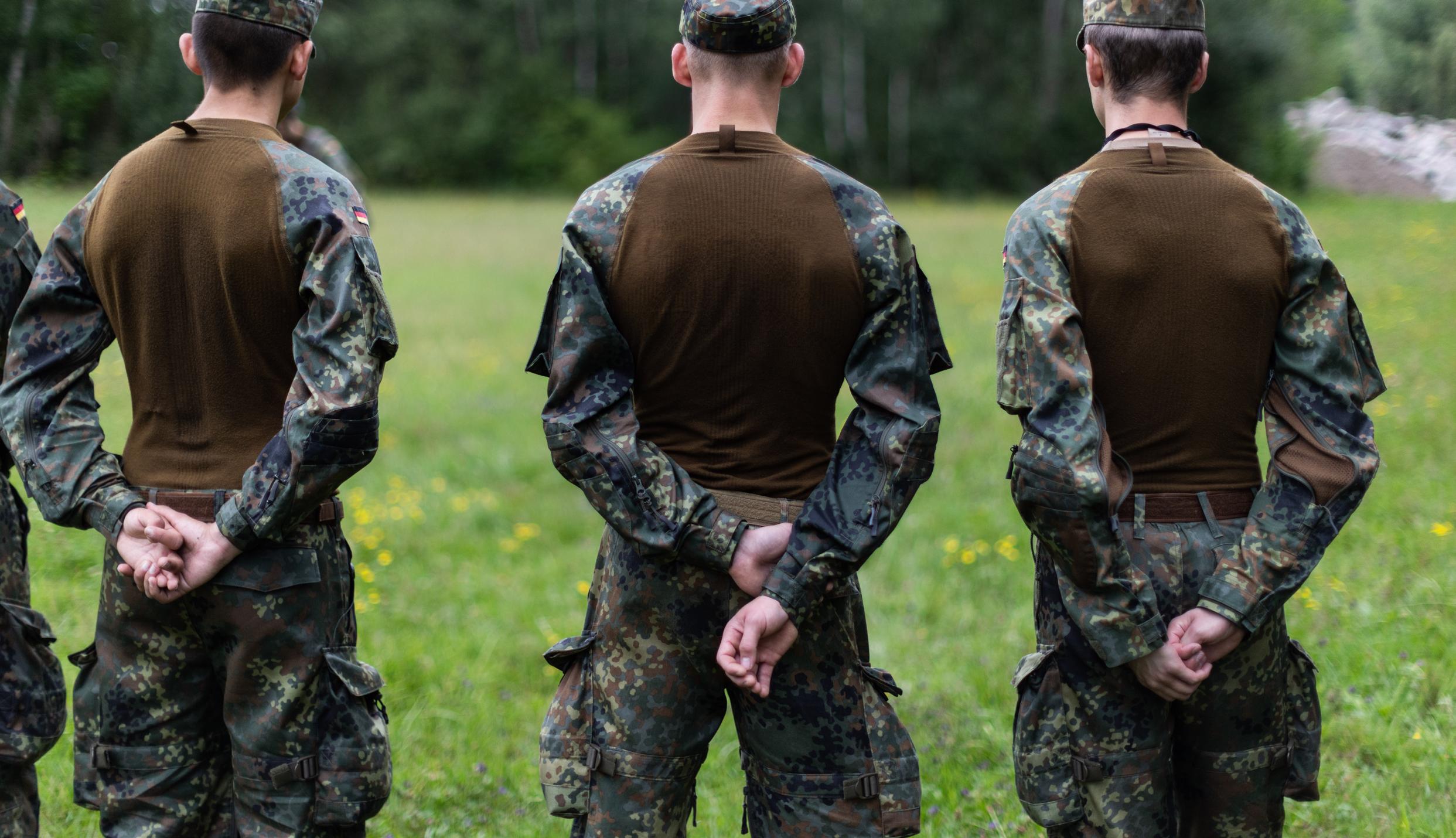
of a Zeitenwende (‘historic turning point’) acknowledged that assumptions underpinning German defence policy since 1990 were no longer sustainable. British military support for Ukraine – particularly the early delivery of anti-tank weapons and comprehensive training programmes – was widely recognised as demonstrating political resolve and operational leadership. German commentators contrasted Britain’s rapid decision-making with Germany’s initially cautious approach to weapons transfers. Nevertheless, Germany’s own military transformation has also altered perceptions of leadership within NATO. Rather than viewing Britain as Europe’s military leader, German policymakers increasingly envisage a more balanced distribution of responsibilities among Europe’s principal military powers. Germany’s growing defence investment, France’s strategic autonomy, Poland’s military expansion and Britain’s expeditionary expertise are increasingly viewed in Berlin as complementary components of European security.
Despite widespread respect, German analysts also identify weaknesses within the contemporary British Army. The most frequently cited concern is declining manpower. During the Cold War, Britain maintained well over 150,000 regular soldiers. Today, the Regular Army numbers approximately 73,000 personnel. German defence commentators question whether such a force can sustain prolonged high-intensity combat while simultaneously meeting Britain’s global commitments. Equipment procurement has also attracted criticism. The prolonged development of the Ajax reconnaissance vehicle, rising programme costs and repeated delays have generated concerns regarding procurement efficiency. Similarly, shortages of artillery ammunition exposed by the war in Ukraine have prompted debate concerning Britain’s industrial capacity and the ability to sustain a prolonged large conventional conflict. Some German analysts also question whether Britain’s strategic ambitions of ‘Global Britain’ exceed its available resources. Critics argue that sustaining such ambitions requires greater investment than current defence budgets permit. The German Chief of the General Staff was asked about this at the 2026 RUSI Land Warfare Conference. Being a diplomatic warrior, he stated that Germany does not pass judgement on other nations and that Germany was busy and occupied with re-building its own Army. This generated a few laughs from the audience, but there was a sense that these were nervous laughs more than anything else.
Bilateral agreements, such as the Kensington Treaty, therefore concentrate on the strategic
“French perceptions of the British Army are therefore characterised by both admiration and reservation: admiration for Britain’s military professionalism, expeditionary experience and operational competence; reservation concerning London’s close strategic alignment with the United States and any suggestion that Britain should exercise political primacy within European defence.”
level and address questions of cooperation in the area of defence industry.5 From a German point of view, the pure military value of Britain is to be found in the sea and air components rather than in the land domain. The current flagship of Army cooperation and integration, the joint engineer battalion stationed in Minden, can hardly be described as a strategic partnership. More remains to be done in the land domain if a real partnership is to be established, but it needs to be said that the Bundeswehr is currently looking at strategic partners for the land domain predominately in continental Europe, and not across the Channel. Additionally, German strategic discourse generally characterises Britain as one of NATO’s indispensable European leaders, rather than the sole or dominant leader. This distinction reflects Germany’s preference for multilateral
decision-making and institutional cooperation rather than hierarchical leadership within the Alliance. Brexit has underscored this belief, although it is fair to say that Britain’s decision to leave the European Union has not resulted in the dreaded and sometimes expected upheaval of Anglo-German/European defence relations.
Among Britain’s principal European allies, France occupies a unique position in assessing British military power. No other European state combines such extensive military cooperation with Britain while simultaneously maintaining an alternative strategic vision for Europe’s security architecture. French perceptions of the British Army are therefore characterised by both admiration and reservation: admiration for Britain’s military professionalism, expeditionary experience and operational competence; reservation concerning London’s close strategic alignment with the United States and any suggestion that Britain should exercise political primacy within European defence.6 These attitudes are rooted not simply in contemporary policy disagreements but in long-standing differences in strategic culture, historical experience and competing conceptions of European security.7
Since the conclusion of the Second World War, Britain and France have remained Europe’s only states possessing the full spectrum of high-end military capabilities. Both maintain independent nuclear deterrents, permanent seats on the United Nations Security Council, globally deployable armed forces, sophisticated intelligence services and extensive diplomatic networks. Consequently, French defence planners have traditionally regarded Britain as the only European military capable of operating consistently alongside the United States in high-intensity expeditionary campaigns.
5Treaty between the United Kingdom of Great Britain and Northern Ireland and the Federal Republic of Germany on friendship and bilateral cooperation, gov.uk.
6Jolyon Howorth, Security and Defence Policy in the European Union, 3rd ed., London 2021, 241–263.
7Frédéric Charillon, “French Strategic Culture and European Security,” Survival 62, no. 4 (2020): 7–24.
Nevertheless, similarities in military capability have not produced identical strategic outlooks. British defence policy since 1945 has generally prioritised the transatlantic alliance, viewing NATO as the indispensable foundation of European security. France, by contrast, has consistently sought to preserve greater freedom of strategic action. The legacy of President Charles de Gaulle remains particularly influential. His decision to withdraw France from NATO’s integrated military command in 1966 reflected a belief that European security should not become excessively dependent upon American political leadership. Although France returned fully to NATO’s command structure in 2009, Gaullist ideas concerning national sovereignty
and strategic independence continue to shape French defence thinking.
The quality of the British Army itself has rarely been questioned within French military circles. As in Germany, in France British forces enjoy a reputation for disciplined leadership, highly professional officer education, flexible command structures and considerable operational experience. Campaigns in Northern Ireland, the Falklands, the Balkans, Iraq, Afghanistan and numerous multinational operations provided British officers with practical experience that comparatively few European armies accumulated after the Cold War. French analysts have frequently praised Britain’s doctrine of mission command, its ability to integrate intelligence into tactical decisionmaking and its emphasis upon professional military education. Operational cooperation has further reinforced these perceptions. French officers frequently describe the British Army as a reliable coalition partner capable of rapid deployment, effective planning and sustained operational performance. The most significant manifestation of this partnership emerged through the Lancaster House Treaties, signed in November 2010.8 These agreements represented the most comprehensive Anglo-French defence arrangements since the Second World War. They established long-term cooperation across nuclear stewardship, defence procurement, research and development, cyber security and expeditionary warfare. Most importantly, the treaties created the Combined Joint Expeditionary Force, which envisages deployable Anglo-French formations designed to undertake military operations
ranging from humanitarian assistance to highintensity combat.
Yet this admiration does not imply acceptance of British strategic leadership within Europe. Indeed, many French strategic thinkers argue precisely the opposite. From the French perspective, Britain’s greatest military strength – its exceptionally close relationship with the United States – also limits its capacity to lead Europe independently. Britain’s intelligence cooperation through the Five Eyes partnership, close nuclear relationship with Washington under the 1958 US-UK Mutual Defence Agreement and long-standing political commitment to NATO reinforce French perceptions that London naturally prioritises Atlantic solidarity over European strategic autonomy.
This distinction lies at the heart of contemporary French defence policy. Under Presidents Nicolas Sarkozy and Emmanuel Macron, France has consistently promoted the concept of European strategic autonomy. Although interpretations differ, strategic autonomy broadly refers to Europe’s ability to act militarily and politically without depending entirely upon American capabilities or political approval. Macron argued in his 2020 address to the École de Guerre that Europe must become capable of acting “by and for itself” if it wished to remain strategically relevant during an era of intensifying greatpower competition.9
Within this framework, Britain’s position is viewed with some ambivalence. On one hand, Britain contributes capabilities that Europe cannot easily replace, including strategic
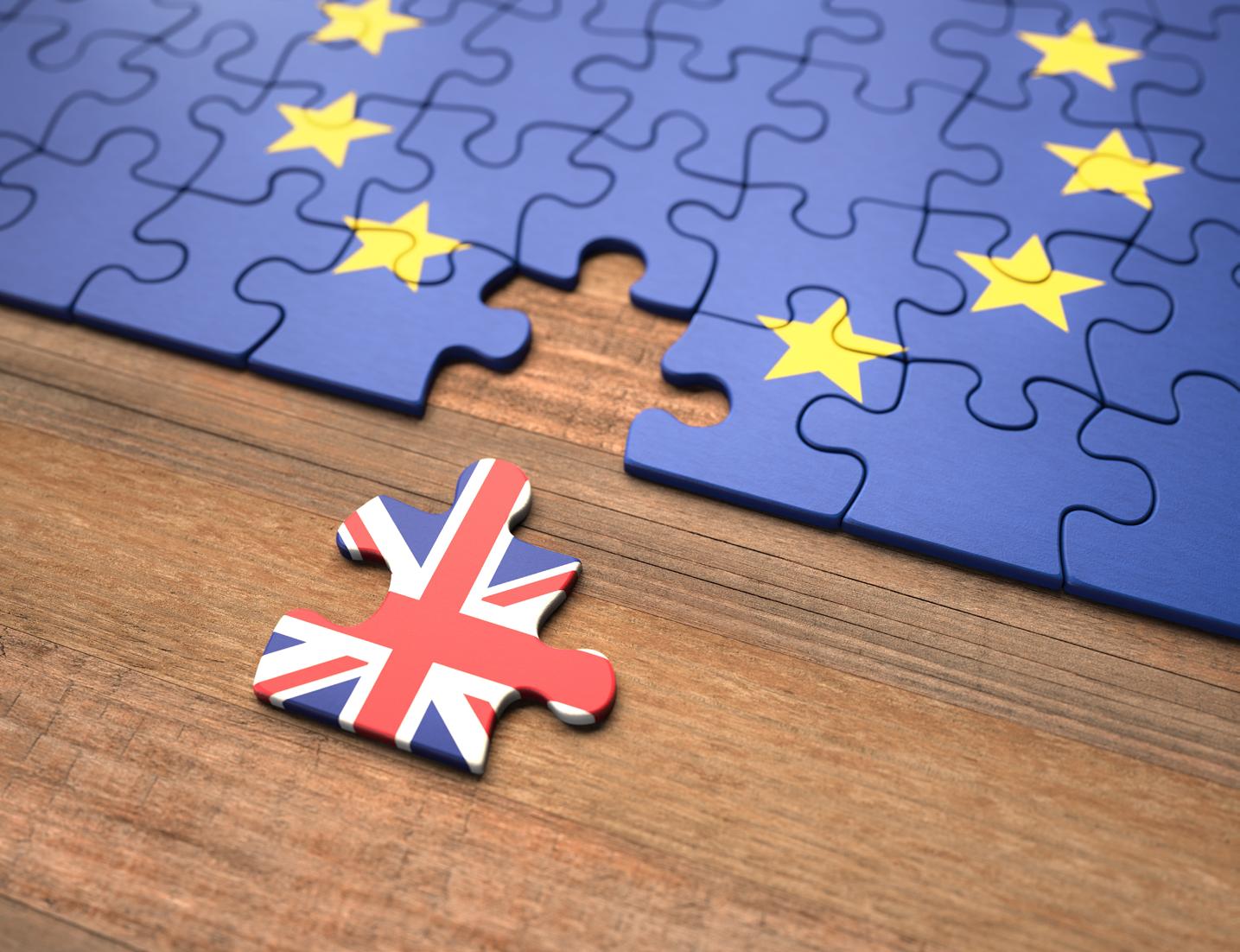
“Britain’s departure from the European Union removed one of Europe’s strongest military powers from the Union’s institutional defence structures.”
intelligence, nuclear deterrence, advanced special forces, carrier strike operations and extensive experience in coalition warfare. On the other, Britain’s enduring preference for NATO as the principal security institution is often interpreted in Paris as limiting the development of an independent European strategic identity.
Brexit intensified these debates. Britain’s departure from the European Union removed one of Europe’s strongest military powers from the Union’s institutional defence structures. Many observers predicted that Anglo-French defence cooperation would deteriorate significantly. In practice, however, military cooperation proved remarkably resilient. Intelligence sharing continued uninterrupted, the Lancaster House framework remained intact and bilateral exercises proceeded largely as before. Nevertheless, Brexit altered perceptions of leadership. From a French perspective, Britain voluntarily relinquished an important platform through which European security policy is debated and coordinated. Consequently, while Britain remained indispensable within NATO, its ability to claim broader political leadership across Europe inevitably became more limited.
Nevertheless, Russia’s full-scale invasion of Ukraine in February 2022 substantially reinforced Britain’s military reputation within France. London was among the earliest governments to conclude that Russia intended a full-scale invasion and rapidly supplied Ukraine with weapons before hostilities commenced. British military training programmes for Ukrainian personnel expanded significantly under Operation Interflex, while British diplomatic efforts consistently advocated robust Western support for Kyiv. French observers generally acknowledged Britain’s speed of decisionmaking and willingness to assume political risks at an early stage of the conflict. Although France subsequently increased military assistance considerably, British initiatives were often perceived as establishing the political momentum for broader allied support.10
However, French analysts have also observed limitations. The Ukraine conflict demonstrated the central importance of industrial capacity,
8Treaty between the United Kingdom of Great Britain and Northern Ireland and the French Republic for Defence and Security Co-operation Cm 8174.
9Emmanuel Macron, “Discours du Président de la République à l’École de Guerre,” Paris, 7 February 2020.
10Claudia Major and Christian Mölling, “European Military Assistance to Ukraine,” German Institute for International and Security Affairs (SWP), 2023.
ammunition production and force mass in prolonged conventional warfare. Britain’s Army, although highly professional, had undergone significant personnel reductions during the preceding decade. French defence commentators therefore distinguish carefully between qualitative excellence and quantitative capability. They generally argue that Britain retains some of Europe’s finest soldiers and officers but question whether the Army possesses sufficient numerical strength to sustain a major conventional conflict independently – or even within a coalition framework – over an extended period. These developments have encouraged French policymakers to advocate a model of shared European leadership. Rather than recognising Britain as Europe’s military leader, France envisages a balance (with strong French influence) in which different states contribute distinct comparative advantages. Britain offers intelligence integration, expeditionary capability and close cooperation with the United States. France contributes strategic autonomy, global military presence and independent intervention capabilities. Germany provides growing industrial and financial resources, while Poland contributes large-scale conventional forces positioned on NATO’s eastern flank.
Consequently, French perceptions of the British Army reveal an important distinction between military authority and political leadership. There is little disagreement within France regarding the Army’s professionalism, doctrinal sophistication or operational effectiveness. British military personnel are widely respected, bilateral defence cooperation remains exceptionally close and Britain is regarded as one of Europe’s indispensable military powers. Yet, French strategic culture rejects the proposition that military excellence alone legitimises political leadership over European allies. Leadership within NATO, from the French perspective, derives from consensus, shared responsibility and complementary national strengths rather than dominance by any single European state – while maintaining a strong French influence.
Since the end of the Cold War, Poland and the United Kingdom have developed a close bilateral defence relationship in Europe, embodied in the Treaty on Security and Defence Partnership, which was signed in London in June 2026.11 This partnership has become particularly significant following Russia’s full-scale invasion of Ukraine in February 2022, which transformed European security and reinforced NATO’s role as the principal guarantor of collective defence.

“Although Britain is widely regarded as Warsaw’s closest European military partner, Polish strategic thinking continues to regard the United States as the indispensable leader of the Alliance while increasingly viewing Poland itself as an emerging European military power.”
Britain emerged as one of the earliest and most determined supporters of Ukraine, supplying military equipment before the invasion began, leading multinational training initiatives and maintaining a substantial military presence on NATO’s eastern flank. Poland, meanwhile, has become the Alliance’s principal front-line state, rapidly expanding its armed forces while serving as the primary logistical hub for Western military assistance to Ukraine.12
These developments have encouraged renewed debate regarding Britain’s position within NATO. While British governments have consistently described the United Kingdom as a leading European military power, the extent to which this claim is recognised by allies varies considerably. Poland provides an especially valuable case study because its security policy is shaped by an acute perception of the Russian threat, and because Warsaw has become increasingly influential
11UK/Poland: Treaty on Security and Defence Partnership [CS Poland No.1/2026] - gov.uk.
12Sten Rynning, NATO: From Cold War to Ukraine, New Haven 2024, 287–322.
13On these tensions, see the Paul Latawski, “Belated Victory: Poland’s Legacy of World War II.‘ in Matthias Strohn,,ed., The Long Sahdow of World War Two. The Legacy of the War and its Implications on Political and Military Thinking since 1945, Oxford 2020.
within NATO’s strategic planning. Polish assessments of military capability are therefore strongly influenced by practical considerations of deterrence, readiness and Alliance reliability rather than abstract political rhetoric.
Poland views the British Army as one of Europe’s most capable, professional and dependable military institutions. British operational experience, sophisticated command structures, intelligence capabilities and willingness to deploy forces rapidly have earned considerable respect among Polish policymakers and military professionals. However, Poland generally interprets Britain’s leadership within NATO as collaborative rather than hierarchical. Although Britain is widely regarded as Warsaw’s closest European military partner, Polish strategic thinking continues to regard the United States as the indispensable leader of the Alliance while increasingly viewing Poland itself as an emerging European military power.
Polish perceptions of Britain cannot be understood without reference to the historical experiences that continue to influence contemporary strategic culture. The relationship between the two countries was forged during the Second World War, when Britain declared war on Germany following the invasion of Poland on 3 September 1939. Although Britain proved unable to prevent Poland’s defeat, which created some long-lasting doubts in Poland about Britain’s reliability, successive Polish governments in exile maintained exceptionally close political and military cooperation with London throughout the conflict.13
The onset of the Cold War interrupted defence cooperation as Poland became a member of the Soviet-led Warsaw Pact. Nevertheless, Britain remained an important destination for the Polish government in exile and many former military personnel. Following the collapse of communism in 1989, defence relations developed rapidly. Britain strongly supported Poland’s aspiration to join NATO, arguing that enlargement would strengthen European security by consolidating democratic transformation across Central and Eastern Europe. Following Poland’s accession to NATO in 1999, military cooperation intensified significantly. British officers assisted the professionalisation of the Polish Armed Forces through training programmes, doctrinal exchanges and participation in multinational exercises. British support extended beyond technical military assistance to include wider defence reform, interoperability with NATO standards and officer education. These historical foundations continue to
influence contemporary strategic thinking. Unlike relationships based solely upon diplomatic convenience, Anglo-Polish defence cooperation is frequently described by policymakers as a partnership rooted in shared historical sacrifice, common security interests and long-standing military trust. Historical memory therefore provides an important context for understanding why Britain enjoys unusually high levels of credibility within Polish strategic debates.
“British
consistently distinguish between quantitative military strength and qualitative military effectiveness. While British reductions in personnel since the early 2010s have attracted attention, Polish defence analysts generally argue that the Army continues to possess exceptional professional standards that outweigh many of the limitations associated with its relatively modest size. One of the most frequently cited strengths is the British command philosophy. Polish officers participating in joint exercises with British formations have frequently praised this

troops have participated in NATO’s Enhanced Forward Presence in Estonia, contributed to exercises across Poland and the Baltic region, and supported the defence of NATO’s eastern flank through air, maritime and land deployments. These contributions reinforce Polish perceptions that Britain views the security of Eastern Europe as integral to its own national security rather than as a peripheral political commitment.”
UK MOD © Crown copyright
command culture, arguing that it enhances operational effectiveness during multinational operations where decentralised decisionmaking is essential. Professional military education represents another important source of Britain’s reputation. Polish observers often identify British investment in leadership development as one explanation for the Army’s consistent operational performance despite reductions in personnel numbers. Rather than relying solely upon technological superiority, British doctrine places considerable emphasis upon initiative, ethical leadership and the integration of tactical decision-making within broader strategic objectives.
Operational experience has further strengthened Polish confidence in British military competence. Polish defence specialists frequently contrast this British operational record with that of several continental European armies whose overseas experience have remained comparatively limited. While Poland itself contributed forces to Iraq and Afghanistan, British forces often occupied senior command positions within coalition headquarters, reinforcing perceptions of Britain as one of NATO’s most experienced operational planners. Consequently, British military advice is often regarded in Warsaw as carrying considerable practical authority because it reflects sustained combat experience rather than purely theoretical doctrine.
British intelligence capabilities also occupy a prominent place within Polish assessments. The United Kingdom’s participation in the Five Eyes intelligence partnership provides access to global intelligence networks that few European states can match. During the months preceding Russia’s invasion of Ukraine, British intelligence assessments consistently warned that a fullscale invasion was increasingly likely. These assessments proved remarkably accurate and strengthened Britain’s credibility among Polish policymakers, who already regarded Russia as the principal threat to European security.
Equally significant is Britain’s reputation for reliability within NATO. Polish officials consistently emphasise that Britain has demonstrated a willingness to deploy forces rapidly whenever Alliance reassurance measures have been required. British troops have participated in NATO’s Enhanced Forward Presence in Estonia, contributed to exercises across Poland and the Baltic region, and supported the defence of NATO’s eastern flank through air, maritime and land deployments. These contributions reinforce Polish perceptions that Britain views the security of Eastern Europe as integral to its own national security rather than as a peripheral political commitment.
As a consequence, British military credibility within Poland rests upon more than battlefield performance alone. It reflects an integrated combination of professional leadership, operational experience, intelligence capability, alliance reliability and sustained political commitment. These characteristics explain why Britain is frequently regarded in Warsaw as one of Europe’s most dependable military partners despite possessing a smaller army than some continental allies.
From the Polish perspective, Britain’s early support for the Ukraine demonstrated three qualities that are particularly valued within Warsaw’s strategic culture: political resolve, rapid decision-making and a willingness to deter aggression through credible military assistance. These characteristics resonated strongly because Polish security policy has historically been shaped by concerns regarding delayed or insufficient Western responses to Russian expansionism. British actions therefore reinforced Warsaw’s confidence that London understood the strategic implications of the conflict in a manner broadly consistent with Poland’s own threat assessment.
The United Kingdom also plays a significant diplomatic role. British governments have consistently advocated stronger sanctions against Russia, encouraged increased defence spending among European allies and promoted closer cooperation through frameworks such as the Joint Expeditionary Force. Although the Joint Expeditionary Force exists outside NATO’s formal command structure, it has become an increasingly important mechanism for coordinating military planning among northern European states, including the Baltic countries, the Netherlands, the Nordic members and the United Kingdom. Poland, while not a member of the Joint Expeditionary Force, has viewed the organisation positively, because its activities complement NATO’s deterrence posture in northern Europe.
Despite widespread admiration for Britain’s military performance, Polish strategic thinking does not generally accept the proposition that Britain is the single leader of NATO. Rather, Polish officials and defence analysts distinguish carefully between leadership in specific military domains and overall political leadership of the Alliance. The United States continues to occupy an unrivalled position within Polish security policy. American military forces stationed in Poland, the US nuclear umbrella, strategic airlift, intelligence capabilities and logistical capacity remain indispensable to NATO’s deterrence posture.
“An isolation in 2026 would be not so splendid and would be characterised by a military position of relative weakness, not military might.”


Polish governments of different political orientations have consistently argued that no European state possesses the resources necessary to replace the United States as NATO’s principal military power.
Nevertheless, Poland’s own rise as a major military power has also influenced perceptions. Since 2022 Warsaw has undertaken one of the most ambitious defence modernisation programmes in Europe, significantly increasing defence expenditure while acquiring Abrams and K2 main battle tanks, HIMARS rocket artillery, Apache attack helicopters, Patriot air-defence systems and F-35 combat aircraft. This transformation has encouraged Polish policymakers to argue that Poland should exercise greater influence within NATO’s strategic planning, reflecting its central role in defending the Alliance’s eastern frontier. Consequently, many Polish analysts increasingly advocate a model of shared European leadership. In this conception, Britain contributes expeditionary expertise, intelligence integration, nuclear deterrence and advanced military training. France contributes strategic autonomy, global military reach and independent intervention capabilities. Germany provides industrial capacity and financial resources, while Poland contributes rapidly expanding conventional land forces positioned closest to Russia and Belarus. Rather than competing for primacy, these capabilities are viewed as complementary components of a stronger European pillar within NATO.
Although Polish assessments of the British Army are overwhelmingly positive, they are not uncritical. Defence analysts have noted that reductions in British Army personnel since the early 2010s have raised legitimate questions concerning force size and sustainability during prolonged highintensity warfare. The war in Ukraine has highlighted the continuing importance of artillery, ammunition production, logistics, reserve mobilisation and industrial resilience – areas in which many Western armed forces,
including Britain’s, have faced significant challenges. From the Polish perspective, numerical strength remains important because the defence of NATO’s eastern flank could require sustained conventional operations against a major military power. While British professionalism is rarely questioned, some Polish commentators argue that Britain would benefit from larger deployable land forces, increased stockpiles of ammunition and greater defence-industrial capacity.
Having analysed the views of Britain’s major European military partners in the land domain, what does this mean for Britain and the idea of ‘splendid isolation’? As we have seen, the view of Britain and the British Army differs from country to country – and is influenced by the other states’ military outlook and strategy. And yet, there are some common points of view that are obvious: the British Army is seen as a highly professional and effective force, ready to project force to where it is needed. For this, all of the nations described above show respect for the British Army. However, it is increasingly clear that Britain and the British Army are falling behind other nations. Lack of resources and the obvious inability to conduct prolonged high-intensity engagements are beginning to have an effect on how the Army is perceived. A NATO officer visiting Robertson House, in which the CHACR is based, summed up the growing uneasiness with the British Army’s capabilities. “The British Army is like Robertson House,“ the officer remarked in a private conversation, “it looks grand on the outside, but don’t look to closely“. In the geopolitical situation of 2026, this is not a good position to be in. As Major General (Retd) Dr Andrew Sharpe mentioned in the introduction of this British Army Review, the traditional British ‘splendid isolation’ was based on economic power and military might, and was a stance chosen for sound political principles. An isolation in 2026 would be not so splendid and would be characterised by a military position of relative weakness, not military might.




OUR aim has been to explain why Britain was able to stand alone, for a couple of centuries at least, and still prosper and play such a key role in deciding the context of international events and outcomes. It has also been to explain why, now, Britain cannot stand alone and still have the same self-certainty about the security and prosperity of its citizens. Those days are gone, and one should beware of listening too carefully to their echoes. Equally, we argue, the responsibility for the nation’s security cannot be mortgaged out to others, regardless of how central a role is placed on alliances, coalitions and mutual cooperation. At the same time, therefore, we have sought to remind ourselves that our reliance on others comes with a duty and an expectation from those others that we, in turn, will contribute back.
We also acknowledge that in a world of national interests, nations will (indeed, morally and practically must, if one believes Niccolo Machiavelli) place their own security and prosperity above that of others, and that that means that Britain, regardless of the assurances of allies and friends, must see to its own ‘first duty’ in terms of security. And we sought to make clear that the last 50 years of British, European and global history have placed the United Kingdom, whether by design or by default, in a gradually more isolated position despite all of the successive governments’ strategic intentions to stay closely engaged with (and, at times, reliant upon) our friends and allies, especially the US, Europe and NATO; we have emphasised that this has been particularly so, since the end of the Cold war, in respect of the provision of our security.
Amongst the rhetoric of the Brexit debate the term ‘Global Britain’ was offered as a vision of the UK’s future in the world in terms of international relations strategy and governmental foreign policy and has been used by successive administrations ever since. It became a government and Foreign, Commonwealth & Development Office shorthand for the management of Britain’s
AUTHOR
Major General (Retd)
Dr Andrew Sharpe is Director of the British Army’s CHACR.
place in the world, but with little clarity about what this actually meant in practical terms. Indeed, in the four years between the Brexit vote and the event itself, Parliament was sufficiently unsure of the meaning of the term as a guiding light for the ship of state that the Foreign Affairs Committee held an enquiry, in 2018, to seek some clarity in this respect. They concluded that: “The most frequent complaint we have heard from several witnesses is that the only thing that is clear about Global Britain is that it is unclear what it means, what it stands for or how its success should be measured.”1 Further lines of enquiry were recommended.
Two years after this Committee enquiry, Dominic Raab, then the Foreign Secretary, sought to throw clear definition into the debate by offering three pillars for the strategy: “The first pillar in our Global Britain strategy will be to continue to prove that we are the best possible allies, partners and friends with our European neighbours... The next pillar of our Global Britain strategy will be the UK’s role as an energetic champion of free and open trade... Finally, the third pillar... will be the UK as an ever stronger force for good.”
This statement threw little light onto the debate for a number of reasons. First, the first pillar was entirely Europe-facing (rather than ‘global’) simply because, at that moment as Britain left the European Union, it needed to reassure its European allies and partners (and, indeed, itself) that, although it had ‘left’ it was still there. It is interesting that, in that moment of the UK’s history, the US was not articulated as a pillar; it was (perhaps with the hubris to
1‘Global Britain’; Foreign Affairs Committee; HC 780 2017-19; 12 March 2018; paragraph 1.
which the Trump administration refers), taken as a ‘given’. The second pillar is a political and policy aspiration (with, as we have seen, strong echoes of the foreign policy drivers of ‘Splendid Isolation’ and a time of great prosperity, power and influence for Britain) and is almost entirely prosperity driven. And the third, to be a ‘force for good in the world’, while a worthy and decent aspiration for any nation, remained as obscure in the detail of its execution as it had been since Robin Cook first articulated it as the core aim of British Foreign policy in 1997, as Tony Blair’s Foreign Secretary. (This last, incidentally, is particularly opaque when applied to Defence, where those who stretch it to its almost meaningless limits have characterised it as urging the military to be ready to deliver ‘philanthropic violence’!)
As we have seen, from the turn of the 20th century onwards, sometimes by design and sometimes by necessity, the United Kingdom has found itself less and less self-dependant and more and more alliance and coalition focussed. It is a habit into which we have got ourselves, and which has served us well, for over a century and a quarter, and for that reason we have a tendency to take it as another given. I refer you back to the quotes from the Strategic Defence Review offered in the opening pages of this special edition of The British Army Review: “...our unshakeable commitment to NATO means we will never fight alone,” and “…the UK’s strategic strength comes from our allies…”. We would argue that as ‘safe assumptions’ go these are no longer safe in either sense of the word – that is to say that they are no longer given certainties, and that, by making them, we risk making ourselves less physically safe than we would be if we were more self-reliant and responsible for our own safety and security.
As the Empire faded, and ever since then, the two rocks of British foreign policy have been Europe and the US, with the UK bridging, balancing and bestriding the two like a latterday small Colossus. But those two foundation stones have become, in the last two decades, less and less certain. US introspection and irritation, sometimes breaking out into open contempt, for Europe’s US-dependency has
General Sir David Richards – pictured in London in 2010 with Hamid Karzai, then President of Afghanistan – commanded NATO’s International Security Assistance Force from May 2006 to February 2007, overseeing the expansion of operations into southern Afghanistan.
Graeme
Main/Soldier Magazine/Crown copyright
not only weakened NATO, but, by extension, has weakened the deterrent force of NATO and thus made the need for self-reliance and independently credible military might more imperative amongst all of the individual constituent members of NATO, not least the United Kingdom. Brexit has inevitably weakened some of the UK’s security capabilities, although diplomacy (both civil and military) has done much to shore up those areas where power and effect may have risked leakage as a result of that separation from the formal security ties of European membership.
Closeness to the US may come with a useful strategic bridging cachet, but it also brings a flip side of suspicion of divided loyalties (in European, and especially amongst French, strategic decision makers) and thus a reinforcement of the old ‘Albion Perfide’ prejudices that paint the British as charming and professionally competent, while being hard to take at face value when it comes to national interests. How ‘special’, welcome and useful is the relationship with a US that looks inward? How welcome in the US is ‘Europe’s messenger and translator’ if the US has read the signals for itself, made its own conclusions, and decided that those that speak on behalf of Europe are less welcome than they were in the past. If my analogy in the opening paragraphs of this publication holds any water, then the ‘grown up America’ that sees itself as being more successful than, and resents the tired advice of, its out-of-date and less wealthy parents, is certain also to resent the elderly uncle who comes speaking ‘on behalf of your Mum and Dad’, regardless of the lingering respect and affection that it may hold for that relative.
Even if individual ‘influencers’ are welcomed, respected and valued by others, they only have a similar respect, value and impact to the sending nation if their efforts are strategically coordinated, by design and for advantage. The British sceptics might wryly observe that the very idea that British position-holders in influential posts, both diplomatic and military, are working towards a single, articulated, centrally-organised strategic end, is laughable, but such protestations, if offered to friends and allies, are taken as indicators of even more sophisticated perfidy, rather than frank
“The history of the last 80 years or so of British diplomatic and military efforts and appointees has been a positive one. Influence through commanders, deputies and key staff officers, in important posts on operations (such as in the Balkans, Iraq and Afghanistan) and in fixed alliance headquarters has been a success story for the UK.”
admissions of reality. The truth, many would observe, is that such appointees, even at very senior rank, are sent off with little more than a thorough back-brief and an exhortation to “get out there, see what ‘they’ (meaning our allies) are up to and do your best to influence the conduct and outcomes of the operation for the best”. The sceptics would argue that this comes with an inherent assumption (perhaps hubristic and patronising) that the British are the carriers of a unique wisdom that can guide others in their endeavours.
Despite all of the above, however, the history of the last 80 years or so of British diplomatic and military efforts and appointees has been a positive one. Influence through commanders, deputies and key staff officers, in important posts on operations (such as in the Balkans, Iraq and Afghanistan) and in fixed alliance headquarters (such as SHAPE and the network of other NATO 4* and 3* HQs) has been a success story for the UK. And, regardless of ‘Albion Perfide’ suspicions, these efforts have been, as we have seen, welcomed and valued by our allies. Thus the relatively low-cost use of capable individuals has brought a steady flow of influence in return for their valued professionalism. This, supplemented by the deployment of capable formation HQs when required, and alongside, of course, the repeated commitment of fighting formations, at scale and in harm’s way, has allowed the UK to keep getting away with its claim to ‘leadership in NATO’, in the land domain at least, despite having a relatively small Army.
In the fine print of all of the recent decades of reviews and strategic plans for the security of Britain, the use of the Armed Forces, and especially the Army, as a lever of genuine strategic influence has been one of the nation’s fortes. Whether or not, in its execution, the effects of this strength have been delivered by careful and joined-up design, or by happenstance, perhaps remains up for debate. But size matters, and it matters on two fronts: first it matters because, regardless of views of professional competence, of exquisite equipment, of battle-winning soldiers and non-commissioned officers, and of freethinking philosophies and doctrine, if resources are clearly finite, capabilities riddled with gaps, and both perceived as being simply not enough for the likely jobs in hand, then credibility is lost. (Importantly this applies to deterrence effects as much as it does to calculations of more active roles in treaty defence plans.) Second, it also matters because a smaller Army produces fewer highly capable majors, colonels, brigadiers and generals, of whom our allies are so complimentary, to go out into the world and hold strategically influential posts in peace, on operations and in war. So, the smaller the Army, the fewer the officers that are available to have such strategic influence (and it is more often Army officers, rather than Royal Navy or Royal Air Force officers of similar rank, that deploy into expeditionary headquarters on operations). And fewer headquarters and formations are available to deploy, rotate and replace on deployment, or offer for deployment.
Thus, in simple terms, we have sought to answer the following three questions. What has a position of isolation meant for Britain in the past and has that period of our history got much to teach us now about Britain’s place in the world? What does the United States’ long historical tradition, and newly re-emergent trend, of isolationism mean for Britain’s global context as the echoes of the Second World War and the Cold War fade from American consciousness? How do our NATO allies, and especially the leading European allies, see Britain as they reflect upon the self-styled ‘Global Britain, leading within NATO’? Those three questions examined and answered will then enable us to offer a few suggested answers to the final and consequent question: within the security and Defence context, what do our US and European allies want from Britain in general and the British Army in particular?
In our context, the answer to our first question is relatively straightforward, even if it is one that has filled the international sections of university libraries for decades as scholars address the challenge posed by Dean Acheson’s 1962 West Point speech (as highlighted for us in the second section of this British Army Review special by Professor Stewart) – “Britain has lost an Empire and not yet found a role”. In the past, so-called isolation for Britain has not reflected the true
meaning of the word. Britain in ‘Splendid Isolation’ was a self-evidently global Britain, dominating the world through hard power, trade and soft power combined, and isolated only in the sense that it was un-entangled by treaties with European peers, while free to pursue its national interests with singleminded and justifiable self-confidence. Aloof from European squabbles, Britain could use a combination of gunboat diplomacy, manufacturing power and trade advantage to court and cajole as she saw fit. Might was right, the world order was led by Britain, and Britain was well equipped and well set to lead wherever and however His or Her Majesty’s Government deemed appropriate. Thus, for at least the last 200 years, Britain has not been isolated in any meaningful global sense, and has been powerful enough to choose her own strategic course. None of which now applies. The single lesson from our history in this respect is, therefore, that sufficient hard power brings the ability to rely only upon oneself, and that a lack of it has to be compensated for in a greater use of other levers of power and a proportionate reliance on strong and binding alliances. And, therefore conversely, if one’s strong and binding alliances begin to appear less strong and less binding then the wise statesperson would build back sufficient hard power to compensate.
Our second question concerned the United
States and Britain’s relationship with her. Trump’s America, transactional and being ‘made great again’, sees itself as being sufficiently powerful (like Britain of the previous centuries, in terms of hard power, resources, manufacturing base, trading strength and soft power influence) to pursue a ‘Donroe Doctrine’ of America first and Devil take the hindmost. This is not the place to discuss the moral or practical rightness or wrongness of this approach, nor the sustainability or efficacy of it in the 21st century world. Our task is rather to understand the reality of it, the implications of it for the UK, and to grasp that, regardless of how long Trump himself retains a hold on power, the US, with its history of isolationism, has had a chord struck deep in its soul to which it is instinctively likely to continue to listen, regardless of who sits in the White House. America is likely to remain our friend and ally, but America, right now, expects Britain to pay her own way, especially in terms of Defence and security. For the current administration, that calculus is measured in two simple ways. First, in an atmosphere dominated by transactions and balance sheets, size and expenditure is definitive. Second, ‘loyalty’ matters, which, to the current administration at least, means doing what you are told regardless of how well it serves your own personal (or, in this context, national) interests. A failure to comply with such tests of loyalty (which many nations’ leaders, Britain’s included, have found
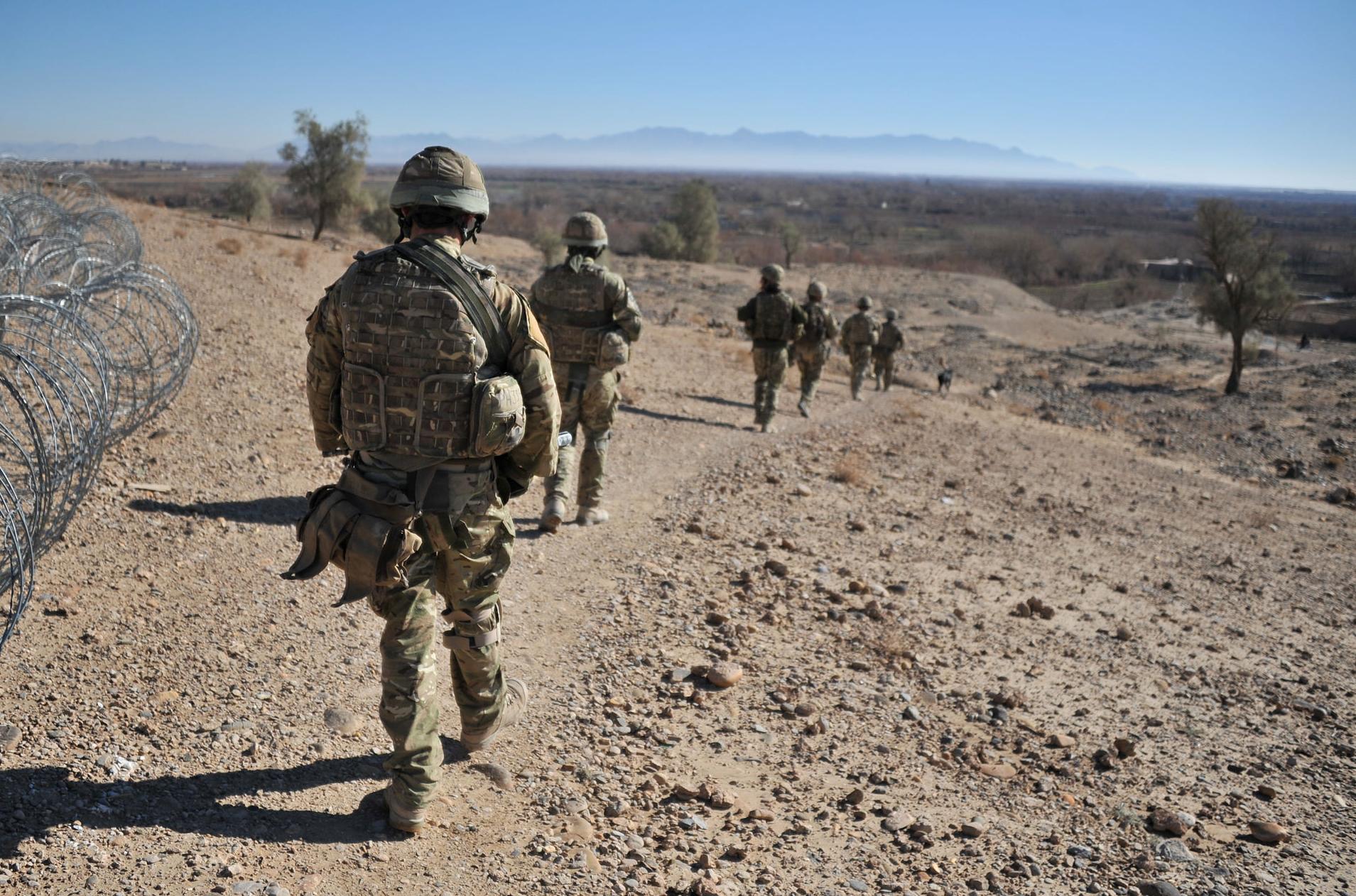
“The
British Army is a tough, professional force to be reckoned with; its noncommissioned officers and junior officers are first class; its staff officers and commanders are excellently trained and educated; its philosophies and doctrine are commendable; and it is battle-hardened. Politically, and admirably, Britain has shown a willingness to use its Army in support of its allies.”
undesirable, impossible or impractical to satisfactorily pass) have proved likely to lead to a further distancing of the US, and thus an increased imperative to look to self-reliance in terms of security. The predictability and reliability of a ‘special relationship’ are no longer a given. Basing foreign and Defence policies on that ‘predictable reliability’ is no longer wise. Hoping for it, working to make it so, and, in so doing, demonstrating that we are taking our own responsibilities back to the United States as seriously as we would like them to take theirs to us is increasingly the necessary course.
Our third question concerned our most influential European allies. Common themes emerged from Professor Strohn’s analysis of this question. From their own perspectives, in some ways similar, in others very distinct, France, Poland and Germany look at Britain and the British Army and could provide a tick list upon which they would disagree very little. The list might contain a series of statements like those that follow. Britain is an ally upon whom you can rely, but whose seemingly hidden agenda you must always scrutinise carefully. Britain has a history of commitment to Europe, regardless of its separation (sometimes political and always geographic) from the European heart and heartland. But Britain is hard to read, even when it promises to commit, up until the point that it physically commits and delivers – and then it commits to the finish. Britain’s military and strategic histories mean that it has had an approach to land power that is different from the rest of Europe, and this difference is most readily identifiable in terms of size and scale. The British Army is a tough, professional force to be reckoned with; its non-commissioned officers and junior officers are first class; its staff officers and commanders are excellently trained and educated; its philosophies and doctrine are commendable; and it is battlehardened. Politically, and admirably, Britain has shown a willingness to use its Army in support of its allies, bilaterally, collectively in alliances (like NATO) or in coalitions of the willing. But, and it is becoming an ever more important and more openly voiced ‘but’, Britain’s Army is now small, lacking in key capabilities, thinly spread, double-hatted and over-committed, and not backed up by a recognisably healthy and robust defence industrial base.
If all of the above is true, how does the British Army shape itself to best serve the needs of the nation in making sure that the friends and allies upon whom we place so much hope continue to value our contribution? In short, how do we answer that final question, which
was: within the security and Defence context, what do our US and European allies want from Britain in general and the British Army in particular? Our historical analysis has given us a clearer understanding of our context, and our contemporary analysis has given us considerable insight into what our allies recognise as the value that the British Army can add. We offer a series of brief suggestions, as summaries of those things that would be most likely to reassure our allies that we are not isolated from them, and to reassure ourselves that we are aligning our own security interests with those who are most likely to seek to combine theirs with ours:
n Provide a credible army corps to the defence of Europe, as the Land heart of our NATO contribution in compliance with Article 5. This must be seen to be a genuinely brand-leading fighting formation, teeth-to-tail credible, with no ‘hollowness’, deliverable rapidly at scale to the point of need, properly trained and equipped for the 21st century fight. (Beyond the tactical, operational and strategic hard realities of this contribution, the messaging of the delivery of a capable corps is the benchmark upon which most of our allies (and, for deterrence value, our enemies) begin their ‘size matters’ assessment of whether armies are capable and serious entities.)
n Assure a secure UK homeland, both as a national ‘first duty’ necessity and in compliance with NATO Article 3. This will include an ability to deploy the abovementioned corps safely to its point of need, and the ability to force-generate and sustain the fight, in the homeland and continental Europe, for as long as is required.
n Provide assurance that both of the above are underpinned by a functioning and secure Defence industrial base that can not only deliver that above-mentioned corps, properly equipped, but can supply it and the rest of the Army with combat supplies and replacement capabilities over a sustained fight.
n Provide the nation with the strategically important global tools (be they the safety of all British Overseas Territories, the forward presence on Op Cabrit, the deterrent footprint on the Falklands, the capacity to train and equip the Ukrainian Army, or any of the other myriad of individual, team, subunit, unit and formation level commitments) that give the UK global reach, relevance, utility and credibility.
n Continue to deliver, at the full range of ranks, a steady supply of well-trained, well-educated, free-thinking, professionally competent, operationally experienced commanders and staff officers to work alongside our allies. (And, from a selfish British perspective, not least because all of our allies believe that they have been, make sure that they deploy to their alliance or operational command and staff posts with a proper nationally-cohered brief on what strategic effect they can have, by design and for advantage, while they are deployed!)
It is worth repeating the quote from the First Sea Lord of 1896, that Professor Stewart offered us in his exploration of the history of the strategy of ‘Splendid Isolation’: “Our isolation is not an isolation of weakness or contempt of ourselves; it is deliberately chosen, the freedom to act as we choose in any circumstances that may arise.” Strategy, to be meaningful, must be deliberate. Strategy is also not just about the plans that you make and the actions that you take, but about the management of the consequences of those plans and actions. Despite the context in which modern Britain finds itself, its core strategies, especially when it comes to Defence, are about commitment, alliance and inclusion; not about aloof isolationism. The so-called Rules-based World Order is founded upon the assertion that ‘might is not right’, and the UK’s place in the world has been sustained, as its hard power has waned, by a set of circumstances that have allowed the UK to have considerable strategic influence, beyond its measurable hard power, to the great and (so far) lasting security and prosperity benefit of its citizens. As the ebb and flow of international relations sees a movement of the tides towards the role of hard power, however, it has become increasingly apparent that a re-examination of the hard power toolset is a wise step to take. This publication has sought to focus the lens of that reality from the breadth of international history, through current context and gradually down to the relative microcosm of the current British Army, and suggest how it might, within the realistic limits of likely resource, offer maximum benefit to a Britain that seeks to ensure that these changing circumstances do not lead to Britannia finding herself drifting on unruled waves into an unsupportable and dangerous state of isolation with the commensurate threats to national security. A failure so to do might well risk us finding ourselves stuck with that final Cambridge Dictionary definition of ‘isolation’: “the condition of being alone, especially when this makes you feel unhappy”.
“THE PURPOSE OF THE BRITISH ARMY IS TO PROTECT THE UNITED KINGDOM BY BEING READY TO FIGHT AND WIN WARS ON AND FROM THE LAND.”