AUTHOR
Maj Luke TurrellThe author gained a Masters degree in Strategic Communication as a Chief of the General Staff scholar and is now the Executive Officer of CHACR


AUTHOR
Maj Luke TurrellThe author gained a Masters degree in Strategic Communication as a Chief of the General Staff scholar and is now the Executive Officer of CHACR
The Centre for Historical Analysis and Conflict Research is the British Army’s think tank and tasked with enhancing the conceptual component of its fighting power. The views expressed in this In Depth Briefing are those of the author, and not of the CHACR, Royal Military Academy Sandhurst, Ministry of Defence or the British Army. The aim of the briefing is to provide a neutral platform for external researchers and experts to offer their views on critical issues. This document cannot be reproduced or used in part or whole without the permission of the CHACR. www.chacr.org.uk
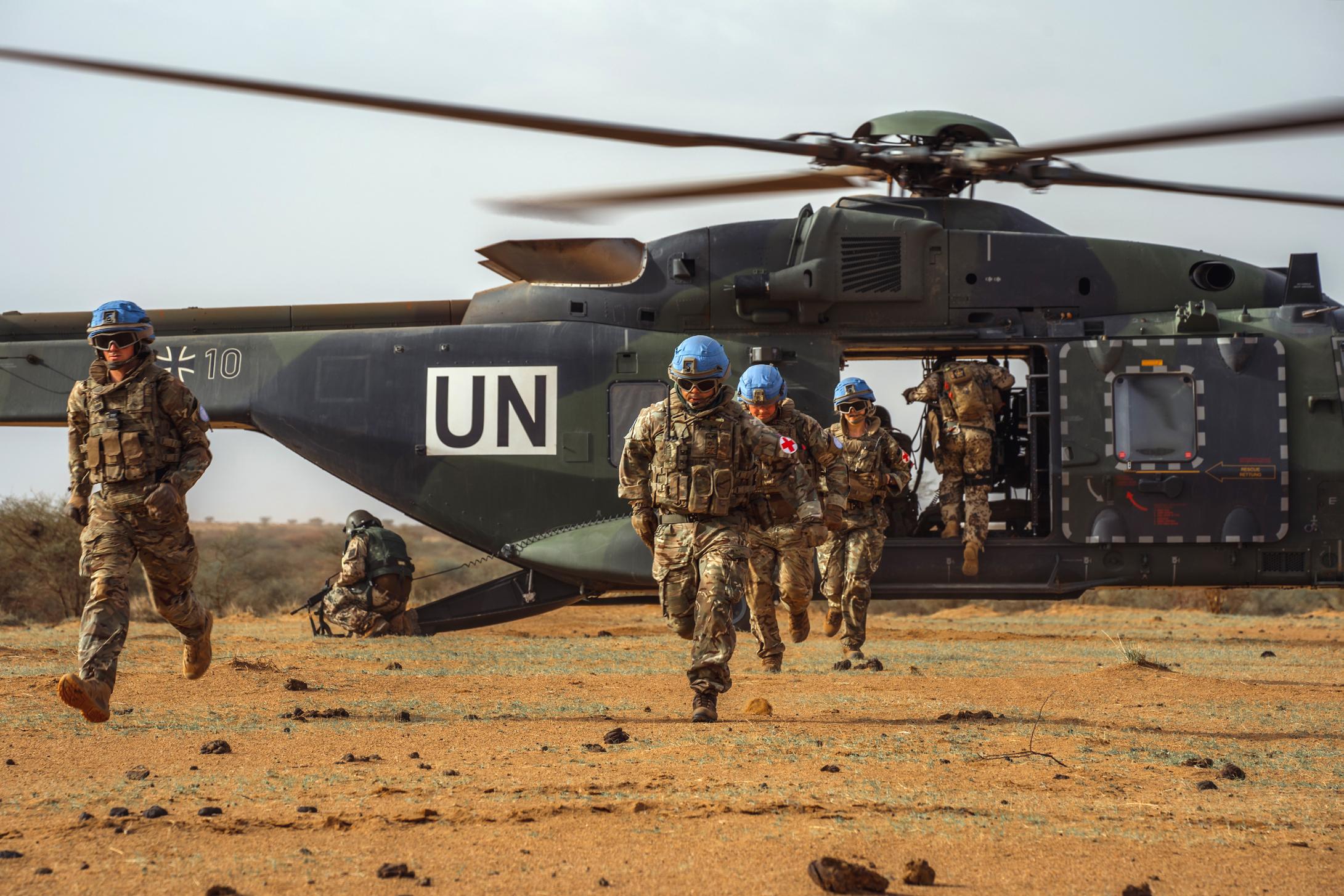
ON 16th June 2023 the military-led government in Mali ordered the UN peacekeeping mission (MINUSMA) to leave “without delay” and 14 days later the UN Security Council terminated its mandate, ceasing all operations and committing to withdrawing all personnel by the end of this year. This is in addition to the withdrawal of French troops from Burkina Faso.
In the future, we may yet look back on that call and the decisions of the UK, France and Germany to withdraw their contributions to the UN mission, with significant regret. Even as the UN made the decision, the UK representative commented she didn’t believe it was the correct thing to do given the increasing instability and humanitarian need in Mali and the wider Sahel. “We do not
believe that partnership with the Wagner Group will deliver long-term stability or security for the Malian people.” But despite suggestions from France and the UK that the peacekeepers remain in place for between six and 12 months, the Malian Government relentlessly pursued a rapid withdrawal of UN forces, even ordering a blockade of imports by MINUSMA.
And yet for more than a decade jihadi militant and other armed groups have caused widespread regional instability across the Sahel, weakening governments’ ability to provide basic services and perpetuating the instability
In February 2022 France announced its withdrawal from Mali, emboldening militant groups; March 2022 was the deadliest month in the region recorded by the Armed Conflict Location and Event Data Project since 1997. Parallels to
Afghanistan in the late 1980s seem unnervingly apparent. Gust Avrakotos tells Charlie Wilson at the close of the film Charlie Wilson’s War “listen to what I’m telling you, the crazies are rolling into Kandahar…” in a clear foretelling of the threat of Al Qaida if the USA doesn’t deliver the necessary reconstruction. The movie ends with a quote from Wilson: “They removed the threat... and then we f**ked up the endgame.”
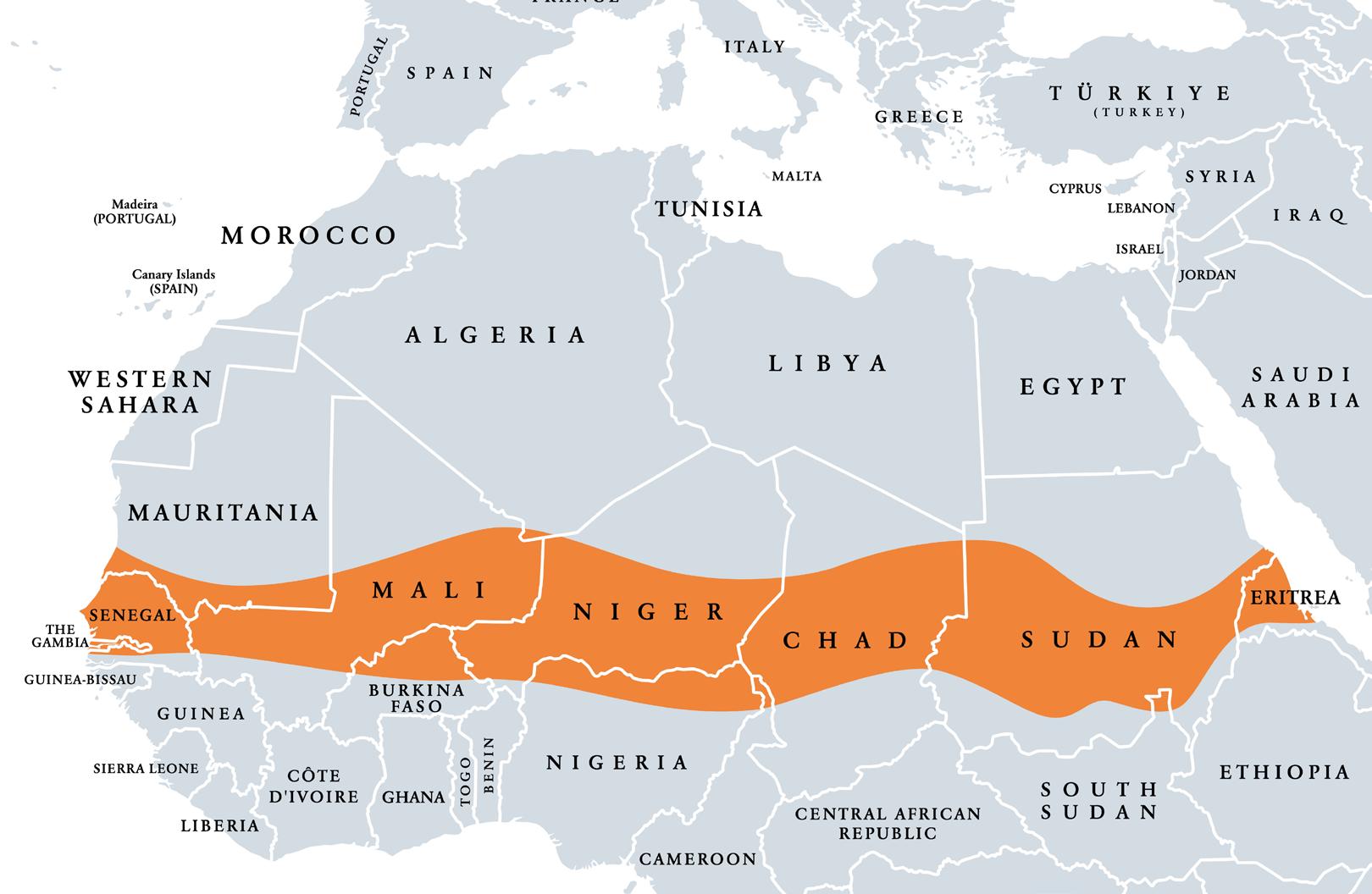
In Mali, Burkina Faso and the wider Sahel, the UN haven’t removed the threat of radical Islamist groups. They’ve been forced to leave by Malian and Burkinabe governments, influenced by Russia and the Wagner Group. As a result, the Sahel, a vast semi-arid region of Africa with one of the world’s most youthful regions,1 could
be considered the greatest unmitigated geopolitical security threat to Europe. With the withdrawal of the UN and the influence of Russian proxy groups, the risk is that the Sahel becomes the heartland for international jihadi terrorism. And that terrorism coupled with mass migration (either organic or Russian state sponsored) could strike hard and relentlessly into Europe and NATO’s southern flank. The political implications would likely be instant and dramatic. Just at a time Western armed forces are newly configured and resourced to fight conventional, state on state conflicts in Europe or the Indo-Pacific.
Azali Assoumani, Chair of the African Union, briefed the UN Security Council that terrorism and violent extremism has “exploded in Africa” in recent years while Filipe Jacinto Nyusi, President of Mozambique, considered the Sahel region was becoming the “new epicentre of terrorist attacks”. Jihadists linked to Islamic State and al-Qaeda killed more than 10,000 people in Mali between 2016 and 2021. A similar number were killed in terrorist acts across the Sahel
in 2022. And from June 2022 to June 2023 more than 22,000 Africans died in jihadist-linked violence, double those killed by Islamic State at its height in 2014.2 Critically, this is not a localised or geographically bounded Islamist militia like the Mujahadin or Taliban in Afghanistan. This is a jihadist threat increasingly engulfing the continent of Africa and anticipated to spread to Northern and West African states.
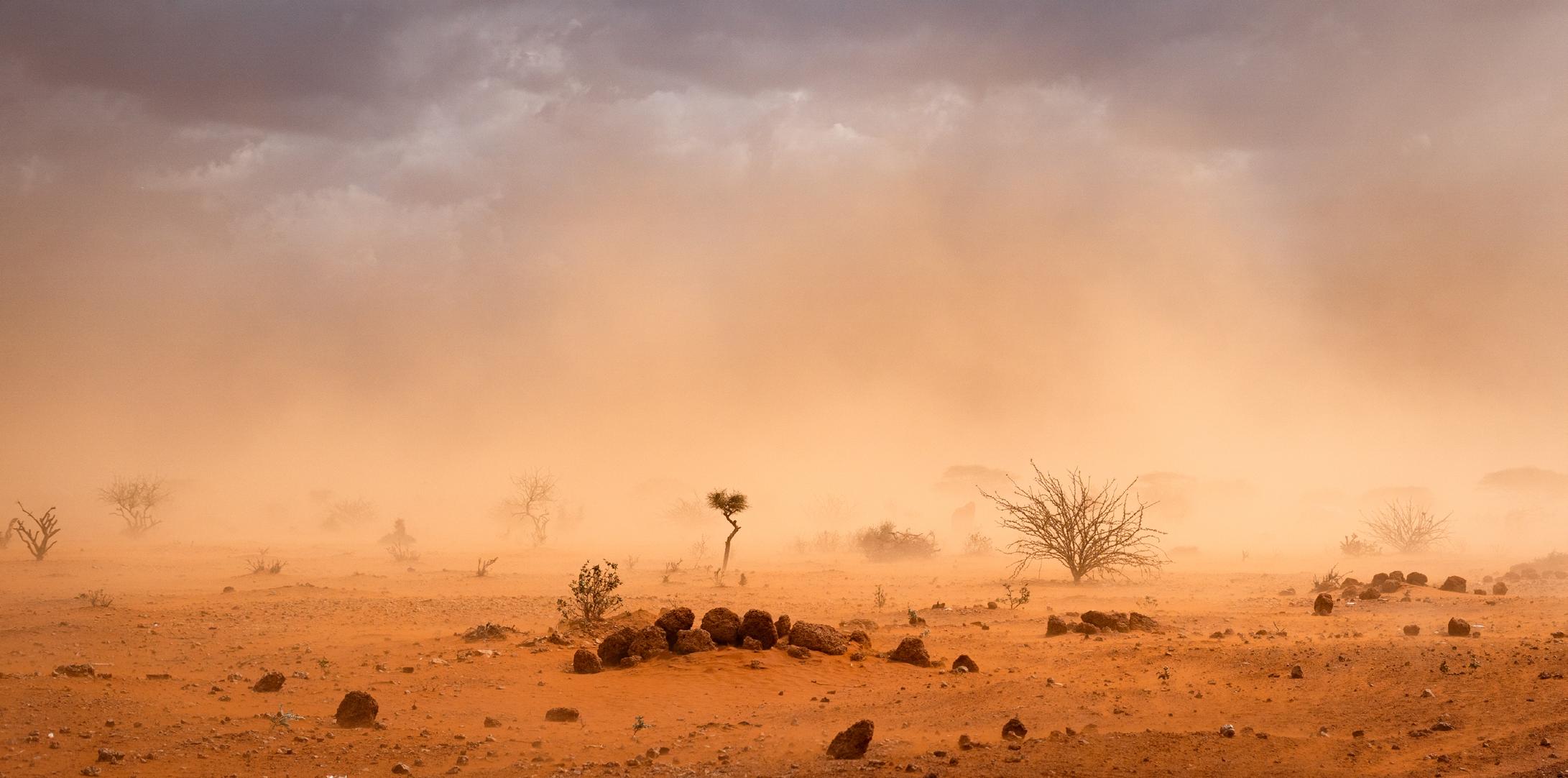
Internal and international displacement across the Sahel, largely affected by conflict based insecurity, have increased tenfold since 2013 to a staggering 2.1 million in 2021. This has also included the internal and trans-national movement of jihadist groups, harassed by government forces and Wagner mercenaries, seeking to set up new bases and regroup. More systemically, internal displacement has been caused by temperatures across the Sahel rising 1.5 times faster than the global average. This impact of climate change is considered by US Africa Command as a “threat exacerbator” and, coupled with instability, is likely to increase tension and violence across the Sahel region.
At the UN Security Council meeting in January 2023 the US accused Russia of using the Wagner Group to “increase the likelihood that violent extremism will grow” while James Kariuki, UK Deputy Permanent Representative to the UN put it more bluntly. “You cannot ignore the destabilising role the Wagner Group plays in the region. They are part of the problem, not the solution.” However, as Oleksandr Danylyuk writing for RUSI stressed, Western countries have chosen to hide behind the fantasy that it was Prigozhin and not Putin who had systematically ousted them from Africa and exacerbated conflict and chaos in their wake.
A report from the UN Human Rights Office in May 2023 concluded that more than 500 people were killed – the vast majority summarily executed –by Malian troops and Wagner fighters during a five-day operation in the village of Moura in the Mopti region of central Mali in March 2022. The report details how over four days at least 58 women and girls were raped or subjected to sexual violence. A “climate of terror and complete
impunity” characterised the Wagner Group’s activities. In the same month, Russian forces in Bucha conducted a similar war crime. In response to the Bucha massacre a US initiated emergency special session of the UN General Assembly suspended Russia from the Human Rights Council with 93 countries voting in favour. EU countries expelled more than 200 Russian diplomats and arguably Russia lost the battle for Ukraine in the minds of much of the world. In response to the massacre in Moura, Wagner gained more control, autonomy, and power in the Sahel.
In light of recent events between Wagner and the Russian military there are question marks about Wagner’s continued ability to operate. Indeed, Russian state logistical support, historically used by Wagner across operations in Africa will be difficult and costly to replicate without continued state support. Equally, The Economist points out the irony that the same group Putin sent to help African leaders fight their internal enemies has itself staged an uprising – “not exactly a good advertisement for a regime selling coup-protection
“MORE SYSTEMICALLY, INTERNAL DISPLACEMENT HAS BEEN CAUSED BY TEMPERATURES ACROSS THE SAHEL RISING 1.5 TIMES FASTER THAN THE GLOBAL AVERAGE. THIS IMPACT OF CLIMATE CHANGE IS CONSIDERED BY US AFRICA COMMAND AS A ‘THREAT EXACERBATOR’.”
to autocrats and juntas abroad.” However, as Nathalie Dukhan author of the report Architects of Terror, stated: “The monster will evolve, but it will not die... it will adapt to the new environment.” This is because despite President Putin’s claim that Wagner is ‘completely financed’ by Moscow, the reality is their control of gold, diamond and other businesses means they are effectively selffinanced – not least by the nearly $1 billion profits from mining projects in the Central African Republic.
And Sergei Lavrov, Russia’s foreign minister has confirmed, since the attempted Wagner rebellion, the continuation of contracts for ‘several hundred soldiers’ in both Central African Republic and Mali. This appears intentionally misleading – in August 2022 the Central African Republic anticipated a further 3,000 Russian ‘instructors’, in addition to the assessed 1,500 Wagner troops already in the country. With the referendum in the Central African Republic to eliminate presidential term limits and allow President Touadéra to serve indefinitely it seems Russian influence will also endure. And Wagner’s assessed growing influence in nearby Sudan will do little to calm tensions there.
Misery, chaos, genocide, and terror (coupled with a significant dose of self-enrichment) seems to be the clear Russian foreign policy goal in the Sahel. But to what end? It doesn’t seem too much of a stretch to suggest Wagner Group, supported by the Russian state and with little to no UN interference, will continue to enrich themselves, sow insecurity and contribute to the growing effects of climate change in forcing internal and international displacement and mass migration. The intentional use of migration as a weapon by Belarus on the Polish border had all the hallmarks of Russian
sponsorship and the effects in the Sahel would be even greater.
The implication is that the British Army may be deployed to prevent the Sahel from being a safe haven for international, state sponsored terrorists. Either as a direct result of coordinated terrorist attacks in the UK and Europe or as a result of the political and social upheaval created by mass migration. This deployment would likely look less like a state on state conflict and more akin to the counterinsurgency, population centric operations of the early years of the 21st century. And yet the current state of the Armed Forces addresses few of the lessons from counterinsurgency in Afghanistan, namely, scale and integration with civilian and non-government organisations. The Army was too small in 2010 to cope with large scale complex counterinsurgencies.3 And in 2010, the British Army was 102,000 strong. It now officially sits at 75,710 with recruitment across the Armed Forces down 23.6 per cent and outflow up by 14.6 per cent on last year. The UK Foreign, Commonwealth and Development Office has seen staff reductions of 20 per cent and reduced the international aid
budget from 0.7 to 0.5 of gross national income. And as analysis of operations in Helmand highlighted, substantially changed, context dependant training and mindsets are necessary, required dynamically, but slow to implement.
Critics would argue that the British Army is unlikely to take on a complex counterinsurgency operation in the Sahel whilst the legacy of Iraq and Afghanistan remain in the consciousness of the public and serving soldiers. Indeed, European countries have already offered lucrative financial incentives to North African governments to control migration and prevent the spread of terrorism. In July 2023 an Algerian intelligence led operation, in partnership with the EU, dismantled a significant international network specialising in organising clandestine migrant crossing into Europe and the EU and Tunisia agreed a €1 billion deal with €105 million to combat people smuggling. Encouragingly the African Union Ministerial Committee on Terrorism and peacekeeping operations including the African Union Mission in Somalia and the Multinational Joint Force in the Lake Chad Basin are having
positive effects. But there is universal recognition that greater support is needed from across the African Union and the UN.
Nevertheless, the macro point is that the current zeitgeist is not only away from intervention but tilting towards the Indo-Pacific ever mindful of the grinding, seemingly perpetual war in Ukraine. Equally, because western policy writers are loath to have more than one main effort or at a stretch primary and secondary main efforts there is no space, time or resources for Africa. But Russia has time. And China has resources. And policy writers would do well to remember that doing nothing is a decision. A decision to abrogate engagement with African states in the Sahel to Russia. And whilst nature abhors a vacuum, the current regime in Russia thrives on them.
The question remains, current constraints and limitations aside, how deeply have we thought of the medium and long term consequences of our lack of engagement with the issues and risks in the Sahel?
3International Affairs, Volume 87, Issue 2, March 2011, Pages 297–315, https://doi. org/10.1111/j.1468-2346.2011.00974.x