LESSONS IN DEVELOPING CULTURALLY CAPABLE TROOPS
The Centre for Historical Analysis and Conflict Research is the British Army’s think tank and tasked with enhancing the conceptual component of its fighting power. The views expressed in this In Depth Briefing are those of the author, and not of the CHACR, Royal Military Academy Sandhurst, Ministry of Defence or the British Army. The aim of the briefing is to provide a neutral platform for external researchers and experts to offer their views on critical issues. This document cannot be reproduced or used in part or whole without the permission of the CHACR. www.chacr.org.uk
This paper has been developed from empirical research examining the concept of cultural intelligence within the British military and, more specifically, documenting the lessons learnt concerning the barriers to its employment by personnel conducting counterinsurgency operations in Afghanistan.
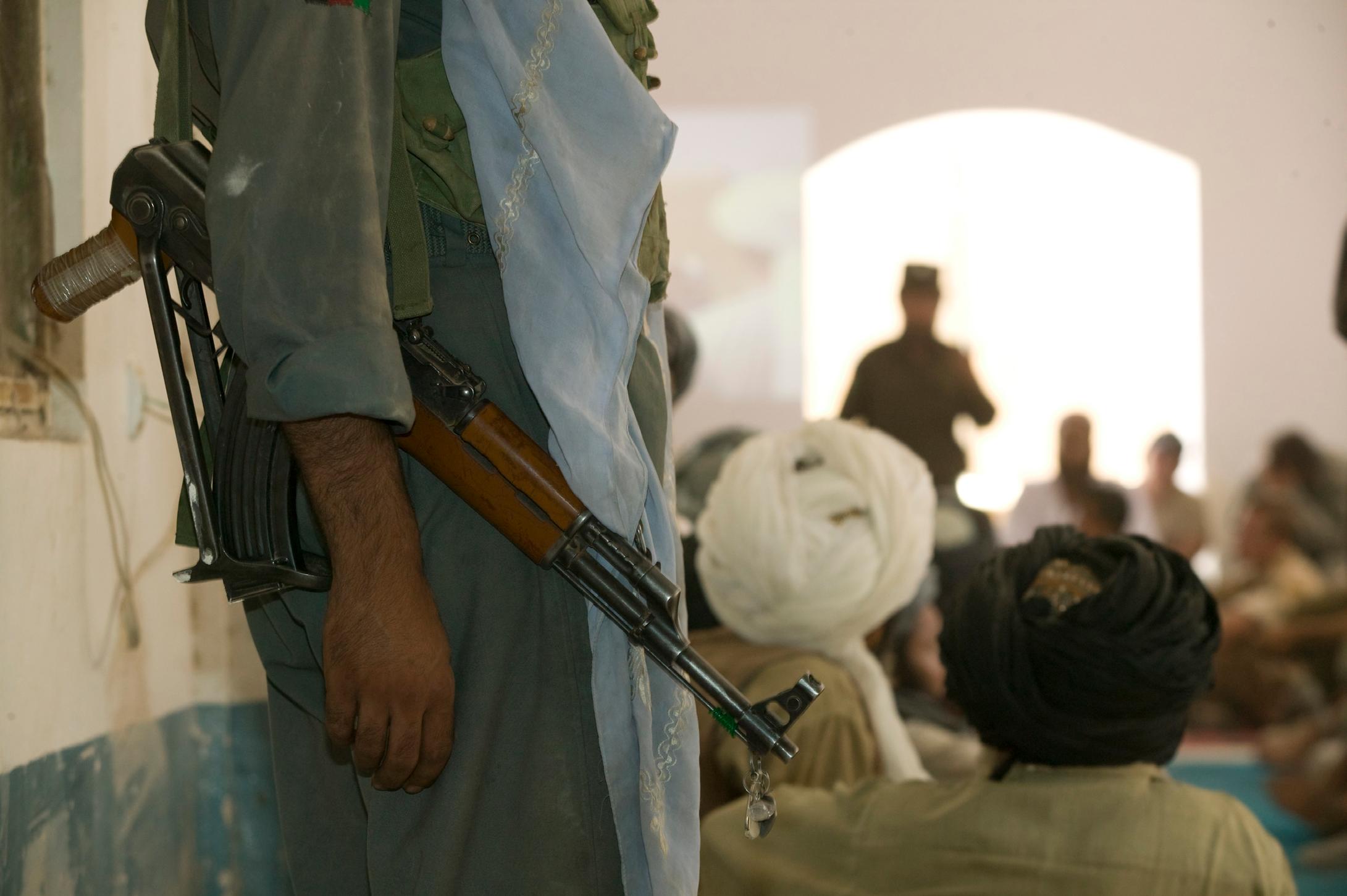
THE importance of cultural understanding by armed forces is well documented in academia and military doctrine, emphasising the role of cultural capability in achieving operational objectives and understanding the broader context of the human terrain. British doctrine explains culture as “the customs, ideas and social behaviour of a particular people or group” 1 Therefore, cultural capability is defined as “the
ability to understand culture, and to apply this knowledge to effectively engage in any environment”.2 The doctrine categorises this understanding into three levels; cultural awareness, cultural competence and cultural expertise.
Cultural capability directly impacts the extent to which the human environment is understood and, therefore, can be exploited. Understanding the human terrain is one of the core principles of counterinsurgency doctrine.3 Culturally capable personnel enable an analysis of the cultural impacts of military courses of action that may influence civilian populations or military decisionmaking, with this analysis often delivered as an intelligence product focused on the human elements of the operating environment4 or made reactively to unfolding
situations by tactical leaders. This output can be described as cultural intelligence.
DEFINING CULTURAL INTELLIGENCE
British counterinsurgency doctrine includes the term cultural intelligence, stating that “cultural
1MoD, Joint Doctrine Note 4/13: Culture and Human Terrain.
2MoD, Joint Doctrine Note 4/13, 1-1. 3MoD, Joint Doctrine Note 1/09, The Significance of Culture to the Military; North Atlantic Treaty Organisation, Allied Joint Publication-3.27 Allied Joint Doctrine for Counter-Insurgency.
4Omer Dostri and Kobi Michael, “The Role of Human Terrain and Cultural Intelligence in Contemporary Hybrid and Urban Warfare,” The International Journal of Intelligence, Security, and Public Affairs 21, no. 1 (2019): 84–102; Richard M. Medina, “From Anthropology to Human Geography: Human Terrain and the Evolution of Operational Sociocultural Understanding,” Intelligence and National Security 31, no. 2 (2014): 137–53.
IN-DEPTH BRIEFING // #63 // SEPTEMBER 23
1 // IN-DEPTH BRIEFING // CHACR
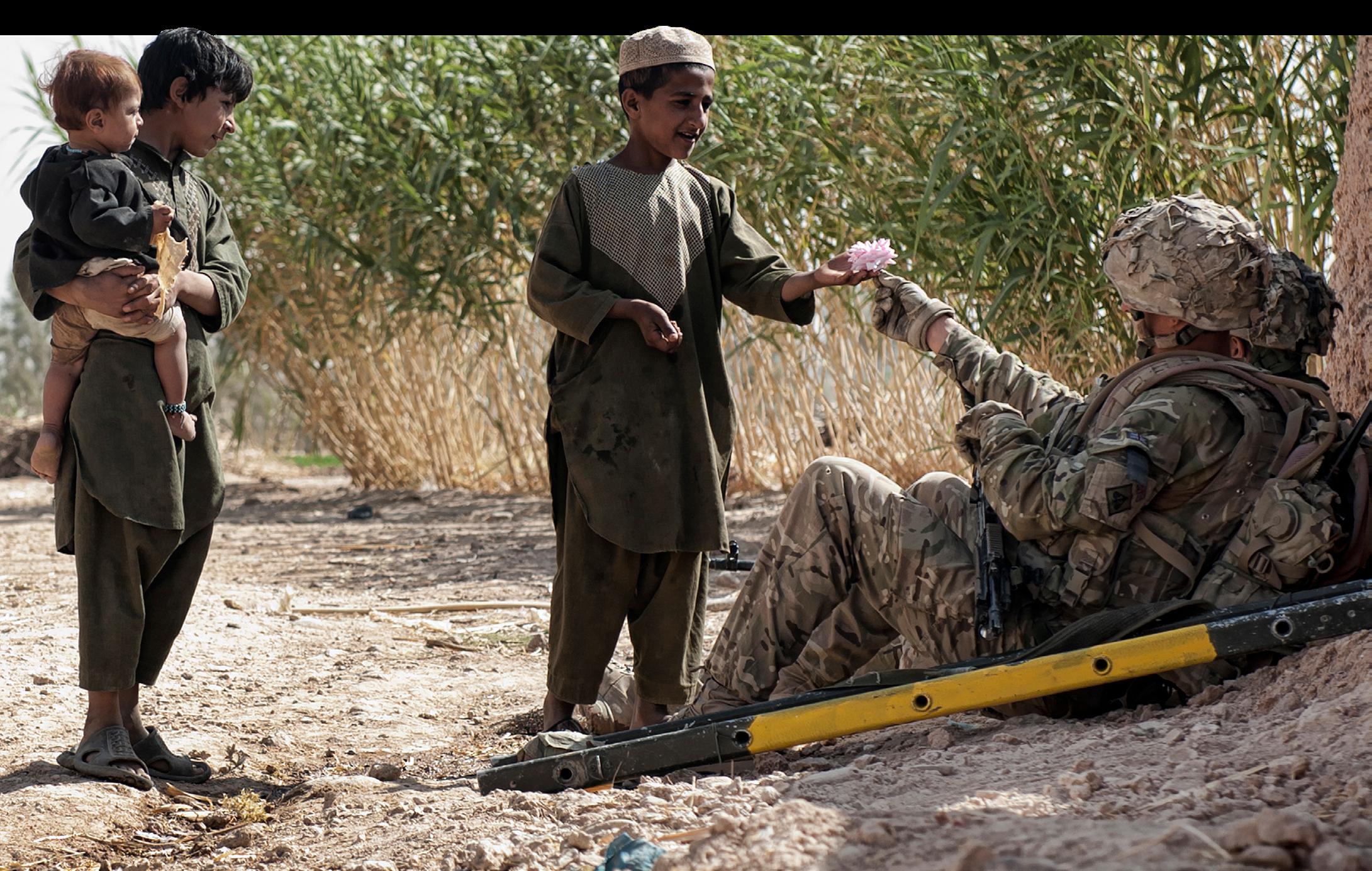
Picture: Courtesy of Soldier Magazine © Crown copyright
intelligence is as important as intelligence about the insurgent”.5 The doctrine stops short of defining cultural intelligence, leaving British practitioners to interpret its meaning. However, multiple definitions of cultural intelligence exist within academia.
Turkish researchers Yalçınkaya and Özer hold that awareness is a basic understanding of the “do’s and don’ts”6 of operating within the sphere of another culture that increases effectiveness and safety at the operational level through increased situational awareness. In contrast, cultural intelligence focuses on cultural knowledge that can provide insights into how operations impact strategic soft power, such as winning over hearts and minds.7 Cultural intelligence answers the question of how culture impacts the operational environment through an in-depth analysis of cultural factors. This analysis supports operational planning to achieve soft power goals, such as influencing the host-nation political structure or the civilian population, while distinguishing between cultural awareness and cultural intelligence.8
A more simple portrayal offered by Canadian Forces Leadership Institute research associate Dr
5MoD, Joint Doctrine Note 4/13: Culture and Human Terrain.
6Haldun Yalçınkaya and Yusuf Özer, “Another Lesson Learned in Afghanistan: The Concept of Cultural Intelligence,” International Peacekeeping 24, no. 3 (2016).
7Ibid.
8Ibid.
9Emily Spencer, “It’s All about the People: Cultural Intelligence (CQ) as a Force Multiplier in the Contemporary Operating Environment,” Journal of Conflict Studies 29 (2009).
10Ibid, 97.
11Federico Prizzi, “Cultural Intelligence and Conflict Ethnography: The Importance of the Anthropological Knowledge for Military Advisors in Fighting International Violent Extremist Groups,” Methaodos Revista de Ciencias Sociales 10, no. 2 (2022): 324.
Emily Spencer is that cultural intelligence is the central piece to the puzzle of winning over the hearts and minds of the people.9 Dr Spencer defines cultural intelligence as “the ability to recognise the shared beliefs, values, attitudes, and behaviours of a group of people and, most importantly, to apply this knowledge toward a specific goal”.10 Dr Spencer focuses on the ability of a culturally intelligent practitioner to act as a force multiplier that can be leveraged to achieve specific operational goals. Highlighting the case of Afghanistan and the people as the centre of gravity, Spencer discusses the prominence of cultural intelligence’s role in influencing relationship building. Furthermore, Spencer considers that the absence of cultural intelligence negatively impacts the strategic objectives of counterinsurgency operations, stressing the safety elements and negative impact on influencing hearts and minds amongst civilian and military populations, particularly where the population are viewed as the main effort.
Experienced European anthropologist and field academic Frederico Prizzi presents a more academically orientated definition and explains cultural intelligence as “the sociocultural analysis, at a tactical and operational level, made by qualified military personnel who study the human terrain on the basis of data collected during the ethnographic research in war zones”,11 emphasising the technical aspects of navigating the human terrain through indepth knowledge of the cultural systems. Notably, the definition of cultural intelligence brought forward by Prizzi recognises the necessity for appropriately trained and knowledgeable military individuals. This knowledge requires development through programmes that enhance cultural capability beyond mere cultural awareness, highlighting the necessity for investment in cultural training for military personnel.
As evidenced, a singular definition of cultural intelligence does not exist. Therefore, it is appropriate
to confirm a working definition, taking into consideration organisational language and the salient aspects from the aforementioned literature, to progress the discussion on British cultural intelligence. The following definition is offered by combining key elements from existing literature: Cultural intelligence is the strategic insight gained through knowledge of the human terrain and the connected socio-cultural factors, including people’s values, attitudes, beliefs and behaviours, that can impact operational outcomes. It requires culturally capable military personnel with in-depth knowledge of the human terrain – relevant to the operational environment – to apply their knowledge of relevant sociocultural factors towards achieving operational outcomes and effective engagement in any domain.
CULTURAL INTELLIGENCE IN THE AFGHANISTAN COUNTERINSURGENCY
The realities of asymmetric conflicts and counterinsurgency are that militaries must
2 // IN-DEPTH BRIEFING // CHACR IN-DEPTH BRIEFING // CULTURAL INTELLIGENCE
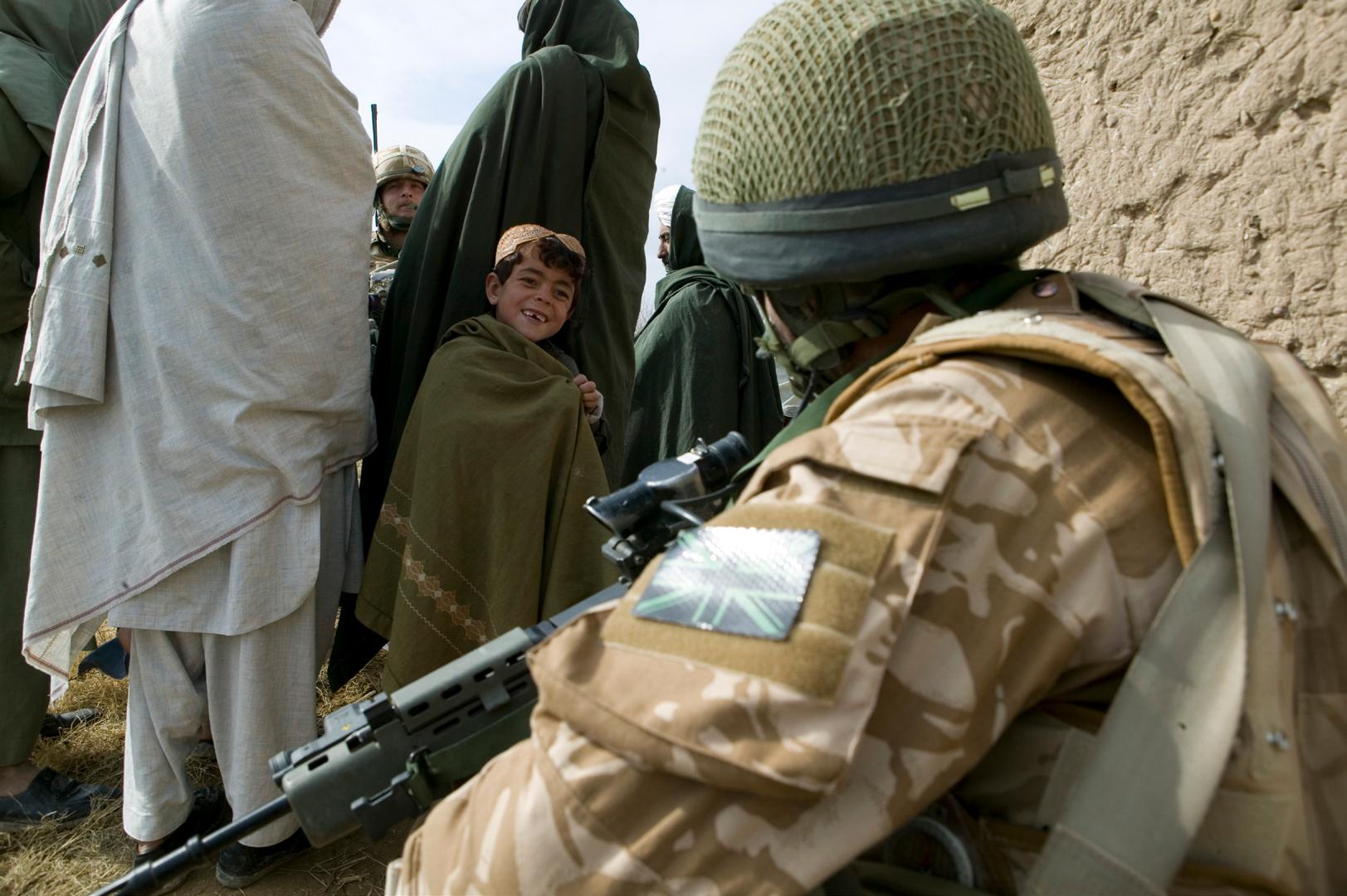
“CULTURAL INTELLIGENCE FOCUSES ON CULTURAL KNOWLEDGE THAT CAN PROVIDE INSIGHTS INTO HOW OPERATIONS IMPACT STRATEGIC SOFT POWER, SUCH AS WINNING OVER HEARTS AND MINDS.”
Picture: Courtesy of Soldier Magazine © Crown copyright
understand their operating environment to be effective. British population-centric counterinsurgency relies on military personnel to possess cultural capability and apply cultural intelligence at the lowest levels to achieve operational success.
The shift in British counterinsurgency philosophy in Afghanistan from an enemy-centric conflict to a population-centric struggle for legitimacy and political primacy championed winning over the population’s support.12 The British counterinsurgency doctrine holds that insurgencies are overwhelmingly politically motivated13 and, therefore, the natural enemy of the insurgent is the legitimacy of the government.
Counterinsurgents must appreciate the impact of their actions when viewed through the cultural lens of the civilian population to be successful in counterinsurgency. Some critics believe that it is a misconception that Afghanistan was a lawless state; instead, its legal system was decentralised, religious and socioculturally complex,14 thereby at odds with Westernised standards of legitimacy and values.15 Furthermore, Dr Christian Tripodi raises a fundamental reflection on the importance of culture in the legitimacy of the Afghanistan counterinsurgency, prompting thought to what legitimacy means for the rural Afghanistan population and what Afghanistan as a state means to them.16 These points illustrate the strategic assumptions that can be made without a filter of cultural intelligence assessment, spotlighting the case for increased cultural intelligence to achieve a more empathetic perspective from which influence can be successfully achieved.
The higher-level challenges of counterinsurgency can be further compounded when
considering the isolationism and detachment experienced by tactical-level commanders in Afghanistan. At the company, platoon and multiple levels, trying to translate tactical actions within the strategic mission’s confines to legitimise the Afghanistan government was frustrated by different regions providing drastically different operating environments relative to insurgent activity, tribal influence and human terrain. As a result, those on the ground relied heavily on the non-organic linguistic and socio-cultural analysis provided by interpreters.
The theoretical analysis of socio-culture factors related to the local population is absent from many aspects of academic and practitioner analysis of counterinsurgency success.17 This point is echoed by British doctrine, suggesting that mission or campaign failure can result from the inadequate analysis of
cultural factors.18 In practice, this is evidenced by the rate at which the Taliban reclaimed Afghanistan in 2021 and the lack of cultural competence within the Western intelligence apparatus in the early days of the counterinsurgency that allowed locals to manipulate counterinsurgent forces in Afghanistan to draw their firepower into tribal conflicts.19 As a result, it can be argued that there is a need for cultural knowledge to be weaponised for counterinsurgency success as an intangible asset that can win over the hearts and minds of the local population,20 aligning with building the capability for soft power projection discussed in the 2023 Defence Command Paper
BARRIERS TO BUILDING CULTURAL INTELLIGENCE AT THE TACTICAL-LEVEL
To achieve the intended strategic and operational effects of building the legitimacy
of government within counterinsurgency operations, tactical-level groups must possess adequate capability to make cultural intelligence work for them within their decision-making processes. Unfortunately, at this level, multiple barriers exist that prevent the effective exploitation of cultural intelligence.
The fact that there are barriers to British military personnel building cultural capability for cultural intelligence purposes is not in itself a new discovery. The organic capability of military actors to develop cultural intelligence in Afghanistan was limited, resulting in attempts to increase cooperation with the academic community to address the capability gap. Social scientists enable military understanding and cultural intelligence by applying anthropological skills that enable human terrain mapping through social network analysis, interviewing and surveying
12MoD, British Army Field Manual Volume 1 Part 10 Countering Insurgency.
13Ibid.
14Thomas R. Mockaitis, “Afghanistan and the COIN Conundrum,” Small Wars & Insurgencies 33, no. 7 (2022).
15Poole (2022, p. 1117) Bryce G. Poole, “Counterinsurgency and the Rule of Law in Afghanistan,” Small Wars & Insurgencies, (2022): 1117.
16Christian Tripodi, The Unknown Enemy Counterinsurgency and the Illusion of Control (Cambridge, U.K: Cambridge University Press, 2021): 12.
17Kil Joo Ban, “The Power of Cultural Weapons in Counterinsurgency: South Korea’s Jeong Culture and Its Effectiveness in Vietnam,” Small Wars & Insurgencies 32, no. 8 (2021).
18MoD, Joint Doctrine Note 4/13, 1-3.
19Geraint Hughes, “Intelligence-Gathering, Special Operations and Airstrikes in Modern Counterinsurgency ,” in The Routledge Handbook of Insurgency and Counterinsurgency (London: London Routledge, Taylor & Francis Group, 2014): 115.
20Ban “The Power of Cultural Weapons in Counterinsurgency”, 1277.
3 // IN-DEPTH BRIEFING // CHACR IN-DEPTH BRIEFING // CULTURAL INTELLIGENCE
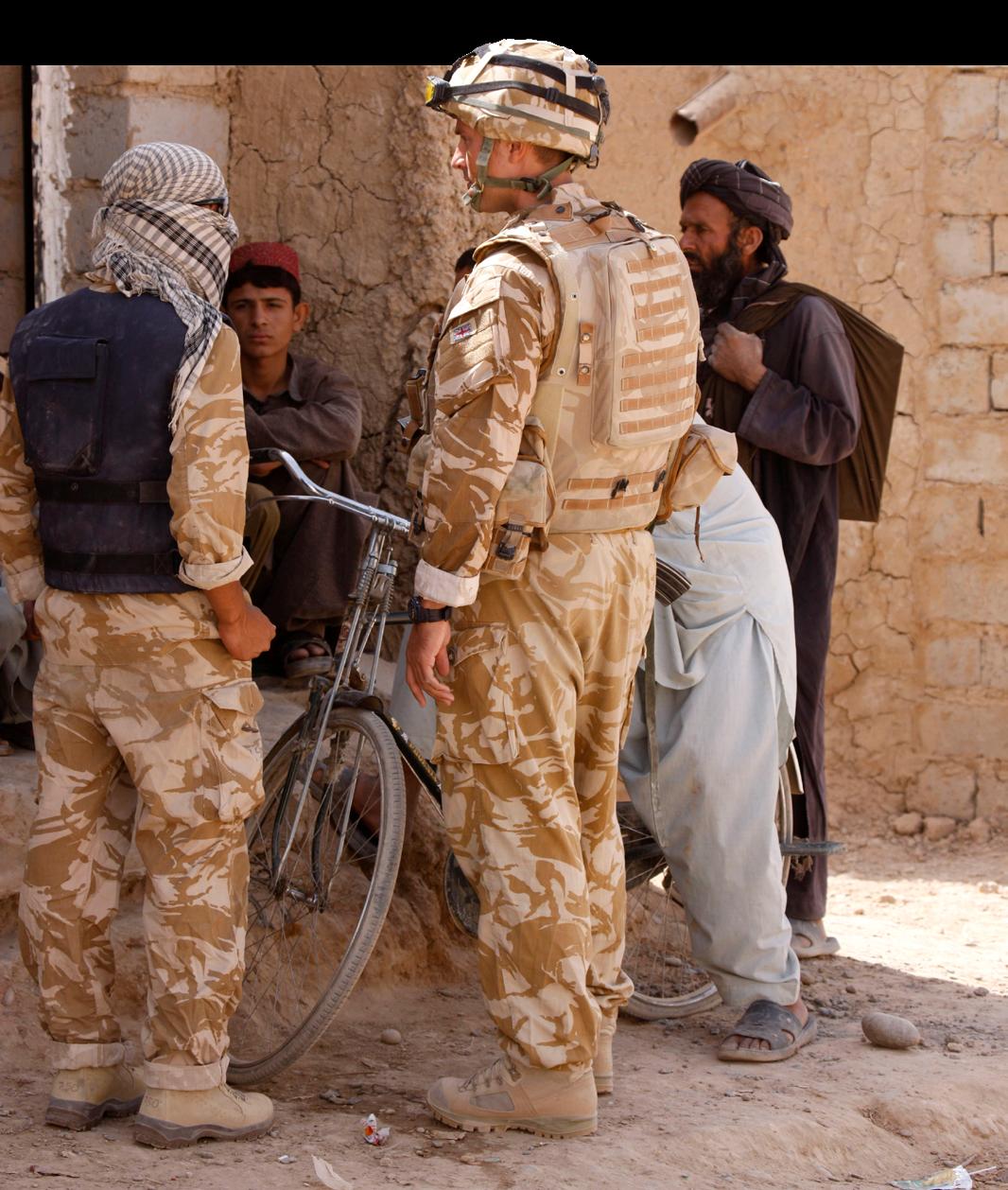
“THOSE ON THE GROUND RELIED HEAVILY ON THE NON-ORGANIC LINGUISTIC AND SOCIO-CULTURAL ANALYSIS PROVIDED BY INTERPRETERS.”
Picture: Courtesy of Soldier Magazine © Crown copyright
IN-DEPTH BRIEFING // CULTURAL INTELLIGENCE
to create a product for the counterinsurgent customer.21
Social scientists were employed by the US in the efforts to understand the cultural factors relevant to the Afghanistan counterinsurgency mission under the Human Terrain System project. However, critics argue that the human terrain teams damaged the organic cultural capabilities of the military to understand their environment,22 referring to the grievances published by Major Connable of the US Marines that the “quick-fix layer of social science” provided by the non-organic human terrain teams negatively impacted the US Marines’ cultural capabilities in Afghanistan.23 Connable argues that a lack of established cultural development for military personnel and the primacy of the human terrain teams undermined military capabilities, requiring external cultural specialists to continue to plug the manufactured cultural intelligence gap.24
Expanding on the frustrations raised by Connable, research
21Horace Campbell and Amber Murrey, “Culture-Centric Pre-Emptive Counterinsurgency and US Africa Command: Assessing the Role of the US Social Sciences in US Military Engagements in Africa,” Third World Quarterly 35, no. 8 (2014).
22Roberto J. González, “Beyond the Human Terrain System: A Brief Critical History (and a Look Ahead),” Contemporary Social Science 15, no. 2 (2018): 1–14.
23Ben Connable, “All of Our Eggs in a Broken Basket: How the Human Terrain System Is Undermining Sustainable Military Cultural Competence”, (Defence Technical Information Center, 2009): 57.
24Ibid, 28.
25Sergio Catignani, “‘Getting COIN’ at the Tactical Level in Afghanistan: Reassessing Counter-Insurgency Adaptation in the British Army,” Journal of Strategic Studies 35, no. 4 (August 2012).
26Yalçınkaya and Özer (2016).
27Rhys Egleton, “Countering Insurgency with Culture: A Thematic Analysis of Tactical Level Cultural Intelligence Barriers to British Counterinsurgency Efforts in Afghanistan” (MSc Thesis, 2023).
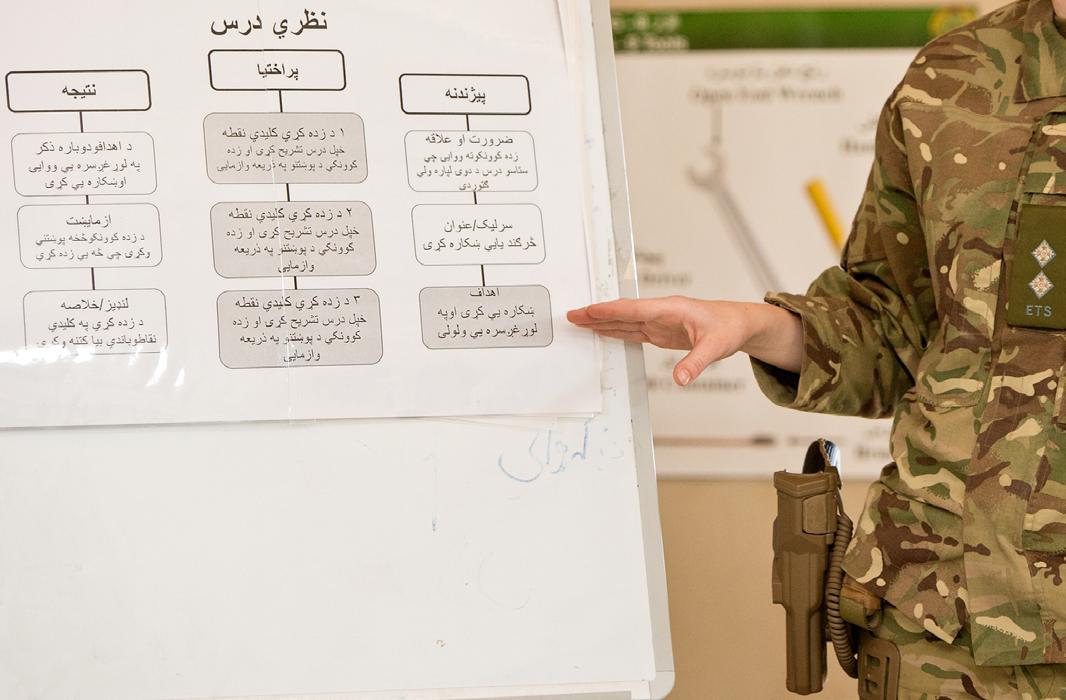
“PARTICIPANTS EXPRESSED AN INABILITY TO LEARN THE COMPLEX LANGUAGES SPOKEN IN AFGHANISTAN. THEY WERE CONCERNED THAT BRITISH SOLDIERS WOULD NOT BE CAPABLE ENOUGH TO CONVERSE FLUENTLY IN THE SHORT TIMEFRAMES AVAILABLE DESPITE TRAINING EFFORTS.”
that examined the extent to which British military personnel engaged in the non-kinetic ideals of population-centric counterinsurgency found that those at the tactical level did not internalise the non-kinetic aspects of counterinsurgency doctrine, which includes the focus on building the cultural capability.25 From focus group interviews involving 67 officers and non-commissioned officers, it was found that tactical leaders’ focus on kinetic actions prevented the bottom-up localised approach required of population-centric counterinsurgency doctrine, which was compounded by a lack of access to cultural advisors below the brigade level. In comparison, research involving a cohort of multinational officers and civilian staff in advisory positions in Afghanistan found that cultural awareness, respect for the culture and intercultural communication were the three most common challenges discovered in their study,26 further evidencing a lack of cultural capability among counterinsurgent practitioners in Afghanistan. These important findings highlight the difficulties
faced by British leaders in tactical roles accessing the relevant cultural support to understand their operational environment in Afghanistan, thereby reducing the opportunities for cultural intelligence to be applied.
KEY THEMES
Building on the prior research, the author’s empirical investigation27 into the tacticallevel cultural intelligence barriers to British counterinsurgency efforts in Afghanistan found the following themes:
1: Cultural capability
This theme encompasses the belief of counterinsurgents that they lacked the ability to understand and interpret the cultural context of the human terrain in Afghanistan. Cultural capability was self-assessed as limited, which in turn was associated with harming counterinsurgency operations.
1.1: Limited impact of dedicated British Army cultural resources
This subtheme of cultural capability summarises the limited availability and effectiveness of organic cultural resources to support
counterinsurgency operations. Participants reported limited access to cultural support whilst deployed, experiencing feelings of isolationism at the tactical level, and did not fully believe in the organic support capabilities available to them.
1.2: Reliance on non-organic cultural support
Reliance on non-organic support comprises participants’ dependency on alternatives to British military capabilities to help navigate the complexities of culture for counterinsurgency operations in Afghanistan, such as relying on interpreters for cultural intelligence analysis.
2: Ability to communicate
The ability to communicate encapsulates the linguistic challenges of engaging with the local population or Afghan security forces. Every participant, to some extent, discussed the limitations they experienced attempting to communicate effectively with the Afghan people during their deployment, which impacted intelligence collection opportunities.
2.1: Limited linguistic training
Limited linguistic training can be categorised as the inability of participants to learn to communicate using foreign languages. Within this sub-theme, participants expressed an inability to learn the complex languages spoken in Afghanistan. They were concerned that British soldiers would not be capable enough to converse fluently in the short timeframes available despite training efforts.
2.2: Interpreters
The sub-theme of working with interpreters categorises the challenges counterinsurgents experience due to relying on interpreters for linguistic and cultural support. Within
4 // IN-DEPTH BRIEFING // CHACR
Picture: © Crown copyright
this sub-theme, participants expressed their reliance on interpreters to understand the Afghan people and be able to engage with them whilst also discussing the varied quality of interpreters. It was reported that counterinsurgents’ operational and cultural capability was linked to the capability of the interpreter, presenting challenges for tactical-level counterinsurgency operations with ineffective interpreters.
3: Cultural training
This theme summarises the limited cultural capability development that resulted from the pre-deployment training participants received as counterinsurgents. Participants explained that their training was orientated around tactical training to deal with threats. It had less to do with understanding the culture or engagement with the Afghan people, with cultural training offering limited training value.
4: Enemy-centric counterinsurgency mindset
This theme describes the focus on
warfighting in counterinsurgency aligned with the principles of enemy-centric counterinsurgency doctrine. It details the reduced openness to utilising cultural understanding for populationcentric counterinsurgency means. Participants shared reflections on their warfighting mentality and the impact that had on their desire to understand Afghans.
5: Cultural information sharing This theme describes the limited information-sharing relating to the human terrain of the operational environment experienced by participants, reducing the opportunity for British counterinsurgents to develop their cultural capability. A significant element within this theme was the limited reporting mechanisms for cultural information relating to the human terrain.
FUTURE DEVELOPMENT OF CULTURAL INTELLIGENCE
The findings from the research on cultural intelligence barriers have led to the following recommendations being offered to build upon the lessons learnt from
counterinsurgency in Afghanistan.
1. To further develop and professionalise the concept of cultural intelligence in the British military, the definition produced in this paper should be considered for adoption within doctrine.
2. Improved cultural training opportunities and adherence to population-centric counterinsurgency doctrine should be encouraged to develop a counterinsurgent-first mindset, valuing cultural intelligence development with more efficient metrics to measure cultural capability.
3. Mechanisms for cultural information sharing accessible to counterinsurgents whilst deployed should be developed to increase accessibility to specialist and operationally specific cultural information. These mechanisms will aid the dissemination of hard-won cultural lessons that can be shared during the handovertakeover process to provide area of operation-specific information and inform pre-deployment training and resourcing.
These recommendations are offered against the backdrop of conflict in Ukraine, which has marked an unmistakable pivot away from the Global War on Terror. However, counterinsurgency doctrine and lessons from Afghanistan hold relevance for the future of a persistently engaged military. Investment in developing cultural intelligence capabilities would support security force assistance efforts with allies confronting insurgencies and other forms of irregular warfare most common throughout the Middle East and Africa – stages upon which global power competition has already begun. Therefore the frontier for future cultural intelligence and cultural competence will likely be directed by the activities of the Ranger Regiment and will aid British personnel operating with partner nations abroad in both strategic and tactical capacities. Furthermore, developing a more robust system for understanding the socio-cultural factors of complex human terrain improves the potency of influence activities necessary as part of a globally influential Britain.
5 // IN-DEPTH BRIEFING // CHACR
IN-DEPTH BRIEFING // CULTURAL INTELLIGENCE
Picture: © Crown copyright