AUTHOR
 Brig Gerhard Wheeler CBE

AUTHOR
Brig Gerhard Wheeler CBE
“History showed that there could be no single theory of strategy, correct for every age.”
– Gordon Craig, Makers of Modern History, 1943
The Centre for Historical Analysis and Conflict Research is the British Army’s think tank and tasked with enhancing the conceptual component of its fighting power. The views expressed in this In Depth Briefing are those of the author, and not of the CHACR, Royal Military Academy Sandhurst, Ministry of Defence or the British Army. The aim of the briefing is to provide a neutral platform for external researchers and experts to offer their views on critical issues. This document cannot be reproduced or used in part or whole without the permission of the CHACR. www.chacr.org.uk
WHAT form of warfare should the British Army plan to fight to deter Russian aggression in Eastern Europe? When it last faced a similar question in the latter stages of the Cold War, it plumped for the concept of manoeuvre warfare. That decision led to a revolution in how it thought about the development of its doctrine, capabilities and force design. But is manoeuvre warfare the answer for the challenges it faces today? To answer that question, it is worth comparing the theory alongside its sister concepts of attritional and positional warfare.

Although arguably a centuriesold idea, the theory of manoeuvre warfare enjoyed a renaissance in the 1980s. Faced with the threat
of a Soviet Army that could mobilise millions of men in an armoured assault on Western Europe, US and UK military strategists looked for a plan that could provide an effective and credible form of conventional deterrence to avert an almost immediate and inevitable switch to nuclear weapons. Constrained by West Germany’s policy of Forward Defence, which demanded that any military engagements be fought as far eastwards as possible, they chose a scheme that made the most of the advantages of their smaller but more technologicallyadvanced and professional land and air forces. The US led the charge with its AirLand Battle concept,1 which was partly a rejection of its failed attritional campaign in Vietnam. The British Army took a similar approach under the leadership of Field Marshal Sir Nigel Bagnall. Bagnall’s proposals mirrored the US AirLand Battle concept by advocating the need for a manoeuvre-oriented approach to military operations, focusing on
agility, tempo and shock directed against the opponent’s weak points rather than on set-piece, attritional and territory-oriented battles.2 In both cases, a different relationship with the air forces was an inherent part of the concept and key to its success.
There are numerous competing definitions of manoeuvre warfare but in its simplest form it can be described as the use, or threat, of force to break the cohesion of an enemy. In an armoured warfare context, it could include tactics such as flanking movements, infiltrations, penetrations of defensive lines, envelopments, encirclements, counter attacks, feints, diversions and deceptions; and attacks by ground and air-delivered weapons on the enemy’s depth. In the right
circumstances, such tactics can be highly effective because they have the potential to break the will of an enemy to continue fighting if the execution of the manoeuvre makes the enemy believe its situation is untenable. As such, manoeuvre warfare offers the promise of rapid success and, often, a reduced need to directly engage the enemy when compared with other forms of warfare.
The most famous successful example of manoeuvre warfare is the German Blitzkrieg of 1940: a deep armoured penetration which exploited the seam between two French armies and tore apart the Allies’ defence of France and the Lowland countries. But other celebrated examples exist throughout history including General Edmund Allenby’s decisive mobile campaign against the
3Falkenhayn, General Erich von, General Headquarters (1914-16) and its Critical Decisions, Berlin, Aug 1919.
4Carver, Field Marshal Lord, El Alamein to desert storm: Fifty years from desert to desert, The RUSI Journal, Volume 137, 1992 –Issue 3.
5Fox, Maj Amos C, A Solution looking for a problem: Illuminating Misconceptions in Maneuver-Warfare Doctrine, benning.army. mil, 2018.
Turkish Army in Palestine in 1918 and General Douglas MacArthur’s surprise amphibious landing at Inchon in 1952, which cut the supply lines of the Korean People’s Army. The concept can however also fail, sometimes spectacularly. The German defence of the Britishled airborne assault to seize the bridge at Arnhem in 1944 and the early stages of the 2022 Russian invasion of Ukraine both show that determined defenders who hold their ground, and respond with rapid counter attacks, can foil manoeuvre warfare tactics. It is therefore best used in environments where forces can move with relative freedom; where surprise can be achieved; and against an enemy whose morale is likely to collapse if the cohesion of its organisation or position is disrupted.
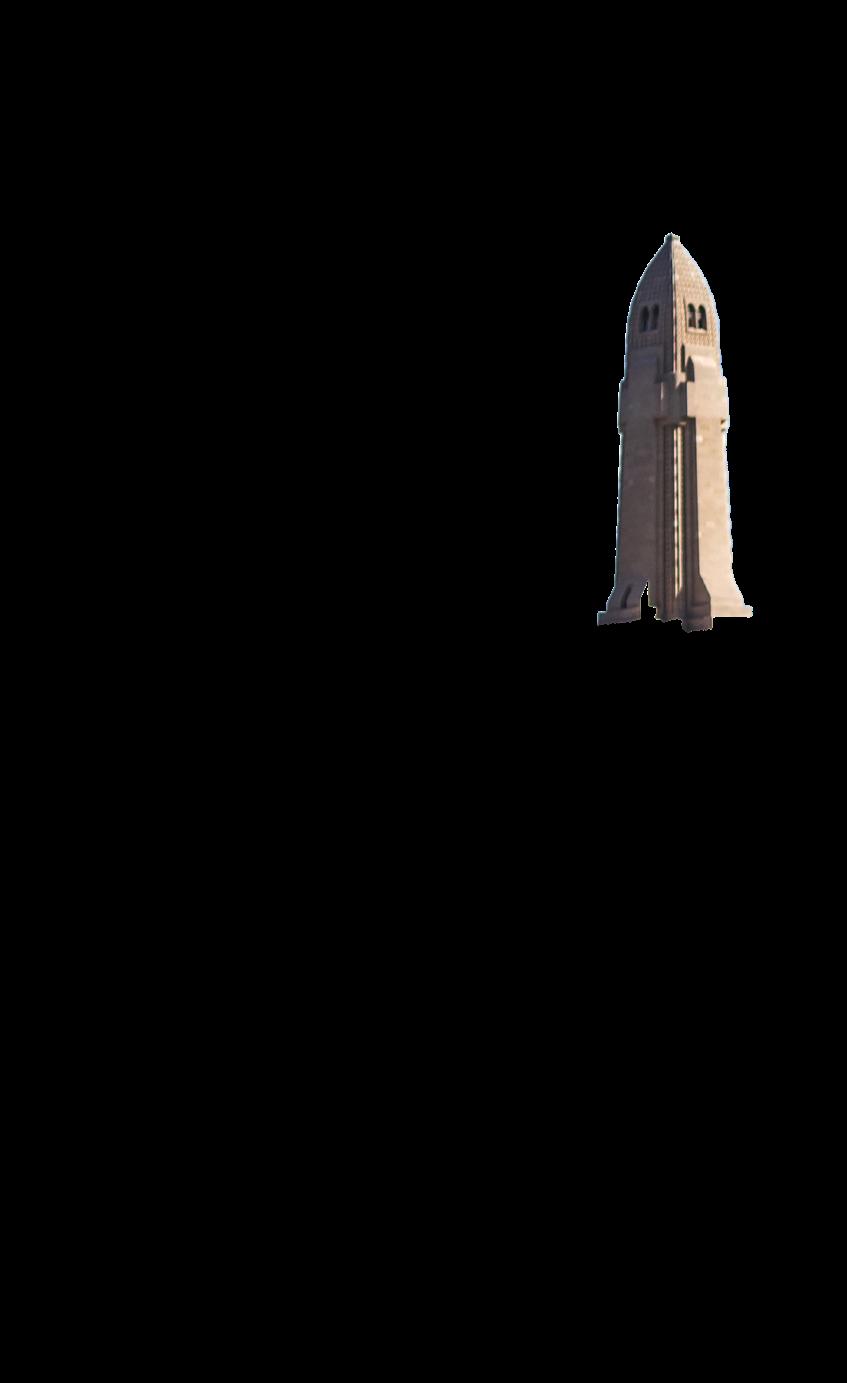
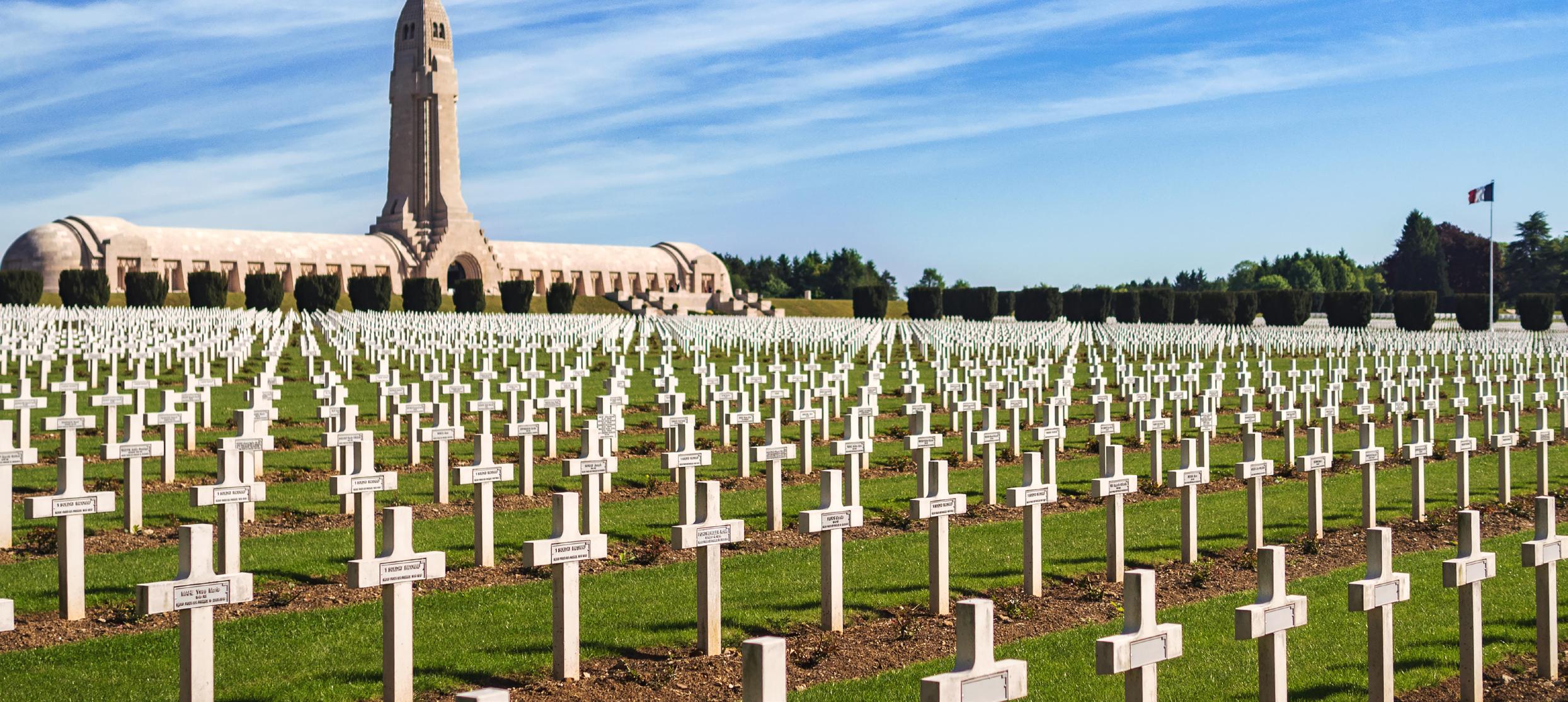
Attritional warfare focuses on the incremental destruction of the enemy’s physical capabilities. Since the rebirth of the idea of manoeuvre warfare, the concept of attritional warfare has gained a reputation as an inferior and undesirable form of warfare. Associated in the popular imagination with the bloody stalemate of the Western Front in the First World War, it can be
seen as a futile act. Its critics, in particular, point to the senseless slaughter of Verdun in 1916 and the German Chief of Staff General Erich von Valkenheyn’s later justification that his strategy was to ensure ‘that the forces of France will bleed to death’.3 However, an attritional approach can be effective. Field Marshal Bernard Montgomery used it to secure his pivotal victory at the second battle of El Alamein in 1942, where he utilised the superior firepower of the British-led Eighth Army so that it “crumbled away” the defensive lines of the Axis forces.4
Attritional warfare is often used in environments or situations where outflanking manoeuvres have become impossible, such as during Operation Goodwood, Montgomery’s attempted breakout from the Normandy beachhead in 1944. Restricted terrain, urban spaces, advances in technology and well-matched opponents can all force an attritional approach. However, attritional tactics can also be employed as a preferred option. For example, when a force is able to concentrate superior firepower and sees an advantage in eroding an enemy’s physical capability to fight, such as during the initial
US-led air campaigns in the 1991 and 2003 Gulf Wars. Attritional approaches can also be effective when an enemy is enticed into exhausting its resources on an inconsequential objective. Notably it has proved to work in defeating the political will of a government or its people rather than its forces, for example, the North Vietnamese campaign fought against the American-led forces in the Vietnam War.
Positional warfare is not formally defined in British doctrine but can be described as the use of force – through tactics, firepower or movement – to move an opponent from one position to another for further exploitation or to deny them access.5 The Duke of Wellington fought a brilliant positional battle at Waterloo in 1815 when he exploited the reverse slope of a gentle ridge to protect the British infantry squares from Emperor Napoleon Bonaparte’s artillery. For the defender, positional warfare can be more economical in the use of forces because it offers better odds through the use of protection and exposes an attacker to well-laid defensive fires.
In the modern period, positional warfare is often associated with
“ASSOCIATED IN THE POPULAR IMAGINATION WITH THE BLOODY STALEMATE OF THE WESTERN FRONT IN THE FIRST WORLD WAR, [THE ATTRITIONAL APPROACH] CAN BE SEEN AS A FUTILE ACT. ITS CRITICS, IN PARTICULAR, POINT TO THE SENSELESS SLAUGHTER OF VERDUN IN 1916.”
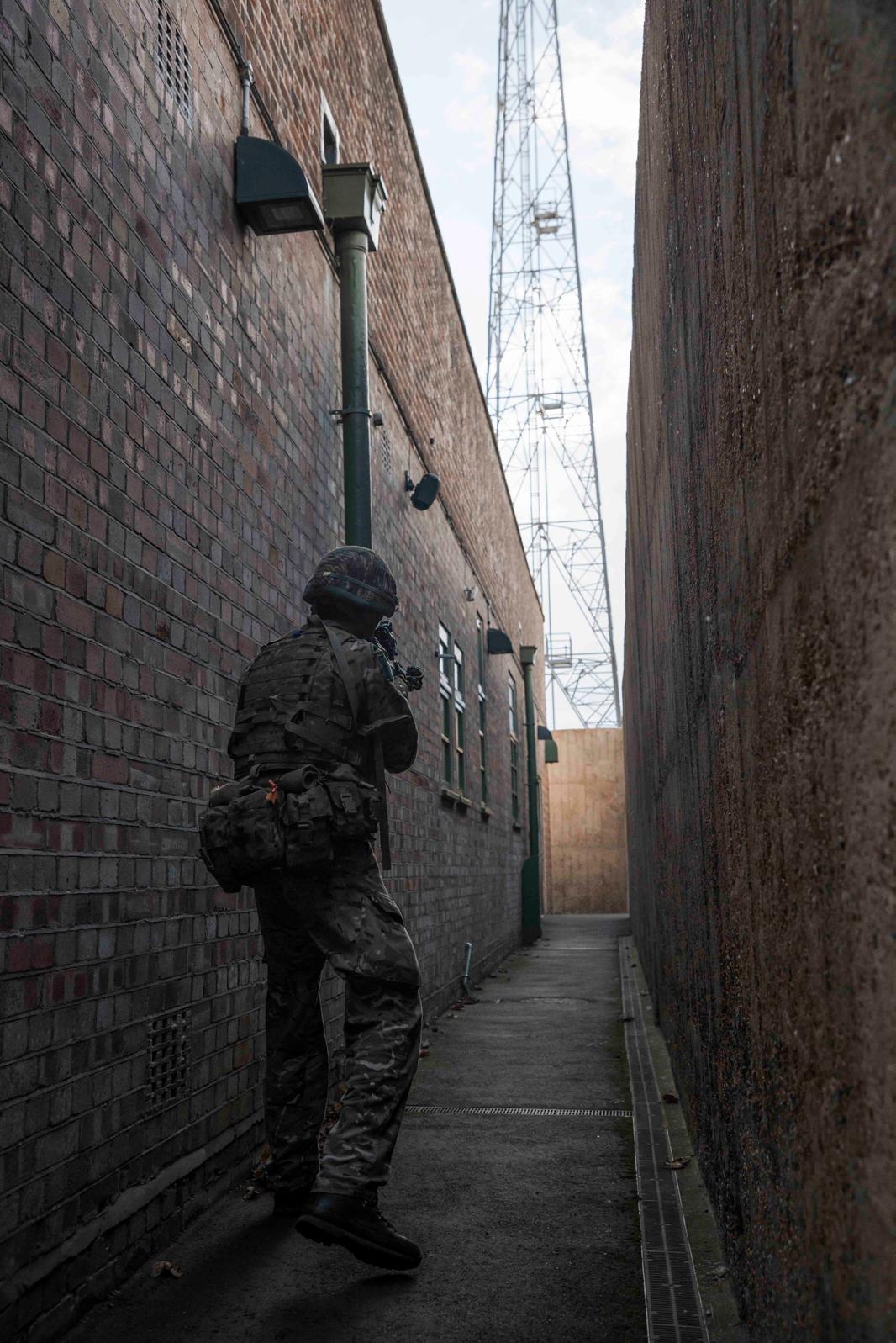
the trench warfare of the First World War and the Iran-Iraq War but there are other categories. City sieges are a form of positional warfare that have become increasingly common as the world has become more urban. Examples include the battles of Sarajevo in Bosnia, Grozny in Chechnya, Fallujah in Iraq and Aleppo in Syria. The complexity of urban terrain can greatly multiply the defender’s advantages as has been evident in the current war in Ukraine.6 Another version of positional warfare, which has become increasingly associated with Russia’s modern approach to warfare, is the rapid limited land grab designed to achieve a strategic fait accompli such as the illegal seizure of Crimea by Russian forces in 2014. A style of warfare that many had thought was consigned to history, positional warfare is very much back in fashion in the 21st century.
At this point, it is useful to highlight a common misconception about the use of manoeuvre in warfare. A force that manoeuvres should only be thought of as one that is engaged in manoeuvre warfare if it is manoeuvring as part of a plan to shatter the cohesion of the enemy. Whereas if it is manoeuvring as part of a campaign to incrementally erode the enemy’s capability then it is waging attritional warfare; if it is manoeuvring as part of a scheme to seize key terrain then it is conducting positional warfare. Just because a force is exercising a flanking manoeuvre does not mean it is fighting a manoeuvre warfare battle. It is not the action that defines the form of warfare; it is the intended effect that counts.
In reality, outside of the confines of academic theory, most military forces employ a mix of all forms of warfare to prosecute campaigns. Perhaps one of the best illustrations of the three forms of warfare under discussion being used during one
short campaign is the actions of the Egyptian and Israeli forces in the Suez Front of the Yom Kippur War in October 1973. The Egyptians began the war with a positional strategy: their surprise seizure of the Israeli-occupied east bank of the Suez Canal was designed to convince the US to restart diplomatic talks over the future of the Sinai and other areas occupied by the Israelis since the 1967 Arab-Israeli war. Their subsequent defensive battle, utilising anti-tank guided weapons and air-defence systems, was an attritional plan designed to blunt the expected armour-
and-air counter attacks by the Israelis, which shocked the Israelis by its effectiveness. The attempt by the Israelis during the closing stages of the war to regain the initiative by driving armoured thrusts into the Egyptian Army’s rear areas was a classic example of manoeuvre warfare; although it was only partially effective in breaking the Egyptian’s cohesion by the time a ceasefire was called and so its effect was mainly attritional. Notably, Egypt’s mix of positional and attritional warfare failed in its military objectives but did achieve its ultimate political objective: as part of a peace treaty,
Israel agreed to return most of the Sinai a year later and handed back the remainder in 1982.
Given the pros and cons of the three forms of warfare, which is the best for today’s challenges? The reflexive response from most of today’s military professionals would probably be to select manoeuvre warfare. This is not surprising: in 1989 as a result of Bagnall’s efforts to transform the British Army, the institution published its first formal doctrine.7 It was, of course, aligned with Bagnall’s thinking on the best way to deter the Soviet threat in Europe so was based on the theory of manoeuvre warfare. Soon afterwards it also adopted a new decentralised command philosophy – Mission Command8 – that encouraged commanders to give their subordinates as much freedom as possible to exercise their initiative when interpreting orders; a style of command seen as key to enabling the fast pace of manoeuvre warfare. Ironically, this revolution in doctrine was published in the year that the Berlin Wall fell, which effectively ended the Soviet threat the rebirth of manoeuvre warfare was designed to counter.
The Army’s warfighting doctrine has been developed since it was first introduced at the end of the Cold War. Its scope has widened the idea of manoeuvre to include virtual capabilities like cyber operations and it now accepts the need, at times, for attrition in war, but as its title suggests –The Manoeuvrist Approach9 – it
7Design for Military Operations, The British Military Doctrine, British Army, 1989.
8UK Land Power, Joint Doctrine Publication 0-20, Director Concepts and Doctrine, British Army, 2017.
9UK Land Power, Joint Doctrine Publication 0-20, Director Concepts and Doctrine, British Army 2017.
“CITY SIEGES ARE A FORM OF POSITIONAL WARFARE THAT HAVE BECOME INCREASINGLY COMMON AS THE WORLD HAS BECOME MORE URBAN. THE COMPLEXITY OF URBAN TERRAIN CAN GREATLY MULTIPLY THE DEFENDER’S ADVANTAGES AS HAS BEEN EVIDENT IN THE CURRENT WAR IN UKRAINE.”6Nevertheless, as Stuart Lyle’s excellent talk on urban operations myths to CHACR demonstrates the defender is not always advantaged by urban terrain. Picture: UK MOD © Crown copyright 2022
remains rooted in the philosophy of manoeuvre warfare. As a result, modern officers have literally been indoctrinated to think that any clever tactic is ‘manoeurvist’. When one can now read a wellwritten blog that argues that Montgomery, the master of the set-piece attritional battle, actually fought a manoeuvrist fight at El Alamein it is clear that the label ‘manouevrism’ is no longer connected to manoeuvre warfare and has lost any useful meaning.10
Turning back to the problem of deterring today’s Russian threat to Eastern Europe, we can see that the circumstances have changed considerably from the 1980s. Russia can mobilise a large army but nowhere as big as the Soviet war machine was
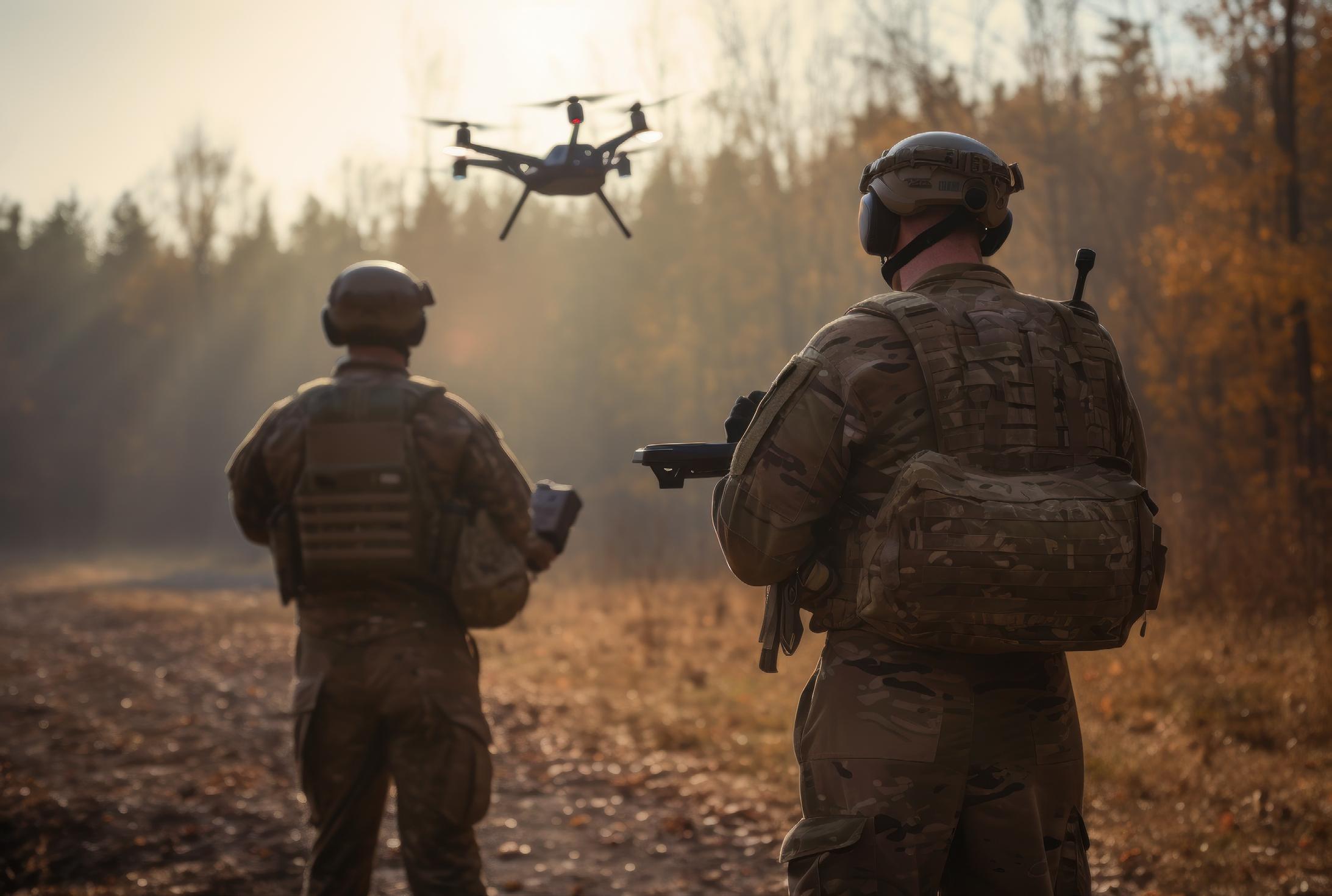
once able to muster; the threat of follow-on forces that so exercised NATO’s Cold War planners is now far less of a concern. Europe is even more urbanised and so manoeuvre is much harder. Technological advances have made it far more difficult for mobile forces to concentrate together or manoeuvre without being detected and broken apart by relatively cheap weapon systems. To devise a deterrence strategy to meet this threat requires an analytical approach that considers all conceptual forms of warfare rather than one that is skewed to prefer a manoeuvre warfare approach.
Instead of devising deterrence strategies and tactics constrained by manoeuvre warfare theory it would be wiser to adopt a capstone doctrine that accepts that all warfare is essentially asymmetric. It should articulate
a universal approach that recognises that however similar opponents are to each other, there will always be differences in their resources, morale, strength, technology, resilience and other key factors, and so any contest will see each side look to pit its strengths against the other’s vulnerabilities.
An asymmetric approach would not demand that a commander primarily focuses on breaking the moral or physical cohesion of the enemy. In some cases, that may not be the best enemy vulnerability to focus on. It might prove more effective to instead concentrate on reducing an enemy’s military capability to fight or on seizing terrain or a domain that an opponent will find difficult to regain. Such a doctrinal approach would free commanders to devise strategies that can draw on combinations
of manoeuvre, attritional and positional forms of warfare.
A doctrine based on an asymmetric approach could still use Mission Command as its command philosophy; the concept works just as well for positional and attritional warfare. And is ever more relevant in an era where denied and degraded communications must be assumed. However, the Army might need to adapt elements of Mission Command if it is going to depend more on mobilising its reserves for a conflict; this will mean considering how part-time soldiers can quickly integrate into a Mission Command philosophy. Delegating control and encouraging initiative can work well with citizen soldiers, as we have seen in Ukraine. However, presenting them with written orders riddled with jargon and abstract intention statements,
“TECHNOLOGICAL ADVANCES HAVE MADE IT FAR MORE DIFFICULT FOR MOBILE FORCES TO CONCENTRATE TOGETHER OR MANOEUVRE WITHOUT BEING DETECTED AND BROKEN APART BY RELATIVELY CHEAP WEAPON SYSTEMS.”
stilted by a prescribed vocabulary of action verbs, may prove less effective than directives written in clear and concise English.
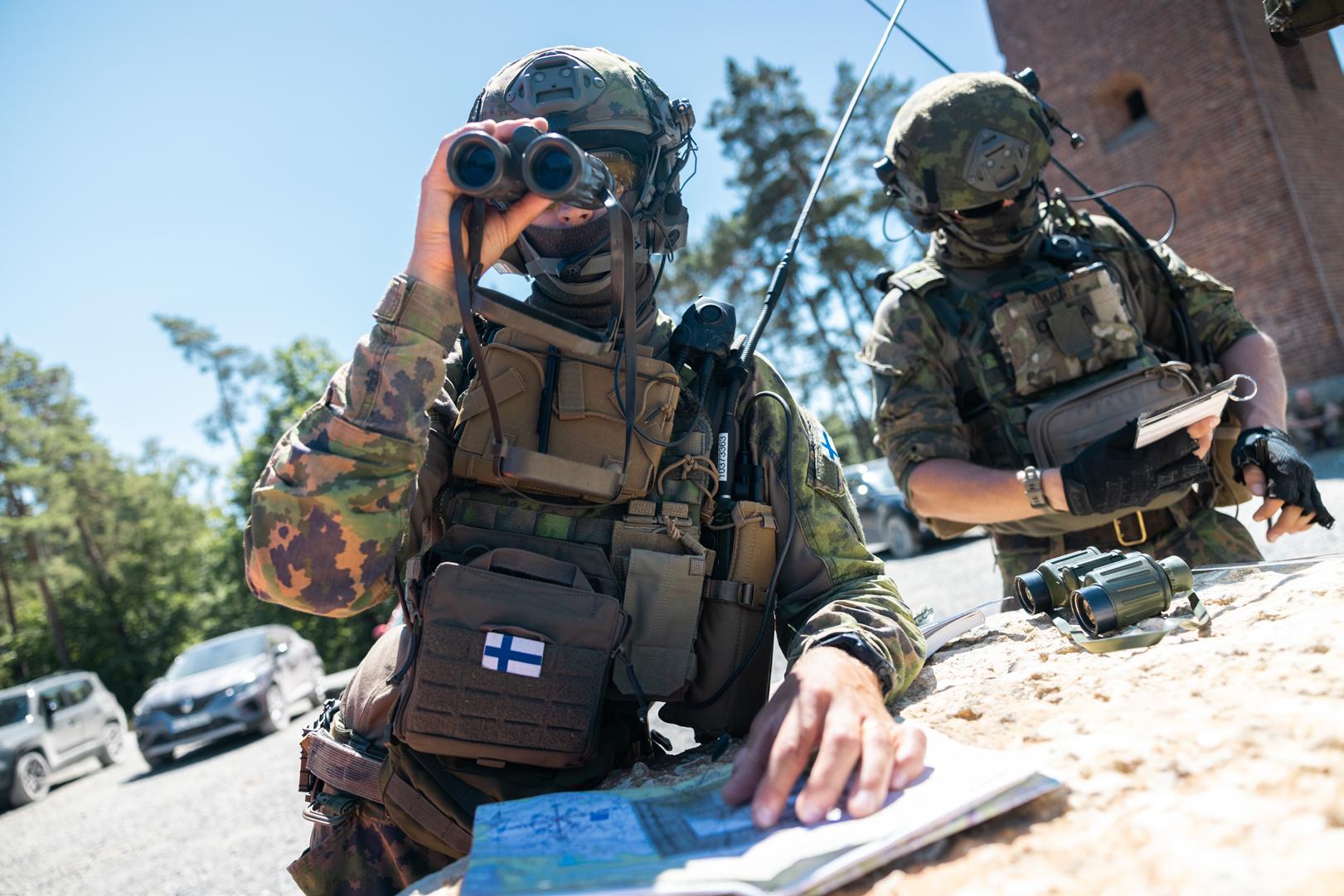
Returning to the original question of what form of warfare should the British Army plan to use to deter Russian aggression in Europe, it is instructive to look at a European country that has fought against Russia before and has for years since deterred further aggression without NATO allies. Finland, with a population of five million, has a small regular army of about 20,000 but is able to mobilise conscripted reserves of 180,000.11 It has the largest artillery force of the democratic countries currently at peace in Europe.12 Its concept of Total Defence13 ensures that the whole of its society is integrated into its defence plans.
At the political level, Finland’s deterrence posture has been, until recently, characterised by its neutral stance. But its military’s strategic force design is optimised for an attritional war. Its military deterrence message is clear: the country is a fortress. Any aggressor would likely find itself fighting a long and costly war. At the operational level, Finland’s Total Defence concept allows it to prepare its cities, critical infrastructure and geography to fight a positional campaign; it has even recently assigned rapid-response forces to counter Crimea-style land grabs.14 At the tactical level it has elements of its force that are able to exploit manoeuvre warfare tactics; a skill it excelled in when its ski troops again and again outmanoeuvred and broke the cohesion of Soviet columns in the early stages of the 1939 Soviet-Finnish Winter War. Finland’s deterrence strategy has been well crafted to apply its asymmetric advantages against Russia’s perceived vulnerabilities.
The British Army is now reviewing how it can sharpen its competitive edge to contribute to Europe’s deterrence strategy.
That analysis, which will need to take in factors like tasks, culture, resources, technology, geography, allies and experience, will help it decide what combination of styles of warfare it should be structured to fight. This will drive force design. To illustrate from medieval examples, the horsemounted armies of the Mongol Empire were ideally suited for manoeuvre warfare; while the high proportion of archers to cavalry in King Henry V’s army at Agincourt dictated that it was best employed in an attritional battle.
The British Army’s analysis will, no doubt, try to ensure it can fight all forms of warfare but inevitably it will need to shape its design more towards one style than others. If it decides that it is best weighted towards fighting manoeuvre warfare then its force design will need to prioritise capabilities that can disrupt the cohesion of the enemy, such as tanks, attack aviation and electronic warfare units; a force optimised for positional warfare will place
greater demands on anti-access and area-denial systems, urban warfare units and rapid response forces. If it believes the best contribution it can make to European deterrence plans is to build mobile forces that can cause maximum attrition against the enemy’s capabilities then it will need a force structure that is balanced more towards intelligence, surveillance and target acquisition systems; long-range fires; portable antiarmour and air defence systems; and distributed command nodes. For a small regular army, building stronger reserve force capabilities will probably need to be a course of action common to all approaches.
Whatever road the Army takes, it should now change its principal warfighting doctrine from a Manoeurvist Approach to an Asymmetric Approach. This would free commanders at all levels to be able to consider the most effective way to fight in any given situation. An Asymmetric Approach doctrine could provide
them with the pros and cons of different forms of warfare and reinforce the values the British Army holds to in conflict, like avoiding civilian casualties, but not dictate a particular theory of war. Nested below this core doctrine could be theatre- or threat-specific doctrines and strategies as required.
In 1989 the introduction of a formal doctrine for the British Army was a big step forward in its professional development. It is now time to remove the dogma from its doctrine.
11The Finnish Army, www.maavoitmat.fi
12List of countries by number of artillery, www.ArmedForces.eu
13Schultz, Teri, In Defense, Finland prepares for everything, www.amp.dw.com, 2017
14Peck, Michael, Finland’s Unique Defense Strategy Makes it Ready for Anything, The National Interest, 2021.
Acknowledgements: Lieutenant General Jonathon Riley CB DSO PhD, Director, Generalship; Brigadier Ian Thomas OBE, Dean of Studies, Royal Military Academy Sandhurst; Dr Mike Martin PhD, Director, Threshed Thought.
“[FINLAND’S] MILITARY’S STRATEGIC FORCE DESIGN IS OPTIMISED FOR AN ATTRITIONAL WAR. ITS MILITARY DETERRENCE MESSAGE IS CLEAR: THE COUNTRY IS A FORTRESS. ANY AGGRESSOR WOULD LIKELY FIND ITSELF FIGHTING A LONG AND COSTLY WAR.”Picture: NATO (CC BY-NC-ND 2.0)