CHACRDIGEST
AUTHOR: Professor Andrew Stewart, Head of Conflict Research

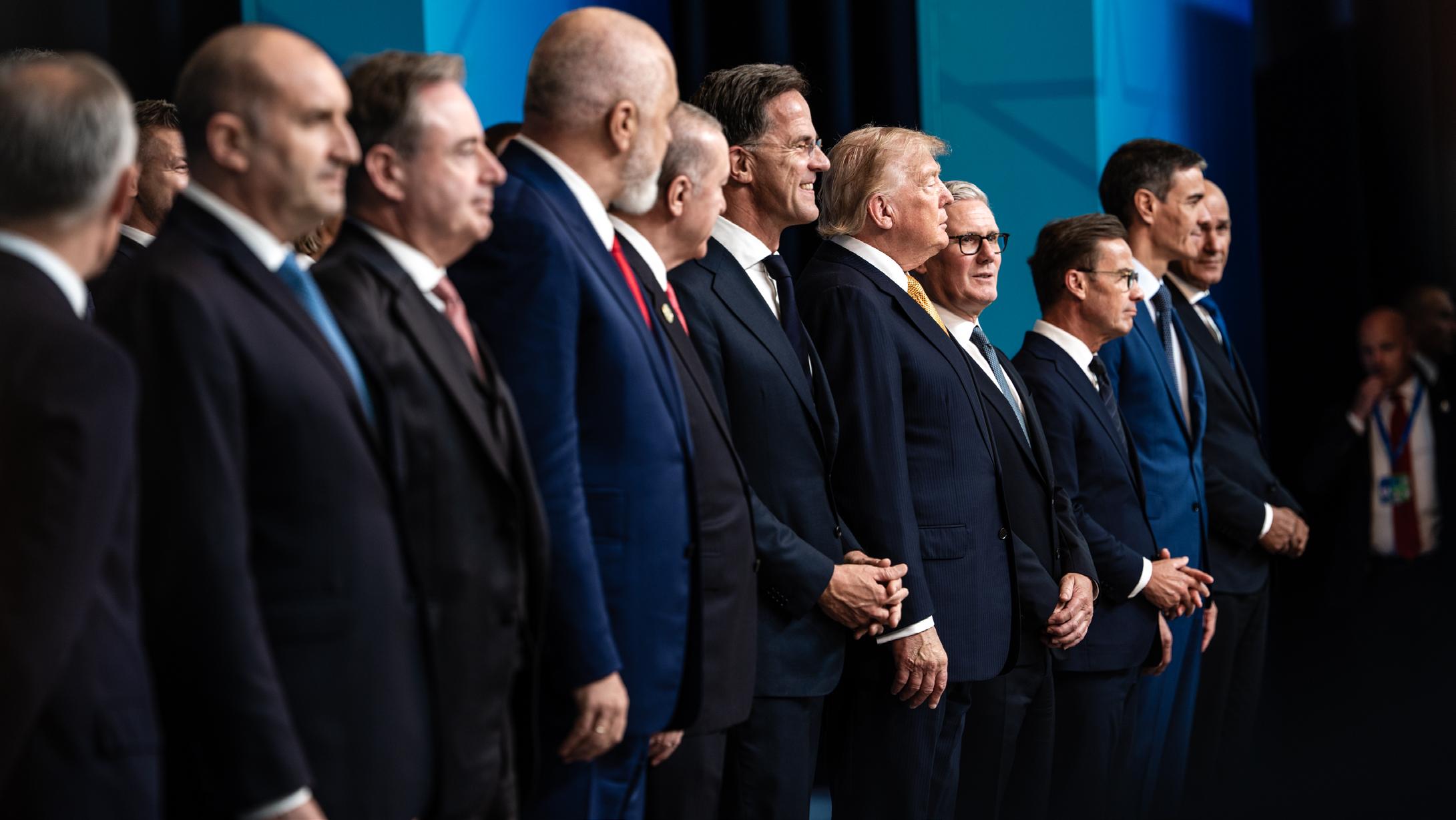
Against the backdrop of the recent NATO summit, where leaders reaffirmed their commitment to collective defence and pledged substantial military aid to Ukraine, Russia has continued to escalate its rhetoric against the organisation. With its staggering military losses in Ukraine, which have yielded diminishing tactical returns, Moscow is primarily using these threats to try and divide the United States and Europe diplomatically rather than signalling any move to expanding the current conflict. Nonetheless, the Alliance’s Northern Flank is heavily fortifying with Nordic nations abandoning historical neutrality to form a highly integrated, hawkish grouping. With uncertainty also continuing in the Gulf and questions about Iran’s future strength, Turkey is filling a regional power vacuum by leveraging its booming military-industrial complex and NATO membership, alongside its strong soft power among Arab nations. In this context, there are calls for the leadership in Washington to stop treating Ankara as a subordinate and instead recognise it as an essential, autonomous balancing power. While recent senior military promotions suggest a focus on domestic concerns, the immense operational challenges that the Chinese military would face with any attempted invasion of Taiwan continue to be studied. As does NATO’s restructured three-front European command, which it is argued presents critical vulnerabilities in multinational logistics, command cohesion and a lack of European combat enablers –all of which create an unhealthy American co-dependence. With modern warfare requiring data-driven, collaborative leadership integrated with artificial intelligence rather than a reliance on individual instinct and bravado, one former senior military officer has argued the era of the ‘genius general’ is over. Finally, a survey reveals a British public increasingly disengaged from global affairs and distrustful of the United States.
EUROPE
In its review of the NATO Summit, which was held in Ankara at the beginning of the month, Politico reports that the 32 heads of state issued a unified declaration to reaffirm their ‘ironclad commitment’ to Article 5, with an attack on one member still viewed as an attack on all. Despite this message of unity, US President Donald Trump remained a disruptive presence, warning publicly that he might not come to Europe’s defence if attacked as well as again reiterating his desire to take control of Greenland. As the report explains, his behaviour shifted dramatically during the private leaders’ session and, behind closed doors, he adopted a less combative tone, completely dropping the Greenland issue and specifically praising the Baltic states, Poland, Norway and Germany for meeting high defence spending targets. Building on this, the allies agreed to significantly strengthen their industrial base through NATO Secretary-General Mark Rutte’s ‘Made in NATO’ initiative. This includes a commitment to eliminate defence trade barriers, invest in cutting-edge technologies like uncrewed systems and deep precision strikes, and approximately £38 billion was awarded in new military contracts. A strong, unified stance was also maintained on the conflict in Eastern Europe with Russia designated as a ‘long-term threat’. In the final declaration, approximately £60 billion in aid was pledged to Ukraine this year, with the same figure committed next year. While it no longer provides direct military aid, the US agreed to continue selling weapons to Kyiv as long as they are financed by other countries. Despite there being less unpredictability than feared, the challenges associated with managing the summits has led to uncertainty about whether they should continue to be held annually and the final statement did not set a specific date for the next meeting.

In her recent commentary on the summit, Emily Ferris concludes that, while NATO is actively preparing for a potential future conflict with Russia, despite escalating rhetoric Moscow does not currently consider war an inevitability. Her analysis suggests that the Russian administration views the conflict in Ukraine, relations with the United States and its relationship with NATO as three entirely separate tracks. Following his recent move away from referring to a ‘special operation’ in Ukraine to a ‘war’, Kremlin spokesman Dmitry Peskov [pictured] has also issued a veiled warning that NATO states used as staging grounds for Ukrainian drone attacks on Russian infrastructure would be considered “legitimate targets”. Simultaneously, the vague ‘Spirit of Anchorage’, used to describe the 2025 US-Russian summit, has been weaponised with claims that Washington has betrayed mutual understandings under pressure from a ‘Russophobic’ Europe. Nonetheless, Ferris concludes that while these threats serve as a strong deterrent against deeper Western support for Ukraine, they should still be viewed as part of a calculated effort to drive a diplomatic wedge between the United States and its European allies. A political warning rather than an immediate operational shift, Moscow’s escalatory language regarding a broader conflict masks a pragmatic diplomatic strategy: it is deliberately keeping the door open for further engagement with Washington, even if it intends to dictate the terms and topics of those future negotiations.
The war being fought in Ukraine continues to be widely covered. In a long essay for War on the Rocks, Greg Whisler and Michael Kofman explain how, during the war in Ukraine, Russia has executed an unprecedented military expansion, growing its deployed forces to over 700,000 personnel. Initially struggling with a small, ill-equipped peacetime force and suffering heavy early casualties, Moscow temporarily resorted to a partial mobilisation of 300,000 reservists in autumn 2022 to stabilise its defensive lines. Subsequently, rather than relying on mass conscription, more than 1.3 million contract volunteers were recruited across 2023 and 2024. Despite attaining a massive quantitative advantage, there has been a failure to translate this manpower into operationally significant battlefield breakthroughs. The authors highlight a “paradox of mass”: as Russian forces grew larger, their operational effectiveness diminished. This failure stems from Ukrainian tactical adaptations, specifically the integration of mass precision strikes, widespread drone deployment and prepared defences. Pervasive intelligence and drone superiority forced Russian troops to abandon large mechanised assaults, rendering traditional advantages in mass obsolete. Instead, the Russian military devolved into using infiltration tactics with increasingly smaller dismounted infantry units, eventually attacking in groups of just one or two men to evade drone detection. This cost-ineffective approach resulted in a grinding, slow offensive that traded immense casualties for minimal territorial gains. By late 2025, this force generation model began showing critical cracks. The massive rate of killed and wounded soldiers began to outpace high monthly recruitment figures, officially halting overall force growth; although widely questioned as a statistic, according to the CIA director, Russian troops survive just 20-30 minutes on Ukraine’s front lines. The financial burden of constantly increasing recruitment bonuses has also become fiscally untenable for Russian regions. The conclusion remains, however, that an expanded Russian military presents a severe long-term threat to NATO. Post-war, it is expected to retain a significantly larger ground force permanently stationed near the borders of Finland and the Baltic states, particularly within the newly re-established Leningrad Military District. It is argued that planners must recognise that Russia has demonstrated a robust capability to regenerate forces and sustain prolonged offensive operations without resorting to mass mobilisation. Consequently, NATO must aggressively develop tactical and technological solutions – such as integrating counter-drone systems and scaling up their own force sizes – to effectively address both a traditional advantage in mass and newly acquired drone and deep-strike capabilities.
Writing for CSIS, Seth G. Jones and Riley McCabe also argue that Russia has lost the military initiative as it faces unprecedented costs. They estimate 1.4 million casualties and up to 450,000 fatalities since the February 2022 invasion, fatality rates that eclipse all post-Second World War Soviet and Russian conflicts combined. Furthermore, the casualty ratio between Russia and Ukraine widened drastically to nearly 8:1 in early 2026, largely driven by the success of the latter’s lethal drone campaigns. On the ground, the war currently favours the defender and Russia’s offensive operations are now advancing at historically poor rates of just 50-90 metres per day, comparable to the trench warfare of the First World War.
Faced with dense minefields and drone-saturated ‘kill zones’, Russian commanders have resorted to sending small infantry squads on highly lethal infiltration missions, severely exacerbating casualty rates. Conversely, Ukraine has successfully pioneered a new paradigm of air power, utilising AI-enabled autonomous drones, such as the Hornet, to conduct deep interdiction strikes. These medium- and long-range strikes have consistently targeted Russian military bases, energy infrastructure and industrial facilities deep within Russian territory, including cities like Moscow and St. Petersburg. As the report concludes, despite this President Vladimir Putin remains willing to absorb these costs and the writers argue that to force a viable ceasefire or peace agreement the United States and Europe must aggressively escalate economic and military pressure, including fully sanctioning Russia’s clandestine oil ‘shadow fleet’ and supplying more advanced air defences to Ukraine.
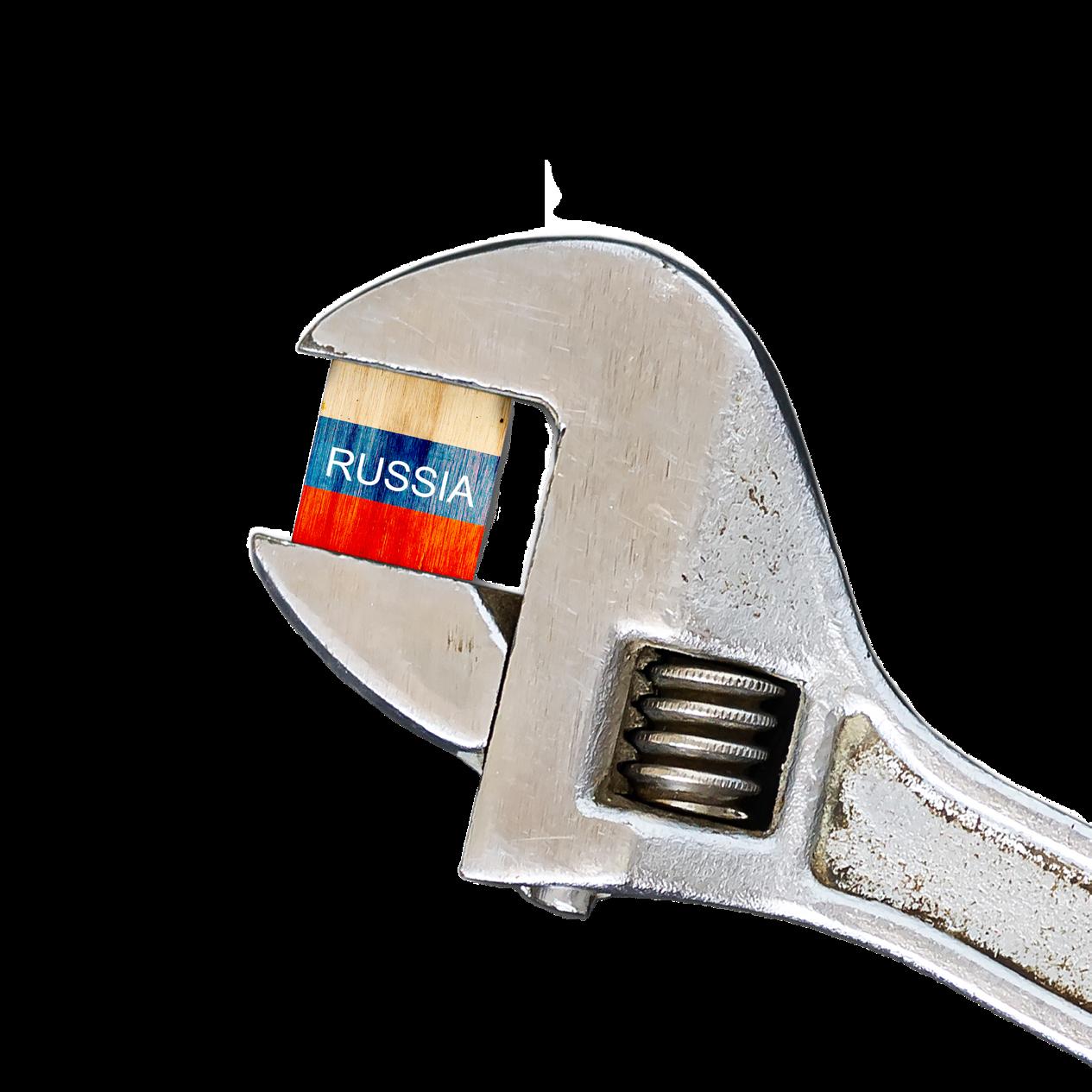
There also remains considerable scrutiny of NATO’s Northern Flank. Politico has published an extended discussion which argues that, amid wavering US commitment, the regional states are actively preparing to defend against Russia independently. Finland, for example, relies on its resilient ‘total defense’ strategy, while vulnerable Baltic states depend on permanent German troop deployments. Poland is reported as building massive border fortifications and an anti-drone wall and its emergence as a regional security leader is examined in more detail by Jacob Romaniuk, who describes the flagship ‘East Shield’ initiative which, supported by EU funding, will directly integrate with the Baltic Defence Line to secure NATO’s eastern flank. Writing for Engelsberg Ideas, Magnus Petersson argues that despite current anxieties over Russia, the Baltic Sea region is actually in its most secure geopolitical position since the Second World War. As part of a special edition of the Scandinavian Journal of Military Studies, Målfrid Braut-Hegghammer and Lauren Elizabeth Hagstrom have examined how Finland, Sweden, Norway and Denmark have fundamentally transformed their
allied postures, moving from their historically ‘dovish’ traditions to create within NATO a hawkish “Nordic deterrence cluster”. The authors argue that this unprecedented transformation is driven by two interrelated mechanisms: shifting elite-public alignments and a regional “contagion effect”. During the Cold War, these consensus-oriented democracies maintained strict security restrictions, such as Sweden’s non-alignment and Norway’s refusal to host allied nuclear weapons. However, the 2022 security shock caused an immediate surge in public support for NATO and nuclear deterrence. The authors emphasise that this overwhelming public demand effectively forced the hand of political elites, compelling them to abandon traditional constraints and integrate with NATO far more rapidly than they initially preferred. This rapid policy adaptation triggered a powerful contagion effect across the region. Finland’s public-driven push for NATO integration made it politically unfeasible for Swedish elites to maintain their entrenched neutrality, prompting Sweden to swiftly follow suit. This hawkish momentum also spilled over to long-standing NATO members; Norway and Denmark have begun relaxing older restrictions and investing in long-range weapons to align with the deterrence-focused postures of the newer members. In practice, this hawkish turn is characterised by a deeper embrace of extended nuclear deterrence. In June, Finland fundamentally shifted its security posture by voting to lift its long-standing ban on nuclear weapons, allowing the transport and facilitation of nuclear arms on its territory. With its vast network of over 50,000 subterranean civil defence shelters which can accommodate 4.8 million people nationwide, including shelters in the capital which can house 940,000 people, more than the city’s entire population, the government in Helsinki is also actively exploring further integration into broader NATO and European nuclear deterrent initiatives. Sweden’s new Defence Cooperation Agreement also does not explicitly prohibit nuclear weapons while its new role as the framework nation for Forward Land Forces Finland, placing its soldiers under direct NATO command, has been described as “a monumental shift in European security architecture” ending 210 years of military non-alignment that had lasted since the Napoleonic Wars. The conclusion is that, by pooling their geographic depth, logistics and military capabilities, the Nordic cluster significantly enhances its collective bargaining power. This integrated stance allows the region to project robust deterrence against Russian aggression while providing a unified front against potential predatory demands from allied patrons, such as the recent US territorial claims regarding Greenland.
THE AMERICAS
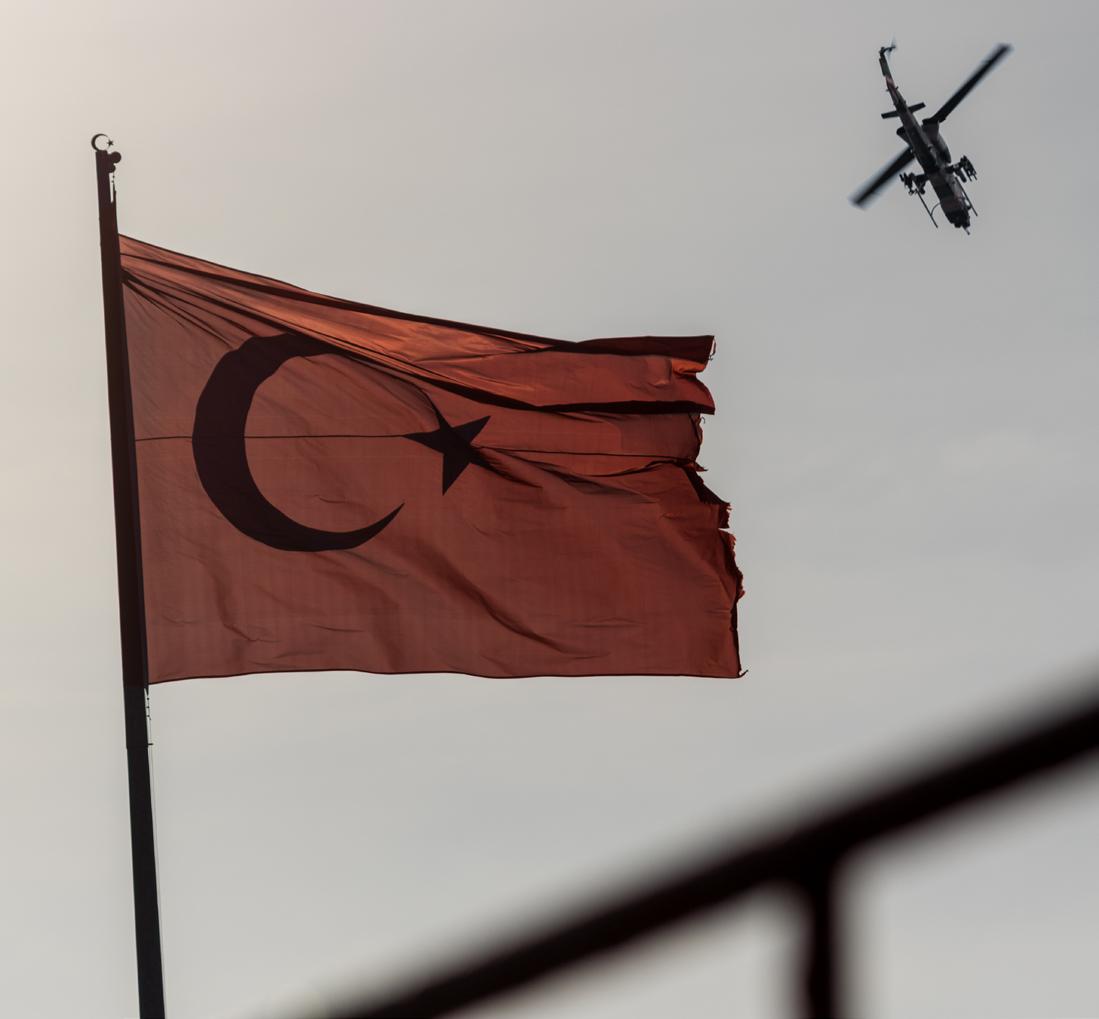
The importance of Turkey, both to the United States and NATO more generally, has been explained in The National Interest by Mohammed Ayoob. He argues that, following the continuing conflict with Iran, a regional power vacuum is being created that neither a globally isolated Israel nor an inconsistent United States can adequately fill. Consequently, he suggests Turkey is uniquely positioned to step in as a vital balancing power and diplomatic broker. Its dual identity as a NATO member with deep ties to the Muslim world allows it to operate effectively across multiple geopolitical intersections without being viewed merely as an extension of the West. Overcoming past ideological divisions from the Arab Spring, Turkey has forged pragmatic new partnerships with wealthy Gulf states. For Saudi Arabia and the United Arab Emirates, who increasingly view American security guarantees as insufficient, Turkey offers a crucial alternative through its booming military-industrial complex. By providing advanced drones, joint defence manufacturing and a shared Islamic legitimacy, Turkey is rapidly emerging as a highly capable secondary security guarantor in the region. Furthermore, Turkey has significantly boosted its soft power among Arab publics through its vocal opposition to Israel’s actions in Gaza. Unlike Iran, Turkey’s advocacy for Palestinian rights does not threaten Sunni Arab governments with sectarian revolution, making its influence much easier for regional leaders to accept alongside economic cooperation. This dynamic affords Ankara immense strategic mobility, allowing it to leverage its NATO membership for Western defence concessions while simultaneously presenting itself as a bridge to the broader Muslim world. Despite vulnerabilities like economic instability and domestic authoritarianism, Turkey’s grand strategy relies on reassurance and pragmatic statecraft rather than regional domination. Ultimately, the author argues that the United States must stop treating Turkey as a disobedient subordinate and instead recognise it as an essential, autonomous regional power. As the Middle East order transitions away from American unilateral primacy, a stable balance of power will increasingly depend on Turkey’s central involvement.
INDO-PACIFIC
Ying Yu Lin, writing for the Australian think-tank ASPI, has argued that recent promotions of two Chinese PLA generals – Zhang Shuguang to lead anti-corruption efforts and Wang Gang to command the Air Force – highlight President Xi Jinping’s priorities as focusing on internal control, political loyalty and institutional stability rather than immediate external military operations. Events in Taiwan remain, however, another prominent theme for discussion amongst security and defence publications. Having recently published a discussion about how Chinese scholars are increasingly grappling with the challenge of governing the island postinvasion, Jay McVann, writing for War on the Rocks, has explained the challenge facing the Chinese military should it ever choose to launch an invasion. While often compared to the historic Normandy landings, a Taiwan scenario presents immense operational challenges unique to the modern missile age, particularly for a military lacking recent combat experience. The writer concludes that the People’s Liberation Army (PLA) would need to successfully execute three complex, unprecedented military operations, termed
the ‘Three Nevers’. First, China would have to conduct an amphibious landing against a credible coastal anti-ship missile threat. Because the PLA has constrained amphibious lift capacity, it would need to press civilian roll-on/roll-off vessels into military service to transport enough troops, making the fleet highly vulnerable to catastrophic fires and missile strikes. Taiwan possesses highly mobile coastal defence cruise missiles, as well as mines and anti-ship systems, that could target these vessels during their transit. Crucially, Taiwan does not need to destroy the entire invasion fleet; taking out just a few key transport vessels would significantly disrupt the invasion’s sequence and leave the Chinese beachhead dangerously understrength. Second, to compensate for this limited amphibious lift, China’s doctrine calls for a large-scale airborne drop against modern air defences. Airborne transport aircraft are slow, unmanoeuvrable and highly vulnerable to Taiwan’s integrated air defence system, particularly shoulder-fired, man-portable missiles such as the Stinger. Third, the PLA would have to launch a large, opposed helicopter air assault at extended ranges. Delivering combat-loaded helicopters at low altitudes across a minimum of 100 miles against prepared defenders lacks any modern historical precedent. These three operational challenges are deeply interconnected and any disruption or loss in the amphibious landing sequence forces a greater reliance on equally vulnerable airborne and air assault forces to fill the combat power gap. The conclusion is that, while an invasion remains possible if Chinese political leadership decides to accept massive operational risks, Taiwan can effectively deter Beijing by heavily investing in coastal defence missiles and low-altitude air defences. By ensuring enough defensive capabilities survive the initial attack, these would allow the PLA’s tightly sequenced campaign to be disrupted, a potential that is seen as promoting doubts that an invasion could ever succeed.
DEFENCE
The Senior Land Fellow at IISS, Reuben Stewart, has provided an assessment of NATO’s newly restructured three regional Joint Operations Areas: Northwest (High North and Atlantic), Centre (the Baltics to Hungary) and Southeast (Romania to the Mediterranean). As he notes, while this multi-corps architecture clarifies regional responsibilities, an analysis of the framework reveals significant vulnerabilities in command cohesion, logistics and combat enablers. A primary operational risk lies in the seams between commands and national borders. For instance, the Baltic region splits responsibilities between 1 German-Netherlands Corps and Multinational Corps Northeast. This creates a dangerous command boundary that complicates reinforcement through the vulnerable Suwałki Corridor, forcing one corps to coordinate its sustainment through another’s close fight. Additionally, NATO forces remain highly dependent on individual host-nation authorities for movement and infrastructure, creating potential bureaucratic friction. Logistically, multinational sustainment remains a massive challenge. Multinational battlegroups require fragmented supply chains to maintain varying national equipment, ammunition and mechanical parts. Furthermore, sustaining one front often requires moving resources through another; a crisis in the High North or Black Sea could quickly draw scarce logistics and enablers away from the central region. The writer warns the most critical shortfall is a severe gap in combat enablers such as deep fires, intelligence, air defence and electronic warfare. After the Cold War, European armies prioritised regenerating headquarters over rebuilding these essential warfighting layers. This has led to an “unhealthy co-dependence” on United States capabilities. If its enablers, such as longrange fires, are delayed, reduced or politically constrained before European alternatives mature, NATO will face severe integration issues and combat platform shortfalls. He concludes that, ultimately, while NATO’s command blueprint is well-defined from the Joint Force Command down to the corps level, its actual combat credibility depends heavily on overcoming resource constraints, streamlining complex multinational logistics and aggressively developing European combat enablers.
COMMENTARY
In his updated essay, published by Engelsberg Ideas, Edward Stringer argues that the British military has long fetishised the concept of the ‘genius general’, a charismatic leader relying on intuitive brilliance and operational art to pierce the fog of war. This myth promotes a heroic leadership style where senior officers are often rewarded for improvisation, bravado and unquestioned instinct. However, he suggests, this institutional reverence for innate genius fosters a culture of moral hazard, encouraging officers to overreach or rely on unchecked egos rather than justifying their decisions with rational assessment. The writer draws on historical examples which reveal the flaws in relying solely on battlefield charisma. During the American Civil War, the tactical flair of Southern generals was ultimately defeated by Ulysses S. Grant, whose expertise in logistics and emerging industrial technologies such as railways and telegraphs fundamentally transformed warfare. Today, warfare is undergoing a similar revolution as it transitions from the Industrial to the Information Age. When considering Ukraine, Stringer believes the future of warfare relies on flat, adaptable networks integrating civilian dual-use technologies, data analysis and autonomous systems. At the same time, as artificial intelligence increasingly shapes decision-making under pressure, the traditional model of a single, intuitive commander is becoming actively regressive. Just as the finance industry has shifted from relying on charismatic ‘Masters of the Universe’ to algorithm-driven ‘quants’, the military must adapt to a reality where AI processes massive amounts of data to generate counterintuitive tactical options. A system predicated solely on an individual’s unexplainable instinct will struggle to cope with the collective wisdom and analytical power of a manmachine team. Ultimately he concludes, the military must abandon its archaic, competitive peacetime structures that incentivise individual flair over collaborative, datadriven strategy. To succeed in the complex landscape of modern warfare, leadership must be rooted in open-minded curiosity and a deep understanding of complex digital networks, rather than a romanticised belief in the innate brilliance of a ‘lucky general’.


The British Foreign Policy Group’s 2026 Annual Survey reveals a public that is increasingly turning inward, driven by global volatility and proliferating crises. Over the past year, public interest in UK foreign policy has dropped sharply from 83 to 71 per cent and the proportion of Britons who feel informed about international activities has fallen from 67 to just 50 per cent. This disengagement is exacerbated by a deeply fractured media ecosystem and sharp generational divides. For instance, the report notes that 42 per cent of 18-25-year-olds now rely on TikTok as a primary source of foreign policy news whereas 85 per cent of those over 66 rely on traditional TV and radio. A central theme is the collapse of trust in the United States, which has fallen in two years from 53 to 27 per cent with almost half (49 per cent) of Britons now actively distrusting the country, a shift heavily driven by President Donald Trump. A majority of the public believes Trump is having a negative impact on UK-US relations, national security and the British economy, which has been further strained by the ongoing US-Iran war. Consequently, Britons are heavily pivoting toward Europe, with 49 per cent identifying it as the UK’s top priority relationship compared to just 20 per cent for the United States. Strengthening national security is widely viewed as the UK’s top foreign policy priority (47 per cent) with the public perceiving Russian aggression in Europe, irregular migration, terrorism and cyber attacks as the greatest threats to the country. Despite this, Britons are unprepared for the sacrifices required to bolster their defence and, while 60 per cent support increasing defence spending to three per cent of gross domestic product, there is strong opposition for funding this through domestic cuts. Overwhelming majorities would oppose defence spending hikes if they required cutting the NHS (58 per cent), education (46 per cent) or welfare (42 per cent). Furthermore, while Britons are willing to engage in civilian resilience efforts during a crisis, such as distributing supplies or keeping essential services running, 52 per cent would refuse to fight on the front lines. Finally, attitudes toward strategic rivals are shifting. While Russia remains deeply distrusted by 77 per cent of the public, distrust of China is softening, falling to 56 per cent. This shift is largely driven by younger Britons, who now distrust the United States more than they distrust China.